2026 Toyota Glanza claimed mileage compared with rivals

2026 Toyota Glanza claimed mileage compared with rivals

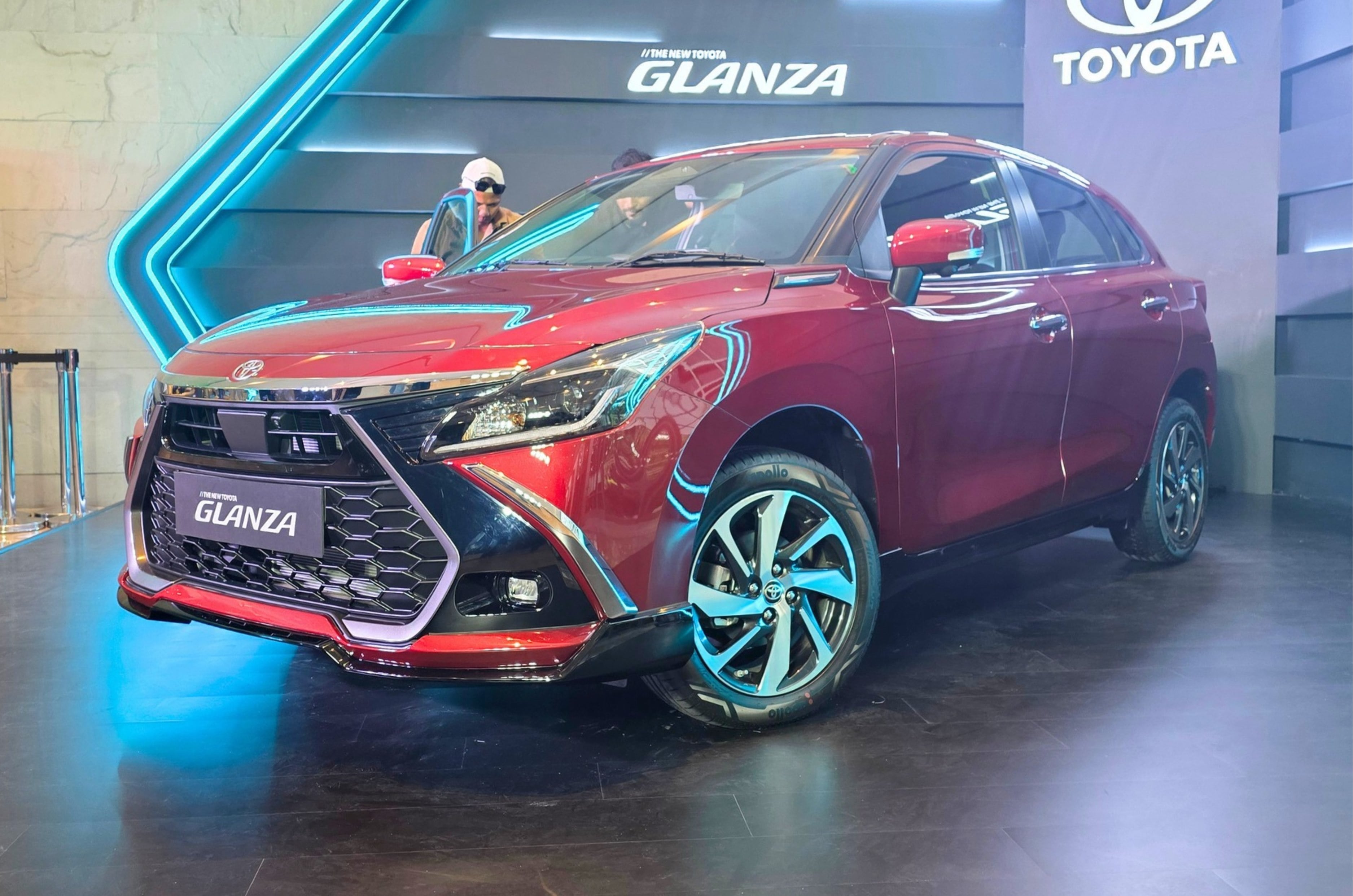
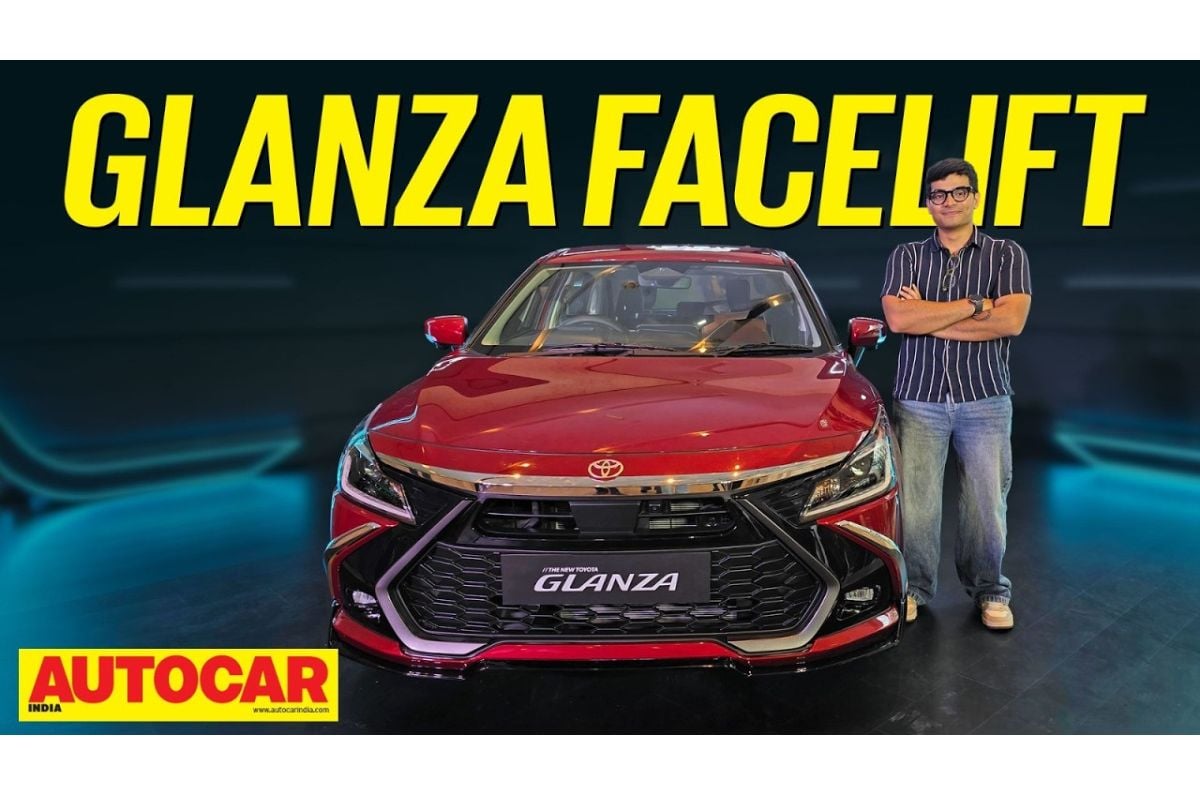
Toyota has launched the 2026 Glanza, with prices ranging from Rs 6.99 lakh to Rs 10.98 lakh (ex-showroom). One of the biggest changes in the facelifted model is a new Z-series 1.2-litre 3-cylinder naturally aspirated engine, less powerful than the previous K-series 4-cylinder mill but offering better fuel efficiency. Both the petrol and CNG versions are offered with a 5-speed manual and a 5-speed automated manual transmission (AMT).

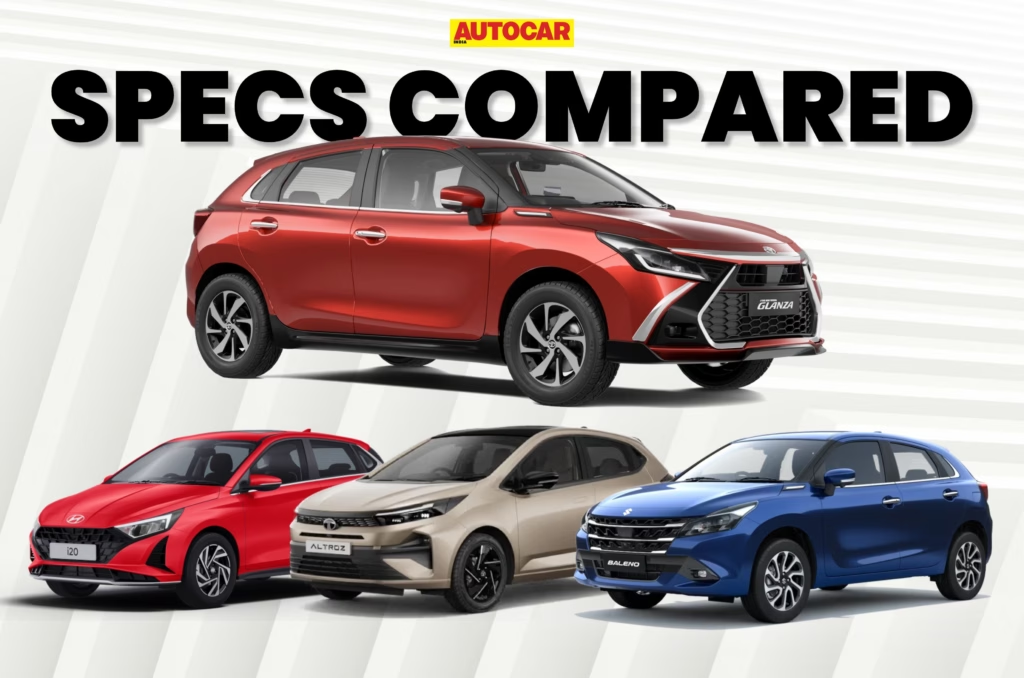
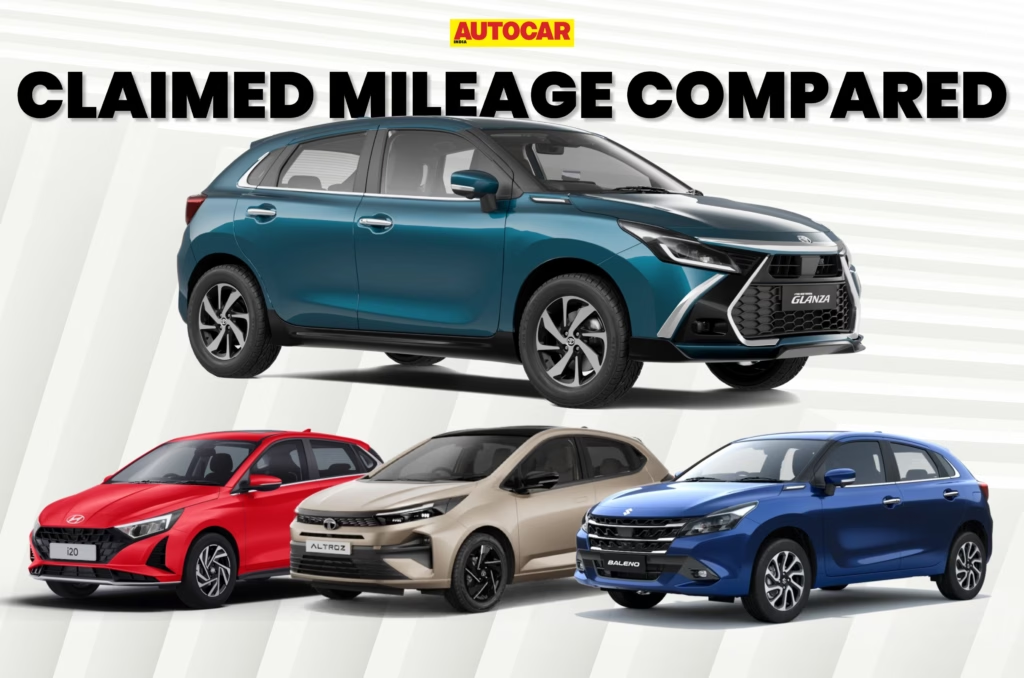
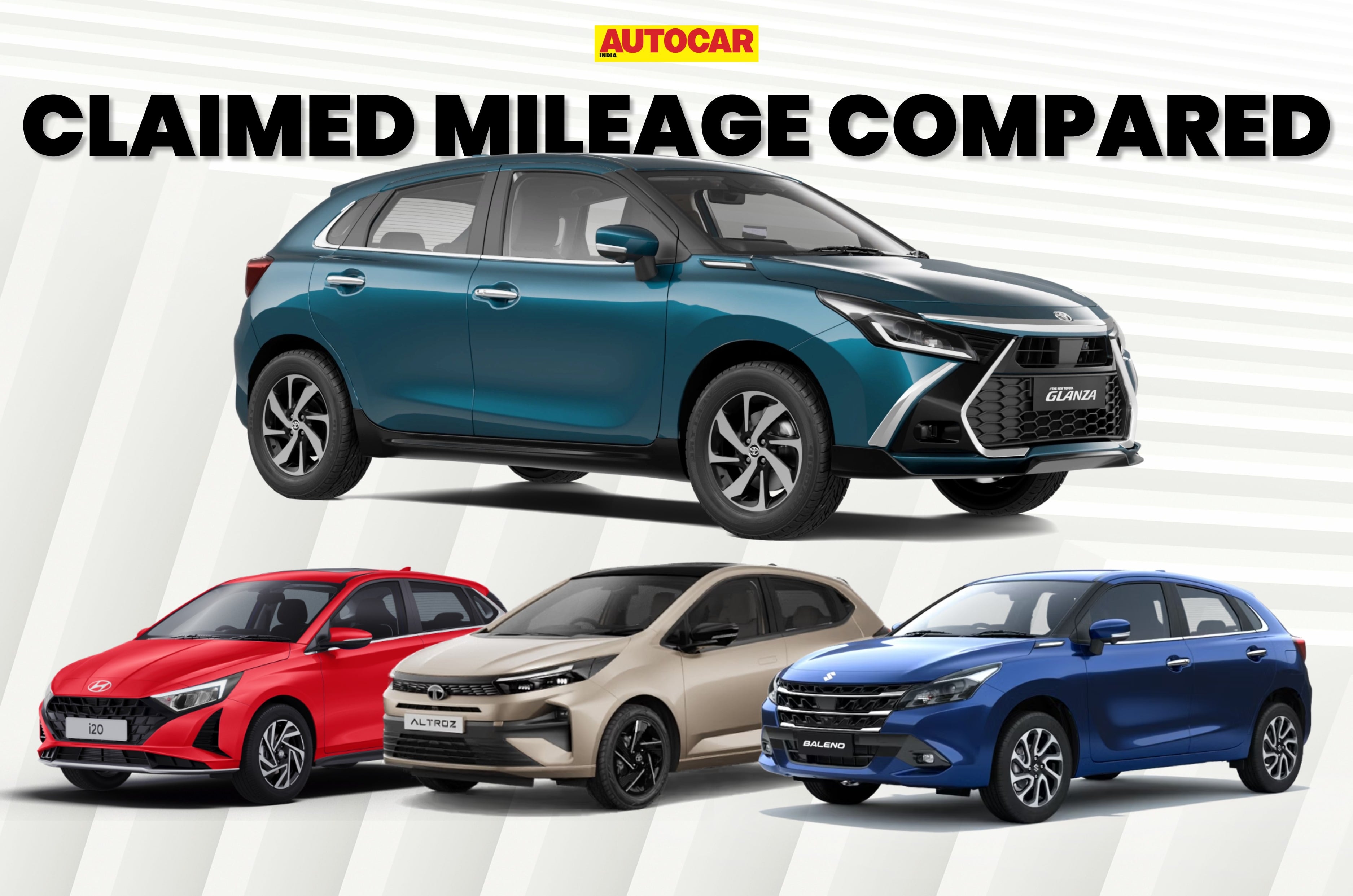
The 2026 Toyota Glanza rivals the Maruti Baleno, Hyundai i20 and Tata Altroz. Except for the missing CNG option on the i20, all rivals offer manual and automatic gearboxes with petrol and CNG versions. Here’s how the Glanza’s claimed mileage compares with the rivals.

2026 Toyota Glanza petrol mileage compared with rivals

Glanza petrol’s claimed mileage numbers are among the highest in the segment

2026 Toyota Glanza petrol mileage compared with rivals (in kpl)


Petrol-manual

Petrol-automatic*

2026 Toyota Glanza

23.80

24.77

Old Toyota Glanza

22.35

22.94

Maruti Baleno

23.80

24.77

Hyundai i20

Not disclosed

Not disclosed

Tata Altroz

19.33

Not disclosed

*Glanza and Baleno get an AMT, i20 gets a CVT, and Altroz gets both AMT and DCT options

The petrol-powered Toyota Glanza and Maruti Suzuki Baleno deliver identical claimed fuel efficiency figures, as the two premium hatchbacks are badge-engineered siblings. However, compared to its predecessor, the facelifted Glanza offers improved efficiency, with the petrol-MT and petrol-AT variants delivering 1.45kpl and 1.83kpl more, respectively. The 2026 Glanza petrol-MT is also 4.47kpl more efficient than the Tata Altroz with the same powertrain. While the claimed mileage figures for the Altroz petrol-AMT and the Hyundai i20 petrol-MT and petrol-AMT are yet to be announced, the Glanza and Baleno are expected to retain their advantage in terms of claimed fuel efficiency.

2026 Toyota Glanza CNG mileage compared with rivals

CNG-powered 2026 Glanza has identical mileage as the Maruti Baleno

2026 Toyota Glanza petrol mileage compared with rivals (in km/kg)


CNG-MT

CNG-AMT

2026 Toyota Glanza

33.61

34.47

Old Toyota Glanza

30.61

–

Maruti Baleno

33.61

34.47

Hyundai i20

–

–

Tata Altroz

27.8

Not disclosed

The Hyundai i20 is the only premium hatchback in the segment without a CNG option, while all other models offer CNG with both MT and automated manual AMT choices. The Toyota Glanza and Maruti Suzuki Baleno lead the segment in claimed CNG fuel efficiency, with identical mileage figures, just like their petrol counterparts. The Glanza CNG-MT is 2.81km/kg more efficient than the Tata Altroz CNG-MT. However, the claimed mileage for the Altroz CNG-AMT is yet to be announced. Compared to the previous model, the Glanza CNG-MT also delivers a 3km/kg improvement in fuel efficiency.

Interestingly, the Tata Altroz is the only premium hatchback to offer a diesel engine, and the i20 N Line offers a turbo-petrol engine; such options are not available with the 2026 Toyota Glanza.  
2026 Toyota Glanza facelift image gallery

2026 Toyota Glanza facelift image gallery
Glanza

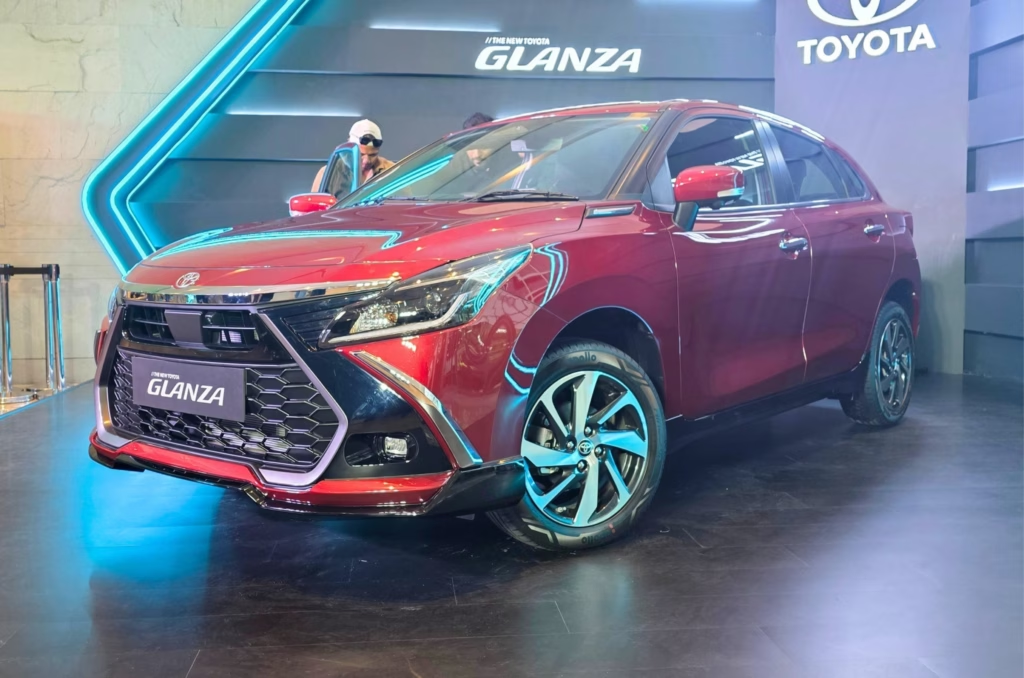
The Toyota Glanza facelift gets a revised front grille with satin-finish detailing and updated LED fog lamps, while the side and rear designs remain unchanged. It continues with 16-inch alloy wheels, a dual-tone dashboard, a touchscreen infotainment system and an analogue instrument cluster with a digital display. New features include ventilated front seats and a wireless phone charger. The Glanza now uses a 1.2-litre, three-cylinder petrol engine, replacing the previous model’s four-cylinder unit. It is offered with a 5-speed manual and a 5-speed automated manual (AMT), alongside a CNG option. The 2026 Toyota Glanza is priced from Rs 6.99 lakh to Rs 10.98 lakh.

Toyota Glanza new vs old: Differences and similarities explained

Toyota Glanza new vs old: Differences and similarities explained
Toyota Glanza Old vs New comparison

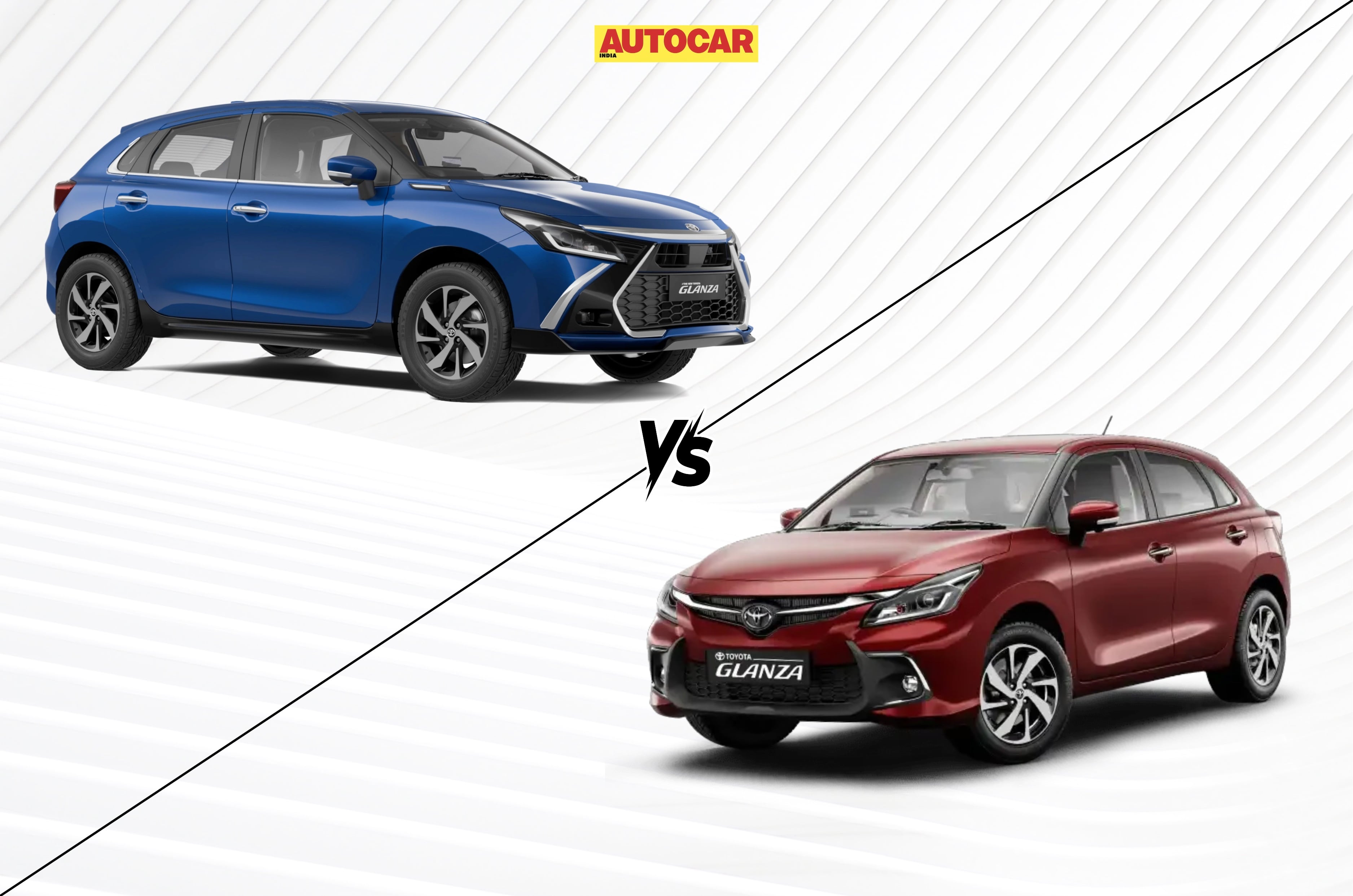
The Toyota Glanza has received a major update, following the same for the Maruti Baleno. This one brings some cosmetic revisions, an entirely different engine under the bonnet, a longer equipment list and a new top-spec trim level. Depending on the variant, prices now range between Rs 6.99 lakh and Rs 10.98 lakh (ex-showroom). That’s an increase of about Rs 26,000 to Rs 1 lakh over the old Glanza. Rivals include the Maruti Baleno, Hyundai i20 and Tata Altroz. Here’s a closer look at what’s changed and what’s been carried over.
Toyota Glanza new vs old: Exterior design

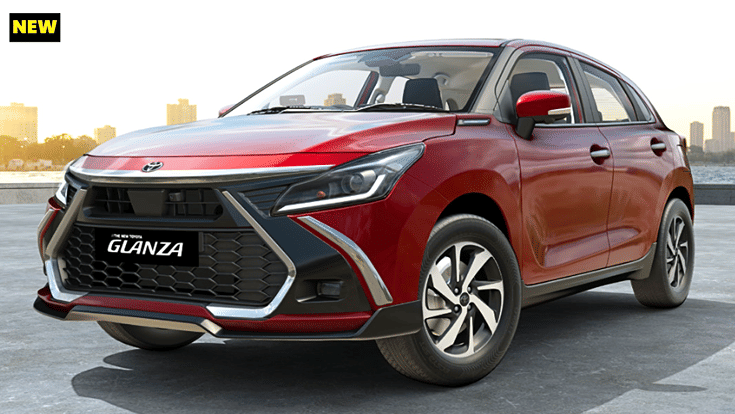
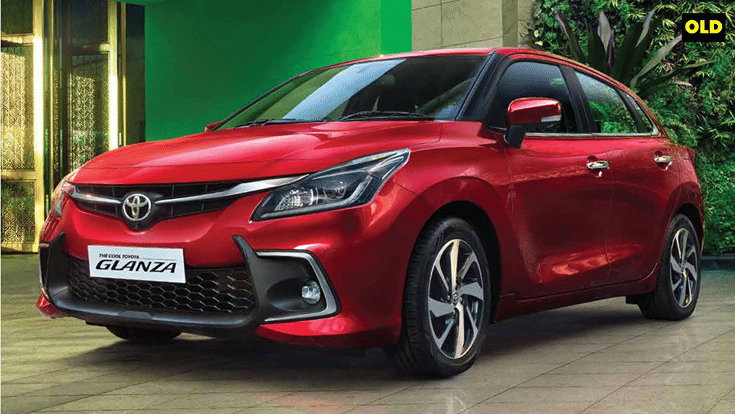
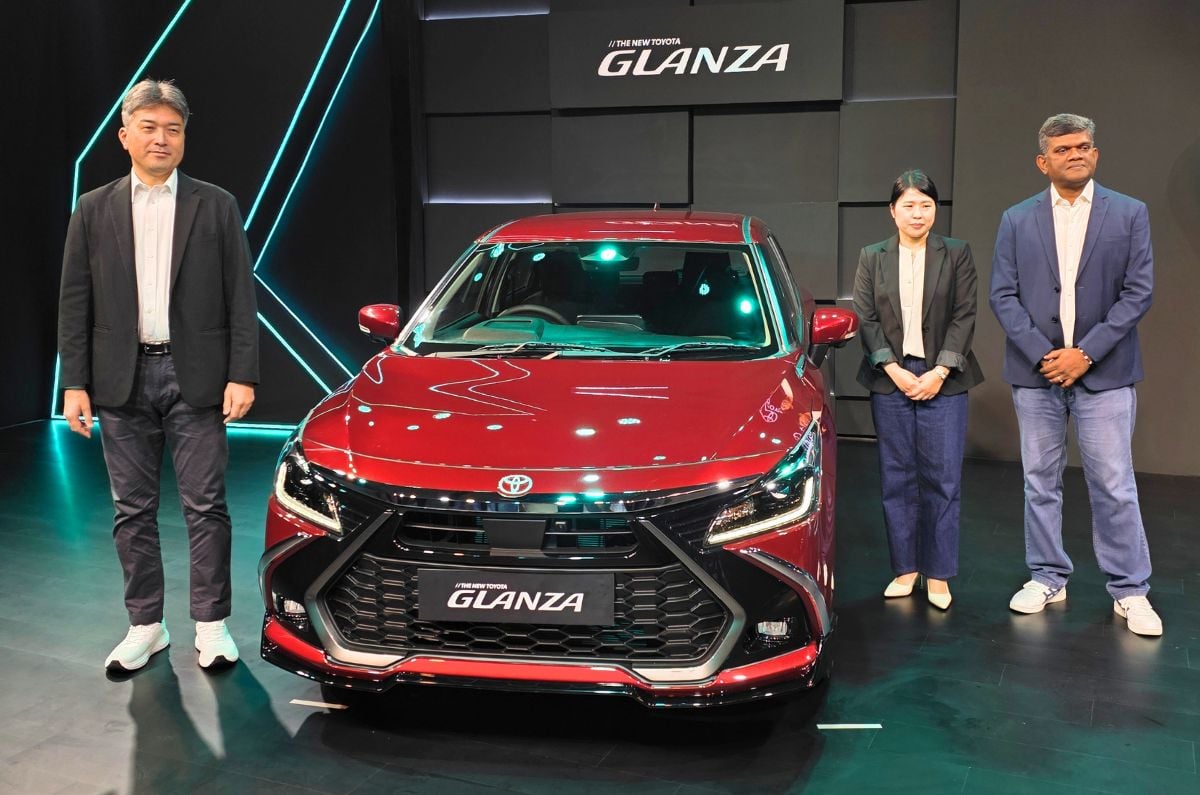
A new front fascia and a couple of different colour options do it for the exterior

New Toyota Glanza front bumper
Old Toyota Glanza front bumper
 

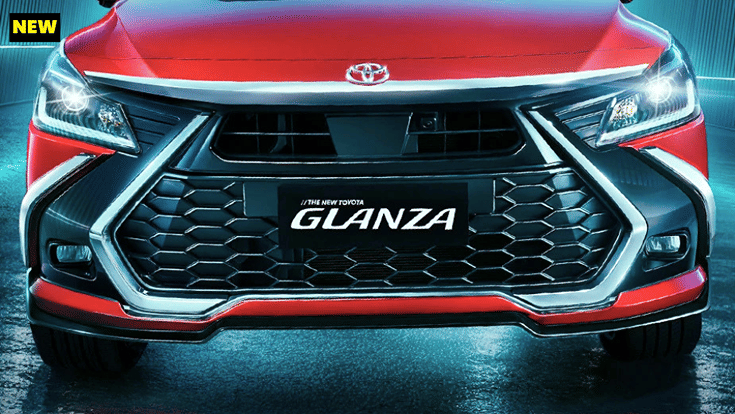
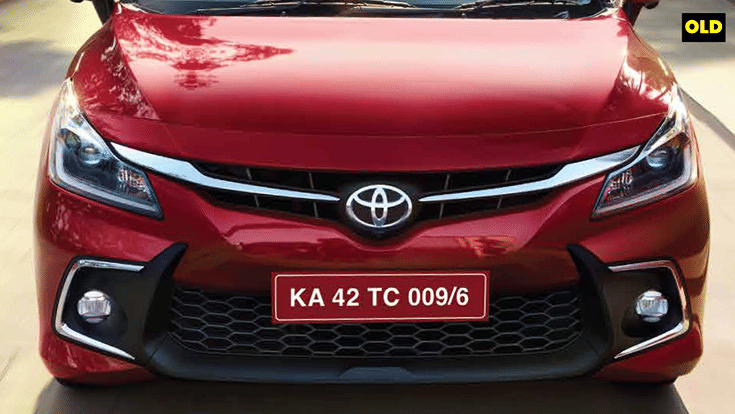
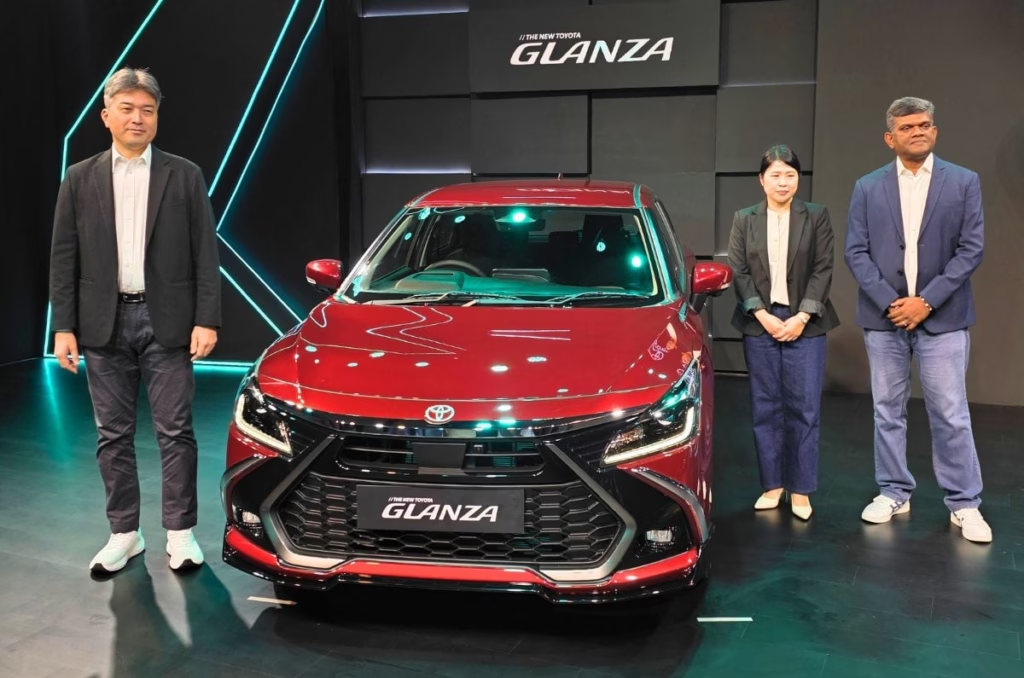
Most of the changes with this update are to be found at the front. The front fascia of the new Glanza looks more aggressive than the old model, with a taller middle section that integrates the upper grille and lower intake into a single-piece design. The intakes are larger and the Toyota logo now sits higher, just aft of the chrome strip connecting the headlamps.

New Toyota Glanza front quarter
Old Toyota Glanza front quarter
 

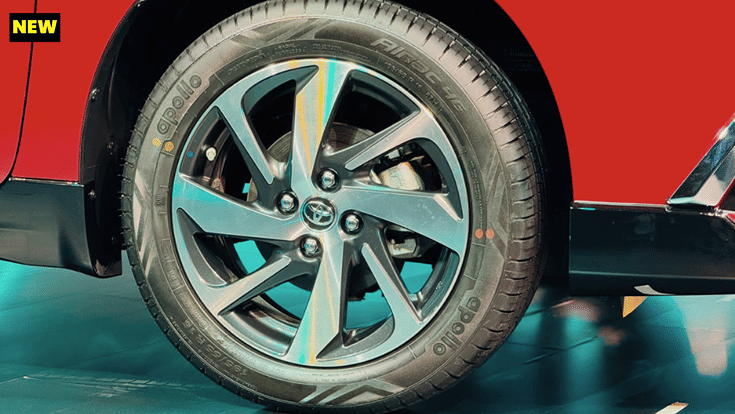
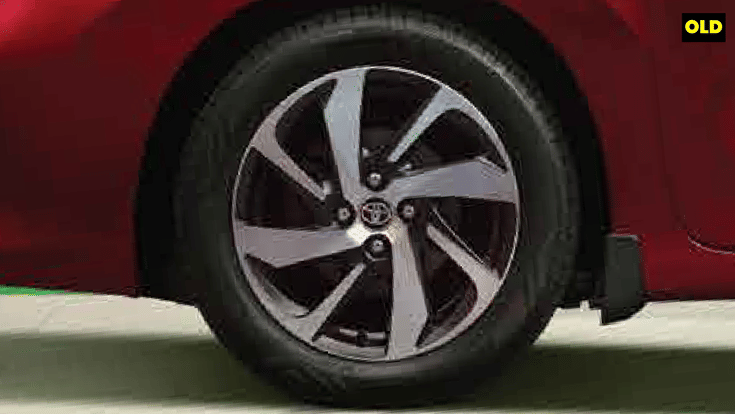
The headlamps have been carried over from the old Glanza, whilst the redesigned front bumper gets rectangular fog lamps in place of the old model’s circular units. The Glanza now gets side skirts and a sharkfin antenna, but the design of its 16-inch alloy wheels and the chrome strip beneath the windowline are carry-over from the old model.

New Toyota Glanza rear quarter
Old Toyota Glanza rear quarter
 

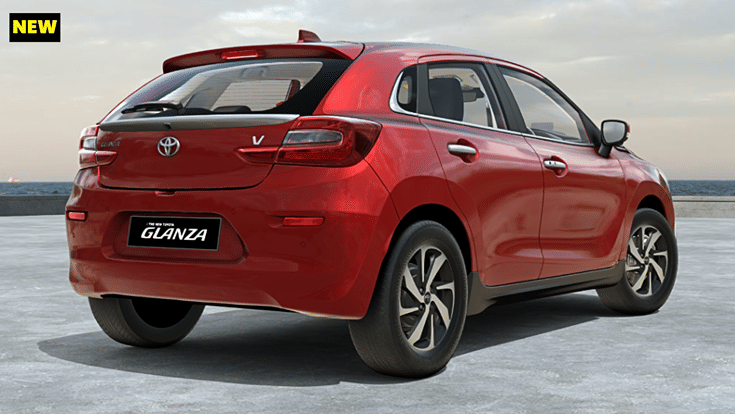
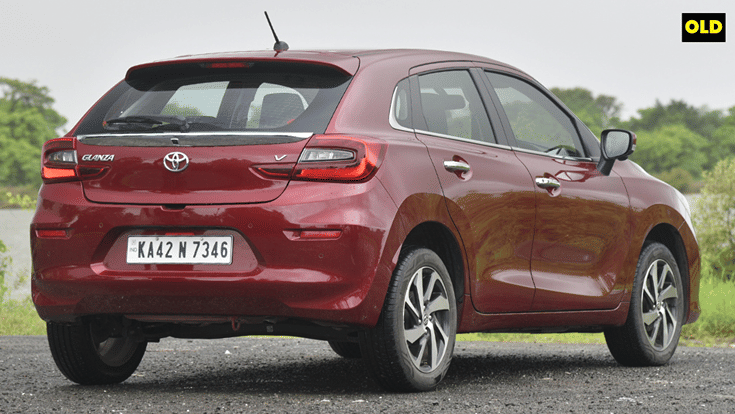
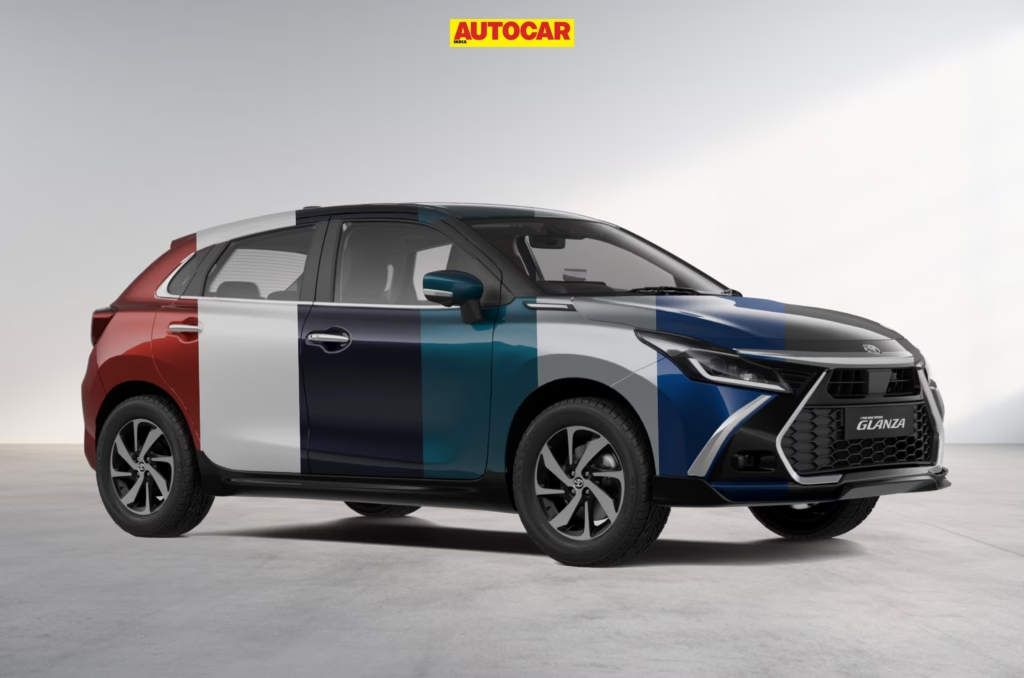
There are no changes made to the rear of the updated Glanza. This means that it retains the old model’s tail-lamps with their C-shaped elements, the roof spoiler and the wiper & washer setup. Along with the colours offered earlier, the Toyota Glanza facelift adds Digital Teal Green and Bluish Black to the list as well. 
Toyota Glanza new vs old: Interior design and features

The 2026 update adds more features, but lower trims now lose out on auto AC

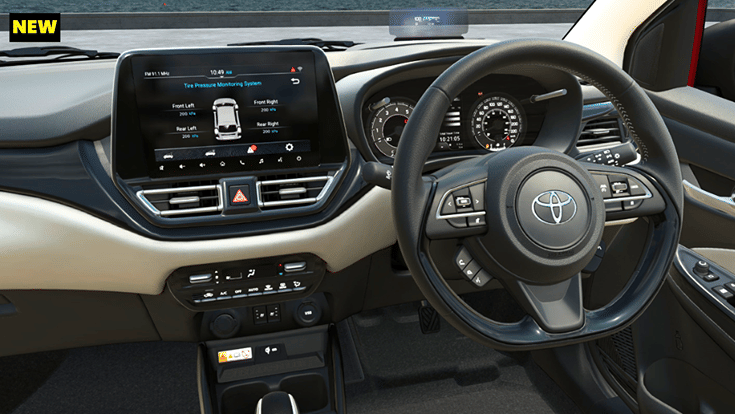
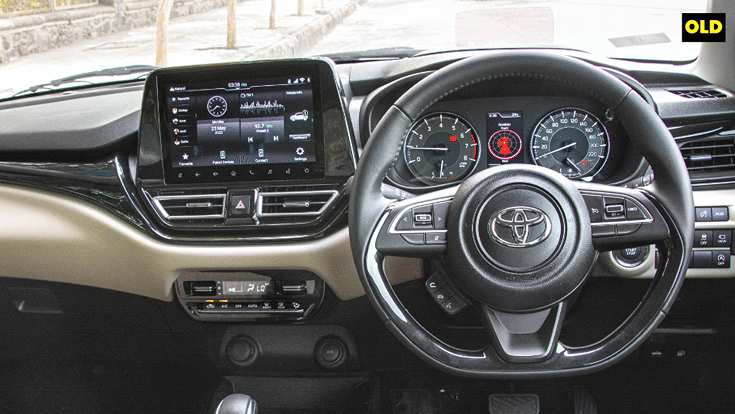
The overall design and layout of the cabin haven’t changed with this update, and the dual-tone dashboard and seats are carried over. However, the V and the new top-spec V (O) trims now get leatherette upholstery, with the front row featuring seat ventilation. 

The two high-end trims also get a new premium audio system by Clarion, whilst the earlier Arkamys setup moves to the mid-spec G. The G also gets a 9-inch touchscreen in place of the old 7-inch screen, while the lower-spec S gets a 7-inch unit. The S also offers a sliding front armrest, rear AC vents, and Type-A and Type-C ports. However, the lower trims now lose out on automatic AC.

New Toyota Glanza interior
Old Toyota Glanza interior
 

Other noteworthy additions include a wireless charger with active cooling (G trim and above) and a tyre-pressure monitoring system (TPMS) on all but the entry-level E. Standard kit includes 6 airbags, electronic stability control, hill-hold assist and ISOFIX anchors.

Level 2 ADAS (advanced driver assistance systems) is new, but is limited to the top-spec V (O). It brings adaptive cruise control, autonomous emergency braking, lane-keeping assist, lane-departure warning and high-beam assist. As with the old Glanza, the head-up display and 360-degree camera are reserved for the V trims.

Toyota Glanza new vs old: Engine and transmission

A three-cylinder engine replaces the old four-cylinder unit

New Toyota Glanza wheels
Old Toyota Glanza wheels
 

The old Toyota Glanza was powered by a 1.2-litre four-cylinder K-series petrol engine that produced 90hp and 113Nm of torque. With this update, the Glanza switches to the 1.2-litre three-cylinder Z-series engine that also powers the updated Maruti Baleno. This new unit puts out 83hp and 112Nm of torque, representing a loss of 7hp and 1Nm over the old model. The 5-speed manual and 5-speed AMT (automated manual transmission) have been carried over.

The claimed mileage has gone up from 22.35kpl to 23.80kpl for the manual and 22.94kpl to 24.77kpl for the AMT. While the old Glanza had automatic engine stop-start as standard only with the petrol versions, the updated model gains the fuel-saving tech for the CNG versions too. The new AMT variant of the Glanza CNG is rated at 34.47km/kg, with the manual’s claimed mileage going up from 30.61km/kg to 33.61km/kg.

In terms of output, the updated Glanza CNG sees power dropping from 77hp to 70hp, though the torque figure has gone up from 98.5Nm to 102Nm. Finally, the 2026 Toyota Glanza weighs up to 30kg more than the old model it replaces.

2026 Toyota Glanza vs rivals: Price, specifications compared

2026 Toyota Glanza vs rivals: Price, specifications compared
Glanza vs rivals

The Toyota Glanza is a premium hatchback that shares its underpinnings and powertrain with the Maruti Suzuki Baleno. The 2026 update brings changes to its styling and features, along with a CNG-AMT option. We compare it with the Baleno, Hyundai i20 and Tata Altroz in terms of specifications, features and prices.

2026 Toyota Glanza vs rivals: Dimensions

The i20 has the longest wheelbase, while the Altroz has the largest boot

DimensionsToyota GlanzaMaruti Suzuki BalenoHyundai i20Tata Altroz
Length3,990mm3,990mm3,995mm3,990mm
Width1,745mm1,745mm1,775mm1,755mm
Height1,530mm1,530mm1,505mm1,523mm
Wheelbase2,520mm2,520mm2,580mm2,501mm
Boot spaceTBA318 litres311 litres345 litres

The Glanza and Baleno share the same length, width, height and wheelbase. The i20 is marginally longer than the other three and has the greatest width and wheelbase. The Altroz offers the largest boot capacity at 345 litres, ahead of the Baleno’s 318 litres and the i20’s 311 litres. Toyota has yet to confirm the facelifted Glanza’s boot capacity, although its badge-engineered relationship with the Baleno suggests the two could have similar luggage space.

2026 Toyota Glanza vs rivals: Engine specifications

The Glanza gets petrol and CNG options, with manual and AMT gearboxes

Engine specificationsToyota GlanzaMaruti Suzuki BalenoHyundai i20Tata Altroz
Petrol engine1.2-litre, 3-cylinder1.2-litre, 3-cylinder1.2-litre, 4-cylinder1.2-litre, 3-cylinder
Petrol power83hp83hp83hp (MT); 88hp (IVT)88hp
Petrol torque112Nm112Nm114.7Nm115Nm
CNG optionYesYesNoYes
CNG power70hp70hp–74hp
CNG torque102Nm102Nm–103Nm
Diesel optionNoNoNoYes
Transmission options5-speed MT, 5-speed AMT5-speed MT, 5-speed AMT5-speed MT, IVT5-speed MT, 5-speed AMT, 6-speed DCT

The Glanza’s new 1.2-litre three-cylinder engine produces 83hp and 112Nm in petrol mode, down 7hp and 1Nm compared with the outgoing four-cylinder unit. Claimed fuel efficiency stands at 23.80kpl with the manual and 24.77kpl with the AMT. In CNG mode, output drops to 70hp and 102Nm, with claimed efficiency of 33.61km/kg for the manual and 34.47km/kg for the AMT.

Like the Glanza, the Baleno offers petrol and CNG powertrains with manual and AMT options. The i20 is petrol-only, while the Altroz offers petrol, CNG and diesel engines. The Altroz is also the only one of these four to offer a diesel engine, while the Glanza and Baleno now add the convenience of an AMT with CNG.

2026 Toyota Glanza vs rivals: Features

Glanza adds ventilated seats and Level 2 ADAS, while the i20 and Altroz get sunroofs

FeaturesToyota GlanzaMaruti Suzuki BalenoHyundai i20Tata Altroz
Head-up displayYesYesNoNo
Ventilated front seatsYesYesNoNo
360-degree cameraYesYesNoYes
Wireless phone chargerYes, with coolingYes, with coolingYesYes
SunroofNoNoYesYes
Infotainment touchscreen9-inch9-inch10.25-inch10.25-inch
Instrument clusterAnalogue dials with MIDAnalogue dials with MIDTFT display10.25-inch digital
Wireless Android Auto and Apple CarPlayYesYesYesYes
Automatic climate controlYesYesYesYes
Rear AC ventsYesYesYesYes
Adaptive cruise controlYesYesNoNo

The Glanza and Baleno share several key features, including a head-up display, ventilated front seats, a 360-degree camera and a cooled wireless charger. Both also use a 9-inch touchscreen and analogue instrument dials with a multi-information display. 

The i20 and Altroz offer larger 10.25-inch infotainment screens and sunroofs, which the Glanza and Baleno do not get. The Altroz also has a fully digital instrument cluster. All four offer automatic climate control, rear AC vents and wireless smartphone connectivity.

2026 Toyota Glanza vs rivals: Safety

Glanza and Baleno get Level 2 ADAS

Safety featuresToyota GlanzaMaruti Suzuki BalenoHyundai i20Tata Altroz
Level 2 ADASYesYesNoNo
Airbags6666
Tyre-pressure monitoring systemYesYesYesYes
Electronic stability controlYesYesYesYes
Hill-hold assistYesYesYesYes
ABS with EBDYesYesYesYes
ISOFIX child-seat mountsYesYesYesYes

The Glanza facelift adds Level 2 ADAS, including adaptive cruise control, lane-keeping assist, lane-departure warning and prevention, autonomous emergency braking and high-beam assist. It also gets a tyre-pressure monitoring system. The Baleno offers Level 2 ADAS as well, while all four hatchbacks have six airbags, electronic stability control, hill-hold assist, ABS with EBD and ISOFIX child-seat mounts.

2026 Toyota Glanza vs rivals: Price

Glanza prices range from Rs 6.99 lakh to Rs 10.98 lakh

Price (ex-showroom)Toyota GlanzaMaruti Suzuki BalenoHyundai i20Tata Altroz
Price rangeRs 6.99 lakh-10.98 lakhRs 5.99 lakh-9.99 lakhRs 6 lakh-11.64 lakh*Rs 6.30 lakh-10.75 lakh

The Baleno has the lowest starting price at Rs 5.99 lakh, making it Rs 1 lakh cheaper than the Glanza. The Altroz starts at Rs 6.30 lakh, while the i20’s entry price is Rs 6 lakh. At the top end, the i20 is the most expensive at Rs 11.64 lakh with the N-line trim, followed by the Glanza at Rs 10.98 lakh. The Altroz tops out at Rs 10.75 lakh, while the Baleno has the lowest top-spec price at Rs 9.99 lakh. The Glanza’s higher starting and top-end prices place it above its badge-engineered sibling, the Baleno, across the range.
Toyota Glanza facelift vs Maruti Baleno: Differences and similarities explained

Toyota Glanza facelift vs Maruti Baleno: Differences and similarities explained
Toyota Glanza facelift vs Maruti Baleno

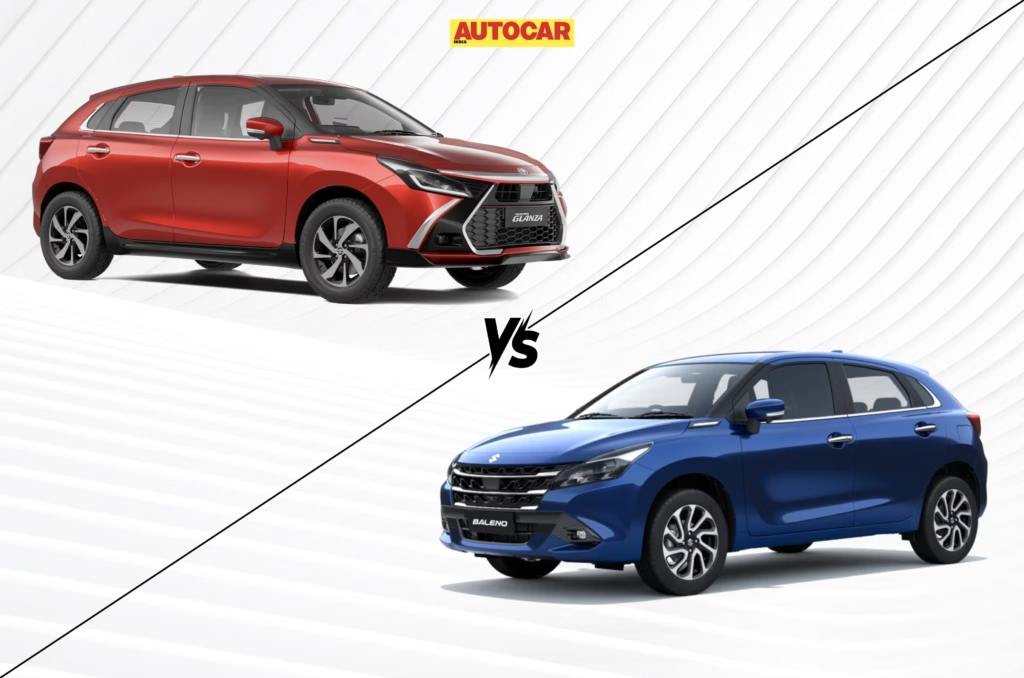
Toyota has introduced a comprehensive update to the Glanza for 2026. Over a month ago, its badge-engineered Maruti counterpart, the Baleno, was updated as well. But how unique are both hatchbacks when placed side by side? From exterior, interior, features, and price, we explain all the differences and similarities between the Glanza facelift and the Maruti Baleno.

Toyota Glanza facelift vs Maruti Baleno: Exterior 

Toyota Glanza facelift front static
Maruti Baleno front static
 

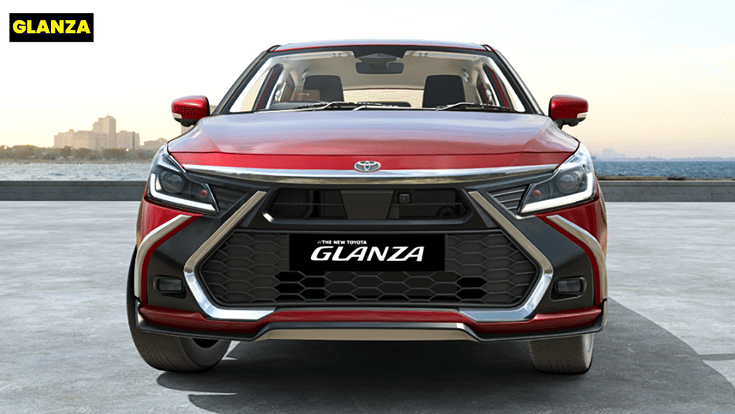
The Glanza facelift and Baleno’s fascias are the biggest distinctions between them. The Glanza’s fascia gets a bold look with a chrome strip connecting the headlamps, a massive grille with a honeycomb pattern, and silver surrounds. A black trim on either side of the bumper encases rectangular LED fog lamps, and there are additional chrome strips on the bumper edges. The bumper gets a sportier dual-tone design with a gloss black chin spoiler. 

Toyota Glanza facelift rear quarter static
Maruti Baleno rear quarter static
 

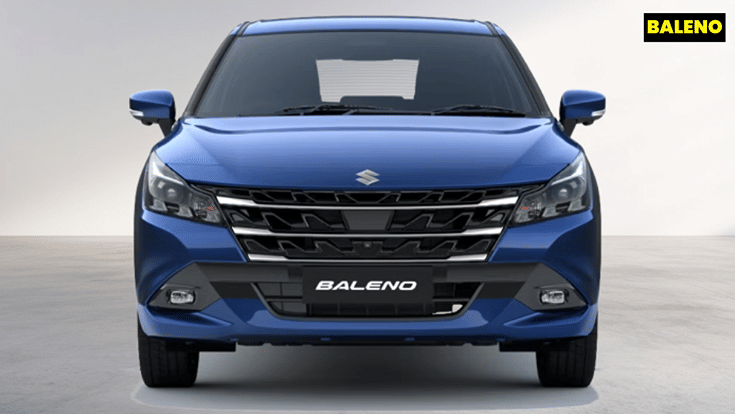
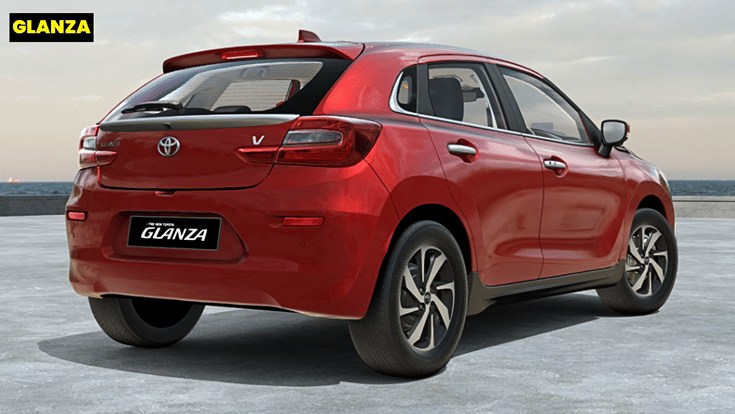
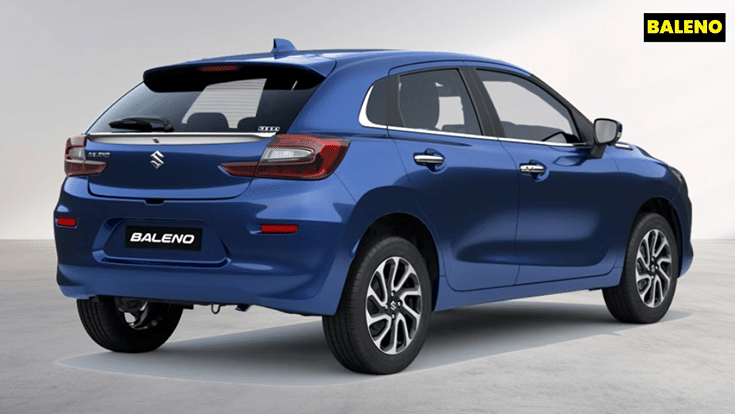
Meanwhile, the Baleno’s fascia takes an elegant approach with a trapezoidal grille with a triangular pattern and three chrome strips. The sculpted bumper gets a monotone finish, and there’s a gloss black trim that encases LED fog lamps that look similar to those on the Glanza. Though both hatchbacks get a similar shape for the LED headlamps, the detailing is different. Additionally, there are unique designs for the 16-inch alloy wheels for both models. Similar elements on both cars include a chrome finish for the window line, door handles, front fender garnish, and the strip on the bootlid. At the back, both models look nearly identical to each other.
Toyota Glanza facelift vs Maruti Baleno: Interior and features

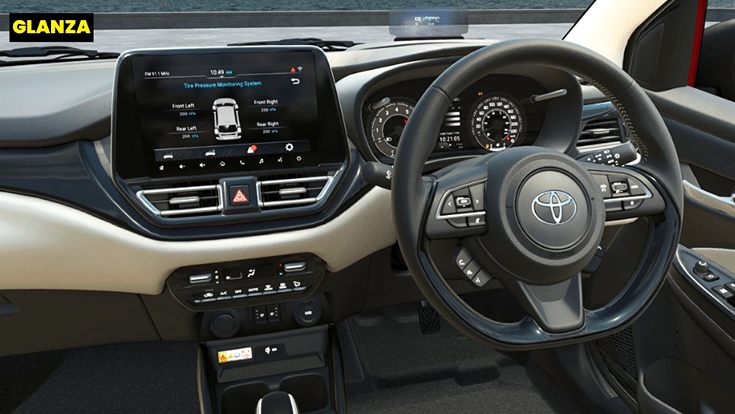
Toyota Glanza facelift interior
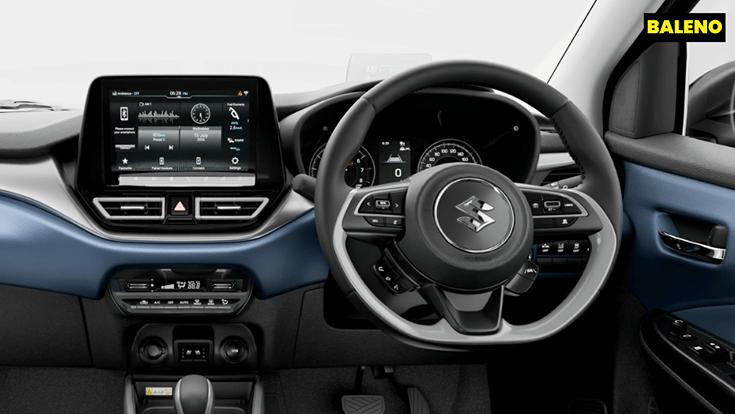
Maruti Baleno interior
 

Unlike the outside, the interior of the Glanza facelift isn’t much different from the Baleno’s. Apart from the different colour scheme, seat upholstery, and obvious badging differences, the overall cabin layout remains the same. Both get a layered dashboard with a free-standing infotainment display and physical switches for the HVAC controls lower down. As for features, the Glanza facelift now gets front seat ventilation and a level 2 ADAS suite like the Baleno. Similarly, the Glanza facelift’s safety kit sees the inclusion of a tyre pressure monitoring system and six airbags standard across the lineup. 

Toyota Glanza facelift vs Maruti Baleno: Engines 

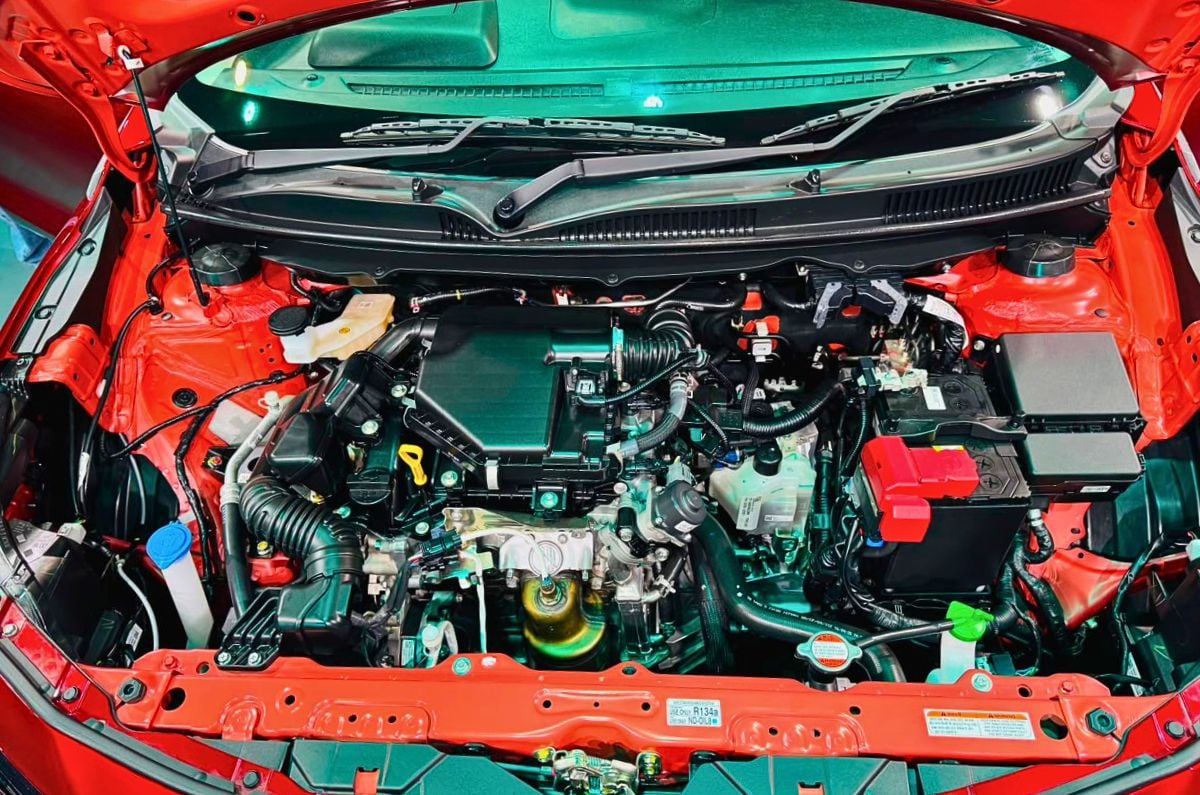
Under the bonnet, the Glanza facelift and Baleno get the same powertrain options. Both offer petrol and CNG versions that use a 1.2-litre, 3-cylinder, naturally aspirated engine. Petrol versions produce 83hp and 112Nm, while CNG versions deliver 70hp and 102Nm in CNG mode. Either powertrain is paired with a 5-speed manual or a 5-speed AMT gearbox. Additionally, both have identical claimed mileage figures: 23.80kpl (MT) and 24.77kpl (AMT) for the petrol, and 33.61km/kg (MT) and 34.47km/kg (AMT) for CNG versions.

Toyota Glanza facelift vs Maruti Baleno: Price 

Toyota Glanza facelift vs Maruti Baleno: Price (Rs lakh)

Variant level

Glanza petrol MT | AMT

Baleno petrol MT | AMT

Glanza CNG 

MT | AMTl  

Baleno CNG

MT | AMT

Base

6.99

5.99 

–

–

One above base

7.71 | 8.31

7.00 | 7.50

8.76 | 9.31

7.92 | 8.32

Mid level

8.73 | 9.33

8.00 | 8.50

9.68 | 10.23

8.92 | 9.32

Top-end 

9.99 | 10.59

9.50 | 9.60

–

–

Top-end (ADAS)

10.49 | 10.98

9.50 | 9.99

–

–

When it comes to prices of their respective petrol-powered versions, the Glanza facelift is pricier than the Baleno. Depending on the variant, the Glanza facelift will set you back by up to Rs 1 lakh over the Baleno. Moreover, both have an identical 3 years / 1,00,000km warranty.

All prices are ex-showroom, India

Which Toyota Glanza variant should you buy?

Which Toyota Glanza variant should you buy?
Which Toyota Glanza variant should you buy

The Toyota Glanza received a facelift in October 2026, with prices starting at Rs 6.99 lakh, ex-showroom. As part of this mid-lifecycle update, the premium Toyota hatchback gets a slightly tweaked exterior, additional features, an upgraded safety suite and a new petrol engine. Here, we take a closer look at the Glanza’s variants and their features. 

Toyota Glanza prices and powertrains

New Toyota Glanza prices (Rs lakh)

Trim

1.2 petrol MT

1.2 petrol AMT

1.2 petrol-CNG MT

1.2 petrol-CNG AMT
E6.99–––
S7.718.318.769.31
G8.739.339.6810.23
V9.9910.59––
V(O)10.4910.98––

Toyota has deployed a 1.2-litre 3-cylinder naturally aspirated petrol engine to power the new Glanza, and it produces peak outputs of 83hp and 112Nm. Both 5-speed manual and 5-speed AMT options are available with this engine. As before, a factory-fitted CNG option is also on offer. In CNG mode, power and torque fall to 70hp and 102Nm, respectively. A 5-speed manual gearbox continues to be available here, and Toyota has also introduced an AMT option with the Glanza CNG.

Toyota Glanza exterior colour options

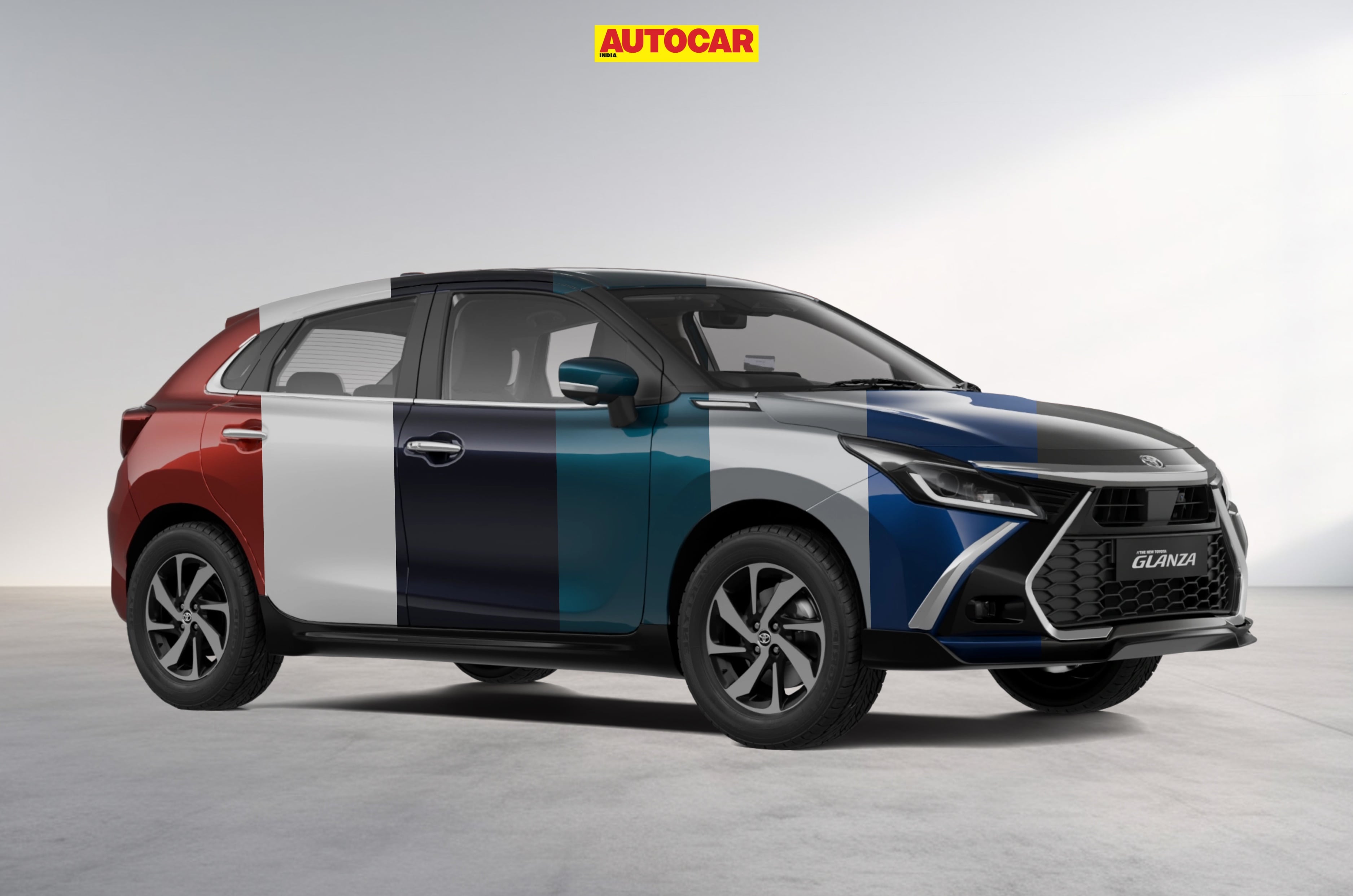
A total of seven exterior colours are offered with the new Glanza. These include Sportin Red, Cafe White, Gaming Grey, Insta Blue, Enticing Silver, Bluish Black and Digital Teal Green. The latter two colours have been introduced with the Glanza facelfit.
Toyota Glanza variant-wise features

E – Rs 6.99 lakh

1.2-litre petrol with 5MT

  • 6 airbags
  • ABS with EBD
  • Electronic stability program (ESP) with hill-hold control
  • Rear window defogger
  • Three-point seatbelts for all passengers
  • Keyless entry
  • Power windows for all passengers
  • One-touch up/ down for the driver’s side power window
  • Fabric upholstery
  • Tilt adjustment for the steering wheel
  • Adjustable seat headrests
  • 15-inch wheels with cover
  • Halogen projector headlamps
  • LED tail-lights
  • Shark fin-type antenna
  • Body-coloured bumpers

S – Rs 7.71 lakh onwards

1.2-litre petrol with 5MT/ AMT, CNG with MT/AMT

In addition to E
  • Tyre-pressure monitoring system (TPMS)
  • Rear AC vents
  • Rear fast-charging USB Type-A and Type-C ports
  • Steering-mounted audio controls
  • Electrically foldable and adjustable outside rearview mirrors (ORVMs)
  • 7-inch touchscreen
  • Wireless Android Auto and Apple CarPlay
  • Four speakers
  • Front centre sliding armrest
  • Rear parcel shelf
  • Body-coloured door handles
  • Body-coloured ORVMs with turn indicators

G – Rs 8.73 lakh onwards

1.2-litre petrol with 5MT/ AMT, CNG with MT/AMT

In addition to S
  • Rearview camera
  • Toyota i-Connect safety features
  • Rear wiper with washer
  • Telescopic adjustment for the steering wheel
  • Driver’s seat height adjustment
  • Push-button start/stop
  • Automatic climate control
  • Wireless charger with a cooling vent underneath
  • 9-inch touchscreen
  • Six-speaker Arkamys sound system
  • Footwell lighting
  • Automatic LED projector headlights
  • 16-inch alloy wheels
  • LED daytime running lights (DRLs)
  • Chrome-finished door handles

V – Rs 9.99 lakh onwards

1.2-litre petrol with 5MT/ AMT

In addition to G
  • 360-degree camera
  • Head-up display
  • Cruise control
  • Auto-dimming interior rearview mirror (IRVM)
  • Vanity mirror lamp
  • Leatherette seat upholstery
  • Leather-wrapped steering wheel
  • Clarion sound system
  • Front ventilated seats
  • LED fog lamps

V (O) – Rs 10.49 lakh onwards

1.2-litre petrol with 5MT/ AMT

In addition to V
  • Level 2 ADAS
  • Adaptive cruise control
  • Lane keep assist
  • Lane departure warning
  • Advanced emergency braking
  • Forward collision warning

Which Toyota Glanza variant should you buy?

Considering the good mix of useful and feel-good features, as well as the powertrain options on offer, the mid-spec G variant is the one we recommend. It’s also one of the only two Glanza trims to offer the full range of engine and transmission options, adding further to its appeal. The Glanza G range starts at Rs 8.73 lakh and goes up to Rs 10.23 lakh.

Ex-showroom prices mentioned above are as on October 14, 2026.

2026 Toyota Glanza facelift colours gallery

2026 Toyota Glanza facelift colours gallery
2026 Toyota Glanza Facelift Colours

Following the arrival of its Maruti Suzuki counterpart, the 2026 Toyota Glanza facelift has also been launched. Available in five trim levels, the updated Glanza is sold in 83hp petrol and 70hp CNG guises, with a choice of manual and AMT gearboxes. There are also new features that include ventilated seats, a Clarion audio system, TPMS and Level 2 ADAS.

2026 Toyota Glanza facelift launched at Rs 6.99 lakh

2026 Toyota Glanza facelift launched at Rs 6.99 lakh
2026 Toyota Glanza facelift launched in India

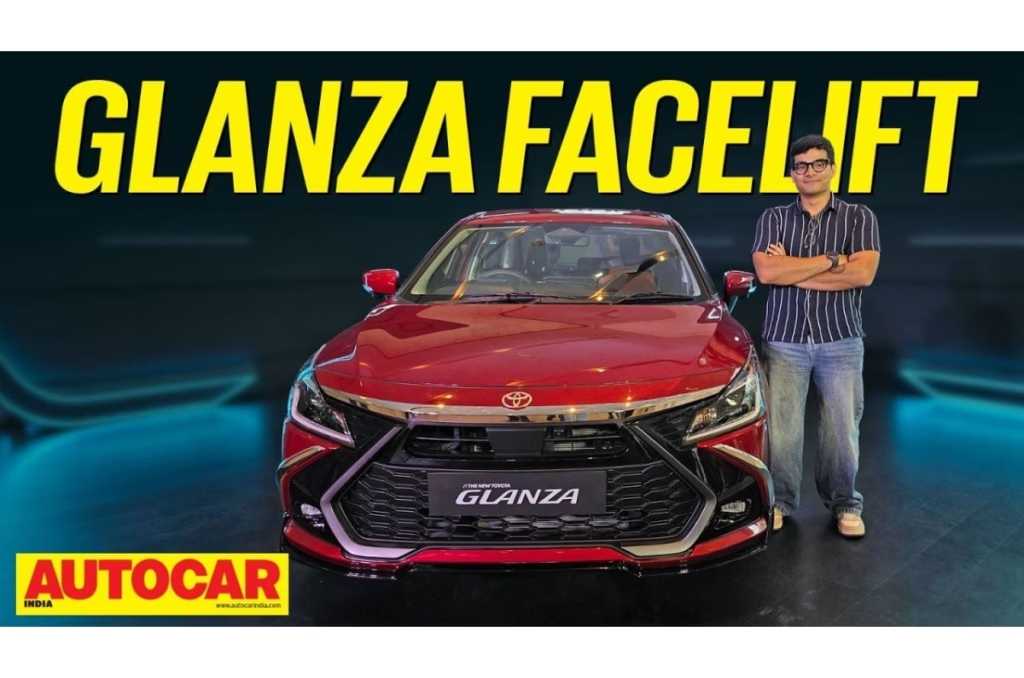
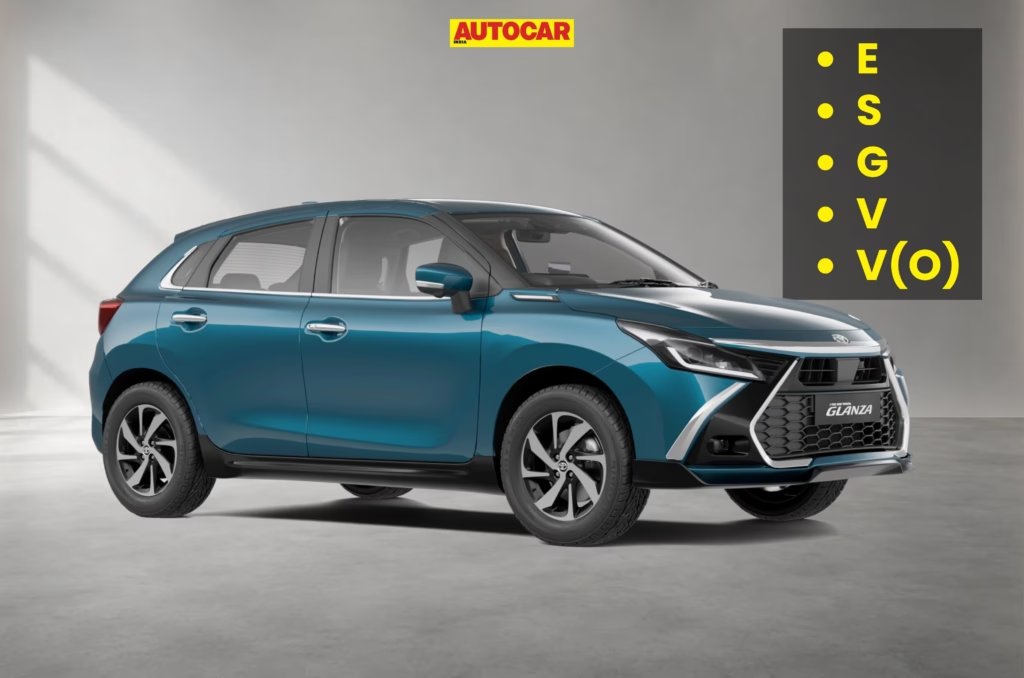
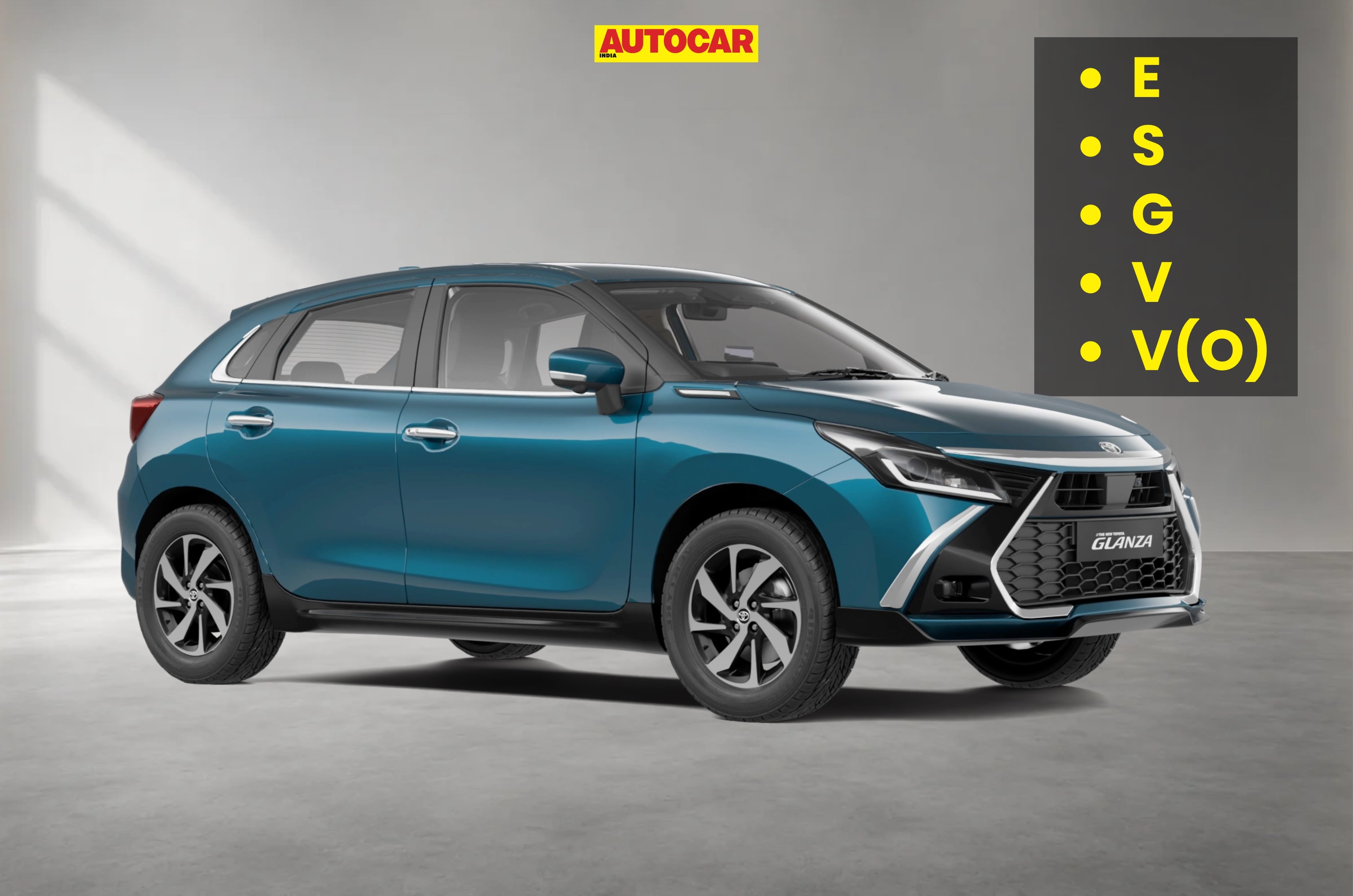
Toyota has launched the 2026 Glanza facelift in India, with prices starting from Rs 6.99 lakh (ex-showroom). It is being offered in five trims: E, S, G, V and V (O). In addition to a revised fascia, the 2026 Glanza gets a new 1.2-litre 3-cylinder petrol engine and fresh features like ventilated front seats, a wireless phone charger and an advanced driver assistance system (ADAS) suite.

  1. Gets a revised fascia, new alloy wheel design, shark-fin antenna
  2. Dashboard is unchanged, and it gets additional features now
  3. Powered by a new, more fuel-efficient 1.2-litre 3-cylinder engine

The Toyota Glanza facelift continues to lock horns with the Maruti Suzuki Baleno (Rs 5.99 lakh to Rs 9.99 lakh), Hyundai i20 and i20 N Line (Rs 6 lakh to Rs 11.64 lakh) and Tata Altroz (Rs 6 lakh to Rs 10.90 lakh).

2026 Toyota Glanza powertrain

A more fuel-efficient 3-cylinder engine replaces the older 4-cylinder unit

The 2026 Glanza is offered with a new Z12E 1.2-litre 3-cylinder naturally aspirated engine that runs on both petrol and CNG. In petrol mode, it produces 83hp and 112Nm and is available with a 5-speed manual or a 5-speed automated manual transmission (AMT). While the output figures are 7hp and 1Nm lower than the outgoing model’s 4-cylinder engine, fuel efficiency has increased slightly.  The petrol engine also has an idle start/stop function that generally improves fuel efficiency.

In CNG mode, the same engine produces 70hp and 102Nm, and is also offered with both 5-speed MT and 5-speed AMT options. The output figures are 7hp less but 4.5Nm more, and it offers higher claimed mileage. 

2026 Toyota Glanza exterior design

Has a new fascia with a larger grille, redesigned front fog lamps and new colours

The 2026 Toyota Glanza gets a revised fascia, featuring a larger grille with chrome trims on both sides, and a radar module that enables ADAS features. The headlights are the same as the older model, but the LED fog lamps have been redesigned. The front Toyota logo has also been repositioned to the plastic trim underneath the bonnet. A new shark-fin antenna is also on offer, and two new exterior colours have been added.

In profile, it gets the same 16-inch alloy wheels and the chrome door handles and chrome window line trim also continue on the facelifted model. The rear design sees no changes as well. It continues with the wraparound LED taillights, a roof-mounted spoiler, and a rear wiper and washer. 

Hyundai Bayon N Line revealed at Paris Motor Show

Hyundai Bayon N Line revealed at Paris Motor Show
Hyundai Bayon N Line

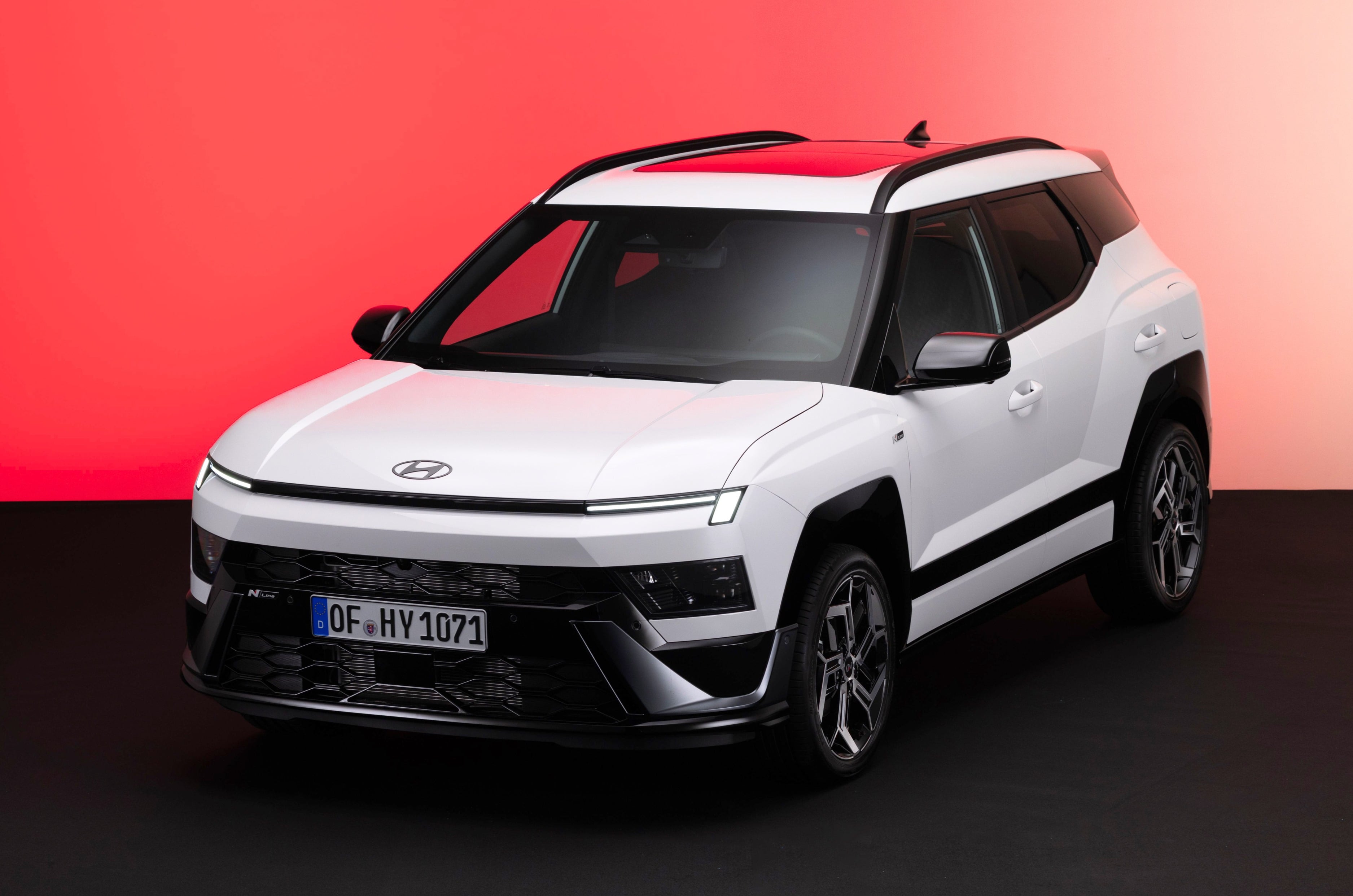
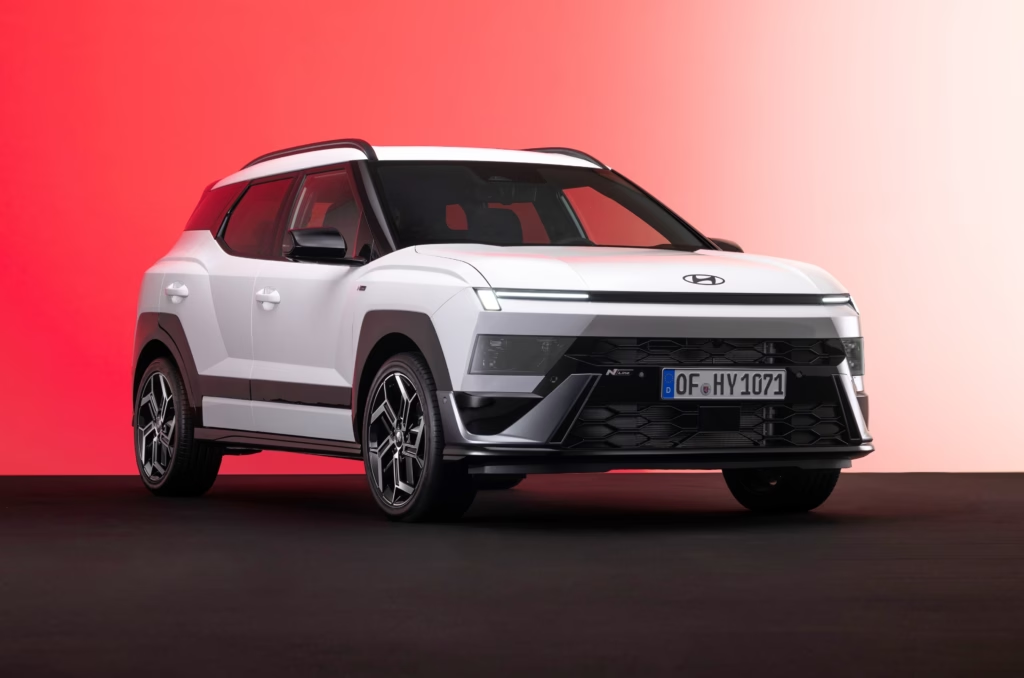
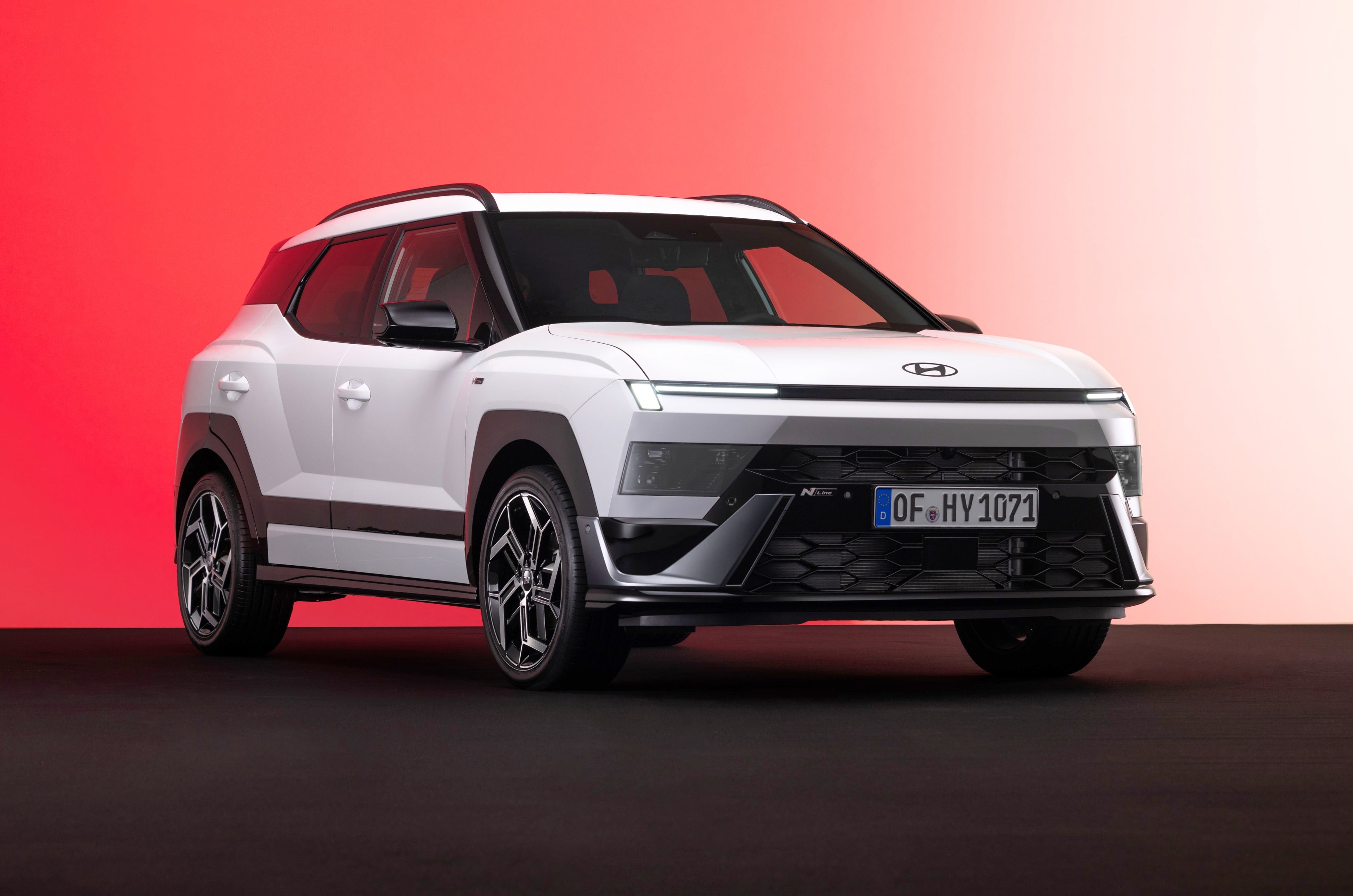
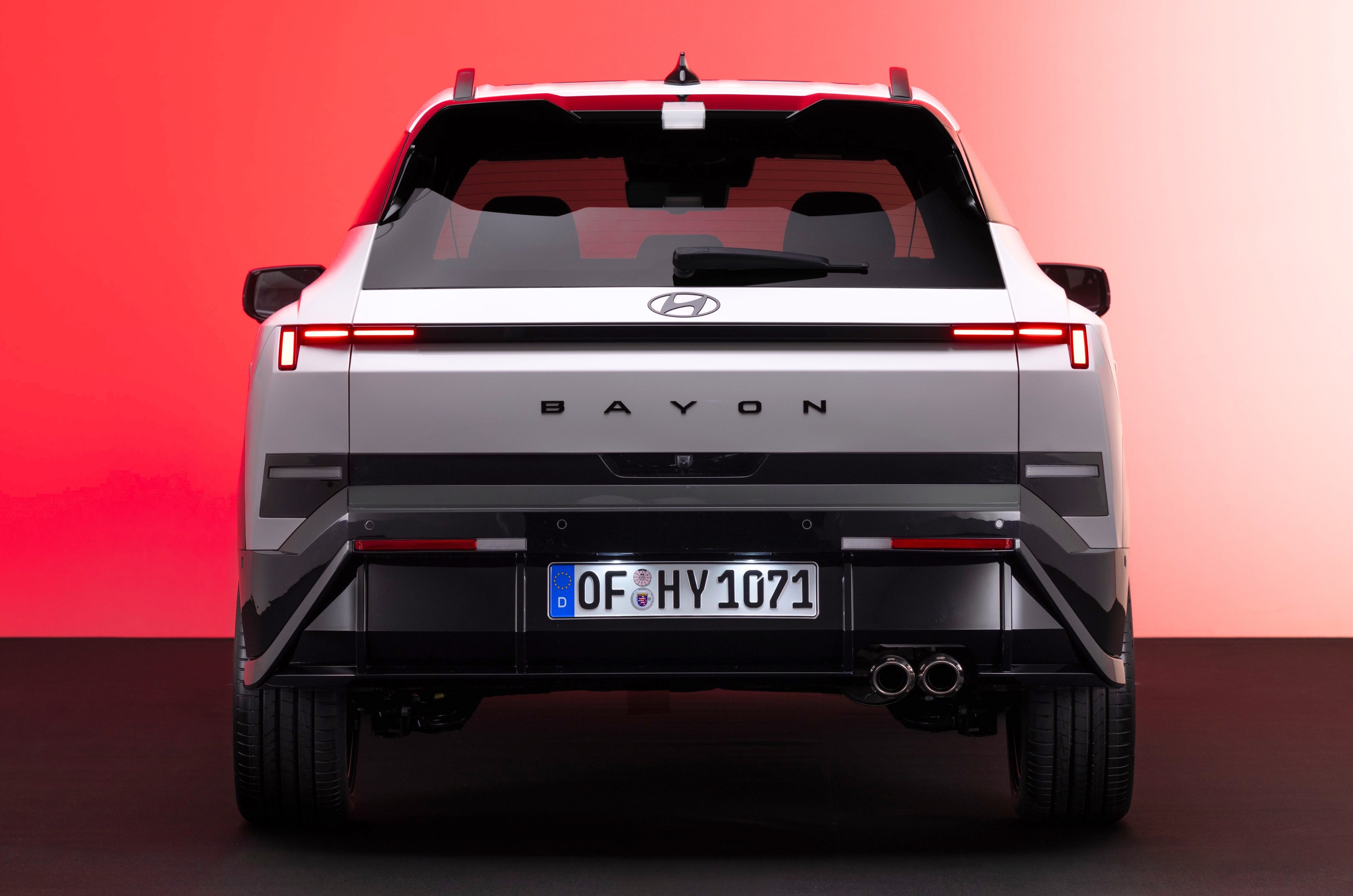
Alongside the recent reveal of the India-spec Bayon, Hyundai unveiled the SUV’s sporty N Line version at Paris Motor Show 2026. The Bayon N Line shares its top hat with the standard India-spec model, but has sportier touches all around and different engines.

2026 Hyundai Bayon N Line exterior design

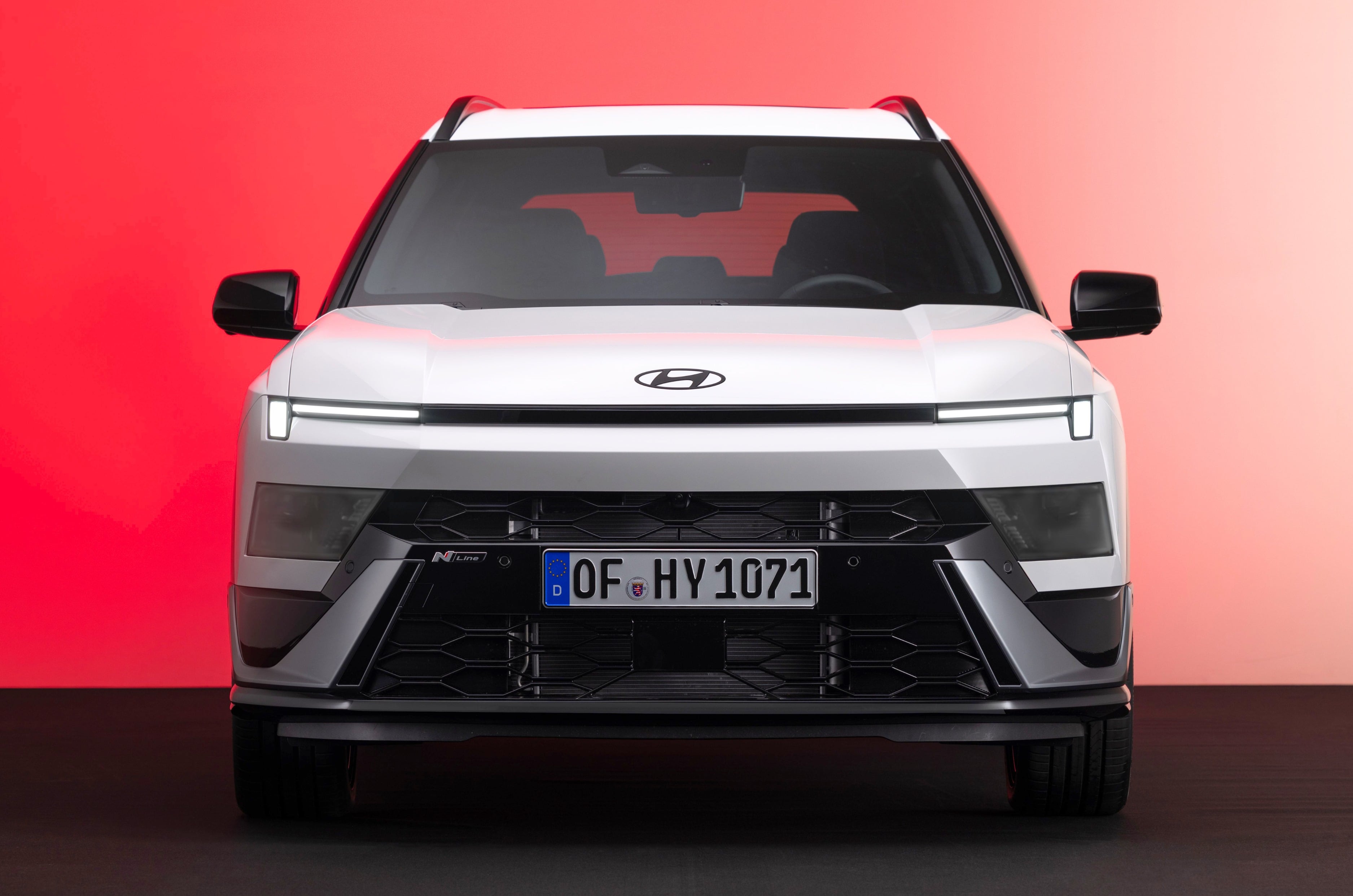
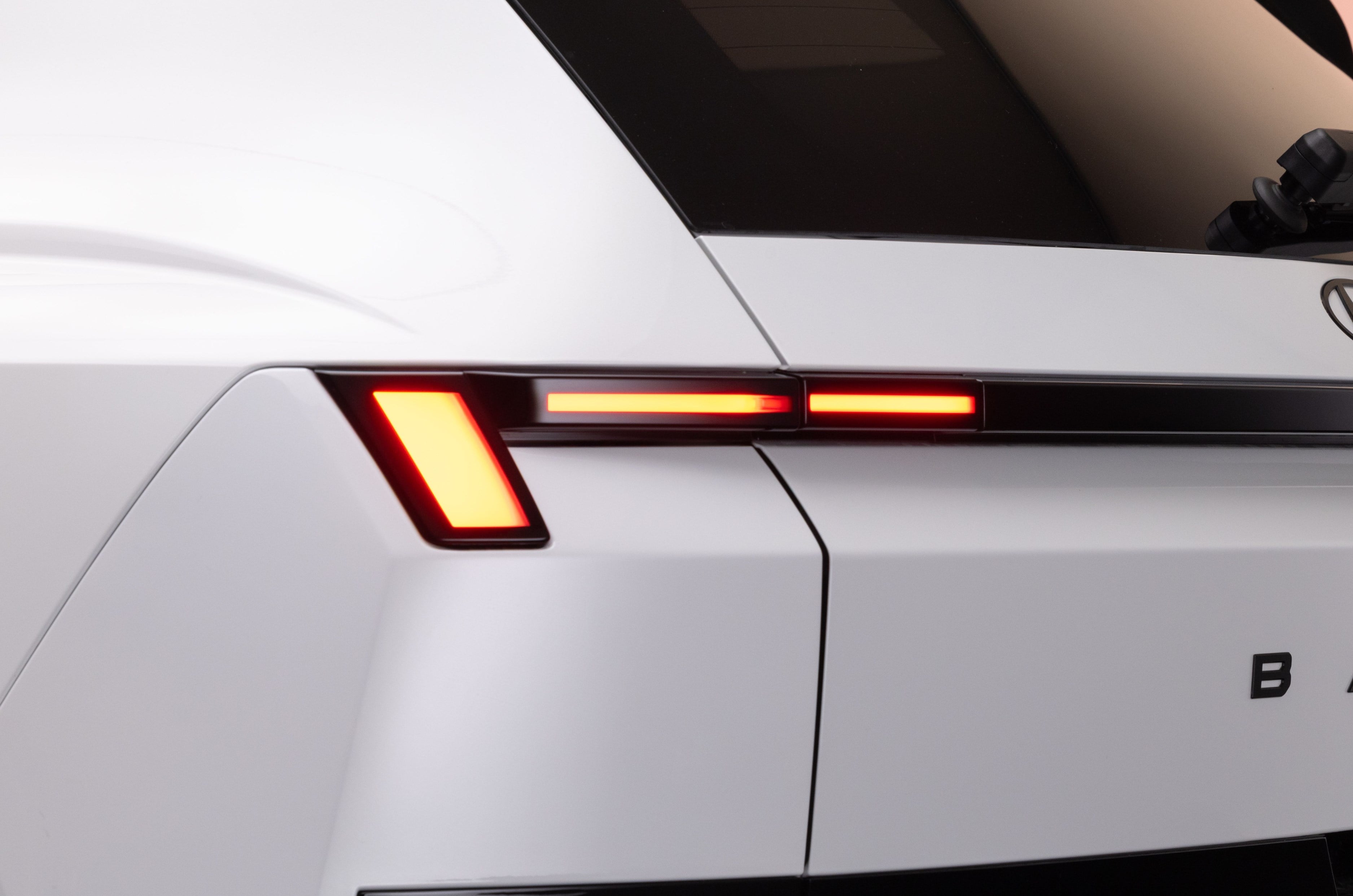
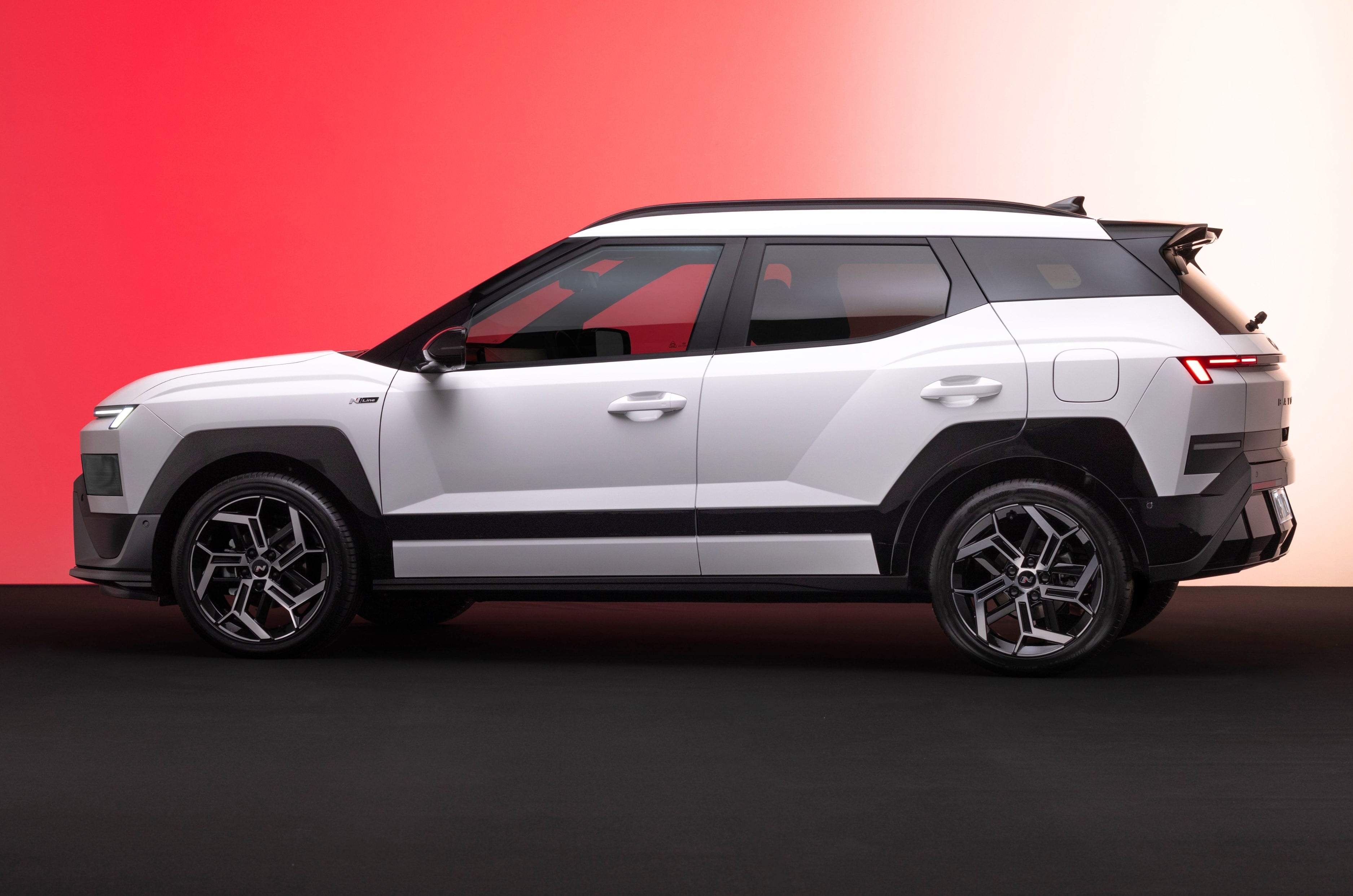
Much like the India-spec Bayon, the N Line features design cues like L-shaped front and rear lights, squared-off headlamp units, boxy wheel-arch cladding and flared fenders, a Bayon wordmark on the bootlid, and a heavily kinked windowline. However, the Bayon N Line differentiates itself with sportier styling elements.

Up front, the Bayon N Line has a different bumper with a more open design, blacked-out cladding, winglets, and a honeycomb pattern for the grille. An ‘N Line’ badge can also be seen on the left side of the bumper, and the headlamps look to have a smoked finish.

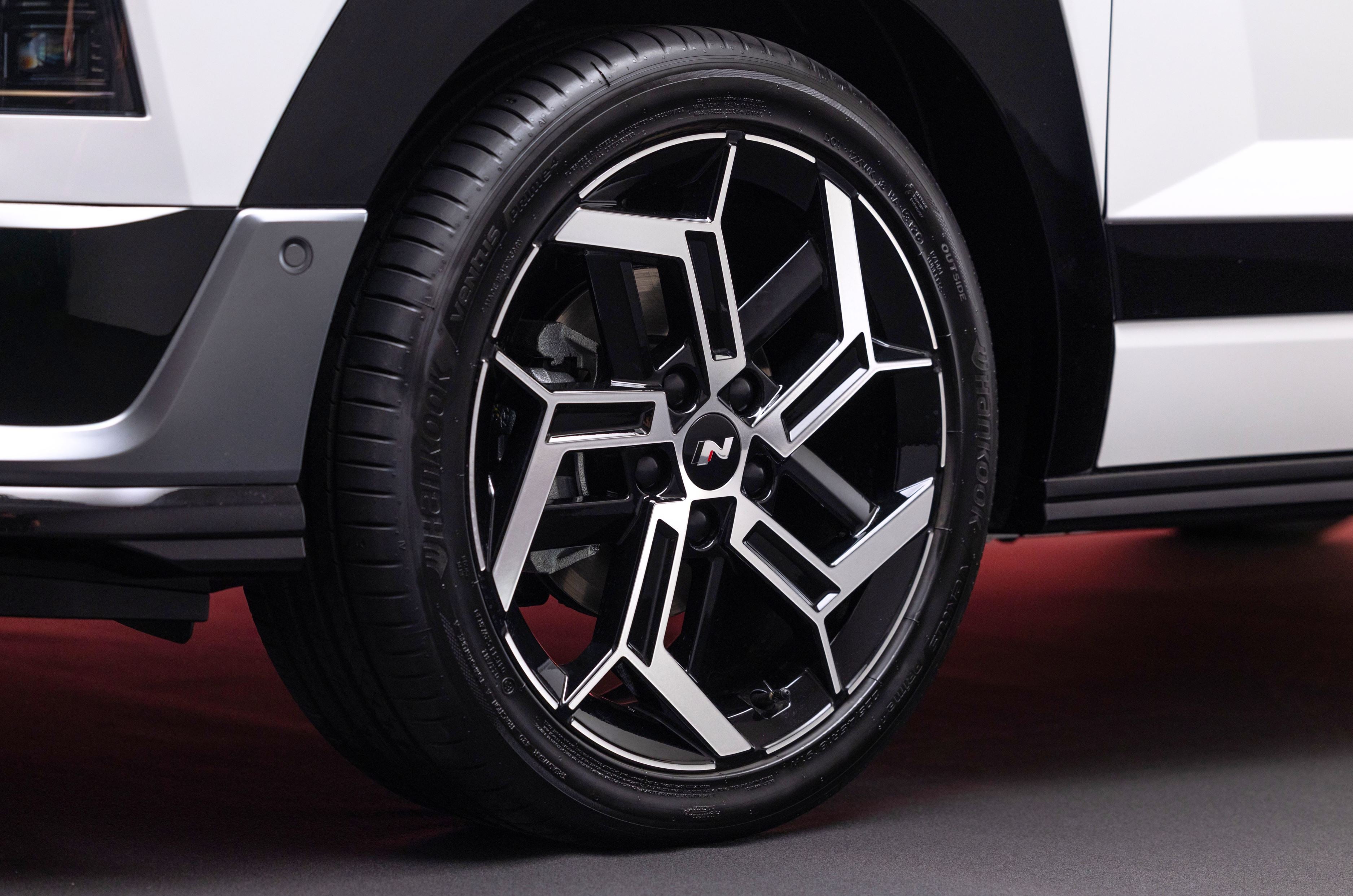
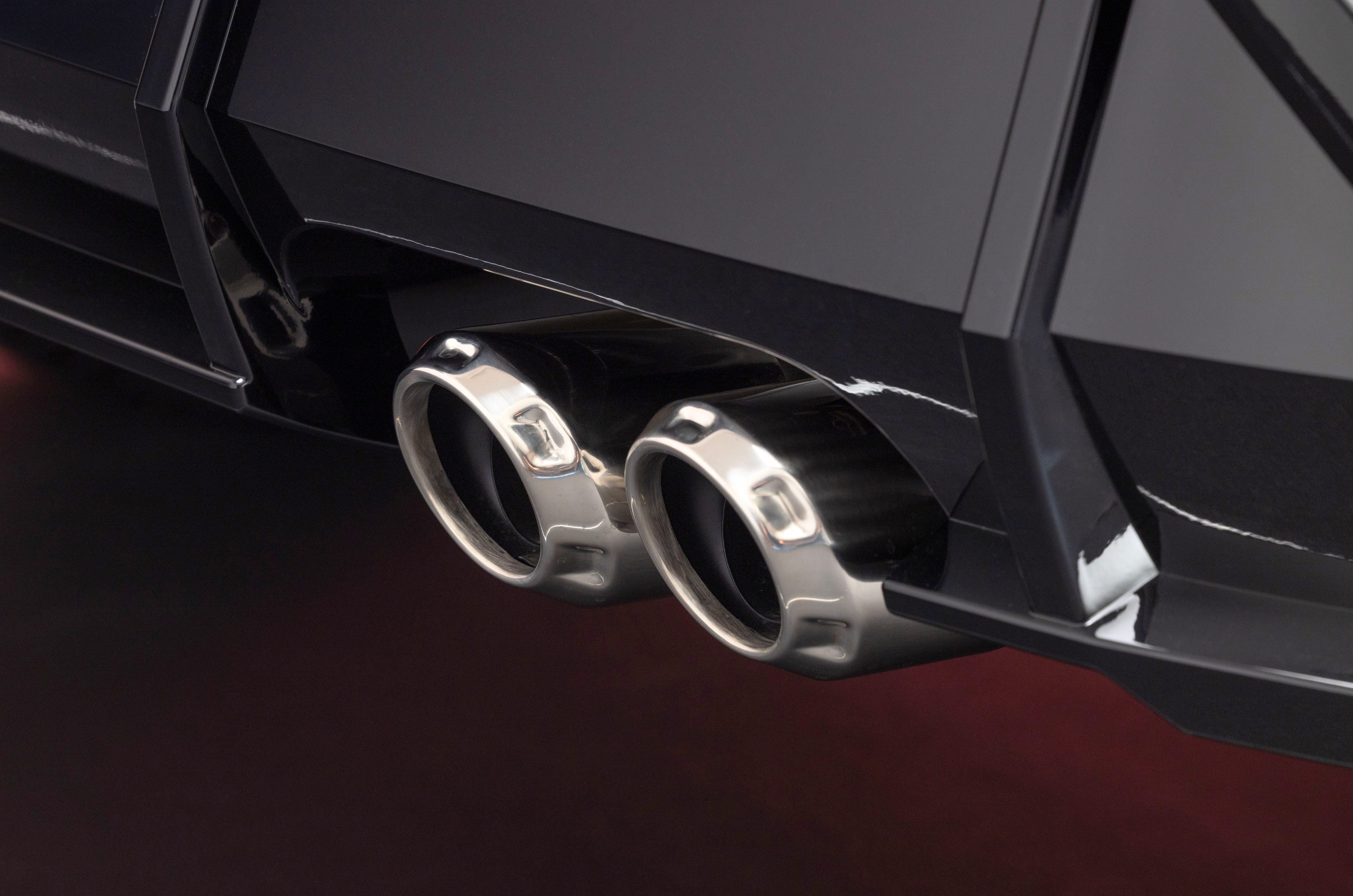
Over to the side, the N Line gets gloss-black finishes for the cladding and ORVMs, larger 18-inch alloy wheels, and N Line badging on the front fenders. The roof rails are also slimmer than the ones seen on the India-spec Bayon. At the back, the Bayon N Line sports a bigger twin-ridge roof spoiler, dual exhaust tips, a fully black bumper, and black finishes for the Hyundai emblem and Bayon wordmark on the bootlid.

The Europe-spec Bayon stretches the tape at 4,245mm long, 1,810mm wide, and 1,565mm tall, with a wheelbase of 2,600mm. These dimensions place it perfectly between the Venue and Creta in terms of size, and you can expect the India-spec Bayon to not stray that far off from them.

2026 Hyundai Bayon N Line interior and features

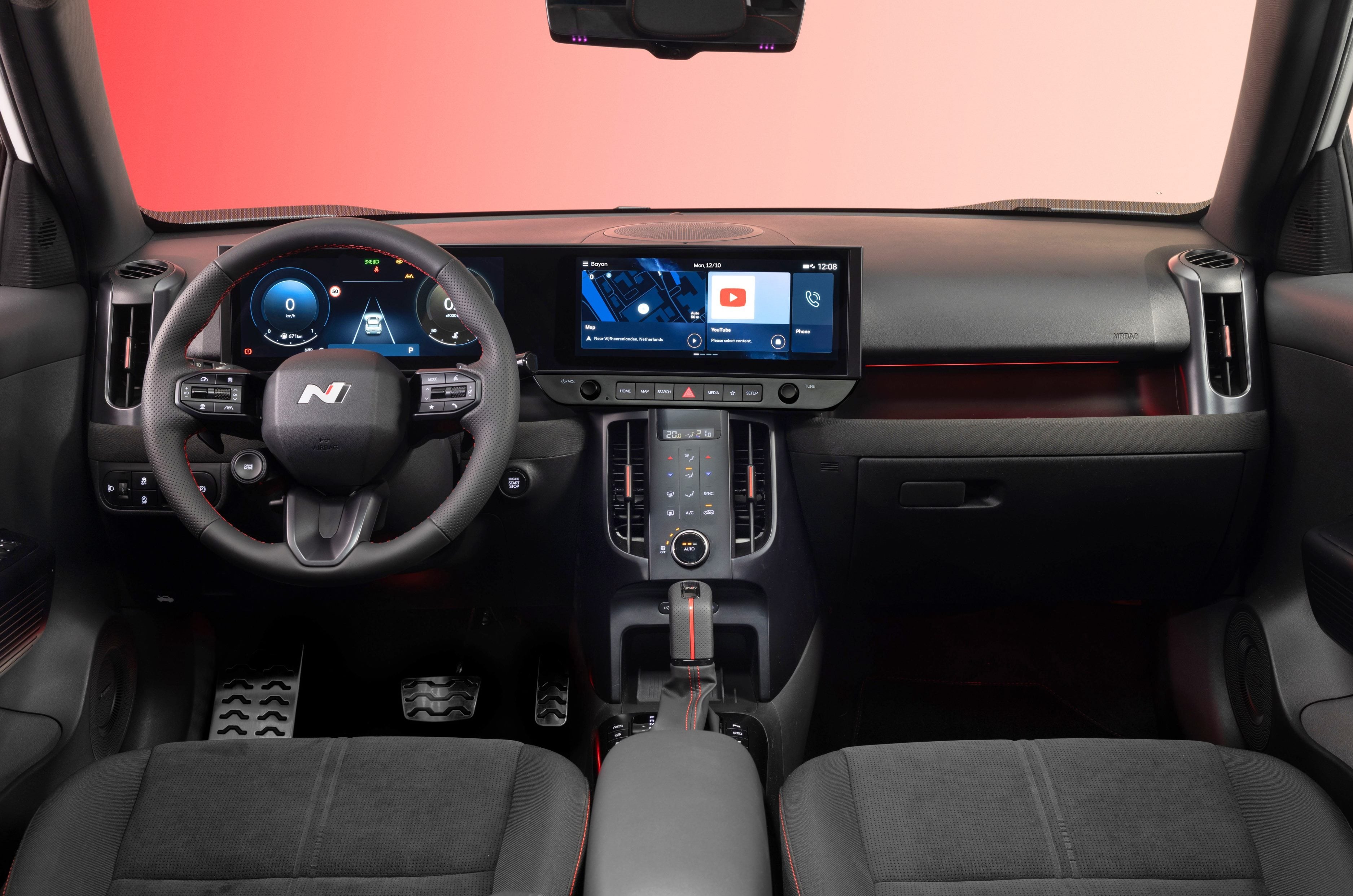
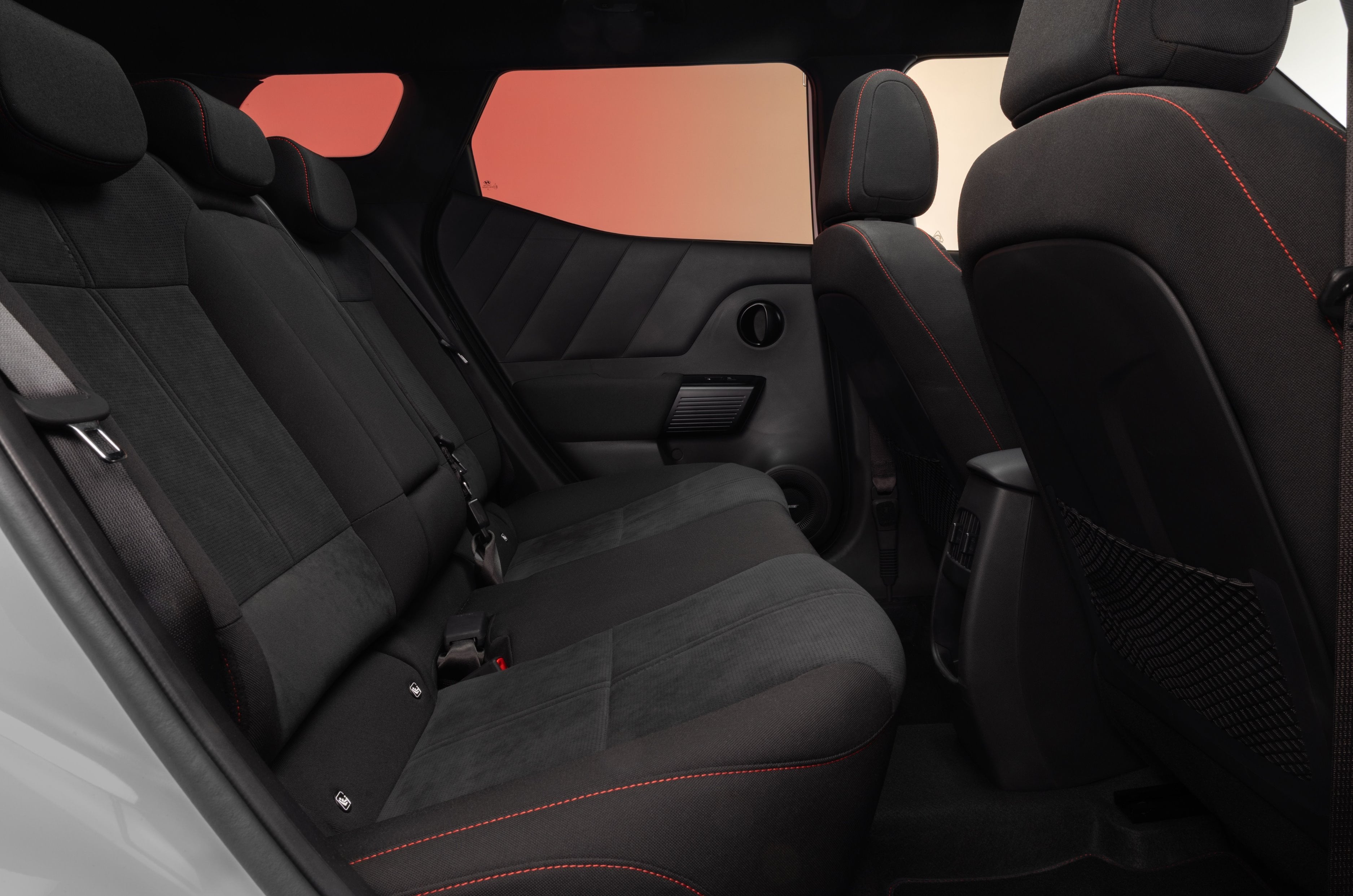
Similar to the outside, the core interior layouts of the India-spec Bayon and the N Line are identical, including a curved pair of 12.3-inch displays, a vertical design for the centre console (à la the fourth-gen i20), vertically oriented air vents, an open storage space on the co-driver side of the dashboard, among others. The Bayon N Line, however, brings in sportier touches like a black interior colour scheme with red accents and contrast stitching, Alcantara-esque seat upholstery, and an N-Line-specific steering wheel and gear lever.

As for features, the Bayon N Line offers wireless Apple CarPlay and Android Auto, ambient lighting, a panoramic sunroof, heated and ventilated front seats, reclining rear seats, a digital key, an 8-speaker Bose sound system, Level 2 ADAS, connected car tech, a wireless charging pad, dual-zone climate control, and more. Notably, Hyundai has not mentioned the inclusion of a generative AI voice assistant for the Bayon N Line, which the India-spec model will get. Coming to boot space, Hyundai claims 440 litres for non-hybrid versions of the Europe-spec Bayon.

2026 Hyundai Bayon N Line engine and gearbox

Where the India-spec Bayon will be powered solely by a 115hp 1.5-litre naturally aspirated four-cylinder petrol engine mated to either a 6-speed manual or CVT automatic, the N Line will be offered with Hyundai’s 1.0-litre three-pot direct-injection turbo-petrol motor in two states of tune – 90hp and 115hp – along with 6-speed manual and 7-speed dual-clutch automatic gearbox options.

Hyundai claims a 0-100kph time of as low as 10.8 seconds for the Bayon N Line – likely the 115hp DCT version – going up to 14.1 seconds for presumably the 90hp MT variant. Additionally, a strong-hybrid version will join the Europe-spec Bayon line-up at a later date, comprising a 1.6-litre direct-injection petrol engine, an electric motor, and a 6-speed DCT for a combined output of 138hp. It will also get adaptive regenerative braking that can be controlled by the steering-mounted paddle shifters.

Similarly, the India-spec Bayon is expected to receive a CNG version sometime after launch, which will strap an underbody tank to the SUV and allow it to directly rival the likes of the Maruti Suzuki Victoris, Maruti Suzuki Grand Vitara, and Toyota Hyryder.

Will the Hyundai Bayon N Line come to India

Hyundai is yet to confirm whether the Bayon N Line will be available in India, but given the positioning and target demographic of the model that will soon go on sale here, the prospect is unlikely (at least initially). The India-spec Bayon’s relatively sedate 1.5-litre engine, borrowed from the Creta, encourages smooth and relaxed driving over outright sportiness, and the incoming CNG version further reinforces the notion that this model will serve as Hyundai’s answer to the Victoris – a practical, no-nonsense midsize SUV that’s high on feel-good factor and low on running costs.