Bajaj Pulsar N250 vs N250SS: Differences explained

Bajaj Pulsar N250 vs N250SS: Differences explained
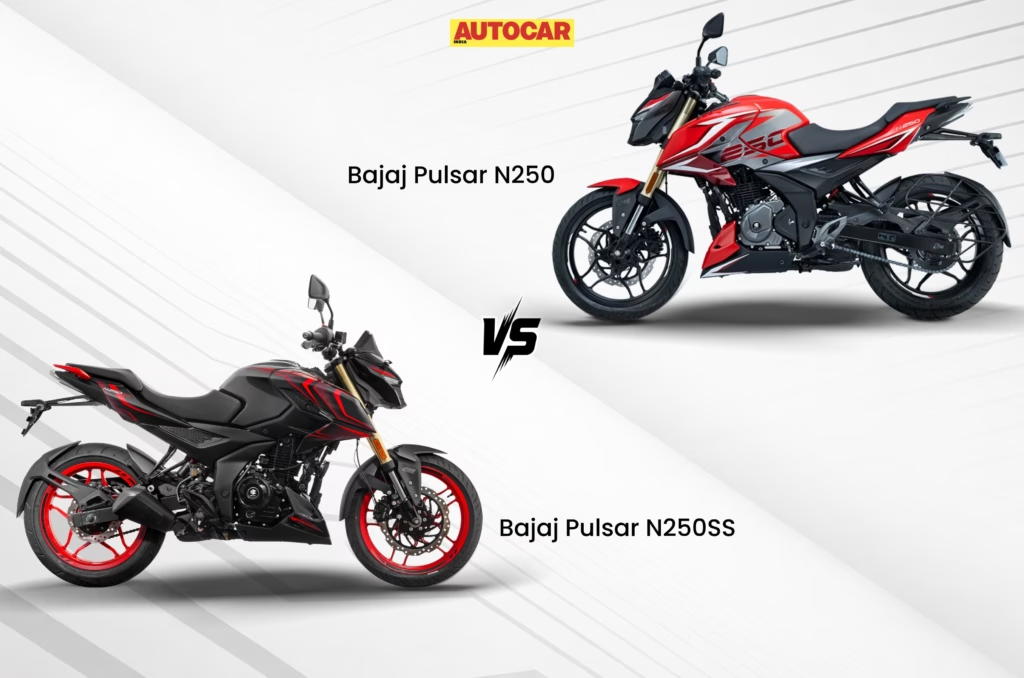
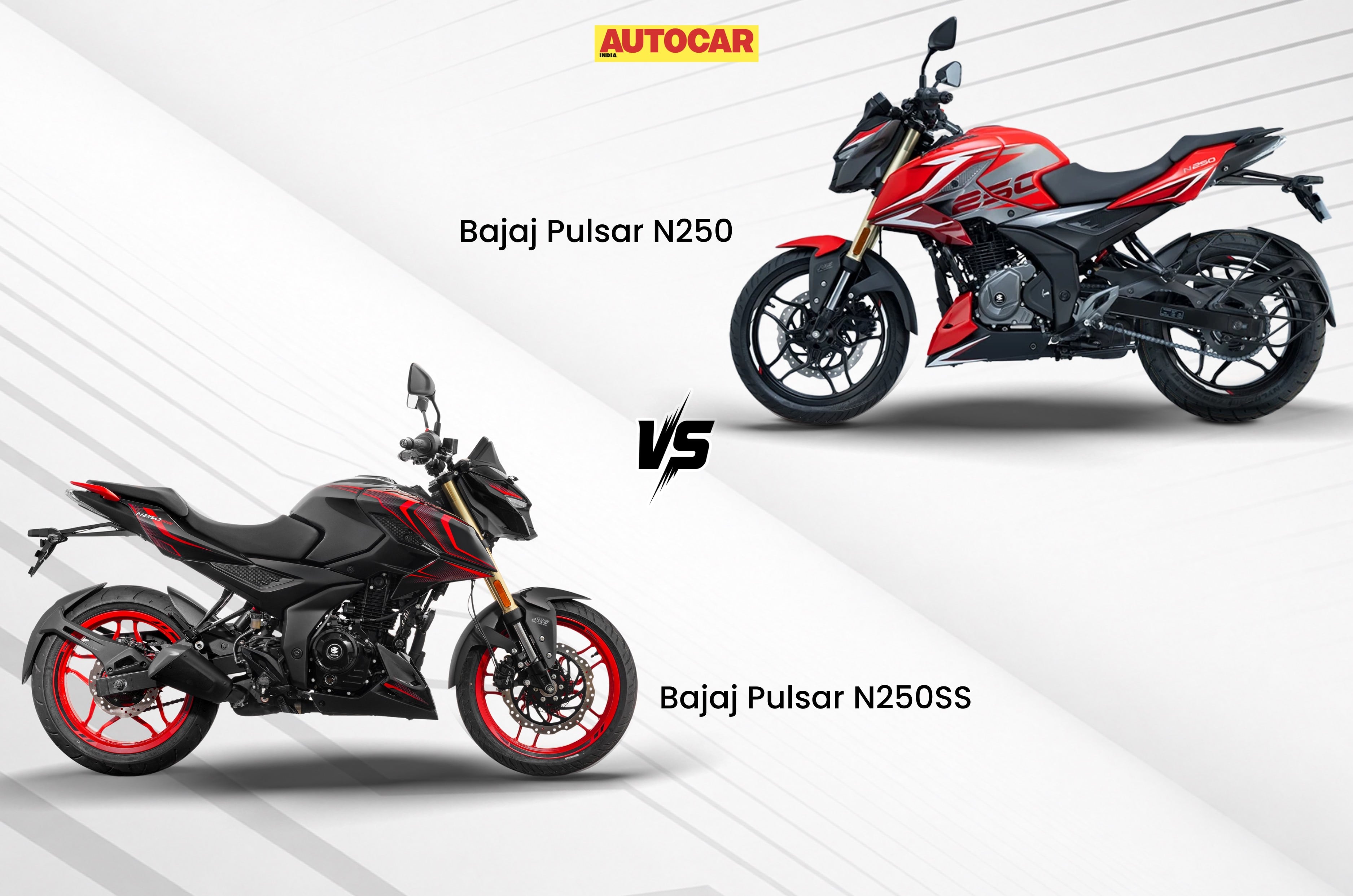
Bajaj Pulsar N250 vs N250SS graphic

Bajaj recently added the Pulsar N250SS to its portfolio, following the “SS” treatment it gave the N160 earlier this year. The model sits above the standard N250, with which it shares most of its underpinnings, but also gets some pretty substantial upgrades that set it apart. Here’s a breakdown of what each has to offer.

Bajaj Pulsar N250 vs N250SS: Engine and gearbox

The SS gets a four-valve head, a six-speed gearbox and a quickshifter

On paper, both motorcycles are powered by a 249cc, air- and oil-cooled engine. However, the N250SS uses an updated version with a four-valve head. Peak output figures are rated at 25hp and 22Nm, compared to 24.5hp and 21.5Nm on the standard N250, which uses a two-valve architecture.

Another notable change is the gearbox, with the SS featuring a six-speed unit in place of the N250’s five-speed. It also comes with a quickshifter as standard for clutchless upshifts, a feature the N250 doesn’t offer. An electronic throttle body is also new and enables riding modes on the SS.

Bajaj Pulsar N250 vs N250SS: Features

The SS moves up to a TFT console and a longer equipment list

The N250 uses a negative LCD unit, which is replaced by a 5-inch TFT console on the N250SS. The latter also gets adjustable levers, a USB Type-C charging port, a panic brake alert and a hazard switch.

Bajaj Pulsar N250 vs N250SS: Price

The SS costs Rs 14,000 more than the standard N250

The N250SS is priced at Rs 1.59 lakh (ex-showroom, Delhi), against Rs 1.45 lakh for the standard N250. For the Rs 14,000 premium, you get a slight improvement in performance, an extra gear, a quickshifter, the TFT console and a few other convenience features.

Even at this price, the N250SS undercuts most of its chief rivals, such as the Suzuki Gixxer 250 (Rs 1.85 lakh) and the recently introduced Hero Xtreme 250R Carbon (Rs 1.98 lakh), by a fair margin.
Tata Sierra EV real world range tested, explained

Tata Sierra EV real world range tested, explained
Tata Sierra EV Real World Range Test

The Tata Sierra EV was launched in June 2026, and while it shares its tophat with the ICE Sierra, the EV is based on the Acti.ev+ architecture which is also used by the bigger Harrier EV. Priced between Rs. 18.79 lakh and Rs. 25.99 lakh (ex-showroom), the Sierra EV is available with two battery pack options – 63kWh and 75kWh, with the choice of a single motor RWD or a dual motor AWD setup.

We’ve now put the Tata Sierra EV AWD through our real-world range test to see how it fares.

  1. Weighs 2,130kg 
  2. Driven in ‘Eco’ mode with regen set to L1 (highway) and L3 (city)
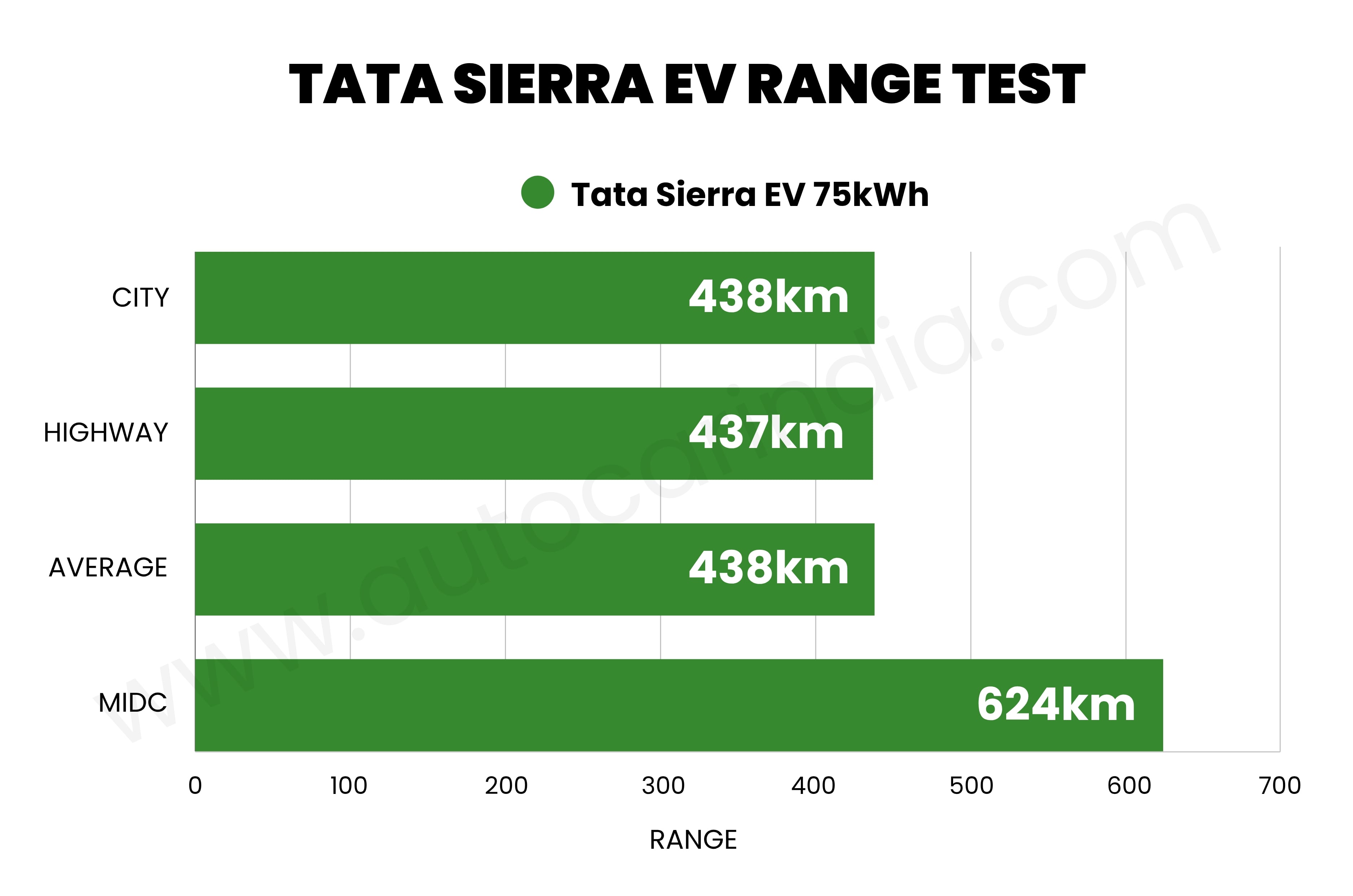
  3. MIDC range is 624km for the AWD variant

Tata Sierra EV real-world range tested

Powering the Sierra EV AWD are two electric motors: an Induction motor at the front rated at 140hp and a PMSM (Permanent Magnet Synchronous Motor) at the rear rated at 209hp, with a combined torque of 504Nm. It uses a 75kWh lithium ion battery pack that uses Lithium Iron Phosphate (LFP) cell chemistry. It comes with four driving modes – Eco, City, Sport and Boost, and four regen modes – L0, L1, L2 and L3. For our tests, we drove it entirely in ‘Eco’ mode with the regen set to L3 and L1 in the city and on the highway, respectively.

Tata Sierra EV Real World Range Test Graph

In terms of efficiency, the Sierra EV delivered very similar figures in the city and on the highway. In the city, the Sierra delivered 5.83km/kWh, whereas the highway efficiency is about 5.82km/kWh. When extrapolated, this translates to a range of 438km and 437km in the city and on the highway, respectively.

It has to be noted that during our city run, the temperatures were around 40 degrees C, meaning that the HVAC system had to work that much harder and the compressor never cut off, which had a big impact on its efficiency. It’s also worth noting that the L3 regen mode, although strong, felt a bit abrupt in its engagement and will take some time getting used to.

Tata Sierra EV Charging Speed VS SOC

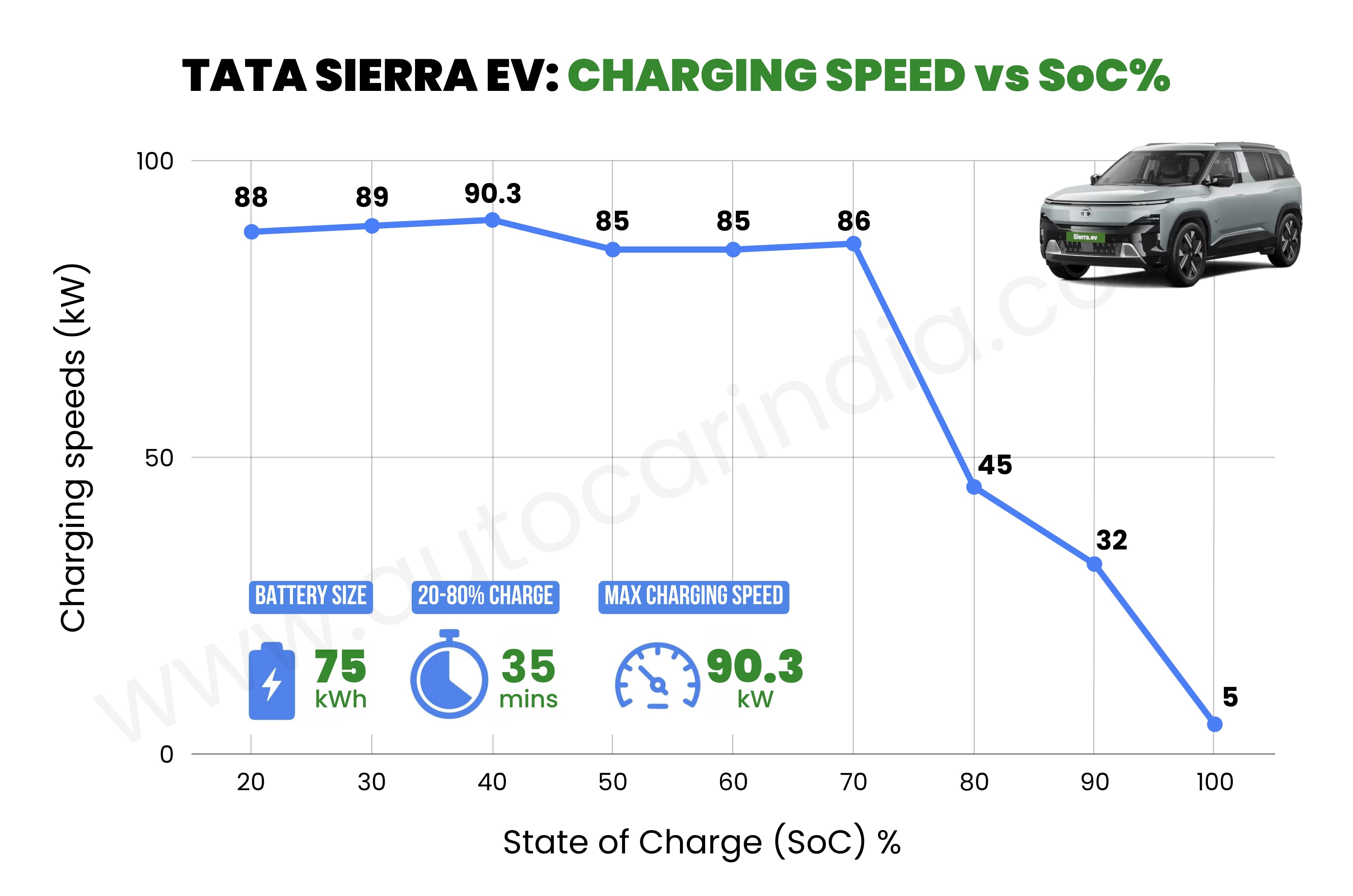
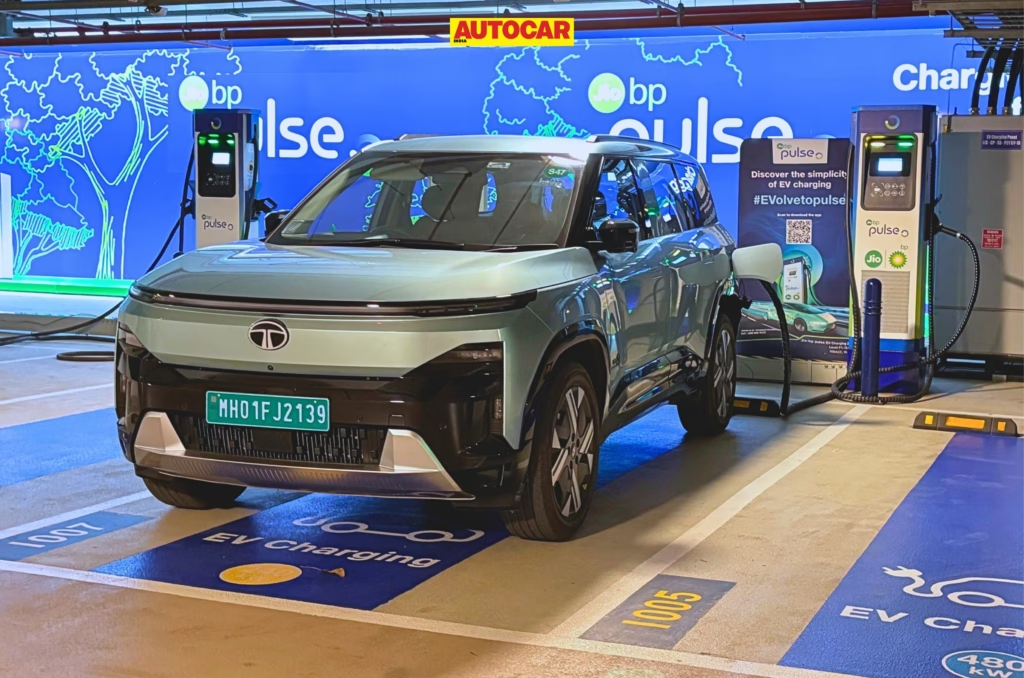
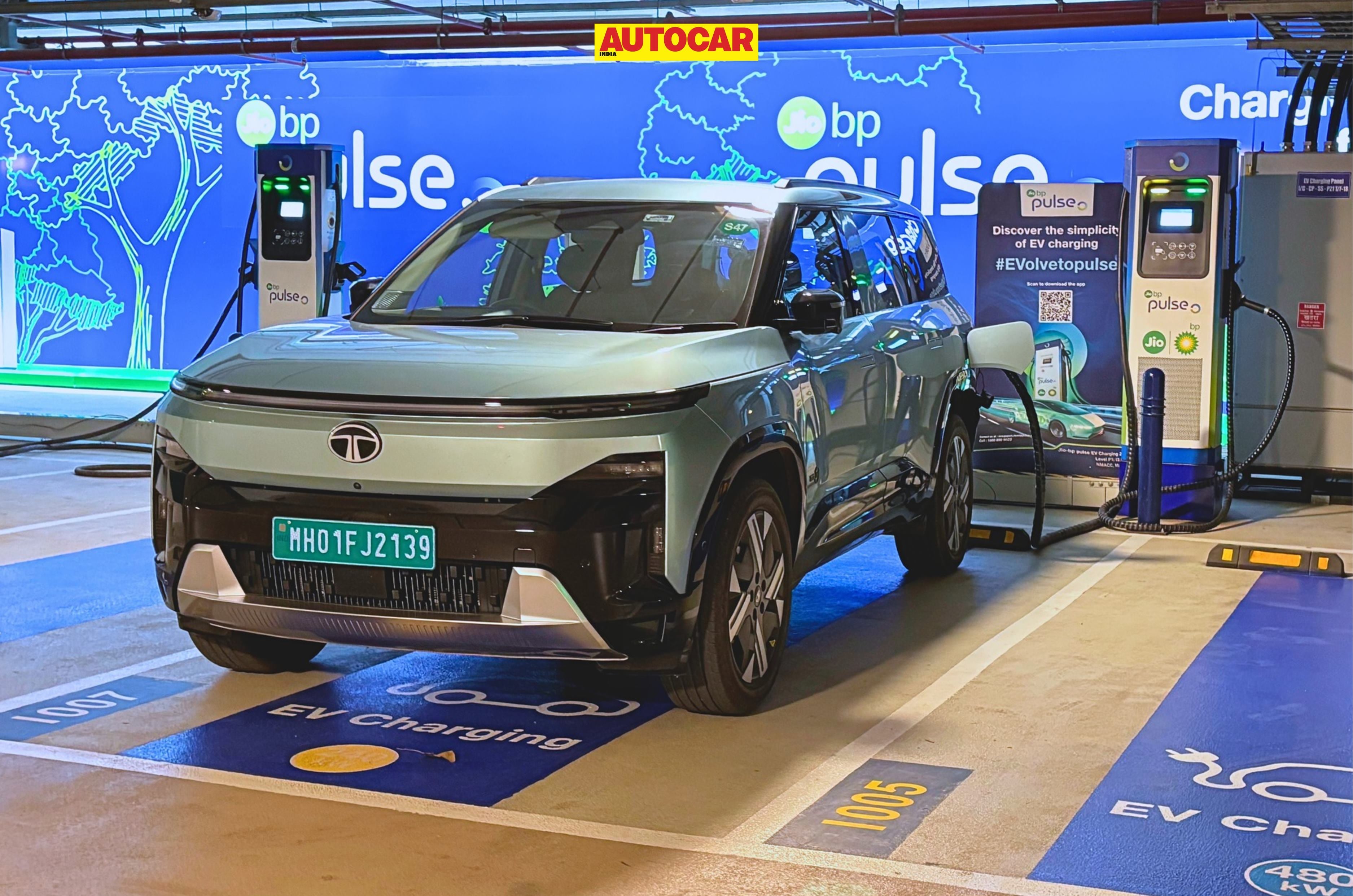
As for charging, using a 240kW DC fast charger, we topped up the Sierra EV’s battery from 20-80 percent in 35 minutes, whereas 80-100 percent took another 39 minutes. As per Tata, the Sierra EV’s battery should recharge from 20-80 percent in 26 minutes when connected to a 120kW DC fast charger. However, we only saw peak charging speeds of around 90.3kW during our charging test.

Autocar India’s range testing

Before our real-world range tests, the battery of our test car was fully charged, and we maintained tyre pressures in accordance with the manufacturer’s recommendations. The car was driven on a weekday in Mumbai city and on the adjoining state highway in a fixed loop, and we maintained the set average speeds. At the end of each cycle, we calculated the range based on the percentage charge consumed.

Throughout our tests, the climate control was set to 22deg C in a full-auto setting, and other electricals, such as the audio system, indicators and ventilated front seats, were used when required, just as a regular user would. We take pride in our testing data, which isn’t merely consistent but also gives users an accurate indication of what they can expect in the real world.

Adani Total Gas Q2 Results: नेट प्रॉफिट 6% बढ़कर ₹173 करोड़ हुआ, रेवेन्यू 34% बढ़ी

Adani Total Gas Q2 Results: अदाणी टोटल गैस ने 22 अक्टूबर 2026 को वित्त वर्ष 2026-27 की दूसरी तिमाही (Q2 FY27) के नतीजे घोषित कर दिए हैं। जिसके मुताबिक कंपनी का नेट प्रॉफिट सालाना आधार पर 3.2% बढ़कर ₹167 करोड़ हो गया है, जबकि पिछले साल की इसी अवधि में यह ₹162 करोड़ था। वहीं ऑपरेशंस से होने वाला रेवेन्यू सालाना आधार पर 34.1% बढ़कर ₹1,936 करोड़ हो गया, जो पहले ₹1,444 करोड़ था।

ब्याज, टैक्स, डेप्रिसिएशन और अमोर्टाइजेशन से पहले की कमाई (EBITDA) सालाना आधार पर 11% बढ़कर ₹326 करोड़ हो गई, जो पिछले साल की इसी अवधि में ₹293 करोड़ थी। हालांकि, सितंबर तिमाही में EBITDA मार्जिन घटकर 16.8% रह गया, जबकि पिछले साल की इसी तिमाही में यह 20.3% था।

अदाणी टोटल गैस लिमिटेड का कंप्रेस्ड नेचुरल गैस (CNG) और पाइप्ड नेचुरल गैस (PNG) का कुल वॉल्यूम, स्टैंडअलोन आधार पर, वित्त वर्ष 2027 की दूसरी तिमाही (Q2 FY27) में सालाना आधार पर 12% बढ़कर 315 मिलियन स्टैंडर्ड क्यूबिक मीटर (MMSCM) हो गया। कंपनी ने अपने CNG नेटवर्क का विस्तार करते हुए इस तिमाही में 16 नए स्टेशन जोड़े, जिससे कुल स्टेशनों की संख्या 723 हो गई।

PNG होम कनेक्शन की संख्या 39,574 नए घरों के जुड़ने के बाद 11.81 लाख हो गई। वहीं, इंडस्ट्रियल और कमर्शियल कनेक्शन की संख्या 442 नए ग्राहकों के जुड़ने के साथ बढ़कर 10,864 हो गई। कंपनी ने अपने स्टील पाइपलाइन नेटवर्क का भी 318 इंच-किलोमीटर तक विस्तार किया, जिससे कुल नेटवर्क 16,305 इंच-किलोमीटर तक पहुंच गया।

अपने जॉइंट वेंचर, इंडियनऑयल-अदाणी गैस प्राइवेट लिमिटेड (IOAGPL) को मिलाकर, अदाणी टोटल गैस का कुल CNG और PNG वॉल्यूम वित्त वर्ष 2027 की दूसरी तिमाही में 18% की सालाना वृद्धि के साथ 529 MMSCM दर्ज किया गया। इसका कुल CNG नेटवर्क बढ़कर 1,185 स्टेशनों का हो गया, जिसमें 18 नए स्टेशन जोड़े गए।

PNG घरेलू कनेक्शन 14.31 लाख के पार पहुंच गए हैं, जिससे रोज़ाना 60 लाख (6 मिलियन) से ज़्यादा लोगों तक पहुंच बनी है। वहीं, औद्योगिक और व्यावसायिक कनेक्शन बढ़कर 12,925 हो गए हैं, जिसमें लगभग 600 नए ग्राहक जुड़े हैं। कुल स्टील पाइपलाइन नेटवर्क 29,156 इंच-किलोमीटर तक पहुंच गया है।

नेटवर्क के विस्तार और कई भौगोलिक क्षेत्रों में बेहतर कामकाज के चलते, वित्त वर्ष 2027 की दूसरी तिमाही (Q2 FY27) और पहली छमाही (H1 FY27) दोनों में CNG की मात्रा (वॉल्यूम) में साल-दर-साल 17% की वृद्धि हुई है। घरेलू और व्यावसायिक माँग के कारण, PNG की मात्रा में भी वित्त वर्ष 2027 की दूसरी तिमाही में 3% और पहली छमाही में 4% की साल-दर-साल वृद्धि हुई है। कुल मिलाकर, वित्त वर्ष 2027 की दूसरी तिमाही में वॉल्यूम 12% और पहली छमाही में 13% (साल-दर-साल) बढ़ा है। कंपनी ने बताया कि अब लगभग 11.81 लाख घर इसके पाइप्ड नेचुरल गैस (PNG) नेटवर्क से जुड़े हुए हैं।

अदाणी टोटलएनर्जीज़ ई-मोबिलिटी लिमिटेड (ATEL) ने अपना विस्तार करते हुए 26 राज्यों/केंद्र शासित प्रदेशों और 225 शहरों में 5,513 इलेक्ट्रिक वाहन (EV) चार्ज पॉइंट स्थापित किए हैं। इसकी स्थापित क्षमता बढ़कर लगभग 63 मेगावाट (MW) हो गई है, जिसमें से 4,809 चार्ज पॉइंट चालू (ऑपरेशनल) हैं।

अडानी टोटलएनर्जीज़ बायोमास लिमिटेड (ATBL) ने वित्त वर्ष 2027 की पहली छमाही में कुल 460 मीट्रिक टन (MT) कंप्रेस्ड बायोगैस (CBG) बेची। इसमें से 195 टन CBG समर्पित CBG स्टेशनों के ज़रिए बेची गई, जबकि बाकी मात्रा थर्ड पार्टी (अन्य पक्षों) को बेची गई। वित्त वर्ष 2027 की पहली छमाही में जैविक खाद (ऑर्गेनिक खाद) की बिक्री 6,865 टन से अधिक रही, जिसमें ‘हरित अमृत’ (Harit Amrit) ब्रांड के तहत बेची गई 1,757 टन से ज़्यादा खाद शामिल है।

“ATGL ने वित्त वर्ष 2027 की दूसरी तिमाही में शानदार प्रदर्शन किया है। CNG की लगातार माँग, PNG की बेहतर पहुंच और व्यवस्थित नेटवर्क विस्तार की बदौलत, वॉल्यूम में 12% और राजस्व (रेवेन्यू) में 34% (साल-दर-साल) की वृद्धि हुई है। इस तेज़ी के कारण ATGL ने 12% (साल-दर-साल) की मज़बूत दोहरे अंकों वाली EBITDA वृद्धि हासिल की है।”

(डिस्क्लेमर: मनीकंट्रोल.कॉम पर दिए गए विचार एक्सपर्ट के अपने निजी विचार होते हैं। वेबसाइट या मैनेजमेंट इसके लिए उत्तरदाई नहीं है। यूजर्स को मनी कंट्रोल की सलाह है कि कोई भी निवेश निर्णय लेने से पहले सार्टिफाइड एक्सपर्ट की सलाह लें।