Petrol Diesel Price Today: हर दिन की शुरुआत सिर्फ सूरज की किरणों से नहीं होती, बल्कि पेट्रोल और डीजल की नई कीमतों से भी होती है, जो आम आदमी की जेब पर सीधा असर डालती हैं। सुबह 6 बजे देश की तेल विपणन कंपनियां (OMCs) ताजा दरें जारी करती हैं, जो अंतरराष्ट्रीय बाजार में कच्चे तेल की कीमतों और डॉलर-रुपए की विनिमय दर में आए बदलावों पर आधारित होती हैं। ये बदलाव रोजमर्रा की जिंदगी को प्रभावित करते हैं, चाहे वो ऑफिस जाने वाला व्यक्ति हो या फल-सब्जी बेचने वाला व्यापारी।
ऐसे में हर दिन की कीमतों की जानकारी रखना सिर्फ जरूरी ही नहीं, बल्कि समझदारी भी है। सरकार की यह प्रणाली पारदर्शिता सुनिश्चित करती है ताकि उपभोक्ताओं को किसी तरह की भ्रमित जानकारी न मिले।
आपके शहर में आज का पेट्रोल-डीजल का भाव
ये रहे 20 जुलाई 2026 के प्रमुख शहरों के पेट्रोल-डीजल के ताजा रेट —
नई दिल्ली: पेट्रोल 102.12 रुपये | डीजल 95.20 रुपये
मुंबई: पेट्रोल 111.21 रुपये | डीजल 97.83 रुपये
कोलकाता: पेट्रोल 113.47 रुपये | डीजल 99.82 रुपये
चेन्नई: पेट्रोल 107.78 रुपये | डीजल 99.56 रुपये
गुरुग्राम: पेट्रोल 102.97 रुपये | डीजल 95.64 रुपये
नोएडा: पेट्रोल 101.96 रुपये | डीजल 95.44 रुपये
बेंगलुरु: पेट्रोल 111.37 रुपये | डीजल 99.26 रुपये
भुवनेश्वर: पेट्रोल 109.92 रुपये | डीजल 100.92 रुपये
चंडीगढ़: पेट्रोल 98.10 रुपये | डीजल 86.09 रुपये
हैदराबाद: पेट्रोल 115.69 रुपये | डीजल 103.82 रुपये
जयपुर: पेट्रोल 112.66 रुपये | डीजल 97.78 रुपये
लखनऊ: पेट्रोल 102.63 रुपये | डीजल 96.07 रुपये
पटना: पेट्रोल 113.35 रुपये | डीजल 99.36 रुपये
तिरुवनंतपुरम: पेट्रोल 115.49 रुपये | डीजल 104.40 रुपये
पिछले दो साल से स्थिर क्यों हैं कीमतें?
मई 2022 के बाद से केंद्र और कई राज्यों द्वारा टैक्स में कटौती की गई, जिसके बाद पेट्रोल-डीजल की कीमतों में स्थिरता देखी जा रही है। हालांकि अंतरराष्ट्रीय बाजार में उतार-चढ़ाव होता रहता है, फिर भी भारतीय उपभोक्ताओं के लिए कीमतें तुलनात्मक रूप से स्थिर बनी हुई हैं।
किन कारणों से तय होती हैं ईंधन की कीमतें?
कच्चे तेल की कीमतें:
पेट्रोल और डीजल का उत्पादन मुख्य रूप से कच्चे तेल से होता है। जब अंतरराष्ट्रीय स्तर पर कच्चे तेल की कीमतें बढ़ती हैं, तो इसका असर सीधे भारतीय बाजार पर पड़ता है।
डॉलर के मुकाबले रुपया:
भारत अधिकतर कच्चा तेल आयात करता है, और यह डॉलर में खरीदा जाता है। यदि रुपया कमजोर होता है, तो ईंधन महंगा हो जाता है।
सरकारी टैक्स और शुल्क:
केंद्र और राज्य सरकारें पेट्रोल-डीजल पर भारी टैक्स लगाती हैं, जो खुदरा मूल्य का बड़ा हिस्सा होते हैं। यही कारण है कि राज्यों में कीमतों में अंतर होता है।
रिफाइनिंग की लागत:
कच्चे तेल को इस्तेमाल लायक बनाने की प्रक्रिया (रिफाइनिंग) में भी खर्च होता है। ये लागत कच्चे तेल की गुणवत्ता और रिफाइनरी की क्षमता पर निर्भर करती है।
मांग और आपूर्ति का संतुलन:
बाजार में ईंधन की मांग अगर बढ़ जाती है, तो कीमतें भी ऊपर जाने लगती हैं। खासकर त्योहारों, गर्मी या सर्दी के मौसम में ईंधन की खपत ज्यादा होती है।
कैसे करें अपने शहर की कीमतें SMS से चेक?
अगर आप मोबाइल से ईंधन की कीमत जानना चाहते हैं, तो ये प्रक्रिया आसान है:
Indian Oil ग्राहक: अपने शहर का कोड टाइप करें और उसे “RSP” के साथ 9224992249 पर भेजें।
BPCL ग्राहक: “RSP” लिखकर 9223112222 पर भेजें।
HPCL ग्राहक: “HP Price” लिखकर 9222201122 पर भेजें।
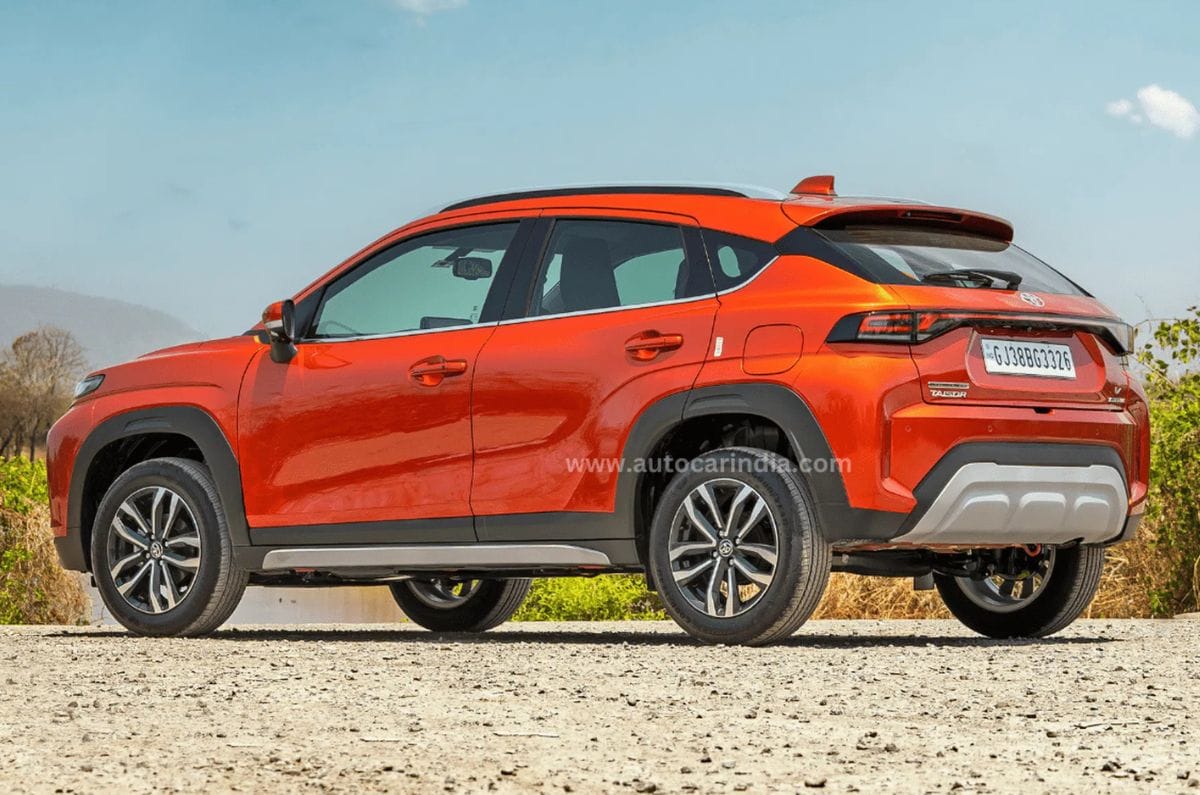
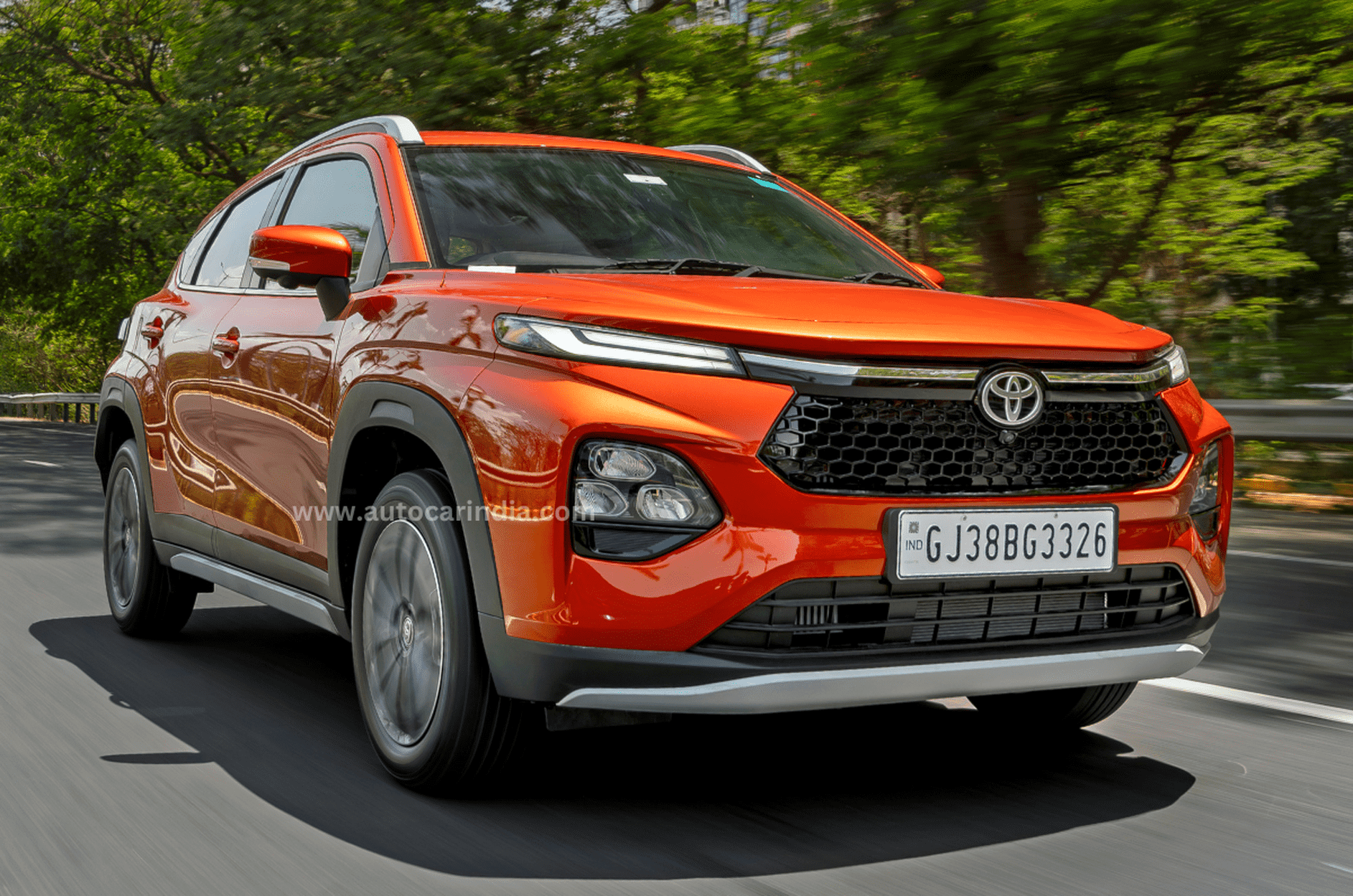
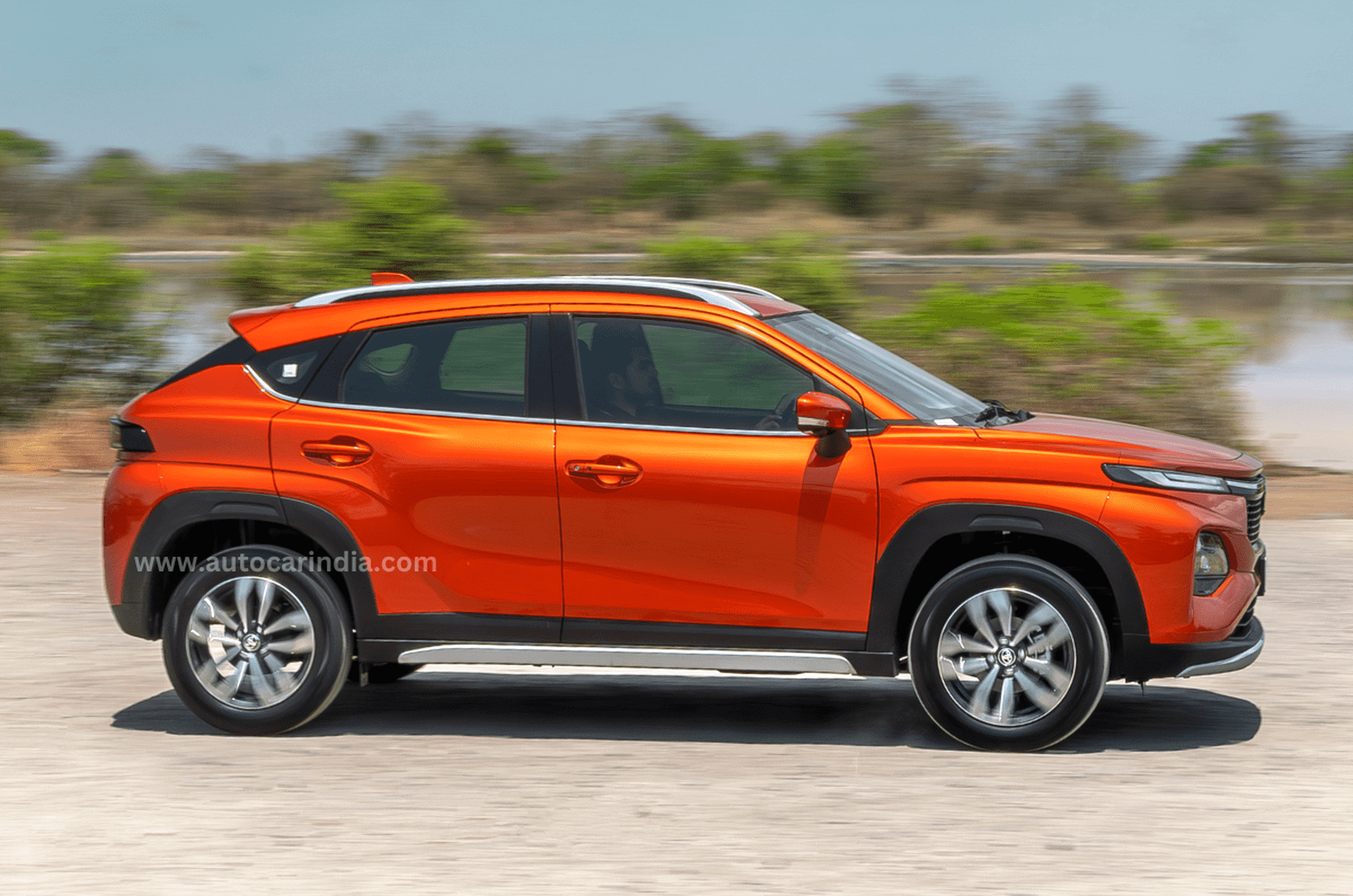
If you are in the market for a compact Toyota SUV, then the Urban Cruiser Taisor is your only option. The Toyota Urban Cruiser Taisor shares a lot of components and feature set with its Maruti Suzuki brethren and is aimed at those who want the premiumness associated with the Toyota badge. Before signing on the dotted line, however, here are a few key facts of the Toyota Taisor you need to keep in mind. First up, the pros…
Capable powertrain
Peppy turbo engine pairs especially well with the automatic gearbox
One of the biggest pros of the Toyota Taisor lies under the bonnet. The 1.0-litre three-cylinder turbo-petrol engine with direct injection produces 100hp and 148Nm of torque. This engine makes up for its lack of outright cubic capacity by being eager to rev all the way up to a redline of 6,000rpm. Not only is it peppy and responsive, but this three-pot unit has a linear power delivery – all the while remaining smooth and refined.
Then there’s the 6-speed torque converter automatic gearbox, which is offered with the G and V trims of the Taisor. Like the turbo-petrol engine, this transmission is smooth in its operation too. It also responds promptly to the steering-mounted paddle shifters, and in manual mode, this gearbox does not upshift automatically, increasing driver engagement even more. All of this pays dividends, as we clocked the Taisor Turbo achieving the sprint from 0-100kph in 11.86 seconds. For reference, that’s slightly quicker than the 120hp Kia Sonet with the DCT. The 5-speed manual gearbox of the Taisor is also a pleasure to use, thanks to its light and tactile operation.
Confident handler
Firm suspension and light steering come together well in the Taisor
While the stiffly sprung suspension of the Taisor feels a bit busy at low speeds, things change as the speed climbs. The inherent stiffness inspires confidence as the car feels stable even at triple-digit speeds. At low speeds, the light steering of the Taisor makes lane changes and parking manoeuvres easy to execute. The small turning radius aids manoeuvrability further.
Sorted ergonomics and comfort
Easily accessible controls and comfy rear seats make settling in fuss-free
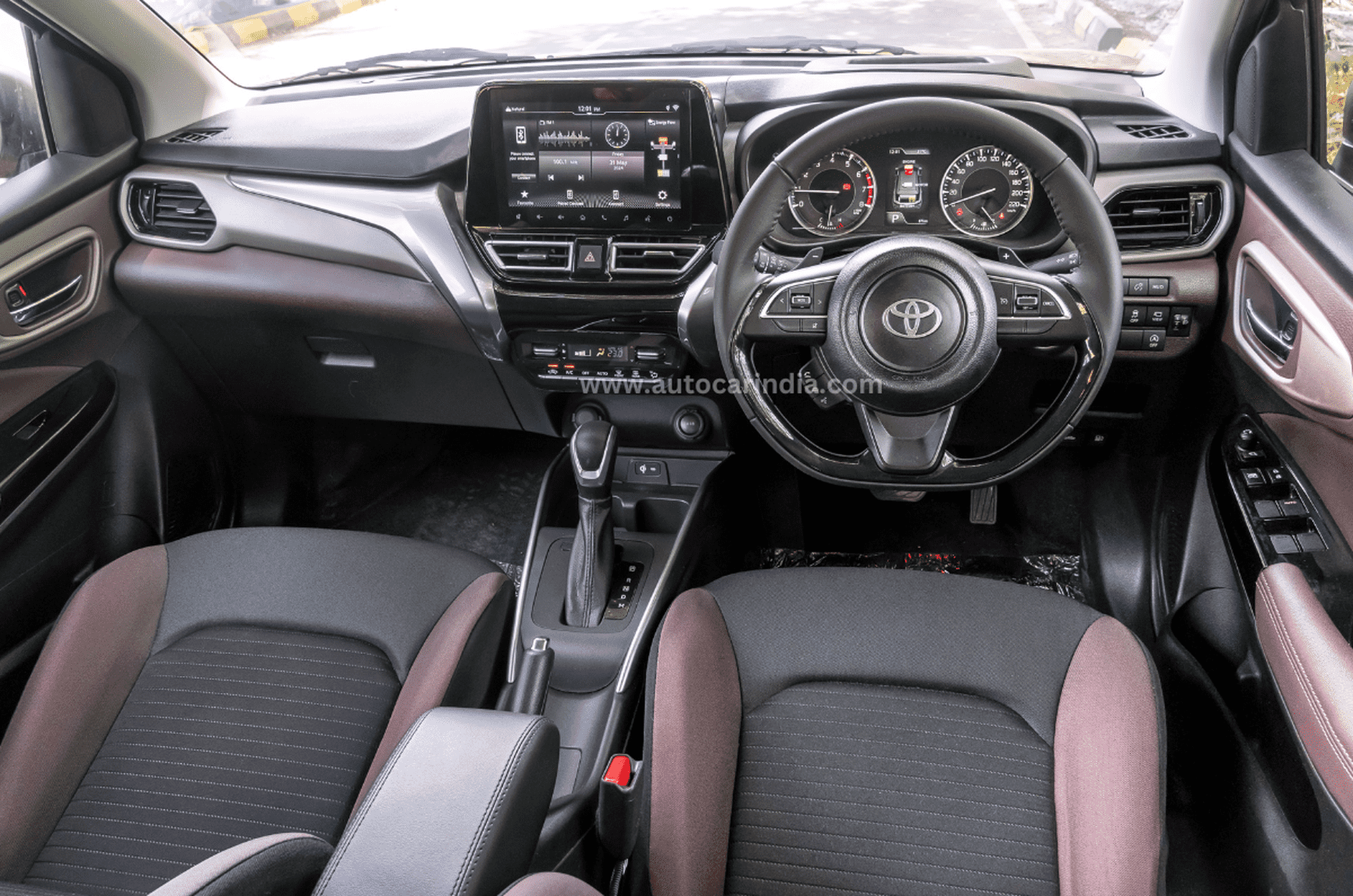
Along with the adjustable seat, tilt and telescopic adjustment for the steering makes getting into a comfortable driving position in the Taisor quite easy. All the controls fall to hand easily, and there’s also an adjustable centre armrest for the driver, that will come in handy over long drives, especially in the case of the automatic version.
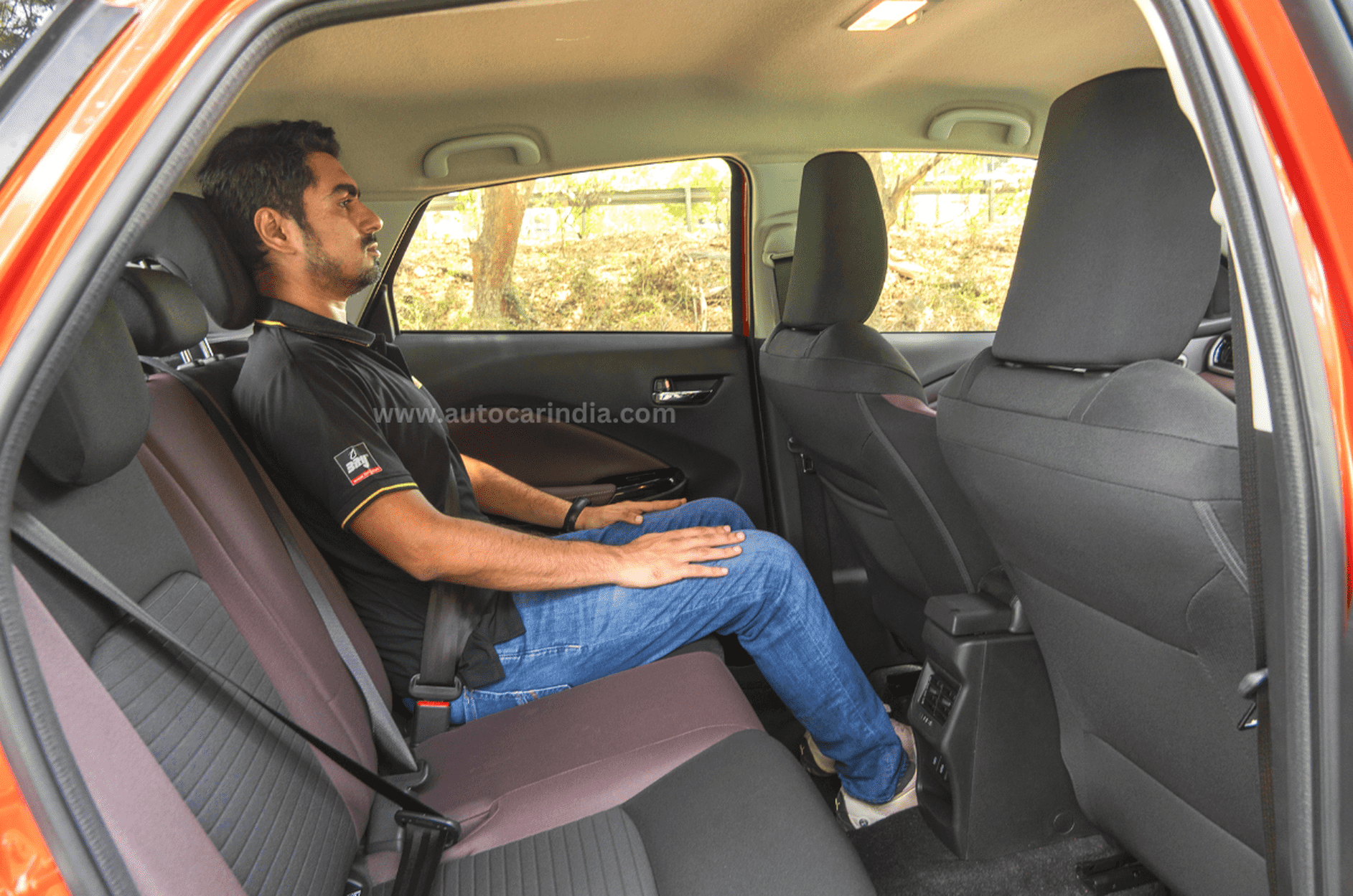
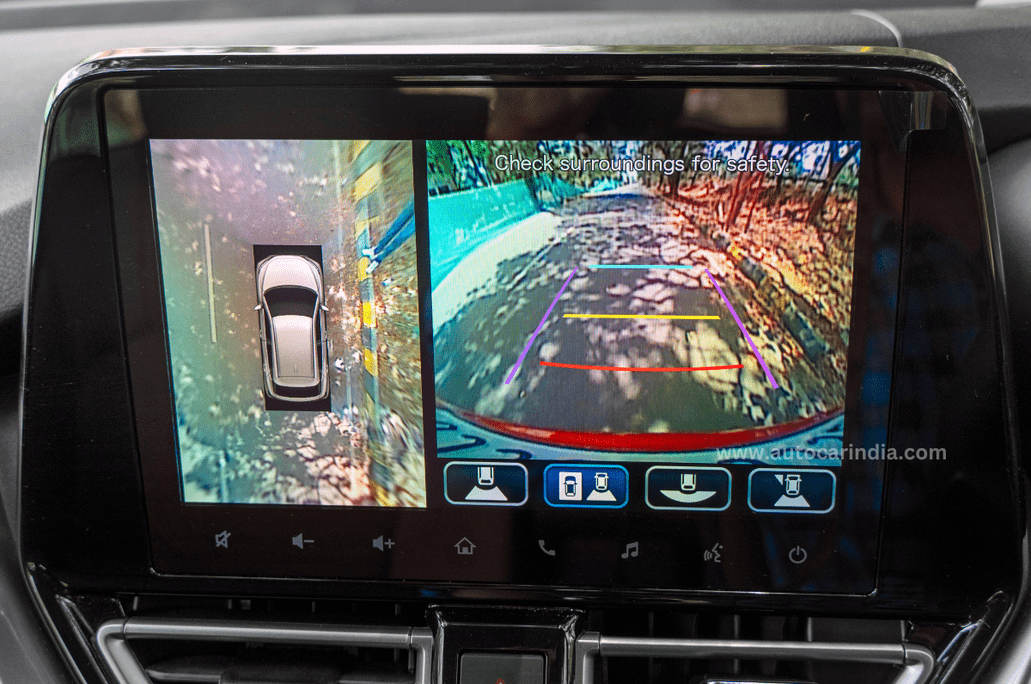
The cabin feels spacious despite the relatively compact size of this car, while the rear seats are comfortable and offer good legroom as well. Adding to this comfort factor and overall safety at the back are features such as rear AC vents, USB Type-C ports, three headrests and three-pointed seatbelts. Also useful is the 360-degree camera system, which helps navigating tight parking spots less tense.
However, the Toyota Taisor is not without its cons. Here are the important ones.
Missing features
The Taisor isn’t as well-equipped as some rivals
While the 360-degree camera is good to have, its low resolution impacts usability to an extent, especially in poor weather or in the dark. The Taisor doesn’t get load sensors for the rear seats, which means the belt reminder chime will go on for 90 seconds unless they are properly buckled. Other missing features here include a powered sunroof, ventilated seats, LED ambient lighting, powered front seats, leatherette upholstery, a rear centre armrest, ADAS and a larger infotainment screen, to name a few.
Sub-optimal insulation and plastic quality
These issues are not as prevalent in newer compact SUVs
There’s no dearth of hard plastics in the Taisor’s cabin, with much of the surfaces being covered in sub-optimal plastic trim. Sound insulation also leaves a lot to be desired, as road and engine noises seep into the cabin easily.
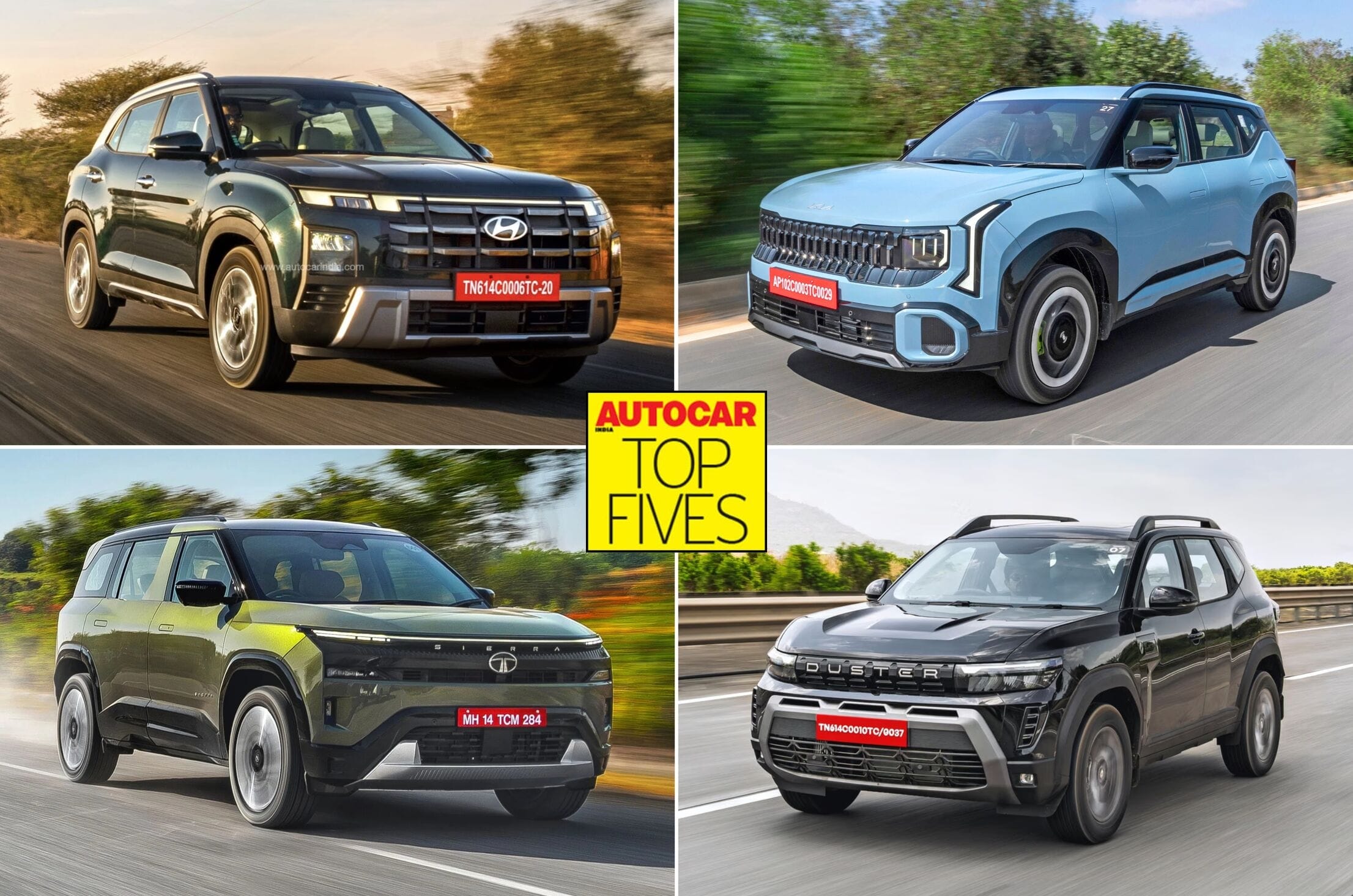
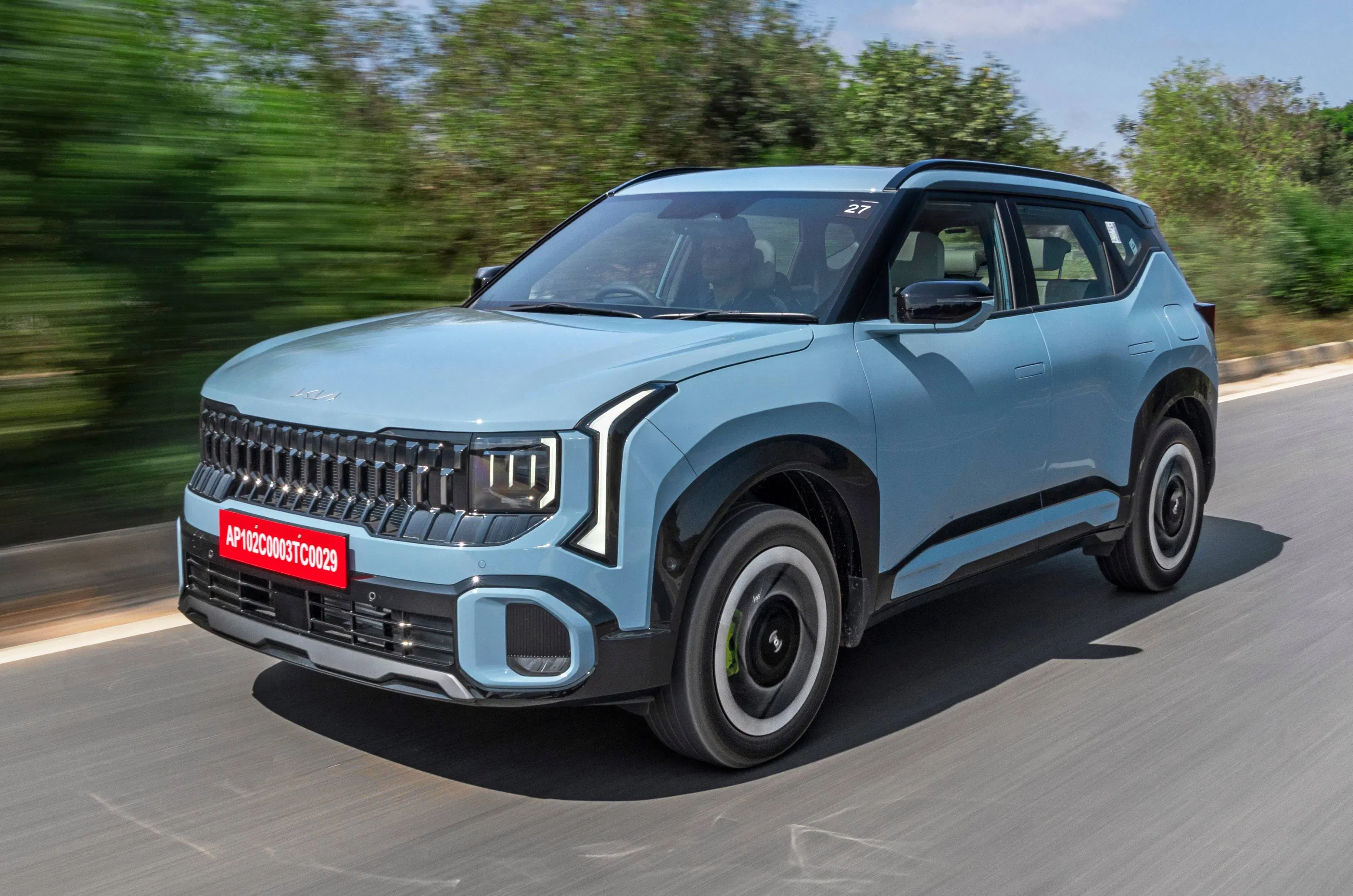
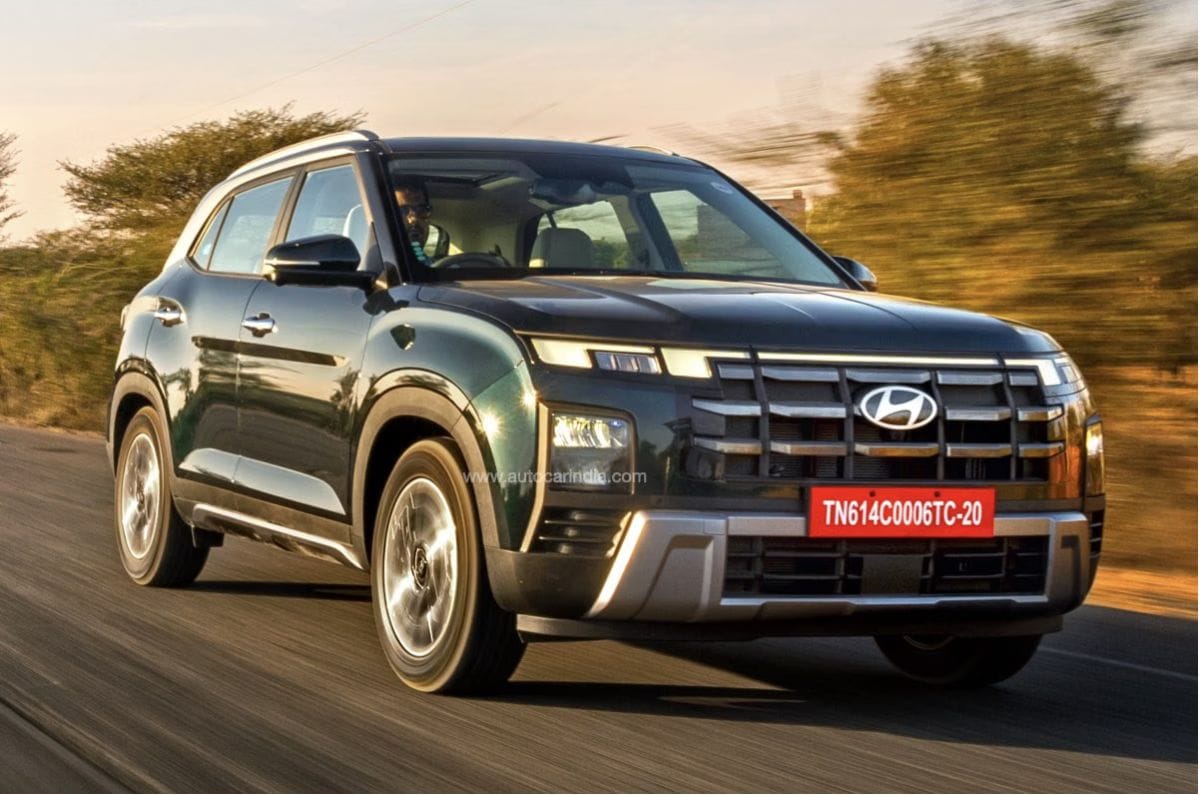
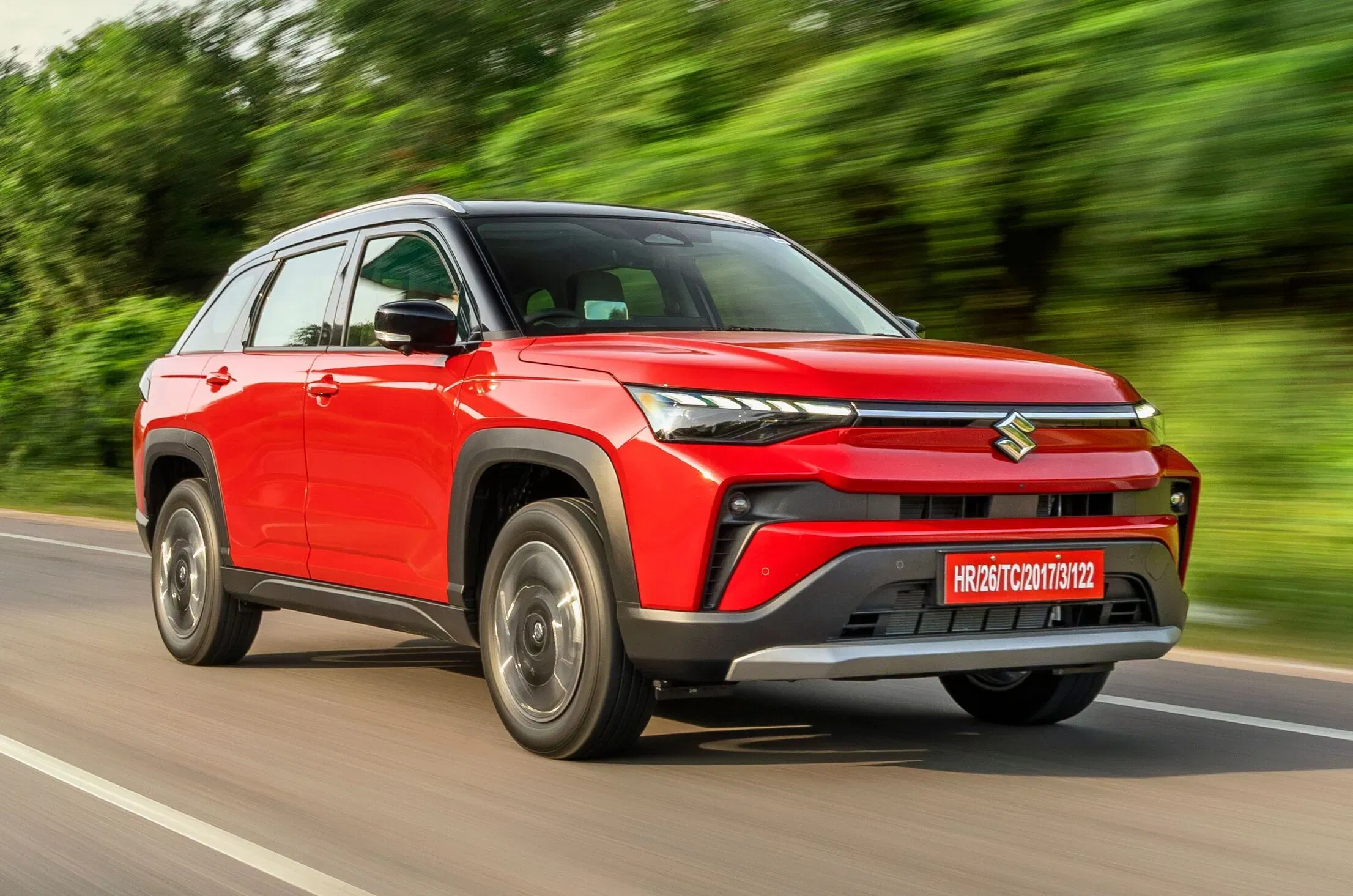
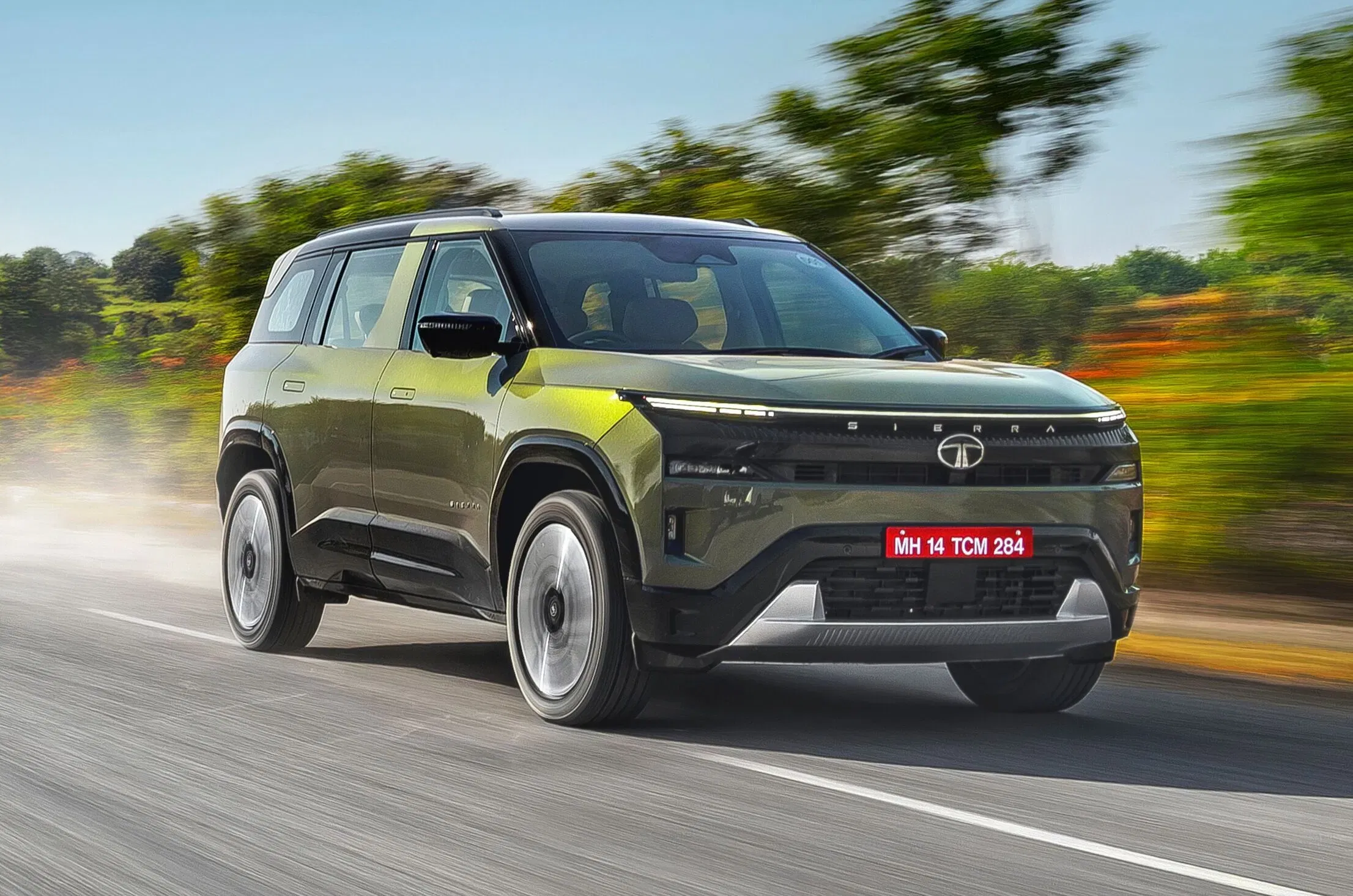
If you are in the market for a new midsize SUV, you are quite spoilt for choice. There are as many as 13 models to choose from, spanning every powertrain, including petrol, diesel, CNG, strong-hybrid and electric. With so many options, it may be quite daunting to choose the right model. To make it easier for you, we have compiled the five best midsize SUVs currently available in the market, focusing only on the ICE-powered models.
1. Kia Seltos
Price: Rs 10.99 lakh-21.82 lakh
The midsize SUV segment has a new all-rounder in the Seltos. It’s got a wide range of engines, including a 115hp, 1.5-litre naturally aspirated petrol, a 160hp, 1.5-litre turbo-petrol and a 116hp, 1.5-litre diesel; gearbox options are just as diverse. The Seltos also has the most premium and inviting interior. Not only is it refined, efficient and spacious, but it also has class-leading tech and UI/UX. The only downside is that there’s a hint of firmness in the suspension setup, but it’s not a dealbreaker. It is, however, quite expensive at the top end.
2. Hyundai Creta
Price: Rs 10.91 lakh-19.95 lakh
Despite its age, the Creta remains a competitive offering in the company of its newer rivals. It’s slightly smaller and less spacious than the Seltos because the latter has moved on to a new-generation platform, but it offers the same mix of powertrain options, a comfortable driving and riding experience and a feature-loaded cabin. Hyundai’s after-sales service experience is quite satisfactory, and there’s also the N Line version with a slightly sportier setup for the more enthusiastic buyer.
3. Maruti Victoris
Price: Rs 10.49 lakh-19.99 lakh
If running costs, reliability and ease of ownership are priorities, the Victoris (or the Grand Vitara and Hyryder) remains unmatched. Between the three, the Victoris is the newest and also packs some additional features. The trio has the segment’s only strong-hybrid powertrain with the 116hp, 1.5-litre strong-hybrid unit and also the option of AWD with the 1.5-litre naturally aspirated petrol engine. The Victoris rides and handles well, too, although performance isn’t particularly exciting, and rear-seat space isn’t as good as that of its rivals. There’s also the option of CNG should you want affordable running costs.
4. Tata Sierra
Price: Rs 11.49 lakh-21.29 lakh
The Sierra is the roomiest and most feature-loaded SUV in the midsize segment, uniquely even offering a third screen for the front passenger. Good ride and handling are also among its strengths. The 160hp, 1.5-litre turbo-petrol engine is the pick of the range, as the 118hp, 1.5-litre diesel and 106hp, 1.5-litre naturally aspirated petrol engines aren’t good on refinement and performance. It’s also on the more expensive side, and reliability and service experience are deterrents, too.
5. Renault Duster
Price: Rs 10.49 lakh-18.69 lakh
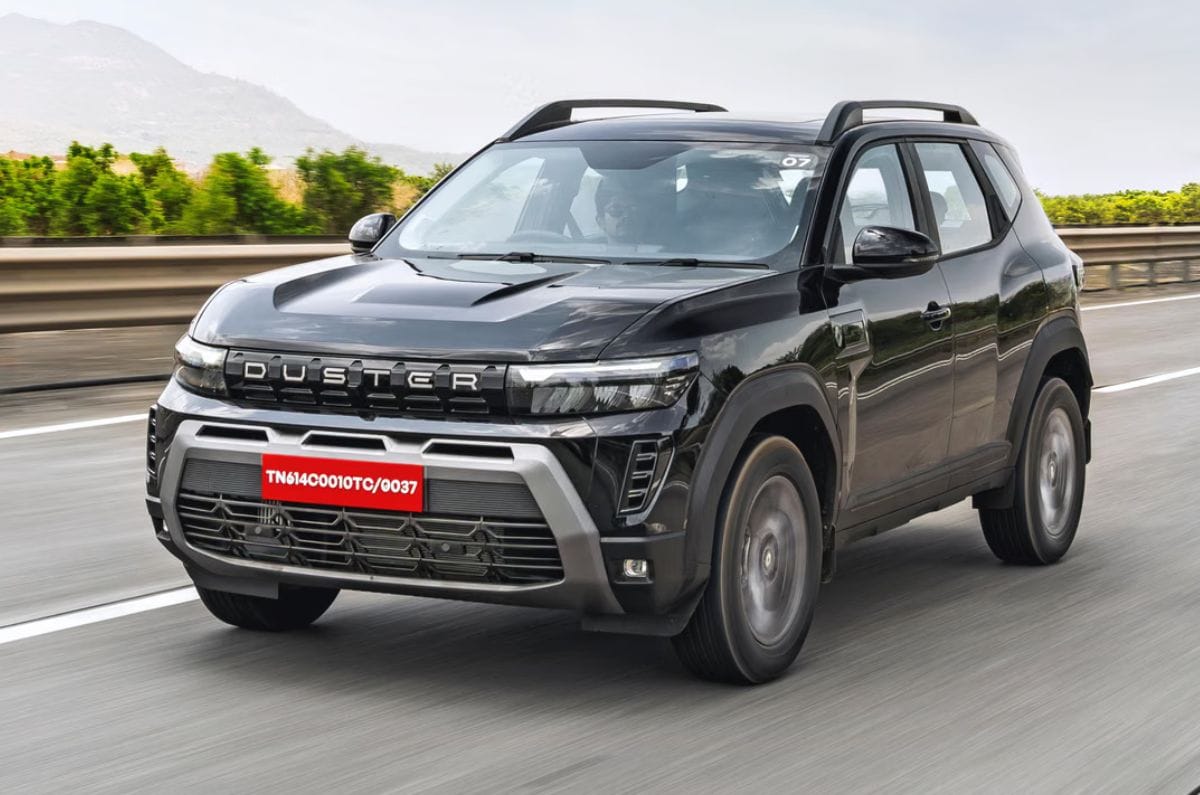
The Duster has a tough and rugged appeal, fantastic ride quality and a well-appointed interior. It offers good value for money, too, but is not as spacious as its rivals. Also, both its 100hp, 1.0-litre turbo-petrol and 163hp, 1.3-litre turbo-petrol engines suffer from turbo-lag, although performance is otherwise quite potent. A big miss is the option of an auto gearbox with the base petrol engine. Some may even miss a diesel engine and optional all-wheel-drive system offered with the original Duster.
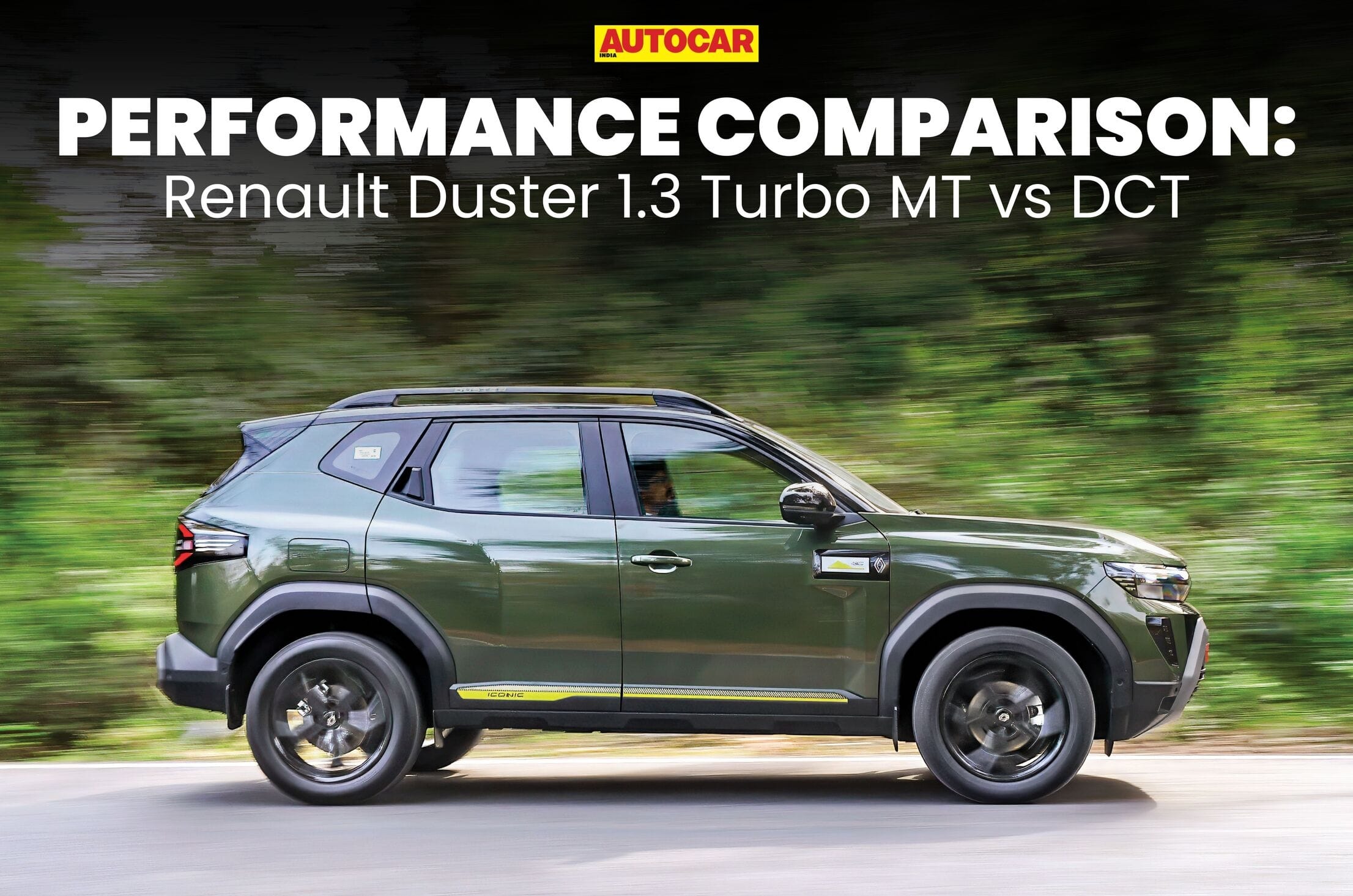
The Renault Duster was one of the first midsize SUVs in India, which was relaunched in 2026 after being absent from the Indian automotive space since 2022. With the new-generation model, Renault has equipped the Duster with not only a fresh design and more modern-day amenities, but also two turbo-petrol engine options. Among these, the larger 1.3-litre turbo-petrol mill is offered with both manual and DCT choices. But which one offers better real-world performance? Let us find out.
Renault Duster 1.3L turbo MT vs DCT: Specifications and price
The MT’s lower weight helps it with higher power- and torque-to-weight ratios
Renault Duster 1.3L turbo-petrol MT vs DCT: Specifications and price
Duster 1.3TP MT
Duster 1.3TP DCT
Engine
4-cyl, turbo-petrol
4-cyl, turbo-petrol
Displacement (cc)
1333
1333
Power (hp)
163
163
Torque (Nm)
280
280
Gearbox
6-speed MT
6-speed DCT
Kerb weight
1372
1393
Power-to-weight*
118.80
117.01
Torque-to-weight^
204.08
201
Price range (Rs, lakh)
12.99-17.19
14.49-18.49
*Power-to-weight figures are hp per tonne
^Torque-to-weight figures are Nm per tonne
The Renault Duster’s 1.3-litre turbo-petrol engine offers the same output (163hp, 280Nm) with the 6-speed manual and the 6-speed dual-clutch transmission (DCT) options. However, as the manual version is 21kg lighter, it has slightly better power-to-weight and torque-to-weight ratios than the DCT version.
The manual transmission variants have lower price tags than the DCT variants. The Duster manual starts at Rs 12.99 lakh, which is Rs 1.5 lakh cheaper than the entry-spec DCT, and goes up to Rs 17.19 lakh, which is Rs 1.30 lakh less than the top-spec DCT.
Renault Duster 1.3L turbo MT vs DCT: 0-100kph acceleration test
The manual option offers quicker acceleration off the line compared to the DCT
Renault Duster 1.3L turbo-petrol MT vs DCT: Acceleration from rest (in seconds)
Duster 1.3TP MT
Duster 1.3TP DCT
20kph
1.15
1.71
40kph
2.42
3.55
60kph
4.61
5.52
80kph
6.65
7.94
100kph
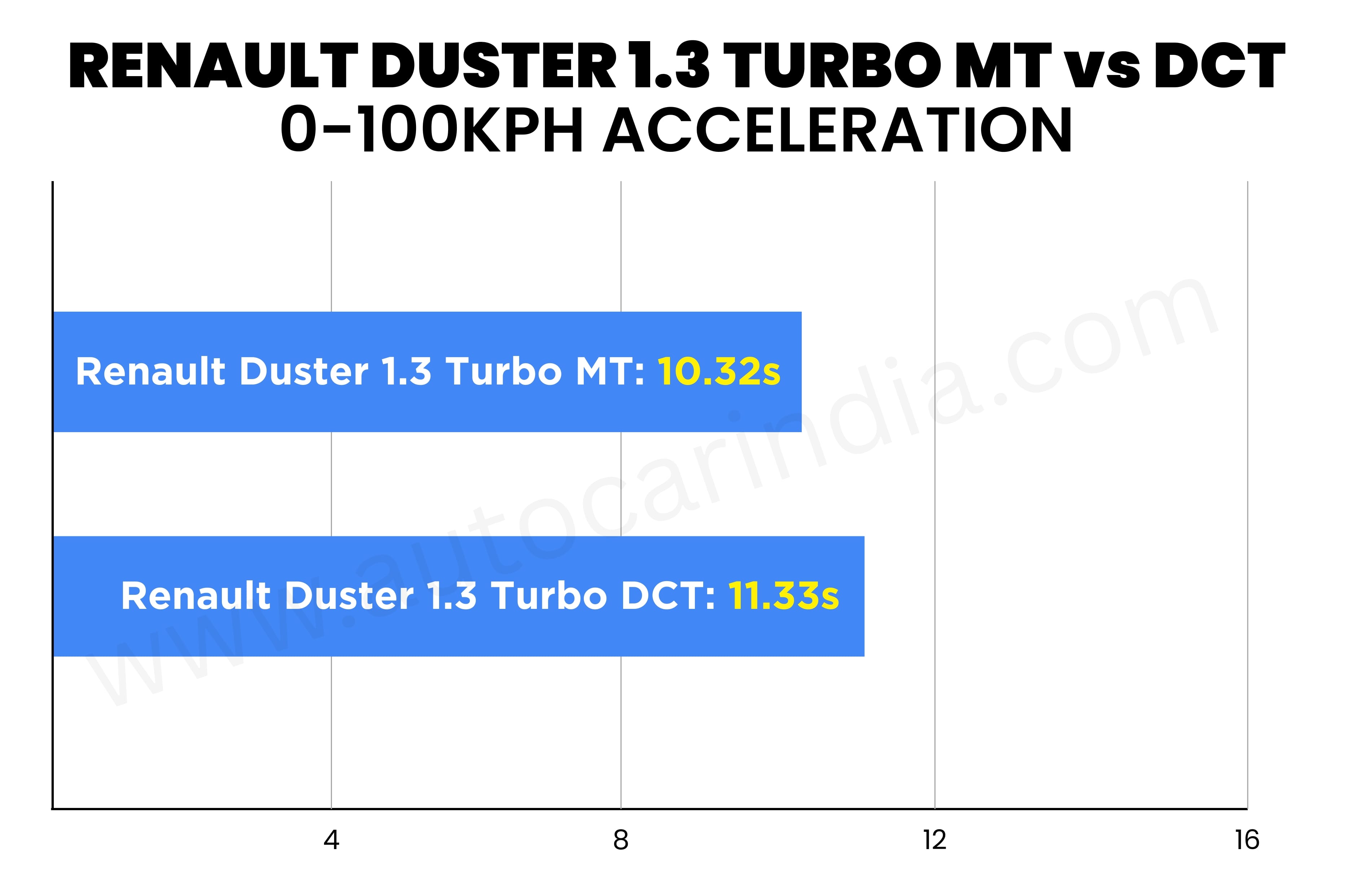
10.32
11.33
120kph
13.86
15.37
In our 0-100kph tests, we found that the Duster’s turbo-petrol manual version was faster than the DCT at all speeds. The manual version starts strongly, clocking 20kph 0.56 seconds faster, taking the difference to over a second by the time it reaches 40kph. The DCT catches up slightly at 60kph, reducing the difference to 0.91 seconds. However, the MT starts pulling faster again, and by the time it reaches 100kph, it has a 1.01-second lead.
In our experience, the manual feels engaging and rewarding when the engine is in the rev band. The clutch is light, and the shift action is precise too, which increases the powertrain’s likeability among enthusiasts. However, at slow speeds, turbo lag is evident, which, coupled with the tall gearing ratios, leads to a cumbersome city driving experience. It requires an extra downshift for a smoother drive experience.
The DCT’s wet clutch makes it the better option for city driving, as it prioritises smoothness over outright acceleration, feeling similar to a torque converter gearbox. While tall gearing is an issue at low-speed driving here too, the paddle shifters add an extra layer of engagement.
Renault Duster 1.3L turbo MT vs DCT: Rolling acceleration tests
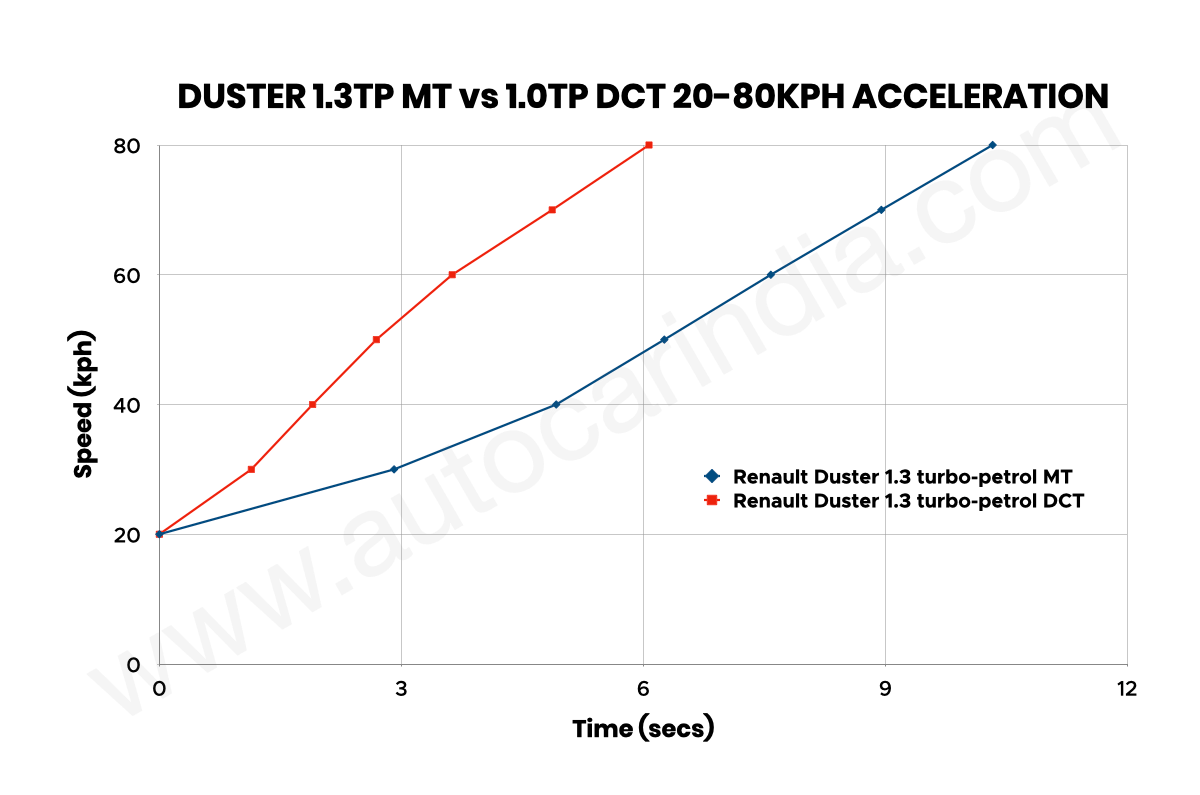
The DCT version clocked considerably quicker in-gear acceleration times
Renault Duster 1.3L turbo-petrol MT vs DCT: Rolling acceleration (in seconds)
Duster 1.3TP MT
Duster 1.3TP DCT
20-80kph (3rd gear)
10.33
6.07
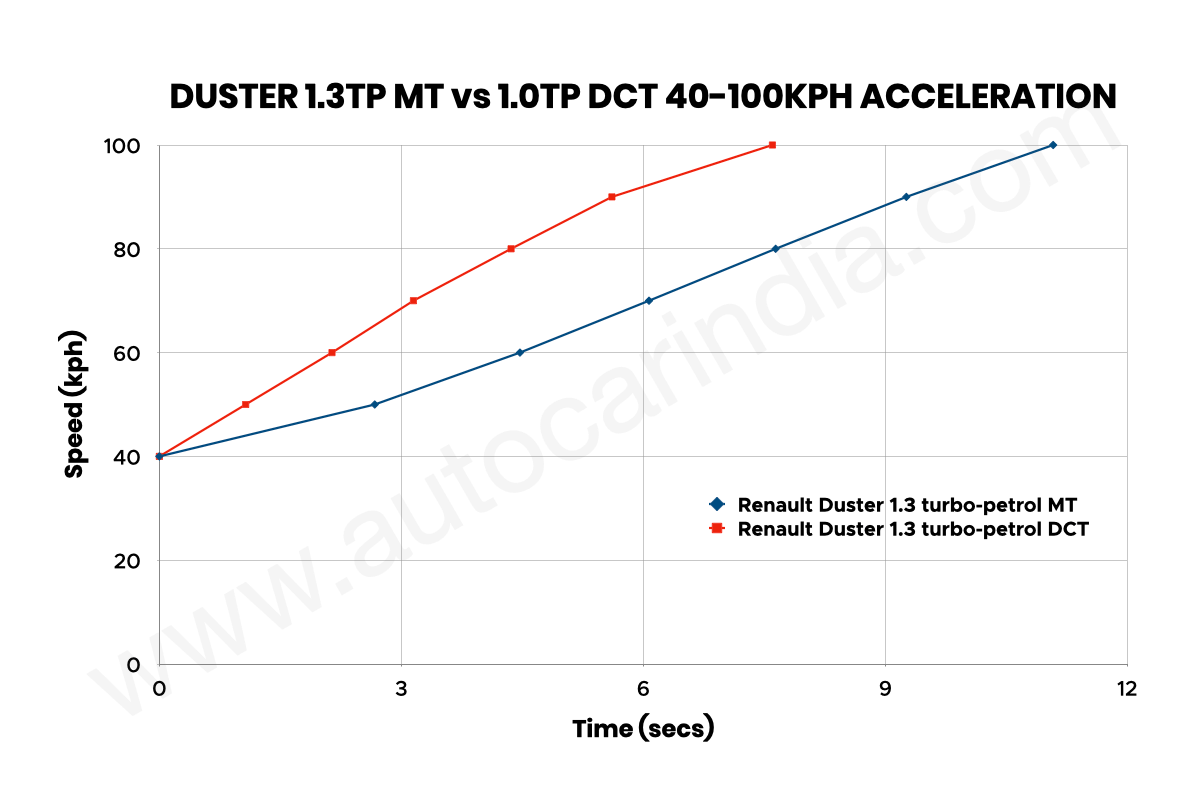
40-100kph (4th gear)
11.08
7.60
Unlike the outright 0-100kph acceleration times, the DCT version posted quicker in-gear acceleration times. In the third gear, it had a 4.26-second lead in the 20-80kph time, and in fourth gear, it was quicker by 3.48 seconds to record a 40-100kph run.
Autocar India’s testing standards
Before we conduct our performance tests, we check and maintain tyre pressures based on the manufacturer’s recommendation and ensure the car has a full tank of fuel. The car is then tested in a controlled environment with two people on board, and the data is collected via highly accurate GPS-based timing equipment.
Petrol Diesel Price Today: हर दिन की शुरुआत सिर्फ सूरज की किरणों से नहीं होती, बल्कि पेट्रोल और डीजल की नई कीमतों से भी होती है, जो आम आदमी की जेब पर सीधा असर डालती हैं। सुबह 6 बजे देश की तेल विपणन कंपनियां (OMCs) ताजा दरें जारी करती हैं, जो अंतरराष्ट्रीय बाजार में कच्चे तेल की कीमतों और डॉलर-रुपए की विनिमय दर में आए बदलावों पर आधारित होती हैं। ये बदलाव रोजमर्रा की जिंदगी को प्रभावित करते हैं, चाहे वो ऑफिस जाने वाला व्यक्ति हो या फल-सब्जी बेचने वाला व्यापारी।
ऐसे में हर दिन की कीमतों की जानकारी रखना सिर्फ जरूरी ही नहीं, बल्कि समझदारी भी है। सरकार की यह प्रणाली पारदर्शिता सुनिश्चित करती है ताकि उपभोक्ताओं को किसी तरह की भ्रमित जानकारी न मिले।
आपके शहर में आज का पेट्रोल-डीजल का भाव
ये रहे 19 जुलाई 2026 के प्रमुख शहरों के पेट्रोल-डीजल के ताजा रेट —
नई दिल्ली: पेट्रोल 102.12 रुपये | डीजल 95.20 रुपये
मुंबई: पेट्रोल 111.21 रुपये | डीजल 97.83 रुपये
कोलकाता: पेट्रोल 113.47 रुपये | डीजल 99.82 रुपये
चेन्नई: पेट्रोल 107.78 रुपये | डीजल 99.56 रुपये
गुरुग्राम: पेट्रोल 102.97 रुपये | डीजल 95.64 रुपये
नोएडा: पेट्रोल 101.96 रुपये | डीजल 95.44 रुपये
बेंगलुरु: पेट्रोल 111.37 रुपये | डीजल 99.26 रुपये
भुवनेश्वर: पेट्रोल 109.92 रुपये | डीजल 100.92 रुपये
चंडीगढ़: पेट्रोल 98.10 रुपये | डीजल 86.09 रुपये
हैदराबाद: पेट्रोल 115.69 रुपये | डीजल 103.82 रुपये
जयपुर: पेट्रोल 112.66 रुपये | डीजल 97.78 रुपये
लखनऊ: पेट्रोल 102.63 रुपये | डीजल 96.07 रुपये
पटना: पेट्रोल 113.35 रुपये | डीजल 99.36 रुपये
तिरुवनंतपुरम: पेट्रोल 115.49 रुपये | डीजल 104.40 रुपये
पिछले दो साल से स्थिर क्यों हैं कीमतें?
मई 2022 के बाद से केंद्र और कई राज्यों द्वारा टैक्स में कटौती की गई, जिसके बाद पेट्रोल-डीजल की कीमतों में स्थिरता देखी जा रही है। हालांकि अंतरराष्ट्रीय बाजार में उतार-चढ़ाव होता रहता है, फिर भी भारतीय उपभोक्ताओं के लिए कीमतें तुलनात्मक रूप से स्थिर बनी हुई हैं।
किन कारणों से तय होती हैं ईंधन की कीमतें?
कच्चे तेल की कीमतें:
पेट्रोल और डीजल का उत्पादन मुख्य रूप से कच्चे तेल से होता है। जब अंतरराष्ट्रीय स्तर पर कच्चे तेल की कीमतें बढ़ती हैं, तो इसका असर सीधे भारतीय बाजार पर पड़ता है।
डॉलर के मुकाबले रुपया:
भारत अधिकतर कच्चा तेल आयात करता है, और यह डॉलर में खरीदा जाता है। यदि रुपया कमजोर होता है, तो ईंधन महंगा हो जाता है।
सरकारी टैक्स और शुल्क:
केंद्र और राज्य सरकारें पेट्रोल-डीजल पर भारी टैक्स लगाती हैं, जो खुदरा मूल्य का बड़ा हिस्सा होते हैं। यही कारण है कि राज्यों में कीमतों में अंतर होता है।
रिफाइनिंग की लागत:
कच्चे तेल को इस्तेमाल लायक बनाने की प्रक्रिया (रिफाइनिंग) में भी खर्च होता है। ये लागत कच्चे तेल की गुणवत्ता और रिफाइनरी की क्षमता पर निर्भर करती है।
मांग और आपूर्ति का संतुलन:
बाजार में ईंधन की मांग अगर बढ़ जाती है, तो कीमतें भी ऊपर जाने लगती हैं। खासकर त्योहारों, गर्मी या सर्दी के मौसम में ईंधन की खपत ज्यादा होती है।
कैसे करें अपने शहर की कीमतें SMS से चेक?
अगर आप मोबाइल से ईंधन की कीमत जानना चाहते हैं, तो ये प्रक्रिया आसान है:
Indian Oil ग्राहक: अपने शहर का कोड टाइप करें और उसे “RSP” के साथ 9224992249 पर भेजें।
BPCL ग्राहक: “RSP” लिखकर 9223112222 पर भेजें।
HPCL ग्राहक: “HP Price” लिखकर 9222201122 पर भेजें।
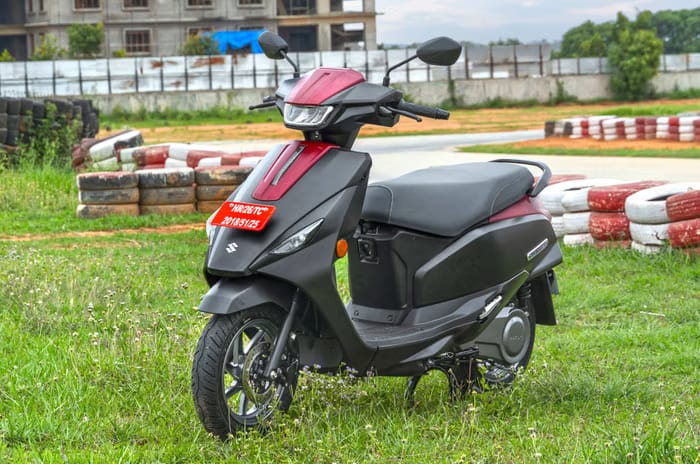
The Suzuki e-Access is the first electric two-wheeler from Suzuki Motorcycle India, built on an entirely new platform developed in-house rather than shared with the petrol Access 125. It brings Suzuki’s reputation for reliability to a segment increasingly crowded with newer entrants. Here are answers to some of the most commonly asked questions about it.
What is the price of the Suzuki e-Access?
The Suzuki e-Access is available in a single variant priced at Rs 1.88 lakh (ex-showroom, Delhi). At this price, it is one of the more expensive electric scooters from a mainstream manufacturer in the country, sitting above the TVS iQube S and Bajaj Chetak C3501, and closer to the Ather Rizta S in pricing.
What motor and battery does the Suzuki e-Access use?
The Suzuki e-Access is powered by a hub-mounted permanent magnet synchronous motor producing 3.5kW of rated power and 6kW of peak power, with 90Nm of torque at the rear wheel. The battery is a 3kWh LFP (Lithium Ferrous Phosphate) pack – a chemistry that offers relatively longer battery life and better thermal stability compared to the NCM batteries used in most rival electric scooters, but at the cost of lower energy density and, as a result, lower range for a given pack size.
What is the charging time of the Suzuki e-Access?
The e-Access ships with a portable 600W charger capable of topping up a flat battery to full in 6 hours 20 minutes. In our real-world test, we verified the actual charging time to be 6 hours flat when plugged into a standard 12A, 3-pin socket – slightly faster than the claimed figure. There is no fast-charging option available.
What is the range of the Suzuki e-Access?
Suzuki claims an IDC range of 95km on a full charge. In our real-world range test conducted in Ride A mode – the more powerful of the two ride modes – the e-Access covered 88.4km before the battery was fully depleted. Notably, the range indicator on the display was reliable throughout, with the scooter displaying an estimated range of 93km at the start of the run and never catching us by surprise as the battery dropped. Riding in the more efficient Eco mode will yield additional range. The e-Access comes closest to its claimed IDC figure in real-world conditions compared to other electric scooters we have tested.
What is the top speed of the Suzuki e-Access?
The Suzuki e-Access has a claimed top speed of 80kph, which should be achievable in either of its two Ride modes – Ride A and Ride B. Both offer identical peak power and throttle response, differing only in the level of regenerative braking intervention, with Ride B providing a gentler regen effect than Ride A. There’s also a lower-power Eco mode, which in our tests reached a VBOX-verified 55kph.
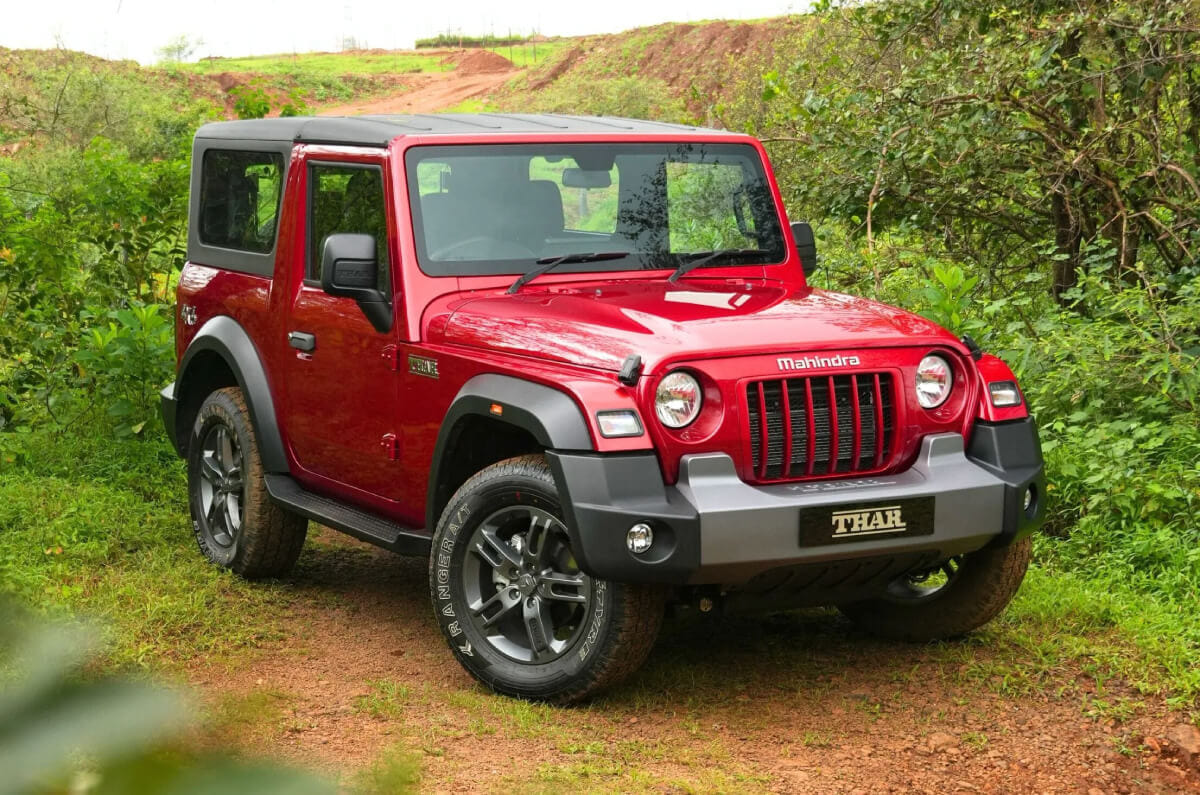
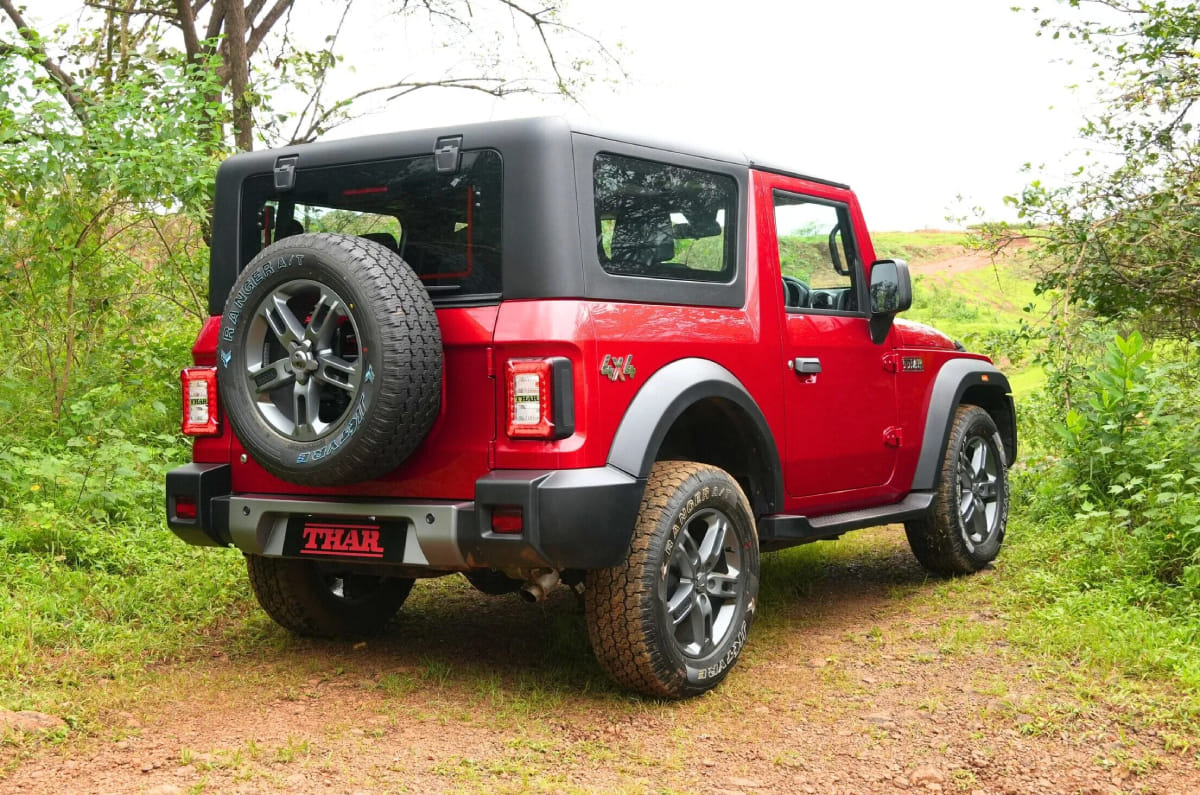
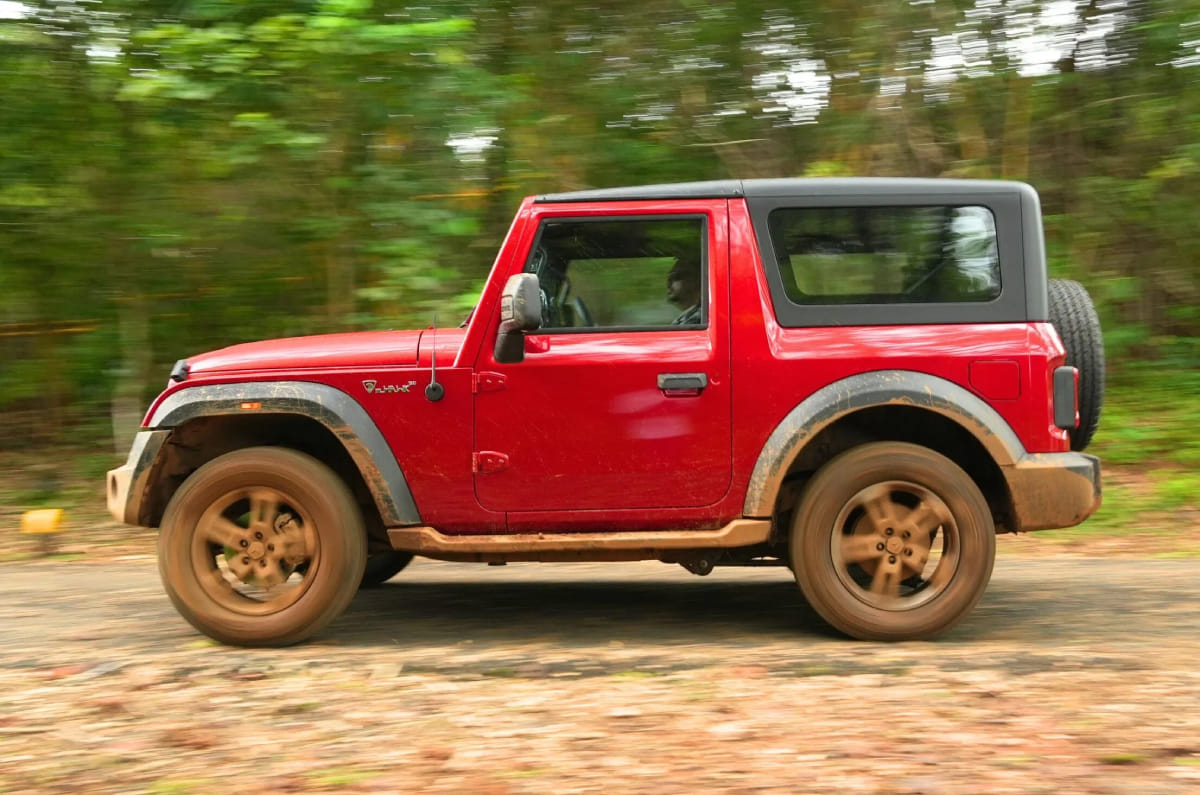
The Mahindra Thar is one of India’s most capable off-road SUVs and is available with petrol and diesel engines, rear-wheel drive and four-wheel drive options. Priced from Rs 10.32 lakh (ex-showroom), it prioritises off-road ability over outright practicality. Here are three reasons to buy the Thar and three reasons why you may want to look elsewhere.
Reasons to buy
Built for serious off-roading
Purpose-built hardware makes it exceptionally capable off road
Few SUVs at this price can match the performance of the Thar once the road ends. Its ladder-frame construction, low-range transfer case and mechanical locking differential on 4×4 variants allow it to tackle steep climbs, deep ruts and loose surfaces with confidence. Even difficult trails are handled with surprising ease, making the Thar one of the most capable off-road SUVs currently on sale.
Strong petrol and diesel engines
Both petrol and diesel engines are refined and offer strong performance
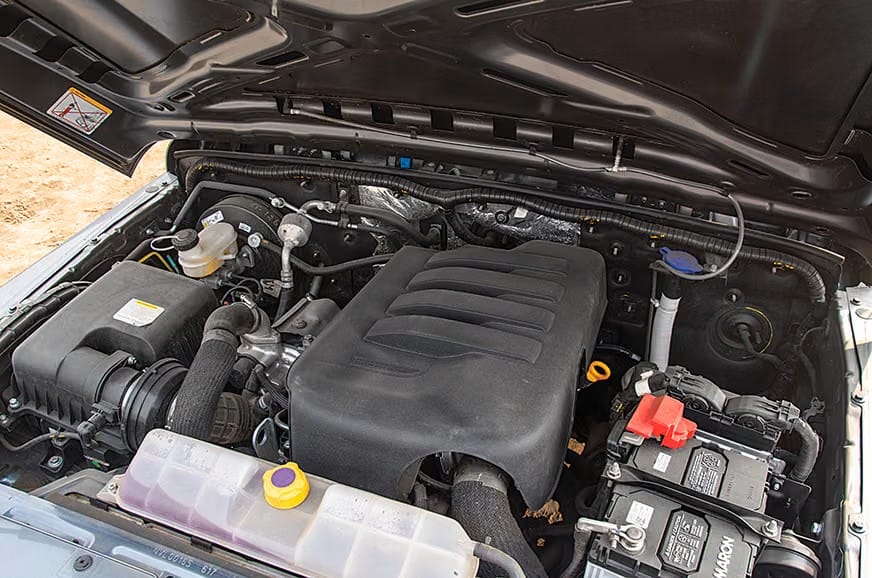
The Thar is available with three engine options. The 1.5-litre diesel (4×2 only) produces 119hp and 300Nm, while the larger 2.2-litre diesel develops 132hp and 300Nm. The 2.0-litre turbo-petrol, meanwhile, makes 152hp and 300Nm. All engines come paired with a 6-speed manual gearbox, while the 2.2-litre diesel and 2.0-litre petrol can also be had with a 6-speed torque-converter automatic.
The diesel engine stands out for its refinement and strong low-end torque, making it particularly well-suited to off-road driving. Buyers looking for stronger on-road performance, meanwhile, will appreciate the punch of the turbo-petrol engine.
Better equipped than before
Recent updates make the cabin easier to live with
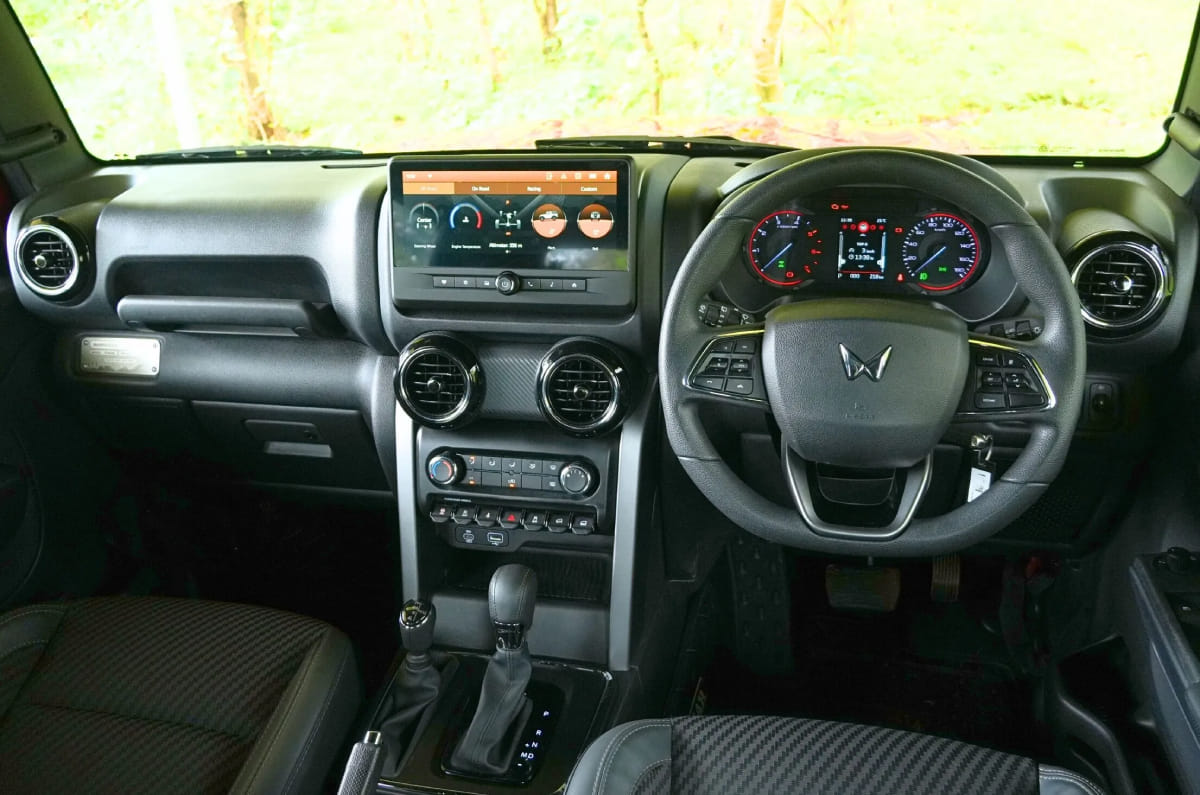
The latest updates have addressed several everyday usability issues. The Thar now gets a larger 10.25-inch touchscreen, rear-view camera, rear washer and wiper, rear AC vents, Type-C charging port, revised centre console with an adjustable armrest, grab handles on the A-pillars and relocated power window switches. While these are relatively small changes individually, together they make the Thar noticeably easier to use every day.
Reasons to skip
Rear-seat access remains inconvenient
Three-door body style limits practicality
Getting into the rear seats remains one of the Thar’s biggest compromises. The front seats need to be folded and slid forward, making access inconvenient, particularly for older passengers and those travelling with children. Boot space is also limited, leaving little room for luggage when all four seats are occupied. Buyers who frequently travel with family or need a more practical everyday SUV may find five-door alternatives better suited to their needs.
Ride comfort isn’t its forte
Suspension prioritises off-road ability over comfort
The Thar’s suspension is designed primarily for off-road use and it feels bouncy over broken roads. While Mahindra has improved the setup over the years, it isn’t as settled or comfortable as most monocoque SUVs. The hydraulically assisted steering is heavier than the electrically assisted systems used by most rivals and can kick back when driving over potholes or other sharp road imperfections.
Not particularly fuel efficient
Petrol and diesel engines aren’t efficiency focused
The Thar’s engines deliver strong performance, but fuel efficiency is not one of its strengths. In our 2021 Thar road test, the petrol automatic returned 7kpl in the city and 9.3kpl on the highway. The diesel manual performed better, managing 12kpl in the city and 12.6kpl on the highway, but it still trails many similarly priced monocoque SUVs. Buyers covering high annual running may find more economical alternatives elsewhere.
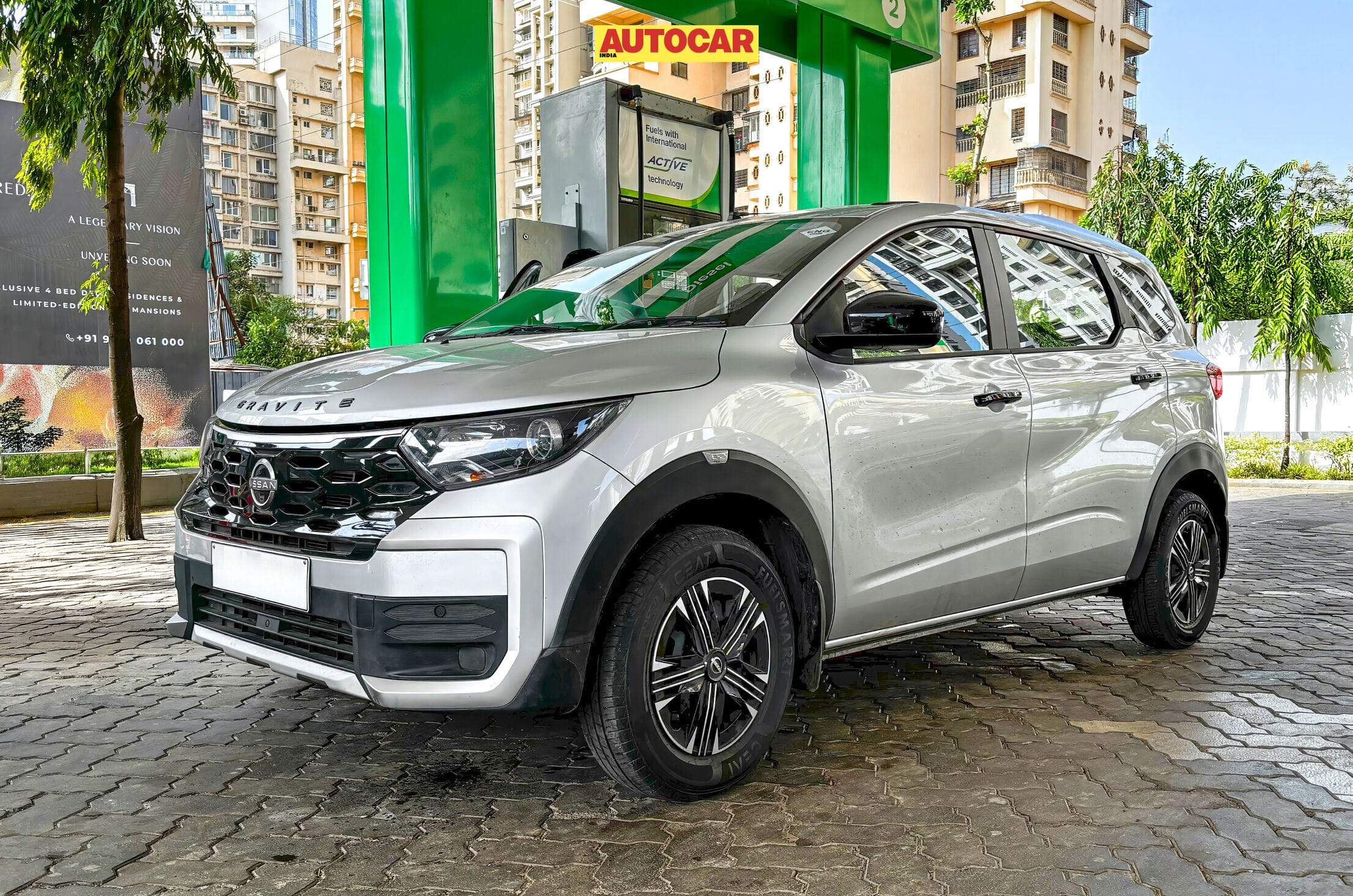
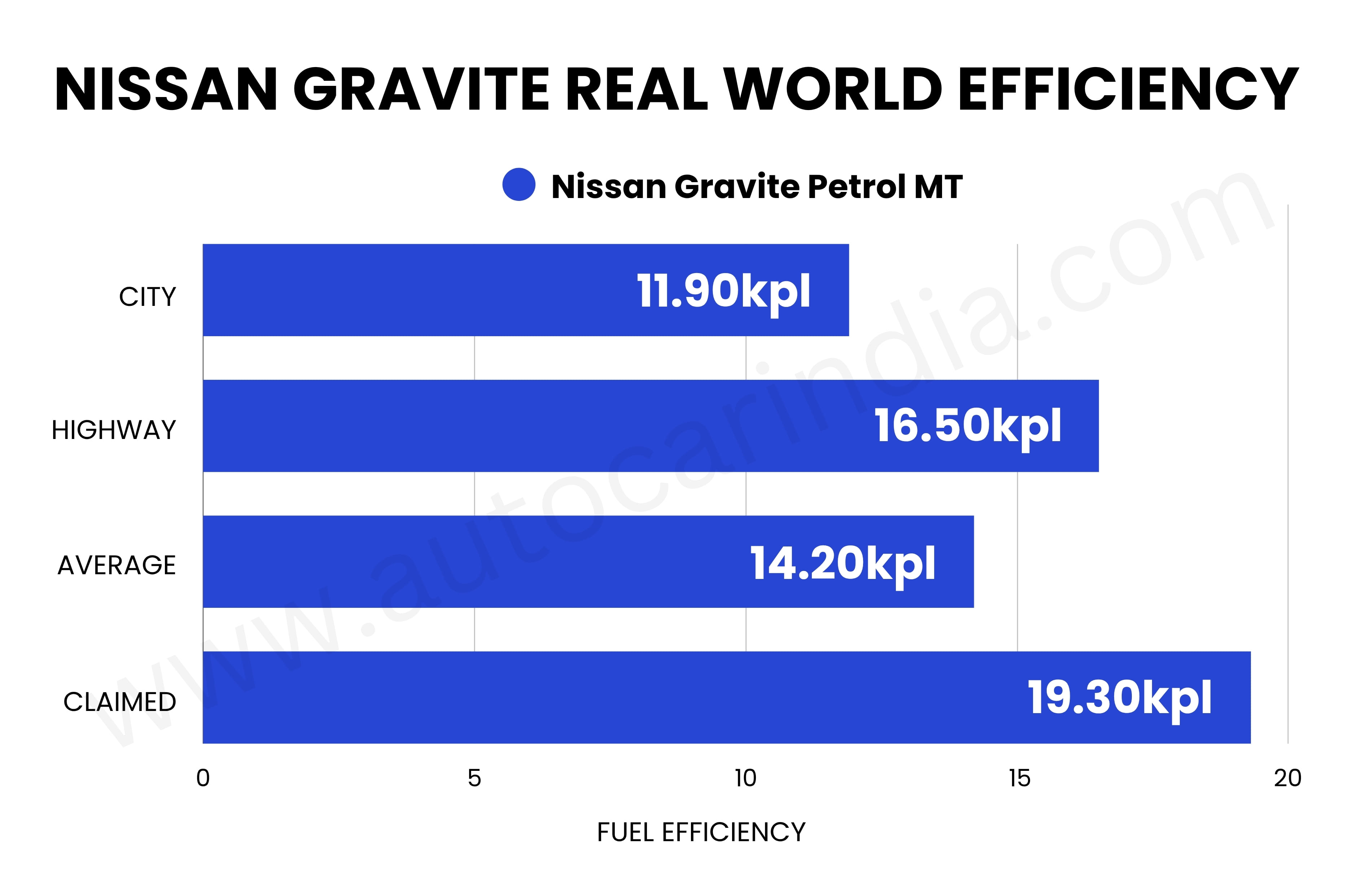
The Gravite is essentially Nissan’s version of the Renault Triber, with some minor cosmetic tweaks. Apart from the Renault Triber, it is the only three-row MPV under 4-meters and it’s priced from Rs. 5.73 lakh (ex-showroom). We’ve put the Nissan Gravite manual through our instrumented real-world tests to see how efficient it really is.
Misses an auto engine start-stop feature
Has a claimed fuel efficiency of 19.3kpl
Kerb weight is a light 988kg
Nissan Gravite petrol MT real-world mileage
Gets a 72hp 1.0-litre 3-cyl NA engine
Powering the Gravite is 1.0-litre, three-cylinder, naturally-aspirated petrol engine (BR10), which is also offered with the Magnite, and it makes 72hp and 96Nm. It is offered with a 5-speed manual and a 5-speed AMT automatic, the former of which we’ve tested here.
In our real-world tests, the Nissan Gravite manual returned 11.9kpl in the city and 16.5kpl on the highway, for an overall average efficiency of about 14.2kpl. While the city efficiency is decent, an auto engine start-stop feature would have boosted it further. Thanks to the taller 4th and the 5th gears, the highway efficiency is quite impressive. Ambient temperatures were also above 30degC throughout our test which affected the efficiency.
With an overall average fuel efficiency of 14.2kpl and a 40-litre fuel tank in the Gravite, one can expect a real-world range of around 560km on a tankful of petrol.
Autocar India’s fuel-efficiency testing
Before conducting our real-world fuel-efficiency tests, we fill our test cars’ tanks to the brim and maintain tyre pressures based on the manufacturer’s recommendation. These cars are then driven on fixed city and highway loops in and around Navi Mumbai, and we maintain certain average speeds. Throughout the tests, the aircon is set to fan speed 2 with temperature dialed to the lowest position, and other electricals, such as the audio system, indicators and wipers, when required – just as a regular user would. Periodic driver swaps further neutralise variations in driver patterns. At the end of each cycle, we calculate efficiency by filling the tanks to full again.
There are few cars with the sheer variety of powertrains as the Land Rover Defender. From a four-pot to a choice of V8s, there is seemingly something for everyone. One stands out, though – the D350 3.0-litre inline-six twin-turbocharged diesel. More power than the base petrol, more torque than the 5.0 V8, with the frugality of a diesel. It’s the only motor the Trophy Edition comes with, so is this engine the sweet spot in the range?
Land Rover Defender Trophy Edition exterior design and engineering – 9/10
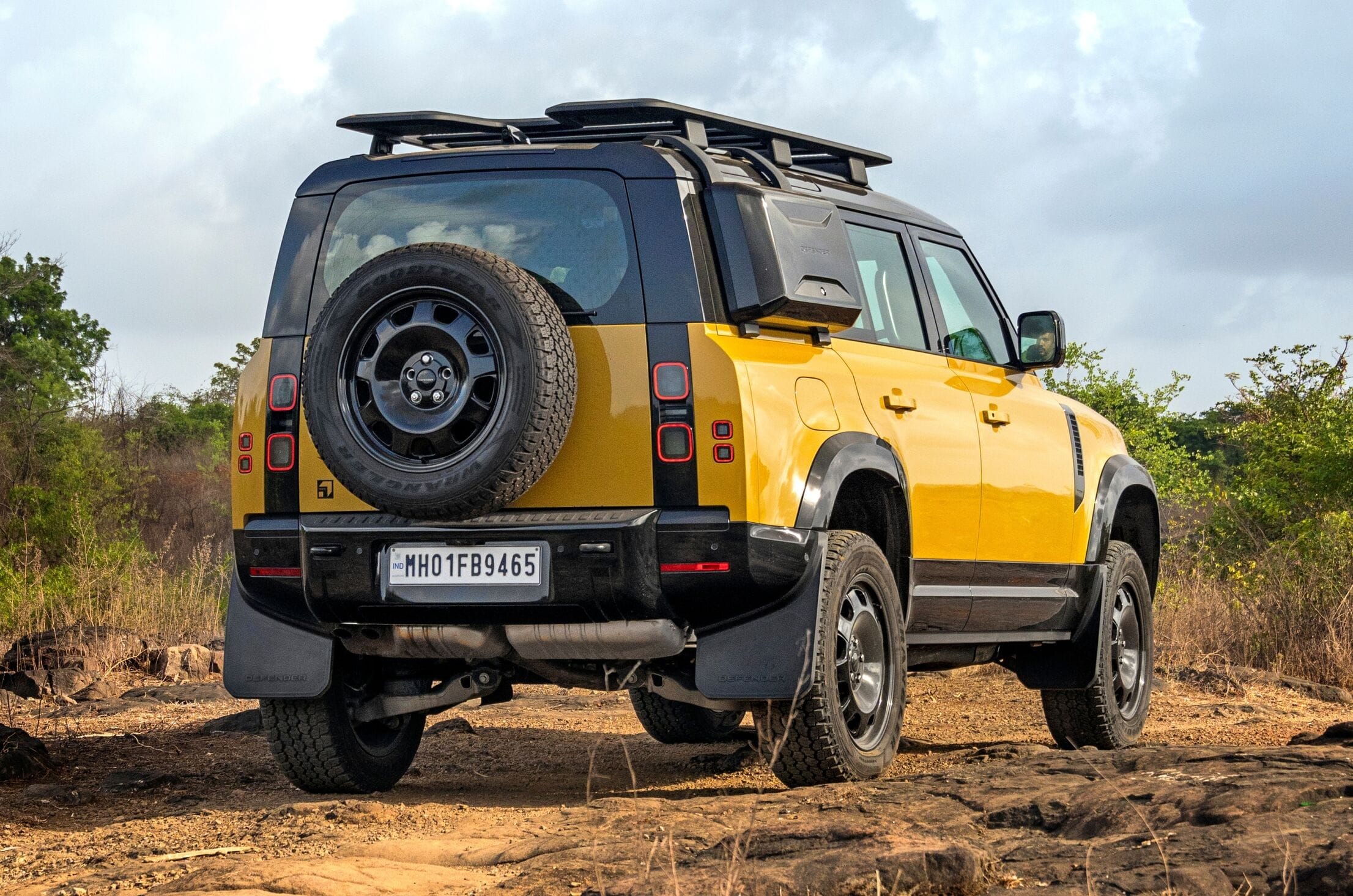
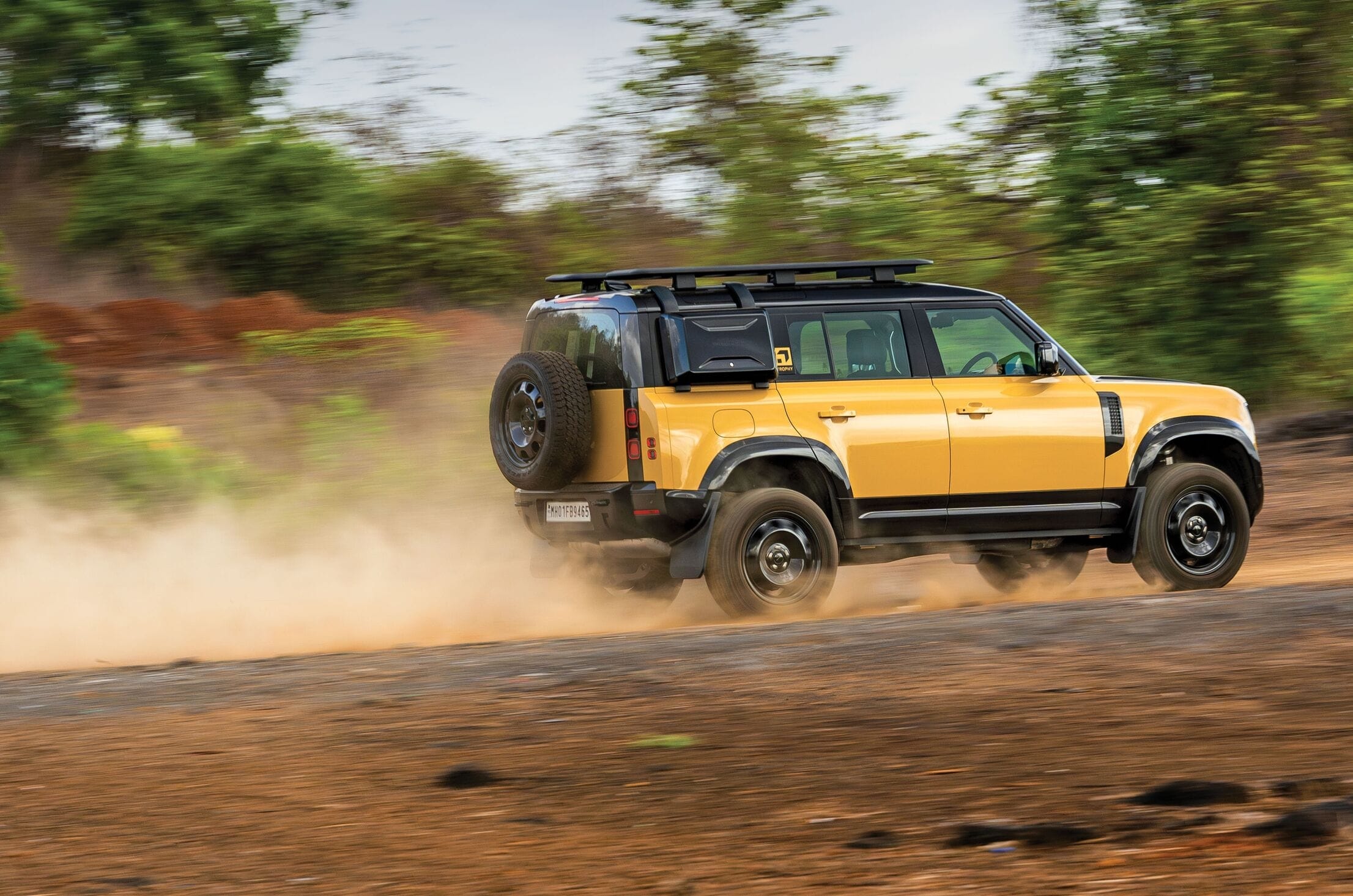
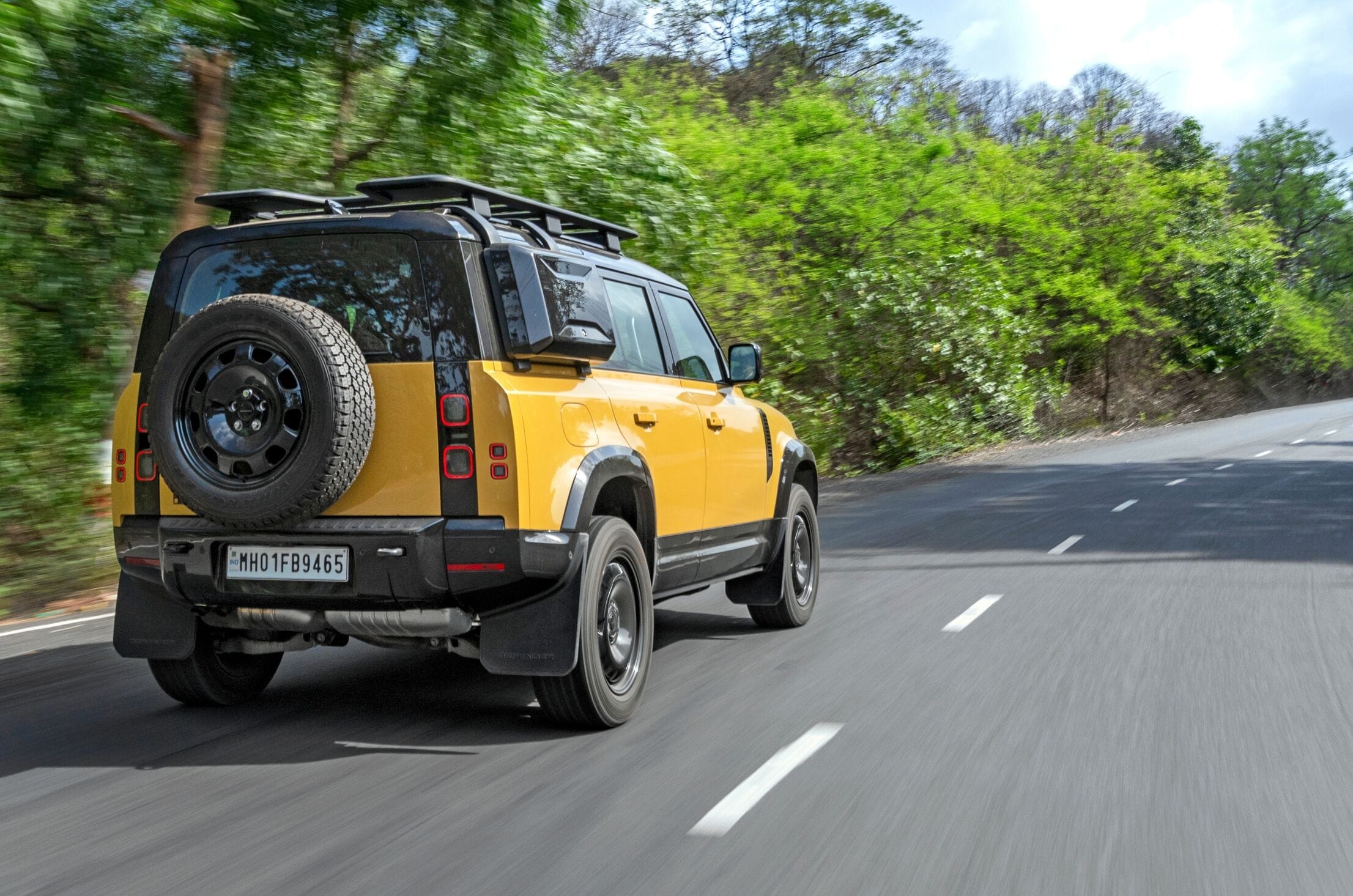
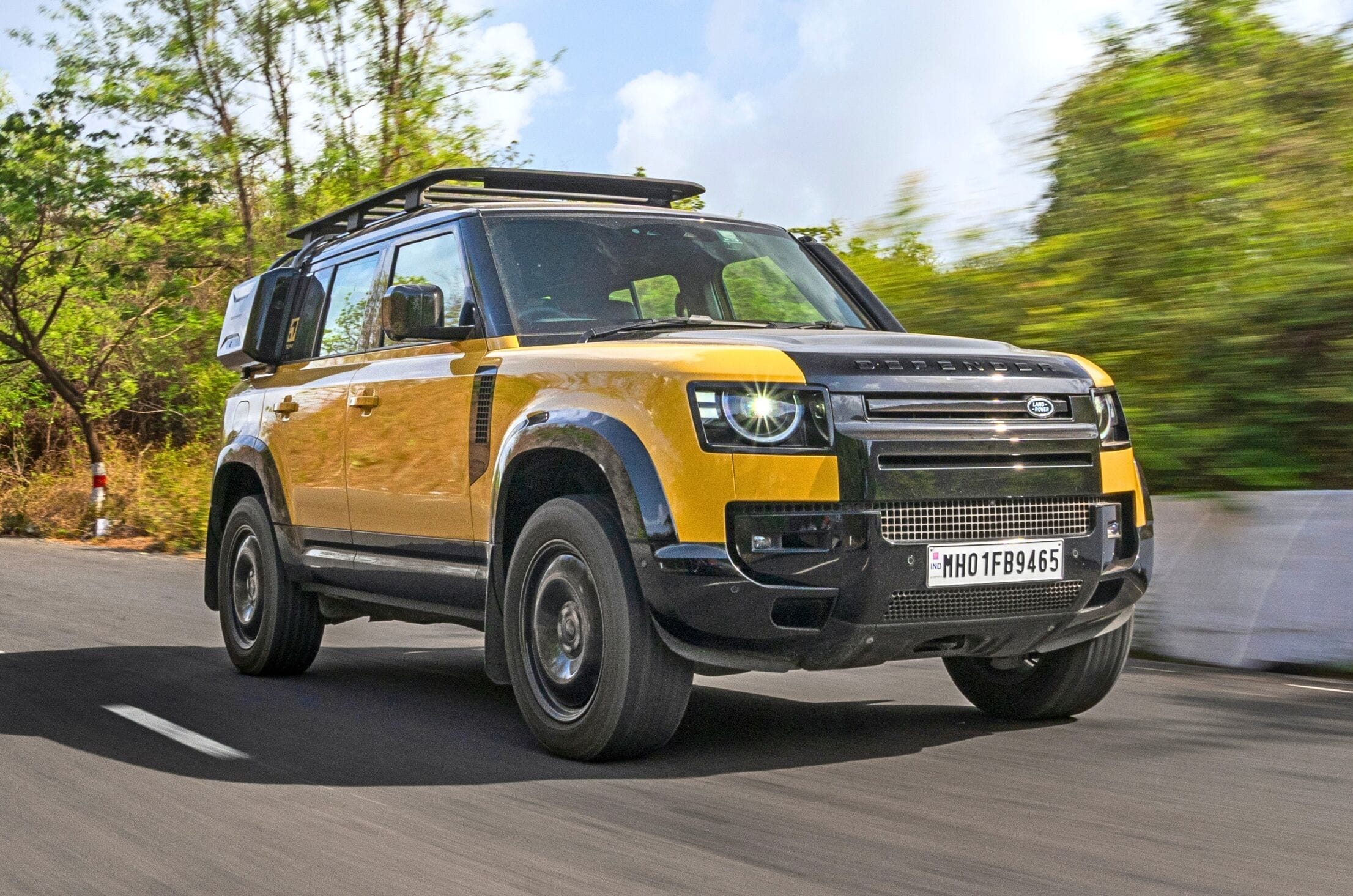
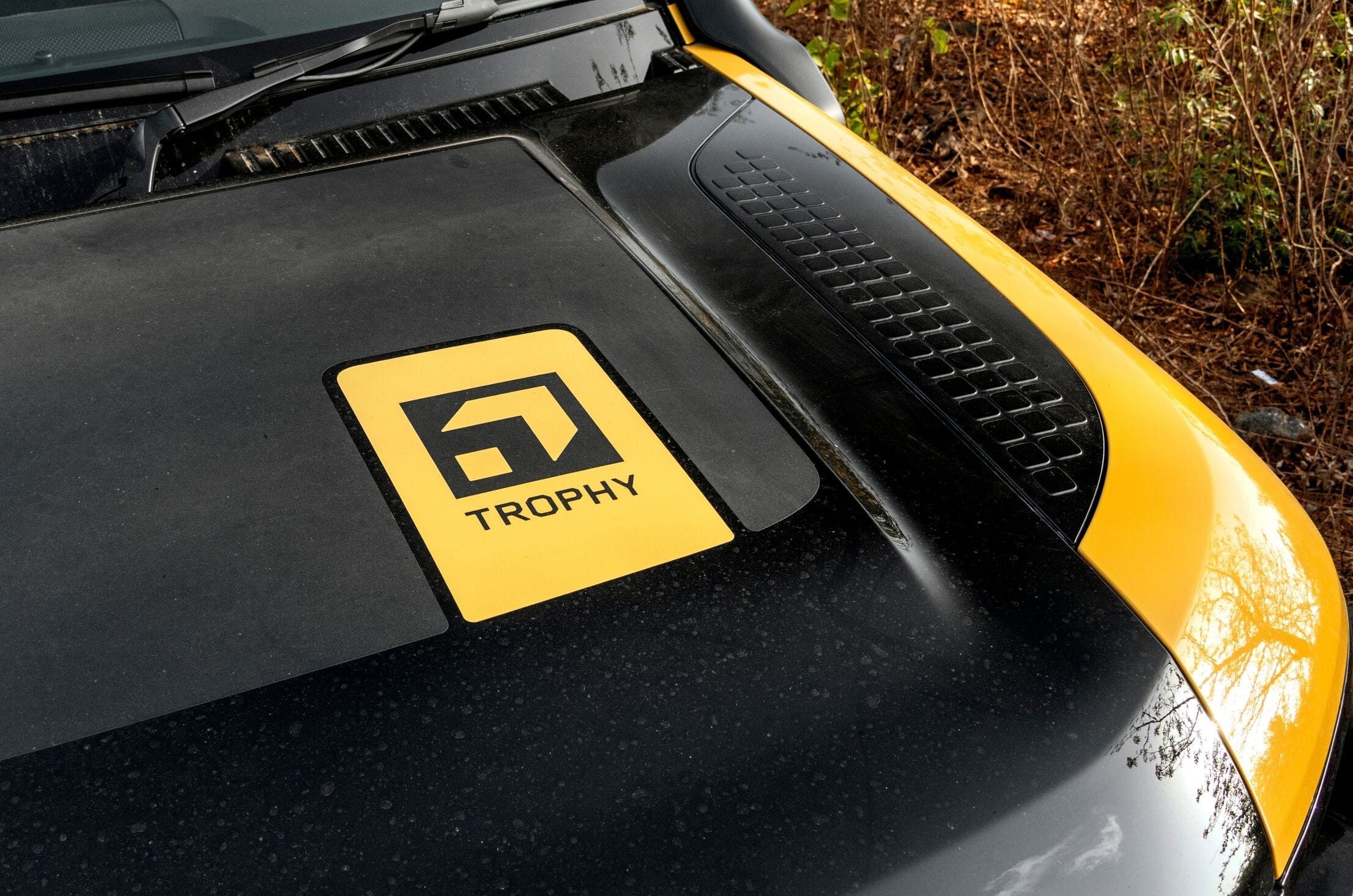
The Defender’s design hasn’t changed since it launched in 2020, but it certainly isn’t wanting for a facelift. It still looks fresh and modern with subtle nods to the original, without resorting to an overtly retro aesthetic. The Trophy Edition brings a choice of Deep Sandglow Yellow or Keswick Green – the former being the signature finish of the iconic Camel Trophy cars – with gloss black on the roof, bonnet, cladding and lower bumper for contrast. To go with the rugged look, it rides on all-terrain rubber shod 20-inch wheels that mimic steelies but are actually alloys. Additionally, there is Trophy branding on the bonnet, C-pillar and tailgate.
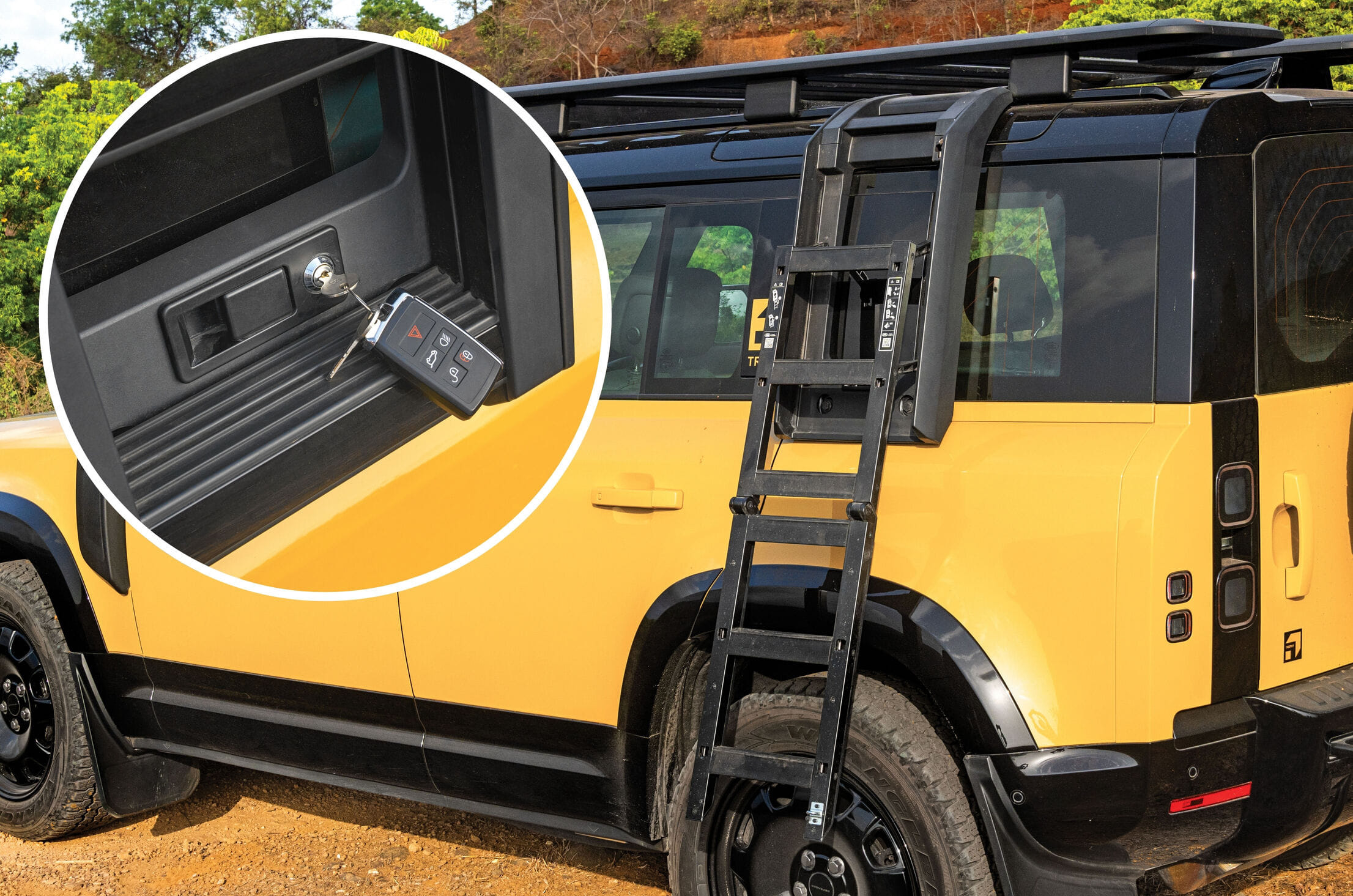
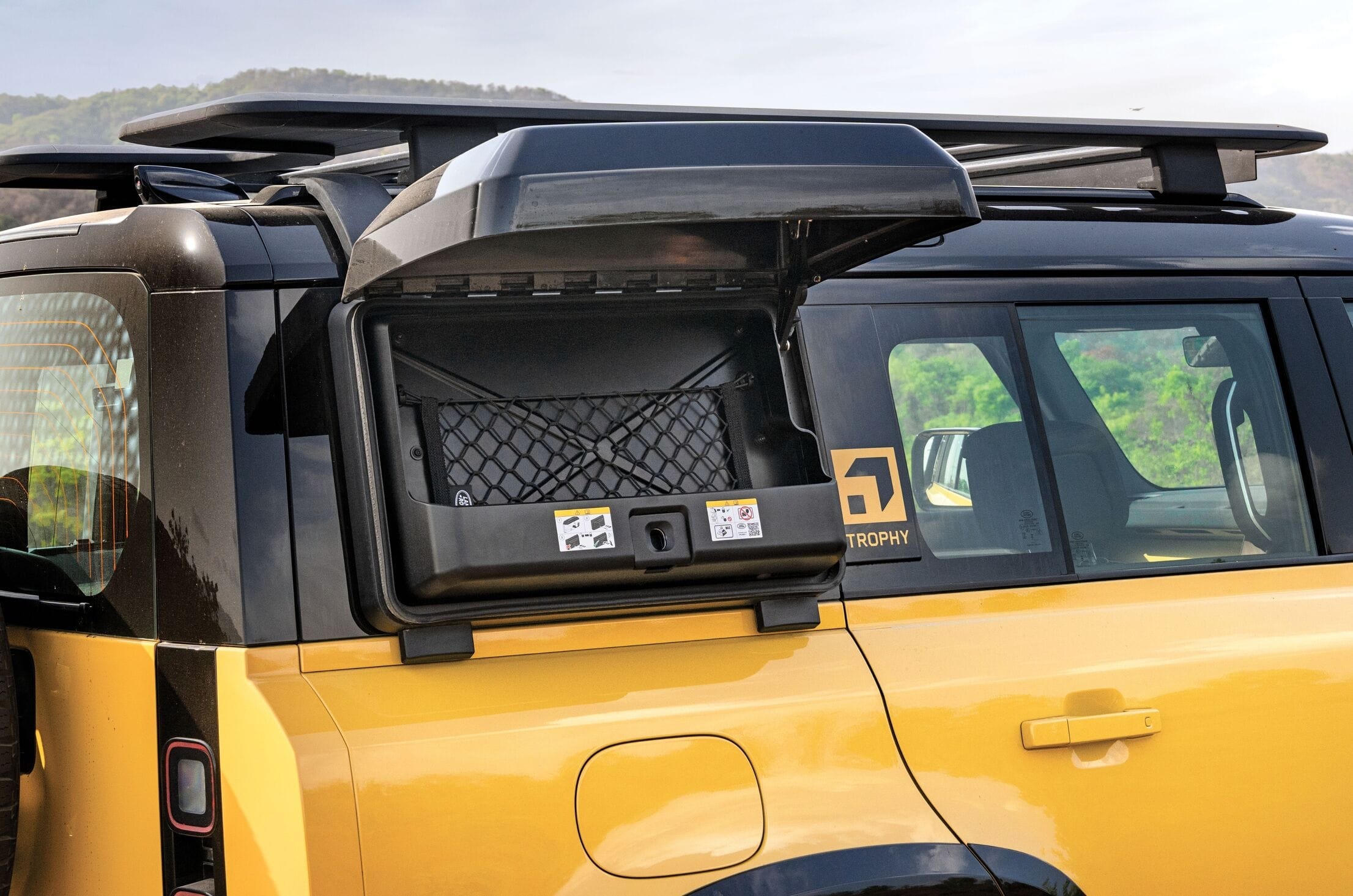
Sturdy ladder rated for 110kg; needs a seperate key to unlock.
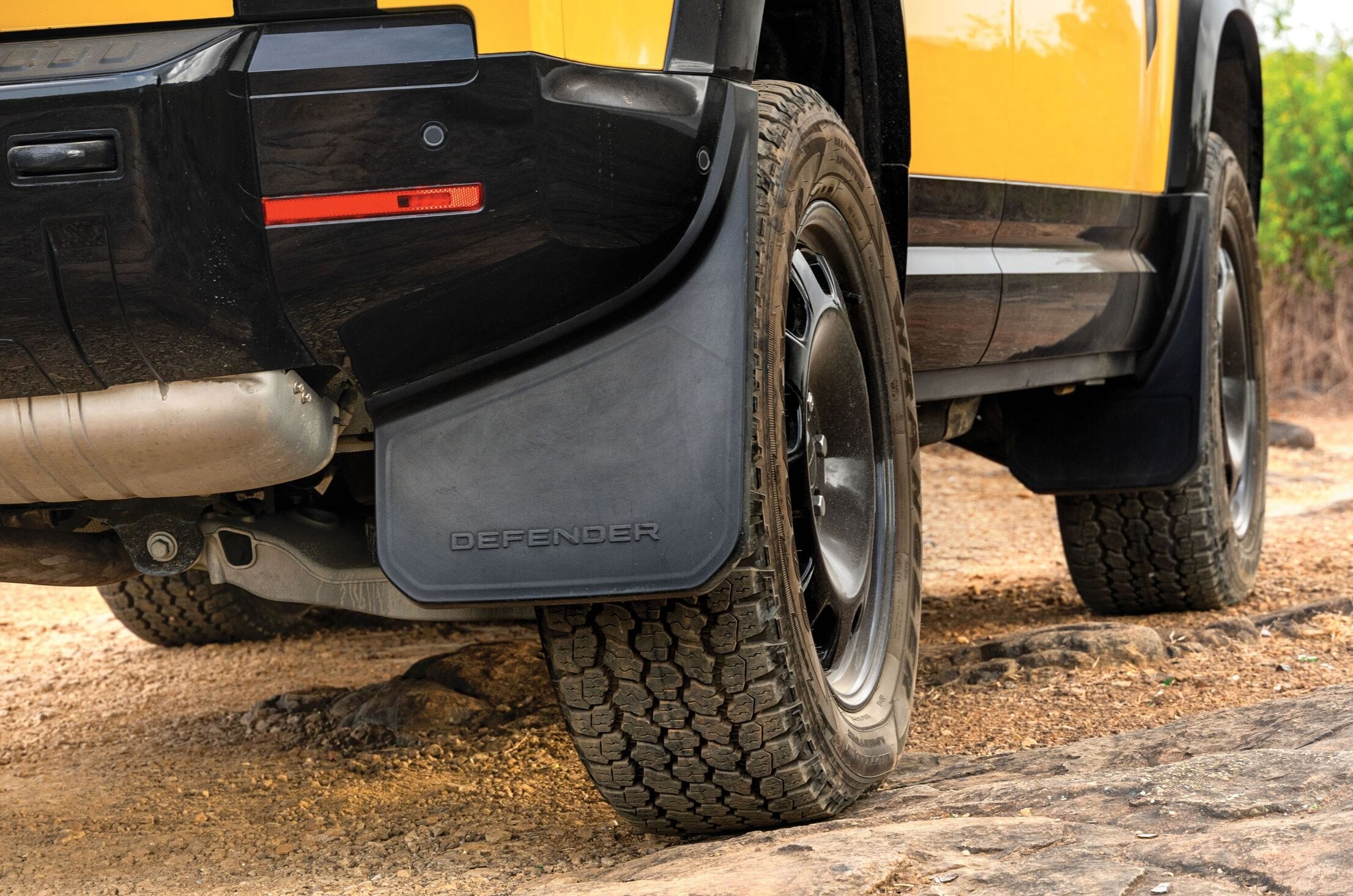
This particular example is also equipped with the optional Rs 5.35 Lakh Trophy Pack, which brings a roof rack, with a ladder to reach it on one side and an external storage box on the other. There’s big flexible mud flaps and a raised air intake – though it doesn’t raise the already lofty 900mm water wading ability, but helps with keeping sand out during dune bashing. All of this kit can be optioned on the regular Defender too, but here it ties in rather well with the whole Amazonian adventurer theme.
Land Rover Defender Trophy Edition interior space and comfort – 7/10
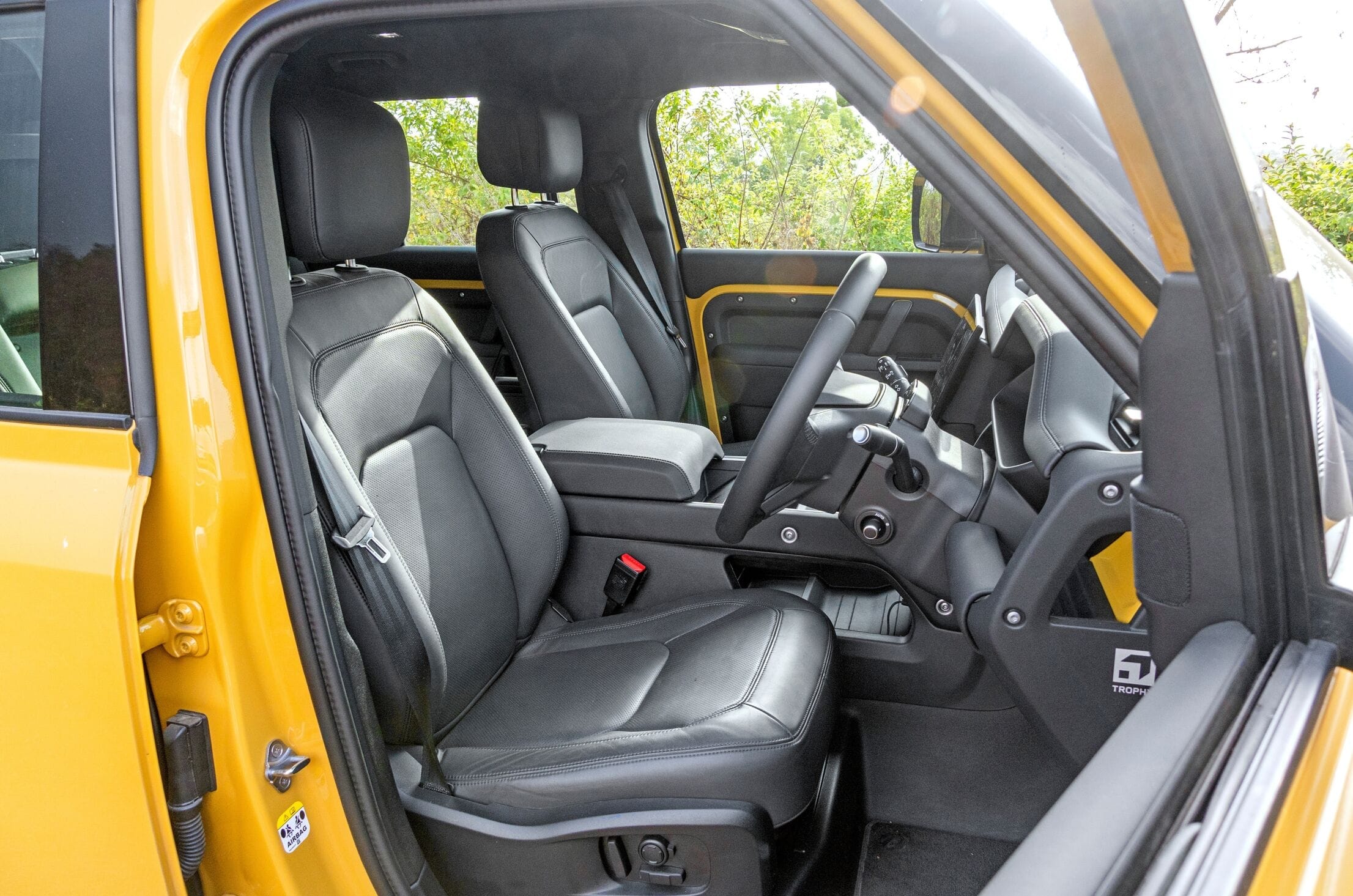
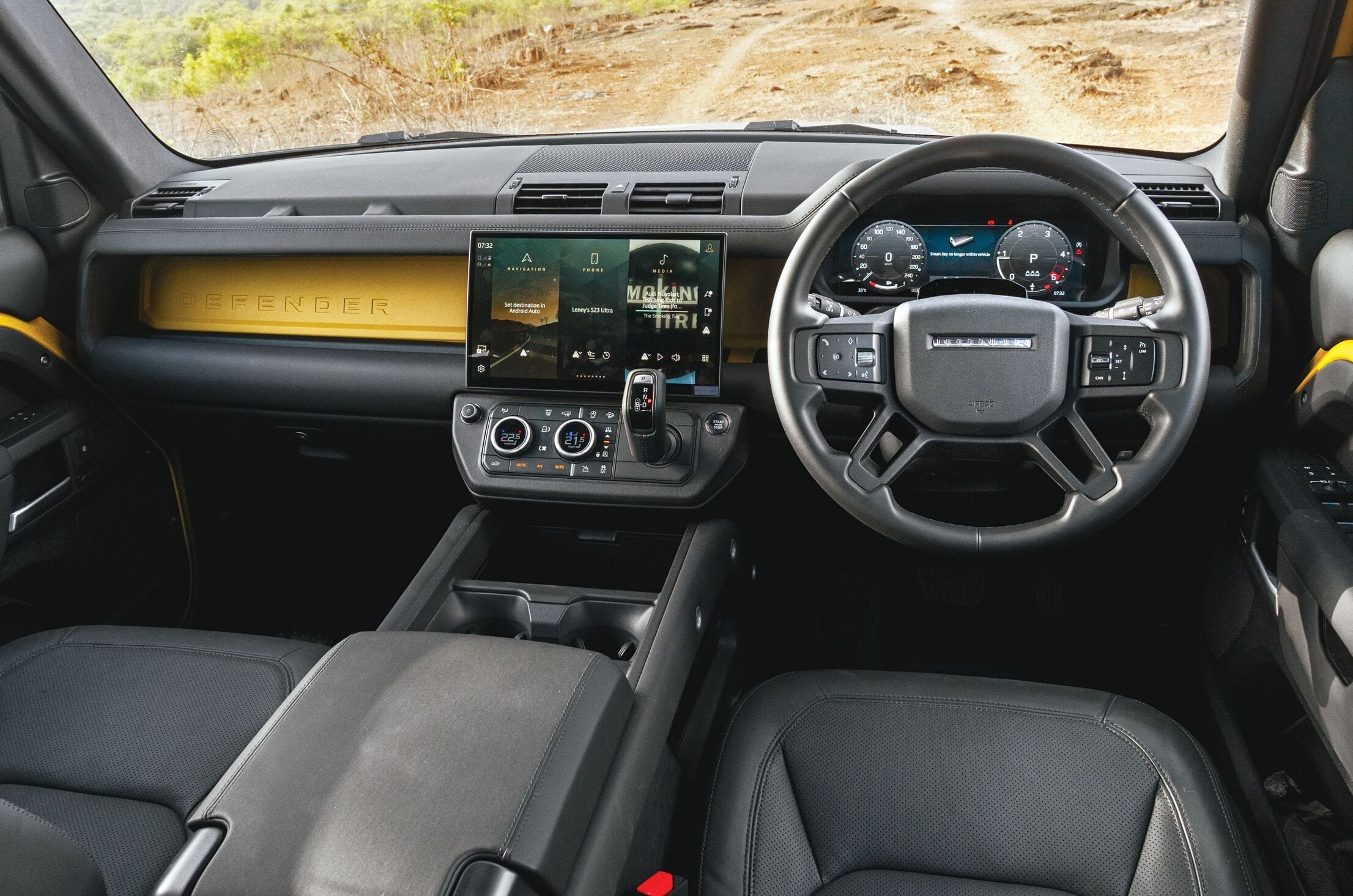
Electric front seats offer heating and ventilation.
Inside, it is standard Defender fare apart from some body-coloured trim on the dash, while the rest is finished in black. Comfort up front is excellent, with a lofty driving position that has you towering over conventionally large SUVs. The seat itself is wide and comfortable, with electrical adjustment as well as ventilation. The dashboard and centre console offer plenty of utility and storage spaces, while the quality of materials and finish elevates the premium quotient.
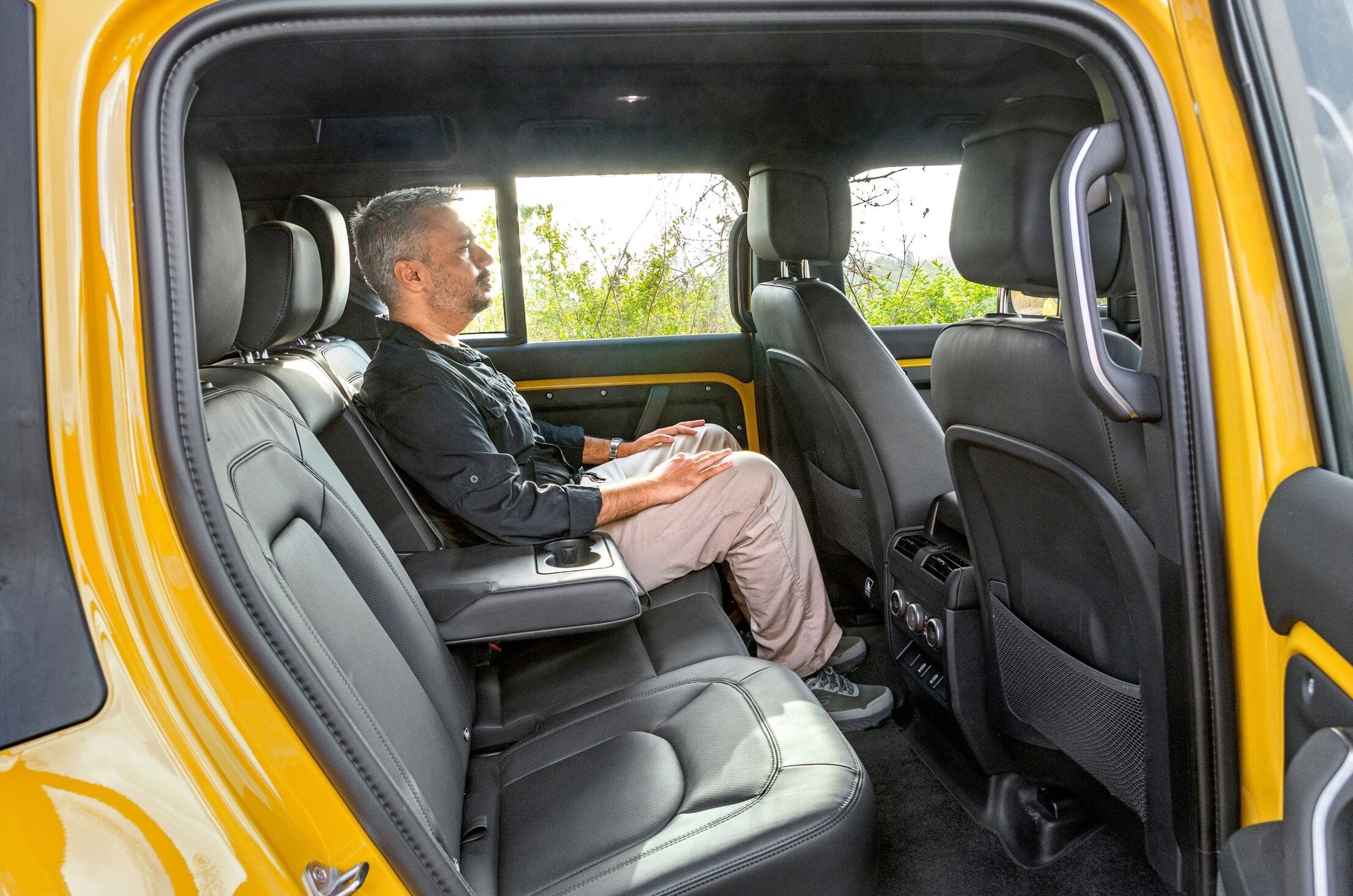
The rear is spacious and comfy, but climbing in takes effort.
For those who prefer to be chauffeured, the rear compartment is very comfortable and gets its own climate zone. There is plenty of room all around, and the bench is wide and supportive. It is, however, a task climbing into the Defender, even with the air suspension at its lowest position. Cargo room is also vast, with 786-litres of space with the second row up, expandable to 1875-litres with it stowed.
Land Rover Defender Trophy Edition features and safety – 8/10
Based on the X-Dynamic HSE, the Trophy Edition is also very well equipped, with highlights including a sharp 13.1-inch infotainment system, Meridian sound system and a panoramic sunroof. However, some of the serious off-road kit from the X trim, like air suspension, the Electronic Active Differential and Terrain Response 2, are optional extras.
Box for items you don’t want soiling the boot.
Safety is also well taken care of, with 6 airbags, Dynamic Stability Control, Roll Stability Control and Hill Descent Control. A sharp 360-degree parking camera helps when guiding this big SUV through tight spaces, and while adaptive cruise control is offered, other ADAS features like lane keep assist and autonomous emergency braking are not available in India.
Land Rover Defender Trophy Edition performance and refinement – 9/10
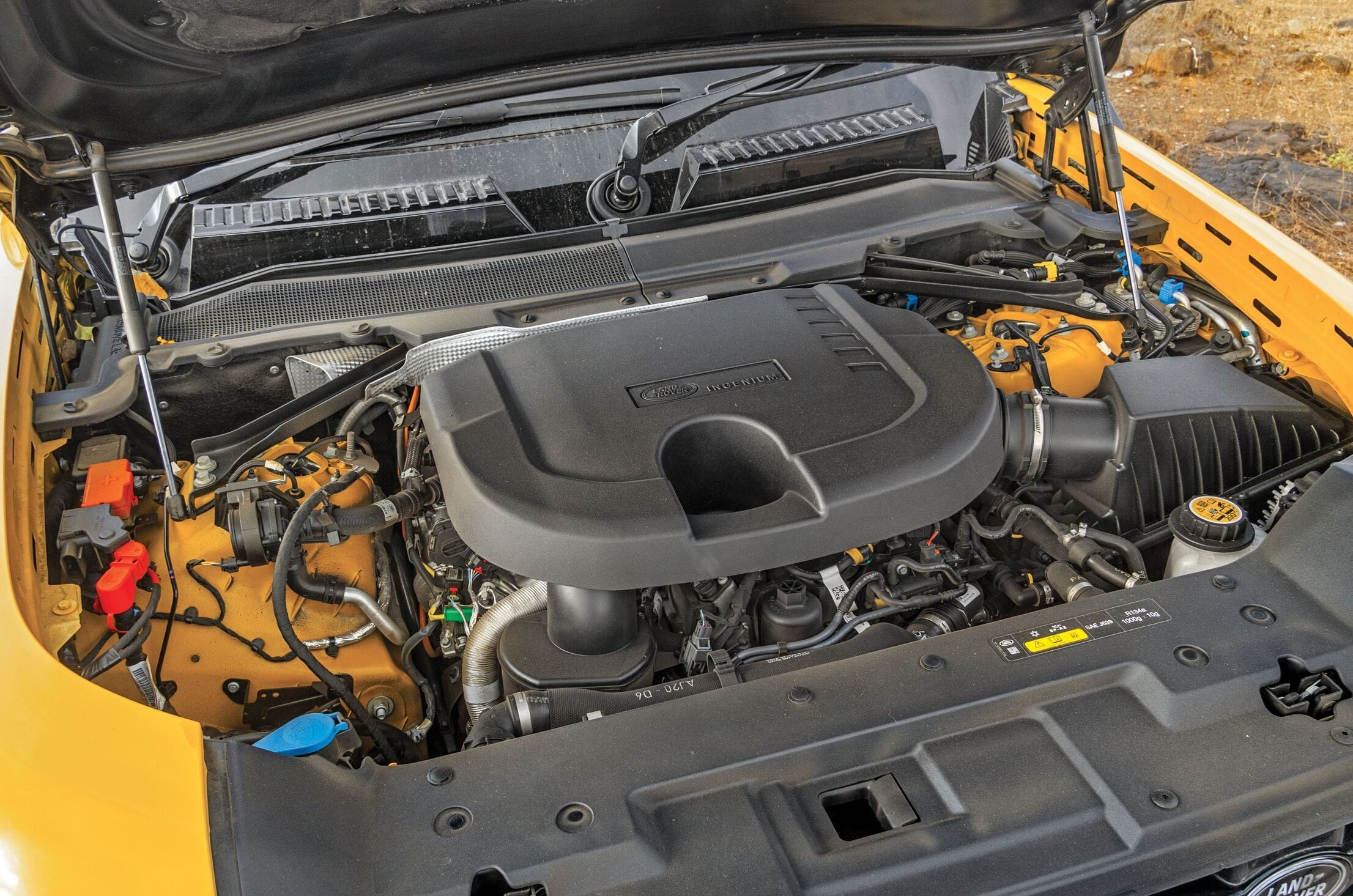
D350 diesel makes more torque than the P425 5.0L supercharged V8.
Under the hood is the 3.0-litre inline-six twin-turbo diesel from the Ingenium family, which makes 350hp and a whopping 700Nm – only the Octa beats it on torque, and that too by just 50Nm. Sending power to all four wheels is a slick 8-speed auto, which at times feels like too many cogs. At highway speeds, most overtakes are completed without the need for a downshift, and at city speeds merely tickling the throttle is enough to keep up with traffic. Push the right pedal harder, though, and it quickly drops a cog, the bonnet rises, and it accelerates as hard as you’d ever really need to in something this big.
Optional air springs iron out rough trails remarkably well.
A quick Vbox test confirmed a 0-100kph time of 6.79sec – slightly slower than the claimed time of 6.4sec. 20-80kph is dispatched in an equally rapid 4.19sec, while 40-100kph takes 4.98sec. Refinement is good too, and not just for a diesel. Outside the vehicle, the diesel clatter is very muted at idle, while inside, most passengers won’t be able to tell they’re in an oil burner. As revs rise, so do the decibels, but it sounds muscular and rather pleasant for a diesel. One gripe is at highway speeds, there is noticeable wind noise from the bolted-on accessories.
Land Rover Defender Trophy Edition range and efficiency – 7/10
While we didn’t get a chance to put it through our real-world fuel-efficiency run, the diesel is comfortably the most frugal of all the available Defender powertrains. On a steady highway run, it will regularly deliver double-digit fuel economy, which means the 89-litre tank will take you pretty far between fill-ups.
Land Rover Defender Trophy Edition ride comfort and handling – 8/10
The diesel feels like a natural fit for the Defender’s use case.
Our test car was equipped with air suspension, which is an option well worth ticking. Not only does it bring the ability to raise the car to clear obstacles or lower it to make getting in and out easier, but the ride is also superb. It feels very absorbent even on the roughest patches, and keeps the body quite flat and the cabin nicely isolated.
While it certainly has no sporting pretensions, it feels surprisingly fluid through corners too. There is no escaping the body roll, but it feels well controlled, surefooted and rather enjoyable to hustle. Also noteworthy is the steering; the large-diameter wheel feels great to hold and steer with, and the effort is perfectly weighted to boot.
Mudflaps suit the theme.
Off-road ability is a strength, but what’s impressive is the ease with which it conquers the rough stuff. Terrain Response offers presets for different surfaces, and advanced users can even configure individual settings, but generally leaving it in Auto works well enough for most scenarios. Low range will only ever need to be engaged to clear the sort of challenges that used to be thrown at Camel Trophy participants. Its size is intimidating off-road, but the array of cameras, including a transparent bonnet function, does help maneuverability.
Land Rover Defender Trophy Edition price and verdict – 8/10
At Rs 1.30 crore, the Trophy Edition is just over a lakh more than the X-Dynamic HSE. While that isn’t a lot of extra outlay in this context, what it buys you is essentially a unique paint scheme. If the history of the Camel Trophy, the exclusivity and the aesthetics appeal to you, this might seem like a bargain, but to others, that money would be better spent on the off-road packs.
But if getting muddy isn’t your thing, the standard Defender is still charming enough to seduce most. With the 6-cylinder petrol discontinued, this D350 diesel is now the default recommendation – much more performance than the 2.0-litre four-pot and way more frugal than the 5.0-litre V8. Sure the V8 has a greater sense of occasion, but the diesel feels like a more natural fit for the Defender’s use case – ergo, the sweet spot.
Petrol Diesel Price Today: हर दिन की शुरुआत सिर्फ सूरज की किरणों से नहीं होती, बल्कि पेट्रोल और डीजल की नई कीमतों से भी होती है, जो आम आदमी की जेब पर सीधा असर डालती हैं। सुबह 6 बजे देश की तेल विपणन कंपनियां (OMCs) ताजा दरें जारी करती हैं, जो अंतरराष्ट्रीय बाजार में कच्चे तेल की कीमतों और डॉलर-रुपए की विनिमय दर में आए बदलावों पर आधारित होती हैं। ये बदलाव रोजमर्रा की जिंदगी को प्रभावित करते हैं, चाहे वो ऑफिस जाने वाला व्यक्ति हो या फल-सब्जी बेचने वाला व्यापारी।
ऐसे में हर दिन की कीमतों की जानकारी रखना सिर्फ जरूरी ही नहीं, बल्कि समझदारी भी है। सरकार की यह प्रणाली पारदर्शिता सुनिश्चित करती है ताकि उपभोक्ताओं को किसी तरह की भ्रमित जानकारी न मिले।
आपके शहर में आज का पेट्रोल-डीजल का भाव
ये रहे 18 जुलाई 2026 के प्रमुख शहरों के पेट्रोल-डीजल के ताजा रेट —
नई दिल्ली: पेट्रोल 102.12 रुपये | डीजल 95.20 रुपये
मुंबई: पेट्रोल 111.21 रुपये | डीजल 97.83 रुपये
कोलकाता: पेट्रोल 113.47 रुपये | डीजल 99.82 रुपये
चेन्नई: पेट्रोल 107.78 रुपये | डीजल 99.56 रुपये
गुरुग्राम: पेट्रोल 102.97 रुपये | डीजल 95.64 रुपये
नोएडा: पेट्रोल 101.96 रुपये | डीजल 95.44 रुपये
बेंगलुरु: पेट्रोल 111.37 रुपये | डीजल 99.26 रुपये
भुवनेश्वर: पेट्रोल 109.92 रुपये | डीजल 100.92 रुपये
चंडीगढ़: पेट्रोल 98.10 रुपये | डीजल 86.09 रुपये
हैदराबाद: पेट्रोल 115.69 रुपये | डीजल 103.82 रुपये
जयपुर: पेट्रोल 112.66 रुपये | डीजल 97.78 रुपये
लखनऊ: पेट्रोल 102.63 रुपये | डीजल 96.07 रुपये
पटना: पेट्रोल 113.35 रुपये | डीजल 99.36 रुपये
तिरुवनंतपुरम: पेट्रोल 115.49 रुपये | डीजल 104.40 रुपये
पिछले दो साल से स्थिर क्यों हैं कीमतें?
मई 2022 के बाद से केंद्र और कई राज्यों द्वारा टैक्स में कटौती की गई, जिसके बाद पेट्रोल-डीजल की कीमतों में स्थिरता देखी जा रही है। हालांकि अंतरराष्ट्रीय बाजार में उतार-चढ़ाव होता रहता है, फिर भी भारतीय उपभोक्ताओं के लिए कीमतें तुलनात्मक रूप से स्थिर बनी हुई हैं।
किन कारणों से तय होती हैं ईंधन की कीमतें?
कच्चे तेल की कीमतें:
पेट्रोल और डीजल का उत्पादन मुख्य रूप से कच्चे तेल से होता है। जब अंतरराष्ट्रीय स्तर पर कच्चे तेल की कीमतें बढ़ती हैं, तो इसका असर सीधे भारतीय बाजार पर पड़ता है।
डॉलर के मुकाबले रुपया:
भारत अधिकतर कच्चा तेल आयात करता है, और यह डॉलर में खरीदा जाता है। यदि रुपया कमजोर होता है, तो ईंधन महंगा हो जाता है।
सरकारी टैक्स और शुल्क:
केंद्र और राज्य सरकारें पेट्रोल-डीजल पर भारी टैक्स लगाती हैं, जो खुदरा मूल्य का बड़ा हिस्सा होते हैं। यही कारण है कि राज्यों में कीमतों में अंतर होता है।
रिफाइनिंग की लागत:
कच्चे तेल को इस्तेमाल लायक बनाने की प्रक्रिया (रिफाइनिंग) में भी खर्च होता है। ये लागत कच्चे तेल की गुणवत्ता और रिफाइनरी की क्षमता पर निर्भर करती है।
मांग और आपूर्ति का संतुलन:
बाजार में ईंधन की मांग अगर बढ़ जाती है, तो कीमतें भी ऊपर जाने लगती हैं। खासकर त्योहारों, गर्मी या सर्दी के मौसम में ईंधन की खपत ज्यादा होती है।
कैसे करें अपने शहर की कीमतें SMS से चेक?
अगर आप मोबाइल से ईंधन की कीमत जानना चाहते हैं, तो ये प्रक्रिया आसान है:
Indian Oil ग्राहक: अपने शहर का कोड टाइप करें और उसे “RSP” के साथ 9224992249 पर भेजें।
BPCL ग्राहक: “RSP” लिखकर 9223112222 पर भेजें।
HPCL ग्राहक: “HP Price” लिखकर 9222201122 पर भेजें।