Upcoming BYD Atto 2 midsize SUV spotted testing in India

Upcoming BYD Atto 2 midsize SUV spotted testing in India

The BYD Atto 2 midsize SUV, expected to launch in India this year, has been spotted testing again. The spy shots reveal some exterior design elements of the upcoming Atto 2 similar to the internationally available model. The Atto 2 is offered in both EV and PHEV versions internationally. 

  1. Spy shots show the SUV’s front fascia and the side profile
  2. Europe-spec EV gets up to 64.8kWh battery with 430km range
  3. PHEV gets a 1.5L petrol engine and up to 18kWh battery

BYD Atto 2 spied: What was spotted?

Shows sleek LED headlights, alloy wheel design and a free-standing infotainment 

Image source: @lostcheetos on r/CarsIndia

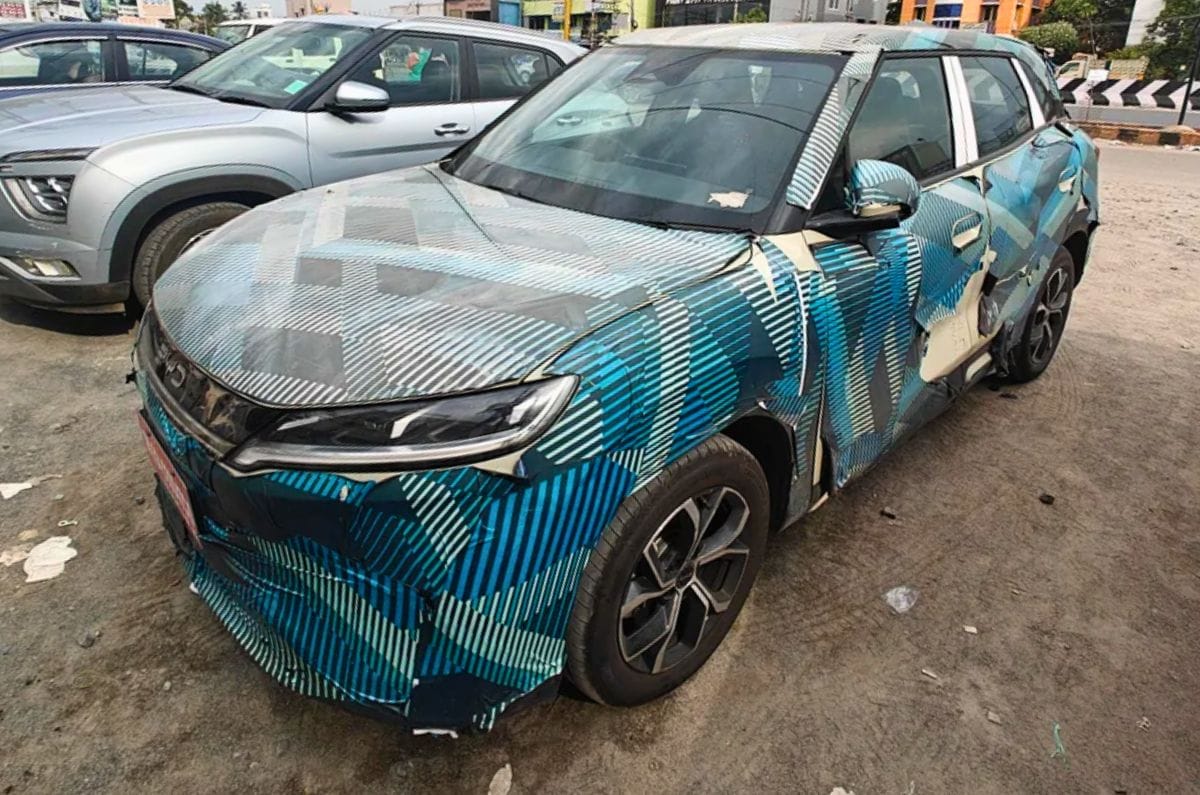
The spy shots show the Atto 2’s fascia and side profile, and although under camouflage, some design elements can be seen. These include the sleek headlights joined by a gloss-black trim with a BYD badge, the petal-shaped design elements on the alloys and the simple door handles. Keen-eyed viewers can also spot black cladding on the wheel arches and lower portion of the body. While the rear design is yet to be spied, it is expected to have connected LED taillights and a black bumper with some silver accents, like the international model.

A closer look inside the test mule reveals a camera-based ADAS sensor on the windscreen, a free-standing touchscreen infotainment system, and all-black upholstery on the seats. 

Upcoming BYD Atto 2: Other details

The EV has a WLTP-claimed range of 430km, and the PHEV has a 1,000 km range

As mentioned earlier, the Atto 2 is offered in both all-electric (EV) and plug-in hybrid (PHEV) versions. In the European market, the Atto 2 EV is available with either a 45.1kWh or a 64.8kWh battery, with a WLTP-claimed range of up to 430km. Both battery versions are available with a front-axle-mounted (FWD) electric motor producing up to 201hp and 310Nm. BYD claims a 0-100kph time of 7.9 seconds and a top speed of 170kph. 
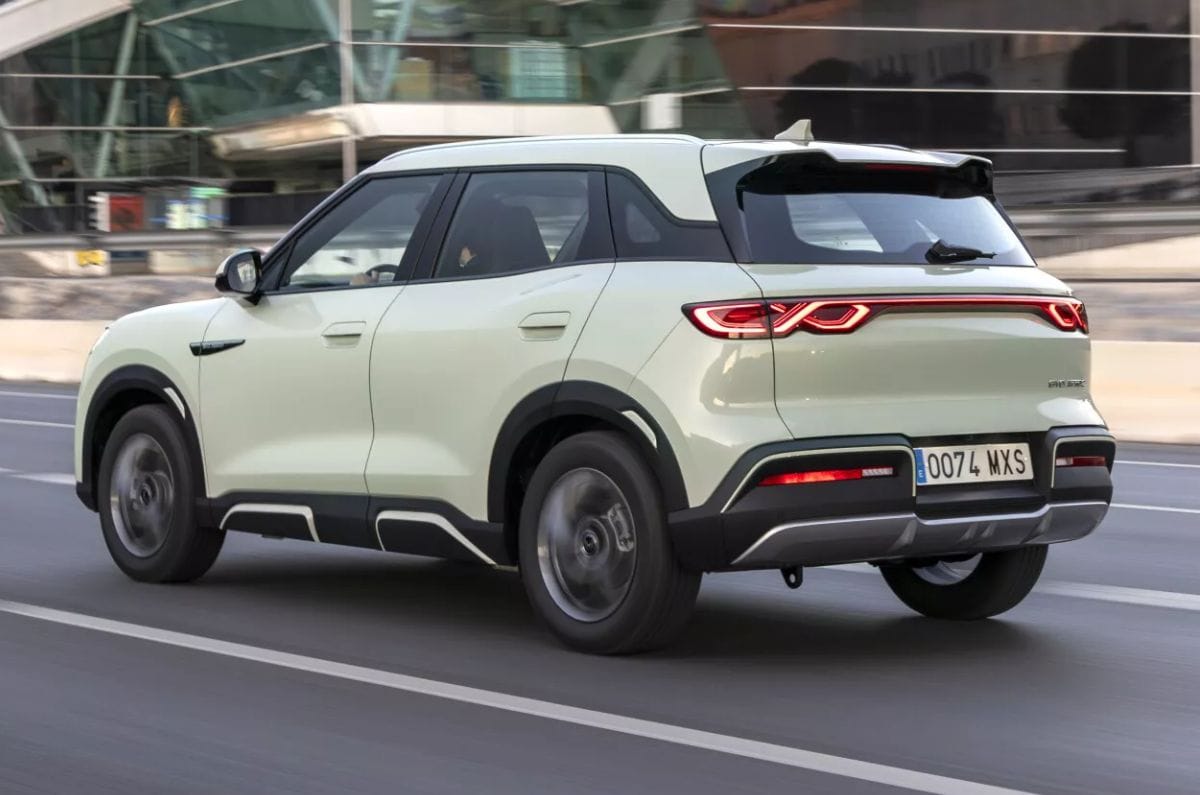
International-spec BYD Atto 2 shown for representative purposes only.

The plug-in hybrid version, called the Atto 2 DM-i, is offered with a 97hp 1.5-litre 4-cylinder petrol engine and a choice of 7.8kWh or 18kWh battery mated with a 197hp front-axle-mounted (FWD) electric motor. The Atto 2 PHEV has a combined system output of up to 212hp and 300Nm and a total WLTP-claimed range of 1,000km. 

Gets two interior themes and a minimalistic dashboard with two screens 
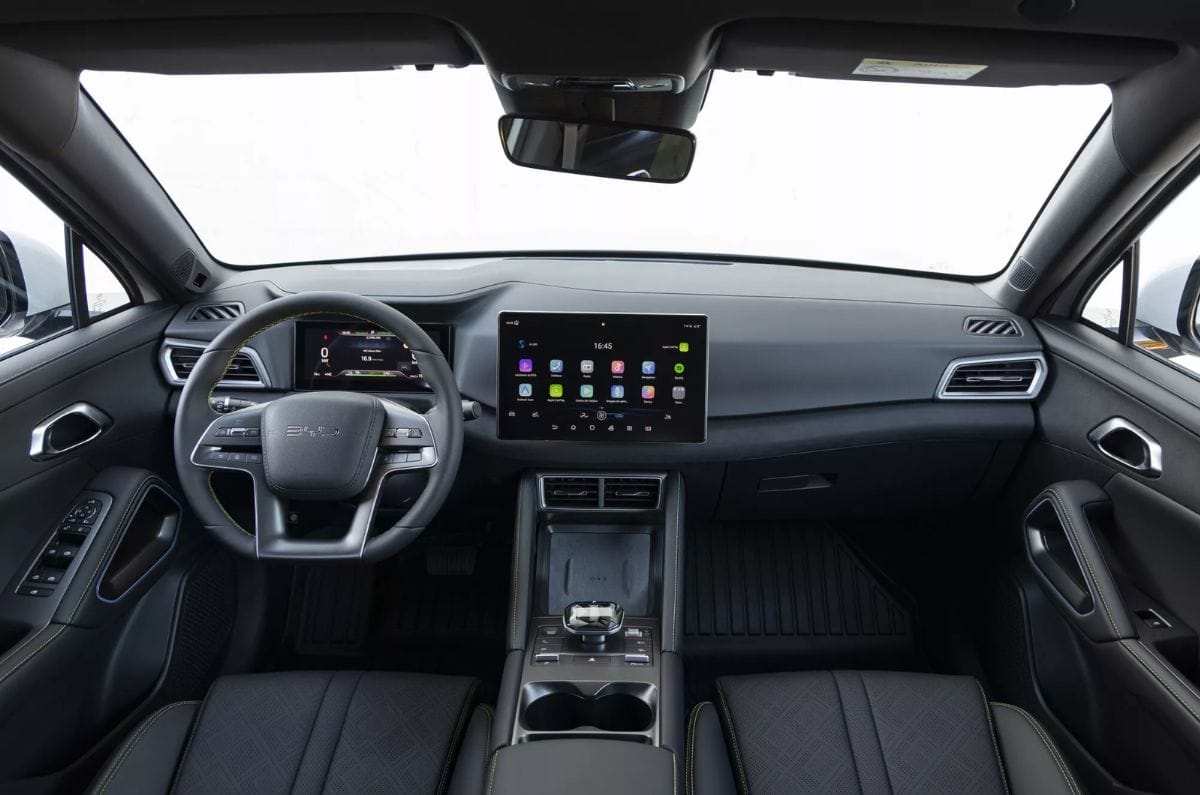
International-spec BYD Atto 2’s dashboard shown for representative purposes only.

The Atto 2’s cabin is identical for both the EV and PHEV versions, offered with either an all-black or a beige-and-black interior theme. The minimalistic dashboard features a free-standing 12.8-inch rotatable touchscreen infotainment system with integrated AC controls, an 8.8-inch digital driver’s display, and a chunky 3-spoke steering wheel with physical buttons. Features include a panoramic sunroof, 6-speaker audio system, a 50W wireless phone charger, a 360-degree camera, a vehicle-to-load (V2L) charging function, and front and rear parking sensors. The India-spec model could get a similar feature suite.

Currently, BYD sells only EVs in India. However, the manufacturer showcased its proprietary DM-i plug-in hybrid in June, revealing that the Seal U will launch as the first model with this powertrain by the end of 2026. So, it remains to be seen whether BYD expands its plug-in-hybrid plans to the Atto 2, or offers it in an electric-only guise in the country.
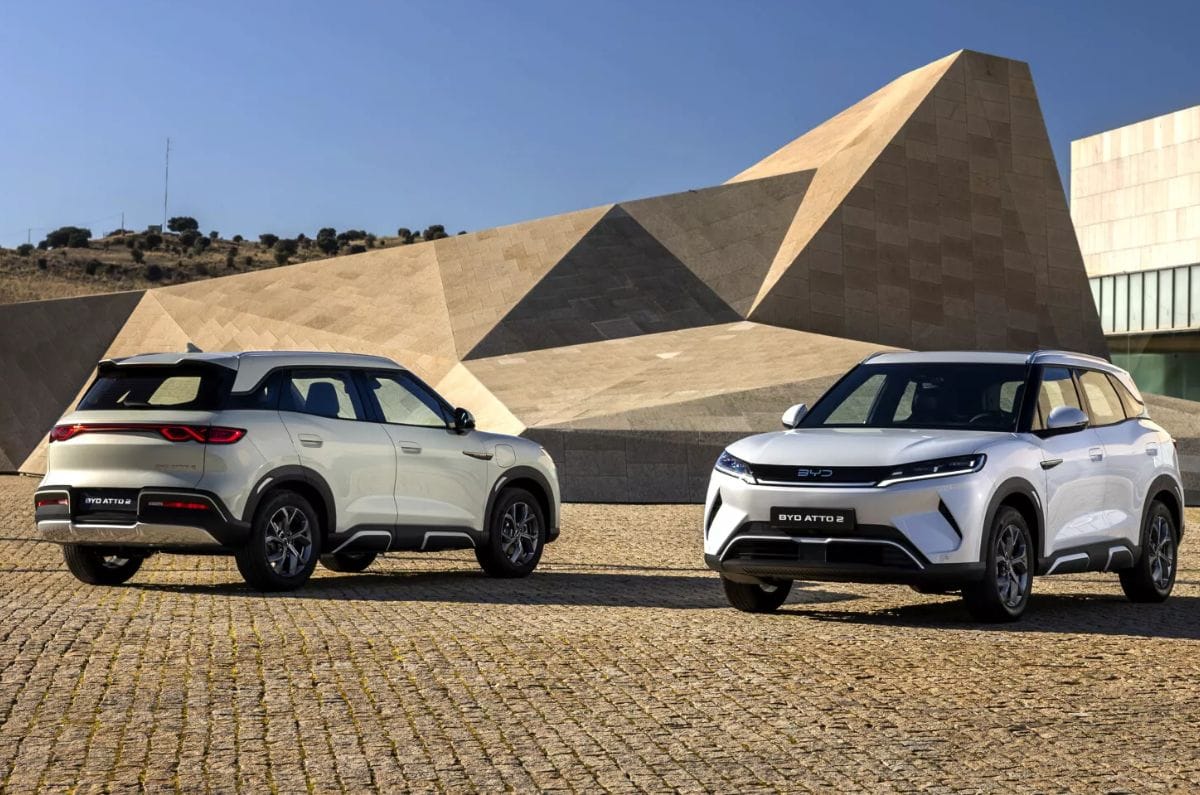
International-spec BYD Atto 2 shown for representative purposes only.

The BYD Atto 2 EV is expected to rival the Hyundai Creta Electric, Tata Sierra EV, Mahindra BE 6 and Maruti e Vitara. The Atto 2 PHEV will offer a more efficient option to the Hyundai Creta, Kia Seltos, Tata Sierra, Renault Duster, Nissan Tekton, Maruti Victoris and Grand Vitara, and MG Astor.


Upcoming car launches and reveals in August 2026

Upcoming Car Launches August 2026

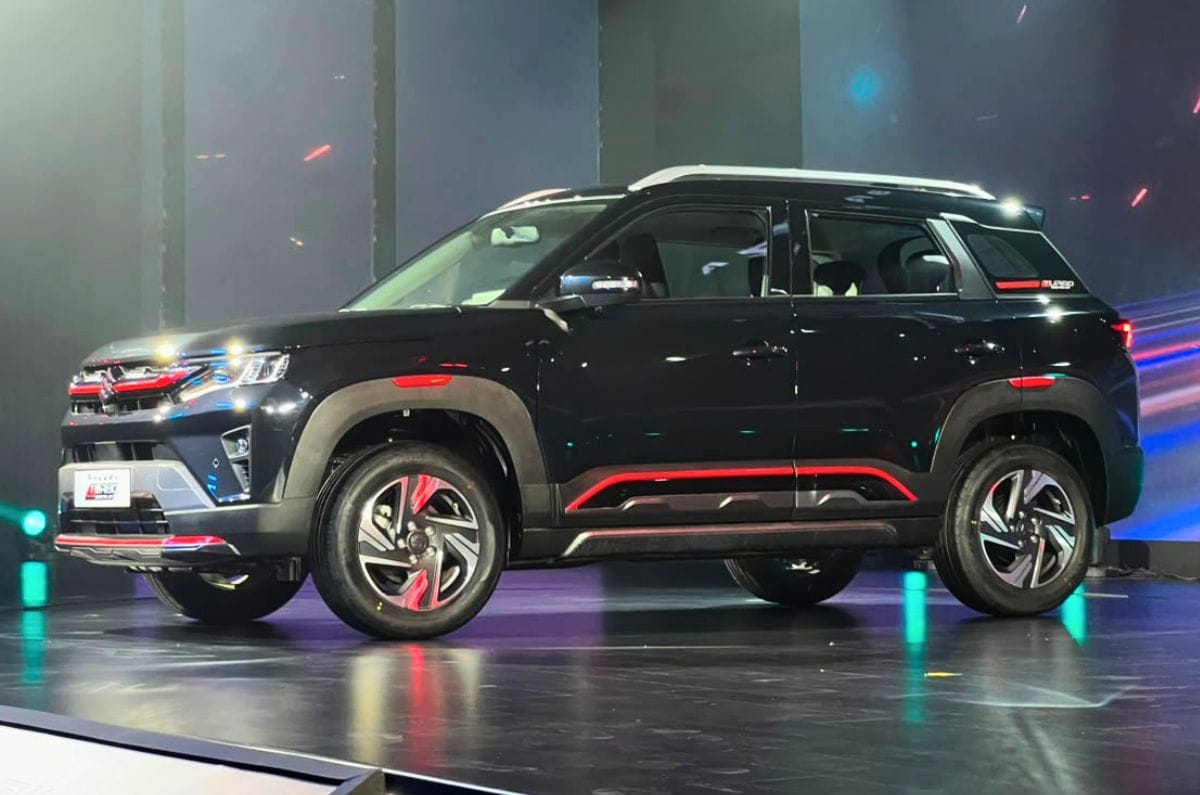
July was a stacked month for car launches in India. It was during these 31 days that we got models such as the Maruti Suzuki Brezza facelift, ninth-gen Toyota Hilux, Nissan Tekton and Honda ZR-V. It appears that August 2026 is set to be a fairly busy month for new car launches in India, too. Here are some cars that we know will be introduced next month, and some that could.

Mahindra Scorpio N facelift

Debut date: August 15, 2026

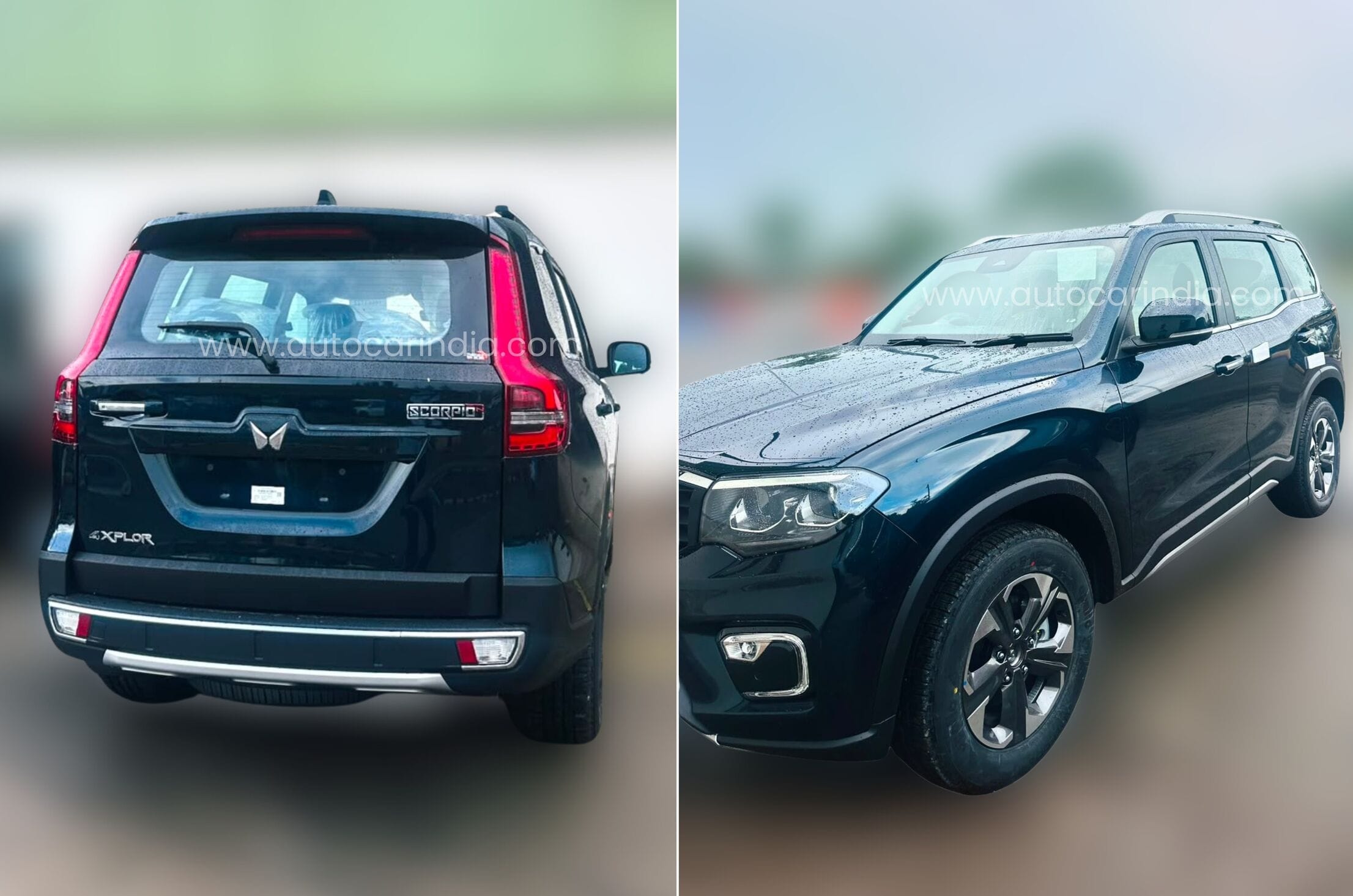
Mahindra Scorpio N facelift exterior spied

One of the cars that Mahindra could debut this Independence Day is the Scorpio N facelift. It’ll be mechanically unchanged over the outgoing model, but the exterior will now feature new two-tone alloy wheels. Unlike the exterior, there are more updates to the interior of the Scorpio N facelift.

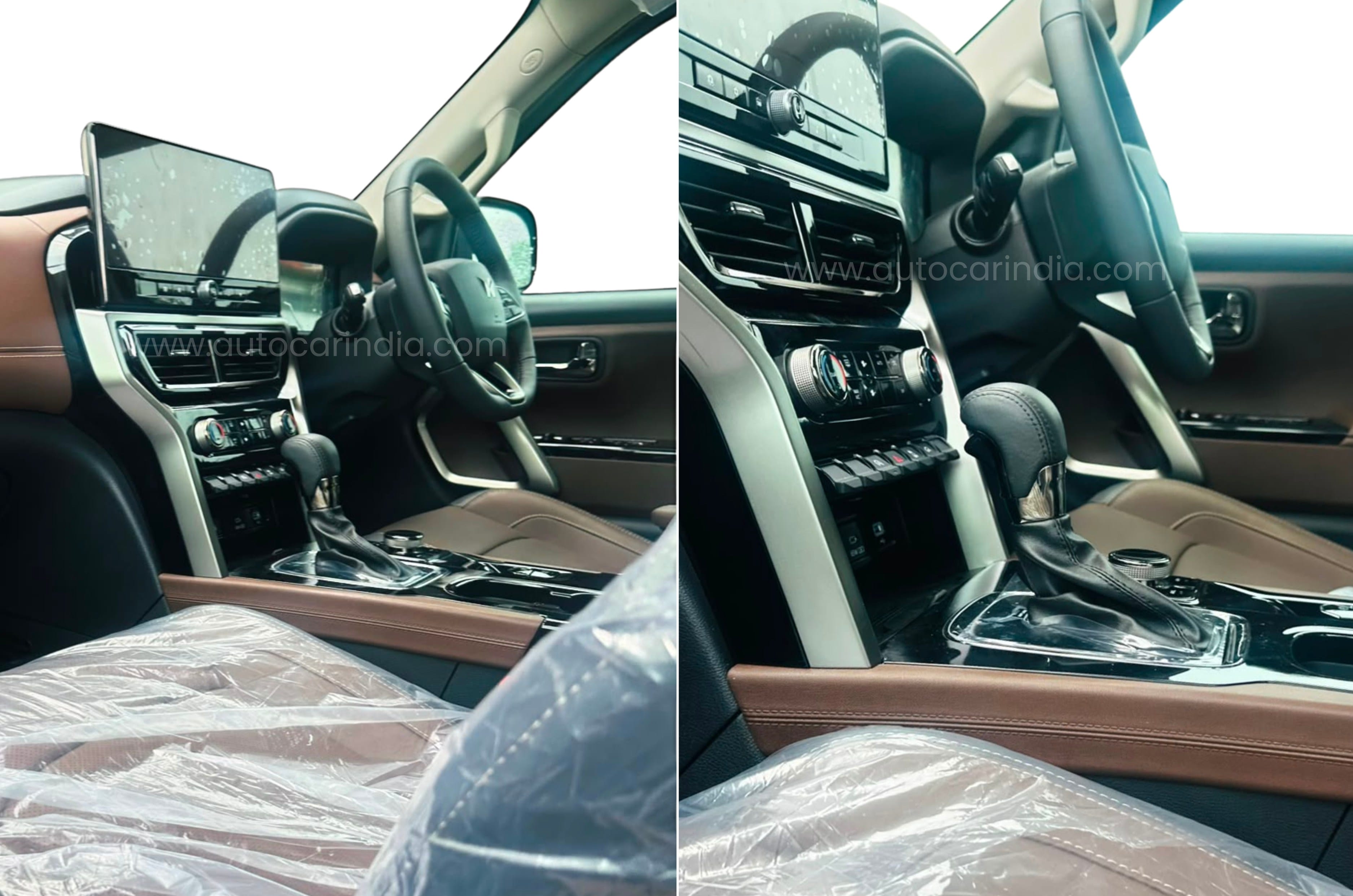
Mahindra Scorpio N facelift interior spied

Recently leaked images show a revised centre console with repositioned AC vents and a new tablet-style infotainment touchscreen mounted above. There’s also a new digital driver’s display visible in these spy shots. These screens look similar to the 10.25-inch units found on the Thar Roxx. These updates could push up the price of the Mahindra Scorpio N facelift, with the pre-facelift model currently priced from Rs 13.49 lakh to Rs 24.95 lakh.

Updated Mahindra BE 6

Debut date: August 15, 2026

Another Mahindra car that could be introduced on August 15 is the updated BE 6. While the midsize EV is still relatively new in the market (launched in November 2024), Mahindra is expected to spec it up with a triple-screen setup as seen in the brand’s other models such as the XEV 9e, XEV 9S and also the combustion-powered XUV 7XO.

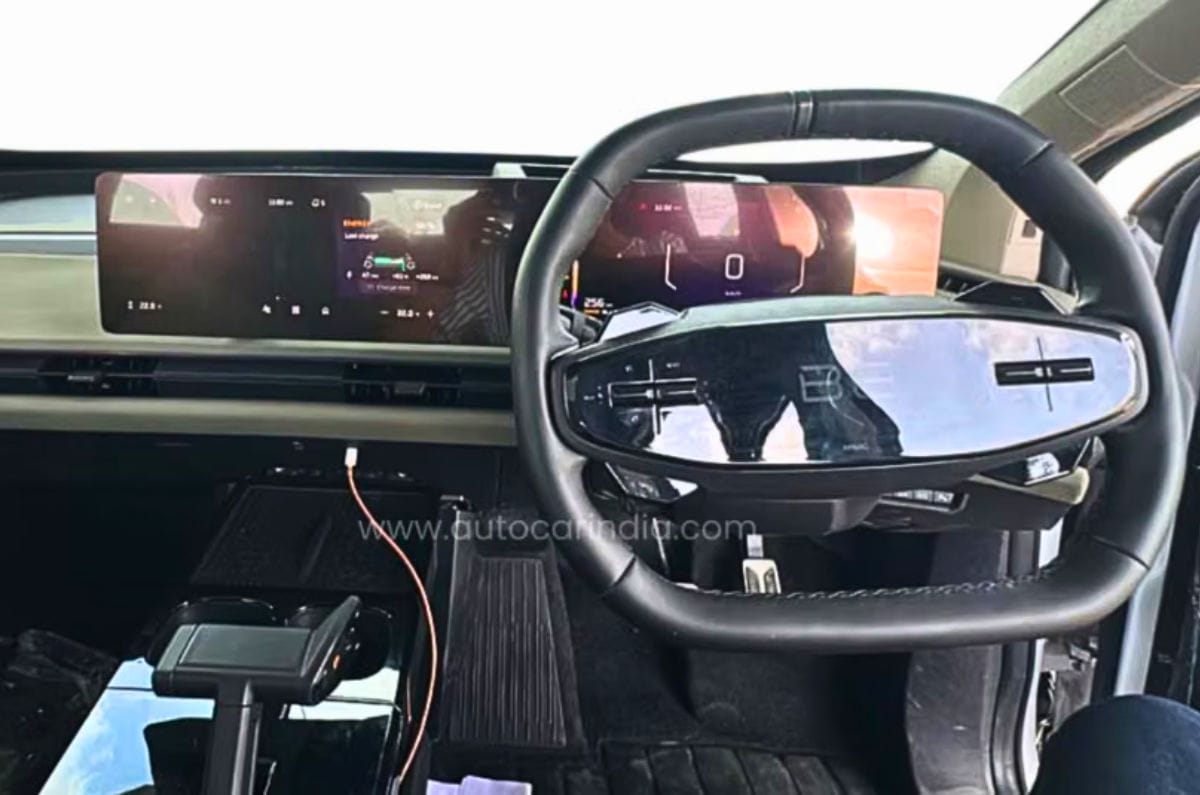
Mahindra BE 6 facelift interior spied

Another big change on the inside is the deletion of the distinctive halo design effect that separates the driver and front passenger in the outgoing model, as shown in this spy shot. Mahindra is also set to offer a new black-and-tan colour upholstery with the updated BE 6. The rest of the updated Mahindra BE 6 is unlikely to see major updates, though prices are likely to be revised upward. For reference, the EV is currently priced between Rs 18.90 lakh to Rs 26.90 lakh.

Near-production Mahindra Vision S

Debut date: August 15, 2026

Mahindra Vision S prototype spied

Mahindra has been busy testing the Vision S prototype for a while now, and a public debut of its near-production version is expected this Independence Day. Note that the production-spec model is still sometime away from being launched, which is expected to happen in 2027. While the actual name of this new compact SUV remains under wraps, it’ll be slotted above the XUV 3XO in Mahindra’s line-up. The Vision S concept was underpinned by the Nu_IQ platform, meaning compatibility compatible with petrol, diesel, hybrid and fully electric powertrains.

Skoda Slavia facelift

Debut date: August 18, 2026

The Skoda Slavia was first launched in February 2022. Four-and-a-half years on, the Czech brand will be introducing the Slavia facelift come August 18, 2026. Changes on the outside of this updated midsize sedan include a new front grille with integrated LED elements and revised front and rear lights. The Slavia facelift is also expected to get mildly redesigned bumpers, a new design for the alloy wheels and front parking sensors.

Skoda Slavia facelift spied

The Skoda Slavia facelift could feature new cabin upholstery, and perhaps even the massage function for the rear seats as seen in the Kushaq facelift. This update could also bring a larger 10.25-inch digital driver’s display. While the 1.0-litre TSI and 1.5-litre TSI engines are to be carried over, the former is expected to be offered with a new 8-speed torque-converter automatic gearbox. All of these updates could raise prices, which currently range from Rs 10.00 lakh to Rs 18.19 lakh.

New MG EV, PHEV

Debut date: August 2026 (date unknown)

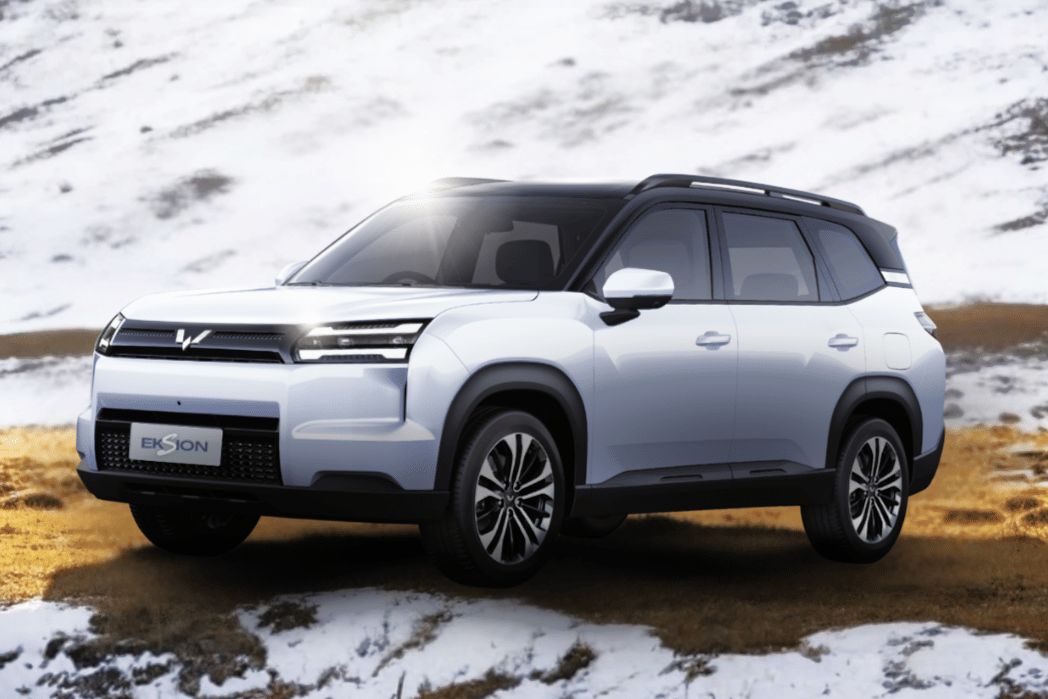
Based on the Chinese-market Wuling Eksion SUV, JSW MG is set to debut its India-spec all-electric and PHEV (plug-in hybrid vehicle) versions this August. The upcoming JSW MG SUV will be underpinned by the brand’s ADAPT (Advanced Drive Architecture Platform Technology) platform. The new Eksion-based electric SUV will rival the likes of the Mahindra XEV 9S, while the plug-in hybrid version is to take on the diesel-automatic variants of the Mahindra XUV 7XO and Tata Safari.

Wuling Eksion EV
Wuling Eksion EV shown for representation purposes only.

The fully electric model will feature a 69kWh battery pack and a single, front-mounted electric motor generating 201hp and 310Nm. The upcoming EV’s official claimed range is around 600km. As for the new plug-in hybrid SUV, it combines a 1.5-litre Atkinson-cycle petrol engine, an electric motor and a 20.5kWh LFP battery pack. The latter produces up to 195hp and 230Nm, whilst the petrol engine makes 105hp and 130Nm of its own. For the Eksion PHEV version, Wuling claims an all-electric range of 125km and a combined range north of 1,000km.

Prices mentioned are ex-showroom, Delhi

Skoda Slavia spy shot: RushLane

Also read

Suzuki Vision E-Sky prototype spied testing for the first time

MG’s Starlight 560-based ‘Hector Hawk’ EV spied

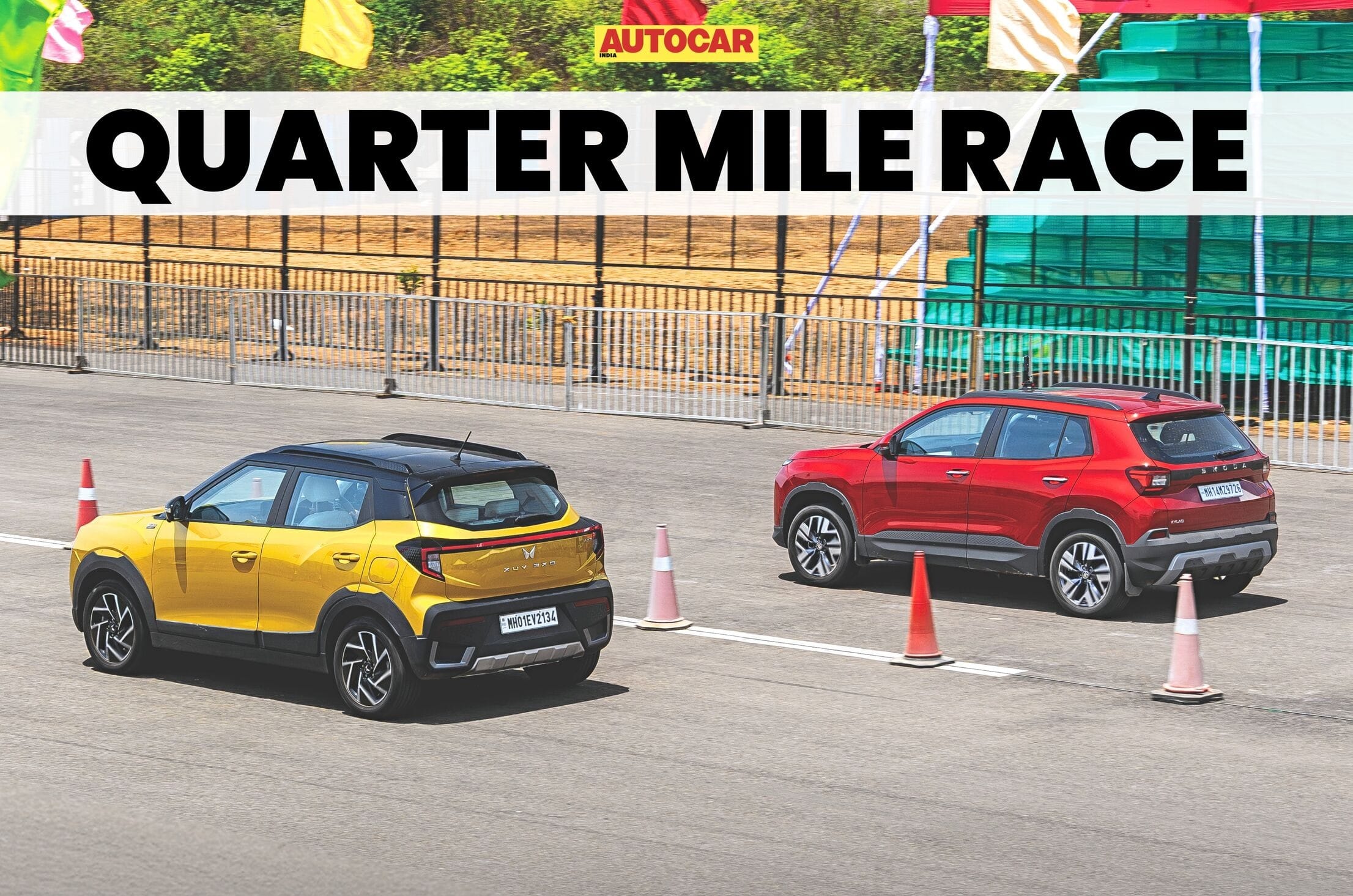
Skoda Kylaq vs Mahindra XUV 3XO drag race: lights out

Skoda-Kylaq-vs-Mahindra-XUV-3XO

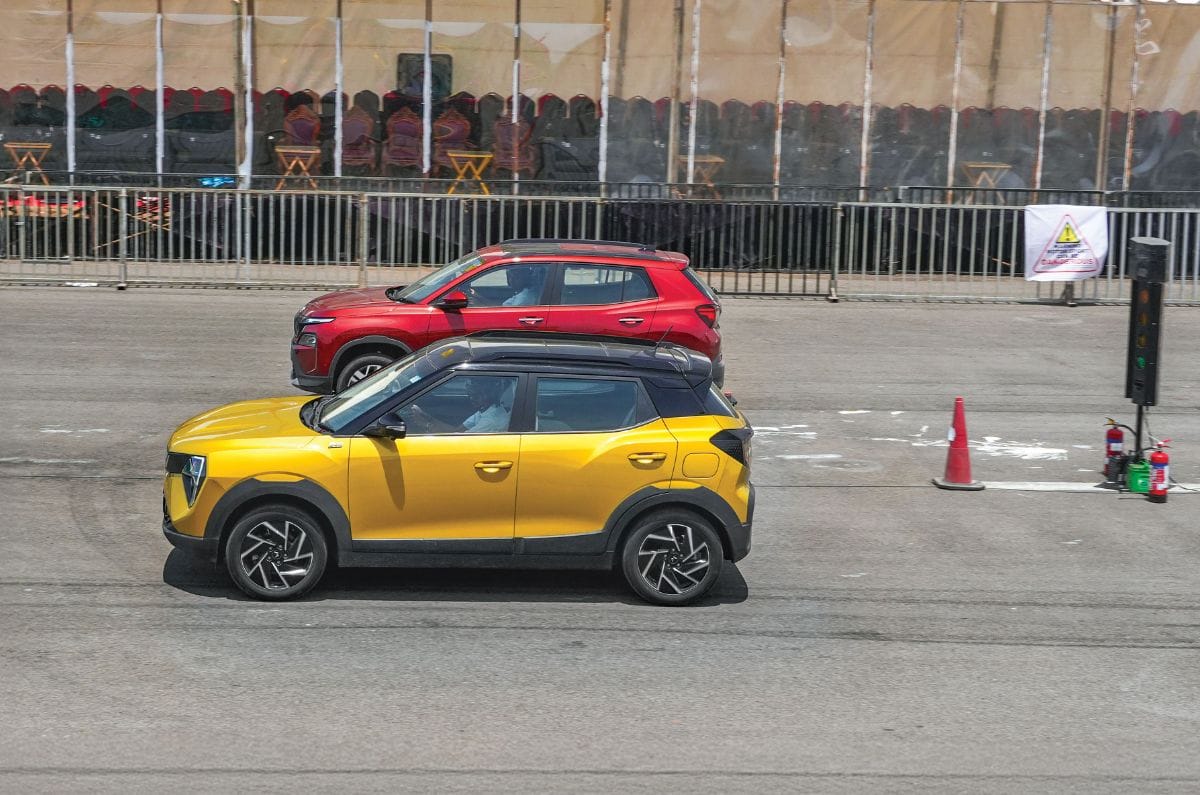
There’s no simpler way to compare one car’s performance to another than with a head-to-head quarter-mile race. In this edition of Autocar India’s quarter-mile racing series, we line up some exciting head-to-head contests, beginning with the compact SUV segment. We’ve brought together what are arguably the two most exciting offerings in this segment – the Skoda Kylaq and the Mahindra XUV 3XO – for a battle down the airstrip. 

Skoda Kylaq vs Mahindra XUV 3XO specifications   

Skoda Kylaq vs Mahindra XUV 3XO AT: Engine specifications


Skoda Kylaq TGDi AT

Mahindra XUV 3XO TGDi AT

Engine

3 cyls, turbo-petrol

3 cyls, turbo-petrol

Displacement (cc)

999

1197

Power (hp)

116

130

Torque (Nm)

178

230

Kerb weight (kg)

1,255

1,410

Power-to-weight (hp per tonne)

92.43

92.13

Torque-to-weight (Nm per tonne)

141.83

163

Gearbox

6-speed torque converter

6-speed torque converter

Both the Skoda Kylaq and the Mahindra XUV 3XO use 3-cylinder direct injection, turbo-petrol engines and 6-speed torque converter auto gearboxes. However, the latter has a slight advantage with bigger displacement, and likewise also produces more power and torque – 16hp and 52Nm more than the former. On the flip side, the XUV 3XO is 156kgs heavier. Will that have a bearing on the final results? Let’s find out. 


Skoda Kylaq vs Mahindra XUV 3XO drag race 

In both races, the Mahindra got off the line better. 
Skoda Kylaq vs Mahindra XUV 3XO AT: drag race times
 Skoda Kylaq TGDi ATMahindra XUV 3XO TGDi AT
Race 118.21 seconds 17.23 seconds 
Race 217.95 seconds17.78 seconds 

The Mahindra XUV 3XO is the most powerful compact SUV on sale currently, while the Skoda Kylaq is one of the most fun to drive. But on the drag strip, it pans out as you’d expect. With the XUV 3XO in its sportiest ‘Zoom’ drive mode, it launches without much drama and gets the jump on the Kylaq. And then, given its power advantage, it holds on to that lead till the finish line in Race 1, recording a time over half a second quicker than the Skoda. 

In Race 2, both compact SUVs launch in sync, but the XUV 3XO yet again manages to pull a lead and stay in the lead till the finish line. Its time, however, was slower than in Race 1 because of a tiny bit of hesitation from the gearbox during launch, while the Kylaq improved on its timing from Race 1. 

Autocar India’s testing standards

Before we conduct our performance tests, we check and maintain tyre pressures based on the manufacturer’s recommendation and ensure the car has a full tank of fuel. The car is then tested in a controlled environment, and the data is collected via highly accurate GPS-based timing equipment.

With inputs from Saptarshi Mondal 

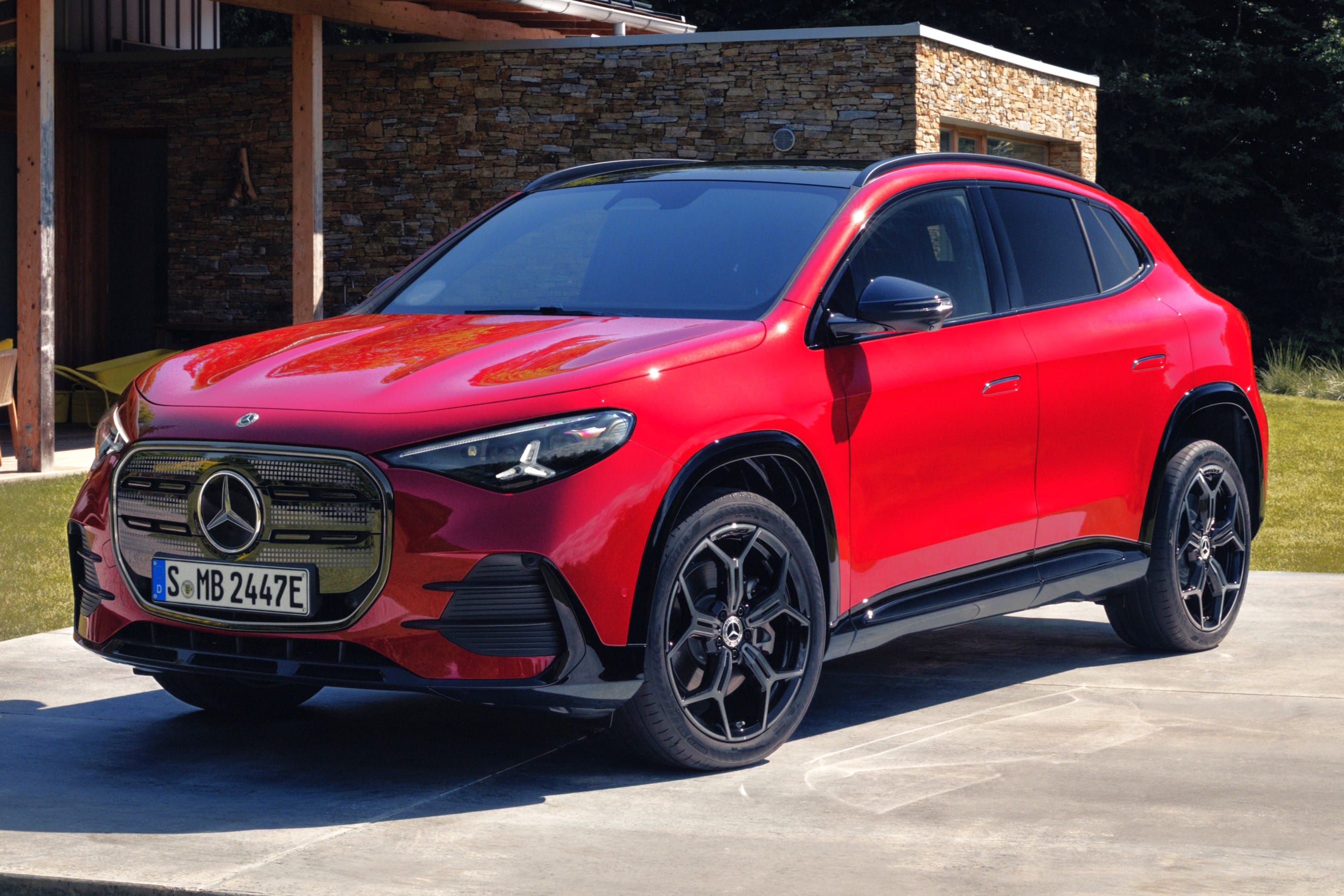
Third-gen Mercedes-Benz GLA exterior image gallery

2026 mercedes gla in studio

Mercedes-Benz has pulled the wraps off the third-generation GLA, the carmaker’s smallest SUV. The new GLA measures 4,565mm in length, 1,873mm in width, 1,604mm in height, and has a wheelbase of 2,790, making it larger than the prior model in almost every dimension. Since the third-gen GLA is based on Mercedes’ MMA platform, it will be the SUV’s first generation to get an all-electric derivative. The GLA EV will be offered with 58kWh LFP and 85kWh NMC battery options, with RWD and AWD layouts. An ICE version of the third-gen GLA will arrive in 2027 and offer a 1.5-litre turbo-petrol engine mated to a 48V mild hybrid system and an electrified 8-speed DCT.

MG’s Starlight 560-based ‘Hector Hawk’ EV spied

MG Hector Hawk spied front quarter image

MG is gearing up to launch its upcoming ‘new-energy vehicle’ based on the Wuling Starlight 560 in August 2026, and it has been spied testing in an EV avatar. Expected to be called the MG Hector Hawk, the SUV will be launched in both PHEV and EV versions, rivalling the Mahindra XUV 7XO, Tata Safari and Mahindra XEV 9S. It will be built on the new ADAPT platform, which was revealed earlier this month. 

  1. Spy shots show rectangular LED headlights, wraparound taillights
  2. It could get a minimalist dual-tone dashboard with two screens
  3. EV version is expected to have a 69.2kWh battery and 530km range
  4. PHEV can get a 1.5L petrol with 20.5kWh battery and 127km all-electric range

MG Hector Hawk spied: What was spotted?

A blanked-off grille suggests that the spotted test mule was of the EV version

The spied MG Hector Hawk is camouflaged like the previous test mules, but a few exterior design details are still visible. These include rectangular-shaped LED headlights with LED DRLs on top and bottom. The grille appears to be blanked off, hinting that the spied mule was that of the EV version. 

Its clean side profile, with a charging slot on the left-rear fender and a simple alloy wheel design, could also be seen. At the rear, wraparound LED tail-lights, a rear windscreen wiper and a roof-mounted spoiler were spotted.

MG Hector Hawk eSUV: Other details

Expected to have a minimalist dashboard with two free-standing screens

MG to showcase ‘new energy vehicle’ tech on July 16
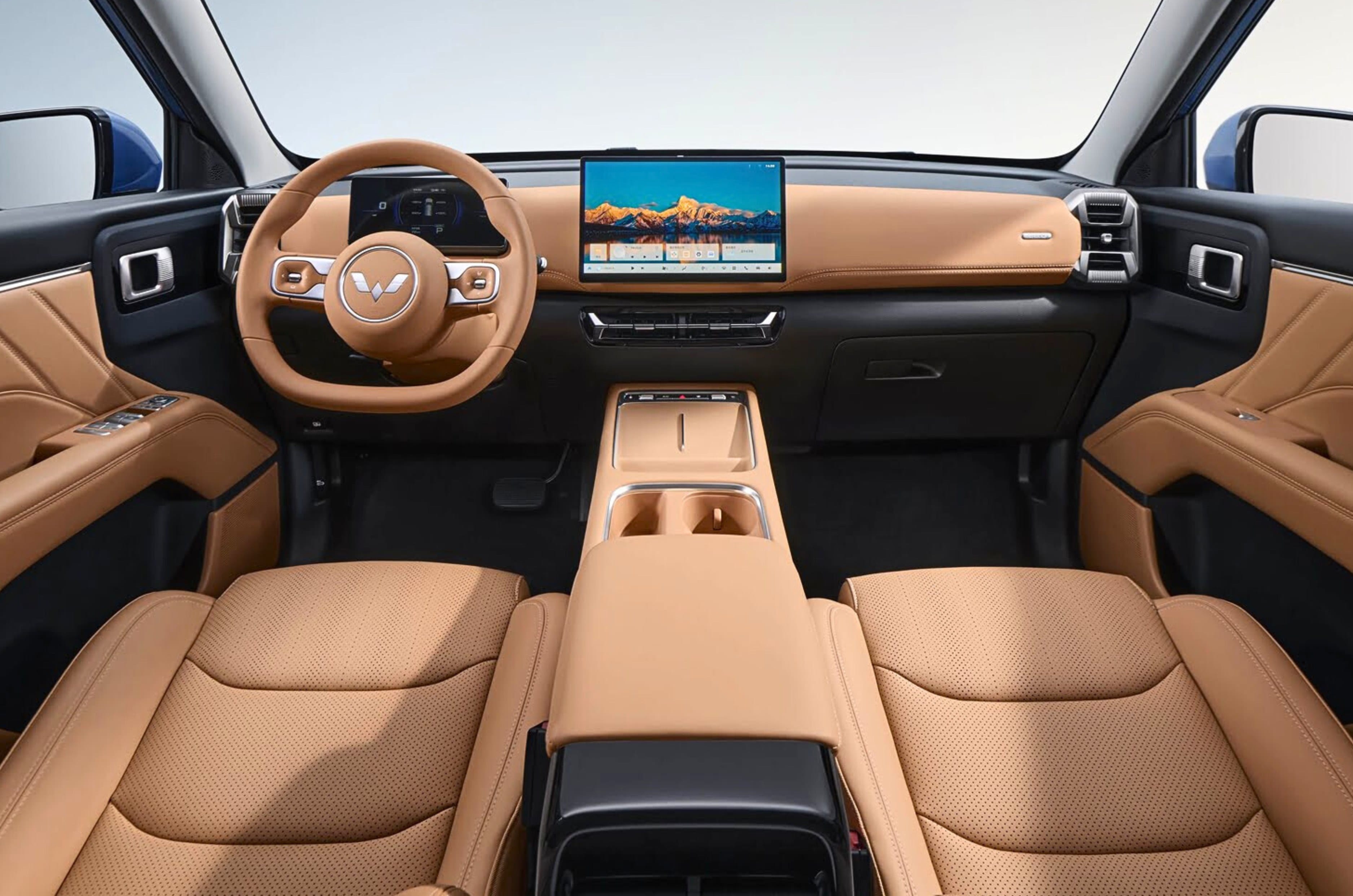
Wuling Starlight 560’s dashboard shown for representative purposes only. 

The interior design of the upcoming MG Hector Hawk is yet to be revealed, but is expected to be similar to the international-spec model. It could, hence, sport a minimalist dashboard with two free-standing screens, including an 8.8-inch digital driver’s display and a 12.8-inch touchscreen infotainment system. It could be offered with 7 seats with leatherette upholstery. 

Other features are also expected to be similar, including a panoramic sunroof, powered and ventilated first-row seats, a 50W wireless phone charger, a 6-speaker sound system and an automatic climate control with rear vents. Its safety suite could have 6 airbags as standard, a tyre-pressure monitoring system (TPMS), hill-hold assist, an electronic parking brake, a rear parking camera with sensors and advanced driver assistance systems (ADAS).

Expected to get the same powertrains as the international-spec model

The MG Hector Hawk will be offered with PHEV and EV versions in India, both of which are expected to be the same as the internationally available model. The Hector Hawk PHEV could hence come with a 1.5-litre petrol engine and a 20.5kWh battery pack, offering a total output of 195hp and 230Nm and an all-electric range of 125km.

The Hector Hawk EV version could get a 69.2kWh battery pack, powering a 201hp front-axle-mounted (FWD) electric motor, offering a CLTC-claimed range of 530km.

Like other MG models, the Hector Hawk is expected to be offered at a competitive price. In MG’s lineup, the PHEV version will be positioned above the Hector, while the EV will sit on top of the ZS EV.

All you need to know about the upcoming Kia Sorento

Sorento

Kia has officially confirmed that the Sorento will be coming to India, following our earlier report that the SUV had unofficially opened for bookings. Expected to be locally assembled, the Sorento will sit above the Seltos as Kia India’s flagship ICE SUV and is also set to become the brand’s first hybrid model for the Indian market. While official specifications are yet to be revealed, spy shots, dealer inputs and details of the global-spec model provide a good idea of what to expect. Here’s everything we know so far.

1. When will the Kia Sorento launch in India

Expected to debut later this year, with launch likely in October

Kia has unofficially begun accepting pre-bookings for the Sorento through select dealerships for a token amount of Rs 25,000. According to dealer sources, the SUV is expected to launch by October 2026, although Kia is yet to officially confirm the timeline.

2. What will the Kia Sorento look like?

Upright SUV styling with Kia’s familiar design elements

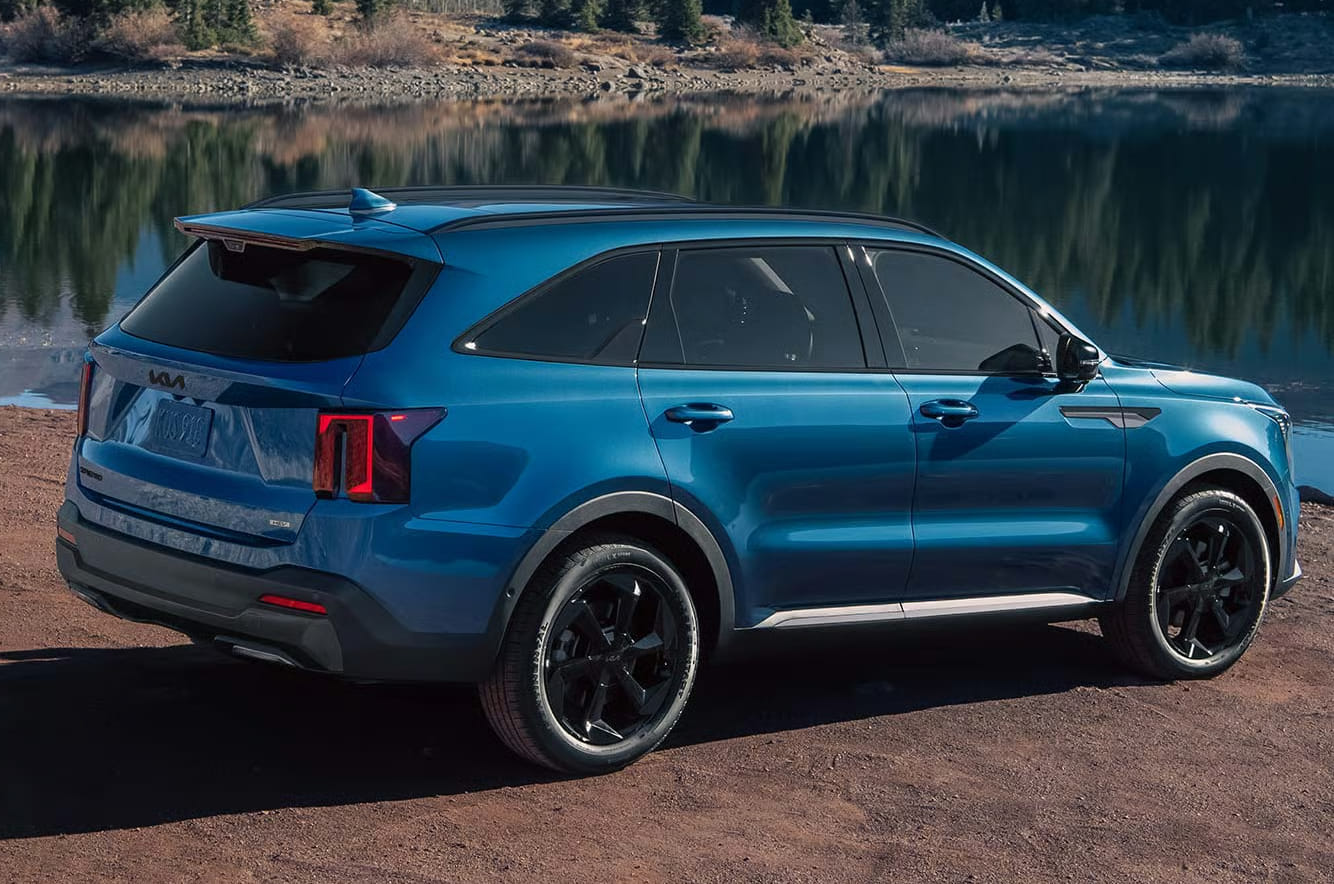
Global-spec Sorento used for representation. 

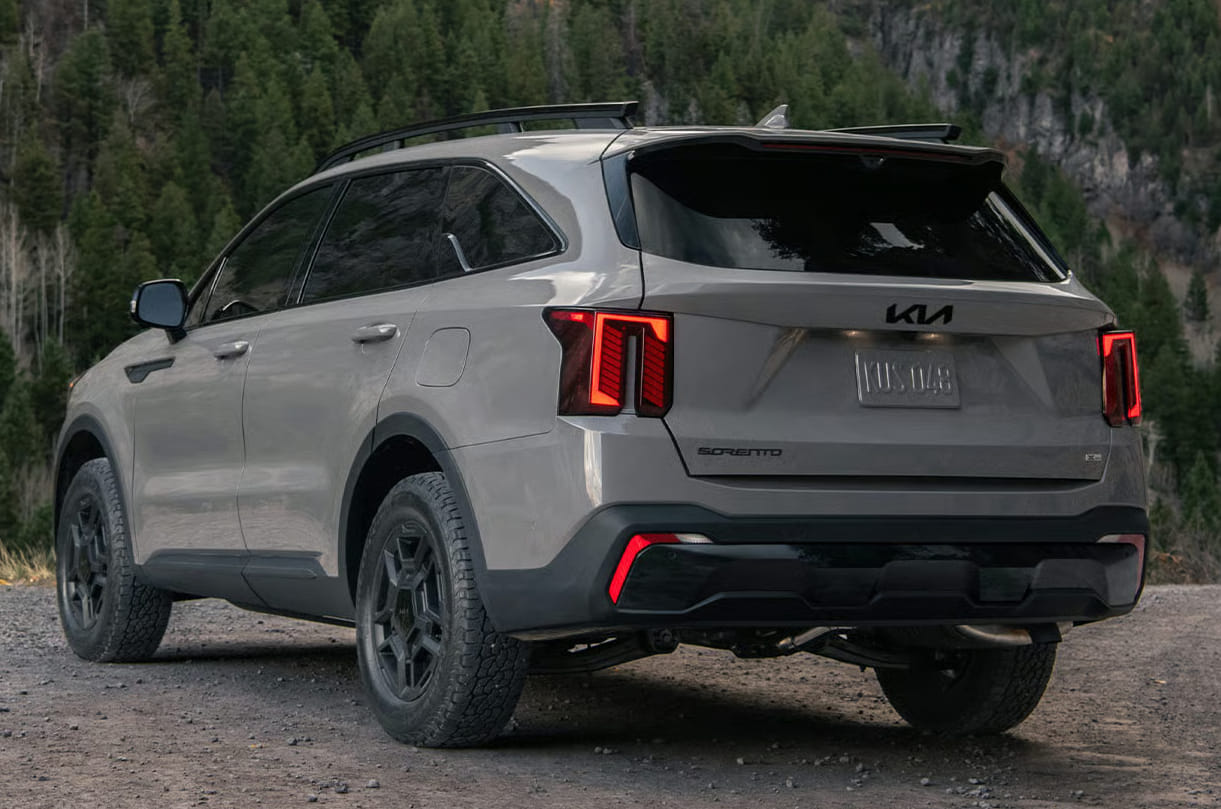
The Sorento features a more upright design than the Seltos, with vertically stacked LED headlamps, slim daytime running lamps, a wide grille and a sculpted bumper. Test mules spotted in India have also revealed chrome window surrounds, black roof rails and dual-tone alloy wheels. At the rear, the SUV gets vertically oriented LED tail-lamps integrated into a clean tailgate design and a roof spoiler.

3. How big is the Kia Sorento?

Larger footprint than the Seltos

The global-spec Kia Sorento measures 4,815mm in length, 1,900mm in width and 1,700mm in height, while its wheelbase measures 2,815mm. This makes it 54mm longer than the Skoda Kodiaq and 23mm longer than the Volkswagen Tayron, while its wheelbase is 26mm longer than both SUVs.

4. What will the Kia Sorento’s interior and features be like?

Premium cabin with three seating layouts expected

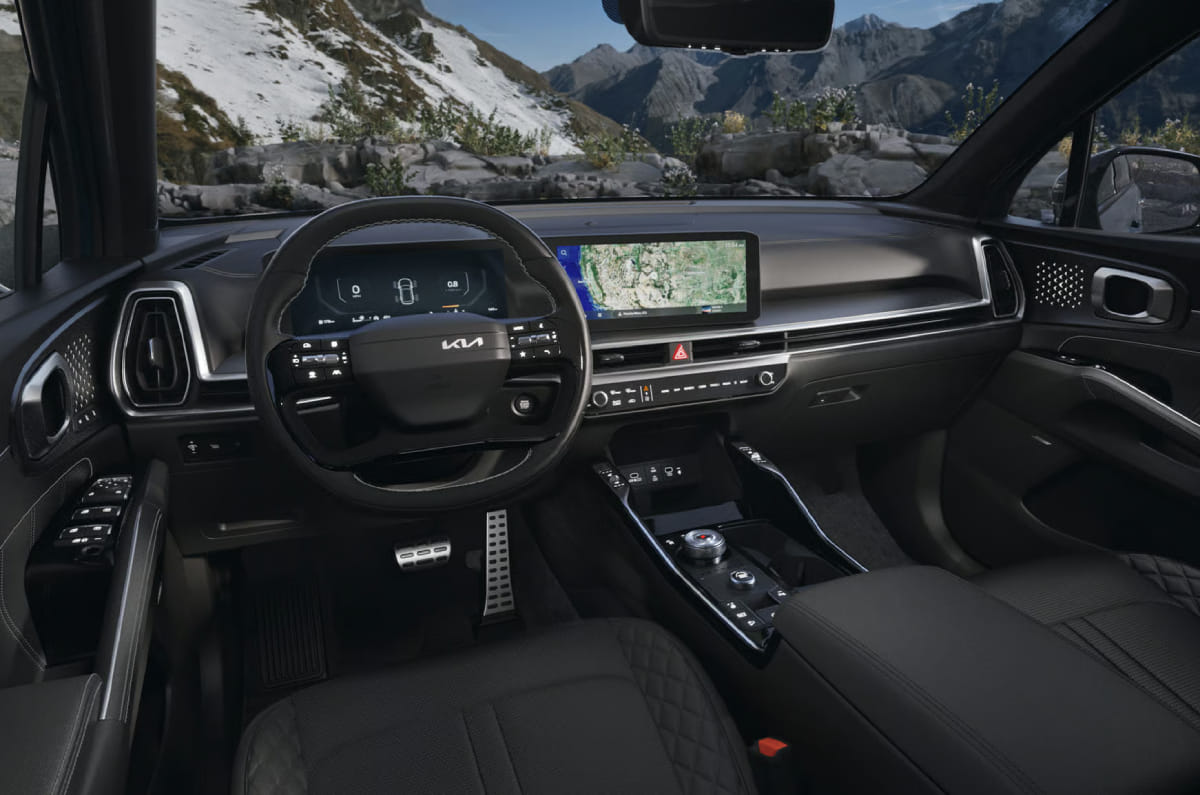
Global-spec Sorento interior used for representation. 

Globally, the Kia Sorento is available in 5-, 6- and 7-seat configurations. However, the India-spec model is expected to feature a three-row layout, likely with 6- and 7-seat options, which would make it the only model in its segment with three seating options if introduced in India.

Based on the global model and Indian test mules, expected features include dual 12.3-inch displays for the infotainment system and instrument cluster, a panoramic sunroof, ventilated front seats, a powered driver’s seat, a 360-degree camera, head-up display and Level 2 ADAS. Spy shots have also revealed a rotary gear selector and electronic parking brake on the centre console.

5. Which engine will power the Kia Sorento?

Hybrid powertrain expected for India

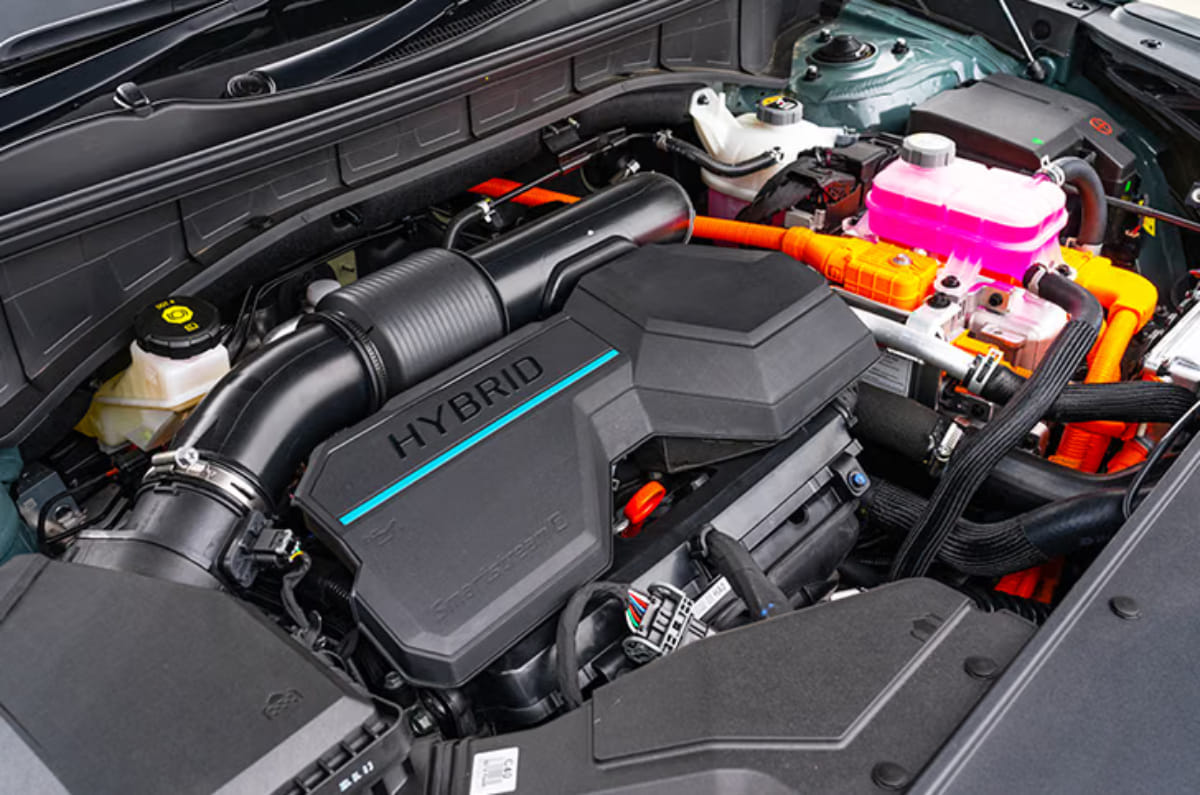
Euro-spec Kia Sorento hybrid shown for representation.

internationally the Sorento gets petrol, diesel and also hybrid engine options, but the India-spec model is expected to get a strong-hybrid powertrain. Dealer sources suggest it could use a 1.6-litre direct injection turbo-petrol hybrid engine, although final specifications have not been confirmed.

The UK-spec Sorento uses a 1.6-litre turbo-petrol strong-hybrid producing 238hp and 380Nm, paired with a 6-speed torque converter automatic transmission. Depending on the market, the Sorento is offered in FWD or AWD configurations globally. 

6. How much will the Kia Sorento cost in India

Expected price: around Rs 40 lakh (ex-showroom)

The Kia Sorento is expected to be locally assembled in India and is likely to be priced around Rs 40 lakh (ex-showroom).

7. Which SUVs will rival the Kia Sorento?

The Kia Sorento is expected to rival premium three-row SUVs such as the Skoda Kodiaq and Volkswagen Tayron.

2026 Maruti Brezza on-road prices listed in major cities

Maruti Brezza turbo front quarter static

Maruti Suzuki recently launched the 2026 Brezza with prices ranging from Rs 7.40 lakh to Rs 13.55 lakh (ex-showroom). With the midlife update, Maruti has introduced a 1.0-litre direct injection turbo-petrol engine to the Brezza, while also offering a couple of new features and a few new design elements. The 2026 Brezza is being offered in four trims: LXi, VXi, ZXi and ZXi+, and alongside the turbo-petrol engine, a 1.5-litre naturally aspirated petrol mill is also available with a CNG option. 

In case you want to know how much you need to pay to get your hands on one, here are the 2026 Maruti Brezza’s on-road prices across major Indian cities.

2026 Maruti Brezza on-road price range

On-road prices of the 2026 Brezza range from Rs 8.26 lakh to Rs 16.81 lakh in major cities

2026 Maruti Brezza price range in major Indian cities (in Rs, lakh)


1.0TP 6MT

1.5P 6MT

1.5P 6AT

1.5CNG 6MT

Ex-showroom

7.40-11.16

8.30-10.50

10.61-13.55

9.30-11.50

Delhi (on-road)

8.26-12.95

9.26-12.18

12.31-15.72

10.67-13.37

Kolkata (on-road)

8.48-12.95

9.51-12.18

12.31-15.72

10.65-13.34

Mumbai (on-road)

8.55-13.17

9.59-12.39

12.52-15.99

10.37-13.11

Bengaluru (on-road)

8.77-13.73

9.84-12.92

13.06-16.67

10.67-13.37

Chennai (on-road)

8.70-13.84

9.76-13.02

13.16-16.81

10.67-13.37

Note: On-road prices may vary based on city-specific registration charges and other cost components, including insurance, FASTag and RTO fees. Please check with your nearest Maruti Suzuki Arena dealership for exact figures.

The 2026 Maruti Suzuki Brezza’s on-road prices are the lowest in Delhi among all the mentioned cities. This is followed by Kolkata, Mumbai and Bengaluru, with Chennai having the highest ask. However, a CNG option on the Brezza is the most affordable in Mumbai. That being said, the difference in on-road price of the top-spec Brezza variants for the 1.0-litre turbo-petrol manual is Rs 89,000, the 1.5-litre petrol manual is Rs 84,000, 1.5-litre petrol automatic is Rs 1.09 lakh.

LPG Cylinder Price: क्या फिर महंगा होगा LPG सिलेंडर? जानें दिल्ली से पटना तक के ताजा रेट

LPG Cylinder Price: अमेरिका और ईरान के बीच जारी तनाव और होर्मुज में टैंकरों पर हो रहे हमले के कारण हाल के दिनों में इस अहम शिपिंग रूट से गुजरने वाले जहाजों की संख्या में भारी कमी आई है। ऐसे में अगर यही सिलसिला जारी रहा तो, जल्द ही पेट्रोल-डीजल और LPG की कीमतों में बढ़ोतरी देखने को मिल सकती है। फिलहाल, भारत में कई दिनों से 14.2 किलोग्राम वाले घरेलू और 19 किलोग्राम वाले कमर्शियल LPG सिलेंडर की कीमतें स्थिर बनी हुई हैं।

वहीं, अब इस बार देश की केंद्र सरकार दोबारा LPG की सप्लाई को लेकर समस्या नहीं झेलना चाहती है, और इसी वजह से भारत ने मिडिल ईस्ट पर निर्भरता कम करने और सप्लाई में रुकावट से बचने के लिए 2027 तक अपनी लिक्विफाइड पेट्रोलियम गैस (LPG) की कुल इंपोर्ट का एक-चौथाई हिस्सा अमेरिका से मंगाने की योजना बना रहा है। भारत के इस कदम से अमेरिका के साथ ट्रेड डील को लेकर भी बात कुछ आगे बढ़ने की उम्मीद है।

शहरवार LPG की कीमतें

शहर घरेलू सिलेंडर की कीमतकमर्शियल सिलेंडर की कीमत
दिल्ली 942.0 रुपये3113.5 रुपये
मुंबई941.5 रुपये 3067.5 रुपये
कोलकाता968.0 रुपये3256.0 रुपये
चेन्नई 957.5 रुपये 3283.0 रुपये
बेंगलुरु944.5 रुपये 3198.0 रुपये
अमृतसर983.0 रुपये 3220.0 रुपये
लखनऊ979.5 रुपये3236.0 रुपये
गाजियाबाद939.50 रुपये3113.50 रुपये
पटना1031.5 रुपये3400.5 रुपये

खाड़ी देशों से आगे बढ़ेगा भारत का LPG नेटवर्क

साल की शुरुआत में ईरान और अमेरिका के बीच बढ़े तनाव और युद्ध जैसे हालात के दौरान होर्मुज जलडमरूमध्य की नाकेबंदी ने भारत के लिए एलपीजी सप्लाई को लेकर बड़ी चुनौती खड़ी कर दी थी। इस संकट के बाद अब भारत ने अपनी रणनीति बदलने का फैसला किया है। सरकार अब एलपीजी आयात के स्रोतों को बढ़ाने और किसी एक देश पर निर्भरता कम करने की दिशा में कदम उठा रही है, ताकि भविष्य में ऐसी स्थिति में घरेलू गैस आपूर्ति प्रभावित न हो।

बता दें कि भारत दुनिया का तीसरा सबसे बड़ा तेल आयातक और उपभोक्ता है। 2025 में भारत ने अपने 21.85 मिलियन मीट्रिक टन LPG आयात का लगभग 90% हिस्सा मिडिल ईस्ट से मंगाया था। सरकारी आंकड़ों के अनुसार, देश में LPG की कुल खपत में आयात की हिस्सेदारी लगभग 66% थी।

कब बदले थे कमर्शियल और घरेलू सिलेंडर के दाम

1 जुलाई 2026 को 19 किलोग्राम वाले कमर्शियल LPG सिलेंडर के दाम में 183.50 की कटौती की गई थी। जिसका सीधा फायदा होटल, रेस्टोरेंट और व्यवसायिक प्रतिष्ठानों को मिला है। जबकि इससे पहले 7 जून को घरेलू LPG सिलेंडर का दाम 29 रुपये बढ़ा गया था।

यह भी पढ़ें: Petrol Diesel Price Today: पेट्रोल-डीजल के नए दाम लागू, जानें कहाँ महंगा और कहाँ सस्ता हुआ ईंधन

3 reasons to buy the Mercedes-AMG E 53 PHEV and 3 reasons not to

Mercedes-AMG E 53 PHEV

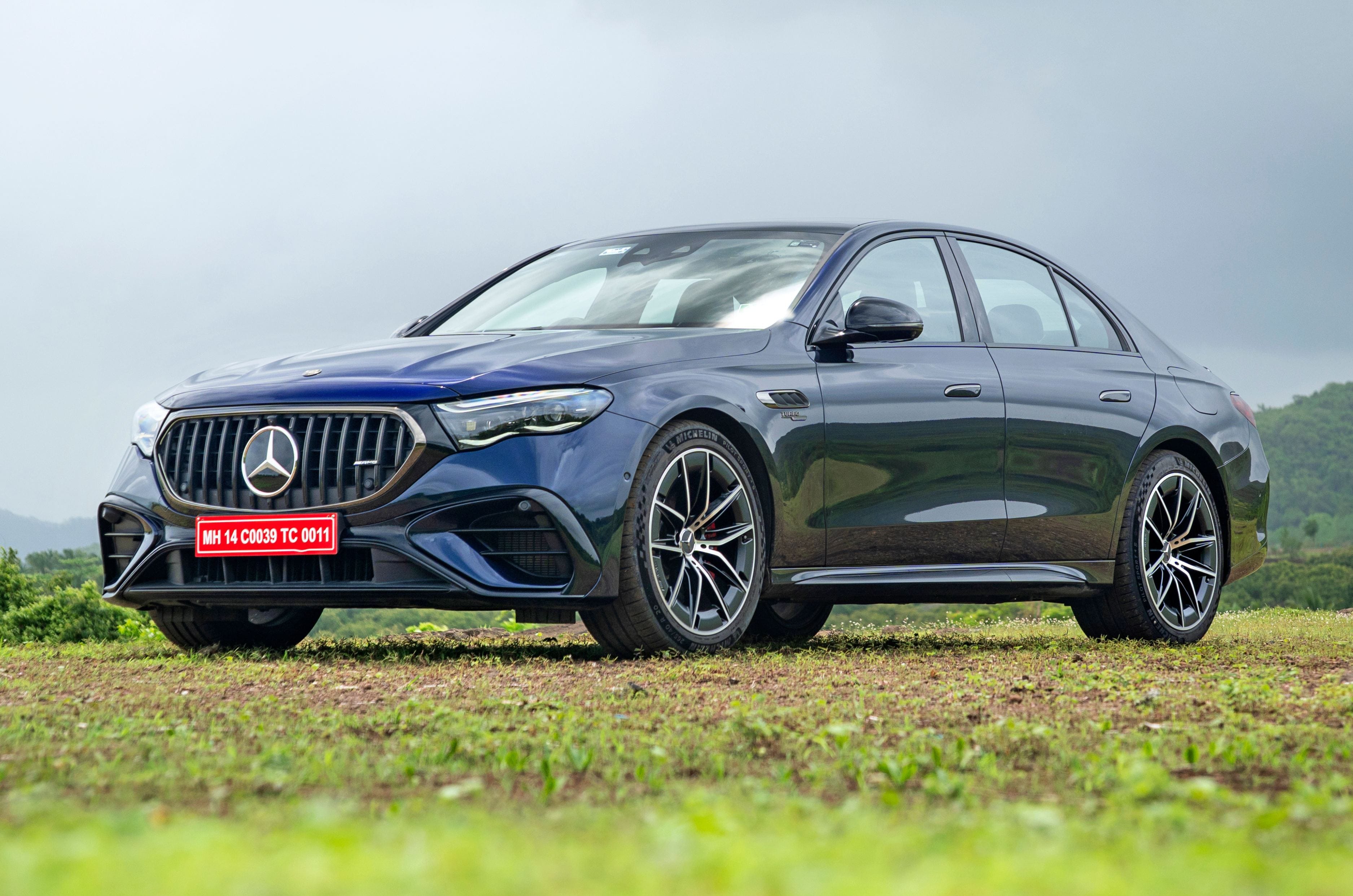
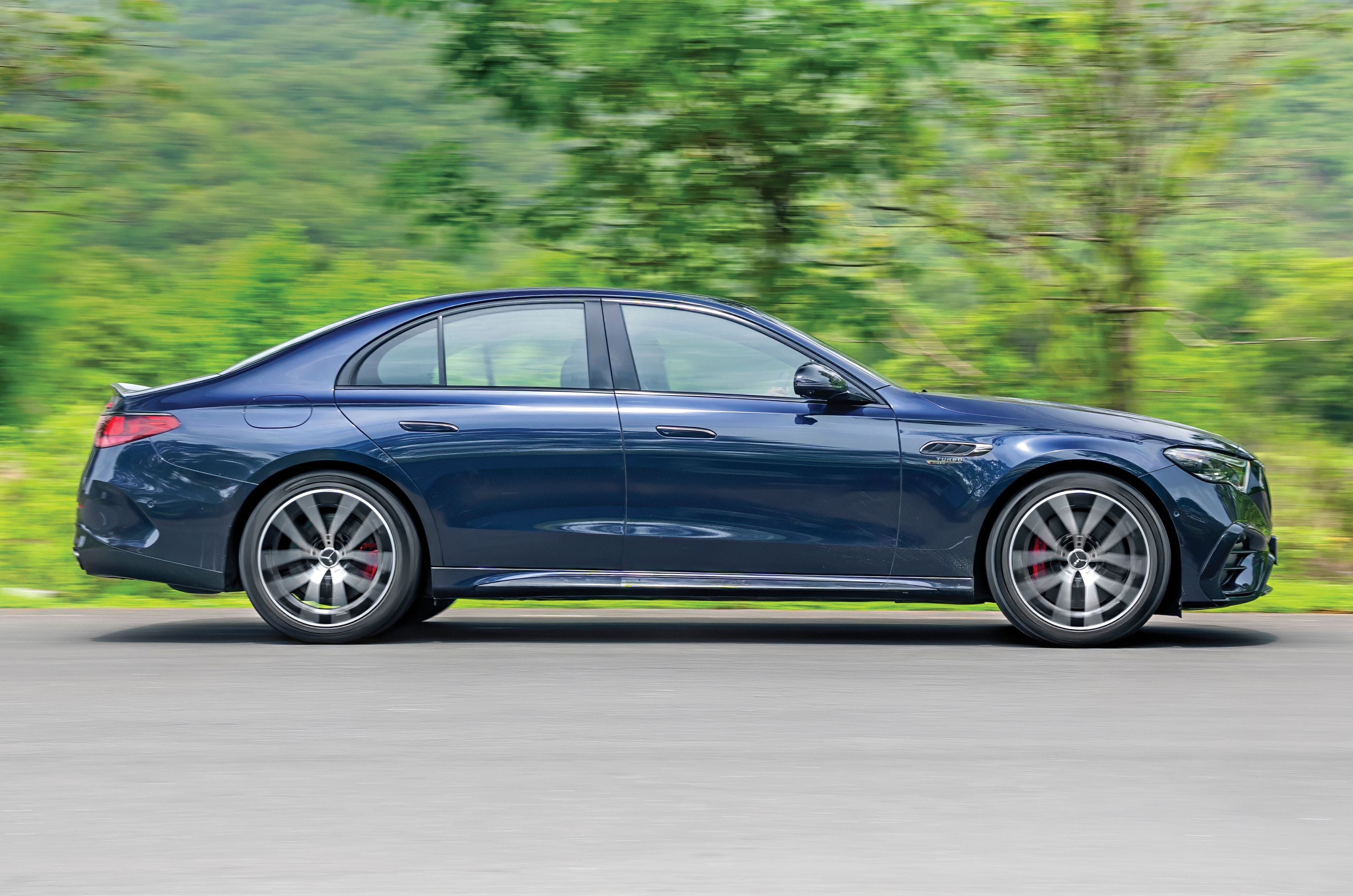
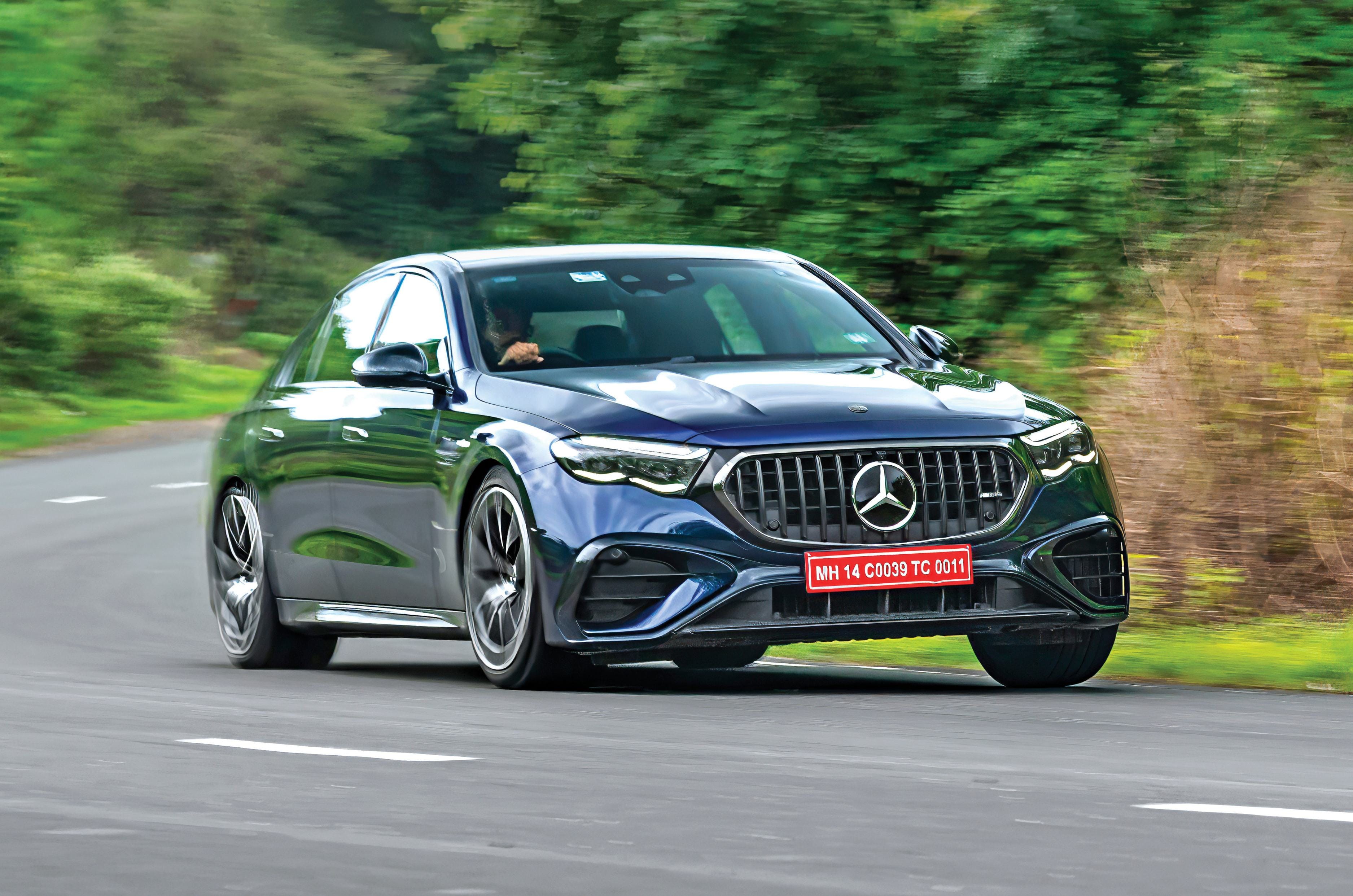
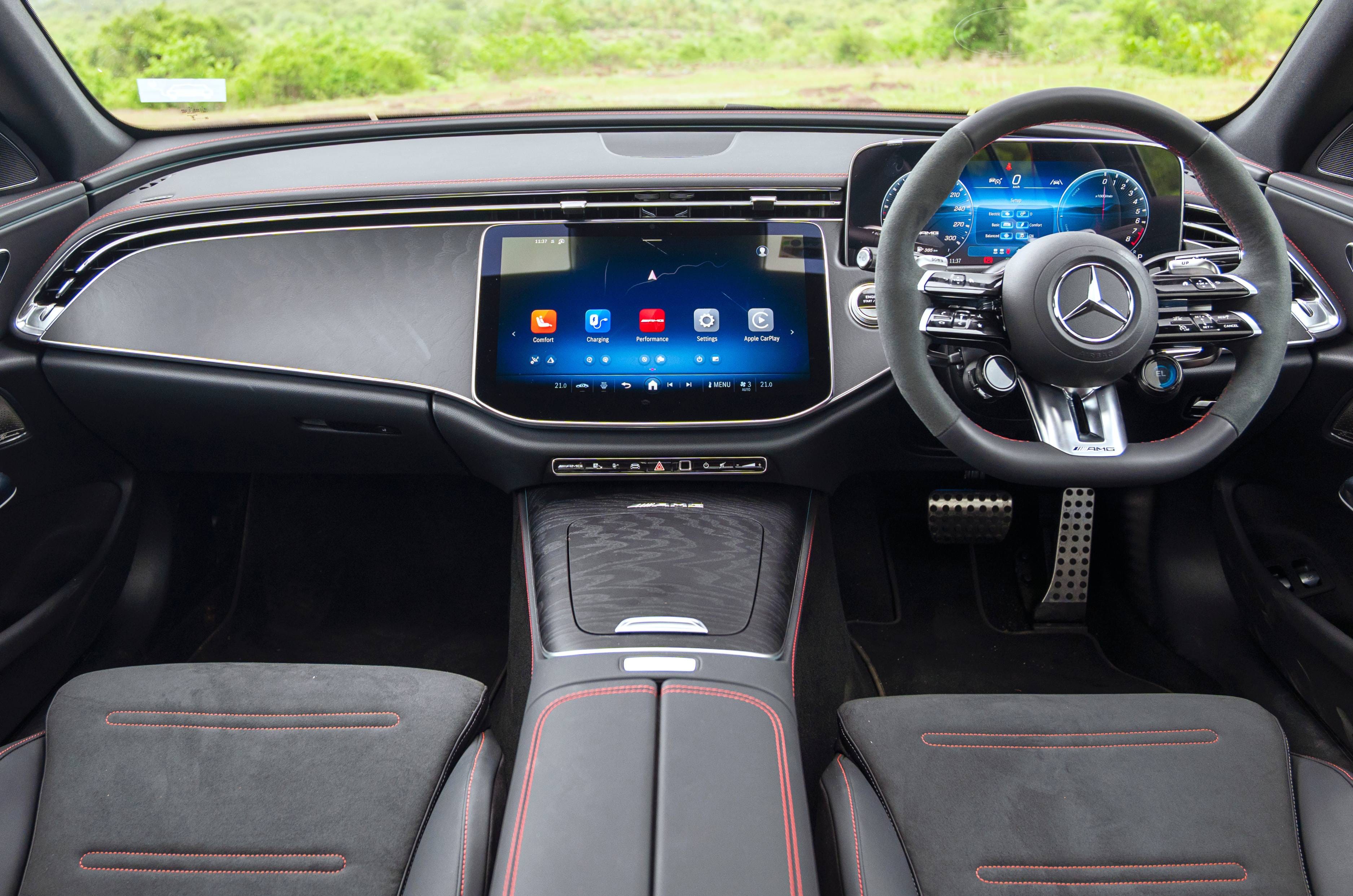
Mercedes-Benz has bolstered the E-Class range in India with the performance-focused AMG E 53 plug-in hybrid, which is priced at Rs 1.45 crore (ex-showroom). Unlike the regular India-spec E-Class, which is an LWB (long-wheelbase) model, the AMG E 53 PHEV is a shorter SWB (standard-wheelbase) version. It’s also the only AMG version of the current-gen E-Class on sale worldwide. If you’re interested in bringing home the AMG E 53 PHEV, we’ve listed the performance sedan’s most prominent strengths and weaknesses below.

Pros

Exciting powertrain

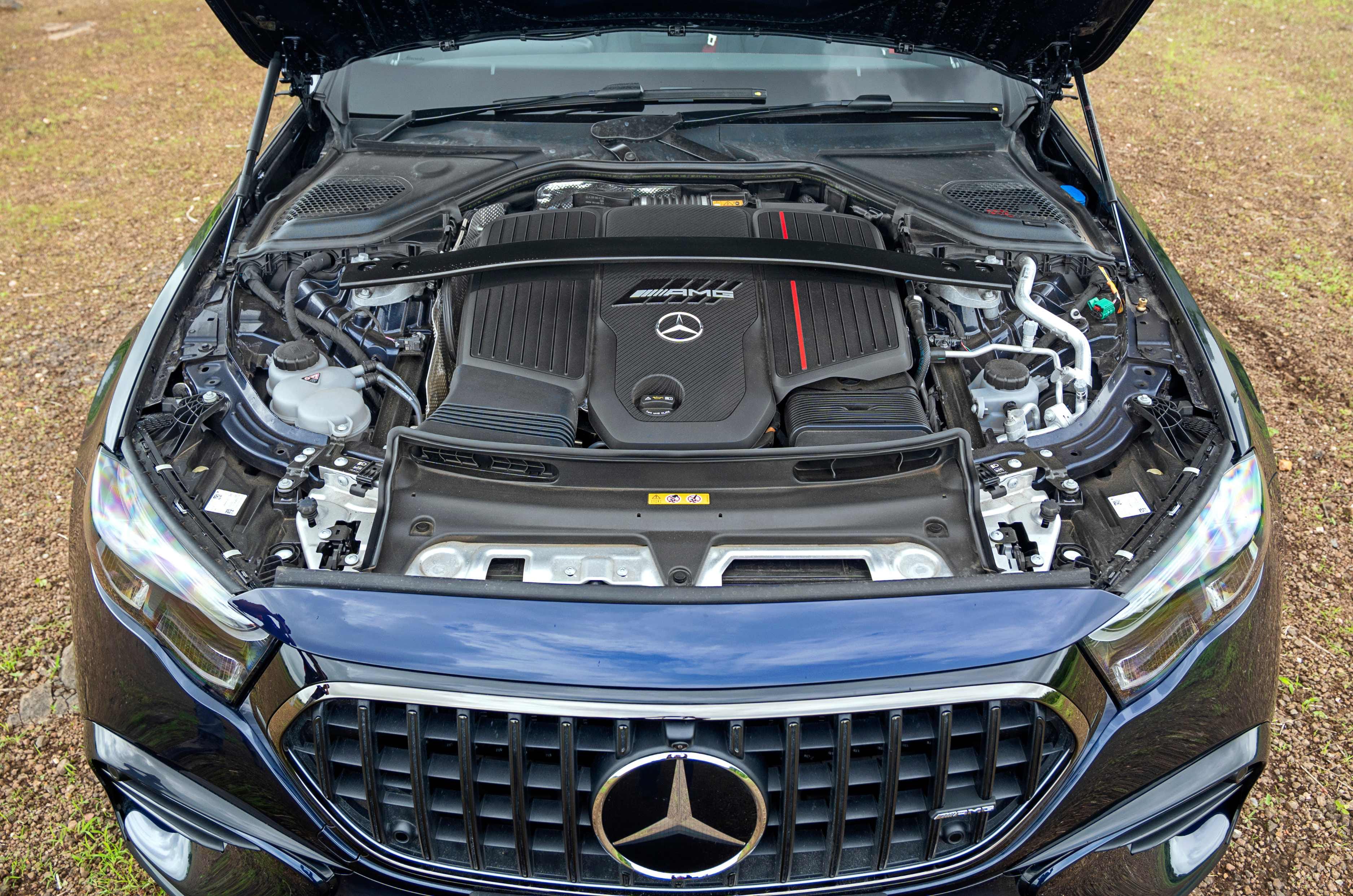
The E 53 comes with a plug-in hybrid setup that marries a 449hp 3.0-litre turbo-petrol straight-six, a 28.6kWh battery pack and an electric motor housed within the 9-speed automatic gearbox. The combined output is 585hp and 750Nm (612hp when using launch control), which is routed to all four wheels via Mercedes’s 4Matic+ AWD system.

As we noted in our Mercedes-AMG E 53 PHEV review, it’s a blast to drive in its most aggressive Sport+ drive mode. Both the engine and electric motor operate at maximum capacity, providing rapid but smooth acceleration and strong power delivery. The gearbox also feels well-suited to the powertrain, with quick shifts and an ‘M’ mode that gives you full control and doesn’t intervene even if you hit the redline. That said, the gearbox can feel clunky and too eager at crawling city speeds, as it tends to constantly shuffle through the lower gears.

For the E 53, Mercedes-AMG claims a 0-100kph time of 4 seconds with launch control and an electronically limited top speed of 250kph, which rises to 280kph with the optional AMG Driver’s Package.

Usable electric range

Thanks to its 28.6kWh battery, the E 53 claims a 100km all-electric range, which, in the real world, will likely hover in the 75-90km ballpark. This is more than enough to complete daily urban commutes without burning a drop of petrol, making the E 53 surprisingly affordable to run, at least in the city.

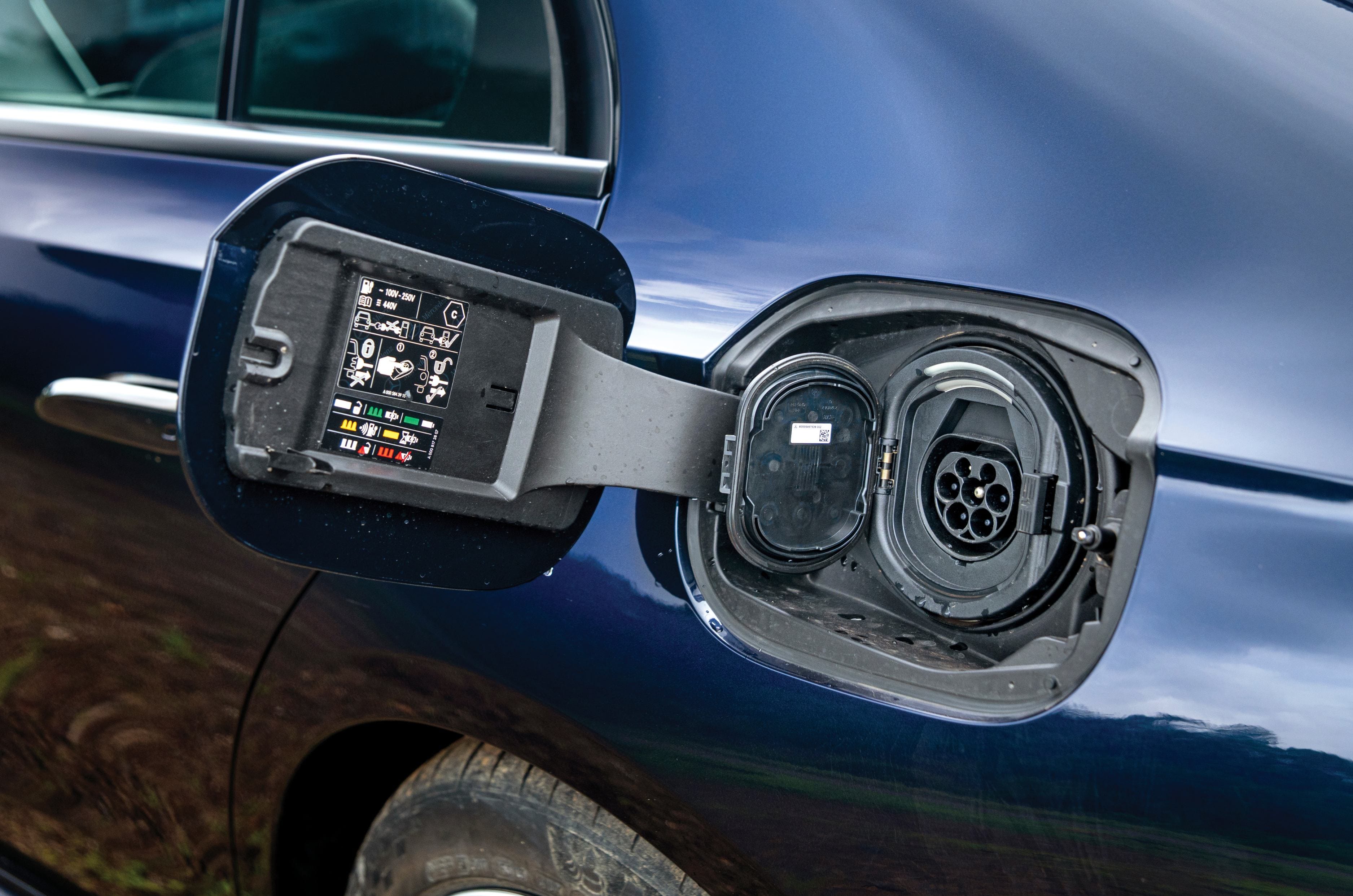
Once the battery begins to deplete, the straight-6 engine fires up and drives the wheels, but even then, the hybrid system pitches in via constant regenerative braking and electric assistance, ensuring the E 53 feels responsive while delivering better fuel efficiency than an equivalent pure-petrol performance sedan. As for charging, an 11kW AC wallbox takes 2.25 hours for a 0-100 percent charge, while a 60kW DC fast charger takes 20 minutes for a 10-80 percent top-up.

Fantastic handling

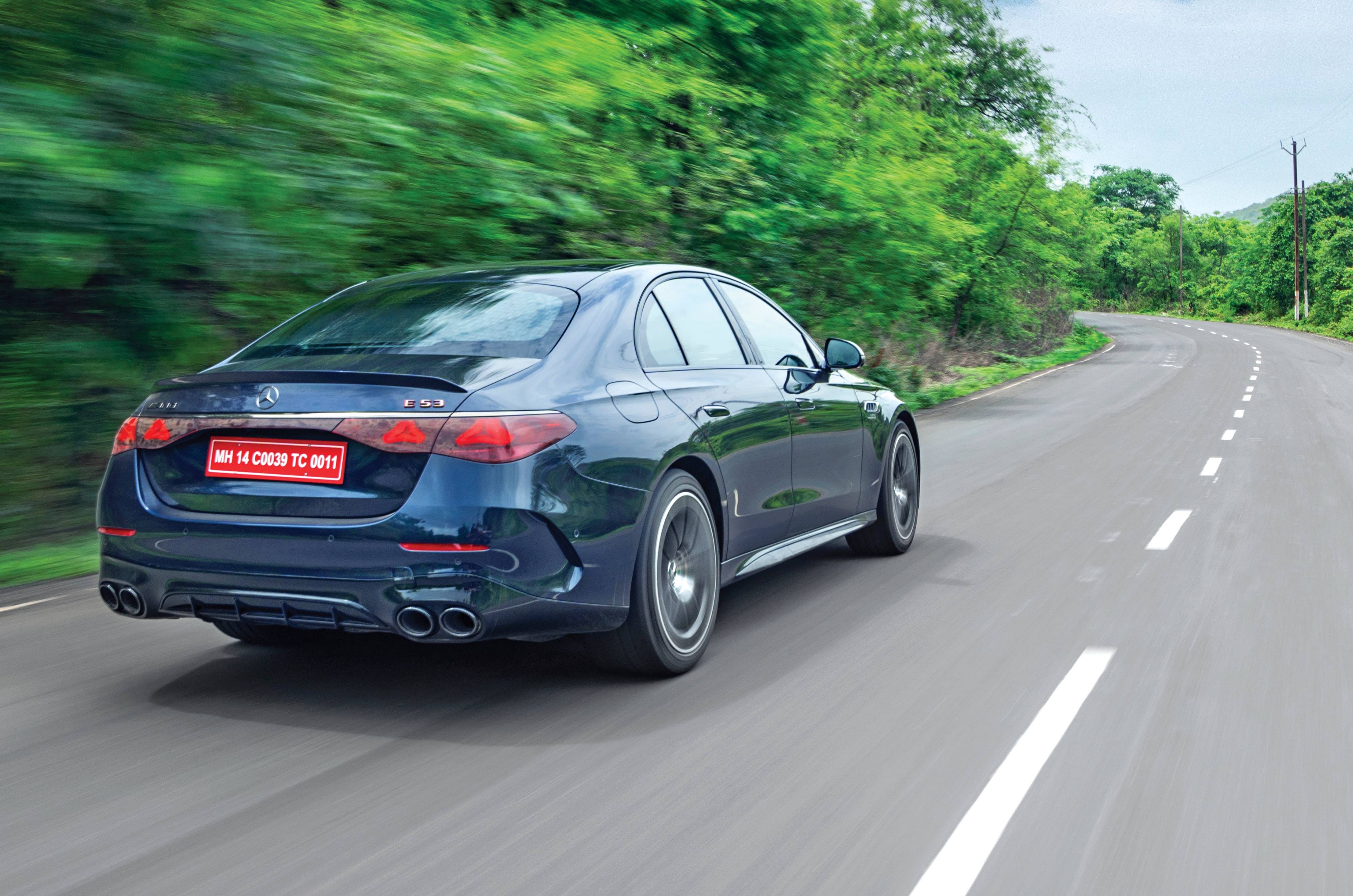
Around the bends, the E 53 feels remarkably composed, even though it lugs around a fairly substantial battery pack – its low placement helps keep the centre of gravity down. Body roll is kept in check. The Sport and Sport+ drive modes noticeably tighten up the car; the dampers become more responsive, and the steering gains heft.

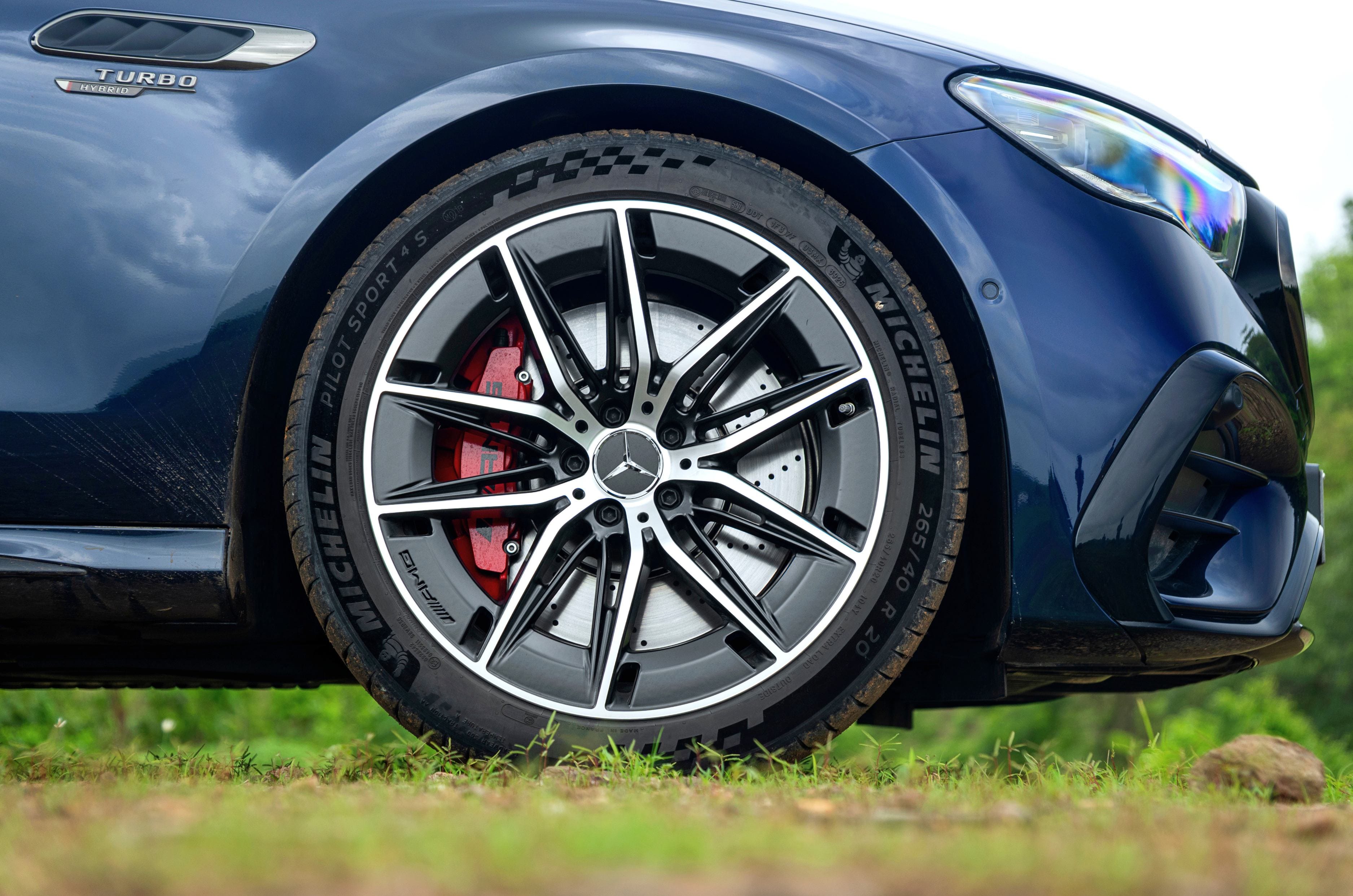
The AWD system is rear-biased, and the Michelin Pilot Sport 4S tyres confidently deploy all that power to the road. Rear-wheel steering of up to 2.5 degrees is also included, aiding stability through high-speed corners.

Cons

Unnatural brake feel

Despite being fitted with massive 390mm discs up front and regenerative braking, the E 53 doesn’t deliver a natural or consistent pedal feel. Stopping power is strong, but the spongy, inconsistent brake pedal puts a damper on an otherwise fun driving experience.

Poor in-cabin ergonomics

While the interior layout of the E 53 looks and feels very upmarket, its ergonomics suffer due to a glaring absence of physical controls. Much of the in-cabin functionality is folded into the large 14.4-inch central touchscreen, which isn’t all that intuitive to use while on the move. The touch-capacitive controls on the steering wheel further add to the frustration.

Compromised boot space

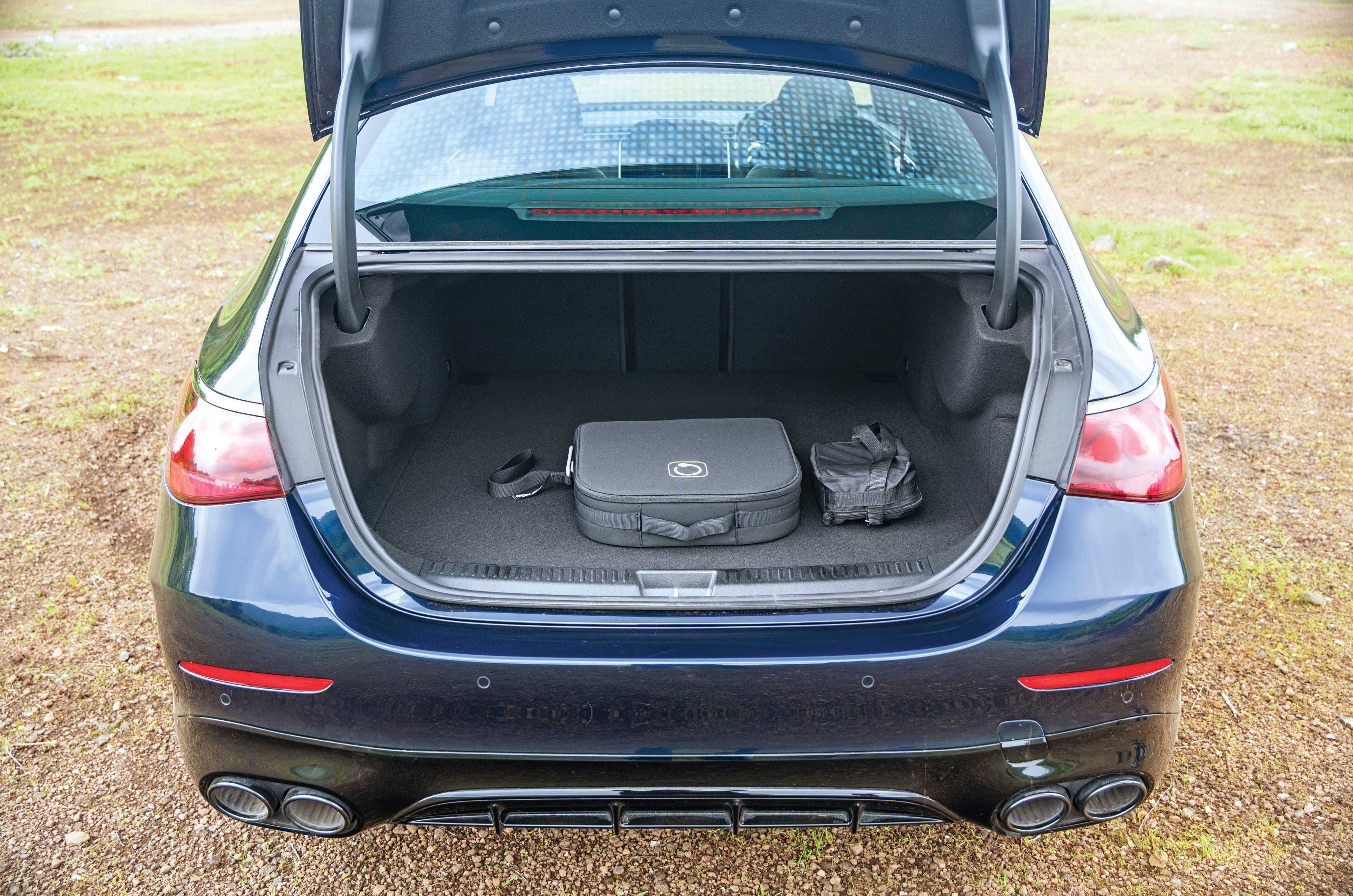
While the battery pack helps enhance the E 53’s performance and daily usability, its placement beneath the boot floor significantly eats into luggage capacity. At 370 litres, the E 53’s boot is 170 litres smaller than that of the standard E-Class. There’s no spare wheel either, with its space instead occupied by the charging cable and puncture repair kit.

Mini previews rugged Countryman derivative ahead of October debut

Countryman

Mini has previewed a new off-road-inspired version of the Countryman, which is set to make its full debut in October. Revealed as a prototype, the new derivative gets suspension and styling changes aimed at improving its ability away from paved roads, and forms part of the brand’s strategy to broaden its range with more lifestyle-focused special editions.

  1. Production version to be unveiled in October
  2. Part of Mini’s strategy to expand its range of special editions

Prototype hints at off-road-focused updates

The prototype features a raised suspension, chunky off-road tyres and a roof-mounted tent, underlining its outdoor-focused positioning. Mini has released images of the vehicle testing in Colorado’s Rocky Mountain National Park, where rugged versions of family SUVs have become increasingly popular.

Mini boss Jean-Philippe Parain said the company is “just one step away” from unveiling the production version, which is scheduled to debut in October.

Inspired by outdoor lifestyle trend

According to Mini design chief Holger Hampf, the new Countryman derivative reflects growing demand for vehicles suited to outdoor activities and weekend adventures. He also indicated that the production model will draw inspiration from the Vagabund concepts revealed earlier this year, which reimagined the Countryman with an off-road theme.

The new derivative is also part of Mini’s broader plan to introduce more special editions and offer greater scope for customisation through collaborations and lifestyle-focused variants.

The current Mini Countryman is offered with two petrol engine options in India. The Countryman C is powered by a 1.5-litre, three-cylinder turbo-petrol engine producing 156hp and 240Nm, paired with a 7-speed dual-clutch automatic gearbox driving the front wheels. Above it sits the Countryman JCW All4, which gets a 2.0-litre, four-cylinder turbo-petrol engine developing 300hp and 400Nm, mated to a 7-speed dual-clutch automatic transmission and an all-wheel-drive system. The JCW is capable of sprinting from 0-100kph in a claimed 5.4 seconds.