Vedanta Oil & Gas Q1 Results: डिमर्जर के बाद पहली तिमाही में ₹945 करोड़ का मुनाफा, रेवेन्यू और मार्जिन में गिरावट

Vedanta Oil & Gas Q1 Results: वेदांता ऑयल एंड गैस ने डिमर्जर और अलग लिस्टिंग के बाद पहली तिमाही के नतीजे जारी किए हैं। जून तिमाही में कंपनी ने 945 करोड़ रुपये का शुद्ध मुनाफा दर्ज किया। पिछली तिमाही में कंपनी को 476 करोड़ रुपये का घाटा हुआ था।

रेवेन्यू और EBITDA में आई गिरावट

जून तिमाही में वेदांता ऑयल एंड गैस का ऑपरेशन से रेवेन्यू 3.1% घटकर 2,507 करोड़ रुपये रह गया। पिछली तिमाही के मुकाबले EBITDA भी 7.7% गिरकर 814 करोड़ रुपये रहा।

वहीं, EBITDA मार्जिन घटकर 32.5% रह गया। मार्च तिमाही में यह 34.1% था।

कितना रहा तेल और गैस उत्पादन?

जून तिमाही में कंपनी का औसत ग्रॉस ऑपरेटेड प्रोडक्शन 77.7 हजार बैरल ऑयल इक्विवेलेंट प्रतिदिन (kboepd) रहा। वहीं, वर्किंग इंटरेस्ट प्रोडक्शन 51.1 हजार kboepd रहा।

पूरी तिमाही में कुल ग्रॉस प्रोडक्शन 7.1 मिलियन बैरल ऑयल इक्विवेलेंट (boe) रहा। जबकि वर्किंग इंटरेस्ट प्रोडक्शन 4.7 मिलियन boe दर्ज किया गया।

राजस्थान में गैस की नई खोज

वेदांता ऑयल एंड गैस ने राजस्थान के बाड़मेर बेसिन में RJ-ON-90/1 ब्लॉक के Kaam BCP-1ST कुएं में नई गैस खोज की भी घोषणा की है।

कंपनी ने कहा कि इस खोज का तकनीकी और व्यावसायिक मूल्यांकन अभी जारी है।

CEO ने क्या कहा?

अंतरिम CEO और पूर्णकालिक निदेशक जिम जॉनी गैस्ट ने कहा कि जून तिमाही कंपनी के लिए अहम रही। इसी दौरान कंपनी के शेयर NSE और BSE पर लिस्ट हुए।

उन्होंने कहा कि मजबूत ऑपरेशनल प्रदर्शन, नई खोज और पूंजी के बेहतर इस्तेमाल की रणनीति से आगे भी ग्रोथ की अच्छी संभावनाएं हैं। कंपनी अब एक्सप्लोरेशन ड्रिलिंग, ऑयल रिकवरी प्रोजेक्ट और नए डेवलपमेंट प्रोग्राम पर फोकस करेगी।

नतीजों से पहले बुधवार को वेदांता ऑयल एंड गैस का शेयर 3.3% की बढ़त के साथ 35.31 रुपये पर बंद हुआ। पिछले एक महीने में स्टॉक 6.45% चढ़ा है।

Stock Of The Day : नतीजों के बाद L&T के शेयर में आई जोरदार तेजी, जानिए अब क्या है इस शेयर पर ब्रोकरज की राय

Disclaimer: यहां मुहैया जानकारी सिर्फ सूचना के लिए दी जा रही है। यहां बताना जरूरी है कि मार्केट में निवेश बाजार जोखिमों के अधीन है। निवेशक के तौर पर पैसा लगाने से पहले हमेशा एक्सपर्ट से सलाह लें। मनीकंट्रोल की तरफ से किसी को भी पैसा लगाने की यहां कभी भी सलाह नहीं दी जाती है।

Petrol Diesel Price Today: पेट्रोल-डीजल के नए रेट लागू, देखें आपके शहर में क्या है भाव

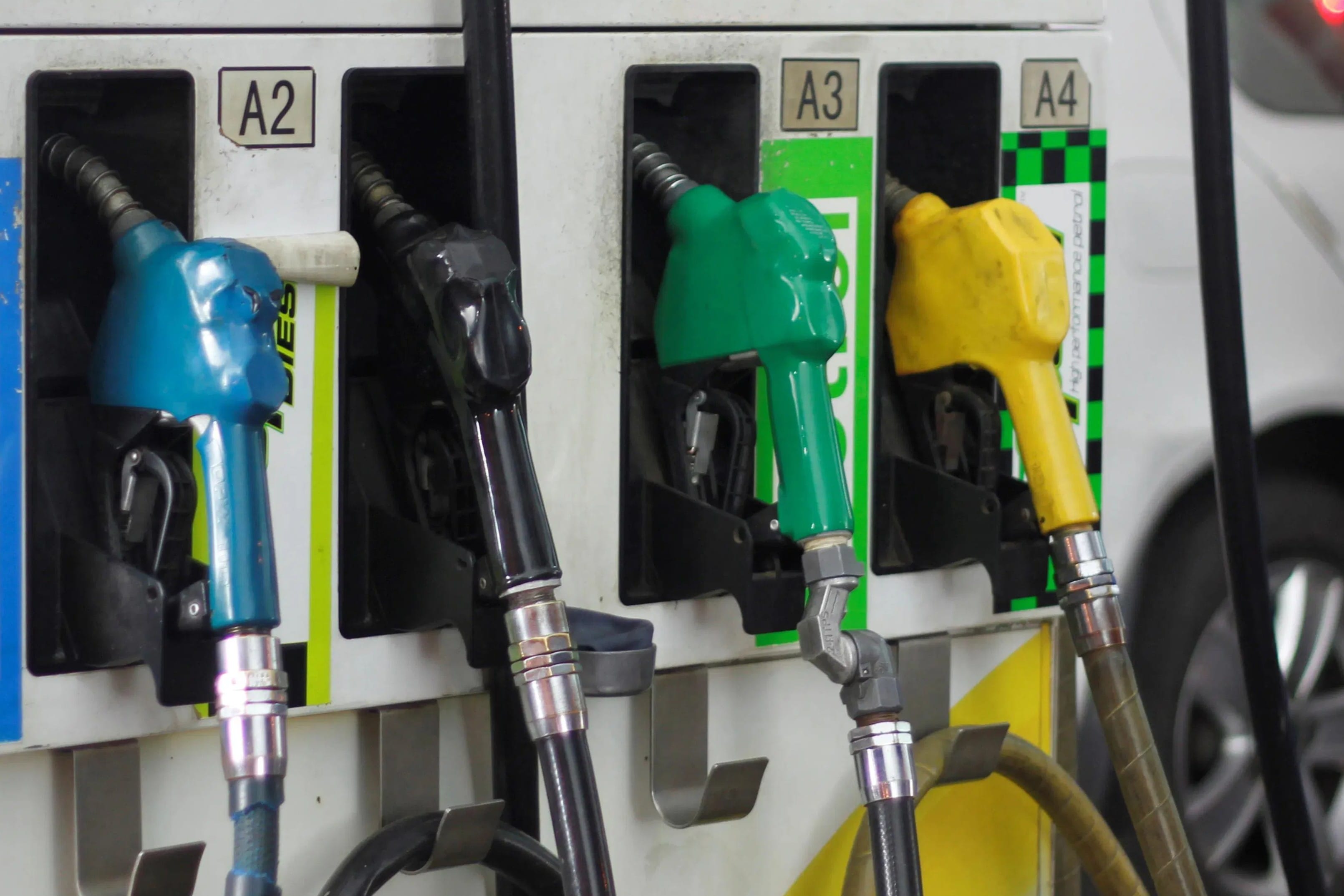
Petrol Diesel Price Today: हर दिन की शुरुआत सिर्फ सूरज की किरणों से नहीं होती, बल्कि पेट्रोल और डीजल की नई कीमतों से भी होती है, जो आम आदमी की जेब पर सीधा असर डालती हैं। सुबह 6 बजे देश की तेल विपणन कंपनियां (OMCs) ताजा दरें जारी करती हैं, जो अंतरराष्ट्रीय बाजार में कच्चे तेल की कीमतों और डॉलर-रुपए की विनिमय दर में आए बदलावों पर आधारित होती हैं। ये बदलाव रोजमर्रा की जिंदगी को प्रभावित करते हैं, चाहे वो ऑफिस जाने वाला व्यक्ति हो या फल-सब्जी बेचने वाला व्यापारी।

ऐसे में हर दिन की कीमतों की जानकारी रखना सिर्फ जरूरी ही नहीं, बल्कि समझदारी भी है। सरकार की यह प्रणाली पारदर्शिता सुनिश्चित करती है ताकि उपभोक्ताओं को किसी तरह की भ्रमित जानकारी न मिले।

आपके शहर में आज का पेट्रोल-डीजल का भाव

ये रहे 29 जुलाई 2026 के प्रमुख शहरों के पेट्रोल-डीजल के ताजा रेट

नई दिल्ली: पेट्रोल ₹102.12 प्रति लीटर और डीजल ₹95.20 प्रति लीटर।

मुंबई: पेट्रोल ₹111.18 और डीजल ₹97.83 प्रति लीटर।

कोलकाता: पेट्रोल ₹113.47 जबकि डीजल ₹99.82 प्रति लीटर।

चेन्नई: पेट्रोल ₹107.77 और डीजल ₹99.55 प्रति लीटर।

गुरुग्राम: पेट्रोल ₹102.77 तथा डीजल ₹95.44 प्रति लीटर।

नोएडा: पेट्रोल ₹102.12 और डीजल ₹95.56 प्रति लीटर।

बेंगलुरु: पेट्रोल ₹110.93 जबकि डीजल ₹98.80 प्रति लीटर।

भुवनेश्वर: पेट्रोल ₹109.92 और डीजल ₹100.92 प्रति लीटर।

चंडीगढ़: पेट्रोल ₹98.10 तथा डीजल ₹86.09 प्रति लीटर।

हैदराबाद: पेट्रोल ₹115.69 और डीजल ₹103.82 प्रति लीटर।

जयपुर: पेट्रोल ₹112.66 जबकि डीजल ₹97.78 प्रति लीटर।

लखनऊ: पेट्रोल ₹102.05 और डीजल ₹95.55 प्रति लीटर।

पटना: पेट्रोल ₹113.35 तथा डीजल ₹99.36 प्रति लीटर।

तिरुवनंतपुरम: पेट्रोल ₹115.49 और डीजल ₹104.40 प्रति लीटर।

पिछले दो साल से स्थिर क्यों हैं कीमतें?

मई 2022 के बाद से केंद्र और कई राज्यों द्वारा टैक्स में कटौती की गई, जिसके बाद पेट्रोल-डीजल की कीमतों में स्थिरता देखी जा रही है। हालांकि अंतरराष्ट्रीय बाजार में उतार-चढ़ाव होता रहता है, फिर भी भारतीय उपभोक्ताओं के लिए कीमतें तुलनात्मक रूप से स्थिर बनी हुई हैं।

किन कारणों से तय होती हैं ईंधन की कीमतें?

  1. कच्चे तेल की कीमतें:

पेट्रोल और डीजल का उत्पादन मुख्य रूप से कच्चे तेल से होता है। जब अंतरराष्ट्रीय स्तर पर कच्चे तेल की कीमतें बढ़ती हैं, तो इसका असर सीधे भारतीय बाजार पर पड़ता है।

  1. डॉलर के मुकाबले रुपया:

भारत अधिकतर कच्चा तेल आयात करता है, और यह डॉलर में खरीदा जाता है। यदि रुपया कमजोर होता है, तो ईंधन महंगा हो जाता है।

  1. सरकारी टैक्स और शुल्क:

केंद्र और राज्य सरकारें पेट्रोल-डीजल पर भारी टैक्स लगाती हैं, जो खुदरा मूल्य का बड़ा हिस्सा होते हैं। यही कारण है कि राज्यों में कीमतों में अंतर होता है।

  1. रिफाइनिंग की लागत:

कच्चे तेल को इस्तेमाल लायक बनाने की प्रक्रिया (रिफाइनिंग) में भी खर्च होता है। ये लागत कच्चे तेल की गुणवत्ता और रिफाइनरी की क्षमता पर निर्भर करती है।

  1. मांग और आपूर्ति का संतुलन:

बाजार में ईंधन की मांग अगर बढ़ जाती है, तो कीमतें भी ऊपर जाने लगती हैं। खासकर त्योहारों, गर्मी या सर्दी के मौसम में ईंधन की खपत ज्यादा होती है।

कैसे करें अपने शहर की कीमतें SMS से चेक?

अगर आप मोबाइल से ईंधन की कीमत जानना चाहते हैं, तो ये प्रक्रिया आसान है:

Indian Oil ग्राहक: अपने शहर का कोड टाइप करें और उसे “RSP” के साथ 9224992249 पर भेजें।

BPCL ग्राहक: “RSP” लिखकर 9223112222 पर भेजें।

HPCL ग्राहक: “HP Price” लिखकर 9222201122 पर भेजें।

Government has no data on India’s E20-compatible vehicle fleet

E20

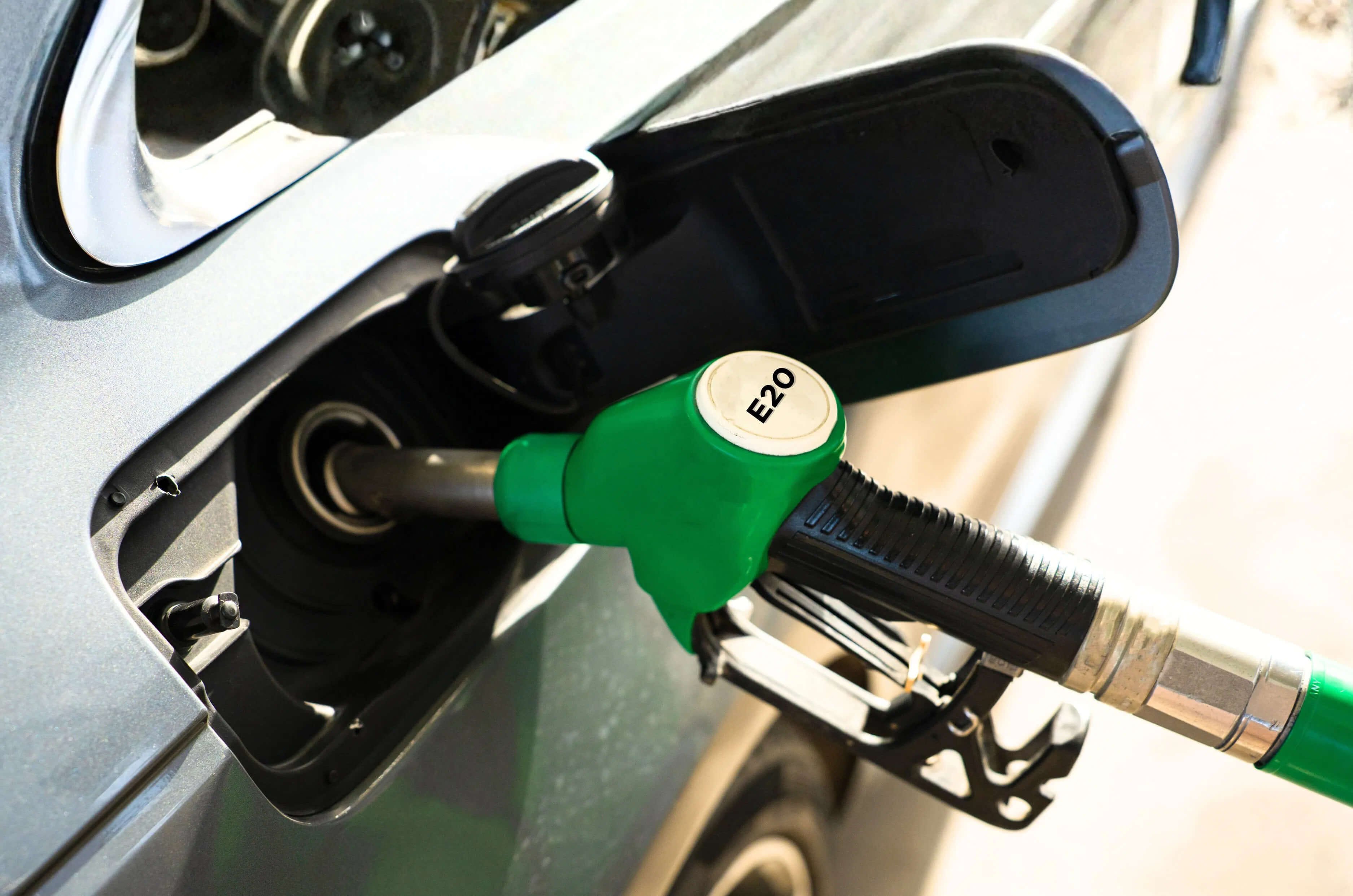
The central government has acknowledged that it has not formally assessed how many vehicles in India are compatible with E20 petrol, despite mandating E20 fuel nationwide and continuing to prepare for higher ethanol blends. The government, however, said laboratory studies and field trials have established the fuel’s safety under prescribed standards.

In a written reply in the Rajya Sabha, Minister of State for Petroleum and Natural Gas Suresh Gopi said the Ministry of Heavy Industries had not assessed the percentage of vehicles in the country that are compatible with E20 fuel.

  1. Government cites laboratory and field trials to support E20 rollout
  2. Mileage drop for E10-calibrated vehicles pegged at 3-5 percent
  3. No verified evidence of widespread E20-related engine failures, says Centre

However, the government’s latest response also raises questions over the rollout timeline. While the Centre formally announced nationwide availability of E20 petrol in mid 2025—five years ahead of its original 2030 target—it now says E19-E20 blends have been in widespread use for more than two-and-a-half years, while E15 and higher ethanol blends have been in active distribution for over three-and-a-half years, covering more than 20 crore two-wheelers and 3 crore petrol passenger vehicles. The response does not explain this apparent discrepancy.

Government reiterates mileage and reliability claims

Addressing concerns around fuel economy, the government said vehicles originally calibrated for E10 petrol could see a 3-5 percent reduction in mileage when running on E20, although actual fuel efficiency depends on driving conditions, driving style and vehicle maintenance.

The government also reiterated that there is no verified evidence of widespread engine failures or vehicle breakdowns linked to ethanol blending. 

Government cites laboratory and field testing

According to the government, the Ethanol Blended Petrol (EBP) programme was implemented through a phased process involving NITI Aayog, oil marketing companies, automobile manufacturers, the Automotive Research Association of India (ARAI), the Society of Indian Automobile Manufacturers (SIAM) and the Indian Institute of Petroleum (IIP).

The government said testing covered engine durability, drivability, startability, corrosion resistance, material compatibility, emissions and fuel efficiency. Based on these studies, it said legacy vehicles do not show any significant change in performance or abnormal component wear when operated on E20 petrol.

Government preparing for higher ethanol blends

The government said India’s ethanol production capacity has been planned to meet current E20 requirements while also supporting future petrol demand, higher ethanol blends, flex-fuel vehicles and other biofuel applications, subject to future government approvals. It added that ethanol production continues to follow a diversified feedstock strategy, with only surplus foodgrains being diverted after meeting food security and public distribution requirements.

Govt proposes extending PUCC validity for BS6 cars from 1 to 3 years

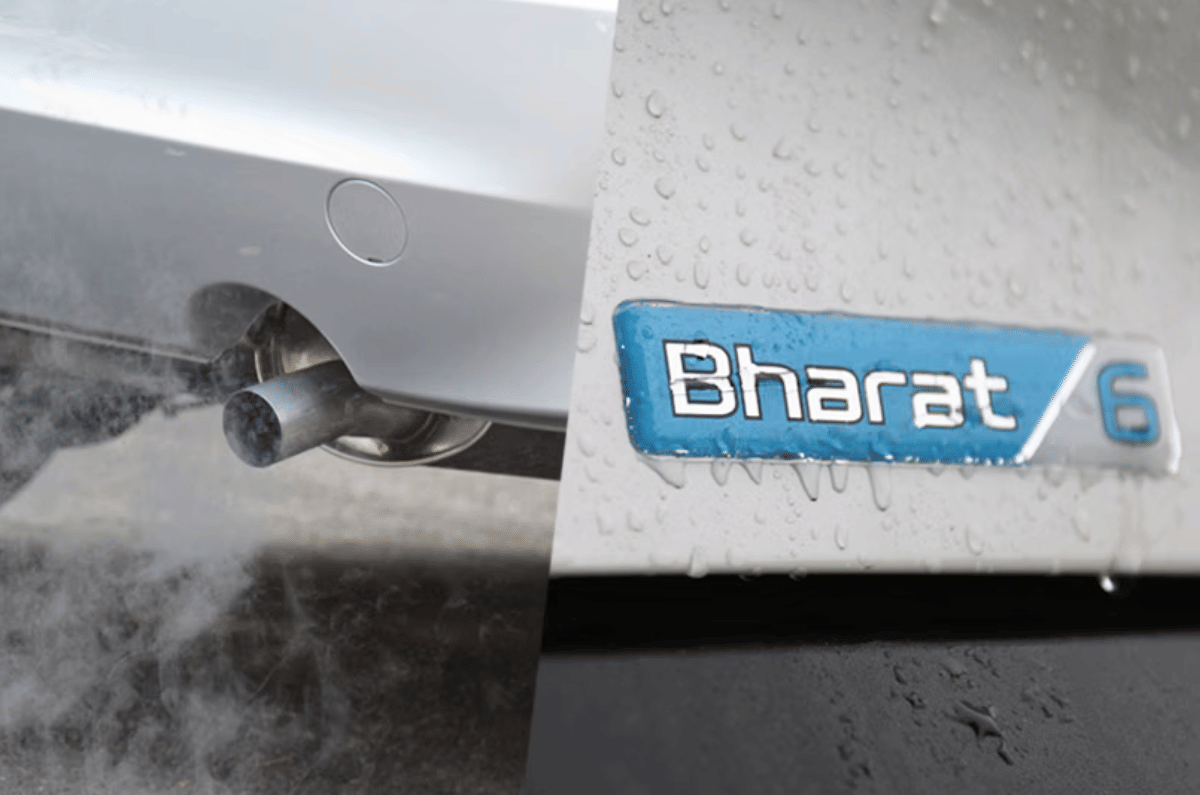
Bharat Stage 6

The Ministry of Road Transport and Highways has proposed extending the validity of the Pollution Under Control Certificate (PUCC) for BS6 (Bharat Stage 6) private vehicles that are up to six years old. Under the draft notification, these vehicles would need a PUCC update once every three years, instead of the current one-year validity. For BS6 cars between six and 10 years old, the certificate would continue to be renewed annually, while vehicles older than 10 years would require a new PUCC every six months, the draft added.

Bharat Stage emission norms are standards instituted by the government to regulate the emissions of air pollutants from motor vehicles. India introduced the first phase of BS6 norms in April 2020, followed by the second phase in April 2023, which remains in effect today.

What about BS4 and older cars?

The proposed relaxation is limited to up to six-year-old BS6 cars. As per the notification, owners of BS4 cars will still have to renew their PUCC in every six months, and all motor vehicles complying with BS1, BS2 and BS3 emission norms will have to renew their respective certificates in every three months.

Bharat Stage emission norms in India so far

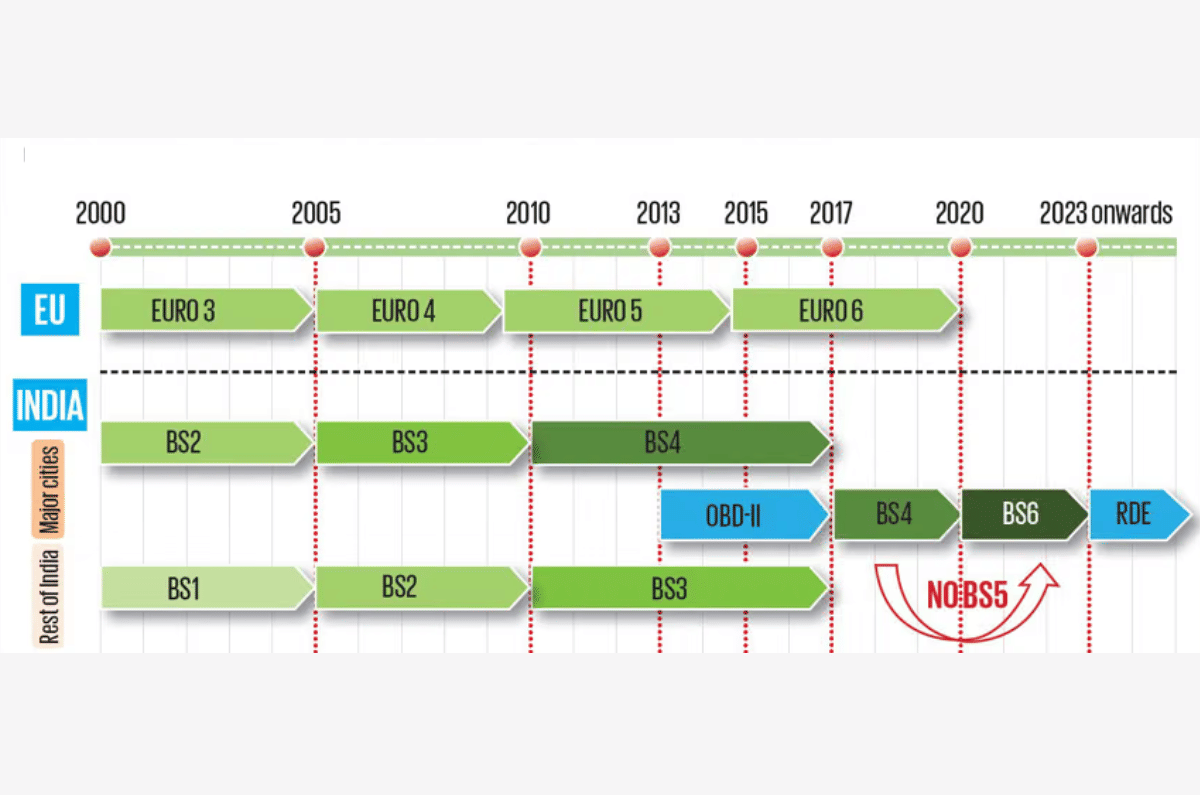
Bharat Stage emission norms timeline
Bharat Stage emission norms timeline.

India introduced Bharat Stage emission norms in 2000 with the official rollout of BS2 standards. BS2 was based on European emission regulations, with the main difference being the test cycle’s top speed – 90kph for BS2 norms compared to 120kph in Europe. India remained one stage behind Europe until 2010, after which the oil industry couldn’t supply the low-sulphur fuel needed to jump to BS5. Europe, meanwhile, moved to BS6 systematically.

TVS debuts Apache RR 200 race bike targeted at young riders

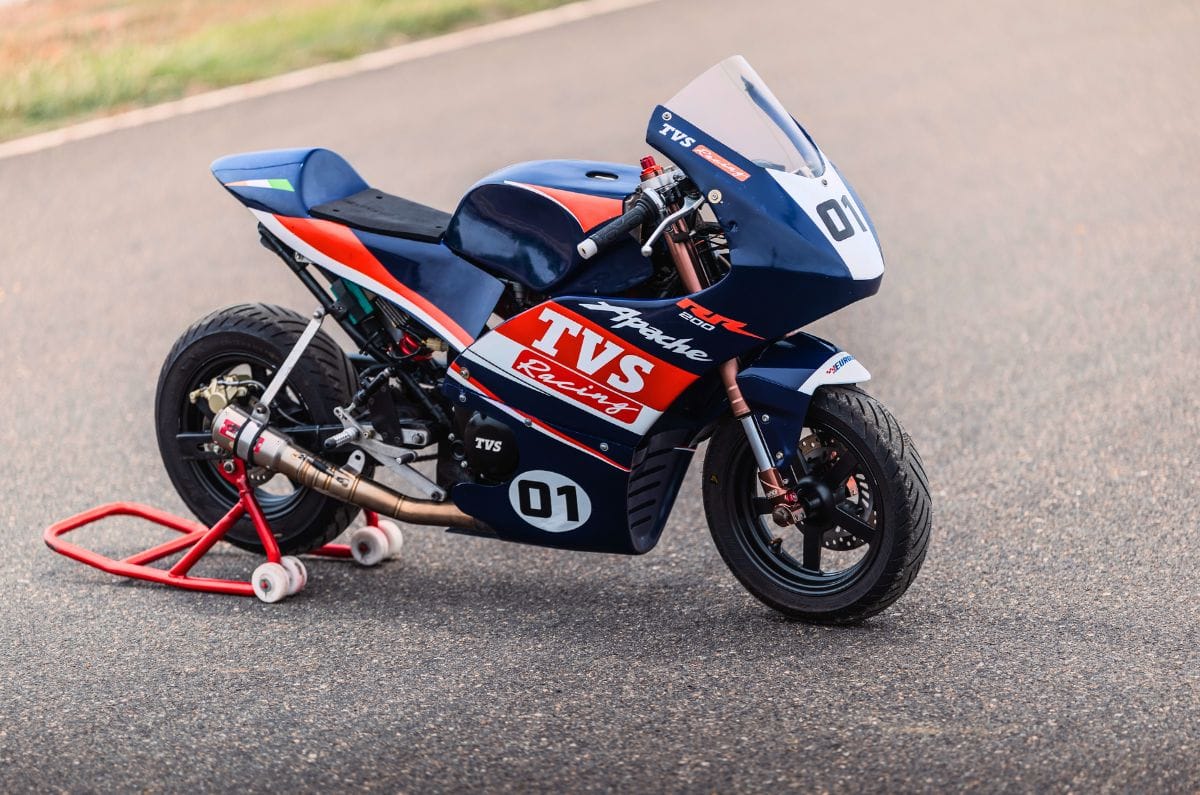
TVS Apache RR 200 front three quarter angle on track

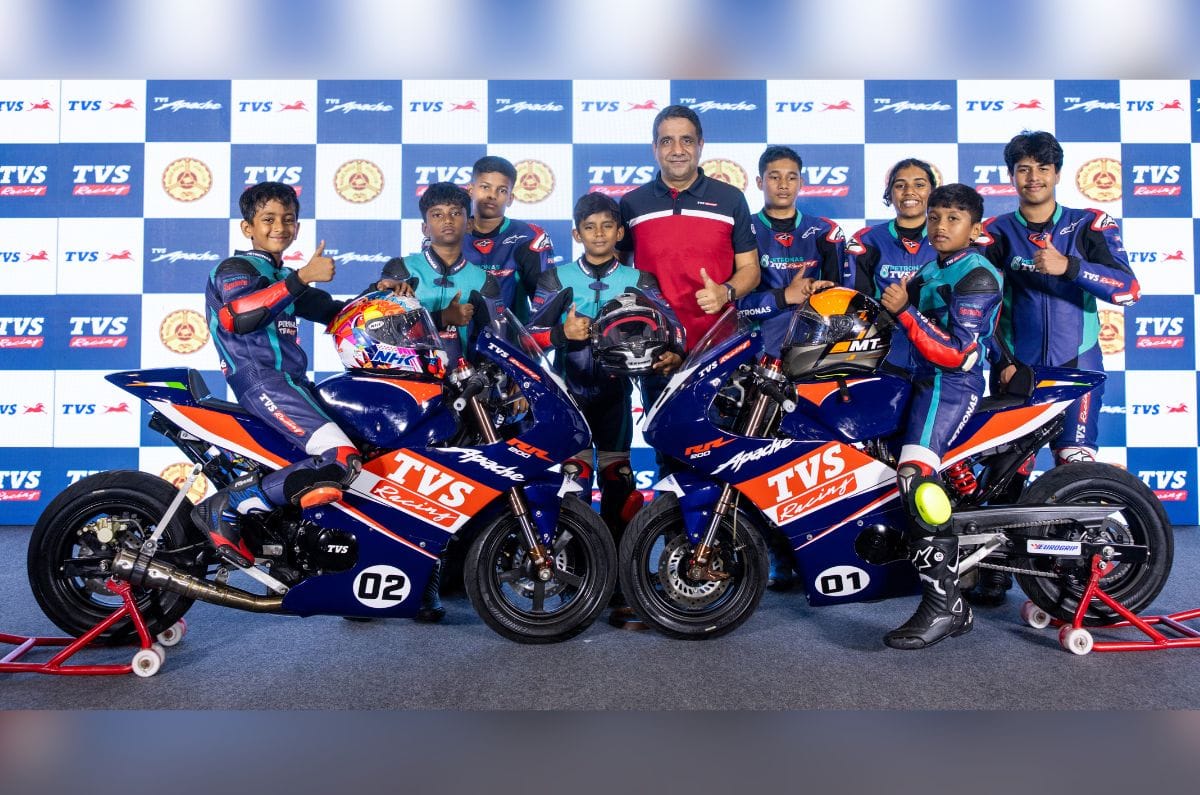
TVS has revealed an all-new purpose-built race bike for younger riders aged 10-14, called the Apache RR 200 MiniGP. The track-only RR 200 uses a retuned version of the engine in the road-going Apache RTR 200 4V and this motor sits within a heavily redesigned frame and rolling chassis compared to the road-legal machine.

  1. RR 200 racer far lighter and more powerful than road-going RTR 200
  2. Racing ecosystem being put in place by TVS
  3. 10 units handed to Madras International Karting Arena

TVS Apache RR 200 MiniGP revealed

The Apache RR 200 uses the same air/oil-cooled 197.75cc, single-cylinder engine as the road-going RTR 200 4V but with some noteworthy differences. For starters, fuel is fed to the motor via a 30mm semi flat side carburettor and it breathes through a conical free flow air filter. The RR 200 also has a free flow exhaust which in combination with the aforementioned changes helps raise peak power to 23hp, from the road-going RTR 200’s 20.8hp.

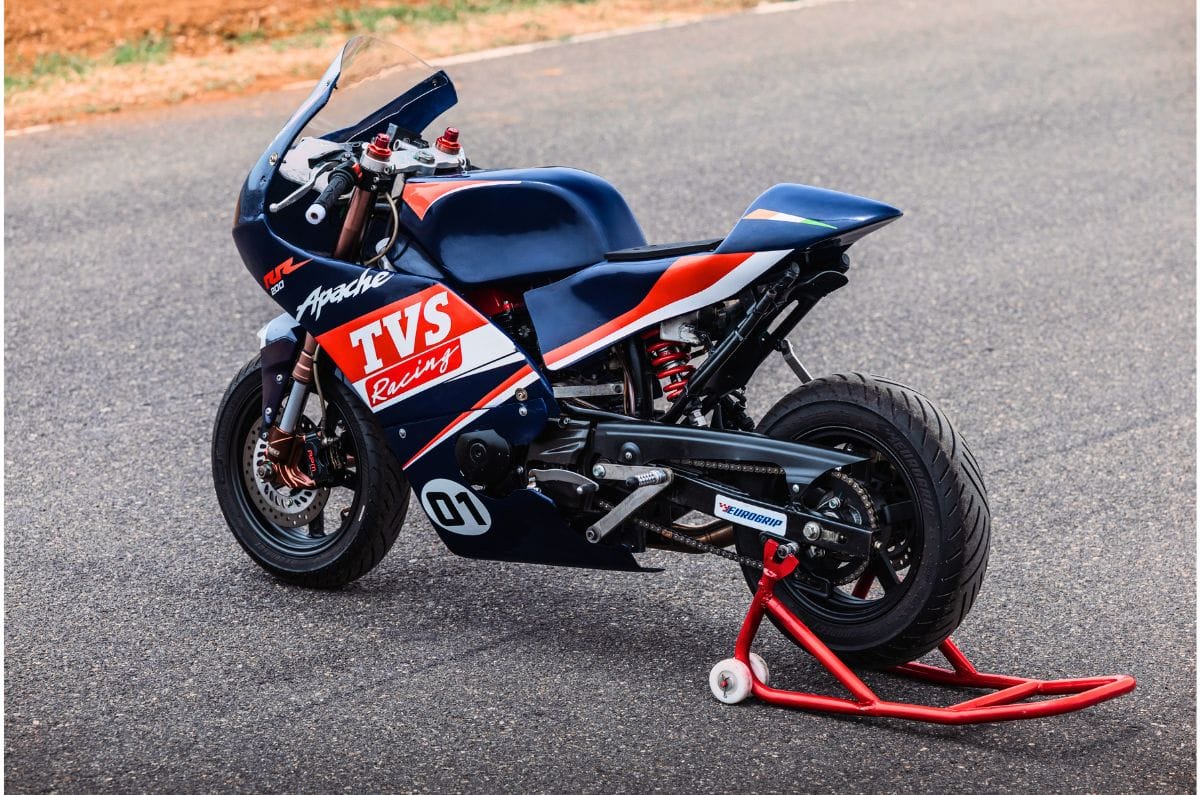
TVS Apache RR 200 race bike rear left three quarter angle on track

Nestling this motor is a heavily revised rolling chassis of the RTR 200 street naked with a sharper rake angle, shorter swingarm as well as wheelbase and smaller 12-inch wheels shod with Eurogrip Bee rubber. Suspending this rolling chassis is fully-adjustable suspension at both ends and stopping duties are handled by a 220mm disc at the fore and a 180mm disc aft.

An aluminium fuel tank and lightweight aerodynamic bodywork – as well as all the changes mentioned above – help in keeping the RR 200’s kerb weight low at just 90 kilos. Compared to the RTR 200, this is a massive 61kg reduction, although both bikes are about as similar as chalk and cheese.  

Feeder programme for TVS One Make Championship

While a lot of effort has been poured into the inception of the machine itself, TVS is also focusing on creating a structured ecosystem for Indian riders who want to get into circuit racing at a young age. TVS will offer bikes for rent as well as provide coaching at the Madras International Karting Arena (MIKA). The company wants to make motorsport more attainable and ensure that even from a young age there is a tool as well as a system in place for riders to hone their skills.

Furthermore, TVS claims that it has built a pathway within its racing ecosystem to ensure that right from the grassroots level all the way to the international stage. In theory, a rider can stay with the brand right from the Junior Program all the way to ARRC (Asia Road Racing Championship), which is the highest level TVS competes at currently.

TVS Apache RR 200 race bike with young riders

For now, the Apache RR 200 MiniGP programme will act as a training ground for TVS. Speaking to Autocar India, Vimal Sumbly (Head – Premium Business, TVS Motor Company) explained, “We are not putting a championship [moniker] to it, we want to train first. Our objective with giving 10 units [to MIKA] is to get people to come here, get trained with our trainers and then eventually over a period of time move towards rookie or professional racing.”

Sumbly further added that this programme will essentially be a feeder series for the TVS One Make Championship’s Rookie category. “It will help us get better rookies, rather than getting a rookie who is just getting into the championship with little experience and they are not able to get their full potential out.”

With inputs from UNNATEE GIDITHURI

E20 Janta Party campaign demands choice of ethanol-free petrol

fuel dispensers

Not long after the success of the Cockroach Janta Party’s (CJP) protests, a new social media-led campaign calling itself the E20 Janta Party has cropped up. It demands that Indian vehicle owners be given the option to purchase ethanol-free petrol alongside E20 fuel, as well as the resignation of Union Road Transport and Highways Minister Nitin Gadkari, who is a major proponent of the government’s ethanol blending policy.

For context, the E20 rollout started in April 2025, and it was mandated as the baseline petrol blend exactly one year later – all in an effort to reduce dependence on crude oil imports. This is despite the fact that E20 compliance was mandated in April 2023 as part of the BS6 Phase 2 emission norms, which means a hefty chunk of vehicles plying on Indian roads are not E20-compliant.

E20 Janta Party wants more transparency and options for fuel

No demands for E20 to be discontinued

Inspired by the CJP’s satirical, meme-driven approach, E20 Janta Party declared itself as a consumer rights movement that is not seeking the withdrawal of E20 petrol, but instead greater transparency and freedom of choice at fuel stations. Although ethanol-free fuel has been available in the form of 100-octane premium petrol (XP100, Speed100, and Power100), it’s sold only at select fuel stations and costs significantly more than standard E20, limiting its feasibility for most motorists.

“Our demand is very clear. E20 Janta Party is a people-powered movement demanding transparency, accountability, and the right of every Indian to know how the E20 policy affects their vehicles, wallets, and consumer rights,” the group said in a social media post. The campaign even referenced CJP’s initial call to mobilisation with a post stating, “What if all bike/car owners come together?”

The E20 Janta Party says it is not opposed to ethanol blending, nor is it asking for subsidies or free fuel. Instead, it wants fuel stations to offer consumers the choice between unblended petrol and ethanol-blended fuel. E20 Janta Party is also demanding transparent fuel labelling, publication of government data on the costs and benefits of different fuel blends, and independent scientific studies into mileage, engine performance, emissions, and maintenance costs, with the findings made publicly available.

Support pouring in for E20 Janta Party

At the time of writing, E20 Janta Party’s Twitter and Instagram accounts have attracted over 31,000 followers cumulatively, and the campaign has even begun attracting support beyond social media. Political commentator Tehseen Poonawalla announced a “Gaadi March” on July 31 against the E20 policy, while the Delhi Taxi and Tourist Transporters and Tour Operators Association planned a march to Parliament on August 4. The taxi association has raised concerns over fuel efficiency, maintenance costs and engine performance, particularly in older vehicles.

Govt continues to stand strong on ethanol blending policy

In recent months, motorists have expressed heightened acrimony surrounding the impact of E20 petrol on fuel efficiency and vehicle durability, whereas the government remains steadfast in its defence of the policy, saying E20 is a safe and cleaner fuel backed by scientific evaluation. A few weeks ago, prominent manufacturers like Maruti Suzuki, Toyota, and Hero Motocorp also backed E20 at a government briefing, notably claiming that they have found no significant concerns regarding accelerated wear and tear in older, non-compliant vehicles.

Petroleum Minister previously ruled out offering pure petrol or E10 alongside E20

Replying to a question in Parliament last week, Minister of State for Petroleum Suresh Gopi said the government had not received any “widespread or substantiated” complaints linking E20 petrol to vehicle performance issues. Petroleum Minister Hardeep Singh Puri earlier shot down the prospect of offering unblended and E10 petrol alongside E20, citing tremendous logistical issues like separate storage, transportation, and dispensing infrastructures.

Ethanol content in petrol could increase; diesel likely to be blended with isobutanol

The government is even looking to increase the baseline ethanol blend in petrol, with the Automotive Research Association of India (ARAI) tasked to examine the effects of E25 on existing E10- and E20-compliant vehicles. Plans are also underway to blend ethanol-derived isobutanol into diesel in the near future, even though the government has not laid out any isobutanol compliance framework for any diesel-powered passenger vehicle in India.

Petrol Diesel Price Today: पेट्रोल-डीजल के नए रेट लागू, घर बैठे जानें आपके शहर का ताजा भाव

Petrol Diesel Price Today: हर दिन की शुरुआत सिर्फ सूरज की किरणों से नहीं होती, बल्कि पेट्रोल और डीजल की नई कीमतों से भी होती है, जो आम आदमी की जेब पर सीधा असर डालती हैं। सुबह 6 बजे देश की तेल विपणन कंपनियां (OMCs) ताजा दरें जारी करती हैं, जो अंतरराष्ट्रीय बाजार में कच्चे तेल की कीमतों और डॉलर-रुपए की विनिमय दर में आए बदलावों पर आधारित होती हैं। ये बदलाव रोजमर्रा की जिंदगी को प्रभावित करते हैं, चाहे वो ऑफिस जाने वाला व्यक्ति हो या फल-सब्जी बेचने वाला व्यापारी।

ऐसे में हर दिन की कीमतों की जानकारी रखना सिर्फ जरूरी ही नहीं, बल्कि समझदारी भी है। सरकार की यह प्रणाली पारदर्शिता सुनिश्चित करती है ताकि उपभोक्ताओं को किसी तरह की भ्रमित जानकारी न मिले।

आपके शहर में आज का पेट्रोल-डीजल का भाव

ये रहे 27 जुलाई 2026 के प्रमुख शहरों के पेट्रोल-डीजल के ताजा रेट

नई दिल्ली: पेट्रोल ₹102.12 | डीजल ₹95.20

मुंबई: पेट्रोल ₹111.18 | डीजल ₹97.83

कोलकाता: पेट्रोल ₹113.47 | डीजल ₹99.82

चेन्नई: पेट्रोल ₹107.77 | डीजल ₹99.55

गुरुग्राम: पेट्रोल ₹102.77 | डीजल ₹95.44

नोएडा: पेट्रोल ₹102.12 | डीजल ₹95.56

बेंगलुरु: पेट्रोल ₹110.93 | डीजल ₹98.80

भुवनेश्वर: पेट्रोल ₹109.92 | डीजल ₹100.92

चंडीगढ़: पेट्रोल ₹98.10 | डीजल ₹86.09

हैदराबाद: पेट्रोल ₹115.69 | डीजल ₹103.82

जयपुर: पेट्रोल ₹112.66 | डीजल ₹97.78

लखनऊ: पेट्रोल ₹102.05 | डीजल ₹95.55

पटना: पेट्रोल ₹113.35 | डीजल ₹99.36

तिरुवनंतपुरम: पेट्रोल ₹115.49 | डीजल ₹104.40

पिछले दो साल से स्थिर क्यों हैं कीमतें?

मई 2022 के बाद से केंद्र और कई राज्यों द्वारा टैक्स में कटौती की गई, जिसके बाद पेट्रोल-डीजल की कीमतों में स्थिरता देखी जा रही है। हालांकि अंतरराष्ट्रीय बाजार में उतार-चढ़ाव होता रहता है, फिर भी भारतीय उपभोक्ताओं के लिए कीमतें तुलनात्मक रूप से स्थिर बनी हुई हैं।

किन कारणों से तय होती हैं ईंधन की कीमतें?

  1. कच्चे तेल की कीमतें:

पेट्रोल और डीजल का उत्पादन मुख्य रूप से कच्चे तेल से होता है। जब अंतरराष्ट्रीय स्तर पर कच्चे तेल की कीमतें बढ़ती हैं, तो इसका असर सीधे भारतीय बाजार पर पड़ता है।

  1. डॉलर के मुकाबले रुपया:

भारत अधिकतर कच्चा तेल आयात करता है, और यह डॉलर में खरीदा जाता है। यदि रुपया कमजोर होता है, तो ईंधन महंगा हो जाता है।

  1. सरकारी टैक्स और शुल्क:

केंद्र और राज्य सरकारें पेट्रोल-डीजल पर भारी टैक्स लगाती हैं, जो खुदरा मूल्य का बड़ा हिस्सा होते हैं। यही कारण है कि राज्यों में कीमतों में अंतर होता है।

  1. रिफाइनिंग की लागत:

कच्चे तेल को इस्तेमाल लायक बनाने की प्रक्रिया (रिफाइनिंग) में भी खर्च होता है। ये लागत कच्चे तेल की गुणवत्ता और रिफाइनरी की क्षमता पर निर्भर करती है।

  1. मांग और आपूर्ति का संतुलन:

बाजार में ईंधन की मांग अगर बढ़ जाती है, तो कीमतें भी ऊपर जाने लगती हैं। खासकर त्योहारों, गर्मी या सर्दी के मौसम में ईंधन की खपत ज्यादा होती है।

कैसे करें अपने शहर की कीमतें SMS से चेक?

अगर आप मोबाइल से ईंधन की कीमत जानना चाहते हैं, तो ये प्रक्रिया आसान है:

Indian Oil ग्राहक: अपने शहर का कोड टाइप करें और उसे “RSP” के साथ 9224992249 पर भेजें।

BPCL ग्राहक: “RSP” लिखकर 9223112222 पर भेजें।

HPCL ग्राहक: “HP Price” लिखकर 9222201122 पर भेजें।

5 things to know before buying the TVS Raider 125

5 things to know before buying the TVS Raider 125

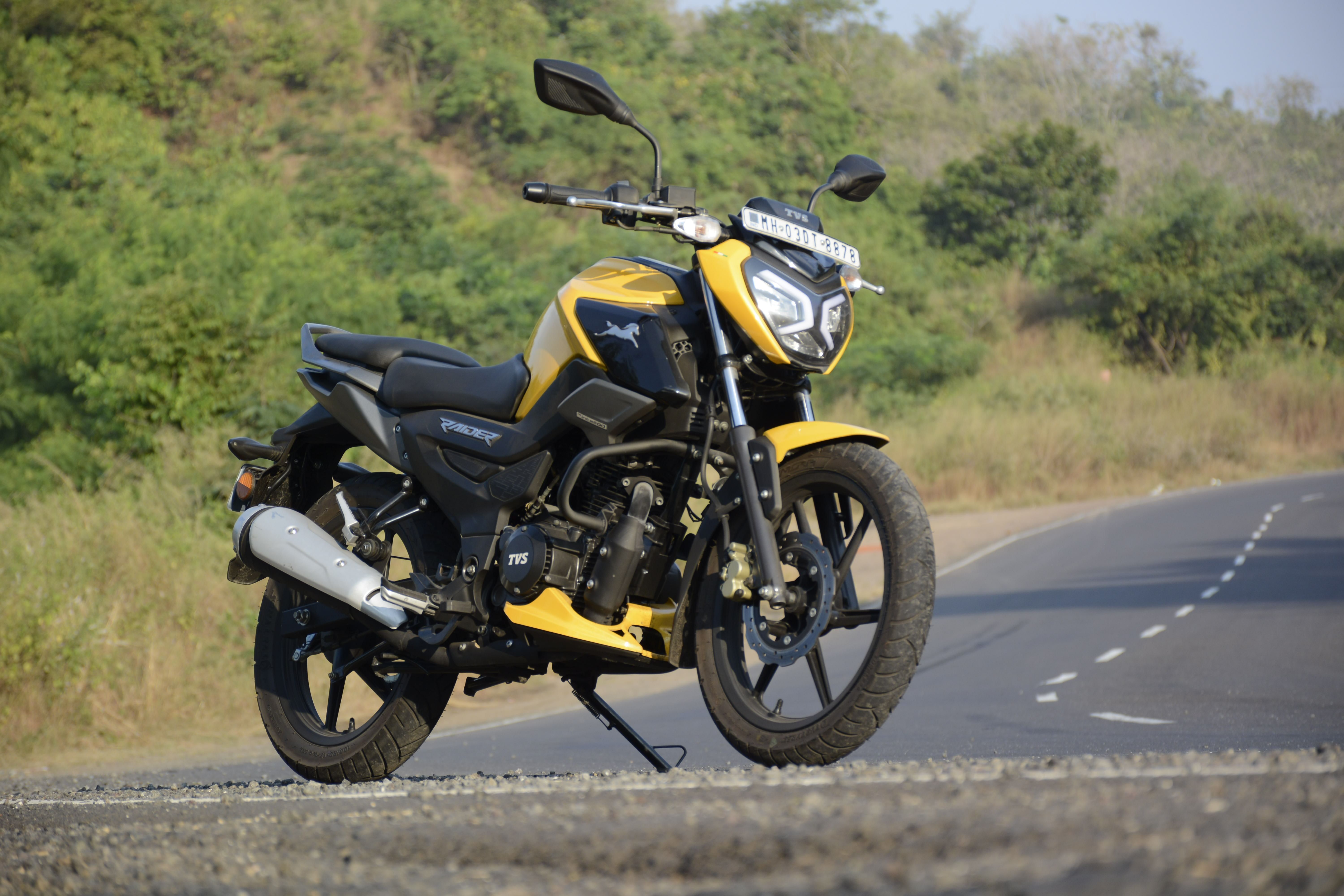
The TVS Raider 125 is one of the brand’s most popular motorcycles. Earlier this year, it crossed 19 lakh cumulative sales since its launch in 2021, accounting for nearly a third of TVS’ total motorcycle sales over that period. Here are answers to some of the most commonly asked questions about the sporty commuter.

1. What is the price of the TVS Raider 125?

The TVS Raider 125 is available in seven variants – Drum, Single Seat, Split Seat, iGO, SSE, SXC DD and TFT DD. Prices start at Rs 83,410 for the Drum variant and go up to Rs 99,620 for the range-topping TFT DD (both ex-showroom, Delhi).

2. What engine does the TVS Raider 125 use?

The Raider 125 is powered by a 124.8cc air and oil-cooled, single-cylinder engine producing 11.2hp at 7,500rpm and 11.75Nm at 6,000rpm. The Single Seat and Drum variants, which do not get TVS’ iGO Assist system, produce a slightly lower 11.2Nm of torque.

3. What features does the TVS Raider 125 have?

The Raider 125 is available with two instrument cluster options. All variants get an LCD display, while the range-topping TFT DD features a 5-inch TFT display with voice assist, call management, on-console notifications and turn-by-turn navigation. The TFT DD and SXC DD variants also disc brakes at both ends with single-channel ABS, while the remaining variants use a front disc and rear drum setup, except for the base Drum variant, which gets drum brakes at both ends. The Raider also comes with TVS’ Glide Through Technology, which allows the motorcycle to crawl forward at low speeds without any throttle input, similar to the creep function on an automatic car.

4. What is the kerb weight and ground clearance of the TVS Raider 125?

Kerb weight varies slightly across the range. The SSE, iGO and Split Seat variants weigh 123kg, the Drum and Single Seat variants weigh 124kg, while the TFT DD and SXC DD variants weigh 125kg. Ground clearance is rated at 180mm across the lineup.

5. What colours is the TVS Raider 125 available in?

The Raider 125 is available in 13 colour options across two alloy wheel finishes. Models with red alloy wheels are offered in Grey, Black and Red. Variants with black alloy wheels are available in Blue, Red, Purple, Yellow, Grey and Black, along with four Marvel-inspired liveries based on Black Panther, Iron Man, Deadpool and Wolverine.

Petrol Diesel Price Today: आज जारी हुए नए रेट, जानें आपके शहर में कितना है भाव

Petrol Diesel Price Today: हर दिन की शुरुआत सिर्फ सूरज की किरणों से नहीं होती, बल्कि पेट्रोल और डीजल की नई कीमतों से भी होती है, जो आम आदमी की जेब पर सीधा असर डालती हैं। सुबह 6 बजे देश की तेल विपणन कंपनियां (OMCs) ताजा दरें जारी करती हैं, जो अंतरराष्ट्रीय बाजार में कच्चे तेल की कीमतों और डॉलर-रुपए की विनिमय दर में आए बदलावों पर आधारित होती हैं। ये बदलाव रोजमर्रा की जिंदगी को प्रभावित करते हैं, चाहे वो ऑफिस जाने वाला व्यक्ति हो या फल-सब्जी बेचने वाला व्यापारी।

ऐसे में हर दिन की कीमतों की जानकारी रखना सिर्फ जरूरी ही नहीं, बल्कि समझदारी भी है। सरकार की यह प्रणाली पारदर्शिता सुनिश्चित करती है ताकि उपभोक्ताओं को किसी तरह की भ्रमित जानकारी न मिले।

आपके शहर में आज का पेट्रोल-डीजल का भाव

ये रहे 26 जुलाई 2026 के प्रमुख शहरों के पेट्रोल-डीजल के ताजा रेट

नई दिल्ली: पेट्रोल ₹102.12 | डीजल ₹95.20

मुंबई: पेट्रोल ₹111.18 | डीजल ₹97.83

कोलकाता: पेट्रोल ₹113.47 | डीजल ₹99.82

चेन्नई: पेट्रोल ₹107.77 | डीजल ₹99.55

गुरुग्राम: पेट्रोल ₹102.77 | डीजल ₹95.44

नोएडा: पेट्रोल ₹102.12 | डीजल ₹95.56

बेंगलुरु: पेट्रोल ₹110.93 | डीजल ₹98.80

भुवनेश्वर: पेट्रोल ₹109.92 | डीजल ₹100.92

चंडीगढ़: पेट्रोल ₹98.10 | डीजल ₹86.09

हैदराबाद: पेट्रोल ₹115.69 | डीजल ₹103.82

जयपुर: पेट्रोल ₹112.66 | डीजल ₹97.78

लखनऊ: पेट्रोल ₹102.05 | डीजल ₹95.55

पटना: पेट्रोल ₹113.35 | डीजल ₹99.36

तिरुवनंतपुरम: पेट्रोल ₹115.49 | डीजल ₹104.40

पिछले दो साल से स्थिर क्यों हैं कीमतें?

मई 2022 के बाद से केंद्र और कई राज्यों द्वारा टैक्स में कटौती की गई, जिसके बाद पेट्रोल-डीजल की कीमतों में स्थिरता देखी जा रही है। हालांकि अंतरराष्ट्रीय बाजार में उतार-चढ़ाव होता रहता है, फिर भी भारतीय उपभोक्ताओं के लिए कीमतें तुलनात्मक रूप से स्थिर बनी हुई हैं।

किन कारणों से तय होती हैं ईंधन की कीमतें?

  1. कच्चे तेल की कीमतें:

पेट्रोल और डीजल का उत्पादन मुख्य रूप से कच्चे तेल से होता है। जब अंतरराष्ट्रीय स्तर पर कच्चे तेल की कीमतें बढ़ती हैं, तो इसका असर सीधे भारतीय बाजार पर पड़ता है।

  1. डॉलर के मुकाबले रुपया:

भारत अधिकतर कच्चा तेल आयात करता है, और यह डॉलर में खरीदा जाता है। यदि रुपया कमजोर होता है, तो ईंधन महंगा हो जाता है।

  1. सरकारी टैक्स और शुल्क:

केंद्र और राज्य सरकारें पेट्रोल-डीजल पर भारी टैक्स लगाती हैं, जो खुदरा मूल्य का बड़ा हिस्सा होते हैं। यही कारण है कि राज्यों में कीमतों में अंतर होता है।

  1. रिफाइनिंग की लागत:

कच्चे तेल को इस्तेमाल लायक बनाने की प्रक्रिया (रिफाइनिंग) में भी खर्च होता है। ये लागत कच्चे तेल की गुणवत्ता और रिफाइनरी की क्षमता पर निर्भर करती है।

  1. मांग और आपूर्ति का संतुलन:

बाजार में ईंधन की मांग अगर बढ़ जाती है, तो कीमतें भी ऊपर जाने लगती हैं। खासकर त्योहारों, गर्मी या सर्दी के मौसम में ईंधन की खपत ज्यादा होती है।

कैसे करें अपने शहर की कीमतें SMS से चेक?

अगर आप मोबाइल से ईंधन की कीमत जानना चाहते हैं, तो ये प्रक्रिया आसान है:

Indian Oil ग्राहक: अपने शहर का कोड टाइप करें और उसे “RSP” के साथ 9224992249 पर भेजें।

BPCL ग्राहक: “RSP” लिखकर 9223112222 पर भेजें।

HPCL ग्राहक: “HP Price” लिखकर 9222201122 पर भेजें।

Petrol Diesel Price Today: नए रेट जारी, चेक करें आपके शहर में क्या है कीमत

Petrol Diesel Price Today: हर दिन की शुरुआत सिर्फ सूरज की किरणों से नहीं होती, बल्कि पेट्रोल और डीजल की नई कीमतों से भी होती है, जो आम आदमी की जेब पर सीधा असर डालती हैं। सुबह 6 बजे देश की तेल विपणन कंपनियां (OMCs) ताजा दरें जारी करती हैं, जो अंतरराष्ट्रीय बाजार में कच्चे तेल की कीमतों और डॉलर-रुपए की विनिमय दर में आए बदलावों पर आधारित होती हैं। ये बदलाव रोजमर्रा की जिंदगी को प्रभावित करते हैं, चाहे वो ऑफिस जाने वाला व्यक्ति हो या फल-सब्जी बेचने वाला व्यापारी।

ऐसे में हर दिन की कीमतों की जानकारी रखना सिर्फ जरूरी ही नहीं, बल्कि समझदारी भी है। सरकार की यह प्रणाली पारदर्शिता सुनिश्चित करती है ताकि उपभोक्ताओं को किसी तरह की भ्रमित जानकारी न मिले।

आपके शहर में आज का पेट्रोल-डीजल का भाव

ये रहे 25 जुलाई 2026 के प्रमुख शहरों के पेट्रोल-डीजल के ताजा रेट

नई दिल्ली: पेट्रोल ₹102.12 | डीजल ₹95.20

मुंबई: पेट्रोल ₹111.18 | डीजल ₹97.83

कोलकाता: पेट्रोल ₹113.47 | डीजल ₹99.82

चेन्नई: पेट्रोल ₹107.77 | डीजल ₹99.55

गुरुग्राम: पेट्रोल ₹102.77 | डीजल ₹95.44

नोएडा: पेट्रोल ₹102.12 | डीजल ₹95.56

बेंगलुरु: पेट्रोल ₹110.93 | डीजल ₹98.80

भुवनेश्वर: पेट्रोल ₹109.92 | डीजल ₹100.92

चंडीगढ़: पेट्रोल ₹98.10 | डीजल ₹86.09

हैदराबाद: पेट्रोल ₹115.69 | डीजल ₹103.82

जयपुर: पेट्रोल ₹112.66 | डीजल ₹97.78

लखनऊ: पेट्रोल ₹102.05 | डीजल ₹95.55

पटना: पेट्रोल ₹113.35 | डीजल ₹99.36

तिरुवनंतपुरम: पेट्रोल ₹115.49 | डीजल ₹104.40

पिछले दो साल से स्थिर क्यों हैं कीमतें?

मई 2022 के बाद से केंद्र और कई राज्यों द्वारा टैक्स में कटौती की गई, जिसके बाद पेट्रोल-डीजल की कीमतों में स्थिरता देखी जा रही है। हालांकि अंतरराष्ट्रीय बाजार में उतार-चढ़ाव होता रहता है, फिर भी भारतीय उपभोक्ताओं के लिए कीमतें तुलनात्मक रूप से स्थिर बनी हुई हैं।

किन कारणों से तय होती हैं ईंधन की कीमतें?

  1. कच्चे तेल की कीमतें:

पेट्रोल और डीजल का उत्पादन मुख्य रूप से कच्चे तेल से होता है। जब अंतरराष्ट्रीय स्तर पर कच्चे तेल की कीमतें बढ़ती हैं, तो इसका असर सीधे भारतीय बाजार पर पड़ता है।

  1. डॉलर के मुकाबले रुपया:

भारत अधिकतर कच्चा तेल आयात करता है, और यह डॉलर में खरीदा जाता है। यदि रुपया कमजोर होता है, तो ईंधन महंगा हो जाता है।

  1. सरकारी टैक्स और शुल्क:

केंद्र और राज्य सरकारें पेट्रोल-डीजल पर भारी टैक्स लगाती हैं, जो खुदरा मूल्य का बड़ा हिस्सा होते हैं। यही कारण है कि राज्यों में कीमतों में अंतर होता है।

  1. रिफाइनिंग की लागत:

कच्चे तेल को इस्तेमाल लायक बनाने की प्रक्रिया (रिफाइनिंग) में भी खर्च होता है। ये लागत कच्चे तेल की गुणवत्ता और रिफाइनरी की क्षमता पर निर्भर करती है।

  1. मांग और आपूर्ति का संतुलन:

बाजार में ईंधन की मांग अगर बढ़ जाती है, तो कीमतें भी ऊपर जाने लगती हैं। खासकर त्योहारों, गर्मी या सर्दी के मौसम में ईंधन की खपत ज्यादा होती है।

कैसे करें अपने शहर की कीमतें SMS से चेक?

अगर आप मोबाइल से ईंधन की कीमत जानना चाहते हैं, तो ये प्रक्रिया आसान है:

Indian Oil ग्राहक: अपने शहर का कोड टाइप करें और उसे “RSP” के साथ 9224992249 पर भेजें।

BPCL ग्राहक: “RSP” लिखकर 9223112222 पर भेजें।

HPCL ग्राहक: “HP Price” लिखकर 9222201122 पर भेजें।