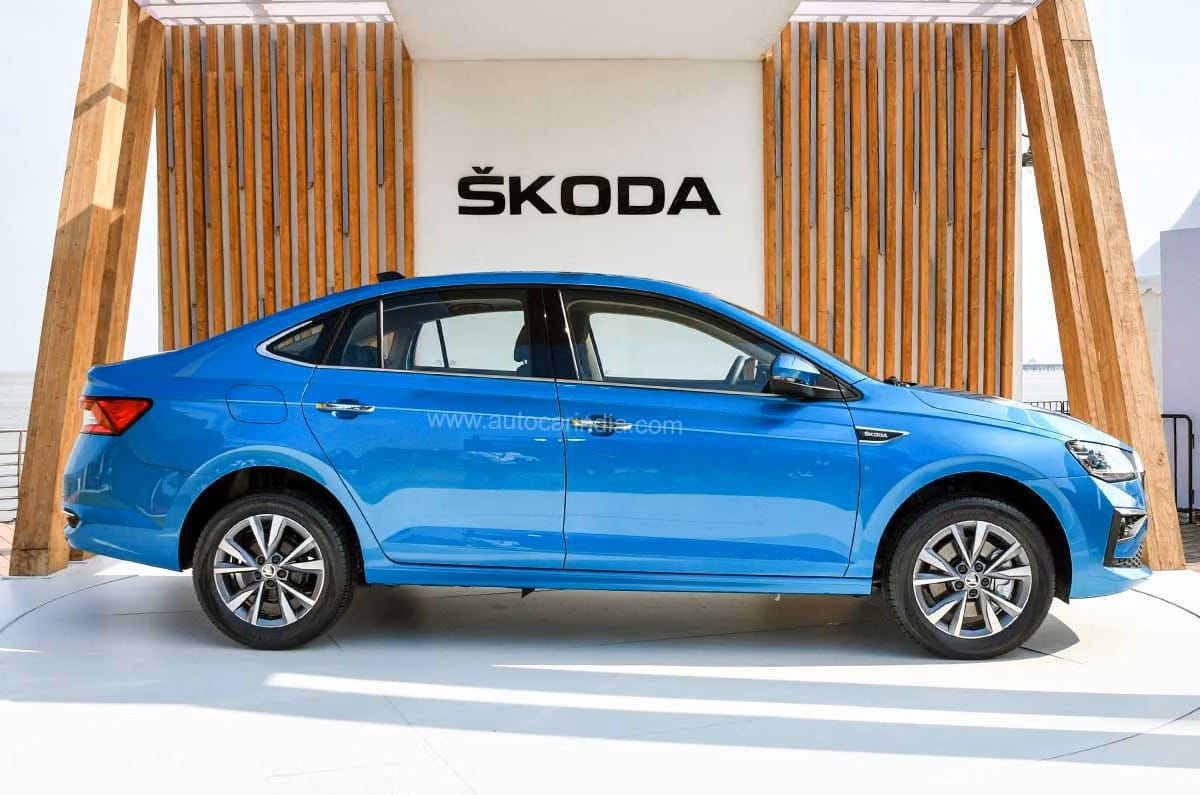
Skoda is set to launch the Slavia facelift on August 18. The updated midsize sedan is expected to receive cosmetic updates, feature additions and a new automatic gearbox for the 1.0-litre turbo-petrol engine, while retaining its existing engine lineup.
New grille, revised lighting and updated bumpers likely
1.0 TSI could replace its 6-speed AT with a new 8-speed unit
It may get a larger digital driver’s display, like the one in the Kushaq
Skoda Slavia facelift: what to expect
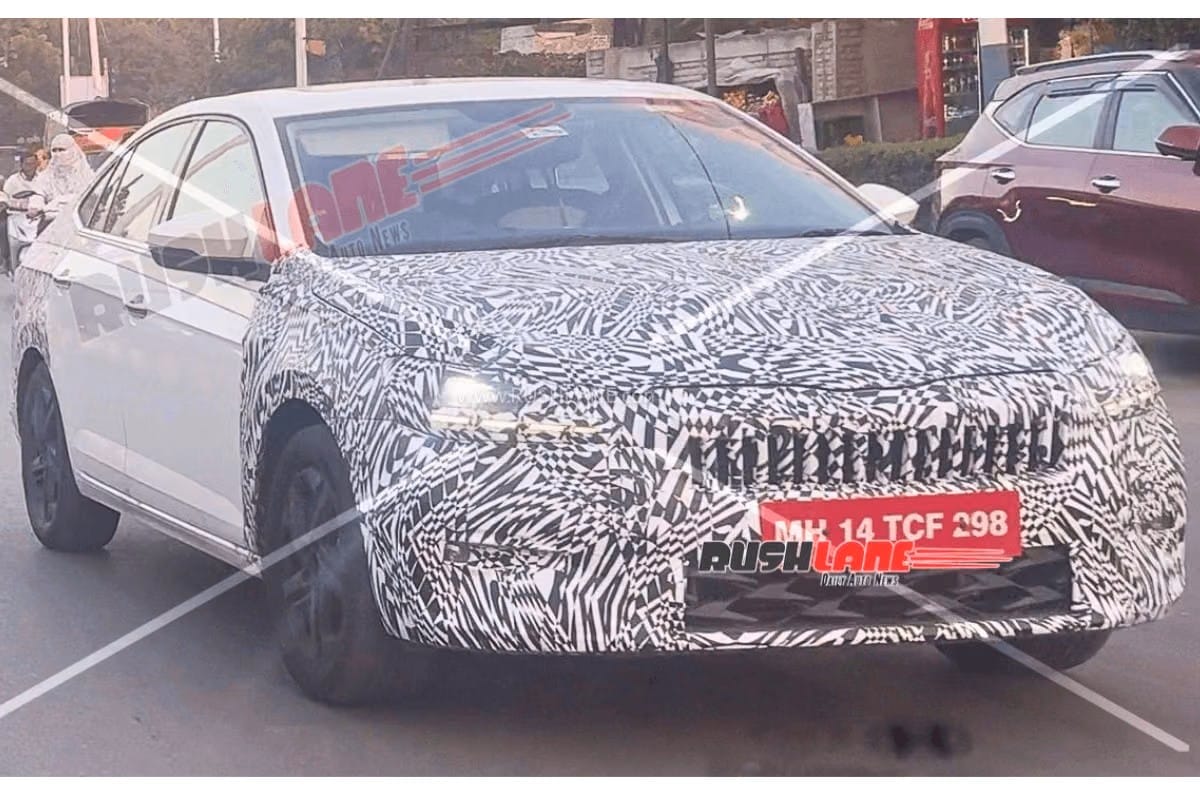
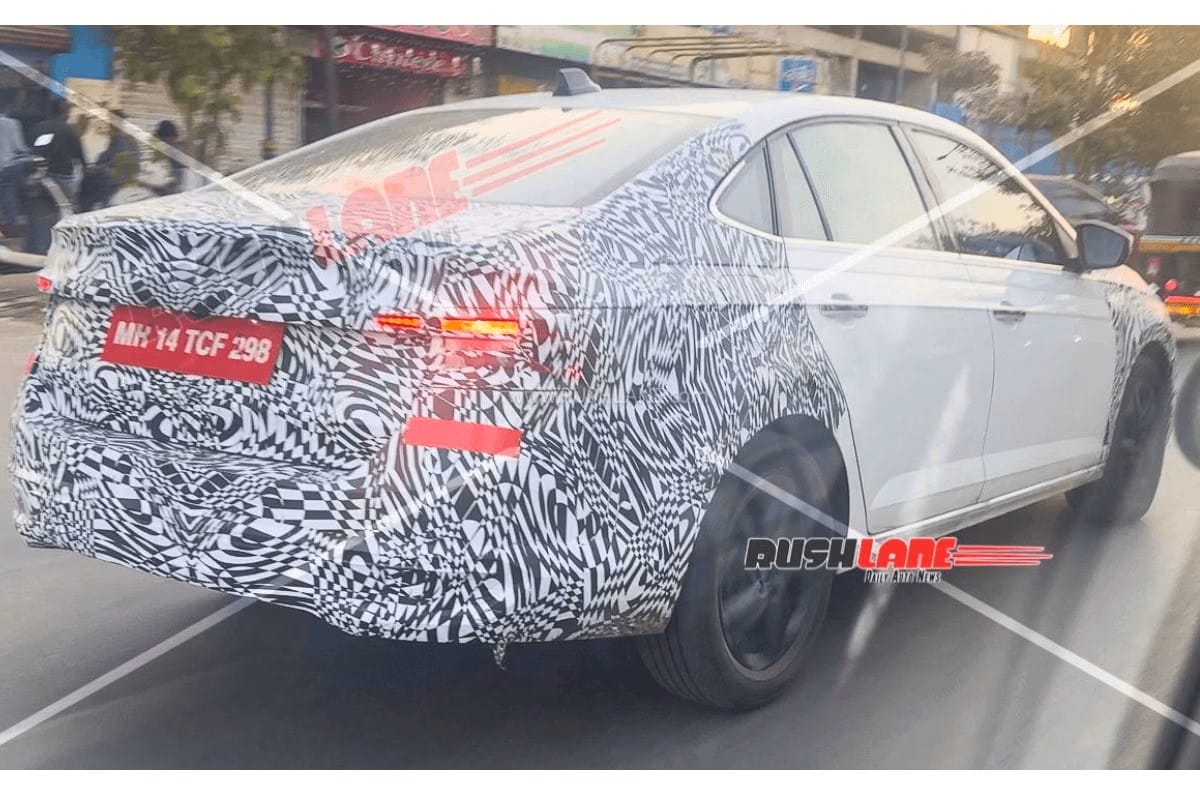
Image source: Rushlane
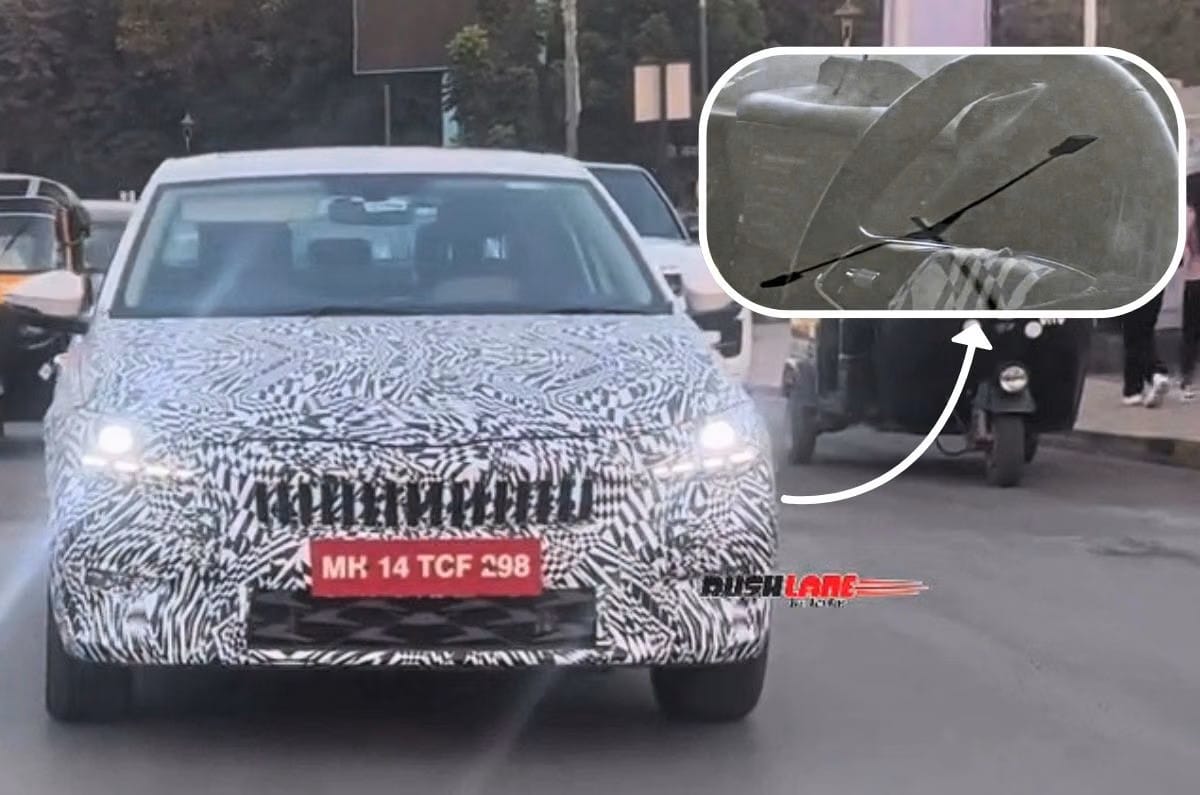
Previous test mules have revealed updated LED lighting elements in the headlamps, a revised tail-lamp design and a new grille with integrated lighting elements, similar to the latest Kushaq and Kodiaq. Redesigned front and rear bumpers, along with a new set of alloy wheels, are also expected.
Image source: Rushlane
Inside, the dashboard layout is expected to remain largely unchanged. However, Skoda could introduce a larger 10.25-inch digital driver’s display, along with revised seat upholstery and front parking sensors. It will be interesting to see whether Skoda adds a rear-seat massage function, as this was introduced to the Kushaq with its facelift in January 2026.
Existing equipment such as the 10.25-inch touchscreen, single-pane sunroof, wireless phone charger, an 8-speaker sound system, automatic climate control with rear vents, six airbags and tyre pressure monitoring system is expected to be carried over.
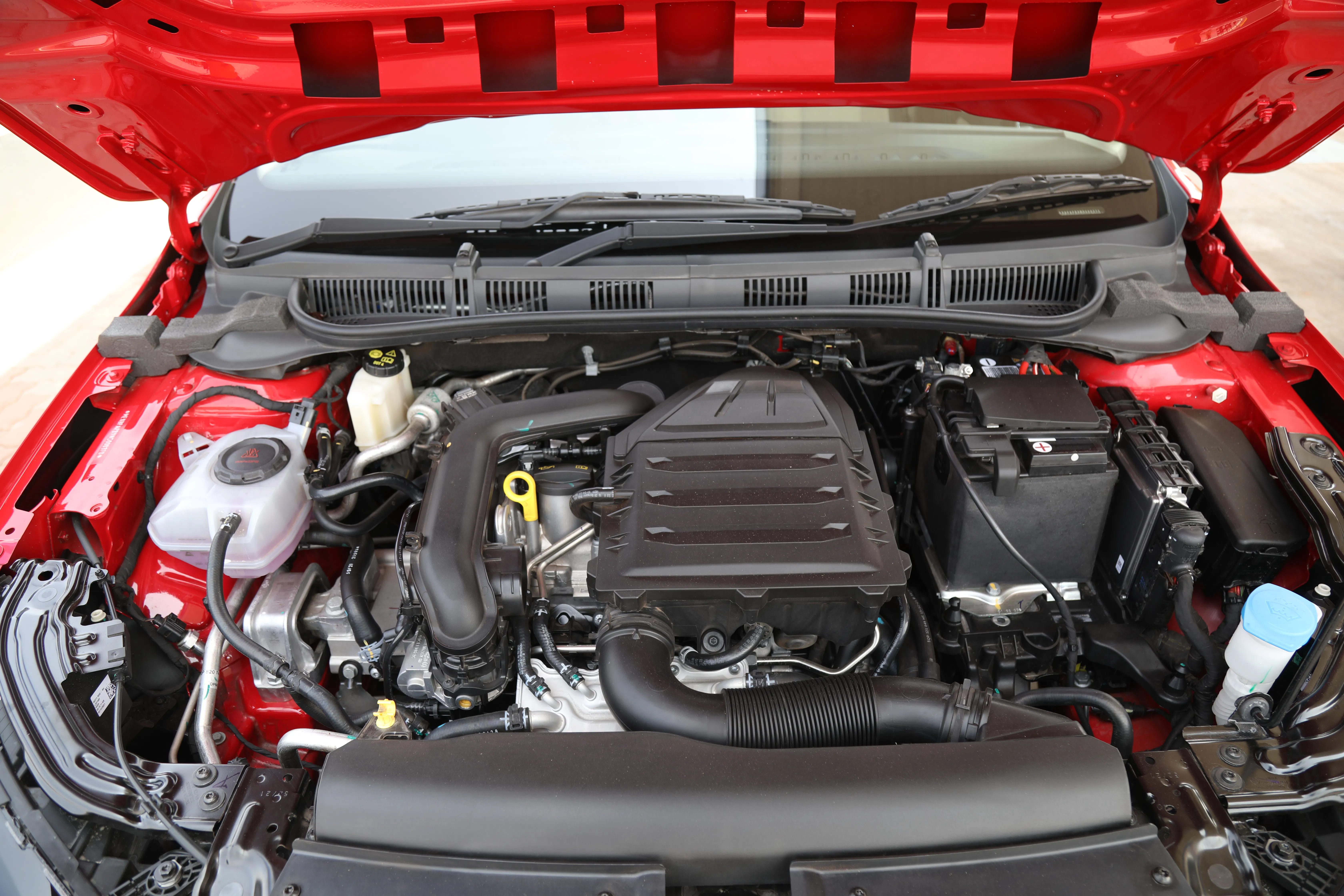
1.0 TSI expected to get new 8-speed automatic
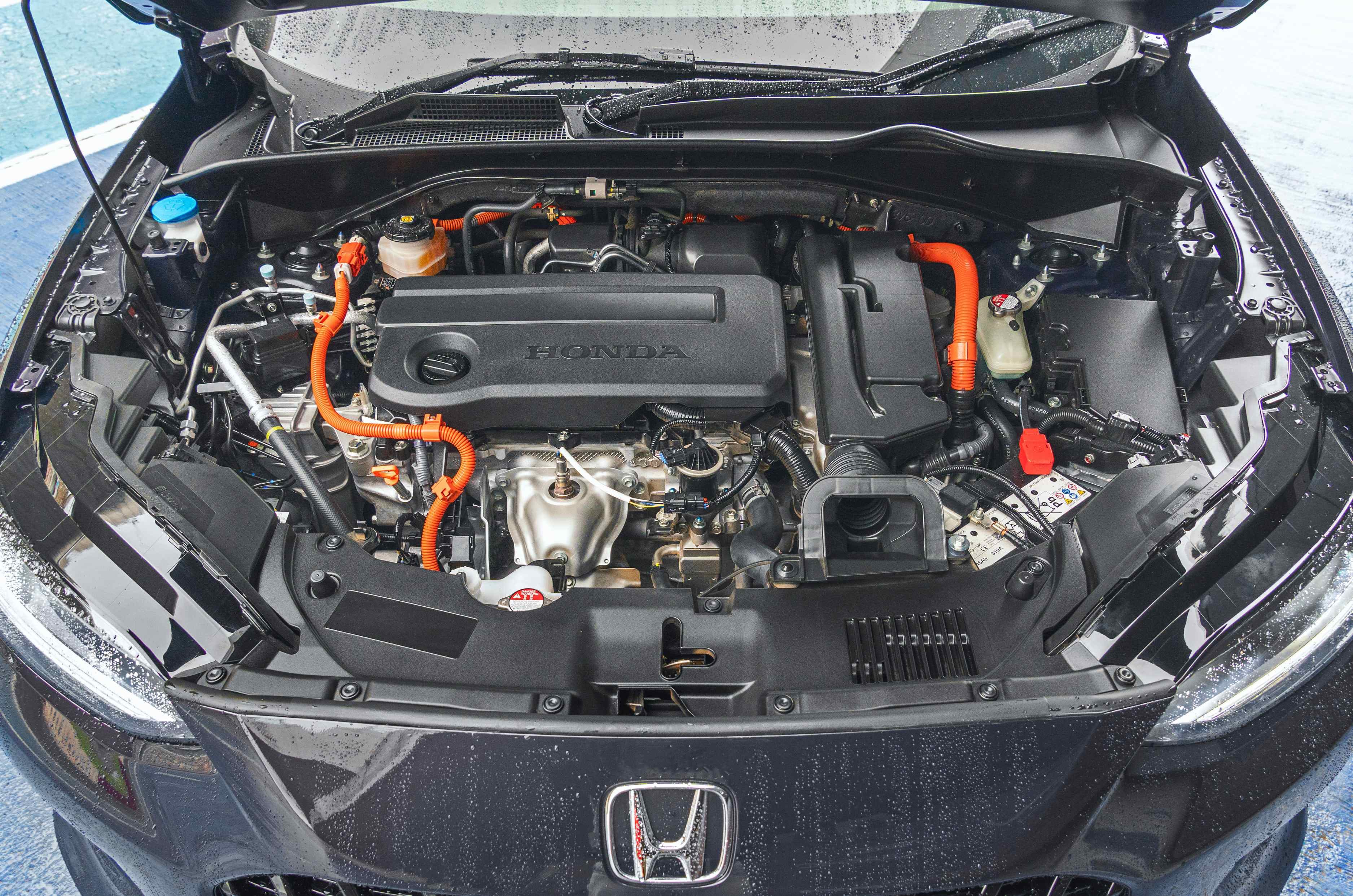
Engine bay of the current Slavia shown for representative purposes only.
The Slavia facelift is likely to continue with the existing 115hp, 1.0-litre TSI and 150hp, 1.5-litre TSI turbo-petrol engines. The key mechanical update is expected to be the replacement of the current 6-speed torque-converter automatic on the 1.0 TSI with the newer 8-speed automatic that debuted on the Kushaq facelift. The 1.5 TSI is expected to continue with the 7-speed dual-clutch automatic transmission (DCT).
Skoda Slavia facelift: expected price
Image source: Rushlane
With the facelift, prices of the Slavia are expected to increase slightly over the current Rs 10 lakh-18.19 lakh (ex-showroom). The facelifted Slavia will continue to compete with the Volkswagen Virtus, Hyundai Verna and Honda City.
Honda has launched the ZR-V in India at an introductory price of Rs 48 lakh (ex-showroom). The SUV sits at the top of the Japanese carmaker’s India lineup as its flagship offering. Available only in a single, fully loaded variant, the ZR-V rivals premium SUVs such as the Skoda Kodiaq, Volkswagen Tayron and Tiguan. Imported from Japan as a completely built unit (CBU), the ZR-V will be sold in limited numbers, with Honda allocating 60 units each in the first two batches. Customer deliveries have already commenced, and the initial 120-unit allocation has been fully spoken for.
Here’s everything you need to know about the Honda ZR-V hybrid.
184hp strong-hybrid powertrain with claimed 22.79kpl efficiency
Gets all-LED lights, 18-inch alloys and dual exhaust tips
Features include Level 2 ADAS and powered front seats
1. What powertrain does the Honda ZR-V hybrid get?
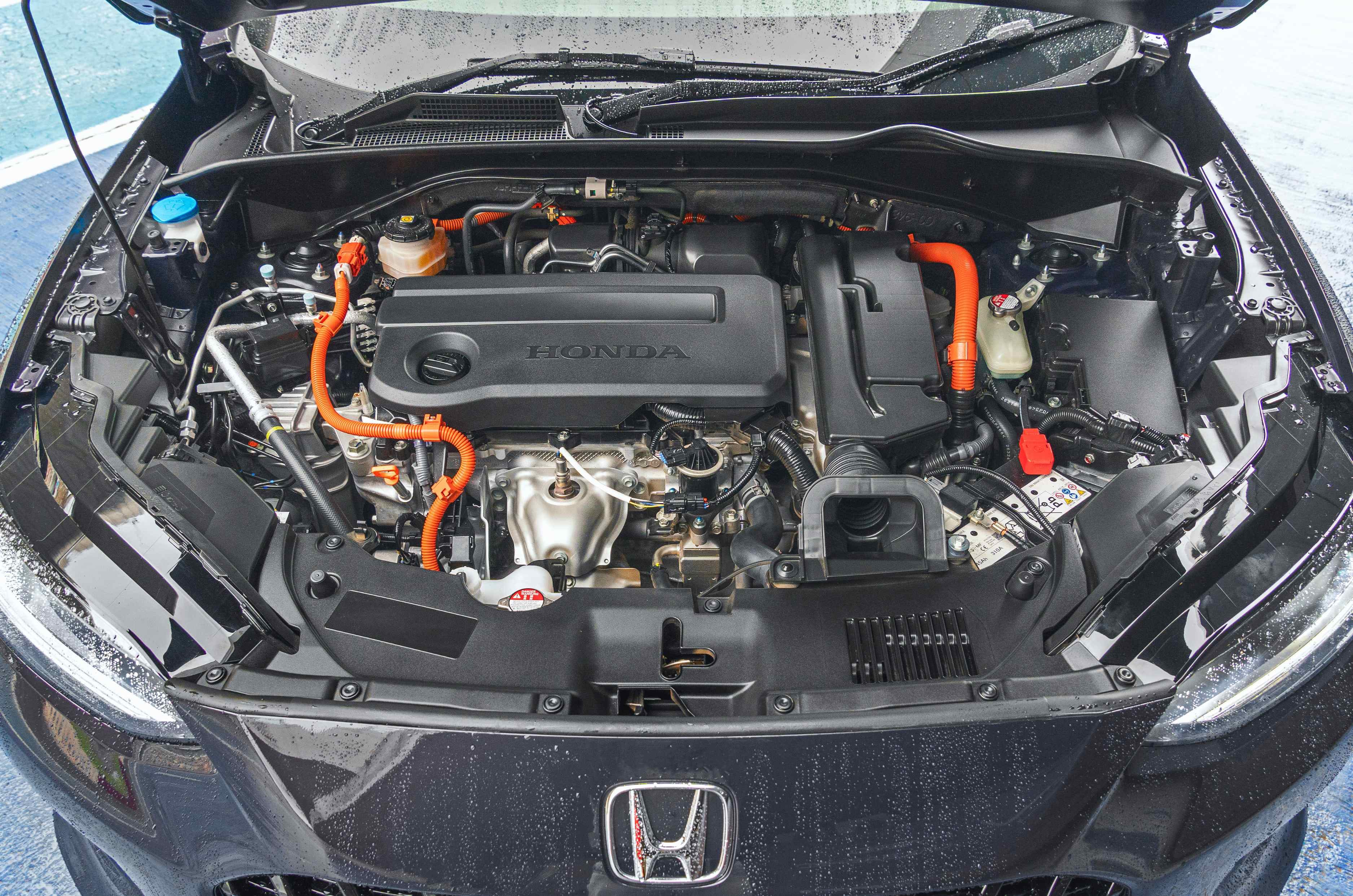
The India-spec ZR-V Hybrid uses a 2.0-litre four-cylinder petrol engine paired with a dual-motor strong-hybrid setup and an e-CVT automatic gearbox. The combined system output stands at 184hp and 315Nm, with power sent to the front wheels.
Honda claims a 0-100kph time of 8 seconds and a top speed of 172kph. Internationally, the ZR-V is also available with a 1.5-litre turbo-petrol engine and an all-wheel-drive setup.
2. What fuel efficiency does the Honda ZR-V hybrid offer?
Honda pegs the ZR-V hybrid’s fuel efficiency at 22.79kpl. The strong-hybrid setup allows the SUV to run in EV-only mode at lower speeds and during light-throttle driving conditions, helping improve efficiency in city use.
3. What does the Honda ZR-V look like?
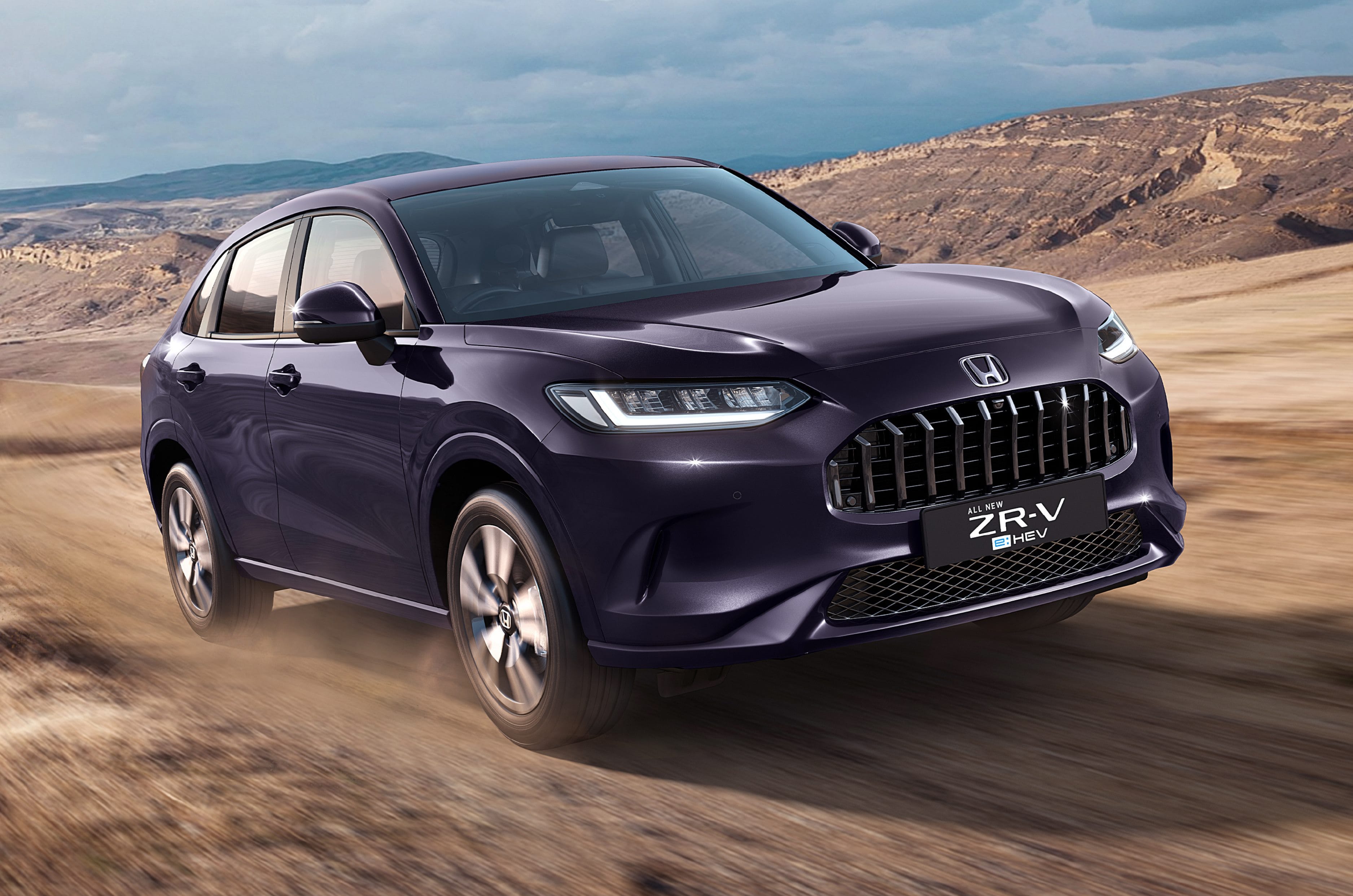
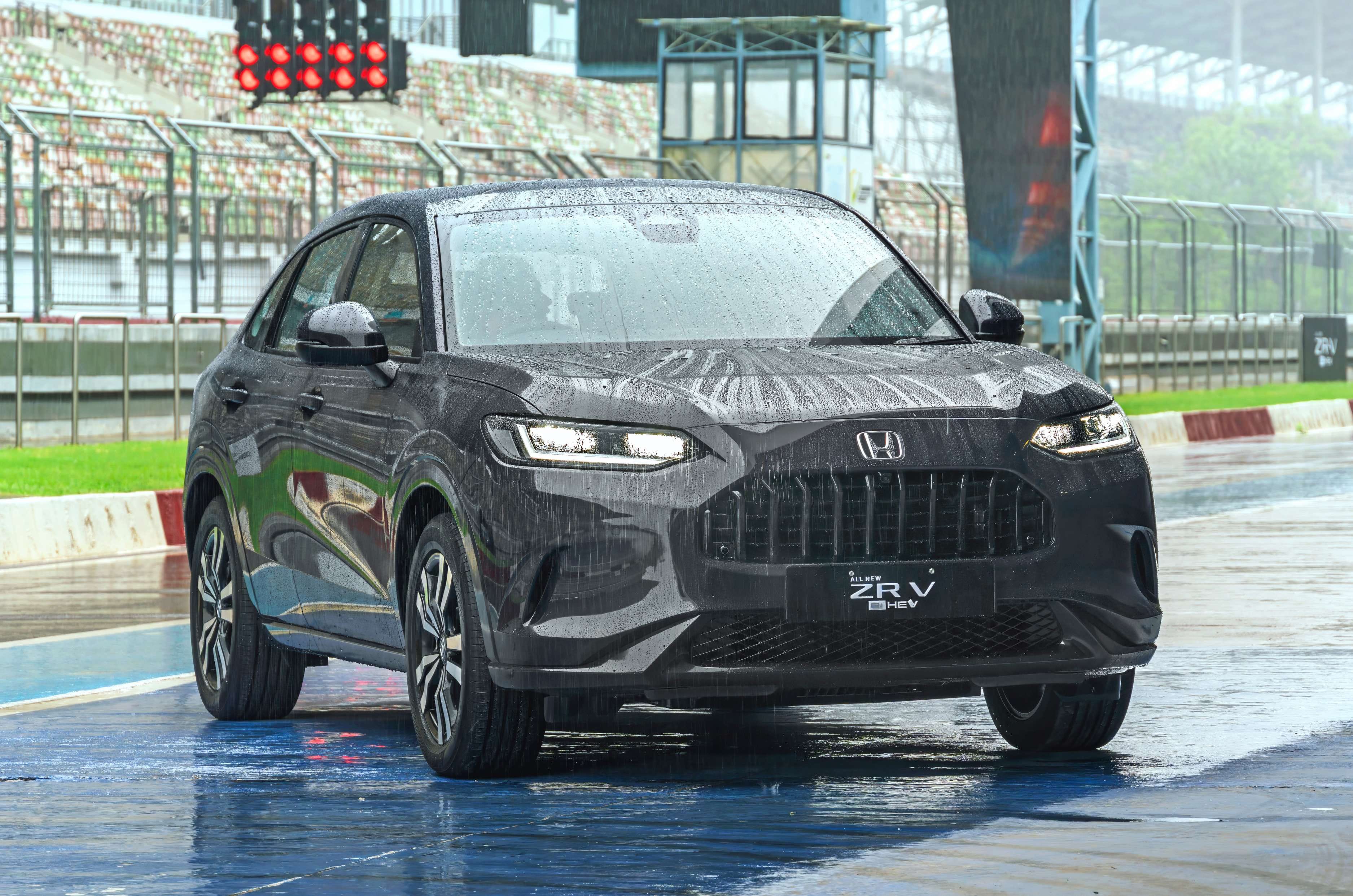
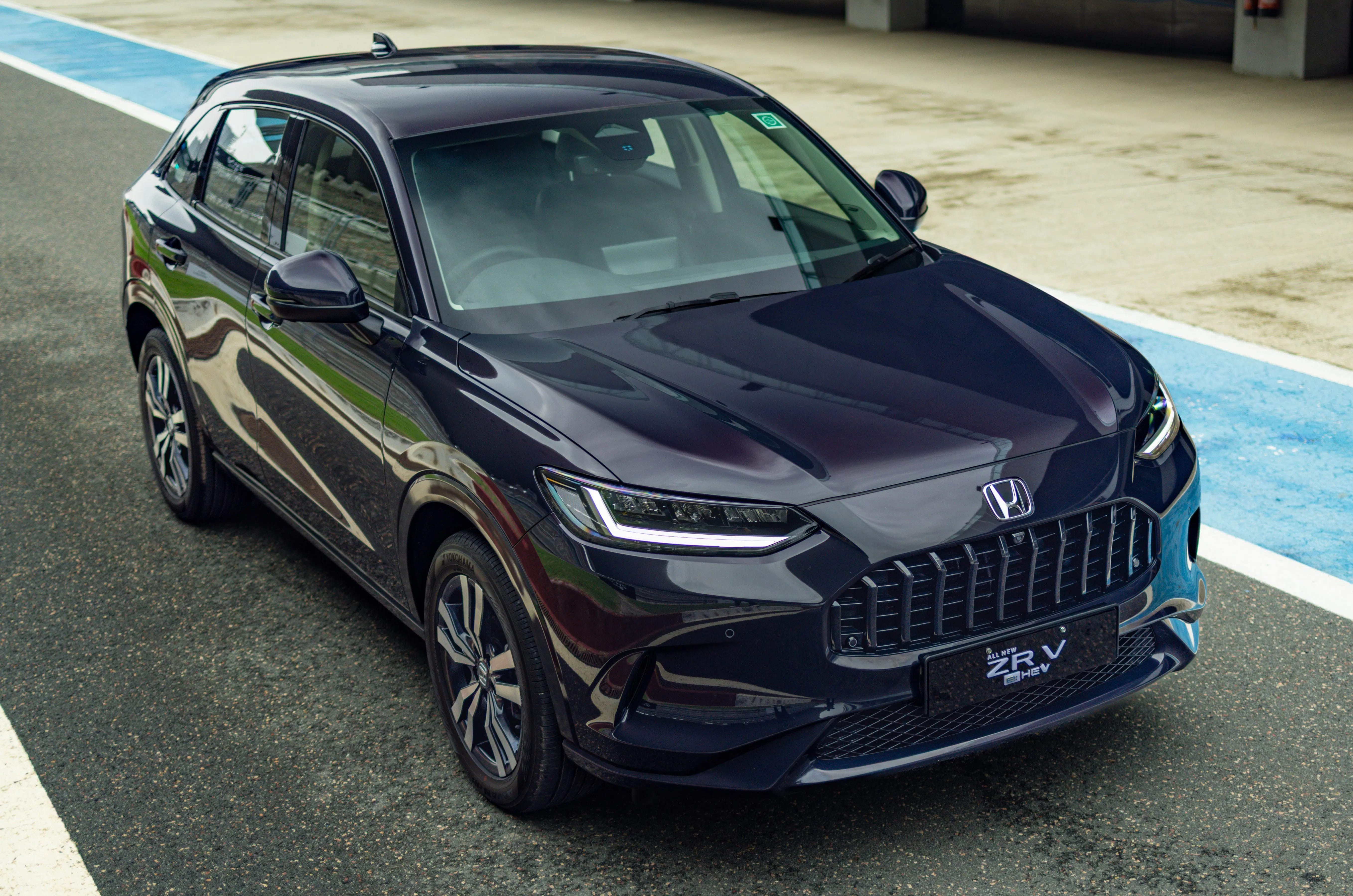
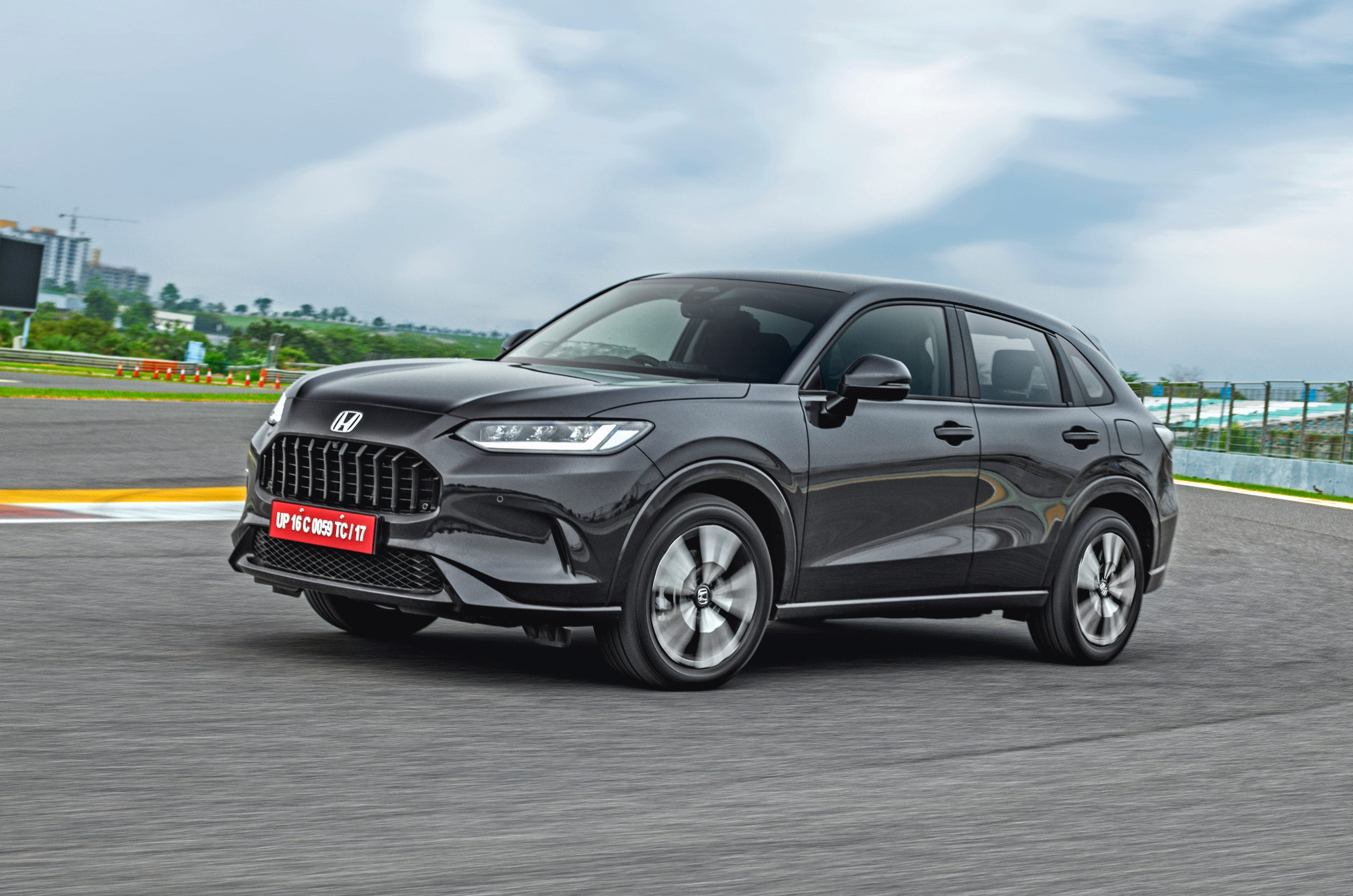
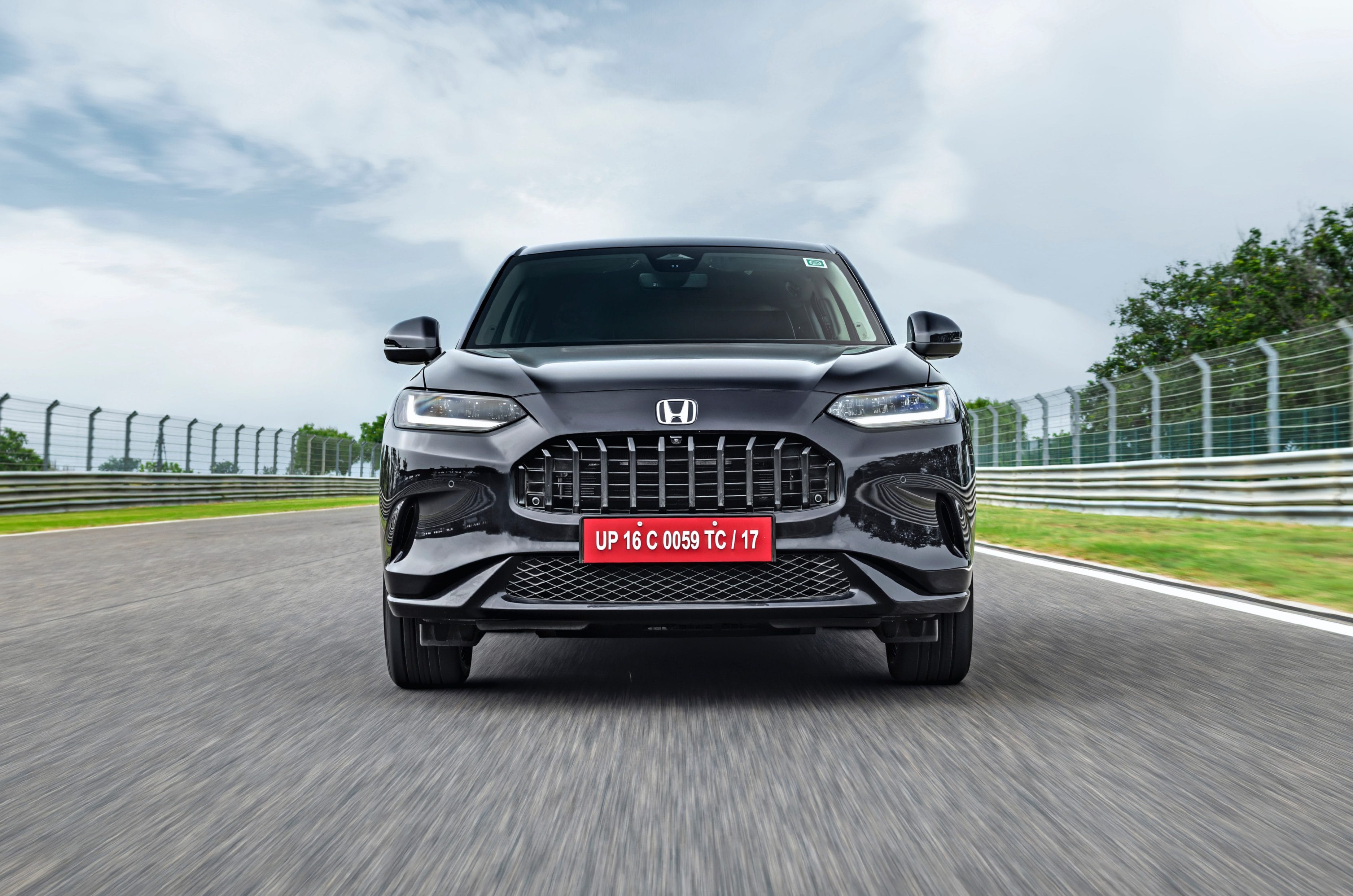
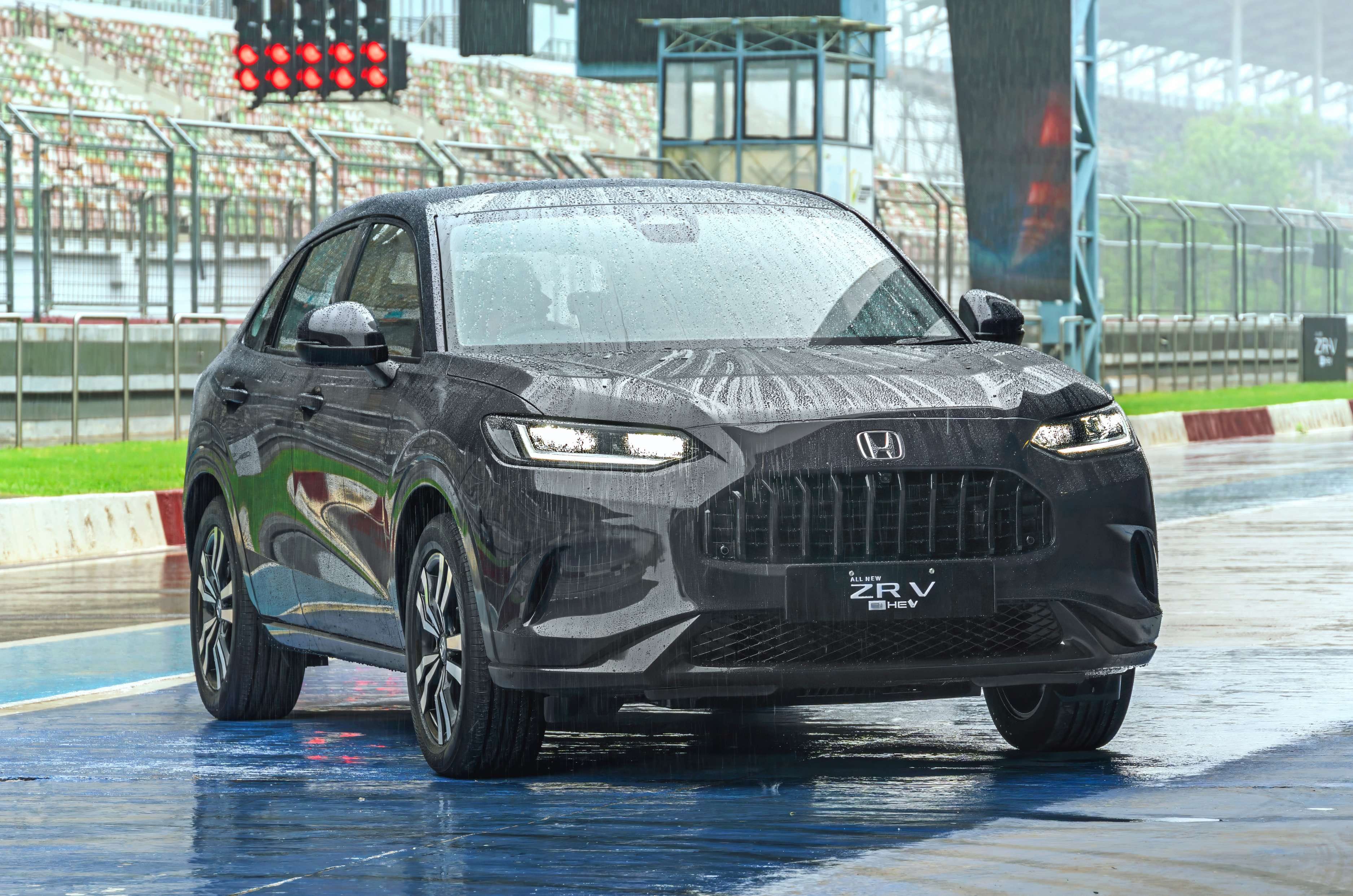
The ZR-V has a clean and relatively sleek design compared to its rivals. At the front, it features slim LED headlights with L-shaped daytime running lamps, a black grille and a bumper with functional air vents on both sides.
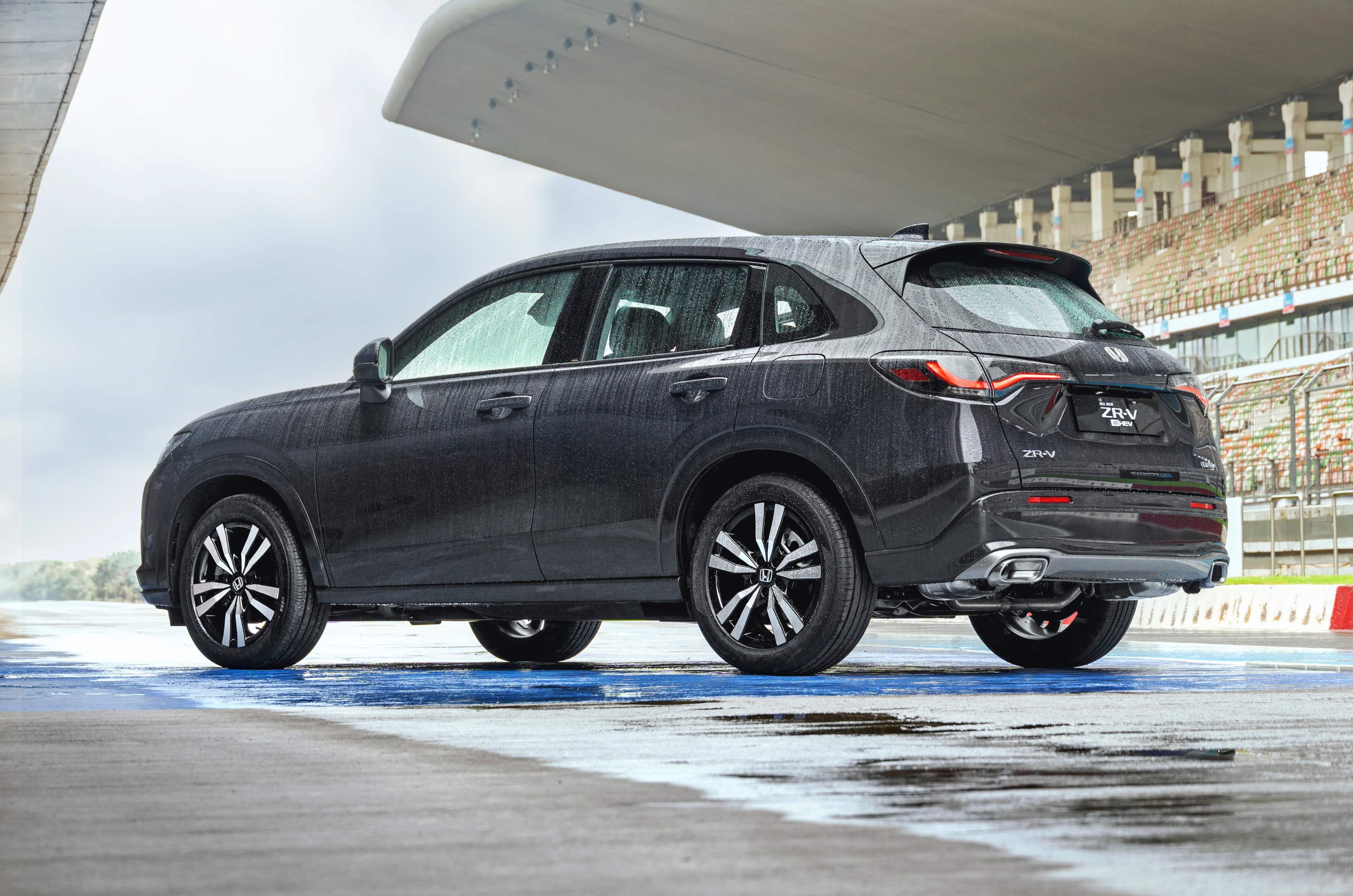
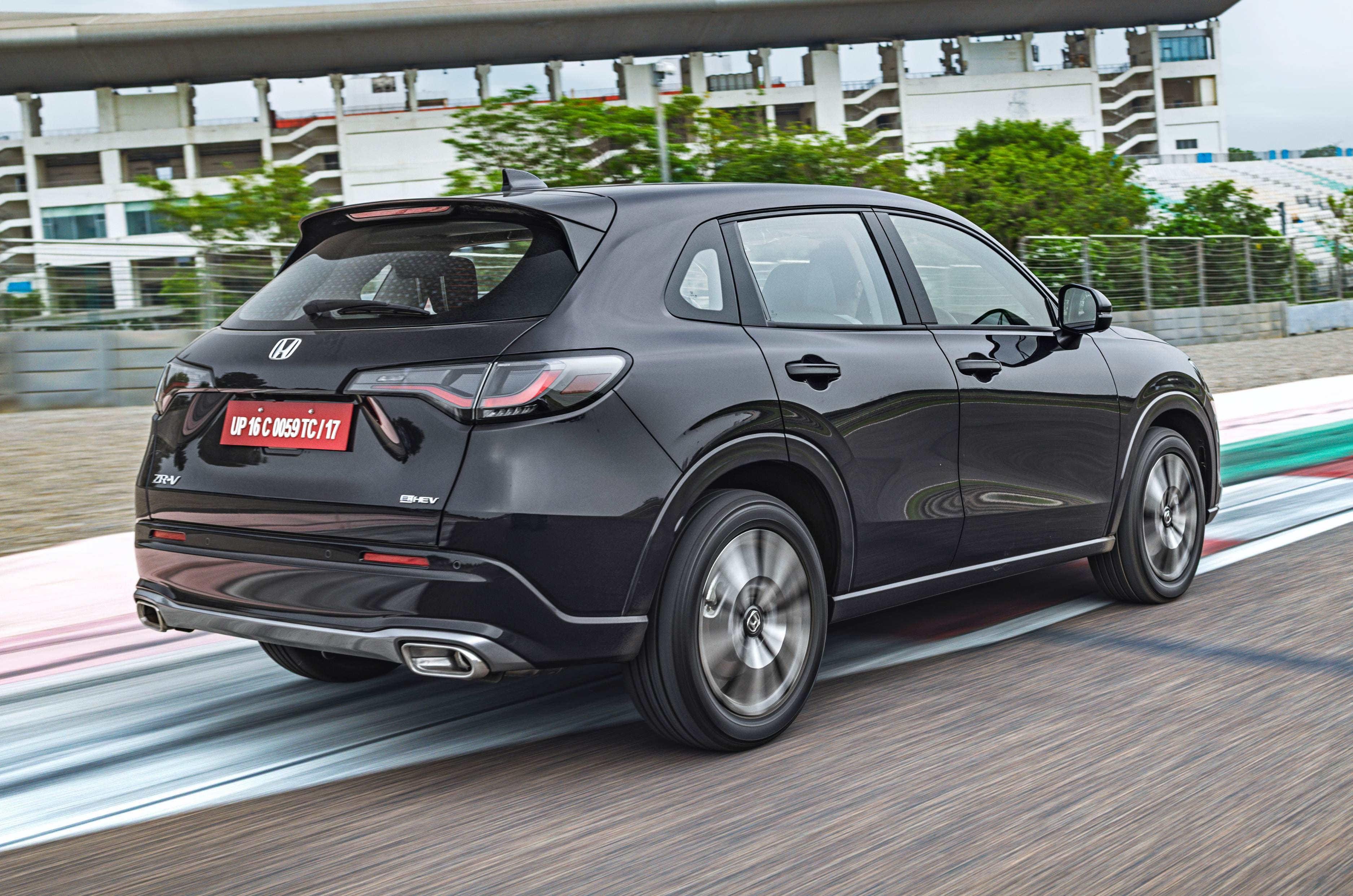
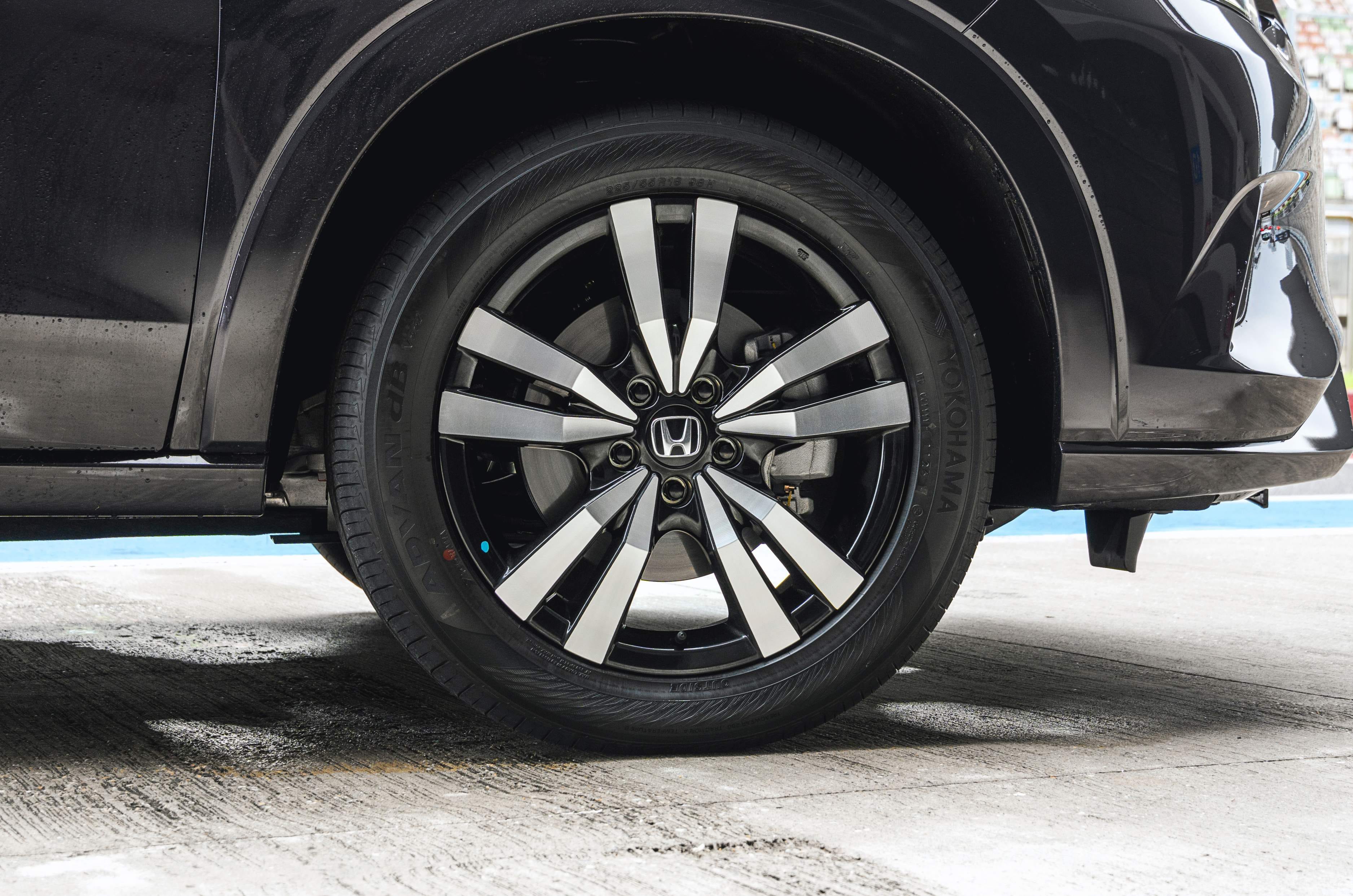
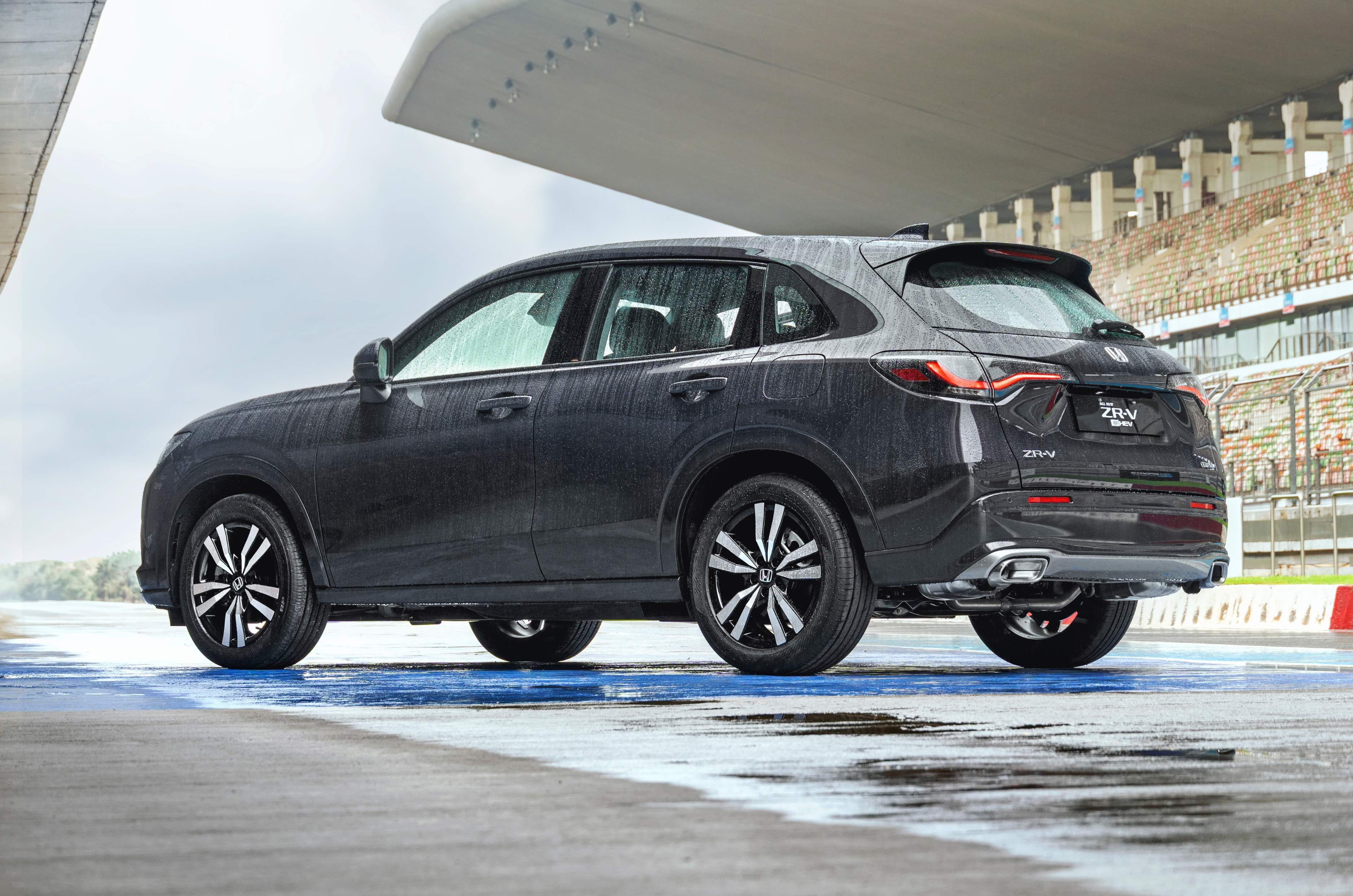
The SUV rides on 18-inch alloy wheels and gets body-coloured cladding around the wheel arches. At the rear, the ZR-V features LED tail-lights with U-shaped lighting elements, dual exhaust outlets integrated into the bumper and a roof-mounted spoiler, as well as a wiper and washer.
4. What is the Honda ZR-V’s interior like?
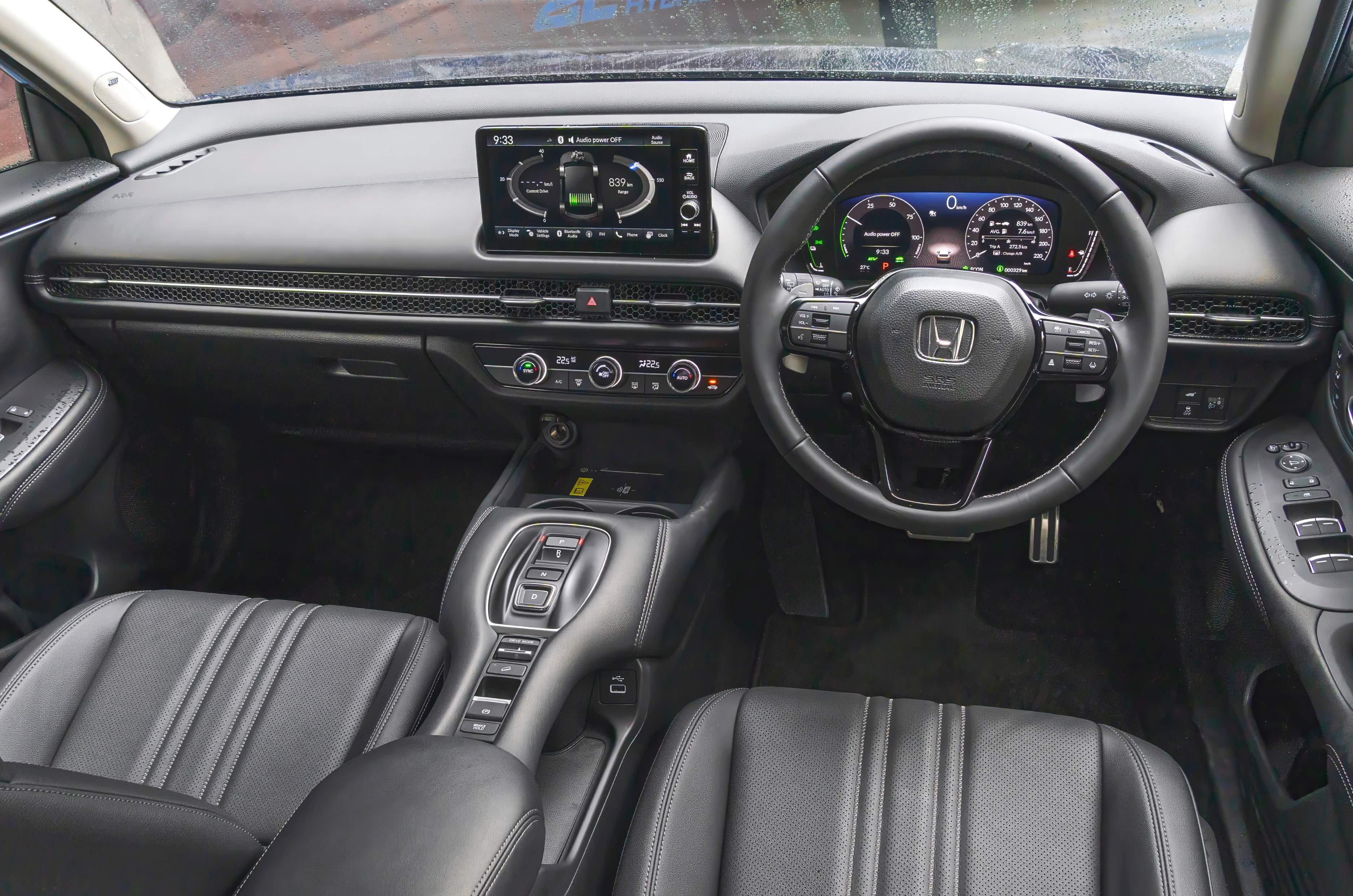
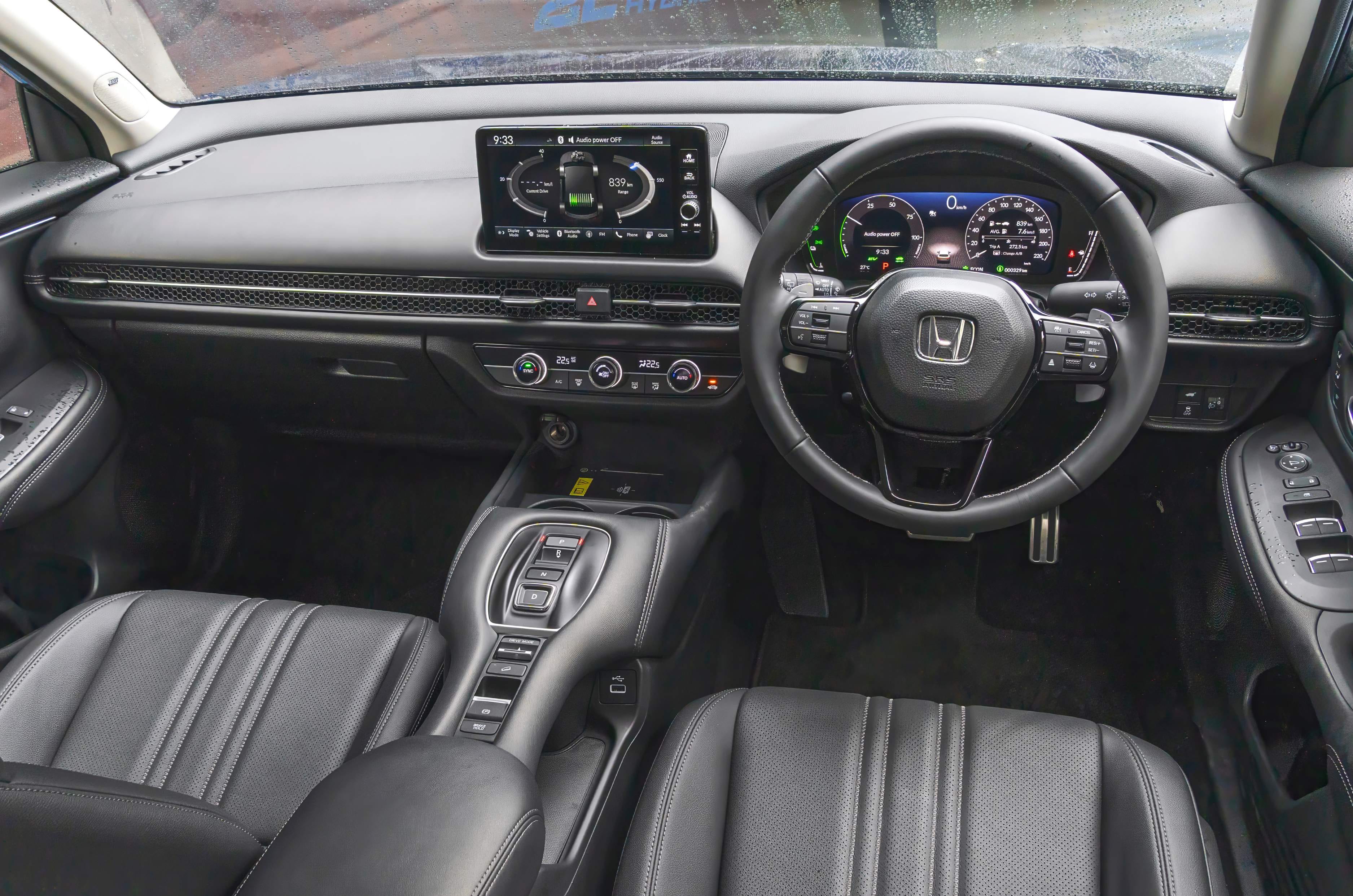
Inside, the ZR-V gets a simple dashboard layout with plenty of physical buttons and knobs for functions such as climate control and audio controls. The centre console also uses physical buttons for gear selection.
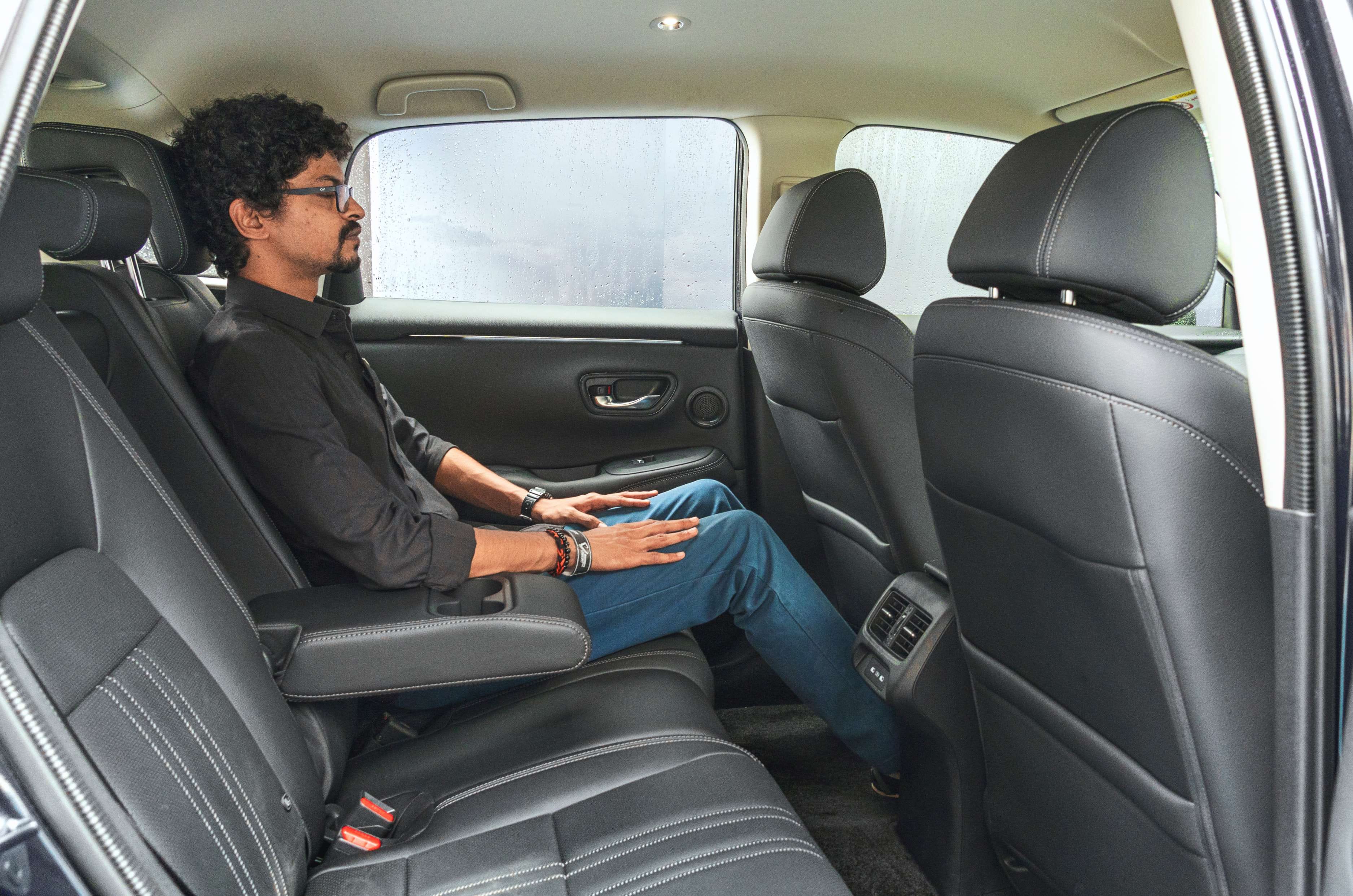
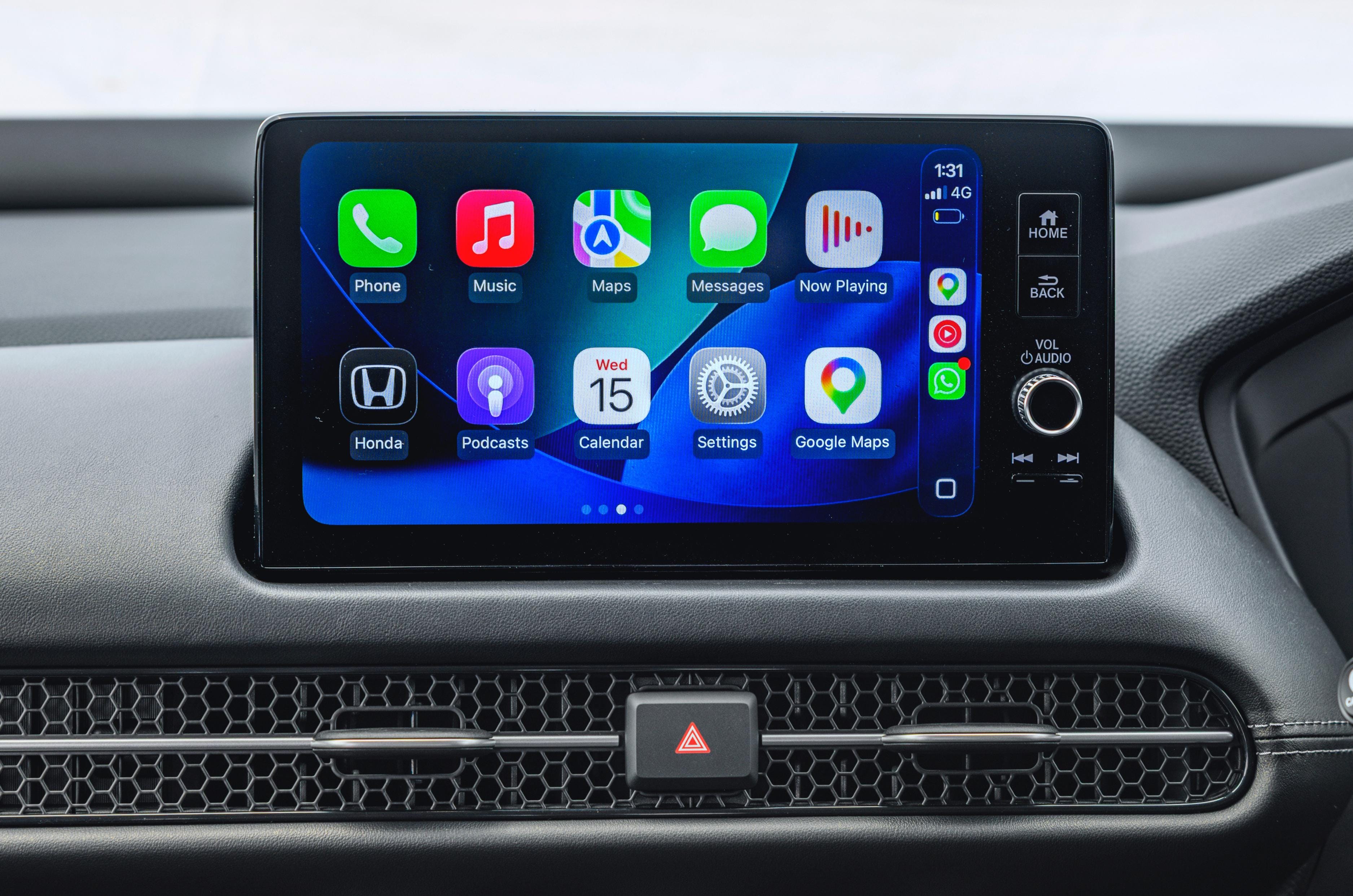
The SUV gets a dual-screen setup featuring a 9-inch touchscreen infotainment system with wireless Android Auto and Apple CarPlay, along with a 10.25-inch digital driver’s display. Honda is also offering leatherette upholstery, dual-zone climate control, a wireless charger, powered front seats, ambient lighting, a powered tailgate and a 12-speaker Bose sound system. Both rows get centre armrests as well.
However, unlike many rivals in this segment, the ZR-V does not get ventilated seats or a sunroof.
5. What colour options does the Honda ZR-V get?
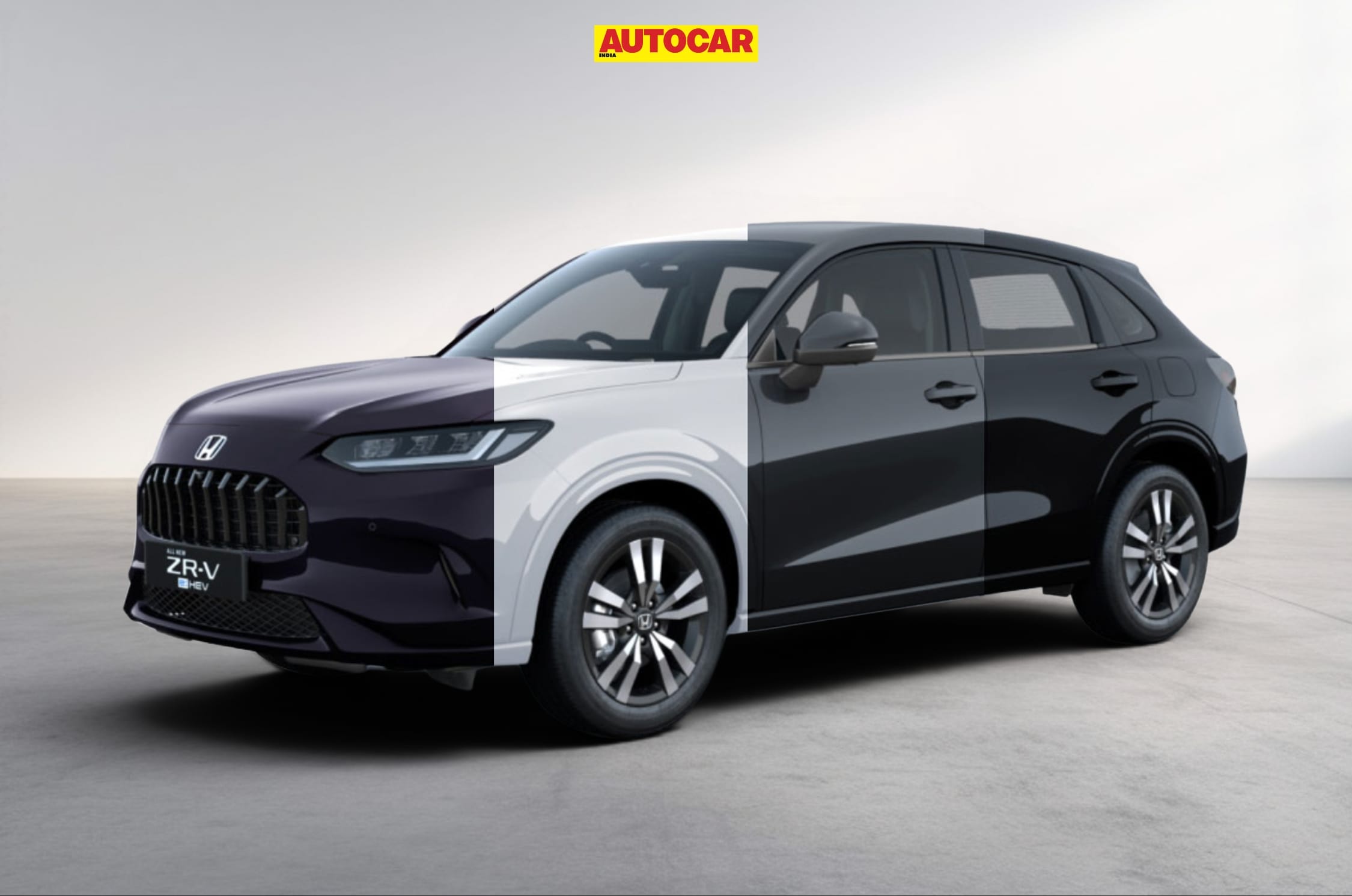
Honda will offer the ZR-V hybrid in four exterior colour options in India: Crystal Black Pearl, Twilight Mist Black Pearl, Platinum White Pearl and Meteoroid Grey Metallic.
6. What safety and ADAS features does the ZR-V get?
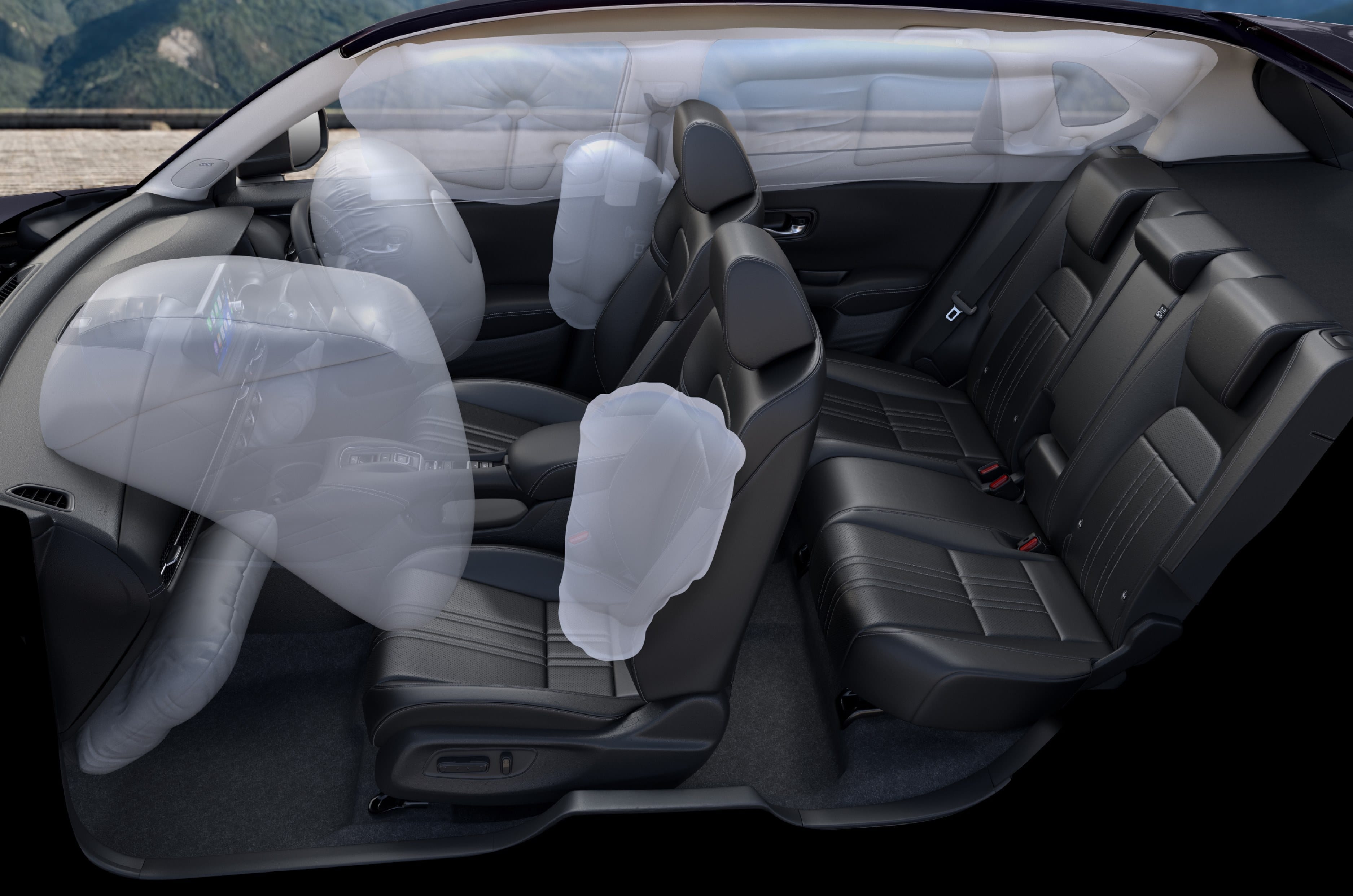
The Honda ZR-V comes equipped with eight airbags, front and rear parking sensors, a 360-degree surround-view camera, hill-descent control, hill-start assist, electronic parking brake with auto hold, vehicle stability assist and disc brakes on all four wheels.
The Level 2 ADAS suite includes collision mitigation braking, adaptive cruise control with low-speed follow, lane-keeping assist, road-departure mitigation, auto high beam and lead-car departure notification. Other safety equipment comprises a driver-attention monitor, rain-sensing wipers, ISOFIX mounts and an acoustic vehicle alert system for EV driving at low speeds.
7. What are the Honda ZR-V’s dimensions?
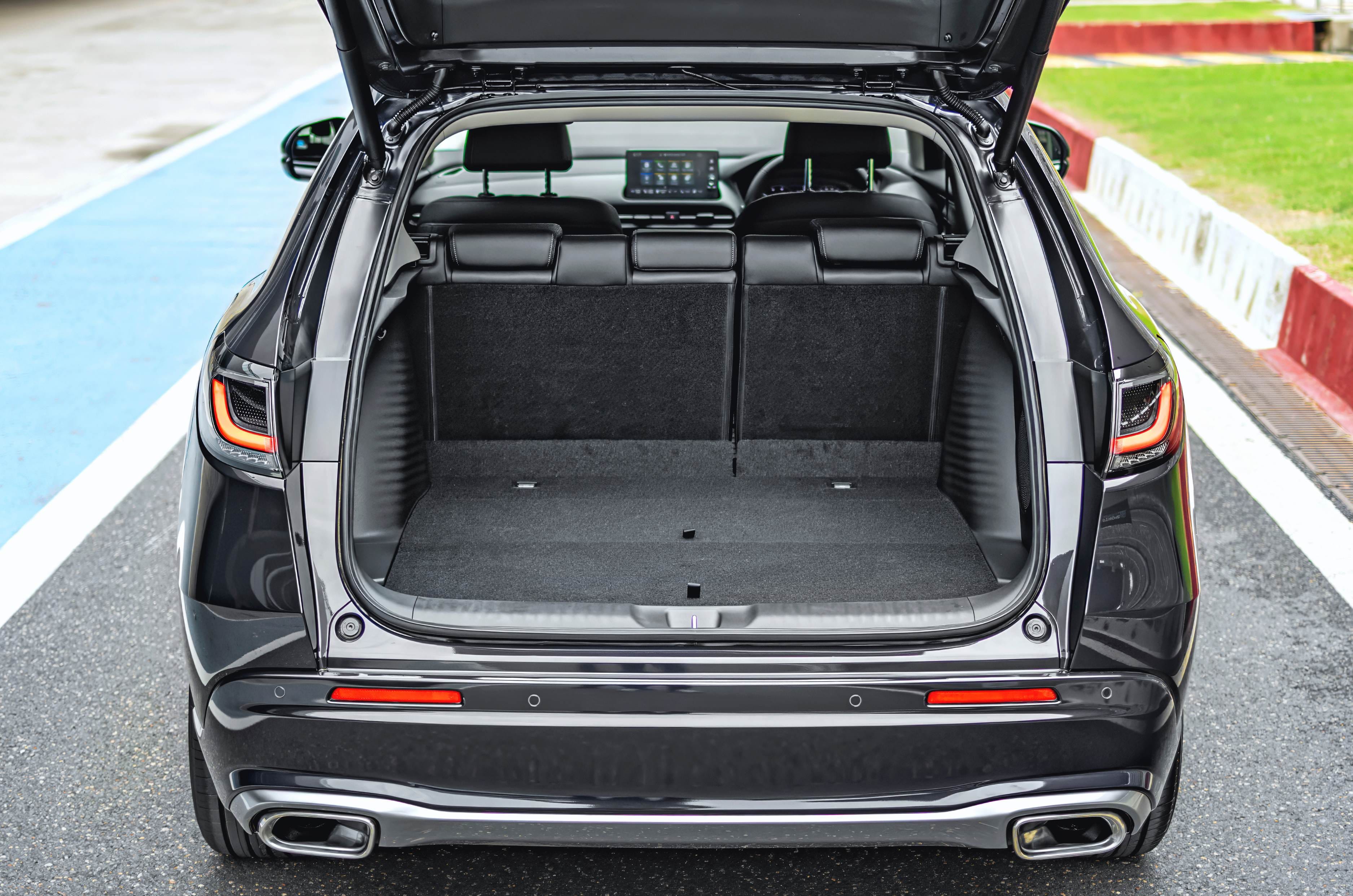
The Honda ZR-V measures 4,567mm in length, 1,840mm in width and 1,621mm in height and has a 2,655mm wheelbase. Honda says the SUV offers up to 1,313 litres of cargo space with the 60:40 split-folding rear seats folded down. The ZR-V rides on 18-inch alloy wheels and has a turning radius of 5.5 metres.
Compared to its rivals, the ZR-V is smaller overall and is available only as a five-seater. Most of its similarly priced rivals offer a third row and a larger overall footprint.
8. How much does the Honda ZR-V cost in India
Variant
Price (ex-showroom)
ZR-V e:HEV
Rs 48 lakh
The Honda ZR-V is offered in a single, fully loaded e:HEV variant priced at Rs 48 lakh (introductory, ex-showroom). Since it is imported via the CBU route, availability is limited. Honda has confirmed that the first two allocations comprised 60 units each, all of which have been reserved. A third batch is expected, although the company is yet to announce its arrival timeline. Customer deliveries have already commenced, and the initial 120-unit allocation has been fully spoken for.
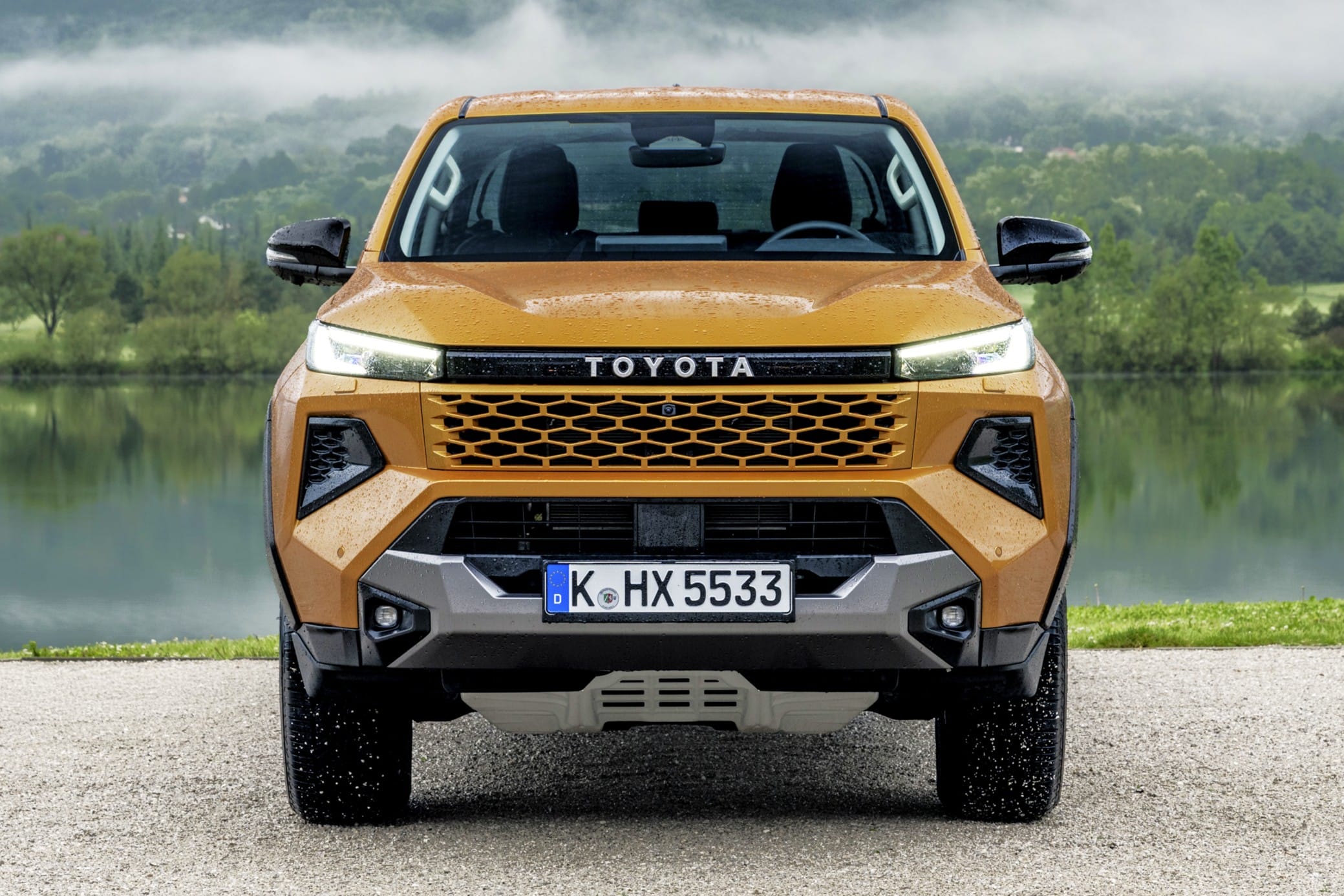
Toyota will debut the new-generation 2026 Hilux in India tomorrow, July 28. The Hilux, currently in its eighth-generation avatar in the country, was launched in March 2022 and has been a relative success, especially against the likes of the Isuzu V-Cross pickup. With the new-generation model, teasers suggest that Toyota will give the Hilux a full design overhaul, making it look more modern and offering a handful of new features. Here’s everything you can expect from the 2026 Toyota Hilux in India:
1. What is the expected price of the 2026 Toyota Hilux in India
New-gen Hilux’s price could range between Rs 32 lakh and Rs 40 lakh (ex-showroom)
With the new-generation update, Toyota is expected to raise the Hilux’s prices by a considerable margin. For reference, the current model is priced from Rs 28.52 lakh to Rs 36 lakh (ex-showroom). So, the upcoming new-generation Hilux is likely to have a price tag of somewhere between Rs 32 lakh and Rs 40 lakh (ex-showroom).
2. What engine option will power the 2026 Toyota Hilux?
The Hilux’s 2.8-litre diesel engine could be offered with a 48V ‘neoDrive’ tech
International-spec ninth-generation Toyota Hilux shown for representational purposes only.
As the upcoming new-gen model is based on the same IMV platform as the current Hilux, Toyota is expected to offer it with the same 2.8-litre diesel engine that produces 204hp, 420Nm with a 6-speed manual transmission, and 240hp, 500Nm with a 6-speed torque converter automatic gearbox. A 4×4 AWD system is expected to be offered as standard with a low-range transfer case. A small improvement, however, could be a new 48V mild-hybrid system, called the ‘neoDrive’ on the Fortuner, which would slightly improve the fuel efficiency of the Toyota pickup.
Notably, the international-spec ninth-generation Hilux is also offered as an all-electric vehicle with a 59.2kWh battery pack, delivering a WLTP-claimed range of 240km, and front- and rear-axle-mounted electric motors with a combined output of 196hp. However, the Hilux EV’s India launch is highely unlike in the country.
3. What are the exterior design changes on the 2026 Toyota Hilux?
Has slimmer headlights, a square grille and an aggressive-looking front bumper
International-spec ninth-generation Toyota Hilux shown for representational purposes only.
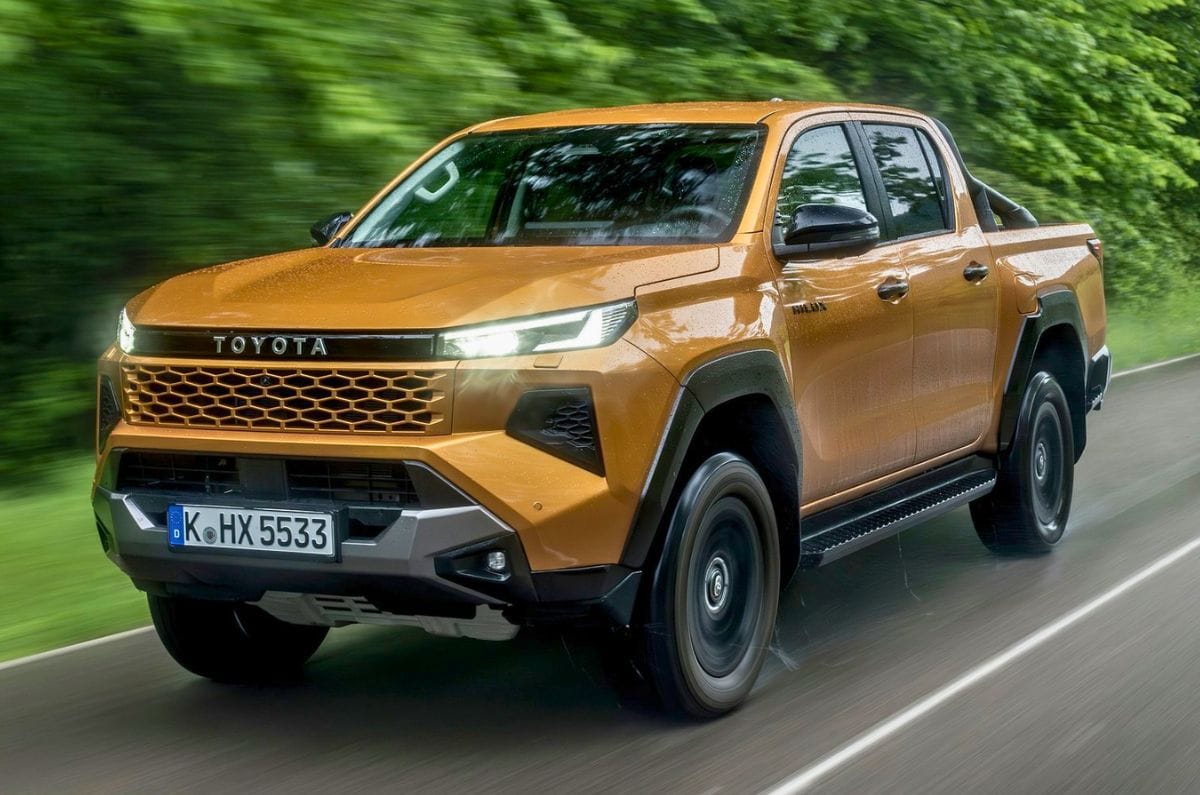
Compared to the current model, the international-spec ninth-generation Hilux has plenty of prominent creases and angles that make it look more aggressive. At the front, it gets slimmer LED headlights with LED DRLs, connected via a gloss black strip that features ‘Toyota lettering’. The grille is squarer than before and features prominent angular honeycomb-mesh design elements.
On the bumper, there are two quadrangle-shaped black air intakes on either side of the grille. The lower section of the bumper looks very aggressive with strong creases, wide air intakes, a silver skid plate, and two LED fog lamps.
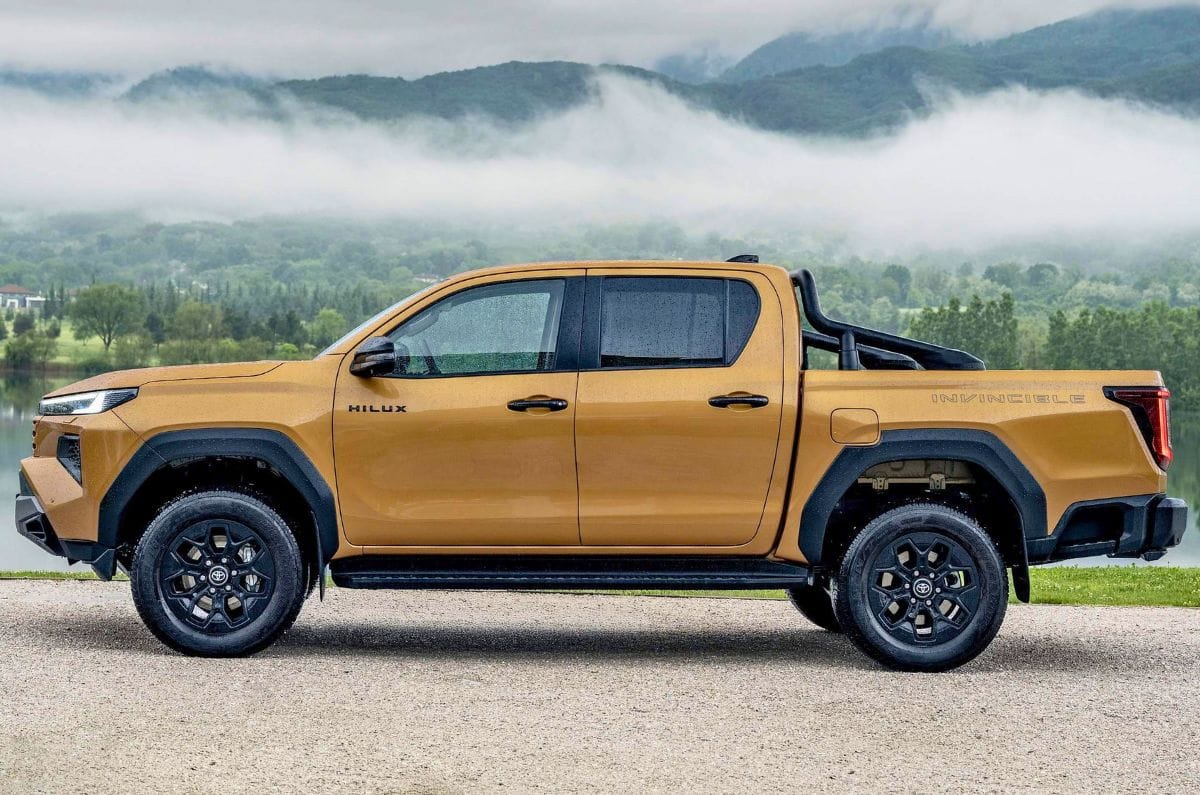
Gets a cleaner side profile, but the square wheel arches add to its character
International-spec ninth-generation Toyota Hilux shown for representational purposes only.
Compared to the front, the side profile design is cleaner. The international model gets 18-inch black alloy wheels, squared-off black cladding on wheel arches and a footboard for easier ingress and egress. The outside rearview mirrors (ORVMs) and door handles are black, and the truckbed features a roll cage finished in black for added contrast.
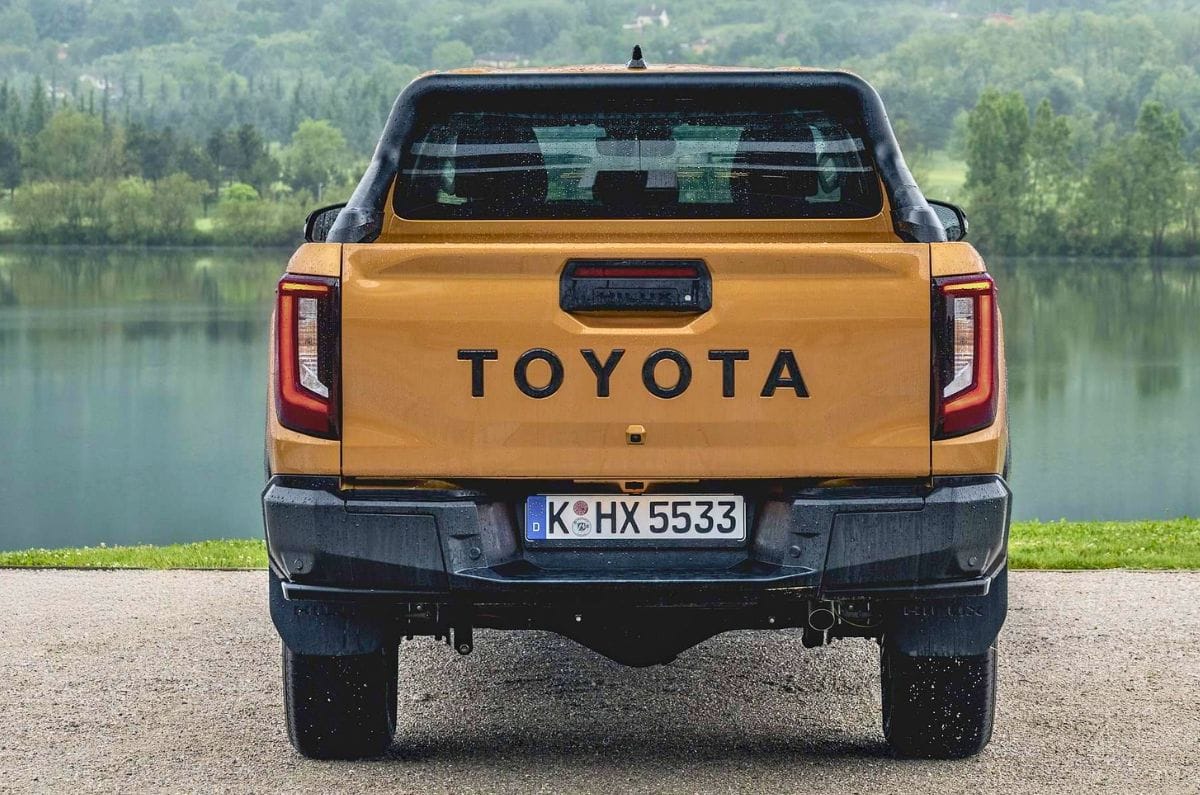
Features new wraparound taillights but a similar Toyota badging on the tailgate
International-spec ninth-generation Toyota Hilux shown for representational purposes only.
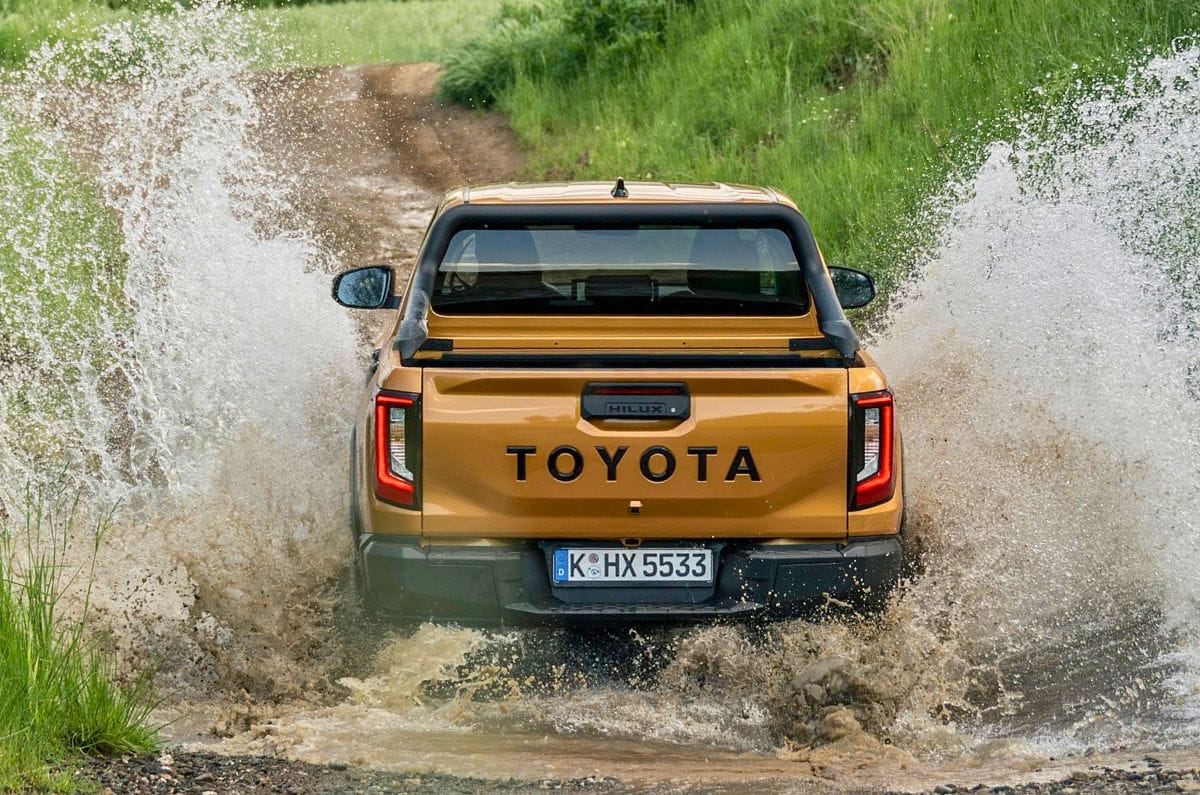
The 2026 Toyota Hilux’s rear features C-shaped wraparound LED taillights. The tailgate features massive ‘Toyota’ lettering in black, and the tailgate handle is also finished in black. The rear bumper is chunky and integrates a step to climb onto the truck bed.
4. What are the interior design changes on the 2026 Toyota Hilux?
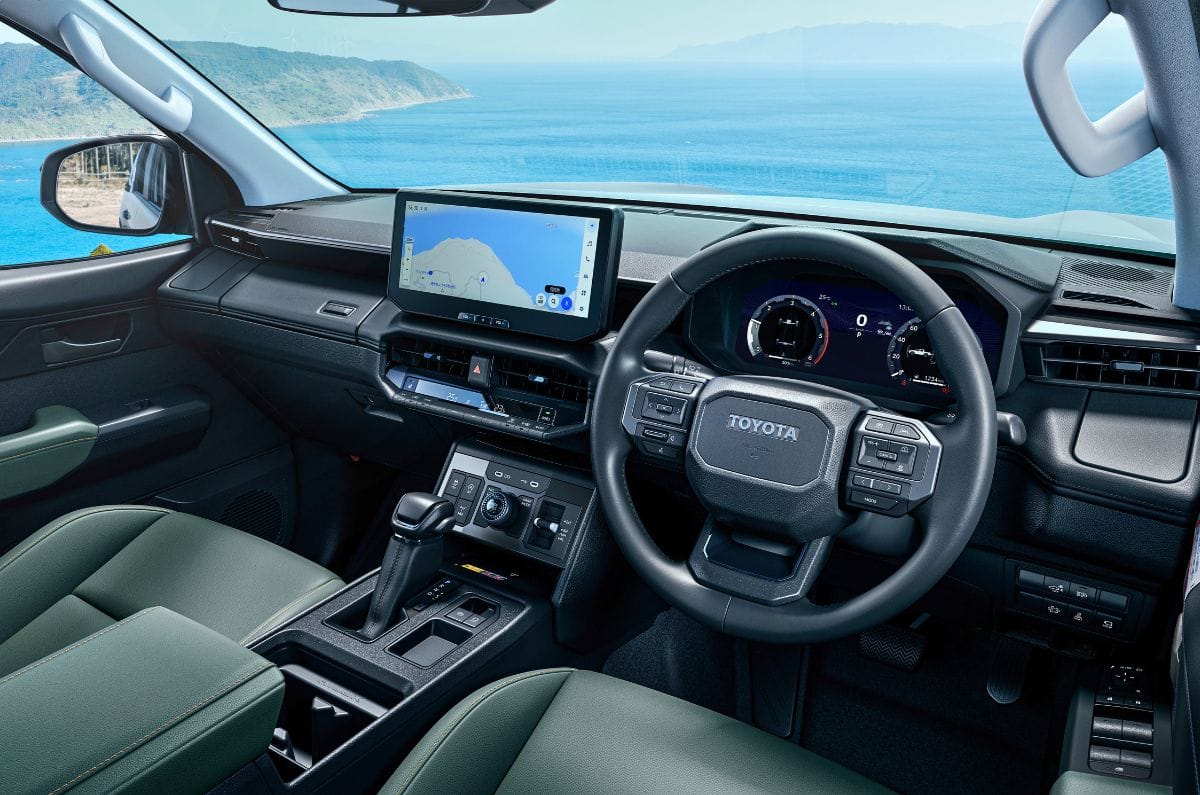
The international model gets a revamped all-black cabin with two screens
Japan-spec ninth-generation Toyota Hilux shown for representational purposes only.
While the India-spec Hilux’s interior is yet to be teased, it is expected to be revamped entirely like the international model. With a chunky 3-spoke steering wheel with physical buttons, a 12.3-inch digital driver’s display and a same-sized touchscreen infotainment system, it looks more modern than the outgoing model. With a mix of soft-touch leatherette materials and hard plastics, it seems to be equal parts contemporary and rugged. Unlike modern-day cars, the new-gen Hilux offers a plethora of physical controls on the centre console and transmission tunnel. Like the current model, the international-spec ninth-gen Hilux features an all-black cabin.
5. What features does the 2026 Toyota Hilux have?
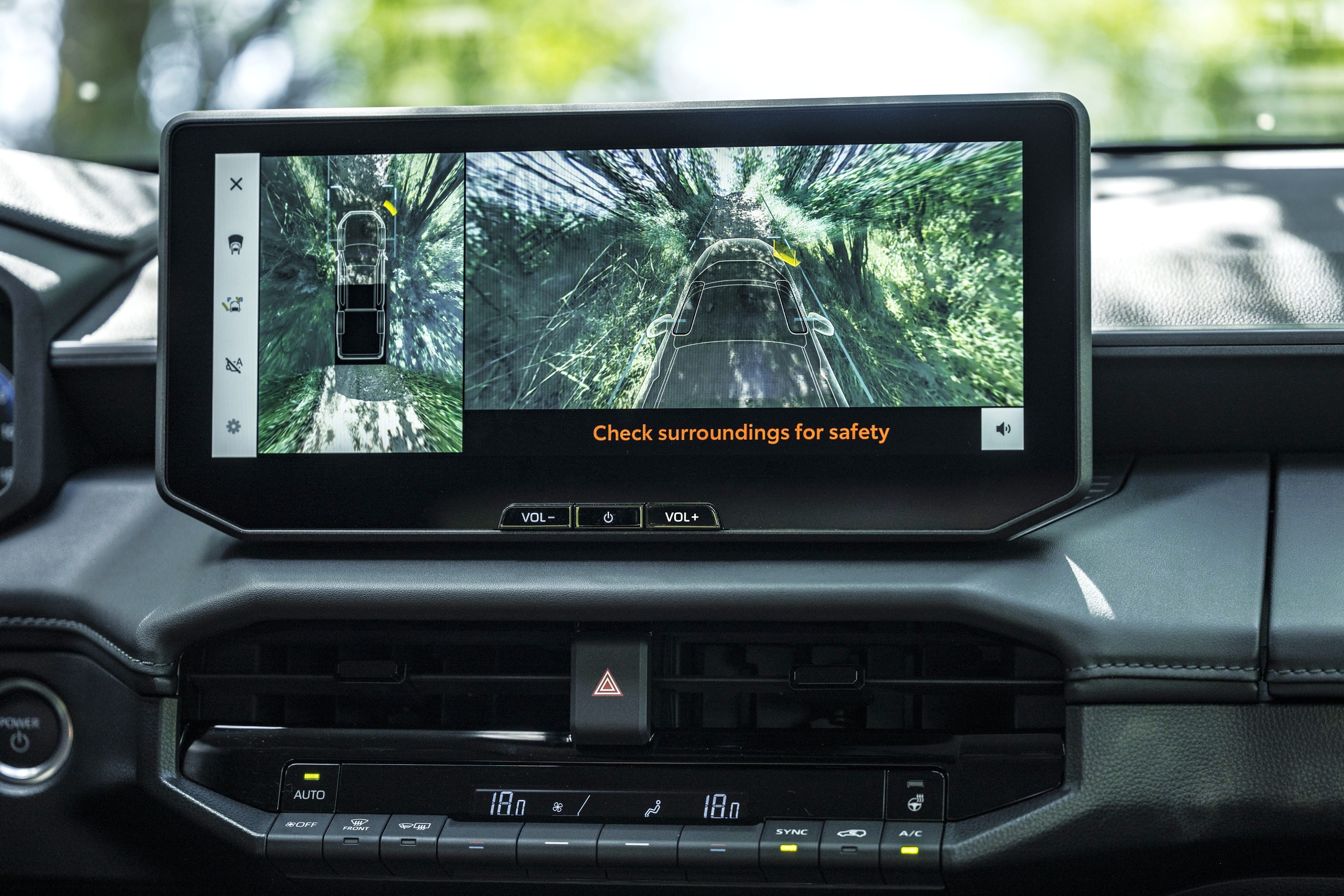
360-degree camera, dual-zone AC, and powered seats are expected to be offered
International-spec ninth-generation Toyota Hilux shown for representational purposes only.
New features onboard the ninth-generation Toyota Hilux include a 360-degree camera system with a blind-spot monitor, dual-zone automatic climate control, powered and ventilated front seats, heated ORVMs and an advanced driver assistance system (ADAS) suite. Other features include the aforementioned 12.3-inch screens, a 9-speaker JBL audio system, a 220V power outlet for front passengers and front and rear parking sensors. The feature suite of the India-spec 2026 Hilux is expected to be similar to the international-spec model.
6. Which cars will the 2026 Toyota Hilux rival in India
The 2026 Hilux will continue its rivalry with only one car in India
The new-generation Toyota Hilux will continue to rival the Isuzu V-Cross in India, which received a minor update in February 2026. Notably, the V-Cross is priced from Rs 25.50 lakh to Rs 30.28 lakh (ex-showroom).
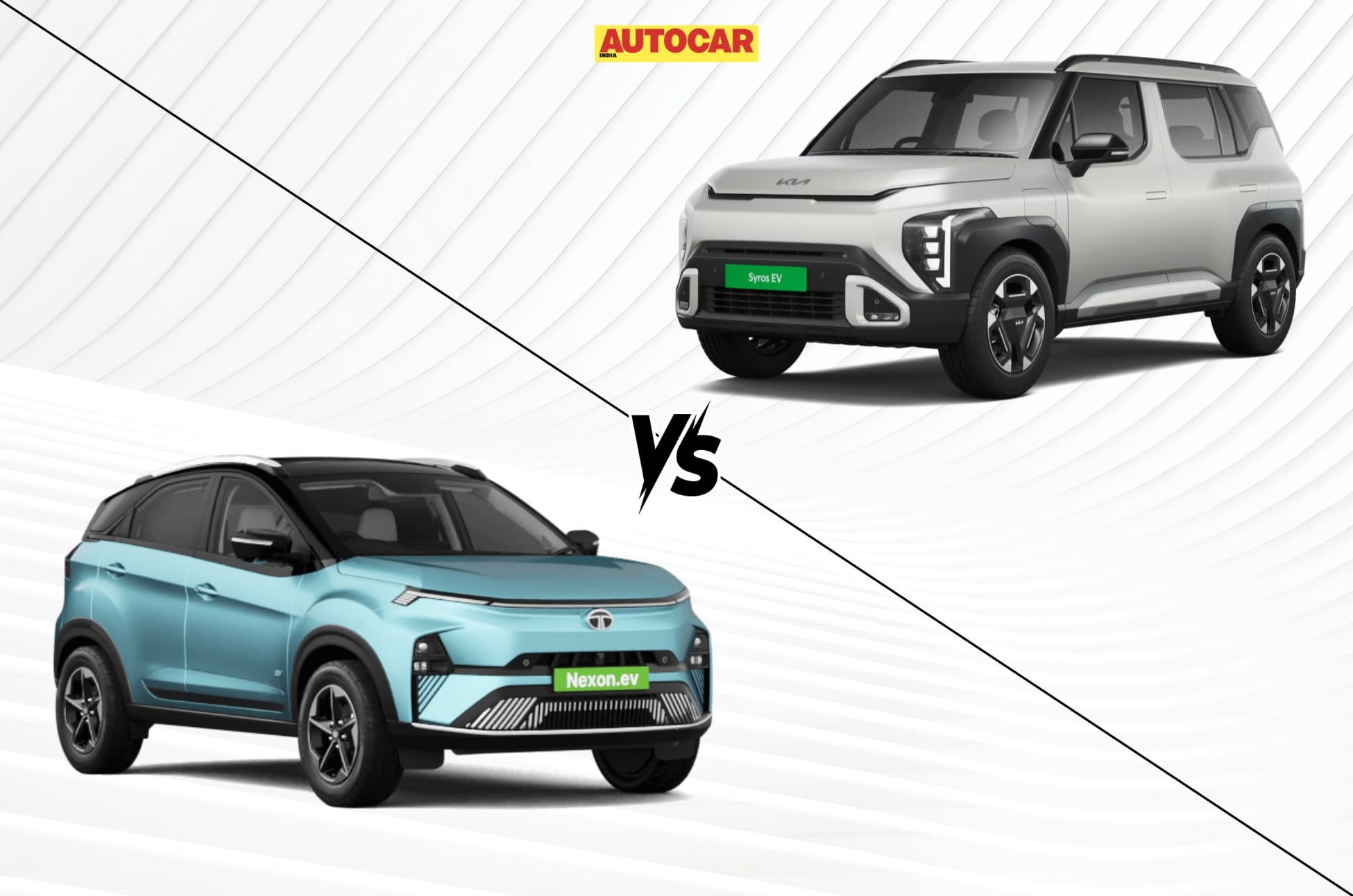
Kia has taken its first aim to crack the compact electric SUV space with the Syros EV. On the other hand, Tata has been dominating this very segment with the Nexon EV that’s been on the market for quite some time. But how do both SUVs fare when comparing specifications and features of their respective top-spec versions? For this comparison, we’ve chosen the Kia Syros EV’s X-Line variant and the Nexon EV’s Empowered+ A 45 variant.
Explore full specs, features, and a price breakdown in our Syros EV vs Nexon EV comparison.
Kia Syros EV vs Tata Nexon EV: Dimensions
Syros EV is comparatively the larger vehicle here
Kia Syros EV vs Tata Nexon EV: Dimensions
Kia Syros EV
Tata Nexon EV
Length (mm)
3,995
3,995
Width (mm)
1,805
1,802
Height (mm)
1,670
1,625
Wheelbase (mm)
2,550
2,498
Frunk (litres)
16
11.6
Boot space (litres)
390
350
Wheel size (inches)
17
16
While both SUVs have identical length, the Syros EV is 3mm wider, 45mm taller, and gets a 52mm longer wheelbase than the Nexon. Additionally, the former gets a 40-litre larger boot, a 4.4-litre larger frunk, and rides on wheels an inch bigger than the Nexon EV.
Kia Syros EV vs Tata Nexon EV: Powertrains
Syros EV gets the larger battery pack, more powerful motor, and higher claimed range figure
Kia Syros EV vs Tata Nexon EV top-spec: Powertrains
Kia Syros EV
Tata Nexon EV
Battery size (kWh)
51.4
45
Electric motor setup
Single motor
Single motor
Drive layout
FWD
FWD
Power (hp)
171
144
Torque (Nm)
255
215
Claimed 0-100kph time (seconds)
8.1
8.9
ARAI range (km)
526
489
The Syros EV features the largest battery pack in its segment with a 51.4kWh battery pack. Not only is its battery pack larger than the Nexon’s, but it also has a more powerful motor, leading to a quicker claimed 0-100kph time and a segment-best ARAI range that’s 37km higher than the Nexon’s.
Kia Syros EV vs Tata Nexon EV top-spec: Charging speeds and times
Syros EV supports faster charging speeds
Kia Syros EV vs Tata Nexon EV top-spec: Charging speeds and times
Kia Syros EV
Tata Nexon EV
Battery size (kWh)
51.4
45
7.2kW AC charging (10-100 percent)
–
6 hours 36 minutes
11kW AC charging (10-100 percent)
8.9 hrs
DC fast charging (10-80 percent)
39 minutes at 100kW
40 minutes at 60kW
The Syros EV supports higher charging output than the Nexon EV, be it at AC or DC speeds. But despite this, the Nexon EV’s smaller battery helps it juice up quicker at AC speeds, while DC fast charging times are almost similar to the Syros EV’s.
Kia Syros EV vs Tata Nexon EV: Exterior features
Syros EV top-spec limited to one colour
Kia Syros EV vs Tata Nexon EV top-spec: Exterior features
Kia Syros EV
Tata Nexon EV
LED headlamps
Automatic
Automatic
LED tail-lamps
Yes
Connected
DRLs
Yes
Connected
Front fog lamps
LED
LED
Puddle lamps w/ logo projection
Yes
No
Powered and foldable ORVMS
Yes
Yes
Flush door handles
Yes
No
Rear spoiler
Yes
Yes
Colour options
2, monotone and matte
5, dual tone
On the outside, the Syros EV gets goodies such as flush door handles with motorised opening for the front handles, and puddle lamps with logo projection, which the Nexon EV skips. But with the Syros EV in top-spec guise, you’re limited to only black exterior paint in either matte or gloss finish. On the other hand, the Nexon offers five dual tone paint choices with a black roof as standard at the top-end.
Kia Syros EV vs Tata Nexon EV: Interior features
Sliding and reclining rear seats with seat base ventilation found only on the Syros EV
Kia Syros EV vs Tata Nexon EV: Interior features
Kia Syros EV
Tata Nexon EV
Infotainment screen
12.3-inch
12.3-inch
Digital driver’s display
12.3-inch
10.25-inch
HVAC display
5-inch
No
Apple CarPlay & Android Auto
Wireless
Wireless
Connected car tech
Yes
Yes
Sunroof
Panoramic
Panoramic
Sound system
8-speaker Harmon Kardon
9-speaker JBL
Automatic climate control
Yes
Yes
Wireless charger
Yes
Yes
Driver’s seat adjustment
4-way powered
No
Ventilated front seats
Yes
Yes
Rear seat base ventilation
Yes
No
Rear sunshades
Yes
Yes
Rear centre armrest
Yes
Yes
Sliding, reclining rear seats
Yes
No
OTA updates
Yes
Yes
Ambient lighting
Yes
Yes
Air purifier
No
Yes
Rear AC vents
Yes
Yes
While Kia and Tata have packed a lot of features for their respective models, the former has the edge here. The Syros EV gets a larger digital driver’s display, powered driver seat, rear seat base ventilation, and sliding and reclining rear seats. But it misses out on an additional speaker and an air purifier, which the Nexon EV gets.
Kia Syros EV vs Tata Nexon EV: Driving features
Both models are on par with driving features
Kia Syros EV vs Tata Nexon EV: Driving features
Kia Syros EV
Tata Nexon EV
Drive modes
Eco, Normal, Sport
Eco, City, Sport
V2L function
Yes
Yes
Multi-level regen braking
Yes
Yes
Paddleshifters for regen
Yes
Yes
Cruise control
Adaptive
Adaptive
In the driving features department, the Syros EV and Nexon EV are equally equipped with drive modes, regen paddle shifters, adaptive cruise control, and V2L functionality.
Kia Syros EV vs Tata Nexon EV: Safety features
Syros EV yet to achieve BNCAP certification
Kia Syros EV vs Tata Nexon EV: Safety features
Kia Syros EV
Tata Nexon EV
Bharat NCAP rating
Yet to be tested
5 stars
Airbags
6
6
ABS with EBD
Yes
Yes
Electronic stability program
Yes
Yes
Follow-me-home headlamps
Yes
No
Hill hold control
Yes
Yes
Hill descent control
No
Yes
TPMS
Yes
Yes
360-degree camera
Yes
Yes
Parking sensors
Front, rear, side
Front and rear
Electronic parking brake
Yes (w/ auto-hold)
Yes (w/ auto-hold)
Rain-sensing wipers
No
Yes
Auto-dimming IRVM
Yes
Yes
ISOFIX child seat anchors
Yes
Yes
Rear wiper, defogger
Yes
Yes
Disc brakes
All wheel
All wheel
Level 2 ADAS
Yes
Yes
While the Tata Nexon EV has already scored a 5-star rating in BNCAP tests, the Syros EV is yet to be tested. But for the latter, a similar rating can be expected considering its ICE version has already attained a 5-star rating.
Both the Syros EV and Nexon EV come well equipped with basic and advanced safety features, including a Level 2 ADAS suite and a 360-degree camera. Here, the Kia gets follow-me-home headlamps and additional parking sensors on the side over the Tata. However, hill descent control and rain-sensing wipers are found only on the latter.
Kia Syros EV vs Tata Nexon EV: Prices and Verdict
Syros EV X-Line pricier by Rs 3.5 lakh
Kia Syros EV vs Tata Nexon EV: Price
Kia Syros EV
Tata Nexon EV
Price (Rs lakh)
20.00
17.49
In top-specification guise, the Syros EV is Rs 3.5 lakh pricier than the Nexon EV. Between the two, it’s the Nexon EV we find as the better value proposition. While the Syros EV is the larger vehicle dimensionally, has the larger battery pack, more powerful motor, and the higher claimed range, it doesn’t justify the extra premium that it commands over the Nexon EV. The Nexon EV may not have as much claimed range or features as the Syros EV, but it isn’t bad by segment standards.
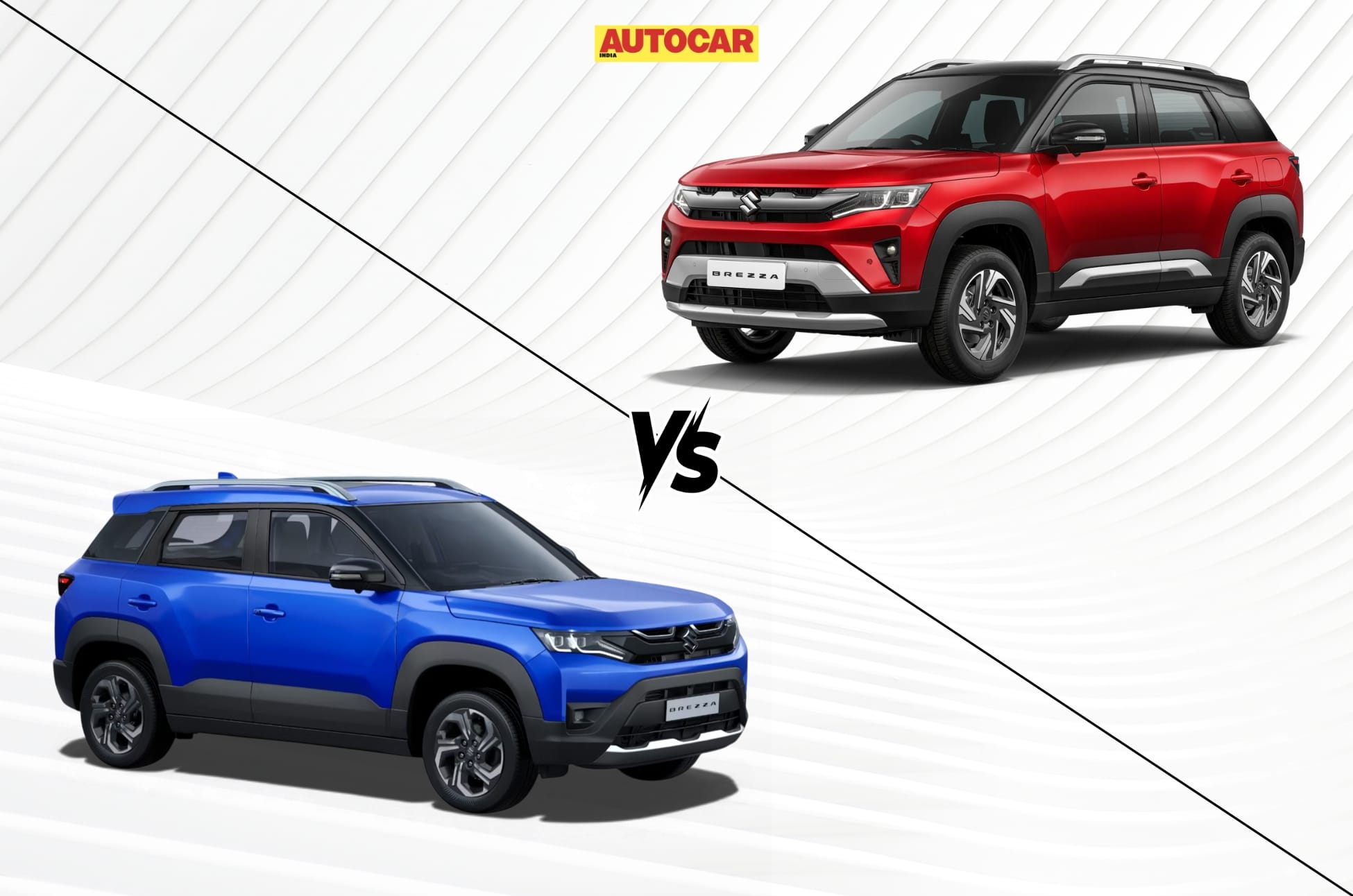
Four years after replacing the Vitara Brezza, the ‘Brezza’ nameplate has received its first lifecycle update. With this, the 2026 Maruti Brezza offers buyers a multitude of new features and styling tweaks that the brand hopes will keep its compact SUV competitive among segment rivals that include the Hyundai Venue, Kia Sonet, Skoda Kylaq and Tata Nexon. Having said that, let’s find out the main differences between the new Maruti Suzuki Brezza and its predecessor.
Maruti Brezza new vs old: Exterior design
Changes on the outside are mostly limited to the soft parts
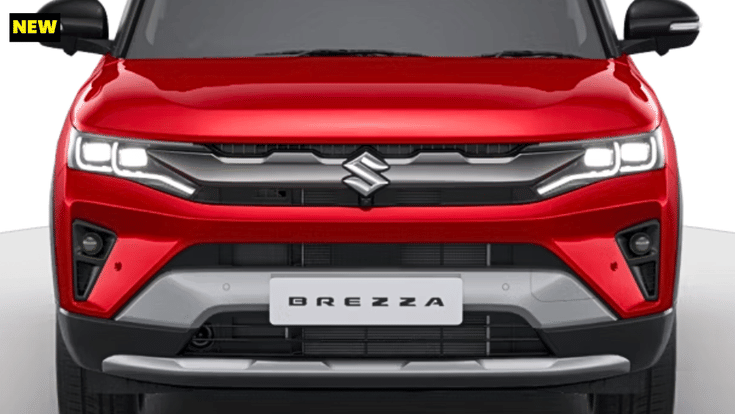
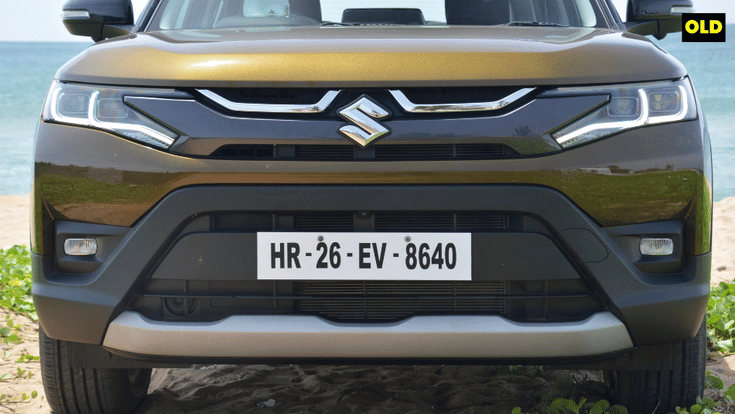
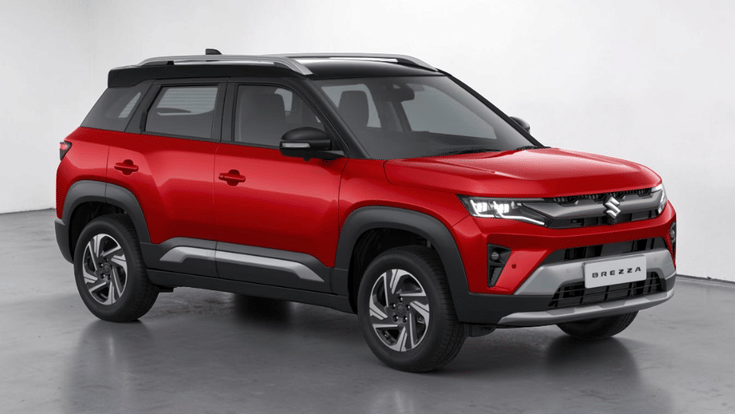
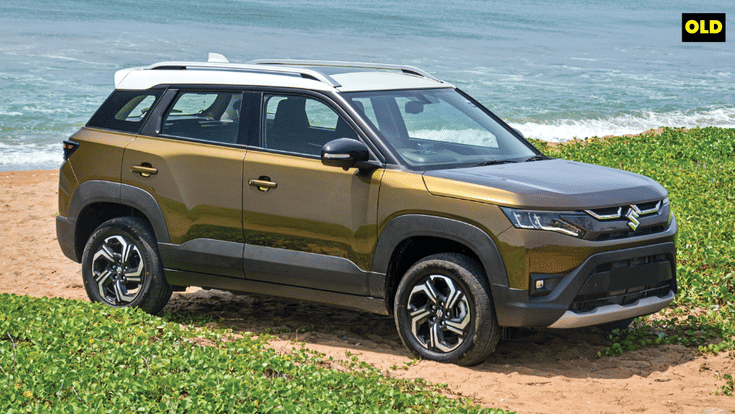
To help differentiate the 2026 Brezza from the old model, Maruti Suzuki has given it a few noticeable styling tweaks. For starters, there’s a new grille at the front and it’s finished in dark chrome. The front bumper has been redesigned as well, and it comes with an additional silver plastic garnish. Maruti has also re-done the front fog-lamp design. The LED units now sit inside a cone-shaped housing and have been moved further up the bumper compared to the old Brezza.
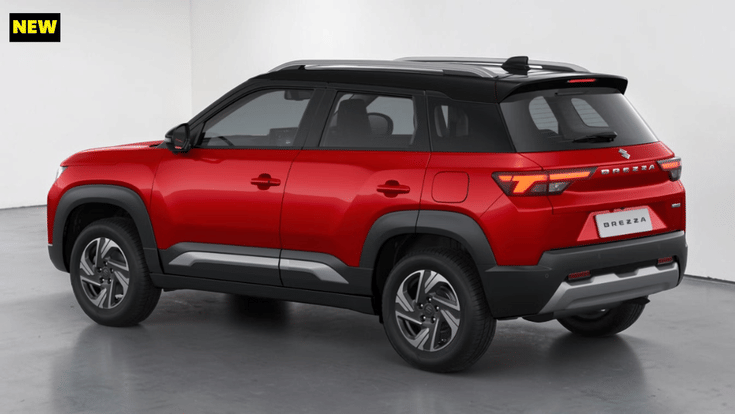
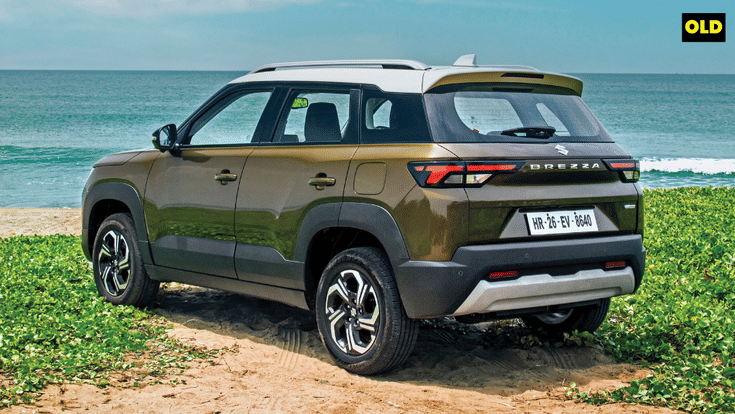
Along the sides, the 2026 Brezza features new 16-inch alloy wheels with a two-tone finish and dual-tone body cladding. The rest of the styling details remain identical to the old model. Maruti has done away with the Brave Khakhi and Exuberant Blue mono-tone colours, replacing them with Vivacious Orange and Lustrous Beige tones. The Sizzling Red with Bluish Black Roof dual-tone colour remains, but the other two options are now Lustrous Beige and Pearl Arctic White with the same ‘Blueish Black’ roof. The rear of the 2026 Brezza looks largely similar to the old model. Finally, the new Brezza Turbo gets red accents all around and different door cladding, along with ‘Turbo Boosterjet’ branding.
Maruti Brezza new vs old: Interior design and features
Few styling tweaks and new features add to this interior’s overall appeal
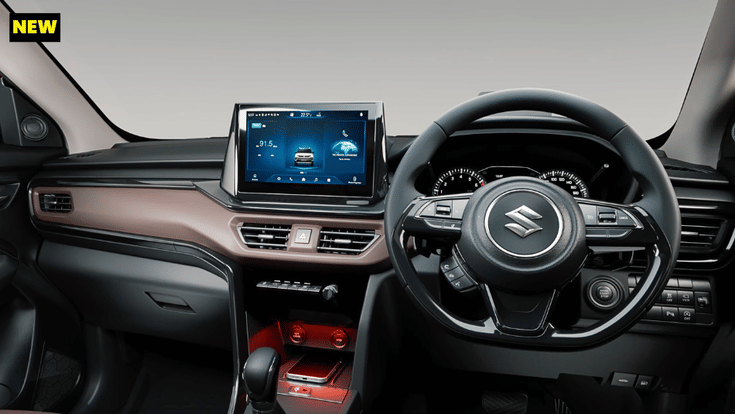
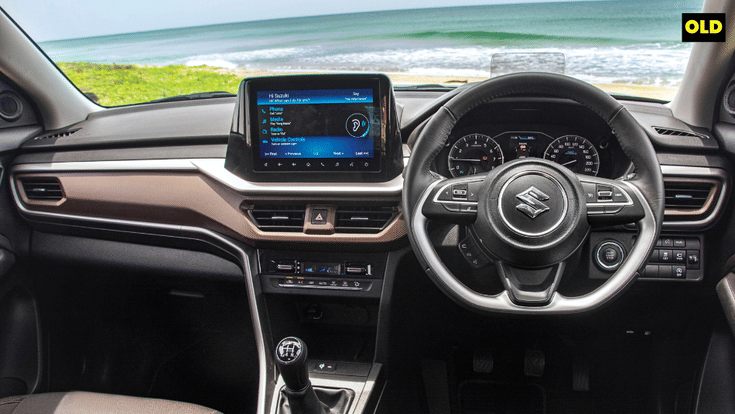
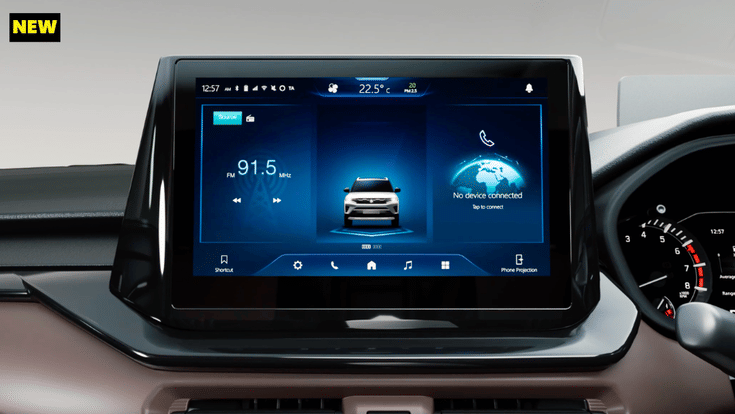
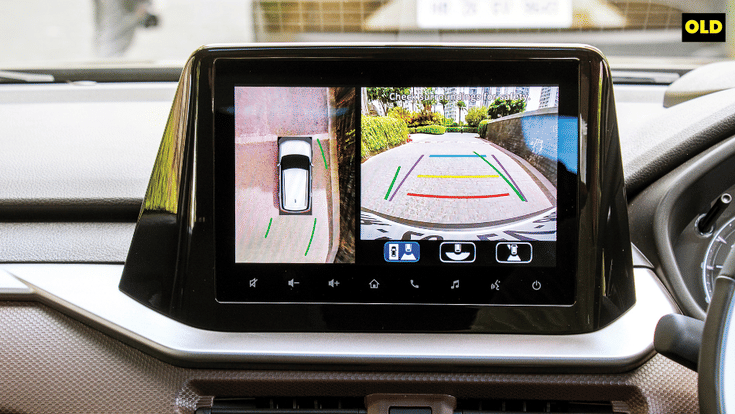
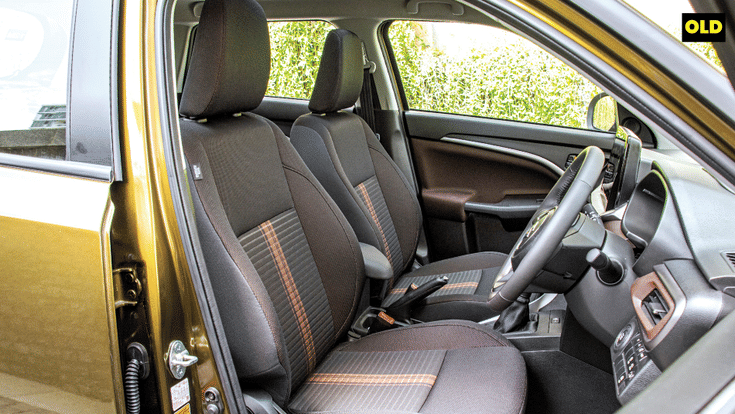
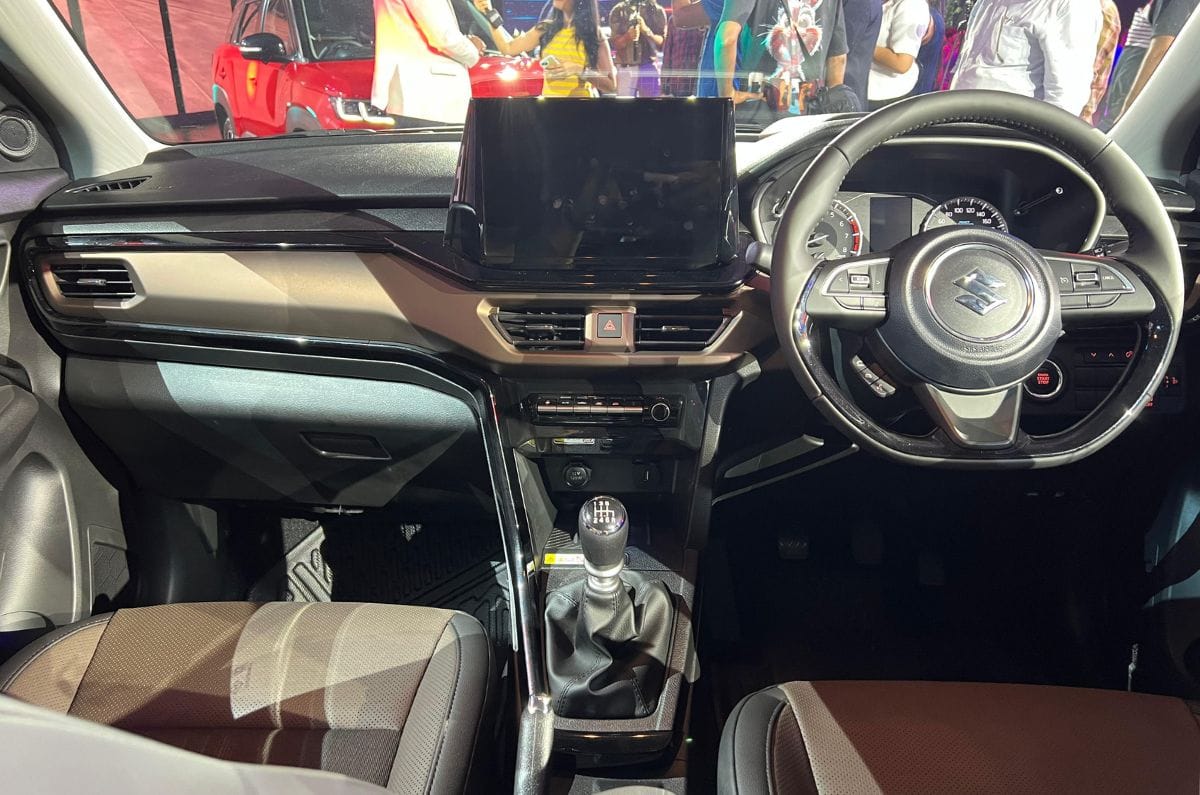
The overall design and layout of the Maruti Brezza’s interior hasn’t changed with the 2026 facelift. However, some of the tweaks that the brand has made are quite easy to spot. The first amongst these is the new 10.1-inch touchscreen head unit, which features the Suzuki SmartPlay Pro X infotainment system. For reference, the previous mode’s SmartPlay Pro+ system came with a 9-inch touchscreen. The silver-coloured plastic trim on the dashboard and doors in the old Brezza have given way to gloss-black trim in the 2026 model. These look nice and premium but are a magnet for fingerprints and scratches.
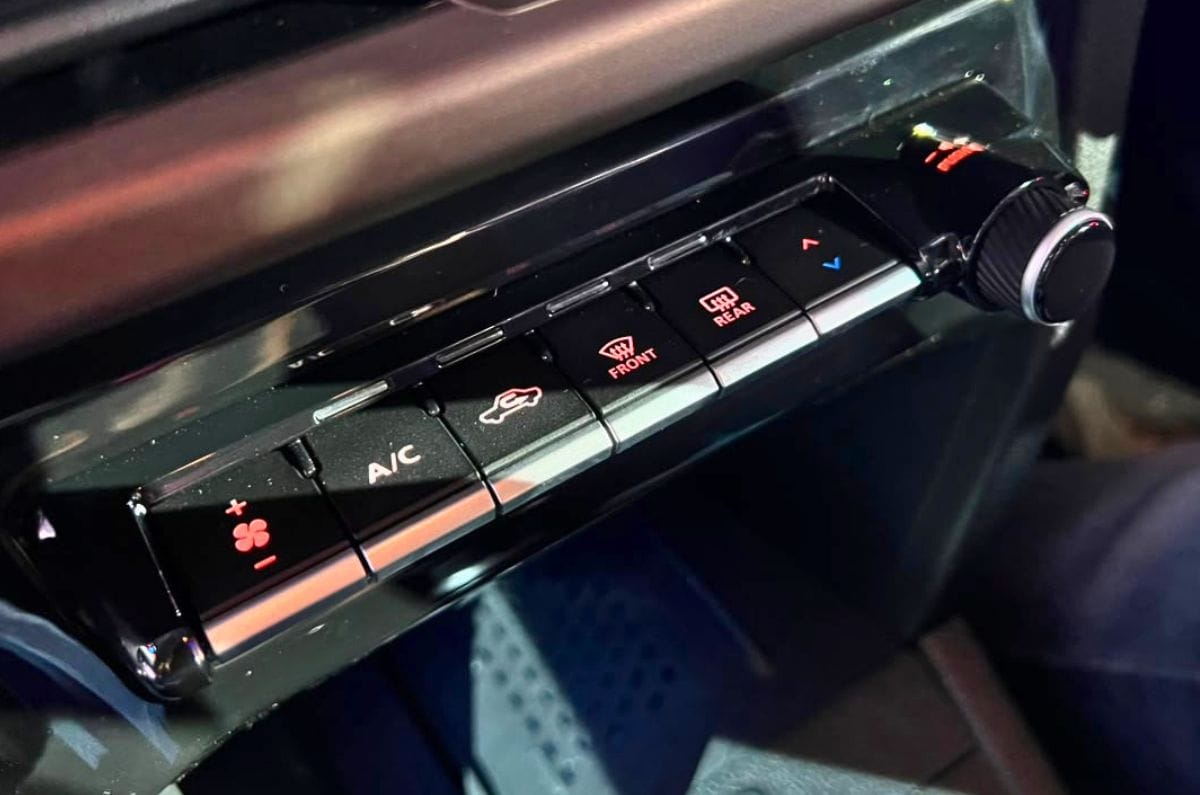
Further down the centre stack, the Brezza facelift gets a new HVAC panel with physical, piano-style keys and a single rotary dial – this has been borrowed from the Victoris. Although stylish to look at, it no longer has a dedicated display to show the temperature and blower speed – these have been moved to the infotainment screen. The climate control does get a PM2.5 filter with an AQI display now, though.
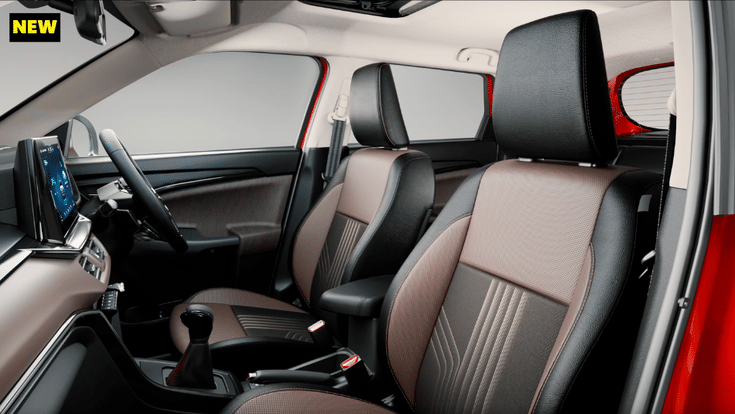
While the design of the steering wheel and instrument cluster remain unchanged, the Brezza now gets suction-type front-seat ventilation, 64-colour ambient lighting, dual-tone part-leatherette seats, Suzuki Navigation built-in, and new driver-assistance features like safe-exit warning, blind-spot warning, lane-departure alert and rear cross-traffic alert.
Maruti Brezza new vs old: Engine and gearbox
Differences between the old and new Brezza are more than skin-deep
Maruti has carried over the K15C four-cylinder petrol engine with the automatic engine stop-start system from the pre-facelift Brezza. In the 2026 Brezza, this 1.5-litre mill continues to produce 103hp and 139Nm. In its CNG avatar as well, the Brezza facelift’s engine output of 88hp and 122Nm remains the same as the old model. However, the difference with the new model is that it gets underbody CNG tanks, which don’t eat up boot space.
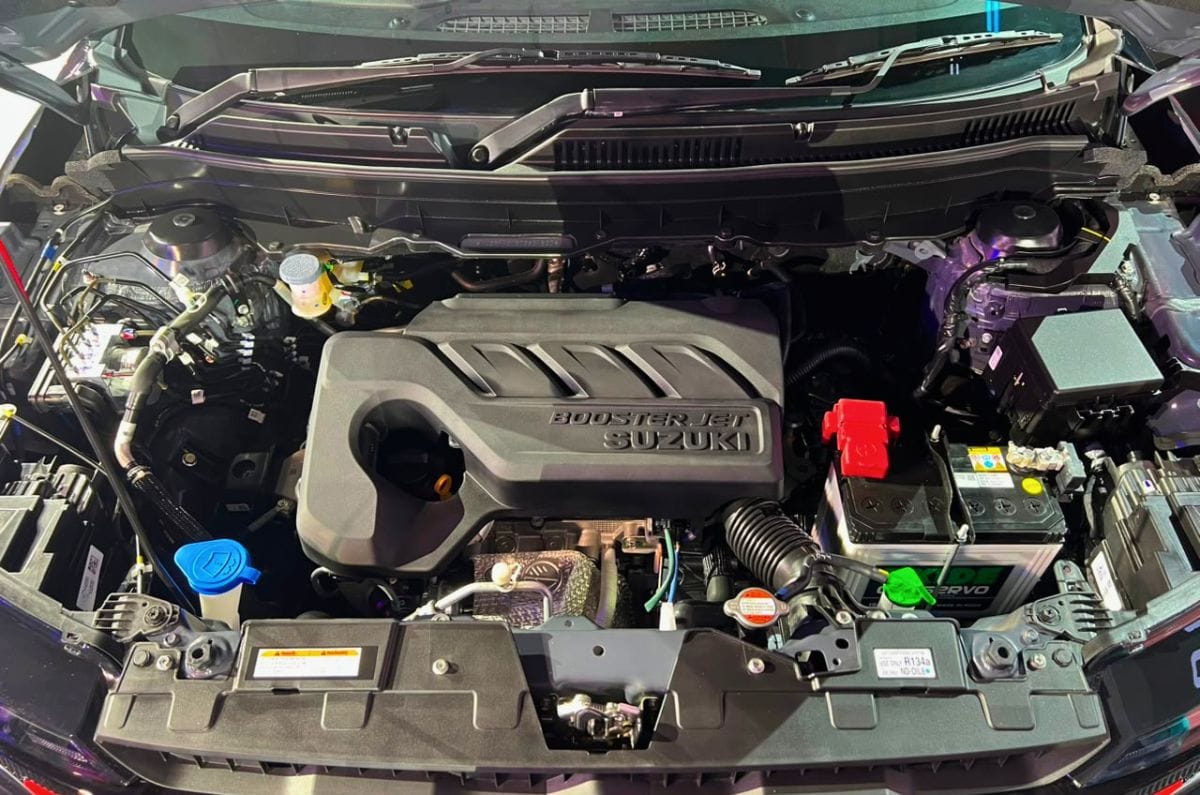
The other difference between the 2026 Maruti Brezza and its predecessor is the inclusion of a 1.0-litre turbo-petrol engine with direct injection. Also used in the Fronx, this ‘Boosterjet’ powerplant has been retuned for the Brezza, so it now makes 110hp and 170Nm. The Turbo and CNG versions are only offered with the new 6-speed manual gearbox, which replaces the old 5-speed unit. Meanwhile, the naturally aspirated engine can be paired with the 6-speed torque converter automatic transmission, which was available with the pre-facelift model as well.
The step up from a 5-speed manual gearbox to a 6-speed unit also means that the 2026 Brezza offers better fuel economy. The pre-facelift Brezza with the naturally aspirated engine and manual gearbox had a claimed mileage of up to 17.80kpl, while its 2026 equivalent claims a figure of up to 21.09kpl. The 2026 Brezza CNG also has a higher claimed fuel economy of 26.90km/kg, where the old model’s was 25.51km/kg. Maruti claims that the new Turbo variants of the Brezza have a fuel economy of up to 20.47kpl.
Maruti Brezza new vs old: Prices
Despite the various updates and additions that the 2026 Maruti Brezza gets over its predecessor, its new Turbo version starts at an introductory price of Rs 7.40 lakh. This is lower than the base price of the pre-facelift model, which started at Rs 8.26 lakh. The 1.0-litre engine of the new Turbo variants make them eligible for higher tax breaks – the old Brezza’s 1.5-litre engine didn’t allow for this. That said, Maruti Suzuki is yet to disclose the prices of the rest of the variants of the 2026 Brezza.
The 2026 Maruti Suzuki Brezza has been launched in India with prices starting from Rs 7.40 lakh (ex-showroom). Among the additions Maruti has made to the 2026 Brezza is a 1.0-litre direct-injection turbo-petrol option, which is offered across the SUV’s lineup alongside the naturally aspirated petrol engine. However, some differences distinguish the turbo-petrol variants from the naturally aspirated petrol variants.
2026 Maruti Brezza turbo petrol vs NA petrol: Design differences
Turbo variants differentiate themselves with some red trims outside
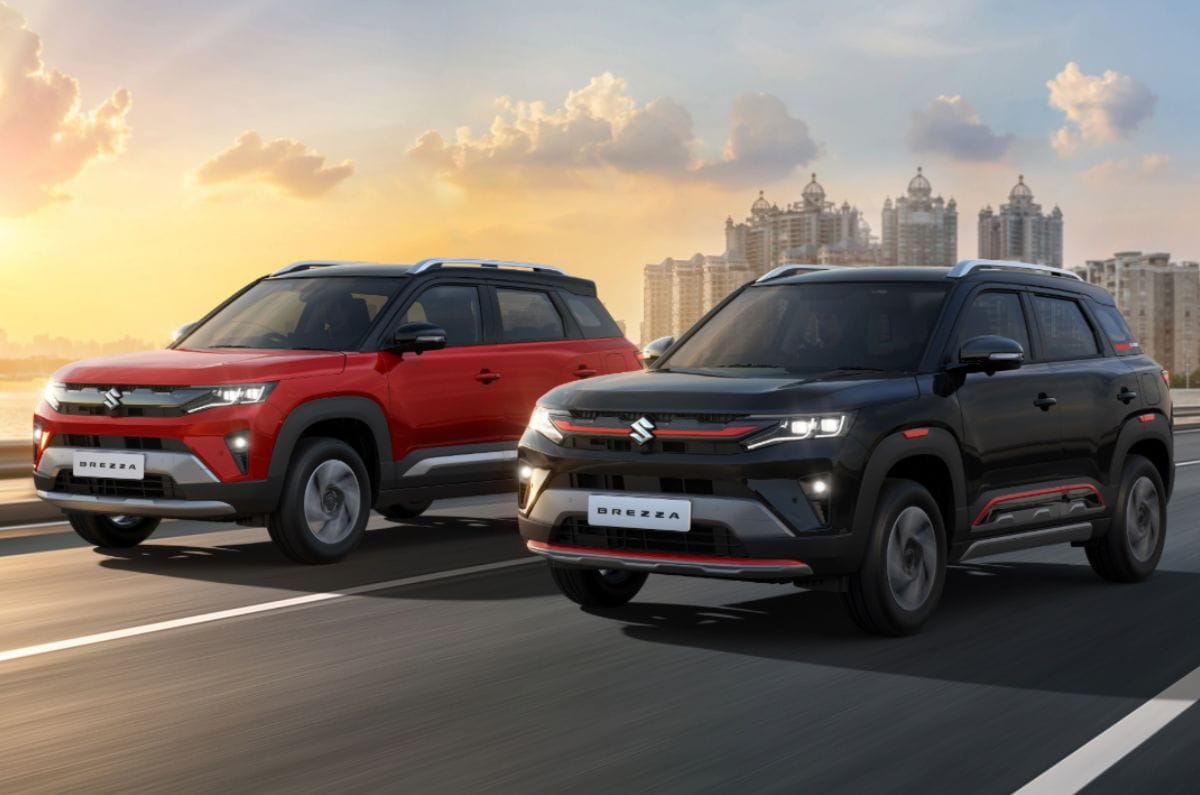
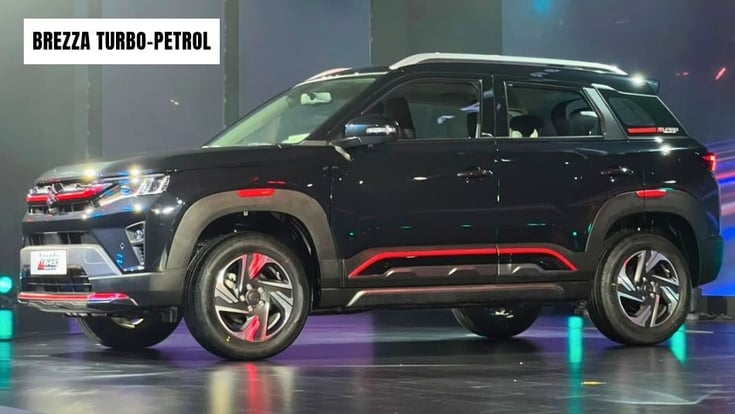
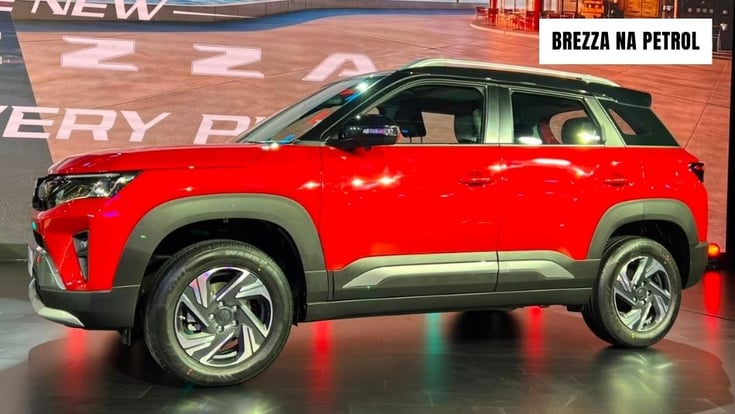
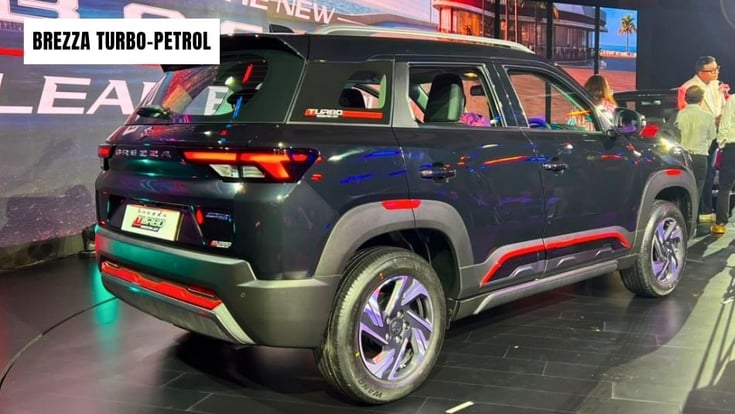
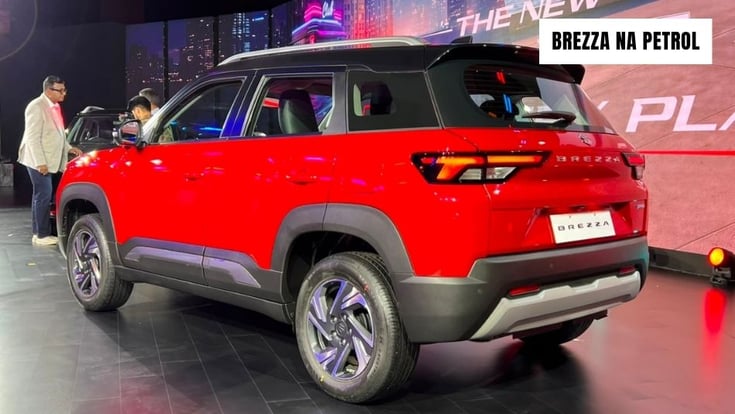
Maruti is offering red exterior trims on the turbo-petrol variants of the Brezza, to differentiate them from the naturally aspirated petrol variants. These red trims, which seem to be aftermarket accessories, can be found on the grille, above the faux silver skid plate on the front and rear bumpers, and on wheel arches and door cladding. Furthermore, the rear quarter glass sports a ‘Turbo Boosterjet” decal, and the tailgate features a ‘Turbo’ badge.
Everything else, including the dual-pod headlights, LED DRLs, LED fog lamps, 16-inch alloy wheel design, silver roof rails and wraparound LED taillights, is the same on all powertrains.
Interior design is unchanged across powertrain versions
Unlike the exterior, where the red trims, decals and badges are differentiators, the interior design of both naturally aspirated and turbo-petrol variants is identical. Both versions are offered with a black-and-brown cabin theme, a 3-spoke steering wheel, a 10.1-inch touchscreen infotainment system and analogue dials with a coloured multi-information display (MID). Even the menus on the MID are the same across the powertrain versions.
2026 Maruti Brezza turbo petrol vs NA petrol: Feature differences
Turbo variants get more features in LXi, VXi and ZXi trims
The Brezza’s top-spec ZXi+ variant offers the same feature set across all powertrain options. However, in the lower LXi, VXi, and ZXi trims, the turbo-petrol variants come with additional equipment compared to the naturally aspirated petrol and CNG versions.
In the LXi trim, the turbo-petrol variants add a rear defogger, a height-adjustable driver’s seat, adjustable rear-seat headrests, and automatic climate control. In the VXi trim, the turbo-petrol variants further gain a reverse parking camera, electrically folding outside rearview mirrors (ORVMs), alloy wheels, and an exclusive Bluish Black exterior colour option. In the ZXi trim, the turbo-petrol variants receive a rear wiper and washer, two tweeters, cruise control, auto headlamps, blind spot warning, safe exit warning, and rear cross-traffic alert.
2026 Maruti Brezza turbo petrol vs NA petrol: Technical differences
The turbo-petrol engine lacks an automatic transmission option
Apart from the visual differences, there are some other technical differences too between the turbo-petrol and naturally aspirated petrol variants. The obvious ones are the differences in cubic capacity and the lack of a cylinder in the turbo unit compared to the naturally aspirated one. What the turbo version also lacks is an automatic gearbox, as this gearbox option is reserved for the naturally aspirated engine on the 2026 Brezza. Interestingly, the Brezza’s turbo-petrol engine is the same as that of the Fronx’s, but the latter is offered with a 6-speed automatic gearbox. Moreover, the turbo-petrol engine is not offered with a CNG option.
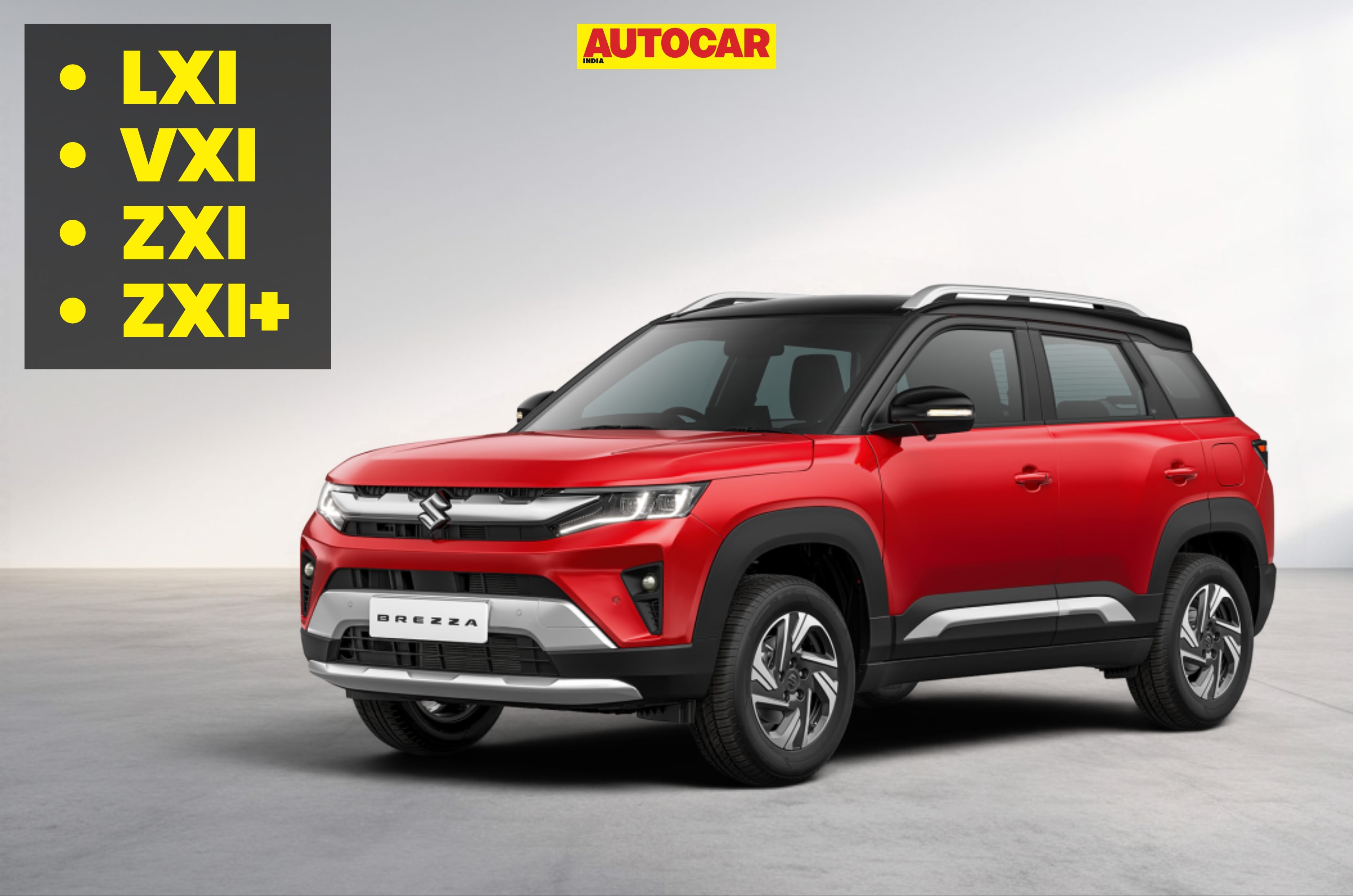
The 2026 Maruti Suzuki Brezza facelift receives updated exterior styling, a revised interior, new convenience and safety features, and a broader powertrain line-up. Buyers can choose from petrol, turbo-petrol and factory-fitted CNG powertrains across four trims – LXi, VXi, ZXi and ZXi+. Here’s a detailed look at what each variant offers and which one you should consider buying.
The Brezza facelift is priced at a at a starting price of Rs 7.40 lakh and is available with three powertrain options spread across the four-variant line-up. The new 1.0-litre Boosterjet direct injection turbo-petrol engine is offered across all four trims with a 6-speed manual gearbox. The 1.5-litre K15C petrol engine is available with a 6-speed manual on the LXi, VXi and ZXi, while the 6-speed automatic can be had from the VXi onwards, including the range-topping ZXi+. Buyers looking for a factory-fitted CNG option can choose between the LXi, VXi and ZXi variants, as the top-spec ZXi+ is offered only with petrol power.
2026 Maruti Suzuki Brezza facelift colour options
The Brezza facelift is available in nine exterior colours, including monotone and dual-tone finishes. Dual-tone paint schemes are limited to higher variants, while colour availability varies depending on the trim. The ZXi and ZXi+ also get additional premium paint options and dual-tone combinations.
2026 Maruti Suzuki Brezza facelift variant-wise features
LXi
Powertrains: 1.0 Boosterjet 6MT, 1.5 Petrol 6MT, 1.5 CNG 6MT
Six airbags
Electronic Stability Program (ESP)
Hill Hold Assist
Rear parking sensors
ISOFIX child seat mounts
Three-point seatbelts for all occupants
Tyre repair kit
Tilt-adjust steering
Keyless entry
Driver-side auto up/down power window
Rear AC vents
Electrically adjustable ORVMs
Halogen projector headlamps
LED tail-lamps
Roof spoiler
Shark-fin antenna
16-inch steel wheels with wheel covers
Fabric upholstery
Manual day/night IRVM
Rear defogger (Boosterjet only)
Height-adjustable driver’s seat (Boosterjet only)
Auto climate control (Boosterjet only)
VXi
Features over LXi
Powertrains: 1.0 Boosterjet 6MT, 1.5 Petrol 6MT/6AT, 1.5 CNG 6MT
7-inch touchscreen infotainment system
Wireless Android Auto and Apple CarPlay
ARKAMYS sound system
Steering-mounted audio and Bluetooth controls
Suzuki voice assistant
Remote infotainment app
Reverse parking camera (Boosterjet)
Automatic climate control
Height-adjustable driver’s seat
Rear defogger
16-inch alloy wheels (Boosterjet)
Electrically foldable ORVMs (Boosterjet)
ZXi
Features over VXi
Powertrains: 1.0 Boosterjet 6MT, 1.5 Petrol 6MT/6AT, 1.5 CNG 6MT
Electric sunroof
Push-button start
LED projector headlamps
Auto headlamps (Boosterjet)
Chrome front grille
60:40 split-folding rear seat
Roof rails
Rear centre armrest
Parcel tray
Wireless charger
Rear centre armrest with cupholder
Ambient lighting
Rear wiper and washer (Boosterjet)
Cruise control (Boosterjet)
Tweeters (Boosterjet)
Front parking sensors (Boosterjet)
Blind Spot Warning (Boosterjet)
Rear Cross Traffic Alert (Boosterjet)
Tyre Pressure Monitoring System (Boosterjet)
ZXi+
Features over ZXi
Powertrains: 1.0 Boosterjet 6MT, 1.5 Petrol 6AT
10.1-inch touchscreen infotainment system
ARKAMYS Surround Sense audio system
Connected car technology (Suzuki Connect)
Front centre armrest with storage
Front sliding armrest
LED fog lamps
LED DRLs
Cooled glovebox
Auto-folding ORVMs
Auto-dimming IRVM
360-degree camera
In-built navigation with live traffic updates
Rear USB ports (Type-A and Type-C)
Internet connectivity
Cruise control
Alexa Auto voice assistant
Over-the-air app updates
PM2.5 cabin air filter with AQI display
Ventilated front seats
Leatherette upholstery
64-colour ambient lighting
16-inch diamond-cut alloy wheels
Leather-wrapped steering wheel
Blind Spot Warning
Rear Cross Traffic Alert
Which 2026 Maruti Suzuki Brezza facelift variant should you buy?
The ZXi is the sweet spot in the Brezza facelift range. It gets many of the features buyers in this segment are likely to appreciate, including an electric sunroof, LED projector headlamps, wireless charger, push-button start and ambient lighting, while remaining available with all three mainstream powertrains – the 1.5-litre petrol manual, 1.5-litre petrol automatic and factory-fitted CNG. This makes it the most well-rounded variant for most buyers.
If you’re planning to buy the new 1.0-litre Boosterjet turbo-petrol, the ZXi again stands out. In addition to the features mentioned above, it adds equipment such as cruise control, front parking sensors, Blind Spot Warning, Rear Cross Traffic Alert and a tyre pressure monitoring system, making it the best-balanced turbo variant in the Brezza range.
The ZXi+ is best suited to buyers who specifically want the larger 10.1-inch touchscreen, Suzuki Connect connected car technology, ventilated front seats, leatherette upholstery, 360-degree camera and premium cabin features. While it offers the most comprehensive equipment list in the Brezza range, the additional convenience features may not justify the price premium for every buyer.
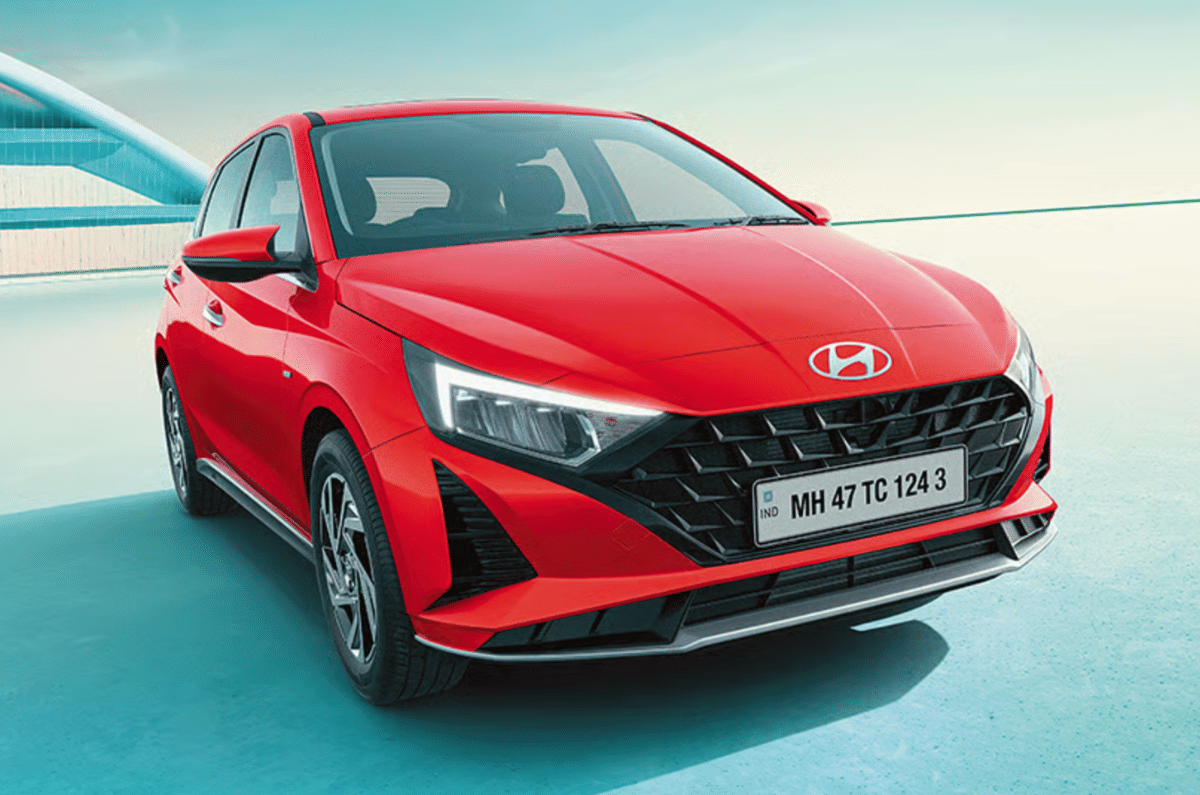
The Hyundai i20 has crossed the 15 lakh sales milestone in India, nearly 18 years after it first went on sale in December 2008. The premium hatchback reached the 1 lakh sales mark in 2010, crossed 5 lakh units in 2015, and hit the 10 lakh milestone in 2019.
Hyundai i20 generations so far
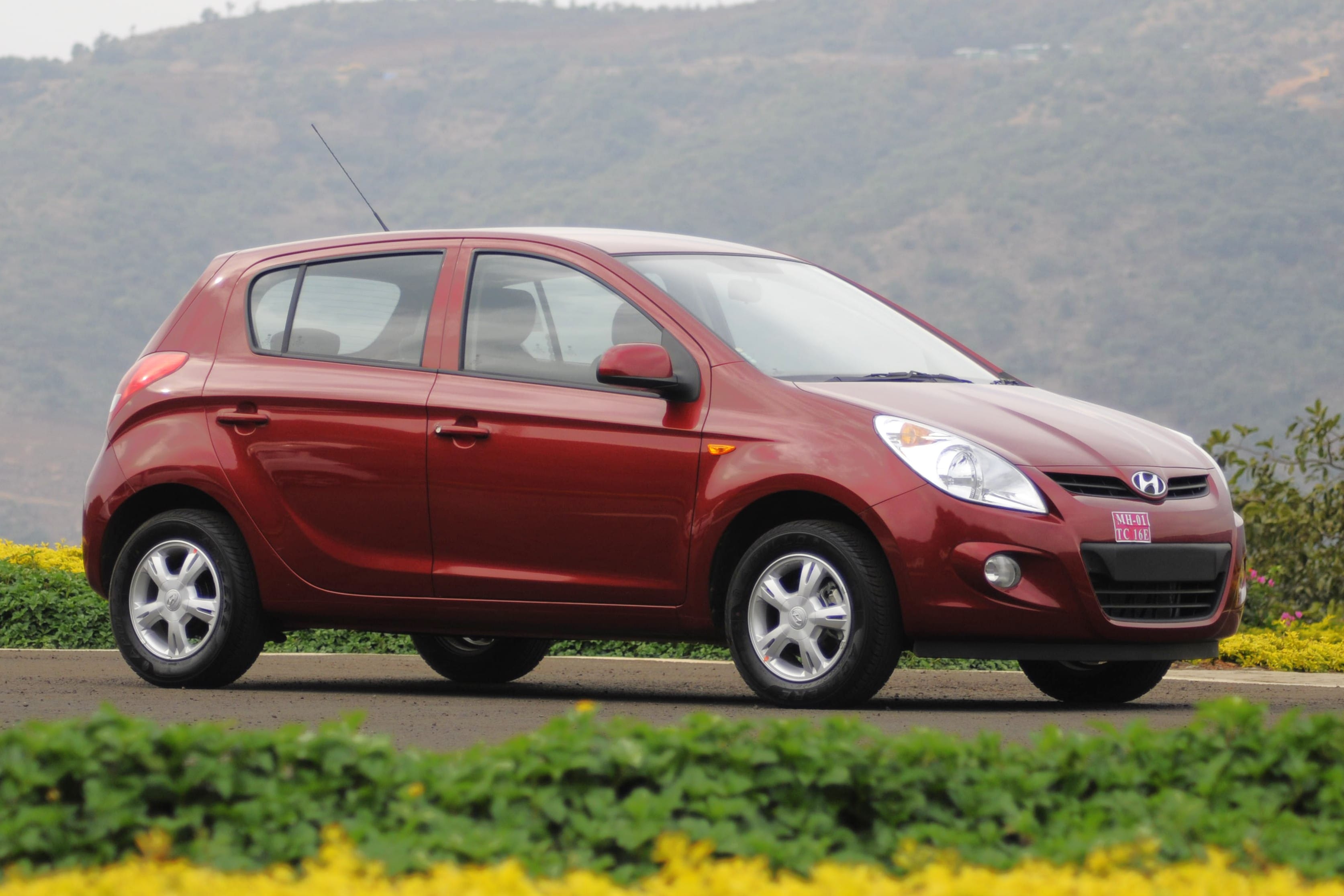
Its first-generation replaced the Hyundai Getz and played a key role in creating the premium hatchback segment in India. Depending on the trim and model year, it came with features such as a sunroof, automatic climate control, a cooled glovebox and six airbags. Buyers could choose between 1.2-litre petrol, 1.4-litre petrol and 1.4-litre diesel engine options.
First-generation Hyundai i20.
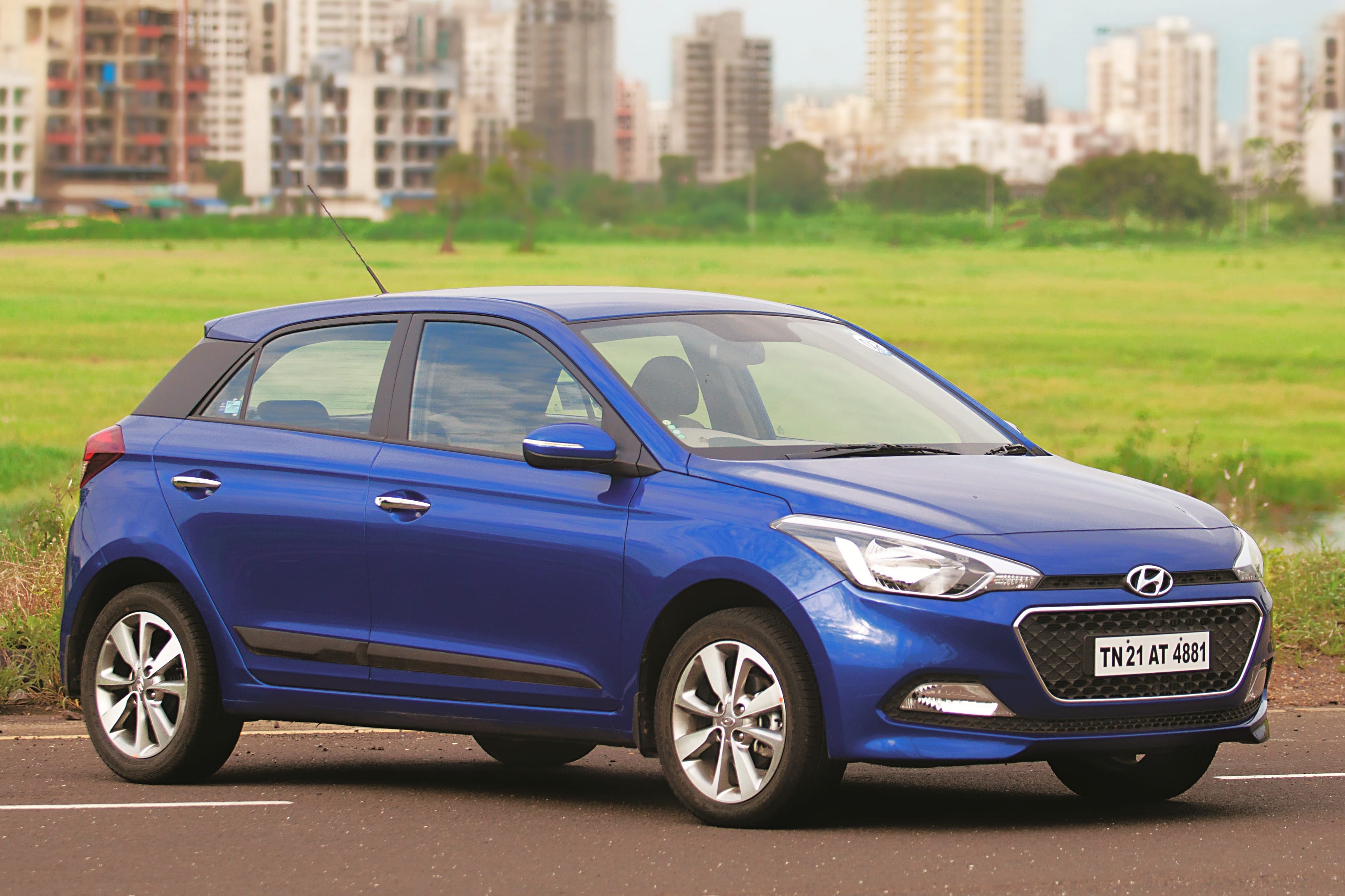
The carmaker introduced the second-generation model, called the Elite i20, in 2014. It featured the brand’s ‘Fluidic Sculpture 2.0’ design language, added more features and offered 1.2-litre petrol and diesel engine choices. Notably, the Elite i20 proved to be the most successful generation of the hatchback, recording sales of 8 lakh units during its seven-year run in the country.
Second-generation Hyundai i20.
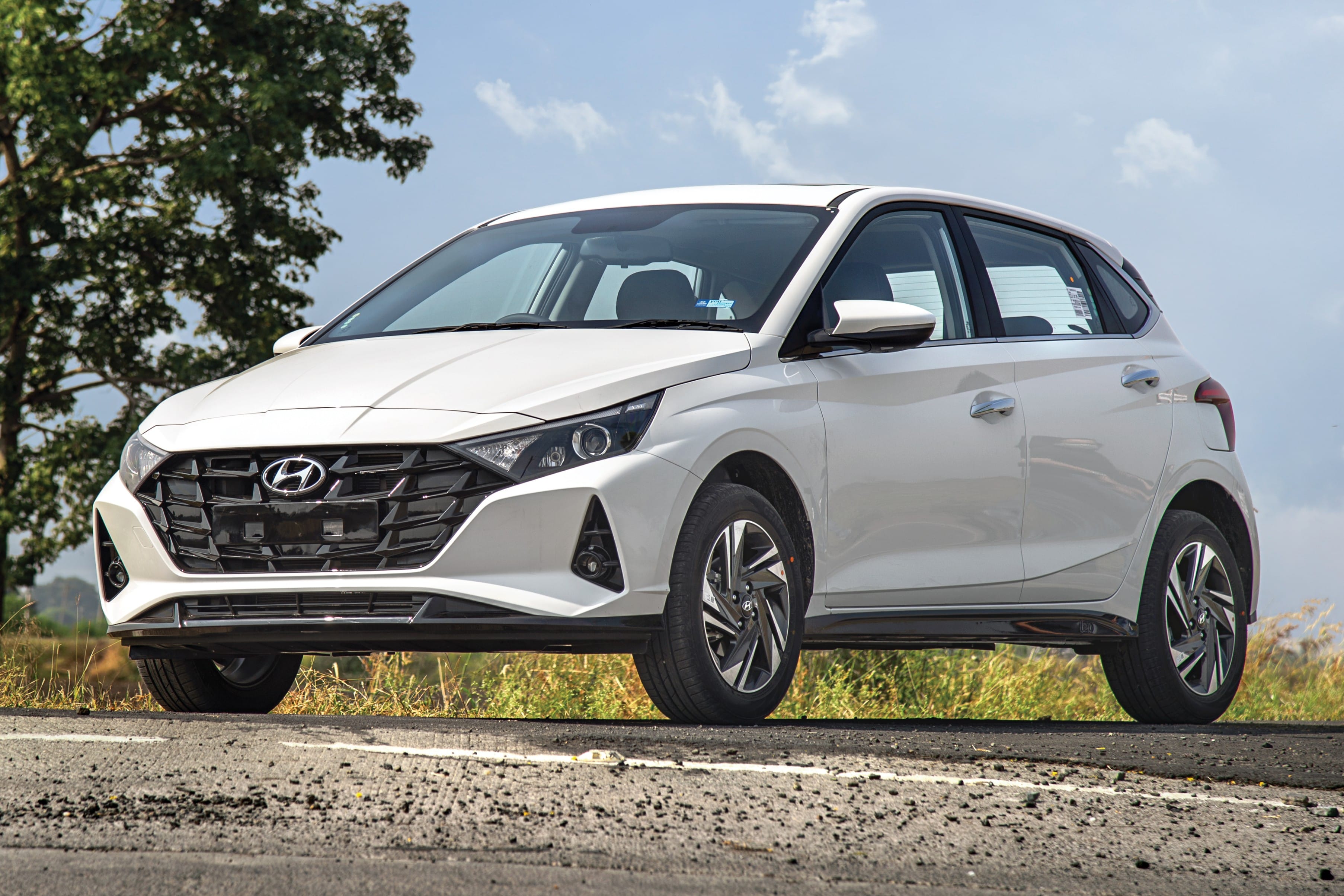
The third-generation of the hatchback arrived in 2020 and remains on sale today. It is the first i20 generation in India to be offered with a turbo-petrol engine, although that is now limited to the sportier N Line version. Hyundai also offered a diesel engine initially, but it was discontinued in 2023. The current generation i20 received a facelift in September 2023 and continues to be one of the most feature-rich offerings in its segment.
Third-generation Hyundai i20.
Today, the standard i20 is powered by an 83hp 1.2-litre naturally aspirated petrol engine, paired with either a 5-speed manual or a CVT automatic. Whereas, the i20 N Line uses a 120hp 1.0-litre turbo-petrol engine, available with either a 6-speed manual or a 7-speed dual-clutch automatic gearbox.
Hyundai i20 price and rivals
The Hyundai i20 is priced between Rs 6 lakh and Rs 10.63 lakh, ex-showroom, while the i20 N Line costs Rs 9.27 lakh to Rs 11.74 lakh. Its rivals include the Maruti Baleno, Toyota Glanza and Tata Altroz. Hyundai unveiled the fourth-generation i20 in June 2026, although the company has not yet announced plans to bring it to India.
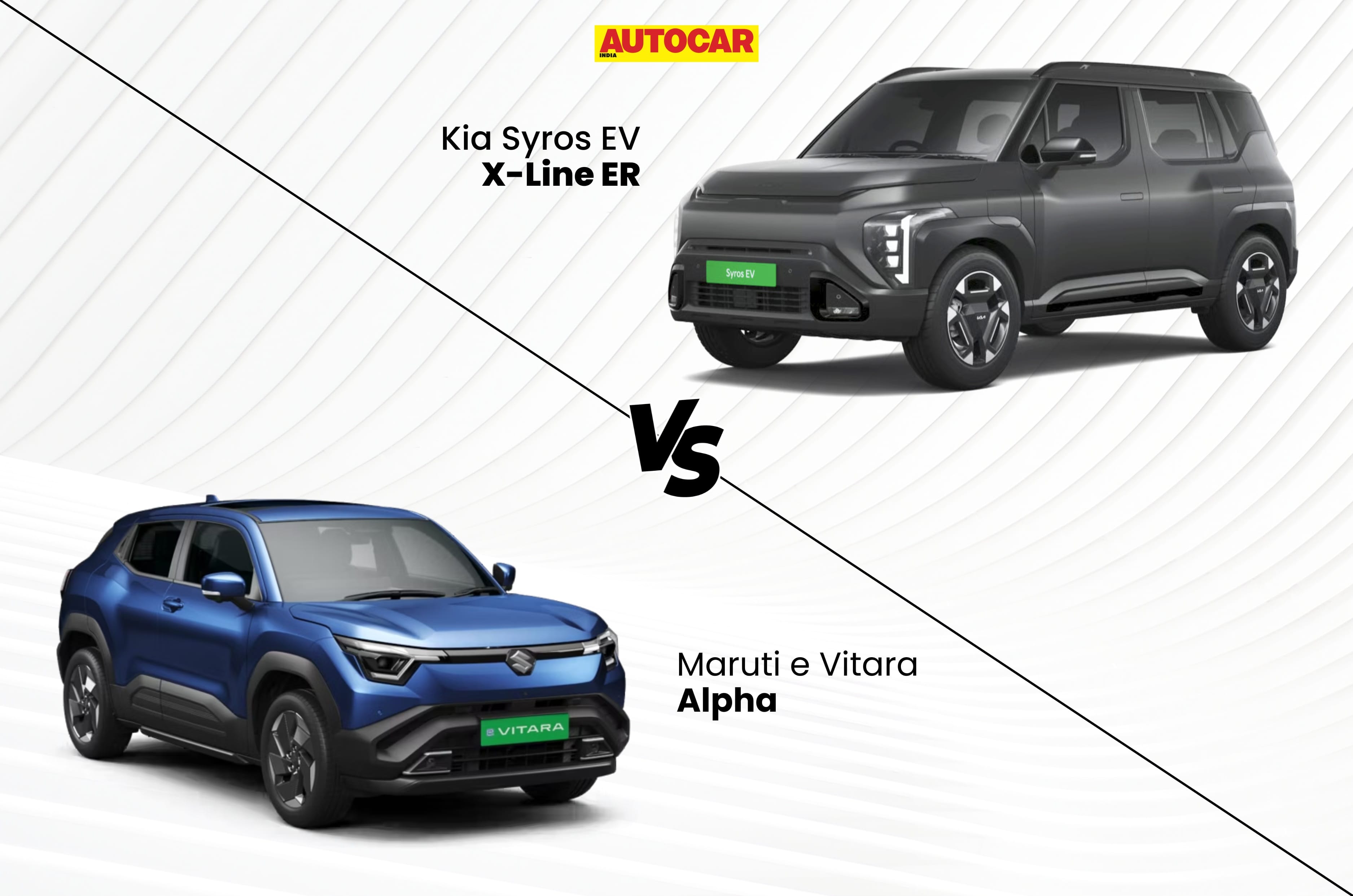
Kia India has officially launched its second mass-market electric car, the Syros EV. While the sub-4m Syros EV directly rivals the Tata Nexon EV and Mahindra XUV 3XO, the Kia’s pricing sees quite a bit of overlap with that of the Maruti Suzuki e Vitara, which is of a segment above. In fact, the top-spec trims of both electric SUVs are identically priced. Therefore, we compared the top-spec versions of the Syros EV and e Vitara on paper to determine which electric SUV offers more bang for your buck.
Kia Syros EV vs Maruti Suzuki e Vitara: Top trim dimensions
e Vitara is longer, but Syros EV is wider and taller
Kia Syros EV X-Line ER vs Maruti e Vitara Alpha dimensions
Syros EV
e Vitara
Length (mm)
3,995
4,275
Width (mm)
1,805
1,800
Height (mm)
1,670
1,640
Wheelbase (mm)
2,550
2,700
Frunk (litres)
16
–
Wheel size (inches)
17
18
Expectedly, the Syros EV is 280mm shorter overall (150mm shorter wheelbase) than the e Vitara, but interestingly, the Kia compact SUV is 5mm wider and 30mm taller. Neither Kia nor Maruti Suzuki quote precise boot space figures for their respective electric SUVs, but it’s worth noting that the Syros EV comes with a 16-litre frunk, while the e Vitara completely lacks storage space up front. However, the top-spec e Vitara does get larger alloy wheels than the equivalent Syros EV.
Kia Syros EV vs Maruti Suzuki e Vitara: Top trim powertrains
Syros EV is quicker, e Vitara claims higher range and has a bigger battery
Kia Syros EV X-Line ER vs Maruti e Vitara Alpha battery and range
Syros EV
e Vitara
Battery size (kWh)
51.4
61
Electric motor setup
Single motor, front
Single motor, front
Drive layout
FWD
FWD
Power (hp)
171
174
Torque (Nm)
255
193
Claimed 0-100kph time (seconds)
8.1
8.7
ARAI range (km)
526
543
The Syros EV’s battery pack is almost 10kWh smaller than that of the e Vitara, but the Kia is only 17km behind in terms of ARAI-claimed range. Both electric SUVs are front-wheel drive and make similar amounts of power, but the Syros EV edges ahead by a significant 62Nm in terms of torque output. This is partly why the Syros EV claims a 0.6sec quicker 0-100kph time than that of the e Vitara.
Kia Syros EV vs Maruti Suzuki e Vitara: Top trim charging speeds
Syros EV supports higher DC wattages
Kia Syros EV X-Line ER vs Maruti e Vitara Alpha charging times
Syros EV
e Vitara
Battery size (kWh)
51.4
61
7.4kW AC charging (10-100 percent)
–
9 hrs
11kW AC charging (10-100 percent)
8.9 hrs
–
DC fast charging (10-80 percent)
39 mins at 100kW
45 mins at 70kW
Kia and Maruti Suzuki quote AC charging speeds at different wattages, so the Syros EV and e Vitara can’t be directly compared on this front. However, it’s noteworthy that though the e Vitara has a larger battery than the Syros EV, the former takes roughly the same amount of time for a 10-100 percent charge at 7.4kW as the latter does at 11kW. Coming to DC charging, the Syros EV supports up to 100kW, while the e Vitara tops out at 70kW.
Kia Syros EV vs Maruti Suzuki e Vitara: Top trim exterior features
Syros EV gets puddle lamps, but e Vitara offers much greater choice in colours
Kia Syros EV X-Line ER vs Maruti e Vitara Alpha exterior features
Syros EV
e Vitara
LED projector headlamps
Yes (auto)
Yes (auto)
Front fog lamps
Yes
Yes
LED tail-lamps
Yes
Yes
Puddle lamps w/ logo projection
Yes
No
Roof rails
Yes
No
Powered ORVMs
Yes
Yes
Auto-folding ORVMs
Yes
Yes
Flush door handles
Yes
No
Body cladding
Yes
Yes
Rear spoiler
Yes
Yes
Colour options
2, monotone
10, monotone + dual-tone
Both electric SUVs are quite evenly matched in terms of exterior features, but the Syros EV takes the lead by way of roof rails and door-mounted puddle lamps that project the Kia logo. The Syros EV has flush door handles too, but some may appreciate the e Vitara’s conventional door handles more. Colours are a square win for the e Vitara, as it offers six monotone options and four dual-tone finishes. The Syros X-Line ER can be had in either Aurora Black Pearl or Matte Graphite, both of which are difficult to maintain. Buyers who want other colours have no option but to consider lower-spec Syros EV variants.
Kia Syros EV vs Maruti Suzuki e Vitara: Top trim interior features
Syros EV beats e Vitara with panoramic sunroof, cooled rear seat bases, and more
Kia Syros EV X-Line ER vs Maruti e Vitara Alpha interior features
Syros EV
e Vitara
Infotainment screen
12.3-inch
10.1-inch
Digital driver’s display
12.3-inch
10.25-inch
Climate control display
5-inch
–
Sunroof
Panoramic
Fixed single-pane
Wireless charger
Yes
Yes
Driver’s seat adjustment
4-way powered
10-way powered
Ventilated front seats
Yes
Yes
Rear seat base ventilation
Yes
No
Automatic climate control
Yes
Yes
Ambient lighting
Yes
Yes
Sound system
8-speaker Harmon Kardon
8-speaker Infinity
Apple CarPlay & Android Auto
Wireless
Wireless
Connected car tech
Yes
Yes
OTA updates
Yes
Yes
Rear sunshades
Yes
No
Rear centre armrest
Yes
Yes
Sliding, reclining rear seats
Yes
Yes
Even on the inside, the Syros EV’s feature set comes out on top. Over the e Vitara, the Syros EV packs larger infotainment and instrument displays, an additional screen for climate control settings, a panoramic sunroof, rear sunshades, and ventilation for the rear seat bases – this feature is not available even in electric SUVs a segment above the Syros EV. The e Vitara’s only advantage over the Syros EV is a greater gamut of electrical adjustment for the driver’s seat.
Kia Syros EV vs Maruti Suzuki e Vitara: Top trim driving features
Syros EV scores big on convenience by way of paddle shifters for regen modes
Kia Syros EV X-Line ER vs Maruti e Vitara Alpha driving features
Syros EV
e Vitara
Drive modes
Eco, Normal, Sport
Eco, Normal, Sport
Terrain modes
No
Snow
V2L function
Yes
No
Multi-level regen braking
Yes
Yes
Paddle shifters for regen
Yes
No
Cruise control
Adaptive
Adaptive
Both the Syros EV and e Vitara come with three drive modes and adaptive cruise control, but the Kia SUV inches forward thanks to vehicle-to-load (V2L) functionality, which lets you power external devices from the battery pack. The Syros EV also offers paddle shifters to cycle through the regenerative braking levels, while the e Vitara makes do with just a knob on the centre console. However, the e Vitara does offer a Snow terrain mode over the Syros EV.
Kia Syros EV vs Maruti Suzuki e Vitara: Top trim safety features
e Vitara wins thanks to an extra airbag, rain-sensing wipers, and 5-star BNCAP score
Kia Syros EV X-Line ER vs Maruti e Vitara Alpha safety features
Syros EV
e Vitara
Bharat NCAP rating
Yet to be tested
5 stars
Airbags
6
7
ABS with EBD
Yes
Yes
Electronic stability program
Yes
Yes
Follow-me-home headlamps
Yes
Yes
Hill hold control
Yes
Yes
TPMS
Yes
Yes
360-degree camera
Yes
Yes
Parking sensors
Front, rear, side
Front, rear
Electronic parking brake
Yes (w/ auto-hold)
Yes (w/ auto-hold)
Rain-sensing wipers
No
Yes
Auto-dimming IRVM
Yes
Yes
ISOFIX child seat anchors
Yes
Yes
Rear wiper, defogger
Yes
Yes
Disc brakes
Front, rear
Front, rear
Level 2 ADAS
Yes
Yes
Acoustic vehicle alert system
Yes
Yes
Coming to safety, the e Vitara finally scores a win. It’s the only one here to come with seven airbags and rain-sensing wipers, whereas the Syros EV sets itself apart with side parking sensors. The e Vitara also holds a 5-star crash safety rating from Bharat NCAP, while the Syros EV has not been tested yet. It’s worth noting, though, that the ICE-powered Syros was awarded 5 stars by Bharat NCAP, so a similar rating for the compact SUV’s electric derivative is very possible.
Kia Syros EV vs Maruti Suzuki e Vitara: Top trim prices
Syros EV for buyers seeking features, e Vitara for those who want a bigger car
Kia Syros EV X-Line ER vs Maruti e Vitara Alpha price comparison
Syros EV
e Vitara
Price (Rs, lakh)
20.00
19.99
As noted previously, there is next to no difference in the pricing of the Syros EV X-Line ER and e Vitara Alpha, which means the final decision comes down to your needs and preferences. If you want as many features as possible, are fine with a dark colour, and don’t mind smaller dimensions and funkier styling, the Syros EV X-Line ER is the one to go for. On the other hand, if you want the price you pay to be reflected in the size of the car, more choice in colours, more conventional looks, and are happy to forgo some features, you can consider the e Vitara.
It’s also worth noting that both the Syros EV and e Vitara can be purchased with battery-as-a-service (BaaS), which converts the cost of the battery into separate usage-based EMIs, thereby lowering the upfront cost. Kia has yet to reveal the BaaS price of the Syros EV X-Line ER, but the e Vitara Alpha costs Rs 14.49 lakh – Rs 5.5 lakh off the sticker price – with a Rs 4.39/km battery usage fee.
The Honda ZR-V is the carmaker’s first hybrid SUV in India and its being brought here via the CBU route from Japan as a brand builder or a halo product. It’s also the first of a few global products being launched in India, so it gives us an idea of what we can expect from Honda in the coming years. Honda says the ZR-V is a “Sports Hybrid” meaning it prioritizes performance and fuel efficiency in equal parts, which is why the company gave us a chance to briefly experience it at the Buddh International Circuit.
Honda ZR-V Exterior Design and Engineering – 8/10
Hybrid powertrain is smooth, seamless, zippy and promises to be efficient as well
The Honda ZR-V is a strong hybrid SUV that features a 2.0-litre, four-cylinder, direct injection, petrol engine that runs on the more efficient Atkinson cycle and it works in tandem with two, permanent magnet synchronous electric motors. The powertrain produces a max combined output of 184hp and 315Nm which is channeled to the front wheels only via an eCVT transmission. The SUV has a claimed 0-100kph time of 7.9 seconds and an electronically limited top speed of 172kph. Internationally, the ZR-V is also offered with an all-wheel-drive (AWD) setup and a 1.5-litre turbo-petrol engine producing 180hp and 240Nm but that is currently not on the cards for India.
It’s responsive off the line and feels composed at high speeds
The strong hybrid powertrain feels smooth and zippy right from the get-go. What’s great is that it makes all the 315Nm of torque from standstill, so it feels quick right from launch and you’re never left wanting more. Power delivery is smooth and linear and it’s also keen to respond to part-throttle inputs. The powertrain is also very refined with barely any engine, road or tyre noise filtering through.
At low speeds with light throttle inputs, the ZR-V will stay in pure EV mode as long as the battery has enough charge. Unlike some other strong hybrids however, you can’t manually choose EV mode. Push the accelerator harder and the engine will come on, with the SUV moving to the hybrid drive mode. In this mode, the electric motor is still powering the wheels with the engine acting as a generator to keep the battery topped up. Then there’s the engine drive mode, which is specifically used at high speeds. Here, it’s the engine powering the wheels with the electric motor assisting.
However, there are drive modes that you can change – Eco, Normal and Sport – and these don’t have an effect on the output or how the powertrain works but just the response. There’s paddleshifters too, for cycling between the regenerative braking modes and they do work effectively. As for the friction brakes, the ZR-V comes with discs all around and they felt predictable and confidence-inspiring out on track.
Honda ZR-V Mileage and Efficiency – 8/10
Honda claims the ZR-V will do an impressive 22.80kpl. Considering it’s a hybrid, real-world efficiency should be close to the claimed but we’ll have to reserve judgement till we actually subject the SUV to our fuel efficiency tests.
Honda ZR-V Ride Comfort and Handling – 7/10
Considering we drove it on BIC’s smooth tarmac surface and only for a few laps, giving a definitive verdict on its ride comfort is difficult. As for high speed composure, the SUV felt stable.
In terms of handling, the ZR-V felt enjoyable to drive around the corners. Handling on the whole was stable and predictable, thanks to a well-weighted and precise steering. A slalom course also demonstrated its tidy body control and it felt eager to change directions.
Honda ZR-V Exterior Design and Engineering – 7/10
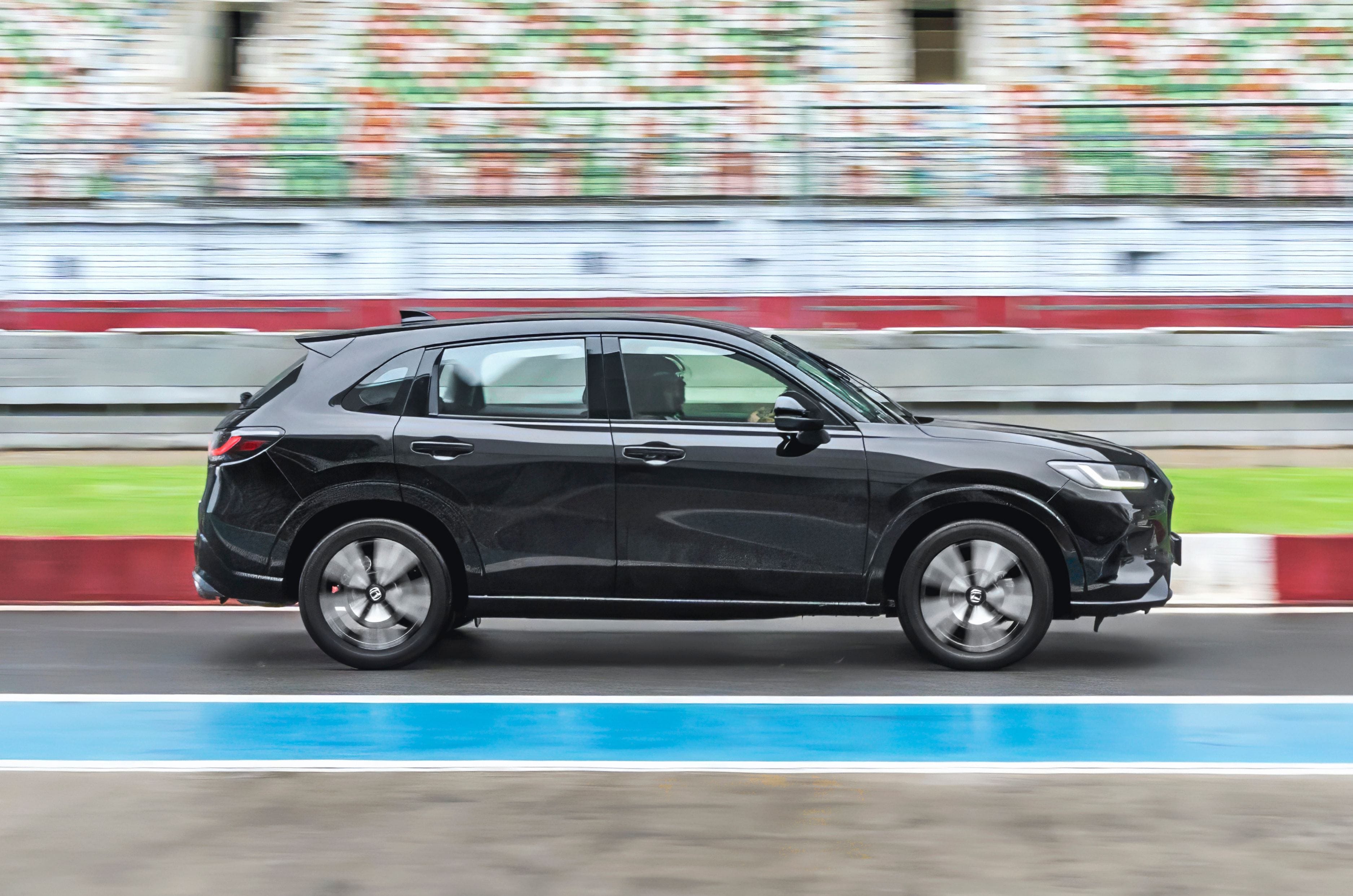
Unlike most SUVs which have a squared-off and upright stance, the Honda ZR-V has a sleek, crossover-like design, with rounded-off and clean surfaces. Up front, it gets slim LED headlights with L-shaped daytime running lamps (DRLs), a black grille with vertical slates and a bumper that houses functional air vents on either side.
ZR-V’s styling is more like a crossover than an upright SUV.
Along the sides, there’s stylish 18-inch alloy wheels with a dual-tone finish, body-coloured cladding around the wheel arches and a tapering roofline at the rear. Unlike most SUVs today, the ZR-V doesn’t get connected tail-lights, instead you get clear-lens taillamps with LED elements. Then there’s a roof-mounted spoiler element and lower down in the bumper, you get dual exhausts.
18-inch alloys get an attractive dual-tone finish.
On the whole, the ZR-V styling comes across as subtle and not striking. And given its dimensions of just over 4.5m in length and 1.8m in width, it doesn’t quite have the presence of its rivals. And it also doesn’t help that Honda is only offering four colours, all of which are subdued.
Honda ZR-V Interior Space and Comfort – 7/10
The interior of the ZR-V is typically Honda, which means its practical, comfy and well-finished. There’s plenty of soft touch materials around and I like that the dashboard is low-set which enables a great view out. A 9-inch touchscreen sits on top of the dash, and though it’s nice that it gets physical controls, the size and the UI leaves more to be desired by today’s standards. There’s a honeycomb grille that runs the width of the dash, separated by a silver trim piece which does look premium. Lower down you get similar physical AC controls like on the Honda City with rotary knobs that are satisfying to operate. There’s more buttons on the centre console too, for the drive modes, parking brake and in place of a traditional drive selector.
Cabin is practical and well-finished with plenty of soft-touch materials around
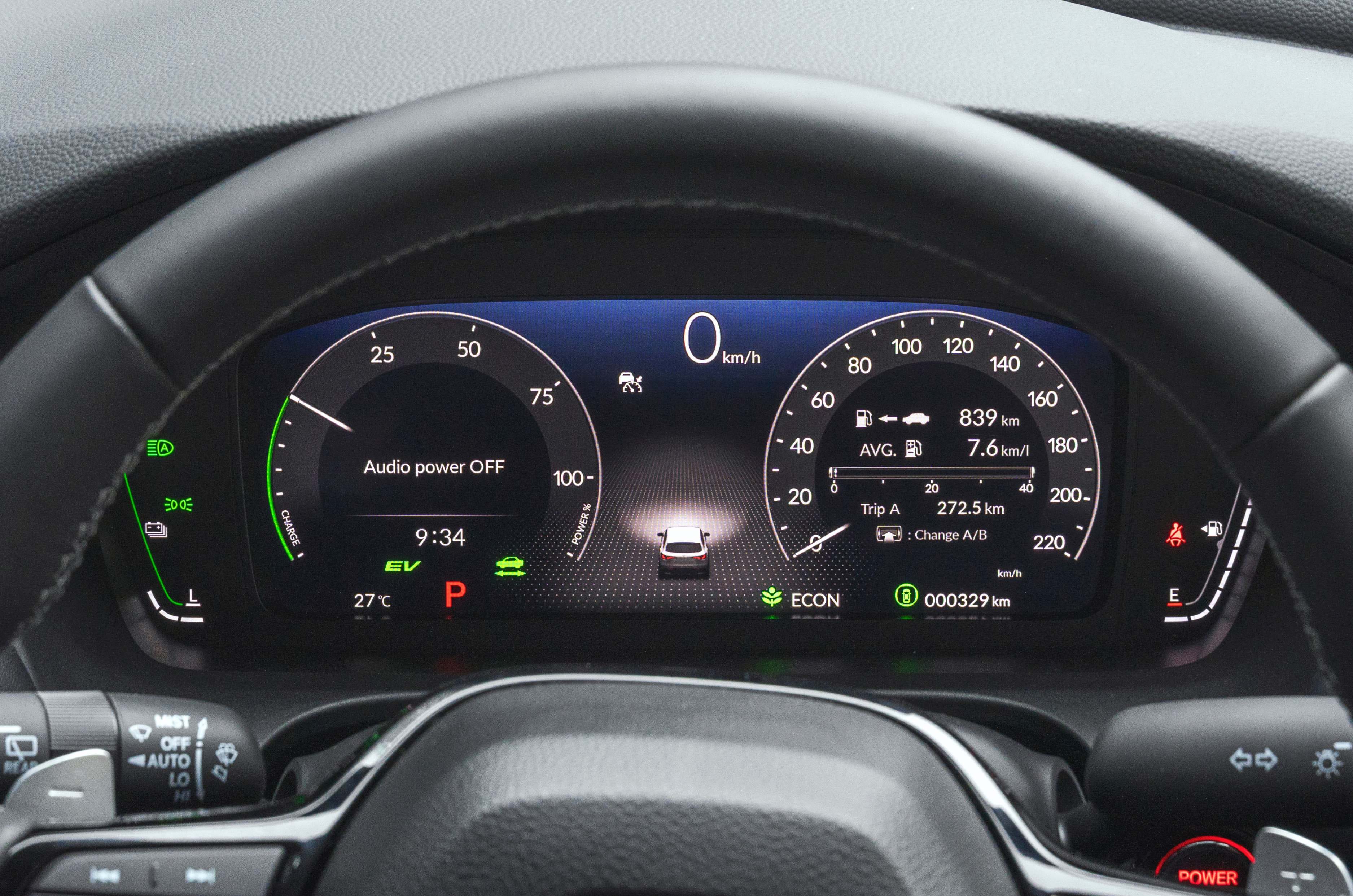
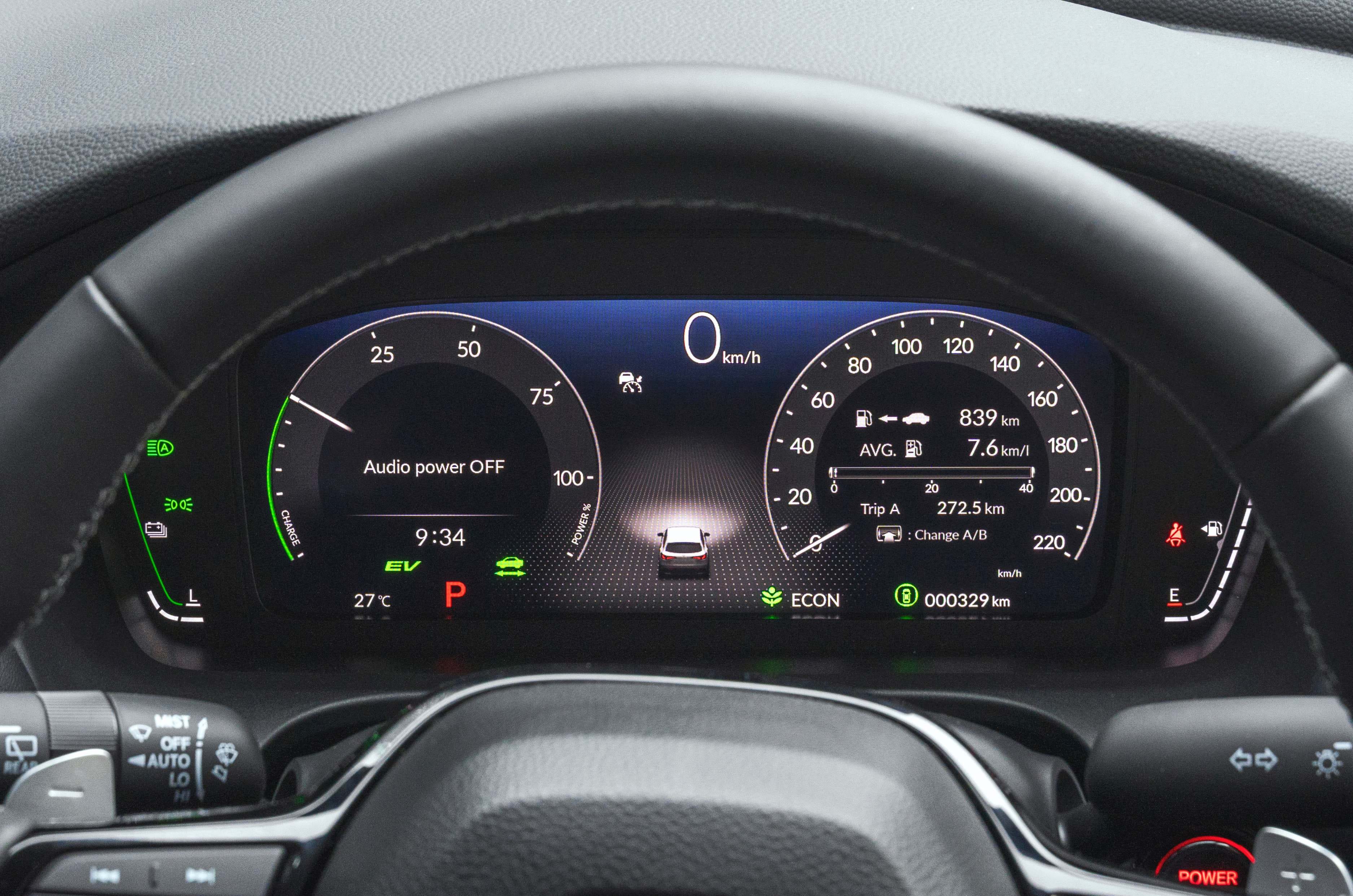
Then you get a well-executed, fully digital instrument cluster that’s customisable and shows you all sorts of driving data, the charge status and a flow chart of the powertrain. The front seats are well-padded, comfortable and feel premium too. Storage spaces are also well thought out, with a decent sized glove box and door bins, storage under the centre armrest and in the centre console.
Rear is comfy and spacious enough but low seat results in a bit of a knees-up seating position; also misses sun blinds.
Getting into the rear is quite easy thanks to the low set seat, even though the sill is on the higher side. Once in, you’ll find it a comfy place to be with enough space for three passengers and plenty of legroom. However, the low set seat results in a slightly knees-up seating position, there are no sunblinds and the tapering roofline means people over 6 feet will find the headroom to be tight. As for features here, there’s dedicated AC vents, type C charging ports, a fold-down armrest with cupholders and three-point seatbelts and adjustable headrests for all three passengers.
The boot is large too and the loading lip isn’t that high. With the rear seats folded down in a 60:40 split, you can fit in 1313 litres of cargo. There’s no underboot storage though as that’s taken up by the hybrid battery and there’s no spare tyre either.
Honda ZR-V Features and Safety – 6/10
As for features, the ZR-V gets a 10.25-inch digital cluster, a 9-inch touchscreen with Android Auto and Apple CarPlay, a 12-speaker Bose audio system, dual-zone climate control, leatherette upholstery, 8-way powered driver’s seat with memory, 4-way powered front passenger seat, wireless charger, electric tailgate with gesture, electric parking brake and ambient lighting. However, some important features like a panoramic sunroof and heated, ventilated and massaging front seats are missing, all of which could have been offered at the expected price point.
9-inch screen is small by today’s standards but its bright and features physical controls
As for the safety kit, you get a 360-degree parking camera (it is quite low res though), 8 airbags, tyre pressure monitor, hill-start and hill-descent assist, traction control and ISOFIX child seat mounts. It even packs in Level 2 ADAS tech which brings in autonomous emergency braking, lane keep assist, blind spot monitor, adaptive cruise control and more. On the whole though, the ZR-V is under equipped for its expected price.
10.25-inch digital cluster is crisp and shows plenty of info.
Honda ZR-V Value for Money – 5/10
So that’s a brief drive impression of the Honda ZR-V for you. We’ll have to reserve our definitive verdict till we get to experience the SUV out in the real-world and subject it to our performance and fuel efficiency tests.
The ZR-v is being brought as a CBU import from its home market in Japan
The Honda ZR-V has its downsides like the missing features, its relatively compact footprint and lack of road presence and being a full import it’s going to be expensive as well, around the Rs 45 lakh mark. But it has a practical, comfy and well-finished interior and comes with a smooth and seamless hybrid powertrain that is quick and promises to be efficient as well. As such, the Honda ZR-V is going to be a niche product, so it remains to be seen as to how many takers would it find in our market.