न्यूजीलैंड के पूर्व सलामी बल्लेबाज और कप्तान स्टीफन फ्लेमिंग ने चेन्नई सुपर किंग्स से अपना 18 साल लंबा जुड़ाव बतौर मुख्य कोच आज आपसी सहमति से खत्म कर लिया। फ्लेमिंग और चेन्नई प्रबंधन के बीच कई दौर की बातचीत हुई और लगा कि फ्लेमिंग अगले साल भी कोच की भूमिका में दिखेंगे लेकिन दोनों तरफ ने आगे साथ ना जाने की इच्छा जताई।
OFFICIAL ANNOUNCEMENT
The Super Kings and Head Coach Stephen Fleming have mutually decided to part ways.
Together, we shared one of the most successful and enduring partnerships in IPL history. The legacy you've built will continue to inspire us.
इस फैसले की घोषणा करते हुए CSK की मालकिन रूपा गुरुनाथ ने फ्रैचाइजी के लिए फ्लेमिंग के योगदान की तारीफ करते हुए कहा, “स्टीफन फ्लेमिंग इस फ्रैचाइजी के लगभग पूरे सफ़र के दौरान हमारी कोचिंग ईकाई की जान रहे हैं। लगभग दो दशकों से, उन्होंने हमारी पहचान, विजन और बेहतरीन प्रदर्शन की कोशिश को आकार देने में मदद की है। सुपर किंग्स फ्रैचाइजी के सभी लोगों की ओर से, हम उनकी अटूट प्रतिबद्धता, जुनून और अगुवाई के लिए उनका बहुत-बहुत धन्यवाद करते हैं। भले ही मैदान पर हमारा साथ सफ़र खत्म हो रहा है, लेकिन वह हमेशा टीम की विरासत का एक अहम हिस्सा बने रहेंगे।”
फ्लेमिंग ने कहा, “खेल की दुनिया में अठारह साल एक पूरी ज़िंदगी के बराबर होते हैं, और मैं सिर्फ़ आभार के साथ जा रहा हूं। चेन्नई सुपर किंग्स के साथ बिताया गया समय मेरे कोचिंग करियर का सबसे यादगार अनुभव रहा है। मुझे उन सभी चीज़ों पर गर्व है जो हमने हासिल की हैं। हमने साथ मिलकर यादगार जीत का जश्न मनाया, मुश्किल पलों का सामना किया और ऐसी यादें बनाईं जो हमेशा मेरे साथ रहेंगी। CSK हमेशा मेरे दिल के करीब रहेगी, और मैं आने वाले सालों में भी टीम का हौसला बढ़ाता रहूंगा।” उल्लेखनीय है कि फ्लेमिंग सबसे पहले 2008 में आईपीएल के पहले सीजन में एक खिलाड़ी के तौर पर सीएसके से जुड़े थे और अगले ही साल मुख्य कोच बन गए।
2009 से 2026 तक, महेंद्र सिंह धोनी के साथ मजबूत रिश्ता बनाने वाले फ्लेमिंग ने टीम को लगातार सफलता दिलाई। उनकी देखरेख में फ्रेंचाइजी ने पांच आईपीएल खिताब और दो चैंपियंस लीग टी-20 खिताब जीते। फ्लेमिंग के कार्यकाल में सीएसके ने रिकॉर्ड 12 बार प्लेऑफ में जगह बनाई और 10 बार आईपीएल फाइनल के लिए क्वालिफ़ाई किया, जिससे टूर्नामेंट की सबसे लगातार अच्छा प्रदर्शन करने वाली टीमों में से एक के तौर पर उनकी पहचान पक्की हुई।
सीएसके ने अपना आखिरी खिताब 2023 सीजन में जीता था, जबकि उससे पिछले साल वे नौवें स्थान पर रहे थे। 2024 सीज़न में वे पांचवें स्थान पर रहे और 2025 में सबसे नीचे रहे। इस साल की शुरुआत में भी उनका प्रदर्शन खराब रहा और वे आठवें स्थान पर रहे। इस बीच, फ्लेमिंग ने SA20 और MLC में भी सुपर किंग्स टीमों को कोचिंग दी।
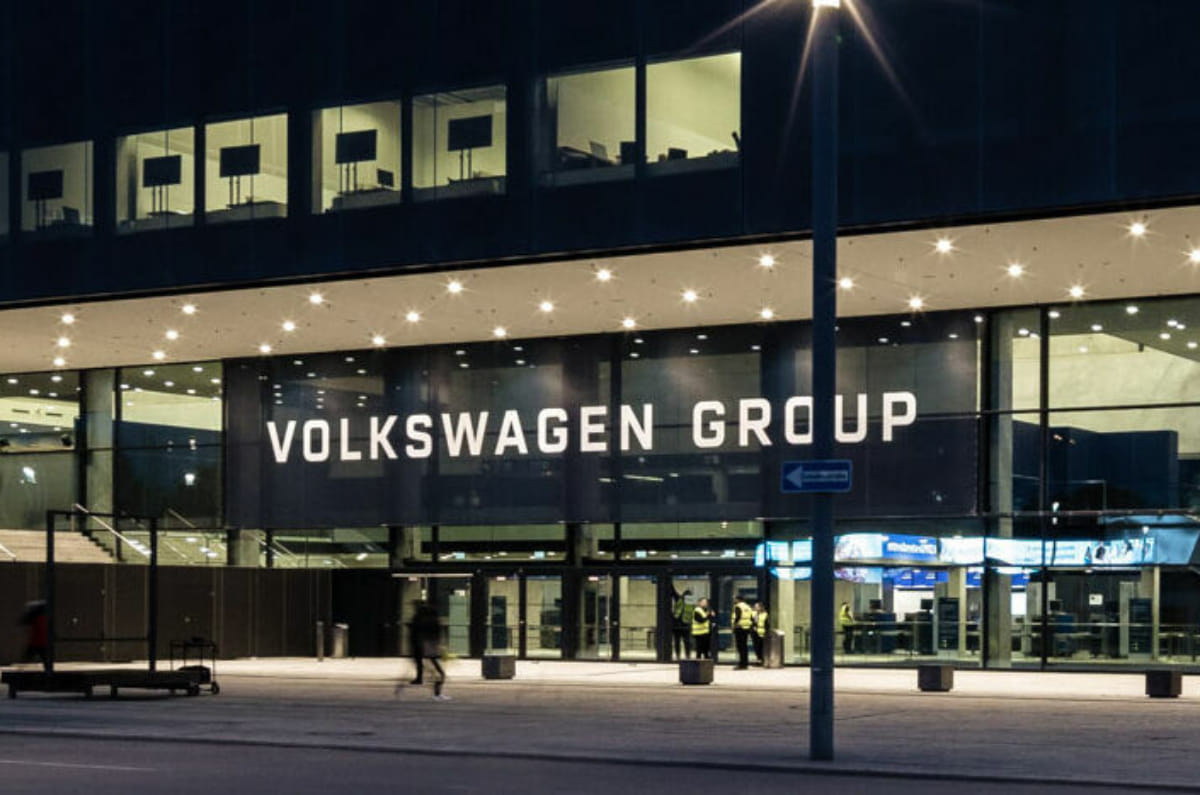
The Volkswagen Group plans to reduce its global model line-up by up to 50 percent by 2030 as part of a wider restructuring of its business. The Group will also cut the number of variant options offered across its portfolio by up to 75 percent and reduce production capacity, as it looks to lower costs and simplify its operations. Volkswagen has not named the models that will be discontinued.
Future line-up to focus on the ‘most attractive market segments’
Annual production capacity to fall to around 9 million vehicles, from 10 million
Platforms and electronic architectures will also be consolidated
Volkswagen Group to halve model line-up by 2030
The product changes form part of 12 initiatives that the Volkswagen Group plans to implement by 2030. The company said it will gradually “streamline” its model line-up by up to 50 percent, concentrating its portfolio on “the most attractive market segments”.
Volkswagen is also targeting a 75 percent reduction in what it calls “offering complexity”, which includes the number of equipment options available across its models. The company said this will allow it to focus investment and development resources on products that deliver the “greatest added value for customers and the highest value contribution” to the Group.
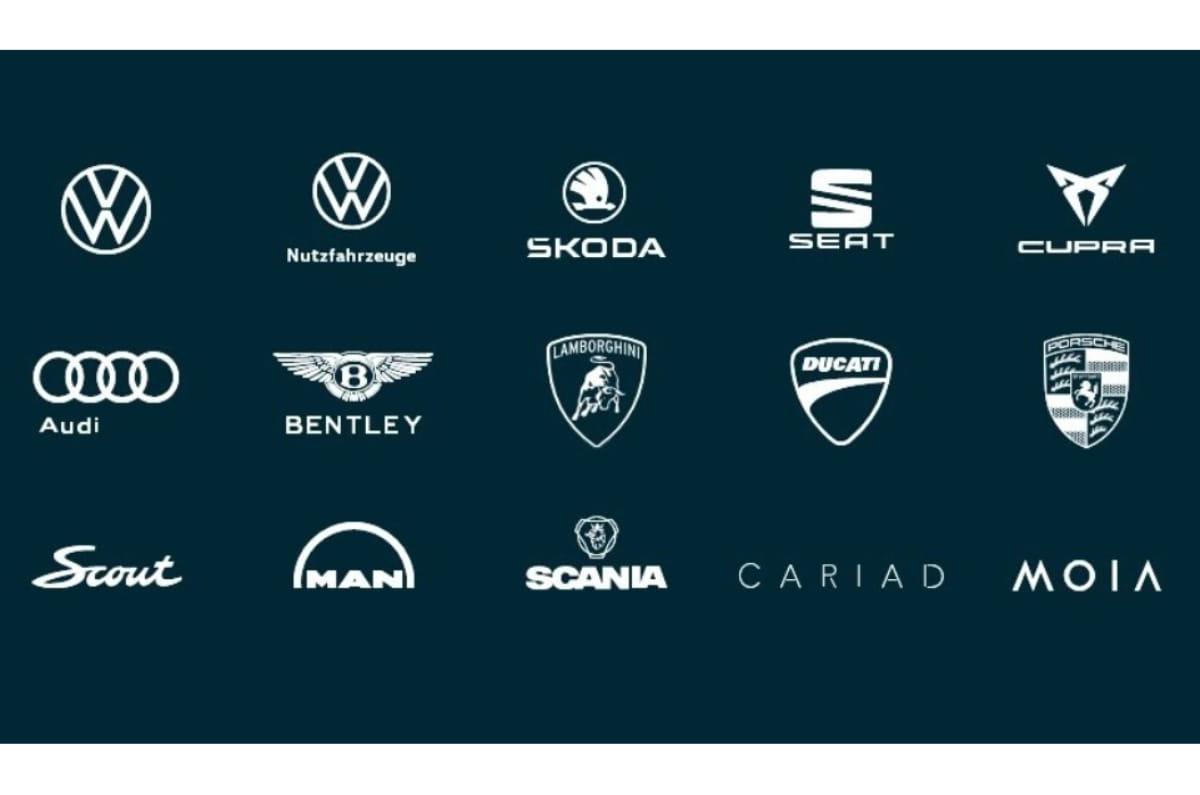
The Group has not confirmed which models will be affected by the reduction. Its portfolio spans Volkswagen, Skoda, Seat, Cupra, Audi, Porsche, Bentley and Lamborghini, among other brands.
“We are making the Volkswagen Group faster, more resilient and more competitive, through less complexity, focused technologies, and an even stronger alignment of products, development and production with regional markets,” said Volkswagen Group CEO Oliver Blume.
VW Group to reduce platforms, production capacity
Volkswagen also plans to reduce the number of platforms and electronic architectures used across the Group, with the aim of increasing the use of common technologies across its brands. The company will focus on technologies with what it describes as “high scaling potential”.
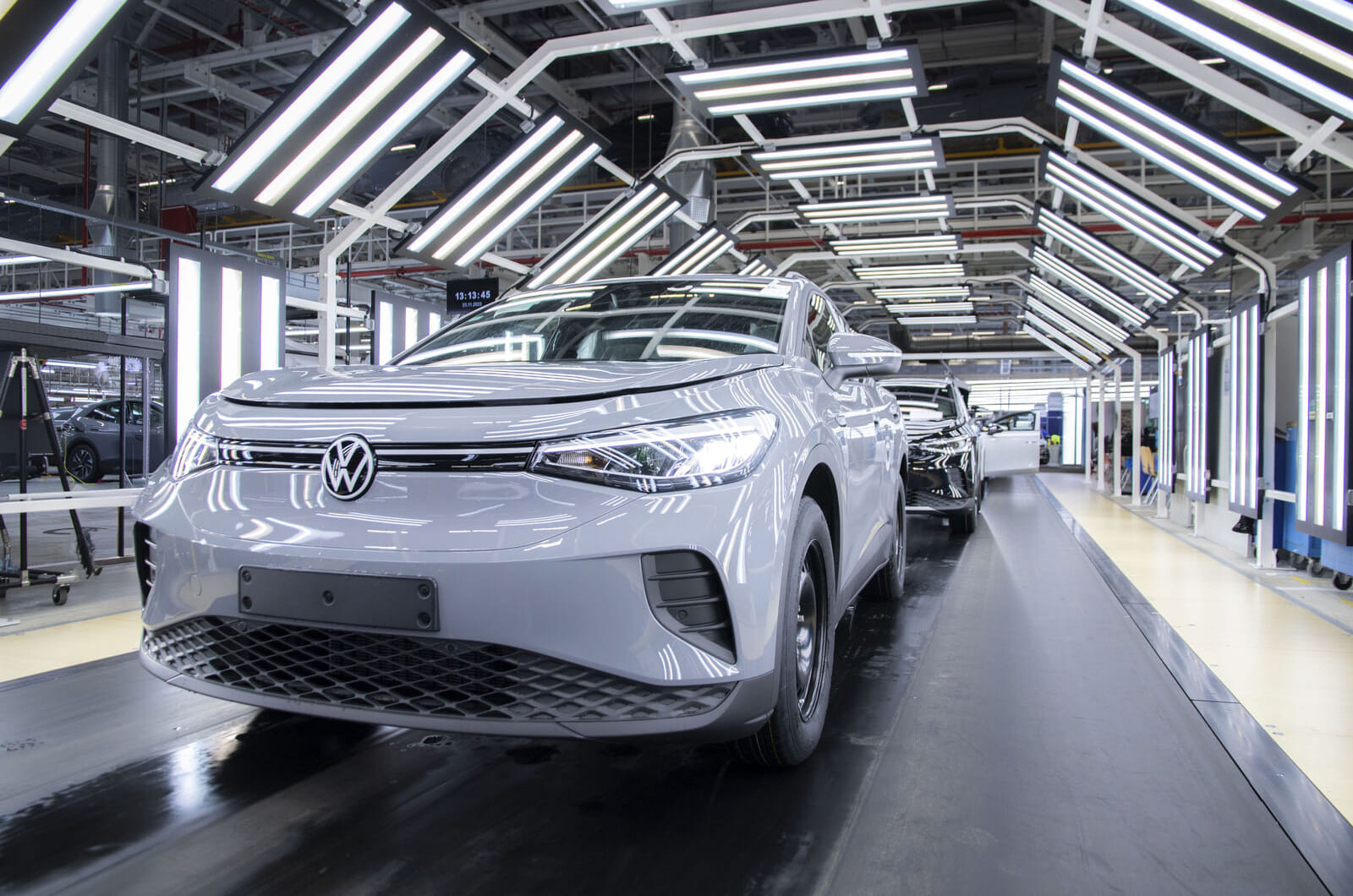
Annual production capacity will be reduced to around 9 million vehicles. Before the Covid-19 pandemic, the Group had established capacity to produce around 12 million vehicles annually and has already reduced this by about 2 million units. Volkswagen said further reductions are planned in Europe and China.
The restructuring comes as Volkswagen faces increased competition from Chinese carmakers, regulatory pressures, tariffs and geopolitical tensions. These factors have contributed to the Group’s profits falling by around half since 2021.
Up to 100,000 Volkswagen Group job cuts reported
The restructuring could also result in further workforce and factory reductions. Around 50,000 job cuts had already been outlined under earlier restructuring measures. Reports suggest Volkswagen could increase its planned workforce reduction to a total of 100,000 jobs and close four plants in Germany. However, the Group has not confirmed further job cuts or factory closures.
The plants reportedly under consideration for closure are Hanover, Emden, Zwickau and Audi’s Neckarsulm facility. It remains unclear whether the sites would be closed or whether Volkswagen could seek buyers for them.
LOOK OUT FOR: Suspension rattles, Infotainment issues
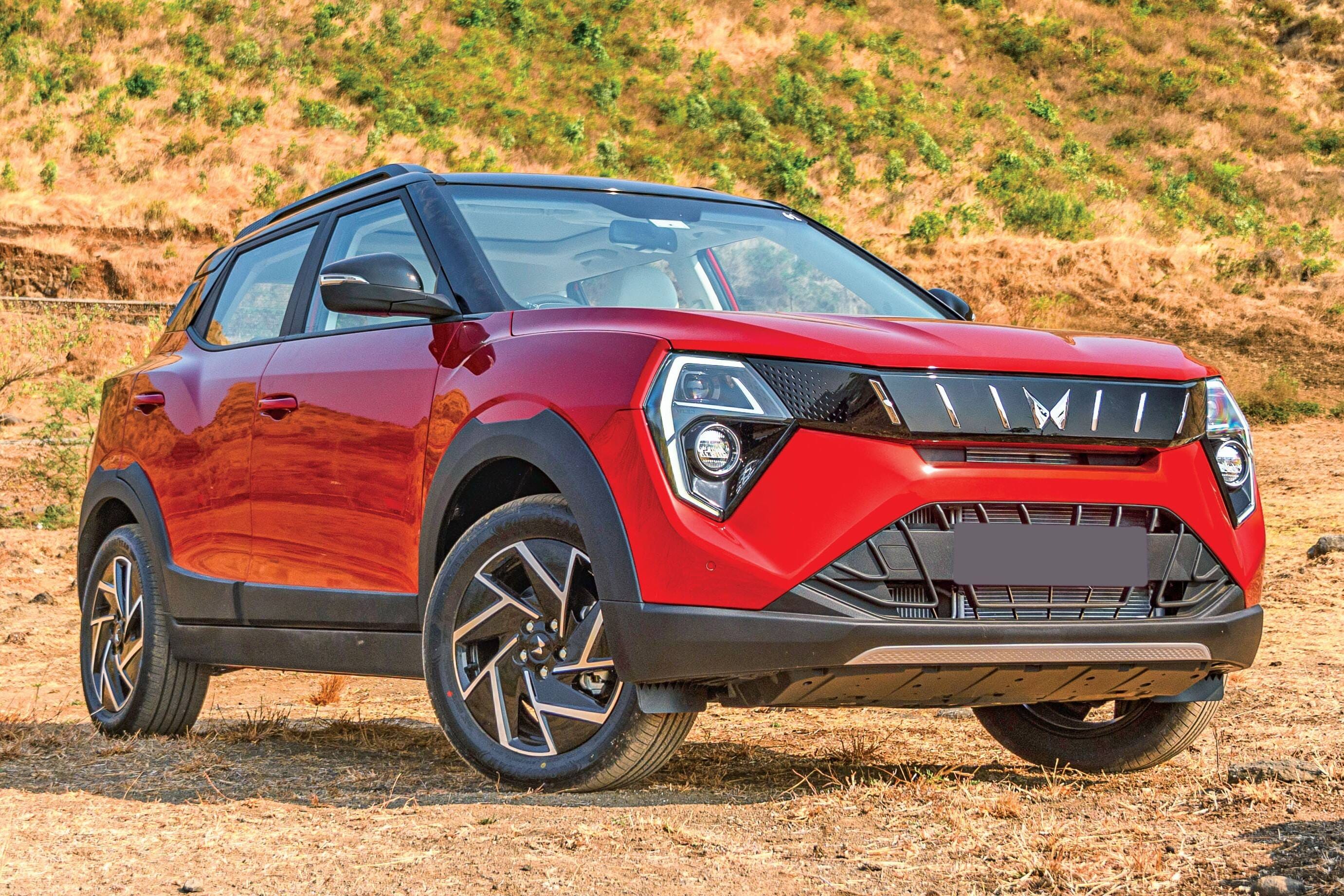
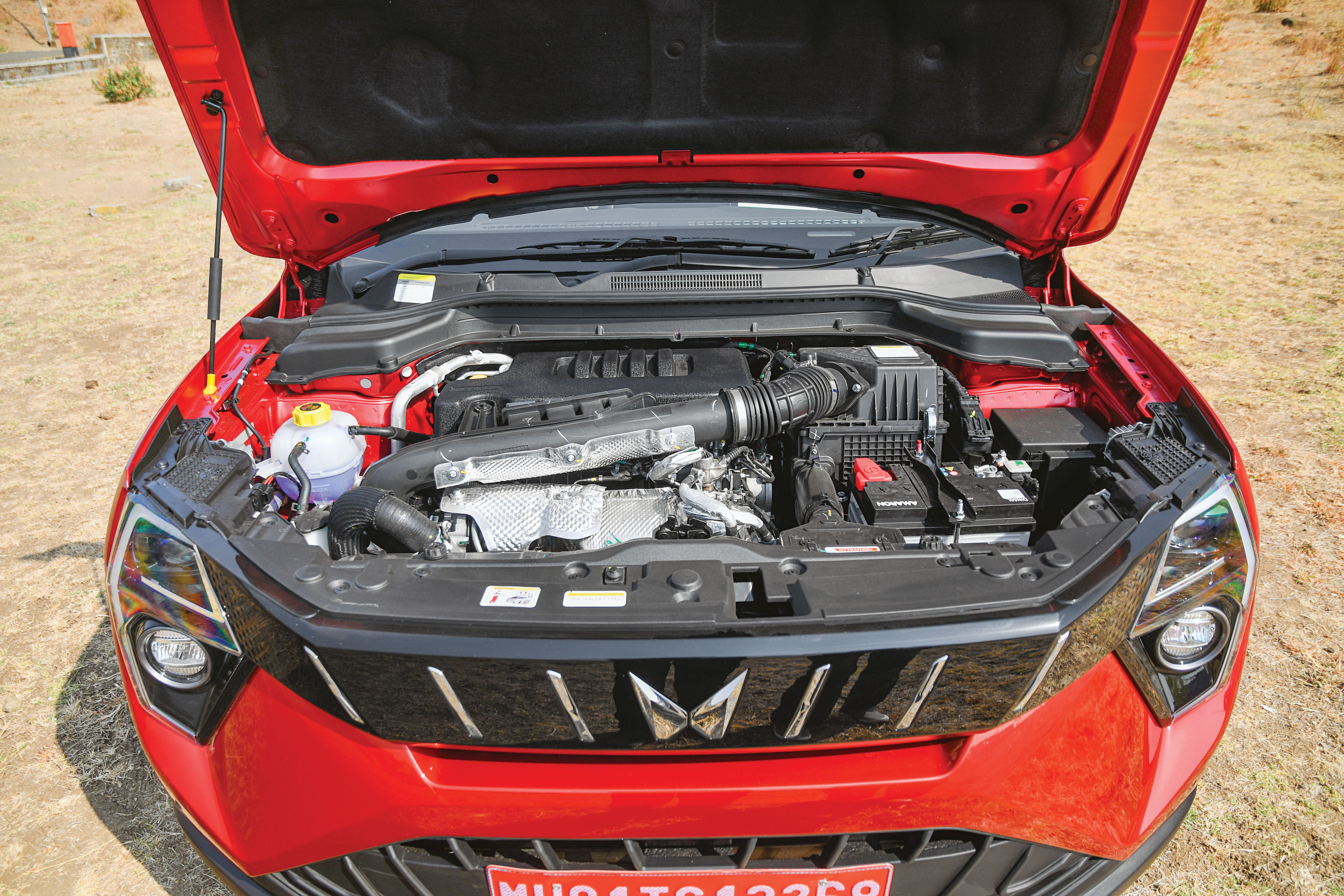
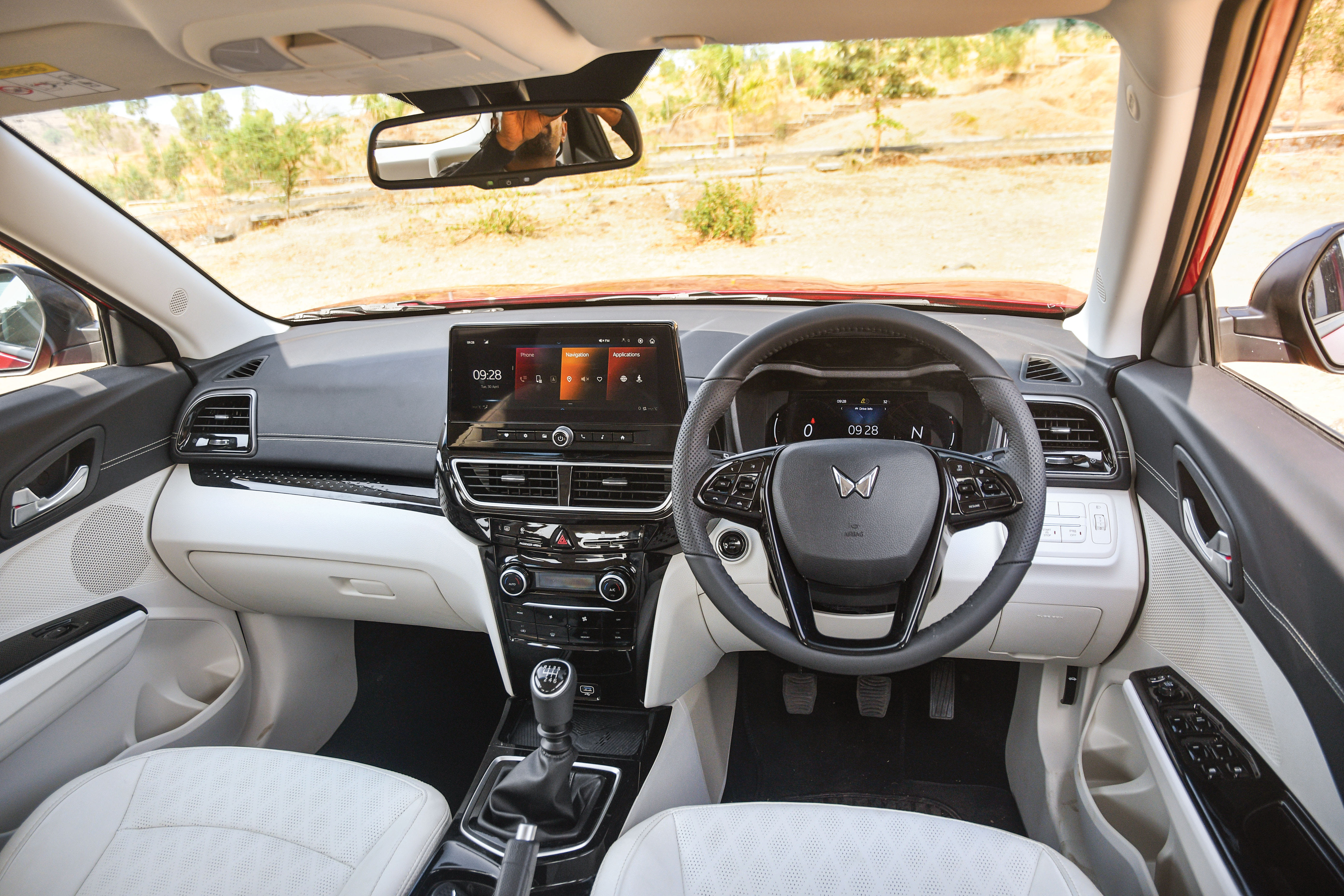
The Mahindra XUV 3XO was launched in 2024 as a replacement for the XUV300. But instead of a mild facelift, Mahindra went all out and gave the compact SUV an overhauled exterior, a thoroughly reworked interior, some segment-first features, a new class-leading petrol powertrain and a new name. Mahindra’s smallest offering stands out in the crowded compact SUV segment for its roomy and premium interior and many powertrain options, making it worth considering as a used buy. Here’s what to keep in mind.
Despite the redesigned exterior, the 3XO’s rear section still looks abruptly chopped off, though it doesn’t look as awkward as the XUV300’s. The front styling, too, is bold, distinctive and splits opinion. Inside, quality took a huge step up, with the 3XO’s interior feeling genuinely premium. It’s very good on space too, and can easily accommodate five adults, though the trade-off is one of the smallest boots in the segment.
Petrol, turbo-petrol, and diesel engines; up to 21.8kpl claimed mileage
Mahindra offers the XUV 3XO with three engine options – two petrols and one diesel. The range starts with a 111hp, 1.2-litre, MPFi, turbo-petrol engine that can be had with a 6-speed manual (ARAI-rated 18.89kpl fuel economy) or a 6-speed torque converter automatic (17.96kpl) option. Then there’s a 117hp, 1.5-litre diesel, which comes with a 6-speed manual (20.6kpl) and 6-speed AMT (21.2kpl). Meanwhile, the range topper is a 131hp, 1.2-litre direct-injection turbo-petrol unit, which is available with an Aisin-sourced 6-speed torque converter automatic (18.2kpl) and a 6-speed manual option (20.1kpl).
The diesel makes sense for high-mileage users or for those who do frequent road trips owing to its higher real-world efficiency. Enthusiasts will enjoy the 131hp turbo-petrol for its punchy character and the performance it packs in. However, for most users, the 111hp turbo-petrol will do the job just fine, as it has a good balance of performance, drivability and efficiency. What’s great is that every engine option can be had with an automatic gearbox option for greater convenience.
Mahindra XUV 3XO variants and features
Twin 10.25-inch screens, panoramic sunroof
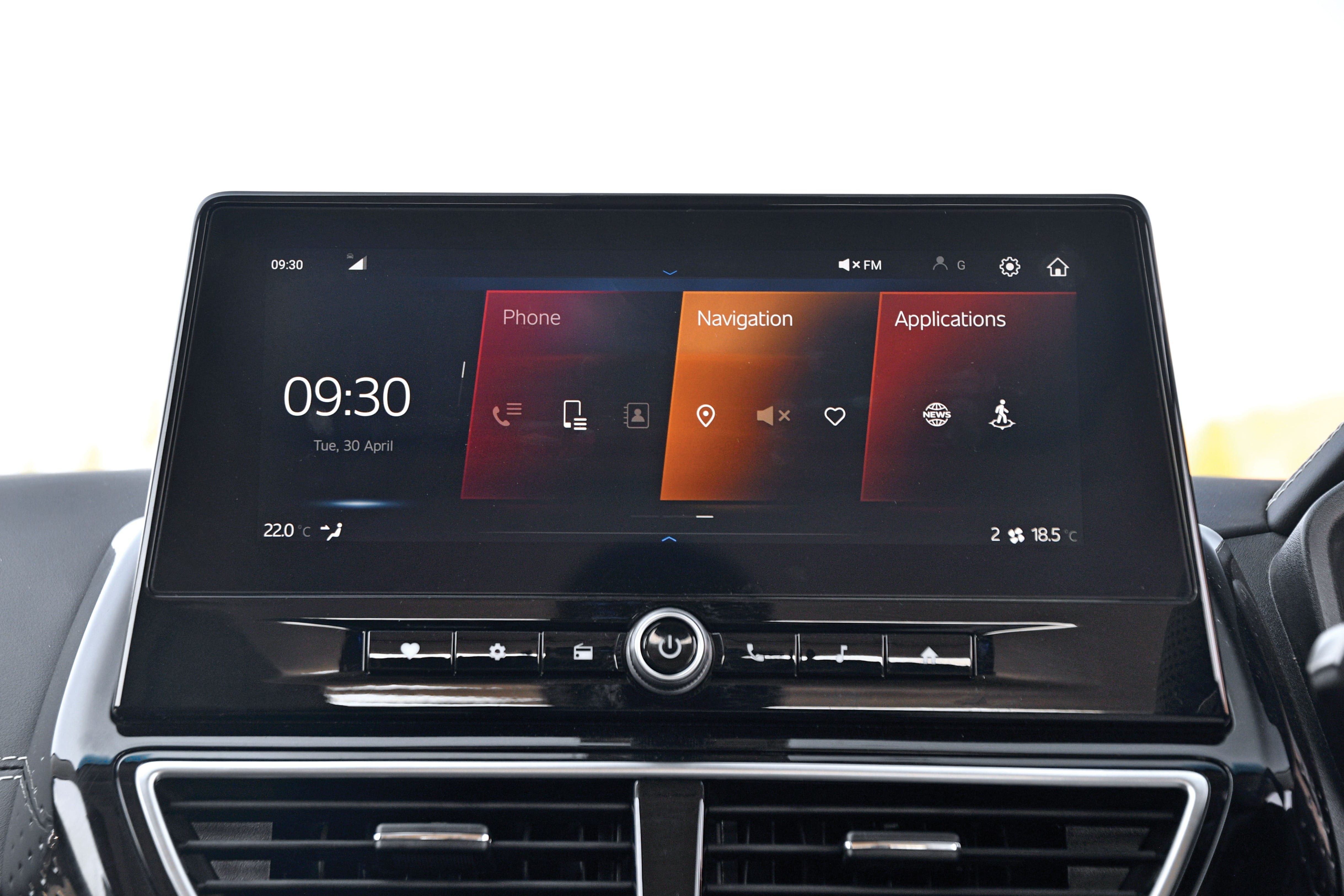
At launch, there were nine trim lines on offer – MX1, MX2, MX2 Pro, MX3, MX3 Pro, AX5, AX5 L, AX7 and AX7 L. Mahindra later launched a mid-spec RevX trim for the XUV 3XO too. As for features, the top-spec AX7L gets all-LED lighting, a seven-speaker Harman Kardon audio system with a 380W amplifier, a 10.25-inch infotainment screen and driver’s display, panoramic sunroof, AdrenoX Connect connectivity suite, wireless Android Auto and Apple CarPlay, a wireless charger, rear AC vents, and more.
All variants get safety features like 6 airbags, rear disc brakes, ESP and ISOFIX anchors. Higher-spec versions get an electronic parking brake with auto-hold, hill-start and hill-descent assist, a 360-degree camera, a blind spot monitor and Level 2 ADAS. As always, the range-topping variant will give you the best experience given all that it packs in, but for most users, the mid-spec AX5 will also suffice, as it has a good balance of features.
XUV 3XO warranty details
The XUV 3XO is a reliable SUV, with problems few and far between, and it’s backed up by Mahindra’s widespread service network throughout the country. What’s nice is that it comes with a standard warranty of 3 years / 1,00,000km, which can be extended to a total of 5 years or 1,50,000km.
What to look out for in a used Mahindra XUV 3XO
Suspension rattles
Some owners have reported rattling or thudding sounds coming from the suspension when driven through rough patches or potholes. This is often linked to worn out lower control arms. Take a test drive and drive through a rough patch of road, and listen out for any thudding or rattling from the suspension. Many of the suspension components are covered under warranty too, so this is something to keep in mind.
Infotainment issues
Owners have faced issues with the XUV 3XO’s AdrenoX infotainment system like Apple CarPlay/Android Auto disconnections, screen freezing and the reverse camera display getting stuck on a black screen. Before purchasing, check that it functions smoothly, pairs up with your phone easily, and that the system’s software is up to date.
Braking trouble
Mahindra XUV 3XO owners have reported a few distinct brake issues, ranging from inconsistent, spongy brake pedal feel to hissing noises and overly sensitive Automatic Emergency Braking (AEB). Before purchasing, it’s worth getting the brakes checked by an authorised service center.
Second hand Mahindra XUV 3XO price and resale value
Rs 6 lakh-10 lakh
Being a new model that’s still on sale, the XUV 3XO commands good value in the resale market. With such a wide spread of trim levels and powertrain options, you’ll find used options across a wide price range, but refrain from spending over Rs 10 lakh. Look for an example with the extended warranty package, as that’ll give you added peace of mind.
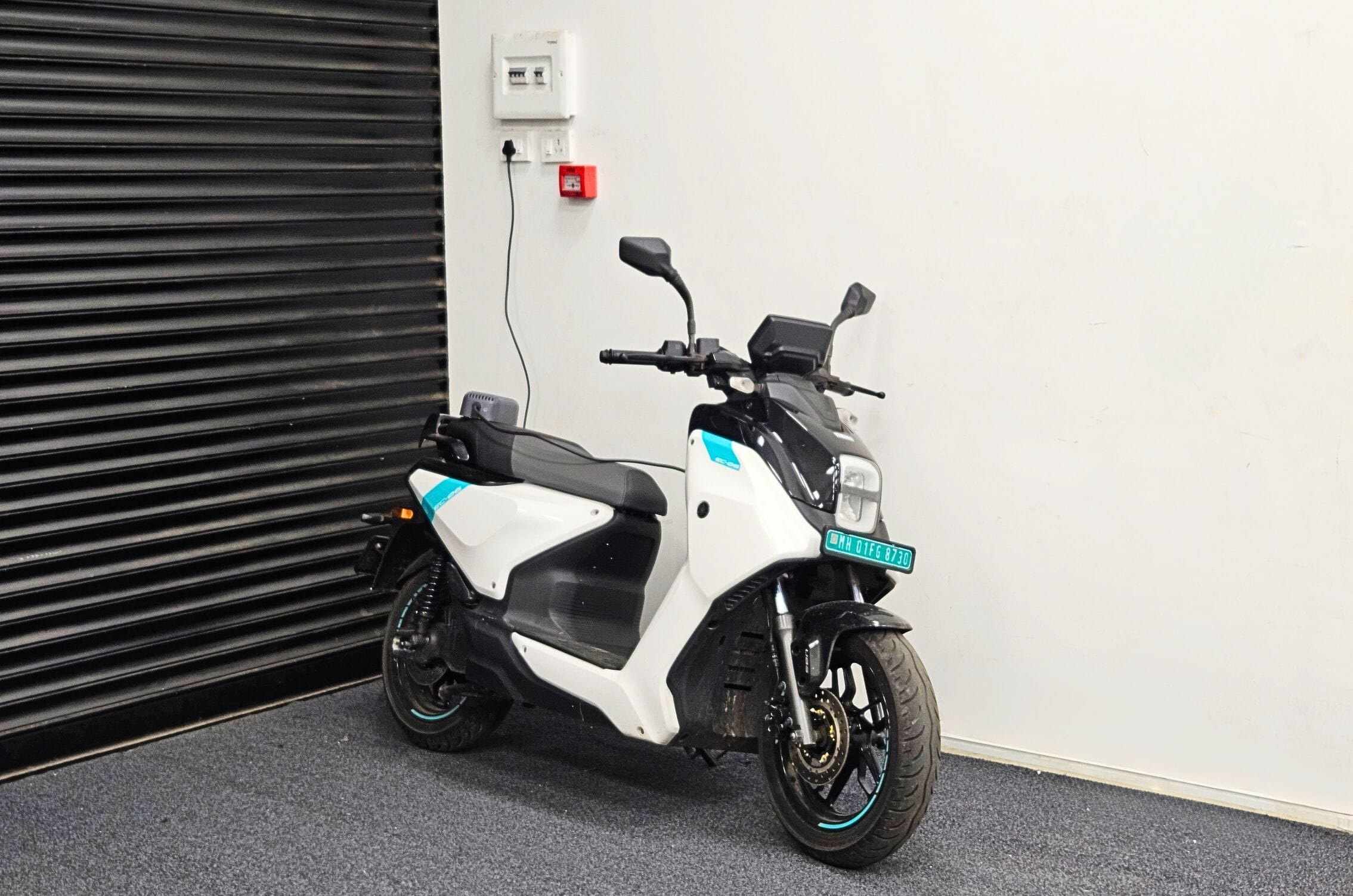
Yamaha recently entered the electric scooter market with its EC-06, which is a redesigned River Indie but retains all the core mechanicals. At Rs 1.71 lakh (ex-showroom, Bengaluru), the EC-06 is also one of the more expensive options in the electric scooter market. We were able to subject the EC-06 to our real-world range tests and this is how Yamaha’s debut EV performed.
In ‘Normal’ mode, it covered 114km
It has an efficiency of 28.5km/kWh
Small 450W charger takes 10hr to top up a flat battery to full
Yamaha EC-06 real world range
When subjecting the EC-06 to our range tests, we used the middle ‘Standard’ riding mode, where the range indicator on the display showed us 93km with a fully charged battery. Its 4kWh battery sends power to a mid-mounted motor capable of 6.7kW peak output – same as the River Indie it is based on. In its Standard riding mode, you can achieve the 79kph top speed but power delivery is gentler than on the top ‘Power’ mode and the regenerative braking too is in its middle setting.
At 132kg, the EC-06 is one of the heaviest electric scooters in India and is just 3 kilos lighter than the Indie it is based on. It also uses larger 14-inch wheels shod with chunky tyres and both this as well as its weight do play a role in the range it can travel on a single charge.
In city traffic conditions, at lower speeds and with regenerative braking kicking in more often, the EC-06’s range was dropping at a slower rate than when we were at faster speeds on open roads – this will be the case for all EVs and isn’t a trait exclusive to it. For every 10 percent SOC drop, the EC-06 covered an average of 11.4km and at the end of the test, the scooter covered 114km.
This was actually much higher than what the range indicator on the display showed (93km) and ultimately the range you get will vary on a multitude of factors like your riding style, tyre pressures, prevailing traffic and weather conditions among others.
Its performance remained consistently reliable and even below 20 percent SOC, it was able to comfortably climb flyovers and pass moving traffic effortlessly. Under 10 percent SOC was the first time we experienced a noticeable performance drop and even then, the scooter could reach a speedo-indicated 50-55kph and acceleration too was not impacted severely.
Once the battery fell below 5 percent SOC, the scooter defaulted to ‘Eco’ mode and both acceleration and top speed were quite mellow but even so, it wasn’t painfully slow and we saw 40-45kph on the display. At 0 percent SOC, when the scooter finally ran out of juice, it stopped moving despite twisting the accelerator but the display and all the other functions of the vehicle like the seat and charger release flaps were functional.
With this range number we received, the EC-06’s efficiency works out to 28.5km/kWh. While the EC-06’s range is undoubtedly quite impressive, one point to bear in mind is that you need to plan your charging cycle properly because the Yamaha only comes with a 450W charger, which takes a glacial 10 hours (claimed) to top up a flat battery to full.
Autocar India’s range testing
Before our real-world range test, the battery of our two-wheeler on test is fully charged, and we maintain tyre pressures as recommended by the manufacturer. The two-wheeler is then driven in a fixed loop in the city and highway (for electric bikes that are capable of doing so), and we maintain certain average speeds while following the speed limit. While doing so, we also ensure periodic rider swaps to ensure consistency and subject the vehicle to varying riding styles. The vehicle is run until its battery is completely drained and it shuts down or does not go ahead even if the screen is on.
S Janaki passed away: दक्षिण भारत की ‘नाइटिंगेल’ के नाम से मशहूर दिग्गज गायिका एस. जानकी का शनिवार को मैसूर में निधन हो गया। वह 88 साल की थीं। भारतीय फिल्म इंडस्ट्री के कई लोगों ने सोशल मीडिया पर उनके निधन पर शोक व्यक्त किया। प्रधानमंत्री नरेंद्र मोदी और तमिलनाडु के मुख्यमंत्री विजय के साथ-साथ सुपरस्टार रजनीकांत, कमल हासन और अन्य लोगों ने भी जानकी को श्रद्धांजलि दी।
राष्ट्रपति मुर्मू ने जानकी अम्मा को श्रद्धांजलि दी। उन्होंने सोशल मीडिया पर पोस्ट कर उन्हें याद किया।
प्रधानमंत्री ने X पर जानकी को याद किया। उन्होंने लिखा, “मशहूर प्लेबैक सिंगर एस. जानकी अम्मा का निधन संगीत और संस्कृति की दुनिया के लिए एक अपूरणीय क्षति है। अलग-अलग भाषाओं में उनके गाने कई पीढ़ियों के बीच लोकप्रिय रहे। उन्होंने बेमिसाल खूबसूरती और विविधता के साथ हर भावना को आवाज़ दी। उनकी धुनें आने वाले सालों में भी सुनने वालों को मंत्रमुग्ध करती रहेंगी। दुख की इस घड़ी में उनके परिवार, अनगिनत प्रशंसकों और पूरे संगीत जगत के प्रति मेरी गहरी संवेदनाएं। ओम शांति।”
The passing of the distinguished playback singer S. Janaki Amma is an irreparable loss to the world of music and culture. Her songs in various languages were popular across generations. They gave voice to every emotion with unparalleled grace as well as versatility. Her melodies…
तमिलनाडु के मुख्यमंत्री और एक्टर विजय ने जानकी को श्रद्धांजलि दी और उनकी विरासत को याद किया। उन्होंने X पर लिखा, “भारतीय फ़िल्म संगीत की दुनिया में अपनी अनोखी आवाज़ से कई पीढ़ियों का दिल जीतने वाली मशहूर प्लेबैक सिंगर श्रीमती एस. जानकी के निधन से बहुत दुख हुआ है। तमिल, तेलुगु, मलयालम, कन्नड़, हिंदी और दूसरी कई भाषाओं में हज़ारों गाने गाकर उन्होंने संगीत की दुनिया पर अपनी गहरी छाप छोड़ी है।”
இந்தியத் திரையிசை உலகில் தனது தனித்துவமான குரலால் பல தலைமுறைகளின் இதயங்களை வென்ற பழம்பெரும் பின்னணிப் பாடகி திருமதி எஸ். ஜானகி அவர்களின் மறைவு மிகுந்த வேதனையளிக்கிறது.
தமிழ், தெலுங்கு, மலையாளம், கன்னடம், இந்தி உள்ளிட்ட பல்வேறு மொழிகளில் ஆயிரக்கணக்கான பாடல்களைப் பாடி, இசை…
उन्होंने आगे कहा, “कई नेशनल फ़िल्म अवॉर्ड्स समेत अनगिनत प्रतिष्ठित पुरस्कार पाने वाली जानकी जी अपनी मीठी आवाज़, भावनाओं को व्यक्त करने की अद्भुत क्षमता और संगीत के प्रति अटूट समर्पण के कारण हमेशा अपने फ़ैन्स के दिलों में बसी रहेंगी। उनका निधन भारतीय संगीत जगत के लिए एक ऐसी क्षति है जिसकी भरपाई नहीं हो सकती। मैं उनके शोक-संतप्त परिवार, फ़िल्म जगत, संगीत कलाकारों और दुनिया भर में फैले उनके फ़ैन्स के प्रति अपनी गहरी संवेदना और सहानुभूति व्यक्त करता हूँ। मैं उनकी आत्मा की शांति के लिए प्रार्थना करता हूं।”
बोनी कपूर ने X पर लिखा, “जिस आवाज़ ने अनगिनत भावनाओं को ज़िंदगी दी, वह अब खामोश हो गई है, लेकिन उसकी गूंज पीढ़ियों तक सुनाई देती रहेगी। दक्षिण भारत की सदाबहार ‘नाइटिंगेल’ और महान प्लेबैक सिंगर एस. जानकी अम्मा के निधन से गहरा दुख हुआ है। छह दशकों से भी ज़्यादा समय तक, उन्होंने अपनी आवाज़ से लाखों लोगों के दिलों को छुआ; उनकी आवाज़ में खुशी, प्यार, भक्ति, तड़प और दुख को बेहद खूबसूरती से बयां करने की अद्भुत क्षमता थी। उनके गाने भाषाओं, पीढ़ियों और सीमाओं से परे रहे और भारत की संगीत विरासत का एक अहम हिस्सा बन गए। भारत ने अपने संगीत के सबसे अनमोल रत्नों में से एक को खो दिया है। उनके परिवार, चाहने वालों और उन लाखों प्रशंसकों के प्रति गहरी संवेदनाएं, जिनकी ज़िंदगी को उन्होंने अपनी असाधारण कला से समृद्ध किया। ओम शांति। जानकी अम्मा, आपकी आत्मा को अनंत शांति मिले।”
The voice that gave life to countless emotions has fallen silent, but its echo will resonate for generations.
Deeply saddened by the passing of legendary playback singer S. Janaki Amma—the timeless Nightingale of South India. For over six decades, she touched millions of hearts… pic.twitter.com/t96GR1LxCh
चिरंजीवी ने X पर लिखा, “जनकम्मा गारू के निधन की खबर ने मेरे दिल को गहरा सदमा पहुँचाया है। मेरे फिल्मी सफर में, उन्होंने अनगिनत यादगार गानों को अपनी बेमिसाल आवाज़ दी। स्क्रीन पर हमने जो भावनाएँ दिखाईं, उनमें जान उनकी आवाज़ ने ही डाली थी। मेरे करियर के जिन गानों को दर्शक आज भी प्यार से याद करते हैं, उनके पीछे जनकम्मा गारू की मीठी आवाज़ है। जब भी वे गाने बजते हैं, तो वे दिन… वे यादें… एक बार फिर मेरी आँखों के सामने ताज़ा हो जाती हैं। जनकम्मा गारू सिर्फ़ एक गायिका नहीं थीं… वह एक असाधारण कलाकार थीं जिन्होंने भावनाओं को सुरों में ढाला। उनका गाया हर गाना एक याद है… एक एहसास है… एक जीवन भर का रिश्ता है। आज हमने संगीत की दुनिया की एक महान हस्ती को खो दिया है। लेकिन उनके गाने पीढ़ियों के लिए प्रेरणा और हमारी ज़िंदगी के बैकग्राउंड स्कोर के तौर पर हमेशा गूंजते रहेंगे। मैं श्रीमती एस. जानकी गारू के परिवार, उनके चाहने वालों और उन्हें पसंद करने वाले लाखों संगीत प्रेमियों के प्रति अपनी गहरी संवेदना व्यक्त करता हूँ। जनकम्मा गारू… आपकी आवाज़ अमर है। ओम शांति।”
रजनीकांत ने X पर लिखा, “अपनी सुरीली आवाज़ से कई पीढ़ियों के लोगों को खुश करने वाली उनकी आत्मा को शांति मिले।”कमल हासन, जिन्होंने जानकी के साथ कई यादगार गाने गाए हैं, ने एक भावपूर्ण श्रद्धांजलि लिखी है, जिसका अर्थ है: “यह गाना हमेशा गूंजता रहेगा। माँ, मैं वह प्यार दोबारा पाने के लिए कहाँ जाऊँगा? कई लोग ऐसा दुख लिए घूमते हैं जिसे वे कभी भुला नहीं पाते। उन सभी के प्रति मेरी गहरी संवेदनाएँ।”
தன்னுடைய தேனமுதக் குரலால் தலைமுறை தலைமுறையாக மக்களை மகிழ்வித்த ஜானகி அம்மா அவர்களின் ஆத்மா சாந்தியடையட்டும் #JanakiAmma
सिंगर उनके काम के साथ ही बेबाक अंदाज के लिए भी जानी जाती थीं। साल 2013 में उन्होंने भारत सरकार के तीसरे सबसे बड़े नागरिक सम्मान पद्म भूषण को लेने से साफ मना कर दिया था। इसके बाद वो खबरों में छाई रही थीं। जानकी इस सम्मान को इसलिए नहीं रखना चाहति थीं, क्योंकि वह भारत रत्न की मांग कर रही थीं।
जानकी 20 साल की उम्र में प्लेबैक सिंगिंग करने के लिए चेन्नई चली गईं। उनका पहला गाना 1957 की तमिल फ़िल्म ‘विधिइन विलायाट्टु’ के लिए था और बाद में उन्होंने तेलुगु फ़िल्म ‘M.L.A.’ के लिए भी गाना गाया। अपने करियर के दौरान, उन्होंने 20 भारतीय भाषाओं में गाने गाए, जिनमें तेलुगु, तमिल, कन्नड़, मलयालम, हिंदी, संस्कृत, ओडिया, तुलु, उर्दू, पंजाबी, बडागा, बंगाली और कोंकणी शामिल हैं। साथ ही, उन्होंने अंग्रेज़ी, जापानी, जर्मन और सिंहली जैसी विदेशी भाषाओं में भी गाने गाए। उन्हें कई सम्मान भी मिले, जिनमें चार नेशनल फ़िल्म अवॉर्ड और 33 स्टेट फ़िल्म अवॉर्ड शामिल हैं।
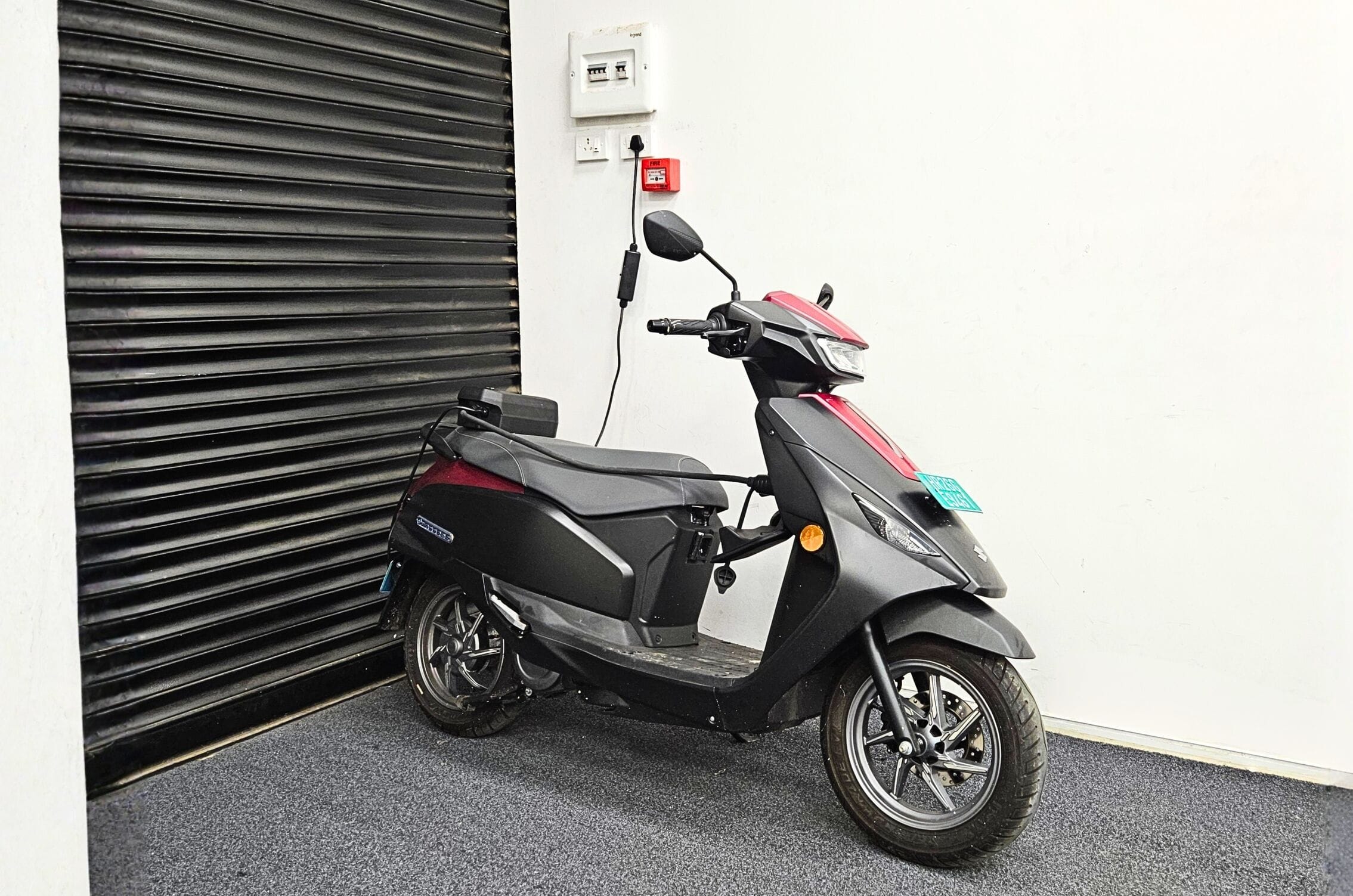
Suzuki entered the electric scooter market earlier this year with its self-developed e-Access, which at Rs 1.92 lakh (ex-showroom, Bengaluru), is one of the most expensive electric scooters from a mainstream manufacturer right now. We were recently able to subject the e-Access to our real-world range tests and here’s how Suzuki’s maiden two-wheeler EV performed.
In Ride A mode, it covered 88.4km
It has an efficiency of 28.78km/kWh
600W charger can top up a flat battery to full in 6 hours
Suzuki e-Access real world range
The e-Access has a 3kWh battery which uses LFP (Lithium Ferrous Phosphate) chemistry unlike most other well-known EVs which use NCM (Nickel Cobalt Manganese) battery packs. The advantages of LFP chemistry over NCM are relatively longer battery life and better thermal stability but the tradeoff is lower energy density, and ergo, lower range. Suzuki claims a 95km IDC range on a full charge.
The e-Access has 3 riding modes – Ride A, Ride B and Eco. On the move, you can only toggle between one of the Ride modes and Eco. To switch between the two Ride modes you need to be at a complete stop.
In both Ride modes, throttle response and peak power is identical but what changes is the level of regenerative braking. Ride B has gentler intervention than Ride A so we elected to conduct our test in Ride A in a bid to extract more range.
With 12-inch wheels shod with standard-issue scooter sized tyres and a fairly light 122kg kerb weight (in the EV space), the e-Access sits more or less on par with the bestsellers in this class in these parameters.
In city traffic conditions, at lower speeds and with regenerative braking kicking in more often, the e-Access’s range was dropping at a slower rate than when we were at faster speeds on open roads – this will be the case for all EVs and isn’t a trait exclusive to it.
At the end of the run, when the range indicator and battery SOC meter on the display both ran out to zero, the scooter kept running with progressively lower performance for another 2.2km. Eventually, it was restricted to just 10kph, which is when we decided to park it and at that point we had covered 88.4km.
When the battery was at 100 percent SOC at the start of the test the display told us that the estimated range was 93km. The figure we ultimately got was slightly lower than that, but the range indicator gave us trustworthy readouts as the battery capacity dropped and it never caught us by surprise at the end. Ultimately the range you get will vary on a multitude of factors like your riding style, tyre pressures, prevailing traffic and weather conditions among others.
Even so, the e-Access delivered a commendable range number when you consider that its LFP battery isn’t as energy dense as the competition and it is a scooter that comes closest to achieving the claimed IDC number in the real world in our tests. This was in the more powerful Ride A mode and were one to use the more efficient Eco mode, the e-Access will return more range on a single charge.
Almost throughout the run, the e-Access delivered consistent performance until its SOC dropped down to 18 percent, which is when it automatically defaulted to Eco mode. Performance in Ride A is quite brisk and more than sufficient to keep up with and overtake big city traffic while simultaneously not overwhelming someone who’s transitioning over from an ICE vehicle. Even in Eco mode, you can comfortably keep pace with traffic and reach a speedo-indicated 55kph, which ensures you don’t get caught out if you are on a faster stretch of road.
With these numbers, Suzuki’s electric scooter returned an efficiency of 28.78km/kWh. The e-Access ships with a portable 600W charger which is capable of topping up a flat battery to full in 6hr20min. We verified the actual charging time to be 6 hours flat when the e-Access was plugged into a 12A 3-pin socket at our office.
Autocar India’s range testing
Before our real-world range test, the battery of our two-wheeler on test is fully charged, and we maintain tyre pressures as recommended by the manufacturer. The two-wheeler is then driven in a fixed loop in the city and highway (for electric bikes that are capable of doing so), and we maintain certain average speeds while following the speed limit. While doing so, we also ensure periodic rider swaps to ensure consistency and subject the vehicle to varying riding styles. The vehicle is run until its battery is completely drained and it shuts down or does not go ahead even if the screen is on.
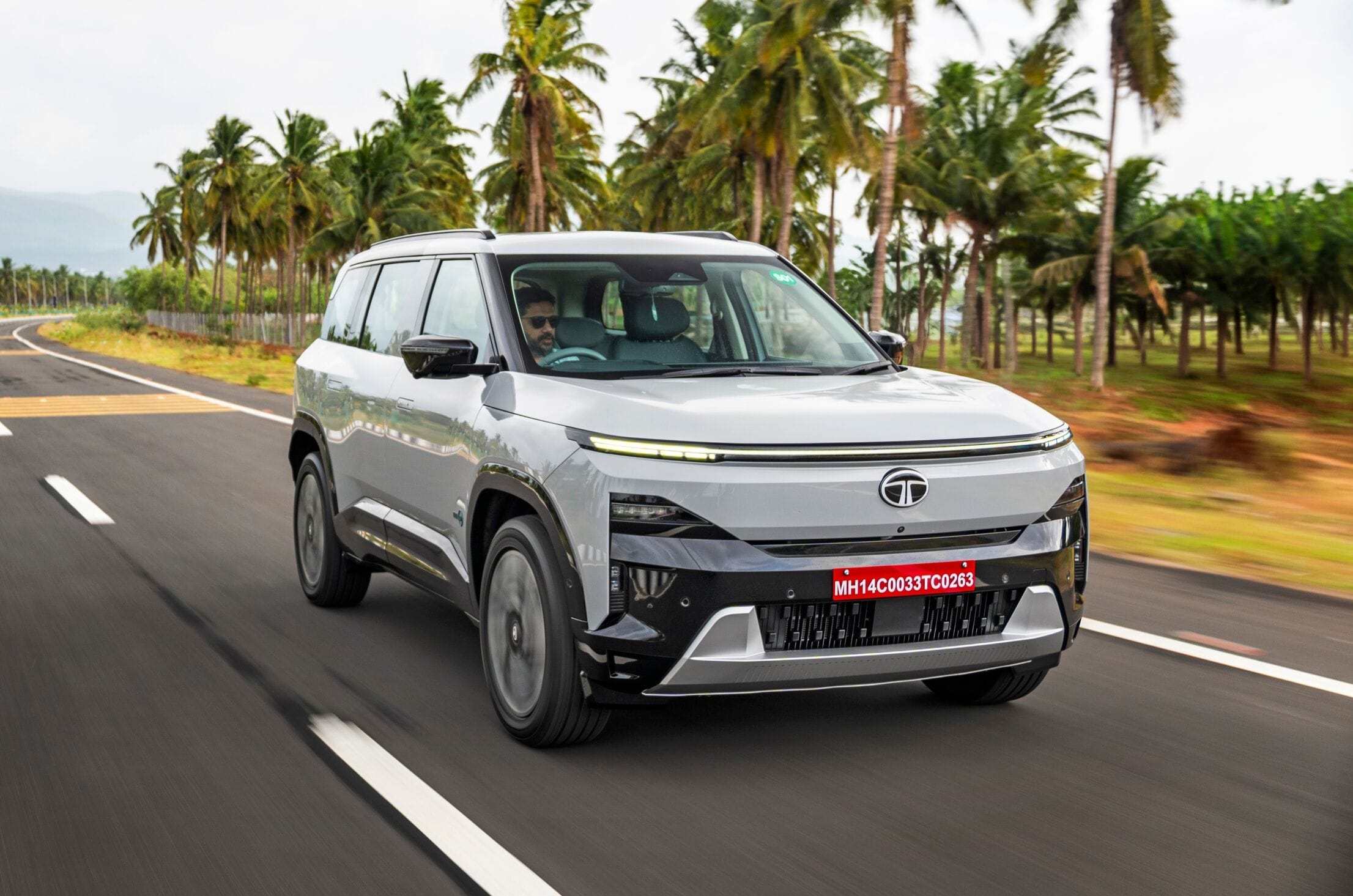
We’ve said in the past, the Sierra is the best Tata model on sale currently, representing the best of the brand’s learnings over the years. We’ve also said Tata’s electric powertrains are better than the equivalent combustion engines on offer. So, combine the two, and it’s undoubtedly a winning formula. But with EV tech and customer expectations moving so rapidly these days, is that necessarily a foregone conclusion?
2026 Tata Sierra EV exterior design and engineering – 9/10
Retains the ICE version’s sharp looks and practicality while incorporating a large battery.
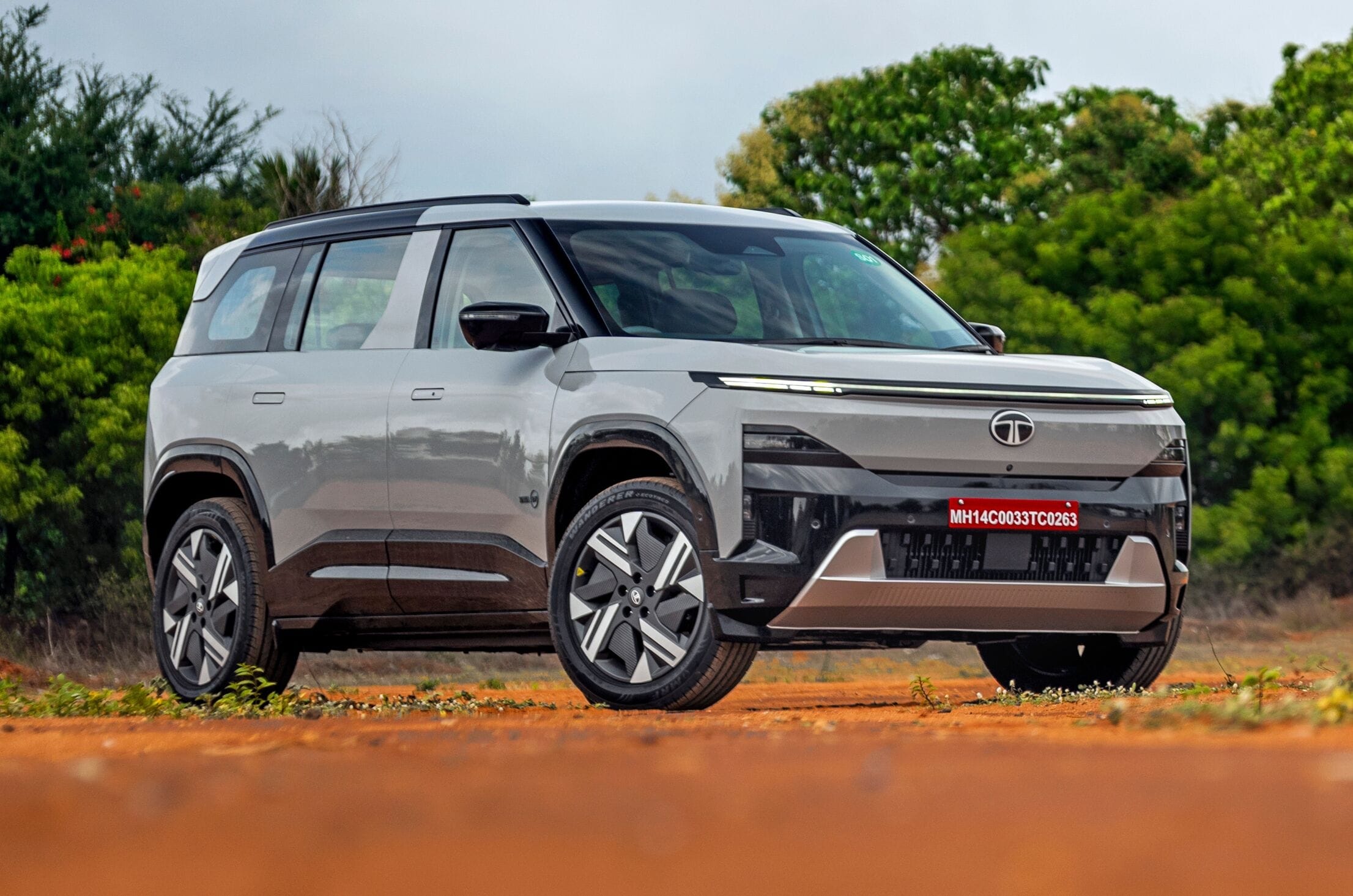
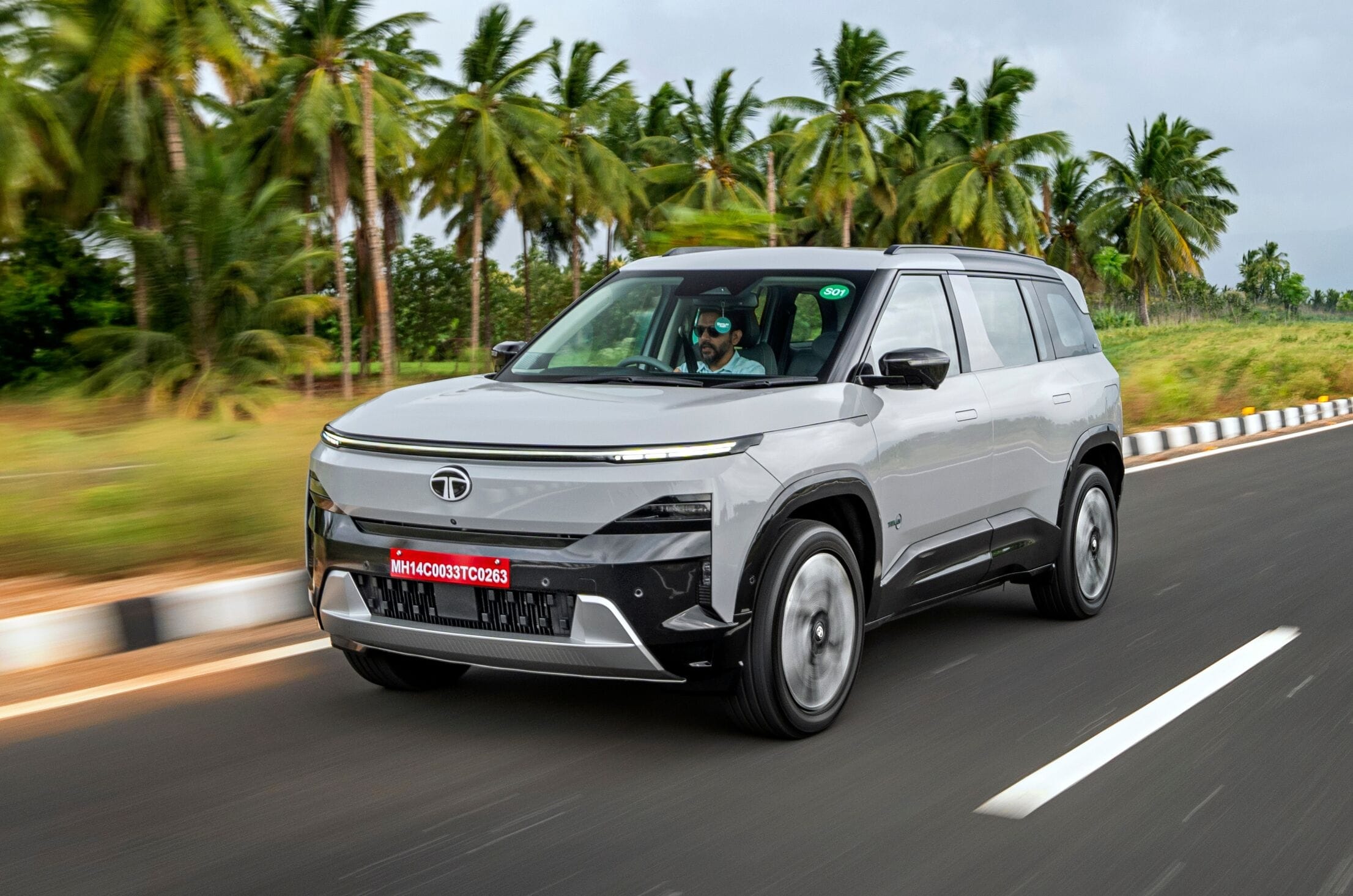
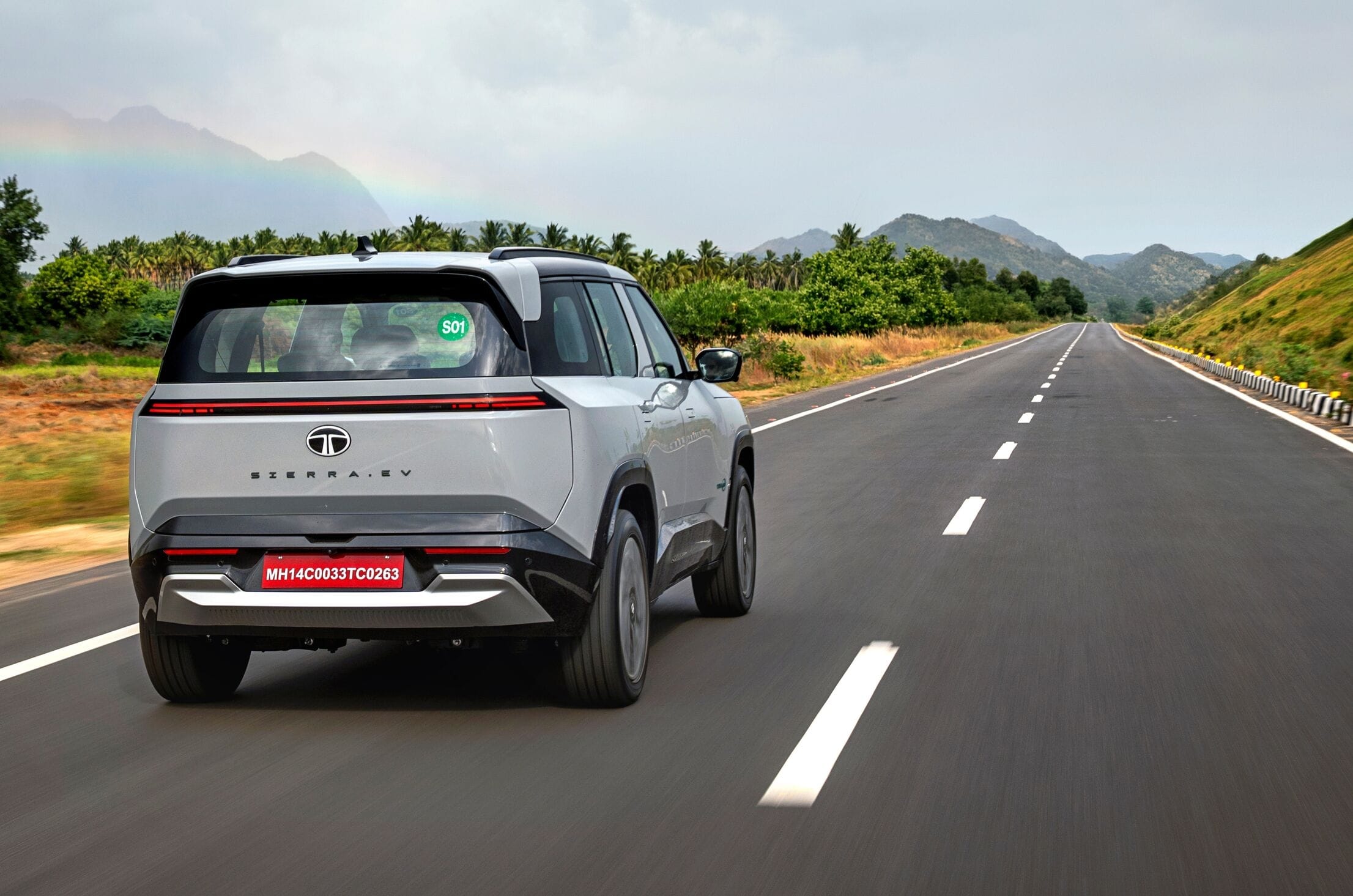
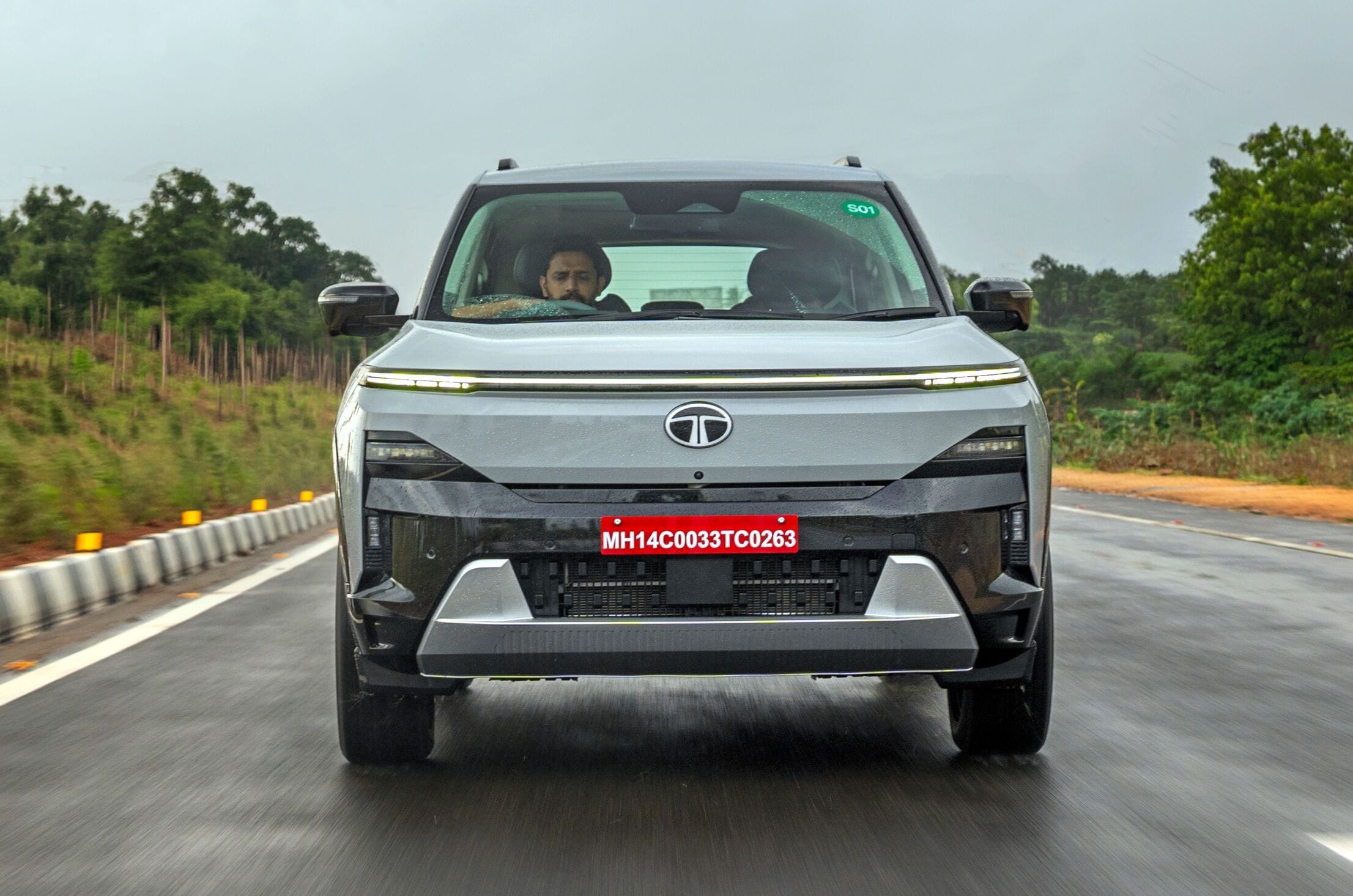
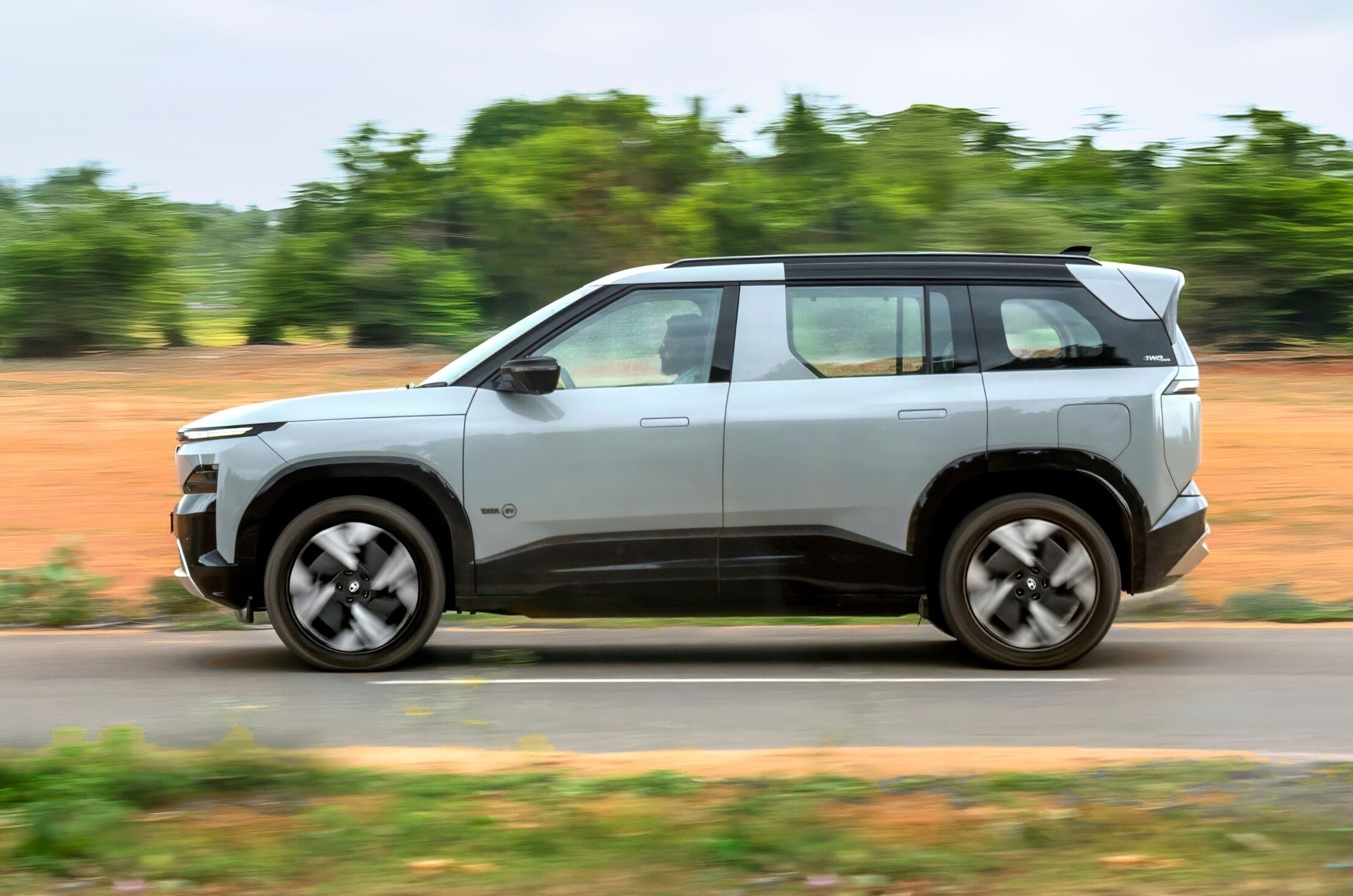
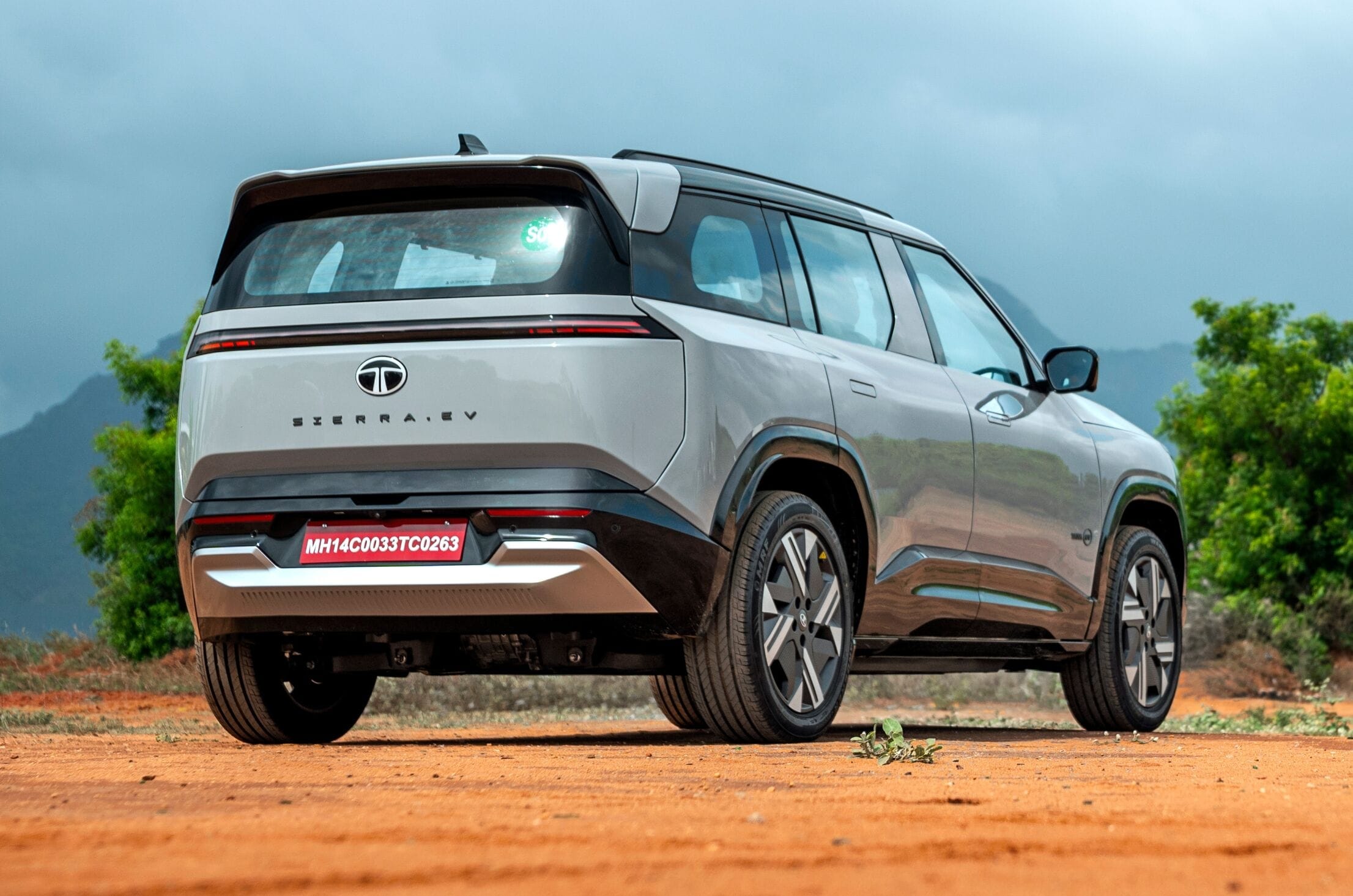
The new Sierra is a bold piece of design, and this has been carried over to – and perhaps even improved – on the electric version. It’s a welcome departure from the notion that all EVs need to be shaped like bars of soap for better aero efficiency. Instead, it is upright and boxy, albeit smoothed out just enough for air to flow over it a bit better.
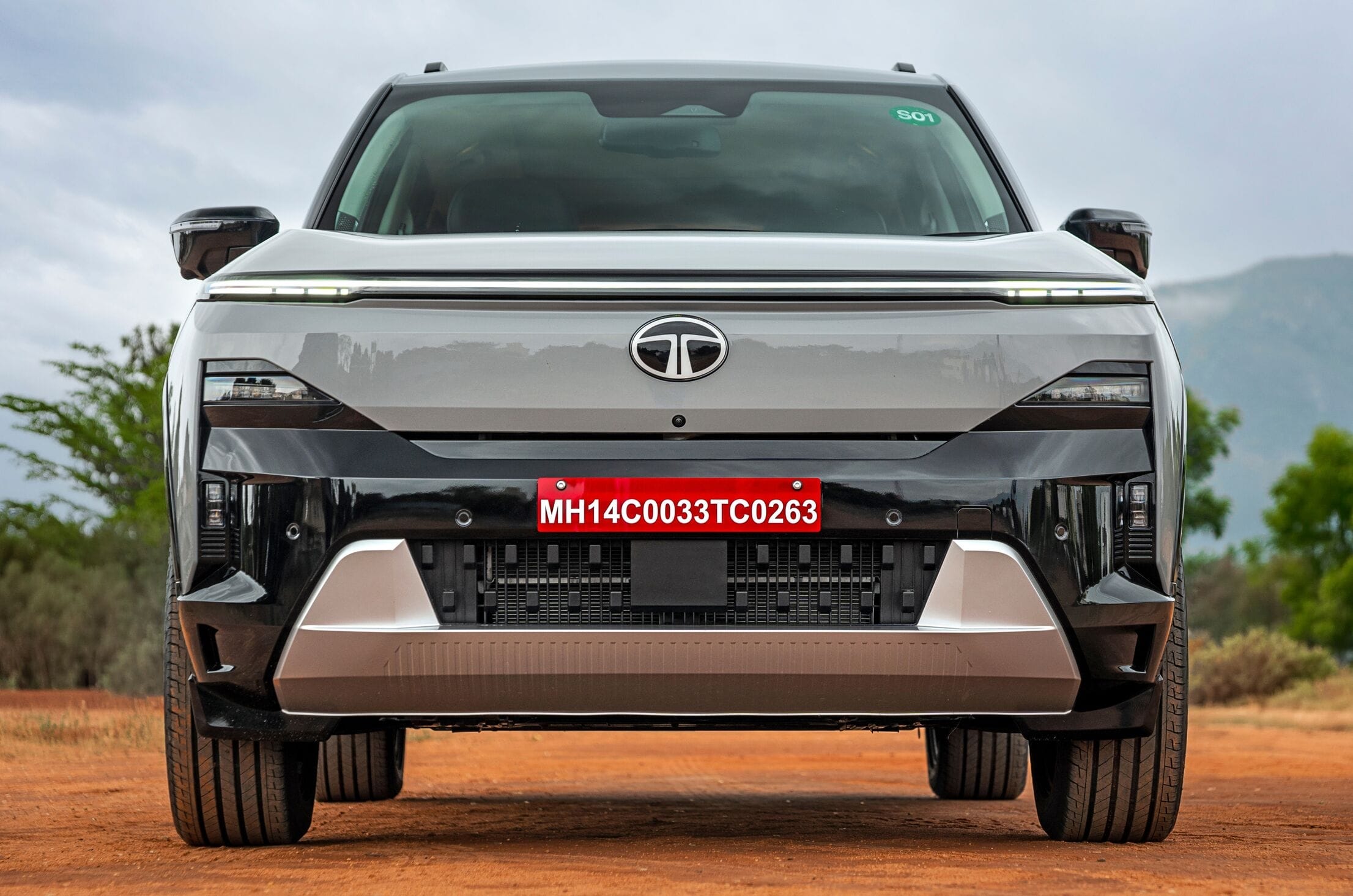
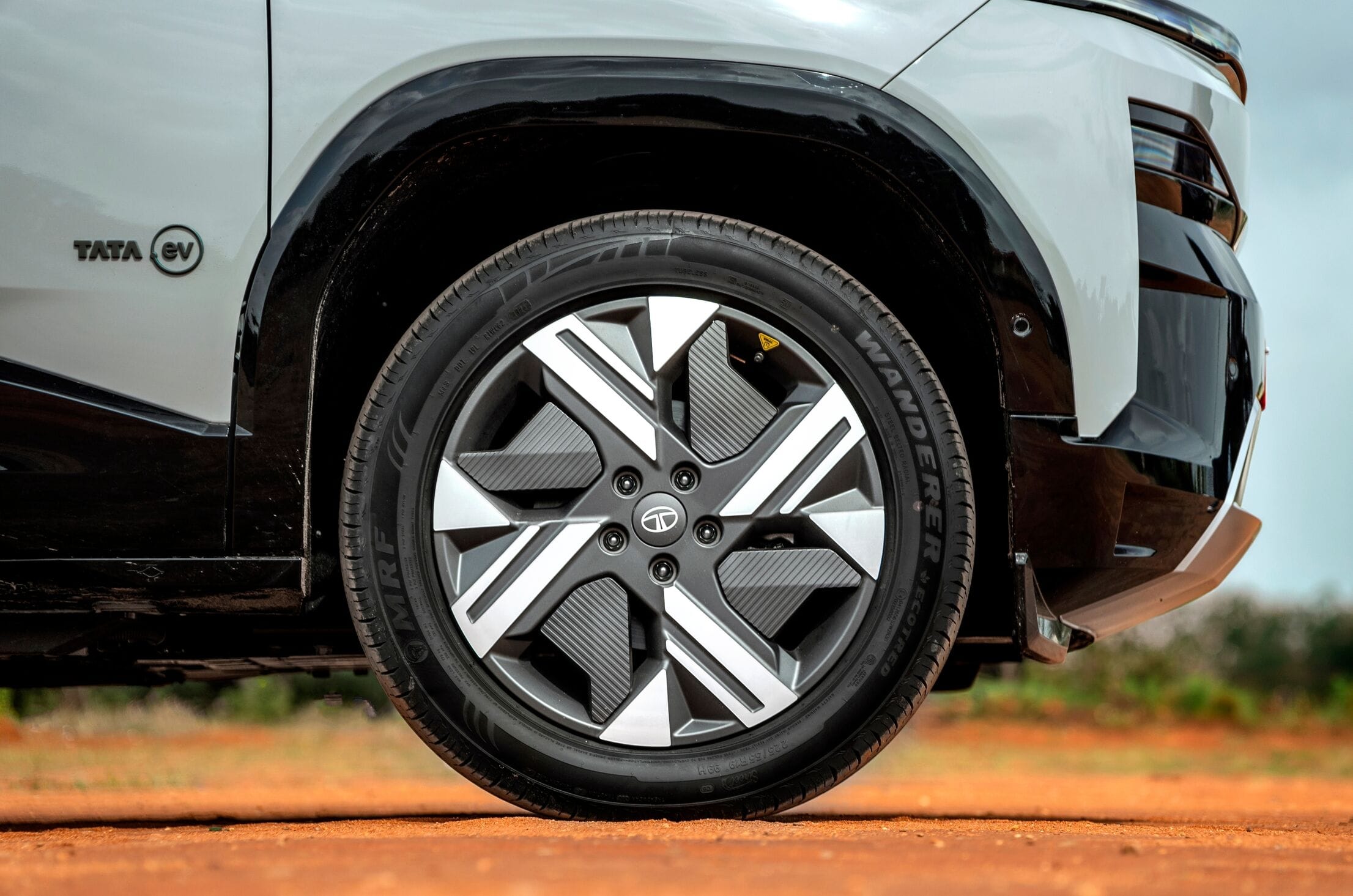
The difference is up front, where the gloss black surround for the headlamps found in the ICE version has been replaced by a body-coloured panel to give that EV-typical ‘grille-less’ look. For contrast, the gloss black treatment has been applied lower down in the bumper instead. Perhaps the wheels could have been more different – they are the same design as the ICE model, albeit in a matte finish rather than gloss. The badges now say ‘Sierra.ev’ on the sides and rear, and have a blue-coloured outer edge.
To the untrained eye, it might not immediately be apparent which version is which, but conversely, this is unmistakably a Sierra, and that is perhaps more important.
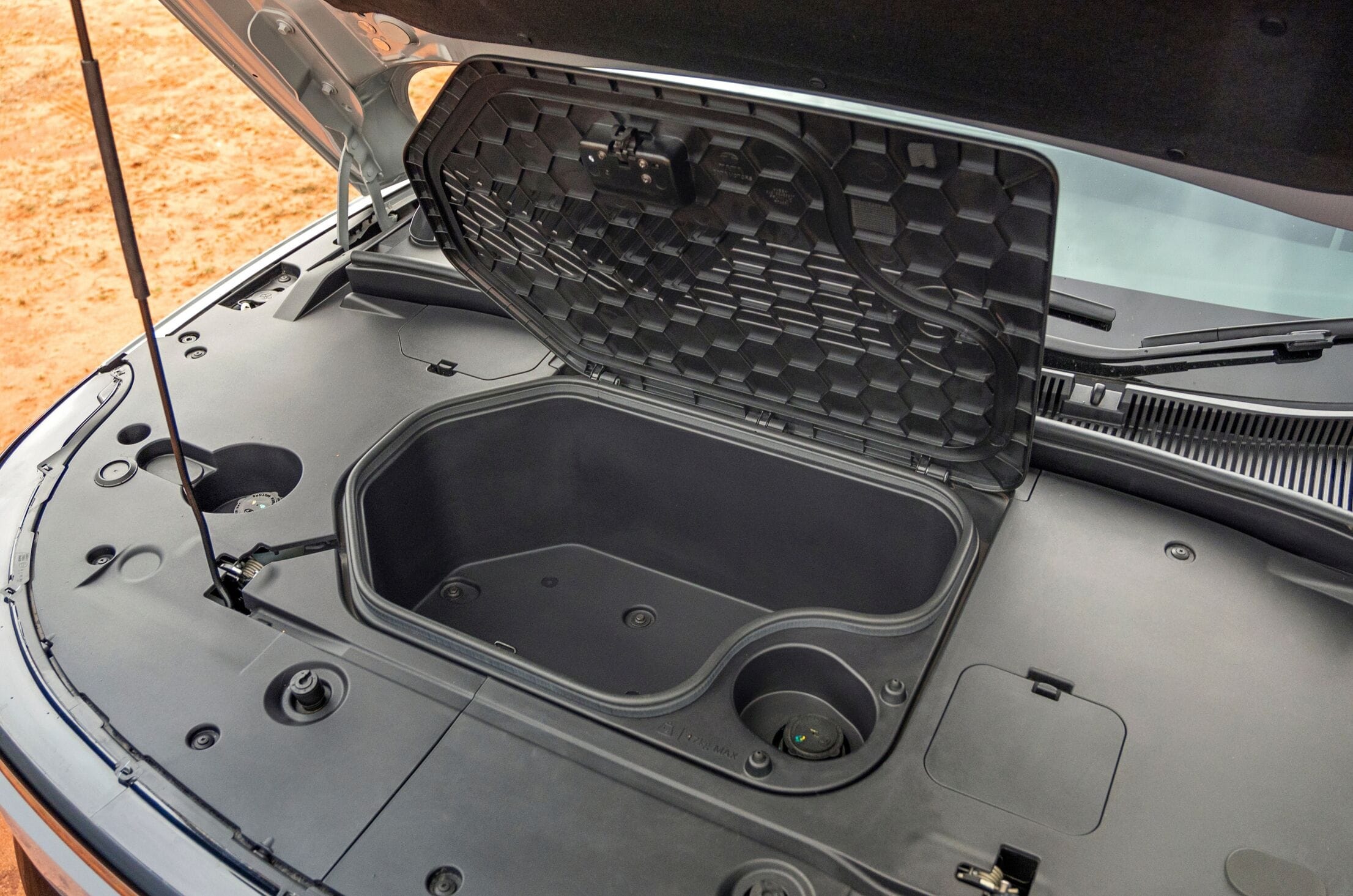
Little practicality has been lost in the move to electric; in fact, some has been gained. Almost as if to drive the point home that, despite the similar looks, this is a pure EV underneath, it gets a frunk that holds 55 litres in the single-motor models, and 35 litres in the dual-motor version. Good enough for the charging cable or small valuables you don’t want to keep in the main boot.
There’s also still 205mm of ground clearance, despite the battery pack, and thanks to its use of prismatic cells and C2P (cell to pack) packaging, it doesn’t weigh or impede on cabin and boot space as much as conventional batteries of similar capacity (like the ones in the Harrier EV).
2026 Tata Sierra EV interior space and comfort – 7/10
Superb space and comfort, though quality inconsistencies and ergonomic gaffes remain.
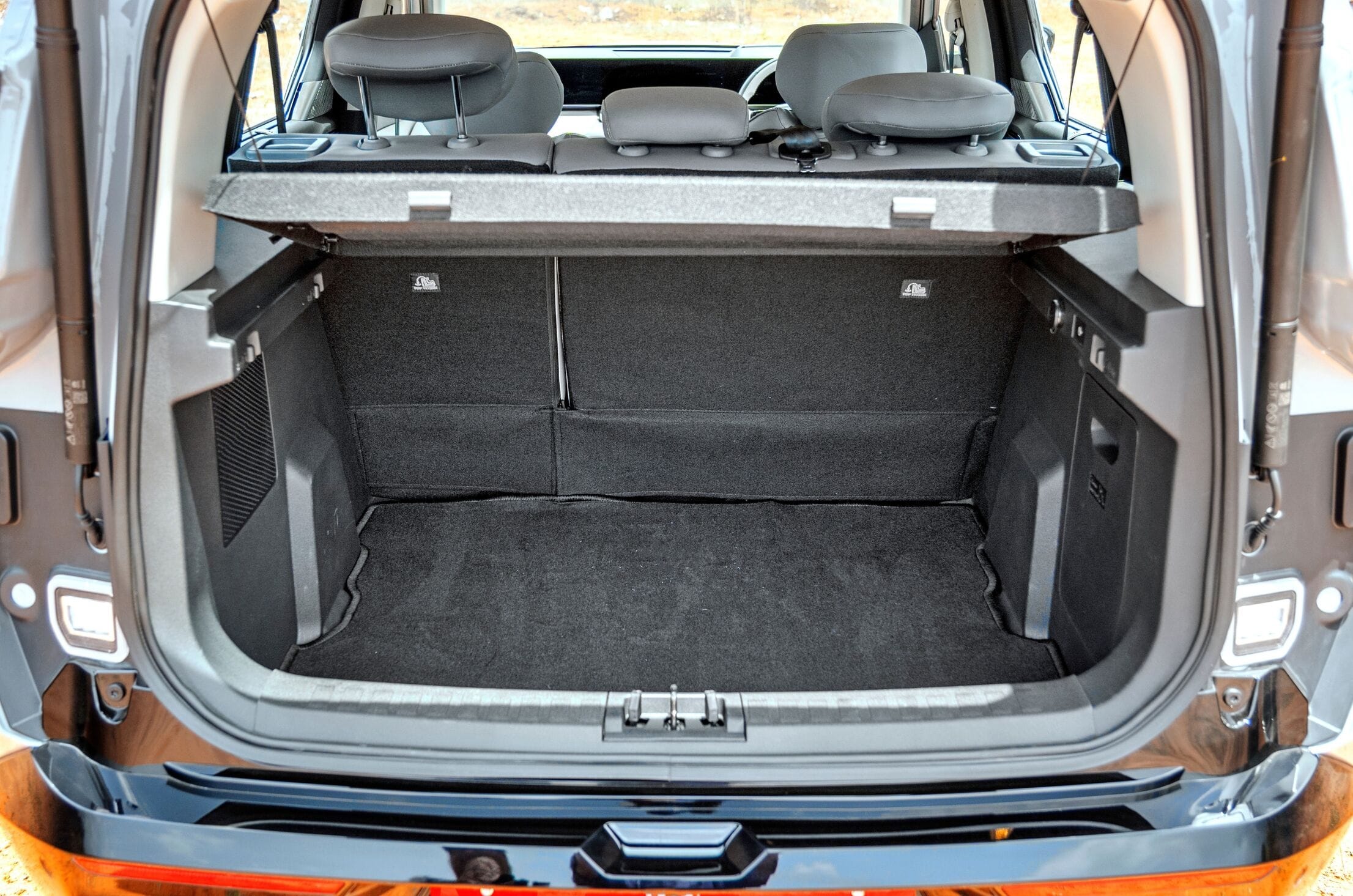
However, while boot space has been retained at a cavernous 622 litres (floor to roof), a casualty of the battery pack is the spare wheel, which was previously mounted under the body. You now only get a puncture repair kit.
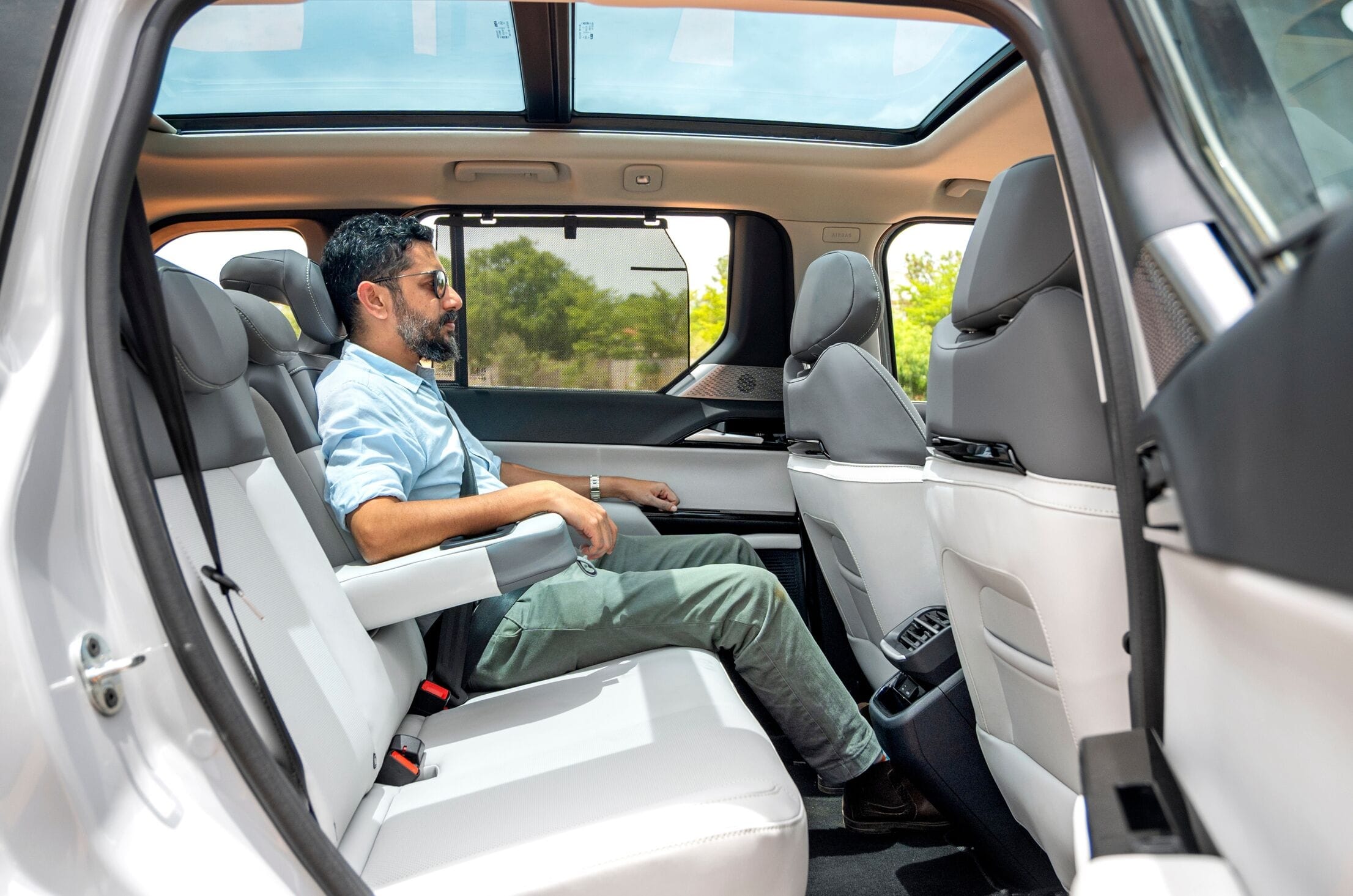
There’s seemingly no compromise to space or comfort in the cabin in the move to electric power. Engineers say the floor height has gone up by less than an inch compared to the ICE Sierra, and in truth there is no perceptible difference when you’re sat in the back seat. It remains spacious and comfortable, and even gets a small amount of backrest recline. The awkward L-shaped B-pillar returns, leaving a conspicuous gap next to the sun blind that could have easily been avoided. As before, you get a gigantic sunroof on top-spec trims that lets in a lot of light.
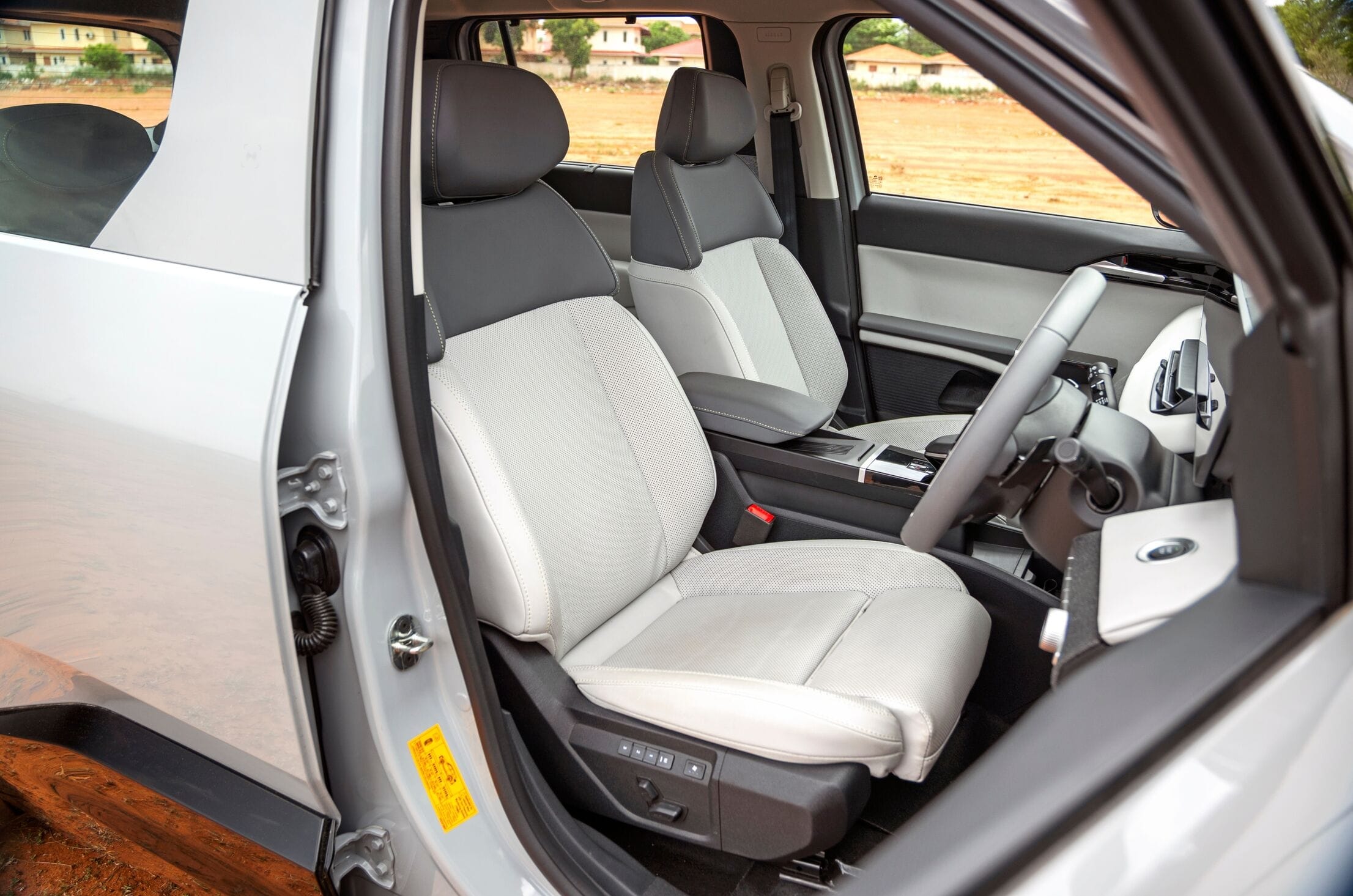
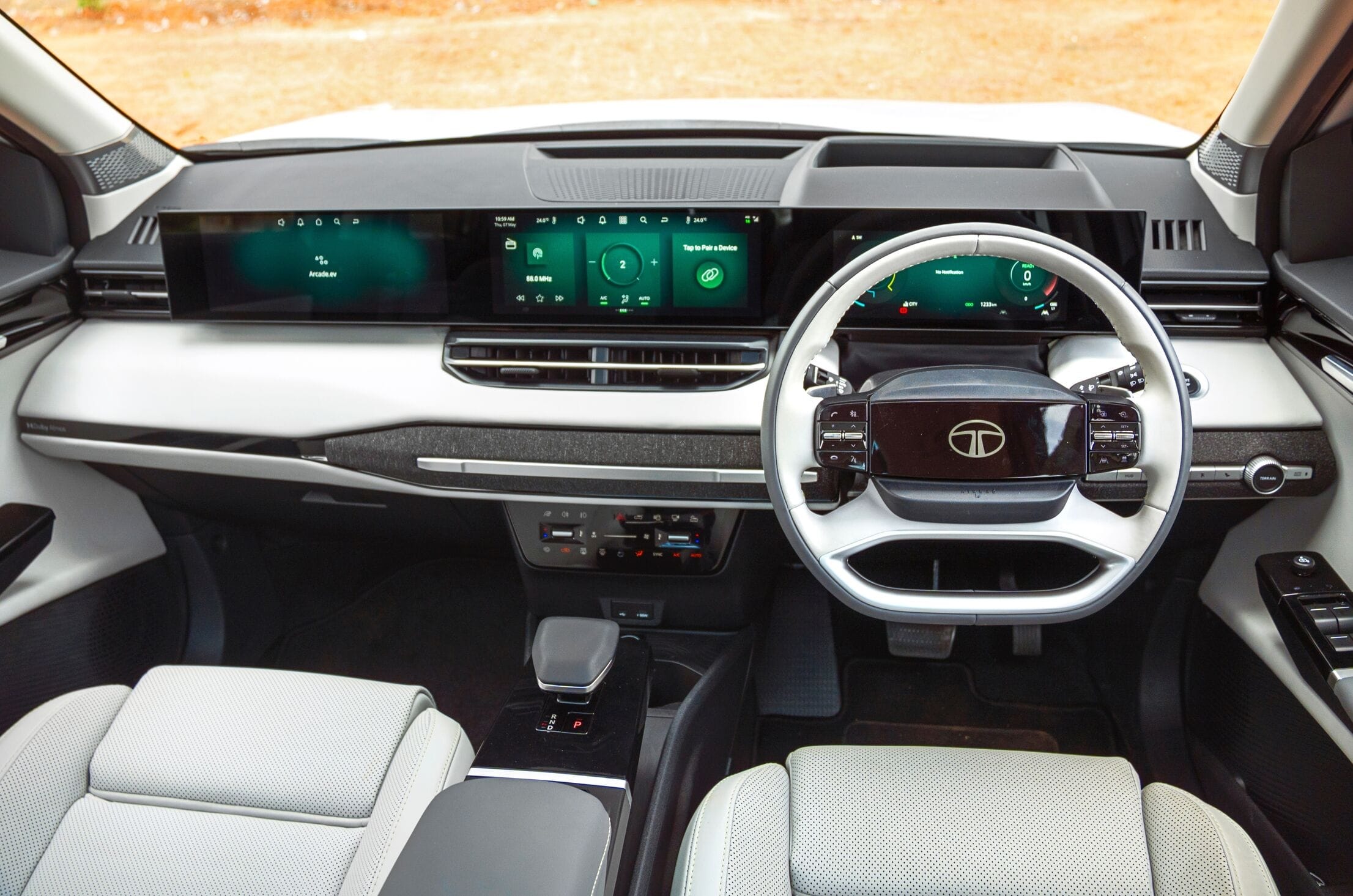
Up front, the lounge-like ambiance remains, with a cream-coloured, leatherette-bound dashboard and a textured fabric surface for the ‘sound bar’ central speaker. The three-screen stack adds a techy vibe to this atmosphere, and between the seats is a pedestal for the drive selector. The front seats are very comfortable and offer a good amount of shoulder support – something often overlooked in seat design.
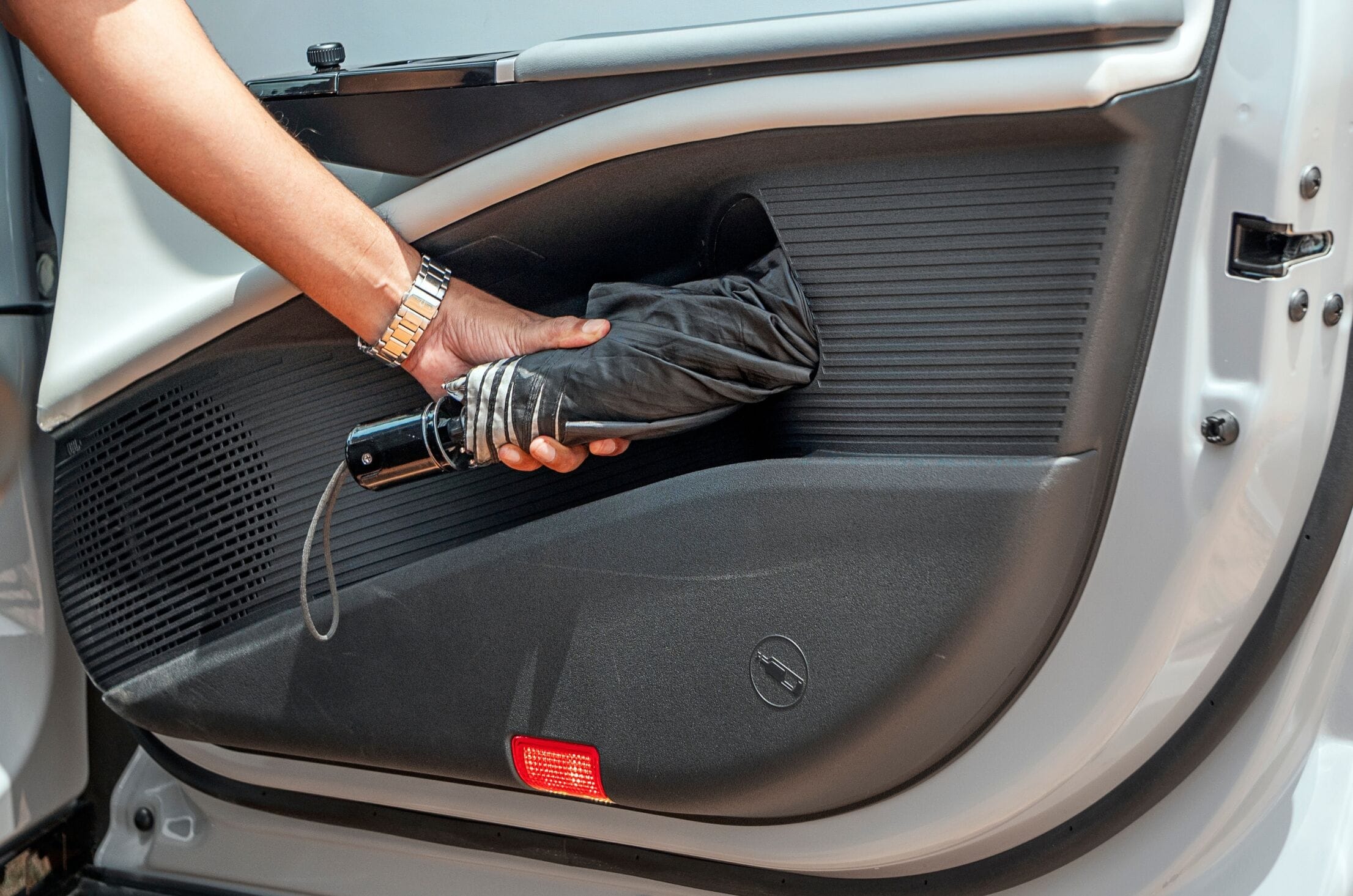
For every soft surface and attractive trim piece, however, there is visible hard plastic, rough edges, crooked stitching and misaligned panel fit, which are an eyesore, especially at this price. And while the design is attractive, its execution could have been far better considered from a practicality and ergonomics standpoint. For example, the pedestal-mounted drive selector is set at a comfortable height, but wastes the space below it. Consequently, the storage box behind it is narrow, tall and harder to reach, while the cupholders are tiny and forced to the base of the dashboard. And while the inclusion of small umbrella holders in the door cards is a nice touch, there is no drain plug, so surplus water will collect in the door pockets. Good intentions; poor execution.
2026 Tata Sierra EV features and safety – 9/10
Packed to the gills with safety and tech, more so even than the ICE version.
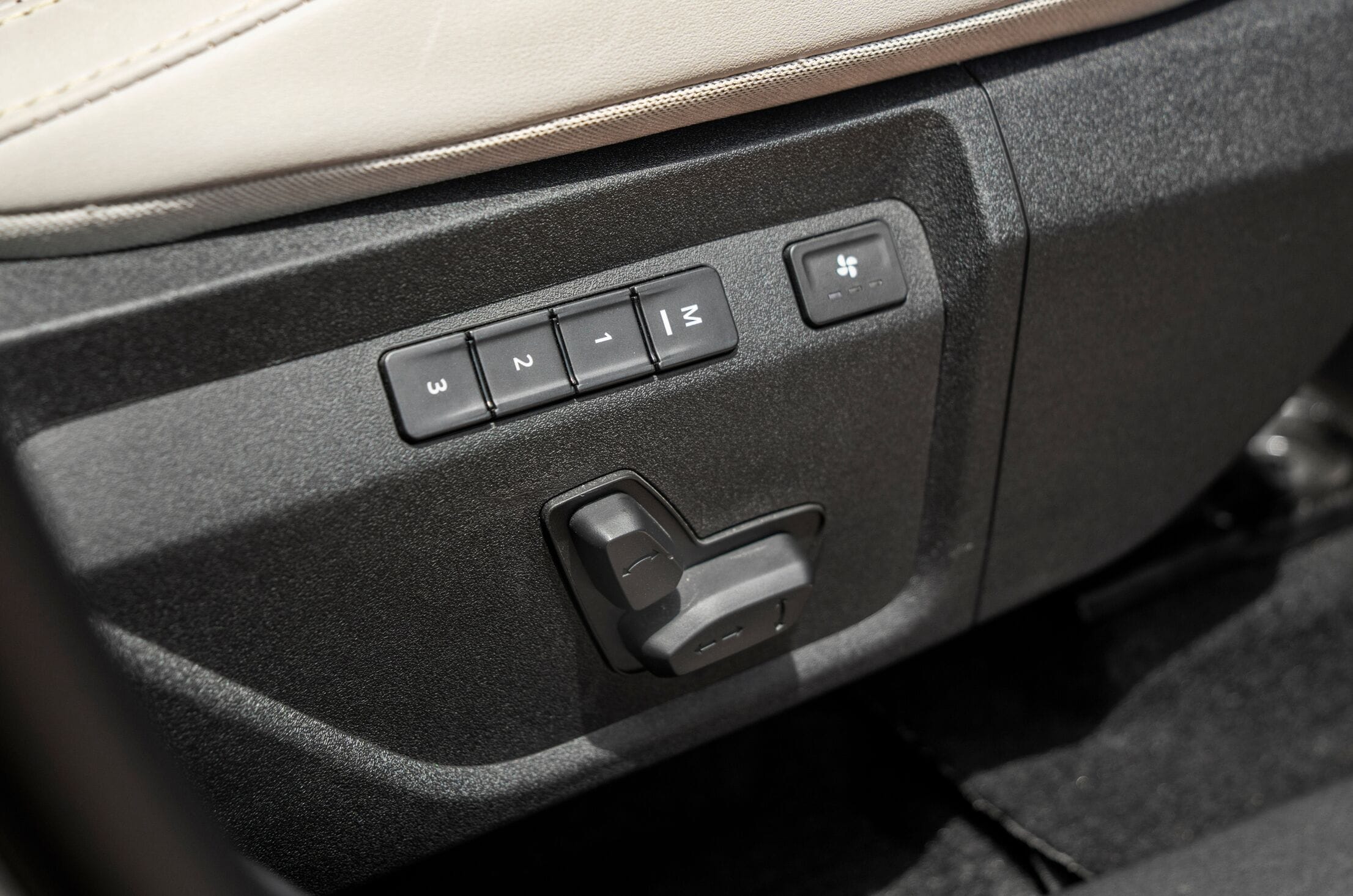
Tata in the last few years has caught up to the features freight train that has the Indian car industry in a stranglehold. The Sierra EV is, thus, one of if not the best equipped in its segment, with every conceivable gizmo imaginable on the top-spec Empowered A variant. And as always, the EV gets a small edge on its ICE counterpart, which comes in the form of a powered front passenger seat, as well as an HUD alongside the three-screen layout (instead of either one or the other).
Those front seats are ventilated too, and the driver gets a memory function. There’s a full ADAS suite, drive modes, regen modes and terrain modes, the panoramic sunroof, dual-zone auto climate control, a 12-speaker JBL Black sound system with Dolby Atmos, an onboard air purifier, connected car tech and much, much more. There’s also a clever integration with Google Maps that predicts what the car’s SOC will be when you reach your destination, helping you plan better.
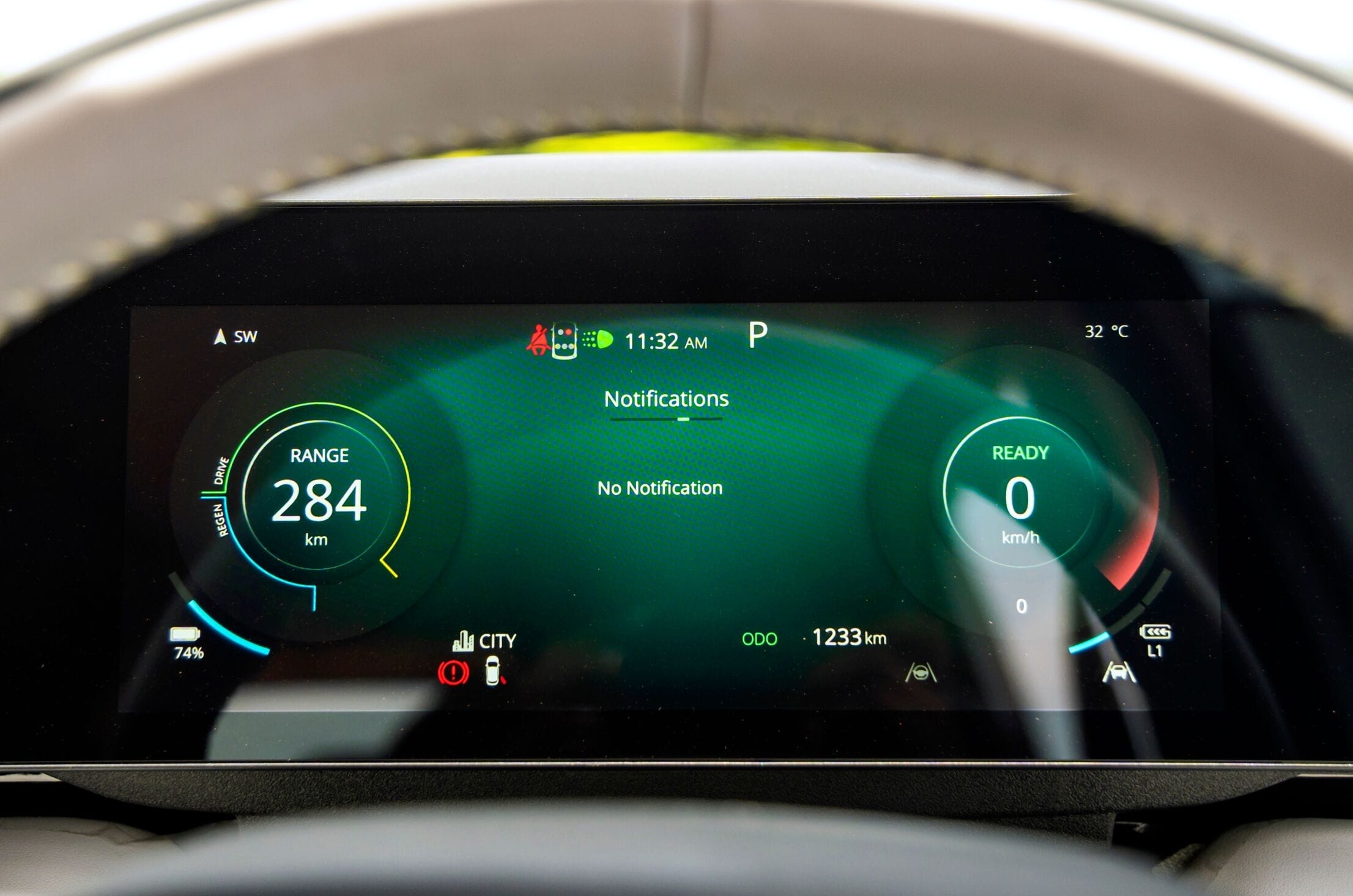
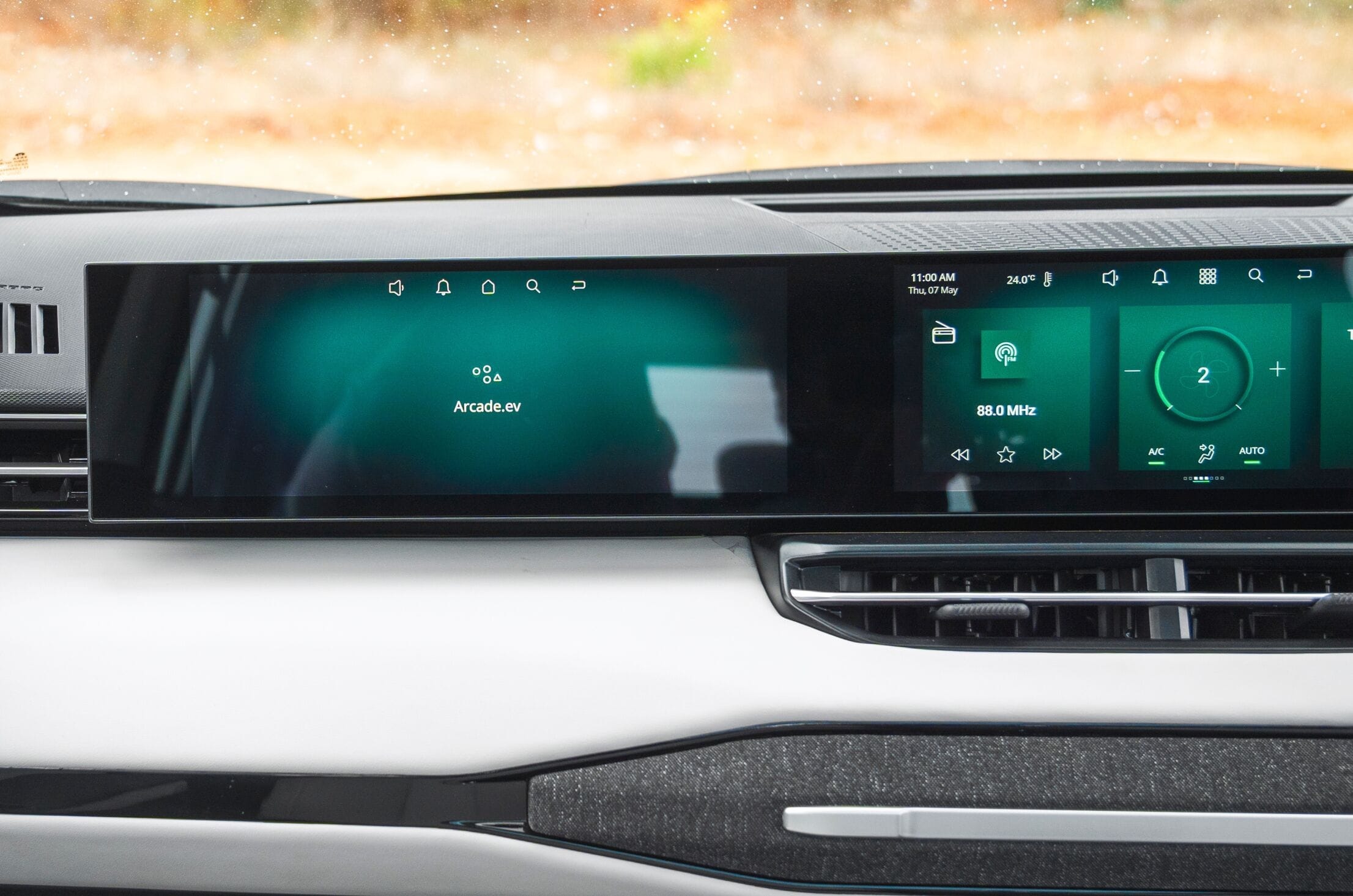
The screens are crisp and smooth in their animations, although as before, the 10.25-inch driver’s display feels a bit too cluttered; the HUD actually provides a cleaner and more focused driver display. And while Tata is not the first brand to do it, the passenger screen feels like a gimmick, more so now that there is a multiplayer gaming suite that lets all passengers connect their phones to the car and play from their own device.
While there hasn’t been a crash test of the EV specifically, the ICE Sierra scored a 5-star Bharat NCAP rating, which should feasibly carry forward to this car too. Apart from an extensive ADAS suite on the top trim, there are 6 airbags as standard, as well as several other safety features.
2026 Tata Sierra EV performance and refinement – 8/10
Dual-motor QWD version brings AWD to the segment and delivers class-best performance.
The Sierra EV can be had in one of three powertrain configurations – a 63kWh battery with a rear motor, a 75kWh battery with a rear motor, or the one we’ve got to test drive – the 75kWh battery with dual motors. This makes the Sierra the first to bring AWD to this segment and is, expectedly, the most potent version, with a class-leading output of 306hp and 504Nm. Despite weighing in at around 2.1 tonnes, the SUV can sprint to 100kph from a standstill in a claimed 5.8sec. However, while it is undoubtedly capable of that, it doesn’t feel neck-snappingly quick off the line. Instead, it is quite undramatic, and frankly that is fine in a family SUV such as this. It’s a smooth and refined powertrain, as we’ve come to expect from Tata Motors’ EVs over the years.
That said, it perhaps feels a bit too similar to older Tata EVs, considering this is a new-generation model. Where newer EVs now have greater responsiveness off the line, this one still has a small dead zone at the start of the pedal travel, after which power comes in abruptly, and this requires care in stop-go traffic. Thereafter, it’s delivered in a constant lump of torque, where others have managed to program in some sort of progression. A minor criticism, and it’s still a far better experience than any ICE powertrain, but the EV game has since moved on.
There are drive modes, though apart from a noticeable dullness in Eco mode, the rest – City, Sport and Boost – don’t feel too different from one another. Similarly, the regen modes – easily accessible using the steering-mounted paddles – don’t feel all that different from one another.
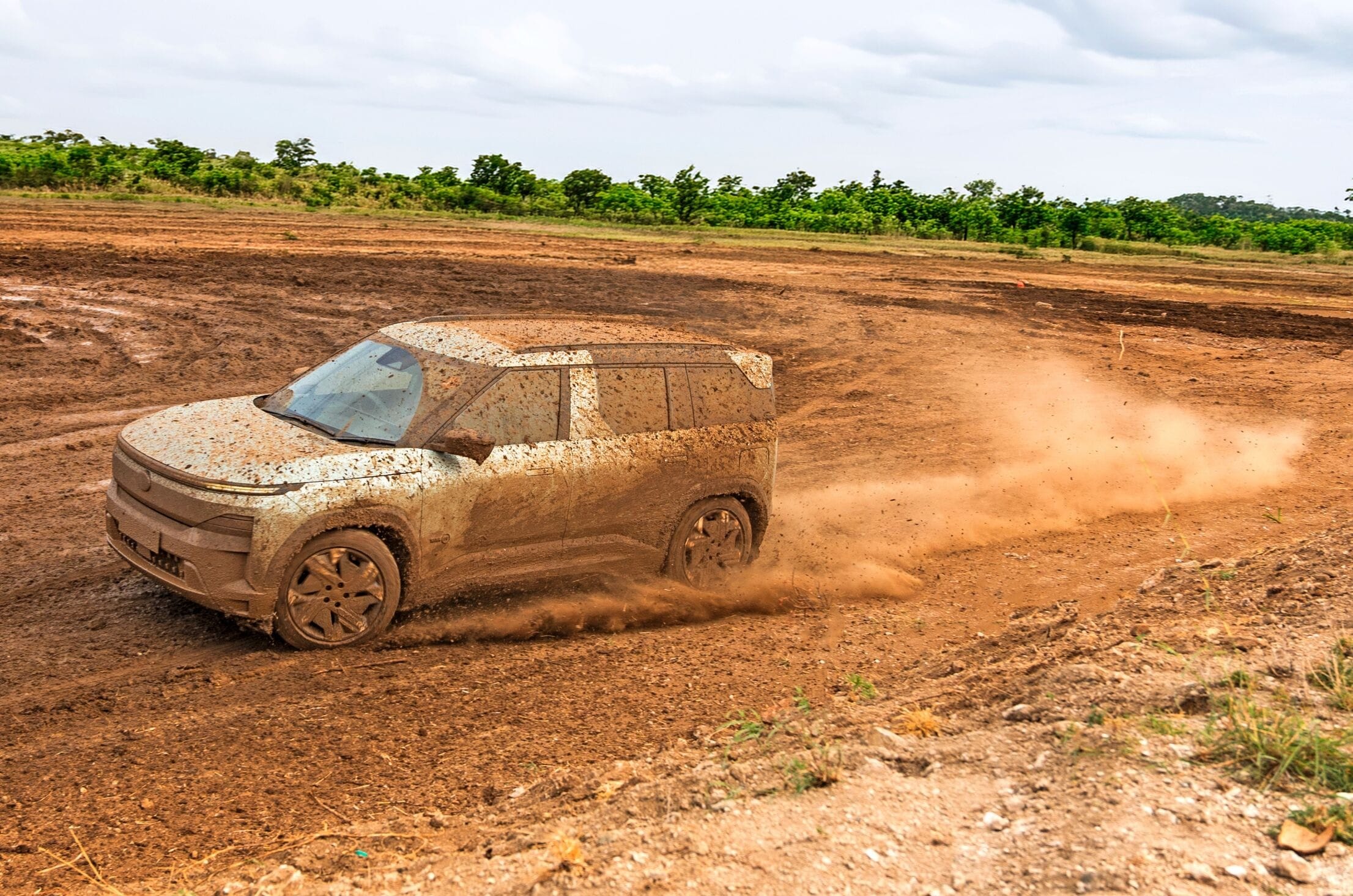
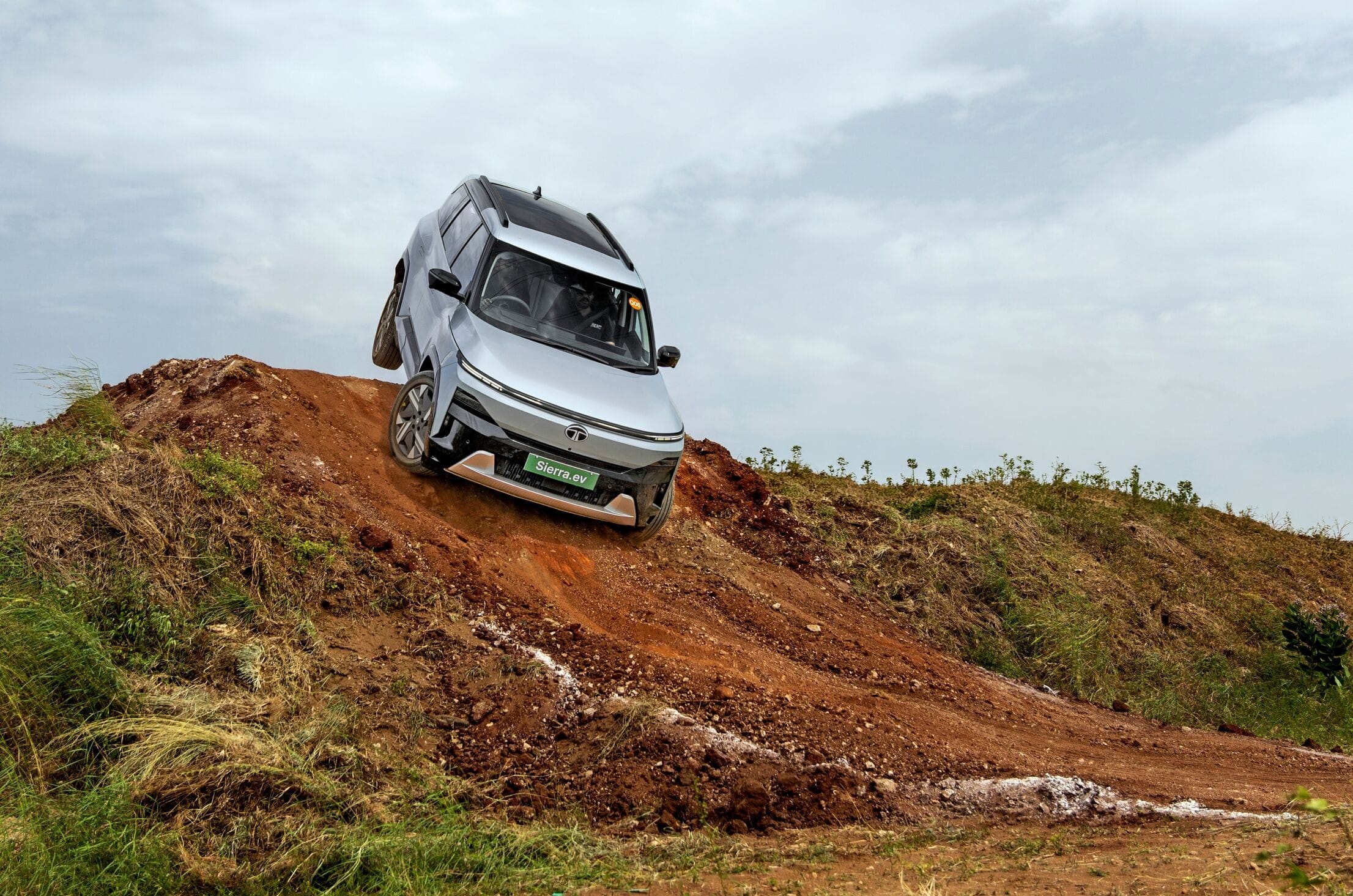
The Sierra EV QWD was rather impressive on the off-road course Tata Motors set up for it, which wasn’t the usual walk in the park, and had some pretty significant obstacles. Put it down to the short overhangs that improve approach and departure angles, or the responsiveness of the e-motors, but the result was surprisingly effortless. We didn’t even need to delve into the terrain modes for the most part, though there were instances where it would fumble shifting torque between the left and right wheels mid obstacle.
2026 Tata Sierra EV range and efficiency – 8/10
Big battery means big numbers, though a real-world test remains.
63kWh and 75kWh are among the bigger batteries offered in this segment, with only the Mahindra BE 6 offering a larger 78kWh unit. The Sierra’s smaller pack is rated at 565km on the MIDC, while the larger at 665km for the single motor and 624km for the dual motor. Tata itself says the MIDC rating won’t be achieved in real-world use, but that the larger battery can deliver upwards of 500km realistically.
When it comes to charging, on a 7.2kW AC charger, the 63kWh pack will take 8.9 hours to get from 10-100 percent, while the 75kWh pack will take 10.5 hours. On a 120kW DC charger, meanwhile, both will do a 20-80 percent top-up in about 26 minutes. At what rate the car actually accepts charge, however, remains to be seen. Tata offers a 15-year warranty on the battery of the Sierra EV, which is reassuring.
2026 Tata Sierra EV ride comfort and handling – 8/10
No compromise on comfort, despite added weight. Handles amicably too.
Tata SUVs have always been great in the dynamics department, and that continues here too. Despite the 19-inch wheels and the 2.1-tonne kerb weight, the Sierra EV can handle any manner of surface with equal composure and comfort. Put it down to the frequency dependent dampers (FDD) but no pothole is too big, nor surface too broken to upset the SUV.
It holds its line well at high speeds and lane change manoeuvres can be made with confidence and little effort. Similarly, at low speeds, the steering is light without feeling loose, letting you change direction easily even in traffic.
High-speed handling too is also pretty engaging, helped no doubt by its lower centre of gravity, and if you really wanted to, you could lean onto the Sierra EV quite hard. That said, it is a tall, high-riding vehicle, so an acceptable amount of body roll is present. The boxy profile, however, does result in some wind noise around the A-pillars at high speed, made more apparent by the silent powertrain.
2026 Tata Sierra EV price and verdict – 7/10
Overlaps with Curvv and Harrier, but feels the better EV than either of them.
It’s not much of a surprise that the Sierra EV is the best Tata you can buy right now, as it the latest product of the brand’s strategy of constant evolution and improvement. It’s not without its flaws, of course, but these feel less like huge deal breakers, and more like matters of finesse in manufacturing and calibration that Tata should take the time to address.
Apart from being a great EV, it’s also just a very good family car, offering space, comfort and the features Indian buyers now expect. The bigger problem for Tata could be where it fits between the Curvv and Harrier EVs, because there is some price overlap, and in our opinion, it surpasses them both overall. And while, at Rs 18.79 lakh to Rs 25.99 lakh, it is priced at the upper end of its segment, it does pack in a lot, and sits on par with the BE 6, which doesn’t have an AWD variant. Which of these two is better is a question for another time, but for now, the Sierra EV has the makings of a winner.
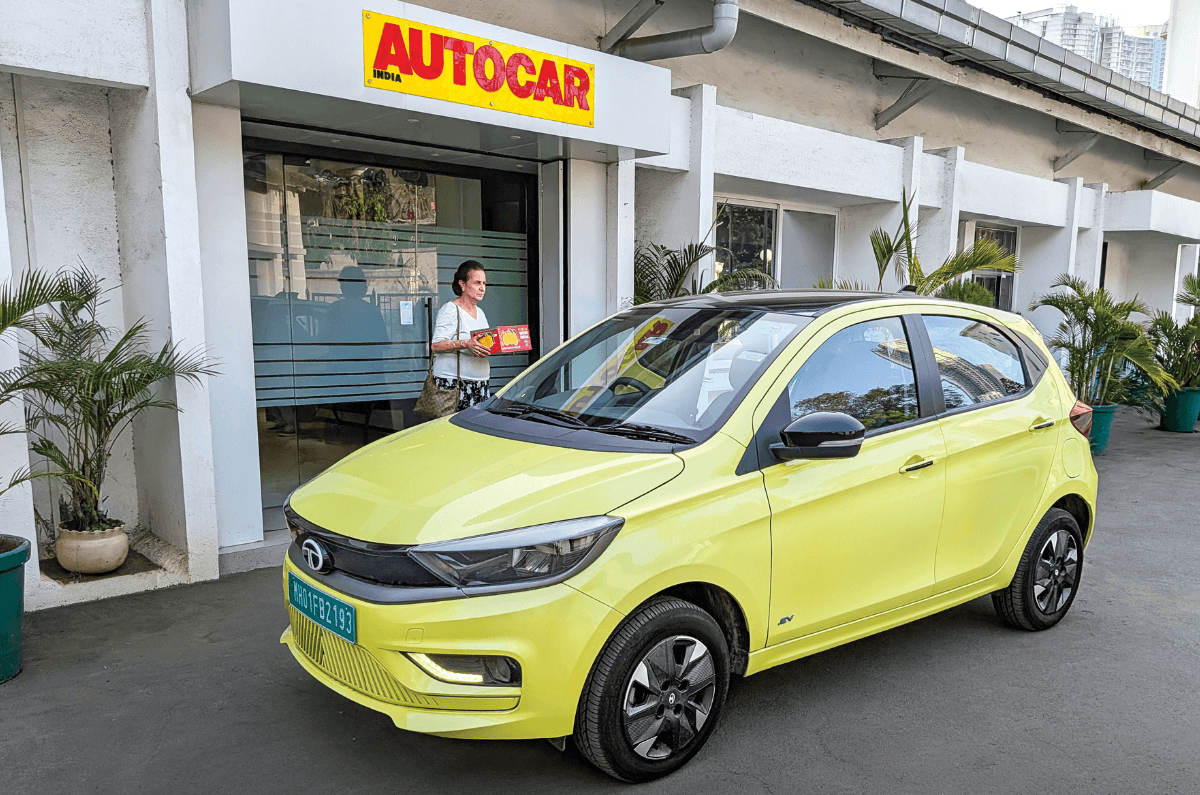
The recently updated Tata Tiago EV is a real good looker, and that’s no surprise; it’s got strong bones. Take a look at the pre-facelifted car; the proportions and stance are spot on. Then there are the lines – crisp and sharp, and the sheet metal skinning looks nice and taut. A testament to its styling is the fact that even ten years after its launch, it still turns heads. Of course, a lot has to do with the neon-yellow shade our car came in. Not everyone at the office is a fan, but I really love it. And even in more sober shades, the Tiago has the ability to grab a few glances.
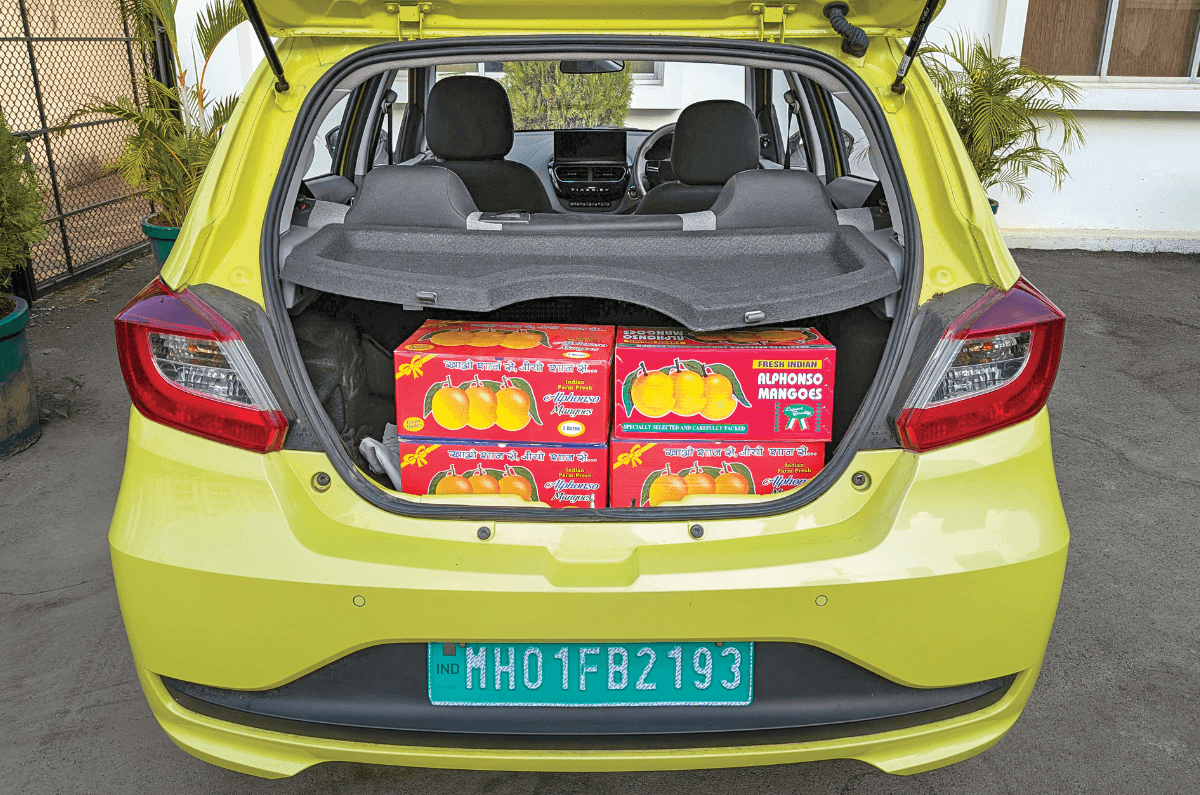
A cold glance, though, was what it got when I suggested to our receptionist, Zenobia (the lady pictured in the lead image), that we would use it to drop off some eight dozen mangoes she had ordered. She wasn’t convinced they would all fit inside and wanted a larger car. But to her surprise and my relief (she can be quite mean when you get things wrong), they fit quite easily inside the boot. At about 240 litres, it’s not that large, but it’s well-shaped, and for regular-sized luggage like these rectangular boxes, it’s not a problem. You have to load over a lip, though, and the opening is narrow.
240-litre boot isn’t large, but manages small luggage.
Besides the mango run, I used the car mainly to commute to the office and for chores around my home, unlike Ameya, who took it to Pune quite a few times. The Mumbai-to-Pune run is about 150km and with a climb as well, but he managed the trip with about 10 percent battery left. I wasn’t going to test the Tiago’s 24kWh battery to that extent. As a practice, I never let the battery level drop below 40 percent on any EV. With me, the Tiago returned an efficiency of around 8km/kWh, which would translate to a range of about 192km. Pretty good, and more than adequate for what is a city EV.
Another benefit of an EV is that you have to wait in the car for someone. I had to wait 25 minutes for my wife at the parlour, and all through it I sat in the Tiago reading a book, comfy and cool with the AC on. I forgot to record the exact drain on the battery, but it was only about four percent. I would not have dreamt of doing this with an internal combustion car.
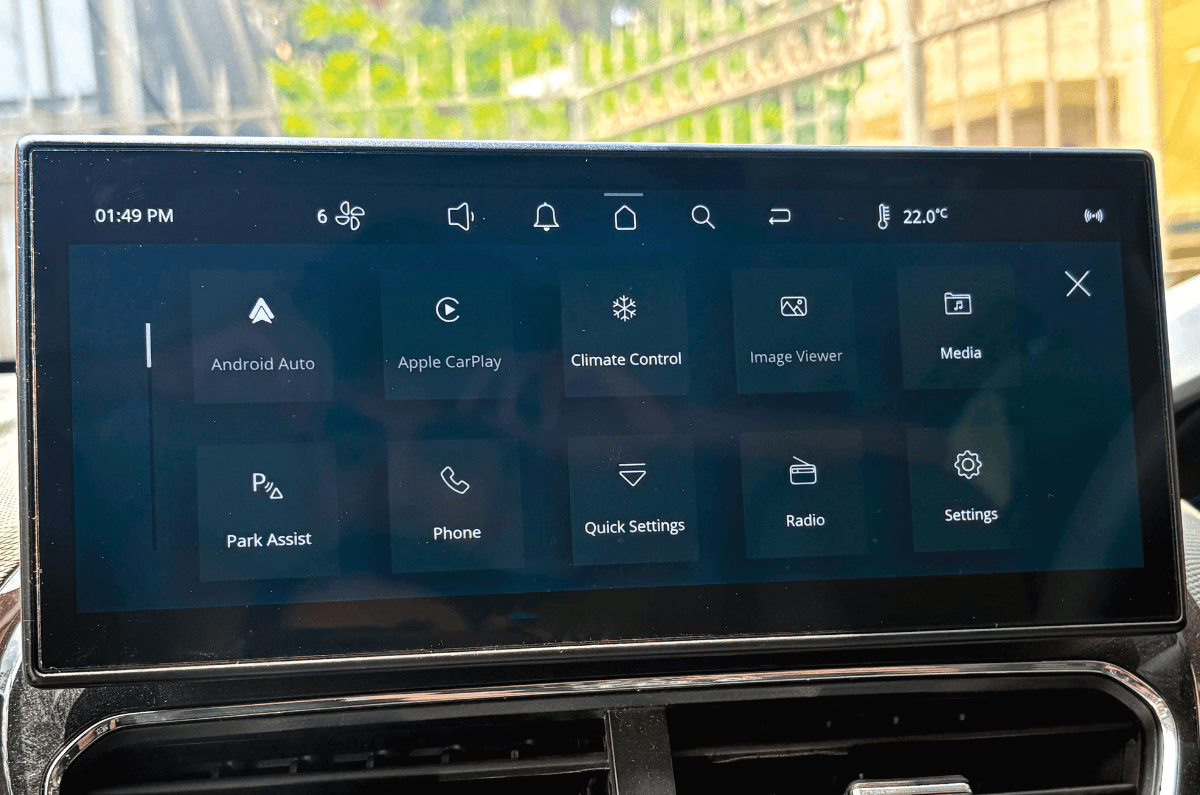
Touchscreen is very modern; slick, responsive and with plenty of features.
My wife loved the car too. Its size made it handy in the city, and for some reason, she really found the electric motor whirr pleasing and even cute; not something she’s liked on other EVs. I think it’s more to do with the cute appeal of the car and the fact that the sound is like a little spaceship or something like that. But everything about it isn’t small. As with most Tata Motors cars, the space inside is big; headroom, particularly so, and my son, for whom we recently bought an Altroz, found the Tiago to be an airier cabin.
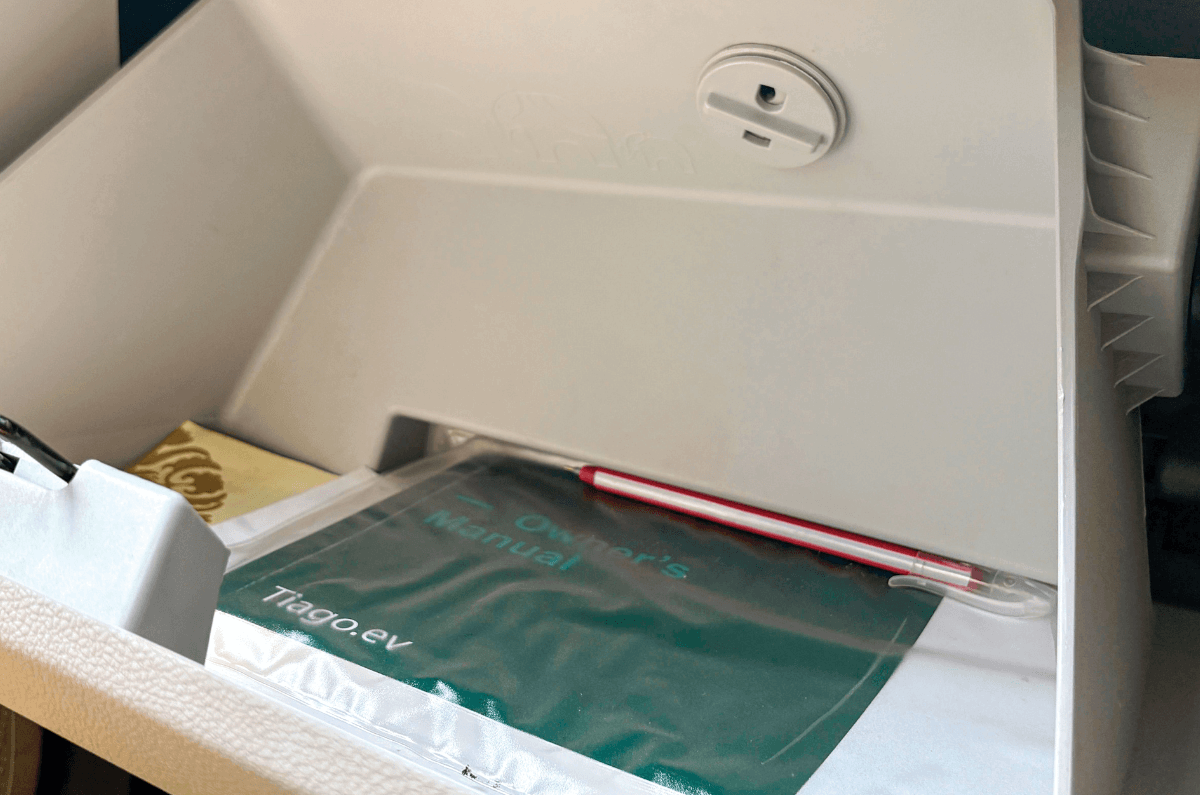
Glove box has an AC vent providing cooled storage, which is quite large too.
Besides the space, the seats are comfy, and the cabin is well-equipped. Since its launch, the Tiago has been steadily updated, and the steering wheel and touchscreen are what you will find on Tata’s newer models. I’m no fan of a two-spoke steering wheel; I find them generally awkward and somehow incomplete, and it’s the same here. The buttons are handy to have but are fiddly to use; they are stubby, and I find toggling them up or down to be something of a deliberate action rather than a natural and easy flick of the thumb. The touchscreen, though, is lovely. It looks nice and sharp, is responsive to touch, and it’s got wireless Apple CarPlay and Android Auto too. While I’m on about features, I like the fact that there is a 45W Type-C USB charging slot, and to my wife’s surprise, she found out that it had a cooled glovebox too.
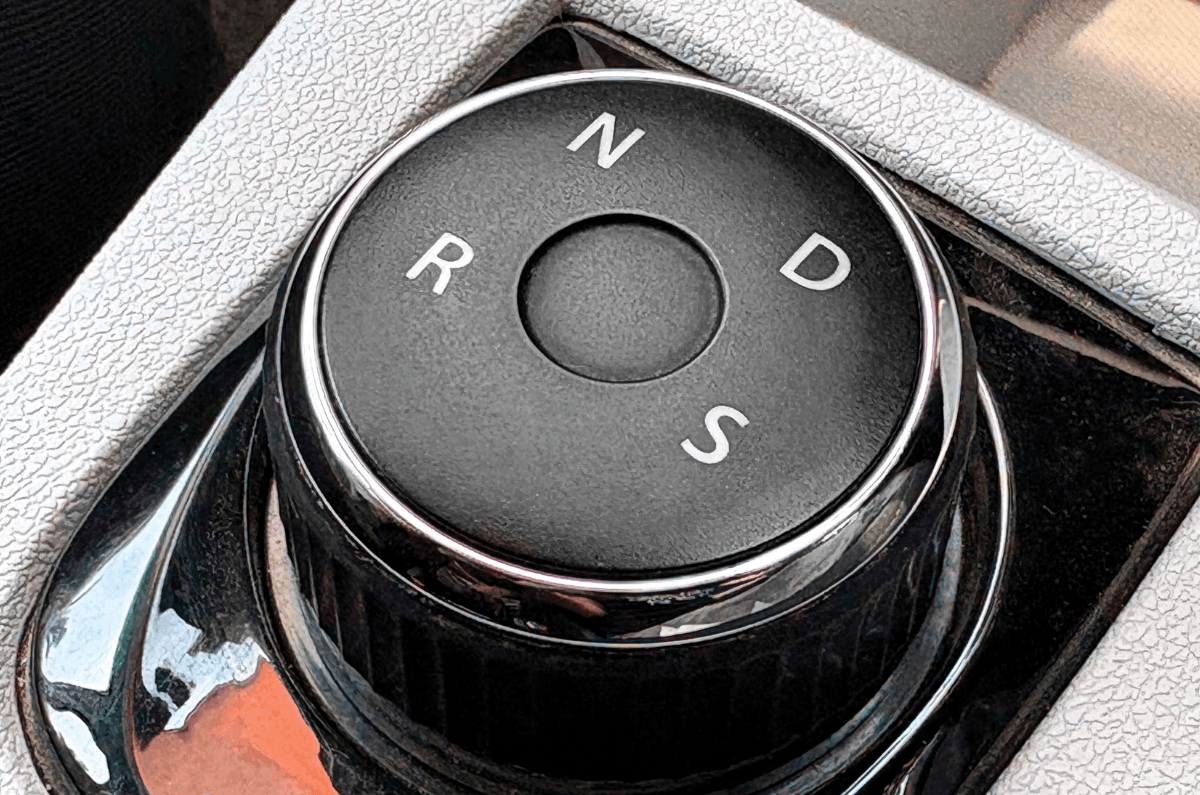
Drive selection is slow and needs firmer-than-usual brake pedal pressure.
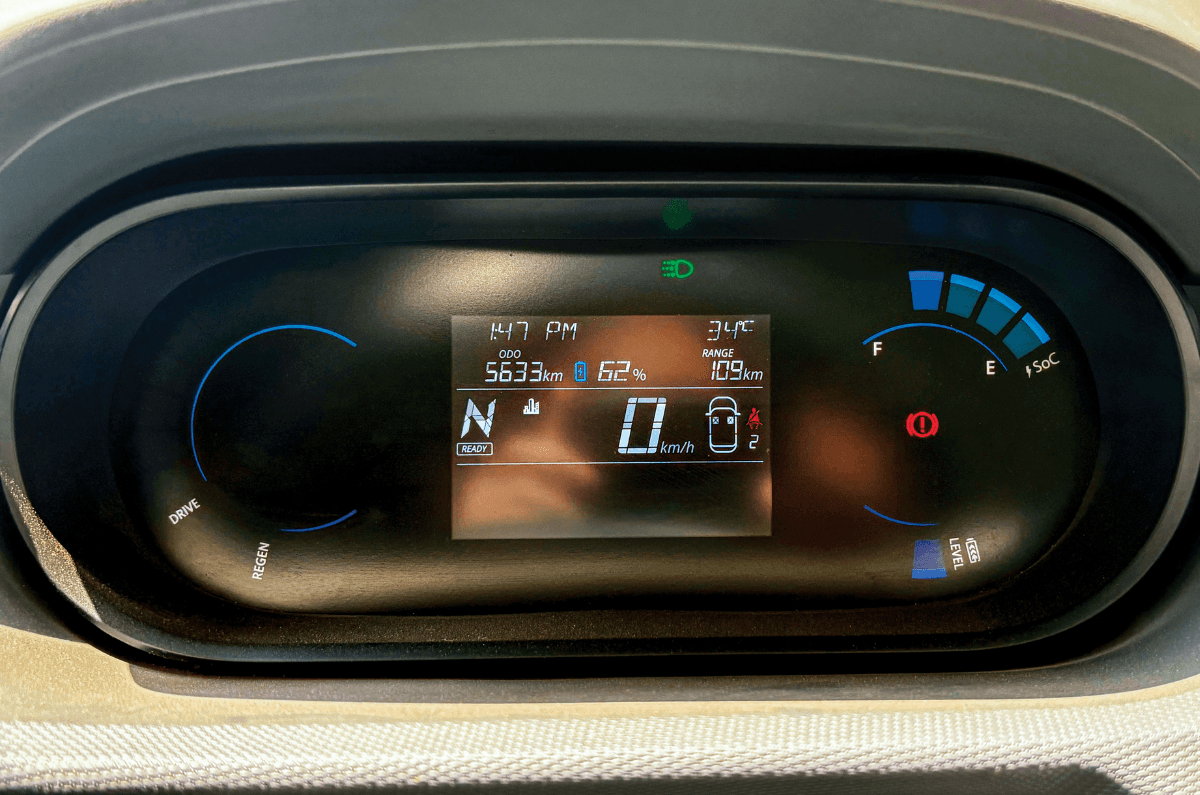
As with most EVs, driving the Tiago is a very straightforward affair. I would have said fuss-free, too, but the rotary drive selector does not engage sometimes. An old issue that hopefully the new car will have sorted. The instrument panel, too, is something I don’t like. There are dial-like info readouts, but not for speed, which is mixed in with other alphanumeric info in the centre.
Driver’s display carries enough info, but its presentation is cluttered and untidy.
Speaking of speed, this is something the Tiago does quite well. Despite its humble 75hp motor, performance isn’t an issue. Overtaking is quick, even in the regular City mode, and passing vehicles at higher speeds, too, is quite a straightforward affair. Ameya found it easy to maintain momentum even out on the Mumbai-Pune expressway. The ride, too, is something that has found praise from all of us. It has the maturity of a larger car – it’s soft at low speeds, but at highway pace, you don’t feel unsettled going over long-wave undulating stretches. This is certainly a car we are all going to miss, and with the update out already, we’re hoping to see the new version in our garage soon.
Pre-facelift Tata Tiago EV XZ+ Tech Lux LR test data
Conceived with no concessions to internal combustion propulsion, ‘born electrics’ were heralded as the future. Manufacturers poured millions into their development, and it is estimated that globally $1.2 trillion was committed to the entire EV ecosystem, $500 billion of which was from automakers.
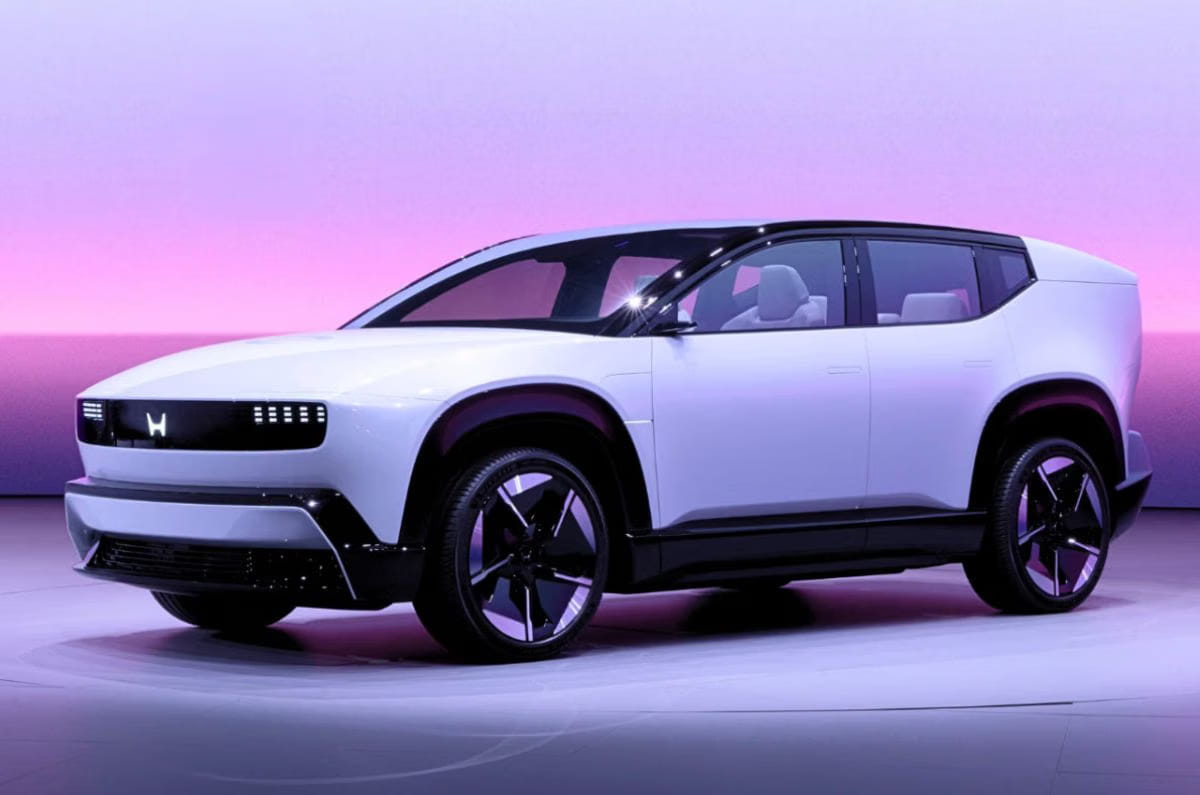
But with global EV sales well below projections, manufacturers are left with hard decisions. The Stellantis group, for instance, confirmed a $26 billion write-off over its EV projects, while Honda said its annual operating loss would be between 270-570 billion yen, due to losses associated with the reassessment of its electrification strategy. Earlier this year, the Japanese carmaker scrapped its much-hyped ‘0 Series’ EV project, though the made-in-India 0 Alpha SUV, which is said to use components from the Elevate, is still on track.
Honda has cancelled its 0 Series EV Project altogether
The write-offs and cancellations are understandable in the context of born-electrics, as while there have been many ICE-to-EV conversions, it’s a lot harder the other way around. Conceived with no engine and gearbox in mind, space to accommodate this bulky hardware is the first hurdle they need to clear. There’s also space needed for subsystems like driveshafts, fuel and exhaust systems which leads to the other complication of thermal management. Beyond the exhaust system, internal combustion engines have higher cooling requirements than EVs, and thus airflow management needs to be addressed.
Another challenge is crashworthiness. Again, having never had to hold an engine and gearbox, the crash structure of these cars was never designed with this massive mass in mind. These changes thus require time and expensive re-engineering.
However, tough as it is, some brands are looking at re-engineering born-EVs to use some form of internal combustion. The VW Group is one such example, as is homegrown automaker Mahindra. While it sold about 16,000 EVs in FY2026 – the bulk of them coming from its born-electric line-up – it needs higher volumes given the investments in their development. The Chinese, too, who were very quick with born-electrics, are looking at the ICE switch.
Ice Age 2.0
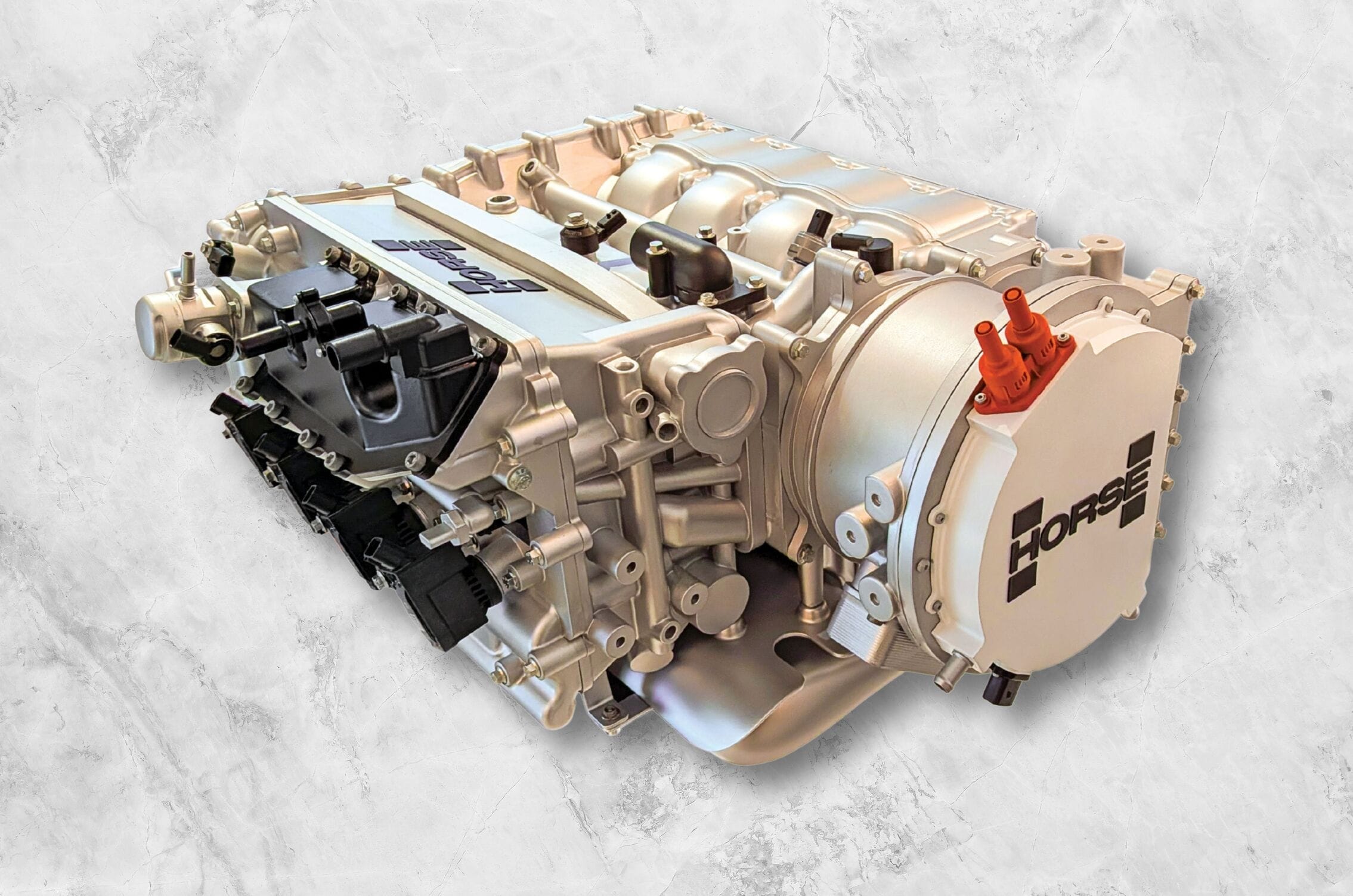
In this scenario, Horse Powertrain might hold the panacea – the C15 powertrain. Showcased at the Vienna Motor Symposium in April this year, the C15 unit is a compact, all-in-one powertrain designed to replace the electric drive unit of a born-electric and transform it into a range-extender hybrid. The integrated unit consists of a 1.5-litre, 4-cylinder engine, hybrid transmission, electric motor and the full suite of power electronics.
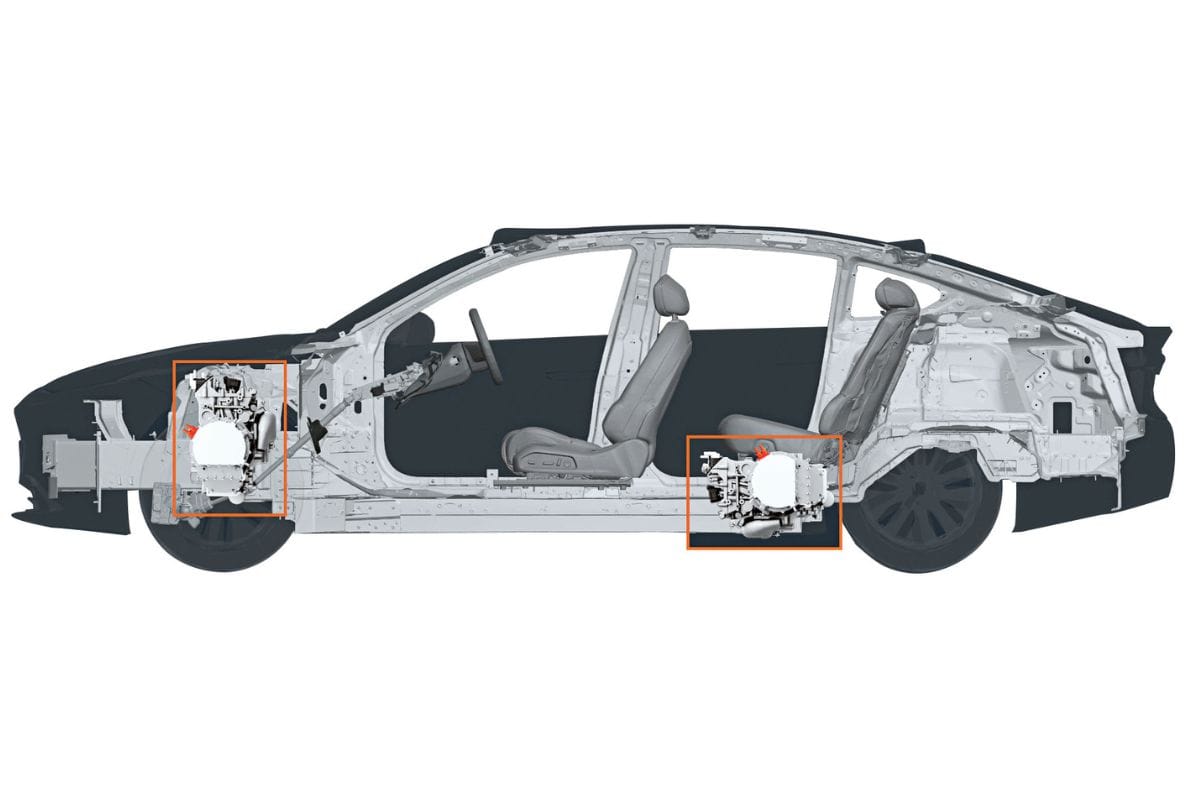
C15 powertrain can be installed at the front or rear and in either a vertical or horizontal orientation.
Furthermore, Horse says the unit is modular and can have further systems bolted on, depending on manufacturer requirements, like turbocharging or even a traditional gearbox, should direct-to-wheel drive be required. Adding to its flexibility, the engine can be packaged vertically or even horizontally, and the company says systems like lubrication are capable for either installation type. It can also be located at the front or rear of the vehicle, so as to warrant fewer modifications and re-engineering for a brand. 64 percent of its components are parts from existing powertrains, and this, Horse says, brings down the unit’s cost. So far, there’s no word on when it would come to market, but the brand says work is already underway, and the first model with the C15 unit should see the light of day by 2028.
On the face of it, converting a born-electric to ICE might seem like a retrograde step in the journey towards electrification. However, it’s clear this journey is far longer than previously thought, and a born-electric-to-ICE conversion will certainly help a manufacturer’s business viability in the immediate term. Furthermore, in this scenario of internal combustion living longer, hybridisation helps lowering fuel consumption and emissions. Thus, a retrograde step this might be, but one that can help build the future.
Q&A Jesus Frances Busto – Strategy & RAE Director, Horse Technologies
On the company structure
Horse Powertrain is a joint venture between Renault, Geely and Saudi Aramco, but we are an independent global powertrain supplier. So we can supply, work with, and integrate this (C15) with any manufacturer that is interested in it. It’s part of our new story at Horse Powertrain.
On the C15’s requirement
Brands have invested a lot into born-electric platforms, and many have even got the products ready and out into the market. But yes, they now would need to have an option to cope with this adoption towards EVs, and a hybrid with a range-extender setup is a good possibility for this.
On the C15’s specialities
The C15 solves the problem of space, and we have solved it not by miniaturisation, but with innovative redesign and repackaging. We can install this vertically or even horizontally, and when we do this, one of the points we have to solve is lubrication, so we have a scavenge function circulating oil through and through correctly.
On a market launch
As you would understand, we cannot disclose our clients at the moment or specific launch dates, but we are working with brands, and we should see this in the market by early 2028.
आमतौर पर माना जाता है कि किसी व्यक्ति की संपत्ति पर सबसे पहला अधिकार उसके परिवार का होता है। यही वजह है कि अधिकतर लोग अपनी वसीयत में माता-पिता, जीवनसाथी या बच्चों को वारिस बनाते हैं। लेकिन चीन के शंघाई से सामने आया एक मामला इस सोच से बिल्कुल अलग है। यहां 19 साल के एक छात्र ने ऐसा फैसला लिया, जिसने लोगों को हैरान कर दिया। करोड़ों रुपये की संपत्ति होने के बावजूद उसने अपने परिवार के बजाय किसी और को अपना उत्तराधिकारी चुना। खास बात यह है कि उसने यह फैसला पूरी कानूनी प्रक्रिया के तहत लिया, ताकि भविष्य में उसकी इच्छा को लेकर कोई विवाद न हो।
कम उम्र में वसीयत बनवाने और परिवार की जगह किसी दूसरे व्यक्ति को अपनी संपत्ति सौंपने के पीछे की वजह भी काफी दिलचस्प बताई जा रही है। इस अनोखे फैसले की चर्चा सोशल मीडिया से लेकर कानूनी विशेषज्ञों के बीच भी हो रही है।
बचपन के दोस्त पर था सबसे ज्यादा भरोसा
रिपोर्ट के मुताबिक, छात्र का उपनाम ली (Li) है। उसने अपनी वसीयत में फ्लैट और बैंक में जमा करोड़ों रुपये की बचत समेत सारी संपत्ति अपने बचपन के दोस्त के नाम कर दी। ली का कहना है कि वही उसका सबसे भरोसेमंद साथी है।
परिवार से क्यों बना फासला?
ली ने बताया कि उसके माता-पिता का तलाक हो गया था और बाद में दोनों ने दूसरी शादी कर ली। उन्होंने संपत्ति तो उसके नाम कर दी, लेकिन बचपन में उसके साथ ज्यादा समय नहीं बिताया। इसी वजह से समय के साथ उसके और माता-पिता के रिश्ते कमजोर होते गए।
19 साल की उम्र में वसीयत क्यों बनाई?
ली को एडवेंचर और एक्सट्रीम स्पोर्ट्स का बहुत शौक है। वो ऐसे खेलों में हिस्सा लेता है जिनमें जोखिम ज्यादा होता है। उसे लगा कि अगर कभी उसके साथ कोई हादसा हो जाए, तो उसकी संपत्ति को लेकर कोई विवाद न हो। इसलिए उसने कम उम्र में ही कानूनी वसीयत तैयार करवा ली।
सौतेले रिश्तेदारों को नहीं देना चाहता था हिस्सा
ली ने कहा कि अगर उसने वसीयत नहीं बनाई होती, तो भविष्य में उसके माता-पिता के नए जीवनसाथियों को भी उसकी संपत्ति का फायदा मिल सकता था। वो ऐसा नहीं चाहता था। इसलिए उसने पूरी संपत्ति अपने बचपन के दोस्त के नाम कर दी।
कानून ने कैसे पूरी की उसकी इच्छा?
चीन के उत्तराधिकार कानून के अनुसार, अगर कोई व्यक्ति बिना वसीयत के मरता है तो उसकी संपत्ति सबसे पहले जीवनसाथी, बच्चों और माता-पिता को मिलती है। ली की शादी नहीं हुई है और उसके बच्चे भी नहीं हैं, इसलिए सामान्य स्थिति में उसकी संपत्ति माता-पिता को मिलती।
लेकिन चीन का कानून यह भी अनुमति देता है कि कोई व्यक्ति वैध वसीयत बनाकर अपनी संपत्ति परिवार के बाहर किसी भी भरोसेमंद व्यक्ति के नाम कर सकता है। इसी नियम का फायदा उठाकर ली ने अपने दोस्त को अपनी पूरी संपत्ति का वारिस बनाया।
वसीयत को कानूनी रूप से कराया पक्का
ली ने शंघाई के चाइना विल रजिस्ट्रेशन सेंटर जाकर अपनी वसीयत का नोटरीकरण और रजिस्ट्रेशन कराया। अब अगर भविष्य में उसके साथ कुछ होता है, तो उसका दोस्त 60 दिनों के भीतर कानूनी रूप से संपत्ति स्वीकार कर सकता है। तय समय में ऐसा नहीं करने पर उसे संपत्ति लेने से इनकार माना जाएगा।