3 reasons to buy the Flying Flea C6 and 2 reasons to skip it

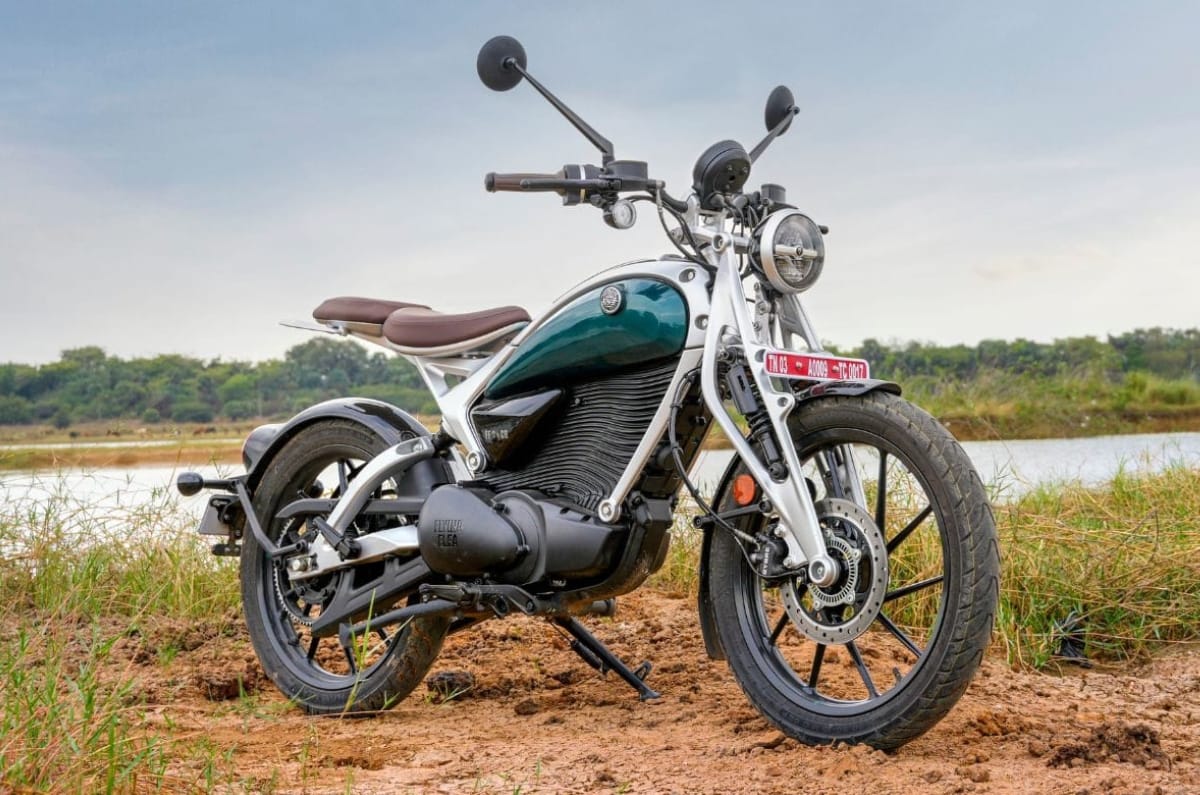
Flying Flea C6 static

The Flying Flea C6 is Royal Enfield’s first electric motorcycle and, by any measure, one of the most unconventional two-wheelers to come out of an Indian manufacturer. The brand says it isn’t designed to be a high-volume product, but rather as a learning exercise and a statement of intent. During our brief stint with the bike, we found the C6 takes a genuinely different approach to electric mobility. Here’s what works in its favour and a couple of reasons it might not be for everyone.

Reasons to buy the Flying Flea C6

Exciting and engaging to ride

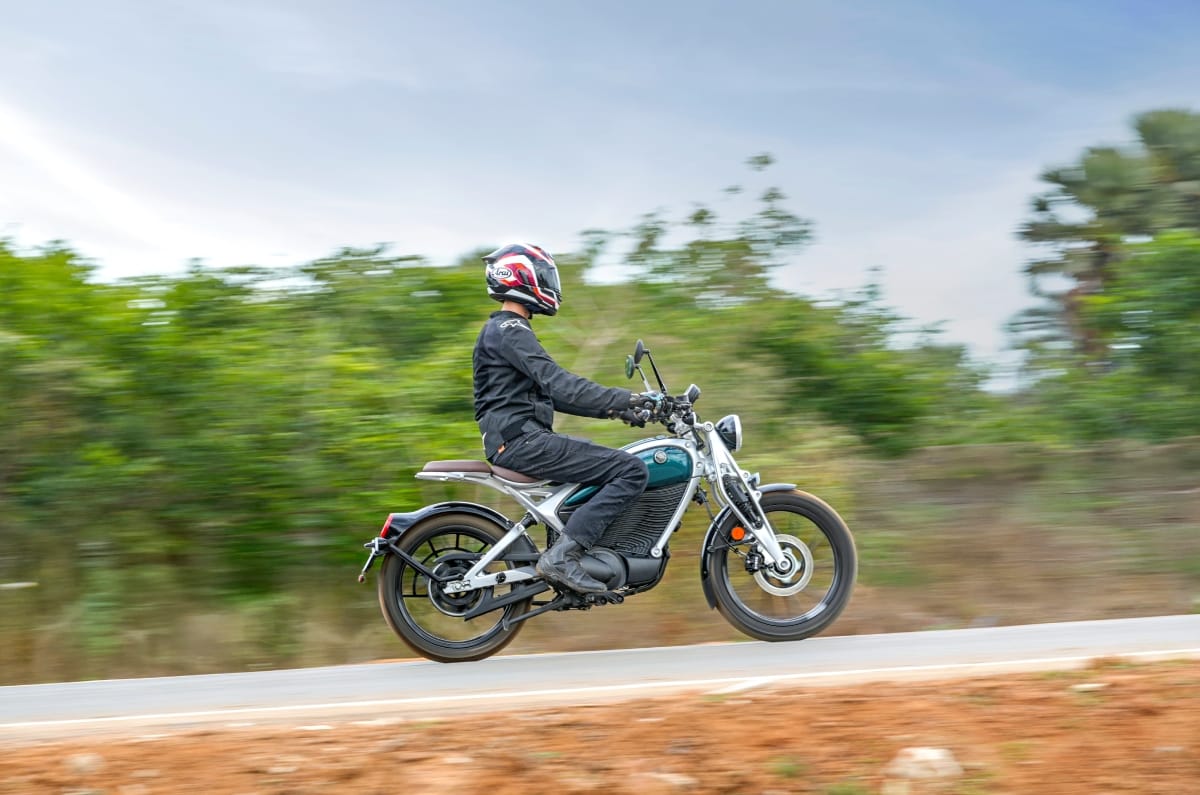
The C6’s performance is more impressive than its compact dimensions might suggest. The 15kW peak motor produces 60Nm and the bike can reach a top speed of around 115kph, which it achieves with ease. More significantly, during our time with the bike we found that this performance is consistently available even as the battery state of charge drops. The motor is capable of 8kW continuous output, which is among the highest of any Indian two-wheeler EV.

Four riding modes – Rain, City, Highway and Sport – are available, along with a custom mode that allows you to tweak throttle response, power level, traction control and regenerative braking independently. 
Beautifully engineered with impressive attention to detail

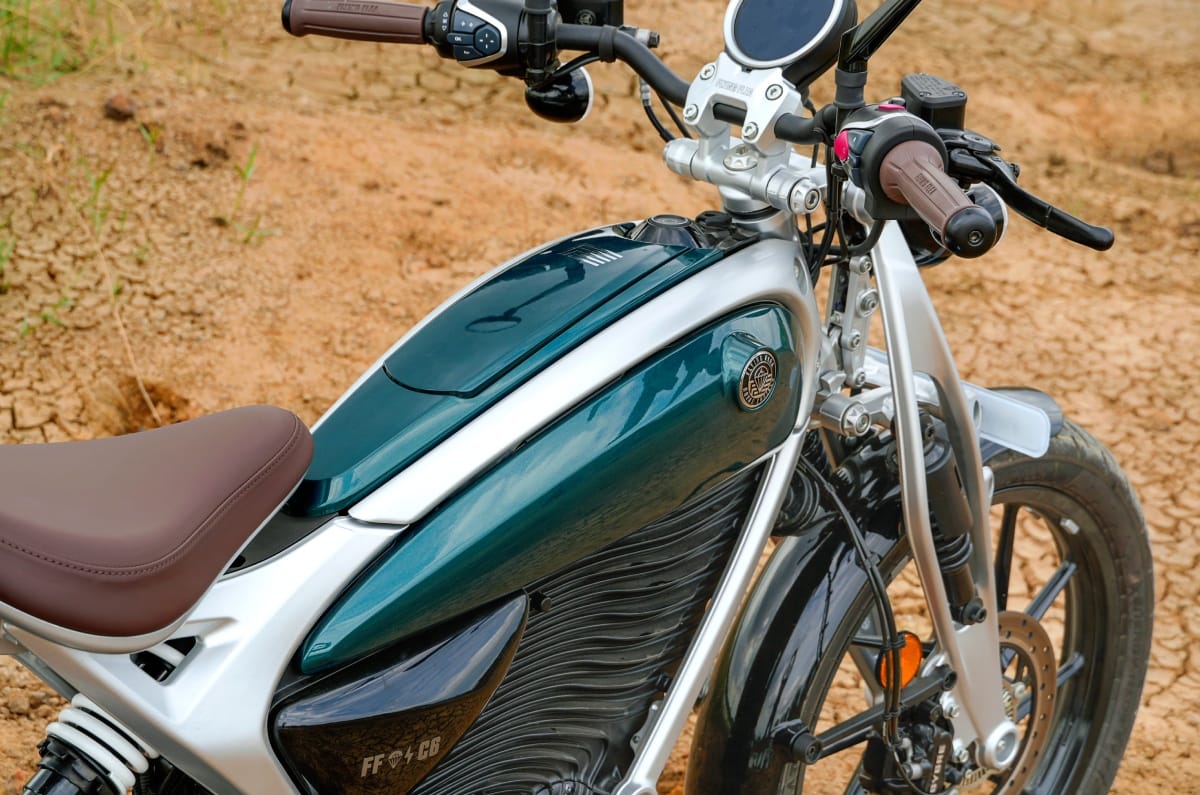
The C6 is a genuinely fascinating piece of engineering to spend time with. Virtually no steel is used in the structural components – the chassis is a forged aluminium exoskeleton, the swingarm is aluminium, and the battery casing is constructed from magnesium alloy, a material that is significantly lighter than aluminium and has never been used in an Indian two-wheeler before. The girder fork, in particular, is a mechanical highlight – it’s virtually extinct on modern motorcycles and is fascinating to observe both at a standstill and in motion. Royal Enfield has addressed magnesium’s combustibility risk by designing the chassis as a protective exoskeleton around the battery casing. 
High-end technology and thoughtful features

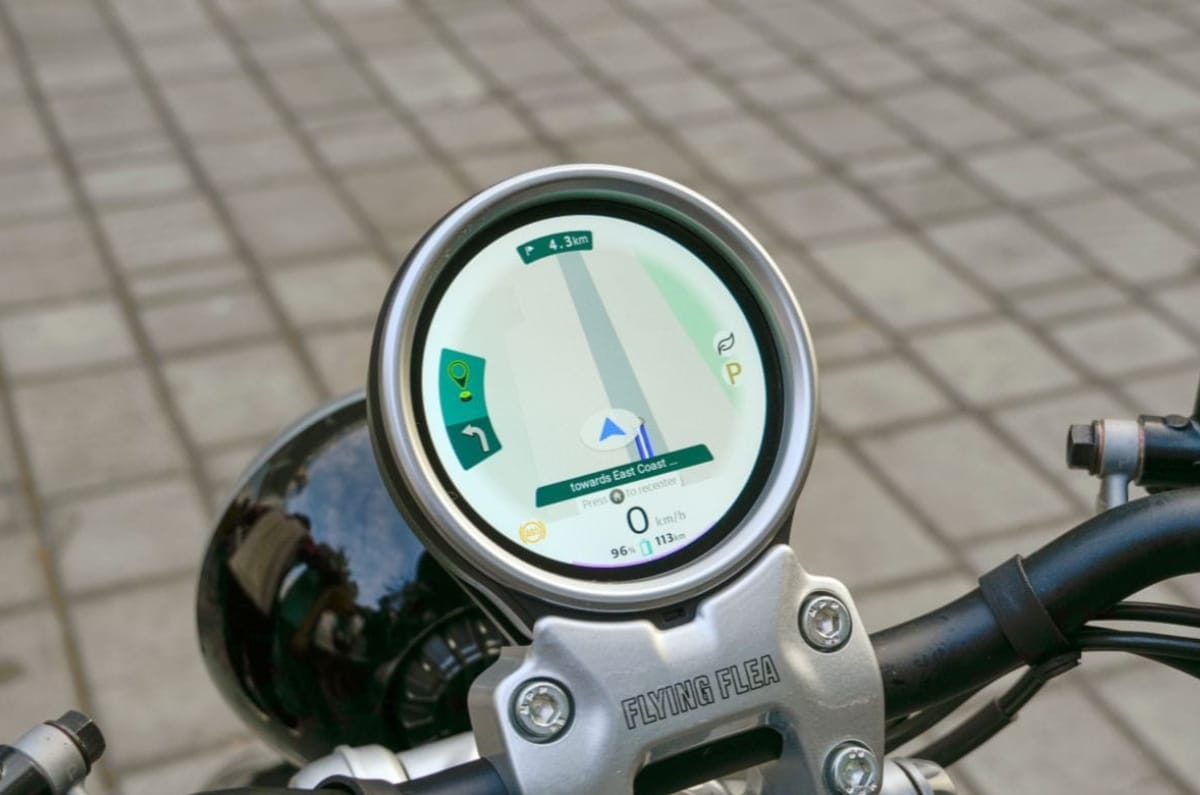
The C6 is the most technically advanced Royal Enfield ever built, by a considerable margin. It comes with cornering ABS, traction control, a 3.5-inch round touchscreen TFT display and keyless operation. A rotary dial on the left switchgear allows riding mode changes on the move and makes for a genuinely intuitive system. App connectivity is standard, and an integrated phone storage compartment with wireless charging allows you to cast Google Maps onto the TFT. An on-board 2kW charger means you only need to carry a cable, not a bulky external unit, and three charging modes let you choose between fast, normal and trickle charging speeds. A notable addition is an optional incognito mode that prevents the bike from relaying data back to the company – a rare and welcome privacy feature for a connected vehicle.
Reasons to skip the Flying Flea C6

Polarising size and limited real-world range

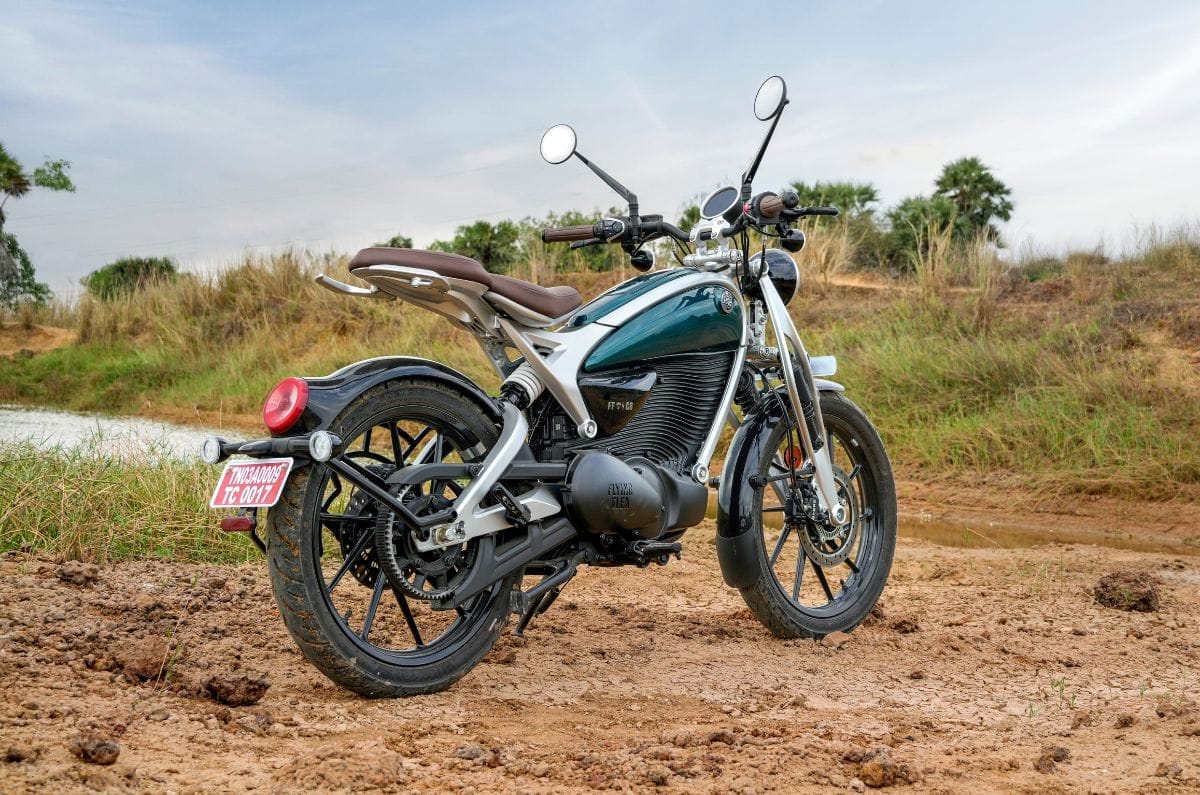
The C6 is a small, compact motorcycle. Deliberately so, given its inspiration from the original World War II-era Flying Flea that needed to be parachute-dropped onto battlefields. Not everyone will find the proportions appealing, and riders expecting a conventional Royal Enfield presence on the road will be surprised by just how compact it feels.

Next, the 3.91kWh battery’s 154km claimed IDC range is modest, and in real-world use the figure varies significantly depending on riding style – aggressive riding can bring it down to 60-70km, while steady riding at 60-70kph makes 100km achievable. The C6 is best suited to urban use; venturing much beyond city limits will require planning. The pillion experience is also compromised, with a small removable rear seat and footpegs mounted on the swingarm that move with the rear suspension.
Price and availability

At Rs 2.79 lakh (ex-showroom), the C6 is a significant ask for a compact, single-speed electric motorcycle with a modest range. That said, given the engineering decisions Royal Enfield has made, it is arguably as reasonable as it could be. More immediately limiting for potential buyers is availability as the C6 is currently only on sale in Bengaluru, with a gradual city-by-city rollout planned. Those outside Bengaluru will have to wait, and there’s no confirmed timeline for when the bike will reach their city.

Royal Enfield Lightwing multi rays modular helmet review

Royal Enfield Lightwing multi rays modular helmet review

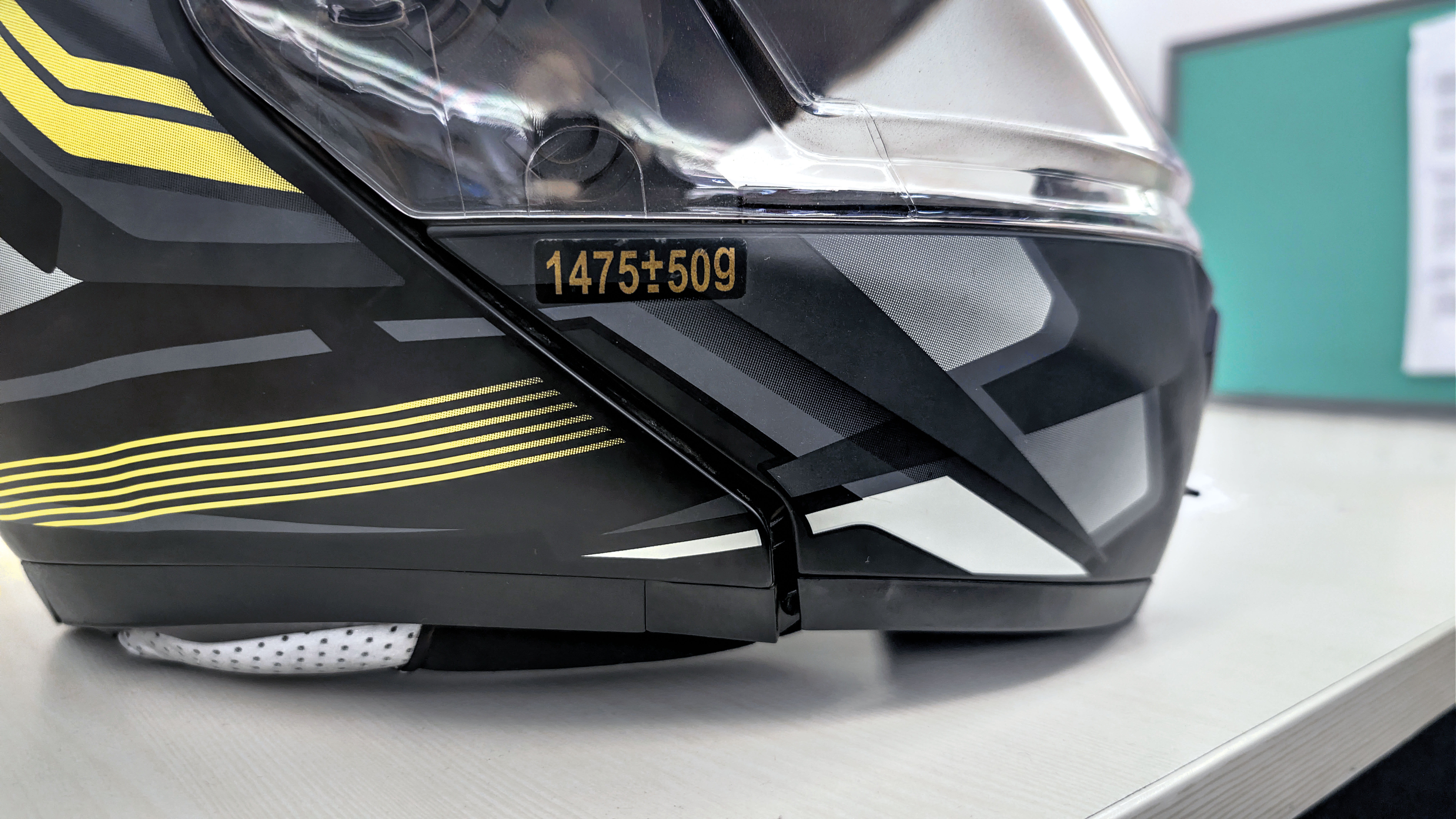
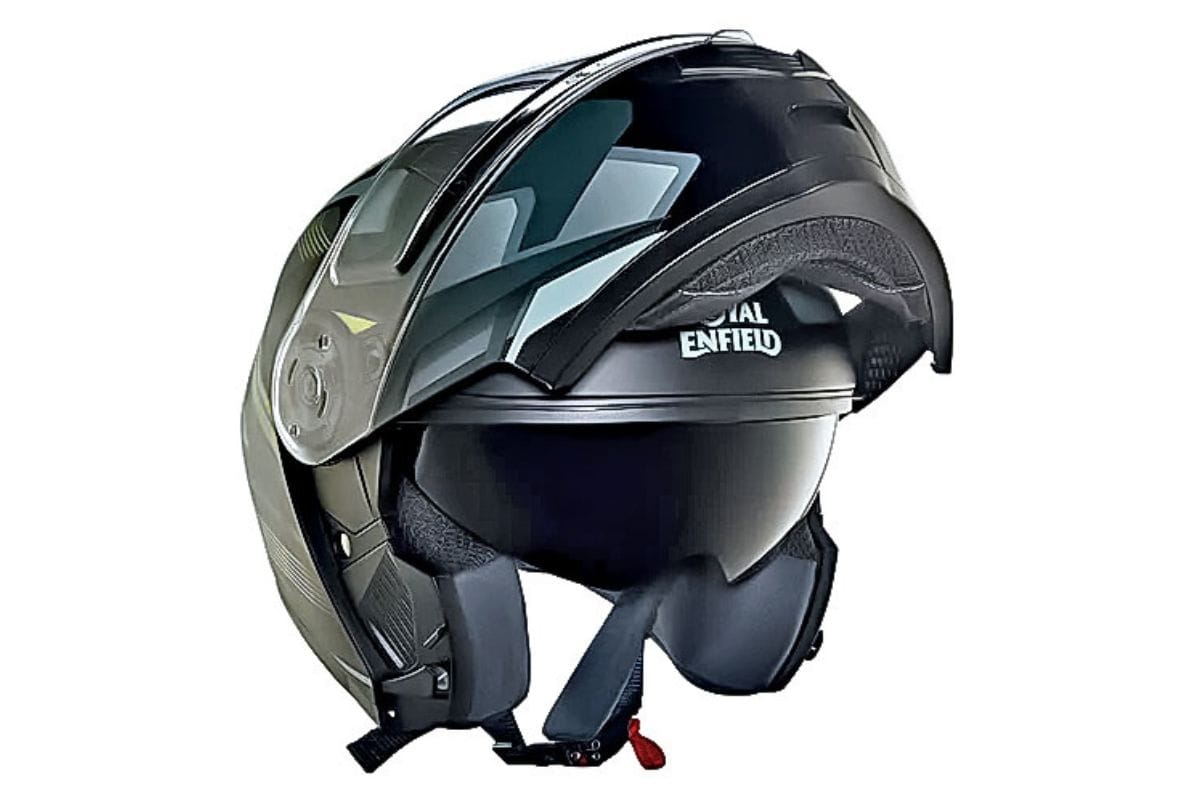
Switching from a half-face helmet to the Royal Enfield Lightwing modular lid was always going to be a step up, and the difference was immediately noticeable, especially in terms of weight. At approximately 1,475g, it’s significantly heavier. The first few rides made that clear, but a week into using it as my daily, the added weight faded into the background. In fact, it now feels like a fair trade-off for the added sense of security and build quality.

It also impresses with its solid construction. The shell feels sturdy, and the matte black and yellow finish has held up well despite being subjected to Mumbai’s harsh summer sun. There’s no fading or visible wear, which says a lot about its durability in real-world conditions. The inclusion of a ratchet strap instead of a double-d ring closure system might disappoint some, but it isn’t a deal-breaker in my books, although I’m primarily confined to the urban jungle.

Chin bar doesn’t sit flush upon closure; demands effort.

The integrated sun visor is genuinely useful in a city like Mumbai, where the sun is relentless. And the fact that it fits neatly over my spectacles makes it even more practical. For my usage – largely city commutes on my TVS Ntorq – I’ve often ridden with the helmet in its open-face configuration to cope with the heat.

That’s because using it as a full-face helmet in peak summer hasn’t been the most comfortable experience. While it does get adjustable vents, ventilation in Mumbai traffic compared to my previous half-face helmet is much lower, though that’s not entirely unexpected.

Comfort, however, is a strong suit. The inner padding is plush and sits well, even on longer rides. It’s easy to remove and clean, a big plus given the amount of sweat and dust helmets endure in daily use. There are a couple of niggles, though. The locking mechanism can be finicky, often requiring you to hold down the unlock button while shutting it, not ideal for something you use multiple times a day. Removing the visor is also easy, but getting it to lock back into place can test your patience. Wind noise is reasonably well contained up to about 70kph, but beyond that, I haven’t tested it enough to comment confidently on highway performance.

At Rs 4,500, this helmet is good value for what it offers. As a stylish, well-built modular helmet for primarily urban use, it largely delivers on expectations, with just a few compromises.

Written by SAGAR JUNEJA
Where: store.royalenfield.com
Price: Rs 4,500

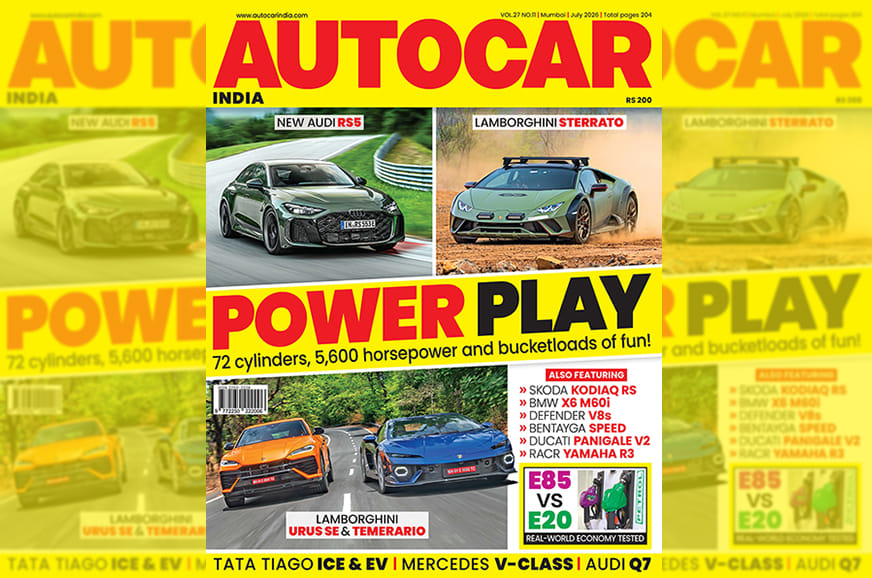
E85 vs E20 fuel tested, Lamborghini Temerario driven: Autocar India July 2026

Autocar India July 2026 magazine summary

Our July 2026 issue is a celebration of the internal combustion engine in its finest form. The Lamborghini Temerario and Urus SE headline proceedings, both hybrid-powered but no less outrageous for it. We also drive the new Audi RS5 in Austria, road test all three versions of the Renault Duster, and drive the new Skoda Kodiaq RS. On two wheels, we ride the Hero Xoom 160, Royal Enfield Bullet 650 Twin and Ducati Panigale V2 S, and break down the economics of running an E85 vehicle.

Lamborghini Temerario and Urus SE: Cover Story 

The Temerario and Urus SE represent Lamborghini’s hybrid future in two very extreme forms. Both pack twin-turbo V8s working in concert with electric motors, yet couldn’t be more different in character. We drive both the cars back-to-back to find out whether the Raging Bull still has its horns.

E85 vs E20 Fuel Test: Feature

India now has E85 pumps dispensing fuel that’s about Rs 20 per litre cheaper than E20. We test both blends back-to-back in the Suzuki Gixxer SF 250 FFV to find out how big the efficiency hit is, and whether E85 actually makes financial sense.

New Audi RS5: Drive 

Audi Sport’s first performance PHEV has learnt from the mistakes of its rivals. Retaining the twin-turbo V6 rather than downsizing, adding a 130kW electric motor for 639hp total, and lavishing the chassis with updates, give an Audi something it has rarely had before – an instinct to oversteer. We drive it in Austria.

Tata Tiago Facelift: First Drive 

Tata has given both the Tiago and Tiago EV comprehensive updates for 2026, with sharper styling, modernised cabins and a broader feature list. The updated EV gets faster charging and arrives up to Rs 1.15 lakh more affordable than before. Two familiar favourites, freshened up – but have the updates done enough? 

Huracán Sterrato at Nanoli Speedway: Feature

Maharashtra’s first race resort is rising on the grounds of the Nanoli Stud Farm near Lonavala, and we got a rare opportunity to drive a Lamborghini Huracán Sterrato on the unfinished dirt track before the tarmac arrives. A lap of honour that will only ever happen once.

Skoda Kodiaq RS: First Drive 

The Kodiaq gets the RS treatment for the first time in India, with 265hp, adaptive dampers, progressive steering and 20-inch wheels. It is a practical seven-seater with serious driver appeal, but does the price premium make sense?

Renault Duster: Road Test 

We put all three versions of the new Duster – the 1.3 DCT, 1.3 MT, and 1.0 MT – through our exhaustive real-world performance and efficiency tests. The Duster impressed at its first drive, but how does it hold up when the numbers are in?

A Tale of Two V8s: Feature 

Land Rover offers not one but two very different V8s in the Defender. Jaguar’s supercharged 5.0-litre AJ133 in the standard P425, and BMW’s twin-turbocharged 4.4-litre S68 in the Octa. We examine both to find out how, and why, they co-exist.

Royal Enfield Bullet 650 Twin: First Ride 

The Bullet nameplate has been in continuous production for nearly a century, and the 650 Twin is the largest iteration yet. It shares its 648cc parallel-twin with the Classic 650, but brings its own character to the table. How does it justify its place in the range?

Ducati Panigale V2 S: Ride 

The new Panigale V2 drops from 155hp to 120hp and sheds significant weight in the process. The result is a more accessible, friendlier and arguably more enjoyable track machine than its predecessor. We find out if a more sensible Panigale is still a great Panigale.

Le Mans 2026: Motorsport 

Toyota returned to the top step of the Le Mans podium after three years, defeating BMW and Cadillac in a finish that was among the four closest in the race’s history. We have the full story from the 94th edition of the world’s greatest endurance race.

Royal Enfield Goan Classic 350 long-term review, 2,600km report

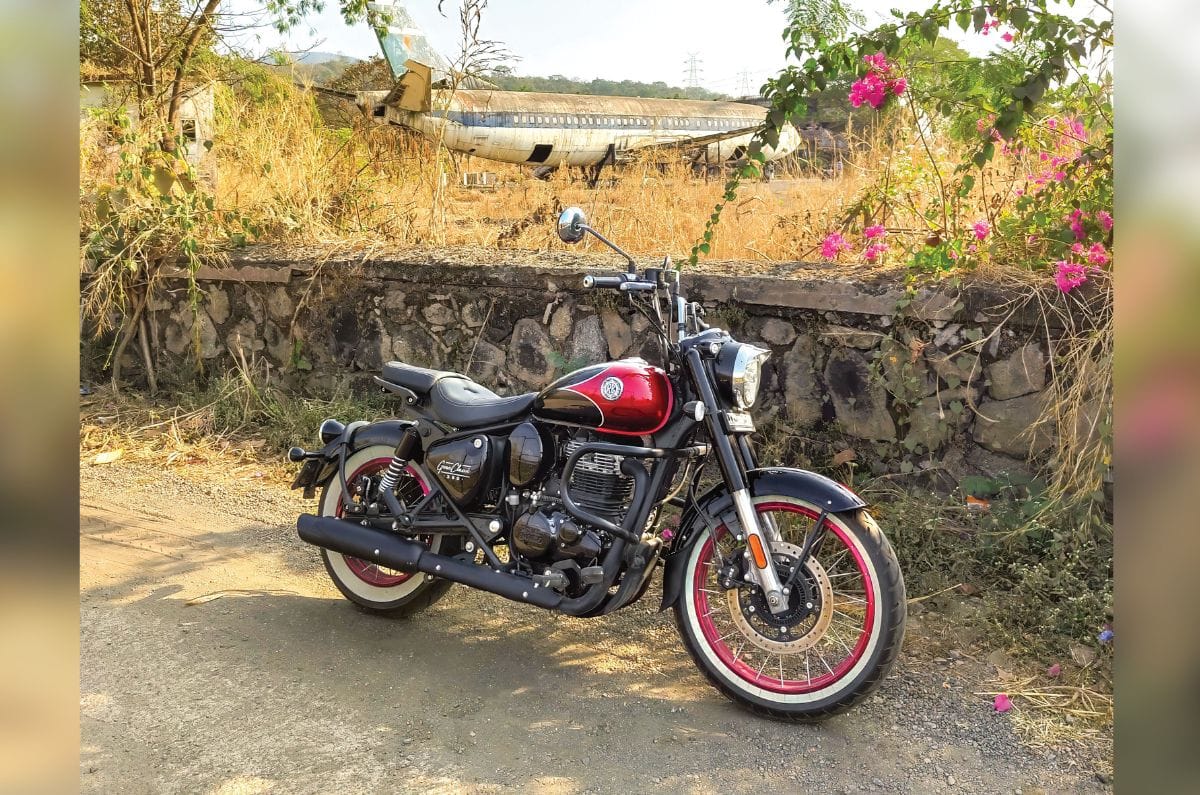
Royal Enfield Goan Classic 350 front right side image on the side of the highway with an aeroplane in the field at the background

Even though the honeymoon period is over, I still very much love my Royal Enfield Goan Classic 350. But like any relationship, some cracks have begun to surface. Since I’ve brought it up, let’s talk about them.

One thing I complained about in my previous report continues to annoy me – the mirrors coming loose. While it was restricted to just the left one earlier, it has now plagued the right mirror too. It’s annoying, to say the least, and I’m considering using Loctite as a permanent solution. For now, I have to stop ever so often on my ride to tighten the mirror in place. 

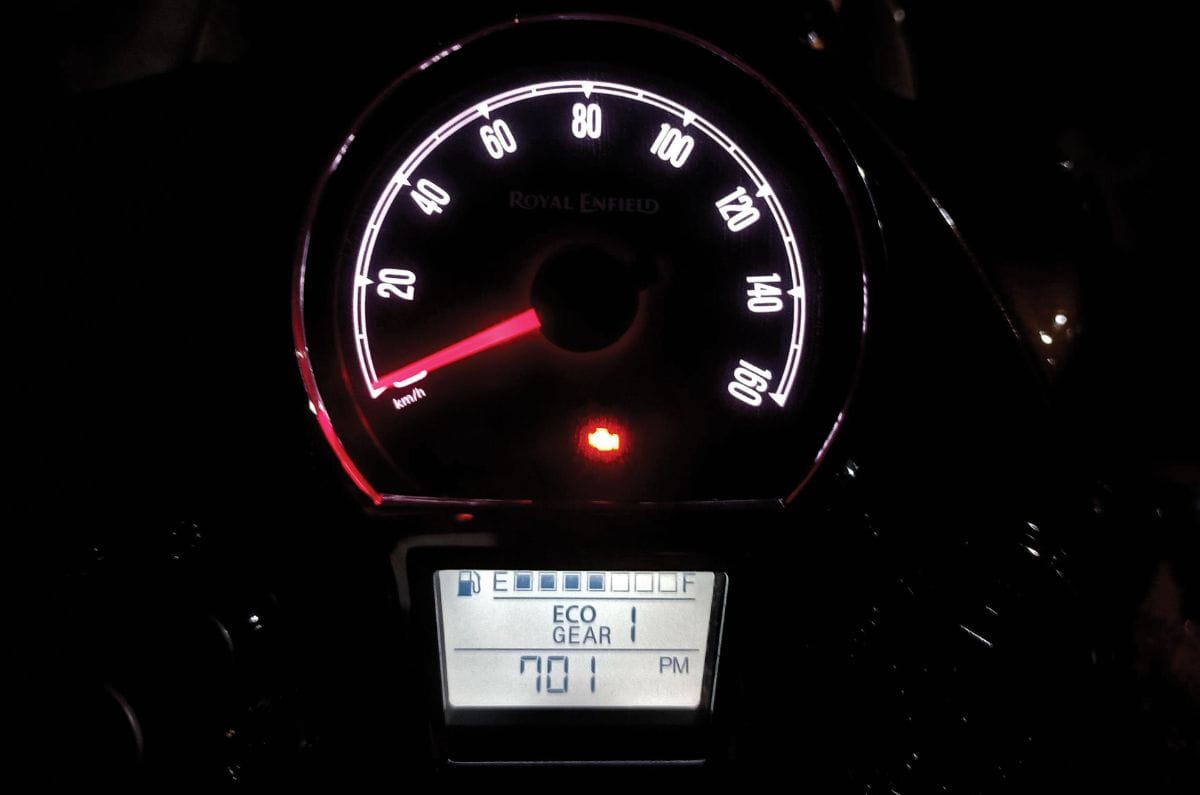
Two new irritants have cropped up too. First is the check engine light, which pops up intermittently. It hasn’t affected the bike in any way that I could tell, but I will get it checked at the next scheduled service. 

Royal Enfield Goan Classic 350 display with check engine light on
Check engine light flashes intermittently; there’s no noticeable issue.

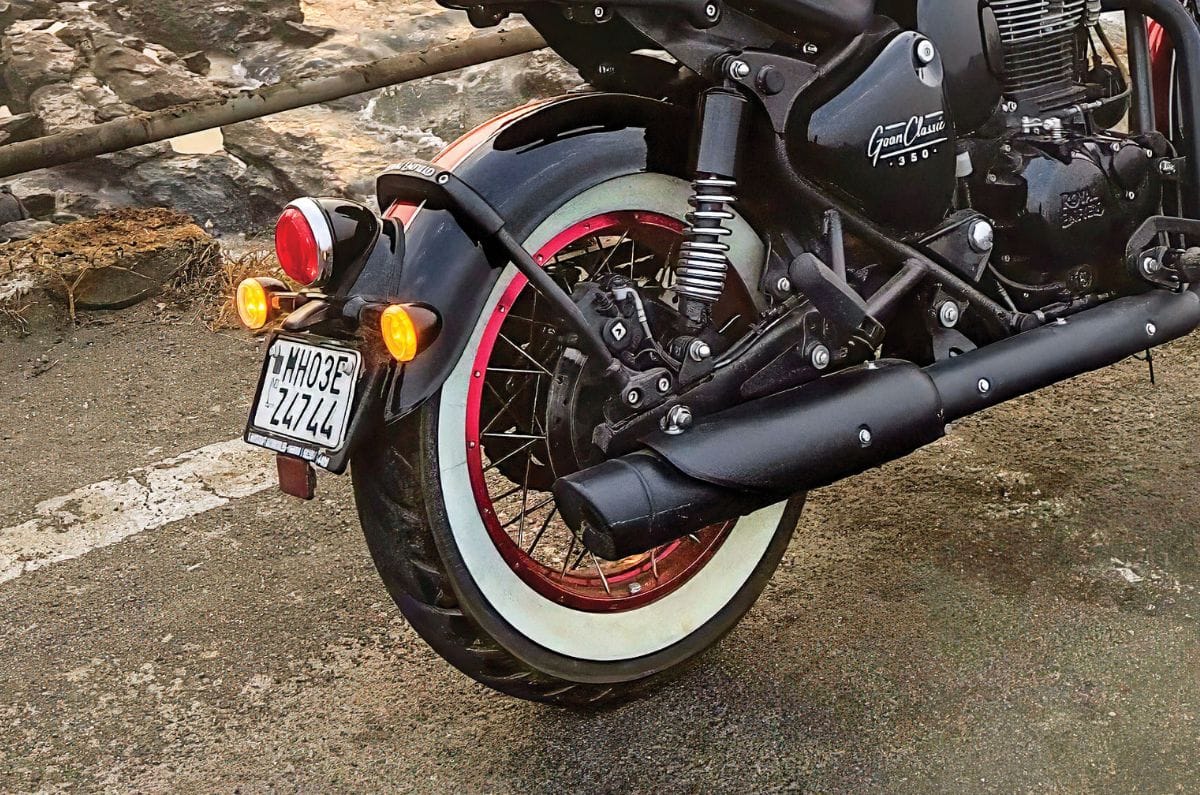
Then there is that stylish rear fender. It still looks super cool and gives the Goan its distinctive style, but of late, there is a creaking sound emerging from it every time I go through a rough patch of road. This is something I’ve read about online as well, and it’s another thing to get inspected at the service appointment. 

Royal Enfield Goan Classic 350 rear fender
Rear fender now makes a creaking sound when riding over bumps.

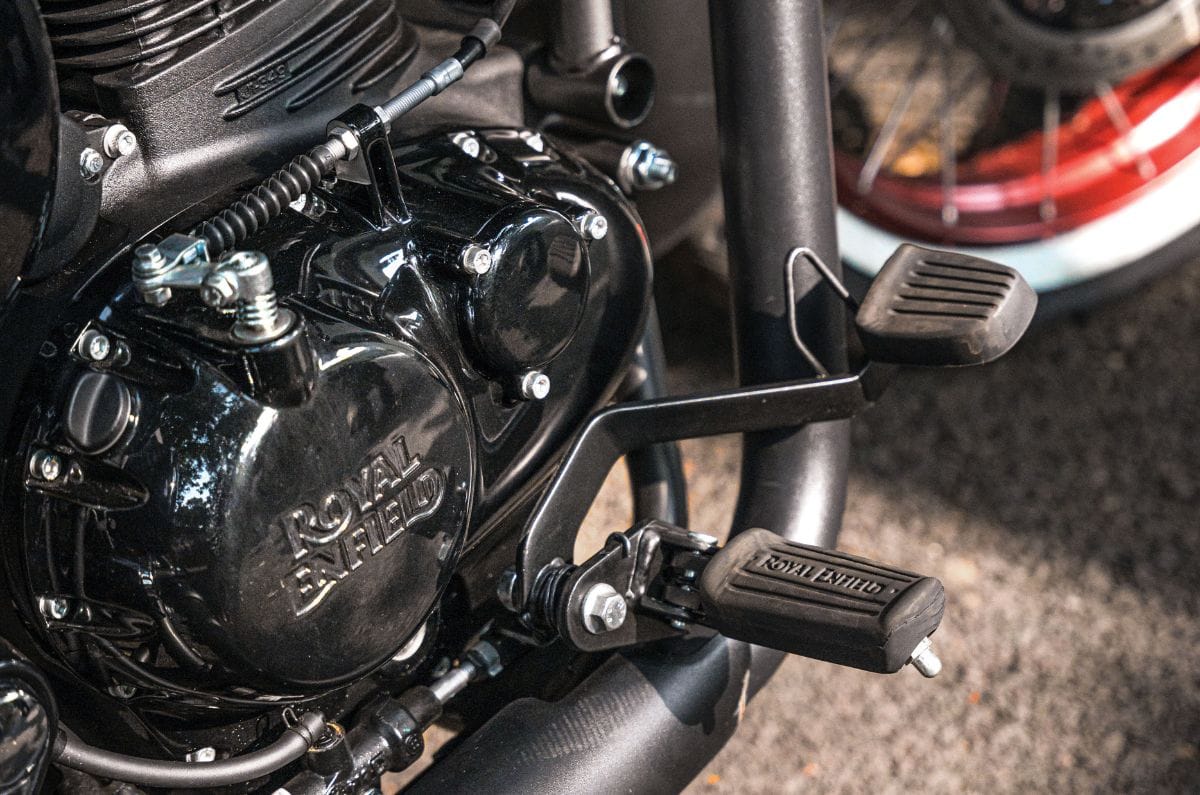
Other than that, it’s been pretty much smooth sailing. I bought a new car recently, which has been handling all of the commuting, so the Goan has been reserved as a weekend machine. Which explains the rather low mileage it has clocked. But if anything, it’s made me appreciate it more, and I now look forward to those weekend rides. The 350cc J-series engine continues to impress me – it’s smooth, characterful, has enough performance and just makes all the right sounds. The second service seems to have made it smoother still, and perhaps even slightly more efficient. I say ‘perhaps’, because I haven’t actually calculated the mileage; I just don’t feel like it matters on a lifestyle motorcycle like this. 

Royal Enfield Goan Classic 350 RH engine casing
Smooth and characterful 350cc J-series engine is an absolute gem.

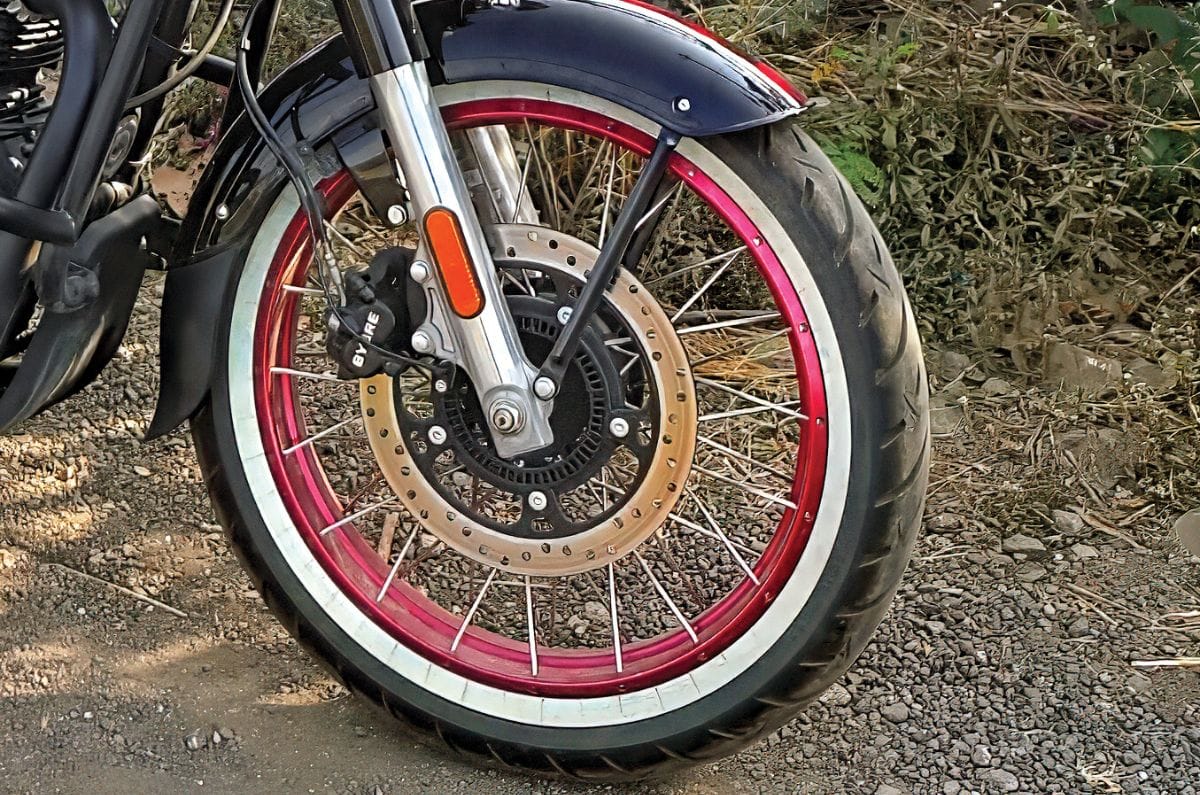
My weekend rides have also made me appreciate the tubeless spoke wheels. Not only do they look sexy in red with the white-wall tyres, but they’re hugely convenient too in the event of a puncture. I haven’t had one yet, but I have lived with a Classic 350, a Scram 411 and an Interceptor 650, all of which had tubed spoke wheels, and they’ve all suffered a puncture, which was a painstaking and time-consuming process to fix. So, it’s nice to have this peace of mind when you’re out on the open road.

Royal Enfield Goan Classic 350 front wheel
Tubeless spoke wheels look amazing and give you peace of mind.

Of course, I still love the way it looks, and I don’t think I’ll ever get tired of just looking at it. It’s not pristine as it once was – there are scratches on the exhaust and mirrors, the number plate bracket is broken, and the lens cap for the rear-right indicator has popped off – but that’s just life in Mumbai for you. 

With the monsoon approaching, the Goan’s going to be used even less now, but that’s not to say I won’t take it out at all. I look forward to seeing how it copes with Mumbai’s rains, especially the white-wall tyres, which have already begun turning brown.  

Odometer2,600km
Price (ex-showroom, Chennai)Rs 2.26 lakh
Maintainance costsRs 1,500 (Oil, Oil filter)
FaultsIntermittent check engine light
Previous reportsNovember 2025

Autocar India:

Our July 2026 issue is a celebration of the internal combustion engine in its finest form. The Lamborghini Temerario and Urus SE headline proceedings – both hybrid-powered, but no less outrageous for it. We also drive the new Audi RS5 in Austria, road test all three versions of the Renault Duster, and drive the new Skoda Kodiaq RS. On two wheels, we ride the Hero Xoom 160, Royal Enfield Bullet 650 Twin and Ducati Panigale V2 S, and break down the economics of running an E85 vehicle.

Lamborghini Temerario and Urus SE: Cover story 

The Temerario and Urus SE represent Lamborghini’s hybrid future in two very extreme forms. Both pack twin-turbo V8s working in concert with electric motors, yet couldn’t be more different in character. We drive both the cars back-to-back to find out whether the Raging Bull still has its horns. 

E85 vs E20 fuel test: Feature

India now has E85 pumps dispensing fuel that’s about Rs 20 per litre cheaper than E20. We test both blends back-to-back in the Suzuki Gixxer SF 250 FFV to find out how big the efficiency hit is and whether E85 actually makes financial sense.

New Audi RS5: Drive 

Audi Sport’s first performance PHEV has learnt from the mistakes of its rivals. The decision to retain the twin-turbo V6 rather than downsizing, add a 130kW electric motor for 639hp total and lavish the chassis with updates gives Audi something it has rarely had before – an instinct to oversteer. We drive it in Austria.

Tata Tiago Facelift: First Drive 

Tata has given both the Tiago and Tiago EV comprehensive updates for 2026, with sharper styling, modernised cabins and a broader feature list. The updated EV gets faster charging and arrives up to Rs 1.15 lakh more affordable than before. Two familiar favourites, freshened up – but have the updates done enough?  

Huracan Sterrato at Nanoli Speedway: Feature

Maharashtra’s first race resort is rising on the grounds of Nanoli Stud Farm near Lonavala, and we got a rare opportunity to drive a Lamborghini Huracan Sterrato on the unfinished dirt track before the tarmac arrives. A lap of honour that will only ever happen once.

Skoda Kodiaq RS: First Drive 

The Kodiaq gets the RS treatment for the first time in India, with 265hp, adaptive dampers, progressive steering and 20-inch wheels. It is a practical seven-seater with serious driver appeal, but does the price premium make sense? 

Renault Duster: Road Test 

We put all three versions of the new Duster – the 1.3 DCT, 1.3 MT, and 1.0 MT – through our exhaustive real-world performance and efficiency tests. The Duster impressed at its first drive, but how does it hold up when the numbers are in?

A tale of two V8s: Feature 

Land Rover offers not one but two very different V8s in the Defender. Jaguar’s supercharged 5.0-litre AJ133 in the standard P425, and BMW’s twin-turbocharged 4.4-litre S68 in the Octa. We examine both to find out how, and why, they co-exist. 

Royal Enfield Bullet 650 Twin: First ride 

The Bullet nameplate has been in continuous production for nearly a century, and the 650 Twin is the largest iteration yet. It shares its 648cc parallel-twin with the Classic 650, but brings its own character to the table. How does it justify its place in the range?

Ducati Panigale V2 S: Ride 

The new Panigale V2 drops from 155hp to 120hp and sheds significant weight in the process. The result is a more accessible, friendlier and arguably more enjoyable track machine than its predecessor. We find out if a more sensible Panigale is still a great Panigale.

Le Mans 2026: Motorsport 

Toyota returned to the top step of the Le Mans podium after three years, defeating BMW and Cadillac in a finish that was among the four closest in the race’s history. We have the full story from the 94th edition of the world’s greatest endurance race.

Scooter and bike sales June 2026: Mixed results for different brands

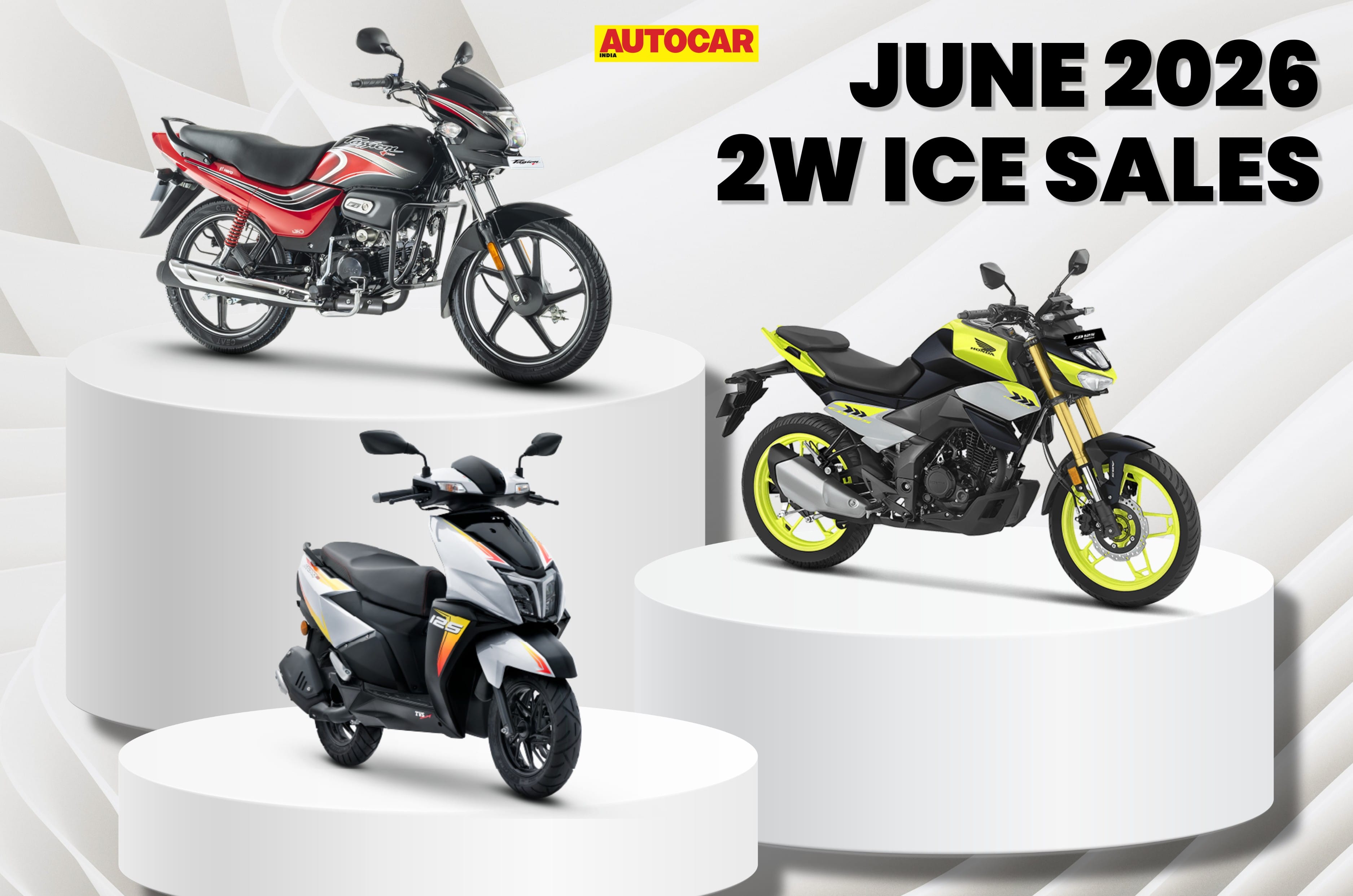
Hero Passion. Honda CB125 Hornet and TVS Ntorq 125

As the scorching summer draws to a close and the monsoon season well and truly sets in, here’s how each of the top six heavyweights in the ICE Indian two-wheeler market performed in the month of June.

Hero: 5,02,890 units

Hero MotoCorp retained its position at the top of this sextet with over 5 lakh units sold last month in the domestic market – usual fare for this powerhouse. In doing so, it actually reported a 6.31 percent decline in comparison to its May 2026 sales number of 5,36,784 units. It was also a similar story when compared to its June 2025 sales (5,25,136 units) wherein it reported a smaller decline of 4.24 percent. It bears mentioning that Hero bundles in the burgeoning sales of its electric arm, Vida, which is now a regular fixture in the top ten bestselling brands in the electric mobility space, into this number.

Last month, Hero updated two of its commuter motorcycles – the Passion+ and the Super Splendor XTEC 2.0. Hero shipped 38,269 units overseas last month, an improvement over the 33,284 units it sent to export markets in May.

Honda: 4,68,956 units

Honda Motorcycle and Scooter India (HMSI) is in its usual runner-up spot but even so, the company reported a small 2.03 percent increase when compared to its May 2026 sales tally (4,59,611 units). Similarly, HMSI also reported a substantial 20.61 percent increase when compared to its June 2025 sales figure of 3,88,812 units. Honda is gearing up to enter the affordable end of the maxi-scooter game in India, with its ADV160, whose design has already been patented in our country.

The company exported 59,325 units last month, which was more or less on par compared to the 59,166 units it shipped overseas in May of this year.

TVS: 4,11,014 units

TVS Motor Company breached the 4 lakh units mark in the domestic market for the first time ever last month. In doing so, the company reported a noteworthy 6.88 percent increase when compared to its May 2026 sales figure of 3,84,565 units. When compared to its relatively small sales figure for June 2025 (2,81,012 units), the Hosur-based manufacturer reported a huge 46.26 percent increase.

It is worth mentioning that TVS doesn’t bundle the sales of its EVs – shouldered largely by the popular iQube, India’s bestselling electric two-wheeler – into the aforementioned numbers. TVS recently refreshed the popular Ntorq 125 scooter with some fresh new colourways on its entry-level variants. It is also working quite hard to set up its premium two-wheeler dealer network – Paddock – in India and also bringing the quartet of brand-new Norton products to market, both local and international.

The company, which is India’s second-largest exporter of two-wheelers, shipped 1,54,403 units overseas last month which was slightly lower than the 1,58,546 two-wheelers it sent to export markets in May.

Bajaj: 1,66,956 units

Pune-based Bajaj Auto had a slower than usual month in terms of sales in June, reporting a 20.32 percent decline in comparison to its May 2026 sales of 2,09,528 units. That being said, the company reported an 11.81 percent increase in comparison to its June 2025 sales tally of 1,49,317 units. It must be noted that the Chetak electric scooter portfolio and all sub-400cc Triumph and KTM models manufactured by Bajaj are also bundled into the above figures.

Bajaj is gearing up to revamp its entire Classic Pulsar lineup in the coming months, which should bolster its sales numbers in the near term. India’s largest two-wheeler exporter sent 2,22,439 units overseas last month, which was a healthy increase over the 1,83,676 units it shipped abroad in May.

Royal Enfield: 1,02,930

Royal Enfield has again sold over 1 lakh units in a single month in the domestic market, and in the process, it reported a 9.37 percent increase in comparison to its May 2026 sales number of 94,115 units. Even in comparison to its relatively smaller sales tally of 76,957 units in June 2025, it reported a substantial 33.75 percent increase.

Royal Enfield is working on a litany of new launches and refreshes to existing models, which will be spread out over the next few months and it also began deliveries of its first electric bike – the Flying Flea C6 – recently. The marque sent 11,102 units to export markets in June, which was quite a step up over the 9,116 bikes it shipped globally in May.

Suzuki: 91,264 units

Suzuki Motorcycle India Private Limited (SMIPL)’s sales last month dipped below the usual 1 lakh units it usually averages and thereby the company reported a noticeable 17.05 percent decline in comparison to the 1,10,028 units it sold in May. Even in comparison to its sales in June 2025 (95,244 units), SMIPL reported a small 4.18 percent decrease.

Suzuki shipped 23,766 two-wheelers last month to global markets, a small increment over the 22,216 units it sent overseas in May.


June 2026 sales

May 2026 sales

% change

June 2025 sales

% change

Hero

5,02,890

5,36,784

-6.31

5,25,136

-4.24

Honda

4,68,956

4,59,611

2.03

3,88,812

20.61

TVS

4,11,014

3,84,565

6.88

2,81,012

46.26

Bajaj

1,66,956

2,09,528

-20.32

1,49,317 

11.81

Royal Enfield

1,02,930

94,115

9.37

76,957 

33.75

Suzuki

91,264

1,10,028

-17.05

95,244

-4.18

Indian Oil launches premium Servo Hyper Series lubricants

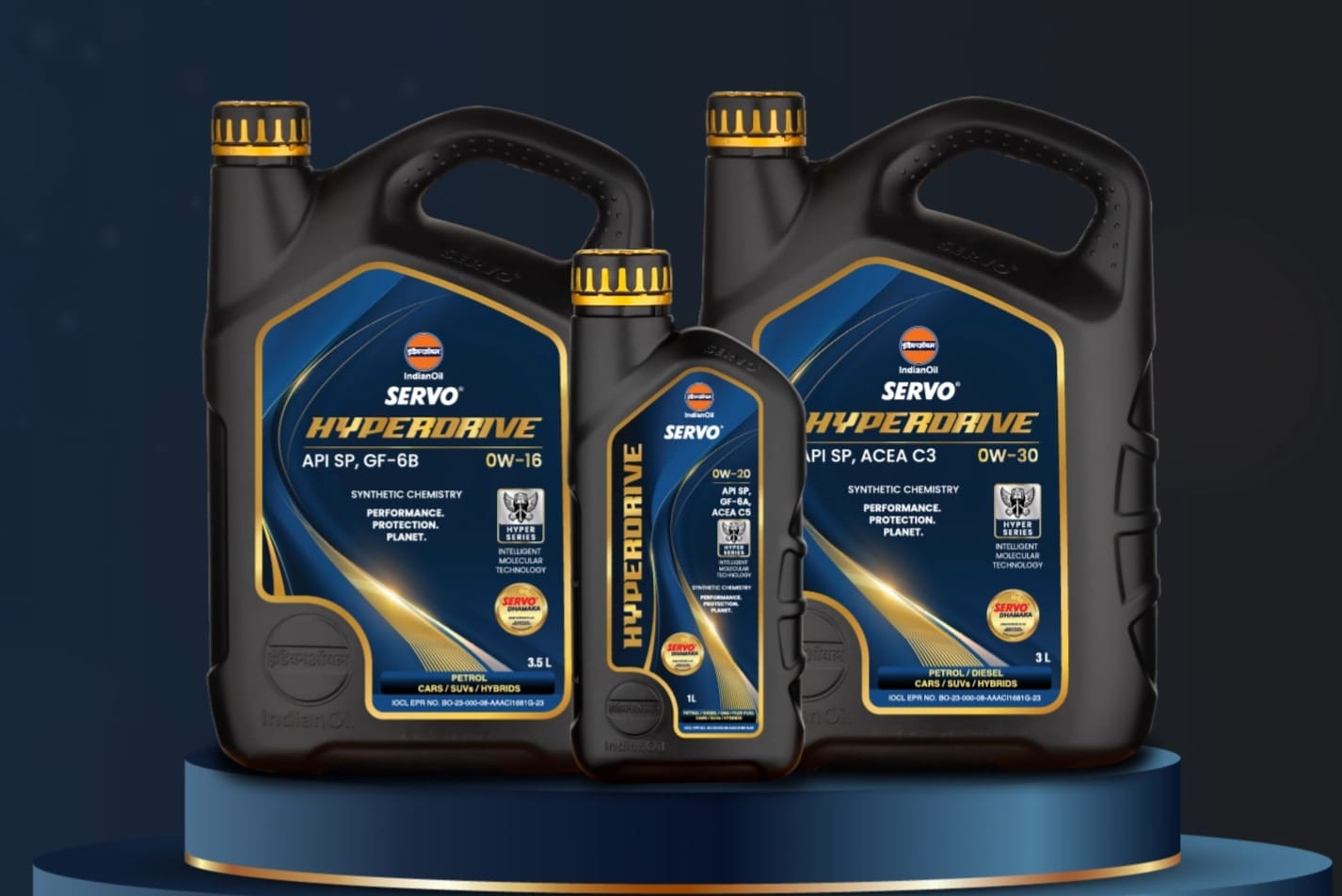
Servo Hyper Drive lubricants

Indian Oil has introduced a new premium lubricant to its Servo range. Called the Servo Hyper Series, the brand says its the ‘most advanced premium lubricant portfolio, designed to meet the evolving requirements of modern engines and high- performance industrial equipment.” 

Servo Hyper Series Lubricants: What is it?

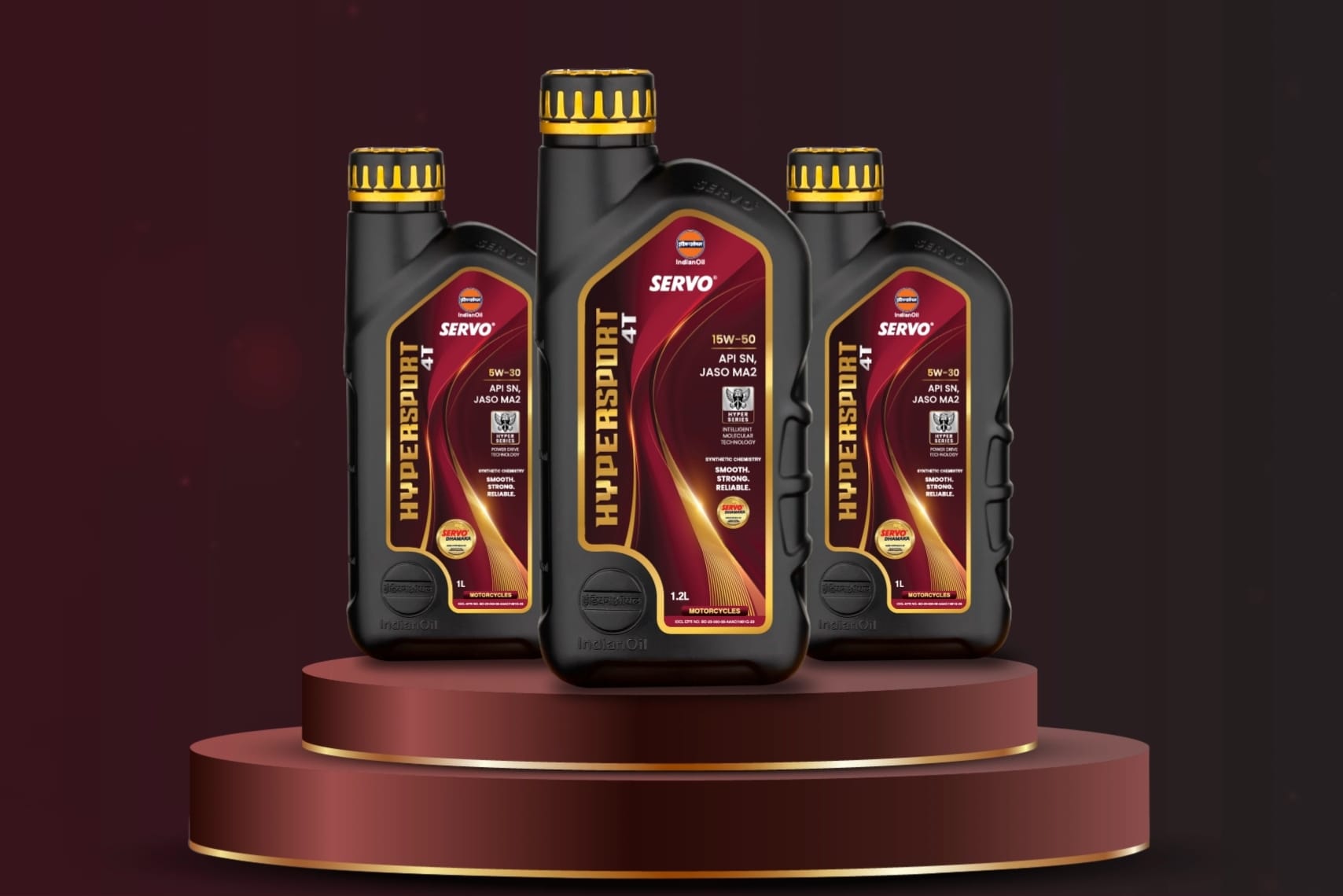
Indian Oil states that the Servo Hyper Series Lubricants deliver superior engine performance, improved fuel efficiency and extended drain intervals under demanding operating conditions by using “advanced synthetic base oils and next-generation additive technologies.” It comprises three versions for different vehicle applications, namely Hyper Sport for motorcycles, Hyper Drive for passenger cars, and Hyper Torq for commercial vehicles.

The Hyper Drive lubricants for cars consist of two products. The regular Hyper Drive applies to BS6 petrol and diesel-powered cars and is recommended for vehicles from manufacturers such as Honda, GM (Chevrolet), Ford, Toyota, Nissan, Maruti-Suzuki, MG, Renault, Hyundai, Citroën, Volkswagen Group, BMW, Mercedes-Benz and others. The Hyperdrive NXT is for high-performance cars and is compatible with petrol, diesel, CNG, flex-fuel and hybrid vehicles. Indian Oil says that the NXT is ‘optimised for hybrid cold starts and E85 petrol.’  

Under its Hyper Sport series of lubricants for bikes, the Hyper Sport F5 is recommended for superbikes and racing motorcycles from BMW Motorrad, Ducati, Suzuki, Kawasaki, Yamaha, KTM and Honda. It has a drain interval of up to 10000km. The Hyper Sport 4T is recommended for most four-stroke 2-wheeler engines and is specifically recommended for Royal Enfield, Hero MotoCorp, Bajaj, TVS, Honda, Yamaha and other leading motorcycle brands. The Hyper Sport scooter is specifically recommended for 4-stroke gearless scooters. Both the Hyper Sport 4T and Scooter have a drain interval of up to 8000km.

For commercial vehicles, Indian Oil’s Servo Hyper Torq consists of three versions. The standard Hyper Torq is applicable for heavy-duty diesel-powered commercial vehicles operating under BS4 emissions and earlier. It has a drain interval of up to 80,000 km. The Hyper Torq NXT is recommended for BS6-compliant commercial vehicles and has a drain interval up to 1,20,000 km. The Hyper Torq XP is a fully synthetic commercial vehicle engine oil for truck engines operating with low sulphur content. This oil has a drain interval of up to 10,000km.

Eicher Motors Share Price : तेज गिरावट के बाद आयशर मोटर्स बना निफ्टी का टॉप लूजर, दिल्ली की EV पॉलिसी ने दिया जोर का झटका

Eicher Motors Share Price : आज आयशर मोटर्स में तेज गिरावट दिख रही है। निचले स्तरों से ये कुछ रिकवर हुआ है,लेकिन अभी भी यह निफ्टी का टॉप लूजर बना हुआ है। फिलहाल 12 बजे के आसपास एनएसई पर यह शेयर 290 रुपए यानी 3.91 फीसदी की गिरावट के साथ 7138 रुपए के आसपास दिख रहा था। आज का इसका दिन का हाई 7,392.50 रुपए और दिन का लो 6,942.50 रुपए है। स्टॉक का 52 वीक हाई 8,230 रुपए और 52 वीक लो 5,353 रुपए है।

निफ्टी का टॉप लूजर बना शेयर

आज यह शेयर निफ्टी का टॉप लूजर बना है। इसकी वजह पर नजर डालें तो इस स्टॉक पर दिल्ली की EV पॉलिसी का निगेटिव असर संभव है। दिल्ली में 1 अप्रैल 2028 से सिर्फ EV 2-W का रजिस्ट्रेशन होगा। 1 जनवरी 2028 से दिल्ली में ICE 2W रजिस्ट्रे्शन बंद होगा। 2 व्हीकल बिक्री में दिल्ली का 3 फीसदी हिस्सा है। FY26 में कंपनी के प्रदर्शन की बात करें तो कंपनी ने FY26 में रिकॉर्ड रेवेन्यू,EBITDA और मुनाफा दर्ज किया है।

दिल्ली की EV पॉलिसी के अनुसार,दिल्ली में सभी नए पेट्रोल और CNG टू-व्हीलर्स का रजिस्ट्रेशन 1 अप्रैल,2028 से हमेशा के लिए बंद हो जाएगा। इस तारीख से शहर में बिकने वाला हर नया कम्यूटर टू-व्हीलर इलेक्ट्रिक होना जरूरी होगा। इसके लिए कोई एक्स्ट्रा समय (ग्रेस पीरियड)या हाइब्रिड गाड़ियों के लिए कोई छूट नहीं दी जाएगी।

आयशर मोटर्स की रॉयल एनफील्ड के लिए यह बहुत बुरी खबर है। इस ब्रांड के पास अपनी लाइन-अप में सिर्फ़ एक इलेक्ट्रिक मॉडल है और दिल्ली के EV सेगमेंट में इसकी कोई खास मौजूदगी नहीं है। बताते चलें कि दिल्ली में रॉयल एनफील्ड की स्थिति बहुत मज़बूत है। सोसाइटी ऑफ़ इंडियन ऑटोमोबाइल मैन्युफैक्चरर्स’के आंकड़ों के मुताबिक,दिल्ली के कुल टू-व्हीलर मार्केट में इसकी हिस्सेदारी 3.3% है। मिड-साइज़ पेट्रोल मोटरसाइकिलों पर बनी कंपनी मजबूत फ्रैंचाइजी अब इलेक्ट्रिक पर स्विच करना जरूरी होने के बाद ज़्यादा काम नहीं आएगी।

बाजार जानकारों का कहना है कि इस पॉलिसी की वजह से जिन पुरानी कंपनियों के पास भरोसेमंद EV रेंज नहीं है,उन्हें या तो अपने नए प्रोडक्ट्स तेज़ी से लॉन्च करने होंगे या फिर दिल्ली के कम्यूटर सेगमेंट से पूरी तरह बाहर होना पड़ेगा। डेडलाइन में दो साल से भी कम समय बचा है,ऐसे में रॉयल एनफील्ड पर अपनी इलेक्ट्रिक रेंज बढ़ाने का दबाव काफी बढ़ गया है। अगर ऐसा नहीं हुआ तो कंपनी के लिए भारत के सबसे बड़े टू-व्हीलर मार्केट में से एक में अपनी पकड़ खोने का खतरा हो सकता है।

Market Insight : अच्छे शेयर और थीम्स खोजें और उनमें बने रहें, इंडेक्स में फिलहाल के लिए इंट्राडे ही रहें

दिल्ली EV पॉलिसी पर नोमूरा की राय

नोमूरा की राय है कि दिल्ली EV पॉलिसी से IGL को बड़ा झटका लगेगा। इससे लॉन्ग टर्म में CNG वॉल्यूम घटेंगे। दिल्ली में बढ़ते इलेक्ट्रिक व्हीकल्स धीरे-धीरे CNG की डिमांड कम करेंगे। हालांकि MGL पर कोई डायरेक्ट असर नहीं होगा। सिटी गैस डिस्ट्रीब्यूशन सेगमेंट में गुजरात गैस पर सबसे कम असर होगा। घरेलू और इंडस्ट्रियल PNG अब ग्रोथ ड्राइवर बनेगा।


डिस्क्लेमर: मनीकंट्रोल.कॉम पर दिए गए विचार एक्सपर्ट के अपने निजी विचार होते हैं। वेबसाइट या मैनेजमेंट इसके लिए उत्तरदाई नहीं है। यूजर्स को मनी कंट्रोल की सलाह है कि कोई भी निवेश निर्णय लेने से पहले सर्टिफाइड एक्सपर्ट की सलाह लें।