ICE Age 2.0: Converting EVs to ICE

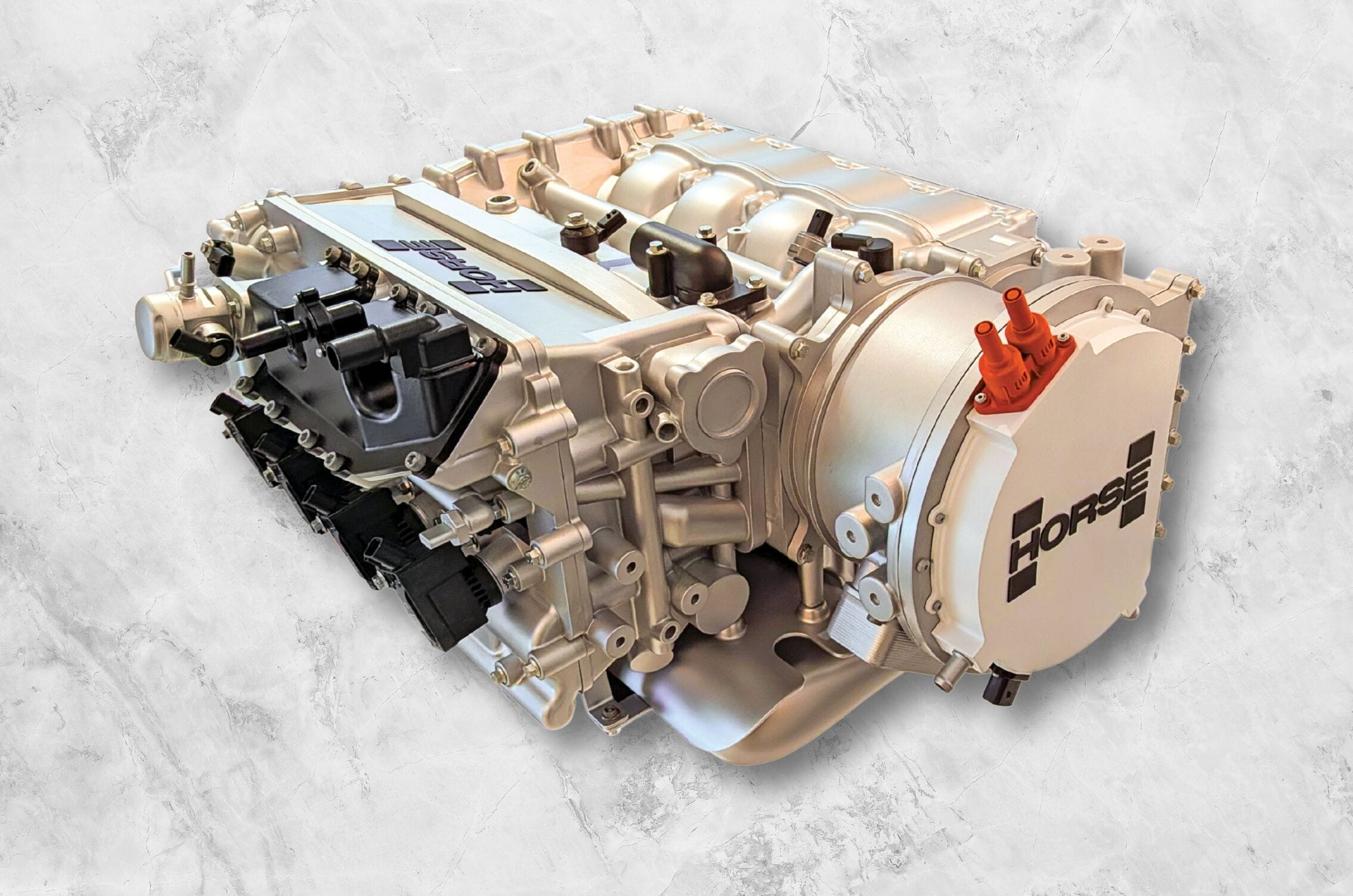
Horse powertrain C15

Conceived with no concessions to internal combustion propulsion, ‘born electrics’ were heralded as the future. Manufacturers poured millions into their development, and it is estimated that globally $1.2 trillion was committed to the entire EV ecosystem, $500 billion of which was from automakers.

But with global EV sales well below projections, manufacturers are left with hard decisions. The Stellantis group, for instance, confirmed a $26 billion write-off over its EV projects, while Honda said its annual operating loss would be between 270-570 billion yen, due to losses associated with the reassessment of its electrification strategy. Earlier this year, the Japanese carmaker scrapped its much-hyped ‘0 Series’ EV project, though the made-in-India 0 Alpha SUV, which is said to use components from the Elevate, is still on track.
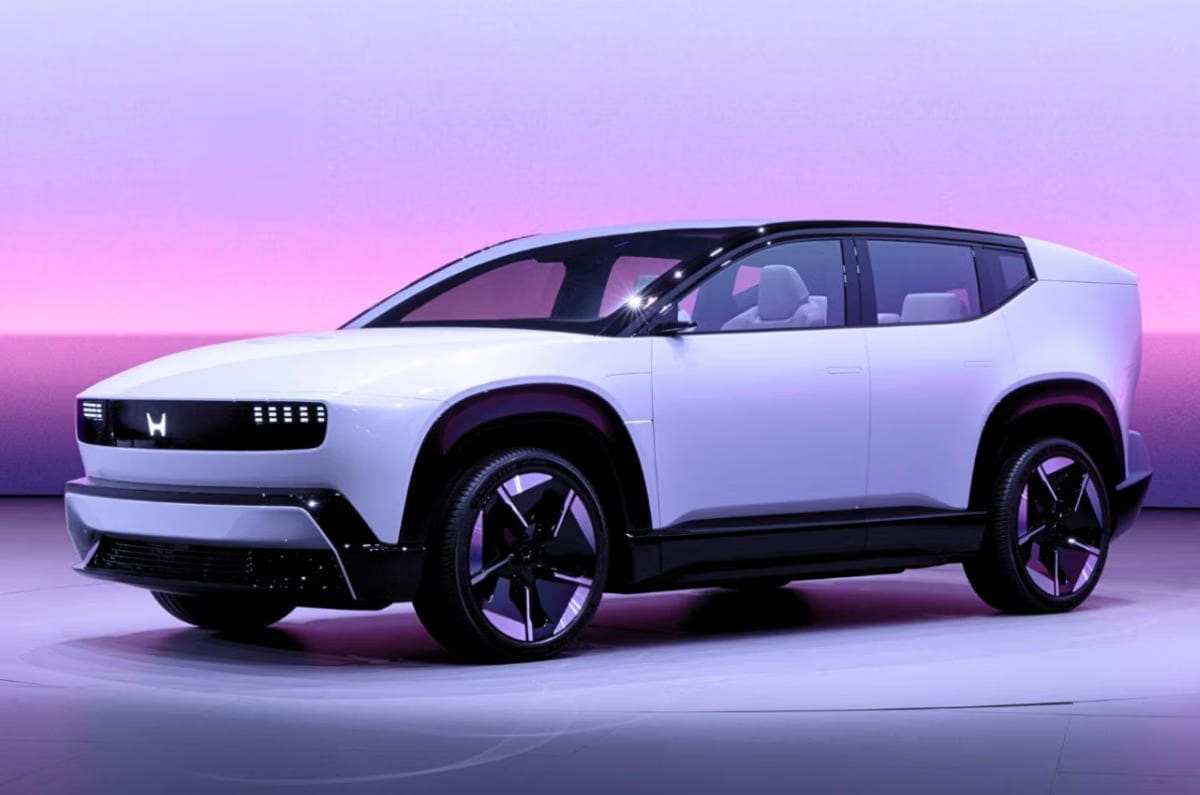
Honda has cancelled its 0 Series EV Project altogether

The write-offs and cancellations are understandable in the context of born-electrics, as while there have been many ICE-to-EV conversions, it’s a lot harder the other way around. Conceived with no engine and gearbox in mind, space to accommodate this bulky hardware is the first hurdle they need to clear. There’s also space needed for subsystems like driveshafts, fuel and exhaust systems which leads to the other complication of thermal management. Beyond the exhaust system, internal combustion engines have higher cooling requirements than EVs, and thus airflow management needs to be addressed.

Another challenge is crashworthiness. Again, having never had to hold an engine and gearbox, the crash structure of these cars was never designed with this massive mass in mind. These changes thus require time and expensive re-engineering.

However, tough as it is, some brands are looking at re-engineering born-EVs to use some form of internal combustion. The VW Group is one such example, as is homegrown automaker Mahindra. While it sold about 16,000 EVs in FY2026 – the bulk of them coming from its born-electric line-up – it needs higher volumes given the investments in their development. The Chinese, too, who were very quick with born-electrics, are looking at the ICE switch.

Ice Age 2.0

In this scenario, Horse Powertrain might hold the panacea – the C15 powertrain. Showcased at the Vienna Motor Symposium in April this year, the C15 unit is a compact, all-in-one powertrain designed to replace the electric drive unit of a born-electric and transform it into a range-extender hybrid. The integrated unit consists of a 1.5-litre, 4-cylinder engine, hybrid transmission, electric motor and the full suite of power electronics.
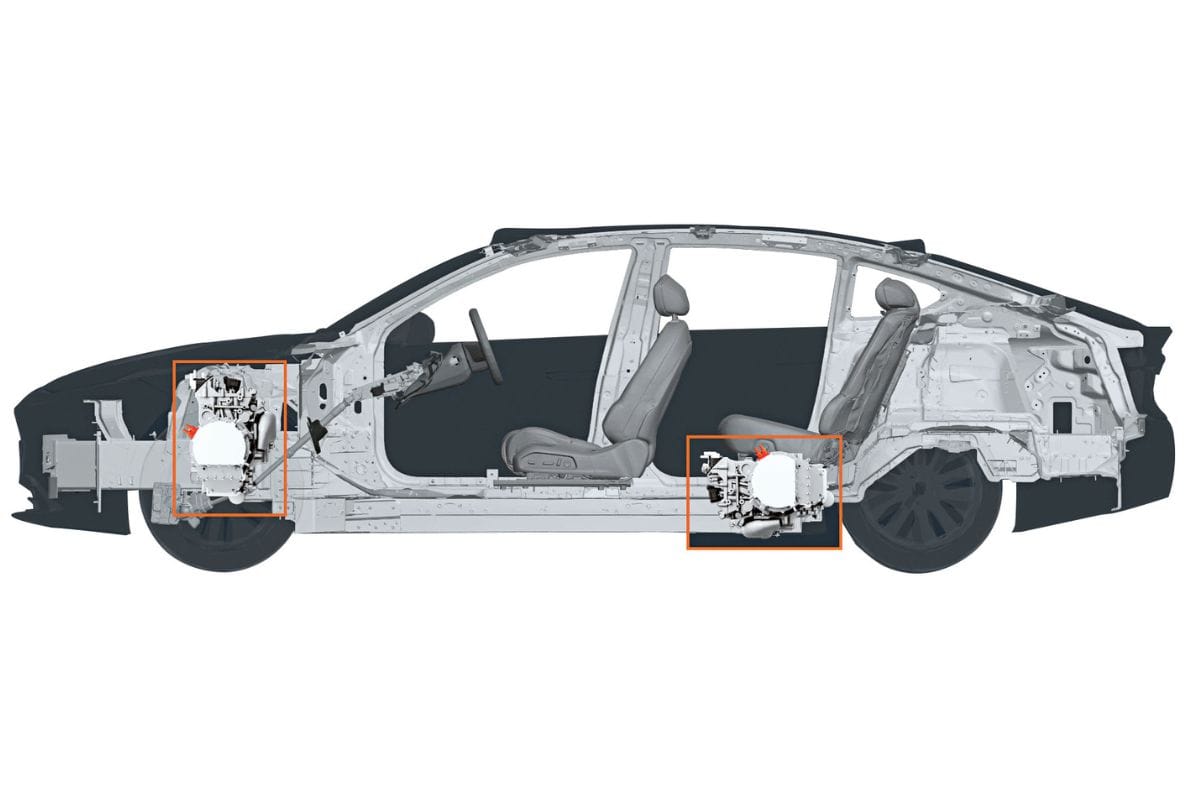
C15 powertrain can be installed at the front or rear and in either a vertical or horizontal orientation.

Furthermore, Horse says the unit is modular and can have further systems bolted on, depending on manufacturer requirements, like turbocharging or even a traditional gearbox, should direct-to-wheel drive be required. Adding to its flexibility, the engine can be packaged vertically or even horizontally, and the company says systems like lubrication are capable for either installation type. It can also be located at the front or rear of the vehicle, so as to warrant fewer modifications and re-engineering for a brand. 64 percent of its components are parts from existing powertrains, and this, Horse says, brings down the unit’s cost. So far, there’s no word on when it would come to market, but the brand says work is already underway, and the first model with the C15 unit should see the light of day by 2028.  

On the face of it, converting a born-electric to ICE might seem like a retrograde step in the journey towards electrification. However, it’s clear this journey is far longer than previously thought, and a born-electric-to-ICE conversion will certainly help a manufacturer’s business viability in the immediate term. Furthermore, in this scenario of internal combustion living longer, hybridisation helps lowering fuel consumption and emissions. Thus, a retrograde step this might be, but one that can help build the future.

Q&A Jesus Frances Busto –  Strategy & RAE Director, Horse Technologies

On the company structure

Horse Powertrain is a joint venture between Renault, Geely and Saudi Aramco, but we are an independent global powertrain supplier. So we can supply, work with, and integrate this (C15) with any manufacturer that is interested in it. It’s part of our new story at Horse Powertrain.

On the C15’s requirement

Brands have invested a lot into born-electric platforms, and many have even got the products ready and out into the market. But yes, they now would need to have an option to cope with this adoption towards EVs, and a hybrid with a range-extender setup is a good possibility for this.

On the C15’s specialities 

The C15 solves the problem of space, and we have solved it not by miniaturisation, but with innovative redesign and repackaging. We can install this vertically or even horizontally, and when we do this, one of the points we have to solve is lubrication, so we have a scavenge function circulating oil through and through correctly.

On a market launch

As you would understand, we cannot disclose our clients at the moment or specific launch dates, but we are working with brands, and we should see this in the market by early 2028.

UMS Technologies: India’s smallest carmaker

INDIA’S SMALLEST CARMAKER

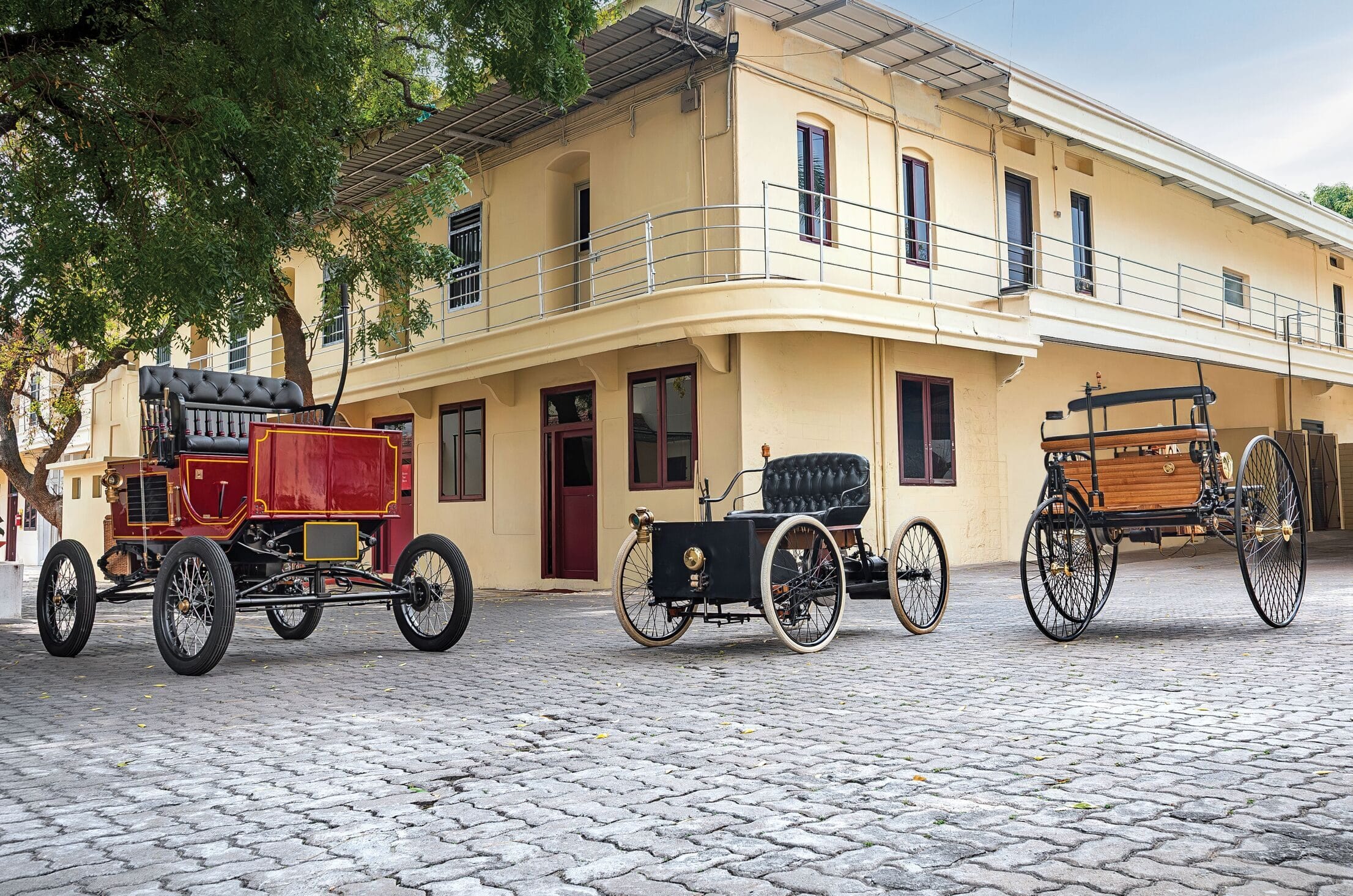
The origin of the species. The very beginnings of the automobile. Where it all started. How it all started. What form the earliest cars took. What if you could experience all of this in one place, at the same time? Say hello to UMS Technologies, India’s smallest carmaker. Nestled in the heart of the bustling city of Coimbatore, where the manufacturing of machines is almost a religion, UMS tech not only recreates the past, it does so with exacting precision and a level of dedication that borders on obsession.

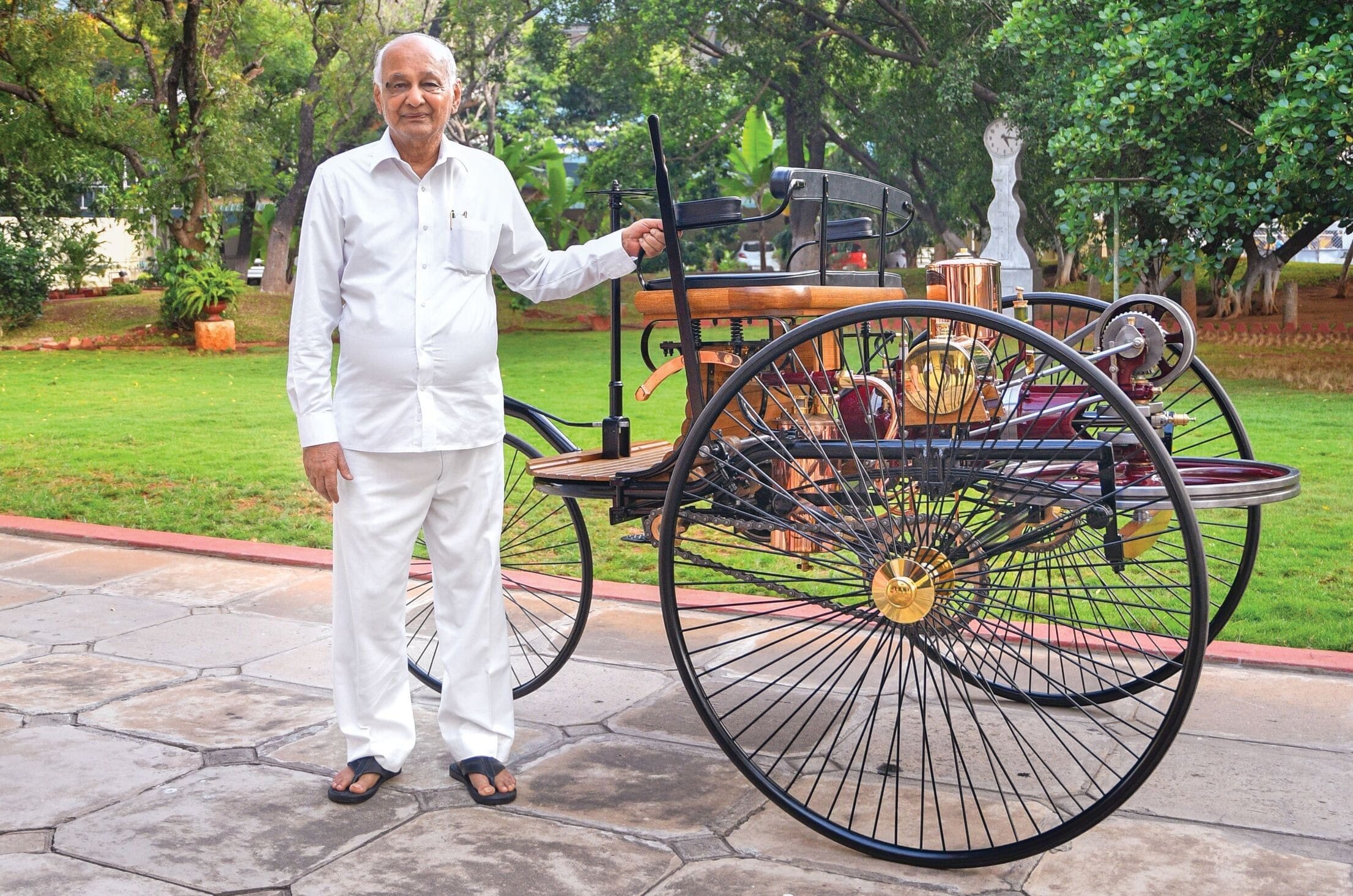
Walk onto the shop floor, just off main street Coimbatore, and you are greeted by finished versions of three icons – the 1899 Stanley Steamer, the 1896 Ford Quadricycle, and the 1886 Benz Patent-Motorwagen. Each is a faithful replica, crafted with painstaking detail, and together they tell the story of how the automobile was born. It feels like history is coming back to life. 

Give me steam 

The steam car is the most difficult to steer and can accelerate quickly for a prehistoric car.

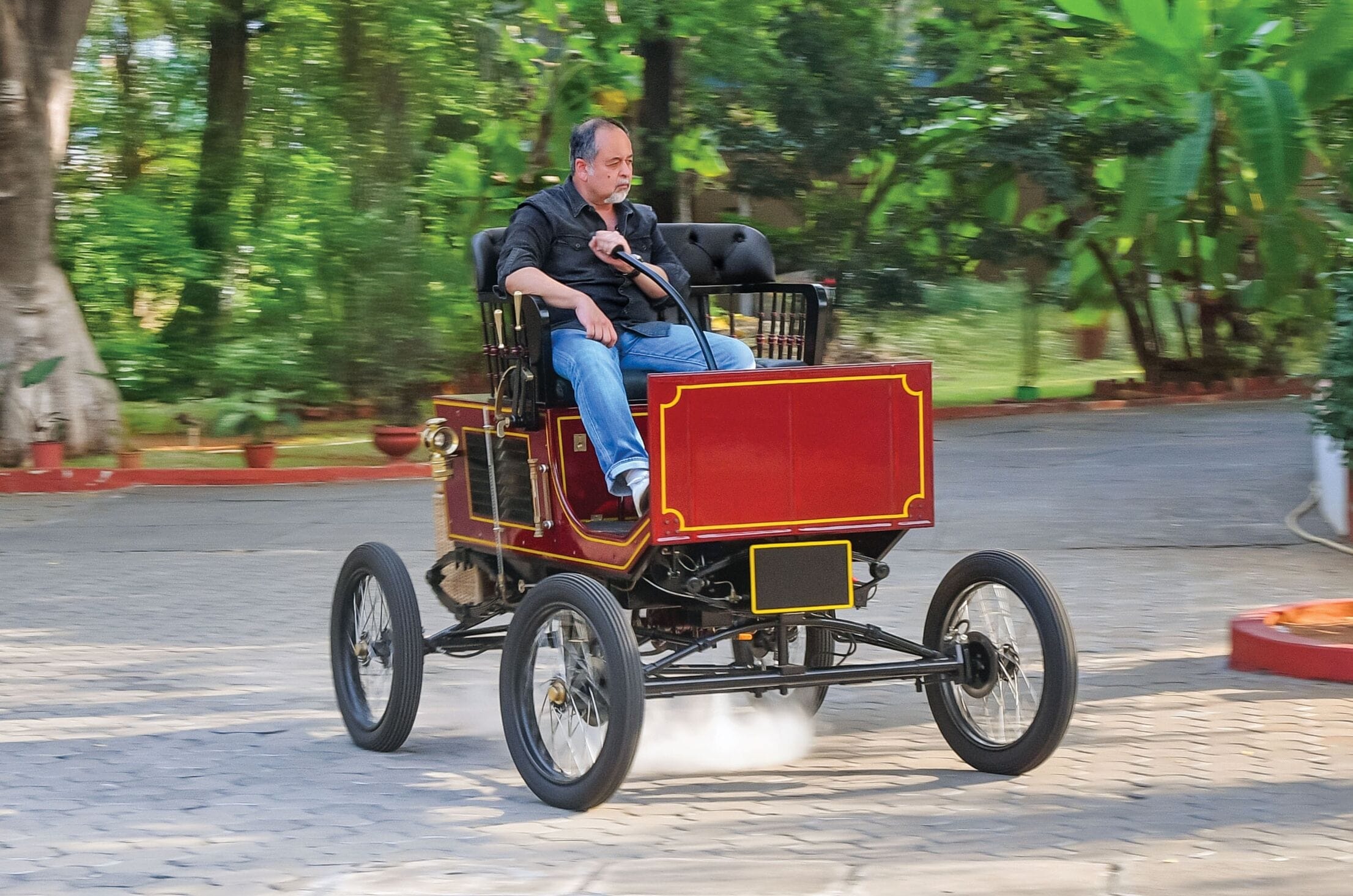
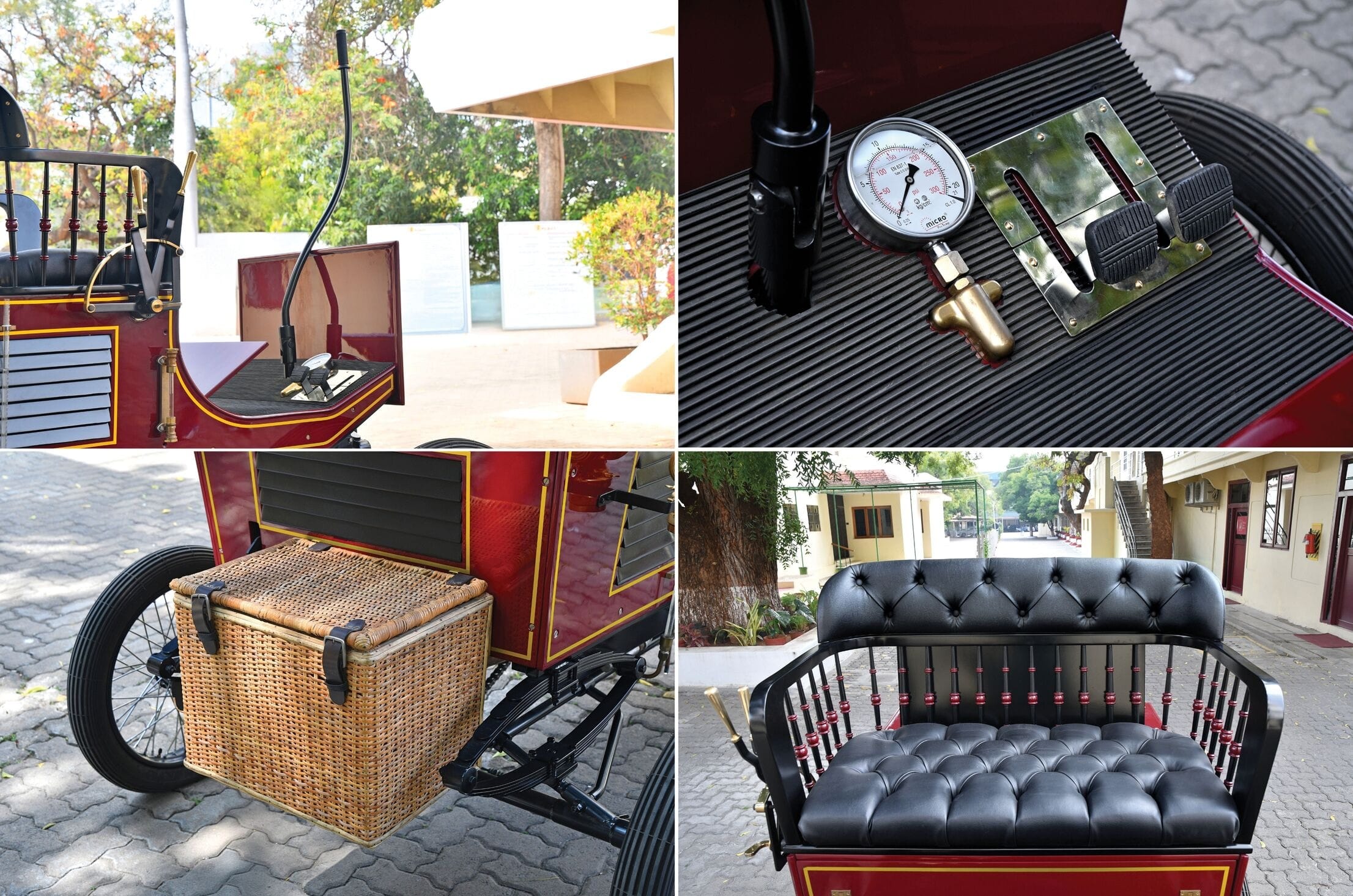
The Locomobile, or Stanley Steamer, is perhaps the most theatrical of the trio. Originally powered by naphtha and coal, it relied on steam pressure to drive its pistons. Did you know steam-powered cars predated petrol-powered cars by almost a century?  The replica here, however, has been updated with a diesel burner. Pressure in the ‘boiler’ goes up to around 150-200 PSI, and a gauge on the dashboard (origin of the term) tells you when the car is ready to move. This takes a bit.

Clockwise from left: Levers select direction; Braking is via motorcycle discs; Seat feels like a comfy sofa; Diesel burner replaces coal.

Sidebar: steam-powered ships like aircraft carriers sometimes took 12-24 hours to build up a sufficient head of steam before they could start. In the car, once the needle climbs into range, a gentle push on the accelerator sends the vehicle chuffing forward with the rhythm of a steam train. The experience is surreal. Torque is abundant, acceleration is surprisingly brisk, and the soundtrack – a soft, mechanical chuffing – is delightfully addictive. Steering it, however, is a challenge. Without a wheel, only a rudimentary tiller guides the car, reminding me of why the steering rack was one of the most important innovations. Fun fact: none of the three cars here has a steering wheel. For safety, especially considering how quick it is when it builds up a head of steam, UMS Technologies has added motorcycle disc brakes. 

Before the Model T

This was the car Henry Ford made before the Model T or even before the company’s formation in 1903.

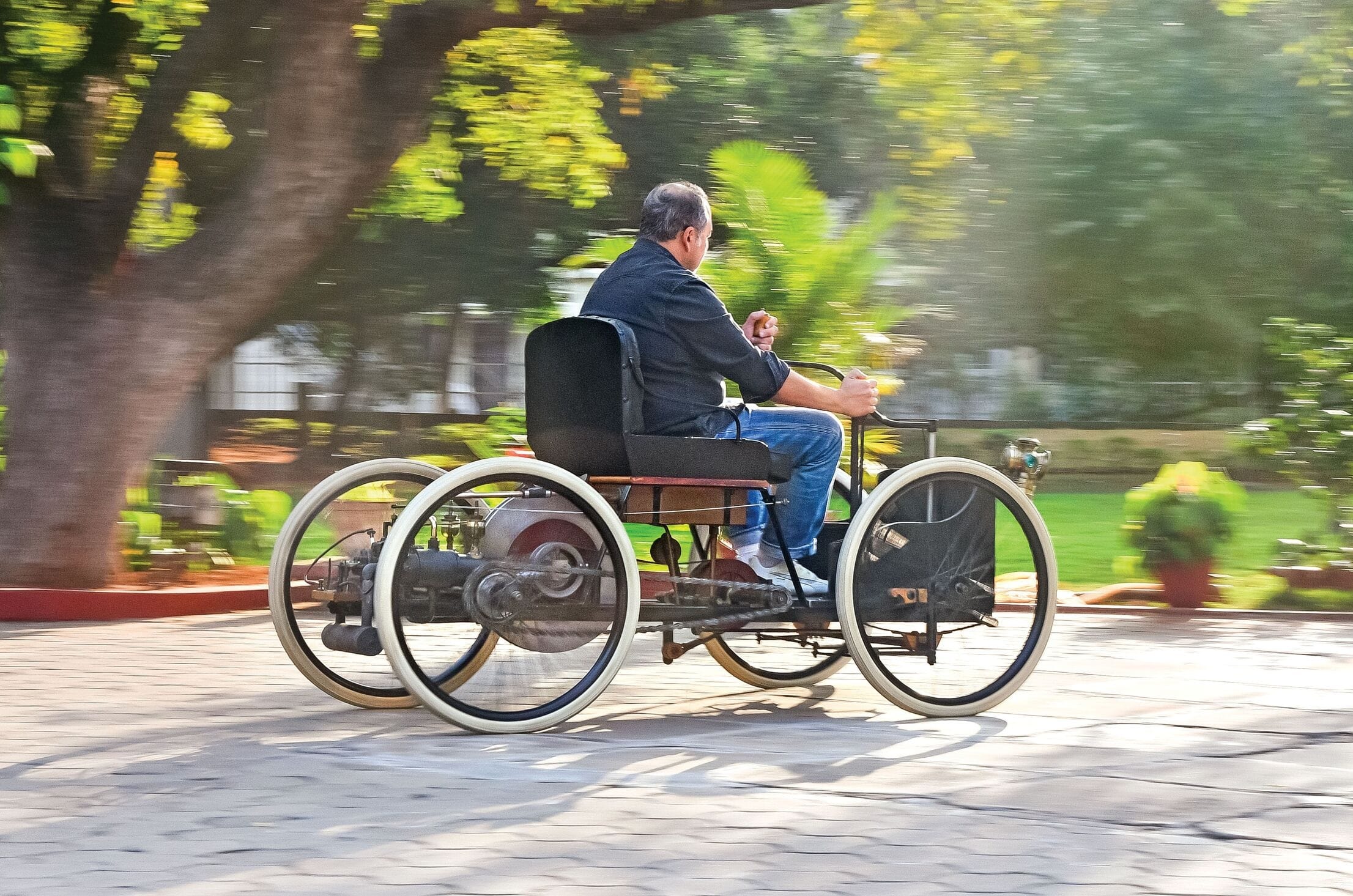
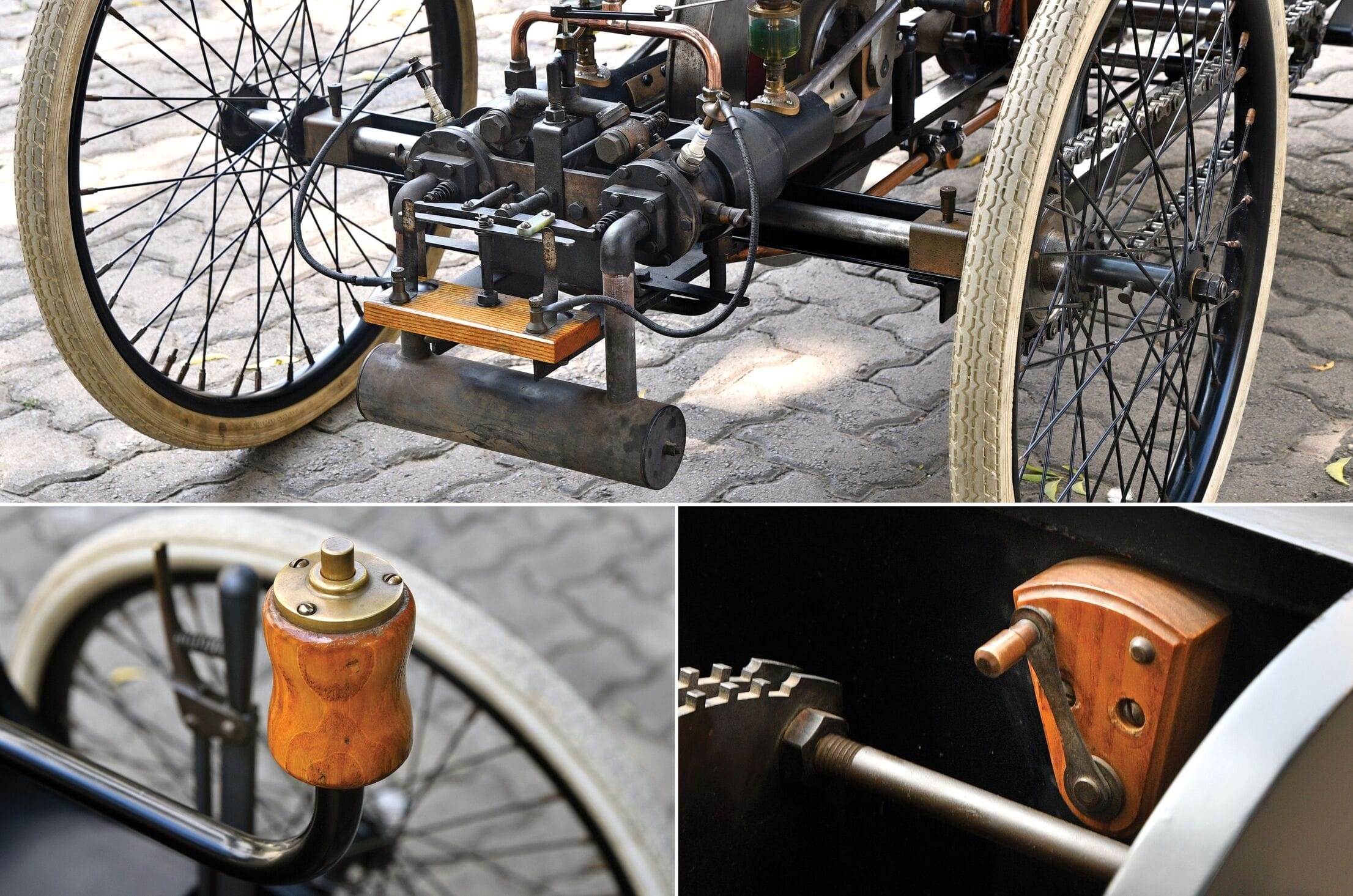
If the Stanley Steamer is theatrical, the Ford Quadricycle is a burst of youthful energy. Built in 1896, ten years after Karl Benz unveiled his Patent-Motorwagen, it was Henry Ford’s first car, created before he even founded the Ford Motor Company in 1903. The replica is faithful to the original, complete with its mid-mounted twin-cylinder engine and bulb-type rudimentary carburettors that mix the fuel and air. The pistons are exposed, with no sump for oil, so lubrication is handled by drip-feed systems. A brass tube connects the pistons to water tanks for cooling, while spark plugs, carburettor, tappets, and valves are all visible, making the engine look like a mechanical marvel, all the running bits visible and exposed.

Clockwise from top: Twin cylinders placed horizontally; Contact box switch to start the car; Steering knob has button for the bell. 

Driving it is exhilarating. The twin cylinders give it a noticeable boost in speed. Steering is again by a tiller, while a lever operates the throttle, much like one on an aircraft; but in reverse. Pulling the lever back sends the car shooting forward, while pushing it forward slows it down! And yes, Ford even thought to add a horn, making this one of the first cars to have this safety feature. Something else that’s fascinating – this car runs on E100 or pure ethanol. However, there’s no blue roundel or Ford badge. This car came before the Ford Motor Company, remember. 

Prime petroleum  

It moves forward gingerly with a put-putting sound from the weak single-cylinder ‘engine’.

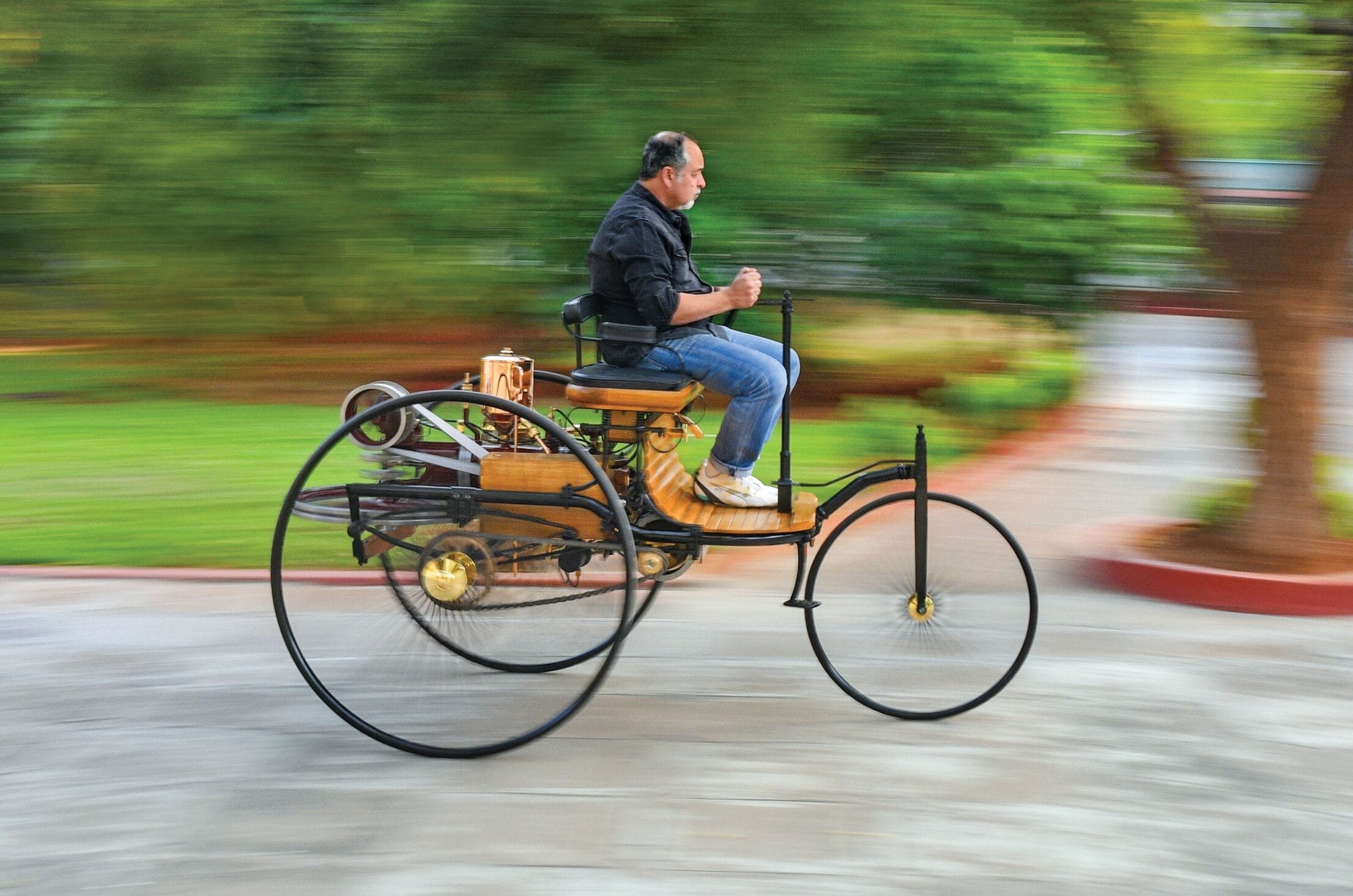
The Benz Patent-Motorwagen, however, is the granddaddy of them all. Widely regarded as the first petrol-powered car, it was unveiled in 1886 and changed the course of history. While steam vehicles had existed since the 1760s, Benz’s creation was revolutionary: a single-cylinder, horizontal piston engine mounted on a tricycle frame. The replica here is almost indistinguishable from the original. Austrian white ash has been imported for the woodwork, just as Benz used in Germany. Brass fittings, carburettors, pistons and connecting rods are all crafted in-house, from the same materials that were used on the original. Even the massive wheels with hard-rubber tyres are made at the factory in Coimbatore, cast and assembled with meticulous care, as we stand and watch. 

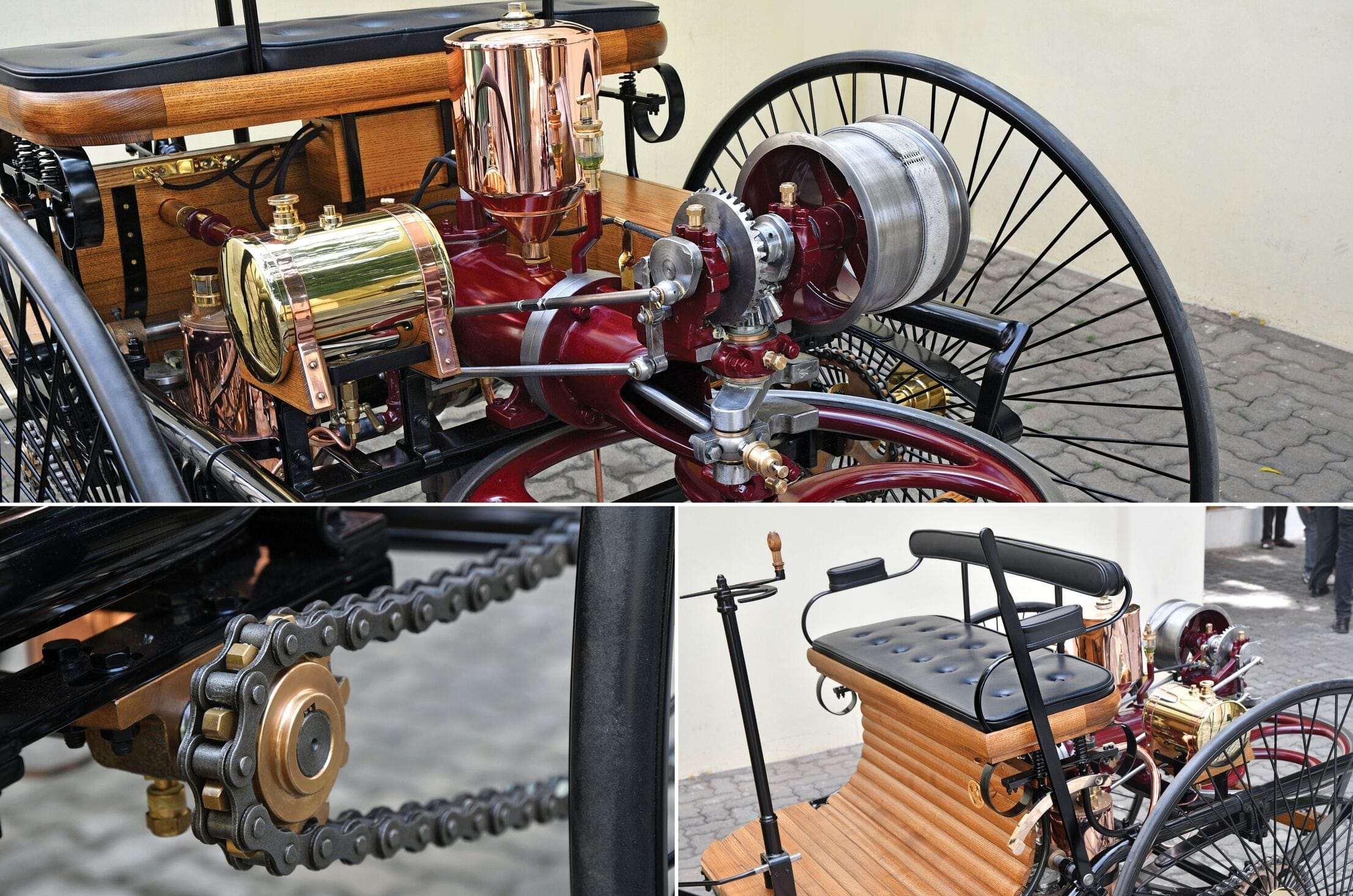
Operating the Motorwagen is an exercise in patience. The wooden box houses the battery and electrics, while the crankshaft and piston lie horizontally. A pulley system drives the camshaft, with pushrods for intake and exhaust valves. The engine is started by spinning the horizontally placed ‘fly wheel’, and the car starts with a soft and faint put-put-put, white smoke softly escaping from the rear. 

Clockwise from top: Brass canisters hold water, fuel; You steer with a tiller and use a long lever to accelerate, brake; Drive is via bicycle chain.

Sat high up, you control acceleration and braking with a single lever; push forward to accelerate or pull back to brake. On the road, it feels fragile and threatens to tip over at times. Unless you push the throttle open, even gentle slopes are a challenge. And then there’s some overrun, so you often need to pump the lever to give it a burst of power. In addition, the ride is harsh, the suspension rocks you and larger bumps simply toss you and threaten to flip the tricycle. But every chug of the piston, every few metres you cover remind you that this is where petrol motoring began. 

Recreating history

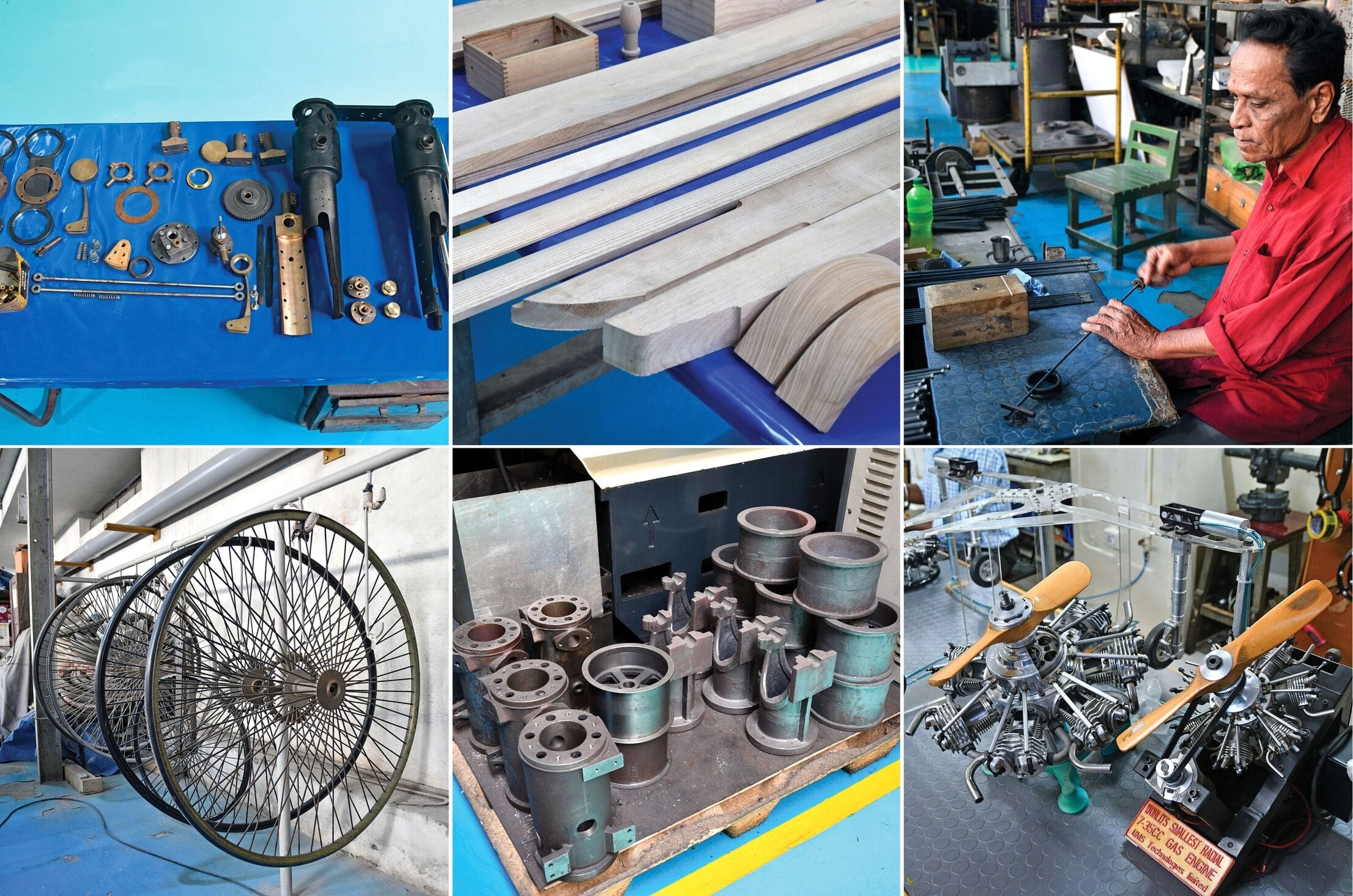
What makes these replicas remarkable is not just their historical accuracy, but the fact that they are built entirely in-house. UMS Technologies casts its own parts – cylinder heads, crankshafts, flywheels, carburettors – 20km away, then assembles them here. Brass, steel, gunmetal and Austrian ash are all shaped into components that mirror the originals. The workshop even uses a Carl Zeiss measuring machine to check tolerances on the Benz cylinder head – something Karl Benz himself could never have imagined in 1886. And the company doesn’t stop at cars. It also builds engines for drones and RC planes, ranging from single-cylinder 100cc units to seven-cylinder radial engines. Precision, craftsmanship and innovation coexist in this tiny factory, proving that scale is not a prerequisite for excellence. It even makes small turbine engines, complete with flames emitted from the rear and afterburners. 

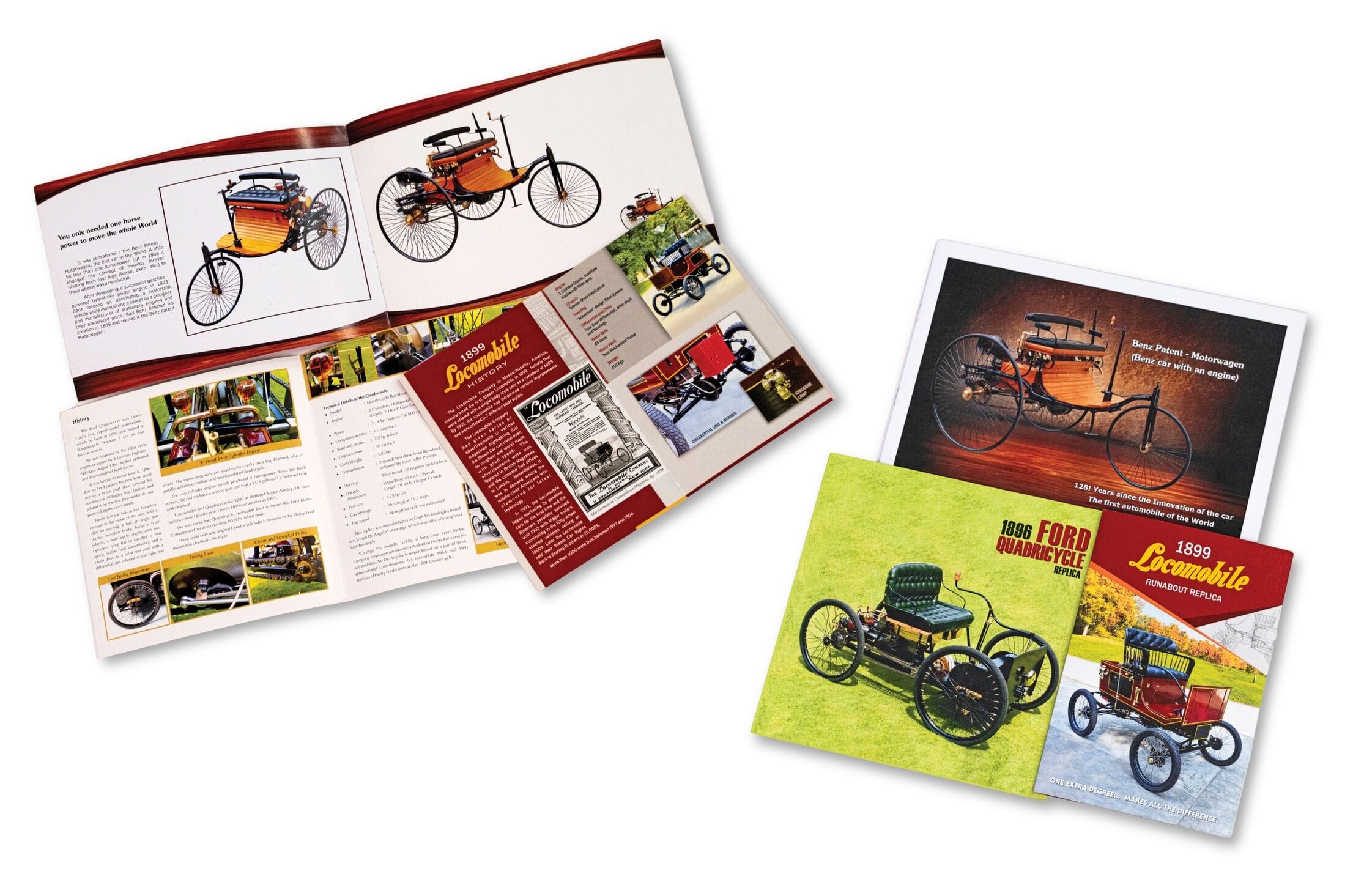
Each car gets its own brochure, as it should.

In an era dominated by SUVs, EVs and autonomous driving, why do these replicas matter? Because they remind us of where it all began. They show us the ingenuity of pioneers who built cars, they highlight the evolution of engineering, from steam to petrol, from tillers to steering wheels, from drip-feed lubrication to blade batteries. 

India’s smallest carmaker has achieved something extraordinary. By recreating the Stanley Steamer, the Ford Quadricycle and the Benz Patent-Motorwagen, it has preserved the earliest DNA of the automobile and shown us what it must have been like to drive and be transported by these machines. Even better, if you want to own one of these, each of them is on sale. 


Benz Motor Wagen

Stanley Steamer

Ford Quadricycle

Price*

Rs 22.10 lakh

Rs 19.50 lakh

Rs 15.60 lakh

Wheelbase

1,450mm

1,473mm

1,200mm

Power

0.68hp

3.5-5.5hp

3-4hp

Kerb weight

265kg

410kg

227kg

Top speed

16kph

40-48kph

28kph

*Domestic market discount 20-25 percent

No steering required 

Driving these three, you get a sense of what the pioneering days of motoring must have been like. You sit exposed, as on a carriage, and looking at this set here, that’s what they really are – horseless carriages. In the Patent-Motorwagen, you pump the accelerator and brake repeatedly, coaxing the car up inclines and slowing it down with a wooden lever. It feels awkward at first, but soon you get the hang of it. The ride is rough, but the sense of history is overwhelming. In the Stanley Steamer, you wait five minutes for pressure to build, then glide forward with effortless torque. The chuffing soundtrack is addictive, and the acceleration surprisingly rapid. Steering with a tiller is tricky, but the experience is joyous. In the Ford Quadricycle, performance takes centre stage. The twin cylinders deliver speed, the ethanol tank nods to sustainability, and the bell-like horn adds a touch of practicality. It feels like the first step toward the modern automobile. Together, they offer a time jump into motoring’s infancy.

How these cars are made in India

All basic parts for the engines are cast or machined either in-house or by a local supplier; for the Benz, the same imported ash wood as the original is used; the spokes and big wheels are made by hand; cylinder and sleeve made to the same spec as the originals; UMS also makes cylinder radial engines for drones and model planes – a nine-cylinder radial and a turbine, among the many.

Interview with GD Gopal, UMS Technologies

Why build replicas of cars that are more than a century old?

Because they are the roots of motoring. Everyone knows the latest SUVs or EVs, but very few have seen where it all began. By recreating the Stanley Steamer, the Ford Quadricycle and the Benz Patent-Motorwagen, we’re preserving history in a way people can touch, feel and drive.

How difficult is it to manufacture these cars from scratch?

Extremely difficult. We cast our own cylinder heads, crankshafts and carburettors. Even the woodwork is done here using Austrian ash, just like the originals. Every part is measured, machined and finished by hand. It’s not about mass production; it’s about precision and authenticity.

What’s next?

We’ll keep building history. And maybe inspire the future too.

Used car study 2026: Maruti Ertiga holds its value best among MPVs

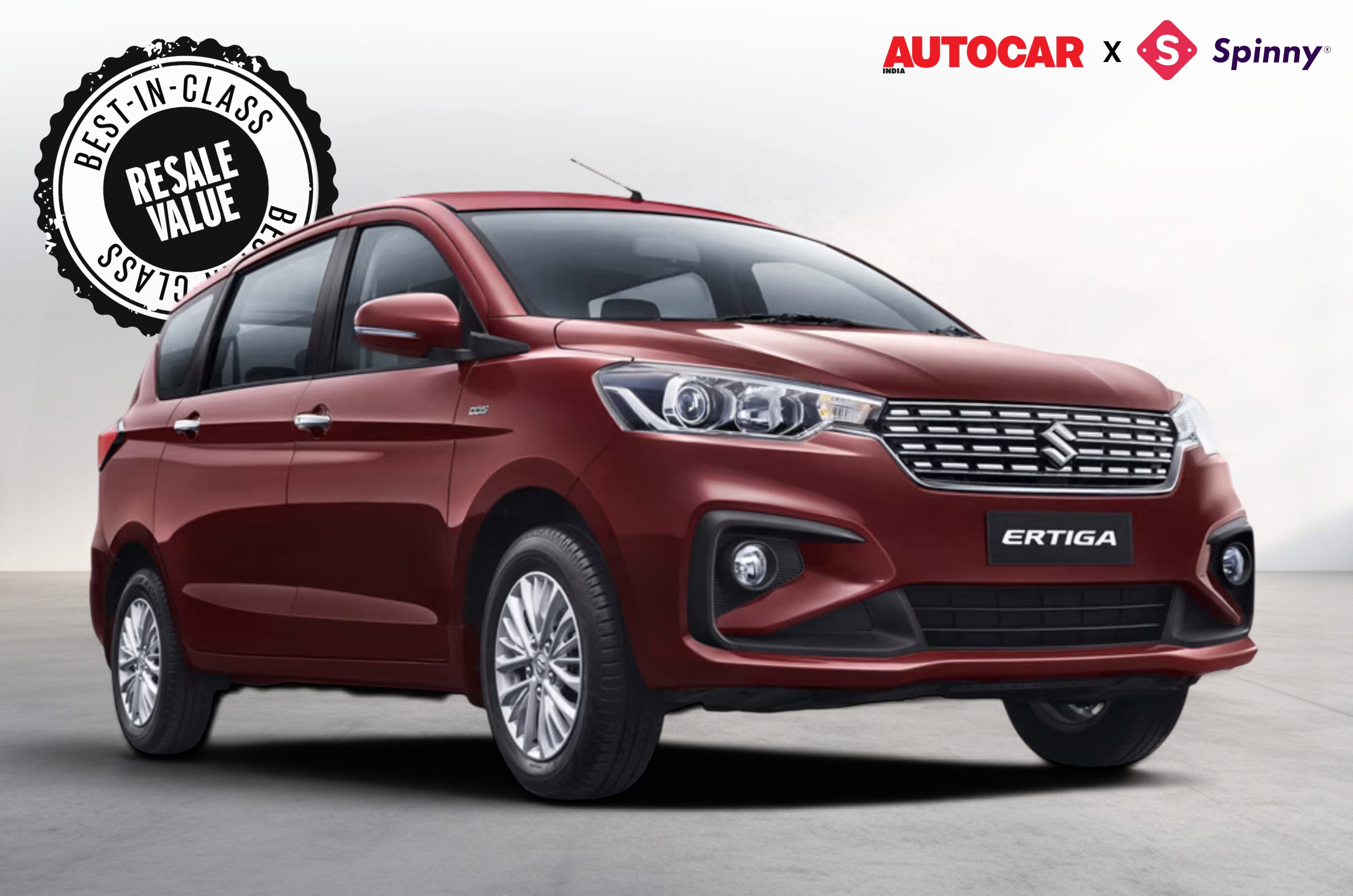
Maruti Ertiga resale value

Conducted in association with Spinny, India’s leading pre-owned car platform, the fourth edition of our Used Car Study analyses real-world resale values across a broad spectrum of vehicles sold in the Indian market to assess depreciation trends over a five-year ownership period. The study is based on actual transactional data shared by Spinny for vehicles sold between January 1 and August 31, 2025.

In this part of the resale value study series, we take a look at the MPV segment:

MPVs resale value 

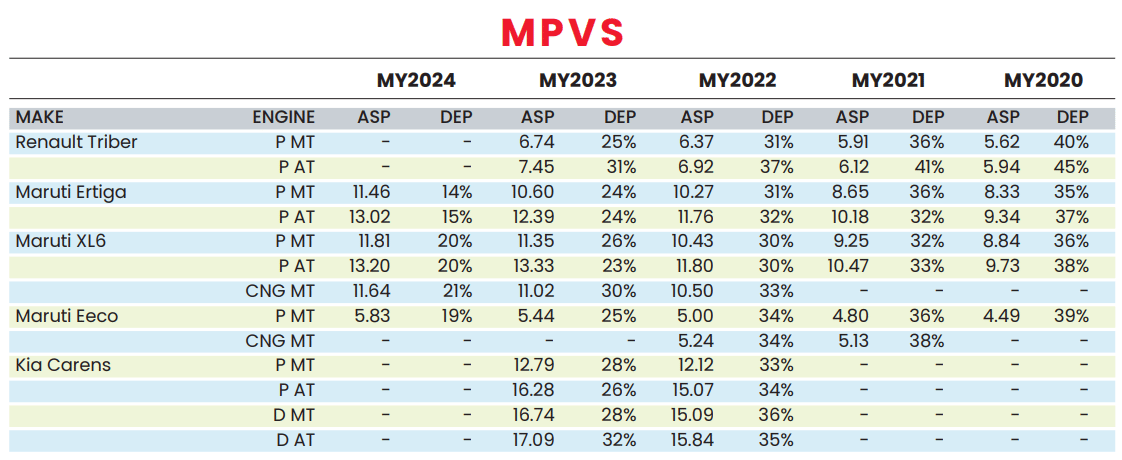
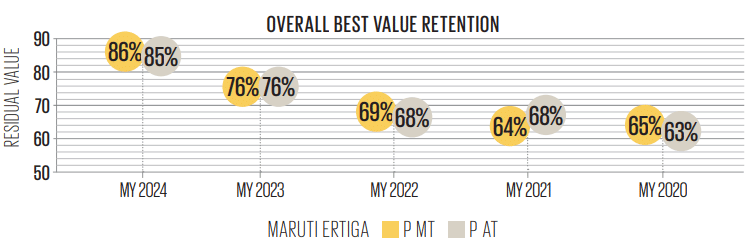
The MPV segment spans a broad price spectrum, starting with the affordable Maruti Eeco and extending up to premium offerings such as the Kia Carens. Dominating the segment in terms of resale value retention, however, is the Maruti Ertiga, which continues to exhibit the flattest depreciation trend over a five-year period.

Meanwhile, the Renault Triber showed the highest depreciation, more so for the AMT variants. Due to limited used market transaction data, the Toyota Innova Crysta and Hycross have been excluded from this study. 

As per the study, the average selling price of a five-year-old MPV retailed through Spinny was Rs 7.47 lakh. Comparable figures for three-year-old and one-year-old MPVs were Rs 10.50 lakh and Rs 11.16 lakh, respectively. Average depreciation over the same periods worked out to 38.5 percent, 33.10 percent and 18.15 percent, respectively.

Autocar-Spinny resale value study methodology 

The analysis covers the average selling prices (ASPs) of vehicles retailed through Spinny’s network across nine cities – Delhi-NCR, Bengaluru, Hyderabad, Pune, Chennai, Mumbai, Lucknow, Ahmedabad and Kolkata.

For the purposes of this study, depreciation has been defined as the percentage difference between a vehicle’s original on-road price in its year of manufacture and its resale value in 2025. In instances where a model was offered with multiple engine options using the same fuel type, the data has been consolidated and averaged. Variant-wise differences have similarly been averaged out.

Discontinued models and powertrain options have been excluded. Additionally, premium vehicles priced above Rs 30 lakh, electric vehicles and certain low-volume models have not been included due to limited transaction data and insufficient sample sizes.

Opinion: The problem with Premia

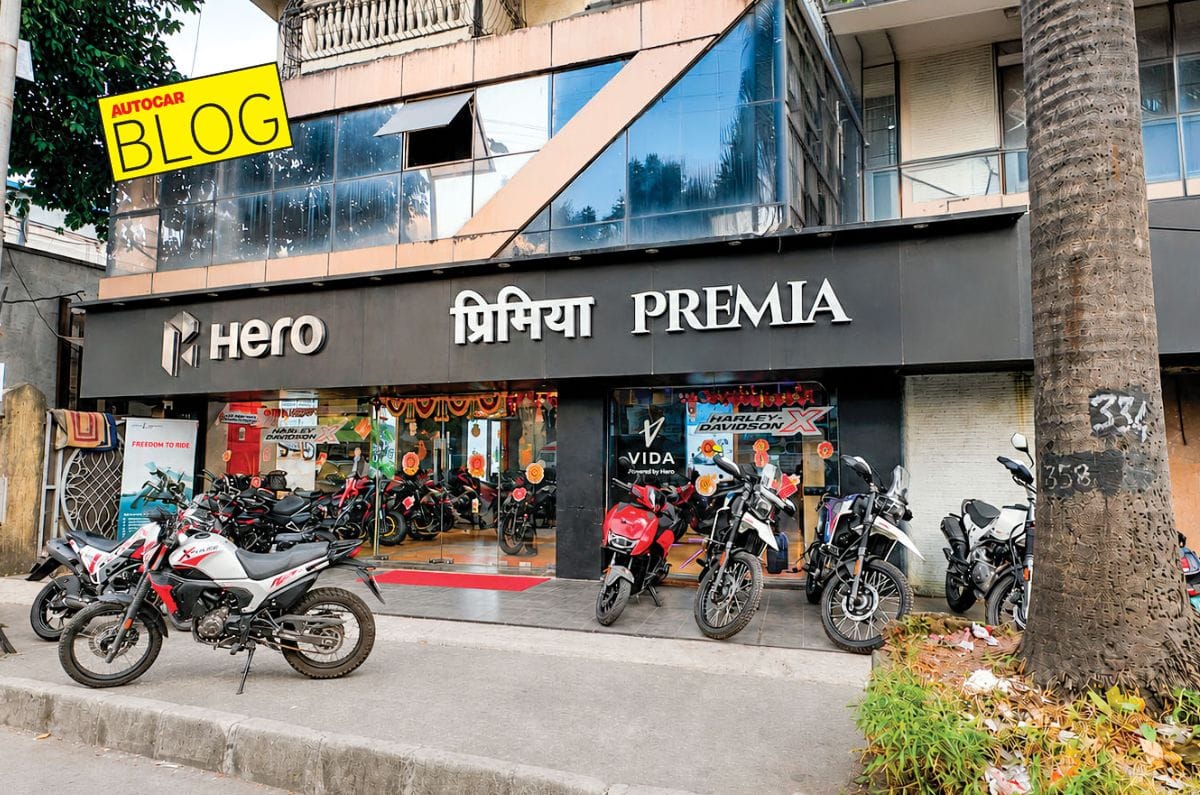
Hero Premia showroom in Mumbai

It has been just over ten years since Hero inaugurated its sprawling CIT (Centre of Innovation and Technology) in Jaipur. The intention behind this massive, world-class tech centre was to encourage innovation and engineering – the results of which would be most evident in premium vehicles. Having conquered the mass-market segment for decades, premium two wheelers were obviously the next big step for Hero, not just in India, but for its global aspirations as well. However, as of mid 2026, the company’s premium push has been underwhelming at best.

This is not for want of good motorcycles. In the last few years, Hero has come out with some very impressive products, particularly the Xpulse 210 and the Xtreme 250 that we rode this month. Yes, there are some rough edges to these motorcycles when it comes to those last few degrees of finesse and quality; however, they are solidly engineered, and you can tell that they have been made by a team of proper motorcycle enthusiasts.

The problem is not the motorcycles themselves, but how they are being sold. Or rather, how they aren’t. Hero’s first Premia dealership opened three years ago, but to date, there are just 135 of these across the country. For India’s largest two-wheeler manufacturer, that’s a miniscule number, especially when the most affordable Premia-exclusive product, the Xoom 160, starts from just Rs 1.39 lakh. For some reference, Triumph, whose products are considerably more expensive, already has over 200 dealers in India. 

The far bigger problem, though, is product availability. The aforementioned Xoom 160 was officially launched in January 2025, but we only got to ride it in September 2025, and customer deliveries were minimal till the end of the year. Even today, some dealers quote long waiting periods. The same goes for the Xtreme 250 – it was launched in January 2025, but Hero wasn’t able to send review units to the media until June 2026. 

It also doesn’t help that Hero regularly shows off exciting new, seemingly production-ready products at motor shows, but then doesn’t launch them for as much as two years in some cases. The fact that the company discontinued its most premium bike ever, the Mavrick 440, less than 18 months after it was launched, also wasn’t a good look.

None of this inspires confidence in Hero’s premium products, and that’s a pity because they are genuinely likeable. Beyond that, Hero also offers some of the most aggressive pricing in the business, evident in how the Xtreme 250 costs a whopping Rs 48,000 less than the KTM 250 Duke. Customers should be lapping these bikes up, but that’s simply not happening at the moment. A prime example is how a friend of ours couldn’t even get an Xtreme 250 test ride from a Premia dealer in Mumbai this April (15 months after it was launched!), so he ended up buying the KTM instead.

This is surely not a case of inability, and it appears that Hero’s premium business is simply not being treated as a priority. In 2025, the GST rate cut helped Hero to further increase its lead in commuter sales, and it successfully fended off Honda’s push for number 1 in the Indian market. Hopefully, the company will now give its premium business the attention and focus that it deserves.

Hero Xtreme 250R vs KTM 250 Duke comparison: Street Fight

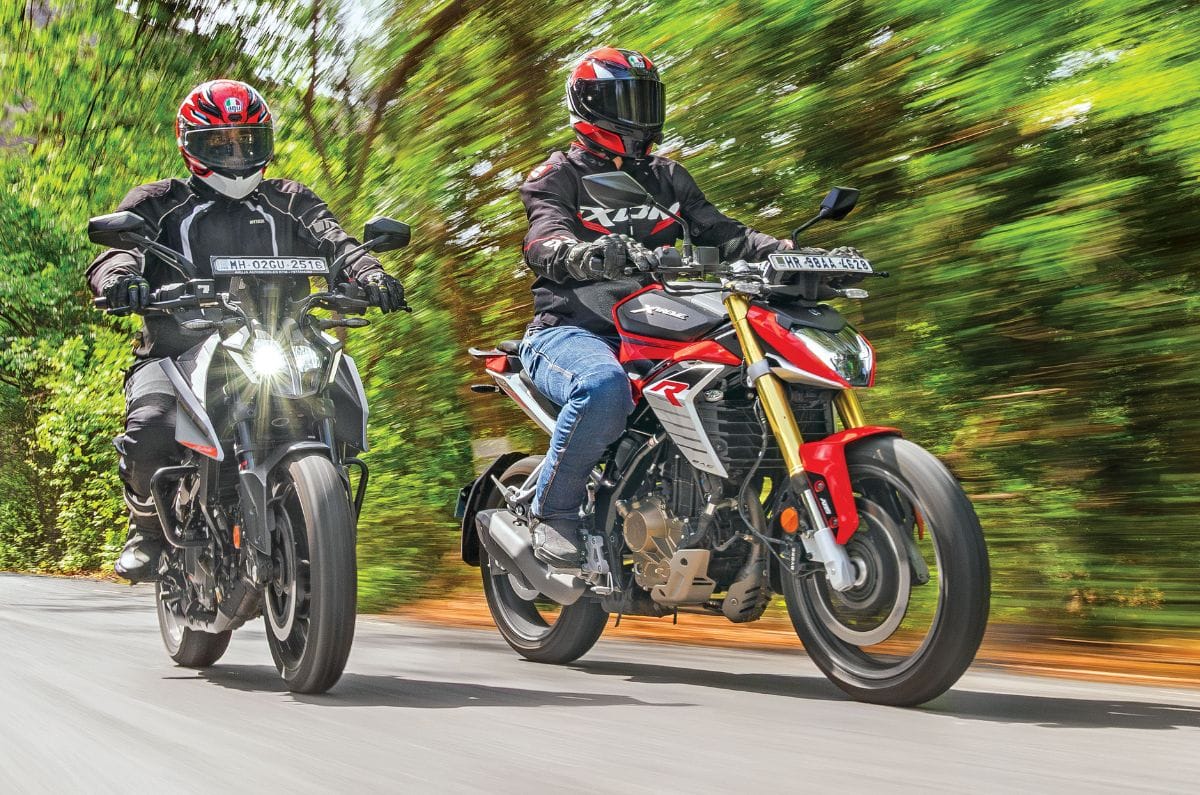
KTM 250 Duke and Hero Xtreme 250R front side riding shot on road

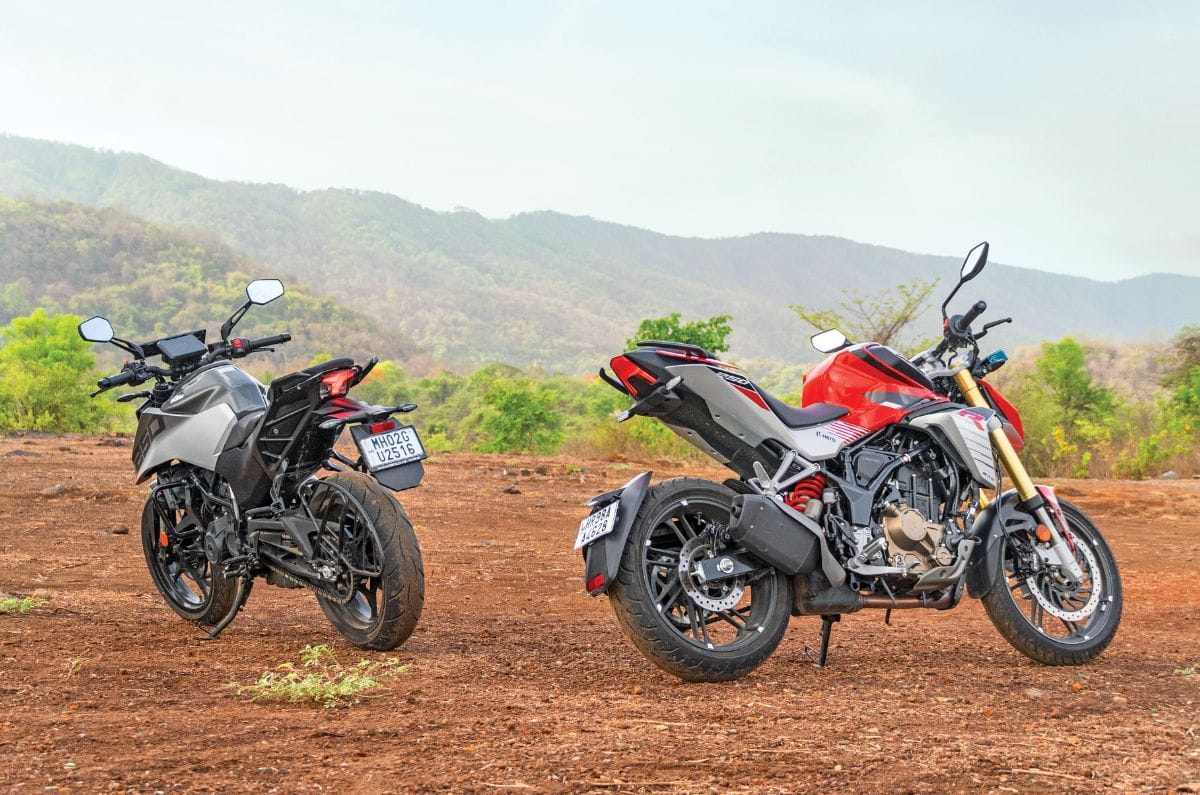
Until recently, if you wanted a sporty 250cc motorcycle with a liquid-cooled engine, the KTM 250 Duke was your only option. However, Hero decided to enter this niche of the market in early 2025 with its Xtreme 250R. Before we begin, you may be wondering why this comparison is being made 18 months after the Xtreme was launched. That’s because Hero has only just now managed to send it out for proper reviews, but we’ll revisit this issue later on. Now, on with the show!

Hero Xtreme 250R vs KTM 250 Duke design and features

The way a bike looks is one of the most compelling reasons to buy it, and in that regard, both the Xtreme and Duke have angular, sporty designs that will stand out, but I prefer the Xtreme’s aesthetic. It is well-proportioned and looks upmarket without trying too hard. The Duke, with its garish headlight, overly long tank shrouds and mishmash of angular surfaces, feels too busy.

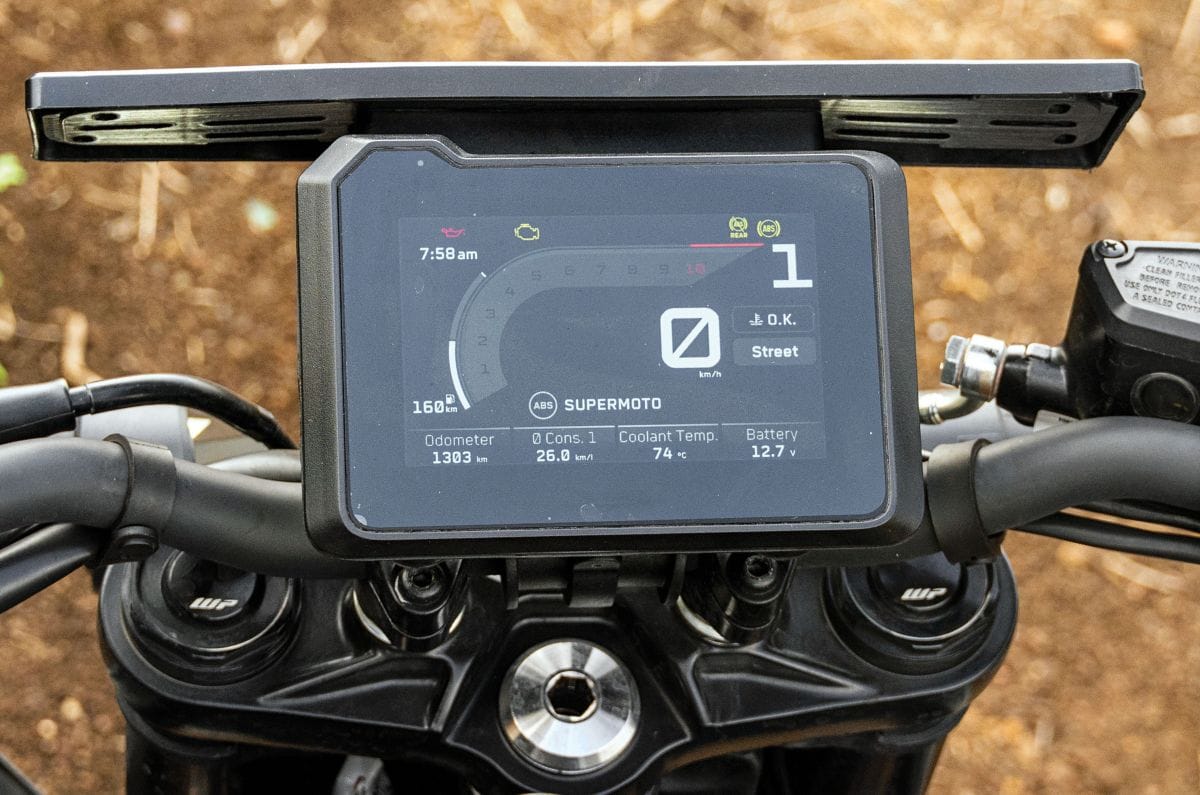
KTM 250 Duke TFT display
Duke’s TFT is slick to use, feels nice.

However, when it comes to features, the Duke has the Xtreme thoroughly spanked. The KTM has unique features like a bright and well-laid-out colour TFT display, a lovely bi-directional quickshifter, as well as two riding modes. Its overall quality levels are also far nicer than the Hero’s, making it feel like the more expensive bike.

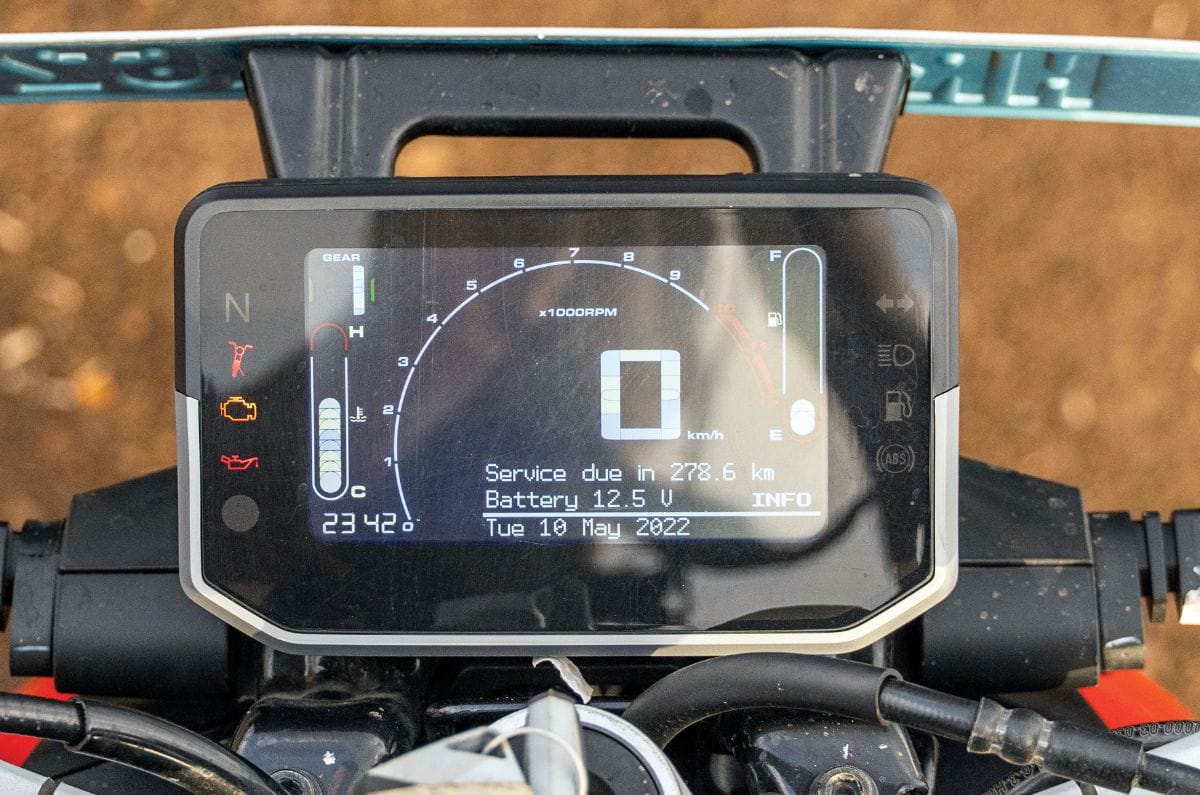
Hero Xtreme 250R LCD display
LCD screen is not bright enough, and smaller digits are hard to see.  

In comparison, the Xtreme definitely feels like a step down. Its small negative LCD dash isn’t bright enough, with the smaller digits particularly hard to read. While the bodywork is of a fairly decent quality, its switchgear is quite disappointing, and you never get the crisp feel of having pressed a tactile, good-quality button. 

Hero Xtreme 250R vs KTM 250 Duke performance and fuel efficiency

Now, everything I’ve told you about so far has probably not surprised you. But what I am about to tell you will. Everyone who rode the bikes back-to-back thought that the Xtreme was quicker than the Duke. Our VBox tests corroborated those impressions, and the Xtreme was noticeably quicker than the Duke not just during standing starts, but also in roll-on acceleration runs. 

ACCELERATIONHero Xtreme 250RKTM 250 Duke
0-60kph3.15s3.44s
0-80kph5.2s5.50s
0-100kph8.22s8.50s
ROLL-ON ACCELERATION  
20-50kph (2nd gear)2.33s2.62s
30-70kph (3rd gear)4.20s4.68s
50-80kph (4th gear)4.41s5.16s

What makes the difference is that the Duke feels quite mellow under 6,000rpm, whereas the Xtreme’s added mid-range punch is immediately apparent. On the Duke, you have to work noticeably harder to extract the maximum, although once it wakes up, it’s a real hoot! 

 Hero Xtreme 250RKTM 250 Duke
Fuel capacity 11.5 litres15 litres

The cherry on top is that the Xtreme’s higher performance doesn’t really come at the cost of fuel economy. Both bikes were very closely matched, although the Duke’s tank is much larger than the Xtreme’s, so it will go much further on a single tankful. 

FUEL EFFICIENCYHero Xtreme 250RKTM 250 Duke
City32.84kpl 34.14kpl
Highway39.21kpl39.66kpl

Hero Xtreme 250R vs KTM 250 Duke ride and handling

The Xtreme is also an engaging handler, feeling responsive and set up like a premium sporty motorcycle. But if the Xtreme’s handling is good, the Duke’s is great! The Duke’s chassis feels wonderfully intuitive, and it feels like this bike was born to attack corners. Its suspension and brakes also have that extra edge when you’re pushing hard, which makes all the difference. 

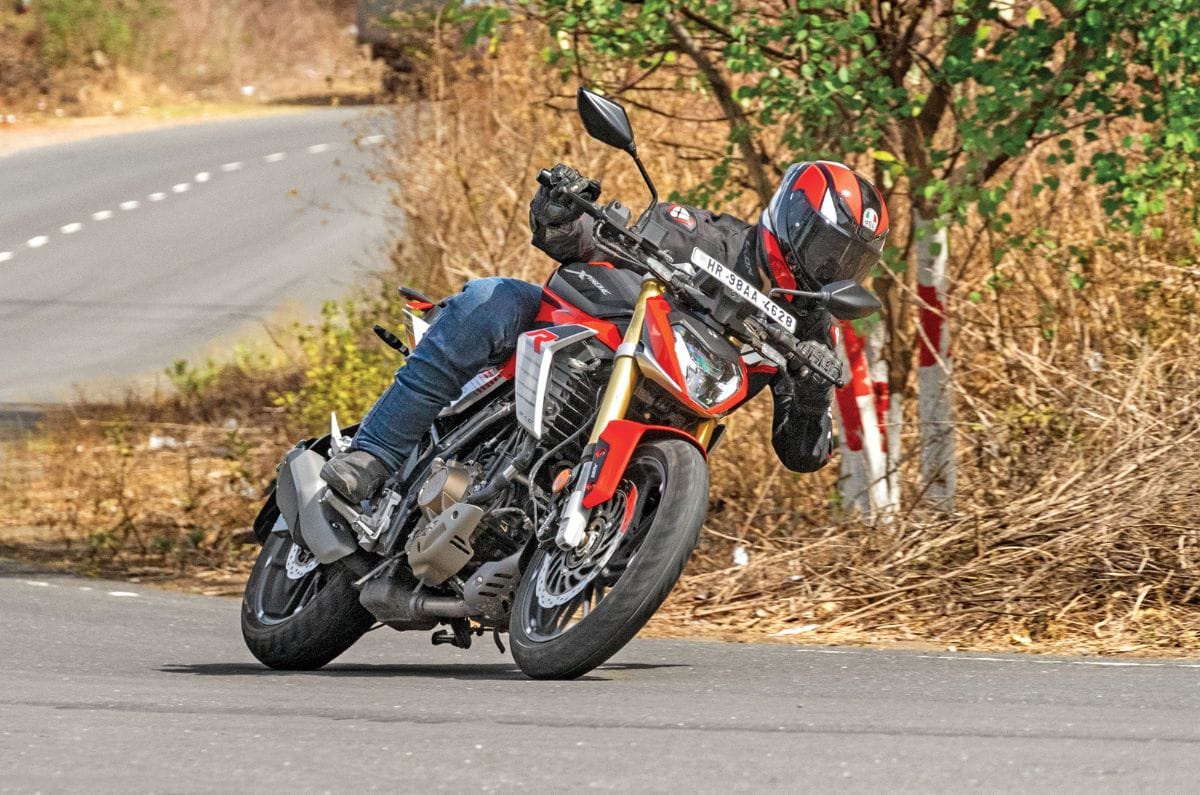
Hero Xtreme 250R front right side corner shot on road
The XTreme tips in eagerly and holds the line well once leaned over.

Speaking of brakes, the Xtreme’s rear brake pedal seems like it’s placed a little too low down, and you really need to move your foot downwards a little more than necessary to use it. Another area of the Xtreme’s mechanicals we didn’t really gel with was that there’s very little feedback from the gearbox when shifting. Some of us also experienced false neutrals occasionally on the Xtreme, particularly when shifting from fourth to fifth. None of these are big problems, but they do expose some of its rough edges. 

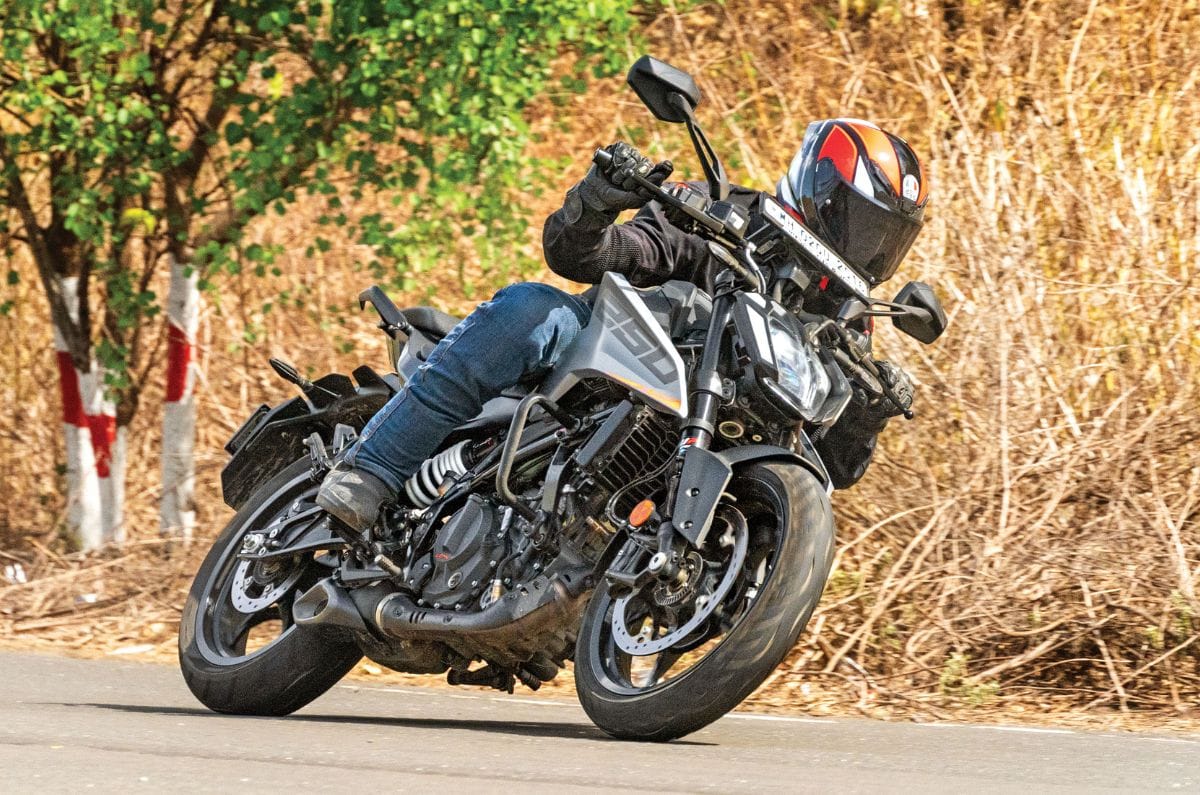
KTM 250 Duke front right side corner shot on road
The Duke is a telepathic handler and keeps egging you on to push harder!

Both can easily venture onto the highway, and sustaining 100-110kph is entirely doable as long as you don’t mind some vibrations. In fact, the Xtreme’s engine feels smoother than the Duke’s at most speeds, although neither is entirely so. What we found was that the KTM is a tiny bit smoother till 6,000rpm, but above that, it’s the Hero that has the edge. 

 Hero Xtreme 250RKTM 250 Duke
Engine249cc, single-cyl, liquid-cooled249cc, single-cyl, liquid-cooled
Power30hp at 9,250rpm31hp at 9,250rpm
Torque25Nm at 7,250rpm25Nm at 7,250rpm
Gearbox6-speed6-speed

This means that in top gear, the 250 Duke’s sweet spot is around 100-110kph, but the Xtreme can sustain 120kph pretty reasonably – very impressive, especially when you consider its displacement. 

BRAKINGHero Xtreme 250RKTM 250 Duke
60-0kph17.54m17.32m

Hero Xtreme 250R vs KTM 250 Duke ergonomics and comfort

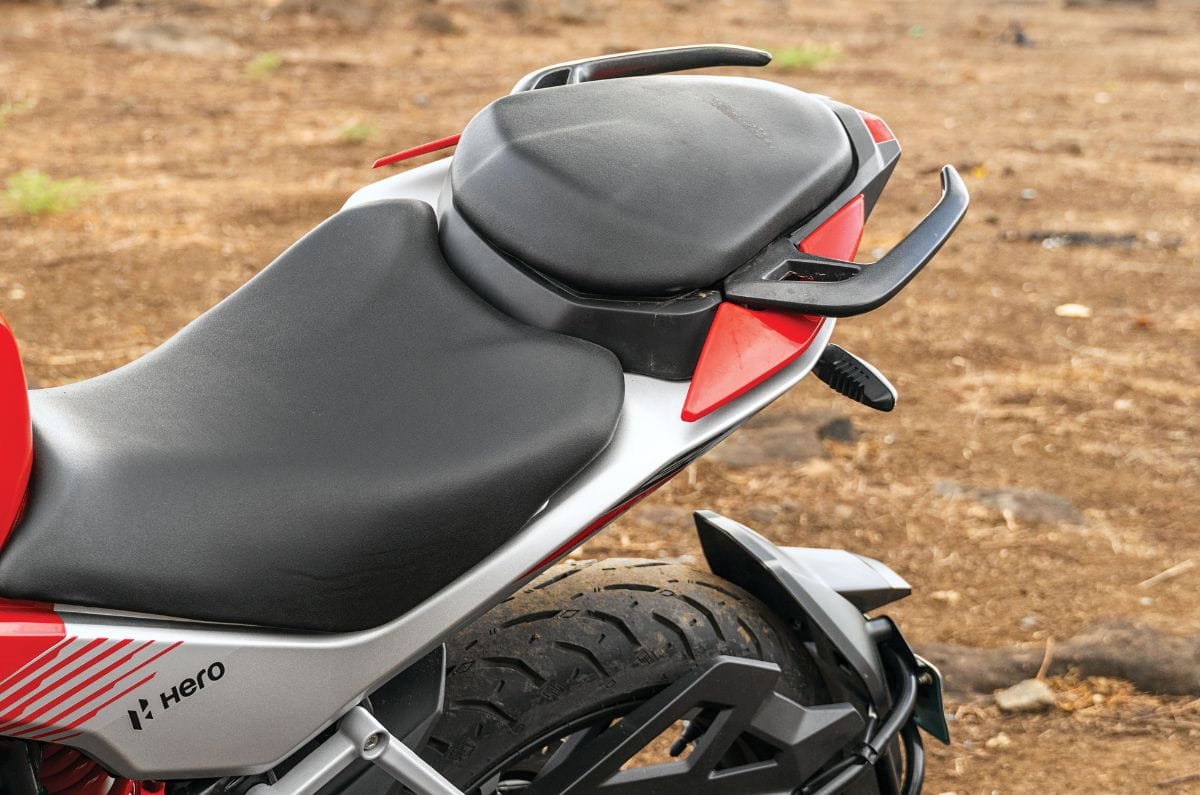
Riding for longer distances, too, will be more comfortable on the Xtreme. This is thanks to its spacious, well-padded seats and roomier seat-to-footpeg angle. At 806mm, its perch is also not very high, and average-sized people will be able to live with it easily. What is an annoyance, though, is that its footpegs foul the rider’s shin when you’re at a standstill. 

Hero Xtreme 250R seats
Xtreme’s seats are cushy and spacious.

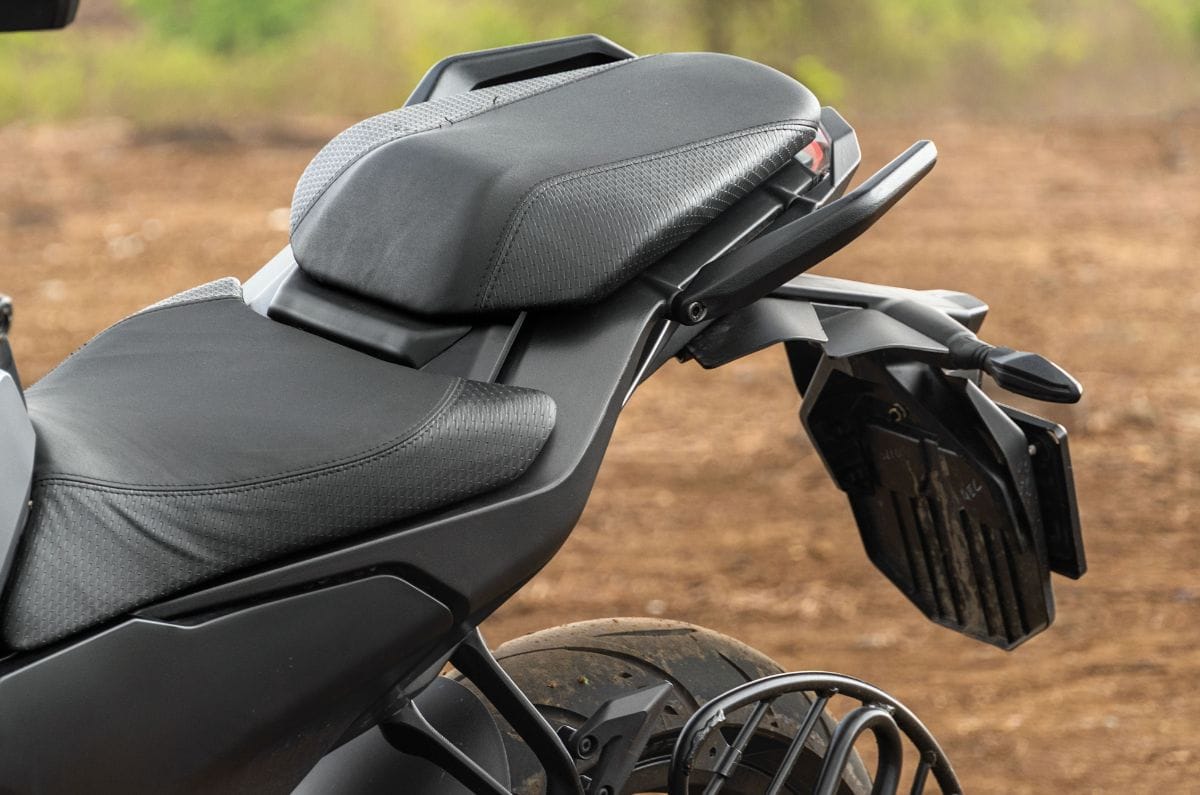
Since the 250 Duke is based on the same platform as the 390, it is a compact machine, and taller riders will feel hemmed in once seated. Also because the seat-to-footpeg distance is quite tight. You can alleviate this by opting for the accessory taller seat (Rs 2,500 extra), but that doesn’t entirely solve the problem, and this bike simply isn’t as comfy as the Hero. 

KTM 250 Duke seats
KTM’s seats are firm, lack space.

That’s also because the Duke’s suspension feels decidedly firmer than the Xtreme’s, and over bad roads, we all preferred being on the latter. This is even more impressive because the Xtreme still behaves very well in the twisties. 

Hero Xtreme 250R vs KTM 250 Duke price and verdict

By now, we’ve established that both have their unique strengths and weaknesses, but price is where one has a massive advantage. Hero has priced the Xtreme very competitively, and it undercuts the Duke by almost Rs 50,000. It is, without question, the faster, more comfortable and more affordable machine, while the KTM is a more polished, sporty and feature-laden package. The Xtreme’s warranty coverage is also better than the KTM’s as standard. So then, it’s a win for the Xtreme, right? Well, not exactly.  

 Hero Xtreme 250RKTM 250 Duke
PRICE (Ex-showroom, Delhi)Rs 1.73 lakhRs 2.21 lakh

Remember how I said at the start that the Xtreme has come to us a year and a half after launch? That’s because Hero’s strategy with its Premia products and dealer network is seemingly still a work in progress, and availability is still a concern, both for the bikes and for spares. 

Hero Xtreme 250R and KTM 250 Duke rear right side static in field

The Premia dealer network is still small (135 stores in 130 cities), especially in comparison to KTM’s widespread reach (456 showrooms in total) in the country. You also have to contend with the fact that the Xtreme is a very new product with unproven reliability. In fact, it’s not just the Xtreme, and these concerns currently apply to most Hero Premia products.

Not only is the Duke a more sophisticated and appealing machine, it comes from a far more established and premium brand. It also has the better finish and features, up-spec cycle parts and beautiful handling. Moreover, it also brings the peace of mind of having great service reach and spare parts availability. It also carries a more premium and recognisable badge, although that KTM identity is a double-edged sword. 

While the Xtreme is a fantastic first attempt, we can only confidently vouch for it once Hero improves the image and speed of its premium bike business. Until then, the KTM 250 Duke remains the safer buy.

Honda to increase focus on premium scooters and motorcycles for India

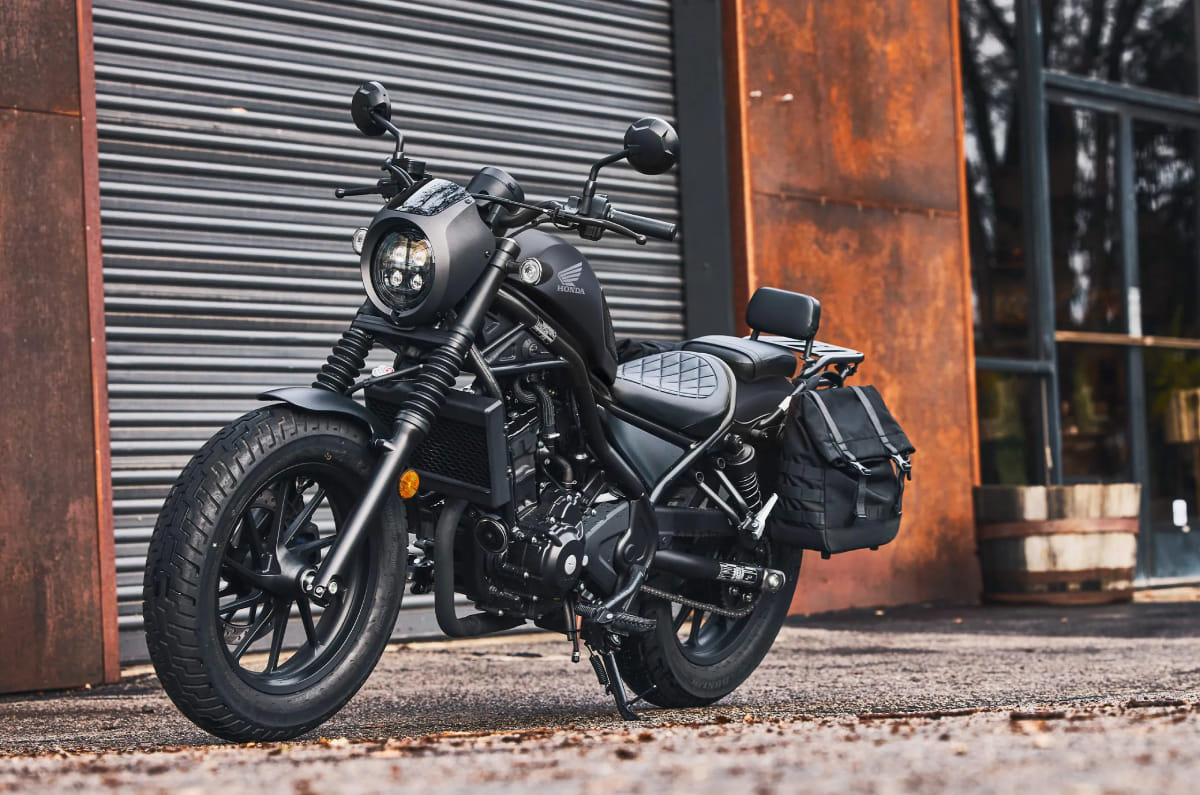
Honda Rebel 300 static image

Honda Motorcycle & Scooter India (HMSI) is sharpening its focus on premium scooters and mid-capacity motorcycles. The strategy marks a significant evolution for Honda, whose India business has long been anchored by high-volume commuter products such as the Activa scooter and Shine motorcycle.

  1. More premium products incoming
  2. Localisation will be key to affordability

The company says this has been done to retain younger buyers whose purchasing decisions are increasingly driven by design, technology and global products rather than just affordability. “Today’s customers, especially Gen Z and Gen Alpha, expect easy access to information through their smartphones and the internet,” HMSI president and CEO Tsutsumu Otani told Autocar Professional in an interview.

“Customers today don’t just compare models available in India; they also explore products offered in Asia, Europe and the United States,” he added.

Otani also said that Honda’s objective is no longer confined to winning first-time buyers but also to ensuring customers continue to remain within the brand as their aspirations evolve.

“The most important thing is not just market share. The key question is how we can increase loyal Honda customers,” he said. “Selling a vehicle is a one-time transaction. If customers do not choose Honda again when they purchase their next vehicle, that is not a good outcome for us.”

Industry analysts say the shift comes as India’s two-wheeler market becomes increasingly segmented, with premium motorcycles, feature-rich scooters and electric two-wheelers emerging as the fastest-growing parts of the industry.

Honda plans to draw more extensively from its global portfolio while increasing localisation to make premium products commercially viable for India.

“For our premium and step-up models, HMSI intends to leverage Honda’s global portfolio. We are also preparing new models based on Honda’s global portfolio,” Otani said.

He added that localisation would remain central before introducing any global model in India, both to improve affordability and strengthen domestic manufacturing.

While Otani declined to identify future products, Autocar Professional understands Honda is developing several new programmes covering 125cc and 150cc motorcycles, scooters, electric scooters, and 350cc and 500cc motorcycles. Although individual products and launch schedules remain undisclosed, the pipeline is consistent with the company’s strategy of building a broader premium portfolio while retaining customers within the Honda brand.

Honda is also giving India a larger role in product development as it seeks to shorten development cycles and improve localisation.

“‘Made in India’ means the supply chain exists in India. So, we have already changed our R&D process as well,” Otani said.

Asked whether Honda was now ready to design and develop products specifically for India, he replied, “Yes.”

The company’s strategy extends beyond internal-combustion products. Honda currently has a limited presence in India’s electric two-wheeler market but plans to expand its EV portfolio as adoption accelerates.

Otani said the company remained cautious about the pace of electrification because charging infrastructure and customer usage patterns were still evolving.

“Our first priority is to closely monitor the EV market in India and understand how it is developing,” he said.

At the same time, Honda sees growing opportunities in premium scooters as buyers seek larger engines, more features and stronger styling without sacrificing everyday practicality.

Otani said the challenge would be to localise advanced components and powertrains sufficiently to offer premium products at prices acceptable to Indian consumers.

The broader strategy reflects Honda’s attempt to reposition itself for a market where younger buyers increasingly expect global products adapted for local conditions rather than stripped-down versions developed solely for affordability.

For Honda, the next phase of growth may depend less on expanding its share of commuter motorcycles and scooters and more on building a complete portfolio that keeps customers within the brand as they move into premium motorcycles, larger scooters and electric mobility.

With input from Kiran Murali

Kia unofficially opens bookings of the Sorento

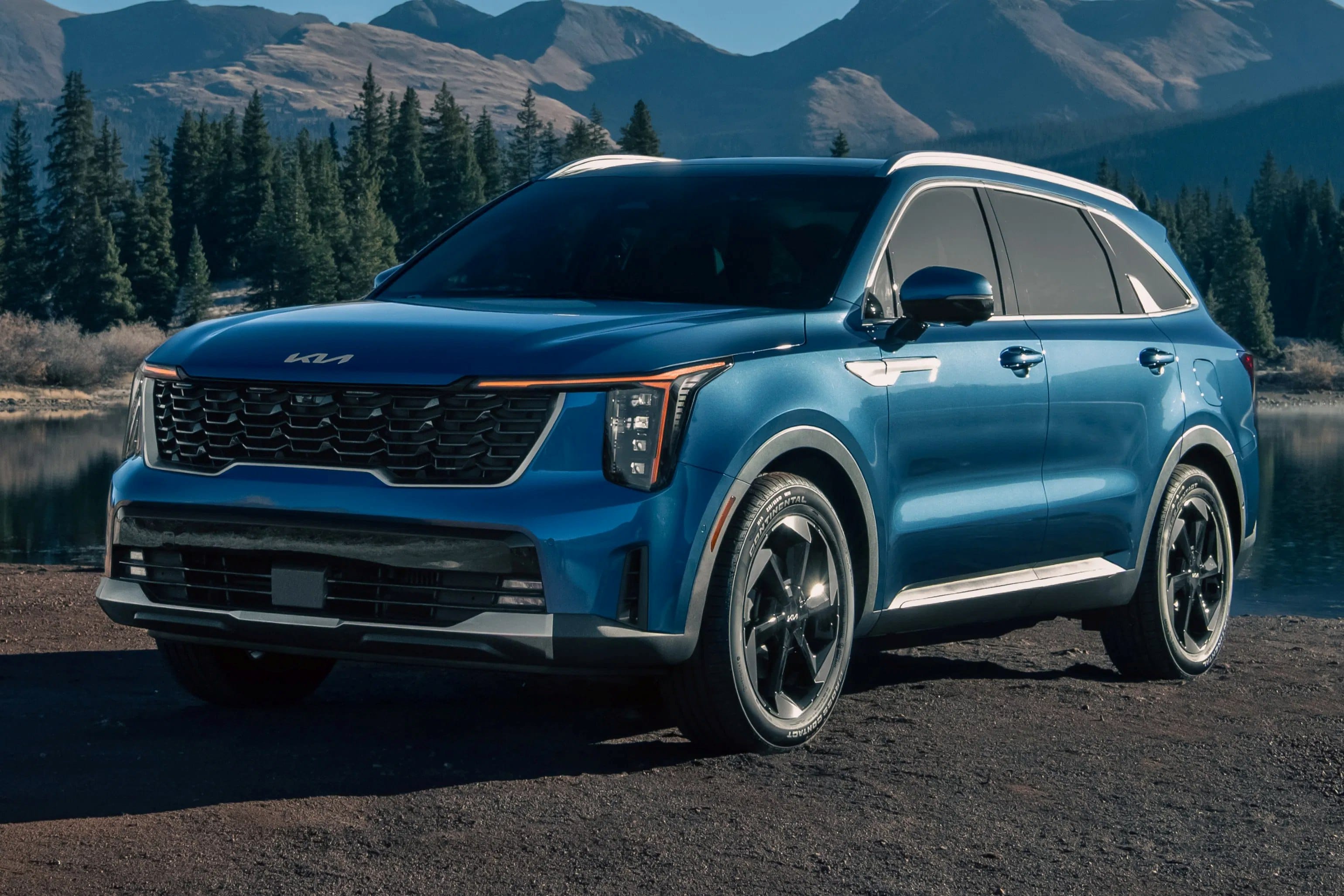
Kia Sorento front quarter static

Kia has unofficially commenced pre-bookings for the Sorento for an amount of Rs 25,000, our dealer sources have confirmed. The new model will serve as the flagship ICE-powered SUV of Kia India’s lineup. While the Sorento is expected to debut later this month, our dealer sources have hinted at an October 2026 launch. 

Kia Sorento: All that we know so far

Our dealer sources stated that a 1.6-litre strong-hybrid turbo-petrol engine would power the Sorento. While power figures remain under wraps, the UK-spec Sorento, for reference, gets a 1.6-litre strong-hybrid turbo-petrol engine that produces a combined 238hp and 380Nm of torque, and comes mated to a  6-speed torque converter automatic transmission. Depending on the market, the Sorento is offered in FWD or AWD configurations, and it remains to be seen what is brought to India. 

Additionally, dealers mentioned that the SUV would offer 5,6, and 7-seater configurations. If that’s the case, it would be the segment’s only model to offer three seating configurations. 

Kia Sorento: Additional details

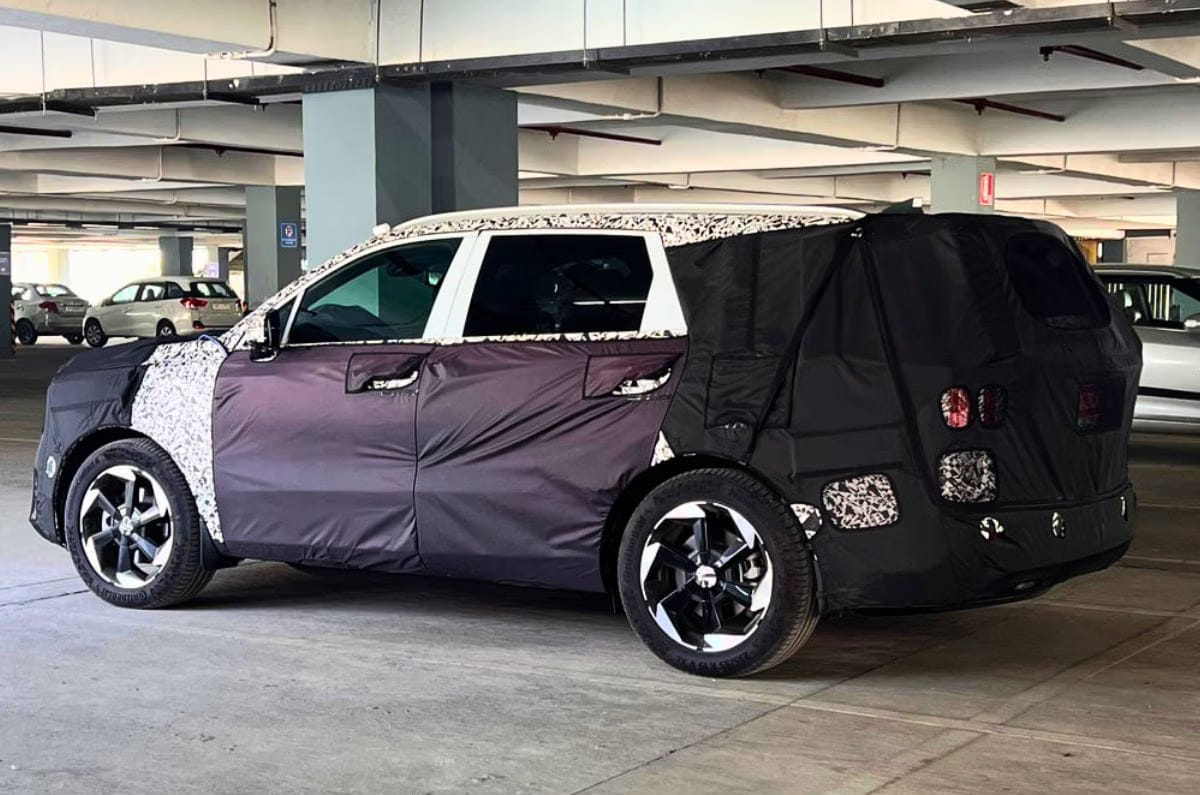
The SUV was first spied on our roads in late 2025.

The global-spec Sorento is 4,815mm long, 1,900mm wide, 1,700mm tall and gets a 2,815mm wheelbase. Being a slightly older model, it does not get the carmaker’s latest ‘Opposite Unite’ design language, though it retains typical Kia design details like the ‘Tiger nose’ inspired grille, and gets roof rails, chrome surrounds for the side windows and dual-tone 19-inch alloy wheels. Heavily camouflaged mules of the SUV have been spied testing previously on our roads. Its interior comes well equipped with features like dual 12.3-inch displays for the instrument and infotainment displays, panoramic sunroof, front seat ventilation, powered driver seat level 2 ADAS, 360-degree camera and more. 

The Sorento will be locally assembled in India. With an expected ex-showroom price of Rs 40 lakh to Rs 50 lakh, it will take on the likes of the Skoda Kodiaq and the Volkswagen Tyron.

Nissan platform-based cars can be built at the Renault Chennai plant

Nissan manufacturing in India

Early last year, Nissan exited its manufacturing joint venture with Renault and has since launched two Renault based models – the Gravite, a sister car to the Triber and the Tekton, its version of the Duster. Thus, Nissan’s locally built portfolio comprises entirely of shared platform products. That however does not need to be the case. 

When asked about the possibility of building Nissan platform-based vehicles at the Renault plant, Guillaume Cartier Chief Performance Officer at Nissan confirmed the possibility and said “yes we can have a car on a Nissan platform manufactured at RNAIPL” 

Reserved Production Capacity

Towards that end, Nissan has already a production capacity reservation with Renault. The plants total current output too is far from its total capacity, thus, room for additional products is available. Nissan also has its own engineering team at the R&D facility it partners with Renault, which it says is capable of undertaking its own product development work as well as independent model lifecycle management too. Thus, lifecycle management for products like the Tekton for instance can run distinct from Renault’s plans says Nissan. 

As for independent products, we had reported earlier that Nissan is exploring the possibility of building its newly unveiled Nissan Terrano SUV in India. Built along with Nissan’s Chinese partners Dongfeng, the new platform provides for various body types as well as powertrain options and these products form a good fit for our market which demands low prices, plenty of equipment and frequent updates.

Additional Investment 

While shared platforms make sense for both partners, it is important for Nissan to have a strategy not tied in completely to Renault, both for its brand identity as well as strategic reasons. For instance, we understand the Tekton is currently not be offered with Renault’s upcoming strong-hybrid powertrain as sources indicate Renault wishes to keep the 1.8-litre hybrid system exclusive and use it as a competitive advantage in an increasingly crowded midsize SUV space.

Theoretically, Nissan could work around this with its own technologies. “Our product plans can be built along with our partner, or with our own platform, or technologies too” says Cartier, however it comes down to investments required.  We understand the €700 million investment is already spoken for, thus further product plans would require additional investments, something that Nissan will have to stump up if it’s wants success here. Nissan says though, it is very keen on the Indian market with Cartier stressing again that its plans are long term and which is why it has secured its local production capacity, retained its engineering as well as financial arm in India and expanded its network. 

यूपी की नई स्टार्टअप पॉलिसी का एलान, स्टार्टअप मासिक भत्ता 17500 रुपए से बढ़कर 20000 रुपए किया गया

उत्तर प्रदेश सरकार ने नई स्टार्टअप पॉलिसी 2026 और नए स्टार्टअप मिशन को मंजूरी दी है। इसके तहत स्टार्टअप्स के मासिक भत्ते से लेकर सीड फंडिंग तक को बढ़ाया गया है। लखनऊ जिले के छोटे से गांव भुलभुलपुर में 10 हजार रुपए की छोटी सी लागत से अंजलि सिंह ने एकेले ही जूट फॉर लाइफ नाम से स्टार्टअप शुरू किया था,जो अब 5 करोड़ के टर्न-ओवर तक पहुंच चुका है। इस सफर में अंजलि ने अपने साथ 250 महिलाओं को रोजगार का मौका भी दिया है। यूपी में ऐसे ही स्टार्टअप्स के लिए माहौल बनाने के मकसद से यूपी सरकार ने नई स्टार्टअप्स पॉलिसी बनाई है।

उत्तर प्रदेश सरकार की नई नीति के तहत स्टार्टअप्स के लिए शुरुआती मदद भत्ते को 17,500 रुपये से बढ़ाकर 20,000 रुपये प्रति माह कर दिया गया है और ये रकम अब 1 साल की बजाय 2 साल तक मिलेगी। इसी के तरह प्रोटोटाइप अनुदान 5 लाख रुपये से बढ़ाकर 10 लाख रुपये और सीड फंडिंग 7.5 लाख रुपये से बढ़ाकर 15 लाख रुपये कर दी गई है। विशेष परिस्थितियों में इसे 50 लाख रुपए तक बढ़ाया जा सकेगा।

इसके साथ ही स्वतंत्र स्टार्टअप मिशन का भी गठन किया गया है, जिसकी कमान मुख्य सचिव के पास होगी। इसमें प्रति वर्ष 2 लाख रुपये तक का क्लाउड रिम्बर्समेंट और 1,000 करोड़ रुपये का स्टार्टअप फंड भी रखा गया है। AI और Deep-tech जैसे आधुनिक क्षेत्रों पर भी विशेष ध्यान दिया जाएगा। जूट फॉर लाइफ जैसे स्टार्टअप को सफलता तक पहुंचाने वाली अंजलि मानती हैं कि यूपी सरकार की नई स्टार्ट अप नीति छोटे उद्यमियों के लिए वरदान साबित हो सकती है।

खास बात यह है कि इस नीति में AI,मशीन लर्निंग,रोबोटिक्स और एयरोस्पेस जैसे डीप-टेक क्षेत्रों के लिए विशेष प्रावधान किए गए हैं। इन क्षेत्रों की बड़ी परियोजनाओं को ₹100 करोड़ तक की पेशेंट कैपिटल मिल सकती है। नई नीति के तहत यूपी स्टार्टअप मिशन को एक स्वायत्त संस्था के रूप में मंजूरी दी गई है, जो अब यूपी इलेक्ट्रॉनिक्स कॉरपोरेशन की जगह स्टार्टअप्स से जुड़े कामकाज को संभालेगी और जिसकी अगुवाई मुख्य सचिव करेंगे।

नई नीति में महिला उद्यमियों,दिव्यांगजन,ट्रांसजेंडर उद्यमियों और आर्थिक रूप से कमजोर वर्गों के लिए विशेष प्रावधान बरकरार रखे गए हैं। पूर्वांचल और बुंदेलखंड क्षेत्र में स्थापित स्टार्टअप्स को अतिरिक्त प्रोत्साहन मिलता रहेगा, ताकि राज्य के पिछड़े इलाकों में भी उद्यमिता को बढ़ावा मिल सके।

यह स्टार्टअप नीति राज्य को वन ट्रिलियन डॉलर इकॉनमी बनाने के लक्ष्य से सीधे जुड़ी हुई है। 2030 के लिए निर्धारत इस लक्ष्य में योगी सरकार स्टार्टअप्स की अहम भूमिका देख रही है।


Investment Mantra: जानिए 25% टूटने के बाद क्या अब है सोने में खरीदारी का मौका,अच्छे रिटर्न के लिए ग्लोबल इन्वेस्टिंग कितनी है जरूरी


Market Outlook : बाजार में लगातार दूसरे दिन दिखी तेजी, जानिए 13 जुलाई को कैसी रह सकती है सेंसेक्स-निफ्टी की चाल

Market Outlook : बाजार में लगातार दूसरे दिन दिखी तेजी, जानिए 13 जुलाई को कैसी रह सकती है सेंसेक्स-निफ्टी की चाल

Market Outlook : 10 जुलाई को भारतीय इक्विटी इंडेक्स लगातार दूसरे दिन बढ़त के साथ बंद हुए और निफ्टी 24,200 के ऊपर टिके रहने में कामयाब रहा। निफ्टी में सबसे ज़्यादा बढ़त दिखाने वाले शेयरों में जियो फाइनेंशियल,HDFC लाइफ,अदाणी एंटरप्राइजेज,SBI लाइफ इंश्योरेंस और रिलायंस इंडस्ट्रीज शामिल रहे। जबकि गिरने वाले शेयरों में डॉ.रेड्डीज़ लैब्स,एटरनल,भारती एयरटेल,नेस्ले और सिप्ला शामिल रहे।

सेक्टर के हिसाब से परफॉर्मेंस काफी हद तक पॉजिटिव रहा और सभी बड़े इंडेक्स बढ़त के साथ बंद हुए। रियल्टी शेयरों ने सबसे अच्छा प्रदर्शन किया। निफ्टी रियल्टी इंडेक्स में 3.5 प्रतिशत की बढ़त हुई। इसके बाद निफ्टी PSU बैंक इंडेक्स में 3 प्रतिशत की तेजी आई। जून तिमाही के नतीजों के बाद TCS में बढ़त की वजह से निफ्टी IT इंडेक्स में 2 प्रतिशत की बढ़ोतरी हुई।

अन्य सेक्टरों में,निफ्टी मेटल इंडेक्स 1.5 प्रतिशत और निफ्टी बैंक 1.4 प्रतिशत ऊपर चढ़े। जबकि ऑयल एंड गैस,प्राइवेट बैंक,एनर्जी,इंफ्रास्ट्रक्चर और कंज्यूमर ड्यूरेबल्स इंडेक्स में 1 प्रतिशत से 1.3 प्रतिशत के बीच बढ़त हुई। ऑटो इंडेक्स में 0.72 प्रतिशत की बढ़ोतरी हुई। निफ्टी स्मॉलकैप 100 और निफ्टी मिडकैप 100 इंडेक्स में 1.59 प्रतिशत और 1.41 प्रतिशत की बढ़त हुई।

जियोजित इन्वेस्टमेंट्स में हेड ऑफ़ रिसर्च,विनोद नायर का कहना है कि थोड़े समय के करेक्शन के बाद,मार्केट में जबरदस्त रिकवरी के संकेत दिख रहे हैं। बैंकों के पॉजिटिव बिजनेस अपडेट,IT सेक्टर के उम्मीद के मुताबिक गाइडेंस और AI से जुड़े मौकों के साथ-साथ ग्लोबल खर्च में बढ़त की उम्मीद ने पहली तिमाही के अर्निंग्स सीजन की अच्छी शुरुआत के लिए माहौल तैयार कर रहे है। उम्मीद से बेहतर Q1 नतीजों का सिलसिला अर्निंग में बढ़ोतरी को लेकर बनी चिंताओं को कम करने में मदद करेगा। इससे मौजूदा तेजी को और सपोर्ट मिल सकता है।

ग्लोबल स्तर पर तेल की कीमतों में नरमी और टेक्नोलॉजी सेक्टर में रिकवरी ने भारत के प्रति सेंटीमेंट को और बेहतर बनाया है,जिससे FII निवेश में रिकवरी को सपोर्ट मिला है। अहम बात यह है कि FOMC मीटिंग के सख़्त रुख का ग्लोबल मार्केट पर कोई बुरा असर नहीं पड़ा है,क्योंकि हालिया डेटा से पता चलता है कि महंगाई का दबाव कम होने की संभावना है। साथ ही,US, EU और चीन से आ रहे सुस्त आर्थिक आंकड़ो से संकेत मिल रहा है कि सेंट्रल बैंक आगे चलकर कम सख्त रुख अपना सकते हैं।

आगे कैसी रह सकती है बाजार की चाल?

SBI सिक्योरिटीज में टेक्निकल और डेरिवेटिव्स रिसर्च हेड सुदीप शाह ने कहा कि निफ्टी गैप-अप के साथ खुला,लेकिन पूरे सेशन के दौरान एक सीमित दायरे में कारोबार करता दिख। कारोबार के अंत में यह 1.02% की बढ़त के साथ 24,207 पर बंद हुआ। इंडेक्स ने स्मॉल अपर विक (wick) वाली एक स्मॉल बॉडी बुलिश कैंडल बनाई,जो इंट्राडे में अनिश्चितता को दिखाती है। इसने सफलतापूर्वक अपना 100-दिन का EMA वापस हासिल कर लिया है और बुधवार को आई 516 अंको की भारी गिरावट का एक बड़ा हिस्सा रिकवर कर लिया है। RSI थोड़ा ऊपर गया है,जो धीरे-धीरे बुलिश मोमेंटम के बढ़ने का संकेत है।

आगे निफ्टी के लिए तत्काल रेजिस्टेंस 24350-24400 के जोन में है। अगर निफ्टी इस जोन के ऊपर टिकता है तो यह शॉर्ट टर्म में 24550 और उसके बाद 24700 तक बढ़ सकता है। दूसरी ओर निफ्टी के लिए तत्काल सपोर्ट 24050-24000 के जोन में है।

बोनान्जा में रिसर्च एनालिस्ट अभिनव तिवारी का कहना है कि आगे बाजार की दिशा तय करने में पहली तिमाही के नतीजों की अहम भूमिका होगी। अच्छी अर्निंग, घरेलू निवेशकों की तरफ से हो रहा मजबूत निवेश और अच्छे मॉनसून से बाजार को सहारा मिल रहा है। हालांकि,मिडिल ईस्ट में भू-राजनीतिक तनाव और कच्चे तेल की कीमतों में कोई भी बड़ी बढ़ोतरी बाजार के लिए बड़े जोखिम बने हुए हैं।

बैंक निफ्टी व्यू

सुदीप शाह ने कहा कि बैंक निफ्टी भी गैप-अप के साथ खुला और पहले हाफ में एक रेंज में ट्रेड किया। फिर दूसरे हाफ की शुरुआत में ब्रेकआउट दिया और ऊपर बंद हुआ। आखिर में इंडेक्स 1.39% की बढ़त के साथ 58,046 पर बंद हुआ।

बैंक निफ्टी ने सफलतापूर्वक अपना 20-दिन का EMA वापस हासिल कर लिया है,जबकि RSI 60 के लेवल के करीब पहुंच रहा है। इससे पता चलता है कि इस हफ्ते की शुरुआत में दिखे सेलिंग प्रेशर को झेलने के बाद बुल्स ने फिर से कंट्रोल हासिल कर लिया है। इसके अलावा,ADX इंडिकेटर पर DI+ ने DI− को पार कर लिया है,जो बुलिश ट्रेंड को और मजबूत करता है।

आगे बैंक निफ्टी के लिए तत्काल रेजिस्टेंस 58500-58600 के जोन में है। अगर यह इस जोन के ऊपर टिकता है तो बैंक निफ्टी का पुलबैक 59000 और उसके बाद शॉर्ट टर्म में 59500 तक जा सकता है। नीचे की तरफ,बैंक निफ्टी के लिए तत्काल सपोर्ट 57600-57500 के जोन में है।


Investment Mantra: जानिए 25% टूटने के बाद क्या अब है सोने में खरीदारी का मौका,अच्छे रिटर्न के लिए ग्लोबल इन्वेस्टिंग कितनी है जरूरी


डिस्क्लेमर: मनीकंट्रोल.कॉम पर दिए गए विचार एक्सपर्ट के अपने निजी विचार होते हैं। वेबसाइट या मैनेजमेंट इसके लिए उत्तरदाई नहीं है। यूजर्स को मनी कंट्रोल की सलाह है कि कोई भी निवेश निर्णय लेने से पहले सर्टिफाइड एक्सपर्ट की सलाह लें।