Ferrari Amalfi Spider launched at Rs 4.6 crore

Ferrari Amalfi Spider

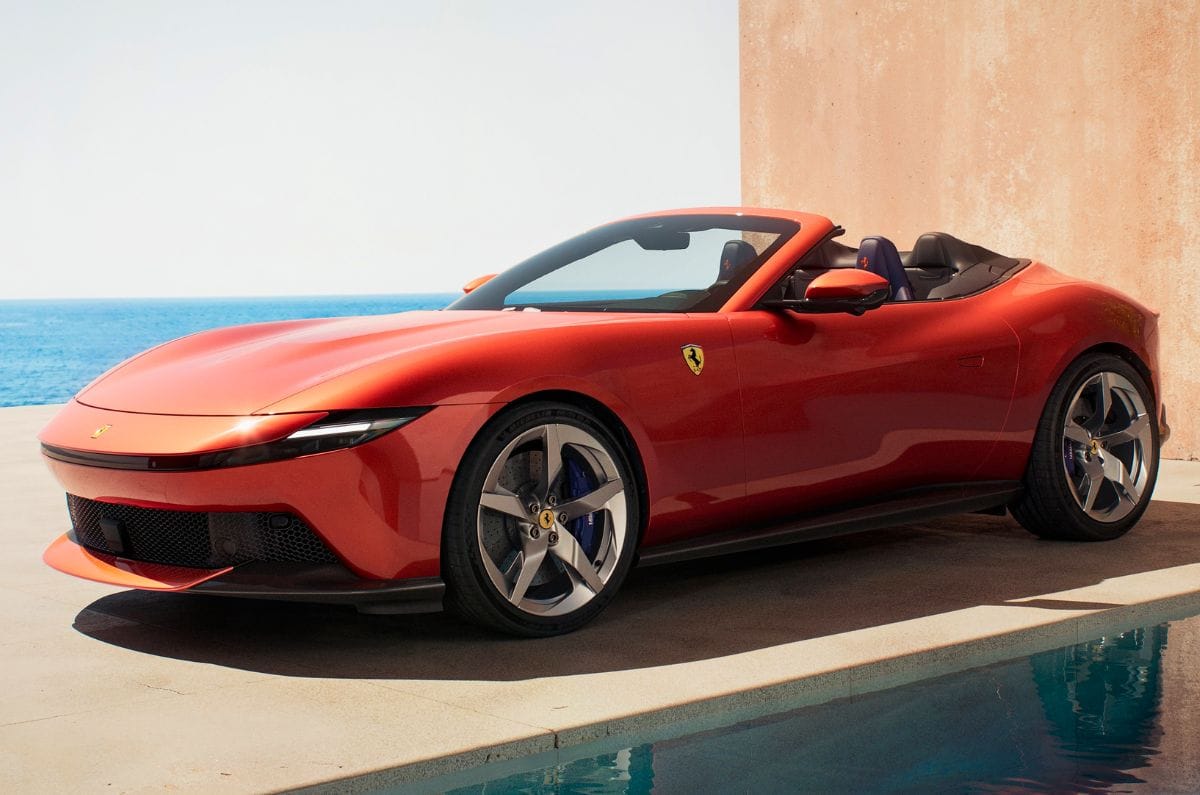
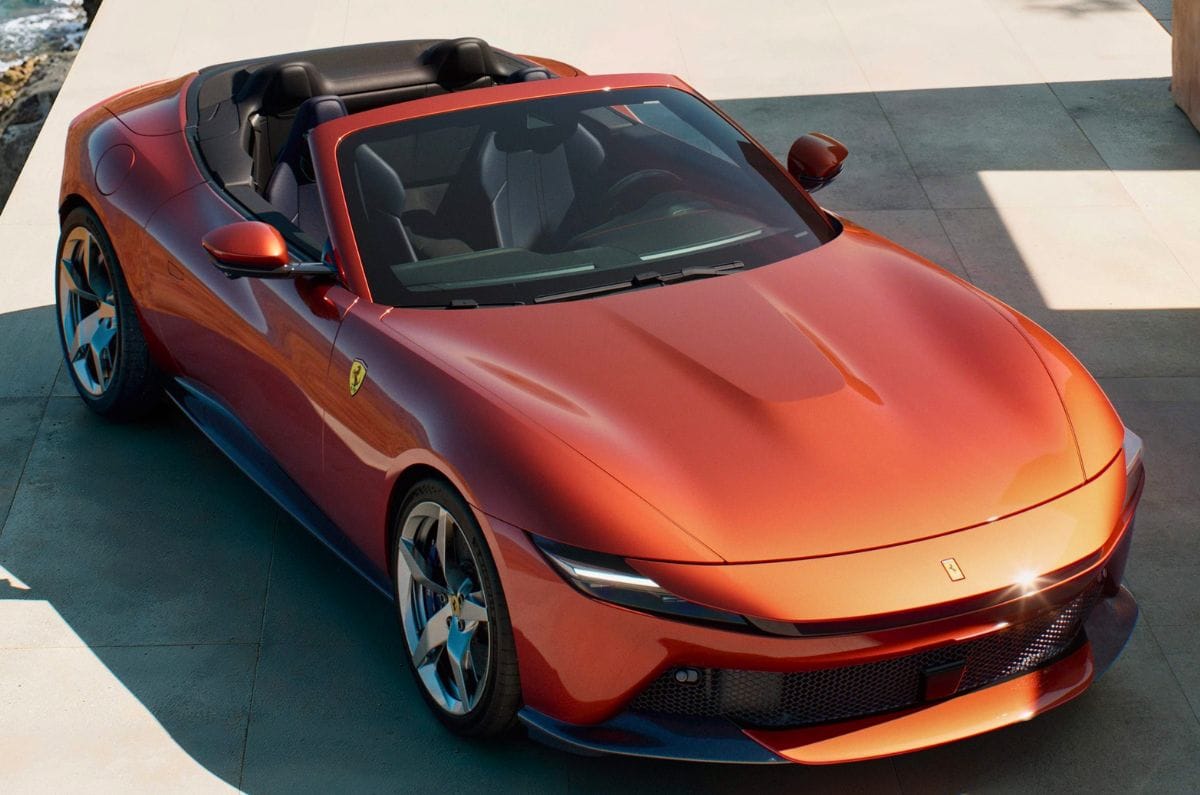
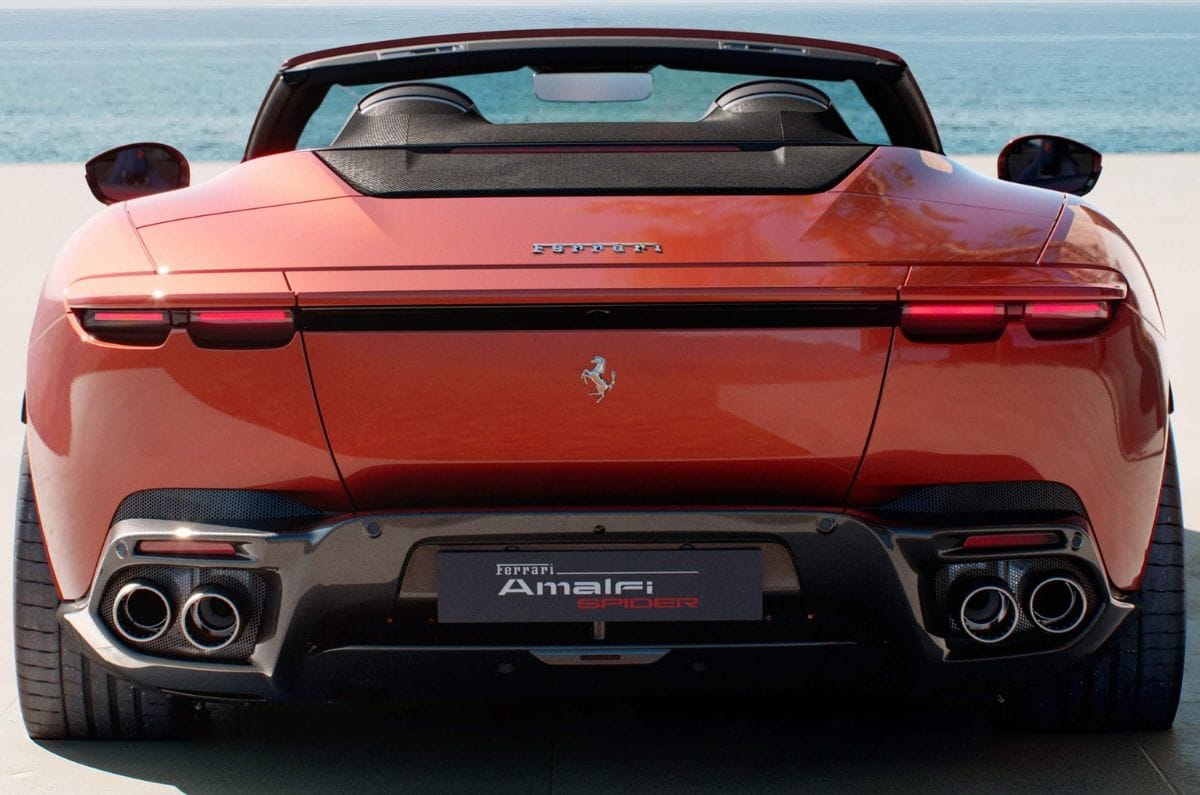
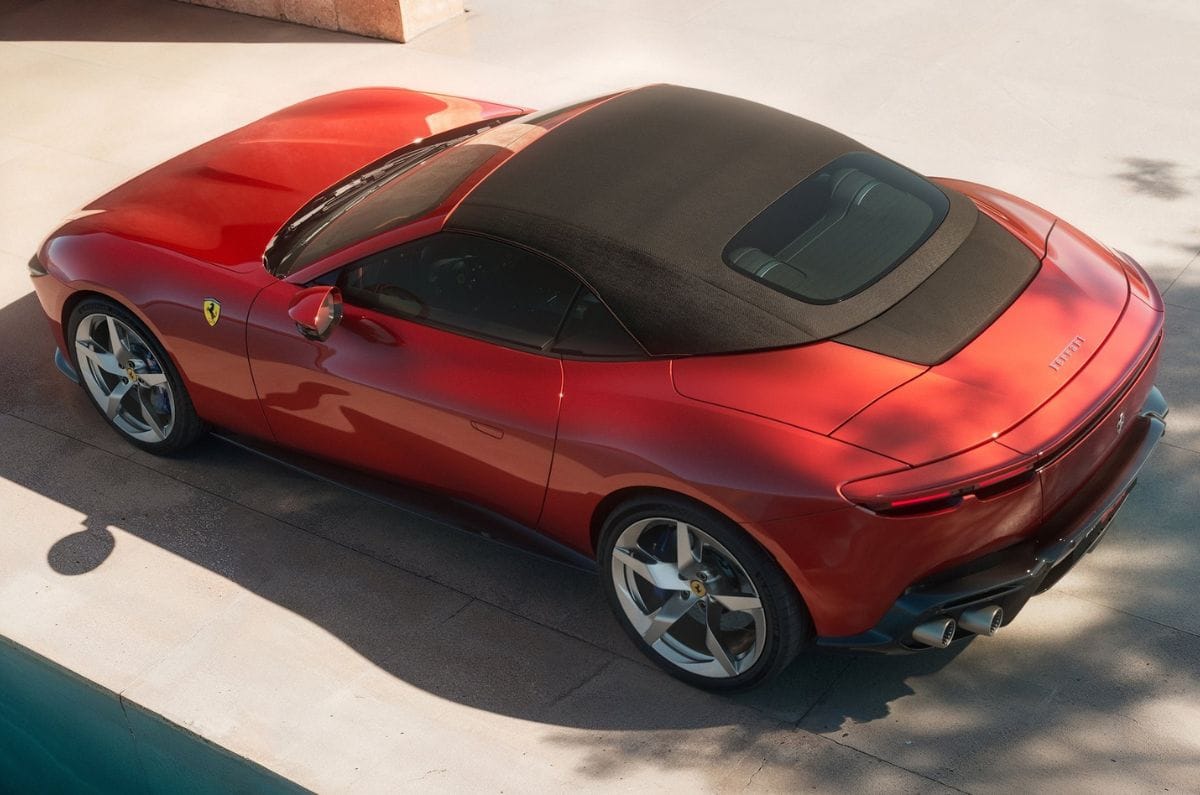
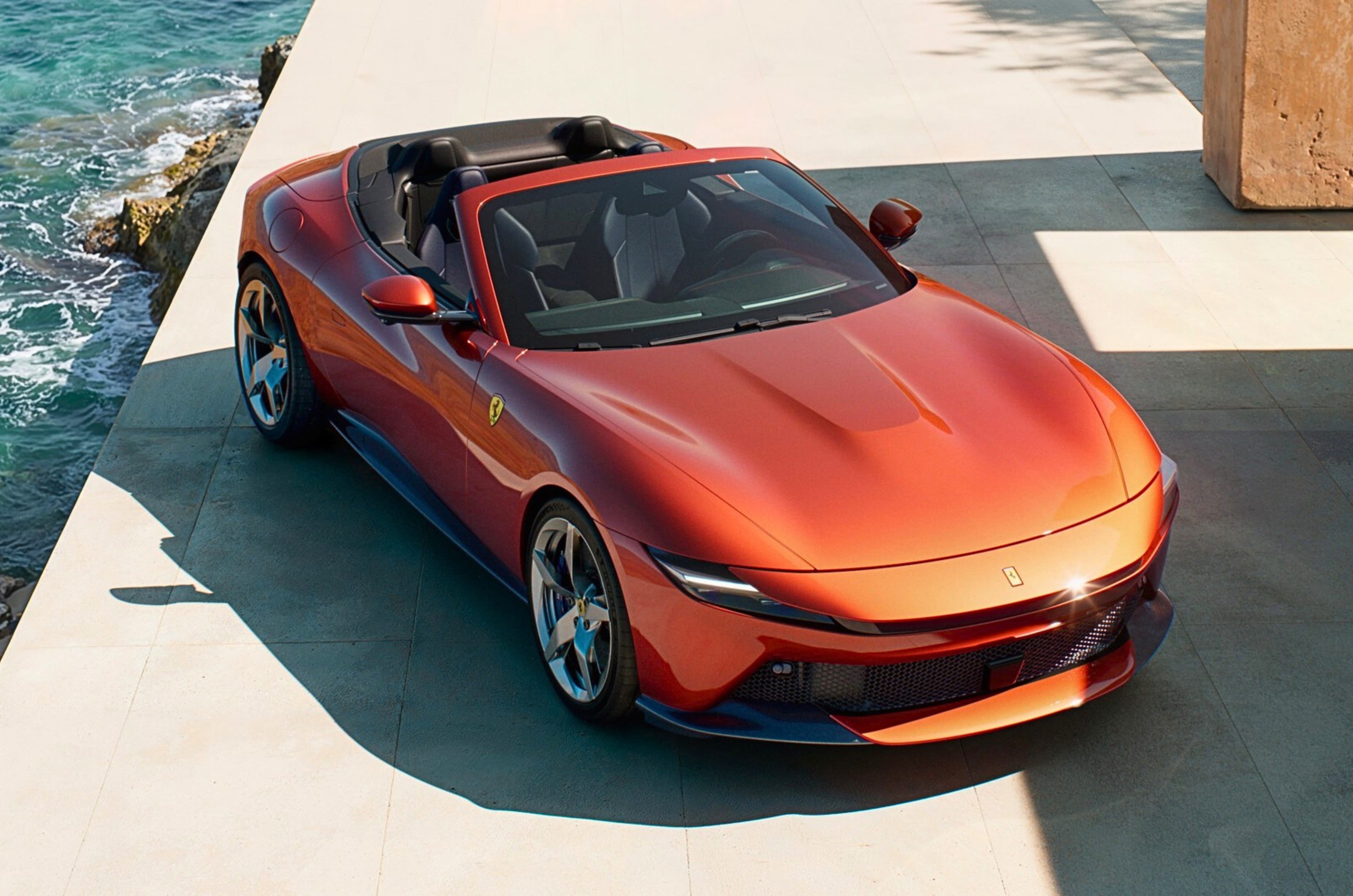
Ferrari India has begun accepting orders for the Amalfi Spider, priced at Rs 4.6 crore, before options. As the name suggests, the Amalfi Spider is the convertible derivative of the Ferrari Amalfi grand tourer, and it’s available in India just a few months after its global debut in March 2026.

Compared to its coupe counterpart, which is currently priced at Rs 4.08 crore (before options), the Amalfi Spider commands a premium of Rs 52 lakh.

Ferrari Amalfi Spider powertrain and performance

Retains coupe’s 640hp twin-turbo V8 
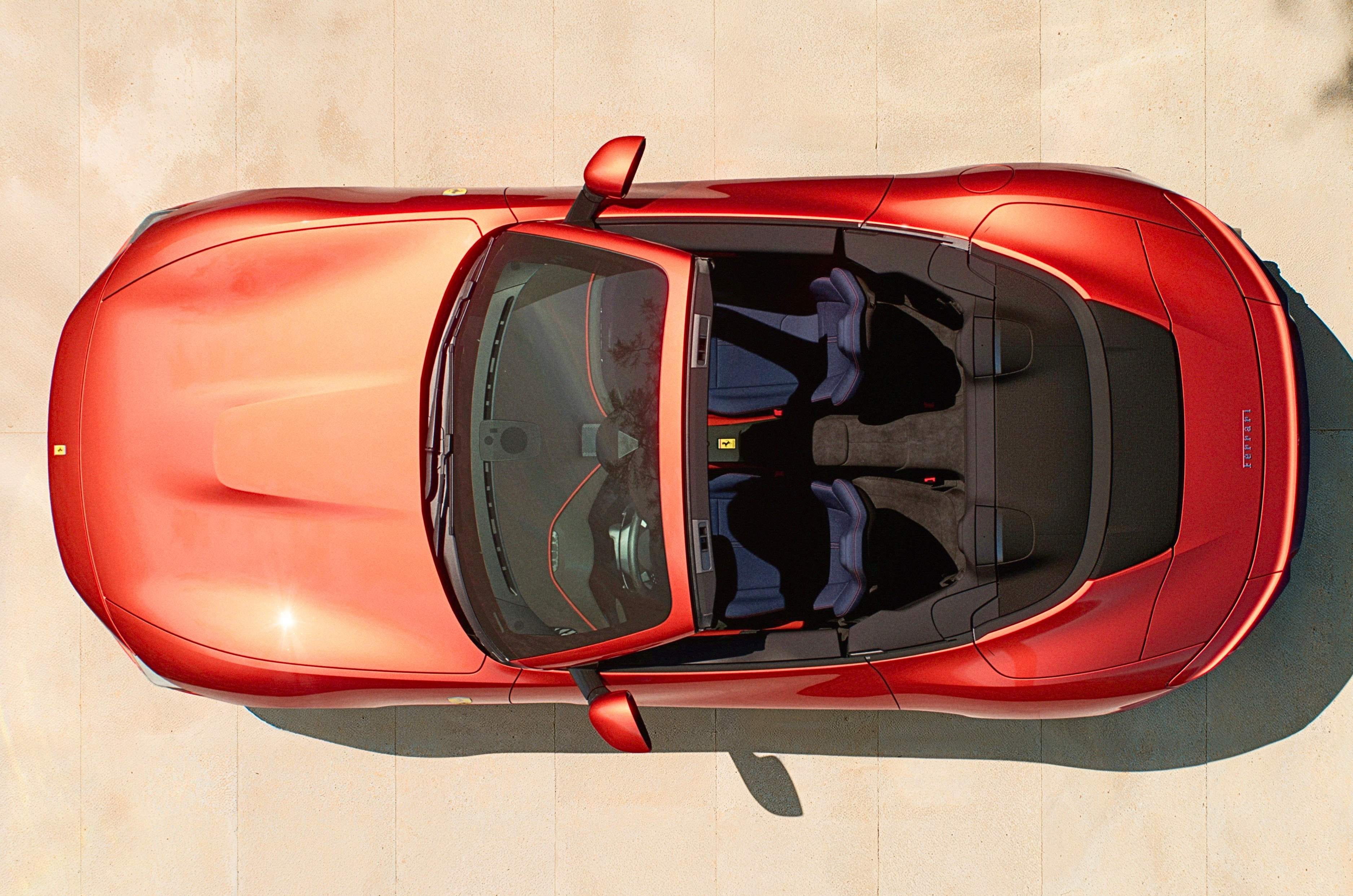
The Amalfi Spider is powered by the same 3.9-litre twin-turbo V8 as its coupe sibling, developing 640hp and 760Nm. This is funnelled solely to the rear wheels via an 8-speed dual-clutch automatic. Ferrari claims a 0-100kph time of 3.3 seconds and a top speed of 320kph – despite its drop-top form factor and 86kg heavier kerb weight, the Amalfi Spider is impressively similar to the coupe in terms of claimed performance.

Ferrari Amalfi Spider exterior and interior

Fabric roof can be operated at up to 60kph
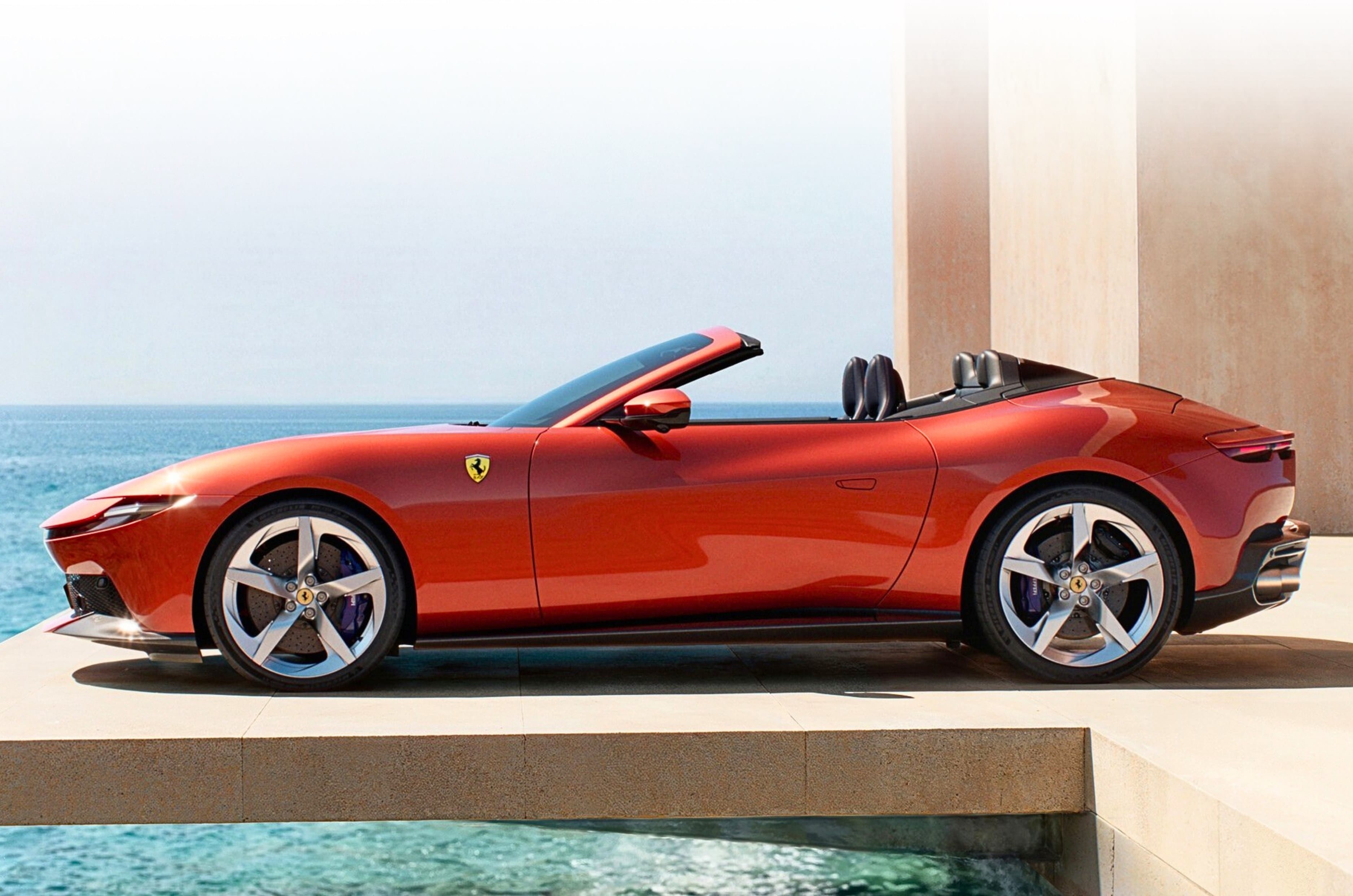
Expectedly, the Amalfi Spider looks identical to its coupe counterpart, with the only major visual differentiator being its folding fabric roof, which opens in 13.5 seconds at speeds of up to 60kph. Buyers can choose one of four colours for the roof, and the five-layer material it uses is said to maintain NVH levels comparable to those of a hard-top Ferrari.
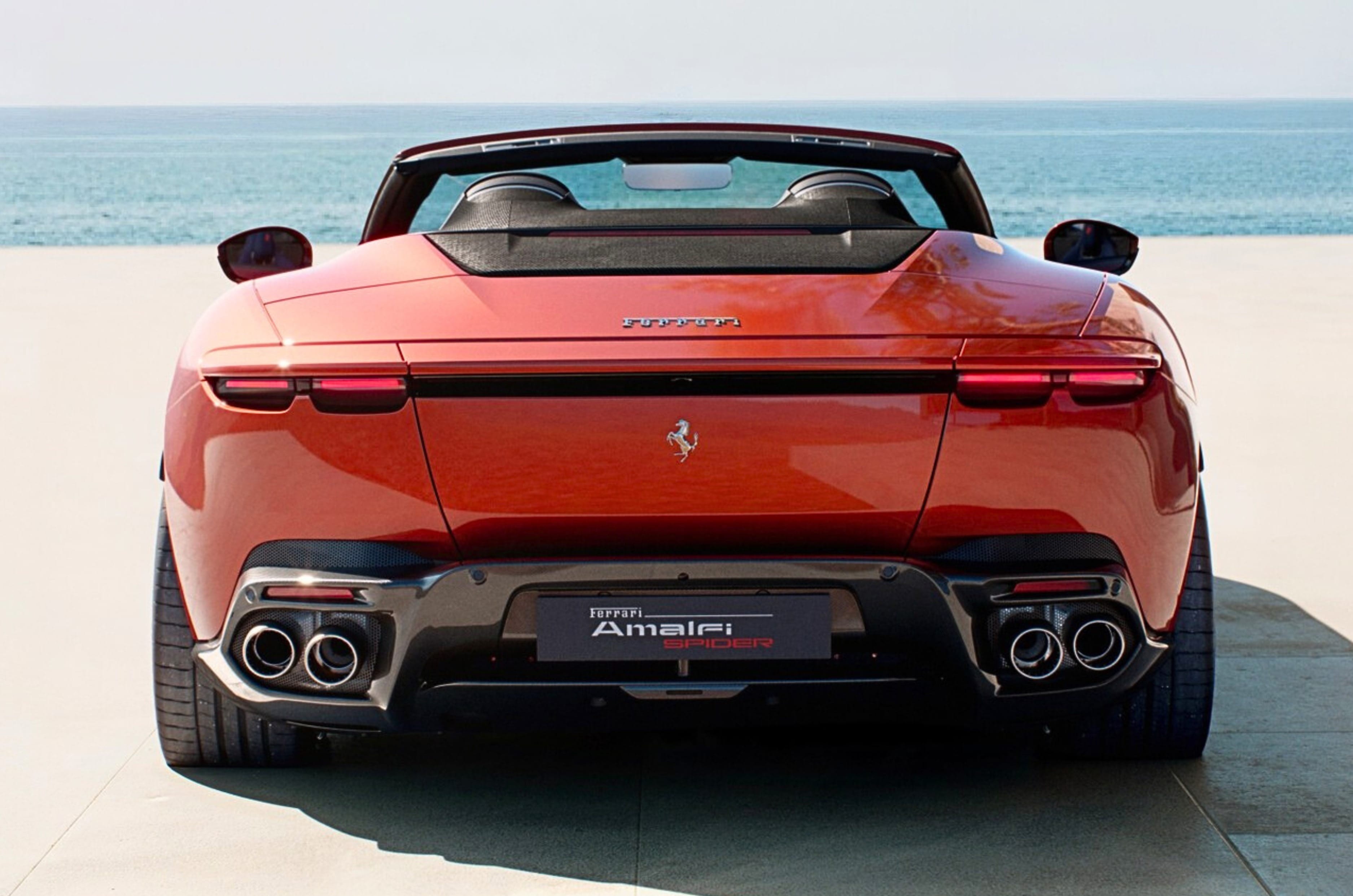
Ferrari has also added wind deflectors to the Amalfi Spider’s rear-seat backrests to keep wind noise under control, and the convertible can be had in an exclusive Rosso Tramonto colour option too.

Mirrors the interior layout of the coupe
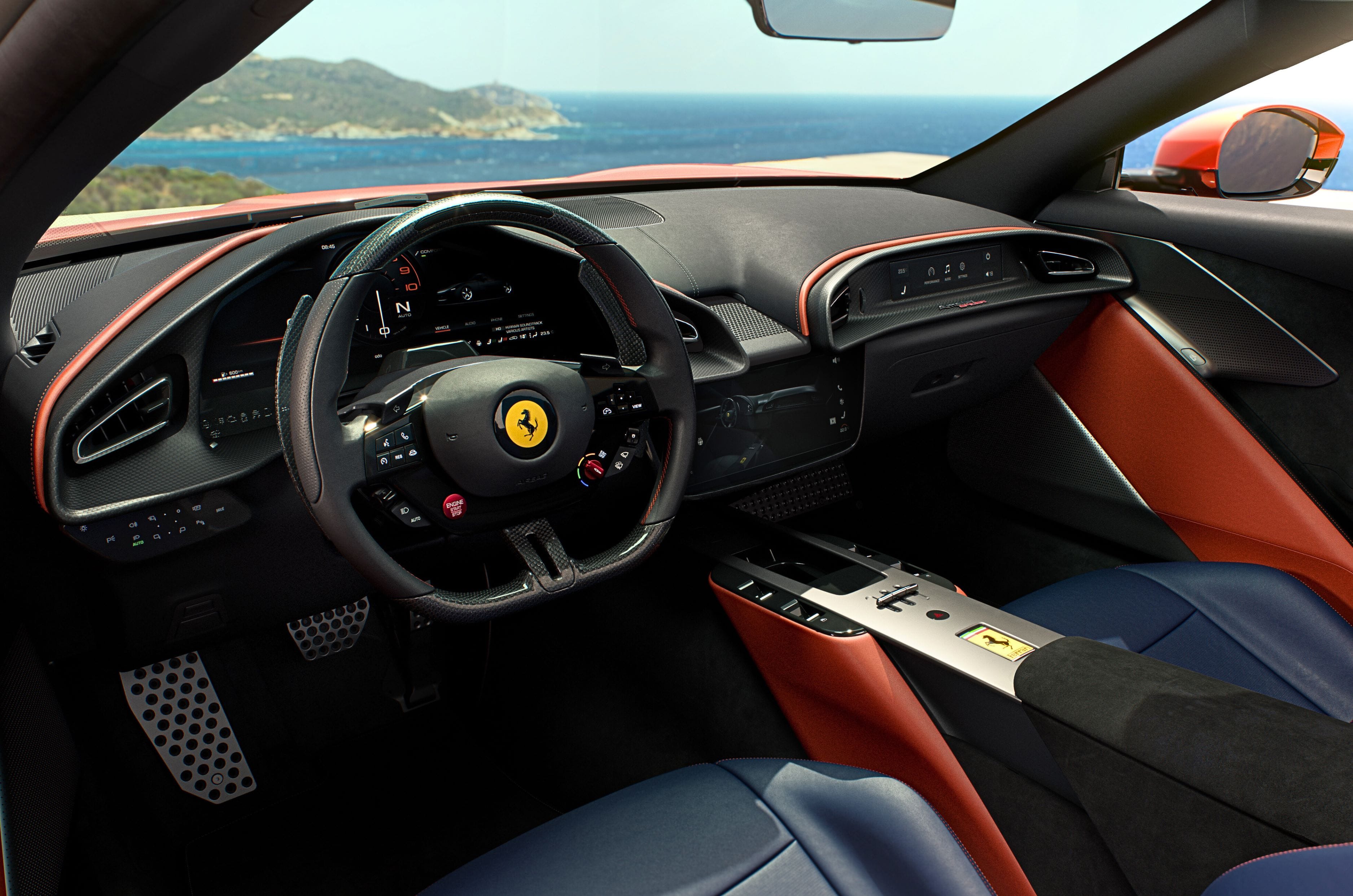
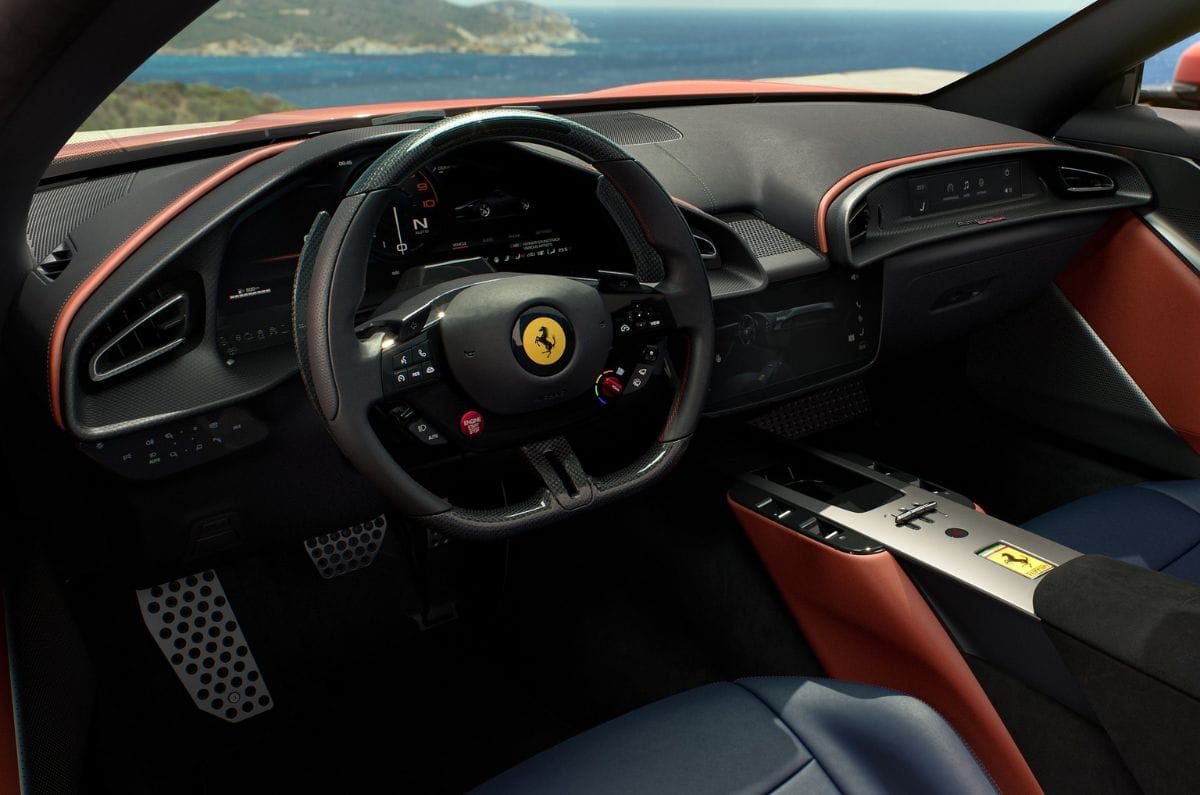
The interior layout of the Amalfi Spider is the same as that of the coupe too, with highlights like a 2+2 seating layout, a 10.25-inch central infotainment touchscreen, an 8.8-inch passenger display, a 15.6-inch digital driver’s display, powered sports seats, a three-spoke steering wheel with lots of physical controls, curved AC vents, and an aluminium-milled centre tunnel.
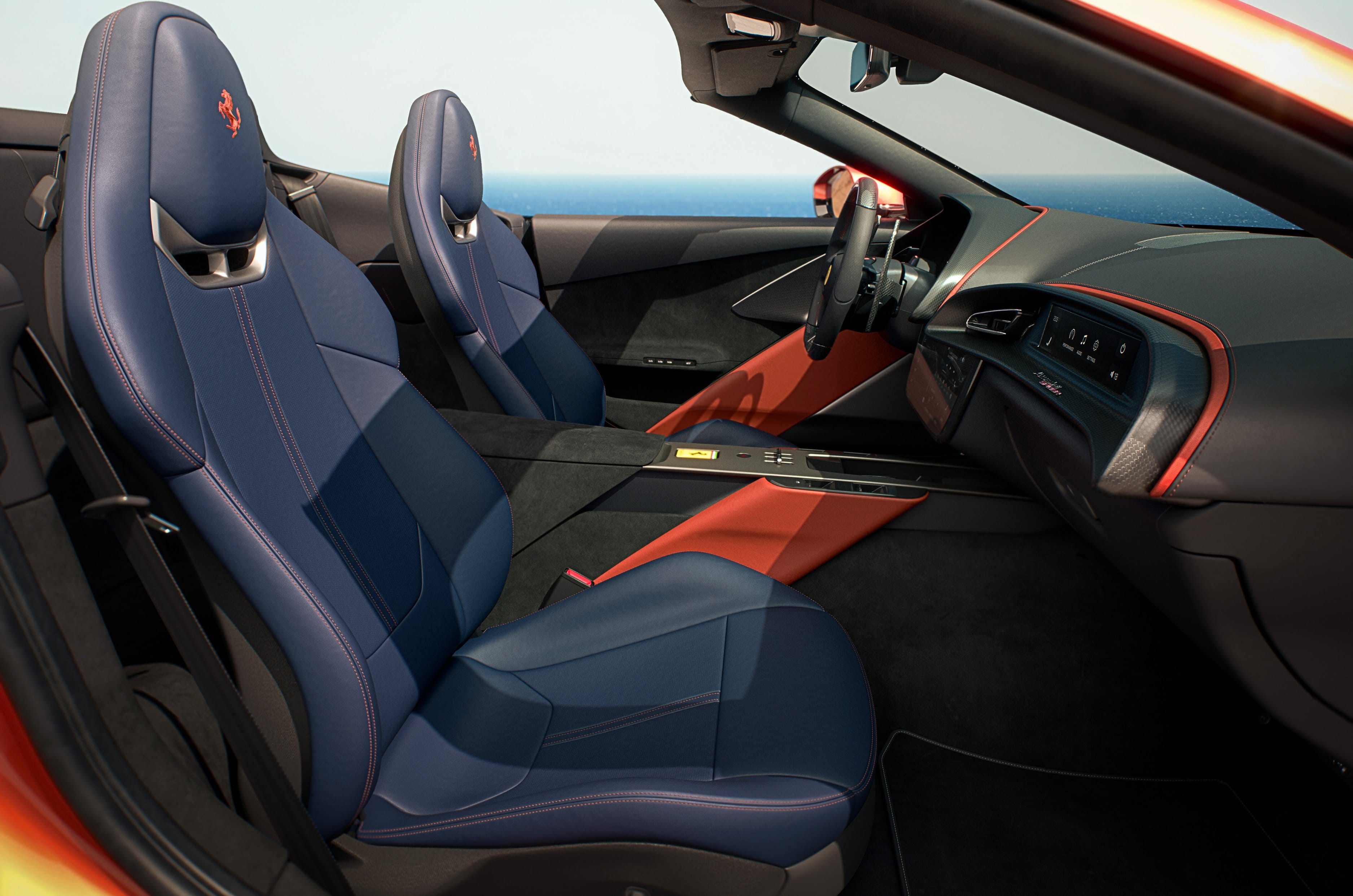
In terms of creature comforts, the Amalfi Spider packs wireless Apple CarPlay and Android Auto, ADAS, connected car tech, adaptive cruise control, automatic climate control, a wireless charging pad, and more. Buyers can also spec the Amalfi Spider’s upholstery, trim pieces, and colour schemes to their individual tastes thanks to a plethora of personalisation options too. As for boot space, the Amalfi Spider is rated at 255 litres with the roof closed, and 172 litres with the roof stowed.

Volvo EX90 India debut on August 19

volvo ex90

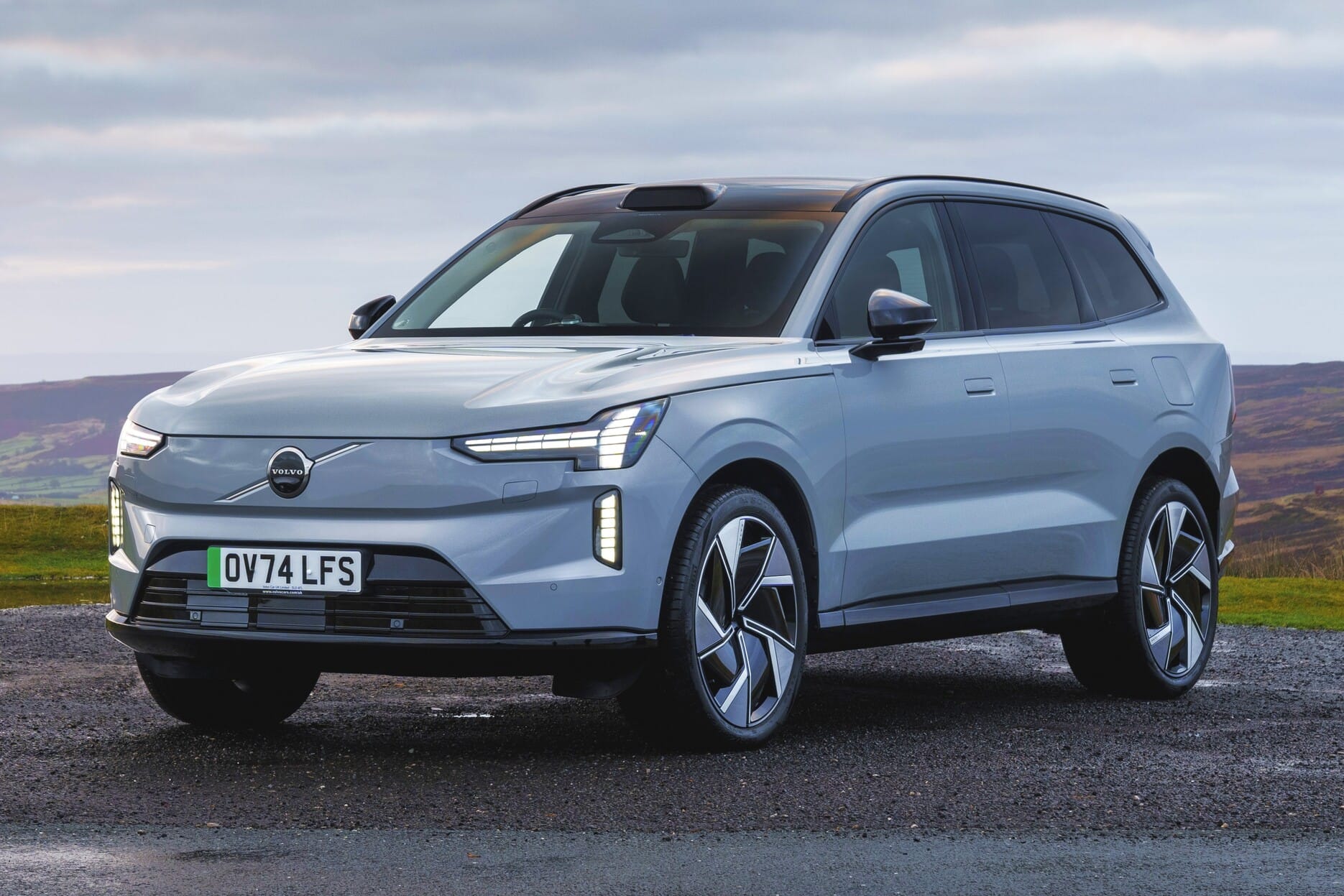
Volvo has confirmed that the India debut of the EX90 electric SUV will take place on August 19, 2026. The EX90 will be Volvo’s second EV for the Indian market, and is also the Swedish carmaker’s global flagship offering.

Volvo EX90 battery and range

92kWh RWD and 106kWh AWD powertrains

The EX90 is underpinned by an 800V architecture and offers 92kWh (Single Motor) and 106kWh (Twin Motor) battery options. In 92kWh guise, the SUV gets a single rear-mounted motor (RWD) outputting 333hp and 480Nm. 0-100kph comes up in a claimed 6.6 seconds, and the WLTP-rated range is 565km.

Meanwhile, the 106kWh EX90 features a dual-motor AWD setup that outputs 456hp and 670Nm in base spec, and 680hp and 870Nm in the range-topping Performance variant. The former version completes the 0-100kph run in a claimed 5.3 seconds, whereas the latter takes 4 seconds for the same. As for WLTP range, the lower-powered 106kWh variant boasts 608km and the Performance trim manages 602km.

Coming to charging speeds, all three variants of the EX90 can utilise up to 350kW DC charging, and take 22 minutes for a 10-80 percent charge.

Volvo EX90 exterior design

Looks very different compared to the XC90

Measuring 5,037mm in length, 1,964mm in width, 1,744mm in height, and 2,985mm in wheelbase, the EX90 is dimensionally similar to the XC90, but sports a distinct design. Up front, the EX90 has sleeker T-shaped headlamps with pixel-like ‘Thor’s Hammer’ DRL signatures, below which sits a pair of slim vertically-arranged lights. The Volvo badge is placed front and centre on the grille-less fascia, with a discreet air dam underneath. A LiDAR sensor can also be spotted on the leading edge of the roof.

The side profile of the EX90 is cleanly-styled, with a prominent shoulder line and gently rising glass area, and there’s not much in the way of body cladding – Volvo claims a drag coefficient of 0.29Cd. 20-inch alloy wheels are fitted as standard, with 21- and 22-inchers optionally available. Over to the rear, the EX90 gets C-shaped LED tail-lamps with an additional vertical row of lights flanking the rear windscreen. Other styling elements of note include a sizable roof spoiler and a Volvo wordmark on the bootlid.

Volvo EX90 interior and features

14.5-inch infotainment touchscreen sits front and centre on the dash

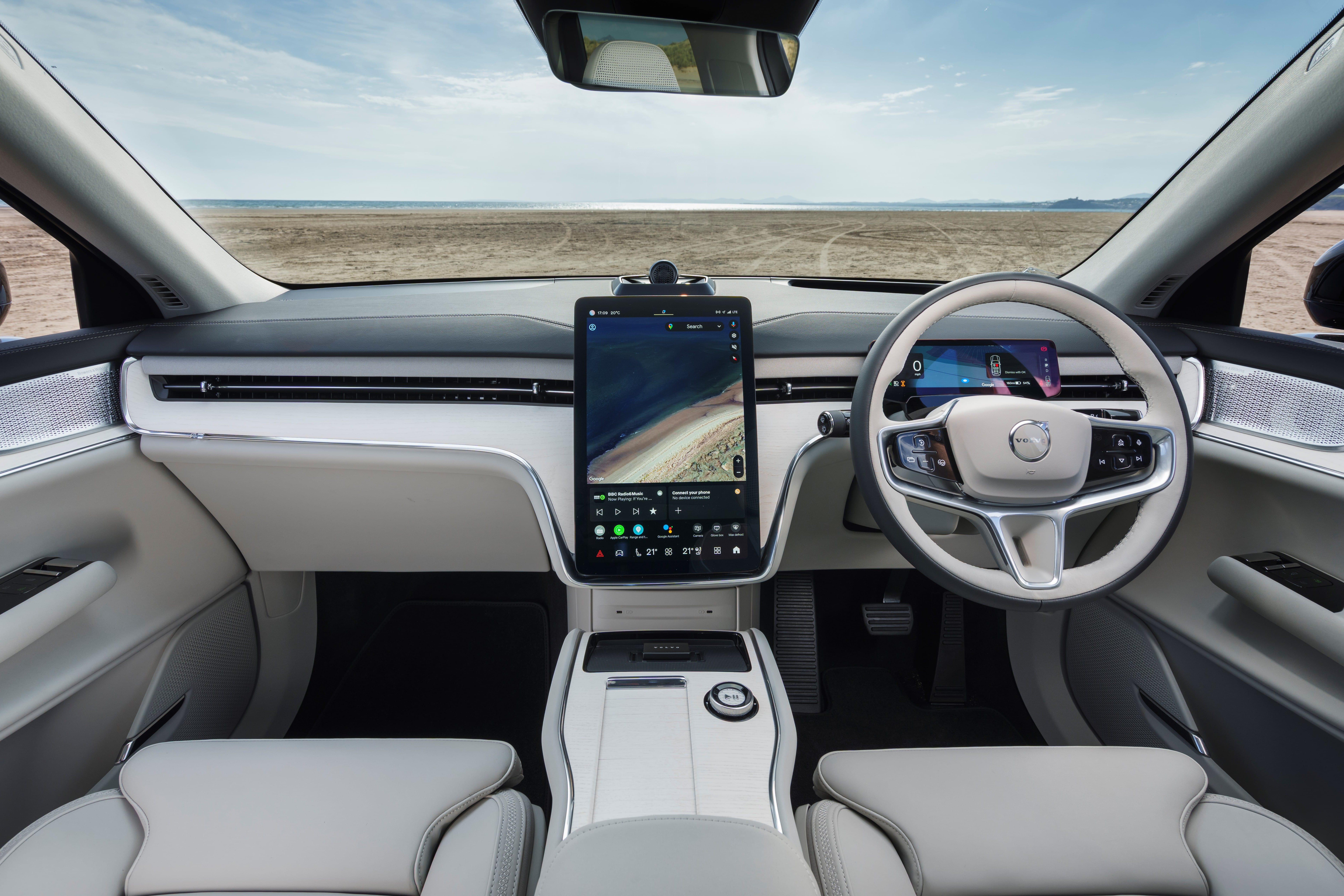
Inside, the EX90’s minimalistic dashboard is dominated by a 14.5-inch Google-based portrait touchscreen that incorporates much of the in-car functionality – physical controls are few and far between. There’s also a floating centre console, a three-spoke steering wheel with a neat layered design, a slim 9-inch digital driver’s display, and a 13.2-inch heads-up display.

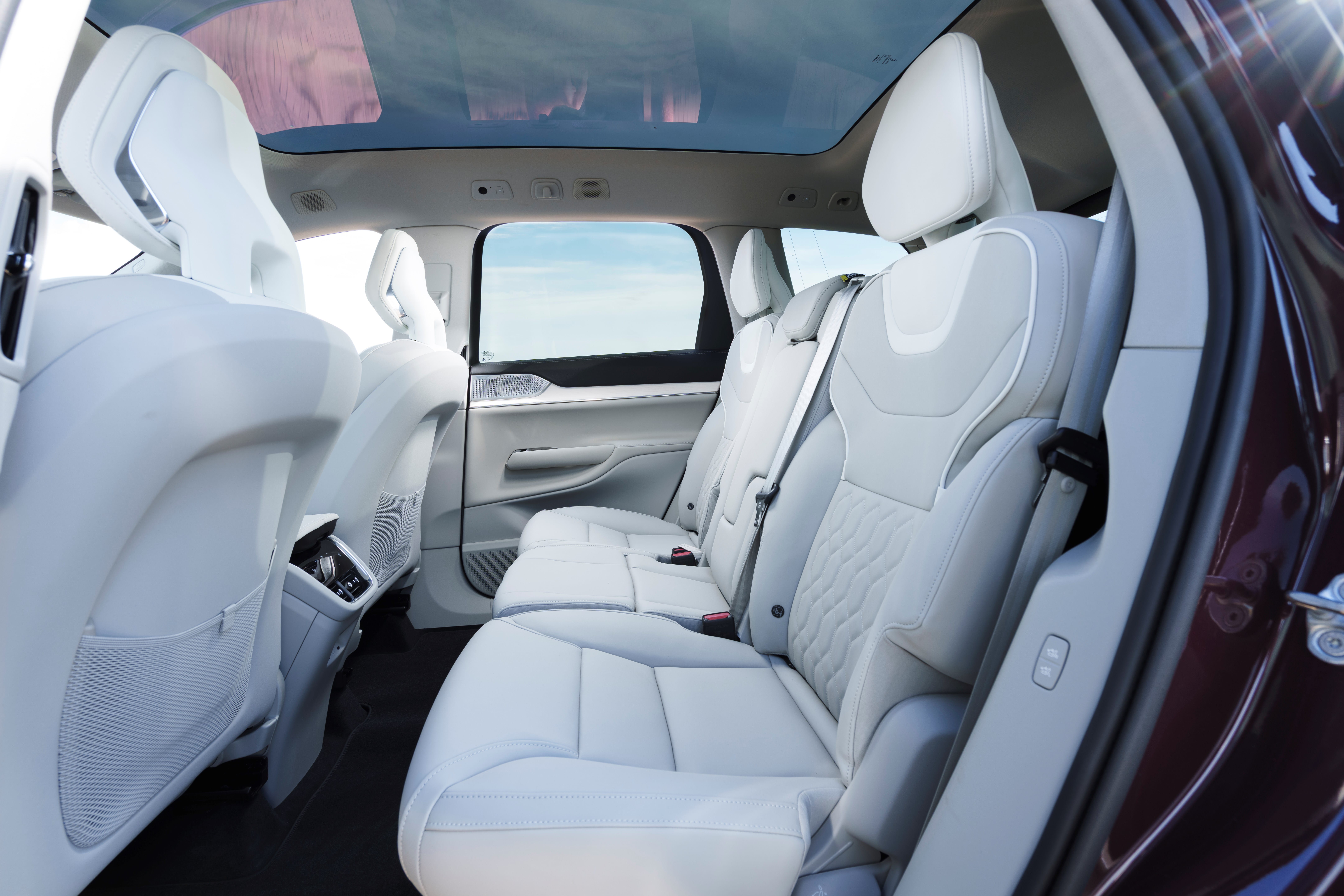
The EX90 is a 7-seater as standard, but certain variants offer a 6-seat configuration with captain’s chairs for the second row as well. In some markets, Volvo even offers a 4-seater version of the EX90 with a rear centre console that integrates a refrigerator, rivalling the likes of the Mercedes Maybach EQS SUV. Boot space is pegged at up to 384 litres with all three rows up, and there’s a 45-litre frunk too.

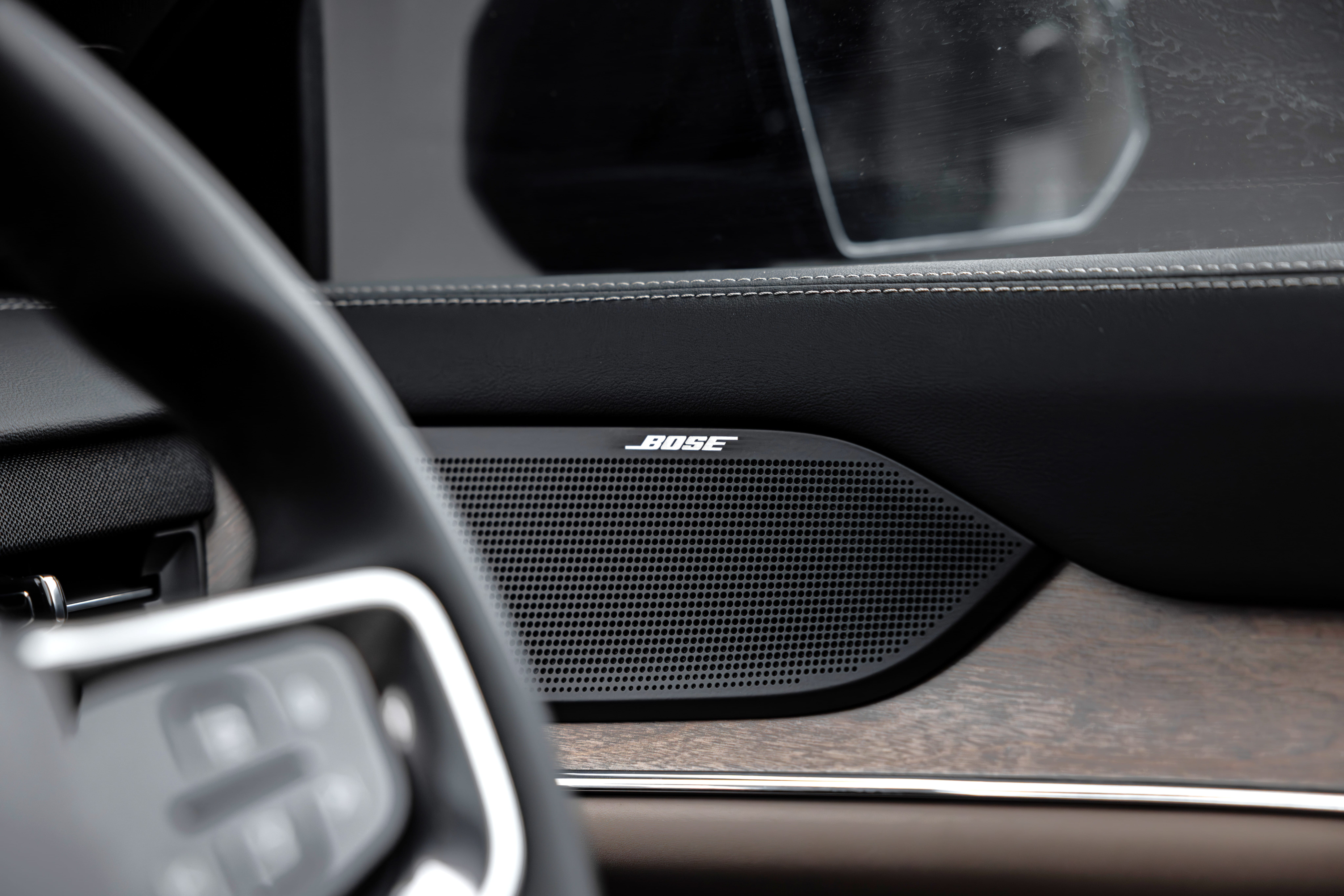
As for features, the EX90 packs a 5G connection to aid OTA updates, a digital key, ambient lighting, four-zone climate control, a cabin air purifier, a wireless charging pad, a 360-degree camera, powered front seats, a panoramic glass roof, a Bose sound system, connected car tech, auto park assist, Level 3 ADAS, V2L functionality, and more. It’s also claimed to be Volvo’s safest car to date, holding 5-star crash safety ratings from Euro NCAP and NCAP.

Next-gen Toyota Hilux teased ahead of launch this month

New-gen Toyota Hilux front fascia

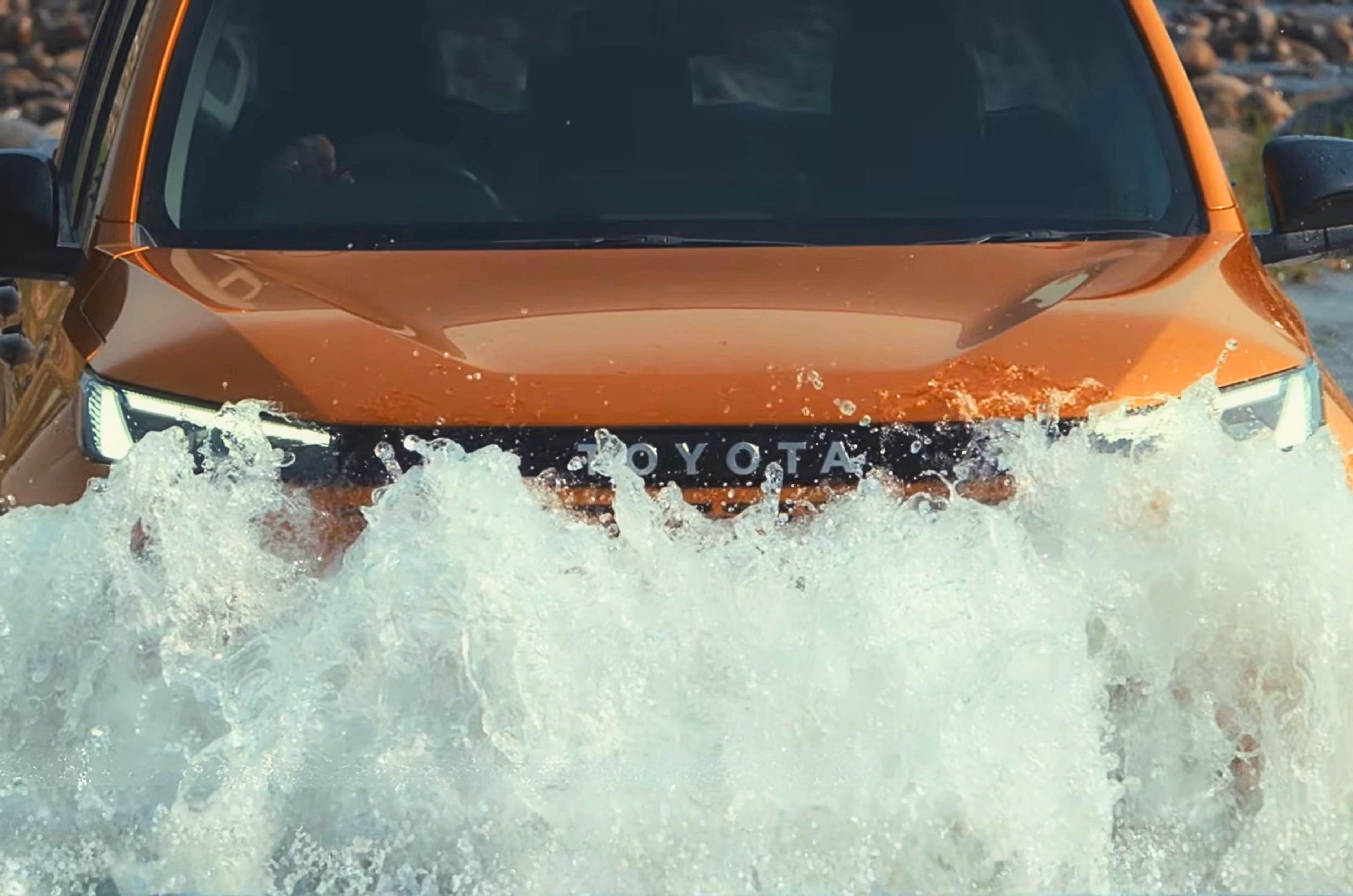
Toyota has dropped a teaser of the next-gen Hilux, ahead of the pickup truck’s official debut on July 28, 2026. The upcoming iteration of the Toyota Hilux will be based on the same body-on-frame IMV platform as the previous-gen model. However, the teaser now confirms some of the primary design details of the new pickup truck, similar to what we had reported earlier.

  • Gets bold ‘TOYOTA’ lettering, LED lights, black wheels and roll bars
  • India-spec model likely to get a Double Cab configuration
  • Interior to get dual screens and plenty of physical switchgear

Next-gen Toyota Hilux exterior design details

The short teaser primarily showed the front of this pickup truck

New-gen Toyota Hilux front bumper

The new Hilux seen in the Toyota teaser showcased the pickup truck finished in a bright orange/bronze exterior colour. Some of the frames from the teaser show the front fascia featuring a silver skid plate, a honeycomb center grille, and blocky ‘TOYOTA’ lettering on a black piece of plastic trim between the sleek LED headlamps.

New-gen Toyota Hilux rear
International-spec Toyota Hilux shown for representation.

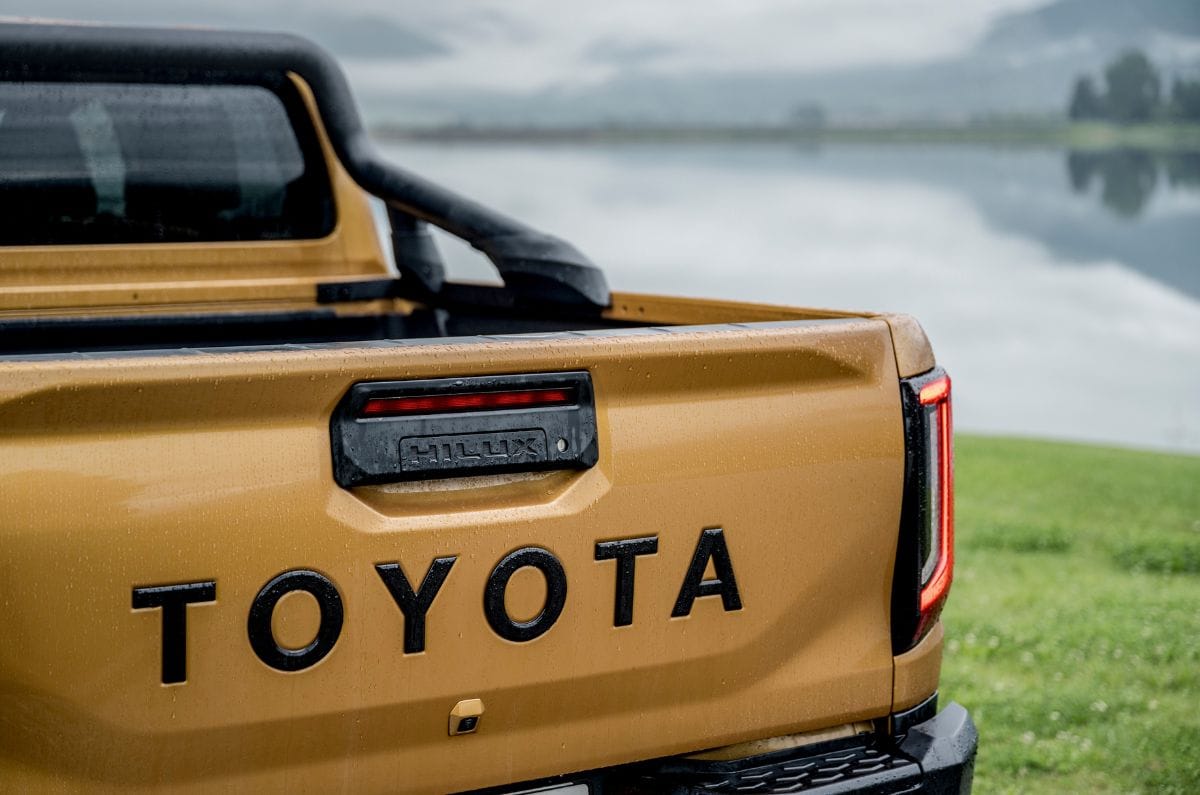
Just about visible in this teaser are the black rims and wheel arches, roll bars behind the main cabin, and what looks like a shark-fin antenna on the roof. The rear design of the next-gen Hilux wasn’t clearly shown, though. However, the international-spec model has ‘TOYOTA’ written across the tailgate in large font and vertically oriented tail-lamps with LED DRLs (daytime running lights). The rear bumper of the Hilux has an integrated step to provide easy access to the bed.
Next-gen Toyota Hilux interior and features

New-gen Toyota Hilux interior
International-spec Toyota Hilux shown for representation.

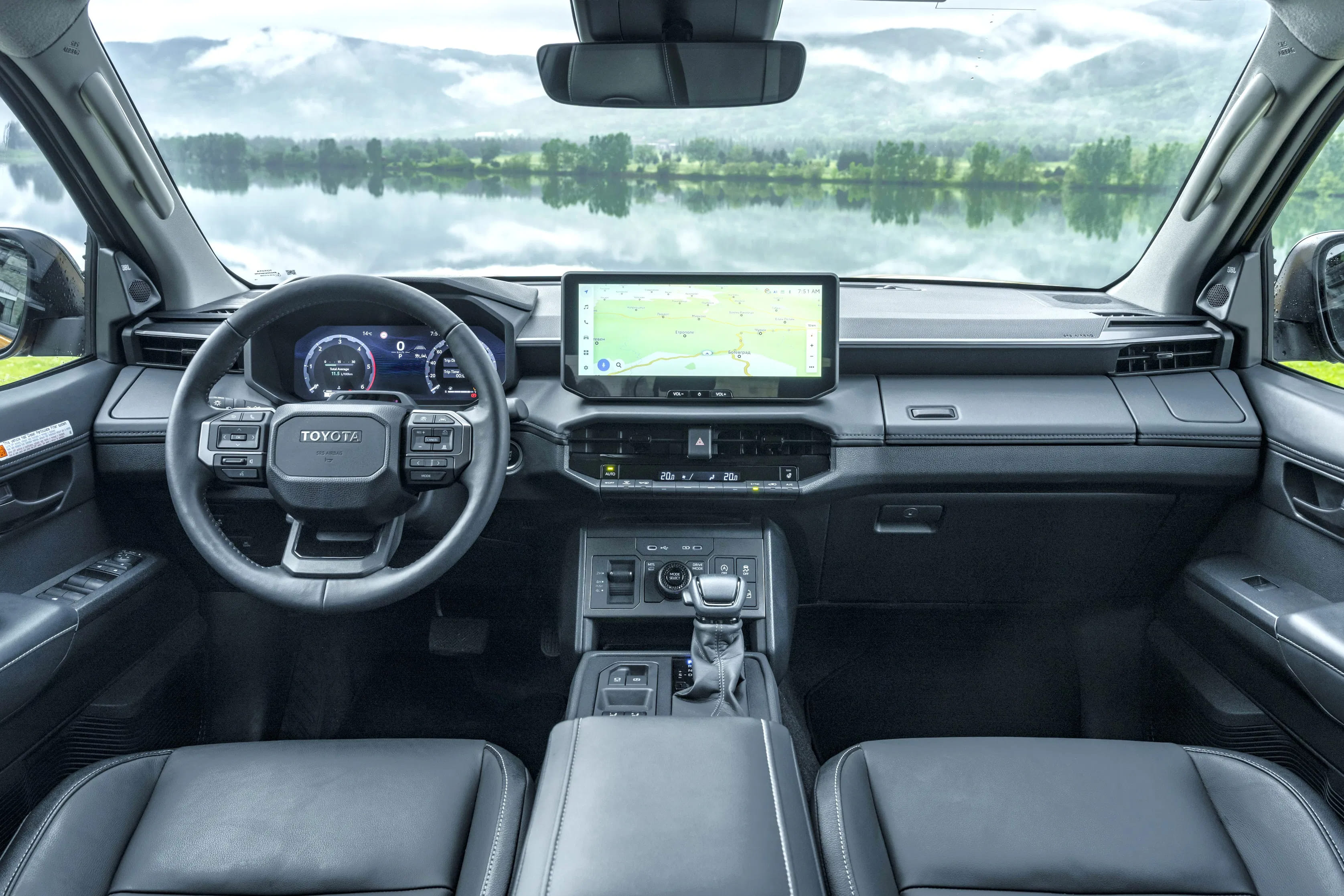
While Toyota hasn’t yet revealed the interior of the upcoming India-spec Hilux, our market will continue to get the pickup truck in the familiar Double Cab configuration. The leather-wrapped steering wheel of the global-spec Hilux carries the blocky-looking ‘TOYOTA’ branding as seen on the outside, with dual 12.3-inch screens. The customisable driver’s display offers four design themes, whilst the dash-mounted infotainment unit uses the Toyota Smart Connect system.

New-gen Toyota Hilux rear seats
International-spec Toyota Hilux shown for representation.

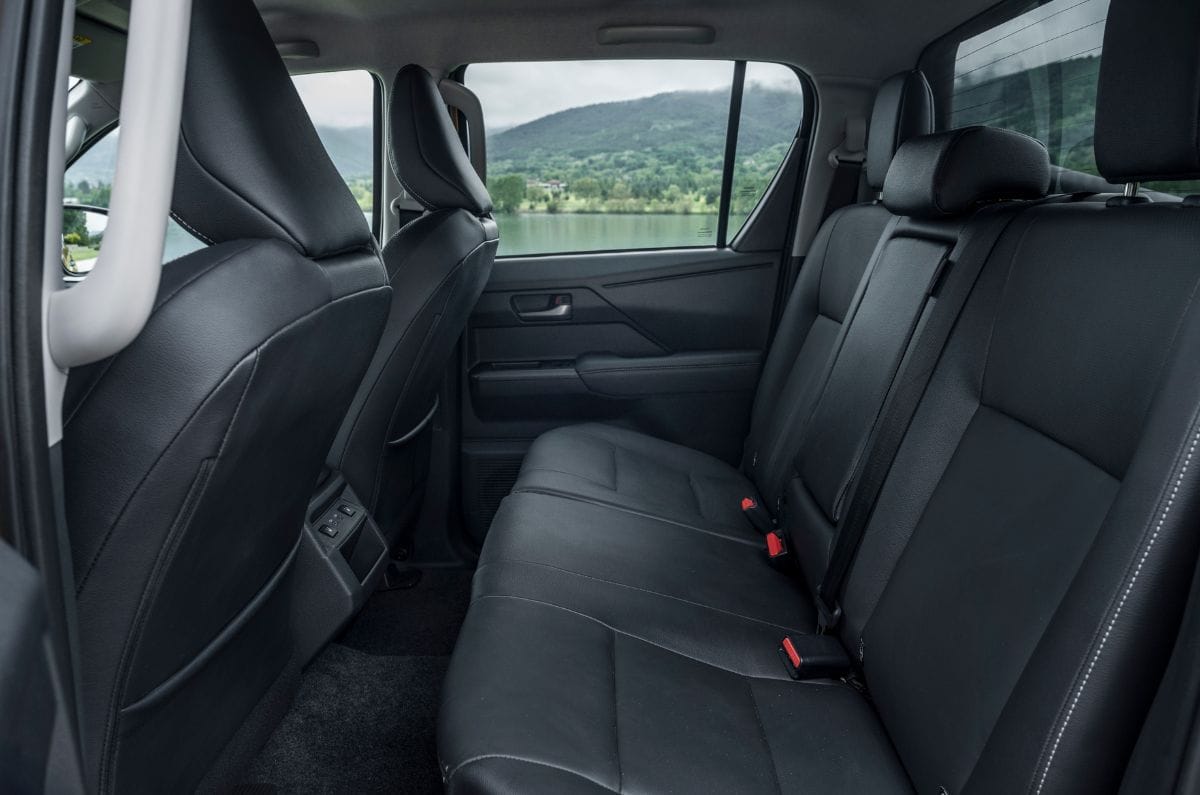
The India-spec model is expected to get wireless Apple CarPlay and Android Auto, wireless charging, dual-zone automatic climate control, a surround-view camera system, and a plethora of storage cubbies. The next-gen Toyota Hilux will come with plenty of physical buttons and switchgear, including for the HVAC system, as well as the four-wheel drive (4WD) settings.

Next-gen Toyota Hilux powertrain and price

Toyota may retain the previous-gen model’s engine and gearbox setup for India 

While Toyota is yet to confirm the exact powertrain details of the upcoming ninth-gen Hilux, it’s likely to continue with the same engine and gearbox as with the previous-gen model. For reference, the eighth-gen Hilux in India is powered by a 2.8-litre four-cylinder diesel engine that puts out 204hp and either 420Nm or 500Nm of torque. The latter is only available with the 6-speed automatic transmission variant, while the former being the figure for the 6-speed manual transmission version.

Internationally, the next-gen Toyota Hilux features a 48V mild-hybrid system. The regenerative braking function of the new Hilux, when coupled with the stop-start system, enables smoother performance and saves fuel, according to Toyota. The upcoming Toyota Hilux is expected to command a price premium over the eighth-gen model that’s on sale in India at the moment, and is priced from Rs 28.52 lakh to Rs 36.00 lakh (ex-showroom, Delhi).

Also read

MG unveils new ADAPT platform for future EV, hybrid models

Kia Syros EV revealed with up to 526km range

3 reasons to buy the Tata Nexon, and 2 reasons not to

tata nexon

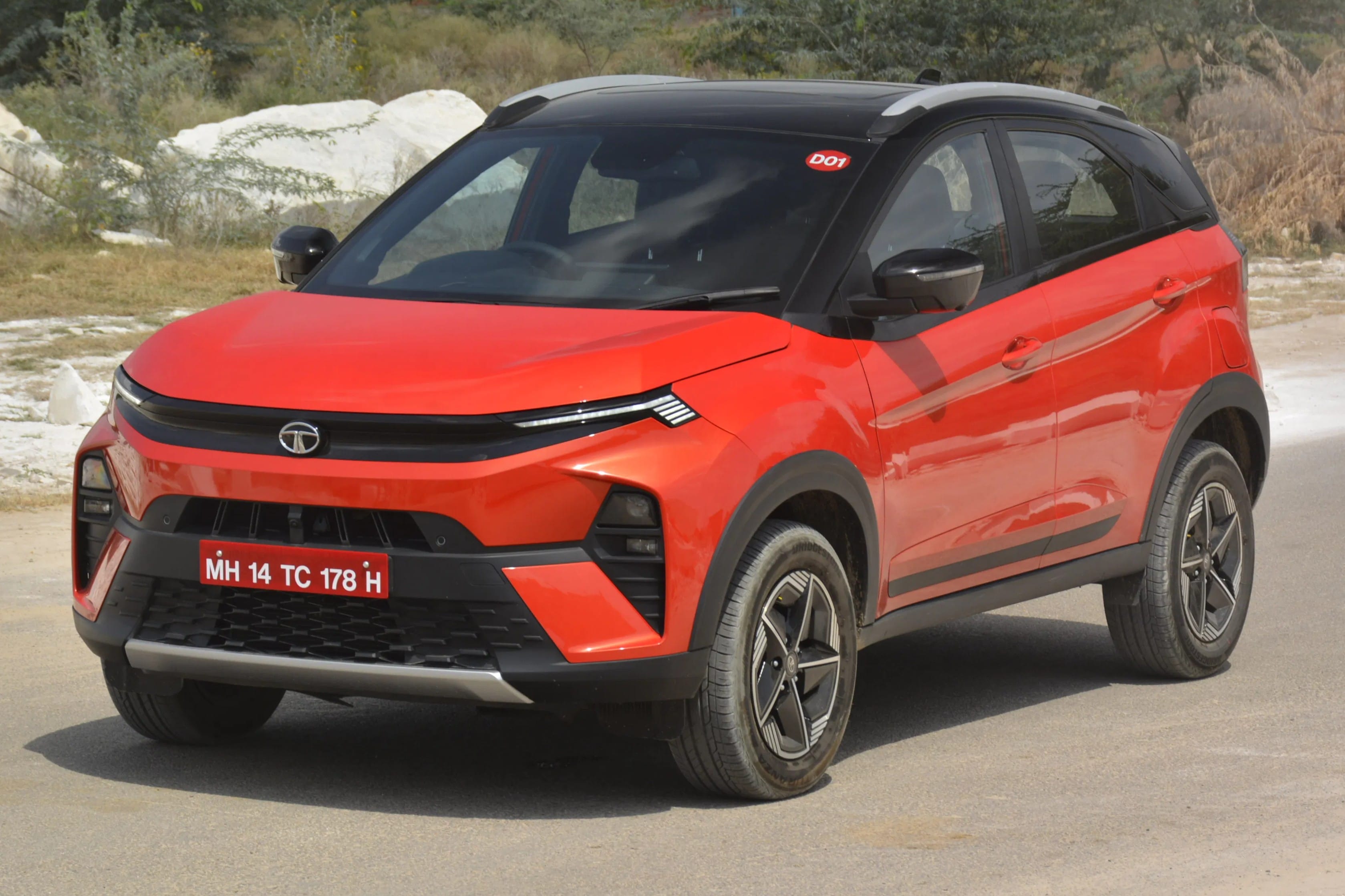
The Tata Nexon first hit the Indian market in 2017, and even after nine years and two facelifts, the compact SUV regularly ranks in the upper echelons of the monthly sales charts. If you’re considering purchasing a Nexon, listed below are three of its most prominent strengths, and two areas where it falls short of rivals.

Pros

Diverse powertrain line-up

Buyers can choose between petrol, diesel, CNG, and electric options

One of the Nexon’s biggest trump cards is its wide array of powertrains on offer: petrol, diesel, CNG, and electric (Nexon EV). Petrol and CNG Nexon buyers get a 1.2-litre 3-cylinder turbocharged engine 120hp and 170Nm in petrol guise, while the CNG makes 100hp instead. The Nexon diesel is powered by a 1.5-litre 4-cylinder mill that develops 115hp and 260Nm, whereas the EV offers 30kWh and 45kWh battery packs.
There’s quite a bit of gearbox choice too. The Nexon petrol alone can be had with one of four gearbox options: 5-speed manual, 6-speed manual, 6-speed AMT, and 7-speed DCT. Diesel variants of the compact SUV offer either a 6-speed manual or 6-speed AMT, while the Nexon CNG gets a 6-speed manual only.

Comfortable ride quality

Can take virtually any broken road in its stride

As we noted in our 2023 Nexon review, the compact SUV rides very well on all types of roads. There’s a hint of stiffness in the ride at low speeds, but as you go faster, it immediately smoothes out. The Nexon rides flat despite its relatively tall 208mm ground clearance, and exhibits impressive body control and bump absorption over broken patches.

Feature-rich cabin

Highlights include dual 10.25-inch displays, panoramic sunroof, and 360-deg camera

Another aspect of the Nexon that struck a chord with Indian buyers is its extensive feature set. Depending on the variant, the Nexon packs goodies like a 10.25-inch infotainment touchscreen, a 10.25-inch digital driver’s display, a panoramic sunroof, an 8-speaker JBL sound system, ventilated front seats, ADAS, connected car tech, a cabin air purifier, auto-dimming IRVM, wireless charging pad, a 360-degree camera, automatic climate control, and more.

Cons

Interior ergonomics and quality could be better

No proper cupholders and distracting touch-capacitive controls

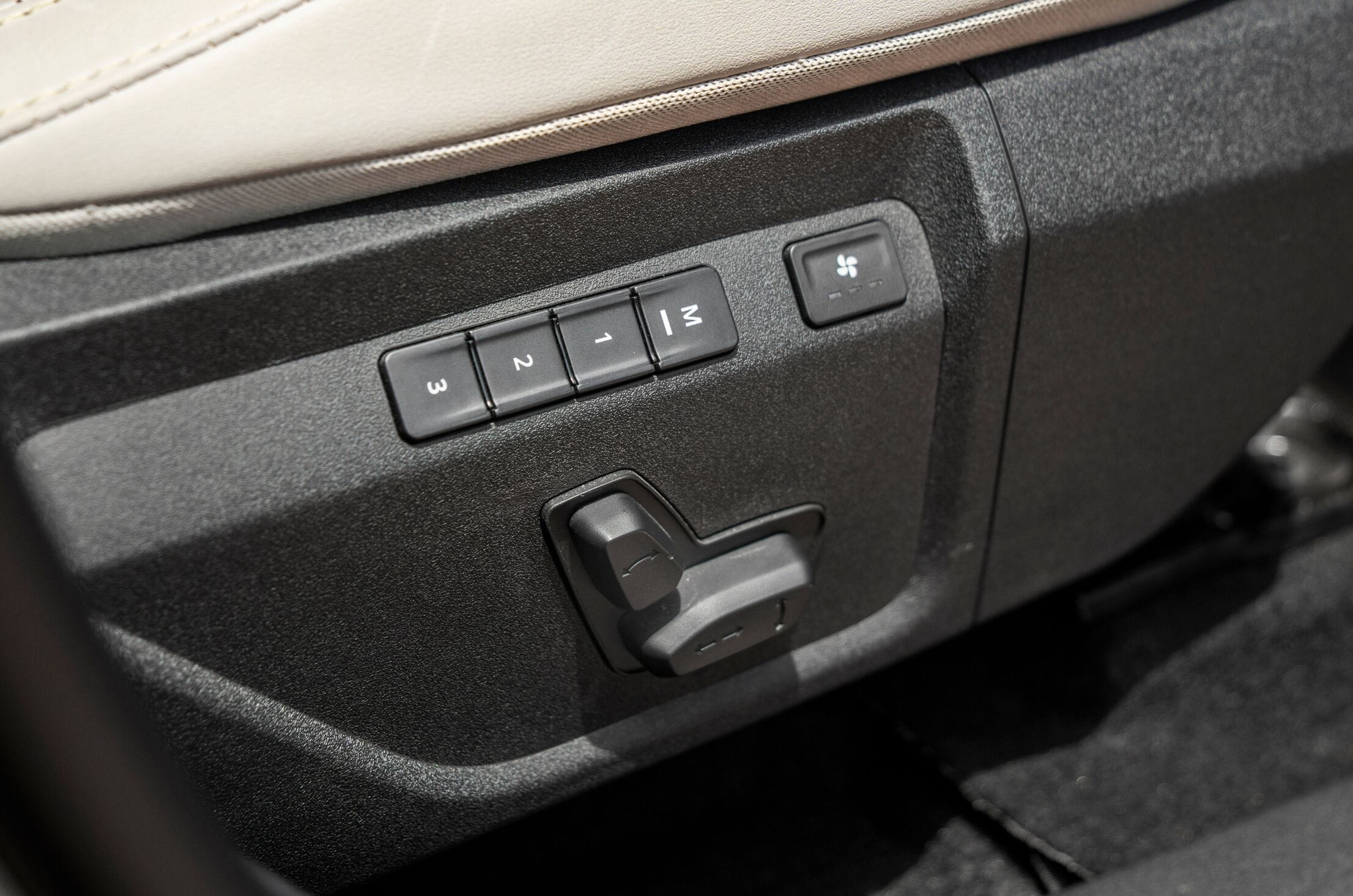
While the Nexon’s interior looks premium at first glance, a closer look reveals some foibles. First off, there are no proper cupholders in the Nexon’s cabin, which can be an annoyance at times. The driver’s seat doesn’t offer electrical adjustment either, and the seat ventilation button is concealed from view because it’s located at the base of the seat.

Tata has also used some gloss-black trim pieces for the Nexon’s interior, which are difficult to keep clean they attract fingerprints and dust. Overall build quality is not that impressive too, and the touch-capacitive controls for the AC and steering can be fiddly to operate while on the move.

6-speed MT not that great

Long throws and snappy clutch

The 6-speed manual offered with the Nexon could do with some more tuning. While the gearbox’s gates are well-defined, its throws are long and the shift action isn’t the most pleasing. The snappy clutch also detracts from the smoothness of the driving experience.

Ferrari Amalfi Spider India launch on July 17

Open-top Ferrari Amalfi Spider to launch on July 17

The Ferrari Amalfi Spider is launching in India on July 17. It is essentially the drop-top version of the entry-level Amalfi coupe. Save for a new powered open-top setup, the Amalfi Spider’s design is similar to the hardtop version, and it features the same twin-turbo V8 powertrain.

  1. Weighs 86kg more than the Amalfi Coupe 
  2. 0-100kph still takes 3.3 seconds, same as the Coupe 
  3. Is powered by a 3.9-litre twin-turbo V8 with 640hp and 760Nm

Ferrari Amalfi Spider: What to expect

Except for a soft-top roof, everything else is the same as the non-Spider Amalfi version

Compared to the standard hardtop Amalfi, the drop-top Spider features a fabric roof that can be electronically opened or closed in 13.5 seconds at speeds up to 60kph. The Maranello-based manufacturer says that the fabric top “ensures outstanding thermal and sound insulation.”

Everything else is the same as the standard non-Spider Amalfi. The Ferrari Amalfi Spider gets slim LED headlights, joined by a black band, like other Ferrari cars. The front bumper features air splitters that improve aerodynamics and massive air intakes to cool the internals.

In profile, the Amalfi Spider features 245/35 R20 wheels at the front and 285/35 R20 at the rear. It gets flush-type door handles and a black side splitter.

The rear features slim dual LED taillights and an aggressive diffuser featuring dual exhaust tips on both ends. The Amalfi Spider has an active spoiler with three configurations: Low Drag (LD), Medium Downforce (MD) and High Downforce (HD), which adjust automatically depending on the car’s longitudinal and transverse acceleration.

It offers 255 litres of boot space; with the soft top stowed, it reduces to 172 litres. 

Gets the same interior layout as the hardtop Amalfi

The Ferrari Amalfi Spider’s interior design is the same as the hardtop version’s. It offers a 2+2 seating layout with leather upholstery. The dashboard features a 3-spoke steering wheel with physical controls, a 15.6-inch digital driver’s display, a 10.25-inch central touchscreen infotainment system, and an 8.8-inch display for the front passenger.

Other features on the international-spec model include powered front seats, automatic climate control, and a wireless phone charger. On the safety front, it offers a level-2 advanced driver assistance system (ADAS) suite, a 360-degree camera system, and a brake-by-wire system that “improves braking efficiency, reduces pedal travel and enhances modulation”.

Equipped with a twin-turbo V8 that allows a claimed sub-3.5s 0-100kph sprint

Under the hood of the Amalfi Spider is a 3.9-litre twin-turbo V8 engine which churns out 640hp and 760Nm, the same as the standard hard-top version. The front-mid-mounted engine is mated with an 8-speed dual-clutch automatic transmission (DCT) that sends power to the rear wheel. It does a 0-100kph run in 3.3 seconds (claimed), the same as the standard Amalfi, even though it weighs 86kg more. The weight difference is, however, apparent at higher speeds, as the Spider takes 0.4 seconds longer to reach 200kph.

The Ferrari Amalfi is priced at Rs 5.59 crore. However, as Ferrari is accepting orders at reduced prices in anticipation of the upcoming India-EU FTA, the Amalfi Spider is likely to be priced at around Rs 4.5 crore.

JSW Motors’ Jaecoo J5 SUV spied in ICE avatar for the first time

Jaecoo J5 SUV spied in ICE avatar for the first time in India

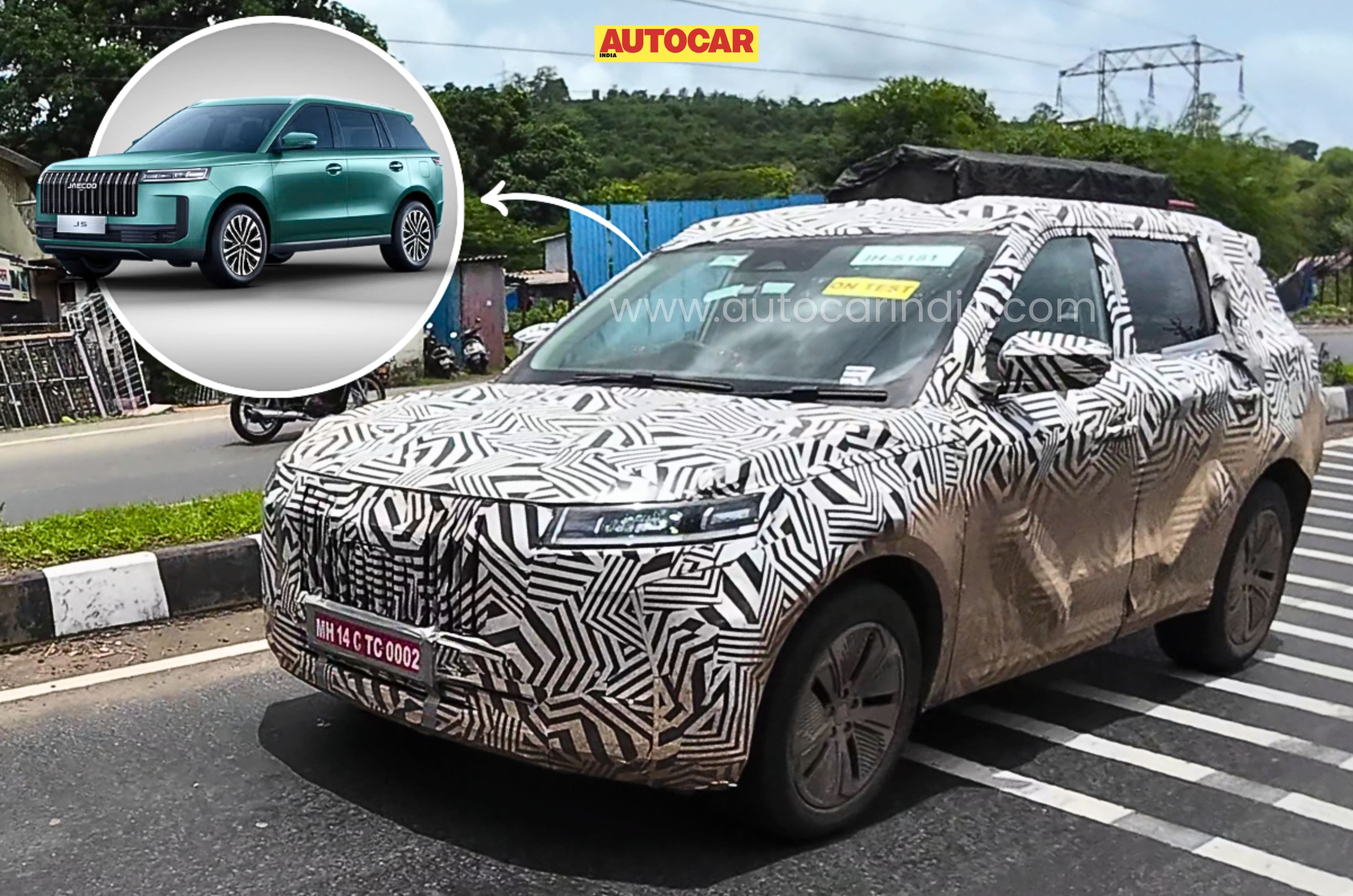
The Jaecoo J5 SUV has been spied testing in an ICE avatar for the first time in India. Interestingly, the latest spy shots suggest the Jaecoo J5 could launch in India with an ICE powertrain, whereas earlier sightings pointed to an all-electric (EV) version only. The new exterior and interior spy shots of the ICE-powered Jaecoo J5 reveal some visible differences from the EV version.

  1. A functional grille, all-LED lighting and 18-inch alloy wheels can be seen
  2. An all-black cabin with a vertically mounted infotainment system was spotted
  3. Offered with a turbo-petrol and strong hybrid petrol internationally

In India, JSW Motors will launch its own standalone SUV based on the Jaecoo J5 under a technology and component licensing agreement with Chery, the Chinese automaker that owns the Jaecoo brand.

Jaecoo J5-based ICE SUV spied: What was spotted?

A functional grille with vertical slats confirms it is the ICE version of the Jaecoo J5

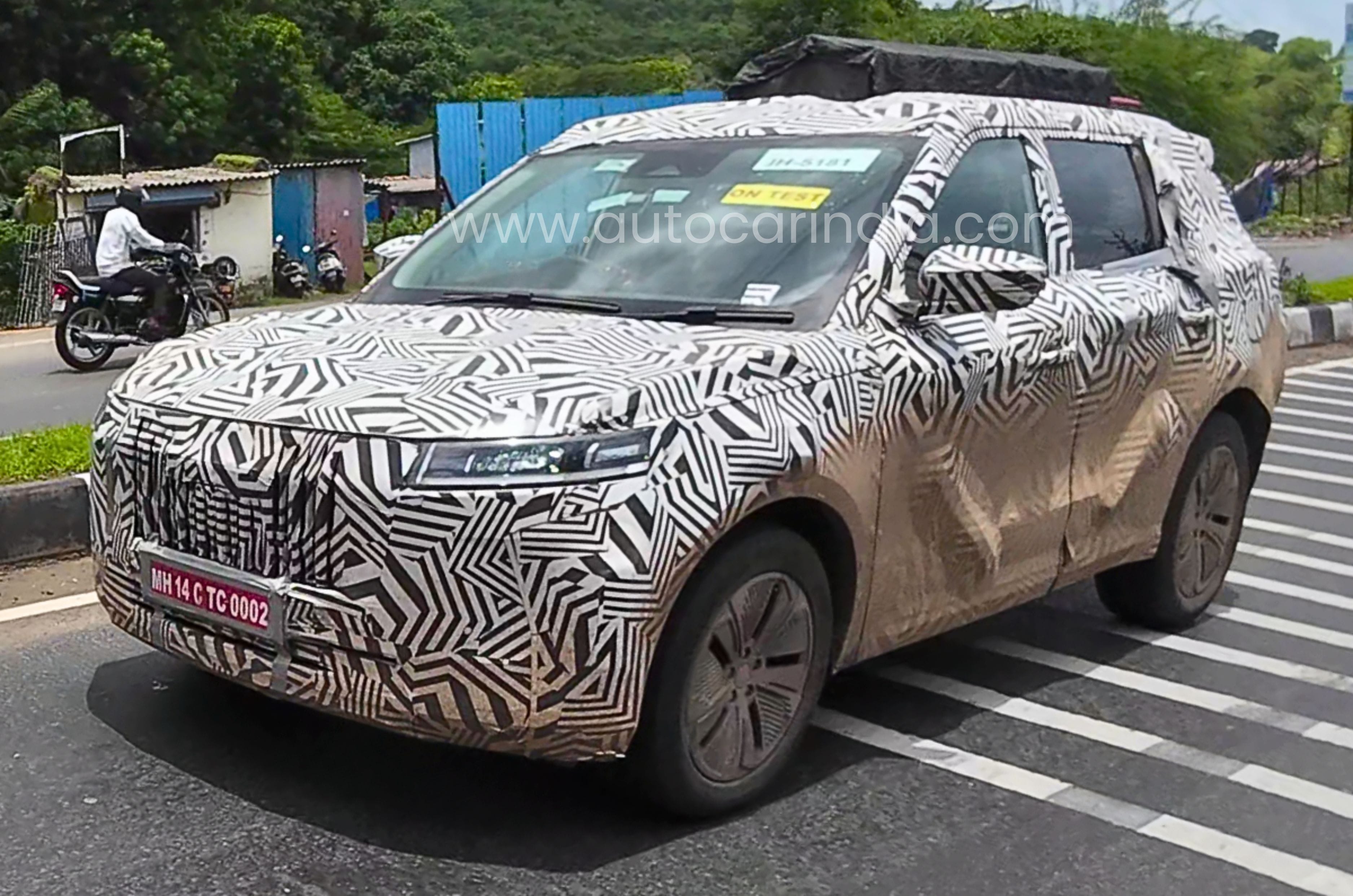
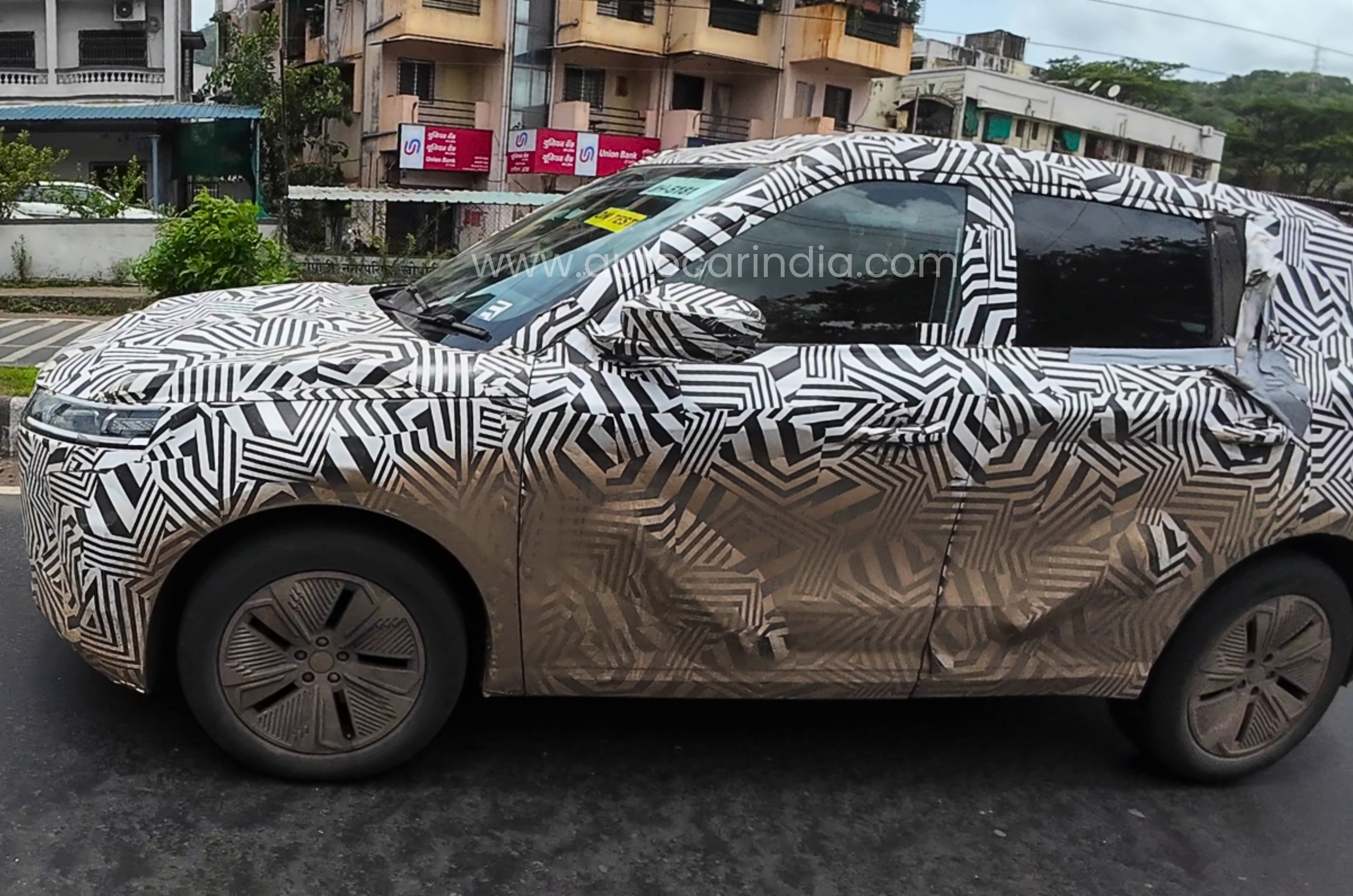
Although the Jaecoo J5-based SUV’s test mule is heavily camouflaged, a few design elements are visible. Among these is a functional grille with vertical slats, confirming it is the ICE version, as the EV features a blanked-off grille. The sleek LED headlights with LED DRL surrounds, however, are the same as those on the EV version. The bumper has a clean design, but it seems to miss out on the fog lamps offered with the international model.

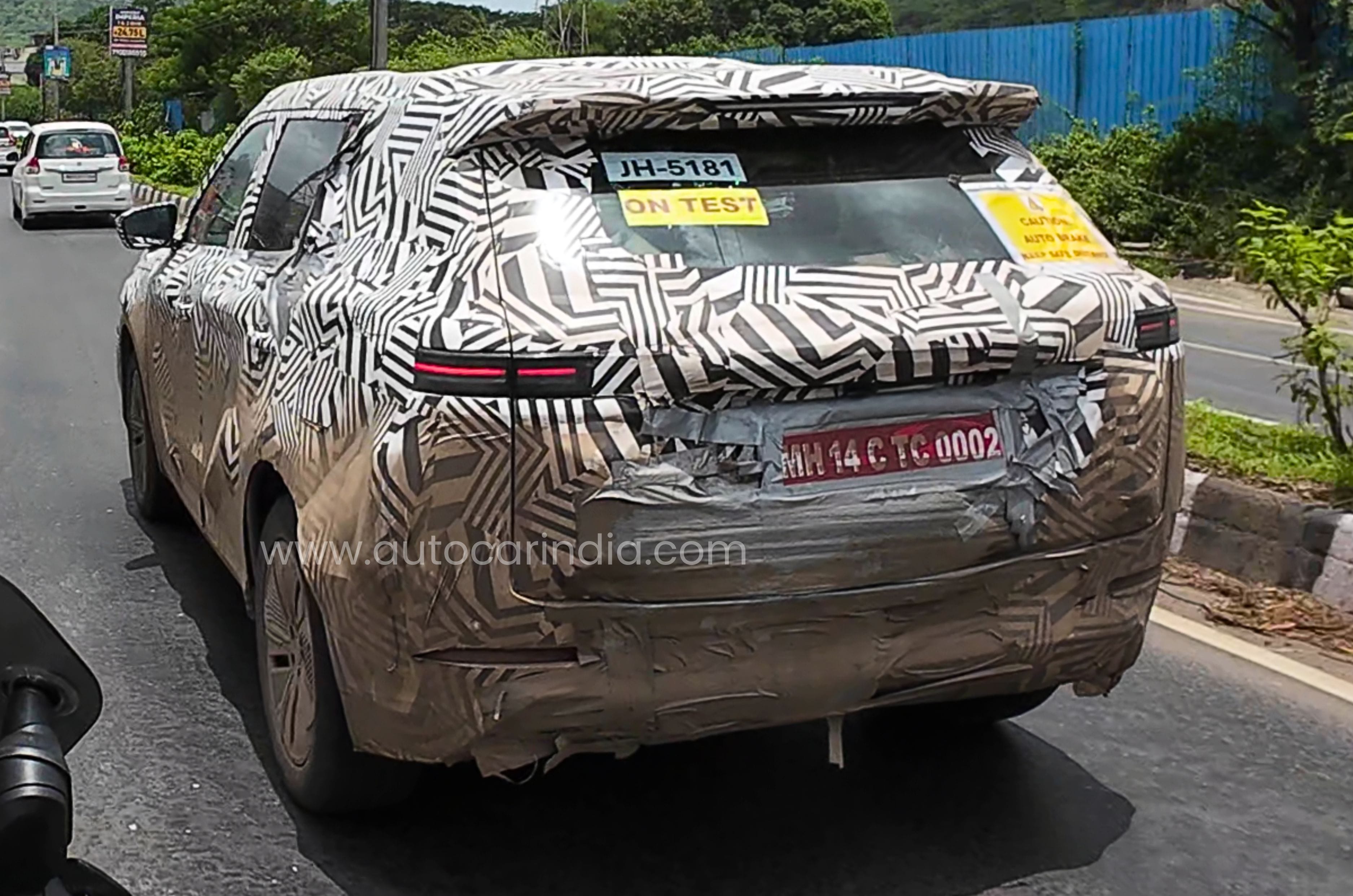
In profile, the international-spec model gets 18-inch wheels. At the rear, slim wraparound LED taillights can be spotted. On the international model, these taillights are joined by a black trim with ‘Jaecoo’ badging in the centre.

The interior design mimics that of the all-electric model

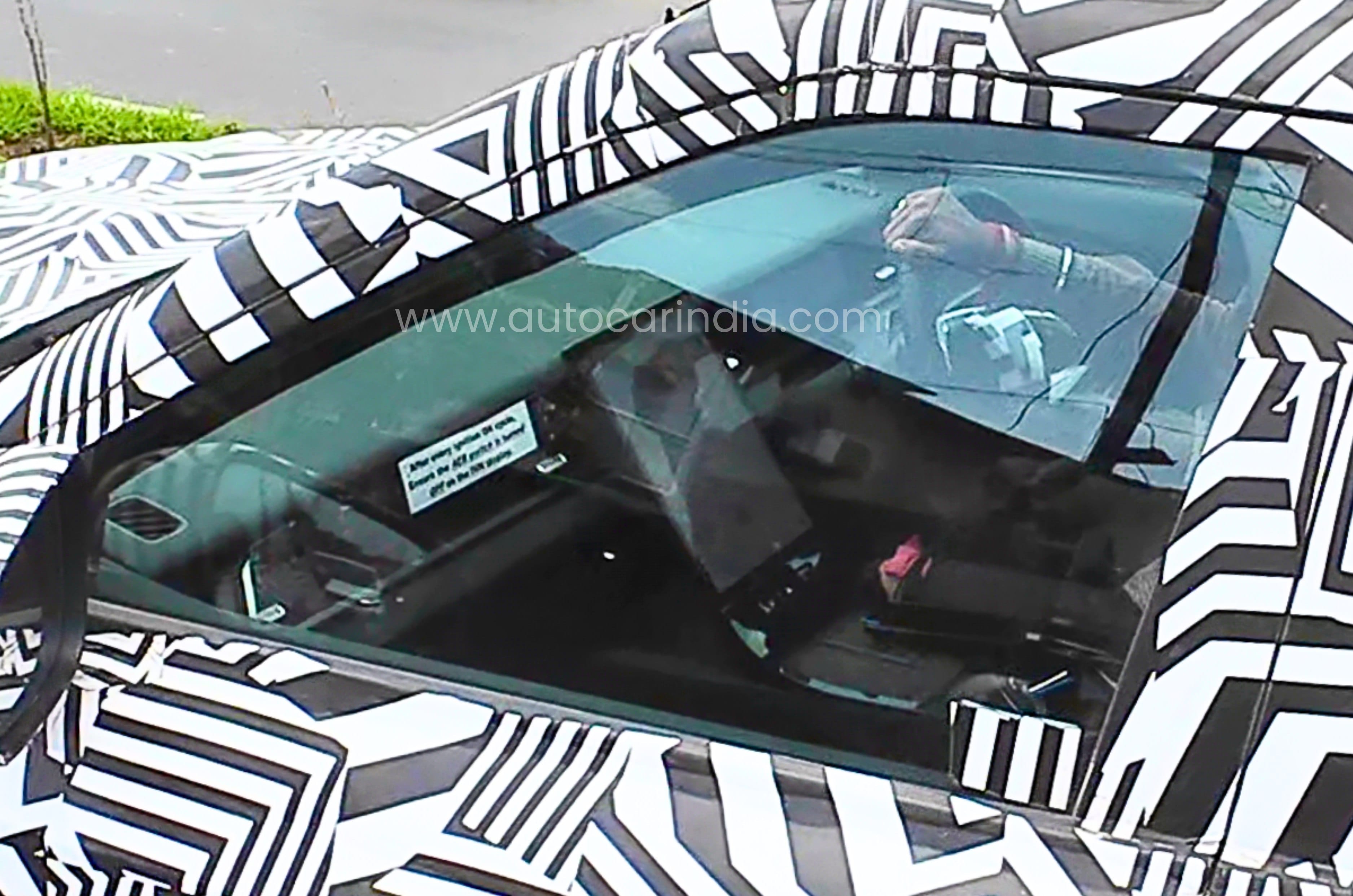
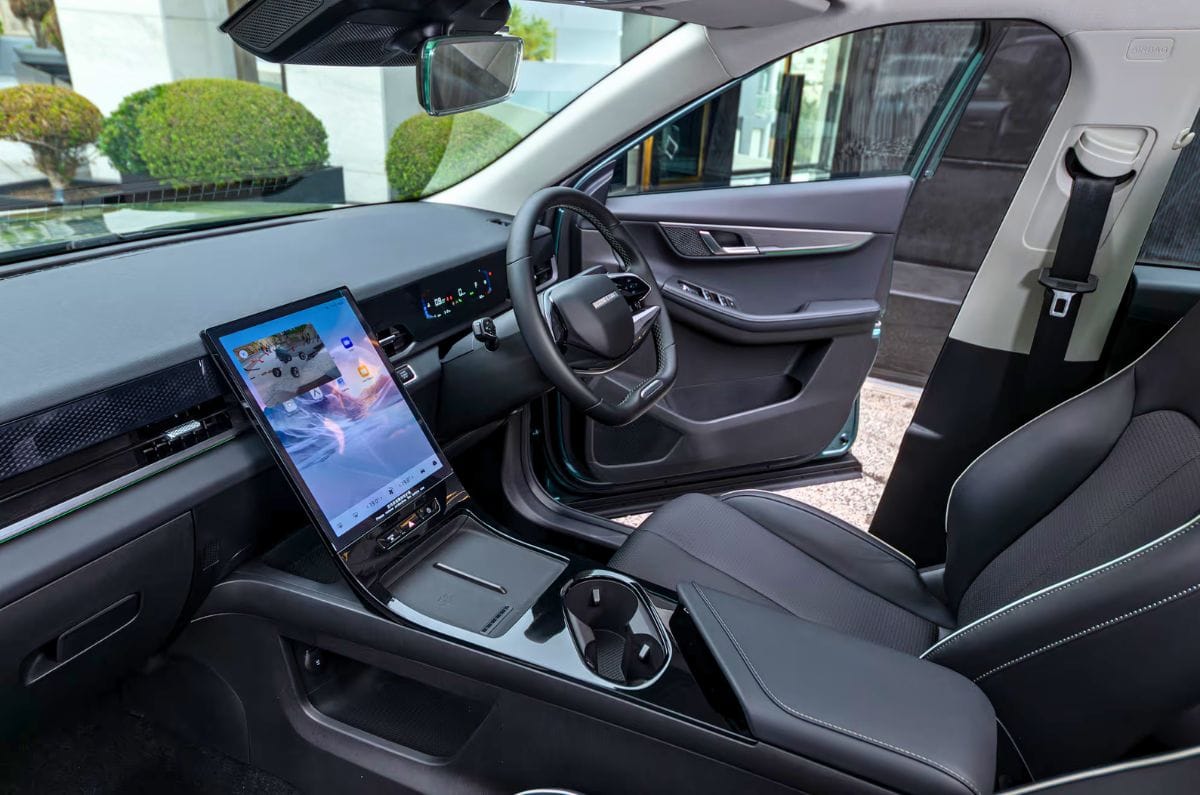
The spy shots also reveal a large vertically oriented infotainment system on the dashboard, likely the same as the international model’s 13.2-inch unit. The international model also gets an 8.8-inch driver’s display, a panoramic sunroof, an 8-speaker Sony sound system, dual-zone climate control, a powered tailgate and a wireless phone charger. It will be interesting to see what features are offered with the India-spec model sold by JSW Motors.

South Africa-spec Jaecoo J5 dashboard shown for representational purposes only.

In terms of safety, the international model gets 7 airbags, a 540-degree camera (surround-view camera with an under-bonnet view function), a tyre pressure monitoring system (TPMS) and an advanced driver assistance system (ADAS) suite. 

Jaecoo J5-based ICE SUV: Expected powertrain

Offered with a turbo-petrol and a strong hybrid petrol engine internationally

Depending on the market, the ICE-powered Jaecoo J5 gets either a turbo-petrol or a strong-hybrid engine option. The 1.5-litre turbo-petrol produces up to 156hp and 275Nm, and is mated to either a 7-speed DCT or a CVT, depending on the market. It allows for a 0-100kph sprint time of 10.2 seconds 

A strong-hybrid version has a 1.5-litre 4-cylinder turbo-petrol engine and an electric motor powered by a 1.83 kWh lithium-ion battery. Combined, this setup produces 224hp and 295Nm. It does a 0-100kph sprint in 7.9 seconds. Jaecoo claims a fuel efficiency of 18.9kpl, allowing a total range of around 1,000km. It will be interesting to see which powertrain option is offered with the India-spec model.

India launch timeline is yet to be revealed

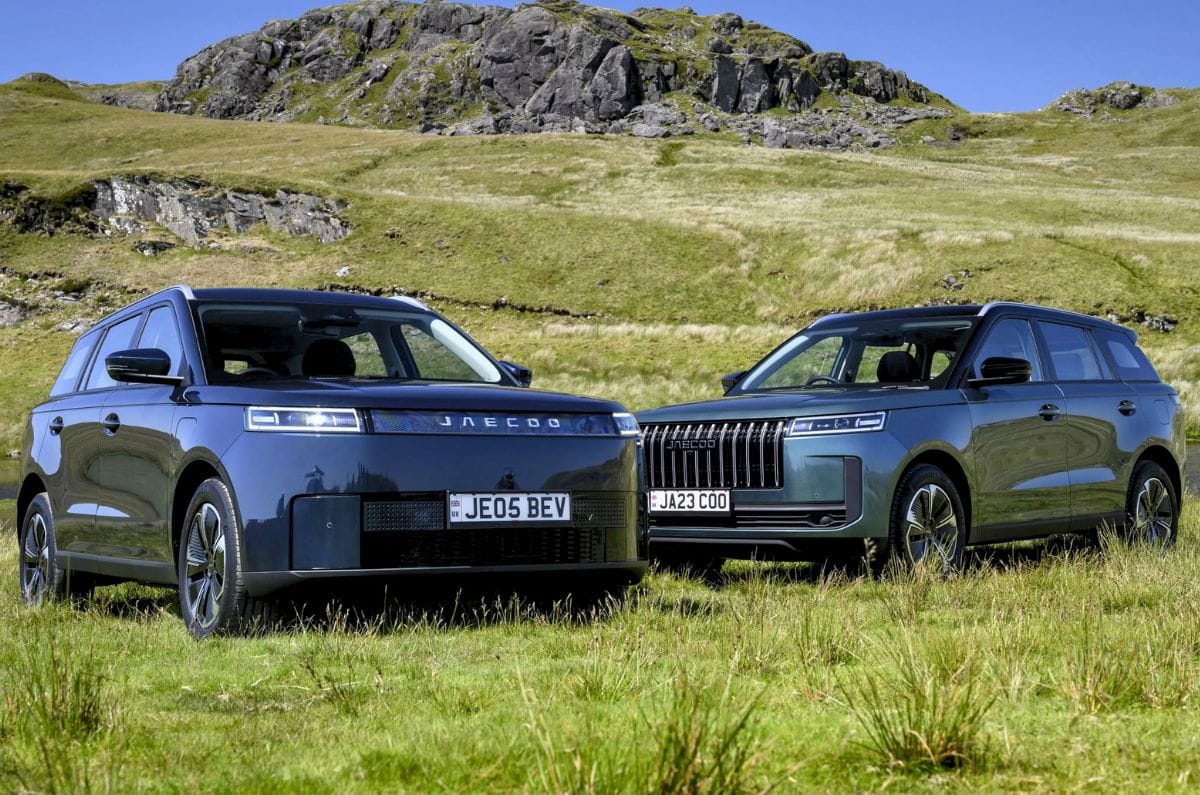
UK-spec Jaecoo J5’s EV (left) and ICE (right) versions shown for representational purposes only.

JSW Motors is expected to start its India operations with the Diwali launch of the Jetour T2-derived hybrid SUV, followed by launches of the SUVs derived from the Jaecoo J5 and iCaur V23. Upon launch, JSW Motors’ Jaecoo J5-based ICE SUV will lock horns with midsize SUVs such as the Hyundai Creta, Tata Sierra, Maruti Suzuki Victoris, Renault Duster and Nissan Tekton. The EV version will rival the Hyundai Creta Electric, Mahindra BE 6, Tata Sierra EV, Vinfast VF6 and Maruti Suzuki eVitara. 

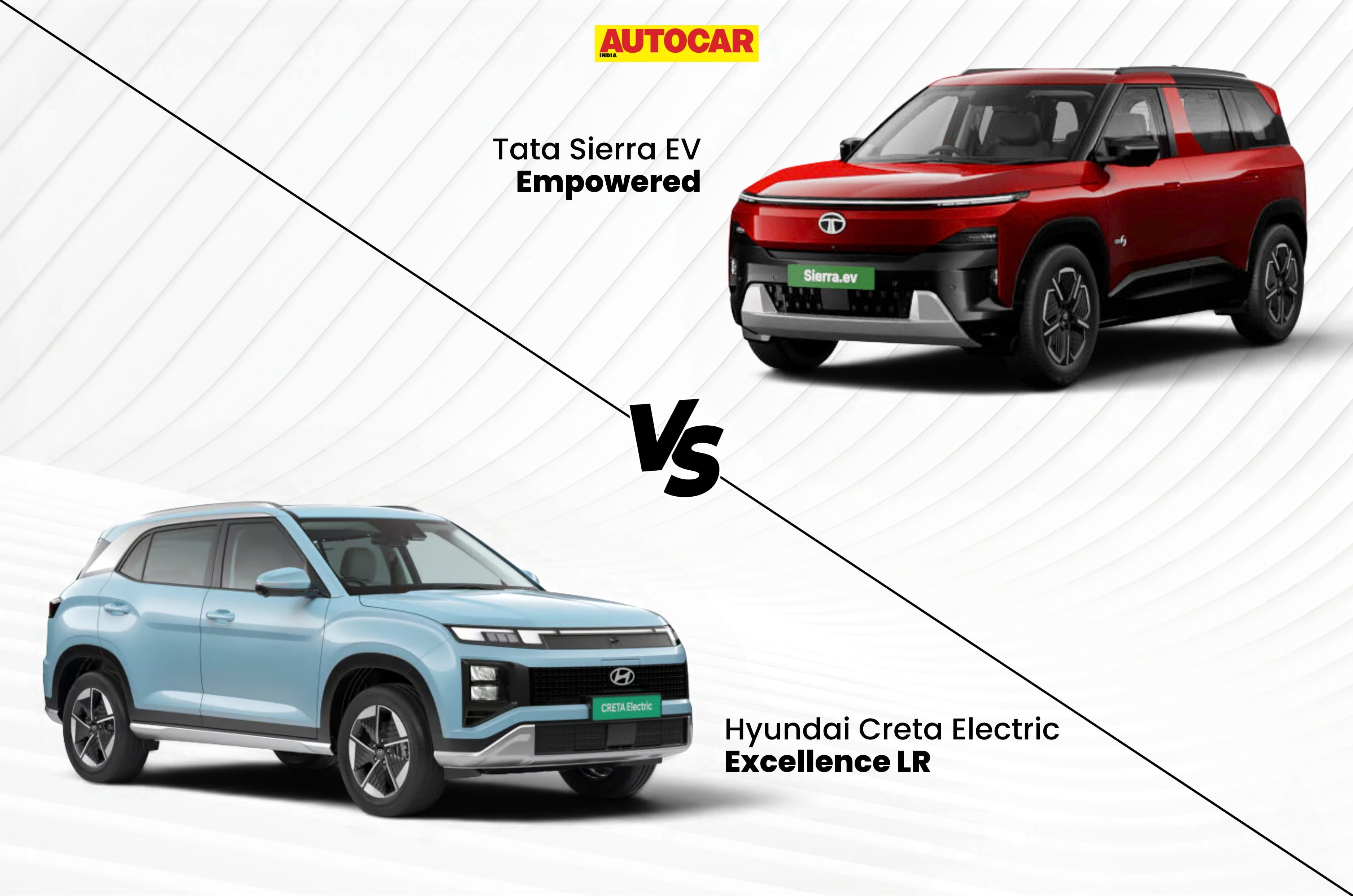
Tata Sierra EV Empowered vs Hyundai Creta Electric Excellence LR: Which to buy?

Tata Sierra EV mid-spec vs Hyundai Creta EV top-spec comparison

Both the Tata Sierra EV and Hyundai Creta Electric are available with two battery pack options. However, the lower variants of the Creta Electric feature a smaller 42kWh battery pack, so we’ll be looking at the 51.4kWh version here – the Creta’s top-spec Excellence LR (Long Range) variant is only offered with the larger battery pack. However, the Sierra EV’s Empowered trim offers buyers more flexibility as it’s available in 63kWh and 75kWh guises. The Sierra EV Empowered is priced from Rs 22.79 lakh to Rs 23.79 lakh, while the Creta Electric’s top-spec Excellence LR costs Rs 23.67 lakh. Let’s find out which midsize electric SUV is right for you.

Explore full specs, features and a price breakdown in our Sierra EV and Creta Electric comparison.

Tata Sierra EV Empowered vs Hyundai Creta Electric Excellence LR: Dimensions

The Sierra is the bigger car here, but the Creta EV is just as long

Tata Sierra EV Empowered vs Hyundai Creta Electric Excellence LR dimensions


Tata Sierra EV

Hyundai Creta Electric

Length (mm)

4,340

4,340

Width (mm)

1,841

1,790

Height (mm)

1,750

1,655

Wheelbase (mm)

2,730

2,610

Boot space (litres)

450

433

Frunk (litres)

55

22

Wheel size (inches)

18

17

While the overall length of the Hyundai Creta Electric is identical to the Tata Sierra EV, the latter boasts 120mm longer wheelbase. The Sierra EV is 51mm wider and 95mm taller at the roof than its Hyundai rival. The range-topping Excellence LR variant of the Creta EV only gets 17-inch wheels, but the Empowered trim of the Tata SUV comes equipped with larger 18-inch rims. In terms of their luggage-carrying capacity as well, the Sierra EV has the bigger rear boot and frunk (front trunk).

Tata Sierra EV Empowered vs Hyundai Creta Electric Excellence LR: Powertrain

The rear-wheel drive Sierra gets two powertrain options and has the range advantage

Tata Sierra EV Empowered vs Hyundai Creta Electric Excellence LR powertrain options


Tata Sierra EV

Hyundai Creta Electric

Battery size (kWh)

63/75

51.4

Electric motor setup

Single, rear (RWD)

Single, front (FWD)

Power (hp)

238/209

171

Torque (Nm)

315

255

Claimed 0-100kph

7.9 seconds

Claimed range (km)

566/665

510

AC charging

Up to 10.5 hrs at 7.2kW (10-100%)

7.25 hrs at 7.4kW (10-100%)

DC fast charging

Up to 26 mins at 120kW (20-80%)

39 mins at 100kW (10-80%)

The Sierra EV in Empowered trim is offered with 63kWh and 75kWh battery packs. Even with the smaller battery option, the Sierra EV’s claimed range is 56km more than the top-spec Creta Electric’s. Bumping up to the top-spec, rear-wheel drive (RWD) 75kWh version of the Sierra EV means a claimed range of 665km – that’s 155km more than the top-spec Creta Electric.

The smaller battery size and a slightly faster AC charging speed means that the Creta Electric can be charged from 10-100 percent in 7 hours and 15 minutes, which is over 3 hours less than what the Sierra EV with the 75kWh battery pack requires. Meanwhile, the Sierra EV with the 63kWh battery takes under 9 hours to achieve the same SoC (state of charge). Both cars support DC fast charging of over 100kW, with the Sierra EV’s claimed charging time being based on 120kW DC charging.

The Sierra EV’s single electric motor powers its rear wheels, while that of the Creta Electric powers its front. While the punchier 63kWh version of the Tata SUV makes 67hp more than its Hyundai EV rival, even its lower-output 75kWh version makes more power (38hp more than the Creta Electric). The Sierra EV also has the torque advantage, developing 60Nm more than its Hyundai rival. While Tata Motors hasn’t published the claimed 0-100kph time of the mid-spec Sierra EV, it’s likely to be brisk.

Tata Sierra EV Empowered vs Hyundai Creta Electric Excellence LR: Exterior features

The Sierra EV’s Empowered trim adds more novelty features on the outside than its Hyundai rival

Tata Sierra EV Empowered vs Hyundai Creta Electric Excellence LR exterior features


Tata Sierra EV

Hyundai Creta Electric

LED projector headlamps

Yes (auto)

Yes (auto)

Connected light bar

Yes

Yes

Front fog lamps

Yes

No

Rear fog lamps

Yes

No

Cornering lights

Yes

No

Sequential turn signals

Yes

Yes

Welcome lights

Yes

Yes

Puddle lamps

Yes

Yes

Powered ORVMs

Yes (with auto-fold function)

Yes (with auto-fold function)

Flush door handles

Yes

No

Body cladding

Yes

Yes

Roof rails

Yes

Yes

Rear spoiler

Yes

Yes

Powered tailgate

Yes (gesture activated)

No

Colours

Mono-tone

Mono-tone and Dual-tone

The Empowered trim of the Sierra EV gets useful features such as a gesture-activated powered tailgate, front & rear fog lamps, and front cornering lights. While both cars gets a rear spoiler, the Sierra EV’s unit actually hides the rear wiper for a cleaner look. They also feature niceties like puddle lamps, welcome & good-bye light animations, and automatic LED headlamps. The Creta Electric sticks to conventional pull-type door handles, whilst the Tata SUV uses flush door handles. Hyundai offers dual-tone colour choices with the Creta Electric, but Tata Motors does not.

Tata Sierra EV Empowered vs Hyundai Creta Electric Excellence LR: Interior features

Both electric SUVs are fairly well-matched when it comes to interior convenience features

Tata Sierra EV Empowered vs Hyundai Creta Electric Excellence LR interior features


Tata Sierra EV

Hyundai Creta Electric

Infotainment screen

12.3-inch

10.25-inch

Digital driver’s display

10.25-inch

10.25-inch

Front passenger display

12.3-inch

No

Panoramic sunroof

Yes (voice assisted)

Yes (voice assisted)

Wireless charger

Yes

Yes

Driver’s seat adjustment

6-way powered

8-way powered

Co-driver’s seat adjustment

4-way manual

8-way powered

Thigh-support extender

Yes

No

‘Boss’ mode

Yes (manual)

Yes (powered)

Ventilated front seats

Yes

Yes

Leatherette upholstery

Yes

Yes

Rear split seats

Yes

Yes

Automatic climate control

Yes (dual-zone)

Yes (dual-zone)

Cooled glovebox

Yes

Yes

Cooled armrest storage

No

Yes (front)

Ambient lighting

Yes

Yes

Audio system

12-speaker JBL Black

8-speaker Bose

Dolby Atmos

Yes

No

Apple CarPlay & Android Auto

Yes (wireless)

Yes (wired)

USB Type-C ports

Yes (4 ports)

Yes (3 ports)

Connected car tech

Yes

Yes

Voice assistant

Yes (multiple)

Yes

OTA updates

Yes

Yes

EV route planner

Yes

No

Gaming

Yes

No

Rear sunblinds

Yes

Yes

Rear armrest

Yes (with cupholders)

Yes (with cupholders)

Rear tray tables

No

Yes

The Tata Sierra EV gets more speakers as part of its JBL Black audio system, along with Dolby Atmos and wireless Apple CarPlay & Android Auto. The Sierra offers more USB ports and Tata’s new ‘AirConsole’ gaming system with a high-definition front passenger screen. Other interior features exclusive to the Sierra EV include front thigh-support extenders for added comfort and a route planner to help minimise range anxiety.

The Hyundai Creta Electric doesn’t get a third screen and its dual digital displays are smaller than the Sierra’s. However, the Hyundai EV offers a powered ‘Boss’ function, a cooled compartment under the front armrest, tray tables with cupholders for rear passengers, and a leatherette-like eco-friendly material for the seats.

Tata Sierra EV Empowered vs Hyundai Creta Electric Excellence LR: Safety features

The fully loaded Creta EV comes with ADAS, which the Sierra EV lacks in its mid-spec trim

Tata Sierra EV Empowered vs Hyundai Creta Electric Excellence LR safety features


Tata Sierra EV

Hyundai Creta Electric

Airbags

6

6

ABS with EBD

Yes

Yes

Electronic stability program

Yes

Yes

Hill-hold assist

Yes

Yes

Hill-descent control

Yes

Yes

TPMS

Yes

Yes

Parking sensors

Yes (front & rear)

Yes (front & rear)

360-degree camera

Yes

Yes

Electronic parking brake

Yes (with auto-hold function)

Yes (with auto-hold function)

Auto-dimming IRVM

Yes

Yes

Rain-sensing wipers

Yes

Yes

Auto-dimming IRVM

Yes

Yes

ISOFIX

Yes

Yes

Rear wiper and defogger

Yes

Yes

All-wheel disc brakes

Yes

Yes

Level 2 ADAS

No

Yes

Both these cars come well-equipped with modern safety features. However, the Creta Electric adds Level 2 ADAS (Advanced Driver Assistance Systems), too. This ropes in nannies such as forward collision warning, blind-spot warning, lane-departure warning with lane-keeping assist, rear cross-traffic alert, high-beam assist, and adaptive cruise control with stop & go functionality.

Tata Sierra EV Empowered vs Hyundai Creta Electric Excellence LR: Other features

The Sierra EV is better equipped on this front too

Tata Sierra EV Empowered vs Hyundai Creta Electric Excellence LR other features


Tata Sierra EV

Hyundai Creta Electric

Drive modes

Yes (3)

Yes (3)

Terrain modes

Yes (4)

No

Single-pedal driving

No

Yes

V2V and V2L

Yes

Yes (V2L)

AVAS

Yes

Yes

Unlike the Sierra EV, the Hyundai Creta Electric gets a proper single-pedal driving mode. This makes driving it over long distances on the highway less tiresome while also helping improve range because of energy recuperation even without using the brake pedal. However, the Sierra EV supports both vehicle-to-load and vehicle-to-vehicle charging functions – the Creta Electric only supports the former. Both EVs come with an Acoustic Vehicle Alerting System (AVAS).

Conclusion

Tata Sierra EV Empowered vs Hyundai Creta Electric Excellence LR prices


Tata Sierra EV

Hyundai Creta Electric

Price range (In Rs, lakh)

22.79-23.79

23.67

If you want more cabin & luggage space, longer range & faster performance plus conveniences like a powered tailgate, wireless smartphone connectivity, multiple voice assistants, plus V2V and V2L functions, then the Tata Sierra EV will be a suitable pick. In case you don’t need the additional range offered by the 75kWh version, you can save Rs 1 lakh and go for the 63kWh version instead –  it’s Rs 88,000 cheaper than the Creta Electric. However, prospective Sierra EV buyers should be aware of the inconsistencies in Tata’s service quality and vehicle fit & finish.

Prices mentioned are ex-showroom, Delhi.

Also read

Tata Sierra EV mid-spec vs Maruti e Vitara top-spec: Features and specs compared

3 reasons to buy the Tata Sierra EV and 2 reasons not to

Mercedes-Benz CLA real world range tested, explained

Mercedes-Benz CLA rear world range

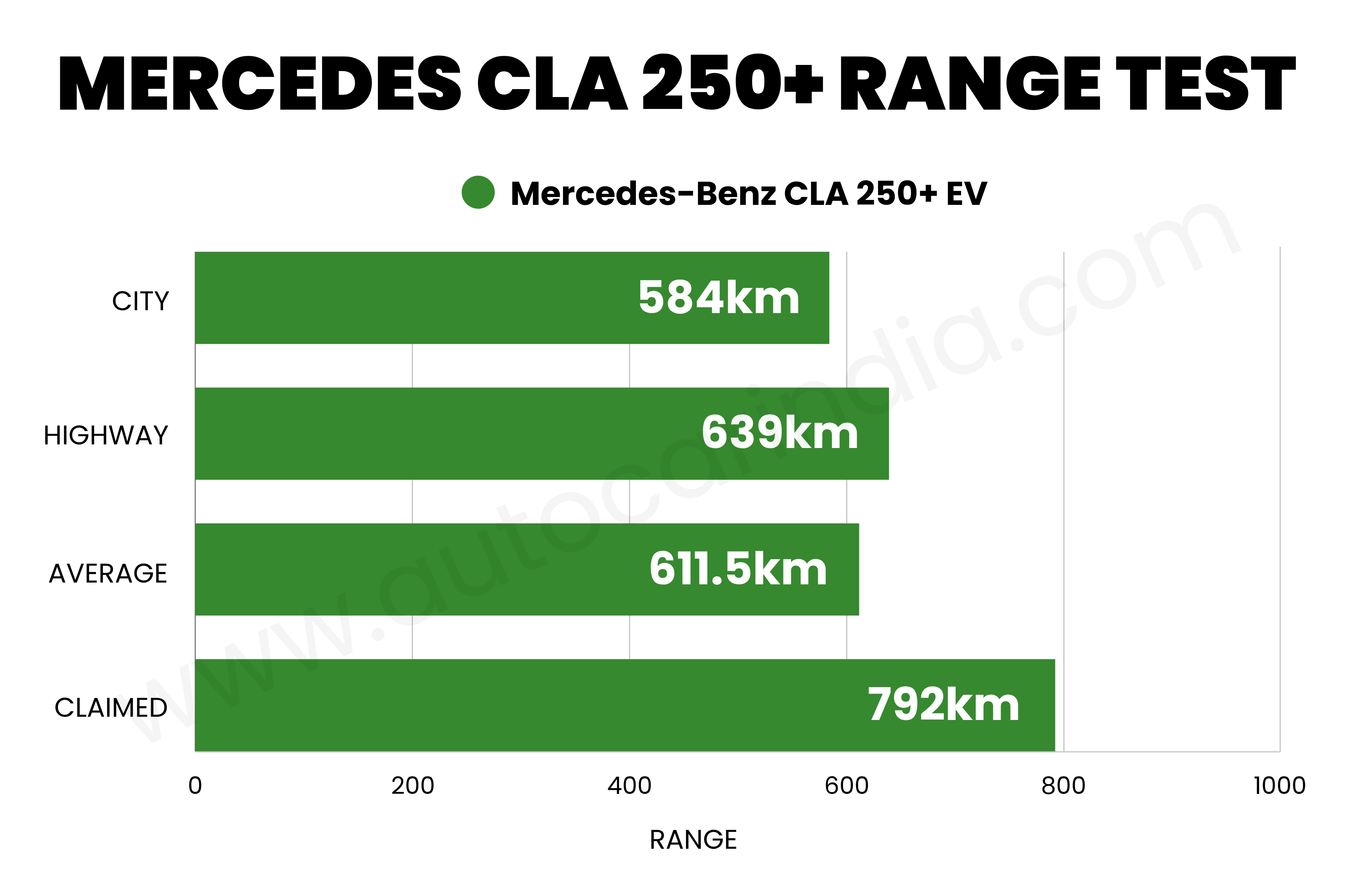
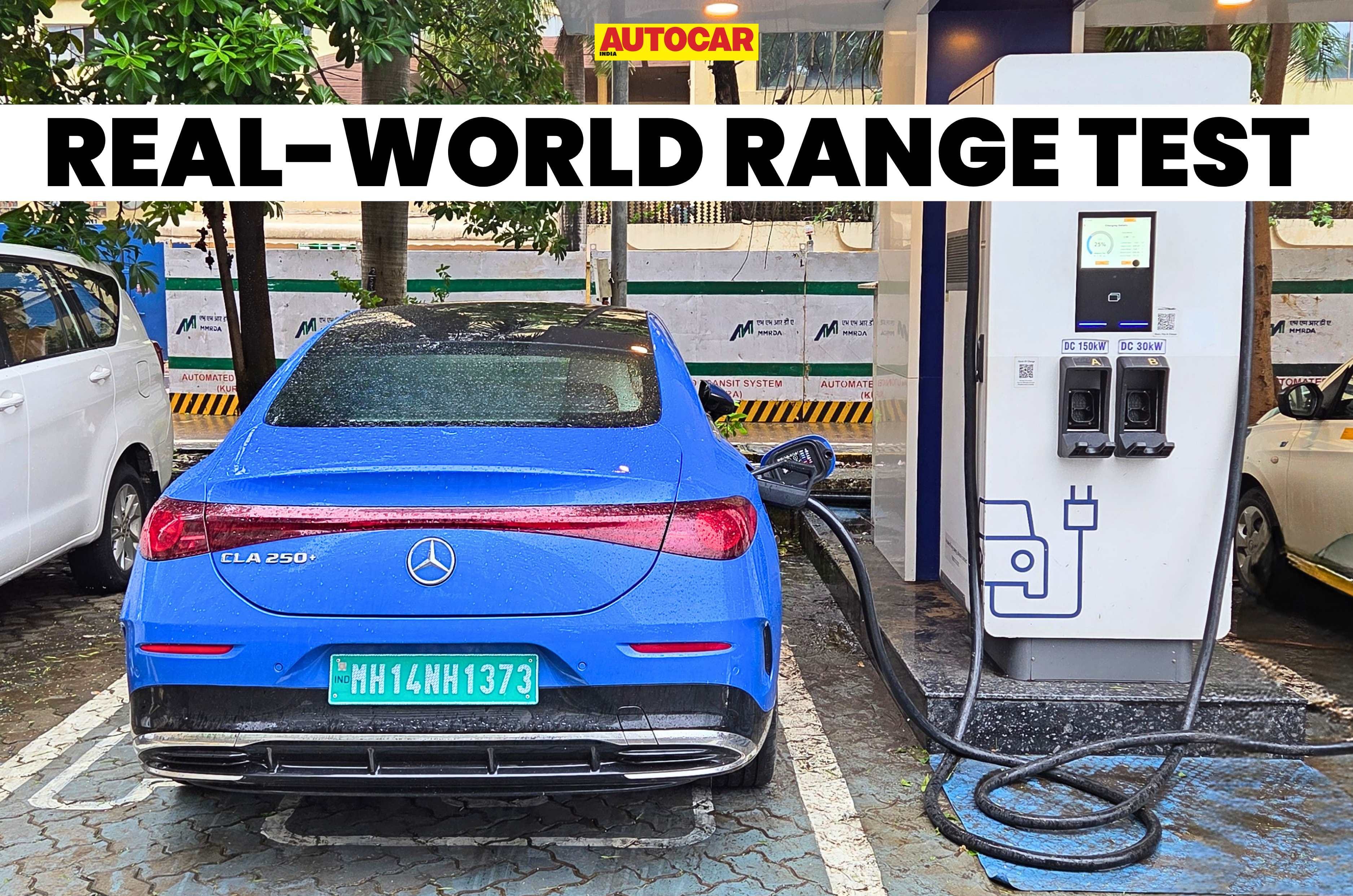
Launched in April 2026, the Mercedes-Benz CLA is currently the entry point to the manufacturer’s EV lineup in India. It is offered in two variants 200 and 250+. The CLA 200 gets a 58kWh battery with a claimed WLTP range of 542km, whereas the higher-spec CLA 250+ gets a 85kWh battery and has a WLTP claimed range of 792km. We put the CLA 250+ variant to the test to calculate its real-world efficiency.

  1. Low drag coefficient of 0.21Cd and weighs 2,055kg
  2. We used ‘ECO’ driving mode throughout the test
  3. 20-80 percent on a 150kW DC fast charger takes 35 minutes

Mercedes CLA 250+ real-world range 

The CLA 250+ makes 272hp of power and 335Nm of torque, with a RWD setup. Before starting our range test, we charged the 85kWh battery to 100 percent and switched it to the most efficient ‘Eco’ mode.

In the city, with the regen set to strongest mode, it delivered an efficiency of 6.87km/kWh that translates to a range of 584km. On the highway, with the regen set to ‘Normal’, it delivered an efficiency of 7.52km/kWh for a 640km range. With an average efficiency of 7.2km/kWh, you can expect a real-world range of 612km on a single charge, which is really good. 

In the city, the strongest regen setting enabled it to recoup energy effectively, which helped boost the efficiency. Whereas, the two-speed gearbox with a taller 5:1 ratio second gear that enables greater efficiency at higher speeds, coupled with the low drag coefficient of 0.21Cd and the normal regen mode that allows for coasting, helped it to be even more efficient on the highway which isn’t usually the case with EVs. 

The Mercedes CLA 250+ can be charged at speeds of up to 320kW but those chargers are few and far between in our country. In our charging test using a 150kW DC fast charger, we saw an average charging speed of around 92kW with a peak charging speed of 125kW. To charge from 20-80 percent, it took 35 minutes and consumed 53.89kWh in total.

Autocar India’s range testing

Before our real-world range tests, the battery of our test car was fully charged, and we maintained tyre pressures in accordance with the manufacturer’s recommendations. The car was driven on a weekday in Mumbai city and on the adjoining state highway in a fixed loop, and we maintained the set average speeds. At the end of each cycle, we calculated the range based on the percentage charge consumed.

Throughout our tests, the climate control was set to 22deg C in a full-auto setting, and other electricals, such as the audio system, indicators and heated and massaging front seats, were used when required, just as a regular user would. We take pride in our testing data, which isn’t merely consistent but also gives users an accurate indication of what they can expect in the real world.

MG to showcase ‘new energy vehicle’ tech on July 16

MG to debut new plug-in hybrid SUV on July 16

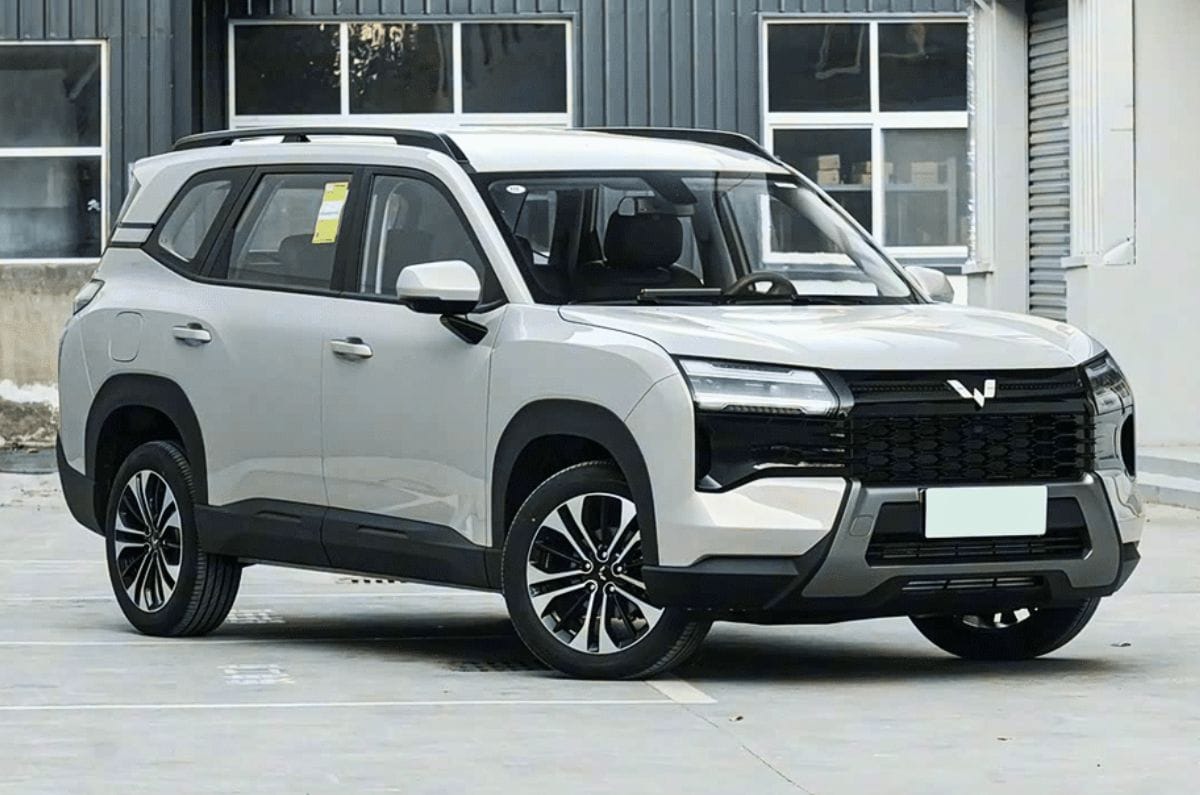
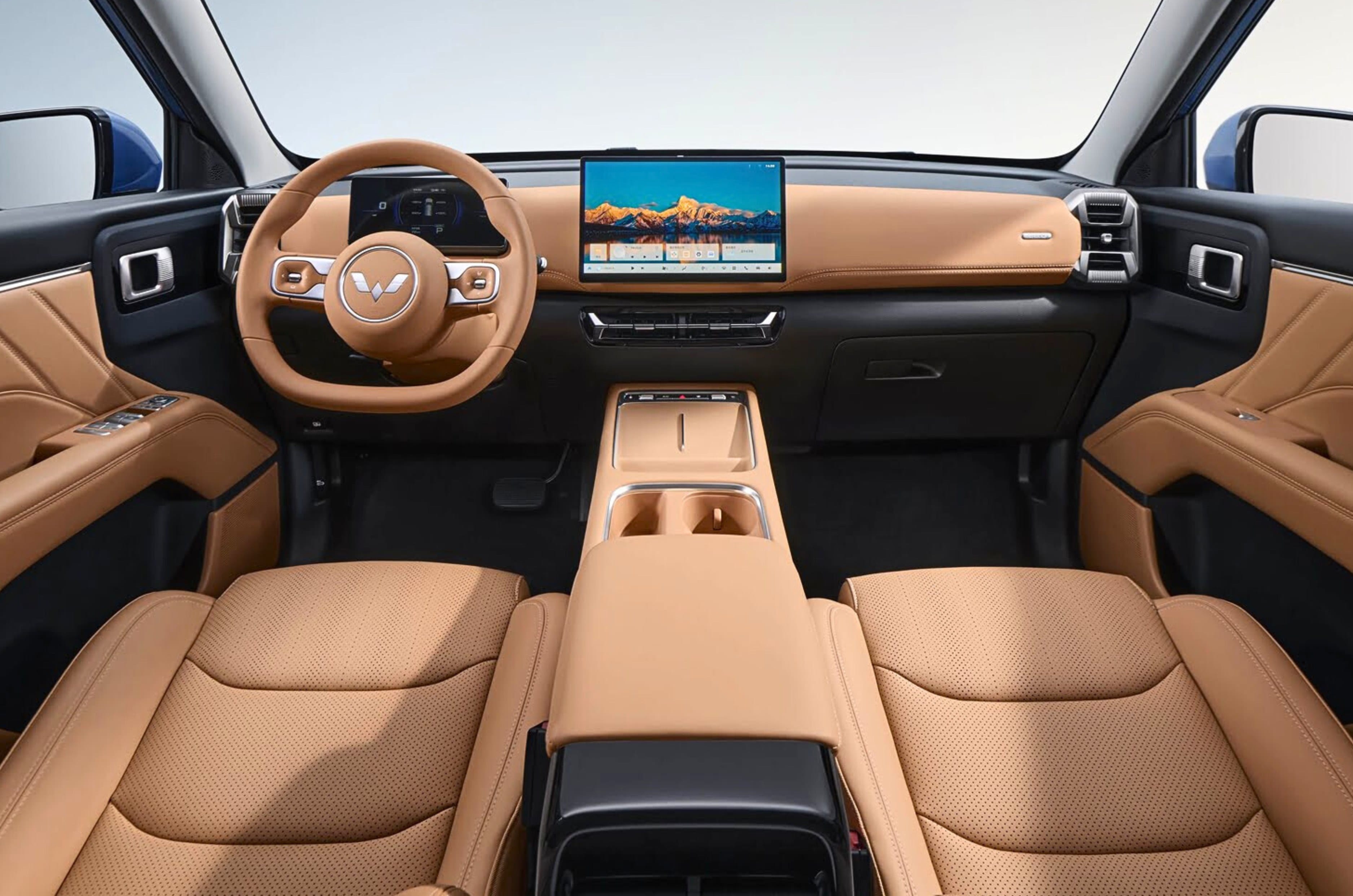
MG will reveal a ‘new energy vehicle’ technology in India on July 16, 2026. While additional details are awaited, it could be either a plug-in hybrid (PHEV) or an EV technology showcase. The unveiled powertrain is expected to be available with a rebadged version of the Wuling Starlight 560 SUV, whose design patent was filed in India in March. Codenamed ‘520’, the SUV will be offered as a PHEV and an EV. Here’s everything you need to know about it. 

  1. Indonesia-spec PHEV gets a 105hp 1.5L petrol engine and a 20.5kWh battery pack
  2. The EV gets a 69.2kWh battery pack and a 530km claimed range
  3. Has an upright design with all-LED lighting and 18-inch alloy wheels

Wuling Starlight 560-based MG ‘520’: All you need to know

Indonesia-spec PHEV offers over 1,000km, EV offers over 500km range

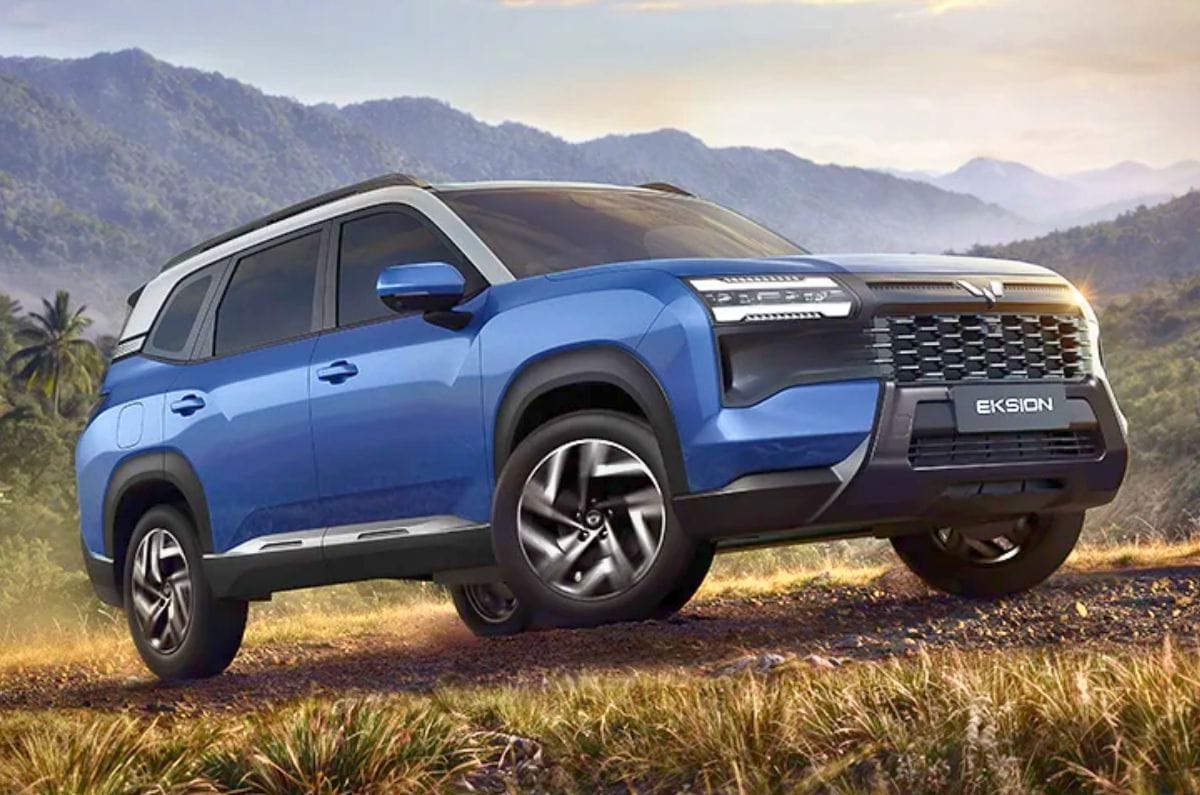
The Starlight 560 is sold as the ‘Eksion’ in the Indonesian market.

The Indonesia-spec model, called the Wuling Eksion, comes with a 105hp 1.5-litre petrol engine and a 20.5kWh battery pack. Its front-wheel-drive setup offers a combined output of 195hp and 230Nm, an all-electric range of 125km and a total range of over 1,000km.

The all-electric version, which gets a 69.2kWh battery pack and a 201hp front-axle-mounted (FWD) electric motor, has a CLTC-claimed range of 530km. It remains to be seen whether MG offers the same PHEV and EV powertrains in the India-spec ‘520’ SUV.

4.7-metre-long SUV has a rugged-looking design 

The Wuling Starlight 560 is an upright SUV that measures 4,745mm in length, 1,850mm in width and 1,755mm in height. It has a 2,810mm wheelbase.

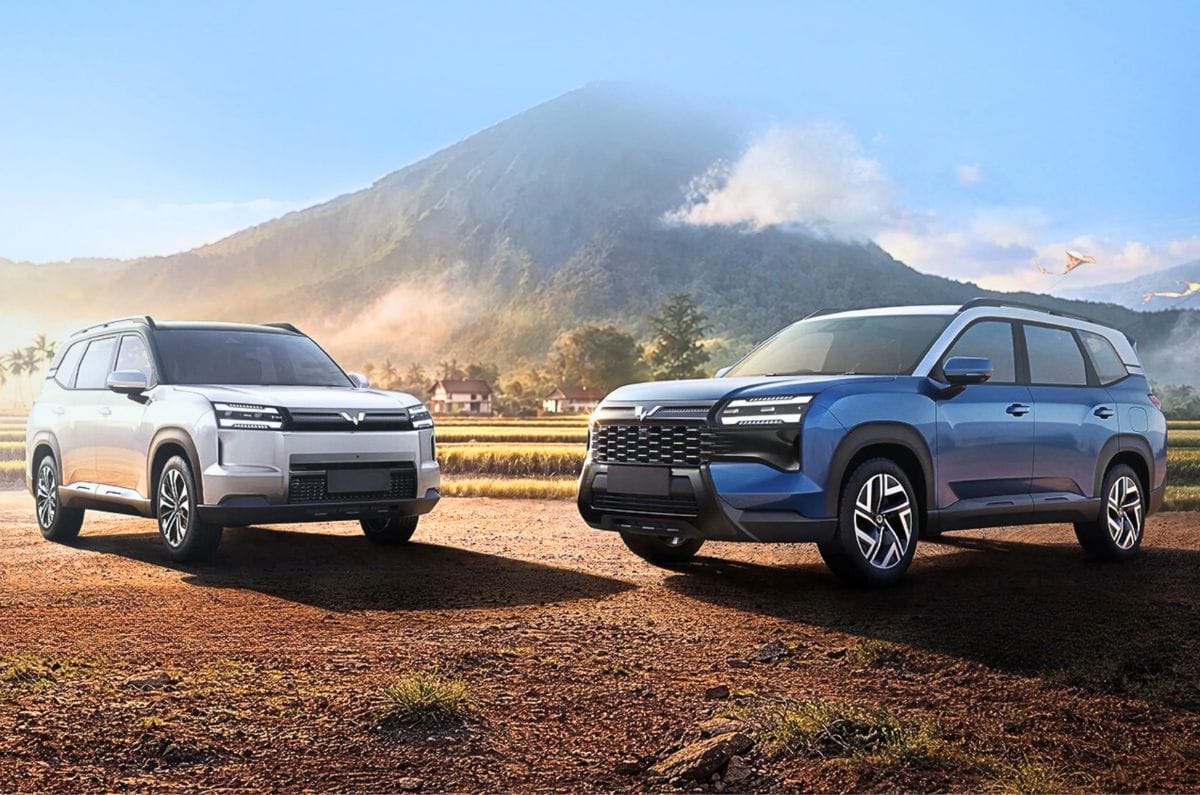
Wuling Starlight 560 versions: EV (left) and PHEV (right)

The PHEV’s fascia features a huge all-black grille, which is blanked off in the all-electric version. Both versions, however, get sleek headlamp housings featuring dual projector LED lights and two LED DRL strips. The front bumper has a rugged look thanks to the faux skid plate and black cladding on the lower portion.

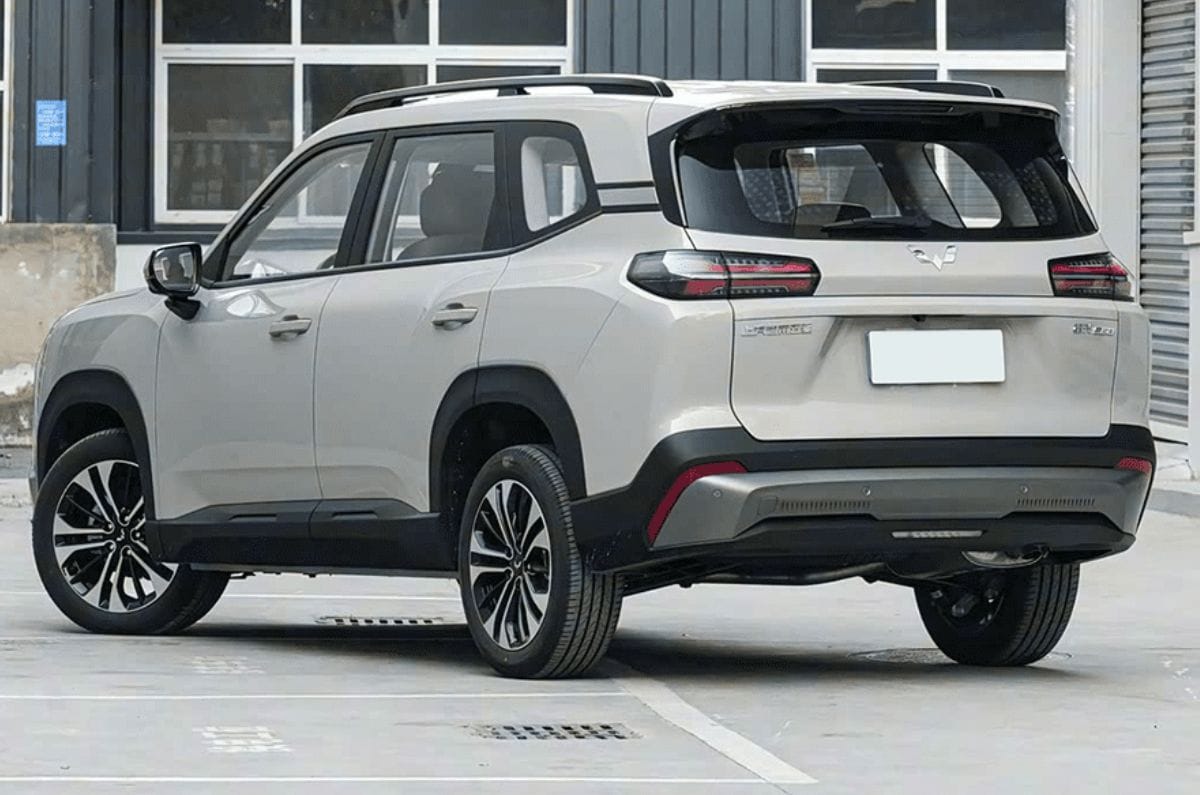
In profile, the international-spec model gets 18-inch dual-tone alloy wheels, thick cladding over the wheel arches and roof rails. The rear design is simple, featuring wraparound LED tail-lights, an all-black bumper and a roof-mounted spoiler.

A minimalist dashboard and a well-rounded feature list

Inside, the Wuling Starlight 560 gets a dual-tone cabin and a minimalistic dashboard layout. There’s a 12.8-inch touchscreen infotainment system, an 8.8-inch digital driver’s display and a 2-spoke steering wheel with buttons for the infotainment functions and cruise control. The SUV can seat up to 7 occupants, and all the seats have leatherette upholstery. 

Other features include powered and ventilated front-row seats, 6 speakers, a 50-watt wireless phone charger, a panoramic sunroof and automatic climate control with rear vents. On the safety front, the Starlight 560 gets 6 airbags, a tyre-pressure monitoring system (TPMS), hill-hold assist, an electronic parking brake and advanced driver assistance systems (ADAS). The India-spec model is expected to have a similar set of features.

While pricing details for the upcoming Starlight 560-based MG SUV are unknown, we expect it to be positioned competitively, much like other MG models. The PHEV version could serve as an alternative to the Mahindra XUV 7XO and Tata Safari, while the EV could rival the Mahindra XEV 9S.

3 reasons to buy the Tata Sierra EV and 2 reasons not to

tata sierra ev

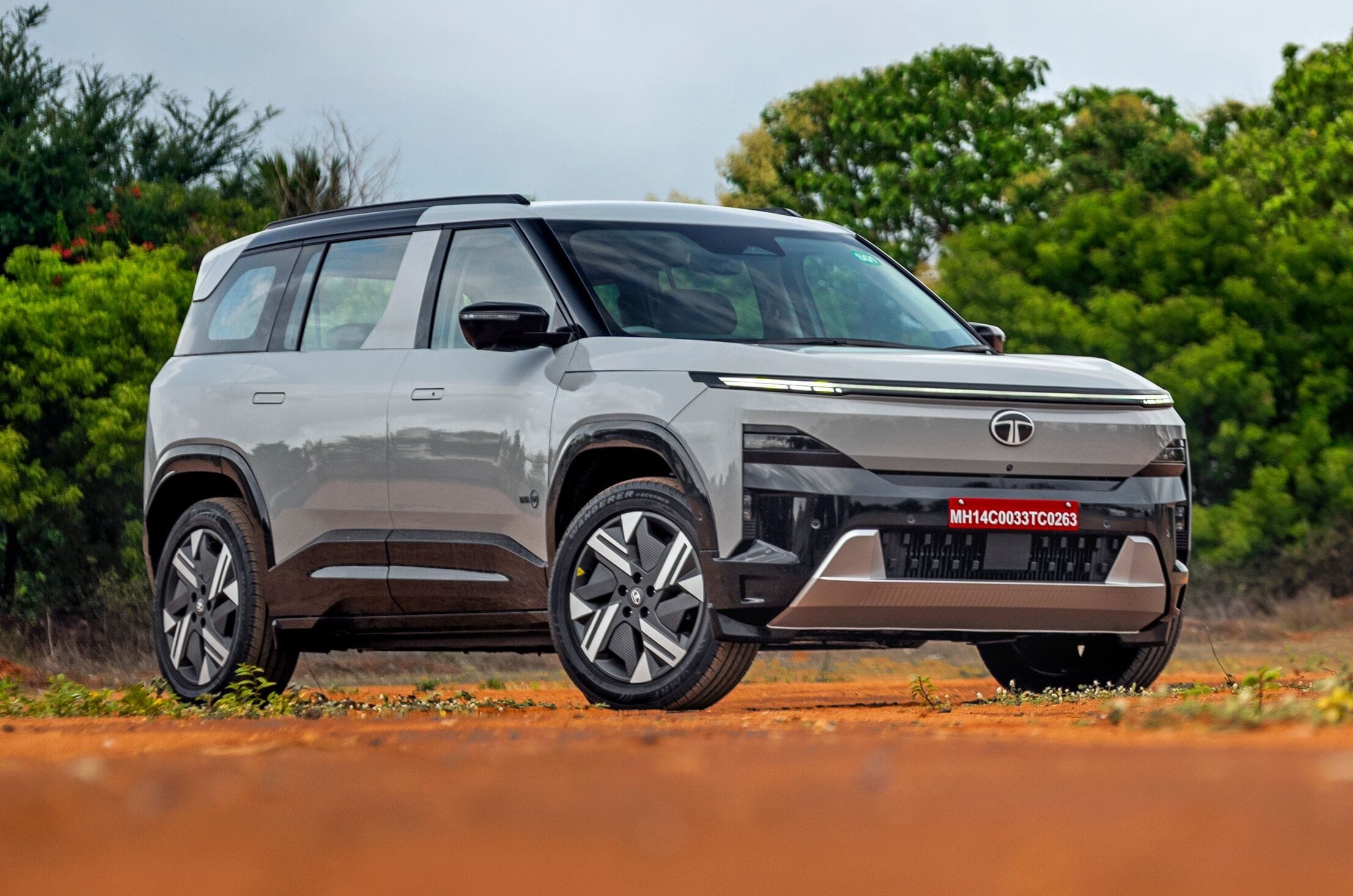
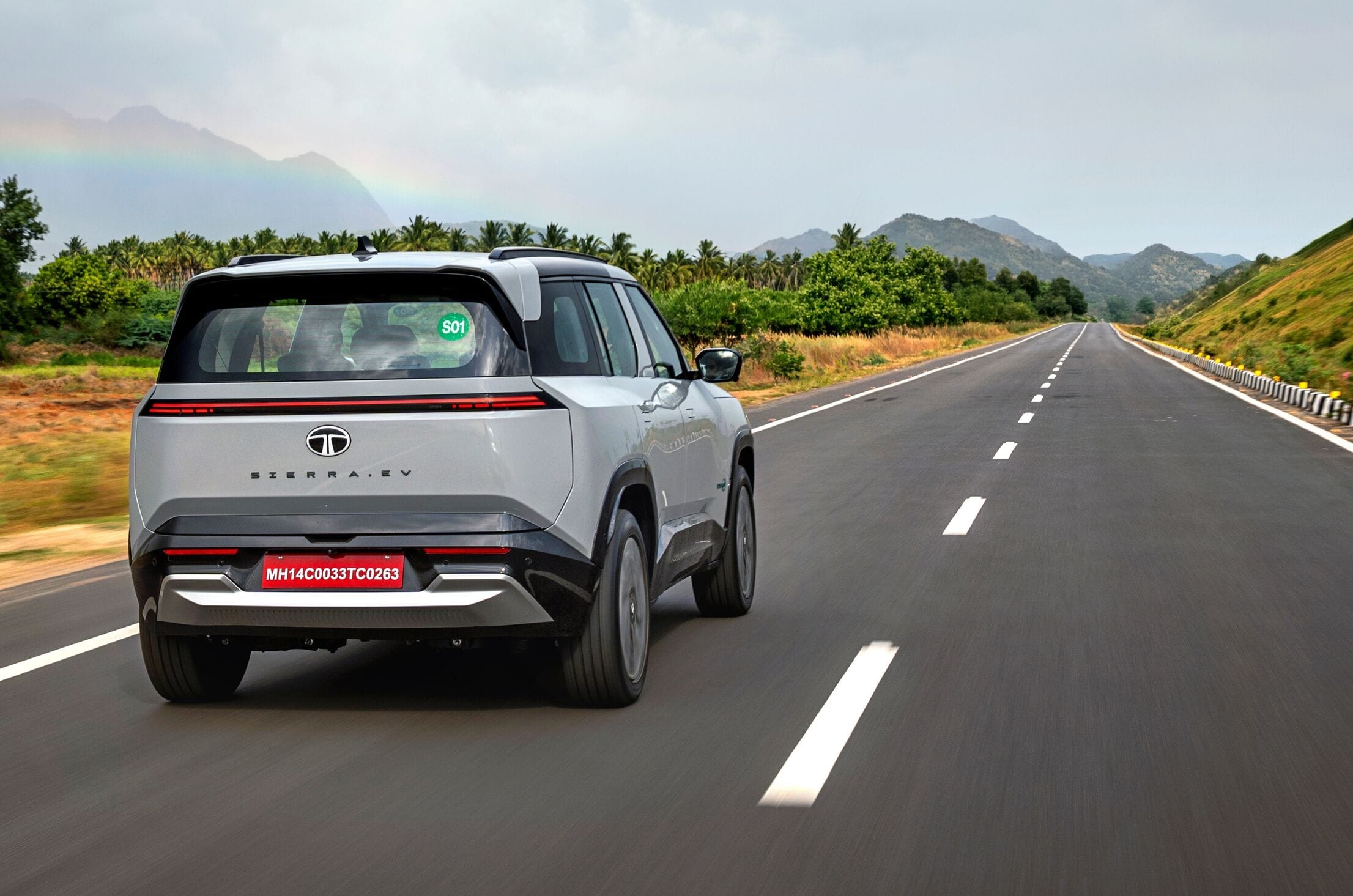
Seven months after the launch of the ICE-powered Tata Sierra, its all-electric derivative, the Sierra EV, is finally available for purchase. Priced from Rs 18.79 lakh to Rs 25.99 lakh (ex-showroom), the Sierra EV slots right between the Tata Curvv EV and Harrier EV, and rivals electric midsize SUVs like the Mahindra BE 6, Vinfast VF6, Hyundai Creta Electric, MG ZS EV, Maruti e Vitara, Toyota Ebella, and more.

If you’re considering bringing home a Sierra EV, here are three reasons why you should go through with it, and two reasons why you may want to think twice before signing the dotted line.

Pros

Loaded with features

Gets some additional goodies over the ICE Sierra

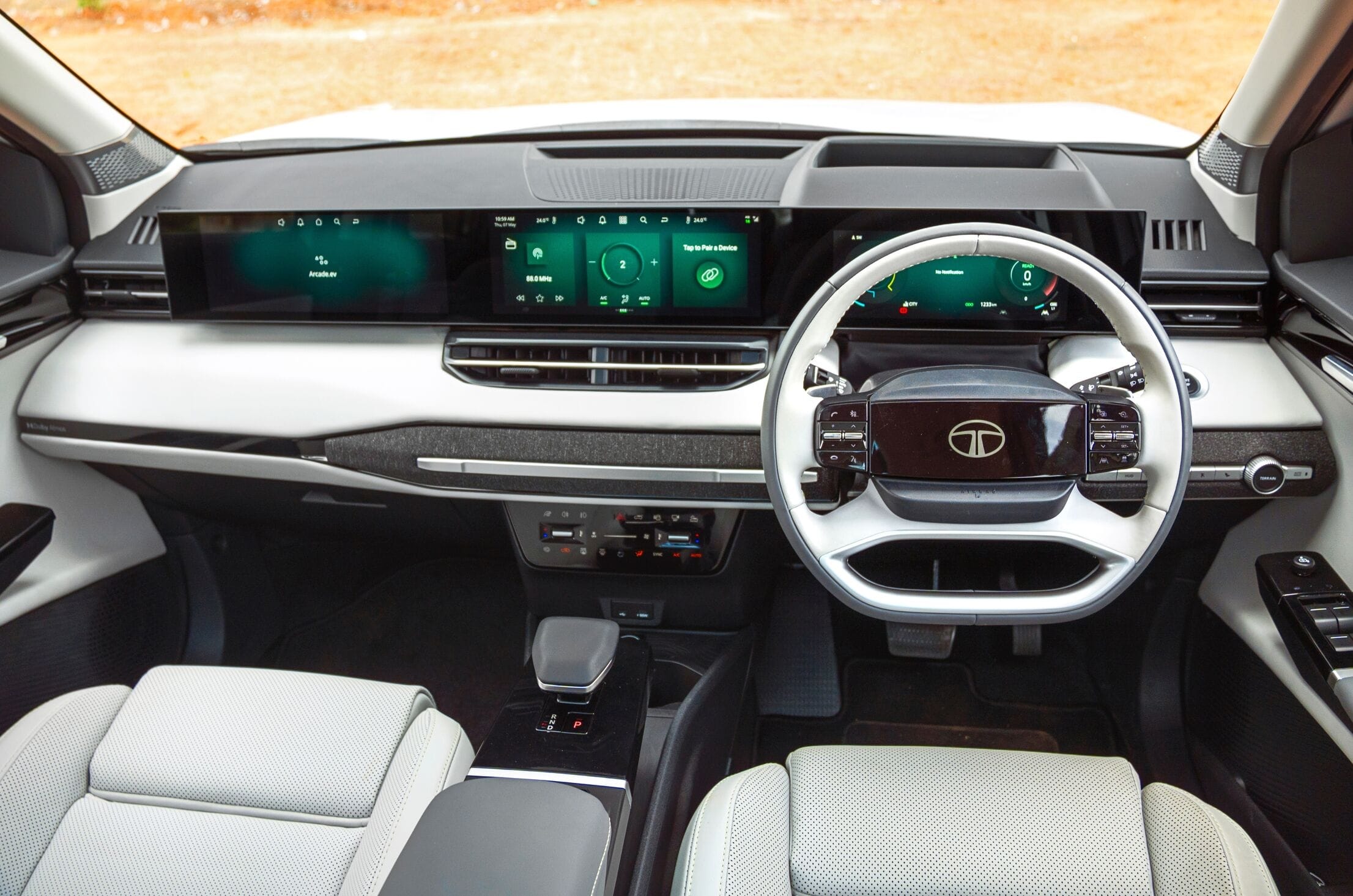
The Sierra EV retains the expansive equipment list of its ICE sibling, including a triple-screen layout (12.3-inch infotainment and passenger screens, 10.25-inch driver’s display), dual-zone climate control, a panoramic sunroof, Level 2 ADAS, a powered tailgate, a 360-degree camera, a wireless charging pad, a 12-speaker JBL Black sound system, ventilated front seats, a powered driver’s seat with memory and welcome functions, and more.

In typical Tata EV fashion, the Sierra EV even packs some bonus features over the ICE version, specifically a powered co-driver seat, an under-floor camera view, auto park assist, a summon mode, vehicle-to-load (V2L) and vehicle-to-vehicle (V2V) charging functions, and a heads-up display along with the triple-screen setup.

Excellent cabin space and practicality

Great for chauffeur-driven buyers

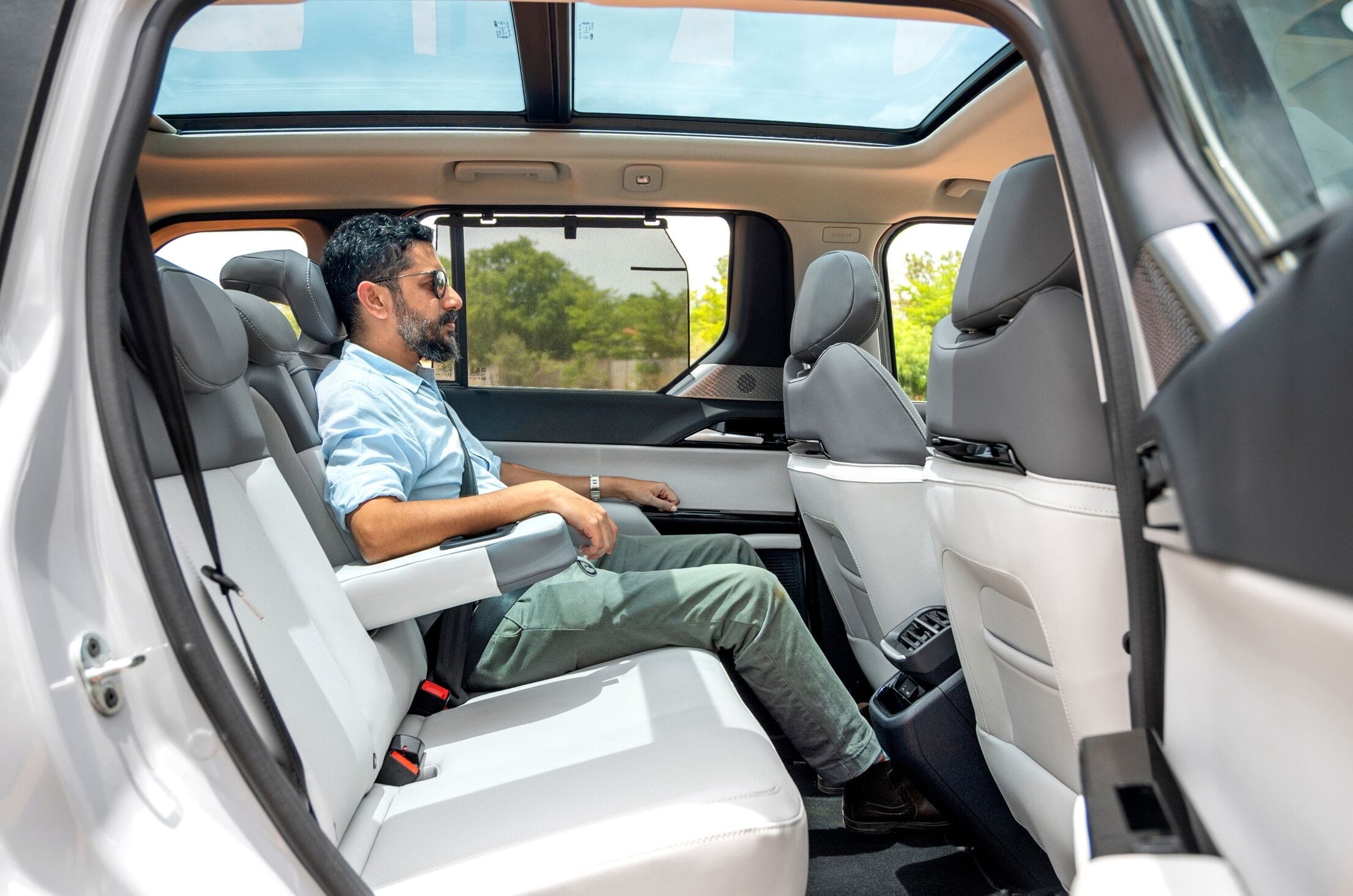
Dimensionally, the Sierra is very similar to its ICE counterpart, which means you get an incredibly roomy and lounge-like interior. Though the floor height has increased by less than an inch compared to that of the ICE Sierra, there’s nary a perceptible difference for occupants. The seats are very comfortable, there’s loads of rear legroom, and the bench even features a small amount of backrest recline.

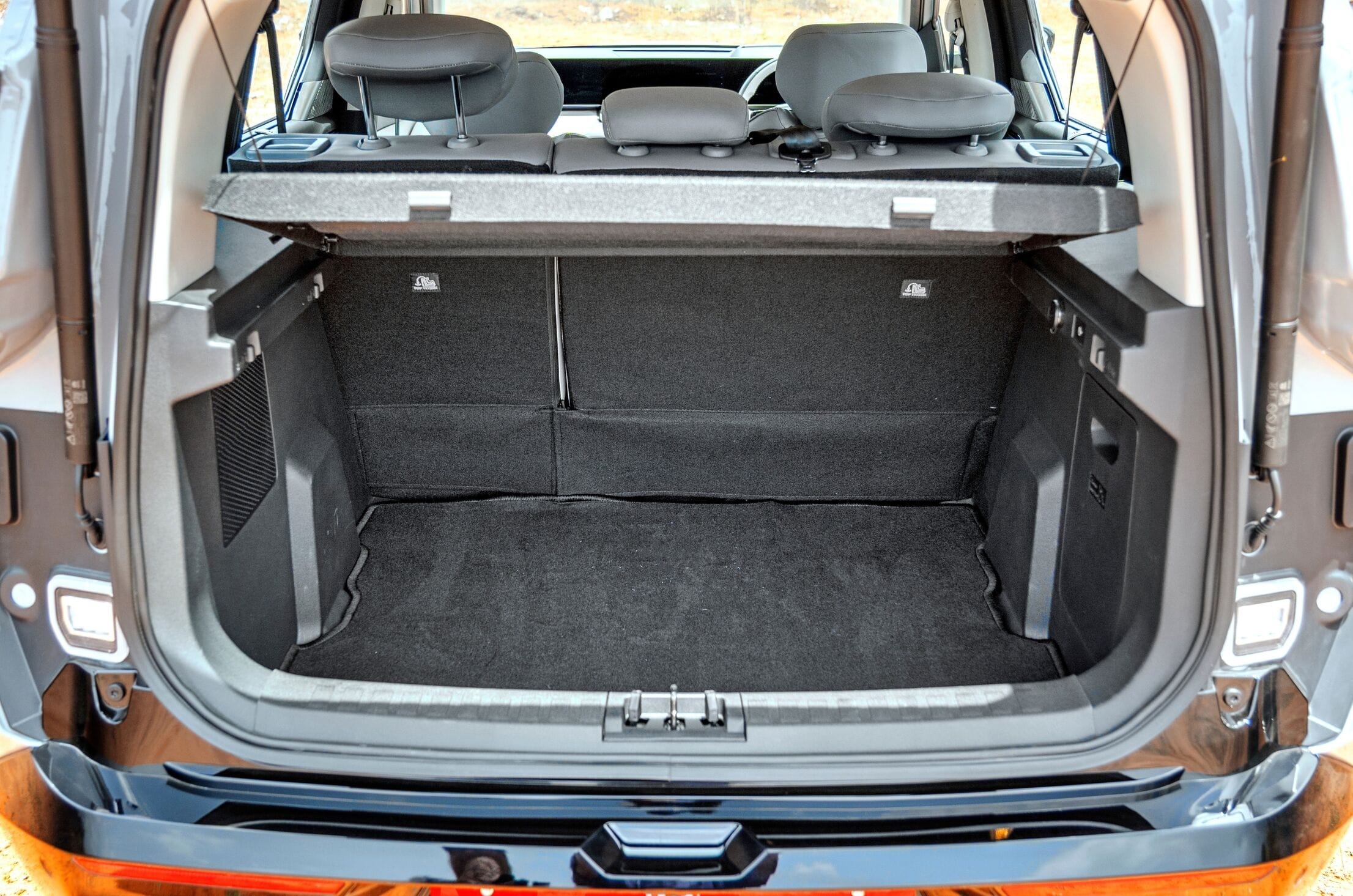
Despite the addition of a rear motor, the Sierra EV’s boot space matches the ICE version’s 622 litres. That’s measured up to the roof, though, and using the conventional method of measurement, which is up to the parcel tray, the Sierra EV should offer roughly 450 litres of boot space. You even get a frunk, which measures 55 litres in the RWD versions and 35 litres in the AWD variant.

Smooth and potent powertrains

Only one in its segment to offer AWD

The Sierra EV can be had with 63kWh and 75kWh battery options, both of which are powered by a 315Nm rear motor (RWD) as standard. In 63kWh RWD guise, the Sierra EV develops 238hp, while the 75kWh RWD versions make 209hp. The top-spec Sierra EV Empowered A 75kWh variant additionally packs a 140hp front motor to form an AWD layout, churning out a segment-best combined output of 306hp and 504Nm.

Performance is thereby a strong suit for the AWD Sierra EV, with a claimed 0-100kph time of 5.8 seconds. As we noted in our Sierra EV review, though, the SUV doesn’t feel neck-snappingly quick off the line. Power delivery is progressive and undramatic, which is fine considering the Sierra is, after all, a family SUV. On the curated off-road course we took the Sierra EV AWD on, it proved quite capable too.

As for range, the Sierra EV 75kWh RWD claims the highest ARAI figure of the range at 665km, followed by the 75kWh AWD version at 624km and then the 63kWh RWD version at 535km. These are quite competitive range figures when compared to the Sierra EV’s rivals.

Cons

Poor interior quality and ergonomics

Umbrella holders provided, but with no drain plugs

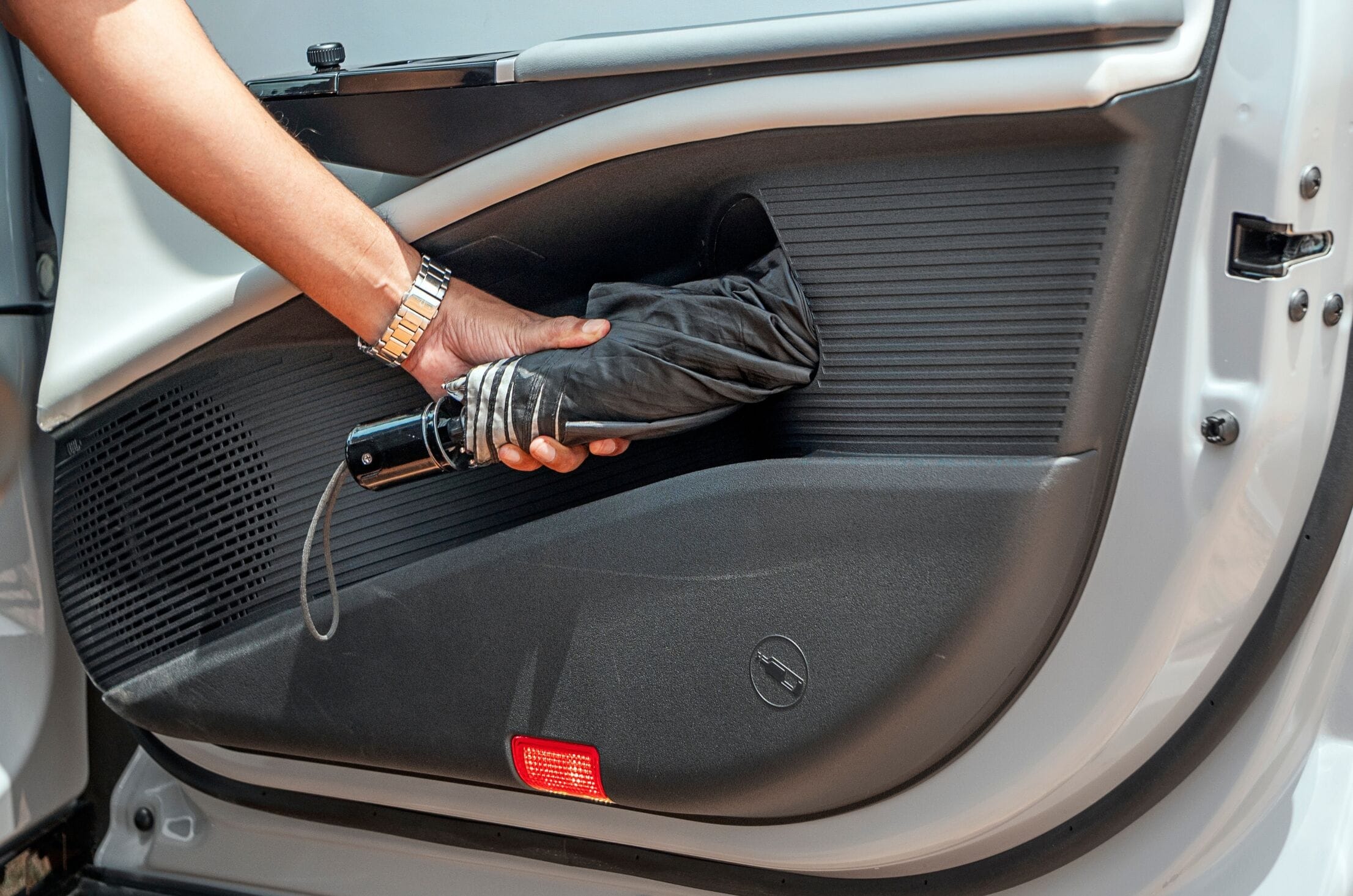
While Tata has upped its game in terms of interior fit and finish, we could still spot hard plastics, rough edges, crooked stitching, and misaligned panels in the Sierra EV. There are some interior design oddities, too, like wasted space below the pedestal-mounted drive selector, narrow and tough-to-reach armrest storage, tiny cupholders placed at the base of the dashboard, no drain plugs for the umbrella holders in the door cards, and conspicuous gaps next to the rear window sunblinds due to the L-shaped B-pillars.

No spare tyre on offer

Removed to accommodate battery pack

In an effort to accommodate the large battery pack, the Sierra EV sacrifices the underbody-mounted spare tyre of its ICE counterpart, offering only a puncture repair kit instead.