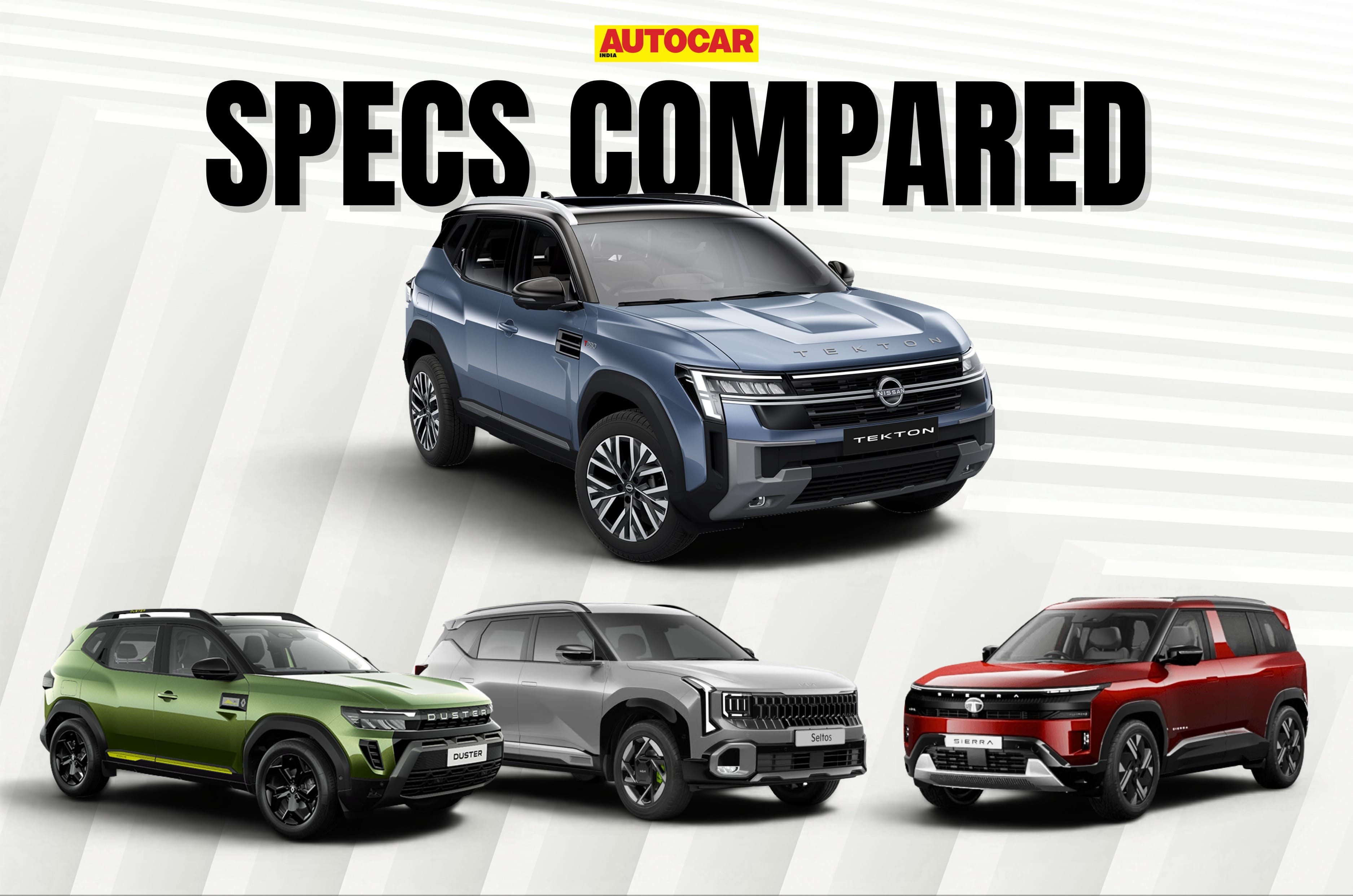
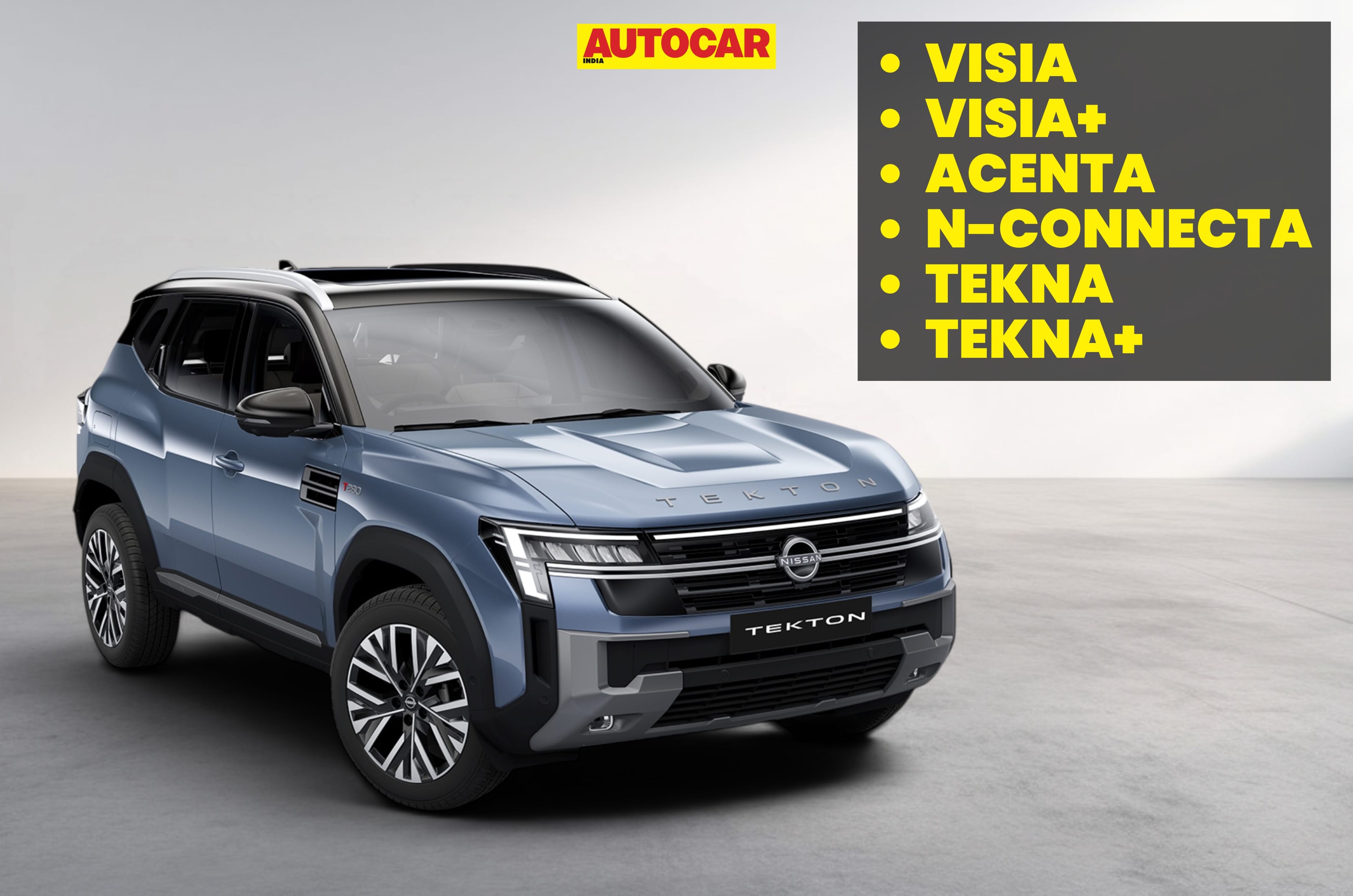
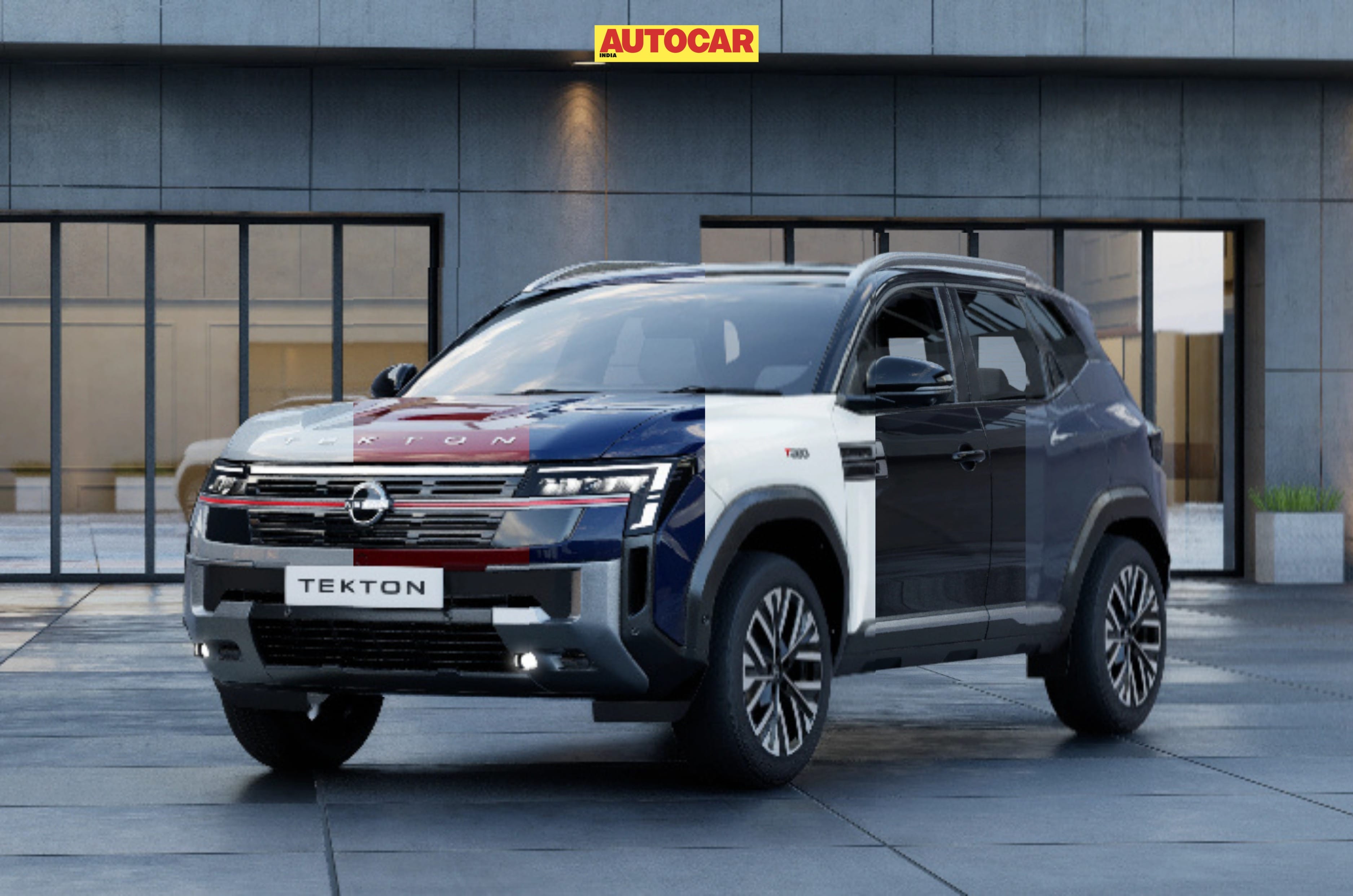
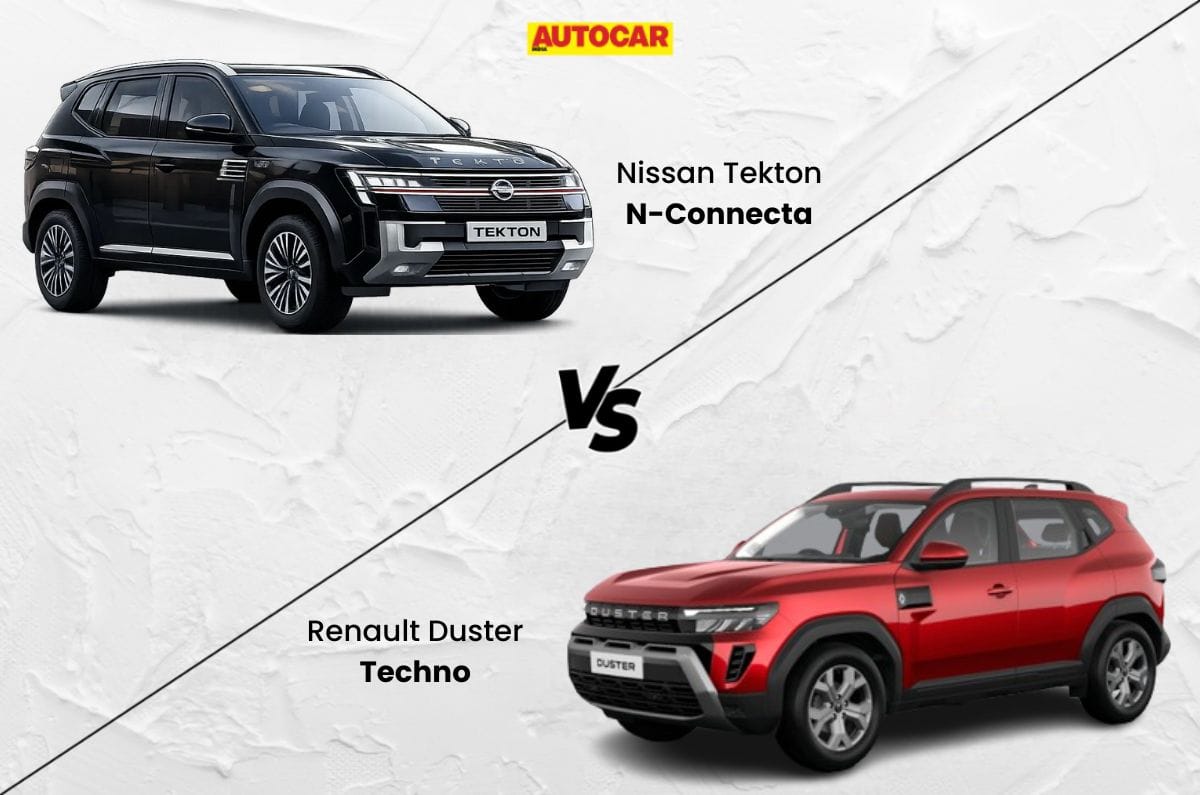
The Nissan Tekton was recently launched in India as the Japanese manufacturer’s flagship SUV in the country. It is being offered in five trims: Visia, Visia+, Acenta, N-Connecta, Tekna, and Tekna+, among which the mid-spec N-Connecta is offered with all the available powertrain options. At its price point, the Renault Duster’s mid-spec Techno variant is also available with the same powertrains. So, should you choose the Tekton’s N-Connecta over the Duster’s Techno? We find out.
Nissan Tekton vs Renault Duster: Dimensions
The Duster is slightly taller than the Tekton
Nissan Tekton vs Renault Duster: Dimensions and other specifications
Nissan Tekton
Renault Duster
Difference
Length (mm)
4,348
4,346
+2
Width (mm)
1,815
1,815
None
Height (mm)
1,674
1,701
-27
Wheelbase (mm)
2,657
2,657
None
Ground clearance (mm)
212
212
None
Boot space (litres)
518
518
None
The dimensions of the Nissan Tekton and Renault Duster are similar. While the Duster is slightly taller than the Tekton, it would not make a difference in the real world.
Nissan Tekton N-Connecta vs Renault Duster Techno: Powertrain
Both mid-spec trims are offered with the same powertrain options
Nissan Tekton N-Connecta vs Renault Duster Techno: Powertrain
Tekton N-Connecta
Duster Techno
Engine*
1.0L TP | 1.3L TP
1.0L TP | 1.3L TP
Power
100hp | 163hp
100hp | 163hp
Torque
160Nm | 280Nm
160Nm | 280Nm
Transmission
6MT | 6MT, 6DCT
6MT | 6MT, 6DCT
*TP = Turbo-petrol engine
^FWD = Front-wheel-drive
As mentioned earlier, the Tekton’s N-Connecta and the Duster’s Iconic are the only trims in both midsize SUVs’ lineups that are offered with all powertrain options. Both SUV trims, hence, are offered with the 100hp, 1.0-litre turbo-petrol engine and the 163hp, 1.3-litre turbo-petrol mill, and have identical power and torque outputs.
Nissan Tekton N-Connecta vs Renault Duster Techno: Exterior
The Tekton N-Connecta is offered with larger alloy wheels
Nissan Tekton N-Connecta vs Renault Duster Techno: Exterior
Tekton N-Connecta
Duster Techno
Headlights
Auto LED
Auto LED
Taillights
Connected LED
Connected LED
DRLs
Connected LED
Connected LED
Front fog lamps
LED
LED
Rear fog lamps
LED
LED
Puddle lamps
Yes
Yes
Wheels
18-inch
17-inch
Powered ORVMs
Yes
Yes
Roof rails
Yes
Yes
Colour
Monotone
Mono and dual tones
While the Nissan Tekton N-Connecta is offered with 18-inch alloy wheels, the Renault Duster Techno sports smaller 17-inch rims. However, the Duster Techno is available with dual-tone exterior hues, unlike the Tekton N-Connecta. Everything else, including LED headlights, LED taillights, LED DRLs, front and rear fog lamps and powered outside rearview mirrors (ORVMs), is the same on both SUV trims.
Nissan Tekton N-Connecta vs Renault Duster Techno: Interior
Duster offers a powered tailgate, but Tekton has a bigger driver’s display
Nissan Tekton N-Connecta vs Renault Duster Techno: Interior and features
Tekton N-Connecta
Duster Techno
Driver’s display
10.25-inch
7-inch
Infotainment screen
10.1-inch
10.1-inch
Android Auto, Apple CarPlay
Wireless
Wireless
Audio system
6-speaker Arkamys
6-speaker Arkamys
Sunroof
Panoramic
Panoramic
Climate control
Dual-zone
Dual-zone
Rear AC vents
Yes
Yes
Air purifier
No
No
Powered tailgate
No
Yes
Seat upholstery
Semi-leatherette
Semi-leatherette
Steering wheel adjustment
Tilt and telescopic
Tilt and telescopic
Wireless phone charger
Yes
Yes
Driver seat adjustment
Manual
Manual
Co-driver’s seat adjustment
Manual
Manual
Cruise control
Yes
Yes
Two major differences between the Tekton N-Connecta and Duster Techno are that the Renault SUV is equipped with a powered tailgate and the Nissan offering is available with a larger driver’s display. Everything else is the same, including a 10.1-inch infotainment system, a 6-speaker sound system, a panoramic sunroof, a wireless phone charger and dual-zone climate control.
Nissan Tekton N-Connecta vs Renault Duster Techno: Safety
Safety tech on both SUV trims is identical
Nissan Tekton N-Connecta vs Renault Duster Techno: Safety features
Tekton N-Connecta
Duster Techno
Airbags
6
6
ADAS
No
No
Camera setup
Rear only
Rear only
Parking sensors
Rear only
Rear only
Electronic parking brake
DCT variant only
DCT variant only
TPMS
Yes
Yes
IRVM
Auto-dimming
Auto-dimming
Rear wiper, washer
Yes
Yes
Rear defogger
Yes
Yes
Hill start assist
Yes
Yes
Hill descent control
No
No
ESC
Yes
Yes
Traction control
Yes
Yes
Both the Nissan Tekton N-Connecta and the Renault Duster Techno are offered with an identical safety suite, including six airbags, a rear parking camera with sensors, a tyre pressure monitoring system (TPMS), a rear wiper, washer and defogger, and hill start assist.
Nissan Tekton N-Connecta vs Renault Duster Techno: Price, verdict
Duster’s Techno has a slightly lower price than the Tekton N-Connecta
Nissan Tekton N-Connecta vs Renault Duster Techno: Ex-showroom prices (Rs, lakh)
Tekton N-Connecta
Duster Techno
1.0L TP 6MT
13.69
13.49
1.3L TP 6MT
14.99
14.49
1.3L TP 6DCT
16.49
15.89
All the variants of the Nissan Tekton N-Connecta are slightly more expensive than the Duster’s Iconic variants. The smaller engine variant is Rs 20,000 more expensive on the Tekton, while the larger engine is Rs 50,000 to Rs 60,000 more expensive on the Nissan midsize SUV. Although the Duster’s Techno trim gets smaller alloys and a smaller driver’s display, it offers a powered tailgate, which would be more useful in the real world. This additional feature and the fact that it is offered at a lower price make the Duster’s mid-spec Techno a more recommendable trim than the Tekton’s N-Connecta.
देशभर में 20 फीसदी इथेनॉल मिले पेट्रोल (E20) को लागू करने को लेकर उठ रहे सवालों के बीच केंद्रीय पेट्रोलियम और प्राकृतिक गैस मंत्री हरदीप सिंह पुरी ने सरकार की इस योजना को लेकर उठ रहे हर सवाल का जवाब दिया है। उन्होंने कहा कि E20 पेट्रोल से जुड़ी इंजन खराब होने और लोगों के विरोध जैसी बातें सही नहीं हैं। एक खास बातचीत में हरदीप सिंह पुरी ने कहा कि सरकार का ग्रीन फ्यूल अभियान पर्यावरण को बेहतर बनाने और देश को ऊर्जा के मामले में आत्मनिर्भर बनाने की दिशा में एक बड़ा कदम है।
उन्होंने खास तौर पर पुरानी गाड़ियों के इंजन पर पड़ने वाले असर को लेकर फैली चिंताओं को भी खारिज किया। मंत्री ने कहा कि ऑटोमोबाइल सर्विस सेक्टर के उपलब्ध आंकड़ों में ऐसा कोई सबूत नहीं मिला है, जिससे यह साबित हो कि E20 पेट्रोल की वजह से बड़े पैमाने पर वाहनों में मैकेनिकल खराबी हो रही है।
E20 पेट्रोल से इंजन को नुकसान नहीं
केंद्रीय पेट्रोलियम मंत्री हरदीप सिंह पुरी ने कहा कि मारुति सुजुकी ने अब तक करीब 1.5 करोड़ गाड़ियों की सर्विस की है, लेकिन E20 पेट्रोल की वजह से इंजन खराब होने का कोई मामला सामने नहीं आया है। उन्होंने कहा कि वाहन बनाने वाली कंपनियों और मैकेनिकों, दोनों को ही कोई बड़ी तकनीकी समस्या नहीं मिली है। मंत्री ने यह भी बताया कि शुरुआत में वारंटी और बीमा को लेकर लोगों के बीच कई तरह की अफवाहें फैली थीं, जिससे वाहन मालिकों में चिंता बढ़ गई थी। हालांकि, अब ये सभी समस्याएं दूर कर ली गई हैं।
हरदीप सिंह पुरी ने कहा कि पहले कुछ बीमा कंपनियों के बारे में कहा जा रहा था कि वे E20 पेट्रोल से होने वाले नुकसान का दावा स्वीकार नहीं करेंगी, लेकिन अब स्थिति पूरी तरह साफ है। उन्होंने भरोसा दिलाया कि वाहन मालिकों को वारंटी और बीमा से जुड़ी किसी तरह की परेशानी नहीं होगी।
सरकार का दावा: E20 पेट्रोल से इंजन की परफॉर्मेंस बेहतर
सरकार का कहना है कि सामान्य पेट्रोल की तुलना में इथेनॉल मिले पेट्रोल (E20) से माइलेज में थोड़ी कमी आ सकती है, क्योंकि इथेनॉल की ऊर्जा क्षमता (कैलोरीफिक वैल्यू) कम होती है। लेकिन सरकार का मानना है कि केवल माइलेज देखकर इस ईंधन का आकलन करना सही नहीं है।
बेहतर पिकअप: इथेनॉल की वजह से गाड़ी का पिकअप और एक्सेलरेशन बेहतर होता है। साथ ही इंजन का रिस्पॉन्स भी तेज मिलता है।
इंजन की बेहतर सुरक्षा: E20 पेट्रोल का ऑक्टेन स्तर ज्यादा होता है, जिससे इंजन में नॉकिंग (असामान्य आवाज) की संभावना कम होती है और इंजन बेहतर तरीके से काम करता है।
लंबे समय तक सुरक्षित: सरकार का कहना है कि कई परीक्षणों में यह पाया गया है कि E20 पेट्रोल के इस्तेमाल से इंजन के अंदरूनी हिस्सों को लंबे समय में कोई नुकसान नहीं होता।
‘E20 पेट्रोल पर्यावरण के लिए बेहतर कदम…’,
केंद्रीय पेट्रोलियम मंत्री हरदीप सिंह पुरी ने कहा कि E20 पेट्रोल का आकलन केवल माइलेज के आधार पर नहीं किया जाना चाहिए। उनके अनुसार, किसी भी नई तकनीक को उसके सभी फायदे और लंबे समय के असर को ध्यान में रखकर देखा जाना चाहिए।
उन्होंने कहा कि इथेनॉल मिला पेट्रोल पर्यावरण के लिए बेहतर ईंधन की दिशा में एक महत्वपूर्ण कदम है। उनका कहना है कि नई तकनीक का उद्देश्य हमेशा ऐसी व्यवस्था अपनाना होता है, जो पहले से ज्यादा टिकाऊ और पर्यावरण के अनुकूल हो। हरदीप सिंह पुरी ने कहा कि E20 पेट्रोल इसी बदलाव का हिस्सा है और इसका मकसद देश को स्वच्छ ईंधन अपनाने के साथ-साथ भविष्य के लिए अधिक टिकाऊ ऊर्जा व्यवस्था की ओर ले जाना है।
E85 पेट्रोल लाने की तैयारी
केंद्रीय पेट्रोलियम मंत्री हरदीप सिंह पुरी ने बताया कि सरकार जल्द ही E85 ईंधन लाने की तैयारी कर रही है। इस ईंधन में 85 प्रतिशत तक इथेनॉल मिला होगा। इसकी कीमत E20 पेट्रोल से करीब 20 रुपये प्रति लीटर कम हो सकती है। हालांकि, इसका इस्तेमाल केवल फ्लेक्स-फ्यूल वाहनों (FFV) में ही किया जा सकेगा। मंत्री ने कहा कि इथेनॉल मिश्रित पेट्रोल योजना से देश की अर्थव्यवस्था और किसानों, दोनों को फायदा हो रहा है। उनके अनुसार, अगर यह योजना नहीं होती तो भारत को ज्यादा कच्चा तेल आयात करना पड़ता और पेट्रोल-डीजल की कीमतें आज के मुकाबले अधिक होतीं।
हरदीप सिंह पुरी ने कहा कि इथेनॉल मिश्रण से विदेशों से कच्चे तेल पर निर्भरता कम हो रही है। इससे देश को वैश्विक तेल बाजार में कीमतों के उतार-चढ़ाव का कम असर झेलना पड़ता है। उन्होंने यह भी कहा कि इस योजना से विदेशों में तेल खरीदने पर होने वाला खर्च घटता है और इसका लाभ देश के किसानों और कृषि क्षेत्र तक पहुंचता है। इससे ‘आत्मनिर्भर भारत’ अभियान को भी मजबूती मिल रही है।
EV और बायोफ्यूल दोनों को मिलेगा बढ़ावा
केंद्रीय पेट्रोलियम मंत्री हरदीप सिंह पुरी ने कहा कि E25 पेट्रोल को लेकर लोगों को भ्रमित होने की जरूरत नहीं है। उन्होंने साफ किया कि फिलहाल E25 केवल परीक्षण (ट्रायल) के चरण में है और इसे अभी आम लोगों के लिए लागू नहीं किया गया है। मंत्री ने कहा कि सरकार भविष्य में ईंधन से जुड़ा कोई भी बदलाव जल्दबाजी में नहीं करेगी। सभी फैसले वैज्ञानिक परीक्षण और चरणबद्ध तरीके से ही लागू किए जाएंगे। हरदीप सिंह पुरी ने यह भी स्पष्ट किया कि सरकार सिर्फ बायोफ्यूल ही नहीं, बल्कि इलेक्ट्रिक वाहनों (EV) को भी बराबर बढ़ावा दे रही है। उन्होंने कहा कि भारत का भविष्य स्वच्छ और हरित परिवहन का है, इसलिए बायोफ्यूल और इलेक्ट्रिक वाहन दोनों साथ-साथ आगे बढ़ेंगे।
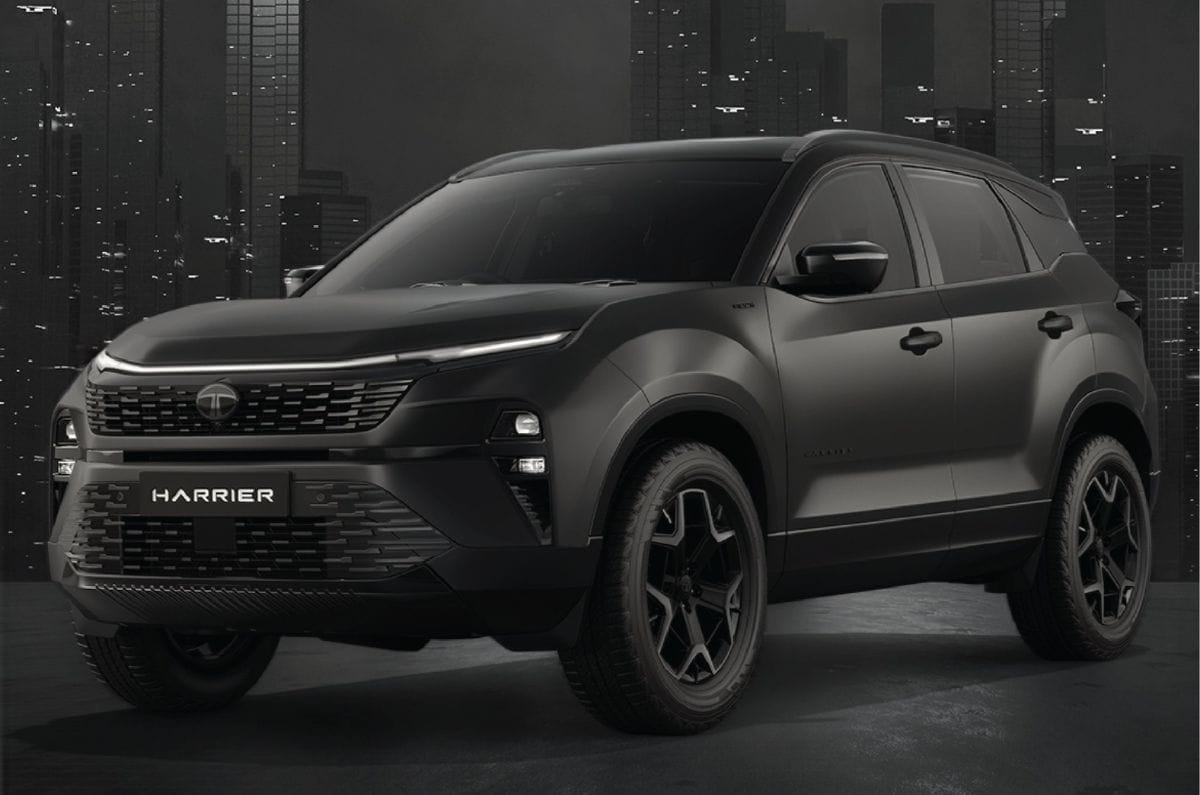
Tata Motors has launched the Stealth Edition of the Harrier, which is based on the Fearless Ultra trim. The Harrier Fearless Ultra Stealth Edition is available in petrol and diesel guises, and prices range between Rs 23.43 lakh and Rs 26.01 lakh (ex-showroom, Delhi). Tata had introduced a Stealth Edition earlier, but it was made available in limited volumes. The 2026 Stealth Edition aside, Tata continues to offer the Harrier in Dark and Red-Dark versions.
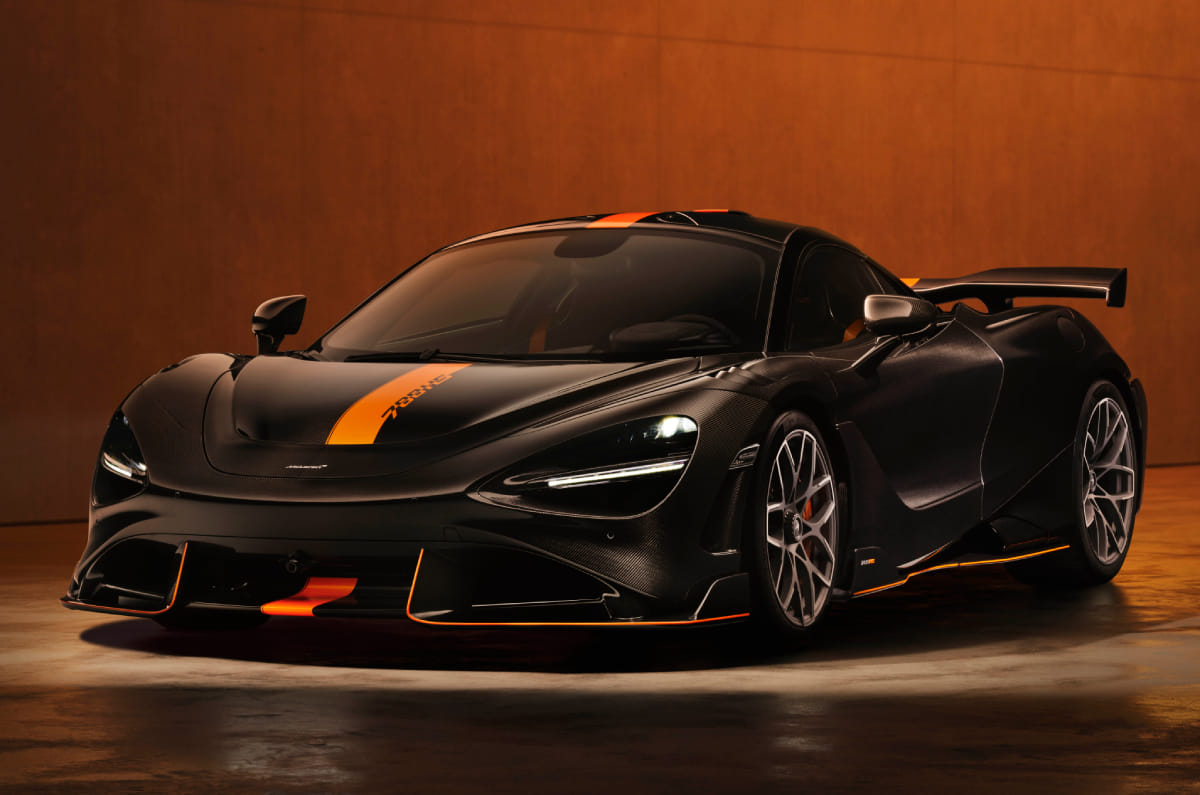
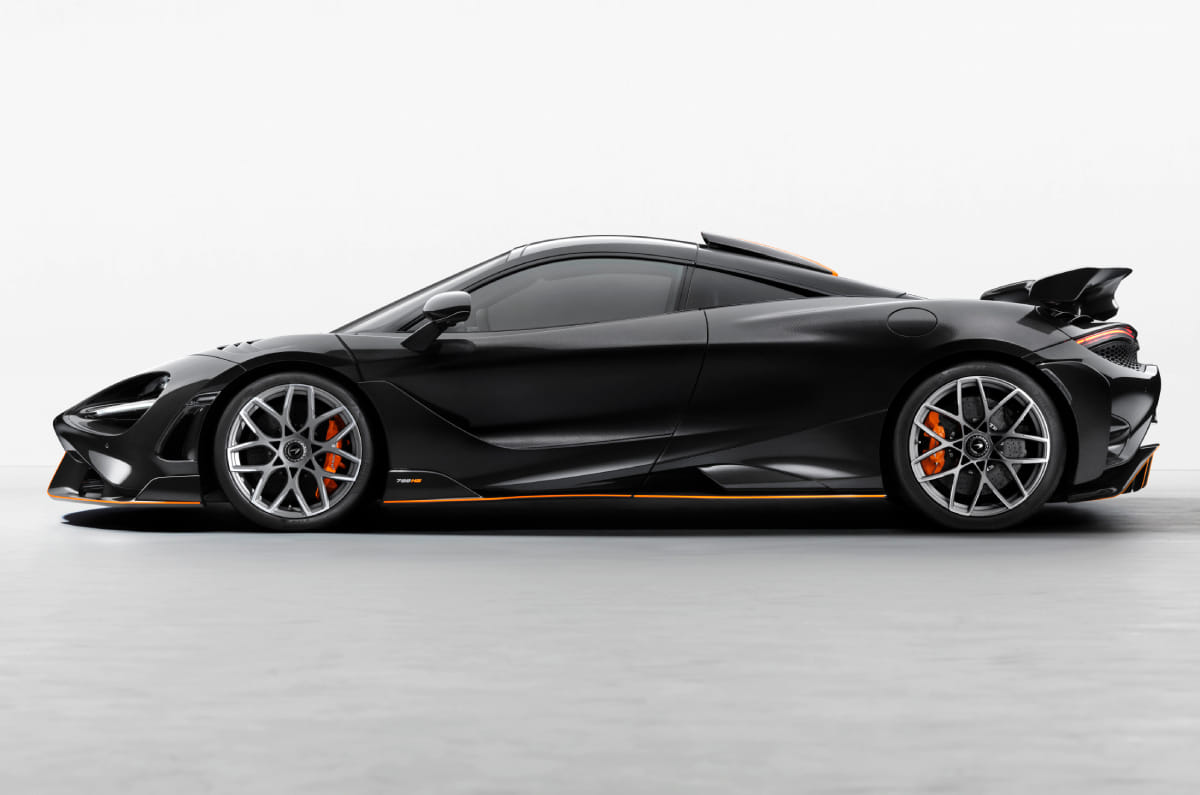
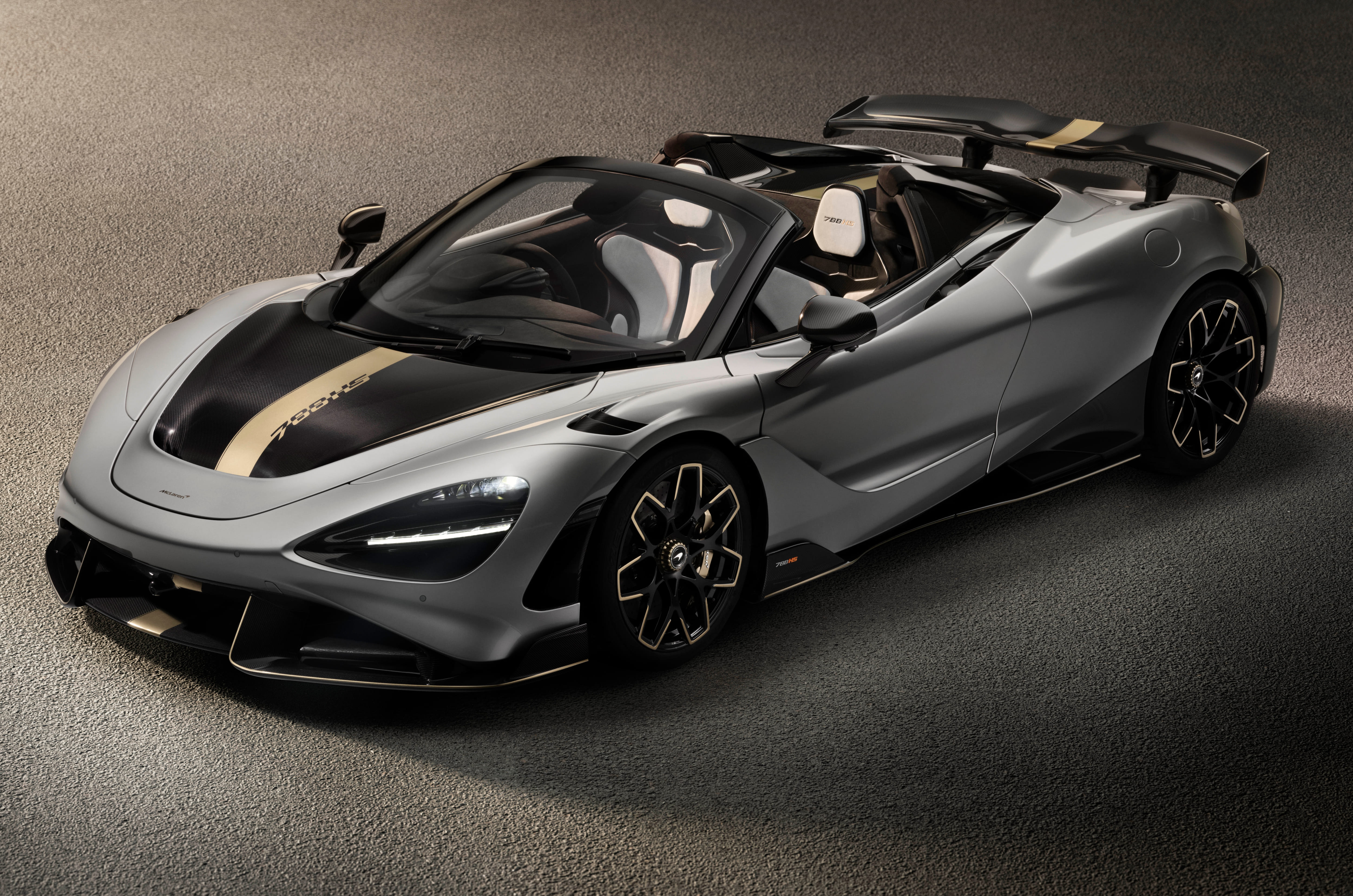
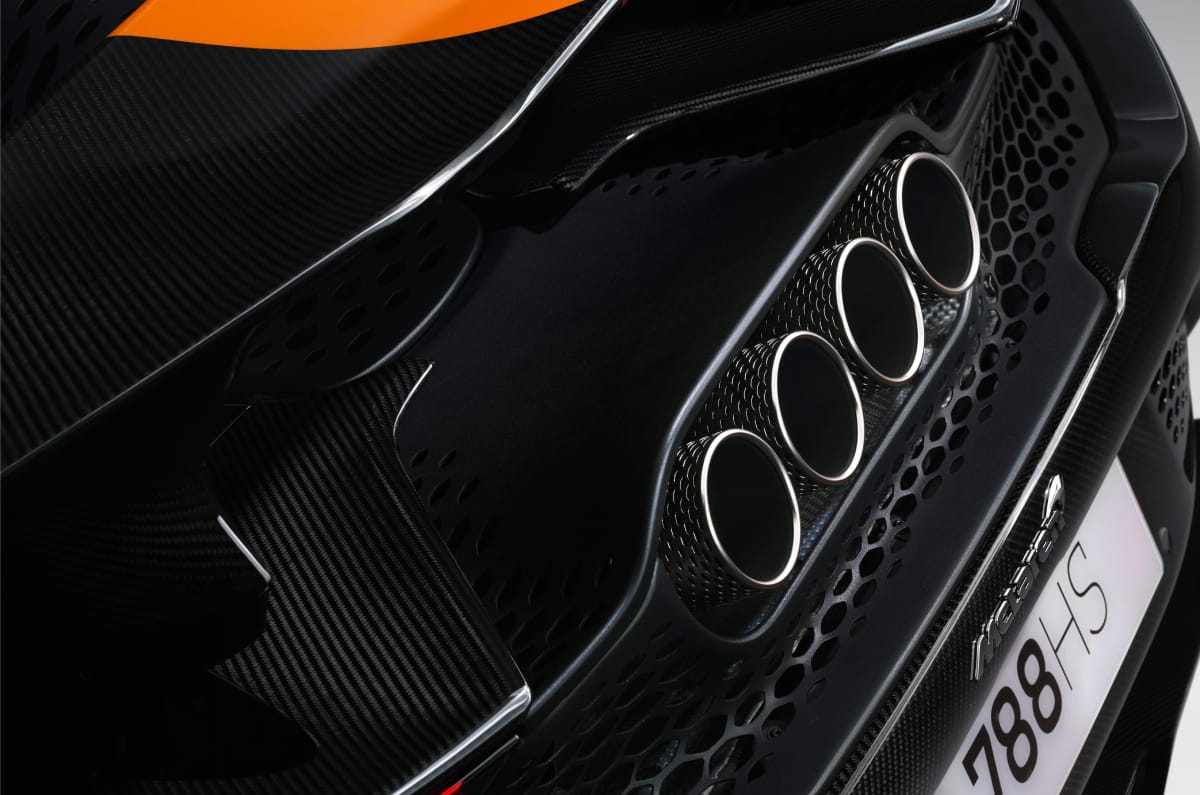
McLaren has unveiled the new 788HS, marking the final evolution of the supercar line that began with the 720S and later expanded to include the 765LT and 750S. Limited to 200 examples, the new model builds on the 750S with a more powerful V8 engine, revised aerodynamics, chassis upgrades and bespoke styling. It is only the third McLaren to wear the ‘HS’ (High Sport) badge, following the MP4-12C HS and MSO HS.
Only 200 units will be built, split equally between coupe and Spider
788hp twin-turbo V8 develops 38hp more than the 750S
Generates 10 percent more downforce than the McLaren 765LT
McLaren 788HS exterior
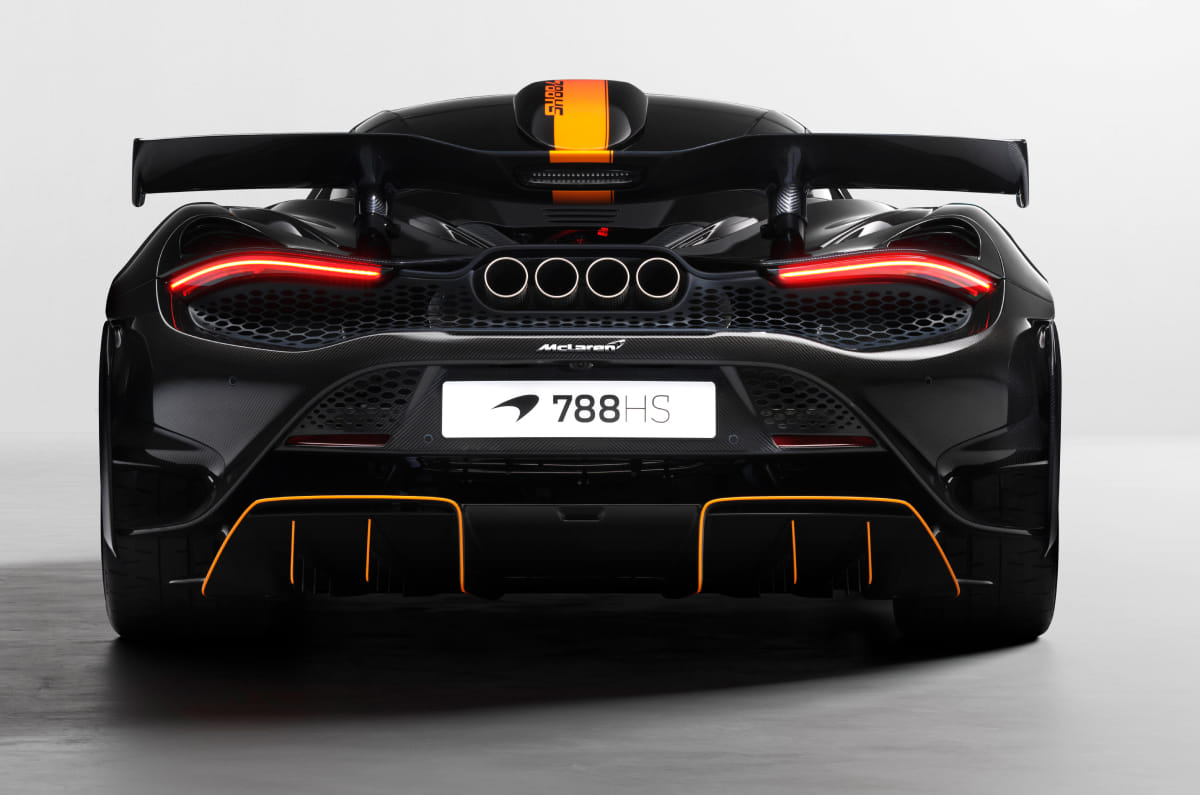
The 788HS receives a redesigned aerodynamic package featuring a new carbon-fibre multi-piece front splitter, bonnet with an integrated S-Duct, larger air intakes, a raised active rear spoiler and a chunky rear diffuser said to take inspiration from Formula 1 – which alone brings a 10% improvement in downforce over the 765LT.
The coupe also gets a roof scoop finished in gloss black, while buyers can opt for a full exposed carbon-fibre body in either gloss or satin finish. Other exterior changes include a louvred under-wing panel to improve airflow, new forged alloy wheels and a quad-exit titanium exhaust.
McLaren 788HS interior
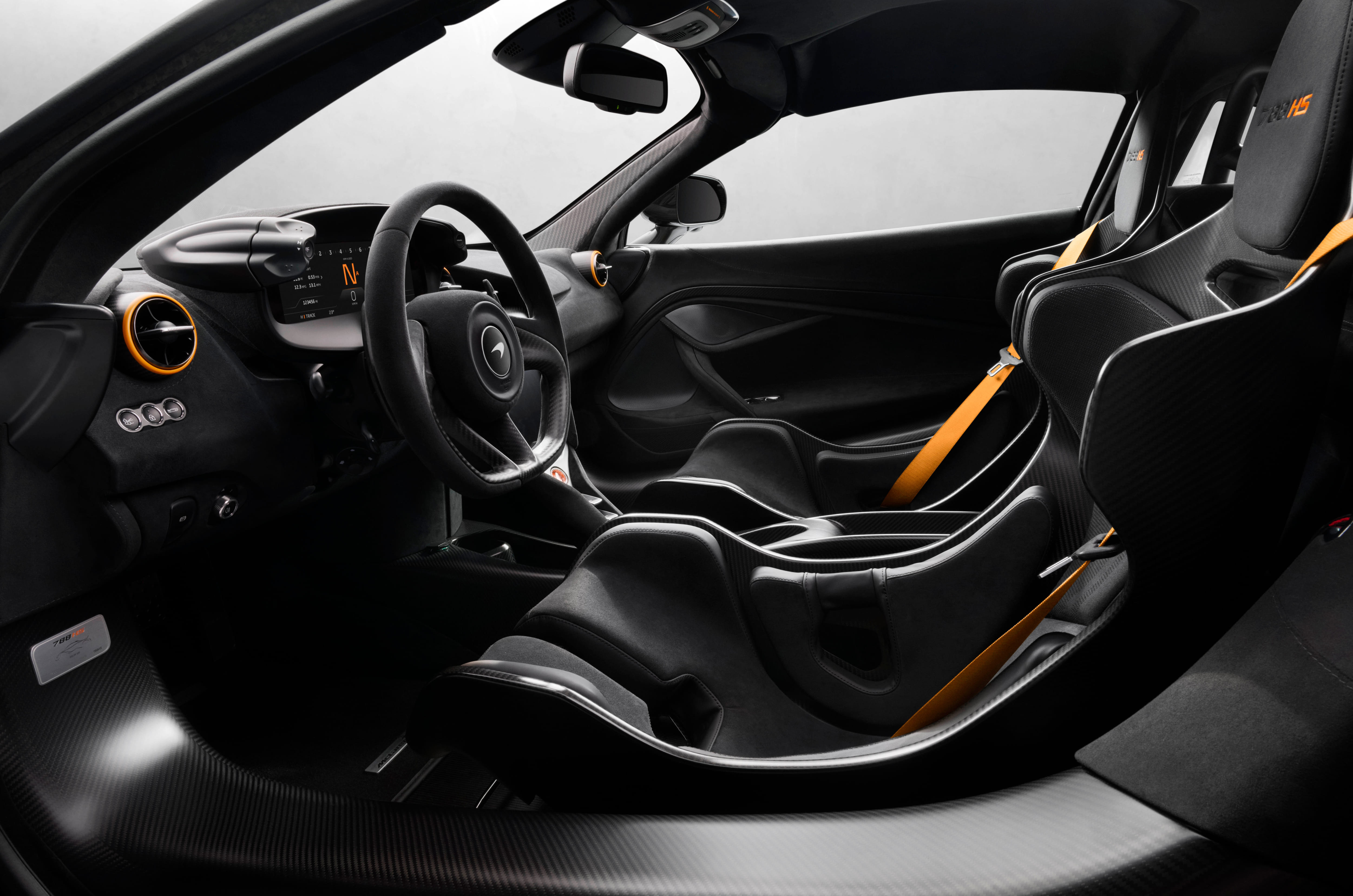
The cabin retains the driver-focused layout of the 750S but adds several model-specific details. It features a lightweight carbon-fibre centre console, unique HS badging, a dedicated plaque and bespoke upholstery with a new perforation pattern.
Other features include McLaren’s digital instrument display mounted on the steering column, steering wheel-mounted powertrain and handling mode controls, McLaren Infotainment System II and the McLaren Control Launcher, which allows drivers to store preferred vehicle settings.
McLaren 788HS powertrain and performance
Powering the 788HS is McLaren’s 4.0-litre twin-turbocharged V8 petrol engine, producing 788hp and 800Nm. The engine revs to 8,500rpm and is paired with revised engine mounts, forged pistons, twin-scroll turbochargers and twin fuel pumps. McLaren claims a 0-100kph time of 2.8 seconds, 0-200kph time of 7.0 seconds and a top speed of 330kph.
The car has a dry weight of 1,265kg, giving it a claimed 623hp-per-tonne power-to-weight ratio, the highest achieved by any model in the 720S, 765LT and 750S series.
The suspension set-up has also been modified, resulting in the 788HS sitting 5mm lower compared to the 750S. Braking is handled by carbon-ceramic discs derived from the McLaren Senna, paired with six-piston forged aluminium front calipers. The new forged centre-lock wheels are a first for this supercar series.
Nissan has revealed the claimed fuel-efficiency figures for its new Tekton SUV, which is offered with 1-litre and 1.3-litre turbo-petrol engine options. The 1-litre turbo-petrol paired with a manual gearbox delivers the highest efficiency at 19.4kpl. The 1.3-litre turbo-petrol returns 18.5kpl with the dual-clutch automatic and 17.8kpl with the manual gearbox.
Nissan Tekton powertrains
The Tekton shares its powertrains with the Renault Duster. The entry-level 1.0-litre three-cylinder mill generates 100hp and 166Nm of torque, and comes paired only with a 6-speed manual gearbox as of now. Meanwhile, the 1.3-litre three-cylinder motor develops much higher outputs of 163hp and 280Nm, and can be had with either a 6-speed manual or a 6-speed dual-clutch automatic. Since the powertrains are shared between the two SUVs, even their claimed fuel-efficiency figures are similar.
Nissan Tekton vs Renault Duster claimed fuel-efficiency (kpl)
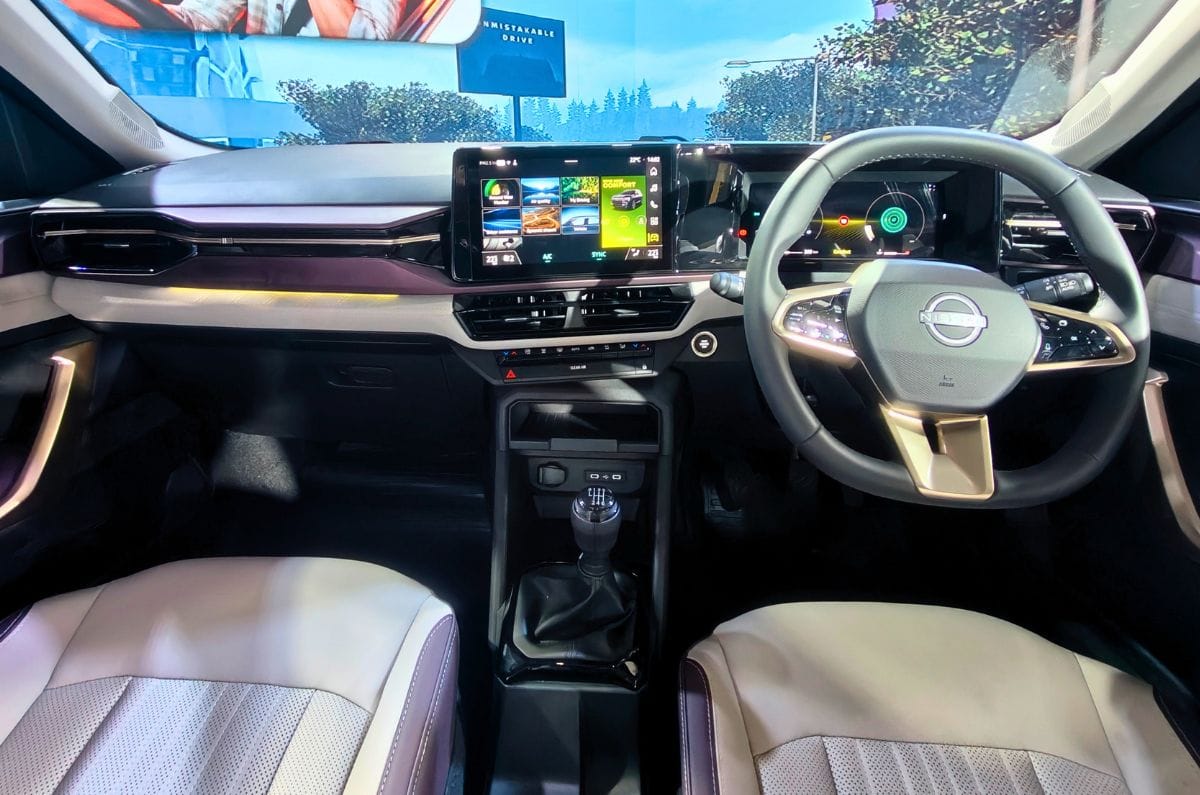
With the launch of the Nissan Tekton, the Japanese brand now has a midsize SUV in India. The Tekton is closely related to the Renault Duster, with which it shares its platform and powertrain options. The latter comes in the form of a 100hp 1.0-litre three-cylinder turbo-petrol and 163hp 1.3-litre four-cylinder turbo-petrol with direct injection. While there are differences on the outside, the interior of this Nissan SUV gets few design tweaks that helps it stand out from the Duster. The driver-oriented centre console aside, the dual digital displays and overall interior design and layout are similar to its Renault rival.
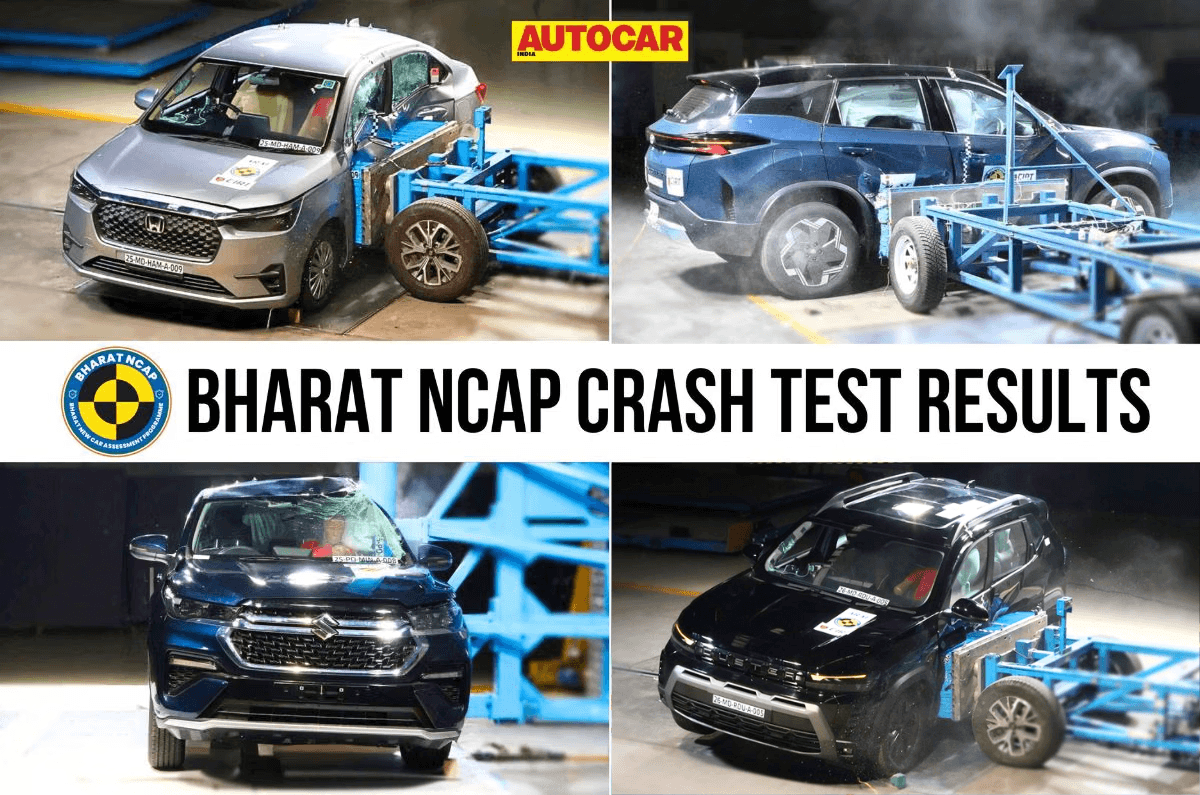
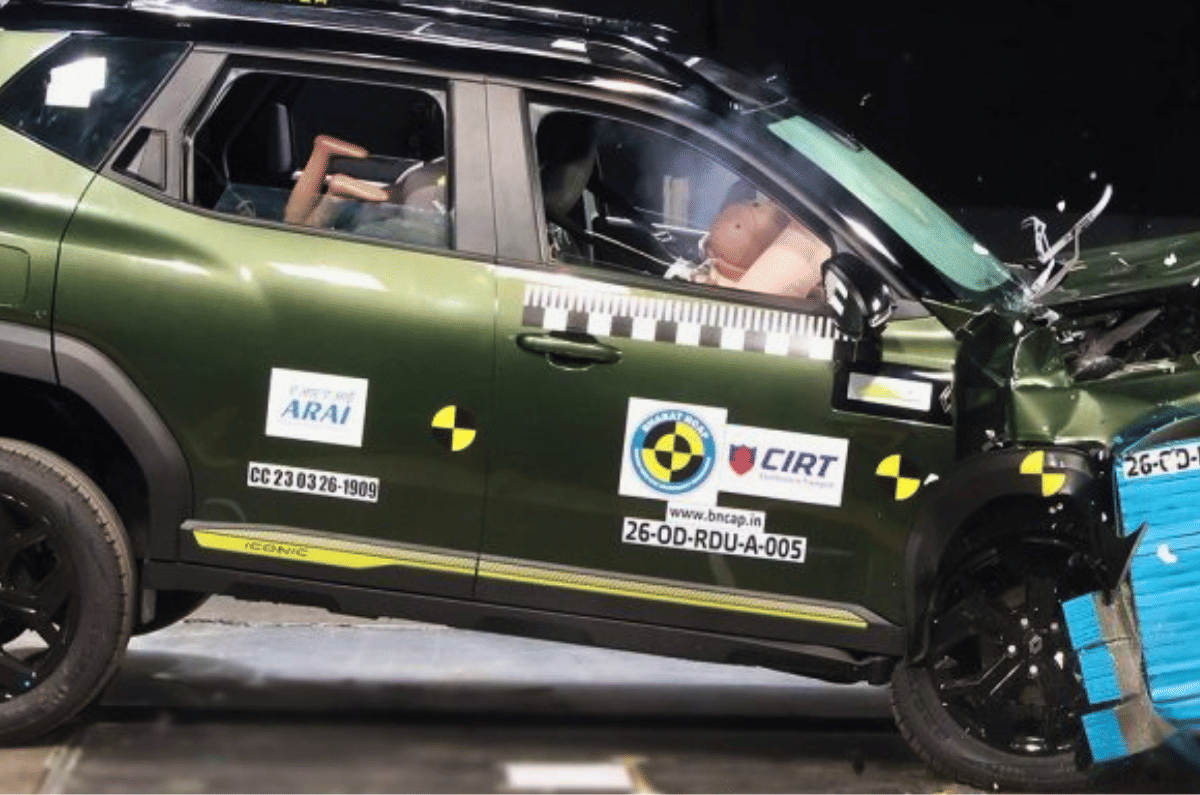
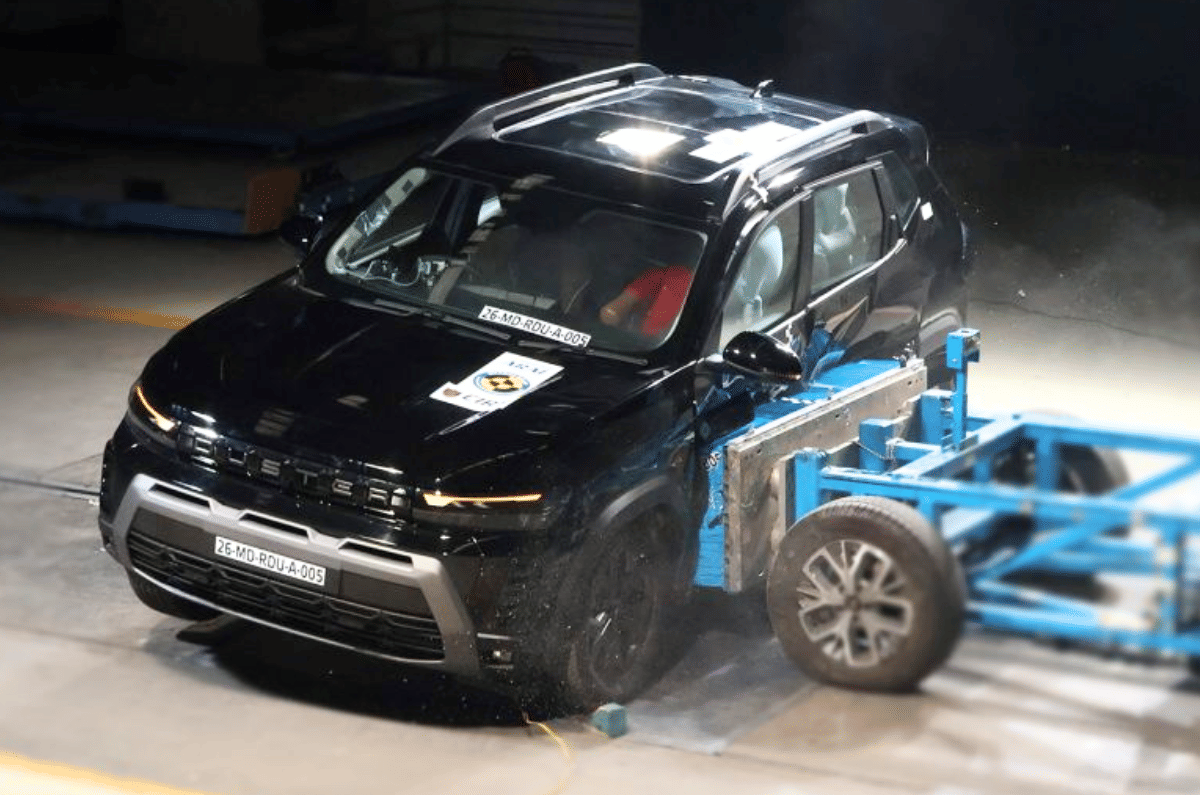
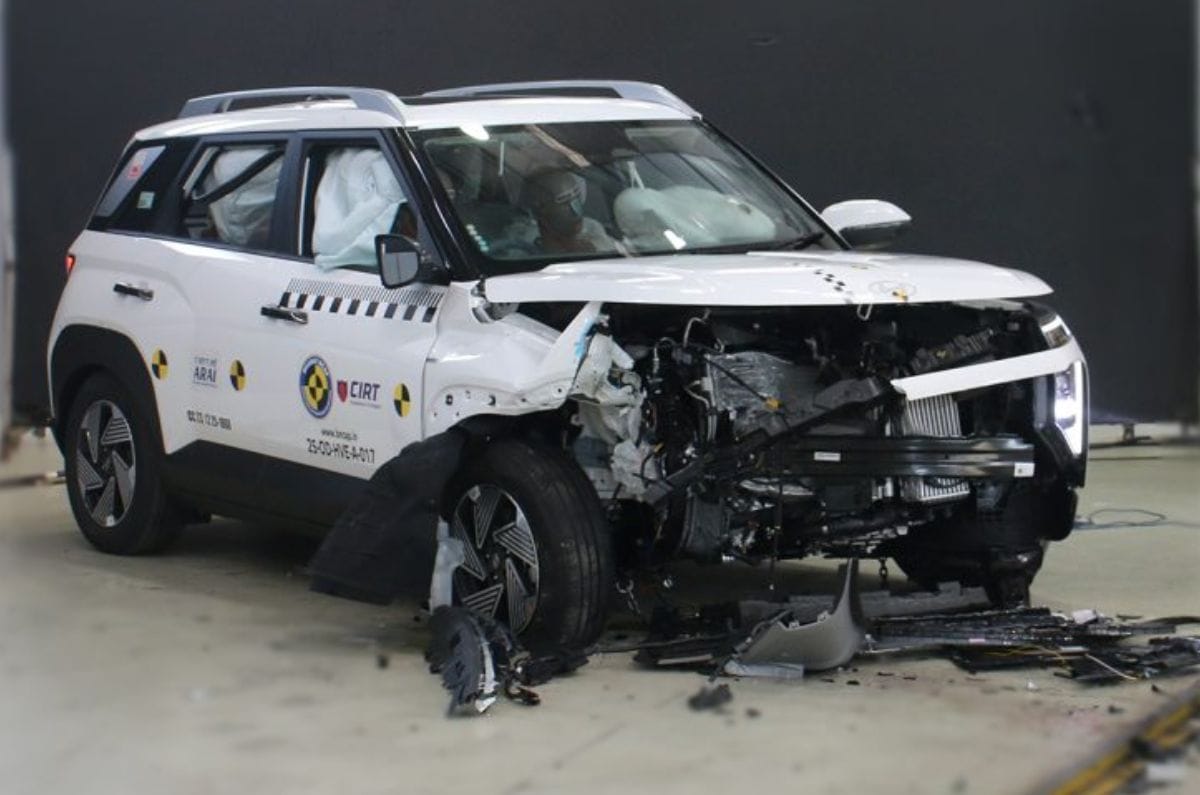
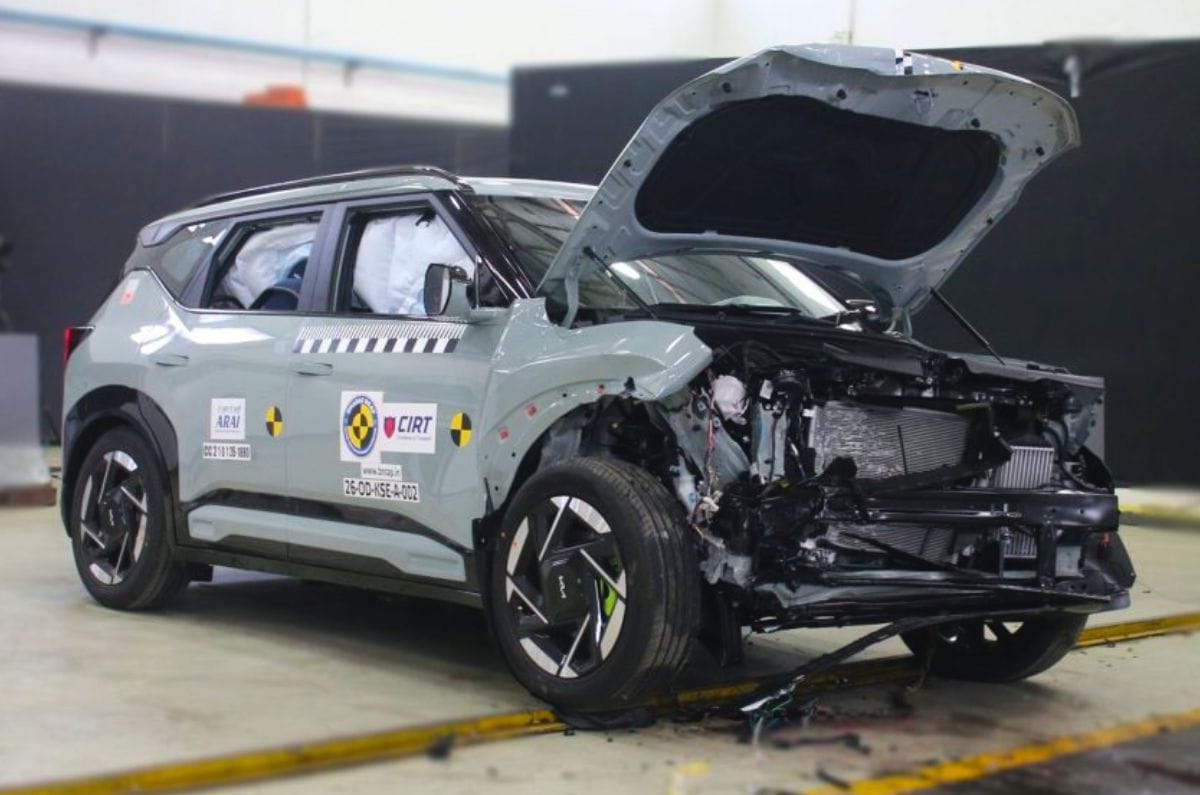
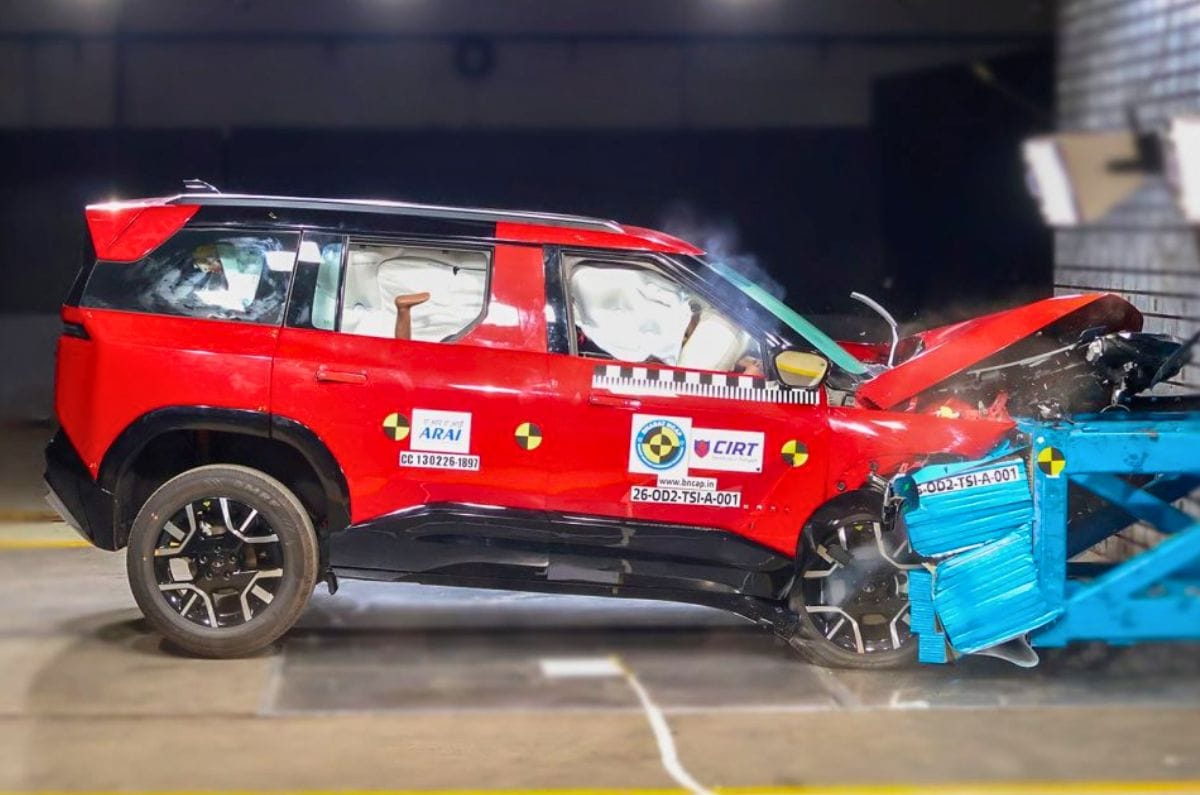
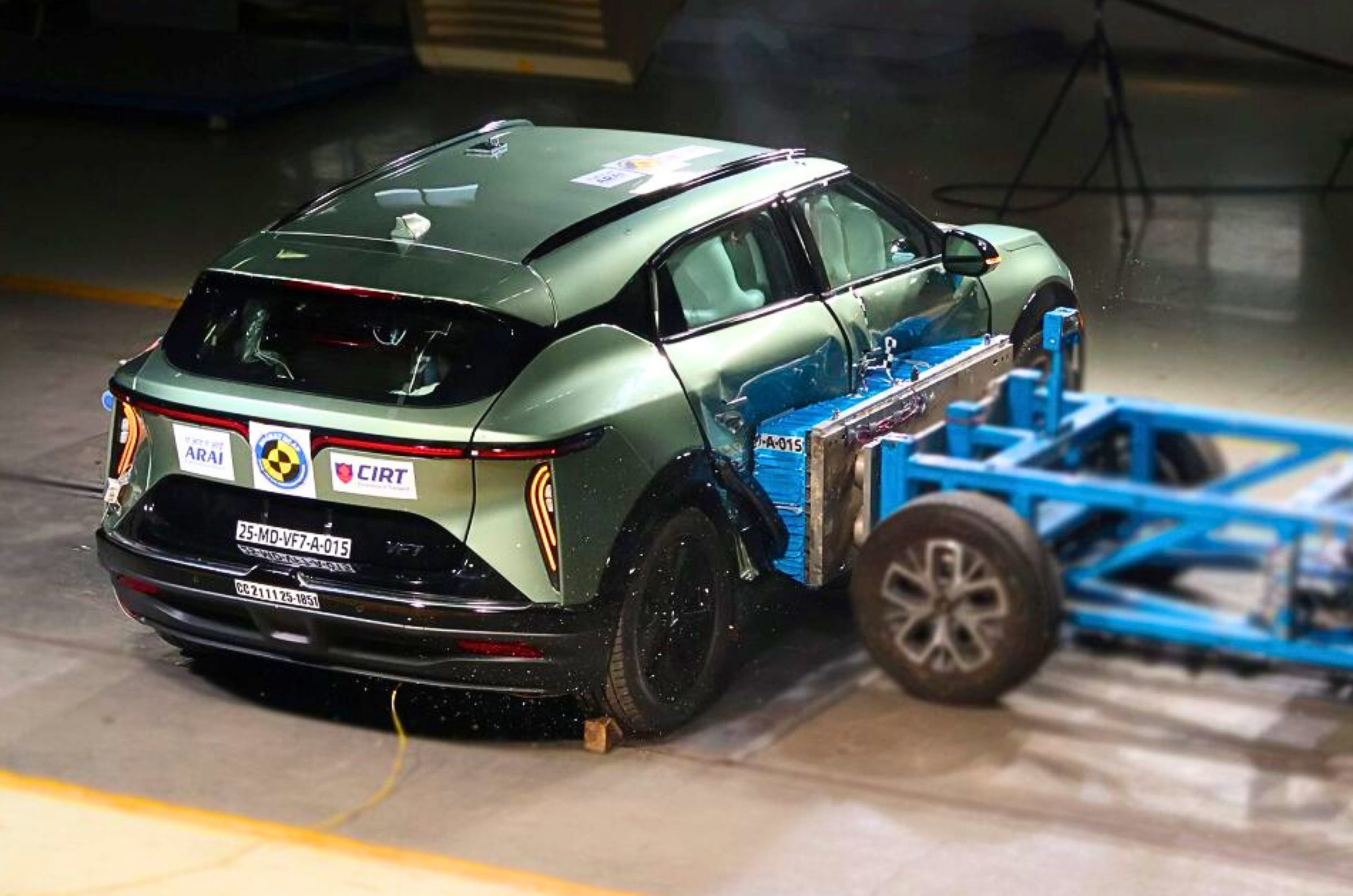
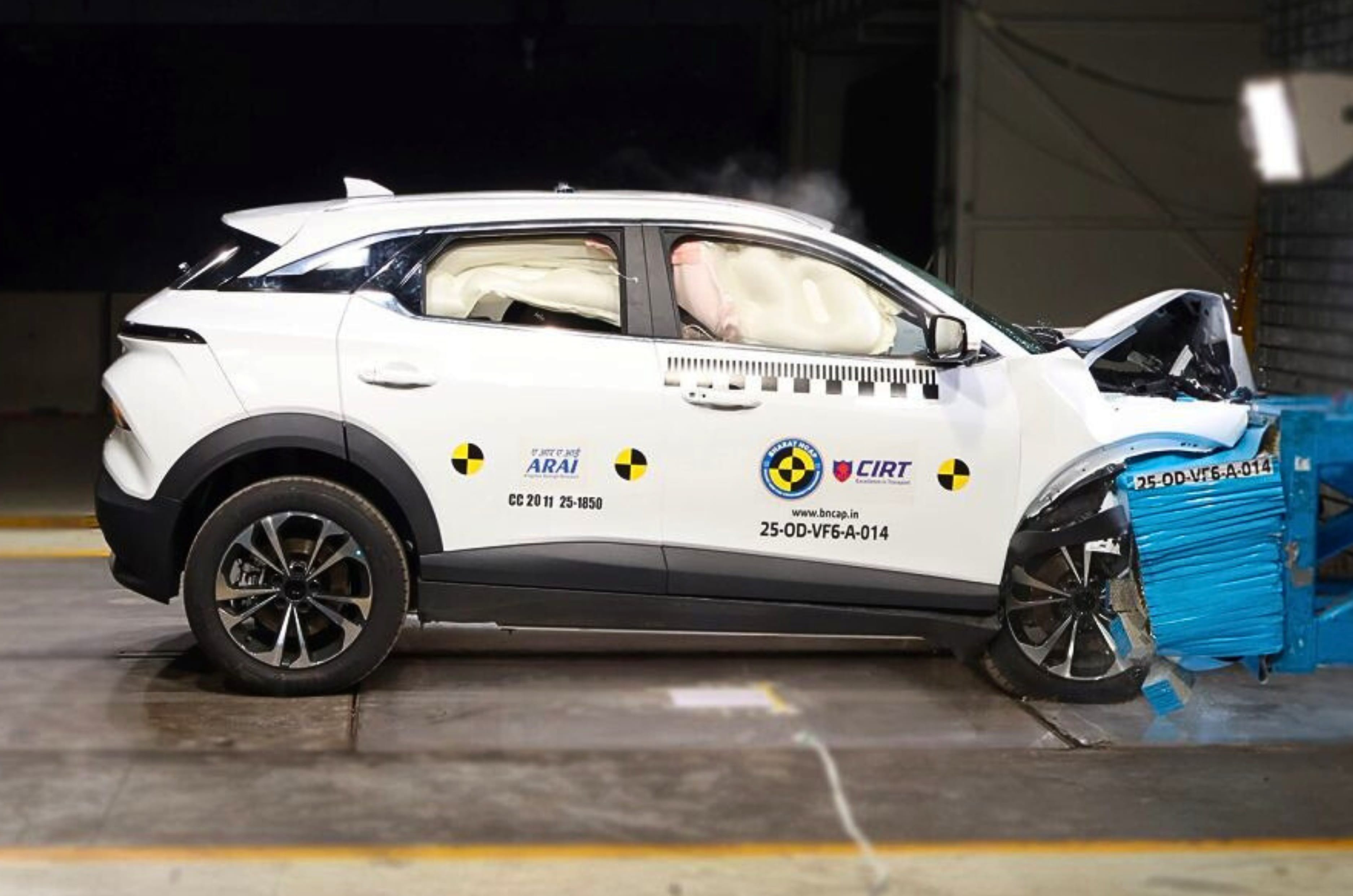
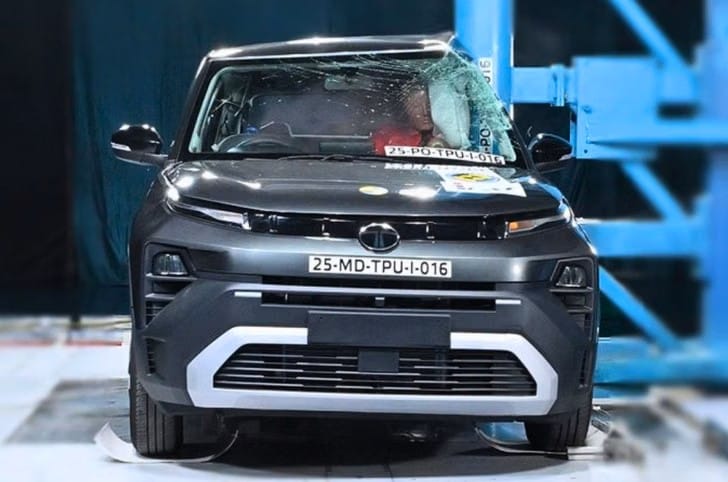
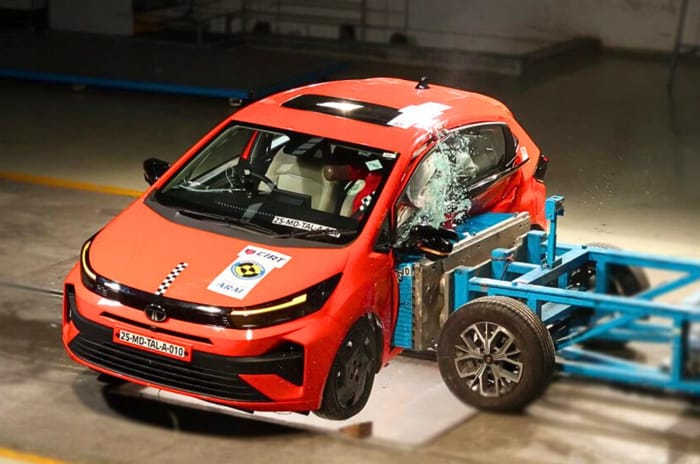
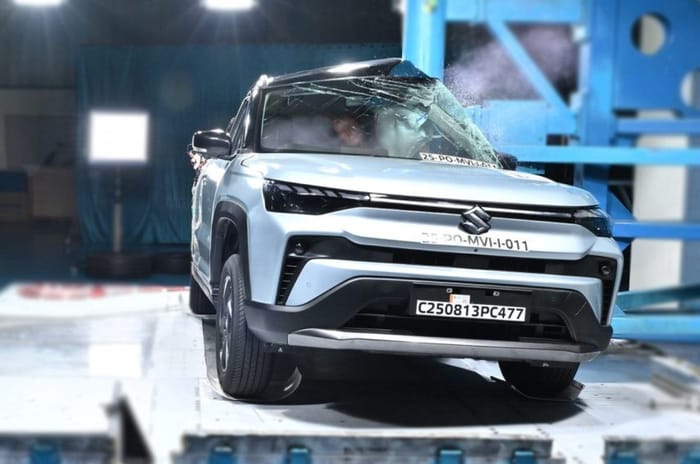
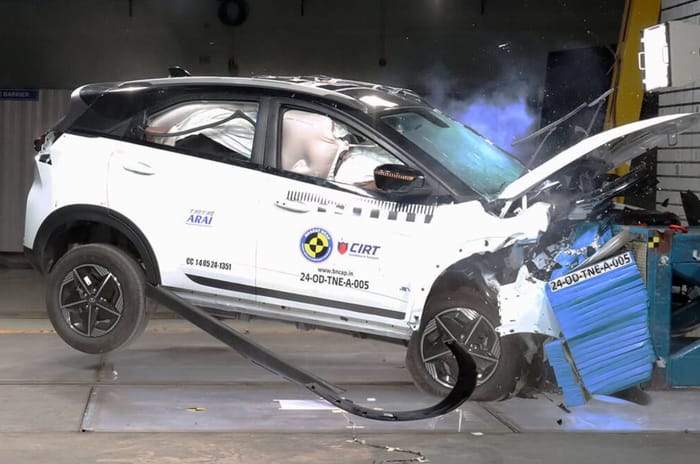
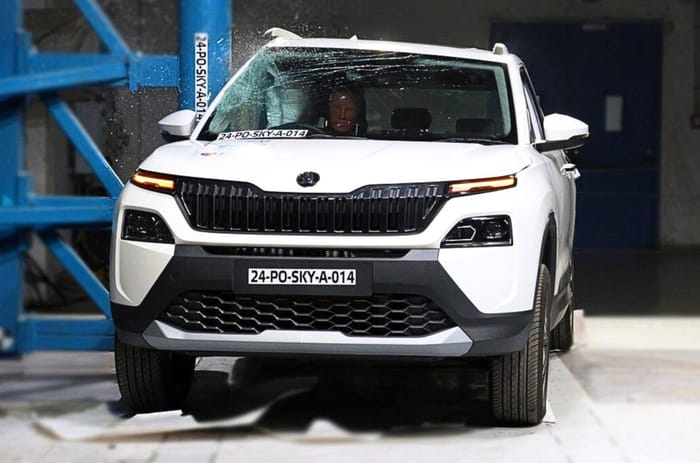
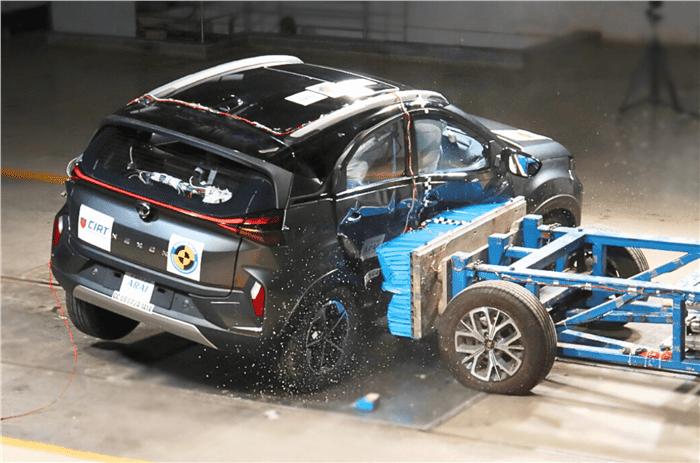
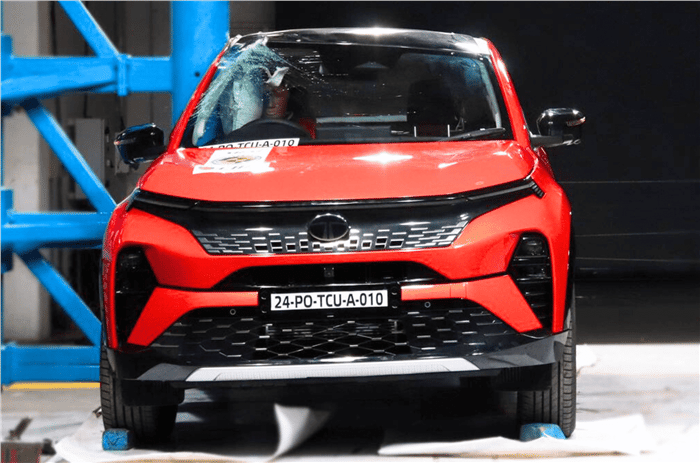
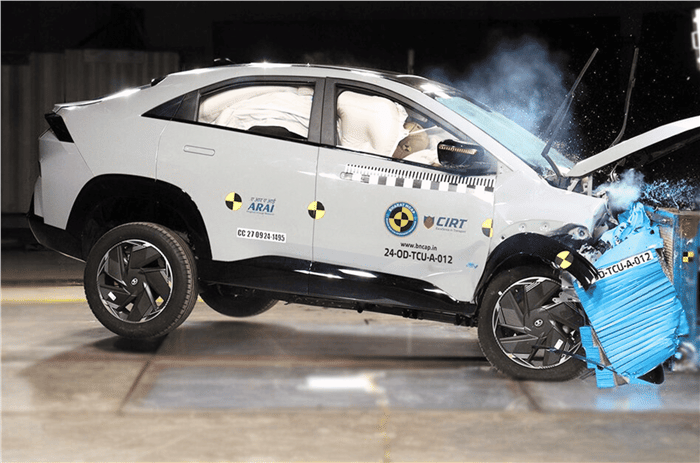
Introduced by the central government in 2023, the Bharat New Car Assessment Program (BNCAP) is responsible for conducting crash tests and awarding scores to cars sold in the country. The government hopes this will help buyers make more informed purchase decisions. Since its inception, Bharat NCAP has tested 31 vehicles, primarily SUVs. Below are the results detailing the crash safety performance of the models that are currently on sale.
1. Nissan Tekton
BNCAP rating: 5 stars
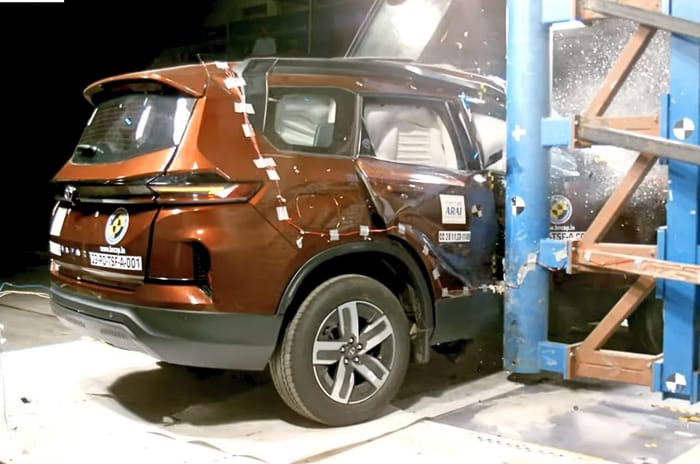
Crash-tested in June 2026 (representational image).
The Nissan Tekton is the latest model to be crash tested by Bharat NCAP, earning a full 5-star safety rating. The SUV scored 30.49 out of 32 points for adult occupant protection (AOP) and 45 out of 49 points for child occupant protection (COP). This 5-star rating applies to all variants of the Tekton. Standard safety features include six airbags, electronic stability control, hill start assist, a tyre pressure monitoring system, and three-point seatbelts for all occupants.
2. Renault Duster
BNCAP rating: 5 stars
Crash-tested in April 2026.
The Renault Duster was crash tested before its badge-engineered sibling, the Tekton, and both SUVs received identical BNCAP scores. All Duster variants feature 6 airbags, along with ABS, ESP, traction control and a tyre-pressure monitoring system.
3. Hyundai Venue
BNCAP rating: 5 stars
Crash-tested in March 2026.
The Hyundai Venue has received a 5-star safety rating from Bharat NCAP, which tested its HX2 diesel-manual and HX10 diesel-automatic variants, but the ratings apply to the entire line-up, including the N Line version. The Venue scored 31.15 out of 32 points in AOP and 44.46 out of 49 in COP. The Hyundai Venue is equipped with 6 airbags, hill-start assist, a tyre-pressure monitoring system (TPMS), 3-point seatbelts with reminders for all seats, rear parking sensors and ISOFIX child-seat anchorages as standard.
4. Kia Seltos
BNCAP rating: 5 stars
Crash-tested in March 2026.
The Kia Seltos is the second car from the brand after the Syros to receive a 5-star safety rating in the Bharat NCAP crash tests. It scored 31.70 points in AOP and 45 in COP. Only the diesel-powered HTE(O) and GTX variants were tested, but the results apply to all variants of the Seltos. The standard safety kit on the Kia Seltos includes 6 airbags, TPMS, a rear parking camera with sensors, disc brakes on all wheels, hill-start and hill-descent control and ISOFIX child-seat anchorages.
5. Tata Sierra
BNCAP rating: 5 stars
Crash-tested in March 2026.
The Sierra is one of the latest Tata model on this list to receive a 5-star safety rating in both AOP and COP, securing 31.14 and 44.43 points, respectively. While BNCAP tested only the midsize SUV’s Adventure+ and Accomplished+ diesel variants, the ratings apply to its entire line-up. As standard, the Sierra gets 6 airbags, rear parking sensors, all-wheel disc brakes, ABS, EBD, ESC, traction control and more.
6. Vinfast VF7
BNCAP rating: 5 stars
Crash-tested in January 2026.
The Vinfast VF7, too, has secured a 5-star safety rating in both adult and child occupant protection, with 28.54 and 45.25 points, respectively. Though Bharat NCAP tested only the VF7 Wind and Sky variants, the rating applies to the entire range. The VF7 offers 7 airbags, ISOFIX anchors, ESC, and more as standard.
7. Vinfast VF6
BNCAP rating: 5 stars
Crash-tested in January 2026.
Also receiving a 5-star rating in both adult and child occupant protection, the Vinfast VF6 scored 27.13/32 in AOP and 44.41/49 in COP. Bharat NCAP tested all trims of the VF6 – Earth, Wind and Sky. As standard, the VF6 comes equipped with 7 airbags, including a driver knee airbag, and 3-point seat belts with reminders for all passengers, ESC and ISOFIX anchors for rear outboard seats.
8. Tata Punch
BNCAP rating: 5 stars
Crash-tested in January 2026.
The Tata Punch, with 30.58 points in AOP and 45 points in COP, received a 5-star safety rating in both. The variants tested by Bharat NCAP were the Punch Pure+ CNG AMT and Accomplish CNG MT, but the rating applies to the entire line-up. The Punch’s safety suite features 6 airbags as standard, ESP, rear parking sensors, a tyre-pressure monitoring system, hill-hold and hill-descent control, ISOFIX child-seat anchorages, auto headlamps and rain-sensing wipers.
9. Maruti Suzuki e Vitara
BNCAP rating: 5 stars
Crash-tested in December 2025.
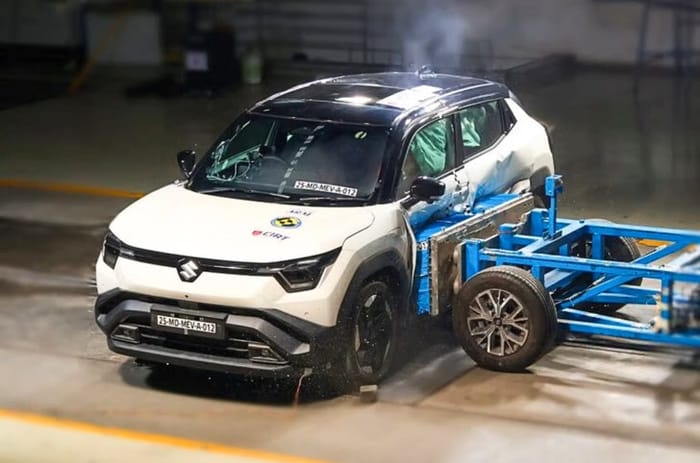
The Maruti Suzuki e Vitara has been awarded a 5-star rating in both AOP and COP, scoring 31.49/32 and 43/49, respectively. Bharat NCAP tested the top-spec Alpha variant with a 61kWh battery pack, and the rating applies to the entire range. Safety features of the e Vitara include 7 airbags, a tyre-pressure monitoring system (TPMS), a Level 2 ADAS suite with lane-keep assist, adaptive cruise control and AEB, rear disc brakes, ISOFIX mounts and a 360-degree camera.
10. Honda Amaze
BNCAP rating: 5 stars
Crash-tested in November 2025.
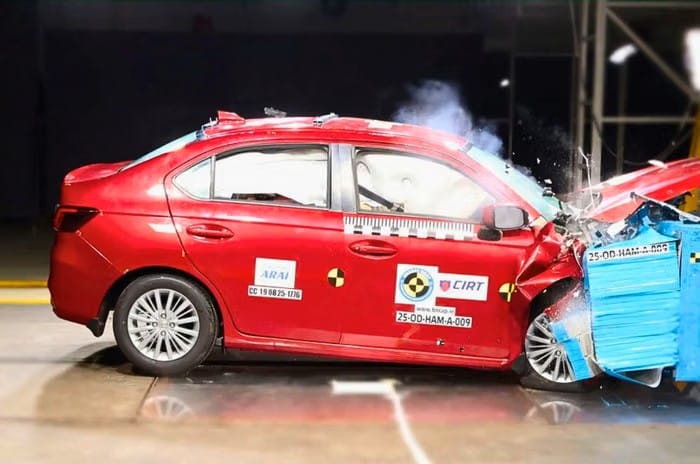
The third-gen Honda Amaze has been awarded a 5-star safety rating by Bharat NCAP, becoming the second sedan to be tested by the road safety organisation. The Amaze has secured 5 stars in AOP (28.33 out of 32 points) and 4 stars in COP (40.81/49 points). In terms of safety kit, all six variants are equipped with 6 airbags, ISOFIX child-seat anchors, ESC, ABS, rear parking sensors and seat belt reminders as standard.
11. Citroen Aircross
BNCAP rating: 5 stars
Crash-tested in September 2025.
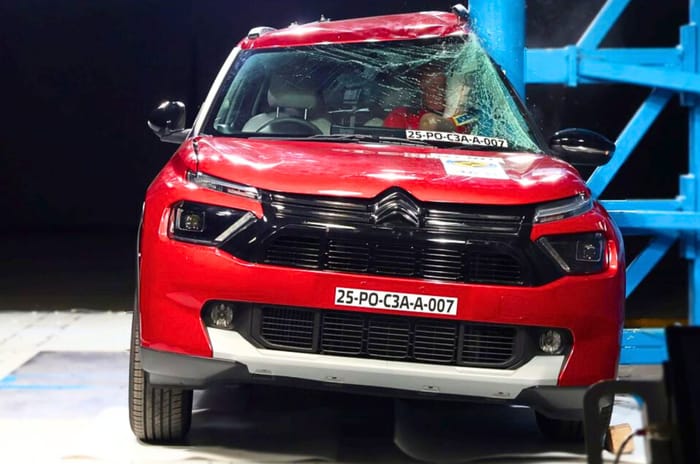
The Citroen Aircross, sold in 5- and 7-seat configurations, was awarded 5 stars in AOP and 4 stars in COP. Notably, the AOP and COP crash-safety test ratings are valid for the Aircross 5-seat version’s 1.2-litre petrol and turbo-petrol variants. The Aircross received an AOP score of 27.05/32 and a COP score of 40/49. As standard, the Aircross comes with safety features like 6 airbags, ISOFIX child-seat mounts, electronic stability control, TPMS and hill-hold assist.
12. Maruti Suzuki Invicto
BNCAP rating: 5 stars
Crash-tested in September 2025.
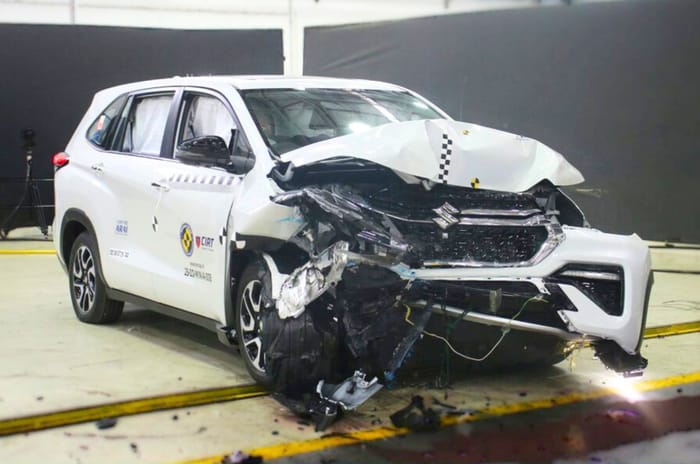
Like most cars on this list, the Maruti Invicto MPV scored a 5-star rating for both adult and child occupant protection. Maruti’s flagship MPV was awarded 30.43 out of 32 in AOP and 44.90 out of 49 in COP. These safety ratings are applicable to all variants, which have 6 airbags, ABS with EBD, rear disc brakes, and 3-point seatbelts for all passengers as standard. The top-spec Invicto Alpha+ variant adds a 360-degree camera, TPMS, rear defogger and an anti-theft security system.
13. Tata Altroz
BNCAP rating: 5 stars
Crash-tested in September 2025.
The Tata Altroz has scored a 5-star rating for both adult and child occupant protection. The premium Tata hatchback was awarded 29.65 points out of 32 in AOP and 44.90 out of 49 in COP. These safety ratings are applicable to all variants of the Altroz. Starting from the base model, the Altroz hatchback comes equipped with 6 airbags, ABS, ESC and 3-point seat belts for all passengers. Higher Altroz variants add a 360-degree camera, a blind-spot monitor and TPMS.
14. Maruti Suzuki Victoris
BNCAP rating: 5 stars
Crash-tested in September 2025.
The Maruti Victoris got a 5-star safety rating in both adult and child occupant protection. The Maruti SUV secured 31.66 points out of 32 in AOP and 43 points out of 49 in COP. While BNCAP tested hybrid and petrol-AT variants of Victoris, the safety rating is applicable to the entire line-up. As standard, the Victoris comes equipped with 6 airbags, 3-point seat belts with reminders for all passengers, ESC and ISOFIX anchors for rear outboard seats. Top-spec trims even get a Level 2 ADAS suite.
15. Toyota Innova Hycross
BNCAP rating: 5 stars
Crash-tested in June 2025.
The Toyota Innova Hycross has a 5-star safety rating for both adult and child occupant protection, with 30.47/32 and 45/49 points, respectively. Bharat NCAP tested both petrol and hybrid variants, and the rating applies to the entire Innova Hycross range. As standard, the Innova Hycross comes equipped with 6 airbags, 3-point seat belts with reminders for all passengers, ESC and ISOFIX anchors; top-spec trim also gets an ADAS suite.
16. Tata Harrier EV
BNCAP rating: 5 stars
Crash-tested in June 2025.
The Tata Harrier EV has been rated 5 stars in both adult and child occupant protection, scoring a full 32 points in AOP and 45 out of 49 points in COP. It is only the second vehicle tested by BNCAP to secure maximum points in AOP, the other being the Mahindra XEV 9e. The Harrier EV comes with 6 airbags (7 on Fearless and Empowered), 3-point seat belts with reminders for all passengers, ESC and ISOFIX anchors as standard. Notably, it has slightly better AOP and COP scores than the combustion-powered Harrier, which also has a 5-star BNCAP rating.
17. Maruti Suzuki Dzire
BNCAP rating: 5 stars
Crash-tested in June 2025.
As the first sedan to be tested by Bharat NCAP, the Maruti Suzuki Dzire took home an impressive 5-star safety rating. The compact sedan scored 29.46 out of 32 points for AOP and 41.57 out of 49 points for COP. BNCAP tested the Dzire’s base LXI trim, which comes with standard safety equipment like 6 airbags, ESC, reverse parking sensors, hill-hold assist, and overspeed alerts, among other features, thereby extending the 5-star rating to all variants.
18. Maruti Suzuki Baleno
BNCAP rating: 4 stars
Crash-tested in June 2025.
Maruti Baleno scored four stars in BNCAP’s crash tests; this rating applies to the respective MT and AMT models of Zeta and Alpha variants. Out of 32 points, the AOP score for the Zeta and Alpha variants scored 26.52 points. The COP score was 34.81 for all variants. Standard safety features for the Baleno include 6 airbags, ABS with EBD, brake assist, ESC, hill-hold assist and 3-point seat belts with reminders for all passengers.
19. Tata Nexon EV
BNCAP rating: 5 stars
Crash-tested in April 2025.
The 30kWh and now-discontinued 40.5kWh variants of the Tata Nexon EV achieved a 5-star Bharat NCAP rating for both adult and child protection in May 2024, scoring 29.86/32 and 44.95/49 points, respectively. In April 2025, BNCAP also tested the current range-topping 45kWh variants of the Nexon EV, which received identical AOP and COP scores and, therefore, a 5-star rating. The standard safety features for the Nexon EV include ABS with EBD, 6 airbags, ESP, hill-hold control, ISOFIX child-seat anchor points, rear parking sensors, a rear camera and TPMS.
20. Kia Syros
BNCAP rating: 5 stars
Crash-tested in April 2025.
The Kia Syros compact SUV, with 30.21 out of 32 points in AOP and 44.42 out of 49 points in COP, secured 5-star ratings in both parameters. These ratings are applicable to the entire Syros petrol range. It should be noted that the Syros is Kia’s first SUV to get a 5-star safety rating in a crash test done by BNCAP or GNCAP. Although it uses the K1 platform as the Hyundai Grand i10 (which got 2 stars in the 2020 GNCAP), Kia achieved the top rating by using a reinforced K1 base and adding many hot-stamped parts to the body shell. The Syros offers ABS with EBD, TPMS and 6 airbags (with a passenger-side airbag cut-off switch) as standard safety features.
21. Skoda Kylaq
BNCAP rating: 5 stars
Crash-tested in January 2025.
The Skoda Kylaq compact SUV also got a 5-star rating in both adult and child occupant protection in the BNCAP crash test. Skoda’s compact SUV scored 30.88 out of 32 in AOP and 45 out of 49 in COP. ESC, 6 airbags, 3-point seat belts with reminders for all passengers and ISOFIX anchors for rear outboard seats are some safety features available across its variants.
22. Mahindra XEV 9e
BNCAP rating: 5 stars
Crash-tested in January 2025.
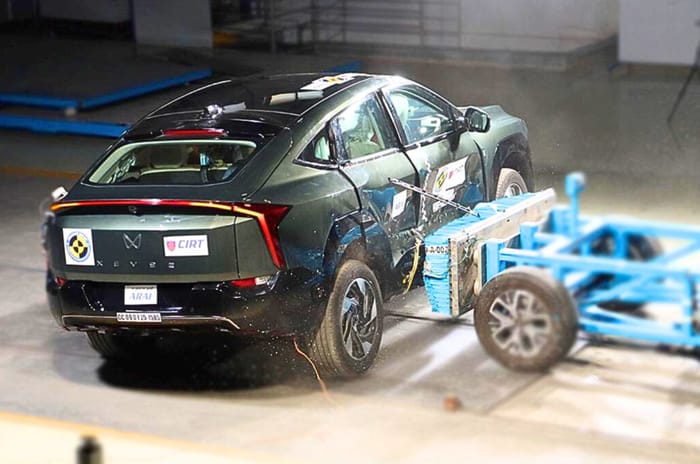
The Mahindra XEV 9e coupe-SUV was awarded a 5-star rating. The electric SUV scored a full 32 points in AOP and 45 out of 49 points in COP. The model tested by BNCAP was the top-spec XEV 9e Pack Three. Safety features like 6 airbags, ISOFIX anchors, rear disc brakes and tyre-pressure monitors are offered starting with the XEV 9e Pack One.
23. Mahindra BE 6
BNCAP rating: 5 stars
Crash-tested in January 2025.
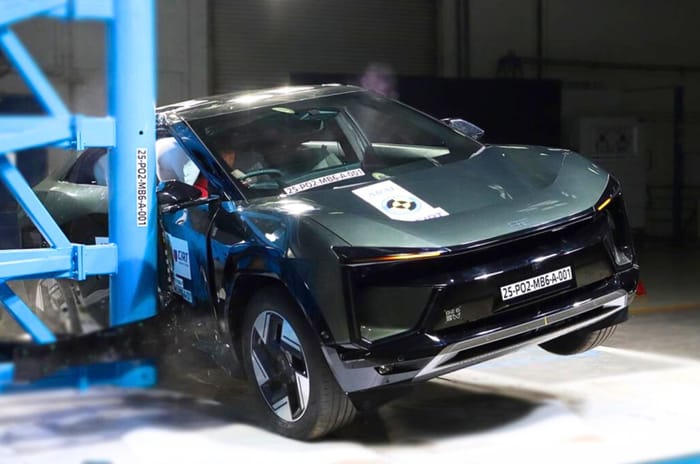
Another electric offering from the SUV specialist, the Mahindra BE 6, also scored a 5-star rating in both AOP and COP. In AOP, the EV received 31.97 points out of 32, and in COP, it got 45 points out of 49. Just like the XEV 9e, the BNCAP crash-tested the range-topping BE 6 Pack Three trim, but Mahindra claims that this rating applies to the base Pack One as well. In terms of standard safety equipment, the BE 6 comes with 6 airbags, a rear camera, parking sensors, TPMS and a driver drowsiness detection system.
24. Mahindra Thar Roxx
BNCAP rating: 5 stars
Crash-tested in November 2024.
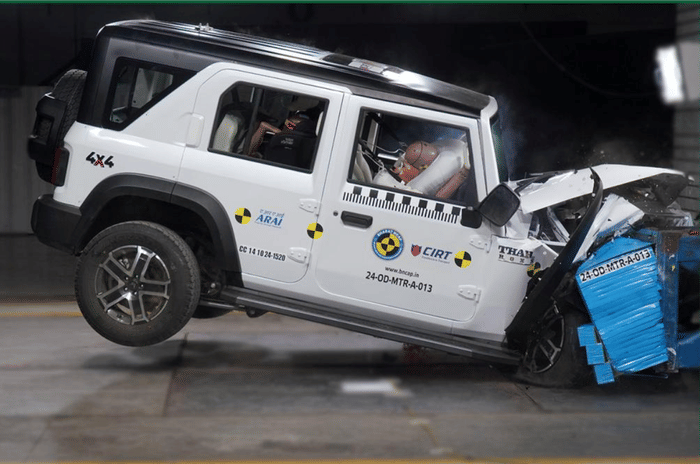
The 5-star rating for the Mahindra Thar Roxx consisted of AOP and COP scores of 31.09 and 45, respectively. This safety rating applies to all the variants of the 5-door SUV. The Thar Roxx complies with AIS-100 pedestrian protection norms for keeping the occupants as well as pedestrians safe when on the go. As standard, it features 6 airbags and a cut-off switch for the passenger-side airbag. Additionally, ISOFIX child-seat anchor points, all 3-point seatbelts with reminders and ESC are offered throughout the range. Like with the XUV 3XO, an ADAS suite is offered in the AX5L and AX7L variants.
25. Mahindra XUV 3XO
BNCAP rating: 5 stars
Crash-tested in November 2024.
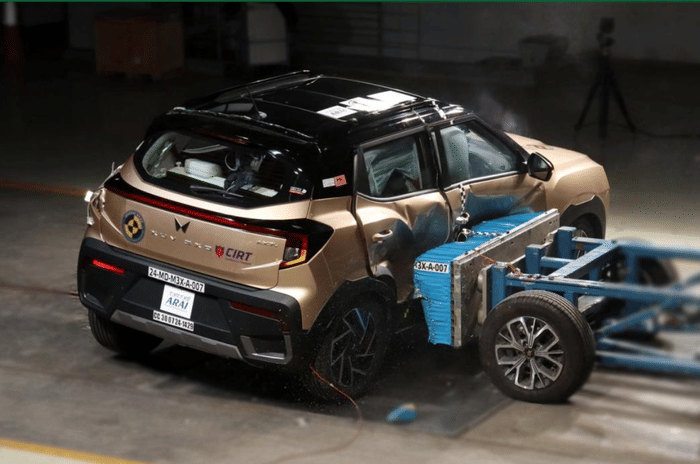
Next up, the Mahindra XUV 3XO continued the 5-star streak with scores of 29.36 in AOP and 43 in COP. BNCAP reported that the MX2 and AX7 L variants were sent by the homegrown brand for testing, but the results apply to the entire XUV 3XO line-up. Also, all trims of the subcompact SUV have 6 airbags, 3-point seatbelts with reminders, ESC, ISOFIX seats and a passenger-side airbag cut-off switch among the standard safety assist technologies. Level 2 ADAS suite, however, is reserved for the AX5 L and AX7 variants.
26. Tata Nexon
BNCAP rating: 5 stars
Crash-tested in October 2024.
The Tata Nexon secured a perfect 5-star rating for AOP and COP, scoring 29.41 and 43.83 points, respectively. Standard safety features include 6 airbags, ESC, ABS with EBD, ISOFIX child-seat anchor points, rear parking sensors and hill-hold control.
27. Tata Curvv
BNCAP rating: 5 stars
Crash-tested in October 2024.
The Tata Curvv’s crash-test result was revealed alongside the Nexon, and just like the compact SUV, the coupe-SUV scored 5 stars for both adult and child occupant protection. It secured 29.50 points for AOP and 43.66 points for COP. On the safety front, the Curvv gets ABS with EBD, ESC, 6 airbags, hill-hold control and ISOFIX child-seat anchor points as standard across the range.
28. Tata Curvv EV
BNCAP rating: 5 stars
Crash-tested in October 2024.
The Tata Curvv EV secured 5 stars for AOP and COP, scoring 30.81 and 44.83 points, respectively. It gets 6 airbags, ESP, all-wheel disc brakes, a rear camera and rear parking sensors as standard. Higher variants of the electric vehicle also get Level 2 ADAS, just like its ICE twin.
29. Citroen Basalt
BNCAP rating: 4 stars
Crash-tested in October 2024.
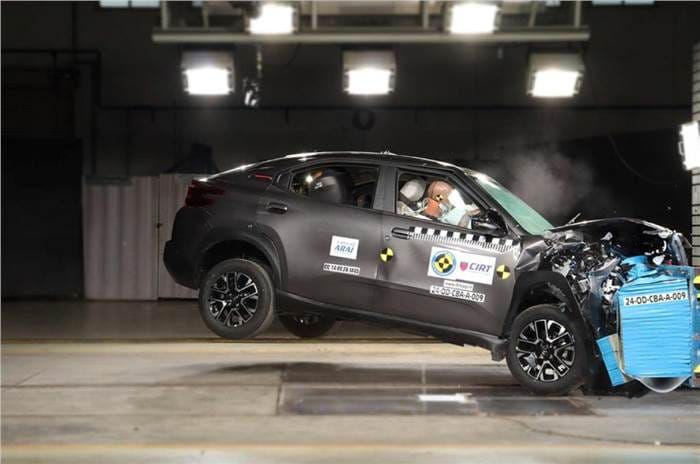
The Citroen Basalt was the first car from the brand to have been crash-tested by Bharat NCAP. The coupe-SUV managed to secure 4 stars for AOP (26.19/32) and 4 stars for COP (35.90/49). The Citroen offers the Basalt with 6 airbags, ESP, hill-hold, TPMS, a rearview camera, rear parking sensors and ISOFIX child-seat anchor points.
30. Tata Harrier
BNCAP rating: 5 stars
Crash-tested in December 2023 (representational image).
Tested in December 2023, the Tata Harrier SUV received a 5-star safety rating for both adult and child occupants’ safety, achieving an AOP score of 30.08 and a COP score of 44.54. Tata offers the Harrier with ABS and EBD, corner stability control, 6 airbags, ESP, hill-hold control, ISOFIX child-seat anchor points, traction control and rear parking sensors as standard.
31. Tata Safari
BNCAP rating: 5 stars
Crash-tested in December 2023.
The Tata Safari was also crash-tested in December 2023, securing a 5-star safety rating, matching the Harrier with an AOP score of 30.08 and a COP score of 44.54. As standard, the Tata Safari gets all-wheel disc brakes, 6 airbags, ABS with EBD, corner stability control, ESP, hill-hold control, ISOFIX child-seat anchor points, rear parking sensors, roll-over mitigation and traction control.
Dimensionally, the Tekton is identical to the Duster in terms of height, wheelbase, ground clearance, wheel size, though the Nissan SUV is 6mm longer overall and 2mm wider on account of styling differences. The Tekton is also longer than the Sierra, Creta, Grand Vitara, Kushaq, Taigun, Elevate, Astor, and Aircross, but falls short of the Seltos by 111mm, the Hyryder by 16mm, and the Victoris by 11mm.
On the wheelbase front, though, the Sierra comes out on top, followed by the Seltos, Aircross, and then the Tekton and Duster. The Tekton claws back some points in the ground clearance department, with its 212mm figure ranking the second-highest among its rivals, beaten only by the Elevate. The Tekton and Duster also have the largest boot capacities in the midsize SUV segment. Lastly, the Tekton’s wheel sizes are competitive by class standards, with the Sierra being the only one to offer 19-inch wheels.
Nissan Tekton vs rivals: Engine and gearbox options
Tekton shares its turbo-petrol engines with the Duster; won’t get strong hybrid option
Nissan Tekton vs rivals powertrains compared
Engine
Cylinders
Power (hp)
Torque (Nm)
Transmission
Drive layout
Tekton
1.0T | 1.3T
3 | 4
100 | 163
166 | 280
6MT | 6MT, 7DCT
FWD
Duster
1.0T | 1.3T | 1.8H*
3 | 4 | 4
100 | 163 | 160
166 | 280 | 172
6MT | 6MT, 7DCT | 8DHT^
FWD
Creta
1.5P | 1.5T | 1.5D
4 | 4 | 4
115 | 160 | 116
144 | 253 | 250
6MT, CVT | 6MT, 7DCT | 6MT, 6AT
FWD
Sierra
1.5P | 1.5T | 1.5D
4 | 4 | 4
106 | 160 | 118
145 | 255 | 280
6MT, 7DCT | 6AT | 6MT, 6AT
FWD
Seltos
1.5P | 1.5T | 1.5D
4 | 4 | 4
115 | 160 | 116
144 | 253 | 250
6MT, CVT | 6IMT, 7DCT | 6MT, 6AT
FWD
Victoris
1.5P | 1.5C | 1.5H
4 | 4 | 3
103 | 89 | 116
139 | 121.5 | 141
5MT, 6AT | 5MT | eCVT
FWD, AWD
Grand Vitara
1.5P | 1.5C | 1.5H
4 | 4 | 3
103 | 89 | 116
139 | 121.5 | 141
5MT, 6AT | 5MT | eCVT
FWD, AWD
Hyryder
1.5P | 1.5C | 1.5H
4 | 4 | 3
103 | 89 | 116
139 | 121.5 | 141
5MT, 6AT | 5MT | eCVT
FWD
Kushaq
1.0T | 1.5T
3 | 4
115 | 150
178 | 250
6MT, 8AT | 7DCT
FWD
Taigun
1.0T | 1.5T
3 | 4
115 | 150
178 | 250
6MT, 8AT | 7DCT
FWD
Elevate
1.5P
4
121
145
6MT, CVT
FWD
Astor
1.5P
4
110
144
5MT, CVT
FWD
Aircross
1.2P | 1.2T
3 | 3
82 | 110
115 | 205
5MT | 6MT, 6AT
FWD
P = Naturally-aspirated petrol; T = Turbo-petrol; H = Strong hybrid; D = Diesel; C = CNG
*Renault Duster hybrid to be launched by Diwali 2026.
^DHT = Dedicated Hybrid Transmission
Expectedly, the Tekton comes with the same 100hp 1.0-litre MPFI and 163hp 1.3-litre direct-injection turbo-petrol engines available with the Duster. The latter engine is the most powerful in its segment, despite being down on displacement compared to the 1.5-litre direct-injection turbo-petrol mills offered for the Creta, Sierra, Seltos, Kushaq, and Taigun.
However, the Tekton’s smaller 3-cylinder turbo-petrol motor is up to 15hp weaker compared to those of the Taigun, Kushaq, and Aircross. There’s no CNG, or naturally aspirated petrol engine option available with the Tekton, either, putting it out of direct contention with the likes of the Grand Vitara, Victoris, Elevate, Astor, and Hyryder, nor does the Nissan SUV offer a diesel engine, which many midsize SUV buyers prefer.
Moreover, despite the shared platform, the Tekton will miss out on the 1.8-litre strong hybrid powertrain that will debut on the Duster later this year. Renault will keep the hybrid option exclusive to the Duster as the French carmaker spearheaded the development of the platform and wants to position the SUV higher up the value chain.
In terms of gearbox options, the Tekton is identical to the Duster. The 1.0-litre turbo-petrol engine is paired solely with a 6-speed manual, whereas the 1.3-litre mill additionally offers a 6-speed wet-clutch DCT. Compared to the dry-clutch DCTs offered by the Creta, Seltos, Taigun, and Kushaq, the Tekton’s wet-clutch unit should be smoother at slow speeds.
The Tekton is a front-wheel drive model only, which is par for the course for this segment. Only the Victoris and Grand Vitara offer all-wheel drive, that too with their 1.5 petrol AT powertrains.
Nissan Tekton vs rivals: Price
Tekton undercuts most of its midsize SUV rivals
Nissan Tekton vs rivals price compared
Price range (Rs, lakh)
Tekton
10.49-18.59
Duster
10.49-18.49
Creta (including N Line)
10.91-19.95
Sierra
11.49-21.29
Seltos
11.00-21.57
Victoris
10.50-19.99
Grand Vitara
10.77-19.57
Hyryder
11.31-19.99
Kushaq
10.69-18.99
Taigun
11.00-19.00
Elevate
11.60-16.16
Astor
9.79-15.30
Aircross
8.89-14.14
When it comes to starting price, the Tekton matches the Duster and is one of the most affordable midsize SUVs at the base level, beaten only by the Astor and Aircross. The Victoris comes next with a near-negligible Rs 1,000 premium over the Tekton, followed by the Kushaq, Grand Vitara, Creta, Seltos, Taigun, Hyryder, Sierra, and Elevate, in that order.
The Tekton does cost Rs 10,000 more than the Duster when comparing top-spec variants, but even so, it’s substantially easier on the pocket than the likes of the Seltos, Creta, Sierra, Hyryder, Victoris, and Grand Vitara. The Aircross remains the most affordable midsize SUV by a long shot.
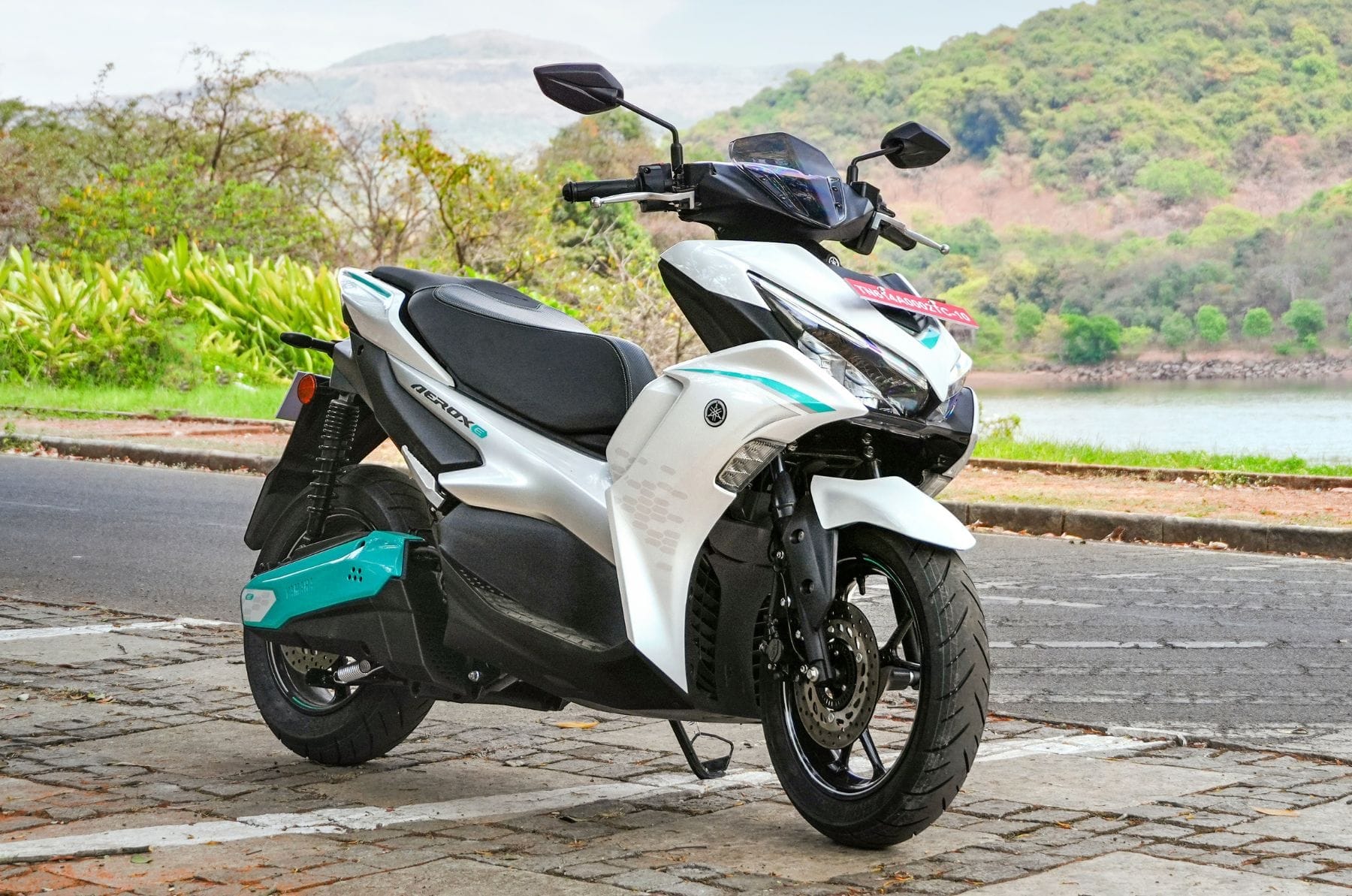
The Yamaha Aerox-E is the brand’s first electric scooter for India, and is currently the most expensive Yamaha product on sale in the country. It is closely based on the petrol Aerox 155 in terms of design, retaining the twin-LED headlight, aggressive front apron and sporty bodywork, but switching to a TFT instrument cluster in place of the petrol model’s LCD unit. The Aerox-E uses a dual removable battery setup with two 1.5kWh packs that can be charged independently at home or at work without needing access to a charging point for the scooter itself – giving a combined capacity of 3kWh and a claimed IDC range of 117km.
Power comes from a hub-mounted motor producing 9.5kW of peak power and 48Nm of torque, with four riding modes – Eco, Standard, Power and Boost – the last of which provides a short burst of additional performance for overtaking.
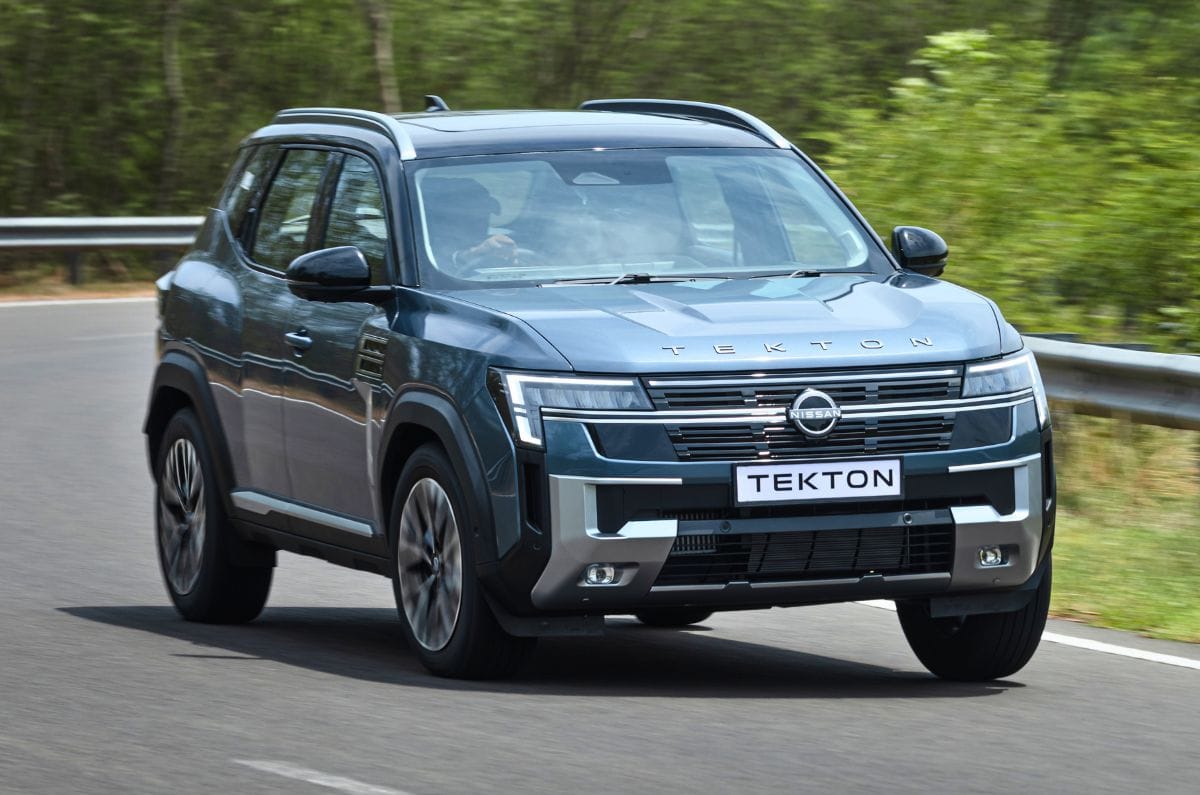
Nissan re-enters the midsize SUV segment with the Tekton, a badge-engineered version of the Renault Duster. While both SUVs share the same platform, engines and most of their equipment, the Tekton gets Nissan-specific exterior and interior styling, along with a few equipment differences across the variant line-up. Buyers can choose between a 100hp 1.0-litre turbo-petrol engine paired with a 6-speed manual gearbox or a more powerful 163hp 1.3-litre turbo-petrol engine offered with either a 6-speed manual or a 6-speed dual-clutch automatic. Here’s a closer look at what each Tekton variant offers and which one you should consider buying.
2026 Nissan Tekton price and powertrains
Price: Rs 10.49 lakh-18.59 lakh (ex-showroom)
Nissan Tekton variant-wise prices (Rs lakh)
Trim
Visia
Visia+
Acenta
N-Connecta
Tekna
Tekna+
1.0-litre turbo petrol MT
10.49
11.14
11.79
13.69
15.39
16.49
1.3-litre turbo petrol MT
–
–
–
14.99
16.39
–
1.3-litre turbo petrol DCT
–
–
14.99
16.49
17.79
18.59
The Tekton is offered with two turbo-petrol engines. The entry-level 1.0-litre three-cylinder engine develops 100hp and 166Nm and is paired exclusively with a 6-speed manual gearbox. Higher variants get a 1.3-litre four-cylinder turbo-petrol engine option producing 163hp and 280Nm, available with either a 6-speed manual or a 6-speed dual-clutch automatic transmission.
2026 Nissan Tekton colour options
Available in 6 monotone and 5 dual-tone exterior colour options
The Tekton is available in six monotone colours – Onyx Black, Blade Silver, Pearl White, Flare Garnet Red, Indigo Blue and Moonbow Gray. Buyers opting for the range-topping Tekna+ can also choose from five dual-tone paint schemes featuring a black roof. Colour availability varies by variant, with Moonbow Gray available only from the Tekna onwards, while dual-tone finishes are exclusive to the Tekna+. The Tekna gets a blue leatherette interior, while the range-topping Tekna+ switches to a tri-tone cabin finished in burgundy, beige and rose gold.
2026 Nissan Tekton variant-wise features
Visia – Rs 10.49 lakh
Automatic LED headlamps and LED DRLs
LED tail-lights
LED turn indicators on ORVMs
17-inch steel wheels with covers
Roof spoiler
Body-coloured ORVMs and door handles
Six airbags
ABS with EBD
ESC, traction control and hill-start assist
TPMS
Rear parking sensors
Rear AC vents
Tilt and telescopic steering adjustment
7-inch digital instrument display
Manual AC
Four power windows with one touch up/down and anti-pinch
Electrically adjustable ORVMs
Height-adjustable driver’s seat
Sliding front armrest
Soft-touch dashboard trim
Four-speaker Arkamys audio system
Speed and impact sensing door unlock
Frameless Wiper
Idle Start Stop
Front and rear skid plate
12V power socket
Visia+ – Rs 11.14 lakh
Features over Visia
9-inch touchscreen infotainment
Wireless Android Auto
Wireless Apple CarPlay
Steering-mounted audio controls
Rear-view camera with dynamic guidelines
Acenta – Rs 11.79 lakh to Rs 14.99 lakh
Features over Visia+
10.1-inch infotainment system
Roof rails
Shark fin antenna
Cruise control (DCT)
Electronic parking brake with auto hold (DCT)
Paddle shifters (DCT)
Smart key
Push-button start
Walk-away lock and approach unlock
Rear defogger, wiper and washer
60:40 split rear seat
Rear centre armrest
Front Type-C charging ports
Rear-view camera
Seat back pocket
Parcel tray
Rear disc brakes (DCT)
Full-size spare wheel
Welcome and Goodbye lighting animation
N-Connecta – Rs 13.69 lakh to Rs 16.49
Features over Acenta
Panoramic sunroof
18-inch alloy wheels
Connected LED headlamps
Connected LED tail-lights
Front and rear fog lamps
Dual-zone automatic climate control
Auto-folding ORVMs
Auto-dimming IRVM
Wireless charger with cooling (DCT)
12V power socket in the trunk
10.25-inch digital instrument cluster
Centre console with cooled storage (DCT)
Blue semi-leatherette upholstery
Leather-wrapped steering wheel
Six-speaker Arkamys surround sound audio system
Acoustic windshield
Sunvisor with vanity mirror and illumination
Remote SmartCard window & sunroof control
Rear Type-C charging ports
Puddle lamps
Tekna – Rs 15.39 lakh to 17.79 lakh
Features over N-Connecta
Diamond-cut 18-inch alloy wheels
Rain-sensing wipers
Air purifier
6-way powered driver’s seat
Ventilated front seats
Ambient lighting
Dual drive modes
Dual steering modes
Blue leatherette upholstery
Hill descent control
Blind spot warning
Traffic sign recognition
Autonomous emergency braking
Adaptive cruise control with stop-and-go function (DCT)
Lane departure warning
Lane keep assist
Driver drowsiness attention warning
Automatic high beam assist
Speed limiter
Distance warning
Front, rear and side parking assist
Remote engine start
Remote lock/unlock
Remote horn and lights
Remote vehicle status
MyNISSAN connected car features (3 years)
Find My Car
Tekna+ – Rs 16.49 lakh to 18.59 lakh
Features over Tekna
Powered tailgate
6-way powered front seats
Leatherette seat upholstery with contrasting accents
360-degree camera
10.1-inch touchscreen with Google
OTA updates
Maps in driver’s display
Which 2026 Nissan Tekton variant should you buy?
N-Connecta trim is the value-for-money pick
The N-Connecta is the sweet spot in the Tekton range. It brings together the larger 10.25-inch digital instrument cluster, panoramic sunroof, dual-zone climate control, 18-inch alloy wheels, premium interior trim, wireless charger, six-speaker audio system and the option of both manual and dual-clutch automatic versions with the 163hp turbo-petrol engine. It delivers most of the equipment buyers in this segment expect without moving into the more expensive top trims.
If your priority is ADAS and connected-car technology, the Tekna is worth considering. It adds a comprehensive driver assistance package, ventilated seats, powered driver’s seat and additional convenience features for a reasonable premium over the N-Connecta.
The Tekna+ is best suited to buyers who specifically want Google built-in, the powered tailgate, 360-degree camera and the full ADAS suite. While it offers the most equipment, the additional features may not justify the price premium for every buyer.








.jpg?w=700&c=0)
.jpg?w=700&c=0)
.jpg?w=700&c=0)
.jpg?w=700&c=0)
.jpg?w=700&c=0)
.png?w=700&c=0)