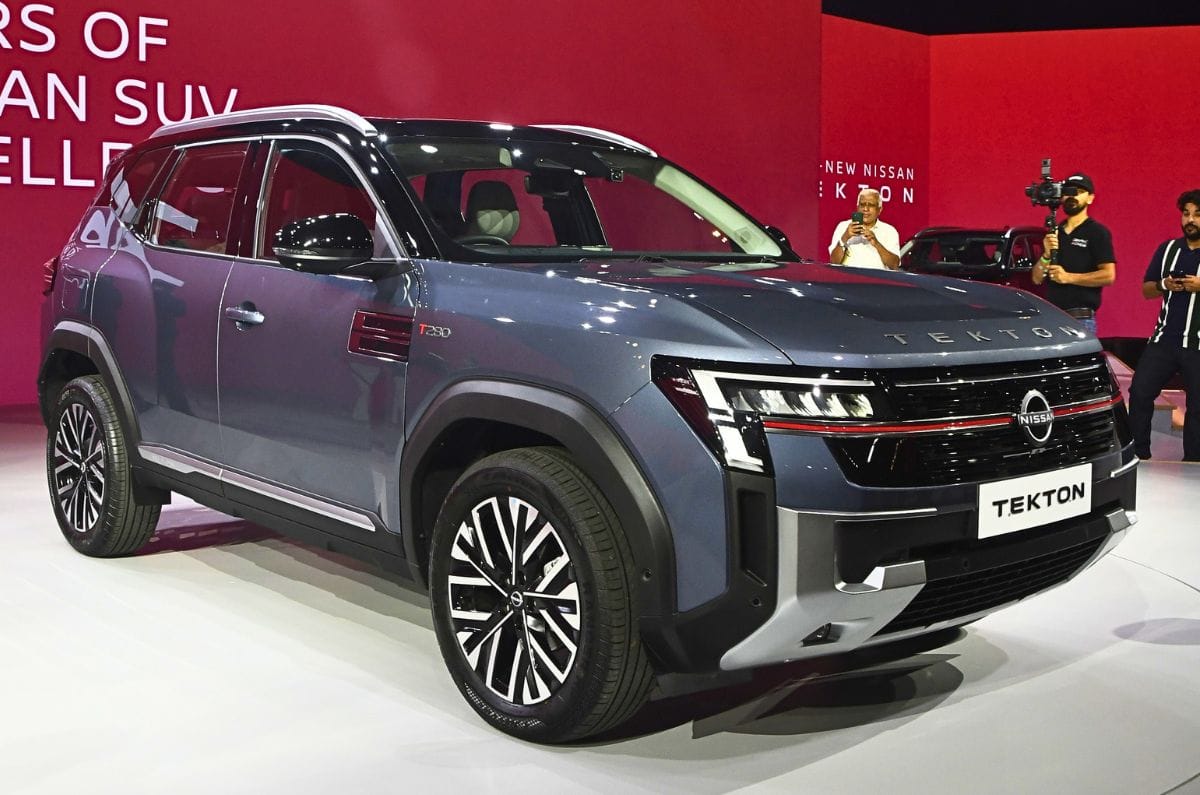
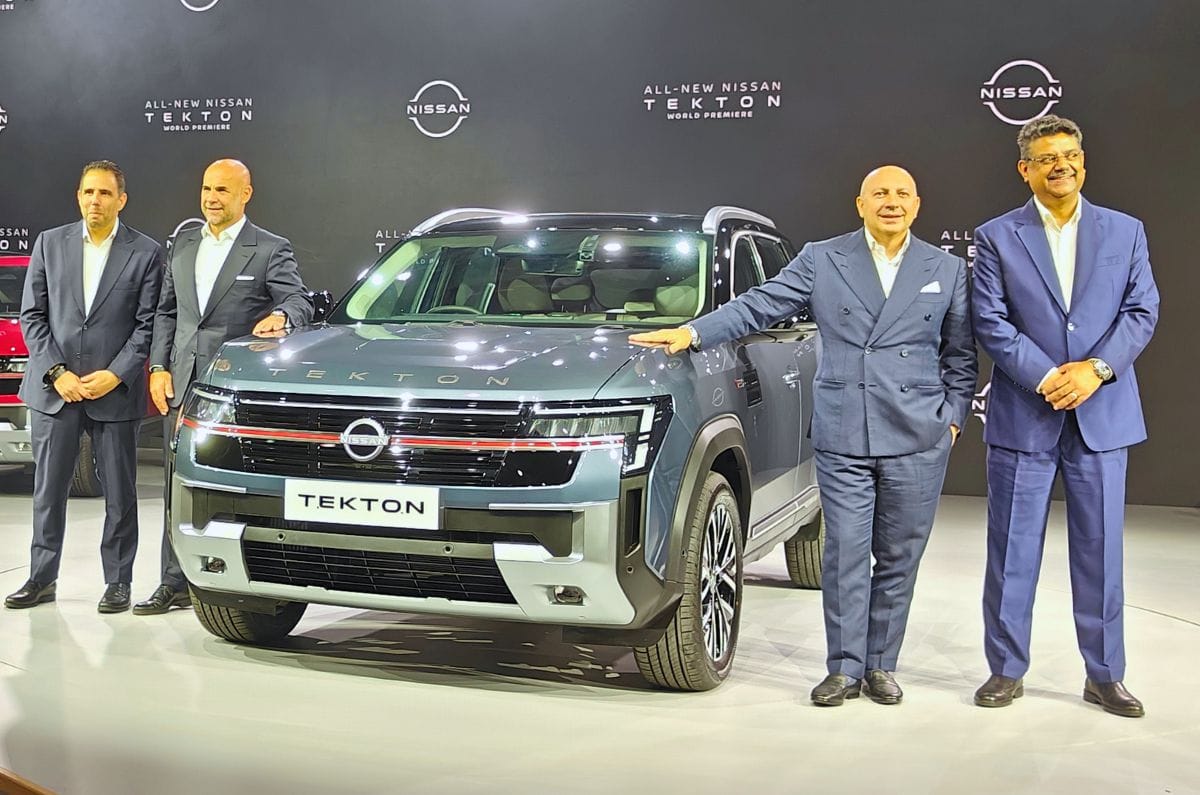
Nissan has launched the Tekton, which comes in as the closest alternative to the Renault Duster. The Japanese automaker claims that the name has been inspired by tectonic plates of the Himalayas. Customer bookings for this midsize SUV are underway, with deliveries commencing on July 20, 2026. The Nissan Tekton is being offered in six trim levels spread across 12 variants and 11 colour options. Understandably, the Tekton and Duster share the same CMF-B platform and turbo-petrol powertrain options.
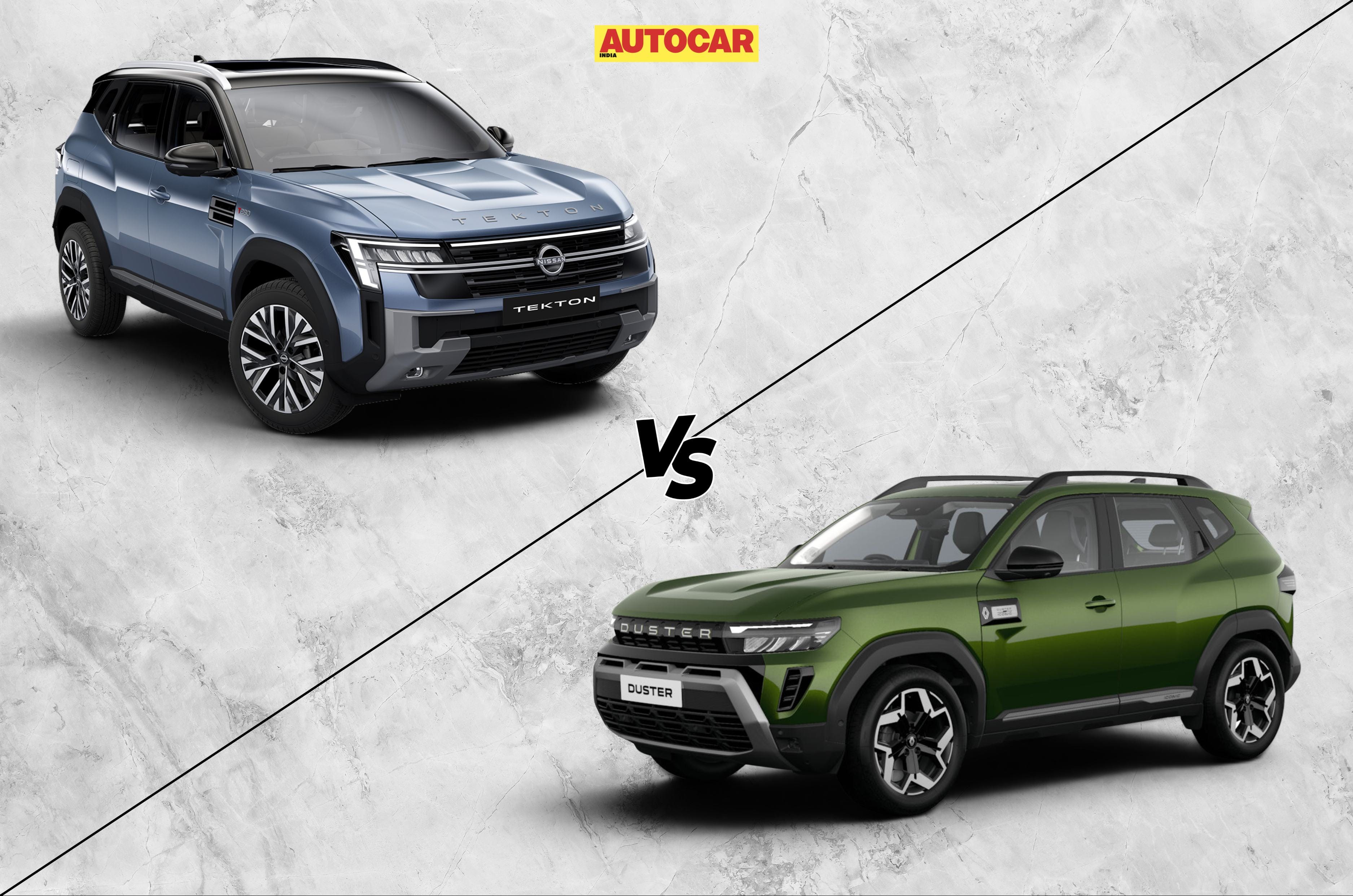
Nissan has finally launched its version of the Renault Duster, the Tekton. While the two midsize SUVs share the same mechanical underpinnings, they slightly differ in terms of design. Interestingly, this isn’t Nissan’s first take on the Duster, as the brand had previously sold the Terrano. In this feature, we take a closer look at how the Tekton differs from the Renault SUV, both inside and out.
Nissan Tekton vs Renault Duster: Exterior
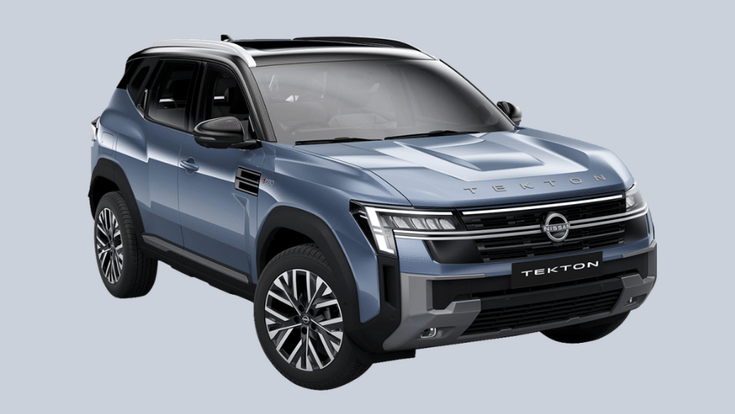
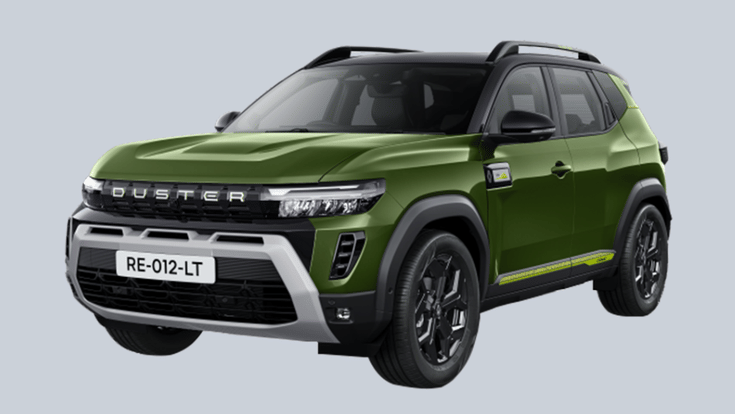
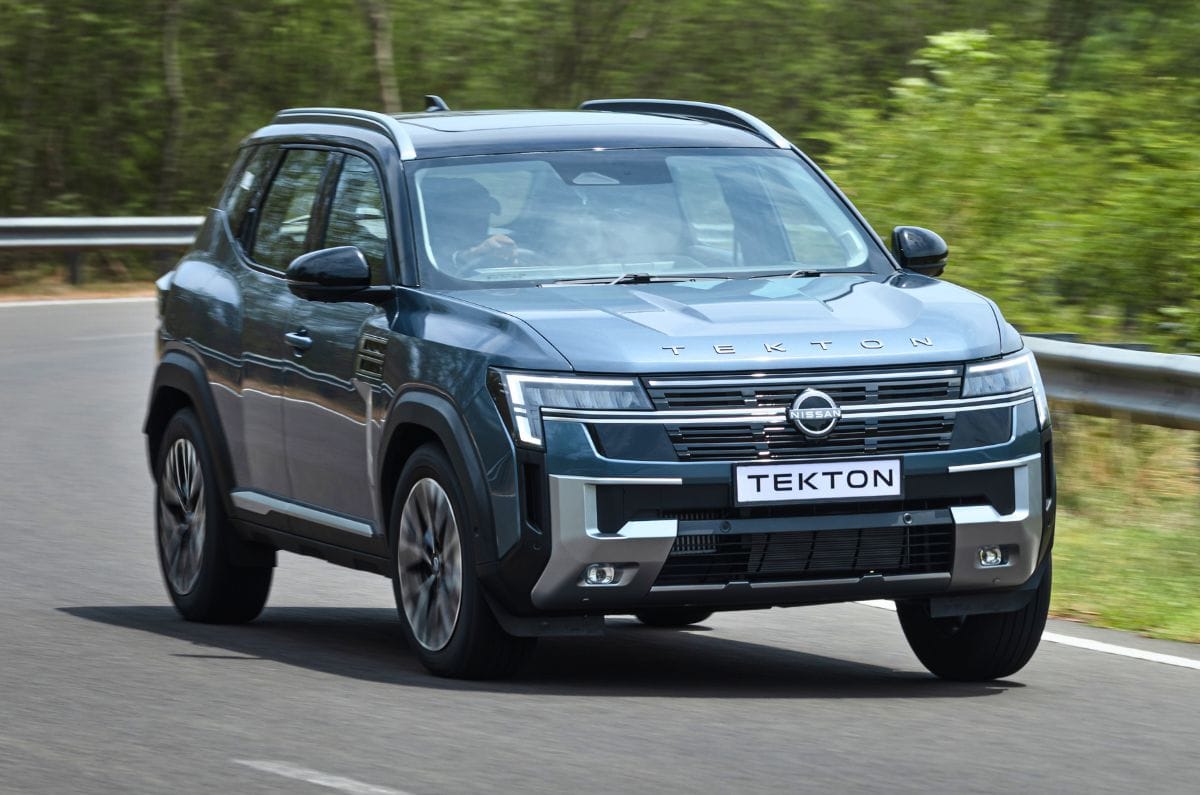
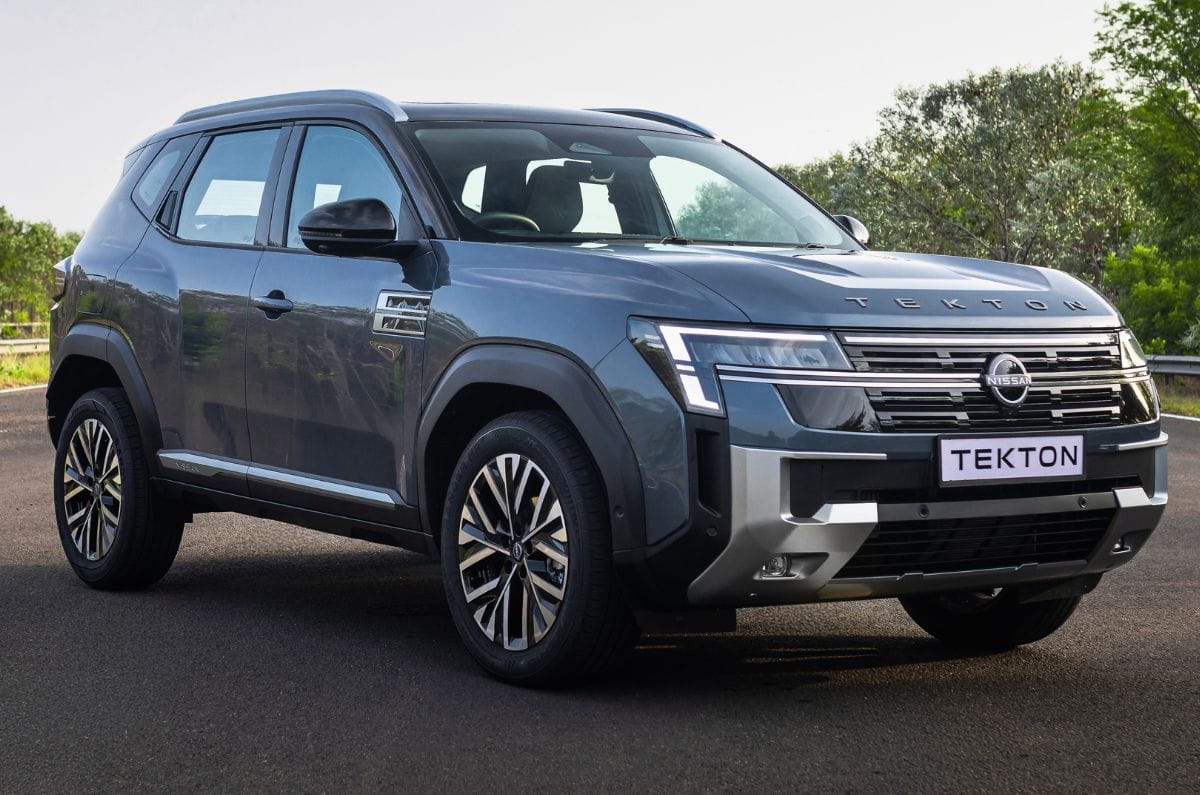
Nissan claims that the Tekton’s design is inspired by the Patrol flagship SUV, which lends it a more squared-off appearance than the Renault Duster. While the overall silhouette is similar, the Tekton separates itself with slimmer LED headlights, connected by a light bar. Even the C-shaped design of the DRLs is different from the Duster’s eyebrow-shaped units. Nissan has opted for a traditional front grille with the logo in the centre, while the ‘TEKTON’ lettering is present on the bonnet. Another standout for the Tekton comes in the form of a red strip, which flanks the logo on the grille. The Renault SUV, meanwhile, places the ‘DUSTER’ lettering on the grille. Tweaks have also been made to the front bumper of the Tekton, with lesser use of silver-finished trims.
In profile, details like a multi-spoke design for the 18-inch alloy wheels, variant-specific badging with C-shaped graphics on the front fenders and silver-finished roof rails make the Tekton stand out. A good dose of cladding over the wheel arches and under the doors, pull-type door handles at the front and C-pillar-mounted ones at the rear and shark-fin antenna are common between the two.
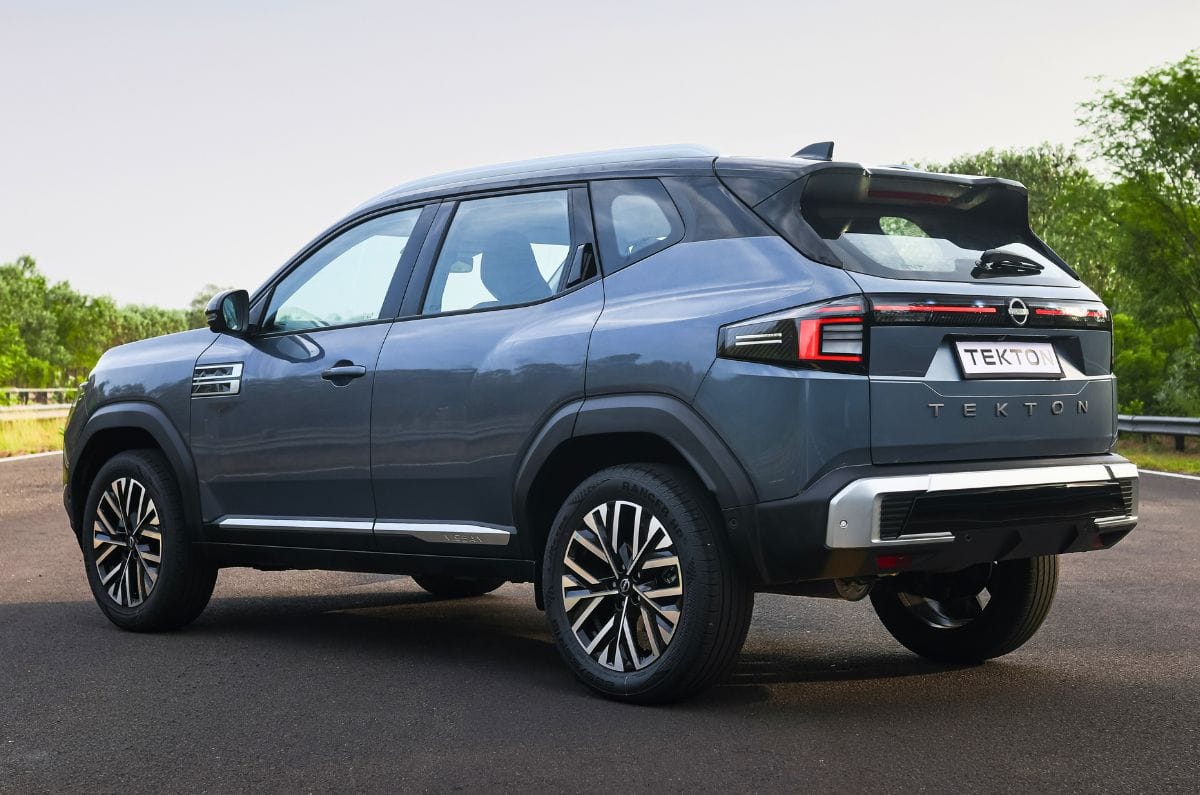
Unlike the triangular tail-lamps of the Duster, the Tekton opts for a C-shaped signature, which is a nod to the Patrol. This signature also trickles down to silver trims on the rear bumper.
Nissan Tekton vs Renault Duster: Interior
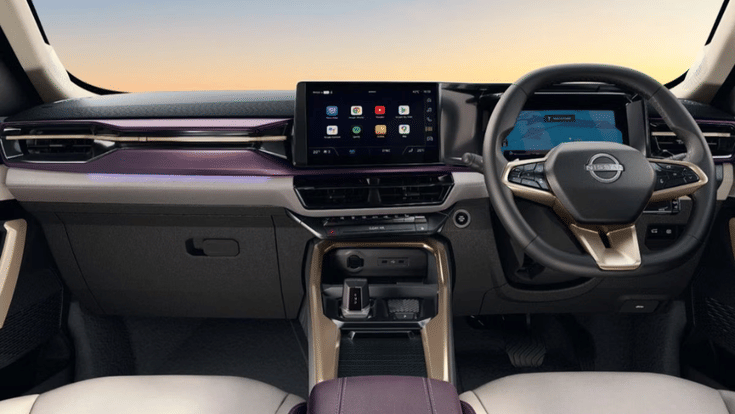
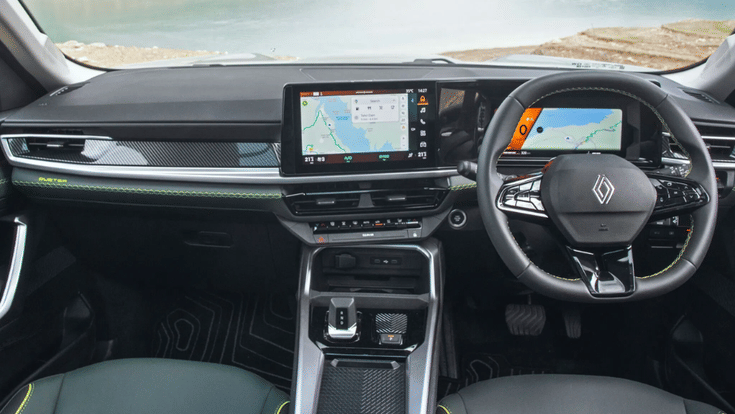
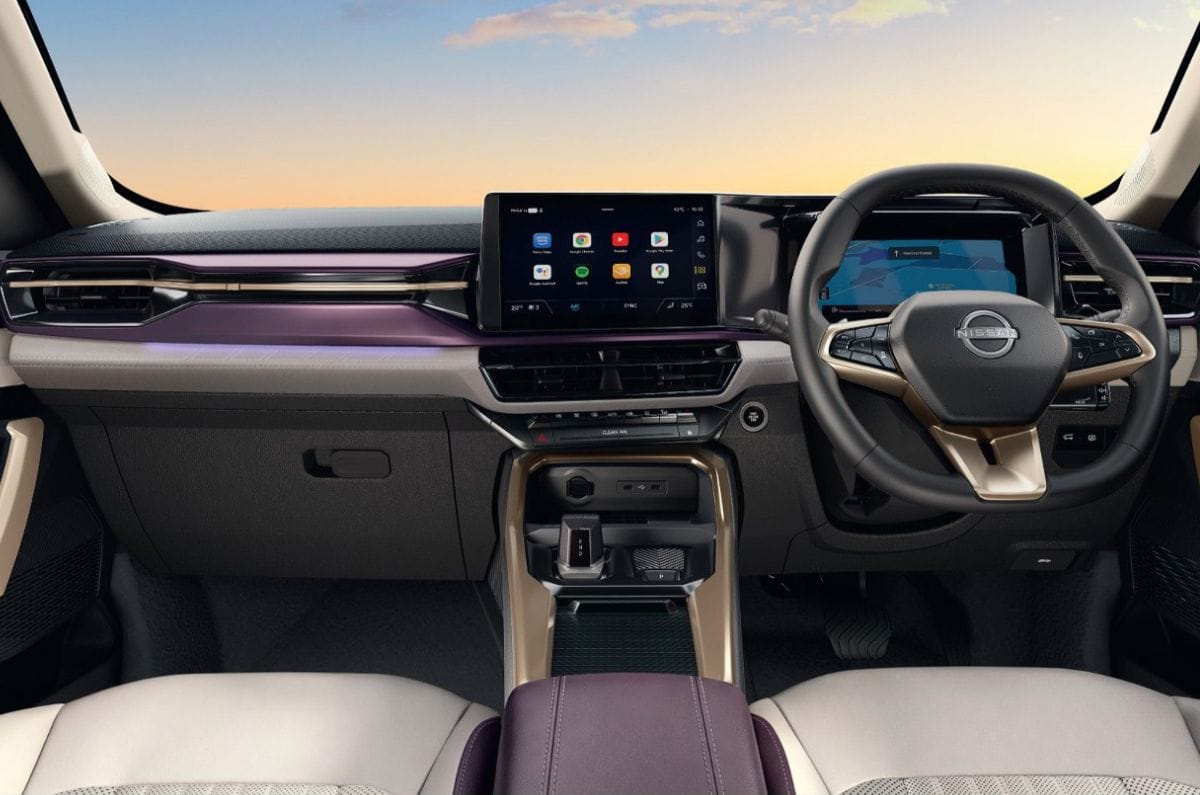
Inside, the top-spec Tekton features a dual-tone rose gold and burgundy upholstery, instead of the Duster’s black-and-green theme. Further distinction is made by gold finished inserts on the three-spoke steering wheels, dashboard, centre console and door handles.
Speaking of features, both pack a similar set of features, including a 10.1-inch touchscreen, 10.25-inch digital driver’s display, panoramic sunroof, a wireless phone charger and 6-way adjustable and ventilated front seats. Safety suite includes 6 airbags, Level 2 ADAS, a 360-degree camera with blind-spot assist, an electronic parking brake and front and rear parking sensors. Like the Duster, the Nissan has received a full five-star crash safety rating from the Bharat NCAP.
Nissan Tekton vs Renault Duster: Powertrains
Like the Duster, the Tekton comes with 100hp 1-litre and 163hp 1.3-litre turbo-petrol engine options. Similarly, a 6-speed manual gearbox is on offer with both engines, but an automatic gearbox – a 7-speed DCT in this case – is limited to the more powerful mill. Even the mileage figures of these powertrain options are similar, as can be seen in the table below. As we had exclsuively reported earlier, the Tekton will not receive the 160hp 1.8-litre strong-hybrid powertrain, set to be introduced with the Duster by Diwali.
Nissan Tekton vs Renault Duster claimed fuel-efficiency (kpl)
After teasing it for some time now, Nissan has launched the Tekton midsize SUV at Rs 10.49 lakh (ex-showroom). It is Nissan’s badge-engineered version of the Renault Duster and is being offered in six trims: Visia, Visia+, Acenta, N-Connecta, Tekna, and Tekna+. Bookings for the midsize SUV are open, and deliveries start on July 20.
Borrows the Duster’s 1.0L and 1.3L turbo-petrol engines
Exterior design is bolder and boxier than the Duster
Gets the same features as the Duster, with a new dual-tone cabin theme
2026 Nissan Tekton: Variant-wise prices
Ex-showroom prices range from Rs 10.49 lakh to Rs 18.59 lakh
2026 Nissan Tekton: Variant-wise ex-showroom prices in India (Rs, lakh)
1.0L TP 6MT
1.3L TP 6MT
1.3L TP 6DCT
Visia
10.49
–
–
Visia+
11.14
–
–
Acenta
11.79
–
14.99
N-Connecta
13.69
14.99
16.49
Tekna
15.39
16.39
17.79
Tekna+
16.49
–
18.59
The Nissan Tekton’s prices range from Rs 10.49 lakh to Rs 18.59 lakh, which are similar to the Renault Duster’s.
2026 Nissan Tekton: Powertrain details
Offered with two turbo-petrol engine options
The Nissan Tekton shares its powertrains with the Renault Duster, offering two turbo-petrol engine options. The entry-level 1.0-litre three-cylinder turbo-petrol develops 100hp and 166Nm of torque and comes paired exclusively with a 6-speed manual gearbox. Higher up the range, the 1.3-litre four-cylinder turbo-petrol produces 163hp and 280Nm, and is available with either a 6-speed manual or a 6-speed dual-clutch automatic (DCT).
Nissan claims that the 1.0-litre engine does a 0-100kph sprint in 12.46 seconds, and has a claimed range of 19.4kpl. The manual version of the larger 1.3-litre turbo-petrol engine does a 0-100kph run in 9.51 seconds and has a fuel efficiency of 17.8kpl. The DCT version claims a 9.89-second 0-100kph time and a fuel efficiency of 18.5kpl.
As reported earlier, the Duster’s 160hp, 1.8-litre strong hybrid engine will not make its way to the Tekton. On the Duster, however, this engine will debut during the festive season.
2026 Nissan Tekton: Exterior design
Gets Patrol-like design elements that make it look boxier than the Duster
The Tekton’s front-end design is heavily inspired by the Patrol, lending it a more squared-off appearance than the Renault Duster. It gets an upright grille featuring twin chrome slats flanked by slim LED headlamps. A full-width C-shaped LED daytime running light connects the two headlamps. There’s a red strip underneath the headlamps. The bonnet gets pronounced creases and carries Tekton lettering. The lower bumper features a dual-tone finish with a faux silver skid plate and LED fog lamps.
In profile, the Tekton has a Duster-like silhouette. However, Nissan has differentiated it with a new design for the 18-inch alloy wheels. It gets flared wheel arches and a distinctive silver trim insert on the front doors. The front doors use conventional pull-type handles, while the rear doors have integrated handles on the C-pillars.
At the rear, the Tekton features a full-width LED light bar integrated into C-shaped tail-lamps, mirroring the lighting treatment at the front. A roof-mounted spoiler sits above the upright tailgate, while the lower bumper adopts the same dual-tone finish with a silver skid plate insert seen up front. Unlike the Duster, the tailgate is finished in a single body colour rather than a contrasting black panel, resulting in a cleaner-looking design. There’s also a Tekton lettering on the tailgate.
Here are the dimensions of the Nissan Tekton:
Nissan Tekton dimensions and other specifications
Length (mm)
4,348
Width (mm)
1,815
Height (mm)
1,674
Wheelbase (mm)
2,657
Ground clearance (mm)
212
Boot space (litres)
518 (measured to the parcel shelf)
The Nissan Tekton is being offered in six colour options: Onyx Black, Blade Silver, Pearl White, Flare Garnet Red, Indigo Blue, and Moonbow Gray. All these colours are available as both monotone and dual-tone options.
2026 Nissan Tekton: Interior design and features
Offered with a dual-tone rose gold and burgundy cabin theme
Inside, the top-spec Nissan Tekton features a dual-tone rose gold and burgundy dashboard with a 3-spoke steering wheel, a 10.1-inch freestanding touchscreen infotainment system and a 10.25-inch digital driver’s display. The seats have leatherette upholstery and offer adjustable headrests for all passengers.
Other features include a panoramic sunroof, a wireless phone charger, a powered tailgate, and 6-way adjustable and ventilated front seats. Safety features include 6 airbags, Level-2 advanced driver assistance systems (ADAS), a 360-degree camera with blind-spot assist, an electronic parking brake, and front and rear parking sensors. As it is based on the Renault Duster, it gets a 5-star Bharat NCAP rating. Nissan says that it is capable of achieving a 5-star Global NCAP rating.
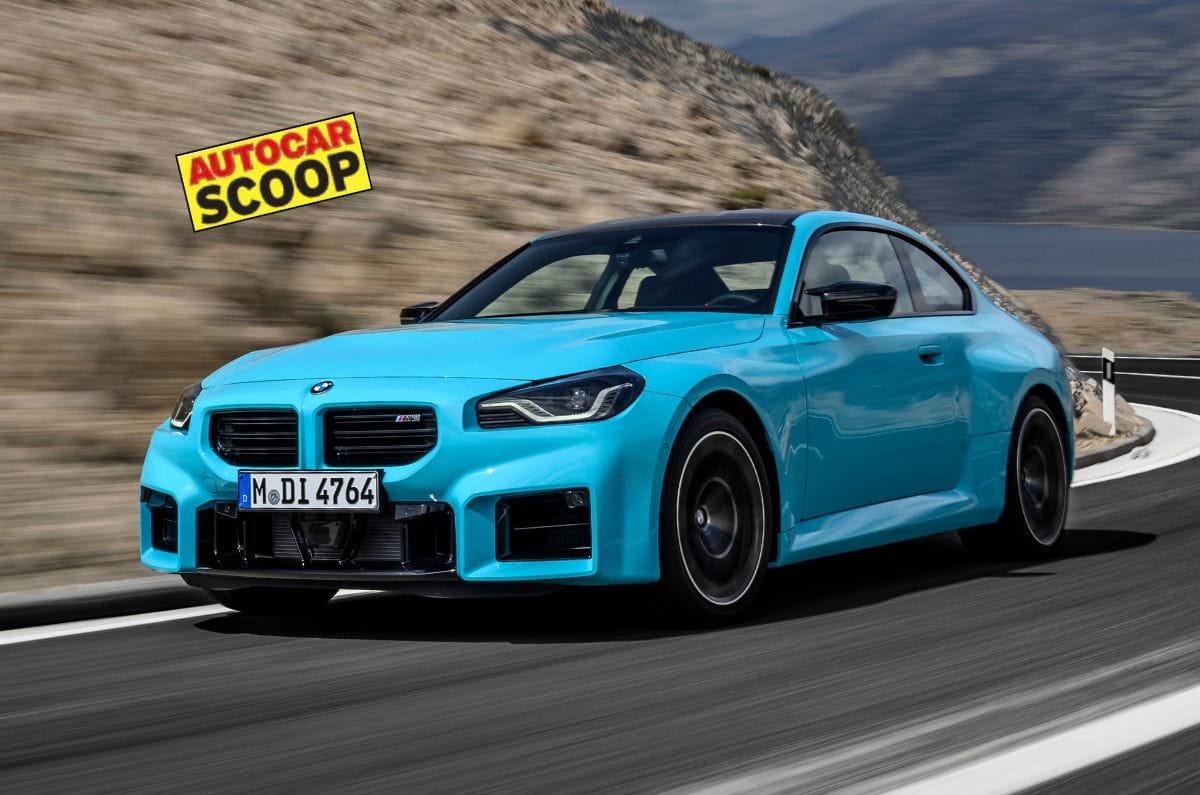
The BMW M2 M xDrive Coupe is confirmed to launch in India. It is essentially the all-wheel-drive version of the most accessible ‘M’ model in BMW’s lineup, which debuted globally on June 3. Currently, the M2 is offered only as an RWD model in a standard and CS avatar.
Rear-wheel-biased AWD system helps a 0.3s quicker 0-100kph time
Powered by the same 480hp, 3.0-litre 6-cyl turbo-petrol engine
No design differences compared to the standard RWD BWM M2
BMW M2 AWD: Powertrain details
Gets the same engine as the RWD M2, but clocks a 0.3s faster 0-100kph time
The BMW M2 M xDrive Coupe is powered by the same 3.0-litre straight-six turbo-petrol engine that produces 480hp and 600Nm. The engine is mated to an M Steptronic transmission, which sends power to all the wheels (AWD). The M xDrive system, BMW’s speak for the AWD setup, is rear-wheel-biased and sends power to the front wheels when the rear loses traction. It also gets an ‘Active M Differential’ that maximises traction. The M xDrive system’s behaviour is configurable via the M Setup menu, with a ‘2WD mode with DSC deactivated’ which “unlocks a driving experience of remarkable purity.”
The AWD M2, BMW claims, does a 0-100kph sprint in 3.7 seconds, 0.3 seconds quicker than the standard RWD model.
India’s Union Minister for Petroleum and Natural Gas, Hardeep Singh Puri, during a recent media interaction, said that a public rollout of E25 petrol is still some time away. The minister stated that E25 (25 percent ethanol blended petrol) is still undergoing tests at the moment and “any suggestions that we are bringing E25 now is misrepresentation.”
Government on E25 and other ethanol blends
Speaking about E25 petrol, Puri said that the fuel is not ready for the market yet as Centre is still “conducting tests, which will take time.” The Union Minister went on to say that any progress on the matter will be based on the results from these tests, which will be followed by an evaluation phase. Once that is done, “we will then talk to the stakeholders and automobile manufacturers,” said Puri. However, the minister did not specify any timeline for this process.
Puri also spoke about the recently introduced E85 petrol. The minister stated that it will take a bit of time for E85 to be made publically available in more parts of the country, as new petrol pumps will have to be commissioned first. Touching upon the ongoing discussions surrounding E20 petrol, Puri said, “There is no controversy. There are 20 crore two-wheelers and 20 lakh four-wheelers on the road that are using E20. There are the automobile manufacturers and vehicle service centres, all have said that there are no difficulties.”
Conducted in association with Spinny, India’s leading pre-owned car platform, the fourth edition of our Used Car Study analyses real-world resale values across a broad spectrum of vehicles sold in the Indian market to assess depreciation trends over a five-year ownership period. The study is based on actual transactional data shared by Spinny for vehicles sold between January 1 and August 31, 2025.
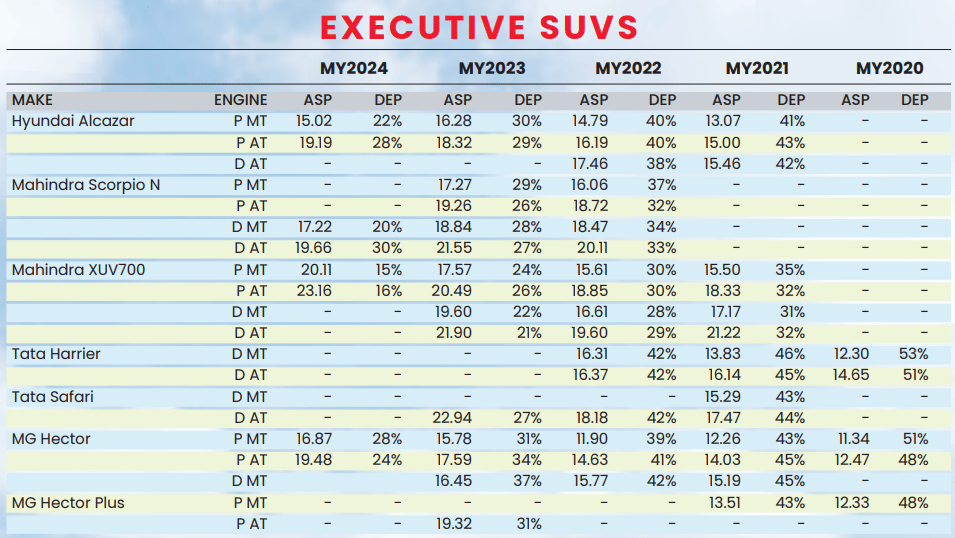
In this part of the resale value study series, we take a look at the executive SUV segment:
Executive SUVs resale value
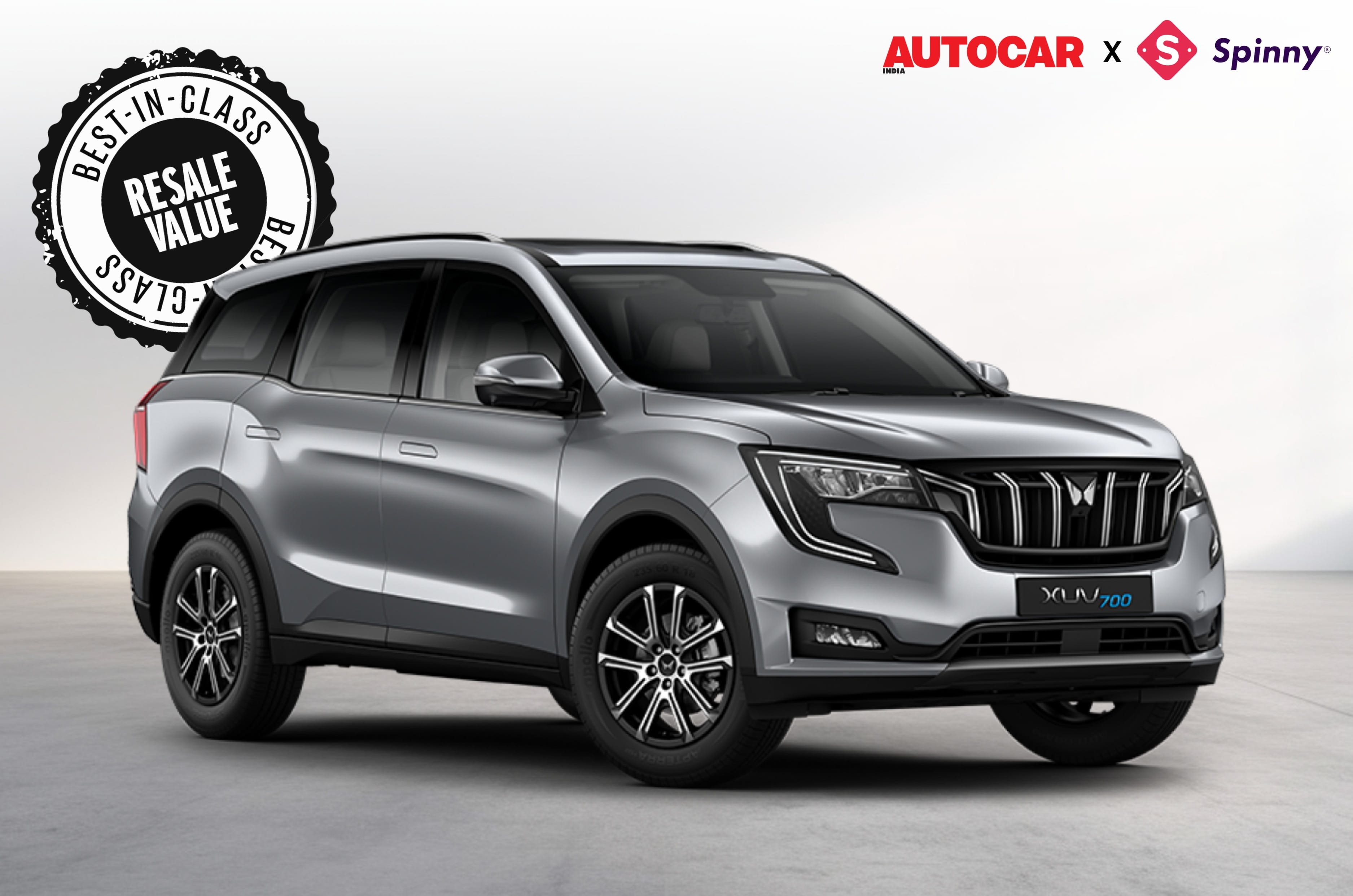
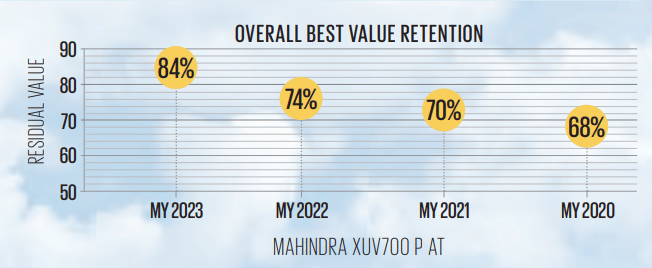
The Mahindra XUV700 has emerged as one of the strongest performers in the used car market, with all variants retaining value impressively well. Particularly noteworthy are the petrol variants, which display the flattest depreciation curves over a four-year period. In fact, one-year-old used examples are trading at only 15-16 percent below their average on-road prices, underlining the SUV’s exceptionally strong market demand.
By comparison, five-year-old examples of the Tata Harrier and MG Hector depreciate significantly more, with resale values falling to less than half of their original purchase prices. The Mahindra Scorpio N also holds better value than its rivals, and overall, the Mahindra SUVs display slower depreciation than their Tata counterparts.
As per the study, the average selling price of a five-year-old executive SUV retailed through Spinny was Rs 12.6 lakh. Comparable figures for three-year-old and one-year-old executive SUVs were Rs 16.80 lakh and Rs 18.84 lakh, respectively. Average depreciation over the same periods worked out to 50 percent, 36.41 percent and 22.90 percent, respectively.
Autocar-Spinny resale value study methodology
The analysis covers the average selling prices (ASPs) of vehicles retailed through Spinny’s network across nine cities – Delhi-NCR, Bengaluru, Hyderabad, Pune, Chennai, Mumbai, Lucknow, Ahmedabad and Kolkata.
For the purposes of this study, depreciation has been defined as the percentage difference between a vehicle’s original on-road price in its year of manufacture and its resale value in 2025. In instances where a model was offered with multiple engine options using the same fuel type, the data has been consolidated and averaged. Variant-wise differences have similarly been averaged out.
Discontinued models and powertrain options have been excluded. Additionally, premium vehicles priced above Rs 30 lakh, electric vehicles and certain low-volume models have not been included due to limited transaction data and insufficient sample sizes.
Conducted in association with Spinny, India’s leading pre-owned car platform, the fourth edition of our Used Car Study analyses real-world resale values across a broad spectrum of vehicles sold in the Indian market to assess depreciation trends over a five-year ownership period. The study is based on actual transactional data shared by Spinny for vehicles sold between January 1 and August 31, 2025.
In this part of the resale value study series, we take a look at the midsize SUV segment:
Midsize SUVs resale value
*Average selling price (ASP) in Rs lakh
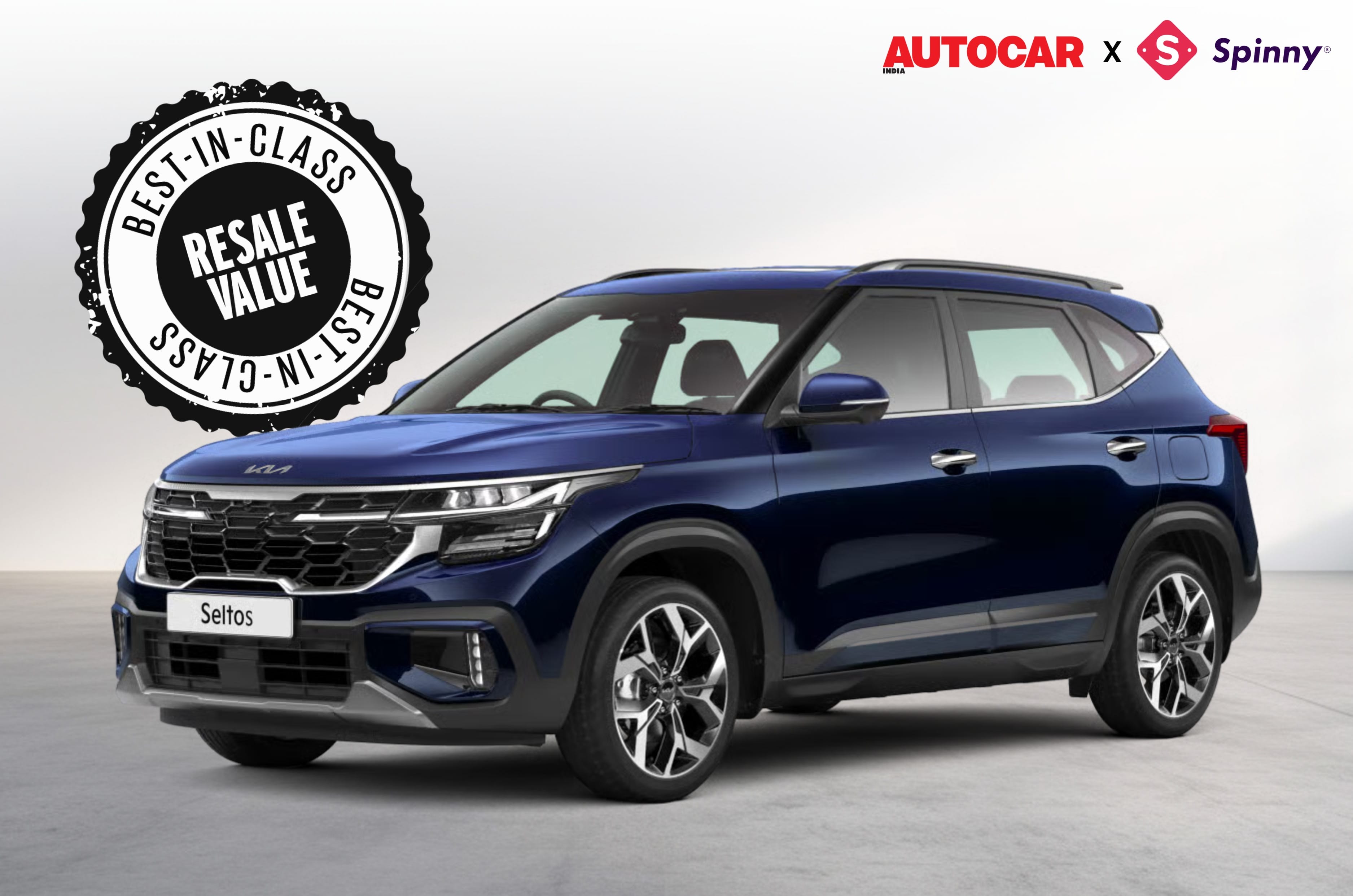
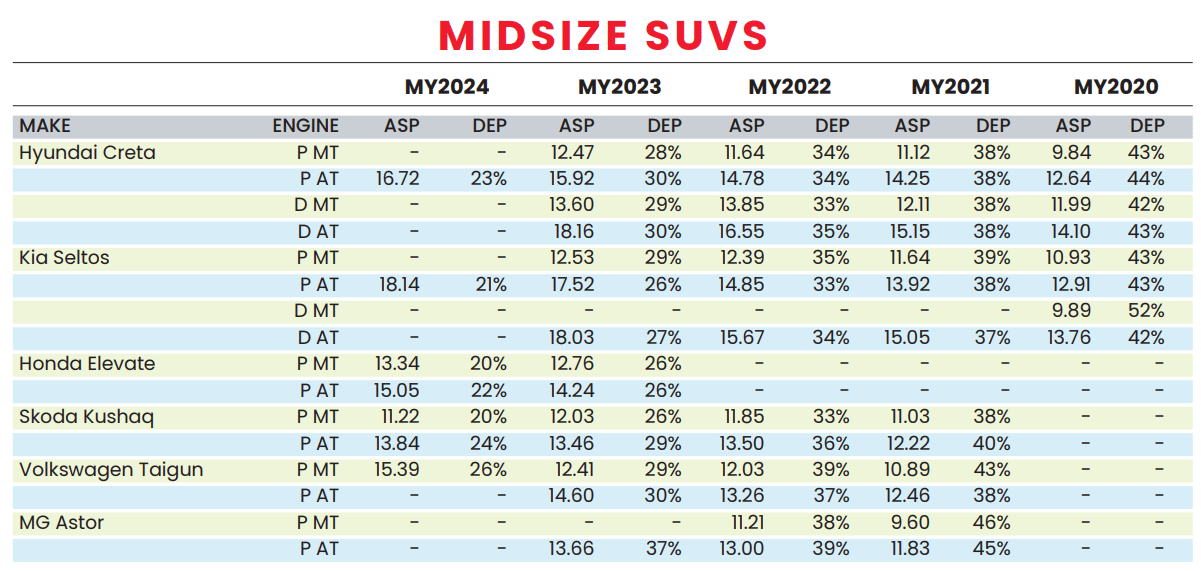
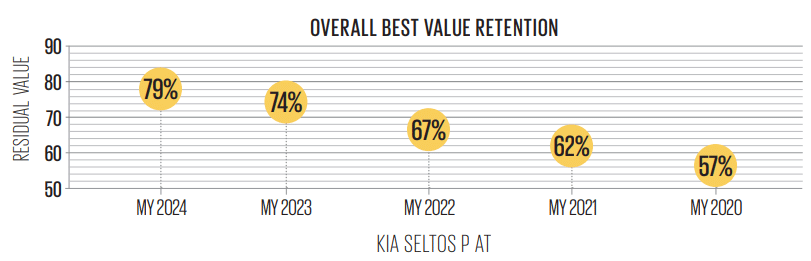
Over a five-year ownership period, the Kia Seltos petrol-automatic showcases the strongest residual performance in the midsize SUV category, retaining value better than most of its rivals. Notably, the Seltos considered here is the outgoing version – the new Seltos was only introduced in 2026.As for the Skoda-Volkswagen duo, the Taigun saw greater depreciation over a 4-year than the Kushaq.
Despite being on sale only since 2023, the Honda Elevate has already demonstrated promising used market performance, with a notably flatter depreciation trend than expected for a relatively new entrant. In contrast, weaker demand for the MG Astor in the new car market appears to have impacted its resale values as well, with the petrol-automatic version showing the highest depreciation in the segment.
As per the study, the average selling price of a five-year-old midsize SUV retailed through Spinny was Rs 12 lakh. Comparable figures for three-year-old and one-year-old midsize SUVs were Rs 13.43 lakh and Rs 14.81 lakh, respectively. Average depreciation over the same periods worked out to 44 percent, 35.4 percent and 22.30 percent, respectively.
Autocar-Spinny resale value study methodology
The analysis covers the average selling prices (ASPs) of vehicles retailed through Spinny’s network across nine cities – Delhi-NCR, Bengaluru, Hyderabad, Pune, Chennai, Mumbai, Lucknow, Ahmedabad and Kolkata.
For the purposes of this study, depreciation has been defined as the percentage difference between a vehicle’s original on-road price in its year of manufacture and its resale value in 2025. In instances where a model was offered with multiple engine options using the same fuel type, the data has been consolidated and averaged. Variant-wise differences have similarly been averaged out.
Discontinued models and powertrain options have been excluded. Additionally, premium vehicles priced above Rs 30 lakh, electric vehicles and certain low-volume models have not been included due to limited transaction data and insufficient sample sizes.
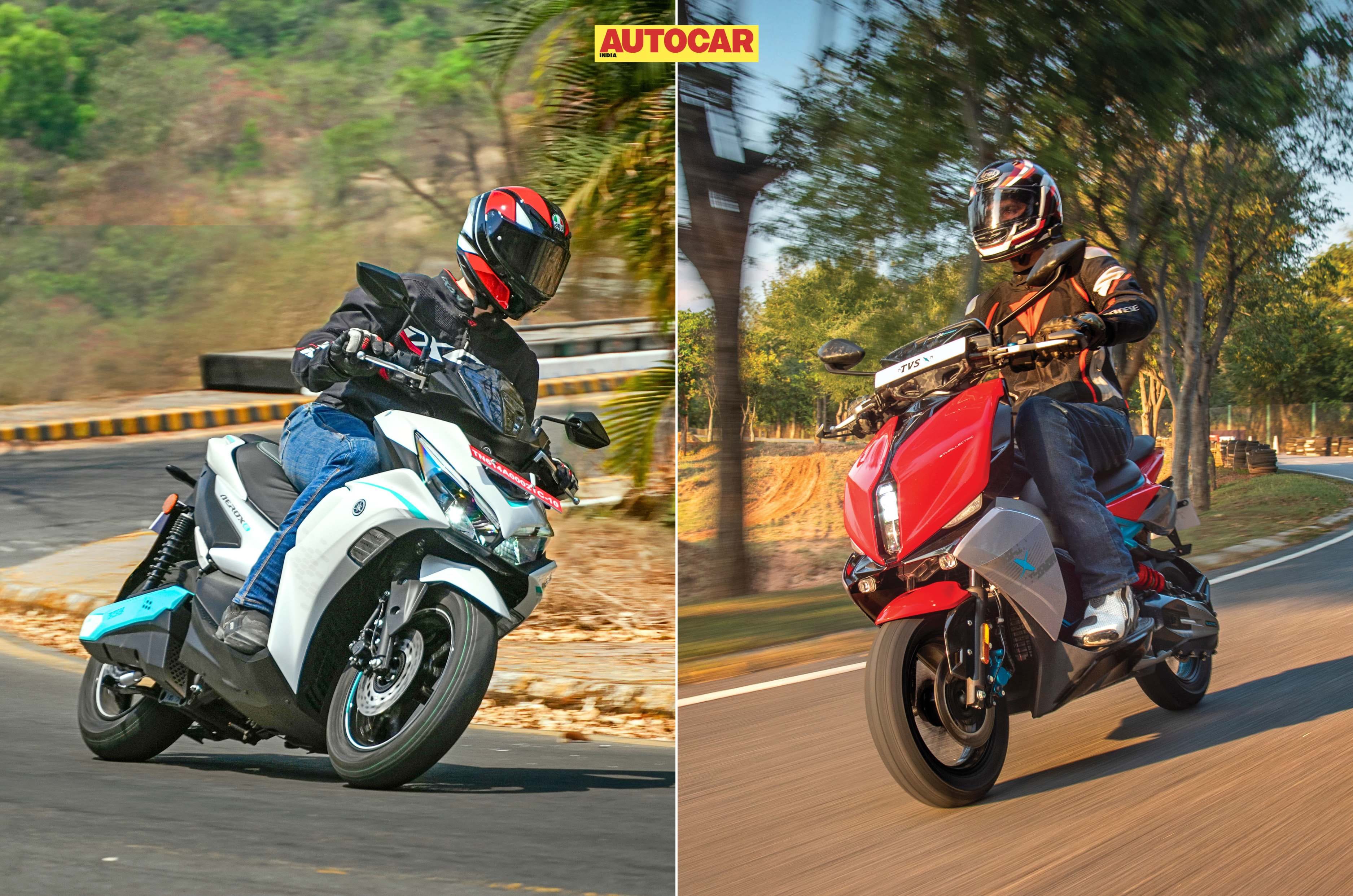
Last year, Yamaha announced that it would enter the Indian electric scooter market with two products – the River Indie-based EC-06 and the Aerox-E. The former was launched earlier this year, and the company has now revealed pricing for the electric Aerox at Rs 2.82 lakh. That makes it Yamaha’s most expensive offering in India and one of the costliest electric scooters on sale. At that price point, its only real rival is the TVS X, which has occupied a unique position at the top end of the Indian electric scooter market since its launch in 2023. Here’s how the two compare on paper.
Yamaha Aerox-E vs TVS X: Motor, battery and range
The TVS X offers better performance and range
Yamaha Aerox-E
TVS X
Peak motor output
9.4kW
11.7kW
Continuous motor output
NA
7kW
Peak torque
48Nm
40Nm
Battery capacity
2 x 1.5kWh (3kWh total)
4.4kWh
Charging time (0-100%)
6 hours 20 minutes
Claimed IDC range
117km
159km
Claimed top speed
95.5kph
110kph
The TVS X holds a clear advantage in outright performance and range. TVS claims a 0-40kph time of 2.5 seconds and a top speed of 110kph, both comfortably ahead of the Aerox-E. Its larger 4.4kWh battery also delivers a significantly higher claimed IDC range, although, as with all IDC figures, real-world range is likely to be lower.
The Aerox-E comes with dual removable battery setup comprising two 1.5kWh packs. That’s a meaningful practical advantage if you don’t have easy access to a charging point, as the batteries can be removed and charged separately using Yamaha’s optional charging dock (priced at Rs 18,000). That said, each battery weighs around 13kg, so removing them regularly may not be the most convenient solution.
Yamaha Aerox-E vs TVS X: Dimensions and underpinnings
The TVS X is lighter and runs on smaller 12-inch wheels
Yamaha Aerox-E
TVS X
Kerb weight
139kg
134kg
Suspension (F/R)
Telescopic fork / Twin shock absorbers
Telescopic fork / Monoshock
Brakes (F/R)
Disc / Disc
220mm disc / 195mm disc
Tyres (F/R)
110/80-14 / 140/70-14
100/80-12 / 110/80-12
Both scooters use a conventional telescopic fork up front, but they differ at the rear. The Aerox-E uses twin shock absorbers, while the TVS X gets a monoshock. Another notable difference is wheel size. The Aerox-E rides on larger 14-inch wheels, which should offer better stability, while the TVS X uses 12-inch wheels that are likely to feel a little more agile. It’s worth noting that TVS showcased a version of the X with 14-inch wheels at EICMA last year, although there’s been no update on whether or when that version will make it into production.
The TVS X is also 5kg lighter and is built around a sporty aluminium twin-spar frame, which means it doesn’t have a conventional flat floorboard.
Yamaha Aerox-E vs TVS X: Features
The TVS X has a clear edge in the features deparetmnt
The TVS X is the more comprehensively equipped scooter of the two. Its headline feature is a massive 10.25-inch TFT touchscreen with Bluetooth connectivity, Android Auto, navigation, music playback and smartphone integration. It also gets three riding modes – Xtealth, Xtride and Xonic – along with reverse assist, hill hold and TVS’ RAM air-cooling system for the motor. TVS has positioned the X as a flagship product, and its equipment list reflects that.
The Aerox-E isn’t quite as feature-rich. It upgrades from the petrol Aerox 155’s LCD console to a TFT display with smartphone connectivity, but the unit is relatively basic compared to the TVS. The Aerox-E offers three riding modes – Eco, Standard and Power – along with a dedicated Boost button that provides short bursts of additional performance.
Yamaha Aerox-E vs TVS X: Price
The TVS X undercuts the Aerox-E by Rs 16,000
TVS X
Yamaha Aerox-E
Price (ex-showroom, Bengaluru)
Rs 2.66 lakh
Rs 2.82 lakh
At Rs 2.66 lakh, the TVS X undercuts the Aerox-E by Rs 16,000. On paper, it’s clearly the stronger package, offering higher performance, a larger battery, longer claimed range and a considerably more comprehensive feature list.
Availability, however, remains limited for both scooters. The TVS X was initially launched only in Bengaluru, with the company indicating plans to expand to more cities, although there hasn’t been a meaningful update since. The Aerox-E will be available in Delhi, Bengaluru, Mumbai, Pune and Chennai, giving it slightly wider reach, but both remain niche offerings at the premium end of the electric scooter market.
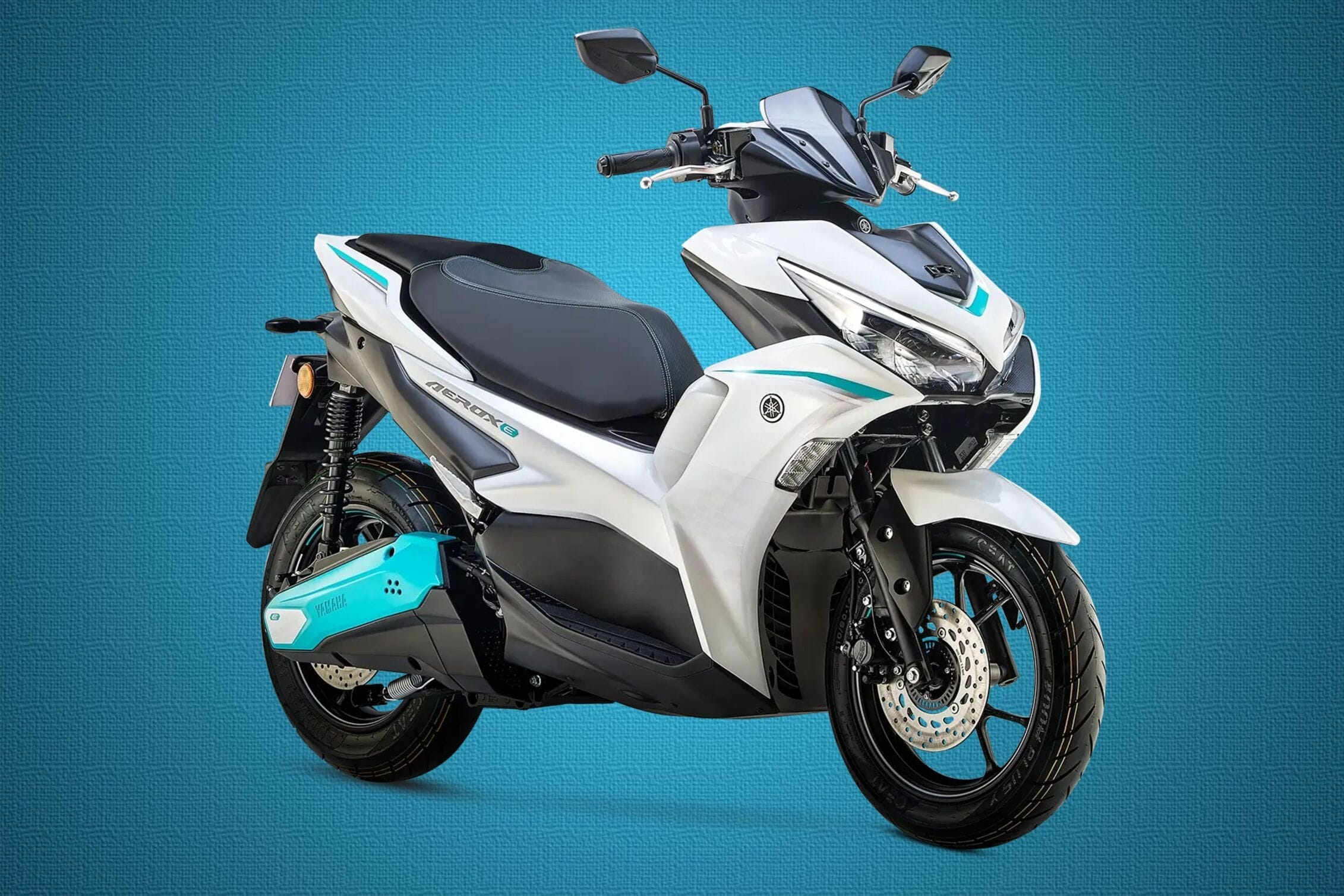
Alongside the launch of the XSR155 last year, Yamaha had also showcased the EV counterpart of the Aerox, called the Aerox-E. This electric scooter has officially been launched by Yamaha today and is priced at Rs 2.82 lakh. This makes it the most expensive Yamaha product on sale in India currently.
Yamaha Aerox-E produces 9.5kW and 48Nm
Has dual 1.5kWh removable battery packs
Becomes the most expensive Yamaha product in India
The Aerox-E features dual 1.5kWh detachable batteries paired with a motor that produces 9.5kW (12.9hp) of peak power and 48Nm of torque. Yamaha claims that these dual batteries are packed with ‘high energy type cells’ for performance. The e-scooter has a claimed IDC range of 117km and a kerb weight of 139kg (13kg heavier than the base Aerox 155).
The Aerox-E also offers multiple riding modes including Eco, Standard and Power along with an additional Boost mode, giving you short bursts of power for quick overtakes. Braking duties are handled by a front disc with ABS and a rear disc brake.
In terms of design, the Aerox-E is similar to its petrol-powered counterpart, featuring the same twin-LED headlight and LED tail-light. However, it gets a TFT dash with app-based connectivity as opposed to the LCD dash on the Aerox.
Currently, the scooter is available in Delhi, Bangalore, Mumbai, Pune and Chennai.
Maruti Suzuki is offering attractive offers across its premium Nexa range in July 2026. Depending on the model and variant, these include cash discounts, exchange or scrappage offers, corporate benefits and loyalty bonuses. Exchange and scrappage benefits cannot be claimed together. The loyalty bonus is available only to existing Maruti customers, and it can be combined only with the exchange bonus. Corporate benefits are exclusively offered to eligible organisations and approved finance partners.
Disclaimer: Discounts may vary by city and are subject to stock availability. Please check with your local dealer for the exact figures.
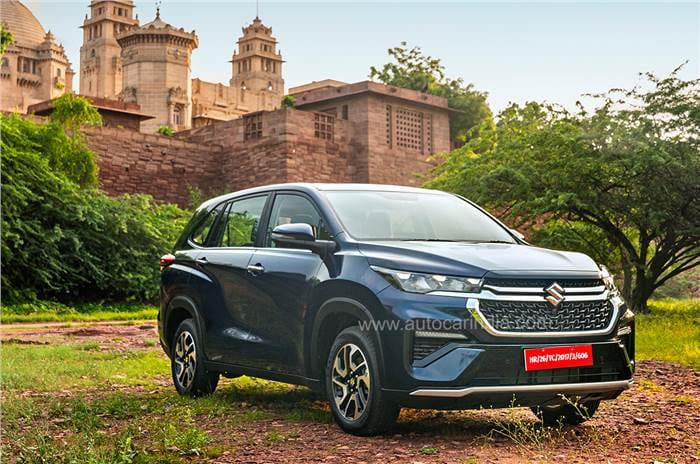
Maruti Invicto discounts in July 2026
Up to Rs 2.10 lakh
Every Maruti Invicto trim gets benefits of up to Rs 2.10 lakh this month, which is slightly lower than in June. These offers include a cash discount of up to Rs 50,000, exchange benefits of up to Rs 1 lakh, a Rs 50,000 loyalty bonus and a Rs 10,000 corporate benefit. The Invicto MPV is Maruti’s version of the Toyota Innova Hycross, and it is priced between Rs 24.97 lakh and Rs 28.60 lakh.
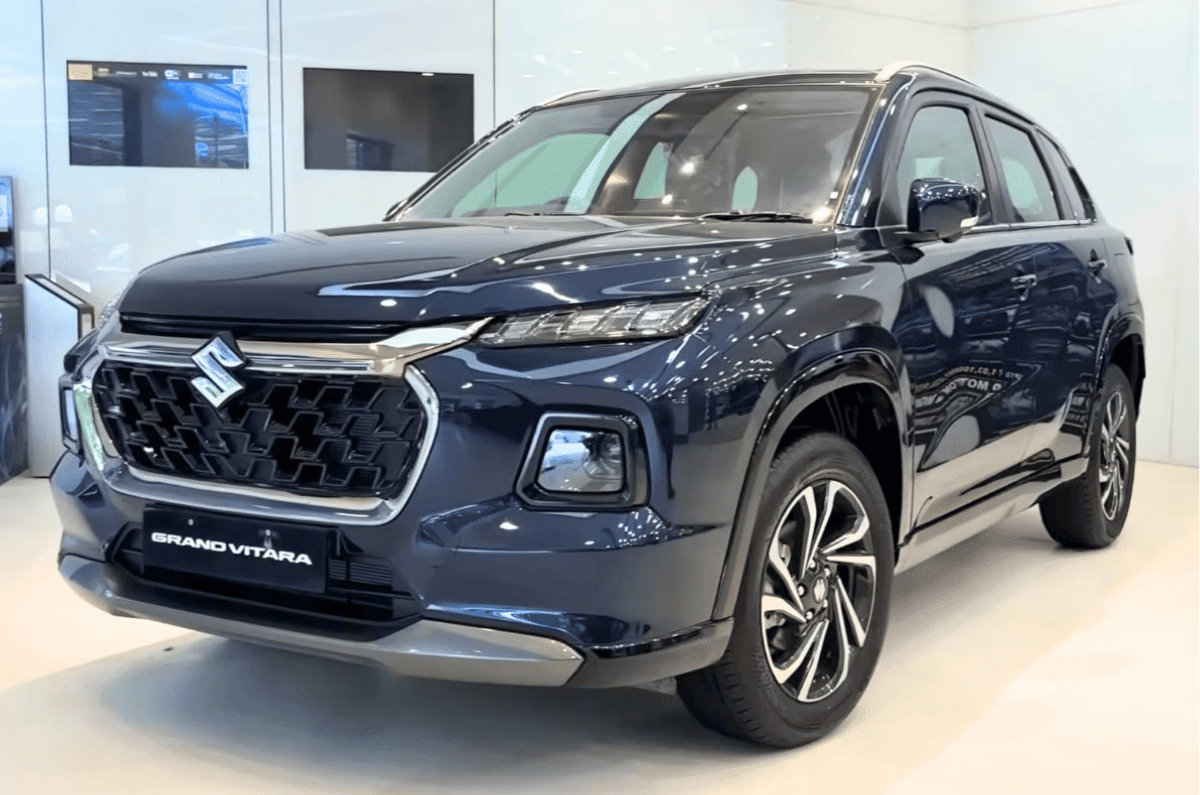
Maruti Grand Vitara discounts in July 2026
Up to Rs 95,000
The Maruti Grand Vitara gets benefits of up to Rs 95,000 in July. The Sigma petrol MT variant attracts the highest discounts of up to Rs 95,000, while the Delta petrol gets benefits of up to Rs 85,000. Buyers of the Zeta petrol and Alpha petrol variants get a Rs 25,000 cash discount along with a complimentary 5-year extended warranty (it cannot be exchanged for cash, and is non-transferable).
The strong hybrid variants are available with zero road tax benefit, a complimentary 5-year extended warranty, up to Rs 50,000 exchange bonus, Rs 30,000 upgrade loyalty bonus and a Rs 10,000 corporate benefit. The Delta CNG and Zeta CNG variants also come with total benefits of up to Rs 90,000. The Grand Vitara is priced between Rs 10.76 lakh and Rs 19.72 lakh.
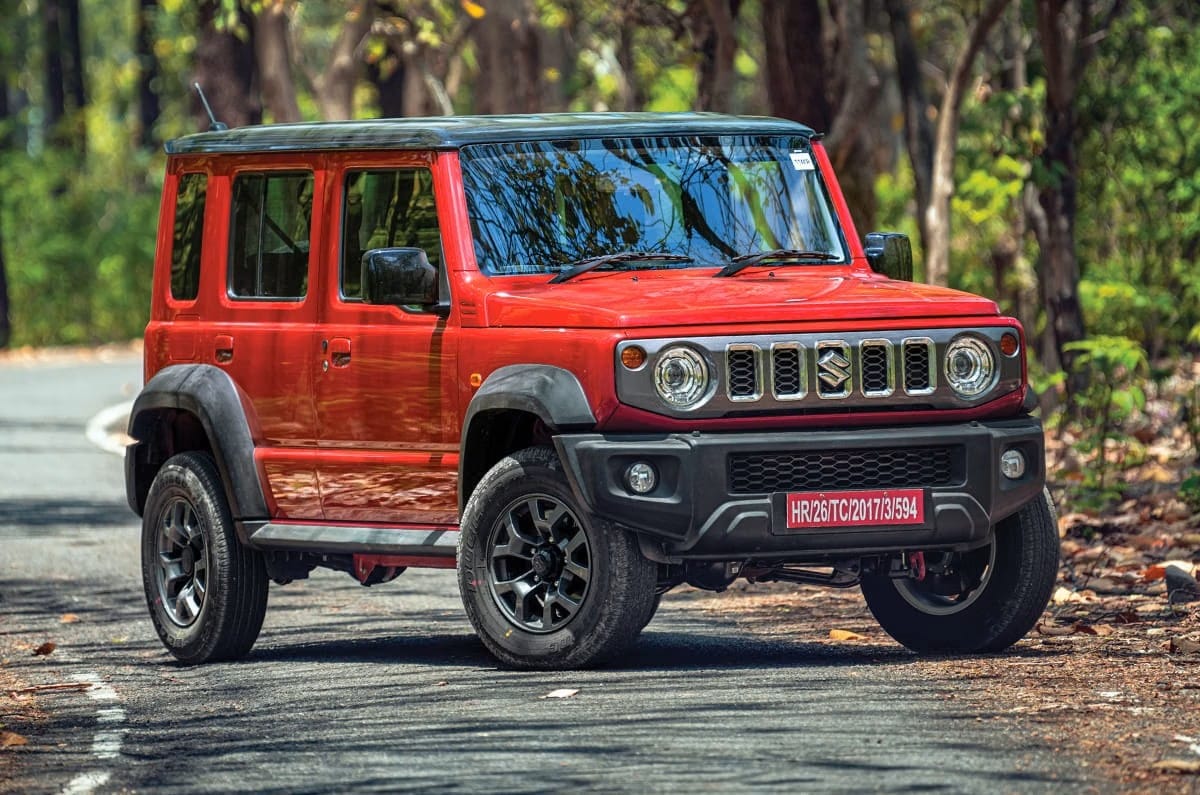
Maruti Jimny discounts in July 2026
Up to Rs 45,000
Like last month, a cash discount of Rs 45,000 is available with all Maruti Jimny variants. The compact off-roader is priced between Rs 12.39 lakh and Rs 14.52 lakh.
Maruti XL6 discounts in July 2026
Up to Rs 45,000
Next, the Maruti XL6 gets offers going up to Rs 45,000 on both petrol and CNG variants. Thes comprise a cash discount of up to Rs 20,000 and a scrappage bonus of up to Rs 25,000. The XL6 is the 6-seat, more premium version of the Ertiga (sold via Arena outlets) and it is priced from Rs 11.57 lakh to Rs 14.52 lakh.
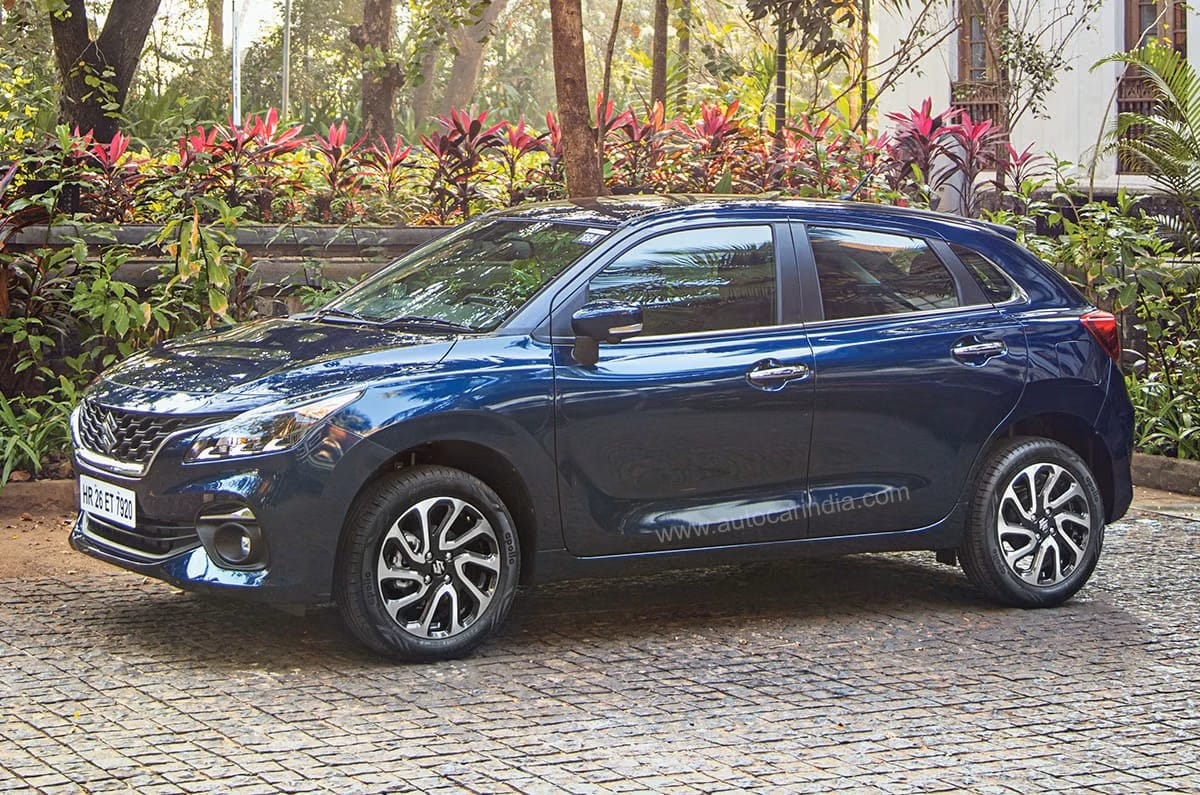
Maruti Baleno discounts in July 2026
Up to Rs 40,000
The Maruti Baleno is on sale with benefits of up to Rs 40,000 on petrol-manual variants and AMT variants. Meanwhile, the CNG variants attract benefits of up to Rs 35,000. The Baleno premium hatchback starts at Rs 5.99 lakh and goes up to Rs 9.17 lakh.
Maruti Fronx discounts in July 2026
Up to Rs 25,000
Lastly, the Maruti Fronx gets benefits of up to Rs 25,000 in July. The turbo-petrol variants are available with a Rs 10,000 cash discount and a Rs 15,000 scrappage bonus. Meanwhile, the naturally-aspirated petrol and CNG variants do not get a cash discount but are offered with a scrappage bonus of up to Rs 15,000. The Fronx price starts at Rs 6.85 lakh and tops out at Rs 11.84 lakh.
Ex-showroom prices mentioned above are as on July 8, 2026.