Mercedes-Benz कल भारत में AMG E 53 हाइब्रिड 4MATIC+ लॉन्च करने जा रही है, जिससे उसके पोर्टफोलियो में एक प्लग-इन हाइब्रिड परफॉर्मेंस सेडान शामिल हो जाएगी। यह लॉन्च इसलिए अहम है क्योंकि E 53 में AMG परफॉर्मेंस के साथ इलेक्ट्रिक पावरट्रेन का मेल है, जो भारत में अब तक कुछ ही लग्जरी कारों में देखने को मिला है।
रेगुलर E-Class से ऊपर पोजिशन की जाने वाली यह नई सेडान ज्यादा पावर, बेहतर ड्राइविंग डायनामिक्स और कम दूरी के सफर के लिए इलेक्ट्रिक मोड में चलने की क्षमता के साथ आएगी। इसकी कीमत काफी अहम होगी, क्योंकि AMG E 53 Hybrid 4MATIC+ हाई-परफॉर्मेंस लग्जरी सेडान के एक खास सेगमेंट में एंट्री करेगी, जहां पहले से कई प्रीमियम मॉडल मौजूद हैं।
भारत में अनुमानित कीमत
Mercedes-Benz ने अभी तक कीमतें नहीं बताई हैं, लेकिन AMG E 53 हाइब्रिड की कीमत 1.35 करोड़ रुपये से 1.45 करोड़ रुपये (एक्स-शोरूम) के बीच होने की उम्मीद है। चूंकि यह कार भारत में पूरी तरह से बनी-बनाई यूनिट (CBU) के तौर पर आएगी, इसलिए इसकी कीमत स्टैंडर्ड E-Class के मुकाबले काफी ज्यादा होगी।
बता दें कि यह AMG E 53 उन ग्राहकों को ध्यान में रखकर पेश की जाएगी, जो एक सामान्य लग्जरी सेडान से ज्यादा तेज और ज्यादा रोमांचक ड्राइविंग अनुभव चाहते हैं, लेकिन अभी एक पूरी तरह से स्पोर्ट्स कार खरीदने के लिए तैयार नहीं हैं।
इसमें दी गई प्लग-इन हाइब्रिड टेक्नोलॉजी इसे भारत की उन चुनिंदा परफॉर्मेंस सेडान में शामिल करती है, जो पूरी तरह इलेक्ट्रिक मोड में भी चलने की सुविधा देती हैं।
फिलहाल, आखिरी कीमत से ही यह तय होगा कि यह BMW और Audi की मिलती-जुलती गाड़ियों को कितनी कड़ी टक्कर देती है।
इंजन और परफॉर्मेंस
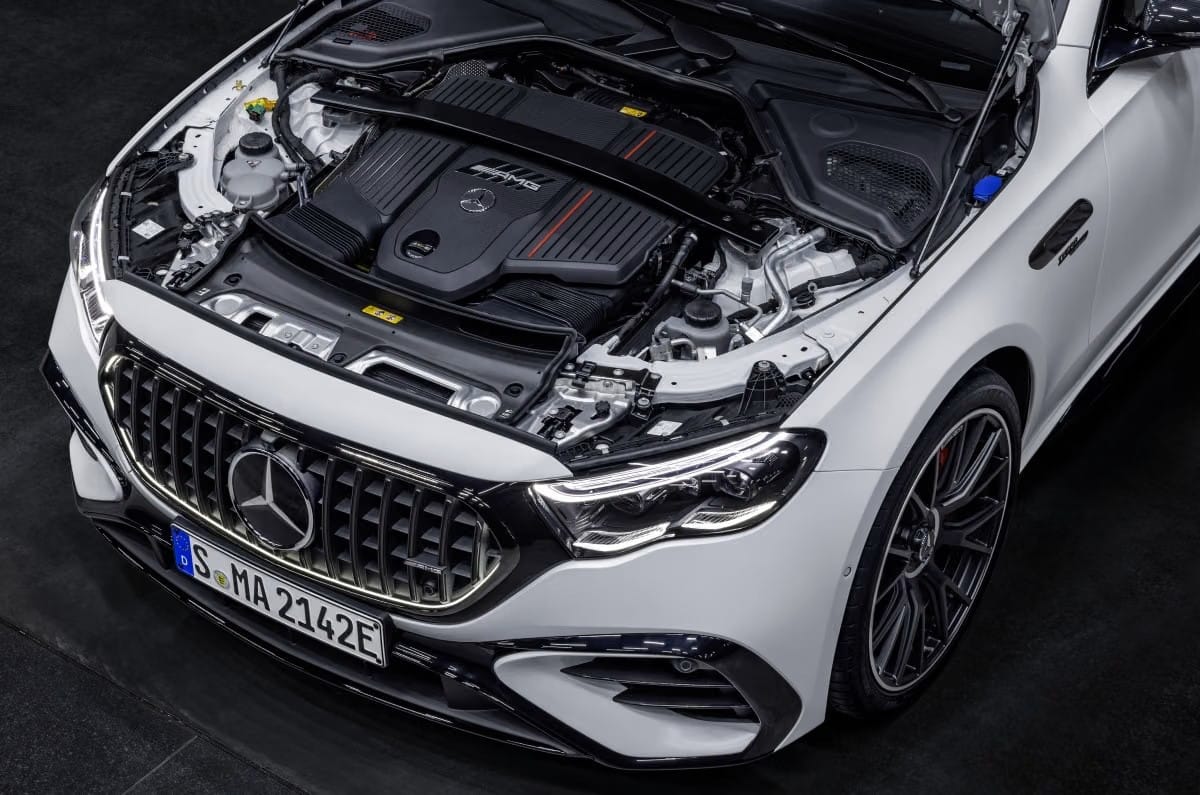
Mercedes-Benz AMG E 53 Hybrid में 3.0 लीटर, 6-सिलेंडर टर्बो-पेट्रोल इंजन दिया गया है, जिसे एक इलेक्ट्रिक मोटर और बैटरी पैक के साथ जोड़ा गया है। इसकी कुल पावर 577 bhp और टॉर्क 750 Nm है, हालांकि AMG के ‘रेस स्टार्ट’ फ़ंक्शन से पावर को कुछ समय के लिए 604 bhp तक बढ़ाया जा सकता है।
इस सेटअप को मर्सिडीज के 4MATIC+ ऑल-व्हील-ड्राइव सिस्टम और नौ-स्पीड ऑटोमैटिक गियरबॉक्स के साथ जोड़ा गया है। कंपनी के ग्लोबल आंकड़ों के मुताबिक, यह सेडान लगभग 3.8 सेकंड में 0 से 100 km/h की रफ्तार पकड़ सकती है।
आम AMG मॉडल के उलट, E 53 सिर्फ इलेक्ट्रिक पावर का इस्तेमाल करके भी कम दूरी तय कर सकती है, जो शहर के ट्रैफिक में फायदेमंद साबित हो सकता है।
इसमें और क्या-क्या खास है?
E 53 में AMG-खास डिजाइन एलिमेंट्स हैं, जैसे कि अलग तरह का फ्रंट बंपर, बड़े पहिए और चार एग्जॉस्ट आउटलेट। इसके अंदर स्पोर्ट्स सीट्स, डिजिटल डिस्प्ले के लिए AMG ग्राफिक्स और मर्सिडीज का लेटेस्ट इंफोटेनमेंट सिस्टम दिया गया है।
इस सेडान में एडेप्टिव सस्पेंशन, रियर-व्हील स्टीयरिंग और कई ड्राइविंग मोड्स भी हैं, जो सड़क और ड्राइविंग की स्थितियों के हिसाब से कार के व्यवहार को बदलते हैं।
Mercedes-Benz कल AMG E 53 हाइब्रिड की बिक्री शुरू होने पर इसकी आधिकारिक कीमत और भारत-स्पेसिफिक डिटेल्स की घोषणा करेगी।
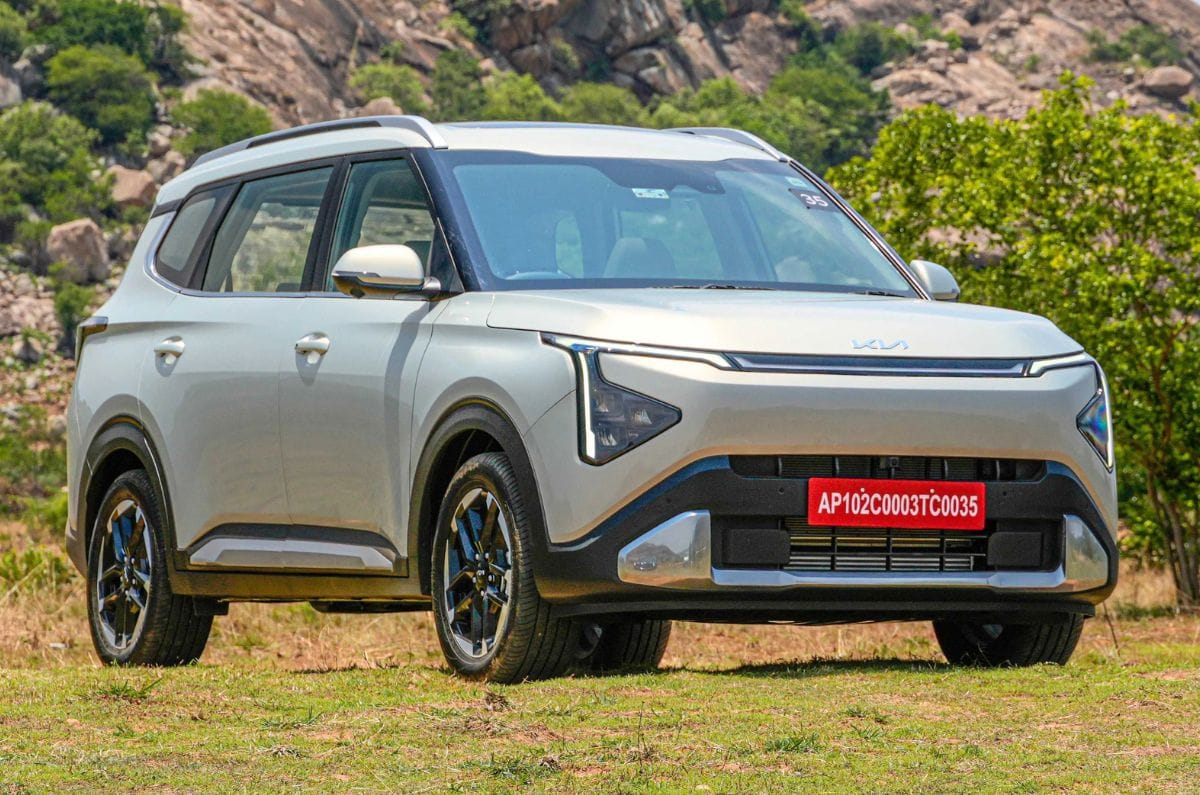
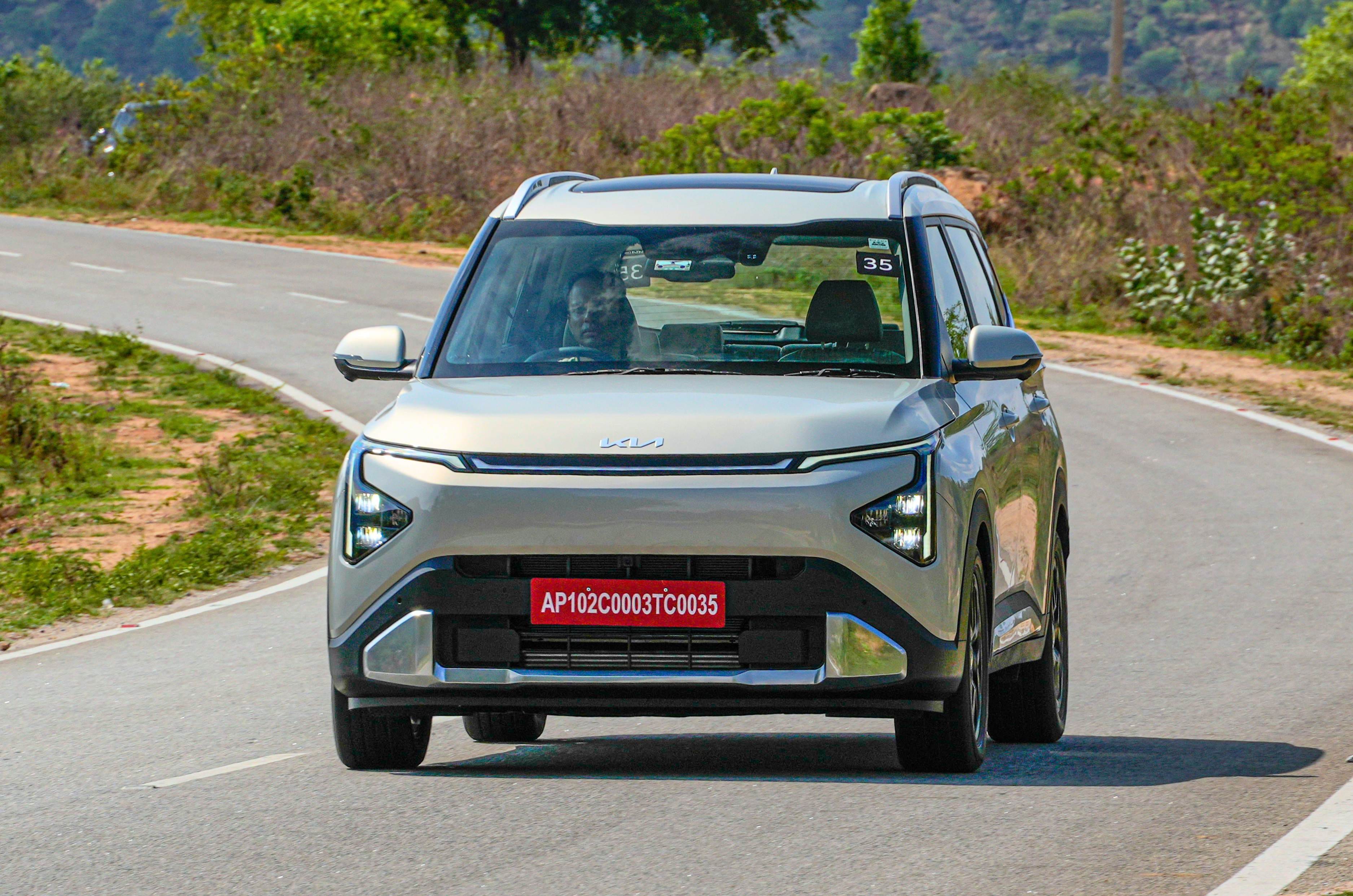
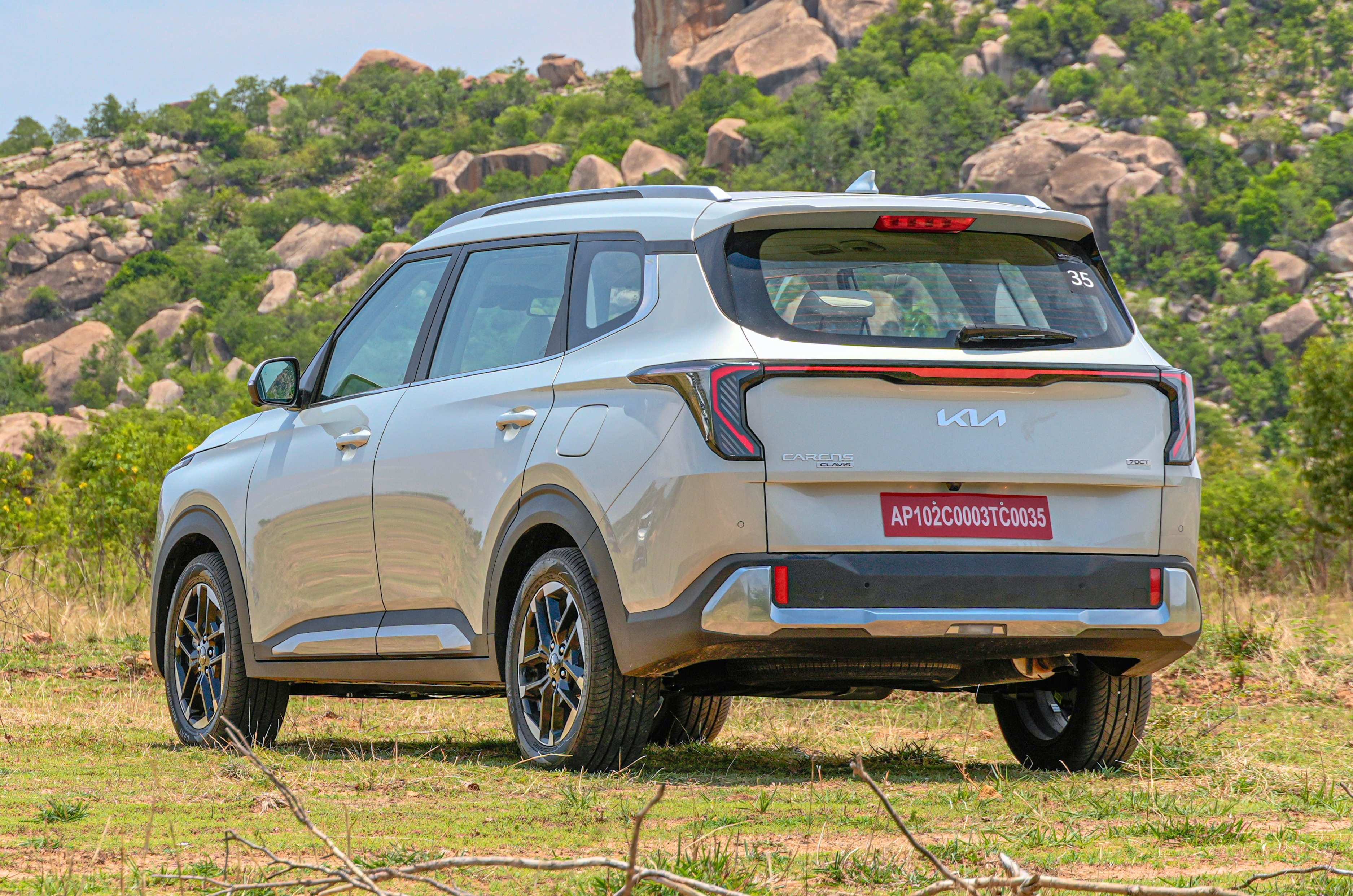
Kia is one of the few automakers in India that has three MPVs in its line-up, with the most popular one being the Carens Clavis. This is a segment that’s witnessed growth in the past couple of years, supporting the Korean brand’s focus on selling multiple MPVs. Built on the same K2 platform as the Carens, the Clavis is aimed at buyers who want more premium styling and feature set spread across more variants and trim levels. Here are some facts to keep in mind before a Carens Clavis.
Reasons to buy the Kia Carens Clavis
Spacious & well-equipped cabin
One of the strongest suits of the Carens Clavis is its tech-rich and practical interior
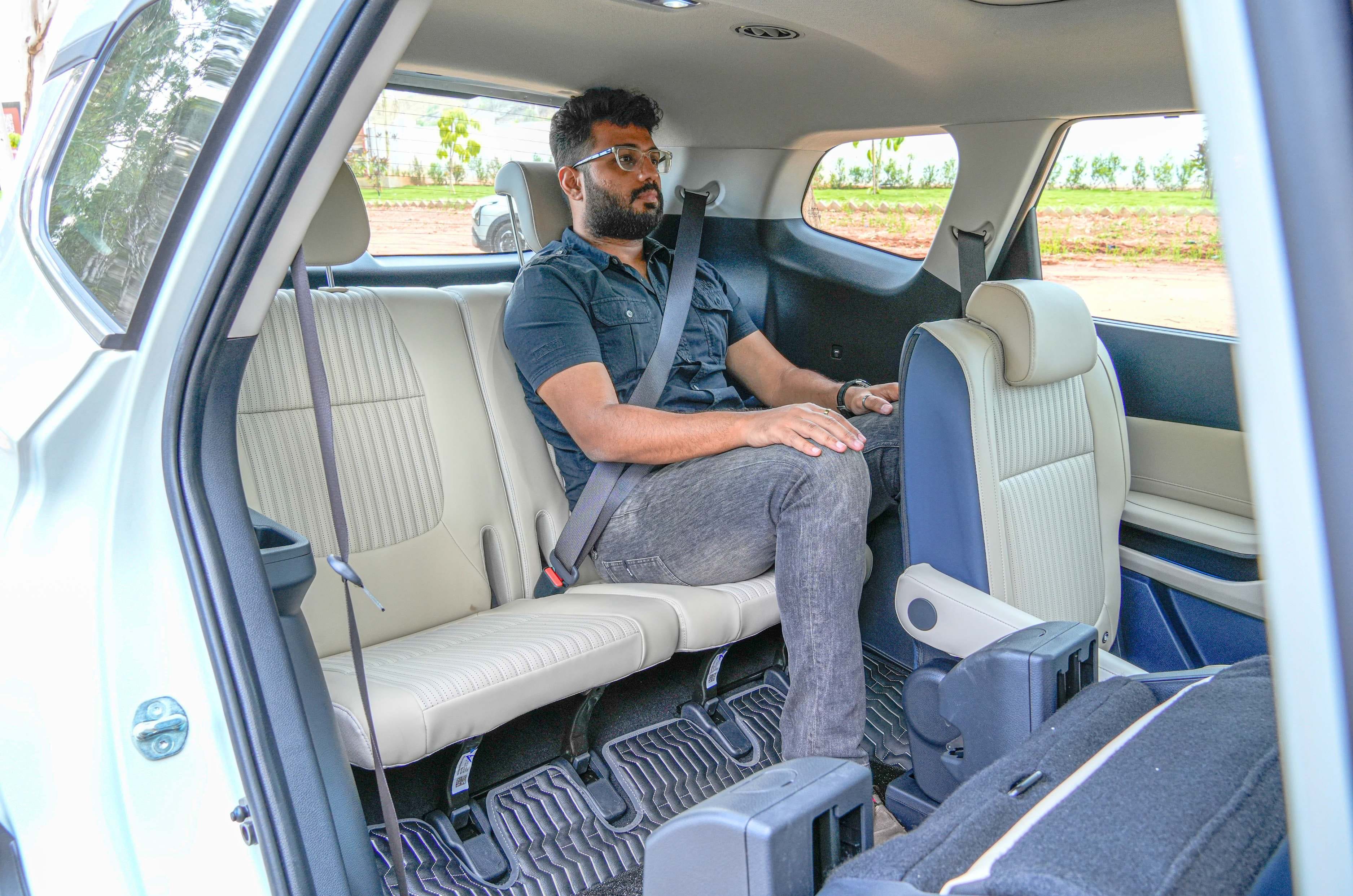
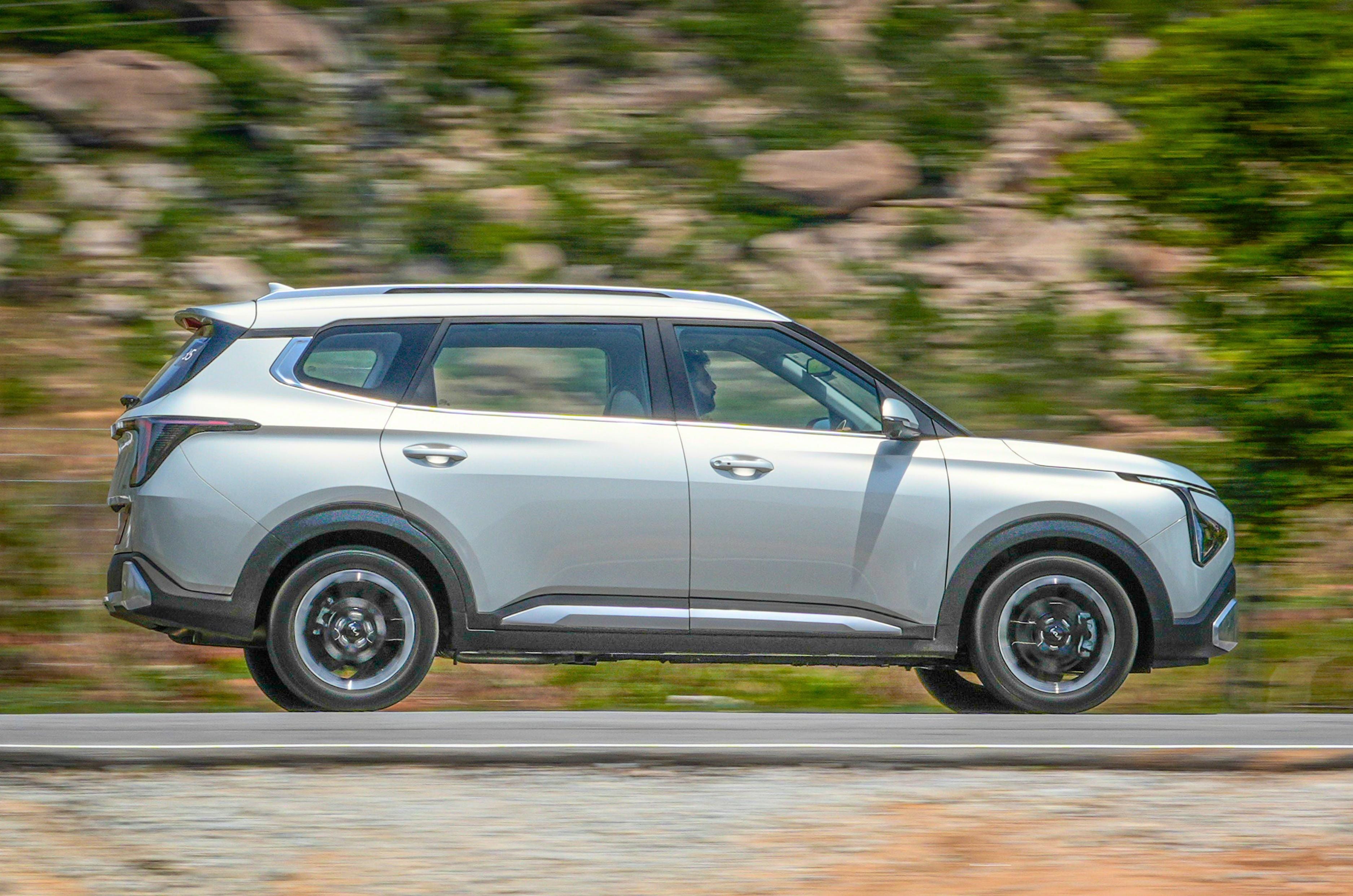
Whether you get the 6-seater or 7-seater version of the Kia Carens Clavis, space isn’t an issue. A one-touch tumble & fold feature means that getting into the third row is pretty straight-forward. This last row also has enough room to accommodate two adults without fuss while also providing dedicated AC vents, USB ports, headrests and three-point seatbelts. With 216 litres of boot space, you can easily store several soft bags.
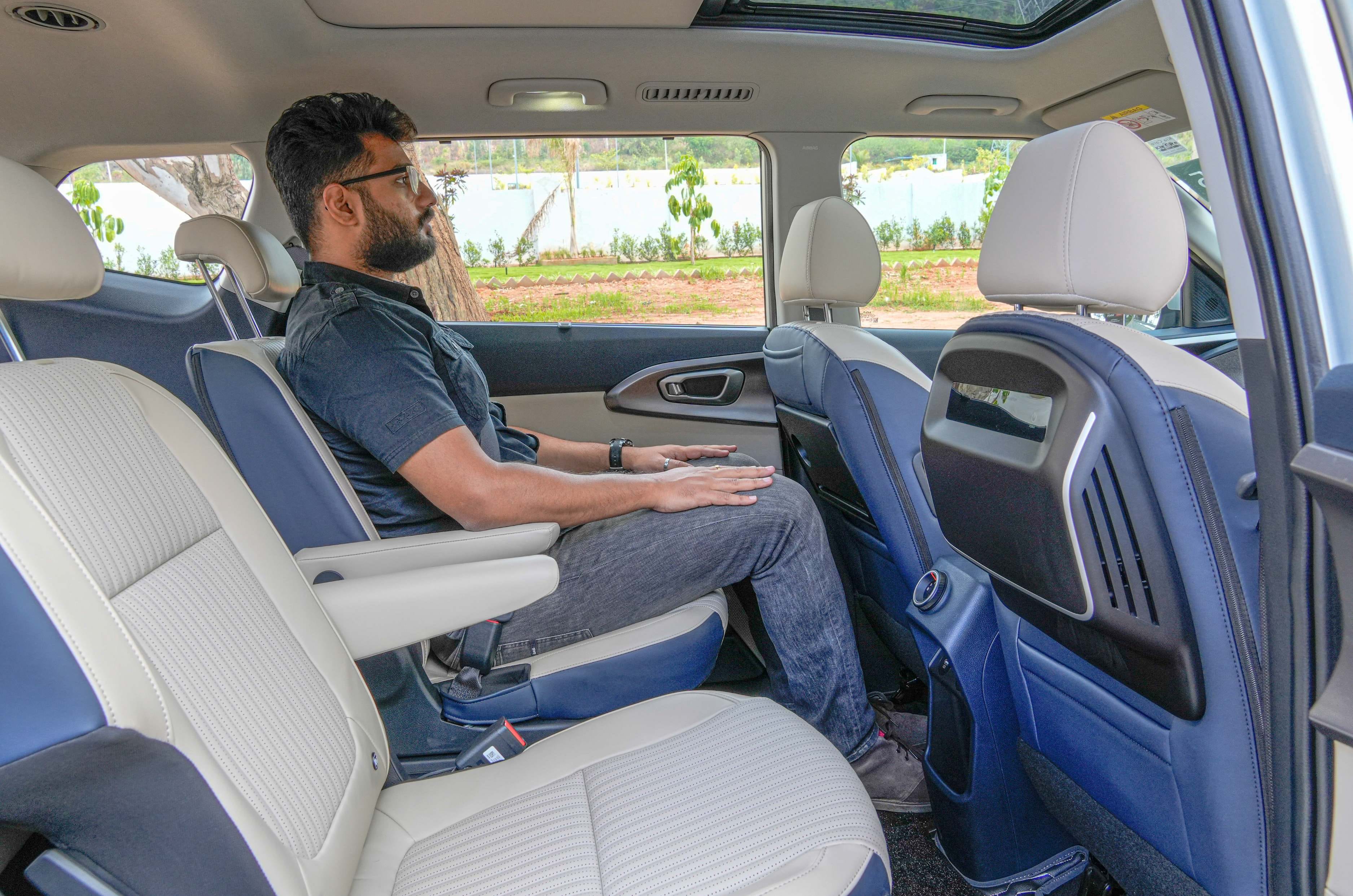
The 6-seater version gets captain seats for the second row that not only look premium but also get individual armrests for extra comfort. There’s no dearth of headroom and kneeroom for the middle-row occupants. Depending on the trim level, this row also benefits from the two-pane panoramic sunroof, blower control, sunblinds, tray table, and air purifier. A manually operated ‘boss’ mode liberates even more room for the occupant seated behind the co-driver’s seat. Passengers will have no trouble with ingress or egress as second-row accessibility is good.
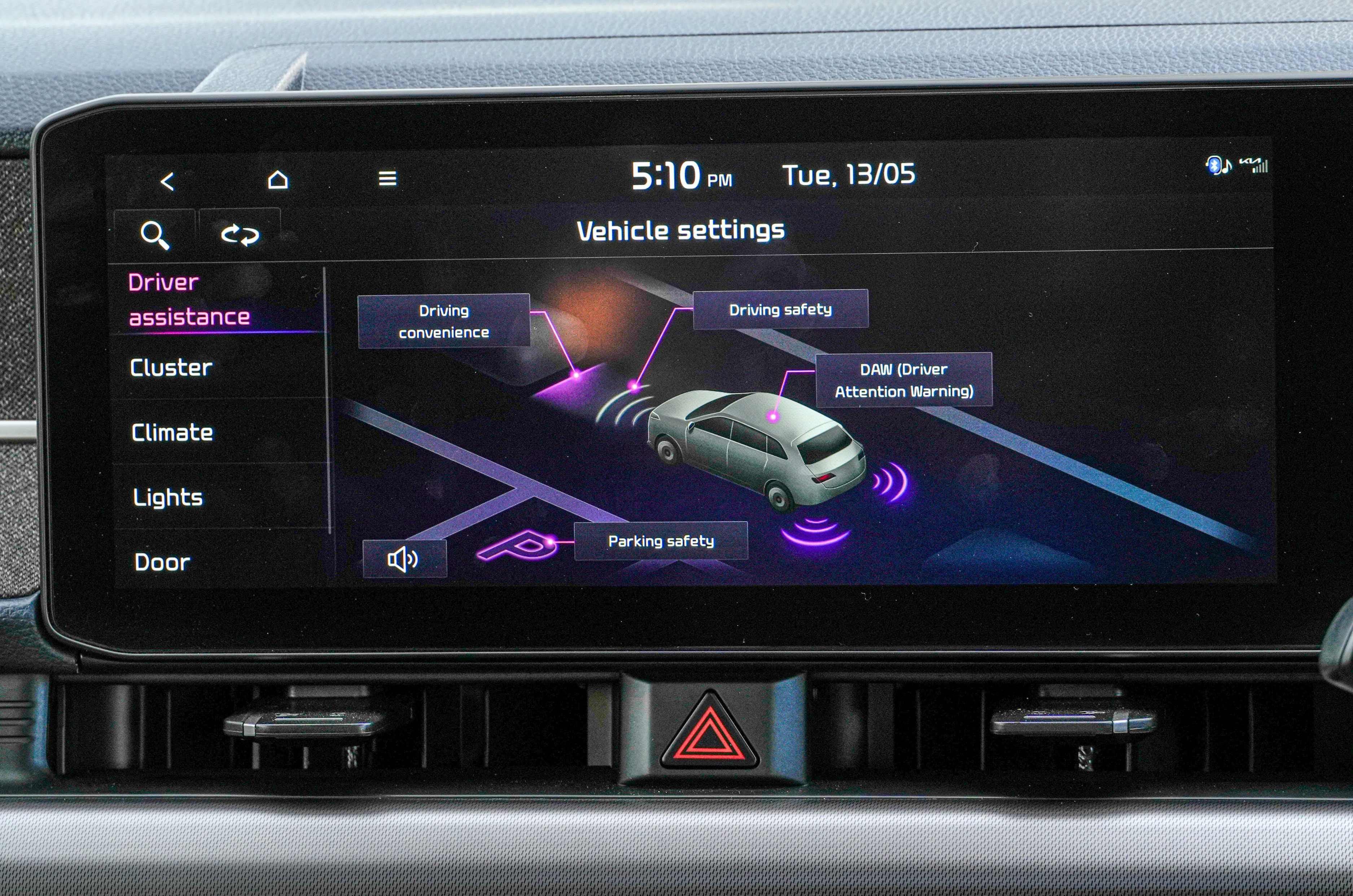
Practicality up front comes from ventilated seats, cooled cupholders and a wireless charger. The dual 12.3-inch screens are high-resolution units that enable a clean and smooth user experience. Some of the other feature highlights here include the 8-speaker Bose audio system, 64-colour ambient lighting system, leatherette upholstery, dashcam, and Level 2 ADAS (Advanced Driver-Assistance Systems). The latter is well-calibrated for our erratic road conditions, particularly functions such as blind-spot monitoring, lane-keeping assist and rear cross-traffic alert.
Powertrain options galore
The Carens Clavis is offered with three engine options four transmission choices
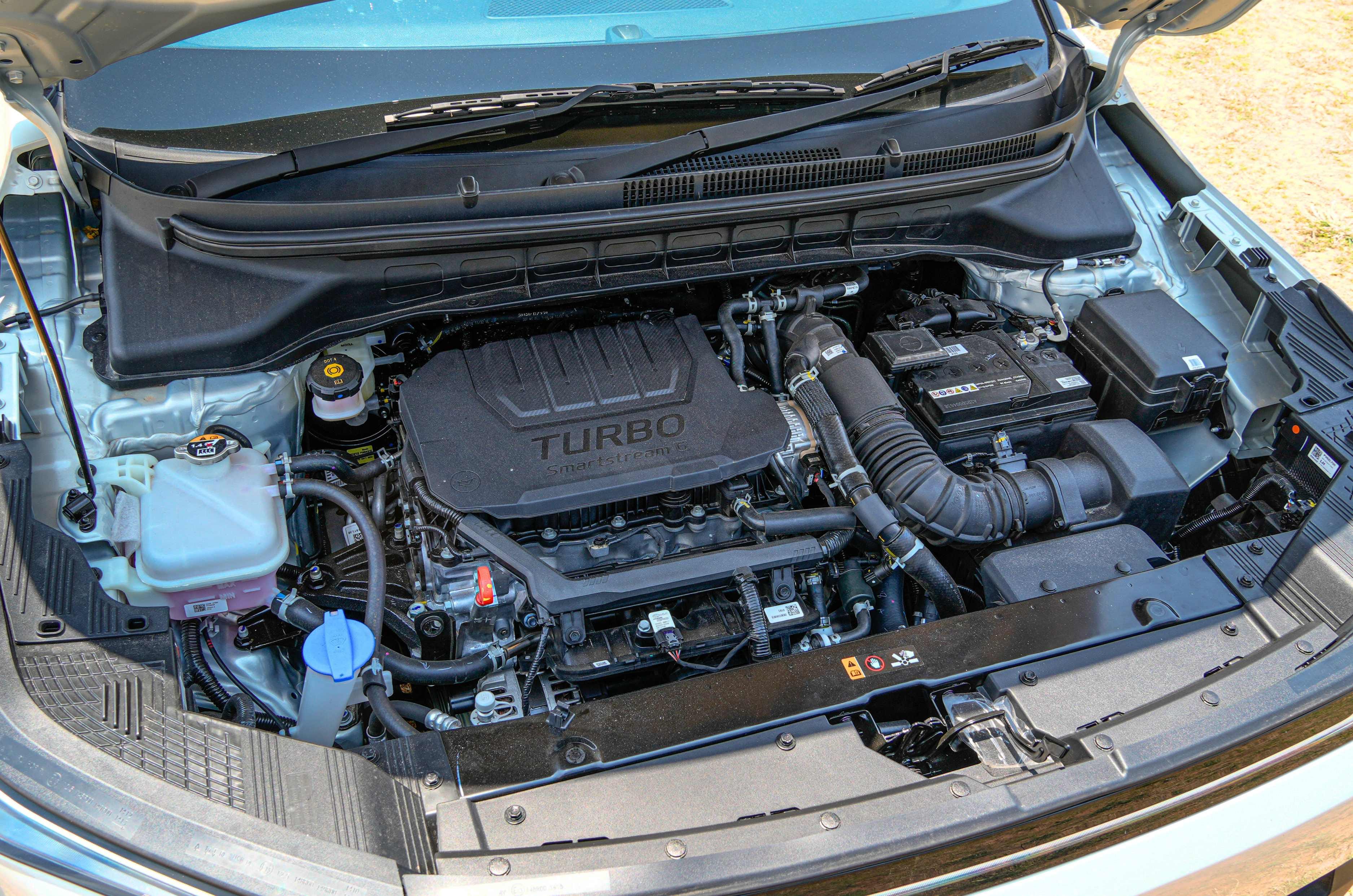
Under the bonnet of the Kia Carens Clavis can be one of three engines: a 1.5-litre naturally aspirated four-cylinder petrol, 1.5-litre direct-injected turbo-petrol, or a 1.5-litre four-cylinder turbo-diesel. A 6-speed manual gearbox is offered with all them. The turbo-petrol mill is also available with a 6-speed iMT (intelligent manual transmission) and a 7-speed DCT (dual-clutch automatic transmission). Meanwhile, the oil burner can be mated to a 6-speed AT (automatic transmission). The only diesel option in the segment, this Kia MPV’s 1.5-litre turbo-diesel engine can return 15-16kpl on highway runs.
Good ride and high-speed stability
This MPV rewards drivers with relaxed driving manners
The 17-inch wheels on the top-spec turbo-petrol variants allow for a pliant-enough ride, with the diesel variants featuring 16-inch rims actually feeling supple. Regardless of the wheel size, the Carens Clavis feels surefooted on the road, staying planted even as speeds rise. The bigger wheels make this MPV take corners decently compared to the variants with the smaller wheels, but this is only true if it’s driven sedately.
Reasons not to buy the Kia Carens Clavis
Not for enthusiastic drivers
Lacklustre powertrains and noticeable body-roll relegates this Kia to sedate driving roles
While the 1.5-litre turbo-petrol engine produces 160hp and 253Nm, it lacks excitement. Pushing it past 4,200rpm does not result in quicker gain of pace, but it instead leads to the engine’s coarse note nearing redline to enter the cabin. The 7-speed DCT, meanwhile, isn’t smooth in the city where it hesitates to shift between lower cogs – this is a gearbox that doesn’t like being rushed.
The Carens Clavis with the diesel engine and 6-speed AT is also good at cruising long distances at highway speeds. However, this oil burner could’ve done with more punch – the issue becoming really noticeable when driving on uphill slopes with a full house. With most of the weight being transferred to the rear, and this being a front-wheel drive (FWD) car, there isn’t enough oomph to pull the Carens Clavis up inclines with ease. This lack of power, combined with the slow downshifts of the automatic gearbox, means that quick overtakes will require some planning.
If you enjoy taking corners with enthusiasm, then the Carens Clavis isn’t for you. The body-roll is especially noticeable in the variants with the 16-inch wheels due to their smaller-section tyres. While the body-roll is less evident in the cars with the 17-inch wheels, taking a corner with any hint of aggressive will lead to body-roll.
Unintuitive touch-enabled buttons
This issue plagues the top trims of the Carens Clavis
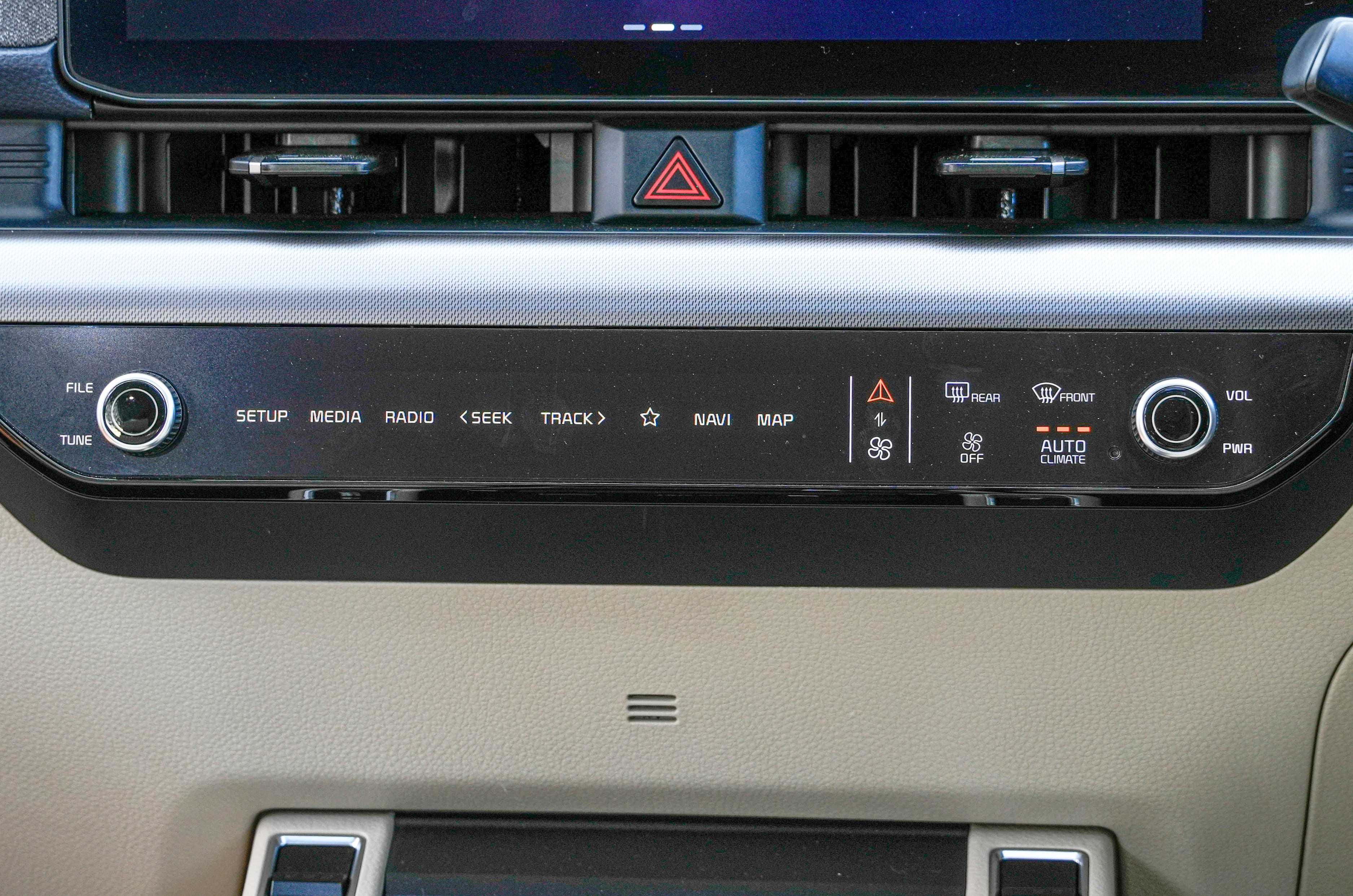
Top trims of the Kia Carens Clavis get a switchable, touch-sensitive panel to operate the car’s HVAC and infotainment systems. Not only is there an issue with reflections catching you out while trying to use this panel, but you could accidentally press the wrong button or control. This can be distracting whilst driving as you’ll have to look away from the road in order to use most of the controls on this panel. Meanwhile, lower trims get easy-to-use physical switchgear for these functions.
Gets pricey quickly
Top variants are far more expensive than rivals
The range-topping variants of the Kia Carens Clavis cost well over Rs 20 lakh, with even mid-spec variants priced north of Rs 15 lakh. When compared to rivals such as the Maruti Suzuki XL6, this makes the Caren Clavis up to Rs 7.14 lakh.
After four years of being on sale, Audi India is slated to replace the second-generation Q3 in India. Our dealer sources have indicated that the third-generation Q3 will launch in October 2026. In the months leading up to its debut, Audi’s entry-level luxury SUV has been spied on our roads.
Third-generation Audi Q3 exterior details
Gets a more aggressive look in comparison to the previous-gen
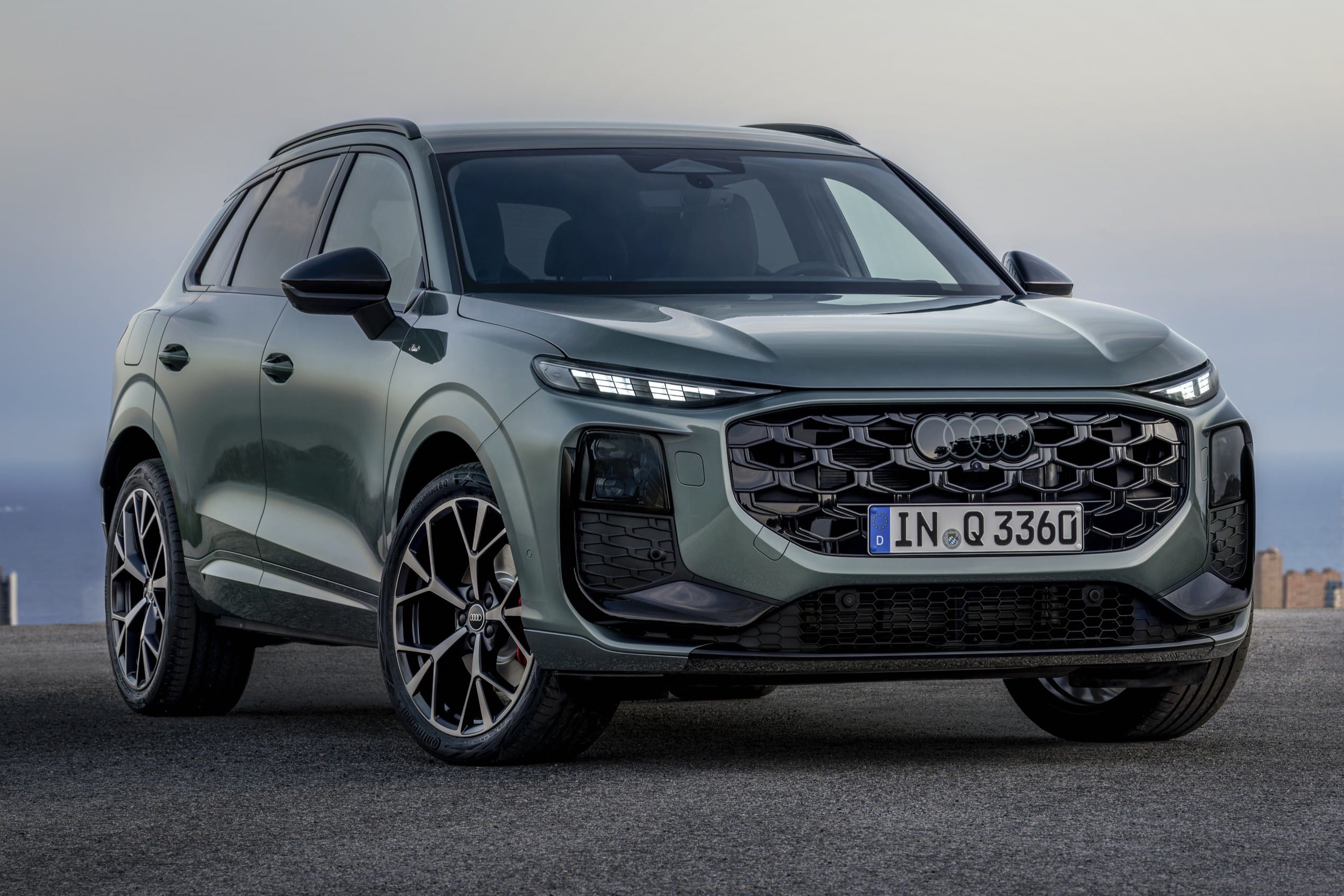
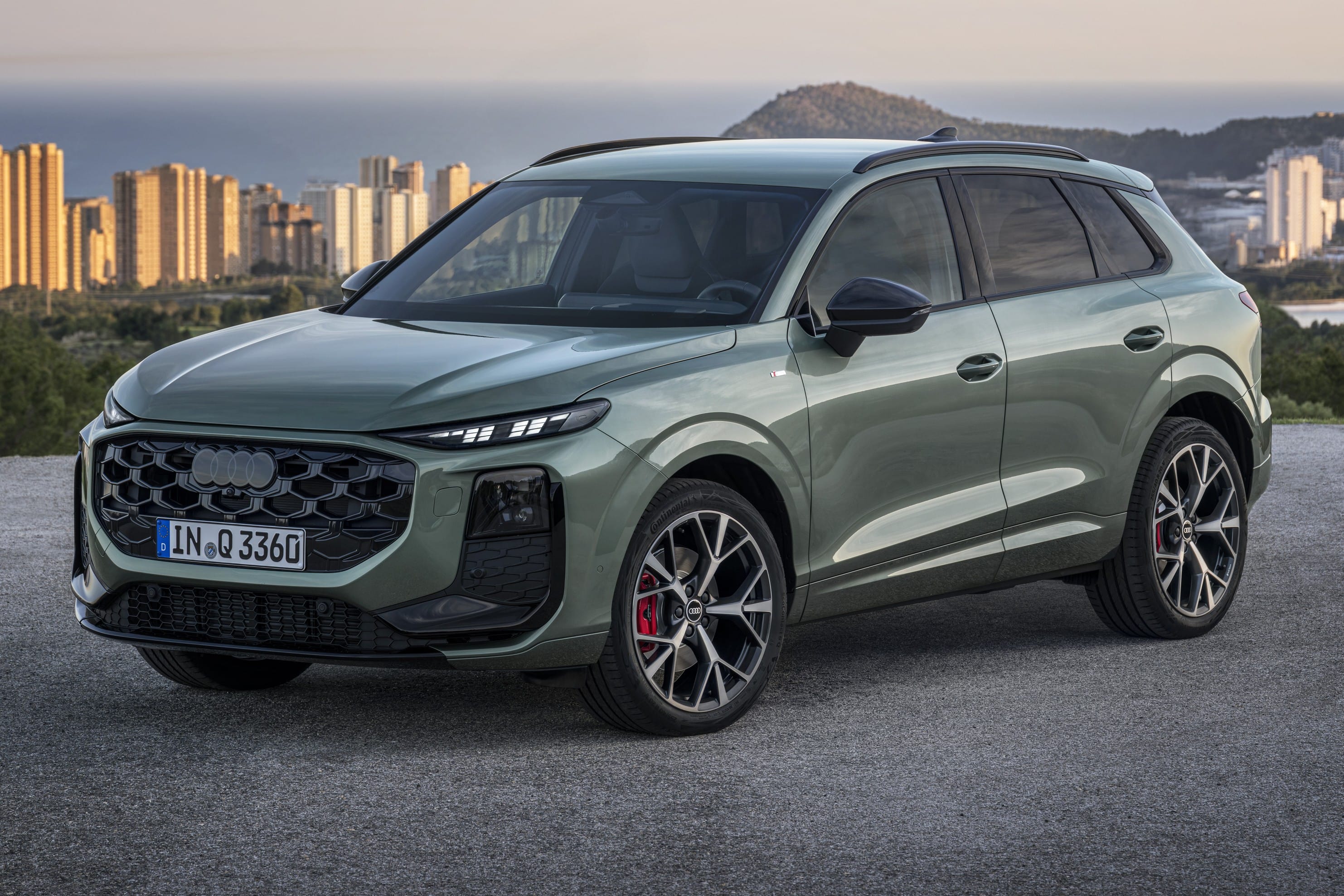
While the previous-gen Q3’s design took an understated approach, the new-gen goes for a flamboyant look. The imposing front-end has a split headlamp design, with slim LED DRLs with four configurable light signatures and vertically stacked LED headlamps. The grille is larger than before, featuring a hexagonal pattern and a 2D Audi logo. The bumper gets a dual-tone look with black surrounds for the headlamps, and there are wide air intakes with a honeycomb pattern.
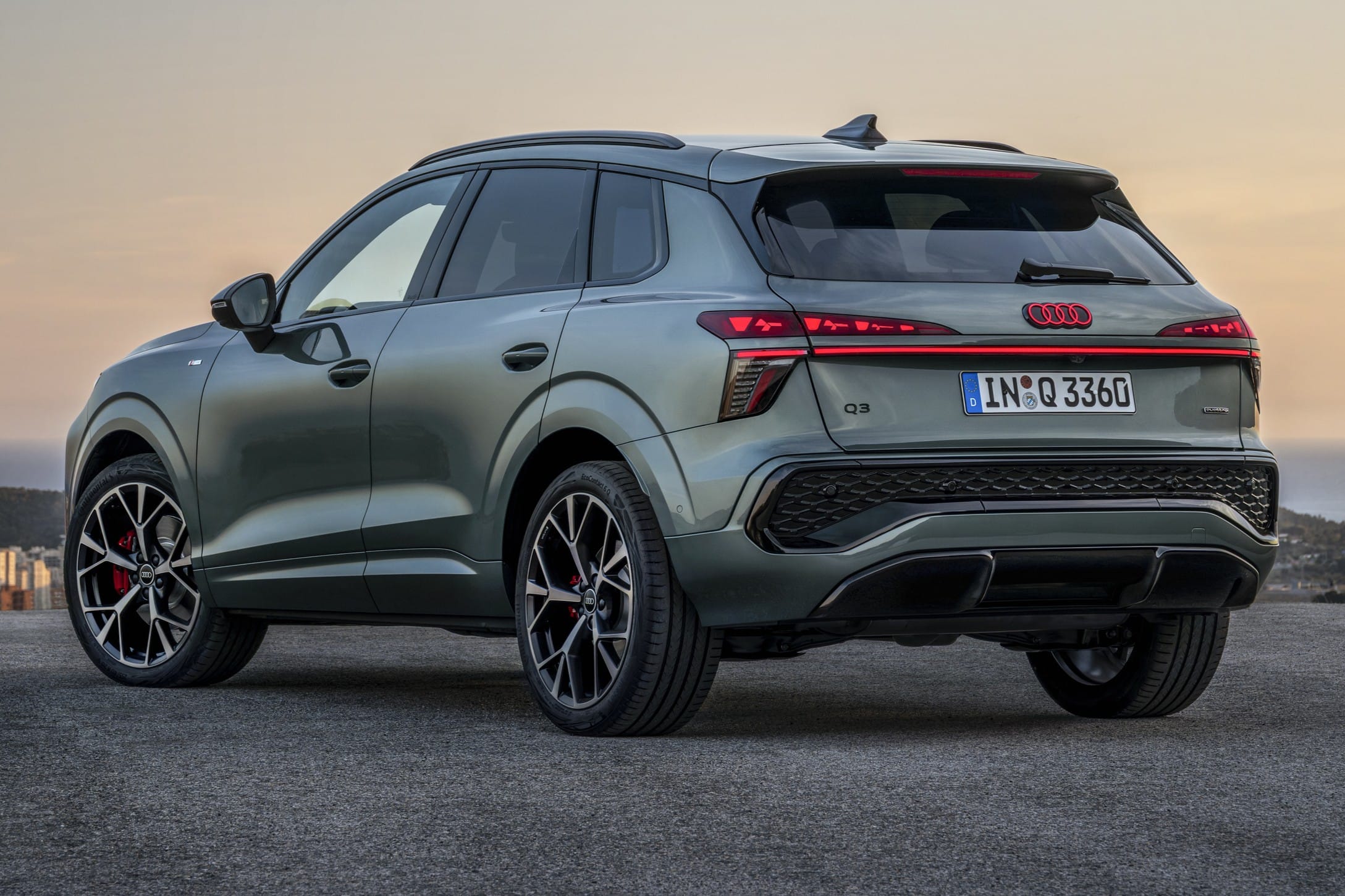
In profile, the Q3 gets a clean design with subtle moulding for the lower side of the doors, and creases over the wheel arches. You also get a split-lamp design for the back, with the main units having a striking design with optional OLED illumination. Additionally, you also get a thin light bar, and the Audi logo is illuminated. Though the global-spec Q3 gets wheel sizes ranging from 18 to 20 inches, expect the India-spec version to have 18-inch rims.
The third-gen Q3 sits on the latest version of the VW Group’s MQB platform. The global-spec version is 4,531mm long, 1,859mm wide, 1,601mm tall, and gets a 2,681mm wheelbase. Compared to the previous generation, it is 96mm longer, 10mm wider, and 6mm shorter, while the wheelbase is 1mm longer.
Third-generation Audi Q3 interior and features
Comes with a driver-focused cabin and updated tech
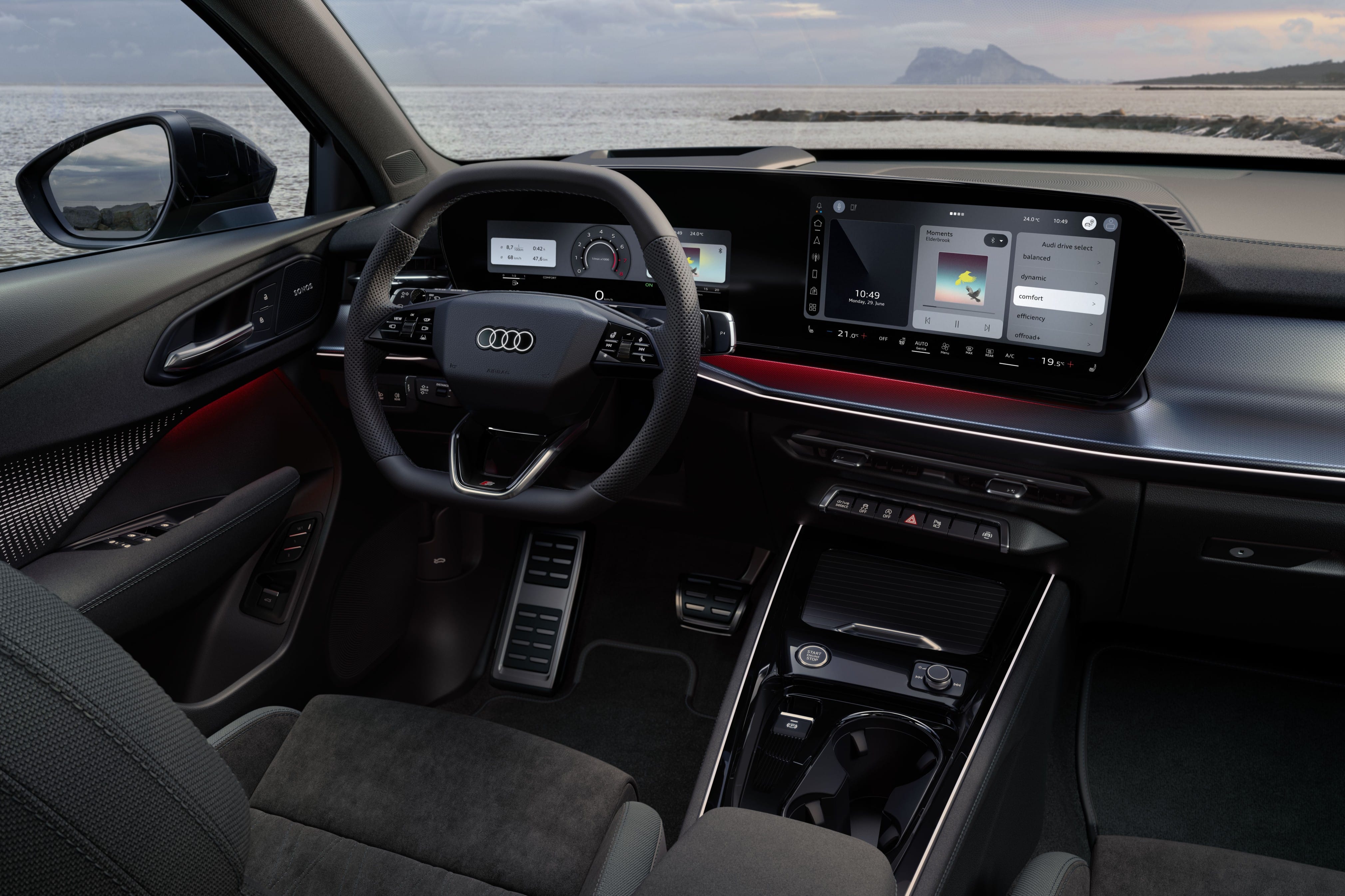
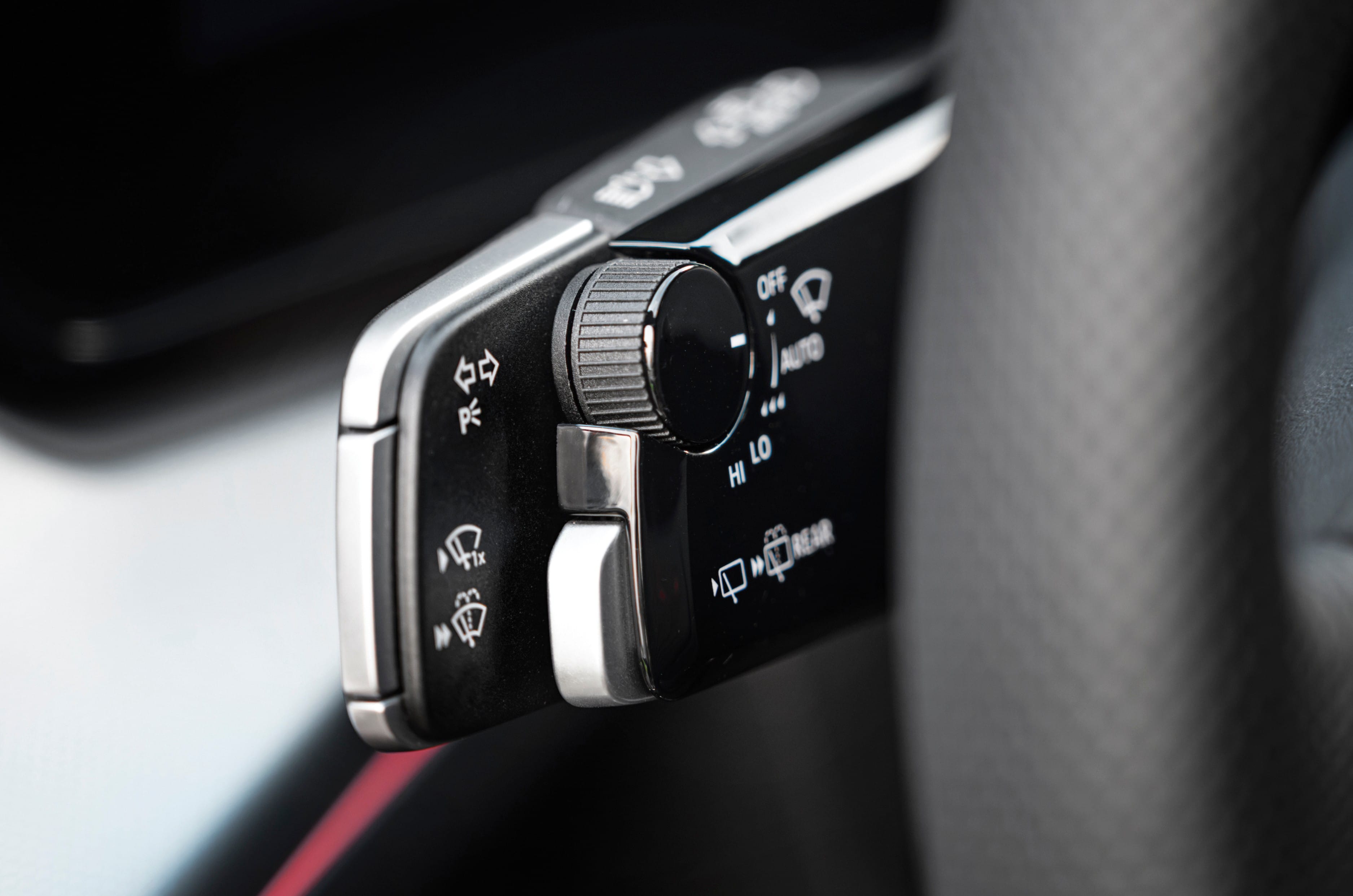
Like the exterior, the interior is also a departure from the current version, with the dashboard angled toward the driver. You get a curved dual-screen setup dominating the dashboard, a new sporty-looking three-spoke flat-bottom steering wheel, and the gear lever has moved from the centre console to the steering column. A unique touch is that controls for the lights, wipers and indicators are combined into a single stalk. However, like most manufacturers, Audi has reduced the number of physical buttons. While the global-spec Q3 gets a black theme for the interior and offers a choice of black or beige seats, it remains to be seen how the India-spec version’s interior would be specced.
As for equipment, the Audi Q3 is expected to have a 11.9-inch digital driver’s display, a 12.8-inch infotainment system with Apple CarPlay and Android Auto, configurable ambient lighting, 3-zone climate control, a panoramic sunroof, a powered driver’s seat, and cooled front seats. The safety kit could include an ADAS suite and a 360-degree camera, along with essentials like 7 airbags, ABS, and ESC.
Third-generation Audi Q3 expected powertrains
Likely to be powered by a single petrol engine
The Q3 is expected to arrive with petrol-only powertrains as its previous generation. It will likely utilise an updated version of the current 2.0-litre TSI unit, churning out 14hp more power at 204hp and 320Nm. A 7-speed DCT handles transmission duties, while you get Quattro AWD as standard.
Third-generation Audi Q3 expected price and rivals
To likely be priced from Rs 50 lakh onward
Expect the new-gen Q3 to be pricier than the previous version. The second-gen that’s currently sold in India has an ex-showroom price of Rs 43.67 lakh to Rs 53 lakh. It will take on the likes of the Mercedes-Benz GLA and the BMW X1. We even had the opportunity to drive the third-gen Q3 in global-spec guise.
Mercedes-Benz is set to expand its India line-up with the launch of the new AMG E 53 performance sedan on July 23. This AMG version of the Mercedes E-Class was unveiled globally in March 2024 and is now finally headed to India, more than two years later. Here’s everything you need to know about the new Mercedes-AMG E 53.
What is the expected price of the new Mercedes-AMG E 53?
The 2026 Mercedes-AMG E53 price is expected to be around the Rs 2.2 crore (ex-showroom) mark. If that holds, the E 53 will carry a premium of about Rs 29 lakh over the AMG C 63 S E sedan, which costs Rs 1.91 crore.
Is the new Mercedes-AMG E 53 a PHEV?
While the previous E 53 that was on sale in the country came with a 48V mild-hybrid system, the new version is a plug-in hybrid electric vehicle (PHEV). The 2026 performance sedan continues to use a 3.0-litre turbo-petrol straight-six engine, but pairs it with an electric motor integrated into the 9-speed automatic gearbox. Combined, this setup produces 585hp and 750Nm. Drive is sent to all four wheels via the brand’s 4Matic+ AWD system.
With the optional AMG Dynamic Plus package, power increases to 612hp (when Race Start is activated). In this mode, the E 53 can sprint from 0-100kph in 3.8 seconds and reach a top speed of 280kph. It also gets a 21.2kWh lithium-ion battery, offering a claimed electric-only range of over 100km. The 400V battery supports AC charging speeds of up to 11kW. In some markets, an optional 60kW DC fast charger is also on offer, which can charge the battery from 10 to 80 percent in about 20 minutes.
How is the Mercedes-AMG E 53 mechanically different to the regular E-Class?
The E 53 gets several AMG-specific chassis upgrades, including extra bracing at the front and rear axles, an 11mm wider front track, and adaptive suspension with Comfort, Sport, and Sport+ mode settings. Its braking system has also been tuned to work better with the hybrid system’s energy recuperation.
Does the new Mercedes-AMG E 53 look any different from the regular E-Class inside and out?
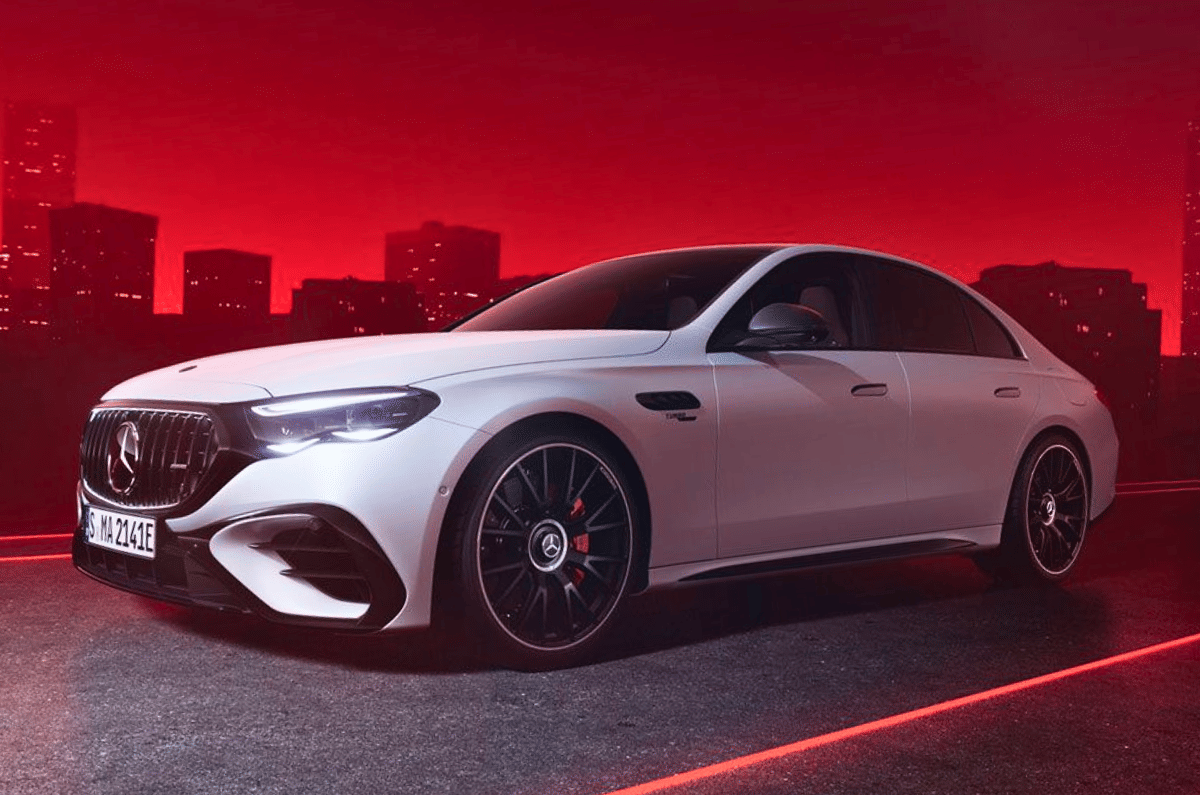
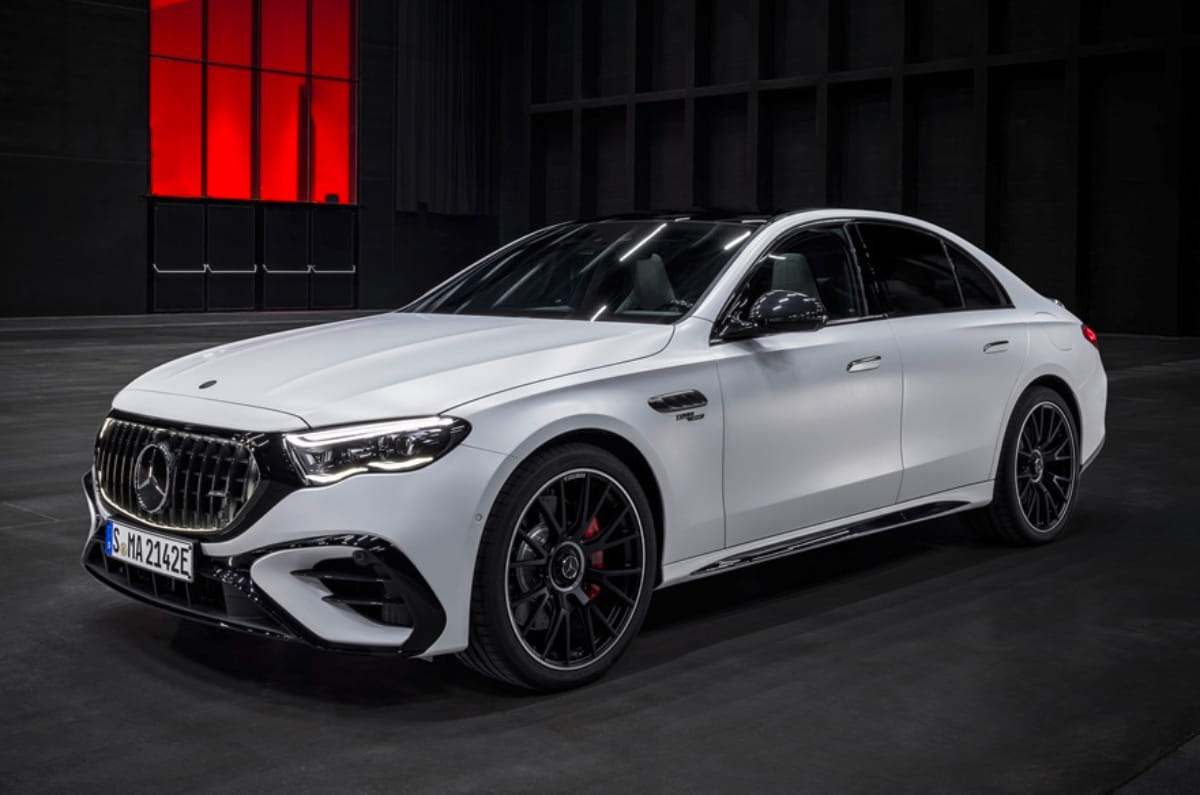
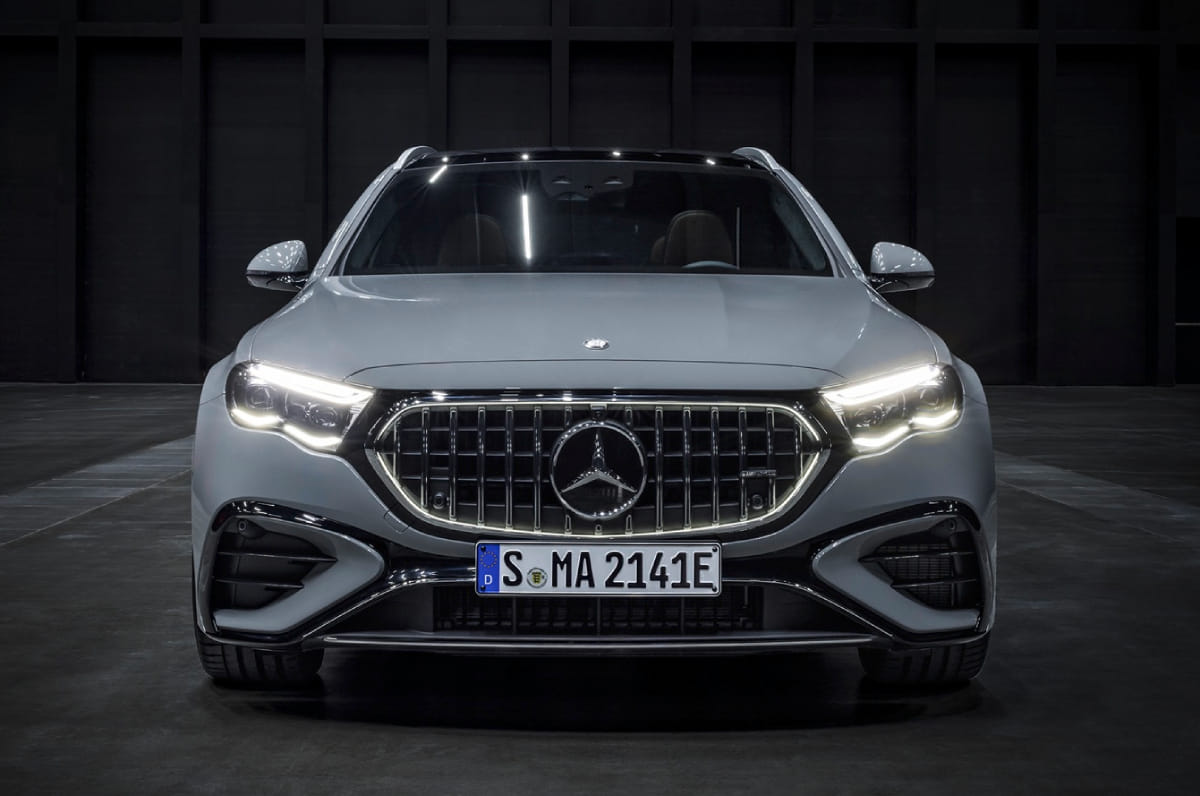
The Mercedes-AMG E 53 gets a sportier look than the standard E-Class. Up front, it features an AMG-spec grille with illumination, a redesigned bumper with larger air intakes, and front fenders widened by 11mm on each side. Even the design for the wheels stands out. At the rear, it gets a boot-lid spoiler, and a redesigned bumper with a blacked-out diffuser and four round exhaust tips. Inside, the E 53 gets AMG-spec seats (with powered adjustment at the front) and AMG steering wheel.
What features will the new Mercedes-AMG E 53 offer?
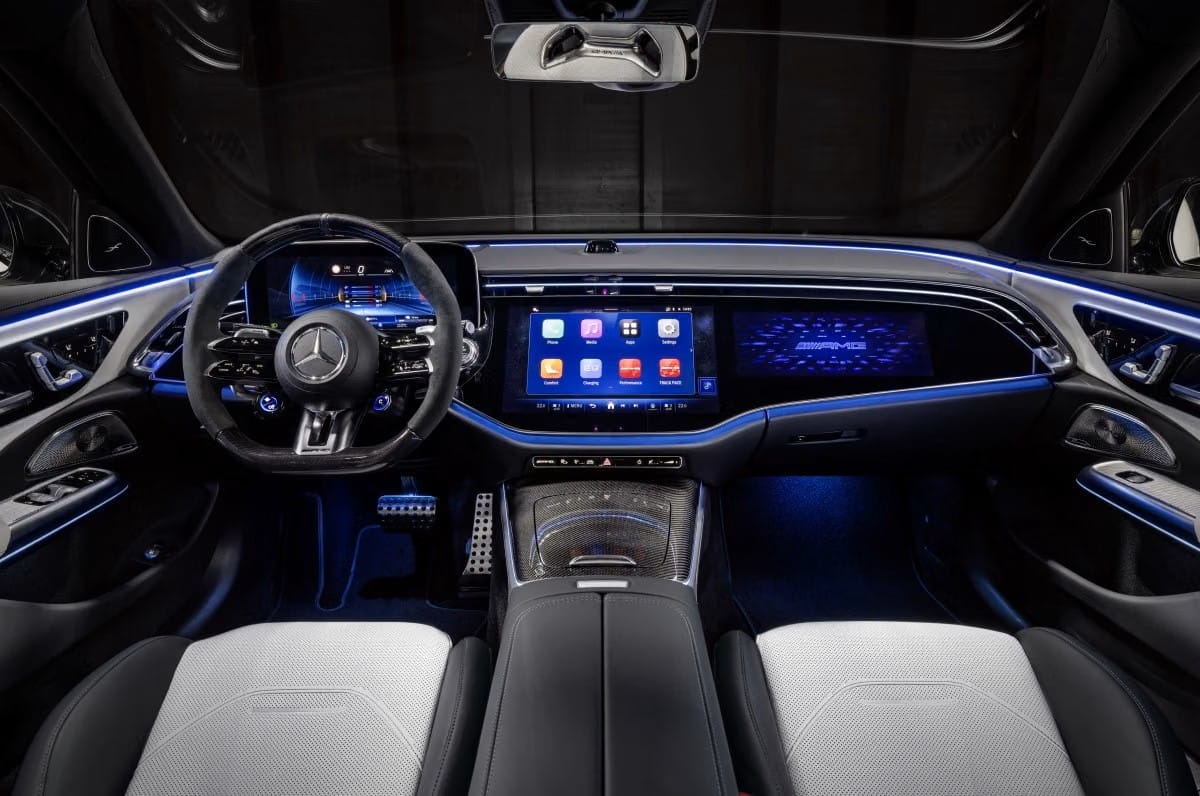
It gets a 12.3-inch digital driver’s display and a 14.4-inch touchscreen. In international markets, buyers can also opt for the brand’s Superscreen, which adds a separate display for the front passenger. It remains to be seen if Mercedes offers the Superscreen with the E 53 in India. Other features include Burmester sound system, panoramic sunroof, ambient lights, wireless charger, wireless Android Auto and Apple CarPlay, drive modes, 360-degree camera, multiple airbags and more.
Whom will the new Mercedes-AMG E 53 rival in India
Upon launch, the new Mercedes-AMG E 53 will see competition from models like the BMW M5 and the Porsche Panamera. The M5 is priced at Rs 2.11 crore, ex-showroom, while the Panamera starts at Rs 1.79 crore before options.
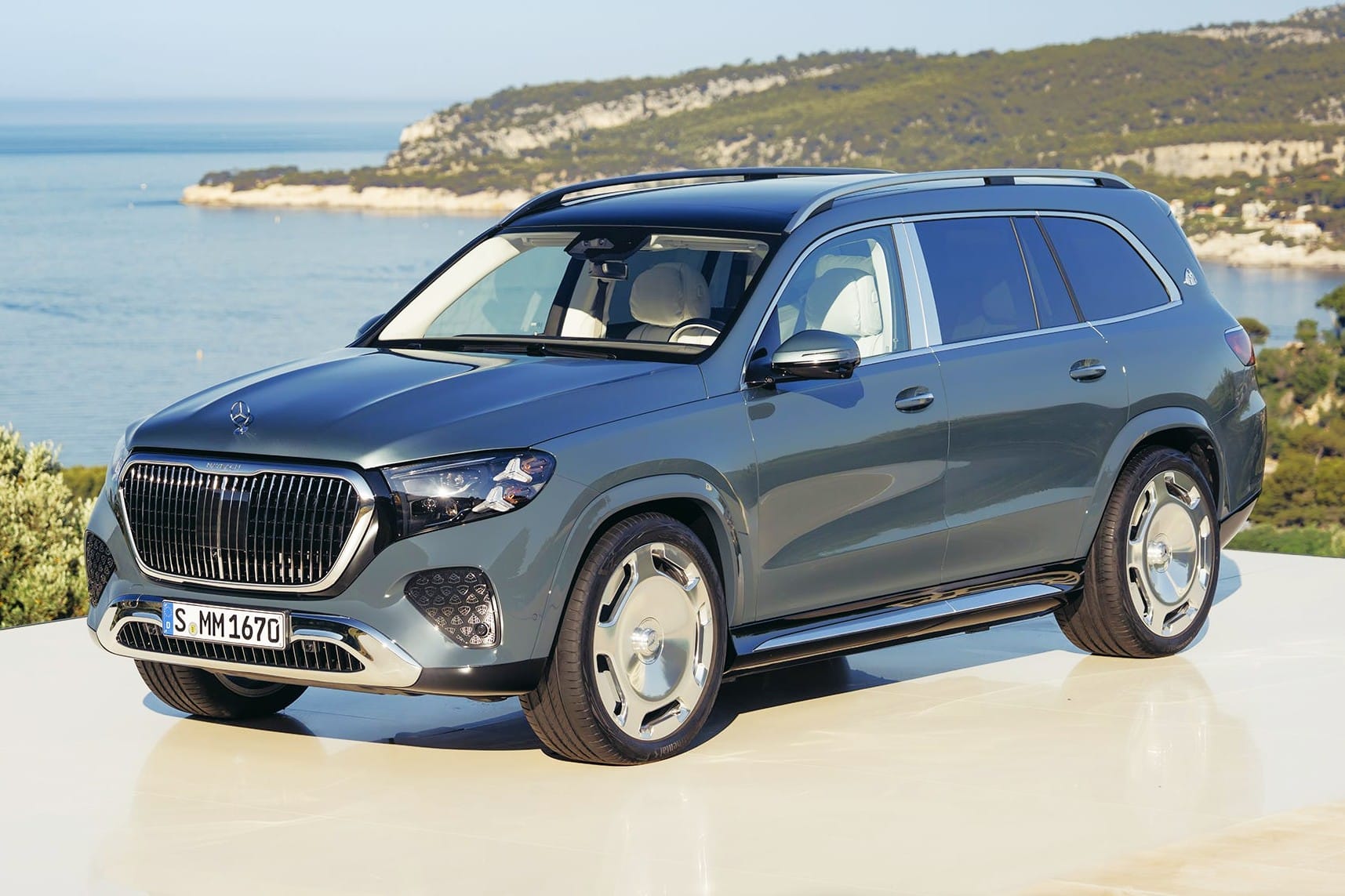
Mercedes-Benz has revealed the 2026 facelift of the Maybach GLS. The ultra-luxury SUV adopts similar styling cues to that of the 2026 GLS that was unveiled a few months ago, but brings an array of Maybach-specific touches, a stronger V8 engine, and an expanded set of features.
2026 Mercedes-Maybach GLS 680 exterior changes
Up front, the 2026 Maybach GLS incorporates reshaped LED headlamps with dual three-pointed star DRL signatures, along with a new chrome-laden grille that gets illumination for both the surround and the Maybach wordmark. There’s a fresh, more discreet design for the front bumper too, which houses triangular air intakes and a chrome-lined skid plate.
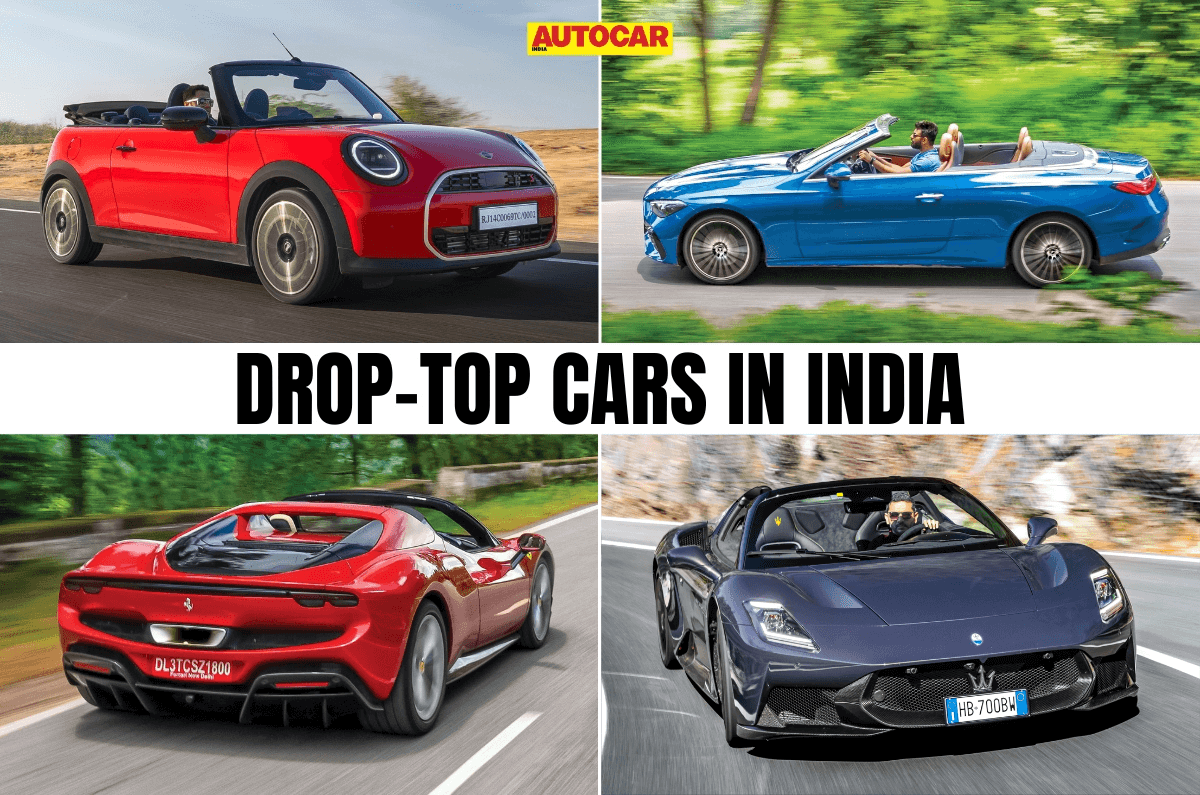
In India, open-top cars are enjoyable only on a handful of days. Mostly, it’s either too hot or too cold, or the air quality is poor. But when the weather does cooperate, a convertible can feel genuinely special. Here, we take a look at 14 convertible cars currently on sale in the country. Mercedes, Maserati and Ferrari have three each, BMW has two, and Mini, McLaren and MG have one apiece. Read on to see what sets each of these drop-tops apart.
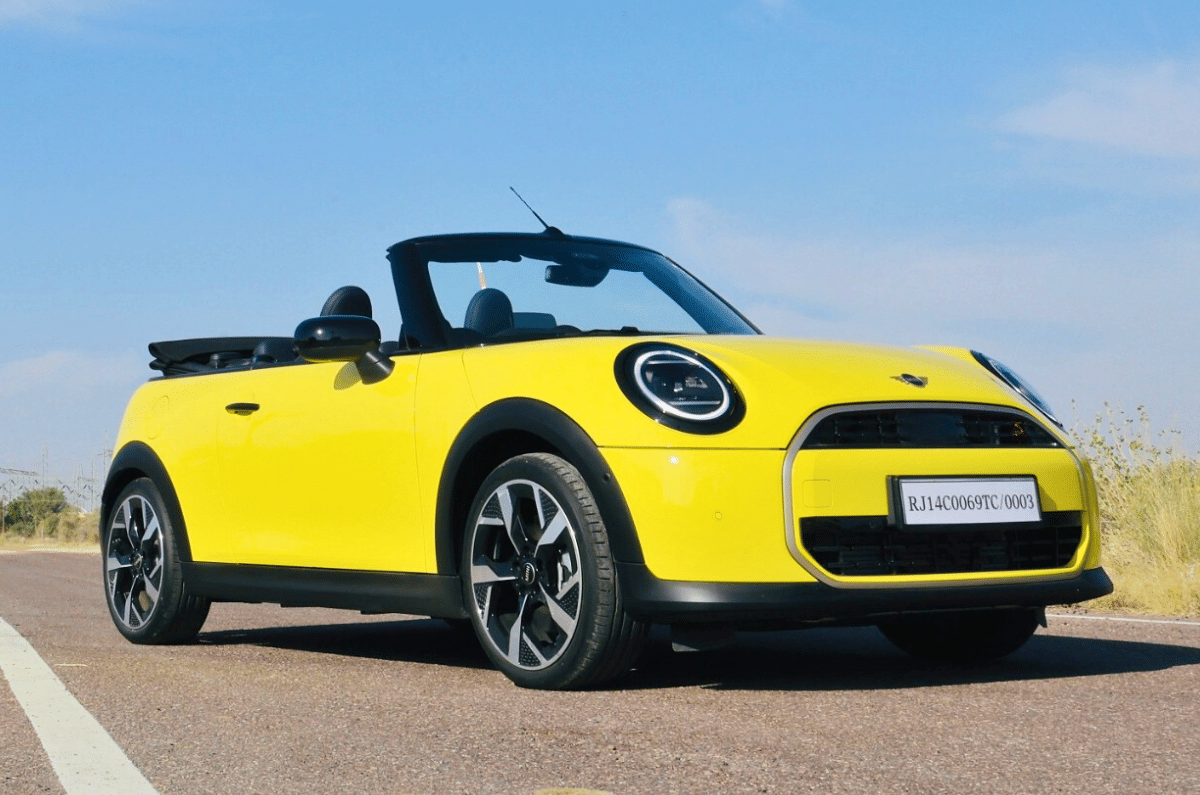
Mini Cooper S Convertible
Rs 59 lakh-61.50 lakh
The Mini Cooper S Convertible is the most accessible and the smallest convertible car in India. At speeds of up to 30kph, its electrically operated fabric roof can be opened and closed in 18 seconds and 15 seconds, respectively. Under the hood of the Cooper S Convertible, Mini has plonked a 2-litre 4-cylinder turbo-petrol engine with peak outputs of 204hp and 300Nm. A 7-speed dual-clutch automatic gearbox sends power to the front wheels, and there’s no manual on offer. The run from 0 to 100kph takes 6.9 seconds.
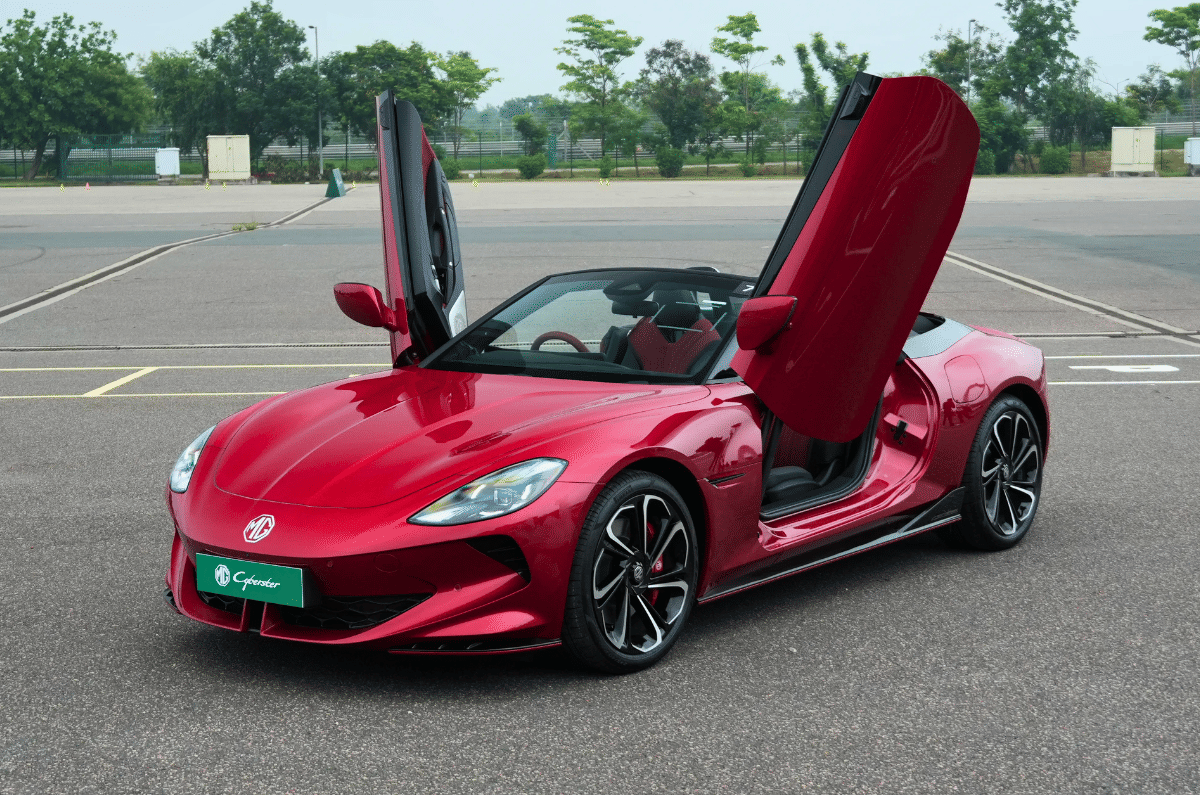
MG Cyberster
Rs 82.5 lakh
Next in line is the MG Cyberster, whose soft top takes just 10 seconds to open or close at speeds of up to 50kph, matching the BMW Z4 (also on this list) for the quickest roof operation. Coming to the MG Cyberster specs, its 77kWh battery pack powers two electric motors, one on each axle. Combined outputs of 510hp and 725Nm are sent to all four wheels, taking the electric vehicle from a standstill to 100kph in just 3.2 seconds.
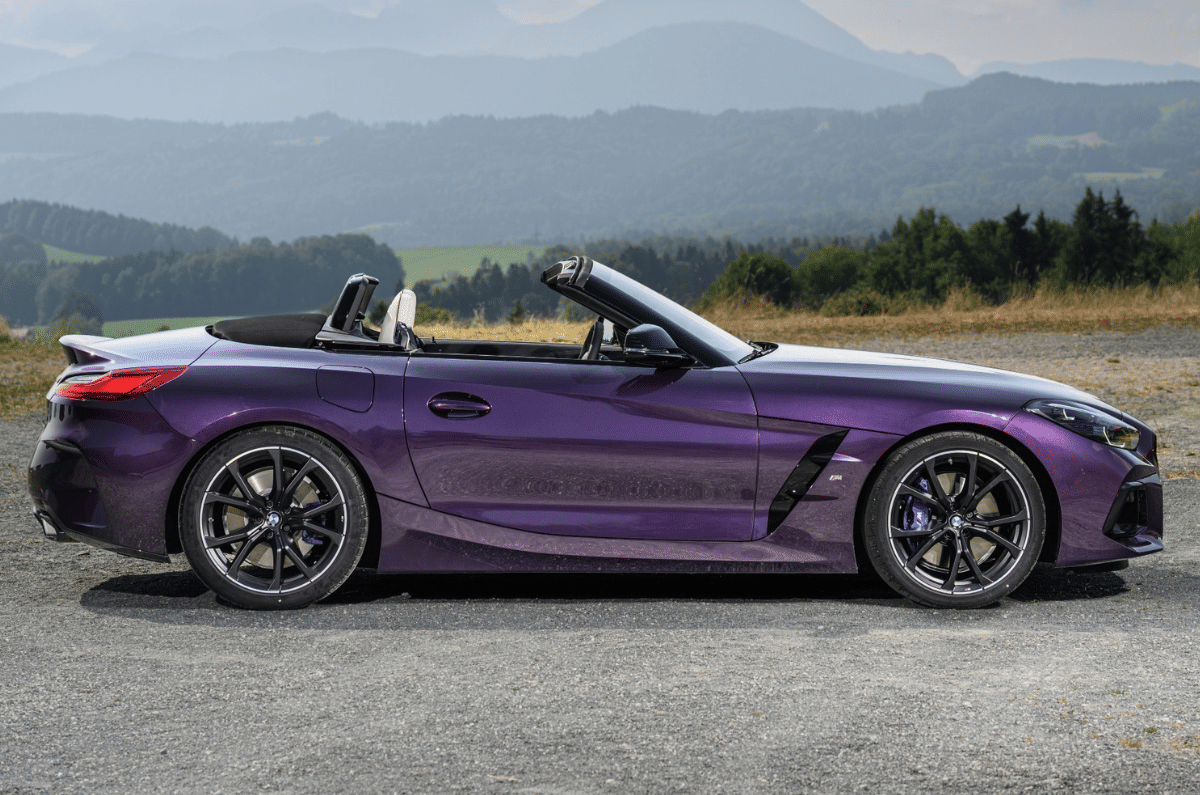
BMW Z4
Rs 90.5 lakh-95.2 lakh
While BMW has confirmed the end of the Z4’s production, the model is still listed on the brand’s India website, likely for existing stock. The BMW car features a 3.0-litre straight-6 turbo-petrol engine, pushing out 340hp and 500Nm, sending power to the rear wheels. The Z4 M40i can be had with either an 8-speed torque-converter automatic transmission (AT) or a 6-speed manual transmission (MT), making it the only convertible on this list to offer a manual gearbox. The 0-100kph sprint is done in 4.6 seconds with the MT and in 4.5 seconds with the AT.
BMW M440i Convertible
Rs 1.09 crore
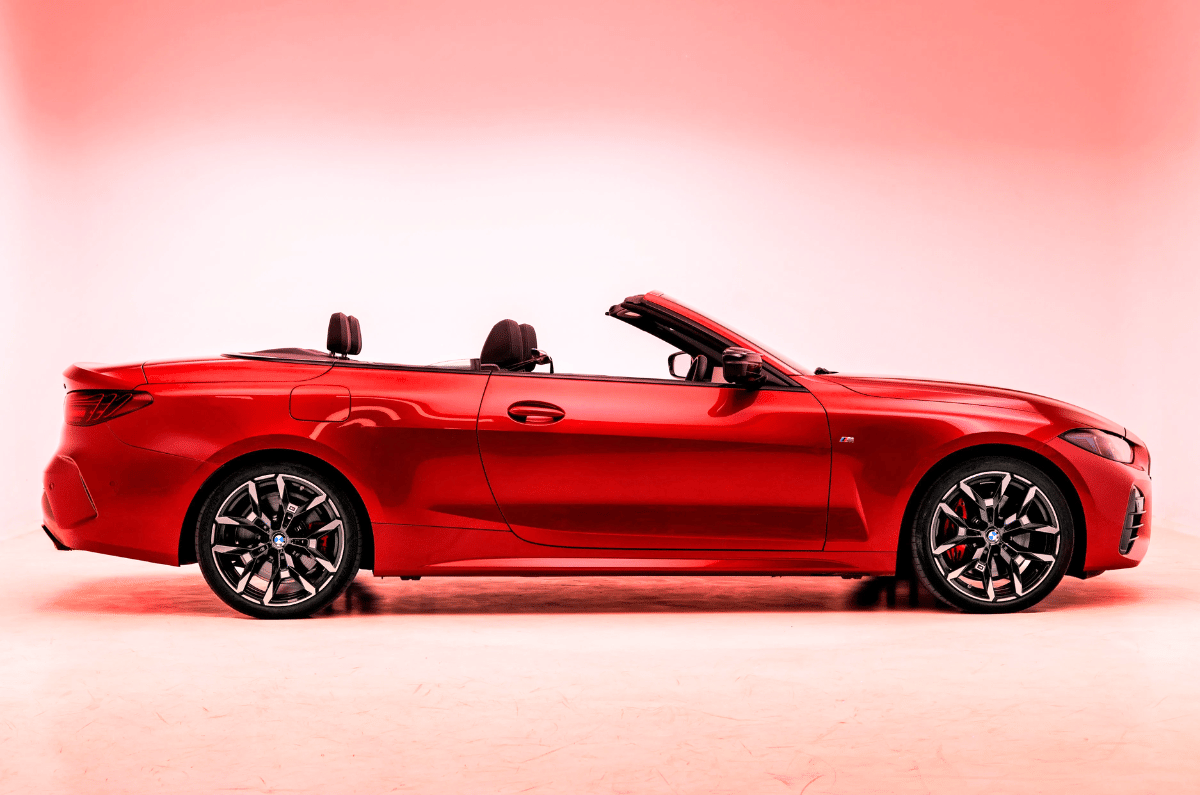
The BMW M440i Convertible is one of the latest convertibles to launch in India. Its soft-top roof can be opened or closed in 18 seconds at speeds up to 50kph. Under its hood is the same 3-litre 6-cylinder turbo-petrol engine as the BMW M340i, producing peak outputs of 374hp and 500Nm. This engine is mated to an 8-speed automatic gearbox, which sends power to all four wheels. While BMW claims a 0-100kph sprint time of 4.9 seconds.
Mercedes CLE 300
Rs 1.15 crore
The Mercedes-Benz CLE 300 Cabriolet is the most affordable convertible car from Mercedes in India, and its soft-top roof opens and closes in 20 seconds at speeds of up to 60kph. Under the hood lies a 2.0-litre 4-cylinder turbo-petrol engine producing 258hp and 400Nm, paired with a 9AT unit, which sends drive to all four wheels. The 100kph mark from rest is hit in 6.7 seconds.
Mercedes SL
AMG SL 55
Rs 2.34 crore
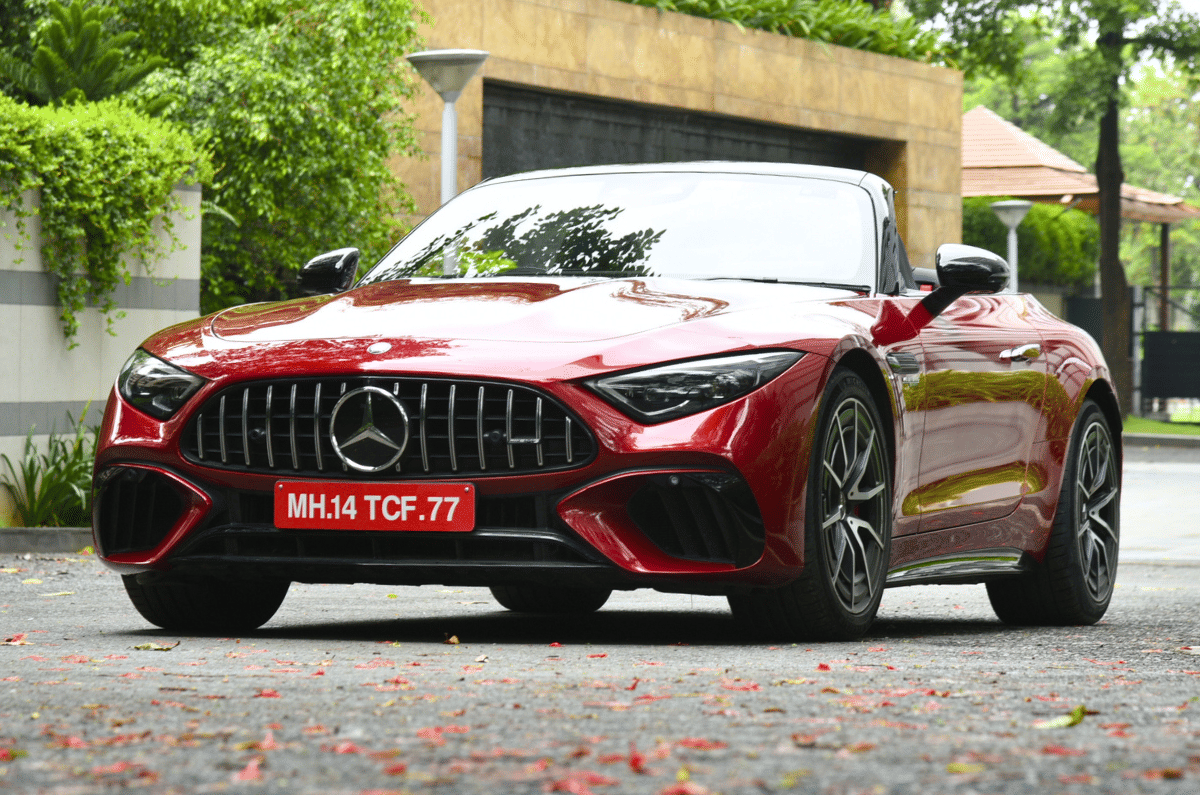
Next, Mercedes has two SL models on sale in India: the AMG SL 55 and the Maybach SL 680 Monogram Series. The AMG SL 55 has a multi-layer fabric roof that can be opened or closed in 16 seconds at up to 60kph.
Maybach SL 680 Monogram Series
Rs 4.3 crore
Mercedes Maybach SL 680 Monogram Series.
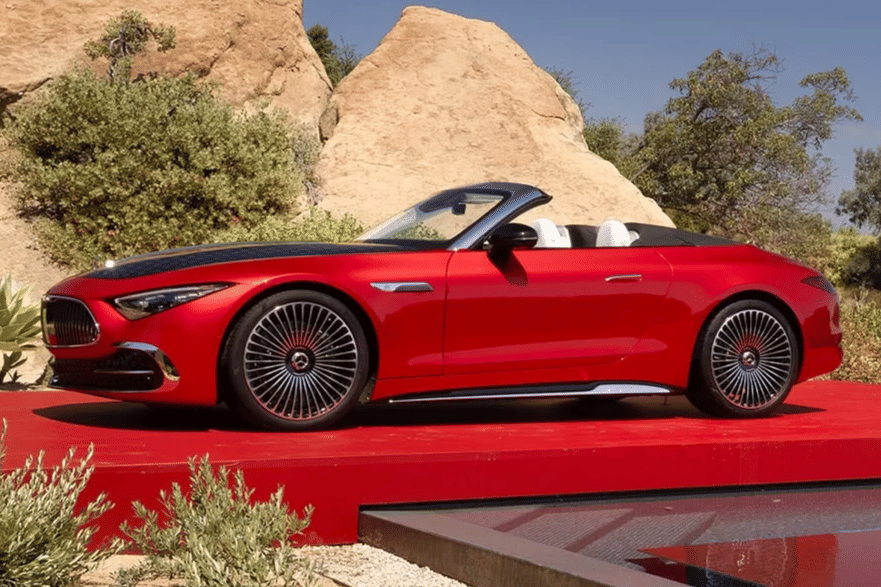
The Mercedes-Maybach SL 680 Monogram Series is the brand’s most expensive convertible. Like the AMG SL 55, the Maybach car also has a multi-layer fabric roof with a 16-second operation time, but it works at slightly lower speeds of up to 50kph.
While both these models are powered by a 4.0-litre twin-turbo V8 petrol engine mated to a 9AT, which sends the engine output to all four wheels, the Maybach SL 680 boasts higher power and torque figures of 585hp and 800Nm than the AMG SL 55’s 476hp and 700Nm. But when it comes to the 0-100kph sprint, the AMG does it in 3.9 seconds, slightly ahead of the Maybach’s 4.1 seconds.
Maserati GranCabrio
Rs 2.83 crore-3 crore
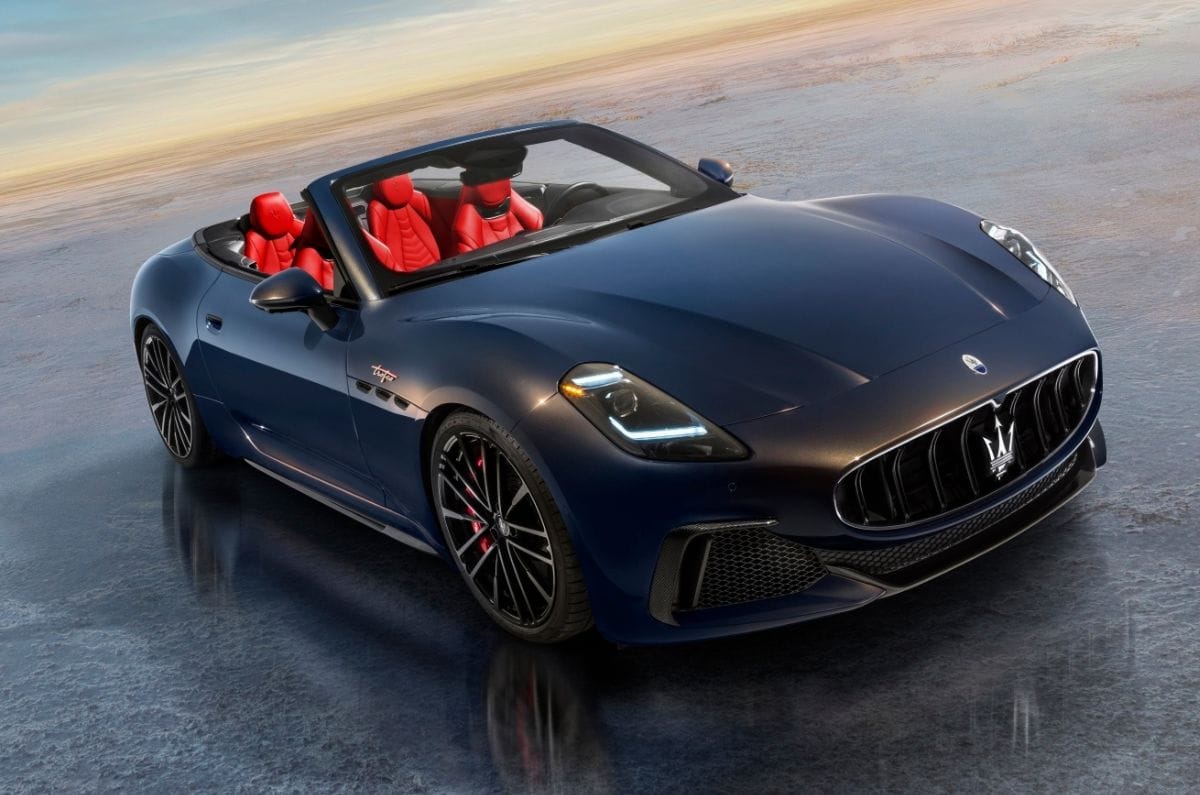
The Maserati GranCabrio – the convertible version of the Maserati GranTurismo – features a folding fabric setup that can be lowered or raised in 14 seconds, at up to 50kph. The GranCabrio shares its 3.0-litre twin-turbo V6 petrol engine, which makes 550hp and 650Nm, with the GranTurismo, as well as the MCPura Cielo (also on this list). Transmission duties are handled by an 8AT unit, which sends output to all four wheels. The Maserati convertible can do the 0-100kph sprint in 3.6 seconds.
Maserati GranCabrio Folgore
Rs 3.18 crore
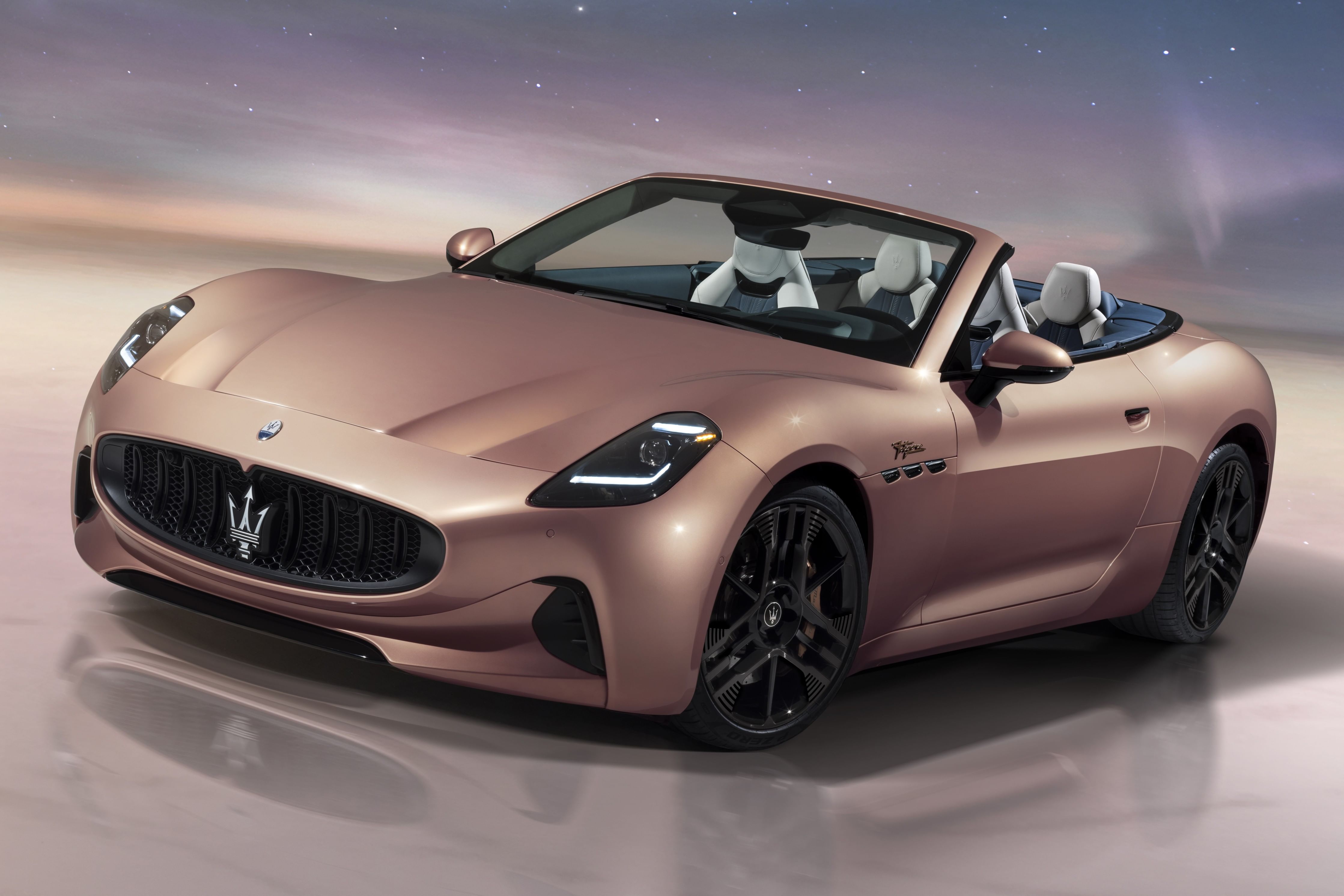
The Maserati GranCabrio Folgore, the only other electric roadster here besides the Cyberster, features a powered fabric roof that can be lowered or raised in 14 seconds at speeds of up to 50kph. Its three electric motors generate combined outputs of 761hp and 1,350Nm. The Maserati electric convertible rockets from a standstill to 100kph in 2.8 seconds.
Ferrari Amalfi Spider
Rs 4.6 crore
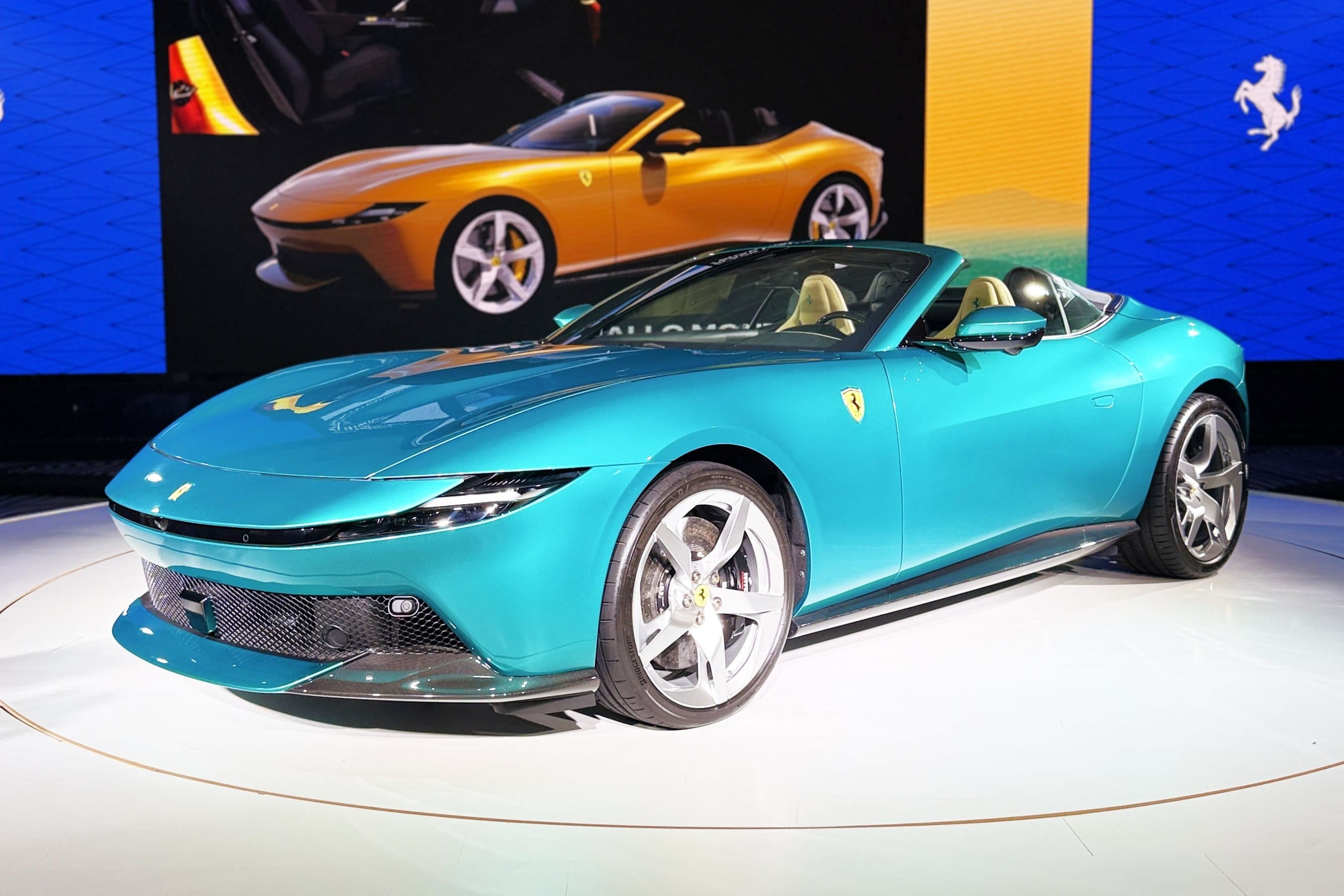
The Ferrari Amalfi Spider is the newest convertible to go on sale in the country. Its folding fabric roof opens in 13.5 seconds at speeds of up to 60kph. The Amalfi Spider uses the same 3.9-litre twin-turbo V8 engine as the Amalfi coupe, producing 640hp and 760Nm. Power is sent to the rear wheels through an 8-speed dual-clutch automatic gearbox. Ferrari claims the convertible can sprint from 0-100kph in 3.3 seconds.
Maserati MCPura Cielo
Rs 5.12 crore
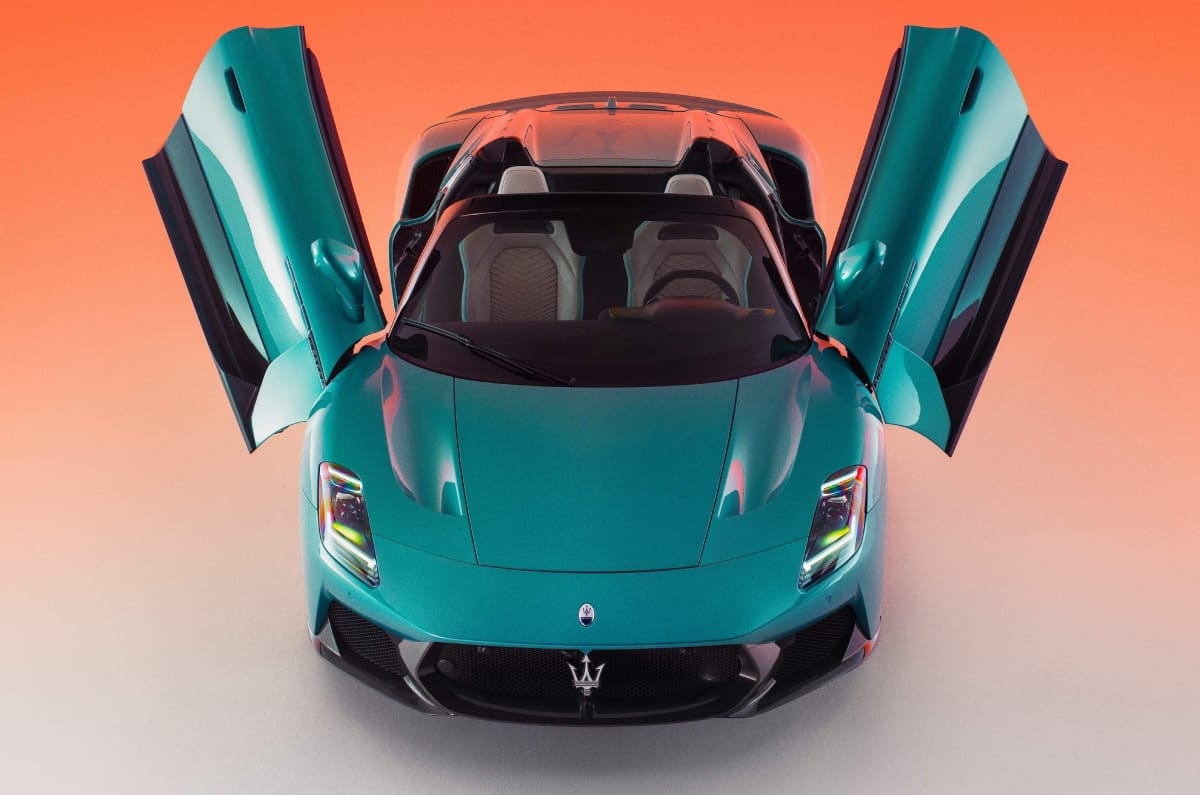
The third convertible offering from the Italian carmaker in this list is the MCPura Cielo, which is the evolution of the MC20 Cielo. The convertible comes with an electrochromic glass roof, which opens and closes in just 12 seconds and can be operated at speeds of up to 50kph. It gets the brand’s 3.0-litre turbocharged V6 petrol unit, delivering 630hp and 720Nm of torque. According to Maserati, the mid-engined supercar accelerates from 0 to 100kph in just 2.9 seconds.
Ferrari 296 GTS
Rs 6.45 crore
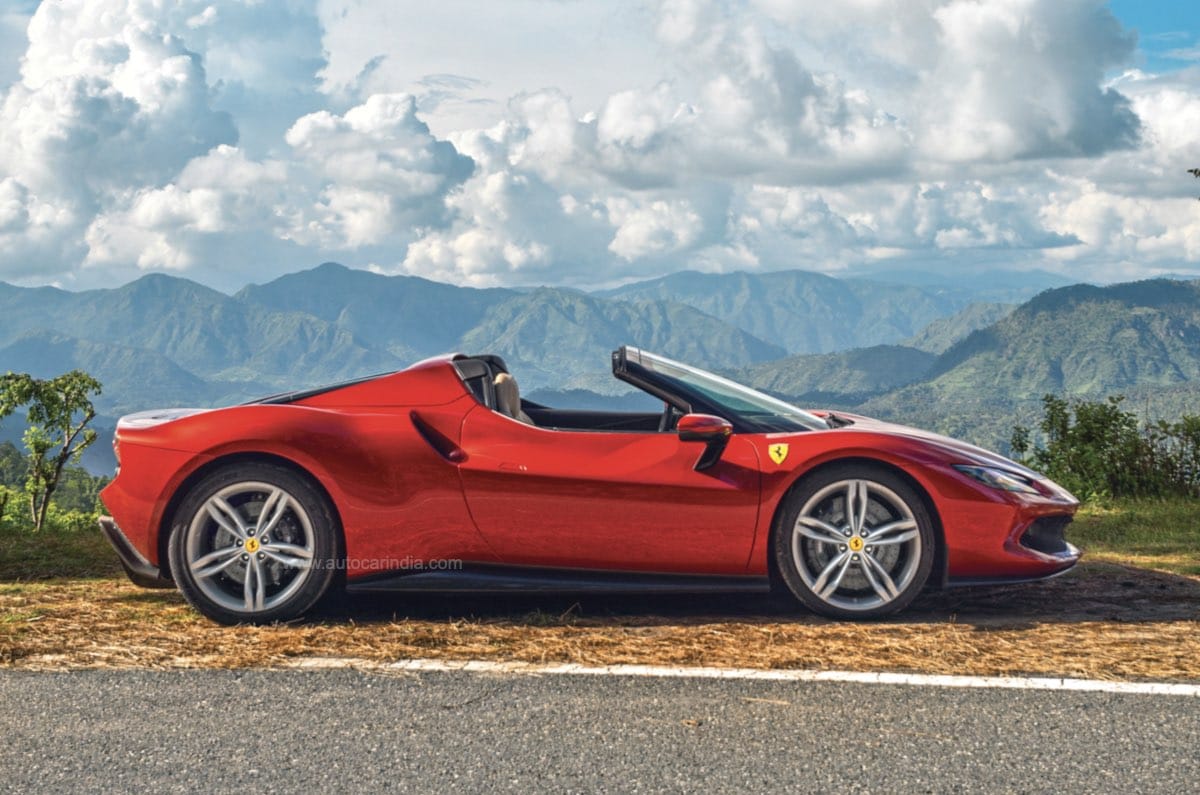
The Ferrari 296 GTS gets a foldable hard top that takes 14 seconds to pack itself behind the flying buttresses at speeds of up to 45kph. As for the powertrain, the 296 GTS plug-in hybrid gets a 3.0-litre twin-turbo V6 paired with an electric motor, which together produce 830hp and 740Nm. Its 8-speed DCT sends output to the rear wheels, making the 296 GTS go from 0 to 100kph in 2.9 seconds.
McLaren 750S Spider
Rs 8.78 crore*
While most cars on this list have a fabric roof or a hard top, the McLaren 750S Spider takes it up a notch with an electrochromic glass roof that can be dimmed at the touch of a button. This retractable top can glide up or down in 11 seconds at up to 50kph. The 750S Spider is powered by a 4-litre twin-turbo V8 petrol engine making 750hp and 800Nm, mated to a 7-speed dual-clutch transmission (DCT). The engine output is sent to only the rear wheels, and the run from 0 to 100kph is achieved in just 2.8 seconds.
*Might be lowered to Rs 5.46 crore after the India-UK FTA rollout.
Ferrari 12Cilindri Spider
Rs 9.15 crore
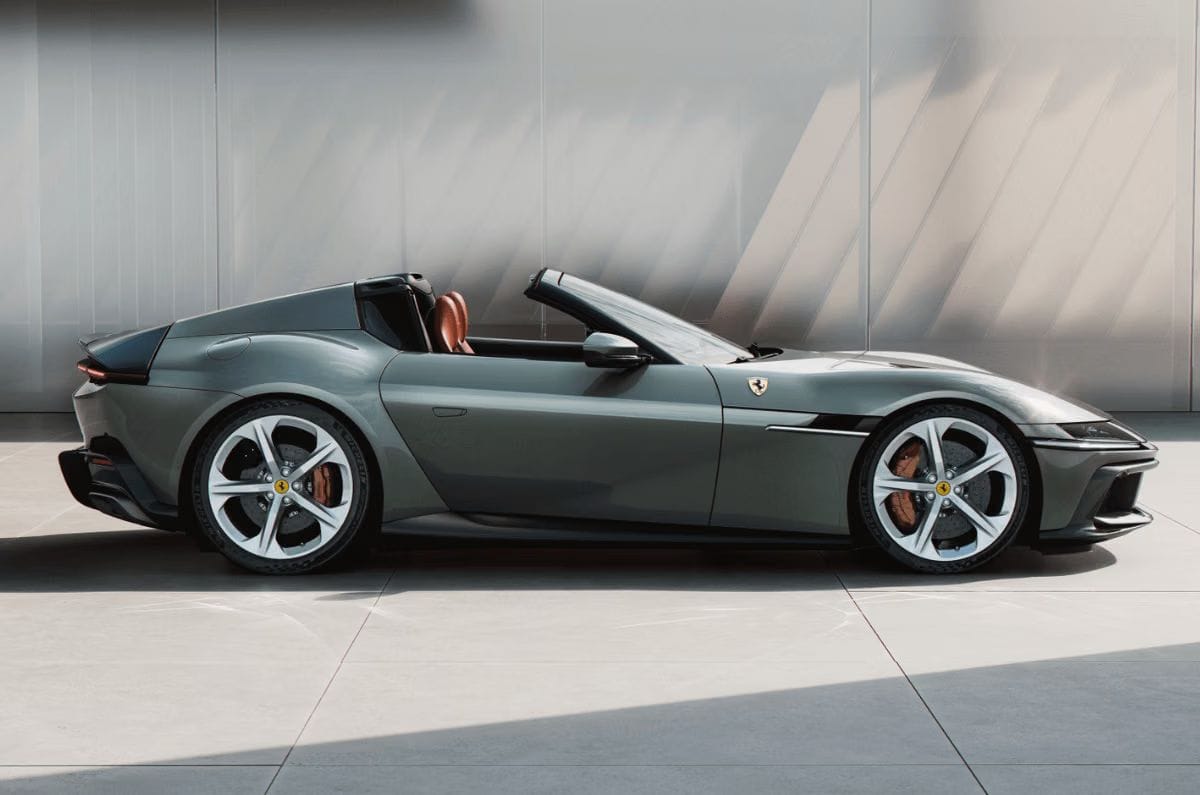
Lastly, the Ferrari 12Cilindri Spider is the most expensive convertible featured on this list. Ferrari has equipped the convertible version of the 12Cilindri with a retractable hard top, which takes 14 seconds to open/close at up to 45kph. Even the rear glass automatically slides down when the roof is tucked away. The 12Cilindri Spider has a 6.5-litre naturally aspirated V12 engine producing 830hp and 678Nm. The 8DCT sends engine output only to the rear wheels; 0-100kph comes up in 2.9 seconds.
Ex-showroom prices above are indicative and may change; availability of some models may depend on stock availability.
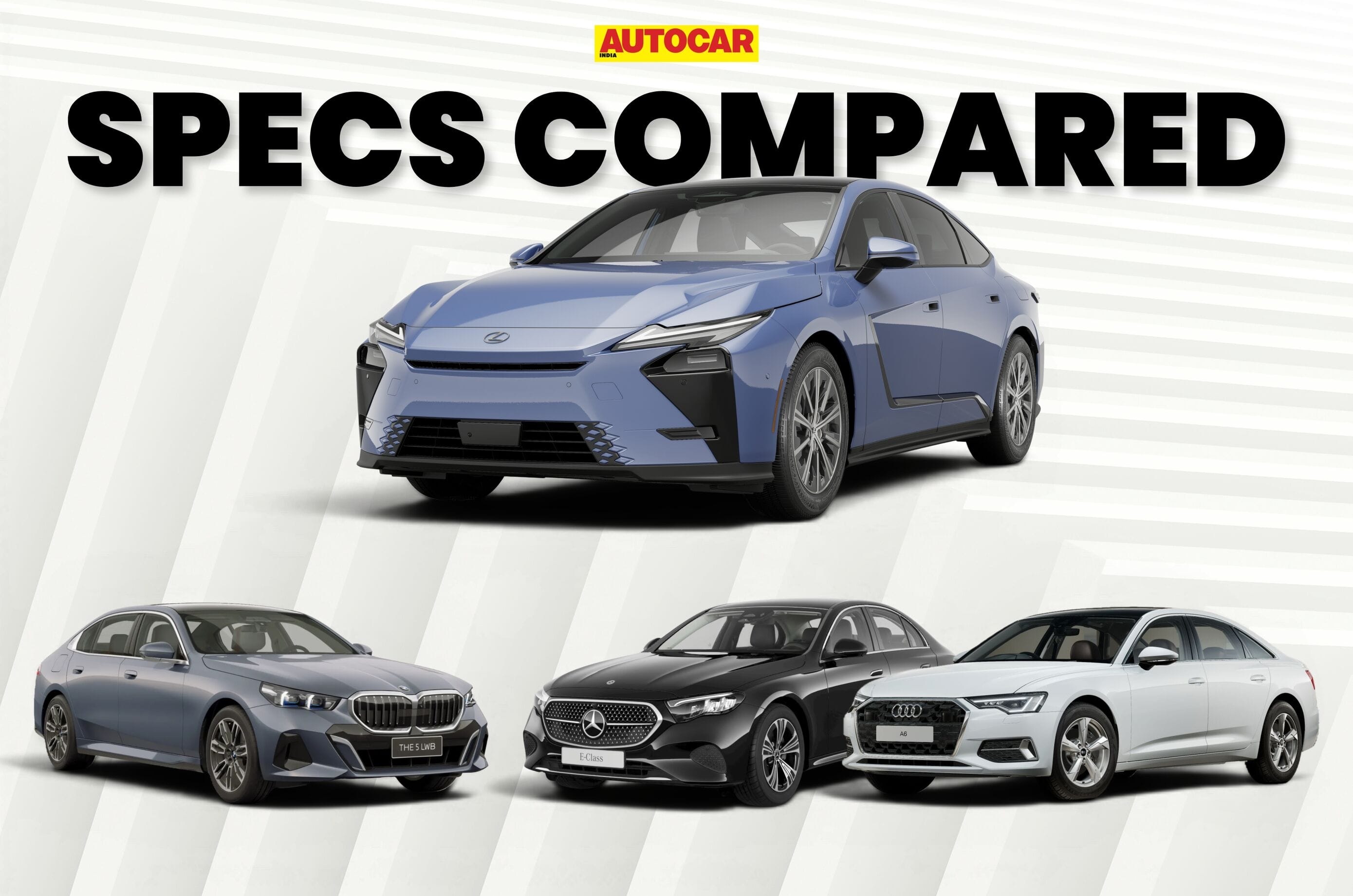
The new-gen Lexus ES initially went on sale in India in all-electric 500e guise a few months ago. Lexus has now launched the strong hybrid 350h version of the new ES in India as well, completing the sedan’s powertrain line-up. We compare the 2026 Lexus ES to its rivals – the Mercedes-Benz E-Class, BMW 5 Series LWB and Audi A6 – on paper to find out how the Japanese luxury sedan stacks up.
2026 Lexus ES vs rivals: Dimensions
ES is one of the longest overall, but has the second-shortest wheelbase
2026 Lexus ES dimensions compared to rivals
ES
E-Class
5 Series LWB
A6
Length (mm)
5,145
5,082
5,175
4,939
Width (mm)
1,920
1,880
1,900
1,886
Height (mm)
1,575
1,492
1,518
1,470
Wheelbase (mm)
2,950
3,094
3,105
2,930
Boot space (litres)
377
540
500
530
Wheel size (inches)
19-21
18
19
18-19
The ES is the widest and tallest car in its segment, and the second-longest overall, falling short of the 5 Series LWB by only 30mm. However, the ES’ wheelbase is trounced by those of the E-Class and 5 Series LWB, and the Lexus sedan also has the smallest boot here. The ES hybrid does get 19-inch wheels as standard, though, beating the likes of the E-Class and A6 – only the ES EV gets 21-inchers.
2026 Lexus ES vs rivals: Powertrains and performance
ES hybrid is not as powerful as 5 Series LWB and A6
2026 Lexus ES powertrains and performance compared to rivals
ES
E-Class
5 Series LWB
A6
Engine/battery
2.5H / 74.68kWh
2.0P / 2.0D / 3.0P
2.0P
2.0P
Motor setup
NA / Front+rear
NA
NA
NA
Mild hybrid system
NA
48V
48V
12V
Cylinder count
4 / NA
4 / 4 / 6
4
4
Power (hp)
247 / 343
204 / 197 / 381
258
265
Torque (Nm)
235 (E)+270 (M) / 438
320 / 440 / 500
400
370
Gearbox
e-CVT / 1-speed AT
9-speed AT
8-speed AT
7-speed DCT
Drive layout
FWD / AWD
RWD / RWD / AWD
RWD
FWD
0-100kph time (sec)
7.7 / 5.5
7.5 / 7.6 / 4.5
6.5
6.7
Claimed range (km)
– / 580km
–
–
–
H: Hybrid, P: Petrol, D: Diesel
E: Engine, M: Motor
As noted previously, the ES is the only luxury sedan in its class that can be had in strong hybrid and electric guises. The 2.5-litre engine of the ES 350h is the largest 4-cylinder mill in its segment, though it’s beaten in power output by the A6 and 5 Series LWB. The ES hybrid also claims the slowest 0-100kph time in this company, but it’s worth noting that this powertrain is geared more towards fuel efficiency and ease of driving instead of outright performance.
Coming to the ES 500e EV, it’s the second-most powerful here, with the 6-cyl E450 edging ahead – the E-Class stands out as the only sedan in its segment to offer diesel and 6-cyl petrol engine options. Both the ES 500e and E450 uniquely offer AWD as well, but Lexus’ electric sedan takes a full second longer to complete the 0-100kph sprint.
2026 Lexus ES vs rivals: Price
ES hybrid carries the second-lowest price tag in its class
2026 Lexus ES price compared to rivals
Price range (Rs, lakh)
ES hybrid
66.10-71.80
ES EV
89.99
E-Class
81.50-95.00
5 Series LWB
76.60
A6
64.81-71.66
The Lexus ES 350h hybrid is the second-most affordable option in its segment, beaten only by the A6. It’s worth noting, however, that the A6 currently sold in India is quite old and there’s a new-gen model available globally. Still, the ES hybrid is a whopping Rs 10.5 lakh more affordable than the 5 Series LWB, and undercuts the base E-Class by a staggering Rs 15.4 lakh. As for the ES 500e EV, its price tag can be compared with that of the top-spec E450, which costs Rs 5 lakh more.
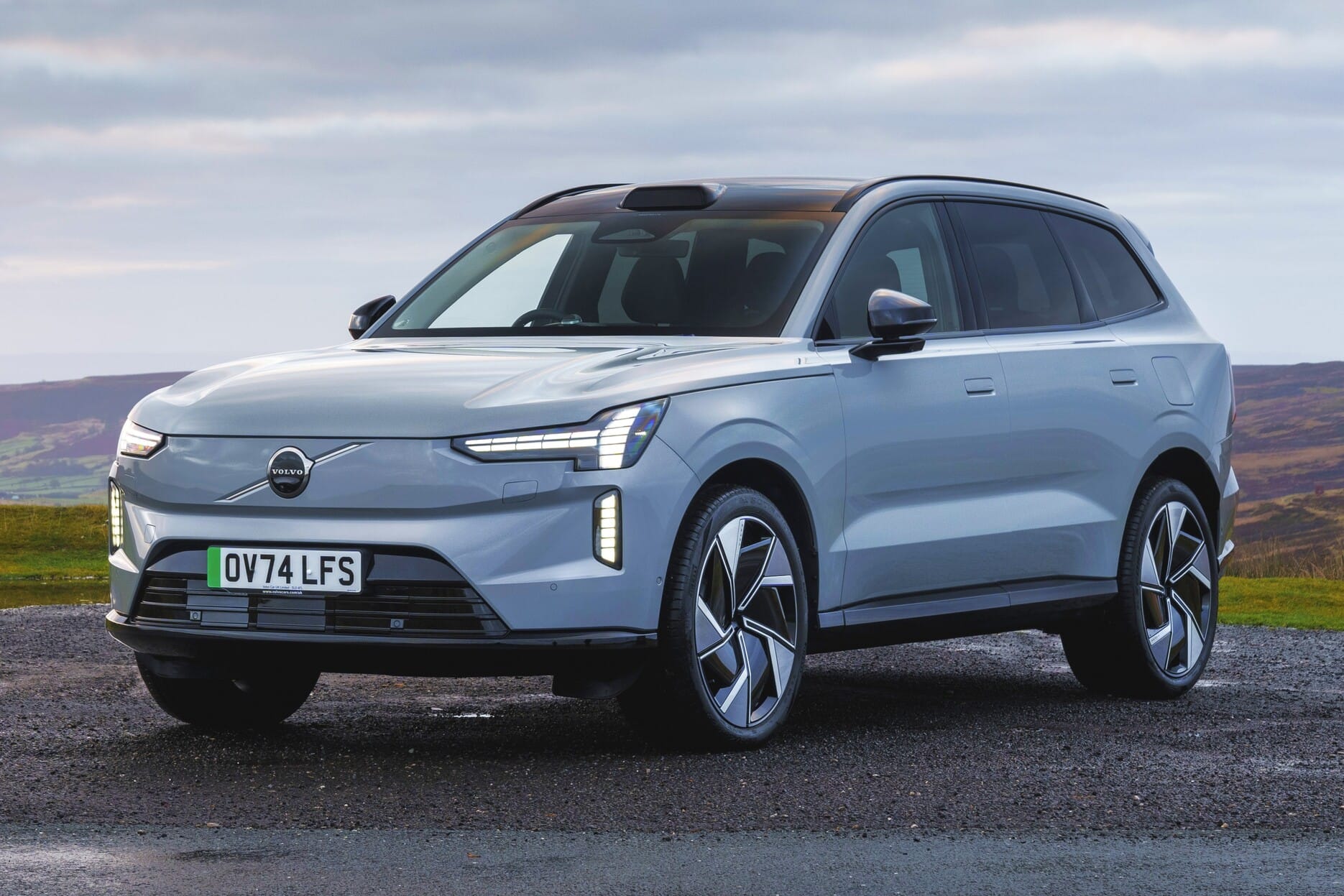
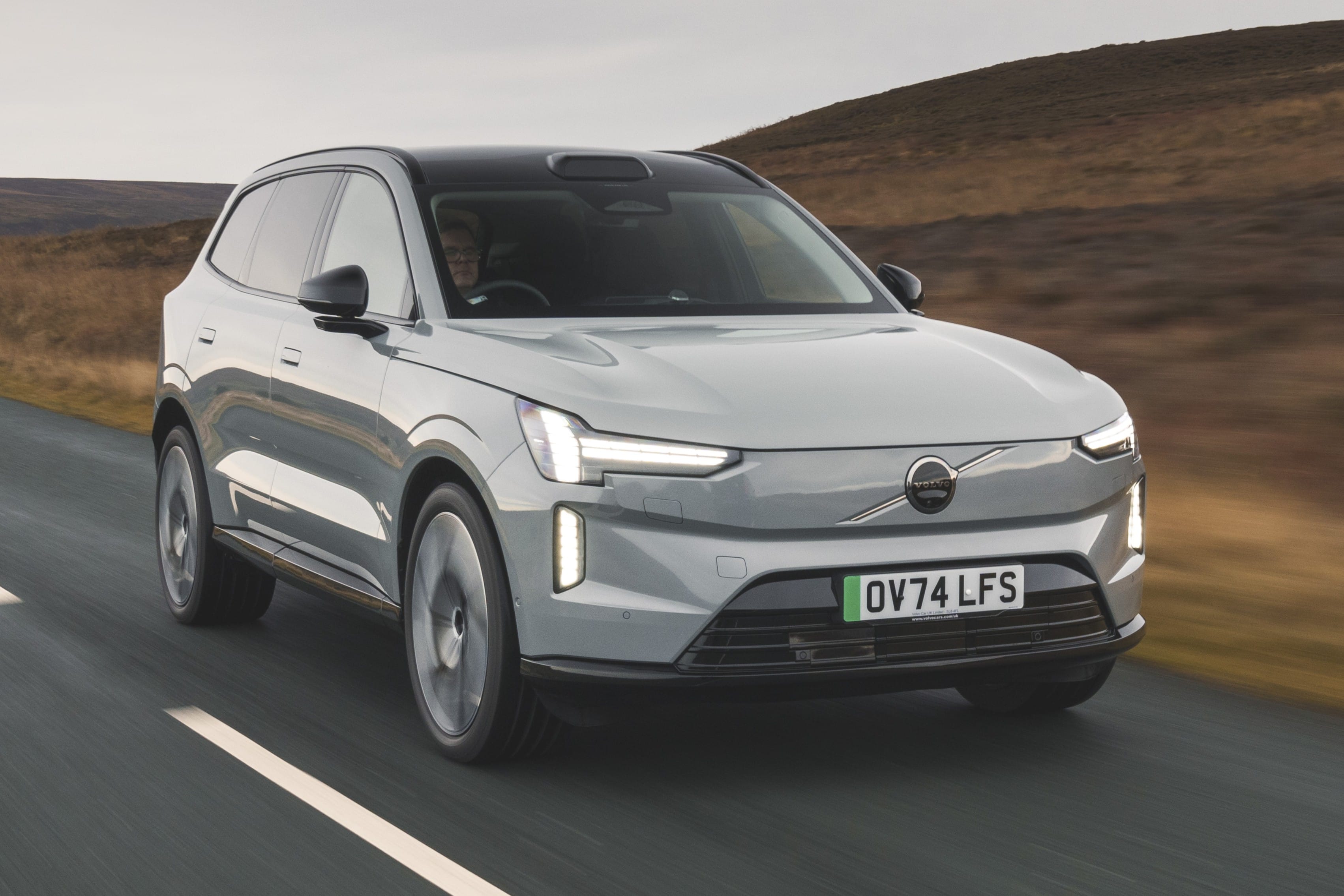
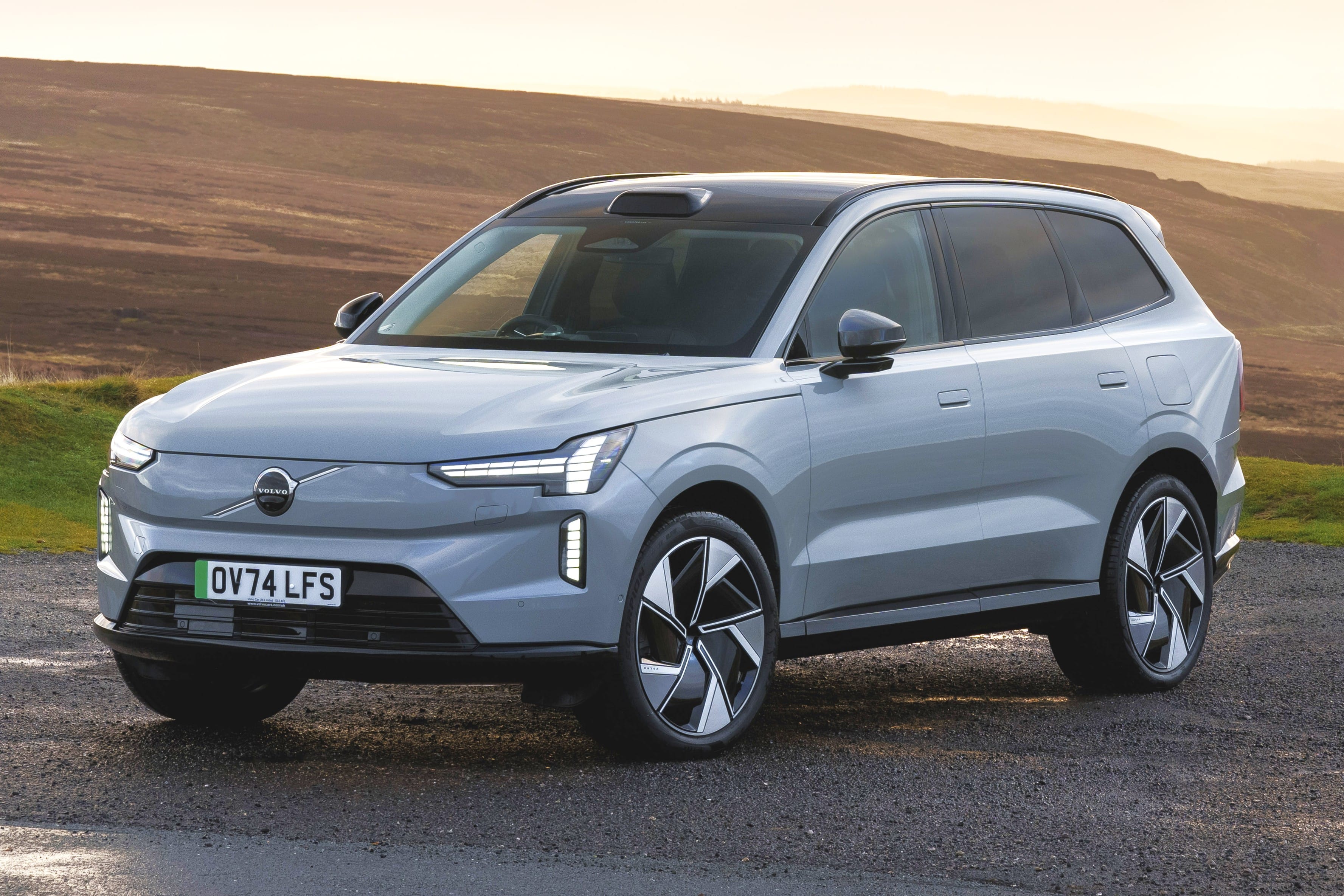
Volvo has confirmed that the India debut of the EX90 electric SUV will take place on August 19, 2026. The EX90 will be Volvo’s second EV for the Indian market, and is also the Swedish carmaker’s global flagship offering.
Volvo EX90 battery and range
92kWh RWD and 106kWh AWD powertrains
The EX90 is underpinned by an 800V architecture and offers 92kWh (Single Motor) and 106kWh (Twin Motor) battery options. In 92kWh guise, the SUV gets a single rear-mounted motor (RWD) outputting 333hp and 480Nm. 0-100kph comes up in a claimed 6.6 seconds, and the WLTP-rated range is 565km.
Meanwhile, the 106kWh EX90 features a dual-motor AWD setup that outputs 456hp and 670Nm in base spec, and 680hp and 870Nm in the range-topping Performance variant. The former version completes the 0-100kph run in a claimed 5.3 seconds, whereas the latter takes 4 seconds for the same. As for WLTP range, the lower-powered 106kWh variant boasts 608km and the Performance trim manages 602km.
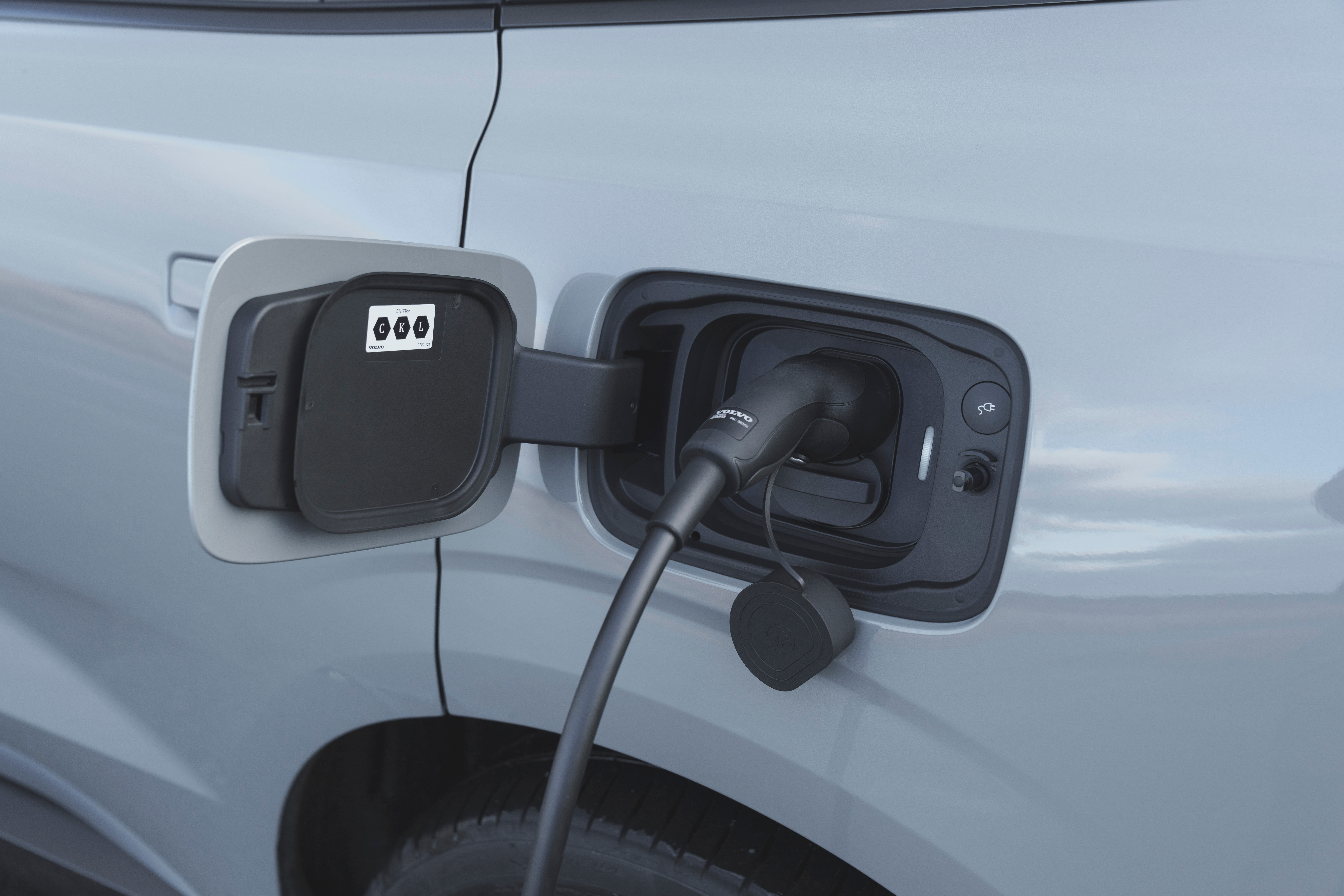
Coming to charging speeds, all three variants of the EX90 can utilise up to 350kW DC charging, and take 22 minutes for a 10-80 percent charge.
Volvo EX90 exterior design
Looks very different compared to the XC90
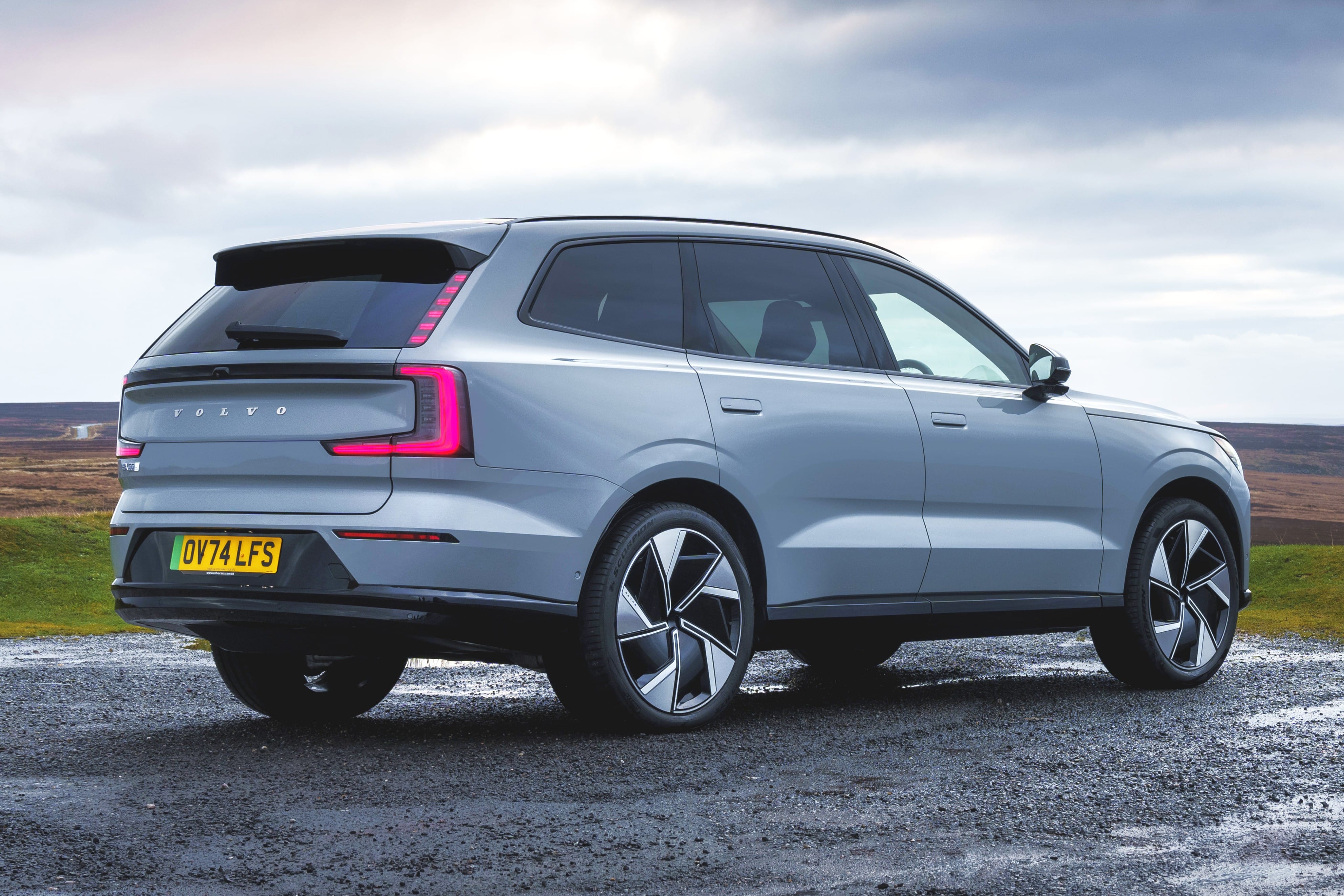
Measuring 5,037mm in length, 1,964mm in width, 1,744mm in height, and 2,985mm in wheelbase, the EX90 is dimensionally similar to the XC90, but sports a distinct design. Up front, the EX90 has sleeker T-shaped headlamps with pixel-like ‘Thor’s Hammer’ DRL signatures, below which sits a pair of slim vertically-arranged lights. The Volvo badge is placed front and centre on the grille-less fascia, with a discreet air dam underneath. A LiDAR sensor can also be spotted on the leading edge of the roof.
The side profile of the EX90 is cleanly-styled, with a prominent shoulder line and gently rising glass area, and there’s not much in the way of body cladding – Volvo claims a drag coefficient of 0.29Cd. 20-inch alloy wheels are fitted as standard, with 21- and 22-inchers optionally available. Over to the rear, the EX90 gets C-shaped LED tail-lamps with an additional vertical row of lights flanking the rear windscreen. Other styling elements of note include a sizable roof spoiler and a Volvo wordmark on the bootlid.
Volvo EX90 interior and features
14.5-inch infotainment touchscreen sits front and centre on the dash
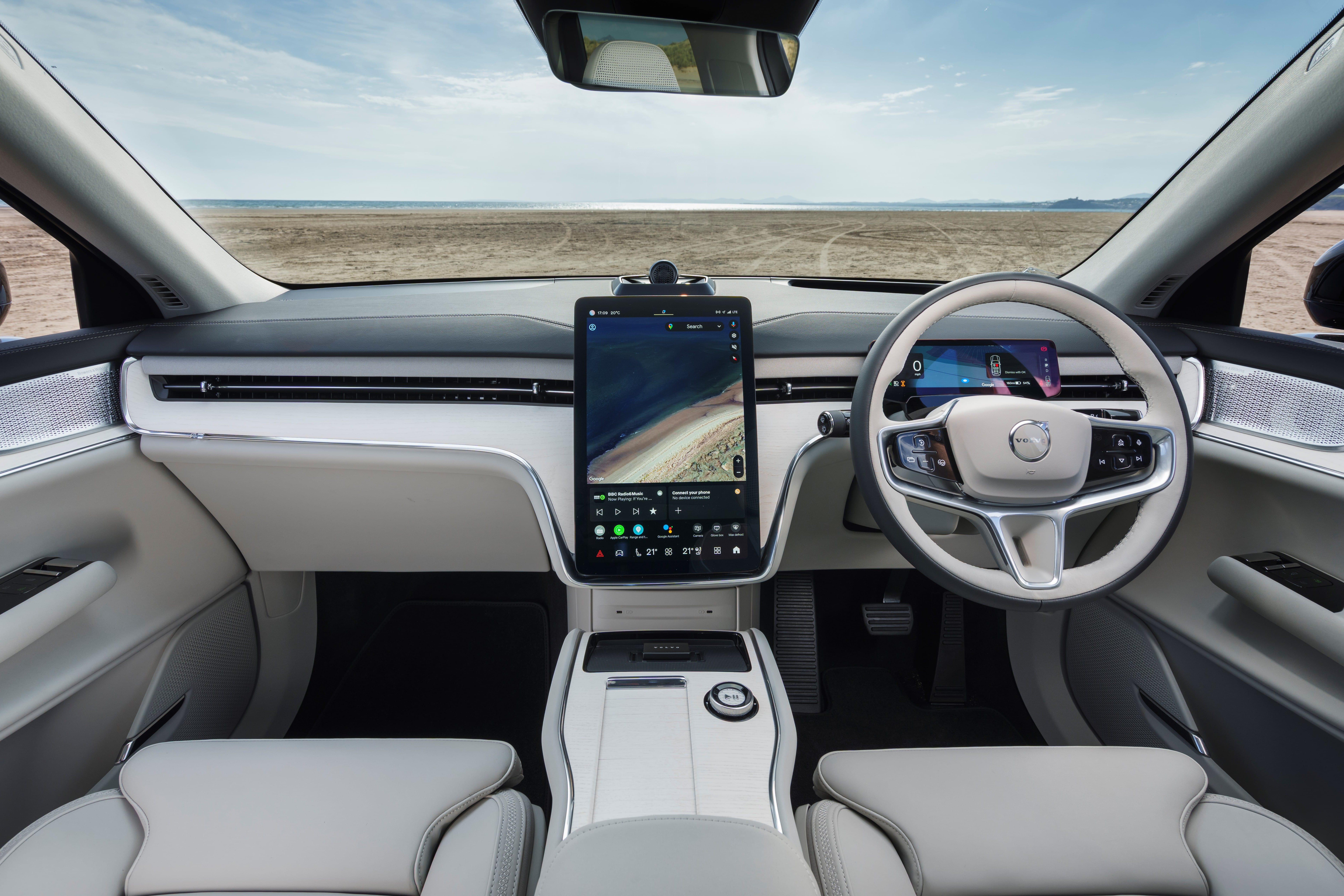
Inside, the EX90’s minimalistic dashboard is dominated by a 14.5-inch Google-based portrait touchscreen that incorporates much of the in-car functionality – physical controls are few and far between. There’s also a floating centre console, a three-spoke steering wheel with a neat layered design, a slim 9-inch digital driver’s display, and a 13.2-inch heads-up display.
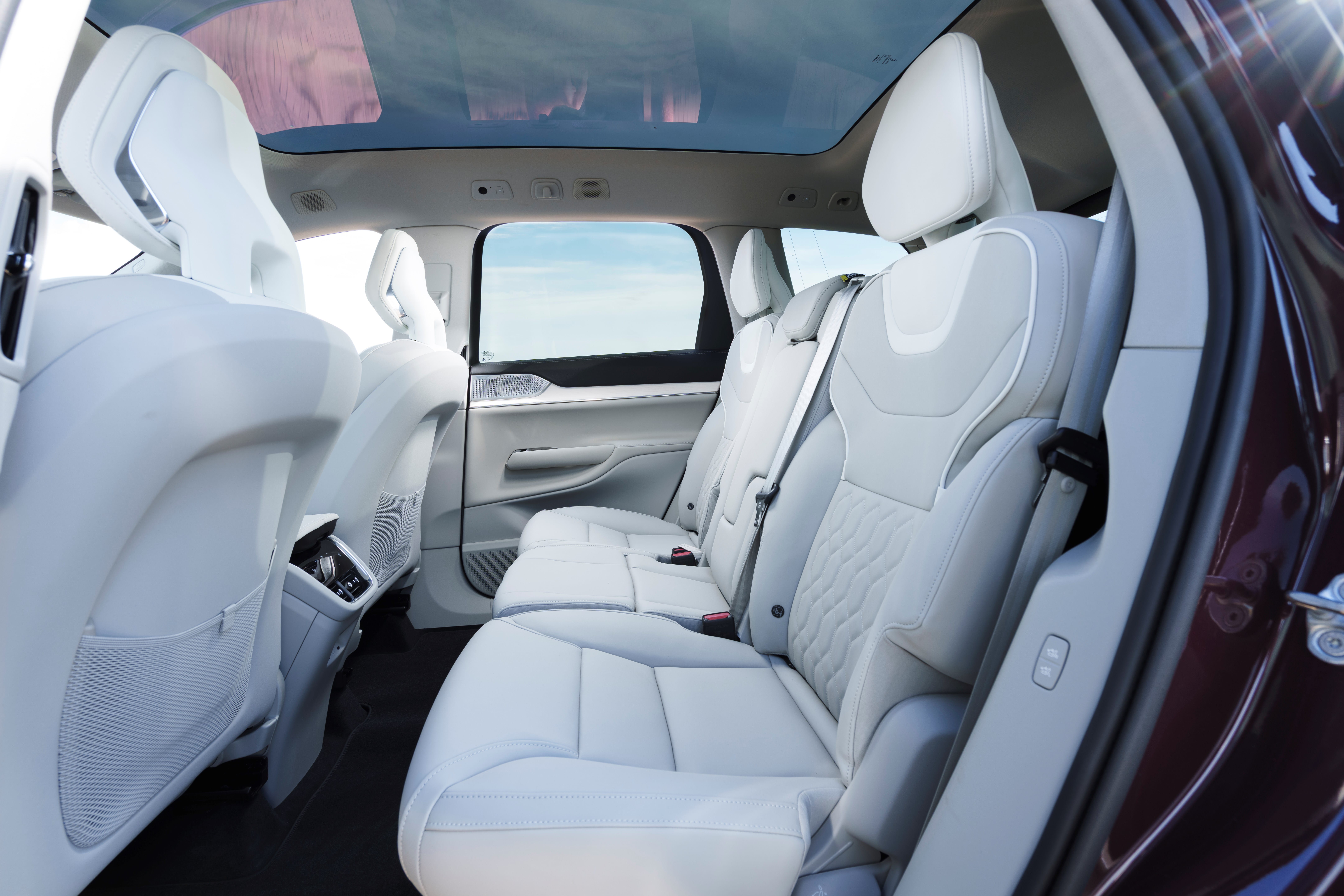
The EX90 is a 7-seater as standard, but certain variants offer a 6-seat configuration with captain’s chairs for the second row as well. In some markets, Volvo even offers a 4-seater version of the EX90 with a rear centre console that integrates a refrigerator, rivalling the likes of the Mercedes Maybach EQS SUV. Boot space is pegged at up to 384 litres with all three rows up, and there’s a 45-litre frunk too.
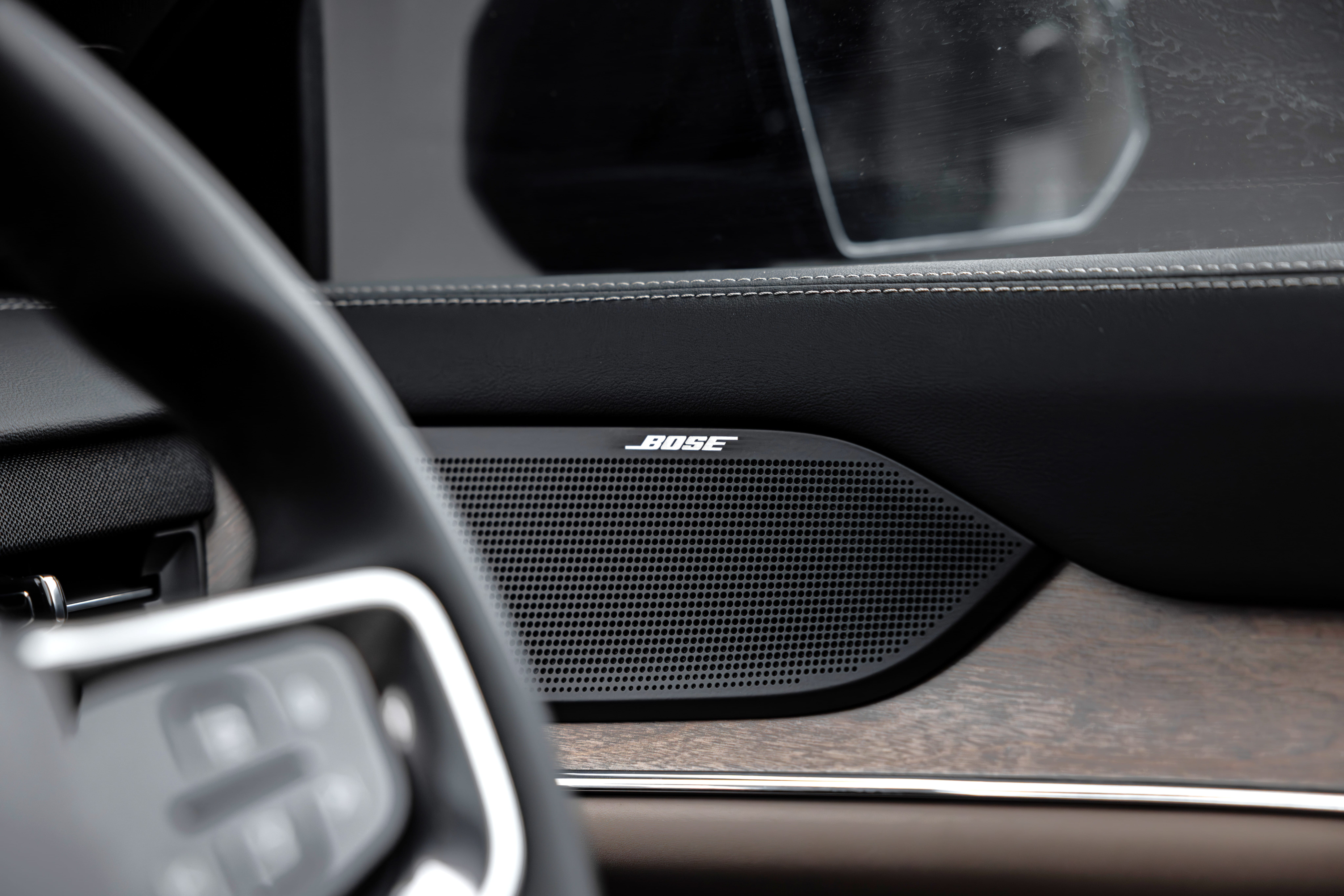
As for features, the EX90 packs a 5G connection to aid OTA updates, a digital key, ambient lighting, four-zone climate control, a cabin air purifier, a wireless charging pad, a 360-degree camera, powered front seats, a panoramic glass roof, a Bose sound system, connected car tech, auto park assist, Level 3 ADAS, V2L functionality, and more. It’s also claimed to be Volvo’s safest car to date, holding 5-star crash safety ratings from Euro NCAP and NCAP.
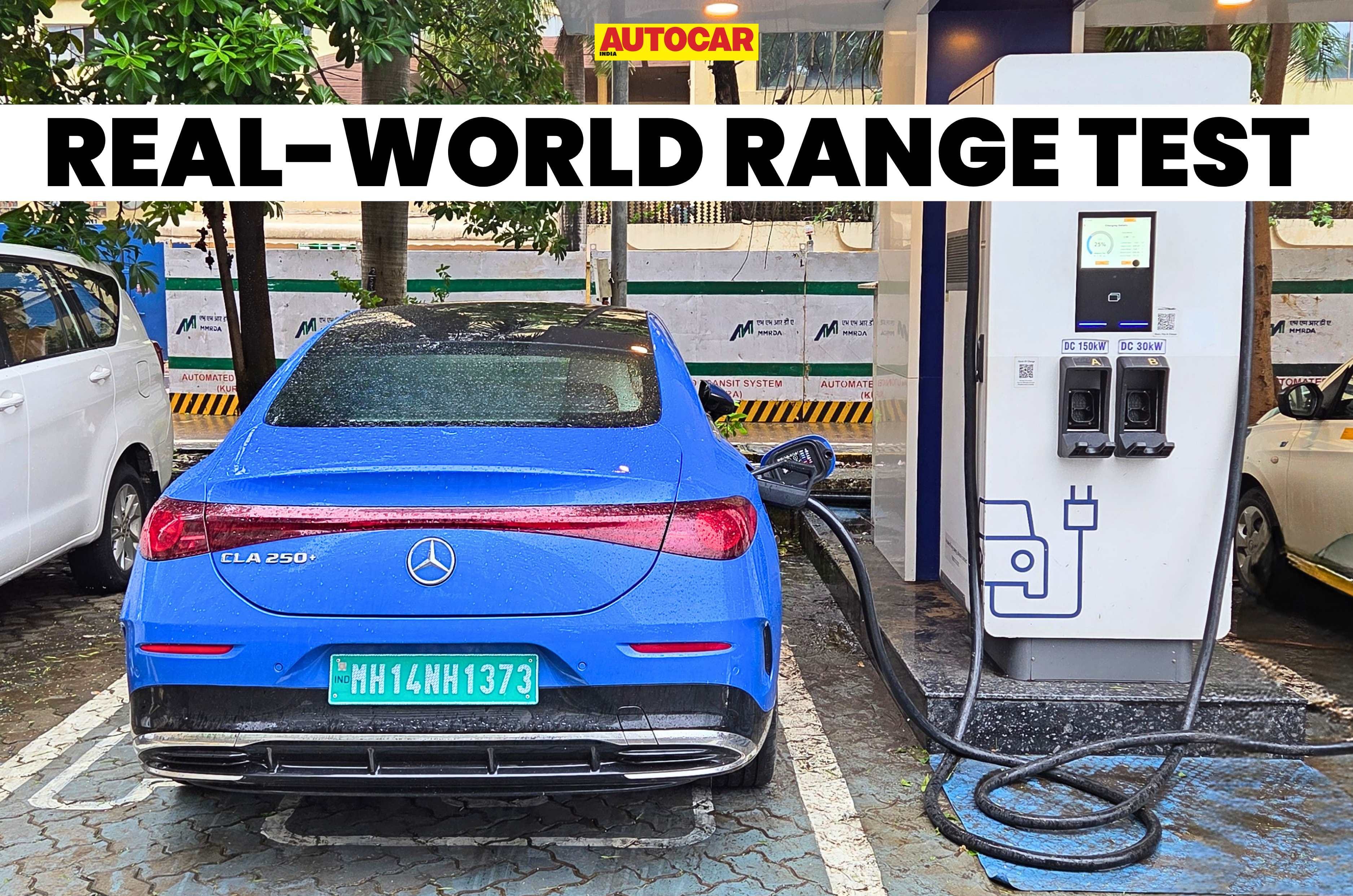
Launched in April 2026, the Mercedes-Benz CLA is currently the entry point to the manufacturer’s EV lineup in India. It is offered in two variants– 200 and 250+. The CLA 200 gets a 58kWh battery with a claimed WLTP range of 542km, whereas the higher-spec CLA 250+ gets a 85kWh battery and has a WLTP claimed range of 792km. We put the CLA 250+ variant to the test to calculate its real-world efficiency.
Low drag coefficient of 0.21Cd and weighs 2,055kg
We used ‘ECO’ driving mode throughout the test
20-80 percent on a 150kW DC fast charger takes 35 minutes
Mercedes CLA 250+ real-world range
The CLA 250+ makes 272hp of power and 335Nm of torque, with a RWD setup. Before starting our range test, we charged the 85kWh battery to 100 percent and switched it to the most efficient ‘Eco’ mode.
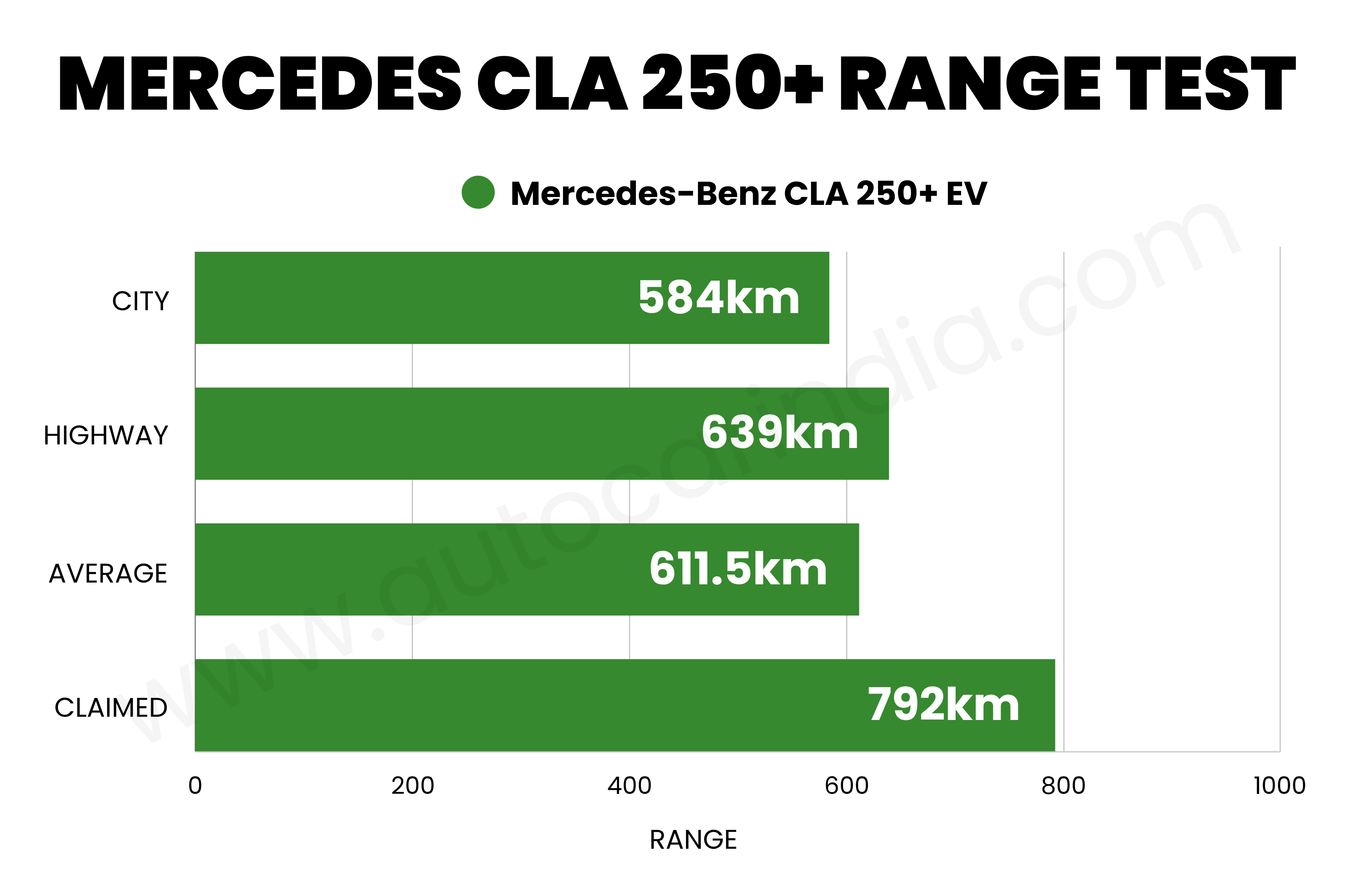
In the city, with the regen set to strongest mode, it delivered an efficiency of 6.87km/kWh that translates to a range of 584km. On the highway, with the regen set to ‘Normal’, it delivered an efficiency of 7.52km/kWh for a 640km range. With an average efficiency of 7.2km/kWh, you can expect a real-world range of 612km on a single charge, which is really good.
In the city, the strongest regen setting enabled it to recoup energy effectively, which helped boost the efficiency. Whereas, the two-speed gearbox with a taller 5:1 ratio second gear that enables greater efficiency at higher speeds, coupled with the low drag coefficient of 0.21Cd and the normal regen mode that allows for coasting, helped it to be even more efficient on the highway which isn’t usually the case with EVs.
The Mercedes CLA 250+ can be charged at speeds of up to 320kW but those chargers are few and far between in our country. In our charging test using a 150kW DC fast charger, we saw an average charging speed of around 92kW with a peak charging speed of 125kW. To charge from 20-80 percent, it took 35 minutes and consumed 53.89kWh in total.
Autocar India’s range testing
Before our real-world range tests, the battery of our test car was fully charged, and we maintained tyre pressures in accordance with the manufacturer’s recommendations. The car was driven on a weekday in Mumbai city and on the adjoining state highway in a fixed loop, and we maintained the set average speeds. At the end of each cycle, we calculated the range based on the percentage charge consumed.
Throughout our tests, the climate control was set to 22deg C in a full-auto setting, and other electricals, such as the audio system, indicators and heated and massaging front seats, were used when required, just as a regular user would. We take pride in our testing data, which isn’t merely consistent but also gives users an accurate indication of what they can expect in the real world.
सोशल मीडिया पर जारी एक बयान में, मर्सिडीज-बेंज इंडिया के ऑफिशियल हैंडल ने कहा कि “सभी मर्सिडीज-बेंज पेट्रोल BS VI गाड़ियां E20 फ्यूल के साथ पूरी तरह से इस्तेमाल के लायक हैं और संबंधित अधिकारियों ने इसे सर्टिफाइड भी किया है।” भारत के पॉपुलर डेली व्लॉगर सौरव जोशी ने हाल ही में YouTube पर एक वीडियो शेयर किया, जिसमें उन्होंने दावा किया कि उनकी मर्सिडीज-बेंज लग्जरी गाड़ी का माइलेज सिर्फ दो दिनों में 17 से घटकर 5 हो गया।
उन्होंने कहा कि उनकी गाड़ी की एफिशिएंसी सिर्फ 48 घंटों में बहुत ज़्यादा गिर गई है। जोशी ने अपने दर्शकों से कहा, “कल मैंने आपको दिखाया था कि हमारी कार का माइलेज 17 से सीधे 9 पर आ गया था।” उन्होंने आगे कहा, “और क्या आपको पता है कि आज यह कितना हो गया है? आज यह पाच पर पहुंच गया है… इसे देखिए, यह पांच का माइलेज दिखा रहा है।”
जोशी ने इसके लिए लोकल फिलिंग स्टेशनों पर मिलने वाले फ्यूल को ज़िम्मेदार ठहराया। उन्होंने कहा, “एथेनॉल की वजह से ही ऐसा हुआ है।” व्लॉगर ने बताया कि पहले पेट्रोल की एक फुल टैंक से गाड़ी लगभग 800 किलोमीटर तक चलती थी, लेकिन अब रिफिलिंग के बाद अनुमानित रेंज सिर्फ 480 किलोमीटर ही दिखाती है। उन्होंने कहा कि रेंज में आई इस भारी कमी की वजह से उन्हें जर्मन SUV के पेट्रोल इंजन में संभावित मैकेनिकल खराबी की चिंता हो रही है।
— Mercedes-Benz India (@MercedesBenzInd) July 12, 2026
उन्होंने कहा, “पता नहीं यह कार कब खराब हो जाए… आजकल पेट्रोल भरवाने में भी बहुत डर लगता है।” जोशी ने यह भी बताया कि उनके पास G-Wagon (एक और मर्सिडीज SUV) का इलेक्ट्रिक वर्जन है, जिससे उन्हें इथेनॉल से जुड़ी चिंताओं की कोई फिक्र नहीं रहती। जोशी का वीडियो ऑनलाइन वायरल होने के कुछ ही समय बाद मर्सिडीज-बेंज इंडिया ने ग्राहकों के लिए एक एडवाइजरी जारी की। हालांकि इस बयान में जोशी का नाम नहीं लिया गया, लेकिन इसमें E20 पेट्रोल को लेकर उनकी चिंताओं का जिक्र किया गया।
जर्मन कार कंपनी ने कहा, “मर्सिडीज़-बेंज के लिए ग्राहकों की सुरक्षा, गाड़ी की भरोसेमंदता और परफॉर्मेंस सबसे जरूरी हैं। मर्सिडीज-बेंज की सभी पेट्रोल BS VI गाड़ियां E20 फ्यूल के साथ इस्तेमाल के लिए पूरी तरह से सही हैं और संबंधित अधिकारियों ने उन्हें इसके लिए सर्टिफाई भी किया है।”
“हम ग्राहकों की किसी भी तकनीकी सवाल में मदद करने के लिए तैयार हैं। मर्सिडीज-बेंज सस्टेनेबल मोबिलिटी (पर्यावरण के अनुकूल परिवहन) के लिए प्रतिबद्ध है।”E20 फ्यूल एक मिला-जुला मोटर फ्यूल है जिसमें 20% इथेनॉल और 80% पेट्रोल होता है। भारत में E20 फ्यूल को बढ़ावा देने का मुद्दा विवादित हो गया है क्योंकि ऐसे दावे किए जा रहे हैं कि इससे पुरानी गाड़ियों (जो इसके लिए नहीं बनी हैं) के इंजन खराब हो सकते हैं और माइलेज भी कम हो सकता है।
हालांकि, शुक्रवार को सरकार ने इथेनॉल-मिश्रित पेट्रोल प्रोग्राम का बचाव किया। सरकार ने इंजन खराब होने और माइलेज कम होने की चिंताओं के बीच कहा कि इस स्कीम से चीनी अर्थव्यवस्था को मदद मिली है, किसानों की आय बढ़ी है और 2014-15 से देश के ₹1.90 लाख करोड़ से ज़्यादा विदेशी मुद्रा की बचत हुई है।







.jpg)
.png)