



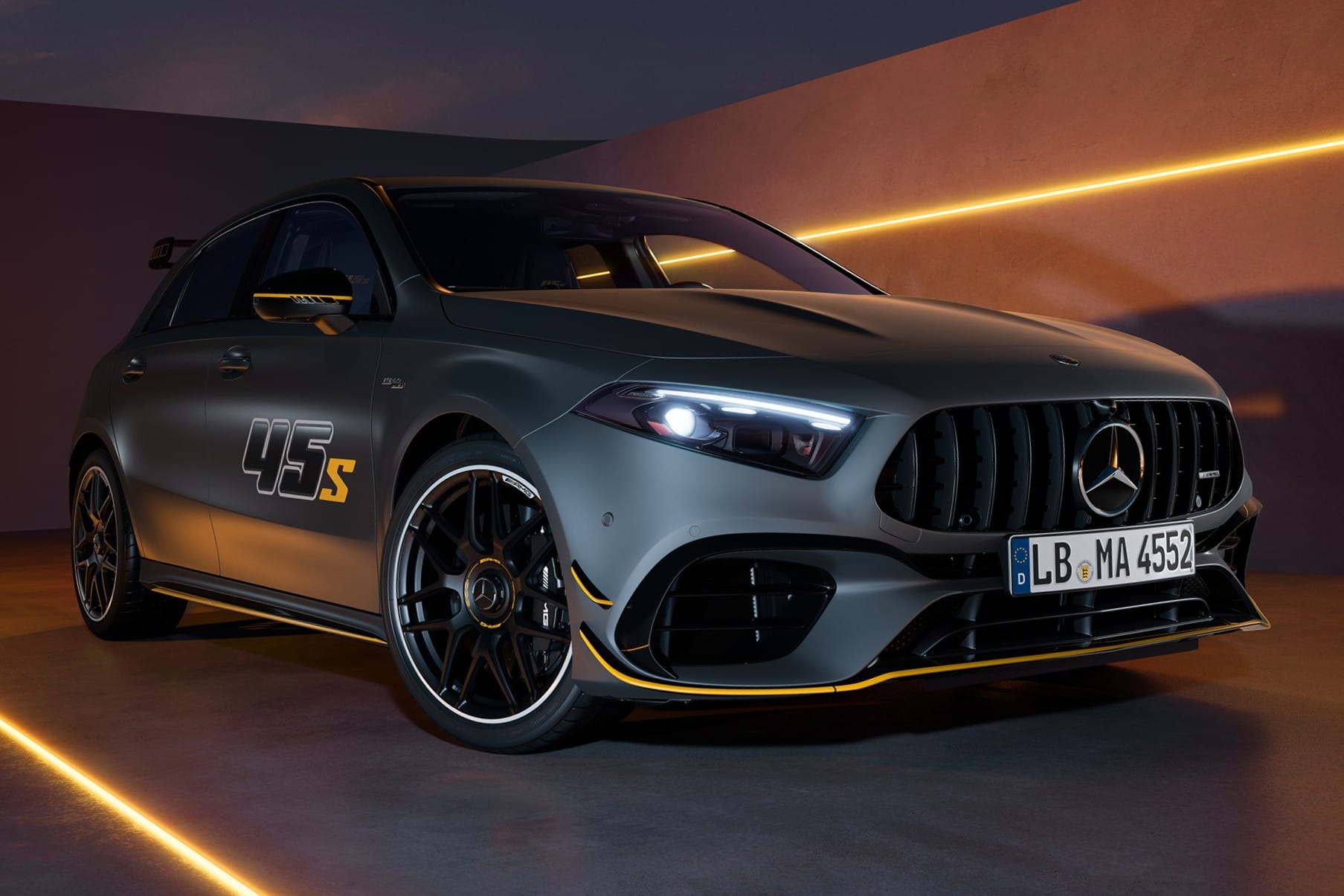
Mercedes-AMG is bidding farewell to the A 45 S hatchback with a Final Edition. The A 45 S hatchback has been on sale for seven years and is positioned as an entry point to the AMG model series. It is being phased out by the carmaker as its engine will not meet upcoming emission norms globally.
- Offered with two ‘MANUFAKTUR’ paint choices with optional ’45 S’ graphics.
- Interior comes with yellow accents throughout and ’45 S’ branding.
- Retains standard models’ 421hp, 500Nm, 2.0-litre turbo-petrol engine.
Mercedes-AMG A45 S Final Edition exterior details
Gets the AMG Night Package and Aerodynamics Package as standard fitment
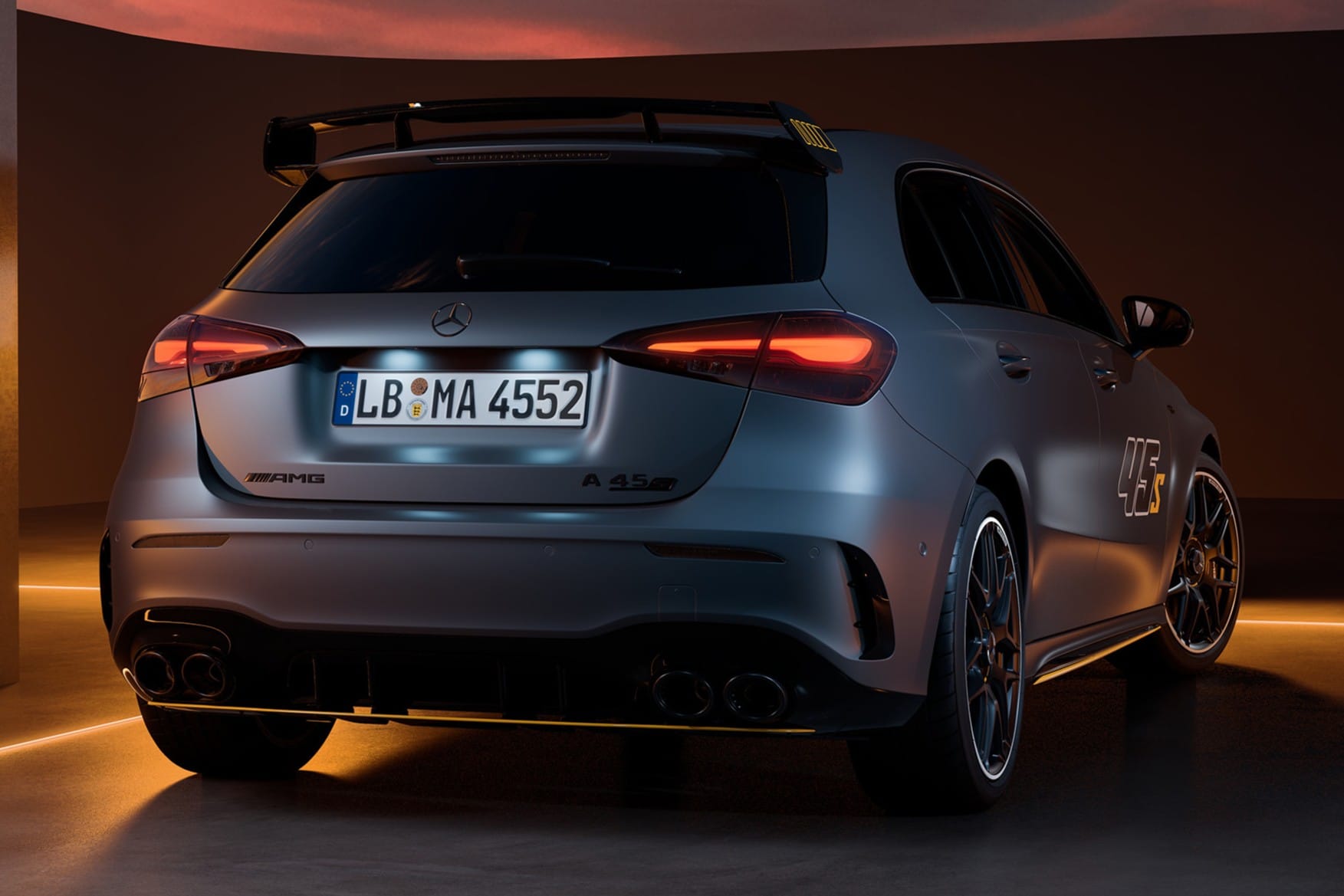
The Final Edition of the AMG A 45 S is available solely with two ‘MANUFAKTUR’ paint options, namely, Mountain Grey Magno or Jet Black non-metallic, while aerodynamic parts get yellow accents. The 19-inch AMG forged wheels sport a cross-spoke design and centre caps with the AMG logo in yellow. As an optional extra, the front doors feature ‘45 S’ graphics and the ORVMs come with an AMG-specific black diamond pattern with a yellow outline. Additionally, the fuel filler cap gets a silver chrome finish with AMG branding and black design elements.
The AMG A 45 S Final Edition comes with the AMG Night Package and the AMG Aerodynamics Package as standard. The Night Package includes a gloss-black finish for the exterior mirror housings and a dark chrome finish for the exhaust tips, grille and badges. The Aerodynamics Package brings an enlarged front splitter and fins at the front, and a spoiler and diffuser finished in gloss-black at the rear.
Mercedes-AMG A45 S Final Edition interior details
Comes with exclusive graphics on the seats and carpets
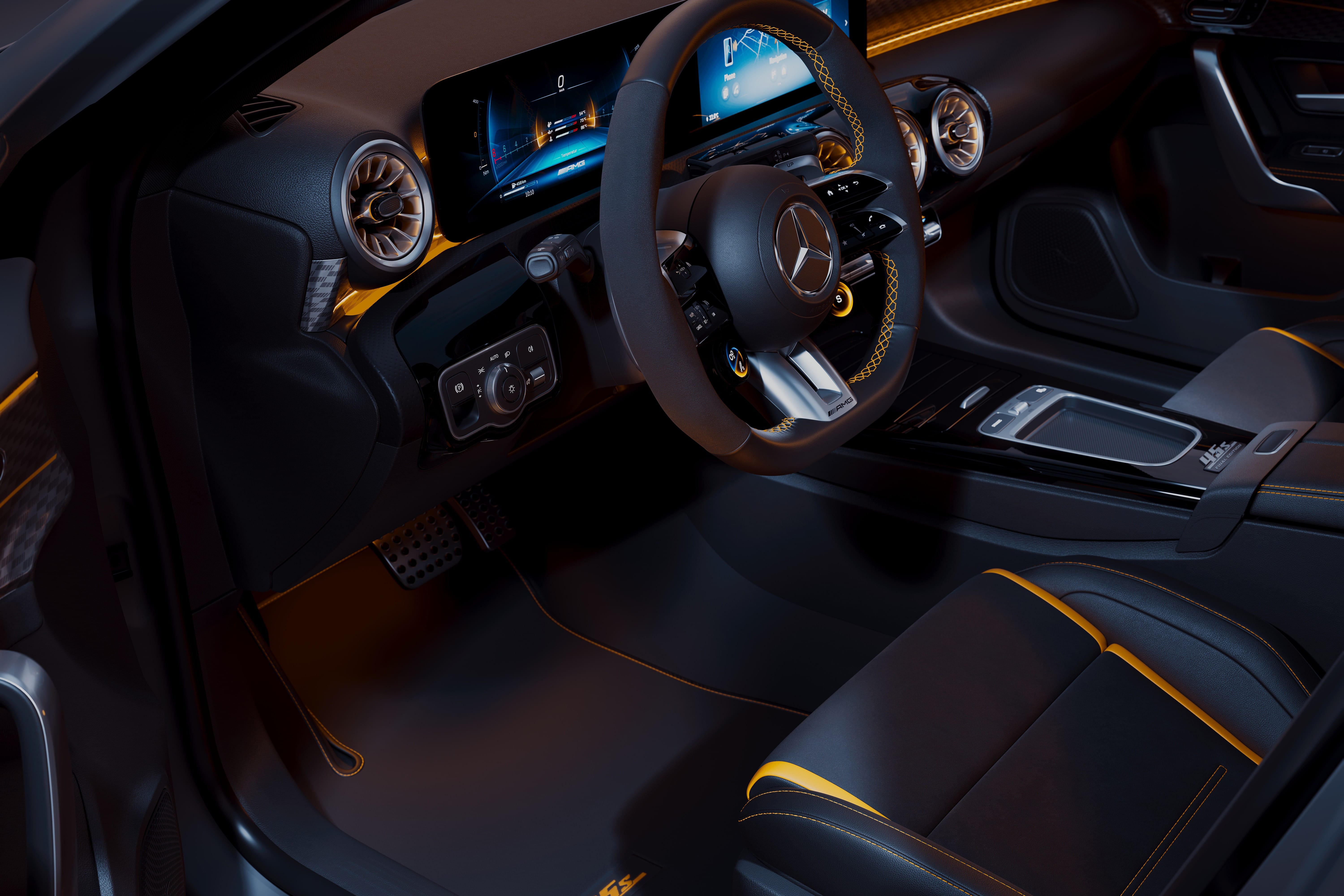
On the inside, the AMG A 45 S Final Edition carries a black theme with yellow accents. The black-and-yellow theme extends to the seats and floor carpets as well. Additionally, ‘45 S’ graphics are embossed on the front seat headrests and floor carpets. The cabin layout remains unchanged over the standard model, with a dual-screen setup, AMG-spec flat-bottom steering wheel, and turbine-style aircon vents.
Mercedes-AMG A45 S Final Edition Powertrain details
Powered by the same 421hp, 500Nm, 2.0-litre turbo-petrol engine
Things remain the same under the hood of the AMG A 45 S Final Edition. There’s a 2.0-litre turbocharged four-pot engine, while power is sent to all wheels via an 8-speed DCT gearbox. Producing 421hp and 500Nm, it holds the title of being the most powerful series production pure-combustion 4-cylinder car. It can do a 0-100kph sprint in 3.9 seconds and reach speeds of up to 270kph.

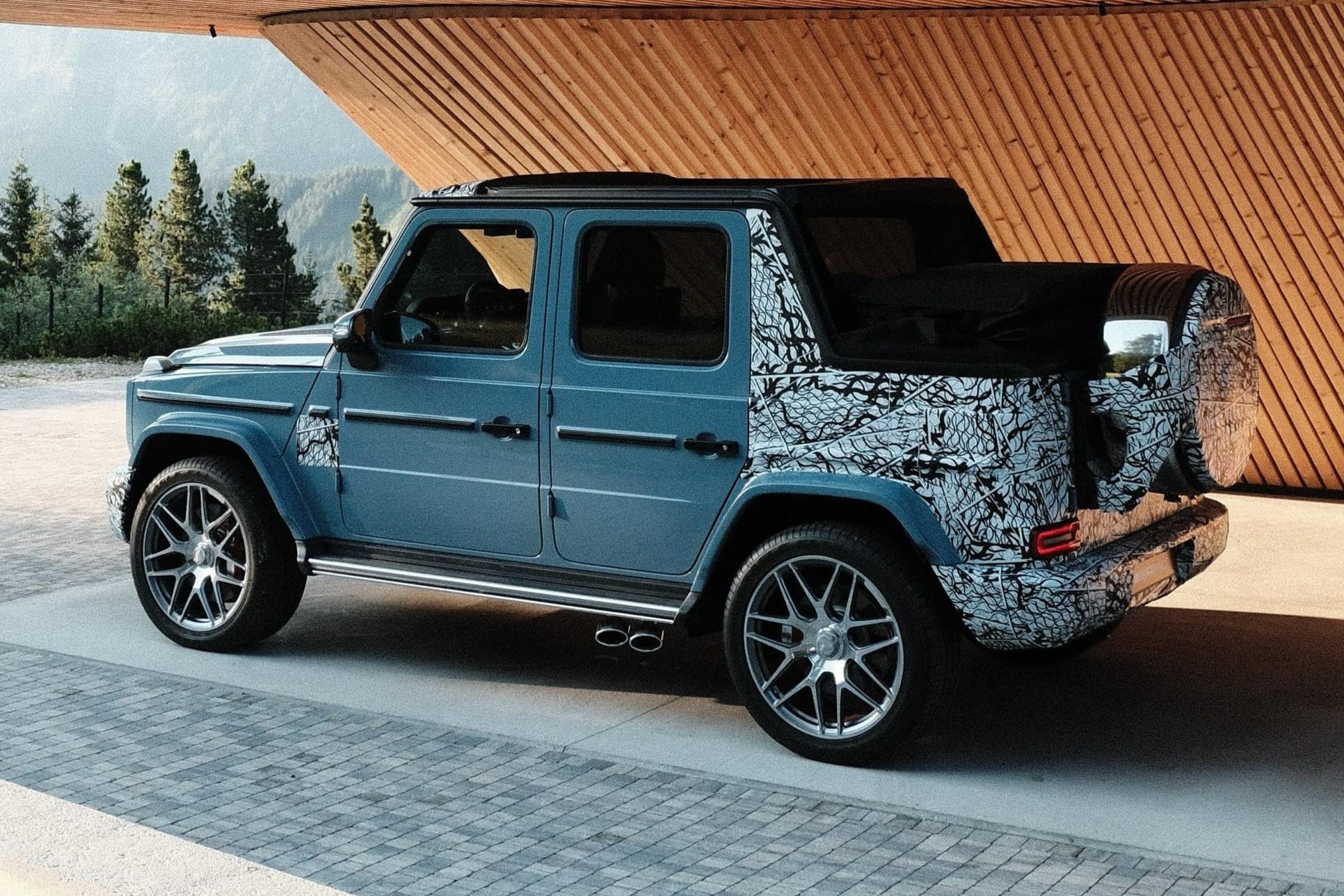
Mercedes-Benz has revealed the first official images of the upcoming G-Class Cabriolet. The arrival of a Cabriolet counterpart of the G-Class comes a decade after its previous version was discontinued. While a launch date has not been announced, the carmaker has already begun testing the SUV in Austria.
- Features a foldable roof with powered opening and closing.
- Expected to arrive in AMG guise with a 585hp twin-turbo V8 engine.
Open-top versions have long been a part of the G-Class portfolio. The first was introduced as part of the original lineup in 1979, as a two-door short-wheelbase model and was in production till 2013. Then in 2017, the G-Class Maybach 650 Landaulet was introduced. It was a four-door SUV powered by a 630hp 6.0-litre V12 engine.
Mercedes-Benz G-Class Cabriolet: Expected exterior details
Sports a powered foldable roof whilst retaining rugged looks
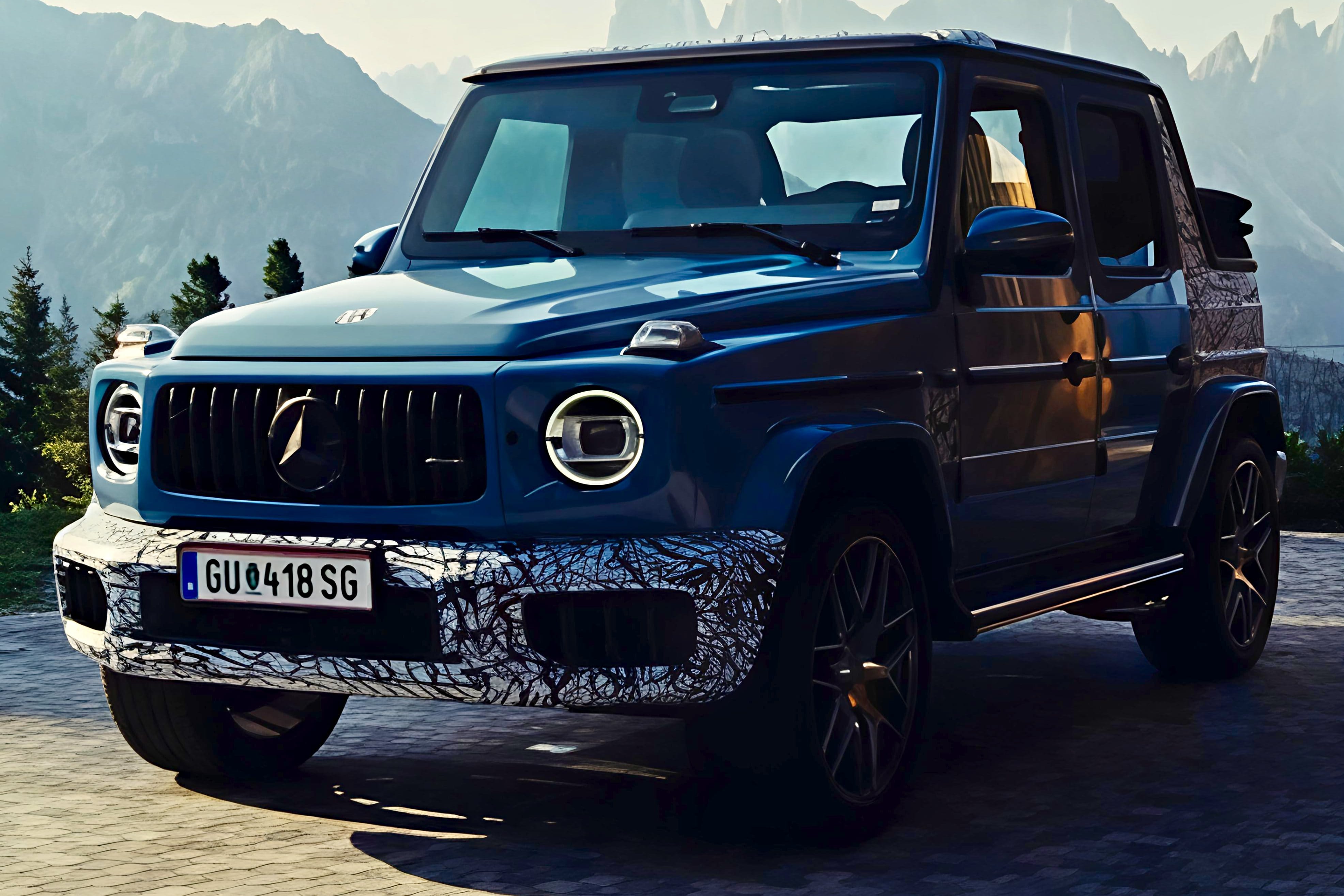
Partially camouflaged images of the G-Class Cabriolet were showcased by the German luxury giant. The main distinction of the cabriolet over the standard G-Class is that the upper rear-most section has been chopped off and in place comes a powered, foldable roof. The exposed boot is used up by the motorised roof when folded.
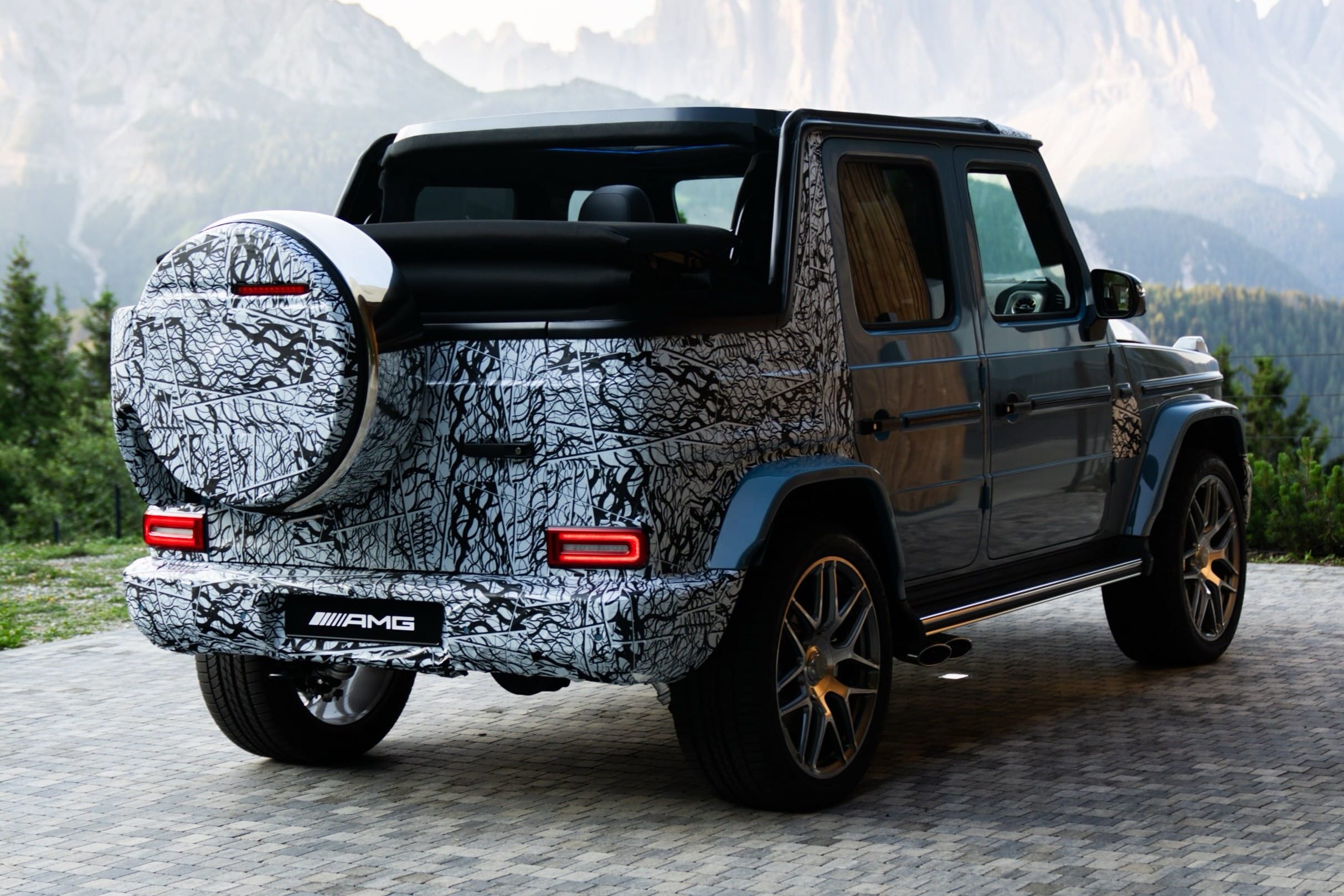
For the most part, the boxy silhouette of the standard model has been retained. This includes circular LED headlamps, flared wheel arches, side steps, dual exhausts at the side and a similar design for the alloy wheels, which are likely to be 22 inches in size. Despite having changes to its body to accommodate the foldable roof, you continue to get a tailgate-mounted spare wheel.
Mercedes-Benz G-Class Cabriolet: Expected interior details
Expected to retain standard counterparts’ interior layout
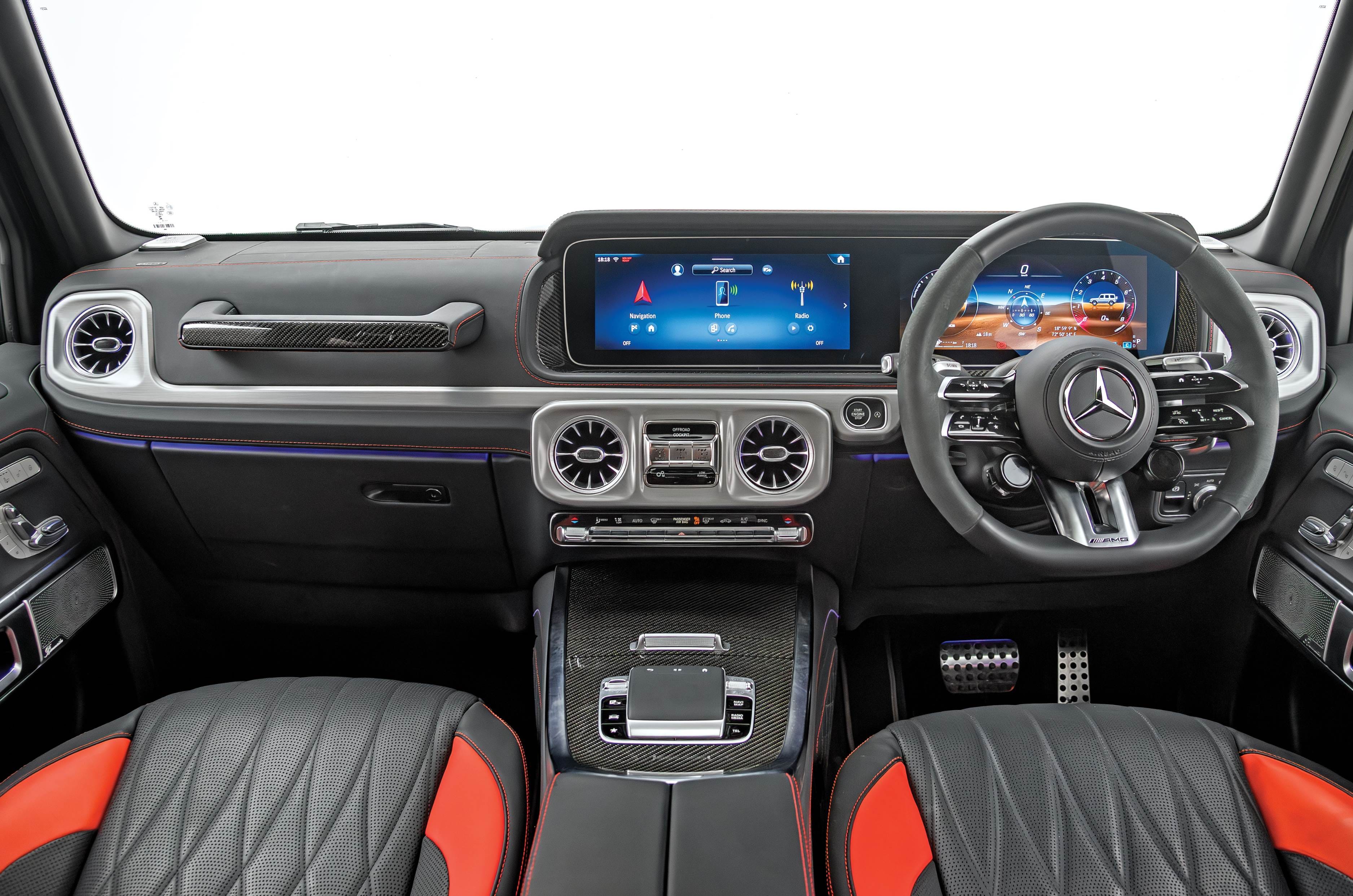
Mercedes has not yet revealed the interior of the G-Class Cabriolet. But it is expected to feature a similar cabin layout as the standard counterpart that’s highly configurable. On the regular G-Class, there’s a dual-screen setup for the digital driver’s display and infotainment system, a dashboard-mounted grab handle, and turbine design for the air con vents. The convertible is expected to arrive with additional switchgear to control the foldable roof.
Mercedes-Benz G-Class Cabriolet: Expected powertrain details
To likely arrive with a twin-turbo V8
While powertrain details have not been confirmed, ‘AMG’ branded license plates suggest that the G-Class cabriolet would arrive in a ‘G 63’ avatar. For reference, the standard G 63 AMG gets a 4.0-litre twin-turbo V8 petrol engine with 48V mild hybrid assist producing 585hp and 850Nm of torque. The 0-100kph time is claimed at 4.6 seconds, and it can reach a top speed of 220kph.
Though the arrival of the G-Class Cabriolet for India remains to be seen, it will likely be pricier than the standard G-Class SUVs currently in our market if it does come here.

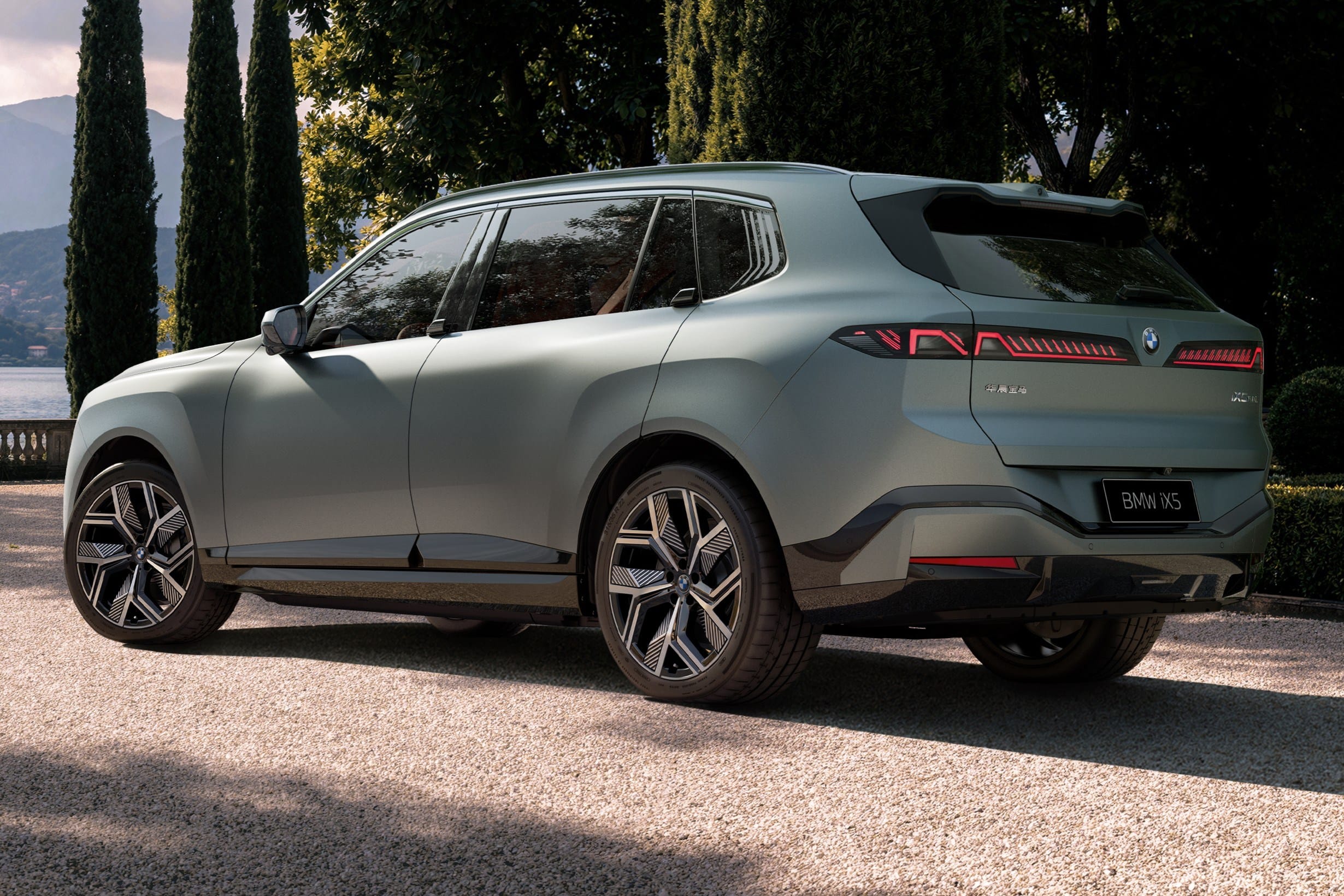
BMW has taken the wraps off the long-wheelbase Neue Klasse X5 and iX5 for China. Apart from a longer wheelbase, these versions sport revised lighting signatures, bumpers and badging over their standard counterparts. Previously, we had exclusively reported that the X5 and iX5 will arrive in India in long-wheelbase guise, with these being the very models to arrive here.
- LWB X5 and iX5 get revised lighting and rear bumpers over regular versions.
- Exclusively gets an 8K entertainment screen for rear passengers.
BMW X5 and iX5 LWB: What’s new?
Gets a longer wheelbase along with exclusive cosmetic updates
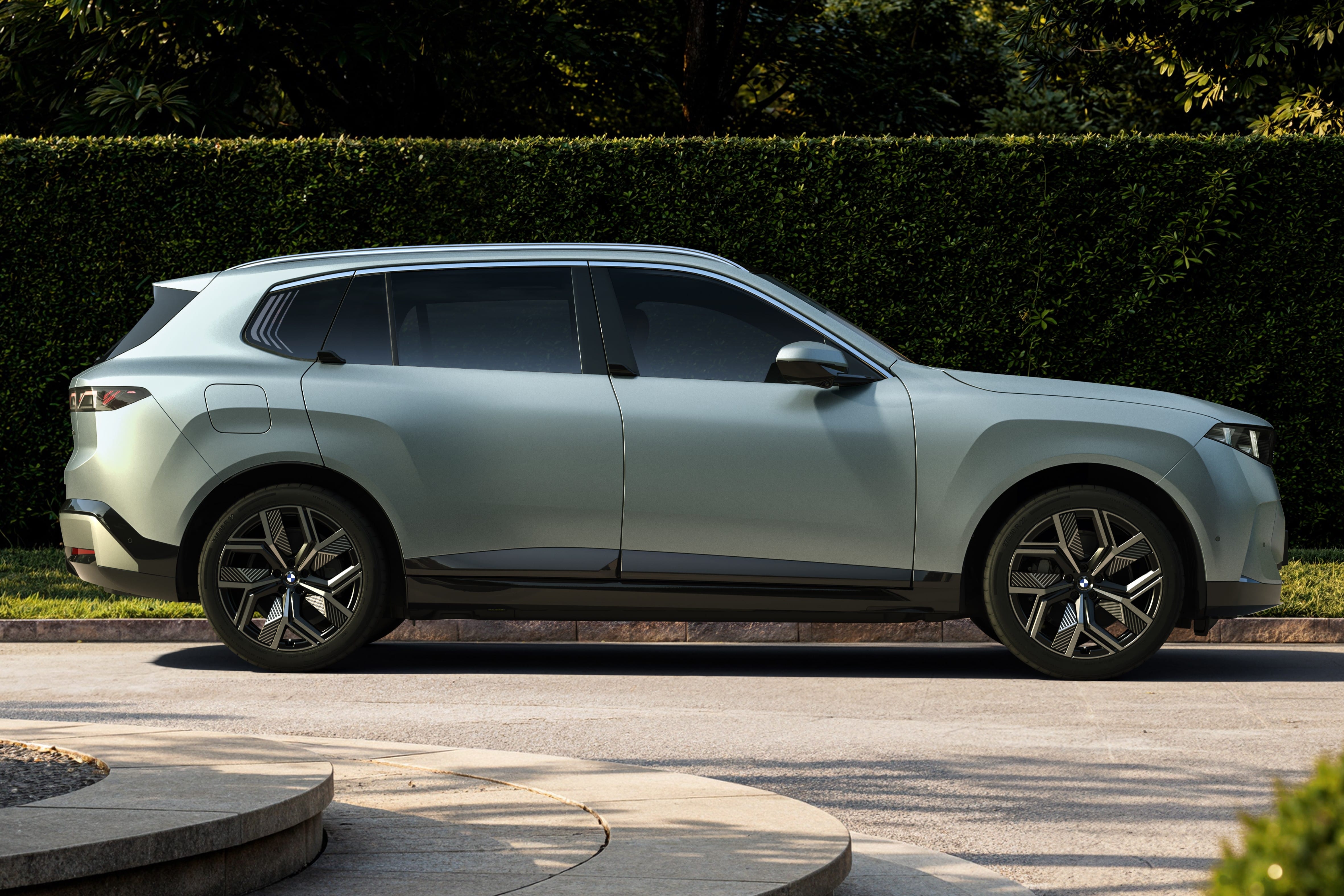
Compared to their standard versions, the LWB X5 and iX5 get a 130mm longer wheelbase. Consequently, the overall length of both SUVs is increased to 5,125mm. The front-end receives a new diagonal design for the LED DRL signatures, while customers also have the option to revert to the regular version’s ‘double-X’ signature. There are additional DRL strips connecting the headlamps and the illuminated kidney grille. But at the back, the X5 LWB and iX5 LWB swap bumper designs with their standard counterparts. To differentiate from regular versions, LWB variants come with an ‘L’ badge on the tailgate.
BMW X5 and iX5 LWB interior details
Exclusively gets an 8K rear entertainment screen
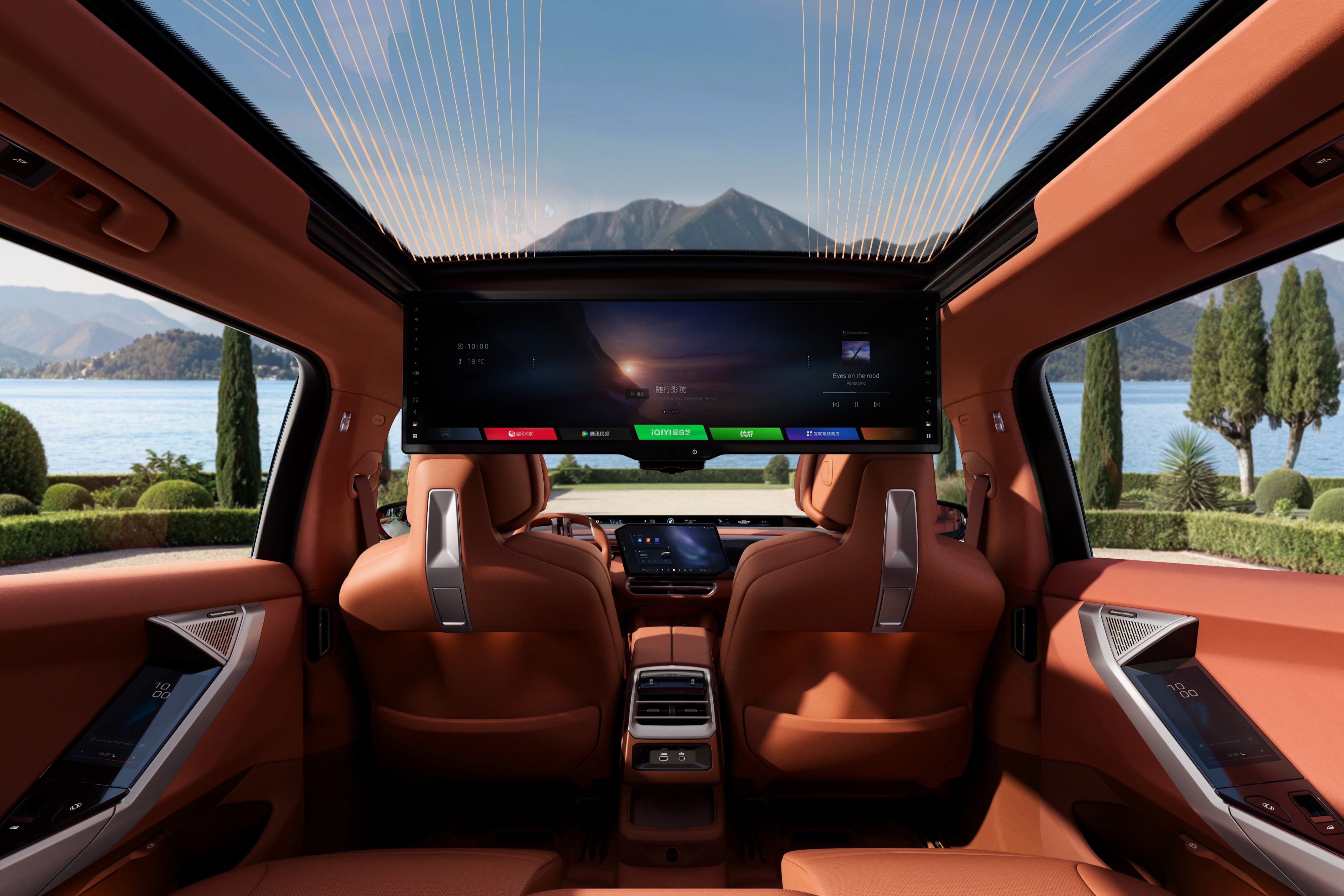
LWB versions of the X5 and iX5 come with an exclusive ‘BMW Theatre Screen’ for rear passengers with 8K streaming, gaming and smartphone connectivity with video call functionality. Meanwhile, the dashboard-width ‘BMW Panoramic iDrive’ display, rhomboidal infotainment screen and the optional ‘BMW Passenger Screen’ have been retained. Customers can opt for either a brown or white cabin theme, depending on the variant chosen.
BMW X5 and iX5 LWB powertrains
Likely to get the same powertrains as their regular versions
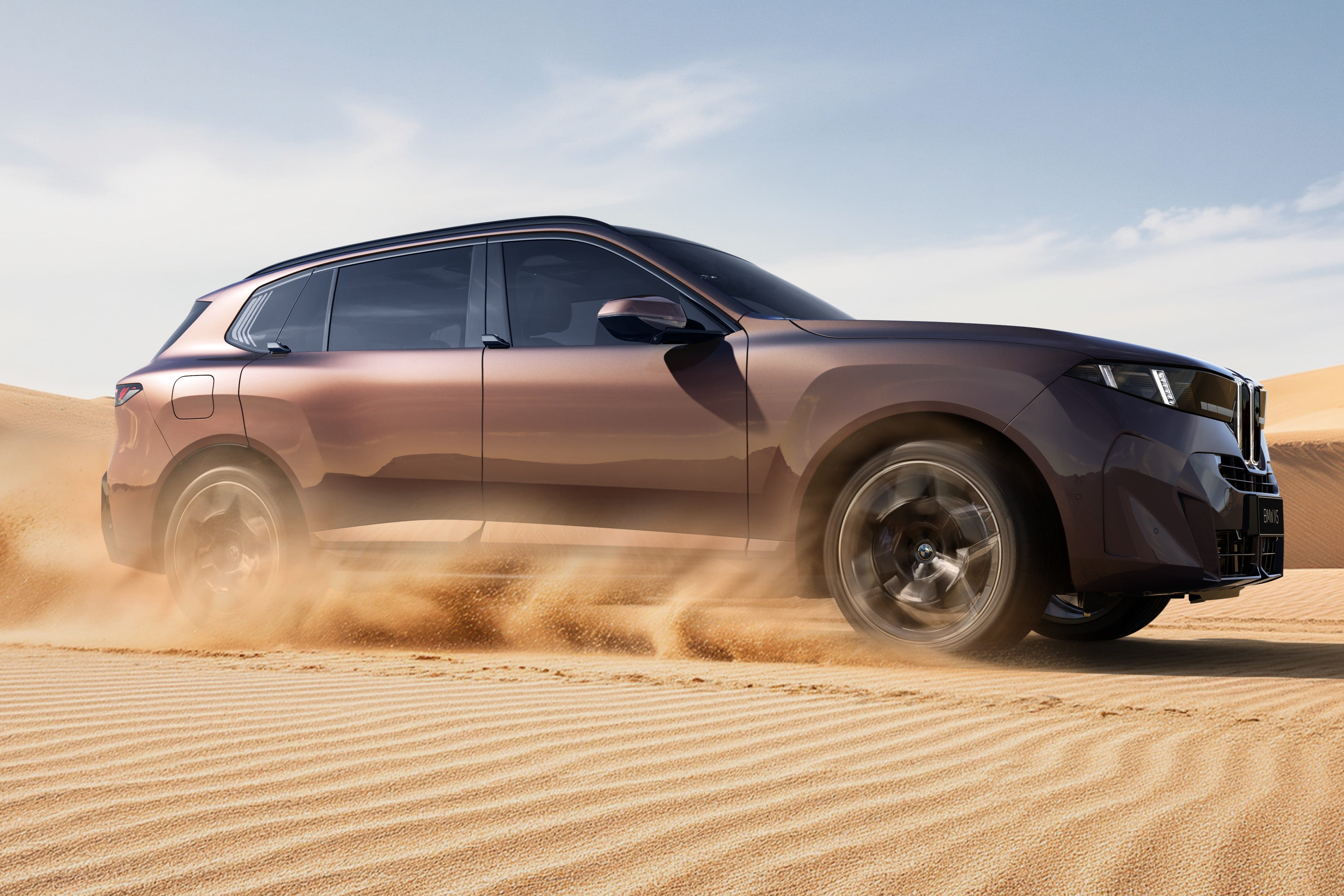
The BMW X5 and iX5 LWB are expected to retain the powertrains from their respective standard versions. While exact specifications haven’t been revealed, the X5 is expected to offer a 400hp, 580Nm 3.0-litre six-cylinder turbo-petrol engine, and a 313hp, 670Nm diesel engine. There’s also a PHEV powertrain that pairs the 3.0-litre turbo-petrol engine to an electric motor to produce a combined power output of up to 612hp and 800Nm. BMW says that the iX5 LWB gets a CLTC-certified range of over 1000km, and is likely to use the brand’s largest 141kWh battery pack that utilises an 800V architecture. It could utilise the standard iX5’s dual motor setup that churns out 578hp and 805Nm. Air suspension is standard on both SUVs.
BMW X5 and iX5 LWB launch timeline
Both SUVs to arrive in 2027
Apart from China, India too is slated to get the LWB versions of the new BMW X5 in 2027. Whether it brings the all-electric iX5 is yet to be seen. It will add to the list of long-wheelbase BMW models for India in 2027 alongside the smaller X3 and iX3 SUVs. The X5 and iX5 will take on the likes of the Mercedes-Benz GLE and Audi Q7.

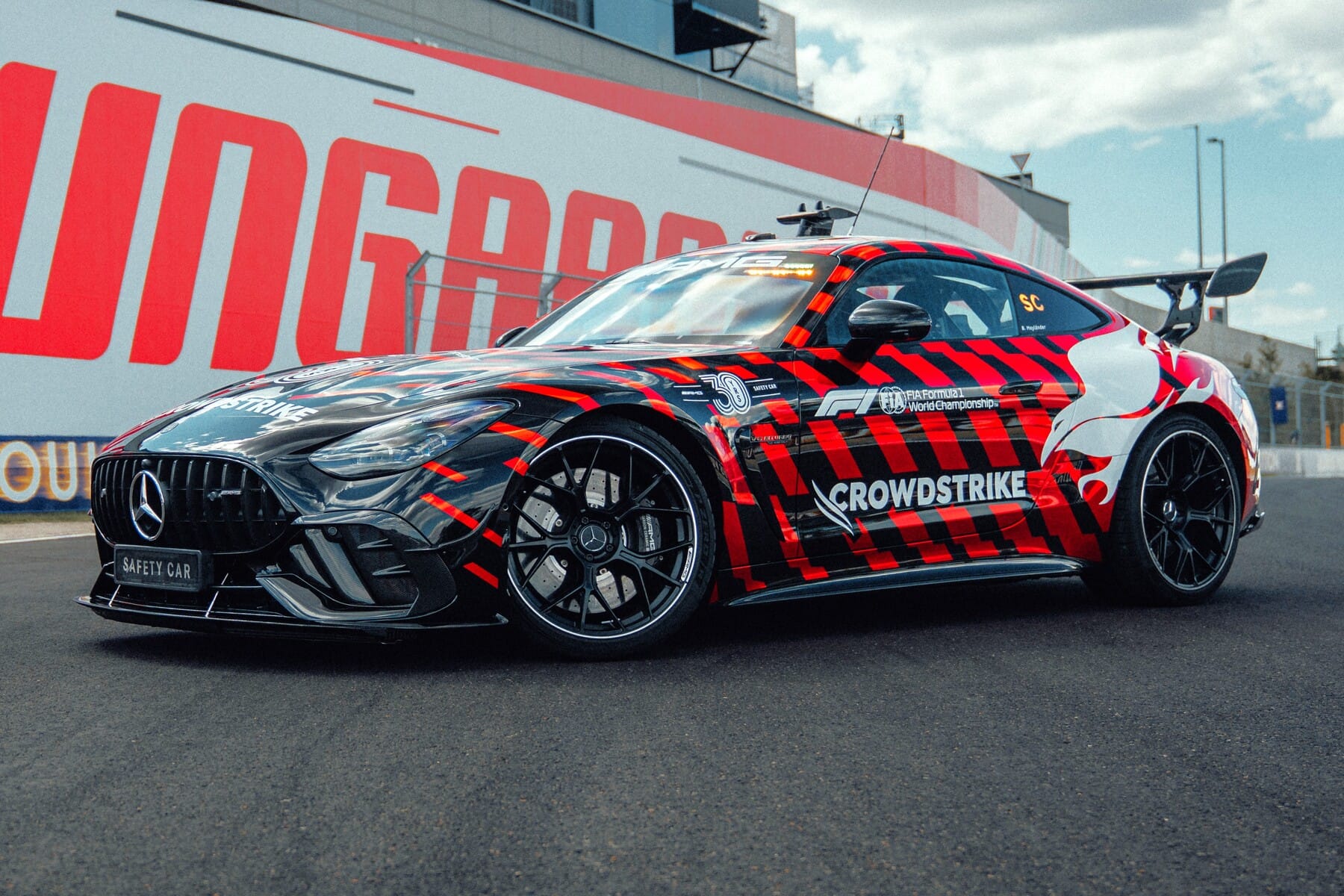
Mercedes-Benz has unveiled the new AMG GT 63 Pro 4Matic+ as the new F1 safety car, replacing the prior AMG GT Black Series from the Hungarian Grand Prix onwards. Powered by a 4.0-litre twin-turbo V8 producing 612 hp and 850 Nm, it is the first F1 safety car to feature an all-wheel-drive system, improving traction in wet and low-grip conditions. The car also benefits from revised aerodynamics, including a new front splitter, active rear wing, and dive planes for greater stability at high speeds. An integrated LED signalling system in the rear wing enhances visibility for drivers following behind during safety car periods. The Hungarian Grand Prix will also mark 30 years of Mercedes supplying safety cars to Formula 1, with the new AMG GT 63 Pro wearing a special anniversary livery and will be driven by Bernd Mayländer.


Mercedes-Benz’s Research and Development centre in Bengaluru has evolved from a hardware-focused engineering hub into one of the company’s key global R&D centres, with teams working across software, ADAS, electric powertrains and physical vehicle development. In this interview, Jörg Burzer, Member of the Board and Chief Technology Officer, Development & Procurement at Mercedes-Benz Group AG, discusses the centre’s expanding capabilities, the role of AI in vehicle development, the future of autonomous driving, and why he believes every Mercedes-Benz has “a bit of India” in it.
A lot of global auto OEMs have large R&D centres in India. Beyond cost, what are the benefits of having such large setups in India
Yes, it’s not only cost; you see, the competence level is so high. If you look at our centre, we will be celebrating its 30th anniversary here in India, and over these years, it has only grown in size and capability. We started with hardware, but now it’s massively into software, infotainment and autonomous driving. The team in India is contributing heavily on ADAS, for instance, and we are working on Level 3 and Level 4 with the team in India. So, all in all, I would say it’s competence, speed and agility that are good here.
Is the Mercedes development centre mainly a digital unit, or is physical development also being undertaken here?
Oh certainly, we have lots of hardware development. There are many test benches, and you’ll see lots of physical testing and development taking place here. Even beyond powertrain, there’s a lot of physical development taking place along with our vendors here too. And then, on electric vehicles, we’re working on the powertrains and batteries too. And yes, on the digital side, there’s lots of AI work, not just on the product, but also on process development. So yes, the centre is a full-scope R&D centre, a blend of the digital and physical. For example, we do a lot of work on the simulation of sheet metal forming and welding here.
Besides engineering, does the India centre also do design and styling work for your products?
On the design side, at Mercedes, we have this philosophy that we are creating a global product, and so we have a global design. This might change a little bit – obviously, we are adapting our design, which might be enriched by certain market trends – but for us, it’s very important that it is a global design, so we have one design hat. So, our styling team is based in Germany, where we have our design centre, and that’s important for us to maintain the global approach.
Software is today a leveller, even phone manufacturers can make a car today. Do you view this as a threat?
I see this as an opportunity because, for instance, you can develop a software stack for ADAS, but at the end you have to apply it to hardware. One interesting bit, to my knowledge, is that we are the only OEM doing a Level 2++ ADAS with a combustion engine, otherwise you only see this on EVs. To do this in a combustion engine environment, you know, with things like a transmission, it’s more complicated, so that’s where our expertise in traditional technologies, along with our developments in software, has an advantage. And of course, we have tremendous respect for our competitors and we are seeing what they are doing, but for me, I think if you do this mix right, you will be at the forefront of development.
Past Mercedes cars stood for robust engineering. What do you think a Mercedes 10 years from now would be all about?
Obviously there will be tech, but there will be more. I can give you a good example, one of the most important characteristics and values of a Mercedes-Benz is safety. We do plenty of crash tests every year for our cars that we launch, plus there’s a lot that we are doing with autonomous driving too, for instance, what we are doing with Nvidia. And here we have a lot of redundancy. We have a traditional software stack with massive amounts of info like what is a stop sign in every different market, for example. But there’s an end-to-end stack where the software is trained by the behaviour of the driver in traffic, but what we are doing is we have both stacks, so if the end-to-end system does not know what to do, then it can fall back to the classic system. So, we create a safety environment, where we know there is always a solution.
On redundancy, what is your view of a wide sensor stack like radars, lidars and cameras, or is AI with cameras only fine?
We are using AI, yes, but we have radars too. We have to use AI to create efficiency in the simulation and training, but you have to also think about the sensor set, and for me, I am convinced you have to have a multiple sensor set, not just one type. So, like on the S Class, we have multiple cameras, radars and ultrasonic sensors too.
Does the India R&D centre develop products or platforms independently of headquarters, or is it more synergetic?
For us, it’s very important that we do everything as a team. So, for me personally, it’s very important to have a global perspective in R&D because the innovations and technology solutions are so complex that you can only master them as a team. There are a lot of competencies, but there is not one single team in the world that can say, ‘I am the one that can create a platform.’ It’s always teamwork, and if you look at all industries, automotive engineering is the ultimate for teamwork. So for us, R&D is one big team. And with regards to the India centre, I love to say that in each and every Mercedes, there is a bit of India in it.

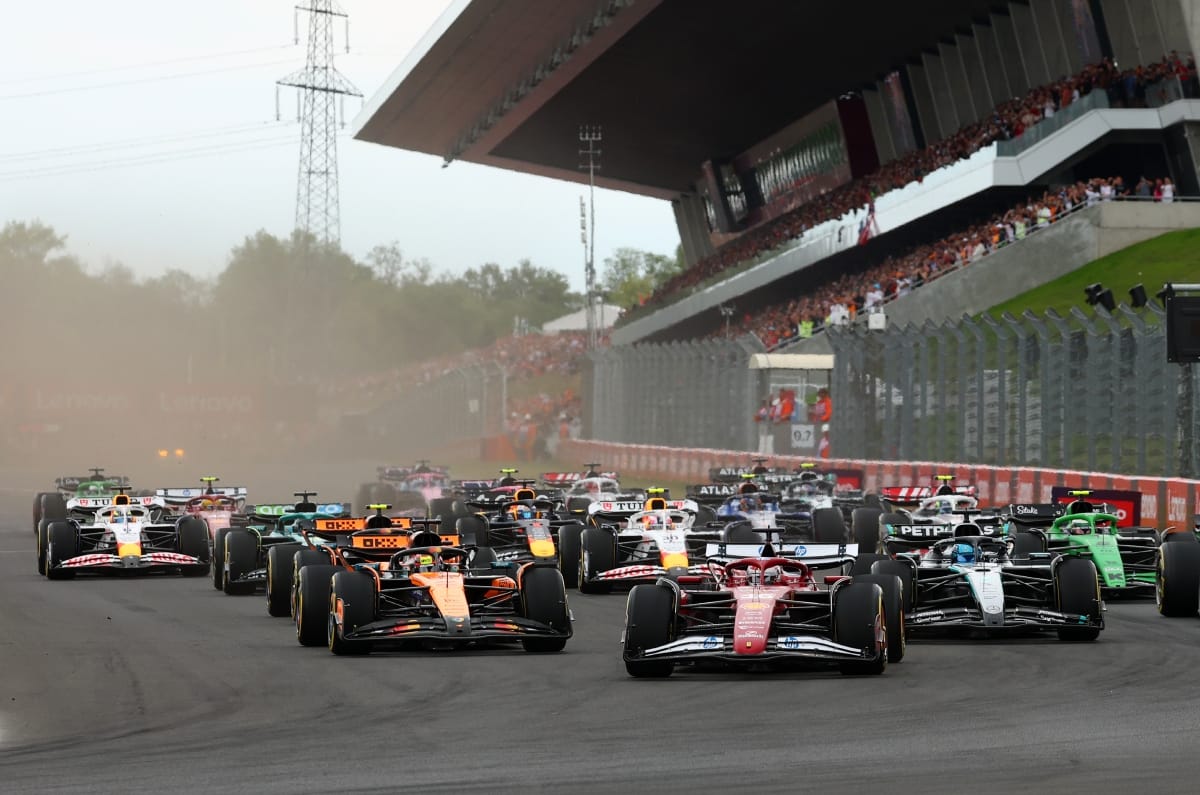
The first half of the 2026 F1 season will wrap up at the Hungarian GP this weekend, with this being the last race before the month-long summer break kicks off. All teams will have to stop working on their cars for two weeks in August as part of F1’s mandatory shutdown before the season resumes once again at Zandvoort on August 23.
There’s plenty more motorsport action in store with F2, Formula E and DTM rounds coming up as well. Here’s our ultimate guide for when and where to tune in from India.
F1 Hungarian GP schedule
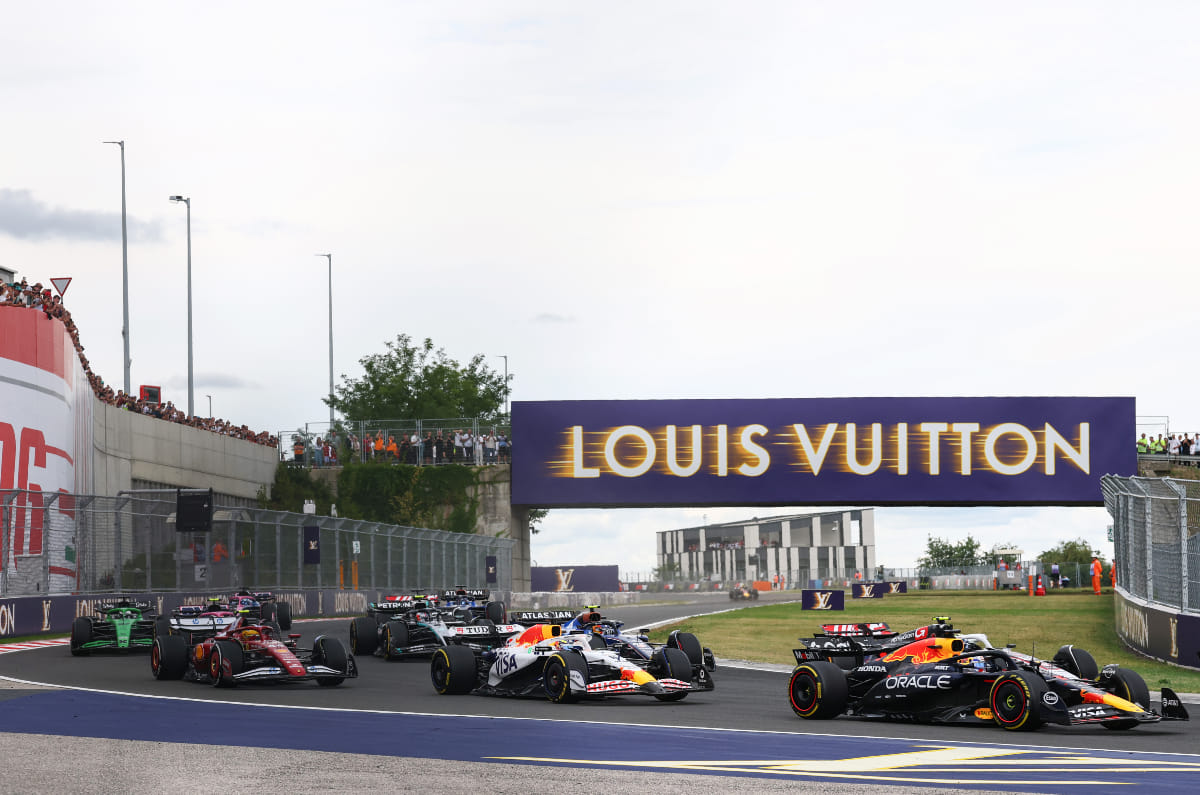
Kimi Antonelli extended his championship lead after winning the Belgian GP. George Russell’s championship bid, however, took a big hit following his retirement. Mercedes later revealed that Russell was struggling with an undiagnosed straight-line speed deficit at Spa. The Hungaroring’s lack of straights should help mitigate this issue a bit, and Russell will be looking for a strong weekend to get his title bid back on track.
Hungaroring is also expected to be a strong track for Ferrari, with the SF-26 proving to be more competitive on less power-sensitive tracks. Aston Martin, meanwhile, is expected to bring some significant updates as it looks to salvage what has been a difficult season so far.
F1 Hungarian GP: Where to watch?
All F1 Hungarian GP sessions will be streamed live on the FanCode and F1 TV apps.
2026 F1 Hungarian GP IST schedule | |||
Date | Day | Session | Time |
July 24 | Friday | FP1 | 5pm |
July 24 | Friday | FP2 | 8:30pm |
July 25 | Saturday | FP3 | 4pm |
July 25 | Saturday | Qualifying | 7:30pm |
July 26 | Sunday | Race | 6:30pm |
F2 Hungarian GP schedule
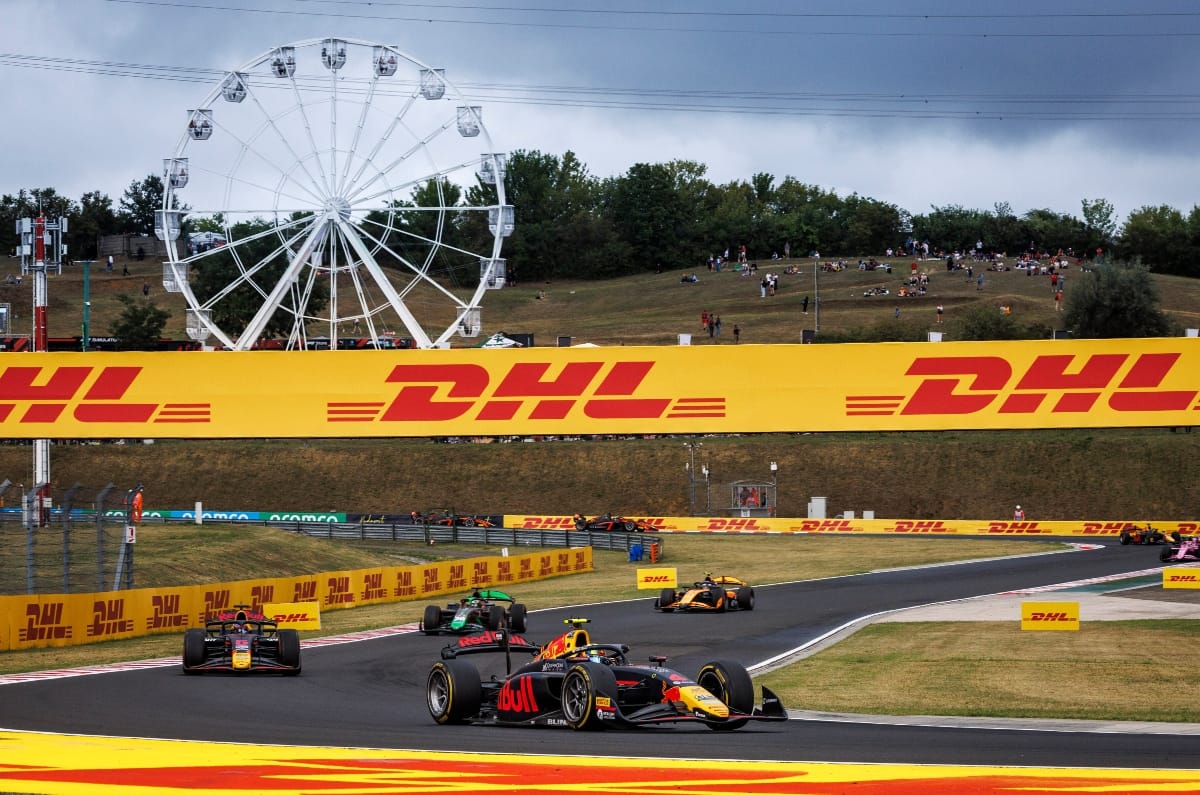
Nikola Tsolov has extended his F2 championship lead to 27 points from Gabriele Mini. However, the season has delivered plenty of twists and turns so far, so the Campos Racing driver will be looking to further consolidate that advantage before the summer break.
India’s Kush Maini still holds on to sixth place overall, tied with Dino Beganovic and six points behind Noel Leon.
F2 Hungarian GP: Where to watch?
All F2 Hungarian GP sessions will be streamed live on the FanCode and F1 TV apps.
2026 F2 Hungarian GP IST schedule | |||
Date | Day | Session | Time |
July 24 | Friday | Practice | 2:35pm |
July 24 | Friday | Qualifying | 7:25pm |
July 25 | Saturday | Sprint Race | 5:45pm |
July 26 | Sunday | Feature Race | 2:55pm |
Formula E Tokyo E Prix schedule
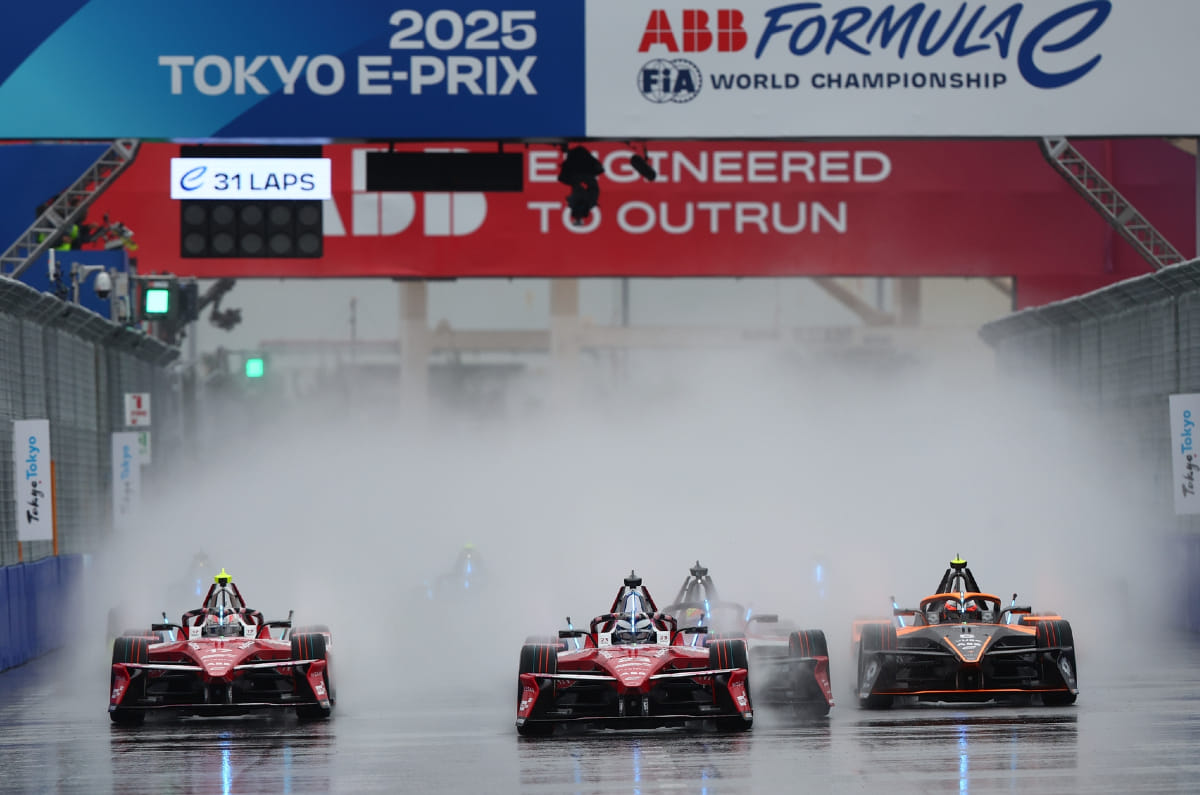
Formula E has been racing at Tokyo since 2024. However, the races will have a new look this year as they will be hosted at night for the very first time.
With just four more races to go, Porsche’s Pascal Wehrlein currently holds the overall lead, 9 points ahead of Jaguar’s Mitch Evans and 27 points clear of Nissan’s Oliver Rowland. Jaguar holds the advantage in the team’s championship, but Porsche is just six points behind. So the Tokyo double-header could very well shake up the order. India’s Mahindra Racing, meanwhile, is P4 overall, just two points behind Andretti.
Formula E Tokyo E Prix: Where to watch?
Qualifying and races will be streamed live on Sony Liv as well as Sony Sports Ten 5.
2026 Formula E Tokyo E Prix IST schedule | |||
Date | Day | Session | Time |
July 24 | Friday | FP1 | 3:30pm |
July 25 | Saturday | FP2 | 10am |
July 25 | Saturday | Qualifying 1 | 12:10pm |
July 25 | Saturday | Race 1 | 4:35pm |
July 26 | Sunday | FP3 | 10am |
July 26 | Sunday | Qualifying 2 | 12:10pm |
July 26 | Sunday | Race 2 | 4:35pm |
DTM Oschersleben IST schedule
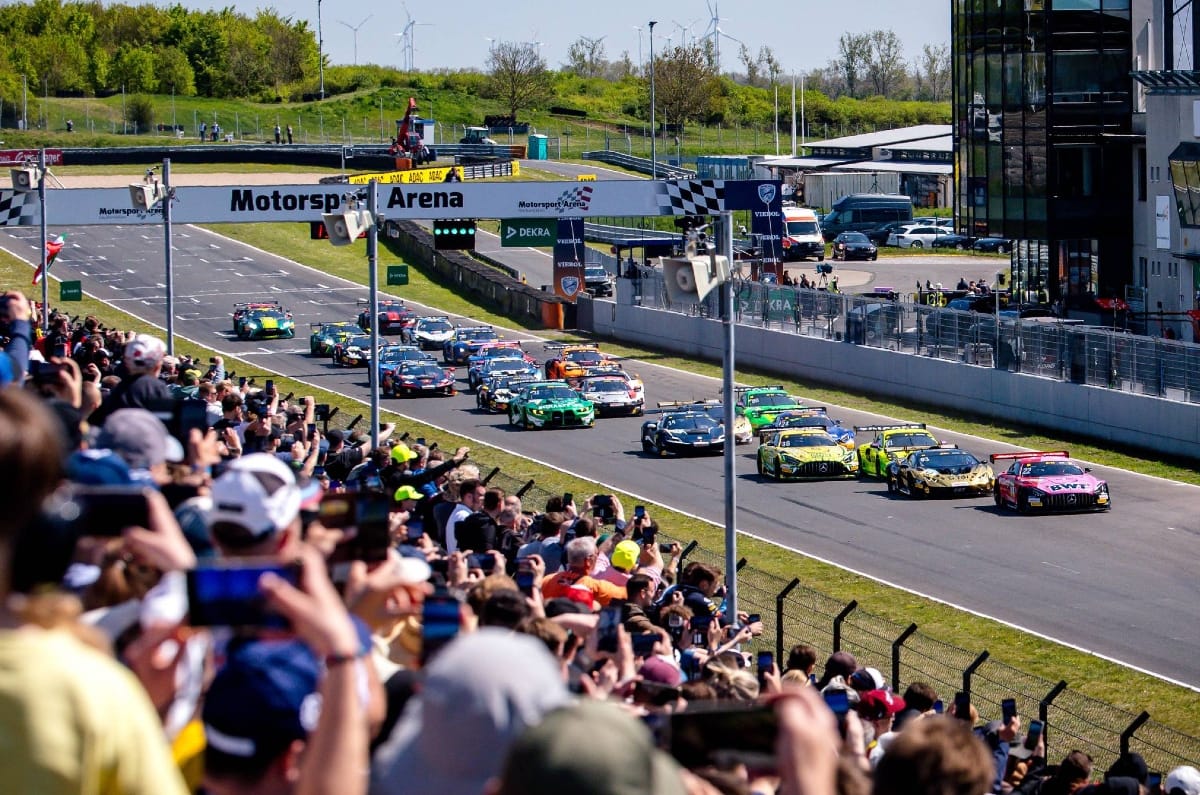
India’s Arjun Maini made his first DTM podium appearance of the year at Norisring. This also marked his very first podium with the HRT Ford Racing Team. He’s now moved up to seventh place in the standings, two points behind Ben Dorr and three points behind Marco Wittmann.
Nicki Thiim holds the overall lead, ahead of Maro Engel and Lucas Auer.
DTM Oschersleben: Where to watch?
All DTM Oschersleben sessions will be streamed live on the FanCode app.
2026 DTM Oschersleben IST schedule | |||
Date | Day | Session | Time |
July 24 | Friday | FP1 | 2:30pm |
July 24 | Friday | FP2 | 7:05pm |
July 25 | Saturday | Qualifying 1 | 1:15pm |
July 25 | Saturday | Race 1 | 5pm |
July 26 | Sunday | Qualifying 2 | 12:55pm |
July 26 | Sunday | Race 2 | 5pm |

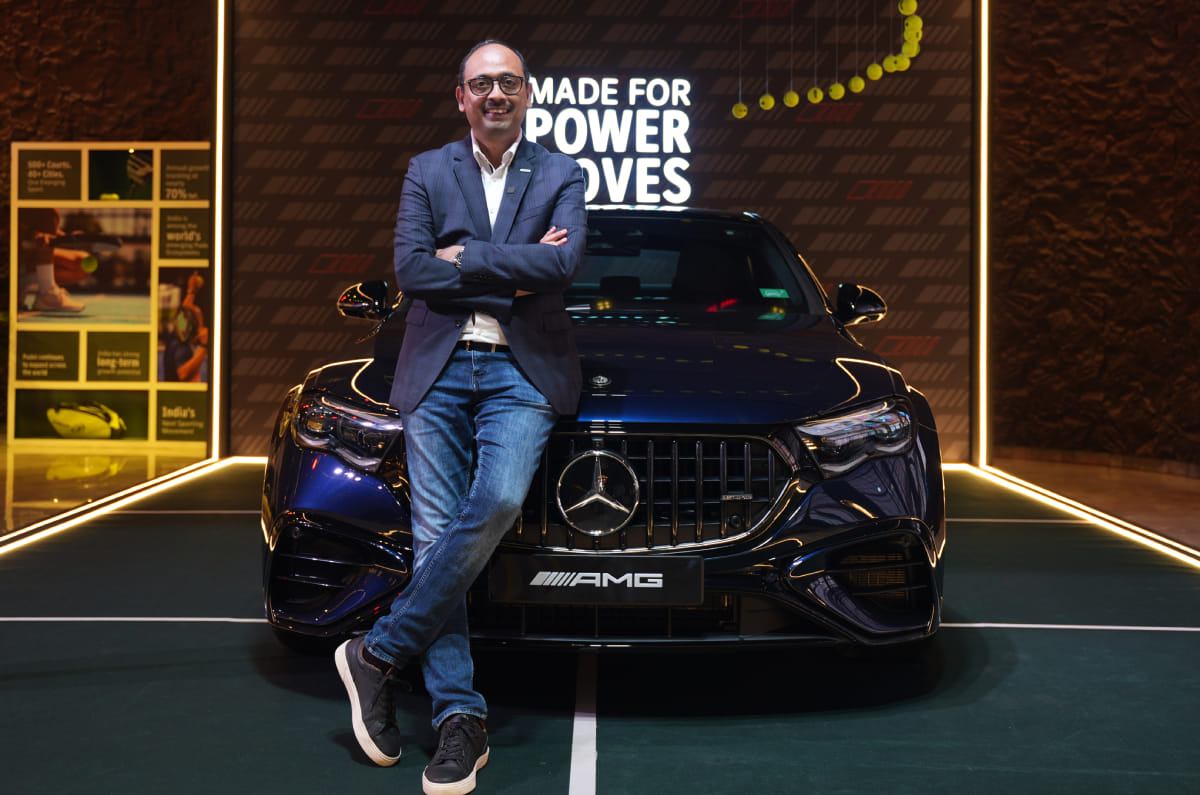
Mercedes-Benz India has said every car it has sold in the country since January 2026 is compatible with E25 ethanol-blended petrol, making it one of the first luxury carmakers in India to prepare its portfolio ahead of any mandate for higher ethanol blends.
The announcement comes months after India completed the nationwide rollout of E20 petrol. More recently, the Bureau of Indian Standards (BIS) notified technical standards for higher ethanol blends, including E22, E25, E27 and E30, signalling the government’s efforts to prepare the regulatory framework for fuels beyond E20.
- Mercedes cars in India have been E20-compatible since 2020
- Announcement made at the launch of the AMG E 53 plug-in hybrid
- Company to go ahead with a multi-powertrain strategy in India
Mercedes-Benz prepared line-up ahead of future ethanol norms
Speaking at the launch of the Mercedes-AMG E 53, Mercedes-Benz India Managing Director and CEO Santosh Iyer said the company upgraded its India portfolio in anticipation of future fuel regulations. Explaining the decision, Iyer said Mercedes-Benz wanted to prepare its products ahead of any future regulation. “The Mercedes customers expect that we will learn the legislation and upcoming trends. There are a lot of discussions on E25. It may not happen, but we want to offer cars which are compliant,” he said.
According to Iyer, Mercedes-Benz adopted E25 compatibility to future-proof its products as discussions continue around increasing ethanol blending beyond E20. He added that the company had similarly made its India line-up E20-compatible from 2020, around three years before the fuel became mandatory.
Announcement follows recent E20 fuel quality concerns
The announcement comes weeks after Mercedes-Benz highlighted concerns over fuel adulteration, rather than the E20 blend itself. The company had said inconsistent fuel quality could affect vehicle performance and called for stricter quality control as higher ethanol blends are introduced.
Mercedes-Benz to continue offering multiple powertrains
Mercedes-Benz said it will continue offering a mix of internal combustion engine, battery electric and plug-in hybrid models in India instead of focusing on a single powertrain technology. “Our job and responsibility is to offer good options across the spectrum, including gasoline with an E25,” he said.
The AMG E 53 launched alongside the announcement is the brand’s second plug-in hybrid model in India after the recently introduced S-Class Plug-in Hybrid, and the first electrified AMG E-Class in the country. Mercedes-Benz says customer demand in India continues to be spread across conventional ICE models and electrified vehicles, supporting its multi-powertrain strategy.

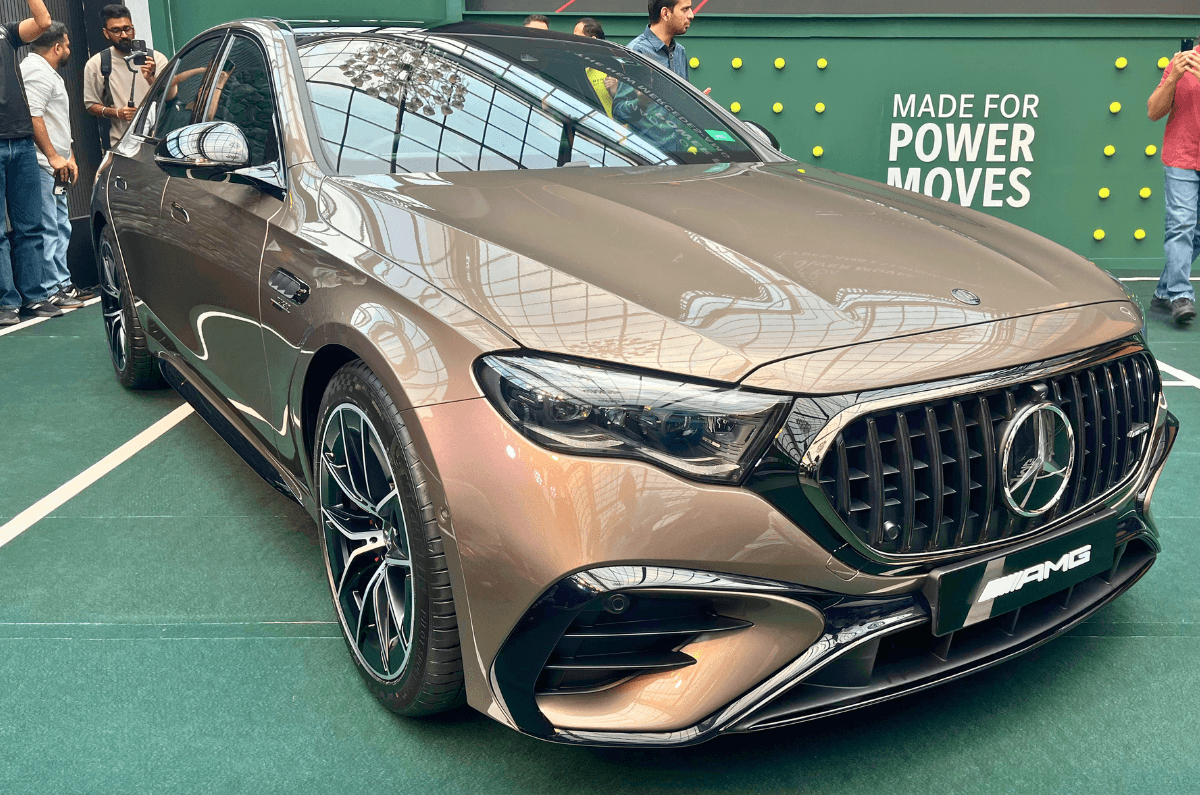
Mercedes-Benz has launched the 2026 AMG E 53 Performance Edition in India at Rs 1.45 crore, ex-showroom. It has also introduced the AMG E 53 Racing Edition, priced at Rs 1.48 crore. The AMG version of the Mercedes E-Class gets a more powerful plug-in hybrid powertrain, performance-focused mechanical upgrades, and sportier styling than the standard sedan. The Mercedes AMG E 53 faces competition from models like the Porsche Panamera and the BMW M5.

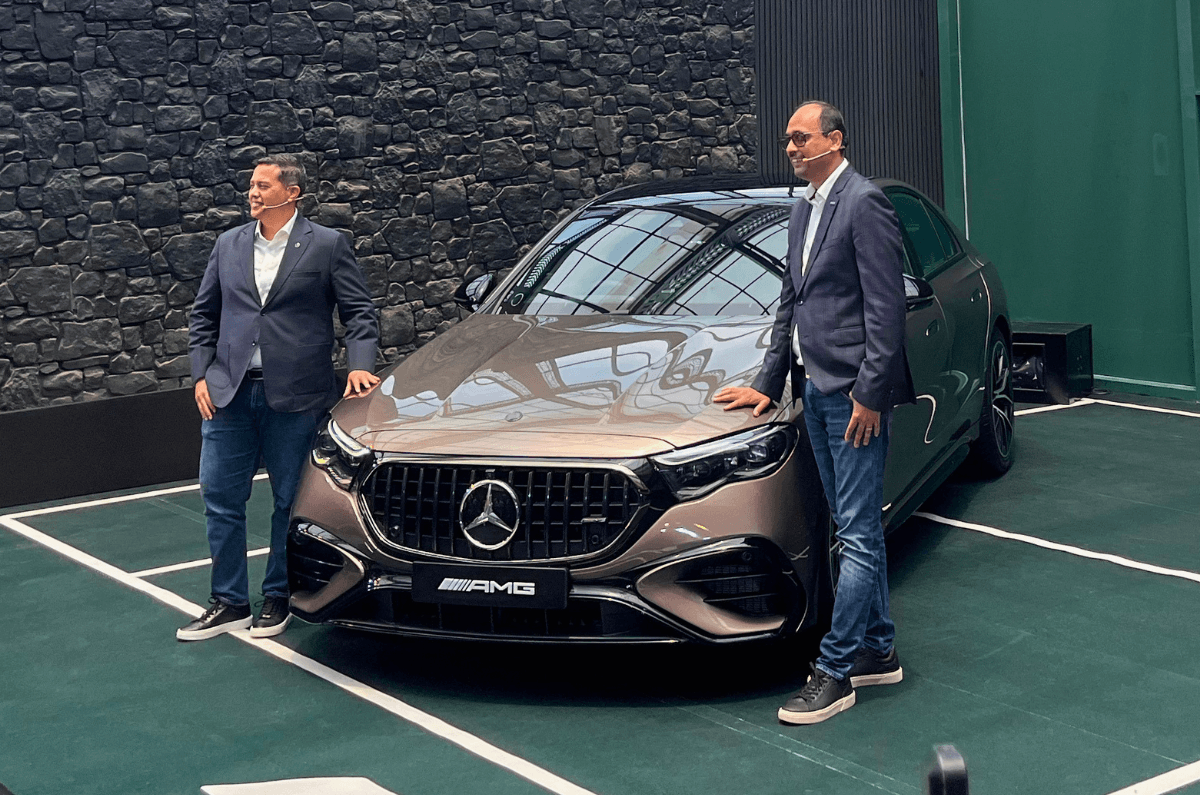
Mercedes-Benz has launched the 2026 AMG E 53 Performance Edition at Rs 1.45 crore, ex-showroom, in India. The carmaker has also introduced the AMG E 53 Racing Edition, priced at Rs 1.48 crore. The performance-focused AMG version of the E-Class was globally revealed in 2024, and it packs both powertrain and mechanical upgrades, along with design tweaks, over the standard sedan.
2026 Mercedes-AMG E 53 powertrain
The AMG E 53 has a 3-litre in-line six turbo-petrol engine mated to a 9-speed automatic gearbox, which sends drive to all four wheels via the brand’s 4Matic+ AWD system. Being a plug-in hybrid, it also gets an electric motor paired with a battery pack (21.2kWh usable capacity). Together, this setup produces 585hp and 750Nm, and the 0-100kph sprint is done in 4 seconds. Top speed is rated at 250kph. The E 53 Racing Edition comes with AMG Driver’s Package as standard, which increases the maximum speed to 280kph.
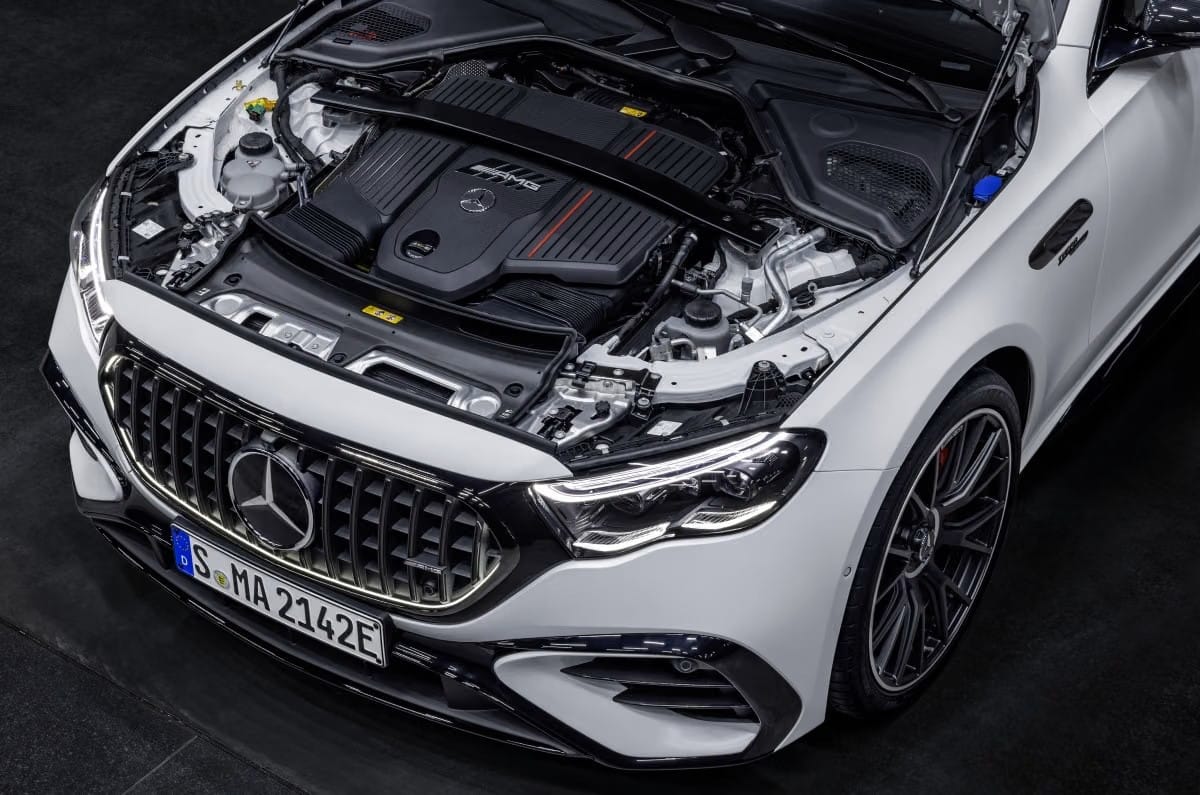
Speaking of charging, the 400V lithium-ion battery takes 20 minutes for a 10-80 percent top-up with a 60kW DC unit. Meanwhile, a 0-100 percent charge takes 2.25 hours with an 11kW AC unit. Mercedes claims an electric-only range of 100km.
Mechanical upgrades over the standard E-Class include an electronic rear limited-slip differential, a high-performance braking system, air suspension and rear-axle steering.
2026 Mercedes-AMG E 53 exterior highlights
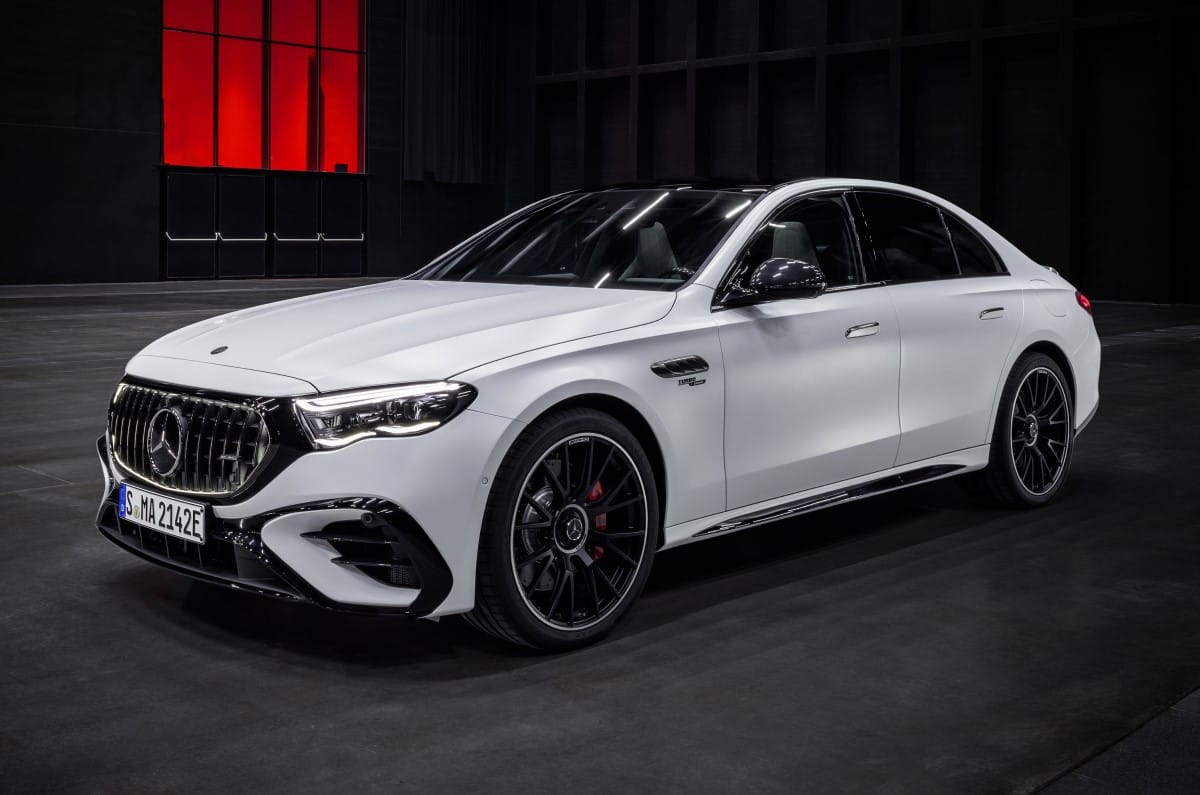
The Mercedes-AMG E 53 gets several design changes that set it apart from the standard E-Class. At the front, it features an AMG-specific grille with vertical slats, a redesigned bumper with larger air intakes, and front fenders widened by 11mm on each side to accommodate the wider front track.
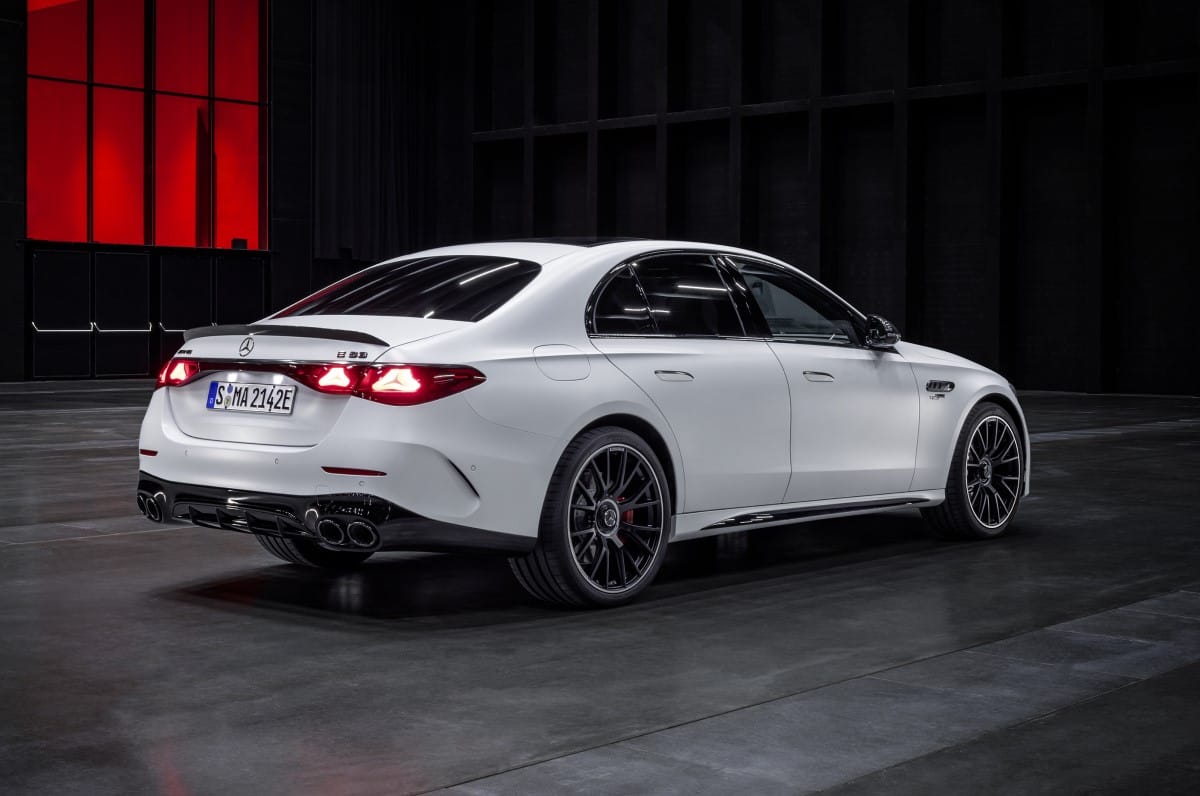
In profile, the E 53 gets flush-fitting door handles, AMG-specific side skirts, and sporty 20-inch alloy wheels, behind which are red-coloured brake callipers. At the rear, it features a boot-lid spoiler, and a rear bumper with a diffuser and quad round exhaust tips.
2026 Mercedes-AMG E 53 interior features
Inside, the AMG E 53 features a 12.3-inch digital driver’s display and a 14.4-inch touchscreen. Other features include a Burmester sound system, a panoramic sunroof, ambient lights, a wireless charger, wireless Android Auto and Apple CarPlay, drive modes, a 360-degree camera setup, multiple airbags and more.