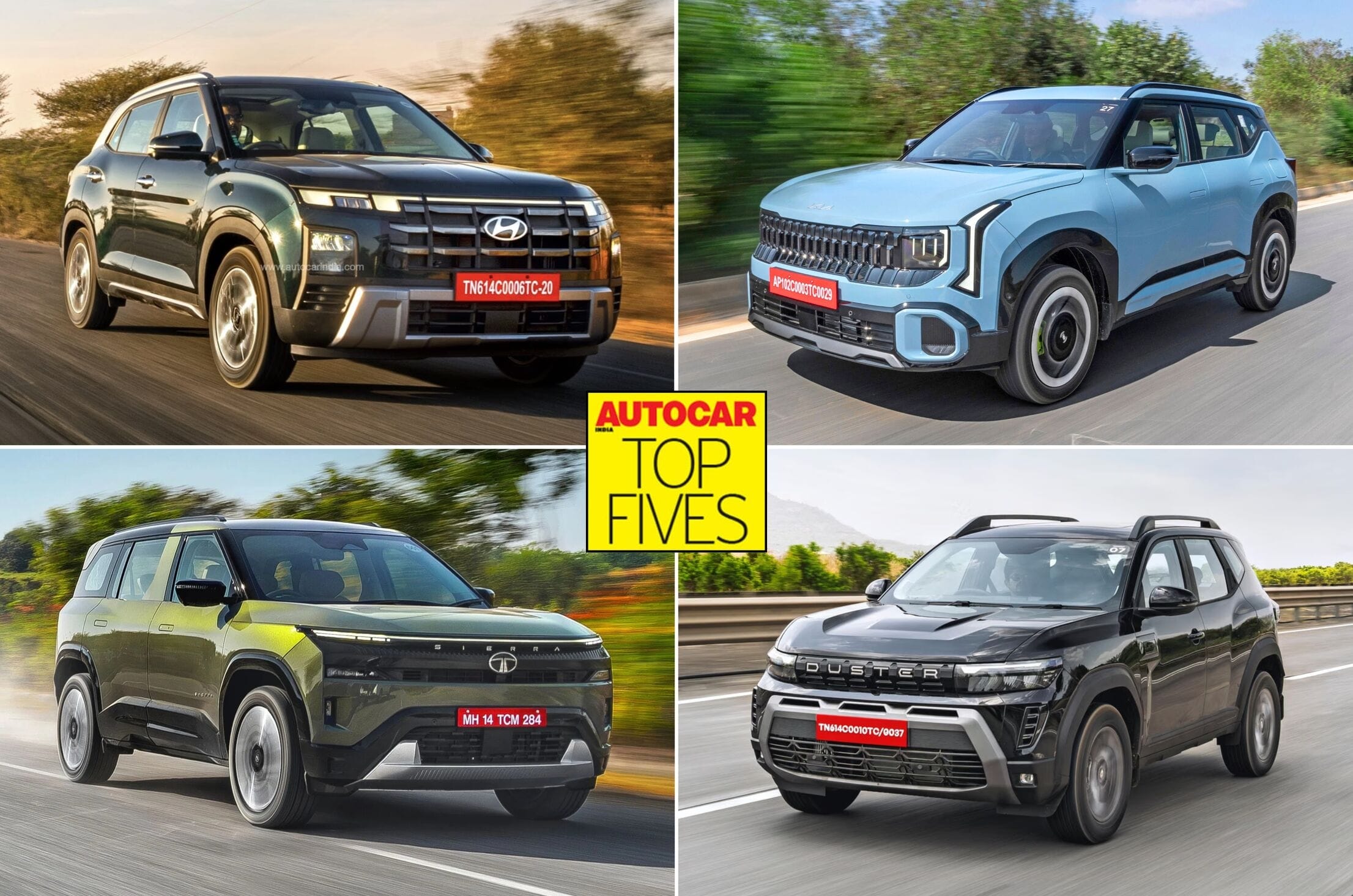
Top five midsize SUVs ranked

Best midsize SUVs

If you are in the market for a new midsize SUV, you are quite spoilt for choice. There are as many as 13 models to choose from, spanning every powertrain, including petrol, diesel, CNG, strong-hybrid and electric. With so many options, it may be quite daunting to choose the right model. To make it easier for you, we have compiled the five best midsize SUVs currently available in the market, focusing only on the ICE-powered models. 

1. Kia Seltos 

Price: Rs 10.99 lakh-21.82 lakh
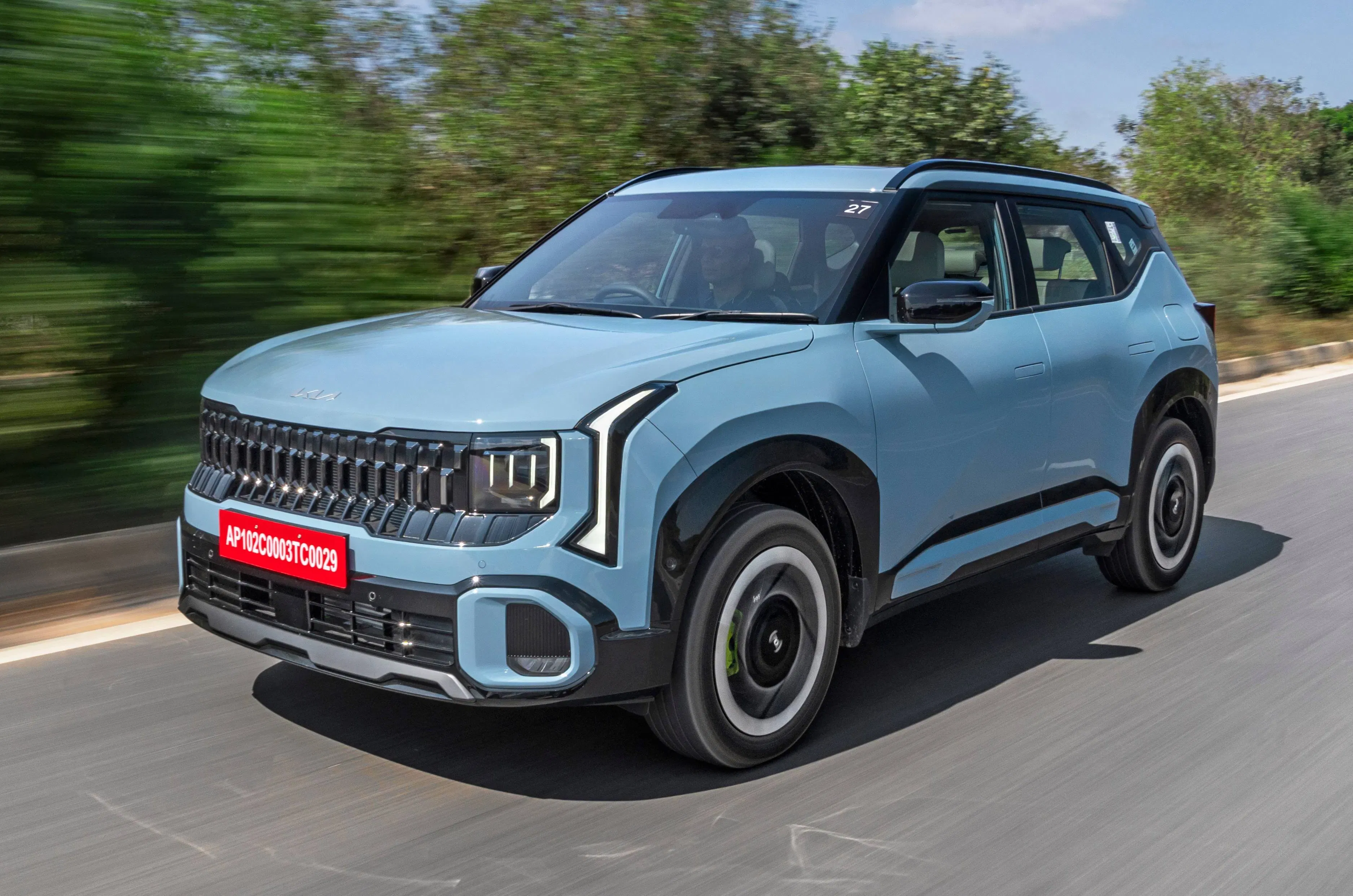
The midsize SUV segment has a new all-rounder in the Seltos. It’s got a wide range of engines, including a 115hp, 1.5-litre naturally aspirated petrol, a 160hp, 1.5-litre turbo-petrol and a 116hp, 1.5-litre diesel; gearbox options are just as diverse. The Seltos also has the most premium and inviting interior. Not only is it refined, efficient and spacious, but it also has class-leading tech and UI/UX. The only downside is that there’s a hint of firmness in the suspension setup, but it’s not a dealbreaker. It is, however, quite expensive at the top end. 

2. Hyundai Creta

Price: Rs 10.91 lakh-19.95 lakh  
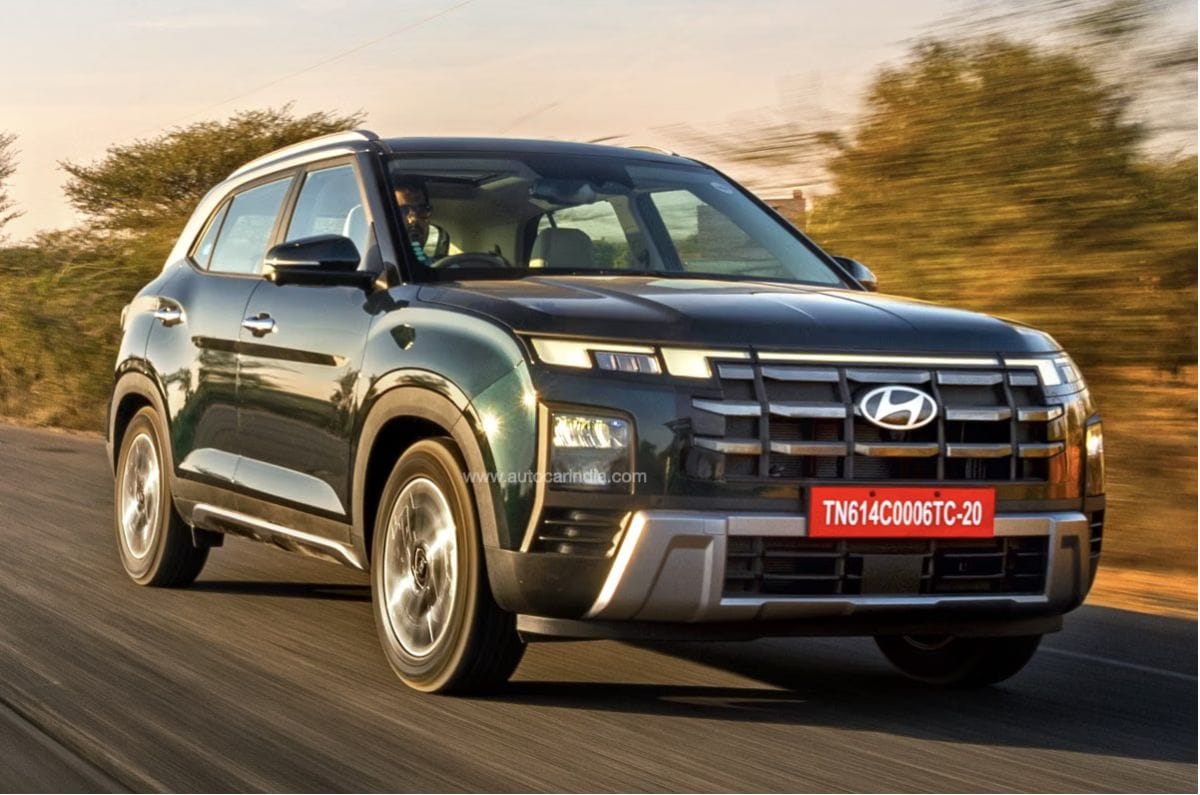
Despite its age, the Creta remains a competitive offering in the company of its newer rivals. It’s slightly smaller and less spacious than the Seltos because the latter has moved on to a new-generation platform, but it offers the same mix of powertrain options, a comfortable driving and riding experience and a feature-loaded cabin. Hyundai’s after-sales service experience is quite satisfactory, and there’s also the N Line version with a slightly sportier setup for the more enthusiastic buyer. 

3. Maruti Victoris 

Price: Rs 10.49 lakh-19.99 lakh
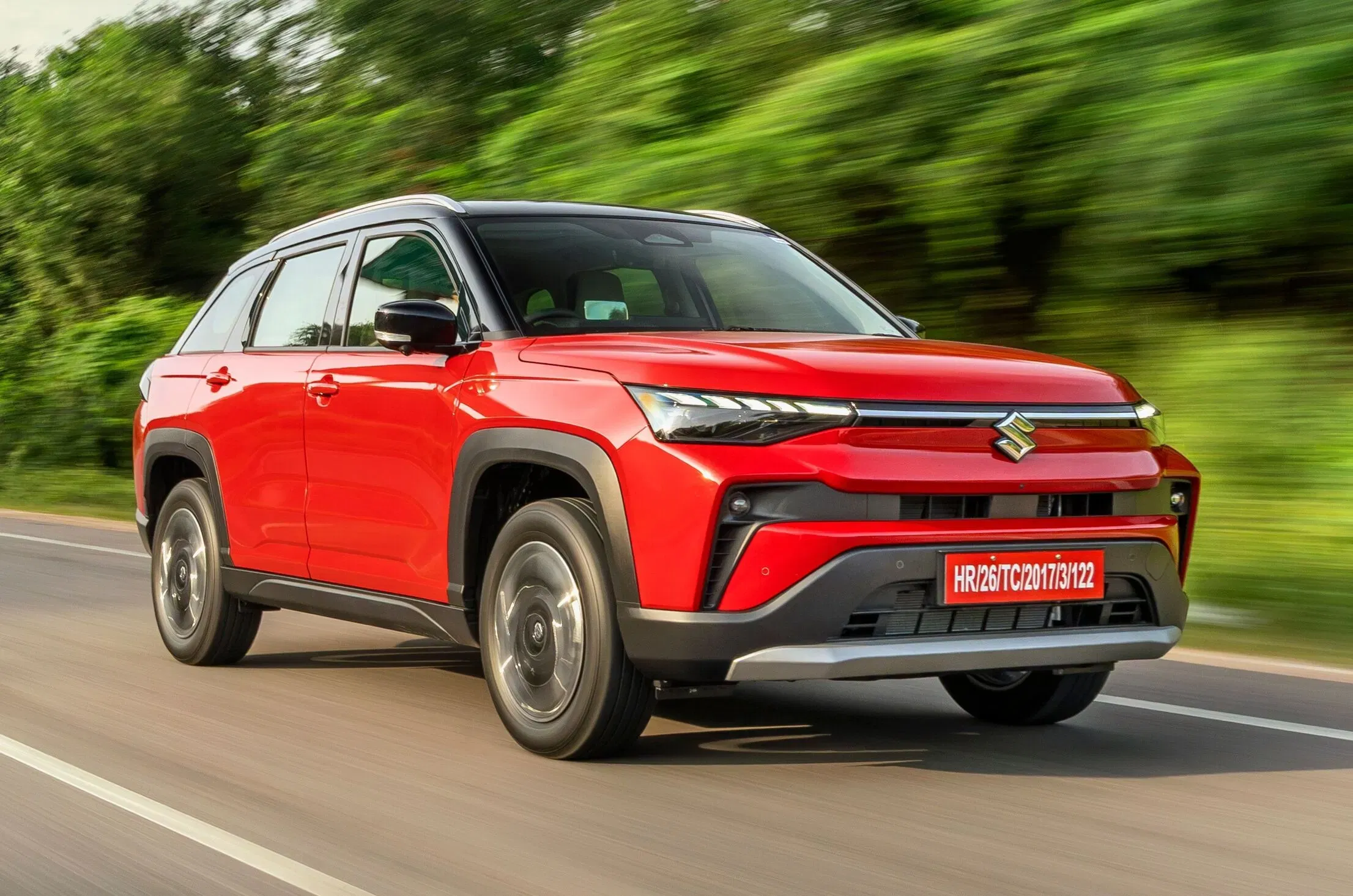
If running costs, reliability and ease of ownership are priorities, the Victoris (or the Grand Vitara and Hyryder) remains unmatched. Between the three, the Victoris is the newest and also packs some additional features. The trio has the segment’s only strong-hybrid powertrain with the 116hp, 1.5-litre strong-hybrid unit and also the option of AWD with the 1.5-litre naturally aspirated petrol engine. The Victoris rides and handles well, too, although performance isn’t particularly exciting, and rear-seat space isn’t as good as that of its rivals. There’s also the option of CNG should you want affordable running costs. 

4. Tata Sierra

Price: Rs 11.49 lakh-21.29 lakh
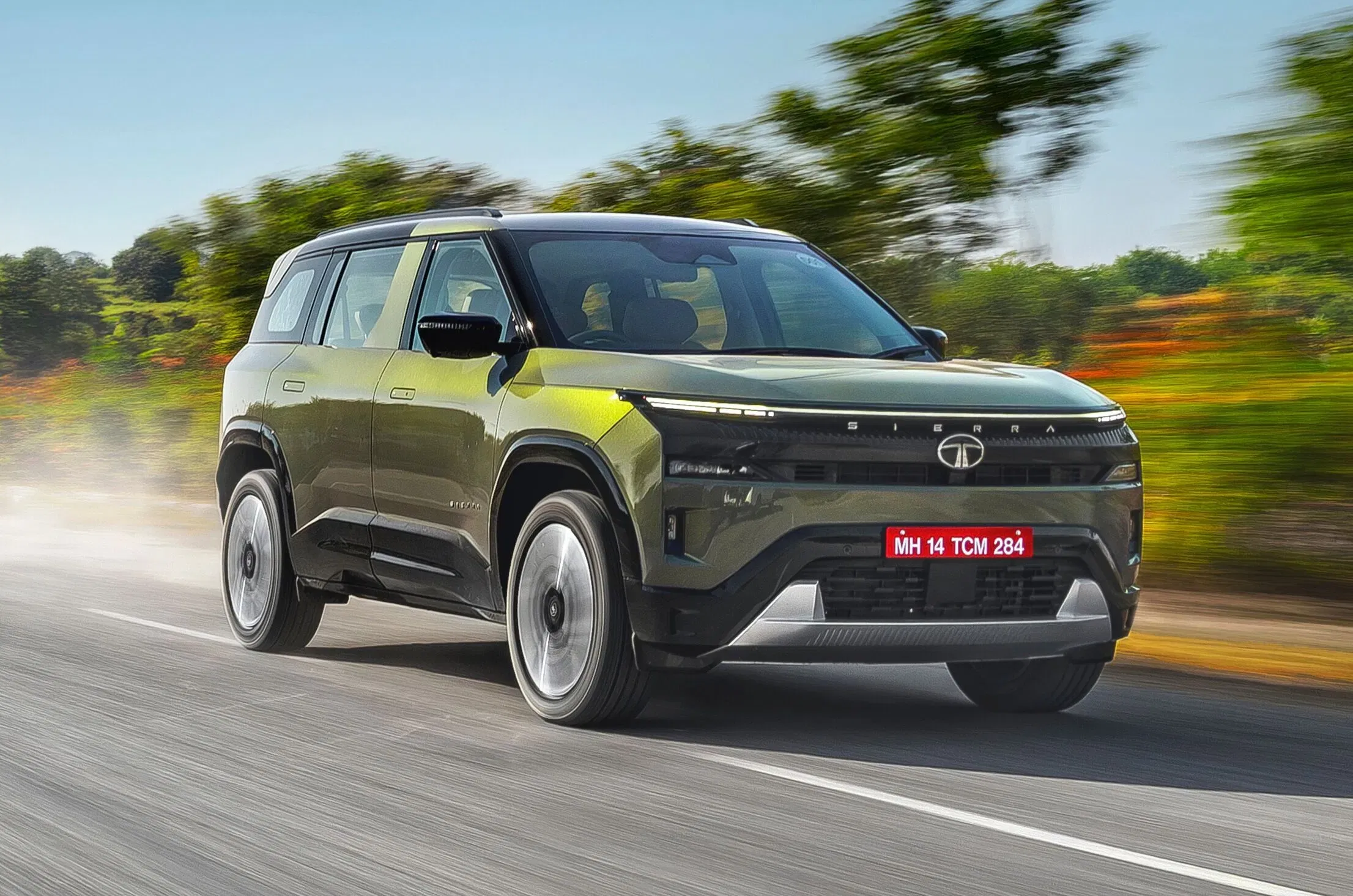
The Sierra is the roomiest and most feature-loaded SUV in the midsize segment, uniquely even offering a third screen for the front passenger. Good ride and handling are also among its strengths. The 160hp, 1.5-litre turbo-petrol engine is the pick of the range, as the 118hp, 1.5-litre diesel and 106hp, 1.5-litre naturally aspirated petrol engines aren’t good on refinement and performance. It’s also on the more expensive side, and reliability and service experience are deterrents, too. 

5. Renault Duster 

Price: Rs 10.49 lakh-18.69 lakh
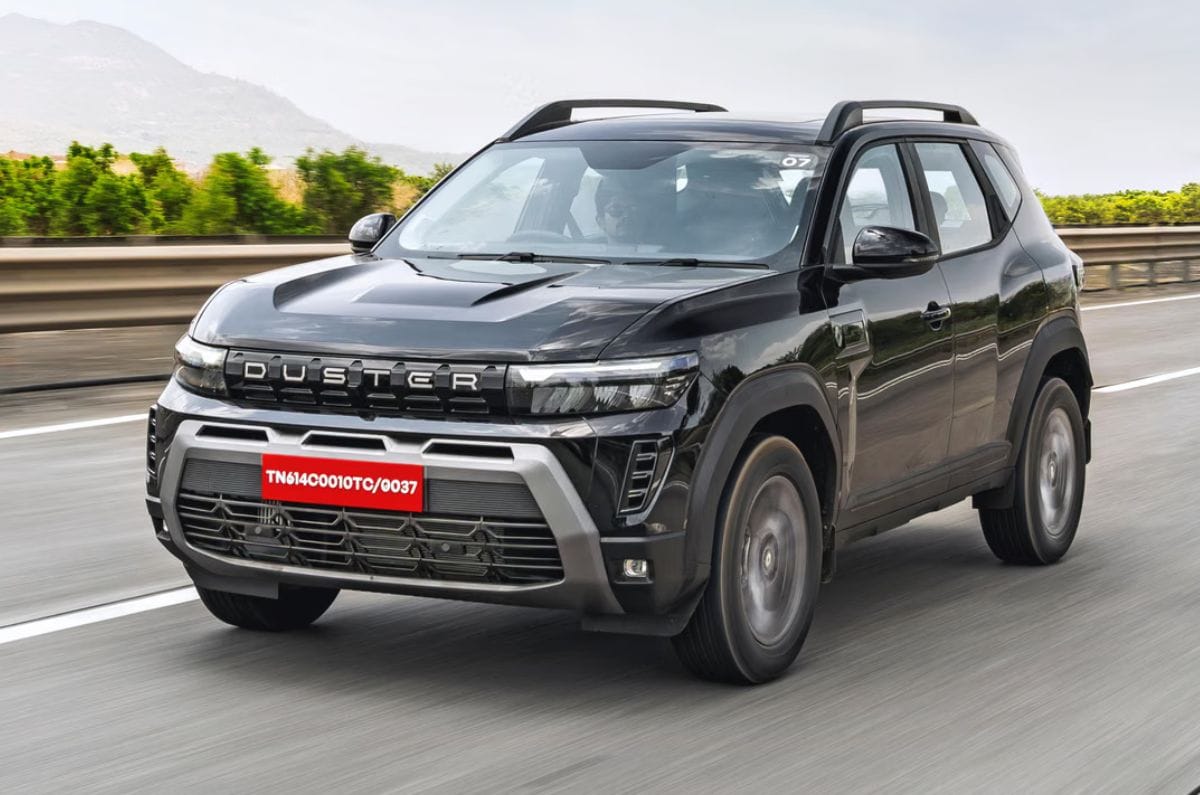
The Duster has a tough and rugged appeal, fantastic ride quality and a well-appointed interior. It offers good value for money, too, but is not as spacious as its rivals. Also, both its 100hp, 1.0-litre turbo-petrol and 163hp, 1.3-litre turbo-petrol engines suffer from turbo-lag, although performance is otherwise quite potent. A big miss is the option of an auto gearbox with the base petrol engine. Some may even miss a diesel engine and optional all-wheel-drive system offered with the original Duster. 

Renault Duster 1.3L turbo MT vs DCT: Performance compared

Renault Duster 1.3L turbo MT vs DCT: Real world performance comparison

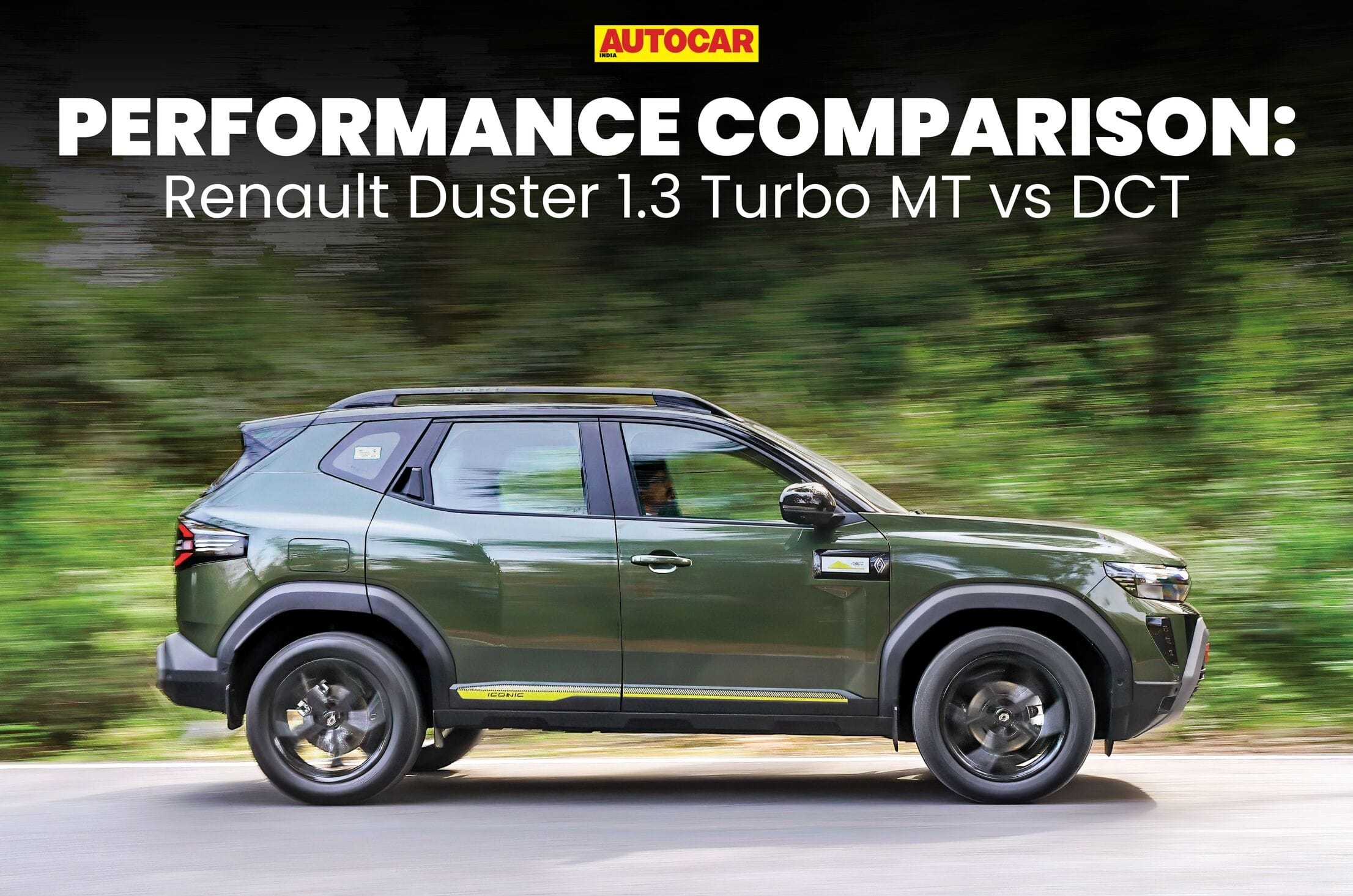
The Renault Duster was one of the first midsize SUVs in India, which was relaunched in 2026 after being absent from the Indian automotive space since 2022. With the new-generation model, Renault has equipped the Duster with not only a fresh design and more modern-day amenities, but also two turbo-petrol engine options. Among these, the larger 1.3-litre turbo-petrol mill is offered with both manual and DCT choices. But which one offers better real-world performance? Let us find out.

Renault Duster 1.3L turbo MT vs DCT: Specifications and price

The MT’s lower weight helps it with higher power- and torque-to-weight ratios

Renault Duster 1.3L turbo-petrol MT vs DCT: Specifications and price


Duster 1.3TP MT

Duster 1.3TP DCT

Engine

4-cyl, turbo-petrol

4-cyl, turbo-petrol

Displacement (cc)

1333

1333

Power (hp)

163

163

Torque (Nm)

280

280

Gearbox

6-speed MT

6-speed DCT

Kerb weight

1372

1393

Power-to-weight*

118.80

117.01

Torque-to-weight^

204.08

201

Price range (Rs, lakh)

12.99-17.19

14.49-18.49

*Power-to-weight figures are hp per tonne

^Torque-to-weight figures are Nm per tonne

The Renault Duster’s 1.3-litre turbo-petrol engine offers the same output (163hp, 280Nm) with the 6-speed manual and the 6-speed dual-clutch transmission (DCT) options. However, as the manual version is 21kg lighter, it has slightly better power-to-weight and torque-to-weight ratios than the DCT version.

The manual transmission variants have lower price tags than the DCT variants. The Duster manual starts at Rs 12.99 lakh, which is Rs 1.5 lakh cheaper than the entry-spec DCT, and goes up to Rs 17.19 lakh, which is Rs 1.30 lakh less than the top-spec DCT.

Renault Duster 1.3L turbo MT vs DCT: 0-100kph acceleration test

The manual option offers quicker acceleration off the line compared to the DCT

Renault Duster 1.3L turbo-petrol MT vs DCT: Acceleration from rest (in seconds)


Duster 1.3TP MT

Duster 1.3TP DCT

20kph

1.15

1.71

40kph

2.42

3.55

60kph

4.61

5.52

80kph

6.65

7.94

100kph

10.32

11.33

120kph

13.86

15.37

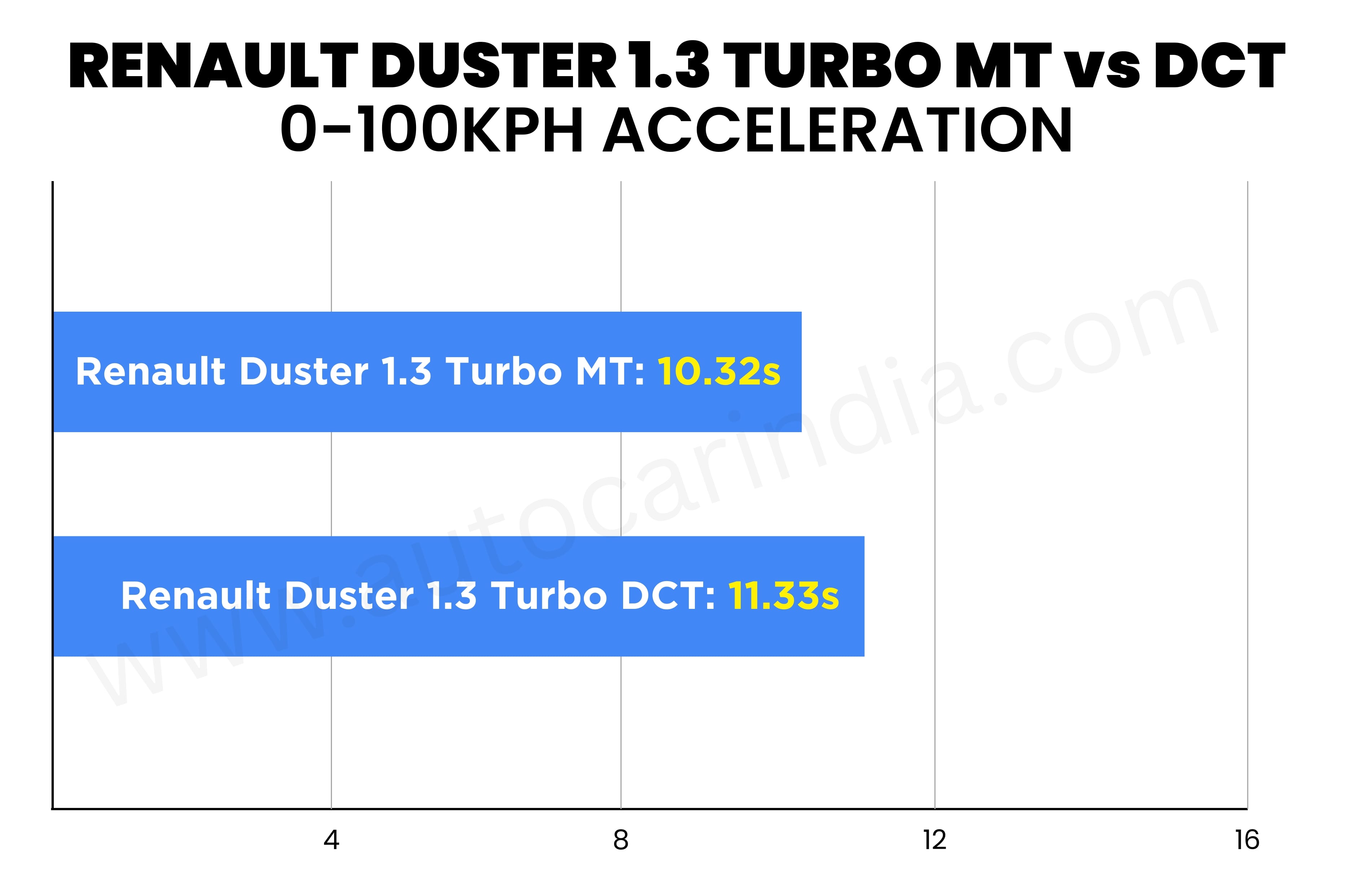
In our 0-100kph tests, we found that the Duster’s turbo-petrol manual version was faster than the DCT at all speeds. The manual version starts strongly, clocking 20kph 0.56 seconds faster, taking the difference to over a second by the time it reaches 40kph. The DCT catches up slightly at 60kph, reducing the difference to 0.91 seconds. However, the MT starts pulling faster again, and by the time it reaches 100kph, it has a 1.01-second lead.

In our experience, the manual feels engaging and rewarding when the engine is in the rev band. The clutch is light, and the shift action is precise too, which increases the powertrain’s likeability among enthusiasts. However, at slow speeds, turbo lag is evident, which, coupled with the tall gearing ratios, leads to a cumbersome city driving experience. It requires an extra downshift for a smoother drive experience.

The DCT’s wet clutch makes it the better option for city driving, as it prioritises smoothness over outright acceleration, feeling similar to a torque converter gearbox. While tall gearing is an issue at low-speed driving here too, the paddle shifters add an extra layer of engagement. 

Renault Duster 1.3L turbo MT vs DCT: Rolling acceleration tests

The DCT version clocked considerably quicker in-gear acceleration times

Renault Duster 1.3L turbo-petrol MT vs DCT: Rolling acceleration (in seconds)


Duster 1.3TP MT

Duster 1.3TP DCT

20-80kph (3rd gear)

10.33

6.07

40-100kph (4th gear)

11.08

7.60

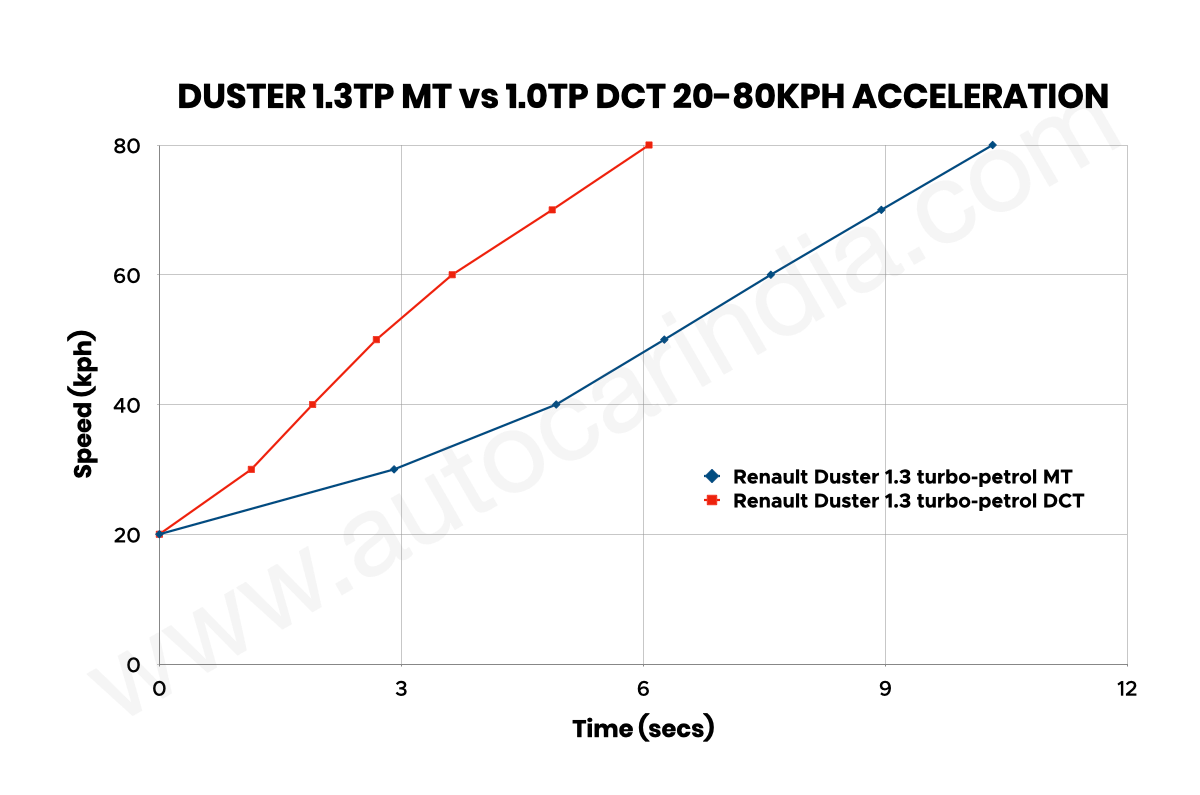
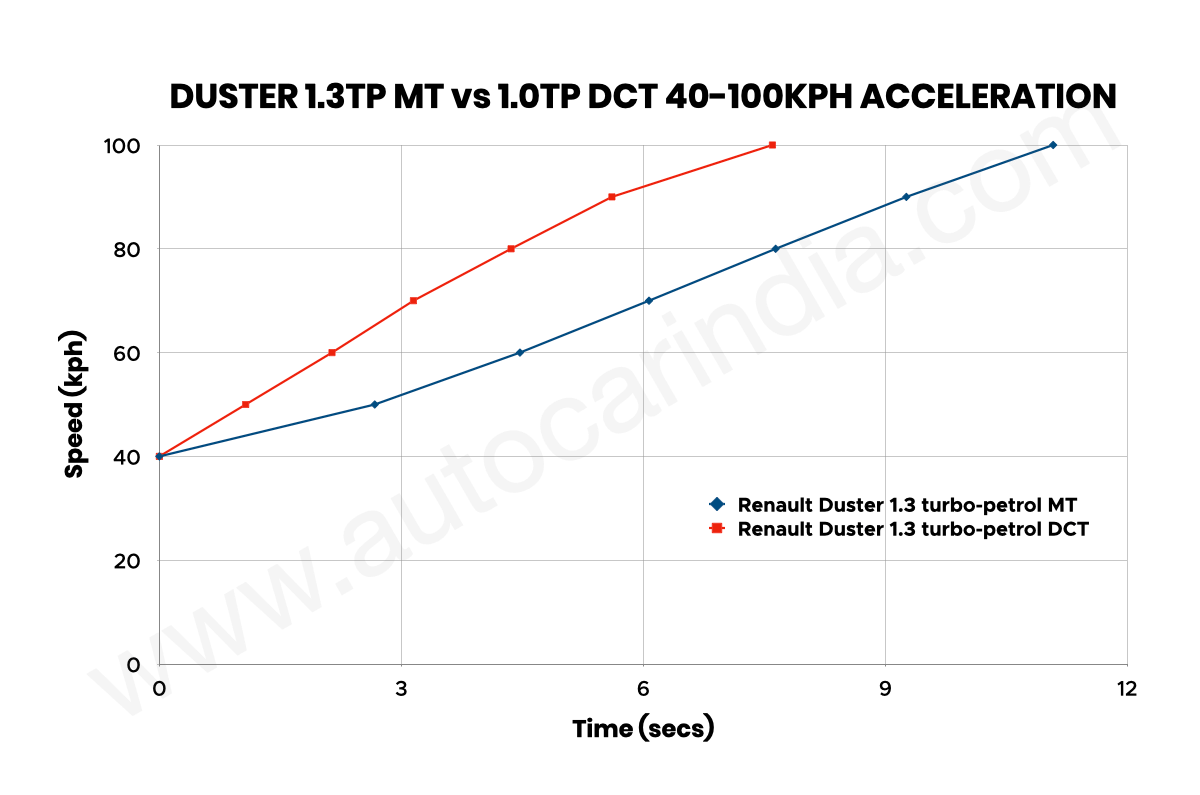
Unlike the outright 0-100kph acceleration times, the DCT version posted quicker in-gear acceleration times. In the third gear, it had a 4.26-second lead in the 20-80kph time, and in fourth gear, it was quicker by 3.48 seconds to record a 40-100kph run. 

Autocar India’s testing standards

Before we conduct our performance tests, we check and maintain tyre pressures based on the manufacturer’s recommendation and ensure the car has a full tank of fuel. The car is then tested in a controlled environment with two people on board, and the data is collected via highly accurate GPS-based timing equipment.

Prices are ex-showroom, India. 

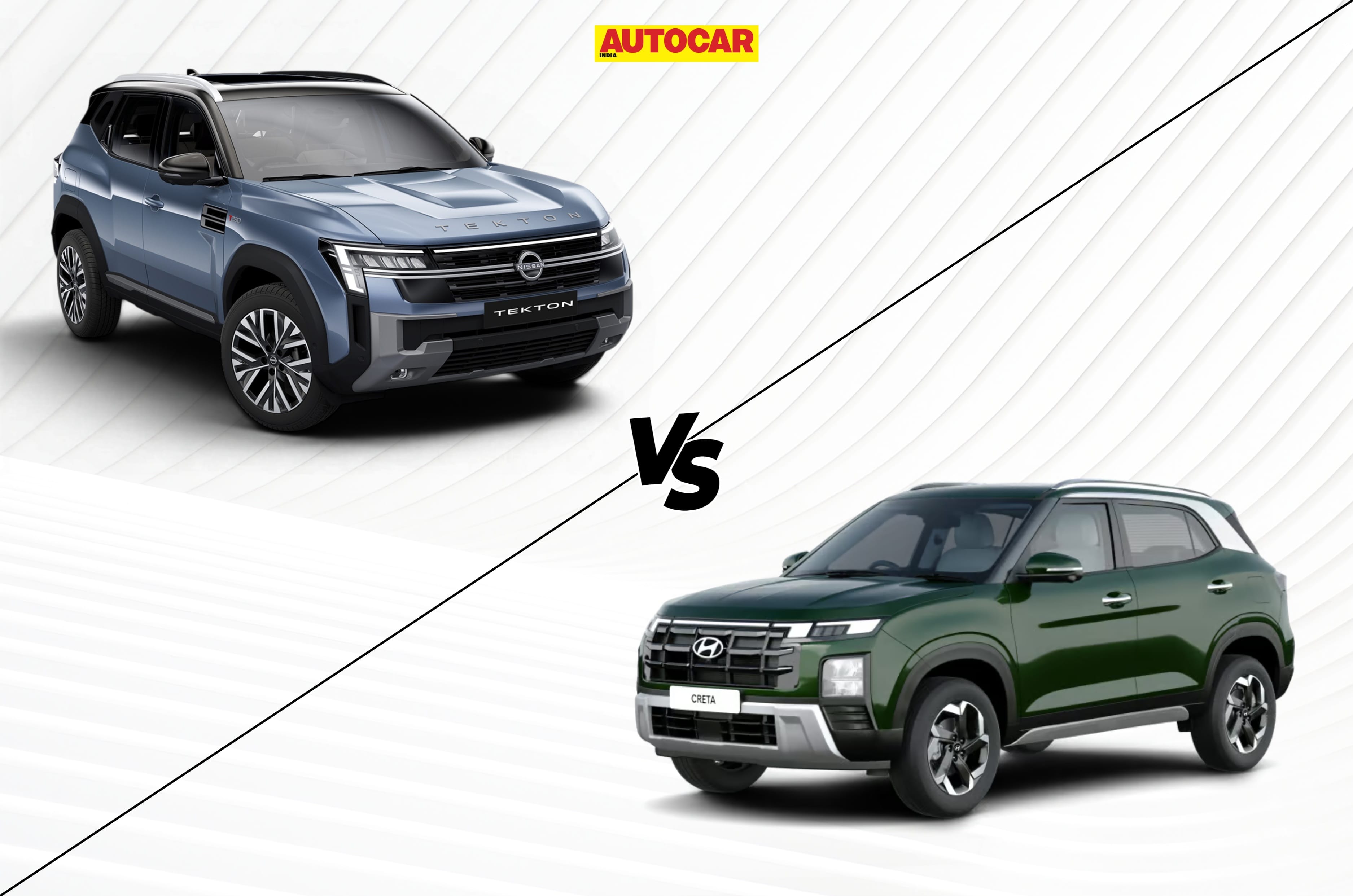
Nissan Tekton vs Hyundai Creta: Whose top trim offers more value?

Nissan Tekton vs Hyundai Creta

The arrival of the Tekton has helped Nissan make a much-needed comeback to the popular mid-size SUV segment. On the other hand, Hyundai has championed this space with the Creta, which continues to lead sales. But which of the two SUVs offers better value when you compare their top-spec versions on paper? We find out. For this comparison, we’ve chosen the Tekna+ and King trims of the Tekton and Creta, respectively.

Explore full specs, features, and a price breakdown in our Tekton vs Creta comparison.

Nissan Tekton vs Hyundai Creta: Dimensions

Tekton’s dimensions are higher than those of the Creta’s

Nissan Tekton vs  Duster: Dimensions 


Nissan Tekton

Hyundai Creta

Difference

Length (mm)

4,349

4,330

+19

Width (mm)

1,815

1,790

+25

Height (mm)

1,674

1,635

+39

Wheelbase (mm)

2,657

2,610

+47

Ground clearance (mm)

212

190

+22

Boot space (litres)

518

433

+85

As far as dimensions are concerned, the Tekton is the larger vehicle overall. It is 19mm longer, 25mm wider, and has a 47mm bigger wheelbase. Additionally, it rides 22mm higher off the ground, and its 518-litre boot is the largest in the segment.

Nissan Tekton vs Hyundai Creta: Engine specifications 

Tekton solely powered by turbo-petrol, while Creta gets diesel and NA petrol engines

Nissan Tekton vs Hyundai Creta: Engine specifications 


Nissan Tekton 

Hyundai Creta

Engine options

Turbo-petrol

Naturally aspirated petrol | Turbo-petrol | Diesel

Displacement 

1.0-litre | 1.3-litre 

1.5-litre | 1.5-litre | 1.5-litre

No. of cylinders

3 | 4

4 | 4 | 4

Power (hp)

100 | 163

115 | 160 | 116

Torque (Nm)

166 | 280

144 | 253 | 250

Gearbox 

6MT | 6DCT

6MT/CVT | 7DCT | 6MT/6AT

In top-spec guise, the Tekton is offered with two turbo-petrol engines, whereas the Creta has a diverse powertrain lineup comprising naturally aspirated petrol, turbo-petrol and diesel engines. The same is the case for gearbox options, as the Creta offers different automatic transmissions depending on the engine chosen. The Nissan Tekton’s 1.0-litre and 1.3-litre turbo-petrol units are the least and most powerful engines here, respectively.  

Nissan Tekton vs Hyundai Creta: Exterior features 

Only the Tekton comes with fog lamps

Nissan Tekton vs Hyundai Creta: Exterior


Nissan Tekton

Hyundai Creta

Headlights

Auto LED

Auto LED

Taillights

Connected LED

Connected LED

DRLs

Connected LED

Connected LED

Front fog lamps

LED

No

Rear fog lamps

LED

No

Puddle lamps

Yes

Yes

Wheels

18-inch

18-inch

Powered ORVMs

Yes

Yes

Roof rails

Yes

Yes

Colour

Monotone, dual tone

Monotone, dual tone, matte

On the exterior front, the Tekton and Creta’s top-spec versions come replete with connected LED light setups, 18-inch alloys, powered ORVMs and roof rails. However, front and rear fog lamps are found only on the Tekton. Monotone and dual-tone colour options are on offer with both models, but the Creta is also available with matte-finished paint jobs. 

Nissan Tekton vs Hyundai Creta: Interior and features

Tekton misses out on feel-good features that the Creta gets

Nissan Tekton vs  Hyundai Creta: Interior and features


Nissan Tekton

Hyundai Creta

Driver’s display

10.25-inch

10.25-inch

Infotainment screen

10.1-inch

10.25-inch

Android Auto, Apple CarPlay

Wireless

Wireless

Audio system

6-speaker Arkamys

8-speaker Bose

Sunroof

Panoramic

Panoramic

Climate control

Dual-zone automatic

Dual-zone automatic

Rear AC vents

Yes

Yes

Driver seat adjustment

6-way

8-way with memory

Front passenger seat adjustment

6-way

8-way

Front seat features

Ventilation

Ventilation

Boss mode

No

Powered

Powered tailgate

Yes

No

Seat upholstery

Leatherette

Leatherette

Reclining rear seats 

No

Yes

Steering wheel adjustment

Tilt, telescopic

Tilt, telescopic

Wireless phone charger

Front

Front and rear

Air Purifier

Yes

No

Sunshades

Magnetic (all windows optional)

Retractable (rear windows)

Connected car tech

Yes

Yes

Rear armrest

Yes

Yes

Ambient lighting 

Yes

Yes

USB ports 

4x type-C

4x type-C

The Tekton comes with an air purifier and a powered tailgate over the Creta, but the latter gets a slightly bigger infotainment screen, additional speakers, more adjustment for the powered front seats, driver seat memory, reclining rear seats, boss mode, and an additional wireless phone charger at the back.

Nissan Tekton vs Hyundai Creta: Driving Features

Tekton gets steering modes, while the Creta gets traction modes

Nissan Tekton vs Hyundai Creta: Driving Features 

Driving Features 

Nissan Tekton

Hyundai Creta

Drive modes

Eco, Comfort

Eco, Normal, Sport

Steering modes

Low effort, High effort

No

Traction modes

No

Snow, mud, sand

Paddle Shifters

Automatic only

Automatic only

Cruise Control

Adaptive

Adaptive

While the ‘Eco’ drive mode is common on both SUVs, the Tekton gets a ‘Comfort’ mode, while the Creta features ‘Normal’ and ‘Sport’ driving modes. Steering modes are present only on the Tekton, while the Creta gets traction control modes for different terrains. In top-spec guise, both SUVs have adaptive cruise control and paddle shifters with their automatic variants.

Nissan Tekton vs Hyundai Creta: Safety features

Both SUVs are equally matched with basic and advanced safety tech

Nissan Tekton vs  Kushaq Prestige: Safety features


Nissan Tekton

Hyundai Creta

Airbags

6

6

ADAS

Level 2

Level 2

Camera setup

360-degree

360-degree

Parking sensors

Front and rear

Front and rear

Electronic parking brake

DCT variant only

Yes

TPMS

Yes

Yes

IRVM

Auto-dimming

Auto-dimming

Rear wiper, washer

Yes

Yes

Rear defogger

Yes

Yes

Hill start assist

Yes

Yes

Hill descent control

DCT only

No

ESC

Yes

Yes

Traction control

Yes

Yes

When it comes to safety, both the Tekton and Creta come well-equipped with safety features including six airbags, parking sensors, TPMS, Level 2 ADAS suite and a 360-degree camera setup. The only difference is that while an electronic parking brake is common on both, the former gets it only on automatic versions, while the latter has it with manual gearbox variants as well. 

Nissan Tekton vs Hyundai Creta: Price and verdict

Nissan Tekton Tekna+ vs Kushaq Prestige: Ex-showroom prices 


Nissan Tekton Tekna+ (Rs lakh)

Hyundai Creta King (Rs lakh)


Turbo-petrol MT

16.49

–

Turbo-petrol DCT

18.59

19.91

Naturally aspirated petrol MT

–

17.27

Naturally aspirated petrol CVT

–

18.68

Diesel MT

–

18.85

Diesel AT

–

19.77

The only comparable variant between the Tekton and the Creta is their turbo-petrol automatic versions, where the Tekton is Rs 1.32 lakh cheaper. Between the newly launched Tekton and the reigning Creta, we recommend the former. Not only is the Tekton more affordable, especially when you consider turbo-petrol versions, but you also get more torque. While it does miss out on some feel-good features that the Creta gets, it’s not necessarily a deal-breaker. If your monthly usage consists mainly of highway runs, then the Creta diesel makes for a sensible choice. 

JSW Motors’ Jaecoo J5 SUV spied in ICE avatar for the first time

Jaecoo J5 SUV spied in ICE avatar for the first time in India

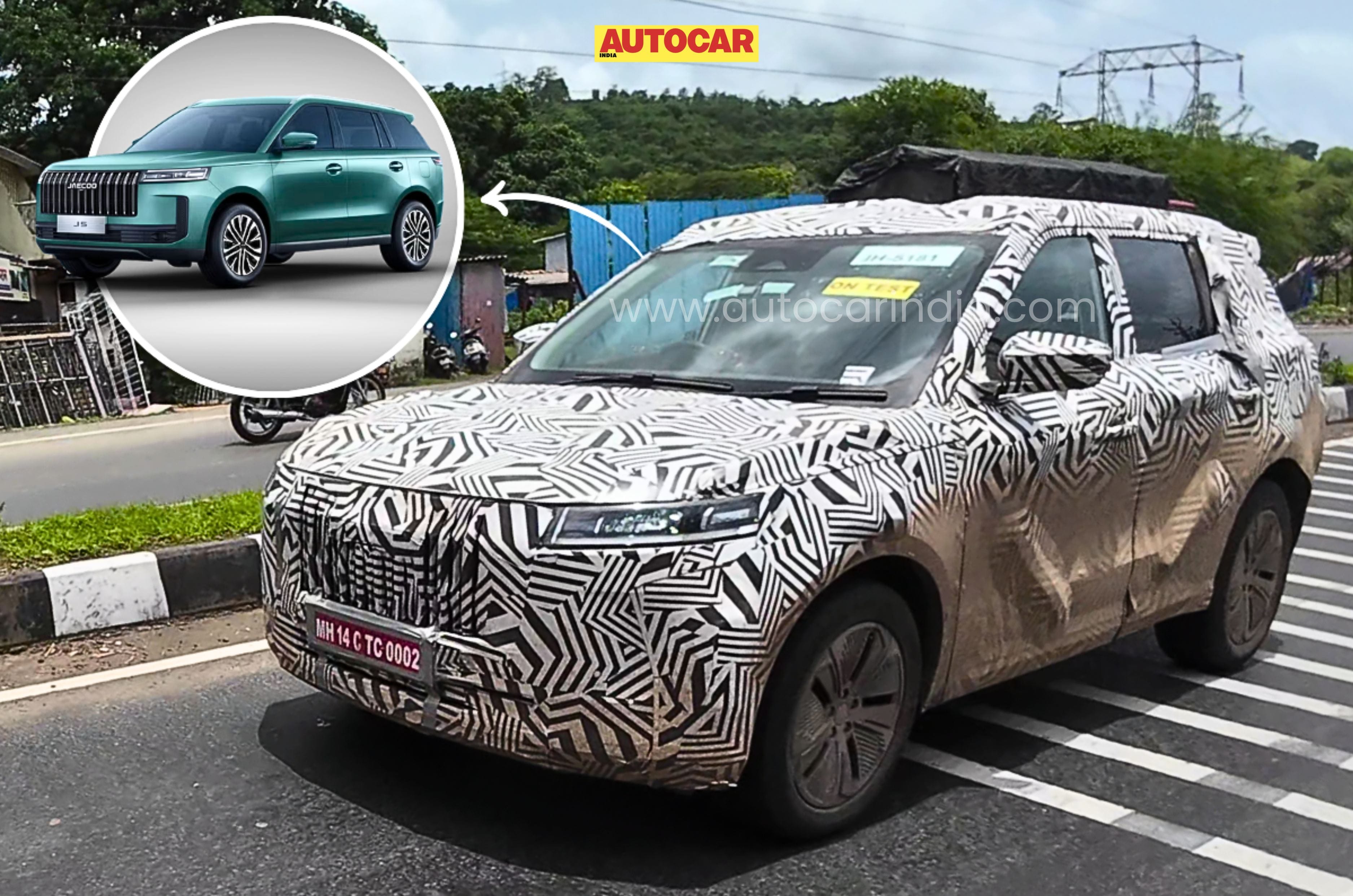
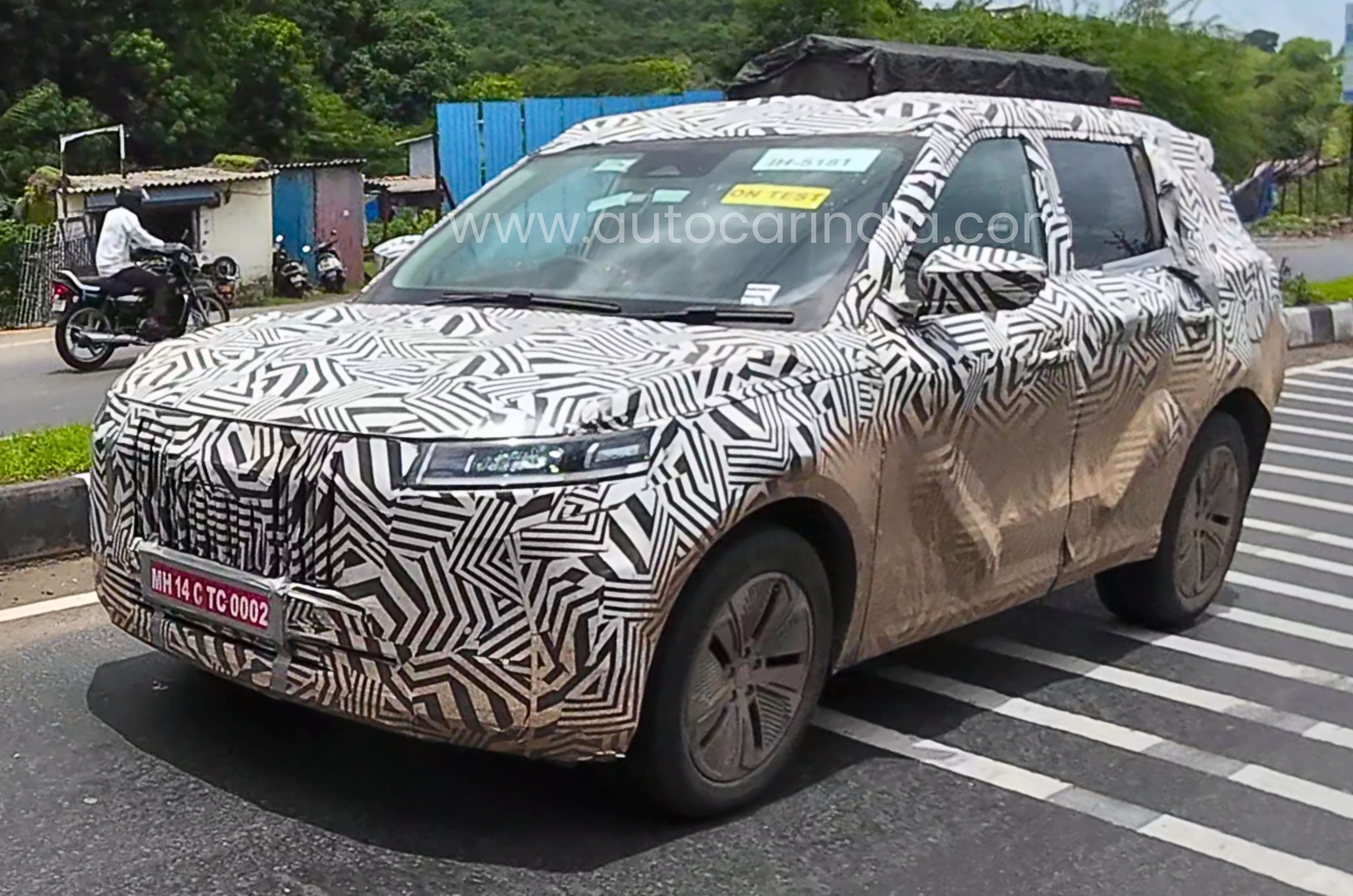
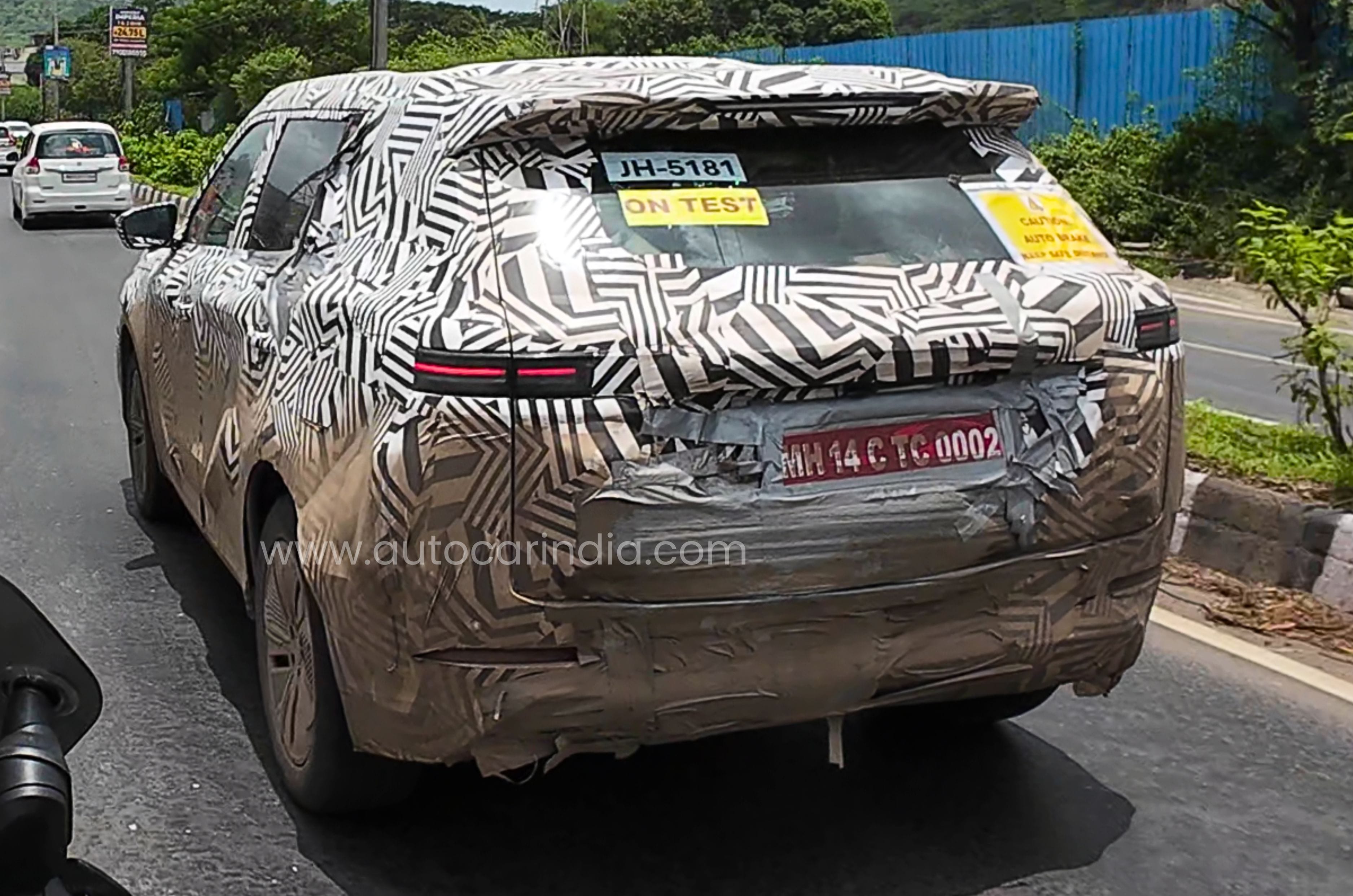
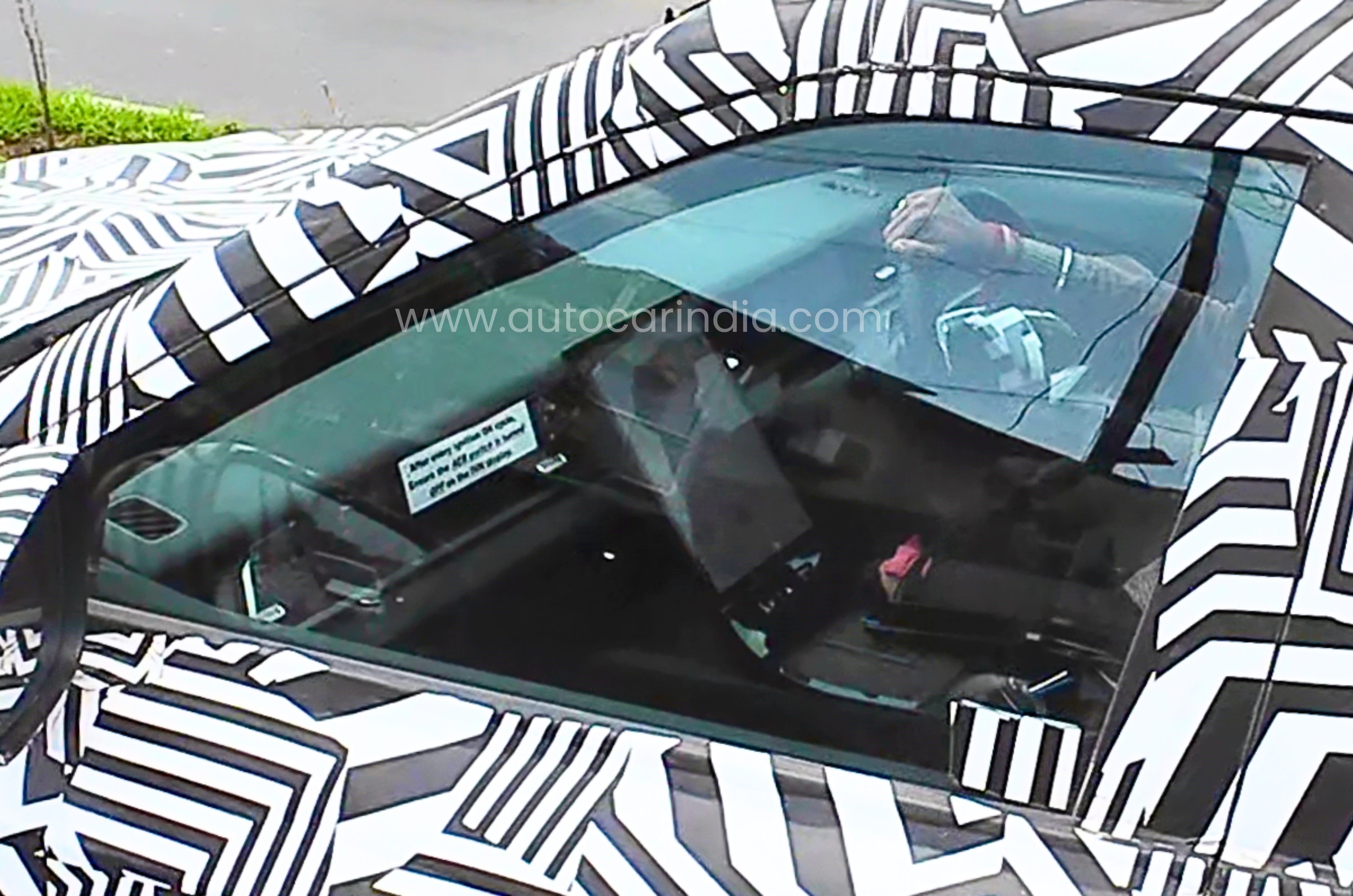
The Jaecoo J5 SUV has been spied testing in an ICE avatar for the first time in India. Interestingly, the latest spy shots suggest the Jaecoo J5 could launch in India with an ICE powertrain, whereas earlier sightings pointed to an all-electric (EV) version only. The new exterior and interior spy shots of the ICE-powered Jaecoo J5 reveal some visible differences from the EV version.

  1. A functional grille, all-LED lighting and 18-inch alloy wheels can be seen
  2. An all-black cabin with a vertically mounted infotainment system was spotted
  3. Offered with a turbo-petrol and strong hybrid petrol internationally

In India, JSW Motors will launch its own standalone SUV based on the Jaecoo J5 under a technology and component licensing agreement with Chery, the Chinese automaker that owns the Jaecoo brand.

Jaecoo J5-based ICE SUV spied: What was spotted?

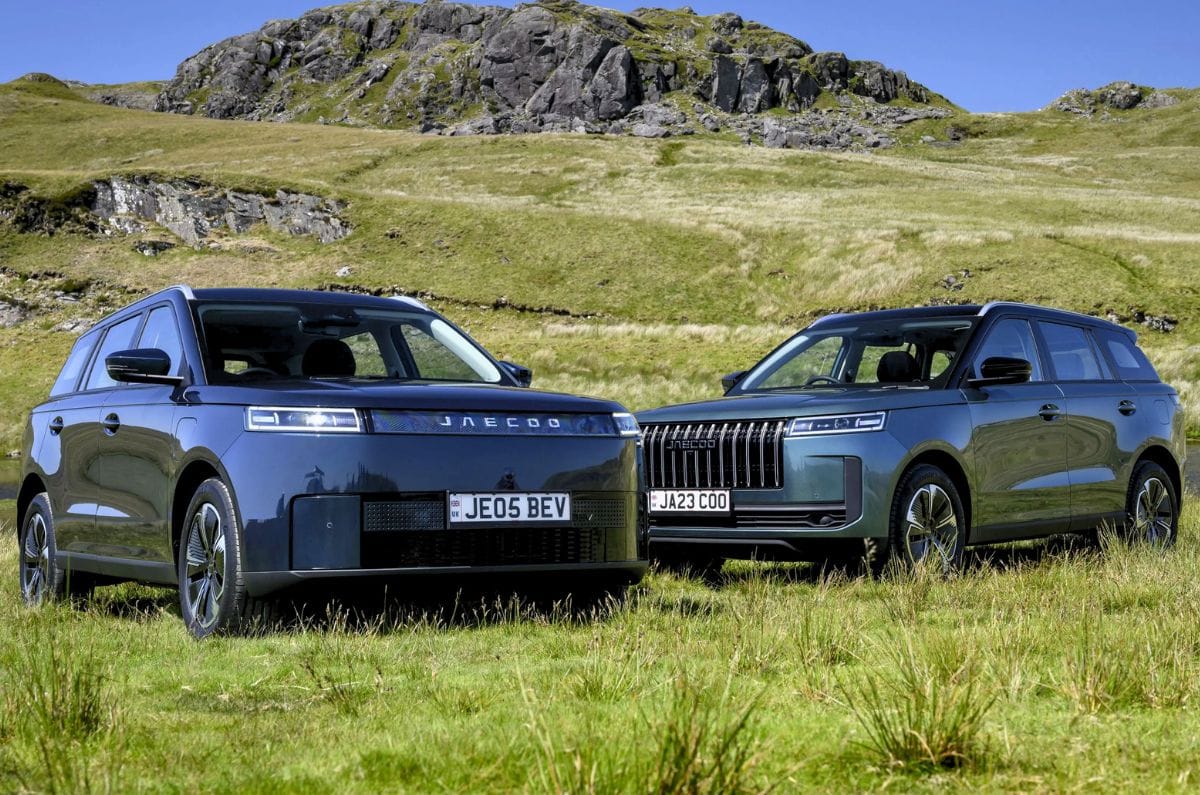
A functional grille with vertical slats confirms it is the ICE version of the Jaecoo J5

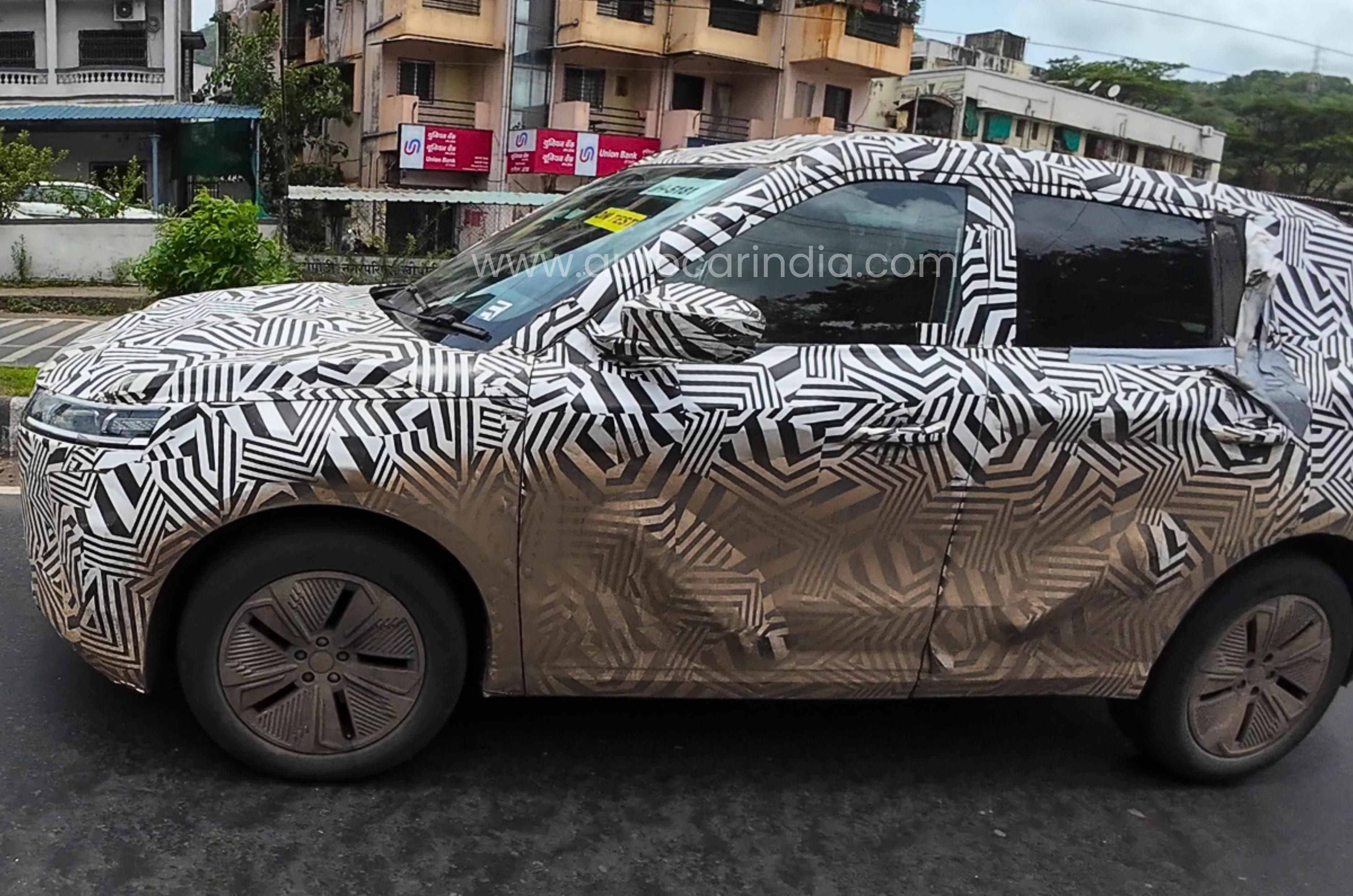
Although the Jaecoo J5-based SUV’s test mule is heavily camouflaged, a few design elements are visible. Among these is a functional grille with vertical slats, confirming it is the ICE version, as the EV features a blanked-off grille. The sleek LED headlights with LED DRL surrounds, however, are the same as those on the EV version. The bumper has a clean design, but it seems to miss out on the fog lamps offered with the international model.

In profile, the international-spec model gets 18-inch wheels. At the rear, slim wraparound LED taillights can be spotted. On the international model, these taillights are joined by a black trim with ‘Jaecoo’ badging in the centre.

The interior design mimics that of the all-electric model

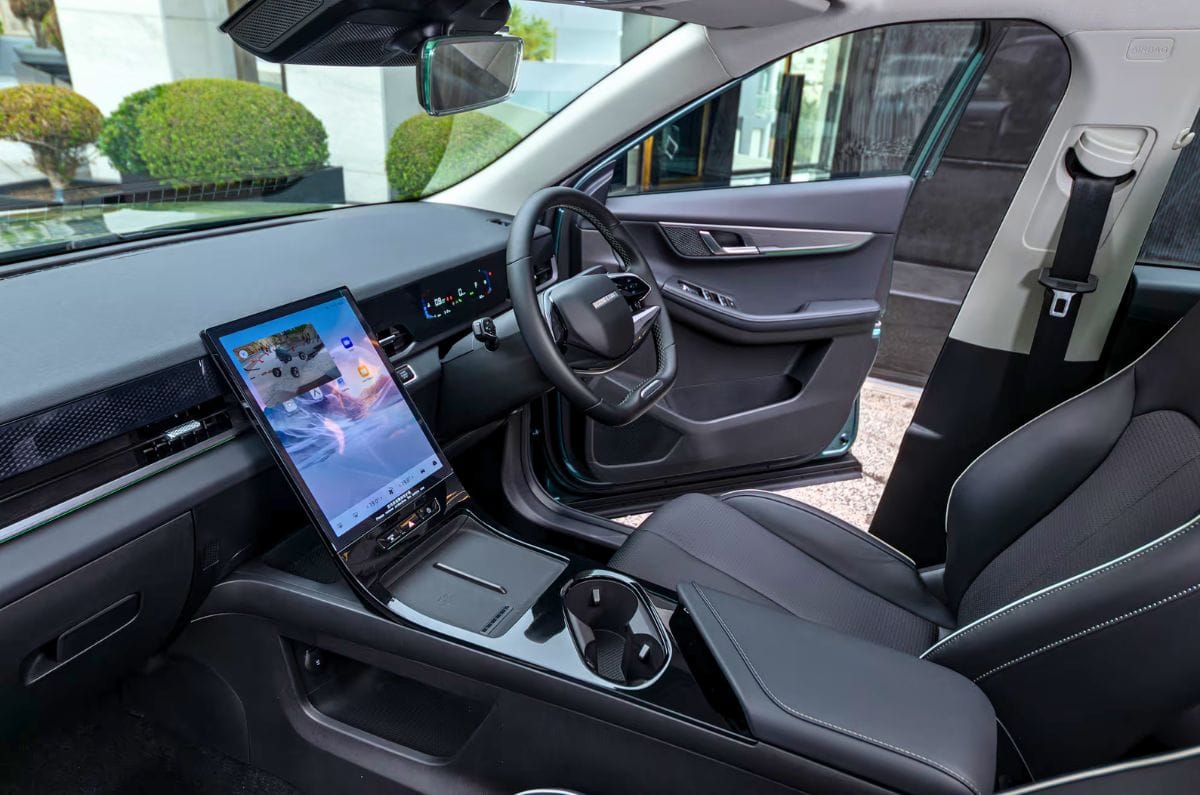
The spy shots also reveal a large vertically oriented infotainment system on the dashboard, likely the same as the international model’s 13.2-inch unit. The international model also gets an 8.8-inch driver’s display, a panoramic sunroof, an 8-speaker Sony sound system, dual-zone climate control, a powered tailgate and a wireless phone charger. It will be interesting to see what features are offered with the India-spec model sold by JSW Motors.

South Africa-spec Jaecoo J5 dashboard shown for representational purposes only.

In terms of safety, the international model gets 7 airbags, a 540-degree camera (surround-view camera with an under-bonnet view function), a tyre pressure monitoring system (TPMS) and an advanced driver assistance system (ADAS) suite. 

Jaecoo J5-based ICE SUV: Expected powertrain

Offered with a turbo-petrol and a strong hybrid petrol engine internationally

Depending on the market, the ICE-powered Jaecoo J5 gets either a turbo-petrol or a strong-hybrid engine option. The 1.5-litre turbo-petrol produces up to 156hp and 275Nm, and is mated to either a 7-speed DCT or a CVT, depending on the market. It allows for a 0-100kph sprint time of 10.2 seconds 

A strong-hybrid version has a 1.5-litre 4-cylinder turbo-petrol engine and an electric motor powered by a 1.83 kWh lithium-ion battery. Combined, this setup produces 224hp and 295Nm. It does a 0-100kph sprint in 7.9 seconds. Jaecoo claims a fuel efficiency of 18.9kpl, allowing a total range of around 1,000km. It will be interesting to see which powertrain option is offered with the India-spec model.

India launch timeline is yet to be revealed

UK-spec Jaecoo J5’s EV (left) and ICE (right) versions shown for representational purposes only.

JSW Motors is expected to start its India operations with the Diwali launch of the Jetour T2-derived hybrid SUV, followed by launches of the SUVs derived from the Jaecoo J5 and iCaur V23. Upon launch, JSW Motors’ Jaecoo J5-based ICE SUV will lock horns with midsize SUVs such as the Hyundai Creta, Tata Sierra, Maruti Suzuki Victoris, Renault Duster and Nissan Tekton. The EV version will rival the Hyundai Creta Electric, Mahindra BE 6, Tata Sierra EV, Vinfast VF6 and Maruti Suzuki eVitara. 

Renault Triber पर मिल रहा ₹60,000 तक का डिस्काउंट, बस इसी महीने रहेगा यह धांसू ऑफर, जानें कीमत और फीचर्स

Renault Triber: अगर आप नई कार खरीदने की सोच रहे हैं, तो यह खबर आपके लिए फायदेमंद साबित हो सकती है। दरअसल, Renault India अपने Triber MPV पर 60,000 रुपये तक की छूट दे रहा है। जो कि केवल इसी महीने तक लागू है। ये ऑफर राज्य, मॉडल ईयर, वेरिएंट और कस्टमर की पात्रता के आधार पर अलग-अलग हो सकते हैं। रेनॉ इंडिया की ऑफिशियल ऑफर लिस्ट के अनुसार, केरल में कस्टमर Triber पर कुल 60,000 रुपये तक का डिस्काउंट मिल सकता है, जबकि गुजरात में खरीदार 45,000 रुपये तक का लाभ उठा सकते हैं। ज्यादातर दूसरे राज्यों में, MY2026 मॉडल पर ज्यादा से ज्यादा फायदे 30,000 रुपये तक हैं।

इन ऑफर्स में 30,000 रुपये तक का कैश डिस्काउंट शामिल हो सकता है। इसके अलावा, ग्राहक को एक्सचेंज बोनस, स्क्रैपेज बोनस, लॉयल्टी बोनस, रेफरल और कॉरपोरेट बेनिफिट्स जैसे फायदे भी मिल सकते हैं। हालांकि, ये लाभ ग्राहक की पात्रता और लागू स्कीम पर निर्भर करेंगे।

रेनॉ ने ग्राहकों को सलाह दी है कि वे अपने शहर में लागू सही ऑफर के बारे में जानने के लिए अपने नजदीकी ऑथराइज्ड डीलर से संपर्क करें, क्योंकि ऑफर के फायदे अलग-अलग जगहों पर अलग-अलग हो सकते हैं और ये डीलर की भागीदारी और स्टॉक की उपलब्धता पर निर्भर करते हैं।

रेनॉ ट्राइबर की कीमत अभी 5.81 लाख रुपये से 8.48 लाख रुपये (एक्स-शोरूम) के बीच है। यह भारतीय बाजार में सबसे सस्ती थ्री-रो वाली MPV में से एक बनी हुई है, जिसमें सात लोगों के बैठने की सुविधा मिलती है।

पावरट्रेन और इंजन

इंजन की बात करें तो, Renault Triber में 1.0 लीटर का नैचुरली एस्पिरेटेड 3-सिलेंडर पेट्रोल इंजन दिया गया है। यह इंजन 72 bhp की पावर और 96 Nm का पीक टॉर्क जनरेट करता है। इस इंजन के साथ ग्राहकों को 5-स्पीड मैनुअल गियरबॉक्स और 5-स्पीड ऑटोमेटेड मैनुअल ट्रांसमिशन (AMT) का विकल्प मिलता है।

ट्राइबर के मैनुअल वर्जन की ARAI-क्लेम्ड फ्यूल एफिशिएंसी 20.0 kmpl तक है, जबकि AMT वेरिएंट 17.0 kmpl तक का माइलेज देता है।

फीचर्स

वेरिएंट के आधार पर, ट्राइबर में कई फीचर्स देखने को मिलते हैं। इनमें 8 इंच का टचस्क्रीन इंफोटेनमेंट सिस्टम, वायरलेस Android Auto और Apple CarPlay, डिजिटल इंस्ट्रूमेंट क्लस्टर, स्टीयरिंग पर ऑडियो कंट्रोल, पीछे की सीटों के लिए AC वेंट्स, पुश-बटन स्टार्ट/स्टॉप, कीलेस एंट्री, इलेक्ट्रिकली एडजस्ट होने वाले ORVMs और कूल्ड सेंटर स्टोरेज कंपार्टमेंट शामिल हैं।

सेफ्टी फीचर्स की बात करें तो, वेरिएंट के आधार पर Triber में स्टैंडर्ड तौर पर छह एयरबैग, EBD के साथ ABS, इलेक्ट्रॉनिक स्टेबिलिटी प्रोग्राम (ESP), हिल स्टार्ट असिस्ट, टायर प्रेशर मॉनिटरिंग सिस्टम (TPMS), रियर पार्किंग सेंसर, रिवर्सिंग कैमरा और सीट बेल्ट रिमाइंडर दिए गए हैं।

बता दें कि Renault Triber उन खरीदारों की जरूरतों को पूरा करती है जो थ्री-रो सीटिंग वाली किफायती फैमिली गाड़ी की तलाश में हैं। जुलाई 2026 के ऑफर सीमित समय के लिए हैं और ये मैन्युफैक्चरर और भाग लेने वाली डीलरशिप द्वारा तय की गई शर्तों और नियमों के अधीन हैं।

यह भी पढ़ें: लेह से इंस्पायर्ड डिजाइन और पावरफुल इंजन… Renault ने लॉन्च की नई Duster Adventure Edition

लेह से इंस्पायर्ड डिजाइन और पावरफुल इंजन… Renault ने लॉन्च की नई Duster Adventure Edition

Renault Duster Adventure Edition: अगर आप एक नई फैमिली कार लेने की सोच रहे हैं, तो यह खबर आपके काम की हो सकती है। दरअसल, Renault India ने अपनी SUV Duster का नया Adventure Edition लॉन्च किया है। यह खास वर्जन भारत में Duster की पुरानी पहचान और लोकप्रियता को ध्यान में रखते हुए पेश किया गया है। इस SUV की शुरुआती कीमत 12.99 लाख रुपये (एक्स-शोरूम) है। बता दें कि यह नया एडिशन Nissan के Tekton को पेश करने के कुछ ही दिनों बाद आया है, जिससे मिड-साइज SUV सेगमेंट में हलचल बढ़ गई है।

डिजाइन और इक्विपमेंट

Adventure Edition में कुछ ऐसे विज़ुअल टच दिए गए हैं, जो इसे स्टैंडर्ड SUV से अलग बनाते हैं। इनमें खास ‘Adventure’ डिकल्स शामिल हैं, जिन पर टोपोग्राफिकल कंटूर लाइनें और लेह के कोऑर्डिनेट्स (34.27 N, 77.60 E) बने हैं। ये उस तरह के इलाके की ओर इशारा करते हैं जिनसे भारत में Duster की पहचान जुड़ी हुई है।

इस SUV में ‘Adventure’ स्टाइलिंग एलिमेंट्स और ‘Adventure’ फ्लोर मैट्स भी मिलते हैं। Renault ने इन खूबियों के साथ कई खास फीचर्स भी दिए हैं, जैसे- फुल LED हेडलैम्प्स, इलेक्ट्रिक पैनोरमिक सनरूफ, इलेक्ट्रिक टेलगेट, ‘My Renault’ ऐप के जरिए कनेक्टेड कार सर्विसेज, ऑटोमैटिक डुअल-जोन एयर कंडीशनिंग, 10.1-इंच का openR लिंक मल्टीमीडिया सिस्टम और 17-इंच के ओशन अलॉय व्हील्स।

पावरट्रेन और कीमत

Renault Duster Adventure Edition तीन इंजन और ट्रांसमिशन कॉम्बिनेशन के साथ मार्केट में उपलब्ध है। इसकी रेंज Turbo TCe 100 MT से शुरू होती है, जिसकी कीमत ₹12.99 लाख है। जबिक Turbo TCe 160 MT की कीमत ₹13.99 लाख और Turbo TCe 160 DCT की कीमत ₹15.39 लाख है।

इंजन की बात करें तो, इस SUV में 1.0 लीटर टर्बो-पेट्रोल इंजन दिया गया है, जो 100 hp की पावर और 160 Nm का टॉर्क जनरेट करता है। इसे 6-स्पीड मैनुअल गियरबॉक्स के साथ जोड़ा गया है। वहीं, इसका बड़ा 1.3 लीटर टर्बो-पेट्रोल इंजन 163 hp की पावर और 280 Nm का टॉर्क देता है। यह इंजन 6-स्पीड मैनुअल और 6-स्पीड डुअल-क्लच ऑटोमैटिक (DCT) गियरबॉक्स दोनों विकल्पों में उपलब्ध है।

स्पेशल एडिशन

Duster लंबे समय से भारतीय बाजार में एक ऐसी SUV के तौर पर जानी जाती है जो अपनी राइड क्वालिटी, हैंडलिंग और अलग-अलग तरह की सड़कों पर चलने की क्षमता के लिए मशहूर है। Renault का कहना है कि ‘Adventure Edition’ इसी खासियत को दिखाता है और साथ ही उन ग्राहकों के अनुभवों और यादों को भी दर्शाता है, जिनकी जिंदगी के सफर में Duster ने कई सालों तक अहम भूमिका निभाई है।

बता दें कि इस SUV को नई दिल्ली में ‘बैस्टिल डे’ के मौके पर लॉन्च किया गया है। इस कार्यक्रम में भारत में फ्रांस के राजदूत थिएरी माथू और Renault Group India के CEO स्टीफन डेबलेस शामिल हुए। इस खास मौके पर Renault ने अपनी फ्रेंच पहचान और भारत में Duster की खास विरासत को भी दिखाया।

यह भी पढ़ें: Hyundai कार खरीदने का शानदार मौका! क्रेटा पर 1 लाख तक की छूट, जानें किस मॉडल पर मिल रहा कितना ऑफर