4 reasons to buy the Tata Curvv and 3 reasons to skip it

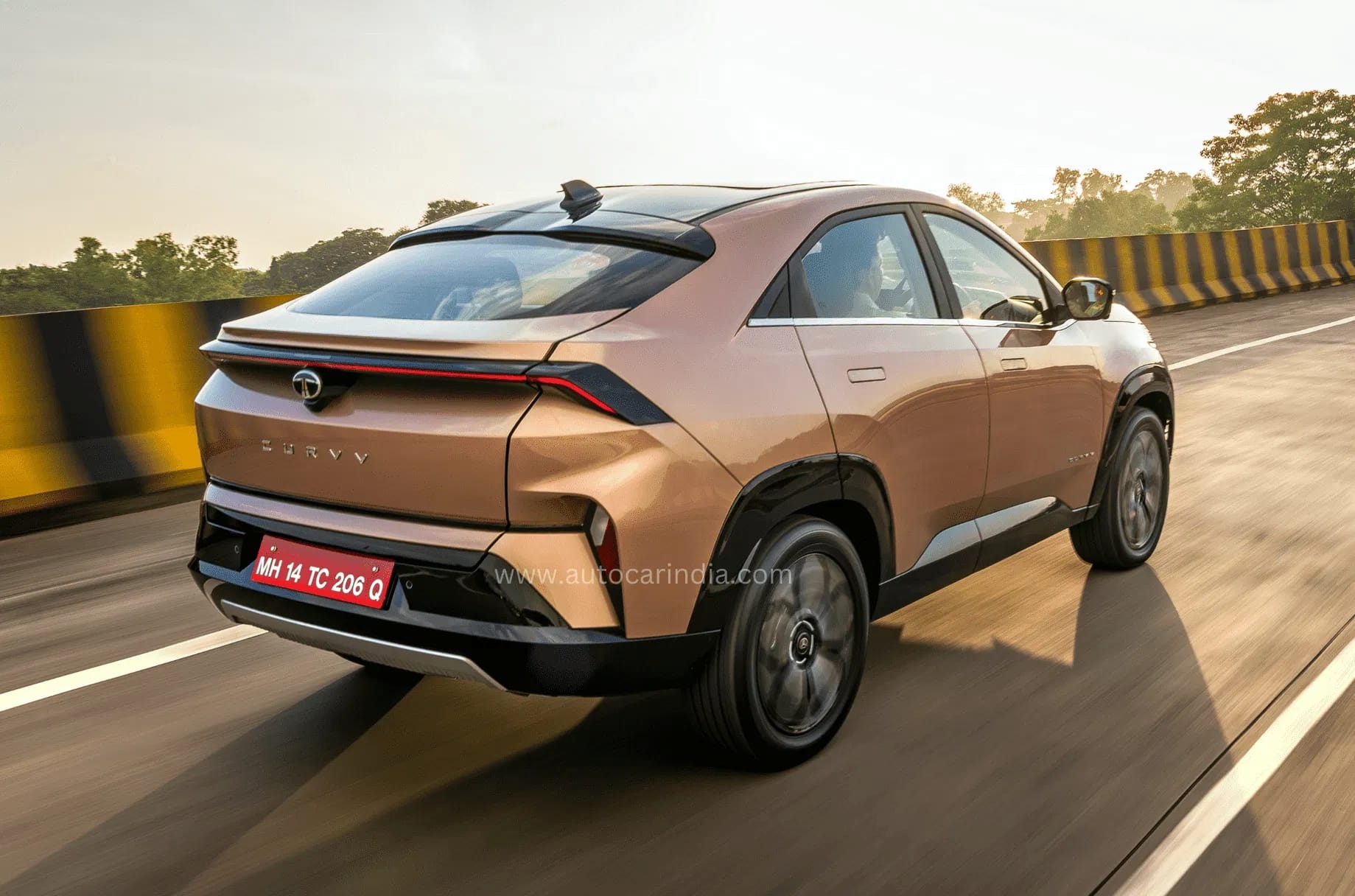
Tata Curvv rear quarter tracking

Tata introduced the Curvv as its unique take on the midsize SUV space in 2024. Currently, it is one of the two coupe-SUV models in this heavily contested segment. Built on Tata’s ATLAS platform, the Curvv slots between the compact Nexon and the newer, traditional-looking Sierra in the brand’s SUV line-up. If you’re interested in the Curvv, below are the reasons to consider it, as well as reasons to look elsewhere.

Reasons to buy 

Good ride and handling balance 
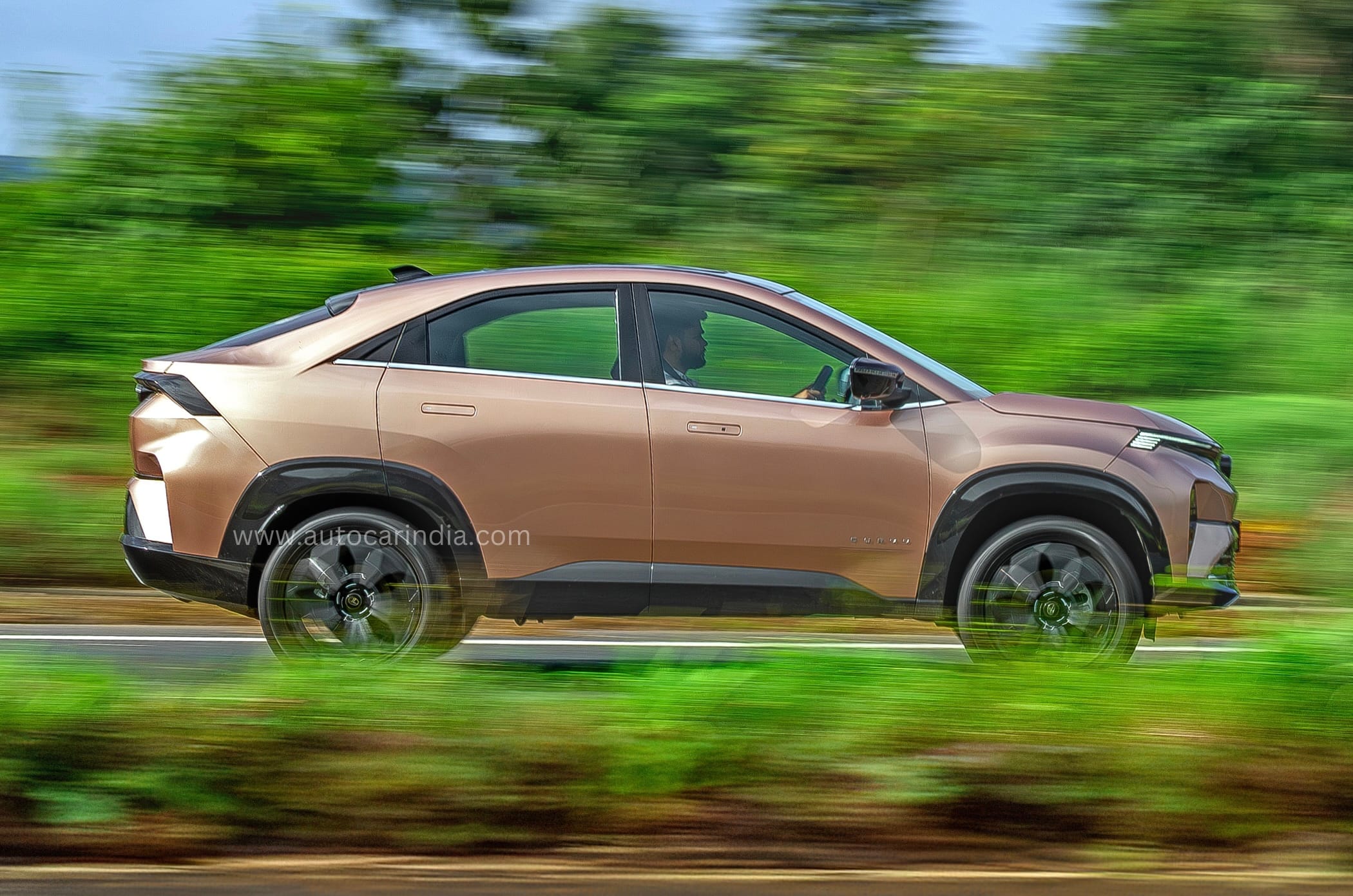
Like other Tata models, which are known to have a good balance of ride and handling, the Curvv is no different. It feels tough and takes on broken road patches with ease. Low-speed ride may feel a bit stiff, but it smooths out as you increase speed. Where the Curvv does feel at home is at highway speeds, with composed and mature road manners. Body roll when cornering is also kept well in check, and the steering is precise. 

Diverse powertrain offering 
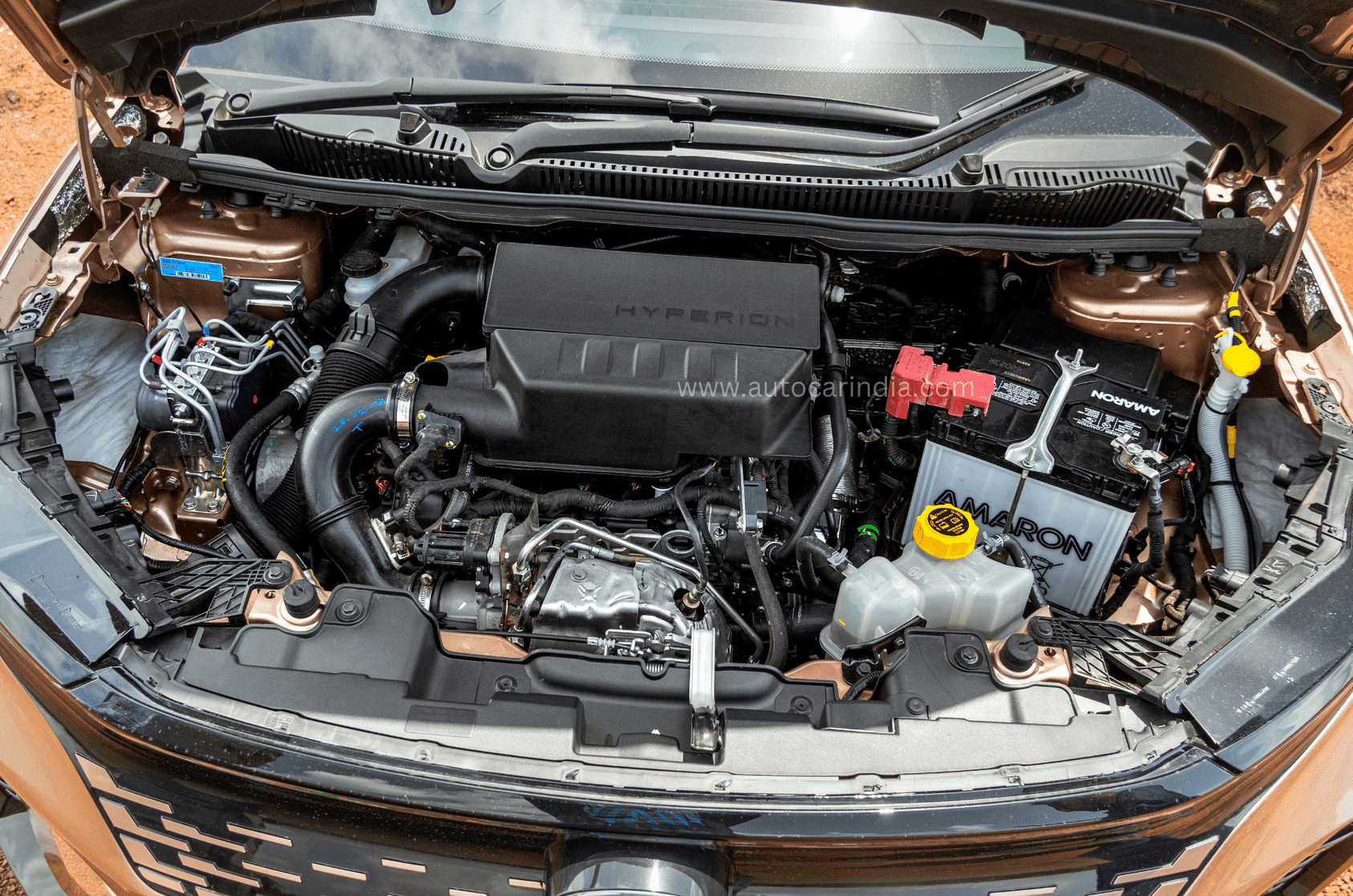
In the mid-size SUV segment, the Curvv is one of the models with a quite diverse powertrain lineup. This includes a 120hp, 170Nm, 1.2-litre turbo-petrol, a 118hp, 260Nm, 1.5-litre diesel, and a 125hp 225Nm 1.2-litre direct-injection turbo-petrol engine. While some SUVs offer only a manual or an automatic gearbox with a particular engine, Tata offers the flexibility of both options, with each of its engines paired to either a 6-speed manual or a 7-speed DCT. 

Well-equipped feature list 
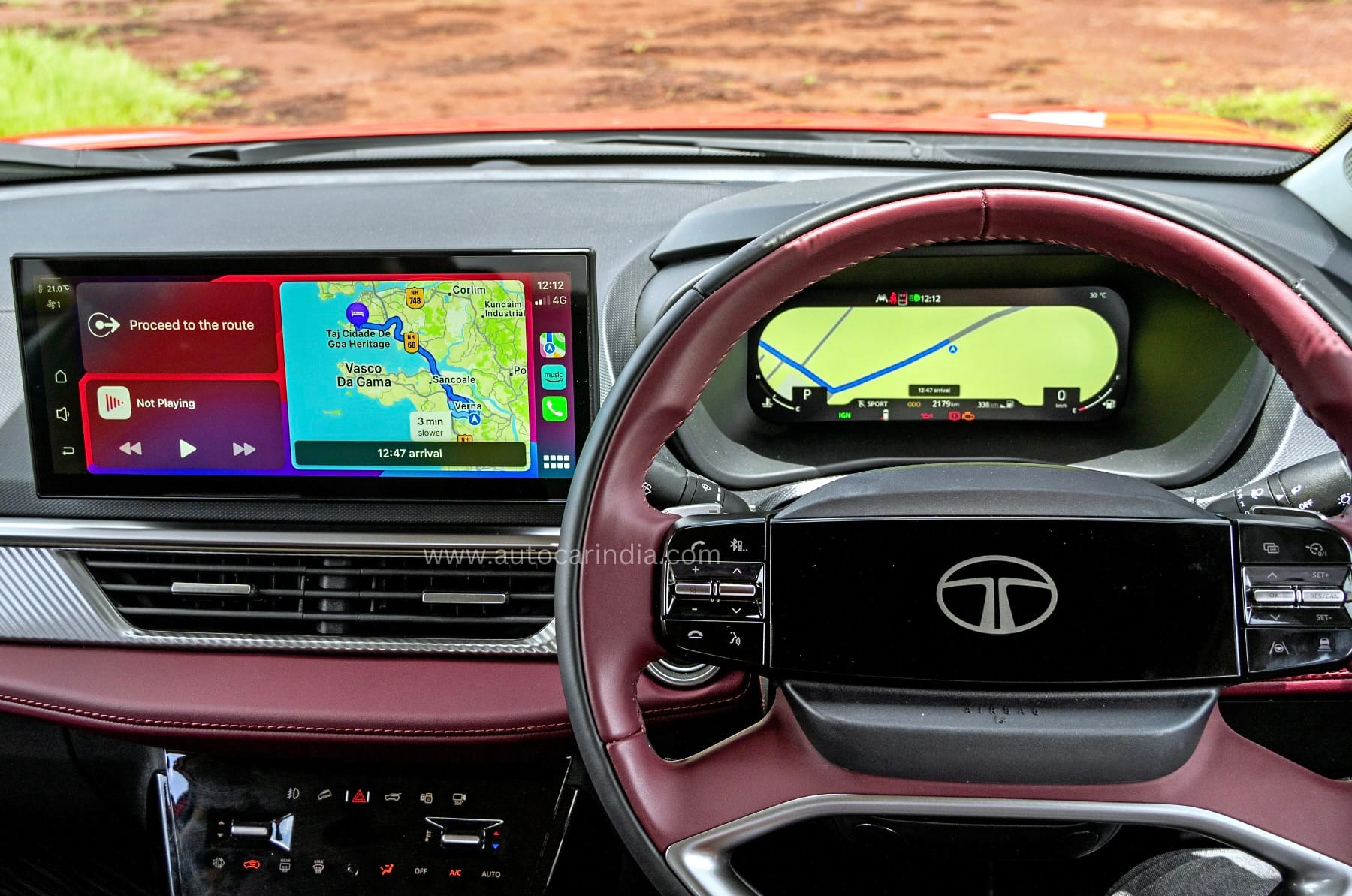
Tata has packed the Curvv with a long list of features. Not only does the Curvv come with tech like a 12.3-inch infotainment display, 10.25-inch digital driver’s display, wireless Apple CarPlay and Android Auto, air purifier, a wireless phone charger, 9-speaker JBL sound system, but it also gets comfort features like a powered driver seat, front seat ventilation, passive ventilation for the rear seats, a panoramic sunroof, rear window sunshades, dual-zone air conditioning, and more. It’s well-equipped on the safety front as well, with level 2 ADAS, a 360-degree camera, blind-spot detection and an auto-dimming IRVM on board. 

Large boot space
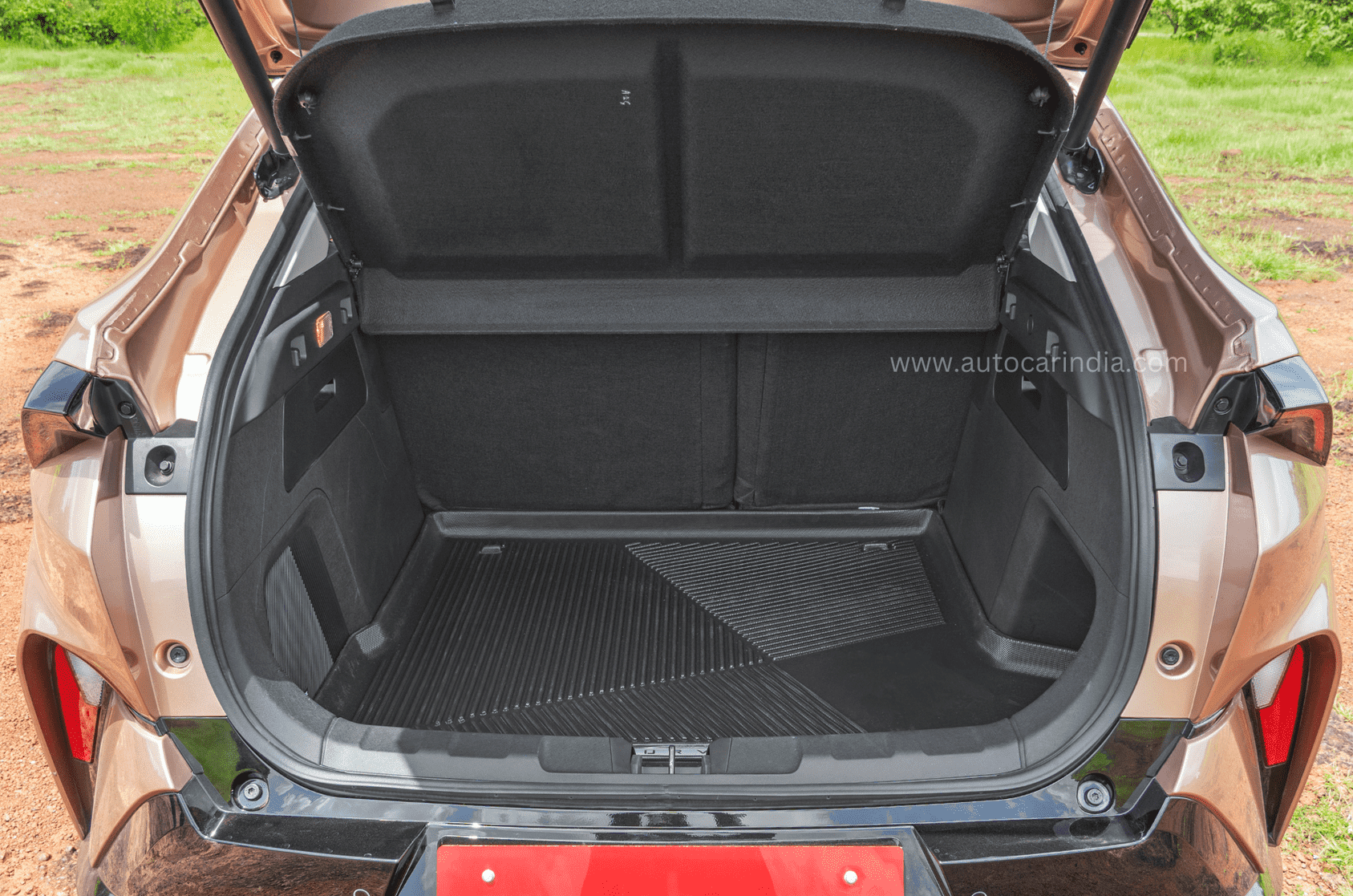
The Curvv is among the models in its class with a large boot space. With a capacity of 500-litres, there’s plenty of room for your luggage needs, and it can also be expanded further by the 60:40 split-folding rear seat.

Reasons to skip 

Limited rear headroom
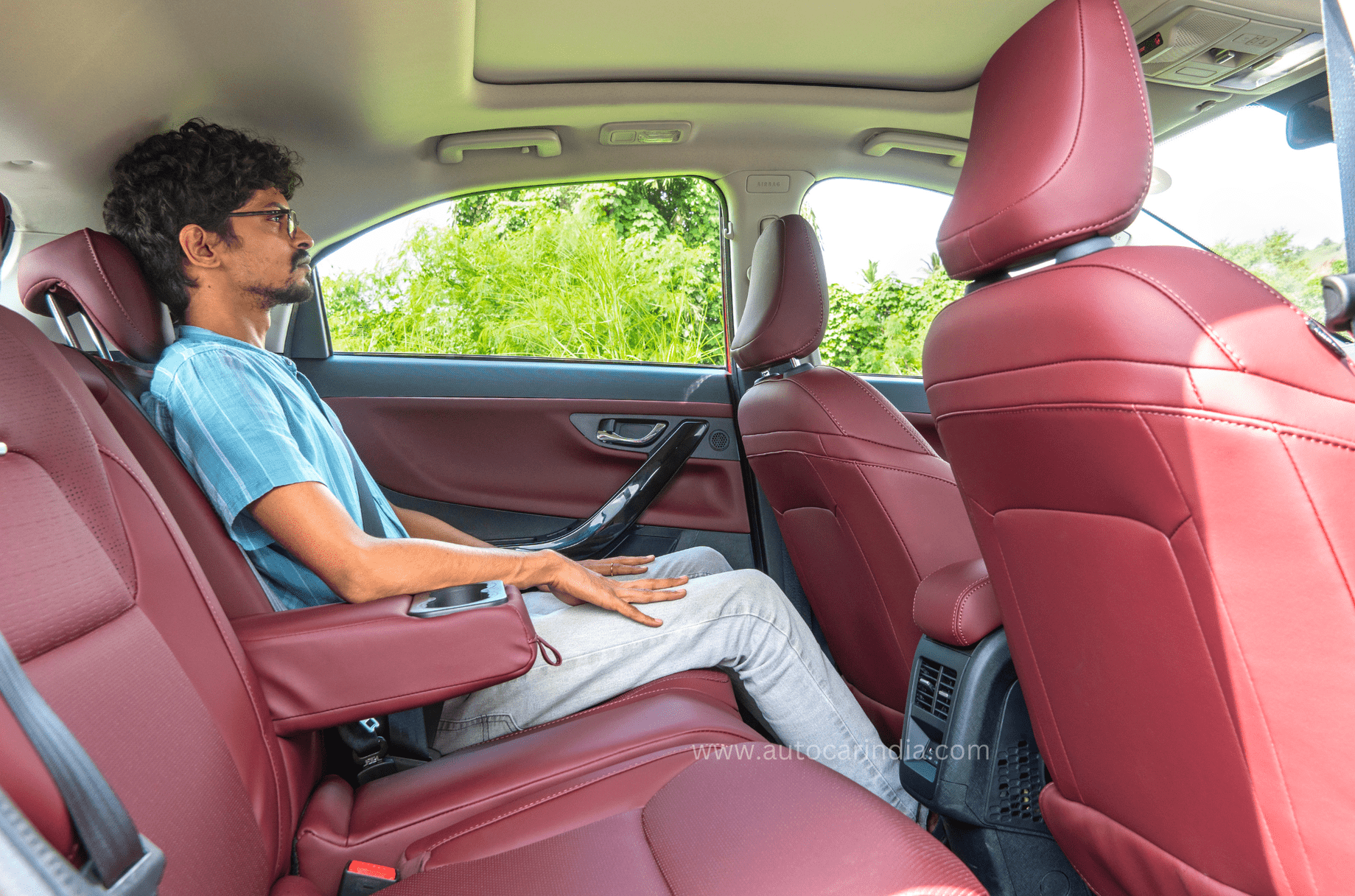
While passengers at the back have adequate legroom, the Curvvs coupe-SUV roofline limits headroom. Though the seat can recline and the headliner is scooped out to help ease things, taller passengers will still find the headroom tight. Additionally, the middle rear seat misses a dedicated headrest, hindering overall comfort. 

Inconsistent fit and finish, ergonomic cabin flaws
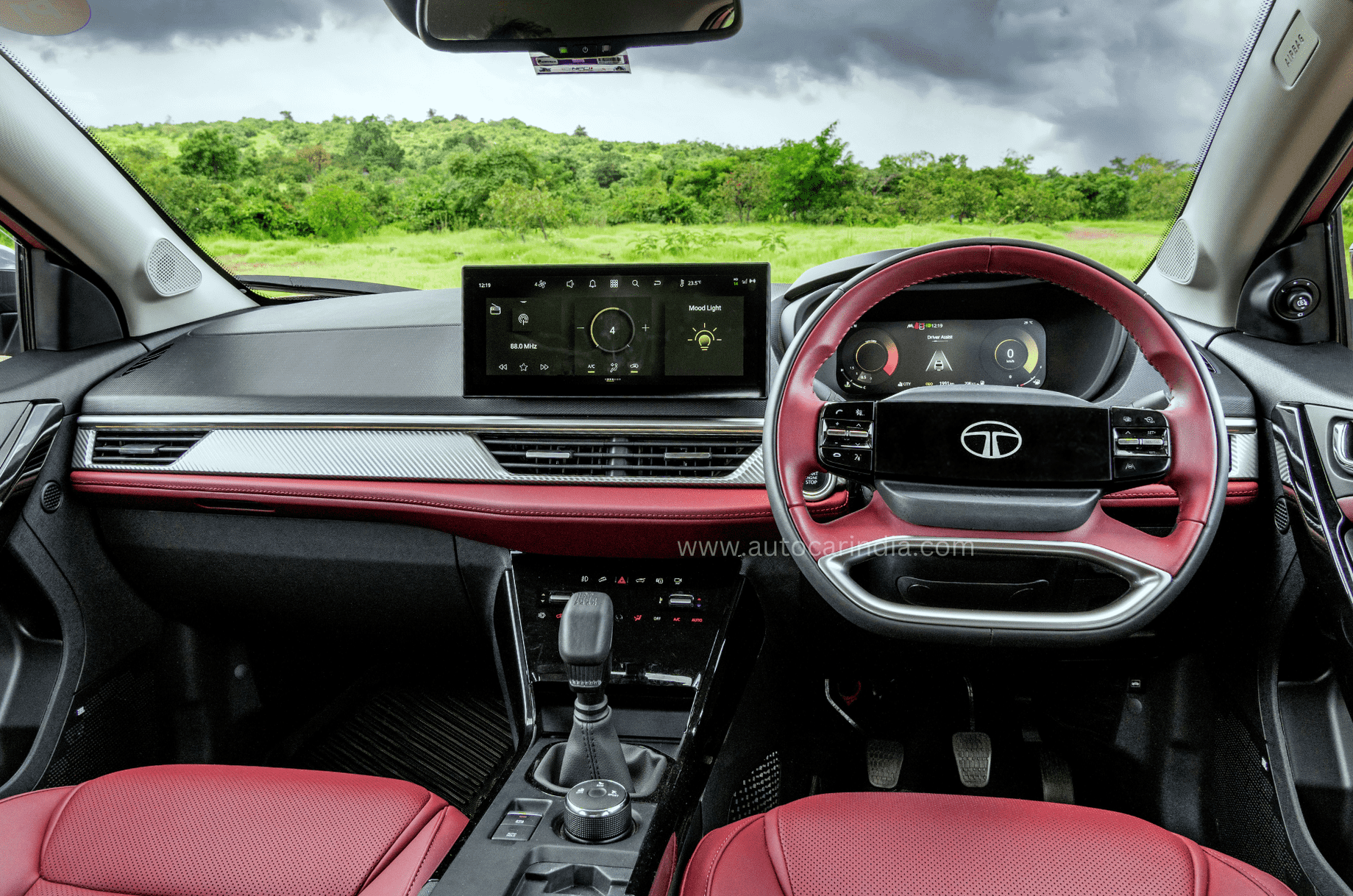
While the quality of materials is acceptable, certain areas of the cabin aren’t finished to a T, which is a common issue with Tata models. While there are cupholders at the front, they’re placed in the glovebox, which makes them unusable. Surprisingly, the front centre console does not get cup holders. Additionally, the 12V socket is hard to reach, as it’s placed in a recessed space ahead of the gear lever; the front centre armrest is too small and doesn’t slide, while the storage space below it is suitable only for small items.

Snappy clutch (manual gearbox)

While shifting gears with the manual gearbox is smooth enough, the snappy behaviour of the clutch pedal and long gear throws take away from overall driver involvement. Furthermore, the gear lever is odd to look at and hold.

2026 F1 Belgian GP schedule, India timings

F1 Belgian GP schedule

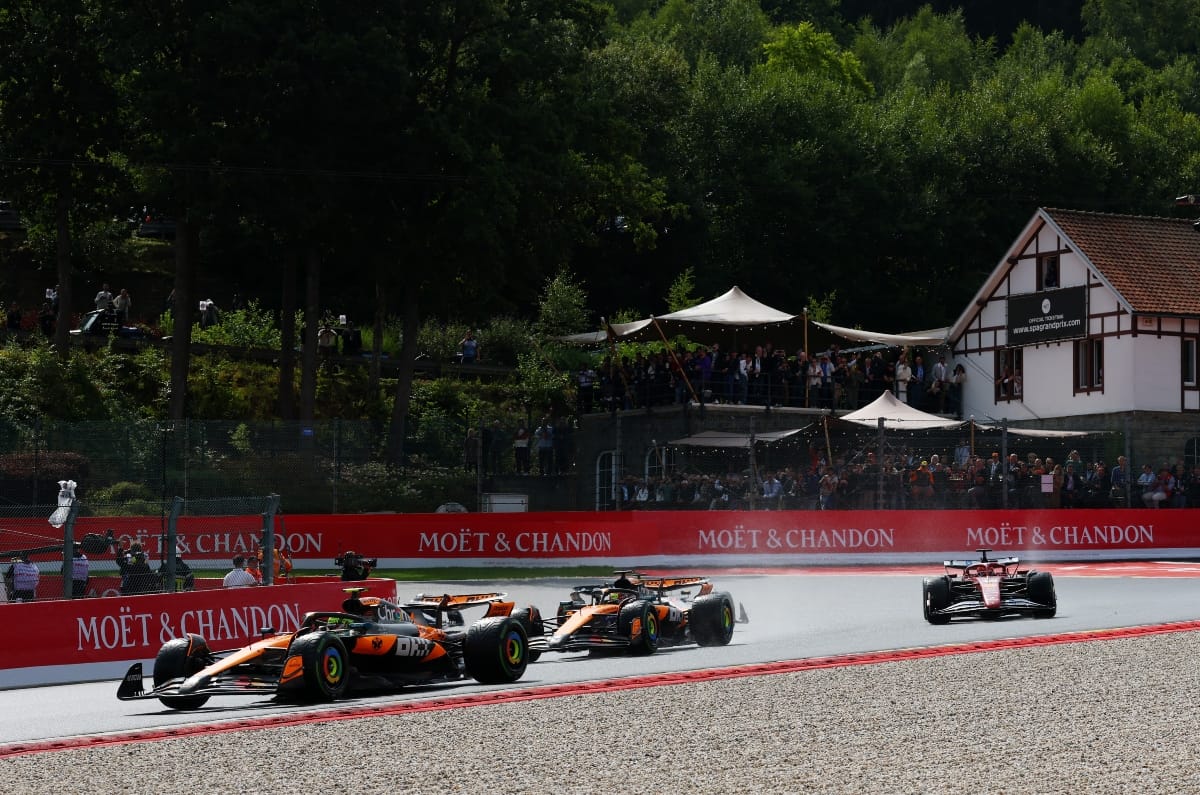
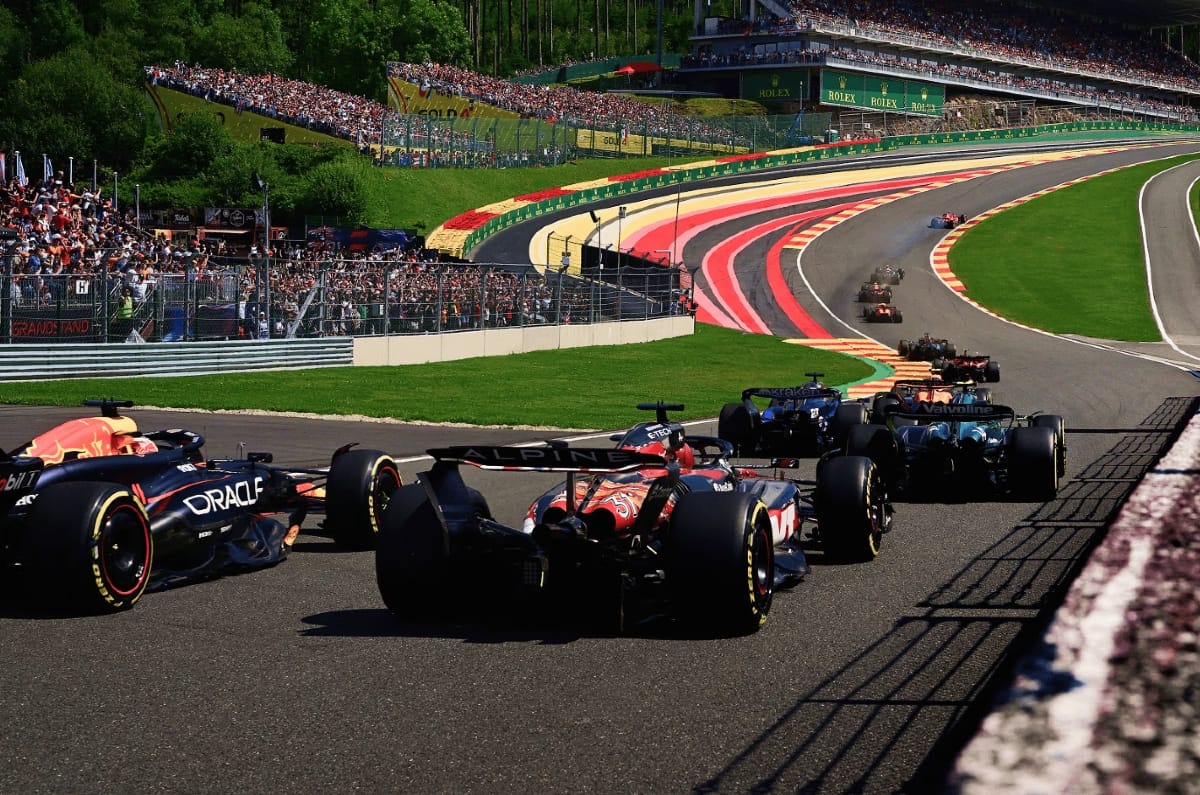
Formula 1 heads to the iconic Spa-Francorchamps this weekend for Round 10 of the 2026 world championship. The title fight has tightened at the top, with just 25 points separating Kimi Antonelli and George Russell, while Lewis Hamilton is just another seven points behind.

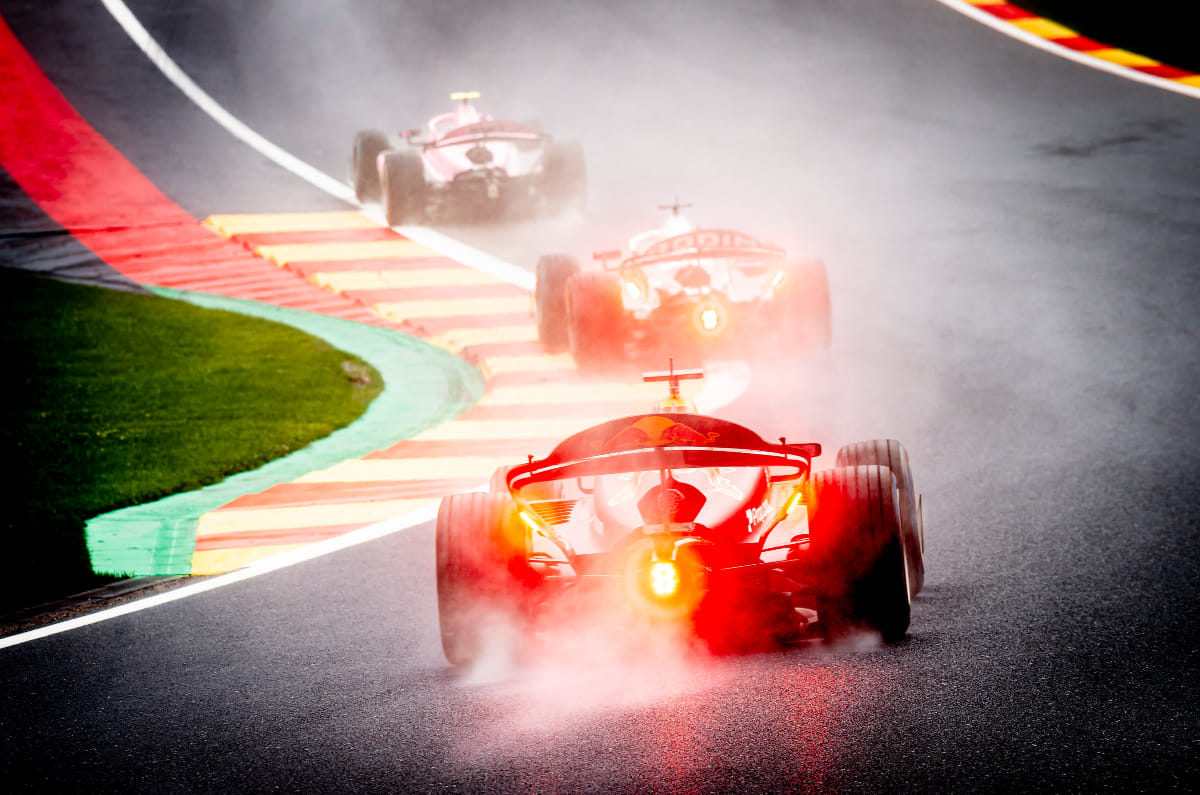
The circuit will also host Formula 2, with India’s Kush Maini looking to continue his progress up the order. Here’s our ultimate guide for when and where to tune in from India.

F1 Belgian GP schedule

F1 Belgian GP India timings

After his incredible run of five wins in a row, Antonelli’s title charge has taken a big hit due to reliability issues. As a result, his once 66-point lead has now been slashed to just 25 points. Moreover, Ferrari has emerged as a genuine contender for race wins, winning two out of the last three races.

Lando Norris, meanwhile, has been handed a 10-place grid penalty for the Belgian GP after McLaren opted to fit a new power electronics unit to his car in a bid to improve recent reliability issues. The team is hopeful that the overtaking opportunities at Spa will help counteract the grid penalty. 

F1 Belgian GP: Where to watch?    

All F1 Belgian GP sessions will be streamed live on the FanCode and F1 TV apps.

2026 F1 Belgian GP schedule IST

Date

Day

Session

Time

July 17

Friday

FP1

5pm

July 17

Friday

FP2

8:30pm

July 18

Saturday

FP3

4pm

July 18

Saturday

Qualifying

7:30pm

July 19

Sunday

Race

6:30pm

F2 Belgian GP schedule

F2 Belgian GP India timings

Red Bull junior Nikola Tsolov comes to Belgium with six race wins to his name so far this season, including double victory at Silverstone. He currently leads the championship by 17 points from Gabriele Mini. Rafael Camara and Alexander Dunne, meanwhile, are locked in a tight battle for third place in the standings, with just two points separating them.

India’s Kush Maini is also firmly in the top five battle. A strong weekend at Silverstone, where he finished on the podium in the Feature Race, saw him move up from P9 to P6 overall – just six points behind fifth-placed Noel Leon.

F2 Belgian GP: Where to watch?

All F2 Belgian GP sessions will be streamed live on the FanCode and F1 TV apps.

2026 F2 Belgian GP schedule IST

Date

Day

Session

Time

July 17

Friday

Practice

2:35pm

July 17

Friday

Qualifying

7:25pm

July 18

Saturday

Sprint Race

5:45pm

July 19

Sunday

Feature Race

1:30pm


Ferrari Amalfi Spider launched at Rs 4.6 crore

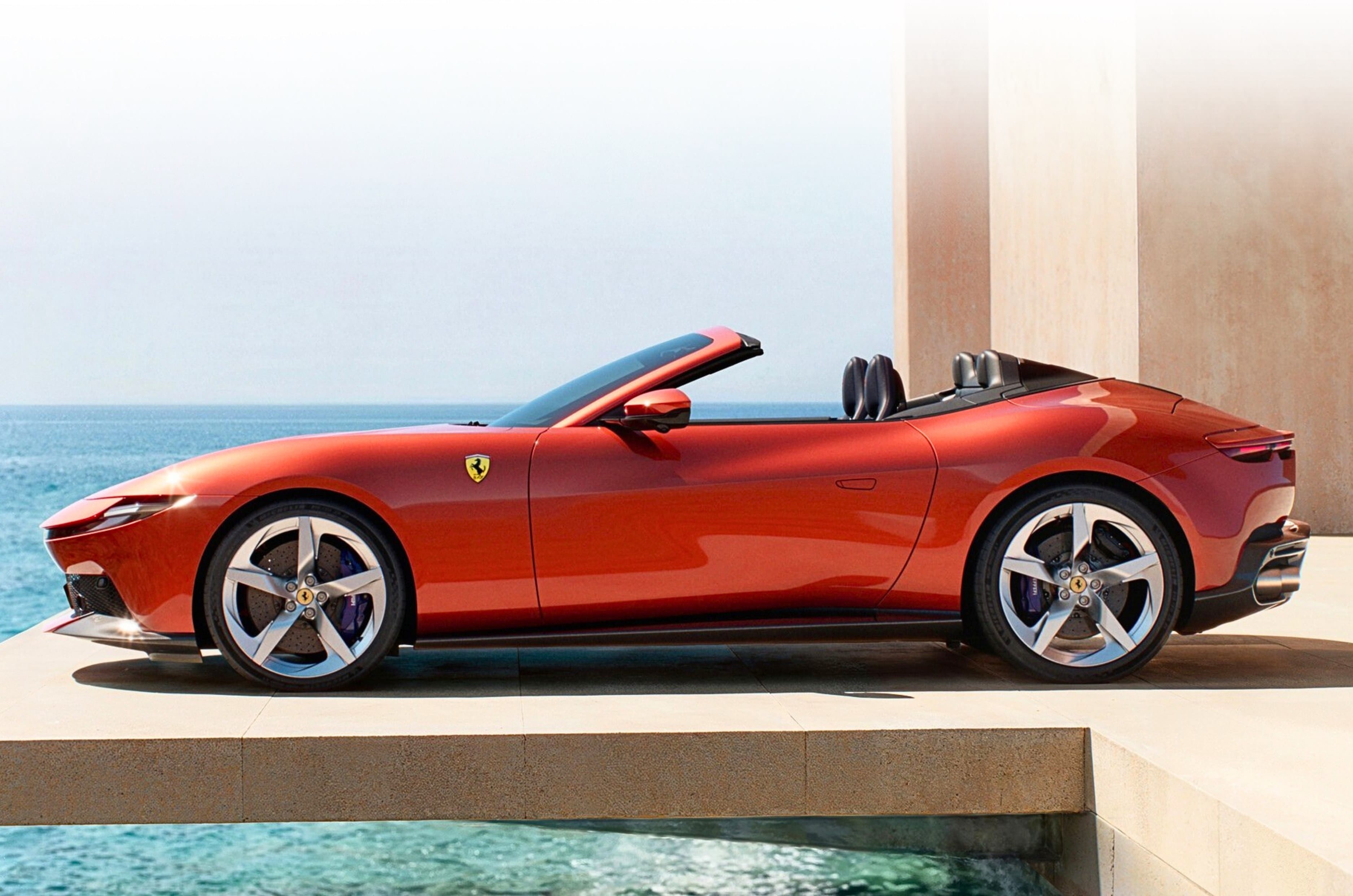
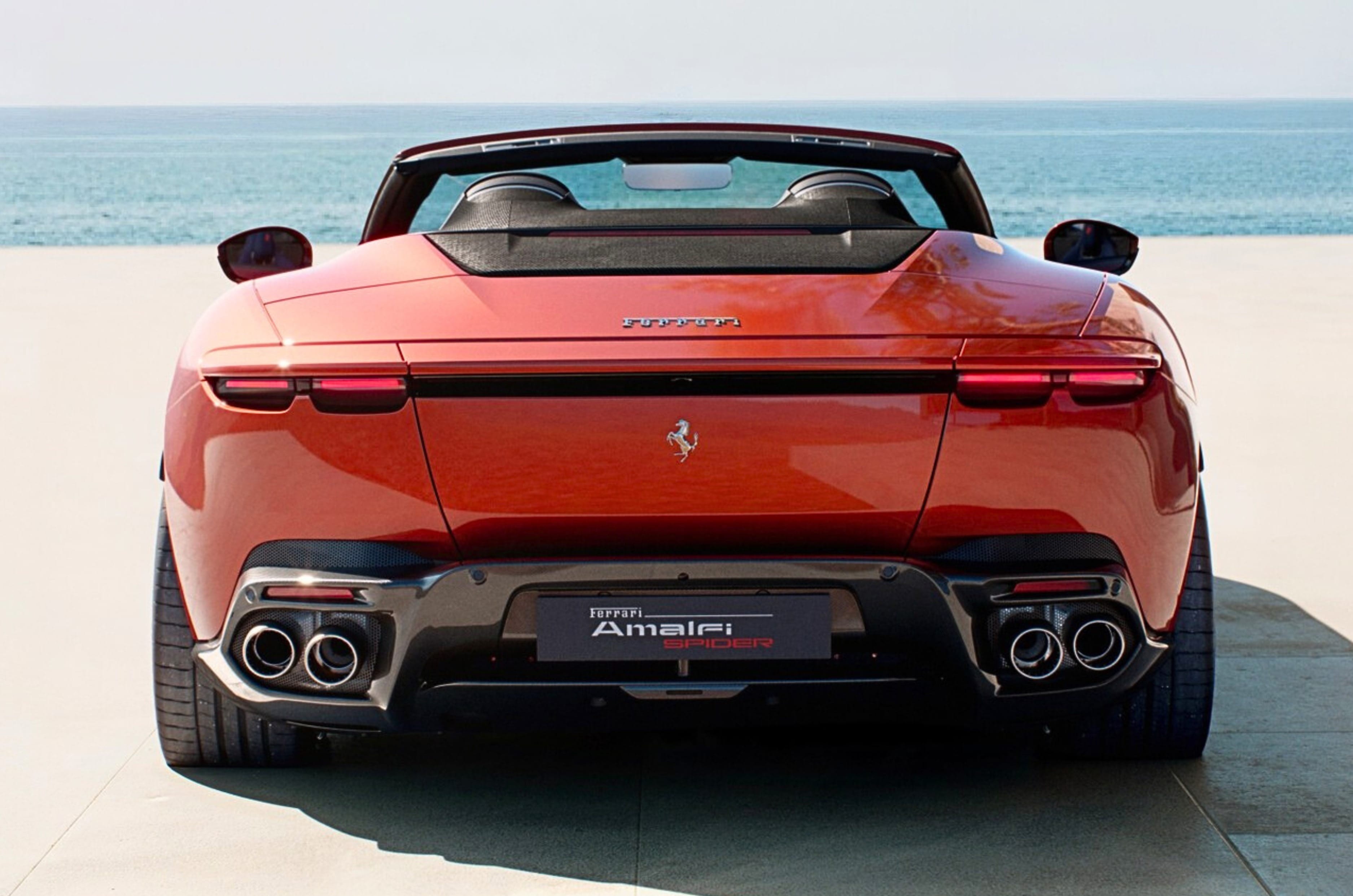
Ferrari Amalfi Spider

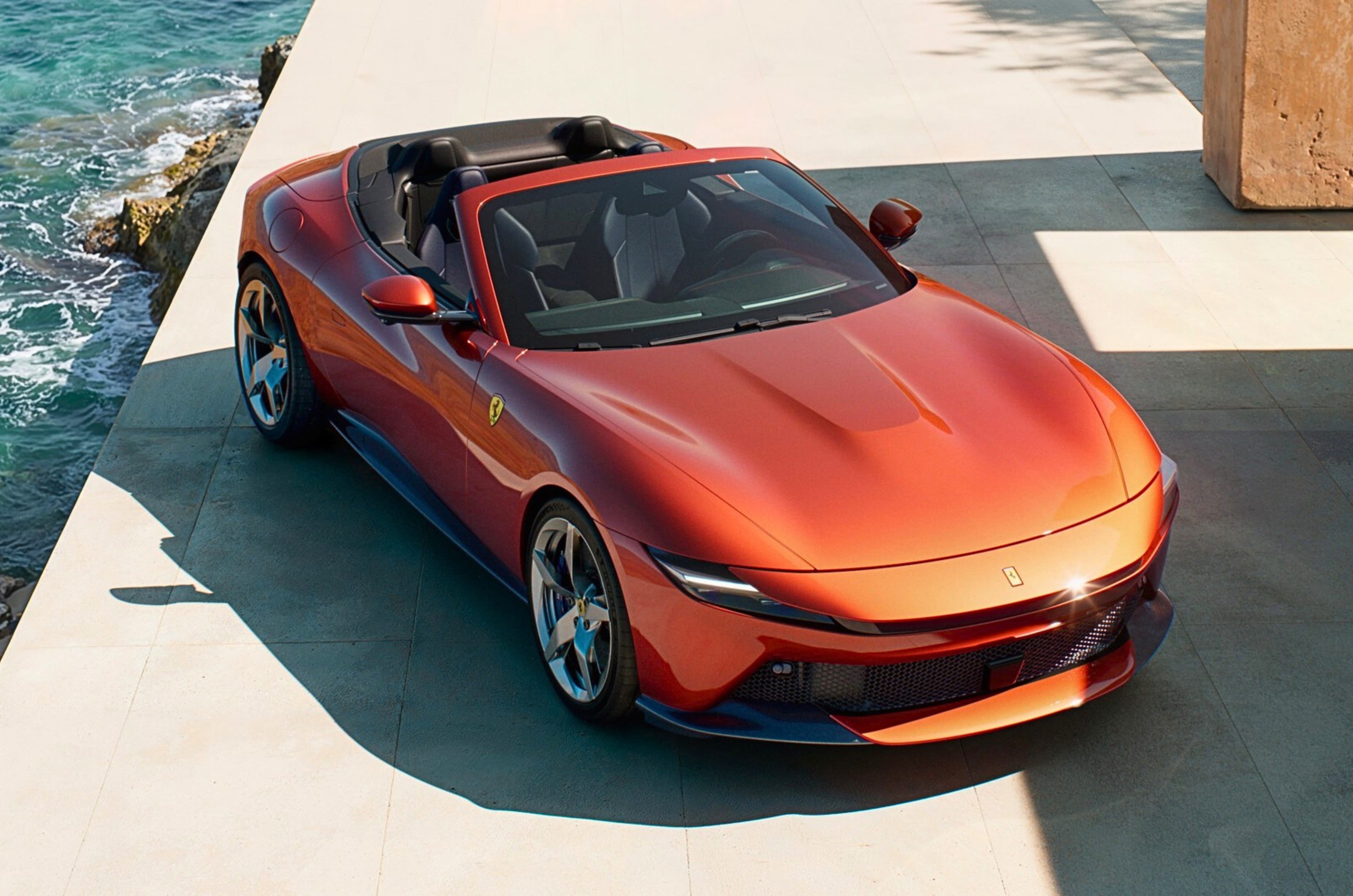
Ferrari India has begun accepting orders for the Amalfi Spider, priced at Rs 4.6 crore, before options. As the name suggests, the Amalfi Spider is the convertible derivative of the Ferrari Amalfi grand tourer, and it’s available in India just a few months after its global debut in March 2026.

Compared to its coupe counterpart, which is currently priced at Rs 4.08 crore (before options), the Amalfi Spider commands a premium of Rs 52 lakh.

Ferrari Amalfi Spider powertrain and performance

Retains coupe’s 640hp twin-turbo V8 

The Amalfi Spider is powered by the same 3.9-litre twin-turbo V8 as its coupe sibling, developing 640hp and 760Nm. This is funnelled solely to the rear wheels via an 8-speed dual-clutch automatic. Ferrari claims a 0-100kph time of 3.3 seconds and a top speed of 320kph – despite its drop-top form factor and 86kg heavier kerb weight, the Amalfi Spider is impressively similar to the coupe in terms of claimed performance.

Ferrari Amalfi Spider exterior and interior

Fabric roof can be operated at up to 60kph

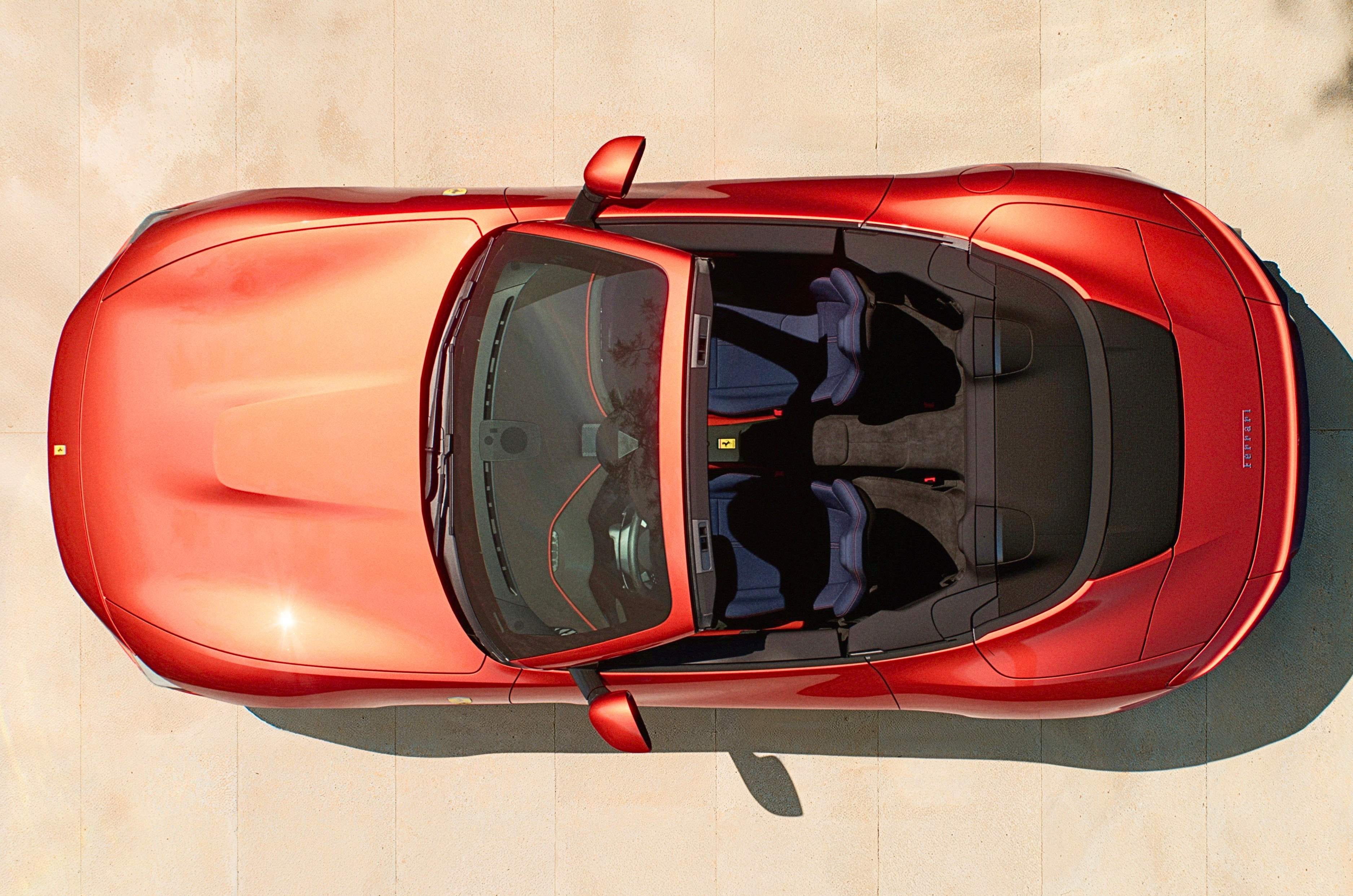
Expectedly, the Amalfi Spider looks identical to its coupe counterpart, with the only major visual differentiator being its folding fabric roof, which opens in 13.5 seconds at speeds of up to 60kph. Buyers can choose one of four colours for the roof, and the five-layer material it uses is said to maintain NVH levels comparable to those of a hard-top Ferrari.

Ferrari has also added wind deflectors to the Amalfi Spider’s rear-seat backrests to keep wind noise under control, and the convertible can be had in an exclusive Rosso Tramonto colour option too.

Mirrors the interior layout of the coupe

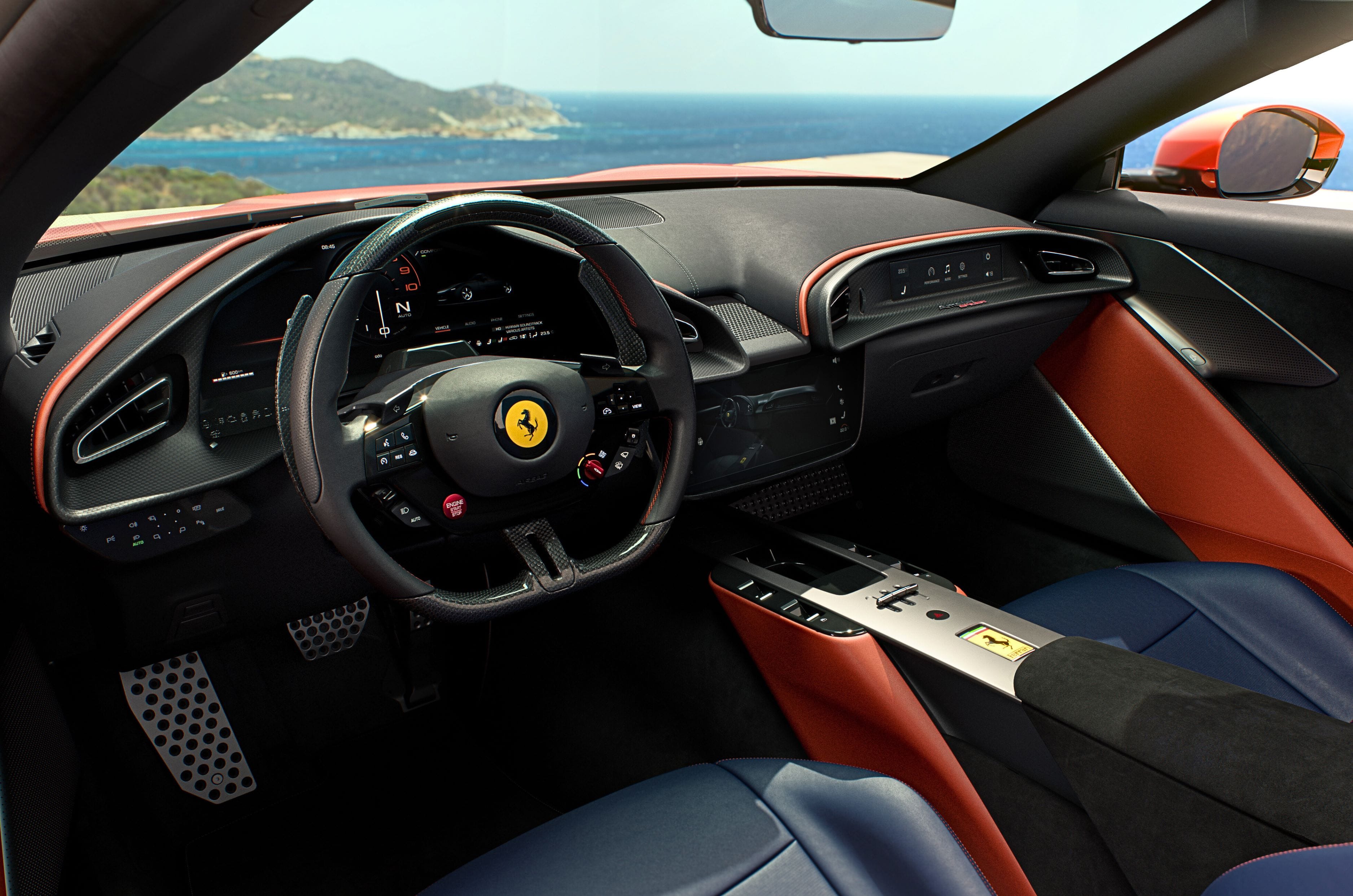
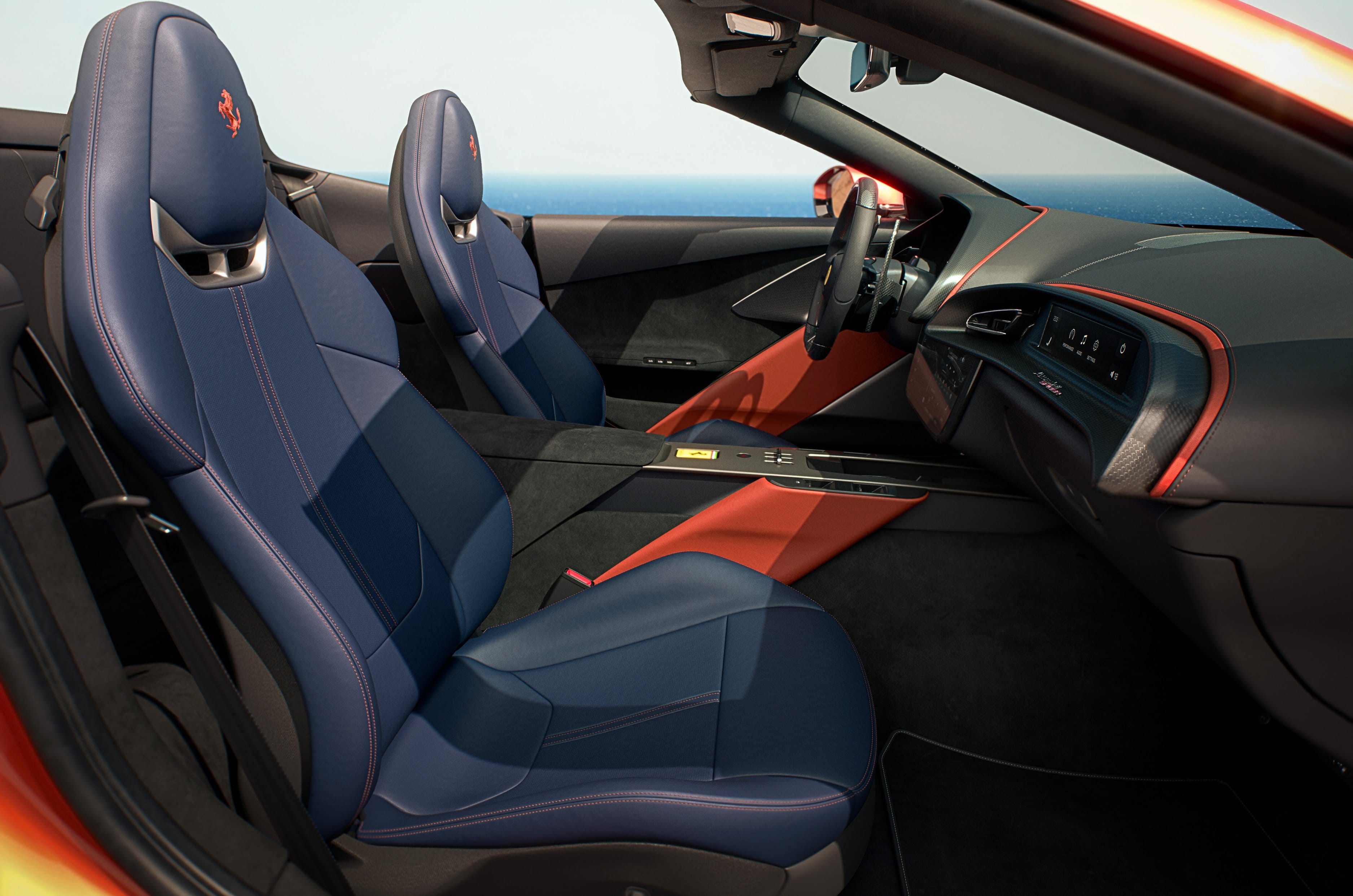
The interior layout of the Amalfi Spider is the same as that of the coupe too, with highlights like a 2+2 seating layout, a 10.25-inch central infotainment touchscreen, an 8.8-inch passenger display, a 15.6-inch digital driver’s display, powered sports seats, a three-spoke steering wheel with lots of physical controls, curved AC vents, and an aluminium-milled centre tunnel.

In terms of creature comforts, the Amalfi Spider packs wireless Apple CarPlay and Android Auto, ADAS, connected car tech, adaptive cruise control, automatic climate control, a wireless charging pad, and more. Buyers can also spec the Amalfi Spider’s upholstery, trim pieces, and colour schemes to their individual tastes thanks to a plethora of personalisation options too. As for boot space, the Amalfi Spider is rated at 255 litres with the roof closed, and 172 litres with the roof stowed.

Aston Martin reveals military-spec V12 Dreadnought 4×4 SUV

Aston Martin Dreadnought SUV front quarter

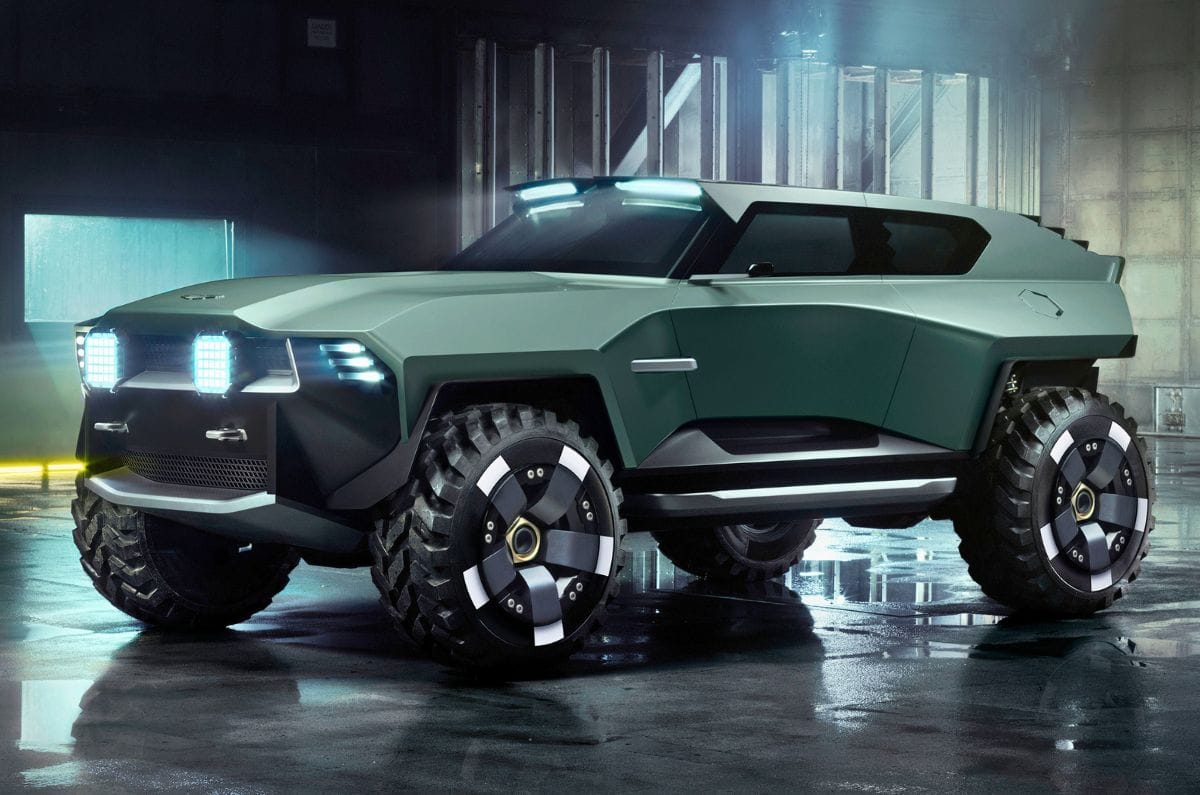
Aston Martin has revealed the Dreadnought as a military-spec 4×4 SUV with a V12 mill. It is a virtual vehicle made for Call of Duty: Modern Warfare 4, created in collaboration with the game’s developers and publishers. The Aston Martin Dreadnought has off-road-specific design elements inside and out, and its full-size model is being displayed to the public at the Fanatics Fest in New York till July 19.

  1. Under five metres in length and 2.1 metres wide, as per Autocar UK
  2. Powered by the Vanquish GT’s 824bhp twin-turbo V12 mill
  3. Will be Available in ‘DMZ’ and ‘Warzone’ modes in the game

The name ‘Dreadnought’ is inspired by the British Royal Navy’s HMS Dreadnought battleship from the early 1900s and literally translates to “one who fears nothing”.

Aston Martin Dreadnought: Exterior design

The 2-door SUV has chunky off-road-spec tyres and Valour-like rear design elements

The Chiltern Green-hued Aston Martin Dreadnought has an imposing design that features a plethora of rugged elements, including “military-grade armour-plating”. 

At the front, it gets horizontally stacked LED headlights that give it a futuristic look. The grille features a pixel-shaped design for the mesh LED fog lamps. These squared elements are also present on the front bumper, which sports two silver tow hooks and a silver skid plate that adds contrast.

In profile, it features huge dual-tone alloy wheels clad with chunky off-road spec tyres. It gets squared-off wheel arches and aggressive creases in profile. This 2-door SUV features flush-type door handles and camera-based outside rearview mirrors (ORVMs). The lower section of the door features black-and-silver cladding, as well as silver sidesteps to climb into the tall SUV.

At the rear, it gets Valour-like aerodynamic fins on the rear windscreen, multiple LED taillights, and a black strip with Aston Martin lettering. It also gets a quad-exhaust setup, silver two hooks and a silver skid plate for a more rugged and aggressive look.

As per Autocar UK, the Dreadnought SUV measures “just under five metres in length and 2.1 metres wide”. 

Government releases revised CAFE III draft

Cafe 3

The Ministry of Power has released a revised draft of the third phase of the Corporate Average Fuel Economy norms (CAFE III) for passenger vehicles, proposed to take effect from April 1, 2027. According to industry experts, the revised draft adopts a more balanced approach than the earlier proposal by relaxing the overall fuel efficiency targets. Public comments on the draft have been invited for 21 days before the rules are finalised.

  1. Fuel consumption target to tighten progressively until FY2032
  2. Manufacturers can trade compliance credits or buy them from the Bureau of Energy Efficiency

Under the proposal, manufacturers will have to submit fuel efficiency data under both the Modified Indian Driving Cycle (MIDC) and the Worldwide Harmonised Light Vehicles Test Procedure (WLTP). The ministry said a conversion factor between the two test cycles will be notified separately.

Proposed fuel efficiency targets

The draft proposes progressively stricter fuel efficiency targets over five years. The fleet-average target is proposed at 3.996 litres per 100km (94.76g CO₂/km) for FY2028, tightening to 3.327 litres per 100km (78.90g CO₂/km) by FY2032. According to industry experts, these targets are less stringent than those proposed in the earlier draft.

Credit trading mechanism retained

Manufacturers that exceed their prescribed fuel efficiency targets will continue to earn compliance credits, while those falling short will accumulate debits. These credits can either be traded with other manufacturers or purchased from the Bureau of Energy Efficiency (BEE).

The draft proposes a buyout price of Rs 2,500 per gCO₂/km for FY2028, increasing gradually to Rs 4,500 per gCO₂/km by FY2032.

The revised draft also finalises the technical criteria for claiming fuel-efficiency benefits from technologies such as start-stop systems, regenerative braking, tyre-pressure monitoring systems (TPMS), electric water pumps, high-efficiency air-conditioning systems and advanced glazing.

It also retains incentives for battery electric vehicles, plug-in hybrids, strong hybrids and flex-fuel vehicles through super credits and carbon neutrality factors.

Maruti Suzuki responds to Raipur Consumer Court order

Maruti Grand Vitara front quarter static

Maruti Suzuki has responded to the order issued by the District Consumer Disputes Redressal Commission of Raipur. In an official statement, the automaker contested the consumer court’s directions to provide a new, E20-compliant car to the complainant, i.e., Dr. Premraj Debta. Dr. Debta filed a complaint against Maruti Suzuki at Raipur’s consumer court over E20-related damages to his Grand Vitara.

  1. Brand says the car was E20 compatible
  2. Claims it found contamination in the fuel

Maruti challenges consumer court’s orders

Maruti Suzuki has now challenged the consumer court’s direction by stating that the Grand Vitara sold to Dr. Debta was E20 compatible. The automaker went on to say that the car was “fully equipped to handle E20 fuel and this was disclosed in the owner’s manual.”

Pushing back further, Maruti claimed that it has found evidence of contamination in the fuel collected from Dr. Debta’s Grand Vitara. “Several other facts have also not been reflected in the court’s order,” said Maruti Suzuki in its statement. The company said that it is now planning to escalate the matter in a higher court of law, while concluding that it “remains fully committed to quality, safety and customer satisfaction through robust engineering, processes and systems.”

Previously, a customer of a Toyota Innova Hycross found themselves in a similar situation when their car kept suffering frequent breakdowns due to E20 fuel. However, Vikram Gulati, Country Head & Executive Vice President at Toyota Kirloskar Motor, responded to this by saying that the culprit here was contaminated fuel, not E20. Meanwhile, Hindustan Petroleum Corporation Limited (HPCL) stated that during its nation-wide fuel quality tests, the company found no instances of adulteration, contamination, or critical quality lapses.

Maruti E20 Raipur case recap

Just to recap, on July 14, 2026, the District Consumer Disputes Redressal Commission of Raipur ordered Maruti Suzuki to replace Dr. Debta’s Grand Vitara with a new, E20-compatible car. The doctor alleged that his car’s engine had stalled several times due to E20 petrol and that the issue was never permanently fixed by Maruti despite multiple visits to the service centre. Ultimately, the consumer court ordered the automaker to replace the complainant’s car with a brand-new one within 45 days, or pay monetary compensation.

Also read

JSW MG to launch XEV 9S-rivalling electric SUV in August 2026

Next-gen Toyota Hilux teased ahead of launch this month

Government releases revised CAFE III draft

Cafe 3

The Ministry of Power has released a revised draft of the Corporate Average Fuel Economy (CAFE III) norms for passenger vehicles, proposed to come into effect from April 1, 2027. According to industry experts, the revised draft adopts a more balanced approach than the earlier proposal by relaxing the overall fuel efficiency targets. Public comments on the draft have been invited for 21 days before the rules are finalised.

  1. Fuel consumption target to tighten progressively until FY2032
  2. Manufacturers can trade compliance credits or buy them from Bureau of Energy Efficiency

Under the proposal, manufacturers will have to submit fuel efficiency data under both the Modified Indian Driving Cycle (MIDC) and the Worldwide Harmonised Light Vehicles Test Procedure (WLTP). The Ministry said a conversion factor between the two test cycles will be notified separately.

Proposed fuel efficiency targets

The draft proposes progressively stricter fuel efficiency targets over five years. The fleet-average target is proposed at 3.996 litres per 100km (94.76g CO₂/km) for FY2028, tightening to 3.327 litres per 100km (78.90g CO₂/km) by FY2032. According to industry experts, these targets are less stringent than those proposed in the earlier draft.

Credit trading mechanism retained

Manufacturers that exceed their prescribed fuel efficiency targets will continue to earn compliance credits, while those that fall short will accumulate debits. These credits can either be traded with other manufacturers or purchased from the Bureau of Energy Efficiency (BEE).

The draft proposes a buyout price of Rs 2,500 per gCO₂/km for FY2028, increasing gradually to Rs 4,500 per gCO₂/km by FY2032.

The revised draft also finalises the technical criteria for claiming fuel-efficiency benefits from technologies such as start-stop systems, regenerative braking, tyre pressure monitoring systems (TPMS), electric water pumps, high-efficiency air-conditioning systems and advanced glazing.

It also retains incentives for battery electric vehicles, plug-in hybrids, strong hybrids and flex-fuel vehicles through super credits and carbon neutrality factors.

Hero MotoCorp enters German market with XPulse 200 4V

XPulse 200 4V Pro

Hero MotoCorp has officially entered the German market, taking its international footprint to 53 countries. Germany becomes the brand’s fifth active market in Europe, alongside Italy, Spain, France and the UK.

  1. Hero enters Germany through a distribution partnership with Austria-headquartered KSR Group
  2. Initial retail network of over 28 outlets across major German cities
  3. Brand enters the German market with the XPulse 200 4V

Hero MotoCorp Germany: What’s on offer

The XPulse 200 4V is Hero’s debut product in the German market

Hero has partnered with Austria-headquartered KSR Group to manage sales, logistics and after-sales operations in Germany. The initial retail network spans more than 28 sales and service outlets across major German cities, with plans to expand to 30 outlets. To support the launch, Hero is offering a five-year warranty package, comprising a standard three-year manufacturer warranty and a two-year promotional extension.

The initial product lineup consists of the standard and Pro variants of the XPulse 200 4V, priced at €2,990 (Rs 3.30 lakh) and €3,290 (Rs 3.62 lakh), respectively. For reference, in India the two variants are priced at Rs 1.45 lakh and Rs 1.57 lakh (ex-showroom), respectively.

As Hero continues to expand its presence in international markets with its adventure motorcycle lineup, it is also working on a significantly more capable offering. The upcoming Xpulse 421 has been spotted testing multiple times in recent months and will be built on an all-new platform with a new liquid-cooled engine. An EICMA 2026 debut appears likely, with a market launch expected to follow in 2027.

Dev Vadchhedia

Kia Syros 1.0 turbo MT vs DCT: Real world mileage compared

Kia Syros 1.0 turbo MT vs DCT: Real world mileage compared

The Kia Syros is a compact SUV that is positioned between the Sonet compact SUV and the Seltos midsize SUV. It is offered with a 1.0-litre turbo-petrol and 1.5-litre diesel engine options. Among these, the turbo-petrol engine comes with manual and DCT options, with claimed fuel efficiency of up to 18.2kpl. But which of these two powertrain options offers more real-world mileage? Let’s find out.

Kia Syros 1.0L turbo-petrol MT vs DCT: Specifications and price

The Syros turbo MT’s top-end price is similar to the DCT’s starting price

Kia Syros 1.0L turbo-petrol MT vs DCT: Specifications and price


Syros 1.0TP MT

Syros 1.0TP DCT

Engine

3-cyl, turbo-petrol

3-cyl, turbo-petrol

Displacement (cc)

998

998

Power (hp)

120

120

Torque (Nm)

172

172

Gearbox

6-speed MT

7-speed DCT

Fuel tank capacity (litres)

45

45

Claimed mileage (kpl)

18.2

17.68

Price range (Rs, lakh)

8.42-12.02

11.96-15

With a total output of 120hp and 172Nm, the Syros has one of the most potent turbo-petrol engines in the segment. It is available with either a 6-speed manual or a 7-speed DCT, with the former claiming to be the more frugal option. The manual version is more affordable than the DCT, and interestingly, the top-end manual’s price is just Rs 6,000 more than the entry-spec DCT variant.

Kia Syros 1.0L turbo-petrol MT vs DCT: Real-world fuel efficiency

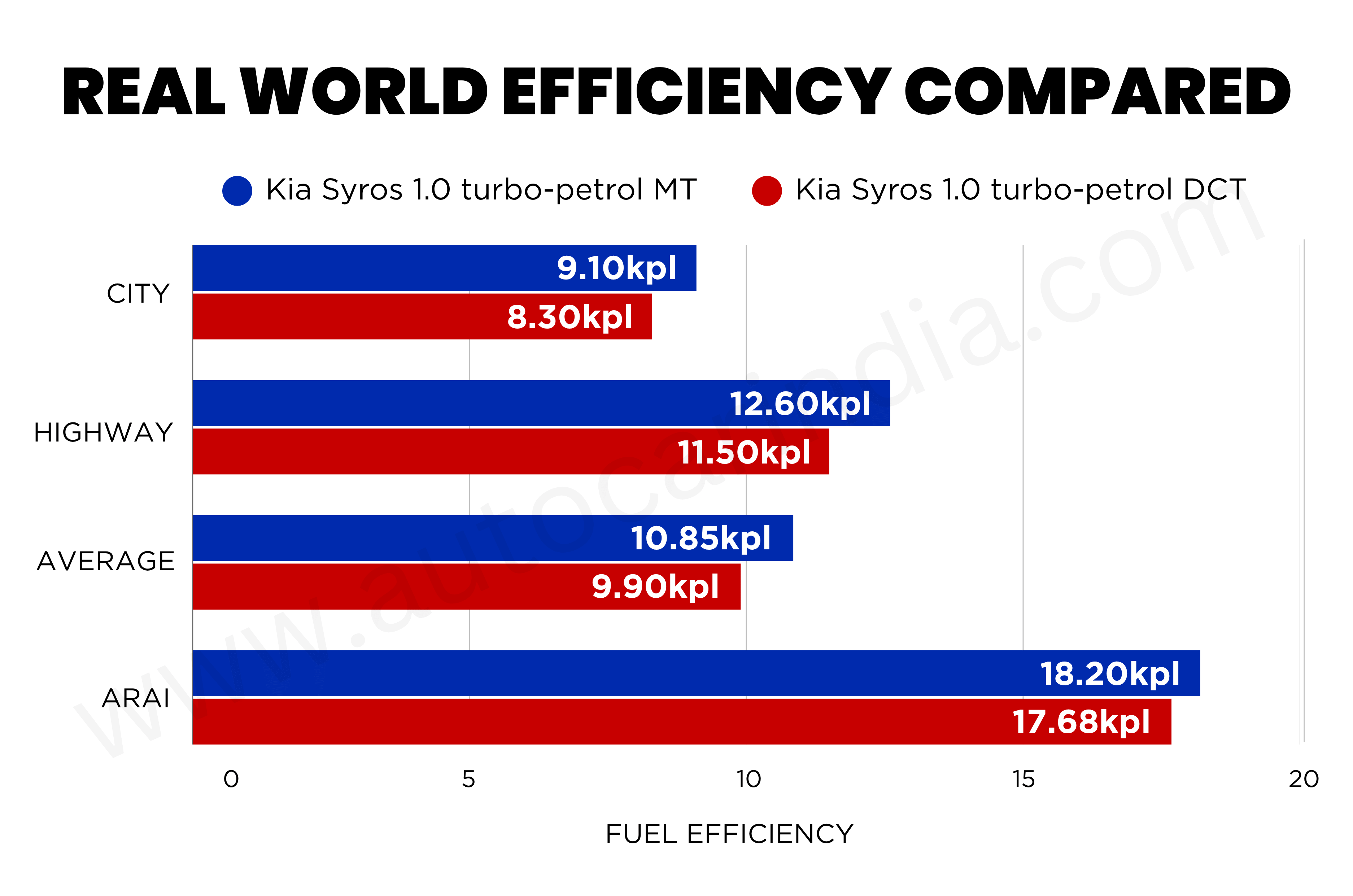
The manual is almost 1kpl more frugal than the DCT

Kia Syros 1.0L turbo-petrol MT vs DCT: Acceleration from rest (in seconds)


Syros 1.0TP MT

Syros 1.0TP DCT

Tested city mileage (kpl)

9.10

8.30

Tested highway mileage (kpl)

12.60

11.50

Tested average mileage (kpl)

10.85 

9.90

In our real-world tests, we found that the manual version was more frugal than the DCT version in both city and highway conditions by 0.81kpl and 1.1kpl, respectively. This results in the Syros turbo-petrol manual being overall 0.95kpl more fuel efficient than the DCT version. 

Autocar India’s fuel efficiency testing

Before our real-world fuel efficiency tests, we fill our test cars’ tanks to the brim and maintain tyre pressures based on the manufacturer’s recommendations. These cars are driven in fixed city and highway loops in and around Navi Mumbai, and we maintain certain average speeds. Throughout the tests, there is only one person in each car, running the air conditioner and other electricals, such as the audio system, indicators and wipers, when required, just like a regular user would. Periodic driver swaps further neutralise variations in driver patterns. At the end of each cycle, we calculate efficiency by filling the tanks to full again.

Prices are ex-showroom, India.

All you need to know about the upcoming Kia Syros EV

Kia Syros EV front quarter static

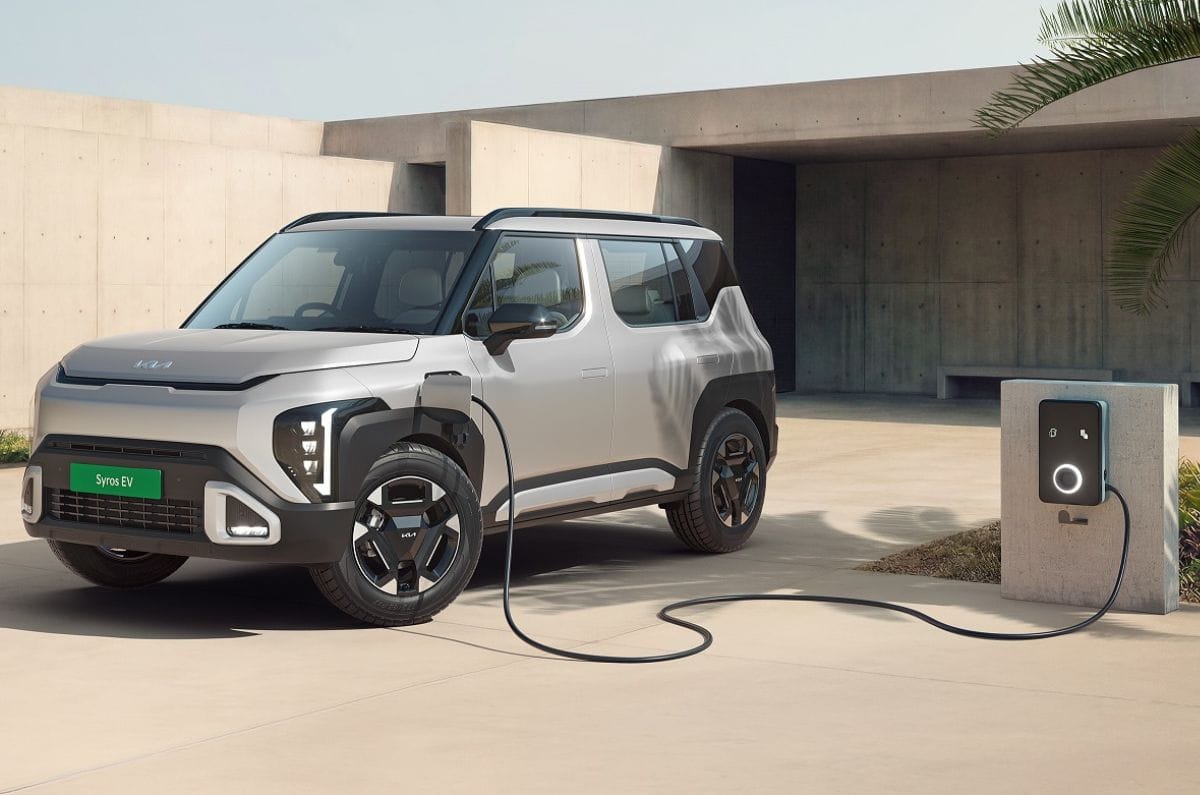
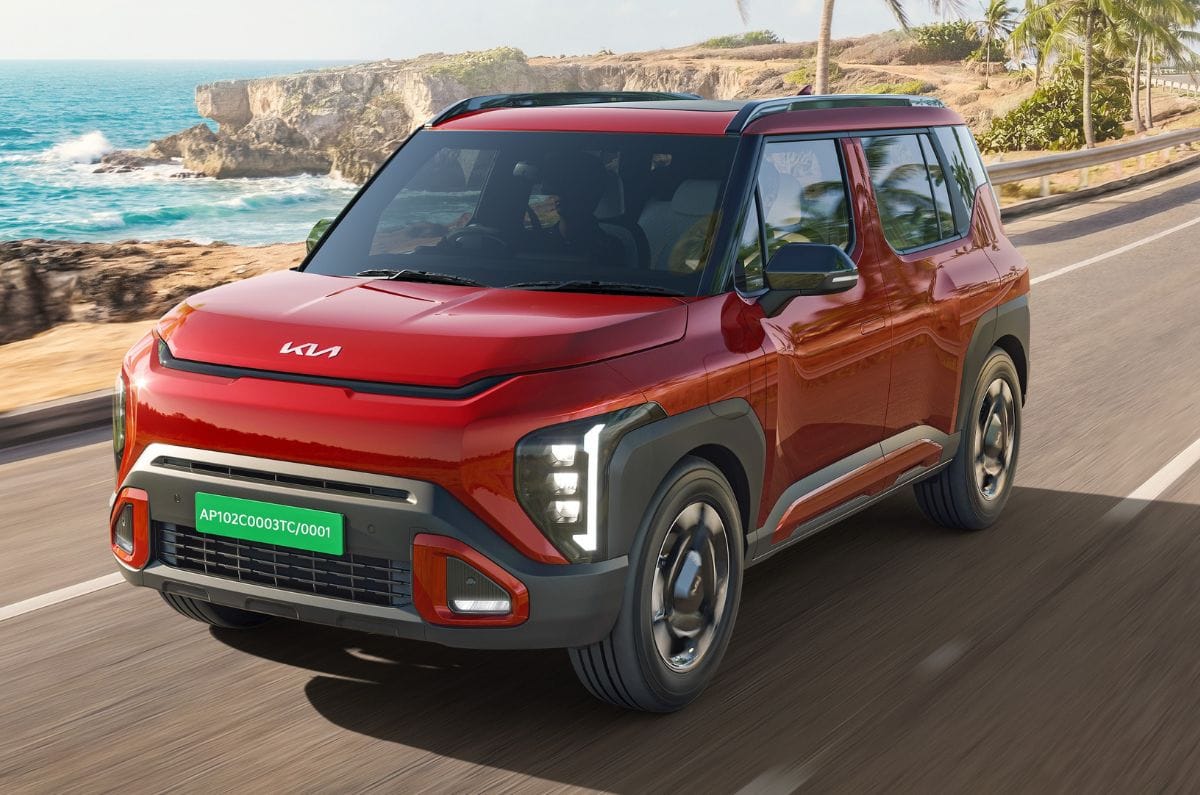
Kia is aiming at the growing compact electric SUV segment with the upcoming Syros EV, set to be its second mass-market electric model for India. The Syros EV utilises the same K1 platform as its ICE-powered counterpart. Bookings for the Syros EV are already open ahead of its launch, scheduled for the end of July 2026. In this article, we answer everything that you need to know about the Syros EV.

1. What battery pack options does the Kia Syros EV offer, and how much power does its motor produce?

The Kia Syros EV offers the same 42kWh and 51.4kWh battery packs that do duty in the Kia Carens Clavis EV and the Hyundai Creta Electric. Both are mated to a front-mounted motor. In the 42kWh guise, the motor delivers 135hp and 255Nm, but in the 51.4kWh guise, power is bumped to 171hp, while torque remains the same. The 51.4kWh battery pack and its 171hp motor make it the model with the largest battery pack and the most powerful motor in the class. Kia claims a 0-100kph sprint in 8.1 seconds with the 51.4kWh version.

2. What is the claimed range of the Kia Syros EV?

The ARAI-rated range is 443km for the 42kWh battery pack and 543km for the larger 51.4kWh unit. Not only does the Syros EV have a higher claimed range than the Clavis EV and the Creta Electric, but its 543km figure is also the highest in the compact electric SUV segment.

3. What charging speeds does the Kia Syros EV support, and how long does it take to charge?

The Kia Syros EV supports up to 11kW AC charging speeds, while DC charging is capped at 100kW. A 10-100 percent top-up for the 42kWh version takes 6 hours with the 7.4kW charger and 4 hours with the 11kW unit. In the 51.4kWh guise, the same takes 7 hours and 15 minutes with a 7.4kW charger and 4 hours and 50 minutes with an 11kW charger. Kia also claims that with a 100kW DC fast charger, both batteries can charge from 10 to 80 percent in 39 minutes.

4. How different is the Kia Syros EV from the ICE Syros on the outside and inside?

The Kia Syros EV may look largely similar to the ICE Syros, but it comes with a charging flap on the front fender, EV badging at the rear and a different set of alloy wheels that give it some distinction. Apart from these differences, it retains the overall tall-boy silhouette, front and rear bumper designs and lighting elements found on its combustion-powered counterpart.

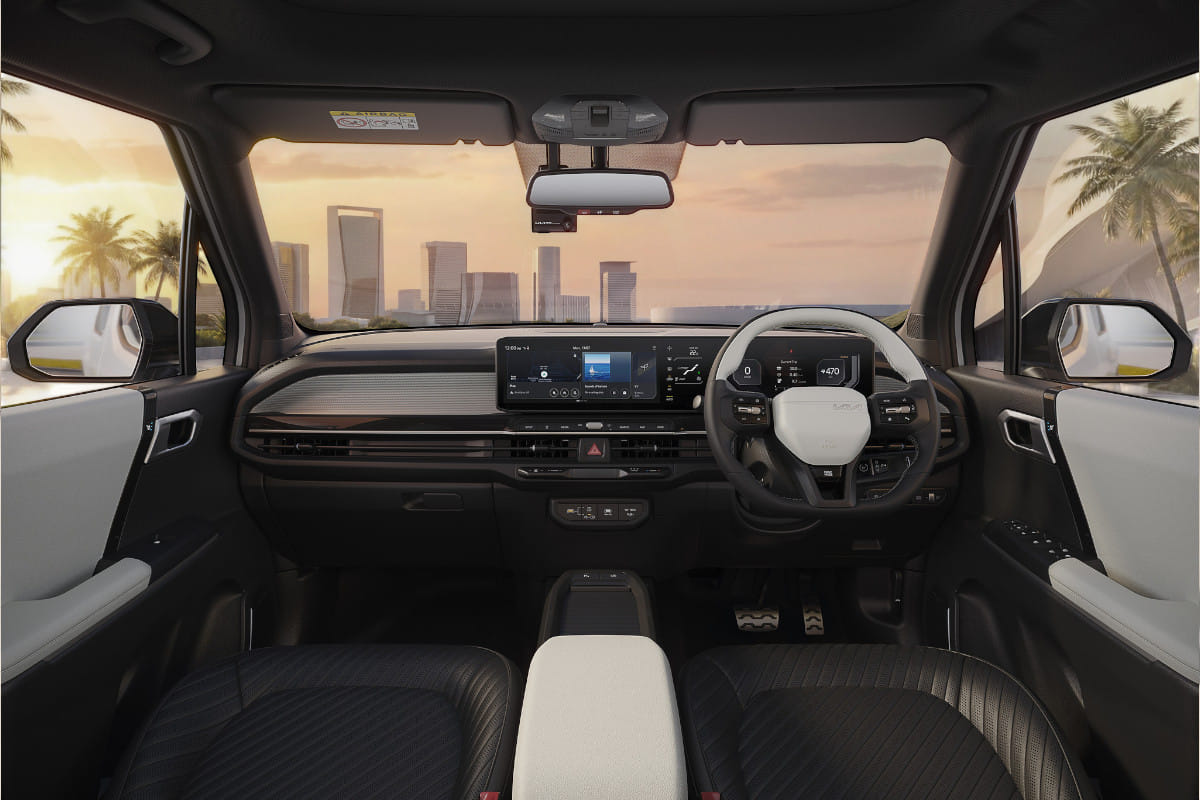
Inside, the dashboard layout remains the same as the ICE Syros, but there are some revisions to the centre console, which is high-set and features storage spaces and retractable cup holders. Also, the drive select lever has shifted to the steering wheel column.

5. What features does the Kia Syros EV come with?

For starters, the Kia Syros EV retains its ICE counterpart’s unique sliding and reclining rear seat with a ventilation function for the seat base. It also gets features such as dual 12.3-inch screens, a 5-inch HVAC control screen, wireless Apple CarPlay and Android Auto, a wireless charging pad, an 8-speaker Harman Kardon sound system, a panoramic sunroof, 64-colour ambient lighting and rear sunshades.

6. What does the Kia Syros EV offer over the ICE-powered Syros?

Apart from having EV-specific features such as a 16-litre frunk, regenerative braking, a virtual engine sound system and vehicle-to-load (V2L) functionality, it gets Level 2 ADAS, automatic flush door handles, a 360-degree camera setup, a dual-camera dashcam, a digital key, puddle lamps, multi-colour ambient lighting and metal pedals over the ICE-powered Syros.

7. What is the expected price of the Kia Syros EV?

The Kia Syros EV is expected to be priced from Rs 15 lakh to Rs 20 lakh, ex-showroom. It will take on the Mahindra XUV 3XO EV and the segment-reigning Tata Nexon EV, among others.