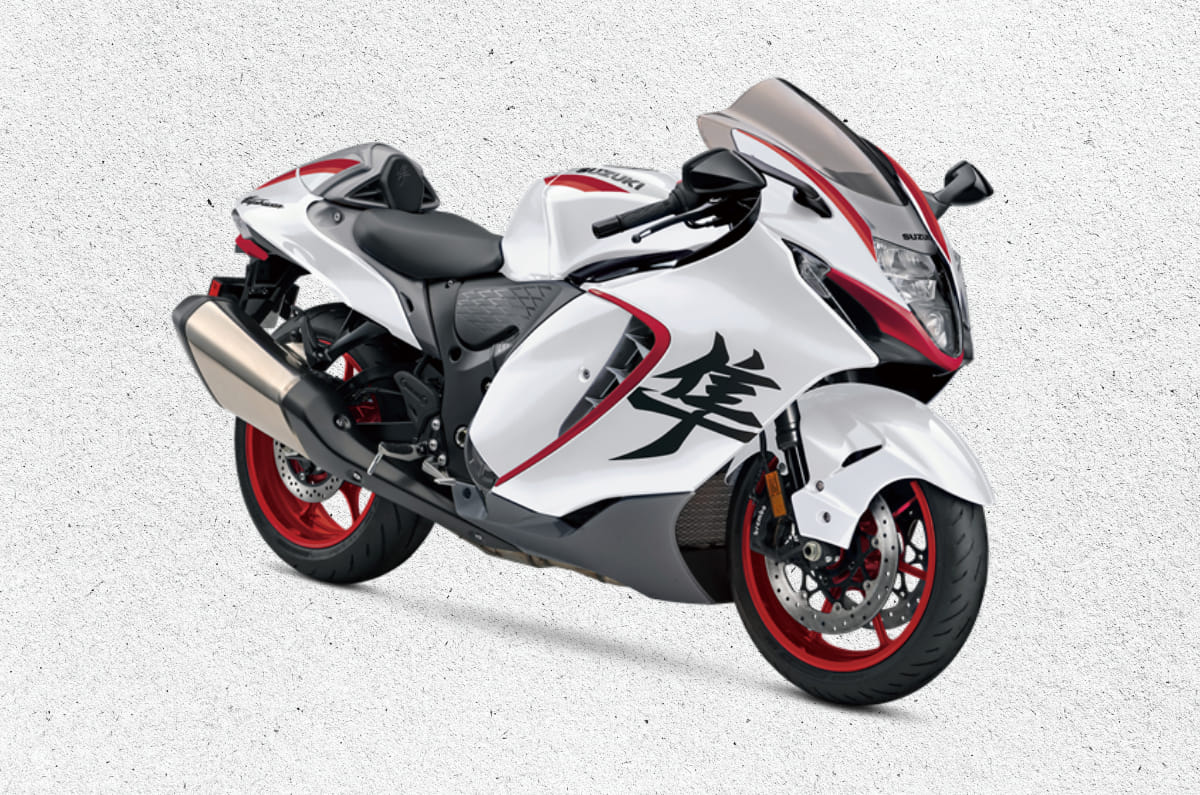
Suzuki has revealed the 2027 Hayabusa with a total of three new colour options– two standard and one Special Edition. Aside from the revised paint schemes, the motorcycle carries over its mechanical and electronics package unchanged from the previous model year.
Hayabusa gets three new colour options for 2027
Special Edition gets a white and grey colour scheme with red accents
1,340cc inline-four makes 190hp and 150Nm
2027 Suzuki Hayabusa details
The Special Edition gets unique badging and a colour-matched solo seat cowl as standard
The 2027 Suzuki Hayabusa will be available in two standard colour options– Glass Sparkle Black and Metallic Reflective Blue. Meanwhile, the Special Edition is finished in Pearl Brilliant White and Metallic Oort Gray with red highlights, and adds Special Edition badging, a raised Suzuki fuel tank emblem, black exhaust end caps and a colour-matched solo seat cowl as standard.
Mechanically, the 2027 Hayabusa continues with the same 1,340cc liquid-cooled inline-four engine producing 190hp and 150Nm, paired with a 6-speed gearbox and a bidirectional quickshifter. The full Suzuki Intelligent Ride System (S.I.R.S.) electronics package has also been carried over unchanged, including traction control, launch control, cruise control, multiple riding modes and cornering ABS.
The Hayabusa is currently priced at Rs 18.05 lakh (ex-showroom, Delhi) in India. It remains to be seen whether these new colour options will make their way to our market.
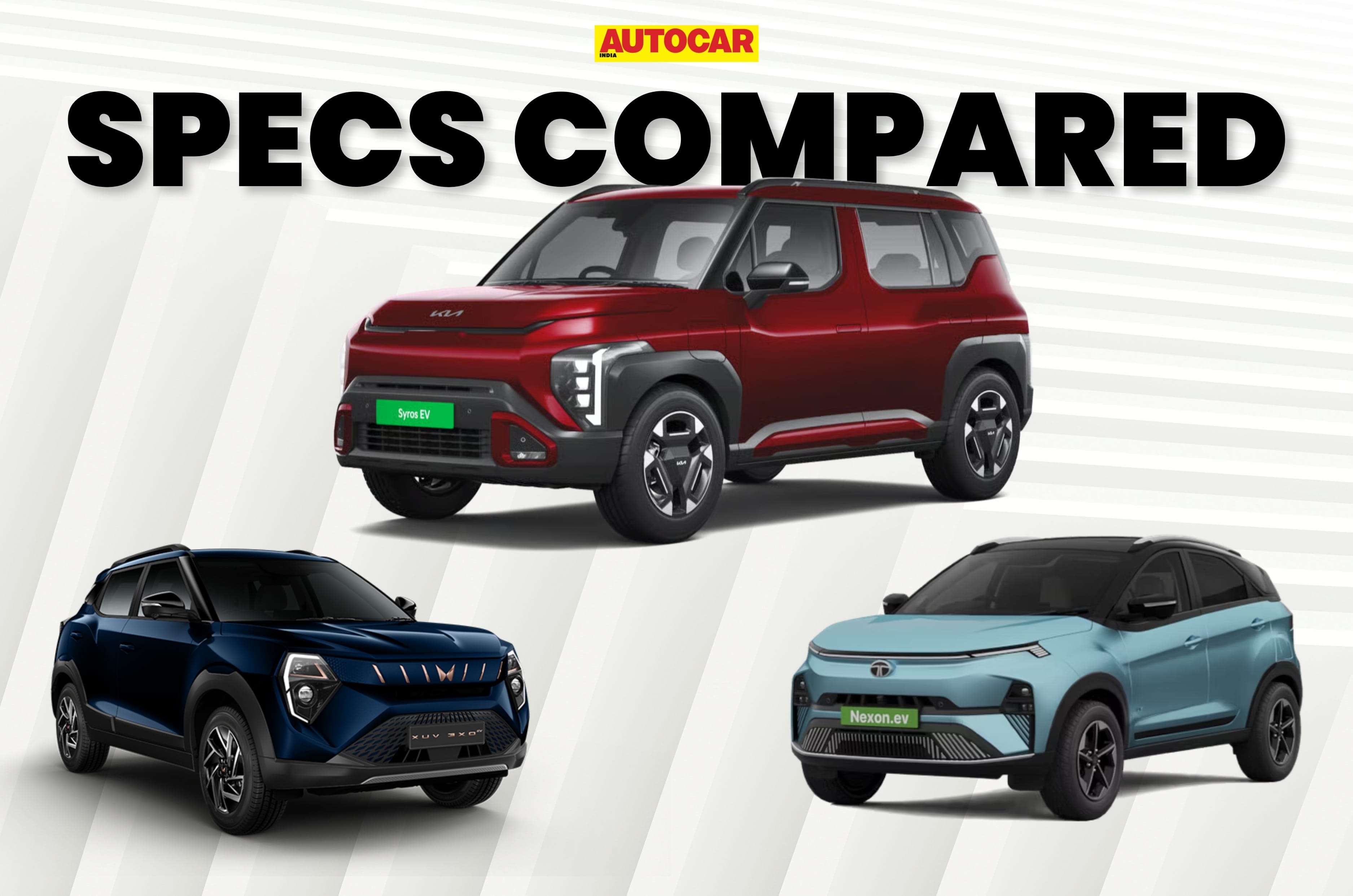
Kia recently unveiled the Syros EV as its smallest all-electric model in India. While prices are yet to be announced, Kia has revealed its variant-wise features, specifications, and powertrain options. The Syros EV will compete with the Tata Nexon EV and Mahindra XUV 3XO EV. Here’s how its specifications and powertrain options compare with its rivals.
Kia Syros EV vs rivals: Dimensions
Kia is yet to reveal the ground clearance and boot space of the Kia Syros EV
Kia Syros EV vs rivals: Dimensions and other specifications
Kia Syros EV
Tata Nexon EV
Mahindra XUV 3XO EV
Length
3,995mm
3,995mm
3,990mm
Width
1,805mm
1,802mm
1,821mm
Height
1,670mm
1,625mm
1,653mm
Wheelbase
2,550mm
2,498mm
2,600mm
Ground clearance
–
190-205mm
190mm
Boot space
–
350 litres
364 litres
The Kia Syros EV is similar in size to the Tata Nexon EV and Mahindra XUV 3XO EV, with a length of 3,995mm. The dimensional differences between the three SUVs are minimal, with variations limited to a few millimetres in most areas. The Syros EV is the tallest of the three at 1,670mm, while its 2,550mm wheelbase is longer than the Nexon EV’s but shorter than the XUV 3XO EV’s.
Kia Syros EV vs rivals: Powertrain options
The Syros EV and Nexon EV get two battery options, XUV 3XO EV gets just one
Kia Syros EV vs rivals: Powertrain options
Kia Syros EV
Tata Nexon EV
Mahindra XUV 3XO EV
Battery pack (kWh)
42 | 51.4
30 | 45
39.4
Drive configuration
FWD
FWD
FWD
Power (hp)
135 | 171
129 | 144
150
Torque (Nm)
255 | 255
215 | 215
310
ARAI range (km)
443 | 526
275 | 489
351
AC charging time*
4h 50m | 4h
4h 18m | 6h 36m
6h 50m
*AC charging times: Syros EV with an 11kW AC charger; Nexon EV and XUV 3XO EV with a 7.2kW AC charger.
The Kia Syros EV’s 51.4kWh is offered with the largest battery pack in the segment and delivers the highest claimed range. Its claimed range of 526km, is 37km more than the Tata Nexon EV’s 45kWh variant and 175km more than the Mahindra XUV 3XO EV. The 42kWh battery pack offers a claimed range that is 168km longer than the Tata Nexon EV’s 30kWh battery and 92km longer than the Mahindra XUV 3XO EV’s. While the Syros EV’s electric motor produces the highest power output at 171hp, the Mahindra XUV 3XO EV leads in torque with 310Nm.
For a 0-100 percent charge, the Kia Syros EV’s 42kWh battery takes 4 hours 50 minutes, while the 51.4kWh battery takes 4 hours using an 11kW AC charger. The Tata Nexon EV’s smaller and larger battery packs take 4 hours 18 minutes and 6 hours 36 minutes, respectively, with a 7.2kW AC charger. The Mahindra XUV 3XO EV takes 6.5 hours with the same 7.2kW AC charger. The Kia Syros EV supports up to 100kW DC fast charging, while the Tata Nexon EV and Mahindra XUV 3XO EV support up to 60kW and 50kW DC fast charging, respectively.
Kia Syros EV vs rivals: Prices
Kia is yet to reveal the prices of the Syros EV
Kia Syros EV vs rivals: Prices (in Rs, lakh)
Kia Syros EV
Tata Nexon EV
Mahindra XUV 3XO EV
Price
To be revealed
12.49 to 17.49
13.89 to 14.96
The Tata Nexon EV has a lower starting price than the Mahindra XUV 3XO EV by Rs 1.4 lakh, while its top-spec variant is Rs 2.53 lakh more expensive. The Kia Syros EV’s regular prices are expected to be in a similar range to those of its rivals; however, Kia’s Battery-as-a-Service (BaaS) option could reduce the initial purchase cost.
Kia has unveiled its second mass-market electric model for India in the form of the Syros EV. Though it shares its K1 platform with its ICE counterpart, it utilises the same battery packs found on the larger Carens Clavis EV. While prices are yet to be announced, they are expected to be in the Rs 15 lakh to 20 lakh range. At launch, it will take on the likes of the Tata Nexon EV, which currently dominates the segment, and the Mahindra XUV 3XO EV. In this article, we explain all the variants on offer, the colours, the standard safety kit, and the variant-wise features of the Syros EV.
Kia Syros EV variant-wise battery pack options
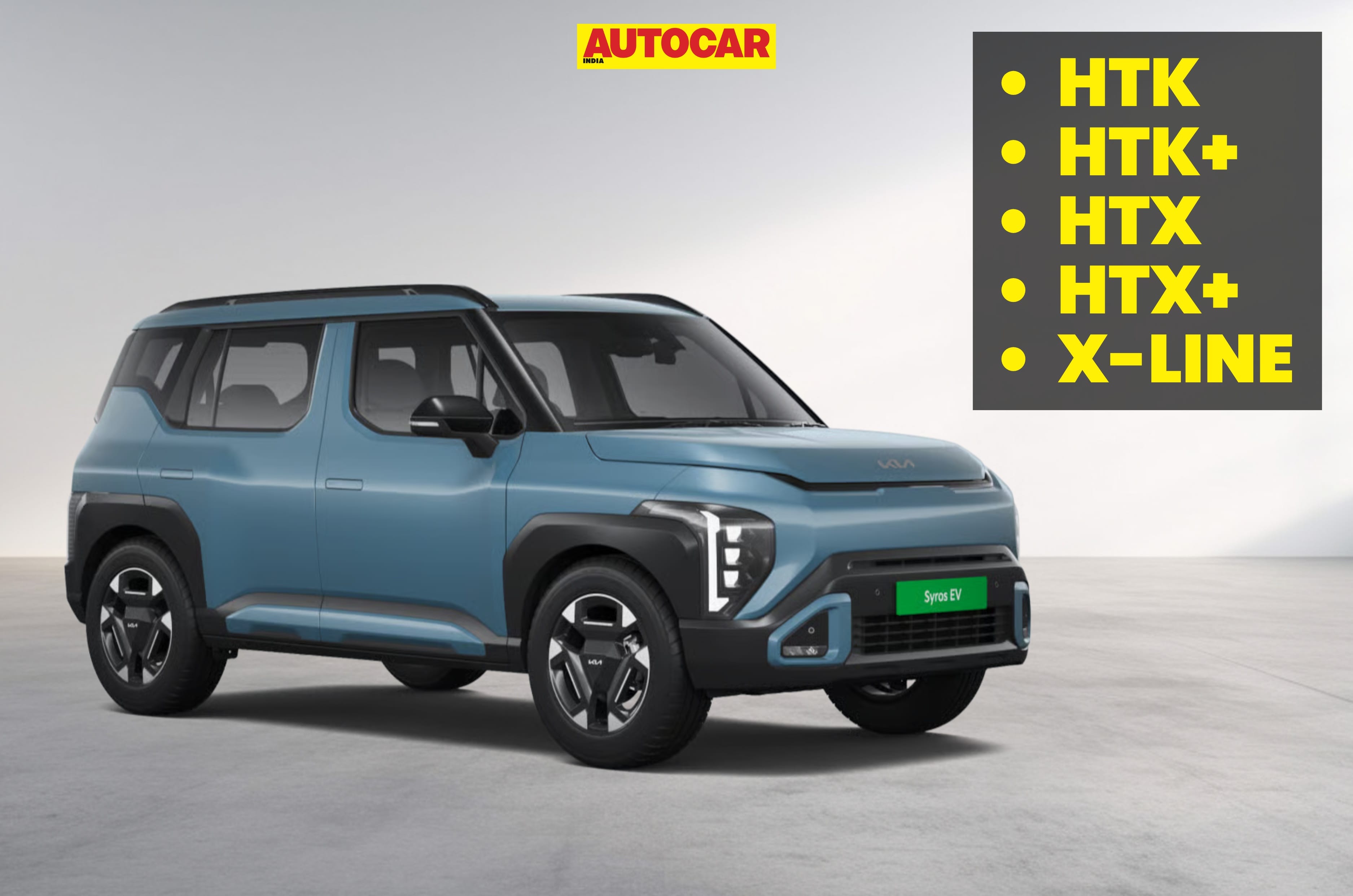
Offered in seven variants across five trims
Kia Syros EV variant-wise battery pack options
Trim
42kWh
51.4kWh (Extended range)
HTK
Yes
–
HTK+
Yes
Yes
HTX
Yes
Yes
HTX+
–
Yes
X-Line
–
Yes
The Kia Syros EV offers a choice of 42kWh and 51.4kWh battery packs. While the base HTK trim solely offers a 42kWh option, the mid-level HTK+ and HTX trims additionally offer the larger 51.4kWh battery pack. Meanwhile, the higher-end HTX+ and X-Line trims are available only with the 51.4kWh battery pack.
Both battery packs are paired to a front-mounted motor, which develops 135hp and 171hp in 42kWh and 51.4kWh guises, respectively. In both versions, the motor produces an identical 255Nm of torque. Kia claims a 0-100kph time of 8.1 seconds in 51.4kWh guise. While the 42kWh battery pack gets an ARAI-claimed range of 443km, the 51.4kWh version’s claimed range is 526km. Not only has Kia equipped the Syros EV with the largest battery pack in its segment (51.4kWh), but it also gets the most powerful motor and the highest claimed range figure in its class.
Both versions support up to 11 kW AC charging speeds, while DC charging support is up to 100kW. At 11kW AC speeds, a smaller 42kWh battery takes four hours to charge from 10-80 percent, while the 51.4kWh battery takes an additional 50 minutes. However, with a 100kW DC charger, both versions can charge from 10-80 percent in the same 39 minutes, claims Kia.
Kia Syros EV exterior and interior colours
Nine options for the exterior, three for the interior
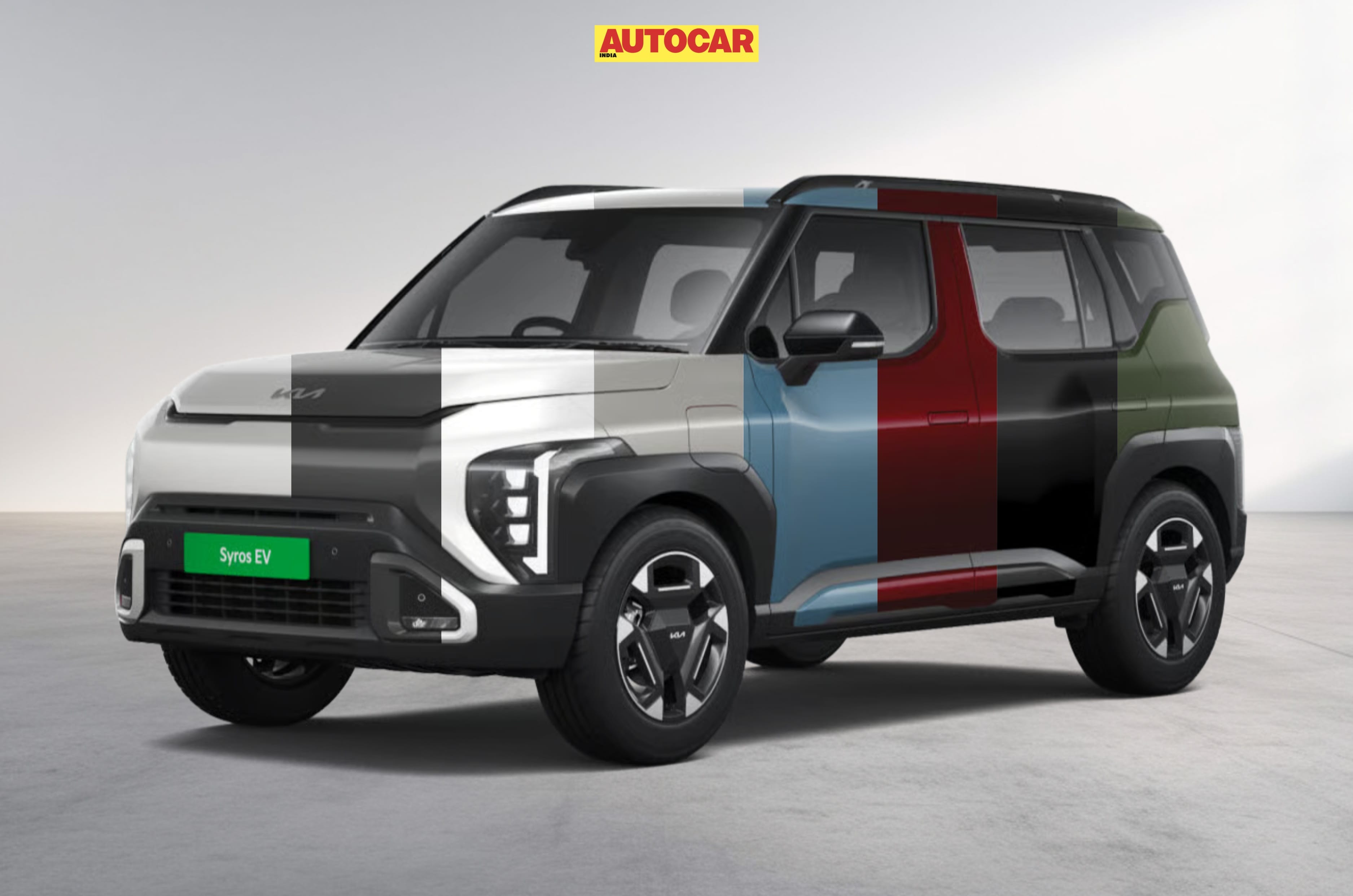
The Kia Syros EV is available only in nine monotone colour options. These include Ivory Silver Matte, Frost Blue, Gravity Grey, Pewter Olive, Magma Red, Ivory Silver Gloss, Aurora Black Pearl, Glacier White Pearl, and Xclusive Matte Graphite. Of these, the top X-Line trim is available solely in the Aurora Black Pearl and Xclusive Matte Graphite colours.
Inside, the Syros EV offers three interior and seat upholstery options depending on the chosen trim. HTK, HTK+ and HTX trims get blue and grey semi-leatherette seat upholstery and green accents throughout the interior, while the HTX+ trim gets black and white leatherette seat upholstery and white accents throughout the interior. The top X-Line trim comes with black and green leatherette seat upholstery with green accents across the interior.
Kia Syros EV standard safety kit
Gets six airbags, electronic parking brake, hill start assist, TPMS, to name a few
As standard, the Kia Syros EV is equipped with six airbags, ABS, brake assist, ESC, stability control, hill-start assist, tyre pressure monitoring system (TPMS), all-wheel disc brakes, electronic parking brake with auto hold, follow-me-home headlamps, virtual engine sound system, child lock, rear parking sensors, speed sensing door locks, impact sensing auto door unlock, 3-point seatbelts for all seats, ISOFIX anchors, rear occupant alert, front passenger airbag on/off switch, and rear occupant alert.
Kia Syros EV variant-wise features list
HTK
Battery pack options: 42kWh
LED headlamps, DRLs, foglamps, and tail-lamps
16-inch aero-optimised alloy wheels
Flush door handles
Shark fin antenna
Blue and grey fabric-leatherette seat upholstery
12.3-inch infotainment system
12.3-inch digital driver’s display
Wireless Android Auto and Apple CarPlay
4 speakers and 2 tweeters
Steering-mounted controls
Tilt-adjustable steering
Drive modes (Eco, Sport, Normal)
4x USB Type-C ports
Portable charging cable
Front centre console with retractable cup holders and storage
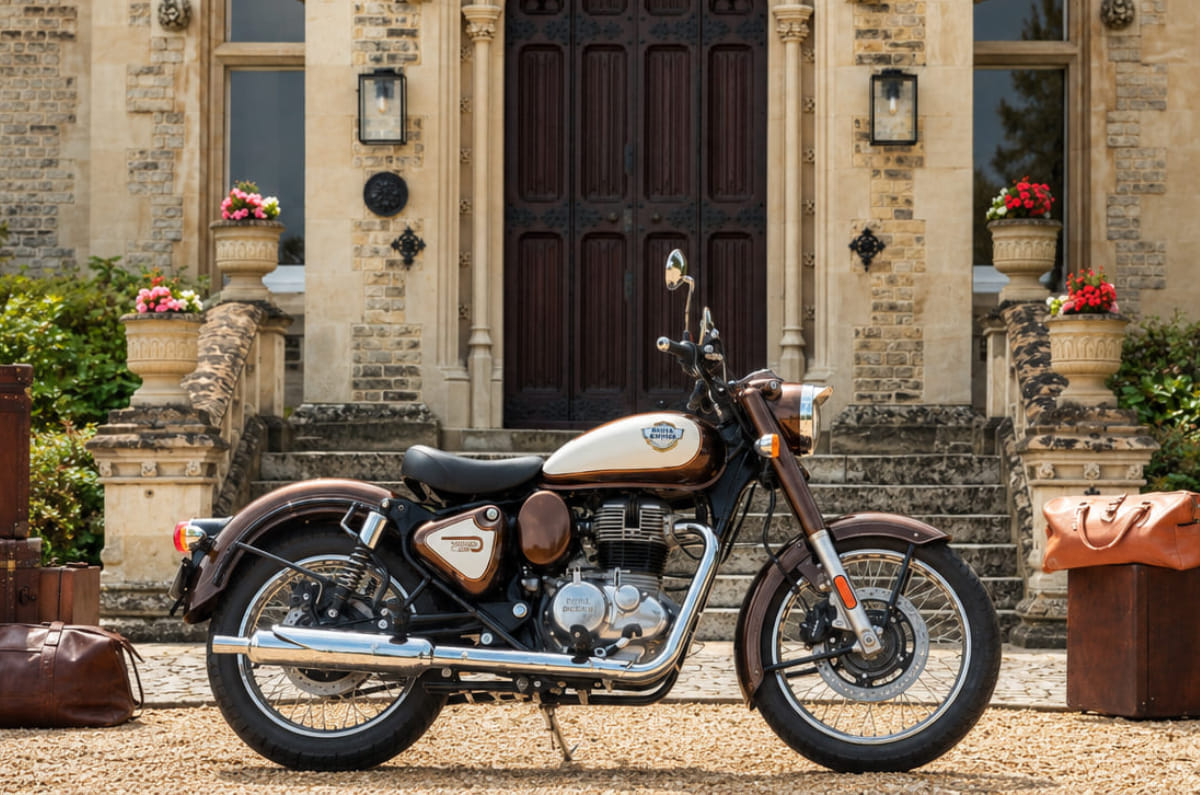
Royal Enfield has updated the Classic 350 for 2026 with two new features – an assist and slipper clutch, and a faster USB Type-C charging port. However, both additions are exclusive to the dual-channel ABS variants of the motorcycle, prices for which start at Rs 1.95 lakh. The base single-channel Redditch Red variant misses out on both updates and continues unchanged at Rs 1.87 lakh (ex-showroom, Delhi).
Assist and slipper clutch and faster USB Type-C charging added to dual-channel ABS variants
Base single-channel Redditch Red variant unchanged at Rs 1.87 lakh
Halcyon Black and Jodhpur Blue colours discontinued
2026 Royal Enfield Classic 350: What’s new
The Bullet 350 is now the only Royal Enfield 350 without an assist and slipper clutch
The 2026 Royal Enfield Classic 350 is the latest model in the brand’s 350cc lineup to receive these updates, following similar revisions to the Meteor 350, Hunter 350 and Goan Classic 350. With the Classic now updated, the Bullet 350 is the only Royal Enfield 350 that continues without an assist and slipper clutch, although we expect that to change in the near future.
The assist and slipper clutch reduces clutch lever effort, making the bike easier to ride in stop-go traffic, while also smoothing out aggressive downshifts by minimising rear-wheel hop. The Classic 350 already featured a USB charging port, but the new Type-C unit supports faster charging.
Everything else remains unchanged. The motorcycle continues to be powered by the same 349cc J-series single-cylinder engine producing 20.2hp and 27Nm, while the chassis and cycle parts have also been carried over unchanged.
Lastly, Royal Enfield has discontinued the Halcyon Black and Jodhpur Blue colour options. That leaves the Classic 350 with a total of seven colour schemes, with prices ranging from Rs 1.87 lakh for the single-channel Redditch Red variant to Rs 2.24 lakh for the Emerald Green dual-channel ABS variant (both ex-showroom, Delhi).
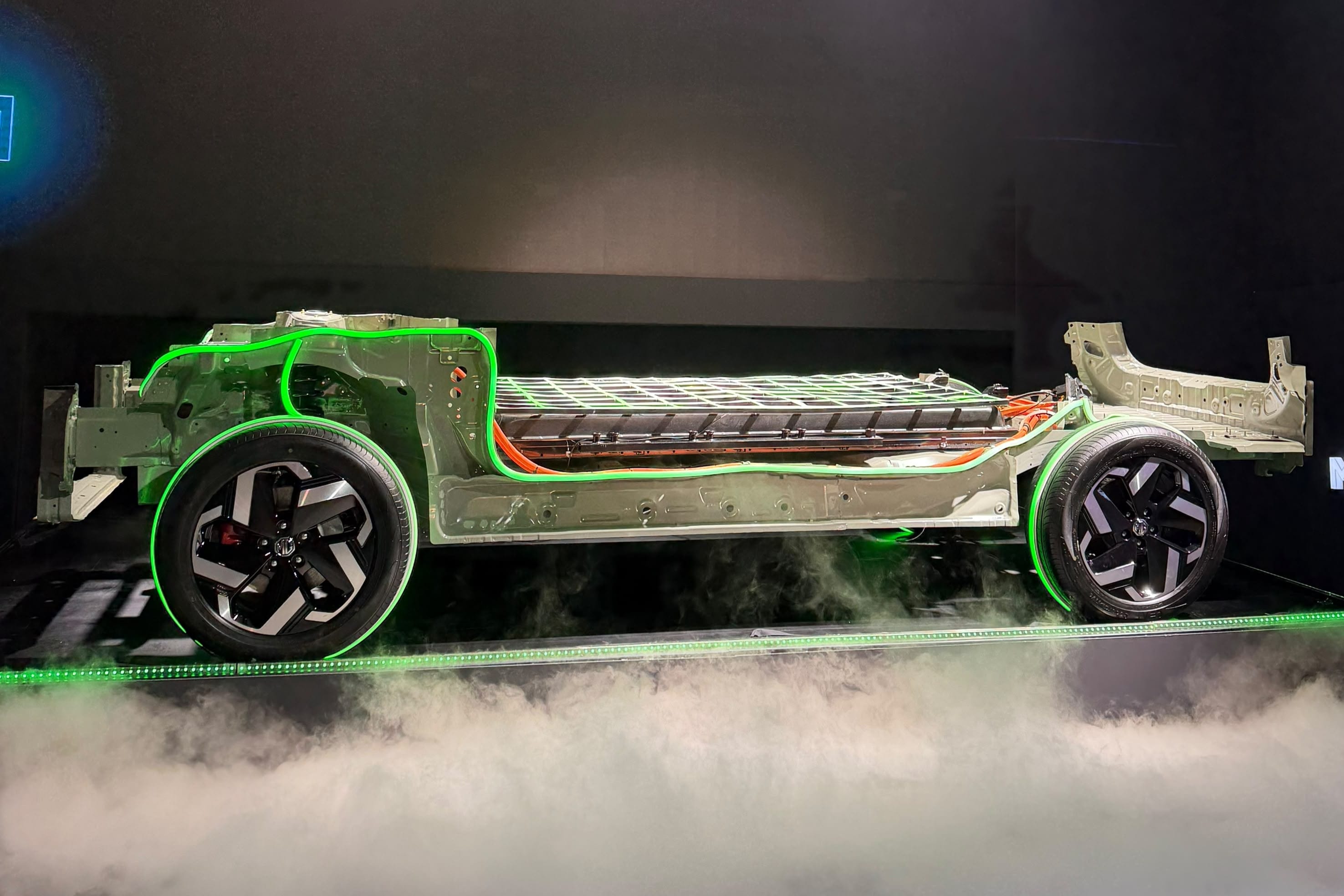
MG Motor India has provided the first look at its new platform, ADAPT. An acronym for ‘Advanced Drive Architecture Platform Technology’, this NEV (New Energy Vehicle) architecture will underpin MG India’s upcoming plug-in hybrid (PHEV), strong hybrid, range-extender hybrid, and EV models. There will seemingly be no pure-ICE offerings based on ADAPT.
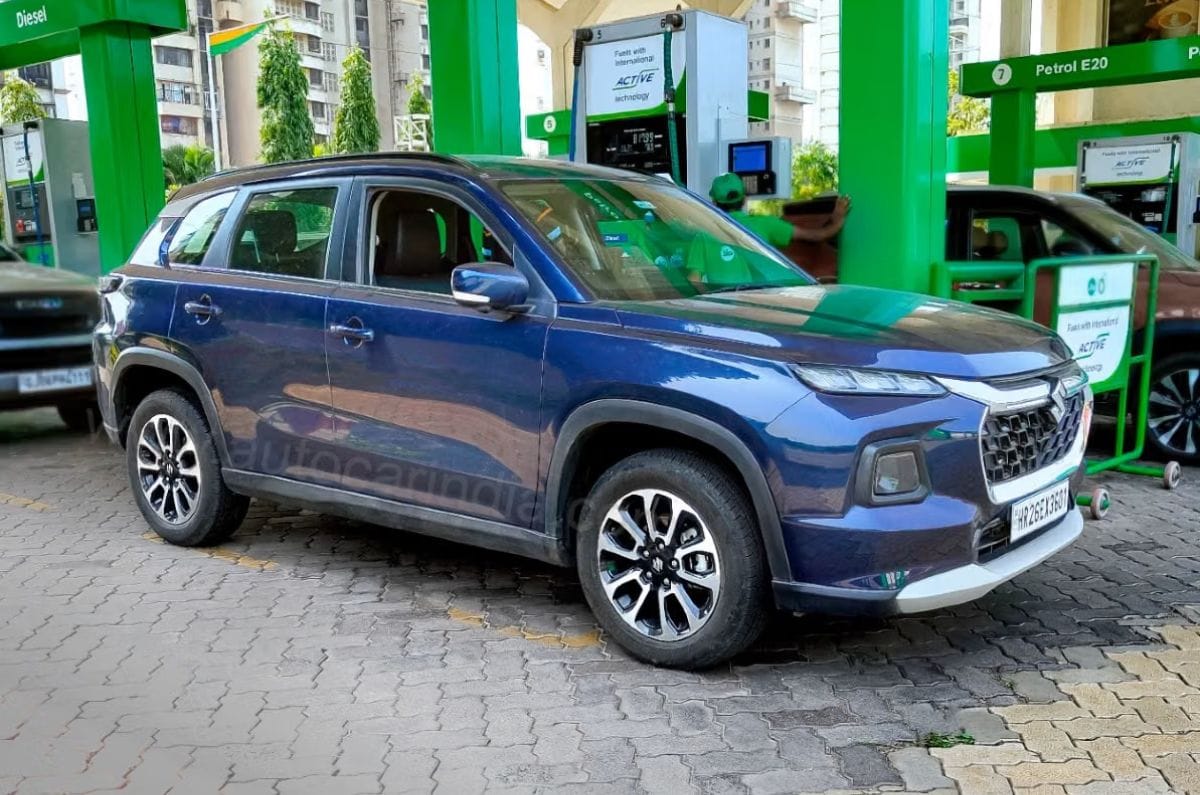
The District Consumer Disputes Redressal Commission of Raipur, Chhattisgarh, has directed Maruti Suzuki to replace the Grand Vitara belonging to Dr. Premraj Debta for E20-related damages, ETV Bharat reported. After verifying all the necessary documents and arguments put forth by Maruti and Dr. Debta, the consumer court ordered the automaker to provide the doctor with a new, E20-compatible car within 45 days. Otherwise, Maruti Suzuki will have to cover the full cost of the car, amounting to Rs 20.50 lakh. It has also been ordered to pay Rs 1 lakh for mental harassment and Rs 10,000 to cover litigation fees, as per ETV Bharat.
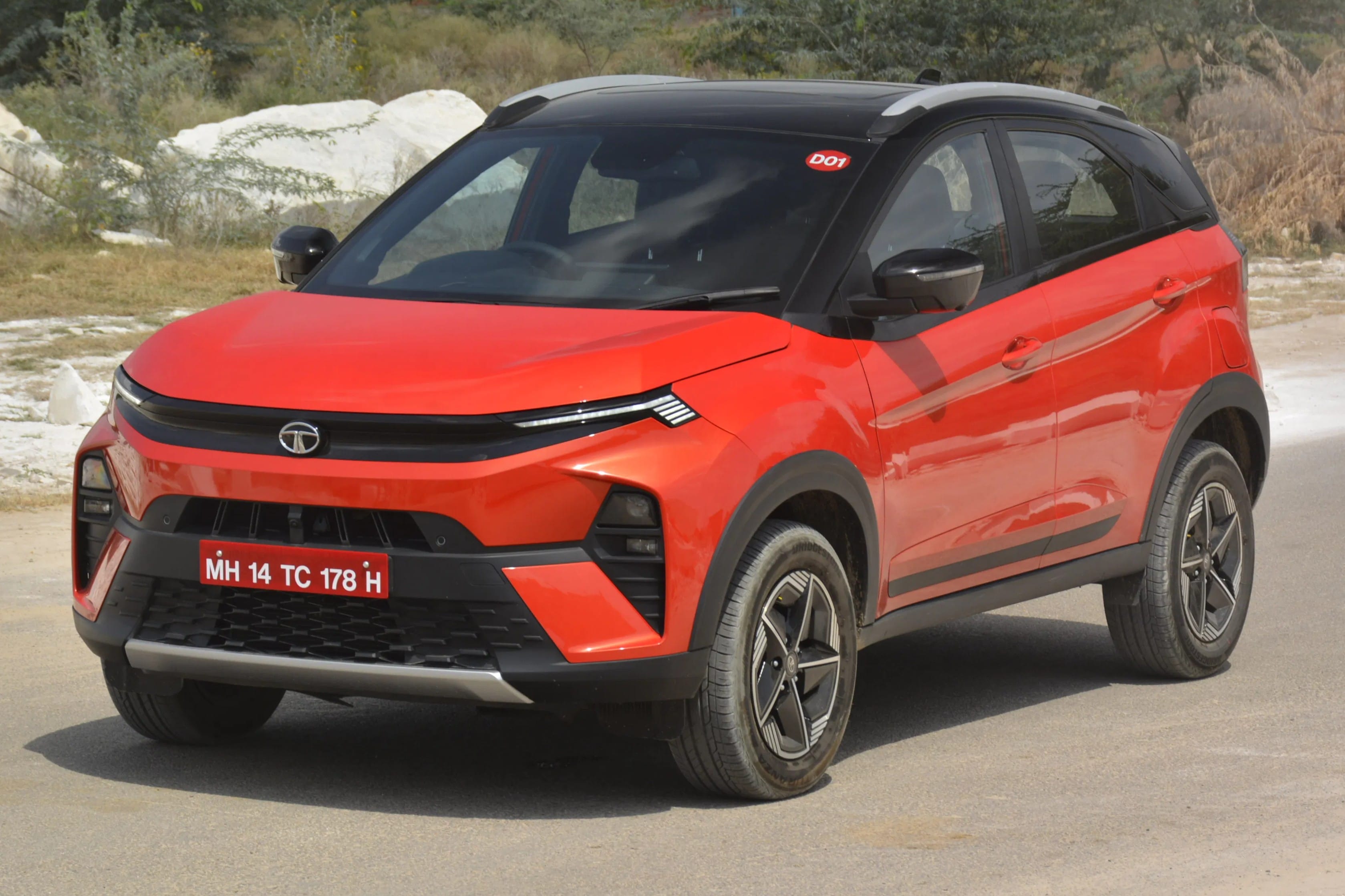
The Tata Nexon first hit the Indian market in 2017, and even after nine years and two facelifts, the compact SUV regularly ranks in the upper echelons of the monthly sales charts. If you’re considering purchasing a Nexon, listed below are three of its most prominent strengths, and two areas where it falls short of rivals.
Pros
Diverse powertrain line-up
Buyers can choose between petrol, diesel, CNG, and electric options
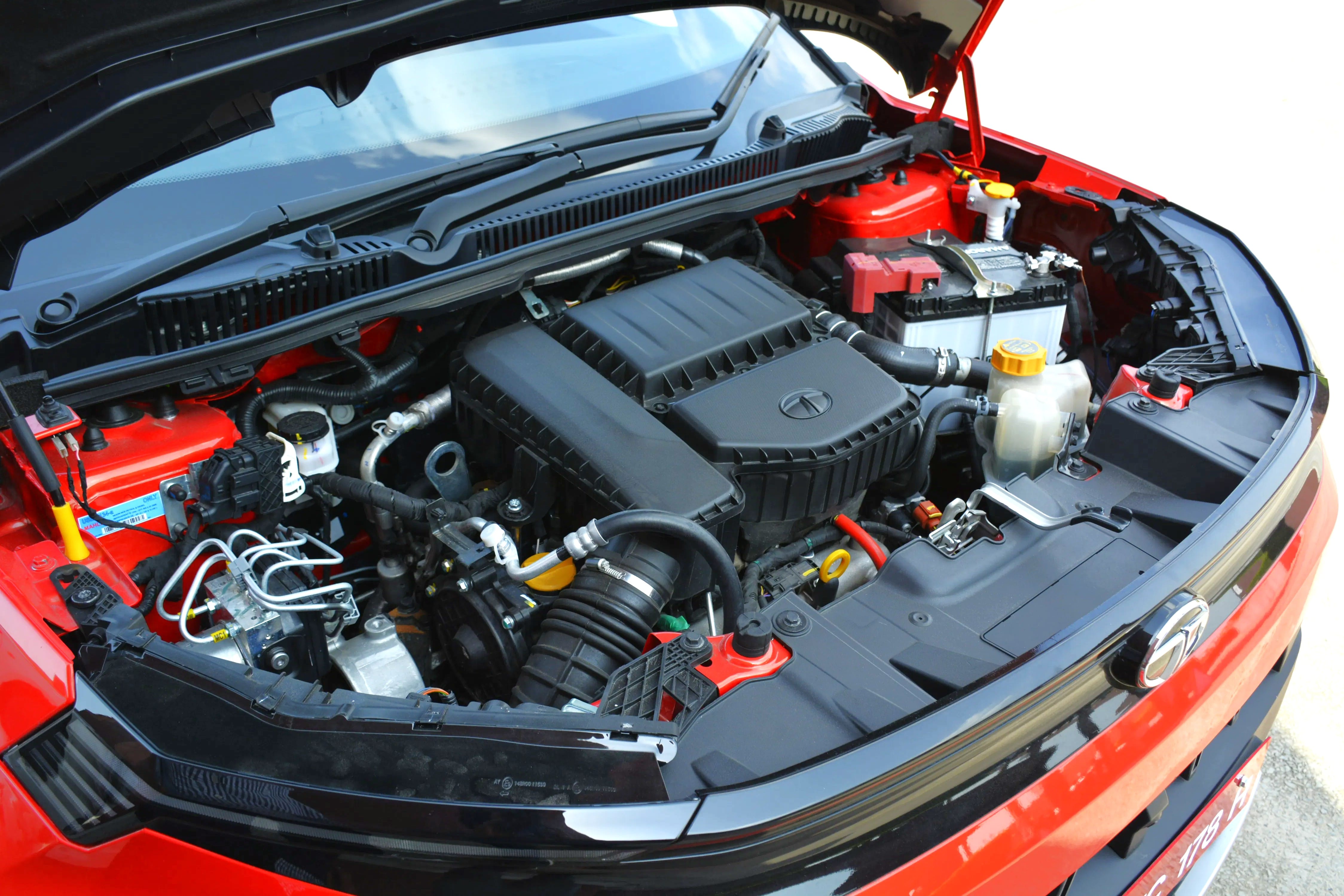
One of the Nexon’s biggest trump cards is its wide array of powertrains on offer: petrol, diesel, CNG, and electric (Nexon EV). Petrol and CNG Nexon buyers get a 1.2-litre 3-cylinder turbocharged engine– 120hp and 170Nm in petrol guise, while the CNG makes 100hp instead. The Nexon diesel is powered by a 1.5-litre 4-cylinder mill that develops 115hp and 260Nm, whereas the EV offers 30kWh and 45kWh battery packs.
There’s quite a bit of gearbox choice too. The Nexon petrol alone can be had with one of four gearbox options: 5-speed manual, 6-speed manual, 6-speed AMT, and 7-speed DCT. Diesel variants of the compact SUV offer either a 6-speed manual or 6-speed AMT, while the Nexon CNG gets a 6-speed manual only.
Comfortable ride quality
Can take virtually any broken road in its stride
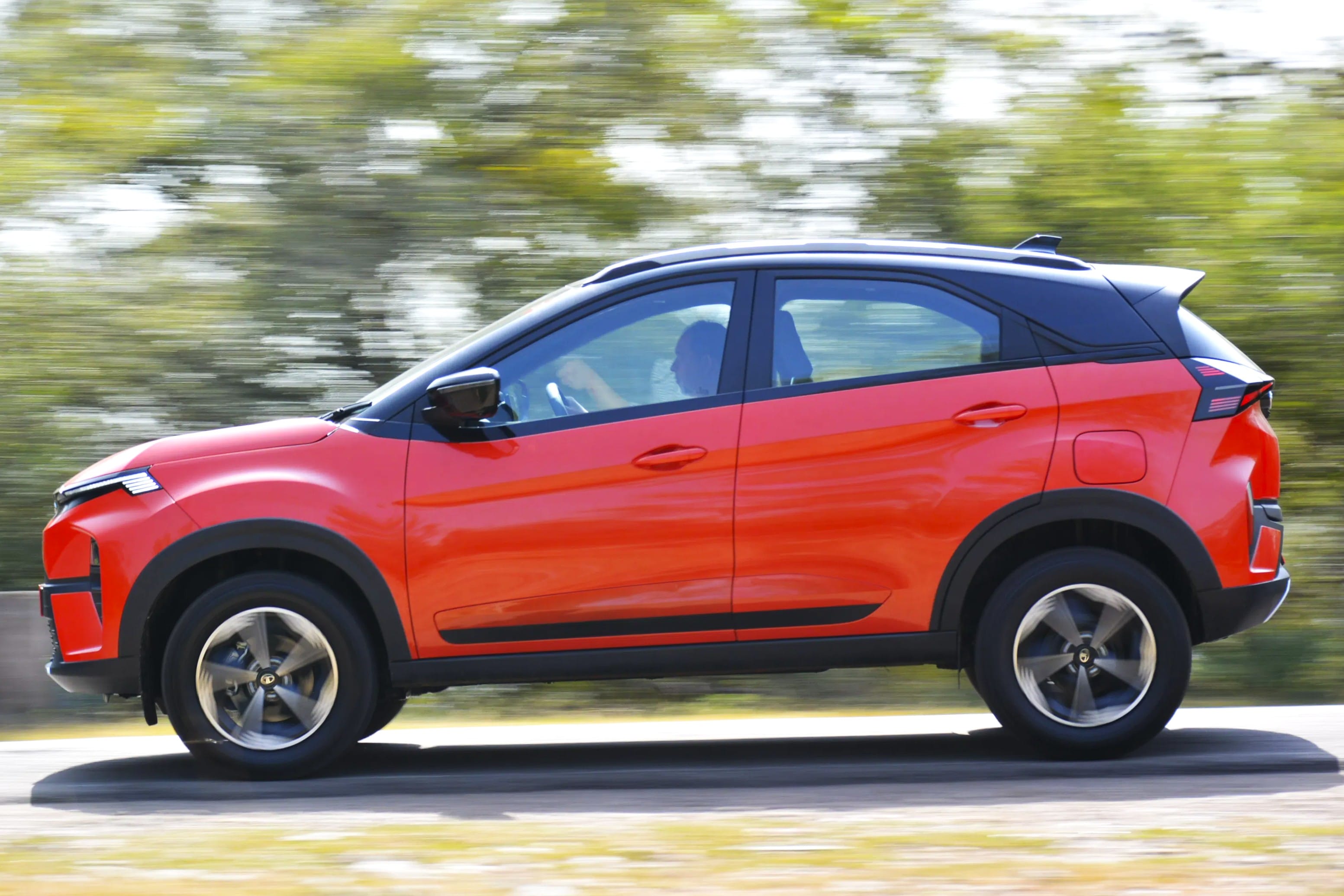
As we noted in our 2023 Nexon review, the compact SUV rides very well on all types of roads. There’s a hint of stiffness in the ride at low speeds, but as you go faster, it immediately smoothes out. The Nexon rides flat despite its relatively tall 208mm ground clearance, and exhibits impressive body control and bump absorption over broken patches.
Feature-rich cabin
Highlights include dual 10.25-inch displays, panoramic sunroof, and 360-deg camera
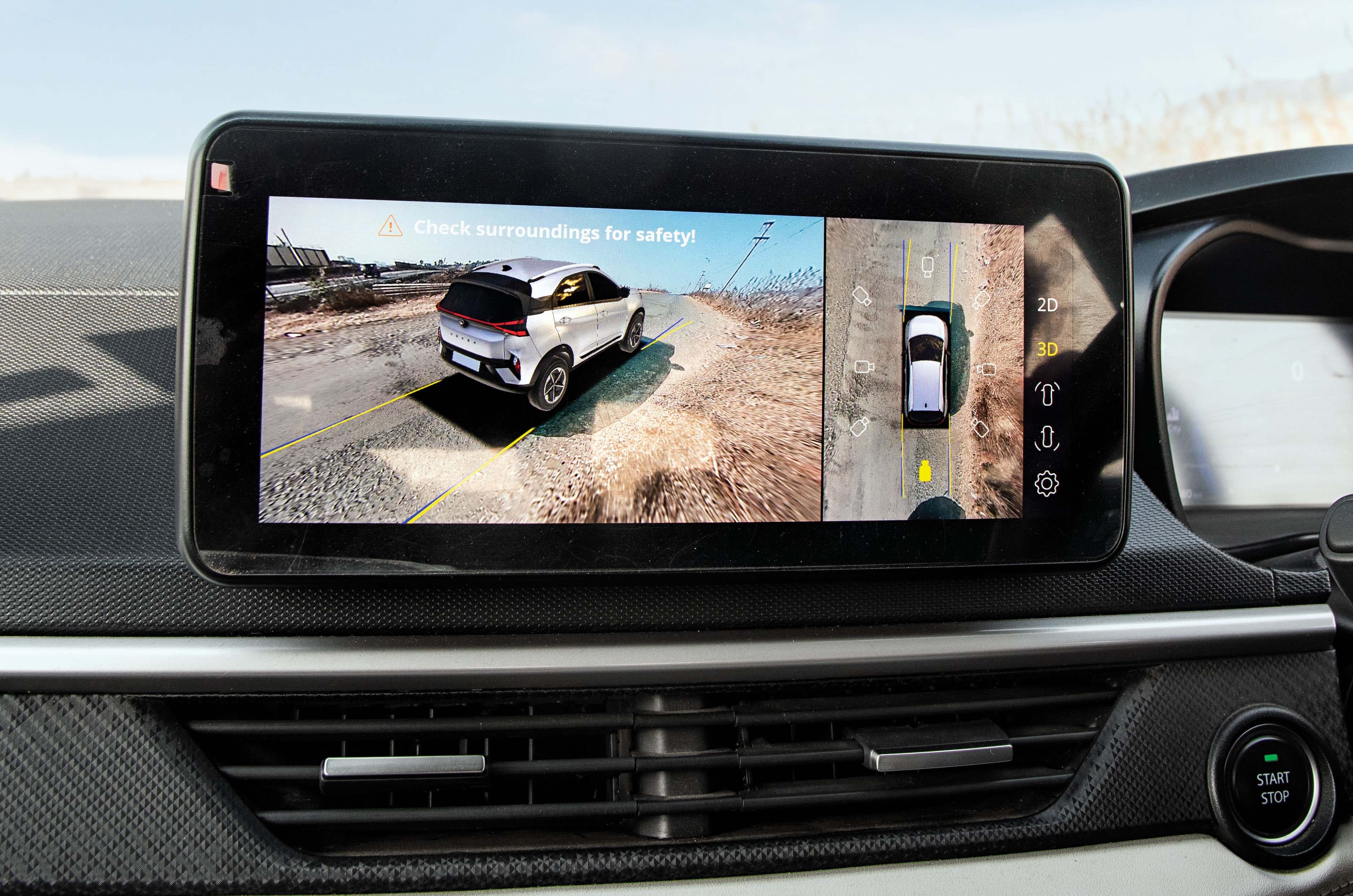
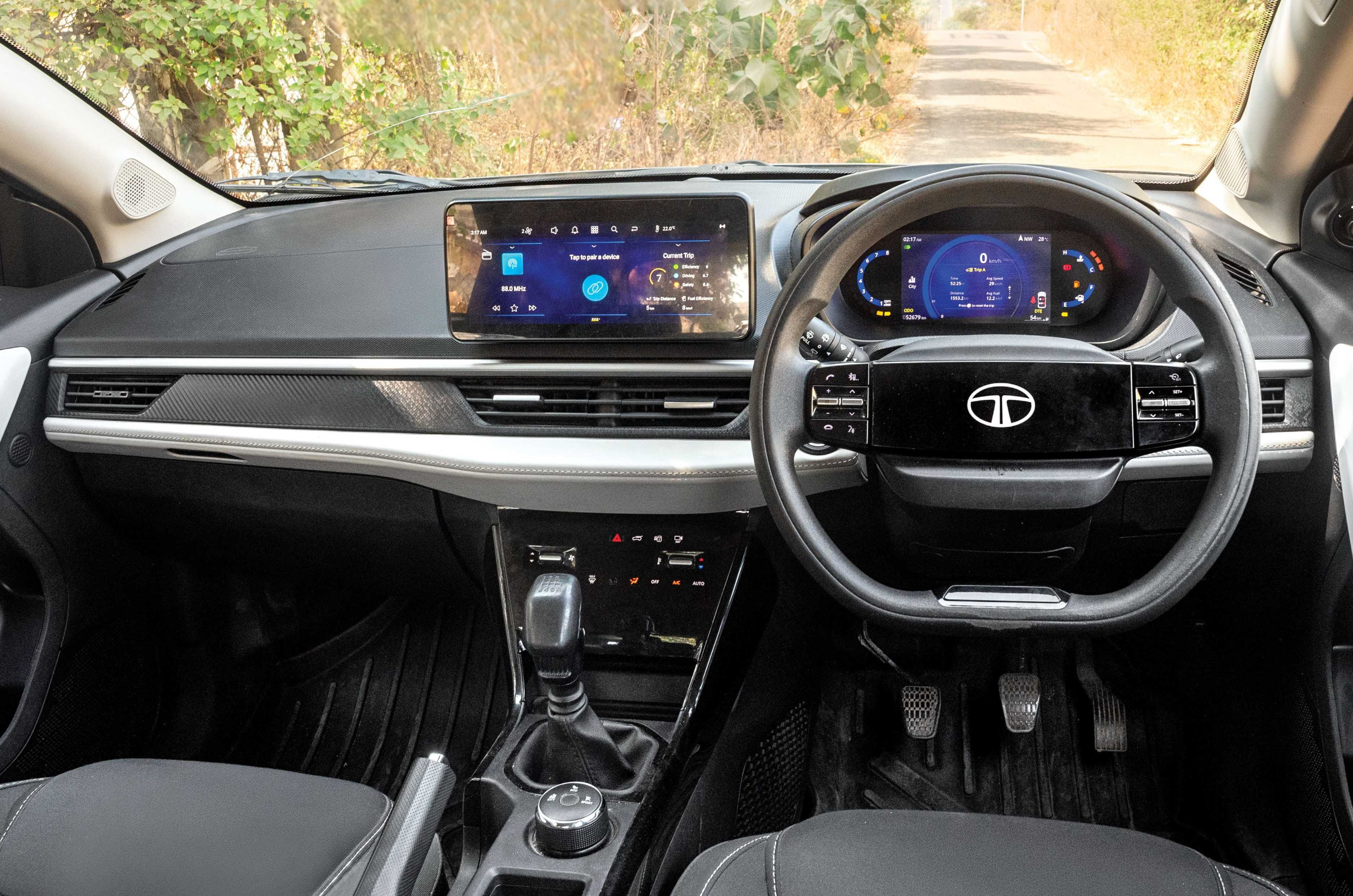
Another aspect of the Nexon that struck a chord with Indian buyers is its extensive feature set. Depending on the variant, the Nexon packs goodies like a 10.25-inch infotainment touchscreen, a 10.25-inch digital driver’s display, a panoramic sunroof, an 8-speaker JBL sound system, ventilated front seats, ADAS, connected car tech, a cabin air purifier, auto-dimming IRVM, wireless charging pad, a 360-degree camera, automatic climate control, and more.
Cons
Interior ergonomics and quality could be better
No proper cupholders and distracting touch-capacitive controls
While the Nexon’s interior looks premium at first glance, a closer look reveals some foibles. First off, there are no proper cupholders in the Nexon’s cabin, which can be an annoyance at times. The driver’s seat doesn’t offer electrical adjustment either, and the seat ventilation button is concealed from view because it’s located at the base of the seat.
Tata has also used some gloss-black trim pieces for the Nexon’s interior, which are difficult to keep clean– they attract fingerprints and dust. Overall build quality is not that impressive too, and the touch-capacitive controls for the AC and steering can be fiddly to operate while on the move.
6-speed MT not that great
Long throws and snappy clutch
The 6-speed manual offered with the Nexon could do with some more tuning. While the gearbox’s gates are well-defined, its throws are long and the shift action isn’t the most pleasing. The snappy clutch also detracts from the smoothness of the driving experience.
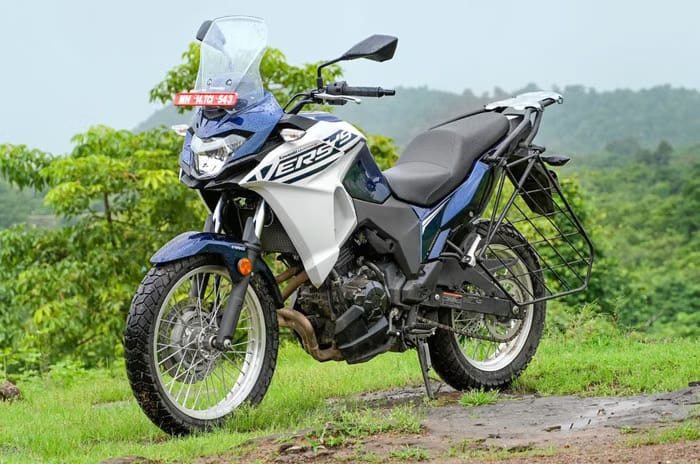
Kawasaki is continuing its offers on the Versys-X 300 through the end of July, with both the MY25 and MY26 models available with cash discounts and complimentary accessories. The two versions are mechanically identical and are both priced at Rs 3.49 lakh (ex-showroom, India).
MY25 Versys-X 300 gets a Rs 35,000 cash discount
MY26 Versys-X 300 gets a Rs 10,000 cash discount
Both bikes are powered by the same 296cc parallel-twin producing 40hp and 26Nm
Kawasaki Versys-X 300 July offers
The MY25 offers the more compelling overall deal
Both variants are also available with a choice of either a complimentary pannier set or a centre stand, with Kawasaki valuing the accessory benefit at up to Rs 46,000. The MY25 model, however, offers the stronger overall package, pairing the accessory benefit with a Rs 35,000 cash discount that brings its effective ex-showroom price down to Rs 3.14 lakh. The MY26 model receives a smaller Rs 10,000 cash discount, reducing its effective price to Rs 3.39 lakh.
The Versys-X 300 is powered by a 296cc parallel-twin engine producing 40hp and 26Nm, making it Kawasaki’s most accessible adventure motorcycle in India. The offers are valid until July 31, 2026. As always, we recommend contacting your nearest Kawasaki dealership to confirm stock availability and any additional offers they may have.
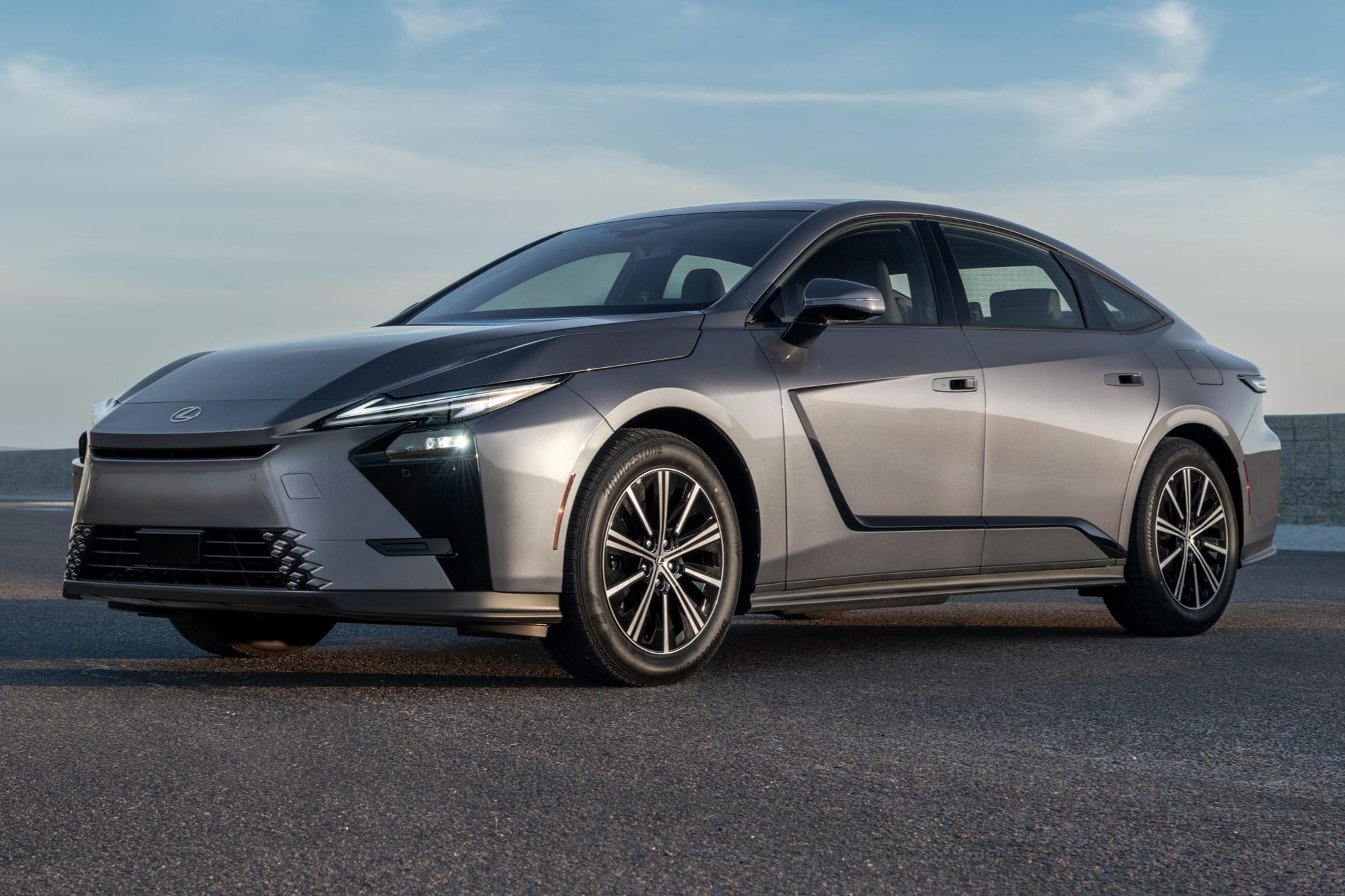
Nearly four months after the all-electric ES 500e, Lexus has finally introduced the hybrid-powered ES 350h. It largely retains the electric versions’ exterior design, which comprises the signature L-shaped DRLs and sealed-off grille at the front, sloping fastback-like roofline and Z-shaped trim from the side, while the rear is characterised by a slim LED tail-lamp and sculpted design for the bumper. The exterior’s minimalist theme continues on the inside, with a clean look for the dashboard that does away with physical buttons and features a large 14-inch infotainment screen, a digital driver’s display, and proximity-sensing buttons that light up when they detect hand movement. Powering the 350h is a strong-hybrid petrol engine that’s mated to an e-CVT. Ex-showroom prices of the ES 350h range between Rs 66.10 lakh and Rs 71.80 lakh.
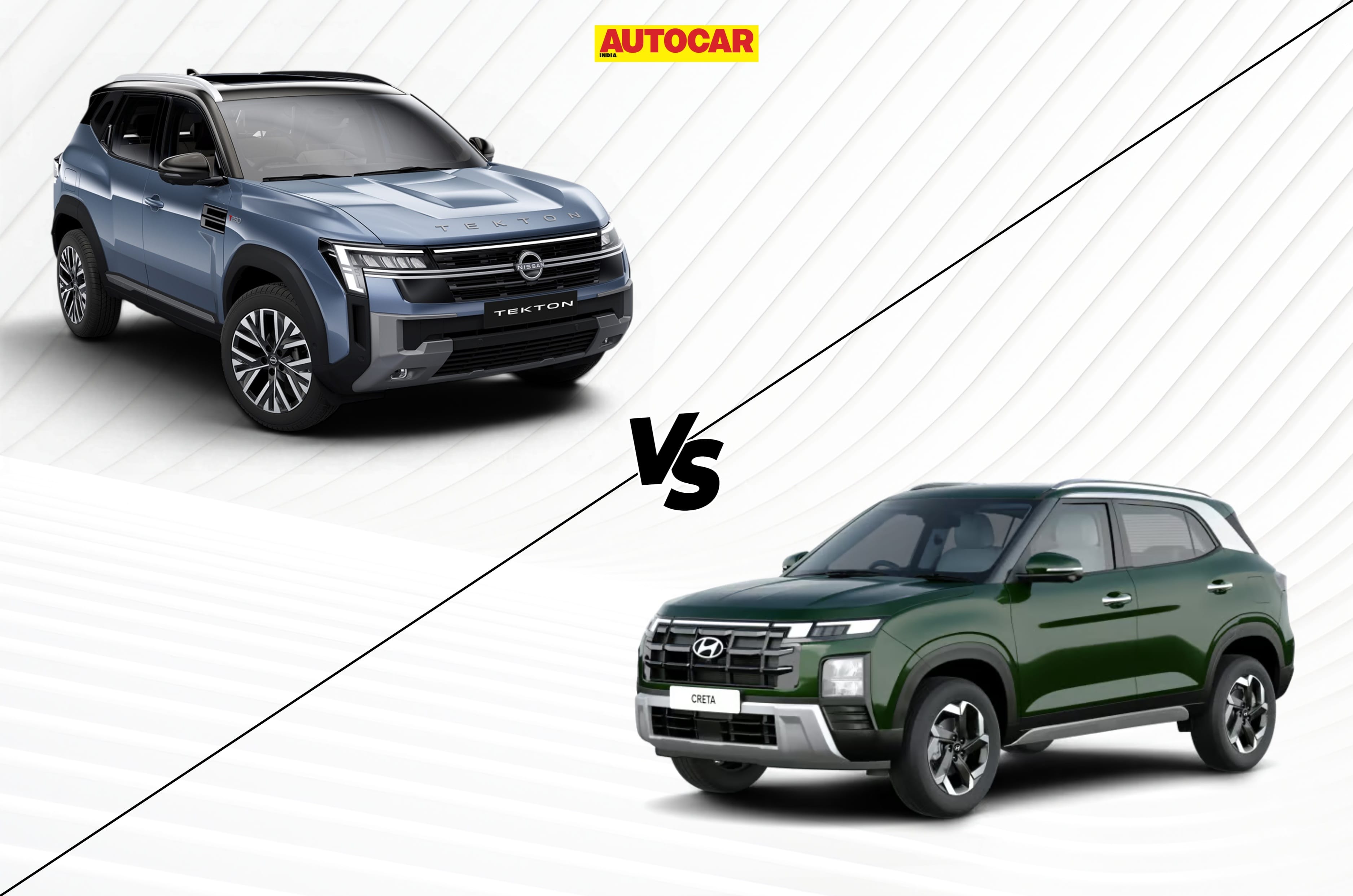
The arrival of the Tekton has helped Nissan make a much-needed comeback to the popular mid-size SUV segment. On the other hand, Hyundai has championed this space with the Creta, which continues to lead sales. But which of the two SUVs offers better value when you compare their top-spec versions on paper? We find out. For this comparison, we’ve chosen the Tekna+ and King trims of the Tekton and Creta, respectively.
Explore full specs, features, and a price breakdown in our Tekton vs Creta comparison.
Nissan Tekton vs Hyundai Creta: Dimensions
Tekton’s dimensions are higher than those of the Creta’s
Nissan Tekton vs Duster: Dimensions
Nissan Tekton
Hyundai Creta
Difference
Length (mm)
4,349
4,330
+19
Width (mm)
1,815
1,790
+25
Height (mm)
1,674
1,635
+39
Wheelbase (mm)
2,657
2,610
+47
Ground clearance (mm)
212
190
+22
Boot space (litres)
518
433
+85
As far as dimensions are concerned, the Tekton is the larger vehicle overall. It is 19mm longer, 25mm wider, and has a 47mm bigger wheelbase. Additionally, it rides 22mm higher off the ground, and its 518-litre boot is the largest in the segment.
Nissan Tekton vs Hyundai Creta: Engine specifications
Tekton solely powered by turbo-petrol, while Creta gets diesel and NA petrol engines
Nissan Tekton vs Hyundai Creta: Engine specifications
Nissan Tekton
Hyundai Creta
Engine options
Turbo-petrol
Naturally aspirated petrol | Turbo-petrol | Diesel
Displacement
1.0-litre | 1.3-litre
1.5-litre | 1.5-litre | 1.5-litre
No. of cylinders
3 | 4
4 | 4 | 4
Power (hp)
100 | 163
115 | 160 | 116
Torque (Nm)
166 | 280
144 | 253 | 250
Gearbox
6MT | 6DCT
6MT/CVT | 7DCT | 6MT/6AT
In top-spec guise, the Tekton is offered with two turbo-petrol engines, whereas the Creta has a diverse powertrain lineup comprising naturally aspirated petrol, turbo-petrol and diesel engines. The same is the case for gearbox options, as the Creta offers different automatic transmissions depending on the engine chosen. The Nissan Tekton’s 1.0-litre and 1.3-litre turbo-petrol units are the least and most powerful engines here, respectively.
Nissan Tekton vs Hyundai Creta: Exterior features
Only the Tekton comes with fog lamps
Nissan Tekton vs Hyundai Creta: Exterior
Nissan Tekton
Hyundai Creta
Headlights
Auto LED
Auto LED
Taillights
Connected LED
Connected LED
DRLs
Connected LED
Connected LED
Front fog lamps
LED
No
Rear fog lamps
LED
No
Puddle lamps
Yes
Yes
Wheels
18-inch
18-inch
Powered ORVMs
Yes
Yes
Roof rails
Yes
Yes
Colour
Monotone, dual tone
Monotone, dual tone, matte
On the exterior front, the Tekton and Creta’s top-spec versions come replete with connected LED light setups, 18-inch alloys, powered ORVMs and roof rails. However, front and rear fog lamps are found only on the Tekton. Monotone and dual-tone colour options are on offer with both models, but the Creta is also available with matte-finished paint jobs.
Nissan Tekton vs Hyundai Creta: Interior and features
Tekton misses out on feel-good features that the Creta gets
Nissan Tekton vs Hyundai Creta: Interior and features
Nissan Tekton
Hyundai Creta
Driver’s display
10.25-inch
10.25-inch
Infotainment screen
10.1-inch
10.25-inch
Android Auto, Apple CarPlay
Wireless
Wireless
Audio system
6-speaker Arkamys
8-speaker Bose
Sunroof
Panoramic
Panoramic
Climate control
Dual-zone automatic
Dual-zone automatic
Rear AC vents
Yes
Yes
Driver seat adjustment
6-way
8-way with memory
Front passenger seat adjustment
6-way
8-way
Front seat features
Ventilation
Ventilation
Boss mode
No
Powered
Powered tailgate
Yes
No
Seat upholstery
Leatherette
Leatherette
Reclining rear seats
No
Yes
Steering wheel adjustment
Tilt, telescopic
Tilt, telescopic
Wireless phone charger
Front
Front and rear
Air Purifier
Yes
No
Sunshades
Magnetic (all windows optional)
Retractable (rear windows)
Connected car tech
Yes
Yes
Rear armrest
Yes
Yes
Ambient lighting
Yes
Yes
USB ports
4x type-C
4x type-C
The Tekton comes with an air purifier and a powered tailgate over the Creta, but the latter gets a slightly bigger infotainment screen, additional speakers, more adjustment for the powered front seats, driver seat memory, reclining rear seats, boss mode, and an additional wireless phone charger at the back.
Nissan Tekton vs Hyundai Creta: Driving Features
Tekton gets steering modes, while the Creta gets traction modes
Nissan Tekton vs Hyundai Creta: Driving Features
Driving Features
Nissan Tekton
Hyundai Creta
Drive modes
Eco, Comfort
Eco, Normal, Sport
Steering modes
Low effort, High effort
No
Traction modes
No
Snow, mud, sand
Paddle Shifters
Automatic only
Automatic only
Cruise Control
Adaptive
Adaptive
While the ‘Eco’ drive mode is common on both SUVs, the Tekton gets a ‘Comfort’ mode, while the Creta features ‘Normal’ and ‘Sport’ driving modes. Steering modes are present only on the Tekton, while the Creta gets traction control modes for different terrains. In top-spec guise, both SUVs have adaptive cruise control and paddle shifters with their automatic variants.
Nissan Tekton vs Hyundai Creta: Safety features
Both SUVs are equally matched with basic and advanced safety tech
Nissan Tekton vs Kushaq Prestige: Safety features
Nissan Tekton
Hyundai Creta
Airbags
6
6
ADAS
Level 2
Level 2
Camera setup
360-degree
360-degree
Parking sensors
Front and rear
Front and rear
Electronic parking brake
DCT variant only
Yes
TPMS
Yes
Yes
IRVM
Auto-dimming
Auto-dimming
Rear wiper, washer
Yes
Yes
Rear defogger
Yes
Yes
Hill start assist
Yes
Yes
Hill descent control
DCT only
No
ESC
Yes
Yes
Traction control
Yes
Yes
When it comes to safety, both the Tekton and Creta come well-equipped with safety features including six airbags, parking sensors, TPMS, Level 2 ADAS suite and a 360-degree camera setup. The only difference is that while an electronic parking brake is common on both, the former gets it only on automatic versions, while the latter has it with manual gearbox variants as well.
Nissan Tekton vs Hyundai Creta: Price and verdict
Nissan Tekton Tekna+ vs Kushaq Prestige: Ex-showroom prices
Nissan Tekton Tekna+ (Rs lakh)
Hyundai Creta King (Rs lakh)
Turbo-petrol MT
16.49
–
Turbo-petrol DCT
18.59
19.91
Naturally aspirated petrol MT
–
17.27
Naturally aspirated petrol CVT
–
18.68
Diesel MT
–
18.85
Diesel AT
–
19.77
The only comparable variant between the Tekton and the Creta is their turbo-petrol automatic versions, where the Tekton is Rs 1.32 lakh cheaper. Between the newly launched Tekton and the reigning Creta, we recommend the former. Not only is the Tekton more affordable, especially when you consider turbo-petrol versions, but you also get more torque. While it does miss out on some feel-good features that the Creta gets, it’s not necessarily a deal-breaker. If your monthly usage consists mainly of highway runs, then the Creta diesel makes for a sensible choice.