El Nino Impact: अल नीनो के खतरे पर PMO में हाई लेवल मीटिंग, खेती-जॉब से खाने-पीने के सामान तक अंदर से निकल कर आईं ये 5 बातें जानिए

El Nino Update: देश में खरीफ सीजन पर और इकॉनमी के दूसरे सेक्टर्स पर अल नीनो के खतरे को देखते हुए प्रधानमंत्री कार्यालय (PMO) अलर्ट मोड में आ गया है। PIB की एक प्रेस रिलीज के मुताबिक प्रधानमंत्री के प्रधान सचिव डॉ पीके मिश्रा की अध्यक्षता में 7 जुलाई पीएमओ में एक हाई लेवल बैठक आयोजित की गई। इसमें कृषि, बिजली, स्वास्थ्य, ग्रामीण विकास, आर्थिक मामलों और उपभोक्ता मामलों सहित 15 से अधिक मंत्रालयों के सचिवों और वरिष्ठ अधिकारियों ने हिस्सा लिया।

बैठक का उद्देश्य अल नीनो की वजह से पैदा होने वाले हालात और मंत्रालयों की तैयारियों का डिटेल में एनालिसिस करना था। आइए आपको बताते हैं कि इस बैठक से निकल कर क्या खास बातें सामने आई हैं:-

1- मानसून का हाल और अल नीनो का अनुमान

बैठक की शुरुआत में भारतीय मौसम विज्ञान विभाग (IMD) ने जून से लेकर 7 जुलाई तक देश में हुई बारिश का डिटेल पेश किया। मौसम विभाग के महानिदेशक ने बताया कि गुजरात, मध्य प्रदेश, छत्तीसगढ़ और महाराष्ट्र में मानसून के आने में करीब 10 दिनों की देरी हुई। वैसे 7 जुलाई तक हुई बारिश के बाद पूरे भारत में बारिश की कमी घटकर -12% रह गई है।

ऐसा इसलिए हुआ क्योंकि जुलाई के पहले सप्ताह में सामान्य से अधिक बारिश दर्ज की गई है। जुलाई और अगस्त में कमजोर से मध्यम अल नीनो रहने की उम्मीद है। चूंकि मानसून सीजन की 30% से अधिक बारिश जुलाई में ही होती है इसलिए स्थिति पर लगातार नजर रखी जा रही है। मौसम विभाग ने स्पष्ट किया है कि अल नीनो वर्ष का मतलब यह बिल्कुल नहीं है कि उस साल सामान्य से कम या बहुत कम बारिश होगी।

2- कृषि और फसलों को लेकर सरकार की तैयारी

कृषि सचिव ने खरीफ सीजन के दौरान अल नीनो के किसी भी संभावित प्रभाव से निपटने की तैयारियों पर विस्तृत प्रेजेंटेशन दिया। देश के 262 संवेदनशील जिलों के लिए डिस्ट्रिक्ट एग्रीकल्चर कंटिंजेंसी प्लान को अपडेट किया गया है। भारतीय कृषि अनुसंधान परिषद (ICAR) ने जिलों में मौजूद कृषि विज्ञान केंद्रों के लिए भारतीय कृषि में अल नीनो जोखिमों के प्रबंधन पर SOP जारी की है।

बारिश, जलाशयों में पानी, फसल की बुवाई, बाजार के रुझान और कीट/बीमारी की स्थिति की निगरानी के लिए राज्यों के साथ फसल मौसम निगरानी समूह की वीकली बैठकें बुलाई जा रही हैं। कमजोर राज्यों में प्रधानमंत्री फसल बीमा योजना और किसान क्रेडिट कार्ड कवरेज के लिए अभियान शुरू किए गए हैं।

3- खाद्य सामग्री और फर्टिलाइजर का बफर स्टॉक

देश में आवश्यक खाद्य वस्तुओं की उपलब्धता को लेकर भी बैठक में मंथन हुआ। उपभोक्ता मामलों के विभाग ने खुदरा कीमतों की स्थिति और चावल, गेहूं और दालों के पर्याप्त बफर स्टॉक की जानकारी साझा की। उर्वरक विभाग ने बताया कि रबी सीजन के लिए उर्वरकों की पर्याप्त उपलब्धता है। दोनों विभागों को निर्देश दिया गया है कि वे आवश्यक वस्तुओं और उर्वरकों की मैक्रो और माइक्रो दोनों स्तरों पर उपलब्धता की लगातार निगरानी करें।

4- पानी, बिजली और पशुओं के चारे पर फोकस

इस बैठक में पेयजल, सिंचाई और पशुपालन के मोर्चे पर भी मंत्रालयों ने अपनी रिपोर्ट पेश की। पेयजल और स्वच्छता विभाग ने बताया कि स्थिति स्थिर है लेकिन उन्हें संवेदनशील जिलों में माइक्रो लेवल पर प्लानिंग और निगरानी सुनिश्चित करने का निर्देश दिया गया है।

जल संसाधन विभाग ने बताया कि वर्तमान में भूजल और जलाशयों की स्थिति स्थिर है लेकिन पूरे सीजन इस पर लगातार नजर रखी जाएगी। पशुपालन और डेयरी विभाग को निर्देश दिया गया है कि वे सूखे चारे, हरे चारे और पशु आहार की उपलब्धता का आकलन करें। इसके लिए चारा विकास योजनाएं बनाने और राज्यों के साथ नियमित निगरानी के निर्देश दिए गए हैं। बिजली विभाग ने भी उत्पादन और उपलब्धता की स्थिति साझा की।

5- रोजगार, स्वास्थ्य और राज्यों के साथ तालमेल

बैठक में स्वास्थ्य अलर्ट और रोजगार योजनाओं पर भी चर्चा की गई। स्वास्थ्य और परिवार कल्याण विभाग ने बताया कि हीट वेव, हाई ह्यूमिडिटी और डेंगू के प्रकोप की निगरानी के लिए एडवाइजरी जारी हुई हैं। ग्रामीण विकास विभाग ने जानकारी दी कि 1 जुलाई से ‘विकसित भारत- गारंटी फॉर रोजगार और आजीविका मिशन’ के तहत काम शुरू हो गया है और अब तक 1 करोड़ मानव दिवस रोजगार पैदा किया गया है।

PMO का सख्त निर्देश

प्रधानमंत्री के प्रधान सचिव ने स्पष्ट निर्देश दिया कि स्थिति की लगातार निगरानी की जानी चाहिए। मंत्रालयों को कहा गया है कि वे राज्यों के साथ मिलकर जमीनी स्तर पर माइक्रो रणनीति के साथ काम करें ताकि यह सुनिश्चित हो सके कि कृषि और आर्थिक गतिविधियां अल नीनो से प्रभावित न हों।

‘अल नीनो’ का एनर्जी सिस्टम पर सबसे ज्यादा असर

सेंटर फॉर रिसर्च ऑन एनर्जी एंड क्लीन एयर (CREA) के एक नए एनालिसिस के अनुसार, इस साल के अल नीनो का सबसे बड़ा ग्लोबल असर भारत के एनर्जी सिस्टम पर पड़ने वाला है। अल नीनो मौसम का एक ऐसा चक्र है जो बार-बार आता है। इससे दुनिया भर में तापमान बढ़ता है।

भारत के सामने दोहरी चुनौती

अल नीनो की वजह से हवा और बारिश कम होने से टरबाइन और हाइड्रोपावर से बिजली का उत्पादन घटेगा। जबकि तापमान बढ़ने से एयर कंडीशनिंग (AC) की मांग बढ़ेगी, जिसमें बहुत ज्यादा बिजली खर्च होती है। रिपोर्ट में कहा गया है कि साल भर कूलिंग अप्लायंसेज (ठंडा करने वाले उपकरण) के ज्यादा इस्तेमाल से बिजली की मांग 10 टेरावाट-घंटे (TWh) तक बढ़ सकती है, जो दिल्ली की सालाना बिजली खपत का एक-चौथाई हिस्सा है।

ये भी पढ़ें- India Rain Watch 8 July: यूपी से गुजरात तक IMD ने भारी बारिश की रेड-ऑरेंज वॉर्निंग जारी की, आज इन 22 राज्यों में बिगड़ेगा मौसम

यह एनालिसिस जुलाई 2026 से जून 2027 की अवधि के लिए भारत के पावर सेक्टर पर ला नीना से अल नीनो में बदलाव के असर को दिखाता है। रिपोर्ट में कहा गया है, “भारत को बिजली देने में सौर ऊर्जा की भूमिका लगातार बढ़ रही है। अब यह दिन के समय बिजली की 24 प्रतिशत मांग को पूरा करती है। सौर ऊर्जा उत्पादन पर अल नीनो का बहुत कम असर पड़ता है, जिसका मतलब है कि भारत द्वारा लगाया गया हर अतिरिक्त सोलर पैनल और बैटरी ग्रिड को ऐसे खराब मौसम का सामना करने के लिए तैयार करने में मदद करता है।”

ये भी पढ़ें- India Rain Watch 8 July: यूपी से गुजरात तक IMD ने भारी बारिश की रेड-ऑरेंज वॉर्निंग जारी की, आज इन 22 राज्यों में बिगड़ेगा मौसम

Tata Sierra EV top-spec vs Harrier EV mid-spec: Features, specs compared

Tata Sierra EV top-spec vs Harrier EV mid-spec variants compared

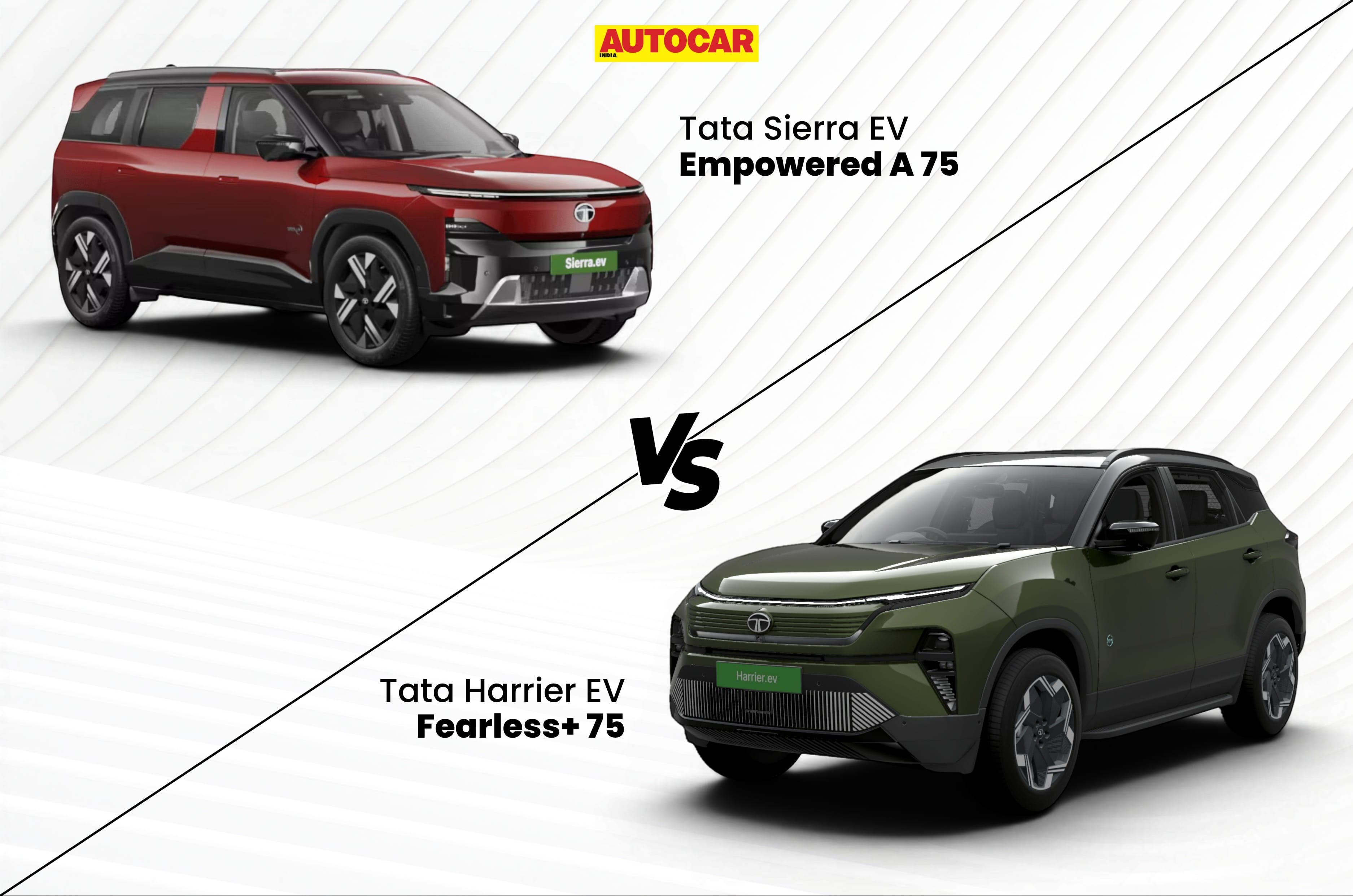
The recently launched Tata Sierra EV is positioned right below its larger sibling, the Harrier EV. However, there’s quite a lot of pricing overlap between the two Tata electric SUVs. To that end, we’ve compared the top-spec Sierra EV Empowered A 75 to the mid-spec Harrier EV Fearless+ 75 to find out which variant delivers better value on paper.

Explore full specs, features, and a price breakdown in our Sierra EV vs Harrier EV comparison.

Tata Sierra EV top-spec vs Harrier EV mid-spec: Dimensions

Harrier EV is longer and wider, but Sierra EV is taller and offers greater boot space

Tata Sierra EV Empowered A 75 vs Harrier EV Fearless+ 75 dimensions

 Sierra EVHarrier EV
Length (mm)4,3404,607
Width (mm)1,8411,922
Height (mm)1,7501,740
Wheelbase (mm)2,7302,741
Boot space (litres)622502
Frunk space (litres)55 (RWD) / 35 (AWD)67 (RWD) / 35 (AWD)
Wheel size (inches)1919

Expectedly, the Harrier EV is 267mm longer than the Sierra EV, but there’s only an 11mm difference between their wheelbases, suggesting that the smaller SUV doesn’t lose out on much interior space. While the Harrier EV is 81mm wider than the Sierra EV, the latter is 10mm taller. Wheel sizes are matched at 19 inches for both electric SUVs.

Interestingly, the Sierra EV offers 120 litres of additional boot space over the Harrier EV – it’s worth nothing that both SUVs’ boot capacity is measured up until the roof, as opposed to the conventional method, which is up to the parcel tray. In terms of frunk capacity, the RWD Harrier EV offers the bigger one, while their AWD versions are matched in this regard.

Tata Sierra EV top-spec vs Harrier EV mid-spec: Battery and range

Harrier EV offers more power, Sierra EV is quicker and claims higher range figures

Tata Sierra EV Empowered A 75 vs Harrier EV Fearless+ 75 powertrains

 Sierra EVHarrier EV
Battery size (kWh)7575
Motor setupSingle, rear / Dual, front and rearSingle, rear / Dual, front and rear
Power (hp)209 / 306238 / 313
Torque (Nm)315 / 504315 / 504
Drive layoutRWD / AWDRWD / AWD
Claimed 0-100kph time (seconds)5.8 (AWD)6.3 (AWD)
MIDC range (km)665 / 624627 / 622

Both the Sierra EV and Harrier EV get 75kWh battery packs, along with single-motor (RWD) and dual-motor (AWD) options. The Harrier EV edges ahead in terms of powertrain output, though the RWD versions of both SUVs feature identical torque figures. Despite the Sierra EV’s slightly lower output, its AWD variant is half a second quicker in the 0-100kph run compared to that of the Harrier EV – this is on account of the Sierra EV being smaller and lighter.

Similarly, MIDC-claimed range is a total victory for the Sierra EV as well. The Sierra EV AWD’s claimed range is 2km higher than that of the Harrier EV AWD, while the RWD version can travel 38km more on a single charge.

Tata Sierra EV top-spec vs Harrier EV mid-spec: Charging times

Both electric SUVs trade punches here

Tata Sierra EV Empowered A 75 vs Harrier EV Fearless+ 75 charging times and warranty details

 Sierra EVHarrier EV
AC charging time (10-100 percent)10.5hrs (7.2kW)10.7hrs (7.2kW)
DC charging time (20-80 percent)26mins (120kW)25mins (120kW)
Battery warrantyLifetime warranty and unlimited kilometresLifetime warranty and unlimited kilometres
Motor warranty8 years/1,60,000km (whichever is earlier)8 years/1,60,000km (whichever is earlier)
Vehicle warranty3 years/1,25,000km (whichever is earlier) 3 years/1,25,000km (whichever is earlier) 

Despite battery capacities being identical for both electric SUVs, the Harrier EV takes slightly longer to charge from 10-100 percent via a 7.2kW AC outlet. On the other hand, the Harrier EV is marginally quicker in a 20-80 percent top-up from a 120kW DC fast charger. Tata offers the same battery, motor, and vehicle warranties for the Harrier EV and Sierra EV, so buyers can rest easy on this front.

Tata Sierra EV top-spec vs Harrier EV mid-spec: Exterior features

Harrier EV additionally offers side step and charging indicator function for the front light bar

Tata Sierra EV Empowered A 75 vs Harrier EV Fearless+ 75 exterior features

 Sierra EVHarrier EV
HeadlampsAutomatic LEDAutomatic LED
Front light barLEDLED
Welcome/goodbye sequenceYesYes
Charging indicator in light barNoYes
Front fog lampsLEDLED
Cornering lampsYesYes
Tail-lampsLEDLED
Rear fog lampsYesYes
Sequential indicatorsYesYes
Side stepNoYes
Electrically adjustable ORVMs with auto-foldYesYes
Rear spoilerYesYes
Rear wiper and washerYesYes
Shark-fin antennaYesYes
Roof railsYesYes
Puddle lampsYesYes

Coming to exterior features, the Sierra EV and Harrier EV are near-identical. However, the Sierra EV does miss out on a charging indicator in the front light bar, with it instead being situated on the charging port. The Harrier EV additionally offers a side step too, which makes ingress and egress a tad easier.

Tata Sierra EV top-spec vs Harrier EV mid-spec: Interior features

Sierra EV is the only Tata electric car to offer a triple-screen setup

Tata Sierra EV Empowered A 75 vs Harrier EV Fearless+ 75 interior features

 Sierra EVHarrier EV
Touchscreen12.3 inches12.3 inches
Digital driver’s display10.25 inches10.25 inches
Passenger display12.3 inchesNo
Heads-up displayYesNo
Automatic climate controlDual-zoneDual-zone
Steering-mounted controlsYesYes
Ambient lightsYesYes
Panoramic sunroofYesYes
Powered driver seat6-way adjustment6-way adjustment
Driver seat functionsMemory and welcomeMemory and welcome
Powered co-driver seat4-way adjustment4-way adjustment
Ventilated front seatsYesYes
Boss modeYesNo
Sound system12-speaker JBL Black10-speaker JBL Black
Wireless charging padYesYes
Cabin air purifierYesYes
Powered windowsFront and rearFront and rear
Rear sunshadeYesYes
Rear AC ventsYesYes
Rear centre armrestYesYes
Connected car techYesYes
V2L, V2V functionalityYesYes

Despite its lower positioning, the Sierra EV pulls a clear lead over the Harrier EV in terms of cabin equipment. Features like a 12.3-inch passenger display, a 12-speaker JBL sound system, and a heads-up display are not offered even on the top-spec Harrier variant. In fact, the Sierra EV is the only electric Tata to come with a triple-screen setup at the moment.

Tata Sierra EV top-spec vs Harrier EV mid-spec: Driving features

Sierra EV comes with extra terrain mode and adaptive cruise control

Tata Sierra EV Empowered A 75 vs Harrier EV Fearless+ 75 driving features

 Sierra EVHarrier EV
Drive modesEco, City, SportEco, City, Sport
Battery regen modesYesYes
Terrain modesNormal, Wet, Rough, CustomNormal, Wet, Rough
Cruise controlAdaptive with stop/go functionsYes
Drift modeYesYes
Boost modeAWD onlyAWD only
Low-speed cruise controlAWD onlyAWD only
Extra terrain modes (AWD only)YesYes

Both the top-spec Sierra EV and mid-spec Harrier EV are very similar on the driving features front. However, the Sierra EV gets an additional ‘Custom’ terrain mode in the RWD version, as well as adaptive cruise control with stop and go functionality. The latter is much more convenient than the Harrier EV’s standard cruise control, as it can automatically adjust the speed based on proximity to nearby vehicles, and even come to a standstill and set off by itself. AWD versions of both SUVs get additional terrain modes too, namely Snow/Grass, Mud-Ruts, Sand, Rock Crawl, and Custom.

Tata Sierra EV top-spec vs Harrier EV mid-spec: Safety features

Harrier EV has 7 airbags and 5-star BNCAP rating, Sierra EV gets Level 2 ADAS and better camera setup

Tata Sierra EV Empowered A 75 vs Harrier EV Fearless+ 75 safety features

 Sierra EVHarrier EV
Bharat NCAP ratingYet to be tested5 stars
Airbags67
Level 2 ADASYesNo
Camera setup540-degreeRear only
Parking sensorsFront and rearFront and rear
Disc brakesFront and rearFront and rear
ABS with EBDYesYes
Electronic stability program (ESP)YesYes
TPMSYesYes
Electronic parking brake with auto-holdYesYes
Auto-dimming IRVMYesYes
Rain-sensing wipersYesYes
Rear defoggerYesYes
Driver drowsiness detectionNoYes
Acoustic vehicle alarm system (AVAS)YesYes

In the safety department, the Harrier EV holds some notable advantages, specifically a 5-star Bharat NCAP rating (the Sierra EV is yet to be tested, but will likely perform well too), 7 airbags, and driver drowsiness detection. The Sierra EV, though, trades punches with the Harrier EV thanks to safety features like Level 2 ADAS and a 540-degree camera (360-degree with underfloor view).

Tata Sierra EV top-spec vs Harrier EV mid-spec: Prices and verdict

Sierra EV is up to Rs 70,000 cheaper

Tata Sierra EV Empowered A 75 vs Harrier EV Fearless+ 75 price* (Rs, lakh)

 Sierra EVHarrier EVDifference
RWDRs 24.79 lakhRs 25.19 lakhRs 40,000
AWDRs 25.99 lakhRs 26.69 lakhRs 70,000

*Exclusive of home charger and installation, which costs Rs 49,000 extra.

The Sierra EV Empowered A 75 clearly emerges as the better option over the Harrier EV Fearless+ 75, as the smaller SUV offers considerably more comfort and convenience features, a larger boot, higher claimed range figures, similar powertrain outputs and charging speeds, and greater performance – all while being Rs 40,000-70,000 more affordable.

All prices are ex-showroom, India.

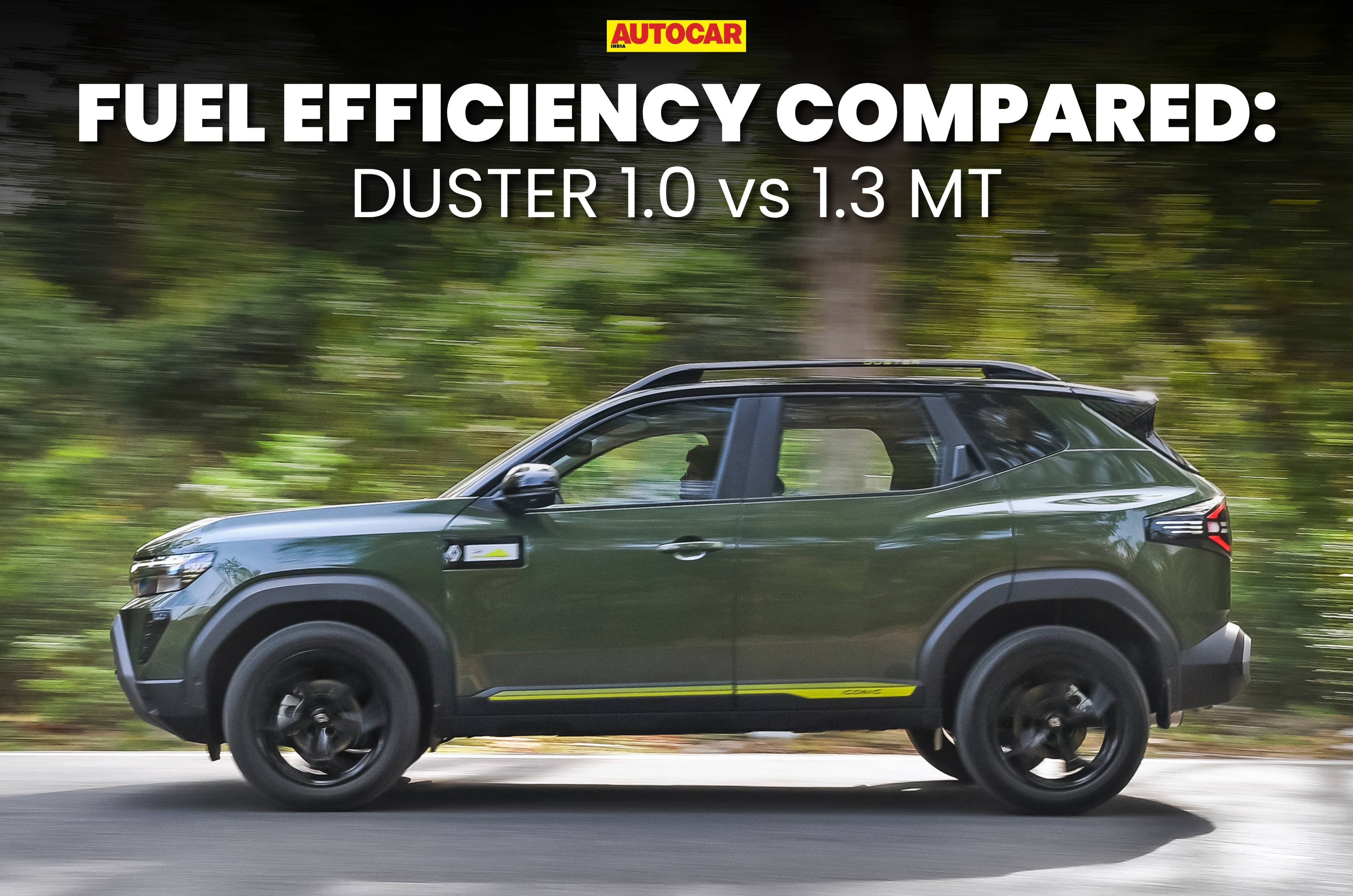
Renault Duster 1.0 vs 1.3 MT real-world fuel efficiency compared 

Renault Duster side tracking

Earlier this year, Renault revived the Duster to mark its re-entry into the mid-size SUV space. Powering the SUV is a pair of turbo-petrol engines of either 1.0-litre or 1.3-litre in capacity. We’ve extensively tested and compared the real-world mileage figures of both turbo-petrol engines in manual transmission guise to determine how much of a gap there is in their efficiency.

Renault Duster 1.0 vs 1.3 MT: Specifications

Renault Duster 1.0 vs 1.3 MT: Specifications


Duster 1.0

Duster 1.3

Engine

3 cyls, turbo-petrol

4 cyls, turbo-petrol 

Displacement (cc)

999

1333

Power (hp)

100

163

Torque (Nm)

166

280

Gearbox

6MT

6MT

Kerb weight (kg)

1316

1372

Fuel tank (litres)

50

50

The Duster’s 1.0-litre turbo-petrol engine is essentially the same unit that’s utilised in the Kiger. It develops an identical 100hp, but torque is slightly bumped to 166Nm (from 160Nm). This engine is the least powerful turbo-petrol unit in the segment. In contrast, the 163hp, 280Nm 1.3-litre turbo-petrol engine is the most powerful in the segment. A 6-speed manual gearbox is standard on both engines, while a 6-speed DCT is offered on the 1.3-litre mill as well. The smaller 1.0-litre engine translates into a 56kg lighter kerb weight. Both versions get an identical 50-litre fuel tank. 

Renault Duster 1.0 vs 1.3 MT: Real-world fuel efficiency

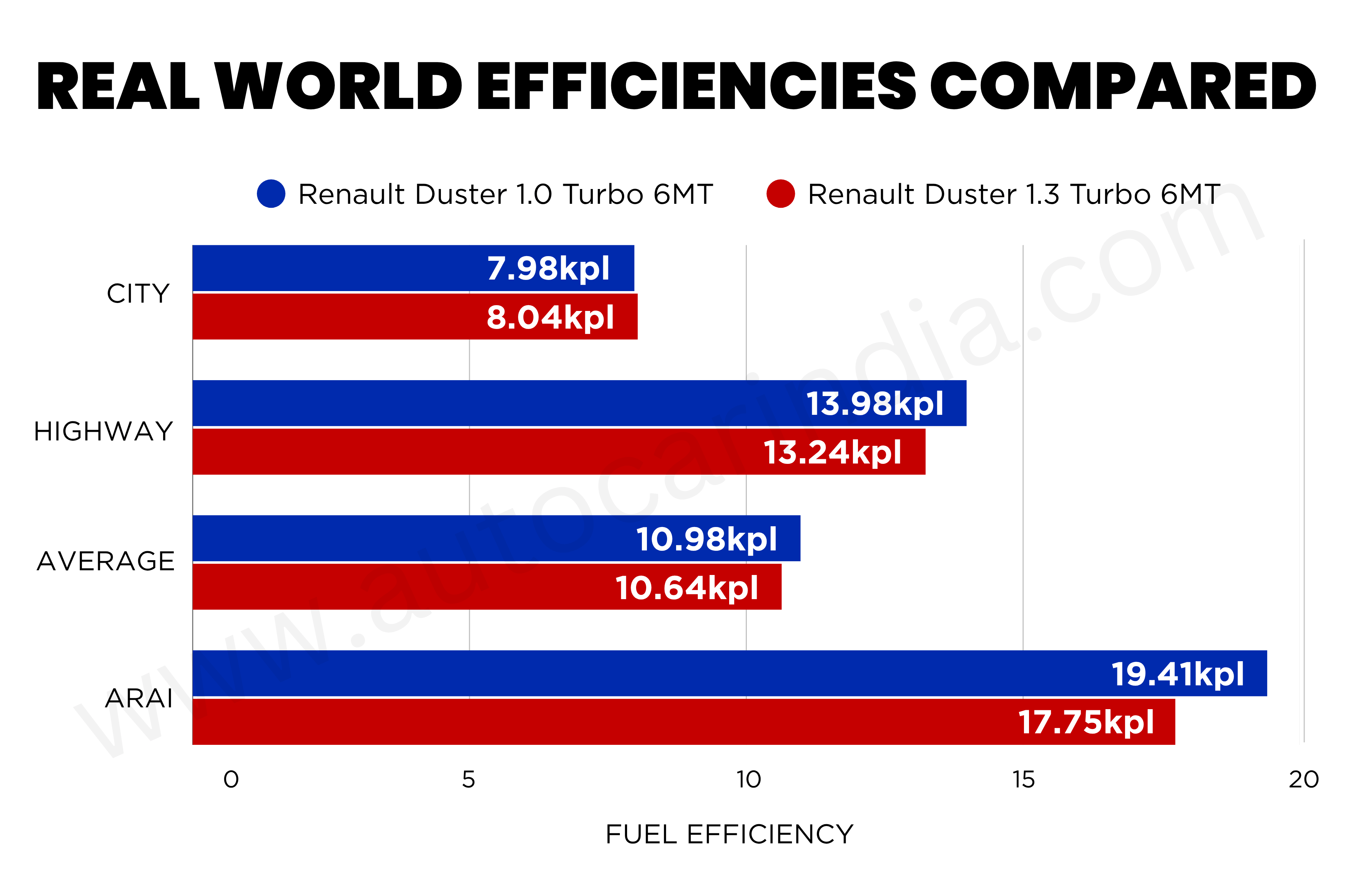
In the city, it was the 1.3-litre mill that was more frugal by a mere 0.48kpl. This is because of its ability to shift less frequently, due to its taller gearing. Both engines come with an Eco driving mode along with an auto start/stop function. But during the 1.0-litre units testing, high temperatures forced the AC to work harder, and auto start/stop only worked briefly, affecting city fuel efficiency. On the highway, however, the 1.0-litre unit was more efficient by 0.74kpl. Overall, the Duster 1.0’s average fuel efficiency was slightly higher at 10.98kpl in comparison to the 1.3’s 10.64kpl. The 0.34kpl gap in real-world average figures is much less in contrast to the 1.66kpl difference considering their respective ARAI-claimed figures 

Renault Duster 1.0 vs 1.3 MT: Price

Renault Duster 1.0 vs 1.3 MT: Prices


Duster 1.0

Duster 1,3

Price (Rs lakh) 

10.49 – 13.49

12.99 – 16.99

The Duster with the 1.0-litre engine has a more affordable price range as it’s offered from the base to the mid-level trims. Meanwhile, the 1.3-litre’s availability from the one above the base trim and exclusively on the top-end trim makes it comparatively pricier. Going for the 1.3 over the 1.0 within the same trim will set you back by up to Rs 1.3 lakh. 

Autocar India’s fuel-efficiency testing

Before our real-world fuel-efficiency tests, we fill our test cars’ tanks to the brim and maintain tyre pressures based on the manufacturer’s recommendations. These cars are driven in fixed city and highway loops in and around Navi Mumbai, and we maintain certain average speeds. Throughout the tests, there is only one person in each car, operating the air conditioner and other electricals, such as the audio system, indicators and wipers, when required, just like a regular user would. Periodic driver swaps further neutralise variations in driver patterns. At the end of each cycle, we calculate efficiency by filling the tanks to full again.

All prices are ex-showroom, India.

ICAI CA Final Registration 2026: सीए फाइनल नवंबर परीक्षा के लिए icai.org पर रजिस्ट्रेशन शुरू, ऐसे करें अप्लाई

ICAI CA Final Registration 2026: हर साल बड़ी संख्या में देश के युवा चार्टर्ड अकाउंटेंट (CA) बनने का सपना देखते हैं। ऐसे युवाओं के लिए इंस्टीट्यूट ऑफ चार्टर्ड अकाउंटेंट ऑफ इंडिया (ICAI) ने अपने सपने का आखिरी चरण पूरा करने का रास्ता खोल दिया है। आईसीएआई ने सीए फाइनल के लिए पंजीकरण शुरू कर दिए है। सीए इंटरमीडिएट के दोनों ग्रुप में सफल उम्मीदवार सीए फाइनल के लिए पंजीकरण कराने के योग्य हैं। योग्य उम्मीदवार आईसीएआई सेल्फ सर्विस पोर्टल की आधिकारिक वेबसाइट से आवेदन कर सकते हैं। सितंबर और नवंबर 2026 परीक्षा के लिए सीए फाउंडेशन, इंटरमीडिएट, फाइनल के लिए रजिस्ट्रेशन लिंक एक्टिवेट हो गया है।

सीए फाइनल परीक्षा 2026 के लिए पंजीकरण का लिंक 6 जुलाई 2026 से शुरू किया गया है। बिना लेट फीस के रजिस्ट्रेशन विंडो 19 जुलाई 2026 तक और लेट फीस के साथ 22 जुलाई 2026 तक खुली है। जो उम्मीदवार सीए फाइनल एग्जाम के लिए आवेदन करना चाहते हैं, उन्हें सलाह दी जाती है कि वे आखिरी तारीख का इंतजार किए बिना जल्द से जल्द रजिस्ट्रेशन फॉर्म भर दें। समय पर आवेदन करने से किसी भी टेक्निकल दिक्कत या दूसरी दिक्कतों से बचने में भी मदद मिलती है।

सीए फाइनल रजिस्ट्रेशन 2026: जरूरी तारीखें

जानकारी तारीखें

शुरू होने की तारीख : 6 जुलाई 2026

बिना लेट फीस के ऑनलाइन फॉर्म जमा करने की आखिरी तारीख : 19-जुलाई-2026 (रात 11:59 बजे तक)

लेट फीस के साथ ऑनलाइन फॉर्म जमा करने की आखिरी तारीख : 22-जुलाई-2026 (रात 11:59 बजे तक)

करेक्शन विंडो शुरू होने की तारीख : 23 जुलाई 2026

करेक्शन विंडो खत्म होने की तारीख : 25 जुलाई 2026

लॉगिन वेबसाइट : eservices.icai.org

एग्जामिनेशन फीस (बोथ ग्रुप्स): ₹3,300 (भारतीय केंद्रों के लिए)

सीए फाइनल रजिस्ट्रेशन 2026 आवेदन : योग्यता

आईसीएआई की योग्यता की शर्तें पूरी करने वाले उम्मीदवार सीए फाइनल के लिए आवेदन कर सकते हैं। इनमें शामिल हैं :

  • जरूरी आर्टिकलशिप ट्रेनिंग सफलतापूर्वक पूरी कर ली हो और एडवांस्ड आईसीआईटीएसएस ट्रेनिंग पूरी कर ली हो।
  • सीए इंटरमीडिएट के दोनों ग्रुप सफलतापूर्वक पास कर लिए हों।
  • कैंडिडेट्स को फॉर्म जमा करने से पहले सभी डिटेल्स ध्यान से वेरिफाई कर लेनी चाहिए।

कैसे करें आवेदन

  • आईसीएआई की ऑफिशियल वेबसाइट और पोर्टल eservices.icai.org पर विजिट करें।
  • अपने यूजर आईडी (SRN/Registration Number) और पासवर्ड को फिल करेक लॉगिन करें।
  • लॉगिन करने के बाद ‘Exam Functions’ के तहत ‘CA Final Exam Form Nov 2026’ वाले लिंक पर क्लिक करें।
  • फिर, अपने सेंटर, मीडियम (Hindi/English) और ग्रुप (1, 2 or दोनो) को चुनें।
  • इसके बाद ऑनलाइन मोड से फीस को जमा करें।
  • फीस जमा करते ही फॉर्म को सबमिट कर दें। फिर, इसकी रसीद को डाउनलोड कर लें।

रजिस्ट्रेशन फॉर्म 2026 के लिए जरूरी डॉक्यूमेंट्स

  • आईसीएआई रजिस्ट्रेशन नंबर
  • पासपोर्ट साइज फोटो
  • सिग्नेचर
  • वैलिड आइडेंटिटी प्रूफ
  • कैटेगरी या PwD सर्टिफिकेट (अगर लागू हो)
  • एग्जामिनेशन फीस के पेमेंट डिटेल्स

19 जुलाई 2026 के बाद फॉर्म भरने पर छात्रों को 600 रूपय की लेट फीस अलग से देनी होगी। साथ ही, सीए फाइनल एग्जाम के टाइमटेबल, एडमिट कार्ड और अन्य अपडेट्स के बारे में जानने के लिए छात्र आईसीएआई की ऑफिशियल वेबसाइट पर विजिट करते रहें।

AIIMS BSc Nursing Result 2026: आज aiimsexams.ac.in result link पर जारी होगा रिजल्ट, जानें काउंसलिंग में किन चीजों की होगी जरूरत

Psychology Facts: प्लेट में एक भी दाना न छोड़ने वाले लोगों की सोच कैसी होती है? जानें दिलचस्प वजह

कई लोगों की आदत होती है कि वो अपनी प्लेट में खाना बिल्कुल नहीं छोड़ते। दाल की आखिरी बूंद हो या मिठाई का अंतिम टुकड़ा, वो हर निवाले को खत्म करना पसंद करते हैं। देखने में यह एक सामान्य आदत लग सकती है, लेकिन इसके पीछे व्यक्ति की सोच, परवरिश और भोजन से जुड़े संस्कार छिपे हो सकते हैं। बचपन में मिली सीख, परिवार की परंपराएं और खाने की अहमियत को लेकर बनी धारणाएं इस व्यवहार को आकार देती हैं।

मनोवैज्ञानिकों का मानना है कि प्लेट साफ करने की आदत किसी खास व्यक्तित्व की पहचान नहीं होती, बल्कि यह सालों से बनी आदतों और मूल्यों का मिश्रण हो सकती है। आइए जानते हैं कि खाना पूरा खत्म करने वाले लोगों की मानसिकता के बारे में मनोविज्ञान क्या कहता है।

 “खाना बर्बाद नहीं करना चाहिए” वाली सीख बन जाती है आदत

अक्सर यह आदत बचपन में ही विकसित हो जाती है। माता-पिता की बातें जैसे “प्लेट में खाना मत छोड़ो” या “खाने की कद्र करो” धीरे-धीरे सोच का हिस्सा बन जाती हैं। समय के साथ खाना पूरा खत्म करना एक स्वाभाविक व्यवहार बन जाता है। ऐसे लोग अक्सर इसे भूख से ज्यादा जिम्मेदारी और सम्मान से जोड़कर देखते हैं।

हर काम पूरा करने की सोच दिखा सकती है यह आदत

कुछ लोगों के लिए प्लेट में खाना छोड़ना अधूरे काम जैसा महसूस होता है। वे किसी भी चीज को बीच में छोड़ना पसंद नहीं करते और उसे पूरा करना संतुष्टि देता है। हालांकि, इसका मतलब यह नहीं कि वे हमेशा ज्यादा जिम्मेदार या परफेक्शनिस्ट होते हैं, लेकिन उनकी आदतों में पूरा करने की भावना जरूर नजर आ सकती है।

भूख नहीं, कई बार आदत तय करती है कब रुकना है

खाने से जुड़ी मनोविज्ञान की रिसर्च बताती है कि लोग हमेशा अपनी भूख के हिसाब से खाना बंद नहीं करते। कई बार प्लेट में बचा हुआ खाना, खाने की मात्रा या सामाजिक आदतें यह तय करती हैं कि व्यक्ति कब खाना खत्म करेगा। यानी पेट भर जाने के बाद भी लोग सिर्फ इसलिए खाते रहते हैं क्योंकि प्लेट में खाना बाकी है।

खाना छोड़ना उन्हें बर्बादी जैसा लगता है

कुछ लोगों के लिए भोजन सिर्फ खाने की चीज नहीं बल्कि मेहनत और संसाधनों की कीमत से जुड़ा होता है। वे सोचते हैं कि इस खाने को बनाने में किसी की मेहनत, समय और पैसे लगे हैं, इसलिए इसे फेंकना सही नहीं है। खासकर ऐसे परिवारों में जहां बचपन से खाने की अहमियत सिखाई गई हो, वहां यह भावना और मजबूत हो जाती है।

रूटीन पसंद करने वाले लोग भी रखते हैं प्लेट साफ

हर दिन की छोटी-छोटी आदतें इंसान के स्वभाव की झलक दिखाती हैं। जो लोग अपनी दिनचर्या को व्यवस्थित रखना पसंद करते हैं, वे खाने के मामले में भी एक तय तरीका अपनाते हैं। उनके लिए हर भोजन के बाद प्लेट खाली करना एक आरामदायक और परिचित रूटीन बन जाता है।

उनके लिए खाना सिर्फ भोजन नहीं, प्यार और सम्मान भी है

कई संस्कृतियों और भारतीय परिवारों में खाना भावनाओं से जुड़ा होता है। घर में बनाया गया भोजन मेहनत, प्यार और देखभाल का प्रतीक माना जाता है। ऐसे में प्लेट में खाना छोड़ना कुछ लोगों को अनादर जैसा लग सकता है। उनके लिए हर निवाले को खत्म करना भोजन के प्रति आभार जताने का तरीका होता है।

क्या हमेशा प्लेट साफ करना सही है?

विशेषज्ञों के अनुसार, खाने की कद्र करना अच्छी बात है, लेकिन शरीर के संकेतों को समझना भी जरूरी है। अगर पेट भर चुका है तो सिर्फ आदत या दबाव में खाना जारी रखना सही नहीं माना जाता। बेहतर तरीका यह है कि भोजन का सम्मान भी करें और अपनी भूख व संतुष्टि के संकेतों को भी पहचानें।

निष्कर्ष: साफ प्लेट के पीछे छिपी होती है एक पूरी कहानी

प्लेट में एक भी दाना न छोड़ने की आदत किसी व्यक्ति के व्यक्तित्व का पक्का प्रमाण नहीं है। इसके पीछे बचपन की सीख, परिवार के संस्कार, संस्कृति और भोजन के प्रति भावनाएं जुड़ी हो सकती हैं। आखिरकार स्वस्थ खाने की आदत वही है जिसमें भोजन की कद्र भी हो और शरीर की जरूरतों को समझने की समझ भी।

AC vs Air Cooler: बारिश के मौसम में AC या एयर कूलर? जानें कौन देगा बेहतर कूलिंग और आराम

AC vs Air Cooler: बारिश के मौसम में AC या एयर कूलर? जानें कौन देगा बेहतर कूलिंग और आराम

बारिश के मौसम में मौसम काफी खुशनुमा हो जाता है। वहीं बारिश के मौसम में गर्मी तो कम हो जाती है, लेकिन हवा में नमी बढ़ने से घर के अंदर काफी उमस महसूस होती है। ऐसे में घर को ठंडा रखने के लिए कई लोग नया कूलिंग अप्लायंस खरीदने का सोचते हैं। एयर कंडीशनर (AC) या एयर कूलर में से कौन सा घर के लिए अच्छा होगा, इसे लेकर अक्सर लोगों के मन में उलझन बनी रहती है। अगर आप भी बारिश के दौरान एयर कंडीशनर (AC) या एयर कूलर लेने का सोच रहे तो इनके बीच का अंतर जरुर जाने।

एयर कंडीशनर और एयर कूलर दोनों का काम कमरे को ठंडा करना है, लेकिन दोनों की तकनीक और काम करने का तरीका अलग होता है। इसलिए बारिश के मौसम में कौन-सा उपकरण आपके लिए सही रहेगा, ये आपकी जरूरत और मौसम की स्थिति पर निर्भर करता है।

जानें एसी और कूलर के फायदें

बारिश के मौसम में एयर कंडीशनर (AC) का इस्तेमाल कई मामलों में ज्यादा फायदेमंद माना जाता है। ये केवल कमरे का तापमान कम नहीं करता, बल्कि हवा में मौजूद अतिरिक्त नमी को भी कम कर देता है। इससे कमरे में उमस घटती है और माहौल ज्यादा ठंडा व आरामदायक महसूस होता है।

वहीं, एयर कूलर गर्म और सूखे मौसम में बेहतर तरीके से काम करता है। यह पानी की मदद से हवा को ठंडा करता है। लेकिन बारिश के मौसम में हवा में पहले से ही नमी अधिक होती है, इसलिए कूलर की ठंडक उतनी असरदार नहीं रहती और कमरे में उमस भी बढ़ सकती है।

उमस भरी गर्मी में कौन सा बेहतर

बारिश के दिनों में एयर कूलर कई बार कमरे को आरामदायक बनाने के बजाय उमस और बढ़ा सकता है। इसलिए ऐसे मौसम में एयर कंडीशनर (AC) अधिक बेहतर विकल्प माना जाता है। एयर कूलर पानी से भीगे कूलिंग पैड के जरिए हवा को ठंडा करता है और यह तरीका तब सबसे अच्छा काम करता है, जब मौसम गर्म और सूखा हो। लेकिन हवा में नमी ज्यादा होने पर इसकी ठंडक का असर काफी कम हो जाता है।

बारिश के मौसम में हवा में नमी पहले से ही अधिक होती है, इसलिए एयर कूलर ठीक तरह से ठंडक नहीं दे पाता। इसके विपरीत, एयर कंडीशनर (AC) कमरे का तापमान कम करने के साथ-साथ हवा से अतिरिक्त नमी भी हटाता है। इससे कमरा ठंडा, सूखा और ज्यादा आरामदायक बना रहता है। यही वजह है कि मानसून के दौरान ज्यादातर लोग एयर कूलर की बजाय AC को बेहतर विकल्प मानते हैं।

Tata Sierra EV vs Mahindra BE 6: Whose top-spec trim offers better value?  

Tata Sierra EV vs Mahindra BE 6:

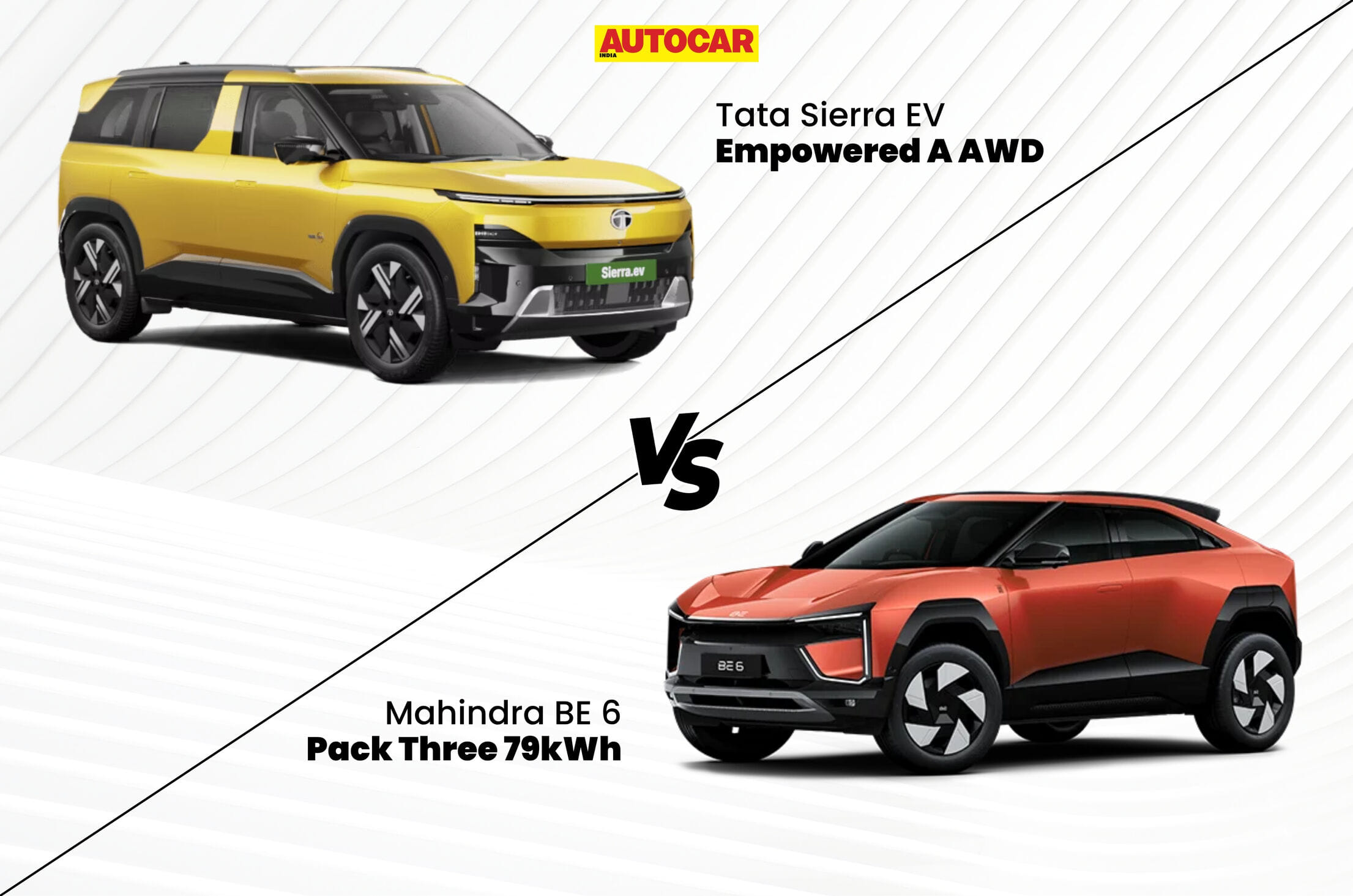
With the mid-size electric SUV space getting highly competitive over time, the Mahindra BE 6 comes as a popular option with its futuristic looks, large battery and powerful motor. With the Sierra EV’s arrival, Tata is aiming squarely for the BE 6. From dimensions and powertrains to features and price, we compare both eSUVs’ top-spec versions on paper to determine the better value proposition. Here, we’ve chosen the Empowered A trim of the Sierra EV and the Pack Three trim of the BE 6.

Explore full specs, features, and a price breakdown in our Sierra EV versus Mahindra BE 6 comparison.

Tata Sierra EV vs Mahindra BE 6: Dimensions

Tata Sierra EV vs Mahindra BE 6: Dimensions


Sierra EV

BE 6

Difference 

Length (mm)

4,340

4,371

-31 

Width (mm)

1,841

1,907

-66

Height (mm)

1,750

1,627

+123

Wheelbase (mm)

2,730

2,775

-45

Ground clearance (mm)

205

207

-2

Boot space (litres)

450

455

-5

Frunk space (litres)

35-55

45

+/-10

According to our mid-size eSUV specification comparison, the Sierra EV and the Mahindra BE 6 were among the largest models. While the Sierra EV is taller and has a larger frunk, the BE 6 is longer, wider, has a longer wheelbase, and slightly more ground clearance and boot. Overall, the BE 6 is larger, albeit marginally.

Tata Sierra EV vs Mahindra BE 6: Battery and range 

Tata Sierra EV vs Mahindra BE 6: Battery and range 


Sierra EV

Mahindra BE 6

Battery size (kWh)

75

79

Motor setup

RWD | AWD

RWD 

Power (hp)

209 | 140 (front) 240 (rear)

286

Torque (Nm)

315 | 504

380

ARAI range (km)

665 | 624

683

In top-specification guise, the Sierra EV and Mahindra BE 6 feature among the largest battery packs in the segment, with the latter being slightly bigger. But the Sierra more than makes up for it by being the only eSUV to have an AWD version. There’s also a single-motor RWD version offered on the Empowered A trim of the Sierra EV. While the BE 6’s single motor produces more power than the front and rear motors on the Sierra EV, the Sierra EV delivers 124Nm of additional torque in AWD guise. However, the BE 6 gets higher claimed range figures in comparison to the Sierra EV.

Tata Sierra EV vs Mahindra BE 6: Charging times 

Tata Sierra EV vs Mahindra BE 6: Charging times 


Sierra EV

Mahindra BE 6

Battery size (kWh)

75

79

AC charging output support (kW)

7.2

7.2, 11.2

DC charging output support (kW)

110, 120

180

AC charging time (hours)

8.9 | 10.5 (10-100%)

11.7, 8 (0-100%)

DC charging time (minutes)

25 | 26 (20-80%)

20 (20-80%)

As far as charging is concerned, the BE 6 supports faster AC and DC charging speeds compared to the Sierra EV. Only their DC charging speeds are comparable, with the Sierra EV’s time being up to 6 minutes slower than the BE 6’s.

Tata Sierra EV vs Mahindra BE 6: Exterior features

Tata Sierra EV vs Mahindra BE 6: Exterior features


Sierra EV

Mahindra BE 6

Headlights

Auto LED

Auto LED

Tail-lights

LED

LED

DRLs

Yes

Yes

Welcome/goodbye animation

Yes

Yes

Fog lamps

Front and rear

Front

Puddle lamps

Yes

No

Sequential indicators

Yes

Yes

Flush door handles

Yes

Yes

Rear spoiler

Yes 

Yes

Power-adjustable and folding ORVMs

Yes

Yes

Rain-sensing wipers

Yes

Yes

Rear wiper/washer

Yes

No

Shark-fin antenna

Yes

No

Colours

Monotone

Monotone

Wheels

19-inch

19-inch

On the outside, both the Sierra EV and BE 6 come with LED lighting, welcome and goodbye animations, sequential turn indicators, and the largest-in-segment 19-inch alloys. But the Sierra EV comes with rear fog lamps, puddle lamps, a rear wiper/ washer, and a shark fin antenna. However, the BE 6 gets motorised opening for the front flush door handles, while the Sierra EV’s flush door handles are manually operated.

Tata Sierra EV vs Mahindra BE 6: Interior features

Tata Sierra EV vs Mahindra BE 6: Interior features


Sierra EV

Mahindra BE 6

Infotainment screen

12.3-inch

12.3-inch

Driver’s display

10.25-inch

12.3-inch

Passenger display

12.3-inch

No

Head-up display

Yes

Yes

In-built navigation

Yes

No

Infotainment-based gaming console

Yes

No

In-car payments

Yes

No

Powered driver’s seat 

6-way

6-way

Front seat thigh support

Yes

No

Driver seat memory and welcome function

Yes

Yes

Powered front passenger seat

4-way

No

Cooled front seats

Yes

Yes

Reclining rear seats

Yes

Yes

Boss mode

Yes

No

Wireless Android Auto, Apple CarPlay

Yes

Yes

Audio system

12-speaker JBL Black

16-speaker Harman Kardon

Dolby Atmos

Yes

Yes

Sunroof

Openable panoramic

Fixed-glass panoramic

Rear AC vents

Yes

Yes

Climate control

Dual-zone

Dual-zone

Seat upholstery

Leatherette

Leatherette

Wireless phone charger

Yes

Yes

Ambient lighting

Yes

Yes

Front centre armrest

Yes

Yes

Rear centre armrest

Yes

Yes

USB ports

4x Type-C

4x Type-C

NFC-based key card

Yes

No

Powered tailgate

Yes

Yes

Air purifier

Yes

Yes

Connected car tech

Yes

Yes

Rear sunshades

Yes

No

OTA updates

Yes

Yes

While the BE 6 gets the larger digital driver’s display and more speakers than the Sierra EV, the latter, however, pips the former by offering an additional passenger display, built-in navigation, a powered front passenger seat, boss mode, and rear window sunshades. While the panoramic sunroof in the Sierra EV is openable, the BE 6 gets a fixed glass roof.

Tata Sierra EV vs Mahindra BE 6: Driving tech 

Tata Sierra EV vs Mahindra BE 6: Driving tech 


Sierra EV

BE 6

Boost mode

Yes

No

Drive modes

Normal, Eco, Sport

Default, Range, Everyday, Race

Terrain modes

Normal, Grass, Snow, Mud-ruts, Gravel, Sand, Rock Crawl, Custom

Snow

Off-road assist

Yes

No

Cruise Control

Adaptive

Adaptive

Drift mode

Yes

No

While drive modes and adaptive cruise control are present on both eSUVs, the Sierra EV’s AWD allows more adjustability to your drive. The BE 6 offers only snow mode, while the Sierra EV betters it with Normal, Grass, Snow, Mud-ruts, Gravel, Sand, Rock Crawl, and Custom terrain modes. Additionally, the Sierra EV also offers a drift mode and boost mode, with the latter surging power on demand. 

Tata Sierra EV vs Mahindra BE 6: Safety

Tata Sierra EV vs Mahindra BE 6: Safety


Sierra EV

BE 6

Airbags

6

6

ABS and EBD

Yes

Yes

ADAS

Level 2+

Level 2+

Automatic parking assist 

Yes

Yes

Camera setup

540-degree

360-degree

Parking sensors

Front and rear

Front and rear

Electric parking brake

Yes

Yes

Disc brakes

All-wheels

All-wheels

TPMS

Yes

Yes

IRVM

Auto-dimming

Auto-dimming

Hill-hold control

Yes

Yes

ESC

Yes

Yes

When it comes to safety features, the Sierra EV and BE 6 come loaded. Not only do both eSUVs cover the basics like 6 airbags, hill hold control, and ESC, but they are the segment’s only SUVs with Level 2+ ADAS and automatic parking assist. The latter feature also enables you to park/unpark your vehicle via your smartphone. But the Sierra EV nudges ahead minutely with additional cameras for the under-bonnet area on top of its 360-degree camera setup. 

Tata Sierra EV vs Mahindra BE 6: Price and verdict

Tata Sierra EV vs Mahindra BE 6: Price and verdict


Sierra EV AWD

Mahindra BE 6

Ex-showroom price (Rs lakh)

24.79 – 25.99

26.90

The Sierra EV is up to Rs 2.11 lakh cheaper than the BE 6 in top-spec guise, depending on the chosen variant. Between the two, it is the Sierra EV we recommend. While the BE 6 has larger dimensions and a higher claimed range, the Sierra EV brings more features and an AWD system, all while being more affordable at the same time, making it the better value proposition.

Amazon और Flipkart Mega Sale 2026 लाइव, स्मार्टफोन, लैपटॉप और इलेक्ट्रॉनिक प्रोडक्ट्स पर भारी छूट, यहां देखें ऑफर्स की पूरी लिस्ट

Amazon Prime Day Sale 2026 और Flipkart GOAT Sale 2026 की शुरुआत 4 जुलाई से हो गई है। दोनों सेल्स रात 12 बजे लाइव हुईं, जहां इलेक्ट्रॉनिक्स और गैजेट्स पर भारी छूट मिल रही है। स्मार्टफोन, लैपटॉप और अन्य डिवाइस सस्ते दामों में उपलब्ध हैं। इस बार iPhone मॉडल्स पर भी आकर्षक ऑफर्स दिए जा रहे हैं। रिपोर्ट्स के मुताबिक, आने वाले समय में Apple कीमतें बढ़ा सकता है, जिससे यह सेल और भी खास बन गई है। Amazon की सेल सिर्फ Prime मेंबर्स के लिए है, जबकि Flipkart GOAT Sale सभी यूजर्स के लिए खुली है, लेकिन Plus मेंबर्स को जल्दी एक्सेस मिलता है।

Amazon Prime Day Sale 2026 के खास ऑफर्स

Amazon ने कई डिवाइसों पर भारी छूट का ऐलान किया है। प्रमुख ऑफर्स इस प्रकार हैं:

  • OnePlus 13 (12GB/256GB) ₹54,999 में (25% छूट)
  • ASUS Vivobook 15 (i3 13th Gen) ₹44,990 में (42% छूट)
  • Samsung 55-inch 4K Smart TV ₹39,490 में (28% छूट)
  • LG 1.5 Ton Smart AC ₹35,490 में (53% छूट)
  • Godrej 600L Smart Refrigerator ₹69,990 में (40% छूट)
  • BenQ 4K Smart Projector ₹1,14,490 में (42% छूट)

इसके अलावा इलेक्ट्रॉनिक्स और एक्सेसरीज पर 80% तक की छूट दी जा रही है। लैपटॉप और टैबलेट पर 40%, स्पीकर्स पर 60%, स्मार्ट टीवी पर 65% और प्रोजेक्टर पर 70% तक डिस्काउंट मिल रहा है। SBI, Axis बैंक कार्ड और EMI ट्रांजैक्शन पर 10% तक का इंस्टेंट डिस्काउंट भी उपलब्ध है।

Flipkart GOAT Sale 2026 में iPhone और नए लॉन्च पर ऑफर

Flipkart की इस सेल में iPhone 17 और अन्य मॉडल्स पर भी आकर्षक कीमतें देखने को मिल रही हैं। रिपोर्ट्स के मुताबिक:

  • iPhone 17: ₹70,990 शुरुआती कीमत
  • iPhone 17 Pro: ₹1,12,900 शुरुआती कीमत

इसके अलावा पुराने iPhone मॉडल्स पर भी छूट की उम्मीद है।

Nothing और अन्य स्मार्टफोन्स पर ऑफर

Flipkart सेल में Nothing ब्रांड के नए डिवाइस भी डिस्काउंट पर उपलब्ध हैं:

  • Nothing Phone (4a): ₹32,999 (₹4,000 बैंक ऑफर के साथ)
  • Nothing Phone (4a) Pro: ₹41,999 (₹5,000 बैंक ऑफर)
  • Nothing Headphone (1): ₹16,999 (3–5 जुलाई तक उपलब्ध)

Motorola स्मार्टफोन्स पर बड़ी छूट

Motorola के कई मॉडल्स पर भी सेल के दौरान डिस्काउंट और बैंक ऑफर्स मिल रहे हैं। Edge और G सीरीज के फोन अलग-अलग कीमतों पर उपलब्ध हैं, जिनमें बैंक ऑफर के तहत ₹1,000 से ₹5,000 तक की अतिरिक्त छूट शामिल है।

फोल्डेबल और प्रीमियम मॉडल्स पर भी ऑफर्स दिए गए हैं, जिससे ग्राहकों को हाई-एंड डिवाइस कम कीमत में मिल सकते हैं।

ई-रिक्शा को बंद करने वाली ऐप्स के खिलाफ एक्शन! Google और Apple को 7 ऐप हटाने का नोटिस

2026 Renault Kwid launched in India at Rs 4.53 lakh

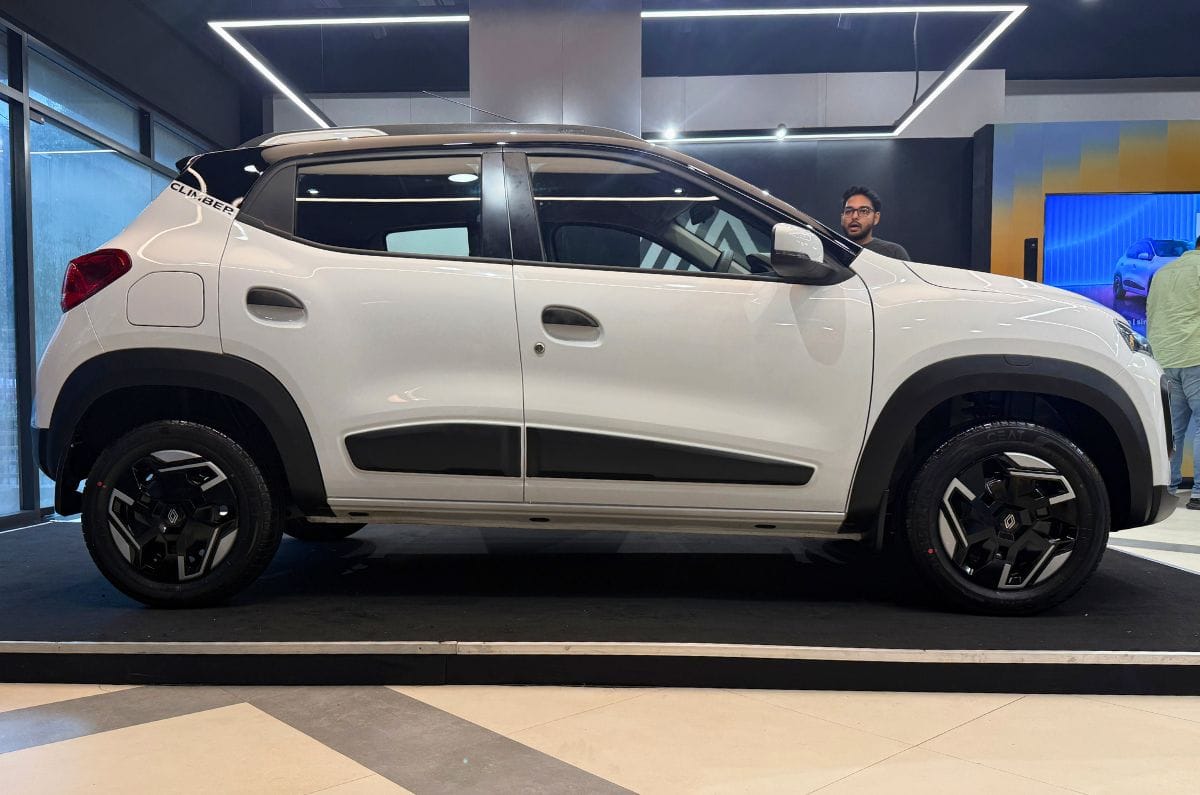
2026 Renault Kwid front quarter static

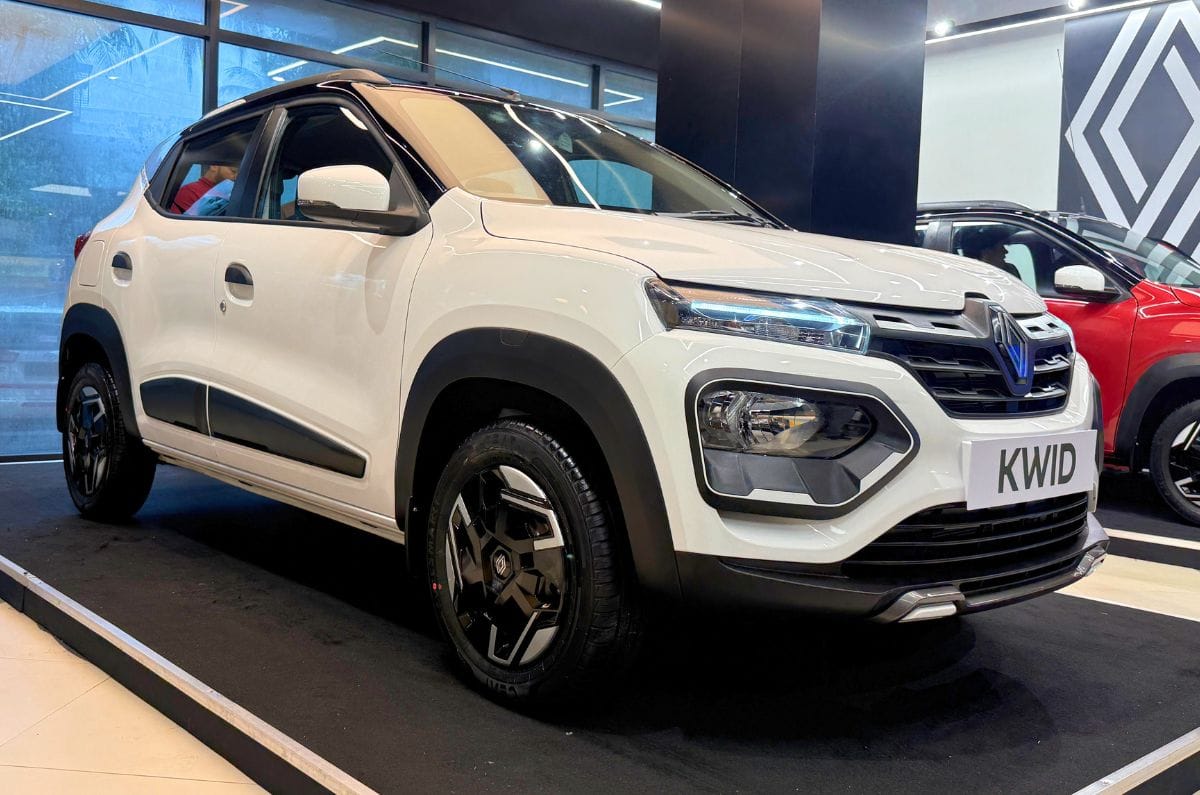
Renault has launched the 2026 Kwid in India with prices starting from Rs 4.53 lakh (ex-showroom). It is available in two trims: Evolution and Climber, offered with both manual and AMT options. Compared to the older model, the 2026 Renault Kwid gets some exterior and interior design changes and comes at a relatively lower price than before.

  1. Retrofitted CNG kit is available with MT variants at Rs 70,450 extra
  2. Continues with the same 1-litre 3-cylinder petrol engine (69hp, 92.5Nm)

Renault has also revealed its India plans, announcing 12 product “actions” over the next 18 months, 4 of which will happen in the remainder of 2026. Commenting on the upcoming plans, Renault India CEO Stéphane Deblaise said, “There won’t be more than two consecutive months without a significant update from Renault, whether it’s a limited edition, a design refresh, new technology, a new powertrain, or even an all-new car.”

2026 Renault Kwid: Prices

Offered in Evolution and Climber trims with manual and AMT options

2026 Renault Kwid: Variant-wise ex-showroom prices 


5-speed manual

5-speed AMT

Evolution

Rs 4.53 lakh

Rs 4.90 lakh

Climber

Rs 5.15 lakh

Rs 5.61 lakh

Renault is offering a retrofitted CNG kit for the Kwid’s manual variants at an additional Rs 70,450, with a 3-year/1 lakh km standard warranty (whichever is earlier). If you choose, these CNG kits will be installed at authorised workshops. Consult your nearest Renault dealership for more details.

The starting price of the 2026 Kwid is Rs 22,000 more than the older model’s base-spec Authentic trim. With the 2026 update, however, prices of the Evolution and Climber trims have reduced by up to Rs 14,000 and Rs 32,000, respectively. The previously available entry-spec Authentic and mid-spec Techno trims have been discontinued with the 2026 model.

2026 Renault Kwid: What’s new?

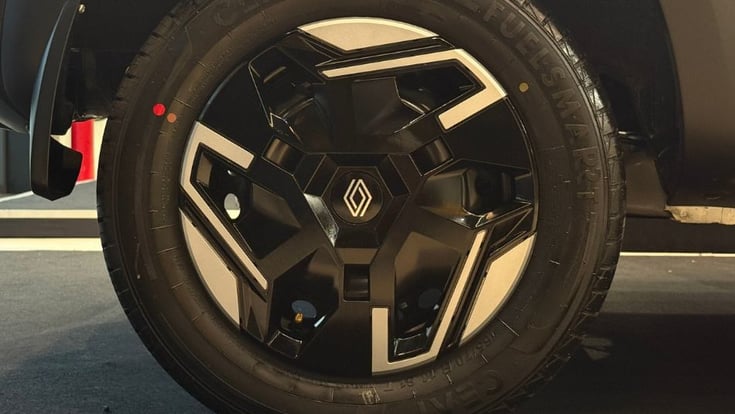
Sports new Renault logos and redesigned plastic wheel covers

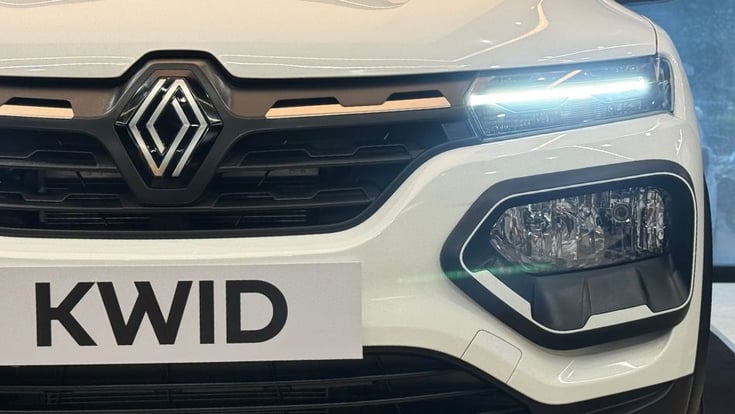
2026 Renault Kwid front design
2026 Renault Kwid wheel covers
 

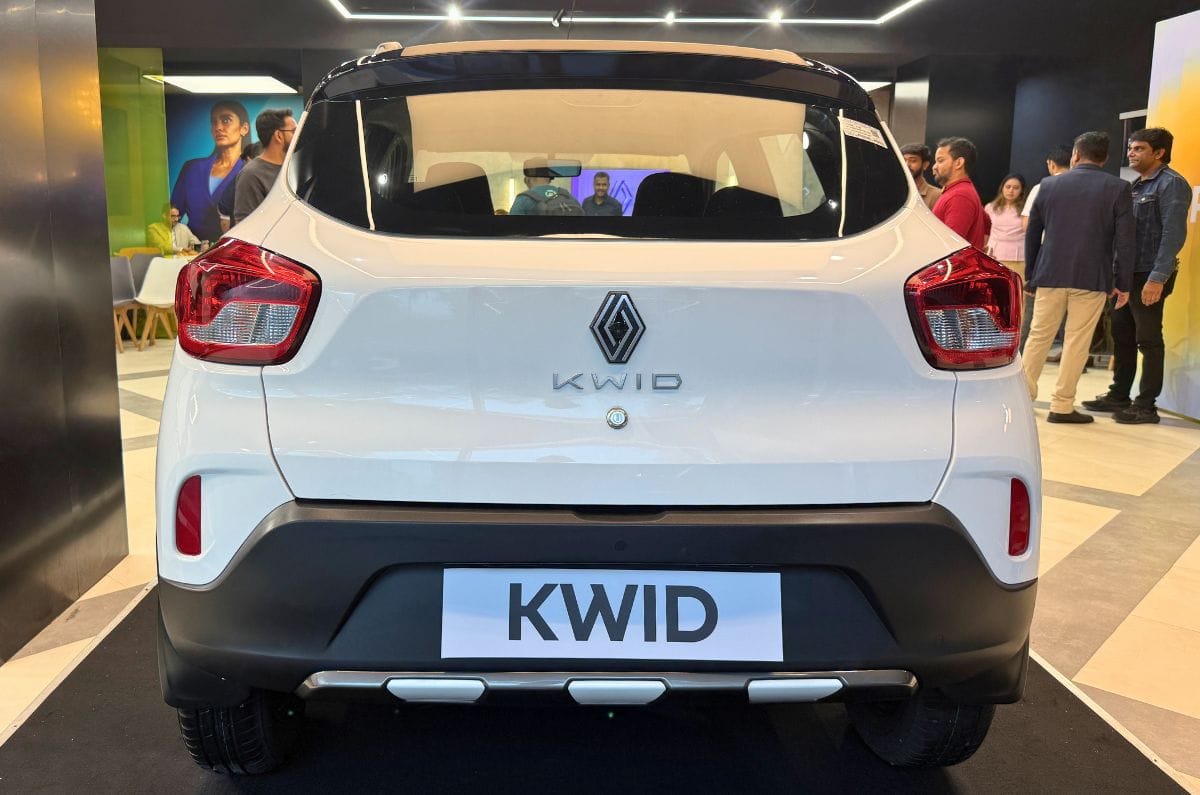
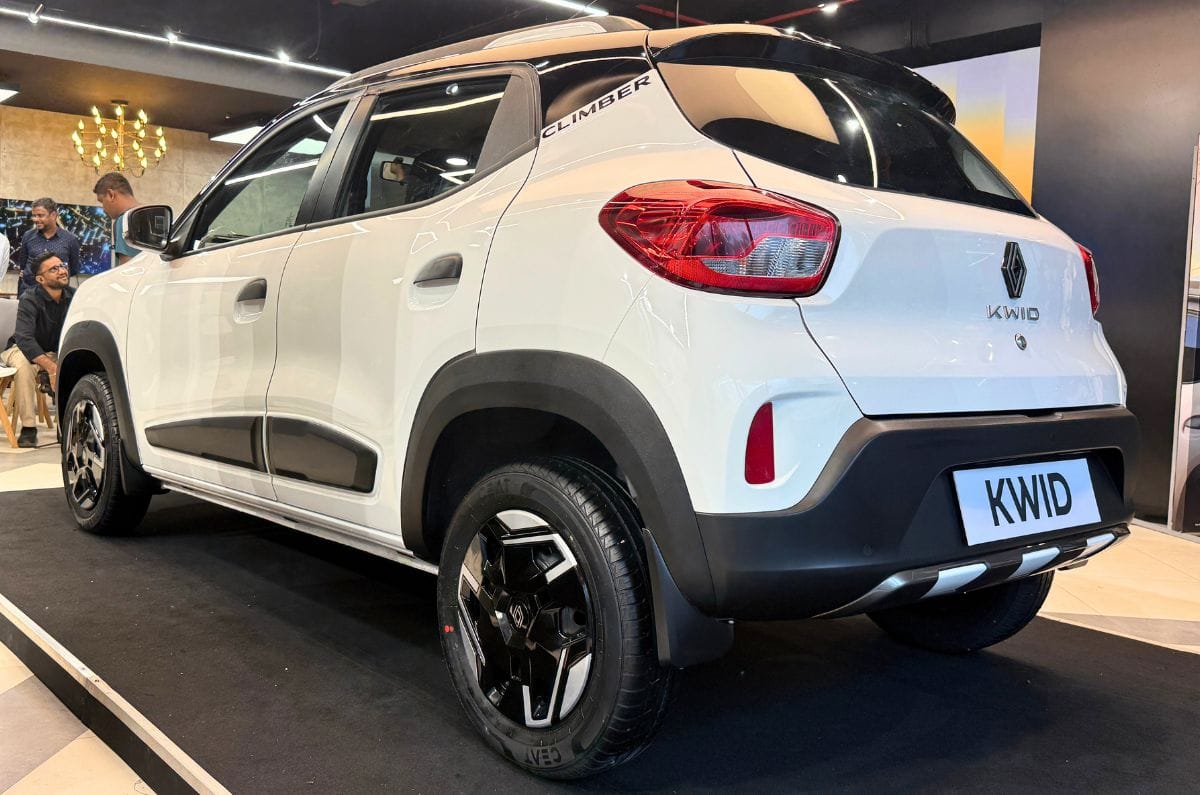
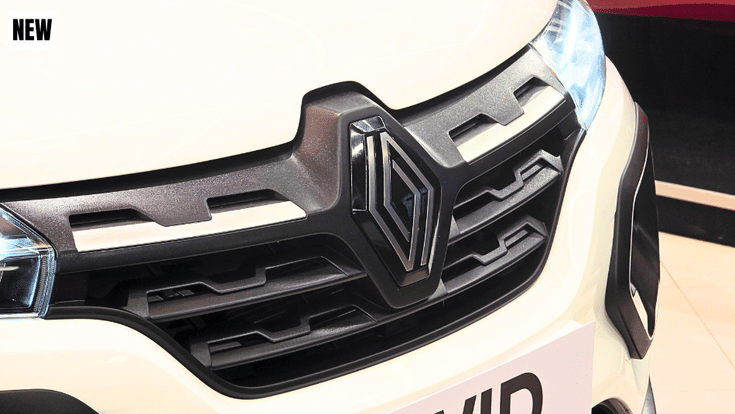
As mentioned earlier, there are only a couple of changes to the 2026 Kwid’s exterior design elements. These include new 3D Renault badges and redesigned dual-tone plastic covers for the 14-inch steel wheels. Keen-eyed viewers can also spot a different font for the Kwid lettering on the tailgate, and it also gets a new silver finish.

Other elements are the same as those on the older Kwid, including the eyebrow-shaped LED DRLs, halogen headlights, front and rear bumpers and halogen taillights.

The 2026 Kwid’s dimensions are identical to the older model, which are as follows:

2026 Renault Kwid dimensions and other specifications

Length 

3,731mm

Width

1,579mm

Height 

1,474mm

Wheelbase

2,422mm

Ground clearance

184mm

Boot space

279 litres

Borrows a steering wheel and gear lever from the Renault Kiger SUV

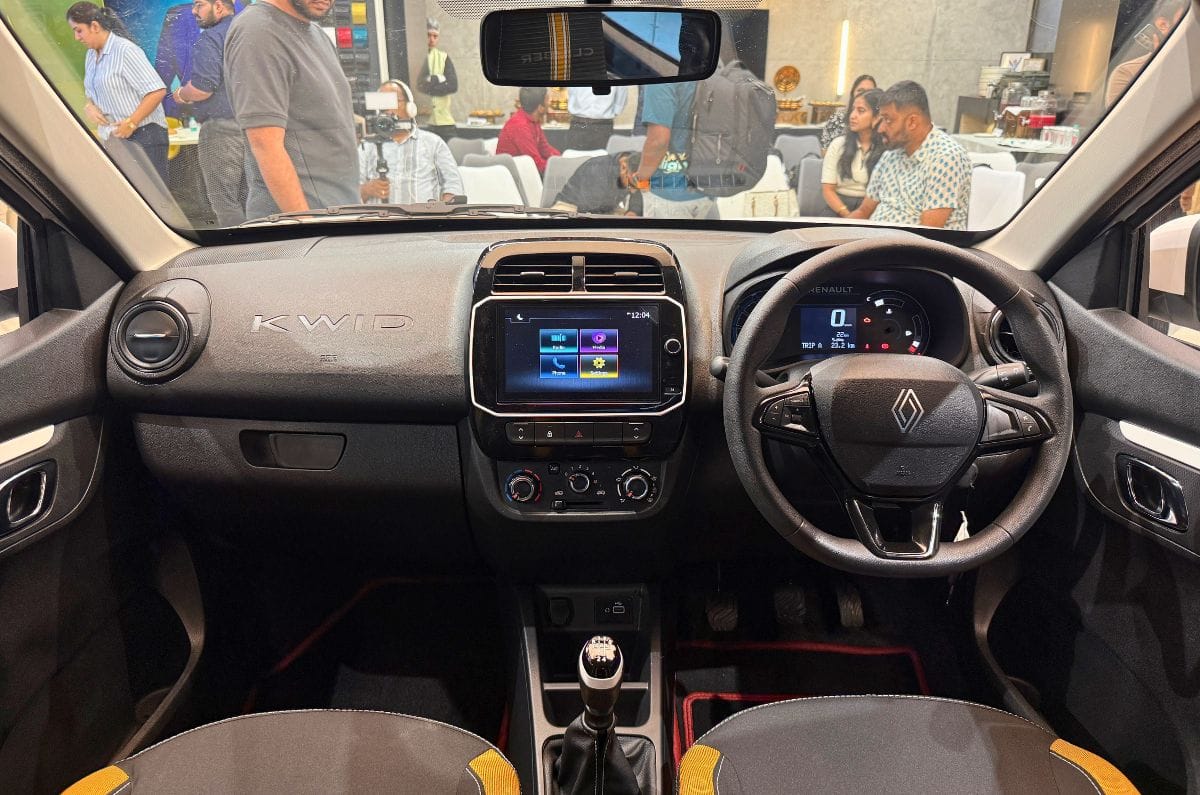
Like the exterior design, not much has changed inside the Renault Kwid’s cabin with the 2026 update. The new 3-spoke steering wheel design is borrowed from the Kiger, featuring buttons for controlling the infotainment system.

Everything else is the same, including the 8-inch touchscreen infotainment system with support for wired Android Auto and Apple CarPlay, a semi-digital instrument cluster with a multi-information display (MID) in the centre, manual AC, and all four power windows. The black fabric seat upholstery with yellow accents is also identical to the older model.

It is offered with dual airbags in the base-spec Evolution trim, while the top-spec Climber gets 6 airbags. Other safety features include a rear parking camera with sensors, a tyre pressure monitoring system (TPMS), hill start assist (with AMT variants only), keyless entry with central locking, ABS with EBD and seatbelt reminders. 

Powered by the same 69hp 1.0L naturally aspirated petrol engine

The 2026 Renault Kwid is powered by the same 1.0-litre 3-cylinder naturally aspirated petrol engine that produces 69hp and 92.5Nm. It is mated to either a 5-speed manual gearbox or a 5-speed automated manual transmission (AMT).

The Renault Kwid continues to rival the Maruti S-Presso and Maruti Alto K10, which start at lower price tags of Rs 3.50 lakh and Rs 3.70 lakh, respectively.

Prices are ex-showroom, Delhi.

Renault Kwid new vs old: Differences and similarities explained

Renault Kwid New vs Old comparison

Renault gave the Kwid a comprehensive facelift back in 2019. Three years later, the hatchback received a few cosmetic tweaks and new paint options. The 2026 Renault Kwid comes with yet another lifecycle update, albeit a minor one. It remains Renault’s most affordable car in India, and its closest rivals are the Maruti Alto K10 and Maruti S-Presso. Let’s now look at what’s new with the 2026 Renault Kwid compared to its predecessor.

Renault Kwid new vs old: Exterior design

There are only a couple of noticeable changes on the outside

2026 Renault Kwid facelift front grille
Old Renault Kwid front grille
 

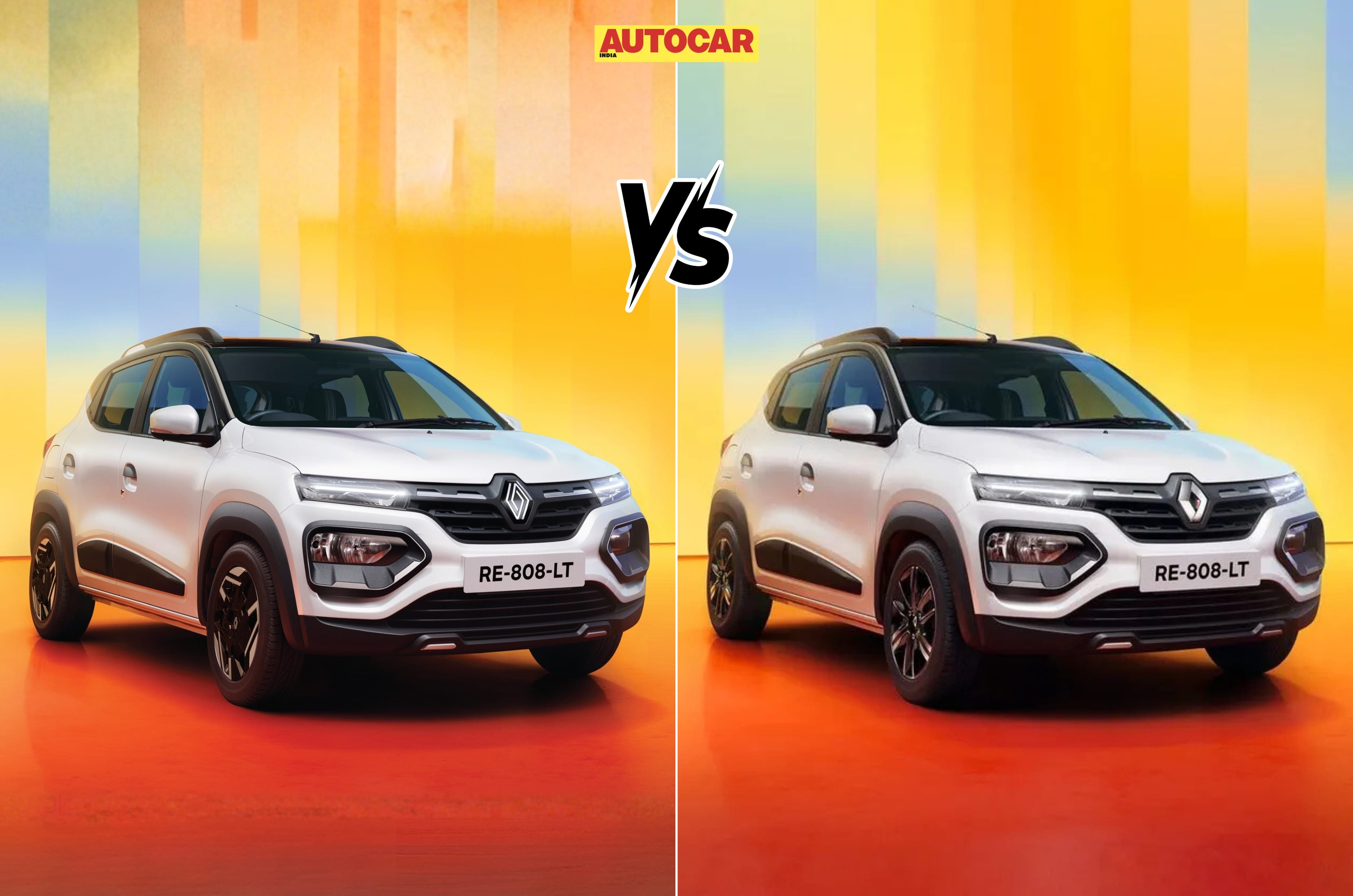
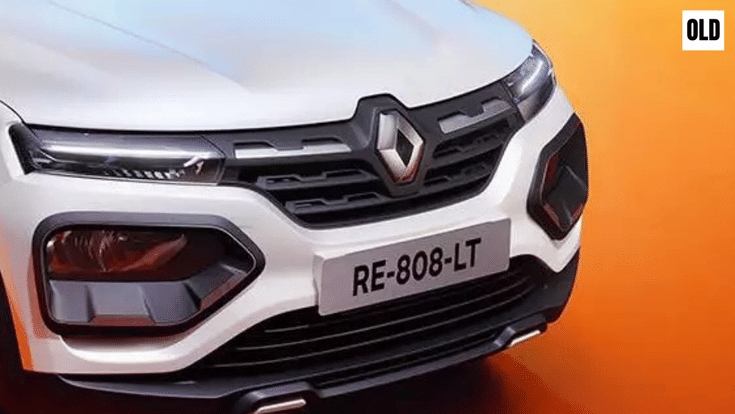
Compared to the pre-facelift model, the 2026 Kwid’s exterior is more or less unchanged in terms of its overall design and silhouette. The sleek upper LED lighting element and the large bumper-integrated headlamp housing have been carried forward, along with the faux front diffuser. The only difference at the front of the Kwid now is the new Renault logo.

2026 Renault Kwid facelift side
Old Renault Kwid facelift side
 

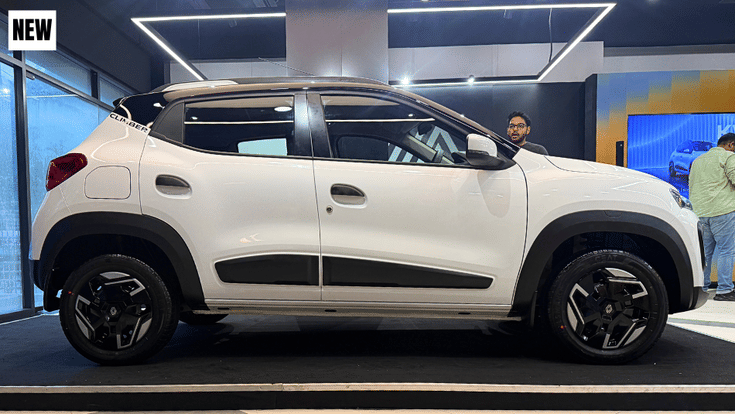
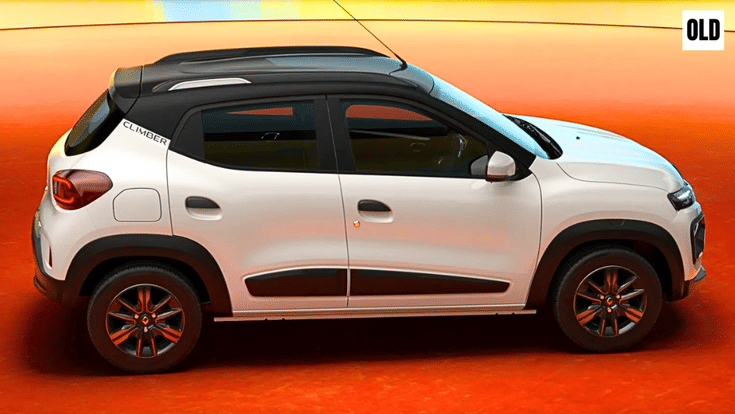
Along the side, the 2026 Kwid mostly looks the same as the previous model. However, Renault has given it a new two-tone wheel cover design, which also features the brand’s new logo. Other details such as the roof bars, ‘Climber’ lettering (for the top trim) and black lower-body cladding have been carried over from the pre-facelift model. As at the front, a design difference at the rear between the two cars is the new Renault logo. Apart from that, the ‘Kwid’ lettering on the tailgate is new as well. However, the design of the tail lamps, rear static reflectors and bumper are the same as before.

Renault Kwid new vs old: Interior design

There’s only perceivable difference on the inside of the 2026 Kwid

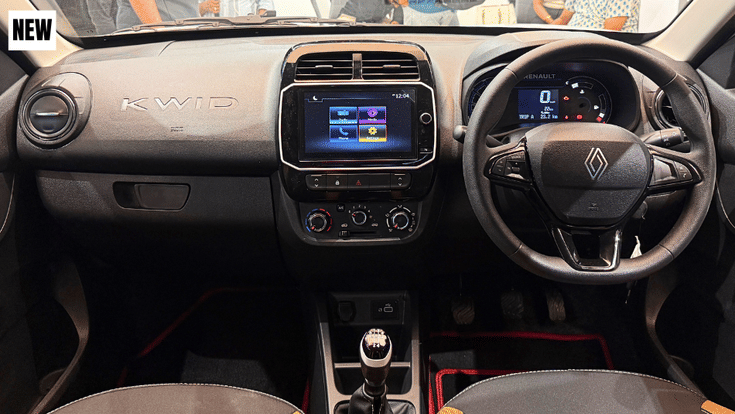
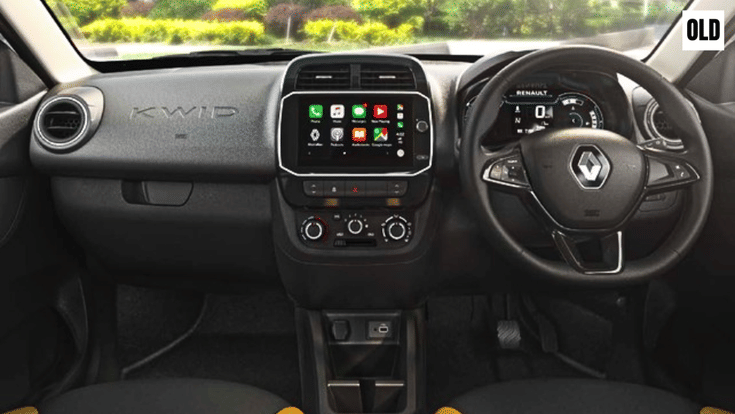
Stepping inside, the biggest change between the old and new Renault Kwid is in the steering wheel. Not only is the design of this wheel new, it also gets the brand’s latest logo that’s found in other Renault models on sale in India. The rest of the interior of the 2026 Kwid is nearly identical to the pre-facelift model. This means that there’s the same 8.0-inch infotainment head unit with a physical knob and button, Apple CarPlay and Android Auto connectivity, a monochrome digital driver’s display, manual AC controls, and a few buttons on the dashboard.

2026 Renault Kwid facelift interior
Old Renault Kwid facelift interior
 

The two-tone gear lever for the top-spec Climber manual variant and the rotary gear selector for the AMT variant remain unchanged. The new Kwid also has the same grey seat upholstery with contrasting yellow highlights as the old car. On the practicality front, things are likely to be similar as well, given that the storage cubbies haven’t been changed in any major way. Space for occupants is also to be identical to the old Kwid as there haven’t been any mechanical modifications with this 2026 update. Similarly, the 279-litre boot of the Kwid remains as is.

Renault Kwid new vs old: Engine and gearbox

There have been no mechanical changes with this update

Under the bonnet, the 2026 Renault Kwid soldiers on with the same 1.0-litre naturally aspirated petrol engine as its predecessor. This three-cylinder mill is rated at 69hp and 92.5Nm, and can be had with either a 5-speed manual or 5-speed automated manual transmission (AMT). Unlike its predecessor, which was offered in four trim levels, the 2026 Kwid is now available in only two trim levels – Evolution and Climber. Prices range between Rs 4.53 lakh and Rs 5.61 lakh (ex-showroom, India). This means that the 2026 Evolution MT and AMT variants are now cheaper by Rs 13,500 and Rs 10,000, respectively. Meanwhile, the Climber MT and AMT variants have become more affordable by Rs 32,000 and Rs 27,200, respectively.

Also read

3 reasons to buy the Maruti Dzire, and 2 reasons not to

BMW X5 new vs old: Differences and similarities explained