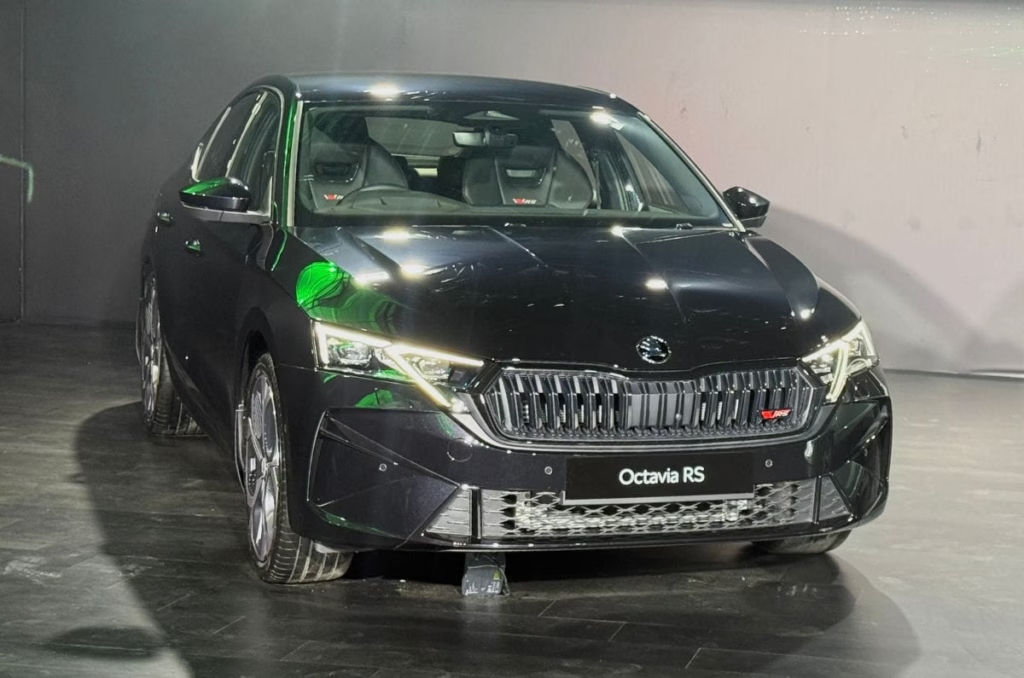
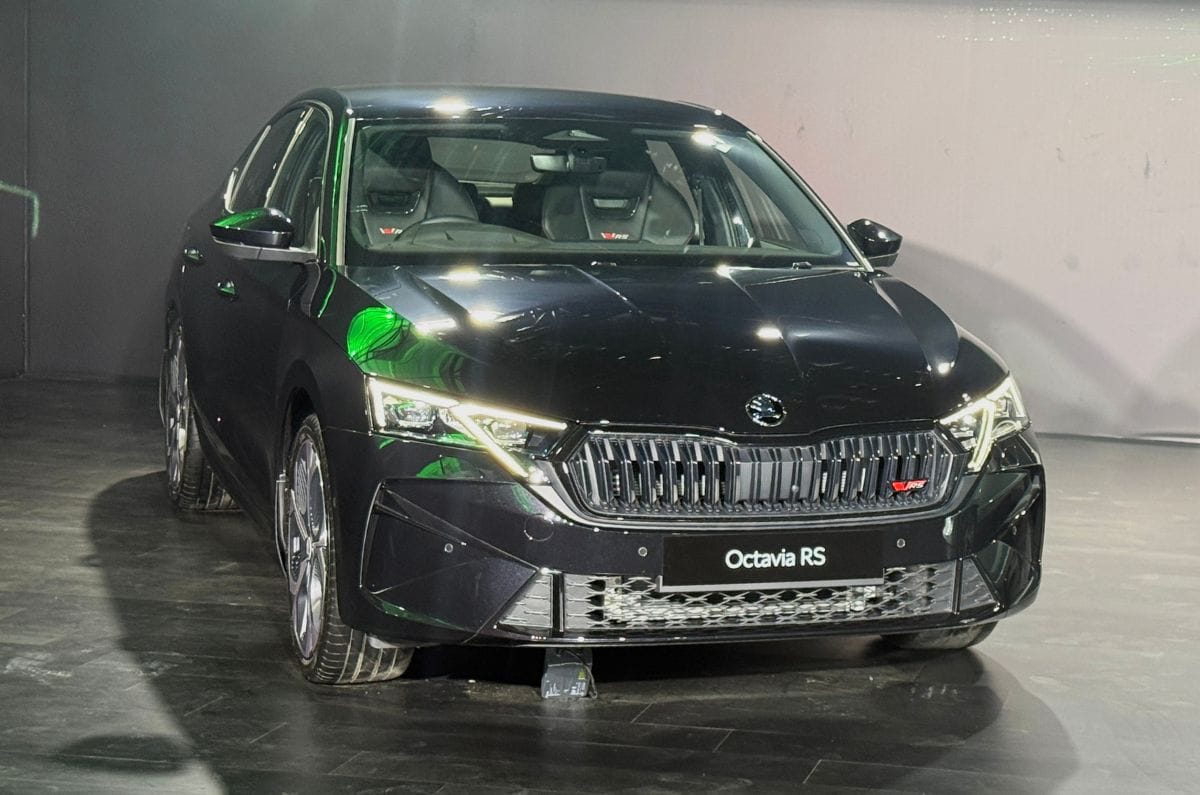
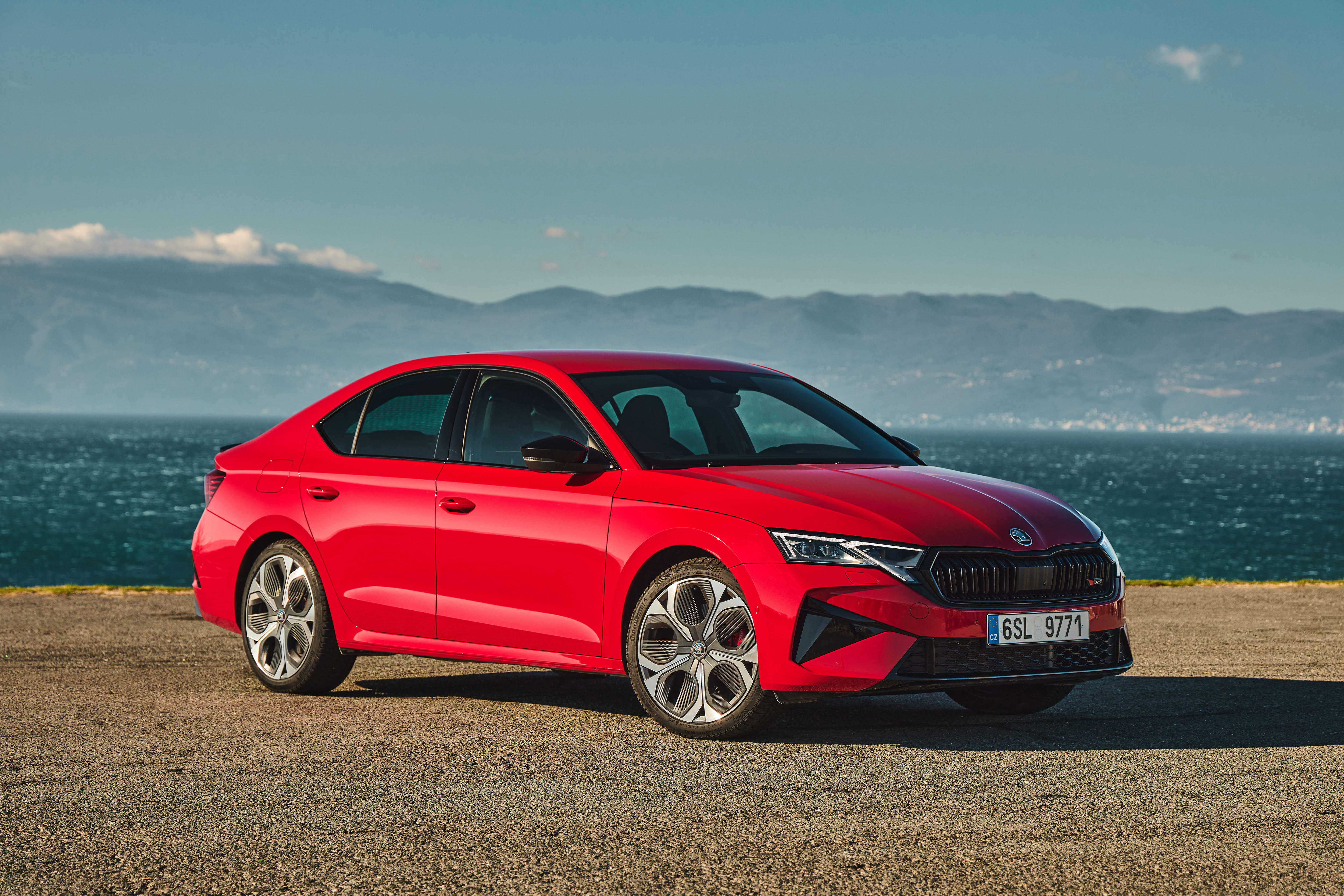
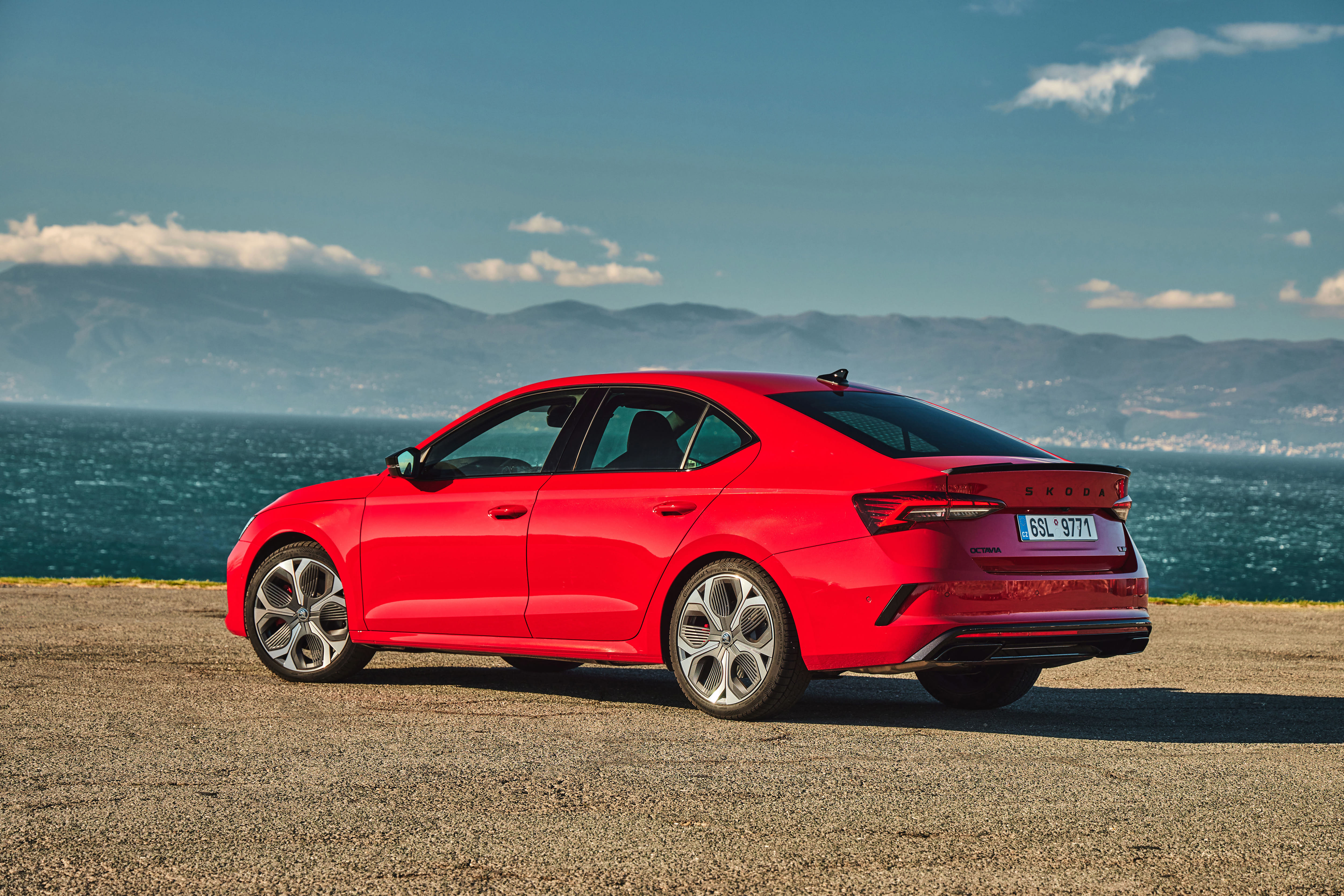
Having sold out the Octavia RS’s first batch comprising 100 units last year, Skoda has now announced a second batch for the model in India. The Octavia RS has quite a loyal fan base in our market, which means many enthusiasts were left disappointed, despite its high asking price. The Octavia RS will return this year with another allocation of 50 units, the deliveries of which are expected around the upcoming festive season. However, the car will continue to be a full import, which means prices can be expected to be quite steep.
Existing bookings from the previous year will be honoured first
Octavia RS is powered by a 265hp 2.0-litre turbo-petrol engine
The new Octavia RS batch will be available in three colour options
Skoda Octavia RS second batch details
Speaking to Autocar India last year, Ashish Gupta, brand director for Skoda India, had said, “I will definitely be working on getting more cars to India. Apart from the ones already allocated, the remaining people are on our communications list. We will be in touch with them, and our endeavour will be to get more cars early next year.”
Gupta had then said the brand had amassed nearly 350 bookings. The company will be honouring the existing bookings first before opening the order books to new customers. For reference, the first batch of the Octavia RS was launched at an ex-showroom price of Rs 49.99 lakh.
Skoda Octavia RS powertrain details
The inbound batch of the Octavia RS will continue to be powered by a 265hp, 370Nm 2.0-litre 4-cylinder turbo-petrol engine. Transmission duties are handled by a 7-speed DSG automatic gearbox, and power is sent to the front wheels. Skoda claims a 0-100kph time of 6.4 seconds and an electronically limited top speed of 250kph. The same engine is also found under the hood of the Volkswagen Golf GTI, a second batch of which is also expected to arrive here. The new Octavia RS batch will be available in three colour options: Mamba Green, Velvet Red and Magic Black.
The Octavia RS has always enjoyed a cult status in India. Even the previous-generation Octavia RS 245 launched in 2020 (limited to 200 units) was sold out in a little over a month.
This announcement comes alongside the debut of the Slavia facelift as well as the confirmation of the Superb’s return to India, importantly in diesel guise, marking the return of a diesel engine to the Volkswagen Group in India after 2020. While all other manufacturers have practically given up on sedans, Skoda will have quite an expansive sedan line-up ranging from mass-market to the premium segments.
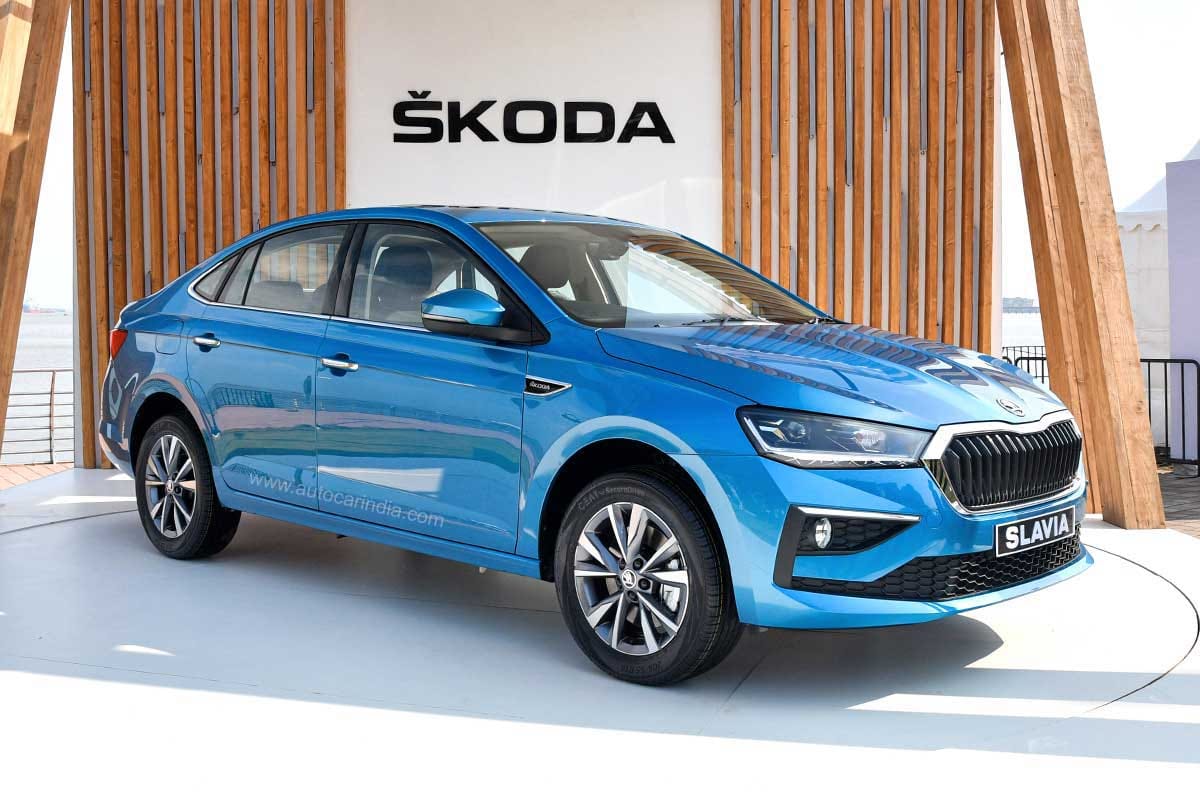
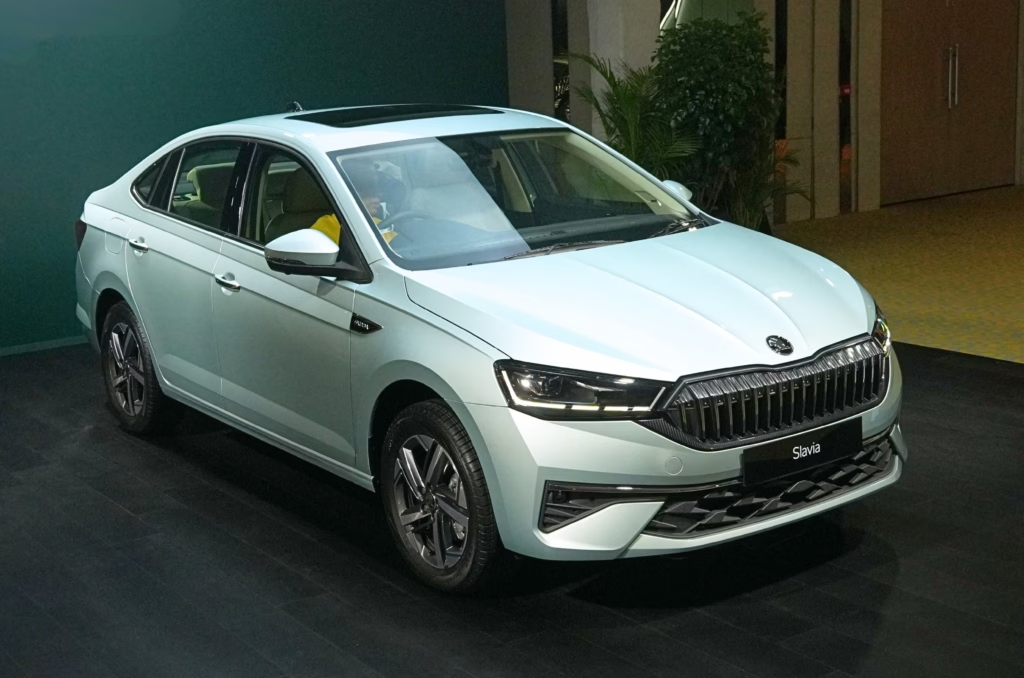
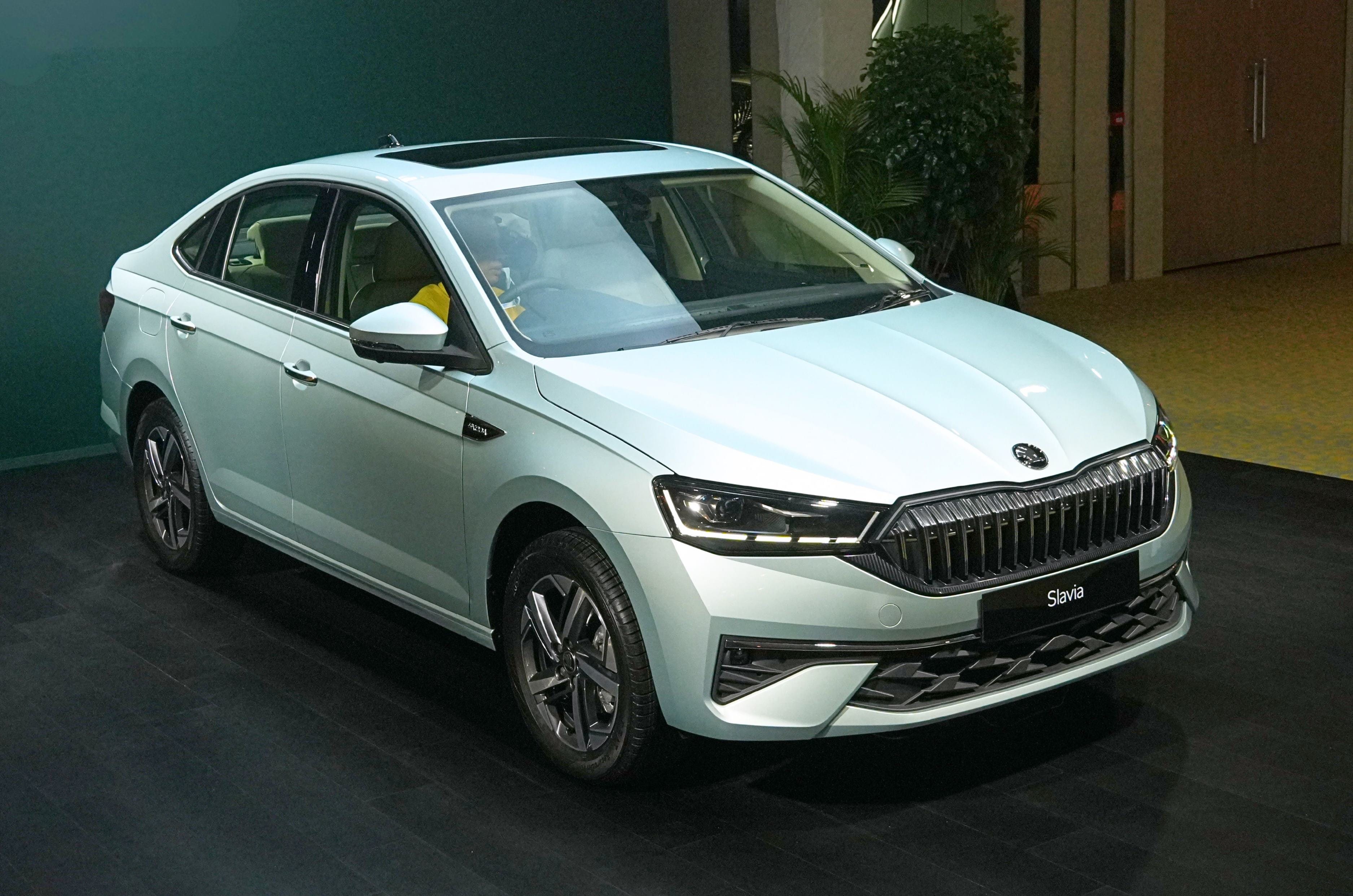
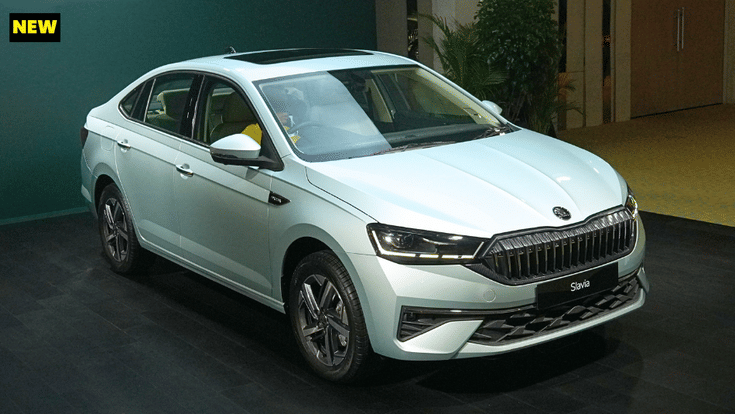
The much-awaited Skoda Slavia facelift has finally been revealed. The mid-lifecycle update brings several cosmetic changes and new features, along with an automatic gearbox upgrade for the 1.0 TSI petrol engine. The prices will be announced in the first week of October and pre-bookings for the Skoda sedan are underway. Meanwhile, deliveries will begin this festive season.
360-degree camera, LEDs integrated into the front grille have been added
Kushaq-like rear sear massaging function available as well
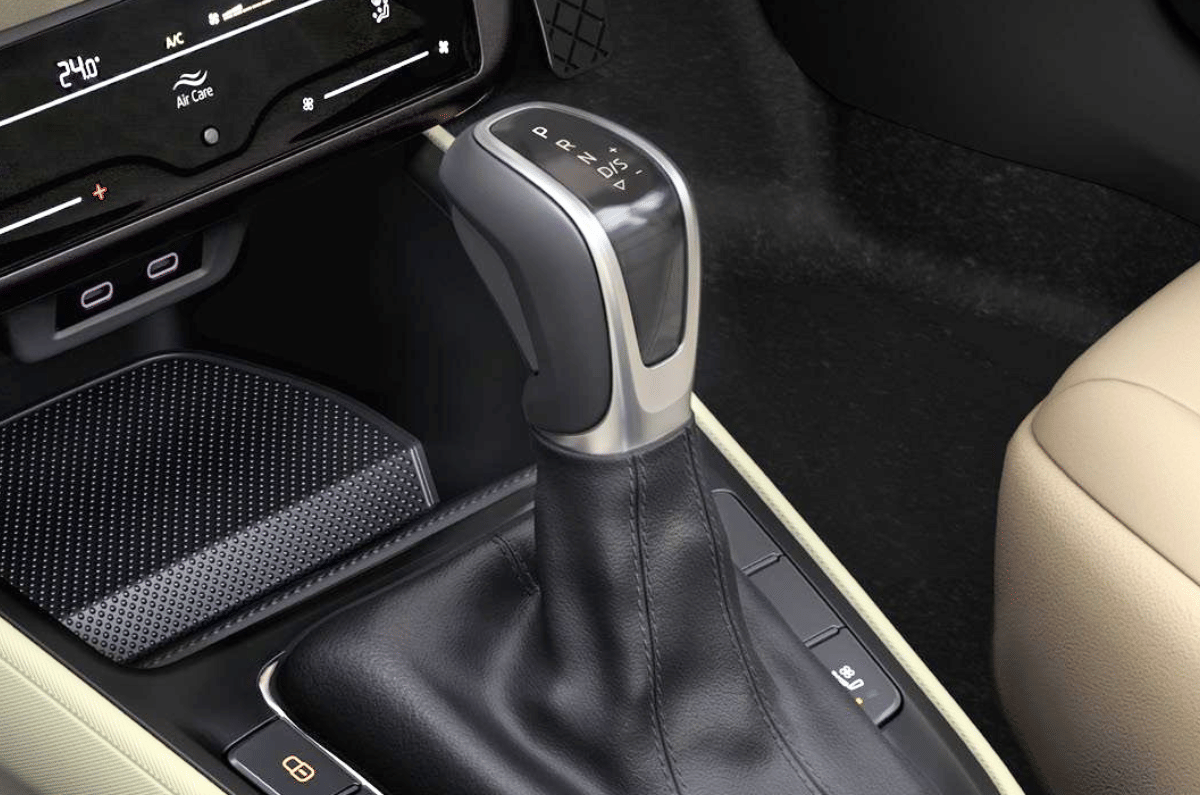
New 8AT option introduced for the 1.0 TSI mill instead of the 6AT unit
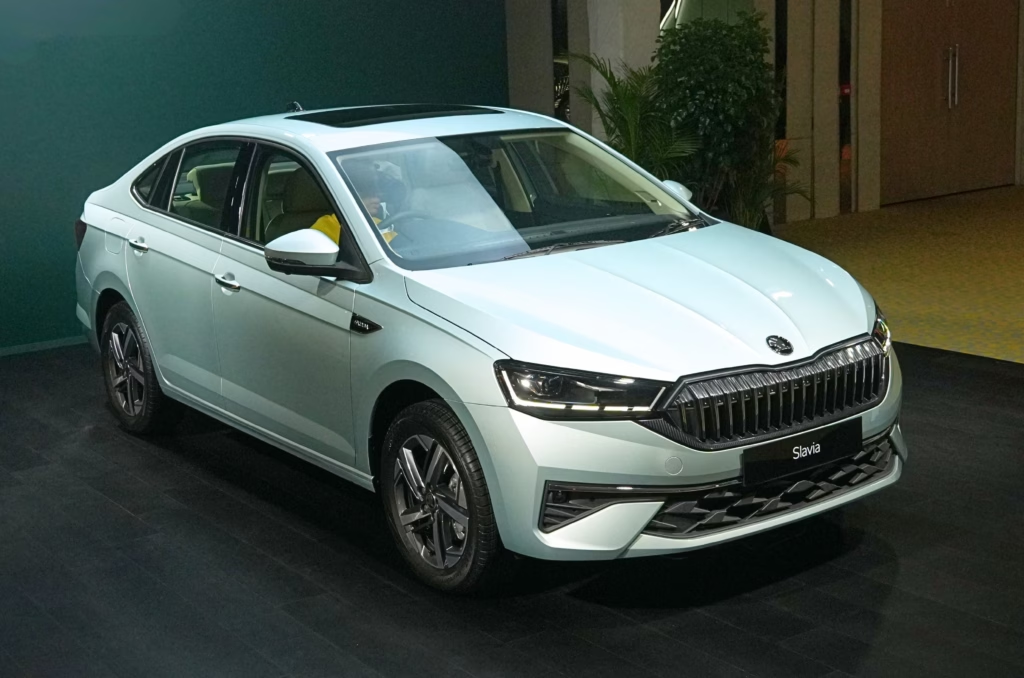
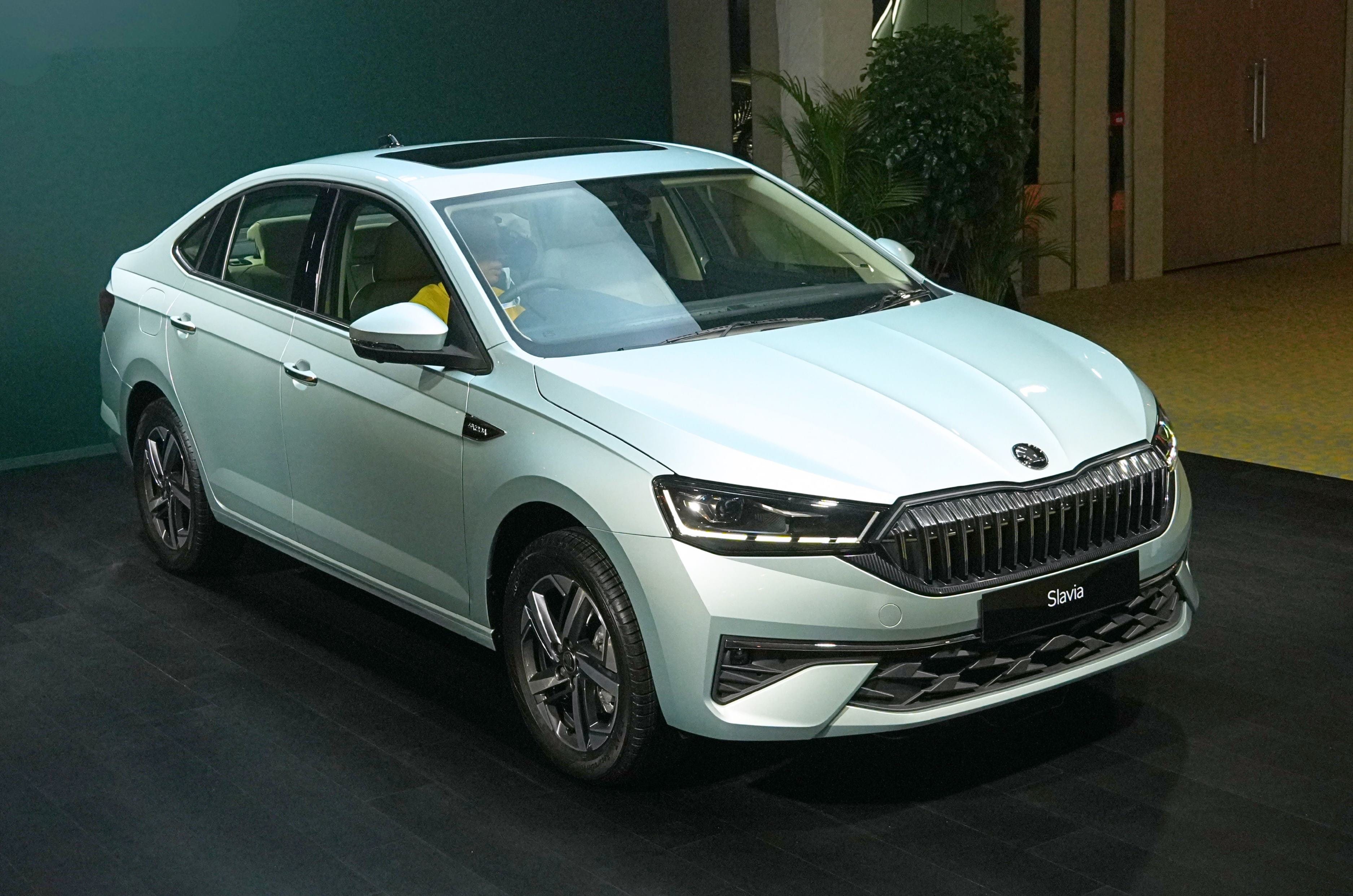
New Skoda Slavia exterior highlights
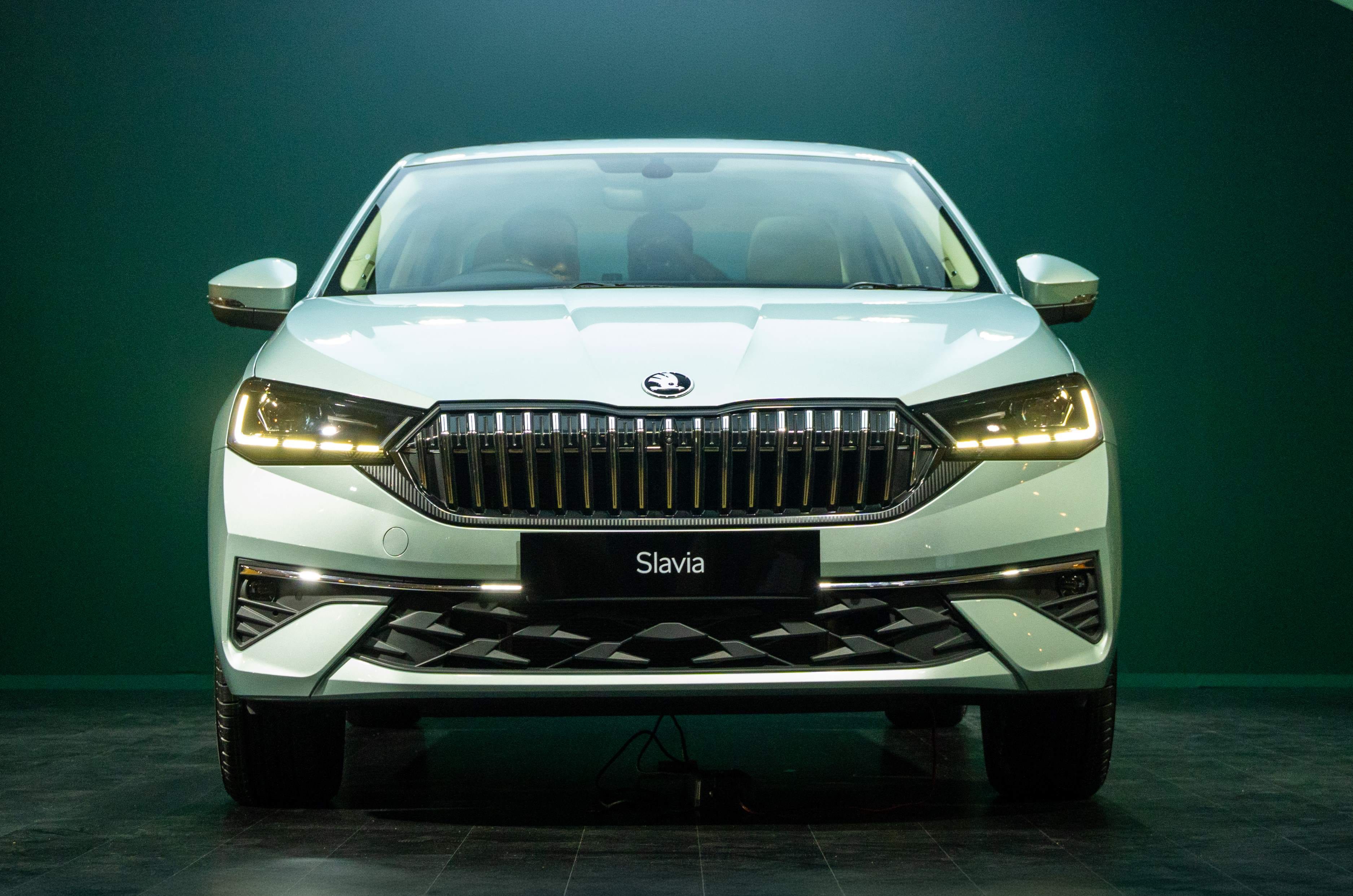
New LED DRL signatures and bumper grille come courtesy of the facelift.
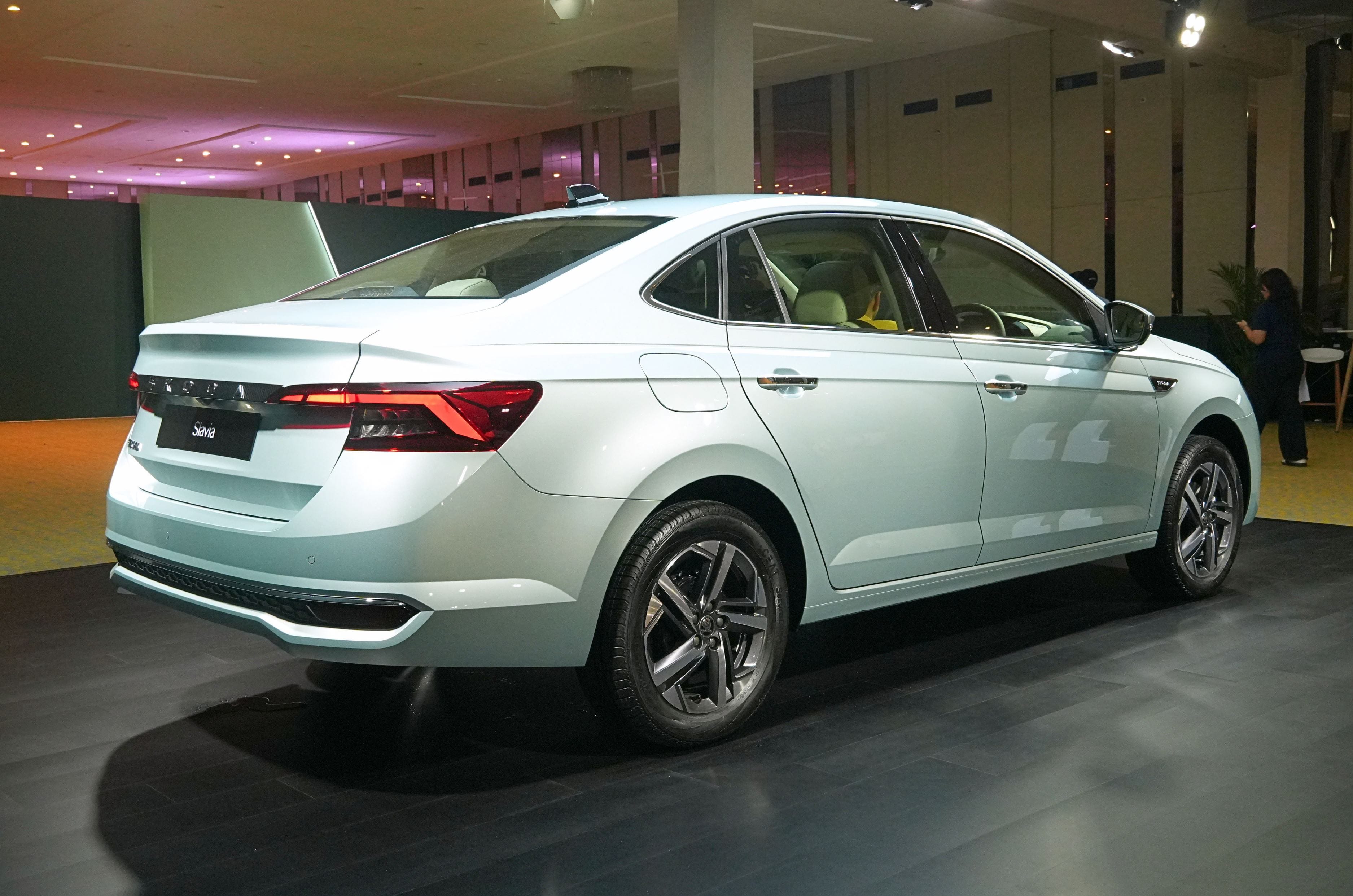
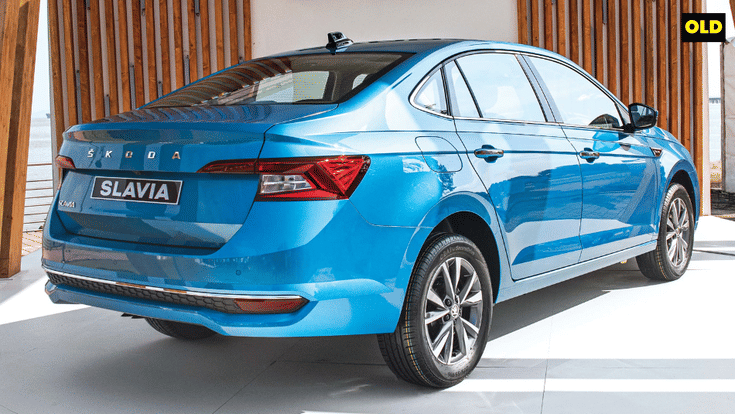
Being a facelift, the overall silhouette of the mid-size sedan has been carried over. Parts like the headlights, tail-lights, front grille and air dam, and alloy wheels have been refreshed. It also gets Skoda Kushaq-like segmented LEDs integrated into the grille and sequential turn indicators at the rear. A new trim between the tail-lights with the ‘SKODA’ lettering has also been added.
Side profile is largely unchanged.
Arctic Silver and Cappuccino Beige are among the new colours, however, deliveries for the latter will only start from December. Other colour option on offer are Shimla Green, Brilliant Silver, Candy White, Carbon Steel, Steel Grey, Lava Blue, Cherry Red and Deep Black.
New Skoda Slavia interior features
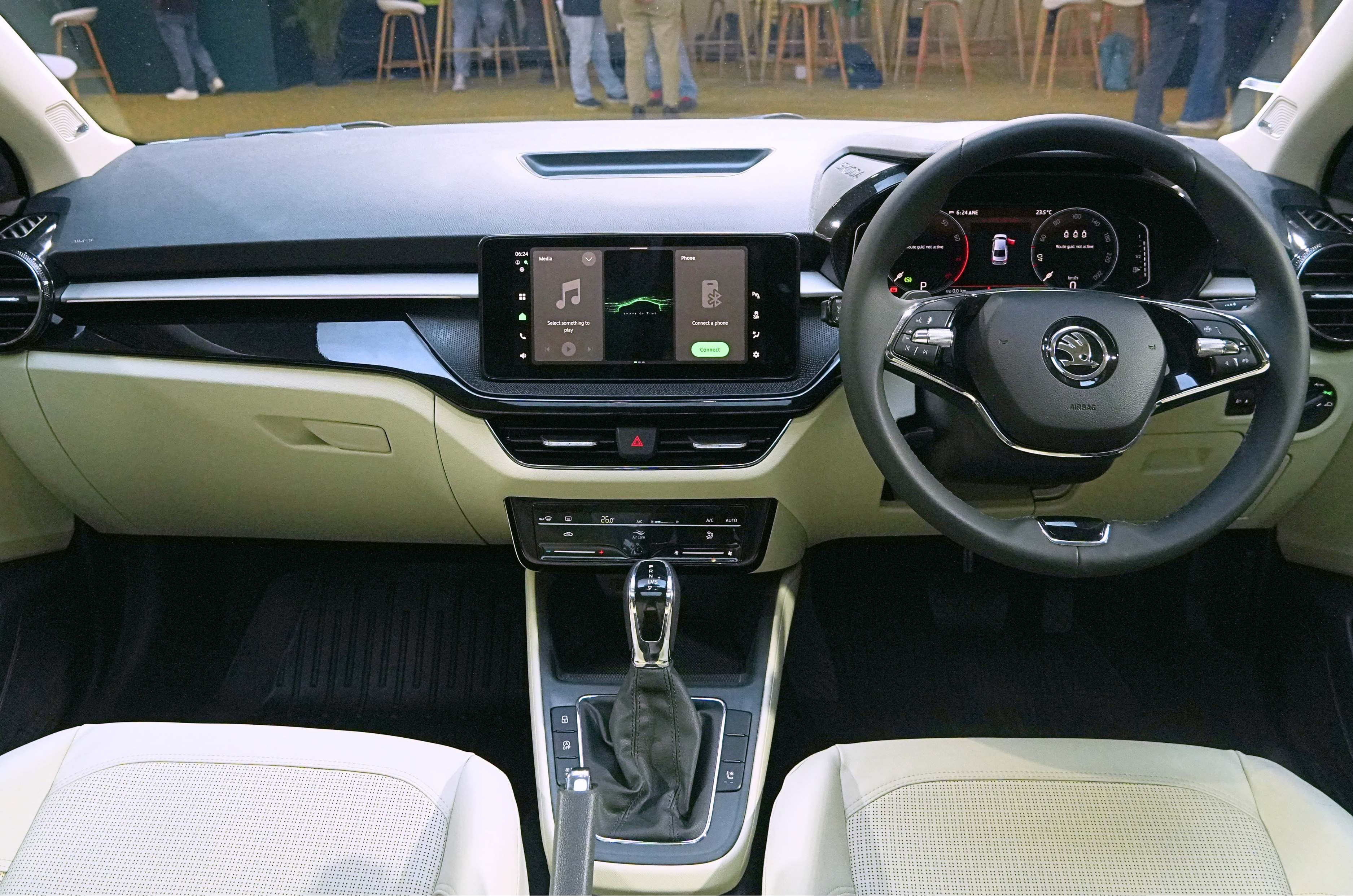
The interior layout has been carried over.
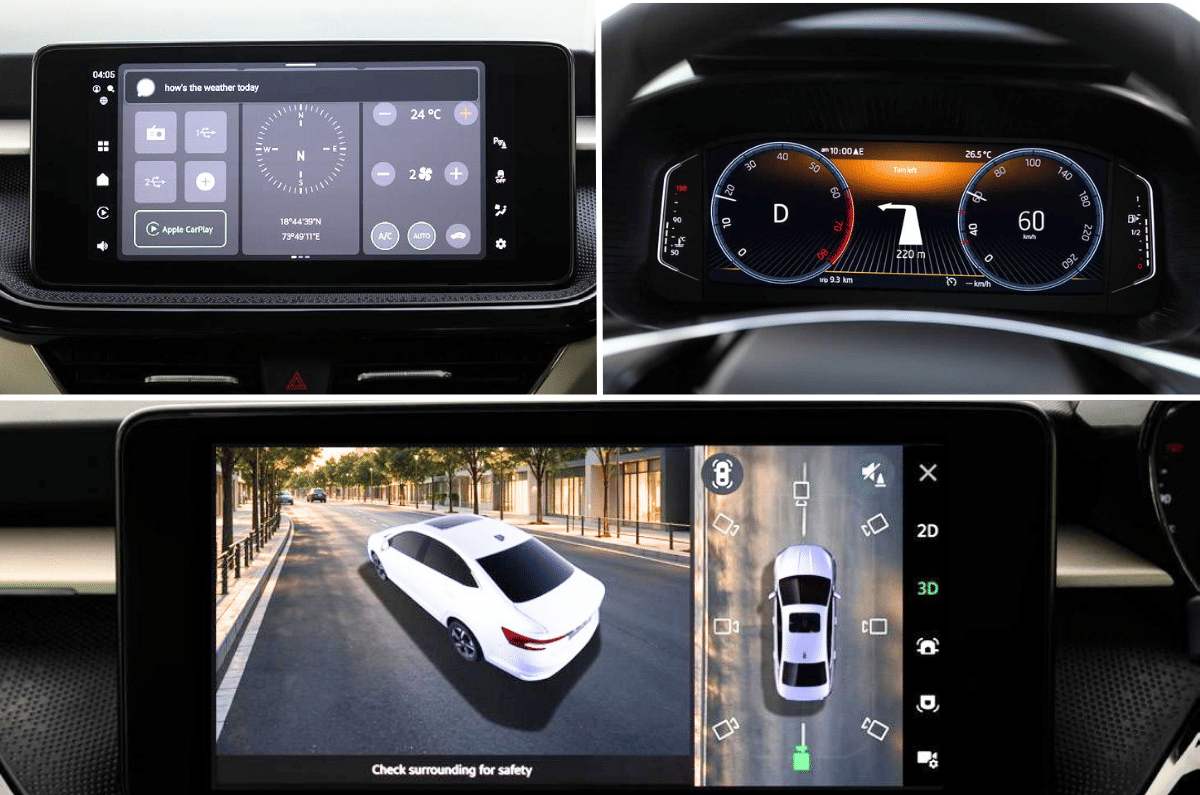
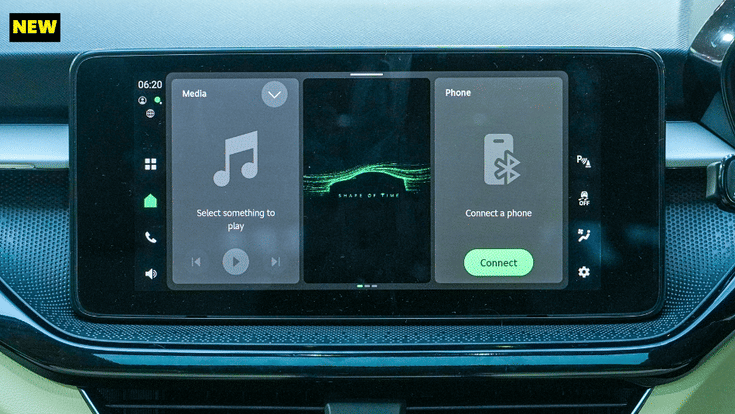
The Slavia facelift gets a segment-first rear-seat massaging function. It also gets larger screens, with a 10.1-inch touchscreen replacing the erstwhile 10-inch unit, while a 10.25-inch driver’s display has been added in place of the 8-inch unit. Both of them come with new graphics and features. A panoramic sunroof is still not part of the package, and it continues with a single-pane unit.
Top: 10.1 inch touchscreen (L), 10.25 inch driver’s display (R); bottom: 360-degree camera view.
A 360-degree camera replaces the previous rear-only unit and like the Kushaq; however, an ADAS suite remains absent.
New Skoda Slavia engine and gearbox choices
New 8-speed torque converter gearbox replaces the 6-speed unit.
The 2026 Slavia continues with the familiar set of 115hp 1.0 TSI and 150hp 1.5 TSI turbo-petrol engines. The 1.0 TSI gets a 6-speed manual, while the 1.5 TSI continues with a 7-speed dual-clutch automatic. The key change is to the 1.0 TSI automatic, which now is an 8-speed torque-converter unit instead of the earlier 6-speed gearbox.
With this update, Skoda aims to keep the Slavia competitive against the Hyundai Verna and Honda City, both of which received facelifts earlier this year. Meanwhile, the Volkswagen Virtus is likley to get an update later this year. The outgoing Slavia is priced between Rs 10 lakh and Rs 18.19 lakh, ex-showroom. With the facelift, a price hike of up to Rs 85,000 is likely.
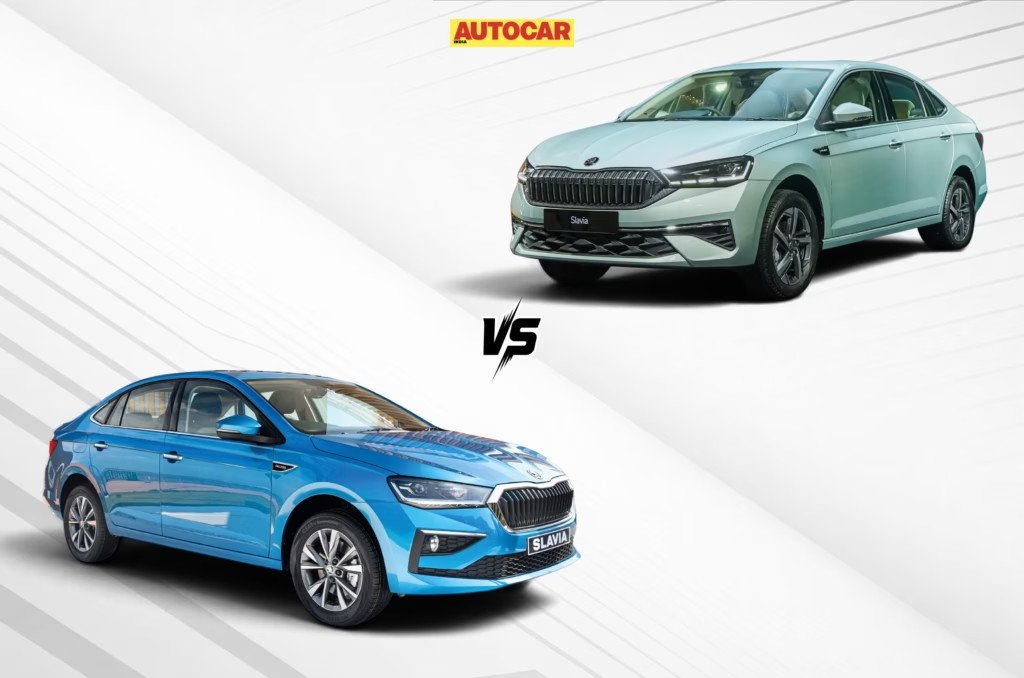
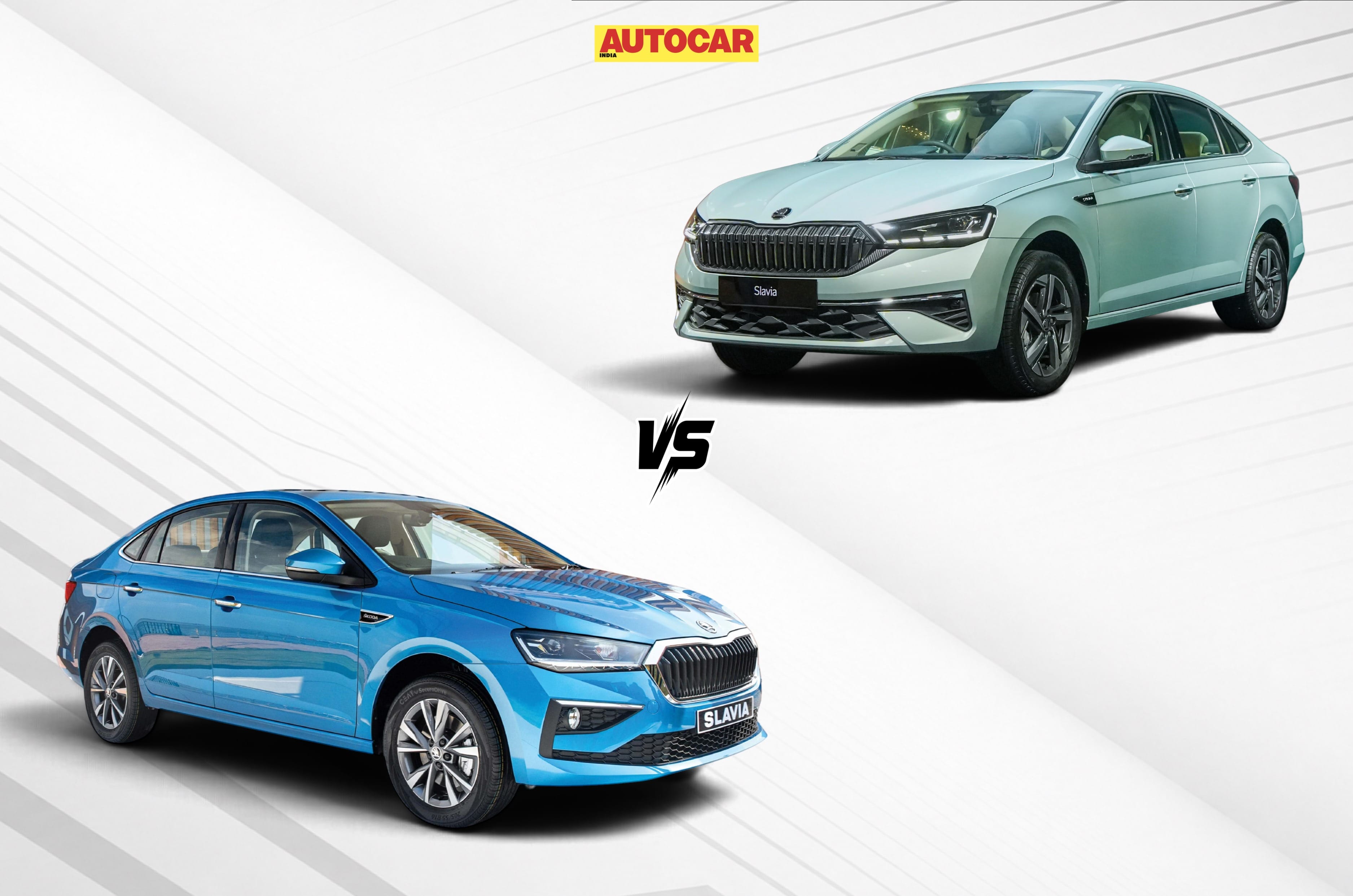
It took Skoda three and a half years to bring the first facelift of the Slavia to market. However, with this mid-cycle update, the Czech carmaker has introduced minor cosmetic tweaks and added a few new features to its midsize sedan. Furthermore, the Skoda Slavia facelift has hit showrooms ahead of the updated Volkswagen Virtus. The Slavia’s competition also includes the Honda City and Hyundai Verna. Without further ado, here are some of the differences and similarities between the old and new Skoda Slavia.
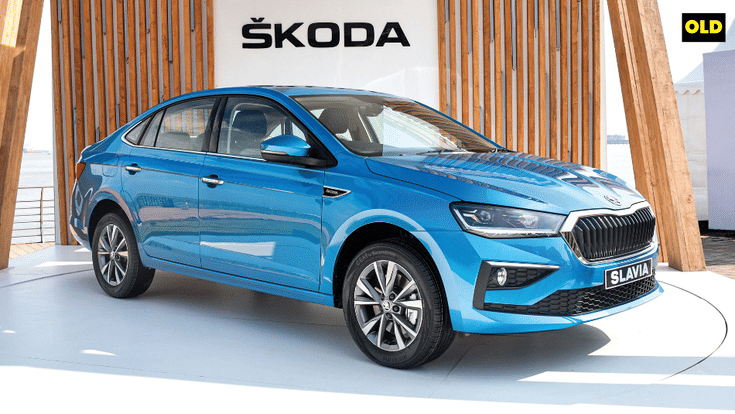
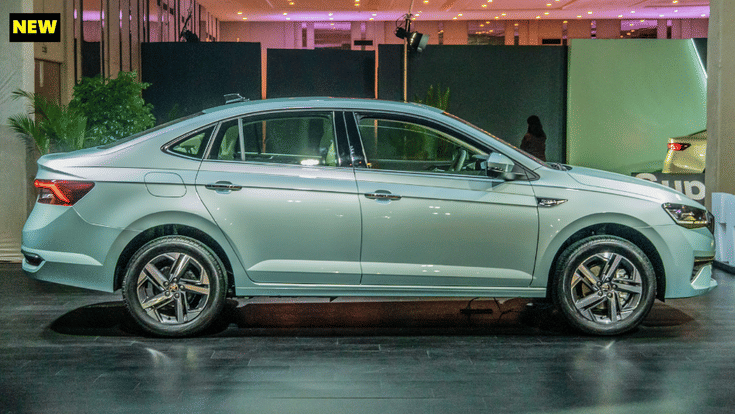
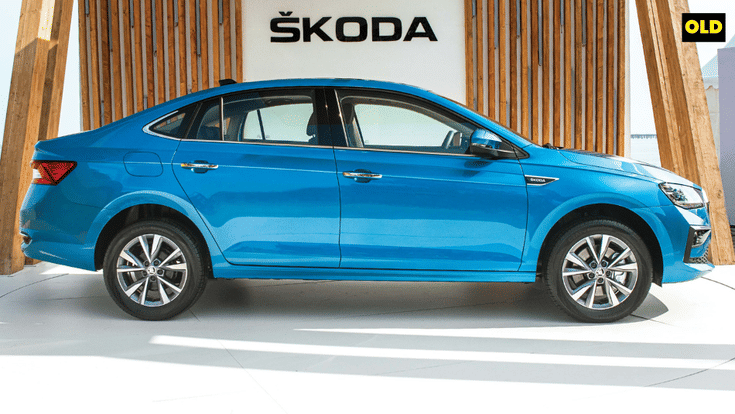
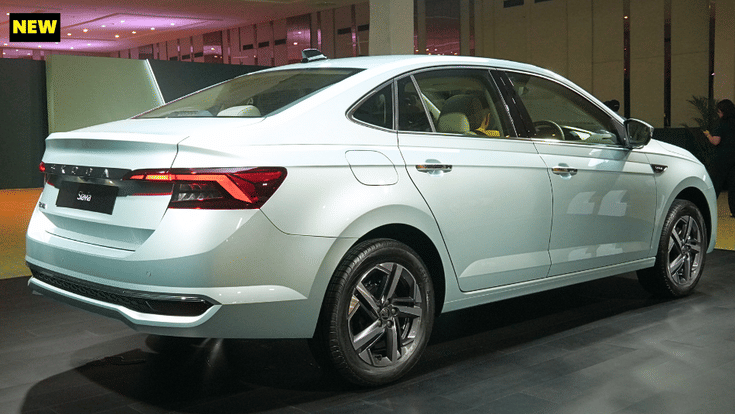
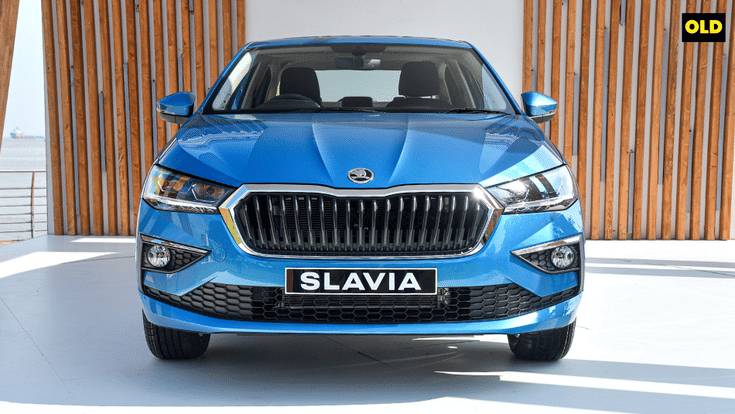
Skoda Slavia new vs old: Exterior design
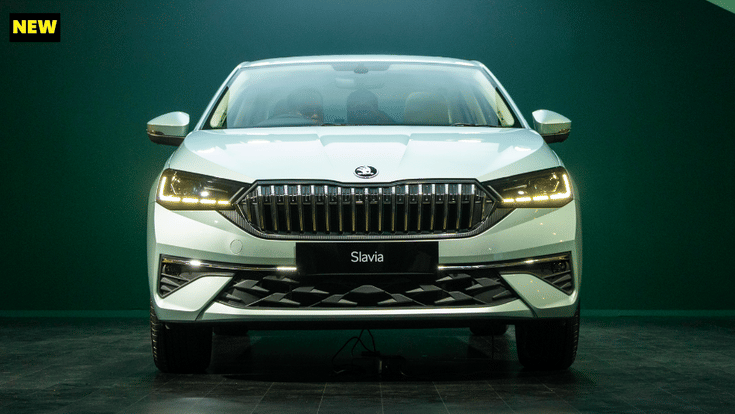
Changes on the outside are limited to updated bumpers and light signatures
The front of the Skoda Slavia now gets a new bumper with a shiny piece of trim running its full width and small LED fog lamps. The design of the grille hasn’t changed but its chrome surround has been removed in favour of two different black bars. While the shape of the headlamp housing is the same as before, the internals have been revised – the daytime running signatures are different too.
Viewed from the side, the new Slavia carries forward the same silhouette and overall proportions as its predecessor. Details such as the beltline, chrome lining along the windowline, and the ‘Skoda’ plaque above the front fenders remain. However, what has changed is the design of the 16-inch alloy wheels, which now look more bold and sport a two-tone finish.
Similar to the front, the lights at the back of the new Slavia feature the same housing as the old model. However, Skoda has tweaked the internal LED elements of the tail-lamps. Compared to the old Slavia that had a prominent ‘SKODA’ lettering across its bootlid, the new model features a piece of plastic trim with the brand name spelled on it. The rear bumper hasn’t been revised in any significant way, though. However, the Slavia does come in two new colours: Arctic Silver and Cappuccino Beige.
Skoda Slavia new vs old: Interior design
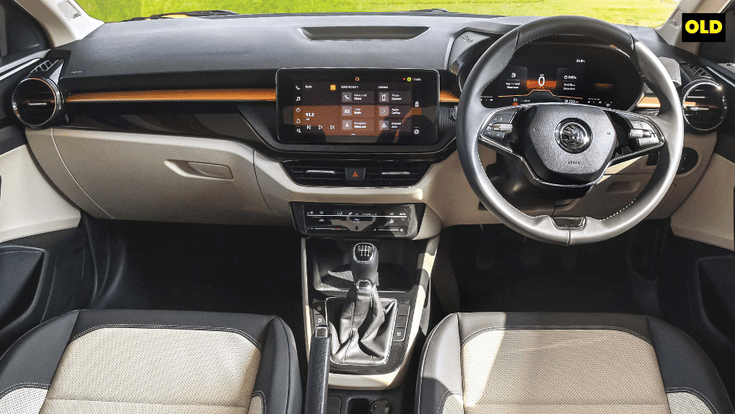
The facelift brings a couple of notable updates to the interior over the old model
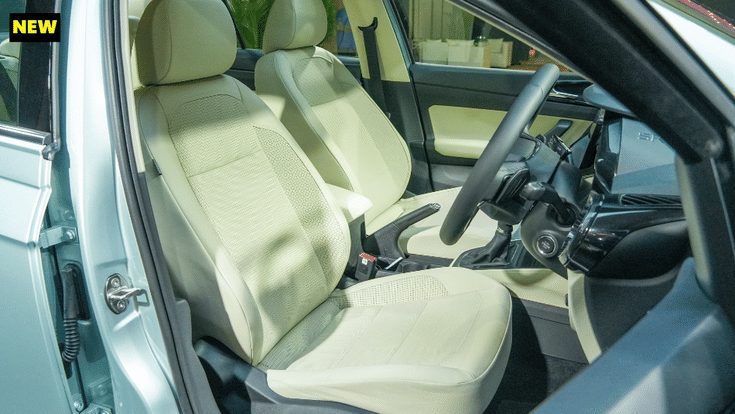
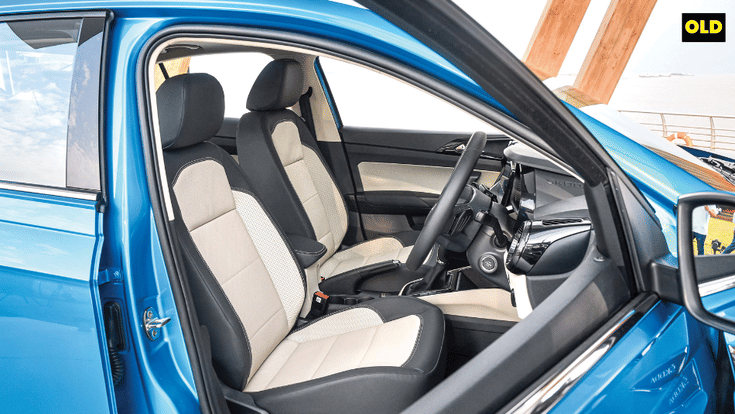
Where the top-spec of the old model offered a beige & black dual-tone leatherette seats, the new Slavia gets fully beige seats. The design of these seats don’t appear to have changed with this facelift, but they do get a new pattern now.
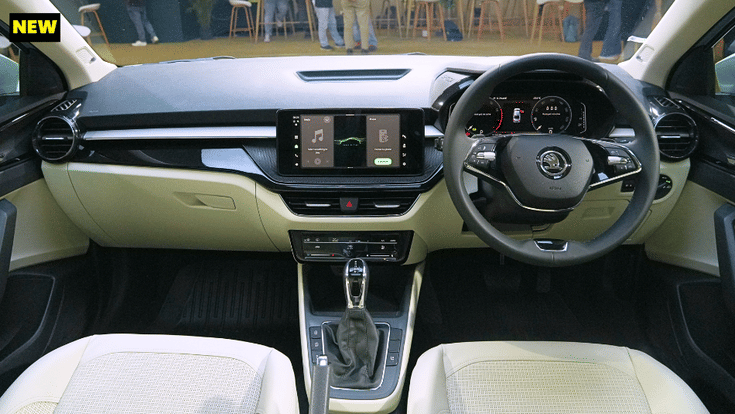
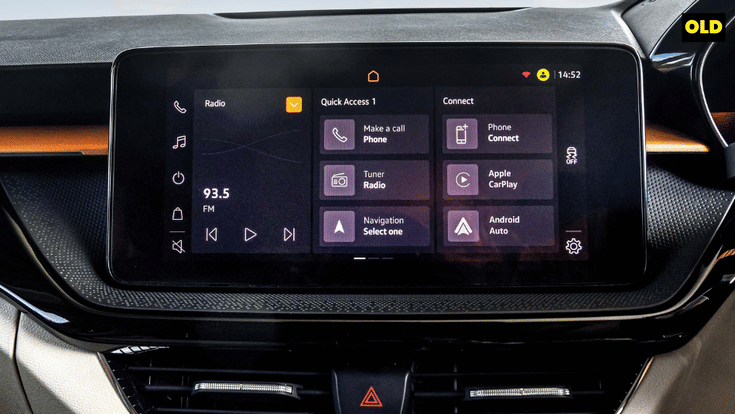
Shifting focus to the dashboard, the new Skoda Slavia is available with a 10.25-inch digital instrument cluster – the old model’s unit maxed out at 8 inches. The infotainment screen has also grown larger by the slightest of margins – from 10 inches to 10.1 inches. The new infotainment system also offers a built-in AI assistant powered by Google Cloud, while the feed from the Slavia’s new 360-degree camera is also displayed on this screen. Finally, the outer seats at the back are now available with a massaging function.
Features such as a cooled glovebox, powered & ventilated front seats, an electric sunroof, wireless Apple CarPlay & Android Auto, automatic climate control, LED ambient lighting, 6 airbags, electronic stability control, hill-hold control and a tyre-pressure monitoring system are offered with both models.
Skoda Slavia new vs old: Engine and gearbox
Engine options remain the same, but a new gearbox comes aboard
The new Skoda Slavia gets the same engine options as its predecessor. The 1.0-litre direct injection three-cylinder turbo-petrol engine makes 115hp and 178Nm, whilst the 1.5-litre direct injection four-cylinder turbo-petrol mill outputs 150hp and 250Nm. While the smaller motor gets a 6-speed manual transmission as standard, it can now be had with an 8-speed torque-converter automatic gearbox. Like before, the larger engine is only available with the 7-speed dual-clutch automatic transmission.
The old Skoda Slavia has been available in Classic, Signature, Sportline, Prestige and Monte Carlo trims. However, there’s now a new Classic+ option as well – slotted between Classic and Signature trims.
The Skoda Slavia facelift comes with a few design tweaks, a new trim level and a couple of new convenience features. Skoda’s midsize sedan continues to compete against the VW Virtus, Honda City and Hyundai Verna. The Slavia facelift continues to be offered with the same 1.0 TSI and 1.5 TSI direct injection turbo-petrol engines, with the former available with a 6-speed manual or a new 8-speed automatic transmission. On the other hand, the larger four-cylinder engine is only offered with a 7-speed dual-clutch automatic gearbox.
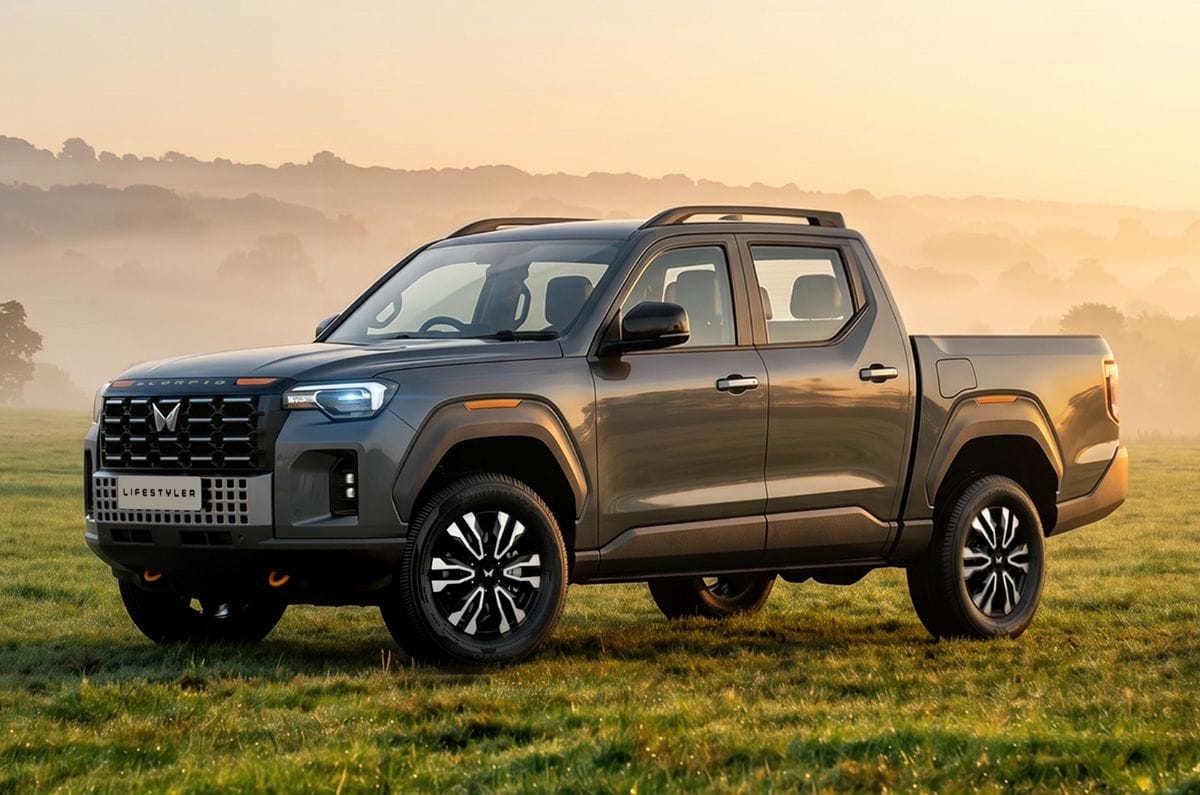
The Mahindra Scorpio Lifestyler will join the pickup truck segment upon its launch sometime before April 2027. Based on the Scorpio N SUV’s ladder-frame platform, Mahindra’s new pickup truck will simply carry the ‘Lifestyler’ moniker in markets abroad. While the automaker is yet fully disclose most of this car’s details, it has confirmed a starting price of under Rs 19.79 lakh (ex-showroom). So, if you’re awaiting the Mahindra Scorpio Lifestyler, here are some important points to keep in mind.
1. Does the Mahindra Scorpio Lifestyler’s design reflect its name?
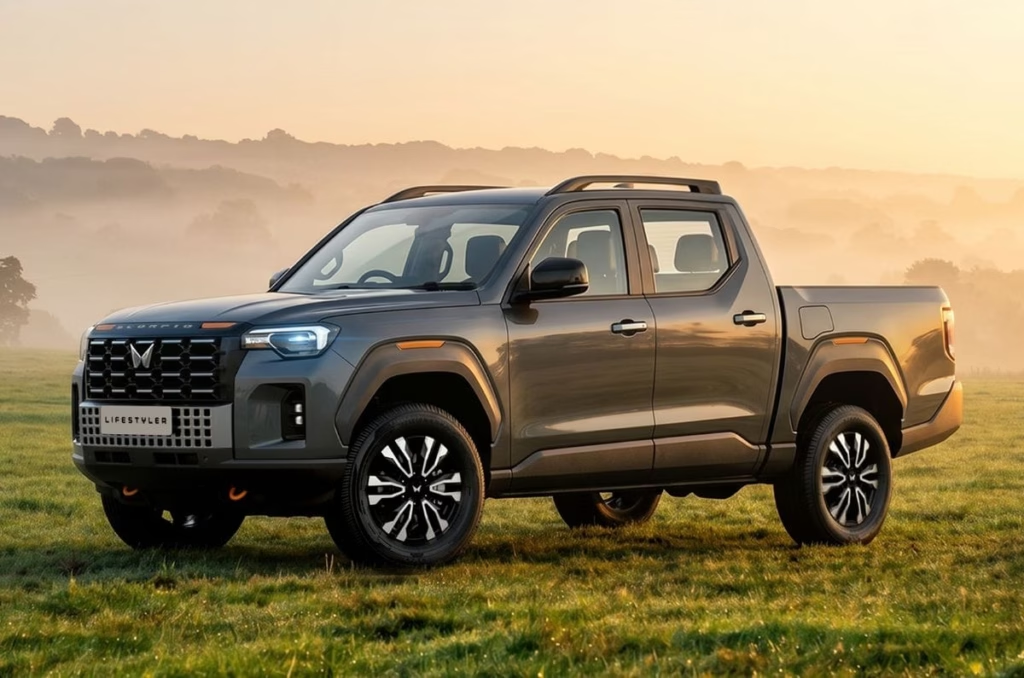
There’s enough visual drama here to draw in buyers wanting a lifestyle pickup truck
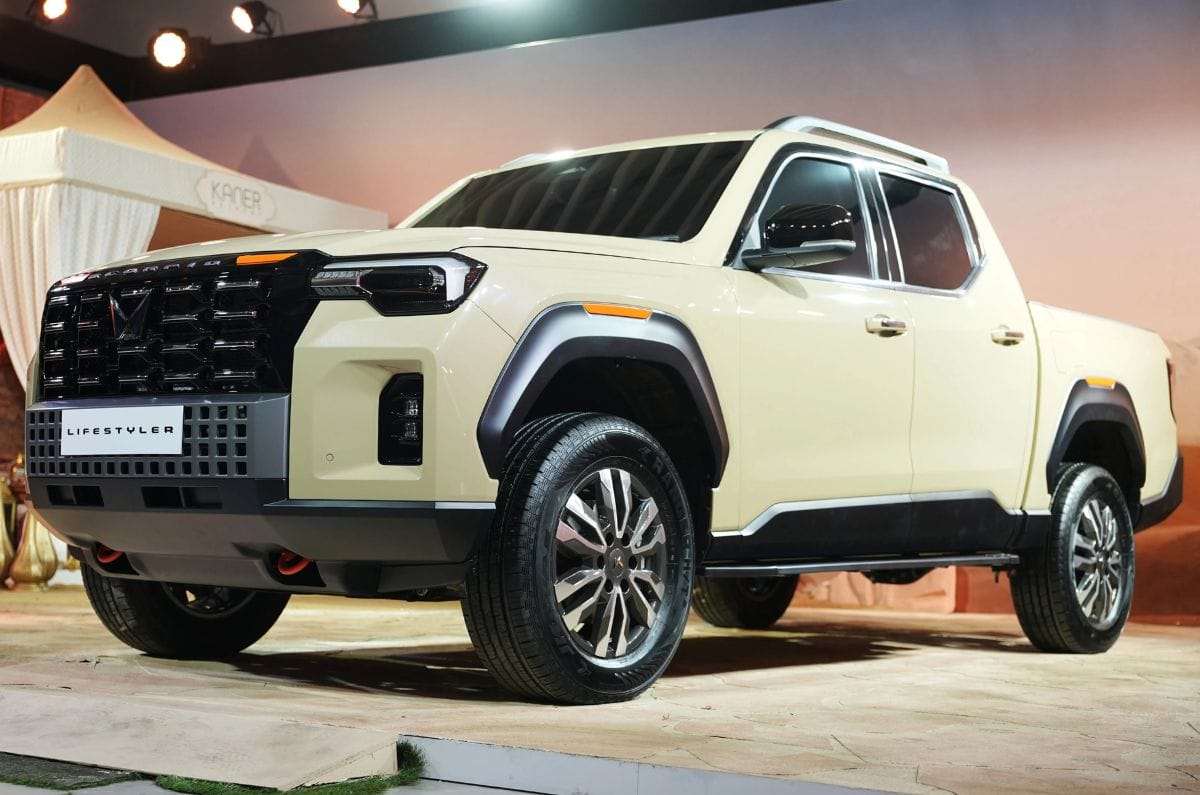
An upright and boxy silhouette, a squared-off front fascia, rugged-looking body cladding, deep wheel wells and of course, a sizeable bed – the Mahindra Scorpio Lifestyler has all basic ‘pickup truck’ design aspects covered. Backing its ‘lifestyler’ suffix visually are three avatars as shown during the model’s reveal. There’s the Valley Edition that’s finished in Artemis Grey, Reef Edition with an Aquareef colour, and a Trail Edition that sports the so-called Sahara Beige colour scheme. Each of these get their own unique exterior decals and badging.
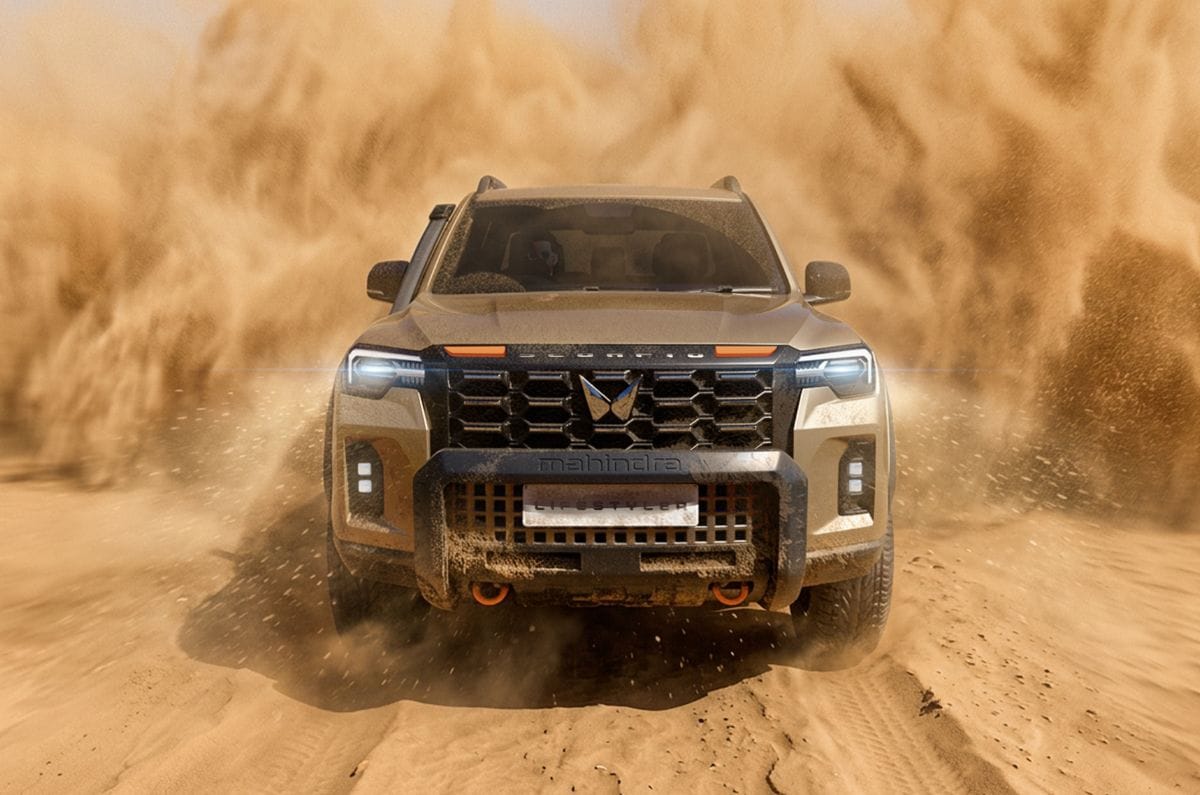
While there are some visual cues that this is the Scorpio N’s platform sibling (such as the ‘Scorpio’ badging at the top of the front grille), the Lifestyler pickup has several design cues that are unique to it. One of these is the prominent Double Cab body and a short bed at the back, which appears to be shorter than the one found on the Hilux. The headlamps are sleeker and more intricately styled units with a different LED DRL pattern. Depending on the avatar chosen, the chunky front bumper of the Scorpio Lifestyler can be had with an integrated bullbar, whilst vertically aligned fog lamps are available too.
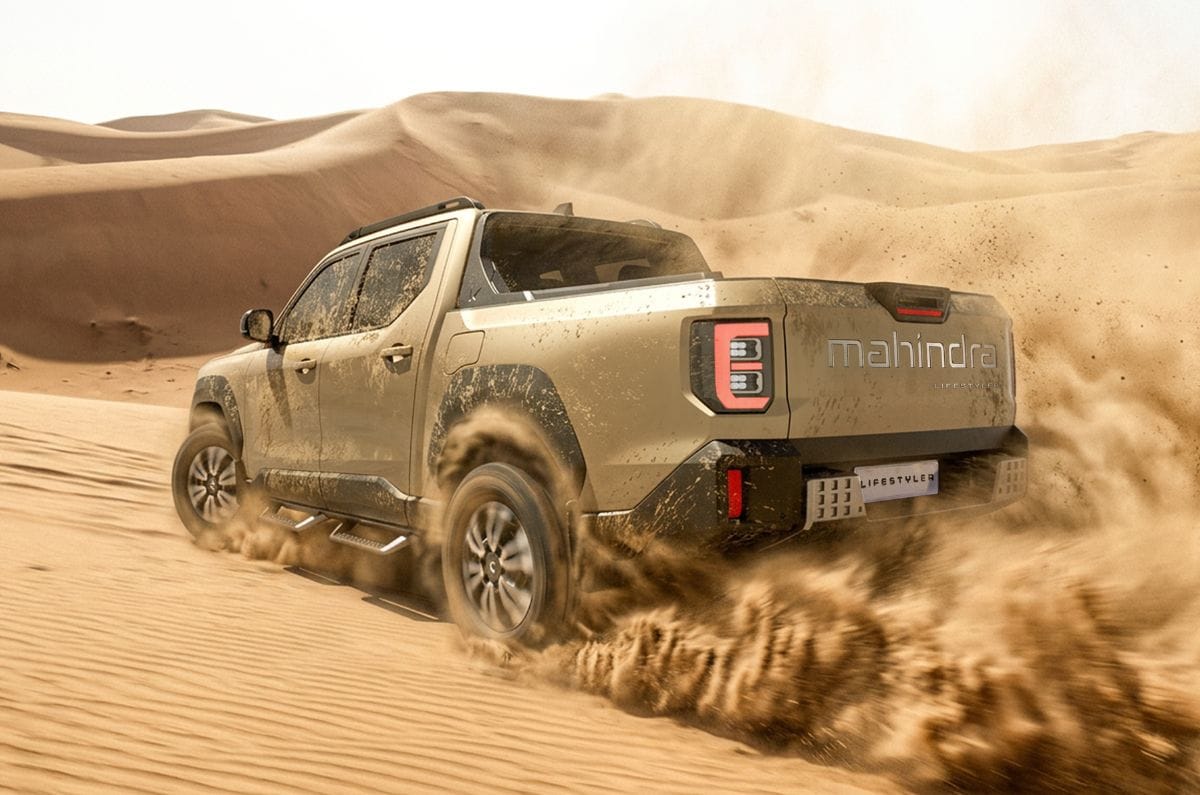
The top portion of the boxy-looking grille is finished in black and gets orange reflector elements, which match the orange tow hooks placed either side of a bash plate. The lower portion of the grille features large squares arranged in a mesh pattern. This design is mirrored on the rear bumper, which also features static reflectors on the sides and an integrated footstep that’s lit for better visibility in the dark. There are large C-shaped DRLs, LED tail-lamps, plus ‘Mahindra’ and ‘Lifestyler’ branding on the tailgate. The Scorpio Lifestyler also gets roof rails and side steps, and a kinked rear windowline.
2. How is the interior of the Mahindra Scorpio Lifestyler?
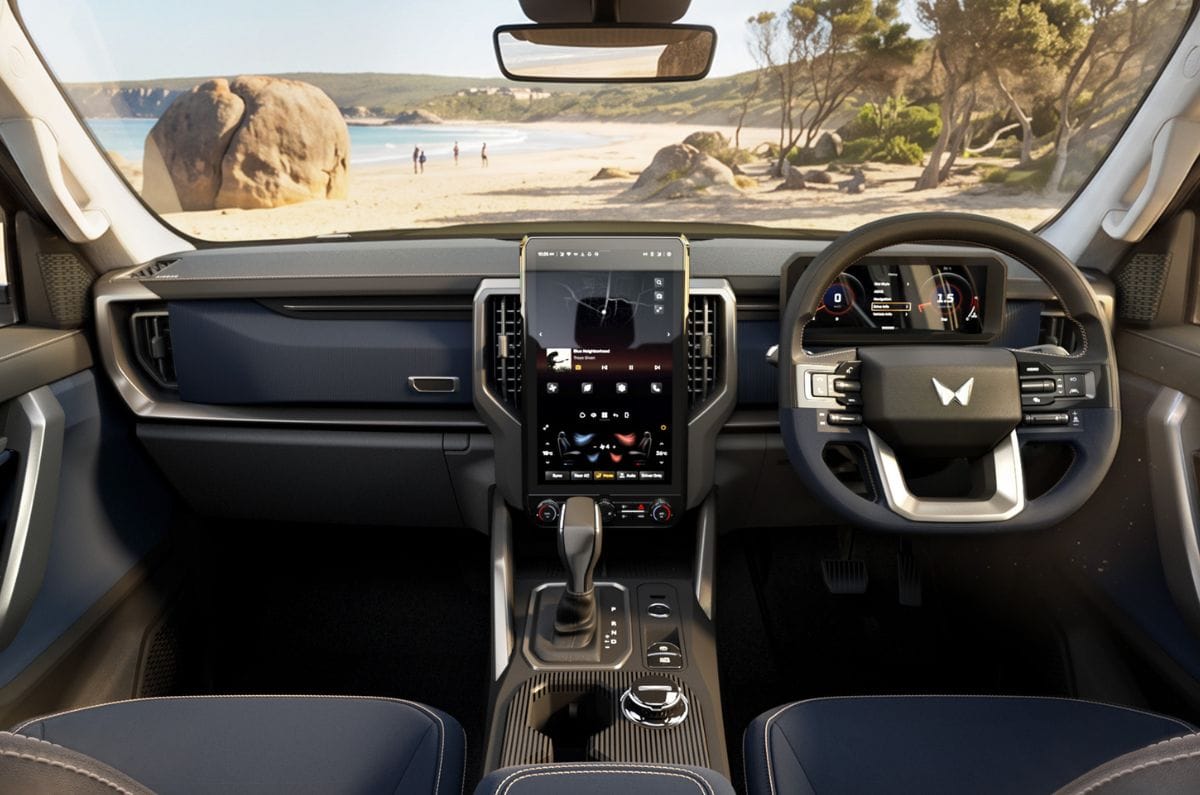
The interior of this pickup truck combines modern with rugged quite well
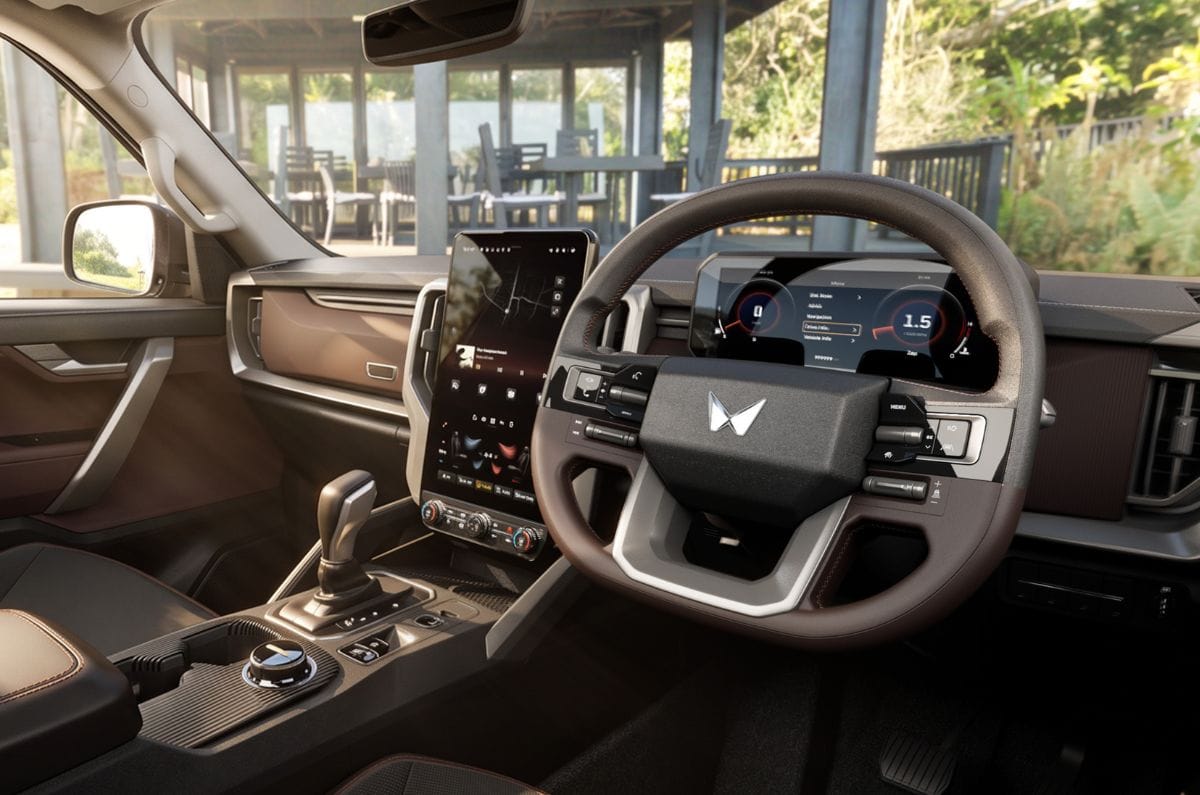
The squircle steering of the Mahindra Scorpio Lifestyler looks busy with its assortment of physical buttons and scroll wheels. Placed behind this on the dashboard is a fully digital instrument cluster with a multi-information section in the centre. In the middle of the dash is a large portrait-oriented touchscreen, flanked by vertically arranged central air-con vents. Placed below this screen are some physical switchgear, with the centre pedestal home to a few more important controls and cupholders.
The upright design of the dashboard with its flat top, along with the large door handles and pillar-integrated grab handles, add to the rugged appeal of this interior. The Reef Edition gets a blue & black dual-tone interior with white stitching, while the Valley Edition features a brown & black theme with brown and white stitching. As for the Trail Edition, its cabin sports contrasting yellow stitching. The interior of the Scorpio Lifestyler also includes leatherette and satin silver trim, plus some chrome detailing.
3. What are some of the features of the Mahindra Scorpio Lifestyler?
The Scorpio Lifestyler is to be well-equipped with several modern conveniences and safety gear
Some of the kit that the Mahindra Scorpio Lifestyler is expected to offer include dual-zone automatic climate control with rear vents, powered front seats, a powered sunroof, push-button start, an electronic parking brake with auto-hold, drive/terrain modes, a premium audio system, wireless Apple CarPlay & Android Auto, and wireless phone charging. On the safety front, there will be multiple airbags, electronic stability control, hill-start assist, hill-descent control, surround-view cameras and a tyre-pressure monitoring system.
4. What engine and gearbox options will the Mahindra Scorpio Lifestyler offer?
The Scorpio Lifestyler is expected to offer buyers both petrol and diesel powertrains
Powering the Mahindra Scorpio Lifestyler are likely to be a choice of two engine options: a mHawk 2.2-litre diesel and an mStallion 2.0-litre direct-injection turbo-petrol engine, which are the same units found under the bonnet of the Scorpio N SUV. The exact output of these powerplants will be revealed closer to the launch of this pickup. Meanwhile, transmission choices could include a 6-speed manual and a 6-speed torque-converter automatic. With a starting price of under Rs 19.79 lakh (ex-showroom), the Mahindra Scorpio Lifestyler will find itself positioned closer to the Isuzu D-Max rather the more expensive Toyota Hilux.
Skoda is set to give the Slavia a mid-life update, over four years after it first went on sale in February 2022. It will be the second Skoda model to receive a major update this year, following the Kushaq facelift. From expected pricing and engine options to the new features it could pack, here’s everything we expect from the updated Skoda Slavia.
What new features will the Skoda Slavia facelift add?
Current Skoda Slavia’s interior shown for representation only.
Several new features that were introduced with the 2026 Kushaq could make their way to the Slavia, such as a rear-seat massaging function and sequential turn indicators. The current 10.1-inch touchscreen and 10.25-inch driver’s display are likely to be replaced with larger units featuring new graphics and features. A 360-degree camera upgrade over the presently on offer rear-only unit can also be expected. Like the Kushaq, a variable-displacement compressor instead of the fixed-displacement unit could also be offered with the new Slavia to improve AC performance.
What cosmetic updates are likely with the Skoda Slavia facelift?
Being a facelift, one can expect design tweaks to the illumination bits, including headlights, tail-lights, front grille and alloy wheels. Kushaq-like segmented LED DRLs integrated into the front grille are anticipated, and new colours could also be introduced. On the inside, the overall layout is not likely to undergo any changes with the mid-lifecycle update.
How many engine choices will the Skoda Slavia facelift offer?
Both the 115hp-1.0 TSI and 150hp-1.5 TSI turbo-petrol engine options are expected to be carried over. Like the current car, the facelift may continue to offer a 6-speed manual gearbox with the smaller engine and a 7-speed dual-clutch automatic unit with the larger, more powerful motor. However, the 6-speed torque converter automatic transmission option offered with the Slavia 1.0 TSI will be upgraded with an 8-speed unit, something that we have exclusively reported before.
What is the Skoda Slavia facelift’s expected price?
Current Skoda Slavia.
Being an update, a slight price increase across trims is likely. For reference, the current Slavia starts at Rs 10 lakh and goes up to Rs 18.19 lakh, ex-showroom. The Skoda Slavia goes directly against the Volkswagen Virtus (Rs 10.70 lakh-19.20 lakh), Honda City (Rs 12 lakh-21.44 lakh) and Hyundai Verna (Rs 10.99 lakh-18.26 lakh), the latter two of which received facelifts earlier this year.
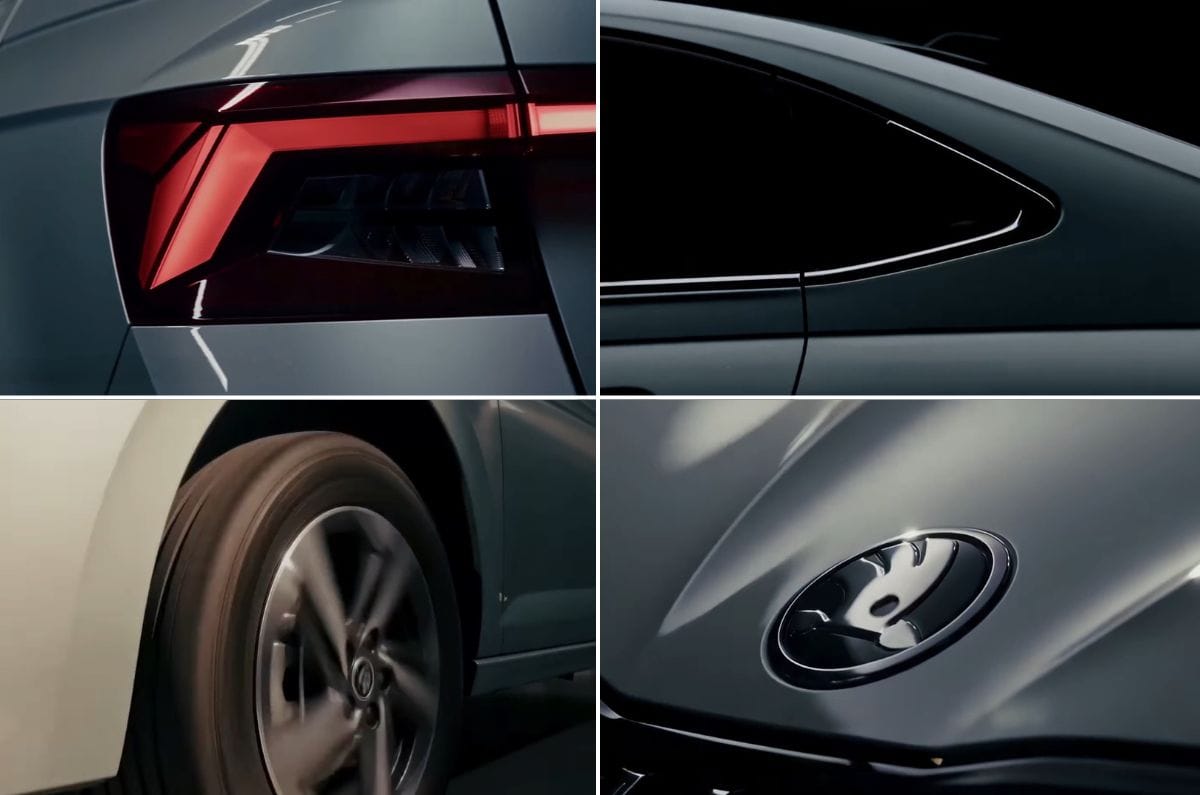
Ahead of its launch on August 18, 2026, Skoda India has shared another teaser of the Slavia facelift. The teaser gives a glimpse of a few design elements that the updated Slavia will receive.
Updated Slavia to have subtly refreshed exterior.
To continue with 1.0 and 1.5-litre turbo-petrol engines.
1.0-litre engine to have a new 8-speed automatic transmission.
Skoda Slavia facelift: What did the teaser reveal?
At the front, the grille was spotted studded with chrome detailing. The Slavia facelift is also expected to have revised detailing for the headlamps and restyled bumpers with new fog lamp housings. The tail-lights were spotted as well with similar detailing as the current version, but it’s yet to be seen if it gets the connected treatment like the Kushaq. Additionally, a new sporty five-spoke design for the alloy wheels was spotted, which will likely continue to be 16 inches in size, like the current version. The facelift continues to get chrome treatment for the window line, like the current version.
Skoda Slavia facelift: What to expect?
Current version’s interior used for representation.
On the inside, the Slavia facelift is likely to continue with the same cabin layout, albeit with updated colours and trim materials. It is expected to borrow the Kushaq’s 10.25-inch digital driver’s display. Whether it gets the Kushaq’s segment-only rear massaging seats is yet to be seen. Meanwhile, features like a single-pane sunroof, powered and ventilated front seats, wireless phone charger will continue to be offered.
Current Slavia 1.0-litre engine used for representation.
As for powertrains, the Slavia facelift will continue to be powered by the current version’s 1.0 and 1.5-litre direct-injection turbo-petrol engines. The former develops 115hp and 178Nm, while the latter delivers 150hp and 250Nm of torque. While the 1.0-litre unit will continue to be paired with a 6-speed manual, automatic versions will get a new 8-speed torque converter gearbox, replacing the current version’s 6-speed unit. On the other hand, the 1.5-litre mill will continue to come solely with a 7-speed DCT.
In terms of price, the Slavia facelift is expected to be slightly pricier than the current version, which retails for Rs 9.99 lakh to Rs 18.19 lakh. It will continue to take on rivals like the Hyundai Verna, Honda City and the Volkswagen Virtus.
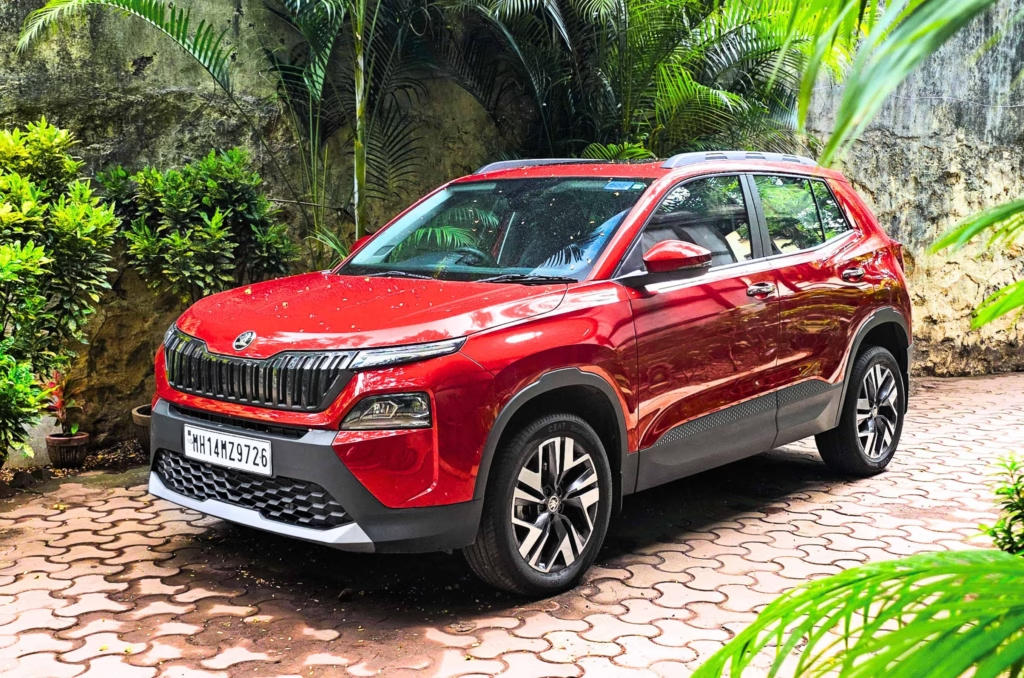
You could argue there was no better long-term test for the Skoda Kylaq than being driven 19,351 kilometres from India to Czechia. However, for those of us who can’t go on a two-month-long adventure full of culture, cuisine and continent-crossing, here’s what it’s been like trudging through Mumbai traffic for the last few weeks.
I’ve been fascinated by the Kylaq since its launch in early 2025, and apart from a few quick peeks at it when it came in for other shoots, I had never really driven one before this. So, now that it’s finally joined the Autocar India fleet, I’ve been more than happy to take it on for its first couple of weeks. And just as a proposition alone, I’m amazed that Group partner Volkswagen didn’t immediately jump on this idea and do a compact SUV in parallel. Guess we’ll just have to wait until 2027.
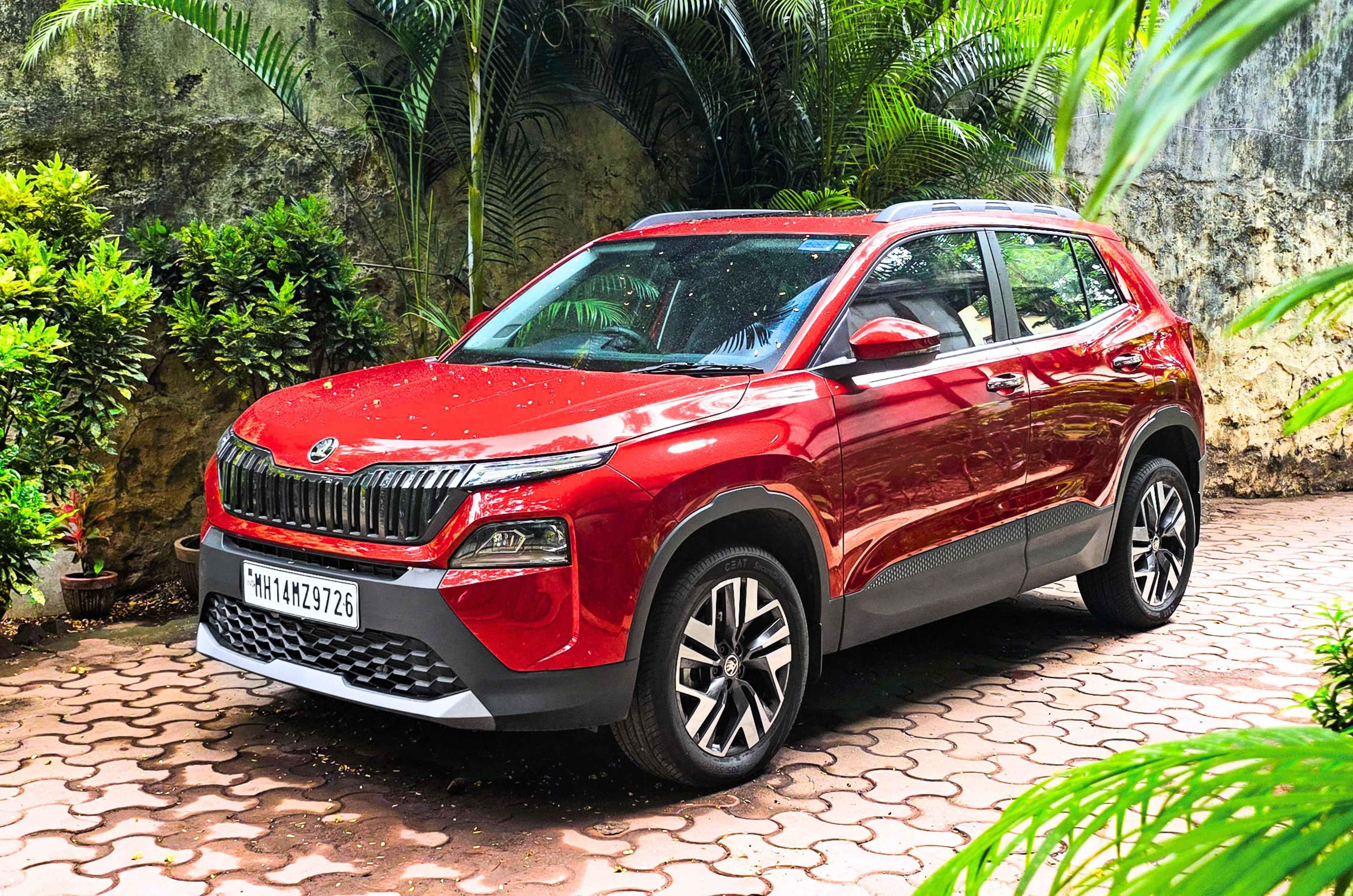
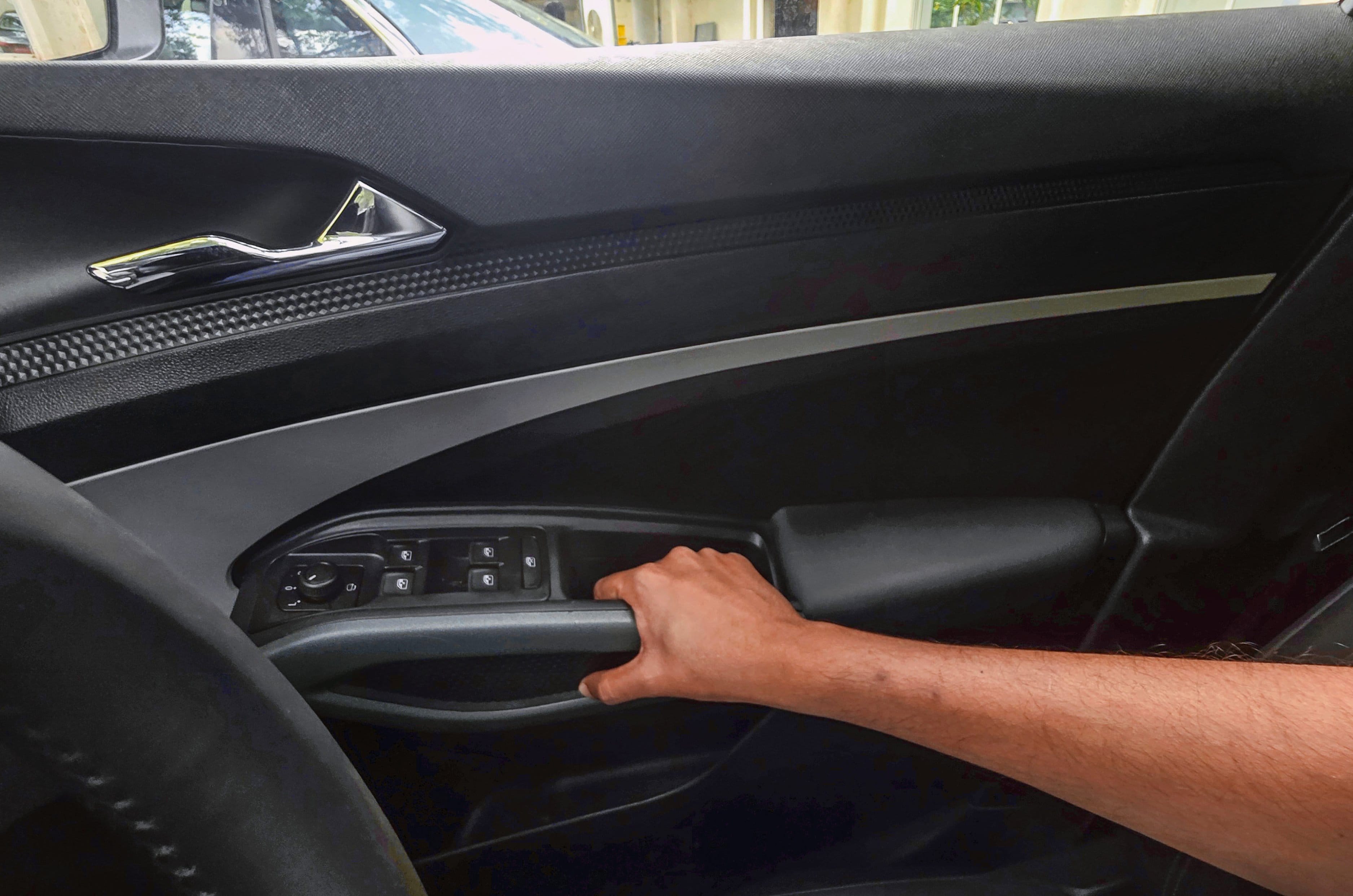
Feels reassuringly solid, from the door shut to the driving dynamics.
The formula is simple enough – a Kushaq, but slightly smaller and using only the lesser 1.0-litre engine. But the more time I spend in here, the more I wonder if there’s any need for a Kushaq 1.0 TSI at all – this thing offers pretty much everything it does. At no moment does it feel lesser in any way – same step up into the cabin, same solid slam on door shut, same high-set driving position. And features? Apart from the Kushaq’s newly added panoramic sunroof, bigger driver’s display and rear massaging seats, it has everything else!
Severe turbo lag followed by sudden burst of power frustrating in stop-go traffic.
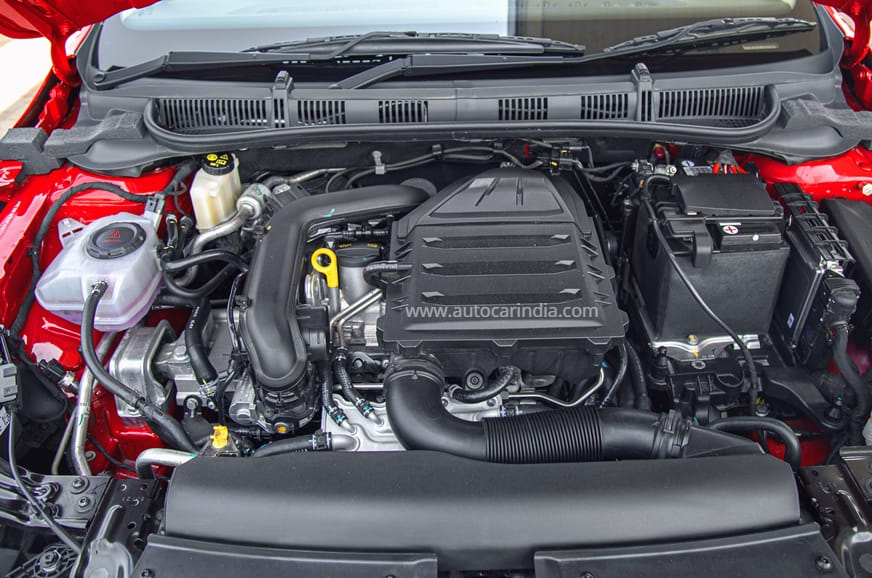
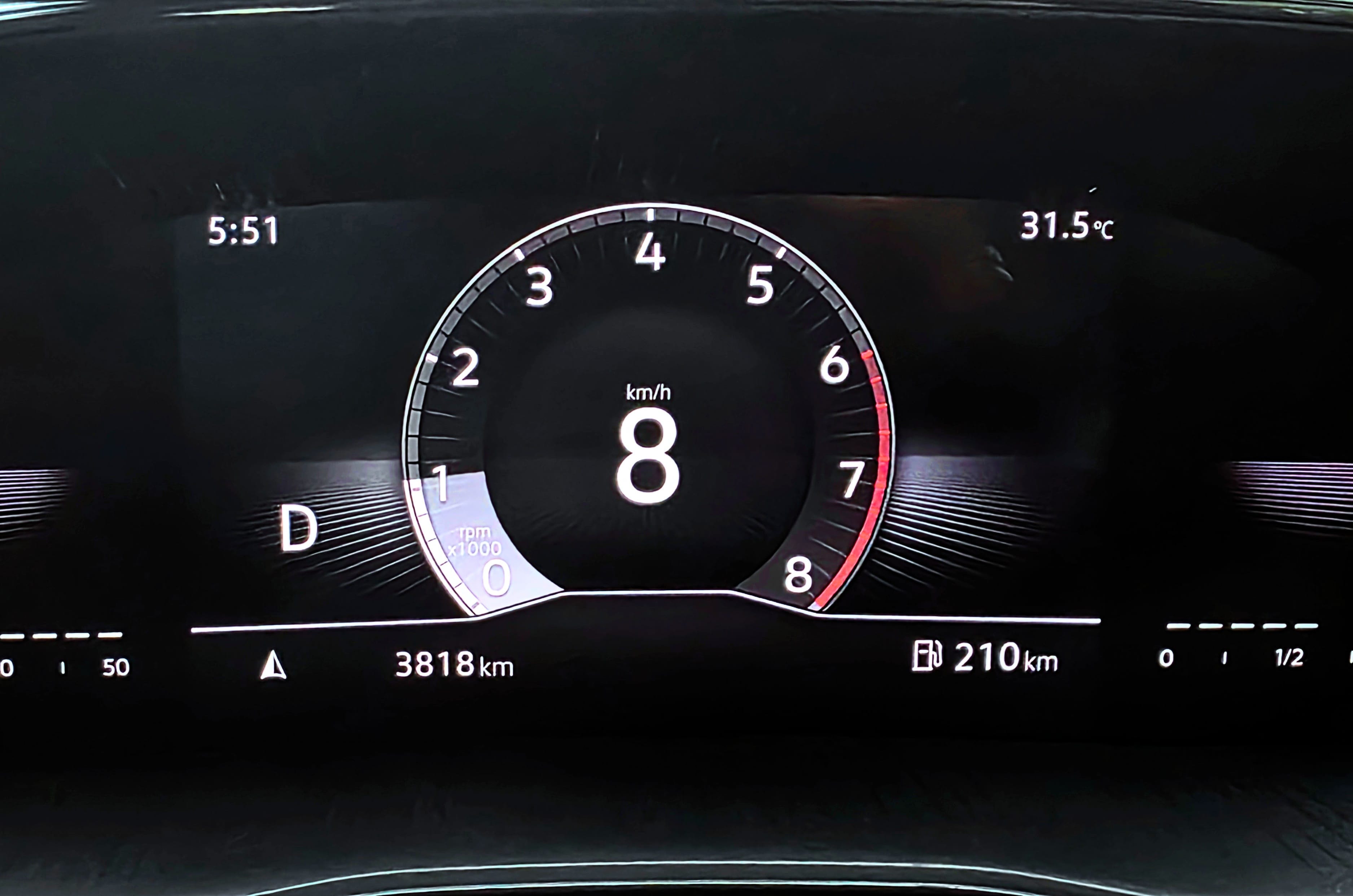
There are two mechanical changes that I hope make their way to the Kylaq soon, though. The first is the 8-speed gearbox, which should help mask one of this car’s shortcomings – turbo lag. The older 6-speed AT in our Kylaq may be smooth while you’re on the move, but at crawling speeds, where I spend most of my time, it can never figure out if it needs to be in first or second, and sometimes changes its mind at the worst possible moment. If it chooses first, it will lurch you forward aggressively, but if it chooses second, it traps you in the dreaded lag zone. Off boost, this 999cc engine feels overwhelmed by the Kylaq’s 1,255kg.
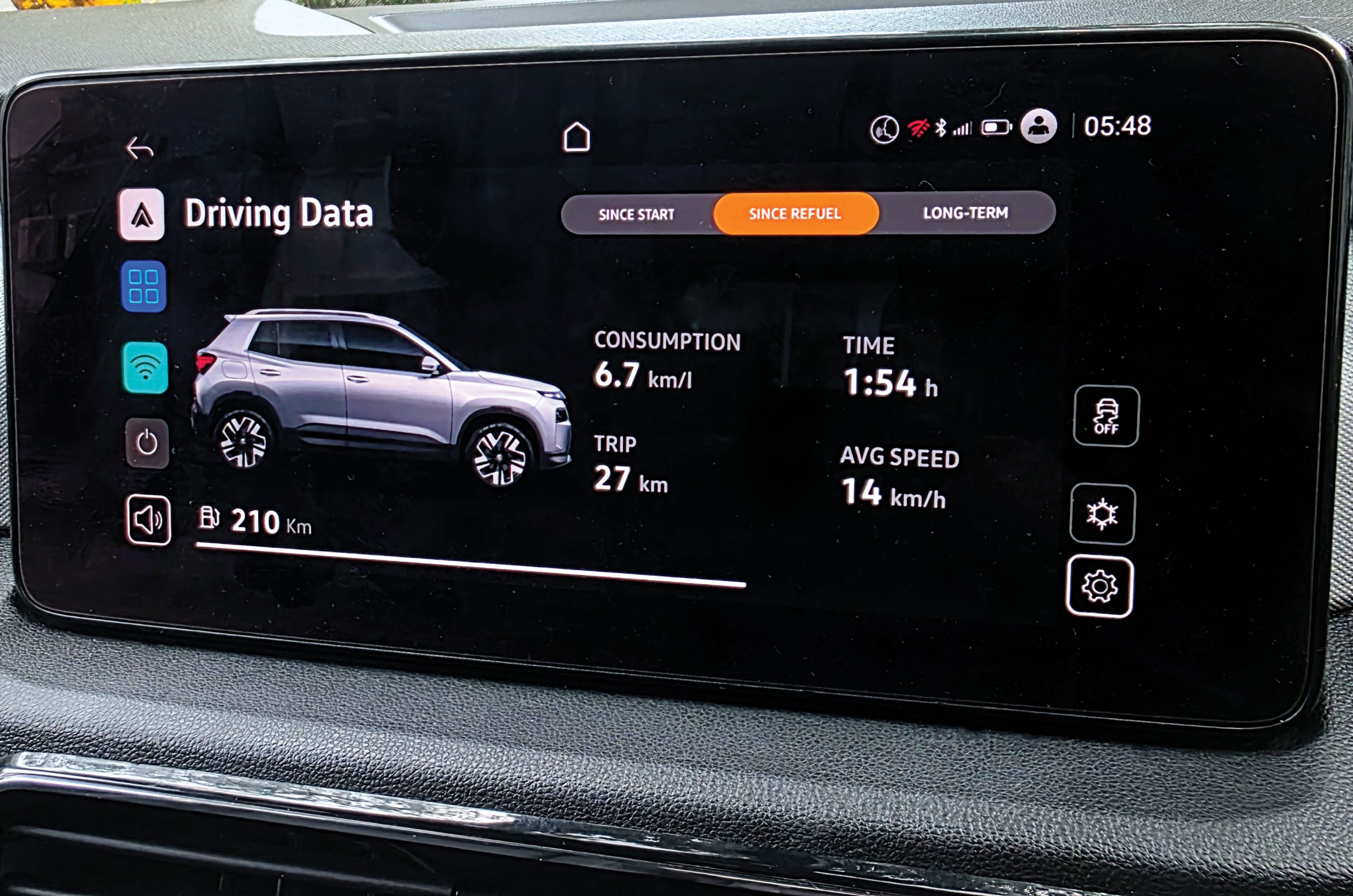
Single-digit fuel economy unexpected, unacceptable in a compact car.
Frustratingly jerky movement aside, where this indecisiveness has really hurt more is my wallet. The constant shifting, switching on and off boost and general inconsistent progress have hit the fuel economy very hard, and I struggle to get past 8kpl on my admittedly slow daily commute. Some of it might be down to the sudden advent of E20 fuel, but eight kilometres per litre in a compact car is criminal. I used to average 10kpl in our 1.5-litre TSI DSG Slavia a few years ago, and the team has been getting more out of our 2.0-litre TSI VW Tayron. So, it’s really down to an overstressed engine and a clumsy gearbox.
The other mechanical change is far less of a problem, and that’s the AC. While this still uses the fixed-geometry compressor from the original Kushaq, it’s a smaller car, so cooling the cabin is rarely an issue, and I drove it through at least one week of our awful heat wave. The thing is, you can feel it’s working overtime to keep the cabin cool, and when set to auto mode, the fan stays on full blast for most of my journey. I often find myself turning it down to have a conversation or enjoy my music.
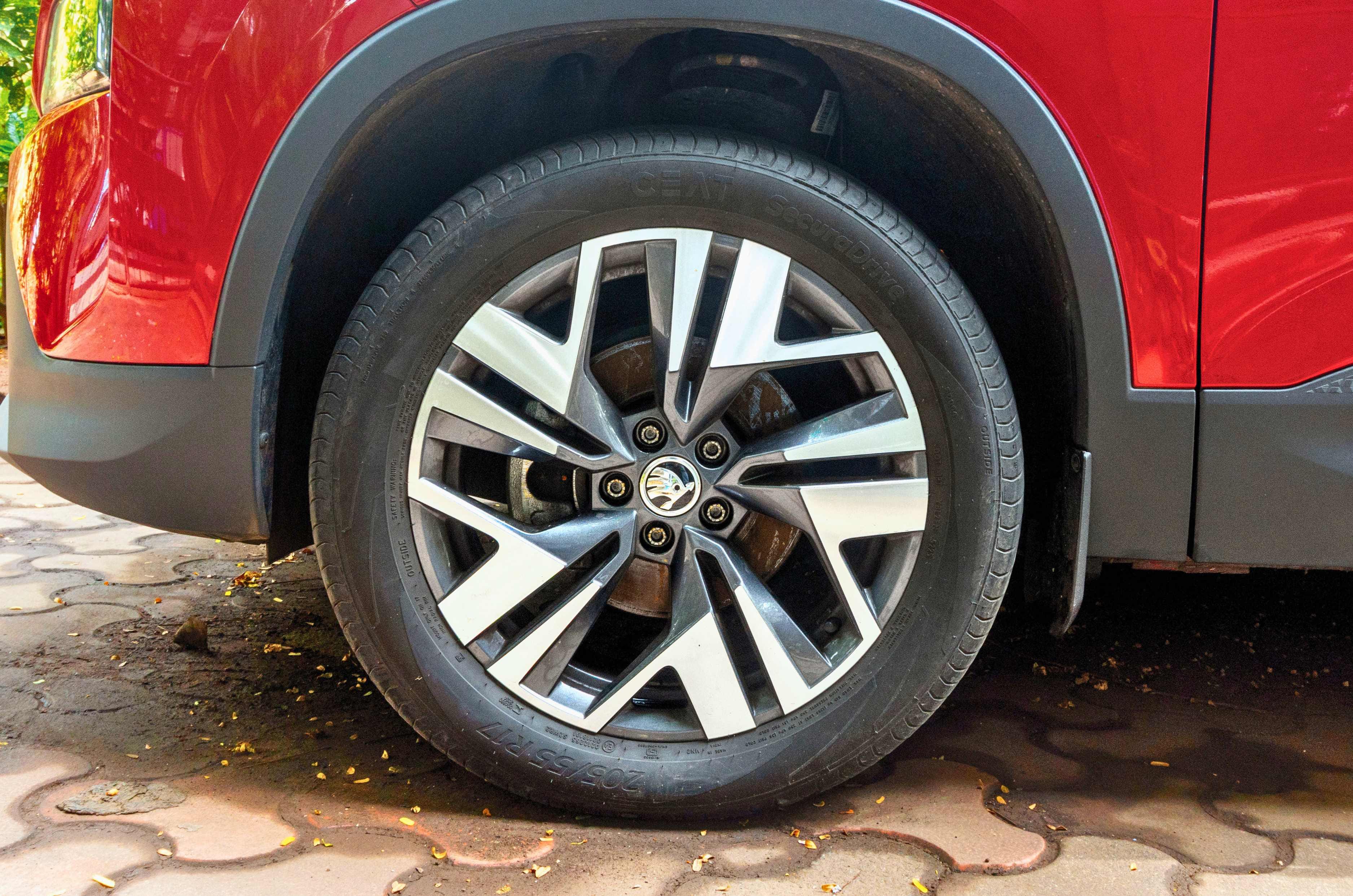
Large, shiny 17-inch alloy wheels do well to enhance Kylaq’s road presence.
These two niggles aside, it’s a very pleasing experience, as you might expect from a slightly smaller Kushaq. There’s a certain toughness to it you don’t find in cars from this segment that almost encourages you to seek out potholes and slam through them. There’s a similar firmness to the ride, but I actually like that; it suits my driving style better than something overly soft and rolly. And I’m also willing to forgive a lot for how good those 17-inch wheels look; a bold choice when most of the segment is still running 16s.
I’ll delve more into the interior, tech and other things in a future update, but in this short first experience, I can see how the Kylaq made it to Prague so comfortably and without incident. It’s compact only in size and is a uniquely European addition to the compact SUV segment.
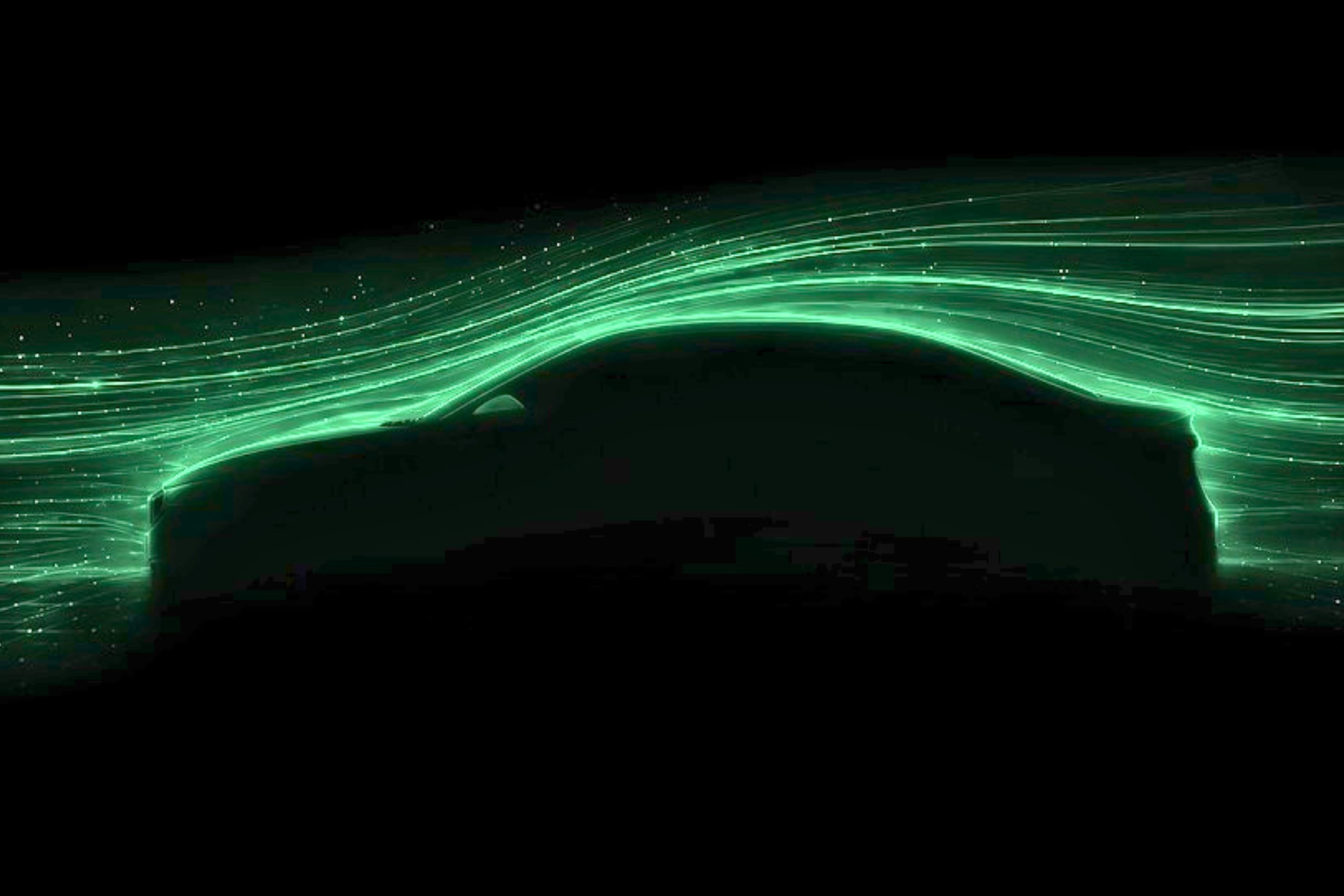
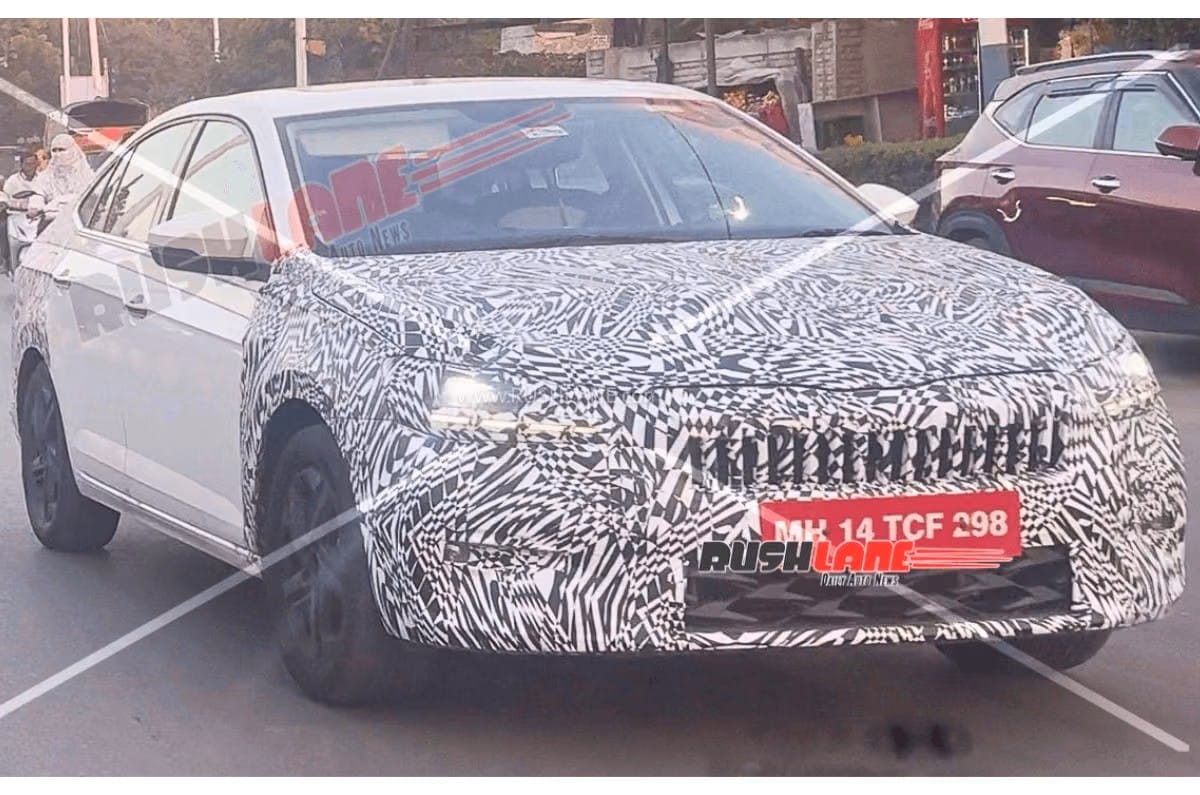
Skoda has teased the much-awaited Slavia facelift ahead of its launch on August 18. Being a mid-lifecycle update, it is expected to bring design changes, new features and an automatic gearbox upgrade for the 1.0 TSI engine.
Skoda Slavia facelift details so far
Image credit: Rushlane.
Going the spy shots from before, the sedan is expected to feature updated headlamp units, fog lamp housings and bumpers, along with a new grille with integrated lighting elements, similar to that on the Kushaq. A design refresh for the alloy wheels is likely as well.




.jpg)