Tata Sierra EV कल होगी लॉन्च, फीचर्स और रेंज ने मचाया तहलका, जानिए क्या मिलेगा खास

Tata Sierra EV कल यानी 30 जून को भारतीय बाजार में आधिकारिक तौर लॉन्च कर दी जाएगी। दिलचस्प बात यह है कि लॉन्च से पहले ही ब्रांड के टीजर से इसके बारे में काफी जानकारी मिल चुकी है। हाल ही में Tata Motors ने अपने सोशल मीडिया हैंडल पर Sierra EV के डिजाइन, इंटीरियर और कई फीचर्स की झलक दिखाई है। अगर आप इस कार और इसकी प्रतिद्वंद्वी कारों, जैसे Creta Electric या Mahindra BE 6 के बीच फैसला करने का इंतजार कर रहे हैं, तो यह जानकारी आपके लिए अहम है, क्योंकि लॉन्च से पहले ही आपको इस कार के केबिन और ड्राइवट्रेन के बारे में काफी कुछ पता चल चुका है, जो आम तौर पर खरीदारों को लॉन्च के दिन ही पता चलता है।

Tata Sierra EV की रेंज की जानकारी

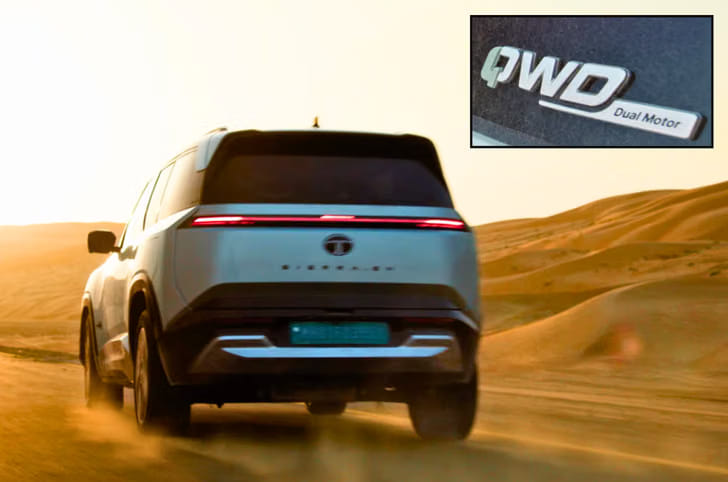
टाटा मोटर्स ने कन्फर्म किया है कि Tata Sierra EV के सबसे पावरफुल डुअल-मोटर AWD (ऑल-व्हील ड्राइव) वेरिएंट में 500 Nm का टॉर्क मिलेगा। इसके साथ बूस्ट मोड और अलग-अलग तरह की सड़कों पर बेहतर ड्राइविंग के लिए 6 कस्टमाइजेबल टेरेन मोड्स भी दिए जाएंगे।

उम्मीद की जा रही है कि Tata Sierra EV में Tata Harrier EV वाले बैटरी विकल्प मिलेंगे। इसमें 65 kWh बैटरी के साथ सिंगल-मोटर RWD वेरिएंट आ सकता है, जिसकी अनुमानित रेंज 538 किलोमीटर होगी। वहीं, 75 kWh बैटरी वाला सिंगल-मोटर RWD वेरिएंट लगभग 627 किलोमीटर की रेंज दे सकता है। इसके अलावा, डुअल-मोटर AWD वेरिएंट में पीछे 234.7 hp और आगे 156 hp की मोटर मिलने की उम्मीद है, जिसकी अनुमानित रेंज करीब 622 किलोमीटर हो सकती है।

हालांकि, कंपनी ने अभी इन रेंज के आंकड़ों की आधिकारिक पुष्टि नहीं की है। ये सभी आंकड़े Tata Harrier EV के हार्डवेयर के आधार पर लगाए गए अनुमान हैं। लॉन्च के बाद ही कंपनी इसकी सही रेंज और सभी स्पेसिफिकेशन की घोषणा करेगी।

Tata Sierra EV का इंटीरियर

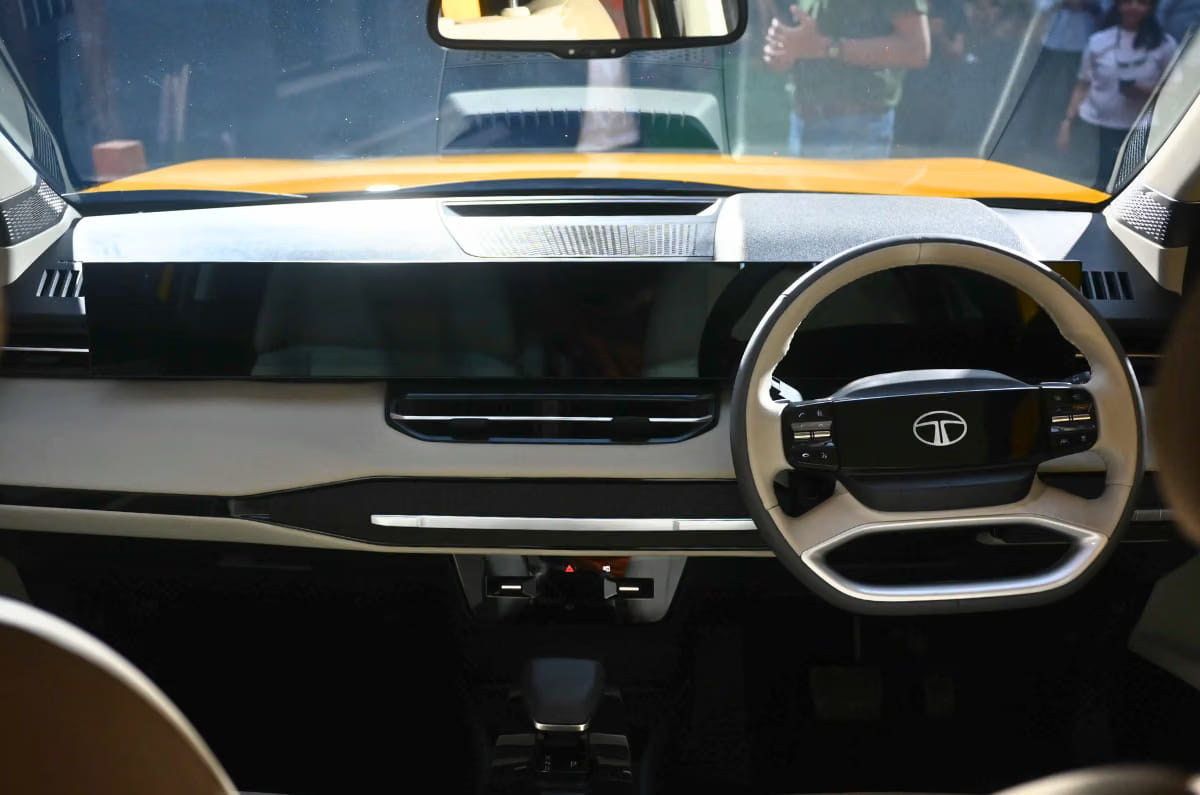
टाटा Motors ने लॉन्च से पहले ही Tata Sierra EV के इंटीरियर की कई अहम जानकारियां शेयर कर दी हैं। कंपनी ने पुष्टि की है कि इसमें ब्लैक-एंड-व्हाइट थीम वाला केबिन, पैनोरमिक सनरूफ, तीन स्क्रीन वाला डैशबोर्ड और हेड-अप डिस्प्ले (HUD) मिलेगा। कार का बाहरी और अंदरूनी डिजाइन काफी हद तक इसके पेट्रोल-डीजल (ICE) मॉडल जैसा ही होगा, लेकिन इसमें EV से जुड़े कुछ खास बदलाव देखने को मिलेंगे।

इसके अलावा, उम्मीद है कि इसमें वायरलेस Apple CarPlay और Android Auto, 12-स्पीकर JBL साउंड सिस्टम, वेंटिलेटेड फ्रंट सीटें, मेमोरी फंक्शन के साथ 6-वे पावर एडजस्टेबल ड्राइवर सीट, ड्यूल-जोन क्लाइमेट कंट्रोल और कनेक्टेड कार फीचर्स भी मिलेंगे। सेफ्टी के लिए इसमें 6 एयरबैग, 360-डिग्री कैमरा, लेवल 2 ADAS और इलेक्ट्रॉनिक स्टेबिलिटी कंट्रोल जैसे फीचर्स की उम्मीद है, हालांकि टाटा ने अभी तक फीचर्स की कोई ऑफिशियल लिस्ट जारी नहीं की है।

Tata Sierra EV की अनुमानित कीमत

इंडस्ट्री के अनुमानों के मुताबिक, इसकी शुरुआती कीमत 15 लाख रुपये (एक्स-शोरूम) से ज्यादा हो सकती है। हालांकि, अगर टाटा लॉन्च के समय ‘बैटरी-एज-ए-सर्विस’ (BAAS) का ऑप्शन देती है, तो यह कीमत कम हो सकती है। क्योंकि इस ऑप्शन में बैटरी की कीमत को शुरुआती कीमत से अलग रखा जाता है, जैसा कि कुछ दूसरी EV बनाने वाली कंपनियां पहले से ही करती हैं।

उम्मीद है कि सिएरा EV का मुकाबला Hyundai Creta Electric, Maruti Suzuki e Vitara, Mahindra BE 6, MG ZS EV, VinFast VF7 और Toyota Urban Cruiser EV जैसी गाड़ियों से होगा। इसकी फाइनल कीमत और पूरी स्पेसिफिकेशन की जानकारी कल होने वाले लॉन्च इवेंट में ही कन्फर्म होगी।

यह भी पढ़ें: Tata Motors PV का बिग प्लान, 4 नए मॉडल्स को लॉन्च करने की तैयारी

What to expect from Tata Sierra EV ahead of debut tomorrow

Sierra EV

Tata Motors is set to reveal the production-spec Sierra EV tomorrow. First shown as a concept at Auto Expo 2020, the midsize SUV is expected to share much of its technology with the Harrier EV while carrying forward the Sierra’s distinctive design. Here’s everything you need to know ahead of its debut. 

What battery and powertrain options will the Tata Sierra EV get?

65kWh and 75kWh battery packs likely

The Sierra EV could use Tata’s acti.ev+ architecture that underpins the Harrier EV. It is also likely to share the Harrier EV’s 65kWh and 75kWh battery pack options, although Tata has not yet confirmed the final specifications.

Tata Motors has already confirmed that the Sierra EV will be offered in both rear-wheel-drive and dual-motor all-wheel-drive configurations, with the latter expected to be reserved for the larger 75kWh battery pack. 

Since the Sierra EV is smaller than the Harrier EV, it could offer a higher claimed driving range using the same battery packs. For reference, the Harrier EV has a claimed range of up to 627km. 

How will the Tata Sierra EV differ visually from the ICE Sierra

EV gets a revised front end and subtle design changes

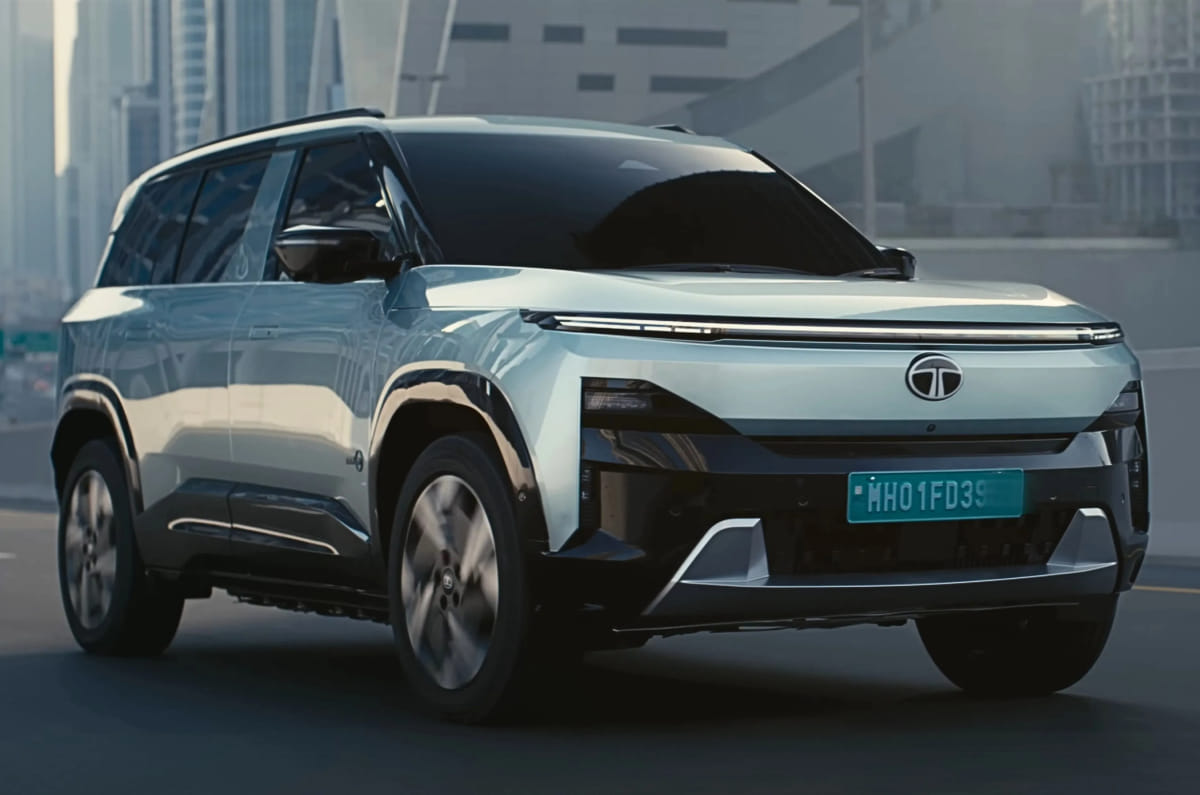
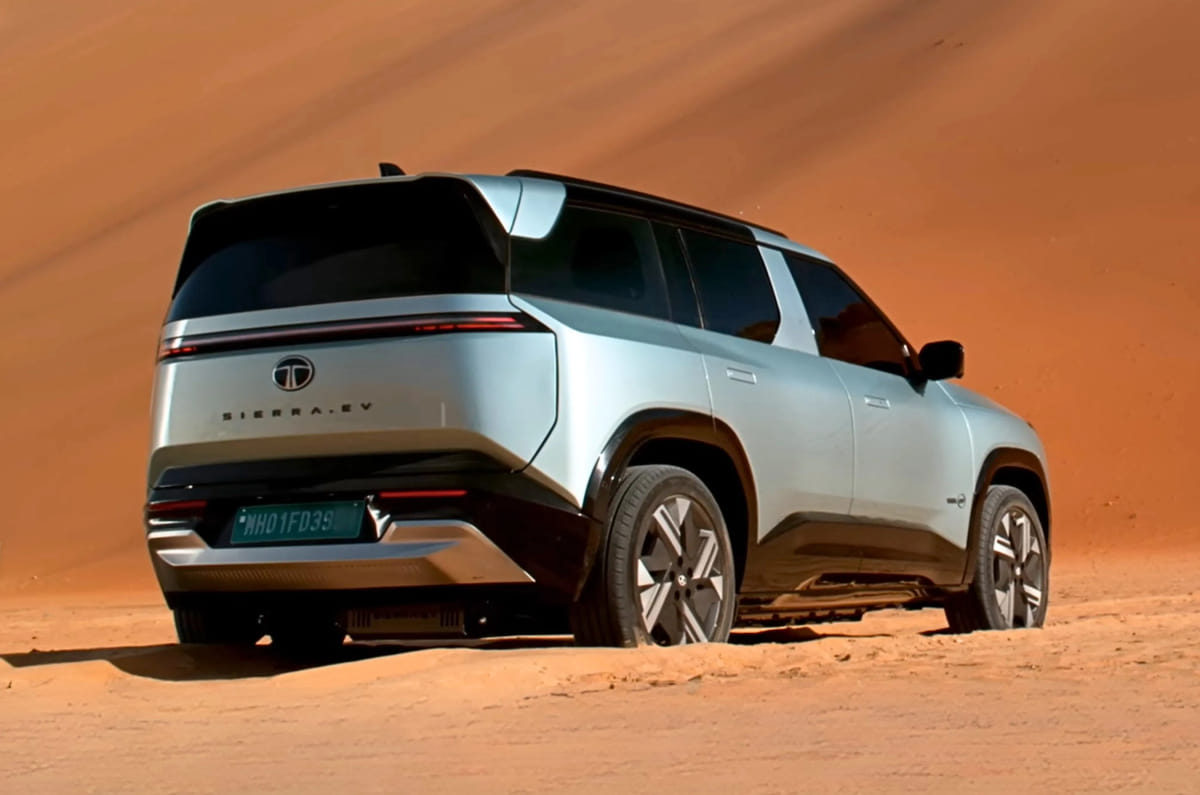
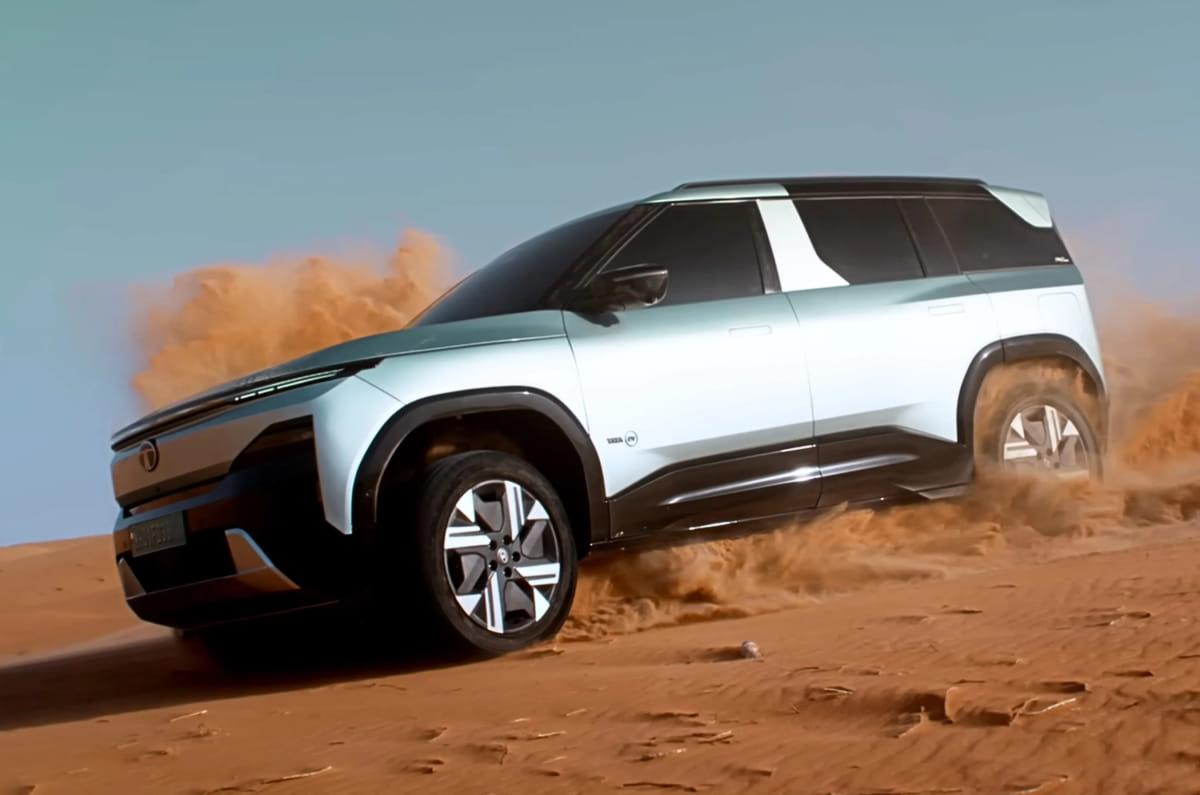
The Sierra EV retains the overall design of the ICE-powered Sierra but features a handful of EV-specific styling changes. Up front, it gets a body-coloured blanked-off grille, not a functional one, along with a revised front bumper. Unlike the ICE Sierra, the EV also does away with the ‘Sierra’ lettering below the front LED light bar.

Otherwise, the two SUVs remain largely identical. The Sierra EV retains the upright proportions, connected LED lighting and blacked-out rear glass element inspired by the original Sierra. Even the 19-inch alloy wheel design is shared with the ICE model. The Sierra EV, however, is likely to get new colour options, such as the silver shade seen here.

What features will the Tata Sierra EV get?

Triple-screen layout expected on higher variants

Combustion-powered Sierra’s interior pictured here for representative purposes only.

The Sierra EV is expected to carry over the ICE Sierra’s cabin with only minor EV-specific changes. Higher variants are likely to feature a triple-screen setup comprising a 10.25-inch digital instrument cluster, a 12.3-inch infotainment touchscreen and a 12.3-inch passenger display, while lower variants may get a dual-screen layout.

Other likely features include a panoramic sunroof, a head-up display, powered and ventilated front seats, a premium audio system and multiple drive modes.

What is the expected price of the Tata Sierra EV, and which models will it rival?

Could be priced in the range of Rs 18 lakh to Rs 25 lakh

Expect the Sierra EV to be priced in the Rs 18 lakh to Rs 25 lakh (ex-showroom) ballpark, positioned between the Curvv EV and Harrier EV in Tata’s electric SUV line-up as a rival to the Mahindra BE 6, Hyundai Creta Electric, MG ZS EV and Maruti e Vitara.

Used Car Study 2026: Grand i10 Nios holds its value best among midsize hatches

Used car study 2026 midsize hatchbacks

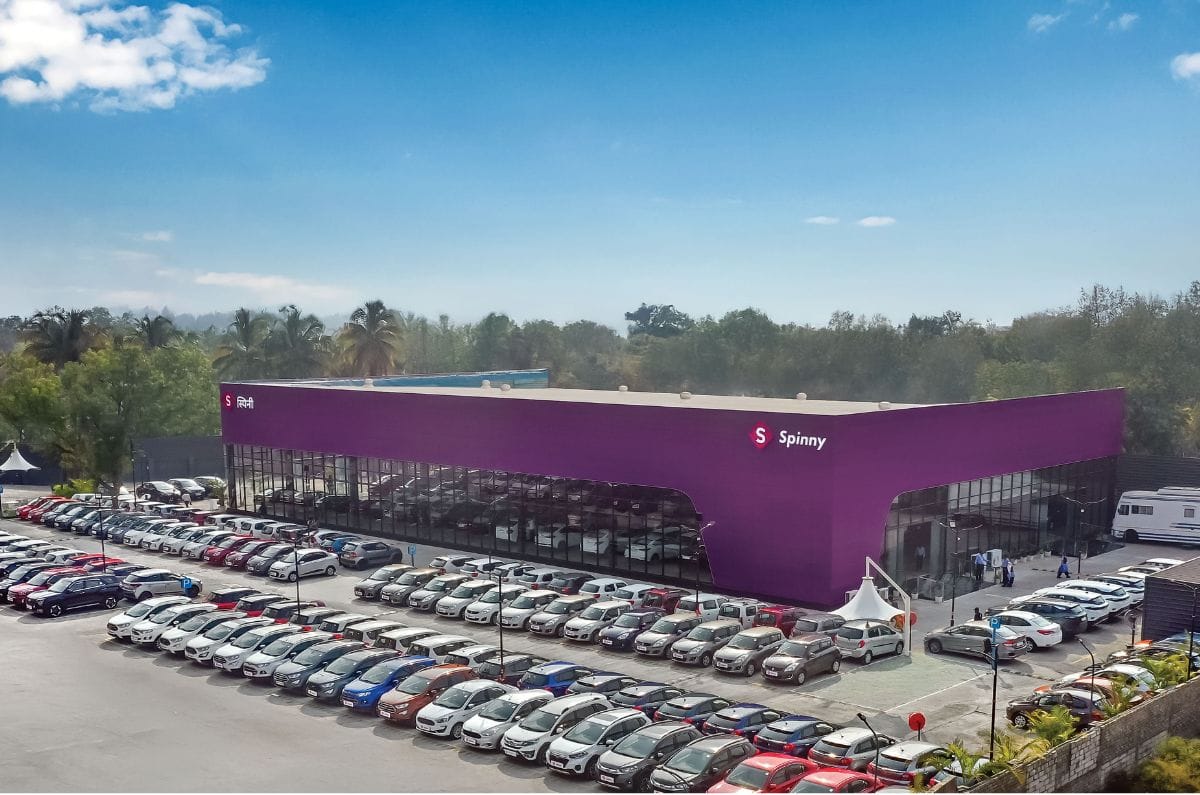
Conducted in association with Spinny, India’s leading pre-owned car platform, the fourth edition of our Used Car Study analyses real-world resale values across a broad spectrum of vehicles sold in the Indian market in order to assess depreciation trends over a five-year ownership period. The study is based on actual transactional data shared by Spinny for vehicles sold between January 1 and August 31, 2025.

In this series of the resale value study, we are first taking a look at the budget hatchback segment:

Midsize Hatchbacks Resale Value 

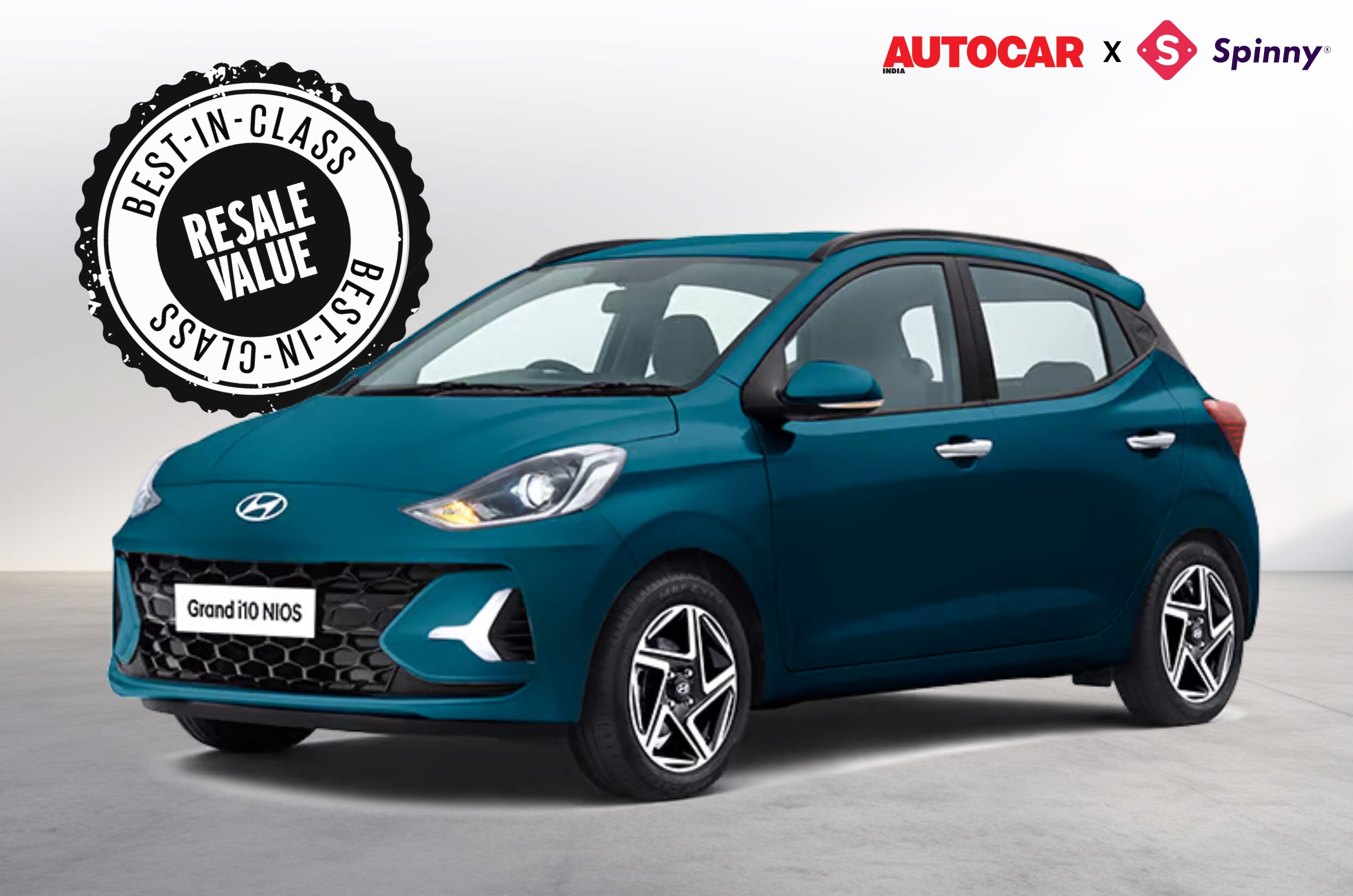
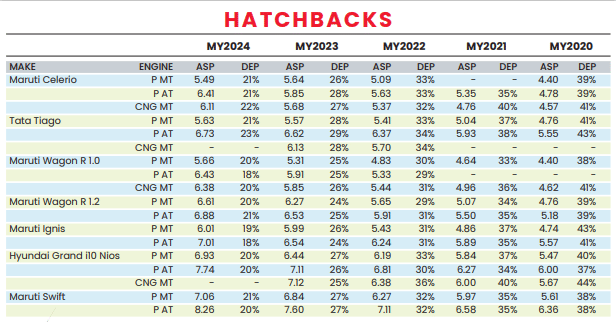
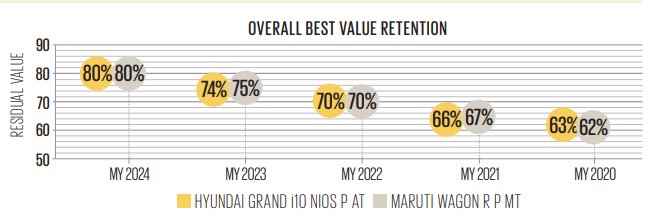
The Hyundai Grand i10 Nios petrol-AMT emerged as the strongest performer in terms of residual value, registering the flattest depreciation curve in the segment. Matching it closely are both the 1.0-litre and 1.2-litre petrol-manual variants of the Maruti Wagon R, whose consistently strong demand in the new and used car markets has helped preserve resale values.

At the other end of the spectrum, the Grand i10 Nios CNG sees the steepest depreciation among its siblings, while the Tata Tiago petrol-AMT also records relatively greater value loss over time. The Maruti Ignis is also among the ones to lose the most value over the five-year period. The Maruti Swift stands out in this company for having the most consistent rate of depreciation across both its manual and automatic variants. 

As per the study, the average selling price of a five-year-old midsize hatchback retailed through Spinny stood at Rs 5.47 lakh. Comparable figures for three-year-old and one-year-old the midsize hatchbacks were Rs 5.84 lakh and Rs 6.58 lakh, respectively. Average depreciation over the same periods worked out to 40 percent, 31.9 percent and 20.3 percent, respectively.

Autocar-Spinny Resale Value Study methodology 

The analysis covers the average selling prices (ASPs) of vehicles retailed through Spinny’s network across nine cities – Delhi-NCR, Bengaluru, Hyderabad, Pune, Chennai, Mumbai, Lucknow, Ahmedabad and Kolkata.

For the purposes of this study, depreciation has been defined as the percentage difference between a vehicle’s original on-road price in its year of manufacture and its resale value in 2025. In instances where a model was offered with multiple engine options using the same fuel type, the data has been consolidated and averaged. Variant-wise differences have similarly been averaged out.

Discontinued models and powertrain options have been excluded. Additionally, premium vehicles priced above Rs 30 lakh, electric vehicles and certain low-volume models have not been included due to limited transaction data and insufficient sample sizes.

How to use a puncture repair kit

How to use a puncture repair kit?

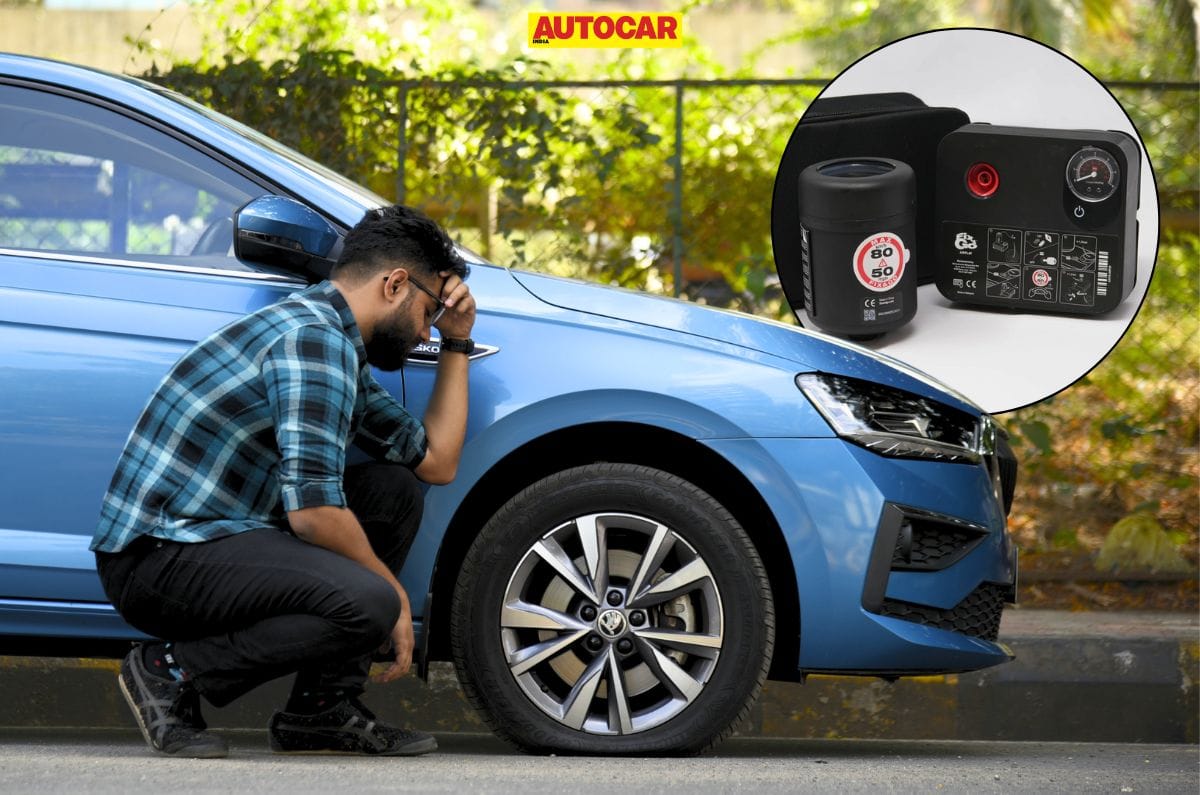
In an effort to save space and reduce car weight, many manufacturers have replaced the traditional spare wheel with a puncture repair kit. While these kits are compact and easy to store, they can seem daunting if you’ve never had to use one before. The good news is that they are designed to get you back on the road quickly, without needing to visit a tyre repair shop, just as a regular spare tyre would. So, let’s look at how to fix a punctured tyre using the different types of puncture repair kits commonly supplied with cars.

How to fix a tyre puncture using a repair kit

Punctures of around 4-6mm in the tyre’s tread area can be fixed with a repair kit

A puncture repair kit can only fix certain types of tyre damage. It is suitable for punctures that are 4mm to 6mm wide, which is about the size of a regular pencil tip. The puncture must also be located in the tread area of the tyre. If the damage is a long cut, a large tear, or a complete blowout, the tyre cannot be repaired and must be replaced. Similarly, punctures in the sidewall cannot be safely repaired with a puncture kit, as the sidewalls flex continuously and lack strong reinforcement. 

A blown-out tyre cannot be fixed with a puncture repair kit and needs to be replaced. 

After confirming that the puncture is no larger than 6mm in diameter and is in the tread area, you can begin the repair. Before you start, park your car safely on the shoulder of the road, switch on the hazard lights, and place a warning triangle behind your vehicle to alert other drivers. Once these safety precautions are in place, you are ready to repair the puncture.

Type 1: Tyre sealant and inflator kit

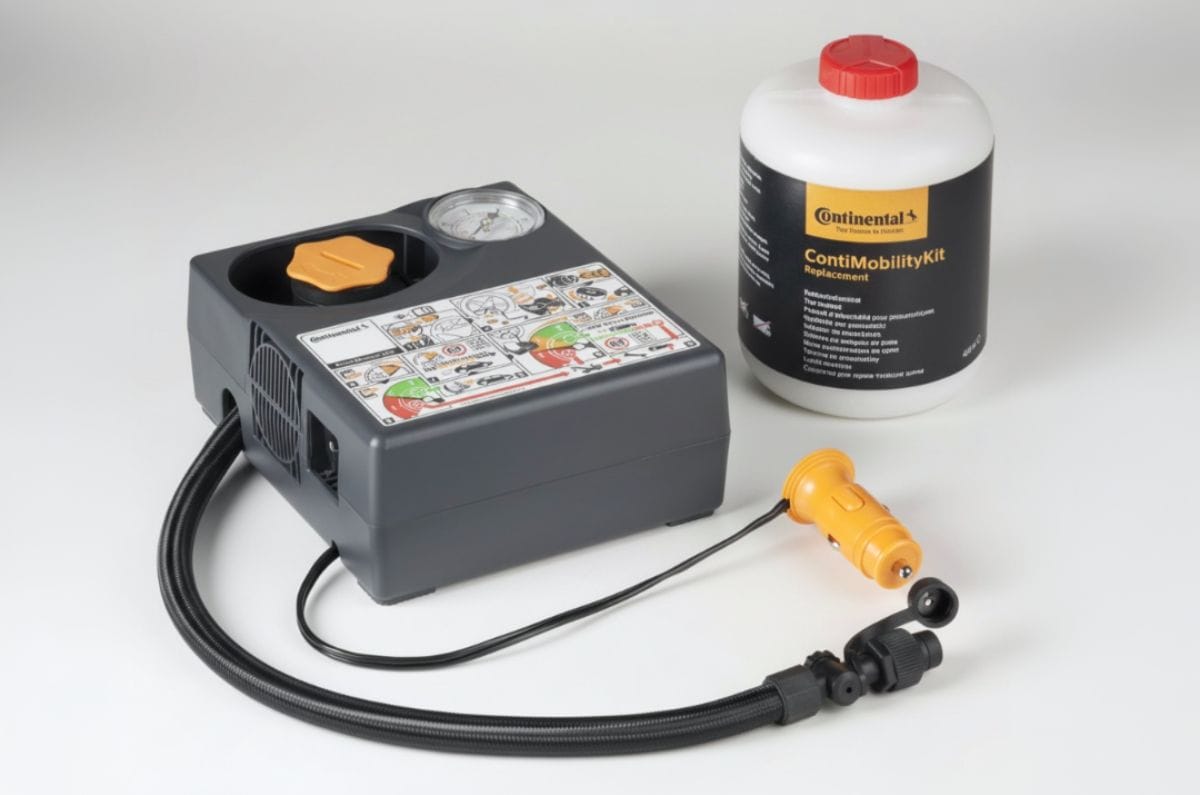
Image source: Continental Aftermarket

A tyre sealant and inflator kit is the most common type of puncture repair kit offered by manufacturers such as Tata, Maruti Suzuki, MG, and Mahindra. The kit includes a tyre inflator and a bottle of liquid sealant.

To use it, insert the sealant bottle into the inflator via the dedicated slot. Then connect the inflator to the valve of the punctured tyre. Do not remove the nail or screw that caused the puncture, as doing so can make the hole larger or cause further damage to the tyre. Start the car, plug the inflator into the 12V accessory socket, and inflate the tyre to the recommended pressure.

Once inflated, you can continue driving. However, keep your speed below 80kph and avoid driving more than 200km, as the sealant provides only a temporary repair. Visit a tyre repair shop as soon as possible, where a technician will remove the nail or screw, clean out the sealant, and install a permanent internal patch (patch-plug).

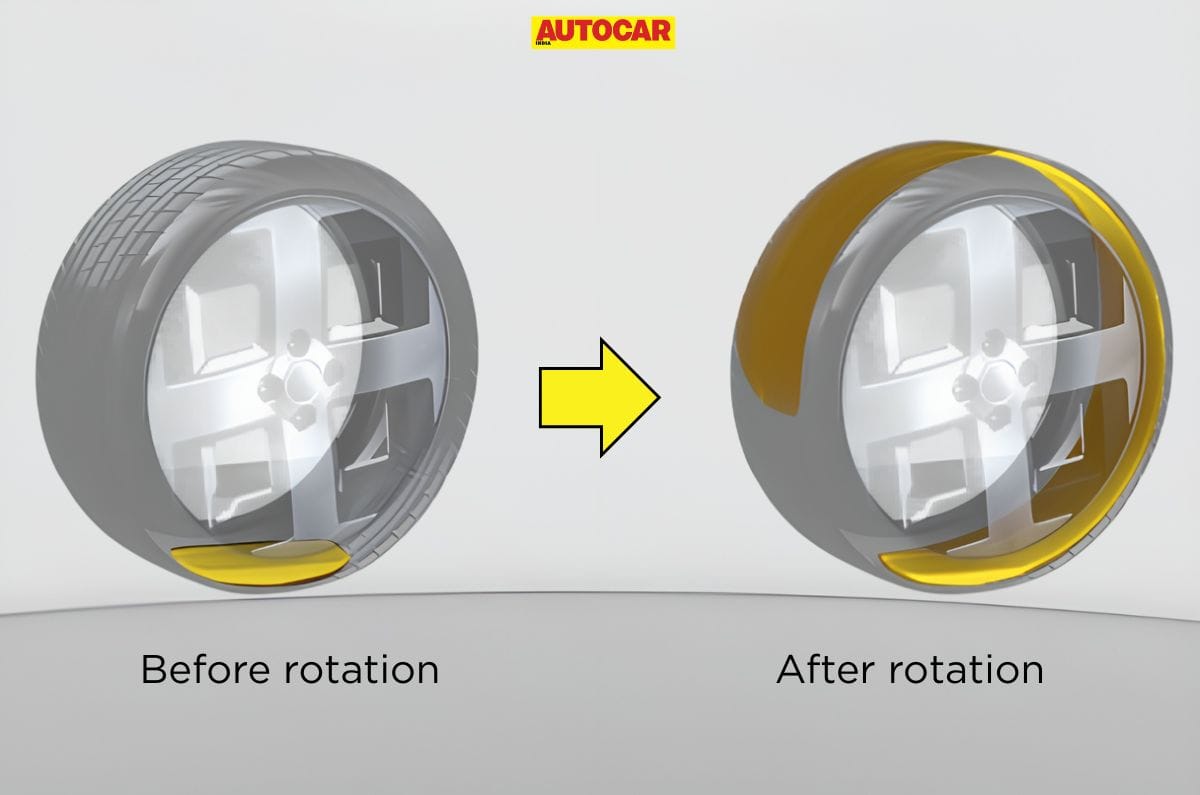
The centrifugal force spreads the sealant inside the tyres. (Image source: Hyundai)

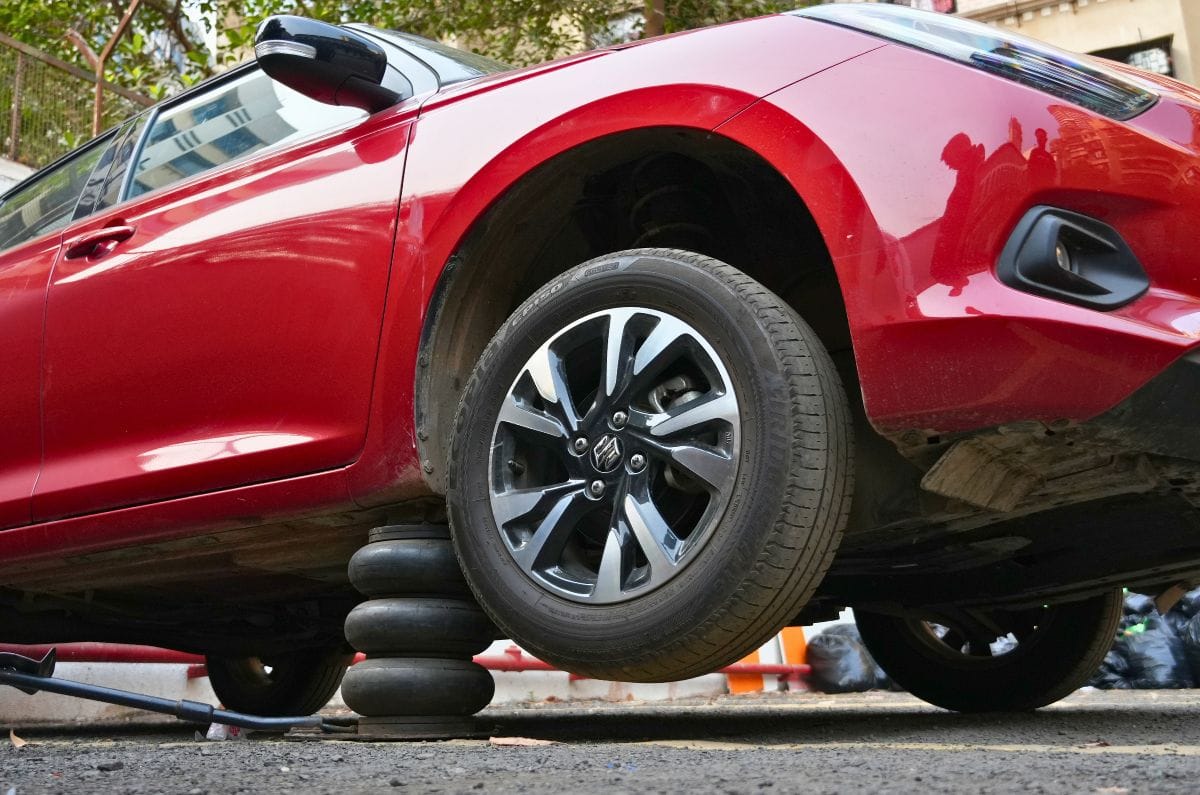
The biggest advantage of this type of repair kit is its convenience. The entire process takes about 10 minutes and does not require lifting the vehicle with a jack. It also helps you get back on the road quickly, reducing time spent waiting on the roadside. The downside is that it is only a temporary solution. The sealant must be cleaned from inside the tyre before a permanent repair can be carried out, which may increase repair costs. In some cases, the sealant can also clog the tyre pressure monitoring system (TPMS) sensor, affecting tyre pressure readings or even causing permanent damage to the sensor.

Type 2: String plug repair kit

Image source: Amazon

Also known as a tyre plug repair kit, a string plug puncture repair kit is an older, more affordable option because it does not require any electrical equipment. It typically includes rubber string plugs (or worms), an insertion tool, a reamer to clean and prepare the puncture, an adhesive lubricant, and a cutter to trim the excess plug.

Unlike a tyre inflator with a sealant kit, this type of repair requires you to remove the nail or screw that caused the puncture. Once it has been removed, insert the reamer into the puncture and move it up and down several times. This clears away debris, removes jagged steel belt fragments, roughens the rubber surface, and slightly enlarges the hole to help the plug bond securely.

After inserting the rubber string plug, pull the insertion tool firmly. 

Next, thread a rubber string plug halfway through the eye of the insertion tool and apply the adhesive lubricant. Push the plug into the puncture until about an inch remains visible outside the tyre. Then pull the insertion tool out firmly. The tool is designed to release the plug while leaving it securely wedged inside the tyre.

Trim the excess rubber using the cutter and inflate the tyre to the recommended pressure. Finally, apply a soapy water solution to the repaired area. If no bubbles appear, the puncture has been successfully sealed.

One advantage of a string plug repair kit is that it is quick to use and can often last longer than a sealant-based repair. In some cases, the plug may remain effective for a considerable distance. However, it is still considered a temporary repair because it does not provide the same level of sealing as a professional internal repair. There is also a risk that the reaming process may damage the tyre’s internal structure or enlarge the puncture, making a permanent repair more difficult.

What to do after repairing a puncture

Get the tyre professionally inspected

A thorough tyre inspection by a technician is recommended, as a puncture repair kit is a temporary solution. 

Using a puncture repair kit gets you back on the road, but it should not be considered a permanent solution. Visit a tyre repair shop as soon as possible and have the tyre inspected by a qualified technician. They will check for hidden internal damage that may not be visible from the outside and determine whether the tyre can be safely repaired or needs to be replaced. If the puncture is within the repairable tread area and the tyre is otherwise in good condition, a professional repair can be carried out. However, if the damage extends to the sidewall, shoulder, or internal structure of the tyre, replacement is the safest option.

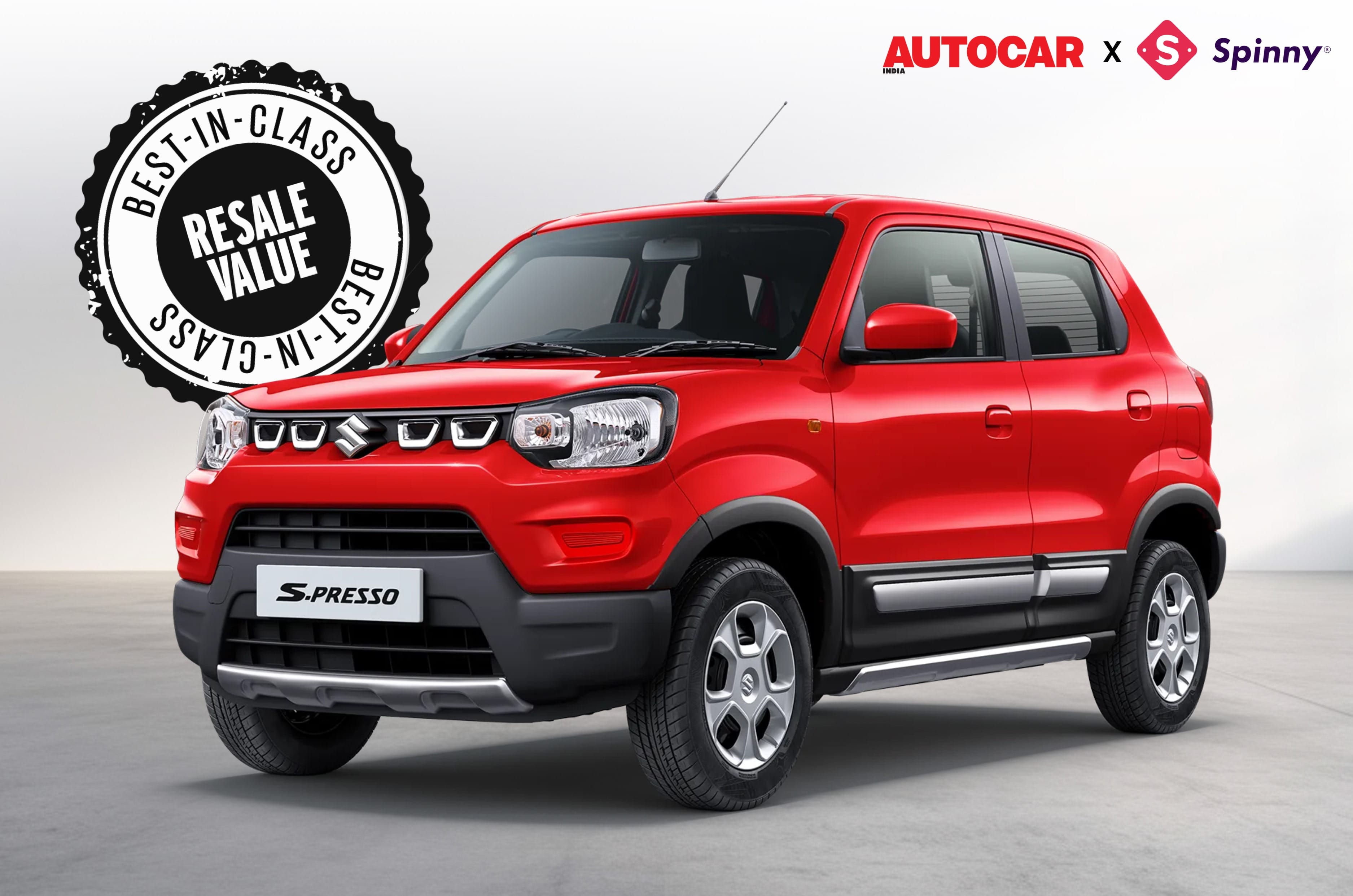
Used Car Study 2026: Maruti S-Presso holds its value best among budget hatches

Maruti S-Presso

Conducted in association with Spinny, India’s leading pre-owned car platform, the fourth edition of our Used Car Study analyses real-world resale values across a broad spectrum of vehicles sold in the Indian market in order to assess depreciation trends over a five-year ownership period. The study is based on actual transactional data shared by Spinny for vehicles sold between January 1 and August 31, 2025.

In this series of the resale value study, we are first taking a look at the budget hatchback segment:

Budget hatchbacks Resale Value 

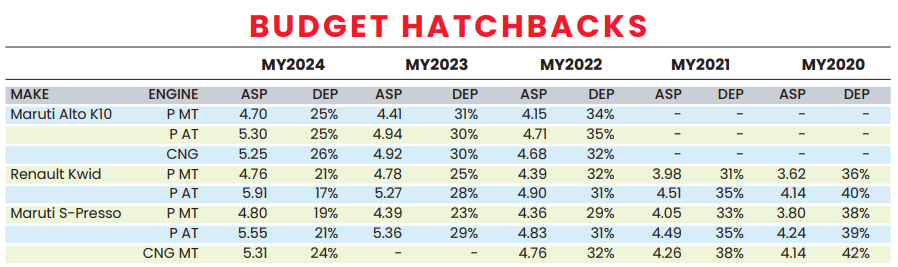
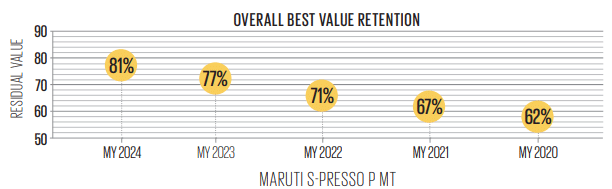
Following a similar trend as last year, the Maruti S-Presso petrol-manual continues to showcase the lowest average depreciation in the entry-level hatchback space. Interestingly, despite their differing positioning and appeal, the Maruti Alto and Renault Kwid trade at similar average resale prices, often separated by only a few thousand rupees, effectively creating a level playing field for buyers in the used car market.

The Renault Kwid witnessed several price hikes in 2022 alongside a mid-cycle update. Interestingly, in the used car market, MY22 manual versions depreciated higher than MY21 models, which was the only exception to the depreciation trend. 

Notably, one-year-old petrol-manual variants of Kwid depreciate 2 percentage points more than the S-Presso, while the difference is much wider with the Alto K10 at 6 percentage points. That’s despite the fact that both the S-Presso and Alto K10 come from the same manufacturer and use the same engine. The difference, however, is much slimmer for the CNG variants. 

The study found that the average selling price of a five-year-old budget hatchback retailed through Spinny stood at Rs 3.98 lakh. Comparable figures for three-year-old and one-year-old budget hatchbacks were Rs 4.60 lakh and Rs 5.12 lakh, respectively. Average depreciation over the same periods worked out to 39 percent, 32 percent and 22.25 percent, respectively.

Autocar-Spinny Resale Value Study methodology 

The analysis covers the average selling prices (ASPs) of vehicles retailed through Spinny’s network across nine cities – Delhi-NCR, Bengaluru, Hyderabad, Pune, Chennai, Mumbai, Lucknow, Ahmedabad and Kolkata.

For the purposes of this study, depreciation has been defined as the percentage difference between a vehicle’s original on-road price in its year of manufacture and its resale value in 2025. In instances where a model was offered with multiple engine options using the same fuel type, the data has been consolidated and averaged. Variant-wise differences have similarly been averaged out.

Discontinued models and powertrain options have been excluded. Additionally, premium vehicles priced above Rs 30 lakh, electric vehicles and certain low-volume models have not been included due to limited transaction data and insufficient sample sizes.

Autocar India and Spinny reveal Used Car Study 2026

Used-Car-Survey-2026

Autocar India, in association with Spinny, has conducted the fourth edition of our Used Car Study which analyses real-world resale values across a broad spectrum of vehicles sold in the Indian market in order to assess depreciation trends over a five-year ownership period. The study is based on more than 11,000 vehicle transactions across nine cities, highlighting the growth of the used car segment, rising financing trends and emerging EV resale challenges. 

As per the report, India’s used car market is estimated to be 1.39 times that of the new car segment, and sees annual growth of 11-13 percent. Within this, the organised segment is growing even more rapidly at more than 20 percent annually. 

  1. Maruti, Hyundai, Kia, Mahindra models retain strong resale value per the study 
  2. Nearly 60 percent of transactions on organised platforms are financed 
  3. Up to 41 percent depreciation observed in 5-year-old vehicles 

Commenting on the report, Hormazd Sorabjee, Editor, Autocar India, said, “The used-car market today offers one of the clearest windows into how mobility preferences are evolving in India. What makes this report particularly valuable is the breadth of consumer and transaction-led insights it brings together from ownership trends and financing behaviour to changing vehicle preferences and value retention.” 

Autocar-Spinny Used Car Survey 2026: emerging trends 

As per the report, 80-82 percent of used car buyers are first time buyers, which isn’t surprising given the decline of the entry-segment in new car sales due to ever rising prices. SUVs continue to be the most preferred body style even among used car buyers, with customers also increasingly opting for larger cars and better-equipped variants for the budget of a new entry-level car.

Another interesting trend observed was that financing has emerged as huge growth driver in this segment, accounting for nearly 60 percent of all transactions on organised platforms such as Spinny. The report highlights that in the last five years, the penetration of financing in the used car segment has doubled from 16 percent to 32 percent. Easier access to financing is helping expand the addressable market while also enabling consumers to purchase higher-value vehicles. 

Autocar-Spinny Used Car Survey 2026: average depreciation observed 

As per the analysis, one-year-old vehicle depreciates by an average of 21 percent, while depreciation reaches 33 percent after three years and 41 percent after five years. A five-year-old vehicle retains about 60 percent of its original value. 

The average selling price of a three-year-old vehicle in the study stood at Rs 8.38 lakh, roughly comparable to the average price of a new car in India in 2020. This reflects how used vehicles are increasingly enabling consumers to access more premium segments without bearing the steepest years of depreciation.

Autocar-Spinny Used Car Survey 2026: most preferred used brands, models 

The study also found that brands such as Maruti Suzuki, Hyundai, Kia and Mahindra have strong value retention across categories. As for individual model, the likes of the Maruti S-Presso, Hyundai Grand i10 Nios, Maruti Baleno, Maruti Dzire, Hyundai Verna, Tata Punch, Hyundai Venue, Kia Seltos, Mahindra XUV700 and Maruti Ertiga are among the strongest in retaining value over time.

However, EV resale faces some significant challenges. Unlike ICE vehicles, EVs currently lack predictable resale benchmarks due to concerns around battery health. Improving transparency around battery performance, battery health assessment and residual value benchmarks will help support the next phase of EV adoption, per the report. 

10 most affordable SUVs in India

10 cheapest SUVs in India

SUVs attract Indian mass-market buyers thanks to their high ground clearances, ease of ingress/egress and greater perception of safety. Compact SUVs particularly hit a sweet spot: their sub-4m proportions enable easier manoeuvrability, and their lower taxation rates are easier on the pocket. With that in mind, let’s take a look at the 10 cheapest SUVs you can currently buy in India, ranked in descending order of their base ex-showroom prices.

10. Mahindra XUV 3XO

Starting price: Rs 7.54 lakh

The XUV 3XO is currently the most affordable Mahindra model in India and among the more enthusiastic options on this list. It’s offered with two 1.2-litre turbo-petrol engines putting out 111hp and 131hp, as well as a 117hp 1.5-litre diesel mill. A 6-speed manual is standard across all three engines, with the petrol ones additionally offering a 6-speed torque-converter automatic and the diesel a 6-speed AMT.

Mahindra XUV 3XO price list (Rs lakh)

Trim1.2 Turbo P 6MT1.5 D 6MT1.2 Turbo P 6AT1.5 D 6AMT
MX17.54
RevX M8.39
RevX M (O)8.91
MX29.22
MX2 Pro8.999.909.94
MX39.2010.2010.7411.10
MX3 Pro9.4210.7311.02
AX510.0011.2611.7612.06
RevX A11.1712.28
AX5L11.9113.15
AX712.0812.8913.2113.64
AX7L13.2013.9114.89

9. Tata Nexon

Starting price: Rs 7.37 lakh

Tata is the only carmaker with two models on this list, and the Nexon is the first of them. Initially launched in September 2017, the Nexon is the oldest SUV here but continues to accrue very strong sales numbers. As it stands, the Nexon is also the cheapest car to offer a panoramic sunroof in India. The Nexon is available with 120hp 1.2-litre turbo-petrol, 100hp 1.2-litre turbo CNG and 115hp 1.5-litre diesel engine options, along with manual and automatic transmissions. 

Tata Nexon price list (Rs lakh)

 1.2 Turbo P 5MT1.2 Turbo P 6MT1.2 Turbo P 6AMT1.2 Turbo P 7DCT1.2 CNG 6MT1.5 D 6MT1.5 D 6AMT
Smart7.378.30
Smart +8.078.829.229.00
Smart + S8.379.529.37
Pure +8.959.609.8510.0010.65
Pure + S9.239.8810.0010.28
Pure+ PS9.6010.1510.4010.5511.20
Creative10.0010.7511.2511.0511.2511.85
Creative + S10.3511.0511.3511.5012.15
Creative + PS11.3212.4712.2712.4213.07
Fearless + PS12.2713.2213.3714.02
Fearless + A PS13.62

8. Kia Sonet

Starting price: Rs 7.34 lakh

The Kia Sonet narrowly edges ahead of the Nexon to clinch eighth place. Kia offers the Sonet with three engine options: an 83hp 1.2-litre naturally aspirated petrol, a 120hp 1.0-litre turbo-petrol and a 116hp 1.5-litre diesel. Gearbox options comprise a 5-speed manual for the NA petrol, a 6-speed iMT and 7-speed DCT for the turbo-petrol, and a 6-speed manual and 6-speed automatic for the diesel engine.

Kia Sonet price list (Rs lakh)

Trim1.2 P 5MT1.0 Turbo P 6iMT1.0 Turbo P 7DCT1.5 D 6MT1.5 D 6AT
HTE7.34
HTE(O)7.779.029.82
HTK
HTK(O)8.789.179.9710.0010.82
HTK+9.1510.3811.18
HTK+(O)9.6510.1210.9210.8811.68
HTX11.6711.3312.12
GTX+13.6814.19
X-Line13.72

7. Toyota Taisor

Starting price: Rs 7.25 lakh

Toyota’s most affordable SUV, the Taisor, is a rebadged version of the Maruti Fronx. It comes with a 1.2-litre naturally aspirated engine in 90hp petrol and 76hp CNG guises, as well as a 100hp 1.0-litre turbo-petrol motor. A 5-speed manual is standard fit for the NA petrol and CNG engines, with the former additionally getting a 5-speed AMT. The turbo-petrol Taisor can be had with 5-speed manual and 6-speed automatic options.

Toyota Taisor price list (Rs lakh)

Trim1.2 P 5MT1.2 P 5AMT1.2 CNG 5MT1.0 Turbo P 5MT1.0 Turbo P 6AT
E7.258.24
S8.138.72
S+8.479.06
G10.2011.57
V  11.0812.47

6. Maruti Suzuki Fronx

Starting price: Rs 6.85 lakh

Based on the Baleno hatchback, the Fronx stands as a more stylish (albeit smaller) alternative to the Brezza in Maruti Suzuki’s compact SUV line-up. The Fronx, expectedly, offers the same petrol, turbo-petrol and CNG engine options as the Taisor, along with their respective gearbox options, but is Rs 40,000 cheaper than its Toyota twin at the base level.

Maruti Fronx price list (Rs lakh)

Trim1.2 P 5MT1.2 P 5AMT1.2 CNG 5MT1.0 Turbo P 5MT1.0 Turbo P 6AT
Sigma6.857.86
Delta7.708.208.66
Delta+8.108.608.92
Zeta9.7110.99
Alpha10.5611.84

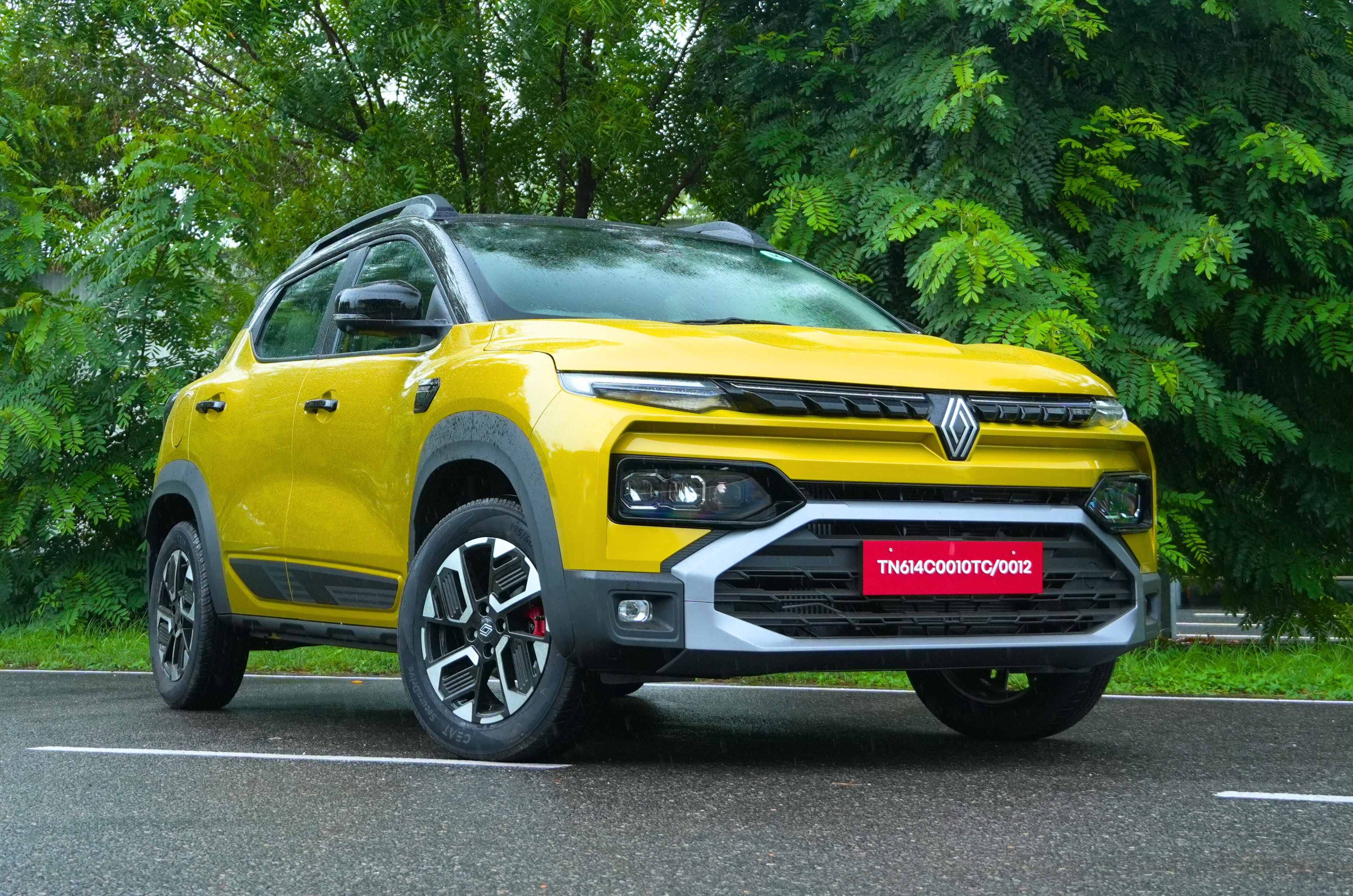
5. Renault Kiger

Starting price: Rs 5.81 lakh

The Renault Kiger, which received a facelift in 2025 with updated styling elements and more features, ranks among the top 5 cheapest SUVs currently available in India. The Kiger comes with a 72hp 1.0-litre petrol engine with manual and AMT options and a 100hp 1.0-litre turbo-petrol with manual and CVT options. A dealer-level CNG kit is also offered for the Kiger, costing an additional Rs 79,500 over the naturally aspirated petrol version.

Renault Kiger price list (Rs lakh)

Trim1.0 P 5MT1.0 P 5AMT1.0 Turbo P 5MT1.0 Turbo P CVT
Authentic5.81
Evolution6.556.99
Evolution+6.997.457.89
Techno7.558.058.459.35
Emotion8.459.3510.35

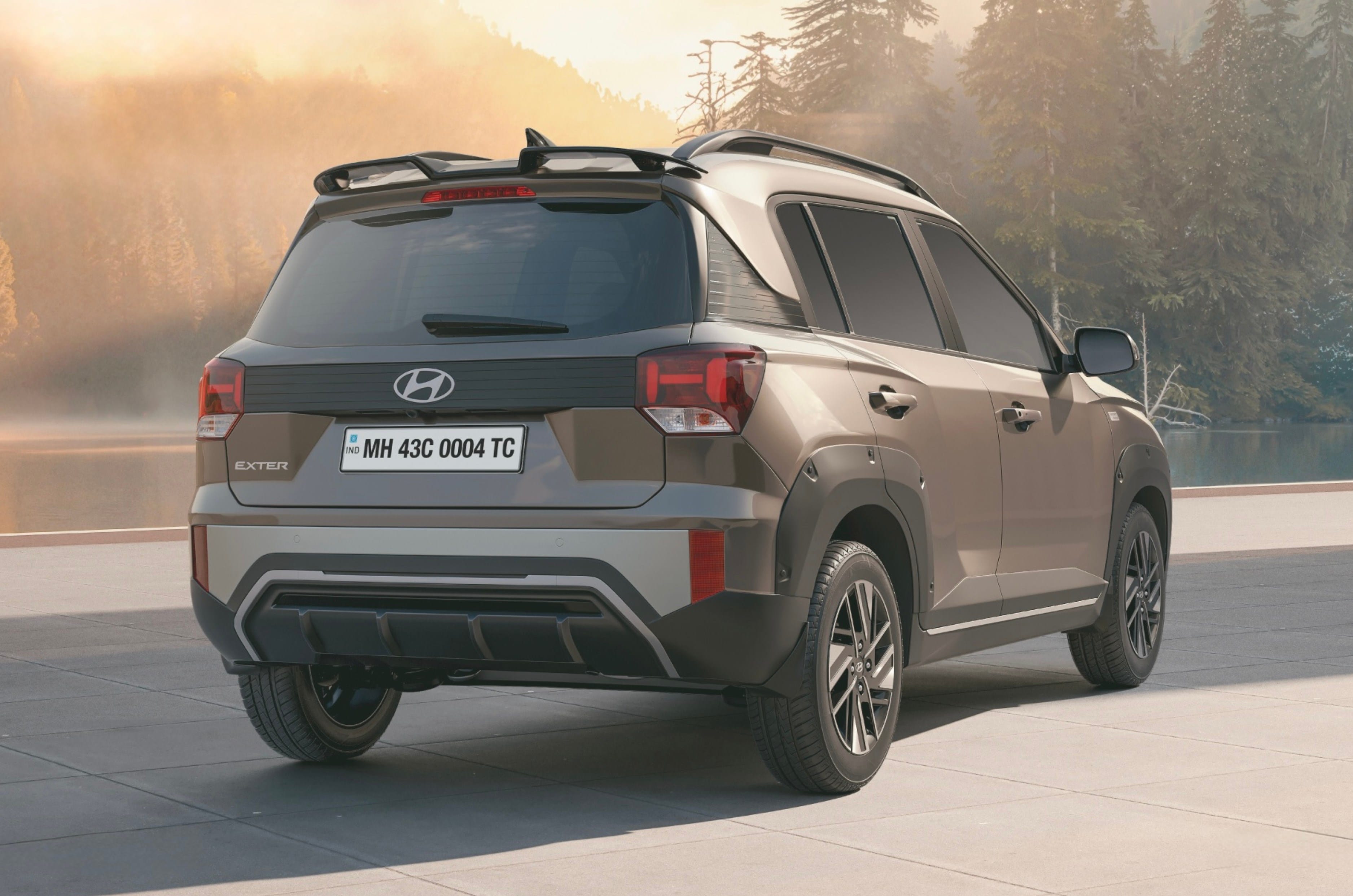
4. Hyundai Exter

Starting price: Rs 5.81 lakh

Hyundai’s entry-level SUV, the Exter, received a facelift in March 2026 that introduced revised styling, updated interior upholstery, some new features and a simplified variant nomenclature. As before, engine options for the Exter include a sole 1.2-litre 4-cylinder engine in 83hp petrol and 69hp CNG states of tune. A 5-speed manual is standard for both engines, with the petrol mill additionally offering a 5-speed AMT.

Hyundai Exter price list (Rs lakh)

Trim1.2 P 5MT1.2 P 5AMT1.2 CNG 5MT
HX25.817.00
HX36.306.957.45
HX47.288.28
HX4+8.10
HX67.998.598.95
HX88.409.129.42
HX109.46

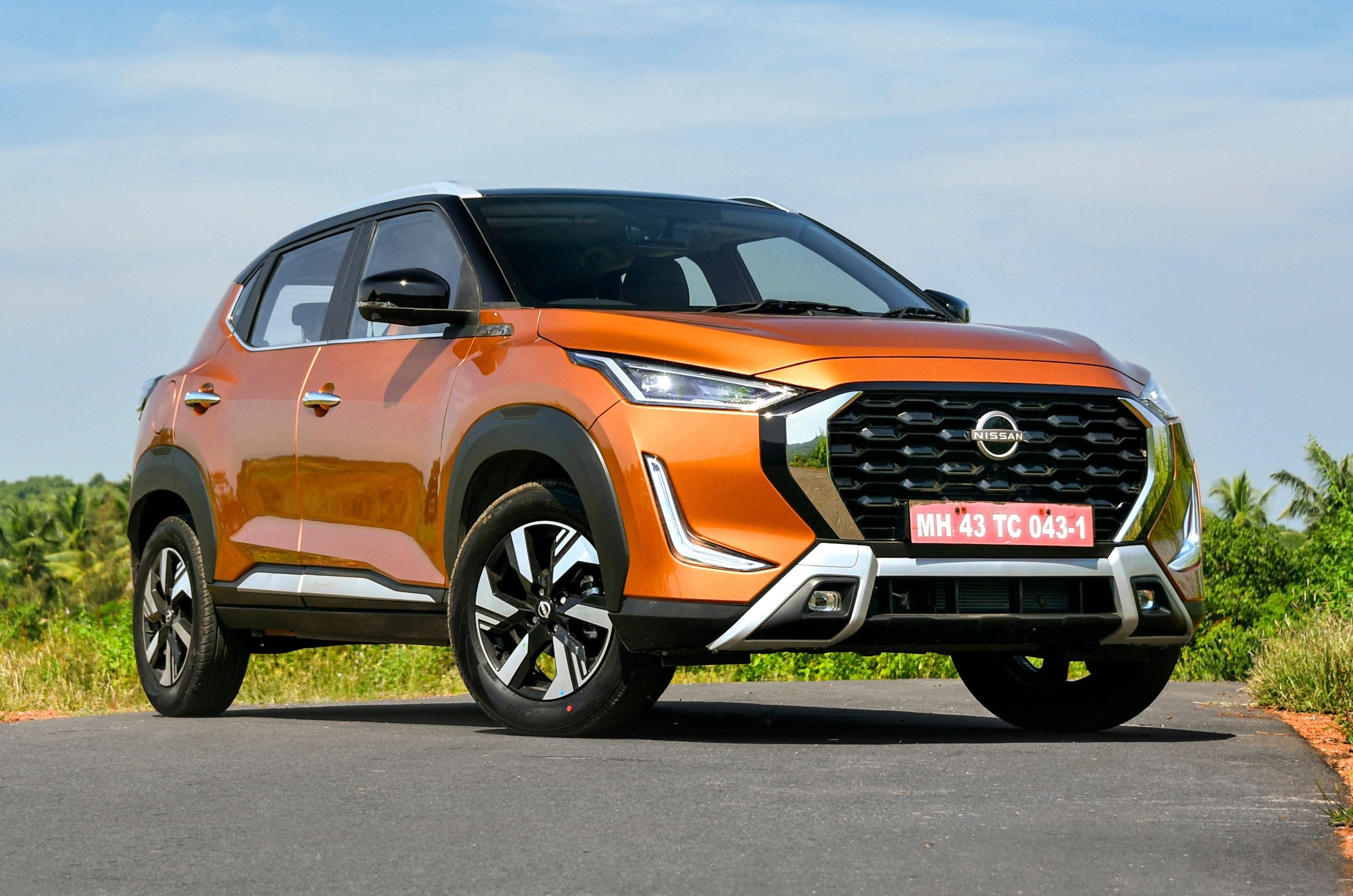
3. Nissan Magnite

Starting price: Rs 5.65 lakh

While the Magnite is essentially Nissan’s version of the Kiger, it outprices the Renault SUV by Rs 14,000 at the base level. Expectedly, the Magnite shares its 1.0-litre 3-cylinder petrol and turbo-petrol engines with the Kiger, as well as the dealer-fit CNG option, priced at Rs 74,999 (all charges included). The Magnite is also one of only two SUVs on this list to offer an AMT gearbox with its CNG powertrain.

Nissan Magnite price list (Rs lakh)

Trim1.0 P 5MT1.0 P 5AMT1.0 Turbo P 5MT1.0 Turbo P CVT
Visia5.656.24
Visia+6.20
Acenta6.817.369.25
N-Connecta7.447.998.719.67
Tekna8.378.929.5510.62
Tekna+8.709.259.8810.96
Kuro7.798.349.109.99

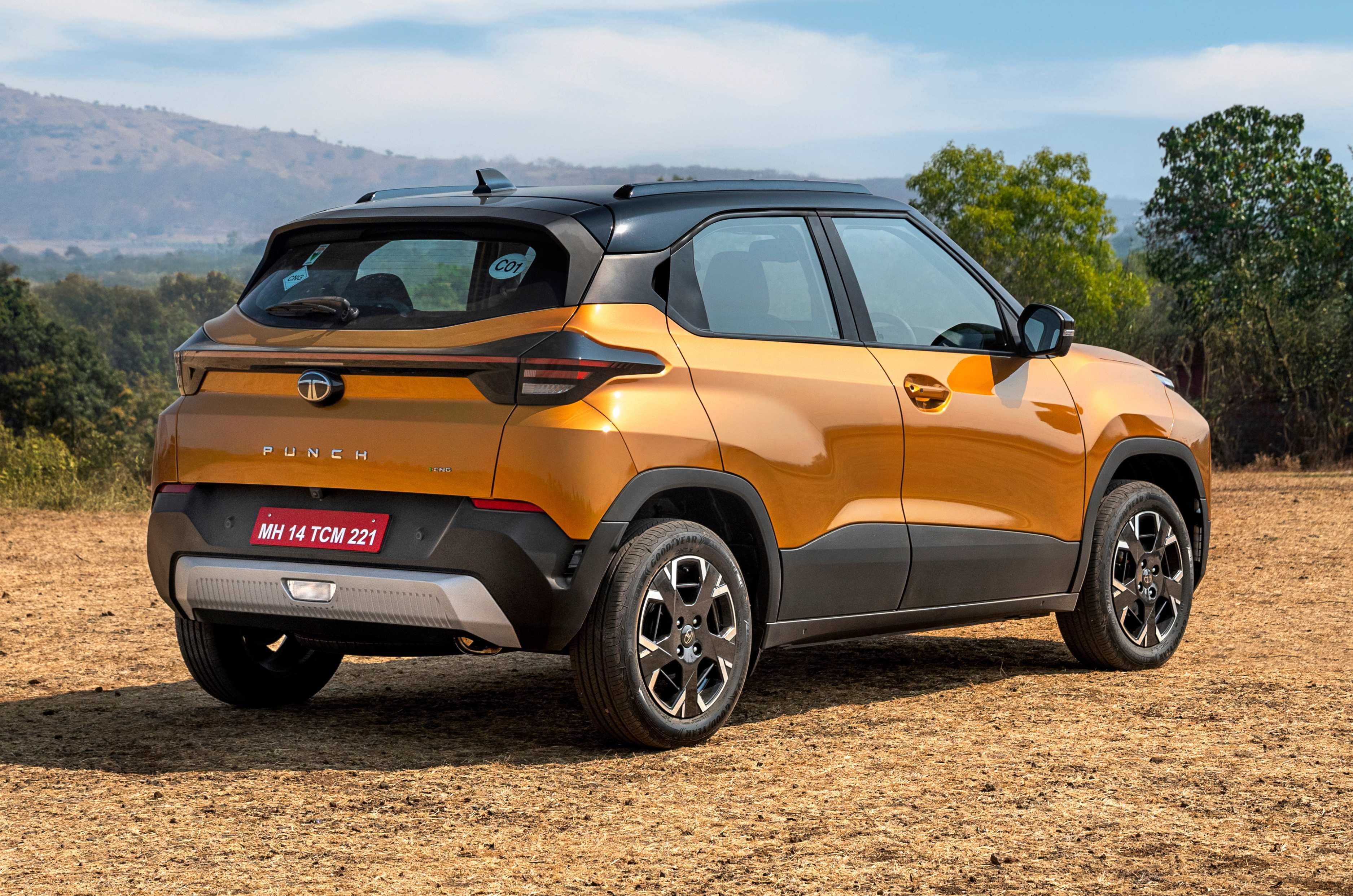
2. Tata Punch

Starting price: Rs 5.65 lakh

With the 2026 Punch facelift, Tata not only introduced several styling tweaks, feature upgrades and a new 120hp turbo-petrol engine, but it also reduced the model’s starting price by Rs 40,000. This makes the Punch the second-cheapest SUV in India right now. Aside from the new turbo-petrol mill, the 2026 Punch retains its prior 1.2-litre 3-cylinder naturally aspirated engine in 88hp petrol and 73hp CNG guises, along with their manual and AMT options.

2026 Tata Punch price list (Rs lakh)
Trim 1.2 P 5MT1.2 P 5AMT1.2 CNG MT1.2 CNG AMT1.2 Turbo P MT
Smart 5.656.75
Pure 6.557.55
Pure+7.05 7.608.058.60
Pure+ S7.407.958.40
Adventure 7.65 8.208.659.208.35
Adventure S8.009.009.55
Accomplished8.358.909.35– 
Accomplished+ S9.059.6010.609.85

1. Citroen C3

Starting price: Rs 4.99 lakh

Taking top spot on the affordability rankings is the Citroen C3, the French carmaker’s entry-level model for the Indian market. The C3 received an ‘X’ update in 2025 that lowered its pricing and added some useful features. There are two 1.2-litre 3-cylinder petrol engines on offer with the C3: an 82hp naturally aspirated unit and a 110hp turbocharged mill. The NA engine comes with a 5-speed manual only, while the turbo-petrol motor offers either a 6-speed manual or a 6-speed torque-converter automatic.

2026 Citroen C3 price list (Rs lakh)
Trim 1.2 P 5MT1.2 Turbo P 6MT1.2 Turbo P 6AT
Live4.99
Live (O)5.63
Feel6.007.50
Feel (O)6.95
Shine7.788.899.60

All prices are ex-showroom, India.

Honda 0 Alpha EV interior spied

Honda 0 Alpha EV interior spied

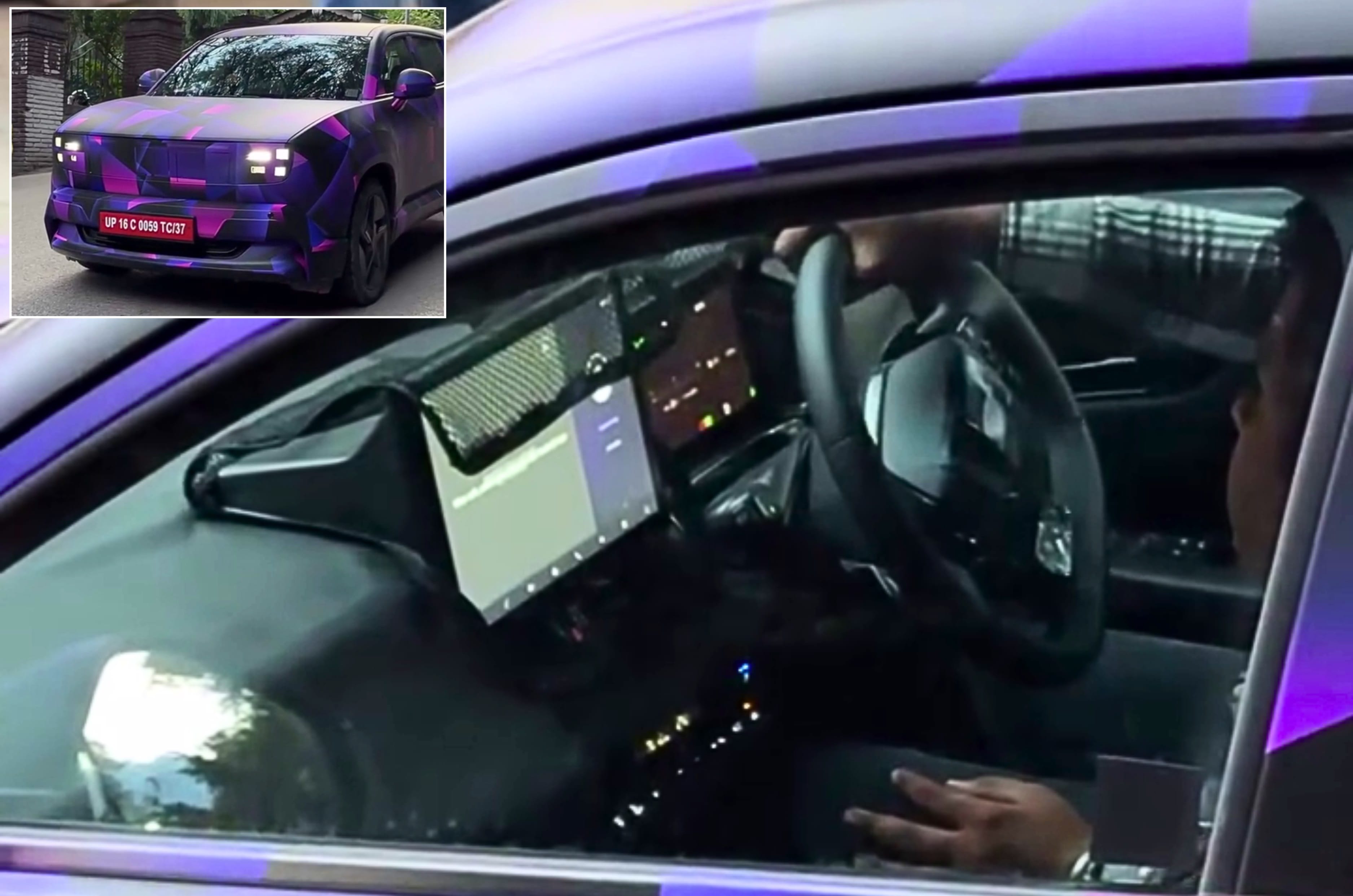
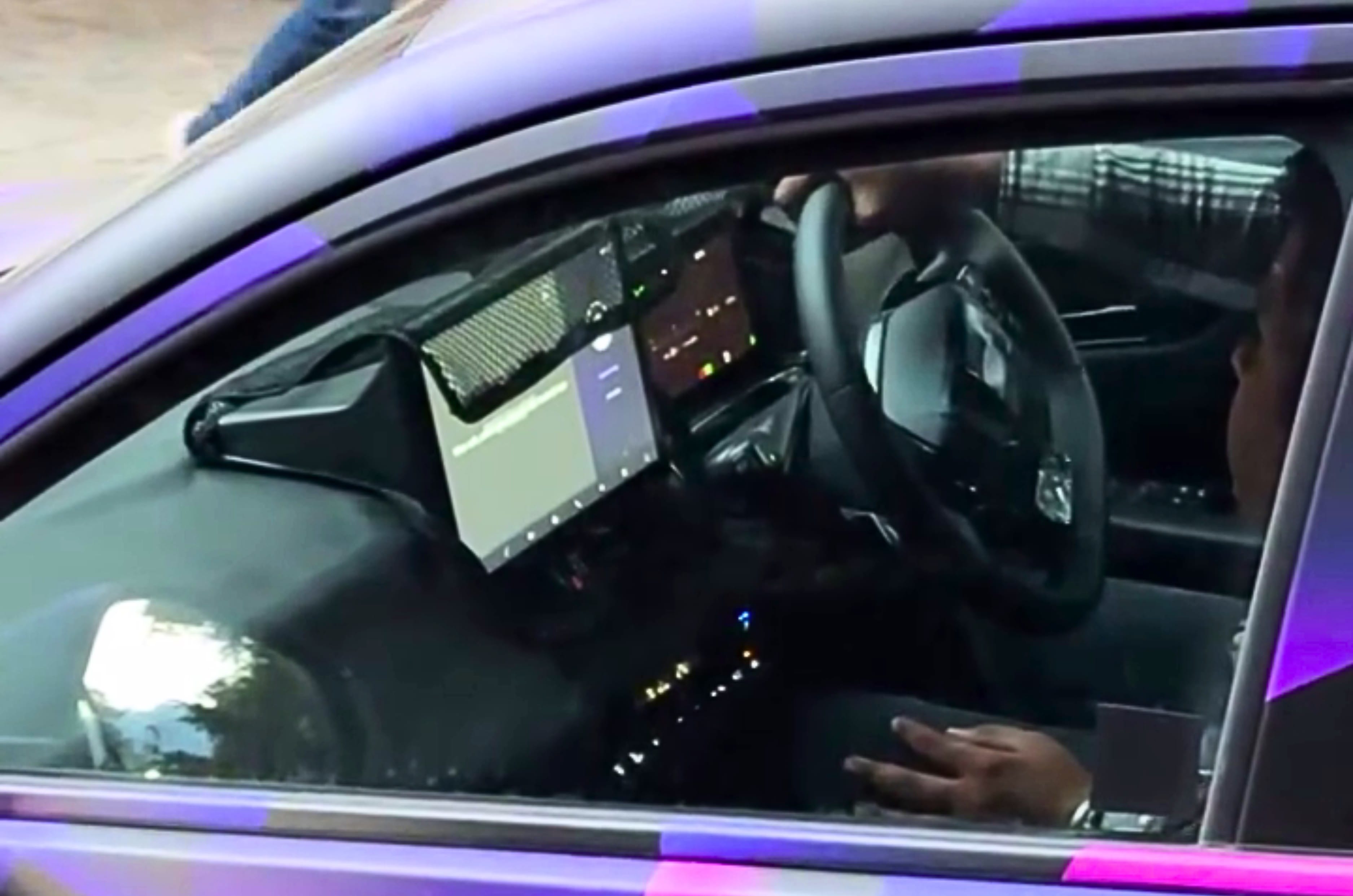
Spy shots of the interior of the upcoming Honda 0 Alpha have surfaced online via a newly-spotted test mule of the electric SUV. Honda commenced testing of the 0 Alpha EV in India back in March 2026, ahead of an expected launch sometime in early 2027.

  1. Huge dash-mounted touchscreen and smaller driver’s display
  2. Three-spoke flat-bottomed steering wheel with paddle shifters
  3. Array of physical controls on the centre console

First unofficial look at the Honda 0 Alpha interior

Dual displays take centre stage on the dashboard

While the 0 Alpha concept that Honda unveiled in 2025 did well to preview the exterior design of the upcoming electric SUV, its interior remained under wraps. Courtesy of a fresh set of images, we now know what to expect from the Honda 0 Alpha interior.

Right off the bat, the most prominent element in the 0 Alpha EV interior is a massive central infotainment touchscreen mounted on top of the dashboard. To its right sits a much smaller digital driver’s display, ahead of which there’s a three-spoke flat-bottomed steering wheel with paddle shifters for regeneration.

Despite the inclusion of the colossal touchscreen, the 0 Alpha EV interior incorporates an array of buttons on the centre console, seemingly for functions like the climate control, ventilated seats, and more. The dashboard also has a quirky scooped design, although it’s worth noting that this is a prototype of the 0 Alpha EV and the production-spec version could look different.

What else can we expect from the Honda 0 Alpha EV?

Radically different design language compared to that of the current Honda India line-up

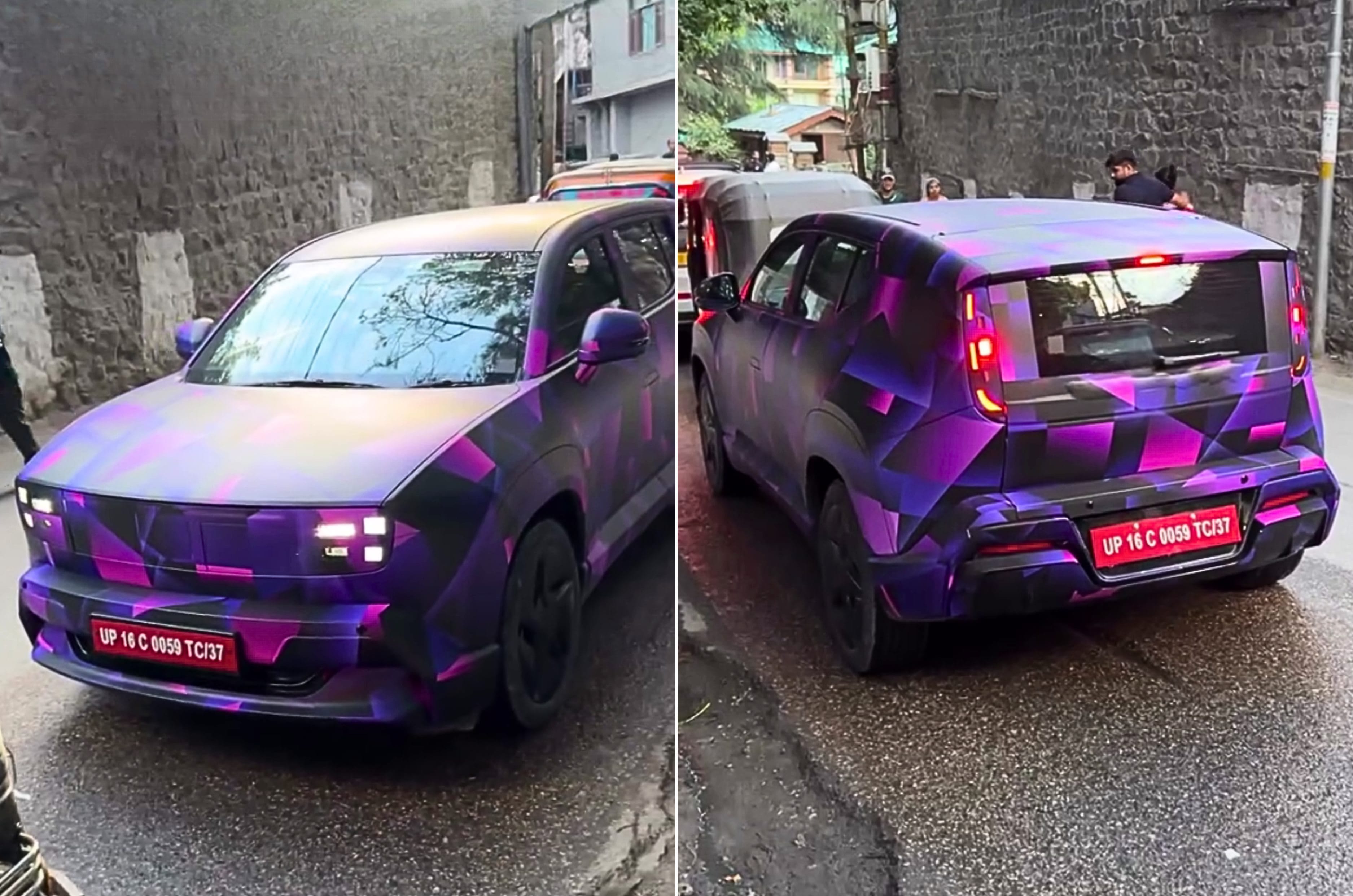
On the outside, the 0 Alpha EV is a complete departure from other Honda models sold in India. Styling highlights for the 0 Alpha include boxy proportions, a rectangular grille section housing the headlights, chunky bumpers, slim high-set vertical tail-lamps, a near-vertical tailgate, and squared-off wheel-arch cladding.

Not much is known about the battery options offered with the 0 Alpha, but it’s expected to use CATL batteries sourced from Indonesia. The 0 Alpha will rival electric midsize SUVs like the Mahindra BE 6, MG ZS EV, Hyundai Creta Electric, Tata Sierra EV, Maruti Suzuki e Vitara, and Toyota Urban Cruiser Ebella.

Share Markets Closing: आखिर ऐसा क्या हुआ कि अंतिम 75 मिनट में सेंसेक्स 500 अंक गिर गया?

इस हफ्ते के आखिरी कारोबारी दिन बाजार में जबर्दस्त उतार-चढ़ाव रहा। ज्यादातर समय बाजार के प्रमुख सूचकांक निफ्टी और सेंसेक्स में शानदार तेजी दिखी। लेकिन, कारोबार के करीब एक-सवा घंटे में सूचकांकों ने अपनी काफी बढ़त गंवा दी। अंतिम कुछ मिनटों में प्रॉफिट बुकिंग ने बाजार पर दबाव बना दिया।

75 मिनट में सेंसेक्स ने गंवाएं 500 अंक

दो दिनों के कारोबार में 1700 अंक चढ़ने वाले सेंसेक्स ने अंतिम कुछ मिनटों में घुटने टेक दिए। 1:50 बजे सेंसेक्स 77,594 अंक पर था। 3:05 में यह गिरकर 77,095 अंक पर आ गया। यह सिर्फ 75 मिनट में 500 अंक की गिरावट है। इस गिरावट ने इनवेस्टर्स को चौंकाया। खासकर लॉन्ग पोजीशन वाले इनवेस्टर्स ज्यादा परेशान दिखे।

26 जून को बीएसई-एनएसई में छुट्टी

इक्विरियस वेल्थ के एमडी और डायरेक्टर अंकुर पुंज ने रायटर्स को बताया, “चूंकि शेयर बाजार 26 जून को बंद रहेंगे, इसलिए इनवेस्टर्स ने कारोबार के अंतिम पलों में अपने पोजीशन काटे।” 26 जून को शेयर बाजारों में मुहर्रम की छुट्टी है। इसलिए बीएसई और एनएसई बंद रहेंगे। 29 जून यानी सोमवार को बीएसई और एनएसई खुलेंगे।

मानसून में कम बारिश बाजार के लिए रिस्क

बजाज फिनसर्व एएमसी ने अपनी रिपोर्ट में कहा है, “मानसून में सामान्य से कम बारिश शेयर बाजार के लिए शॉर्ट टर्म रिस्क है। लेकिन, केंद्रीय बैंक ने फॉरेन करेंसी डिपॉजिट बढ़ाने के उपाय किए हैं। सरकार ने फॉरेन इनवेस्टर्स को बॉन्ड्स में निवेश पर टैक्स में छूट दी है। इससे मार्केट में इनफ्लो बढ़ना चाहिए।”

एविएशन कंपनियों के शेयरों में तेजी

इंटरग्लोब एविएशन का शेयर अंत तक तेजी बनाए रखने में सफल रहा। यह 4.7 फीसदी चढ़कर बंद हुआ। क्रूड में नरमी का असर एविएशन कंपनियों के शेयरों पर दिखा। स्पाइसजेट के शेयरों में भी मजबूती दिखी। ऑटो और इससे संबंधित सेक्टर की कंपनियों में भी मजबूत दिखी।

ऑटो शेयरों ने भी दिखाई रफ्तार

Bajaj Auto, Maruti Suzuki, Tata Motors PV और महिंद्रा एंड महिंद्रा के शेयर 1-4 फीसदी चढ़कर बंद हुए। TVS Motor, Ashok Leyland और टाटा मोटर्स सीवी के शेयर तो 4-5 फीसदी तक उछल गए। Motherson Sumi Wiring का शेयर तो 9 फीसदी चढ़कर बंद हुआ।

यह भी पढ़ें: Stock Market Holiday: लगातार तीन दिन शेयर बाजारों में नहीं होगा कारोबार, BSE और NSE में रहेगी छुट्टी

भारतीय बाजार का बुरा दौर हो रहा खत्म

आईसीआईसीआई सिक्योरिटीज ने कहा है कि भारतीय बाजार के लिए स्थितियां अनुकूल हो रही हैं। क्रूड में नरमी है। घरेलू डिमांड स्ट्रॉन्ग बनी हुई है। इससे आगे कॉर्पोरेट अर्निंग्स बढ़ने की उम्मीद है। अमेरिका-ईरान में लड़ाई खत्म होने से महंगाई बढ़ने का खतरा कम हुआ है। एआई कंपनियों में निवेश को लेकर उत्साह ठंडा पड़ रहा है। इससे बाजार का सेंटीमेंट पॉजिटिव बना रह सकता है।

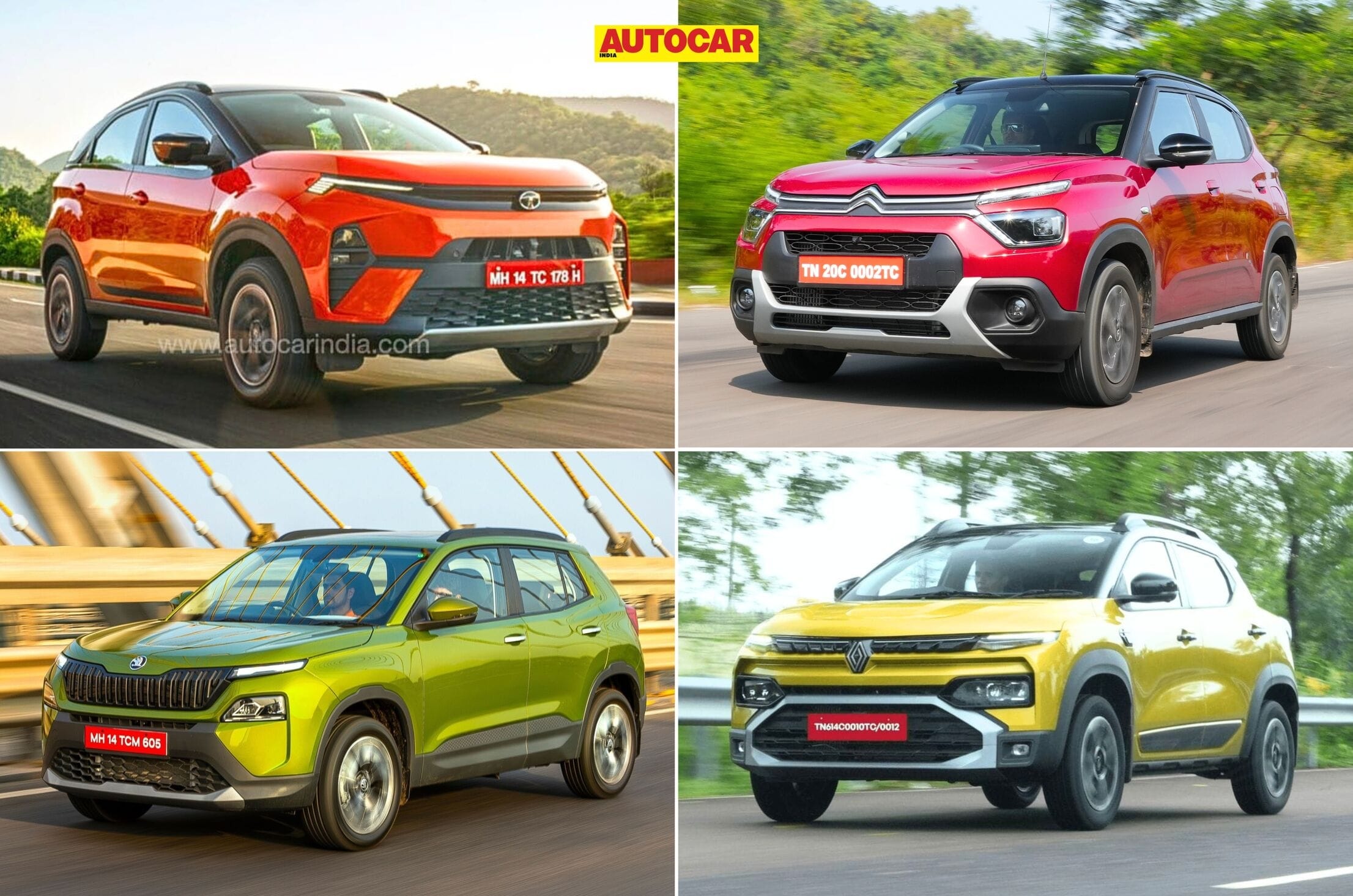
10 most affordable cars with a turbo-petrol engine under Rs 10 lakh

10 most affordable cars with a turbo-petrol engine under Rs 10 lakh

Turbocharged petrol engines are known to pack strong performance, and in some cases, they are even more fuel-efficient than their naturally aspirated counterparts, offering a nice blend of power and efficiency. If you’re looking for turbo-petrol cars under Rs 10 lakh, the Indian market currently has offerings from brands like Hyundai, Tata, Kia, Maruti Suzuki, Renault, Nissan, Skoda, and Citroen that come with a turbo-petrol engine. Read on to discover these 10 models, listed in the order of least to most affordable.

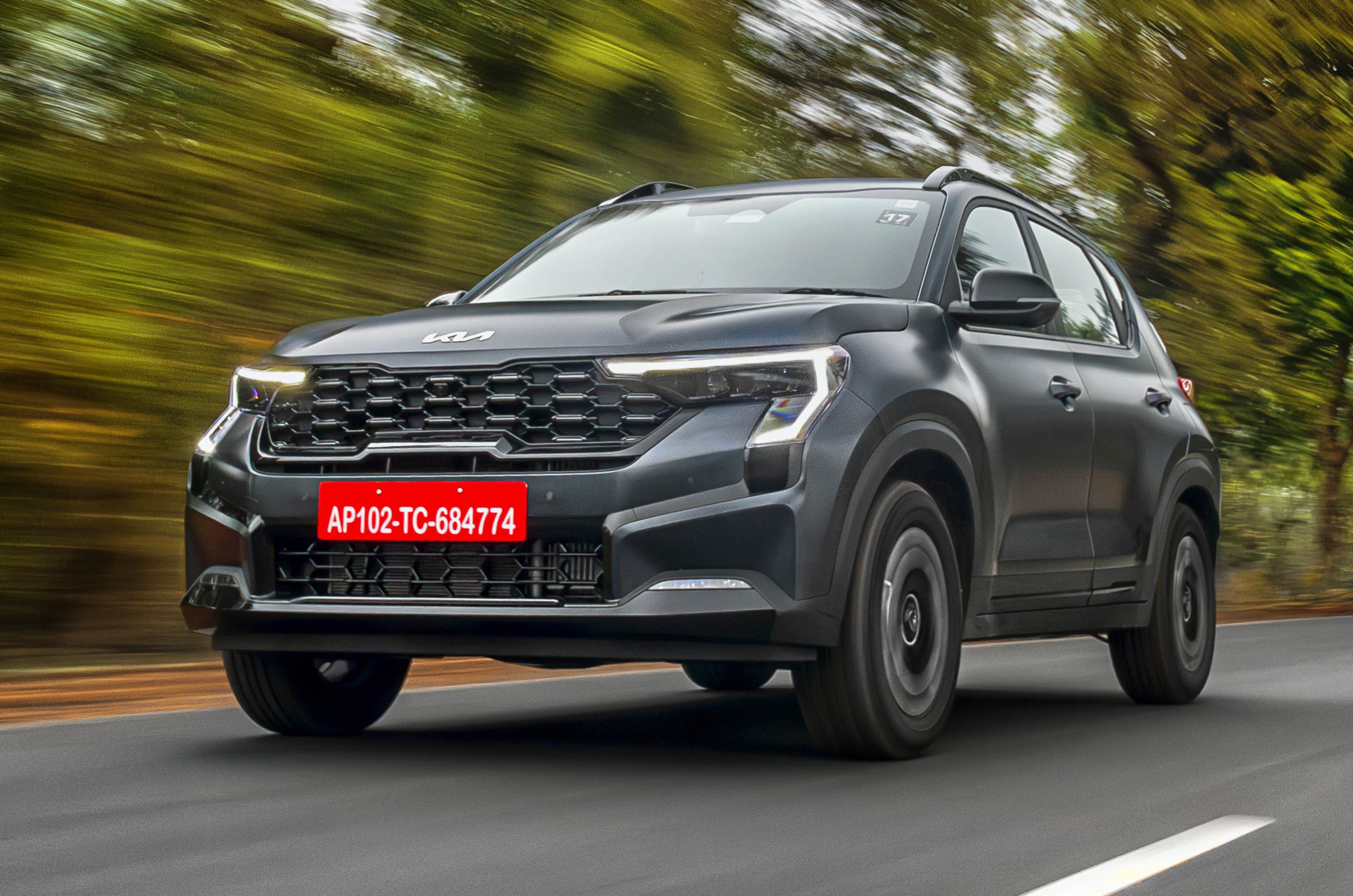
10. Kia Sonet 

Price: 8.79 lakh onwards

The Sonet is one of two contenders from Kia in the compact SUV space. It utilises the same 1.0-litre turbo-petrol unit as the i20 N Line’s. Notably, it’s the only model in this list that utilises a clutchless manual gearbox (iMT) with its turbo-petrol engine. There’s also a 7-speed DCT on offer as well. The Kia Sonet review mentions that its turbo-petrol unit has sufficient pep in most use cases.

Kia Sonet turbo-petrol price

Variant

Price (Rs lakh)

HTK(O) iMT

9.16

HTK(O) DCT

9.96

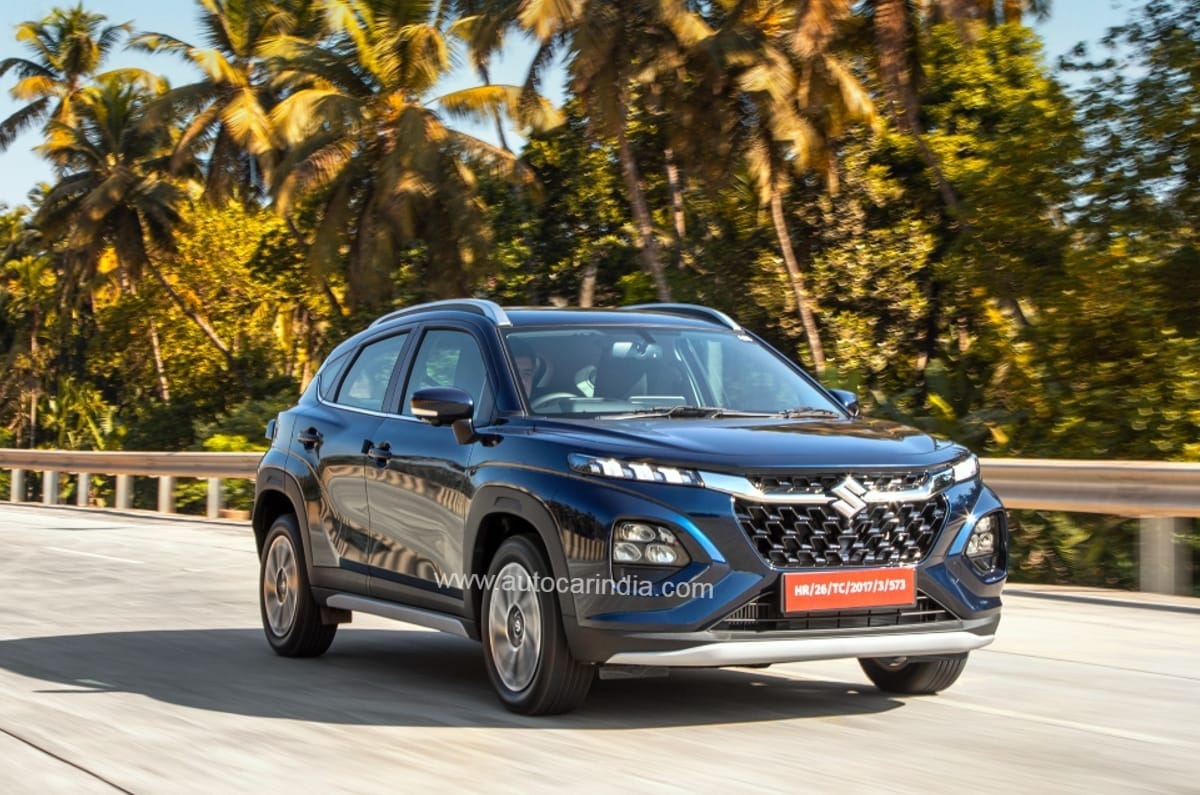
9. Maruti Suzuki Fronx 

Price: Rs 8.91 lakh onward

The Fronx is Maruti’s only turbo-petrol-powered model, developing 100hp and 148Nm from a 1.0-litre unit. Power is sent to the front wheels via a 5-speed manual transmission. There’s also a 6-speed automatic gearbox on offer, but it’s priced over the Rs 10 lakh mark. In our Fronx review, we found its turbo-petrol unit has minimal turbo lag, but it lacked the mid-range punch one expects from a turbo-petrol engine.

Maruti Fronx turbo-petrol price

Variant

Price (Rs lakh)

Delta Plus MT

8.91

Zeta MT

9.71

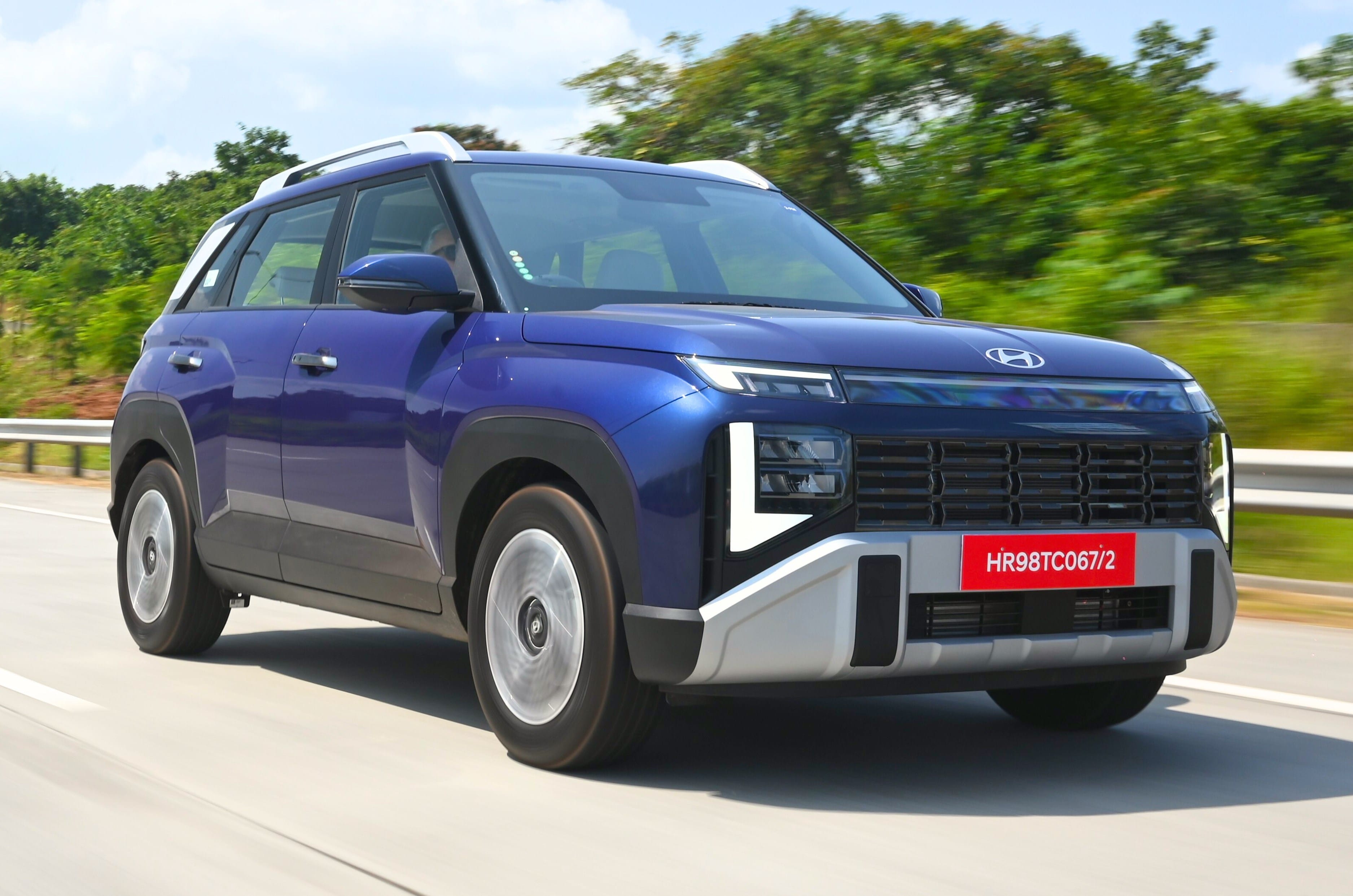
8. Hyundai Venue

Price: Rs 8.89 lakh onwards

The Hyundai Venue gets a similar 120hp, 1.0-litre turbo-petrol unit as the i20. Since the engine is paired with the base HX2 trim, it is more affordable in the Venue than the better-equipped i20 N-Line in the N6 trim. It is the most powerful model here, along with the i20 and Kia’s Sonet and Syros. We found the turbo-petrol engine’s performance to be strong and refined in our Hyundai Venue review

Hyundai Venue turbo-petrol price

Variant

Price (Rs lakh)

HX2 MT

8.91

HX5 MT

9.90

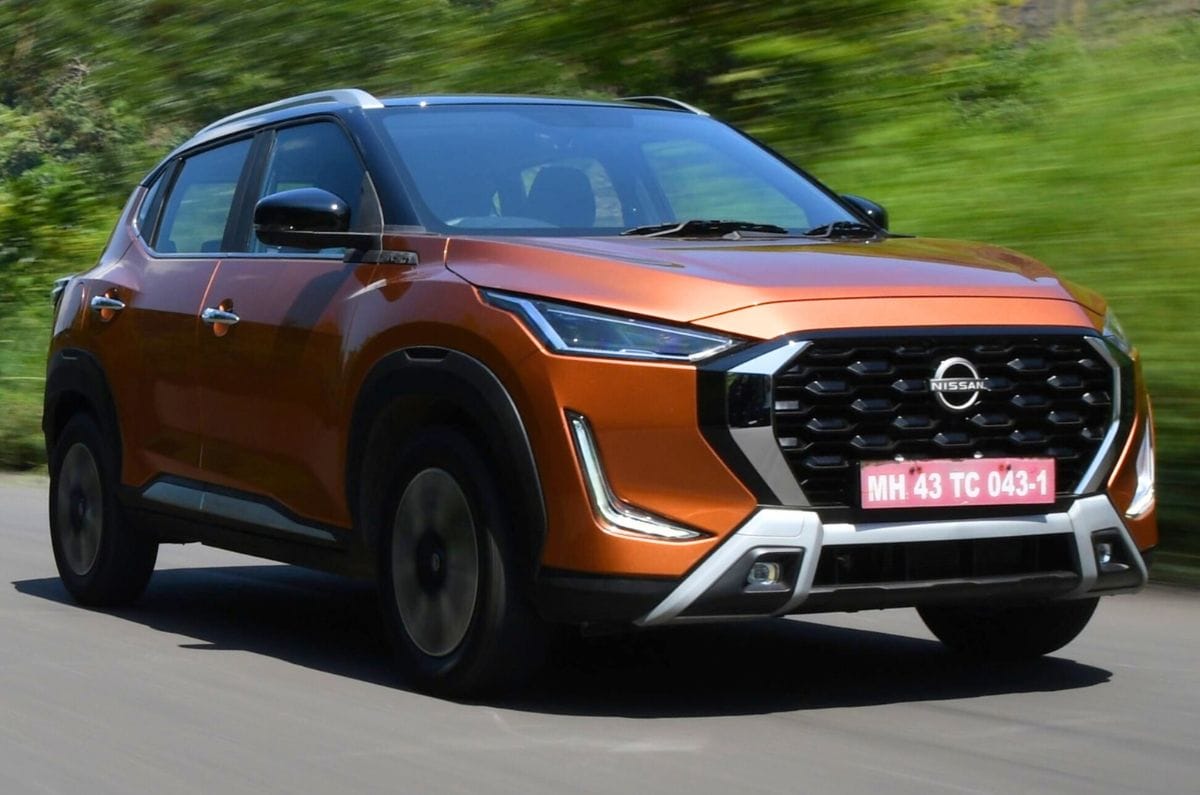
7. Nissan Magnite 

Price: Rs 8.75 lakh onwards

The Magnite is Nissan’s only model on sale that offers a turbo-petrol engine. Its 1.0-litre unit delivers 100hp and 152Nm of torque and can be paired to a 5-speed manual transmission or a CVT gearbox. We found the Magnite’s engine to have great mid-range punch, and its CVT to be smooth-shifting in our review. There’s also a Kuro Edition of the SUV, which gets blacked-out styling and interior details.

Nissan Magnite turbo-petrol price

Variant

Price (Rs lakh)

N-Connecta MT

8.75

Tekna MT

9.54

Tekna+ MT

9.55

Acenta CVT

9.25

N-Connecta CVT

9.67

Kuro Edition MT

9.10

Kuro Edition CVT

9.99

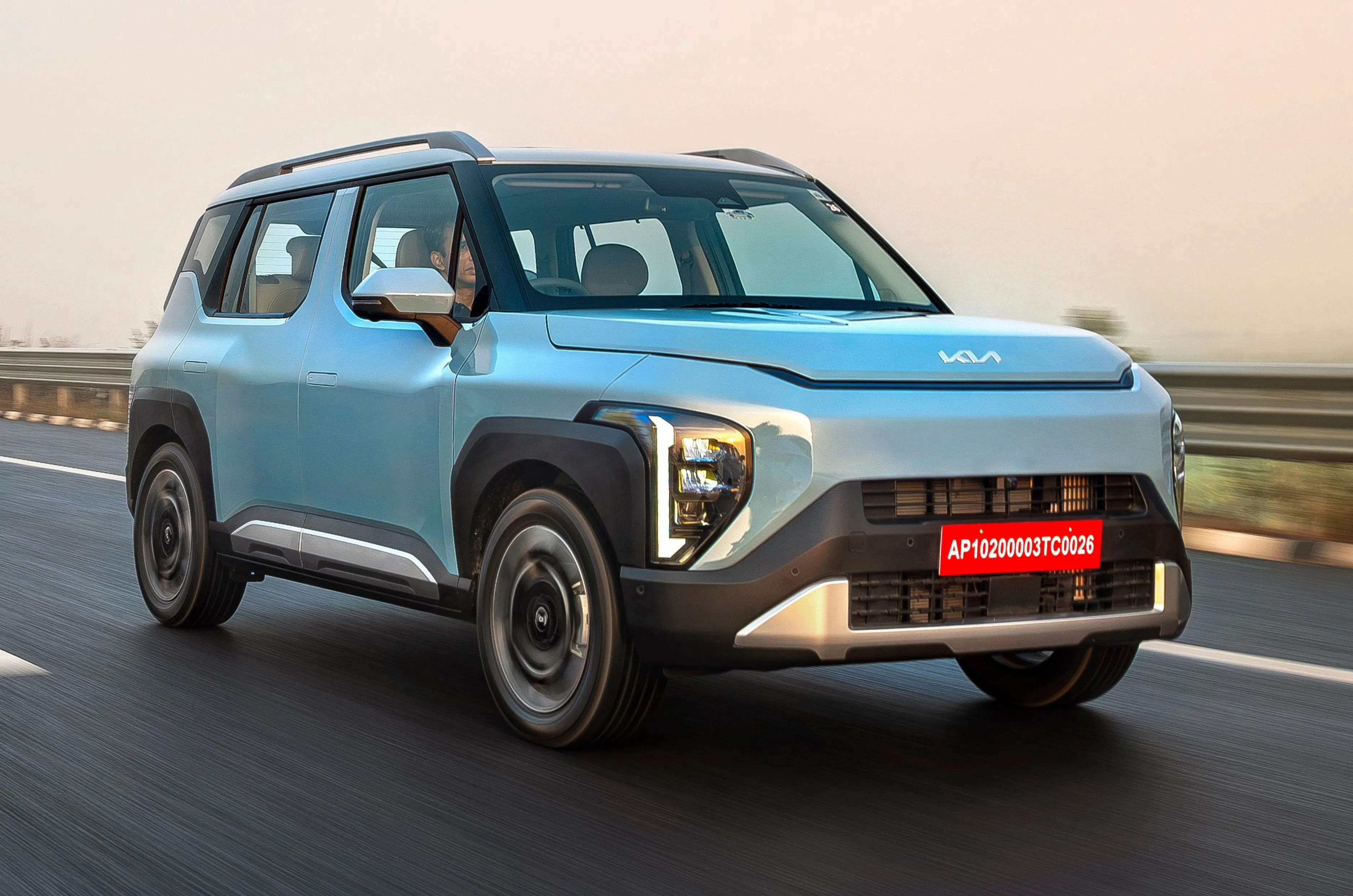
6. Kia Syros

Price: Rs 8.42 lakh onwards

Despite sharing the same engine as the Venue, i20 and Sonet, the Syros is the most affordable of the four. Unlike the Sonet that offers an iMT gearbox with its turbo-petrol engine, the Syros offers a proper three-pedal setup. Our review of the Syros finds its engine to pull smoothly through seamless gearshifts, especially with the manual transmission. 

Kia Syros turbo-petrol price 

Variant

Price (Rs lakh)

HTE

8.42

HTE(O)

9.22

HTE(EX)

9.82

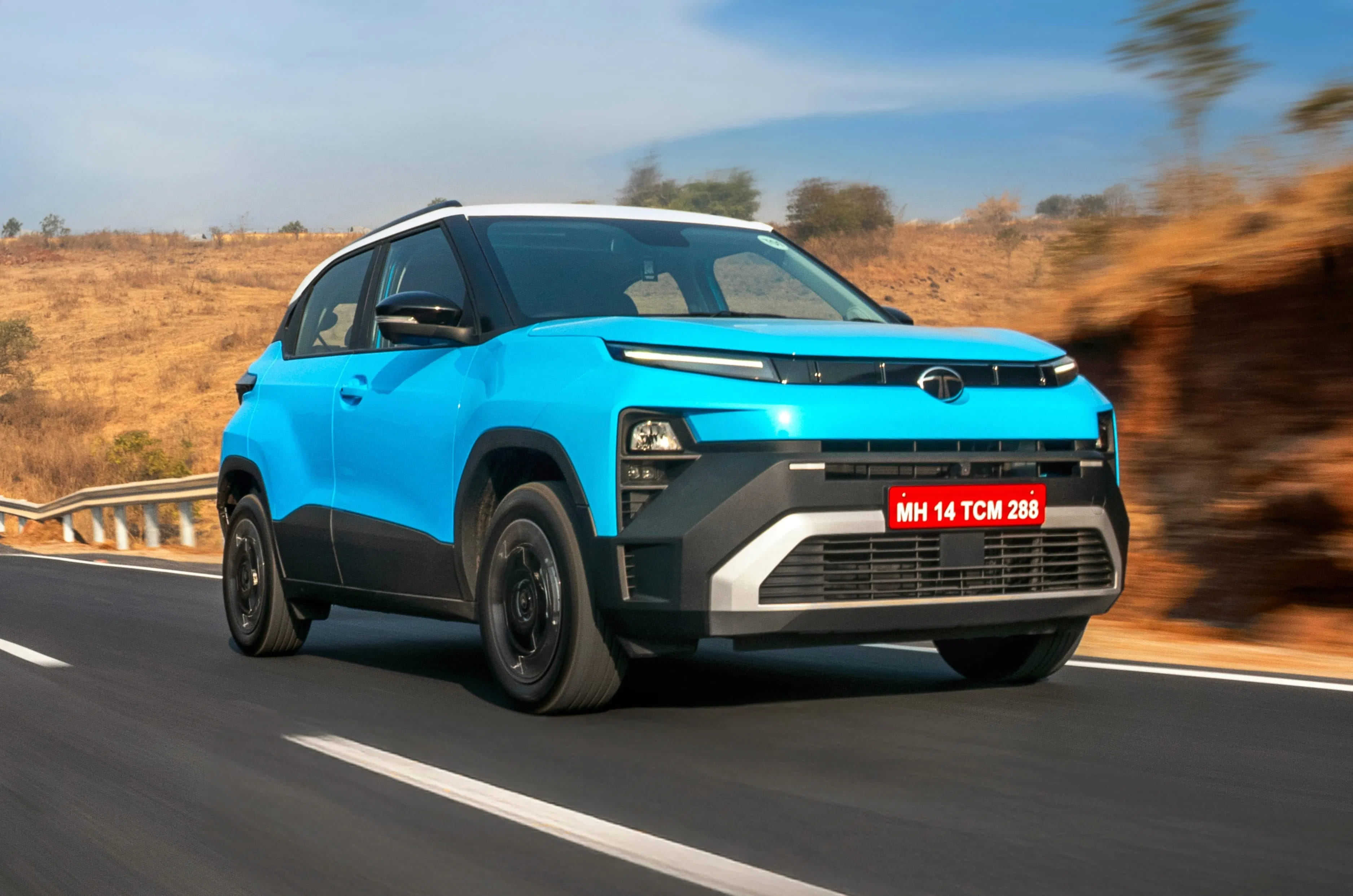
5. Tata Punch 

Price: Rs 8.35 lakh onwards

The 2026 Punch gets the Nexon’s 120hp turbo-petrol engine with its mid and top-level trims. However, unlike the Nexon, which also gets automatic transmissions, the Punch only gets a 6-speed manual gearbox with its turbo-petrol engine. It is the most affordable sub-compact SUV in this list, powered by a turbo-petrol engine. We experienced this engine in our review of the Punch and were impressed with its linear power delivery, overall grunt, and eager responsiveness.

Tata Punch turbo-petrol price 

Variant

Price (Rs lakh)

Adventure

8.35

Accomplished+ S

9.85

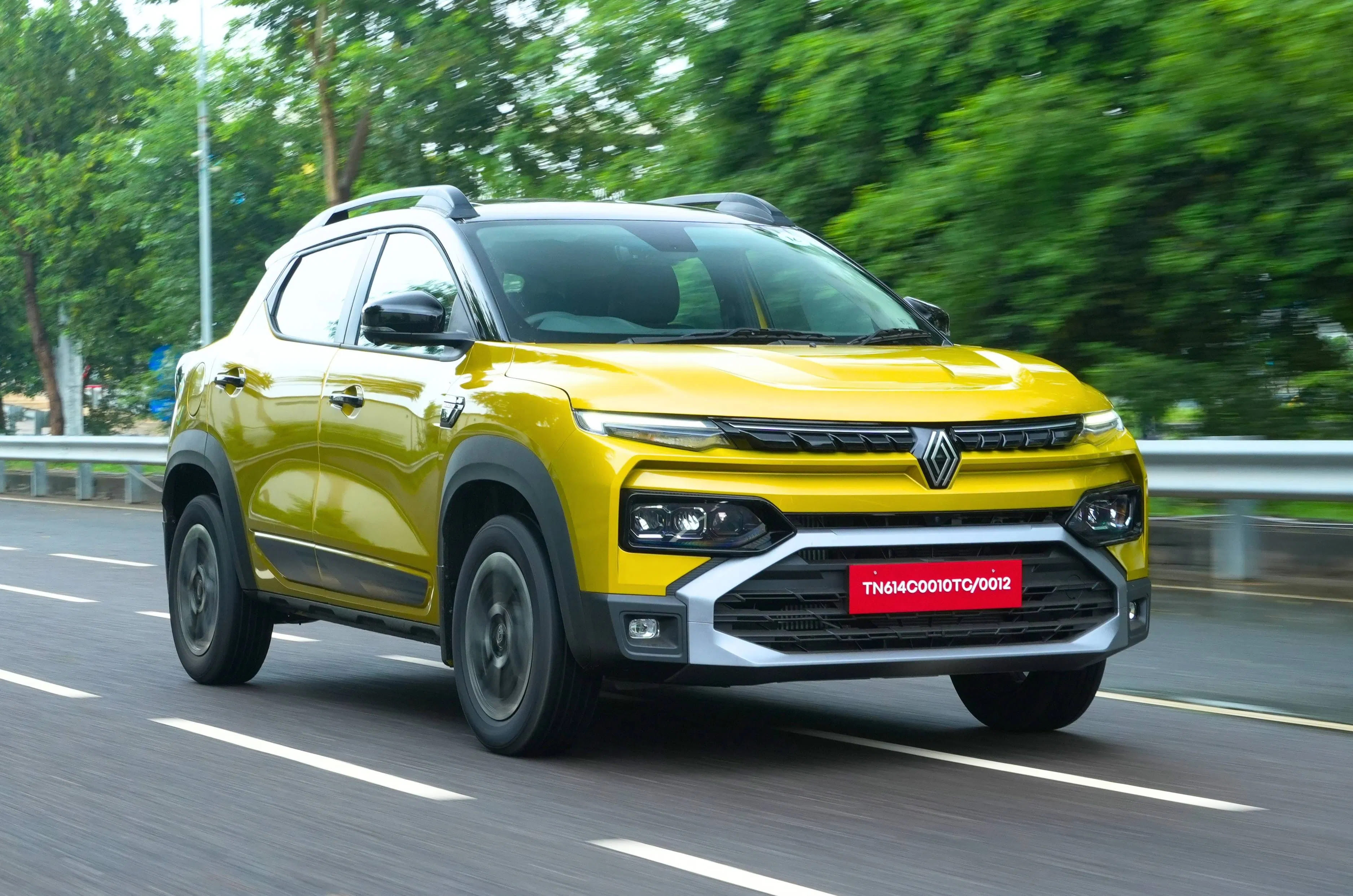
4. Renault Kiger

Price: Rs 7.89 lakh

The Kiger is Renault’s badge-engineered version of the Nissan Magnite. It also utilises Magnite’s 1.0-litre turbo-petrol engine and offers the same gearbox options. Our experience of the Kiger’s turbo-petrol engine mentions that it has enough pep and is responsive, and is much better to drive when paired with the CVT.

Renault Kiger turbo-petrol price

Variant

Price (Rs lakh)

Evolution+ Turbo MT

7.89

Techno Turbo MT

8.45

Techno Turbo CVT

9.35

Emotion Turbo MT

9.35

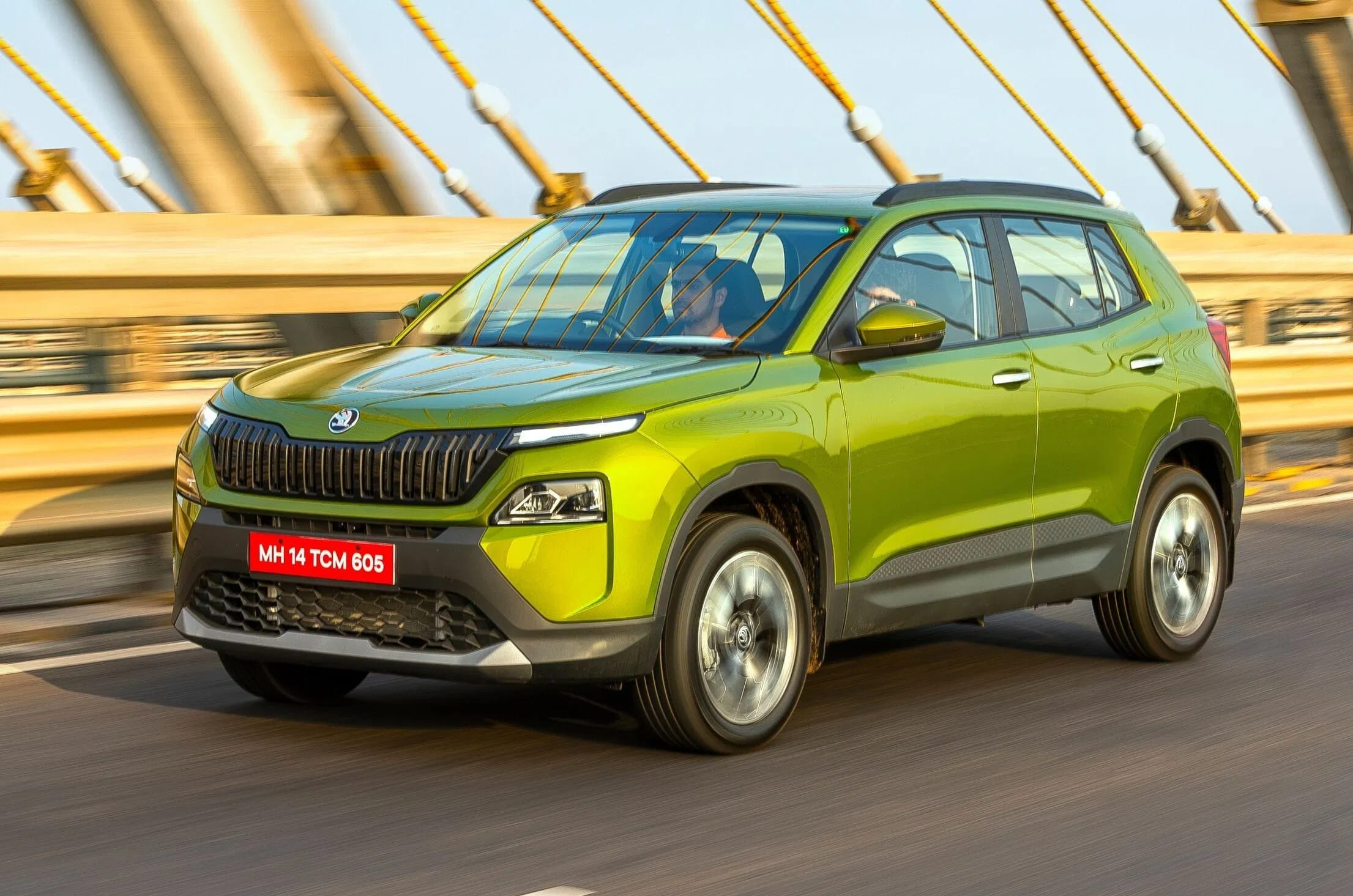
3. Skoda Kylaq 

Price: Rs 7.59 lakh onwards

Skoda’s best-selling model in its lineup, the Kylaq compact SUV, is powered by a single 1.0-litre turbo-petrol engine delivering 115hp and 178Nm of torque, and is paired to a 6-speed manual or a 6-speed automatic gearbox. We found the Kylaq TSI engine’s strong power delivery to be a key highlight in our review

Skoda Kylaq price 

Variant

Price (Rs lakh)

Classic

7.59

Classic+

8.25

Classic+ AT

9.25

Signature

9.43

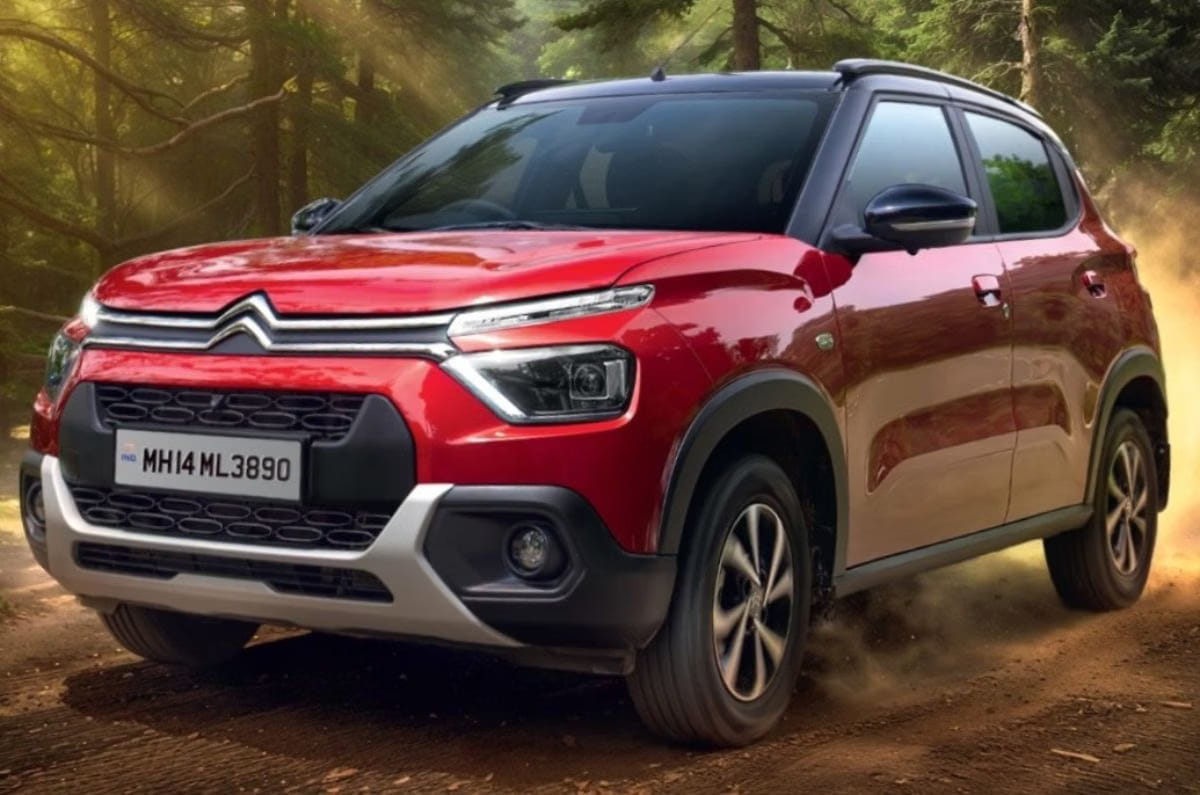
2. Citroen C3 X 

Price: Rs 7.50 lakh onwards

The Citroen C3 X gets a turbo petrol engine on its mid and top trims. Powered by a 110hp,1.2-litre turbo-petrol engine, it produces the highest torque figures in this list with 190Nm and 205Nm with its 6-speed manual and automatic gearboxes, respectively. We found the engine quite responsive, with smooth shifts, making it engaging to drive compared with its rivals.

Citroen C3 X turbo-petrol price

Variant

Price (Rs lakh)

Feel turbo MT

7.50

Shine turbo MT

8.89

Shine turbo AT

9.60

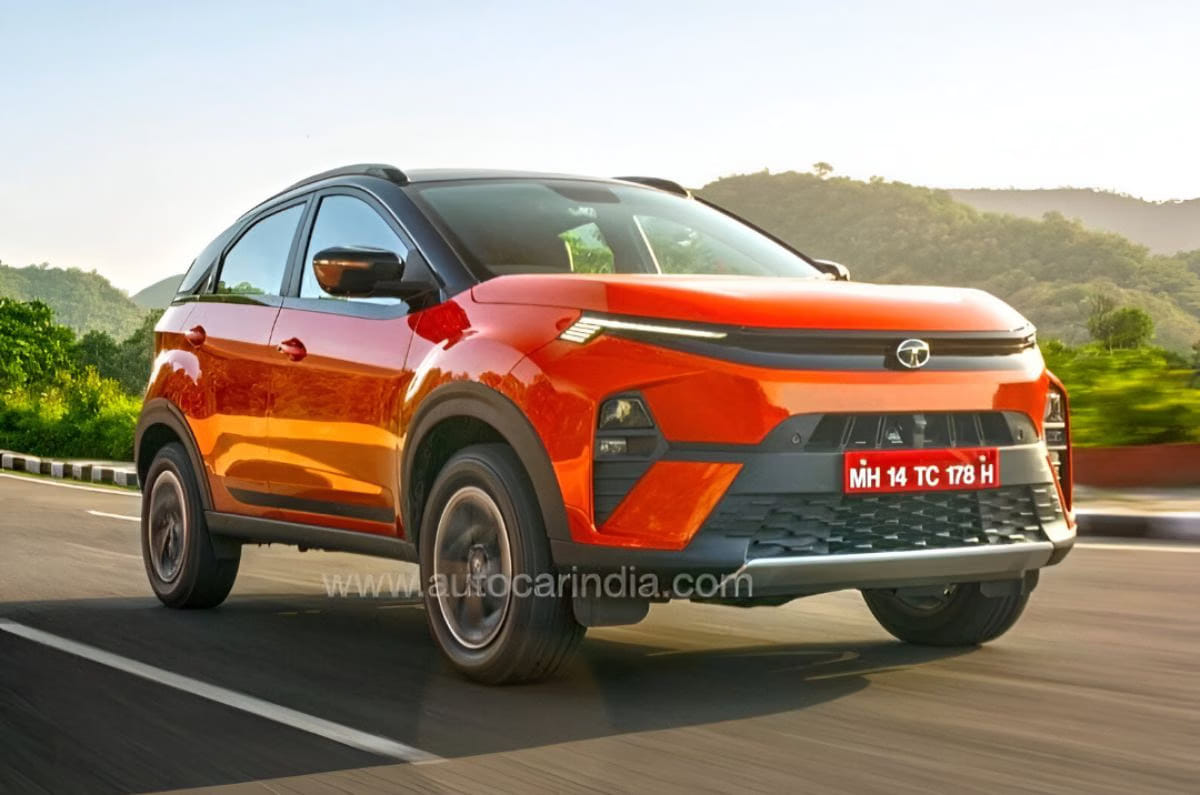
1. Tata Nexon

Price: Rs 7.37 lakh onwards

Currently, the Nexon holds the crown for being the most affordable car and compact SUV with a turbo-petrol engine. Powering it is a 1.2-litre turbo-petrol engine producing 120hp and 170Nm of torque. The engine can be paired with multiple transmission options, including a 5-speed manual, 6-speed manual, and a 6-speed AMT. There’s also a DCT automatic gearbox as an option, but it’s priced above Rs 10 lakh. We found its engine and gearbox performance to be smooth, especially at city speeds, with Sport mode giving it slightly more punch in our Nexon review

Tata Nexon turbo-petrol price 

Variant

Price (Rs lakh)

Smart 

7.37

Smart+

8.07

Smart+ AMT

8.82

Smart+ S

8.37

Pure+

8.95

Pure+ AMT

9.60

Pure+ S

9.23

Pure+ S AMT

9.88

Pure+ PS

9.56

Creative

9.99

All prices are ex-showroom, India