Hero MotoCorp has approved an additional investment of up to Rs 1,000 crore in Ather Energy, further strengthening its backing of the Bengaluru-based electric scooter maker ahead of a crucial product offensive.
Hero approves additional investment of up to Rs 1,000 crore in Ather
Hero remains Ather’s largest shareholder with a 29.48 percent stake
Investment comes ahead of Ather’s next phase of product expansion
Hero’s additional investment in Ather: What to expect?
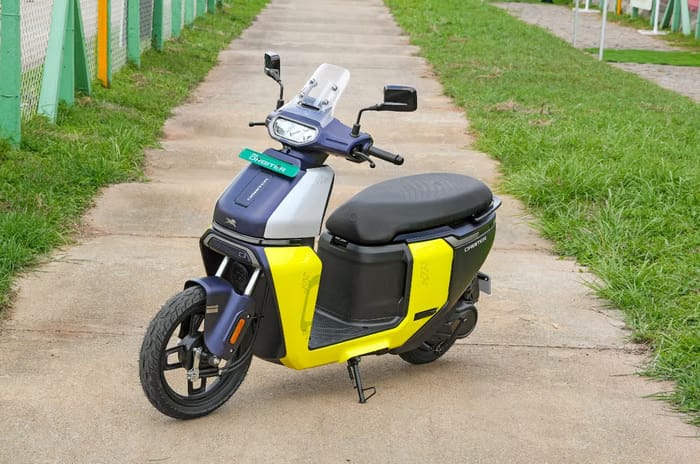
The investment comes at a significant time for Ather, which recently confirmed that it will unveil the mass-market EL platform scooter
The investment will be made through a preferential allotment of equity shares or equity-linked convertible securities, subject to regulatory and shareholder approvals.
Hero has been an investor in Ather since 2016 and currently holds a 29.48 percent stake in the company on a fully diluted basis, making it Ather’s largest shareholder. The latest capital infusion is expected to be completed within 15 days of receiving the required regulatory and corporate approvals.
The investment comes at a significant time for Ather, which recently confirmed that it will unveil its first mass-market EL platform scooter at Community Day on August 29. Expected to be priced in the Rs 1 lakh-1.25 lakh range, the new scooter will be Ather’s first all-new platform since the 450 and is aimed at significantly expanding the company’s addressable market.
The additional funding also follows Ather’s recent partnership with LICO Materials to establish a collection and recycling ecosystem for end-of-life lithium-ion batteries. Under the partnership, batteries from Ather’s EV fleet will be processed at LICO’s recycling facility in Karnataka, where they will either be repurposed for second-life applications or recycled to recover critical materials that can be fed back into the battery supply chain. The initiative supports compliance with India’s Battery Waste Management Rules while helping reduce dependence on imported battery materials.
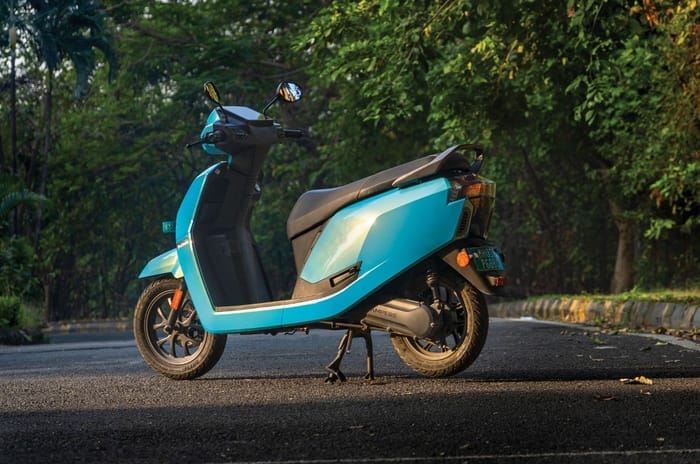
The River Indie has registered its highest-ever monthly retail sales of 4,436 units in June 2026, surpassing its previous best of 4,273 units recorded in March 2026. Cumulative sales since the scooter’s launch in October 2023 now stand at 43,805 units as of the end of June. The strong performance has also pushed the Bengaluru-based startup to seventh place in the monthly electric two-wheeler OEM rankings, up from eighth earlier this year.
River Indie posts best-ever monthly sales of 4,436 units
Cumulative sales since October 2023 cross 43,000 units
River Indie sales details
CY2026 sales already account for 54 percent of all-time cumulative sales
The Indie’s sales trajectory tells a clear story of accelerating growth. After relatively modest volumes in its first two years, River Mobility delivered 17,020 Indies in 2025, enough to rank ninth among electric two-wheeler manufacturers for the year. The momentum has continued into 2026, with 9,607 units delivered in Q1 (January-March), 62 percent higher than Q4 2025. Q2 (April-June) added a further 11,776 units.
The 23,722 units delivered in the first six months of 2026 already account for 54 percent of the Indie’s cumulative sales since launch. At its current pace, River Mobility appears on course to cross 50,000 annual sales for the first time this year.
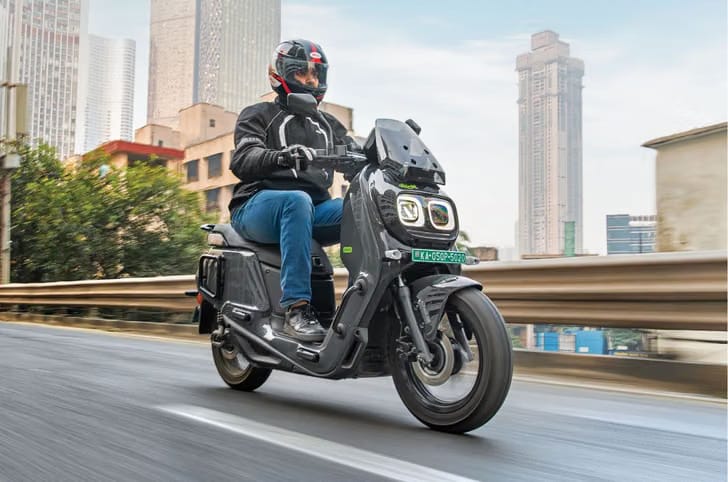
The Indie is priced at Rs 1.55 lakh (ex-showroom, Bengaluru), putting it on par with higher-capacity variants of popular electric scooters such as the TVS iQube, Bajaj Chetak and Ather Rizta. It’s a large, comfortable and practical scooter focused on everyday utility rather than outright features, with a generous 43 litres of underseat storage– the largest offered on any electric scooter currently on sale in India.
River Mobility manufactures both the Indie and the Yamaha EC-06 at its plant in Hoskote, Karnataka, which has an annual production capacity of 1,20,000 units. The company is also understood to be evaluating a second manufacturing facility ahead of the planned rollout of two new models in the first quarter of 2027.
Ather Energy has announced that it will host the fourth edition of its annual Community Day event on August 29, 2026, in Bengaluru. Headlined as “A New Dawn of Magic”, this year’s event will see the debut of the company’s first production electric scooter based on its all-new EL platform.
Ather Community Day 2026 to be held on August 29 in Bengaluru
First production scooter based on the new EL platform to debut
New technology, charging and ecosystem updates also planned
Ather EL platform scooter: What to expect?
The EL platform is Ather’s first all-new vehicle architecture since the launch of the 450 series
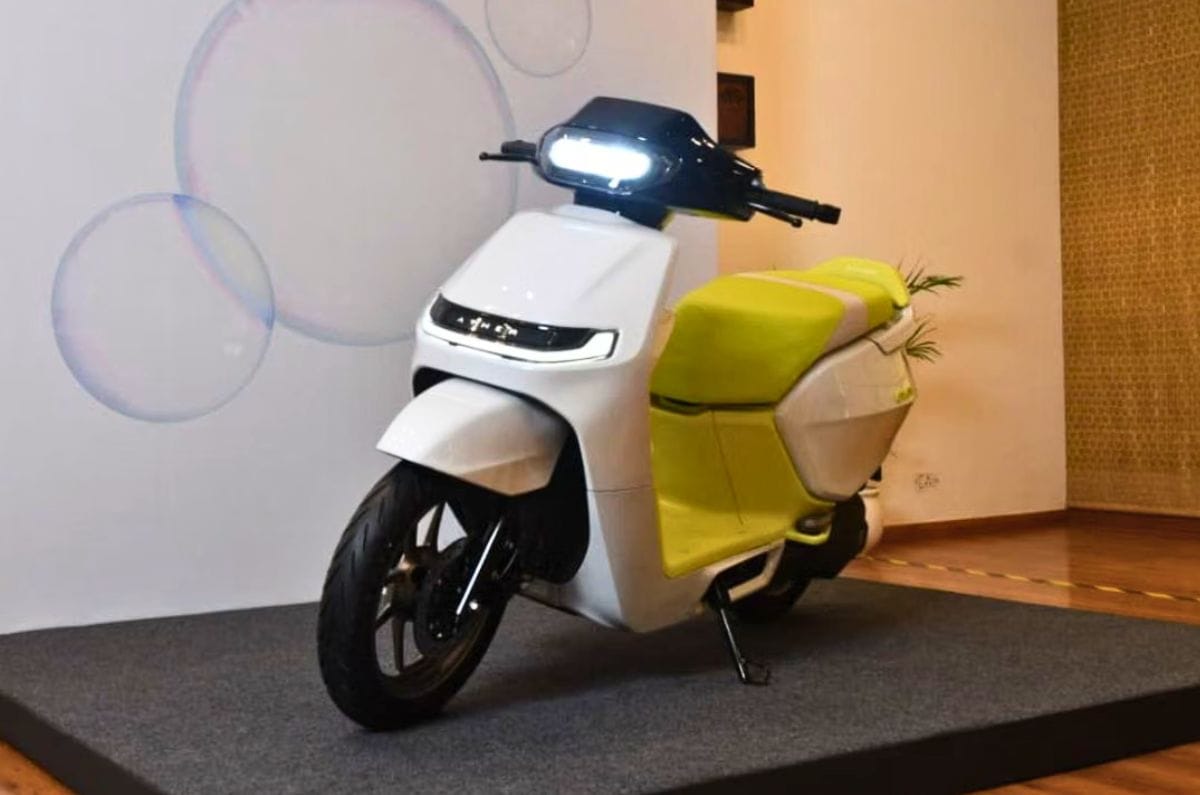
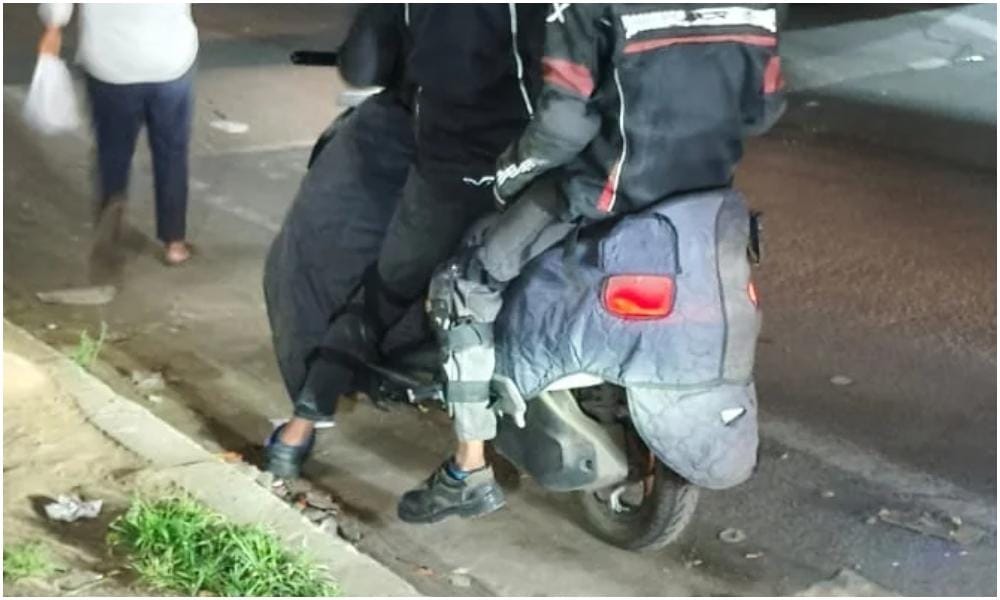
The upcoming scooter, which was recently spotted testing on public roads, is expected to stay largely faithful to the EL01 concept first showcased at Community Day 2025, even the design patent filed earlier this year support this claim. Spy images revealed a handlebar-mounted headlight, a wide LED DRL integrated into the front apron and styling that closely resembles the design patent filed by the company earlier.
The EL platform is Ather’s first all-new vehicle architecture since the launch of the 450 series and has been developed with greater scalability, manufacturing efficiency and versatility in mind. It will underpin the company’s future electric scooter range, with the first model expected to target the Rs 1 lakh-1.25 lakh price bracket, allowing Ather to compete in the high-volume mass-market segment.
Alongside the new scooter, Ather has confirmed it will unveil a range of innovations across charging, software and the wider ownership ecosystem, with more details to be announced at the event.
Community Day has become Ather’s flagship annual event, where it showcases its future product and technology roadmap. Last year’s edition saw the unveiling of the EL platform, the Redux concept, next-generation fast-charging technology and AtherStack 7.0, with this year’s event expected to focus on bringing that new platform into production.
अगर आपकी हाइट कम है और इलेक्ट्रिक स्कूटर खरीदने की सोच रहे हैं, तो सीट हाइट (Seat Height) सबसे अहम चीजों में से एक होती है। कम सीट हाइट होने से स्कूटर रोकते समय दोनों पैर आसानी से जमीन पर टिक जाते हैं, जिससे आत्मविश्वास बढ़ता है और शहर के ट्रैफिक में बार-बार रुकने और चलने के दौरान संतुलन बनाए रखना आसान हो जाता है। जानिए 7 स्कूटर्स-
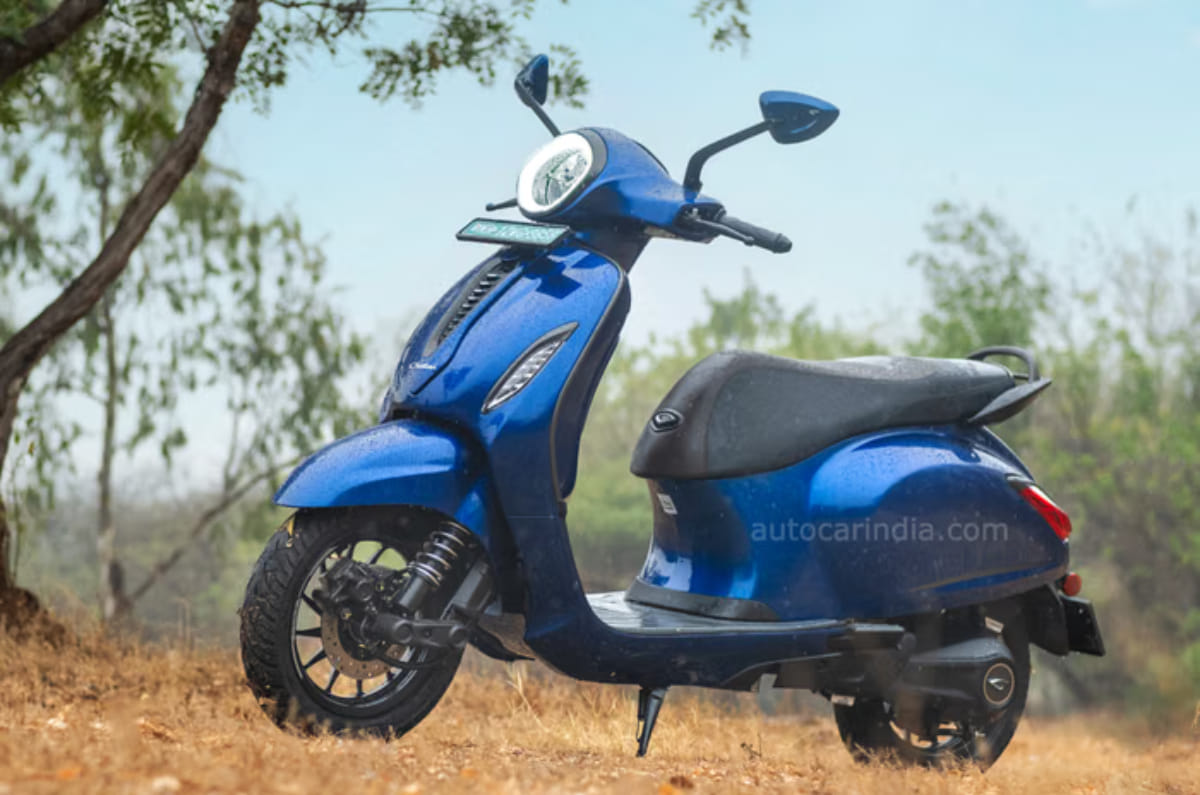
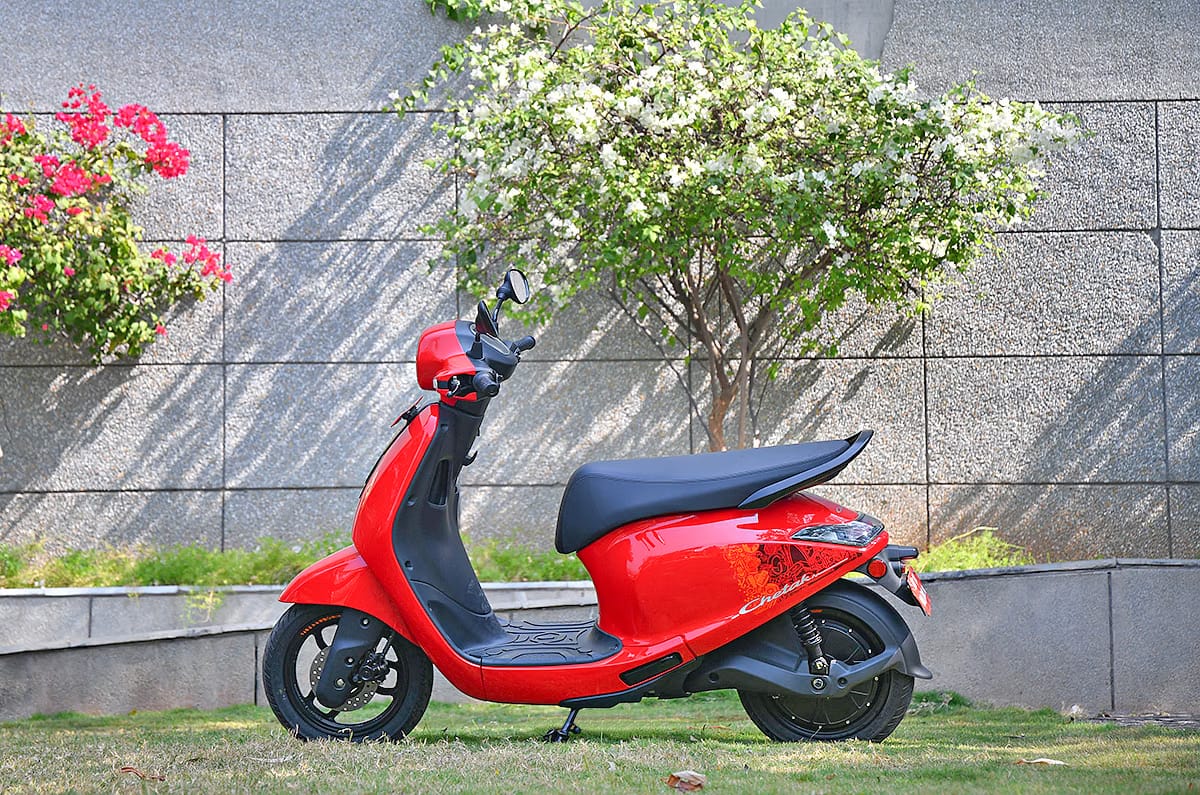
Bajaj Chetak भारत के सबसे लोकप्रिय इलेक्ट्रिक स्कूटरों में से एक है। C3001, C3501, C3502 और C3503 जैसे सभी वेरिएंट्स में 775mm की सीट हाइट मिलती है। इन मॉडलों में बैटरी, रेंज और फीचर्स का अंतर है, लेकिन सीट की ऊंचाई समान रहती है।
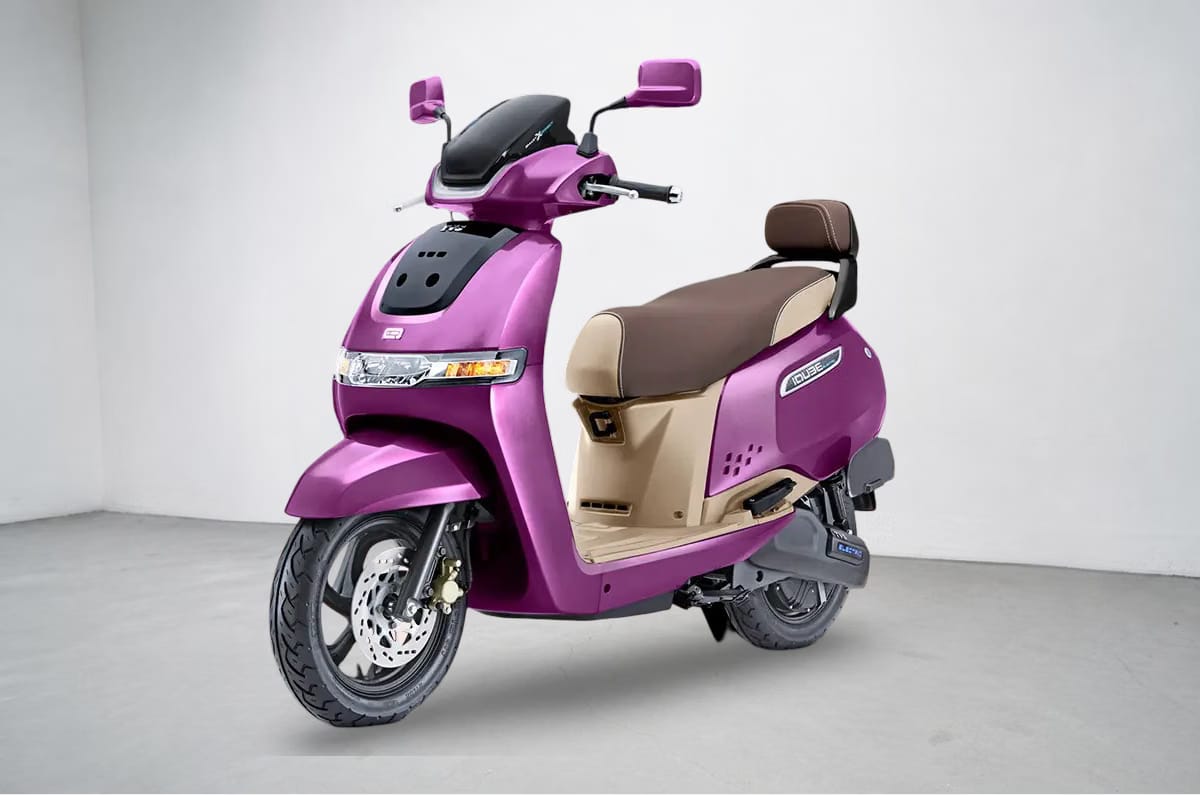
TVS iQube फिलहाल भारत का सबसे ज्यादा बिकने वाला इलेक्ट्रिक स्कूटर है। इसके सभी वेरिएंट्स—iQube, iQube S और iQube ST—में 770mm सीट हाइट दी गई है, जिससे यह छोटे कद के राइडर्स के लिए अच्छा विकल्प बन जाता है।
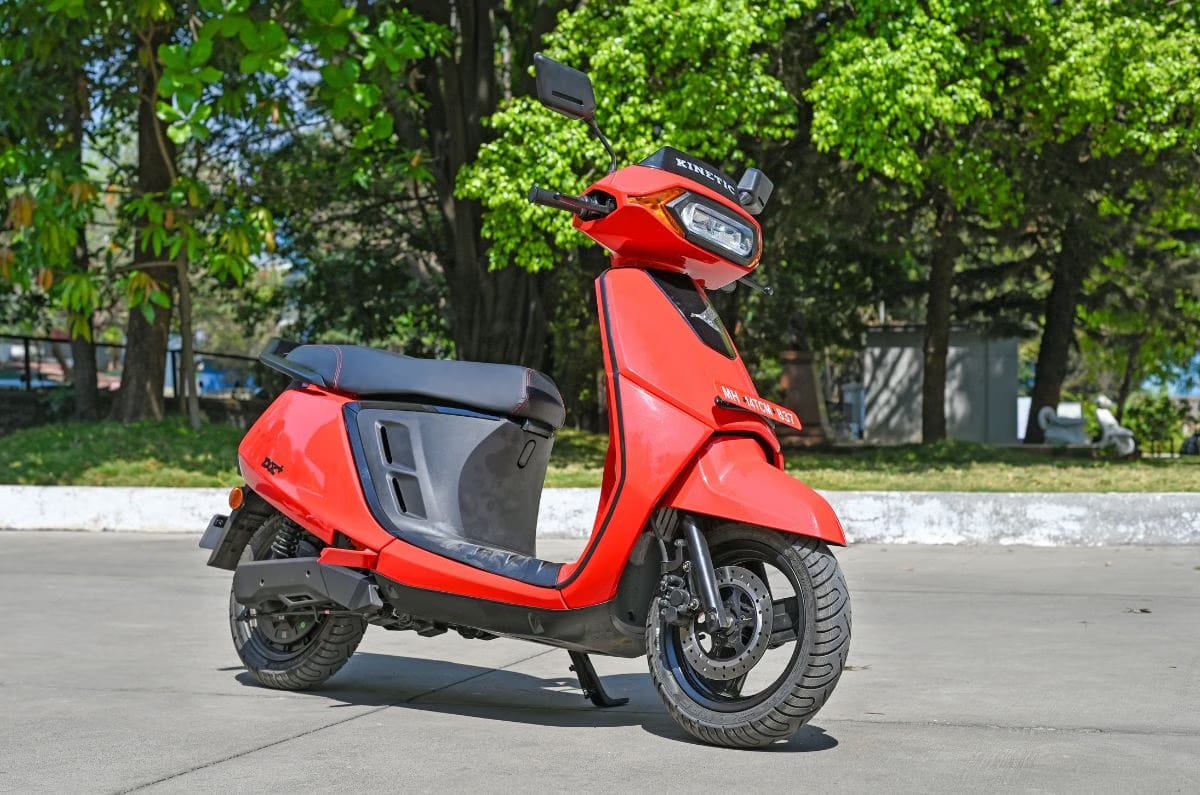
3. Kinetic DX – सीट हाइट: 770mm
Kinetic DX का डिजाइन पुराने Kinetic Honda DX से प्रेरित है। इसमें रेट्रो स्टाइलिंग के साथ मेटल बॉडी दी गई है। इसकी 770mm सीट हाइट के अलावा इसमें 37 लीटर का अंडर-सीट स्टोरेज मिलता है, जो इस सेगमेंट में काफी बड़ा माना जाता है।
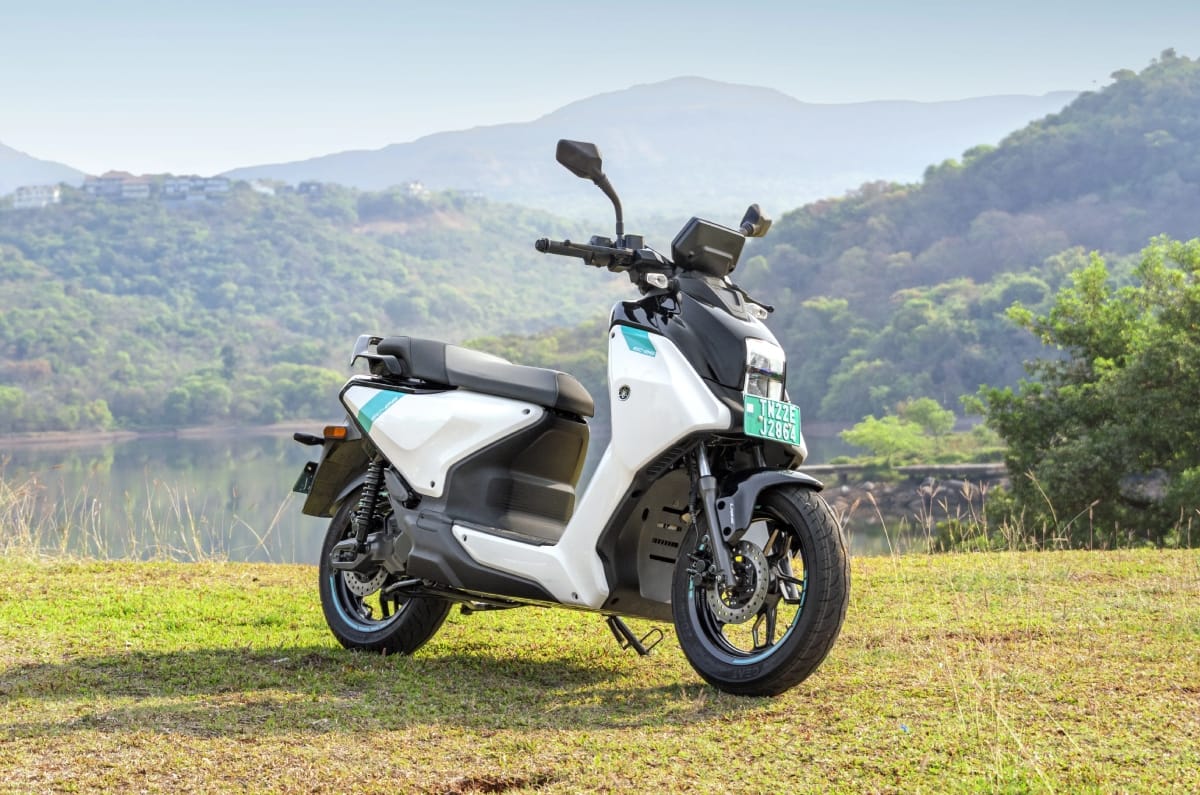
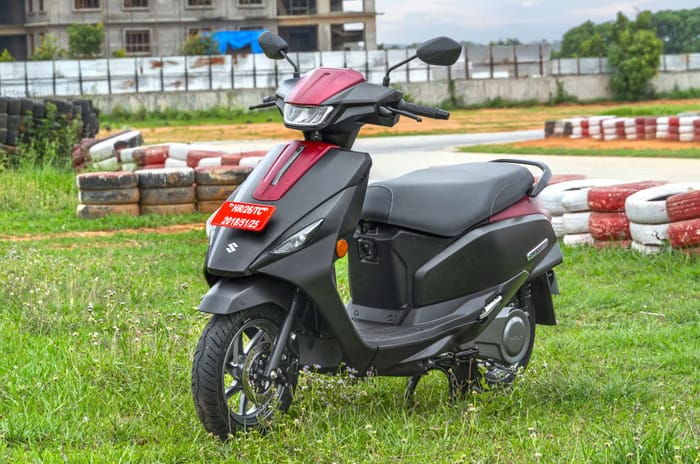
Yamaha EC-06 का प्लेटफॉर्म River Indie पर आधारित है, लेकिन इसका डिजाइन अलग है। इसमें 770mm सीट हाइट और 24.5 लीटर का अंडर-सीट स्टोरेज मिलता है।
5. Suzuki e-Access – सीट हाइट: 765mm
Suzuki e-Access की 765mm सीट हाइट इसे और भी आरामदायक बनाती है। इसमें की-लेस एक्सेस, डिजिटल इंस्ट्रूमेंट क्लस्टर और 95 किमी की दावा की गई IDC रेंज मिलती है। हालांकि इसकी कीमत करीब 1.88 लाख रुपये है, जो कई प्रतिद्वंद्वियों से ज्यादा है।
6. Ampere Nexus – सीट हाइट: 765mm
Ampere Nexus EX और ST दोनों वेरिएंट्स में उपलब्ध है। दोनों में 765mm सीट हाइट दी गई है। अंतर केवल डिस्प्ले और कनेक्टिविटी फीचर्स का है।
अगर आपने हाल ही में नौकरी बदली है, तो अब आपका Employees' Provident Fund Organisation (EPFO) में जमा Provident Fund (PF) बैलेंस ट्रांसफर करना पहले से कहीं ज्यादा आसान हो गया है। EPFO के नए सदस्य पोर्टल पर कर्मचारियों को अपने पुराने नियोक्ता (Employer) के PF खाते से नए खाते में राशि ट्रांसफर करने के लिए दो आसान विकल्प दिए गए हैं।
EPFO का कहना है कि इस नए फीचर का उद्देश्य PF ट्रांसफर प्रक्रिया को सरल बनाना, कागजी कार्रवाई कम करना और कर्मचारियों की रिटायरमेंट बचत को बिना किसी अनावश्यक देरी के एक ही खाते में समेकित करना है।
EPFO पोर्टल में हुआ बड़ा अपग्रेड
हाल ही में EPFO के सदस्य पोर्टल में डेटाबेस कंसोलिडेशन और सॉफ्टवेयर अपग्रेड किया गया था। इस दौरान पोर्टल लगभग दो सप्ताह तक प्रभावित रहा और ऑनलाइन सेवाओं की बहाली में कई बार देरी हुई। अब पोर्टल की सेवाएं फिर से शुरू हो चुकी हैं। हालांकि EPFO ने कहा है कि फिलहाल PF क्लेम और अन्य ऑनलाइन सेवाओं के निपटान में कुछ समय लग सकता है।
नौकरी बदलने पर PF बैलेंस ट्रांसफर करने के दो तरीके
PF ट्रांसफर शुरू करने से पहले कर्मचारियों को अपने Universal Account Number (UAN) की मदद से EPFO सदस्य पोर्टल पर लॉगिन करना होगा। इसके बाद वे निम्नलिखित दो तरीकों में से किसी एक का उपयोग कर सकते हैं।
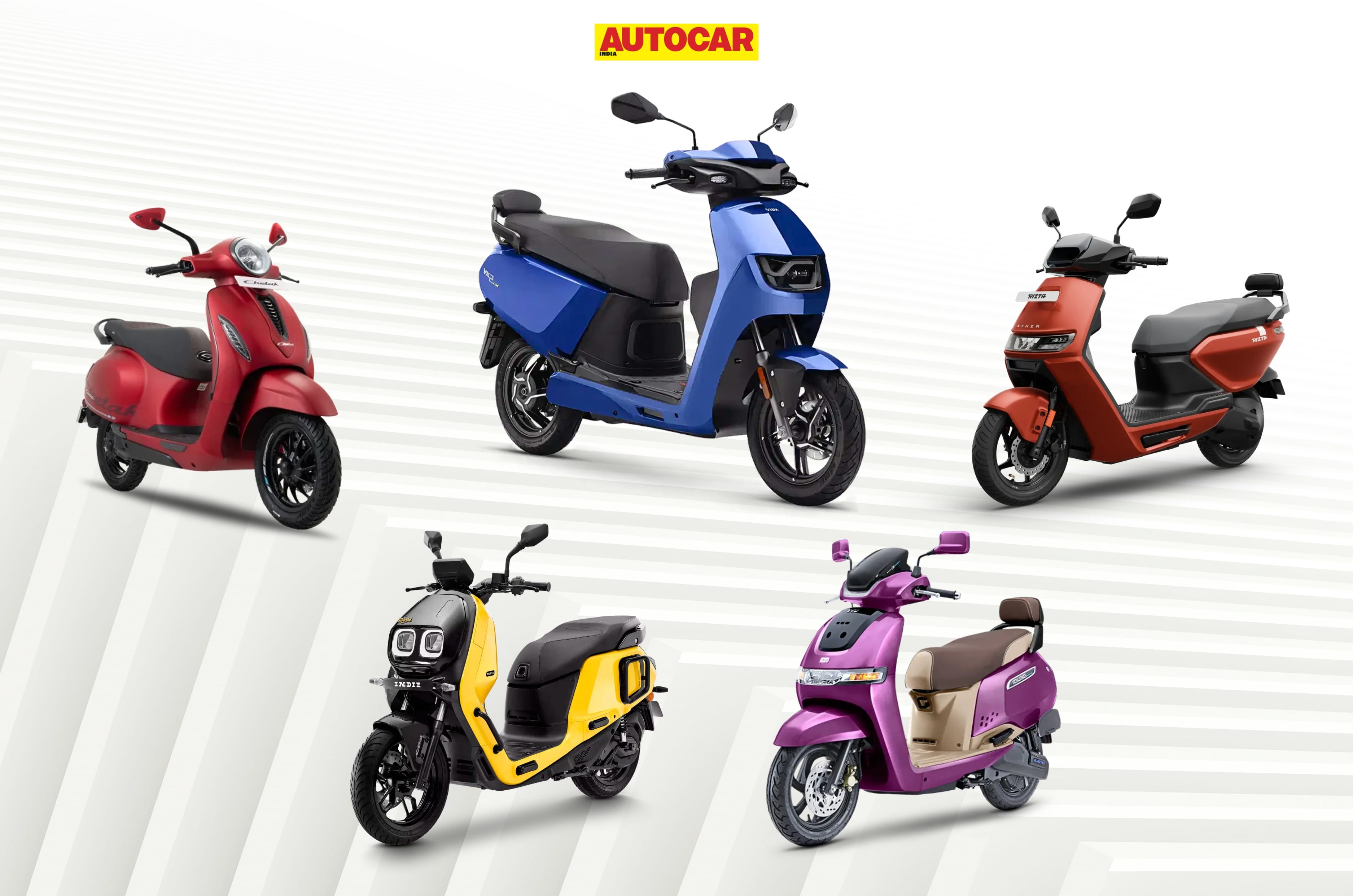
The VX2 is Vida’s – Hero’s electric arm – affordable and latest offering in the electric scooter market. It was earlier available with just a 2.2kWh and 3.4kWh battery pack options but now the brand has launched a larger 4.4kWh option. Here we see how it compares with its competitors, on paper, in terms of range, charging time, and features.
Vida VX2 4.4kWh vs rivals: electric motor, battery and charging
Vida VX2 4.4kWh
TVS iQube S 4.7kWh
Ather Rizta Z 3.7kWh
Bajaj Chetak C3501
River Indie
Peak motor output
6kW
4.4kW
4.3kW
4.8kW
6.7kW
Rated torque
NA
33Nm
22Nm
20Nm
26Nm
Claimed top speed
90kph
82kph
80kph
80kph
90kph
Battery capacity
4.4kWh
4.7kWh
3.7kWh
3.5kWh
4kWh
Claimed fast charging time (0-80 percent)
3 hrs, 17 mins
4hrs
4hr 30min
3hr
750W – 5hrs
IDC range
187km
175km
159km
153km
160km
The VX2 is the only one to come with removable battery packs
The Vida VX2 has the highest claimed IDC range here and is also among the quickest scooters in the comparison, with a claimed top speed of 90kph that it shares with the RiverIndie. The River, meanwhile, produces the highest peak motor output, while the TVSiQube S leads on battery capacity with a 4.7kWh battery pack and also claims the highest rated torque at 33Nm. The Vida stands out as the only scooter in this comparison to feature twin removable battery packs, whereas all its rivals use fixed batteries. In terms of charging, the Bajaj Chetak C3501 has the shortest claimed 0-80 percent charging time at 3 hours, narrowly ahead of the Vida’s claimed 3 hours and 17 minutes, while the Ather Rizta and River Indie take longer at 4.5 hours and 5 hours, respectively.
Vida VX2 4.4kWh vs rivals: dimensions and underpinnings
Vida VX2 4.4kWh
TVS iQube S 4.7kWh
Ather Rizta Z 3.7kWh
Bajaj Chetak C3501
River Indie
Wheelbase
NA
1301mm
NA
1355mm
1365mm
Seat height
777mm
770mm
777mm
775mm
787mm
Ground clearance
155mm
157mm
180mm
NA
177mm
Kerb weight
120kg
129kg
130.7kg
125kg
135kg
The TVS iQube has the most accessible seat height
The River Indie has the longest wheelbase in this comparison, which lends it greater straight-line stability. It also has the tallest seat height, while the iQube has the most accessible seat height. In terms of ground clearance, the Rizta leads the pack, followed closely by the River Indie.
The VX2 and iQube S offer comparatively lower ground clearance figures. The VX2 is also the lightest scooter here, followed by the Bajaj Chetak C3501 that gets a full-metal body, while the River Indie is the heaviest despite shedding weight over its ‘Gen-2’ model.
Vida VX2 4.4kWh vs rivals: Suspension, brakes and tyres
Vida VX2 4.4kWh
TVS iQube S 4.7kWh
Ather Rizta Z 3.7kWh
Bajaj Chetak C3501
River Indie
Suspension (F/R)
Telescopic fork / monoshock
telescopic fork / twin-shock absorbers
Telescopic fork / monoshock
Leading link / monoshock
telescopic fork / twin-shock absorbers
Brakes (F/R)
Disc/drum
220mm / drum
Disc / Drum
Disc / drum
Disc / disc
Tyres (F/R)
NA / NA
90/90-12 / 90/90-12
90/90-12 / 100/80-12
NA / NA
110/70 R14 / 120/70 R14
The River Indie is the only one to run on 14-inch wheels
In terms of hardware, the VX2 and Rizta use a telescopic fork and monoshock setup, while the iQube S and Indie pair a telescopic fork with twin rear shock absorbers. The C3501 is the only scooter here to feature a leading-link front suspension. Braking duties are handled by a front disc and rear drum setup on all scooters except the River Indie, which stands out with disc brakes at both ends but continues with a combined braking system much like all the others here. The River also distinguishes itself by running on larger 14-inch wheels that lend it greater stability and a more imposing stance, while the remaining scooters use 12-inch wheels with tubeless tyres.
Vida VX2 4.4kWh vs rivals: Features
The River Indie is the only one here to get an LCD dash.
The five scooters differ considerably in terms of features and charging hardware. Both the Bajaj Chetak 3501 and River Indie feature on-board chargers, allowing them to be plugged directly into a standard wall socket without the need for a separate charging unit. The TVS iQube S and Ather Rizta use off-board chargers, while the Hero Vida VX2’s removable battery packs can be charged either on or off the scooter, making it the most versatile here. Beyond this, the scooters differ in terms of display type, smartphone connectivity, navigation, keyless functionality, reverse mode and other convenience features. The River Indie stands out with the largest underseat storage of 43-litres.
Vida VX2 4.4kWh vs rivals: Price
Vida VX2 4.4kWh
TVS iQube S 4.7kWh
Ather Rizta Z 3.7kWh
Bajaj Chetak C3501
River Indie
Price (ex-showroom, Bengaluru)
Rs 1.44 lakh
Rs 1.18 lakh
Rs 1.37 lakh
Rs 1.43 lakh
Rs 1.55 lakh
The Indie is the most expensive of the lot
While all the scooters mentioned here, barring the Indie, are available in variants with smaller battery packs, lower claimed ranges and lower price points, we have only considered prices of the variants compared here. The iQube S is the most affordable of the lot, followed by the Rizta. The Ather also comes with the smallest battery pack in this comparison, although it is the largest battery pack available in the Rizta range. The Chetak and VX2 are separated by just Rs 1,000, with the former being slightly more affordable. The River Indie is the most expensive scooter here, but it is worth noting that it is also the most substantial-looking scooter in this comparison and offers the largest boot space of any electric scooter currently on sale.
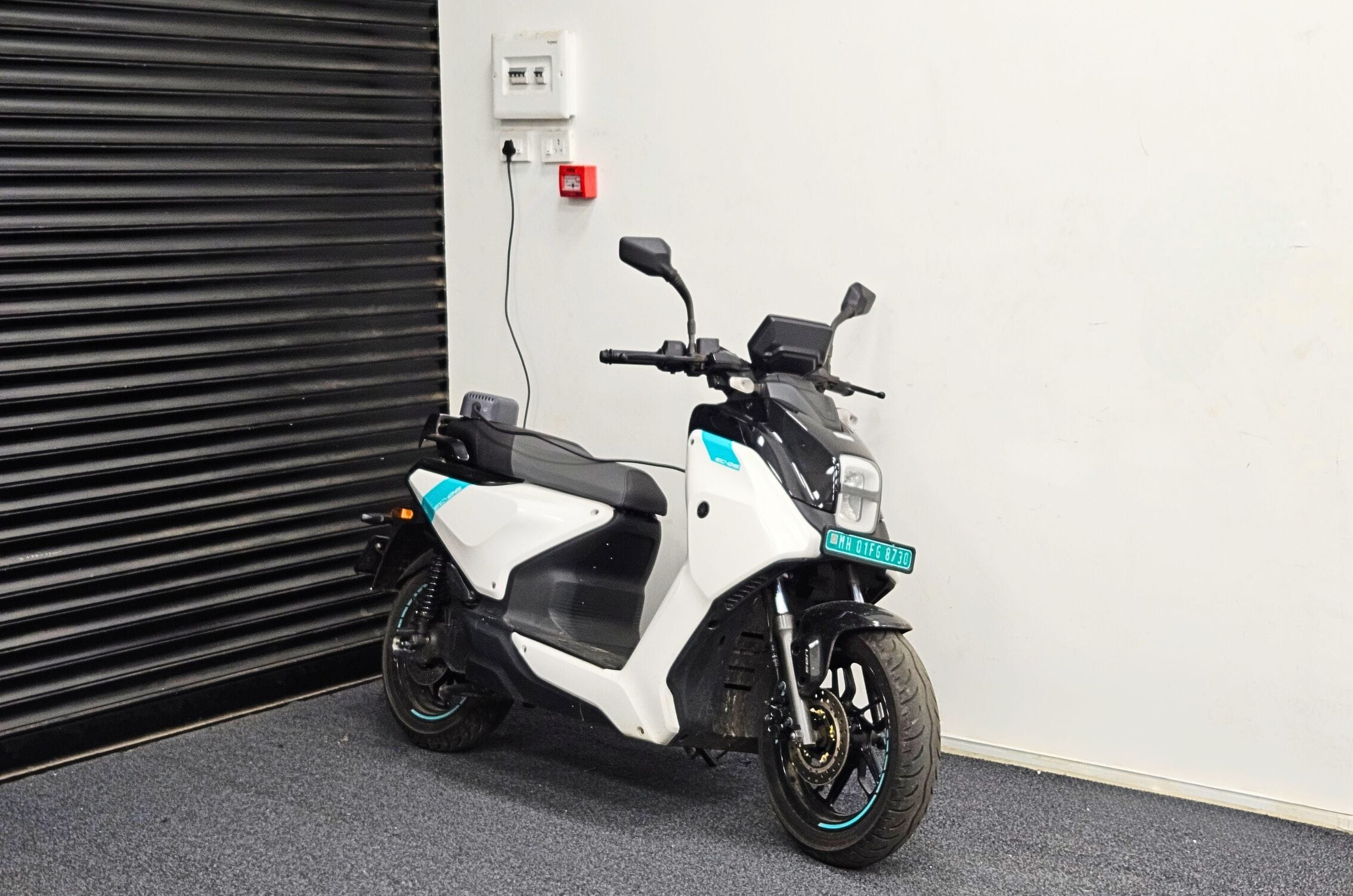
Yamaha recently entered the electric scooter market with its EC-06, which is a redesigned River Indie but retains all the core mechanicals. At Rs 1.71 lakh (ex-showroom, Bengaluru), the EC-06 is also one of the more expensive options in the electric scooter market. We were able to subject the EC-06 to our real-world range tests and this is how Yamaha’s debut EV performed.
In ‘Normal’ mode, it covered 114km
It has an efficiency of 28.5km/kWh
Small 450W charger takes 10hr to top up a flat battery to full
Yamaha EC-06 real world range
When subjecting the EC-06 to our range tests, we used the middle ‘Standard’ riding mode, where the range indicator on the display showed us 93km with a fully charged battery. Its 4kWh battery sends power to a mid-mounted motor capable of 6.7kW peak output – same as the River Indie it is based on. In its Standard riding mode, you can achieve the 79kph top speed but power delivery is gentler than on the top ‘Power’ mode and the regenerative braking too is in its middle setting.
At 132kg, the EC-06 is one of the heaviest electric scooters in India and is just 3 kilos lighter than the Indie it is based on. It also uses larger 14-inch wheels shod with chunky tyres and both this as well as its weight do play a role in the range it can travel on a single charge.
In city traffic conditions, at lower speeds and with regenerative braking kicking in more often, the EC-06’s range was dropping at a slower rate than when we were at faster speeds on open roads – this will be the case for all EVs and isn’t a trait exclusive to it. For every 10 percent SOC drop, the EC-06 covered an average of 11.4km and at the end of the test, the scooter covered 114km.
This was actually much higher than what the range indicator on the display showed (93km) and ultimately the range you get will vary on a multitude of factors like your riding style, tyre pressures, prevailing traffic and weather conditions among others.
Its performance remained consistently reliable and even below 20 percent SOC, it was able to comfortably climb flyovers and pass moving traffic effortlessly. Under 10 percent SOC was the first time we experienced a noticeable performance drop and even then, the scooter could reach a speedo-indicated 50-55kph and acceleration too was not impacted severely.
Once the battery fell below 5 percent SOC, the scooter defaulted to ‘Eco’ mode and both acceleration and top speed were quite mellow but even so, it wasn’t painfully slow and we saw 40-45kph on the display. At 0 percent SOC, when the scooter finally ran out of juice, it stopped moving despite twisting the accelerator but the display and all the other functions of the vehicle like the seat and charger release flaps were functional.
With this range number we received, the EC-06’s efficiency works out to 28.5km/kWh. While the EC-06’s range is undoubtedly quite impressive, one point to bear in mind is that you need to plan your charging cycle properly because the Yamaha only comes with a 450W charger, which takes a glacial 10 hours (claimed) to top up a flat battery to full.
Autocar India’s range testing
Before our real-world range test, the battery of our two-wheeler on test is fully charged, and we maintain tyre pressures as recommended by the manufacturer. The two-wheeler is then driven in a fixed loop in the city and highway (for electric bikes that are capable of doing so), and we maintain certain average speeds while following the speed limit. While doing so, we also ensure periodic rider swaps to ensure consistency and subject the vehicle to varying riding styles. The vehicle is run until its battery is completely drained and it shuts down or does not go ahead even if the screen is on.
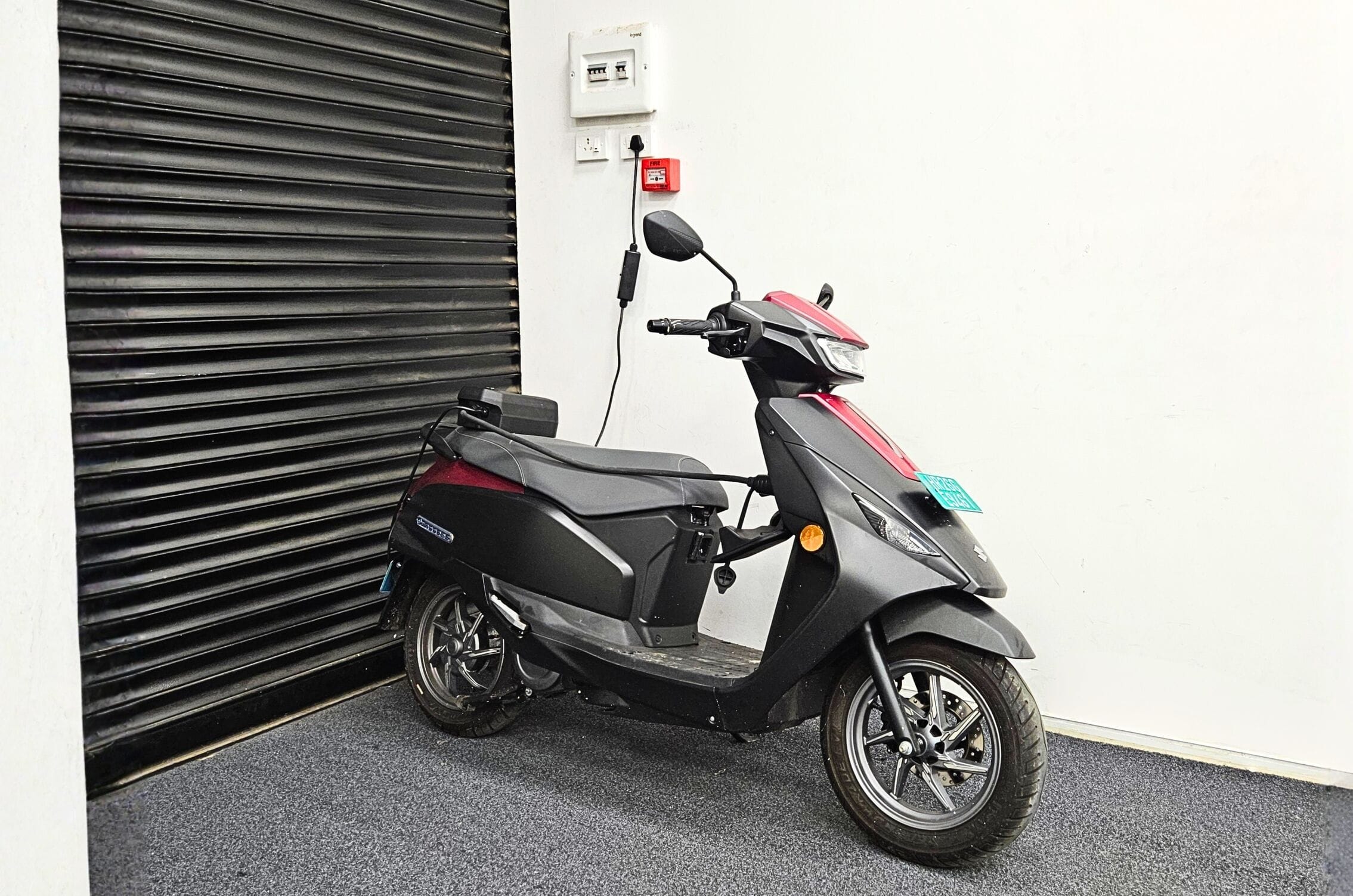
Suzuki entered the electric scooter market earlier this year with its self-developed e-Access, which at Rs 1.92 lakh (ex-showroom, Bengaluru), is one of the most expensive electric scooters from a mainstream manufacturer right now. We were recently able to subject the e-Access to our real-world range tests and here’s how Suzuki’s maiden two-wheeler EV performed.
In Ride A mode, it covered 88.4km
It has an efficiency of 28.78km/kWh
600W charger can top up a flat battery to full in 6 hours
Suzuki e-Access real world range
The e-Access has a 3kWh battery which uses LFP (Lithium Ferrous Phosphate) chemistry unlike most other well-known EVs which use NCM (Nickel Cobalt Manganese) battery packs. The advantages of LFP chemistry over NCM are relatively longer battery life and better thermal stability but the tradeoff is lower energy density, and ergo, lower range. Suzuki claims a 95km IDC range on a full charge.
The e-Access has 3 riding modes – Ride A, Ride B and Eco. On the move, you can only toggle between one of the Ride modes and Eco. To switch between the two Ride modes you need to be at a complete stop.
In both Ride modes, throttle response and peak power is identical but what changes is the level of regenerative braking. Ride B has gentler intervention than Ride A so we elected to conduct our test in Ride A in a bid to extract more range.
With 12-inch wheels shod with standard-issue scooter sized tyres and a fairly light 122kg kerb weight (in the EV space), the e-Access sits more or less on par with the bestsellers in this class in these parameters.
In city traffic conditions, at lower speeds and with regenerative braking kicking in more often, the e-Access’s range was dropping at a slower rate than when we were at faster speeds on open roads – this will be the case for all EVs and isn’t a trait exclusive to it.
At the end of the run, when the range indicator and battery SOC meter on the display both ran out to zero, the scooter kept running with progressively lower performance for another 2.2km. Eventually, it was restricted to just 10kph, which is when we decided to park it and at that point we had covered 88.4km.
When the battery was at 100 percent SOC at the start of the test the display told us that the estimated range was 93km. The figure we ultimately got was slightly lower than that, but the range indicator gave us trustworthy readouts as the battery capacity dropped and it never caught us by surprise at the end. Ultimately the range you get will vary on a multitude of factors like your riding style, tyre pressures, prevailing traffic and weather conditions among others.
Even so, the e-Access delivered a commendable range number when you consider that its LFP battery isn’t as energy dense as the competition and it is a scooter that comes closest to achieving the claimed IDC number in the real world in our tests. This was in the more powerful Ride A mode and were one to use the more efficient Eco mode, the e-Access will return more range on a single charge.
Almost throughout the run, the e-Access delivered consistent performance until its SOC dropped down to 18 percent, which is when it automatically defaulted to Eco mode. Performance in Ride A is quite brisk and more than sufficient to keep up with and overtake big city traffic while simultaneously not overwhelming someone who’s transitioning over from an ICE vehicle. Even in Eco mode, you can comfortably keep pace with traffic and reach a speedo-indicated 55kph, which ensures you don’t get caught out if you are on a faster stretch of road.
With these numbers, Suzuki’s electric scooter returned an efficiency of 28.78km/kWh. The e-Access ships with a portable 600W charger which is capable of topping up a flat battery to full in 6hr20min. We verified the actual charging time to be 6 hours flat when the e-Access was plugged into a 12A 3-pin socket at our office.
Autocar India’s range testing
Before our real-world range test, the battery of our two-wheeler on test is fully charged, and we maintain tyre pressures as recommended by the manufacturer. The two-wheeler is then driven in a fixed loop in the city and highway (for electric bikes that are capable of doing so), and we maintain certain average speeds while following the speed limit. While doing so, we also ensure periodic rider swaps to ensure consistency and subject the vehicle to varying riding styles. The vehicle is run until its battery is completely drained and it shuts down or does not go ahead even if the screen is on.
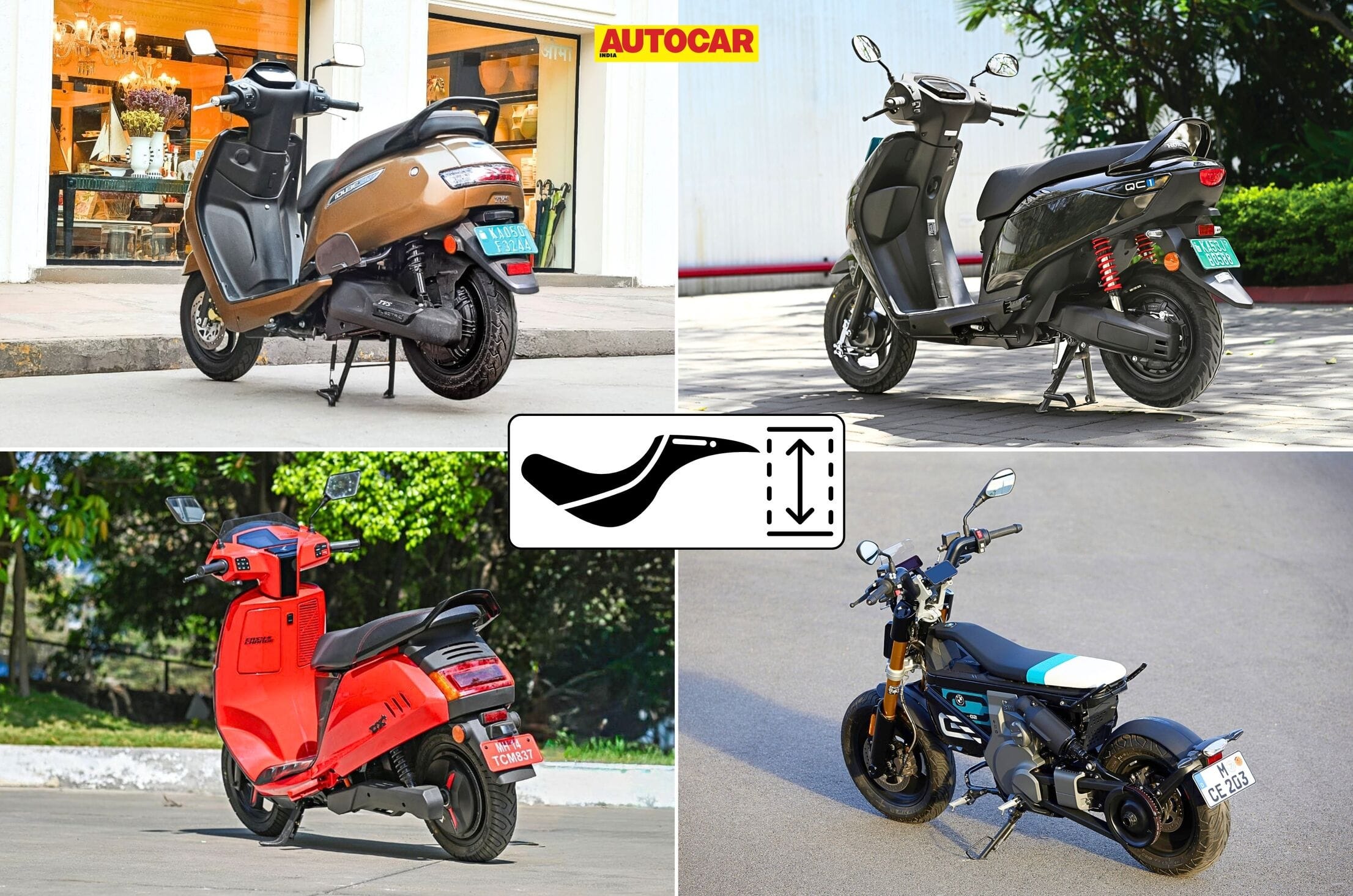
Seat height is one of the most important considerations for shorter riders because it’s what gives you the confidence to comfortably put both feet on the ground when you come to a stop. That confidence becomes even more important in city traffic, where you’ll constantly find yourself stopping and starting. Electric scooters are no different in this regard. So, if seat height is a deciding factor for you, here are ten electric scooters currently on sale in India with the lowest seat heights.
Bajaj Chetak (Series 30 and 35)
775mm
The Bajaj Chetak range is one of the most popular electric scooter lineups in India and currently sits second in monthly sales behind TVS. Broadly speaking, the lineup can be divided into two families – the newer 25 Series and the older 30 and 35 Series models that share a similar design. It’s the latter that we’re focusing on here.
Across the C3001, C3501, C3502 and C3503 variants, the seat height remains a consistent 775mm. The differences between these models largely come down to battery capacity, range, features and connectivity, while the bodywork – and therefore the seat height – remains unchanged.
TVS iQube
770mm
The TVS iQube is India’s best-selling electric scooter, having recently crossed the one million production milestone. Like the Chetak, the iQube is offered in multiple variants – the base iQube (available with 2.2kWh, 3.1kWh and 3.5kWh battery options), the iQube S (4.7kWh) and the iQube ST (5.3kWh) – but all share the same bodywork and the same 770mm seat height.
Kinetic DX
770mm
The Kinetic DX is a spiritual successor to the original Kinetic Honda DX – the boxy, squared-off two-stroke scooter that was a common sight on Indian roads in the 1990s. The electric DX leans heavily into that nostalgia with its retro styling and metal body panels. At 770mm, it shares its seat height with the TVS iQube. It also boasts 37 litres of underseat storage, the second-largest boot on any electric scooter currently on sale in India, behind only the River Indie.
Yamaha EC-06
770mm
The Yamaha EC-06 is based on the River Indie, but despite the shared platform, it looks quite different thanks to sleeker bodywork and a vertically stacked LED headlight replacing the Indie’s twin-lamp setup. Its 770mm seat height matches the iQube and Kinetic DX, although its 24.5-litre underseat storage is considerably smaller than the River Indie’s 43-litre boot.
Suzuki e-Access
765mm
With a seat height of 765mm, the e-Access sits slightly lower than the Yamaha EC-06 and TVS iQube. Like its petrol-powered counterpart, it prioritises practicality and everyday usability while bringing the Suzuki reputation for reliability into the electric scooter segment. It gets keyless access for the seat, boot and charging port as standard, along with a fully digital instrument cluster. The e-Access is powered by a fixed battery with a claimed IDC range of 95km and is currently available in select cities. That said, at Rs 1.88 lakh, it is notably more expensive than rivals such as the iQube and Chetak.
Ampere Nexus
765mm
The Ampere Nexus is the flagship offering from Greaves-owned Ampere Electric and is available in EX and ST variants. Both share the same 765mm seat height, with the differences limited to the display (a 6.2-inch LCD on the EX and a 7-inch TFT on the ST) and connectivity features.
TVS Orbiter
763mm
The TVS Orbiter is available in V1 and V2 variants, both of which share identical bodywork and therefore the same 763mm seat height. The differences between the two are limited to the battery specification and connectivity features.
Bajaj Chetak C2501
763mm
The Chetak C2501 is the newest and most affordable model in the Chetak lineup. It retains the familiar Chetak styling but adopts a slightly more youthful character while offering a lower 763mm seat height than the C3000-series models. It uses a smaller battery pack and is positioned as an entry-level electric scooter for first-time EV buyers. While it shares the overall design language of the rest of the Chetak family, it is slightly more compact overall, contributing to its lower seat height.
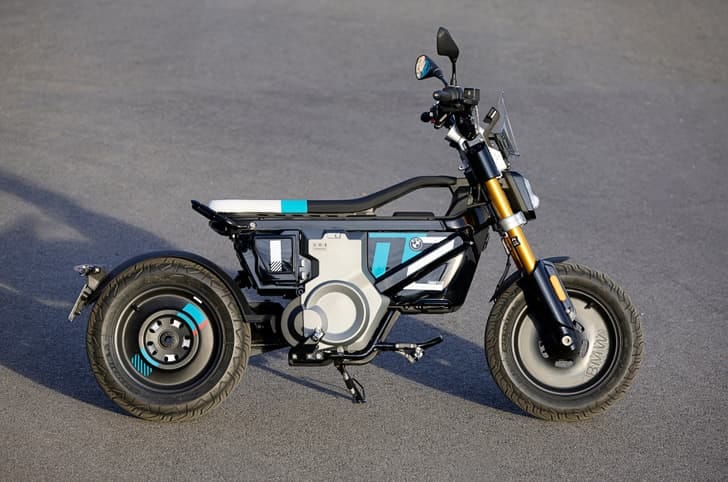
BMW CE 02
750mm
The BMW CE 02 is unlike anything else on this list, sitting somewhere between a scooter and a motorcycle. It features forward-set footpegs, minimal bodywork, a single-sided swingarm and chunky tyres. At 750mm, it has one of the lowest seat heights here, and its low centre of gravity makes it particularly easy to manoeuvre in city traffic. It is powered by two 1.96kWh battery packs with a combined capacity of 3.92kWh, producing 11kW and 55Nm, with a claimed range of 108km and a top speed of 95kph.
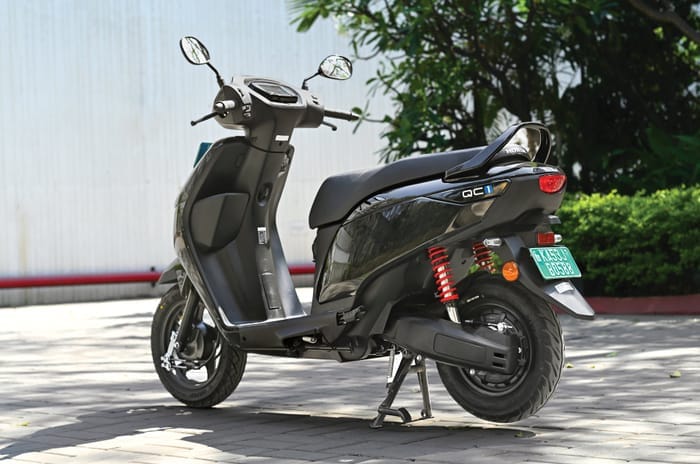
Honda QC1
704mm
The Honda QC1 is the more affordable of Honda’s two electric scooters sold in India, alongside the Activa e:. It offers modest performance and range, powered by a 1.5kWh fixed battery producing a peak output of 1.8kW. Claimed IDC range stands at 80km, while top speed is limited to 50kph. During our time with the scooter, we found the QC1 to be an approachable and well-priced urban runabout, although its suspension and performance are clear compromises compared to more expensive rivals.
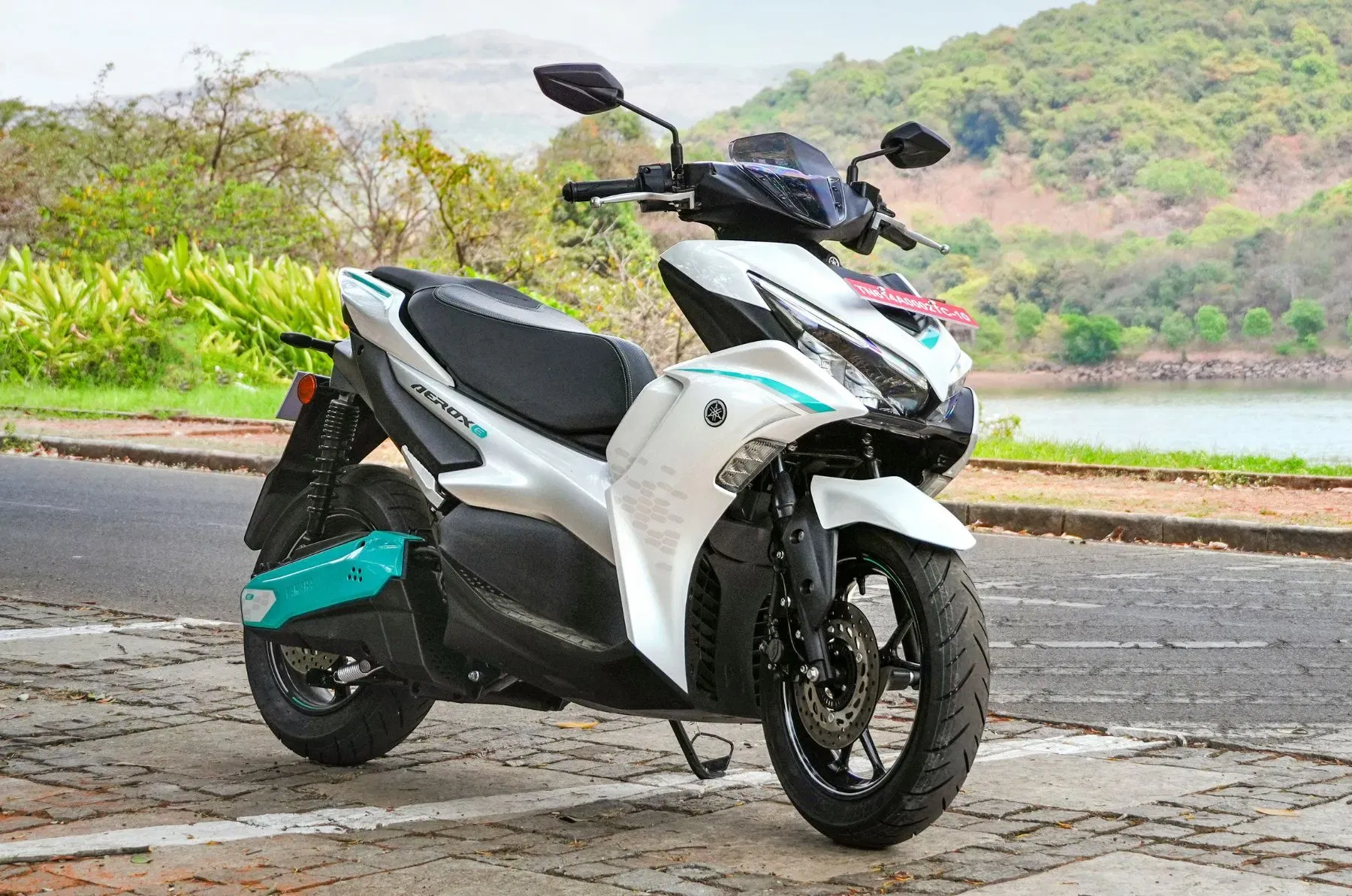
The Yamaha Aerox-E is the Japanese manufacturer’s second electric scooter in India and, unlike the River Indie-based EC-06, is entirely self-developed by Yamaha. It takes the sharp, sporty design of the petrol Aerox 155 as its starting point and adapts it for electric propulsion, with a swingarm-mounted motor and a dual removable battery setup. Here are answers to some of the most commonly asked questions about it.
What is the price of the Yamaha Aerox-E?
The Yamaha Aerox-E is priced at Rs 2.82 lakh (ex-showroom, Delhi), making it the most expensive Yamaha two-wheeler on sale in India at the moment. The Aerox-E is currently available through Yamaha’s Blue Square premium dealerships.
What motor and battery does the Yamaha Aerox-E use?
The Aerox-E is powered by a swingarm-mounted motor producing 9.4kW of peak power and 48Nm of torque. The battery setup consists of two removable 1.5kWh packs – each weighing 13kg – giving a combined capacity of 3kWh. It is also possible to run the scooter with just one battery pack installed, though Yamaha says performance will be reduced in this configuration.
What is the range of the Yamaha Aerox-E?
The Yamaha Aerox-E has a claimed IDC range of 117km on a full charge. As with any IDC figure, real-world range will be lower and factors like riding in Power mode, carrying a pillion, or frequent use of the Boost function will bring it down further. The scooter comes with three riding modes – Eco, Standard and Power – along with a temporary Boost function, with Eco mode offering the best chance of getting close to the claimed figure.
What is the top speed of the Yamaha Aerox-E?
Yamaha claims a top speed of 95.5kph for the Aerox-E. However, in our tests, we found the performance levels to be disappointing and even in the most capable Power mode, the scooter didn’t feel fast enough to access the top end of that performance envelope. The Boost function (which activates maximum motor output for 10 seconds at a time) is when the scooter truly comes alive, and the performance in Boost is noticeably stronger. However, Boost deactivates if you close the throttle even momentarily, and a 30-second cooldown is required before it can be activated again.
What is the charging time of the Yamaha Aerox-E?
Charging both battery packs from flat to full using the supplied 650W charger takes 6 hours and 20 minutes. Thanks to the removable battery design, both packs can also be charged at home or the office without bringing the scooter to a charging point. This requires the optional home charging dock (priced at Rs 18,000), which accommodates and charges both battery packs simultaneously.