River Mobility crosses 50,000 production milestone

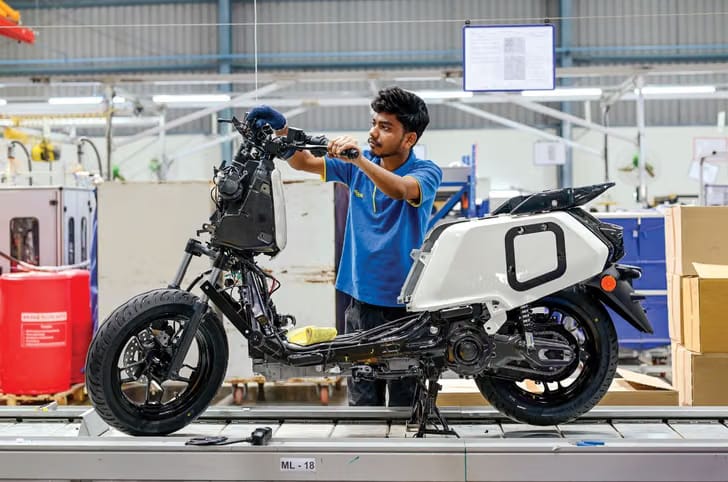
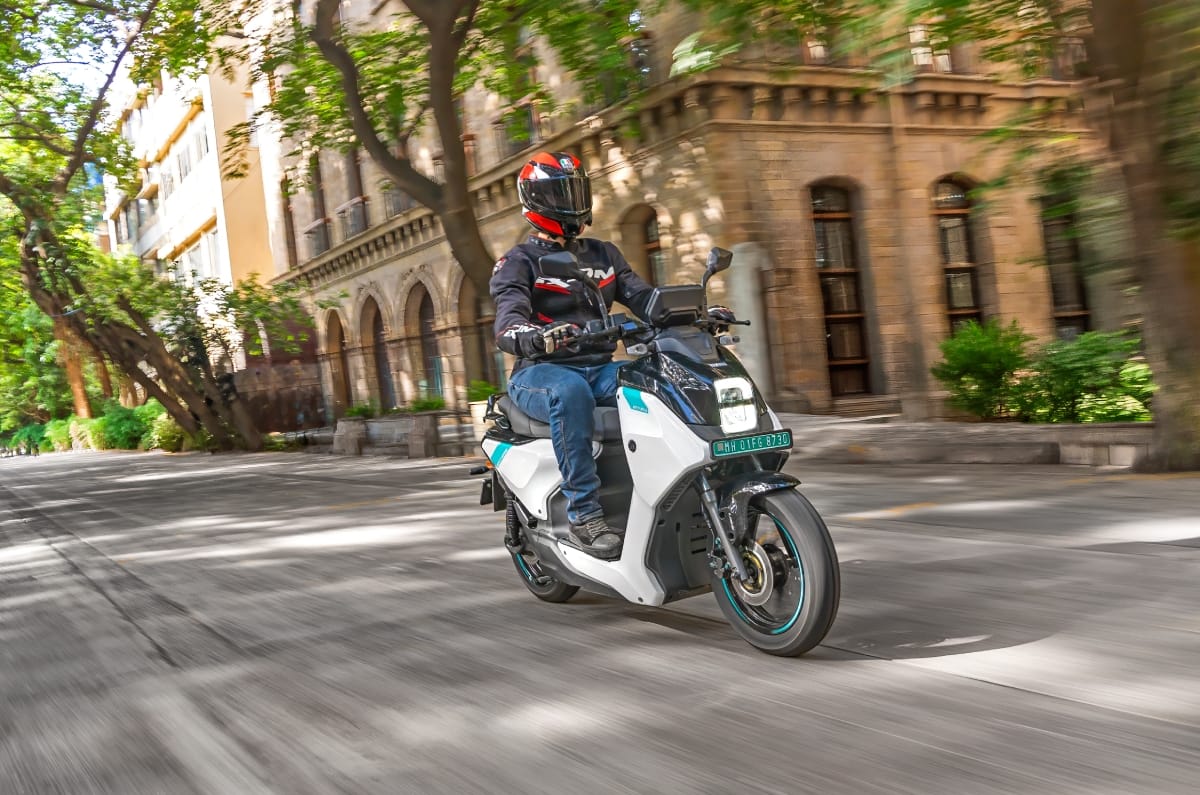
River indie being assembled on a production line

River Mobility has rolled out the 50,000th unit of its Indie electric scooter from its manufacturing facility in Hoskote, Karnataka, reaching the production milestone less than three years after the model’s launch in October 2023.

  1. 50,000th Indie rolled out from River Mobility’s Hoskote facility in Karnataka
  2. Indie produces 6.7kW of peak power
  3. Claimed IDC range of 160km

River Mobility production milestone: Key details

Retail network now spans over 75 stores across India

The company has simultaneously expanded its retail presence to more than 75 stores across the country. Both vehicle and battery pack assembly take place at the Hoskote facility.

The Indie is currently priced at Rs 1.55 lakh (ex-showroom, Bengaluru) and has been one of the standout growth stories in India’s electric scooter segment over the past year. The scooter recorded its highest-ever monthly retail sales in June 2026, with 4,436 units sold – up 234 percent year-on-year. Sales in CY2026 have already accounted for more than 54 percent of all Indie retail sales since the model’s launch.

River Mobility now ranks seventh among electric two-wheeler manufacturers in India by monthly retail volumes. At its current run rate, the company appears on track to cross 50,000 annual retail sales for the first time in 2026.

Eshisha Java

Honda expands electric scooter lineup with QC3

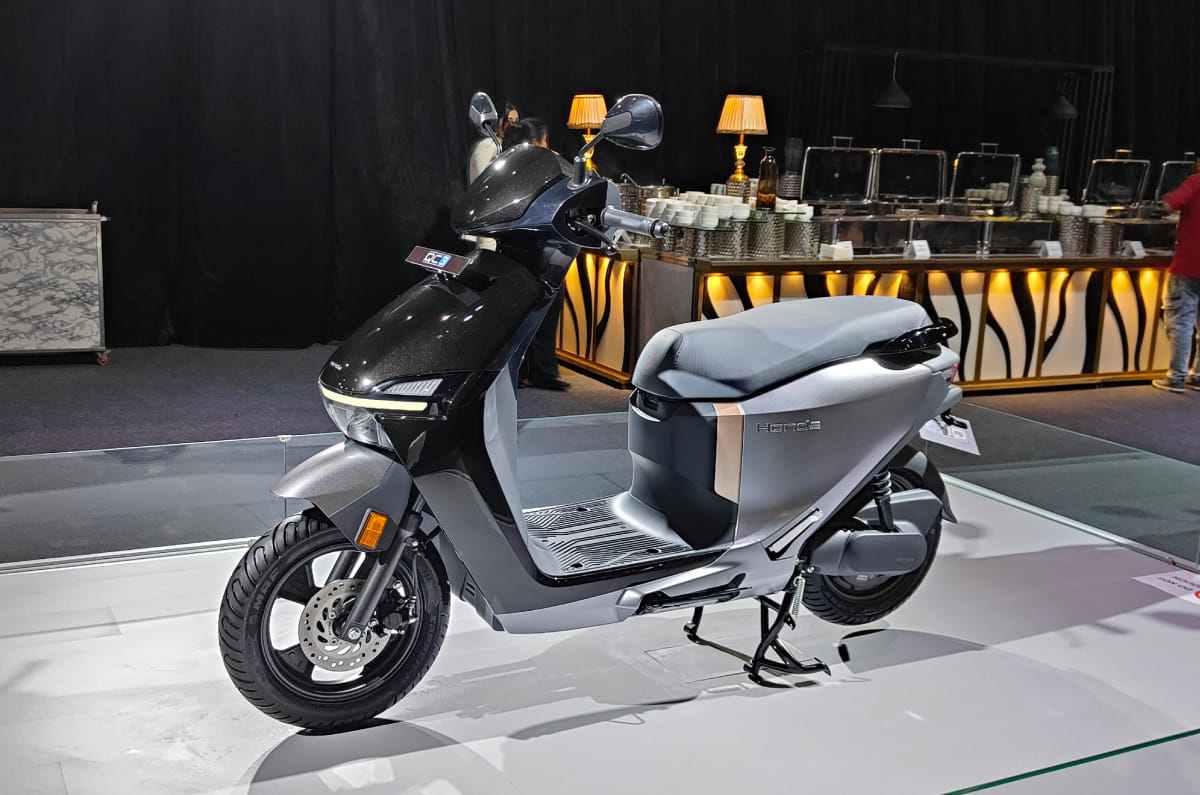
Honda QC3

Honda has unveiled the new QC3 electric scooter, expanding its electric two-wheeler lineup to three models. The QC3 will sit above the QC1, offering a larger battery, more range and a higher level of equipment.

  1. Uses a 3kWh battery with a claimed IDC range of 145km
  2. Full charge takes 5 hours
  3. Gets a TFT display with Honda RoadSync connectivity

Honda QC3 India details

The QC3 sits above the QC1 in terms of range and features

Honda currently sells two electric scooters in India – the QC1 and the Activa-e – both of which are currently available through select dealerships in limited cities, with a nationwide rollout underway. The QC1 is Honda’s most affordable EV, with prices starting at Rs 90,708. It uses a fixed 1.5kWh battery, offers a claimed IDC range of 80km and has a top speed of 50kph. The Activa-e, meanwhile, uses two removable 1.5kWh batteries for a combined capacity of 3kWh and a claimed IDC range of 102km, and is priced from Rs 1.20 lakh.

With its fixed 3kWh battery and claimed IDC range of 145km, the QC3 becomes Honda’s longest-range electric scooter in India, suggesting that it will also sit above the existing models in terms of pricing. While Honda is yet to reveal motor specifications, it has confirmed that the battery can be charged from 0-80 percent in 2 hours 40 minutes, with a full charge taking 4 hours. The scooter also gets a TFT display with Honda RoadSync connectivity and turn-by-turn navigation, setting it apart from the more basic instrument cluster on the QC1.

As with the QC1 and Activa-e, the QC3’s availability is likely to be phased. Honda is yet to announce pricing or a launch timeline for the new scooter, and we’ll update this story as more details are announced.

5 things to know before buying the Keeway Hypevolt-R

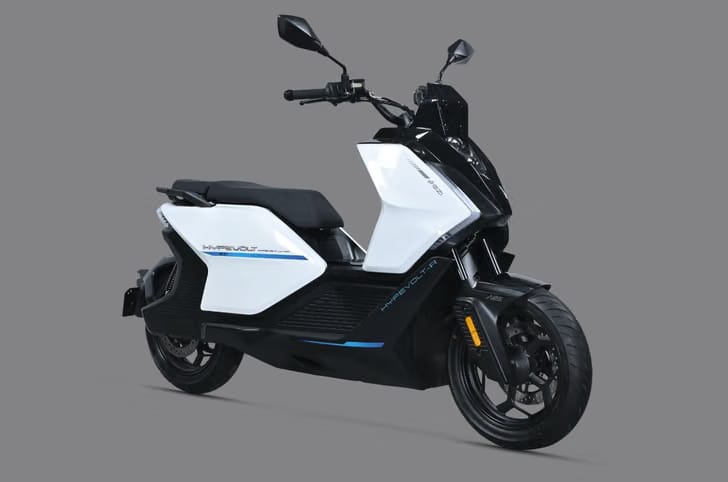
Keeway Hypevolt-R studio image

The Keeway Hypevolt-R is the Chinese brand’s first electric scooter for the Indian market and, on paper, is an impressive proposition. At its price point, it occupies a middle ground between most mainstream electric scooters and more niche offerings like the TVS X and Yamaha Aerox-E. Here are answers to some of the most commonly asked questions about the scooter.

What is the price of the Keeway Hypevolt-R?

The Keeway Hypevolt-R is priced at Rs 1.99 lakh (ex-showroom, India). Keeway has described this as an introductory price, suggesting it may increase in the future. Bookings are currently open through the brand’s official website for a token amount of Rs 5,000. The scooter is available in two colour options – Crystal White and Platinum Grey.

What motor does the Keeway Hypevolt-R use?

The Keeway Hypevolt-R is powered by a mid-mounted permanent magnet synchronous motor producing 12kW of peak power. Keeway claims the scooter can sprint from 0-40kph in 2.3 seconds and reach a top speed of 115kph. It also gets three riding modes – Eco, Normal and Sport.

What is the range and charging time of the Keeway Hypevolt-R?

The Keeway Hypevolt-R uses a dual 5kWh removable battery setup with a claimed IDC range of 180km. Both batteries can be charged either on or off the scooter. Using the onboard charger, a 0-80 percent charge takes approximately three hours.

What features does the Keeway Hypevolt-R have?

The Hypevolt-R comes with a comprehensive feature list for its price. It gets projector LED headlamps with a full-width LED light bar, a 5-inch TFT display with Bluetooth connectivity, reverse mode, USB Type-A and Type-C charging ports, and 27 litres of underseat storage. On the safety front, it gets dual-channel ABS, traction control, hill-hold control, hill-descent control, cruise control, blind-spot detection and a rear-view camera.

What is the seat height and weight of the Keeway Hypevolt-R?

The Keeway Hypevolt-R has a seat height of 770mm and weighs 140kg. That makes it slightly heavier than the Yamaha Aerox-E (139kg) and the TVS X (134kg), but it is also more powerful than both, producing 12kW compared to their respective outputs of 9.4kW and 11.7kW.

Simple Arrive family e-scooter to debut on September 2

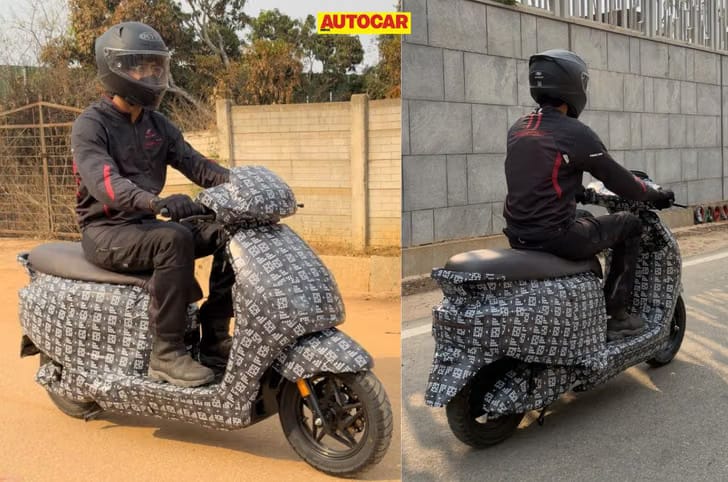
Camaflouged Simple Arrive being tested

Simple Energy has announced that it will unveil its first family-oriented electric scooter on September 2, 2026. We first spotted the scooter, expected to be called the Arrive, undergoing testing in March, and the announced unveil date now confirms that its launch is imminent.

  1. New model likely to be called the Simple Arrive
  2. Will rival the Ather Rizta, TVS iQube and Bajaj Chetak
  3. Features a more family-oriented design than the existing Simple One and Simple OneS

Simple Energy family scooter: What we know

Upcoming model gets a more conventional design than the Simple One

From images of the scooter testing earlier this year, the Arrive adopts a notably different design approach from Simple’s existing range. While the One and OneS feature sharp, angular styling, the Arrive opts for a more rounded, conventional silhouette aimed at family scooter buyers.

Key details visible on the test mule included a flat single-piece seat, twin rear shock absorbers, a centre stand, and a front disc brake paired with a rear drum brake – a more cost-effective and practical setup than the disc-at-both-ends configuration on the One range. A front storage cubby and a TFT display also appear to be part of the package, while the headlight is mounted on the apron with a short wind deflector above it.

Simple Energy has also announced that it has become the first Indian OEM to commercially manufacture heavy rare-earth-free electric motors, a technology that is expected to make its way to the new scooter. Apart from confirming the September 2 unveil date, the company has not revealed any additional details. We will update this story as more information becomes available.

Bajaj plans to launch two new Pulsar models before festive season

Bajaj Pulsar badge

Bajaj Auto has confirmed it will launch 10 new two-wheeler models over the next six weeks, including two all-new motorcycles under the Pulsar brand in the 125cc and 150cc segments. Alongside the product introductions, the company has also announced plans to expand its manufacturing capacity from around 7 million units per annum to over 9 million – an increase of more than 25 percent.

  1. 10 new models to launch over the next six weeks
  2. Manufacturing capacity to expand from around 7 million to over 9 million units per annum

Bajaj Auto product plans: Key details

Two new Pulsars confirmed for the 125cc and 150cc segments

Speaking after the company’s Q1 FY27 results, Joint Managing Director Rakesh Sharma confirmed that the upcoming launches would complete a wider portfolio refresh. The 10 launches will include two all-new Pulsars in the 125cc and 150cc segments – with the next-generation Pulsar 125 already spotted testing on multiple occasions – alongside additional Chetak electric scooter variants. Sharma described them as “very interesting launches in the next six months” that will “open up new segments.”

On the manufacturing front, Bajaj Auto currently has an installed capacity of around 7.2 million units per annum. The planned expansion to over 9 million units will be achieved progressively over several quarters through a combination of brownfield expansion at existing facilities and a new greenfield plant, although the location has not yet been finalised. The additional capacity will primarily support electric two-wheelers, electric three-wheelers, premium motorcycles and select ICE three-wheeler models.

These announcements build on the FY27 roadmap outlined by Chairman Niraj Bajaj in the company’s annual report earlier this year, which identified the domestic 125cc-plus motorcycle segment, Chetak EV growth and export expansion as the company’s three key priorities. Bajaj Auto’s record Q1 FY27 performance provided strong backing for that strategy, with revenue from operations rising 37 percent year-on-year to Rs 17,244 crore and total vehicle sales reaching a record 1.44 million units. Exports also surged 52 percent to their highest-ever quarterly level.

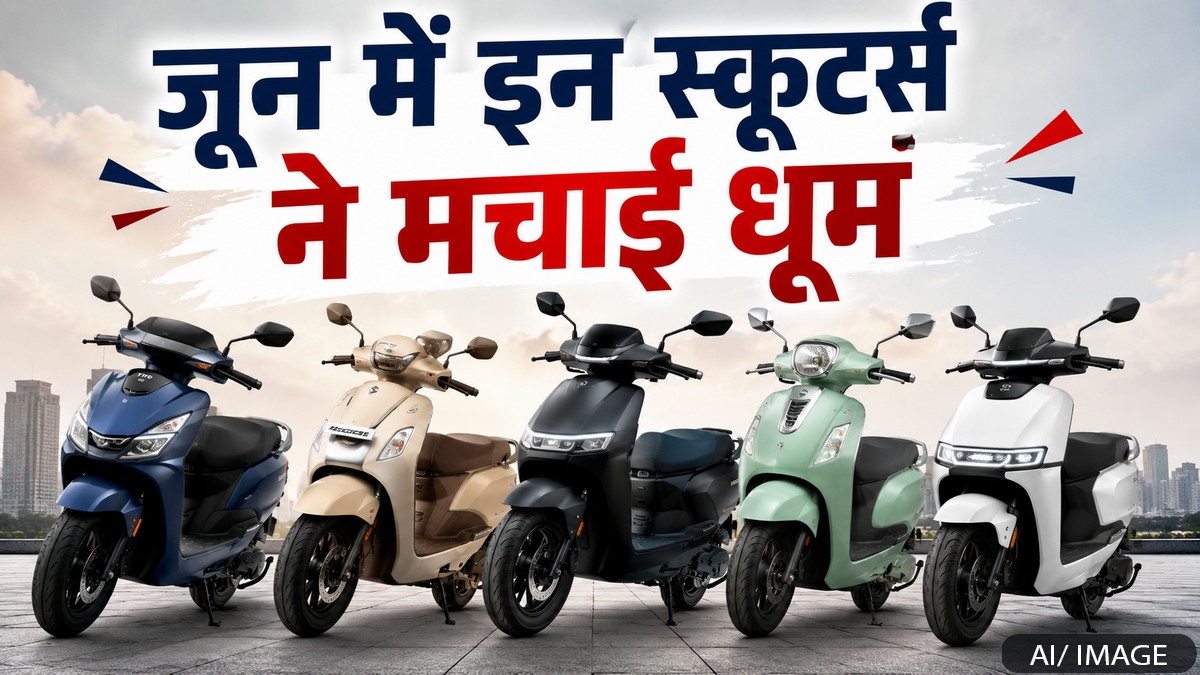
Top 10 Scooters : TVS iQube, Bajaj Chetak और Ather Rizta की रिकॉर्ड बढ़त, Honda Activa का दबदबा कायम

electic scooters

भारतीय स्कूटर बाजार में जून 2026 के दौरान शानदार तेजी देखने को मिली। इस महीने देश के टॉप-10 सबसे ज्यादा बिकने वाले स्कूटरों की कुल 6,36,315 यूनिट्स बिकीं, जो जून 2025 की 4,60,440 यूनिट्स की तुलना में 38% अधिक हैं। हालांकि बिक्री के मामले में Honda Activa ने एक बार फिर पहला स्थान बरकरार रखा, लेकिन इलेक्ट्रिक स्कूटरों की तेजी ने बाजार में नया मुकाबला खड़ा कर दिया है।

एक्सपर्ट्‍स के मुताबिक आने वाले एक-दो वर्षों में इलेक्ट्रिक स्कूटर पारंपरिक पेट्रोल स्कूटरों को कड़ी टक्कर दे सकते हैं। फिलहाल पेट्रोल स्कूटर भारतीय बाजार में सबसे ज्यादा बिक रहे हैं, लेकिन इलेक्ट्रिक स्कूटरों की वृद्धि दर कहीं अधिक तेज है। 

ALSO READ: Electric Scooter कैसे शहरी सफर को बना रहे हैं आसान, कौनसे फीचर्स लोगों को लुभा रहे हैं

Honda Activa रही नंबर-1

Honda Activa की जून 2026 में 2,18,932 यूनिट्स की बिक्री हुई, जो पिछले साल की तुलना में 19% अधिक है। टॉप-10 स्कूटरों की कुल बिक्री में अकेले Activa की हिस्सेदारी एक-तिहाई से ज्यादा रही। विशेषज्ञों के अनुसार Activa की लोकप्रियता के पीछे इसकी भरोसेमंद परफॉर्मेंस, बेहतर माइलेज, मजबूत रीसेल वैल्यू और Honda का व्यापक सर्विस नेटवर्क प्रमुख कारण हैं।

TVS Jupiter दूसरे नंबर पर

TVS Jupiter ने 1,36,805 यूनिट्स की बिक्री के साथ दूसरा स्थान हासिल किया। इसकी बिक्री में सालाना आधार पर 27% की बढ़ोतरी दर्ज की गई। वहीं Suzuki Access ने 63,121 यूनिट्स बेचकर तीसरा स्थान हासिल किया और इसकी बिक्री में 22 प्रतिशत की वृद्धि रही।

ALSO READ: Samsung Galaxy Unpacked 2026: 22 जुलाई को लॉन्च होंगे नए फोल्डेबल फोन और स्मार्टवॉच, Galaxy Z Fold8 सीरीज पर सबकी नजर

इलेक्ट्रिक स्कूटरों की शानदार छलांग


जून 2026 में सबसे बड़ी बढ़त TVS iQube ने दर्ज की। इसकी बिक्री 47,331 यूनिट्स रही, जो पिछले साल के मुकाबले 232 प्रतिशत अधिक है। इसके अलावा Bajaj Chetak की 40,376 यूनिट्स बिकीं और इसने 126 प्रतिशत की सालाना वृद्धि दर्ज की। एक्सपर्ट्‍स के मुताबिक नए मॉडल, बेहतर बैटरी तकनीक और इलेक्ट्रिक वाहनों के प्रति बढ़ते भरोसे से इन स्कूटरों की मांग लगातार बढ़ रही है।

ALSO READ: Electric scooter खरीदने से पहले जान लें कौन-सी बैटरी है सबसे बेहतर? रेंज, चार्जिंग और लाइफ में कितना फर्क और कैसे करें चेक

अन्य प्रमुख स्कूटरों का प्रदर्शन

TVS Ntorq – 37,762 यूनिट्स (65 प्रतिशत वृद्धि)

Ather Rizta – 24,742 यूनिट्स (97 प्रतिशत वृद्धि)

Yamaha Ray – 22,782 यूनिट्स (60 प्रतिशत वृद्धि)

Suzuki Burgman Street – 22,454 यूनिट्स (43 प्रतिशत वृद्धि)

Hero Destini 125 – 22,010 यूनिट्स (9 प्रतिशत वृद्धि) 

New Yamaha electric scooter details revealed

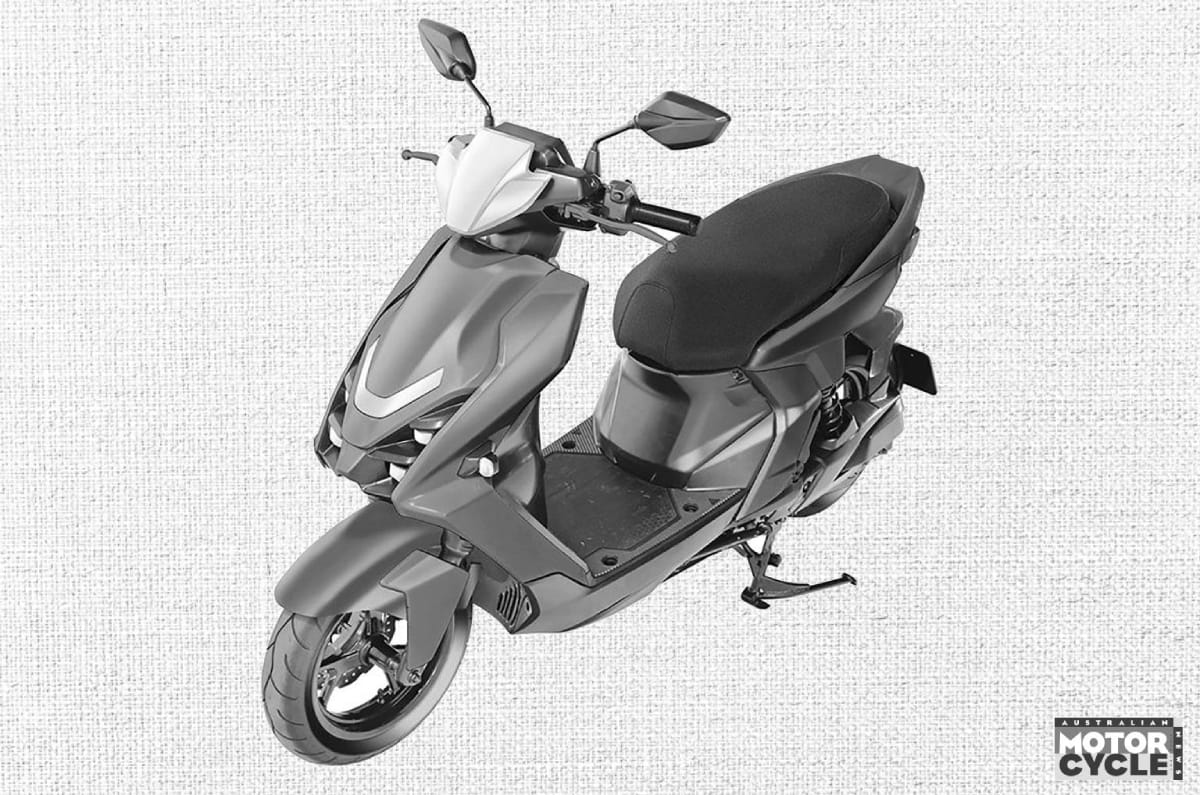
yamaha electric scooter design

A Japanese design registration has surfaced showing what appears to be a production-ready Yamaha electric scooter. While the model doesn’t correspond to anything in the brand’s current lineup, its overall silhouette draws inspiration from the RayZR 125, albeit with several notable departures from the norm in terms of its mechanical layout.

  1. New Yamaha electric scooter surfaces in Japanese design registration
  2. Features a centrally mounted motor with belt drive
  3. Overall silhouette draws inspiration from the RayZR 125

New Yamaha electric scooter: What we know

The centrally mounted motor drives the rear wheel via a belt

The most significant detail revealed by the design registration is the scooter’s drivetrain. Unlike the Yamaha Aerox-E, which uses a swingarm-mounted motor, this scooter features a centrally mounted motor (like on the EC-06) that transmits power to the rear wheel via a belt drive. 

The registration also reveals that the battery is housed beneath the seat, with the design suggesting it could be swappable. Another interesting detail is the rear suspension layout. The twin shock absorbers are mounted much further forward on the swingarm than is typical, straddling the battery compartment beneath the seat. The scooter also gets disc brakes at both ends, a telescopic front fork and a long single-piece seat.

Other visible details include a distinctive headlight featuring two rectangular LED units flanking a centrally positioned V-shaped DRL. The tail-light also has a sharp, angular design, while the inside of the front apron appears to house multiple storage pockets. The absence of a visible keyhole suggests keyless ignition and seat access, and a small TFT display is also visible.

Yamaha’s global electric two-wheeler lineup remains relatively limited. In Europe, the company sells the Neo’s, a compact urban commuter with a claimed range of 68km. In India, Yamaha currently offers the EC-06, based on the River Indie, alongside the in-house-developed Aerox-E. Judging by its proportions and design, this newly patented scooter could be positioned as a 125cc-equivalent model, which could make it well suited to our market. That said, this is only a Japanese design registration at this stage, and Yamaha has not announced any details regarding the scooter or a potential production timeline.

Source: AMCN

VinFast Viper electric scooter and new electric motorcycle patented in India

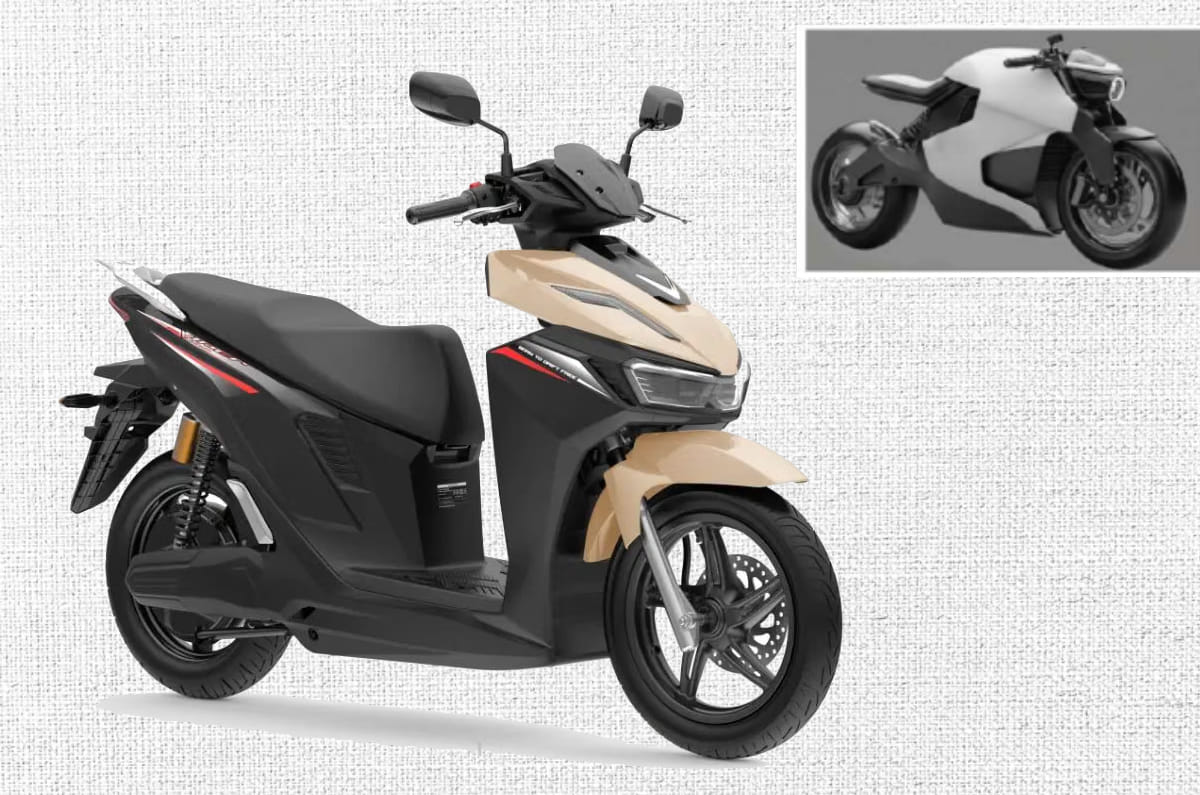
Vinfast Viper and new motorcycle design image

VinFast has filed design patents in India for two electric two-wheelers – the Viper electric scooter and what appears to be an electric motorcycle based on the Sulad concept revealed earlier this year. The filings suggest VinFast is expanding its India product plans beyond the three electric scooters it had previously indicated it would bring to the country.

  1. VinFast Viper electric scooter design patented in India
  2. VinFast Sulad concept-based electric motorcycle also patented
  3. VinFast had previously indicated plans to launch electric scooters in India in 2026

VinFast Viper and new electric motorcycle details

The electric motorcycle appears to be based on the VinFast Sulad concept revealed earlier this year

We had previously reported that a sporty-looking scooter resembling the VinFast Viper had been patented in India in June, although at the time we noted a few visual differences, including a twin-pod headlight instead of the Viper’s single-piece unit and more rounded body panels. This latest patent filing is a much closer match to the Viper sold in Vietnam, with its angular styling, five-spoke alloy wheels, hub-mounted motor and overall silhouette closely mirroring the production model. The current-generation Viper is equipped with a 4.8kWh battery and a 3kW hub-mounted motor.

The electric motorcycle patent is the more intriguing of the two. Based on its design, it appears to resemble the VinFast Sulad concept that the brand unveiled earlier this year as part of its broader electric motorcycle strategy. While VinFast has not released any technical specifications for the concept, Vietnamese media reports suggest it could be powered by a motor producing up to 50kW and have a top speed of around 130kph.

VinFast had stated earlier this year that it planned to launch electric scooters in India in 2026 and had identified three models from its Vietnam lineup as candidates for our market. With both the Viper and an electric motorcycle now patented in India, the company’s two-wheeler plans for the country appear to be broader than initially indicated. VinFast has not announced a launch timeline for either model, and we will update this story as more information becomes available

Yamaha EC-06 Performance Tested and Explained

Yamaha EC-06 being ridden through South Bombay

The Yamaha EC-06 electric scooter gets a 4kWh battery pack, a claimed IDC range of 169km, and a top speed of 79kph. 

Yamaha EC-06: Acceleration

During our test, the conditions were dry.

Acceleration

Time

0-40kph

3.46 seconds

0-60kph

6.82 seconds

0-80kph

15.50 seconds

The EC-06 gets three riding modes including Eco, Standard, and Power. We conducted this acceleration test in Power mode with the battery state of charge above 97 percent. In this riding mode, acceleration is fairly quick and the scooter managed to get from 0 to 80kph in 15.50 seconds. 

Yamaha EC-06: Roll-On Acceleration

The scooter delivers 6.7kW (8.9hp) of peak power.

Roll-On Acceleration

Time

20-50kph

3.31 seconds

30-70kph

7.34 seconds

50-80kph

10.96 seconds

In our roll-on acceleration tests, the scooter took 3.31 seconds to get from 20-50kph, 7.34 seconds from 30-70kph, and 10.96 seconds from 50-80kph. In the city, making quick overtakes is fairly easy while riding in Standard or Power mode. Eco mode can get to 50kph, but is a usable mode in the city and while climbing flyovers as well. 

Yamaha EC-06: Braking

Decent braking performance with good regenerative braking as well.

Braking

Distance

60-0kph

22.87 metres

The EC-06 gets disc brakes at both ends and features a combined braking system. The regenerative braking is also strong and at slow speeds, allows a rider to smoothly filter through stop-go traffic without having to constantly apply the brakes.

Yamaha EC-06: Specifications and price

Yamaha has co-developed the EC-06 with Bengaluru-based startup River. 

Peak Power

6.7kW

Max Torque

26Nm

Battery Capacity

4kWh

Kerb Weight

132kg

Brakes (F/R)

Disc / Disc

Tyres (F/R)

110/80-14  / 120/70-14 

Price (ex-showroom)

Rs 1.72 lakh (ex-showroom, Delhi)

Priced at Rs 1.72 lakh (ex-showroom, Delhi), this is one of the more expensive electric scooters on sale in India.

Scooter industry posts best-ever first-half sales in 2026

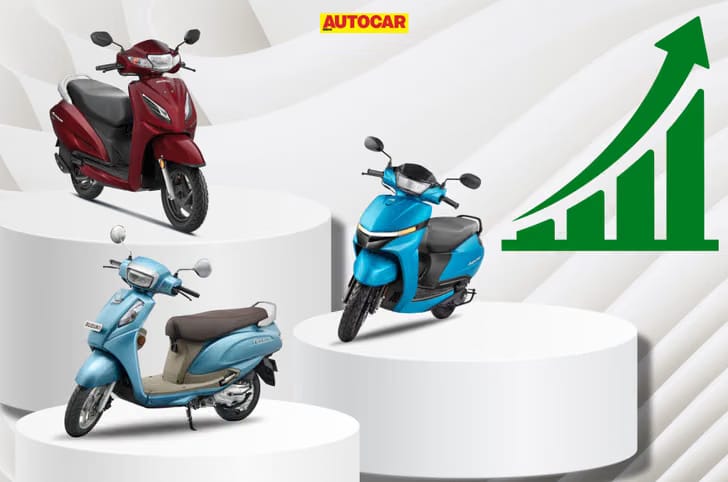
graphic showing the activa, jupiter, and access

India’s scooter industry has delivered its strongest-ever first-half (H1) performance, with wholesales of 44.2 lakh units – up 33 percent year on year (YoY) and 11 lakh units higher than in the same period of 2025. Monthly sales crossed the 7 lakh-unit mark in five of the six months, with April being the only exception. At this pace, the segment is on course to surpass 90 lakh annual units for the first time in a calendar year.

  1. Scooter wholesales reach 44.2 lakh units in H1 2026
  2. Segment on course to cross 90 lakh units in CY2026

India scooter sales H1 2026: OEM breakdown

Honda Motorcycle & Scooter India

16.2 lakh units

Market leader Honda maintained its position with 16.2 lakh scooter dispatches, up 32 percent year-on-year, giving it a 37 percent market share as the Activa and Dio continued to drive volumes. Honda’s electric scooter sales, comprising the Activa e: and QC1, contributed 2,100 units in the first half, down 4 percent year-on-year. Honda’s share of the scooter market has fallen significantly over the past decade, from 57 percent in FY2017 to 37 percent today, as TVS and other manufacturers have gained ground.

TVS Motor Co

12.6 lakh units

TVS dispatched 12.6 lakh scooters in H1 2026, up 32 percent year-on-year. Its ICE scooters, led by the Jupiter, NTorq and Zest, contributed 10.24 lakh units (up 26 percent), while the electric iQube and Orbiter added 2.41 lakh units (up 66 percent). EVs now account for 19 percent of TVS’s scooter sales, up from 15 percent a year ago.

Suzuki Motorcycle India

5.95 lakh units

Suzuki dispatched 5.95 lakh scooters, up 11 percent year-on-year, although its market share fell to 13 percent from 16 percent as the broader market expanded at a faster pace. The Access 125 remained the brand’s volume leader, ahead of the Burgman Street and Avenis. The e-Access contributed 3,390 wholesale units in H1 2026, while retail sales stood at 2,042 units.

Hero MotoCorp

3.46 lakh units

Hero MotoCorp posted the strongest growth among the larger manufacturers, with 3.46 lakh scooter dispatches – up 72 percent year-on-year. ICE scooters contributed 2.44 lakh units (up 54 percent), while the Vida electric range added 1.02 lakh units (up 136 percent). Hero’s EV penetration has risen sharply, with Vida now accounting for 30 percent of its scooter sales, compared to 21 percent in H1 2025.

Bajaj Auto

2.07 lakh units

Bajaj Auto dispatched 2.07 lakh scooters, up 53 percent year-on-year, of which 2.04 lakh were Chetak electric scooters and 2,850 were Yulu e-bikes. Bajaj’s overall scooter market share edged up to around 5 percent from 4 percent a year ago.

India Yamaha Motor

1.89 lakh units

Yamaha posted 39 percent growth with 1.89 lakh scooter dispatches, with the Fascino and RayZR accounting for 1.75 lakh units of that total. The Aerox grew 15 percent to 12,590 units. Yamaha also dispatched 678 EC-06 electric scooters between March and June, before launching the Aerox-E earlier this month.

Ather 

1.64 lakh units

Ather Energy dispatched 1.64 lakh scooters, up 67 percent year-on-year, taking its share of the overall scooter market to 4 percent from 3 percent a year ago. The Rizta remained the company’s key volume driver alongside the 450 range. Ather recently became the fourth Indian EV manufacturer to cross 7 lakh cumulative retail sales.

Other manufacturers

Piaggio Vehicles (Aprilia and Vespa) dispatched 19,162 units, up 27 percent year-on-year. River Mobility, which became a SIAM member during the year, dispatched 11,569 River Indie scooters in the April-June quarter alone, including its highest-ever monthly wholesale of 5,217 units in June.