
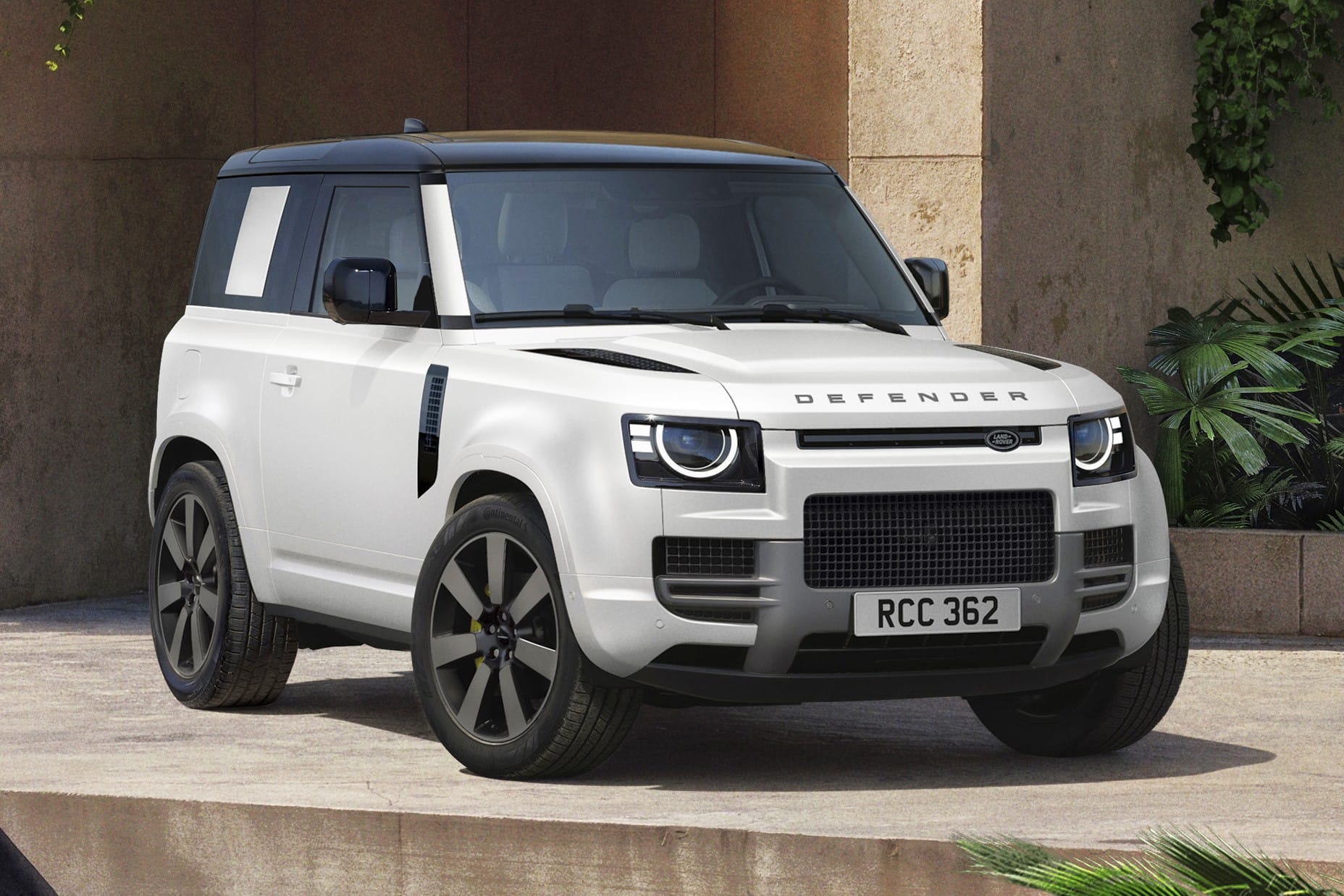
Defender line-up updated for 2026, gets new Vertex variant

2026 land rover defender

Land Rover has comprehensively updated the Defender range for 2026 and beyond, introducing a new urban-focused Vertex variant, an expanded powertrain line-up, additional personalisation and colour options, and a 6-seat configuration for the Defender 110. The 2026 Defender line-up is now available to order in global markets, with deliveries scheduled to begin this autumn. An India launch for the 2026 Defender is also expected, though the timeline is unconfirmed.

2026 Defender Vertex leads styling changes for the line-up
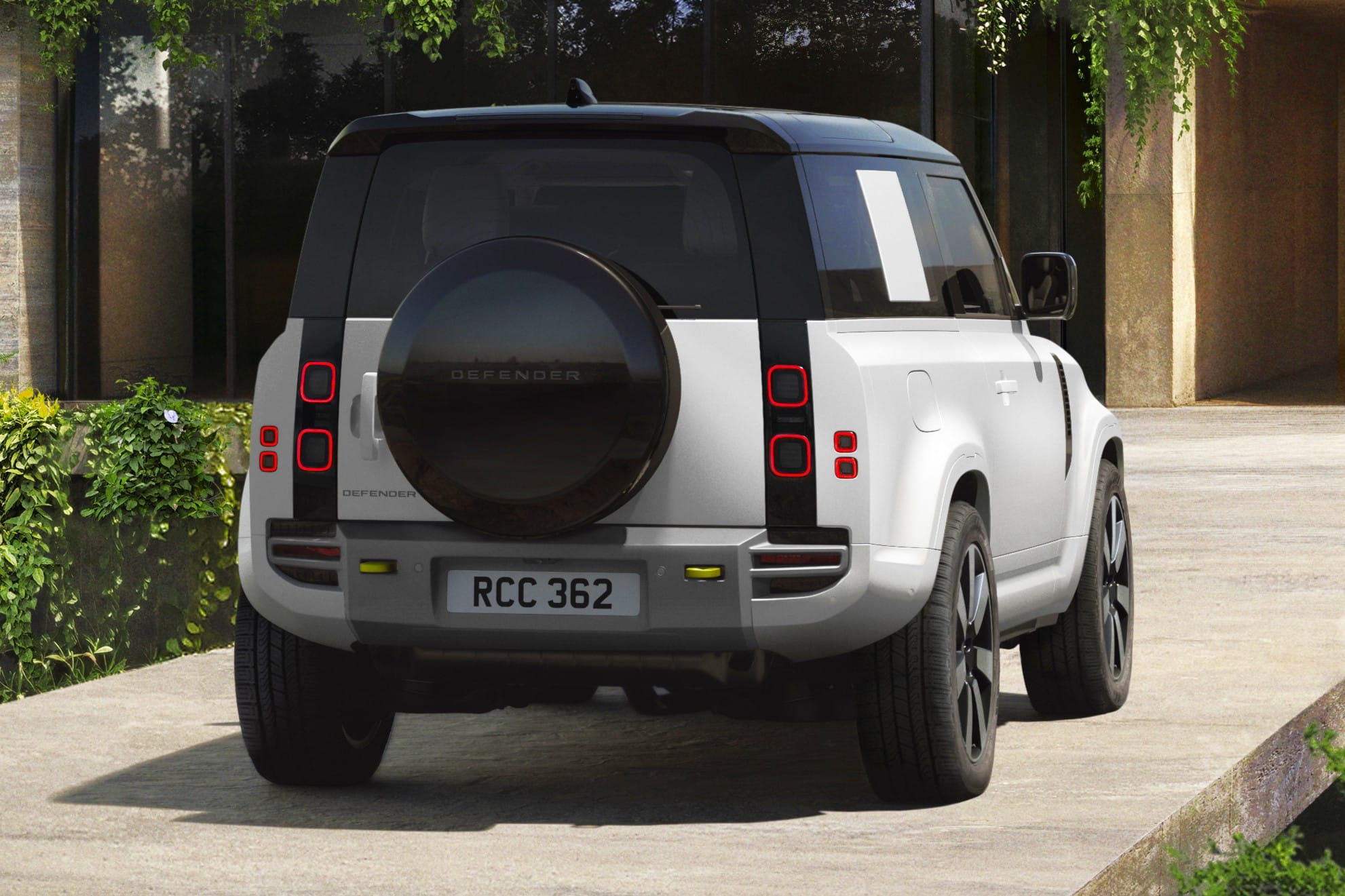
The headline addition to the 2026 Defender range is the urban-centric Vertex variant, which sits alongside the Defender X trims. Available in 90, 110, and 130 body styles, the Vertex is the first non-Octa Defender variant to feature a significant exterior redesign, which includes a larger front grille, updated front and rear bumpers finished in Carpathian Grey, revised fog lamps, yellow brake calipers and recovery eyes, body-coloured cladding and side sills, and a Gloss Black roof spoiler.
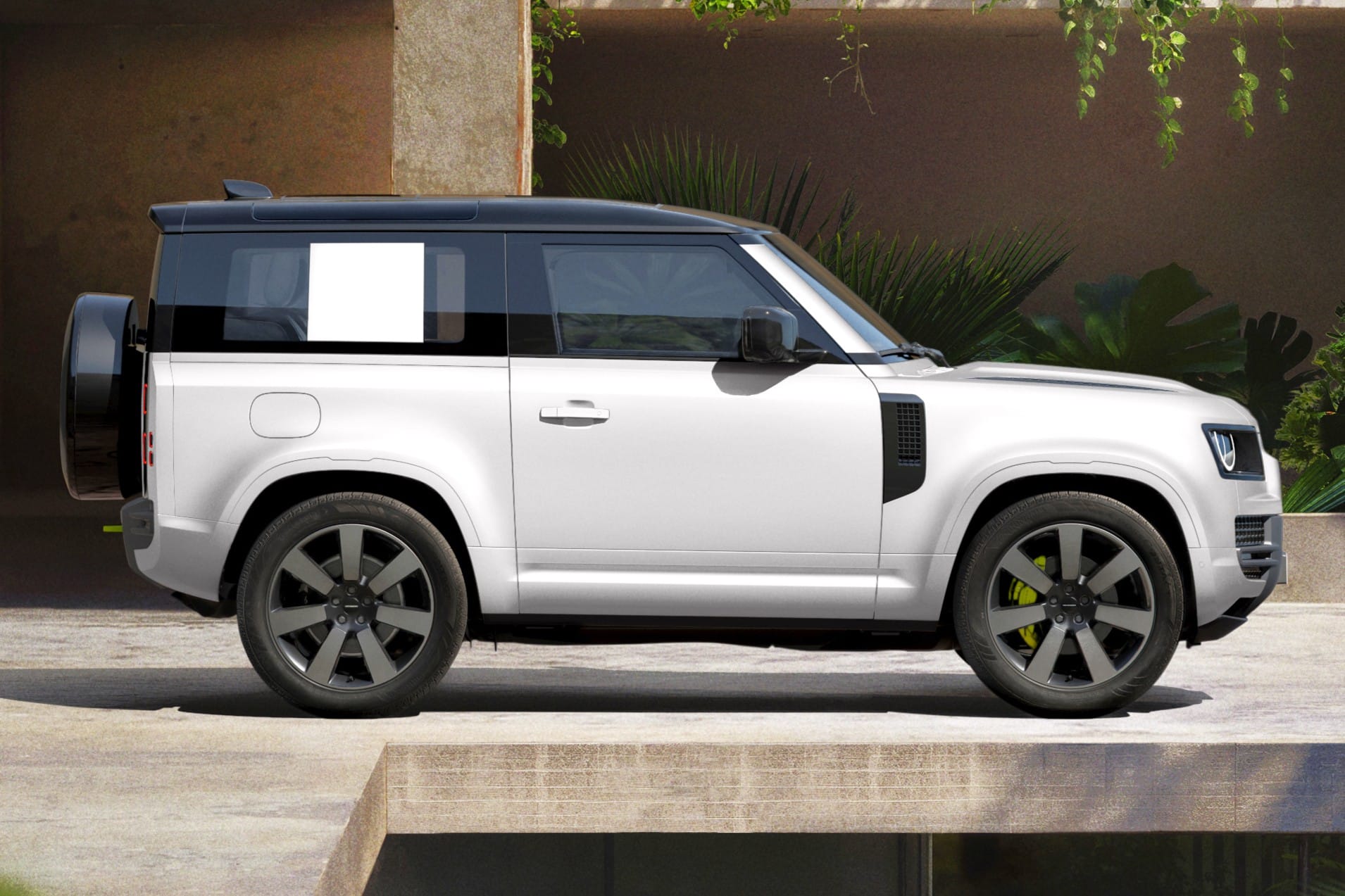
22-inch alloy wheels finished in Satin Dark Grey are standard fit for the Defender Vertex, with 22-inch Gloss Black and 20-inch Satin Dark Grey alloy wheels optionally available as well. As for colour options, the Defender Vertex is available in Fuji White, Santorini Black, Woolstone Green, Borasco Grey, Carpathian Grey, and Patagonia White (matte). Buyers can even opt for Matte or Gloss paint protection films, which are claimed to resist stone chips, scratches, and scuffs via a self-healing coating.

Other Defender variants to offer Vertex styling updates too, along with more colours
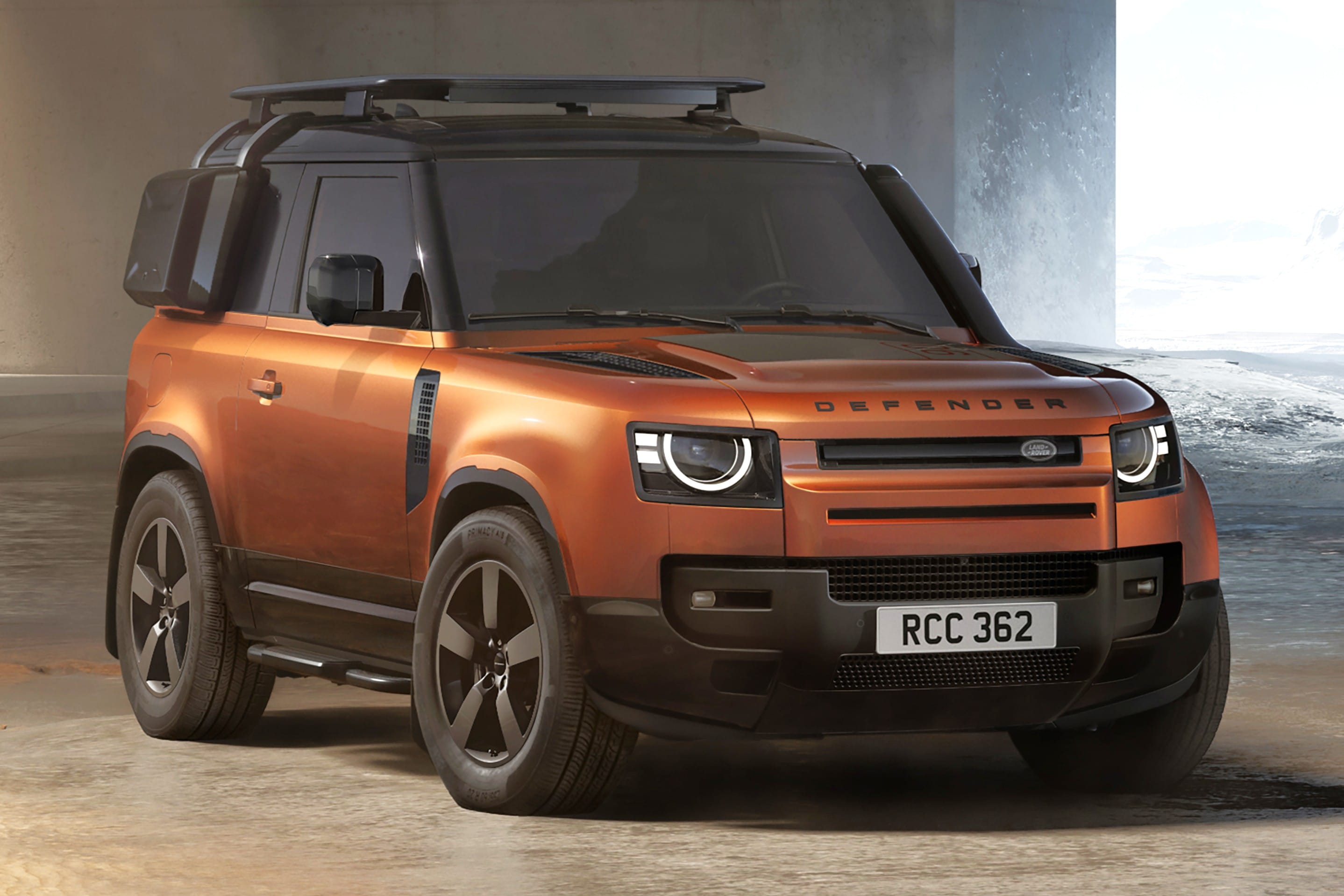
2026 Defender 110 in Namib Orange.

These styling updates aren’t exclusive to the Defender Vertex, as Land Rover will offer them as part of the new Extended Exterior Pack for the luxury off-roader’s existing variants. The Defender range is now available in 15 colour options too, including a new Namib Orange finish.

New colours for Defender Trophy Edition and Octa
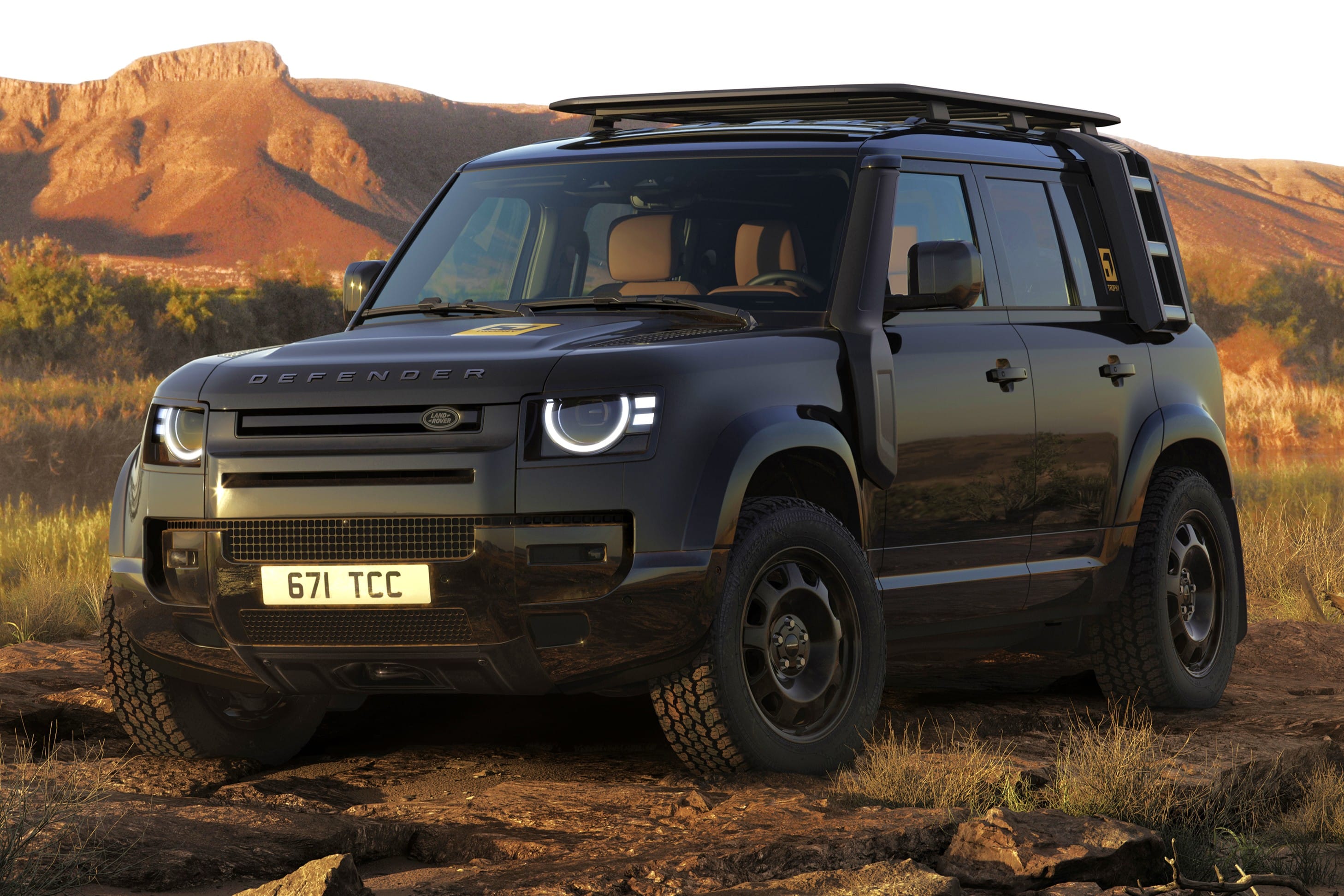
2026 Defender Trophy Edition in Santorini Black.

Land Rover has also refreshed the Defender Trophy Edition with a new Santorini Black exterior finish and expanded interior customisation options. The Defender Octa also gets a new Woolstone Green colour option.

2026 Defender interior gets new AI voice assistant
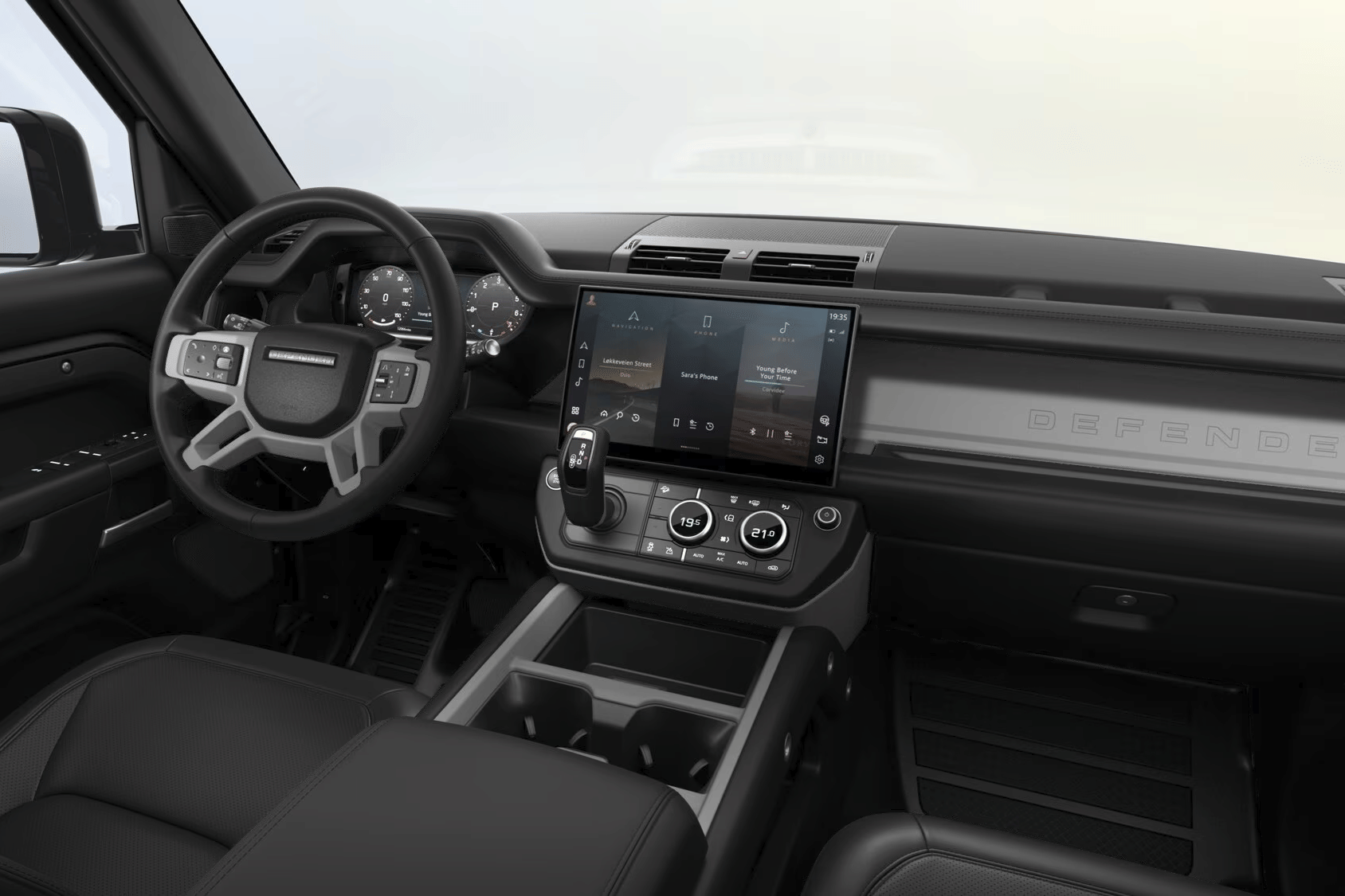
Current Defender interior. Image used for representation only.

Inside, the 2026 Defender features a new AI-powered ‘Hey Land Rover’ voice assistant. There’s also a new optional Technology Pack that bundles a heads-up display, a Meridian surround sound system, a camera-based IRVM, and a domestic power socket.

6-seat configuration now offered for Defender 110

Another notable update is a new 6-seat configuration for the Defender 110, featuring second-row captain’s chairs with additional bolstering, armrests, and a manual recline function. It also improves access to the third row, increases rear passenger legroom, and enables additional storage space between the second-row seats.
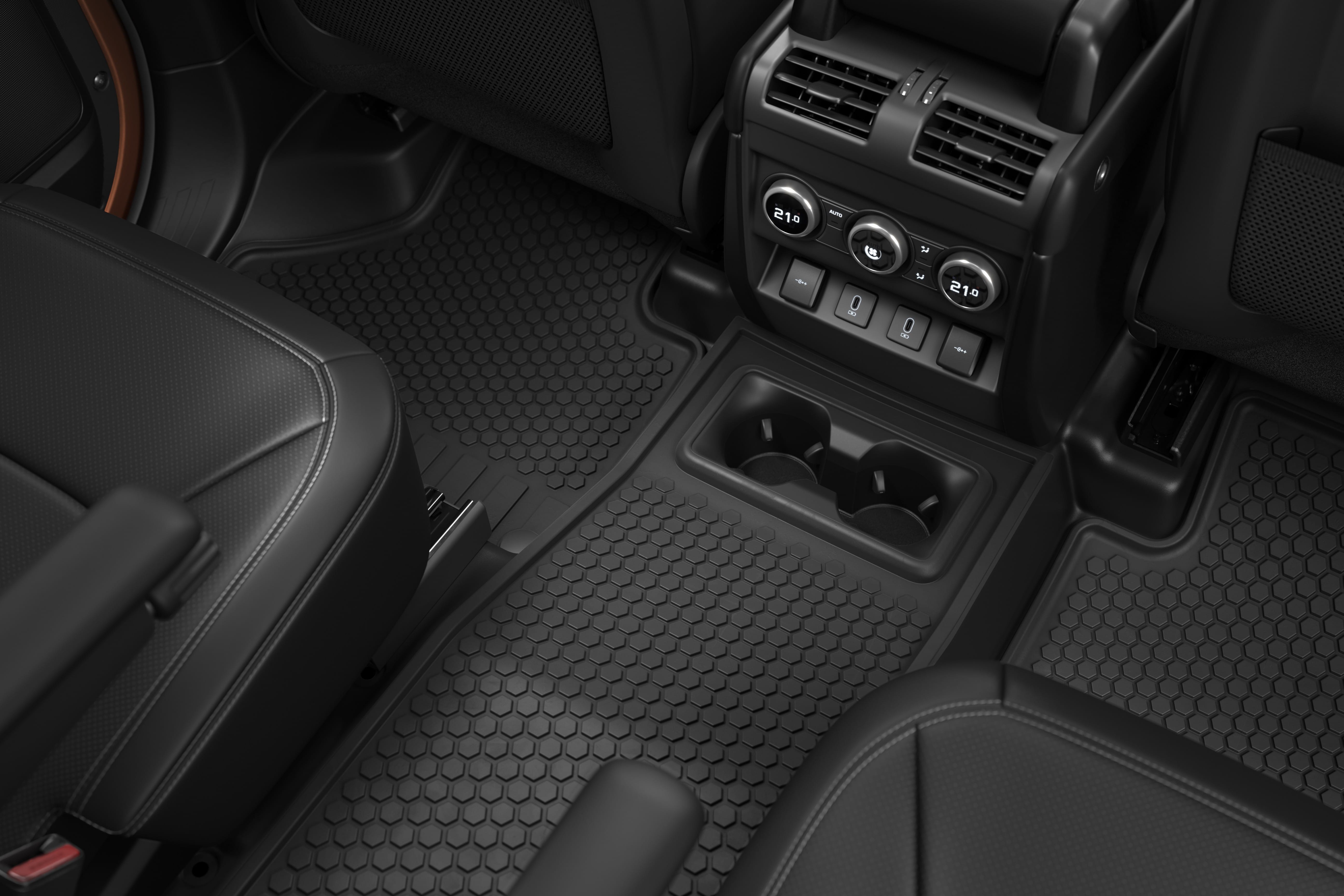
6-seat layout for 2026 Defender 110.

For the Defender Vertex, Land Rover is offering Windsor Leather, Forged Textile, and Ultrafabrics upholstery options in a variety of colour schemes. Standard equipment for the Defender Vertex 90 and 110 includes 3-zone climate control, a cabin air purifier, and a domestic power socket, while the 130 version upgrades the climate control to a 4-zone system.

2026 Defender gets new 6-cyl petrol engine options, but Octa is 95hp weaker
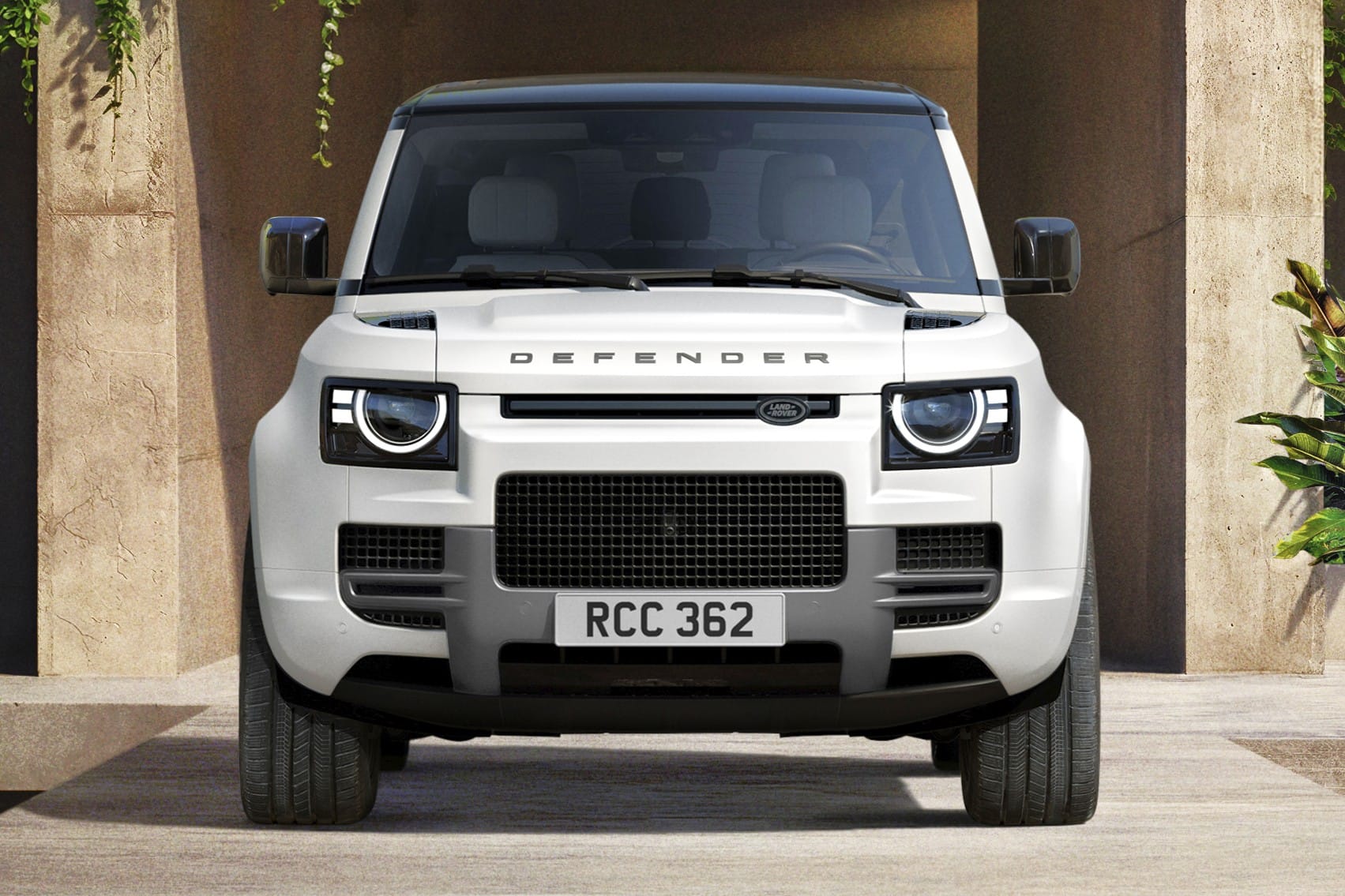
Land Rover has added a new 3.0-litre 6-cylinder mild hybrid petrol engine option, dubbed ‘P380’, to the 2026 Defender range, producing 380hp and 550Nm. In select markets, the prior 300hp 2.0-litre 4-cylinder petrol engine in the ‘P300’ variant (currently offered in India) has been replaced by a 3.0-litre 6-cylinder petrol engine producing 300hp and 470Nm.

Meanwhile, the range-topping Defender Octa’s BMW-sourced 4.4-litre twin-turbo mild-hybrid V8 has been detuned in the interest of complying with the latest Euro 6 emissions regulations. Power drops from the current 635hp to 540hp, though the torque output remains unchanged at 750Nm.
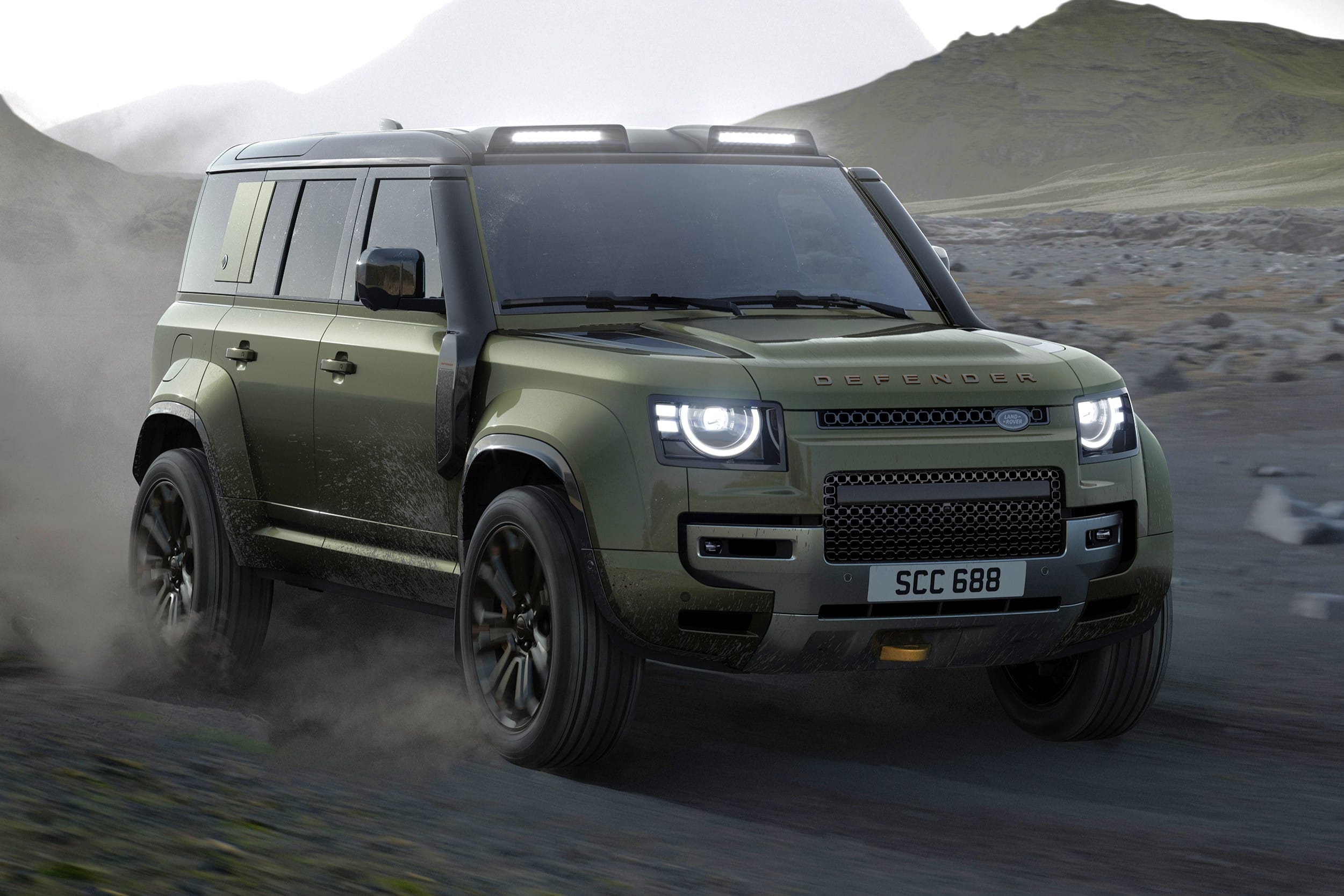
2026 Defender Octa in Woolstone Green.

As a result, the claimed 0-100kph time increases from 3.8 seconds to 4.4 seconds – over half a second slower. However, the 2026 Defender Octa does feature a redesigned exhaust manifold, which is touted to deliver a deeper and more authentic V8 soundtrack.

Lastly, the long-running 5.0-litre supercharged petrol V8 option for higher Defender variants has been discontinued in most markets as part of the 2026 update.

Mercedes-Benz India flags fuel adulteration concerns amid E20 rollout

Mercedes

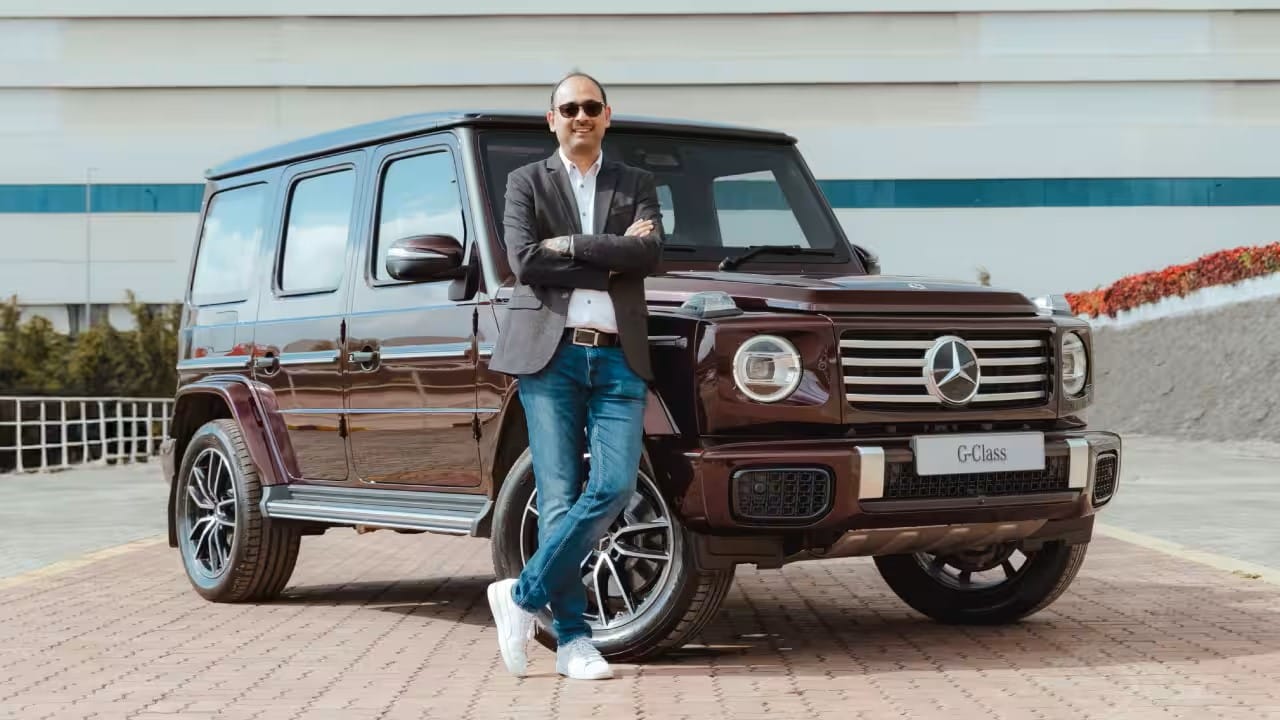
Mercedes-Benz India says suspected fuel adulteration is adding to customer concerns around E20 petrol, with some fuel quality issues being mistaken for problems caused by ethanol blending. The luxury carmaker said it has seen a rise in customer queries around E20 fuel. “We’ve seen a lot of anxiety, with a lot of customers asking us and our dealerships,” Mercedes-Benz India managing director and CEO Santosh Iyer said.

  1. Mercedes-Benz says customer queries around E20 fuel have increased
  2. Dealer network equipped with FAQs to address customer concerns
  3. Latest S-Class hybrid already compatible with E25 fuel

Mercedes-Benz clarifies concerns around E20 fuel

Speaking during the company’s half-yearly sales call, Iyer said the company has equipped its dealer network with FAQs to help address customer concerns around E20 fuel. 

He added that Mercedes-Benz’s latest models are already compatible with higher ethanol blends and said the company is not concerned about E20 compliance. “We were one of the first to get materially compliant E20 cars, as well as emission-compliant E20 cars. The new S-Class hybrid is already an E25-compliant car,” he said.

Mercedes urges stricter checks on fuel quality

Iyer said some cases of poor-quality fuel are being mistaken for issues related to E20 petrol, making it difficult to distinguish fuel adulteration from genuine ethanol-related concerns. “We have seen increased fuel adulteration happening under the garb of E20, which is also causing concern because we have some customers who may not have filled the right quality of fuel, and then explaining it to them may be challenging,” he said.

He said stronger enforcement at fuel stations would help distinguish genuine fuel-quality issues from concerns related to E20, reducing confusion among customers. “So this is something for the enforcement agencies and regulators to check because under this E20, even we can see a bit of proliferation of fuel adulteration, which is causing anxiety and concern among customers,” he said.

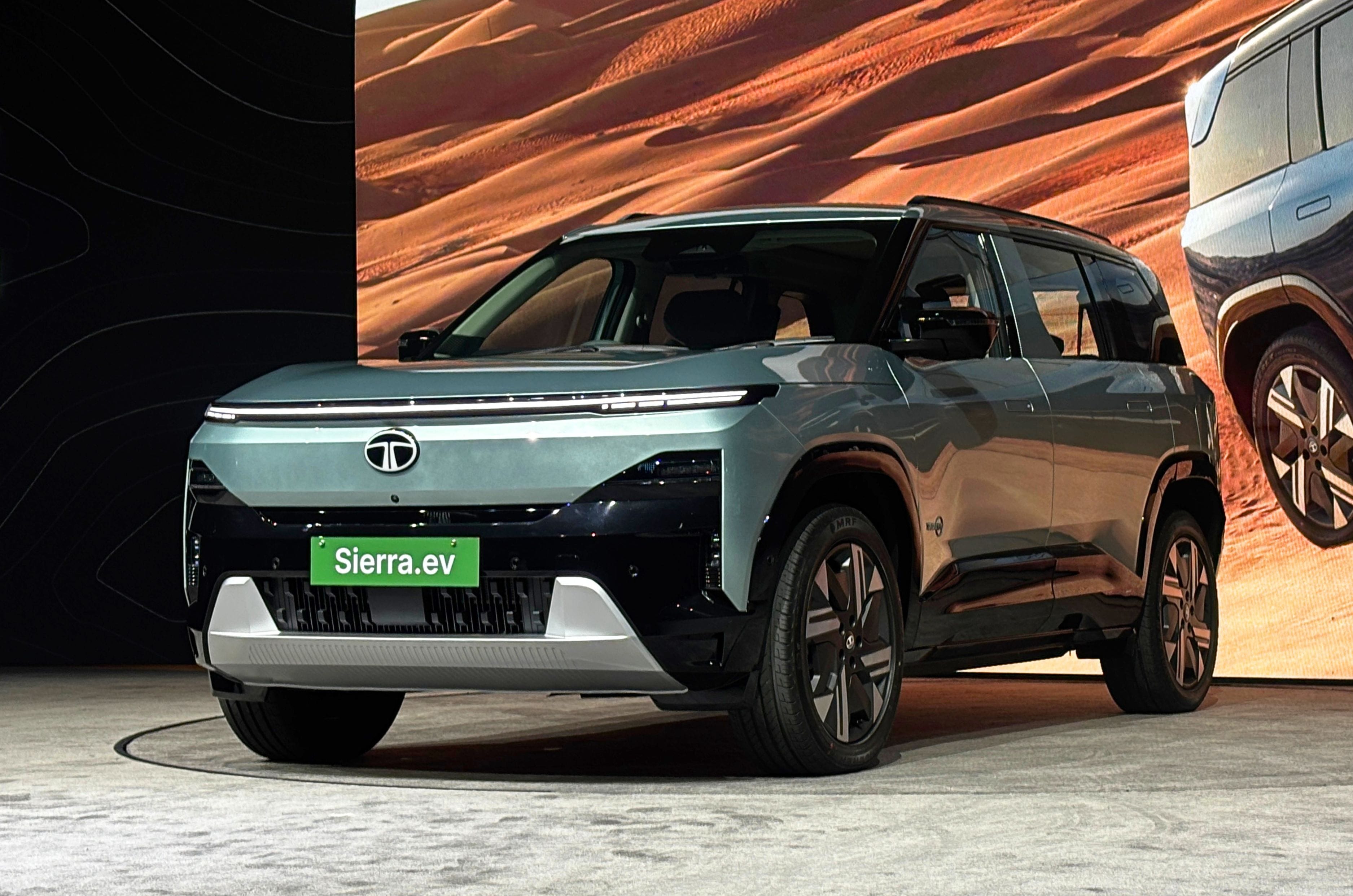
Tata Sierra EV on-road prices listed in top Indian cities

Tata Sierra EV front quarter static

Tata‘s second all-wheel-drive (AWD) offering in its all-electric range, the Sierra EV, was recently launched in India. It borrows most of its interior and exterior design, as well as the feature suite, from its combustion-powered Sierra, introducing new colour themes and some EV-specific features. It is offered with two battery pack options: 63kWh or 75kWh, both with a rear-axle-mounted (RWD) motor, with the larger battery also getting a dual-motor AWD option. The Sierra EV is being offered in five trims: Pure, Pure S, Adventure, Empowered, and Empowered A, priced between Rs 18.79 lakh and Rs 25.99 lakh (ex-showroom).

If you are interested, here are the Tata Sierra EV’s on-road prices across major Indian cities to help you understand how much you need to pay to get your hands on one.

Tata Sierra EV on-road price range

RWD variants are priced up to Rs 26.91 lakh, and AWD costs up to Rs 28.19 lakh

Tata Sierra EV price range in top Indian cities (in Rs, lakh)


63kWh RWD

75kWh RWD

75kWh AWD

Ex-showroom, India

18.79-22.79

22.19-24.79

25.99

Kolkata (on-road)

19.39-23.43

22.82-25.95

26.66

Chennai (on-road)

20.13-24.31

22.69-26.41

27.66

Mumbai (on-road)

20.19-24.38

23.75-26.91

28.19

Note: On-road prices may vary based on city-specific registration charges and other cost components, including insurance, FASTag and RTO fees. Please check with your nearest Tata Motors dealership for the exact figures.

As the table shows, Kolkata offers the lowest Tata Sierra prices among the listed cities, followed by Chennai and Mumbai. The top-spec 63kWh RWD (Empowered 63) is Rs 95,000 cheaper in Kolkata than in Mumbai, while the 75kWh RWD (Empowered A 75) costs Rs 96,000 less. The largest gap is for the range-topping 75kWh AWD (Empowered A 75 AWD), which is priced at Rs 1.53 lakh lower in Kolkata.

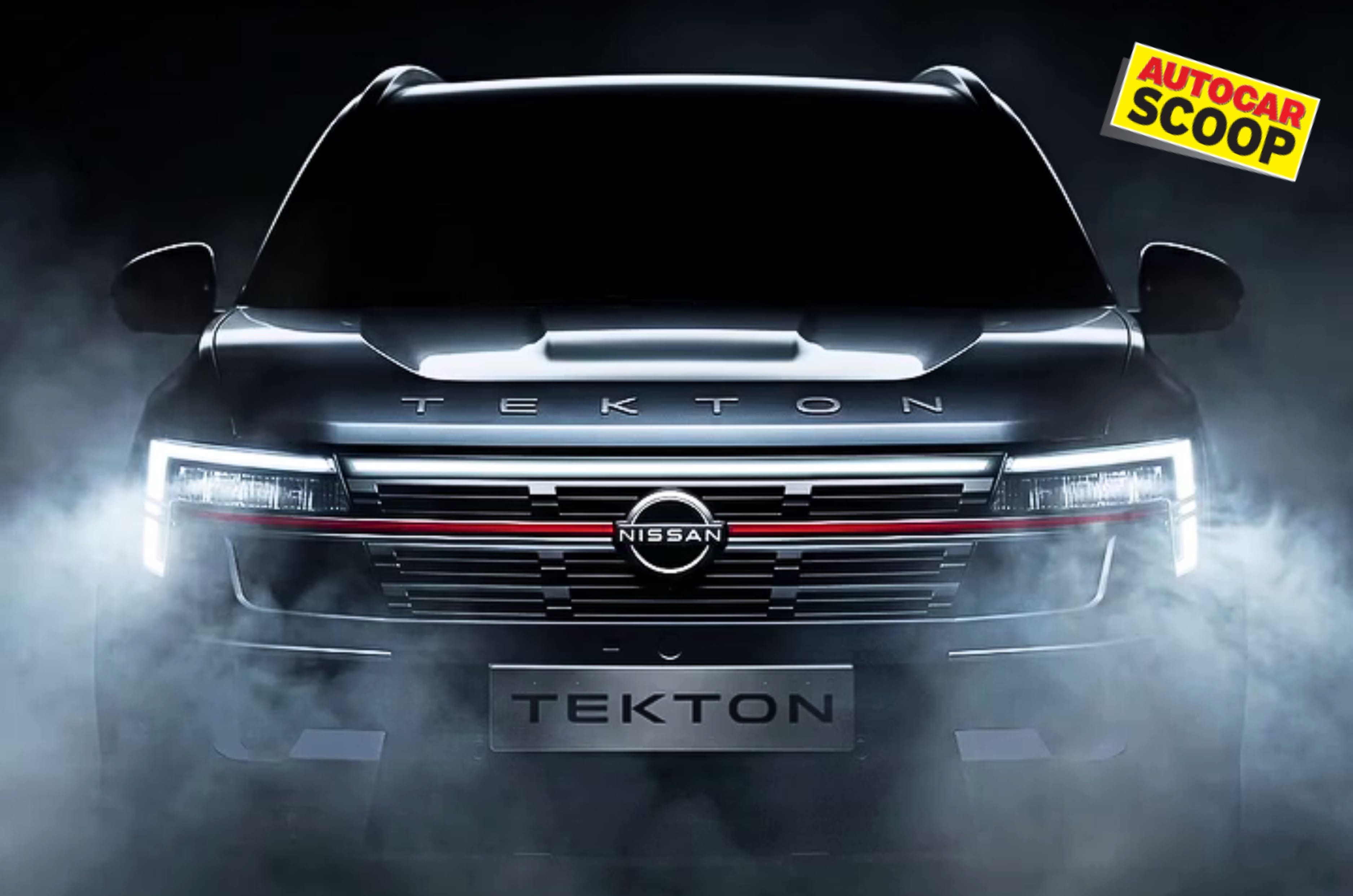
Nissan Tekton to miss out on Duster’s strong-hybrid powertrain

Nissan Tekton no hybrid powertrain

The Nissan Tekton, set to launch on 9 July 2026 as a sister model to the new Renault Duster, will not be offered with the latter’s upcoming strong-hybrid powertrain. Sources indicate that Renault will keep the 1.8-litre hybrid system exclusive, positioning it as a key competitive advantage in the increasingly crowded midsize SUV space.

Instead, the Tekton will be limited to the familiar 1.0-litre and 1.3-litre turbo-petrol engines. The hybrid, due to debut on the Duster around the festive season, is expected to deliver a significant boost in efficiency and urban drivability, making its absence on the Nissan a notable differentiation.

Renault to keep hybrid powertrain exclusive to Duster 

This divergence reflects a broader shift in the Renault-Nissan alliance’s India strategy. Following Renault’s buyout of Nissan’s stake in their Indian manufacturing joint venture, the French firm now leads local product development and engineering. In effect, Nissan operates as a dependent partner in India, sourcing platforms, powertrains and manufacturing from Renault.

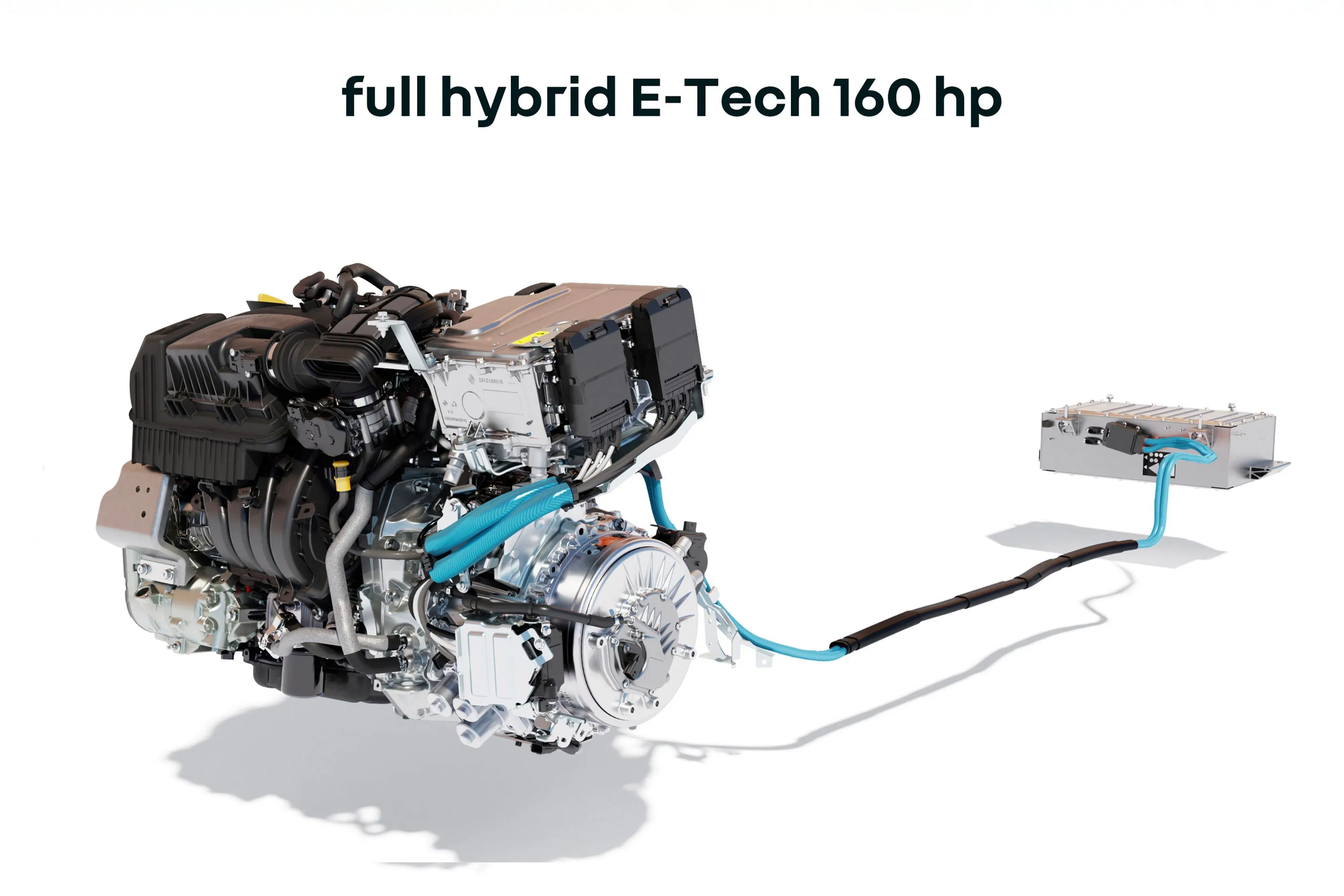
The Duster will use a 160hp, 1.8-litre strong-hybrid powertrain developed by UK-based Horse Powertrain. 

Renault spearheaded the development of the CMF-B-based RGMP platform underpinning both SUVs and is increasingly leveraging its control to retain exclusivity over key technologies, including electrified powertrains. The move allows Renault to position the Duster higher up the value chain, particularly as hybrid adoption gathers pace in India.

That said, collaboration between the two brands continues. Shared architectures, components and manufacturing remain central to the alliance’s cost structure, even as product differentiation becomes more pronounced.

The Duster’s hybrid system will be sourced via Horse Powertrain, the Renault-Geely-Aramco joint venture headquartered in the UK. Horse is expected to localise production in India, with Renault as its primary customer, signalling a longer-term push towards electrified powertrains in the market.

How will Nissan distinguish the Tekton from the Duster? 

Nissan hopes design will be a key differentiator for the Tekton. 

For Nissan, pricing and positioning will be key. The Tekton is expected to undercut the Duster, much like the Magnite did relative to the Kiger in its early positioning strategy. A broader spread of variants, particularly around the lower-output turbo-petrol engines, is also likely in order to maximise volume potential.

Nissan will also lean on brand perception to carve out space for the Tekton. Its design, reportedly inspired by the larger Patrol, will offer a more upright and rugged stance compared with the Duster. Combined with the enduring appeal of Japanese reliability among Indian buyers, this could help offset the absence of a hybrid option.

Ducati Diavel V4 Black Roadster Livery Launched in India

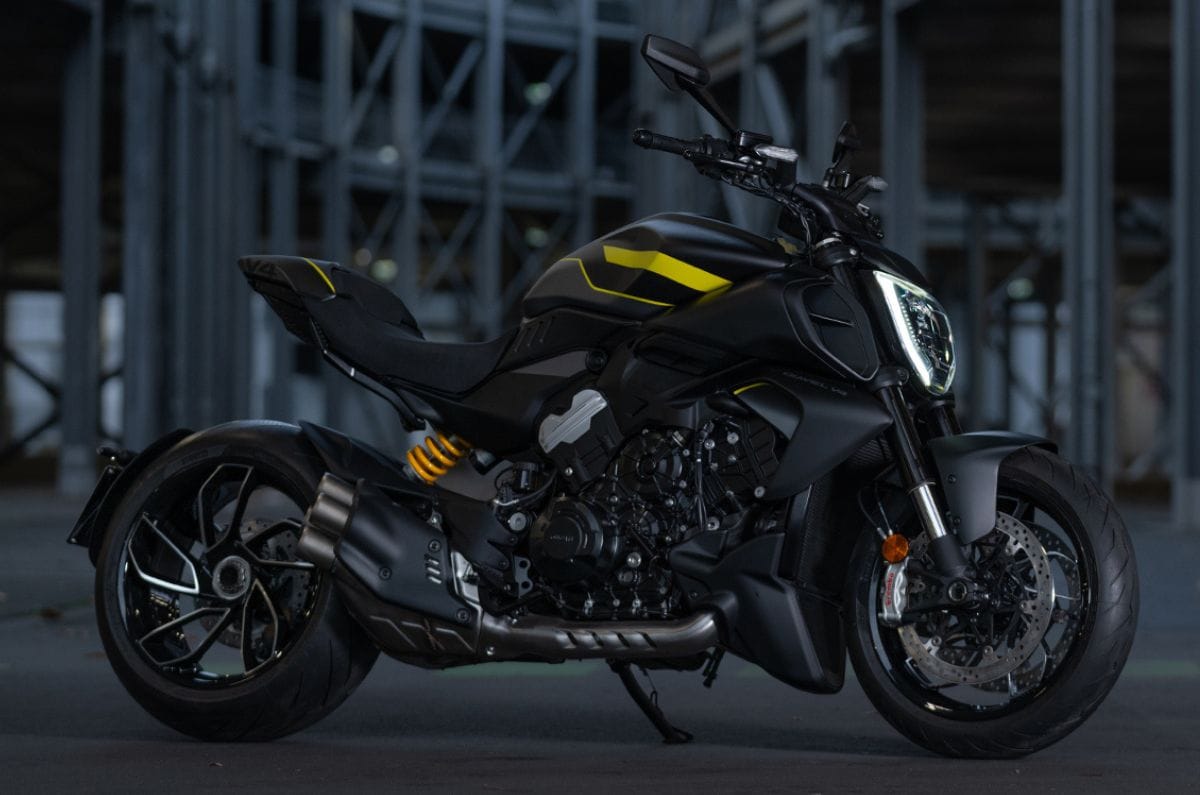
Ducati Diavel V4 Black Roadster Livery

Ducati have launched a new livery of the Diavel V4 combining a black and yellow colour scheme. With the addition of this livery, the Diavel V4 is now offered in three colour options. This new livery gives the bike a more aggressive look with a glossy black finish complemented by striking yellow graphics, titanium-finished accents and a redesigned seat cover. Mechanically, the motorcycle remains unchanged.

  1. Priced Rs 32,000 more than the Red livery.
  2. Remains mechanically unchanged.

Powering the Diavel V4 Black Roadster is the 1,158cc, V4 Granturismo engine that produces 168hp at 10,750rpm and 126Nm at 7,500rpm, paired with a six-speed gearbox featuring a bi-directional quickshifter. The bike continues to offer premium hardware, including fully adjustable suspension, Brembo brakes, multiple riding modes, cornering ABS, traction control and wheelie control.

With a price tag of Rs Rs 29.98 lakh (ex-showroom), it is Rs 32,000 more expensive than the Red colour scheme and Rs 59,400 more than the standard black colour scheme. Bookings for the Diavel V4 Black Roadster Livery are now open across Ducati dealerships in India, with deliveries expected to commence soon.


What to expect from Nissan Tekton ahead of its launch tomorrow

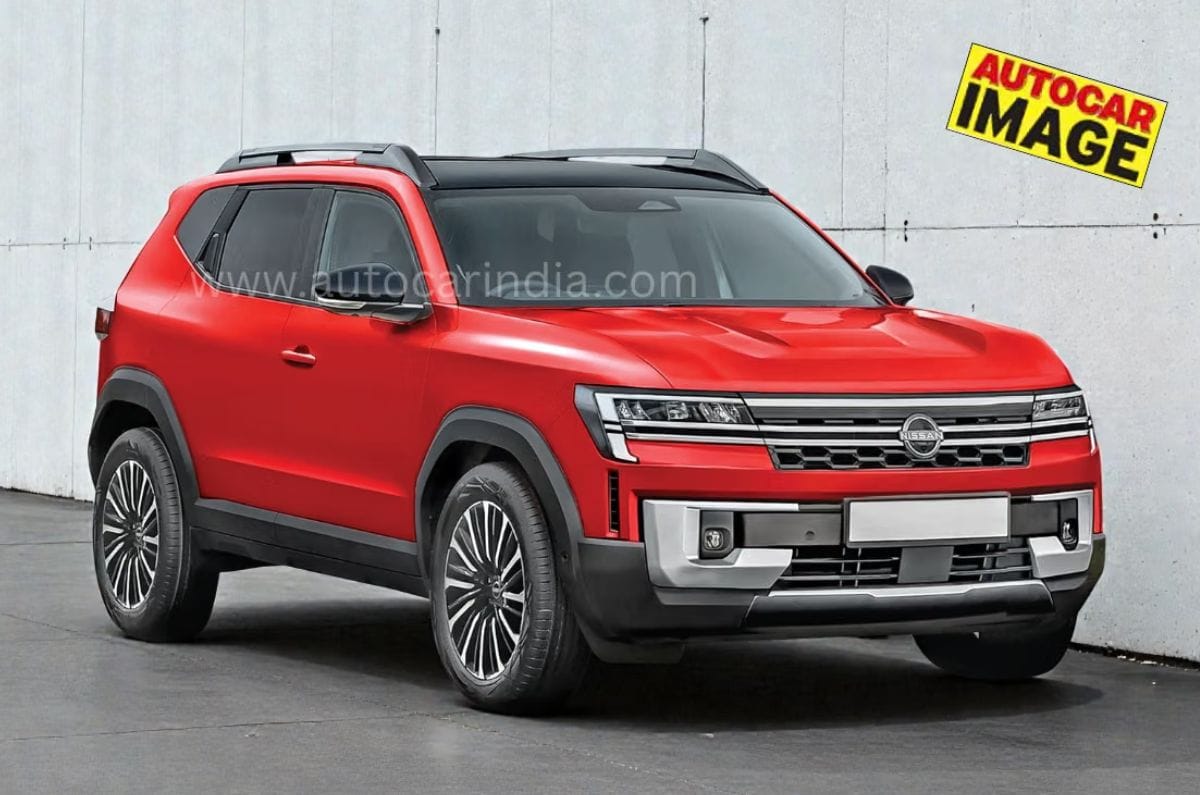
Nissan Tekton Autocar rendering

The midsize SUV space is truly a segment which no manufacturer can ignore. There are already a dozen models in this space, and now Nissan will be the latest entrant with the upcoming Tekton SUV, marking its return to this segment since the discontinuation of the Kicks back in 2023. The Nissan Tekton will be a badge-engineered Renault Duster, sharing its platform and powertrains, but with a completely different top hat. Ahead of its official debut tomorrow, here’s everything we know about the Nissan’s new midsize SUV. 

How different will be the Tekton from the Duster?  

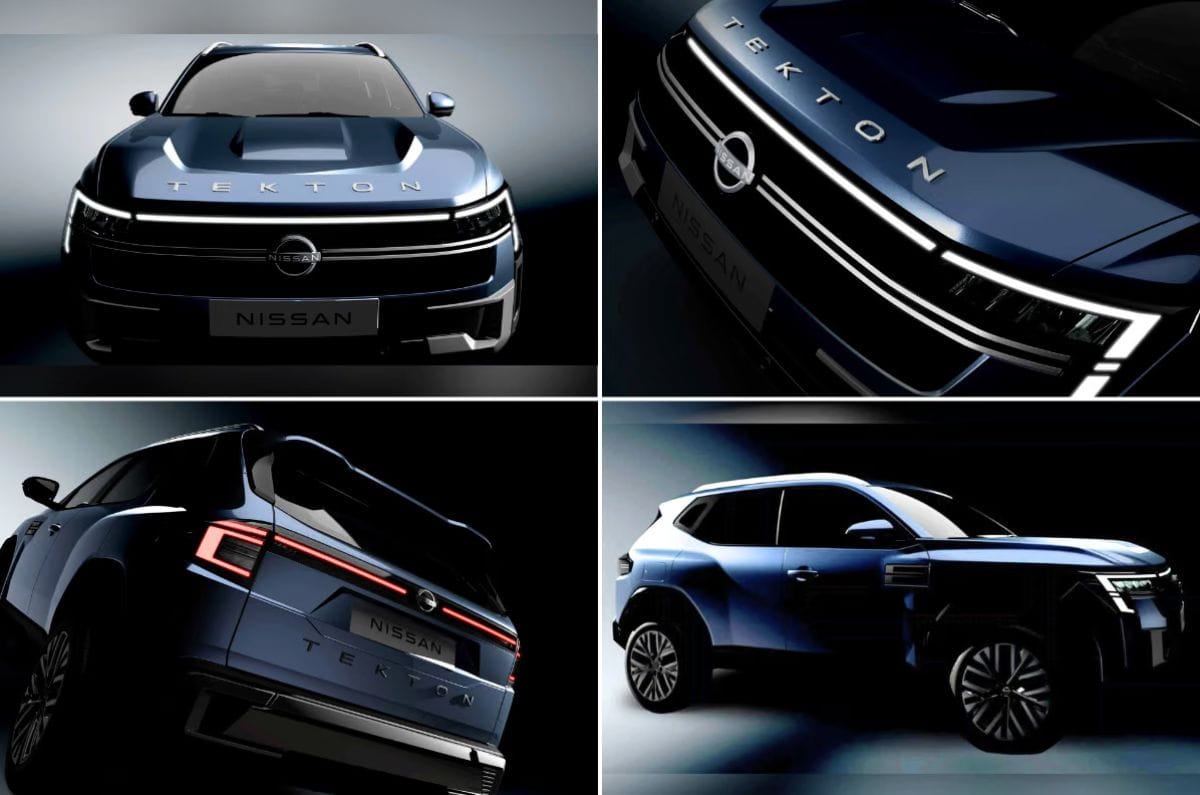
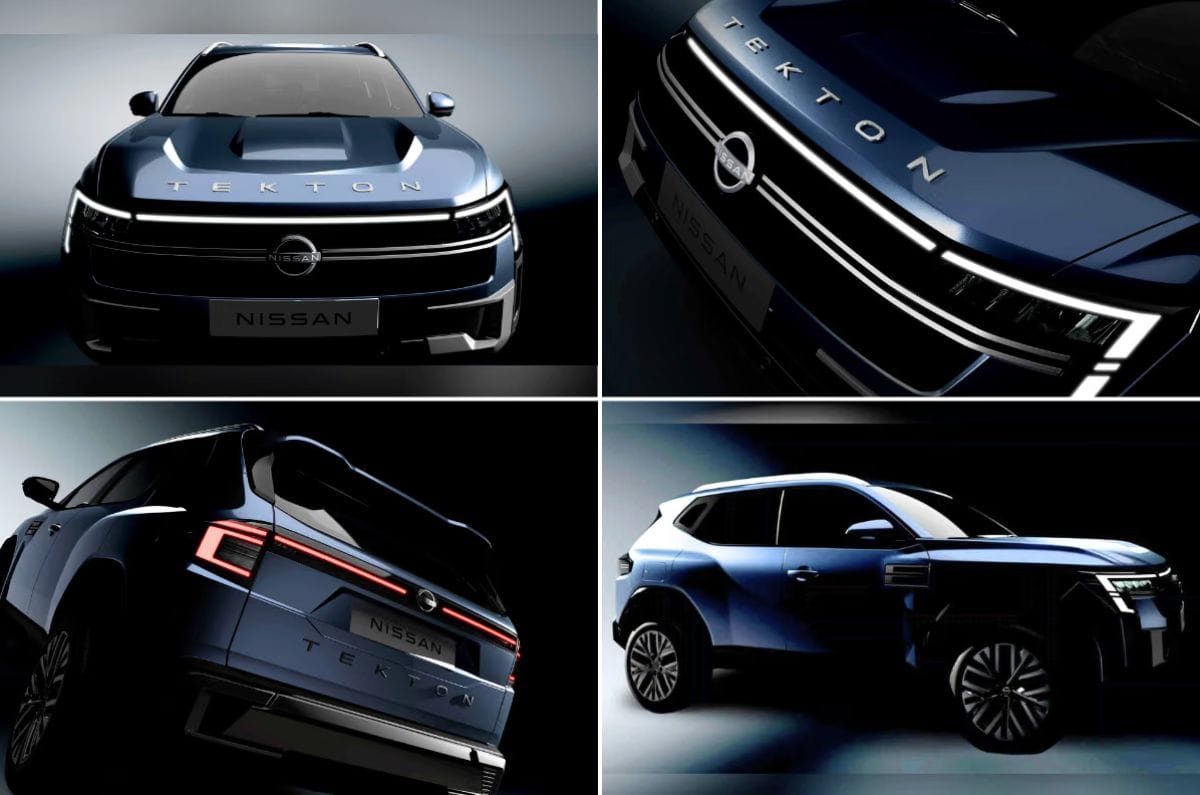
Nissan Tekton teasers released so far. 

Like every badge-engineered model, there will be some commonality between the Duster and the Tekton. Exterior panels like the doors, front and rear fenders and the bonnet could be carried over, but teaser shots have indicated that the Tekton will gets its own unique fascia replete with distinct LED lighting signatures. Nissan says that the Tekton’s design has been inspired by its flagship Patrol SUV that’s very popular in some markets abroad. On the inside, the Nissan Tekton is expected to carry over most of the features and technology from the Duster, but it’s expected to have a unique dashboard design with its own colours, trims and textures. 

What engine options will the Nissan Tekton offer?

Like the Duster, the Tekton will offer 100hp, 1.0-litre and 163hp, 1.3-litre turbo-petrol engine options. A 6-speed manual gearbox will be offered with both engines, but an automatic gearbox – a 7-speed DCT in this case – is likely to be limited to the larger engine option only. The Duster is also due to receive a 160hp 1.8-litre strong-hybrid powertrain by Diwali this year, but it remains to be seen if the same will be offered on the Nissan SUV. 

What features are expected on the Nissan Tekton?

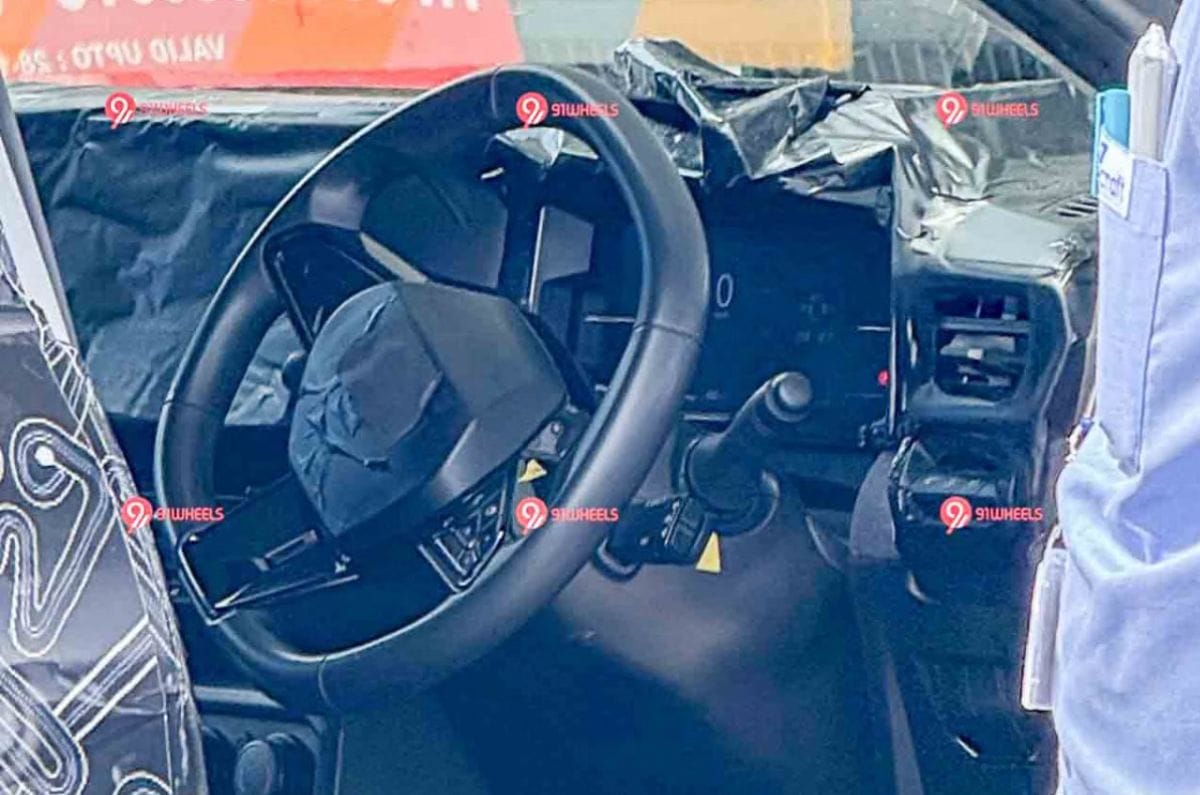
Spied interior of Nissan Tekton (Image Credit: 91 wheels)

Top-spec variants of the Tekton are expected to come equipped with a 10.25-inch digital driver’s display, a 10.1-inch infotainment system with Google integration, wireless Apple CarPlay and Android Auto, a wireless phone charger, front-seat ventilation and a panoramic sunroof. As for safety equipment, the Tekton could come with 6 airbags as standard, ABS and EBD, a 360-degree camera with a blind-spot monitor, an electronic parking brake with auto hold and a tyre-pressure monitoring system (TPMS). The Duster comes fairly well-equipped in its lower trims, so it’ll be interesting to see the Tekton’s spread of features across its different trims. 

What is Tekton’s expected price and who are its rivals?

The Tekton is likely to be priced similarly to the Duster, which starts at Rs 10.49 lakh and goes up to Rs 18.69 lakh for the top-spec turbo-petrol variant. In addition to the Duster, the Tekton will take on SUVs such as the Tata SierraHyundai CretaKia SeltosSkoda KushaqVolkswagen TaigunHonda ElevateMG Astor and Maruti Grand Vitara and Victoris.

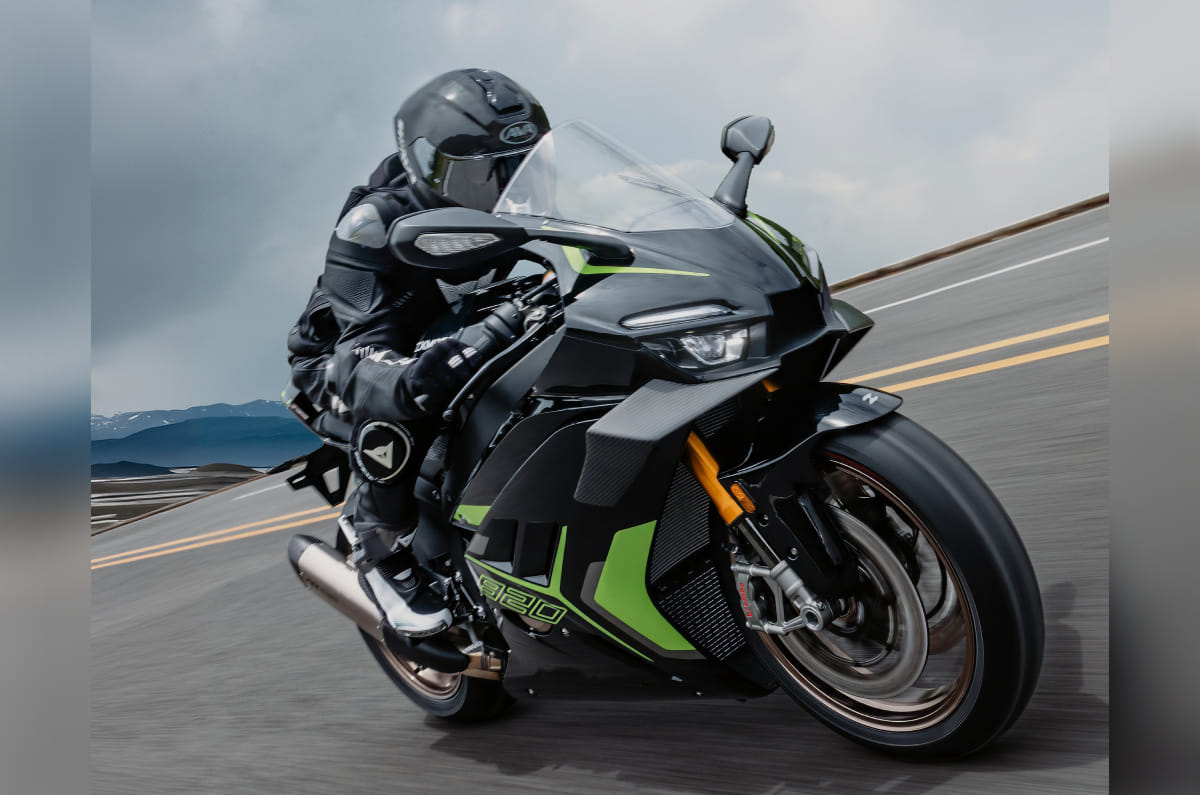
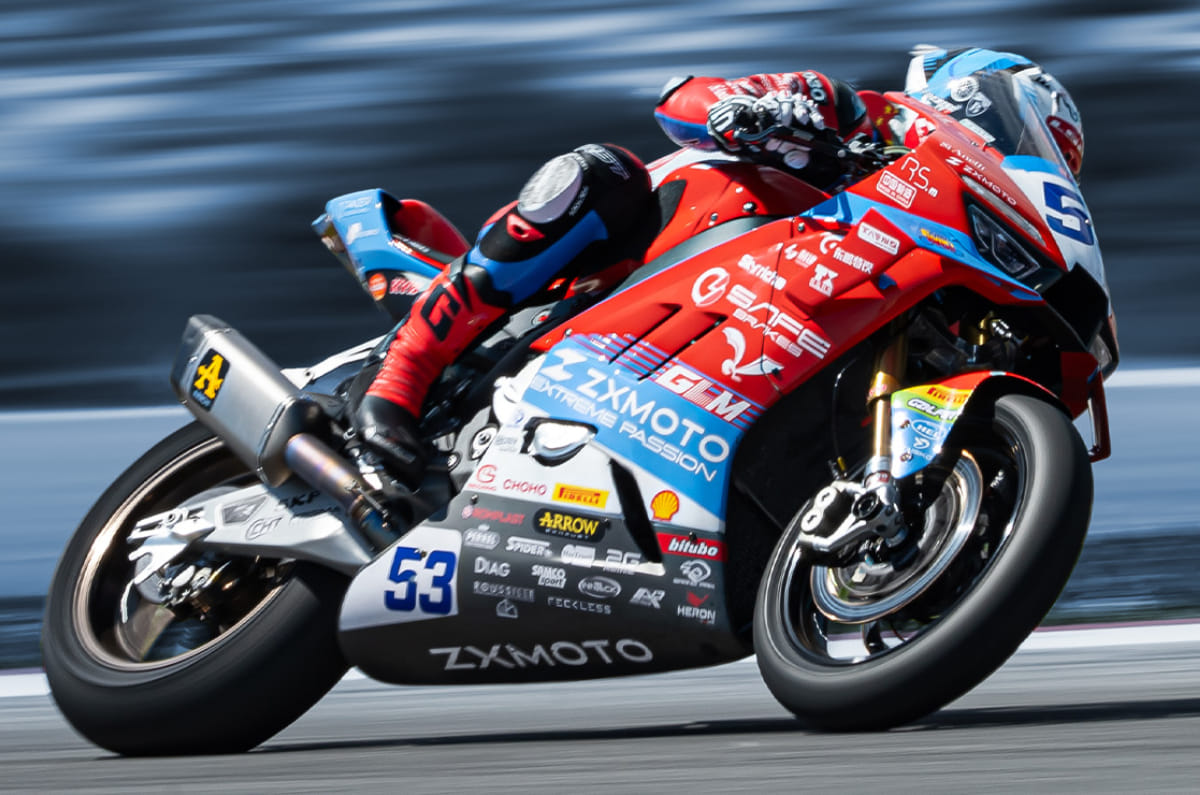
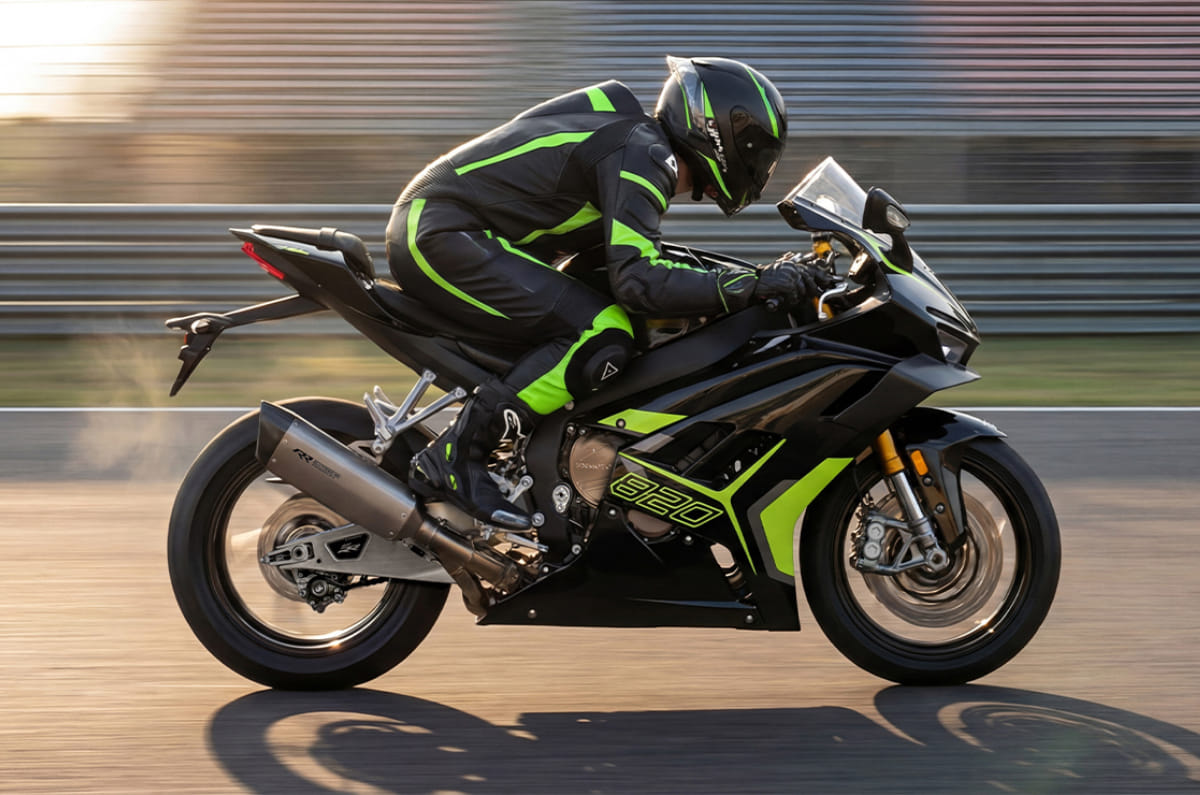
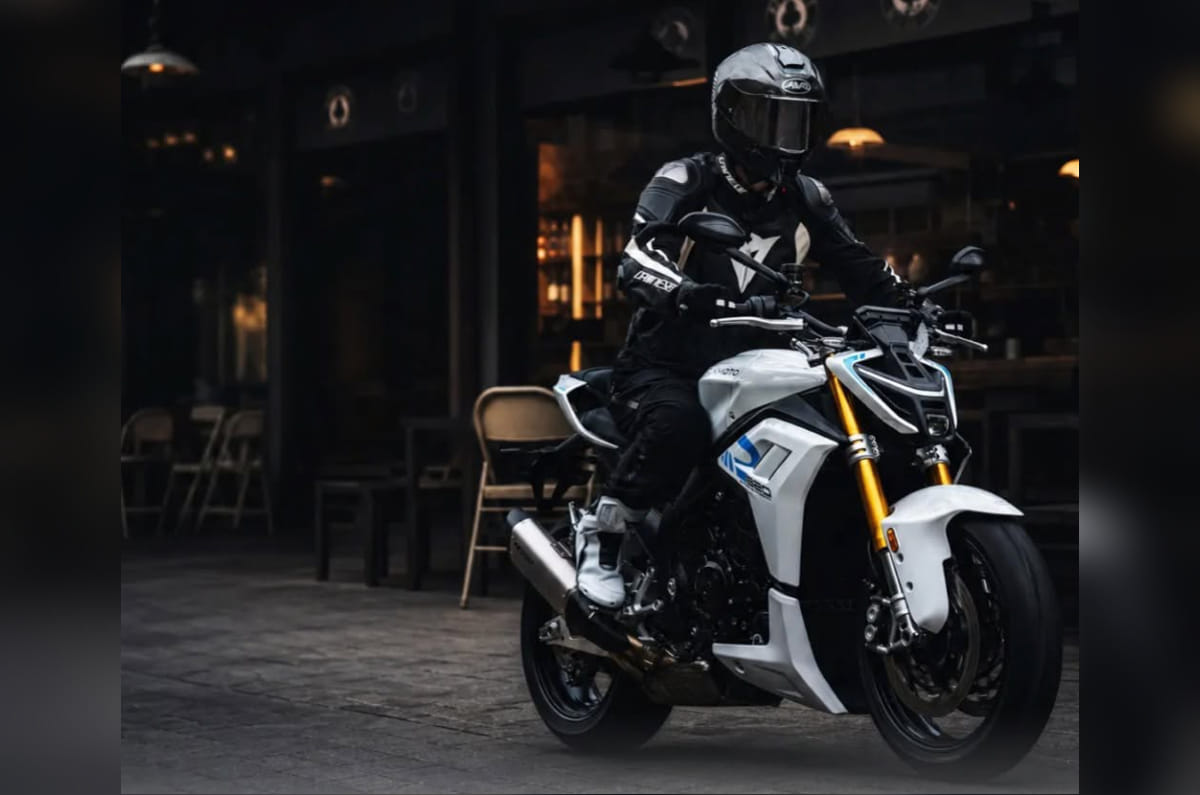
ZXMoto 820RR-R and 820R revealed

ZXMoto 820RR-R being ridden on a racetrack

Chinese motorcycle manufacturer ZXMoto has unveiled two new additions to its middleweight lineup – the 820RR-R sportbike and the 820R naked. The former is a higher-spec version of the existing 820RR that has enjoyed a remarkably successful debut campaign in the 2026 WorldSSP championship, while the latter is an all-new streetfighter built around the same 818.8cc inline-triple platform.

  1. 820RR-R gets KYB suspension, Brembo M50 calipers, forged wheels
  2. 818.8cc inline-triple makes 145hp on the 820RR-R 
  3. 820R is a street-naked variant that makes 135hp

ZXMoto 820RR-R and 820R details

The 820RR-R gets a comprehensive hardware upgrade over the standard 820RR

For many enthusiasts, ZXMoto may still be an unfamiliar name, and that’s hardly surprising. The Chinese manufacturer was only established in 2024 by Zhang Xue, a former co-founder of Kove Moto, the brand best known internationally for its adventure motorcycles and Dakar Rally programme.

Despite its short existence, ZXMoto has quickly built credibility the old-fashioned way: by proving itself on the racetrack. The manufacturer entered the 2026 WorldSSP championship with the 820RR and made an immediate impact, becoming the first Chinese motorcycle manufacturer to win a WorldSSP race. It has since added further victories and, at the time of writing, sits third in the manufacturers’ standings behind only Yamaha and Ducati, ahead of established names including Triumph, Kawasaki, Honda and MV Agusta.

Building on that momentum, the company has now introduced the more focused 820RR-R. While the standard 820RR’s 818.8cc inline-triple produces 135hp at 12,000rpm and 80Nm at 9,500rpm, the RR-R raises output to 145hp at 13,500rpm and revs to 14,750rpm. The gains come courtesy of a higher compression ratio and titanium intake valves replacing the standard model’s steel units.

The chassis has also received a substantial upgrade. Suspension is now handled by a fully adjustable 43mm KYB USD fork and KYB monoshock, while braking duties are taken care of by Brembo M50 monobloc calipers and a Brembo master cylinder. Forged wheels replace the standard cast alloy units, contributing to a claimed 7kg weight saving that brings the wet weight down to 186kg. The RR-R also gains carbon-fibre winglets, a carbon-fibre exhaust tip and adjustable rearsets, and fuel tank capacity drops slightly from 18 litres to 16 litres.

The electronics package is equally comprehensive, featuring five riding modes, a six-axis IMU enabling cornering traction control and lean-sensitive ABS, a 6.2-inch Android-powered TFT display, TPMS, a bidirectional quickshifter, keyless ignition and a dual-chamber steering damper. Both the 820RR and 820RR-R continue to share the same cast aluminium frame, aluminium swingarm and adjustable rake and anti-squat geometry.

Alongside the RR-R, ZXMoto has also revealed the 820R naked. It uses the same 818.8cc inline-triple and aluminium chassis as the 820RR, producing 135hp at 12,000rpm. Unlike the RR-R, however, it uses suspension from Chinese manufacturer Yu’an and braking hardware from Taisko. It still gets a six-axis IMU, TPMS and keyless ignition as standard.

ZXMoto is actively working to expand beyond its home market of China, and its WorldSSP success is likely to help establish the brand internationally. The company has already confirmed its entry into the UK, where it will initially launch the 500RR sportbike, with the 820RR and 500F retro naked expected to follow in 2027. The United States is also among the brand’s target markets, and no plans for an India launch have been announced.

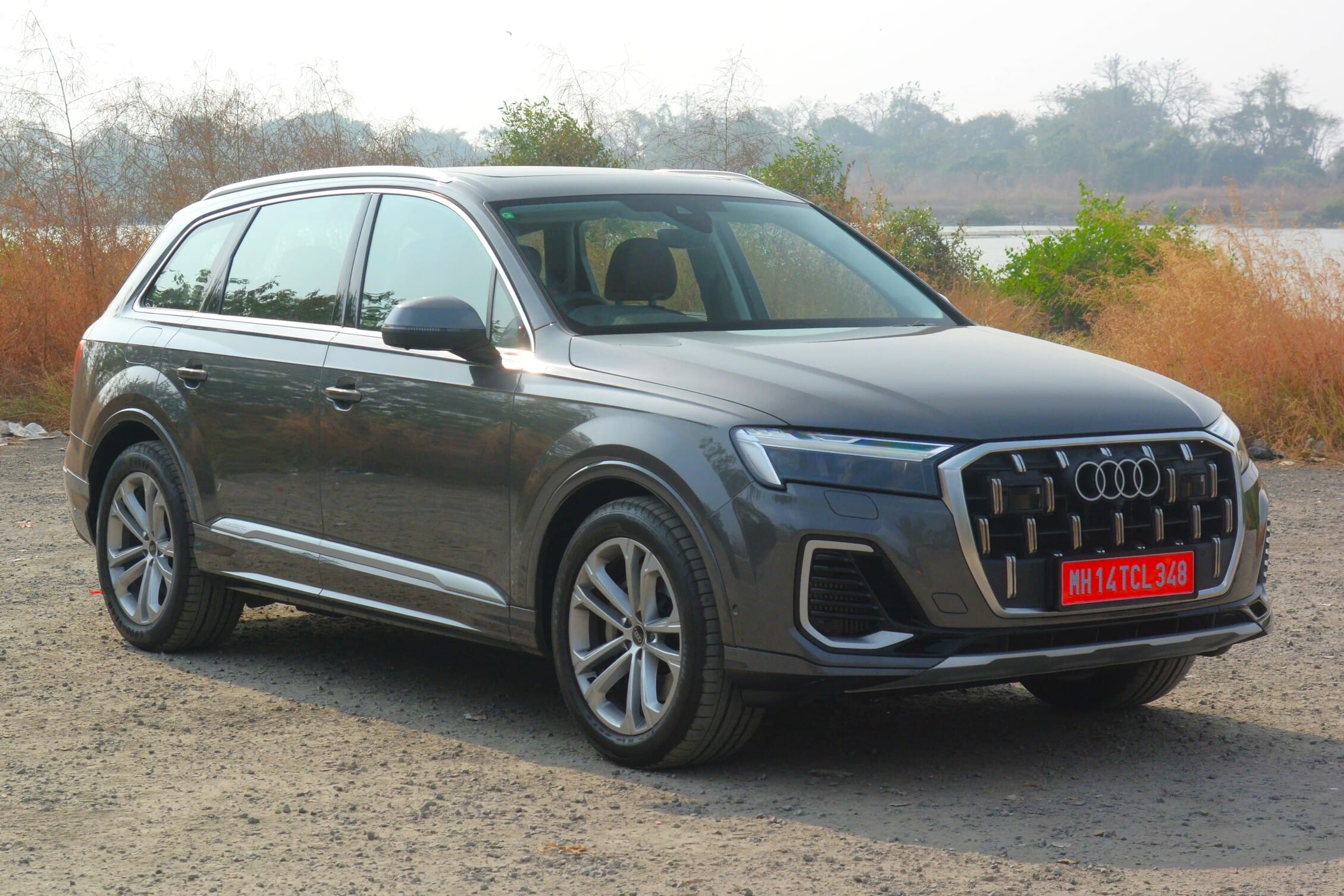
Audi Q7 image gallery

audi q7 in field

Audi launched the second-gen Q7 in India back in 2015, and the SUV has undergone two facelifts since then. Though it’s a bit long in the tooth, the Q7 remains a good pick for buyers shopping in the three-row luxury SUV space. Its styling strikes the right balance between understated and aggressive, while the interior and features list fare decently even by current standards. Under the bonnet, the Q7 is powered solely by a 3.0-litre turbo-petrol V6 churning out 340hp and 500Nm, which is funneled to all four wheels via an 8-speed torque converter automatic. 0-100kph comes up in a claimed 5.6 seconds, stretching onwards to an electronically limited top speed of 250kph.

New-gen Mercedes-Benz GLB EV confirmed for India

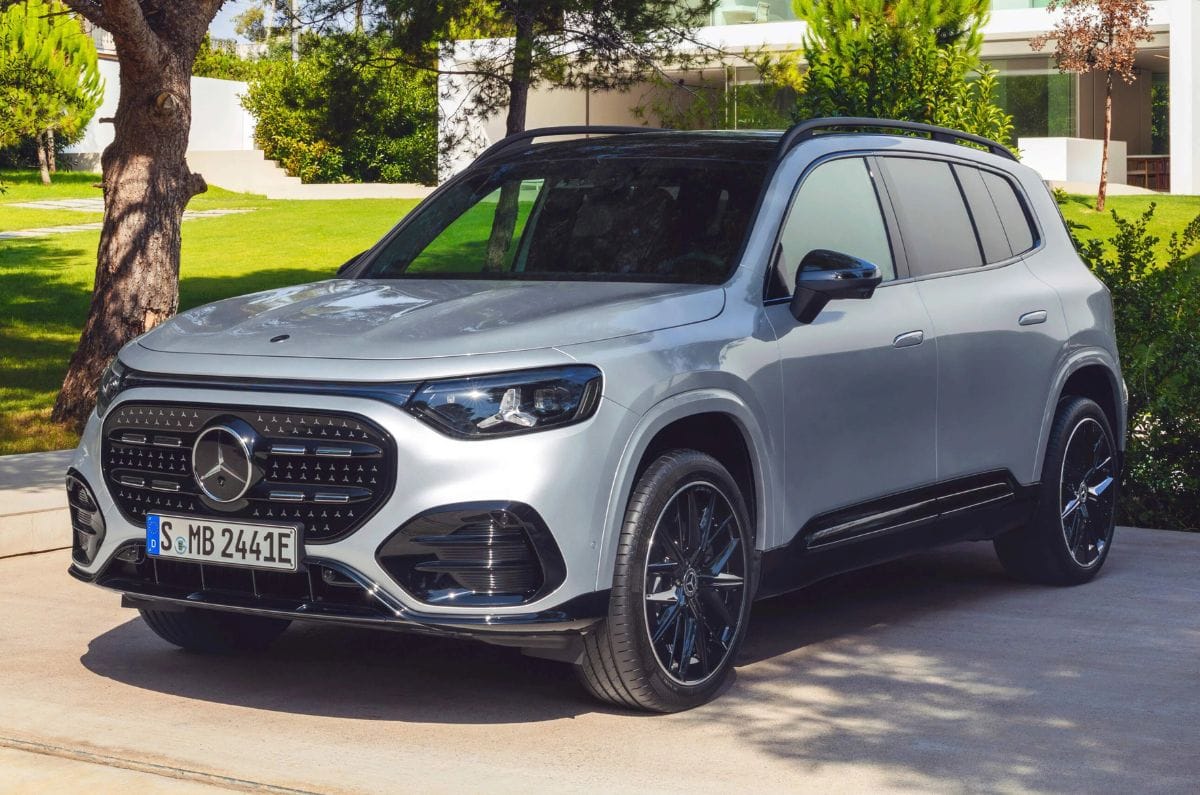
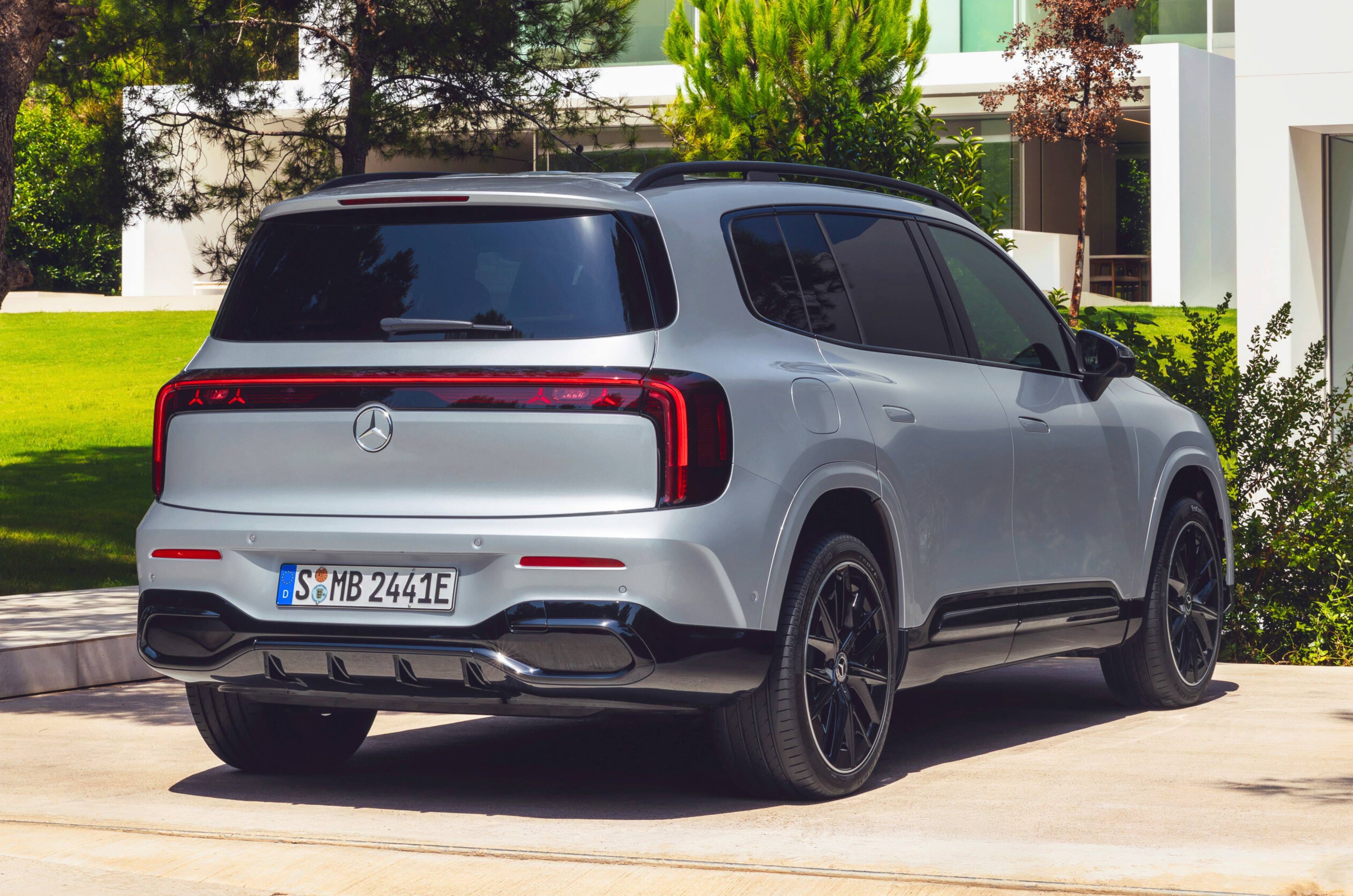
Mercedes-Benz GLB EV front quarter

The new-gen GLB EV will be coming to our market, Santosh Iyer, Managing Director and CEO of Mercedes-Benz India, said during the company’s half-yearly sales call. Sitting atop the Mercedes-Benz Modular Architecture (MMA) platform, the GLB EV was revealed globally in December 2025. The compact luxury SUV shares a lot of its general design and feature set with its combustion-powered stablemates, and is already on sale in markets like the UK.

  • GLB 250+ and GLB 350 4MATIC variants available globally
  • 85kWh battery pack; WLTP-claimed range of up to 631km
  • Can be had with MBUX Superscreen, MB.OS, AI assistants and ADAS

Mercedes-Benz GLB EV range and powertrain

Two variants available globally with a claimed range of up to 631km

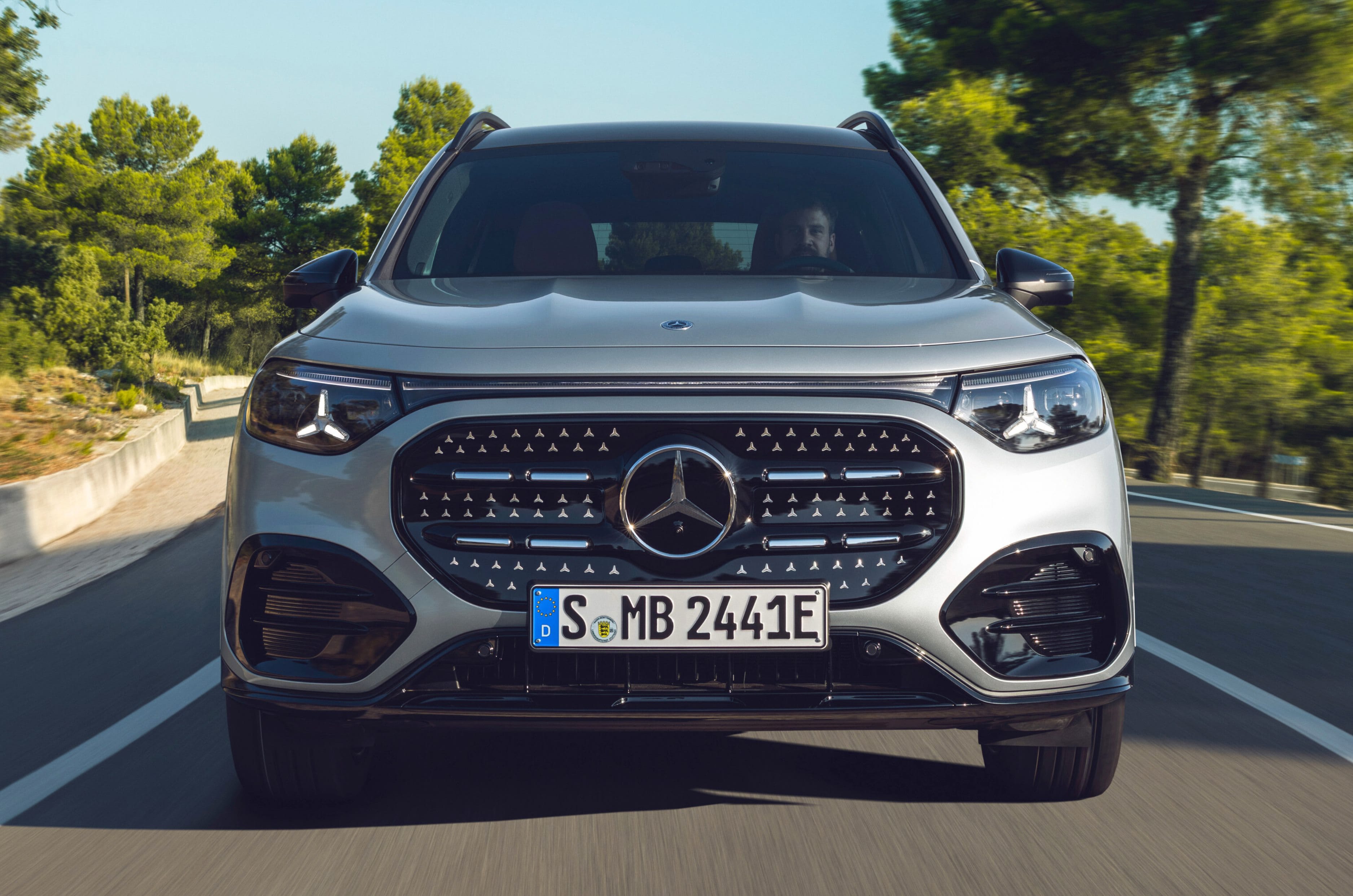
Mercedes-Benz GLB EV front

The international-spec Mercedes-Benz GLB EV is available in GLB 250+ and GLB 350 4MATIC variants. The single-motor GLB 250+ develops 272hp and 335Nm, whilst the dual-motor GLB 350 4MATIC variant offers up 353hp and 515Nm. While both variants house an 85kWh lithium-ion battery pack, Mercedes-Benz says that the single-motor variant has a WLTP-claimed range of up to 631km.

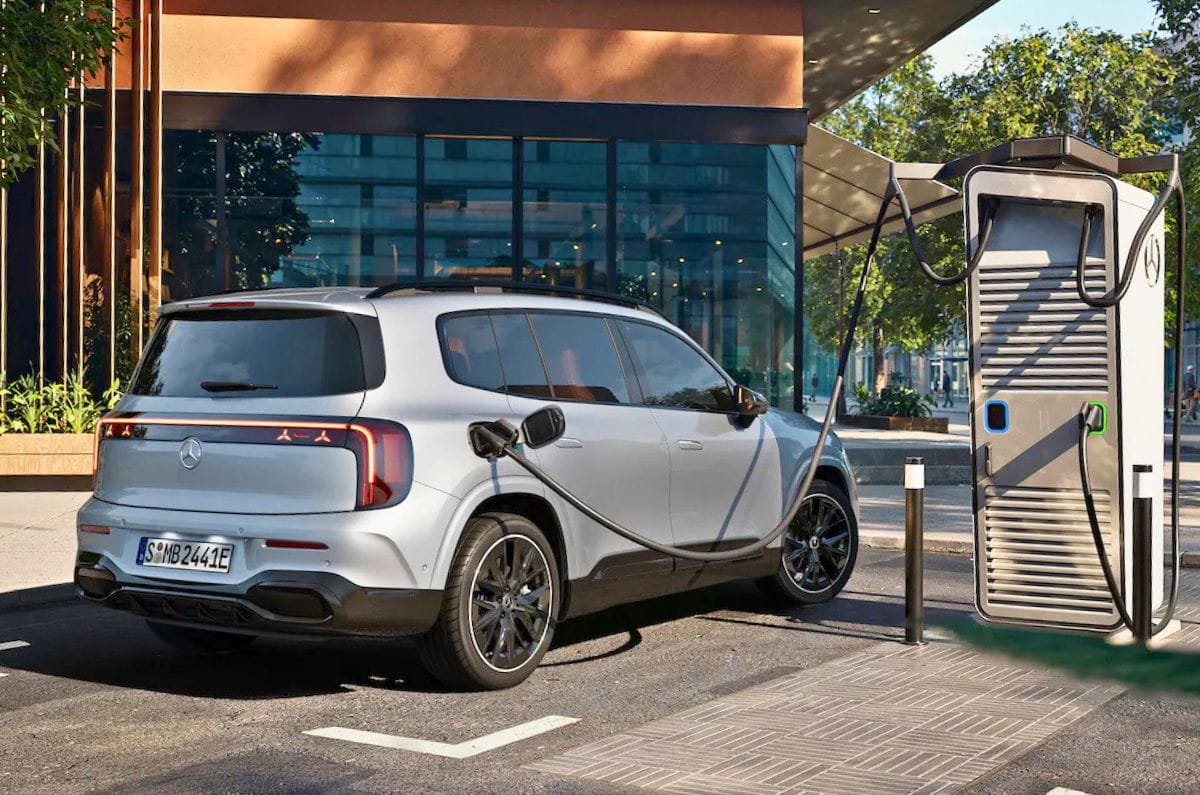
Mercedes-Benz GLB EV charging

The 800V architecture of the new-gen Mercedes GLB EV allows DC fast-charging of up to 320kW, while 260km of range can be added in a claimed 10 minutes. Abroad, the GLB EV is also offered with optional adaptive dampers. While Iyer did not reveal any technical details for a India-spec GLB EV, the German automaker could bring more than just one variant to our market.

Mercedes-Benz GLB EV design and features

Much of the styling is similar to that found on the combustion-powered GLB

Mercedes-Benz GLB EV rear quarter

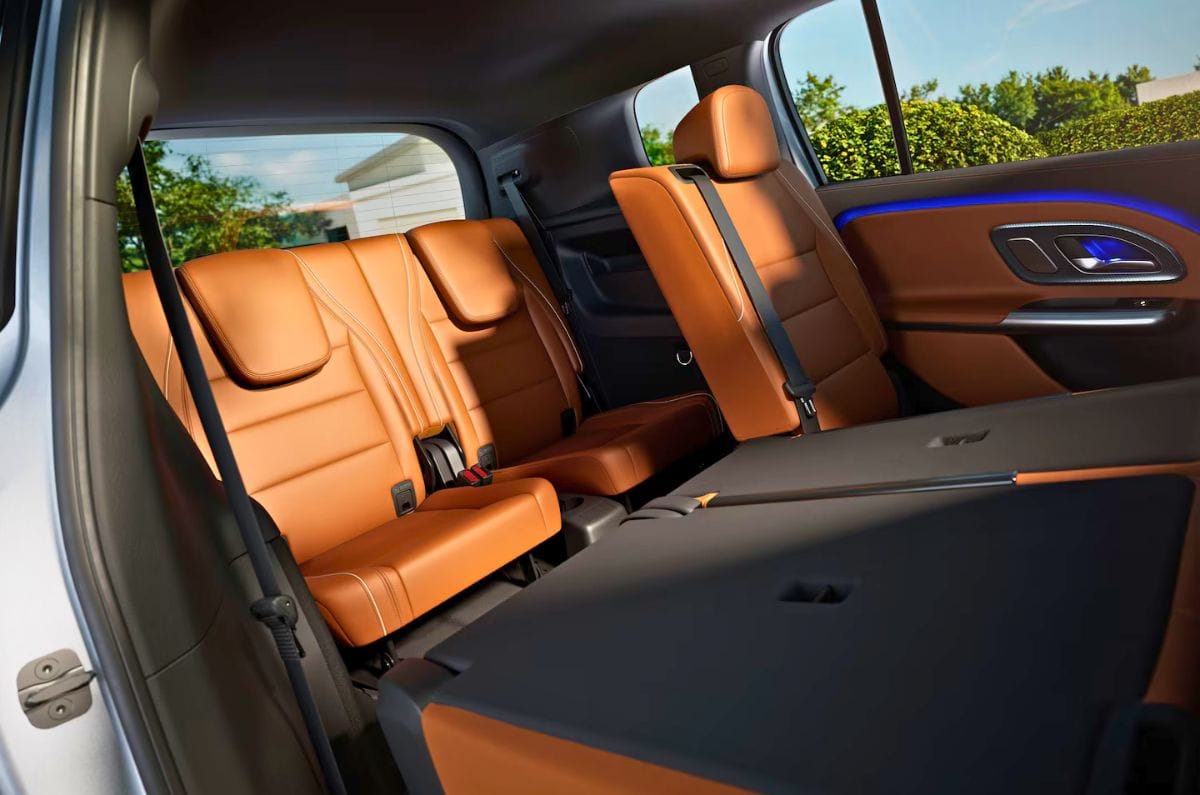
The new-gen GLB EV shares a lot of design similarities with its combustion-powered stablemate. While the upright front and rear ends, connected LED lighting and squared wheel arches remain comparable to the ICE-powered GLB, the pure-electric version gets a sealed off grille with multiple illuminated stars. Other design similarities here include the large three-pointed star up front, flush door handles and short overhangs. Inside, the global-spec GLB EV can seat either 5 or 7 occupants.

Mercedes-Benz GLB EV rear seats

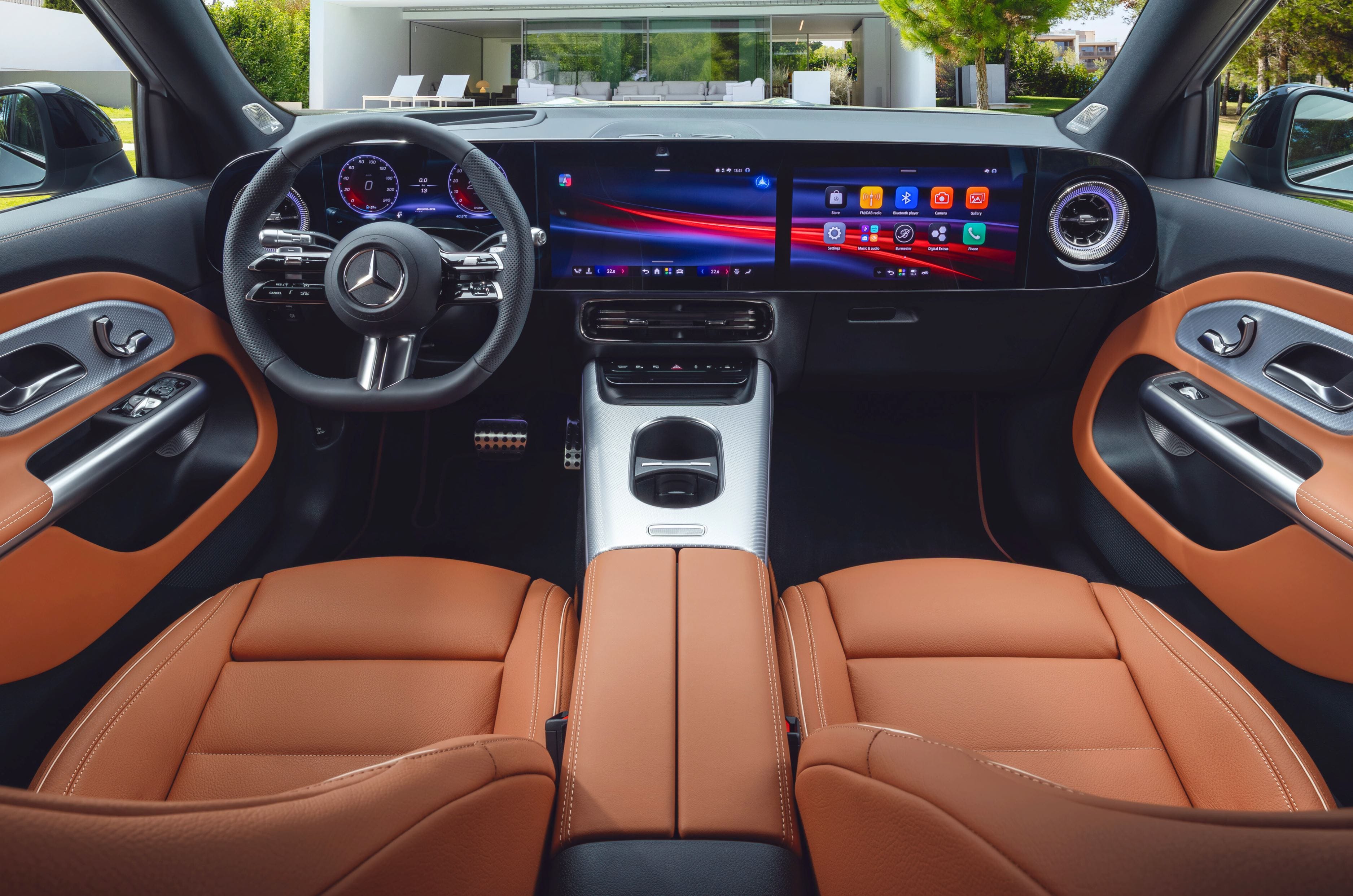
The global-spec GLB EV is available with the brand’s ‘MBUX Superscreen’, which includes a 10.25-inch digital driver’s display, a 14-inch touch-infotainment screen and a front passenger display. The whole setup is powered by the MercedesBenz Operating System (MB.OS), and AI integration includes names such as Microsoft, Google and ChatGPT4o.

Mercedes-Benz GLB EV interior

There’s over-the-air (OTA) software updates, built-in Google Maps, a panoramic glass roof with opacity control, multi-mood ambient lighting, a Burmester audio system with Dolby Atmos and an advanced driver assistance systems (ADAS) suite as well. It remains to be seen which variant of the GLB EV Mercedes-Benz brings to India, as Iyer did not delve into details on this front either.

Mercedes-Benz GLB EV expected price

There’s no word yet from Mercedes India regarding the pricing of the new-gen GLB EV, but the compact luxury SUV is priced between GBP 46,100 and GBP 56,800 in the UK. Once it makes its way to India as a CBU import, the Mercedes GLB EV will likely be priced at around Rs 80 lakh (ex-showroom).

Also read

E-Class is Mercedes’ bestseller in H1 2026; EQS SUV tops EV sales

Rolls-Royce unveils one-of-a-kind Phantom Regatta

2026 Yamaha YZF-R1 image gallery

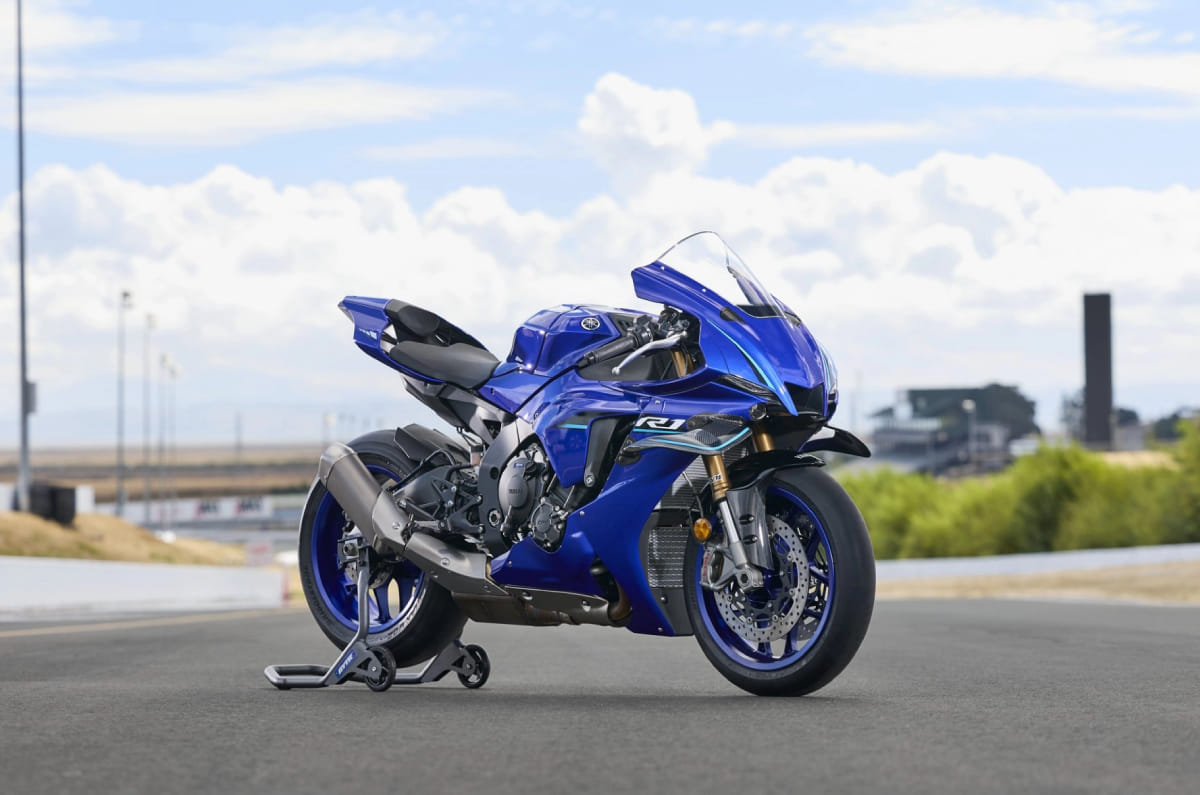
2026 Yamaha YZF-R1 image gallery

The Yamaha YZF-R1 is the Japanese manufacturer’s flagship litre-class superbike, built around a 998cc crossplane inline-four engine producing 200hp and 113Nm. The crossplane crankshaft equalises the inertial forces generated by a conventional inline-four, delivering a more linear torque character and the distinctive exhaust note that has become synonymous with the R1.

The 2025 update introduced carbon-fibre winglets inspired by the YZR-M1, along with Brembo Stylema front brake calipers and a Brembo master cylinder, all of which have been carried over for 2026.

The standard R1 comes equipped with a fully adjustable KYB front fork featuring independent high- and low-speed compression and rebound adjustment, while the range-topping R1M upgrades to electronically controlled Öhlins NPX suspension at both ends. The electronics suite is built around a six-axis IMU and includes cornering ABS, traction control, wheelie control and multiple customisable riding modes. While the R1 is not currently sold in India, international markets also get a special 70th Anniversary Edition livery.