Upcoming Hero Xpulse 421 spotted testing again

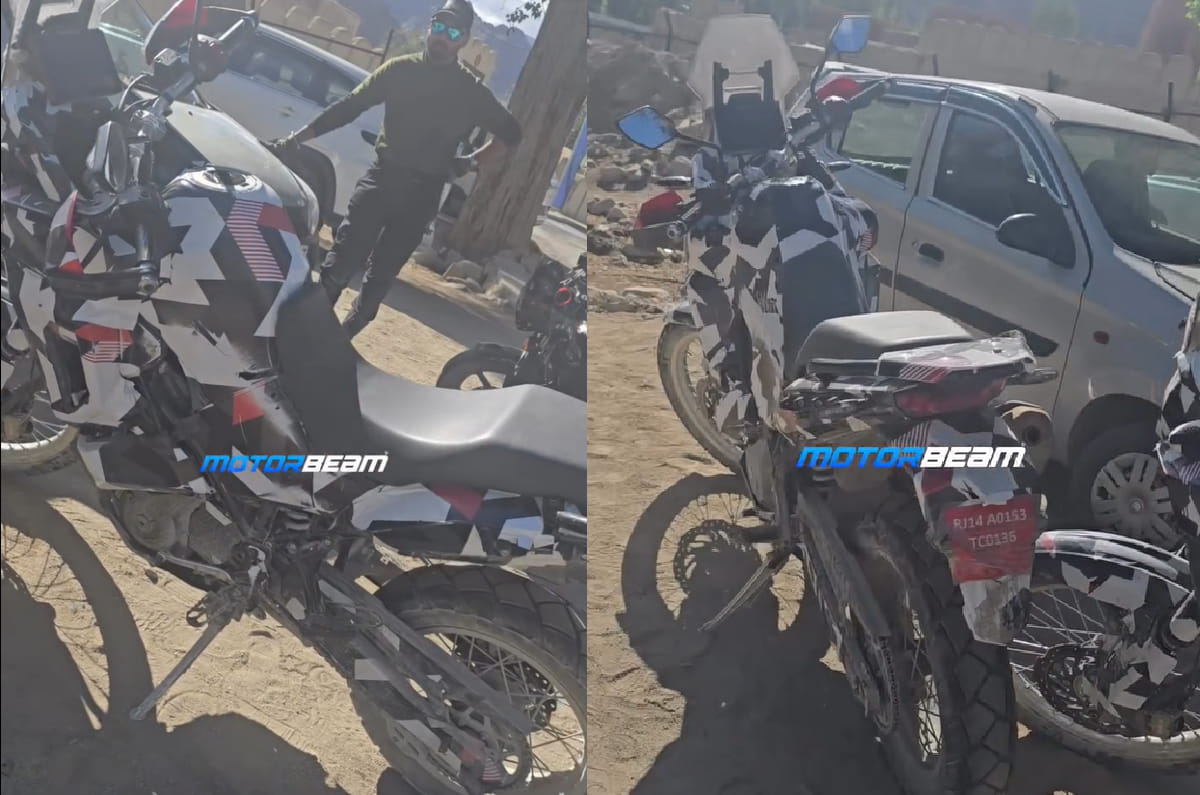
Xpulse 421 test mule

A fresh video of the Hero Xpulse 421 testing has surfaced online, giving us another look at what is shaping up to be Hero’s most ambitious adventure motorcycle yet. The latest test mule appears largely unchanged from the one spotted last month. Here’s a roundup of everything we know so far.

  1. Xpulse 421 will use an all-new liquid-cooled engine
  2. Features a large TFT display, new switchgear, riding modes and cruise control
  3. Advanced-stage prototype suggests an EICMA 2026 debut is possible

Hero Xpulse 421: What we know so far

The Xpulse 421 sits on an all-new chassis with off-road-focused hardware

The Xpulse 421 is an all-new motorcycle, sharing nothing with the existing Xpulse 200 or Xpulse 210. It is built around a tubular trellis frame housing a new liquid-cooled, single-cylinder engine expected to displace around 400cc or slightly more. While Hero is yet to reveal performance figures, output in the region of 40hp and 40Nm would place it right in the heart of the segment.

The bike features long-travel USD front suspension and a rear monoshock, while riding on wire-spoke wheels shod with tubed tyres. The front appears to be a 21-inch unit, while the rear looks to be a 17-inch wheel rather than the 18-inch setup used on the Xpulse 200 and 210. Braking is handled by disc brakes at both ends, with a radially mounted front caliper.

The feature list also appears comprehensive. A large TFT display is clearly visible, complemented by an all-new switchgear layout. A dedicated mode button on the left-hand switch cube points to multiple riding modes, while a cruise control toggle on the right-hand switch cube confirms that feature will also be offered.

The overall design is unmistakably adventure-focused, with a tall windscreen, substantial bodywork and a chunky upswept exhaust. The prototype appears to be in an advanced stage of development, with most of the chassis hardware and body panels seemingly production-ready, suggesting this is no longer an early development mule. An EICMA 2026 debut appears likely, with a market launch expected to follow, possibly in 2027. When it does arrive, expect Hero to position the Xpulse 421 in the Rs 2.70 lakh to Rs 2.90 lakh bracket, where it will rival the Royal Enfield Himalayan 450 and KTM 390 Adventure S.

Image source: Motorbeam

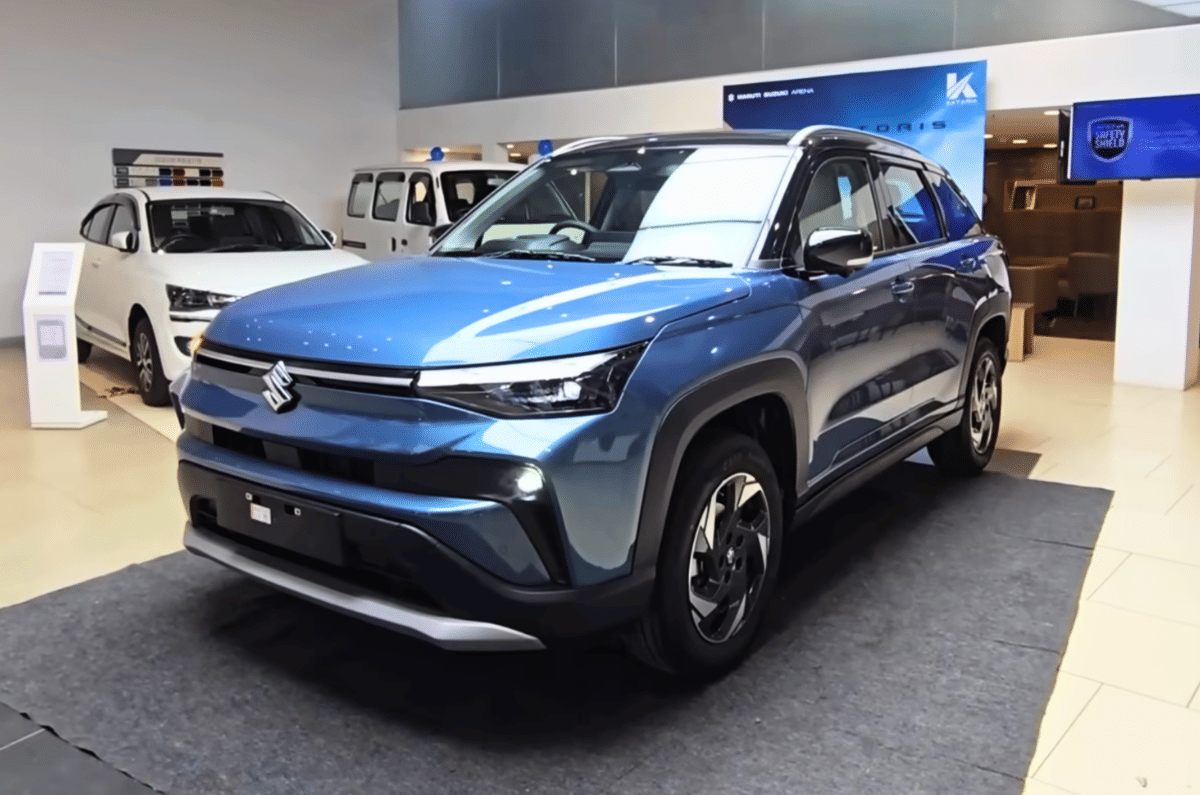
Maruti Victoris hybrid gets offers of up to Rs 90,000 in July 2026

Maruti Victoris

Just like last month, eight Maruti Suzuki Arena models are available with offers in July. These include cash discount, exchange bonus, loyalty offer, scrappage benefit and more, depending on the car and variant. For a detailed breakdown of these offers, it is recommended to check with your nearest dealer. The Maruti Dzire and Ertiga are on sale without these offers.

Disclaimer: Offers may vary by city and they are subject to stock availability.

Maruti Victoris discounts in July 2026

Up to Rs 90,000

The Maruti Victoris gets the highest offers in the brand’s lineup this month, with benefits of up to Rs 90,000 on the strong hybrid variants. The CNG variants are available with benefits of up to Rs 80,000, while petrol models get discounts of up to Rs 60,000. The Victoris price range is Rs 10.50 lakh to Rs 19.99 lakh.

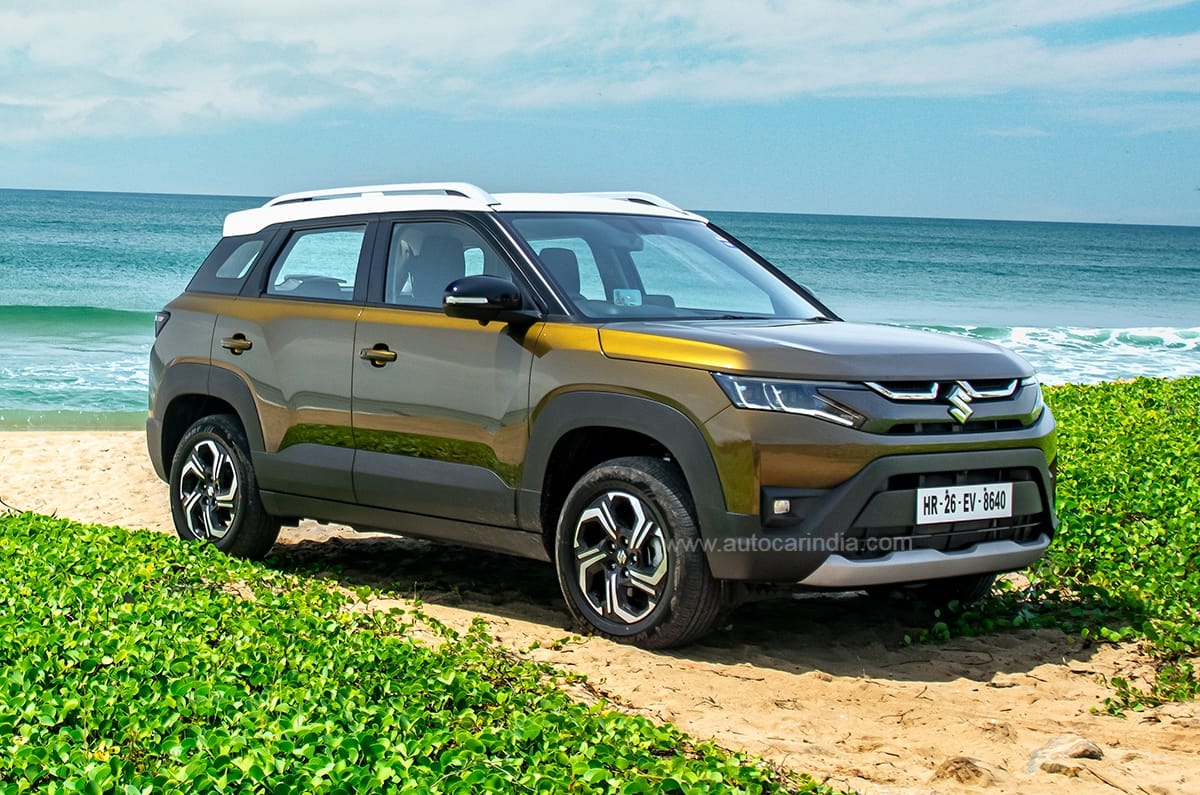
Maruti Brezza discounts in July 2026

Up to Rs 55,000

Maruti Brezza

Next, the Maruti Brezza is on sale with benefits going up to Rs 55,000. Rivalling the likes of the Hyundai Venue, Kia Sonet, Skoda Kylaq and Tata Nexon, the Brezza starts at Rs 8.26 lakh and tops out at Rs 12.86 lakh.

Maruti Alto K10 discounts in July 2026

Up to Rs 52,500

The Maruti Alto K10 receives offers of up to Rs 52,500 this month. Its base-spec LXi petrol variant attracts the highest benefits of up to Rs 52,500, while all other variants are available with offers of up to Rs 42,500. The Alto K10 continues to be one of the most affordable entry-level hatchbacks in the market, and it’s priced between Rs 3.70 lakh and Rs 5.45 lakh.

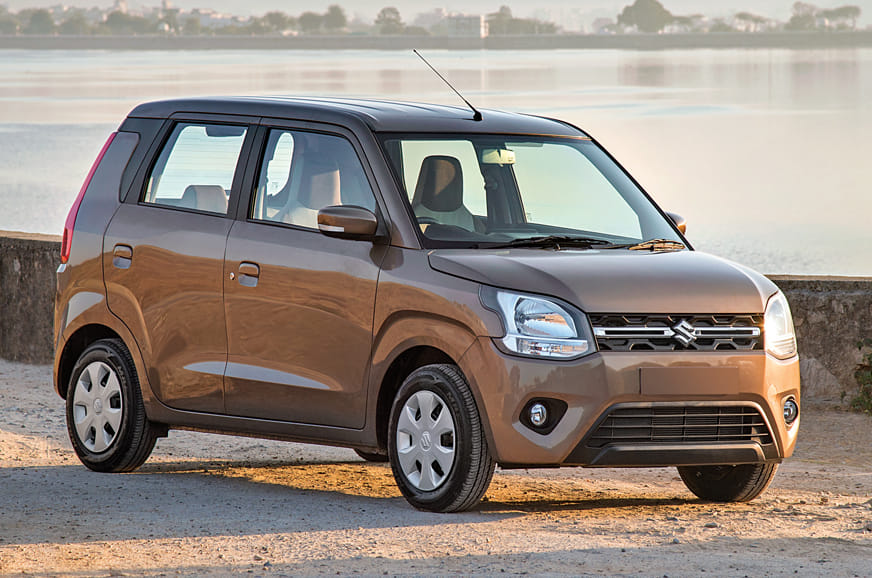
Maruti Wagon R discounts in July 2026

Up to Rs 52,500

Maruti Wagon R

Like the Alto K10, maximum benefits go up to Rs 52,500 on the Maruti Wagon R. These offers include consumer discounts, exchange bonus, scrappage benefit and institutional offers. The Wagon R is priced from Rs 4.99 lakh to Rs 6.84 lakh.

Maruti Swift discounts in July 2026

Up to Rs 45,000

Compared to the Wagon R and Alto K10 hatchbacks, the Maruti Swift gets slightly lesser benefits of up to Rs 45,000. The AMT variants attract offers of up to Rs 45,000, while manual variants are available with benefits going up to Rs 40,000. Prices for the Swift start at Rs 5.79 lakh and extend to Rs 8.69 lakh.

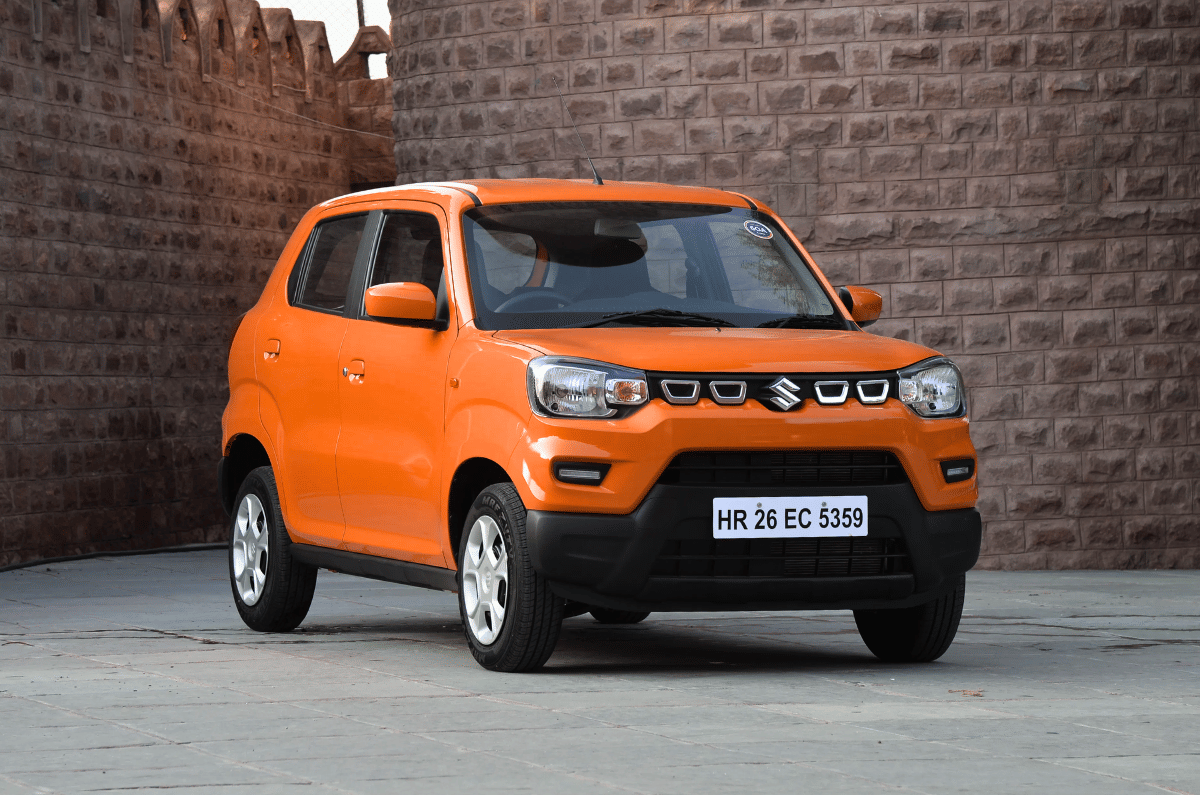
Maruti S-Presso discounts in July 2026

Up to Rs 37,500

Maruti S-Presso

The Maruti S-Presso is the carmaker’s entry-level offering, and it is on sale with benefits of up to Rs 37,500 this month. The S-Presso starts at Rs 3.5 lakh, making it the most affordable car in India, and tops out at Rs 5.25 lakh.

Maruti Celerio discounts in July 2026

Up to Rs 37,500

Maximum benefits of up to Rs 37,500, similar to the S-Presso, are on offer with the Maruti Celerio. The Celerio is priced between Rs 4.70 lakh and Rs 6.73 lakh.

Maruti Eeco discounts in July 2026

Up to Rs 37,500

Maruti Eeco

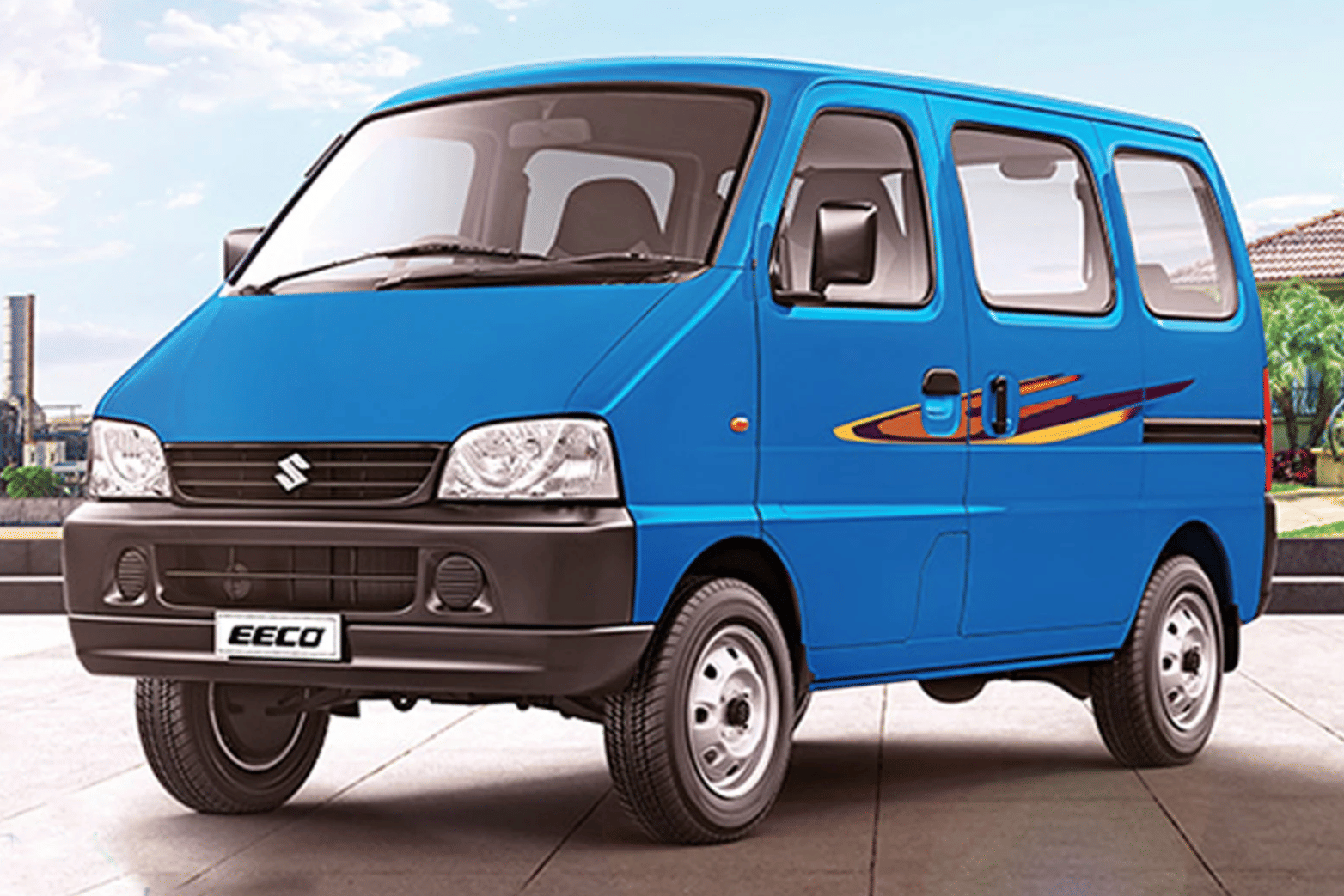
This month, the carmaker is offering benefits of up to Rs 37,500 on the Maruti Eeco van. The Eeco is priced starts at Rs 5.23 lakh to Rs 6.41 lakh.

All prices are ex-showroom, India.

TVS Apache range crosses 7 million global customers

TVS Apache range crosses 7 million global customers

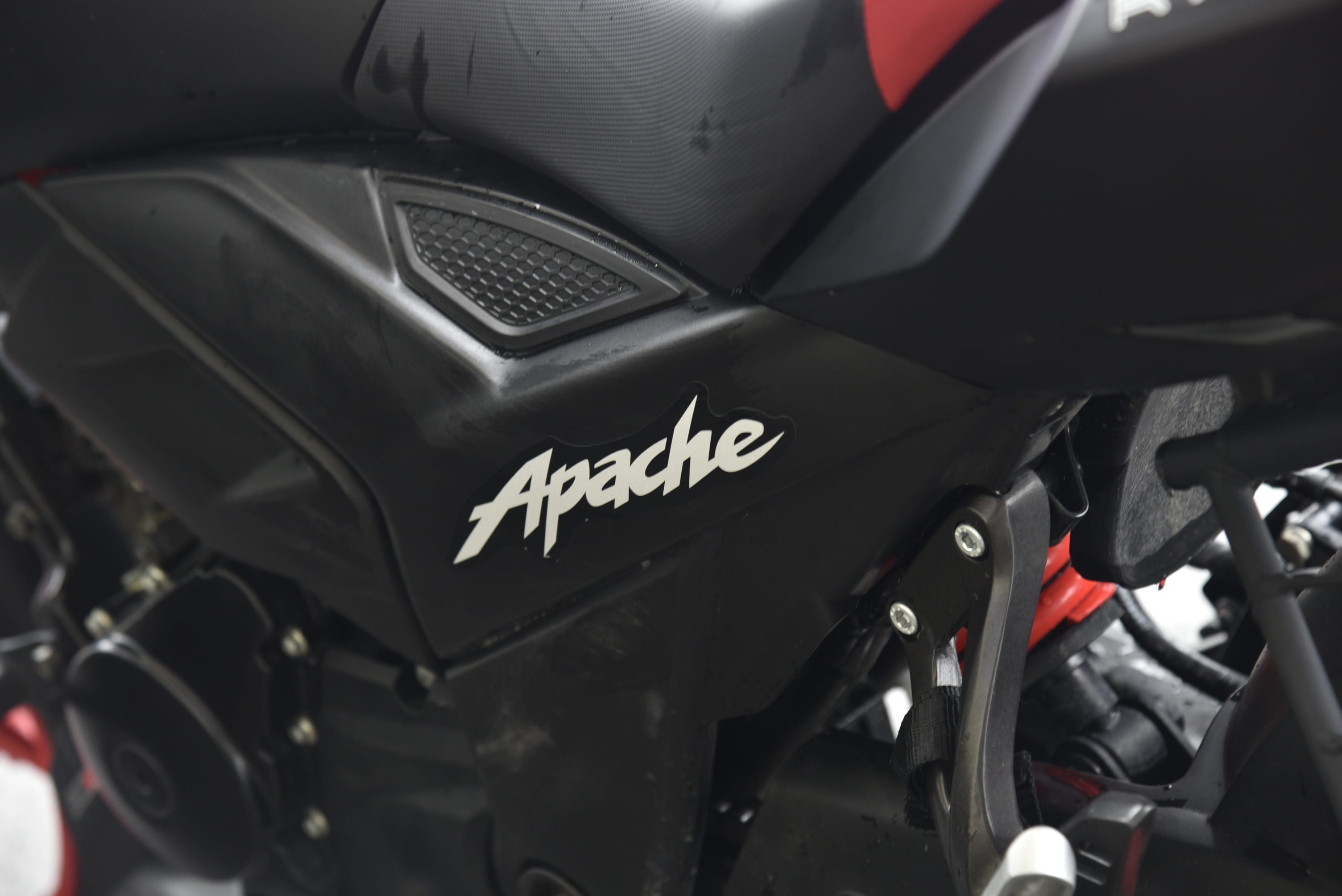
TVS Motor Company has announced that its Apache performance motorcycle brand has crossed the 7 million customer milestone globally. Alongside the achievement, the company has also unveiled a new brand campaign titled ‘Tu Race Laga’, which aims to reinforce the Apache brand’s racing heritage and performance-focused positioning.

  1. TVS Apache reaches 7 million customers globally
  2. New brand campaign launched

TVS Apache milestone: What’s new?

the Apache owner community has grown to more than 5 lakh registered members

TVS says the Apache brand has grown to more than 7 million customers across over 90 countries since its debut in 2005. Developed around the company’s ‘Track to Road’ philosophy, the Apache lineup draws on technologies and learnings from TVS Racing, which has over four decades of motorsport experience.

Over the years, the Apache range has introduced several features that TVS describes as segment-first innovations, including fuel injection, ride modes, TVS SmartXonnect connectivity, traction control, keyless ride, glide-through technology, factory customisation through the Built-To-Order platform, and dynamic stability systems on select models.

The company also says the Apache owner community has grown to more than 5 lakh registered members, with organised rides, track experiences and other rider engagement programmes.

To mark the milestone, TVS has released a new campaign film titled ‘Tu Race Laga’, directed by National Award-winning filmmaker Ram Madhvani. According to the company, the campaign is inspired by the Apache brand’s ‘Track to Road’ philosophy and focuses on bringing the thrill and precision of the racetrack to everyday riding.

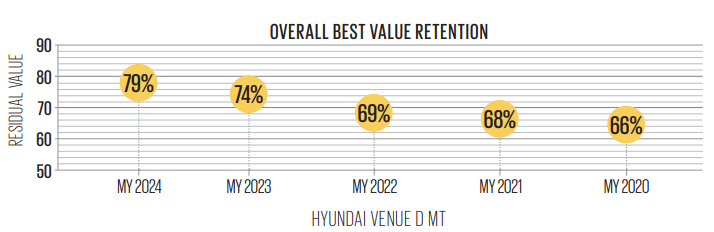
Used car study 2026: Hyundai Venue holds its value best among compact SUVs

Hyundai Vanue resale value

Conducted in association with Spinny, India’s leading pre-owned car platform, the fourth edition of our Used Car Study analyses real-world resale values across a broad spectrum of vehicles sold in the Indian market to assess depreciation trends over a five-year ownership period. The study is based on actual transactional data shared by Spinny for vehicles sold between January 1 and August 31, 2025.

In this part of the resale value study series, we take a look at the compact SUV segment:

Compact SUV resale value 

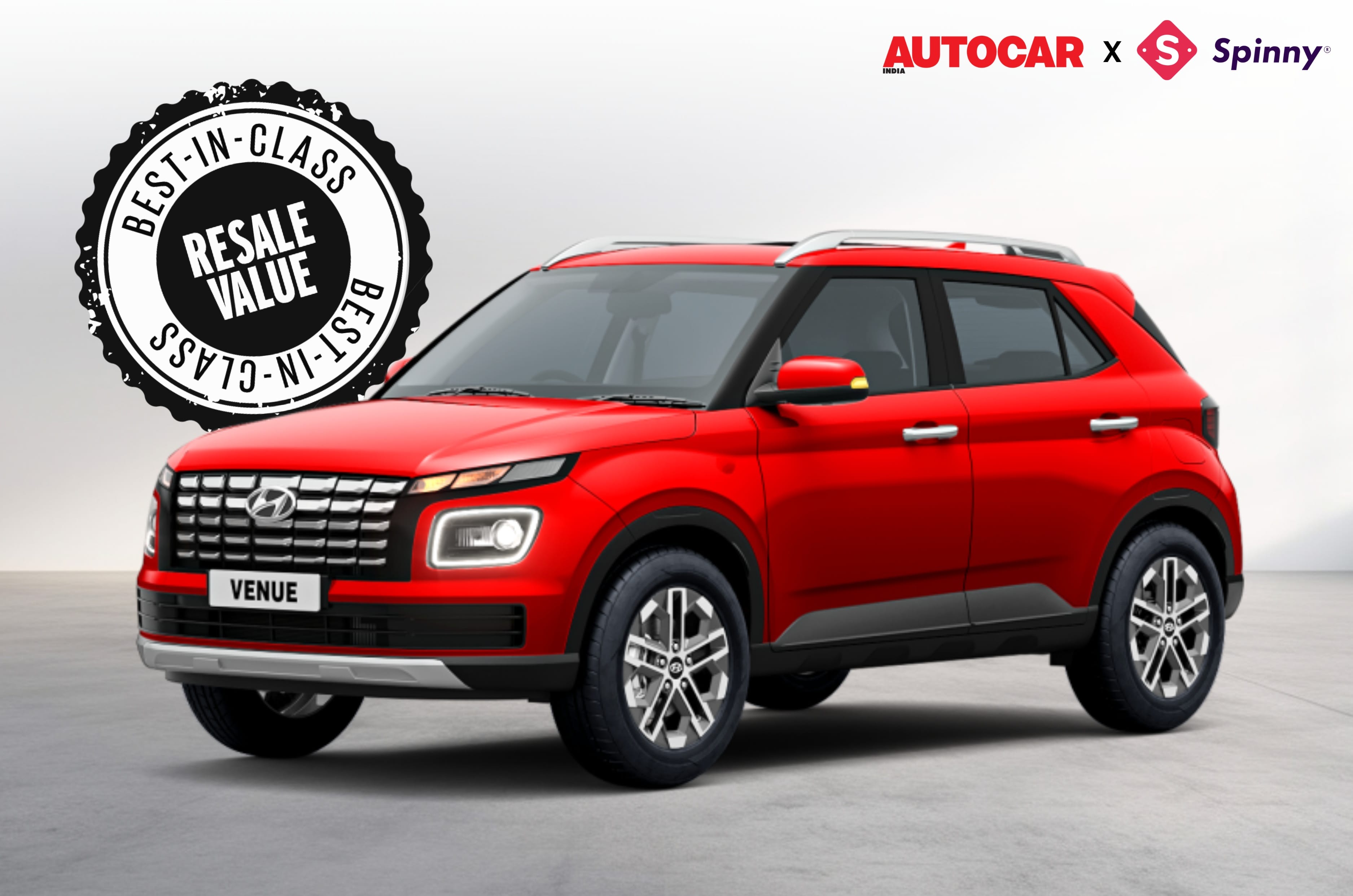
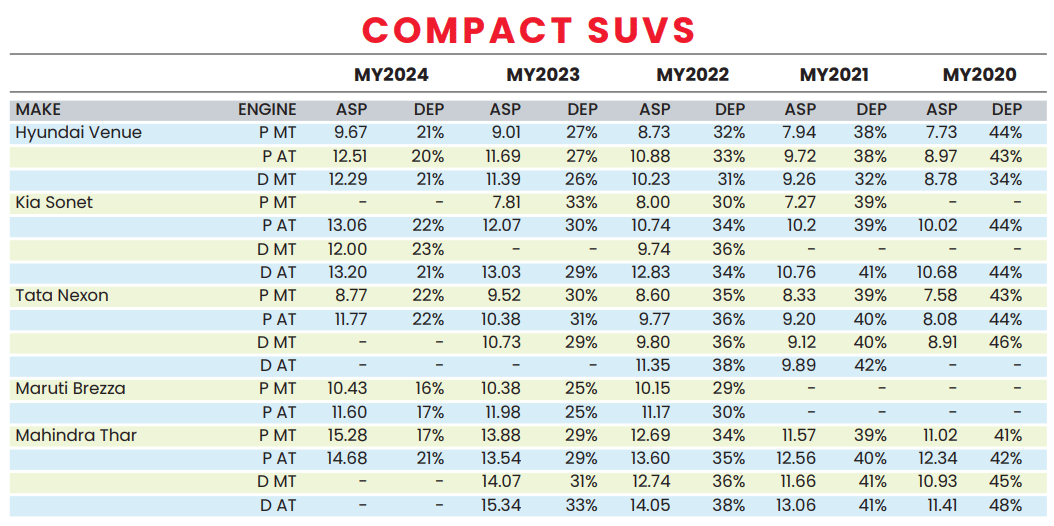
In the compact SUV segment, the Hyundai Venue diesel-manual stands out for depreciating at the slowest rate, while the petrol variants depreciate much faster in the fourth and fifth years. Meanwhile, strong popularity of the Maruti Brezza in the new car market since the launch of its current-generation model in 2022 has translated into healthy used market demand and stable resale values.

On the contrary, both the Tata Nexon and Mahindra Thar exhibit relatively steeper depreciation over a five-year period. Notably, buyers looking at five-year-old diesel-powered Thar examples can now purchase one for nearly half of its original on-road price.

As per the study, the average selling price of a five-year-old compact SUV retailed through Spinny was Rs 9.70 lakh. Comparable figures for three-year-old and one-year-old compact SUVs were Rs 10.88 lakh and Rs 12.10 lakh, respectively. Average depreciation over the same periods worked out to 43.16 percent, 33.94 percent and 20.25 percent, respectively.

Autocar-Spinny resale value study methodology 

The analysis covers the average selling prices (ASPs) of vehicles retailed through Spinny’s network across nine cities – Delhi-NCR, Bengaluru, Hyderabad, Pune, Chennai, Mumbai, Lucknow, Ahmedabad and Kolkata.

For the purposes of this study, depreciation has been defined as the percentage difference between a vehicle’s original on-road price in its year of manufacture and its resale value in 2025. In instances where a model was offered with multiple engine options using the same fuel type, the data has been consolidated and averaged. Variant-wise differences have similarly been averaged out.

Discontinued models and powertrain options have been excluded. Additionally, premium vehicles priced above Rs 30 lakh, electric vehicles and certain low-volume models have not been included due to limited transaction data and insufficient sample sizes.

2027 Kawasaki Ninja H2 to make less power

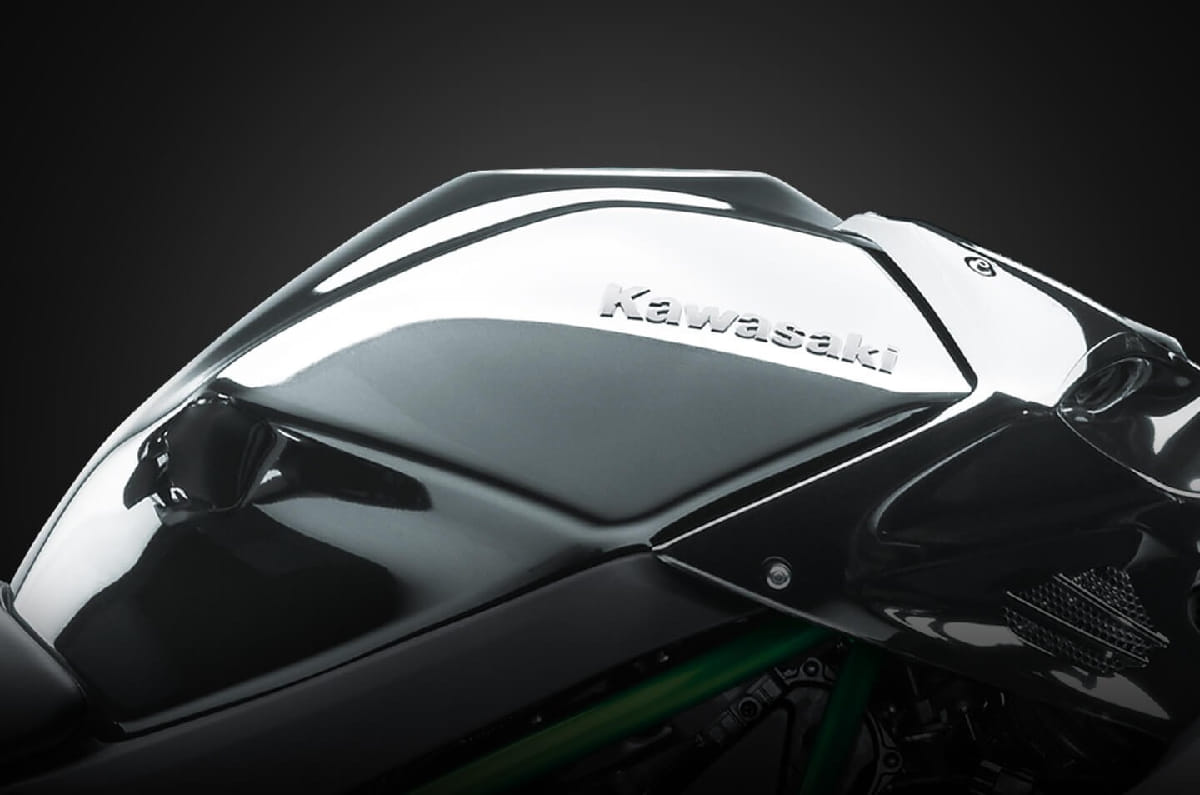
Ninja H2 tank detail close up

A little over a decade ago, Kawasaki unveiled a motorcycle that immediately secured its place in the history books. The Ninja H2 (along with its track-only H2R sibling) made headlines for being among the first production motorcycles to feature a supercharged engine. The forced-induction 998cc inline-four produced astonishing power figures that helped define the bike’s identity. Since then, Kawasaki has expanded its supercharged lineup with the more road-focused Z H2 SE, and it now appears that the fully faired Ninja H2 could be adopting a similar engine tune for 2027.

  1. Peak power could drop from 240hp to 197hp
  2. Will reportedly use the same exhaust system as the Z H2 SE

2027 Kawasaki Ninja H2 power drop

New model codes hint at more extensive updates than just an engine retune

Emissions filings with the US Environmental Protection Agency (EPA) reveal that the 2027 Ninja H2 has been certified with the same 197hp peak output as the Z H2 SE. The naked bike uses a lower state of tune of Kawasaki’s 998cc supercharged inline-four, producing 197hp at 10,500rpm, compared to the outgoing Ninja H2’s 240hp at 11,500rpm.

A separate filing with the California Air Resources Board (CARB) also confirms that the 2027 Ninja H2 will use the same exhaust system as the Z H2 SE, with a secondary catalytic converter, likely to meet tightening emissions regulations. 

Interestingly, Australian homologation documents reveal that the 2027 Ninja H2 and H2 Carbon carry new model codes instead of the current designation. This suggests Kawasaki could be preparing a more comprehensive update rather than a simple engine retune, although no further details have emerged yet.

As for the track-only Ninja H2R, there’s currently no indication of whether it will receive similar changes. Since it isn’t road legal, it isn’t subject to the same emissions requirements as the standard H2, giving Kawasaki considerably more flexibility with its flagship 322hp machine.

The Ninja H2 isn’t sold in India, but its sport-touring sibling, the Ninja H2 SX SE, is listed on Kawasaki India’s website. That said, it is still a MY25 model while several other models have already been updated to MY27 specifications. While Kawasaki is expected to expand its Indian portfolio with additional global models next year, there is nothing to suggest the updated Ninja H2 will be among them.

Source: Motorcycle.com

Bentley Torcal christened as brand’s first EV

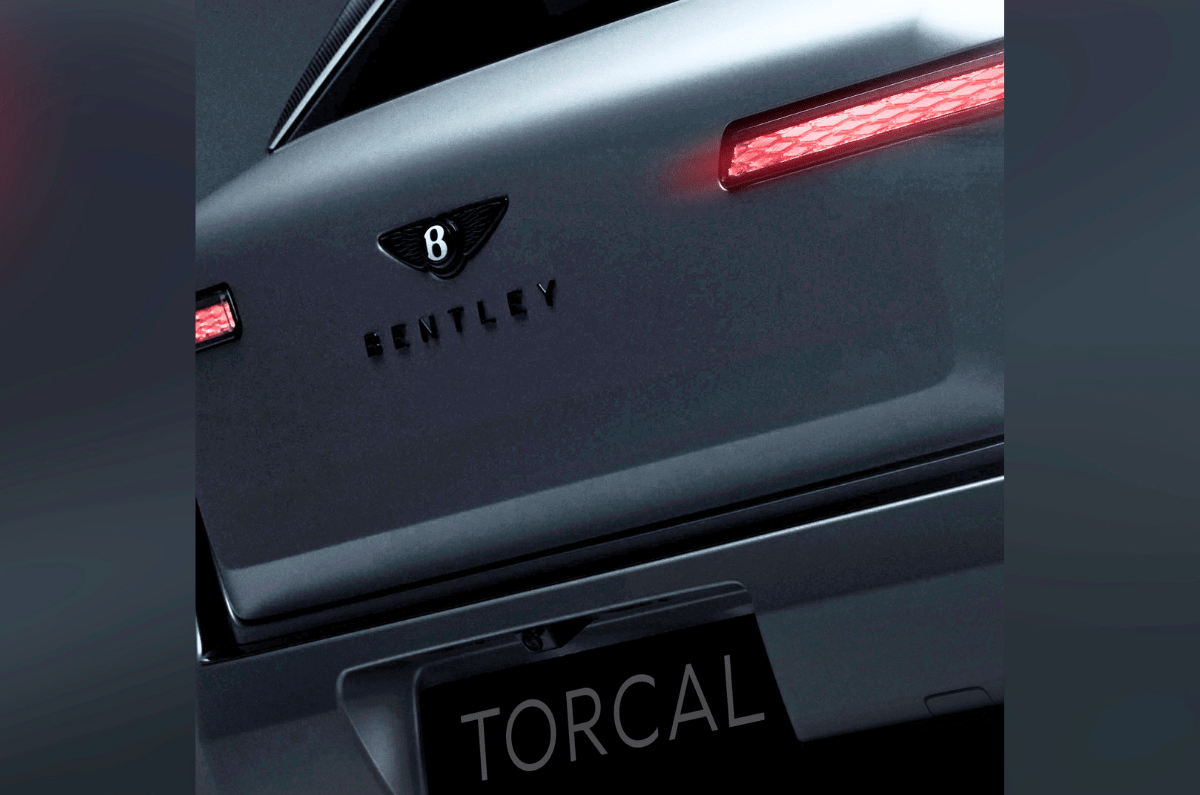
Bentley Torcal

Luxury marque Bentley has revealed the name of its first EV – Torcal – ahead of its debut on September 23. Like the Bentayga, the Torcal is named after a natural landmark. In this case, it takes its name from El Torcal de Antequera, a limestone rock landscape in Andalusia, Spain. The name also refers to the Latin verb ‘torquere’, meaning to twist, from which the word torque is derived. Based on the 2025 Bentley EXP 15 concept, the pre-production of the SUV began in November last year at the brand’s Crewe facility.

The Torcal was originally planned to debut last year, but it was delayed due to weak demand for luxury electric cars. Other EVs planned after the Torcal have also been delayed, with Bentley dropping its earlier target of becoming an all-electric carmaker by 2030. The company will now debut a new plug-in hybrid or electric vehicle each year until 2035.

Bentley Torcal range, platform

Speaking to Autocar UK, Bentley director of design Robin Page confirmed the Torcal will offer a range of over 300 miles (or 483km). “We’re finding that there’s a sweet spot in terms of range. Our customers are basically telling us that 300 miles to 350 miles (or 563km) is that sweet spot. Beyond that, they’ll use the private jet,” he told the publication further.

Maruti Alto K10 exterior and interior image gallery

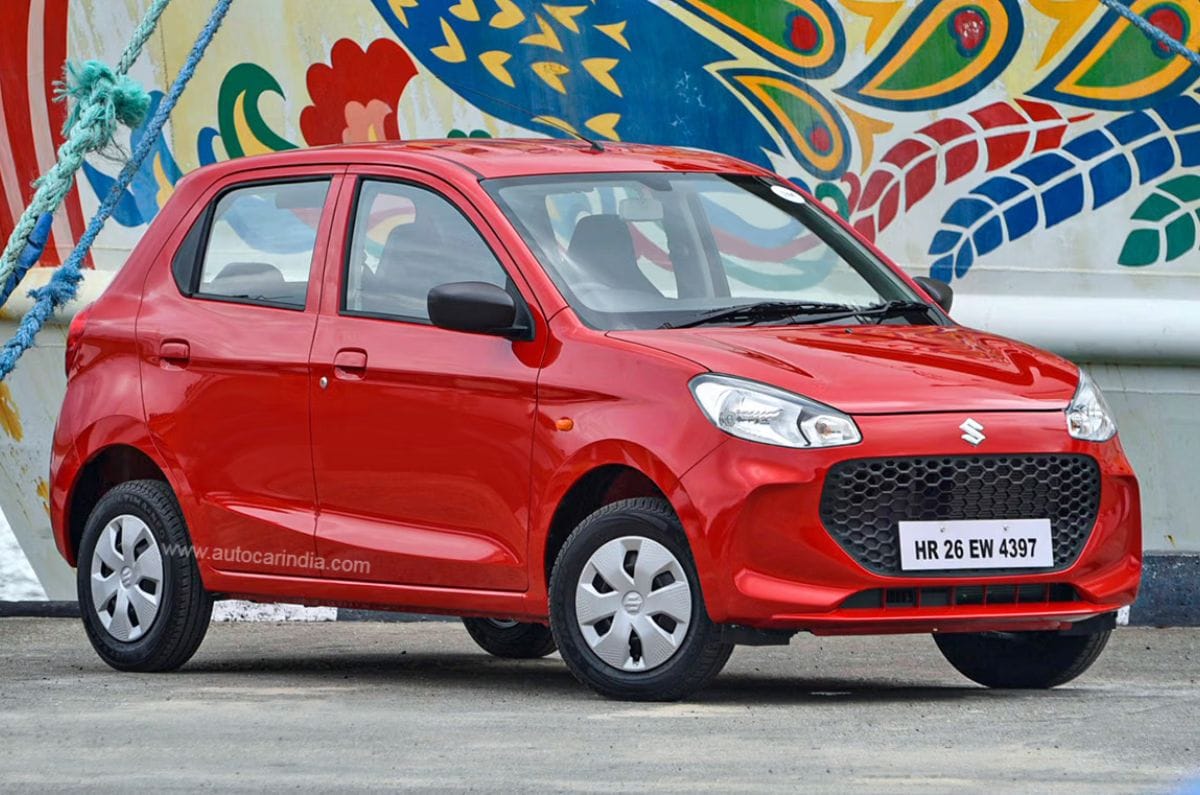
Maruti Alto K10 front quarter static

Among Maruti Suzuki’s extensive line-up, the Alto K10 sits just above the S-Presso. It’s one of the brand’s most affordable cars in India, and is available in petrol and CNG variants. Under the bonnet is a 998cc three-cylinder K10C engine producing a maximum of 68.5hp and 91.1Nm. While the petrol and CNG versions come as standard with a 5-speed manual gearbox, only the petrol version comes with the option of a 5-speed automated manual transmission.

Also see

2026 Renault Kwid exterior and interior image gallery

Tata Sierra EV Sanctuary Edition in pictures

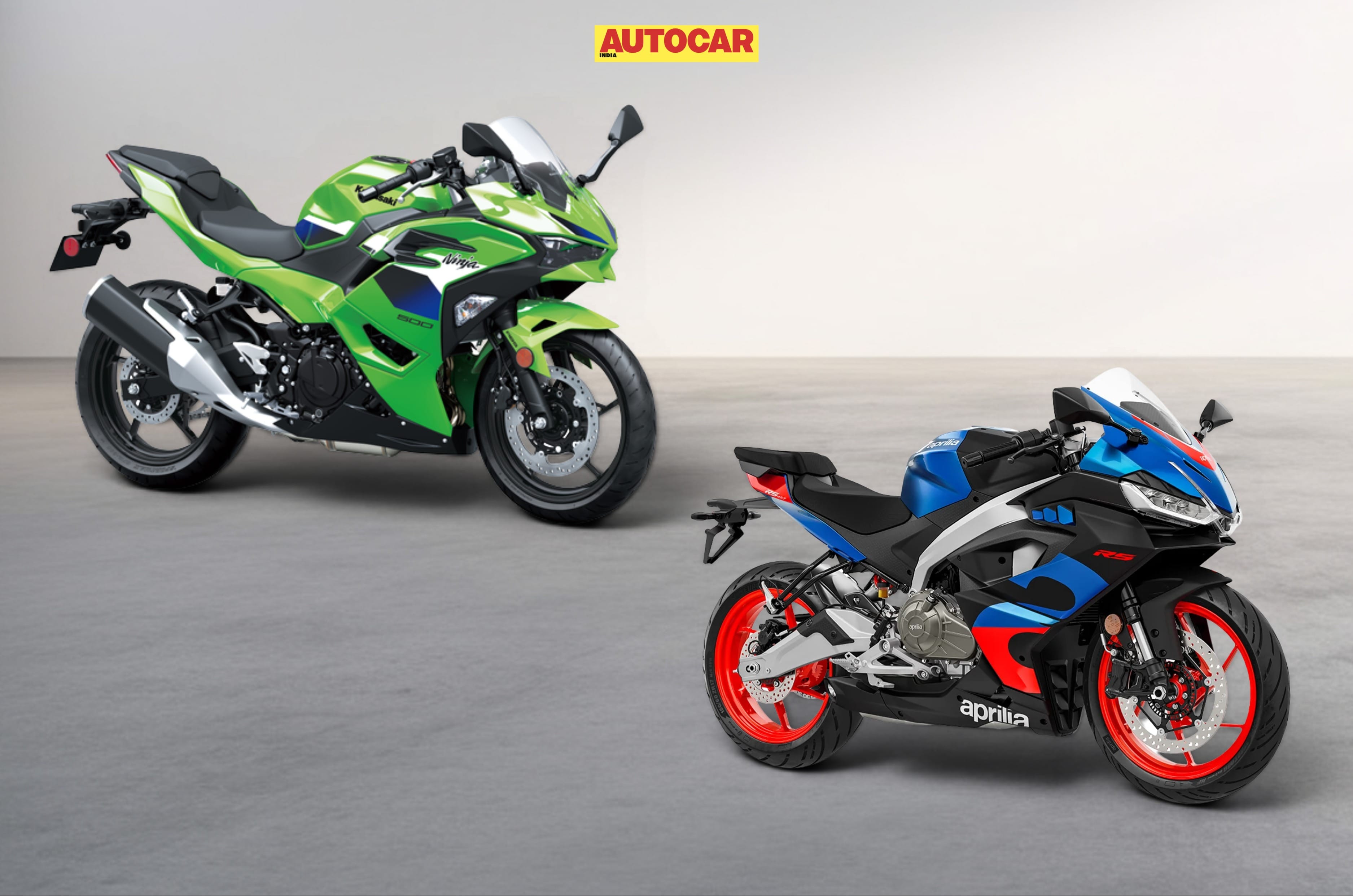
Kawasaki Ninja 500 vs Aprilia RS 457: Price and specification comparison

Kawasaki Ninja 500 vs Aprilia RS 457: Price and specification comparison

The Aprilia RS 457 and Kawasaki Ninja 500 are two of the few fully faired, twin-cylinder motorcycles in the sub-500cc segment, but they take distinctly different approaches. While the Aprilia prioritises outright performance and premium hardware, the Ninja 500 focuses on accessibility and mechanical simplicity. Here’s how the two compare on paper.

 Kawasaki Ninja 500 vs Aprilia RS 457: Engine and output


Kawasaki Ninja 500

Aprilia RS 457

Engine

451cc, parallel-twin, liquid-cooled

457cc, parallel-twin, liquid-cooled

Peak Output

45.4hp at 9,000rpm

47.6hp at 9,400rpm

Peak Torque

42.6Nm at 6,000rpm

43.5Nm at 6,700rpm

Gearbox

6-speed

6-speed

Power-to-weight ratio

265.5 hp/tonne

272hp/tonne

RS 457 produces more power and has a better power-to-weight ratio

Although both motorcycles use liquid-cooled parallel-twin engines, they have been engineered with different priorities. The RS 457 employs a 270-degree crankshaft, giving it an uneven firing order, while its ride-by-wire throttle allows Aprilia to equip it with rider aids such as traction control, riding modes and an optional bidirectional quickshifter. The Ninja 500, meanwhile, sticks to a cable-operated throttle and a more straightforward electronics package. On paper, the Aprilia also enjoys a slight edge in outright performance and power-to-weight ratio.

Kawasaki Ninja 500 vs Aprilia RS 457: Weight and dimension


Kawasaki Ninja 500

Aprilia RS 457

Kerb weight

171kg 

175kg

Wheelbase

1375mm 

NA

Ground clearance

145mm 

150mm

Seat height

785mm 

800mm

Fuel capacity

14 litres 

13 litres

RS 457 gets an aluminium twin-spar frame; Ninja 500 uses a steel trellis frame.

The biggest distinction between the two lies in their chassis construction. The RS 457 uses an aluminium twin-spar frame, while the Ninja 500 is built around Kawasaki’s high-tensile steel trellis frame. Despite the different approaches, the Aprilia is only 4kg heavier. Beyond that, the differences are relatively subtle, with the Ninja 500 offering a lower seat height and a larger fuel tank, while the RS 457 has a marginally longer wheelbase and slightly more ground clearance.

Kawasaki Ninja 500 vs Aprilia RS 457: Tyres, brakes and suspension


Kawasaki Ninja 500

Aprilia RS 457

Tyres

110/70-R17 / 

150/60-R17

110/70-R17 / 150/60-R 17

Suspension

Telescopic fork / monoshock

USD fork / monoshock

Brakes

310mm disc / 220mm disc

320mm disc / 220mm disc

The Ninja 500 comes with an axially mounted Nissin caliper

While both motorcycles ride on 17-inch alloy wheels wrapped in 110-section front and 150-section rear tyres, their suspension and braking hardware take different approaches. The RS 457 gets a 41mm preload-adjustable USD fork, whereas the Ninja 500 uses a 41mm telescopic fork. Both bikes feature a preload-adjustable monoshock.

The Aprilia also has the more sophisticated braking setup on paper. It uses a 320mm front disc paired with a radially mounted ByBre caliper, while the Ninja 500 gets a 310mm front disc with an axially mounted two-piston Nissin caliper. Both motorcycles come equipped with dual-channel ABS as standard.

Kawasaki Ninja 500 vs Aprilia RS 457: Features

The RS 457 enjoys a clear edge when it comes to electronics. Its ride-by-wire throttle unlocks a more comprehensive rider aid suite, comprising three riding modes, three-level traction control, and an optional bidirectional quickshifter. It also gets a 5-inch TFT display with Bluetooth connectivity and turn-by-turn navigation.

The Ninja 500, in contrast, takes a simpler approach. The India-spec motorcycle comes with an LCD instrument cluster, LED lighting, dual-channel ABS and an assist-and-slipper clutch as standard, but misses out on electronic rider aids such as traction control, riding modes and a quickshifter. The pared-back equipment list is in keeping with the Ninja 500’s focus on offering a straightforward, easy-to-live-with riding experience.

Kawasaki Ninja 500 vs Aprilia RS 457: Price


Kawasaki Ninja 500

Aprilia RS 457

Price

Rs 4.22 lakh (ex – showroom, Mumbai)

Rs 5.76 lakh (ex-showroom, India)

RS 457 offers a significantly lower entry price than the Ninja 500

The Aprilia RS 457 is priced at Rs 4.22 lakh, while the Kawasaki Ninja 500 costs Rs 5.76 lakh (both ex-showroom, India), a difference of Rs 1.54 lakh. While the specification sheet provides a useful point of comparison, the final decision will ultimately depend on whether buyers prioritise the Aprilia’s stronger value proposition or the Ninja 500’s broader ownership appeal.