2026 Skoda Slavia facelift revealed, bookings open

2026 Skoda Slavia facelift revealed, bookings open
Skoda Slavia facelift

The much-awaited Skoda Slavia facelift has finally been revealed. The mid-lifecycle update brings several cosmetic changes and new features, along with an automatic gearbox upgrade for the 1.0 TSI petrol engine. The prices will be announced in the first week of October and pre-bookings for the Skoda sedan are underway. Meanwhile, deliveries will begin this festive season. 

  1. 360-degree camera, LEDs integrated into the front grille have been added
  2. Kushaq-like rear sear massaging function available as well
  3. New 8AT option introduced for the 1.0 TSI mill instead of the 6AT unit

New Skoda Slavia exterior highlights
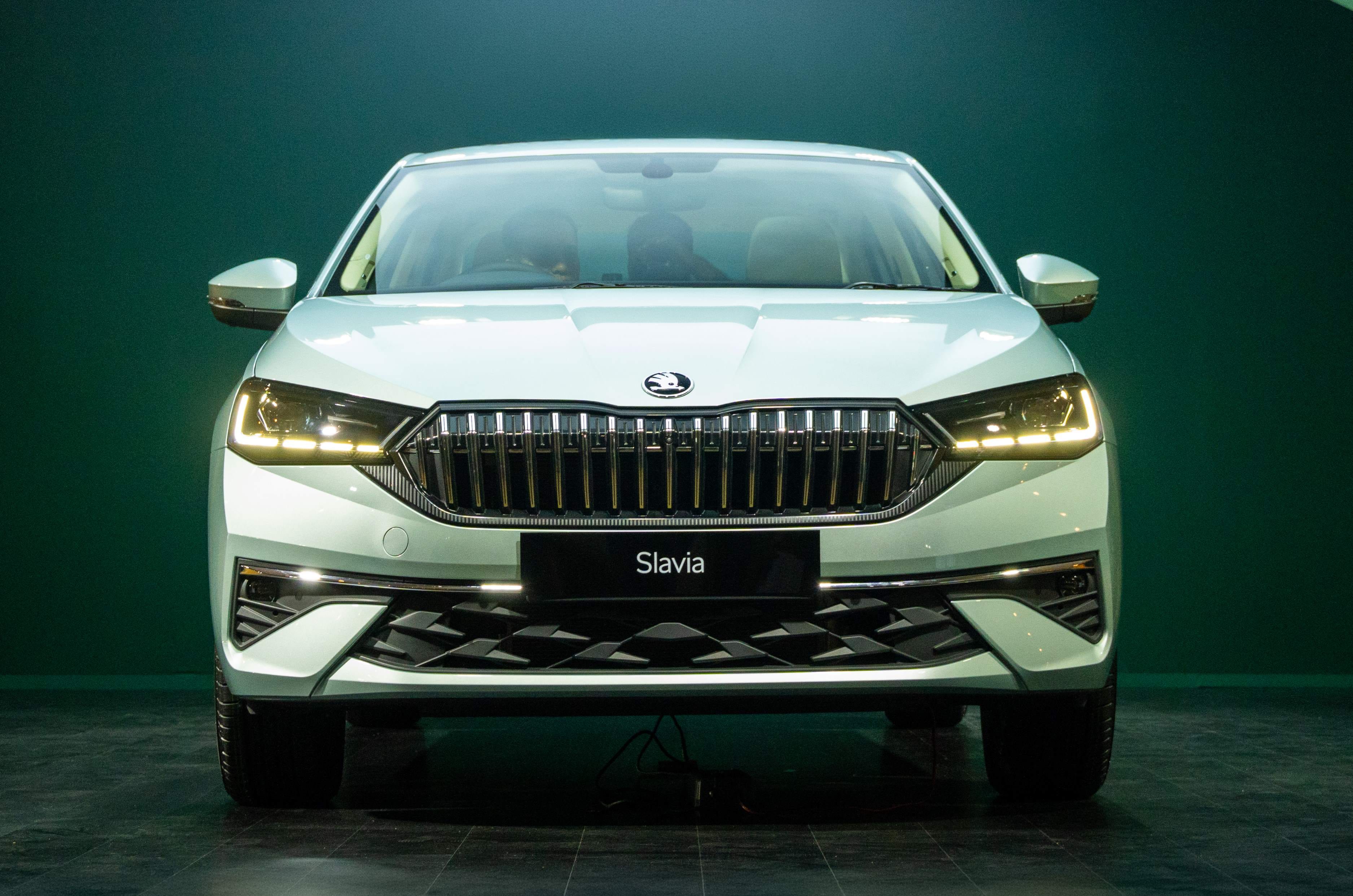
Skoda Slavia front
New LED DRL signatures and bumper grille come courtesy of the facelift.

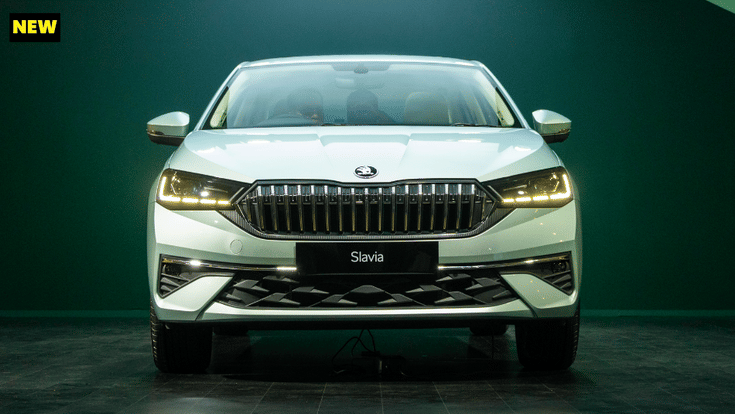
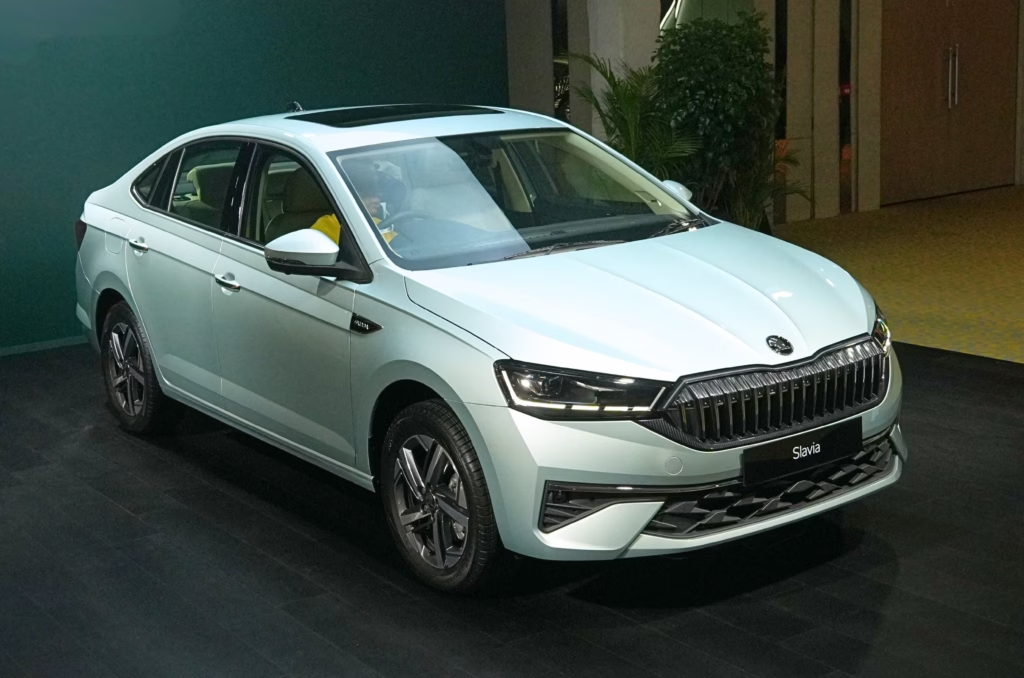
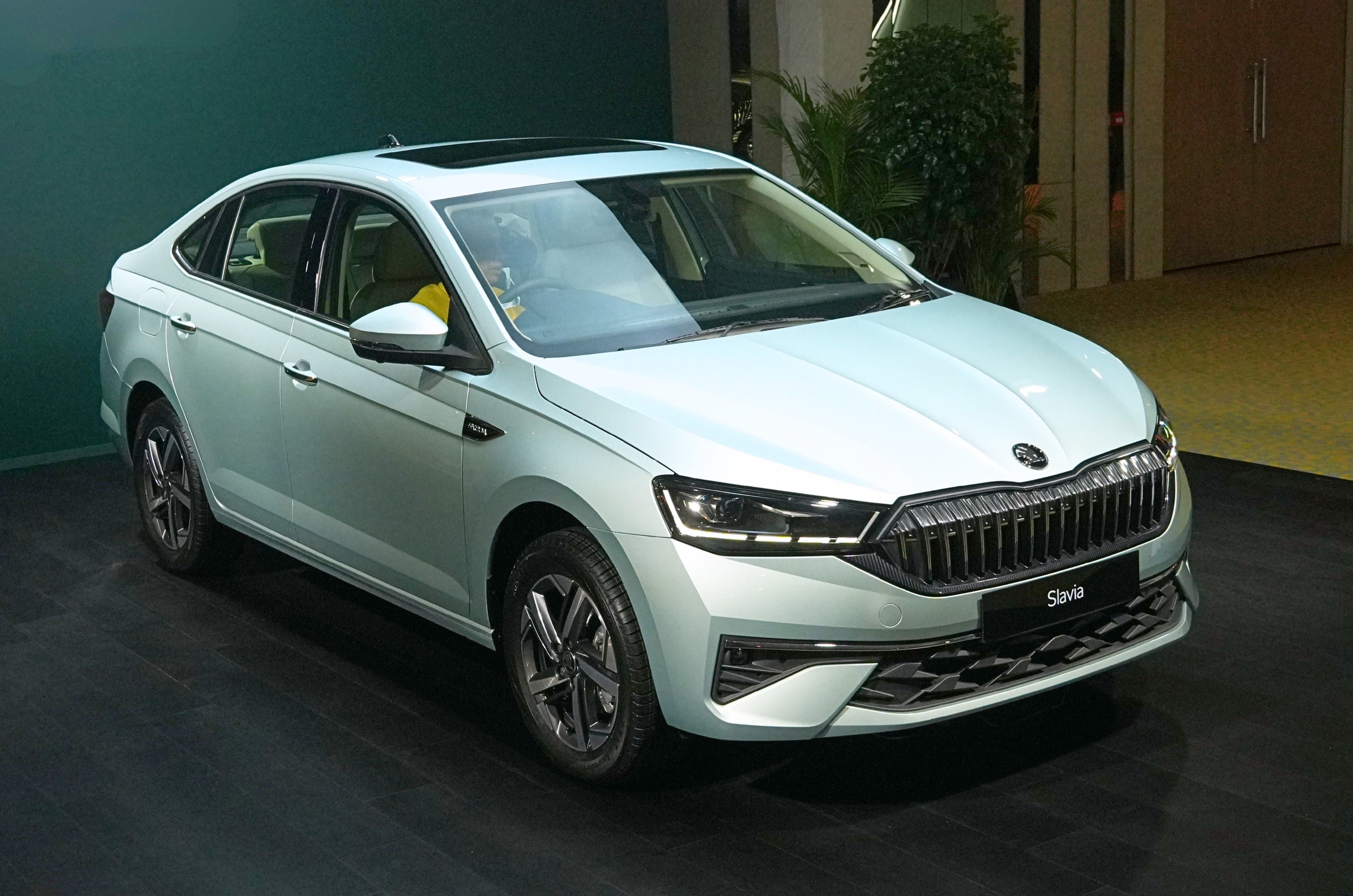
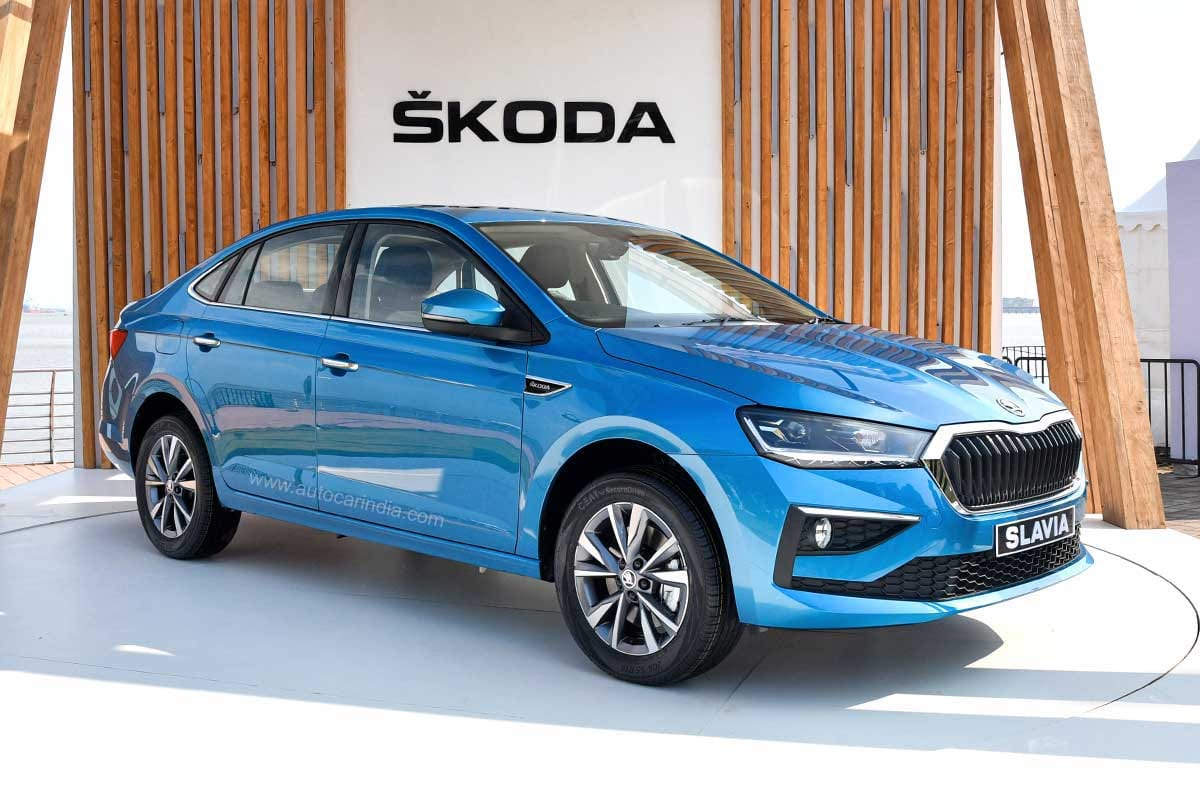
Being a facelift, the overall silhouette of the mid-size sedan has been carried over. Parts like the headlights, tail-lights, front grille and air dam, and alloy wheels have been refreshed. It also gets Skoda Kushaq-like segmented LEDs integrated into the grille and sequential turn indicators at the rear. A new trim between the tail-lights with the ‘SKODA’ lettering has also been added.
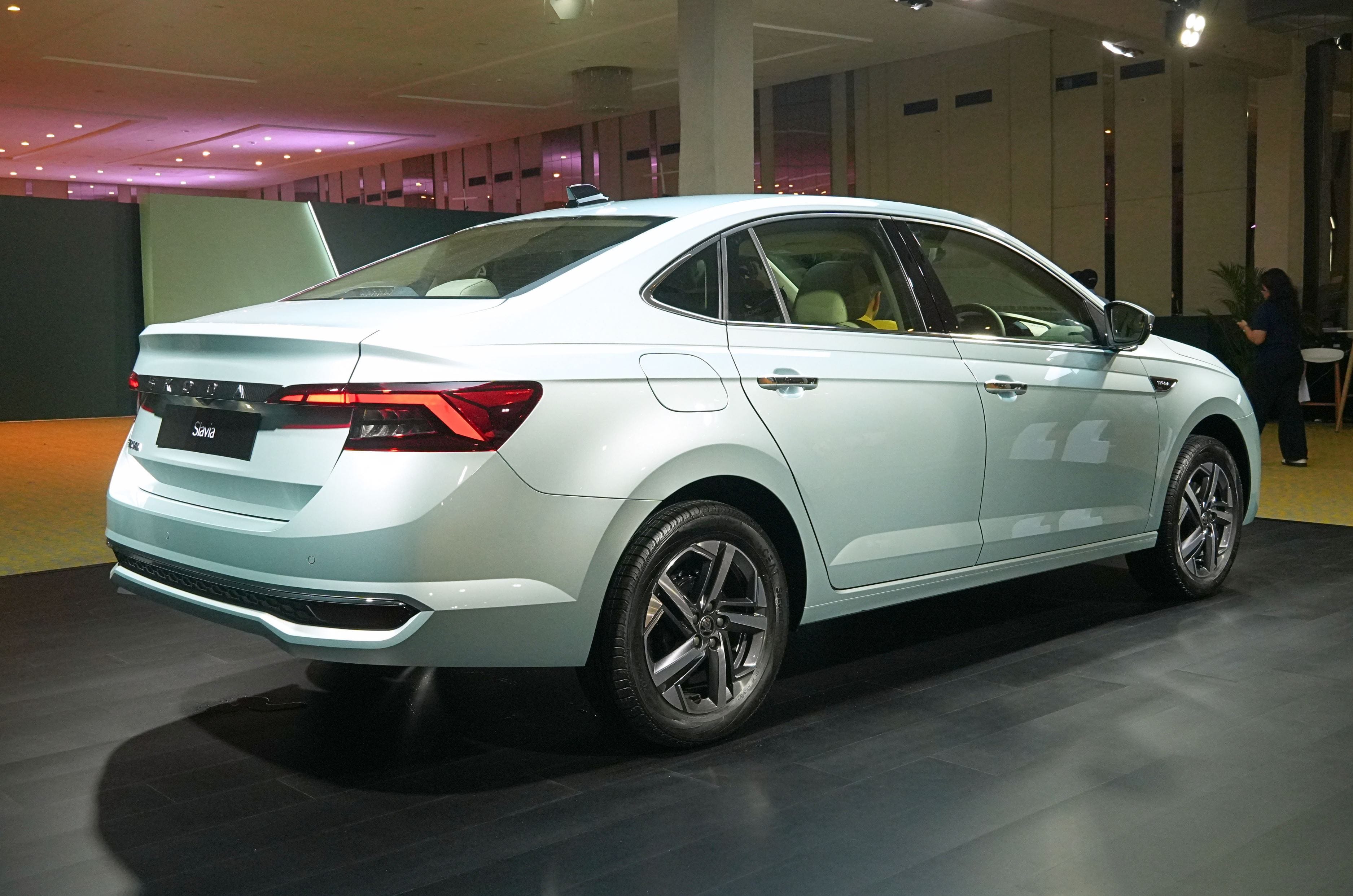
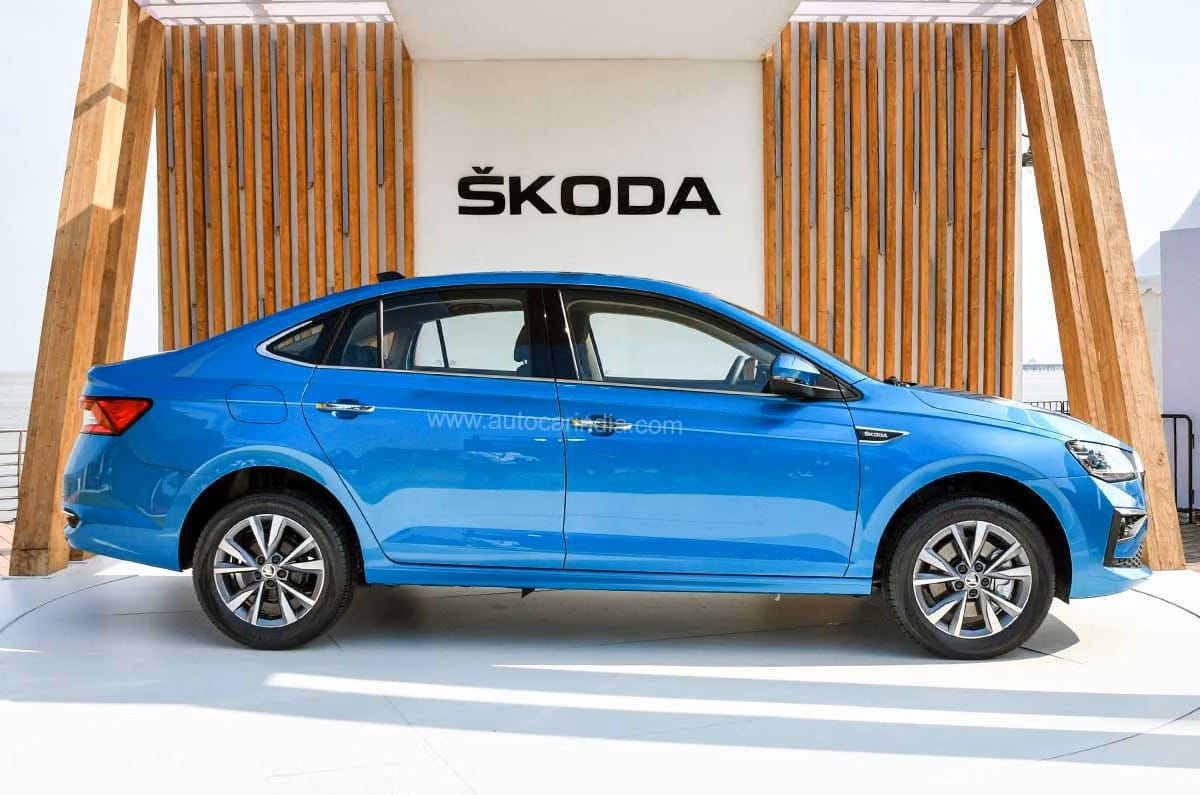
Skoda Slavia facelift
Side profile is largely unchanged.

Arctic Silver and Cappuccino Beige are among the new colours, however, deliveries for the latter will only start from December. Other colour option on offer are Shimla Green, Brilliant Silver, Candy White, Carbon Steel, Steel Grey, Lava Blue, Cherry Red and Deep Black.

New Skoda Slavia interior features
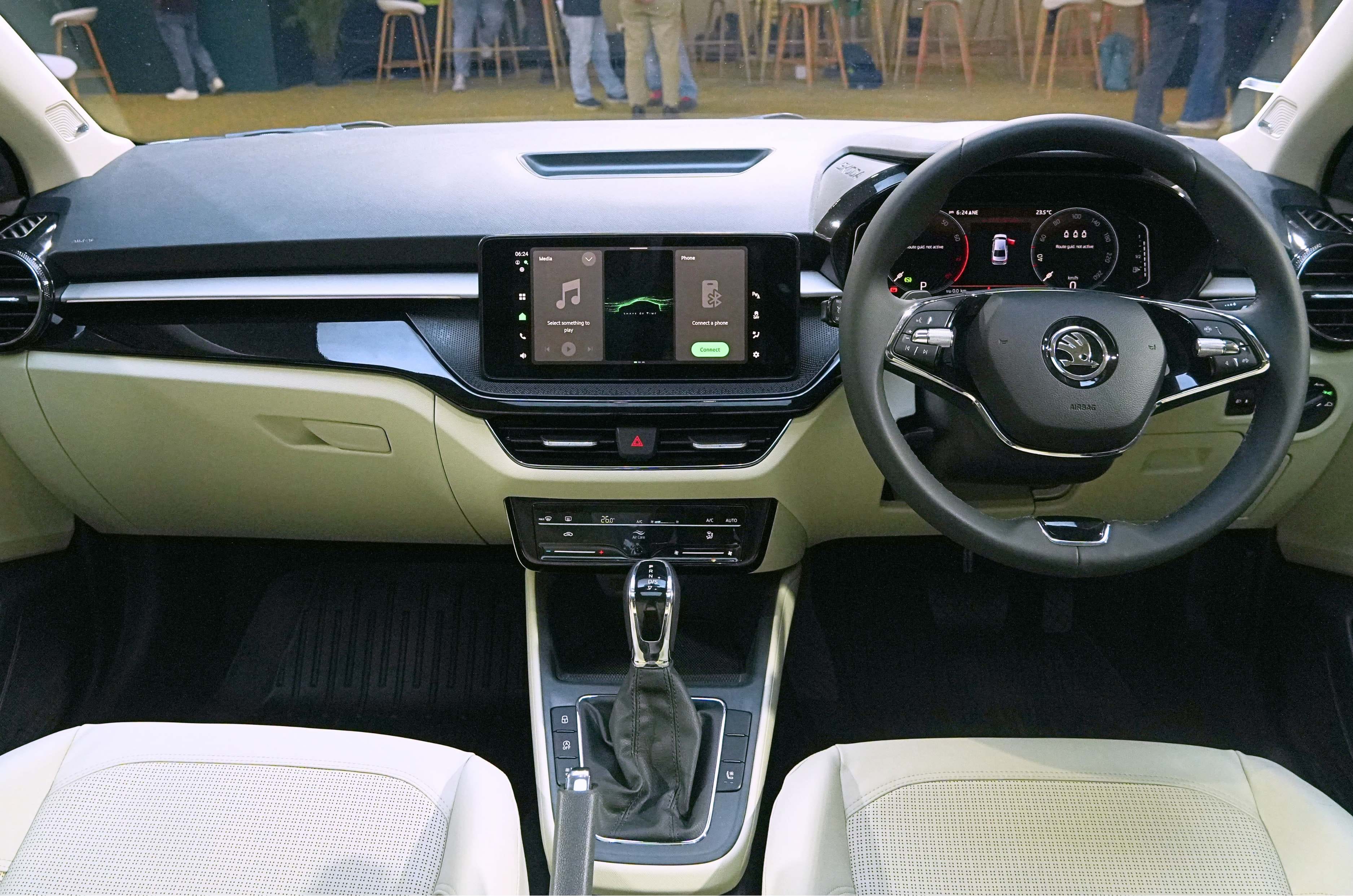
Skoda Slavia interior
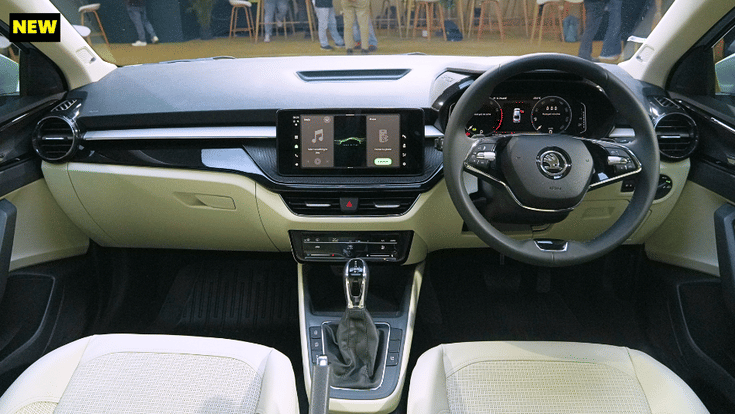
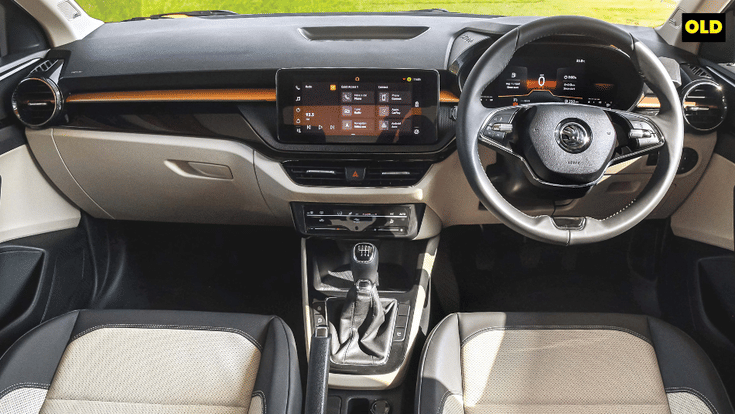
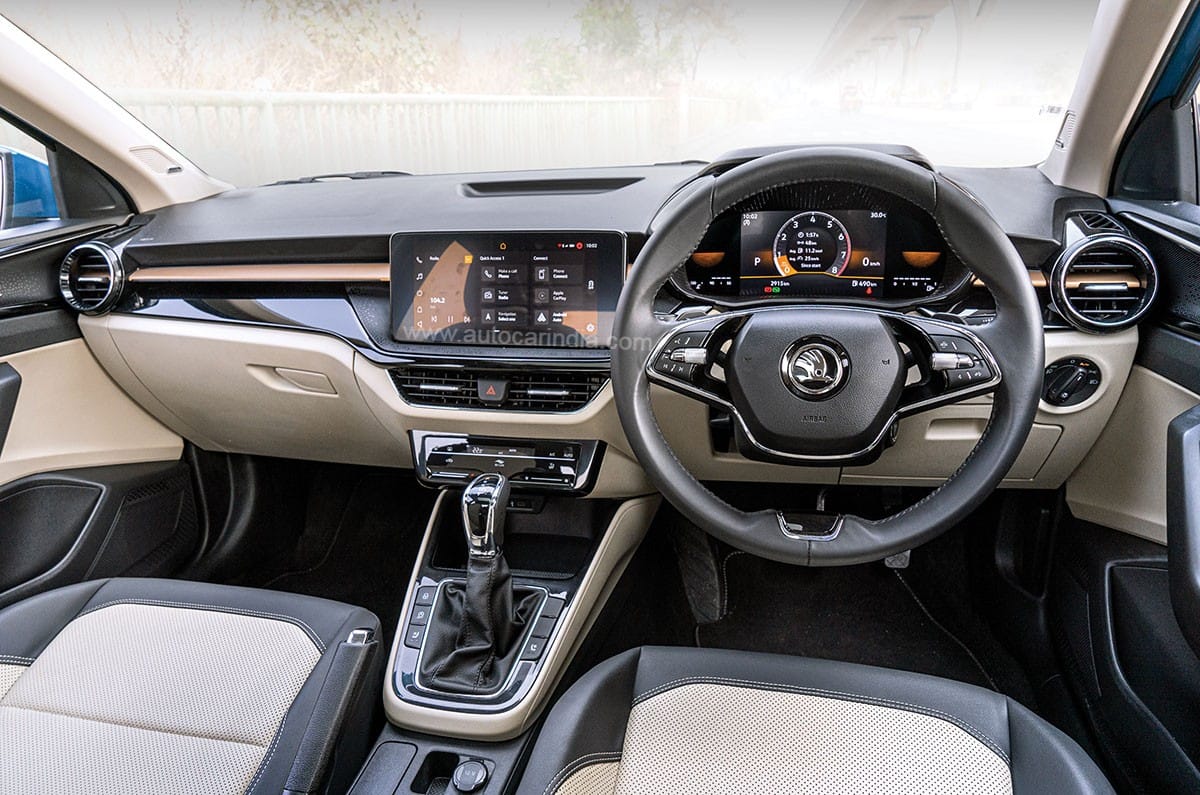
The interior layout has been carried over.

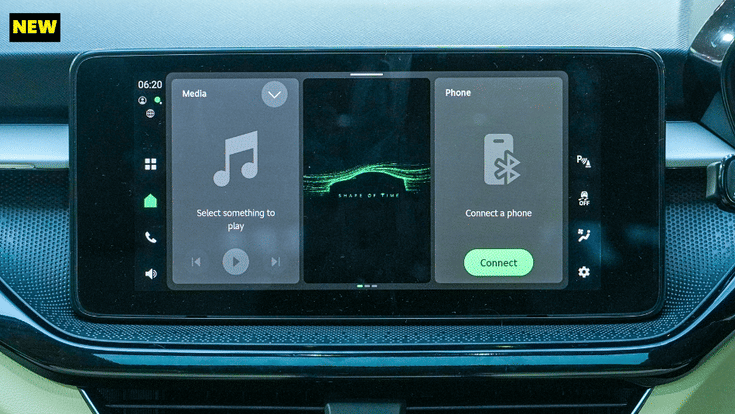
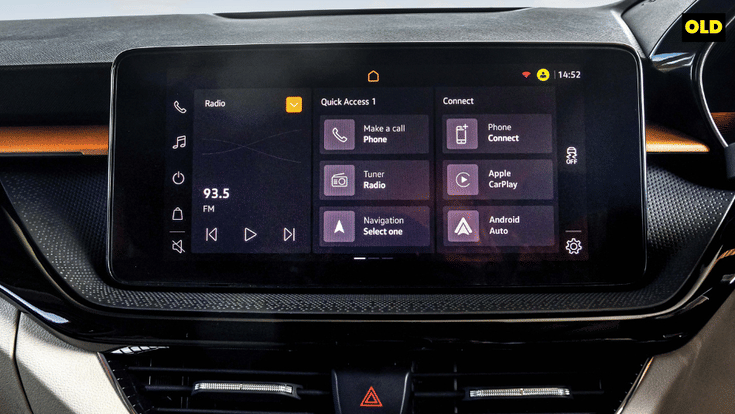
The Slavia facelift gets a segment-first rear-seat massaging function. It also gets larger screens, with a 10.1-inch touchscreen replacing the erstwhile 10-inch unit, while a 10.25-inch driver’s display has been added in place of the 8-inch unit. Both of them come with new graphics and features. A panoramic sunroof is still not part of the package, and it continues with a single-pane unit.
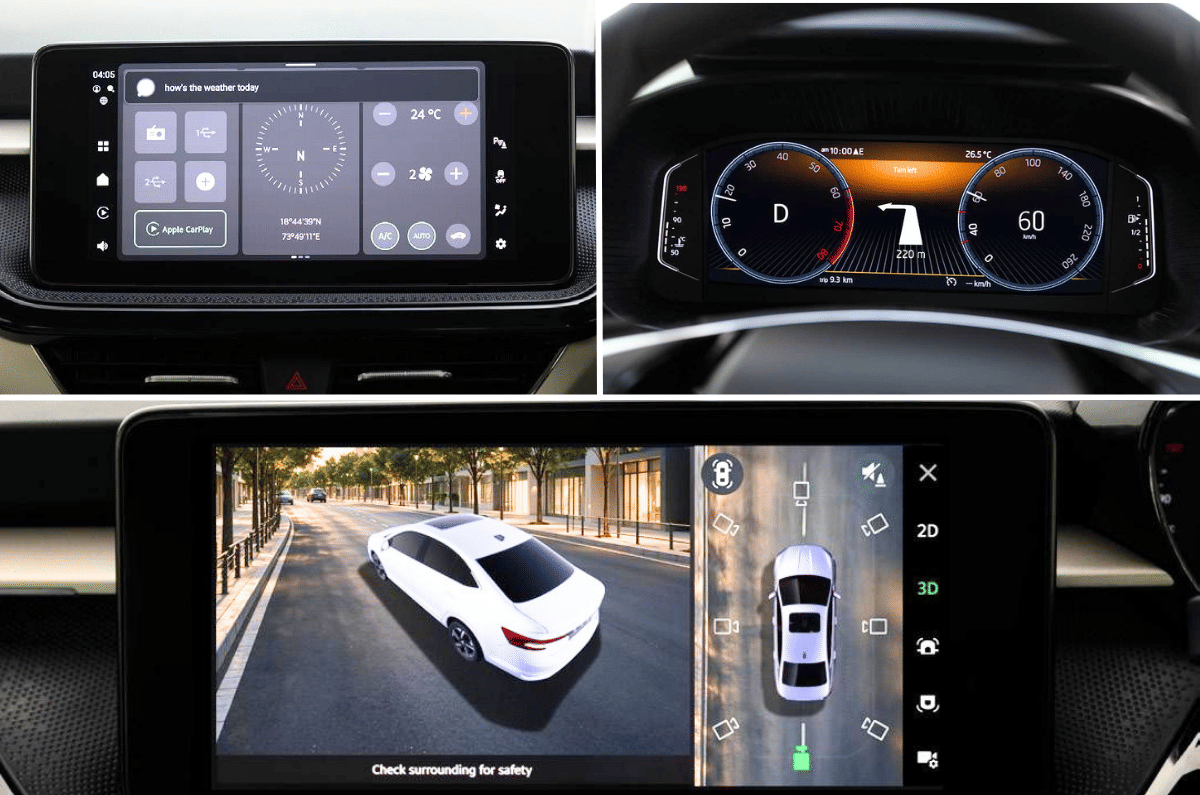
New Skoda Slavia interior
Top: 10.1 inch touchscreen (L), 10.25 inch driver’s display (R); bottom: 360-degree camera view. 

A 360-degree camera replaces the previous rear-only unit and like the Kushaq; however, an ADAS suite remains absent.

New Skoda Slavia engine and gearbox choices
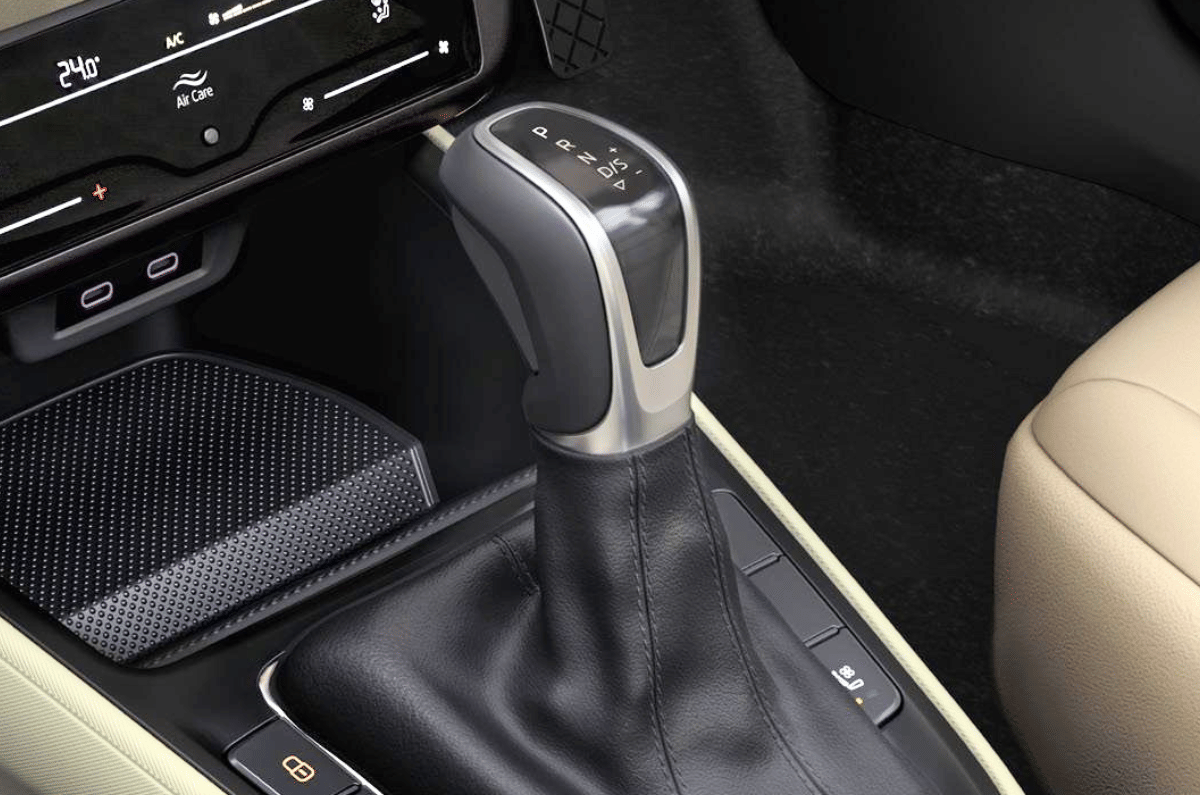
Skoda Slavia new AT gearbox
New 8-speed torque converter gearbox replaces the 6-speed unit.

The 2026 Slavia continues with the familiar set of 115hp 1.0 TSI and 150hp 1.5 TSI turbo-petrol engines. The 1.0 TSI gets a 6-speed manual, while the 1.5 TSI continues with a 7-speed dual-clutch automatic. The key change is to the 1.0 TSI automatic, which now is an 8-speed torque-converter unit instead of the earlier 6-speed gearbox.

With this update, Skoda aims to keep the Slavia competitive against the Hyundai Verna and Honda City, both of which received facelifts earlier this year. Meanwhile, the Volkswagen Virtus is likley to get an update later this year. The outgoing Slavia is priced between Rs 10 lakh and Rs 18.19 lakh, ex-showroom. With the facelift, a price hike of up to Rs 85,000 is likely.
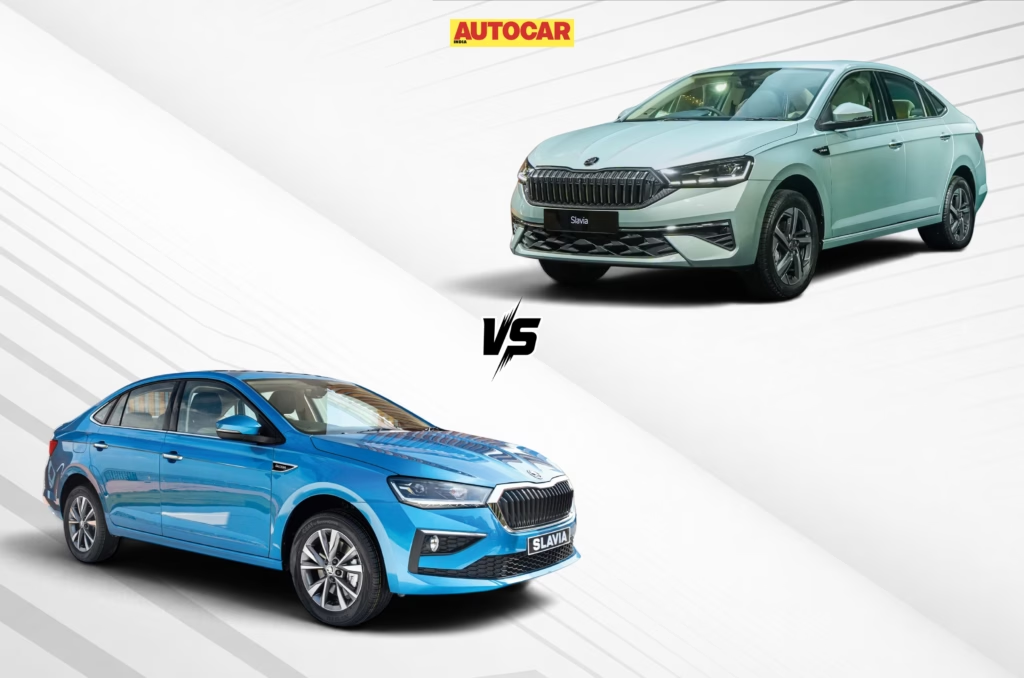
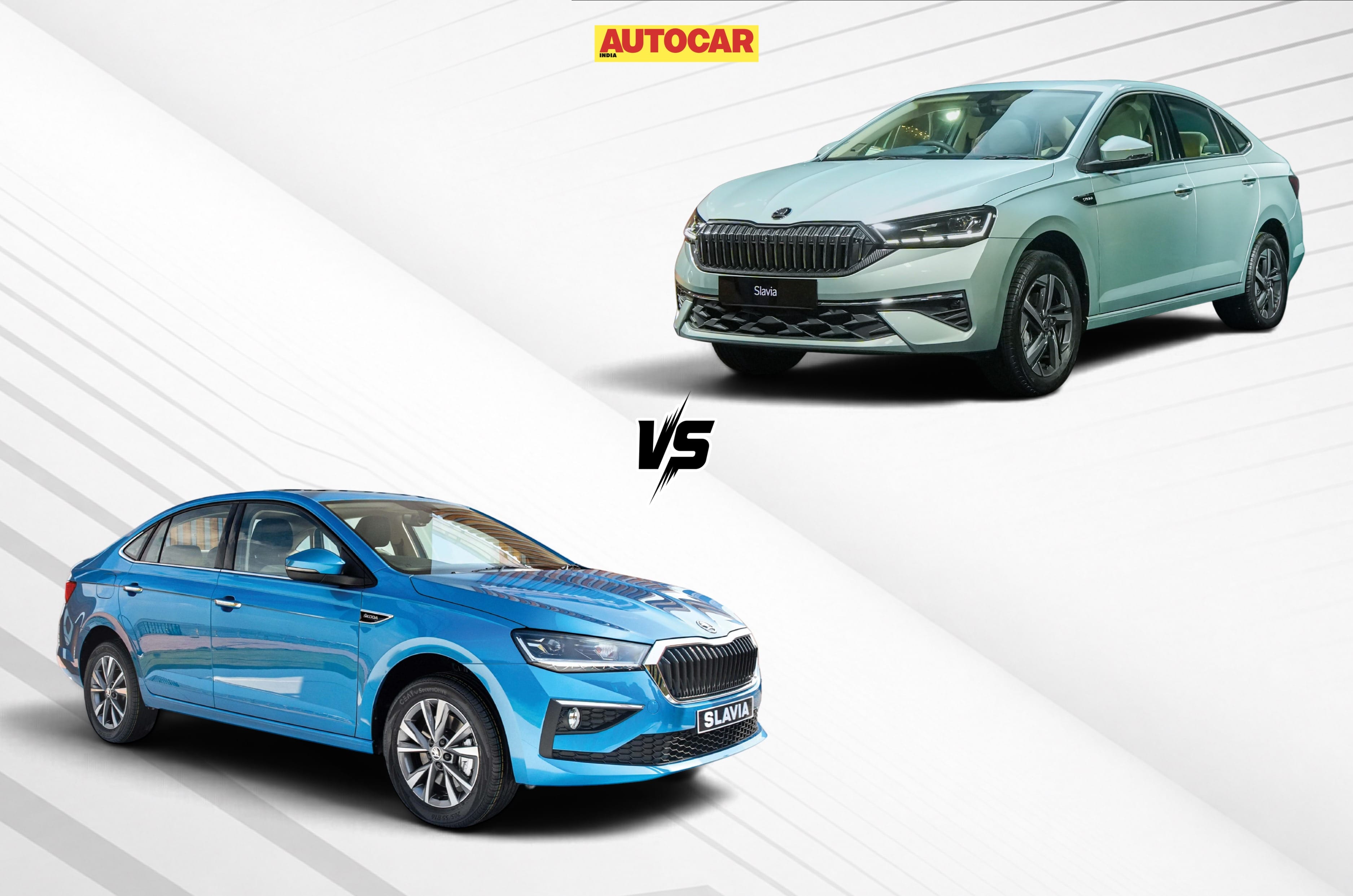
Skoda Slavia new vs old: Differences and similarities explained

Skoda Slavia new vs old: Differences and similarities explained
Skoda Slavia New vs Old comparison

It took Skoda three and a half years to bring the first facelift of the Slavia to market. However, with this mid-cycle update, the Czech carmaker has introduced minor cosmetic tweaks and added a few new features to its midsize sedan. Furthermore, the Skoda Slavia facelift has hit showrooms ahead of the updated Volkswagen Virtus. The Slavia’s competition also includes the Honda City and Hyundai Verna. Without further ado, here are some of the differences and similarities between the old and new Skoda Slavia.

Skoda Slavia new vs old: Exterior design

Changes on the outside are limited to updated bumpers and light signatures

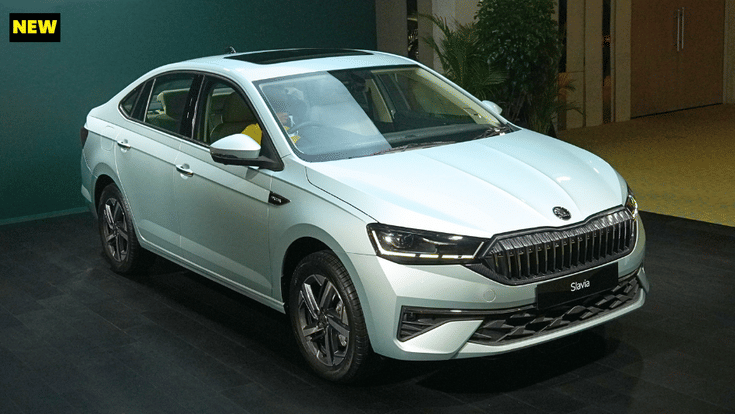
New Skoda Slavia front quarter
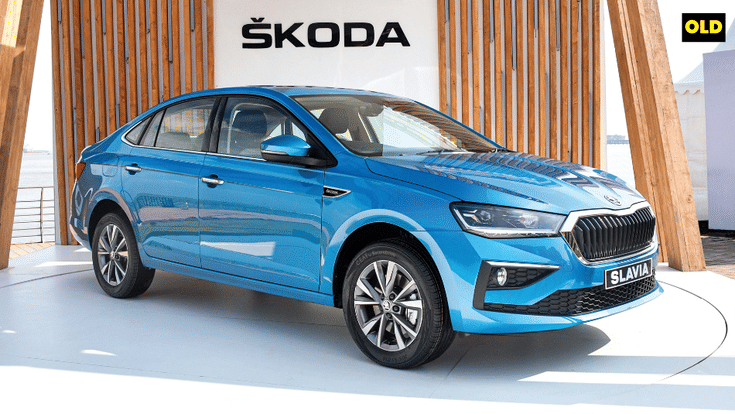
Old Skoda Slavia front quarter
 

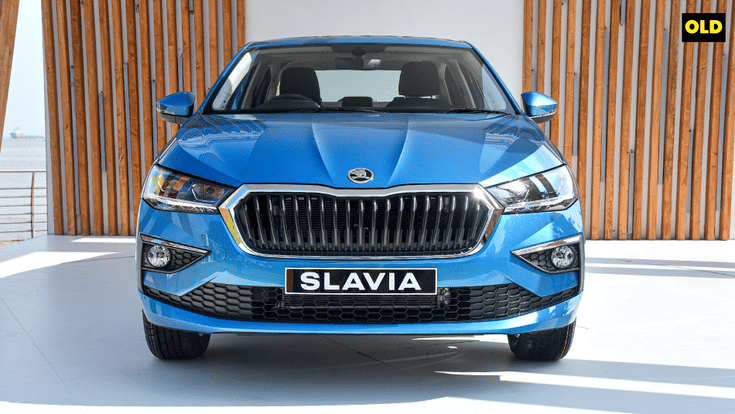
The front of the Skoda Slavia now gets a new bumper with a shiny piece of trim running its full width and small LED fog lamps. The design of the grille hasn’t changed but its chrome surround has been removed in favour of two different black bars. While the shape of the headlamp housing is the same as before, the internals have been revised – the daytime running signatures are different too.

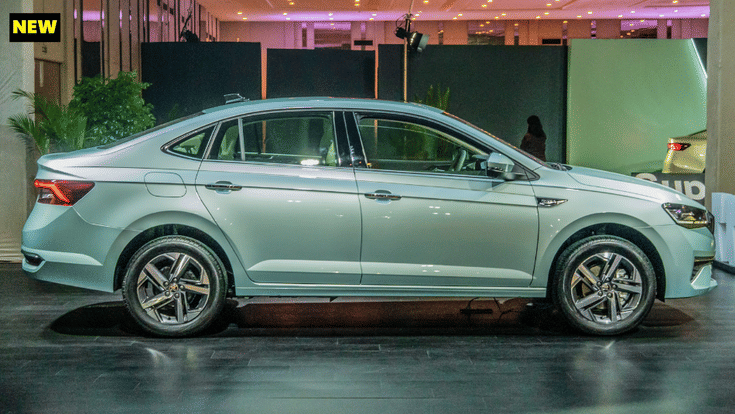
New Skoda Slavia side
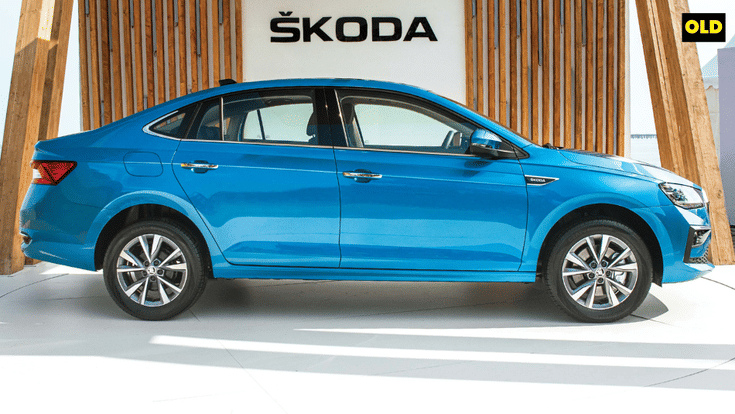
Old Skoda Slavia side
 

Viewed from the side, the new Slavia carries forward the same silhouette and overall proportions as its predecessor. Details such as the beltline, chrome lining along the windowline, and the ‘Skoda’ plaque above the front fenders remain. However, what has changed is the design of the 16-inch alloy wheels, which now look more bold and sport a two-tone finish.

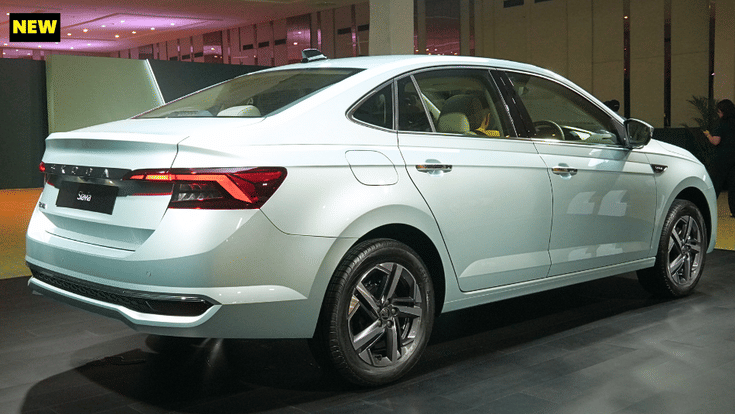
New Skoda Slavia rear
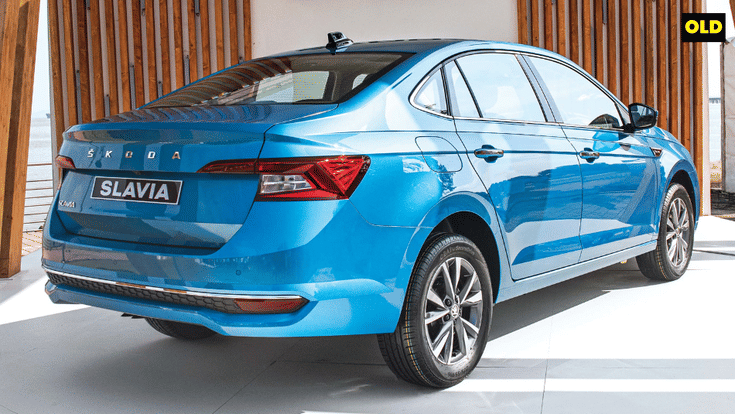
Old Skoda Slavia rear
 

Similar to the front, the lights at the back of the new Slavia feature the same housing as the old model. However, Skoda has tweaked the internal LED elements of the tail-lamps. Compared to the old Slavia that had a prominent ‘SKODA’ lettering across its bootlid, the new model features a piece of plastic trim with the brand name spelled on it. The rear bumper hasn’t been revised in any significant way, though. However, the Slavia does come in two new colours: Arctic Silver and Cappuccino Beige.

Skoda Slavia new vs old: Interior design

The facelift brings a couple of notable updates to the interior over the old model

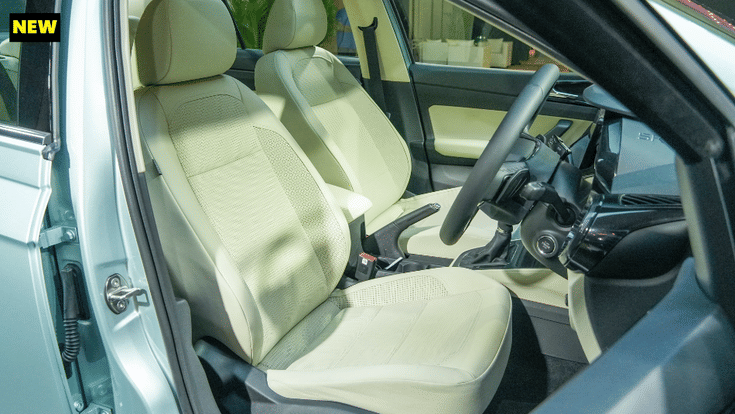
New Skoda Slavia front seats
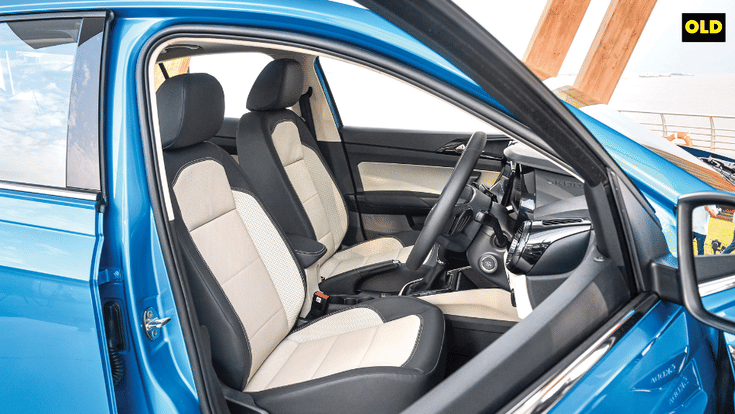
Old Skoda Slavia front seats
 

Where the top-spec of the old model offered a beige & black dual-tone leatherette seats, the new Slavia gets fully beige seats. The design of these seats don’t appear to have changed with this facelift, but they do get a new pattern now.

New Skoda Slavia dashboard
Old Skoda Slavia dashboard
 

Shifting focus to the dashboard, the new Skoda Slavia is available with a 10.25-inch digital instrument cluster – the old model’s unit maxed out at 8 inches. The infotainment screen has also grown larger by the slightest of margins – from 10 inches to 10.1 inches. The new infotainment system also offers a built-in AI assistant powered by Google Cloud, while the feed from the Slavia’s new 360-degree camera is also displayed on this screen. Finally, the outer seats at the back are now available with a massaging function.

New Skoda Slavia touchscreen
Old Skoda Slavia touchscreen
 

Features such as a cooled glovebox, powered & ventilated front seats, an electric sunroof, wireless Apple CarPlay & Android Auto, automatic climate control, LED ambient lighting, 6 airbags, electronic stability control, hill-hold control and a tyre-pressure monitoring system are offered with both models.

Skoda Slavia new vs old: Engine and gearbox

Engine options remain the same, but a new gearbox comes aboard

New Skoda Slavia front
Old Skoda Slavia front
 

The new Skoda Slavia gets the same engine options as its predecessor. The 1.0-litre direct injection three-cylinder turbo-petrol engine makes 115hp and 178Nm, whilst the 1.5-litre direct injection four-cylinder turbo-petrol mill outputs 150hp and 250Nm. While the smaller motor gets a 6-speed manual transmission as standard, it can now be had with an 8-speed torque-converter automatic gearbox. Like before, the larger engine is only available with the 7-speed dual-clutch automatic transmission.

The old Skoda Slavia has been available in Classic, Signature, Sportline, Prestige and Monte Carlo trims. However, there’s now a new Classic+ option as well – slotted between Classic and Signature trims.

Also read

6 updates Mahindra BE 6 Sporteq gets over its predecessor

All you need to know about the Mahindra Scorpio Lifestyler


Skoda Slavia facelift image gallery

Skoda Slavia facelift image gallery
Skoda Slavia Facelift Front Quarter

The Skoda Slavia facelift comes with a few design tweaks, a new trim level and a couple of new convenience features. Skoda’s midsize sedan continues to compete against the VW Virtus, Honda City and Hyundai Verna. The Slavia facelift continues to be offered with the same 1.0 TSI and 1.5 TSI direct injection turbo-petrol engines, with the former available with a 6-speed manual or a new 8-speed automatic transmission. On the other hand, the larger four-cylinder engine is only offered with a 7-speed dual-clutch automatic gearbox.

Also see

Lamborghini Revuelto SV image gallery

2026 Mahindra BE 6 Sporteq image gallery

All you need to know about the Mahindra Scorpio Lifestyler

All you need to know about the Mahindra Scorpio Lifestyler
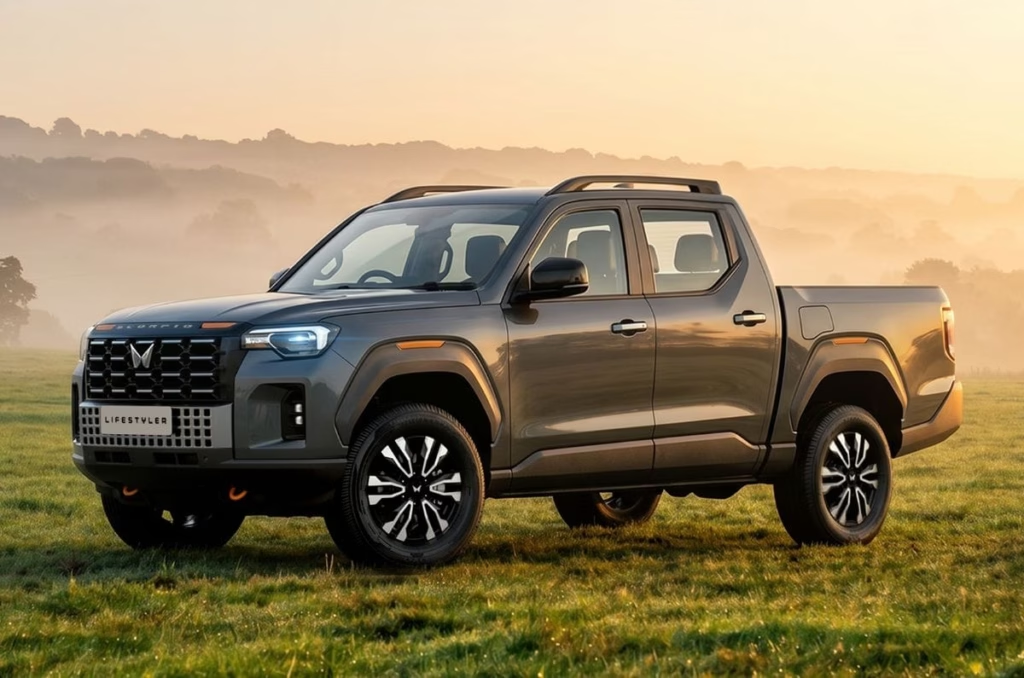
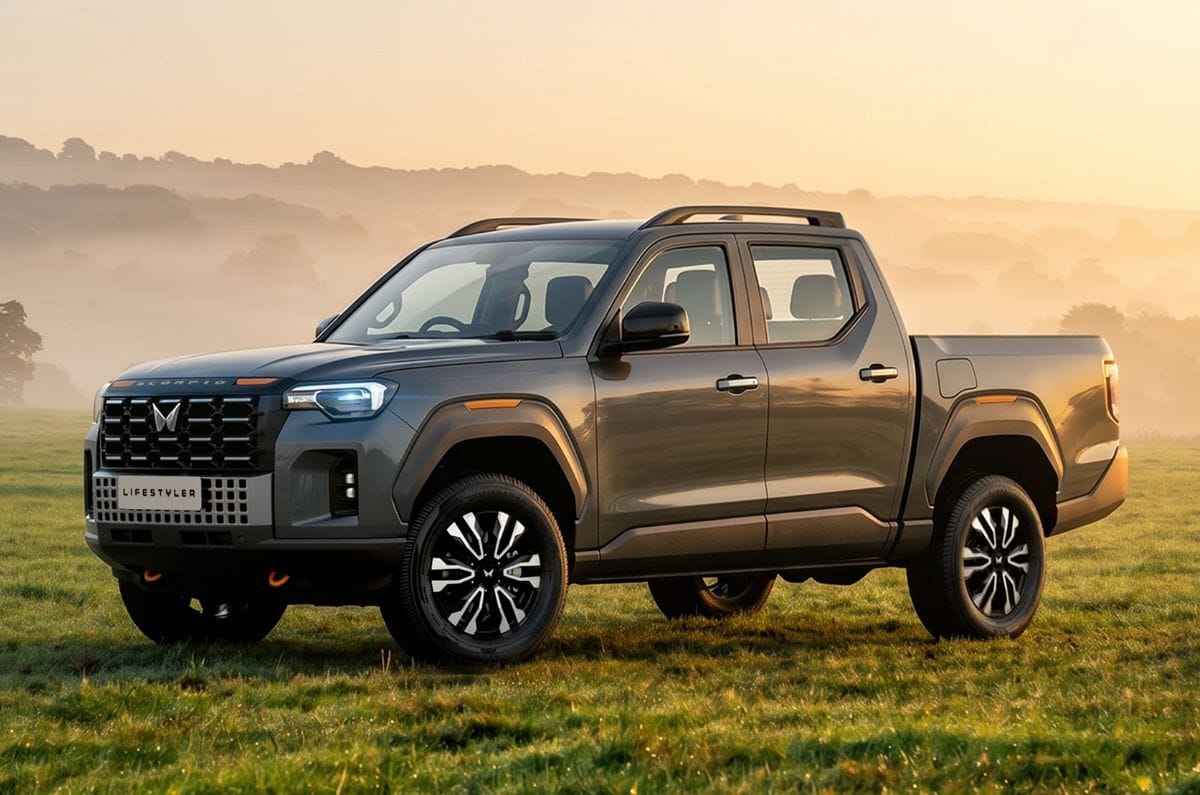
Mahindra Scorpio Lifestyler front quarter static

The Mahindra Scorpio Lifestyler will join the pickup truck segment upon its launch sometime before April 2027. Based on the Scorpio N SUV’s ladder-frame platform, Mahindra’s new pickup truck will simply carry the ‘Lifestyler’ moniker in markets abroad. While the automaker is yet fully disclose most of this car’s details, it has confirmed a starting price of under Rs 19.79 lakh (ex-showroom). So, if you’re awaiting the Mahindra Scorpio Lifestyler, here are some important points to keep in mind.

1. Does the Mahindra Scorpio Lifestyler’s design reflect its name?

There’s enough visual drama here to draw in buyers wanting a lifestyle pickup truck

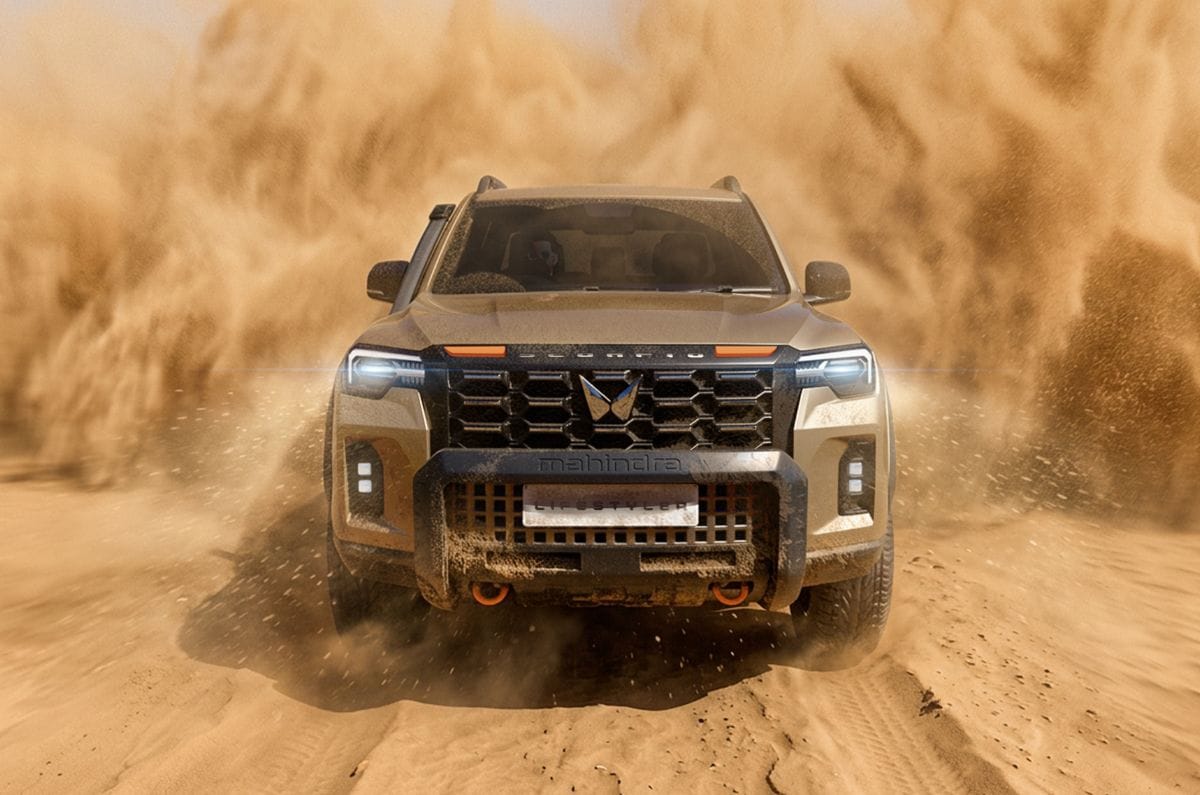
Mahindra Scorpio Lifestyler front

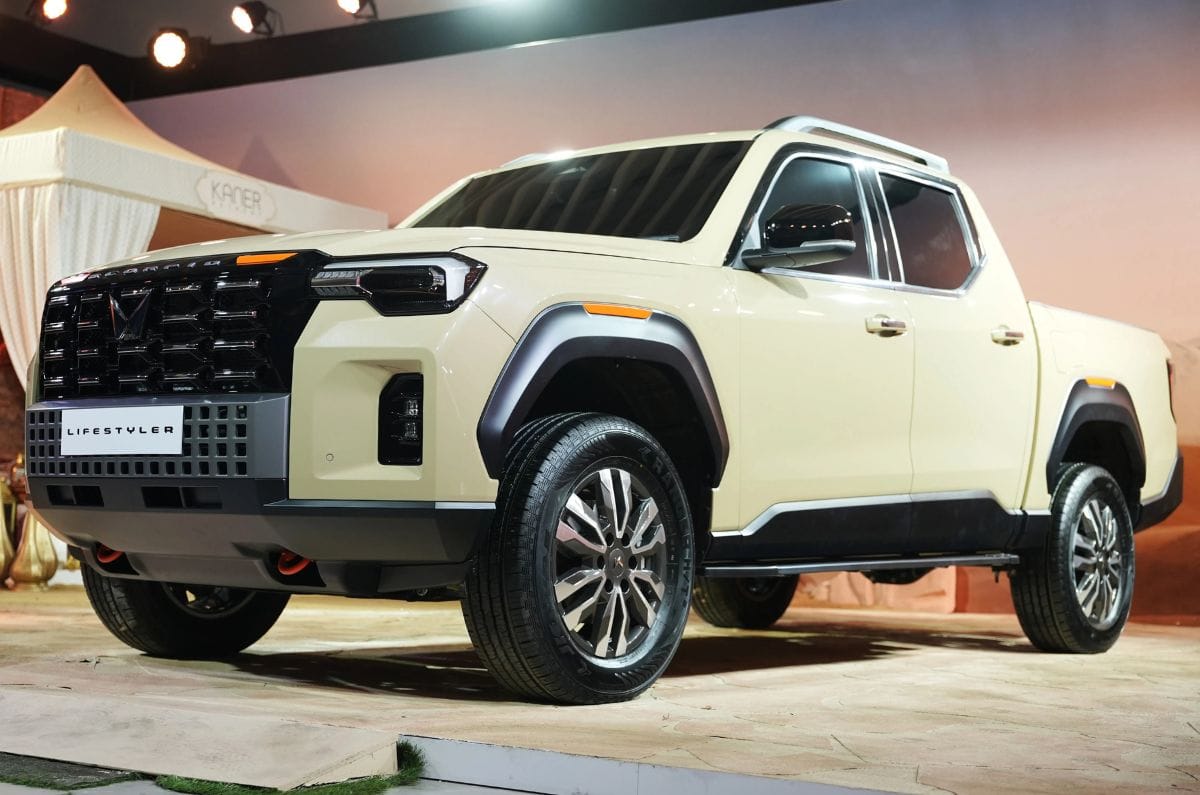
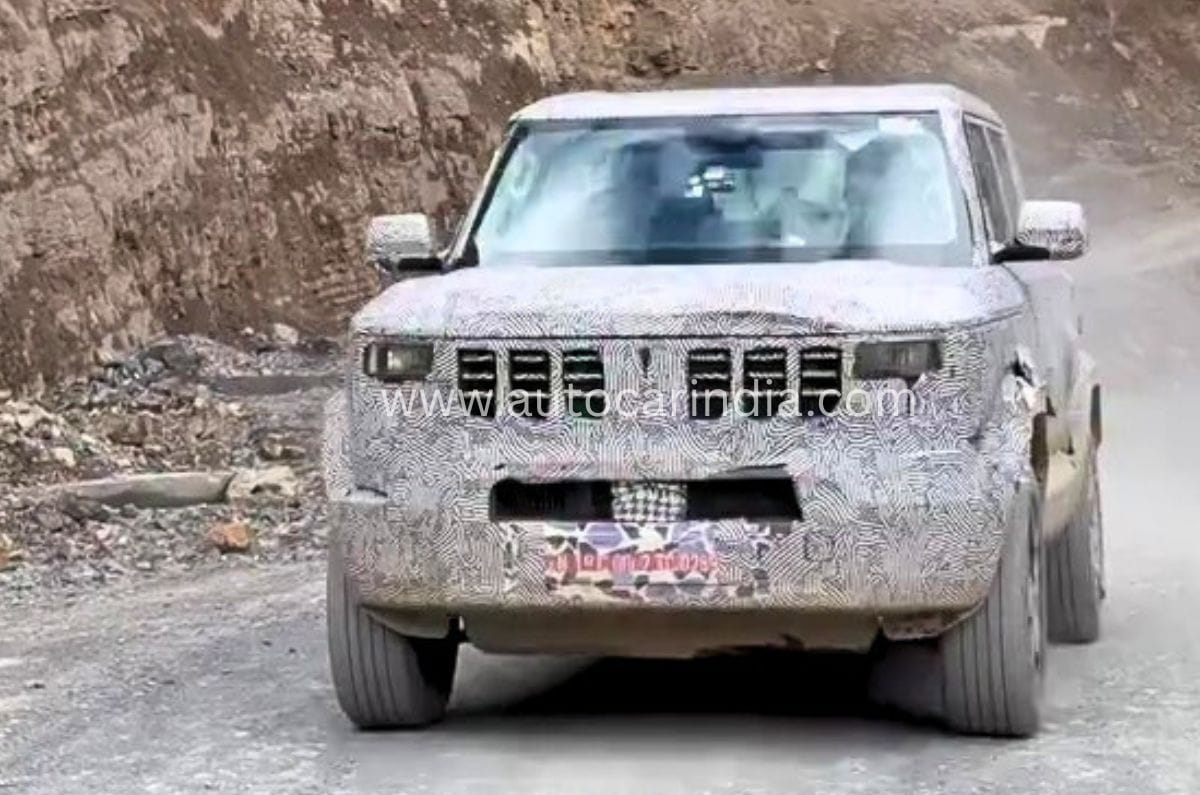
An upright and boxy silhouette, a squared-off front fascia, rugged-looking body cladding, deep wheel wells and of course, a sizeable bed – the Mahindra Scorpio Lifestyler has all basic ‘pickup truck’ design aspects covered. Backing its ‘lifestyler’ suffix visually are three avatars as shown during the model’s reveal. There’s the Valley Edition that’s finished in Artemis Grey, Reef Edition with an Aquareef colour, and a Trail Edition that sports the so-called Sahara Beige colour scheme. Each of these get their own unique exterior decals and badging.

While there are some visual cues that this is the Scorpio N’s platform sibling (such as the ‘Scorpio’ badging at the top of the front grille), the Lifestyler pickup has several design cues that are unique to it. One of these is the prominent Double Cab body and a short bed at the back, which appears to be shorter than the one found on the Hilux. The headlamps are sleeker and more intricately styled units with a different LED DRL pattern. Depending on the avatar chosen, the chunky front bumper of the Scorpio Lifestyler can be had with an integrated bullbar, whilst vertically aligned fog lamps are available too.

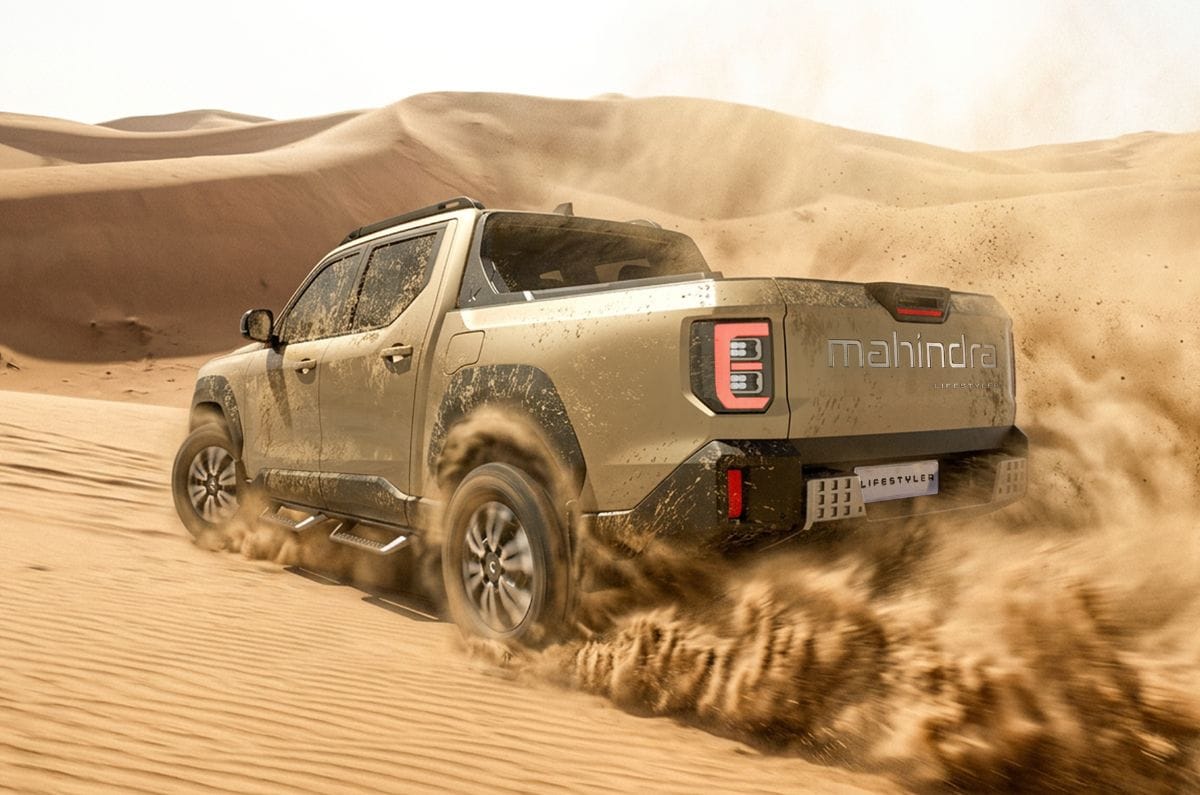
Mahindra Scorpio Lifestyler rear quarter

The top portion of the boxy-looking grille is finished in black and gets orange reflector elements, which match the orange tow hooks placed either side of a bash plate. The lower portion of the grille features large squares arranged in a mesh pattern. This design is mirrored on the rear bumper, which also features static reflectors on the sides and an integrated footstep that’s lit for better visibility in the dark. There are large C-shaped DRLs, LED tail-lamps, plus ‘Mahindra’ and ‘Lifestyler’ branding on the tailgate. The Scorpio Lifestyler also gets roof rails and side steps, and a kinked rear windowline.

2. How is the interior of the Mahindra Scorpio Lifestyler?

The interior of this pickup truck combines modern with rugged quite well

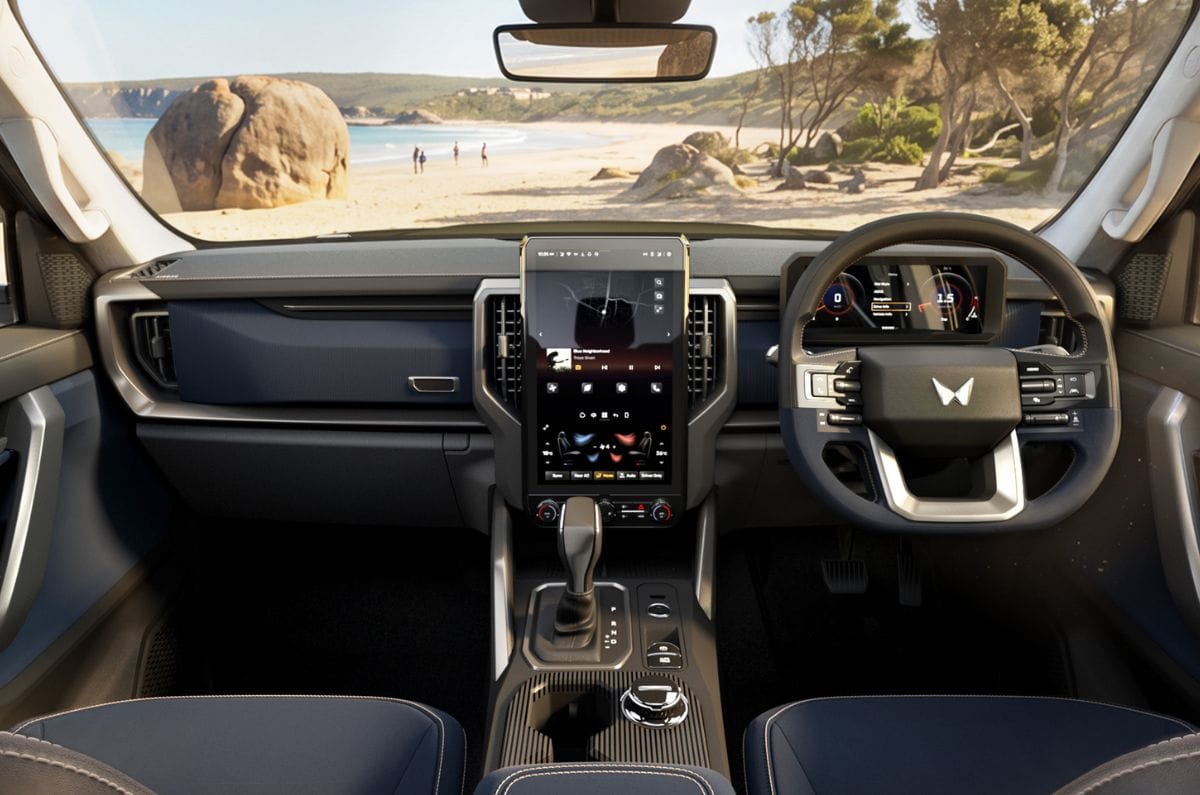
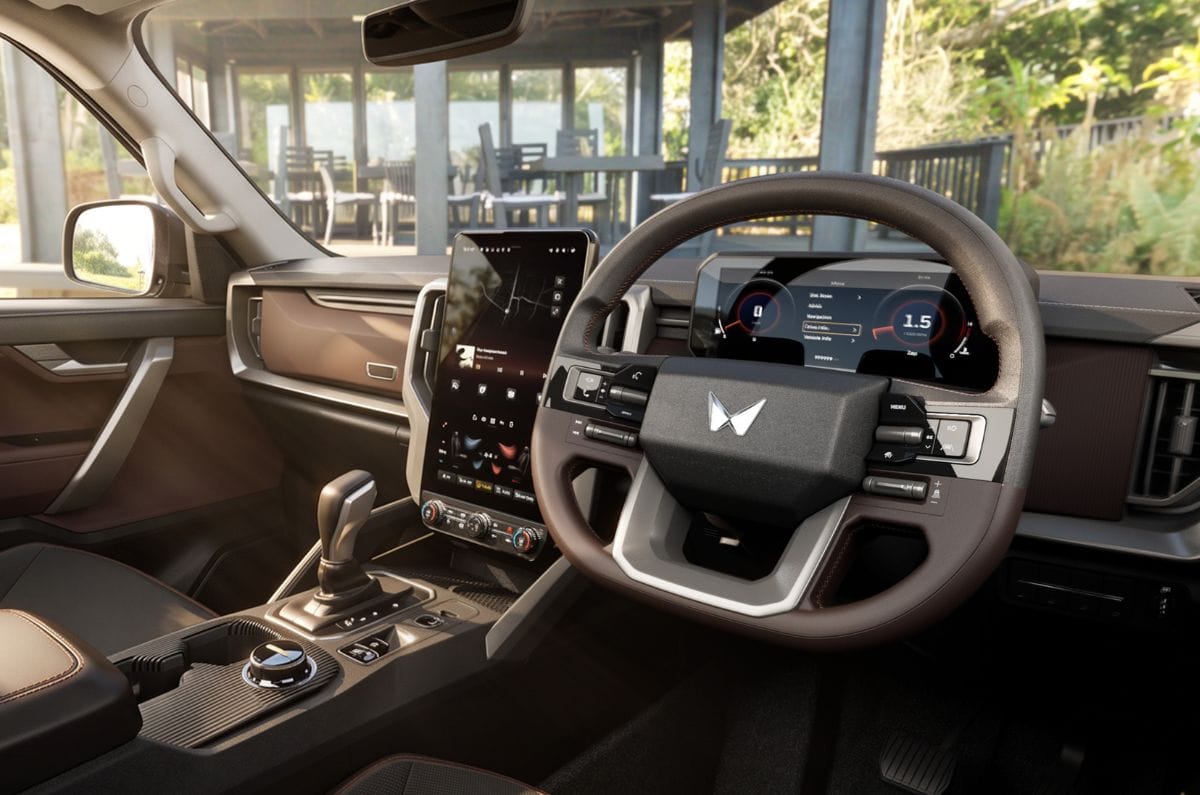
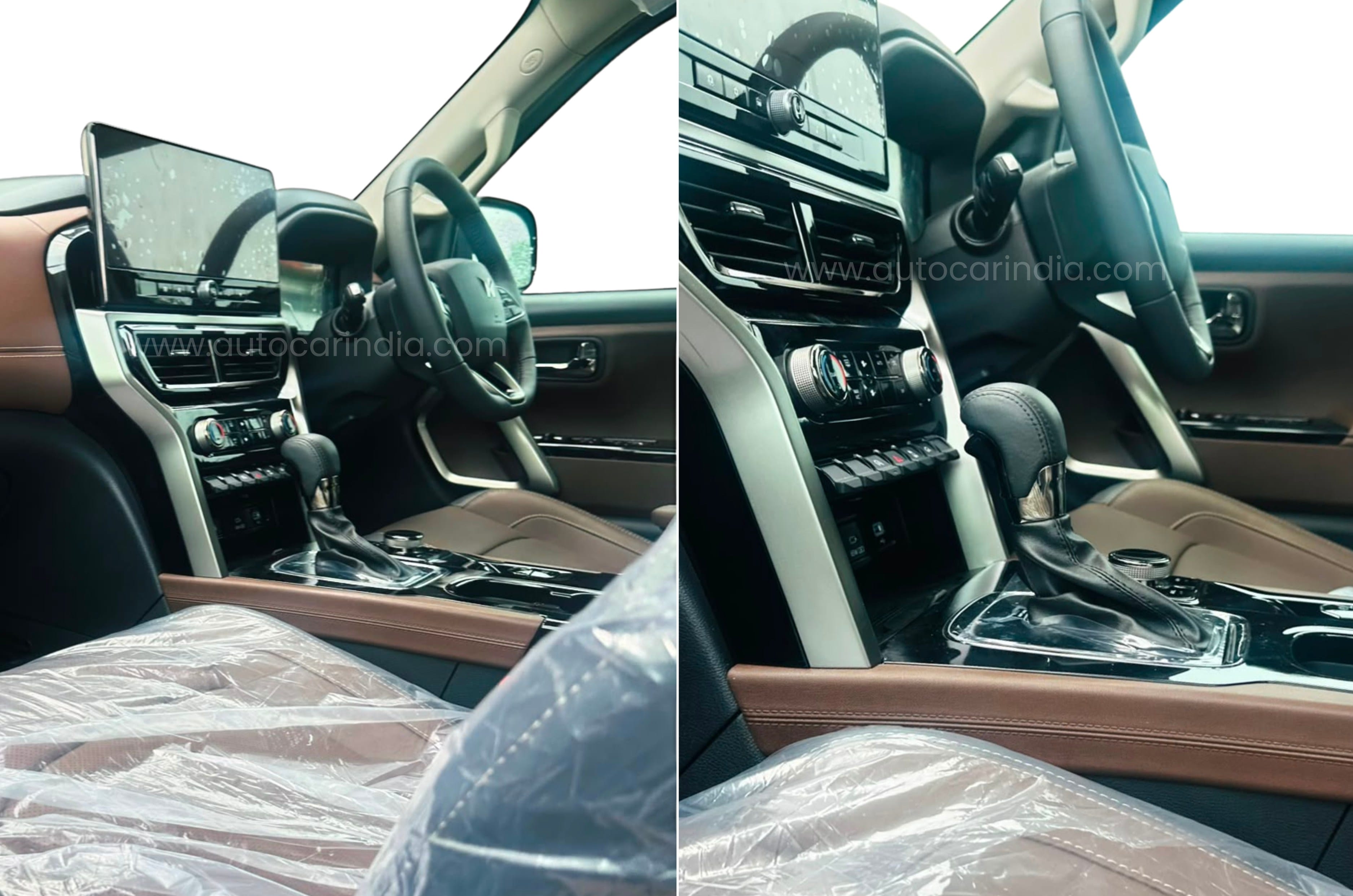
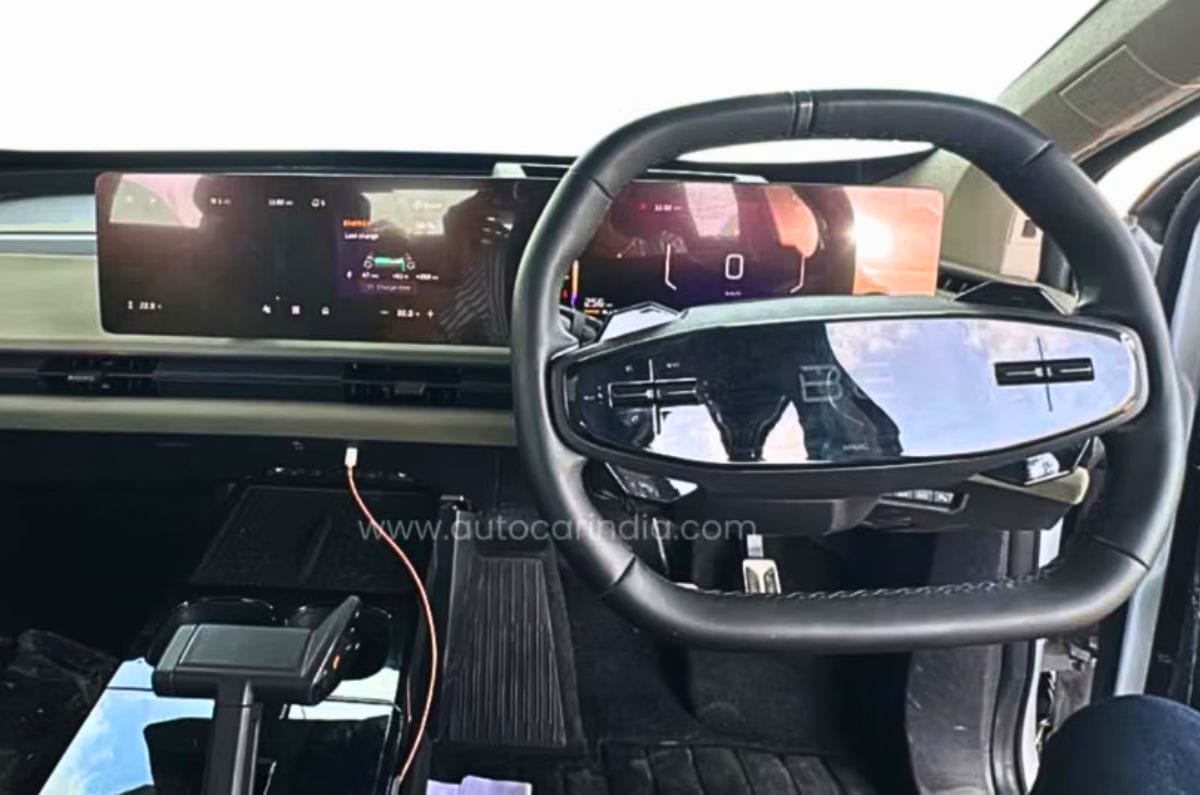
The squircle steering of the Mahindra Scorpio Lifestyler looks busy with its assortment of physical buttons and scroll wheels. Placed behind this on the dashboard is a fully digital instrument cluster with a multi-information section in the centre. In the middle of the dash is a large portrait-oriented touchscreen, flanked by vertically arranged central air-con vents. Placed below this screen are some physical switchgear, with the centre pedestal home to a few more important controls and cupholders.

Mahindra Scorpio Lifestyler Reef Edition interior

The upright design of the dashboard with its flat top, along with the large door handles and pillar-integrated grab handles, add to the rugged appeal of this interior. The Reef Edition gets a blue & black dual-tone interior with white stitching, while the Valley Edition features a brown & black theme with brown and white stitching. As for the Trail Edition, its cabin sports contrasting yellow stitching. The interior of the Scorpio Lifestyler also includes leatherette and satin silver trim, plus some chrome detailing.

3. What are some of the features of the Mahindra Scorpio Lifestyler?

The Scorpio Lifestyler is to be well-equipped with several modern conveniences and safety gear

Mahindra Scorpio Lifestyler Valley Edition interior

Some of the kit that the Mahindra Scorpio Lifestyler is expected to offer include dual-zone automatic climate control with rear vents, powered front seats, a powered sunroof, push-button start, an electronic parking brake with auto-hold, drive/terrain modes, a premium audio system, wireless Apple CarPlay & Android Auto, and wireless phone charging. On the safety front, there will be multiple airbags, electronic stability control, hill-start assist, hill-descent control, surround-view cameras and a tyre-pressure monitoring system.

4. What engine and gearbox options will the Mahindra Scorpio Lifestyler offer?

The Scorpio Lifestyler is expected to offer buyers both petrol and diesel powertrains

Mahindra Scorpio Lifestyler front quarter static

Powering the Mahindra Scorpio Lifestyler are likely to be a choice of two engine options: a mHawk 2.2-litre diesel and an mStallion 2.0-litre direct-injection turbo-petrol engine, which are the same units found under the bonnet of the Scorpio N SUV. The exact output of these powerplants will be revealed closer to the launch of this pickup. Meanwhile, transmission choices could include a 6-speed manual and a 6-speed torque-converter automatic. With a starting price of under Rs 19.79 lakh (ex-showroom), the Mahindra Scorpio Lifestyler will find itself positioned closer to the Isuzu D-Max rather the more expensive Toyota Hilux.

Also read

What to expect from Skoda Slavia facelift ahead of launch tomorrow?

Which variant of the Mahindra BE 6 Sporteq should you buy?

What to expect from Skoda Slavia facelift ahead of launch tomorrow?

What to expect from Skoda Slavia facelift ahead of launch tomorrow?
Skoda Slavia facelift

Skoda is set to give the Slavia a mid-life update, over four years after it first went on sale in February 2022. It will be the second Skoda model to receive a major update this year, following the Kushaq facelift. From expected pricing and engine options to the new features it could pack, here’s everything we expect from the updated Skoda Slavia.

What new features will the Skoda Slavia facelift add?

Skoda Slavia interior
Current Skoda Slavia’s interior shown for representation only.

Several new features that were introduced with the 2026 Kushaq could make their way to the Slavia, such as a rear-seat massaging function and sequential turn indicators. The current 10.1-inch touchscreen and 10.25-inch driver’s display are likely to be replaced with larger units featuring new graphics and features. A 360-degree camera upgrade over the presently on offer rear-only unit can also be expected. Like the Kushaq, a variable-displacement compressor instead of the fixed-displacement unit could also be offered with the new Slavia to improve AC performance.

What cosmetic updates are likely with the Skoda Slavia facelift?

Skoda Slavia teaser

Being a facelift, one can expect design tweaks to the illumination bits, including headlights, tail-lights, front grille and alloy wheels. Kushaq-like segmented LED DRLs integrated into the front grille are anticipated, and new colours could also be introduced. On the inside, the overall layout is not likely to undergo any changes with the mid-lifecycle update.

How many engine choices will the Skoda Slavia facelift offer?

Both the 115hp-1.0 TSI and 150hp-1.5 TSI turbo-petrol engine options are expected to be carried over. Like the current car, the facelift may continue to offer a 6-speed manual gearbox with the smaller engine and a 7-speed dual-clutch automatic unit with the larger, more powerful motor. However, the 6-speed torque converter automatic transmission option offered with the Slavia 1.0 TSI will be upgraded with an 8-speed unit, something that we have exclusively reported before.

What is the Skoda Slavia facelift’s expected price?

Skoda Slavia
Current Skoda Slavia.

Being an update, a slight price increase across trims is likely. For reference, the current Slavia starts at Rs 10 lakh and goes up to Rs 18.19 lakh, ex-showroom. The Skoda Slavia goes directly against the Volkswagen Virtus (Rs 10.70 lakh-19.20 lakh), Honda City (Rs 12 lakh-21.44 lakh) and Hyundai Verna (Rs 10.99 lakh-18.26 lakh), the latter two of which received facelifts earlier this year.
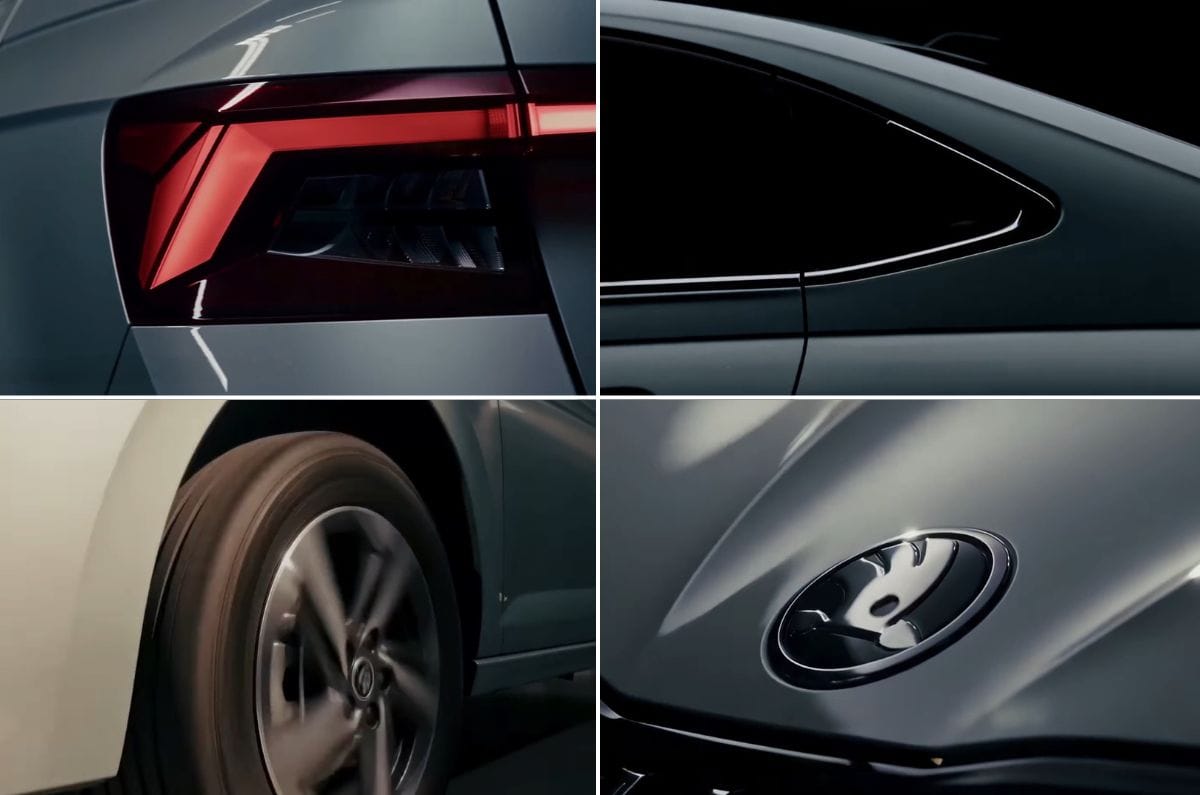
Skoda Slavia facelift design details teased ahead of August 18 launch

Skoda Slavia facelift design details teased ahead of August 18 launch
Skoda Slavia facelift design details

Ahead of its launch on August 18, 2026, Skoda India has shared another teaser of the Slavia facelift. The teaser gives a glimpse of a few design elements that the updated Slavia will receive.

  1. Updated Slavia to have subtly refreshed exterior.
  2. To continue with 1.0 and 1.5-litre turbo-petrol engines.
  3. 1.0-litre engine to have a new 8-speed automatic transmission.

Skoda Slavia facelift: What did the teaser reveal?

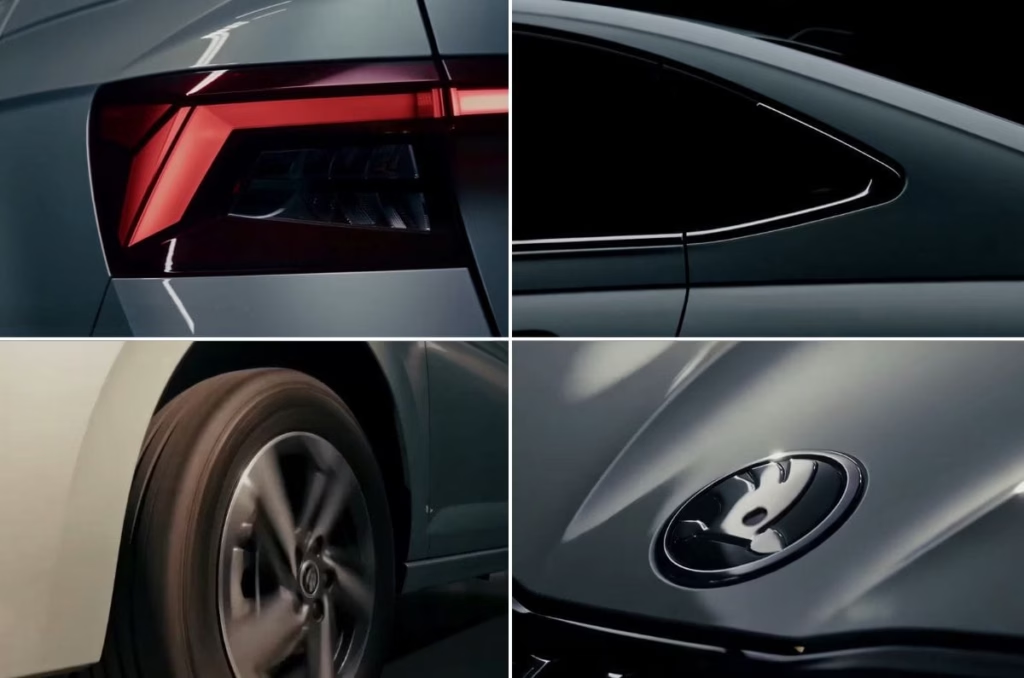
At the front, the grille was spotted studded with chrome detailing. The Slavia facelift is also expected to have revised detailing for the headlamps and restyled bumpers with new fog lamp housings. The tail-lights were spotted as well with similar detailing as the current version, but it’s yet to be seen if it gets the connected treatment like the Kushaq. Additionally, a new sporty five-spoke design for the alloy wheels was spotted, which will likely continue to be 16 inches in size, like the current version. The facelift continues to get chrome treatment for the window line, like the current version. 

Skoda Slavia facelift: What to expect?

Current version’s interior used for representation.

On the inside, the Slavia facelift is likely to continue with the same cabin layout, albeit with updated colours and trim materials. It is expected to borrow the Kushaq’s 10.25-inch digital driver’s display. Whether it gets the Kushaq’s segment-only rear massaging seats is yet to be seen. Meanwhile, features like a single-pane sunroof, powered and ventilated front seats, wireless phone charger will continue to be offered. 

Current Slavia 1.0-litre engine used for representation.

As for powertrains, the Slavia facelift will continue to be powered by the current version’s 1.0 and 1.5-litre direct-injection turbo-petrol engines. The former develops 115hp and 178Nm, while the latter delivers 150hp and 250Nm of torque. While the 1.0-litre unit will continue to be paired with a 6-speed manual, automatic versions will get a new 8-speed torque converter gearbox, replacing the current version’s 6-speed unit. On the other hand, the 1.5-litre mill will continue to come solely with a 7-speed DCT.

In terms of price, the Slavia facelift is expected to be slightly pricier than the current version, which retails for Rs 9.99 lakh to Rs 18.19 lakh. It will continue to take on rivals like the Hyundai Verna, Honda City and the Volkswagen Virtus.

Skoda Slavia facelift teased ahead of August 18 launch

Skoda Slavia facelift teased ahead of August 18 launch

Skoda has teased the much-awaited Slavia facelift ahead of its launch on August 18. Being a mid-lifecycle update, it is expected to bring design changes, new features and an automatic gearbox upgrade for the 1.0 TSI engine.

Skoda Slavia facelift details so far

Skoda Slavia facelift
Image credit: Rushlane.

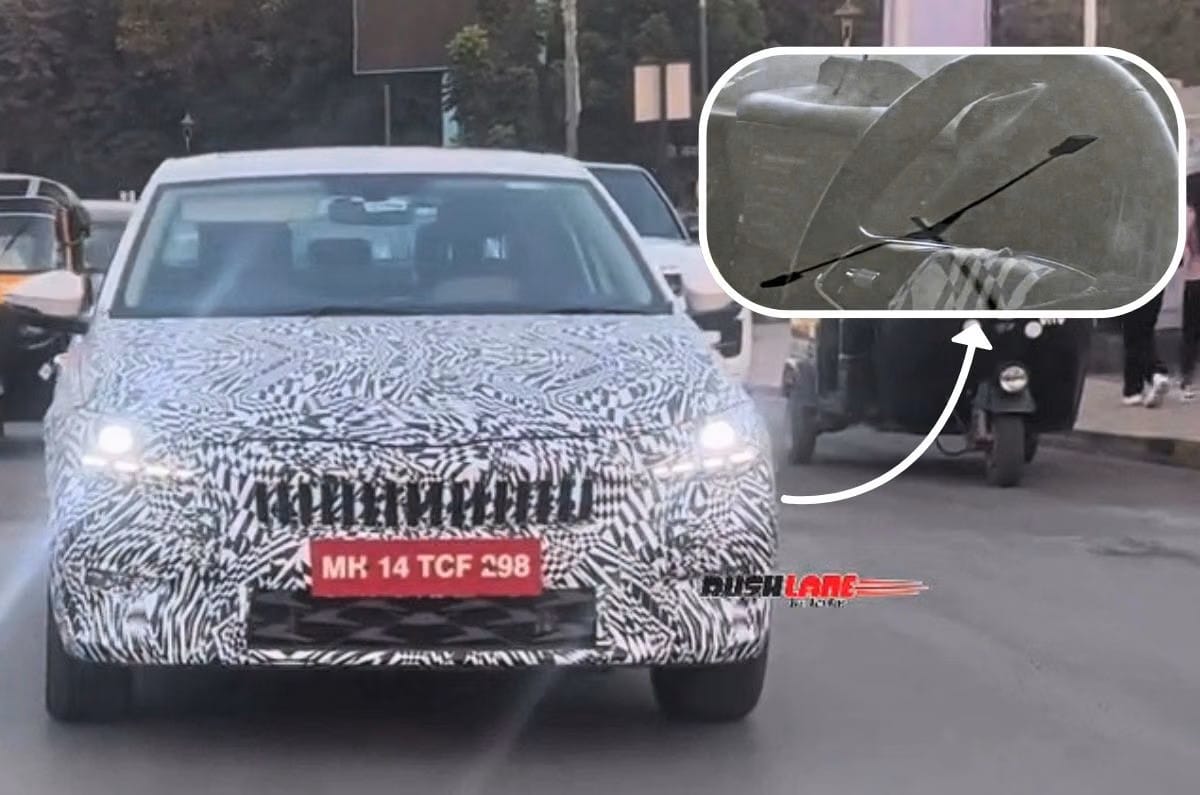
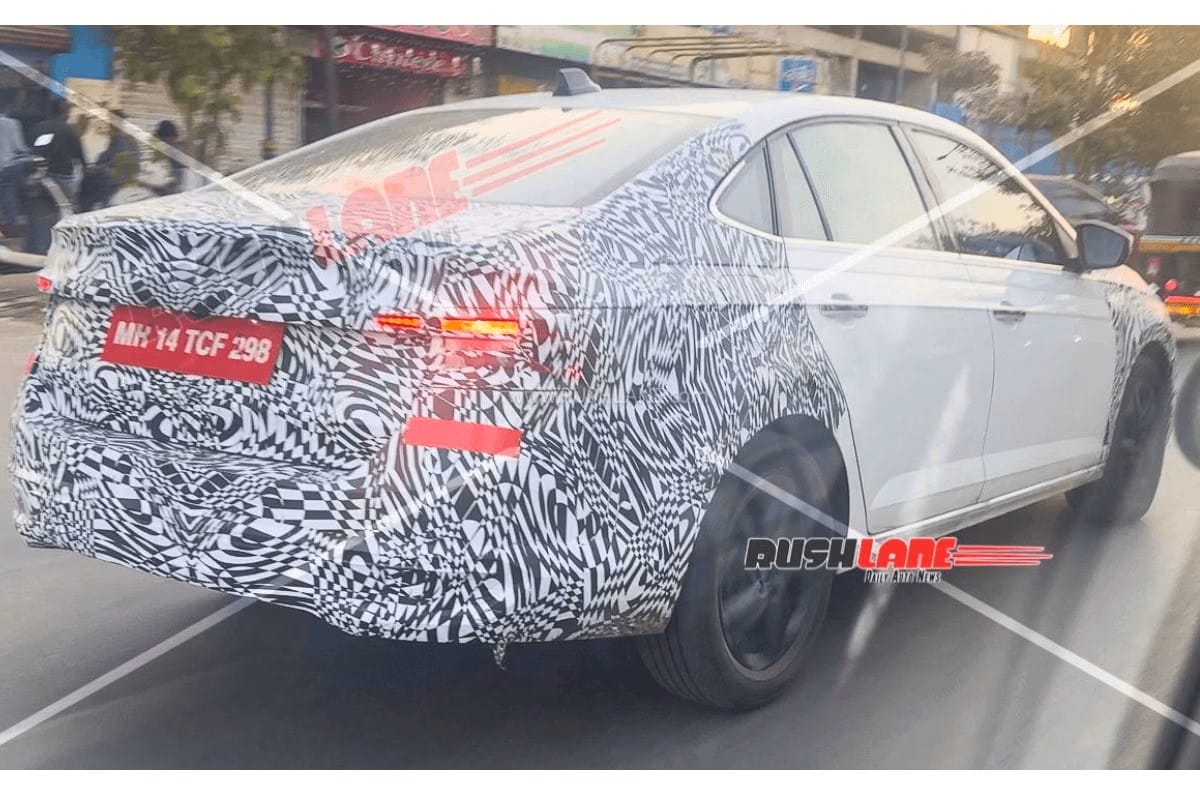
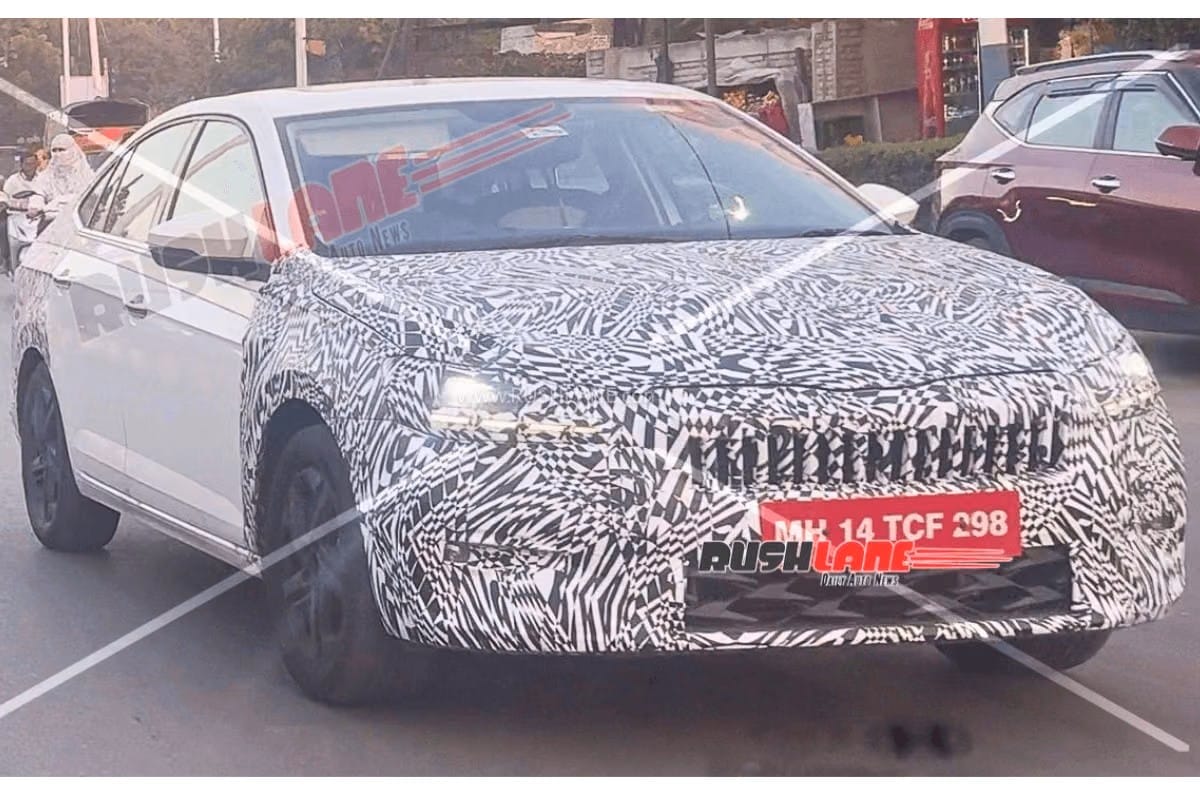
Going the spy shots from before, the sedan is expected to feature updated headlamp units, fog lamp housings and bumpers, along with a new grille with integrated lighting elements, similar to that on the Kushaq. A design refresh for the alloy wheels is likely as well.

Upcoming car launches and reveals in August 2026

Upcoming Car Launches August 2026

July was a stacked month for car launches in India. It was during these 31 days that we got models such as the Maruti Suzuki Brezza facelift, ninth-gen Toyota Hilux, Nissan Tekton and Honda ZR-V. It appears that August 2026 is set to be a fairly busy month for new car launches in India, too. Here are some cars that we know will be introduced next month, and some that could.

Mahindra Scorpio N facelift

Debut date: August 15, 2026

Mahindra Scorpio N facelift exterior spied

One of the cars that Mahindra could debut this Independence Day is the Scorpio N facelift. It’ll be mechanically unchanged over the outgoing model, but the exterior will now feature new two-tone alloy wheels. Unlike the exterior, there are more updates to the interior of the Scorpio N facelift.

Mahindra Scorpio N facelift interior spied

Recently leaked images show a revised centre console with repositioned AC vents and a new tablet-style infotainment touchscreen mounted above. There’s also a new digital driver’s display visible in these spy shots. These screens look similar to the 10.25-inch units found on the Thar Roxx. These updates could push up the price of the Mahindra Scorpio N facelift, with the pre-facelift model currently priced from Rs 13.49 lakh to Rs 24.95 lakh.

Updated Mahindra BE 6

Debut date: August 15, 2026

Another Mahindra car that could be introduced on August 15 is the updated BE 6. While the midsize EV is still relatively new in the market (launched in November 2024), Mahindra is expected to spec it up with a triple-screen setup as seen in the brand’s other models such as the XEV 9e, XEV 9S and also the combustion-powered XUV 7XO.

Mahindra BE 6 facelift interior spied

Another big change on the inside is the deletion of the distinctive halo design effect that separates the driver and front passenger in the outgoing model, as shown in this spy shot. Mahindra is also set to offer a new black-and-tan colour upholstery with the updated BE 6. The rest of the updated Mahindra BE 6 is unlikely to see major updates, though prices are likely to be revised upward. For reference, the EV is currently priced between Rs 18.90 lakh to Rs 26.90 lakh.

Near-production Mahindra Vision S

Debut date: August 15, 2026

Mahindra Vision S prototype spied

Mahindra has been busy testing the Vision S prototype for a while now, and a public debut of its near-production version is expected this Independence Day. Note that the production-spec model is still sometime away from being launched, which is expected to happen in 2027. While the actual name of this new compact SUV remains under wraps, it’ll be slotted above the XUV 3XO in Mahindra’s line-up. The Vision S concept was underpinned by the Nu_IQ platform, meaning compatibility compatible with petrol, diesel, hybrid and fully electric powertrains.

Skoda Slavia facelift

Debut date: August 18, 2026

The Skoda Slavia was first launched in February 2022. Four-and-a-half years on, the Czech brand will be introducing the Slavia facelift come August 18, 2026. Changes on the outside of this updated midsize sedan include a new front grille with integrated LED elements and revised front and rear lights. The Slavia facelift is also expected to get mildly redesigned bumpers, a new design for the alloy wheels and front parking sensors.

Skoda Slavia facelift spied

The Skoda Slavia facelift could feature new cabin upholstery, and perhaps even the massage function for the rear seats as seen in the Kushaq facelift. This update could also bring a larger 10.25-inch digital driver’s display. While the 1.0-litre TSI and 1.5-litre TSI engines are to be carried over, the former is expected to be offered with a new 8-speed torque-converter automatic gearbox. All of these updates could raise prices, which currently range from Rs 10.00 lakh to Rs 18.19 lakh.

New MG EV, PHEV

Debut date: August 2026 (date unknown)

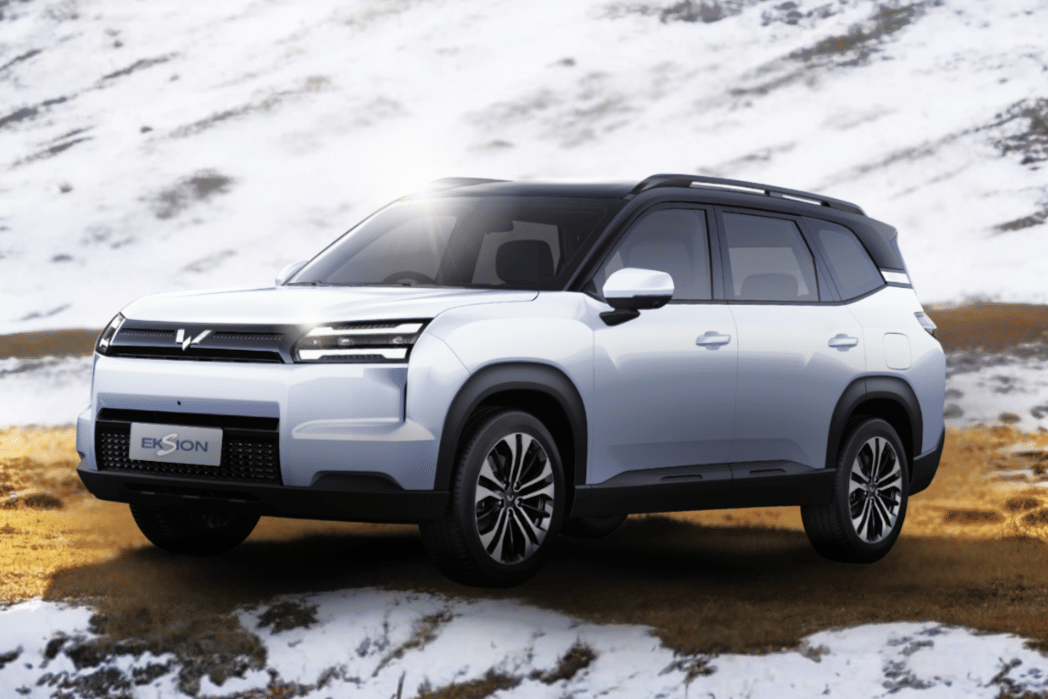
Based on the Chinese-market Wuling Eksion SUV, JSW MG is set to debut its India-spec all-electric and PHEV (plug-in hybrid vehicle) versions this August. The upcoming JSW MG SUV will be underpinned by the brand’s ADAPT (Advanced Drive Architecture Platform Technology) platform. The new Eksion-based electric SUV will rival the likes of the Mahindra XEV 9S, while the plug-in hybrid version is to take on the diesel-automatic variants of the Mahindra XUV 7XO and Tata Safari.

Wuling Eksion EV
Wuling Eksion EV shown for representation purposes only.

The fully electric model will feature a 69kWh battery pack and a single, front-mounted electric motor generating 201hp and 310Nm. The upcoming EV’s official claimed range is around 600km. As for the new plug-in hybrid SUV, it combines a 1.5-litre Atkinson-cycle petrol engine, an electric motor and a 20.5kWh LFP battery pack. The latter produces up to 195hp and 230Nm, whilst the petrol engine makes 105hp and 130Nm of its own. For the Eksion PHEV version, Wuling claims an all-electric range of 125km and a combined range north of 1,000km.

Prices mentioned are ex-showroom, Delhi

Skoda Slavia spy shot: RushLane

Also read

Suzuki Vision E-Sky prototype spied testing for the first time

MG’s Starlight 560-based ‘Hector Hawk’ EV spied

Skoda Slavia facelift to launch on August 18

Skoda Slavia

Skoda is set to launch the Slavia facelift on August 18. The updated midsize sedan is expected to receive cosmetic updates, feature additions and a new automatic gearbox for the 1.0-litre turbo-petrol engine, while retaining its existing engine lineup.

  1. New grille, revised lighting and updated bumpers likely
  2. 1.0 TSI could replace its 6-speed AT with a new 8-speed unit
  3. It may get a larger digital driver’s display, like the one in the Kushaq

Skoda Slavia facelift: what to expect

Image source: Rushlane

Previous test mules have revealed updated LED lighting elements in the headlamps, a revised tail-lamp design and a new grille with integrated lighting elements, similar to the latest Kushaq and Kodiaq. Redesigned front and rear bumpers, along with a new set of alloy wheels, are also expected.

Image source: Rushlane

Inside, the dashboard layout is expected to remain largely unchanged. However, Skoda could introduce a larger 10.25-inch digital driver’s display, along with revised seat upholstery and front parking sensors. It will be interesting to see whether Skoda adds a rear-seat massage function, as this was introduced to the Kushaq with its facelift in January 2026. 

Existing equipment such as the 10.25-inch touchscreen, single-pane sunroof, wireless phone charger, an 8-speaker sound system, automatic climate control with rear vents, six airbags and tyre pressure monitoring system is expected to be carried over.

1.0 TSI expected to get new 8-speed automatic

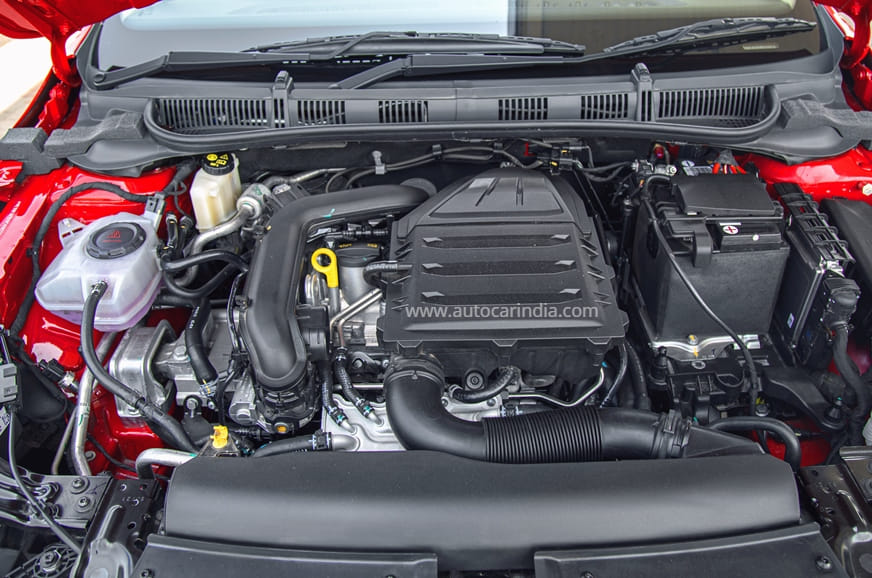
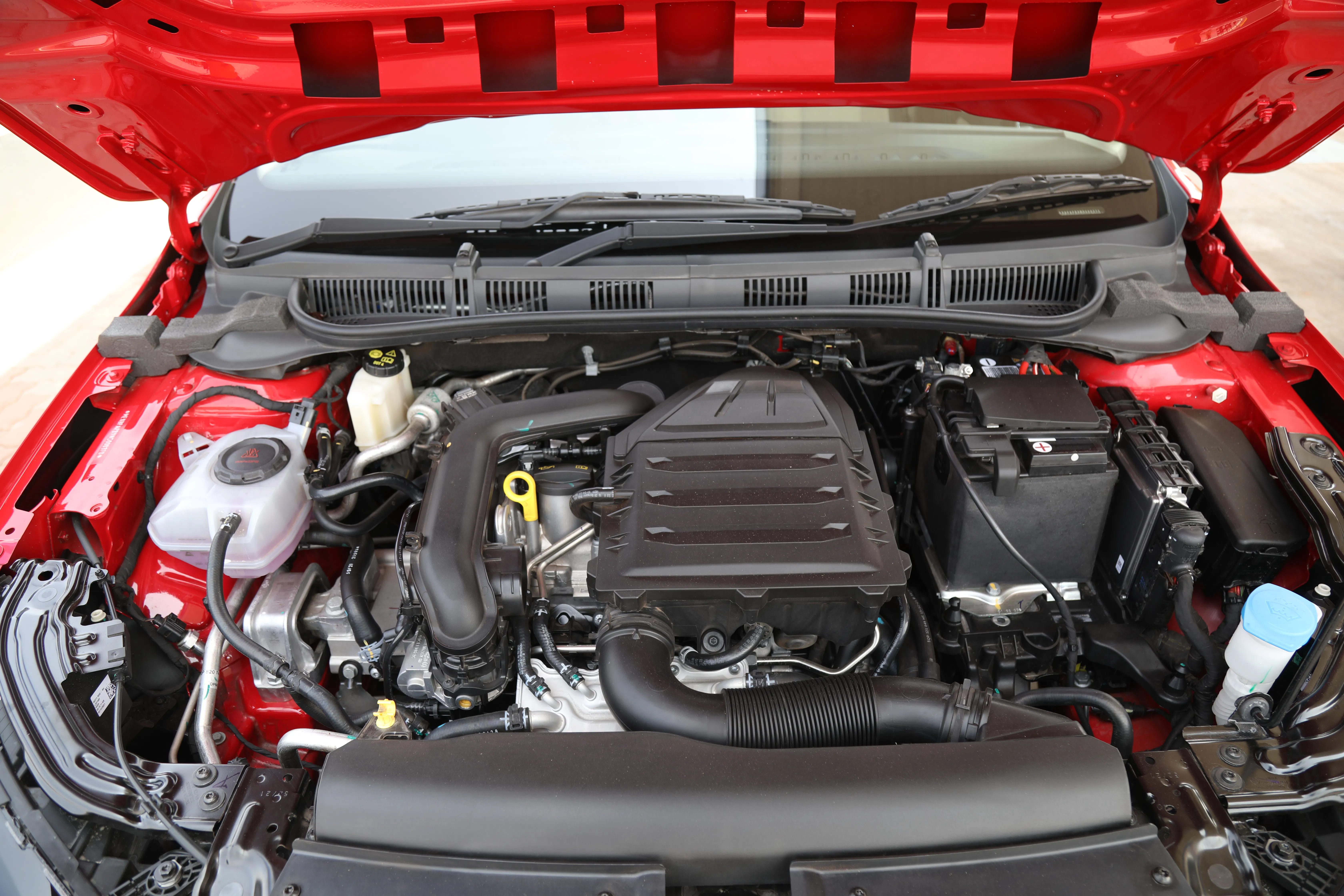
Engine bay of the current Slavia shown for representative purposes only. 

The Slavia facelift is likely to continue with the existing 115hp, 1.0-litre TSI and 150hp, 1.5-litre TSI turbo-petrol engines. The key mechanical update is expected to be the replacement of the current 6-speed torque-converter automatic on the 1.0 TSI with the newer 8-speed automatic that debuted on the Kushaq facelift. The 1.5 TSI is expected to continue with the 7-speed dual-clutch automatic transmission (DCT).

Skoda Slavia facelift: expected price

Image source: Rushlane

With the facelift, prices of the Slavia are expected to increase slightly over the current Rs 10 lakh-18.19 lakh (ex-showroom). The facelifted Slavia will continue to compete with the Volkswagen Virtus, Hyundai Verna and Honda City.

Honda City vs Skoda Slavia petrol automatic: Real-world mileage compared

Honda City vs Skoda Slavia petrol automatic real-world mileage compared

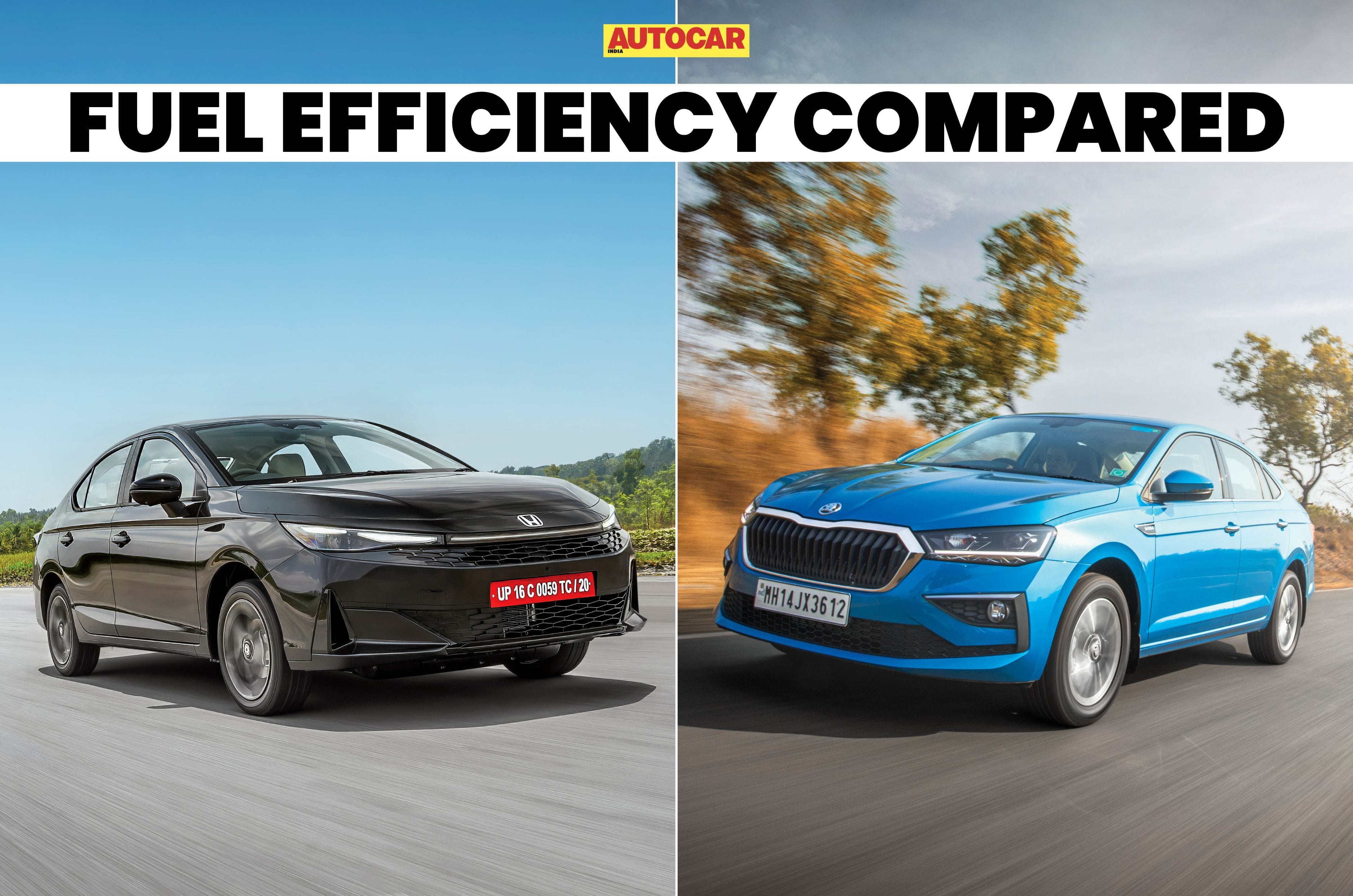
The fifth-gen Honda City is fresh off its second facelift, which aims to make the midsize sedan more compelling against rivals like the Skoda Slavia. Where the Slavia is available with turbo-petrol engines only, the City gets a sole naturally aspirated motor in its petrol variants. We put the petrol automatic versions of the City and Slavia through our real-world test

Honda City vs Skoda Slavia petrol automatic: Price and specs

 CitySlavia
Engine1.5 NA1.0 turbo / 1.5 turbo
Cylinder count43 / 4
Power (hp)121116 / 150
Torque (Nm)145178 / 250
GearboxCVT6AT / 7DCT
Fuel tank capacity (litres)4045
ARAI mileage (kpl)17.9718.73 / 19.36
Price range (Rs, lakh)14.30-17.1514.34-16.69 / 18.04-18.19

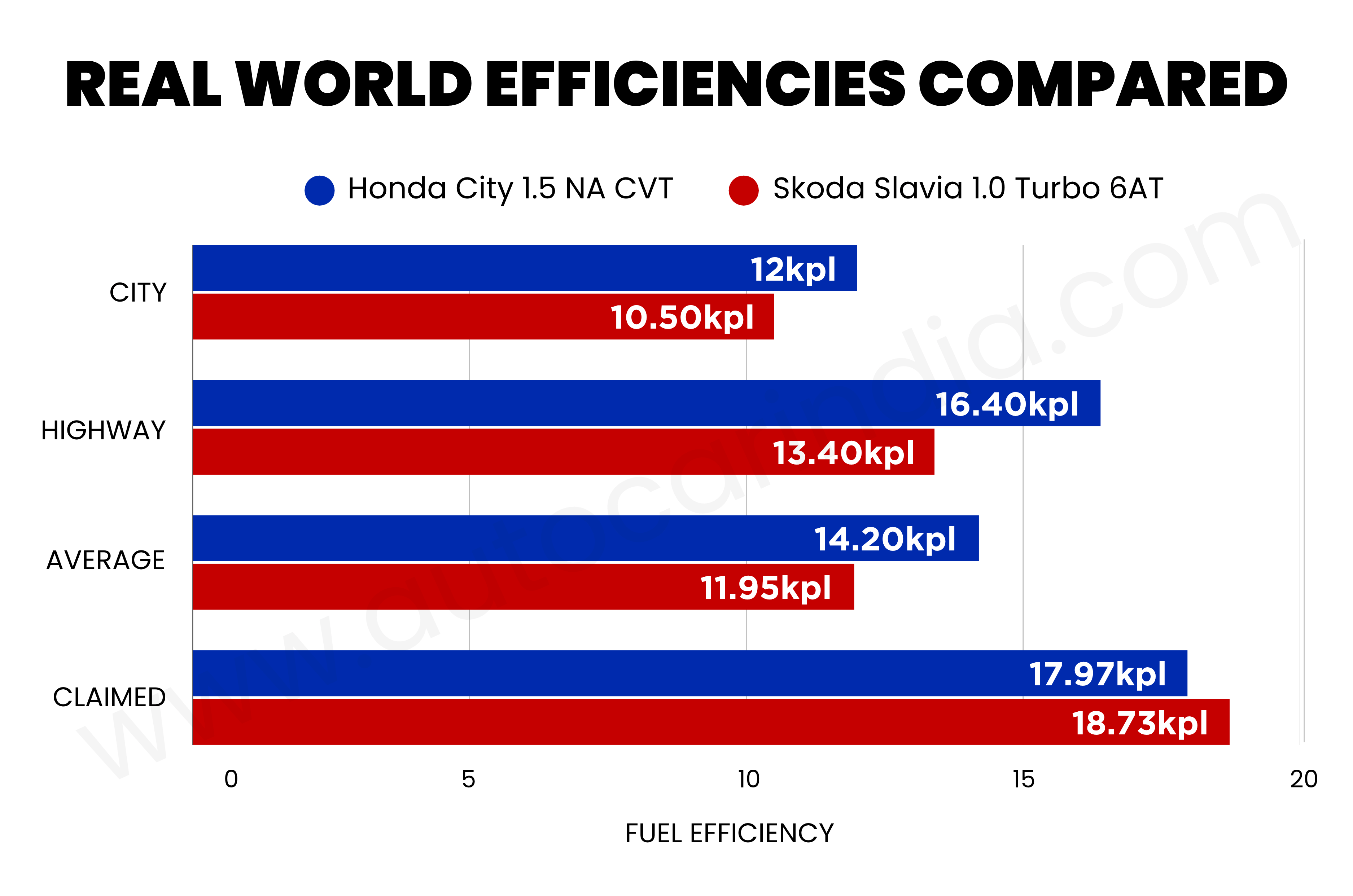
As noted previously, the City gets a 1.5-litre 4-cyl naturally aspirated petrol engine, whereas the Slavia can be had with either a 1.0-litre 3-cyl or 1.5-litre 4-cyl turbo-petrol mill – both are direct-injection engines. The City’s i-VTEC engine makes slightly more power than the Slavia’s 1.0 TSI, but falls much short of the 1.5 TSI. Torque output, fuel tank capacity, and ARAI-claimed mileage figures are clear victories for the Skoda sedan too.

Slavia 1.5 TSI offers cylinder deactivation feature

The City also comes with a CVT transmission, which is more cost-effective, but not as smooth or responsive as the Slavia 1.0 TSI’s 6-speed torque converter and the 1.5 TSI’s 7-speed dual-clutch automatic. It’s also worth noting that the Slavia 1.5 TSI gets cylinder deactivation tech, which can shut off two cylinders at cruising speeds to save fuel.

In terms of pricing, the City CVT slightly undercuts the Slavia 1.0 TSI AT at the base level, though the latter’s top-spec version is more affordable than the Honda sedan’s fully-loaded variant. Compared to the Slavia 1.5 TSI, the City CVT is cheaper by up to Rs 1.04 lakh.

Honda City vs Skoda Slavia petrol automatic: Real-world mileage

City vs Slavia 1.0 TSI AT

Despite being a cylinder down compared to the City, the Slavia 1.0 TSI yielded lower mileage figures in our real-world testing. In urban conditions, the City eked out a 1.5kpl victory over the Slavia 1.0 TSI, while on the highway, the Honda sedan’s lead widened to a full 3kpl. Looking at their average fuel efficiency figures, the City was 2.25kpl ahead of the Slavia 1.0 TSI.

City vs Slavia 1.5 TSI DCT

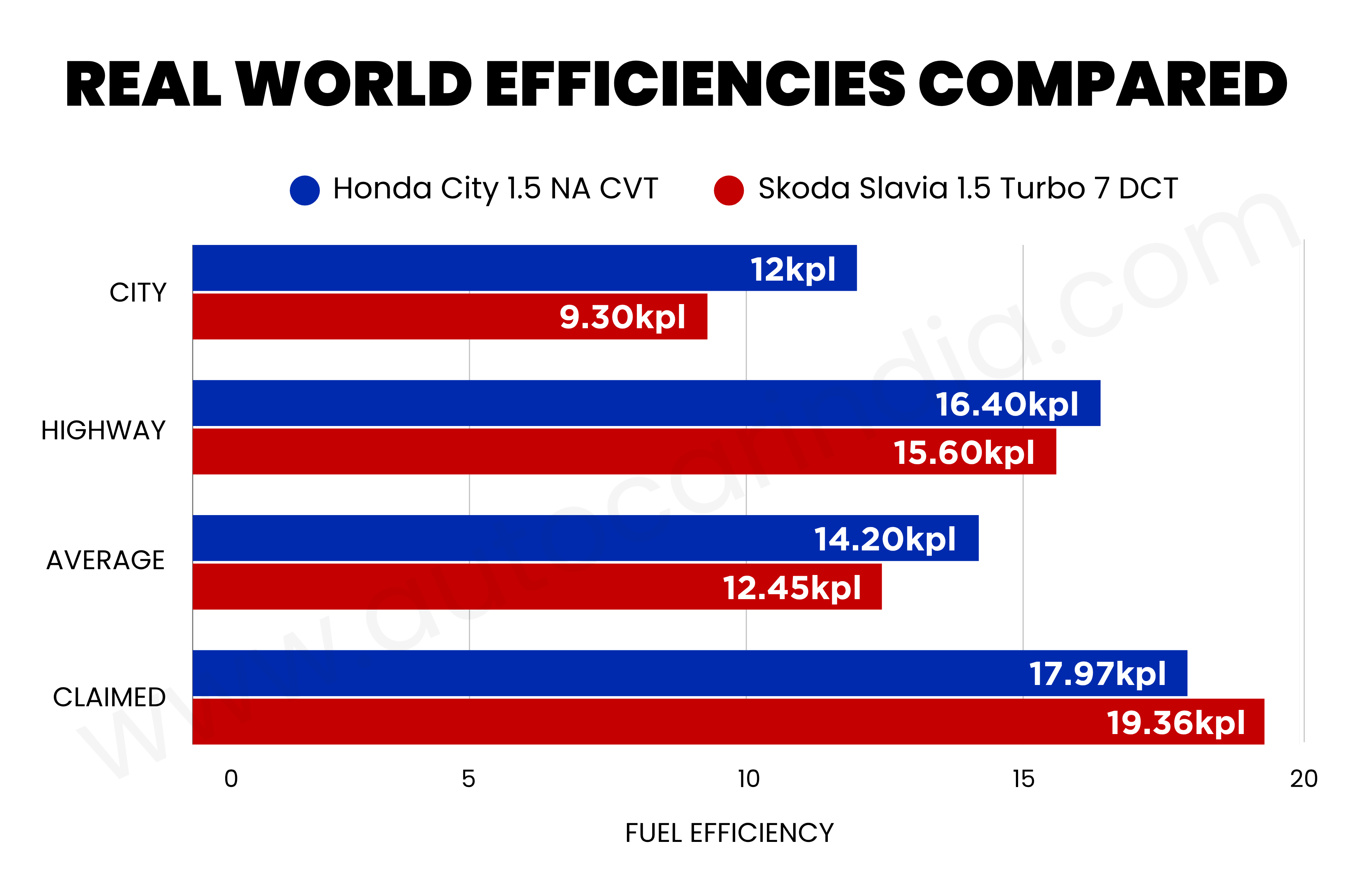
Unsurprisingly, the Slavia 1.5 TSI sipped more fuel than the 1.0 TSI in urban conditions, resulting in a 2.7kpl delta between the City. Thanks to its cylinder deactivation function, though, the Slavia 1.5 TSI majorly closed the mileage gap on the highway, but still fell short of the City by 0.8kpl. All told, the Slavia 1.5 TSI’s average fuel efficiency worked out to 0.5kpl higher than the 1.0 TSI, and 1.75kpl lower than that of the City.

City’s smaller fuel tank lets it down a bit

While the City undeniably offers better real-world mileage, its smaller fuel tank somewhat detracts from the victory. Per the average fuel efficiency numbers, the Honda sedan can travel 568km on a full tank of petrol, while the Slavia 1.0 TSI AT and 1.5 TSI DCT manage real-world range figures of 538km and 560km, respectively. That’s a difference of 8-30km in the City’s favour, which isn’t all that substantial, especially when comparing the 4-cyl versions of each sedan.
Autocar India’s fuel efficiency testing

Before our real-world fuel efficiency tests, we fill our test cars’ tanks to the brim and maintain tyre pressures based on the manufacturer’s recommendations. These cars are driven in fixed city and highway loops in and around Navi Mumbai, and we maintain certain average speeds. Throughout the tests, there is only one person in each car, running the air conditioner and other electricals, such as the audio system, indicators and wipers, when required, just like a regular user would. Periodic driver swaps further neutralise variations in driver patterns. At the end of each cycle, we calculate efficiency by filling the tanks to full again.

All prices are ex-showroom, India.