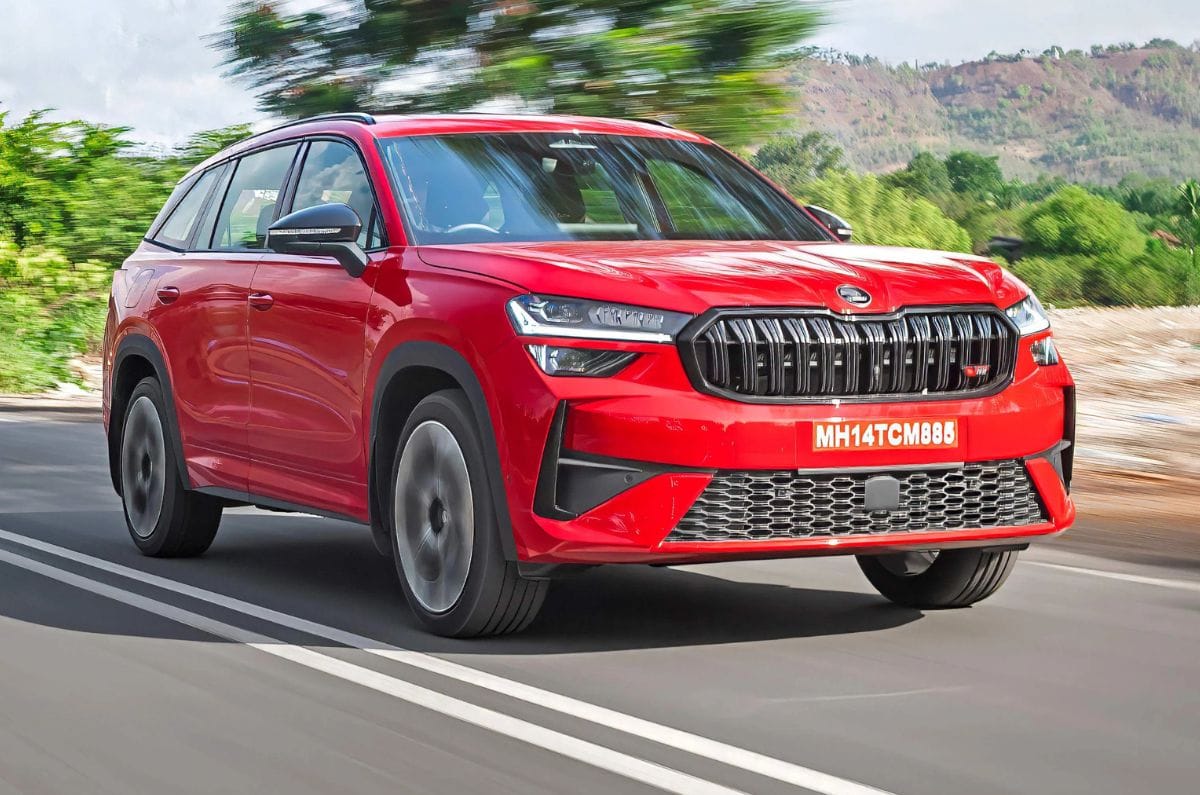
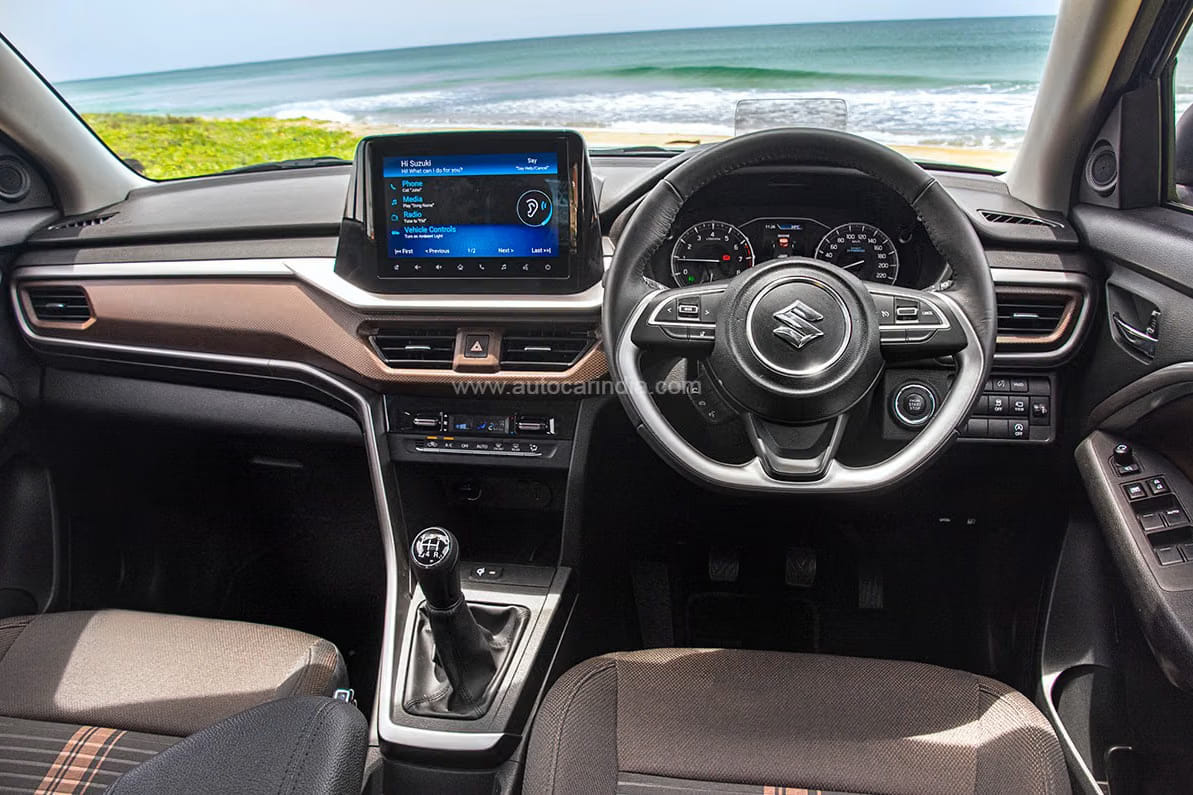
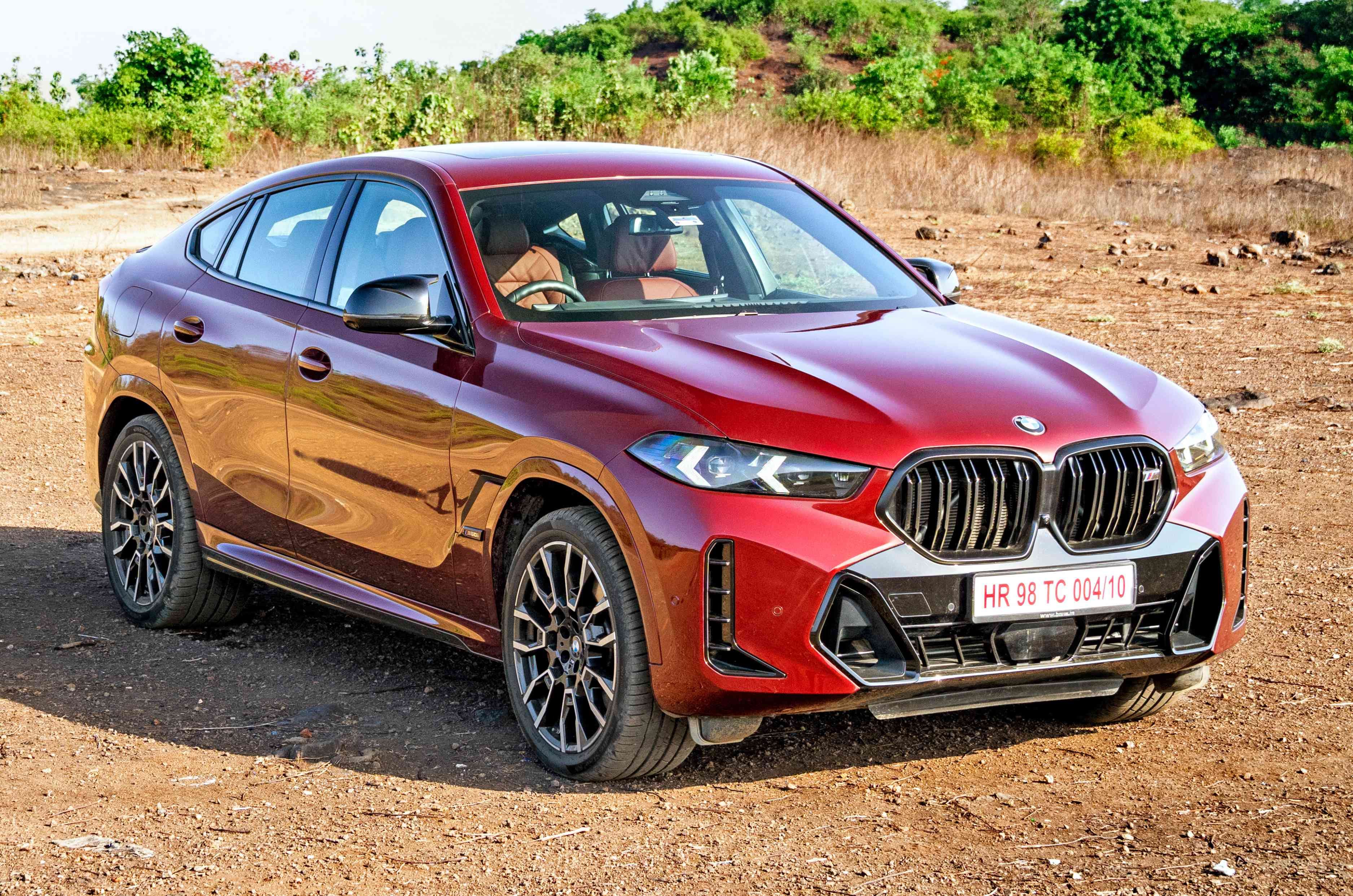
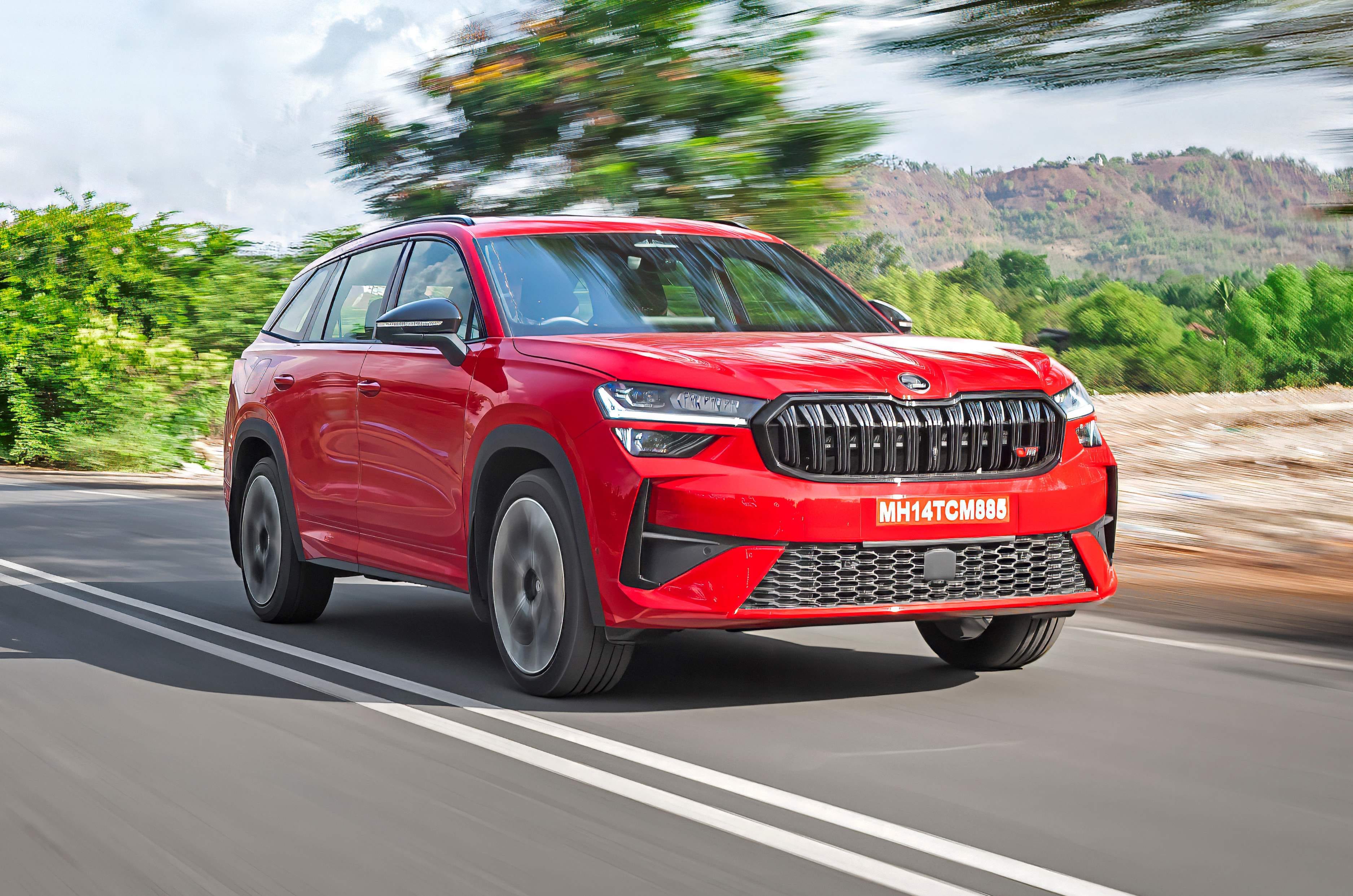
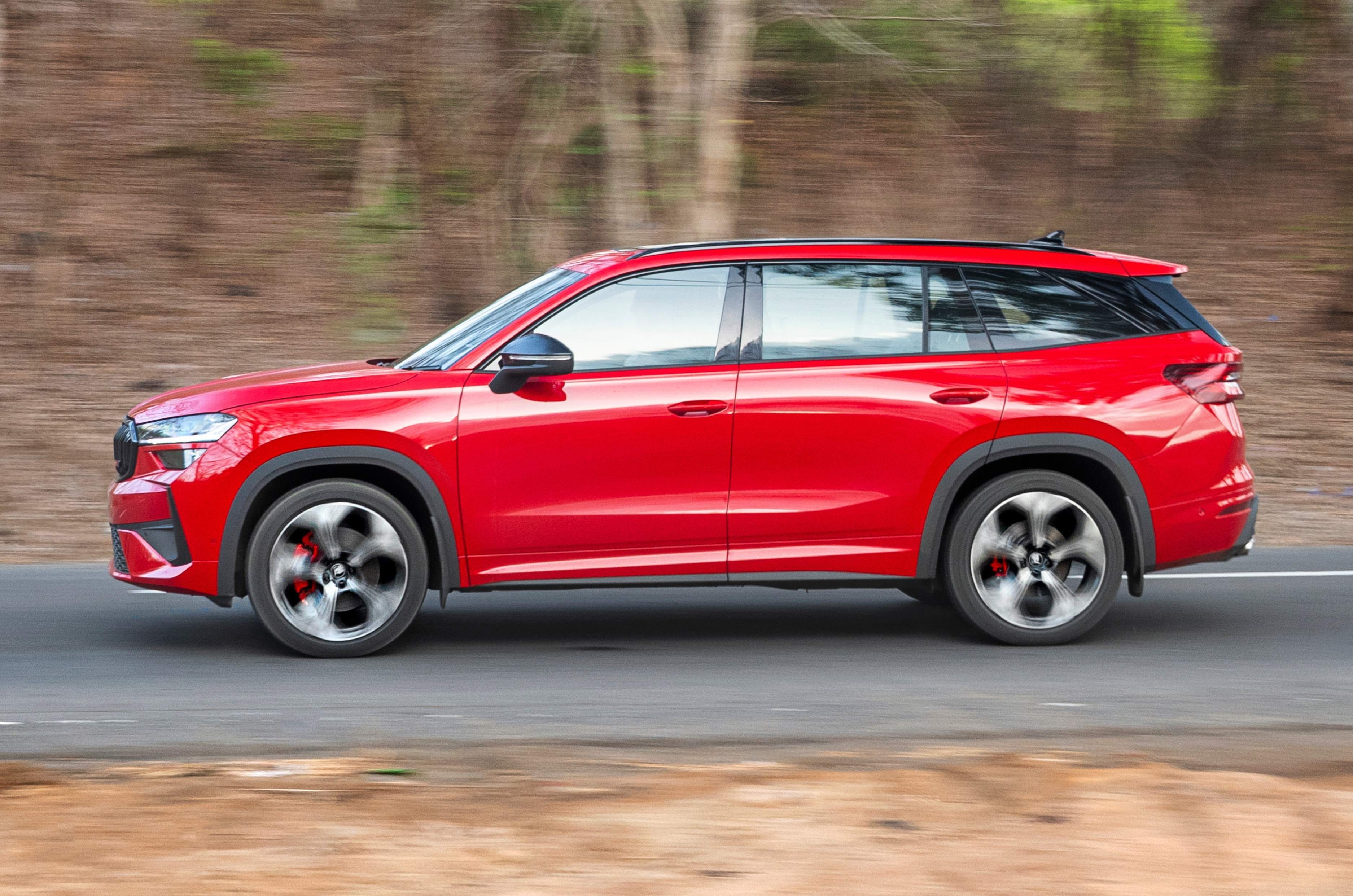
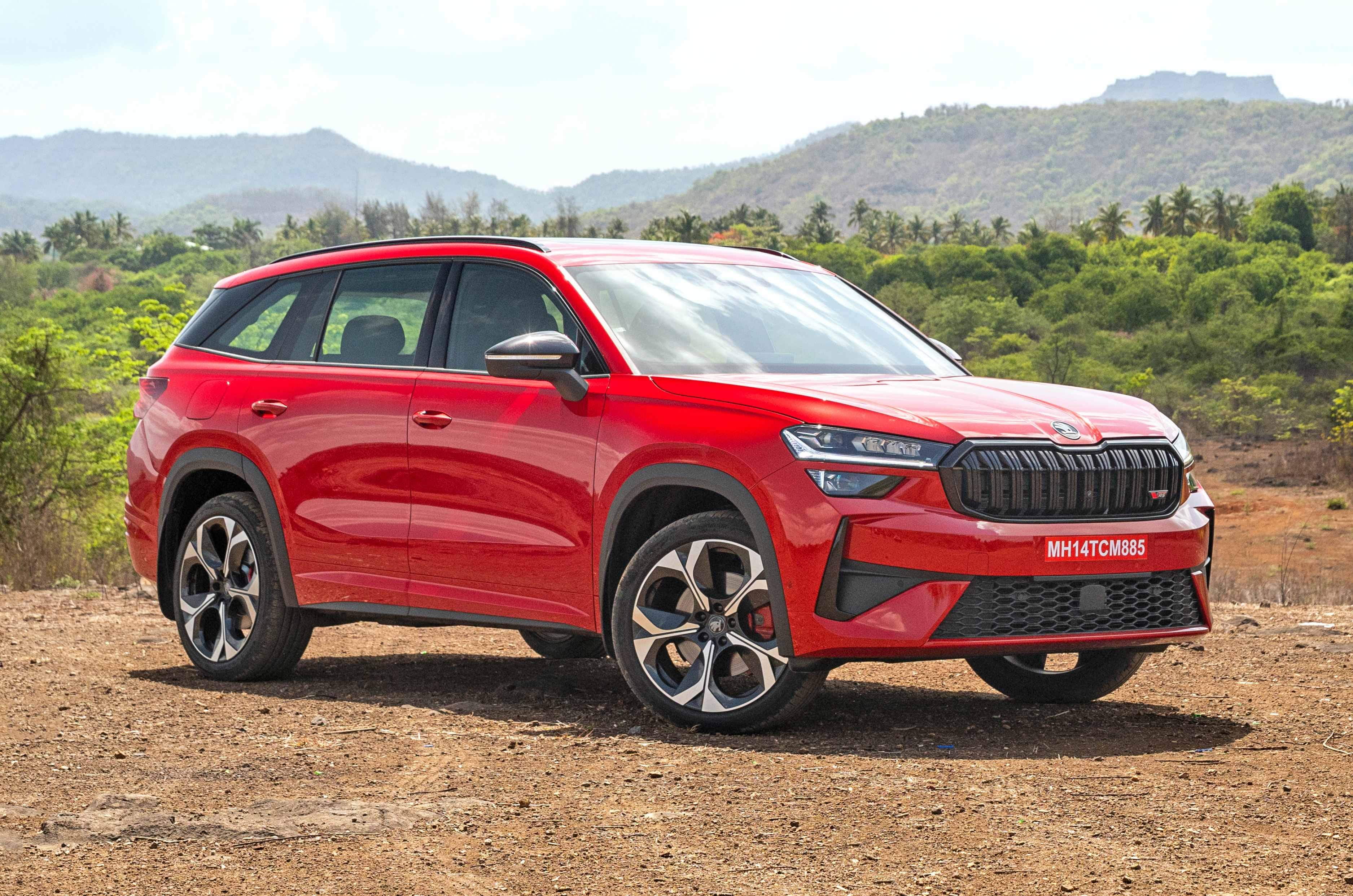
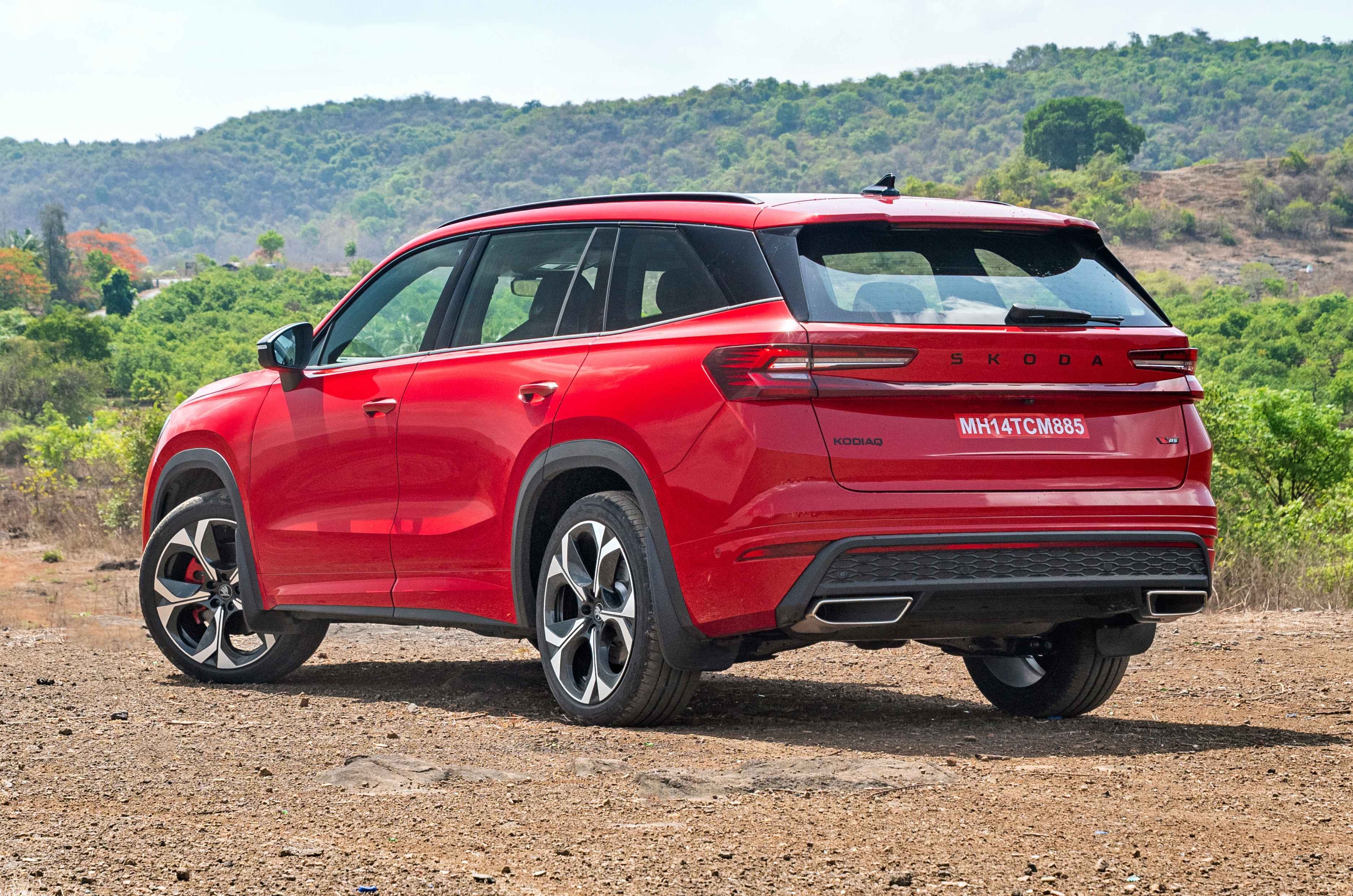
The Skoda Kodiaq RS is built on the Volkswagen Group’s MQB Evo platform and finds competition in the Volkswagen Tayron R-Line. Within a claimed six minutes of Skoda opening bookings for the Kodiaq RS in India, all 50 units were already spoken for. That said, the brand could allocate a second batch for our market if there’s enough demand. If you’re a prospective buyer of this 7-seater performance SUV, here are its pros and cons.
Lively engine and gearbox
Rev-happy engine snarls when pushed, adding to the engagement
Skoda has tweaked the 2.0-litre four-cylinder turbo-petrol direct injection engine for the Kodiaq RS. It now produces 265hp and 400Nm of torque – that’s 61hp and 80Nm more than the standard model. Not only does this engine pull hard all the way to 6,500rpm, but the power it produces remains usable throughout the rev-range. The 7-speed dual-clutch automatic transmission is also quick to shift and feels responsive when using the paddle shifters. Moreover, the sporty notes played through the speakers have been well-executed and do not sound fake.
A capable ride and handling package
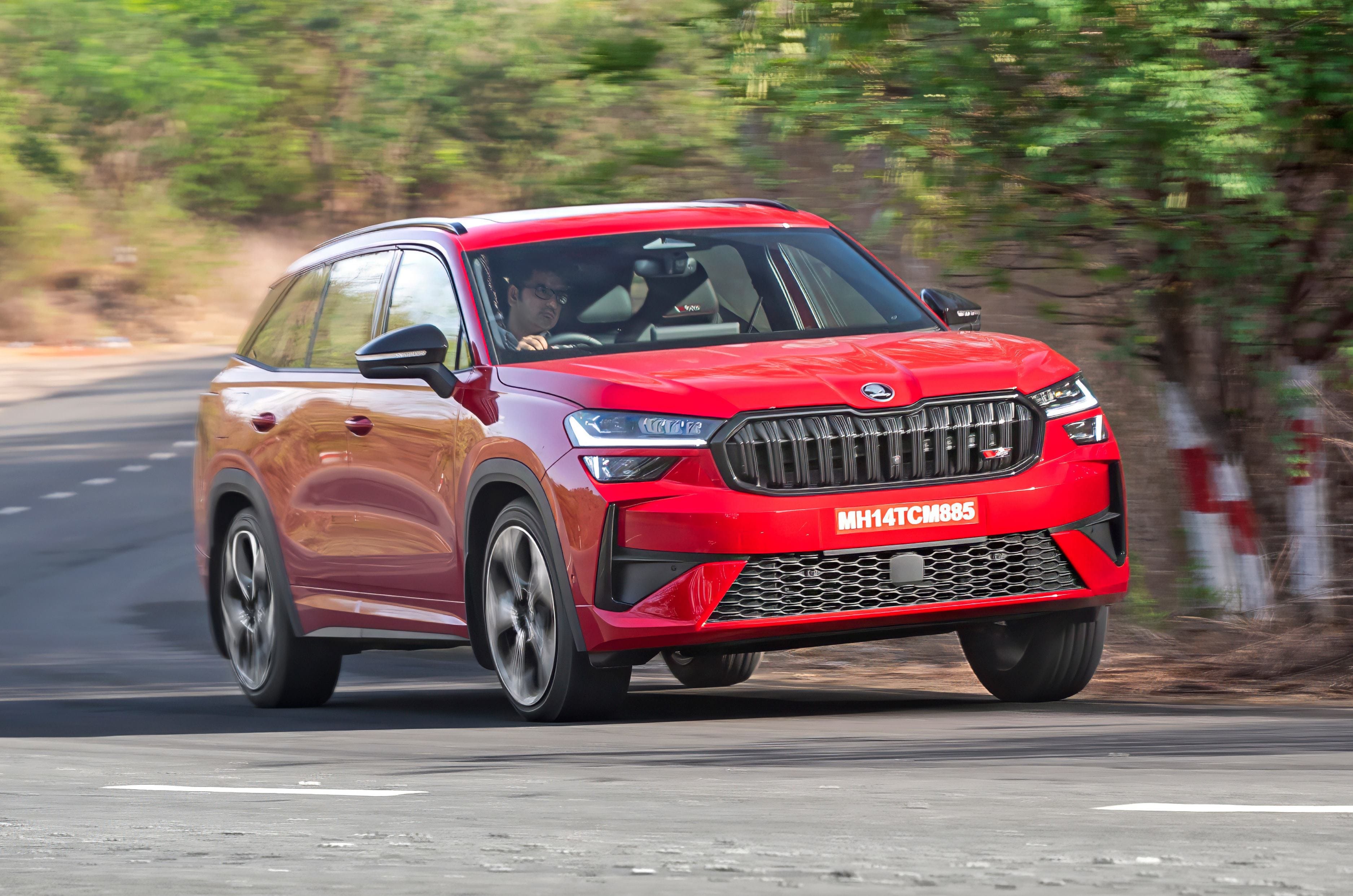
The Kodiaq RS handles corners just as well as it does straight roads
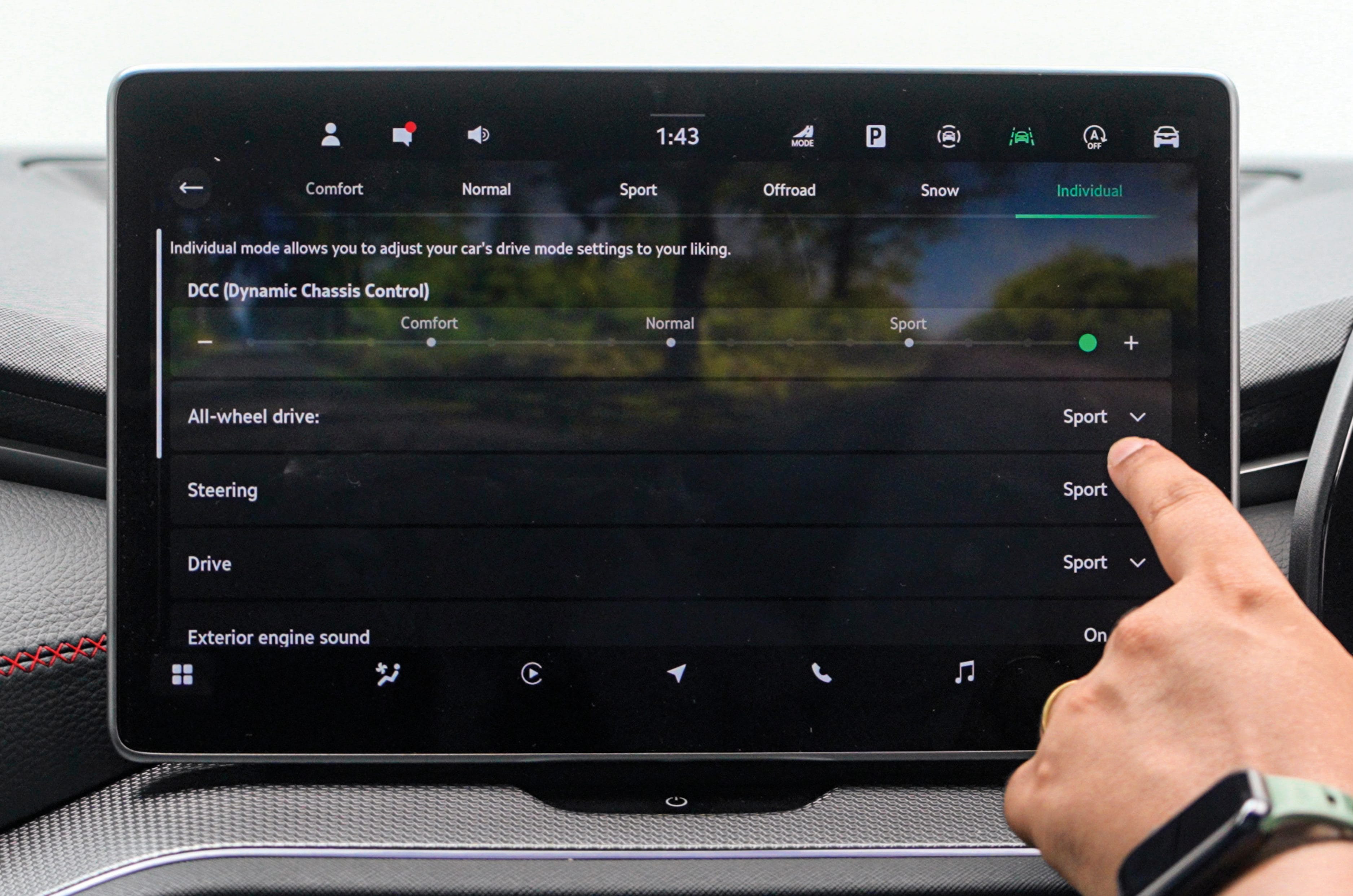
Despite being tall and heavy, the 7-seater Kodiaq RS is engaging to drive – whether that be around corners or in a straight line. One of the features that allows this are the adaptive dampers, or Dynamic Chassis Control (DCC), as VW-Skoda call it. Depending on your preference, the system can be set to one of 15 damping modes – ranging from various levels of soft and firm. In its sportiest setting, the suspension allows the RS to change directions quickly without upsetting body control even when tackling high-speed corners.
The Kodiaq RS also gets an all-wheel drive system that can send all of the engine’s torque to the rear axle, plus an electronic differential lock system. Known as the ‘XDS+’, this allows the car to brake the inner wheel to counter any understeering tendencies, leading to better agility around fast corners. Finally, the steering wheel feels responsive and is well-weighted, adding to the overall fun factor.
A sporty-looking interior
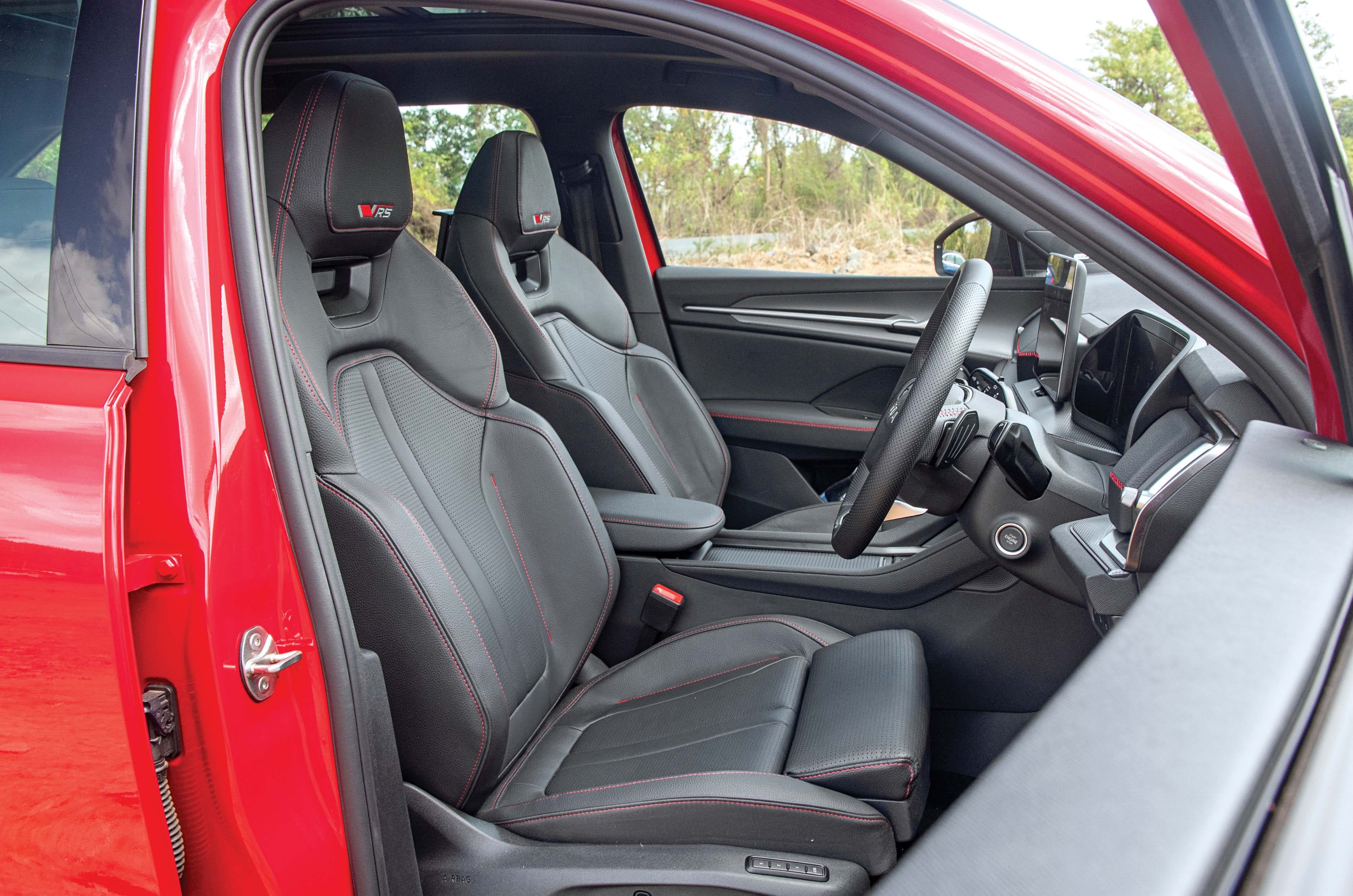
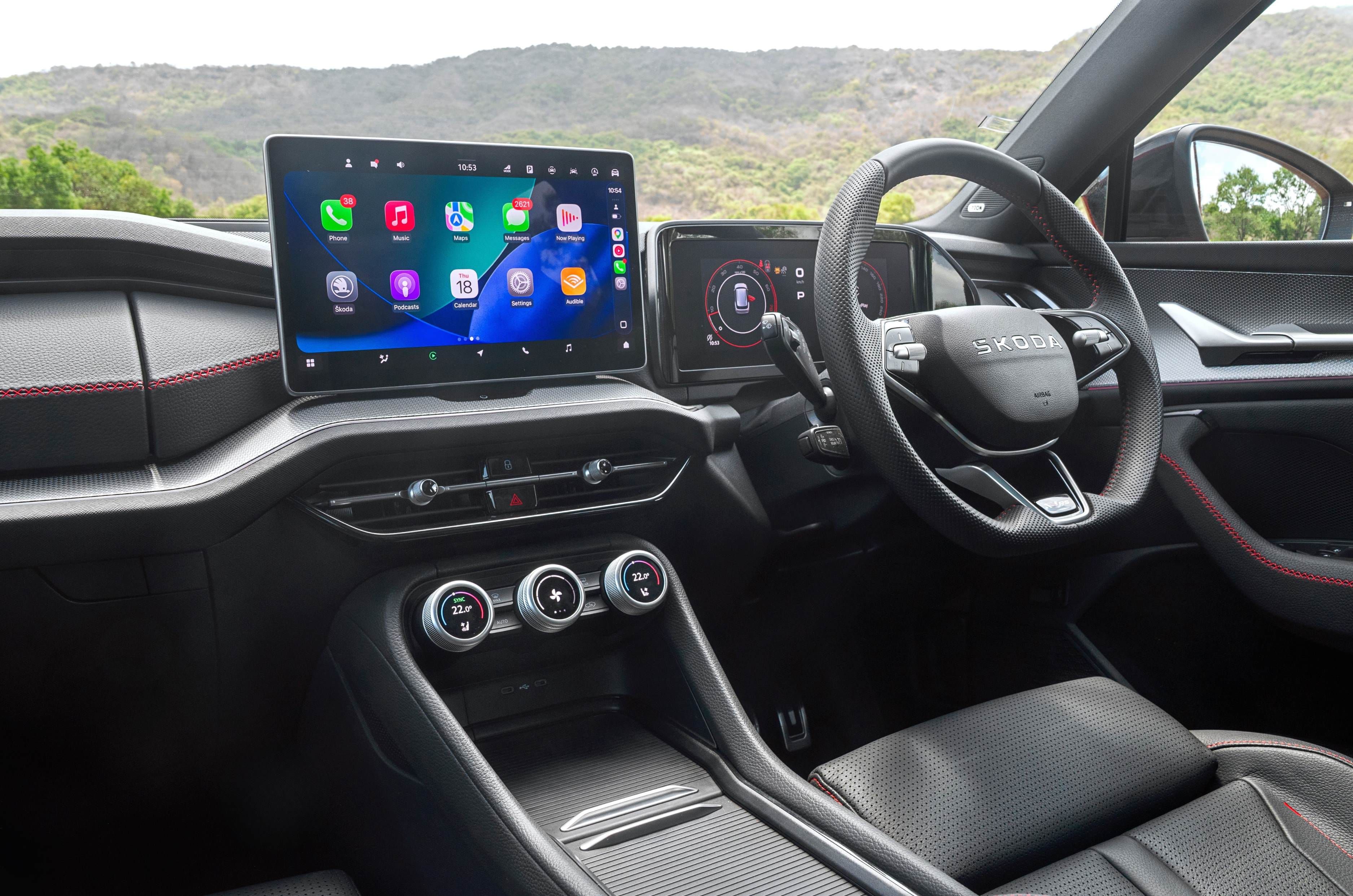
The all-black interior features RS-specific touches
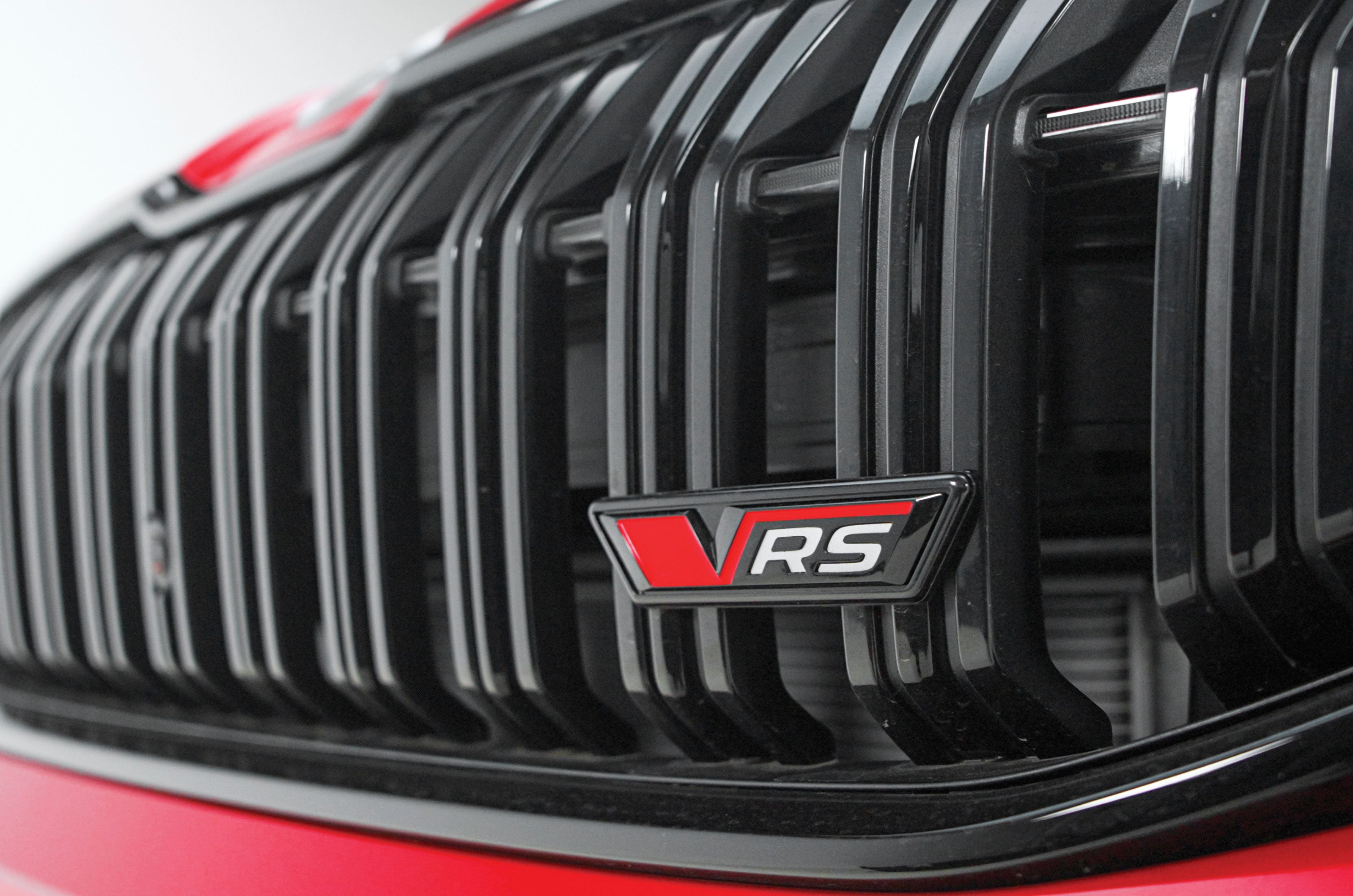
The all-black interior theme and sports seats at the front are similar to those of the Kodiaq Sportline. However, the seat headrests here get ‘RS’ branding, along with contrast red stitching and a textured metal finish on various surfaces and trim. Such detailing adds to the overall sporty nature of the Kodiaq RS.
Let’s now look at what’s not so good about the Skoda Kodiaq RS.
The ‘RS’ tax
The price premium could be difficult for most to jusity
Even though the first batch of 50 units have already been spoken for, Skoda is yet to disclose the official price of the Kodiaq RS in India. However, since it’s fully imported, the price difference is expected to be around Rs 15-20 lakh more than the locally assembled Kodiaq L&K. It feels more premium and sporty than the standard model, but a price tag of about Rs 65 lakh can be hard to justify for some.
Maruti-Suzuki is slated to introduce a comprehensive update to the Brezza on July 23, 2026. The carmakers’ answer to the compact SUV space is expected to arrive with a fresh exterior, better interiors, new features and most importantly, a new engine option.
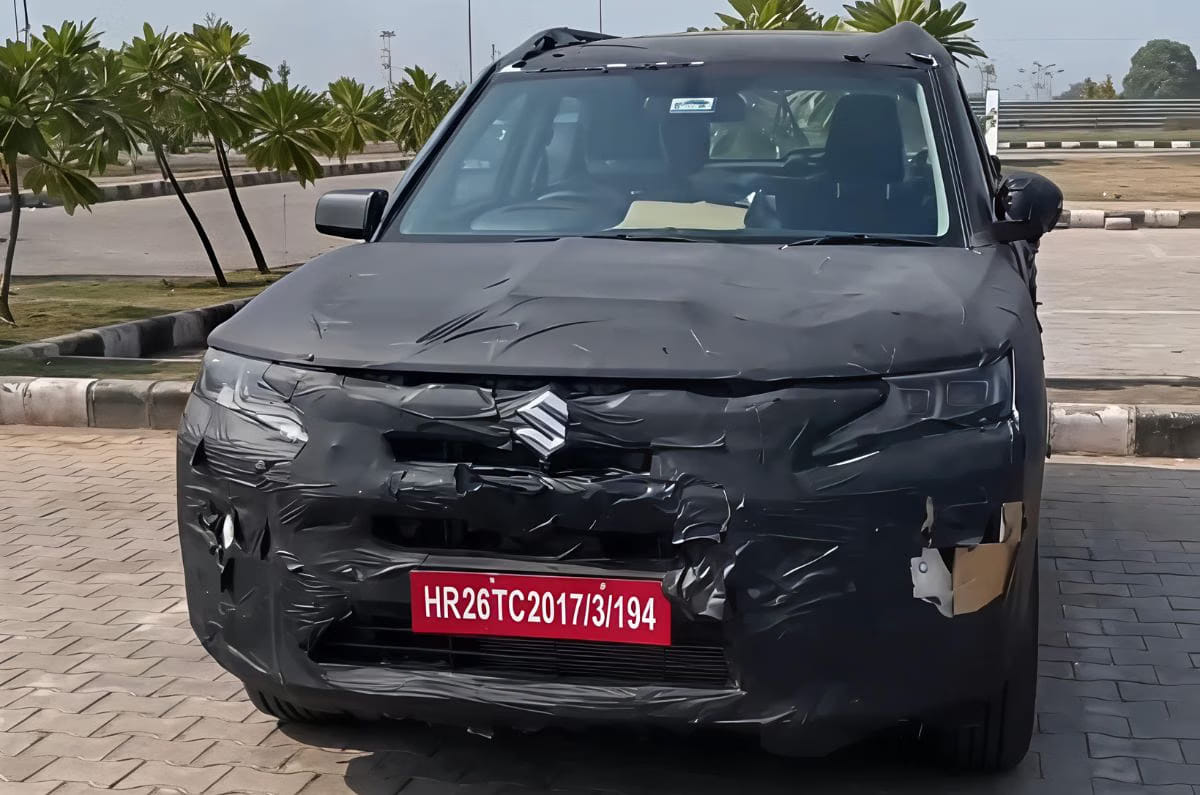
Expected to arrive with a new turbo-petrol engine, likely from the Fronx.
Subtle design revisions and feature additions are in the works.
Maruti Suzuki Brezza update: What to expect?
Credit: @HarshitMakkarvlogs via YouTube
The biggest change to the updated Brezza could be under the hood. It is expected to have a turbo-petrol engine for the first time in its lineup, with the Fronx’s 1.0-litre unit likely to be utilised. The engine could be paired to a 6-speed manual gearbox, as a test mule of the SUV was spied with this gearbox in February 2026. For reference, in the Fronx, the engine churns out 100hp and 148Nm. If introduced with the update, the engine would finally make the Brezza eligible for sub-4m tax benefits, thus reducing its price. Currently, the Brezza is the only SUV in its segment that does not offer a turbo-petrol engine. In line with Maruti’s standards, the engine can also be expected to be paired to a CNG kit.
To have revised exterior styling and upmarket interior bits
Credit: @HarshitMakkarvlogs via YouTube
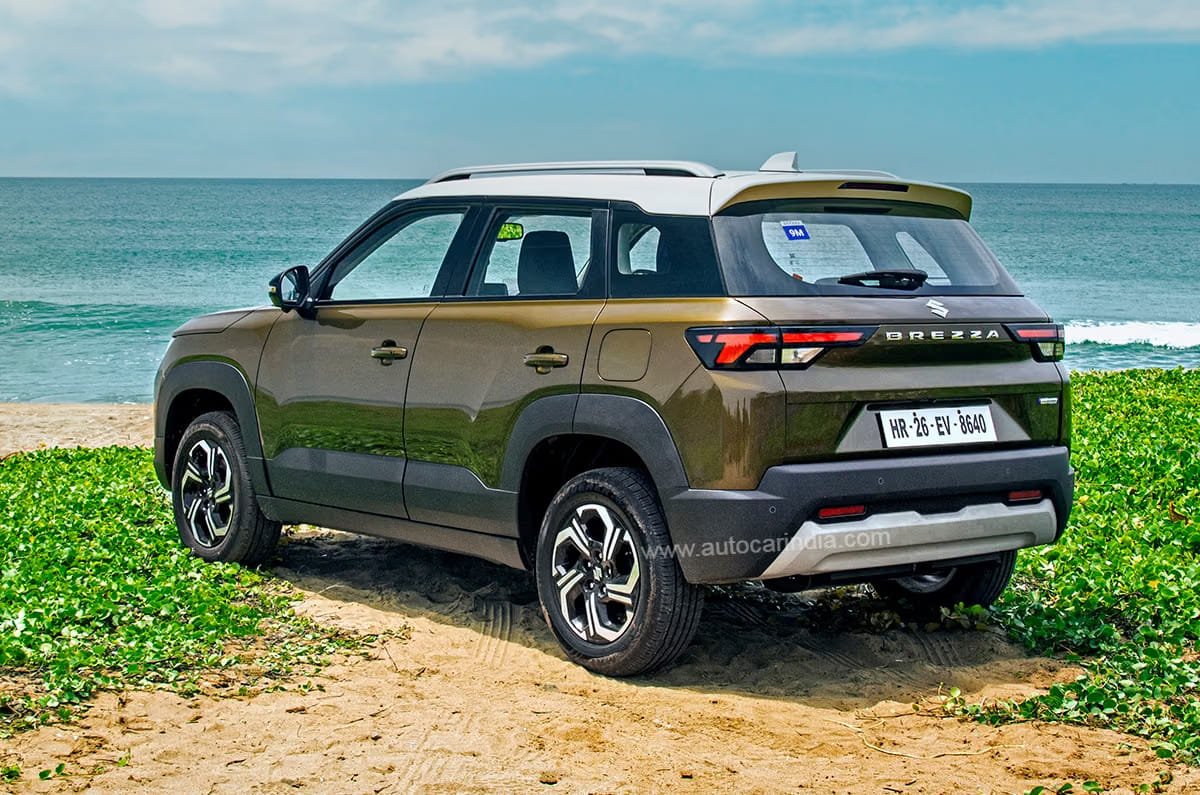
The updated Brezza is likely to arrive with minor cosmetic enhancements. This includes redone bumpers and lighting. The LED tail-lamps could be connected by a segmented bar, as seen on the larger Victoris SUV. Spy shots of the Brezza also revealed a new 4-spoke alloy wheel design, suggesting that new rim designs for the updated version can be anticipated.
Current Maruti Brezza interior used for representation.
Not many changes are expected to the overall cabin layout, save for newer trim material and colour scheme. As fr features, Maruti could equip the updated Brezza with the Victoris’ 10.1-inch infotainment screen, a powered driver seat, front seat ventilation and ambient lighting. A level 2 ADAS could also be part of the safety package. Test mules also revealed the presence of front parking sensors on the bumper, which could be a possible inclusion.
Maruti Suzuki Brezza update: Expected price
With the extensive updates, expect the updated Brezza to have a slight premium over the current version, whose price ranges between Rs 8.26 lakh and Rs 12.86 lakh. It will continue to take on the likes of the Hyundai Venue, Tata Nexon, Skoda Kylaq, Mahindra XUV 3XO, Kia Sonet and Syros.
The BMW X6 has returned to India exclusively in the range-topping M60i xDrive guise, priced at Rs 1.78 crore (ex-showroom). Imported as a completely built unit (CBU), it is powered by a 530hp, 750Nm 4.4-litre twin-turbo V8 petrol engine with 48V mild-hybrid technology, paired with an 8-speed automatic gearbox and BMW’s xDrive all-wheel-drive system. The coupe-SUV also gets adaptive suspension, rear-wheel steering and an M Sport differential. Along with updated styling, the X6 M60i comes with a refreshed interior, an extensive equipment list and M-specific design elements.
Normally, I wouldn’t begin a Skoda Kodiaq review with a 0-100kph run. But this isn’t a regular Kodiaq. It’s got RS in its name, which means performance is every bit as important as practicality. Left foot on the brake, right foot on the accelerator, Launch Control activated, and off we go. The VBOX flashes a 0-100kph time of 6.83 seconds. For a large, seven-seat SUV, that’s impressive.
Kodiaq RS Performance and Refinement – 8/10
To enable this, the changes begin under the bonnet. The familiar EA888 2.0-litre turbo-petrol engine remains, but power climbs from 204hp to 265hp, while torque jumps from 320Nm to 400Nm. The numbers translate to acceleration and roll-on times a few tenths quicker than the standard Kodiaq, and the whole sensation is of being in a more urgent vehicle.
Uprated 2.0-litre TSI engine bumps power to 265hp.
There’s a strong pull throughout the rev range, and on stretches long enough, the engine will happily wind to 6,000-6,500rpm. It’s particularly satisfying because the power feels usable and the performance is engaging. A similar-powered EV just won’t give the same thrill. Enhancing the experience is the soundtrack. The dual exhausts won’t let out pops or bangs, but you’ll hear a purposeful snarl from the engine when extended. Some of what you hear is played through the speakers, but it’s tastefully done and never sounds artificial.
Added power manifests in more urgent and energetic power delivery.
The quick-shifting seven-speed dual-clutch gearbox is also intrinsic to the drive experience. It’s always in the right gear and is very responsive to your right foot. Of course, on a day of hard driving, you’ll inevitably reach for the paddle shifters. They’re quick to respond but aren’t always willing to grant a high-rpm downshift.
Kodiaq RS Ride Comfort and Handling – 8/10
The RS badge isn’t just about straight-line performance. Skoda has put effort into making the Kodiaq more exciting in corners. Enhancements over the standard Kodiaq include a move to 20-inch rims (up from 18 inches), progressive steering (it alters the ratio depending on lock) and adaptive dampers (Dynamic Chassis Control or DCC), with 15 settings covering the spectrum from soft to firm. It all comes together really well.
It’s no Octy RS but is surprisingly engaging to drive for a seven-seat SUV.
No, the tall and heavy SUV doesn’t magically transform into an Octavia RS, but judged as a seven-seat SUV, the Kodiaq RS is surprisingly engaging. In its sportiest setting, the RS changes direction eagerly and body control is tidy – you don’t feel the weight pushing outwards in high-speed corners. The all-wheel-drive system plays its supporting role really well, because there’s an ever-present feeling of grip, and this greatly ups confidence and connect with the RS. Up to 100 percent of torque can go to the rear axle, and this gives the handling a different feel to the front-wheel-drive Octavia RS. Skoda’s XDS+ system that brakes the inner wheel in corners also comes into play, helping the Kodiaq resist understeer. A well-weighted and responsive steering completes the package.
You can configure the drive to your liking. DCC gets 15 levels.
What’s nice is that there’s plenty of ways to set up the Kodiaq RS to your liking. Beyond the usual Comfort, Normal and Sport modes, there’s an Individual setting that allows you to tailor everything from damper stiffness and steering weight to the responses of the engine, gearbox and all-wheel-drive system. DCC, in particular, gives the Kodiaq RS a wider breadth of roles. It feels well tied down in the sportier setting, while the suspension has more give in the softest modes. Ride comfort is pleasant even on the 20-inch rims, and if memory serves, it’s more absorbent than the standard Kodiaq that rides on 18-inch wheels. Of course, no issues of ground clearance here. In fact, the Kodiaq RS will happily play everyday car. The engine is smooth and refined when you need it to be, but is happy to change character the moment you ask more of it.
Kodiaq RS Features and Safety – 9/10
New to the Kodiaq line-up in India is ADAS (rolled out last month), and the suite includes adaptive cruise control, emergency braking, lane-keep assist, a blind-spot warning and more. The functions work well enough and, of course, are an added layer of safety only. Nine airbags, electronic stability control and ISOFIX child-seat mounts are among the features on the long list of safety equipment. Wish the 360-degree camera was crisper, but props to the Matrix LED headlights that offer excellent illumination. The welcome and goodbye signatures on the lights are also a cool touch.
Kodiaq RS Exterior Design and Engineering – 8/10
Sportier bumpers and larger 20-inch rims help identify the RS.
Drivers will know they are in a special Kodiaq, but the message is delivered to other road users in a slightly discreet manner. Sure, our test car’s Velvet Red paint shade drew attention, but in the white, black or grey paint shades, your biggest giveaway that this is an RS would be its larger rims. The RS sports a dechromed look in which all shiny bits are finished in black, but a mid-spec Kodiaq Sportline gets the same treatment. Sportier bumpers, dual exhausts and RS badging do give the Kodiaq RS street cred, but only to those in the know.
Kodiaq RS Interior Space and Comfort – 8/10
The interior remains a highlight. Again, the predominantly black theme and sport front seats are elements you’d find in a Sportline, but that’s more an observation than a negative. Red cross-stitching on the seats, steering and dash, RS embossing on the seats and a textured metal finish for the door and dash inlays do lend this Kodiaq its distinct personality.
Sport front seats offer great support and get ventilation too.
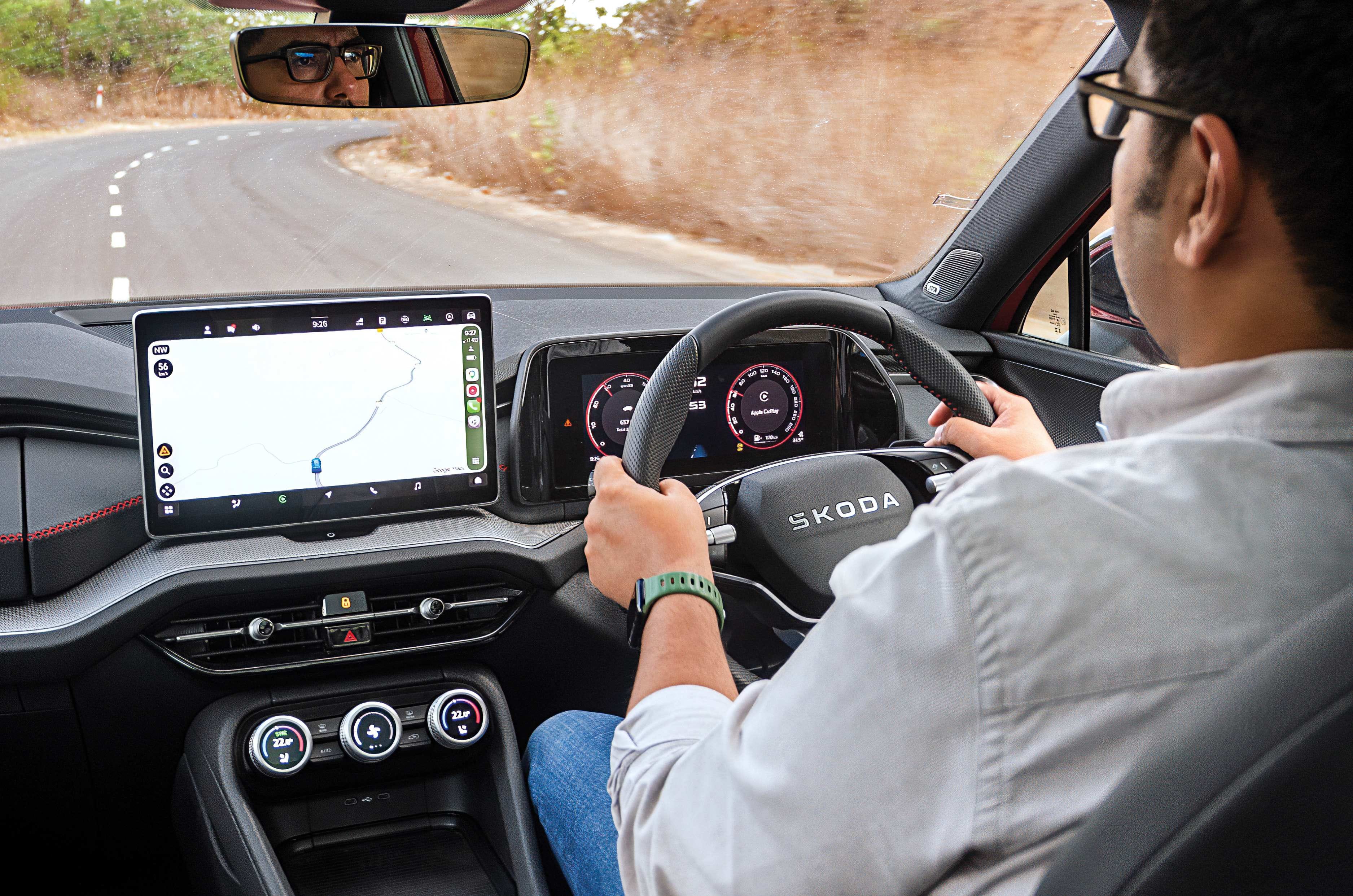
As for the individual elements, the front seats don’t just look great but hold you well with excellent back support, and adjustable thigh support included for good measure. Ventilation helps the experience, and you’ll like how instinctive the driver environment is. It’s easy to find a good driving position, visibility is great, and all controls are in clear sight and fall easily to hand.
Well-thought-out cabin gets sporty detailing on RS.
Ahead of the driver is a crisp 10.25-inch digital instrument cluster with multiple display layouts, all of which are neatly executed. The dashboard itself is dominated by a 12.9-inch touchscreen that’s well integrated into the overall design. It’s quick to respond and supports wireless Apple CarPlay and Android Auto. Skoda has also done well to provide rotary controllers for the climate control system. While the outer dials handle climate functions, the centre dial is programmable and can be assigned to functions such as blower speed, drive modes or audio volume.
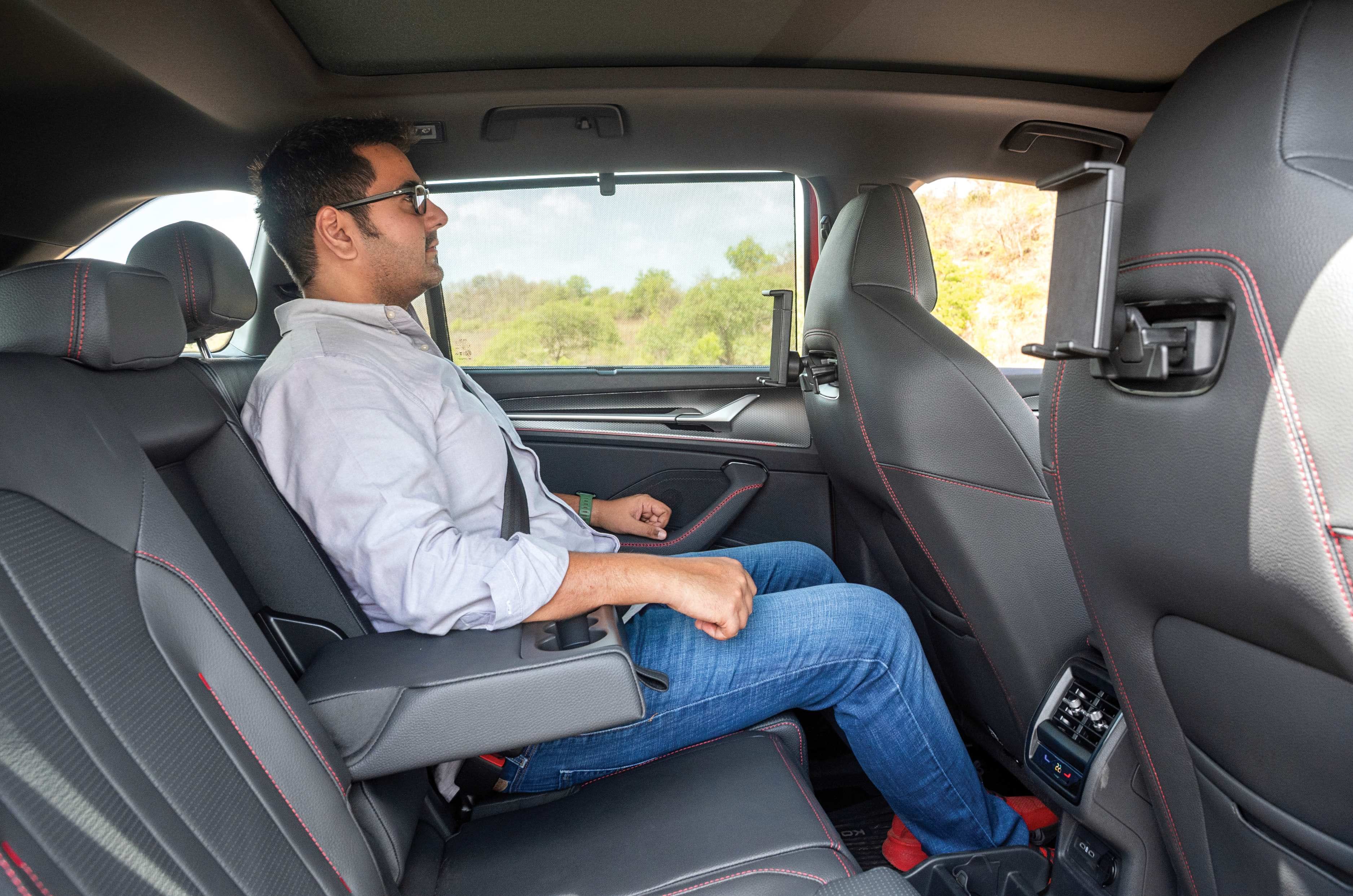
Middle row is spacious and comfy. Note tablet holders.
Rear-seat passengers will like their environment too. Knee room is generous, there’s enough room for three to sit in comfort, and the large windows and panoramic sunroof fill the dark interior with lots of light. The bench itself is comfy and features a reclinable backrest, plus fore/aft movement to balance space for third-row occupants. Rear-window sunshades, a dedicated climate control zone and phone/tablet holders mounted on the front headrests (to form a makeshift rear-seat entertainment system) are other comfort features at the back.
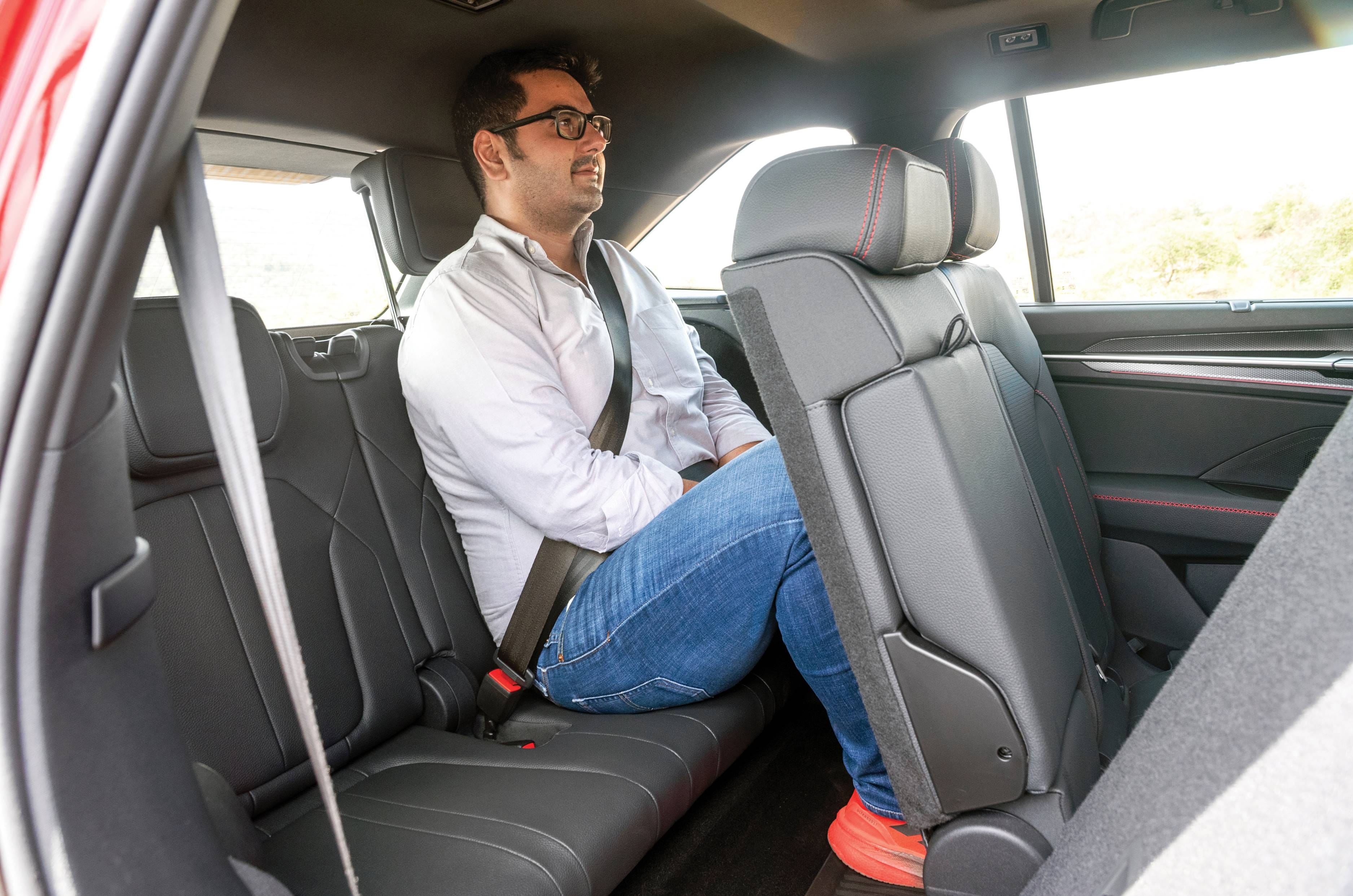
Third row is tight, but it’s possible to work out a space compromise.
The third row isn’t easy to get to, and space is insufficient for large adults. However, sit height-wise across the Kodiaq’s three rows, and you can reach a reasonable space compromise. When the rearmost seats aren’t in use, they are best left folded down, opening up a huge 786 litres of luggage room. In general, the Kodiaq RS’ cabin is very practical with lots of room for small items, generous door bins and well-sized cup holders.
Kodiaq RS Value for Money – 7/10
All 50 units of the RS are spoken for.
The Kodiaq RS won’t make you go weak in the knees like an Octavia RS can. What it does successfully is pepper the premium and practical Kodiaq with more performance and driver appeal. It really is a wholesome package that will be an easy sell for the entire family. That’s till you bring pricing into the equation. The fully imported Kodiaq RS is expected to be priced at Rs 60-65 lakh (estimated, ex-showroom, India), which would make it a good 15-20 lakh pricier than the locally assembled Kodiaq L&K. If so, the case for the Kodiaq RS weakens. Yes, it is more enjoyable to drive, but so much better? Hmm.
Skoda says all 50 units of the Kodiaq RS allocated for India are spoken for. For the lot who are happy to pay the premium, they’re buying an all-rounder they won’t get bored of for years to come.
Hyundai has unveiled the eighth-gen Elantra sedan, which packs major styling changes, more tech, and mechanical upgrades. The eighth-gen Elantra adopts Hyundai’s Art of Steel styling approach, which looks like an evolved form of the design language used for the Sonata and Verna. Measuring 4,765mm in length, 1,855mm in width, 1,425mm in height, and 2,750mm in wheelbase, the new Elantra is also 55mm longer and 30mm wider than its predecessor. Inside, the new Elantra gets a massive 14.6-inch infotainment touchscreen running Hyundai’s new Pleos Connect infotainment interface, as well as a slim digital driver’s display, new three-spoke steering wheel, lots of physical controls, ambient lighting, and more. Under the hood, it carries forward the same 2.0-litre naturally aspirated petrol and 1.6-litre hybrid powertrains, but the latter sees changes like a 13hp bump and optimisations for the gearbox, drive motor, and battery.
Conducted in association with Spinny, India’s leading pre-owned car platform, the fourth edition of our Used Car Study analyses real-world resale values across a broad spectrum of vehicles sold in the Indian market in order to assess depreciation trends over a five-year ownership period. The study is based on actual transactional data shared by Spinny for vehicles sold between January 1 and August 31, 2025.
In this series of the resale value study, we are first taking a look at the budget hatchback segment:
Midsize HatchbacksResale Value
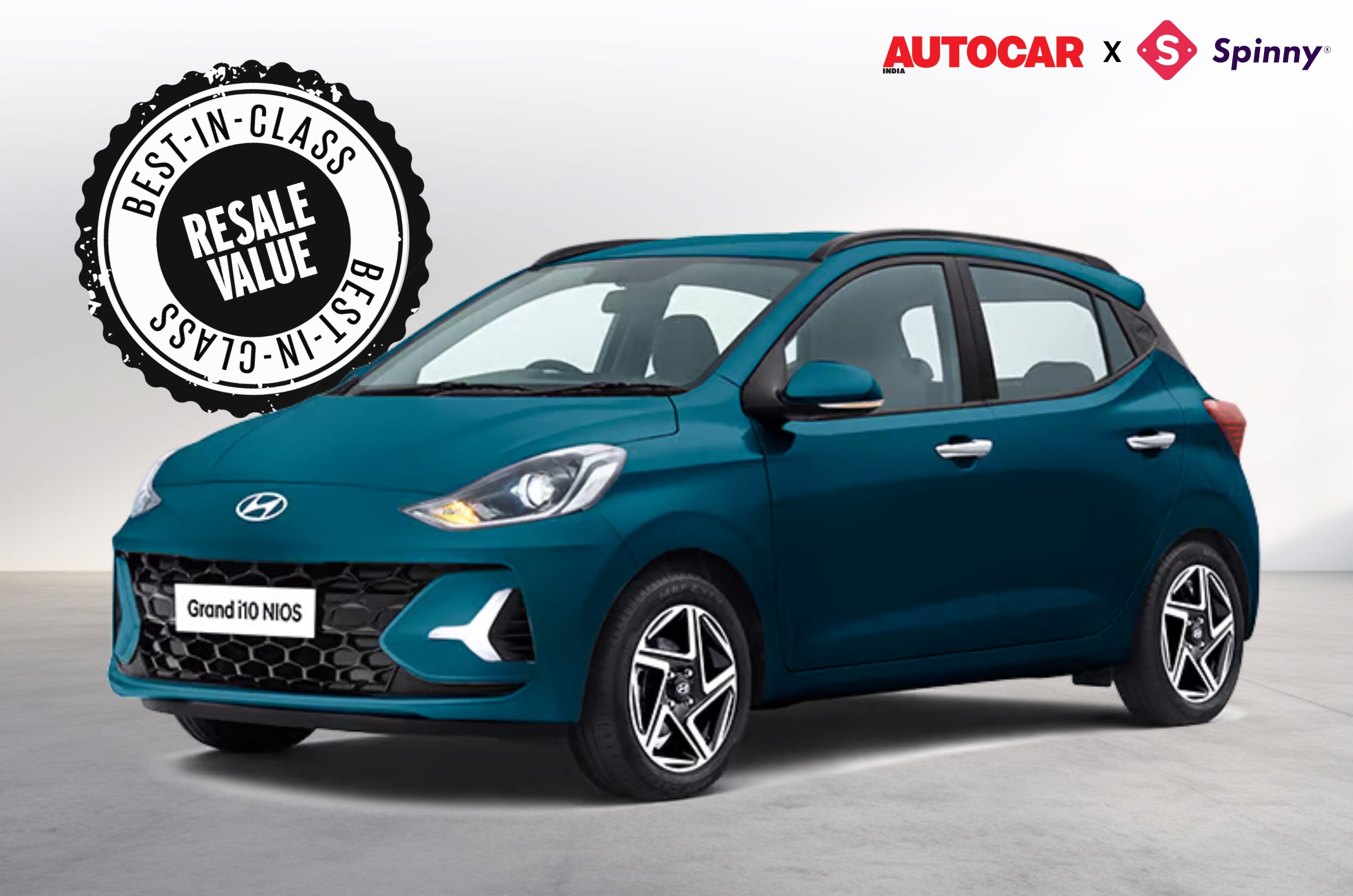
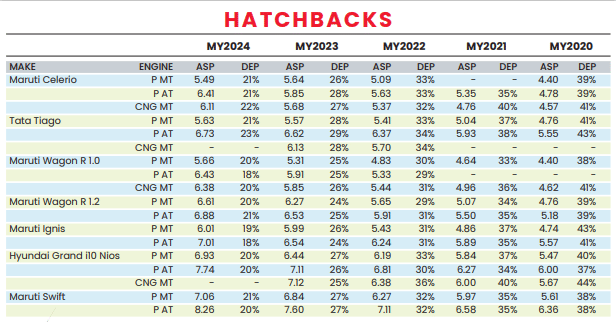
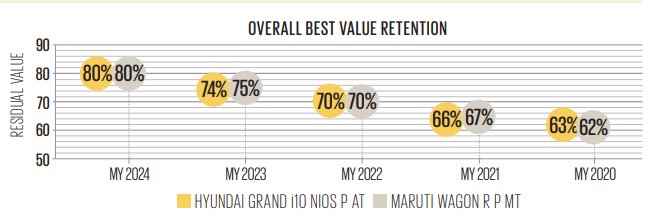
The Hyundai Grand i10 Nios petrol-AMT emerged as the strongest performer in terms of residual value, registering the flattest depreciation curve in the segment. Matching it closely are both the 1.0-litre and 1.2-litre petrol-manual variants of the Maruti Wagon R, whose consistently strong demand in the new and used car markets has helped preserve resale values.
At the other end of the spectrum, the Grand i10 Nios CNG sees the steepest depreciation among its siblings, while the Tata Tiago petrol-AMT also records relatively greater value loss over time. The Maruti Ignis is also among the ones to lose the most value over the five-year period. The Maruti Swift stands out in this company for having the most consistent rate of depreciation across both its manual and automatic variants.
As per the study, the average selling price of a five-year-old midsize hatchback retailed through Spinny stood at Rs 5.47 lakh. Comparable figures for three-year-old and one-year-old the midsize hatchbacks were Rs 5.84 lakh and Rs 6.58 lakh, respectively. Average depreciation over the same periods worked out to 40 percent, 31.9 percent and 20.3 percent, respectively.
Autocar-Spinny Resale Value Study methodology
The analysis covers the average selling prices (ASPs) of vehicles retailed through Spinny’s network across nine cities – Delhi-NCR, Bengaluru, Hyderabad, Pune, Chennai, Mumbai, Lucknow, Ahmedabad and Kolkata.
For the purposes of this study, depreciation has been defined as the percentage difference between a vehicle’s original on-road price in its year of manufacture and its resale value in 2025. In instances where a model was offered with multiple engine options using the same fuel type, the data has been consolidated and averaged. Variant-wise differences have similarly been averaged out.
Discontinued models and powertrain options have been excluded. Additionally, premium vehicles priced above Rs 30 lakh, electric vehicles and certain low-volume models have not been included due to limited transaction data and insufficient sample sizes.
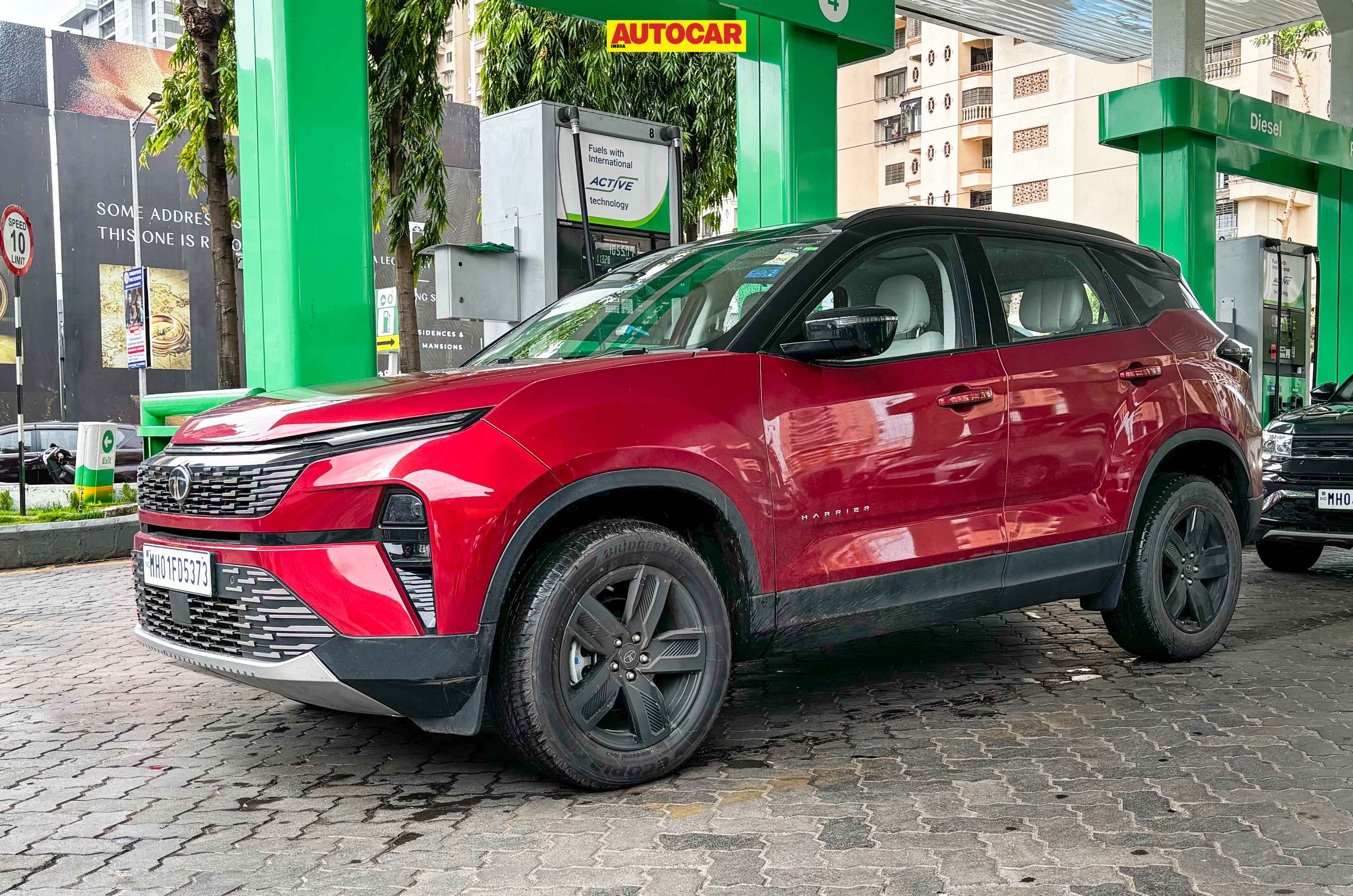
Launched with a diesel engine in 2019, the Tata Harrier finally gained a turbo-petrol option in January 2026. Under the hood is the same 1.5-litre Hyperion turbo-petrol engine that debuted in the Sierra. In the Harrier, however, it produces 170hp and 280Nm, 10hp and 25Nm more than in the Sierra. Unlike its sibling, the turbo-petrol Harrier is available with both 6-speed manual and automatic transmission options. We tested the latter to evaluate its real-world fuel efficiency.
Misses out on an auto engine stop-start system.
Gets an Eco driving mode.
Weighs 1,738kg.
Tata Harrier petrol mileage explained
The Harrier’s higher state of tune (than the Sierra), sharp throttle responses and revised gearing improve drivability, and despite its 1,738kg kerb weight, performance feels more than adequate. Unlike the Sierra, the turbo-petrol Harrier also gets an Eco driving mode to help curb fuel consumption. However, an automatic engine stop-start system is still absent.
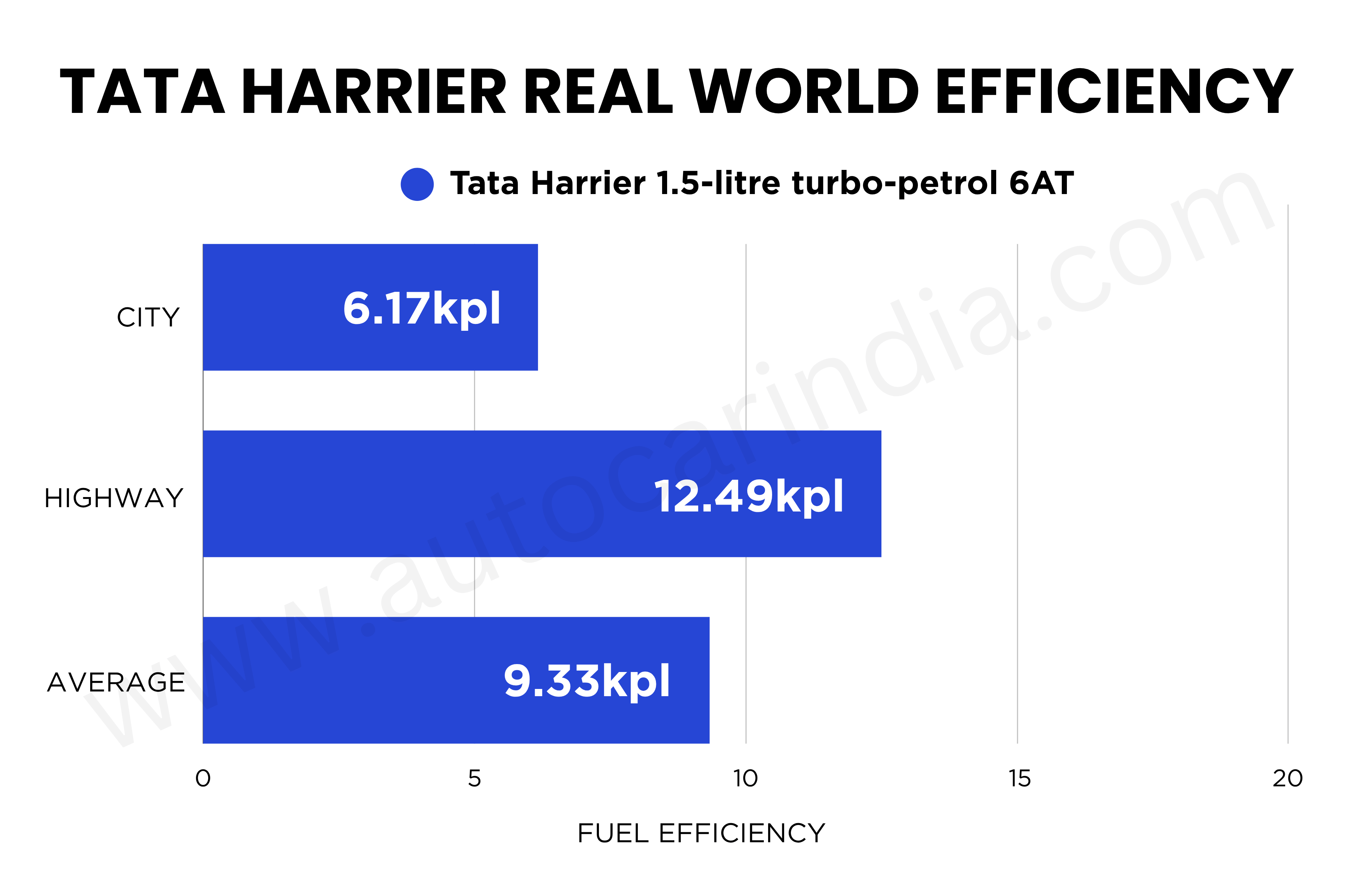
In our tests, the Harrier turbo-petrol automatic, equipped with a 6-speed torque-converter gearbox, delivered 6.17kpl in the city and 12.49kpl on the highway, resulting in an overall average fuel efficiency of 9.33kpl.
Notably, the top-spec Harrier weighs over 180kg more than the Sierra and is, as expected, less efficient. In our tests, the Sierra was 0.32kpl more efficient in the city and 1.21kpl more efficient on the highway. The larger gap in highway efficiency can also be attributed to the Harrier’s higher cruising engine speeds. At 100kph, the Harrier’s engine turns at 1,900rpm in top gear, whereas the Sierra cruises at 1,750rpm in sixth gear at the same speed.
For fuel-conscious buyers, the Harrier diesel remains the more sensible choice. For reference, the 2021 Harrier diesel automatic returned 9.6kpl in the city and 14.4kpl on the highway in our efficiency tests.
Autocar India’s fuel-efficiency testing
Before conducting our real-world fuel-efficiency tests, we fill our test cars’ tanks to the brim and maintain tyre pressures based on the manufacturer’s recommendation. These cars are then driven on fixed city and highway loops in and around Navi Mumbai, and we maintain certain average speeds. Throughout the tests, we run the aircon at 22 degrees in full-auto mode and other electricals, such as the audio system, indicators and wipers, when required – just as a regular user would. Periodic driver swaps further neutralise variations in driver patterns. At the end of each cycle, we calculate efficiency by filling the tanks to full again.
While modern cars are more reliable than ever, mechanical and electrical failures can still occur, which is where a warranty is useful. Simply put, it is the carmaker’s assurance that the vehicle is free from manufacturing defects. If a part fails because of such a defect within the specified time or kilometre limit, the company bears the cost of repairing or replacing it. Here’s a closer look at some of the most important questions surrounding car warranties.
Disclaimer: Warranty terms and conditions vary from one manufacturer to another. It is always recommended to check with your carmaker for the exact coverage and exclusions.
What does a car warranty actually cover?
A factory warranty mainly covers key components that are expected to last the life of the vehicle under normal use. These include the powertrain, engine, fuel pumps and transmission. It also covers components such as the steering system, suspension linkages and braking system. Factory-fitted electrical components are covered as well. In short, if there is a manufacturing or assembly defect, the company either repairs or replaces the affected part free of cost.
What isn’t covered under a car warranty?
A warranty does not cover parts that naturally wear out over time. Brake pads, clutch plates, wiper blades, bulbs and tyres are among the common exclusions. Consumables such as engine oil, filters and coolant are covered only if they need to be replaced as part of an approved warranty repair.
Damage caused by certain external factors is also excluded. This includes paint damage caused by bird droppings, tree sap, industrial fallout or acidic rain. Bird droppings, in particular, are highly acidic and can damage the paint if not cleaned off quickly.
What can void your car’s warranty?
Warranty protection depends heavily on following manufacturer-prescribed maintenance schedules using approved procedures and genuine parts. Even a comprehensive warranty can become invalid if the vehicle is modified or misused. Odometer tampering is one such example, as disconnecting or altering the odometer immediately voids the warranty.
ECU remaps are another common reason. Manufacturers, particularly Volkswagen Group brands such as Skoda and Volkswagen, use OBD scans to detect unauthorised tuning, and a detected remap can result in the loss of powertrain warranty. Aftermarket electrical modifications, such as cutting into the wiring harness to install audio systems, can also create warranty issues. Also, upsizing, using wider tyres or placing wheel spacers could cause issues and therefore void the warranty.
Image credit: tarunvlogs3445 via YouTube.
BYD excludes rodent damage, while MG warns against charging its EVs from non-earthed power sources, which can affect the battery management system. Driving through deep water and causing a hydrostatic lock is also considered misuse, so owners should always stay within the manufacturer’s recommended water-wading limit.
How are EV warranties different?
Unlike petrol and diesel cars, where the warranty is generally offered as a single package, EV warranties are split across different components. Manufacturers typically provide separate warranties for the electric motor(s) and battery. Speaking of the latter, the industry standard for high-voltage batteries is 8 years or 1,60,000km, but coverage varies across manufacturers.
For example, Tata Motors offers the Harrier EV with an unlimited-kilometre battery warranty for the vehicle’s lifetime, defining it as 15 years from the date of first registration. Toyota offers an 8-year or 1,60,000km battery warranty for its hybrid vehicles and 8 years or 2,00,000km for its battery electric vehicles.
Should you buy an extended warranty?
As standard, carmakers usually offer a 3-year or 1,00,000km warranty, whichever is earlier. In some cases, manufacturers offer even more. The new Renault Duster, for example, comes with a 7-year or 1,50,000km standard warranty. BYD also offers a 6-year or 1,50,000km warranty across its entire range.
Beyond this, customers can also opt for extended warranty packages, typically ranging from 2 to 7 years or a set number of kilometres. Some manufacturers go further still. For instance, BMW provides warranty extensions of up to 10 years or 2,00,000km. Toyota’s True Warranty can be extended up to 2,20,000km. Nissan offers comprehensive coverage for up to 7 years or 1,70,000km, along with separate engine and transmission-only extensions of up to 10 years.
Some manufacturers take a different approach. Hyundai’s Shield of Trust package covers 14 wear-and-tear parts for up to 5 years or 60,000km. Honda’s Anytime Warranty, meanwhile, can be purchased for cars that are up to 10 years old, even after the original factory warranty has expired.
Whether an extended warranty is worth buying largely depends on how long you plan to keep your car. If you intend to sell it before the standard warranty expires, you may not need one, although it may improve the car’s resale value. However, if you plan to keep the vehicle beyond the factory warranty period, an extended warranty may prove useful.
How do warranties work on used cars?
Beyond vehicle manufacturers, some small-scale dealers and used-car platforms also offer warranty packages. Spinny, for instance, offers different warranties based on the category of the used car: Budget, Assured and Assured+. The Budget category gets a 6-month/6,000km powertrain warranty and a 2-month/2,000km warranty, while the Assured models offer a 1-year/12,000km powertrain warranty and a 3-month/3,000km warranty.
The Assured+ cars come with a 3-year/36,000km powertrain warranty and a 6-month/6,000km comprehensive warranty, whichever comes first. Notably, Spinny became the first used-car retailer in India to introduce a 3-year warranty on its Assured+ cars in June 2025.
Spinny’s extended warranty, valid only for Assured and Budget cars, provides additional peace of mind and is available as an additional purchase for your car.
In conclusion, a car warranty protects you against manufacturing and assembly defects, not routine servicing or normal wear and tear. Understanding what is covered, excluded and can void the warranty will help avoid expensive surprises later. Also, an extended warranty may not be necessary for every owner, but if you plan to keep your car for several years beyond the standard warranty period, it can be a worthwhile investment.
Petrol Diesel Price Today: हर दिन की शुरुआत सिर्फ सूरज की किरणों से नहीं होती, बल्कि पेट्रोल और डीजल की नई कीमतों से भी होती है, जो आम आदमी की जेब पर सीधा असर डालती हैं। सुबह 6 बजे देश की तेल विपणन कंपनियां (OMCs) ताजा दरें जारी करती हैं, जो अंतरराष्ट्रीय बाजार में कच्चे तेल की कीमतों और डॉलर-रुपए की विनिमय दर में आए बदलावों पर आधारित होती हैं। ये बदलाव रोजमर्रा की जिंदगी को प्रभावित करते हैं, चाहे वो ऑफिस जाने वाला व्यक्ति हो या फल-सब्जी बेचने वाला व्यापारी।
ऐसे में हर दिन की कीमतों की जानकारी रखना सिर्फ जरूरी ही नहीं, बल्कि समझदारी भी है। सरकार की यह प्रणाली पारदर्शिता सुनिश्चित करती है ताकि उपभोक्ताओं को किसी तरह की भ्रमित जानकारी न मिले।
आपके शहर में आज का पेट्रोल-डीजल का भाव
ये रहे 28 जून 2026 के प्रमुख शहरों के पेट्रोल-डीजल के ताजा रेट —
नई दिल्ली: पेट्रोल 102.12 रुपये और डीजल 83.09 रुपये प्रति लीटर।
मुंबई: पेट्रोल 111.18 रुपये और डीजल 86 रुपये प्रति लीटर।
कोलकाता: पेट्रोल 113.47 रुपये और डीजल 93.50 रुपये प्रति लीटर।
चेन्नई: पेट्रोल 107.77 रुपये और डीजल 91.50 रुपये प्रति लीटर।
गुरुग्राम: पेट्रोल 102.77 रुपये और डीजल 91.70 रुपये प्रति लीटर।
नोएडा: पेट्रोल 102.12 रुपये और डीजल 91.70 रुपये प्रति लीटर।
बेंगलुरु: पेट्रोल 110.93 रुपये और डीजल 90 रुपये प्रति लीटर।
भुवनेश्वर: पेट्रोल 109.92 रुपये प्रति लीटर।
चंडीगढ़: पेट्रोल 98.10 रुपये प्रति लीटर।
हैदराबाद: पेट्रोल 115.69 रुपये और डीजल 97 रुपये प्रति लीटर।
जयपुर: पेट्रोल 112.66 रुपये और डीजल 90.91 रुपये प्रति लीटर।
लखनऊ: पेट्रोल 102.05 रुपये और डीजल 95.75 रुपये प्रति लीटर।
पटना: पेट्रोल 113.35 रुपये प्रति लीटर।
तिरुवनंतपुरम: पेट्रोल 115.49 रुपये प्रति लीटर।
अहमदाबाद: डीजल 82.25 रुपये प्रति लीटर।
पुणे: डीजल 92.50 रुपये प्रति लीटर।
पिछले दो साल से स्थिर क्यों हैं कीमतें?
मई 2022 के बाद से केंद्र और कई राज्यों द्वारा टैक्स में कटौती की गई, जिसके बाद पेट्रोल-डीजल की कीमतों में स्थिरता देखी जा रही है। हालांकि अंतरराष्ट्रीय बाजार में उतार-चढ़ाव होता रहता है, फिर भी भारतीय उपभोक्ताओं के लिए कीमतें तुलनात्मक रूप से स्थिर बनी हुई हैं।
किन कारणों से तय होती हैं ईंधन की कीमतें?
कच्चे तेल की कीमतें:
पेट्रोल और डीजल का उत्पादन मुख्य रूप से कच्चे तेल से होता है। जब अंतरराष्ट्रीय स्तर पर कच्चे तेल की कीमतें बढ़ती हैं, तो इसका असर सीधे भारतीय बाजार पर पड़ता है।
डॉलर के मुकाबले रुपया:
भारत अधिकतर कच्चा तेल आयात करता है, और यह डॉलर में खरीदा जाता है। यदि रुपया कमजोर होता है, तो ईंधन महंगा हो जाता है।
सरकारी टैक्स और शुल्क:
केंद्र और राज्य सरकारें पेट्रोल-डीजल पर भारी टैक्स लगाती हैं, जो खुदरा मूल्य का बड़ा हिस्सा होते हैं। यही कारण है कि राज्यों में कीमतों में अंतर होता है।
रिफाइनिंग की लागत:
कच्चे तेल को इस्तेमाल लायक बनाने की प्रक्रिया (रिफाइनिंग) में भी खर्च होता है। ये लागत कच्चे तेल की गुणवत्ता और रिफाइनरी की क्षमता पर निर्भर करती है।
मांग और आपूर्ति का संतुलन:
बाजार में ईंधन की मांग अगर बढ़ जाती है, तो कीमतें भी ऊपर जाने लगती हैं। खासकर त्योहारों, गर्मी या सर्दी के मौसम में ईंधन की खपत ज्यादा होती है।
कैसे करें अपने शहर की कीमतें SMS से चेक?
अगर आप मोबाइल से ईंधन की कीमत जानना चाहते हैं, तो ये प्रक्रिया आसान है:
Indian Oil ग्राहक: अपने शहर का कोड टाइप करें और उसे “RSP” के साथ 9224992249 पर भेजें।
BPCL ग्राहक: “RSP” लिखकर 9223112222 पर भेजें।
HPCL ग्राहक: “HP Price” लिखकर 9222201122 पर भेजें।
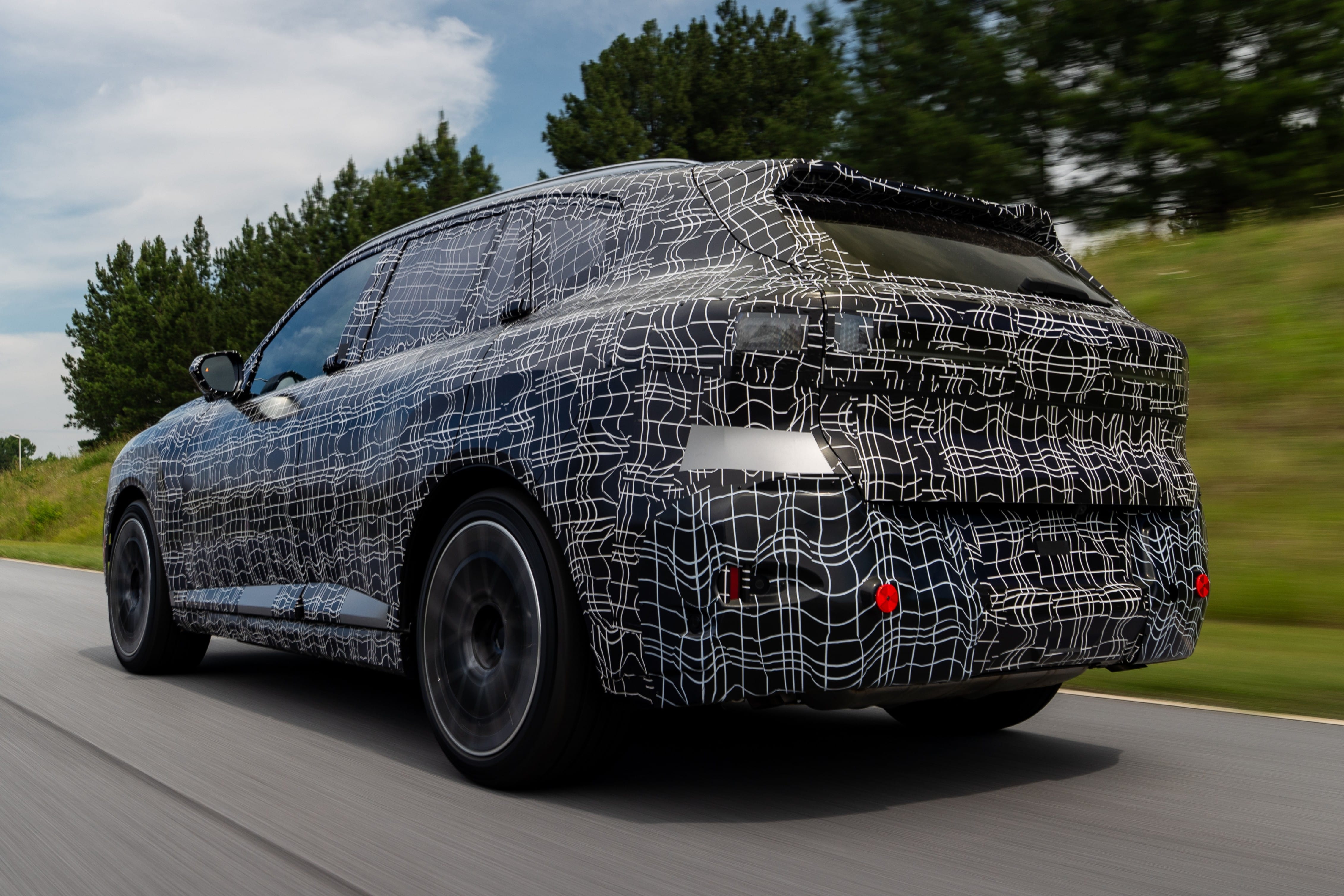
BMW will bring the next-generation X5 SUV to India in long wheelbase (LWB) form, our sources have indicated. The next-gen X5 is set to debut in Europe soon in all-electric iX5 guise, and will feature the Neue Klasse design overhaul as seen on the iX3 and i3 EVs.
BMW LWB models currently sold in India garnering healthy demand
Next-gen X5 is being adapted for LWB, and will make it here in this form
i5 LWB and iX3 LWB also headed to India
Next-gen X5 to join growing list of BMW LWB models in India
LWB BMWs resonated well with Indian customers
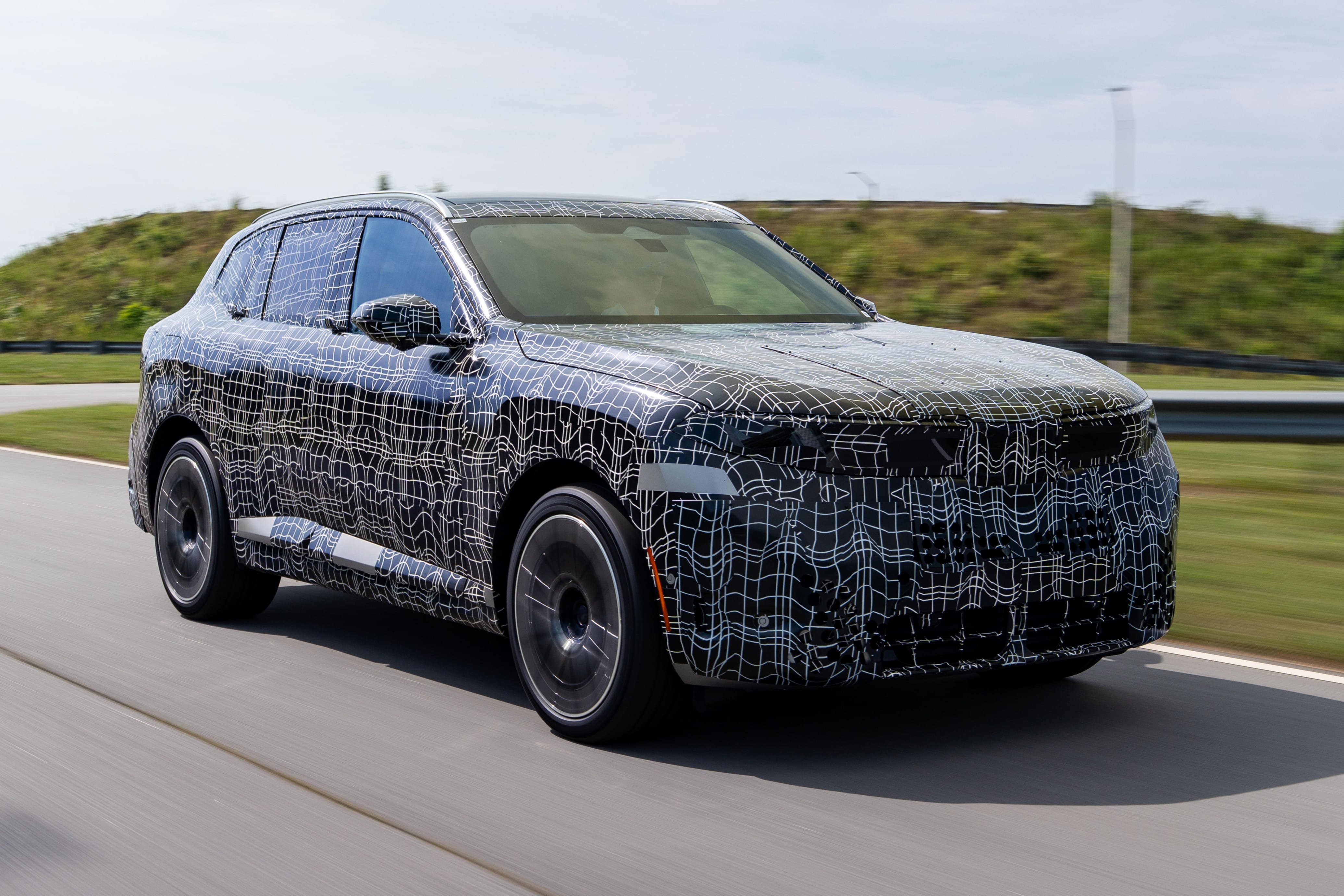
Next-gen BMW X5 (standard wheelbase) prototype. Image used for representation only.
BMW has seen great success with the three LWB models it currently retails in India: the 3 Series LWB, 5 Series LWB, and iX1 LWB. These models were originally designed for the Chinese market, and resonated with Indian luxury car buyers (many of whom are chauffeur-driven) thanks to the extra space they offer in the second row.
The next-gen BMW X5 will be adapted for a China-spec LWB version too, and this will be the one offered in India as well. However, given that the new X5 has yet to be revealed globally and the extra time required for LWB adaptation, don’t expect the BMW SUV to make its way to India before the latter half of 2027.
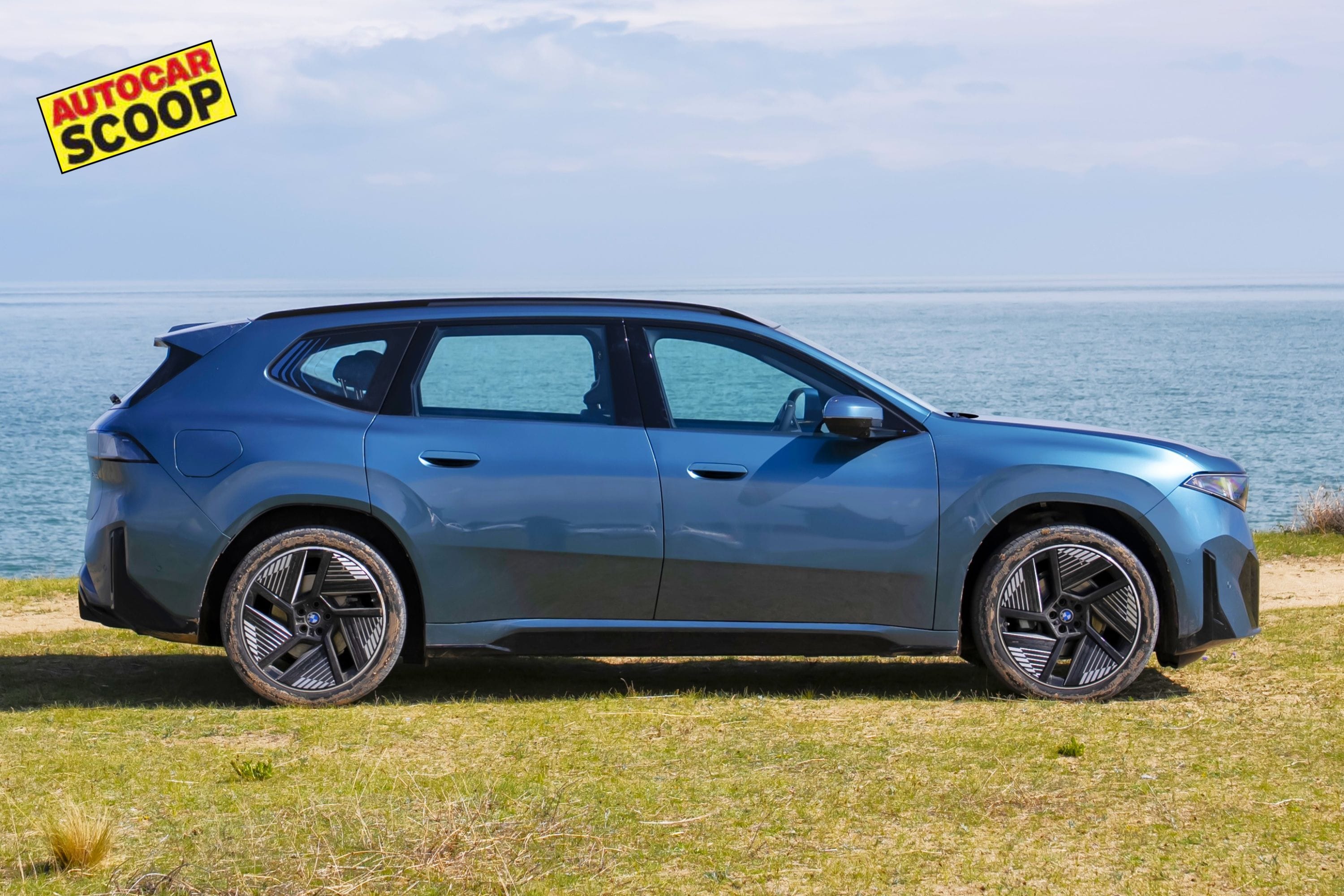
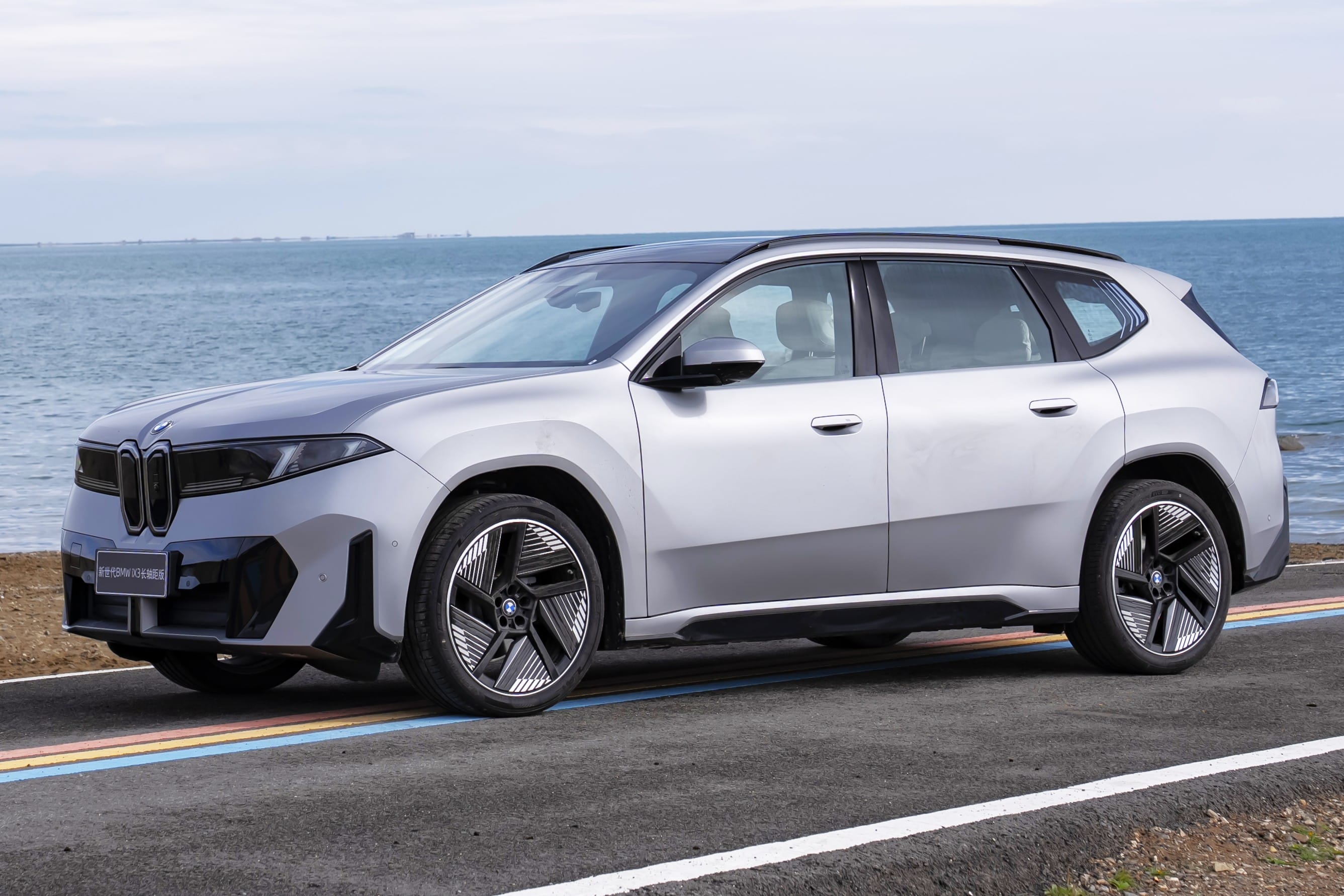
BMW iX3 LWB
BMW India has other LWB models on the way too, including the i5 LWB, which is set to launch this year, and the iX3 LWB, which will go on sale here in 2027.
What to expect from the next-gen BMW X5
One of the first ICE-powered BMWs to adopt Neue Klasse design language
A few months ago, images of the next-gen X5 leaked online, confirming a radical Neue Klasse redesign. Up front, it gets a pair of sharp blacked-out sections housing the headlamps and vertically-arranged illuminated kidney grilles in the centre. At the back, it gets a sporty sloping roofline and wide wraparound LED tail-lamps.
Next-gen BMW X5 (standard wheelbase) prototype. Image used for representation only.
Inside, the next-gen X5 is anticipated to feature an all-new layout with the large rhomboidal touchscreen seen in newer BMWs, along with the pillar-to-pillar Panoramic Vision display and quad-spoke steering wheel.
Expect petrol, diesel, and plug-in hybrid powertrains to be offered for the new X5. As noted previously, there will be an all-electric iX5 on offer in global markets too, which will come with the largest battery pack of any BMW EV to date.