JSW Motors’ Jaecoo J5 SUV spied in ICE avatar for the first time

Jaecoo J5 SUV spied in ICE avatar for the first time in India

The Jaecoo J5 SUV has been spied testing in an ICE avatar for the first time in India. Interestingly, the latest spy shots suggest the Jaecoo J5 could launch in India with an ICE powertrain, whereas earlier sightings pointed to an all-electric (EV) version only. The new exterior and interior spy shots of the ICE-powered Jaecoo J5 reveal some visible differences from the EV version.

  1. A functional grille, all-LED lighting and 18-inch alloy wheels can be seen
  2. An all-black cabin with a vertically mounted infotainment system was spotted
  3. Offered with a turbo-petrol and strong hybrid petrol internationally

In India, JSW Motors will launch its own standalone SUV based on the Jaecoo J5 under a technology and component licensing agreement with Chery, the Chinese automaker that owns the Jaecoo brand.

Jaecoo J5-based ICE SUV spied: What was spotted?

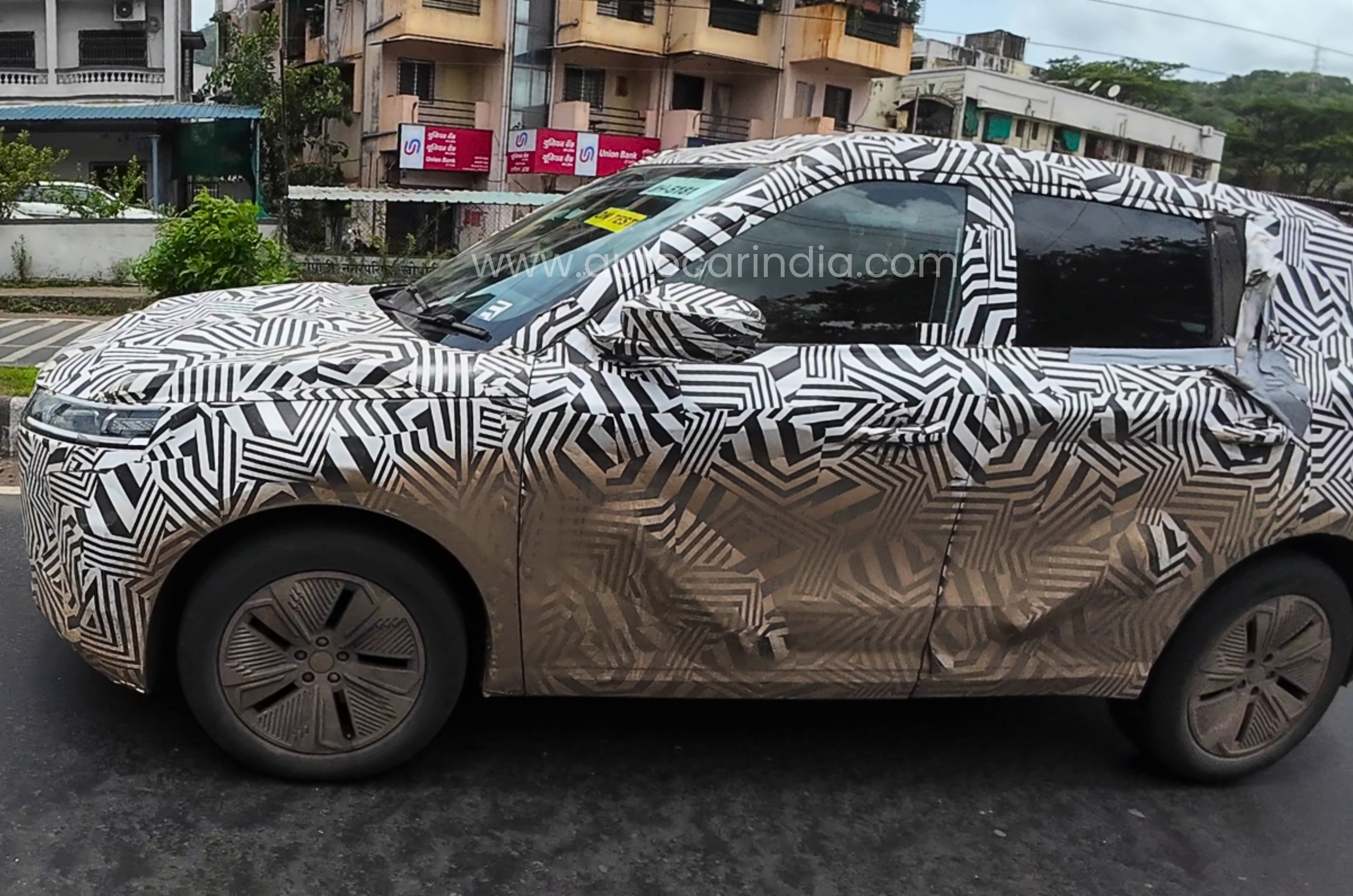
A functional grille with vertical slats confirms it is the ICE version of the Jaecoo J5
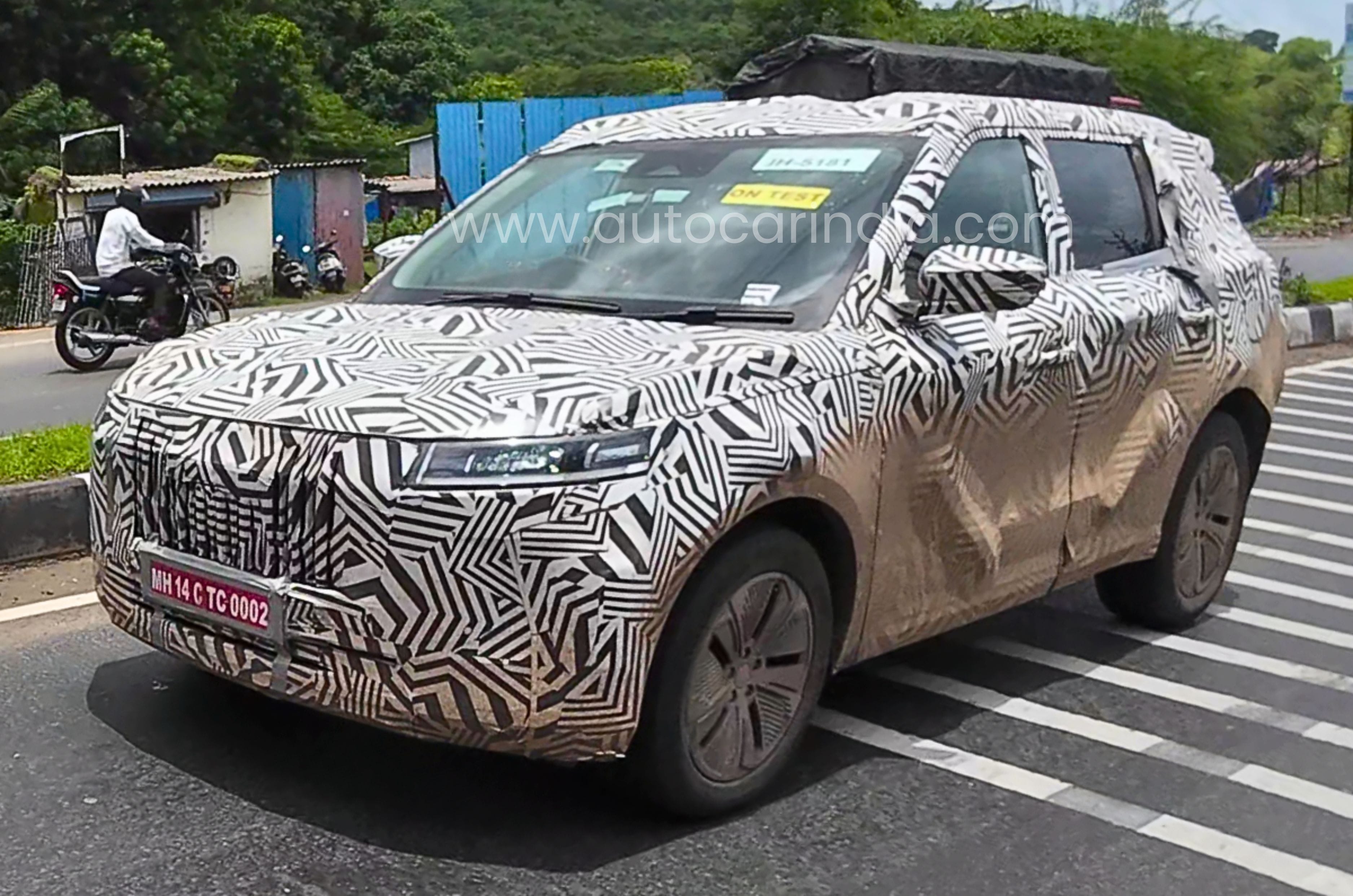
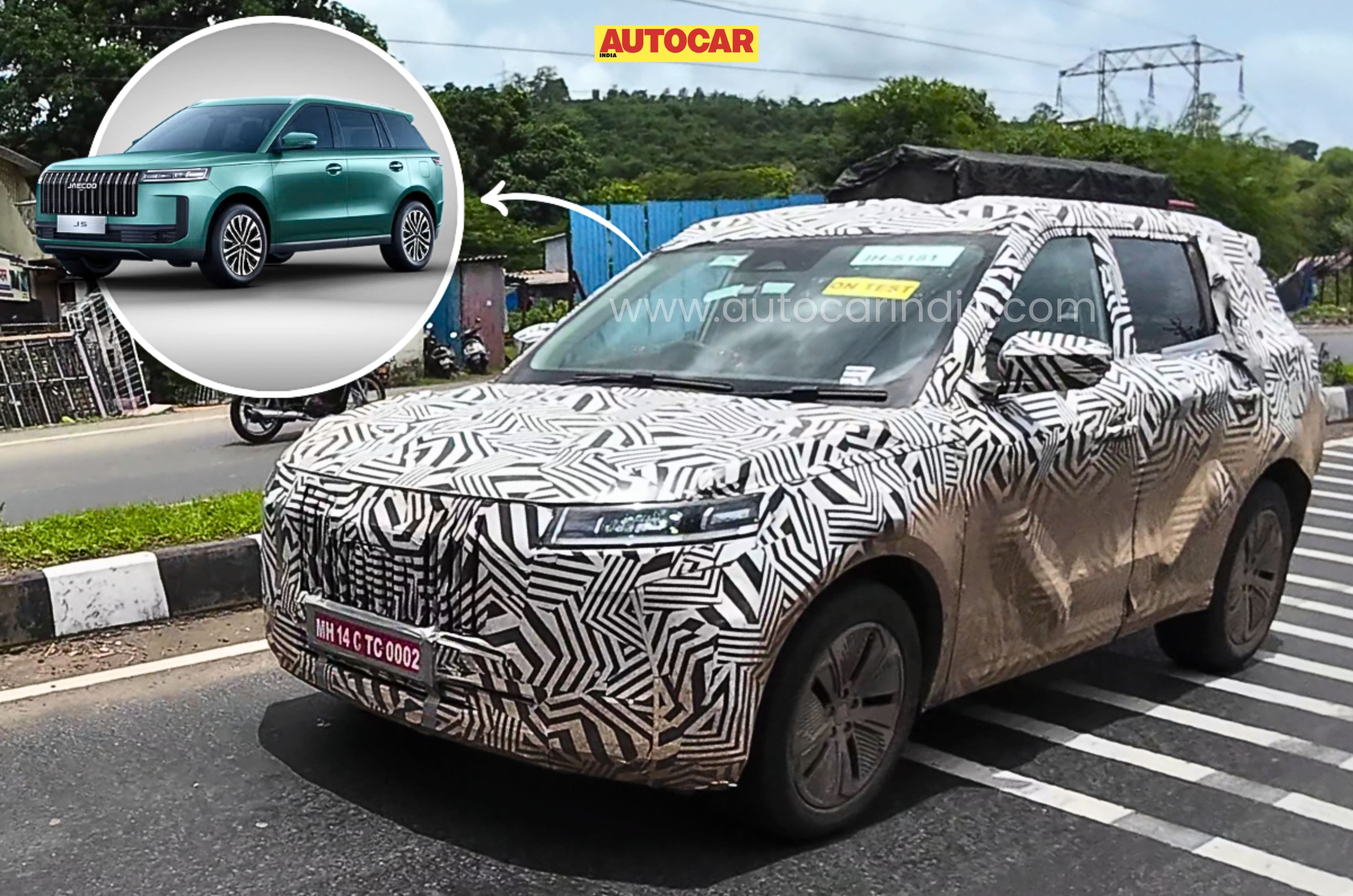
Although the Jaecoo J5-based SUV’s test mule is heavily camouflaged, a few design elements are visible. Among these is a functional grille with vertical slats, confirming it is the ICE version, as the EV features a blanked-off grille. The sleek LED headlights with LED DRL surrounds, however, are the same as those on the EV version. The bumper has a clean design, but it seems to miss out on the fog lamps offered with the international model.

In profile, the international-spec model gets 18-inch wheels. At the rear, slim wraparound LED taillights can be spotted. On the international model, these taillights are joined by a black trim with ‘Jaecoo’ badging in the centre.

The interior design mimics that of the all-electric model
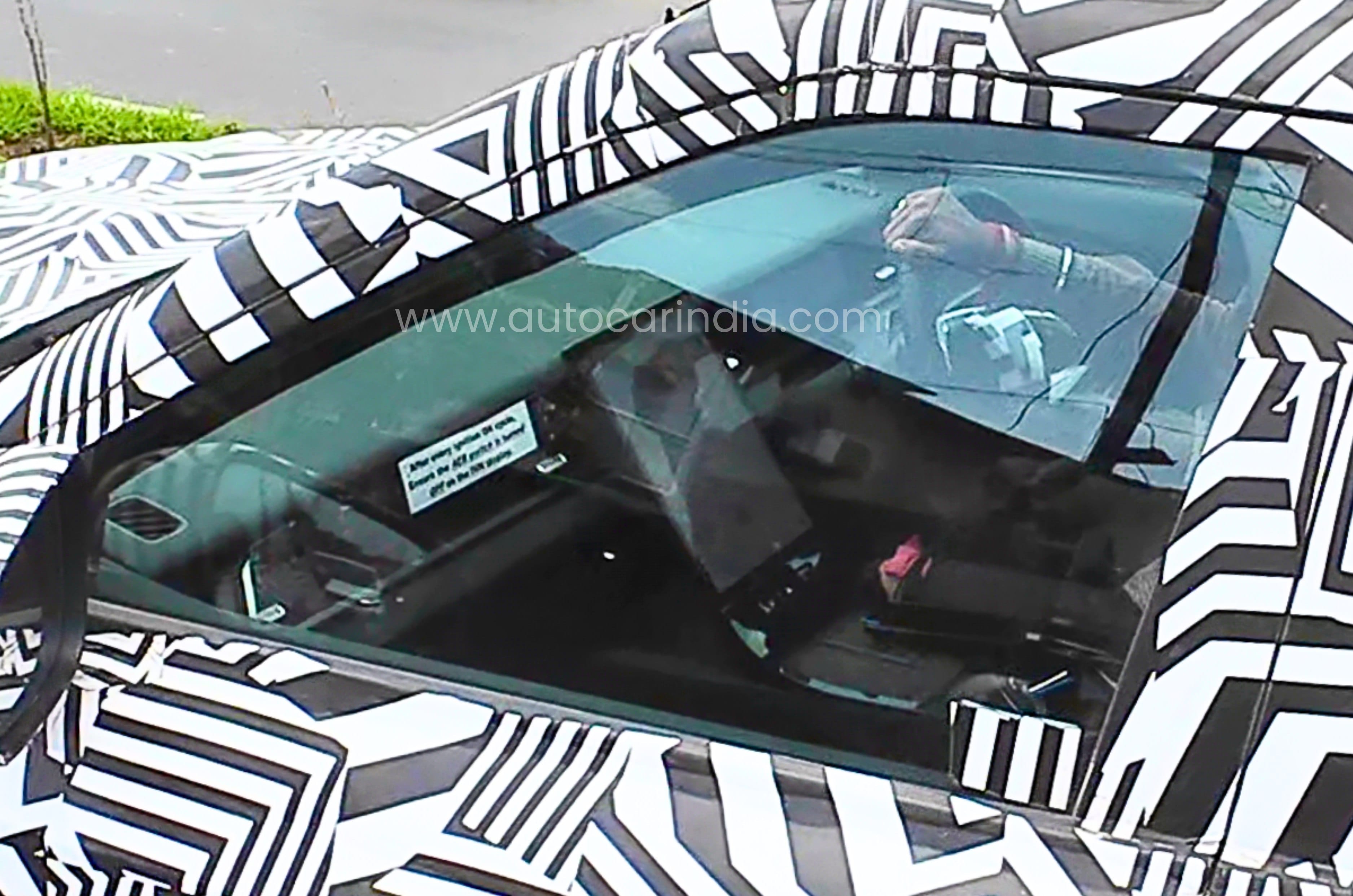
The spy shots also reveal a large vertically oriented infotainment system on the dashboard, likely the same as the international model’s 13.2-inch unit. The international model also gets an 8.8-inch driver’s display, a panoramic sunroof, an 8-speaker Sony sound system, dual-zone climate control, a powered tailgate and a wireless phone charger. It will be interesting to see what features are offered with the India-spec model sold by JSW Motors.
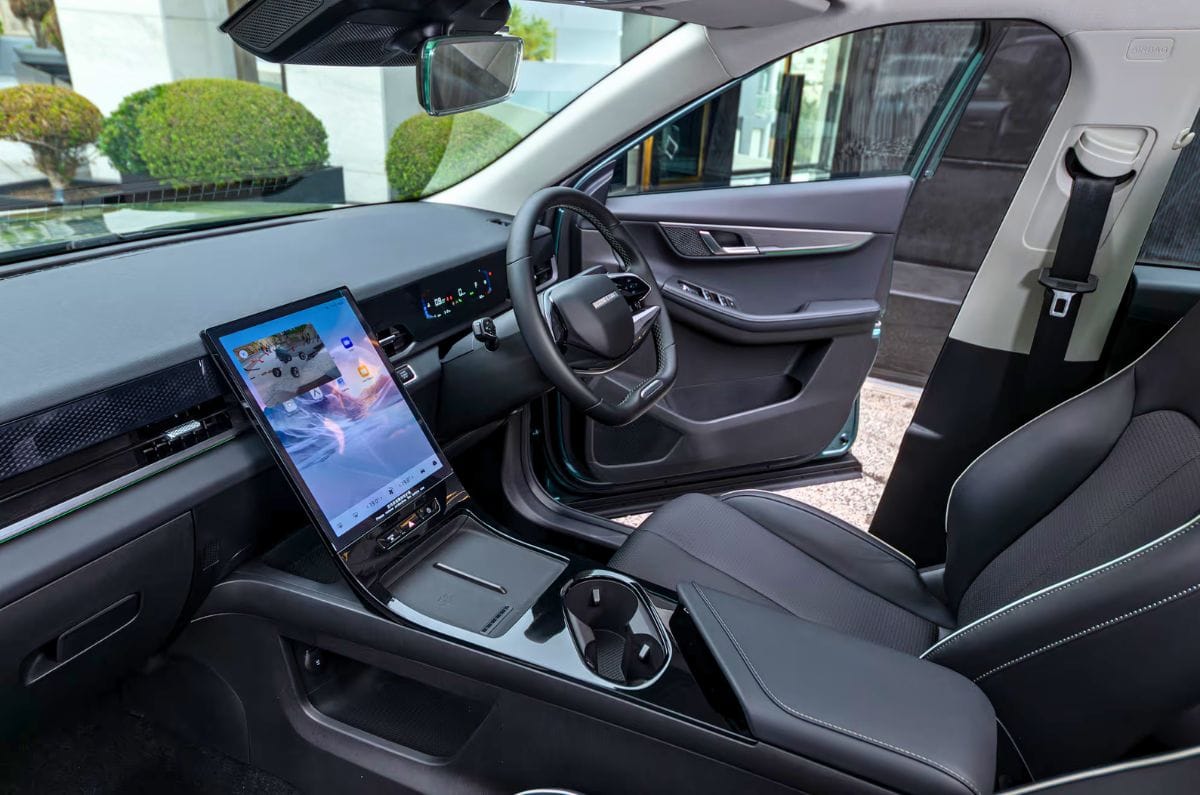
South Africa-spec Jaecoo J5 dashboard shown for representational purposes only.

In terms of safety, the international model gets 7 airbags, a 540-degree camera (surround-view camera with an under-bonnet view function), a tyre pressure monitoring system (TPMS) and an advanced driver assistance system (ADAS) suite. 

Jaecoo J5-based ICE SUV: Expected powertrain

Offered with a turbo-petrol and a strong hybrid petrol engine internationally

Depending on the market, the ICE-powered Jaecoo J5 gets either a turbo-petrol or a strong-hybrid engine option. The 1.5-litre turbo-petrol produces up to 156hp and 275Nm, and is mated to either a 7-speed DCT or a CVT, depending on the market. It allows for a 0-100kph sprint time of 10.2 seconds 
A strong-hybrid version has a 1.5-litre 4-cylinder turbo-petrol engine and an electric motor powered by a 1.83 kWh lithium-ion battery. Combined, this setup produces 224hp and 295Nm. It does a 0-100kph sprint in 7.9 seconds. Jaecoo claims a fuel efficiency of 18.9kpl, allowing a total range of around 1,000km. It will be interesting to see which powertrain option is offered with the India-spec model.

India launch timeline is yet to be revealed
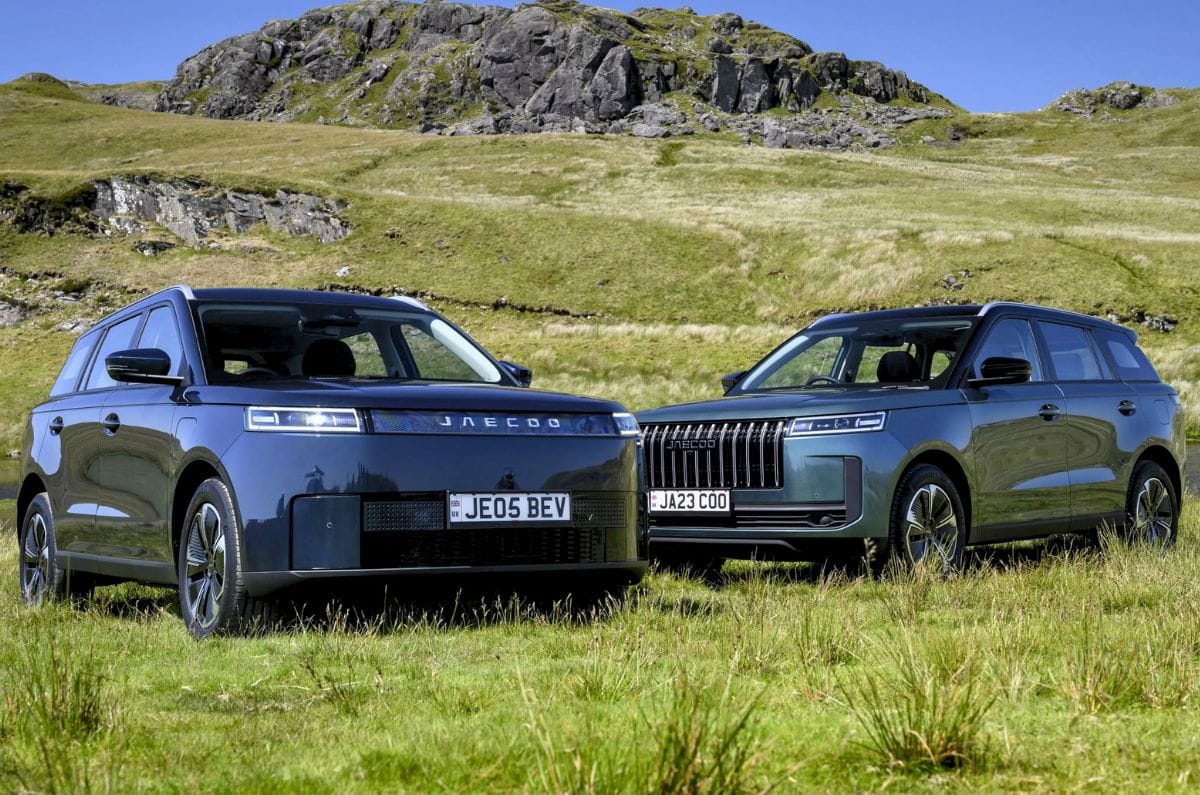
UK-spec Jaecoo J5’s EV (left) and ICE (right) versions shown for representational purposes only.

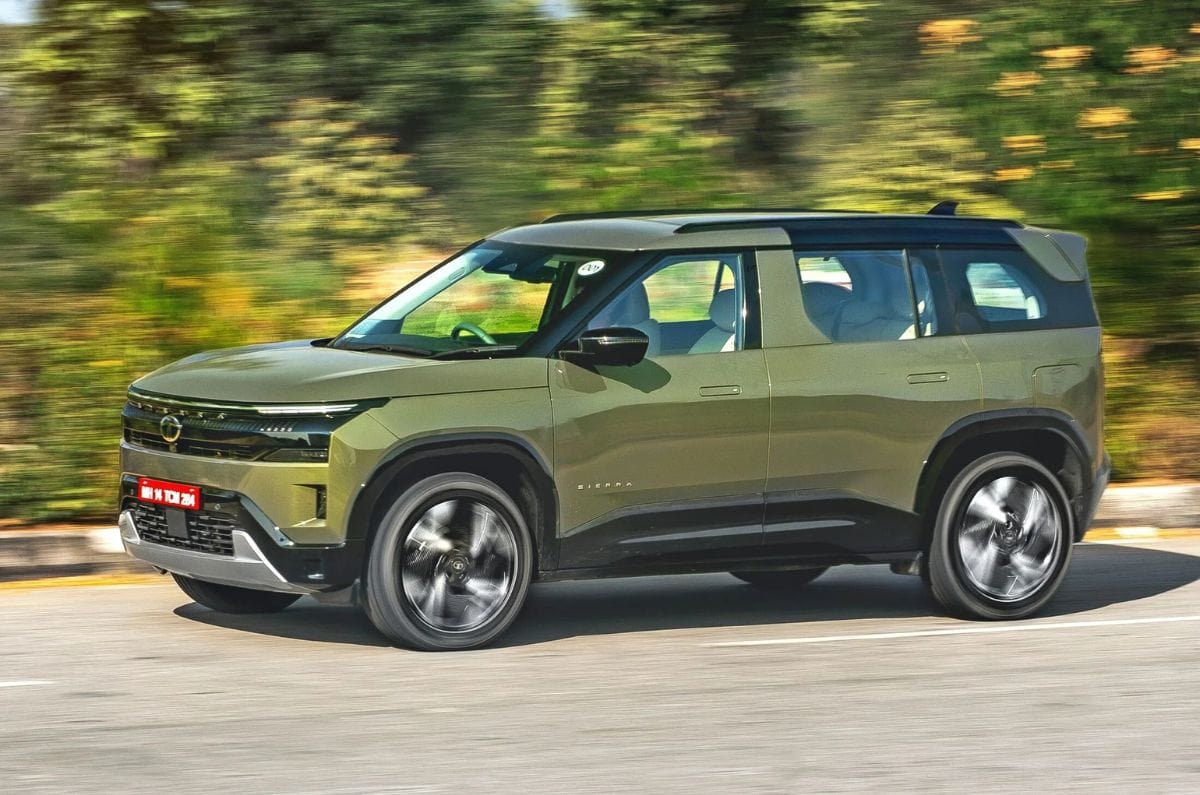
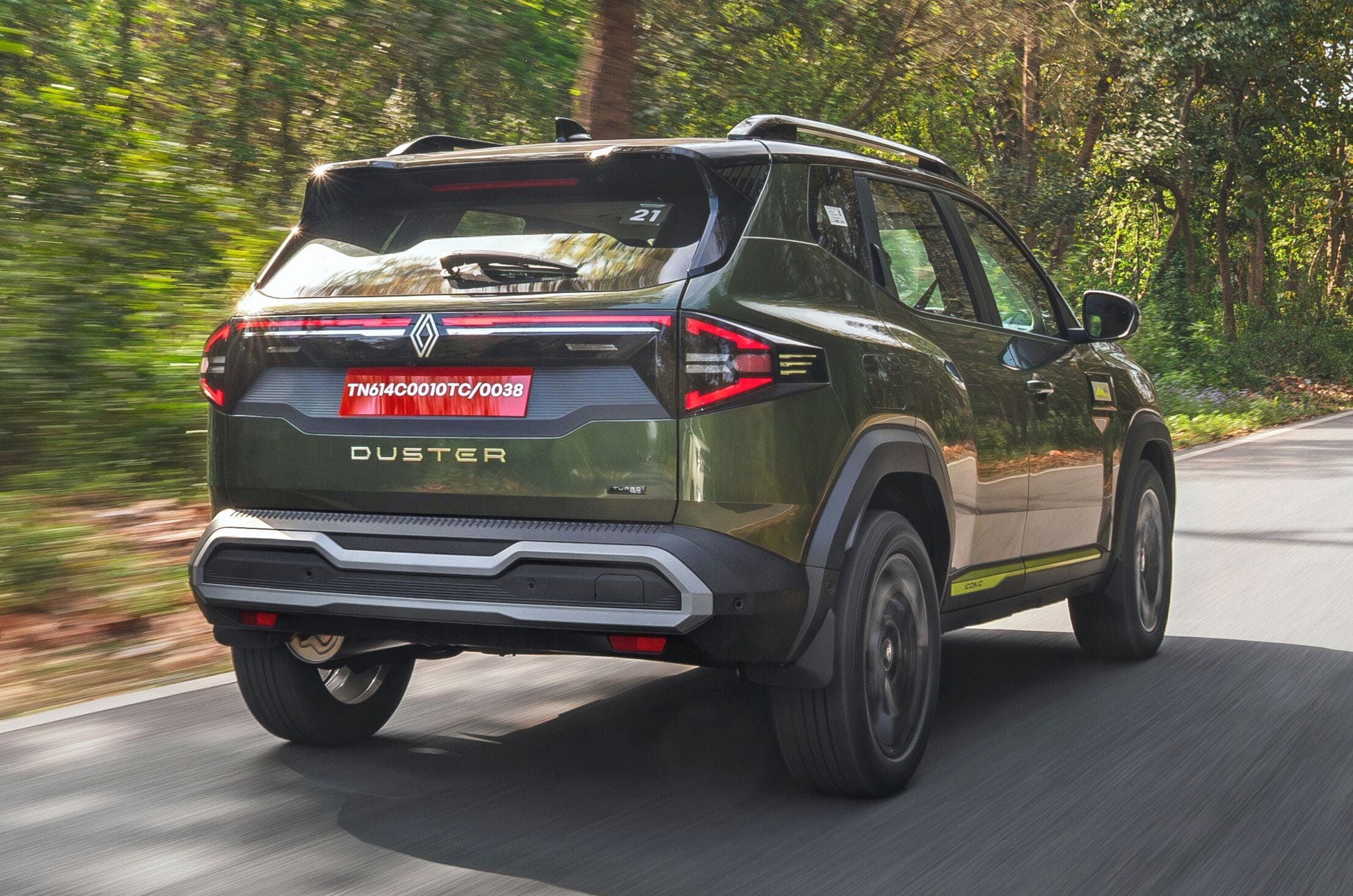
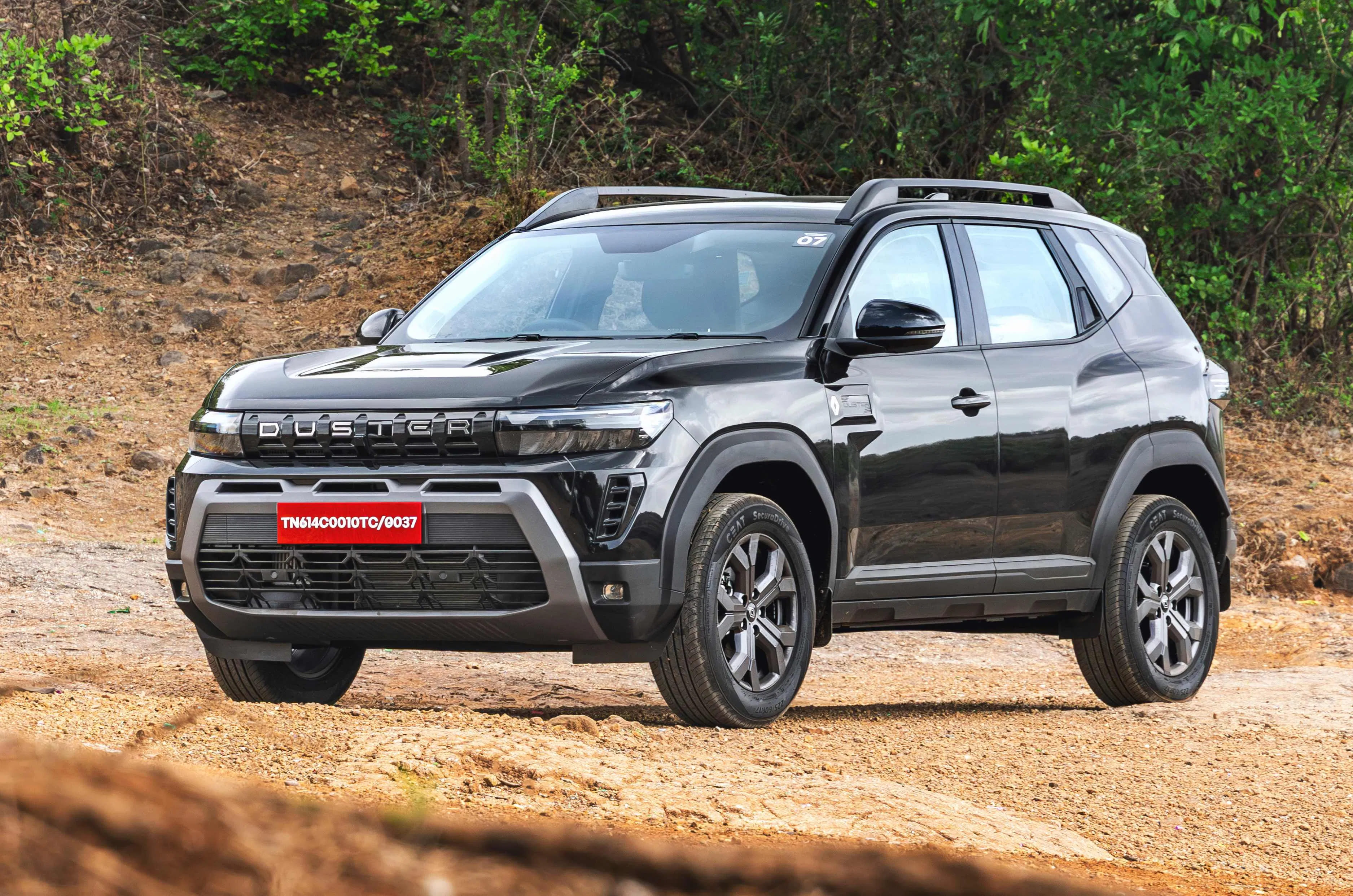
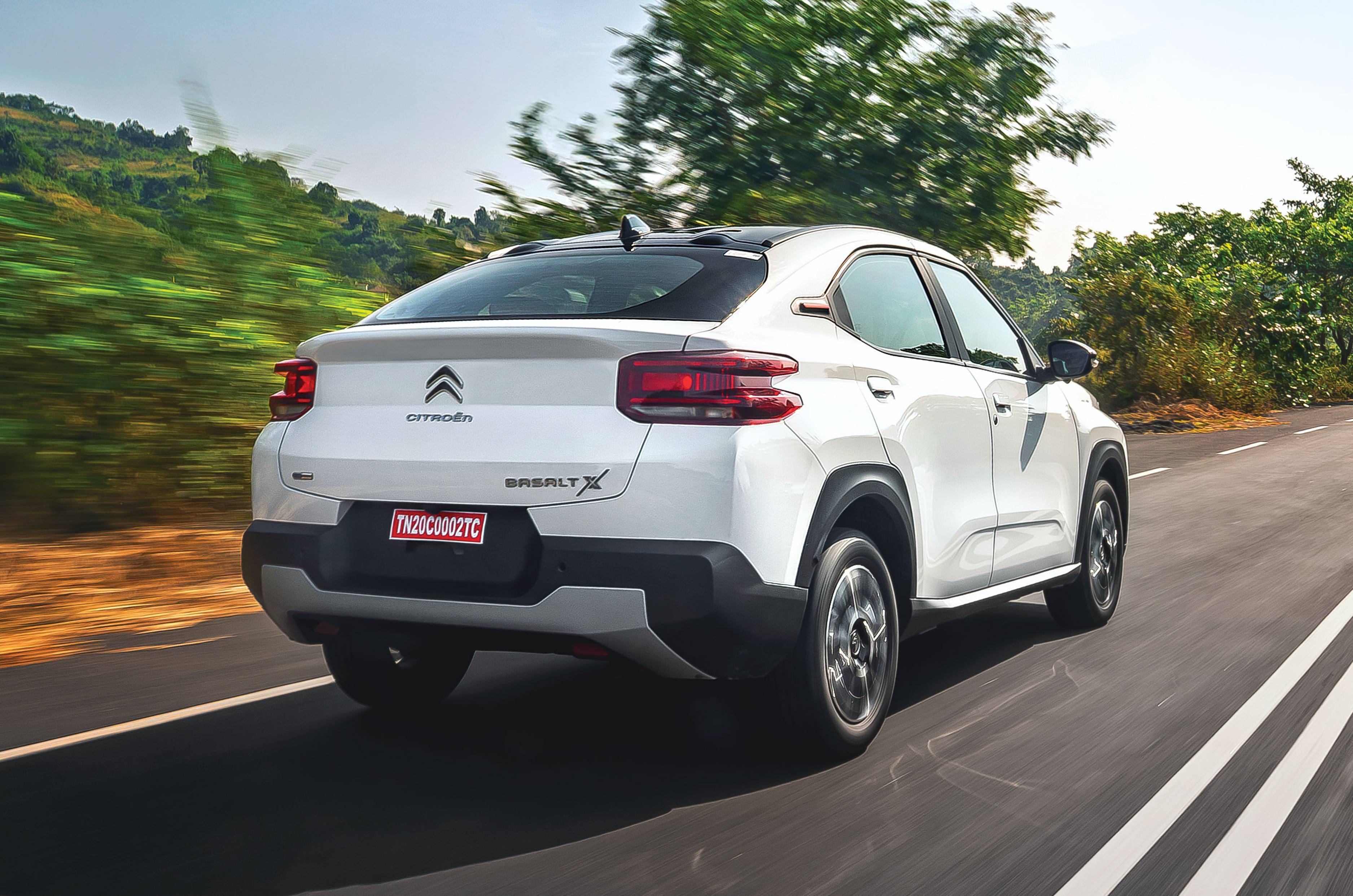
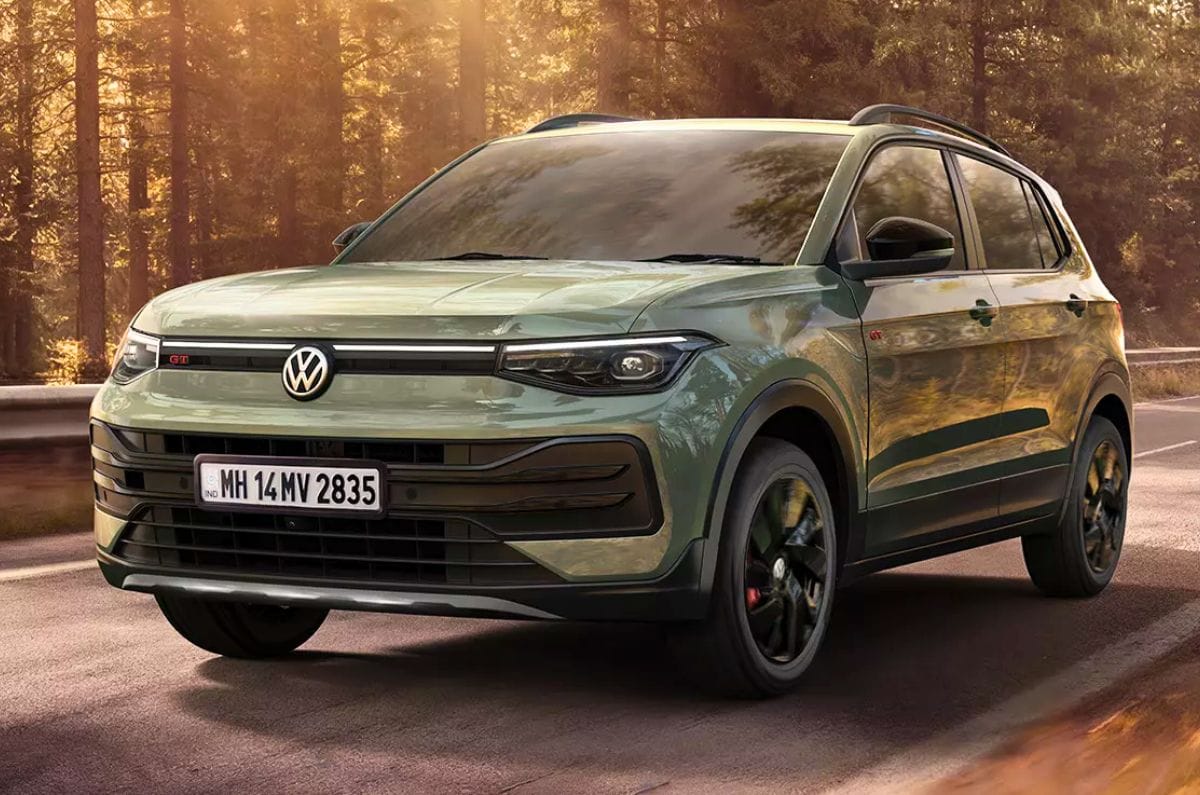
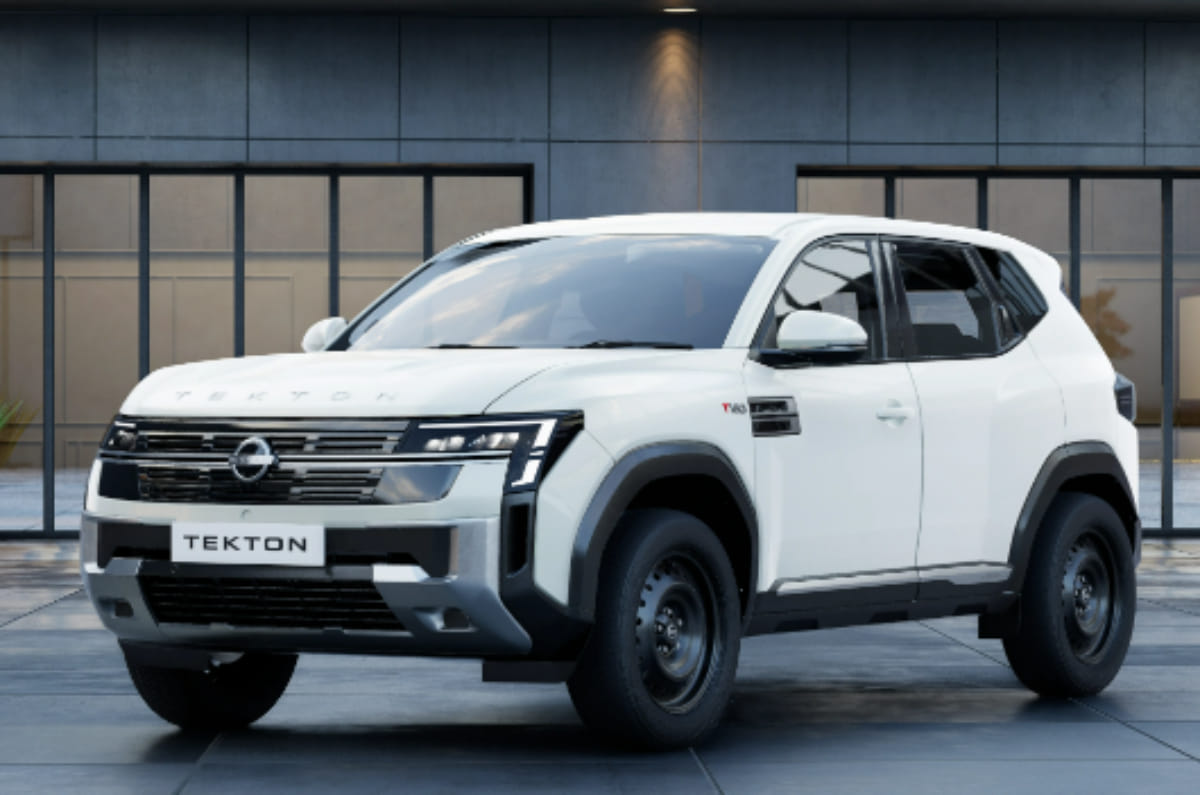
JSW Motors is expected to start its India operations with the Diwali launch of the Jetour T2-derived hybrid SUV, followed by launches of the SUVs derived from the Jaecoo J5 and iCaur V23. Upon launch, JSW Motors’ Jaecoo J5-based ICE SUV will lock horns with midsize SUVs such as the Hyundai Creta, Tata Sierra, Maruti Suzuki Victoris, Renault Duster and Nissan Tekton. The EV version will rival the Hyundai Creta Electric, Mahindra BE 6, Tata Sierra EV, Vinfast VF6 and Maruti Suzuki eVitara. 

Kia Carens Clavis EV gets benefits of up to Rs 1.8 lakh in July 2026

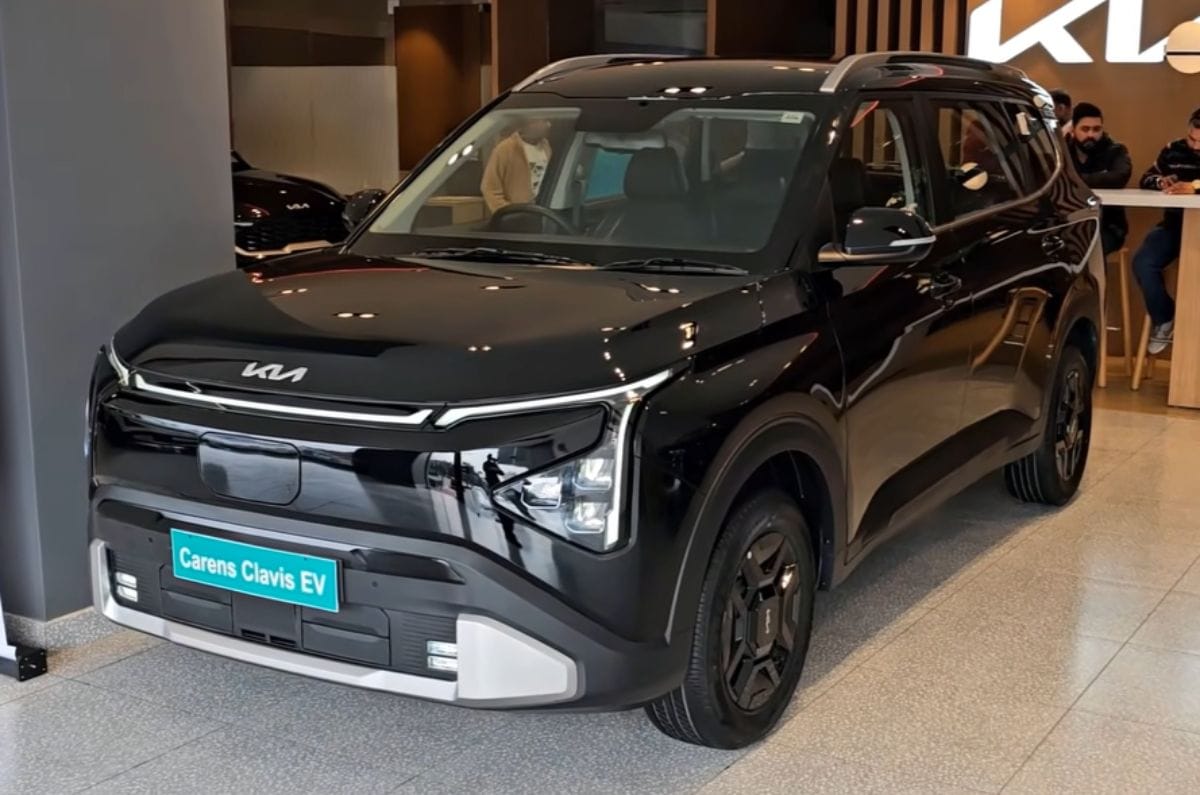
Kia Carens Clavis EV front quarter static

Kia India has rolled out appealing offers on a variety of models in its portfolio for the period of July 2026. Consumers can avail a range of benefits, including cash discounts, corporate offers, and either scrappage or exchange bonuses. Depending on the model and variant chosen, benefits of up to Rs 1.8 lakh can be had.

Disclaimer: Offers/benefits may vary by city and are subject to stock availability. Buyers are advised to check with their local dealer for exact figures.

Kia Carens Clavis EV offers in July 2026

Benefits of up to Rs 1.8 lakh

The Carens Clavis EV is available with benefits of up to Rs 1.8 lakh in July 2026. Benefits for MY26 models include a cash discount and loyalty benefit of Rs 20,000, a corporate discount of up to Rs 15,000, and either an exchange or scrappage bonus of Rs 20,000. MY25 versions of the Clavis EV get a cash discount of up to Rs 80,000, a loyalty offer of Rs 20,000, and either an exchange or scrappage bonus of up to Rs 75,000. With 42kWh and 51.4kWh battery packs on offer, and priced between Rs 18 lakh and Rs 25 lakh, it is currently the most affordable electric MPV in the market.

Kia Carnival offers in July 2026

Benefits of up to Rs 1.5 lakh 

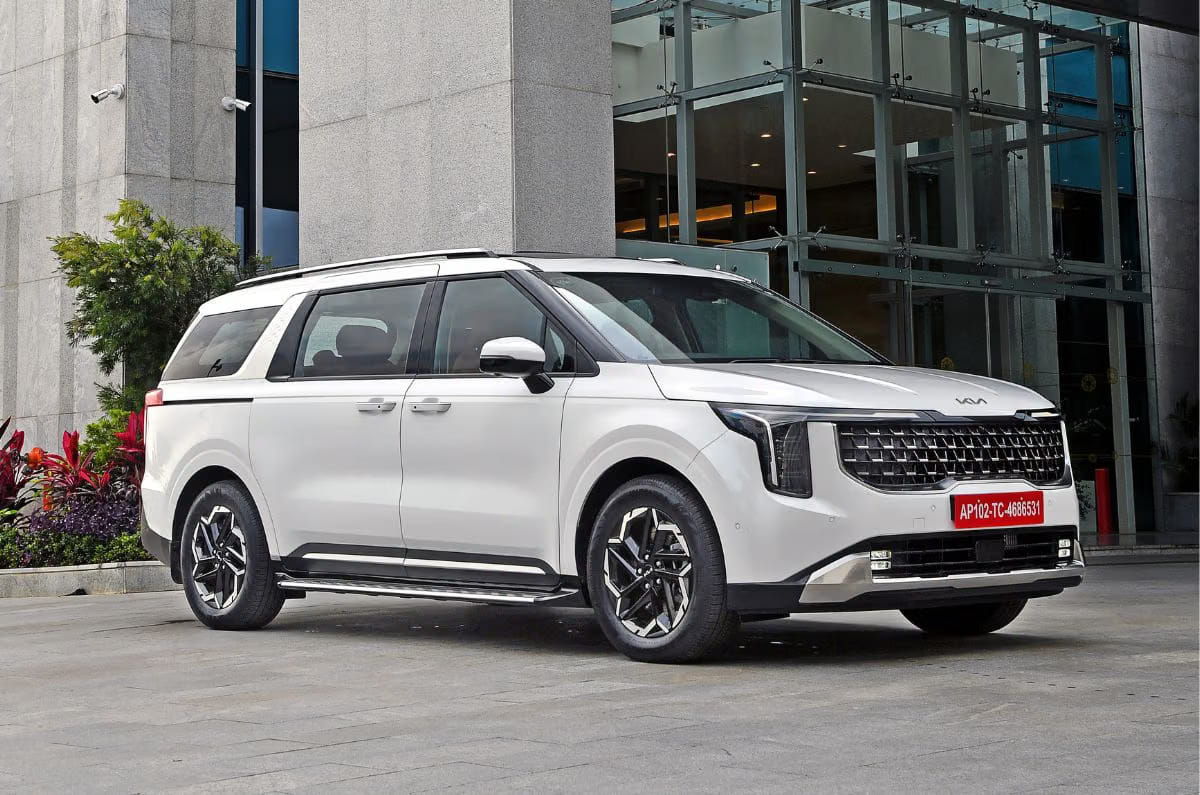
Kia’s most premium Carnival MPV receives benefits of up to Rs 1.5 lakh. For MY26 models, it includes either an exchange or scrappage bonus of up to Rs 1 lakh and a corporate offer of up to Rs 50,000. However, MY25 Carnivals only get a scrappage bonus of Rs 20,000. Powered by a diesel engine and sold in a single fully loaded variant, it is priced at Rs 59.7 lakh. It is a more affordable alternative to the likes of the MG M9 and Toyota Vellfire.

Kia Carens Clavis offers in July 2026

Benefits of up to Rs 1.2 lakh

The Carens Clavis MPV gets benefits of up to Rs 75,000. MY26 models get a cash discount of Rs 10,000, loyalty benefits of Rs 20,000, a corporate offer of up to Rs 15,000 and either an exchange or scrappage bonus of up to Rs 30,000. However, MY25 versions get up to Rs 70,000 cash discount, similar loyalty and exchange/scrappage benefits as MY26 versions, but miss out on corporate offers. Available in petrol, turbo-petrol and diesel engines, the Carens Clavis is priced between Rs 11.27 lakh and Rs 21.67 lakh and rivals the Maruti XL6. 

Kia Syros offers in July 2026

Benefits of up to Rs 50,000

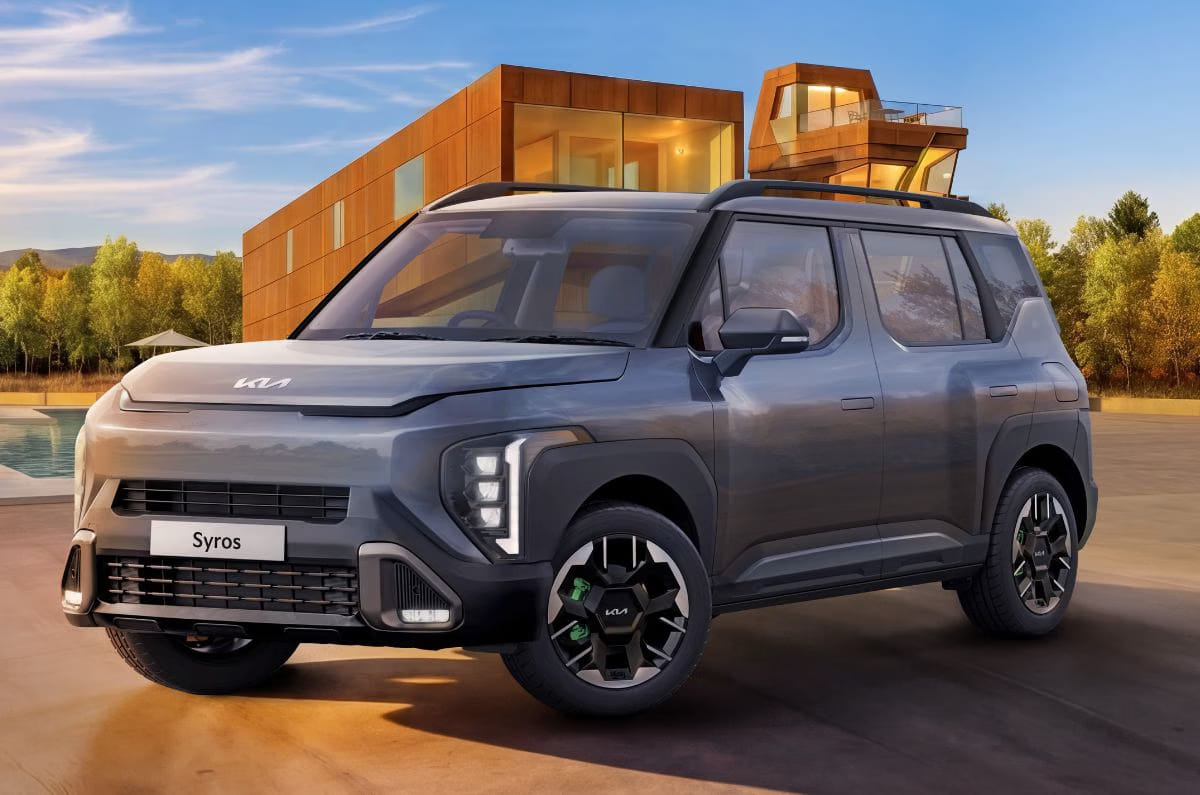
The Syros compact SUV is available with benefits of up to Rs 25,000.  MY 26 versions get a cash discount of up to Rs 10,000, a corporate offer of up to Rs 15,000 and either an exchange or scrappage bonus of Rs 20,000. Meanwhile, the MY25 Syros gets either an exchange or scrappage offer of up to Rs 50,000. Priced from Rs 8.42 lakh to Rs 15.82 lakh, it is offered with either a turbo-petrol or diesel engine.

Kia Sonet offers in July 2026

Benefits of up to Rs 45,000

Kia’s most affordable model, the Sonet, is available with benefits up to Rs 45,000. For MY26 models, there’s a cash discount of up to Rs 10,000, a corporate offer of up to Rs 15,000, and either an exchange or scrappage offer of up to Rs 20,000. MY25 versions don’t get much benefit except for a scrappage bonus of Rs 15,000. The Sonet is offered with a choice of petrol, turbo-petrol and diesel engines. Priced from Rs 7.41 lakh to Rs 14.37 lakh, it takes on the likes of the Hyundai Venue, Tata Nexon, Skoda Kylaq and Mahindra XUV 3XO. 

Kia Seltos offers in July 2026

Benefits of up to Rs 40,000

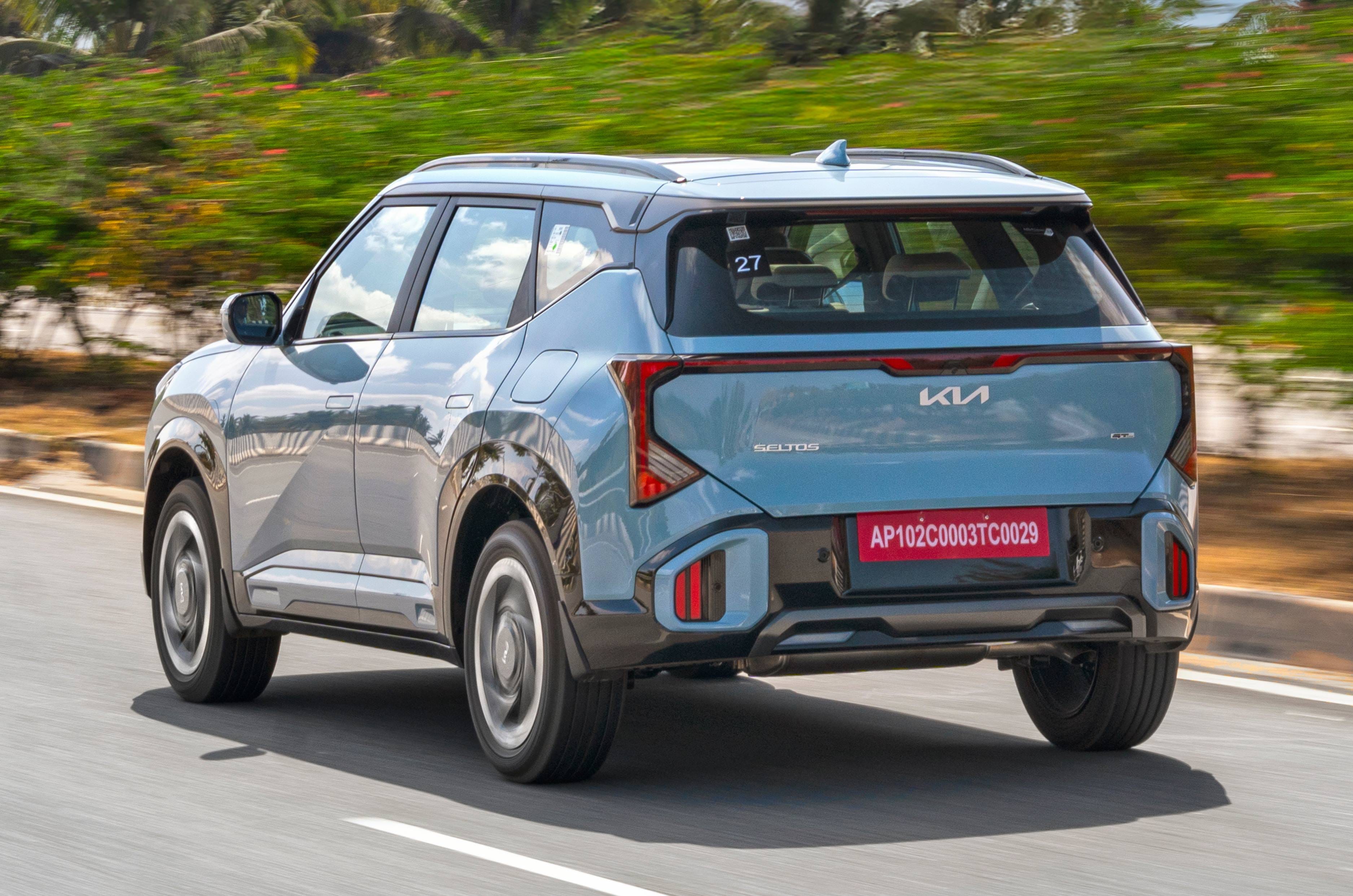
The Seltos mid-size SUV gets benefits of up to Rs 40,000. While the latest 2nd-gen version gets a scrappage and loyalty benefit of Rs 20,000 each. Offered with petrol, turbo-petrol and diesel engines, the Seltos is priced from Rs 10.99 lakh and goes all the way up to Rs 20 lakh. It is Kia’s answer to the mid-size SUV space, which consists of the Hyundai Creta, Tata Sierra, Renault Duster, Nissan Tekton, Maruti Victoris and Grand Vitara, Toyota Hyryder, Skoda Kushaq and Volkswagen Taigun. 

Kia Carens offers in July 2026

Benefits of up to Rs 35,000

The Carens MPV gets the least benefits out of any Kia model here. MY26 models get a corporate offer of up to Rs 15,000 and either an exchange or scrappage bonus of up to Rs 20,000. But MY25 versions of the Carens only get a scrappage bonus of Rs 20,000.  It is available in only one trim, powered by either a petrol or diesel engine, with a price range of Rs 11.02 lakh to Rs 12.88 lakh. Additionally, it’s the only Kia car to offer a dealer-level fit CNG kit with the petrol engine. The Carens is Kia’s alternative to the Maruti Ertiga and Toyota Rumion.

Nissan Tekton vs Skoda Kushaq: Whose top trim offers more value?

Nissan Tekton vs Skoda Kushaq: Whose top trim offers more value?

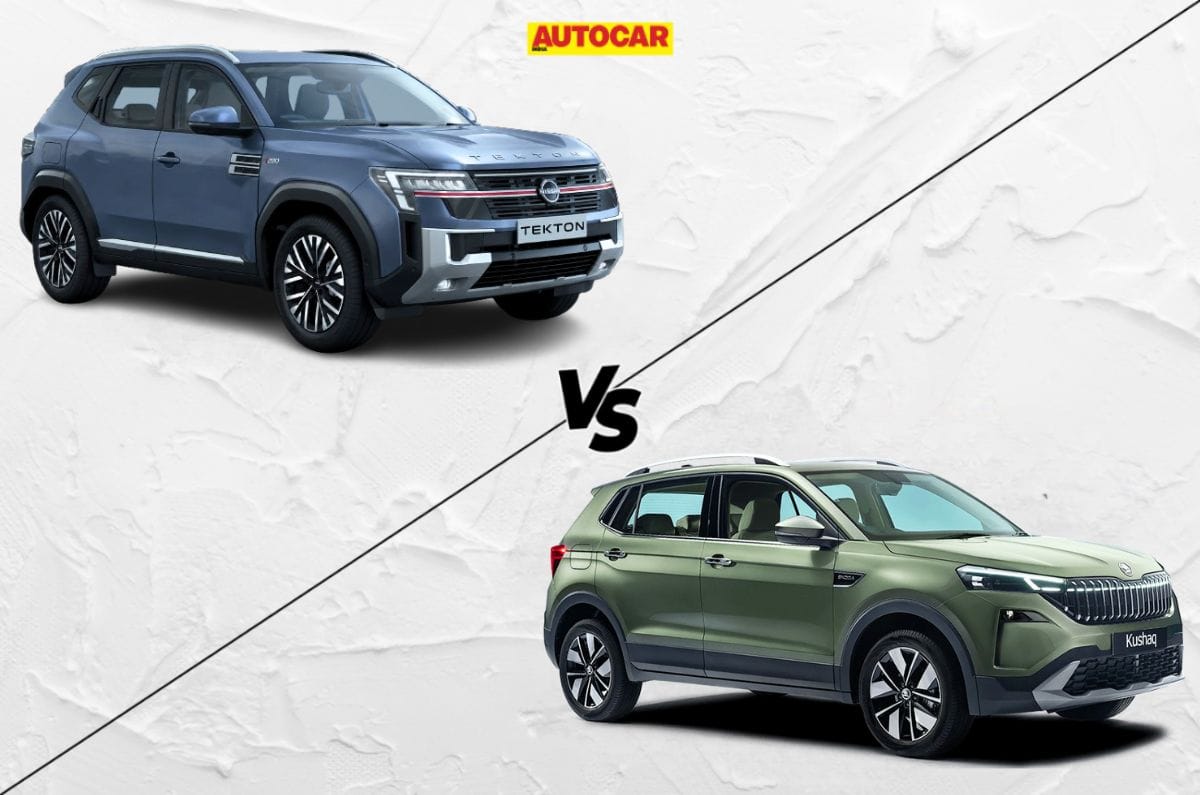
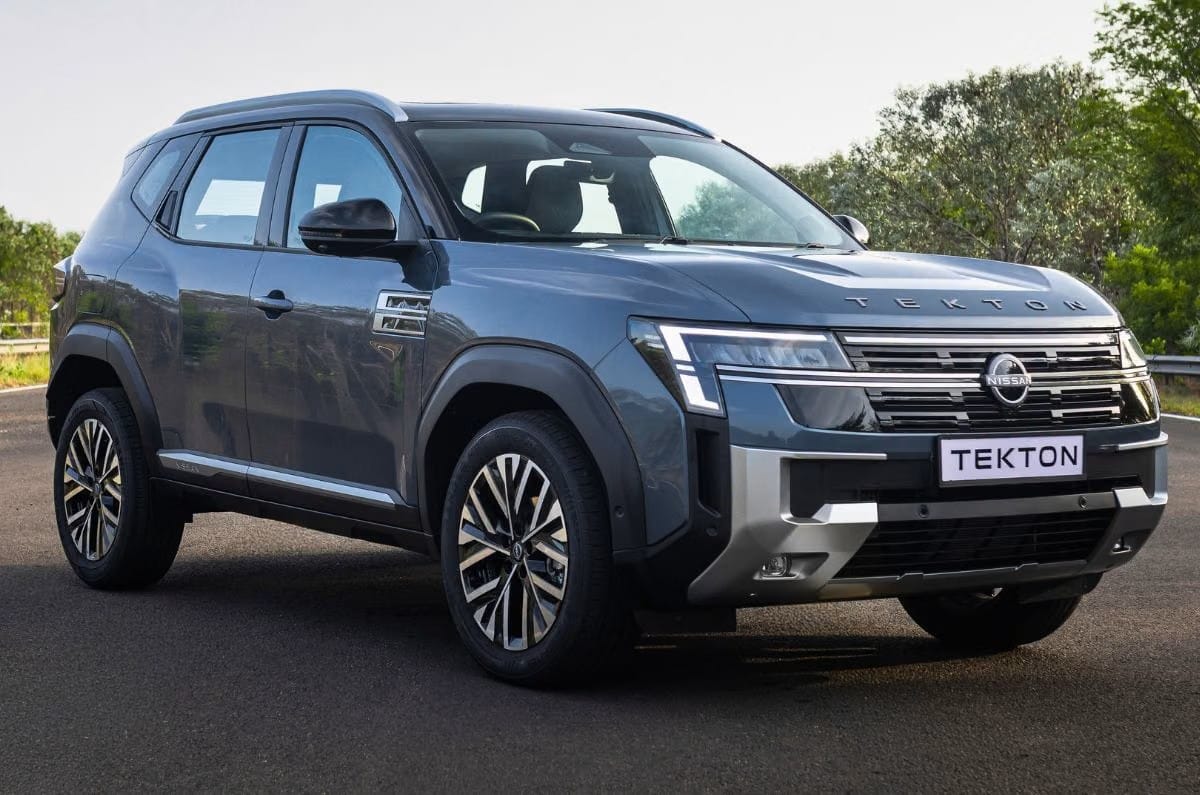
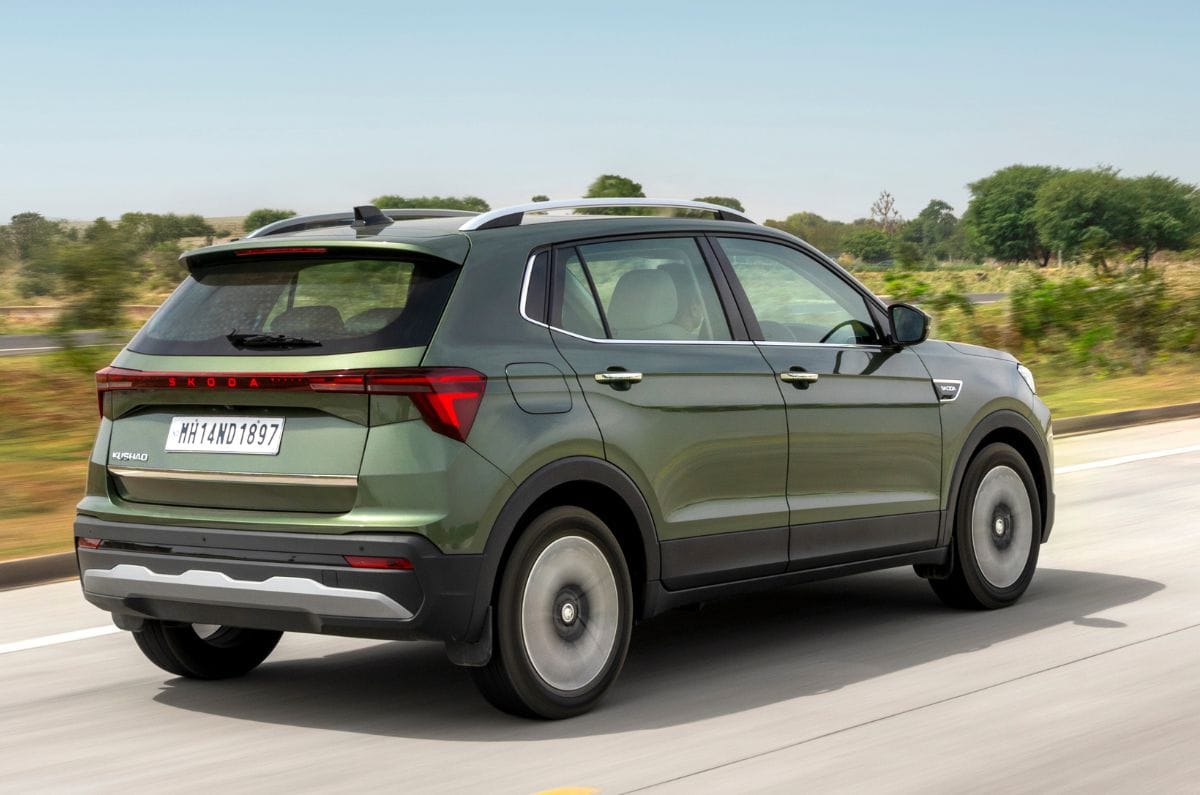
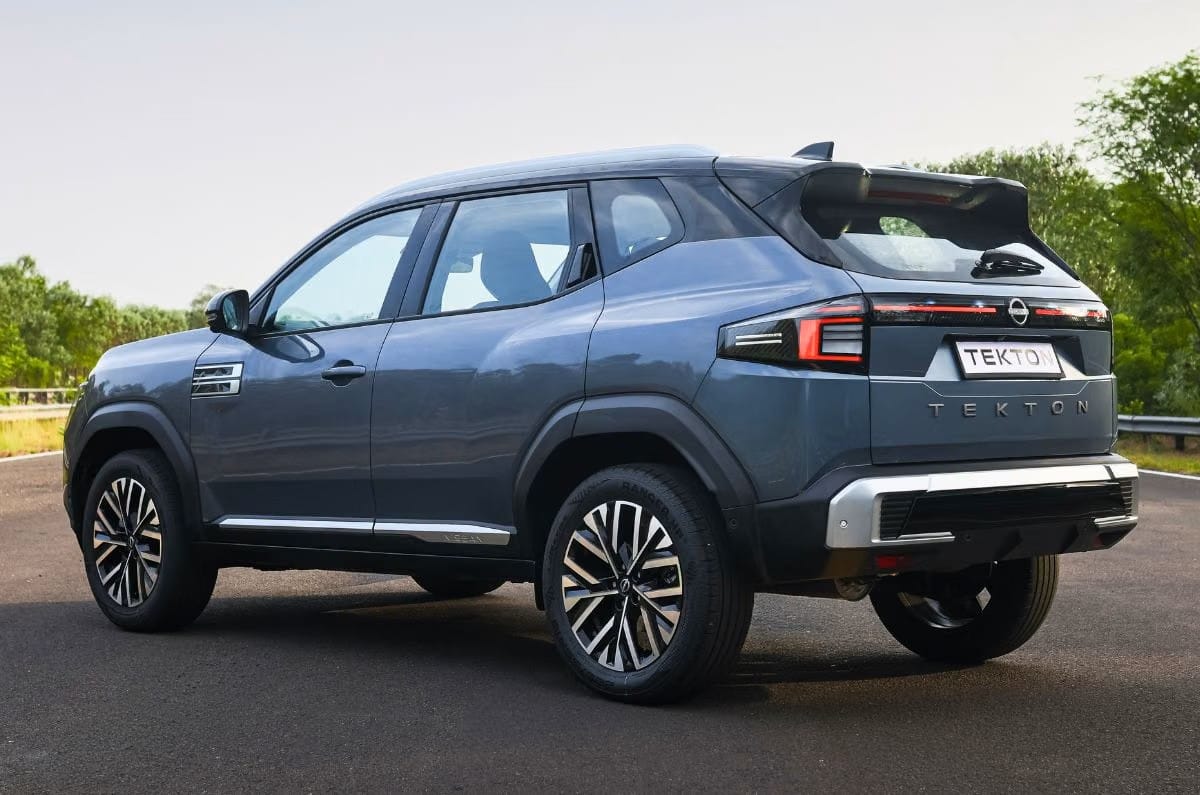
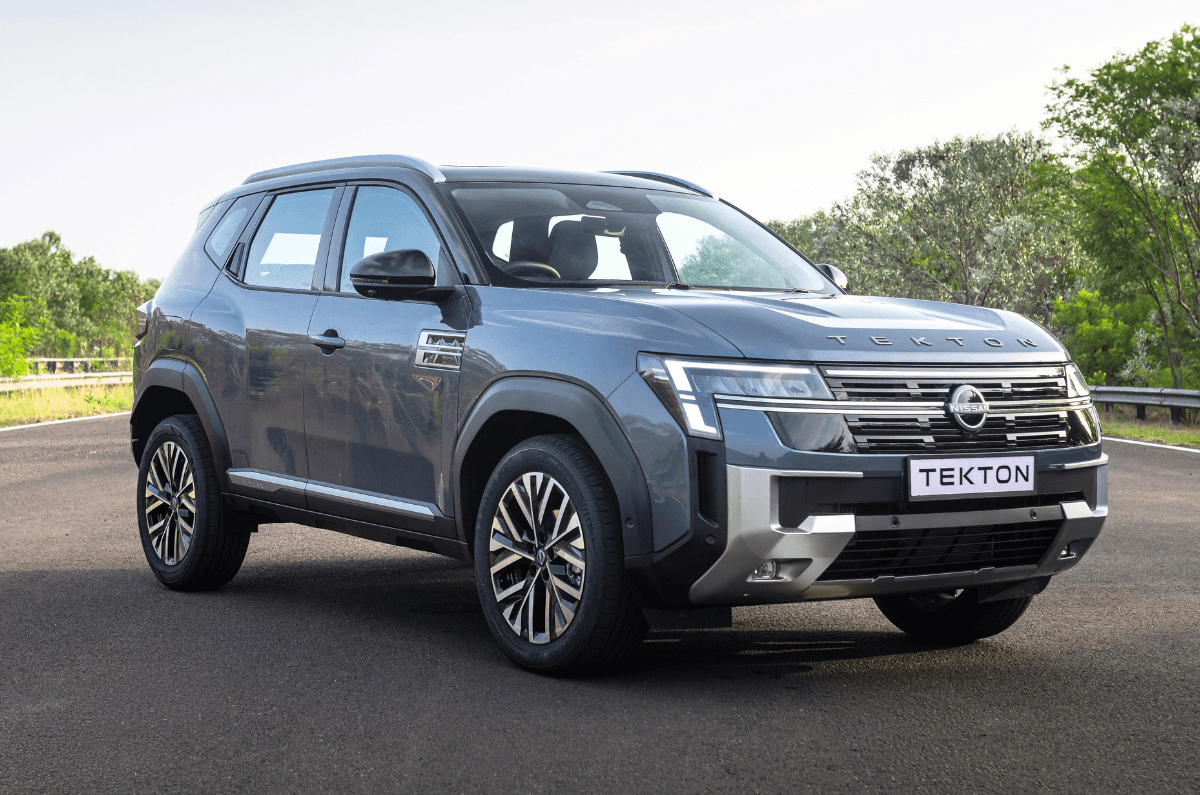
Nissan recently launched the Tekton midsize SUV in India. It is being offered in six trims: Visia, Visia+, Acenta, N-Connecta, Tekna, and Tekna+, with prices ranging from Rs 10.49 lakh to Rs 18.59 lakh (ex-showroom). The Skoda Kushaq is also offered at a similar top-end price. So, which top-spec model should you choose between the Tekton Tekna+ and Kushaq Prestige? Let us find out.

Nissan Tekton vs Skoda Kushaq: Dimensions

The Tekton is much larger than the Kushaq and offers a bigger boot

Nissan Tekton vs  Duster: Dimensions and other specifications 


Nissan Tekton

Skoda Kushaq

Difference

Length (mm)

4,349

4,229

+120

Width (mm)

1,815

1,760

+55

Height (mm)

1,674

1,612

+62

Wheelbase (mm)

2,657

2,651

+6

Ground clearance (mm)

212

188

+24

Boot space (litres)

518

385

+133

Although the Tekton and Kushaq have a similar wheelbase, the Tekton has larger proportions than the Kushaq and offers a bigger boot. The Tekton also has a 24mm higher ground clearance than the Kushaq.

Nissan Tekton Tekna+ vs Skoda Kushaq Prestige: Powertrain

Both top-spec trims are offered with two turbo-petrol engine options

Nissan Tekton Tekna+ vs  Kushaq Prestige: Powertrain


Tekton Tekna+

Kushaq Prestige

Engine*

1.0L TP | 1.3L TP

1.0L TP | 1.5L TP

Power

100hp | 163hp

115hp | 150hp

Torque

160Nm | 280Nm

178Nm | 250Nm

Transmission

6MT | 6DCT

6MT, 8AT | 7DCT

Drivetrain^

FWD

FWD

*TP = Turbo-petrol

^FWD = Front-wheel-drive

Both the Nissan Tekton and the Skoda Kushaq offer two turbo-petrol engines with their respective top trims. Comparing the smaller engines, the Kushaq produces 15hp and 18Nm more than the Tekton, while also offering an automatic transmission option.

The Tekton’s 1.3-litre engine is, however, 13hp and 30Nm more potent than the Kushaq’s larger-capacity 1.5-litre engine. Both manufacturers, however, offer their top-spec trims with such an engine with a DCT only.

Nissan Tekton Tekna+ vs Skoda Kushaq Prestige: Exterior

The Tekton gets larger rims, and everything else is the same as the Kushaq

Nissan Tekton Tekna+ vs  Kushaq Prestige: Exterior


Tekton Tekna+

Kushaq Prestige

Headlights

Auto LED

Auto LED

Taillights

Connected LED

Connected LED

DRLs

Connected LED

Segmented LED 

Front fog lamps

LED

LED

Rear fog lamps

LED

LED

Puddle lamps

Yes

Yes

Wheels

18-inch

17-inch

Powered ORVMs

Yes

Yes

Roof rails

Yes

Yes

Colour

Mono, Dual tones

Mono, Dual tones

While both top-spec models get all-LED lighting, puddle lamps, powered outside rearview mirrors (ORVMs) and roof rails, the Tekton Tekna+ goes a step further with larger 18-inch alloy wheels compared to the 17-inch units on the Kushaq Prestige. 

Nissan Tekton Tekna+ vs Skoda Kushaq Prestige: Interior

The Tekton gets a powered tailgate, but Kushaq offers massage rear seats

Nissan Tekton Tekna+ vs  Kushaq Prestige: Interior and features


Tekton Tekna+

Kushaq Prestige

Driver’s display

10.25-inch

10.25-inch

Infotainment screen

10.1-inch

10.1-inch

Android Auto, Apple CarPlay

Wireless

Wireless

Audio system

6-speaker Akamys

7-speaker*

Sunroof

Panoramic

Panoramic

Climate control

Dual-zone

Automatic

Rear AC vents

Yes

Yes

Front seat adjustment

6-way powered

6-way powered

Front seat features

Ventilation

Ventilation

Rear seat features

None

Massage

Powered tailgate

Yes

No

Seat upholstery

Leatherette

Leatherette

Steering wheel adjustment

Tilt, telescopic

Tilt, telescopic

Wireless phone charger

Yes

Yes

Cruise control

Adaptive

Adaptive

*Kushaq’s sound system comprises 6 speakers, an amplifier and a subwoofer

The Kushaq is the only car in the midsize SUV segment to offer a massage function on the rear seats. Over the Tekton, it also offers more speakers. On the other hand, the Tekton Tekna+ is equipped with a powered tailgate and dual-zone AC, which are missing from the Kushaq Prestige. Everything else is the same, including the 10.25-inch driver’s display, 10.1-inch infotainment system, a panoramic sunroof, powered and ventilated front seats and a wireless phone charger. 

Nissan Tekton Tekna+ vs Skoda Kushaq Prestige: Safety

The Tekton offers an ADAS suite, which is missing on the Kushaq

Nissan Tekton Tekna+ vs  Kushaq Prestige: Safety features


Tekton Tekna+

Kushaq Prestige

Airbags

6

6

ADAS

Level 2

No

Camera setup

360-degree

360-degree

Parking sensors

Front and rear

Front and rear

Electronic parking brake

DCT variant only

DCT variant only

TPMS

Yes

Yes

IRVM

Auto-dimming

Auto-dimming

Rear wiper, washer

Yes

Yes

Rear defogger

Yes

Yes

Hill start assist

Yes

Yes

Hill descent control

DCT only

No

ESC

Yes

Yes

Traction control

Yes

Yes

Both top-spec variants of the Tekton and Kushaq offer similar features like 6 airbags, a 360-degree camera, front and rear parking sensors, an auto-dimming inside rearview mirror (IRVM), a rear wiper and washer. However, the Tekton offers a Level-2 advanced driver assistance system (ADAS) suite and hill descent control, both of which are missing on the Kushaq.

Nissan Tekton Tekna+ vs Skoda Kushaq Prestige: Price, verdict

Top-spec trims of both SUVs come at a similar price 

Nissan Tekton Tekna+ vs Kushaq Prestige: Ex-showroom prices (Rs, lakh)


Tekton Tekna+

Kushaq Prestige

Price range

16.49-18.59

16.79-18.79

The starting price of the Nissan Tekton’s Tekna+ trim is Rs 30,000 less than that of the Kushaq Prestige. The top-end price of the Tekton is also Rs 20,000 less than that of the Kushaq. At this lower price point, the Tekton offers a powered tailgate, Level-2 ADAS, dual-zone AC and larger alloy wheels. It is also larger than the Kushaq and offers a larger boot, making it the better top-spec Tekton variant than the Kushaq Prestige. 

Prices are ex-showroom, India.

All turbo-petrol midsize SUVs ranked as per ARAI mileage

Kia Seltos, Skoda Kushaq, Renault Duster, Hyundai Creta N-Line front quarter panning

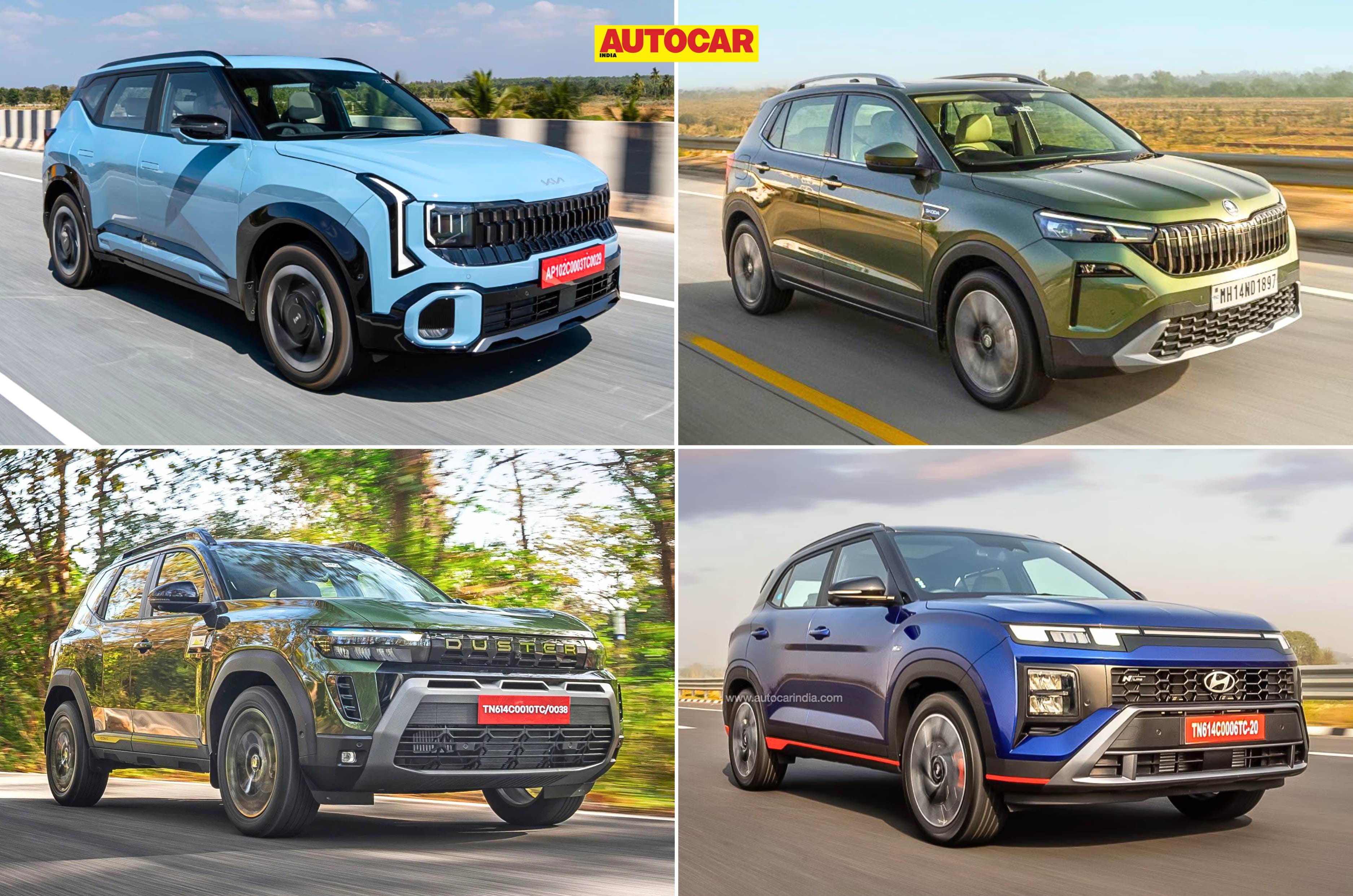
The midsize SUV segment is among the most contested in India, with popular models such as the Hyundai Creta, Tata Sierra, Kia Seltos and Skoda Kushaq fighting for space. A majority of SUVs in this segment come with turbo-petrol engines, which are known to offer good performance and deliver respectable fuel efficiency when driven efficiently. Here, we have compiled a list of the most fuel-efficient turbo-petrol midsize SUVs in India, from lowest to highest. Do note that the list is based on ARAI figures, with real-world numbers expected to vary depending on driving conditions and styles.

Note: The claimed ARAI fuel-efficiency figures for the Mahindra Thar Roxx’s 2.0-litre turbo-petrol and Tata Curvv’s 1.2-litre turbo-petrol engines are yet to be revealed.

13. Tata Sierra: 1.5-litre turbo-petrol

Claimed mileage of up to 15.3kpl

The Tata Sierra is offered with three engine options: two petrols and a diesel. Of these, the 1.5-litre turbo-petrol is the least frugal, with a claimed mileage of 15.3kpl. Incidentally, the Sierra is also the least fuel-efficient turbo-petrol midsize SUV on this list. The 1.5-litre engine produces 160hp and 255Nm, and is paired only with a 6-speed automatic transmission. This engine is also offered in the bigger Harrier and Safari SUVs but in a higher state of tune.

Tata Sierra ARAI mileage for 1.5-litre turbo-petrol engine 

AT claimed mileage

15.30kpl

12. Kia Seltos: 1.5-litre turbo-petrol

Claimed mileage of up to 17.50kpl

The Kia Seltos comes with two petrol engine options. The more powerful 160hp, 250Nm 1.5-litre turbo-petrol engine is offered with two gearbox options. While the version with a dual-clutch automatic transmission has a claimed fuel efficiency of 17.5kpl, the one with iMT (clutchless manual) returns 15.60kpl, which is almost 2kpl less than the former – the highest difference for any vehicle in the list.

Kia Seltos ARAI mileage for 1.5-litre turbo-petrol engine 

iMT claimed mileage

15.60kpl

DCT claimed mileage

17.50kpl

11. Hyundai Creta: 1.5-litre turbo-petrol

Claimed mileage of up to 18.40kpl

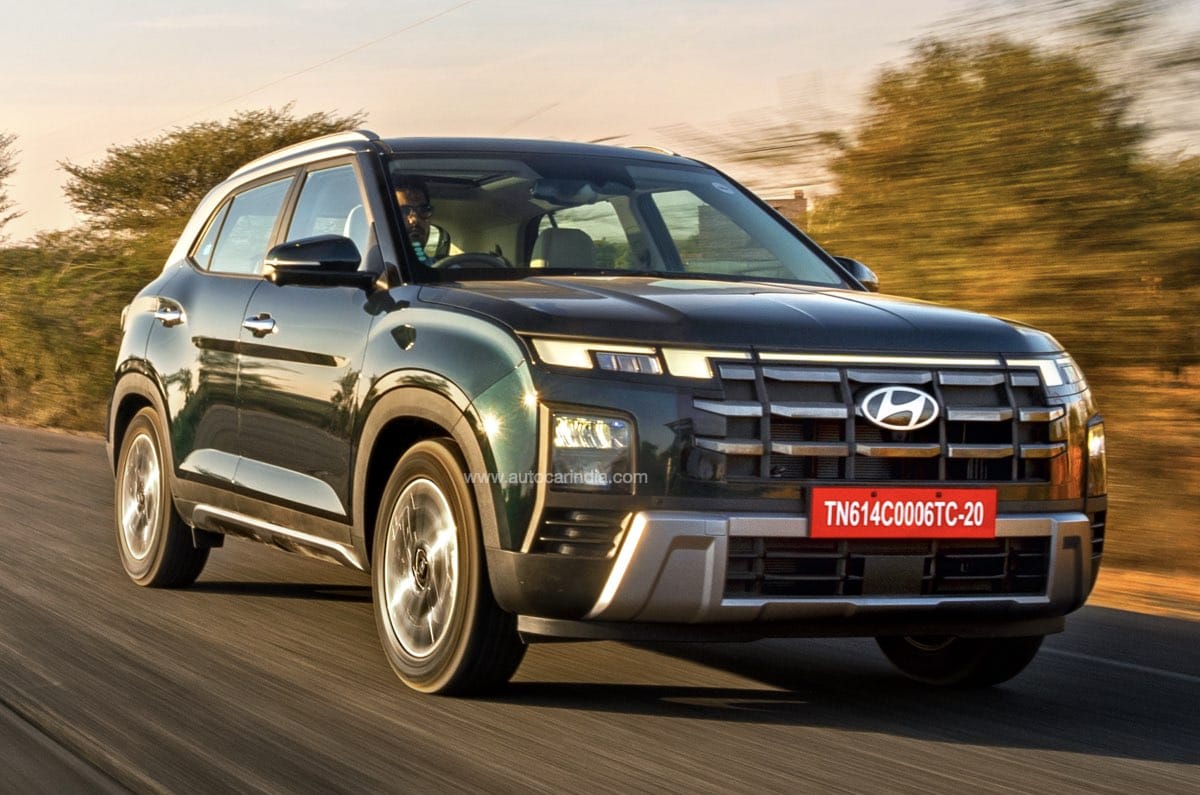
The Hyundai Creta has been the bestselling midsize SUV in India for a long time now. It gets the same turbo-petrol engine as the Seltos with exactly the same outputs, yet it delivers better fuel efficiency figures. This could be because the Creta is smaller than the new Seltos and has a lower kerb weight. While the standard Creta turbo-petrol comes only with a DCT, the Creta N Line is offered with a manual as well. 

Hyundai Creta ARAI mileage for 1.5-litre turbo-petrol engine 

MT claimed mileage

N-Line: 18kpl

DCT claimed mileage

Standard: 18.4kpl, N-Line: 18.2kpl 

10. Renault Duster: 1.3-litre turbo-petrol

Claimed mileage of up to 18.45kpl

The Duster’s 1.3-litre turbo-petrol engine develops 163hp and 280Nm and is offered with 6-speed manual and 6-speed dual-clutch automatic gearboxes. Interestingly, the DCT version is 0.7kpl more efficient on paper, with a claimed 18.45kpl compared to the manual’s 17.75kpl.

Renault Duster ARAI mileage for 1.3-litre turbo-petrol engine 

MT claimed mileage

17.75kpl

AT claimed mileage

18.45kpl

9. Citroen Aircross: 1.2-litre turbo-petrol

Claimed mileage of up to 18.50kpl

The Citroen Aircross is one of the most affordable midsize SUVs in India. It is offered with a choice of naturally aspirated and turbo-petrol engines, the latter of which is available with both manual and automatic transmission options. The Aircross’s turbo-petrol mill produces 110hp, but torque varies by transmission: 190Nm in the manual and 205Nm in the automatic. In terms of ARAI mileage, the manual is 0.9kpl more efficient than the automatic. 

Citroen Aircross ARAI mileage for 1.2-litre turbo-petrol engine 

MT claimed mileage

18.5kpl

AT claimed mileage

17.6kpl

8. Nissan Tekton: 1.3-litre turbo-petrol

Claimed mileage of up to 18.50kpl

The Nissan Tekton shares its 1.3-litre turbo-petrol engine with the Renault Duster, producing the same 163hp and 280Nm. It is also offered with 6-speed manual and 6-speed dual-clutch automatic gearbox options. The DCT is the more fuel-efficient version, with a claimed 18.5kpl, while the manual returns 17.8kpl. This puts the Tekton’s automatic marginally ahead of the equivalent Duster DCT, which is rated at 18.45kpl.

Nissan Tekton ARAI mileage for 1.3-litre turbo-petrol engine

MT claimed mileage

17.8kpl

DCT claimed mileage

18.5kpl

7. Skoda Kushaq: 1.5-litre turbo-petrol

Claimed mileage of 18.72kpl

The Skoda Kushaq is offered with two turbo-petrol engine options: a 1.0-litre and a 1.5-litre. Among these, the 1.5-litre engine is more powerful with outputs of 150hp and 250Nm torque. However, it is only paired with a 7-speed DCT gearbox, as a 6-speed manual, originally offered with the Kushaq since its introduction in 2021, was discontinued in late 2024.

Skoda Kushaq ARAI mileage for 1.5-litre turbo-petrol engine 

DCT claimed mileage

18.72kpl

6. Volkswagen Taigun: 1.5-litre turbo-petrol

Claimed mileage of 18.85kpl

The Kushaq’s 1.5-litre turbo-petrol engine is also available on the Volkswagen Taigun in the same state of tune, that too with only the DCT option. However, the Taigun is 0.13kpl more efficient, likely because it has a kerb weight of up to 1,320kg, which is 2 kg lighter than the Kushaq with a similar powertrain.

Volkswagen Taigun ARAI mileage for 1.5-litre turbo-petrol engine 

DCT claimed mileage

18.85kpl

5. Nissan Tekton: 1.0-litre turbo-petrol

Claimed mileage of 19.40kpl

The Tekton’s smaller 1.0-litre three-cylinder turbo-petrol engine develops 100hp and 166Nm and is currently paired only with a 6-speed manual gearbox. With a claimed fuel efficiency of 19.4kpl, it is 1.6kpl more frugal than the Tekton’s 1.3-litre turbo-manual and sits close to the similarly powered Duster’s 19.41kpl figure.

Nissan Tekton ARAI mileage for 1.0-litre turbo-petrol engine

MT claimed mileage

19.40kpl

4. Renault Duster: 1.0-litre turbo-petrol

Claimed mileage of 19.41kpl

The Duster’s 100hp, 166Nm 1.0-litre turbo-petrol engine is paired with a 6-speed manual gearbox and returns a claimed 19.41kpl. It is just 0.01kpl more efficient than the Tekton with the same engine and gearbox combination.

Renault Duster ARAI mileage for 1.0-litre turbo-petrol engine

MT claimed mileage

19.41kpl

3. Citroen Basalt: 1.2-litre turbo-petrol

Claimed mileage of up to 19.50kpl

The Citroen Basalt gets the same 1.2-litre turbo-petrol engine as the Aircross, but it is more efficient – by 1kpl in the MT version and by 1.1kpl in the AT guise. This could be because of its more aerodynamic coupe-SUV shape, making it one of the only two midsize offerings currently featuring this body style. Moreover, the Aircross is offered with an optional third row, taking its kerb weight to 1,320kg, which is 80kg more than the Basalt’s. Even in its 5-seater configuration, the Aircross weighs 35kg more than the Basalt.

Citroen Basalt ARAI mileage for 1.2-litre turbo-petrol engine 

MT claimed mileage

19.5kpl

AT claimed mileage

18.7kpl

2. Skoda Kushaq: 1.0-litre turbo-petrol

Claimed mileage of up to 19.66kpl

The Skoda Kushaq’s 116hp 1.0-litre turbo-petrol engine is offered with an 8-speed torque-converter automatic, but unlike the bigger 1.5-litre engine, it is available with a 6-speed manual option as well. The manual version is 0.57kpl more frugal than the automatic one, mainly because of its 35kg lighter weight.

Skoda Kushaq ARAI mileage for 1.0-litre turbo-petrol engine 

MT claimed mileage

19.66kpl

AT claimed mileage

19.09kpl

1. Volkswagen Taigun: 1.0-litre turbo-petrol

Claimed mileage of up to 19.98kpl

With the same 1.0-litre turbo-petrol engine as the Kushaq but higher claimed mileage figures of 19.98kpl with a manual transmission and 19.54kpl with an automatic gearbox, the Volkswagen Taigun is the most fuel-efficient turbo-petrol midsize SUV in India. As with the weight difference between their 1.5-litre versions, the Taigun’s 1.0-litre TSI variants are up to 17kg lighter than the Kushaq with the same powertrain, which explains the higher ARAI-rated mileage.

Volkswagen Taigun ARAI mileage for 1.0-litre turbo-petrol engine 

MT claimed mileage

19.98kpl

AT claimed mileage

19.54kpl

Prices are ex-showroom, India.

2026 Nissan Tekton Visia base variant image gallery

2026 Nissan Tekton Visia base variant

The Visia is the entry-level variant of the Nissan Tekton and is priced at Rs 10.49 lakh (ex-showroom). Despite its base-variant positioning, it gets automatic LED headlamps, LED DRLs and tail-lights, 17-inch steel wheels with covers and a roof spoiler. Inside, the Visia features a 7-inch digital instrument display, manual AC, rear AC vents, a four-speaker Arkamys audio system and a height-adjustable driver’s seat. Safety kit includes six airbags, ESC, traction control, hill-start assist, TPMS and rear parking sensors. The Tekton Visia is powered by a 100hp, 1.0-litre turbo-petrol engine, paired with a 6-speed manual gearbox.

All you need to know about the Nissan Tekton

Nissan Tekton

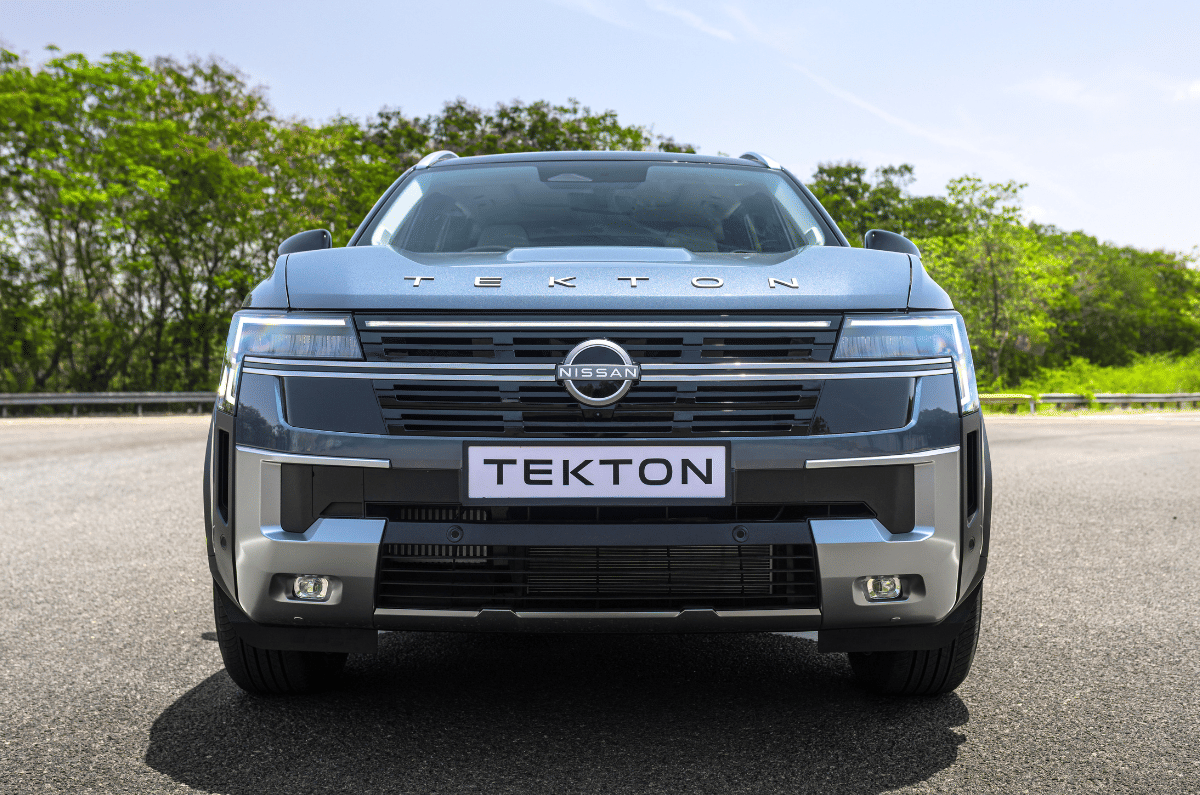
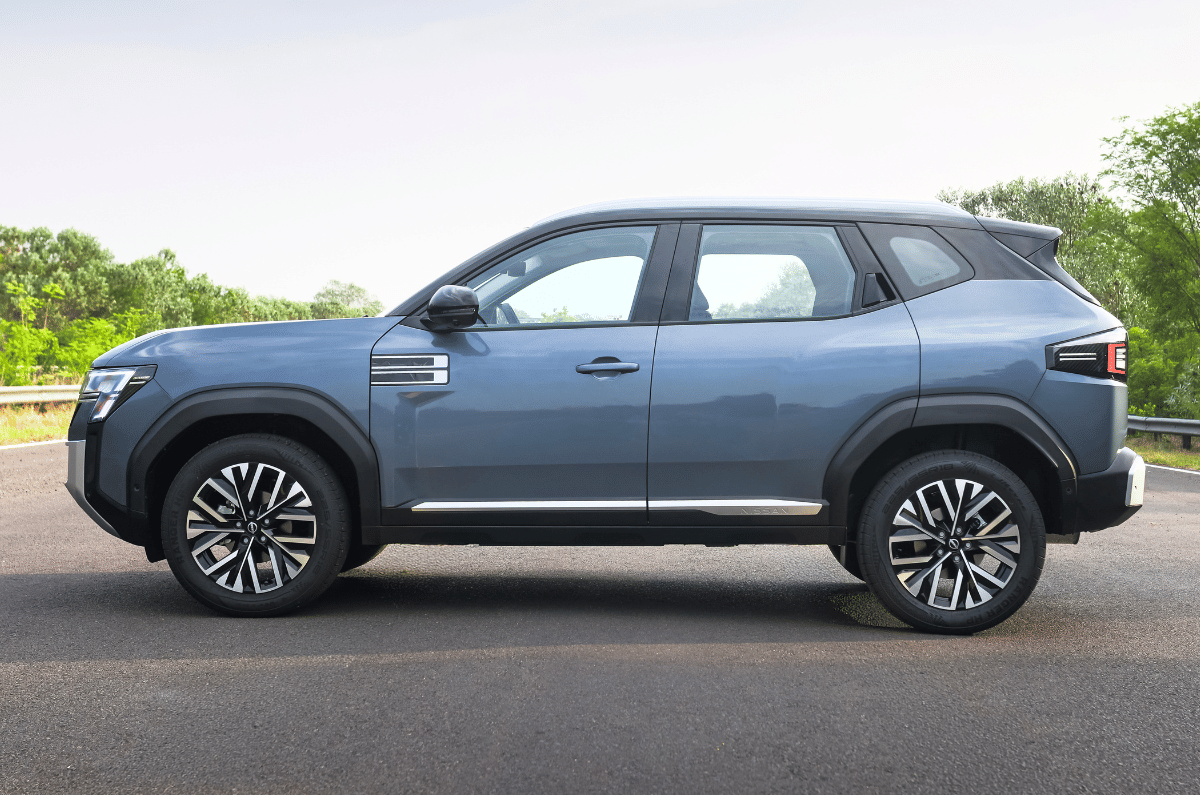
After several delays, Nissan has finally launched the Tekton in India. The SUV is the carmaker’s version of the Renault Duster, featuring a few design changes while sharing the same underpinnings. Competing with the likes of the Hyundai Creta, Kia Seltos, Tata Sierra, Maruti Grand Vitara and more, here’s everything you should know about Nissan’s new midsize SUV contender.

Is the Nissan Tekton pricier than the Renault Duster?

Nissan Tekton

The Tekton range starts at Rs 10.49 lakh, ex-showroom, similar to the Duster. At the entry level, the Tekton is priced on par with the Duster and is among the most affordable midsize SUVs, with only the MG Astor and Citroen Aircross costing less. The Maruti Victoris follows with a premium of just Rs 1,000, while the Maruti Grand Vitara, Hyundai Creta, Kia Seltos, Tata Sierra, Skoda Kushaq, Volkswagen Taigun, Toyota Hyryder and Honda Elevate are all priced higher.

At the top end, the Tekton costs Rs 10,000 more than the Duster at Rs 18.59 lakh. Even then, it’s still cheaper than the Seltos, Creta, Sierra, Hyryder, Victoris, and Grand Vitara. The Aircross remains the most affordable midsize SUV by a wide margin.

When will the Nissan Tekton hybrid launch in India

As we have exclusively reported before, the Tekton will not be adding a hybrid powertrain option. Renault will be keeping the Horse Powertrain-derived strong hybrid system exclusive for the Duster, positioning it as a key competitive advantage in the increasingly crowded midsize SUV space.

The Tekton offers a choice between 100hp 1-litre and 163hp 1.3-litre turbo-petrol engine options. A 6-speed manual gearbox is standard, but an automatic gearbox, a 6-speed dual-clutch unit in this case, is offered with the more powerful mill only.

What is the fuel-efficiency of the Nissan Tekton?

PowertrainClaimed fuel efficiency (kpl)
100hp 1L turbo-petrol 6MT19.41
163hp 1.3L turbo-petrol 6MT17.8
163hp 1.3L turbo-petrol 6DCT18.5

Evidently, the 1.0-litre turbo-petrol paired with a manual gearbox delivers the highest efficiency at 19.41kpl in the line-up. The 1.3-litre turbo-petrol returns 18.5kpl with the dual-clutch automatic and 17.8kpl with the manual gearbox. Since the powertrains are shared between the Nissan and Renault badge-engineered SUVs, their claimed fuel-efficiency figures are similar. 

Is the Nissan Tekton larger in overall size than its rivals?

Nissan Tekton

The Tekton shares its height, wheelbase, ground clearance and wheel size options with the Duster. It is, however, 6mm longer and 2mm wider due to its different styling. Compared to its midsize SUV rivals, the Tekton is longer than the Sierra, Creta, Grand Vitara, Kushaq, Taigun, Elevate, Astor and Aircross. However, it falls short of the Seltos by 111mm, the Hyryder by 16mm and the Victoris by 11mm. When it comes to wheelbase, the Sierra leads the segment, followed by the Seltos, Aircross, and then the Tekton. 

The Nissan SUV’s 212mm ground clearance is the second-highest in the segment after the Elevate. It also shares the largest 518-litre boot capacity in the segment with the Duster.

Does the Nissan Tekton have a spacious interior?

Nissan Tekton

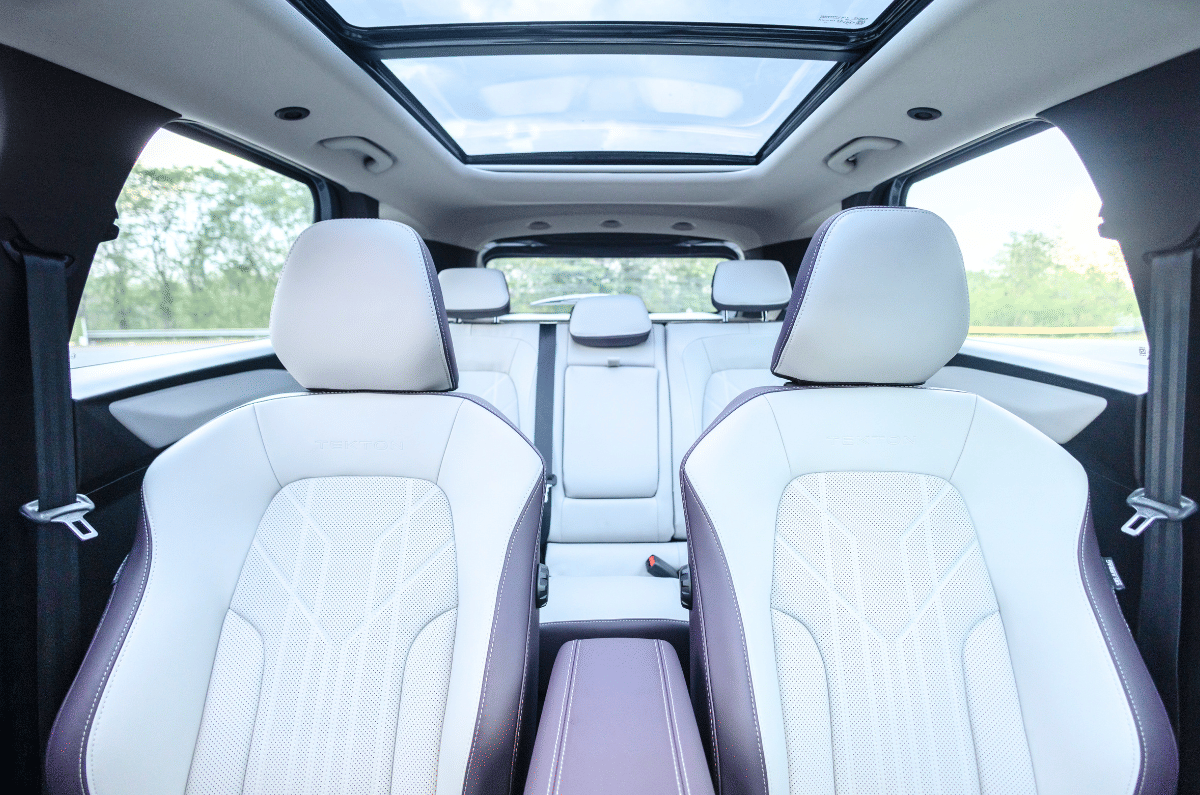
Its front seats are supportive and well-cushioned, and they also feature electric adjustment and ventilation. The rear seat is comfortable for two adults, while a third passenger can fit in. However, the limited shoulder room and the transmission hump make it less comfortable for three occupants over longer journeys.

At the rear, there’s enough kneeroom and plenty of headroom for six-footers. The large panoramic sunroof and windows make the cabin feel airy. Rear passengers also get a centre armrest with cup holders, dedicated AC vents and charging ports.

Which Nissan Tekton variant should you buy?

Nissan Tekton

The N-Connecta trim, priced between Rs 13.69 lakh and Rs 16.49 lakh, ex-showroom, is our pick of the Tekton range. It packs a good mix of features, including a 10.25-inch digital instrument cluster, a panoramic sunroof, dual-zone climate control, 18-inch alloy wheels, wireless charger a six-speaker sound system and more. Buyers also get a choice between the two turbo-petrol engine options, along with their respective manual and automatic gearbox pairings.

Higher Tekton trims add features like Google integration for the touchscreen, ventilated front seats, MyNISSAN connected car tech, powered tailgate, 360-degree camera, Level 2 ADAS and more.

Nissan Tekton vs Kia Seltos: Whose top-spec trim offers better value?

Nissan Tekton vs Kia Seltos top-spec trim comparison

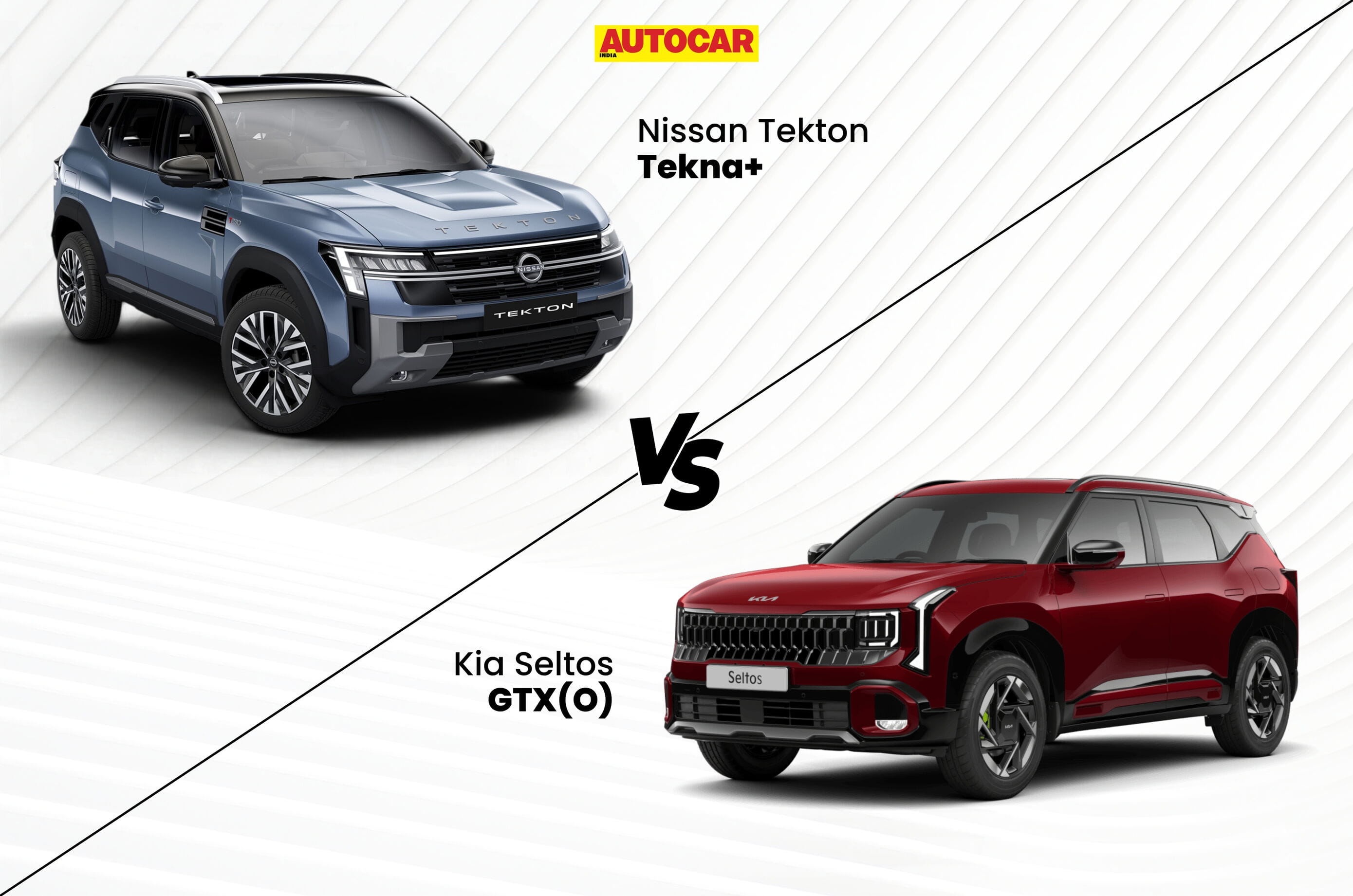
The Nissan Tekton is the latest entrant in the burgeoning midsize SUV segment, within which the Kia Seltos is a very popular option. The Seltos underwent a generational upgrade earlier in 2026, offering larger dimensions, better safety credentials, and more features. To that end, let’s take an in-depth look at the top-spec Tekton Tekna+ and Seltos GTX(O) trims to find out which midsize SUV is better value for money.

Nissan Tekton vs Kia Seltos: Top trim dimensions

Tekton is smaller than Seltos overall, but offers higher ground clearance and boot space

Nissan Tekton vs Kia Seltos top trim dimensions compared


Tekton

Seltos

Difference

Length (mm)

4,349

4,460

-111

Width (mm)

1,815

1,830

-15

Height (mm)

1,674

1,635

+39

Wheelbase (mm)

2,657

2,690

-33

Ground clearance (mm)

212

200

+12

Boot space (litres)

518

447

+71
Wheel size (inches)18180

Though the Seltos is considerably longer and slightly wider than the Tekton, the Nissan SUV is taller, partly by way of its 12mm higher ground clearance. The Tekton further one-ups the Seltos with a substantially larger boot capacity. In terms of wheel size, however, both midsize SUVs come with 18-inch alloys.

Nissan Tekton vs Kia Seltos: Top trim engine and gearbox options

Tekton has more powerful 4-cyl turbo-petrol engine, but Seltos offers diesel option

Nissan Tekton vs Kia Seltos top trim powertrains compared


Tekton

Seltos

Engine

1.0 turbo-petrol / 1.3-litre turbo-petrol

1.5 diesel / 1.5 turbo-petrol

No. of cylinders

3 / 4

4 / 4

Power (hp)

100 / 163

116 / 160

Torque (Nm)

166 / 280

250 / 253

Gearbox 

6MT / 6DCT

6AT / 7DCT

The Tekton is available with 100hp 1.0 turbo-petrol MT and 163hp 1.3 turbo-petrol DCT powertrains in its top-spec Tekna+ trim, whereas the Seltos GTX(O) can be had in either 1.5 turbo-petrol DCT or 1.5 diesel AT guise. Offering the latter powertrain is a major plus point for the Seltos, as many midsize SUV buyers still favour diesel engines.

That said, buyers interested in these SUVs’ 4-cyl turbo-petrol variants would likely lean in the Tekton’s favour, as its 1.3-litre engine is not only smaller than the Seltos’ 1.5-litre mill, but also develops 3hp and 27Nm more. Additionally, the Tekton’s wet-clutch DCT should make for smoother operation at slower speeds than the Seltos’ dry-clutch unit.

It’s also worth noting that for budget-constrained buyers whose usage is primarily in the city, the Tekton’s 1.0 turbo-petrol option is a good choice. However, it’s paired solely with a 6-speed manual, which isn’t as convenient in stop-go city traffic as an automatic transmission.

Nissan Tekton vs Kia Seltos: Top trim exterior features

Tekton stands out with powered tailgate and rear fog lamps

Nissan Tekton vs Kia Seltos top trim exterior features compared


Tekton

Seltos

Headlamps

LED

LED

LED DRLs

Yes

Yes

Welcome/goodbye lighting sequence

Yes

Yes

Puddle lamps

Optional

No

Tail-lamps

Connected LED

Connected LED

Fog lamps

Front, rear

Front

Rear spoiler

Yes

Yes

Electrically adjustable ORVMs

Yes

Yes

Auto-folding ORVMsYesYes

Shark-fin antenna

Yes

Yes

Roof rails

Yes

Yes

Powered tailgate

Yes

No

Colour

Monotone, dual-tone

Monotone, dual-tone, matte

Both the Tekton and Seltos are quite evenly matched on this front, but the Nissan SUV edges ahead thanks to the inclusion of rear fog lamps and a powered tailgate. The latter feature can be quite handy in instances where your hands are full and you can’t prop the bootlid up yourself.

While the Seltos does offer four more monotone colours than the Tekton does, the Kia SUV only gets two dual-tone options – the Tekton features five. However, the Seltos is the only one here to offer a matte paint finish as part of its X-Line cosmetic package, which can be opted for at no additional cost.

Nissan Tekton vs Kia Seltos: Top trim interior features

Seltos is better-equipped than the Tekton

Nissan Tekton vs Kia Seltos top trim interior features compared


Tekton

Seltos

Panoramic sunroof

Yes

Yes

Touchscreen size

10.1 inches

12.3 inches

Driver’s display

10.25 inches

12.3 inches
Heads-up displayNoYes

Wireless Apple CarPlay, Android Auto

Yes

Yes

Powered driver seat

6-way

10-way
Memory, welcome functions for driver seatNoYes

Powered co-driver seat

6-way

No

Lumbar adjustment 

Manual

Powered

Cabin air purifier

Yes

Yes

Automatic climate control

Dual-zone

Dual-zone

Rear AC vents

Yes

Yes

Seat upholstery

Leatherette

Leatherette

Wireless charging pad

Optional

Yes

Sound system

6-speaker Arkamys

8-speaker Bose

Ventilated front seats

Yes

Yes

60:40 split rear seats

Yes

Yes
Rear sunshadesOptionalYes

Rear armrest

Yes

Yes

Connected car tech

Yes

Yes

Ambient lighting

48 colours

64 colours

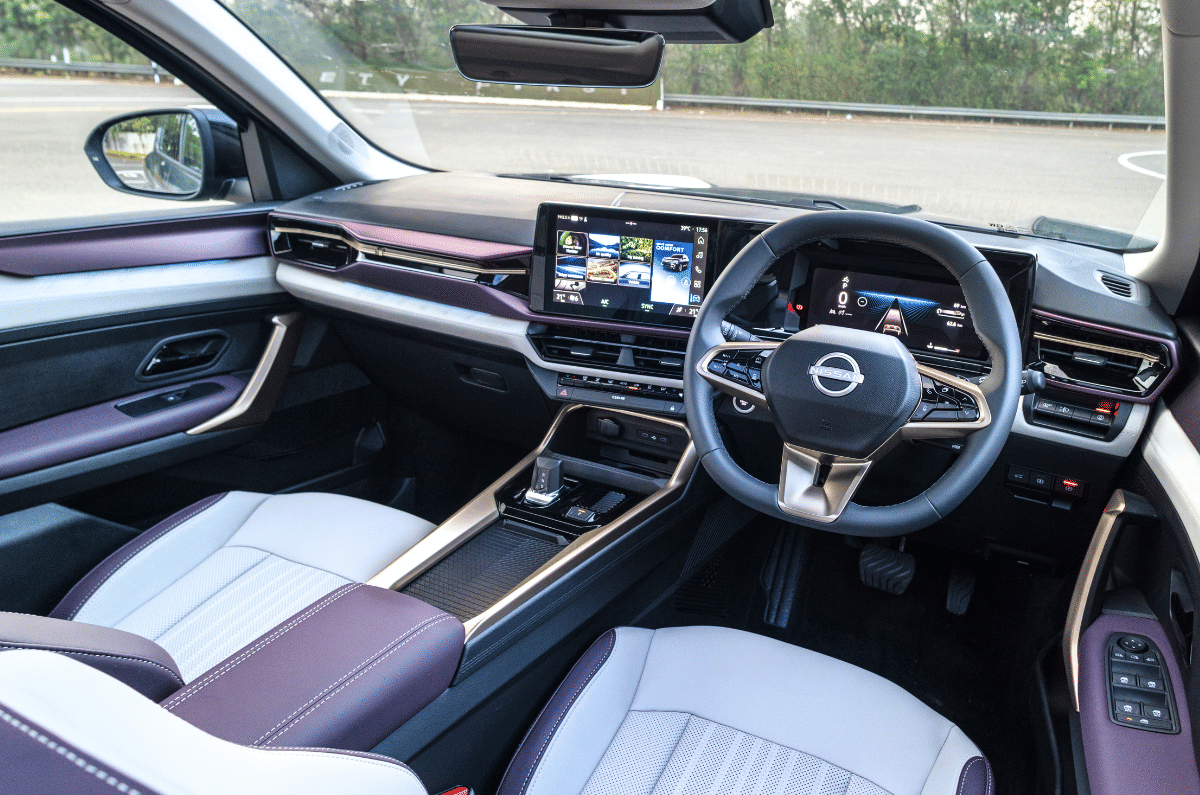
Coming to interior features, the Seltos easily takes the victory. Compared to the Tekton, the Seltos gets larger screens, a heads-up display, broader electrical adjustment and powered lumbar adjust for the driver’s seat (along with memory and welcome functions), a Bose sound system with more speakers, and an expanded roster of colours for the ambient lighting system. The Tekton’s sole edge over the Seltos in this department is a powered co-driver seat.

Nissan Tekton vs Kia Seltos: Top trim driving features

Tekton allows you to alter steering feel, Seltos gets terrain modes

Nissan Tekton vs Kia Seltos top trim driving features compared


Tekton

Seltos

Drive modes

Eco, Comfort

Eco, Normal, Sport
Steering modesEco, ComfortNo

Paddle Shifters

Yes

Yes

Cruise Control

Adaptive

Adaptive
Terrain modesNoSnow, Mud, Sand

While the Seltos offers three drive modes instead of the Tekton’s two, the Nissan SUV additionally gets presets to adjust the steering feel. However, the Seltos is the only one here to pack terrain modes.

Nissan Tekton vs Kia Seltos: Top trim safety features 

Seltos features more advanced ADAS and built-in dashcams

Nissan Tekton vs Kia Seltos top trim safety features compared


Tekton

Seltos
Bharat NCAP rating5 stars5 stars

Airbags

6

6

Parking sensors

Front, rear

Front, rear, side

Camera setup

360-degree

360-degree

Front and rear dashcams

Optional

Yes

Electronic parking brake

DCT only

Yes

ADAS

Level 2

Level 2+

TPMS

Yes

Yes
Driver drowsiness detectionYesYes

Hill start assist

Yes

Yes

Front and rear disc brakes

Yes

Yes

ESC

Yes

Yes

Auto-dimming IRVM

Yes

Yes
Rain-sensing wipersYesYes

While both SUVs are equipped with pretty much every safety feature you need, the Seltos emerges as the winner thanks to its inclusion of side parking sensors and built-in dashcams. Moreover, the Seltos’ Level 2+ ADAS suite packs 28 features, which is nearly double the Tekton’s 15 ADAS functions.

Nissan Tekton vs Kia Seltos: Top trim prices and verdict

Tekton is up to Rs 5.08 lakh more affordable

Nissan Tekton vs Kia Seltos top trim price compared


Tekton

Seltos

Price range (In Rs, lakh) 

16.49-18.59

21.57-21.82

Pricing is a sweeping victory for the Tekton, as its range-topping Tekna+ trim starts at Rs 16.49 lakh by way of the aforementioned budget-friendly 1.0 turbo MT powertrain, whereas the Seltos GTX(O) starts at Rs 21.57 lakh – a delta of over Rs 5 lakh. Comparing the top-spec DCT variants of both SUVs, the Tekton is just shy of Rs 3 lakh cheaper than the Seltos, which is quite a big gap.

Therefore, if your budget is around Rs 20 lakh, the Tekton is the obvious choice. If you can stretch your budget by a few more lakhs, though, the Seltos is the better option. Kia India’s service network and retail footprints are also much more widespread than Nissan’s, which is an important consideration for buyers.

All prices are ex-showroom, India.

Nissan Tekton on-road prices listed in major Indian cities

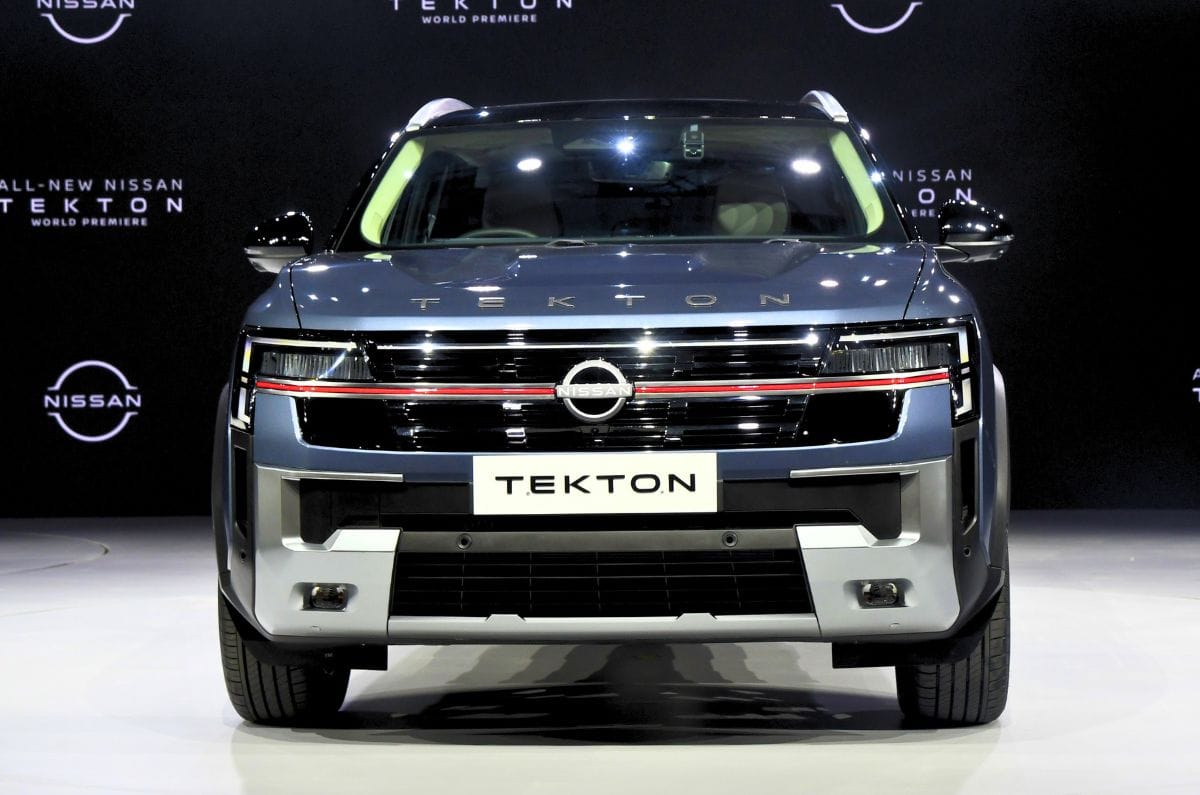
Nissan Tekton front design

The Nissan Tekton, launched recently in India, marked the manufacturer’s comeback to the midsize SUV segment after the Kicks’ discontinuation in 2023. This badge-engineered version of the Renault Duster is being offered in six trims: Visia, Visia+, Acenta, N-Connecta, Tekna, and Tekna+, offered with either a 100hp, 1.0-litre 3-cylinder turbo-petrol engine or a 163hp, 1.3-litre 4-cylinder turbo-petrol mill. Its ex-showroom prices range from Rs 10.49 lakh to Rs 18.59 lakh.

In case you want to know how much you need to pay to get your hands on one, here are the Nissan Tekton’s on-road prices across major Indian cities.

Nissan Tekton on-road price range

On-road prices of the Tekton range from Rs 11.96 lakh to Rs 23.06 lakh in major cities

Nissan Tekton price range in major Indian cities (in Rs, lakh)


1.0L TP 6MT

1.3L TP 6MT

1.3L TP 6DCT

Ex-showroom

10.49-16.49

14.99-16.39

14.99-18.59

Gurugram (on-road)

11.96-18.80

17.09-18.69

17.09-21.20

Delhi (on-road)

12.17-19.13

17.39-19.02

17.39-21.57

Mumbai (on-road)

12.38-19.46

17.69-19.35

17.69-21.94

Bengaluru (on-road)

12.91-20.29

18.44-20.17

18.44-22.87

Chennai (on-road)

13.01-20.45

18.59-20.33

18.59-23.06

Note: On-road prices may vary based on city-specific registration charges and other cost components, including insurance, FASTag and RTO fees. Please check with your nearest Nissan dealership for exact figures.

Nissan Tekton on-road prices are the lowest in Gurugram among all the mentioned cities. Delhi comes next, followed by Mumbai and Bengaluru. Prices are the highest in Chennai, and compared to Gurugram, the top-spec versions of the 1.0-litre turbo-petrol MT (Tekna+), 1.3-litre turbo-petrol MT (Tekna), and 1.3-litre turbo-petrol DCT (Tekna+) cost an additional Rs 1.65 lakh, Rs 1.64 lakh and Rs 1.86 lakh, respectively.

Nissan Tekton vs Renault Duster: Whose mid-spec trim offers more features?

Nissan Tekton vs Renault Duster: Whose mid-spec trim offers more features?

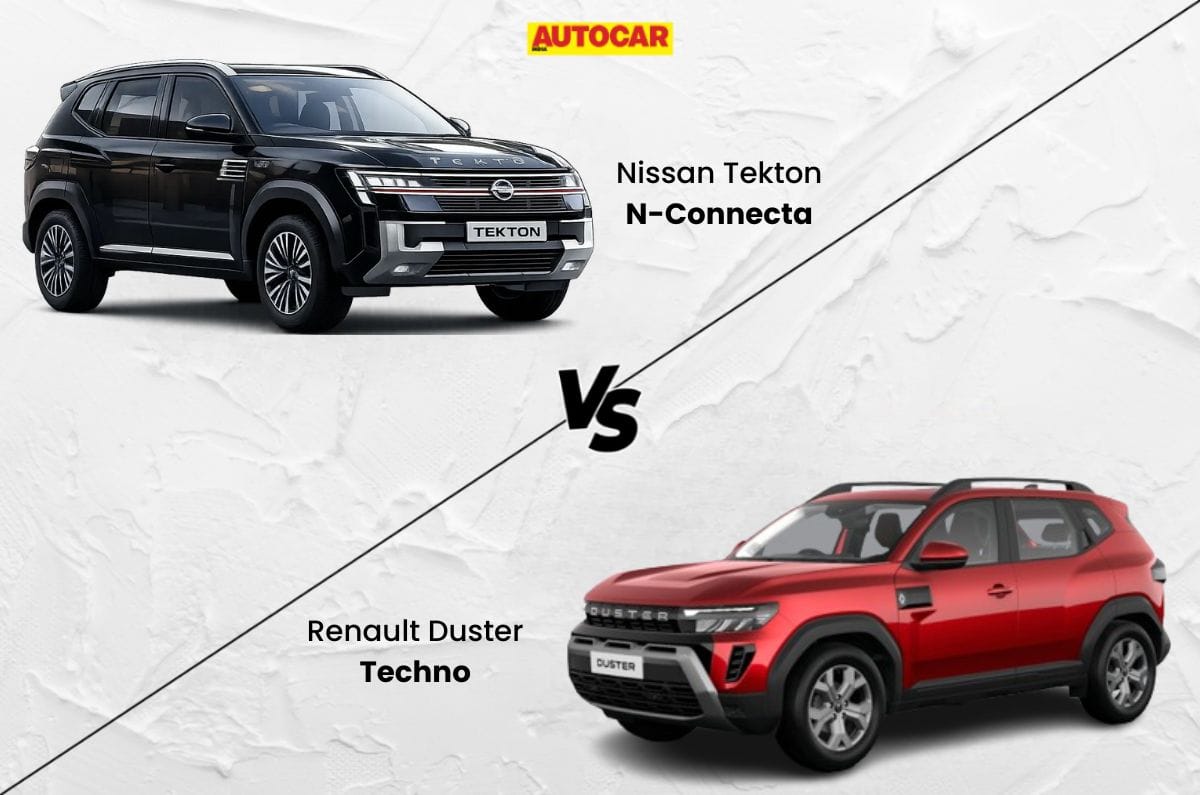
The Nissan Tekton was recently launched in India as the Japanese manufacturer’s flagship SUV in the country. It is being offered in five trims: Visia, Visia+, Acenta, N-Connecta, Tekna, and Tekna+, among which the mid-spec N-Connecta is offered with all the available powertrain options. At its price point, the Renault Duster’s mid-spec Techno variant is also available with the same powertrains. So, should you choose the Tekton’s N-Connecta over the Duster’s Techno? We find out.

Nissan Tekton vs Renault Duster: Dimensions

The Duster is slightly taller than the Tekton

Nissan Tekton vs Renault Duster: Dimensions and other specifications 


Nissan Tekton

Renault Duster 

Difference

Length (mm)

4,348

4,346

+2

Width (mm)

1,815

1,815

None

Height (mm)

1,674

1,701

-27

Wheelbase (mm)

2,657

2,657

None

Ground clearance (mm)

212

212

None

Boot space (litres)

518

518

None

The dimensions of the Nissan Tekton and Renault Duster are similar. While the Duster is slightly taller than the Tekton, it would not make a difference in the real world.

Nissan Tekton N-Connecta vs Renault Duster Techno: Powertrain

Both mid-spec trims are offered with the same powertrain options

Nissan Tekton N-Connecta vs Renault Duster Techno: Powertrain


Tekton N-Connecta

Duster Techno

Engine*

1.0L TP | 1.3L TP

1.0L TP | 1.3L TP

Power

100hp | 163hp

100hp | 163hp

Torque

160Nm | 280Nm

160Nm | 280Nm

Transmission

6MT | 6MT, 6DCT

6MT | 6MT, 6DCT

*TP = Turbo-petrol engine

^FWD = Front-wheel-drive

As mentioned earlier, the Tekton’s N-Connecta and the Duster’s Iconic are the only trims in both midsize SUVs’ lineups that are offered with all powertrain options. Both SUV trims, hence, are offered with the 100hp, 1.0-litre turbo-petrol engine and the 163hp, 1.3-litre turbo-petrol mill, and have identical power and torque outputs.

Nissan Tekton N-Connecta vs Renault Duster Techno: Exterior

The Tekton N-Connecta is offered with larger alloy wheels

Nissan Tekton N-Connecta vs Renault Duster Techno: Exterior


Tekton N-Connecta

Duster Techno

Headlights

Auto LED

Auto LED

Taillights

Connected LED

Connected LED

DRLs

Connected LED

Connected LED

Front fog lamps

LED

LED

Rear fog lamps

LED

LED

Puddle lamps

Yes

Yes

Wheels

18-inch

17-inch

Powered ORVMs

Yes

Yes

Roof rails

Yes

Yes

Colour

Monotone

Mono and dual tones

While the Nissan Tekton N-Connecta is offered with 18-inch alloy wheels, the Renault Duster Techno sports smaller 17-inch rims. However, the Duster Techno is available with dual-tone exterior hues, unlike the Tekton N-Connecta. Everything else, including LED headlights, LED taillights, LED DRLs, front and rear fog lamps and powered outside rearview mirrors (ORVMs), is the same on both SUV trims.

Nissan Tekton N-Connecta vs Renault Duster Techno: Interior

Duster offers a powered tailgate, but Tekton has a bigger driver’s display

Nissan Tekton N-Connecta vs Renault Duster Techno: Interior and features


Tekton N-Connecta

Duster Techno

Driver’s display

10.25-inch

7-inch

Infotainment screen

10.1-inch

10.1-inch

Android Auto, Apple CarPlay

Wireless

Wireless

Audio system

6-speaker Arkamys

6-speaker Arkamys

Sunroof

Panoramic

Panoramic

Climate control

Dual-zone

Dual-zone

Rear AC vents

Yes

Yes

Air purifier

No

No

Powered tailgate

No

Yes

Seat upholstery

Semi-leatherette

Semi-leatherette

Steering wheel adjustment

Tilt and telescopic

Tilt and telescopic

Wireless phone charger

Yes

Yes

Driver seat adjustment

Manual

Manual

Co-driver’s seat adjustment

Manual

Manual

Cruise control

Yes

Yes

Two major differences between the Tekton N-Connecta and Duster Techno are that the Renault SUV is equipped with a powered tailgate and the Nissan offering is available with a larger driver’s display. Everything else is the same, including a 10.1-inch infotainment system, a 6-speaker sound system,  a panoramic sunroof, a wireless phone charger and dual-zone climate control. 

Nissan Tekton N-Connecta vs Renault Duster Techno: Safety

Safety tech on both SUV trims is identical

Nissan Tekton N-Connecta vs Renault Duster Techno: Safety features


Tekton N-Connecta

Duster Techno

Airbags

6

6

ADAS

No

No

Camera setup

Rear only

Rear only

Parking sensors

Rear only

Rear only

Electronic parking brake

DCT variant only

DCT variant only

TPMS

Yes

Yes

IRVM

Auto-dimming

Auto-dimming

Rear wiper, washer

Yes

Yes

Rear defogger

Yes

Yes

Hill start assist

Yes

Yes

Hill descent control

No

No

ESC

Yes

Yes

Traction control

Yes

Yes

Both the Nissan Tekton N-Connecta and the Renault Duster Techno are offered with an identical safety suite, including six airbags, a rear parking camera with sensors, a tyre pressure monitoring system (TPMS), a rear wiper, washer and defogger, and hill start assist. 

Nissan Tekton N-Connecta vs Renault Duster Techno: Price, verdict

Duster’s Techno has a slightly lower price than the Tekton N-Connecta

Nissan Tekton N-Connecta vs Renault Duster Techno: Ex-showroom prices (Rs, lakh)


Tekton N-Connecta

Duster Techno

1.0L TP 6MT

13.69

13.49

1.3L TP 6MT

14.99

14.49

1.3L TP 6DCT

16.49

15.89

All the variants of the Nissan Tekton N-Connecta are slightly more expensive than the Duster’s Iconic variants. The smaller engine variant is Rs 20,000 more expensive on the Tekton, while the larger engine is Rs 50,000 to Rs 60,000 more expensive on the Nissan midsize SUV. Although the Duster’s Techno trim gets smaller alloys and a smaller driver’s display, it offers a powered tailgate, which would be more useful in the real world. This additional feature and the fact that it is offered at a lower price make the Duster’s mid-spec Techno a more recommendable trim than the Tekton’s N-Connecta.

Prices are ex-showroom, India.