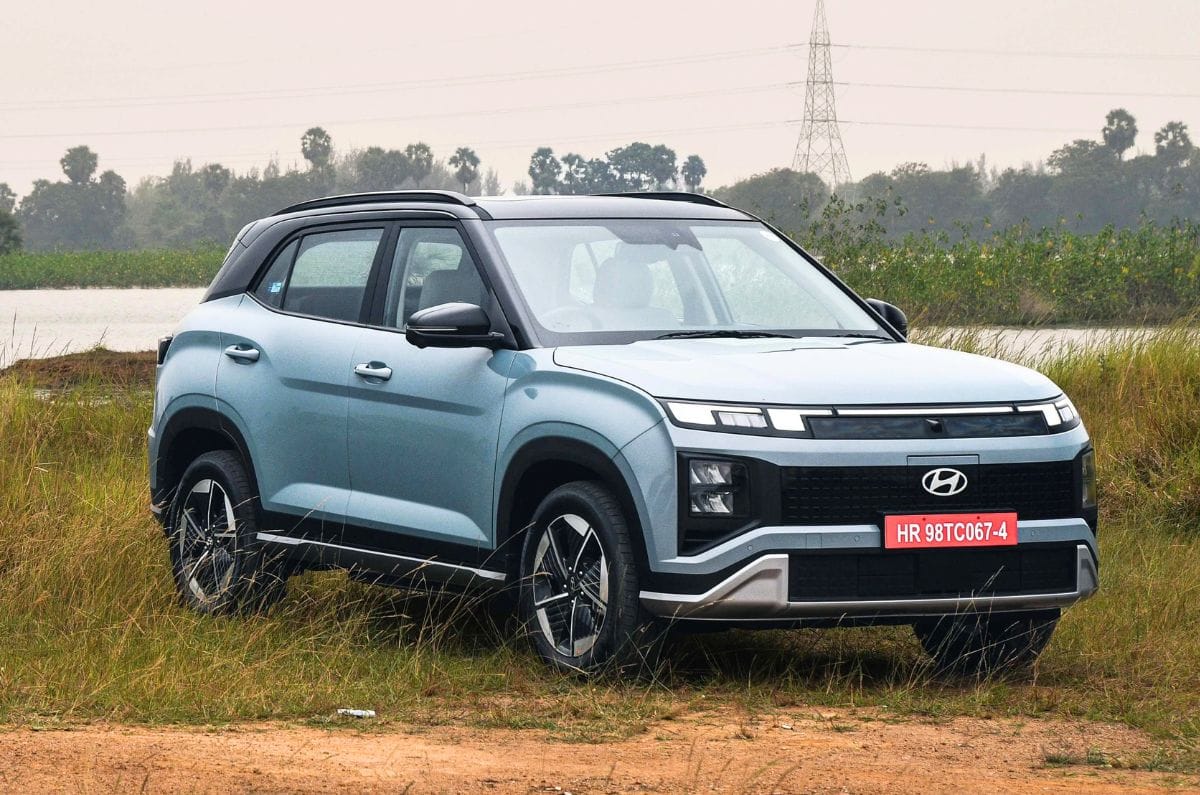
Hyundai has introduced Battery-as-a-Service (BaaS) on the Creta Electric in an effort to reduce the initial acquisition cost. With BaaS, prices for the Creta Electric start from Rs 10.99 lakh, and Hyundai is charging Rs 3.90 for per kilometre usage. The company, however, hasn’t provided a detailed variant-wise breakup of the BaaS prices yet.
Creta Electric also updated with a side step
Hyundai is now the 7th carmaker to offer BaaS with EVs
JSW MG Motor was the first to introduce BaaS with the Windsor EV in India in 2024, and since then, several other carmakers like Citroen, Kia, Maruti and Toyota have joined the bandwagon. Hyundai becomes the seventh carmaker to now offer BaaS with its EV. Mahindra and Vinfast, however, are among the only major EV players to not offer BaaS.
Hyundai Creta Electric: what’s new?
The Creta Electric range is priced from Rs 18.03 lakh – Rs 24.70 lakh (ex-showroom), which means BaaS effectively reduces the entry price by about Rs 7 lakh. Customers will have to pay additionally as per their usage, which is more like an EMI on the battery.
Alongside BaaS, Hyundai has also updated the Creta Electric with an integrated side step for easier ingress and egress. The carmaker is now also offering a 7.4kW AC wall box charger with the HC variants in the Creta Electric line-up; so long it was only available with an 11kW AC charger.
Hyundai Creta Electric battery and range
The Creta Electric is offered with two battery pack options: 42kWh and 51.4kWh. The former returns a claimed range of 420km while the latter has a claimed range of 510km. Powering the Creta Electric is a single motor on the front axle that drives the front wheels. In the Long-Range variant, this motor produces 171hp while the smaller battery gets a 135hp electric motor.
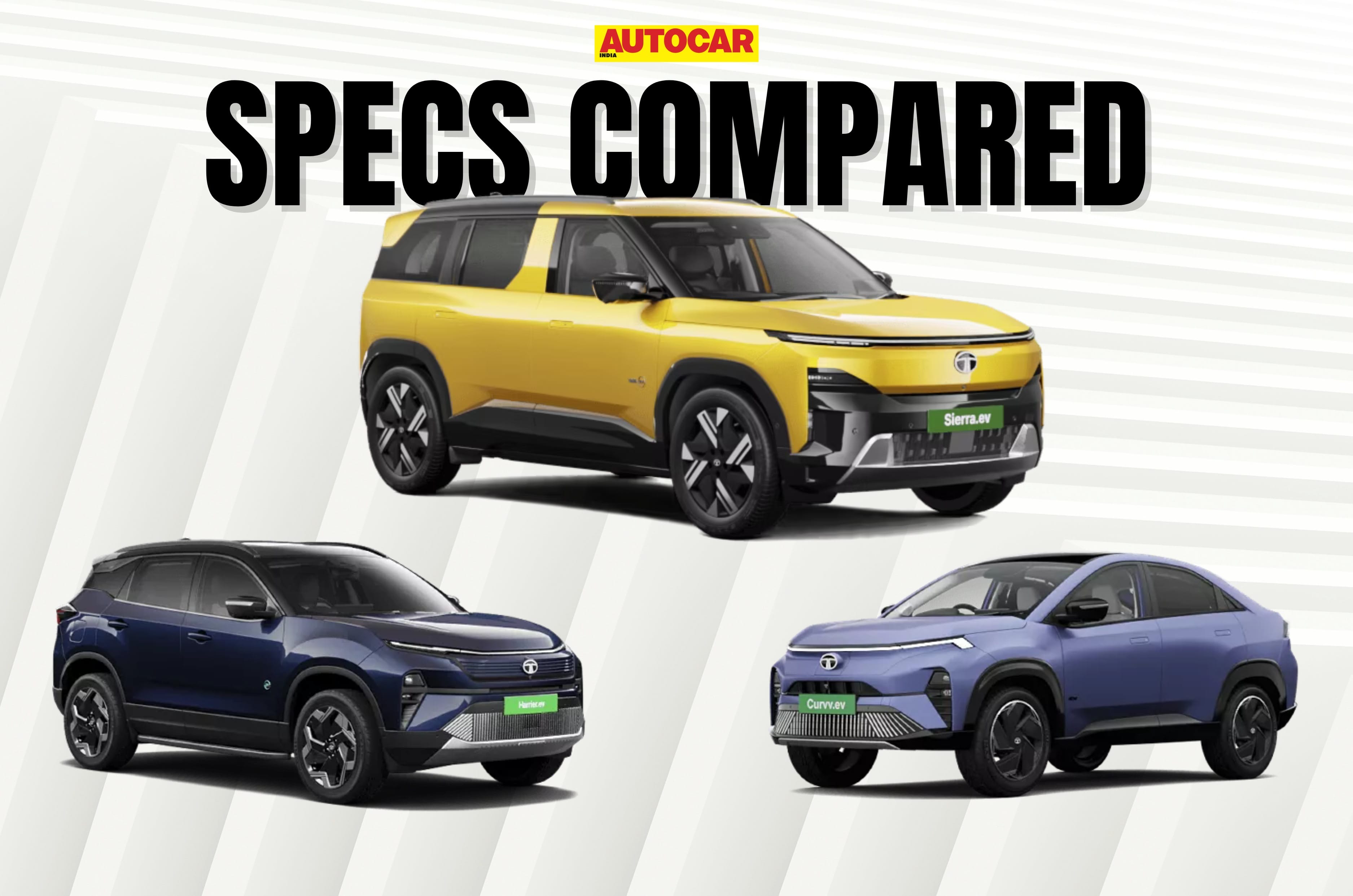
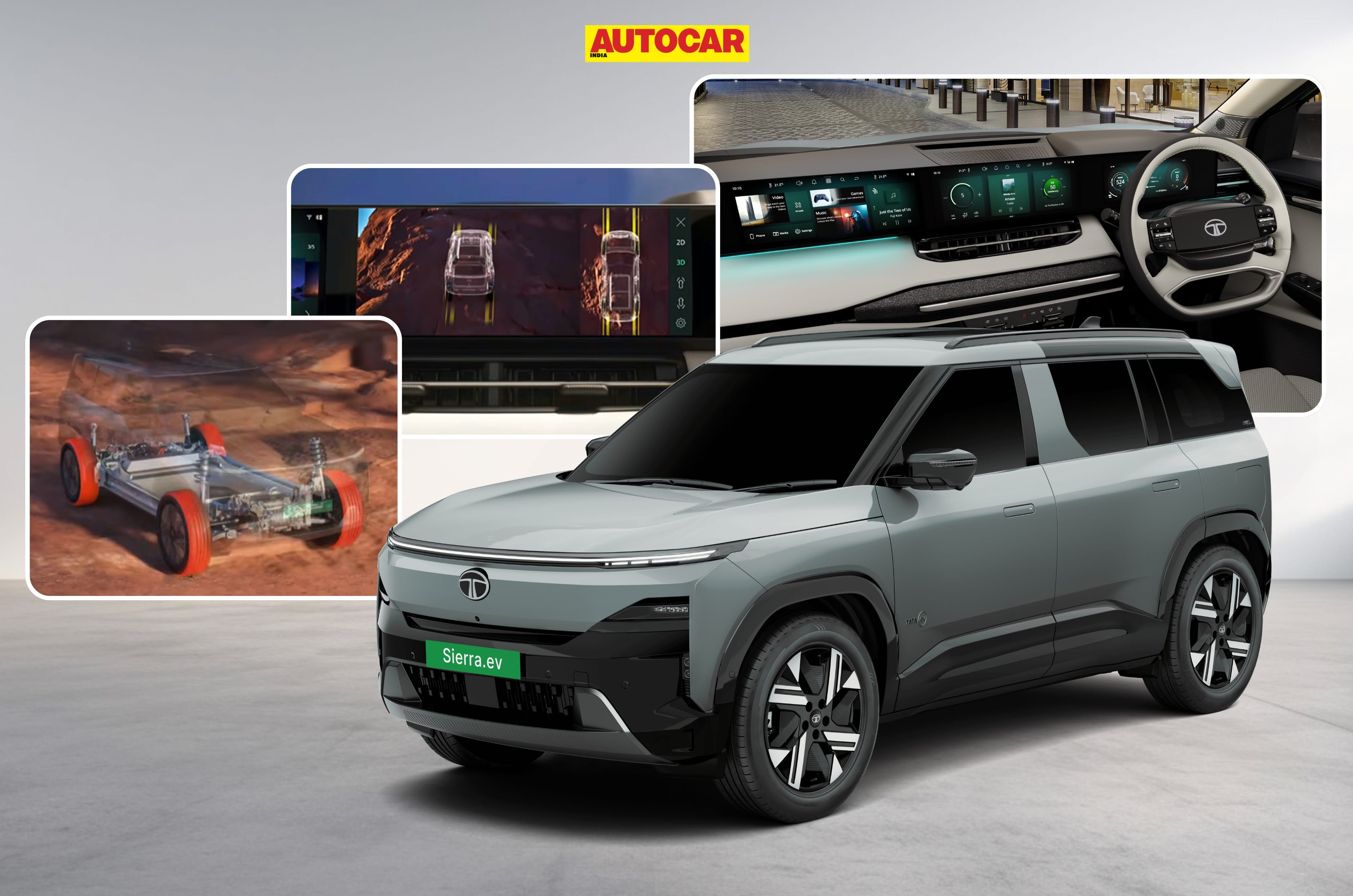
Tata Motors launched the fully electric version of the Sierra on June 30, 2026. Spread across three distinct variants, the Sierra EV joins the automaker’s all-electric line-up and is slotted between the Curvv EV and Harrier EV. The Harrier EV and Sierra EV are in a similar price bracket, with clear price overlaps between some trim levels, with the top-spec Curvv EV coming in close proximity to the latter. Let’s now look at how these cars compare against one another.
Tata Sierra EV dimensions vs Harrier EV, Curvv EV
The frunk and wheel sizes of the Sierra EV and Harrier EV differ based on variants
Tata Sierra EV dimensions vs Harrier EV, Curvv EV
Tata Sierra EV
Tata Harrier EV
Tata Curvv EV
Length (mm)
4,340
4,607
4,310
Width (mm)
1,841
1,922
1,810
Height (mm)
1,750
1,740
1,637
Wheelbase (mm)
2,730
2,741
2,560
Boot space (litres)
450*
502
500
Frunk (litres)
55/35
67/35
–
Wheel size (inches)
18-19
18-19
18
The Sierra EV is a significant 267mm shorter than the Harrier EV but 30mm longer than the Curvv EV. It’s not only 31mm wider than the Curvv EV but also a noticeable 113mm taller. Not just that, the Sierra EV is slightly taller than the Harrier EV, too. The Sierra EV has a wheelbase that’s 170mm longer than the Curvv’s but falls short of the Harrier’s by 11mm.
The luggage-carrying capacity of the Harrier EV is more than that of the Sierra EV, owing to its size. While we’re yet to measure it, Tata claims that the Sierra EV’s boot is similar in size to its combustion-powered namesake, where it’s 450 litres. This means that the Sierra EV’s boot is smaller than that of the Curvv EV by 50 litres. The frunk capacity of the Sierra EV and Harrier EV change based on the variant chosen, with the lower ones sporting more capacity. While the Sierra and Harrier can be had with 18- or 19-inch wheels, the Curvv EV is only offered with 18-inch rims.
Tata Sierra EV powertrain vs Harrier EV, Curvv EV
Sierra EV shares its dual-motor configuration, battery size and torque output with the Harrier EV
Tata Sierra EV powertrain vs Harrier EV, Curvv EV
Specifications
Curvv EV 55
Sierra EV
Harrier EV
Battery variant (kWh)
55
63 / 75 / 75 QWD
65 / 75 / 75 QWD
Front electric motor (hp)
167
NA / 140
NA / 158
Rear electric motor (hp)
NA
238 / 209 / 209
238 / 238 / 238
Combined torque (Nm)
215
315 / 315 / 504
315 / 315 / 504
Drive configuration
FWD
RWD / RWD / AWD
RWD / RWD / AWD
Claimed 0-100kph (sec)
8.6
5.8*
6.3*
Claimed range (km)
502
535 / 665 / 624
538 / 627 / 622
AC charging (7.2kW)
7.9 hrs (10-100%)
8.9-10.5 hrs (10-100%)
9.3-10.7 hrs (10-100%)
DC fast charging
40 mins at 70kW (10-80%)
25-26 mins at 120kW (20-80%)
25 mins at 120kW (20-80%)
*Claimed acceleration figures of the top-spec variants.
Both the Sierra and Harrier come in single-motor rear-wheel drive (RWD) and dual-motor all-wheel drive (AWD) versions. The entry-level variant of the Sierra and Harrier have identical outputs, with the torque remaining identical between all variants of these two SUVs. However, the mid-spec and top-spec Sierra’s rear motors make less power than their Harrier counterparts. Meanwhile, the Curvv EV is only offered with one powertrain option.
Since it’s likely less heavy than the larger Harrier, the Sierra EV QWD (Tata’s parlance for AWD) manages to finish the sprint from 0-100kph half-a-second quicker. It’s also 2.8 seconds quicker to 100kph than the single-motor front-wheel drive Curvv EV. The claimed range of the base- and top-spec Sierra EV are comparable to those of the Harrier EV, but the former’s mid-spec 75kWh RWD version has a slight range advantage.
Meanwhile, the Curvv EV’s claimed range is 122km shy of the Sierra EV’s. Both the Sierra and Harrier with the 75kWh battery option can accept DC fast-charging, taking the battery from 20-80 percent in about the same time. When plugged into a 7.2kW AC charger though, the Curvv’s smaller battery can be charged from 10-100 percent in a little over 7 hours. The Sierra EV needs about 1-3 hours extra to do the same, and the Harrier EV take a similar amount of time.
Tata Sierra EV features vs Harrier EV, Curvv EV
Among the top-spec variants of all three, the Sierra EV is the most feature-packed car here
Tata Sierra EV features vs Harrier EV, Curvv EV
Tata Curvv EV 55
Tata Sierra EV 75 QWD
Tata Harrier EV 75 QWD
Infotainment touchscreen
12.3-inch
12.3-inch
14.5-inch
Digital driver’s display
10.25-inch
10.25-inch
10.25-inch
Front passenger screen
No
12.3-inch
No
Voice-assisted sunroof
Panoramic
Panoramic
Panoramic
Multiple voice assistants
Yes
Yes
Yes
Powered seats
Yes (driver only)
Yes
Yes
Driver’s seat memory, welcome functions
No
Yes
Yes
Ventilated front seats
Yes
Yes
Yes
‘Boss’ mode
No
Yes
Yes (powered)
Wireless Apple CarPlay & Android Auto
Yes
Yes
Yes
Automatic climate control
Single-zone
Dual-zone
Dual-zone
Audio system
9-speaker JBL
12-speaker JBL Black
10-speaker JBL Black
Dolby Atmos
No
Yes
Yes
Wireless charging
Yes
Yes
Yes
Rear sunblinds
Yes
Yes
Yes
Surround-view camera
Yes (360-degree)
Yes (540-degree)
Yes (540-degree)
EV route planner
No
Yes (Android Auto)
No
Arcade.ev suite
Yes
Yes
Yes
‘AirConsole’ in-car gaming
No
Yes
No
‘DrivePay’
No
Yes
Yes
LED ambient lighting
Yes (multi-colour)
Yes (multi-colour)
Yes (multi-colour)
Connected-car features
Yes
Yes
Yes
‘Summon’ mode
No
Yes
Yes
Level 2 ADAS
Yes
Yes
Yes
Auto headlamps
Yes
Yes
Yes
Rain-sensing wipers
No
Yes
Yes
HUD
No
Yes
No
Airbags
6
6
7
SOS
Yes
Yes
Yes
Hill-hold control
Yes
Yes
Yes
Hill-descent control
No
Yes
Yes
Regen modes
4
4
4
Paddle shifters
Yes
Yes
Yes
Terrain modes
No
6
6
Drive modes
3
4
4
Powered tailgate
Gesture activated
Gesture activated
Gesture activated
V2L, V2V
Yes
Yes
Yes
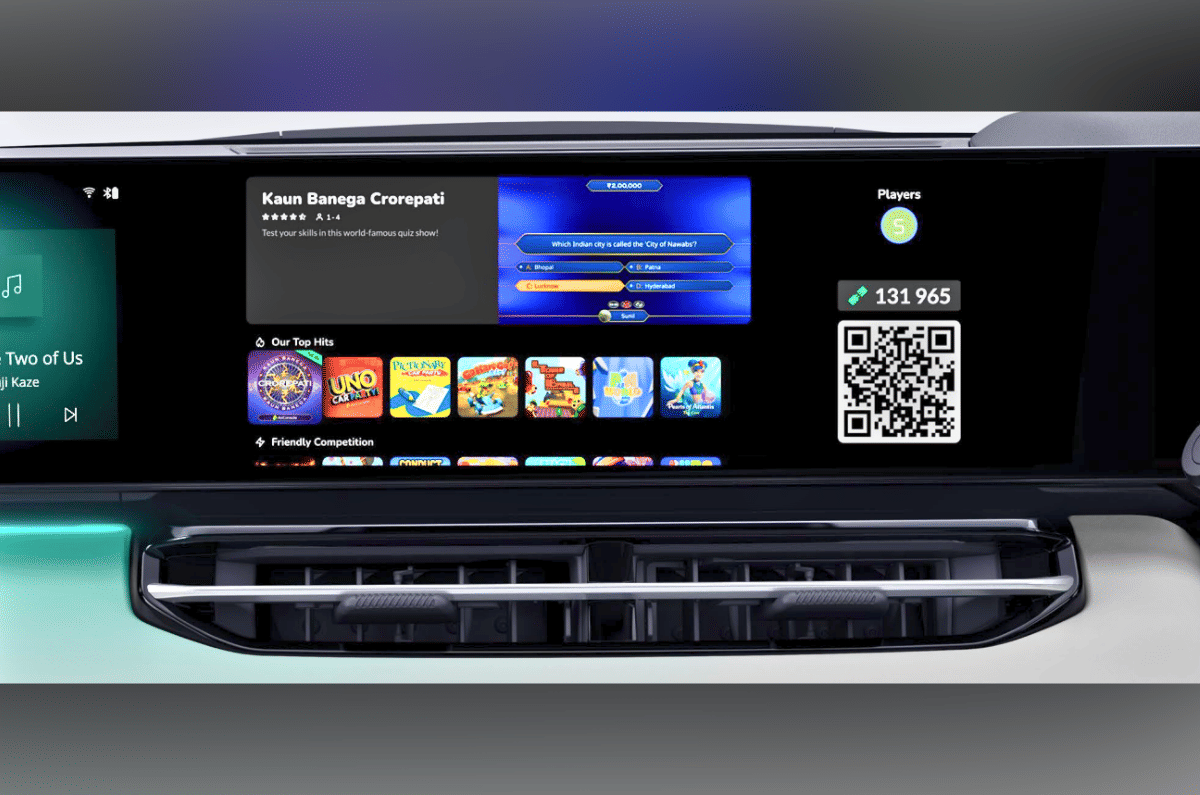
The Sierra EV gets a dedicated 12.3-inch infotainment screen for the front passenger, a JBL Black audio system with the most number of speakers, and a separate route planner meant currently for Android Auto users. It also comes with a new ‘AirConsole’ gaming feature, which syncs the user’s phone with the infotainment screen for playing games. Moreover, it’s only the Sierra EV that can be had with an augmented-reality head-up display (HUD).
The ‘Summon’ mode of the Sierra EV and Harrier EV allows the car to crawl out of parking spots using a key fob, while both models support Dolby Atmos and dual-zone climate control. Features like automatic headlamps & wipers, a driver’s seat with memory & welcome functions, 540-degree cameras, and hill-descent control are found on the Sierra EV as well as the Harrier EV. They also get 6 terrain modes: Normal, Grass/Snow, Mudruts/Gravel, Sand, Rock Crawl and Custom. However, the Harrier EV has 7 airbags and a larger primary touchscreen.
All three EVs come with four levels of regenerative braking, a gesture-activated tailgate, voice-activated panoramic sunroofs, and ventilated front seats. They also get Level 2 ADAS (Advanced Driver Assistance Systems) with adaptive cruise control and auto-emergency braking, plus vehicle-to-load (V2L) and vehicle-to-vehicle (V2V) functions. The Sierra EV has the most number of features here.
Prices of Tata Sierra EV vs Harrier EV, Curvv EV
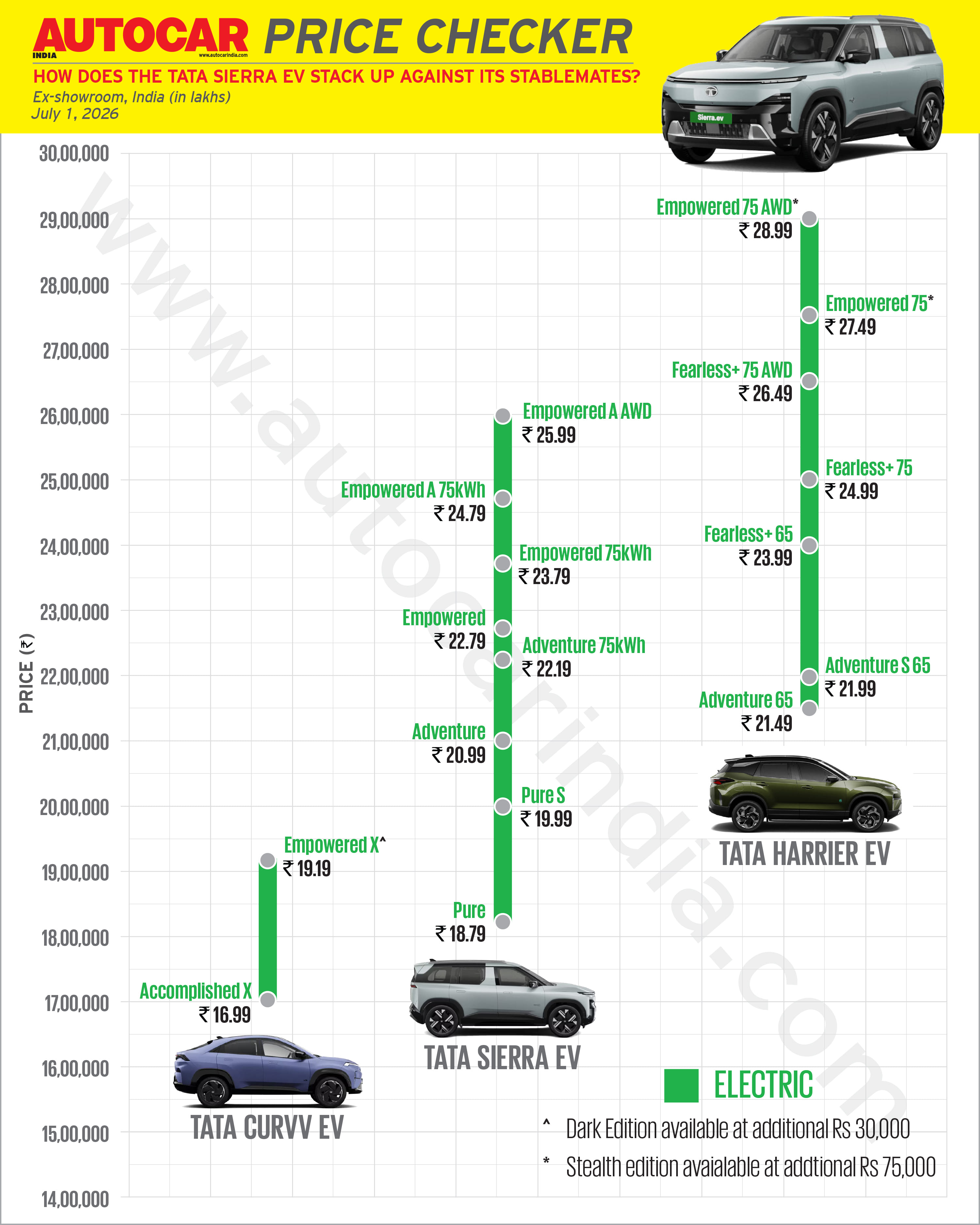
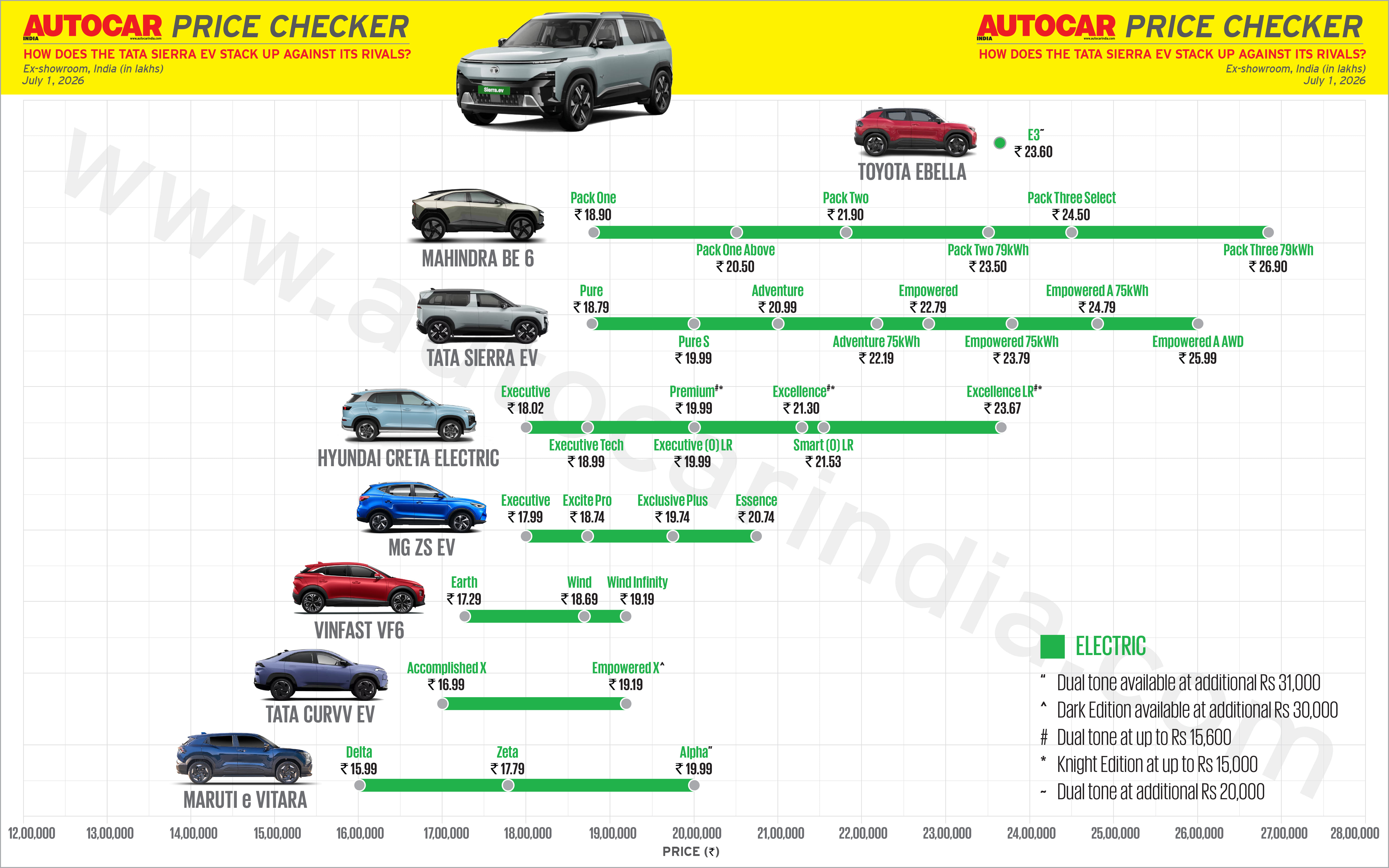
While the top-spec Empowered X trim of the Curvv EV comes closest to the base-spec Sierra EV, the latter is still fairly well-loaded. Moving on to the Sierra EV and Harrier EV, their mid-spec Adventure trims are fairly matched in terms of pricing. At the top end, there’s Rs 3 lakh separating the fully loaded Tata Sierra EV from its equivalent Harrier EV counterpart. Some of the extra cash spent on the Sierra EV goes towards features that are exclusive to it – like the augmented-reality head-up display and dedicated screen for the front passenger. On the other hand, the price difference between the base Sierra EV and Curvv EV is Rs 1.8 lakh, with that gap widening to Rs 6.8 lakh at the top end.
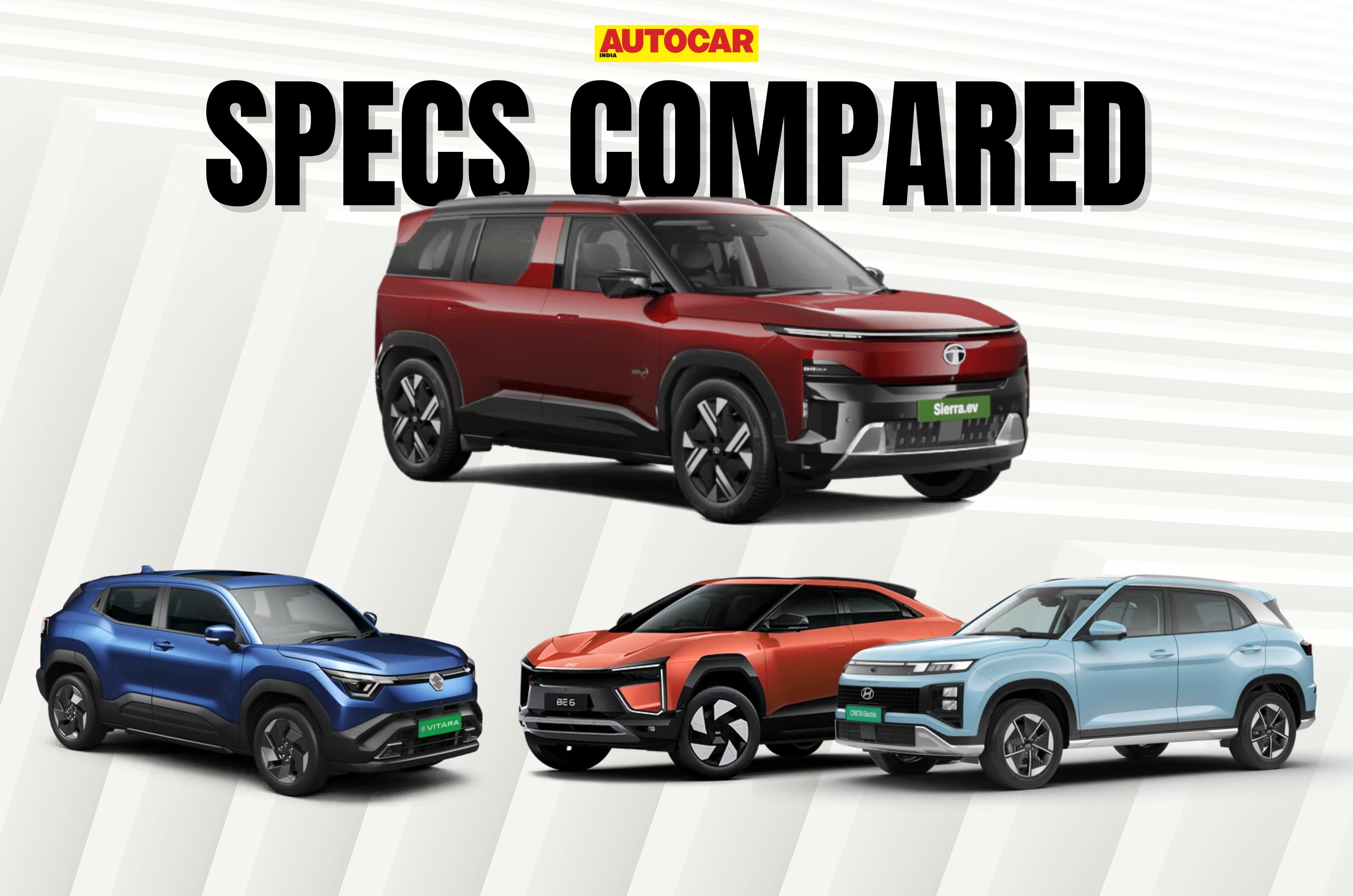
When it comes to the starting price, the Sierra EV is the third most expensive among rivals. In top-spec guise, it comes across as the second most expensive, undercutting the RWD BE 6 despite additionally offering AWD. The Maruti e Vitara is the most affordable model in the segment, while its badge-engineered Toyota Ebella’s sold variant has the highest starting price. At an identical Rs 19.19 lakh, the Tata Curvv EV and the Vinfast VF6 have the most accessible pricing for top-specification versions here.
Tata Sierra EV vs rivals: Dimensions
Tata Sierra EV vs rivals: Dimensions
Sierra EV
e Vitara
Ebella
Creta Electric
VF6
Curvv EV
ZS EV
BE 6
Length (mm)
4,340
4,275
4,275
4,340
4,241
4,310
4,323
4,371
Width (mm)
1,841
1,800
1,800
1,790
1,834
1,810
1,809
1,907
Height (mm)
1,750
1,640
1,640
1,655
1,615
1,637
1,649
1,627
Wheelbase (mm)
2,730
2,700
2,700
2,610
2,730
2,560
2,585
2,775
Ground clearance (mm)
205
185
185
200
190
186-190
177
207
Boot space (litres)
450
306
306
433
423
500
448
455
Frunk space (litres)
35-55
N/A
N/A
22
N/A
11.6
N/A
45
Wheel size (inches)
18-19
18
18
17
17-18
17-18
17
18-19
The Sierra EV is the tallest and has the largest frunk capacity in the segment. At the same time, it ranks second concerning length, width, wheelbase, and ground clearance after the BE 6. Despite its coupe SUV bodystyle, the Curvv EV gets the largest boot. A frunk is missing on the ZS EV, e Vitara, Ebella, and the VF6. Wheel sizes are the smallest on the Creta Electric and ZS EV, while the largest ones are on the Sierra EV and BE 6.
Tata Sierra EV vs rivals: Battery and range
Tata Sierra EV vs rivals: Battery and range
Sierra EV
e Vitara
Ebella
Creta Electric
VF6
Curvv EV
ZS EV
BE 6
Battery size (kWh)
63 / 75
49 / 61
61
42 / 51.4
59.6
55
50.3
59 / 79
Motor setup
RWD / RWD, AWD
FWD
FWD
FWD
FWD
FWD
FWD
RWD
Power (hp)
238 / 209, 140 (front) 240 (rear)
144 / 174
174
135 / 171
177 / 204
167
177
231 / 286
Torque (Nm)
315 / 315, 504
193
193
255
250 / 310
215
280
380
ARAI range (km)
535 / 665, 624
440 / 543
543
420 / 510
468 / 463
502
461
548 / 683
The Sierra EV is the only eSUV to offer an AWD version and has a diverse powertrain lineup. Its 75kWh battery pack is second only to the Mahindra BE 6’s 79kWh unit, while the Creta Electric’s 42kWh battery is the smallest here. The Ebella, Curvv EV, ZS EV, and VF6 only offer a single battery pack option. While the BE 6 and other variants of the Sierra EV are inherently AWD, the remaining eSUVs have a FWD layout. For models with a single-motor setup, the BE 6 79kWh version develops the most power by a healthy margin, followed by the Sierra EV’s RWD 75kWh variant. However, the Sierra EV’s AWD version churns out the highest torque. As for the claimed range, the BE 6’s 79kWh and the Sierra EV’s 75kWh RWD versions grab the first and second spots, respectively. The Creta Electric’s 42kWh version develops the least power and has the lowest claimed range figure among all SUVs here.
Tata Sierra EV vs rivals: Charging times
Tata Sierra EV vs rivals: Charging times
Sierra EV
e Vitara
Ebella
Creta Electric
VF6
Curvv EV
ZS EV
BE 6
Battery size (kWh)
63 / 75
49 / 61
61
42 / 51.4
59.6
55
50.3
59 / 79
AC charging output support (kW)
7.2
7.4
7.2
11
N/A
7.2
7.4
7.2, 11.2
DC charging output support (kW)
110 / 120
70
N/A
100
100
70
50
140 / 180
AC charging time (hours)
8.9 / 10.5
(10-100%)
6.5 / 9
(10-100%)
N/A
4 / 4.83
(10-100%)
N/A
7.9
(10-100%)
9
(0-100%)
8.7, 6 / 11.7, 8
(0-100%)
DC charging time (minutes)
25 / 26
(20-80%)
45
(10-80%)
N/A
39
(10-80%)
25
(10-70%)
40
(10-80%)
60
(0-80%)
20
(20-80%)
Most SUVs here, including the Sierra EV, offer about 7kW AC charging speeds as standard, while the Creta Electric gets faster 11kW support. The BE 6 offers an 11.2kW charger, but at an additional cost. AC charging-wise, the larger battery packs on the Sierra lend it to the slower side of the comparison. As for DC charging, the Sierra EV supports the second-quickest charging outputs, and its charging time isn’t too far behind that of the BE 6s that support faster charging outputs.
The new Tata Sierra EV is positioned right between the Curvv and Harrier electric SUVs in Tata Motors’ ever expanding EV lineup. Sharing a lot of features and even mechanical underpinnings with the Harrier EV, it is Tata’s second car to now get an optional all-wheel drive (AWD) system. In this feature, we break down what each Sierra EV variant offers and explain which one makes the most sense to buy.
Tata Sierra EV prices and powertrain specs
Tata Sierra EV variant-wise prices (Rs lakh)*
Trim
63kWh
75kWh
Pure
18.79
–
Pure S
19.99
–
Adventure
20.99
22.19
Empowered
22.79
23.79
Empowered A
–
24.79
Empowered A AWD
25.99
*7.2kW home charger and its installation cost an extra Rs 49,000.
The Sierra EV is priced towards the higher end of the midsize electric SUV segment, sitting close to the Mahindra BE 6, which is priced between Rs 18.9 lakh and Rs 26.9 lakh. The Sierra EV is available with 63kWh and 75kWh battery pack options, and both get a rear-mounted electric motor producing 315Nm. The 63kWh variants develop 238hp, while the 75kWh versions produce 209hp. The larger battery is also available with a dual-motor AWD option, which adds a 140hp front motor; combined torque output from this AWD setup is rated at 504Nm. With Boost Mode activated, the AWD version can sprint from 0-100kph in a claimed 5.8 seconds.
Tata Motors claims an MIDC-certified range of 665km for the 75kWh RWD variants, 624km for the 75kWh AWD version and 535km for the 63kWh variants. Using a 120kW DC fast charger, the battery can gain up to 263km of range in 15 minutes, while a 20-80 percent charge takes around 26 minutes. Using a 7.2kW AC charger, the 63kWh battery takes 8.9 hours to charge from 10-100 percent, while the 75kWh battery takes 10.5 hours.
Tata Sierra EV colour options
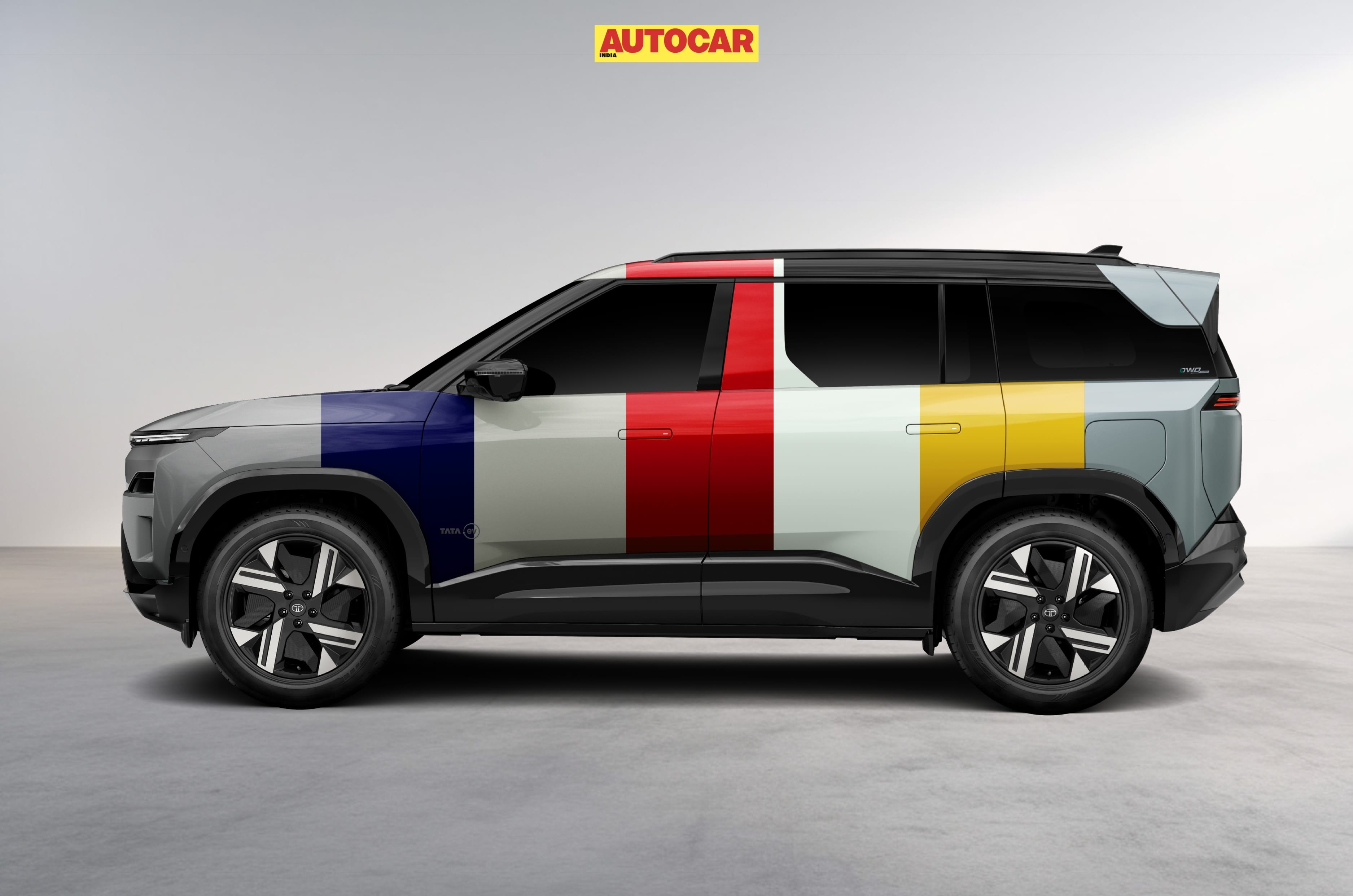
The Tata Sierra EV is offered in seven monotone colour options: Rishikesh Rapids, Nainital Nocturne, Coorg Clouds, Pure Grey, Pristine White, Andaman Adventure and Bengal Rouge. Of these, Rishikesh Rapids and Nainital Nocturne are exclusive to the Sierra EV, while the remaining colours are also available on the ICE-powered Sierra.
The entry-level Pure trim is available in Coorg Clouds, Pure Grey and Pristine White. The Adventure trim adds Andaman Adventure and Bengal Rouge, while the top-spec Empowered variant also gets Rishikesh Rapids. Nainital Nocturne is reserved exclusively for the Sierra EV AWD.
Tata Sierra EV variant-wise features
Pure
Rs 18.79 lakh
6 airbags
All-wheel disc brakes
Electronic stability program (ESP)
Rain-sensing wipers
Hill hold control
Hill descent control
Traction control system (TCS)
Electronic parking brake with auto hold
Electronic brakeforce distribution (EBD)
Antilock braking system (ABS)
Central lock
Tyre pressure monitoring system (TPMS)
Tyre repair kit
Rear wiper and washer
Rear camera
Push button start/ stop
10.25-inch driver’s display
12.3-inch touchscreen
Wireless Android Auto and Apple CarPlay
8 speakers
Amazon Alexa voice assistant
Connected car tech
Over the air (OTA) updates
2 front USB Type-C ports (15W multimedia and 65W charging)
2 rear 65W USB Type-C ports
Tilt and telescopic adjustment for the steering wheel
Steering mounted controls
Paddle shifters for regenerative braking
Cruise control
Manually adjustable front seats
Manual IRVM
Height-adjustable front seatbelts
Front armrest with storage
Cooled glovebox
Automatic AC
PM 2.5 air purifier
Drive modes: Economy, City and Sports
Valet mode
Power windows
EV route planner for Android Auto
Adjustable headrests at the front and rear
Rear AC vents
Rear window sunshade
Automatic LED projector headlamps
LED DRLs and tail lamps
18-inch alloy wheels
Electrically adjustable ORVMs with turn indicators
Which Tata Sierra EV variant should you consider buying?
We recommend the Rs 19.99 lakh-Pure S trim, which packs passenger convenience features such as a panoramic sunroof, a 10.25-inch digital driver’s display, a 12.3-inch touchscreen, wireless Android Auto and Apple CarPlay, an eight-speaker audio system, automatic climate control and cruise control. It comes only with the 63kWh battery pack, which offers a real-world range of 440-460km, according to Tata’s C75 tests (represents a real-world range figure that can be expected by buyers). This should be more than sufficient for daily office commutes as well as highway trips.
However, if your budget allows, the Rs 22.19 lakh-Adventure trim with the 75kWh battery pack is worth considering. It’s the most affordable Sierra EV variant with the larger 75kWh battery pack, which increases the claimed real-world range to 510-530km, as per Tata’s C75 tests. Besides the longer range, it also adds features such as a 360-degree camera with blind-spot view, Boss mode, a wireless phone charger, a 12-speaker JBL Black audio system, Dolby Atmos, AirConsole remote gaming support and more.
Ex-showroom prices mentioned above are as of July 1, 2026.
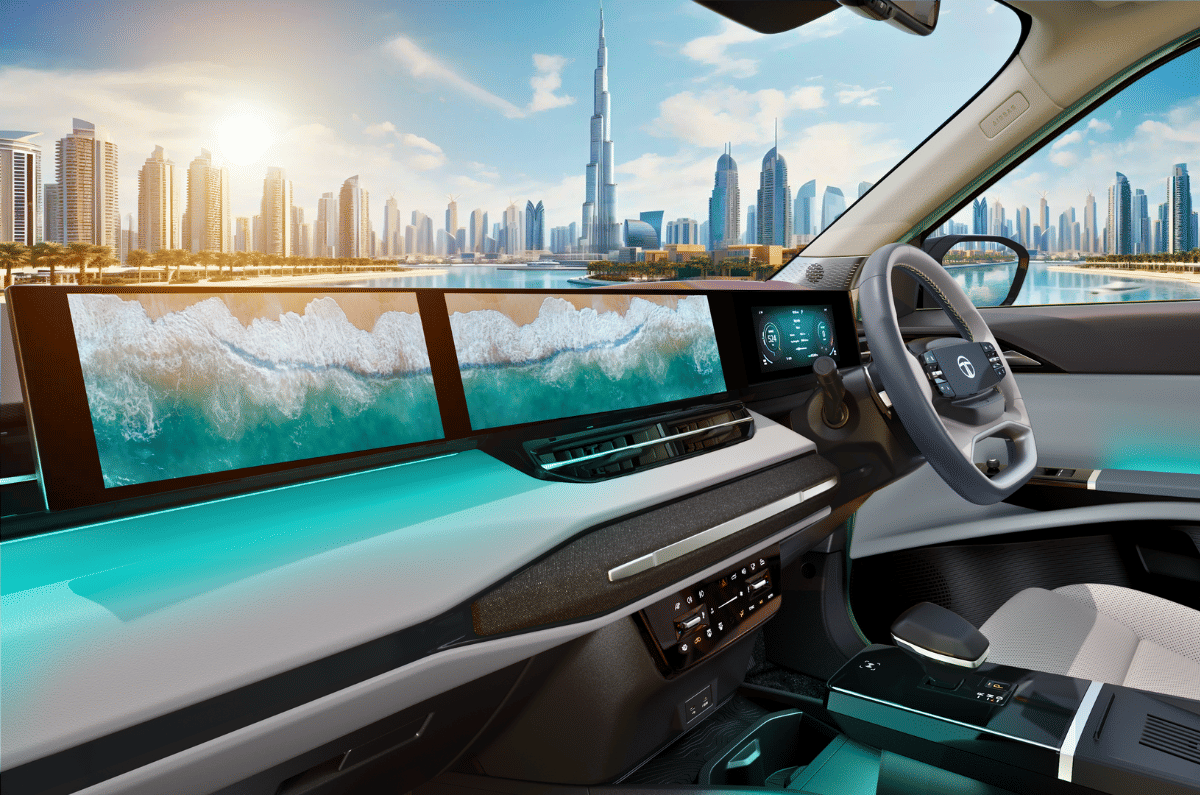
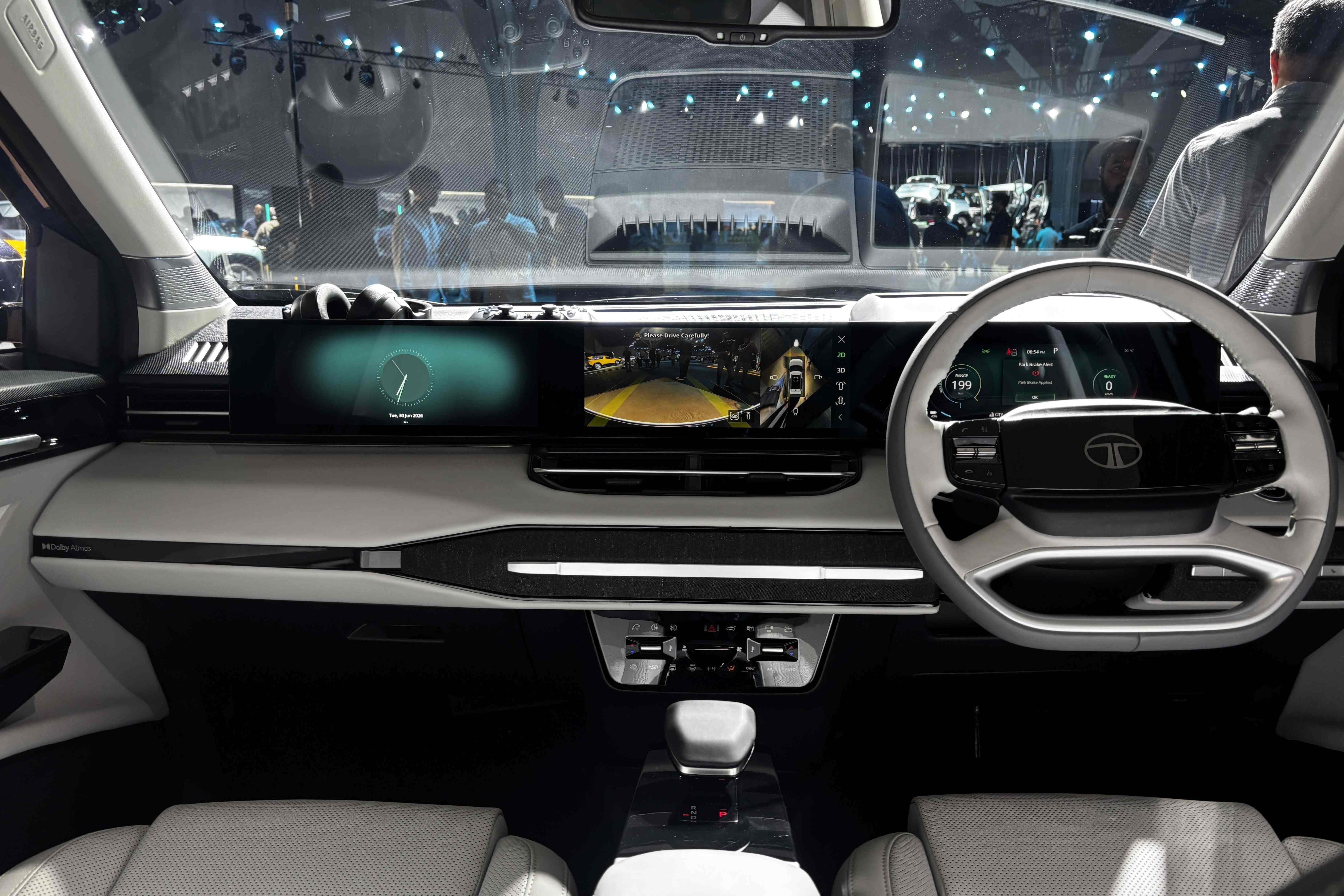
Unlike the dual-screen setup of rivals, the Sierra EV gets three screens: 12.3-inch touchscreen, a 12.3-inch instrument cluster and a 10.25-inch passenger screen. The latter unit gives the co-driver a dedicated touchscreen for entertainment. There’s Dolby Atmos support as well, just like the BE 6, but Tata claims the Sierra EV is the first car in India to bring the surround sound technology to Apple CarPlay.
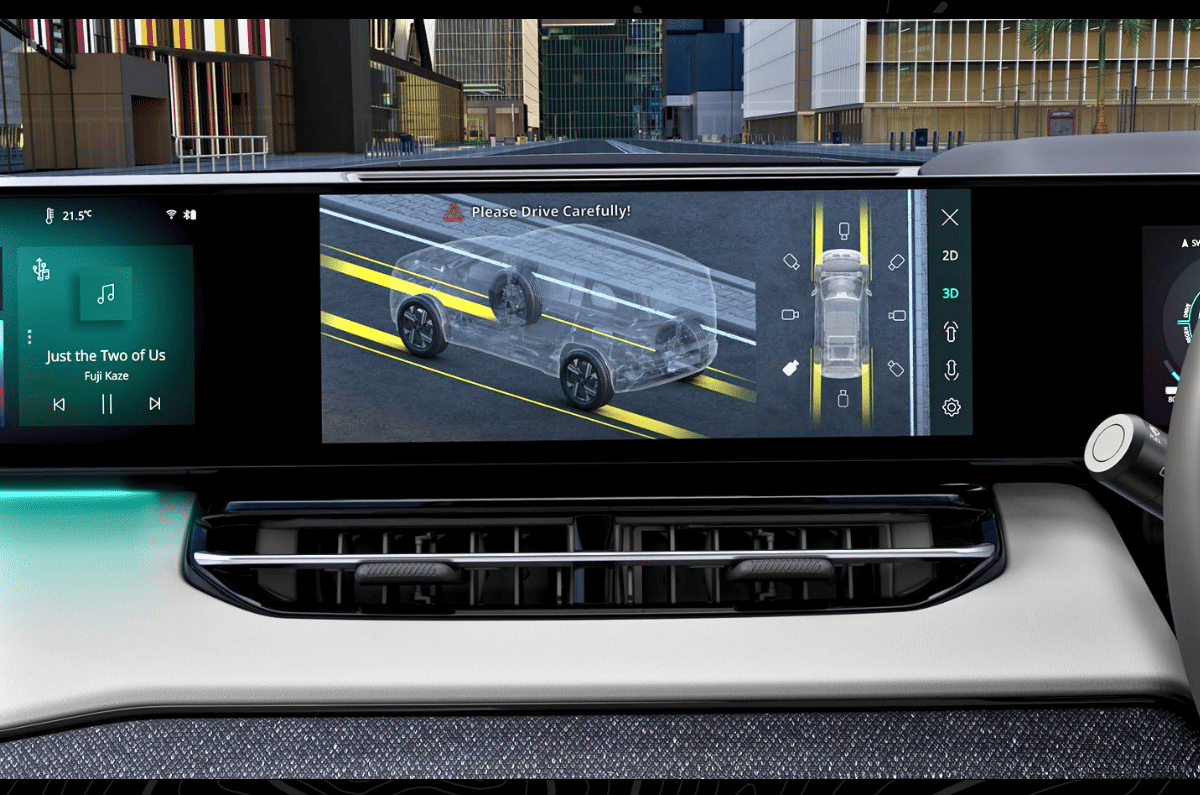
540-degree camera
A 360-degree camera, as the name suggests, gives a surround view of the area around the car, but a 540-degree camera goes a step further by showing what’s underneath the vehicle. This can be useful while off-roading, as it helps the driver see where the wheels are placed and better understand the terrain below.
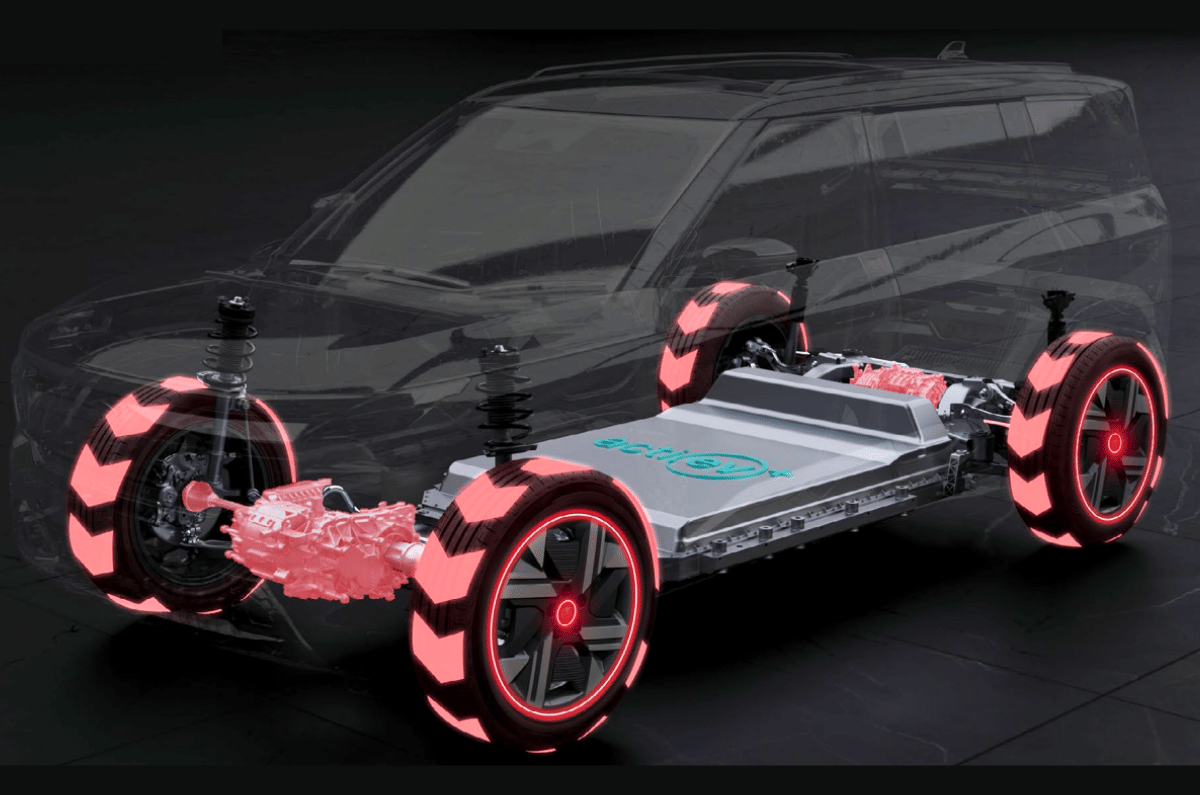
All-wheel drive
Speaking of off-roading again, Tata Motors has equipped the Sierra EV with electric motors at both the front and rear, which enable all-wheel-drive (AWD). Not only is AWD a standout feature in this segment, it also makes the Sierra EV the quickest among its rivals, with a claimed 0-100kph time of 5.8 seconds; the BE 6 has the next best sprint time at 6.7 seconds (claimed), which is nearly a second more than the Sierra. This is with the 75kWh battery pack, which uses a 140hp front motor and a 209hp rear motor, producing a combined 504Nm of torque.
Remote gaming support
The Sierra EV comes with AirConsole, which turns the infotainment screen into a multiplayer gaming console. Even better, players can use their smartphones as game controllers, eliminating the need to poke at the touchscreen while playing. This can help keep occupants entertained, especially during charging breaks.
Tata Sierra EV price vs rivals
The top-spec Tata Sierra EV Empowered A AWD variant, which gets all of the above mentioned standout features, costs Rs 25.99 lakh, ex-showroom. That makes it costlier than most of it rivals at the top-end, save for the Rs 26.9 lakh-Mahindra BE 6 Pack Three (price is exclusive of home charger and installation costs). Despite being priced Rs 91,000 lower than the Mahindra EV, the Tata Sierra EV makes a strong case for itself by offering both standout features and an AWD setup.
The Tata Sierra EV is available in 7 colour options, all of which are monotone options. These include Rishikesh Rapids, Nainital Nocturne, Coorg Clouds, Pure Grey, Prsitine White, Andaman Adventure and Bengal Rouge. Of these, Rishikesh Rapids and Nainital Nocturne are exclusive to the Sierra EV, while the others are shared with the ICE-powered Sierra. The base Pure trim only gets three colour options: Coorg Clouds, Pure Grey and Prsitine White. The mid-spec Adventure trim adds Andaman Adventure and Bengal Rouge, while the top-spec Empowered trim brings in the Rishikesh Rapids shade. The Nainital Nocturne is limited to only the Sierra EV AWD variant.
टाटा मोटर्स पैसेंजर व्हीकल्स ने भारत में अपनी नई Tata Sierra EV लॉन्च कर दी है। इसकी शुरुआती एक्स-शोरूम कीमत 18.79 लाख रुपये रखी गई है। इसके साथ ही टाटा की सबसे लोकप्रिय एसयूवी में से एक सिएरा अब पूरी तरह इलेक्ट्रिक रूप में भारतीय बाजार में लौट आई है। नई Tata Sierra EV कुल पांच वेरिएंट में उपलब्ध है। इसमें दो बैटरी पैक का विकल्प मिलता है। कंपनी का दावा है कि यह एक बार चार्ज करने पर 665 किलोमीटर तक (एमआईडीसी प्रमाणित) की ड्राइविंग रेंज देती है। इसके अलावा इसमें ऑल-व्हील ड्राइव (AWD) का विकल्प और बैटरी पर लाइफटाइम वारंटी भी दी गई है।
यह टाटा मोटर्स की सातवीं इलेक्ट्रिक कार है। इससे पहले कंपनी टियागो ईवी, टिगोर ईवी, पंच ईवी, नेक्सॉन ईवी, कर्व ईवी और हैरियर ईवी को बाजार में उतार चुकी है। Tata Sierra EV की बुकिंग आज से शुरू हो गई है, जबकि इसकी डिलीवरी 15 जुलाई से शुरू होगी। ग्राहक चाहें तो 49,000 रुपये अतिरिक्त देकर 7.2 किलोवॉट एसी फास्ट चार्जर का विकल्प भी ले सकते हैं।
Tata Sierra EV: कीमत और वेरिएंट
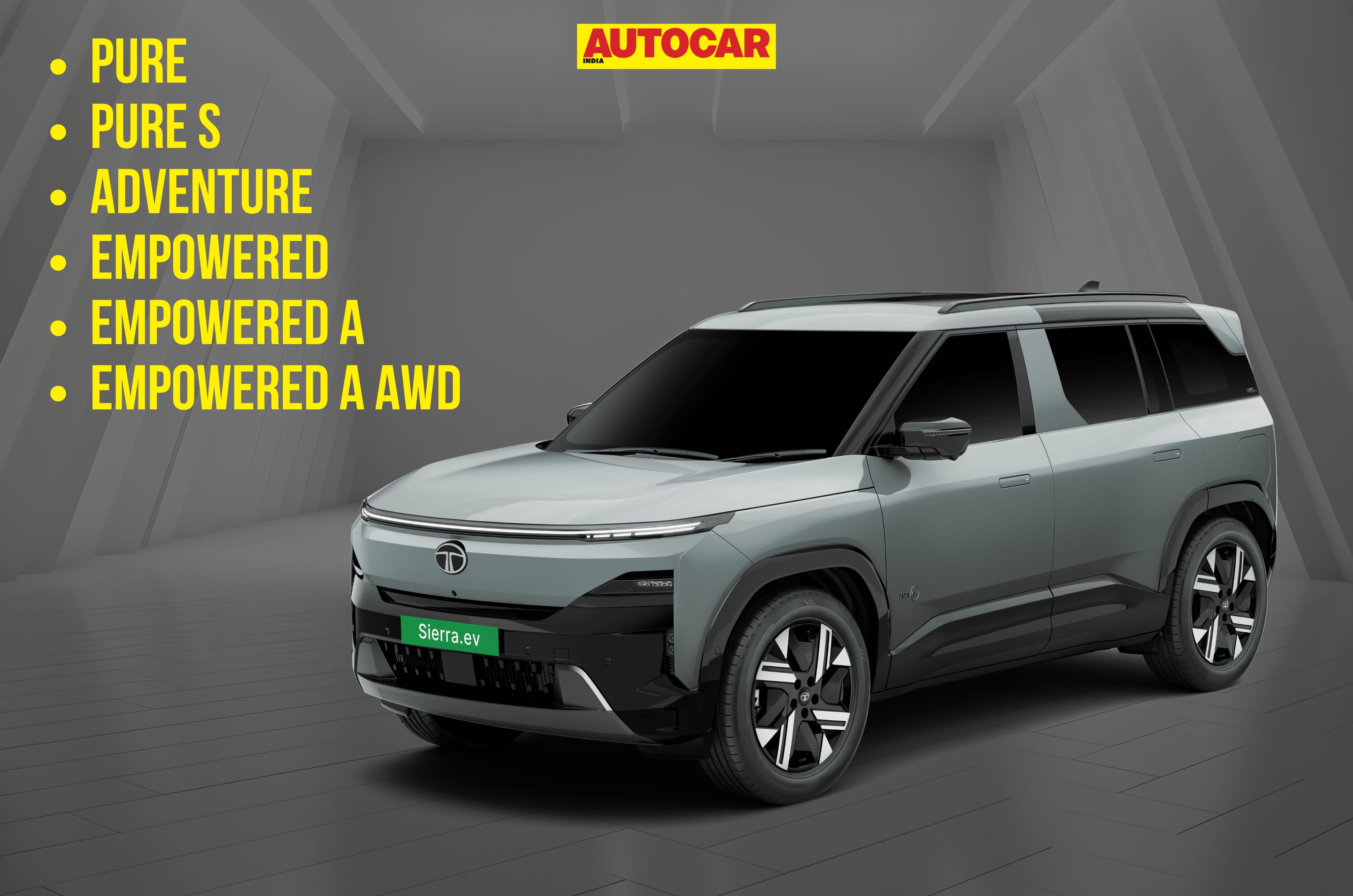
Tata Sierra EV को कंपनी ने पांच वेरिएंट में लॉन्च किया है। इनमें प्योर, प्योर एस, एडवेंचर, एम्पावर्ड और एम्पावर्ड ए शामिल हैं। इस इलेक्ट्रिक एसयूवी की शुरुआती एक्स-शोरूम कीमत 18.79 लाख रुपये है। वहीं, इसका सबसे टॉप मॉडल एम्पावर्ड ए (QWD) 25.99 लाख रुपये (एक्स-शोरूम) में उपलब्ध है। यह वेरिएंट सबसे ज्यादा फीचर्स और बेहतर परफॉर्मेंस के साथ आता है।
Tata Sierra EV: बैटरी, रेंज और चार्जिंग
Tata Sierra EV में दो बैटरी विकल्प दिए गए हैं। पहला 63 kWh और दूसरा 75 kWh बैटरी पैक है। कंपनी के मुताबिक, 75 kWh बैटरी एक बार फुल चार्ज होने पर 665 किलोमीटर तक (एमआईडीसी प्रमाणित) चल सकती है। वहीं, 63 kWh बैटरी की रेंज 565 किलोमीटर बताई गई है।
टाटा मोटर्स का कहना है कि रोजमर्रा के इस्तेमाल में 75 kWh बैटरी वाली सिएरा ईवी करीब 510 से 530 किलोमीटर तक चल सकती है। वहीं, 63 kWh बैटरी वाला मॉडल 440 से 460 किलोमीटर तक की वास्तविक ड्राइविंग रेंज देगा। इसके अलावा 75 kWh बैटरी के साथ आने वाला क्वाड-व्हील ड्राइव (QWD) मॉडल एक बार चार्ज करने पर 500 किलोमीटर से ज्यादा की रेंज देने का दावा करता है।
चार्जिंग की बात करें तो इसमें 120 kW डीसी फास्ट चार्जिंग, 7.2 kW एसी चार्जिंग और 3.3 kW एसी चार्जिंग का विकल्प मिलता है। 120 kW डीसी फास्ट चार्जर की मदद से बैटरी को सिर्फ 26 मिनट में 20% से 80% तक चार्ज किया जा सकता है। वहीं, कंपनी का दावा है कि 15 मिनट की फास्ट चार्जिंग में यह इलेक्ट्रिक एसयूवी 250 किलोमीटर से ज्यादा की ड्राइविंग रेंज दे सकती है।
इसके अलावा Tata Sierra EV में व्हीकल-टू-व्हीकल (V2V) और व्हीकल-टू-लोड (V2L) जैसी आधुनिक सुविधाएं भी दी गई हैं। इनकी मदद से जरूरत पड़ने पर कार से दूसरे इलेक्ट्रिक वाहन या अन्य इलेक्ट्रॉनिक उपकरणों को भी बिजली दी जा सकती है।
Tata Sierra EV: पावर और परफॉर्मेंस
Tata Sierra EV को कंपनी ने दो इलेक्ट्रिक मोटर विकल्पों के साथ पेश किया है। इसके रियर-व्हील ड्राइव (RWD) मॉडल में 175 kW की इलेक्ट्रिक मोटर दी गई है, जो 340 Nm का टॉर्क पैदा करती है। वहीं, इसके टॉप वेरिएंट में 103 kW की फ्रंट मोटर भी मिलती है। दोनों मोटरों के साथ यह एसयूवी ऑल-व्हील ड्राइव (AWD) सिस्टम से लैस हो जाती है, जिससे इसकी पकड़ और प्रदर्शन बेहतर हो जाता है। टाटा मोटर्स का दावा है कि सिएरा ईवी महज 5.8 सेकंड में 0 से 100 किलोमीटर प्रति घंटे की रफ्तार पकड़ सकती है। कंपनी के अनुसार, यह अब तक भारत में लॉन्च हुई सबसे तेज इलेक्ट्रिक एसयूवी है।
Tata Sierra EV: डिजाइन और फीचर्स
Tata Sierra EV का डिजाइन काफी हद तक सिएरा के पेट्रोल-डीजल (आईसीई) मॉडल जैसा है, लेकिन इसे इलेक्ट्रिक एसयूवी का आधुनिक लुक देने के लिए कई खास बदलाव किए गए हैं। इसमें आगे की तरफ पारंपरिक ग्रिल की जगह बंद फ्रंट पैनल दिया गया है, जो आज की ज्यादातर इलेक्ट्रिक कारों की पहचान बन चुका है। इसके अलावा कार के फ्रंट बंपर को भी नया डिजाइन दिया गया है, जिससे इसका लुक और ज्यादा आकर्षक दिखाई देता है। वहीं, पीछे की तरफ कार के डिजाइन में ज्यादा बदलाव नहीं किए गए हैं। इसका रियर लुक पेट्रोल-डीजल मॉडल जैसा ही रखा गया है, जिससे सिएरा की पहचान बरकरार रहती है।
Tata has launched the Sierra EV at a starting price of Rs 18.79 lakh. It gets a similar interior to its ICE counterpart, but gets a black and grey theme this time. The dashboard is dominated by a triple-screen setup for the digital driver’s display, infotainment system, and a passenger display. Other features include ambient lighting, a 12-speaker JBL Black sound system, dual-zone climate control, a panoramic sunroof, manual Boss mode, a cabin air purifier, powered and ventilated front seats, a powered tailgate, Level 2 ADAS, connected car tech, auto park assist, a heads-up display, a digital key, and over-the-air (OTA) updates. Swipe to check out the Tata Sierra EV interior, along with its features, through our image gallery.
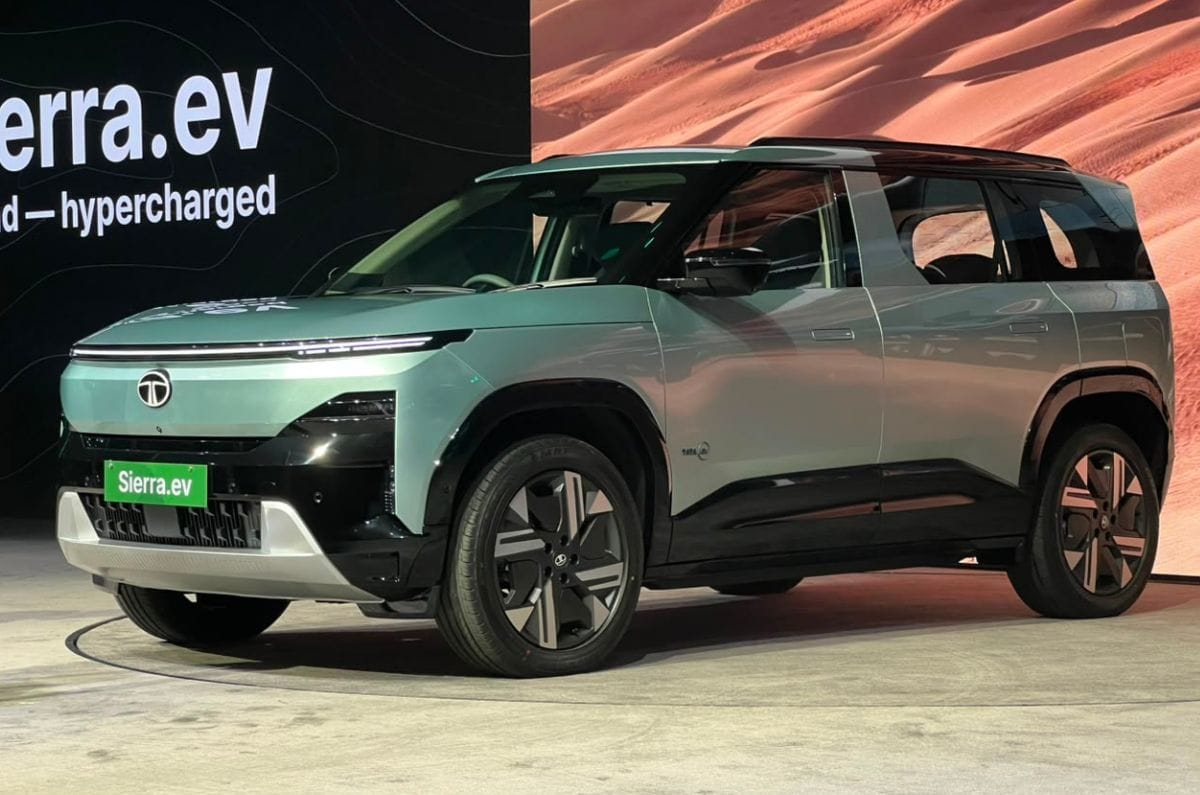
The new Tata Sierra EV largely carries forward the same design as its ICE-powered sibling, save for some ‘.ev’ badging and some changes to the fascia. A body-coloured blanked-off grille has replaced the regular Sierra’s blacked-out, functional unit. The lighting elements remain exactly the same, but unlike the ICE Sierra, the EV lacks the ‘Sierra’ branding just below the LED light bar. Lower down, the bumper has a gloss-black finish and a faux silver skid plate on the chin. In essence, the colourways have been reversed here. Elsewhere, the Sierra’s signature curved-over rear windows, butch stance, slim LED light bands and even the alloy wheels have been carried forward unchanged. Prices for the Sierra EV range between Rs 18.79 lakh and Rs 25.99 lakh (ex-showroom).