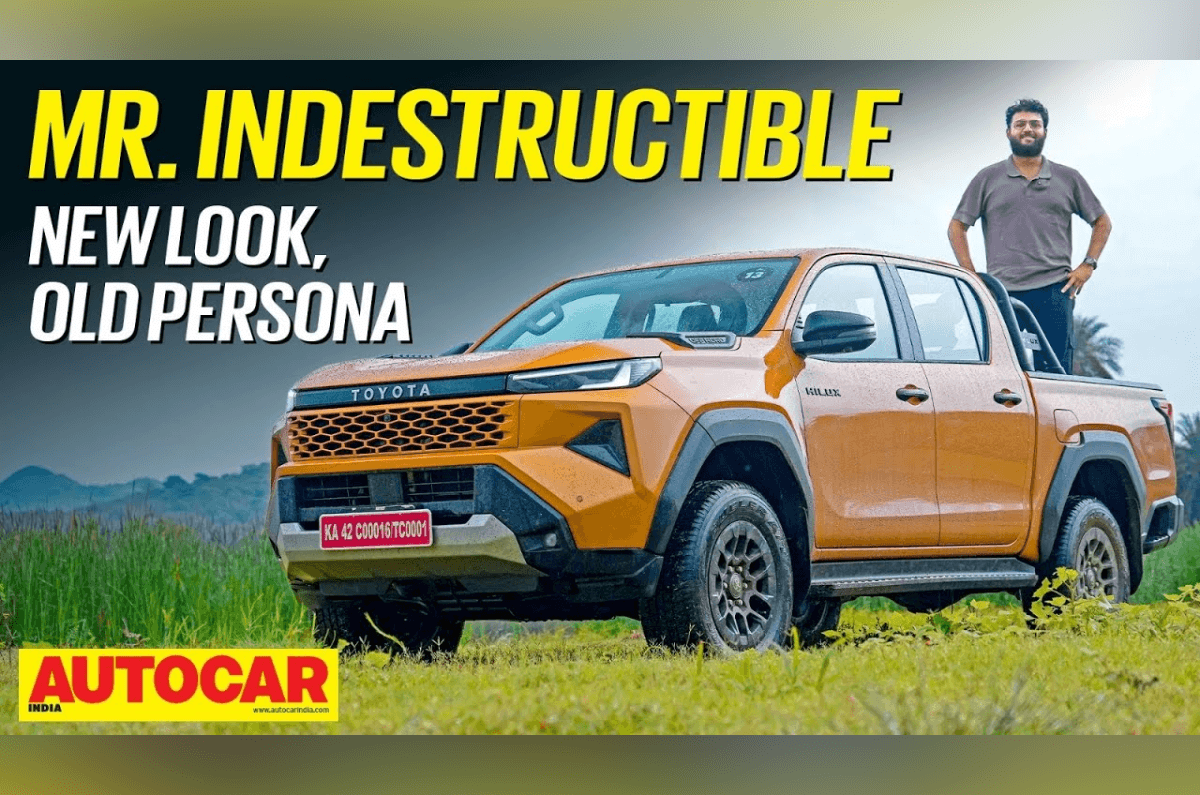
Also see:


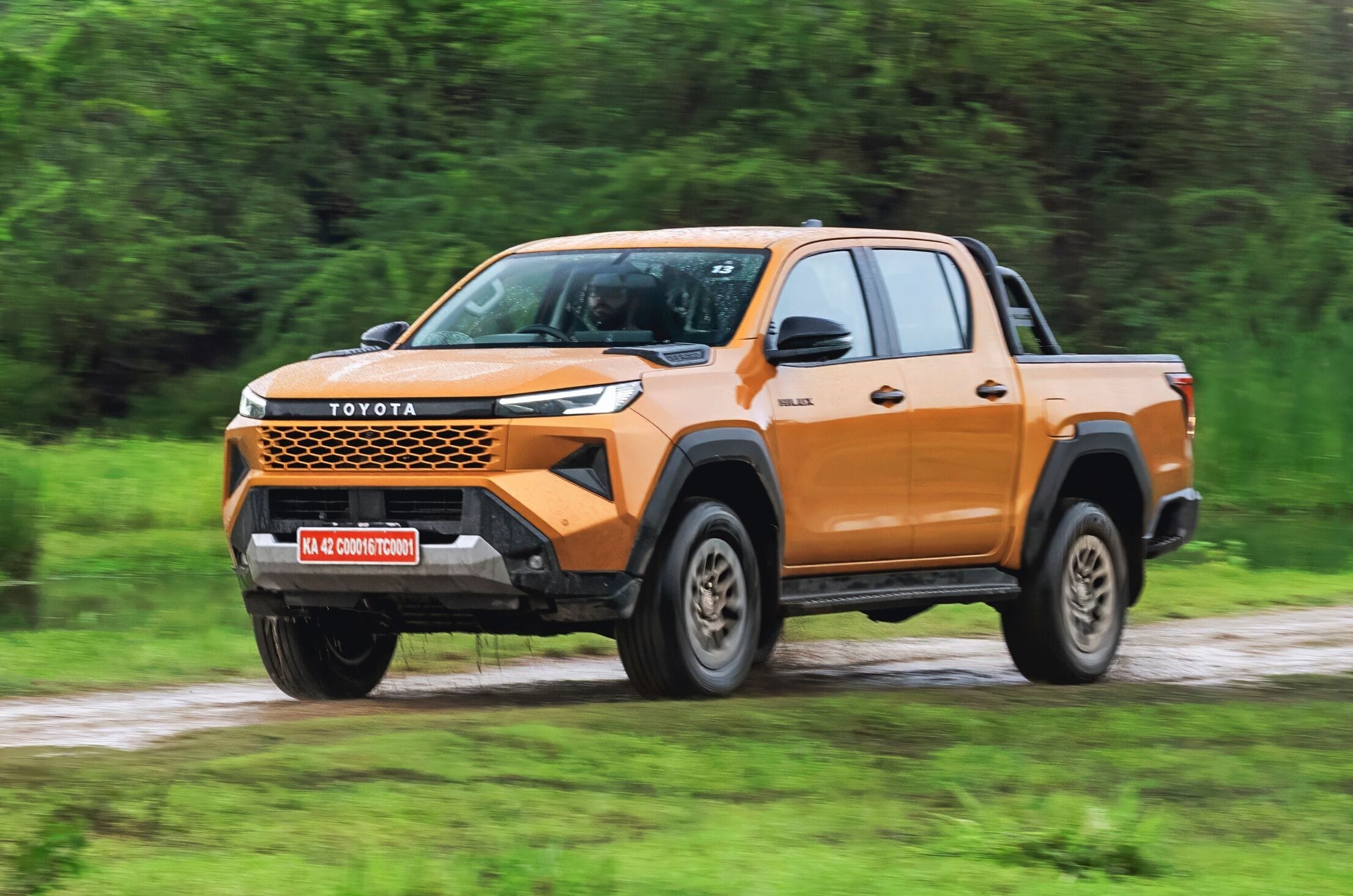
Back in 2004, Toyota debuted its ‘Innovative International Multi-purpose Vehicle’ platform (or IMV for short), which spawned the 7th generation Hilux and the 1st generation of the Fortuner and Innova. As for the Hilux, it moved on to the 8th generation in 2015 and we now have this, the new 9th generation model, still underpinned by the IMV platform, albeit with major modifications and updates.
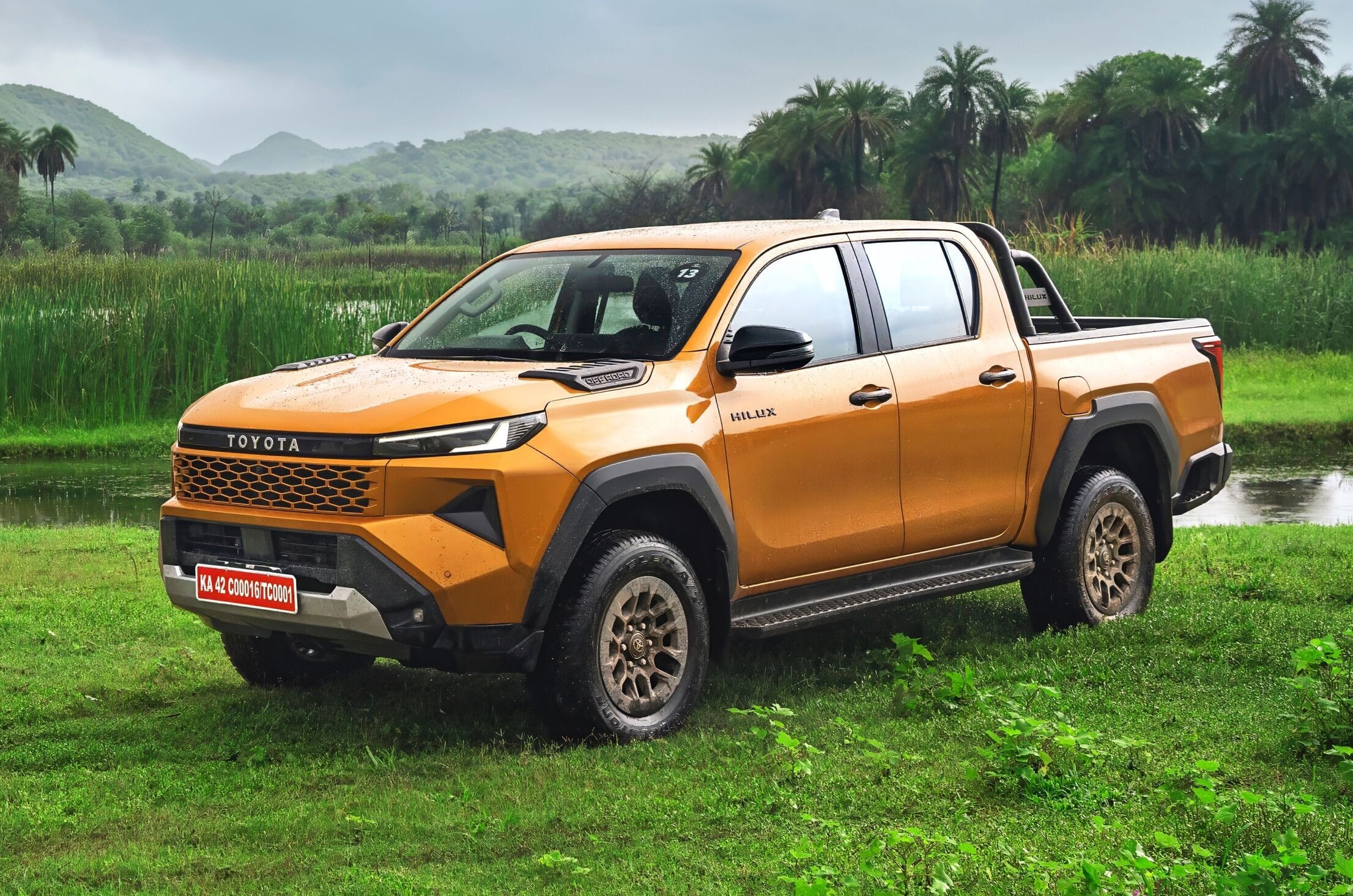
As with its predecessors the ladder-frame construction remains, but plate thickness in the frame side rails has been increased to enhance rigidity and better resist torsional forces. The body too has seen an increase in rigidity with the floor featuring an additional 36 spot welds, this also helps decrease vibrations.
Interestingly, the platform is now fully electrified. Impressive given that installing a battery pack with a ladder frame is tricky given the narrower – than the body – width and the presence of cross members too. It shows, the all-electric Hilux features a rather modest 59.2kWh battery pack, it’s unlikely to make its way here though.
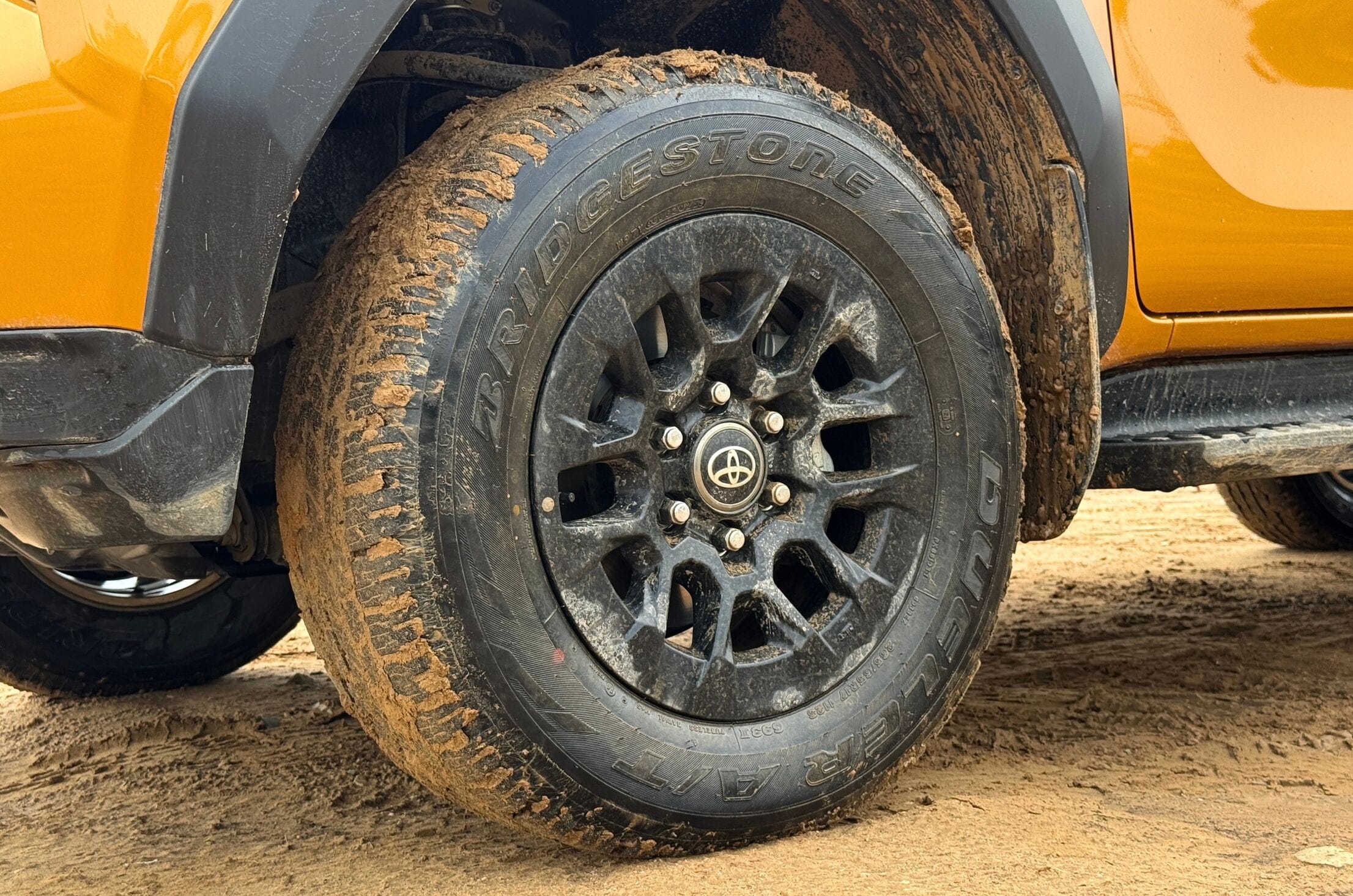
Other changes to the platform include a switch from hydraulic to an all-electric power steering system and spring and damper tweaks to improve ride comfort. As with the previous two generations, wheelbase remains the same at 3,085mm and the length is identical to its predecessor at just over 5.3 meters.
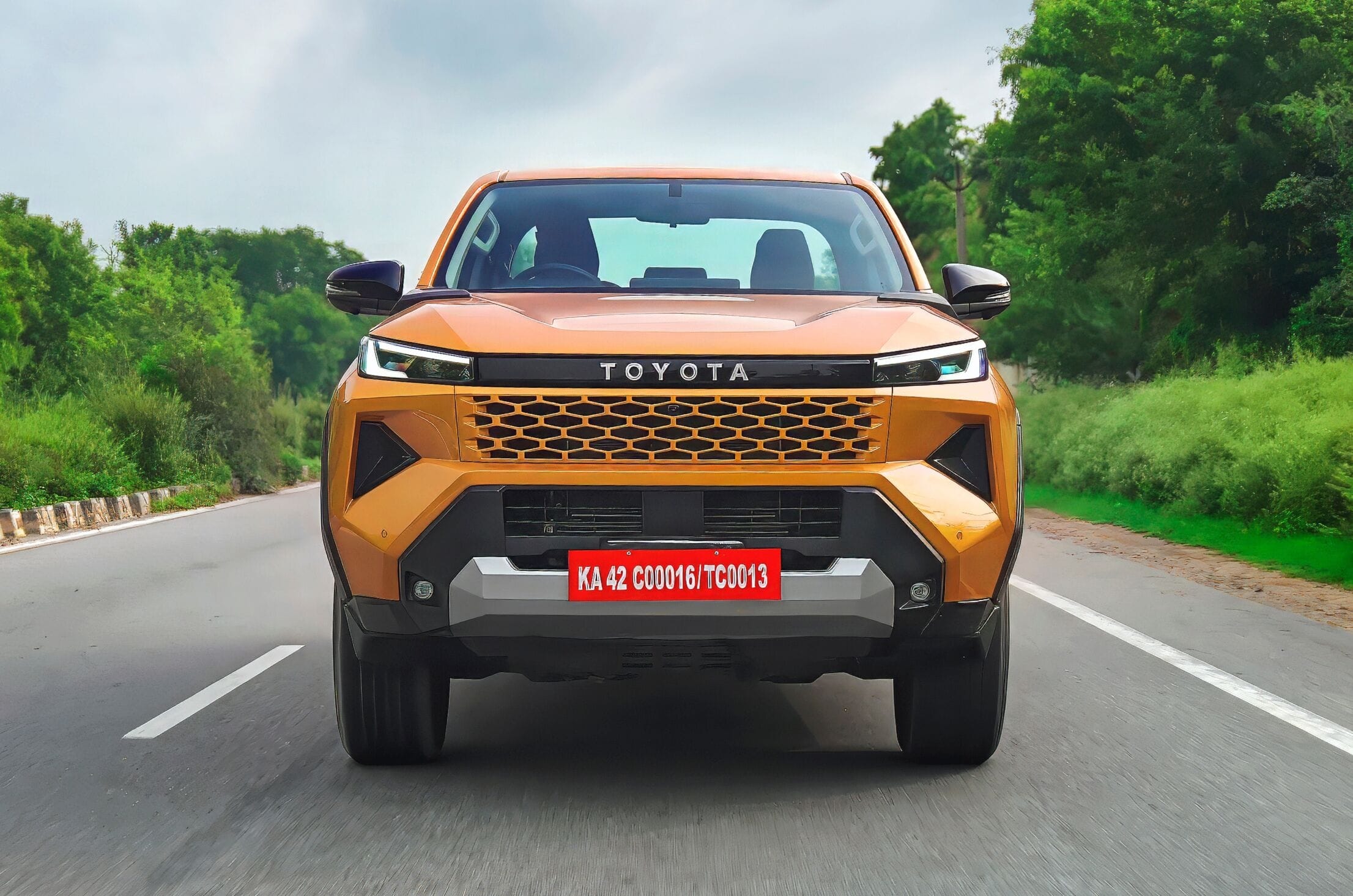
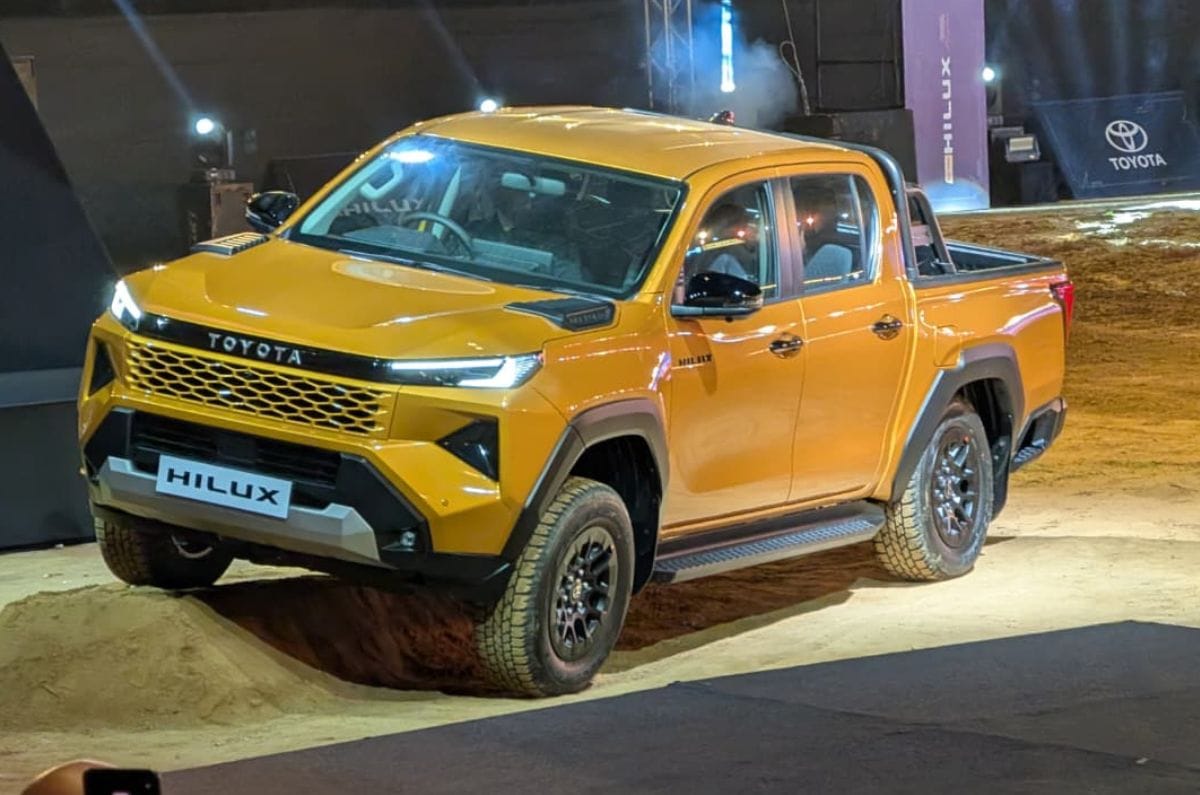
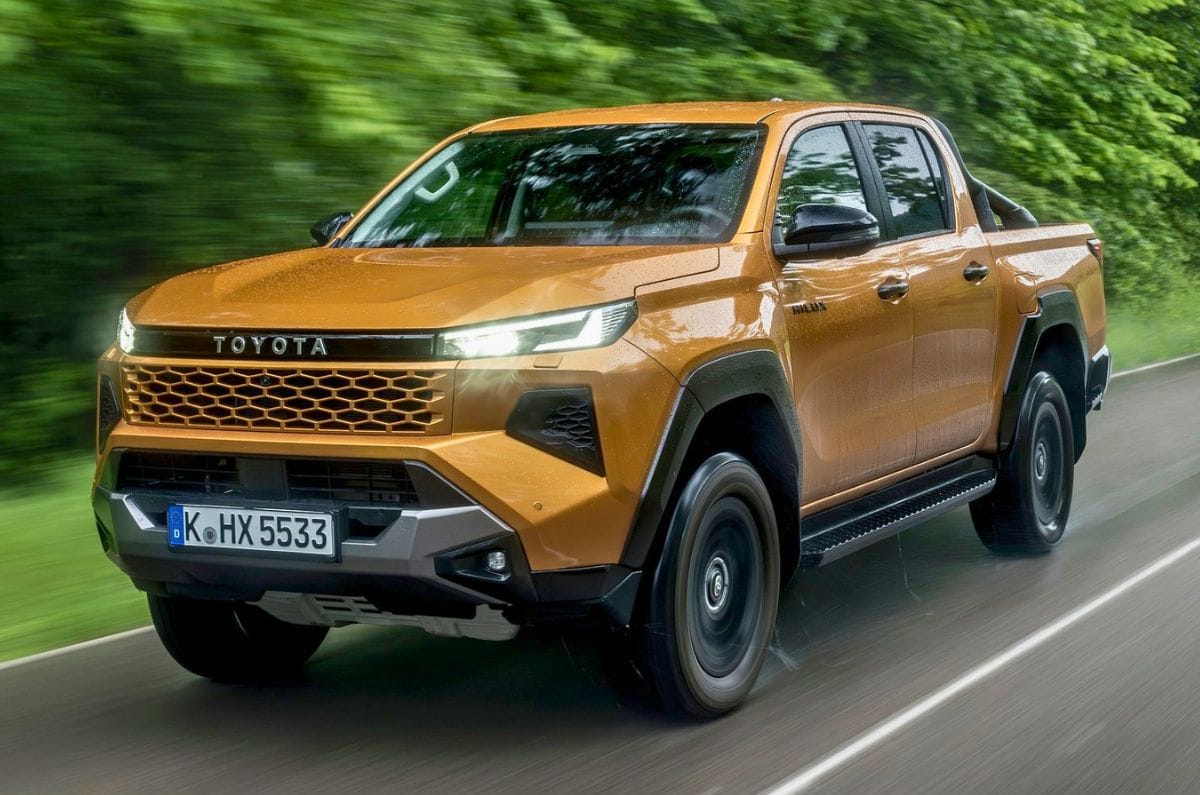
Front styling sees the biggest difference from the earlier car, its now all very edgy and sharp. Cyber-Sumo is how Toyota describes it, a cyborg Sumo wrestler if you will. The headlights feature sharp DRLs, are much slimmer and flow into a black panel emblazoned with the Toyota lettering. Below is a honeycomb grille flanked by triangular stylistic insets and the lower end of the bumper carries on with the angular treatment with sharp cuts to define its shape.
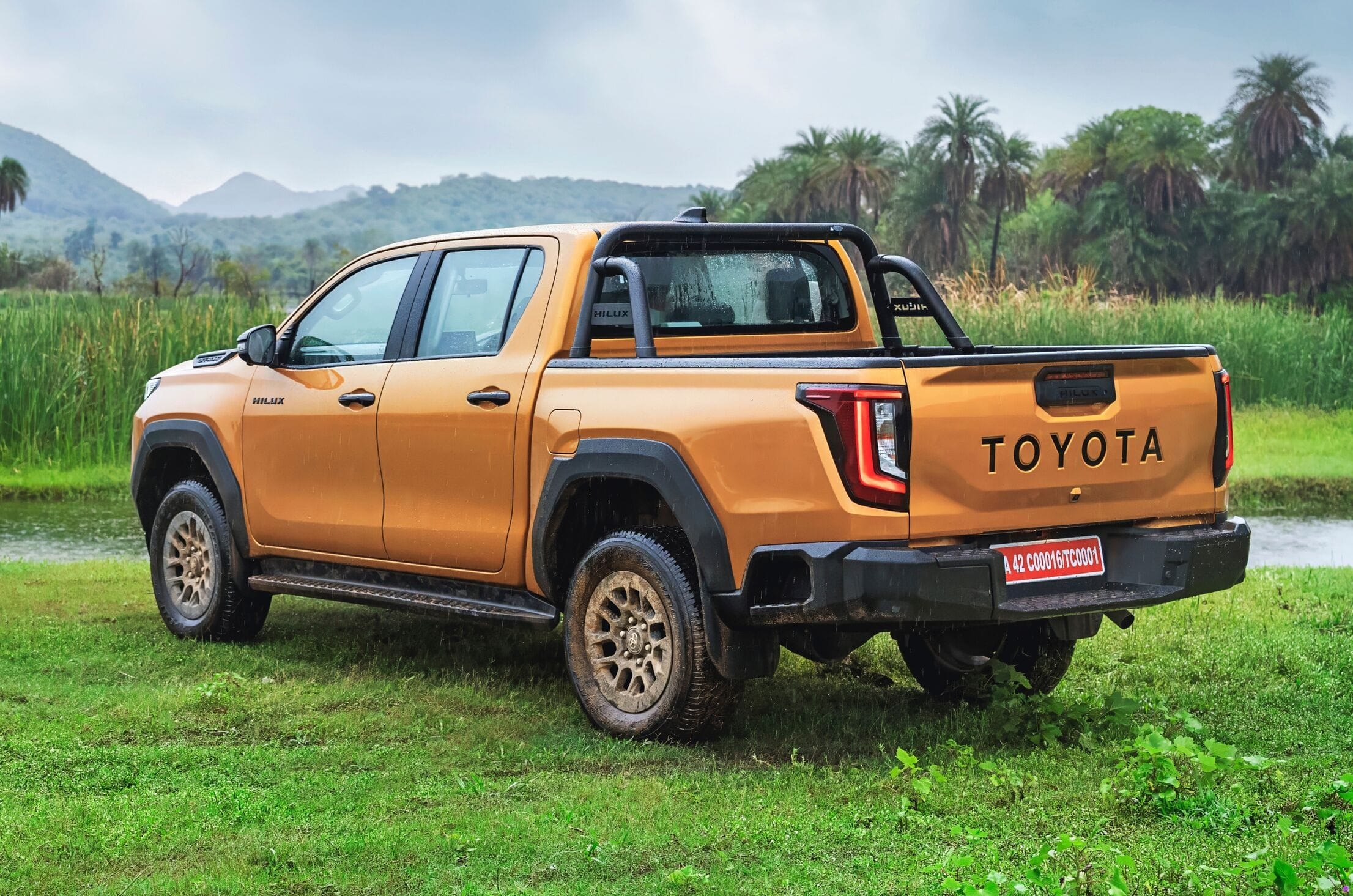
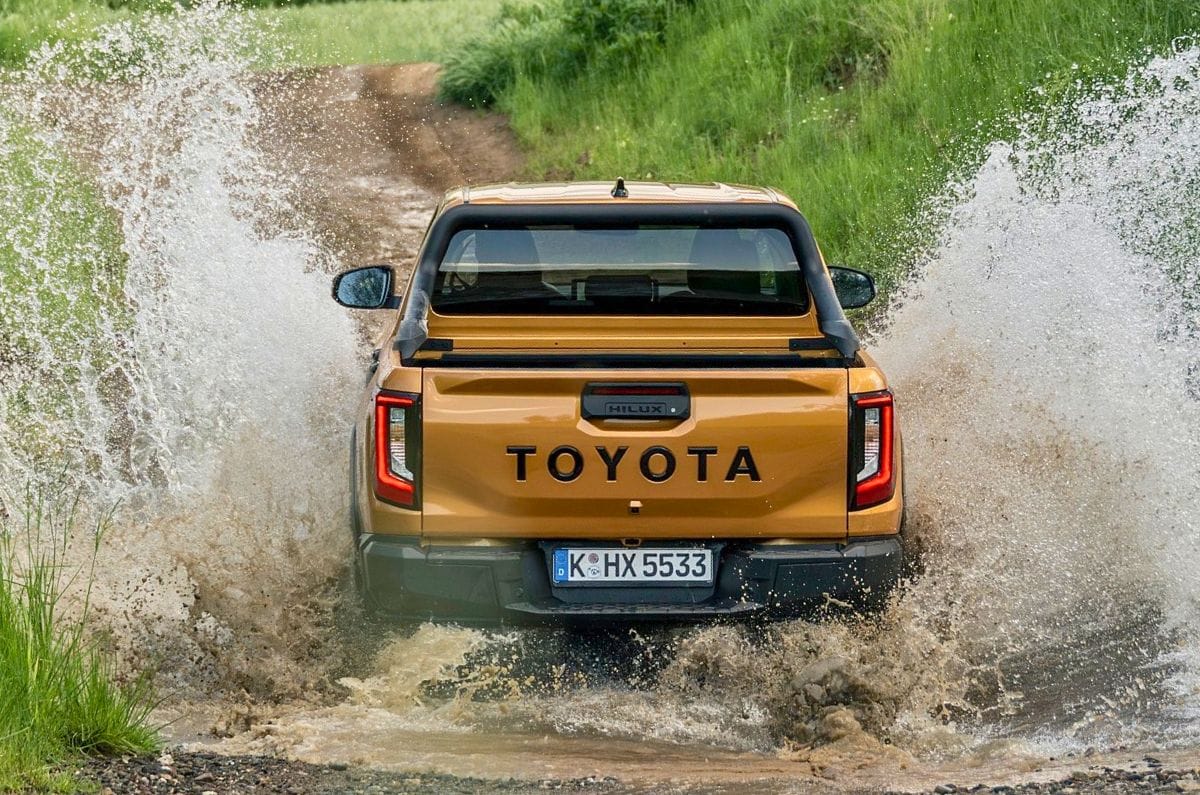
The side however is more curved with the doors gently profiled and resembling the previous car, the cladding however is a bit angular and runs the length of the car. At the rear end there is now a side step to make loading and unloading cargo easier. Rear taillights are sharply outlined and flow more into the side profile and of course, the rear sees the now iconic large Toyota lettering across the tailgate, which has a damped release.
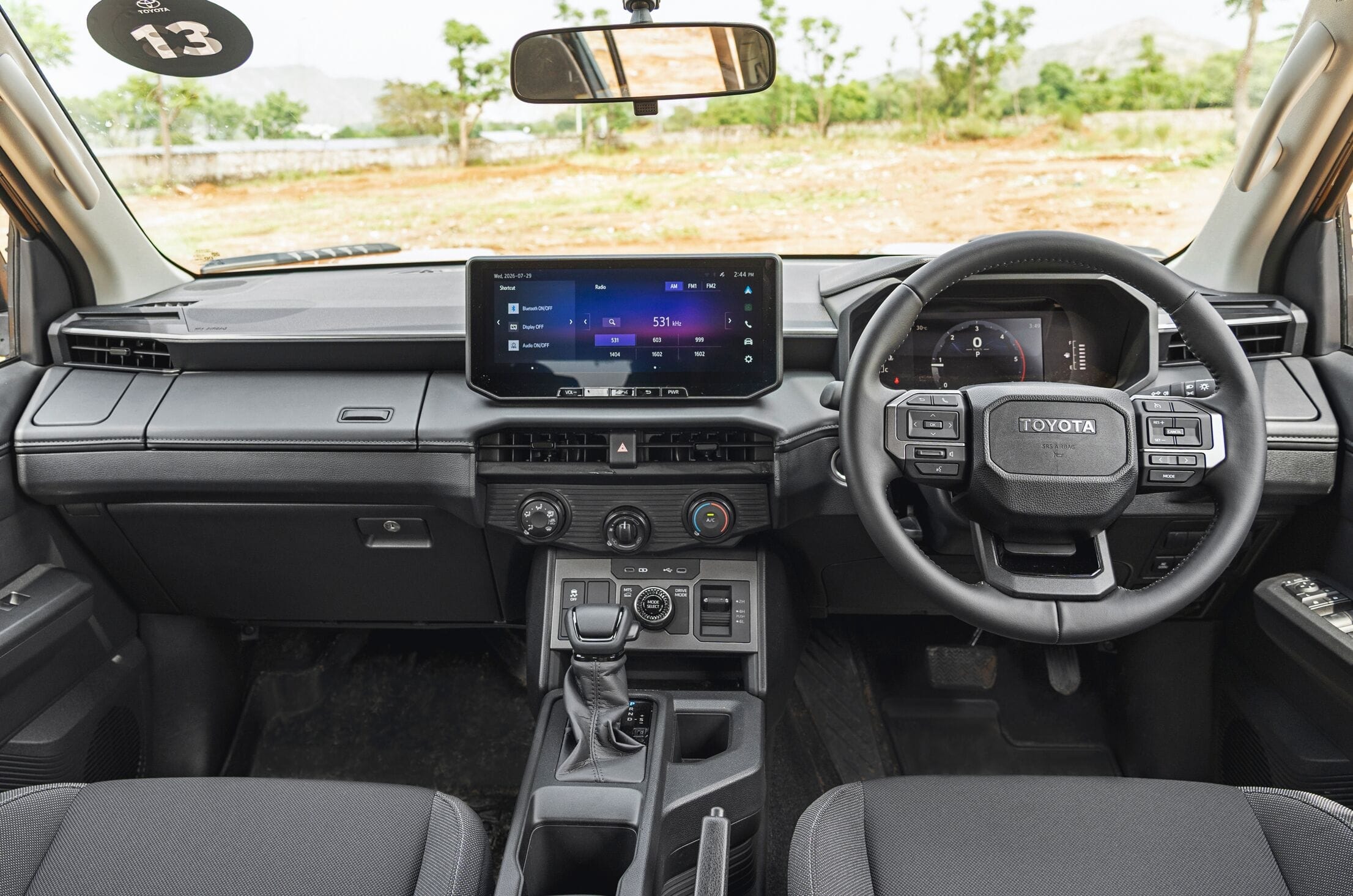
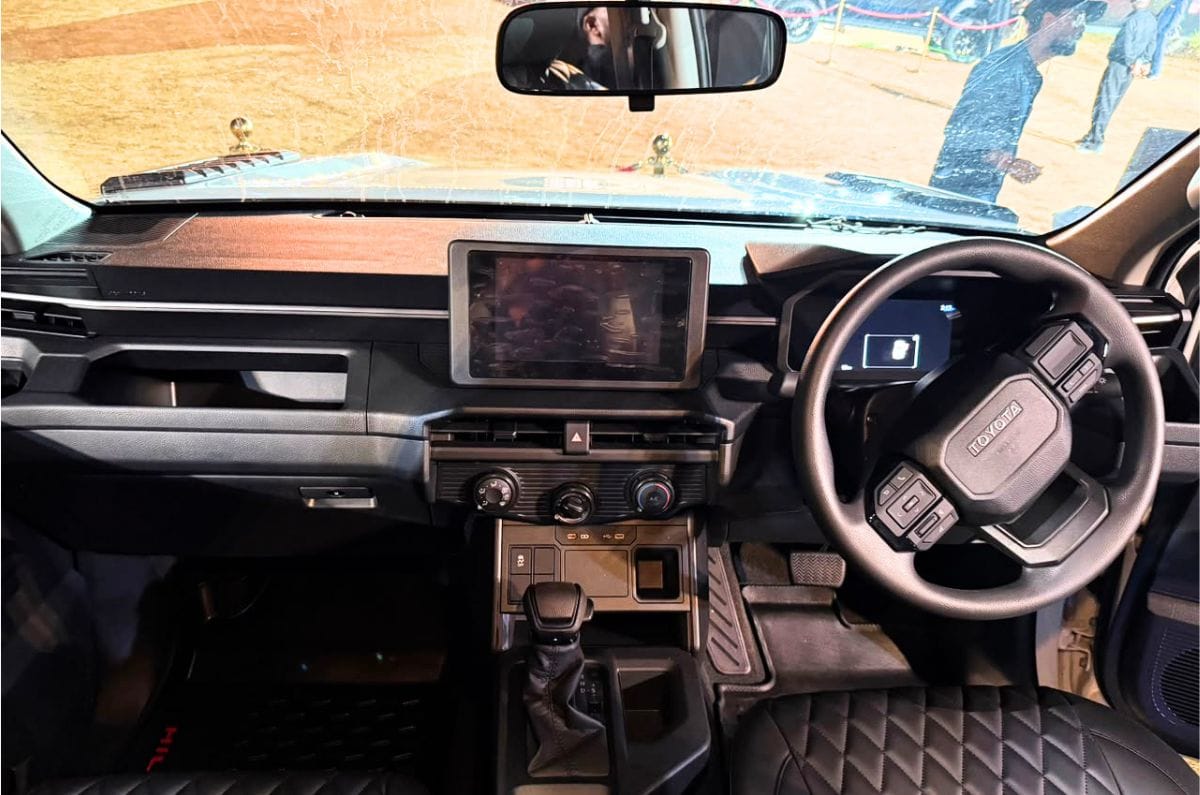
Like the front-end styling, the new dashboard sees a big departure is styling too, very retro-modern with straight lines and chunky elements, similar to the Land Cruiser Prado. It houses rectangular AC vents and a pop-up center touchscreen with chamfered lower edges. The steering wheel looks like a straight lift from the Prado with the same three spoke design, rectangular center boss and chunky rectangular buttons.
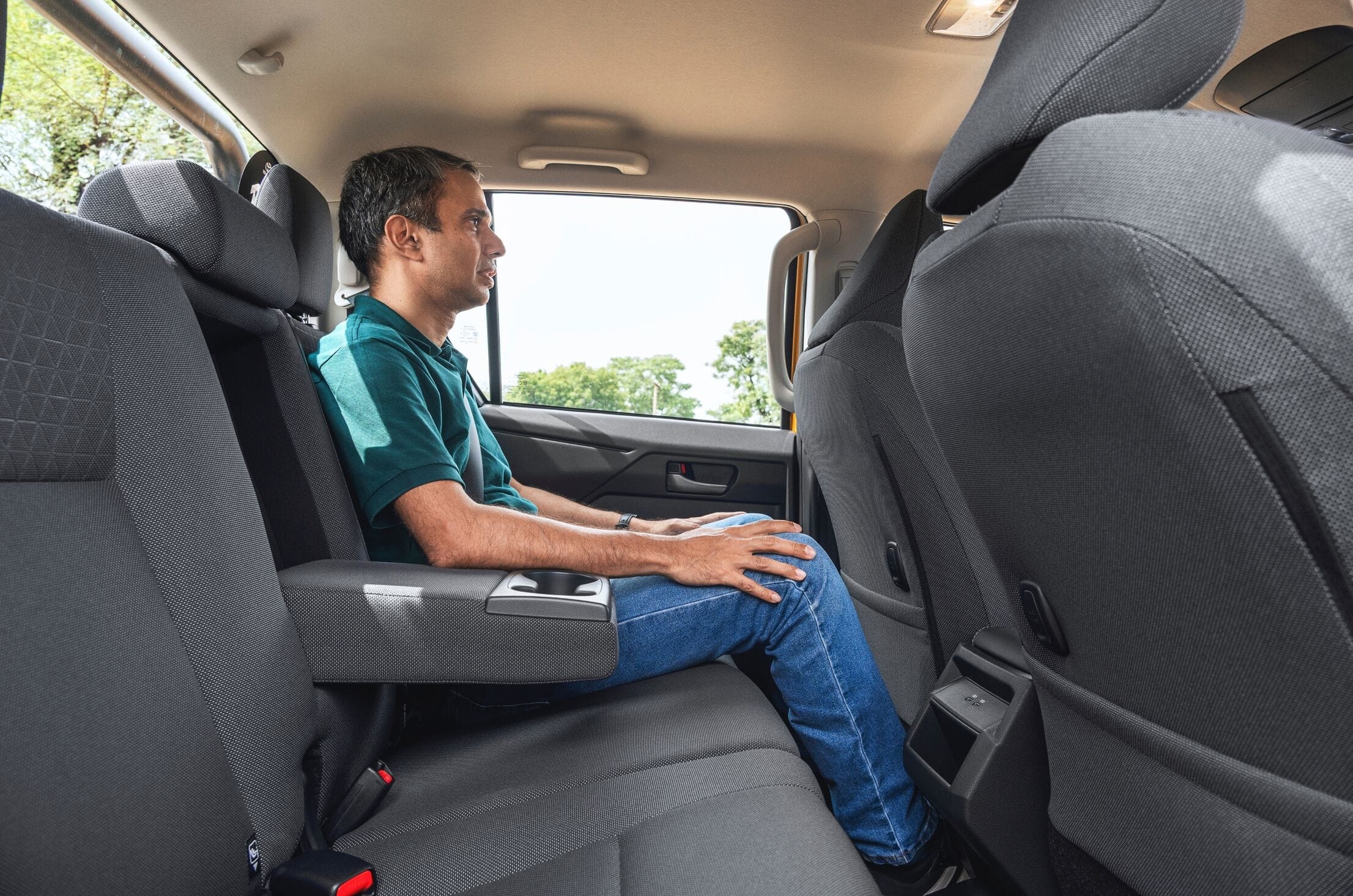
The 8th gen Hilux received a larger interior cabin volume and this cabin carries over to the new 9th gen car, space inside is thus decent but going by the large vehicle footprint you’d be forgiven if you expected more. At the rear, legroom is adequate even with a taller adult seated front, the seat backrest is still upright when seen against regular SUV but the seats themselves have been reprofiled and that makes it feel just a bit more reclined than before. Headroom is good and seating three adults at the rear is possible but will feel sung. At the front, the seats feel nice and supportive and are well profiled with prominent side bolstering that should suit a wide body frame well. They are also upholstered in a fabric that feels nice to the touch.
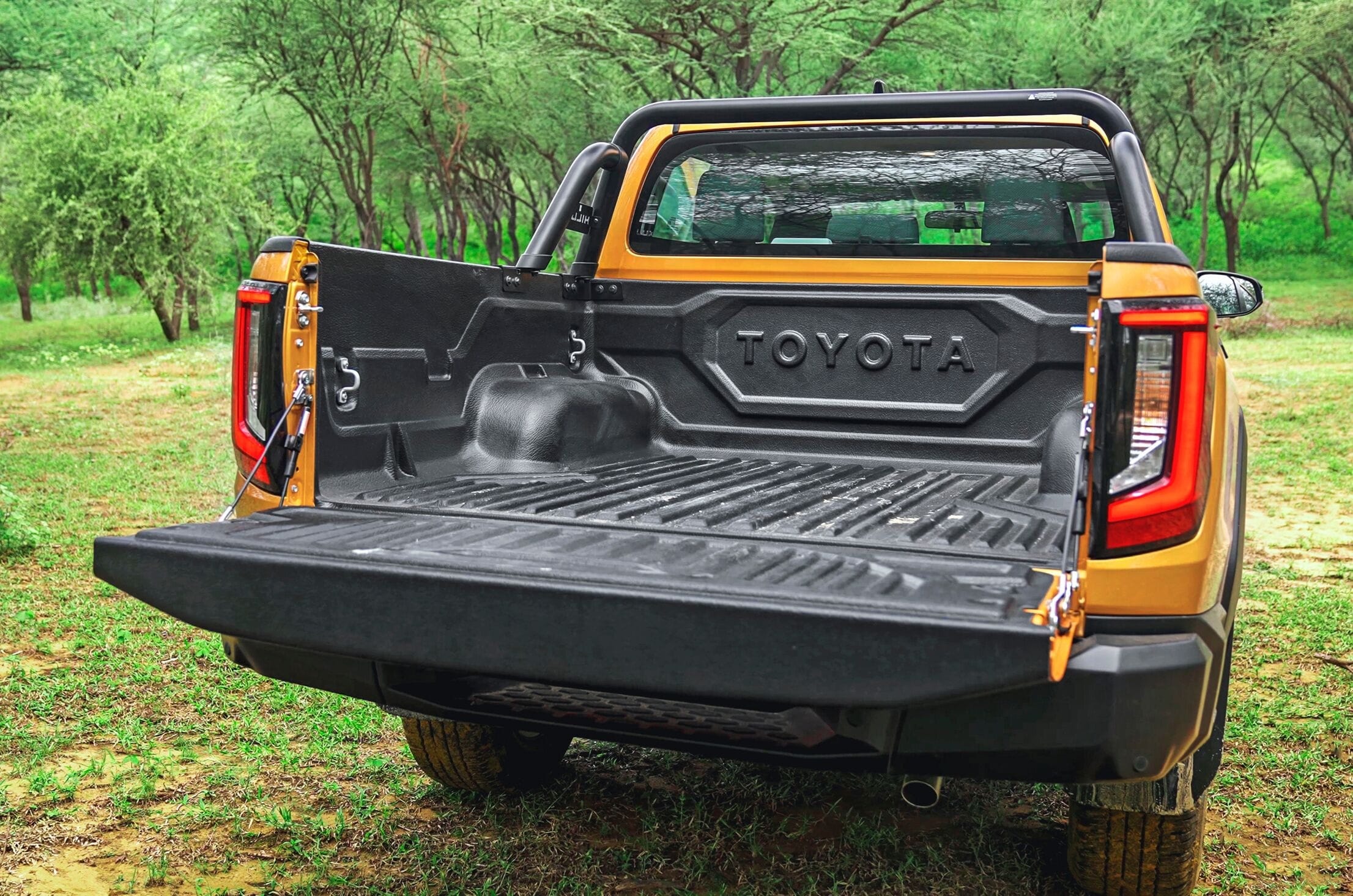
The load bed is large enough for stuff like camping gear but it’s quite high off the ground so you’ll have to haul stuff in and out. The bumper has an integrated step at the rear and on either side as well, to make this easier. Toyota has not yet disclosed payload capacity but expect it to remain the same as before at 470kgs.
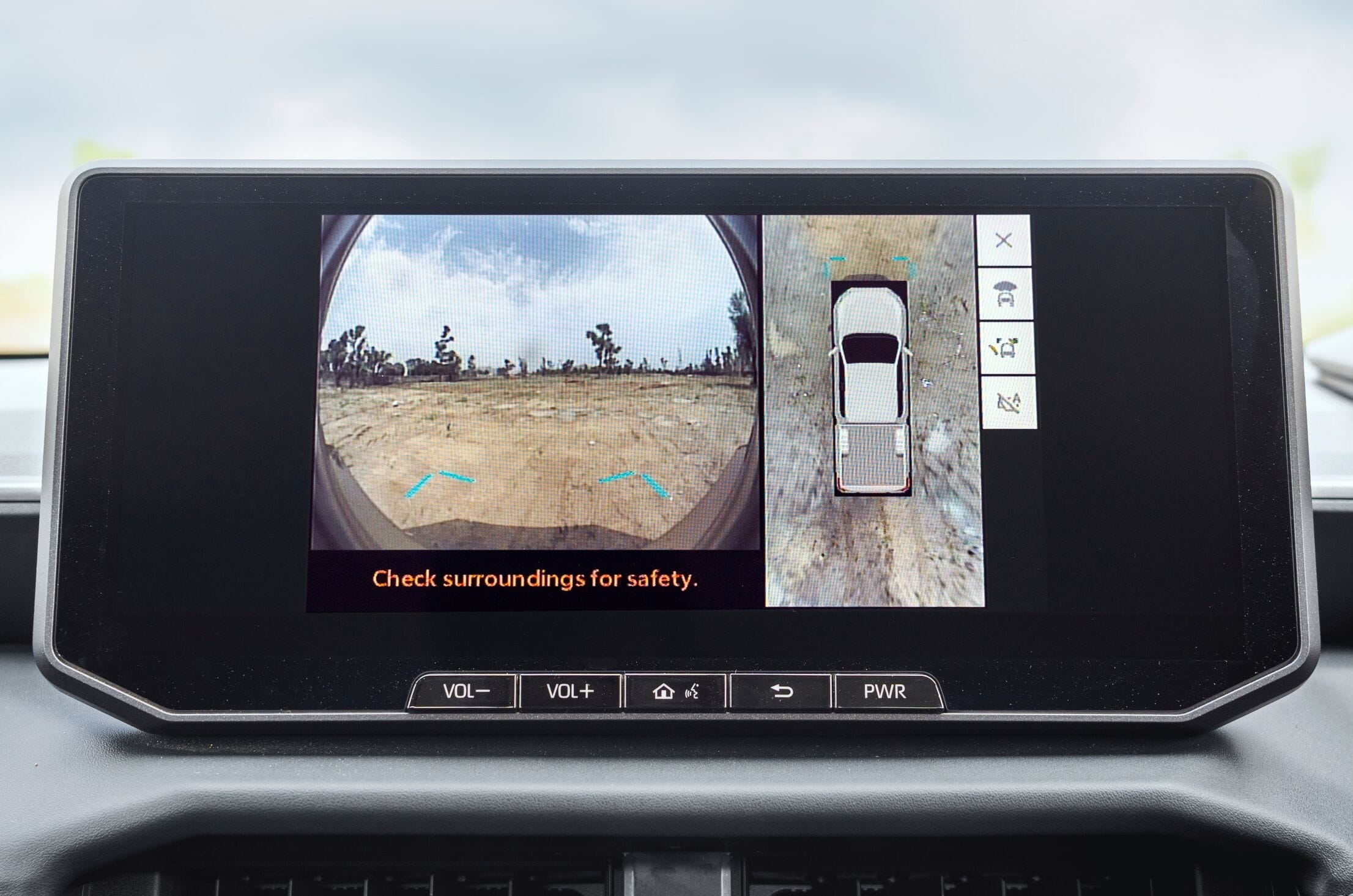
The new Hilux comes in three grades with the top spec car featuring kit like a 360-degree camera view – though resolution is poor – an 8-inch digital instrument panel and a 12.3-inch central touchscreen with wireless phone connectivity. The native OS styling appears quite outdated but the screen resolution is good. There’s a wireless phone charging slot but quite deep and retrieving you phone needs slim hands.
Besides these and basic bits like power windows and ORVMs, there’s not much else on the new Hilux. Features like auto HVAC, powered or ventilated seats, rear defogger are all missing even at the top spec car.
Safety kit is good, with 7 airbags standard on all variants as is also ESP, a tyre pressure monitoring system however is only present on the top variant. As for a crash rating the new Hilux does not come with a Bharat or Global NCAP rating but the Australia spec scores 5-stars under the ANCAP protocol.
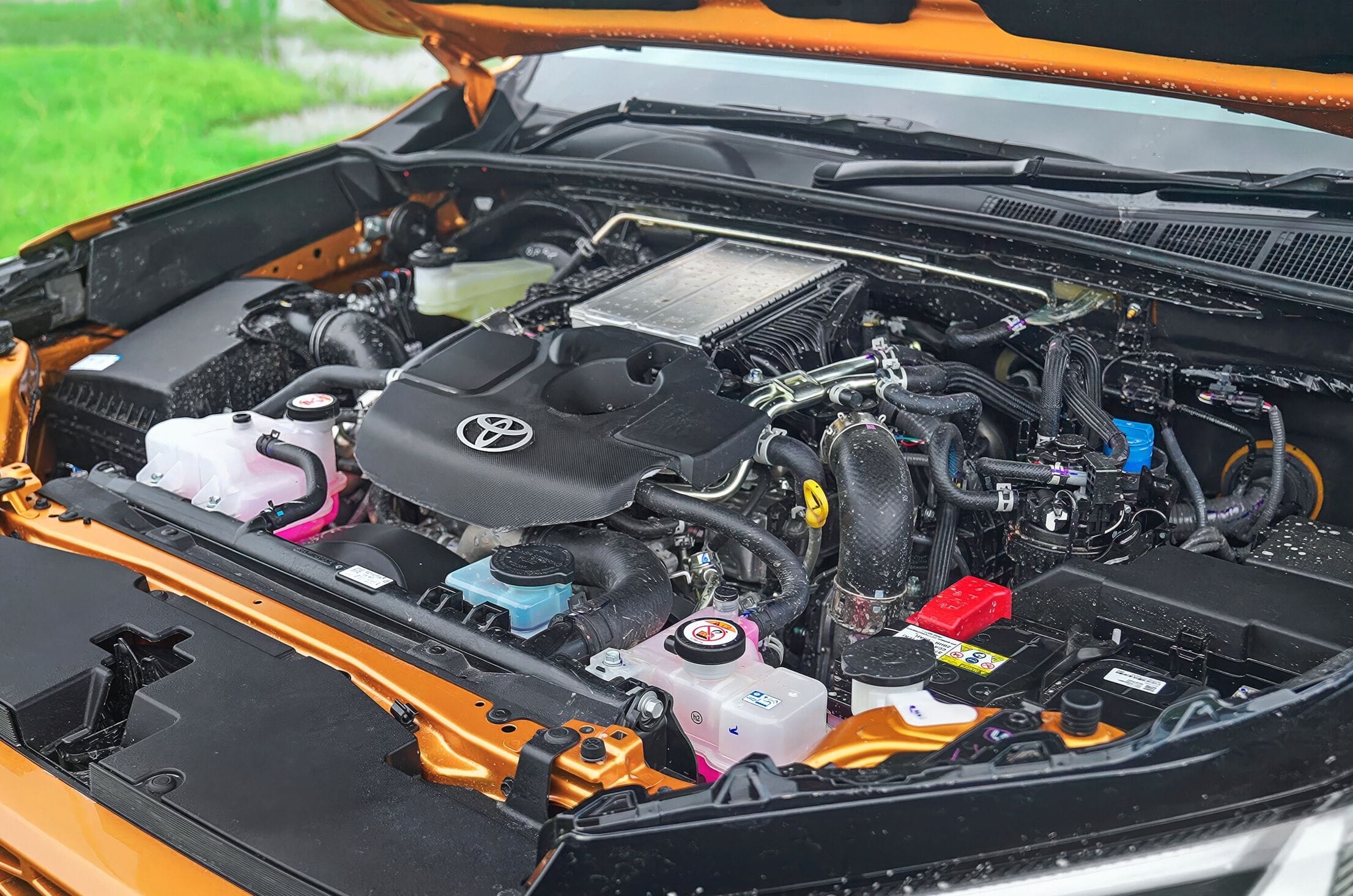
The new Hilux carries on with the same 2.8 liter 4-cylinder diesel. It makes an identical 204 hp and 500Nm of torque. A 6-speed torque convertor automatic is now the only gearbox option and for the first time Toyota India is offering the Hilux with a 4X2 drivetrain too.
There are three drive modes – Eco, Normal and Sport, all feel quite useable. Performance is strong and even when pushed hard it never feels like its out of breath. There’s a good amount of power to be had low down in the rev range and through a forest trail with stones and muck it was easy modulating power to keep momentum.
Shifts are expectedly smooth from the 6-speed autobox and in Sport mode the downshifts are quick enough both when left to its own system or via inputs from the gear lever.
At high revs the engine does get vocal, but for what is a workhorse its quite acceptable. In fact, at every day motoring speeds sound levels are low and refinement is excellent, with minimal to no vibrations around the cabin. Toyota says they have worked on improving this aspect with both hydraulic and shear type engine mounts, a stiffened body frame and better cabin insulation.
Toyota have yet to disclose ARAI rated fuel efficiency figures but given the carry over powertrain expect a similar figure of around 12kpl on the standard test cycle. In real world usage figures will hover in the single digit zone and only relaxed highway cruising would see you get double digits.
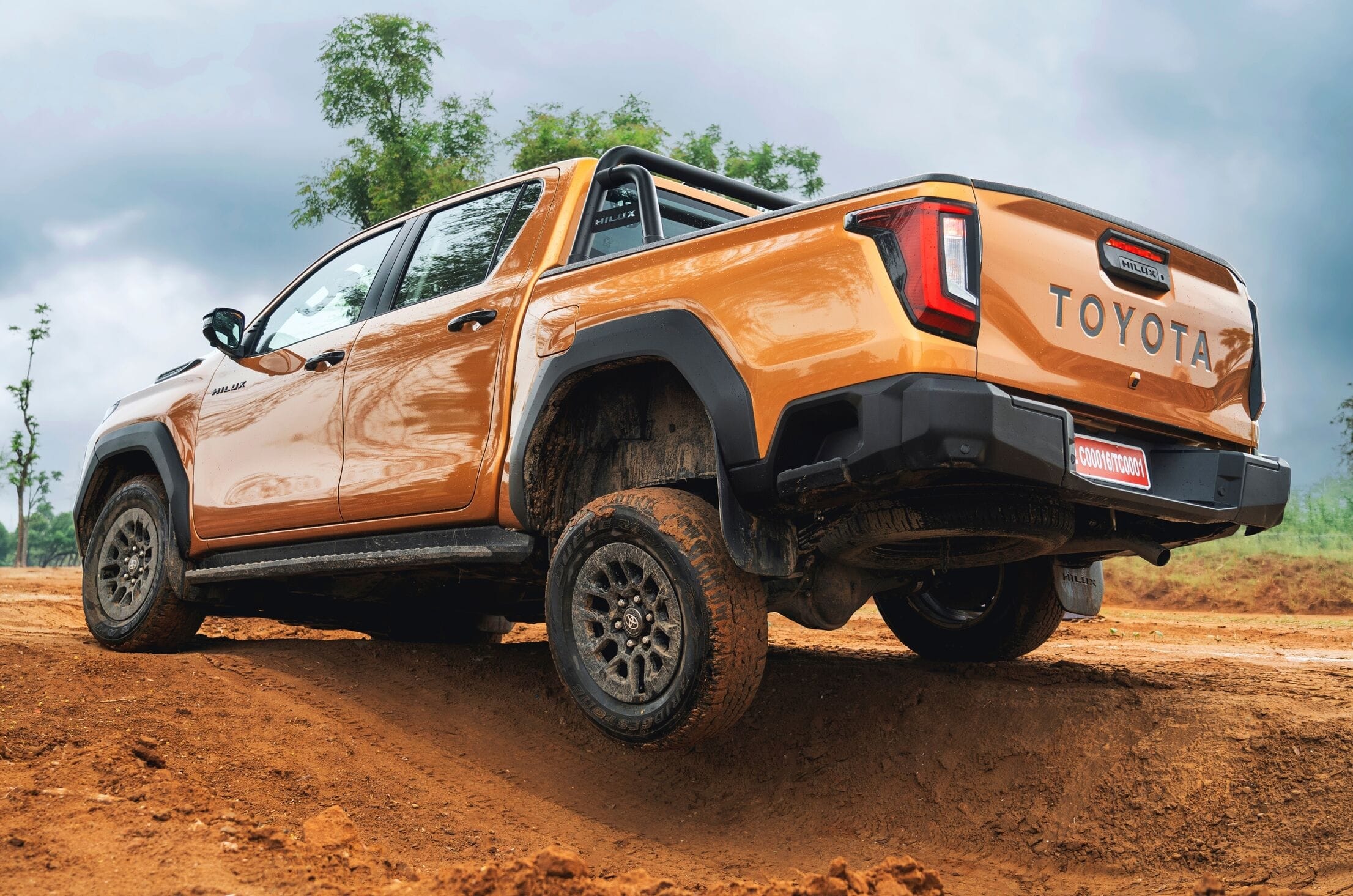
Suspension architecture carries over with an independent double wishbone coil spring setup at the front and a rigid axle with leaf springs at the rear. Toyota says they have reworked it to bring in a bit more comfort, it’s hard to say in isolation and perhaps a back-to-back drive would indicate this. On its own, it can soak up the tough bits like large rocks and deep potholes, sharp edges too are well smoothened. Through a forest trail strewn with loose rocks it felt confident and sure footed. Much of the trail was manageable in 4X2 mode, but some bits required 4X4 which was all too easy for the Hilux. There’s also a 4-Low ratio as well as terrain modes that help traction over loose surfaces.
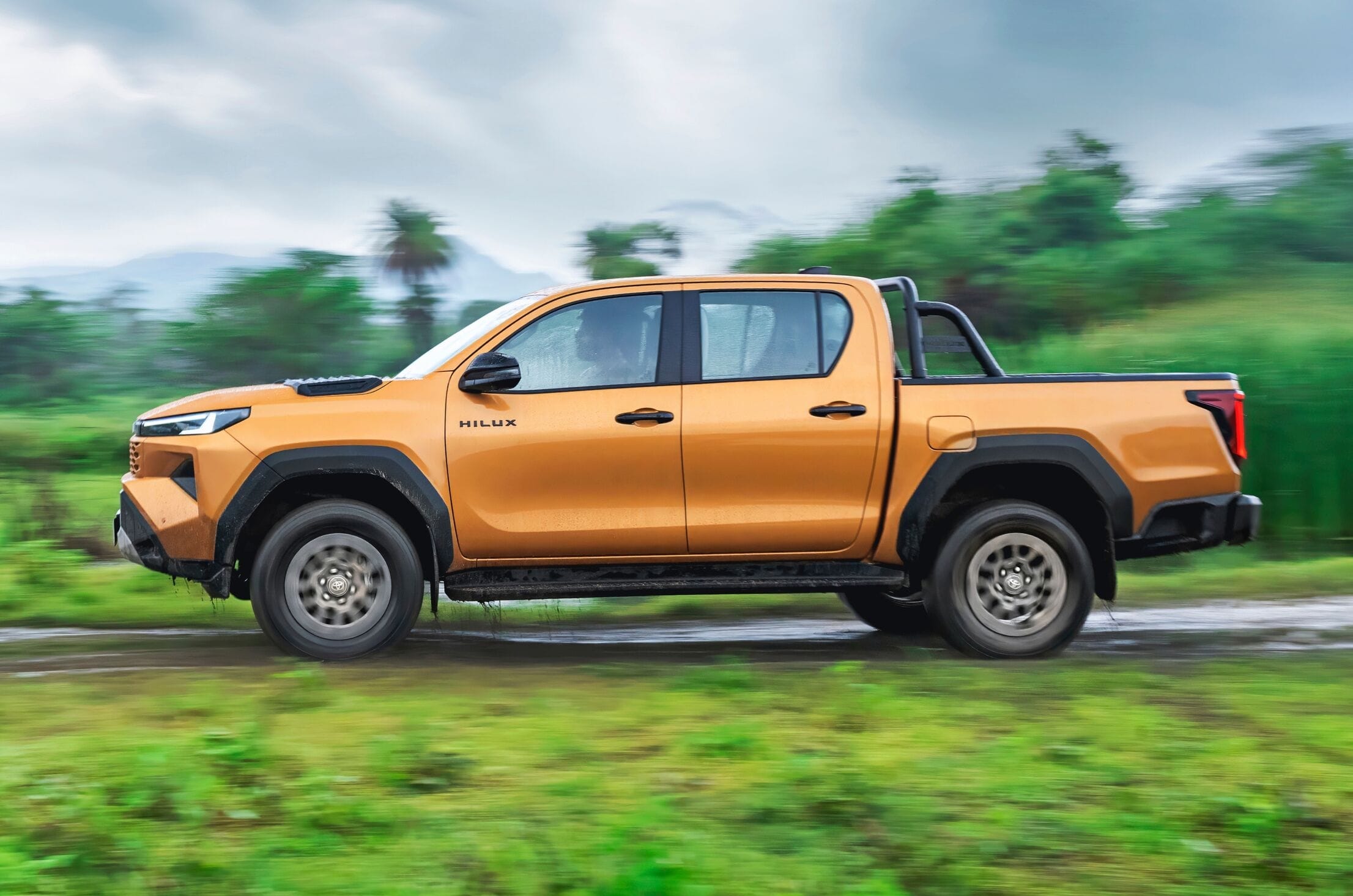
Where is gets unsettled is over the smaller ruts and bumps that really shake up the cabin. The main reason here is the rigid rear-axle which with the load bed empty simply skips over these imperfections resulting in a skittish and bouncy ride. Rear passengers in particular will feel this more. A weighed down rear will improve things but will not bring this to passenger SUV comfort levels.
As for handling, high-speed stability is good but you know it’s a heavy car and you can feel its weight through corners. The switch to electric power steering hasn’t changed effort which remains heavy at low speeds, and with the cars massive length it feels quite ponderous.
Toyota has launched the new Hilux with the top variant priced the same as before; Rs 36.69 lakh ex-showroom India while the entry 4X2 variant starts lower than any previous variant coming in at Rs 31.99 lakh ex-showroom. But in doing so there’s a lot of features missing even going by its predecessors list. Its appeal then depends on which aspect of its ‘lifestyle pickup’ description you value more.
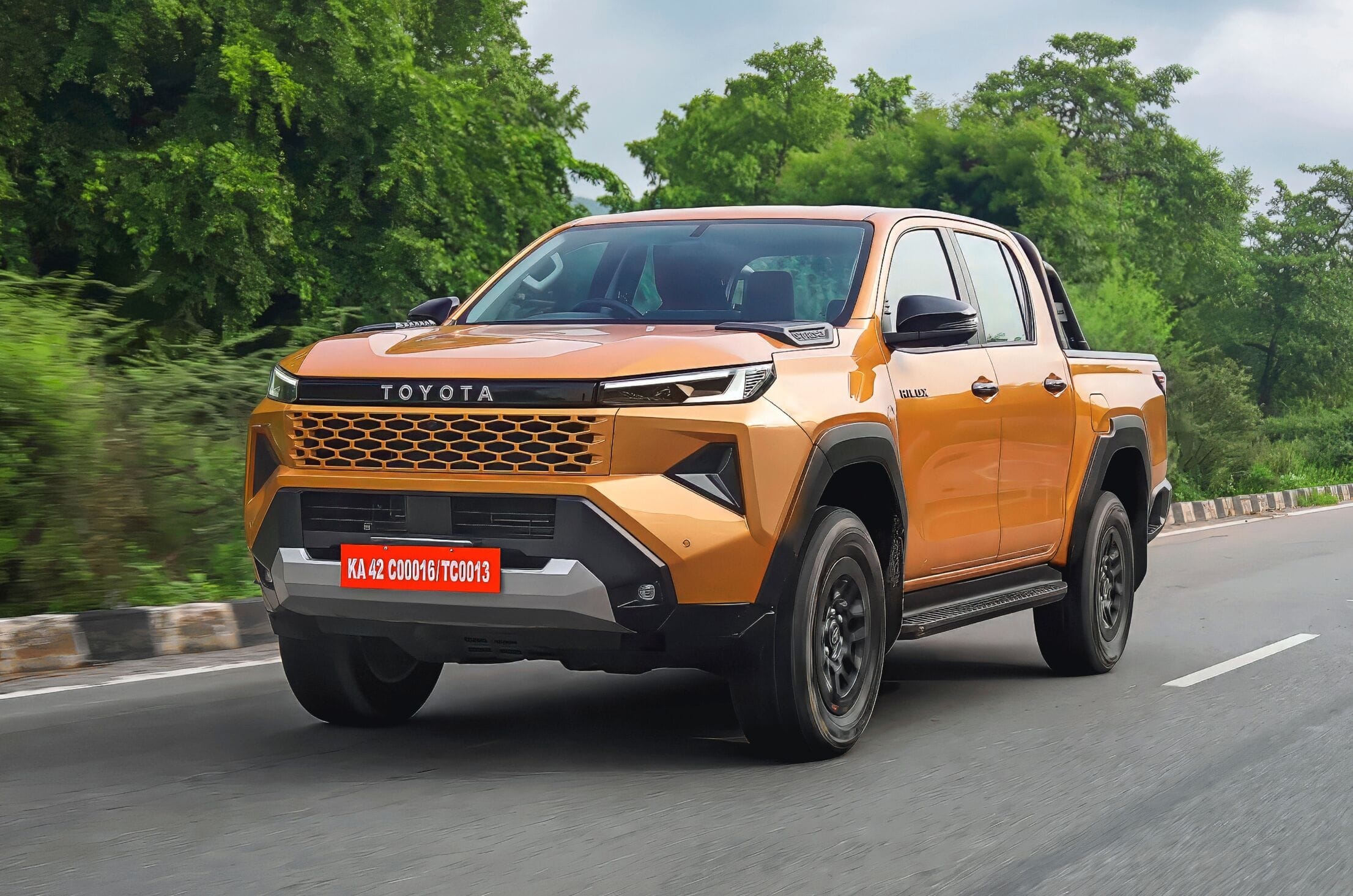
It’s sharp styling and sheer size give it that lifestyle vehicle presence, however inside it feels utilitarian, the cabin isn’t premium with regards to materials and its very under equipped. The heavy steering and bouncy ride also mean a workhorse like experience rather than luxury SUV.
But that workhorse bit is exactly where the Toyota Hilux excels. The load bed is handy and can haul odd bits of gear, the engine it torquey and powerful and what’s nice is that its refined too. The 4X4 system is very capable and it’s got tough bones that will outlast pretty much anything you can throw at it. If a luxury SUV is what you’re after, you’ll be better off elsewhere, but if you’re looking for a rough and tough, go anywhere, do anything, outdoors kind of vehicle that looks the part and plays it too, then in all probability your search will end right here.

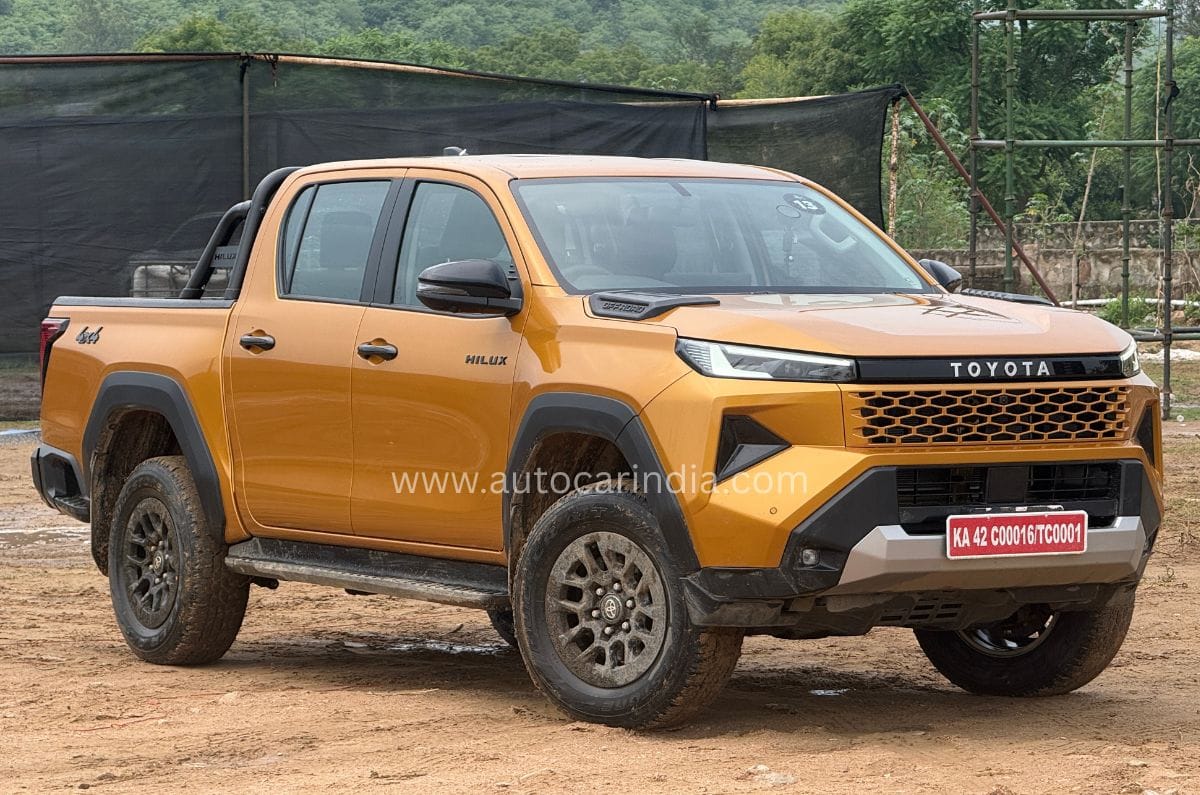
Toyota has launched the ninth-generation Hilux in India for the 2026 model year. One of the Japanese brand’s most iconic nameplates, this new Hilux is priced between Rs 31.99 lakh and Rs 36.69 lakh (ex-showroom, India), making it up to Rs 3.47 lakh more expensive than the previous-gen Hilux. The closest competitor to the Hilux is the Isuzu V-Cross. So, does the 2026 Toyota Hilux make a good proposition if you’re in the market for a lifestyle pickup truck? Let’s find out.
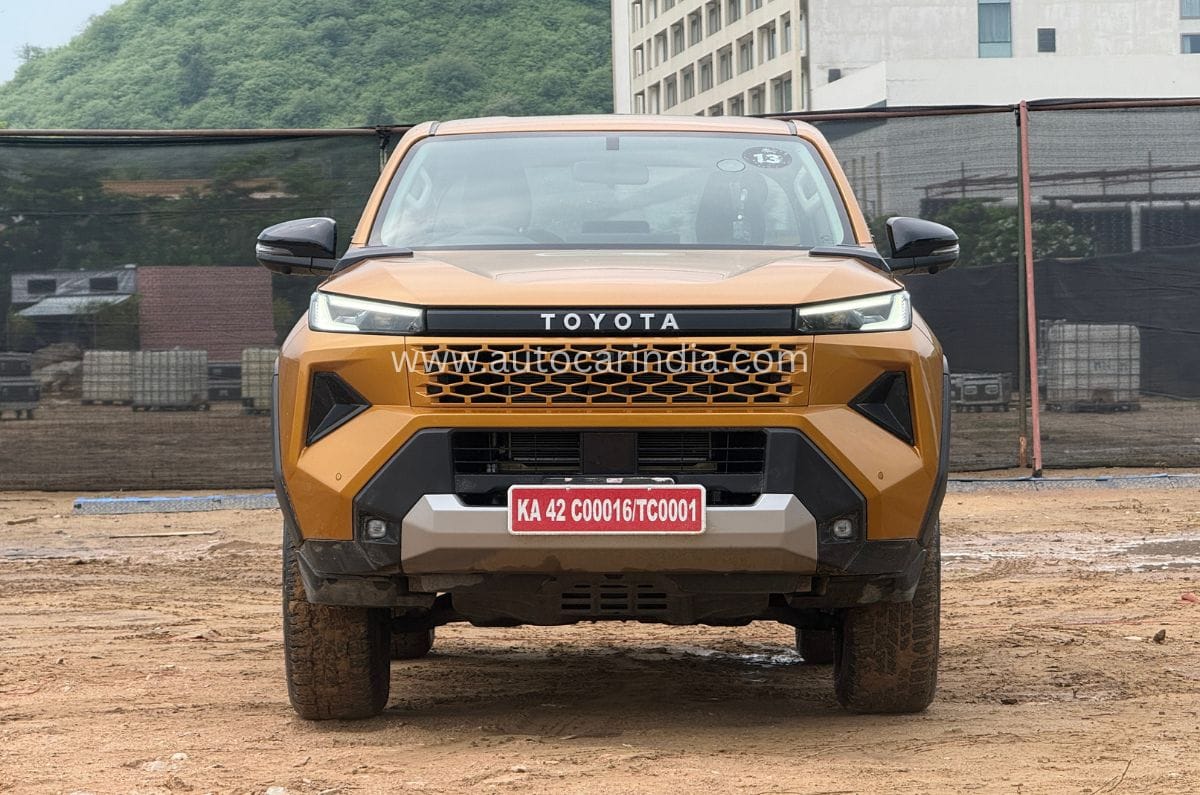
When it comes to its size, the new Hilux is 5mm shorter than the model it replaces. In terms of their width, height and wheelbase though, these two share identical dimensions. However, the sculpted and upright front fascia of the new Hilux looks imposing, with the bold ‘TOYOTA’ lettering adding to the overall butch appeal. The honeycomb front grille, sleek LED headlamps and C-shaped LED elements in the tail-lamps add a touch of modernity to this design.
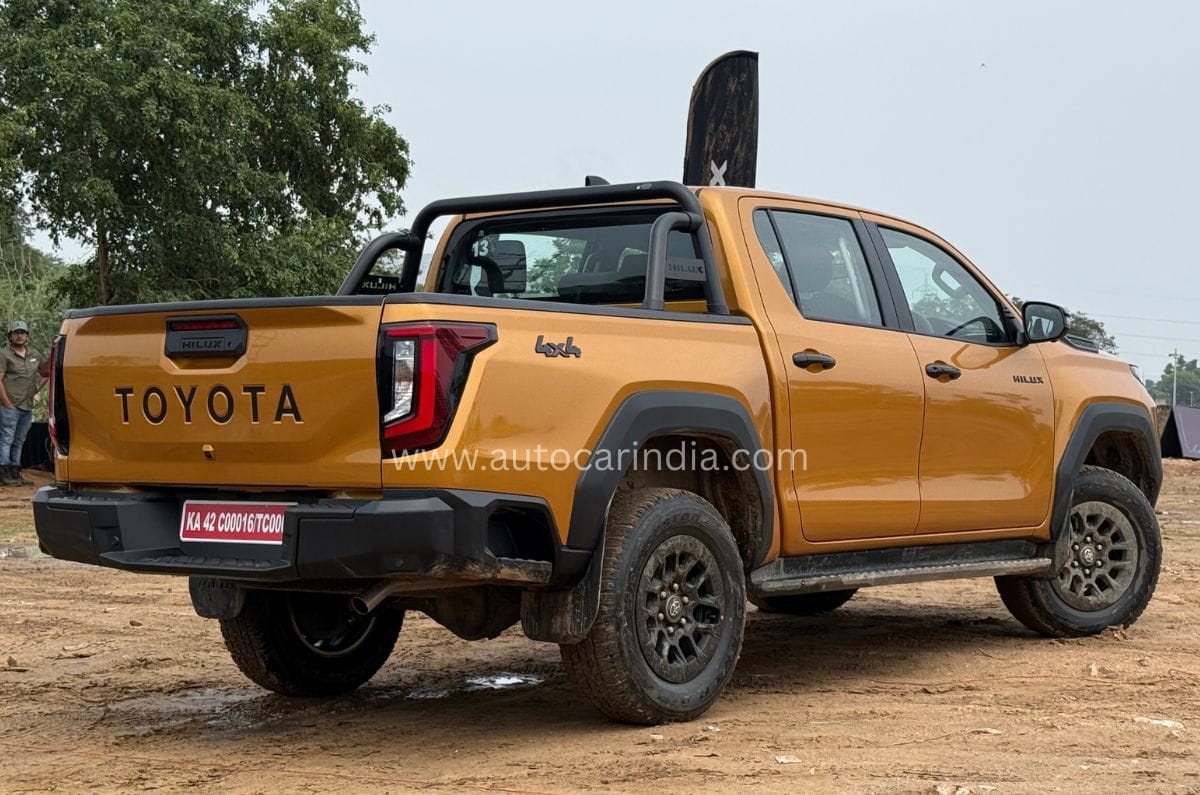
The new Hilux is sold in the ‘Double Cab’ configuration, but the wheel sizes have shrunk from 18 to 17 inches. The flared wheel arches sport black plastic cladding, while the ORVM housings, door handles, running boards, alloy wheels, roll bars and rear bumper are also finished in black. The latter has integrated steps that make accessing the bed easier from all three sides. Moreover, the tailgate features large ‘TOYOTA’ lettering as well.
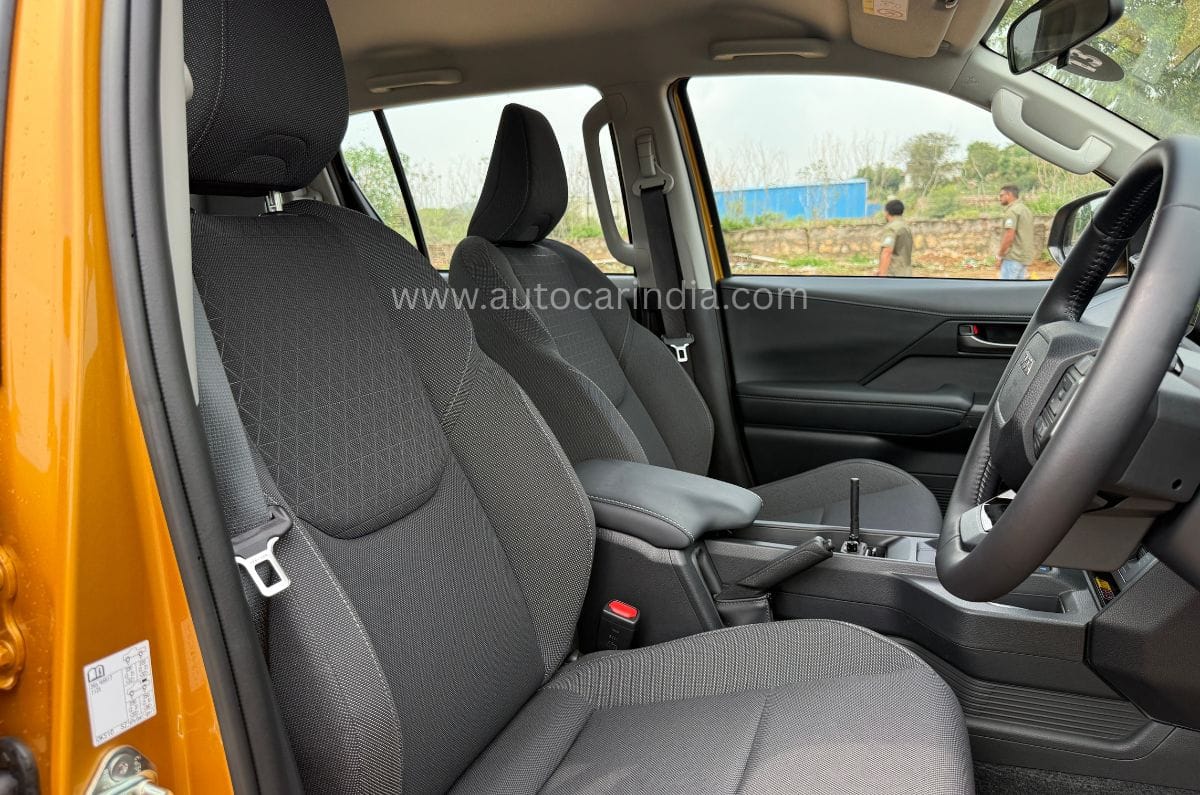
Once you haul yourself inside the 2026 Toyota Hilux, there are a few things that will catch your attention. While some surfaces are covered in leatherette, there are enough hard-wearing plastics in this cabin to remind you of its old-school pickup truck origins. Even the top-spec Hilux variant gets an all-black interior theme, manually operated front seats and fabric upholstery. The bare-bones climate control panel also looks out of place in a vehicle this expensive.
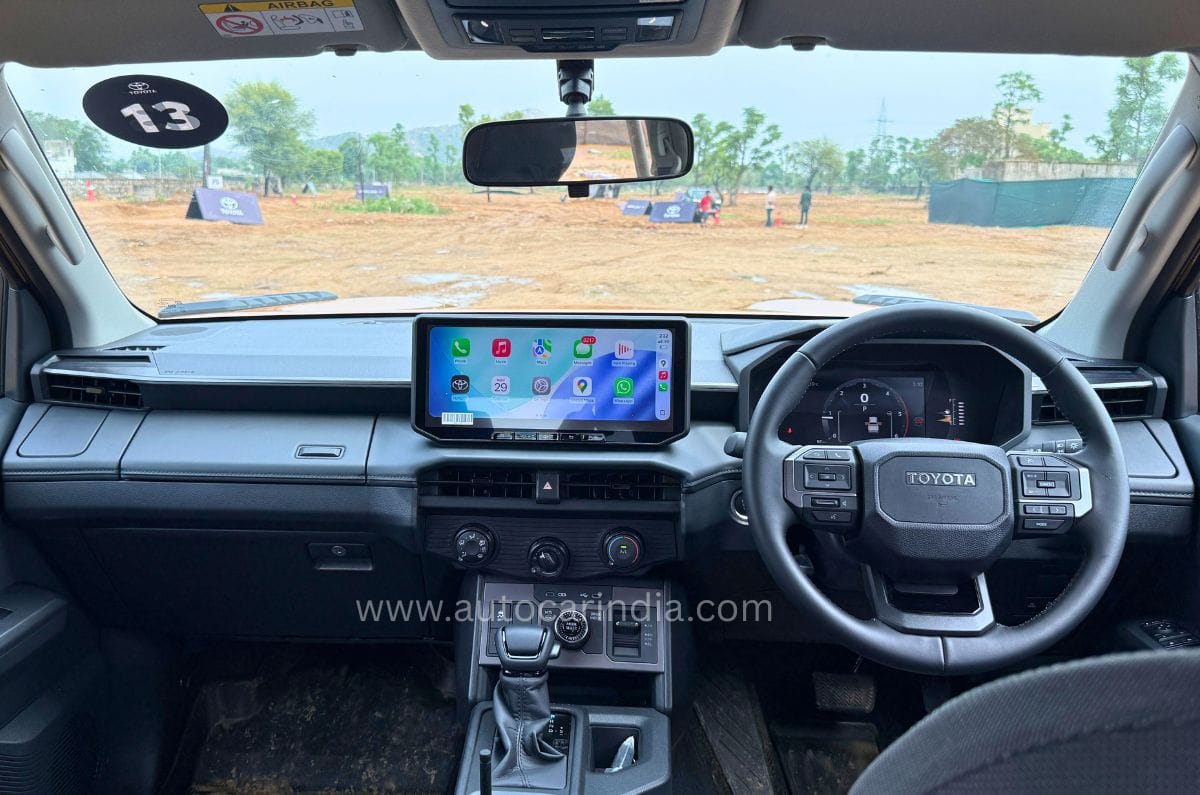
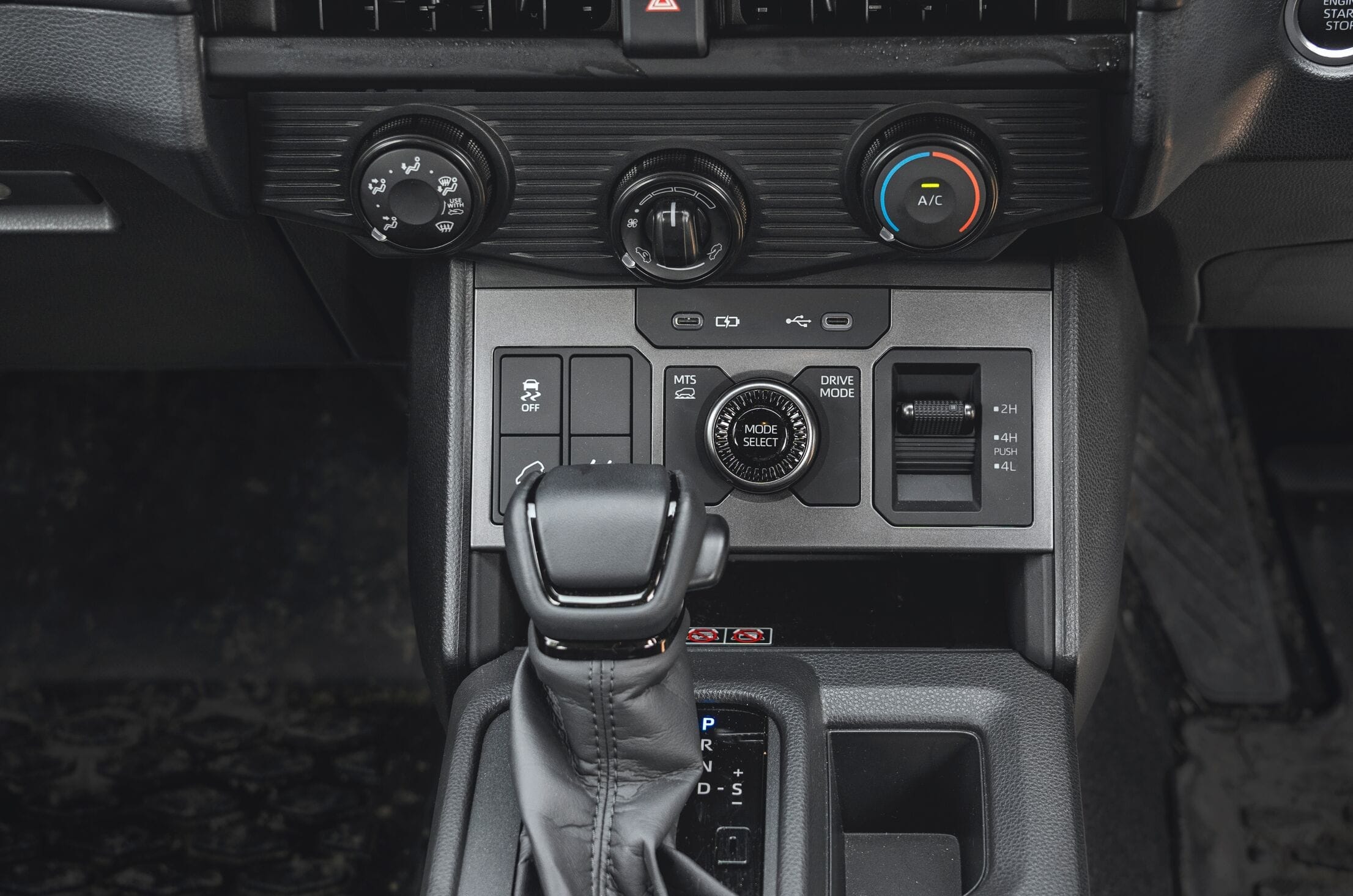
On the other hand, the three-spoke steering wheel, button-operated glovebox release, toggle-style four-wheel drive (4WD) switch and a rotary drive mode selector look good and work as expected. There are also 7 airbags, 360-degree cameras, wireless Apple CarPlay & Android Auto, wireless charging, a 12.3-inch infotainment display, and an 8-speaker audio system. The abundance of physical controls is another advantage in a utility-based lifestyle truck like the Hilux. The high seating position plus the flat and low-set dashboard should make judging gaps easier. Stepping into the back shouldn’t be too troublesome, courtesy of the fixed running boards and oversized rear grab handles.
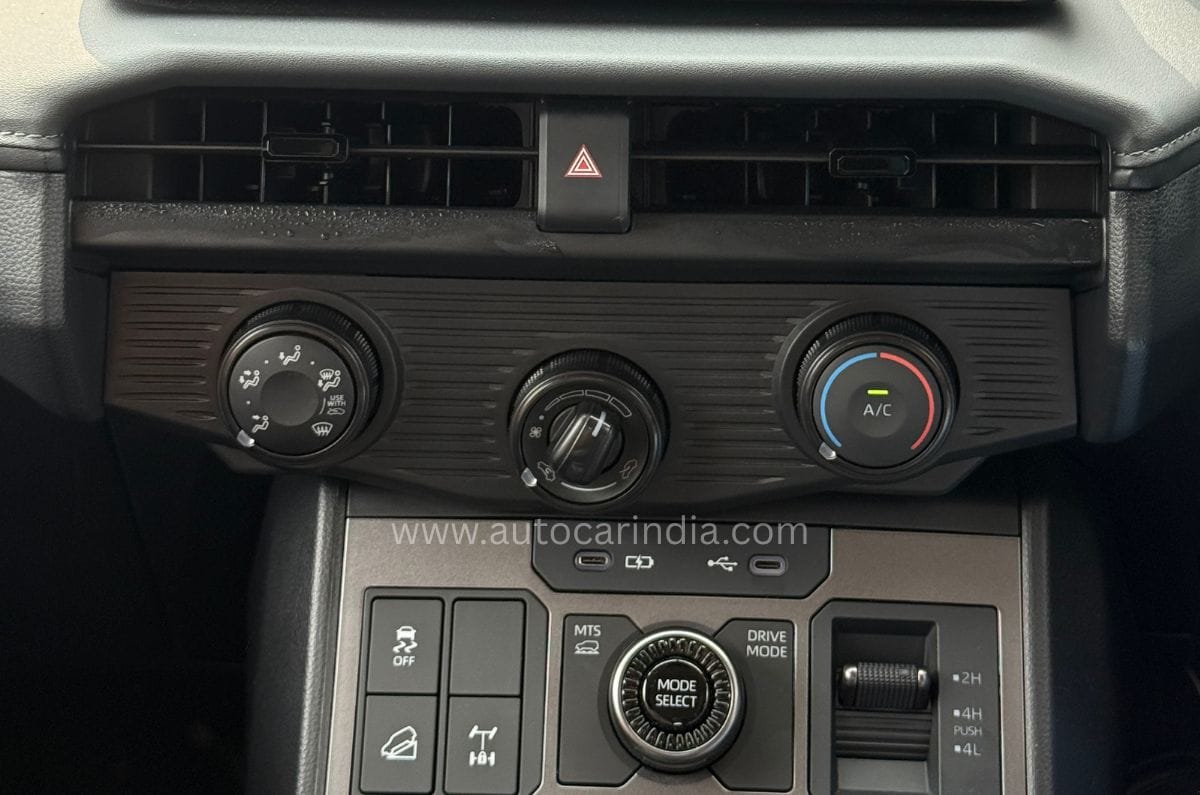
The new Hilux costs more than its predecessor, but this hasn’t resulted in more equipment. While the design language used here looks modern, expected amenities like leatherette upholstery and powered and ventilated seats are missing. There is no dual-zone automatic climate control – in fact, there’s no auto AC at all. Another modern feature that’s been given a miss is an auto-dimming IRVM (inside rearview mirror). Even the digital driver’s display of the new India-spec Hilux is a downsized 7.0-inch unit – international-spec versions get a 12.3-inch panel.
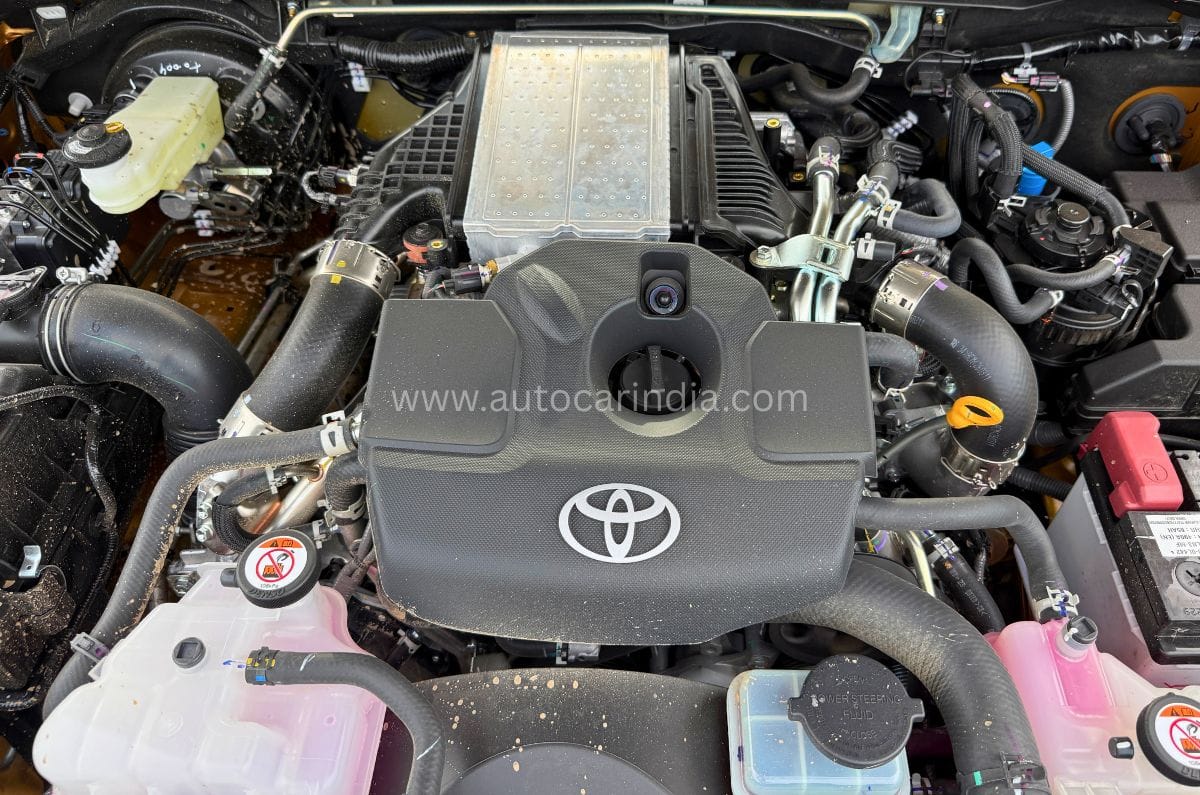
The 2026 Toyota Hilux shares its IMV underpinning and diesel-automatic powertrain with the eighth-gen model. This means the output of the 2.8-litre four-cylinder turbo-diesel engine remains the same, at 204hp and 500Nm. While the old model was available with a 6-speed manual gearbox as well, its replacement is only offered with a 6-speed torque converter automatic. Customers still get to pick between two-wheel drive (2WD) and four-wheel drive (4WD) options, but the 48-volt mild-hybrid system available in global models remains out of reach to buyers here.
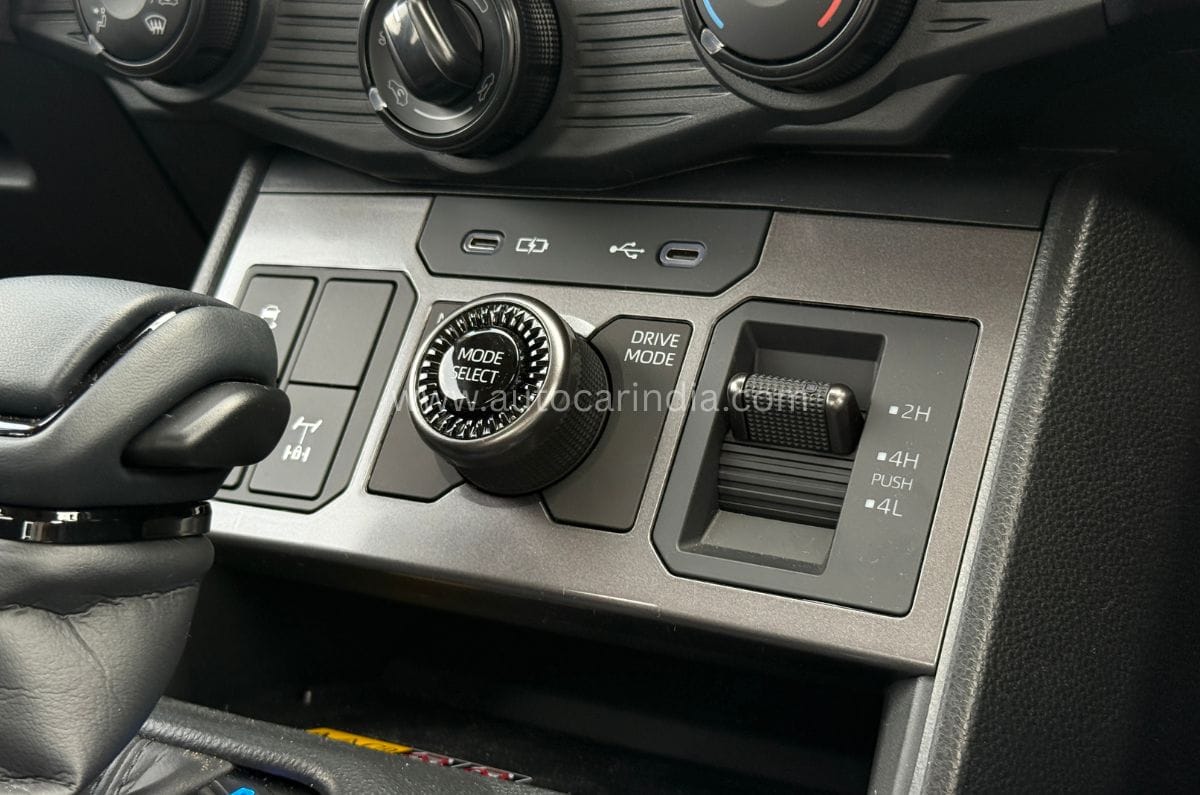
At its core, the Toyota Hilux is a pickup truck. Therefore, it can be had with the brand’s Multi Terrain Select (MTS) system, downhill assist control, a rear differential lock and an electronic limited-slip differential. These off-road-centric systems, along with the rugged leaf spring rigid rear axle and hydraulic engine mounts, should allow the Hilux to traverse challenging terrain without much fuss.
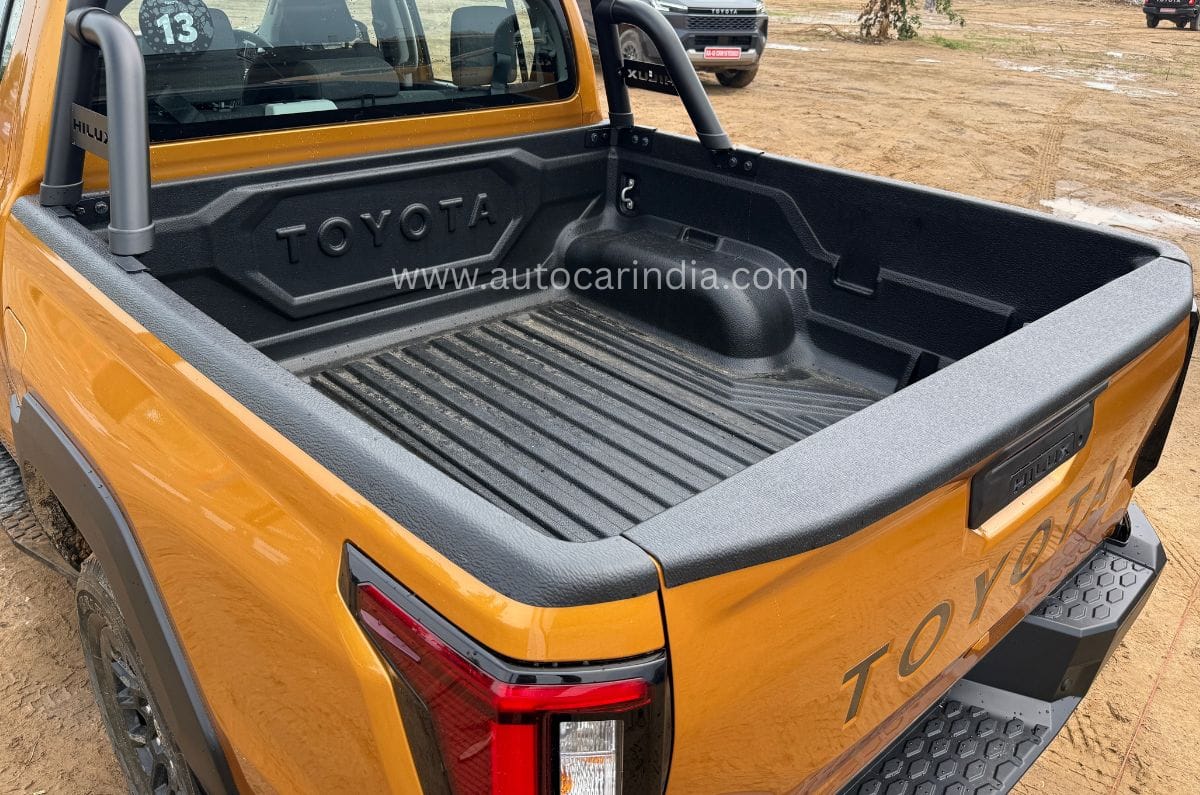
Toyota also offers a tailgate assist system, which basically allows the drop-down gate to be lowered in a controlled manner. In terms of practicality, the new Hilux can carry up to 500kg worth of cargo in its bed, with tie-down points available to secure the cargo. The three integrated steps in the rear bumper will come in handy if you want to get onto the rear bed for loading or unloading items.
Also read

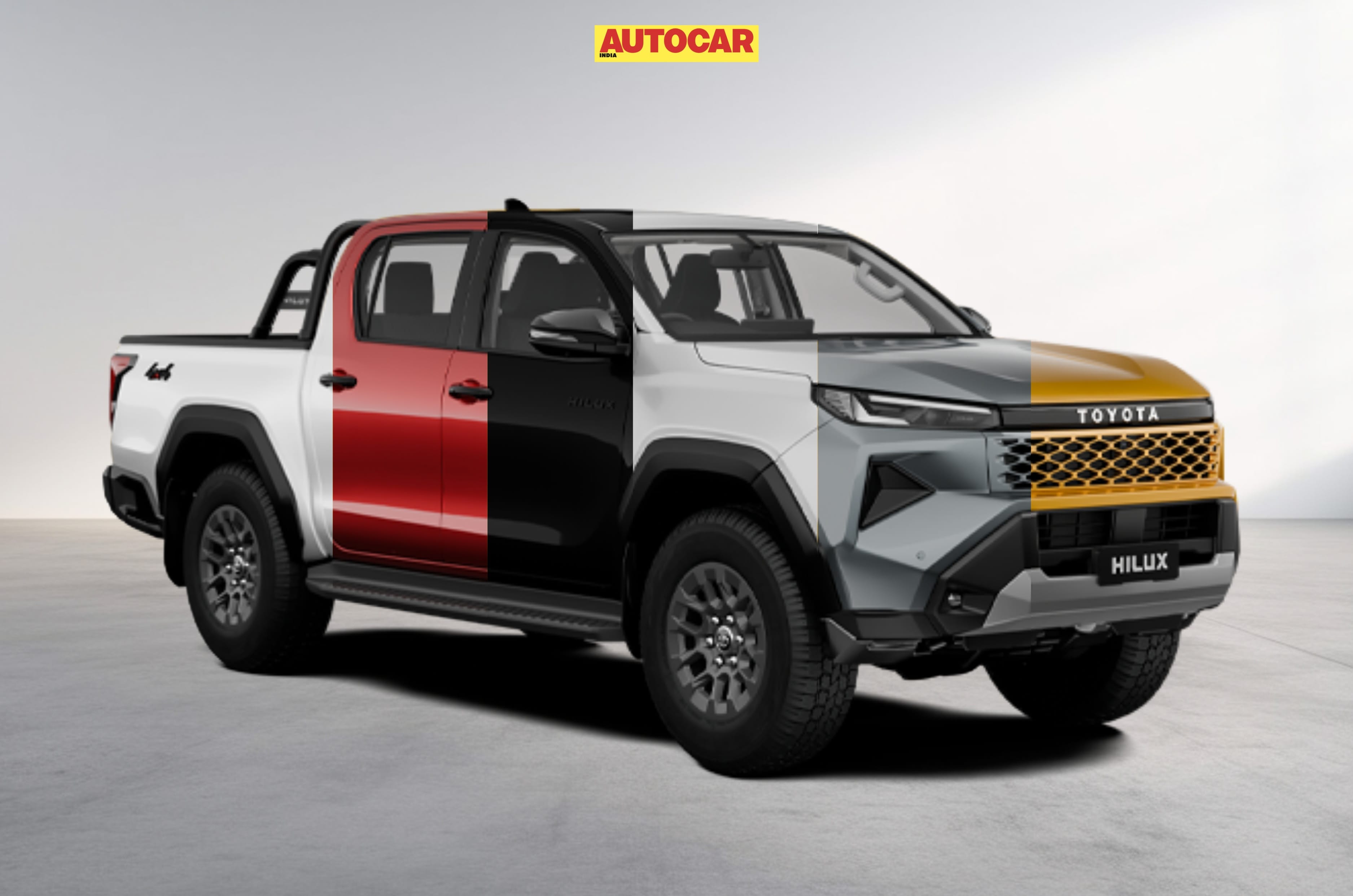
With the launch of the 2026 Hilux, Toyota’s India line-up now has the ninth-generation model of this popular pickup truck. Powered by a 2.8-litre turbo-diesel engine that belts out 204hp and 500Nm of torque, the new Hilux offers buyers a 6-speed automatic transmission (AT) and a choice of 2WD and 4WD drivetrain configurations. Customers can also pick from half-a-dozen exterior colours – all of which are mono-tone shades.
Also see

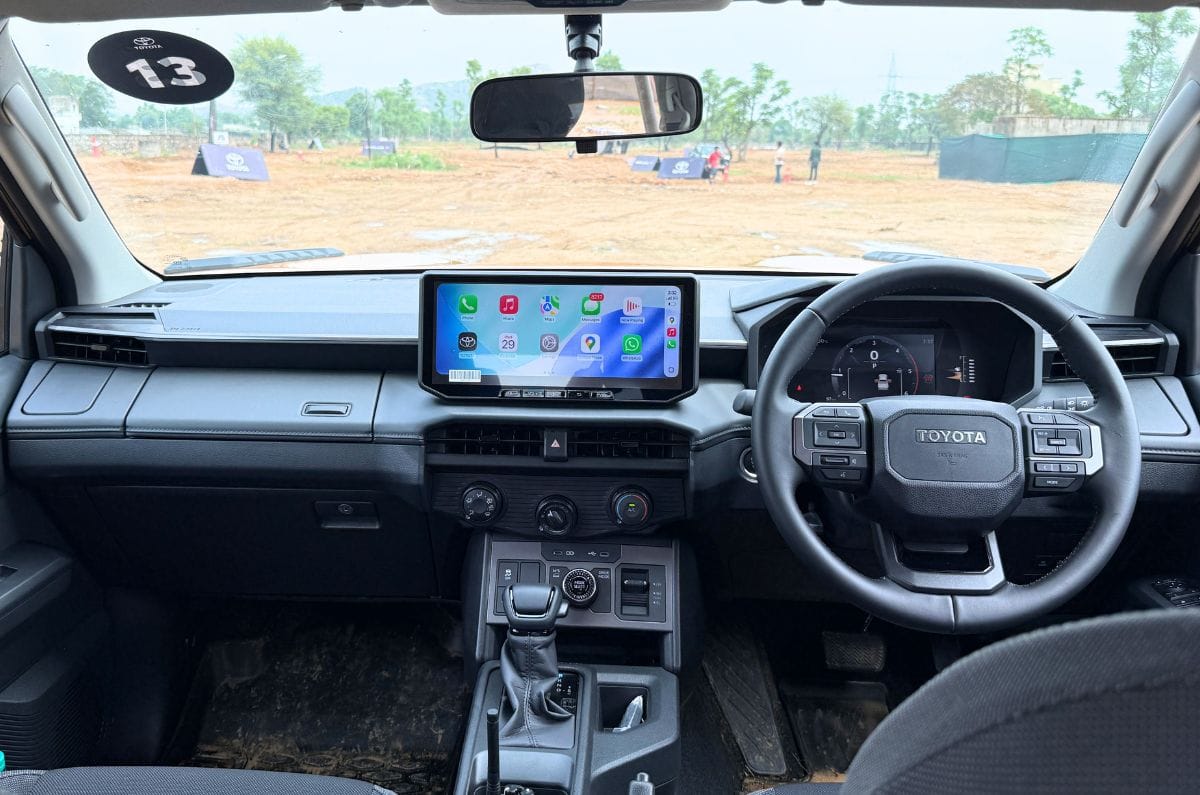
Toyota has launched the ninth-generation Hilux in India with prices ranging between Rs 31.99 lakh to Rs 36.69 lakh (ex-showroom). The new-gen model brings a completely new interior that looks more modern and contemporary, but on the equipment front, it’s under specced for its money. The cabin is finished in an all-black theme and it does exude a sense of ruggedness with hard wearing materials all around. There’s also some use of soft-touch materials on the dashboard and door pads that bring a much-needed premium feel. Toyota has also generously used physical controls for all key functions, which definitely aids usability; the buttons and dials also operate with nice tactility. Like all Toyotas, the cabin feels built to last and is quite practical with lots of storage places built in.

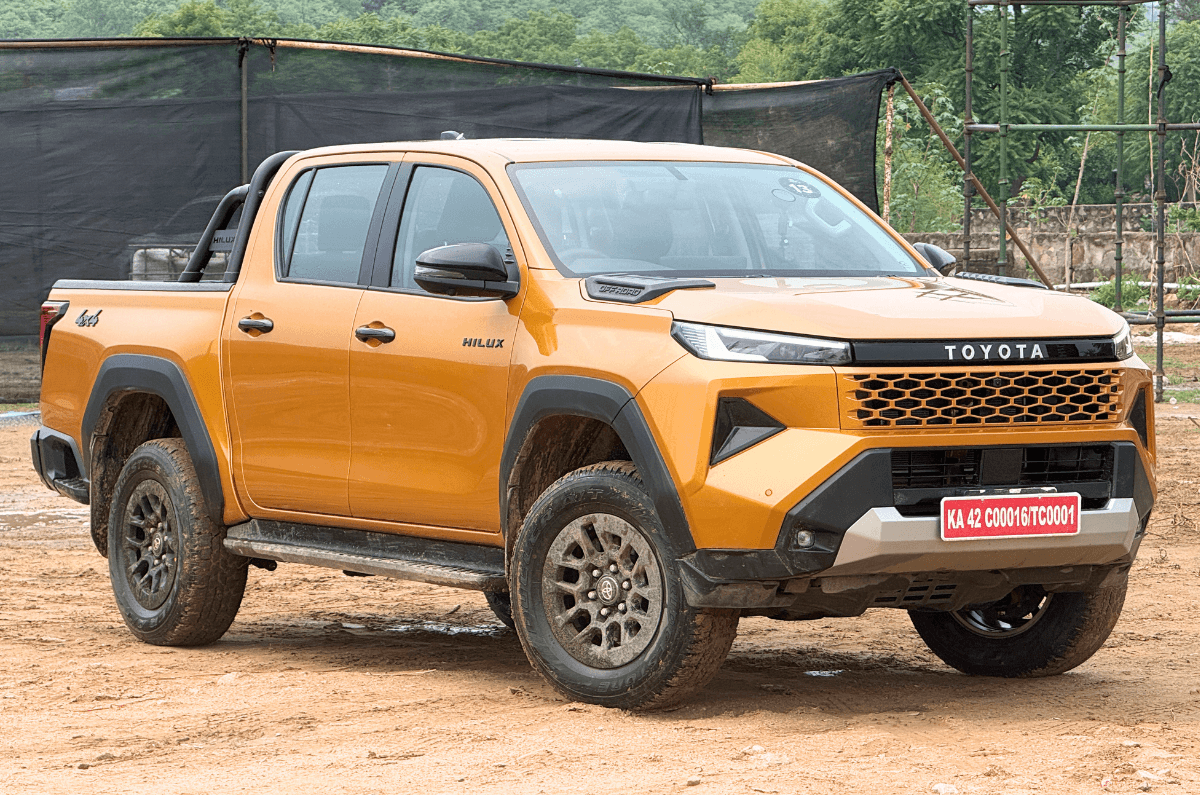
The ninth-generation Toyota Hilux has been launched in India, priced between Rs 31.99 lakh and 36.69 lakh, ex-showroom. Compared to the outgoing generation of the pickup truck, the new model gets updated front and rear profiles. In fact, it’s design looks inspired of the Toyota’s Tacoma pickup truck sold in international markets.
Under the hood, however, the new Hilux carries over the tried-and-tested 2.8-litre turbo-diesel mill, producing 204hp and 500Nm. Transmission duties are handled by a 6-speed torque-converter automatic unit, which is now standard across the range; a manual gearbox is no longer an option. Also, both two-wheel-drive and four-wheel-drive configurations are on offer.

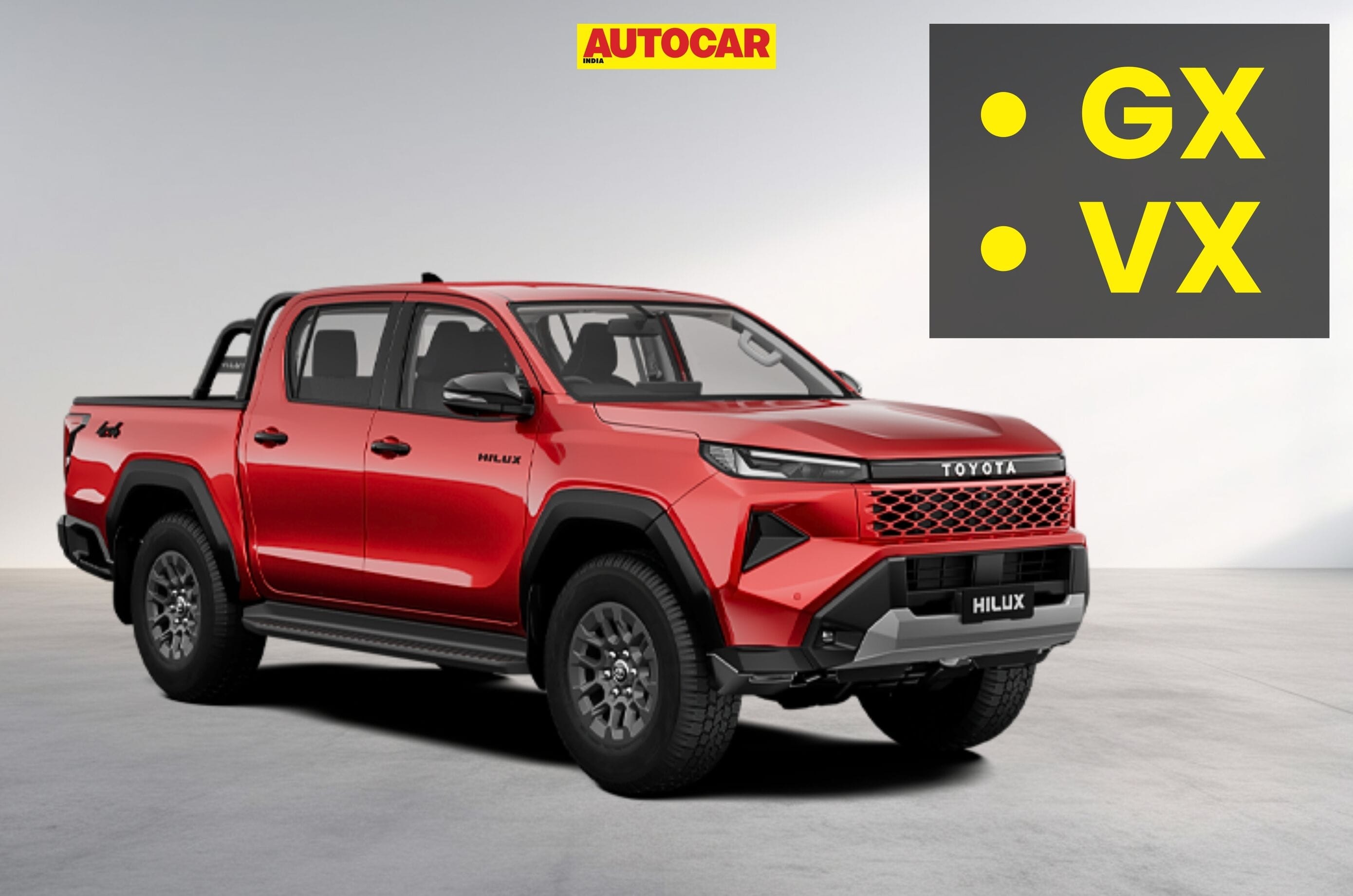
Toyota has launched the ninth-generation Hilux in India with prices ranging between Rs 31.99 lakh and Rs 36.69 lakh (ex-showroom). As a pick-up truck, the Toyota Hilux caters to a very niche audience, with the only other alternative in the market being the Isuzu D-Max V-Cross. This latest-gen model brings a contemporary design and a more feature-packed interior, but under the skin, the Hilux has remained largely unchanged from its predecessor.
The new Toyota Hilux is available in two trims – GX and VX – with a single engine and gearbox combination, but with both 4×2 and 4×4 drive configurations. Here in this article, we are taking a close look at exactly what you get in each trim and which ones worth your money.
Under the hood, both trims of the Hilux feature a 2.8-litre, four-cylinder diesel engine that produces 240hp and 500Nm. A 6-speed torque converter automatic gearbox is standard across the range, but there’s no manual gearbox option like there was on its predecessor.
The base GX trim can be had in either 4×2 or 4×4 drive configurations, while the top VX trim comes solely in 4×4 configuration. Notably, this is the first time Toyota is offering the option of a 4×2 setup on the Hilux in India; the previous model came with 4×4 as standard.
Toyota is offering a total of six monotone colour options with the new Hilux, namely Sulphur Metallic, Platinum Pearl White Metallic, Attitude Black, Ash, Emotional Red and Super White – Sulphur Metallic and Attitude Black are only available on the top VX trim. The interior, irrespective of the trim, comes with an all-black finish for a rugged appeal.
Now let’s take a closer look at exactly what features are available in each of the two trims:
Features over and above GX
Between the GX and VX, we’d recommend opting for the fully-loaded VX trim with the 4×4 system as standard. The base GX trim misses out on several convenience features, which particularly stick out at this price point. Moreover, if you are considering buying a Hilux, its best to opt it with the 4×4 system which will allow you to exploit the full breath of potential that this pickup truck offers. The fact that the top trim is rather well priced, costing just Rs 70,000 more than its predecessor, further sweetens the deal.

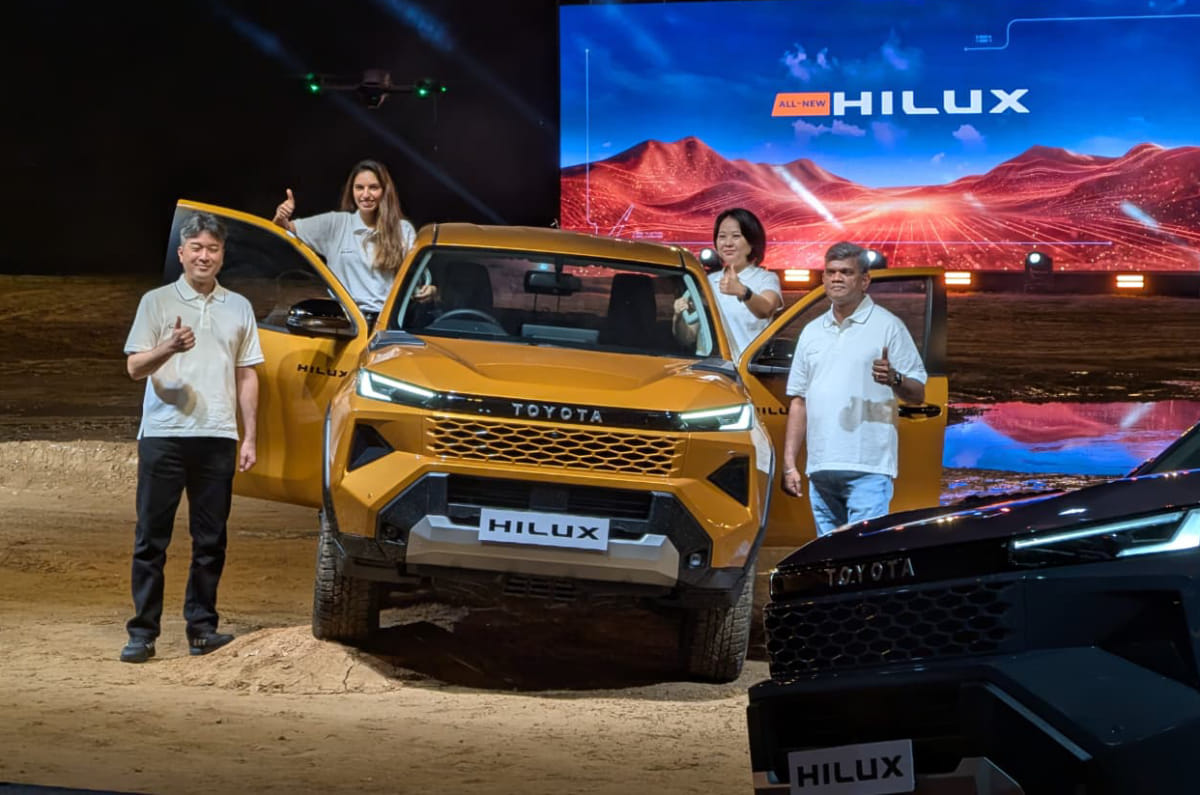
Toyota has launched the ninth-generation Hilux in India, starting at Rs 31.99 lakh (ex-showroom). The new pickup gets a redesigned exterior and cabin, additional technology and features, while retaining the IMV body-on-frame platform and Double Cab body style offered on the outgoing model.
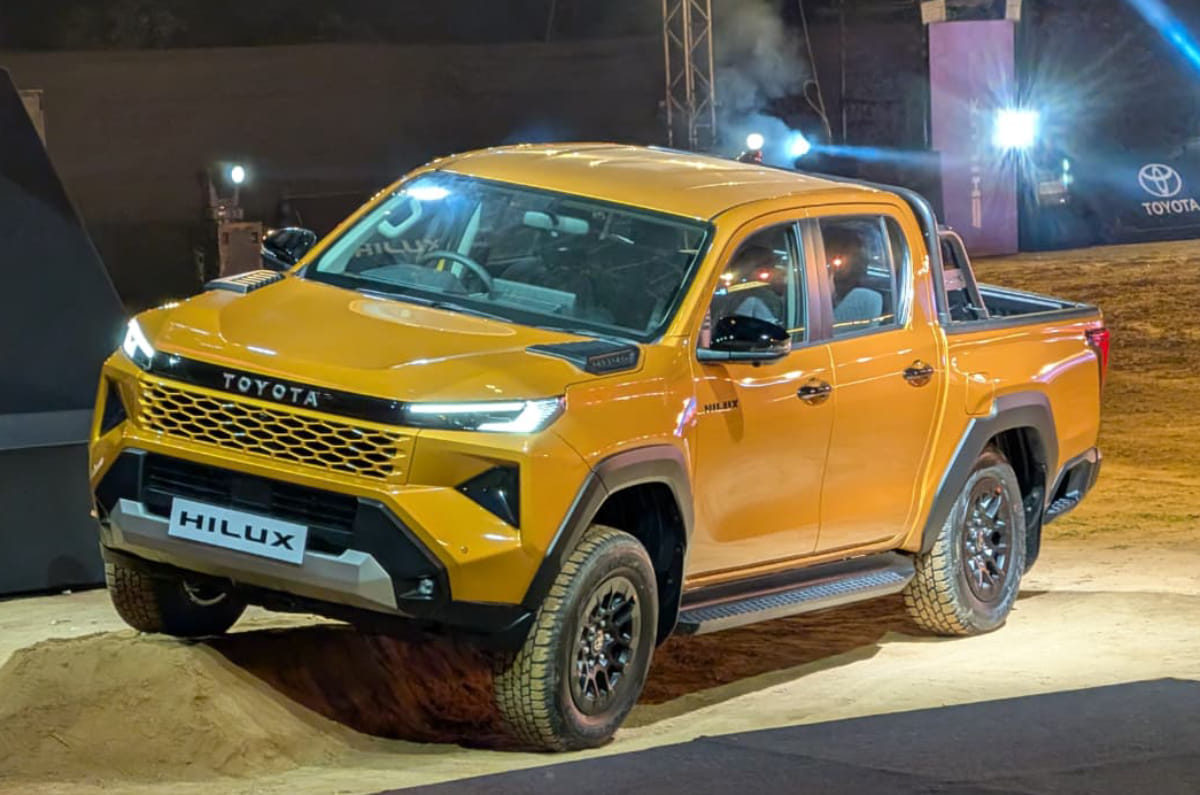
The new Hilux adopts a more upright front-end design with slim LED headlamps, a honeycomb-pattern grille and prominent ‘TOYOTA’ lettering replacing the conventional badge. On the front bumper are two quadrangle-shaped black air intakes on either side. Its lower section looks very aggressive with strong creases, wide air intakes, a silver skid plate and two LED fog lamps. In profile, the pickup gets black wheel arch cladding, roll bars, new 17-inch alloy wheels and a footboard for easier ingress and egress.
At the rear, the pickup gets vertically stacked LED tail-lamps with C-shaped DRL signatures, ‘TOYOTA’ lettering across the tailgate and a redesigned bumper with an integrated step for easier access to the cargo bed.
The 2026 Toyota Hilux is offered in 6 colors, Sulphur Metallic, Platinum Pearl White Metallic, Attitude Black, Ash, Emotional Red and Super White.
Inside, the Hilux gets an all-new dashboard with 12.3-inch digital instrument cluster and 12.3-inch touchscreen infotainment displays, along with a new three-spoke steering wheel bearing the Toyota lettermark. The customisable driver’s display offers four design themes, whilst the infotainment unit uses the Toyota Smart Connect system.
The cabin combines a mix of soft-touch leatherette and hard plastics, appearing equal parts contemporary and rugged. A welcome sight in the Hilux’s cabin is the abundance of physical controls for key functions, such as the climate control system and four-wheel-drive settings.
Feature highlights include wireless Apple CarPlay and Android Auto, wireless charging, dual-zone climate control, connected car technology, powered and ventilated front seats, multiple terrain modes, over-the-air (OTA) updates, a 360-degree camera and an ADAS suite.
The Hilux continues with the familiar 2.8-litre four-cylinder diesel engine, which produces 204hp and 500Nm and is paired with a 6-speed torque-converter automatic. The Hilux is offered in 4×4 as well as 4×2 variants. There is no manual option available now, there was no 4×2 variants on offer before as well as it does not get the 48V ‘NeoDrive’ mild hybrid system, that was introduced with the Fortuner.
| Variant | Price (ex-showroom) |
| GX 4×2 AT | Rs 31.99 lakh |
| GX 4×4 AT | Rs 33.69 lakh |
| VX 4×4 AT | Rs 36.69 lakh |
The 2025 Toyota Hilux is available in three variants, with prices ranging from Rs 31.99 lakh to Rs 36.69 lakh (ex-showroom). The entry-level GX 4×2 AT is priced at Rs 31.99 lakh, while the GX 4×4 AT sits in the middle of the range at Rs 33.69 lakh. The range-topping VX 4×4 AT is priced at Rs 36.69 lakh. The new Hilux continues to rival the Isuzu V-Cross in the lifestyle pickup segment.
Compared to the outgoing Hilux, which was priced between Rs 28.52 lakh and Rs 36 lakh (ex-showroom), the entry price has increased by Rs 3.47 lakh, while the range-topping variant costs Rs 69,000 more. Despite being a full generational update with a redesigned exterior and cabin and additional features, Toyota has kept the increase at the top end relatively modest.

Toyota will debut the new-generation 2026 Hilux in India tomorrow, July 28. The Hilux, currently in its eighth-generation avatar in the country, was launched in March 2022 and has been a relative success, especially against the likes of the Isuzu V-Cross pickup. With the new-generation model, teasers suggest that Toyota will give the Hilux a full design overhaul, making it look more modern and offering a handful of new features. Here’s everything you can expect from the 2026 Toyota Hilux in India:
With the new-generation update, Toyota is expected to raise the Hilux’s prices by a considerable margin. For reference, the current model is priced from Rs 28.52 lakh to Rs 36 lakh (ex-showroom). So, the upcoming new-generation Hilux is likely to have a price tag of somewhere between Rs 32 lakh and Rs 40 lakh (ex-showroom).
As the upcoming new-gen model is based on the same IMV platform as the current Hilux, Toyota is expected to offer it with the same 2.8-litre diesel engine that produces 204hp, 420Nm with a 6-speed manual transmission, and 240hp, 500Nm with a 6-speed torque converter automatic gearbox. A 4×4 AWD system is expected to be offered as standard with a low-range transfer case. A small improvement, however, could be a new 48V mild-hybrid system, called the ‘neoDrive’ on the Fortuner, which would slightly improve the fuel efficiency of the Toyota pickup.
Notably, the international-spec ninth-generation Hilux is also offered as an all-electric vehicle with a 59.2kWh battery pack, delivering a WLTP-claimed range of 240km, and front- and rear-axle-mounted electric motors with a combined output of 196hp. However, the Hilux EV’s India launch is highely unlike in the country.
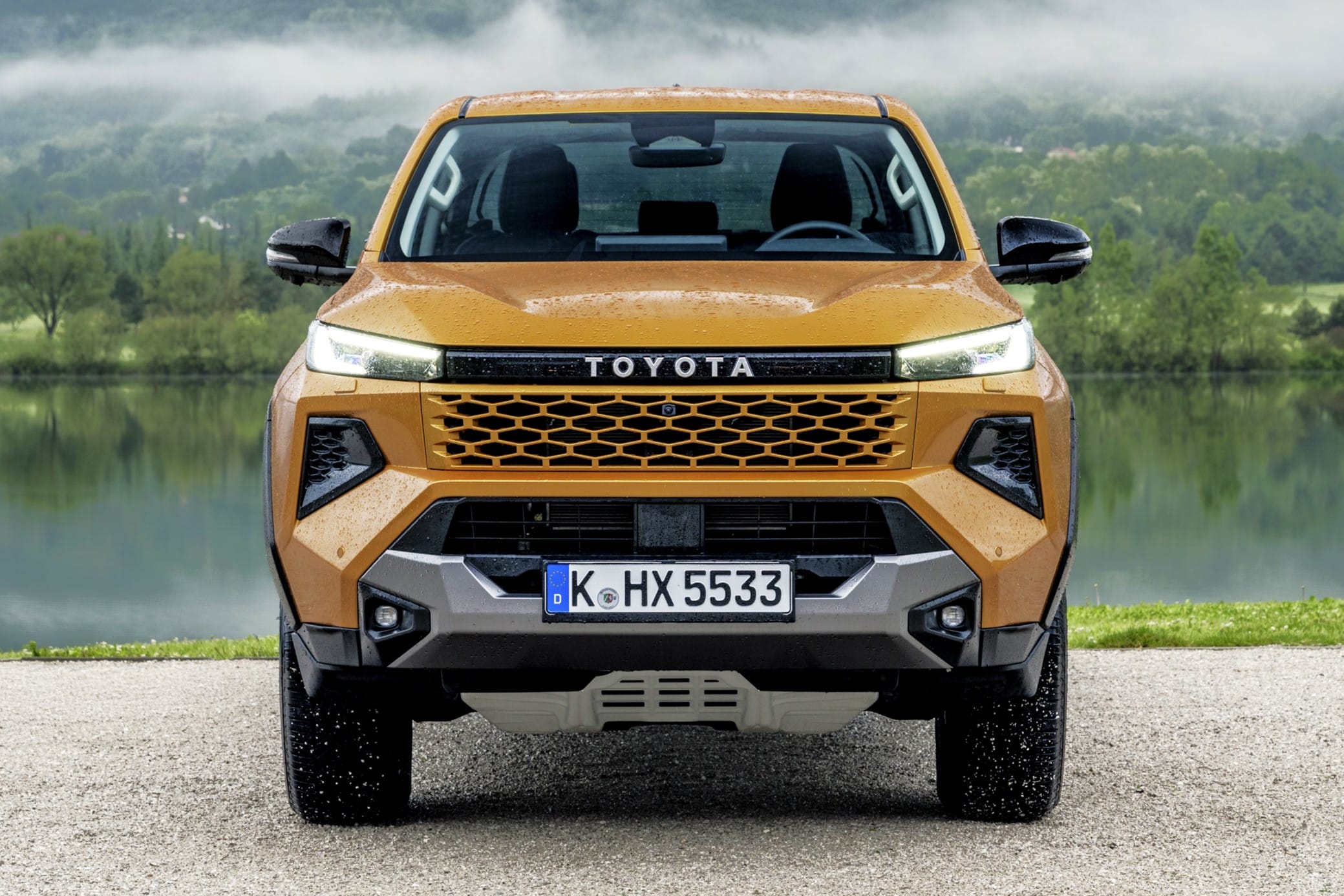
Compared to the current model, the international-spec ninth-generation Hilux has plenty of prominent creases and angles that make it look more aggressive. At the front, it gets slimmer LED headlights with LED DRLs, connected via a gloss black strip that features ‘Toyota lettering’. The grille is squarer than before and features prominent angular honeycomb-mesh design elements.
On the bumper, there are two quadrangle-shaped black air intakes on either side of the grille. The lower section of the bumper looks very aggressive with strong creases, wide air intakes, a silver skid plate, and two LED fog lamps.
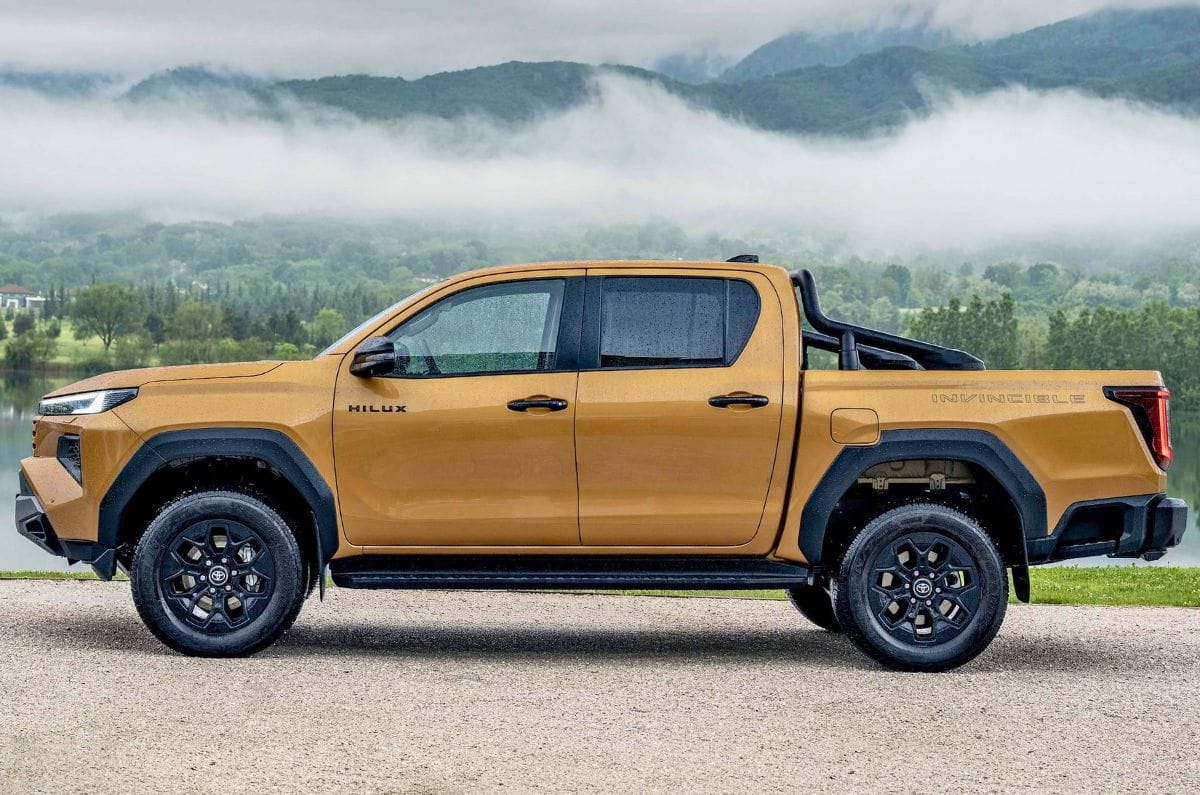
Compared to the front, the side profile design is cleaner. The international model gets 18-inch black alloy wheels, squared-off black cladding on wheel arches and a footboard for easier ingress and egress. The outside rearview mirrors (ORVMs) and door handles are black, and the truckbed features a roll cage finished in black for added contrast.
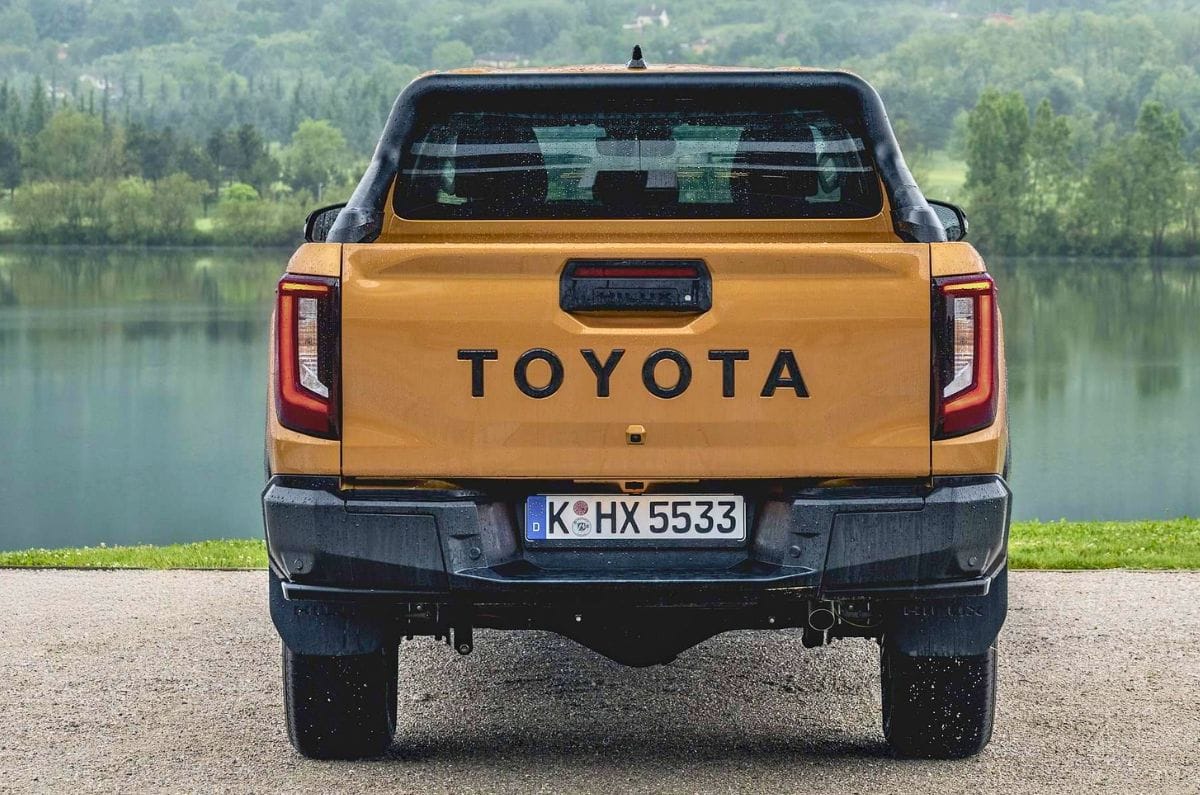
The 2026 Toyota Hilux’s rear features C-shaped wraparound LED taillights. The tailgate features massive ‘Toyota’ lettering in black, and the tailgate handle is also finished in black. The rear bumper is chunky and integrates a step to climb onto the truck bed.
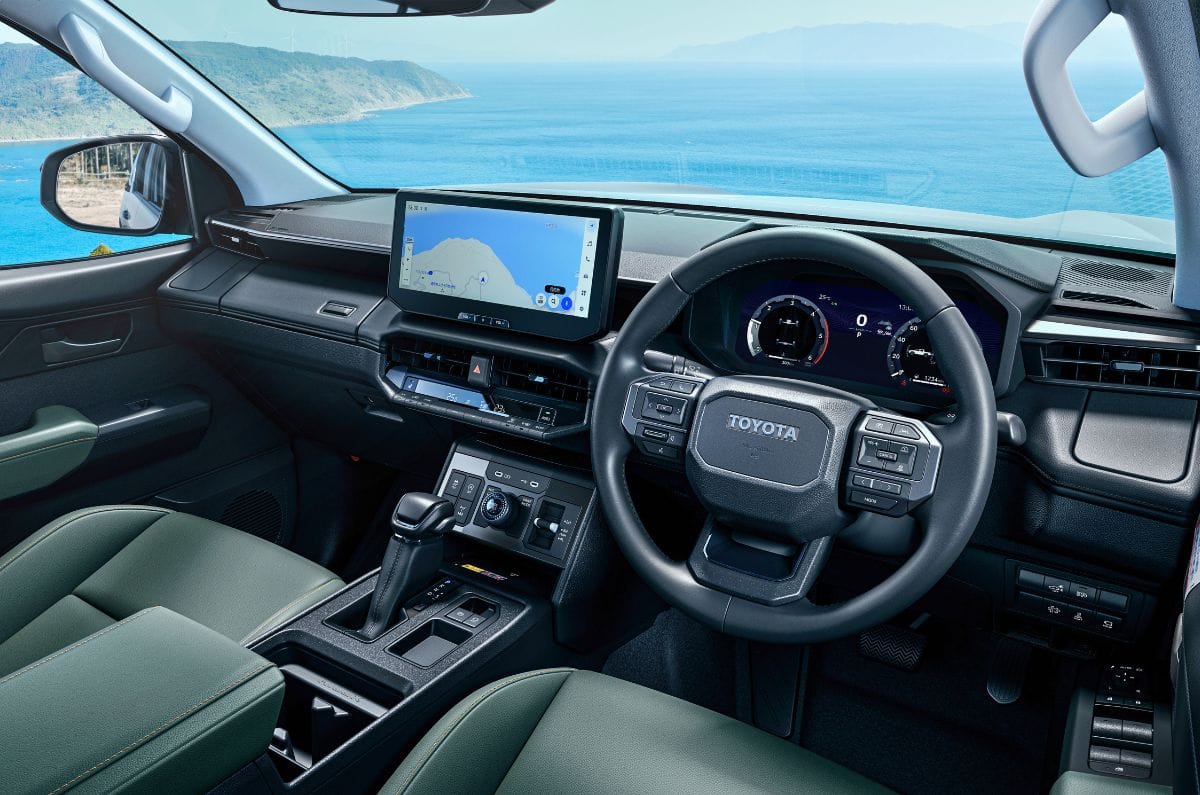
While the India-spec Hilux’s interior is yet to be teased, it is expected to be revamped entirely like the international model. With a chunky 3-spoke steering wheel with physical buttons, a 12.3-inch digital driver’s display and a same-sized touchscreen infotainment system, it looks more modern than the outgoing model. With a mix of soft-touch leatherette materials and hard plastics, it seems to be equal parts contemporary and rugged. Unlike modern-day cars, the new-gen Hilux offers a plethora of physical controls on the centre console and transmission tunnel. Like the current model, the international-spec ninth-gen Hilux features an all-black cabin.
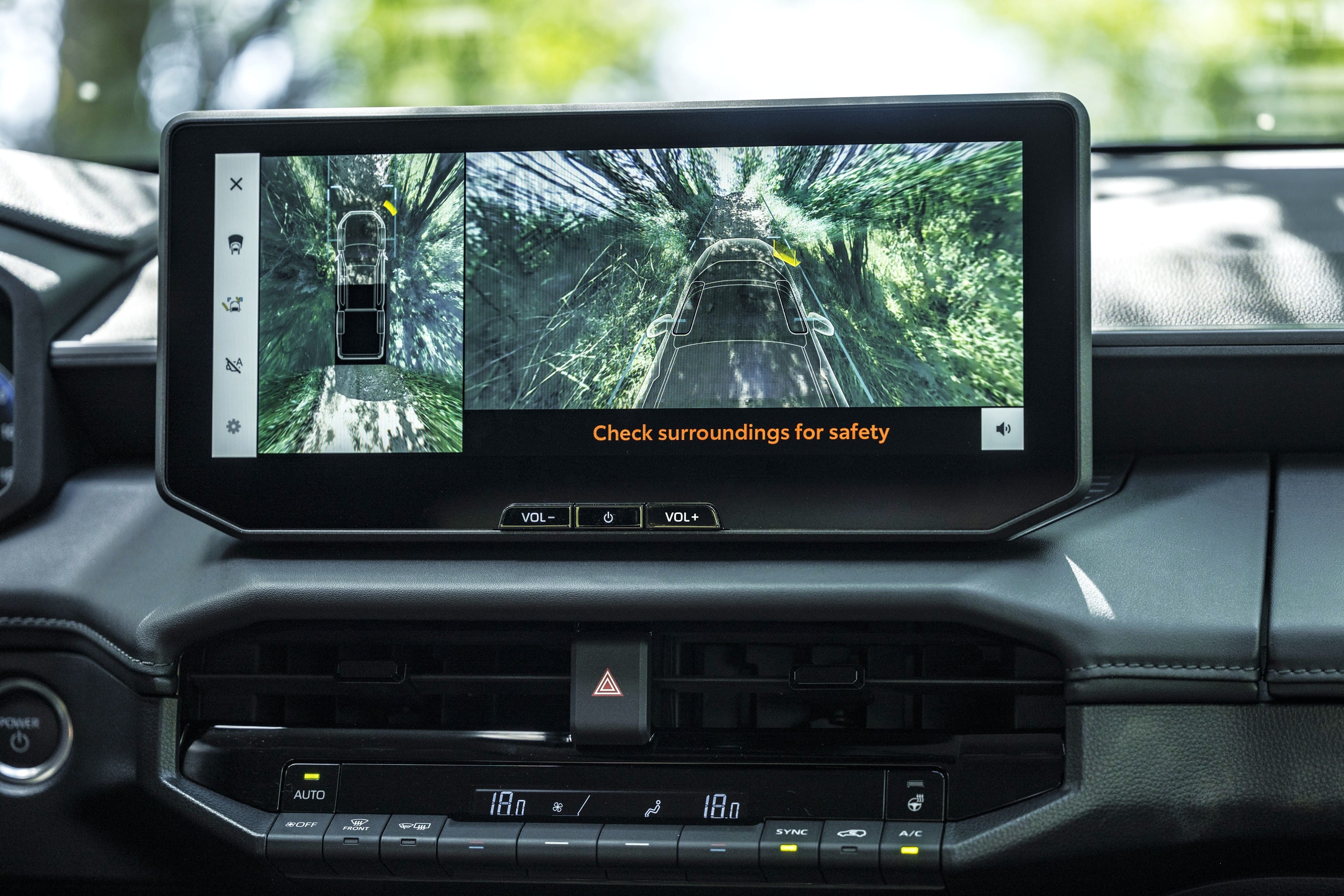
New features onboard the ninth-generation Toyota Hilux include a 360-degree camera system with a blind-spot monitor, dual-zone automatic climate control, powered and ventilated front seats, heated ORVMs and an advanced driver assistance system (ADAS) suite. Other features include the aforementioned 12.3-inch screens, a 9-speaker JBL audio system, a 220V power outlet for front passengers and front and rear parking sensors. The feature suite of the India-spec 2026 Hilux is expected to be similar to the international-spec model.
The new-generation Toyota Hilux will continue to rival the Isuzu V-Cross in India, which received a minor update in February 2026. Notably, the V-Cross is priced from Rs 25.50 lakh to Rs 30.28 lakh (ex-showroom).
Prices are ex-showroom, India.