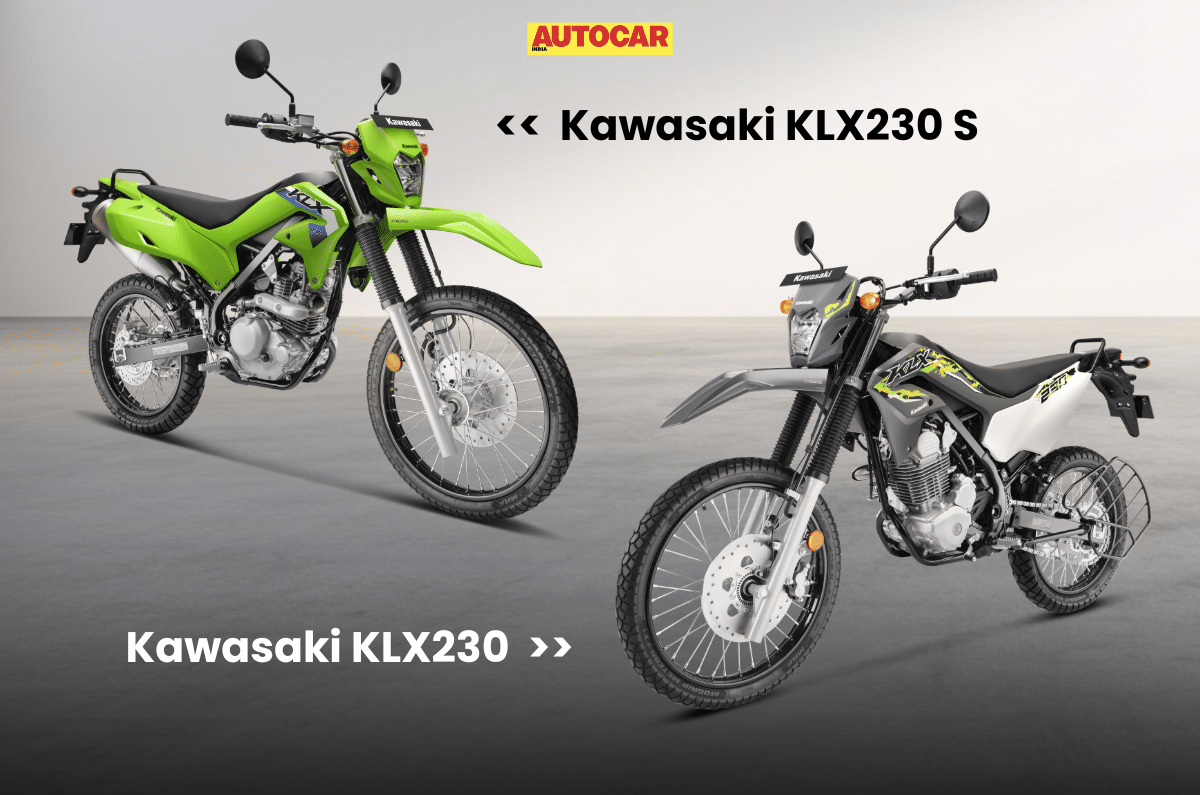
Kawasaki has launched the KLX230 S, a more accessible version of the KLX230. Beyond the new naming scheme, the ‘S’ model features several modifications that make it more accessible for shorter riders and the occasional off-road explorers.
Kawasaki KLX230 S vs KLX230: Suspension and ground clearance
The KLX230 S gets lesser suspension travel resulting in a lower seat height
The KLX230 S utilizes the same 37mm fork and monoshock as the standard model, but travel is reduced to 160mm and 163mm (F/R), respectively – compared to the 220mm and 223mm travel on the standard KLX230. This adjustment results in a more accessible seat height of 830mm, benefiting riders who might find the standard model’s 890mm seat height intimidating. Additionally, the shorter suspension stroke has resulted in a 1,350mm wheelbase, which is 20mm shorter than the standard model.
However, it is worth noting that during our testing of the standard KLX230, we found that the rear suspension sags significantly under load. This makes it easier for riders to flat-foot the bike, especially since the narrow frame and seat design already enhance accessibility.
The reduced suspension travel on the KLX230 S naturally leads to a lower ground clearance of 220mm, compared to 255mm on the standard model. Despite this decrease, the KLX230 S still offers sufficient clearance to handle most off-road situations effectively.
Apart from these specific adjustments, the KLX230 S remains identical to the standard KLX230, including the panels and colour schemes. It is powered by the same 233cc, single-cylinder, air-cooled engine, producing 19hp at 7,800rpm and 19Nm of torque at 6,400rpm, paired with a six-speed gearbox.
At Rs 2.19 lakh (ex-showroom, India), both models cost the same. So the decision lies with the customer if they wish to choose a more accessible seat height and lower suspension stroke as opposed to more off-road capability.
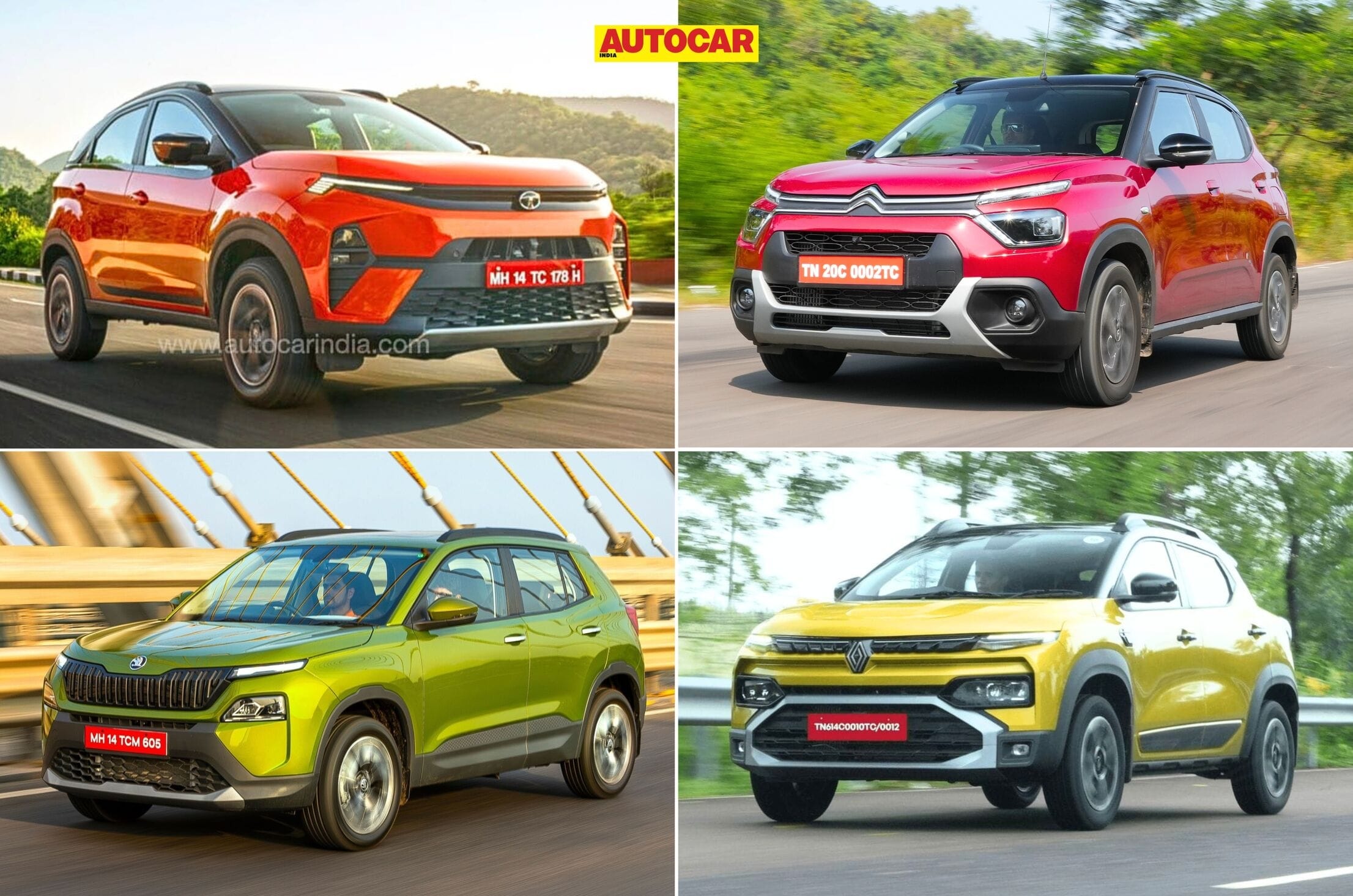
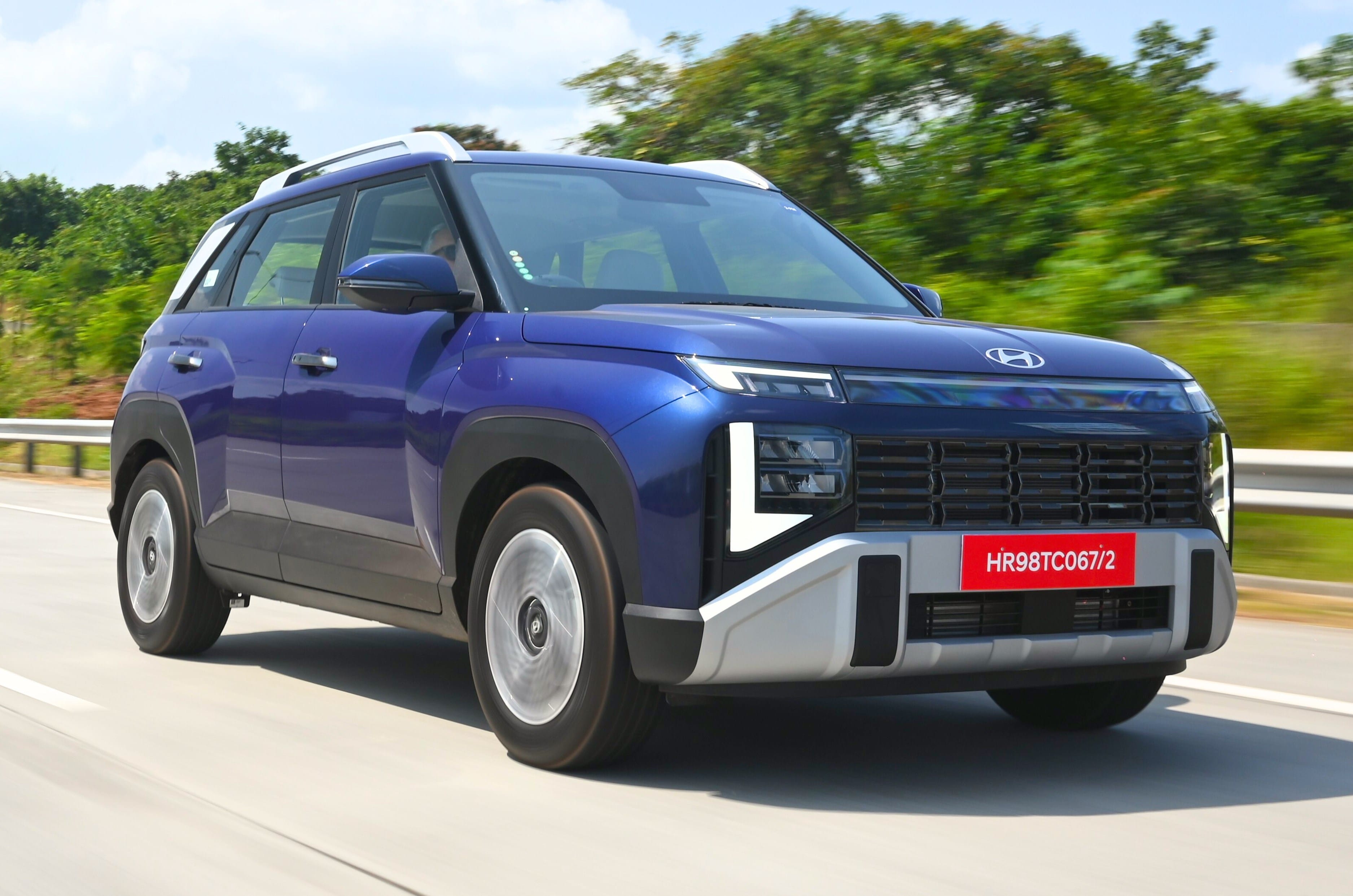
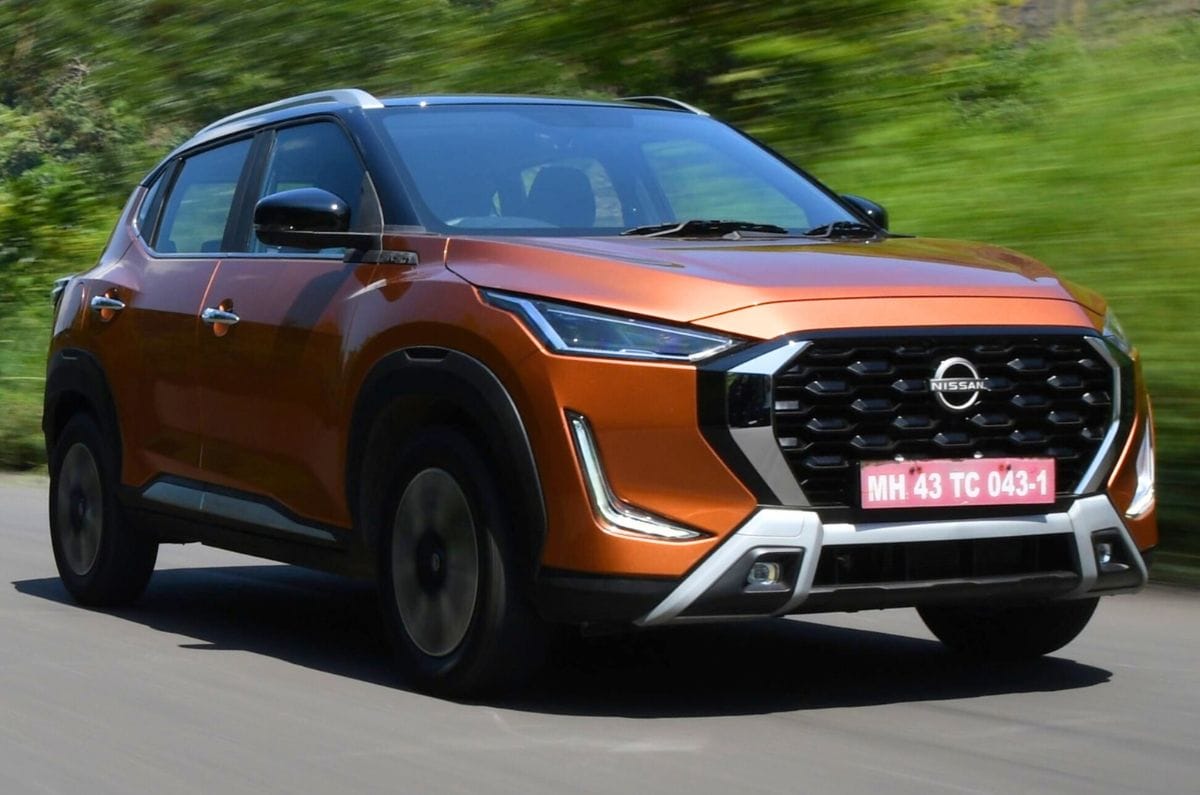
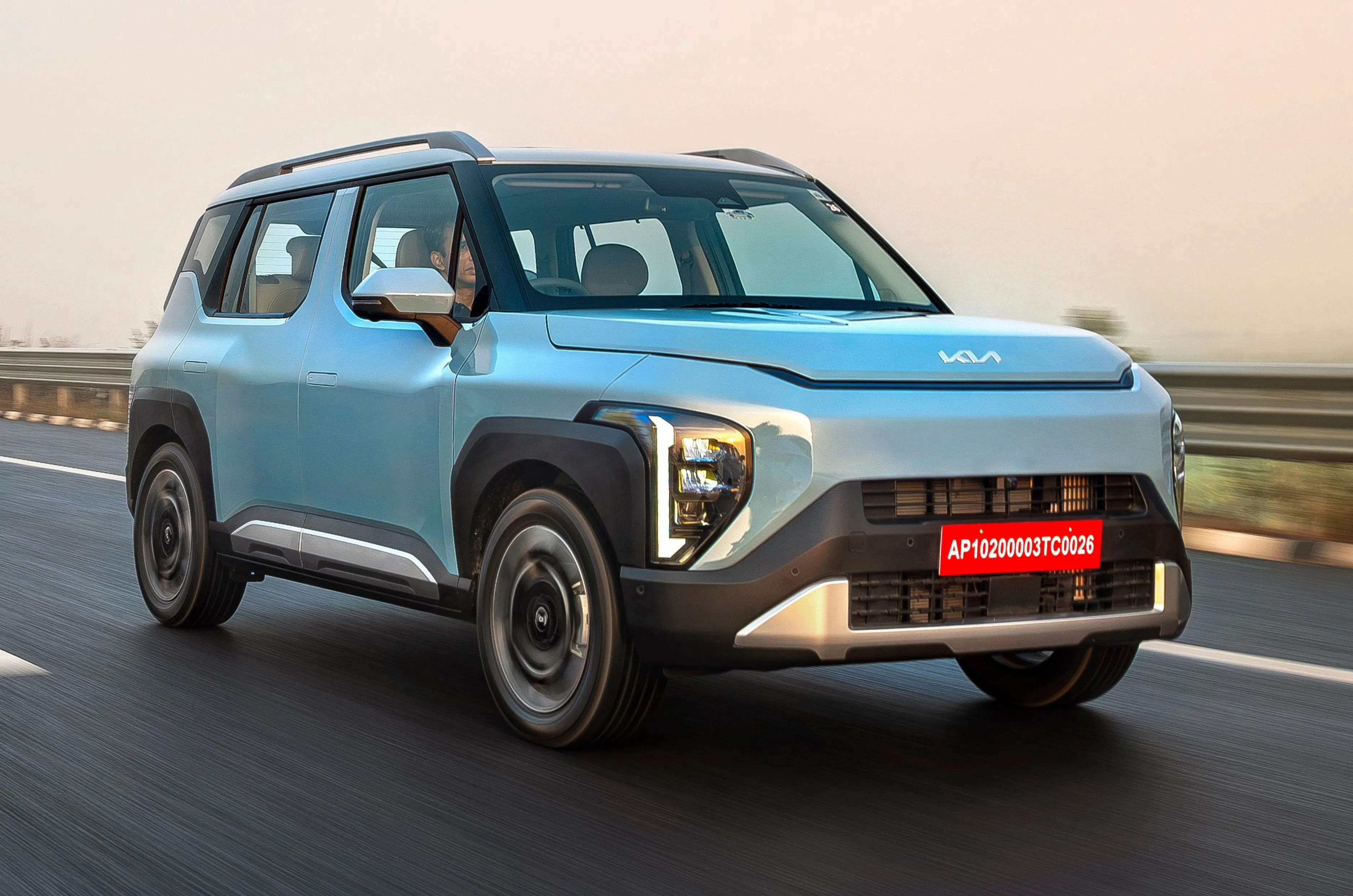
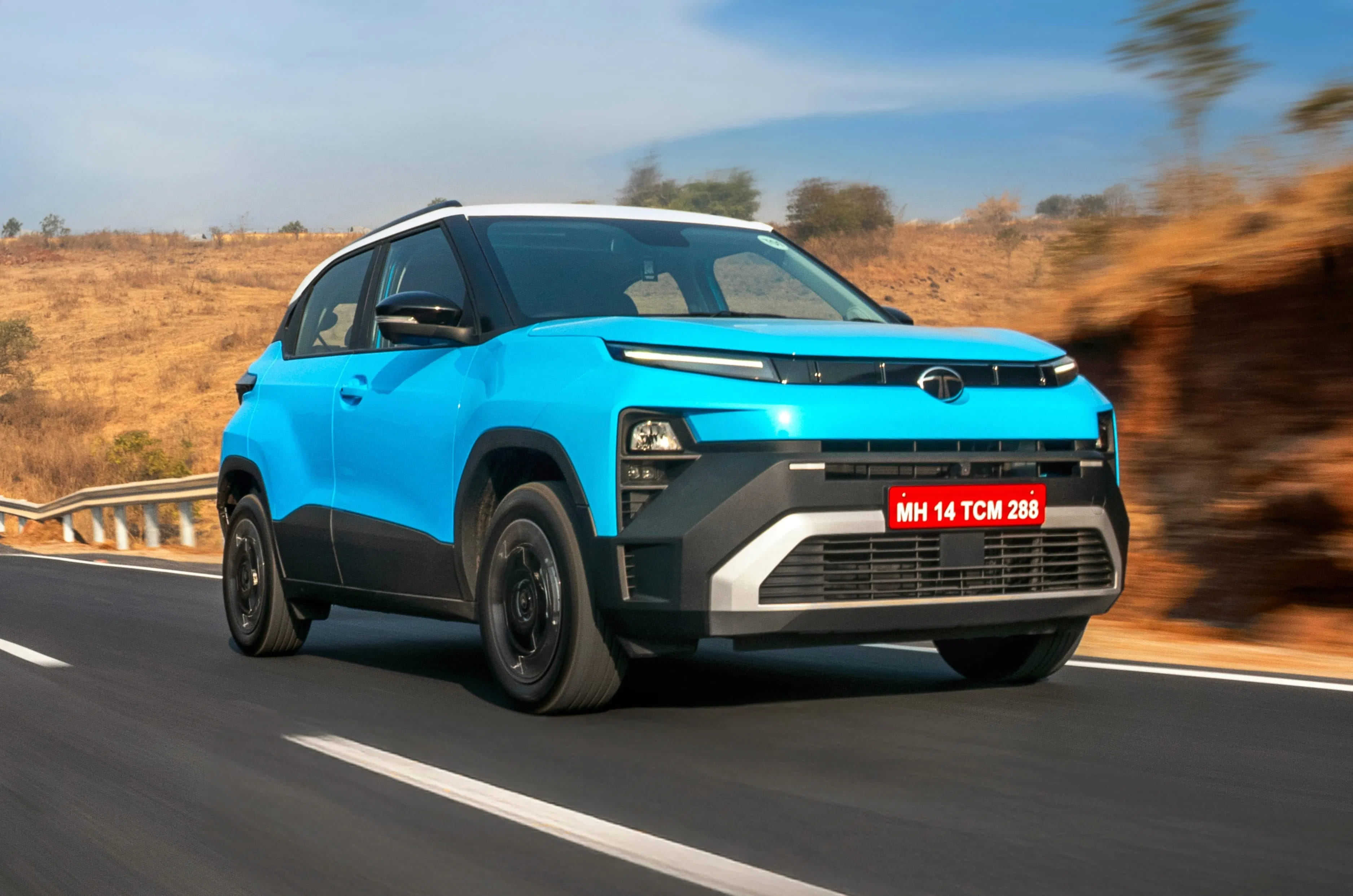
Turbocharged petrol engines are known to pack strong performance, and in some cases, they are even more fuel-efficient than their naturally aspirated counterparts, offering a nice blend of power and efficiency. If you’re looking for turbo-petrol cars under Rs 10 lakh, the Indian market currently has offerings from brands like Hyundai, Tata, Kia, Maruti Suzuki, Renault, Nissan, Skoda, and Citroen that come with a turbo-petrol engine. Read on to discover these 10 models, listed in the order of least to most affordable.
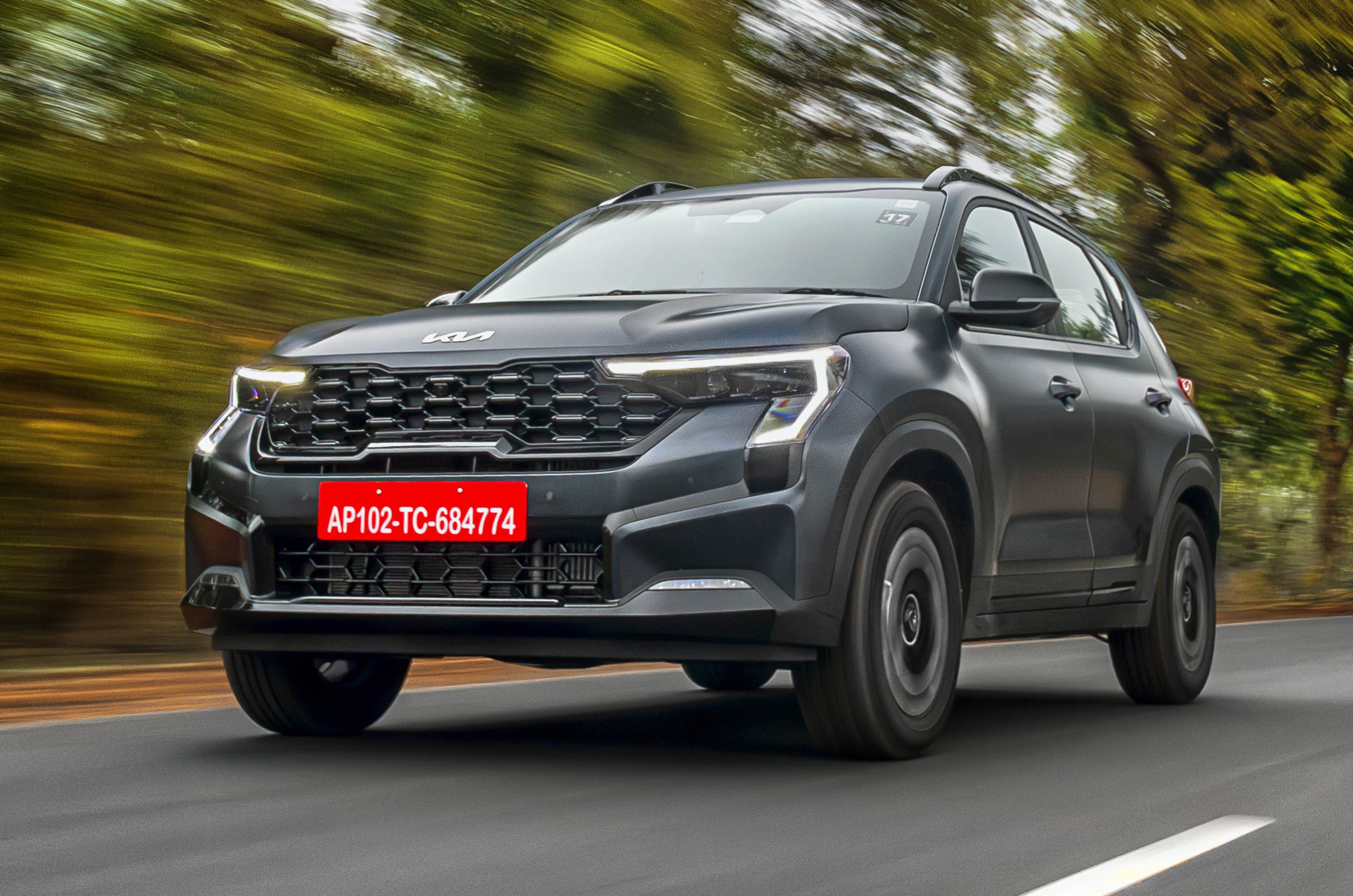
10. Kia Sonet
Price: 8.79 lakh onwards
The Sonet is one of two contenders from Kia in the compact SUV space. It utilises the same 1.0-litre turbo-petrol unit as the i20 N Line’s. Notably, it’s the only model in this list that utilises a clutchless manual gearbox (iMT) with its turbo-petrol engine. There’s also a 7-speed DCT on offer as well. The Kia Sonet review mentions that its turbo-petrol unit has sufficient pep in most use cases.
Kia Sonet turbo-petrol price
Variant
Price (Rs lakh)
HTK(O) iMT
9.16
HTK(O) DCT
9.96
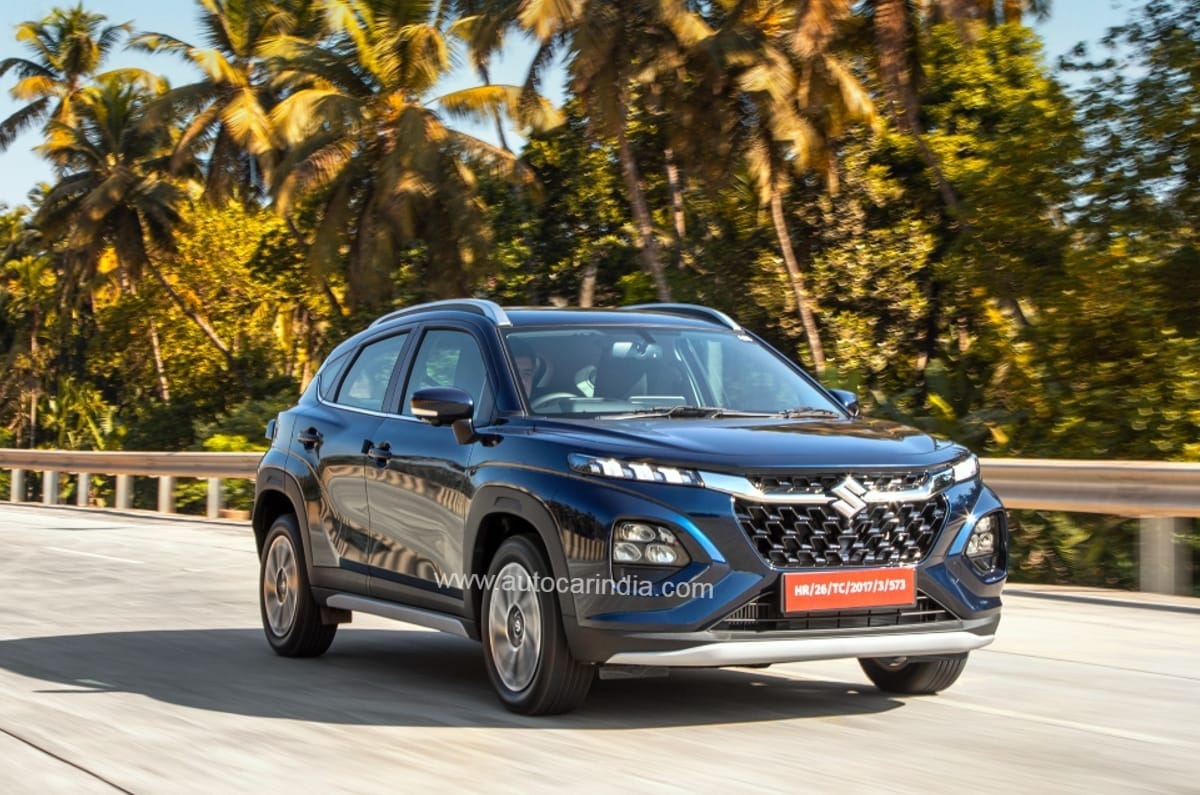
9. Maruti Suzuki Fronx
Price: Rs 8.91 lakh onward
The Fronx is Maruti’s only turbo-petrol-powered model, developing 100hp and 148Nm from a 1.0-litre unit. Power is sent to the front wheels via a 5-speed manual transmission. There’s also a 6-speed automatic gearbox on offer, but it’s priced over the Rs 10 lakh mark. In our Fronx review, we found its turbo-petrol unit has minimal turbo lag, but it lacked the mid-range punch one expects from a turbo-petrol engine.
Maruti Fronx turbo-petrol price
Variant
Price (Rs lakh)
Delta Plus MT
8.91
Zeta MT
9.71
8. Hyundai Venue
Price: Rs 8.89 lakh onwards
The Hyundai Venue gets a similar 120hp, 1.0-litre turbo-petrol unit as the i20. Since the engine is paired with the base HX2 trim, it is more affordable in the Venue than the better-equipped i20 N-Line in the N6 trim. It is the most powerful model here, along with the i20 and Kia’s Sonet and Syros. We found the turbo-petrol engine’s performance to be strong and refined in our Hyundai Venue review.
Hyundai Venue turbo-petrol price
Variant
Price (Rs lakh)
HX2 MT
8.91
HX5 MT
9.90
7. Nissan Magnite
Price: Rs 8.75 lakh onwards
The Magnite is Nissan’s only model on sale that offers a turbo-petrol engine. Its 1.0-litre unit delivers 100hp and 152Nm of torque and can be paired to a 5-speed manual transmission or a CVT gearbox. We found the Magnite’s engine to have great mid-range punch, and its CVT to be smooth-shifting in our review. There’s also a Kuro Edition of the SUV, which gets blacked-out styling and interior details.
Nissan Magnite turbo-petrol price
Variant
Price (Rs lakh)
N-Connecta MT
8.75
Tekna MT
9.54
Tekna+ MT
9.55
Acenta CVT
9.25
N-Connecta CVT
9.67
Kuro Edition MT
9.10
Kuro Edition CVT
9.99
6. Kia Syros
Price: Rs 8.42 lakh onwards
Despite sharing the same engine as the Venue, i20 and Sonet, the Syros is the most affordable of the four. Unlike the Sonet that offers an iMT gearbox with its turbo-petrol engine, the Syros offers a proper three-pedal setup. Our review of the Syros finds its engine to pull smoothly through seamless gearshifts, especially with the manual transmission.
Kia Syros turbo-petrol price
Variant
Price (Rs lakh)
HTE
8.42
HTE(O)
9.22
HTE(EX)
9.82
5. Tata Punch
Price: Rs 8.35 lakh onwards
The 2026 Punch gets the Nexon’s 120hp turbo-petrol engine with its mid and top-level trims. However, unlike the Nexon, which also gets automatic transmissions, the Punch only gets a 6-speed manual gearbox with its turbo-petrol engine. It is the most affordable sub-compact SUV in this list, powered by a turbo-petrol engine. We experienced this engine in our review of the Punch and were impressed with its linear power delivery, overall grunt, and eager responsiveness.
Tata Punch turbo-petrol price
Variant
Price (Rs lakh)
Adventure
8.35
Accomplished+ S
9.85
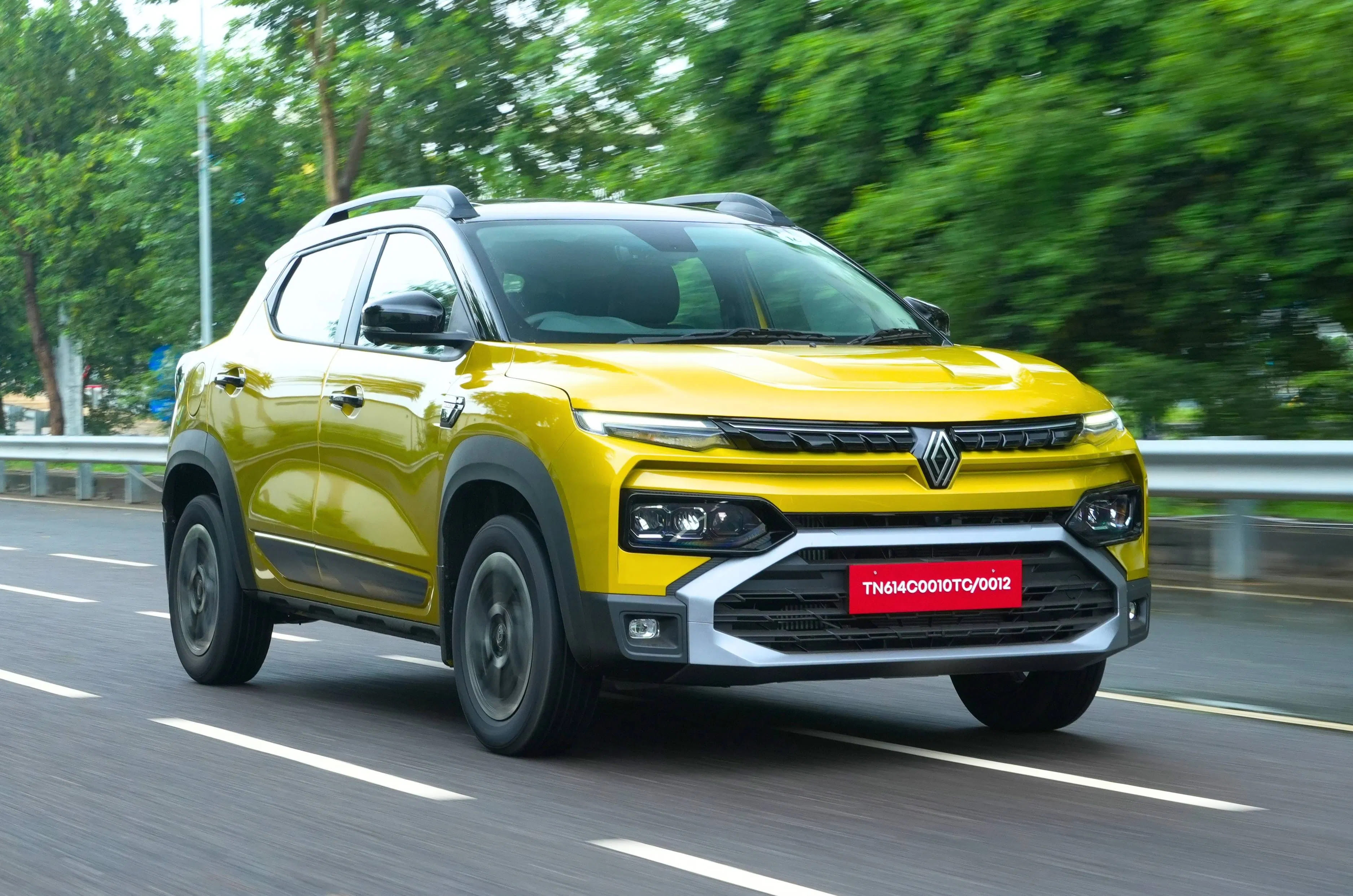
4. Renault Kiger
Price: Rs 7.89 lakh
The Kiger is Renault’s badge-engineered version of the Nissan Magnite. It also utilises Magnite’s 1.0-litre turbo-petrol engine and offers the same gearbox options. Our experience of the Kiger’s turbo-petrol engine mentions that it has enough pep and is responsive, and is much better to drive when paired with the CVT.
Renault Kiger turbo-petrol price
Variant
Price (Rs lakh)
Evolution+ Turbo MT
7.89
Techno Turbo MT
8.45
Techno Turbo CVT
9.35
Emotion Turbo MT
9.35
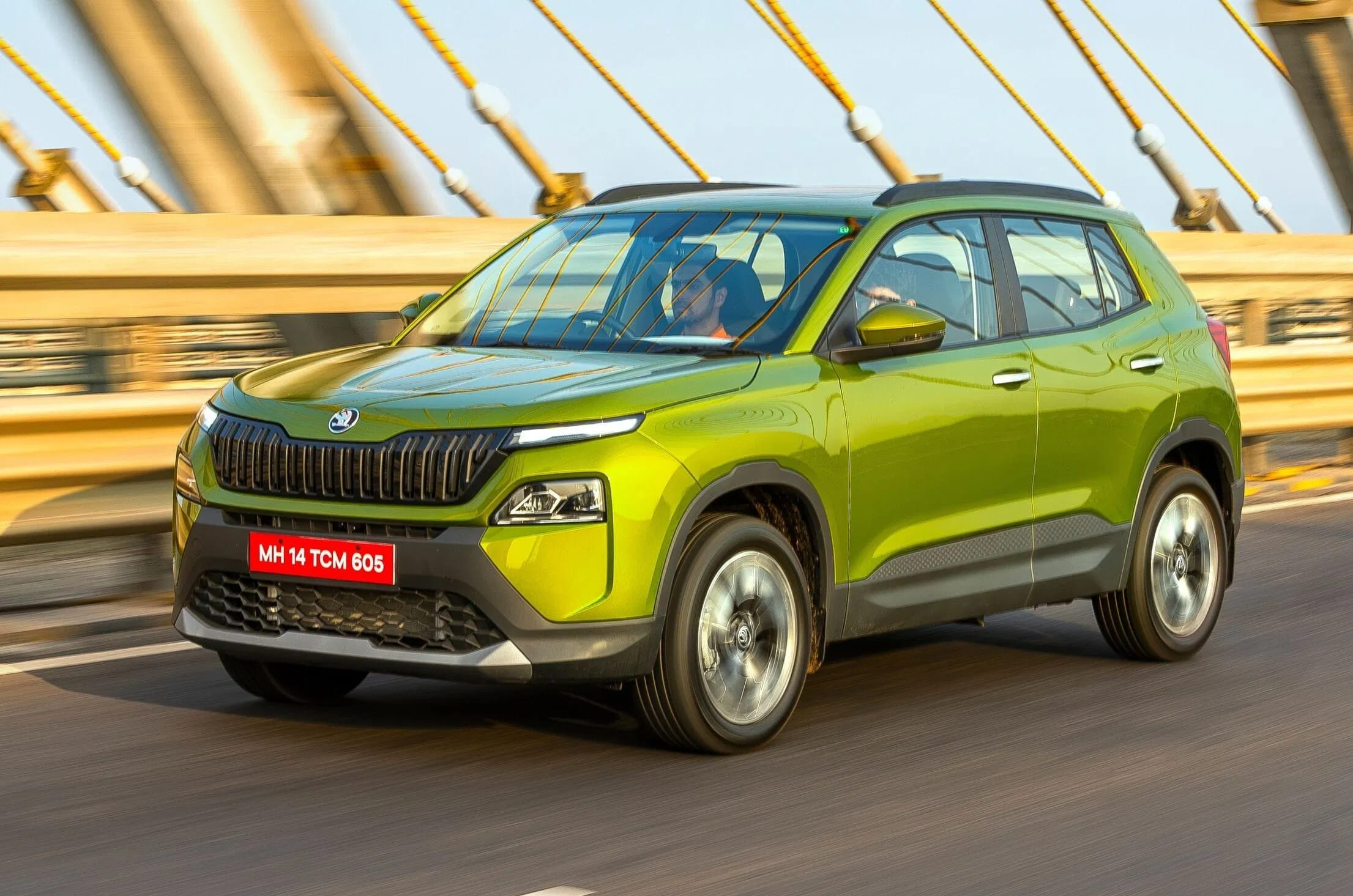
3. Skoda Kylaq
Price: Rs 7.59 lakh onwards
Skoda’s best-selling model in its lineup, the Kylaq compact SUV, is powered by a single 1.0-litre turbo-petrol engine delivering 115hp and 178Nm of torque, and is paired to a 6-speed manual or a 6-speed automatic gearbox. We found the Kylaq TSI engine’s strong power delivery to be a key highlight in our review.
Skoda Kylaq price
Variant
Price (Rs lakh)
Classic
7.59
Classic+
8.25
Classic+ AT
9.25
Signature
9.43
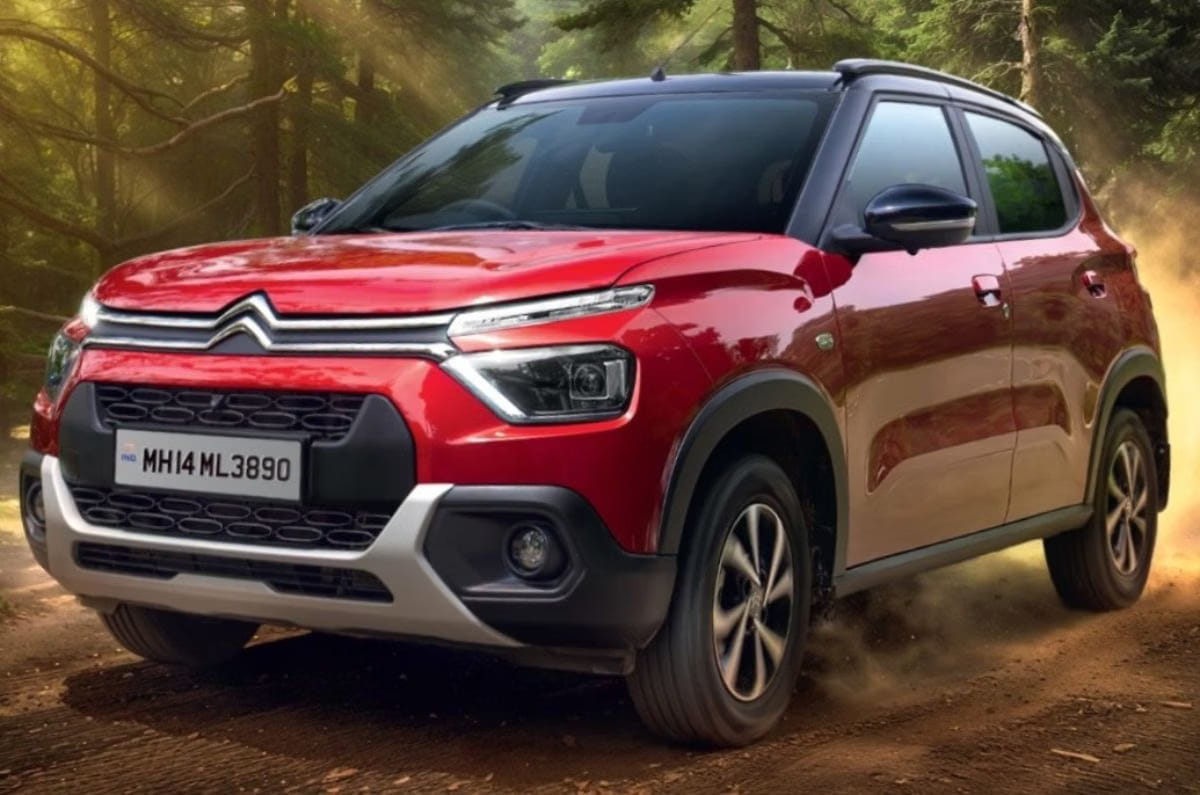
2. Citroen C3 X
Price: Rs 7.50 lakh onwards
The Citroen C3 X gets a turbo petrol engine on its mid and top trims. Powered by a 110hp,1.2-litre turbo-petrol engine, it produces the highest torque figures in this list with 190Nm and 205Nm with its 6-speed manual and automatic gearboxes, respectively. We found the engine quite responsive, with smooth shifts, making it engaging to drive compared with its rivals.
Citroen C3 X turbo-petrol price
Variant
Price (Rs lakh)
Feel turbo MT
7.50
Shine turbo MT
8.89
Shine turbo AT
9.60
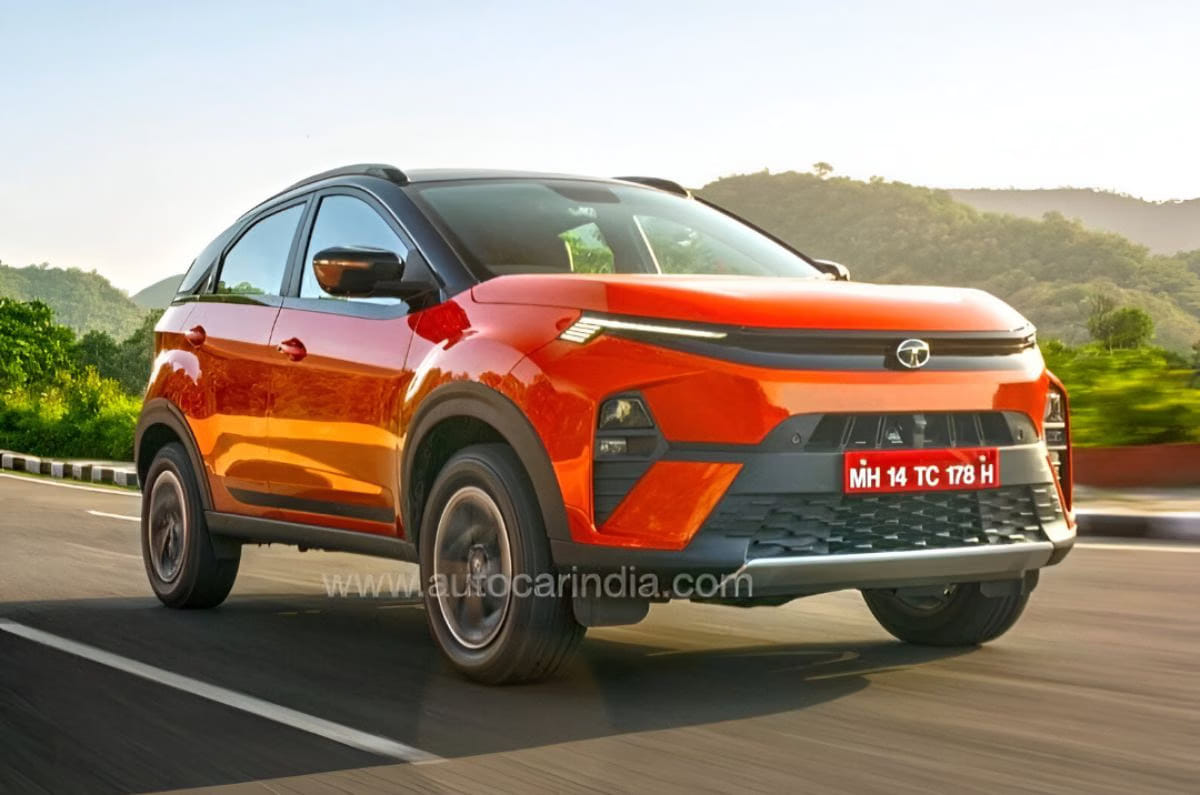
1. Tata Nexon
Price: Rs 7.37 lakh onwards
Currently, the Nexon holds the crown for being the most affordable car and compact SUV with a turbo-petrol engine. Powering it is a 1.2-litre turbo-petrol engine producing 120hp and 170Nm of torque. The engine can be paired with multiple transmission options, including a 5-speed manual, 6-speed manual, and a 6-speed AMT. There’s also a DCT automatic gearbox as an option, but it’s priced above Rs 10 lakh. We found its engine and gearbox performance to be smooth, especially at city speeds, with Sport mode giving it slightly more punch in our Nexon review.
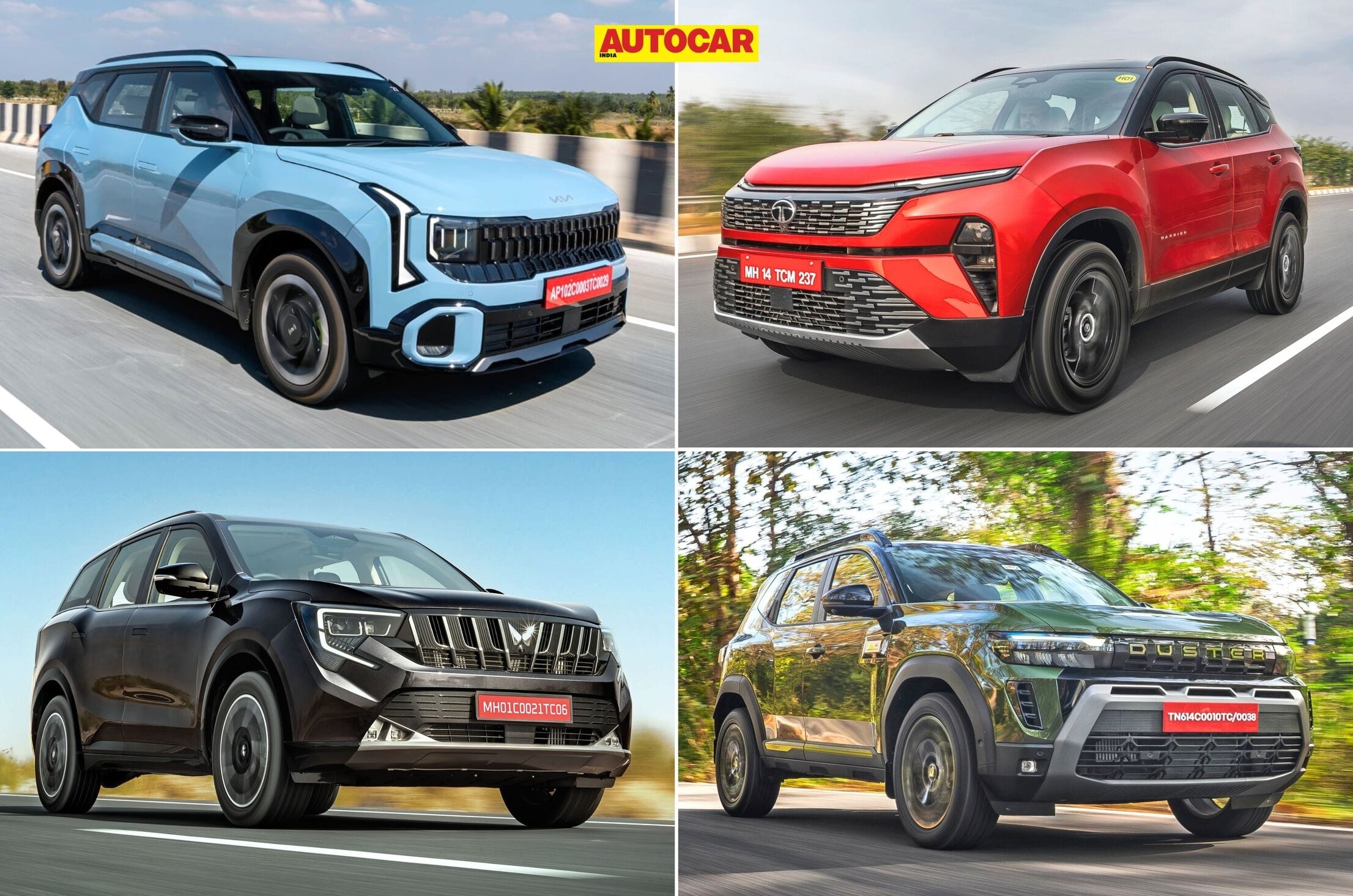
SUVs are not only extremely popular in the Indian mass market, they’re also highly aspirational. With aspiration comes the demand for higher power outputs, and many carmakers have answered that call by offering sporty and powerful SUVs to mass-market buyers. Therefore, we’ve put together a list of the most powerful ICE SUVs available under the Rs 25 lakh mark. The rankings are based on power output in ascending order.
10. Volkswagen Taigun and Skoda Kushaq 1.5 turbo-petrol
150hp, 250Nm
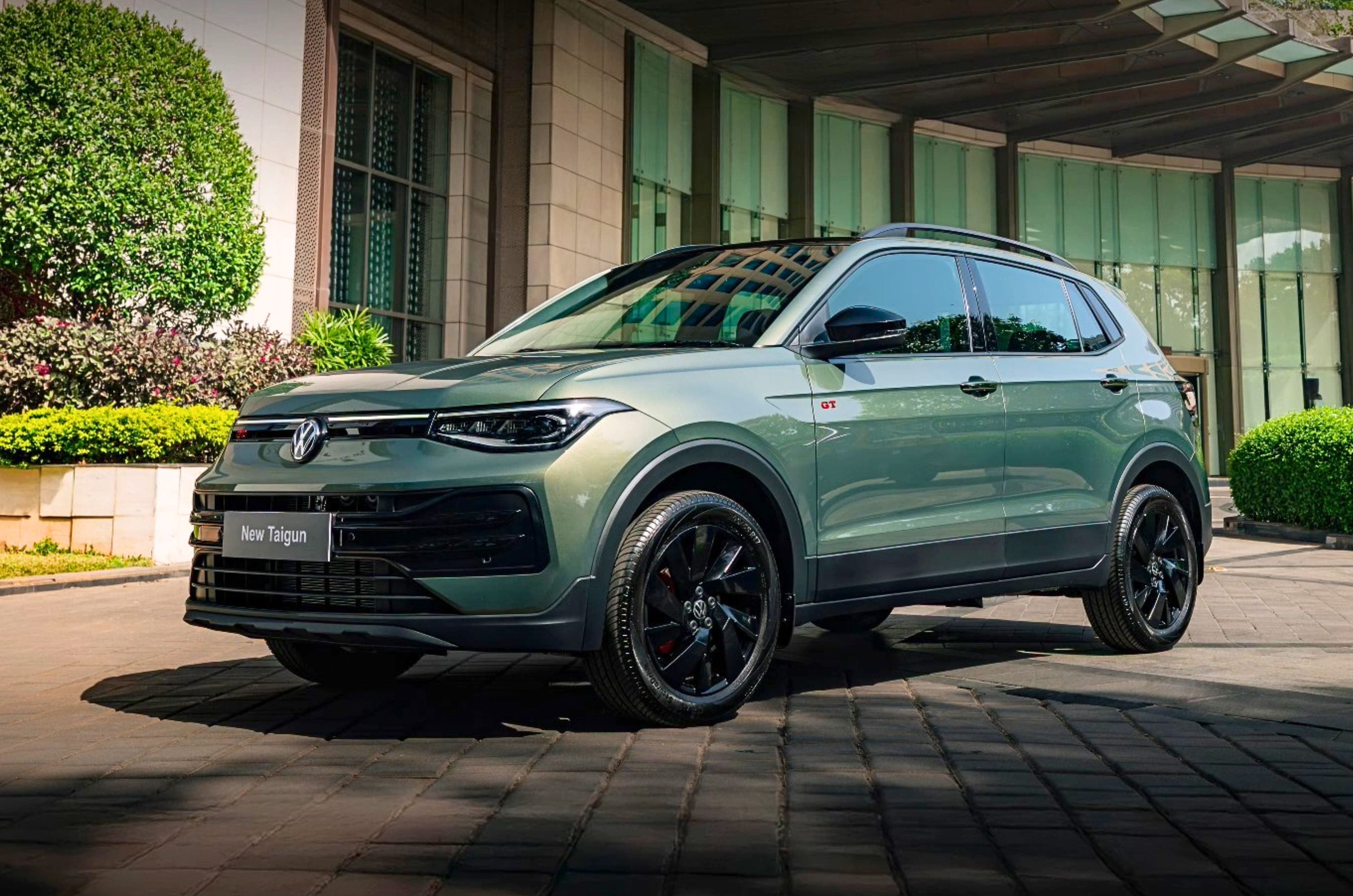
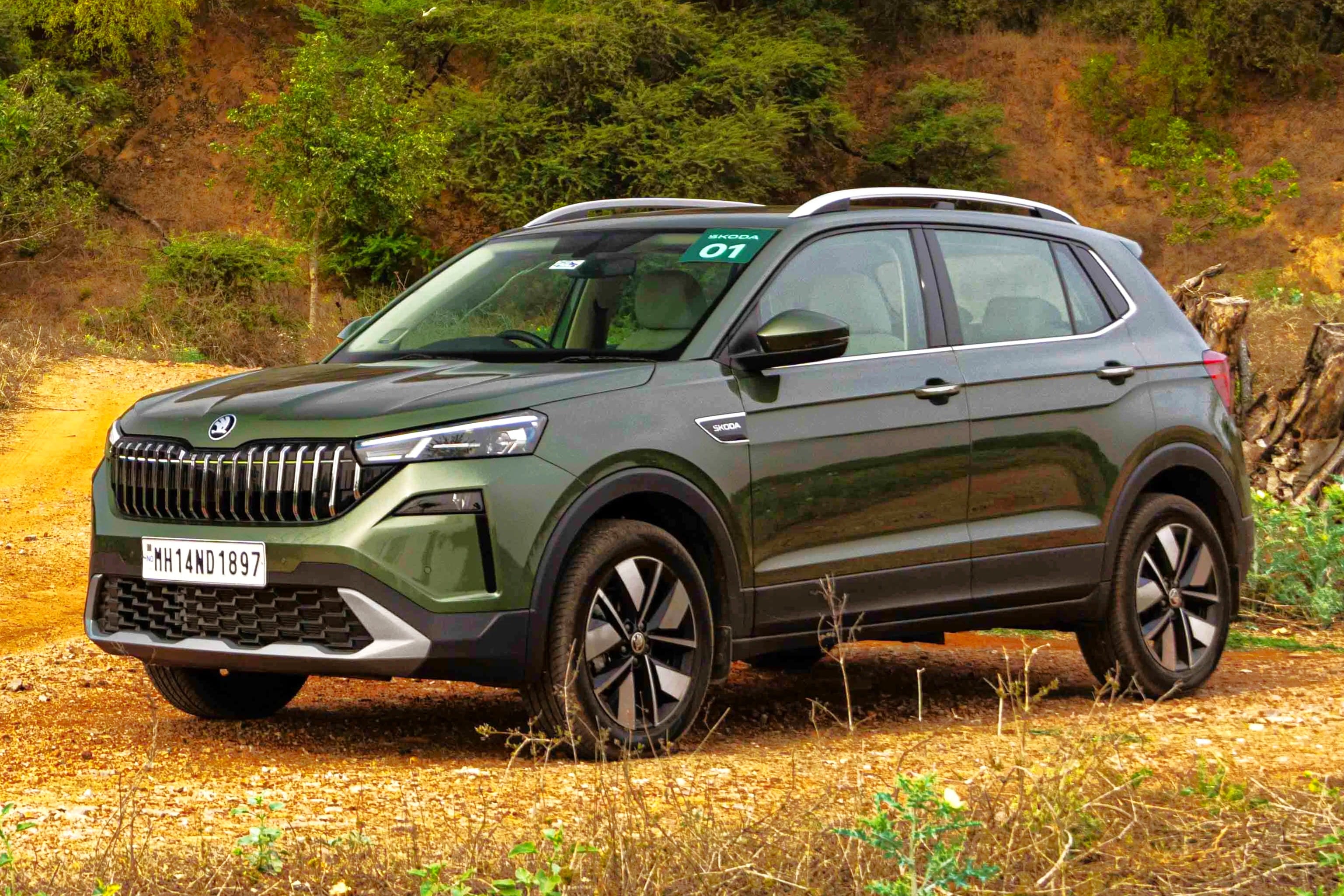
Both the Taigun and Kushaq are among the most fun-to-drive options in the midsize SUV segment, largely thanks to their 150hp 1.5-litre direct-injection turbo-petrol engines. This is the only engine on this list to feature active cylinder deactivation, which can shut off two of its cylinders at cruising speeds to save fuel. Volkswagen and Skoda offer the 1.5 TSI only in higher variants of the Taigun (GT Plus and GT Plus Sport) and Kushaq (Prestige and Monte Carlo), that too with a sole 7-speed dual-clutch automatic gearbox.
The Taigun 1.5 TSI price starts at Rs 19 lakh and extends to Rs 19.3 lakh, whereas pricing for the Kushaq 1.5 TSI starts at Rs 18.79 lakh and tops off at Rs 18.99 lakh.
9. Kia Seltos and Hyundai Creta, Alcazar 1.5 turbo-petrol
160hp, 253Nm
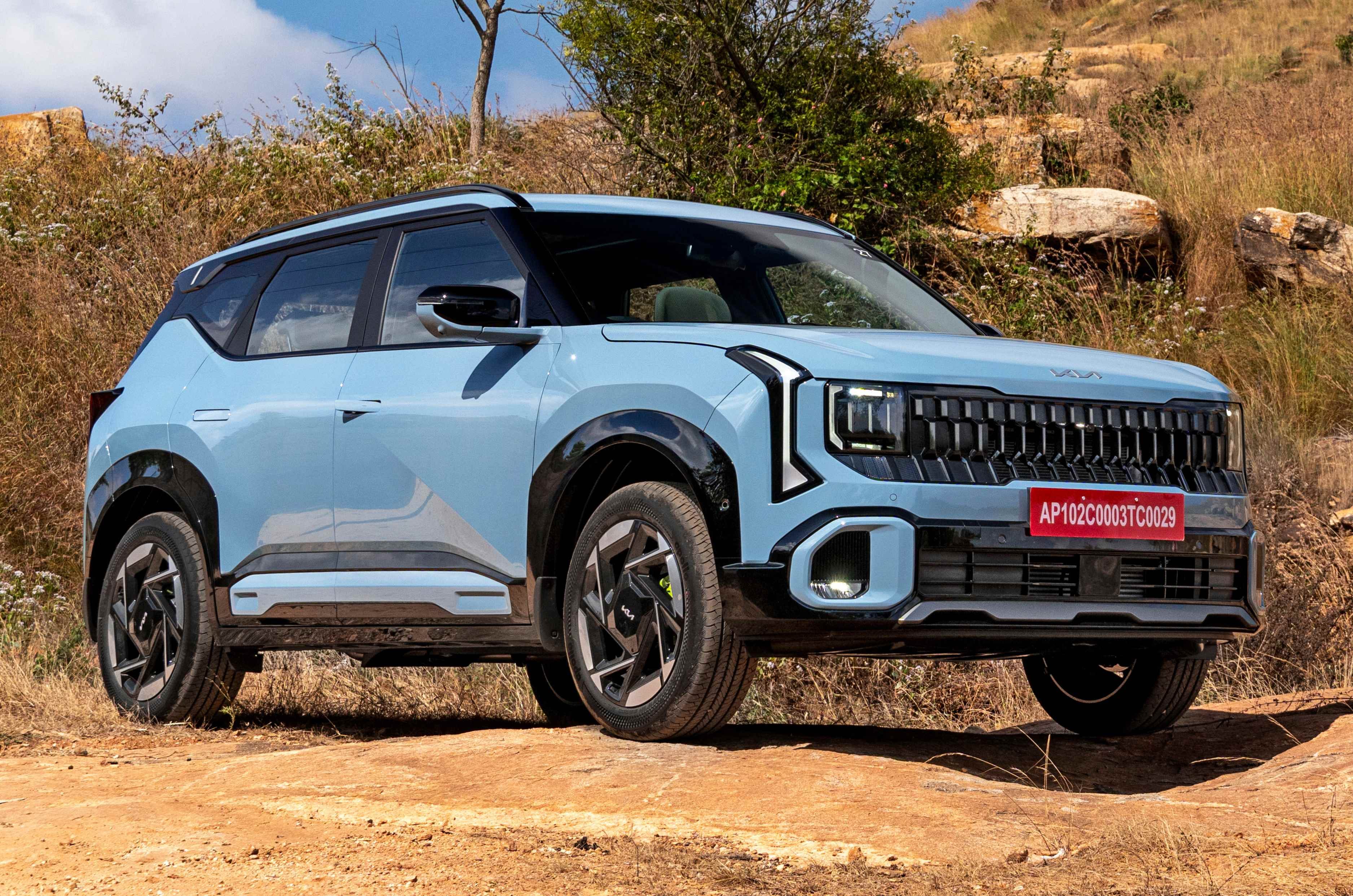
Launched in early 2026, the second-gen Kia Seltos carries forward its predecessor’s powertrains, including the 160hp 1.5-litre direct-injection turbo-petrol, which is offered from the HTE(O) trim onwards. Gearbox options for the Seltos turbo-petrol comprise a 6-speed iMT and a 7-speed dual-clutch automatic. The Seltos turbo-petrol price starts at Rs 12.91 lakh and tops off at Rs 20 lakh.
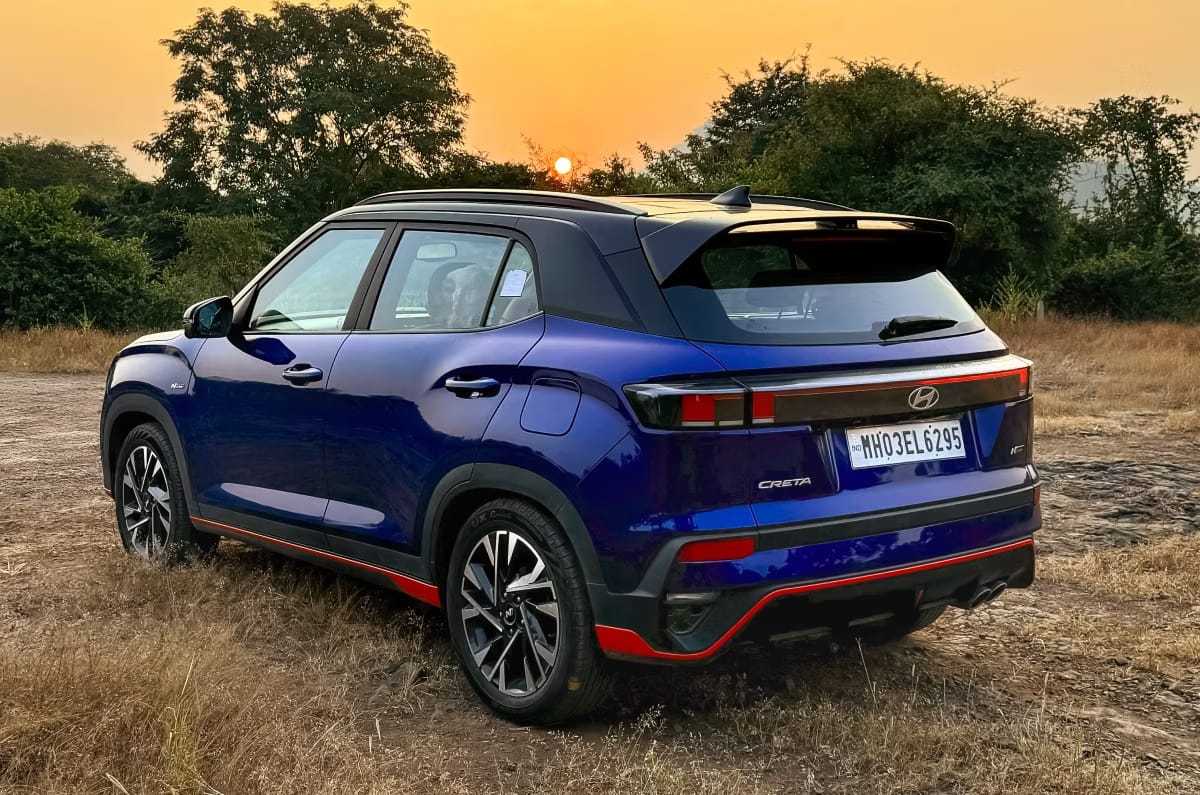
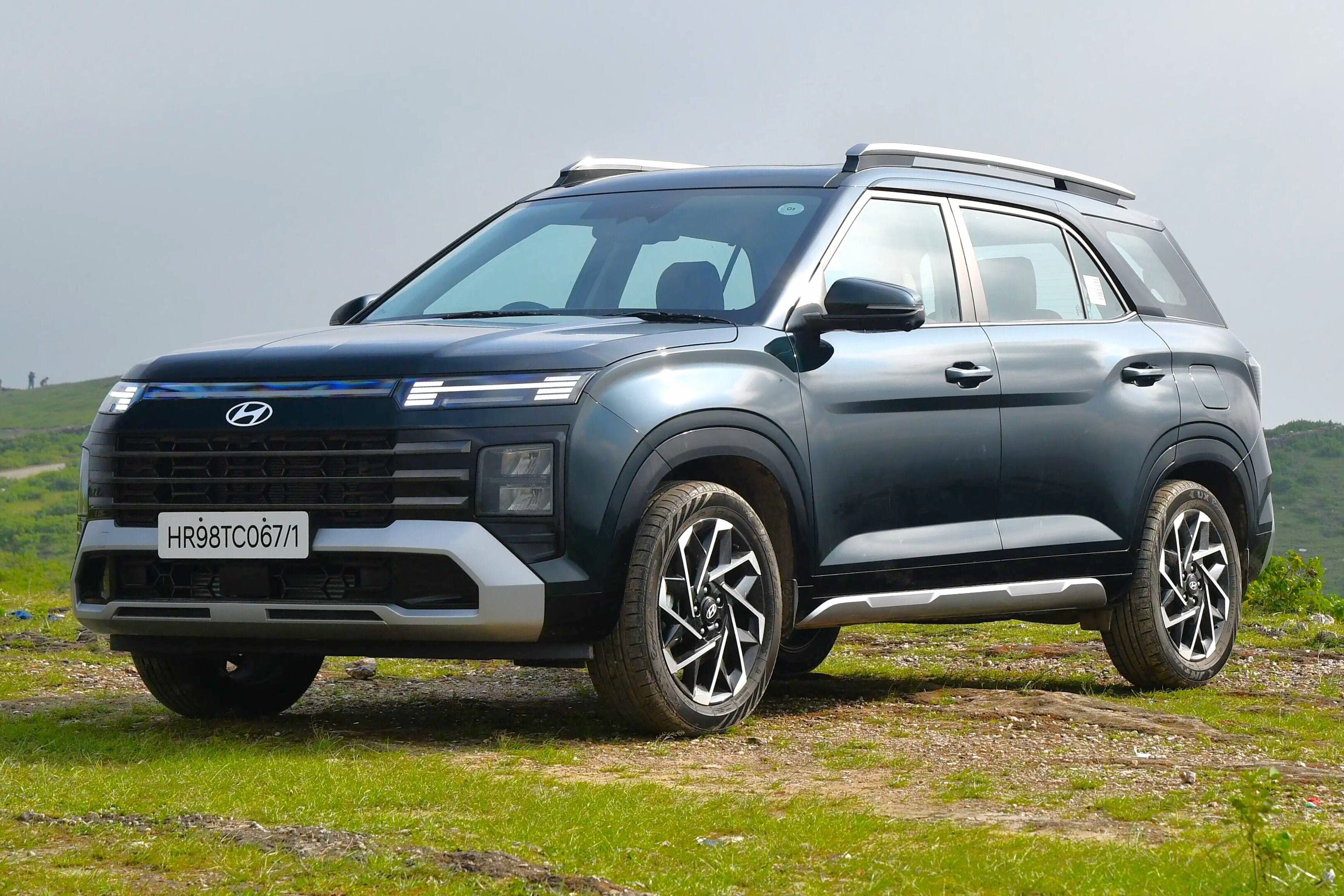
Hyundai’s venerable Creta and its 7-seater derivative, the Alcazar, get the same turbo-petrol engine too, albeit with slightly different transmission options. The standard Creta turbo-petrol is available in the top-spec King trim with the 7-speed DCT, while the SUV’s sportier N Line variants additionally offer a 6-speed manual. Meanwhile, the Alcazar gets the turbo-petrol engine from its base Executive trim onwards and can be had with 6-speed manual and 7-speed DCT options.
The standard Creta turbo-petrol is priced at Rs 19.91 lakh, whereas the N Line variants start at Rs 19.03 lakh and top off at Rs 19.95 lakh. Interestingly, the Alcazar turbo-petrol, priced from Rs 14.51 lakh to Rs 21.1 lakh, carries the lowest starting price of any Hyundai SUV equipped with this engine.
8. Tata Sierra 1.5 turbo-petrol
160hp, 255Nm
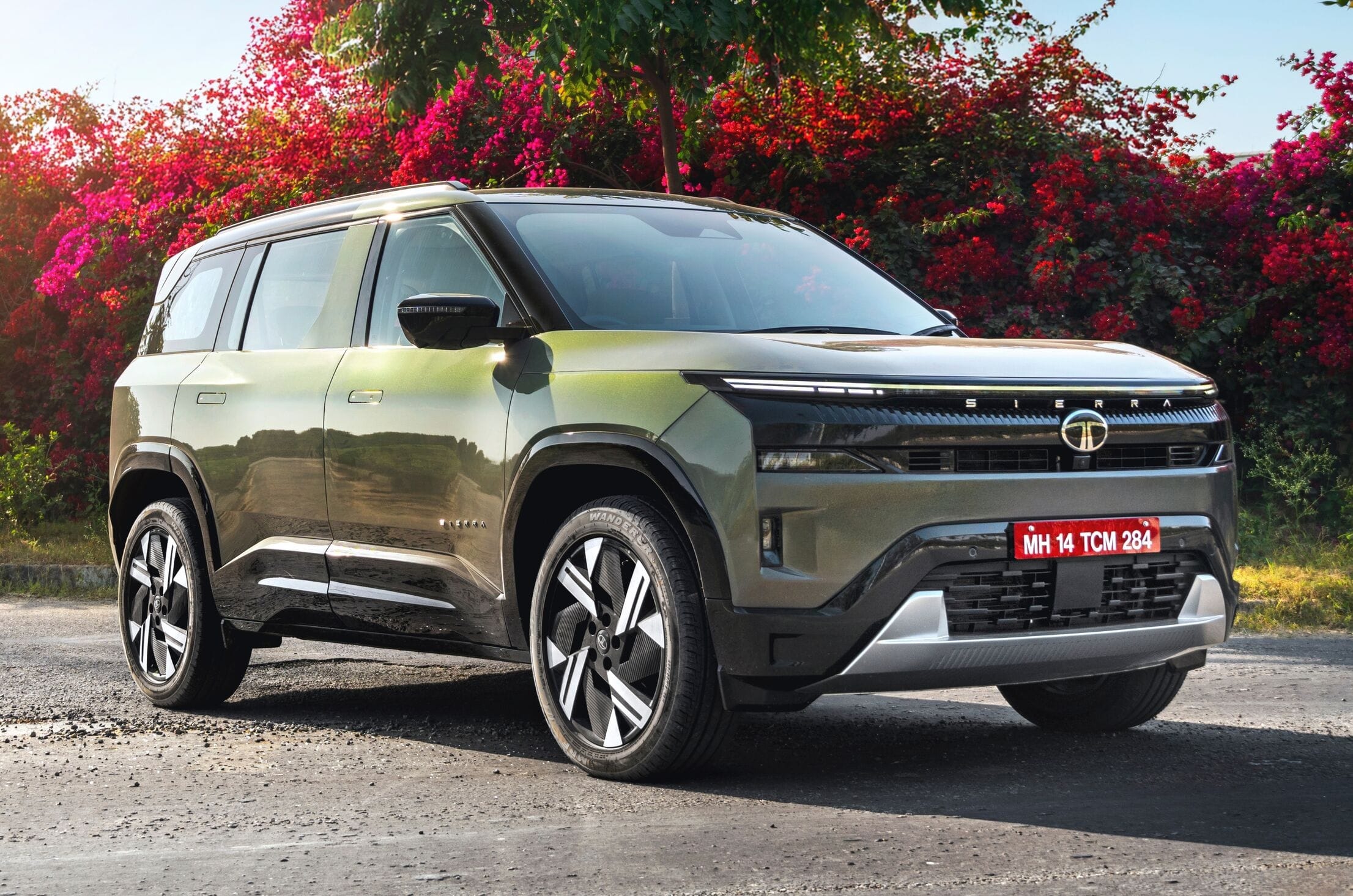
The Sierra is the first Tata model to use the carmaker’s 160hp 1.5-litre direct-injection turbo-petrol ‘Hyperion’ engine, which is offered from the SUV’s Adventure+ trim onwards. Unlike most SUVs on this list, though, the Sierra turbo-petrol can be had solely with a 6-speed torque converter automatic. Pricing for the Sierra turbo-petrol starts at Rs 17.99 lakh and climbs to Rs 20.99 lakh.
7. Renault Duster 1.3 turbo-petrol
163hp, 280Nm
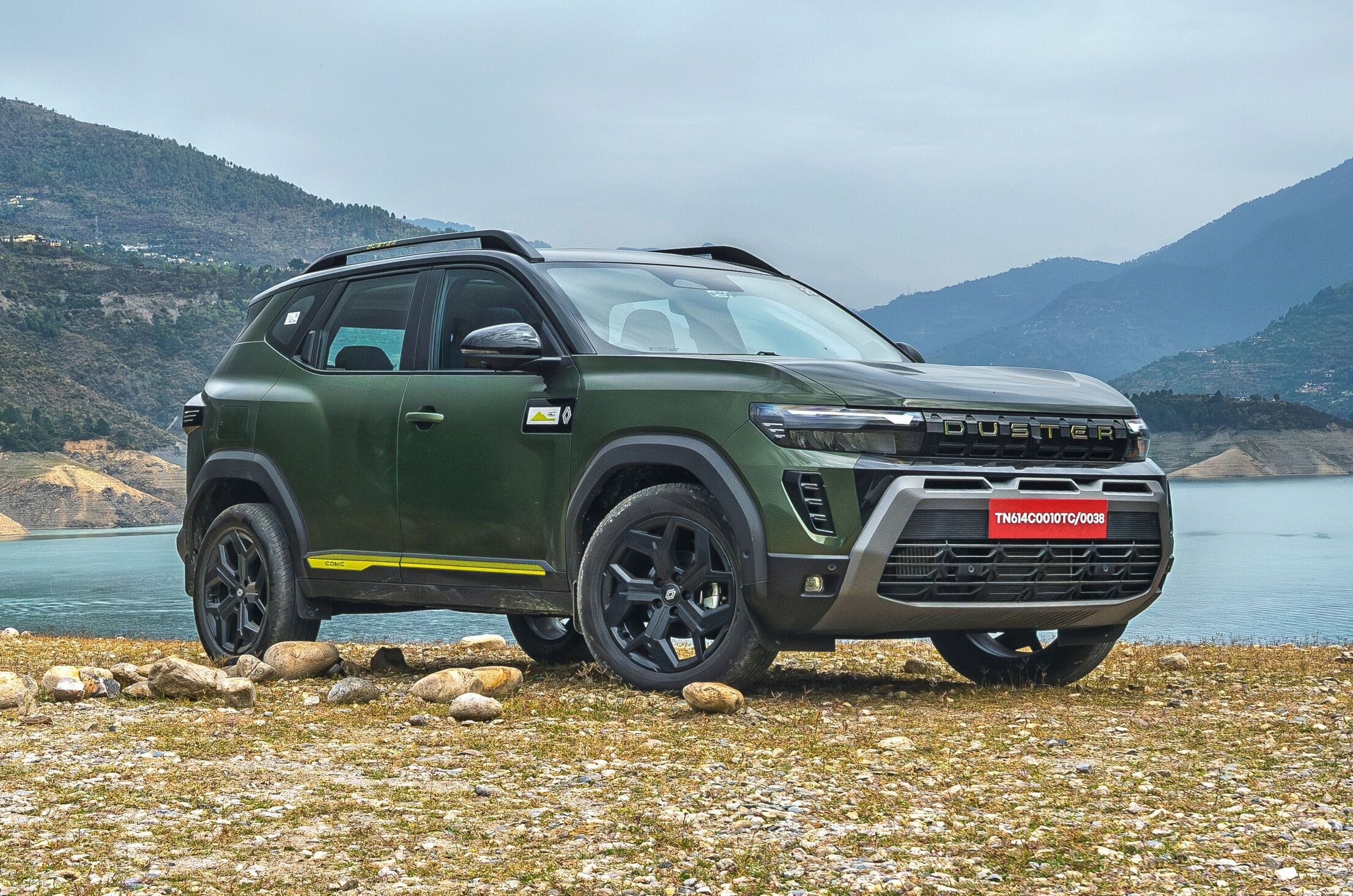
The new Renault Duster is the most powerful midsize SUV you can currently buy thanks to the 163hp 1.3-litre direct-injection turbo-petrol engine available from the one-above-base Evolution variant. This mill is paired with either a 6-speed manual or a 6-speed wet-clutch DCT – the Duster is the only SUV on this list to offer the latter gearbox. The Duster 1.3 turbo-petrol price range is Rs 12.99 lakh-18.49 lakh.
6. Tata Safari, Harrier 1.5 turbo-petrol
170hp, 280Nm
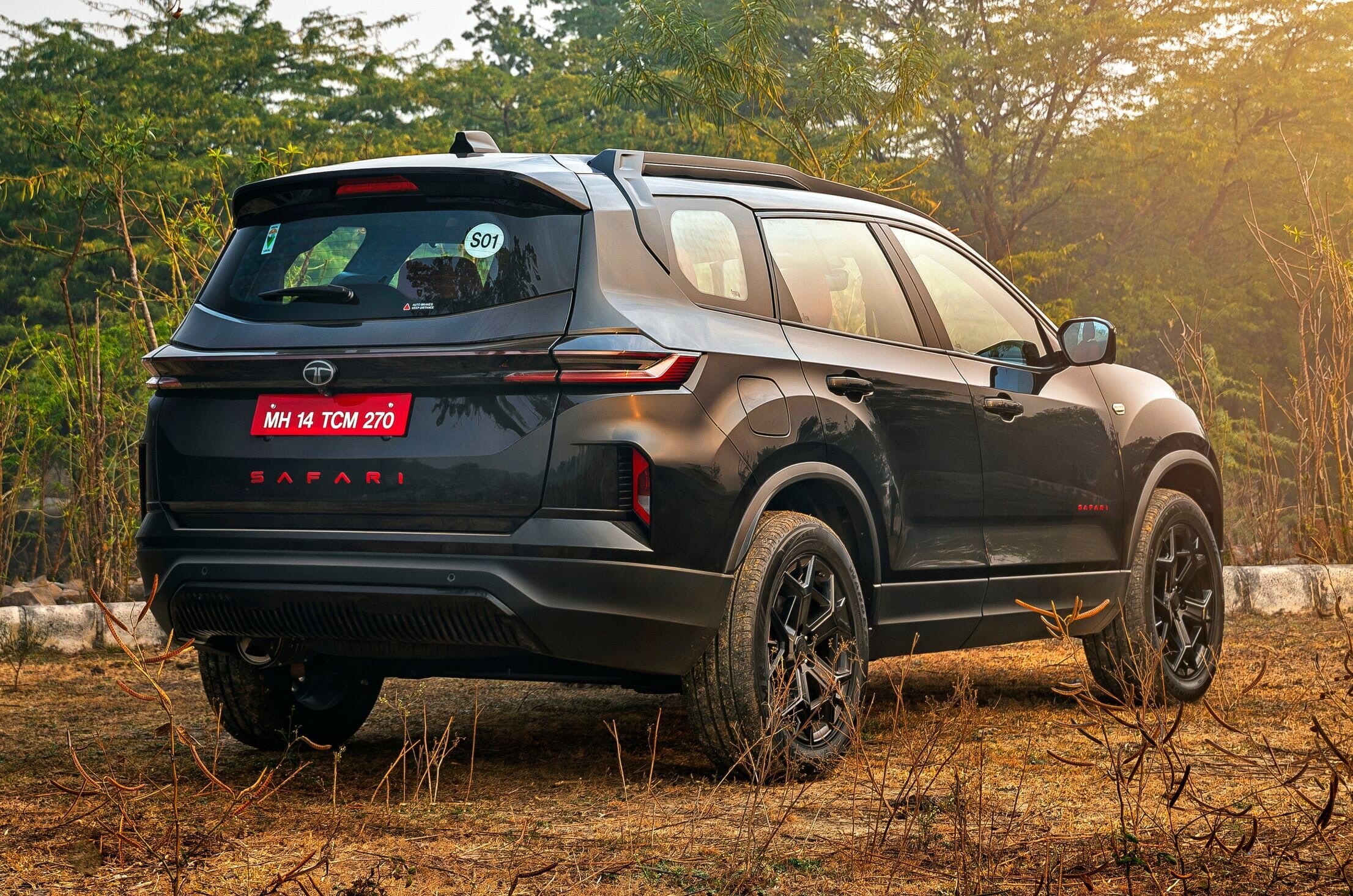
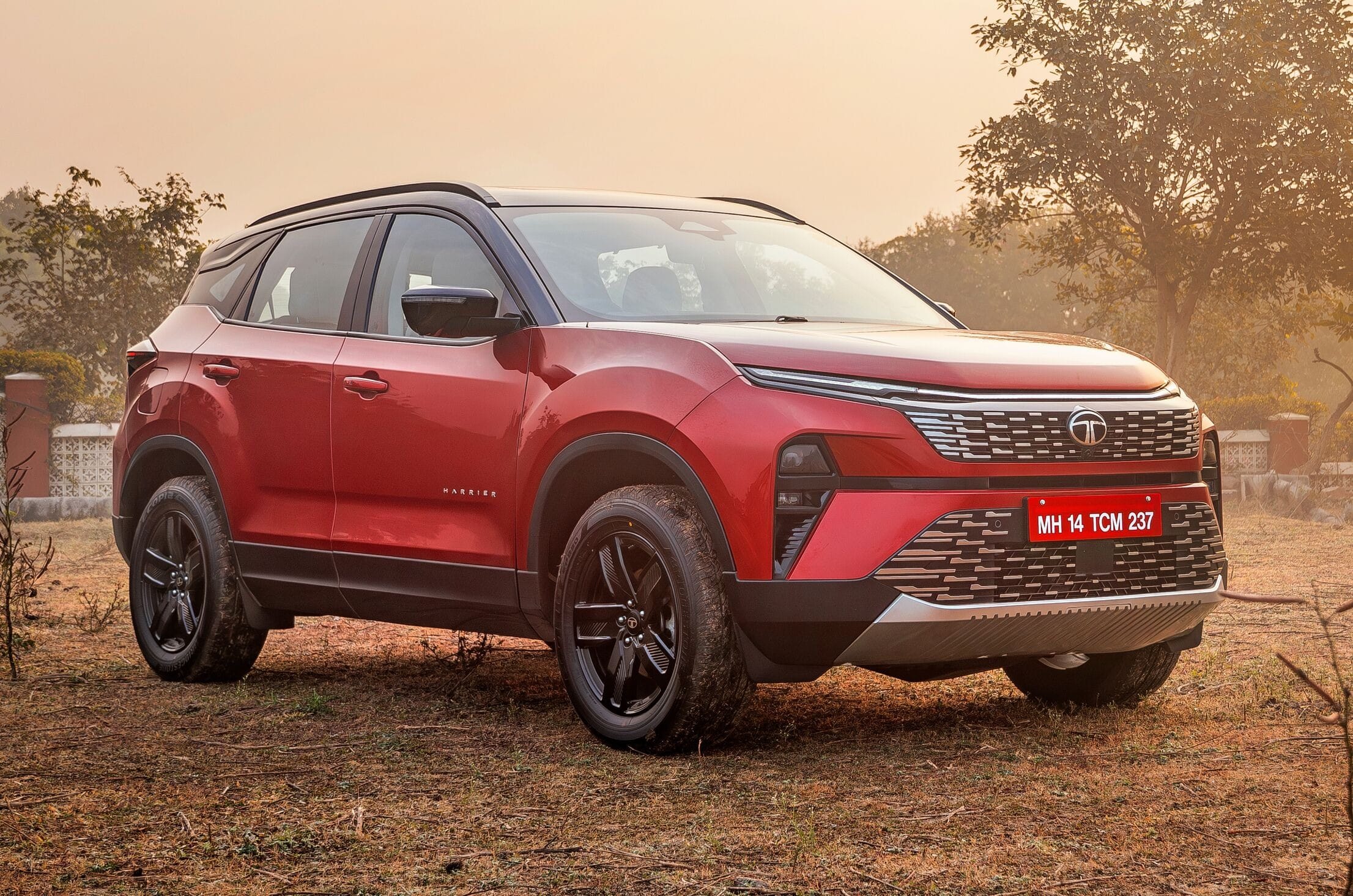
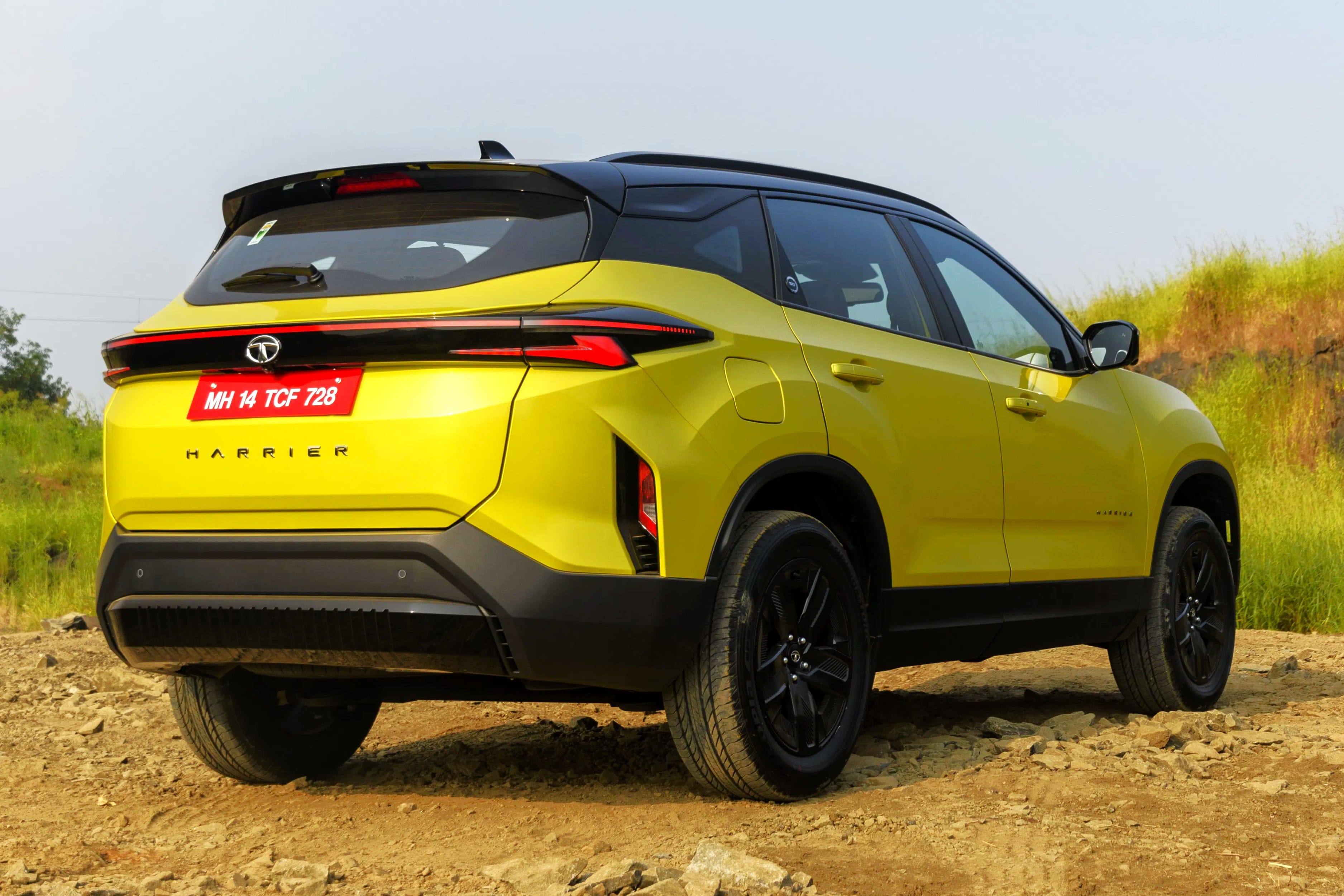
Not long after the launch of the Sierra, Tata started offering its 1.5-litre turbo-petrol engine under the bonnets of the Harrier and Safari as well. However, the engine features a higher state of tune for the Safari and Harrier – up 10hp and 25Nm over the Sierra – and can even be had with a 6-speed manual gearbox in addition to the 6-speed torque converter.
The Harrier petrol is priced from Rs 12.89 lakh to Rs 24.14 lakh, while the Safari price range is Rs 13.29 lakh-24.85 lakh. These prices are exclusive of premiums for cosmetic packages like Dark, Red Dark, and Stealth.
5. Tata Safari, Harrier and Jeep Compass, Meridian 2.0 diesel
170hp, 350Nm
The Tata Harrier and Safari have long offered a Fiat-sourced 2.0-litre diesel engine in the same 170hp state of tune. These diesel SUVs can be had with either a 6-speed manual or a 6-speed torque converter automatic. The Harrier diesel price range is Rs 14 lakh to 25.3 lakh, whereas pricing for the Safari diesel starts at Rs 14.75 lakh and tops off at Rs 26.05 lakh (excluding premiums for cosmetic packages).
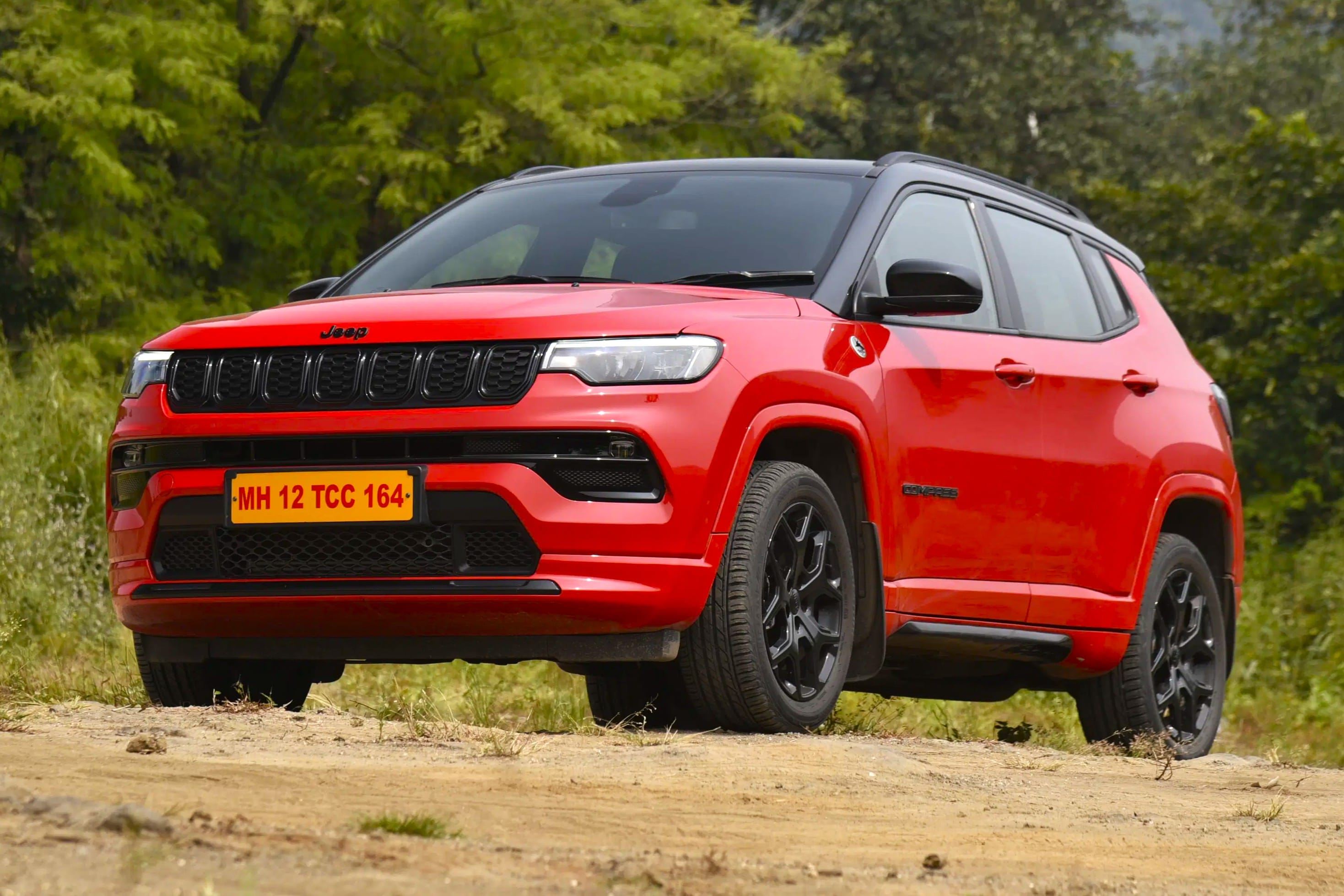
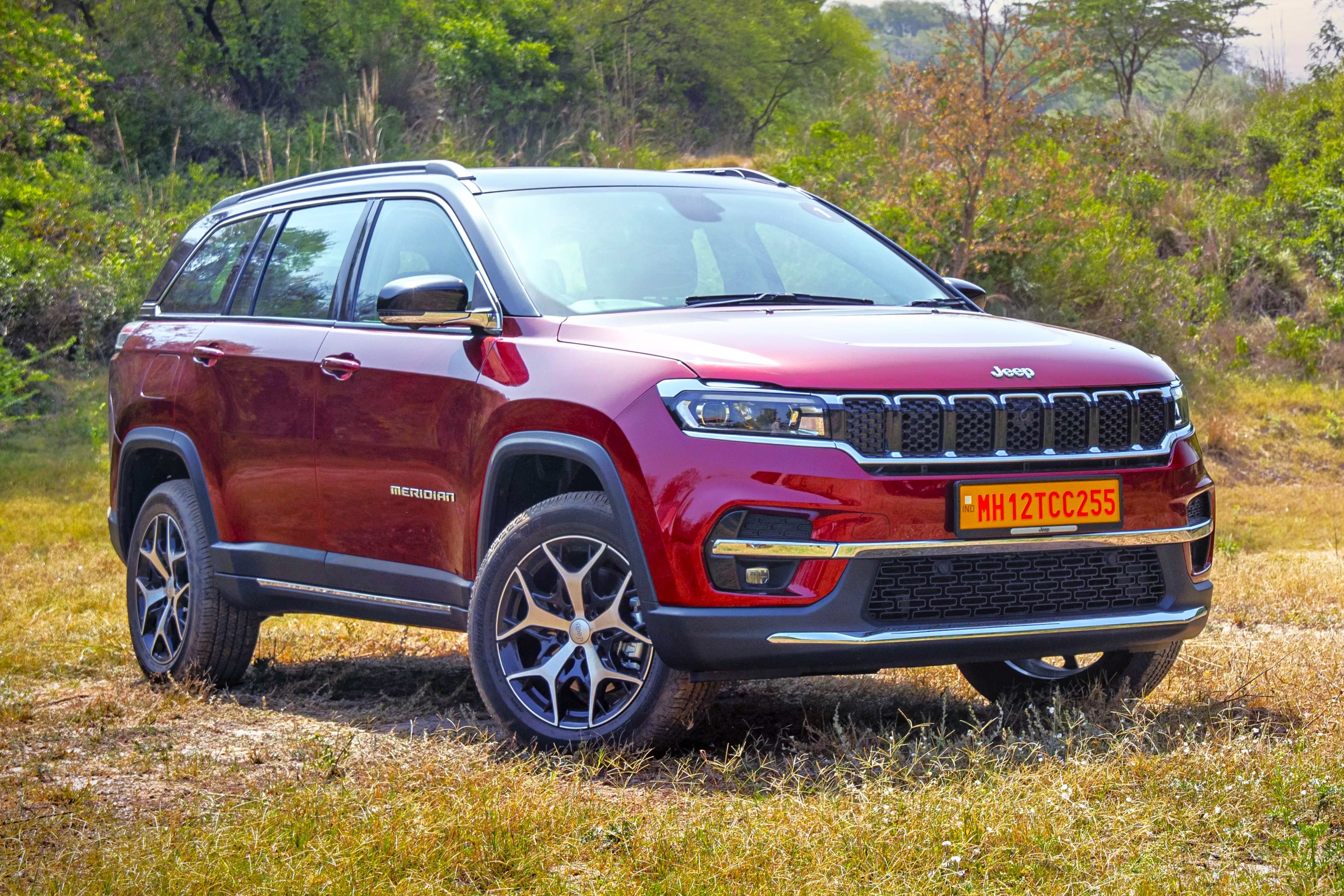
Both of Jeep India’s mass-market offerings, the Compass and Meridian, also come with the same 170hp 2.0-litre diesel engine. However, the Compass and Meridian differ slightly in terms of gearbox options, offering either a 6-speed manual or a 9-speed torque converter automatic. The Compass and Meridian also offer 4×4 as an option in higher variants.
Pricing for the Compass starts at Rs 17.99 lakh and climbs to Rs 30.45 lakh, whereas the Meridian is priced from Rs 23.33 lakh to Rs 37.48 lakh, excluding special editions for both SUVs.
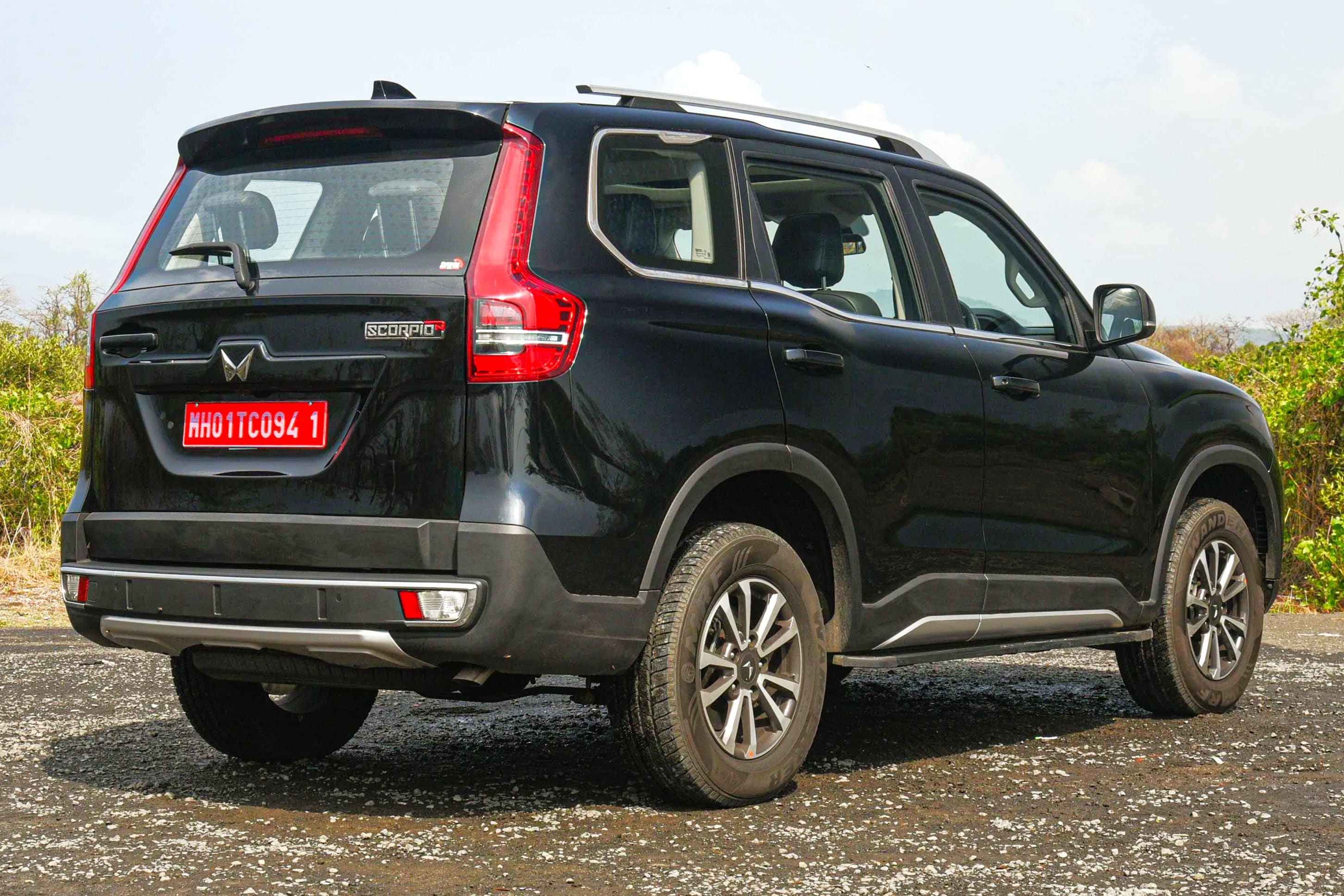
4. Mahindra Scorpio N, Thar Roxx 2.2 diesel
Up to 175hp, 400Nm
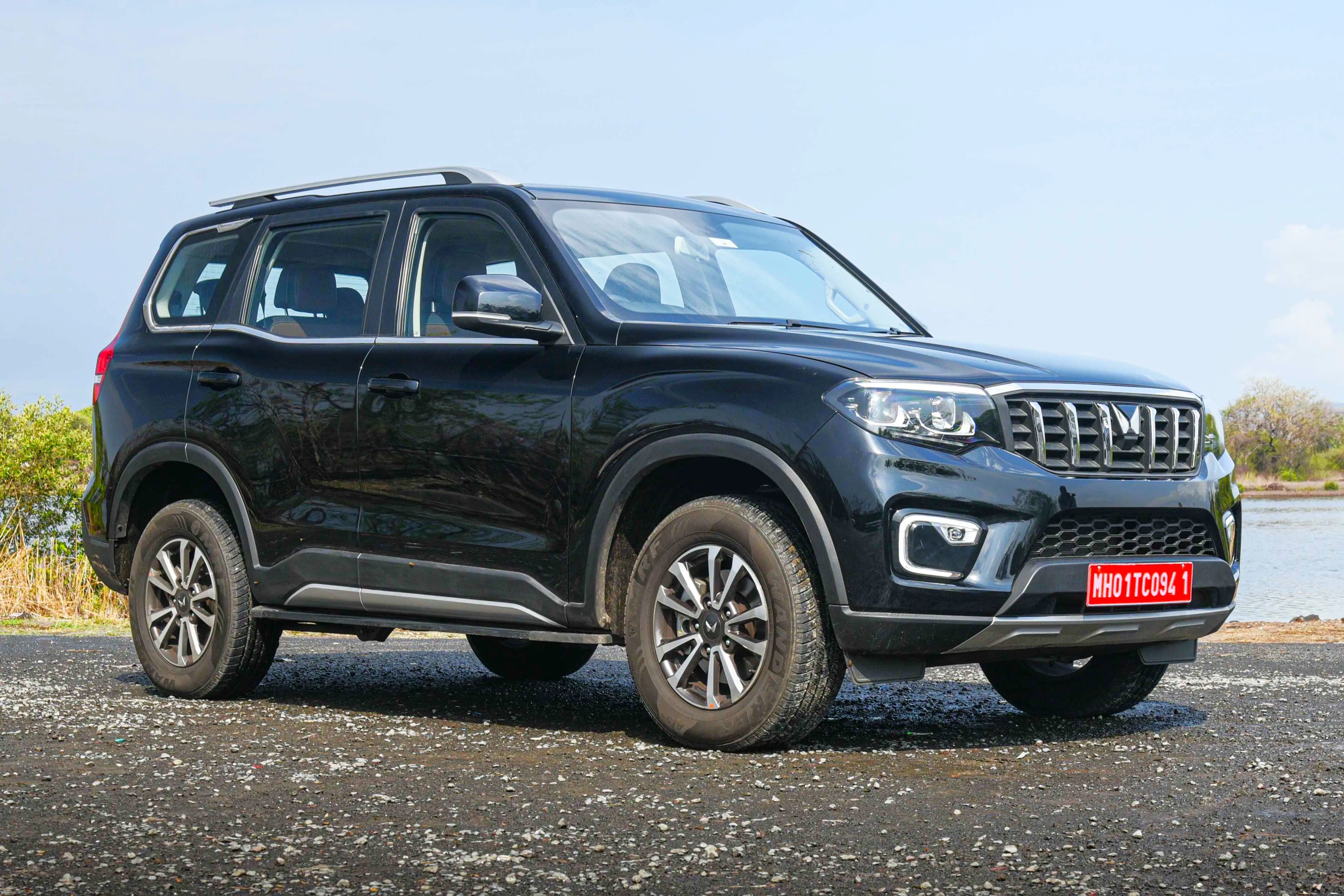
Mahindra sells both the Scorpio N and Thar Roxx SUVs with a 2.2-litre diesel engine, albeit in varying states of tune. From the Z6 trim onwards, the Scorpio N diesel develops 175hp, but outputs 370Nm when paired with the 6-speed manual and 400Nm with the 6-speed torque converter. Meanwhile, the lower Scorpio N Z2 and Z4 diesel MT variants produce 132hp and 300Nm.
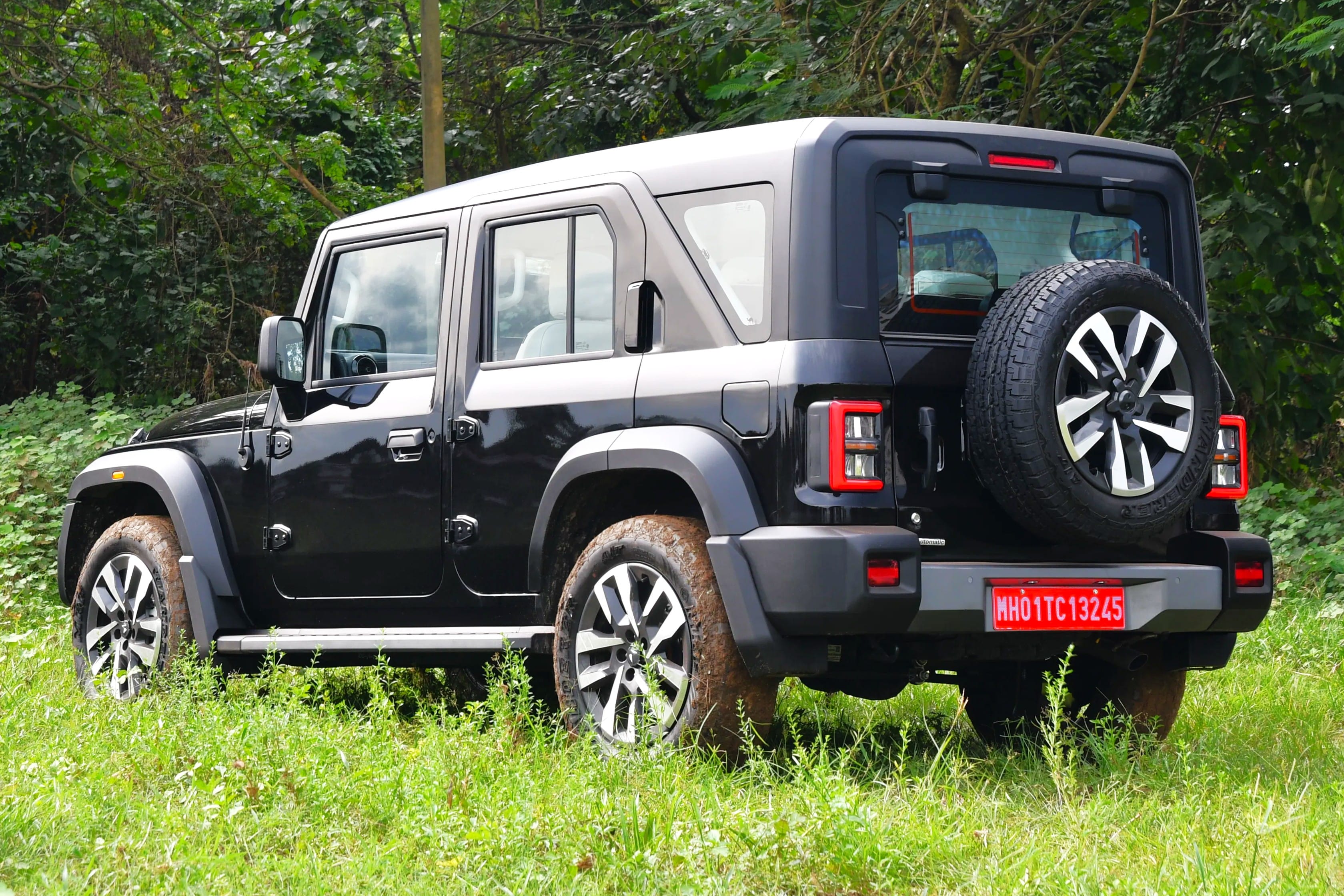
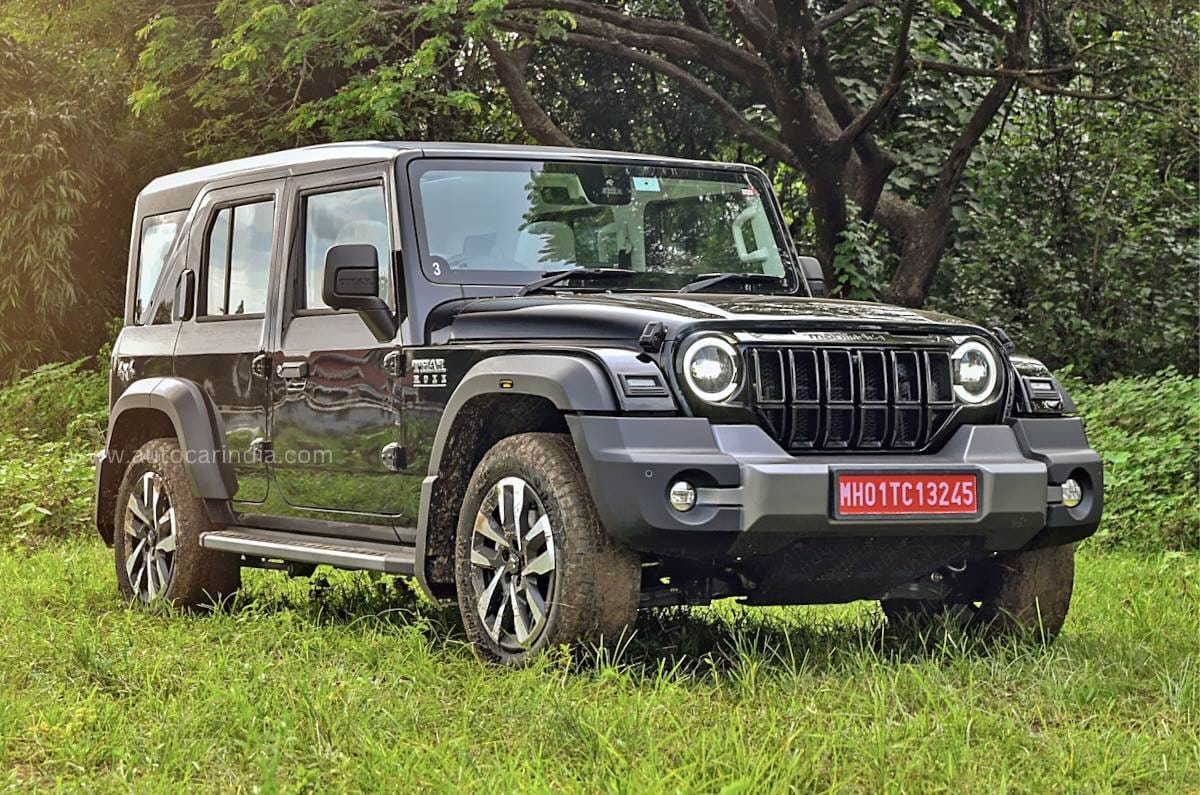
The Thar Roxx diesel offers the same transmission options as that of the Scorpio N, and makes 175hp and 400Nm in its higher-spec AX5L AT and AX7L AT variants. Lower variants of the Thar Roxx diesel generate 152hp and 330Nm. Both SUVs are available with 4×4 in higher-spec diesel variants as well. Prices for the Scorpio N diesel start at Rs 13.99 lakh and extend to Rs 24.95 lakh, while the Thar Roxx diesel price range is Rs 13.86 lakh-22.82 lakh.
3. Mahindra Thar Roxx 2.0 turbo-petrol
Up to 177hp, 380Nm
The Thar Roxx is also available with Mahindra’s 2.0-litre direct-injection turbo-petrol ‘mStallion’ engine, though outputs vary depending on gearbox. With the 6-speed manual equipped, the Thar Roxx petrol outputs 162hp and 330Nm, whereas with the 6-speed automatic, the output is bumped to 177hp and 380Nm. The Thar Roxx petrol price range is Rs 12.4 lakh-20 lakh.
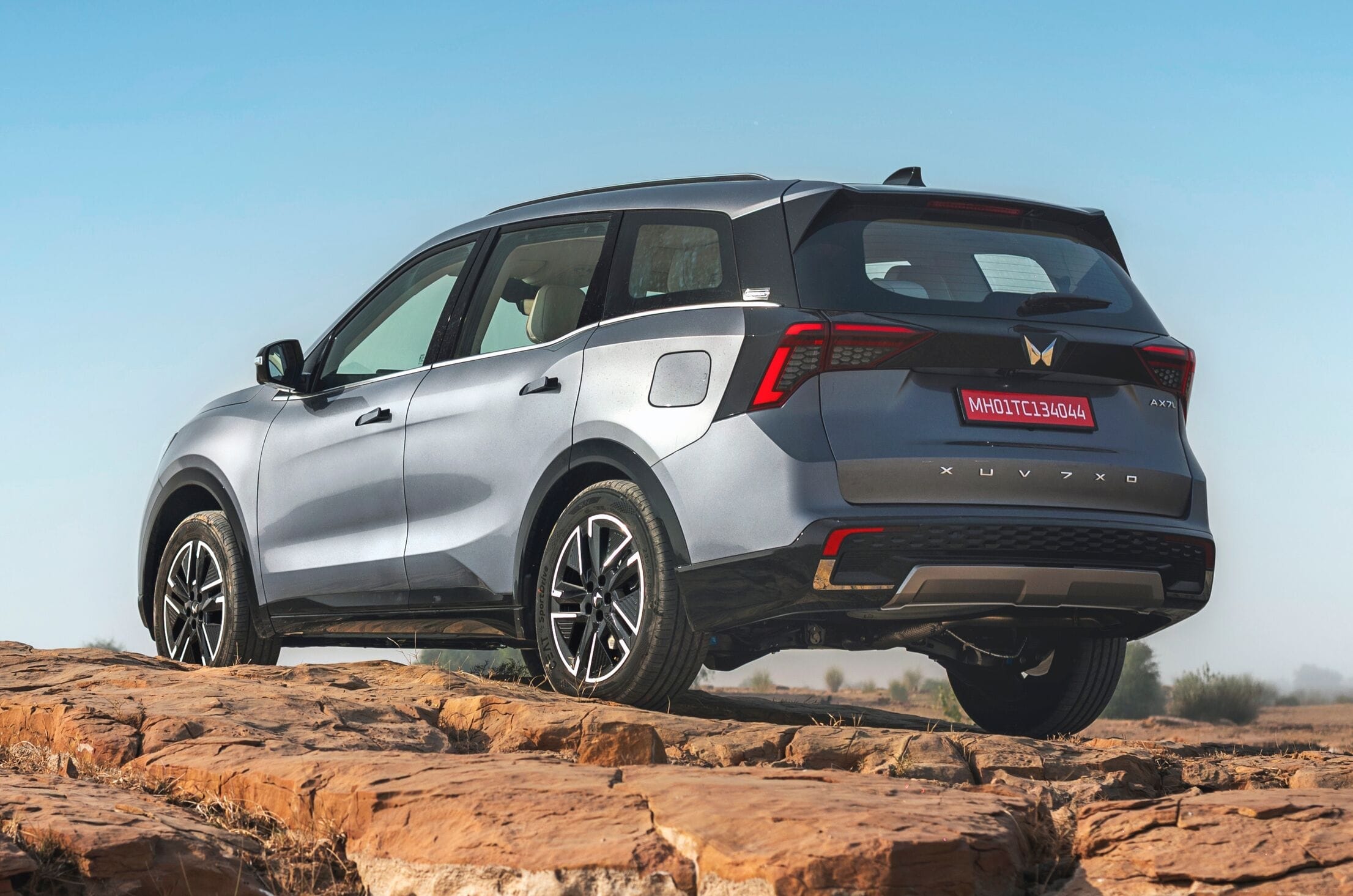
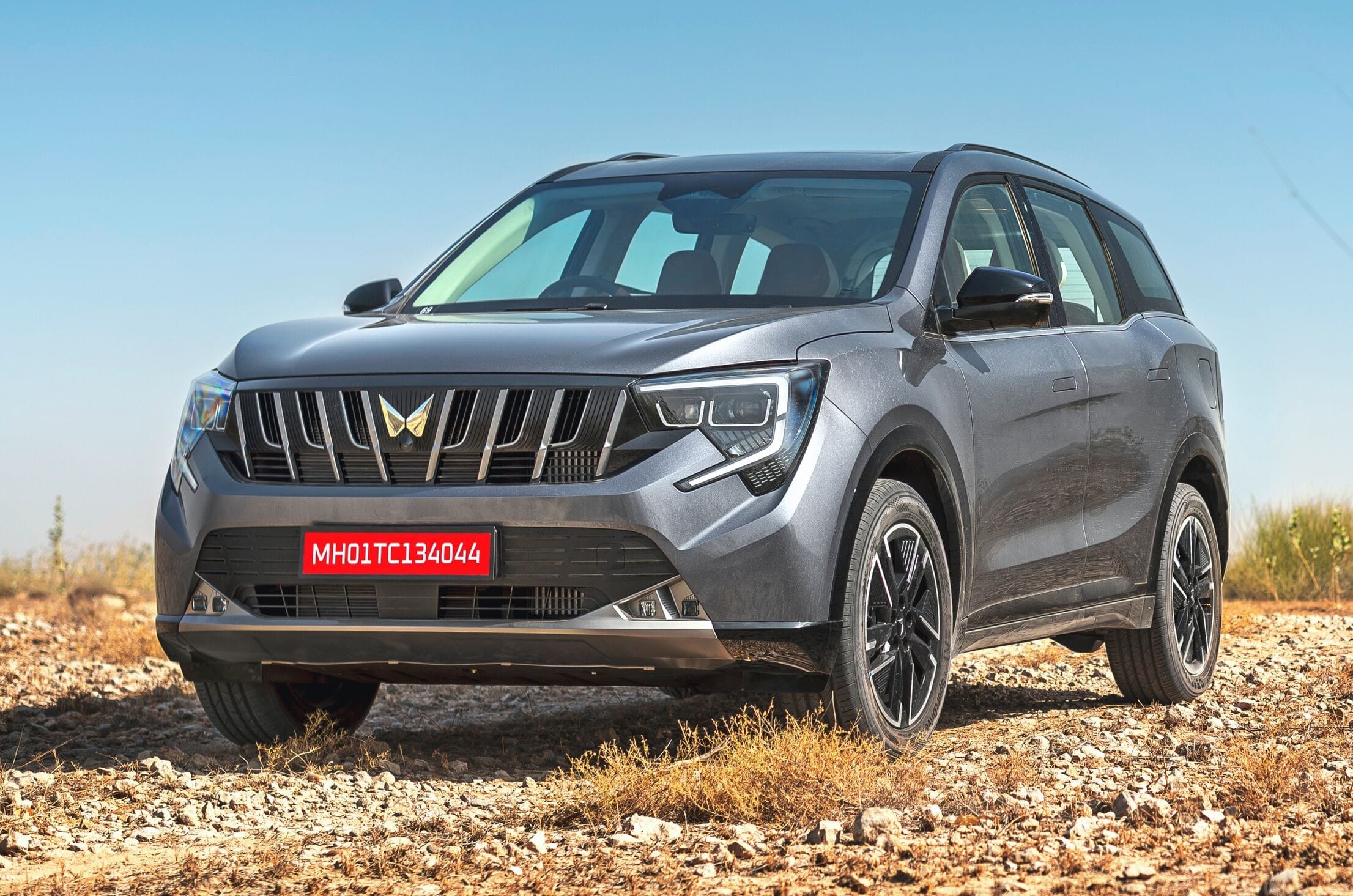
2. Mahindra XUV 7XO 2.2 diesel
185hp, up to 450Nm
Like the Scorpio N and Thar Roxx, the Mahindra XUV 7XO gets a 2.2-litre diesel engine, but in a more powerful 185hp state of tune. When paired with the 6-speed manual, the XUV 7XO diesel outputs 420Nm, rising to 450Nm with the 6-speed torque converter automatic equipped. The XUV 7XO diesel is also offered with AWD in higher variants. Prices for the XUV 7XO diesel start at Rs 14.96 lakh and climb to Rs 24.92 lakh.
1. Mahindra XUV 7XO, Scorpio N 2.0 turbo-petrol
203hp, up to 380Nm (370 MT SCN)
The turbo-petrol Mahindra XUV 7XO and Scorpio N are officially the most powerful SUVs you can buy under Rs 25 lakh. Their 2.0-litre direct-injection turbo-petrol engine develops a healthy 203hp across all variants. While the XUV 7XO petrol outputs 380Nm for both its manual and automatic transmission options, the Scorpio N petrol makes 370Nm when paired with the manual and 380Nm with the automatic.
Pricing for the XUV 7XO petrol starts at Rs 13.66 lakh and extends to Rs 23.64 lakh, while the Scorpio N petrol price range is Rs 13.49 lakh-22.45 lakh.
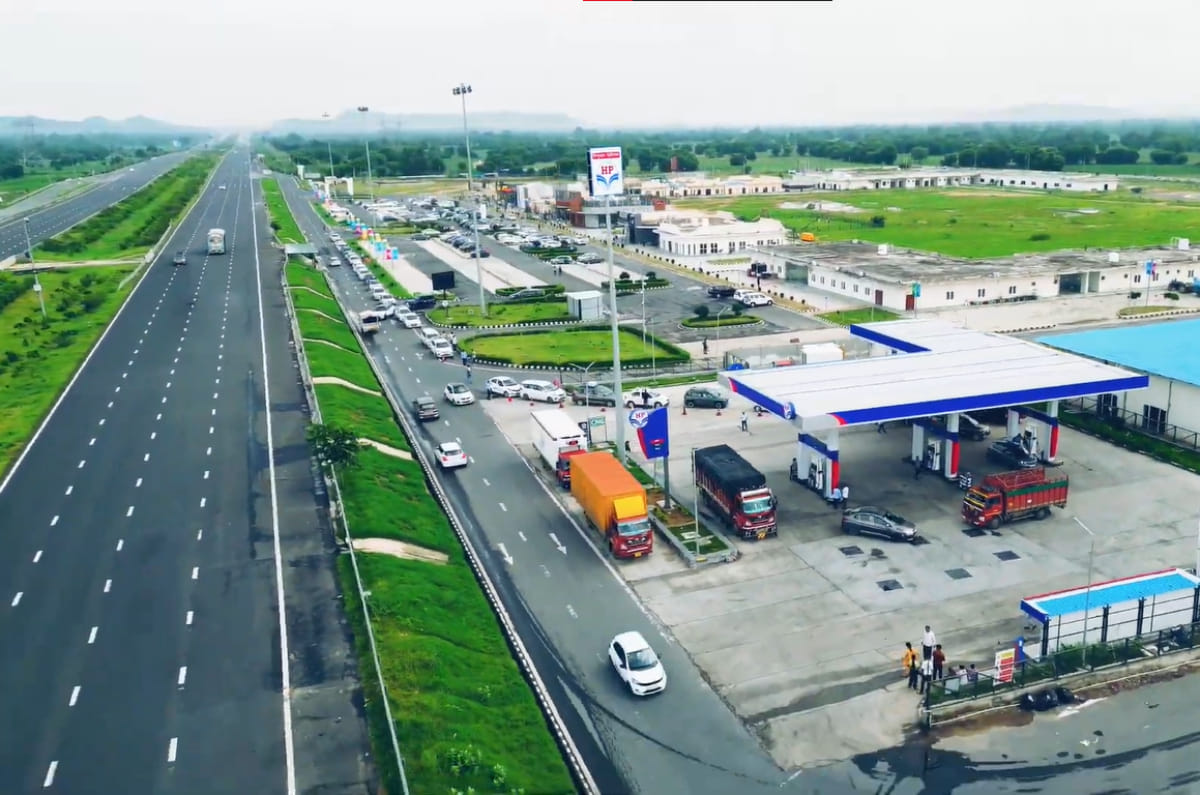
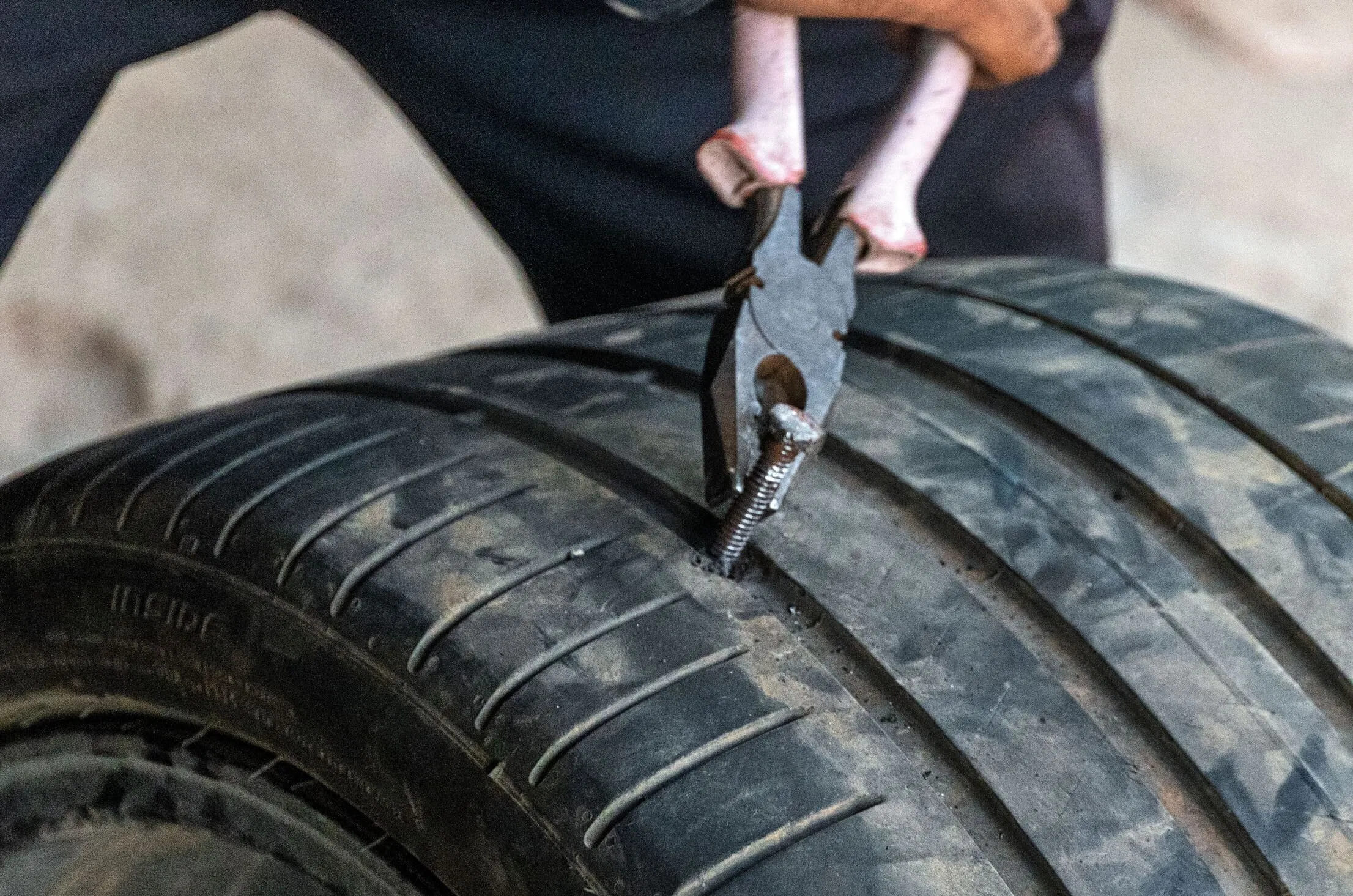
Motorists travelling on National Highways and expressways could soon have easier access to vehicle repair and puncture services. The National Highways Authority of India (NHAI) has directed operators of Wayside Amenities (WSAs) to prioritise the rollout of vehicle repair shops and puncture repair facilities to improve roadside assistance during breakdowns and emergencies.
NHAI pushes for quicker rollout of repair and puncture facilities
Move targets highway stretches with limited roadside assistance
Facilities to support both private and commercial vehicles
Repair facilities to be prioritised at Wayside Amenities
The directive has been issued by National Highways Logistics Management Limited (NHLML), NHAI’s wholly owned subsidiary responsible for developing Wayside Amenities across the country. Field offices have been asked to advise WSA operators to prioritise vehicle repair shops and puncture repair facilities, particularly along highway stretches where roadside assistance remains limited.
According to NHAI, several highway corridors currently lack adequate access to basic mechanical assistance, often leaving motorists stranded after tyre punctures or minor breakdowns.
Part of the expanding Wayside Amenities network
NHLML is developing a nationwide network of Wayside Amenities under the public-private partnership (PPP) model. These facilities already include mandatory infrastructure such as fuel stations, food courts, restrooms and parking areas.
Vehicle repair shops and puncture repair facilities are already permitted under existing lease agreements. NHAI has now asked operators to prioritise expanding these services to improve the availability of roadside assistance along highway corridors.
The repair facilities will cater to both private motorists and commercial vehicle operators.
NHAI said the initiative is aimed at “reducing vehicle downtime, enhancing road safety and ensuring prompt assistance” to commuters and freight operators travelling on National Highways and expressways.
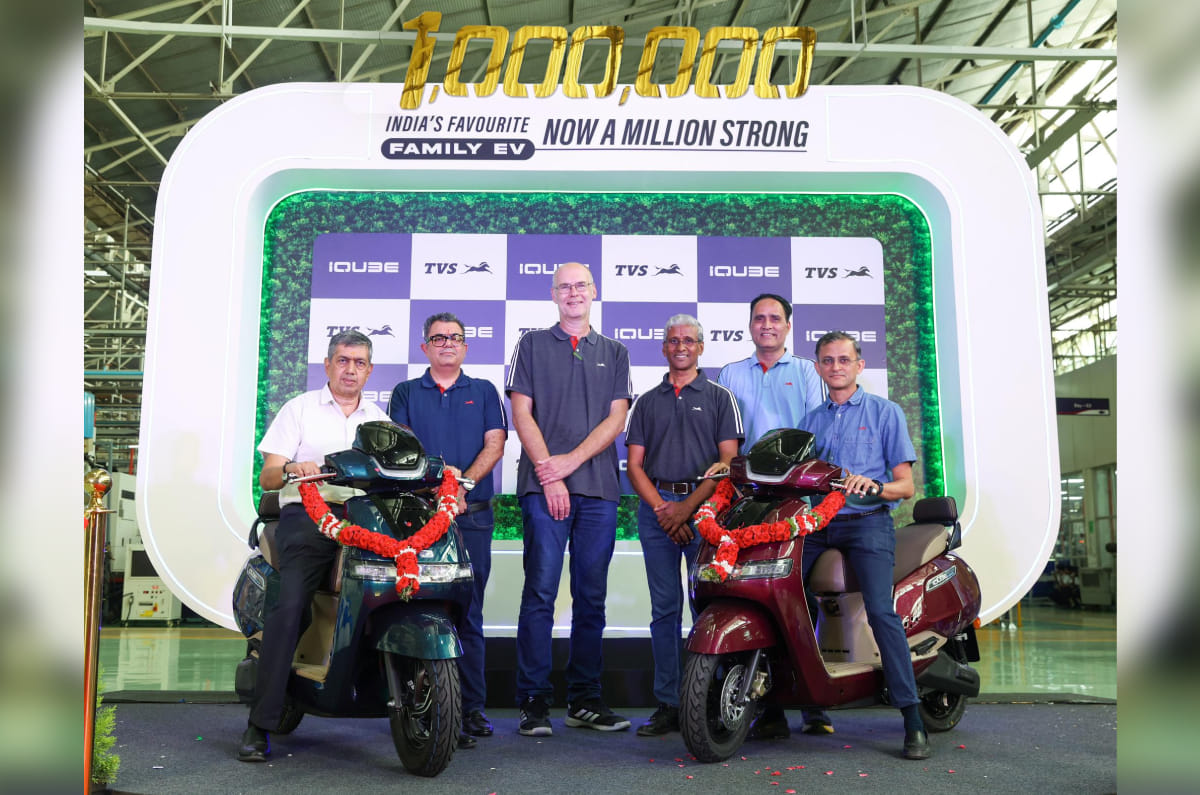
TVS Motor Company has announced the rollout of the one millionth TVS iQube from its manufacturing facility in Hosur, Tamil Nadu. The production milestone follows closely on the heels of TVS crossing one million cumulative retail sales of its electric scooters – comprising the iQube and Orbiter – earlier this month, making it the second Indian EV manufacturer after Ola Electric to reach that milestone.
One millionth TVS iQube rolled out from Hosur manufacturing facility
iQube community has collectively covered 14.94 billion km
TVS iQube now available across 3,300 touchpoints in over 3,000 cities
TVS iQube one million production milestone details
The iQube is available in three variants with multiple battery options
The TVS iQube was launched in 2020 as the company’s first electric two-wheeler. The lineup has since expanded to three variants – the base iQube, available with 2.2kWh, 3.1kWh and 3.5kWh battery options; the iQube S with a 4.7kWh battery; and the range-topping iQube ST with a 5.3kWh battery.
TVS now supports its growing customer base through a sales and service network spanning more than 3,300 touchpoints across over 3,000 cities. Since launch, iQube owners have collectively covered 14.94 billion kilometres and, which the company claims, helped avoid 5.22 lakh tonnes of CO₂ emissions – the equivalent to planting approximately 2.09 crore trees.
Commenting on the milestone, TVS Motor Company chairman Sudarshan Venu said the rollout reflected “the scale at which electric mobility is becoming part of everyday life in India,” adding that the achievement was built on years of investment in engineering, innovation and manufacturing capability.
The production milestone comes at a time when India’s electric two-wheeler market continues to gather notable pace. The segment is on track to approach two million annual sales for the first time, driven in part by rising petrol prices. TVS, which has led the segment since April 2025, is currently averaging over 40,000 electric scooter sales a month and appears well on course to cross the five lakh annual sales mark for the first time this calendar year.
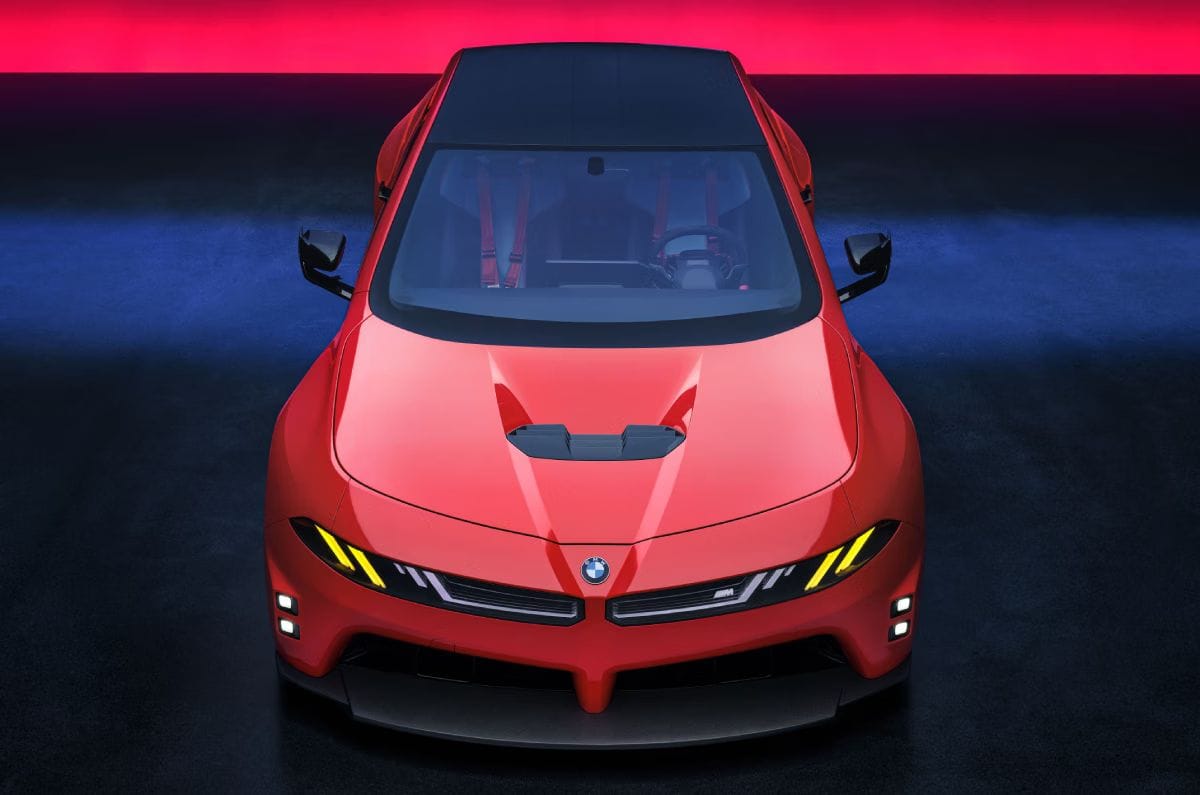
BMW is now planning to introduce the next-gen M3 Touring, based on the same Neue Klasse platform that underpins the next-gen M3 sedan. Sylvia Neubauer, head of Customer, Brand and Sales for BMW M, told Autocar UK that the decision comes following the strong sales of the outgoing (sixth-generation) G81 M3 Touring. The continued demand for the Touring primarily comes from the US and China, Neubauer stated.
This will mark the second generation of the M3 Touring
To get both combustion and fully electric versions
EV likely to have an 800V architecture with quad motors
Combustion version could use a twin-turbo straight-six
Next-gen BMW M3 Touring: United States and China key markets
The M3 Touring that debuted in June 2022 was BMW M’s first-ever production estate, and this will be the second-generation of the sports estate. Neubauer told Autocar UK that BMW does not offer customers in the US the standard 3 Series Touring, citing that “it’s a market for SUVs and very big cars”. However, Neubauer was quick to add that BMW dealers in the States are happy to have the M3 Touring “because they don’t have to push it, since the customer demand is organic.”
Commenting further on the demand for the sports estate in the US, Neubauer indicated that there’s enough to warrant a second-generation model, and that “they’re asking for more and more production, so we’ve been increasing the volume.” As for China, “it’s not an estate market at all, but we decided to bring the (current-gen) Touring to China only in the M3 version. So you can’t buy a regular 3 Series Touring there, but the M3 Touring is a lifestyle statement. And it’s been a huge success in China, and the rest of the world,” Neubauer told Autocar UK. The plan to bring back the M3 Touring for the second-generation isn’t without merit, as it’s “one of the best models that we have in our portfolio,” Neubauer pointed out.
Next-gen BMW M3 Touring: Expected powertrain options
BMW had earlier told Autocar UK that there will be both combustion and fully electric options with the next-gen M3 sedan. Therefore, it’s likely that it could offer the next-gen M3 Touring in regular combustion and fully electric guises as well. BMW recently confirmed that the Neue Klasse-based M3 sedan will get simulated gearshifts and synthetic sounds, which could make their way to its estate version as well.
The Bavarian automaker stated that the battery capacity of the upcoming electric sedan will “be at least 100kWh”. The electric version of the next-gen M3 Touring could use a similar setup, alongside an 800V architecture with four electric motors. As for the combustion version, the sixth-generation M3 Touring currently produces 530hp and 650Nm from its 3.0-litre twin-turbocharged straight-six engine. BMW is likely to rework this to develop more power for the next-gen model.
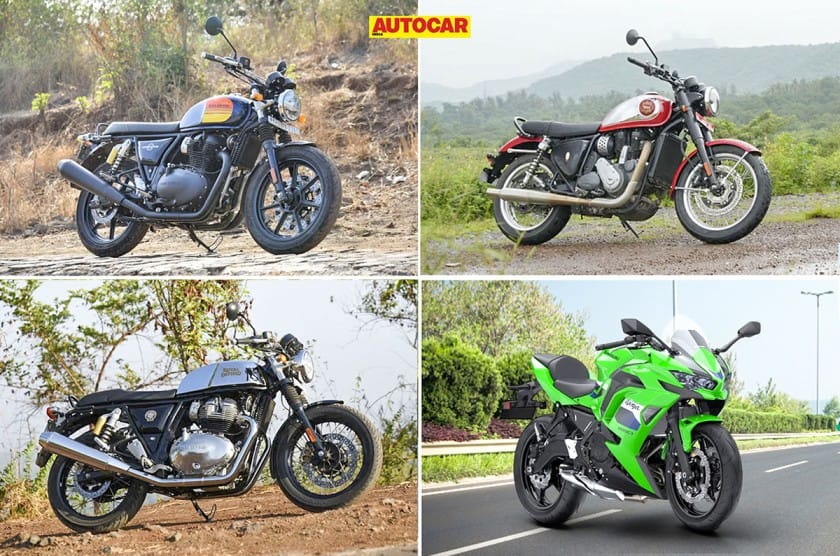
As the mid-capacity motorcycle space continues to evolve in India, the 650cc segment has grown into a highly competitive sweet spot. Moving up from the 300cc-400cc class brings a significant bump in performance, but the choices on offer vary drastically in engine architecture, styling, and intended usage. From simple, retro parallel-twins to fully faired sportbikes, the options available cater to very different riding requirements.
Here are five standout motorcycles in the 650cc segment, each bringing something different to the table for enthusiasts and everyday riders alike.
All prices are ex-showroom, Delhi.
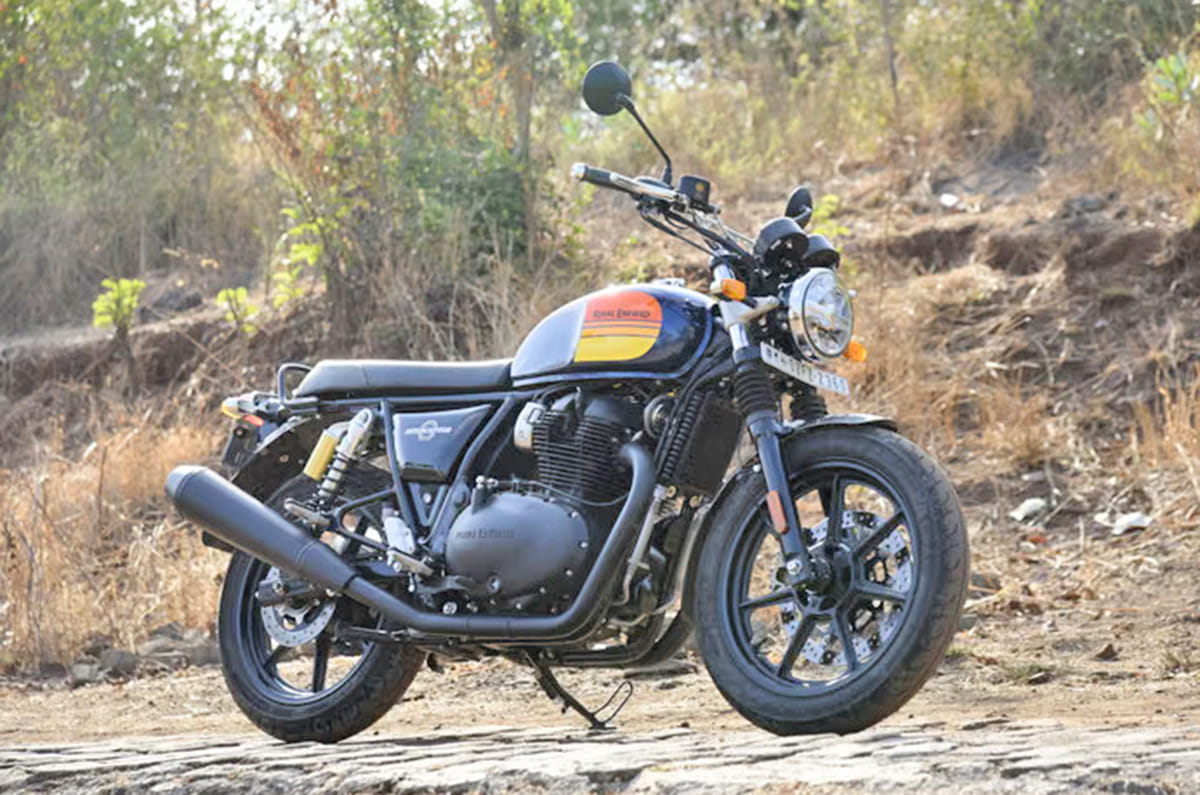
Royal Enfield Interceptor 650
Price: Rs. 3.35 Lakh – Rs. 3.67 Lakh
The Interceptor 650 remains one of the most straightforward motorcycles in this segment. It is powered by Royal Enfield’s 648cc parallel-twin engine that produces 47hp, paired with a 6-speed gearbox. The engine’s strong mid-range and approachable nature have been key reasons behind the bike’s popularity. It is offered in six colour options with chrome or blacked-out finishes and wire-spoke or alloy wheels, depending on the paint scheme you choose.
The Interceptor combines classic roadster proportions with a relaxed riding position, and its wide handlebars, as well as neutral ergonomics, make it equally comfortable in city traffic and on long highway rides. At 218kg kerb, it is not the lightest motorcycle here, but its predictable handling and friendly nature make it one of the easiest large-capacity motorcycles to live with. For more options from the brand, explore all Royal Enfield bikes in India.
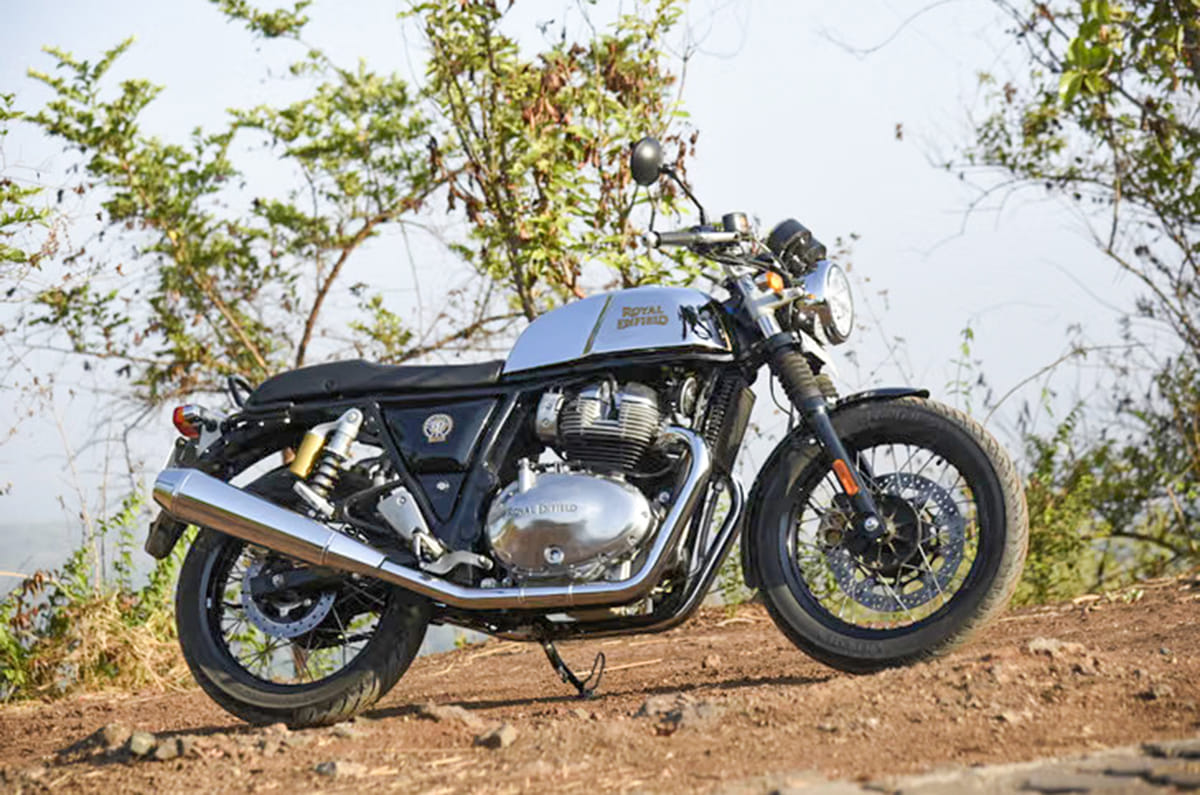
Royal Enfield Continental GT 650
Price: Rs. 3.54 Lakh – Rs. 3.82 Lakh
The Continental GT 650 shares its mechanical foundation with the Interceptor 650 – the same 648cc, air/oil-cooled parallel twin making 47hp – but presents it in a very different package. This is a neo-retro cafe racer, and the ergonomics reflect that: the clip-on handlebars, rear-set footpegs, and the longer, lower stance place the rider in a more committed forward lean compared to the upright Interceptor. For buyers already considering the Interceptor 650, the Continental GT 650 is worth evaluating if a more sporty riding position appeals.
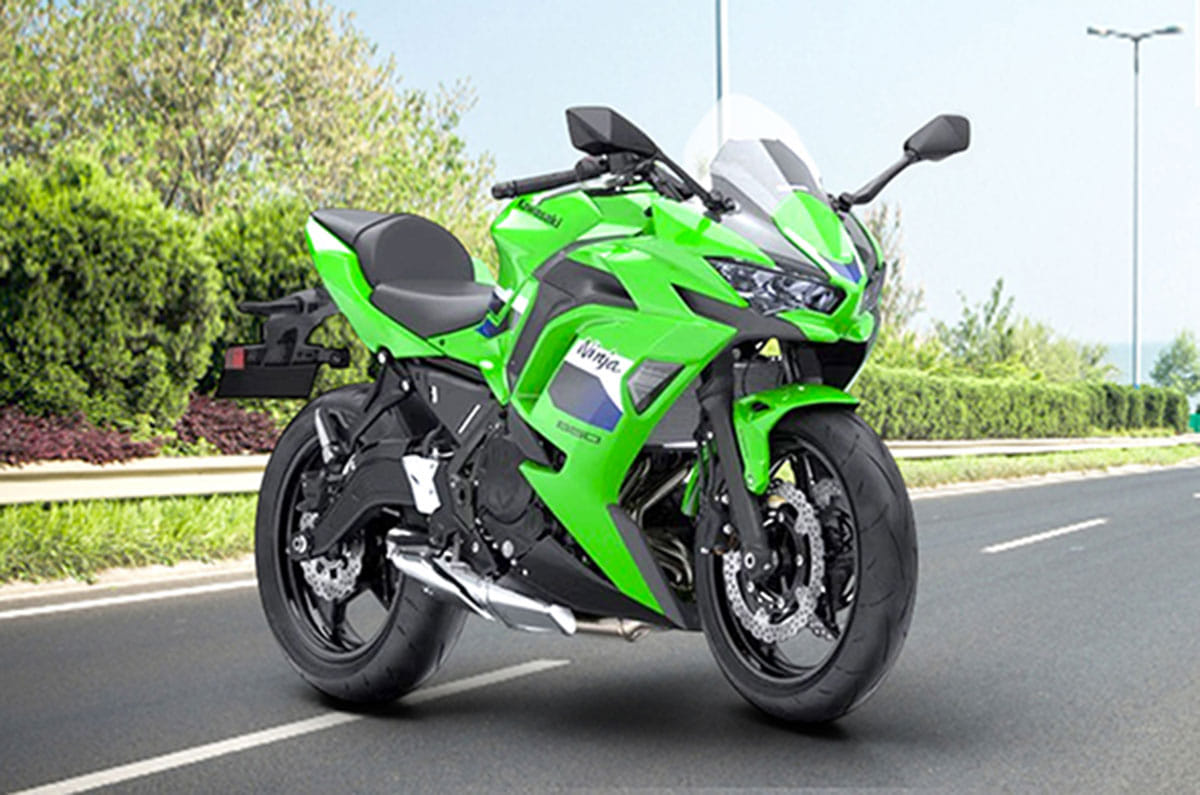
Kawasaki Ninja 650
Price: Rs 7.91 Lakh
The Ninja 650 is the most performance-oriented motorcycle on this list by a considerable margin. It is powered by a 649cc, liquid-cooled, parallel-twin engine producing 68hp – figures that put it in a different performance bracket compared to everything else here. The motor is paired with a 6-speed gearbox, and the bike has a claimed top speed of 210kph.
It is available in a single variant and one colour – Lime Green. At 196kg, it is substantially lighter than the retro roadsters in this displacement bracket, giving it a much higher power-to-weight ratio. Looking for more performance-focused motorcycles? Discover all Kawasaki bikes in India.
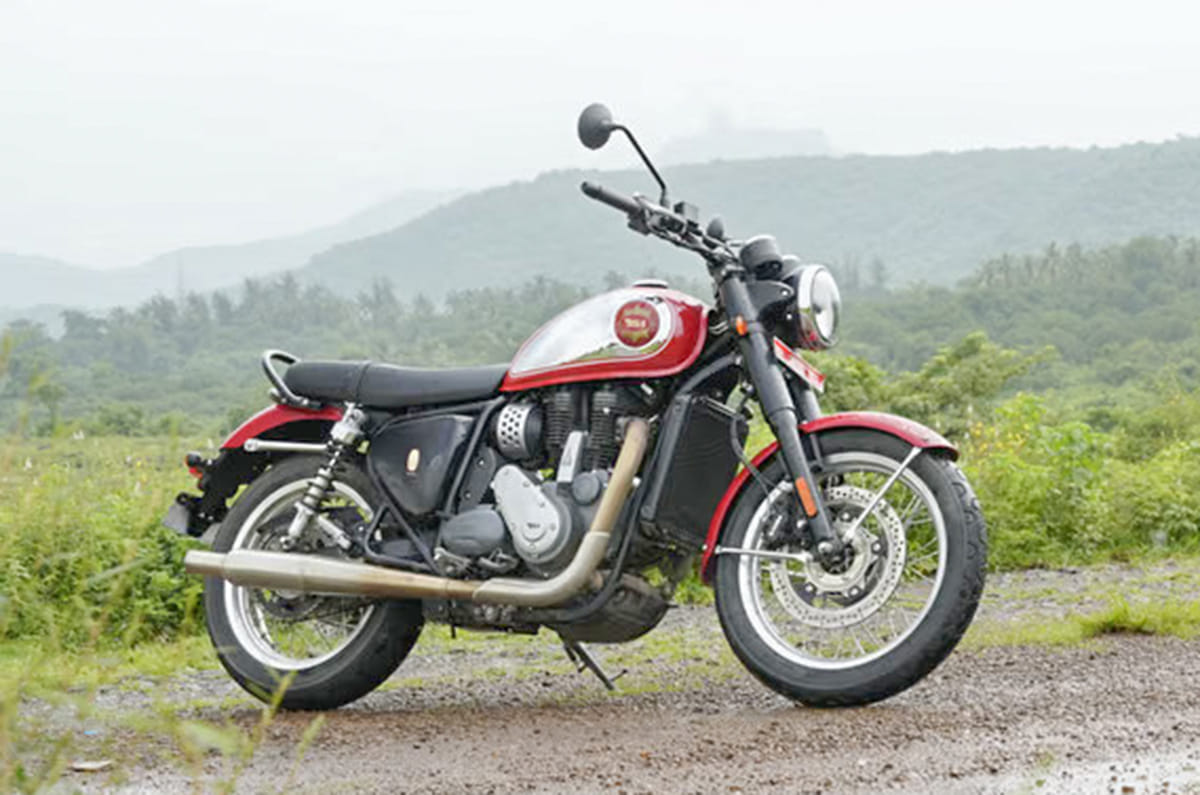
BSA Gold Star 650
Price: Rs 3.35 Lakh – Rs 3.60 Lakh
The Gold Star 650 is the most affordable motorcycle on this list and arguably the most distinctive. Unlike every other bike here, it uses a 652cc, liquid-cooled, single-cylinder engine – a configuration chosen deliberately to evoke the BSA Gold Stars of the 1950s and 60s, when large singles dominated the British motorcycle landscape. The motor produces 45hp, which arrives at a notably low point in the rev range, giving the bike a relaxed, torque-led character well suited to unhurried riding.
At 213kg, it is heavy for a single, and the weight does make itself felt at low speeds and in tight spaces. The seat height of 782mm is reasonably low and will suit a wide range of riders. Equipment includes dual-channel ABS, a slipper clutch, USB Type-A and Type-C charging ports, strong Brembo brakes and Pirelli Phantom tyres. The instrumentation is a dual-pod analogue setup with small LCD displays – appropriately retro in its presentation, although reading the information displayed on the digital insets can be tough. For more options from the brand, explore all BSA bikes in India.
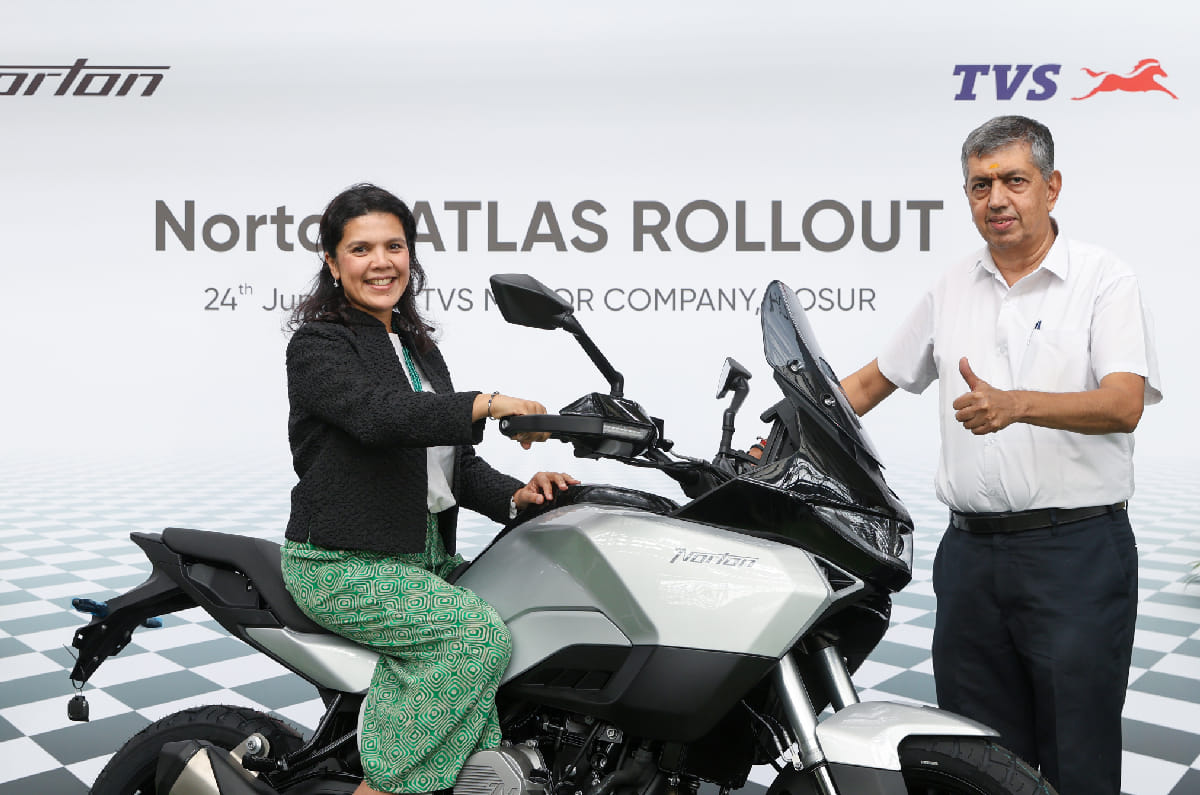
Norton Motorcycles has marked the rollout of the first Atlas models at TVS Motor Company’s Hosur manufacturing facility ahead of the motorcycle’s global launch next month. The Atlas is set to go on sale in global markets in Q3 2026, with an India launch planned later in the year.
Atlas and Atlas GT designed and engineered at Norton’s Solihull headquarters
India launch expected later in 2026 through the TVS Paddock network
585cc parallel-twin produces 70hp and 57.5Nm
Norton Atlas production details
First Norton Atlas rolls off the production line at TVS Motor Company’s Hosur plant
Norton says its Solihull facility is currently operating at full capacity with production of the Manx R, making the Hosur plant the natural choice for manufacturing the Atlas. The move also reflects Norton’s operating model under TVS Motor Company ownership, with Norton responsible for the motorcycles’ design, engineering and riding character, while TVS provides the manufacturing infrastructure and supply chain support.
Commenting on the rollout, TVS Motor Company Director and CEO K. N. Radhakrishnan said the occasion brings together “British design and engineering capability with Indian manufacturing excellence.” Norton Motorcycles CEO Richard Arnold added that the Atlas name carries forward the heritage of the original 1962 model and that the company’s focus now shifts to customer deliveries over the coming months.
The Norton Atlas and Atlas GT are powered by a 585cc liquid-cooled parallel-twin, producing 70hp and 57.5Nm. Both motorcycles feature a Bosch six-axis IMU enabling lean-sensitive rider aids, five riding modes, fully adjustable KYB suspension, cornering cruise control and an 8-inch TFT display.
Norton has confirmed that the Atlas range will be launched in India later in 2026 through TVS Paddock– TVS Motor Company’s new premium retail format, which is expected to begin operations in Q2 FY27. Customer deliveries are expected to commence once the network is operational.
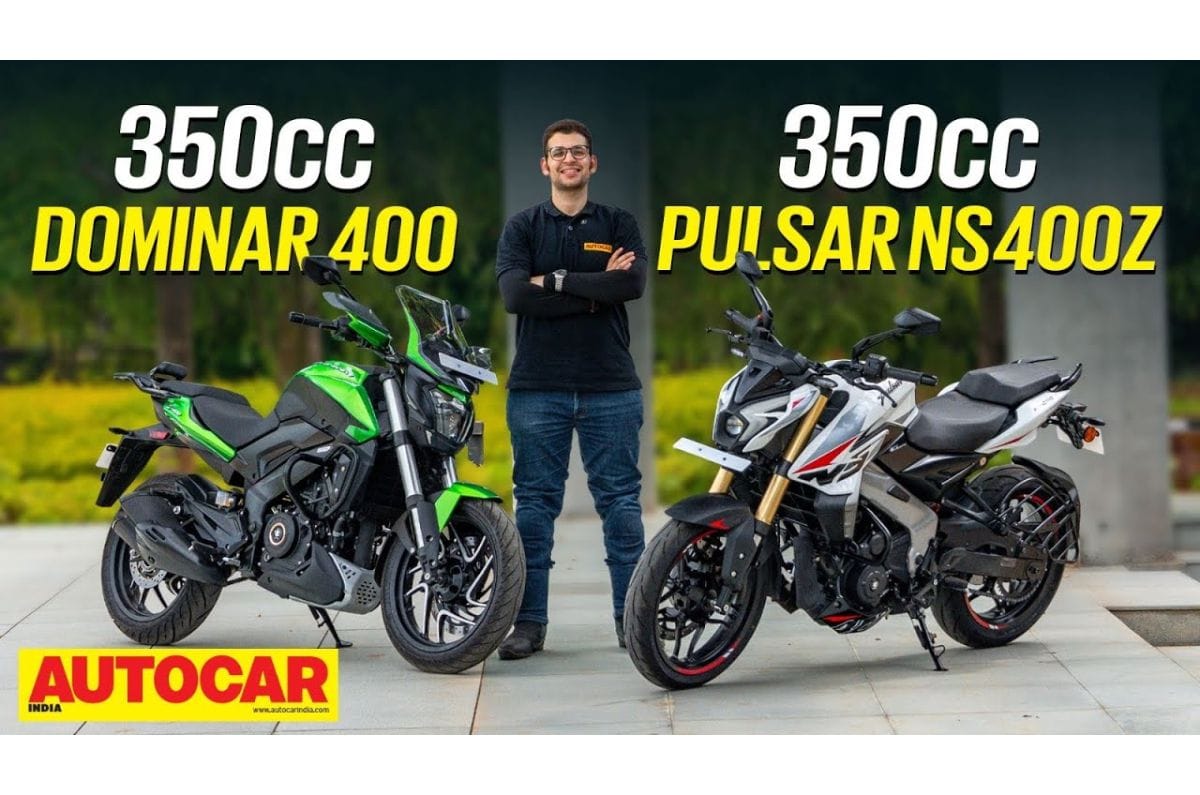
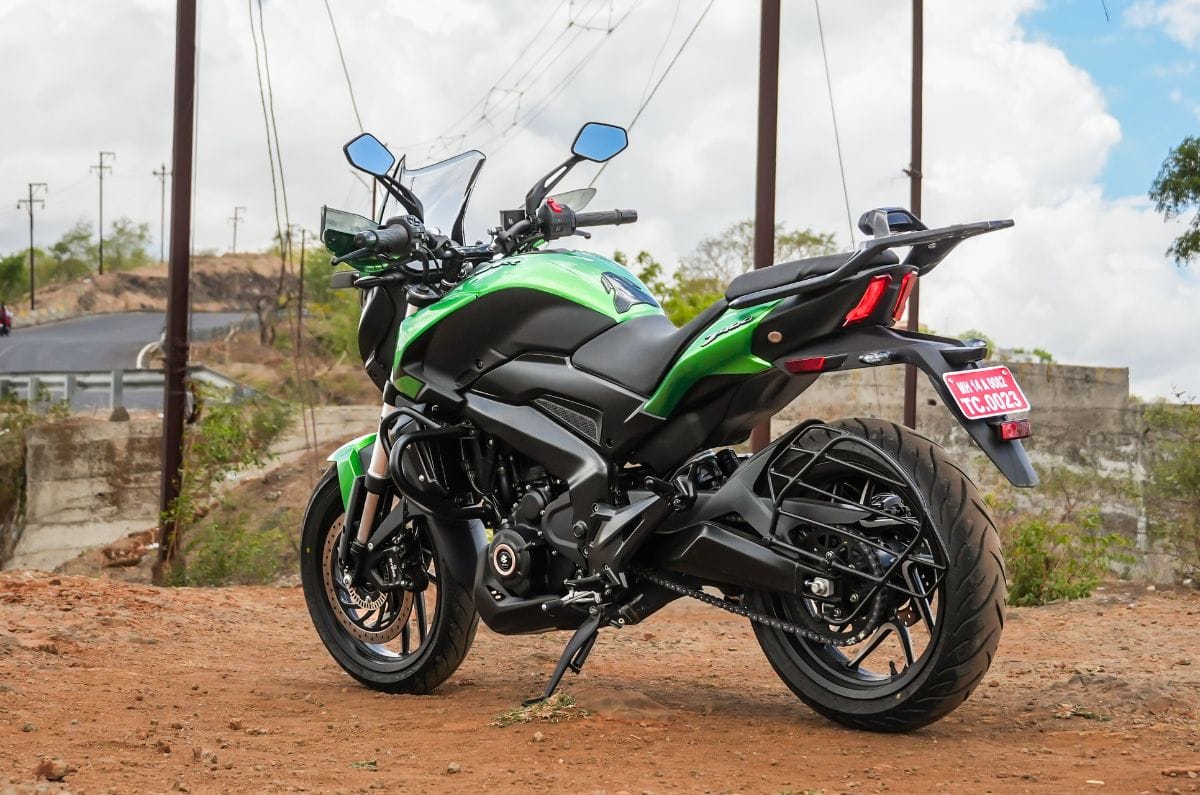
With the Dominar 400 now powered by a smaller-capacity 349cc engine, Bajaj’s cycle of downsizing all its products, along with the Triumph 400s and select KTM 390s it manufactures, is now complete – an exercise undertaken to benefit from the lower 18 percent GST on two-wheelers under the 350cc threshold. But has this downsizing affected the Dominar 400 in any significant way, and who exactly is this bike for today?
Design and Features – 7/10
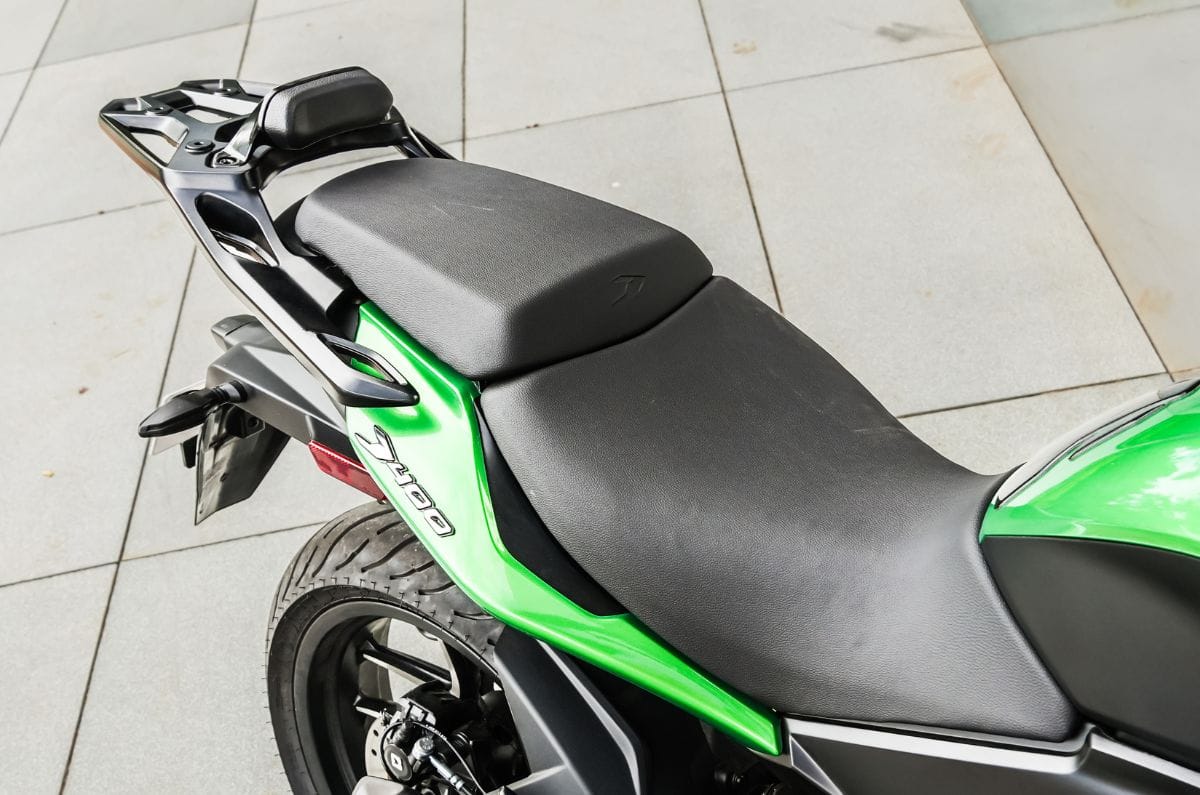
It’s been nearly a decade since Bajaj launched the Dominar 400, and in that time, not much has changed visually. While you can call the Dominar a dated-looking machine, you certainly can’t accuse it of being a sparsely equipped one. I don’t mean fancy features and farkles like a laundry list of electronic rider aids or a huge TFT display; instead, the Dominar is well kitted out for its target audience. Things you usually have to purchase as extras on other bikes, such as a pillion backrest integrated into the luggage rack, a comprehensive engine guard, a big front windscreen and knuckle guards, come standard on the Dominar 400.
The Dominar is a very practical and comfortable machine.
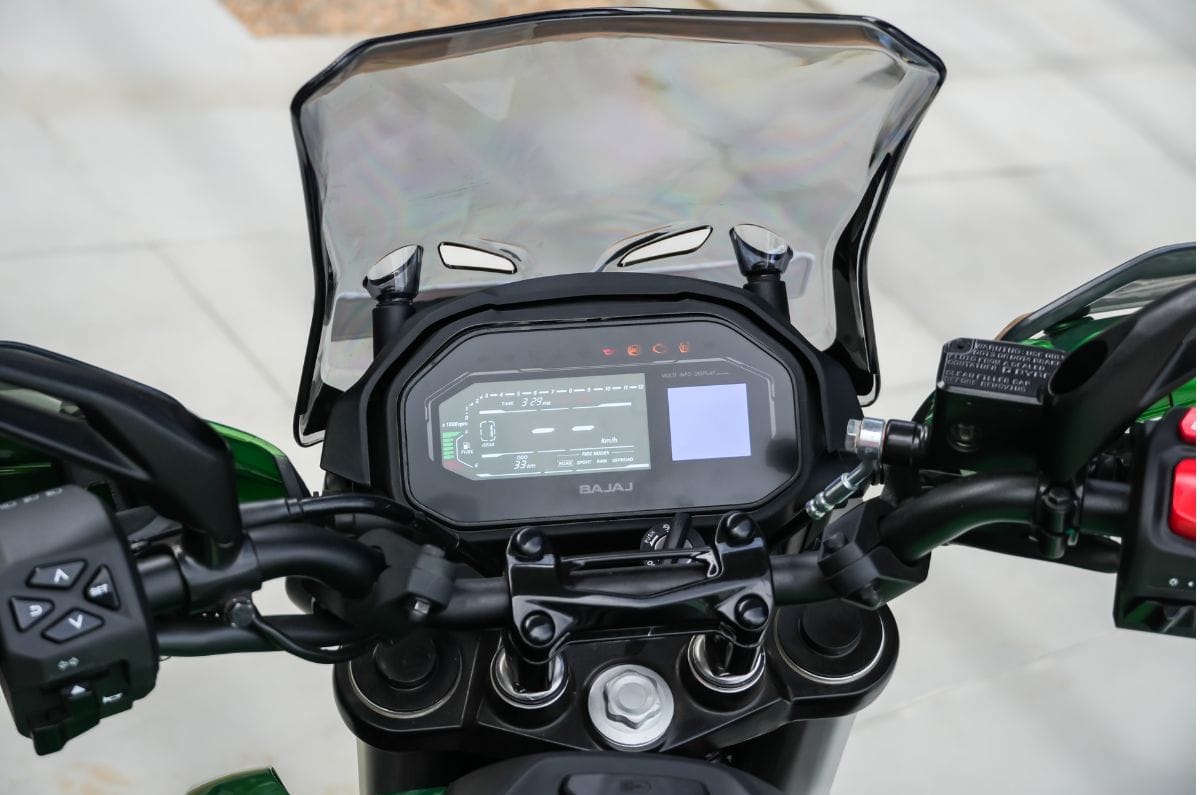
The biggest change from the rider’s POV is the new Pulsar NS400Z-sourced display and switchgear, which the Dominar received a year ago. With this update, it also got four riding modes (Sport, Road, Rain and Off-road) with distinct ABS calibration for each. One thing that remains exclusive to the Pulsar is the bidirectional quickshifter, which seems like a strange miss on the more expensive Dominar.
The Dominar and Pulsar NS400Z share this display and switchgear.
Performance and Fuel Economy – 8/10
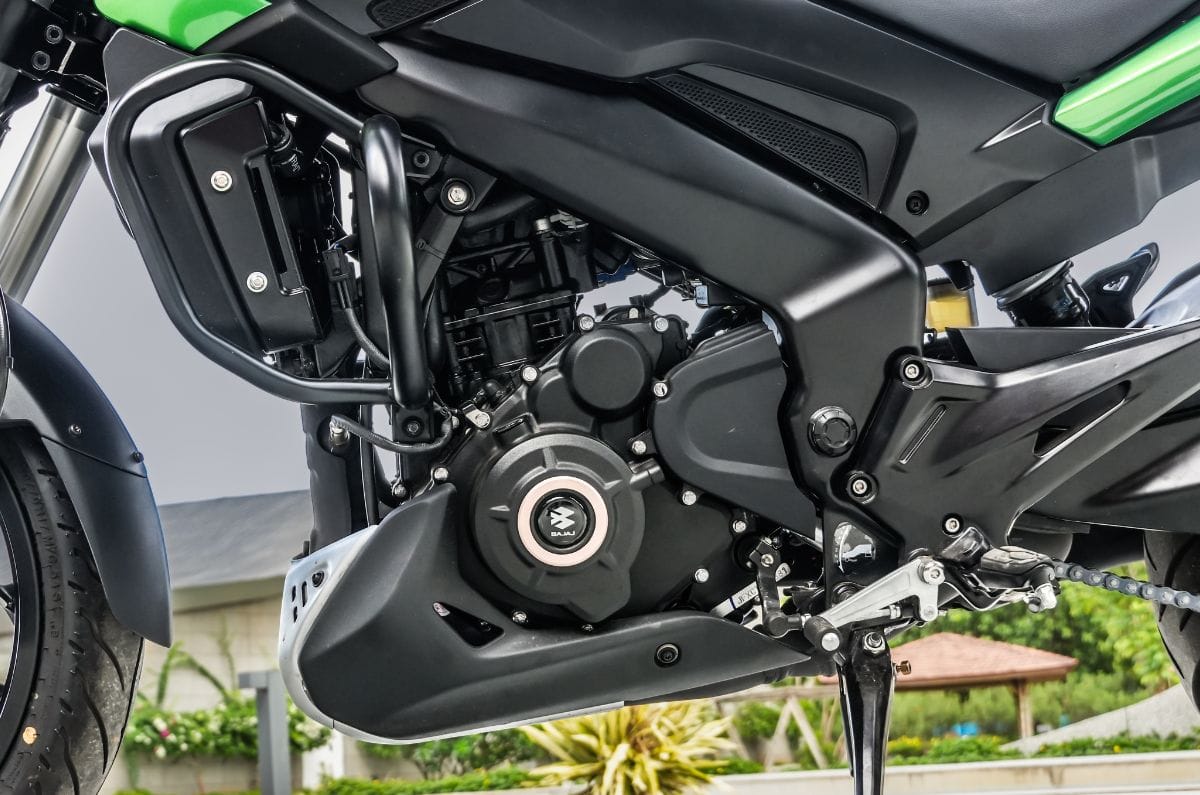
The Dominar’s 373cc engine was downsized to 349cc by reducing the stroke from 60mm to 56.1mm while retaining the 89mm bore. Barring some essential changes necessary for the downsizing process to the engine’s head, the mill retains everything from before, including its compression ratio. While the Dominar and Pulsar NS400Z share this engine, there are some differences. Both have distinct mapping and tuning to suit their different roles, and the Dominar also has different camshafts and a heavier flywheel for a stronger mid-range.
The Dominar’s engine is in a different state of tune from that of the Pulsar NS400Z.
In fact, the Dominar 400 is one of those rare cases where the same engine produces more power after being downsized! It never received the 43hp state of tune as the Pulsar did last year and stayed at 40hp, so now there’s a marginal 0.6hp improvement. Torque, however, has dropped from 35Nm to 33.2Nm on the 349cc version.
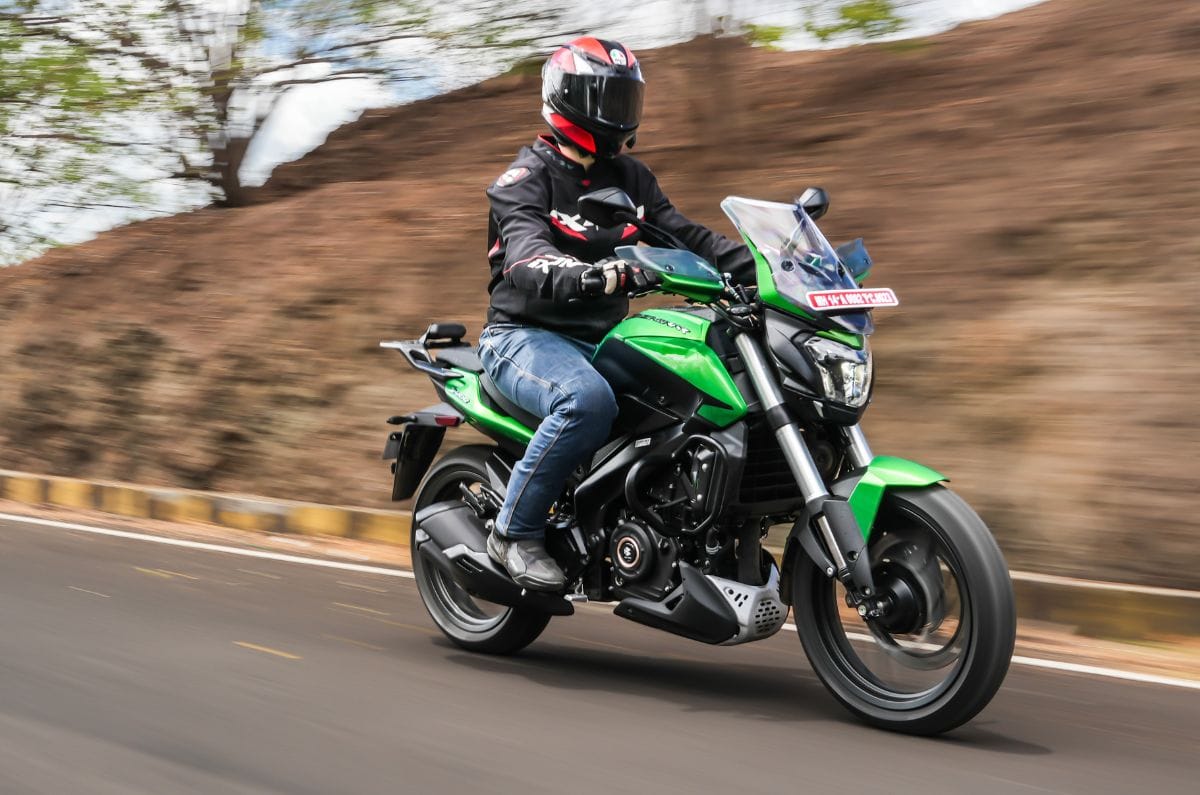
On the move, the 349cc Dominar 400 retains its predecessor’s relaxed character, although you do feel the drop in low- and mid-range compared to the 373cc version. Nevertheless, the Dominar 400 still has more than enough performance, and out on wide, open roads, sustaining 100-120kph in top gear is quite a placid affair, and commendable highway performance is one of its biggest USPs. Also worth mentioning is that its engine has a calmer and easier-to-use nature than the one in the NS.
Ride and Handling – 9/10
The Dominar 400 has never been about maximum thrills – look at the Pulsar NS400Z for that – and the engine’s relaxed demeanour carries over to the chassis front as well. This is a surefooted and predictable machine, but you wouldn’t call it a sporty one. Flowing through gentle corners is more up the Dominar’s alley than attacking fast switchbacks. Its foot pegs also touch down without too much effort, and it is best to ride this bike in a relaxed yet brisk fashion.
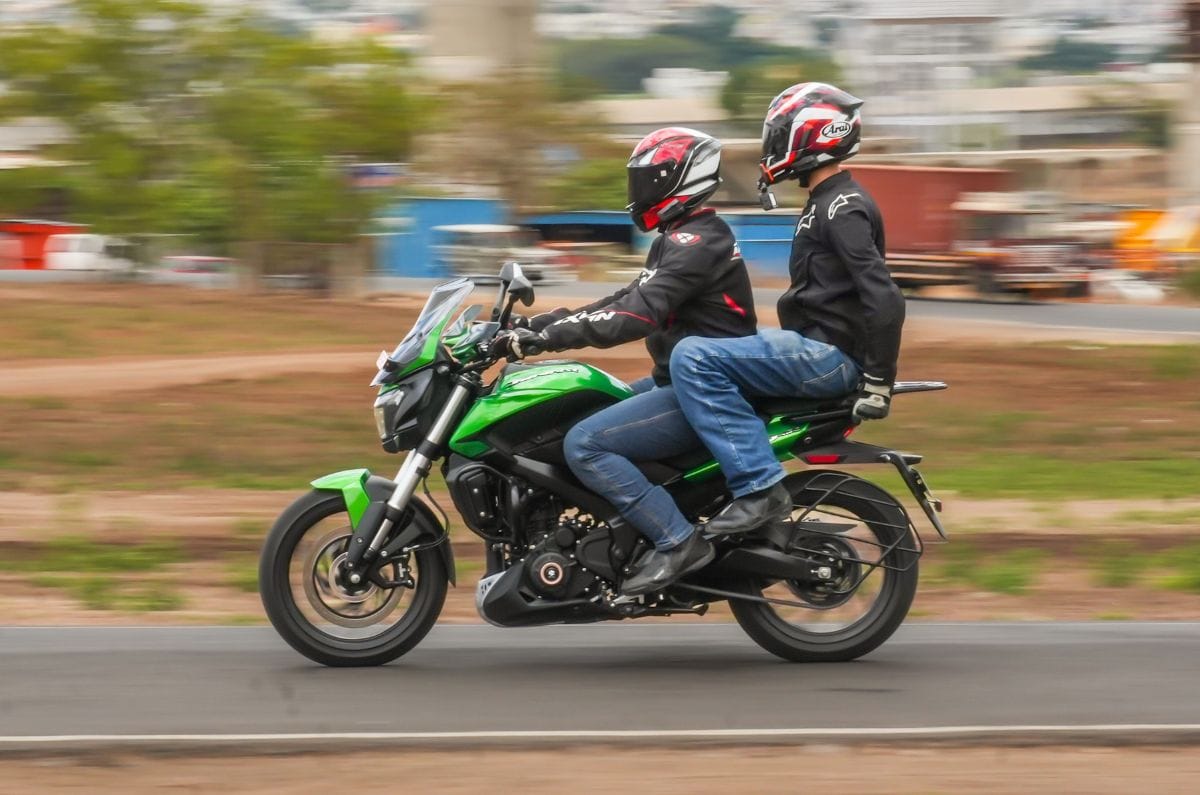
Two full-size adults fit comfortably on the Dominar.
What will put you in that zone is the Dominar’s relaxed riding triangle, plush, well-padded seats for both rider and pillion, and a pliant suspension that rounds off all but the harshest of bumps our roads will throw your way. At 190kg, the Dominar 400 is a heavy machine, and you will feel that at low speeds, but the low 800mm seat height will help most riders get their feet down confidently and manoeuvre the bike as they like.
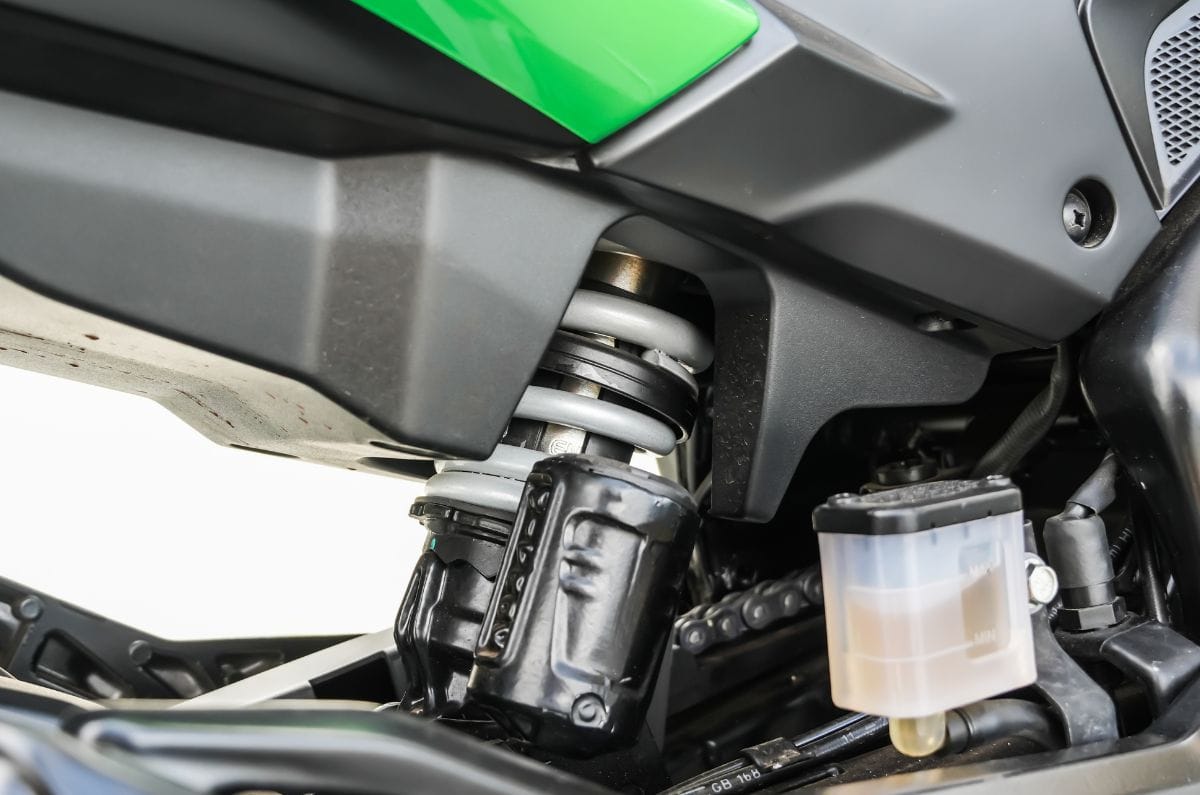
The Dominar’s suspension isolates you from all but the worst bumps Indian roads have to offer.
Price and Verdict – 8/10
Summing up, of all the Bajaj-made bikes now downsized to 350cc, the Dominar 400 actually benefits the most because its key USP was scoring high on bang for the buck. That quotient has been further enhanced, and at Rs 2.04 lakh (ex-showroom, Delhi), it has very competitive pricing. As for outright performance, it has sacrificed some compared to before, but the big price advantage far outweighs the slight dip.
The Dominar is a sensible choice for those looking to go touring on a tight budget.
And when you look at the overall package as well as the standard equipment on offer, the Bajaj Dominar 400 is one of the most affordable and capable road-focused touring machines on sale at this price point.