

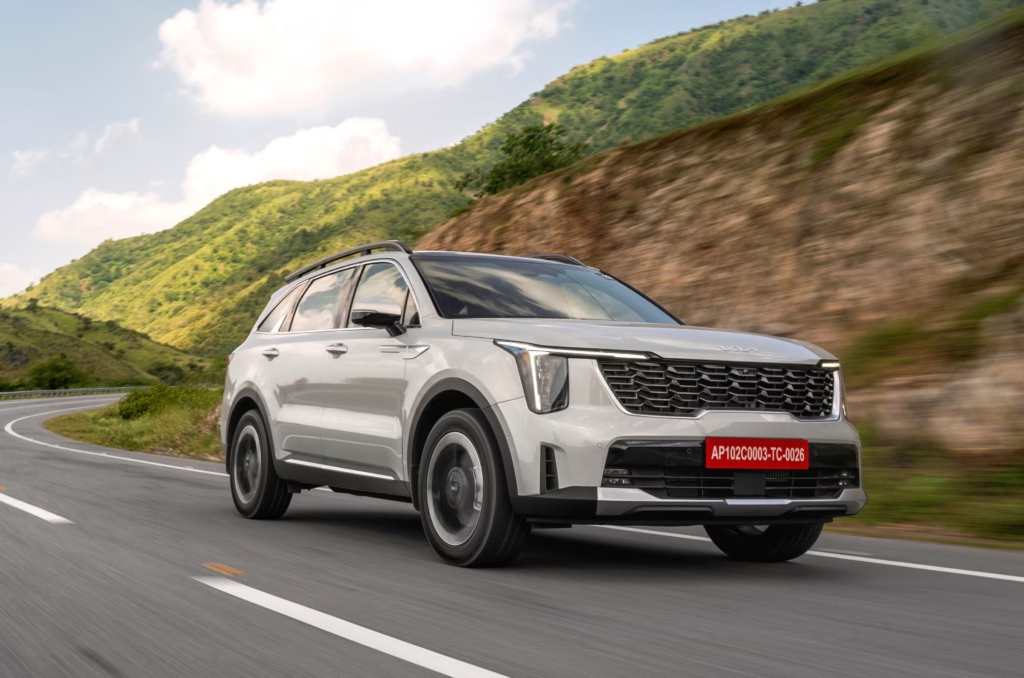
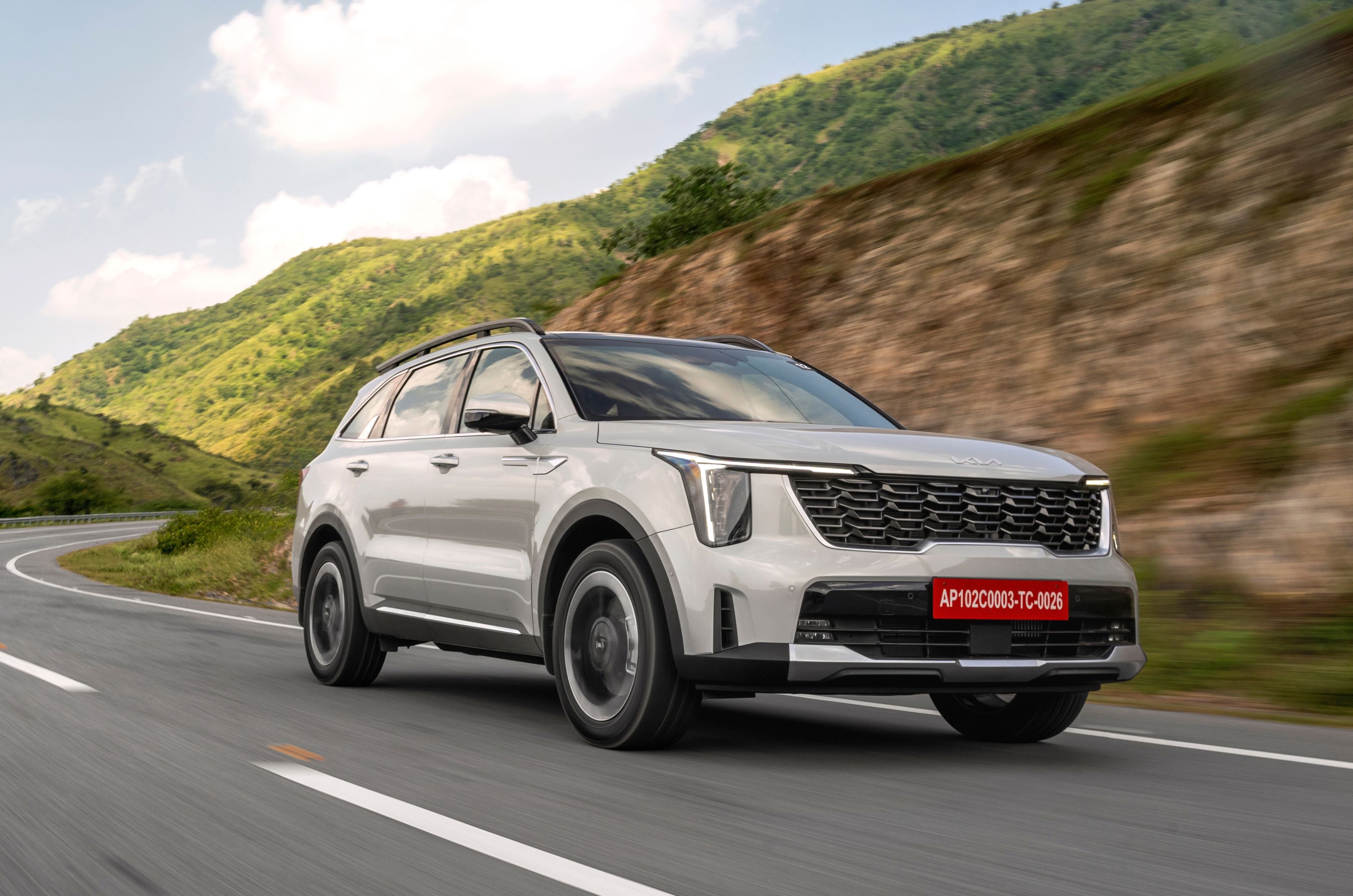
The Sorento is a big bet for Kia India, and you can tell. Six trims, two powertrains, front- and all-wheel drive, six or seven seats and 32 versions in all. This is not a toe in the water exercise but a full-blooded dive into the deep end of the executive SUV pool. More than that, it is a case study in how to launch a product in India, because Kia has got the basics right before it has even started talking about features.
Start with the powertrains, which for this class of SUV could hardly be better judged. There is a strong 2.2-litre diesel for diesel die-hards and there are still plenty of those. And then there is a 1.6-litre turbo-petrol strong hybrid whose timing couldn’t be more perfect. Petrol prices are climbing, E20 has quietly eaten into real-world efficiency, and buyers want diesel-like running costs from a smooth, quiet powertrain without lying awake worrying about diesel’s long-term future. The Sorento hybrid is pitched squarely at that anxiety.
The strategy behind the car is just as interesting. This fourth-generation (MQ4) Sorento arrives in India towards the end of its global life cycle. It is still a current product, but one due to be replaced internationally next year, while India will carry on with this one. That is actually a very smart move. A car this late in its life has its development costs largely amortised, and Kia India can bring some of the tooling here, which slashes the investment.
And this is a properly localised car, not a screwdriver job. The body is stamped and welded at Kia’s Anantapur plant, and the dashboard and seats are made here too. That is what makes the Rs 27.99 lakh starting price possible. The catch is that localisation on this scale only pays off with volume, and Kia wants to sell around 40,000 Sorentos a year. That is a big number for a Rs 30-40 lakh SUV. Can it get there?
Kia Sorento exterior design and engineering
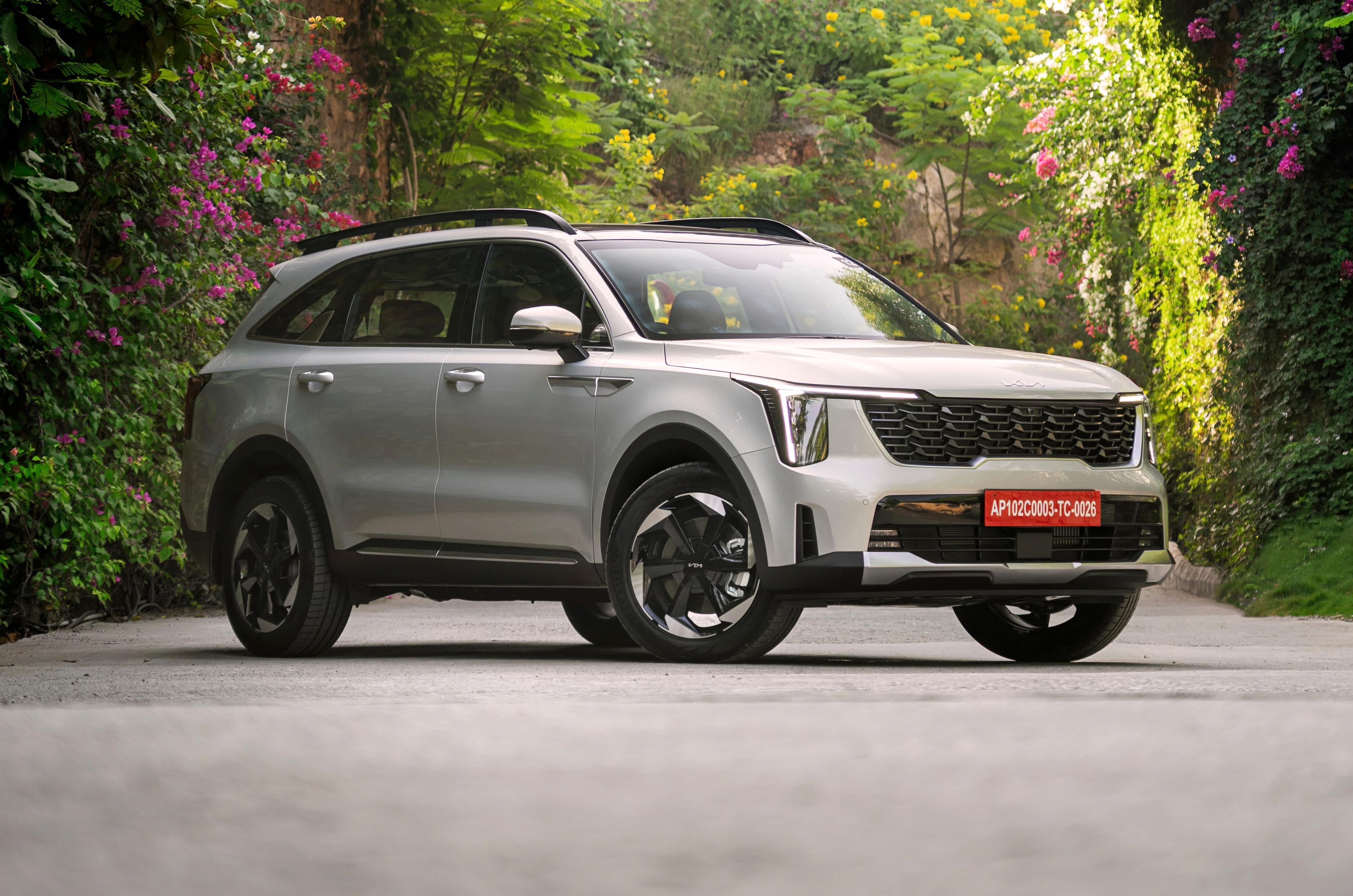
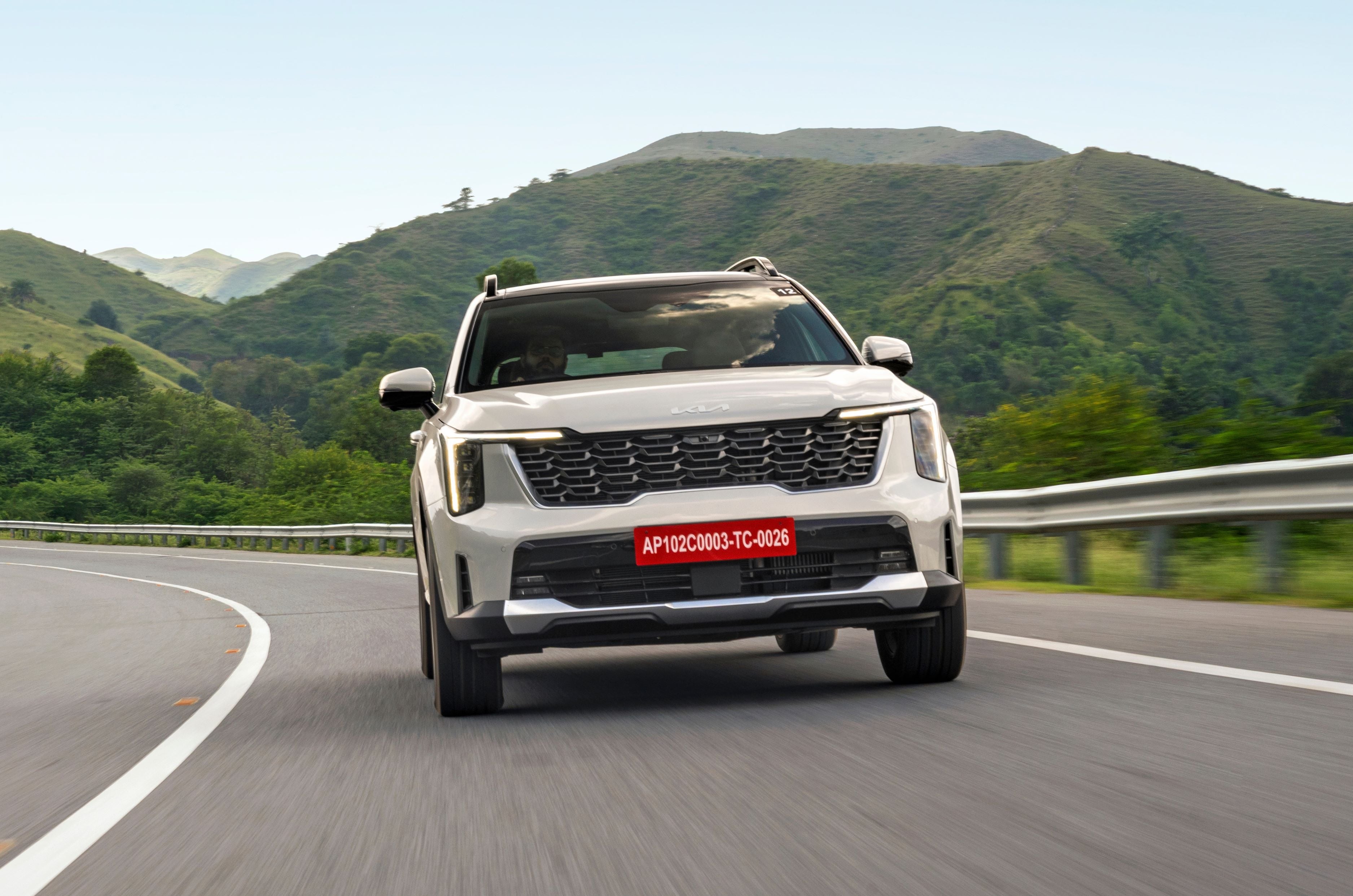
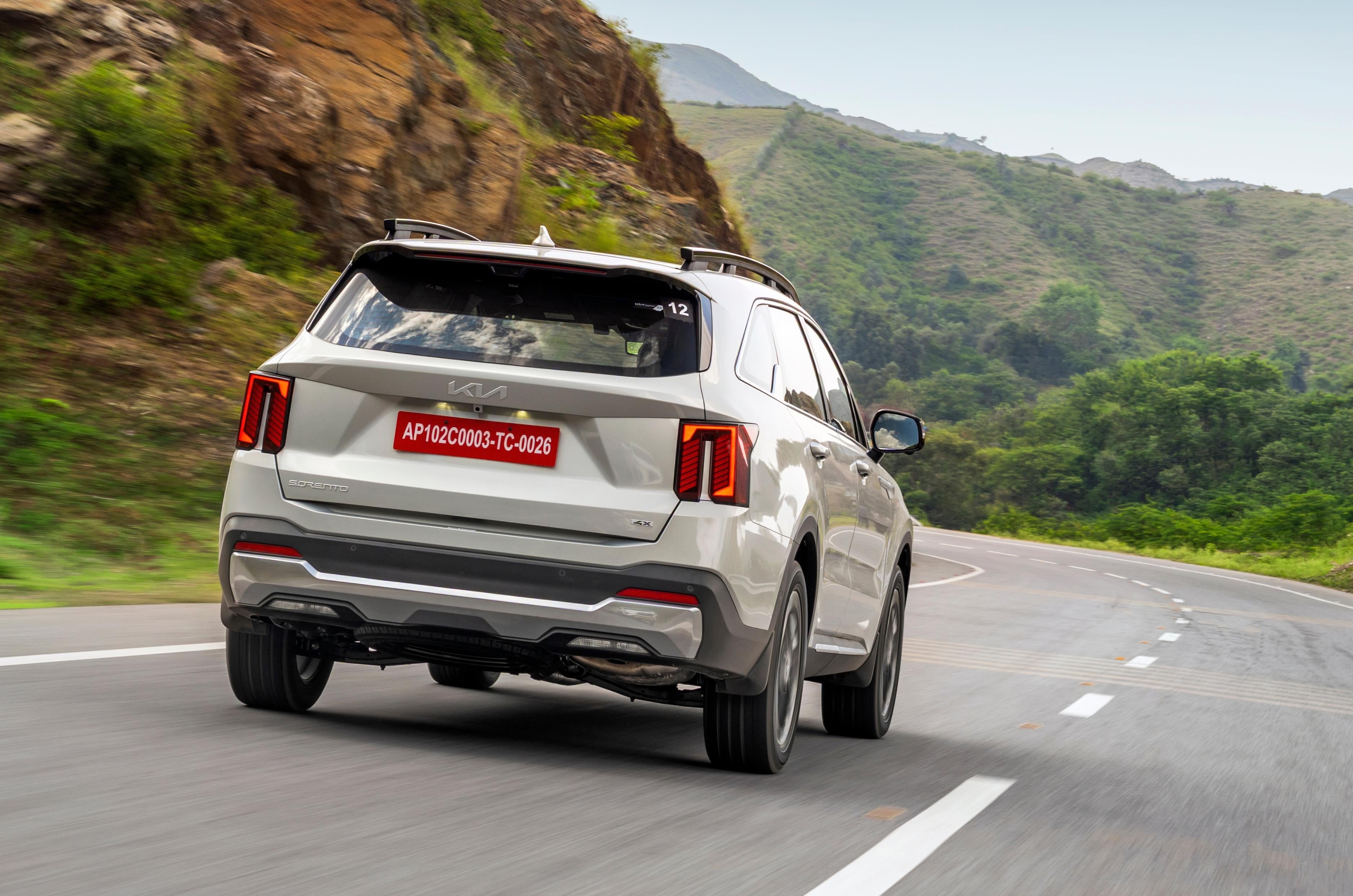
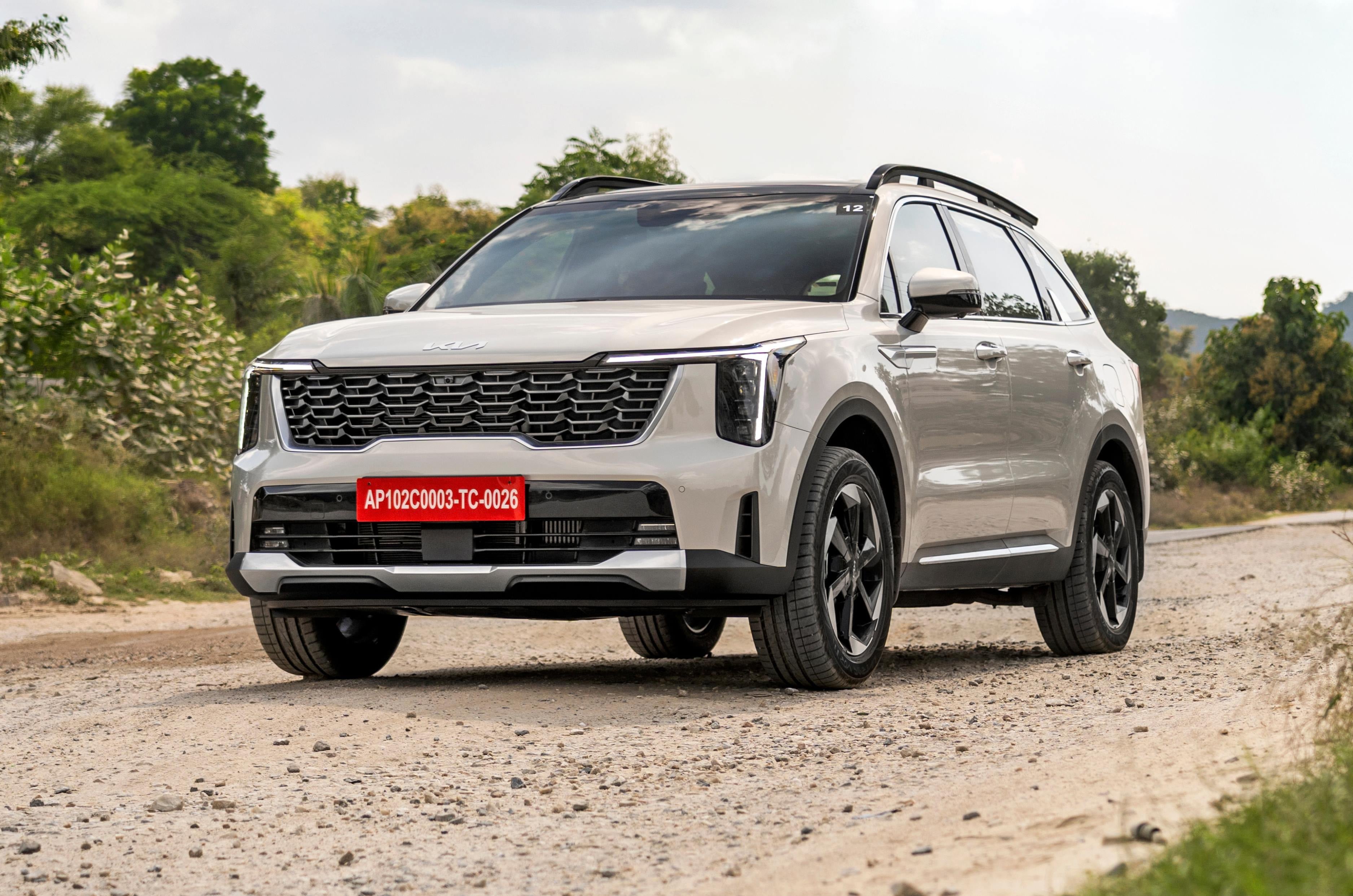
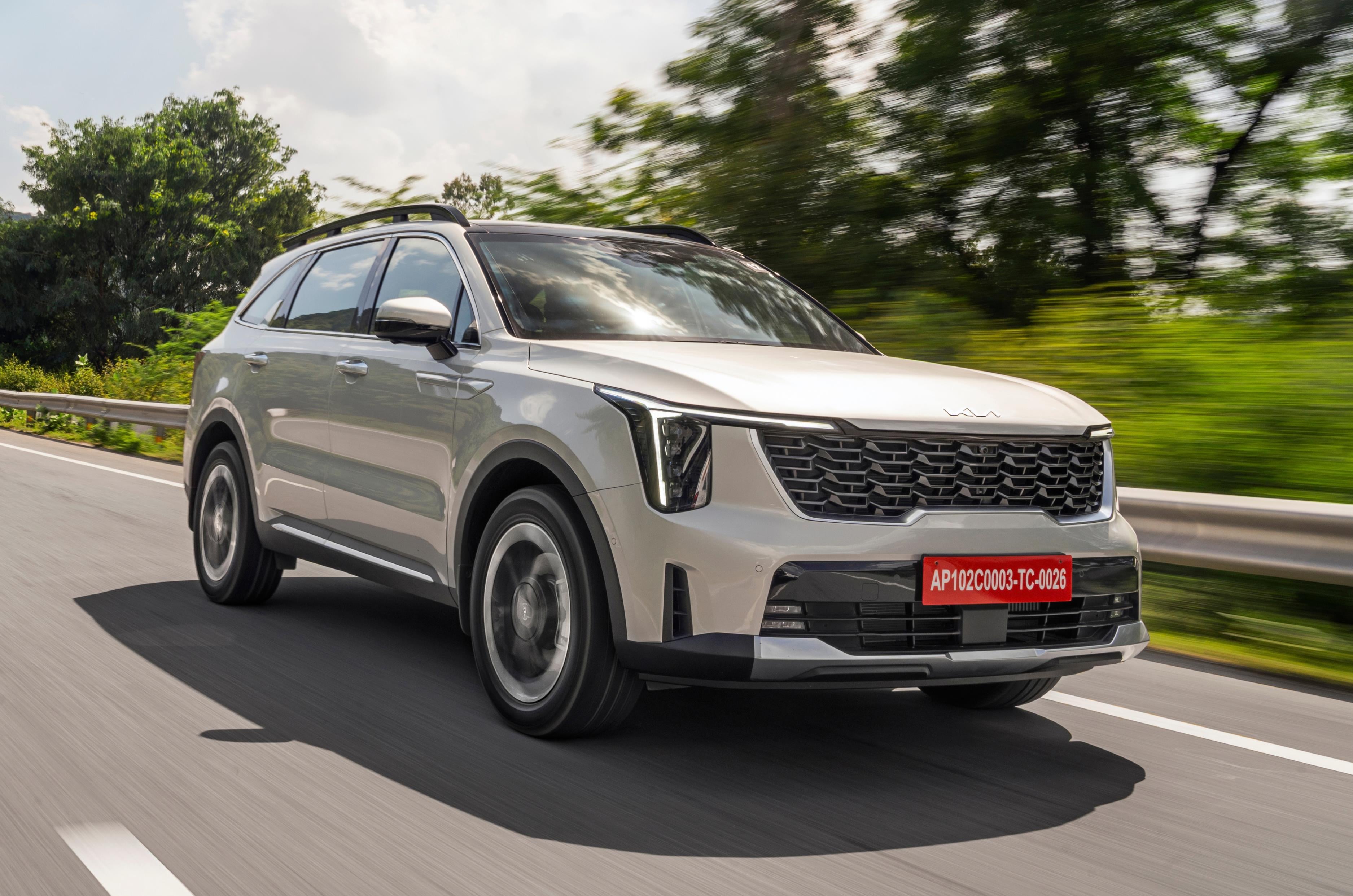
The Sorento sits on Hyundai-Kia’s MQ4 platform, the freshest architecture in its class, and it has already had a mid-life update to keep it looking current. The 2024 facelift brought the nose in line with the design language Kia kicked off with the EV9, so you get vertically stacked LED headlights, Y-shaped daytime running lamps and an aggressive looking bumper with wide intakes. At the back are L-shaped wraparound tail-lamps, and thankfully no light bar stretched across the tailgate.
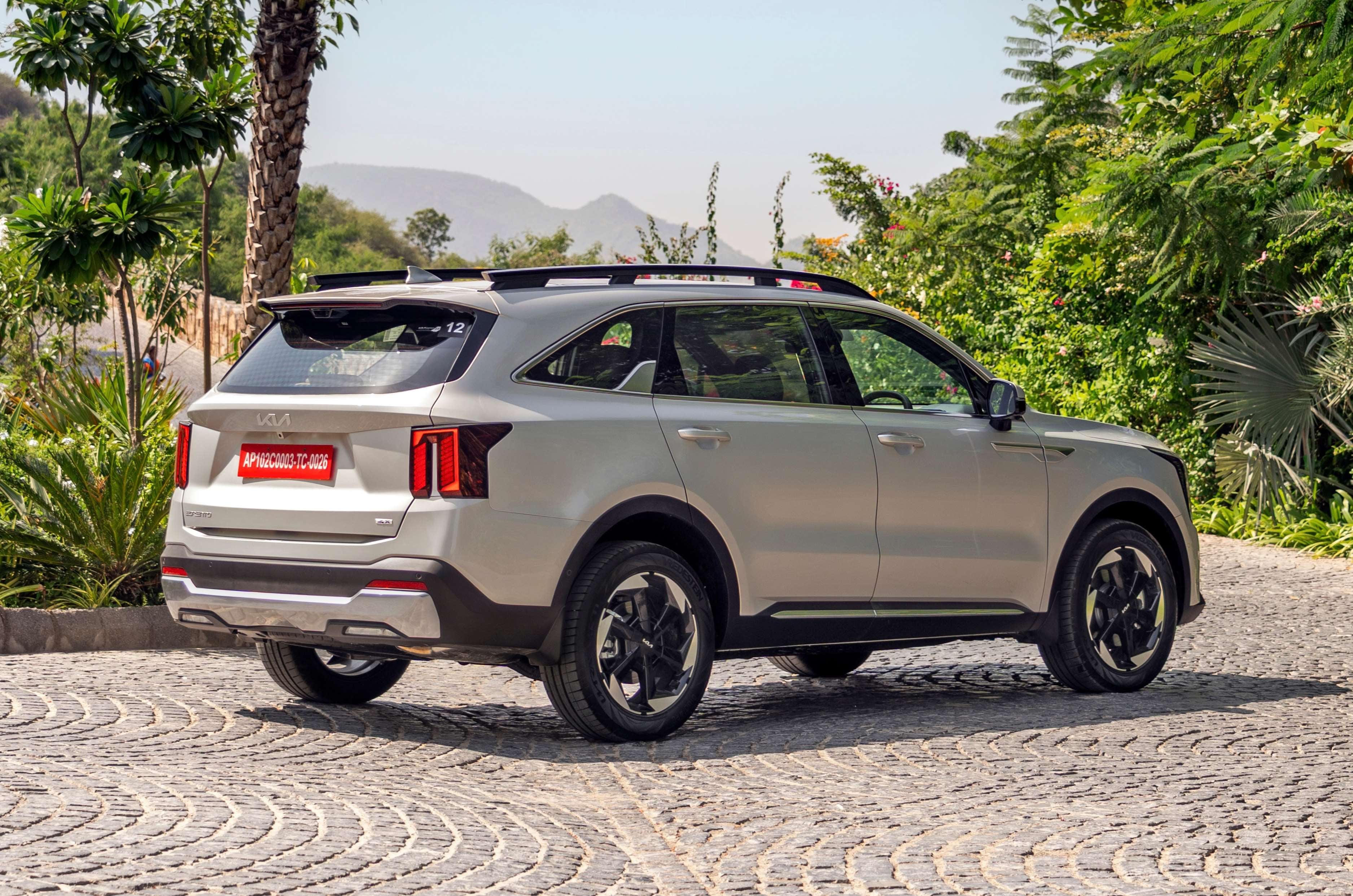
Kia’s stated aim was a more technical, precise look, one meant to signal tight build quality and engineering sophistication. It is a trick the German premium brands have used for years, and Kia has clearly taken a leaf out of their book. The Sorento looks crisp and expensive rather than flashy, and is likely to age well too.
What it does not have is brute presence. Despite being the longest, widest and tallest SUV in its segment, at 4,815mm long, 1,900mm wide and 1,785mm tall on a 2,815mm wheelbase, it does not loom in your mirrors the way a Fortuner does. The sloping roofline at the rear softens the silhouette and lends it a hint of crossover, and some will see it as a big Seltos rather than a junior Land Cruiser. Clearly this is not an SUV that looks like it can bully its way through traffic.
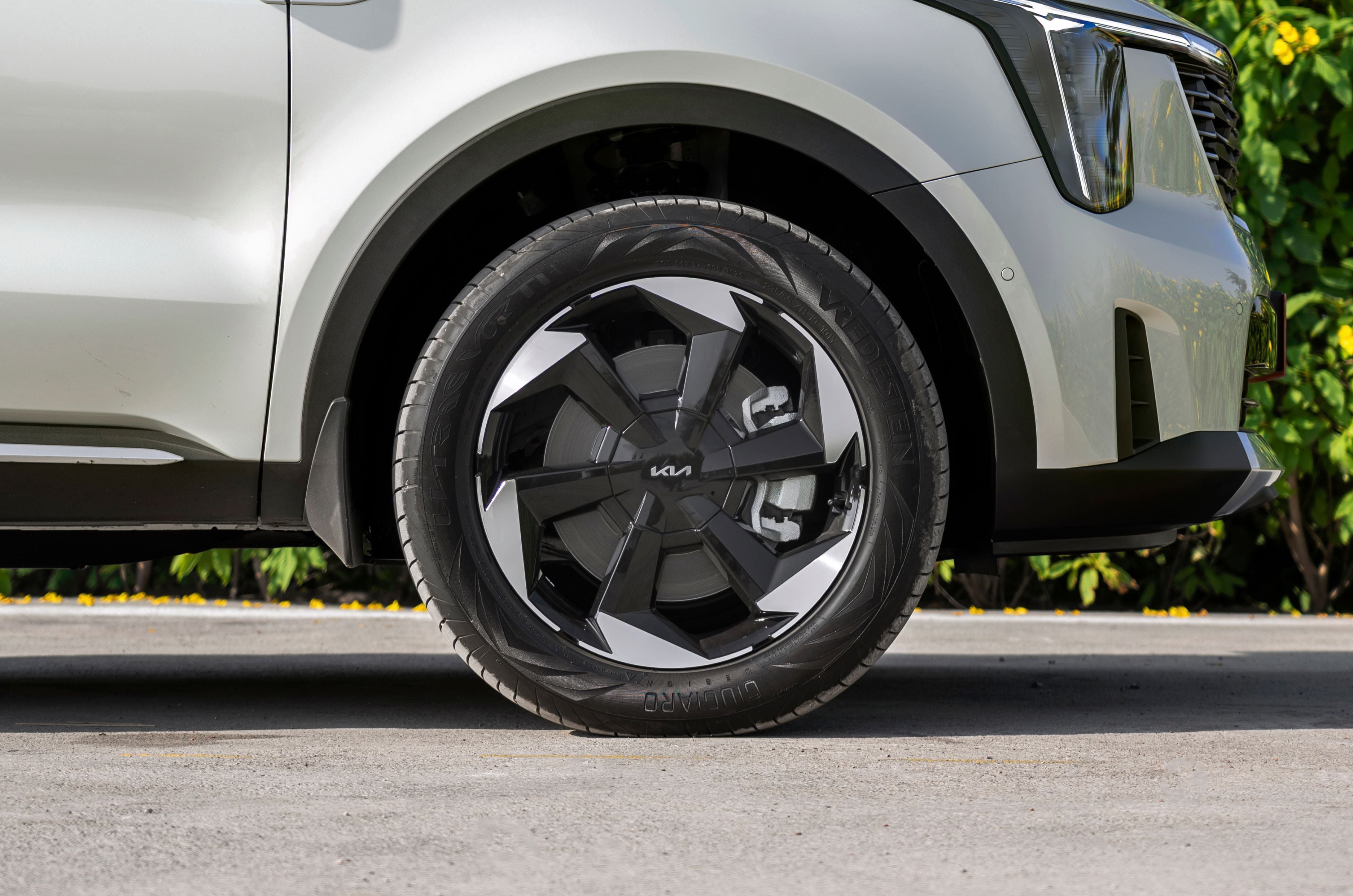
The 19-inch dual-tone alloys could have been more distinctive, too an effect exaggerated by the chunky 235/55 R19 tyres. Those tall sidewalls, though, are not a styling misstep so much as an engineering choice, and they play a big part in how this car rides. More on that later.
Kia Sorento interior space and comfort
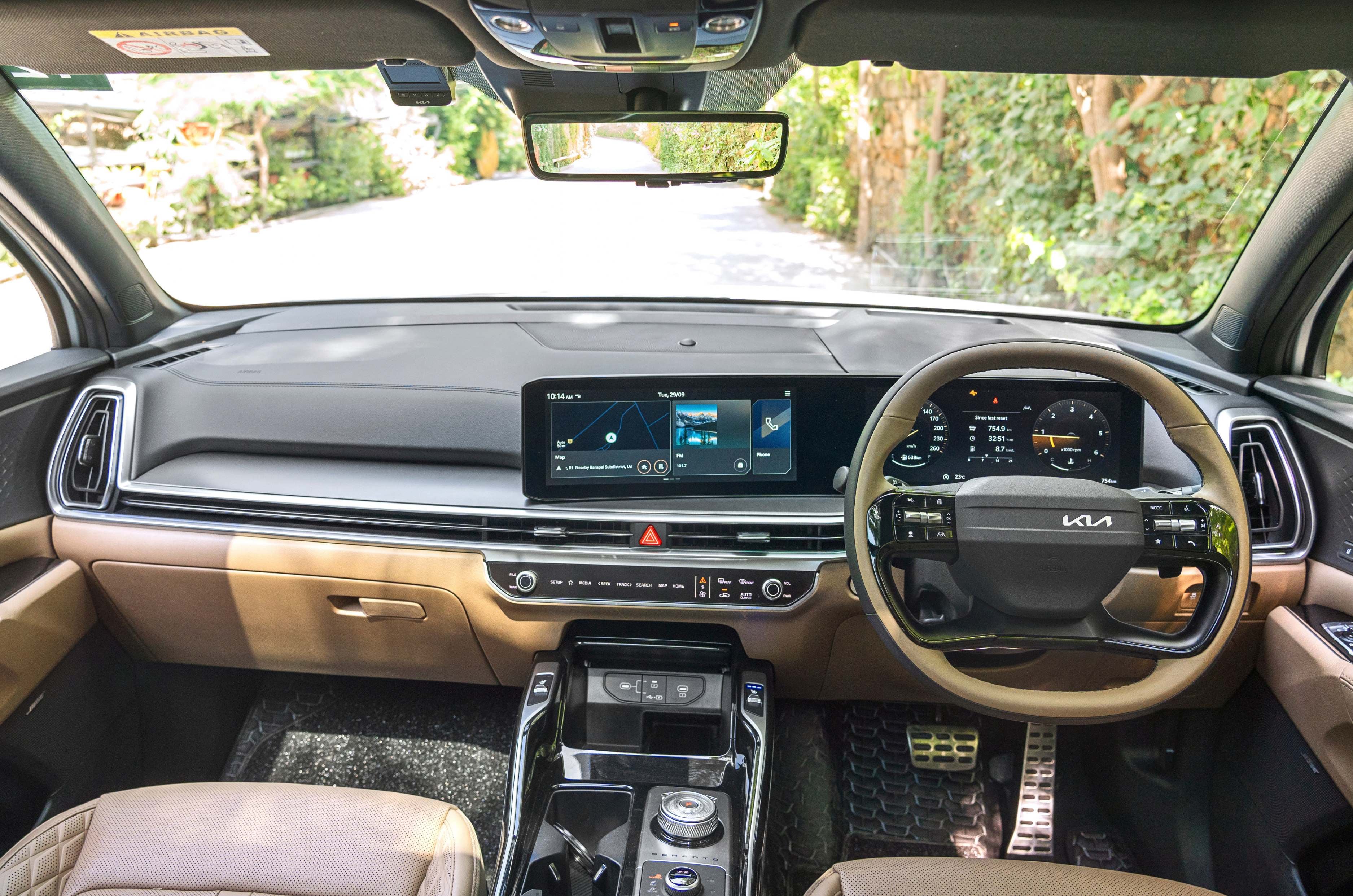
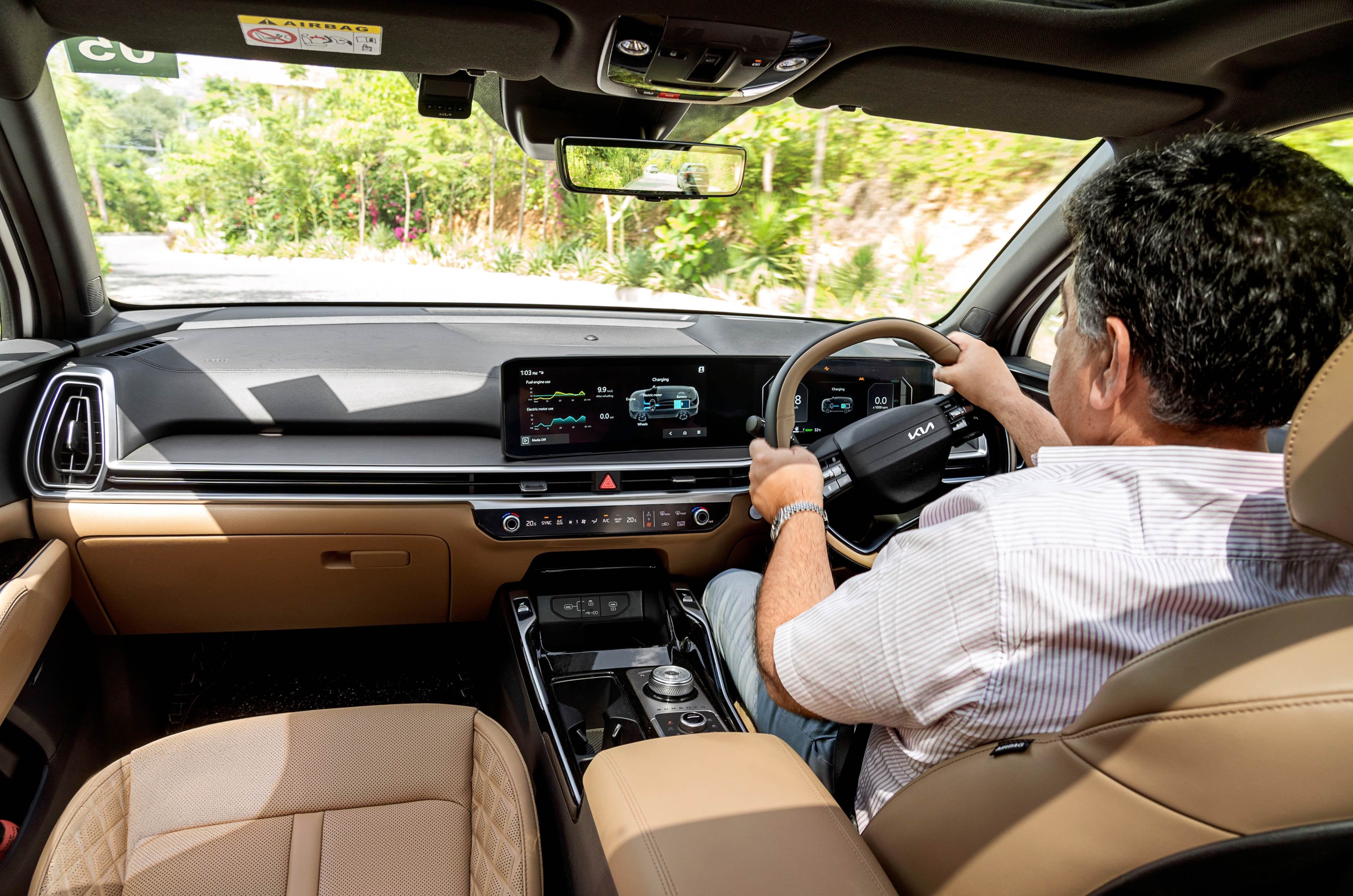
If the exterior is quietly effective, the cabin is where Kia has truly aced it. The Sorento offers a mix of quality, equipment and ergonomics that nothing at this price can match. Soft-touch materials cover everything you are likely to touch, including the spots where your knee rests against the centre console. There is a healthy count of physical buttons, and they click with a precision that feels engineered rather than sourced. The knurled finish on the rotary drive selector and the switchgear adds a tactile richness you normally pay German money for.
As with its Hyundai cousins, the real ace is the software. The 12.3-inch infotainment system is logically laid out, menus are where you expect them to be, and getting to a feature takes a tap or two rather than a treasure hunt. Kia has also kept the climate controls off the main screen. They live on a touch-sensitive bar below it, with scrollers and a button that toggles the bar between air-con and infotainment shortcuts. It is a clever, space-saving solution, though you will occasionally find it in the wrong mode just when you need it.
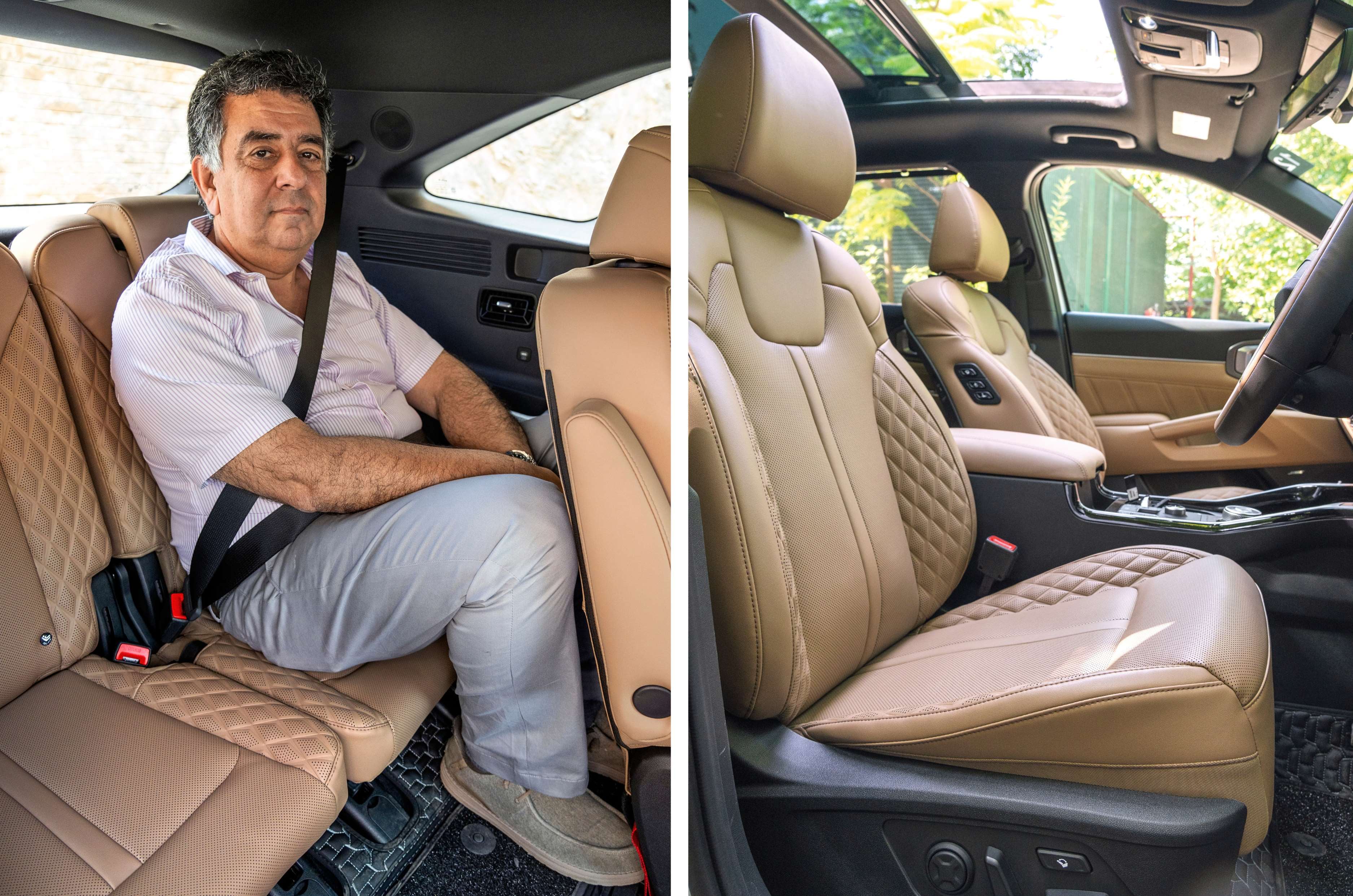
The front seats are fully powered, with 10-way adjustment, lumbar support and ventilation, and the passenger seat gets a boss mode so whoever sits behind can push it forward. Coming to the third row, access is easy. You can either walk through the gap between the captain chairs or press a button on the seat, which electrically slides and tilts it forward. Once there, the news is mixed. Legroom is better than you expect, but the seat base is mounted almost flat on the floor, so there is no under-thigh support and your knees point at the roof. Treat it as a space for children or short hops. At least the third row gets its own blower controls and USB ports.

One of the Sorento’s highlights, however, is the second-row experience. Our test car was the top HTX with six seats, and its second-row captain chairs are ventilated too, a rarity in this class. They are the best seats in the house. There is lots of legroom, a commanding view out and good under-thigh support, comparable to the Innova Hycross’s middle-row captain chairs, though the Toyota seats you a touch higher. A neat detail is the cupholder moulded into the door, up near the handle, where it is actually easy to reach.
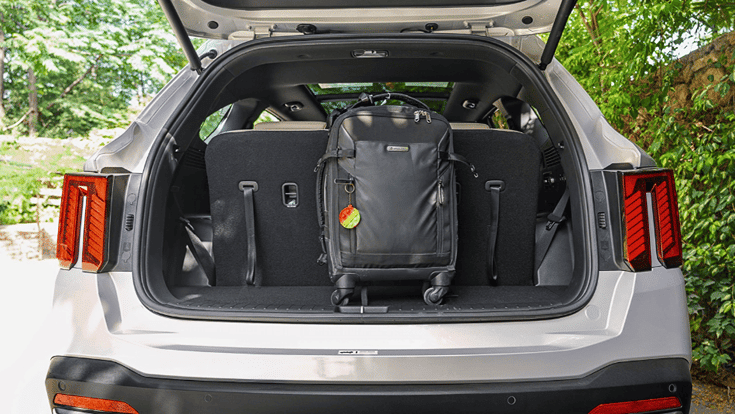
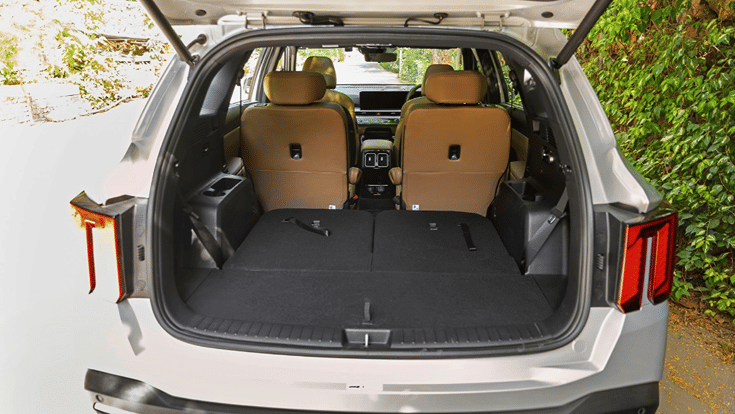
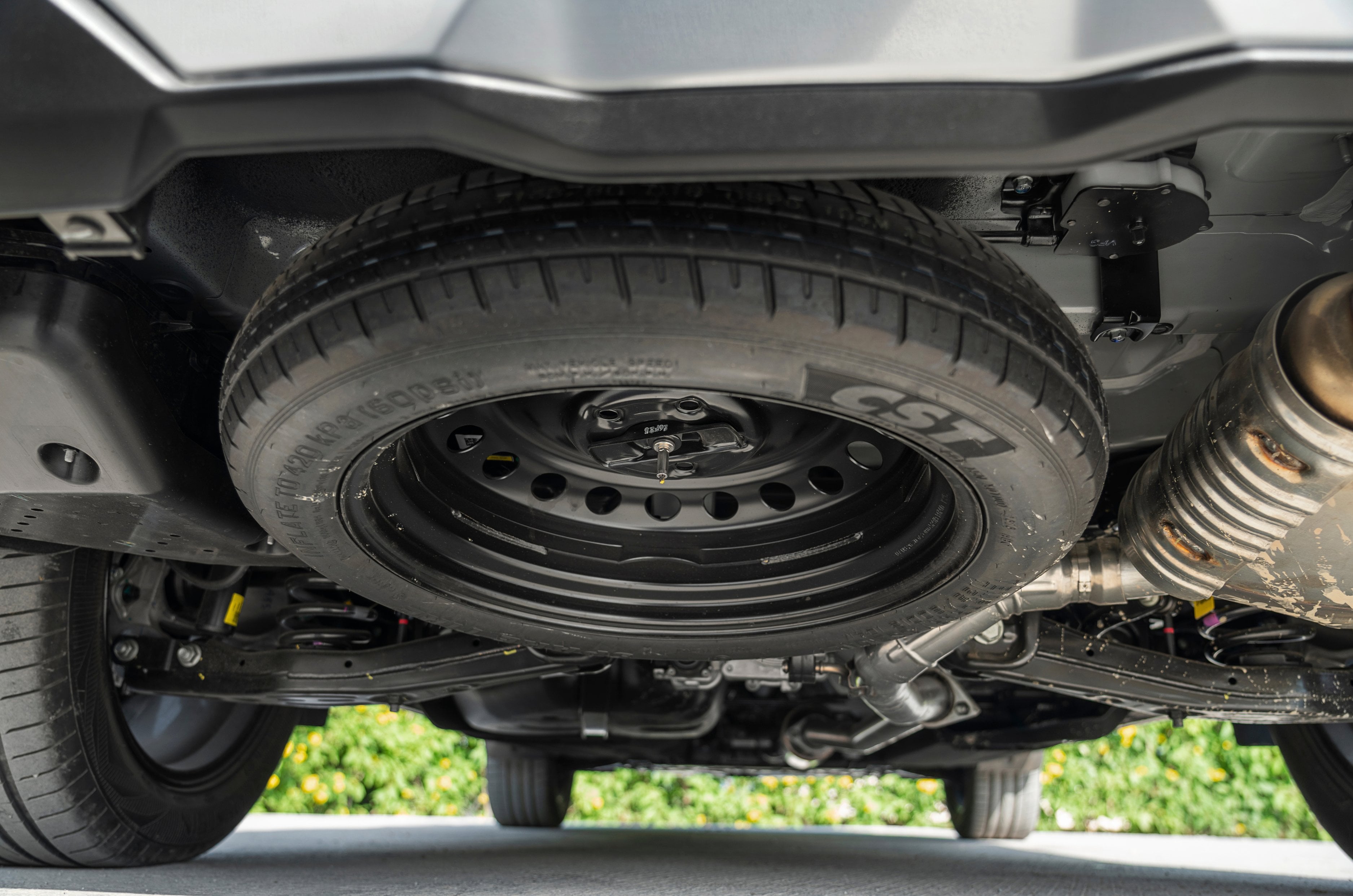
With all three rows up, the boot is a modest 179 litres; fold the third row and that grows to 813 litres. A full-size spare is welcome, but it is slung under the body, which is not the most convenient place to reach. Overhead, the massive panoramic roof floods the cabin with light and adds to the sense of space.
Kia Sorento features and technology
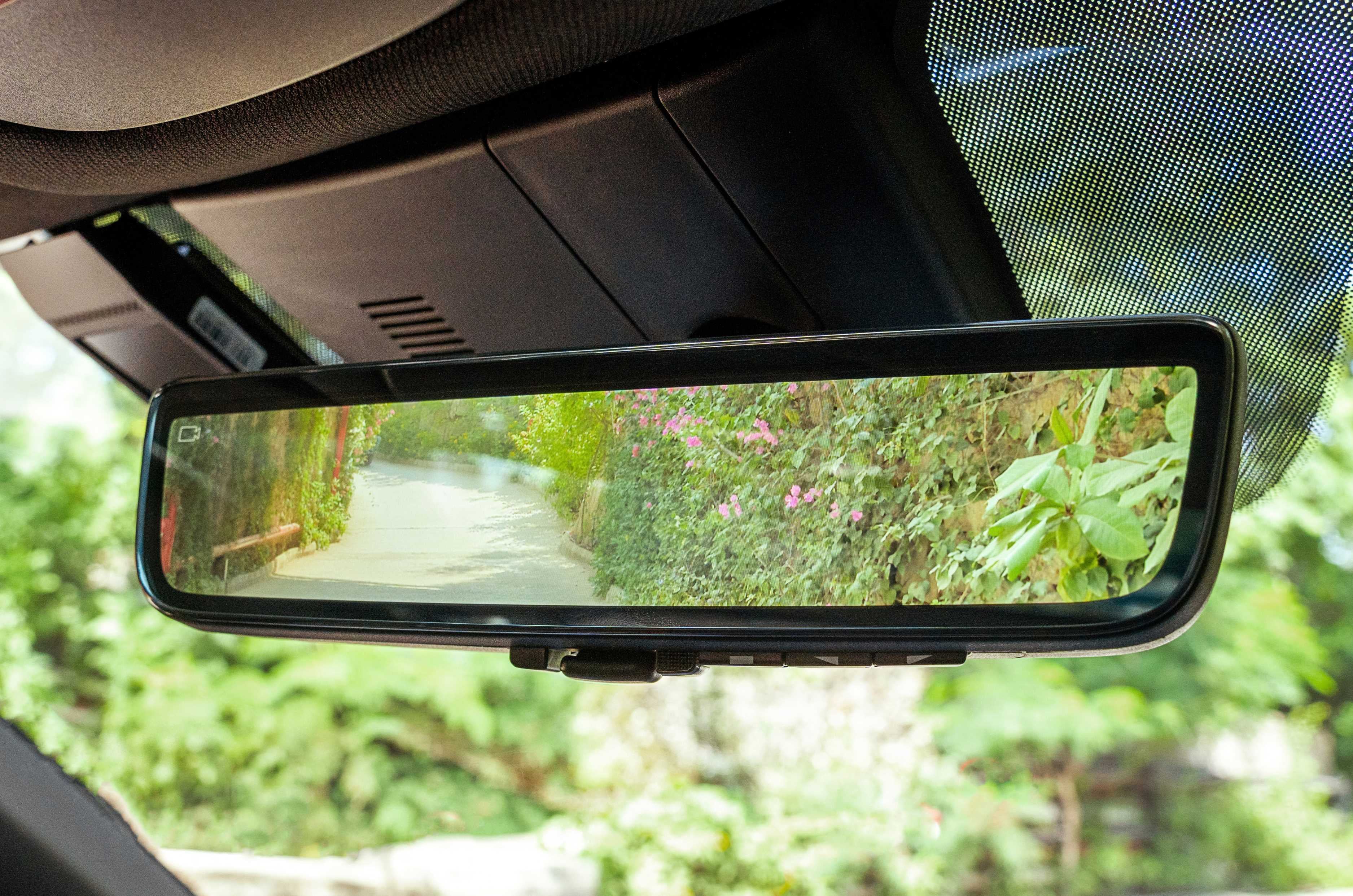
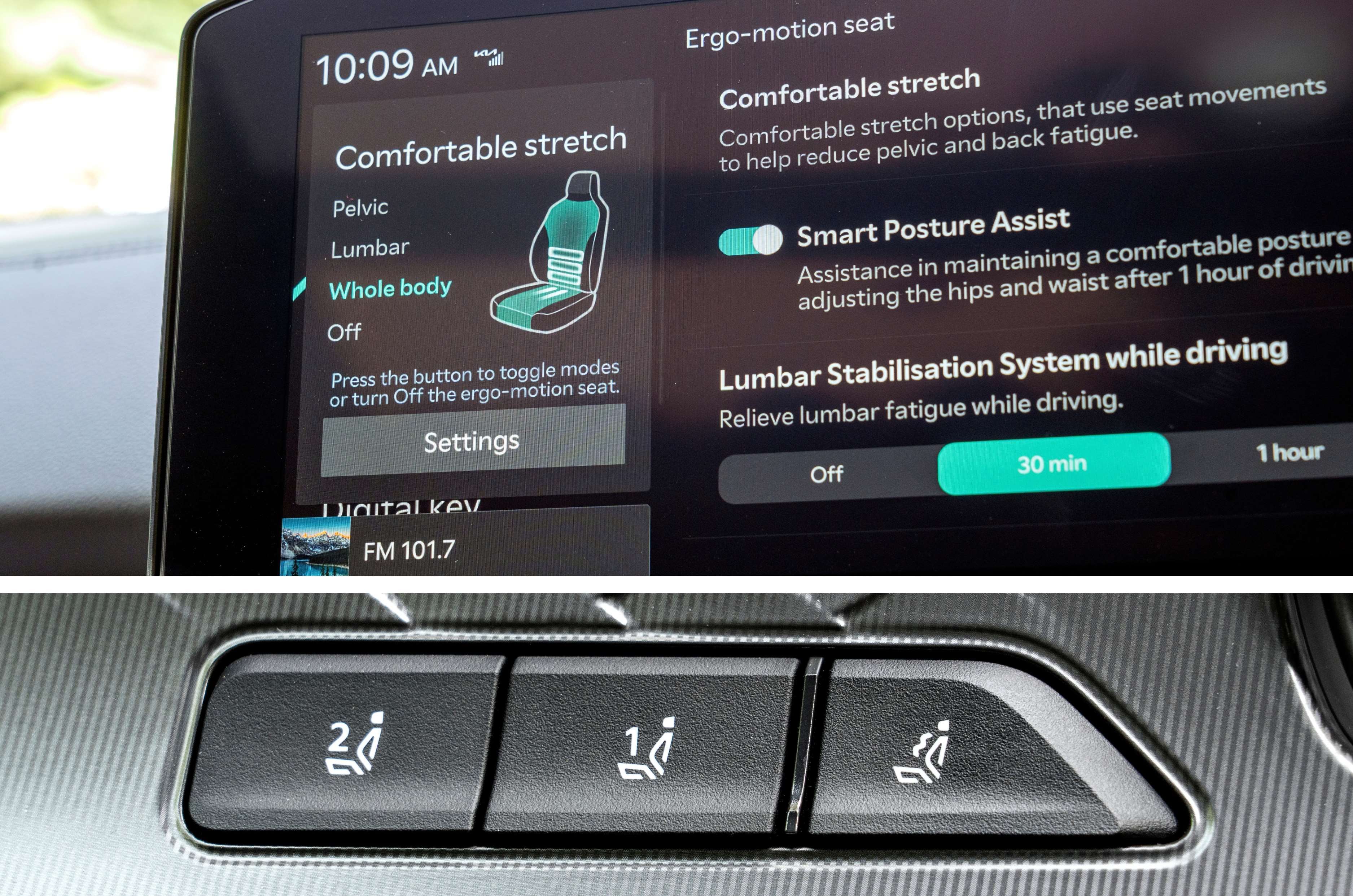
The equipment list is huge. In addition to the aforementioned 12.3-inch touchscreen, powered front seats, ventilated captain’s chairs, and panoramic sunroof, the Sorento comes packed with a 12.3-inch digital driver’s display, a head-up display, a 12-speaker Bose system, dual-zone climate control, a powered tailgate, rear-window sunshades, 64-colour ambient lighting and a digital rear-view mirror that flips back to a conventional one at the turn of a knob. The driver’s seat even gets an ‘ergo-motion’ mode that simulates a massage function by shifting the contours around.
Safety is just as thorough, with 10 airbags, a 360-degree camera, front and rear dashcams, remote parking assist, TPMS and Level 2+ ADAS on the (A) trims. There is even real-time generative AI, a first for any Sorento globally.
Kia Sorento performance and refinement
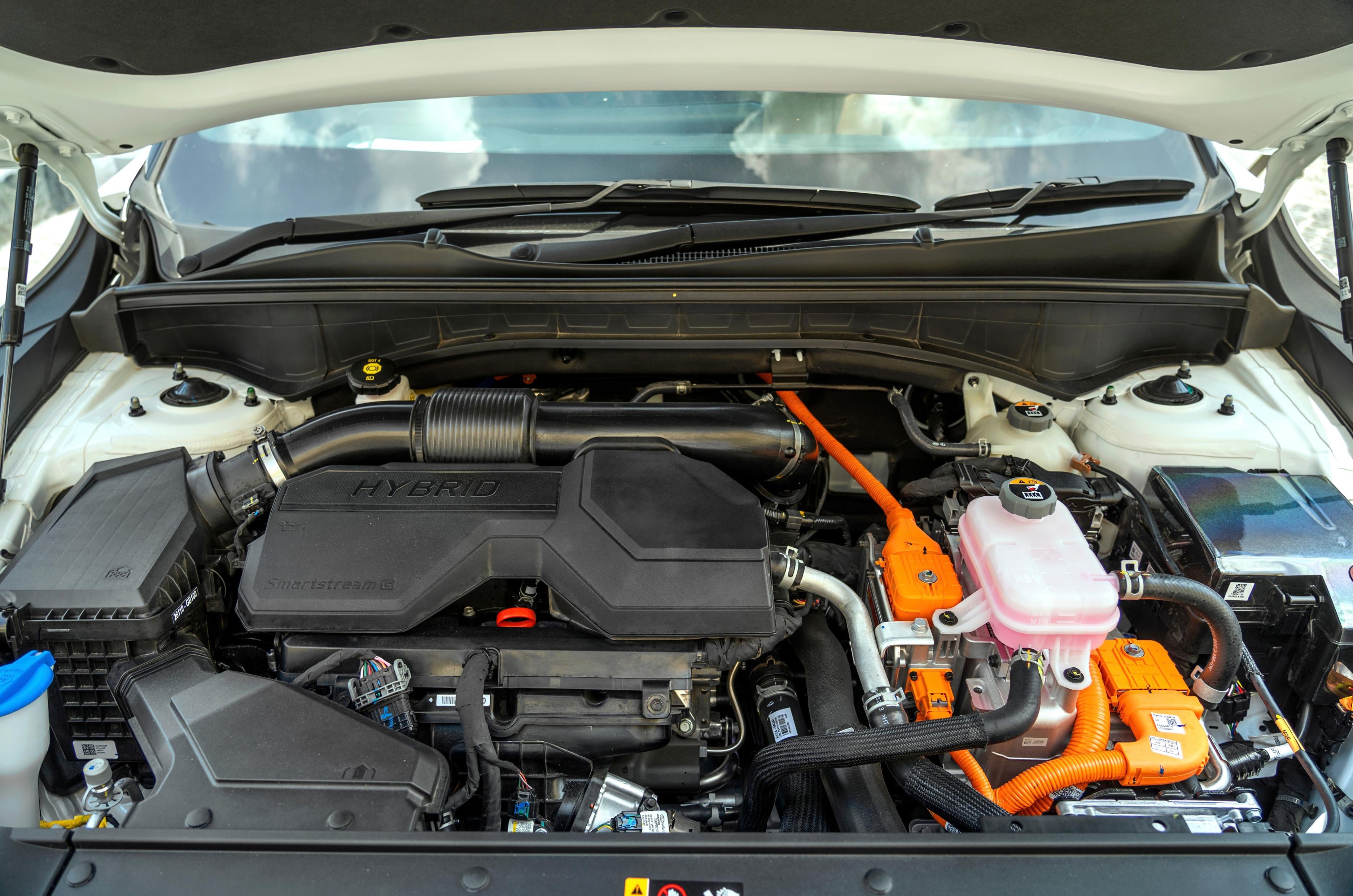
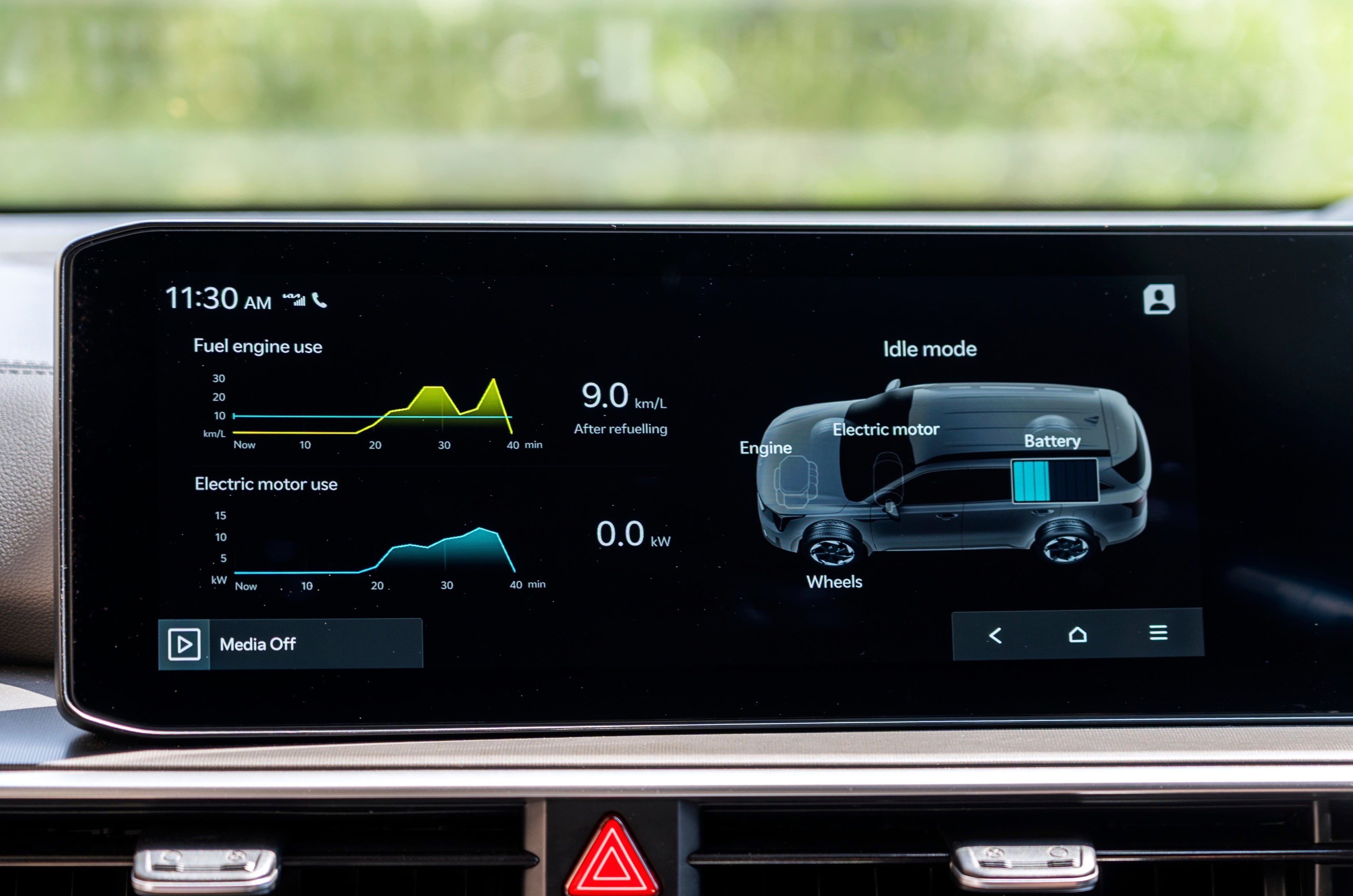
First up, the hybrid. Its 1.6-litre turbo-petrol makes 180hp and 265Nm, and the electric motor adds 65hp and 264Nm. The combined figure rating is 230hp and 380Nm of torque You can tell this the hybrid is the one for the city the moment you pull away, because the response is instant. It is well mated to the 6-speed torque-converter automatic, and the handover from electric to petrol power is close to seamless.
The 1.49kWh battery lets it run in EV mode for a decent stretch at crawling speeds, and in stop-go traffic the hybrid makes eminent sense. Power delivery is refined, seamless and relaxing, and efficiency should be strong; The limitation is the motor itself. With only 65hp to shift a car weighing over two tonnes, it cannot do the heavy lifting on its own, so when you want to make quick progress the engine kicks in early. Push hard on the highway and the four-cylinder gets noisy and starts to run out of steam.
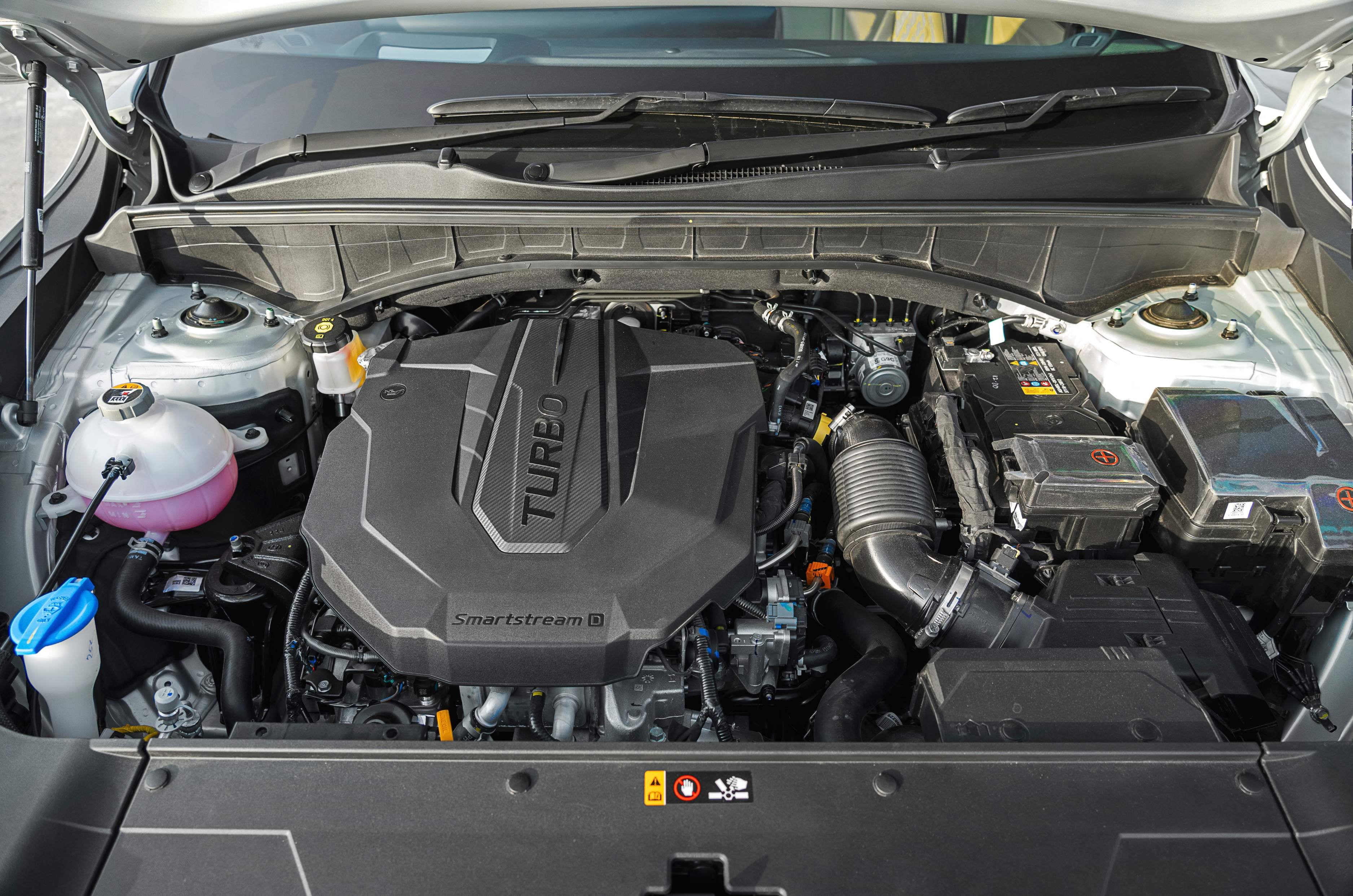
Which is where the diesel comes in. The 2.2-litre is familiar from the Carnival, but it feels a lot sprightlier in the lighter Sorento. Its 193hp and 442Nm arrive in a strong, linear surge, and this is a fantastic, long-legged cruiser. Settle into eighth gear on an open highway and it simply lopes along, the engine barely working. It is also more tractable at low speeds than you might expect, pulling cleanly at part throttle from very low revs, so it can double as a city car, although its low-end response does not come close to the hybrid’s. It’s only when you floor it to dart through traffic that you experience a bit of hesitation, and its hear that you can use the paddle shifts to be in the right gear at the right time of the 8-speed DCT which comes as a pleasant surprise.
Rather than the snappy, slightly jerky shifts typical of dual-clutch boxes, this DCT slurs its changes almost like a torque converter, which adds to the smoothness of the whole package. The reason is that it is a wet-clutch unit, which also bodes well for durability in Indian traffic. The diesel is quite refined for the most part and its only when pushed hard that it gets audible and takes on a gruff note.
Both get drive modes; You can play with the Eco, Normal, Sport and Smart (or auto) modes in the diesel which alters the power delivery. In Sport, the throttle response is sharper and the default mode we liked whilst in Eco you can feel the response a bit dulled down. The Sorento Hybrid gets just Eco, Sport and Smart modes and in Eco mode EV running is prioritised. In addition, the AWD versions get Snow, Sand and Mud terrain modes which we didn’t a get chance to fully experience.
Kia Sorento mileage
In terms of fuel efficiency, the hybrid is rated at a highly frugal 19.60kpl with front-wheel drive and 17.70kpl with AWD, while the diesel returns 17.66kpl and 15.79kpl respectively on the Indian test cycle. In real-world city driving the gap between the hybrid and diesel could be bigger, depending on traffic. On long cross-country runs, though, with extended stints of cruising in high gears, the diesel could well be the more frugal of the two.
Kia Sorento ride and handling
The Sorento’s ride comfort is simply outstanding, and it comes as a pleasant surprise. That’s because Kias have traditionally been stiffer sprung than their Hyundai cousins, but here Kia has clearly prioritised comfort over sportiness, and the suspension is on the soft side. The way it smothers bad roads at speed is remarkable. Around Udaipur, where several stretches are properly broken, we never once had to lift off for a bad patch. The car just soaked it up and kept going.
The isolation it gives its passengers is shockingly good, and those tall-sidewall tyres deserve part of the credit. They do a fine job of rounding off sharp jolts and filtering out the high-frequency shocks that a suspension alone cannot fully absorb. At highway speeds there is a bit of body movement on the undulating bits but its not disconcerting and both versions feel stable and planted at high speeds, which matters in a car this tall.
Our HTX test cars came with AWD as standard. We did not get a chance to test its off-road ability properly, but on dirt roads it felt sure-footed and secure. A proper off-road test will reveal how capable the all-wheel-drive system, though we doubt owners will really want to test the Sorento’s off-road capability.
The steering is less impressive. There is a dead zone around the straight-ahead position, and it does not feel as fluid or progressive as its European rivals’. The Volkswagen Tayron and Skoda Kodiaq are both dynamically sharper. One reason is because the Sorento rides taller too, as ground clearance has been raised from the global car’s 176mm to 208mm, and there is a touch of body roll when you push hard through corners.
But that misses the point. On balance, the Sorento’s ride and handling are superbly judged for the people who will buy it. Kia has done a fine job of understanding what a premium SUV buyer in India wants, and it has tailored the car accordingly.
Kia Sorento price and verdict
If the product does not win you over, the pricing certainly will. A starting price of Rs 27.99 lakh has set the cat amongst the pigeons, putting the Sorento within striking distance of the Mahindra XUV 7XO. And with its size, features and overall polish, the Sorento will not just nibble at the top end of the 7XO’s pie but with the Hybrid could also tempt a few Innova Hycross buyers. As for the Volkswagen Tayron and Skoda Kodiaq, the Sorento makes them look overpriced and underequipped.
The lower and mid variants are exceptional value. The top-end HTX, at Rs 37.49-40.19 lakh depending on fuel and seating, is pricey by comparison, around Rs 5 lakh more than an equivalent HTK, because it comes with AWD as standard. Here Kia has missed a trick. An HTX with two-wheel drive, a few lakh cheaper, would have been a far easier sell to the many buyers who want all the features and ventilated rear seats but will never leave the tarmac. That however is a small quibble that Kia can easily correct.
The lasting impression is that the Sorento feels premium, bordering on luxury. It is fantastically equipped, it rides beautifully, and it offers a choice of two powertrains that are each right for a distinct type of buyer. Most of all, it fits what the Indian SUV buyer actually wants with uncanny precision. Will Kia hit its target of 40,000 sales a year? That could be a tall order. But what there is no doubt about is that Kia has built another winner.
All prices are ex-showroom, India.