

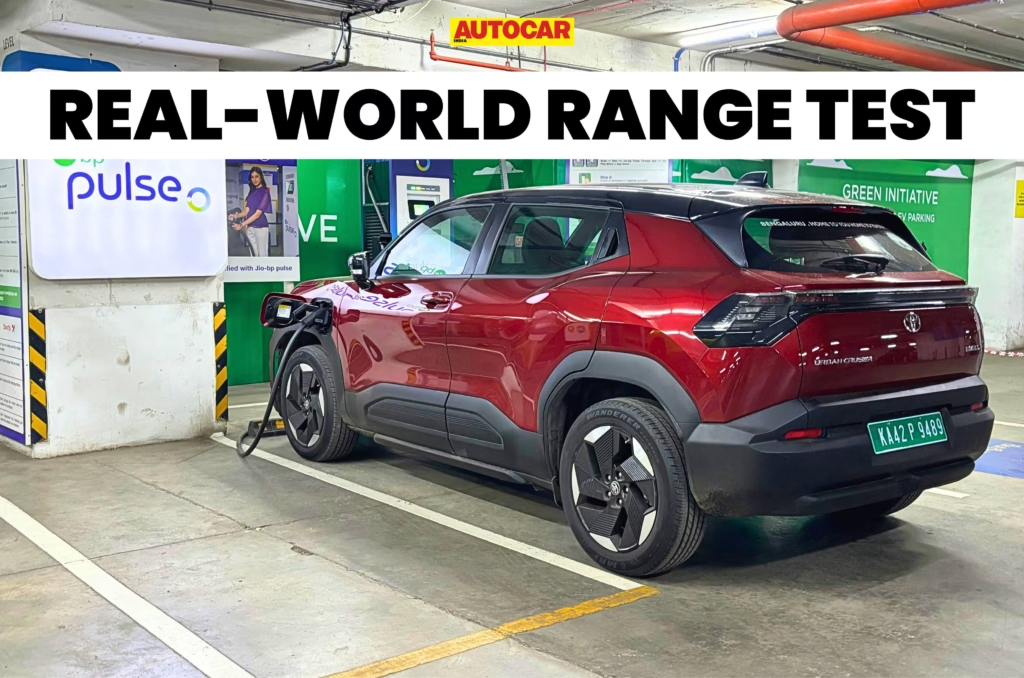
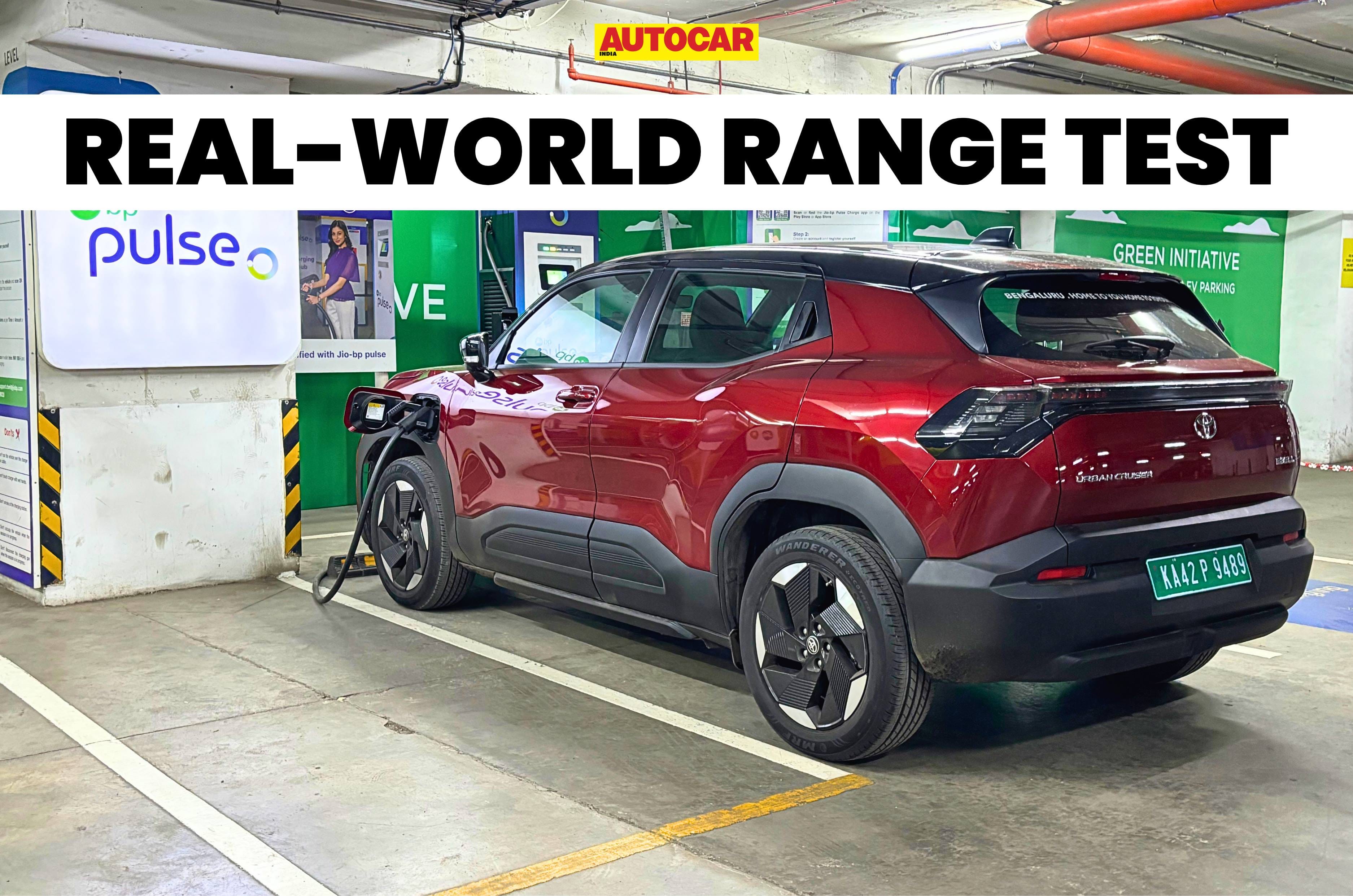
Toyota Urban Cruiser Ebella is the company’s first and only EV sold in the country, and is essentially a badge-engineered Maruti Suzuki eVitara. Toyota has limited the Ebella range to a single variant, priced at Rs. 23.6 lakh. We put the Toyota Urban Cruiser Ebella with the 61kWh battery pack through our range test to find out how it performs.
- Three driving and regen modes; no single pedal driving
- Weighs 1,815kg
- 20-80 percent recharge takes 35 minutes using a 90kW DC fast charger
Toyota Urban Cruiser Ebella: Real-world range
The Toyota Urban Cruiser Ebella is solely available with a 61kWh lithium-ion LFP battery pack and it is powered by a 174hp/193Nm electric motor driving the front wheels. For our tests, we used the Eco driving mode all throughout, with regen set to ‘High’ in the city and ‘Medium’ on the highway.
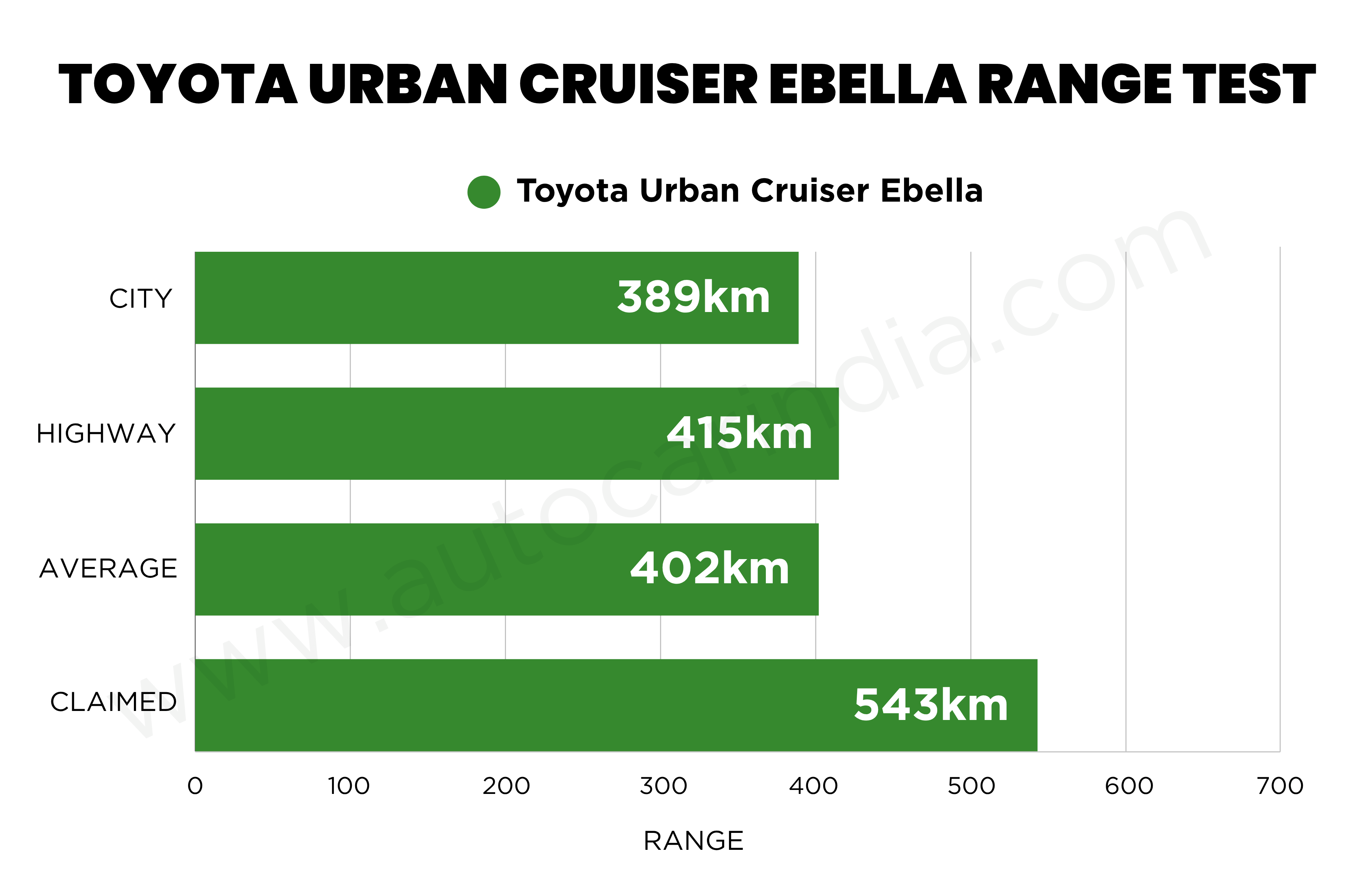
In city conditions, the Toyota Ebella returned 6.37km/kWh which translates to a range of 389km. Interestingly, the efficiency increased on the highway to 6.8km/kWh extrapolating to a range of 415km. With an overall efficiency of 6.59km/kWh, the Toyota Ebella can deliver a real-world range of 402km on a full charge.
Toyota Urban Cruiser Ebella: Charging test
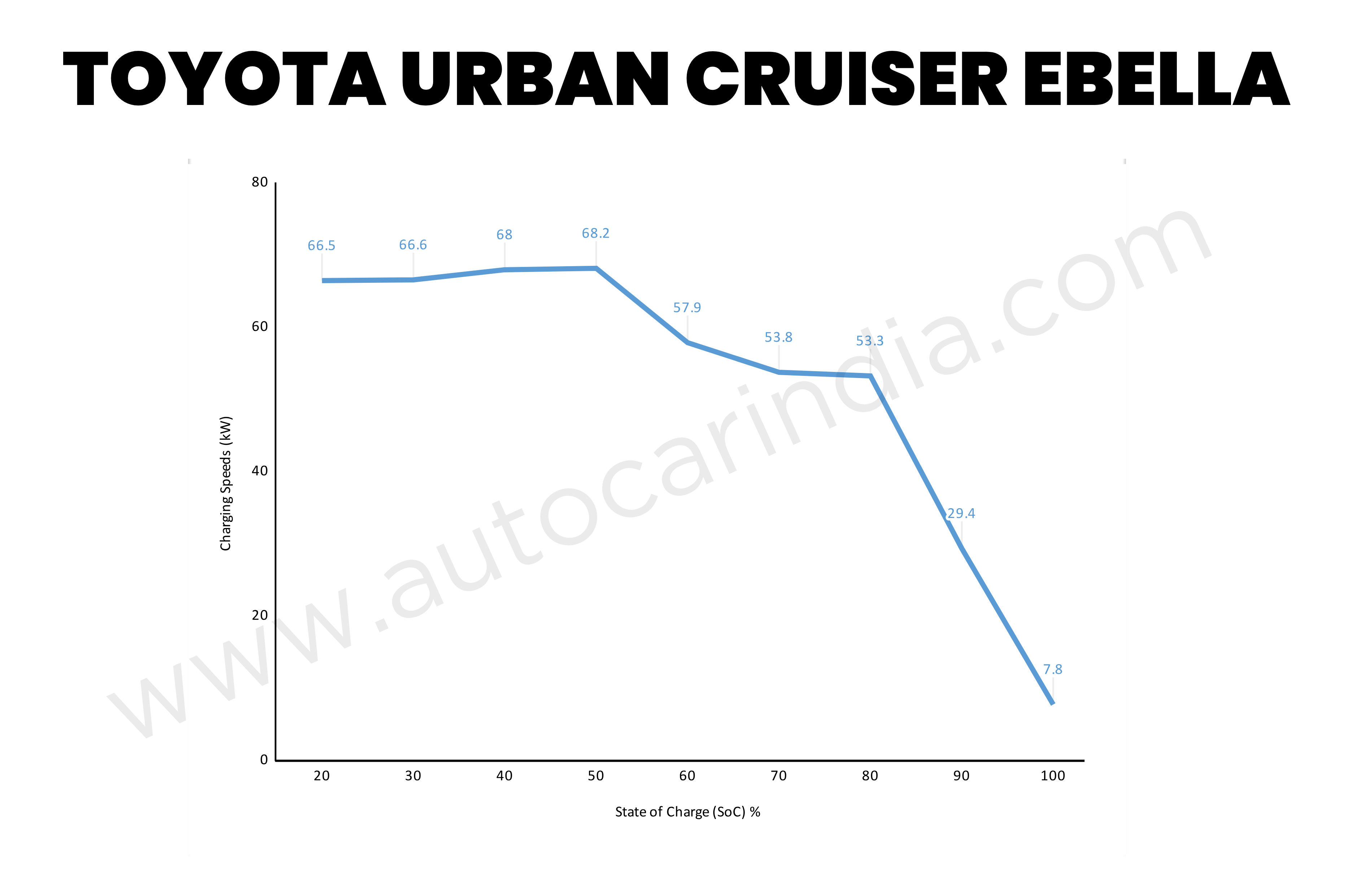
Toyota hasn’t shared any details regarding the Ebella’s DC fast charging capability, but we noted peak charging speeds of around 68.2kW when using a 90kW DC fast charger. In terms of duration, it took 35 minutes to charge from 20-80 percent, and another 36 minutes to reach 100 percent.
Autocar India’s range testing
Before our real-world range tests, the battery of our test car was fully charged, and we maintained tyre pressures in accordance with the manufacturer’s recommendations. The car was driven on a weekday in Mumbai city and on the adjoining state highway in a fixed loop, and we maintained the set average speeds. At the end of each cycle, we calculated the range based on the percentage charge consumed.
Throughout our tests, the climate control was set to 22deg C in a full-auto setting, and other electricals, such as the audio system, indicators and ventilated front seats, were used when required, just as a regular user would. We take pride in our testing data, which isn’t merely consistent but also gives users an accurate indication of what they can expect in the real world.