


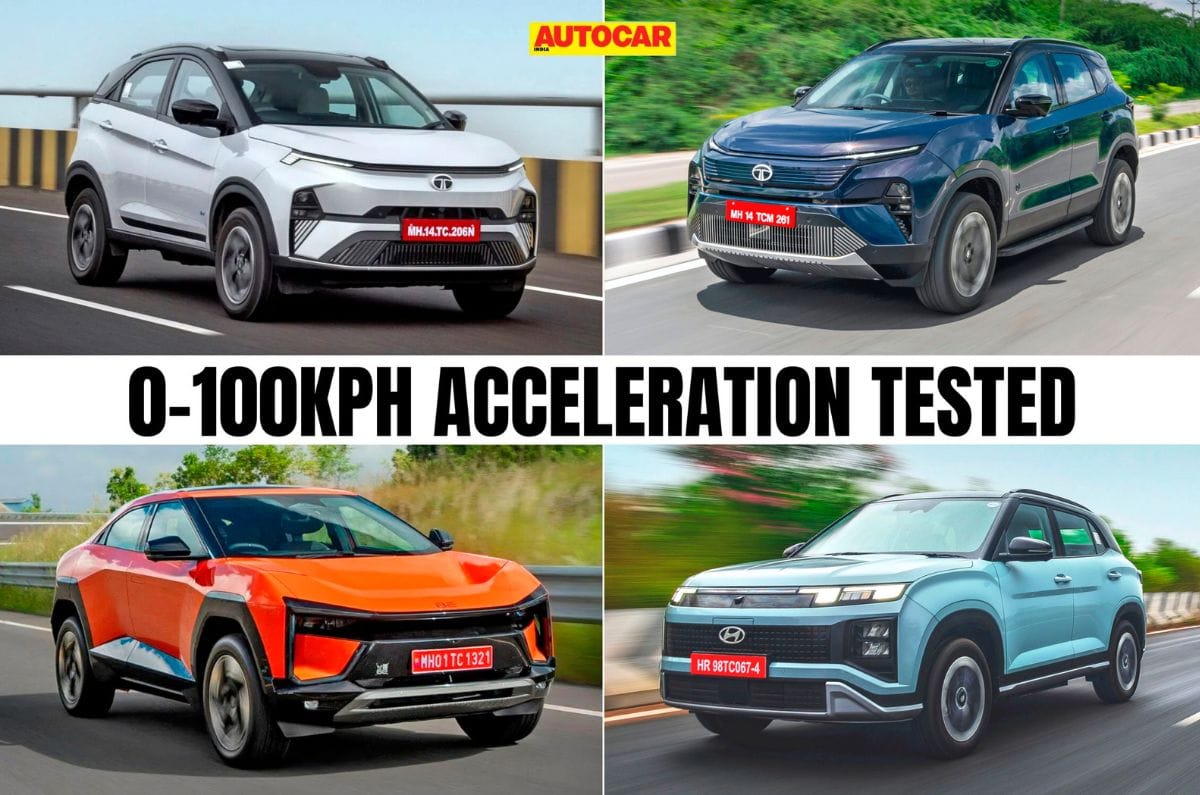
Due to the nature of an electric motor, EVs have all their torque available from 0rpm, which gives electric cars a great initial burst of acceleration. In fact, mass-market EVs are usually more powerful and quicker than their ICE counterparts. Here, we list out every mass-market EV under Rs 30 lakh that Autocar India has tested to see which is the quickest.
MG Comet
0-100kph: 23.87s
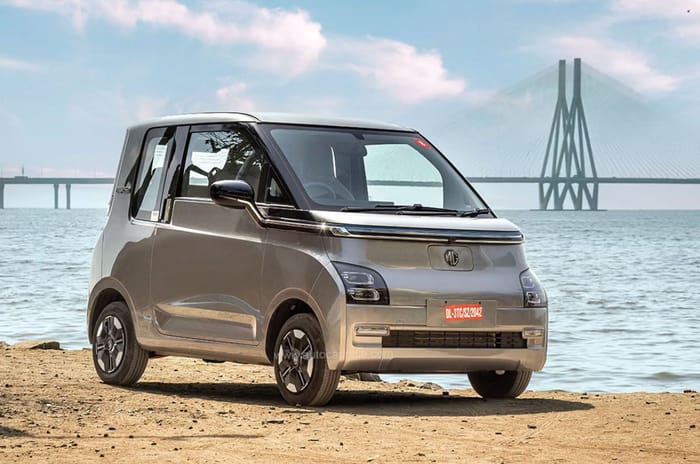
The MG Comet sits at the last spot, with a 0-100kph time of 23.87 seconds. However, its 0-60kph time of 7.6 seconds is closer to others on this list, showcasing that the smallest four-wheeler EV in India can keep up with urban traffic with ease. The Comet comes with a 17.3kWh battery that powers a 42hp and 110Nm rear axle-mounted motor. The MG Comet EV is priced from Rs 7.63 lakh to Rs 9.99 lakh.
| MG Comet EV performance factfile | |
|---|---|
| Battery | 17.3kWh |
| Power | 42hp |
| Torque | 110Nm |
| ARAI range | 230km |
| 0-60kph | 7.6s |
| 0-100kph | 23.87s |
| 20-80kph (rolling acceleration) | 10.5s |
| 40-100kph (rolling acceleration) | 20.28s |
MG Windsor
38kWh 0-100kph: 9.79s
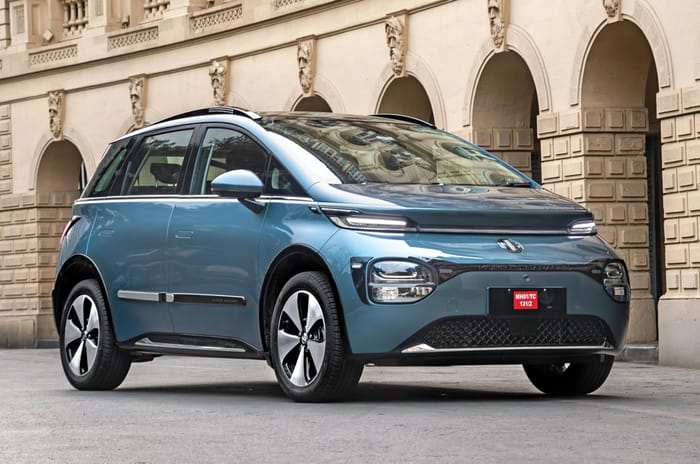
The MG Windsor with the smaller 38kWh battery (pro versions get a larger 52.9kWh battery) is the first EV here to record a sub-10-second 0-100kph time. It comes with a 136hp, 200Nm rear motor, which enables a 0-60kph time of 4.48 seconds and a 0-100kph time of 9.79 seconds. The Windsor with the 38kWh battery is priced between Rs 14.10 lakh and Rs 16.53 lakh.
| MG Windsor performance factfile | |
|---|---|
| Battery | 38kWh |
| Power | 136hp |
| Torque | 200Nm |
| ARAI range | 332km |
| 0-60kph | 4.48s |
| 0-100kph | 9.79s |
| 20-80kph (rolling acceleration) | 5.22s |
| 40-100kph (rolling acceleration) | 6.92s |
Tata Nexon EV
45kWh 0-100kph: 9.77s
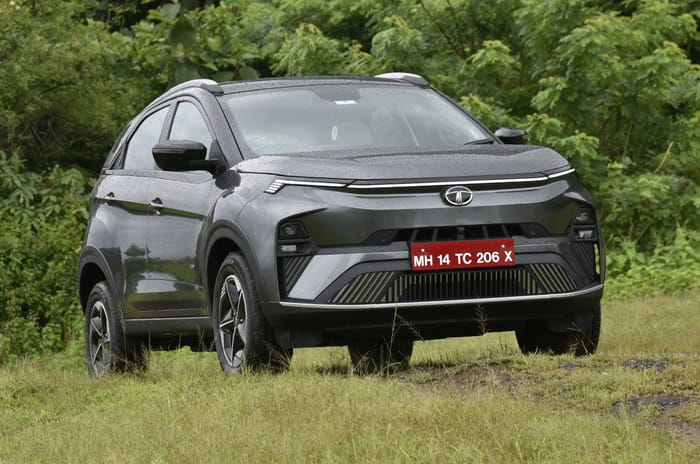
As is usually the case, we have tested the larger 45kWh battery version of the Tata Nexon EV; it is also available with a 30.2kWh battery, and is called the ‘MR’ (Medium Range). The Nexon EV 45, named for the 45kWh battery, comes with a front axle-mounted 144hp, 215Nm motor, with Tata claiming a 0-100kph time of 8.9 seconds. However, our tests saw the Nexon EV 45 record a 0-100kph time of 9.77 seconds, 0.87 seconds slower than the claimed time. Prices for the Nexon EV 45 range between Rs 13.99 lakh and Rs 17.49 lakh, including the Red Dark variants.
| Tata Nexon EV 45 performance factfile | |
|---|---|
| Nexon EV 45 | |
| Battery | 45kWh |
| Power | 144hp |
| Torque | 215Nm |
| ARAI range | 489km |
| 0-60kph | 4.66s |
| 0-100kph | 9.77s |
| 20-80kph (rolling acceleration) | 5.32s |
| 40-100kph (rolling acceleration) | 6.68s |
Tata Curvv EV
0-100kph: 9.25s
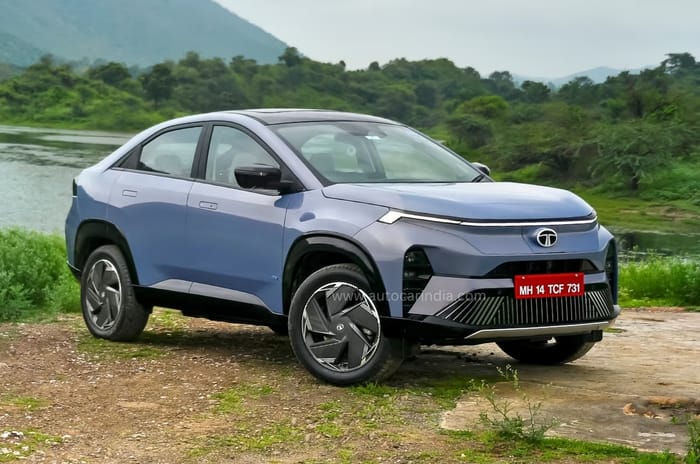
Unlike the rest of the Tata EVs in this list that offer two battery packs, the Curvv EV only gets one battery pack option. It’s a 55kWh unit, which gets a front axle-mounted 167hp, 215Nm motor. Tata claims a 0-100kph time of 8.6 seconds, though our tests show the Curvv EV sprints from 0-100kph in 9.25 seconds. The Curvv EV prices currently range between Rs 16.99 lakh and Rs 19.19 lakh, including the Dark variants.
| Tata Curvv EV 55 performance factfile | |
|---|---|
| Battery | 55kWh |
| Power | 167hp |
| Torque | 215Nm |
| ARAI range | 502km |
| 0-60kph | 4.66s |
| 0-100kph | 9.25s |
| 20-80kph (rolling acceleration) | 4.92s |
| 20-80kph (rolling acceleration) | 6s |
Kia Carens Clavis EV
51.4kWh 0-100kph: 8.44 seconds
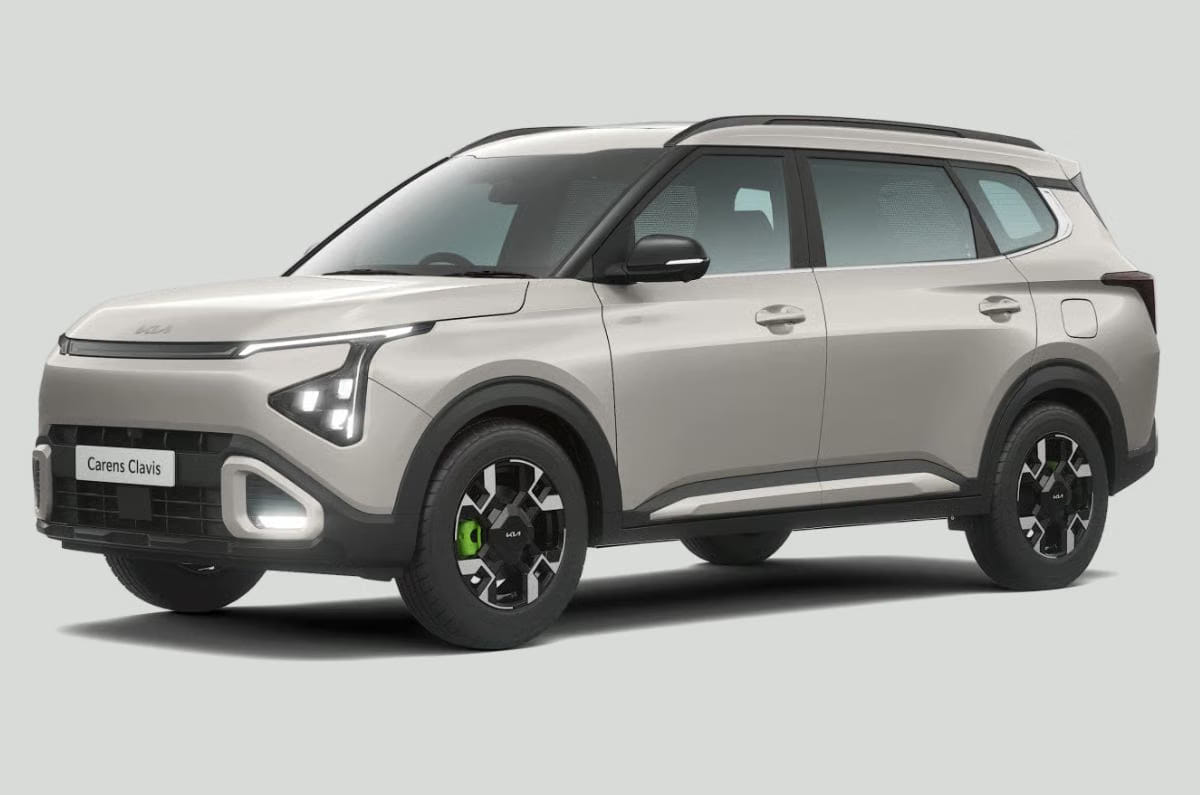
The Kia Carens Clavis EV is the only electric MPV in this list that we’ve tested. It’s also the most affordable Kia EV in our market and is powered by either a 42kWh or a 51.4kWh battery pack. We’ve tested the latter version that’s paired to a front-mounted motor developing 171hp and 255Nm of torque. In our 0-100kph test the Kia MPV achieved a time of 8.44 seconds. 51.4kWh extended range versions of the Carens Clavis EV are priced between Rs 22 lakh and Rs 25 lakh .
| Kia Carens Clavis EV ER Performance fact file | |
|---|---|
| Battery | 51.4kWh |
| Power | 171hp |
| Torque | 255Nm |
| ARAI range | 510km |
| 0-100kph | 7.91s |
| 20-80kph (rolling acceleration) | 4.43s |
| 40-100kph (rolling acceleration) | 5.07s |
MG ZS EV
0-100kph: 8.42 seconds
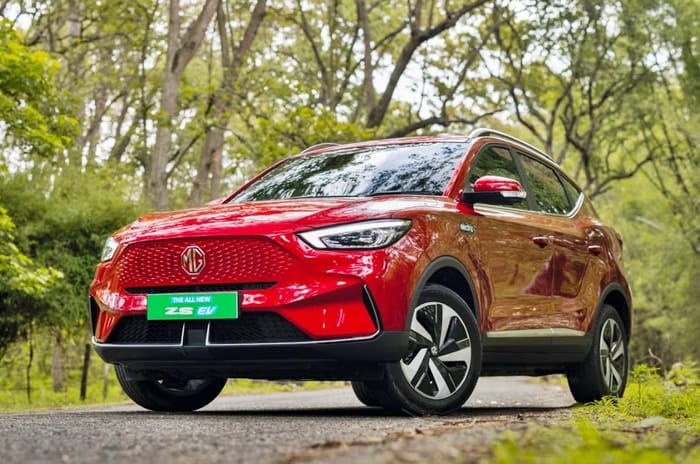
The ZS EV is the most powerful all-electric car from MG currently available. The ZS EV gets a 50.3kWh battery, which powers a front axle-mounted motor that produces 177hp and 280Nm of torque. Our real-world performance tests showed the ZS EV reaching 60kph from standstill in 4.37 seconds, while the 0-100kph sprint took 8.42 seconds. The MG ZS EV is currently priced between Rs 17.99 lakh and Rs 20.74 lakh.
| MG ZS EV performance factfile | |
|---|---|
| Battery | 50.3kWh |
| Power | 177hp |
| Torque | 280Nm |
| ARAI range | 461km |
| 0-60kph | 4.37s |
| 0-100kph | 8.42s |
| 20-80kph (rolling acceleration) | 4.64s |
| 40-100kph (rolling acceleration) | 5.46s |
Hyundai Creta Electric
51.4kWh 0-100kph: 7.91 seconds
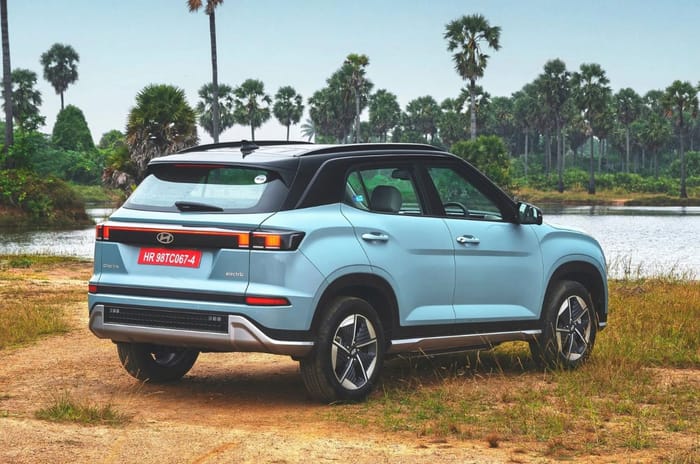
Up next is the most quintessential midsize electric SUV, the Hyundai Creta Electric. It is offered with two battery pack options – 42kWh and 51.4kWh – and it’s the latter version that we’ve tested. The battery powers a front-axle electric motor producing 171hp and 255Nm, and in Sport mode, the Creta Electric sprints from 0-100kph in 7.91 seconds, nearly close to the carmaker’s claimed time. Long range versions of the Creta range between Rs 20 lakh and Rs 23.67 lakh.
| Hyundai Creta Electric ER Performance fact file | |
|---|---|
| Battery | 51.4kWh |
| Power | 171hp |
| Torque | 255Nm |
| ARAI range | 510km |
| 0-100kph | 7.91s |
| 20-80kph (rolling acceleration) | 4.43s |
| 40-100kph (rolling acceleration) | 5.07s |
Mahindra XEV 9S
79kWh 0-100kph: 7.54 seconds
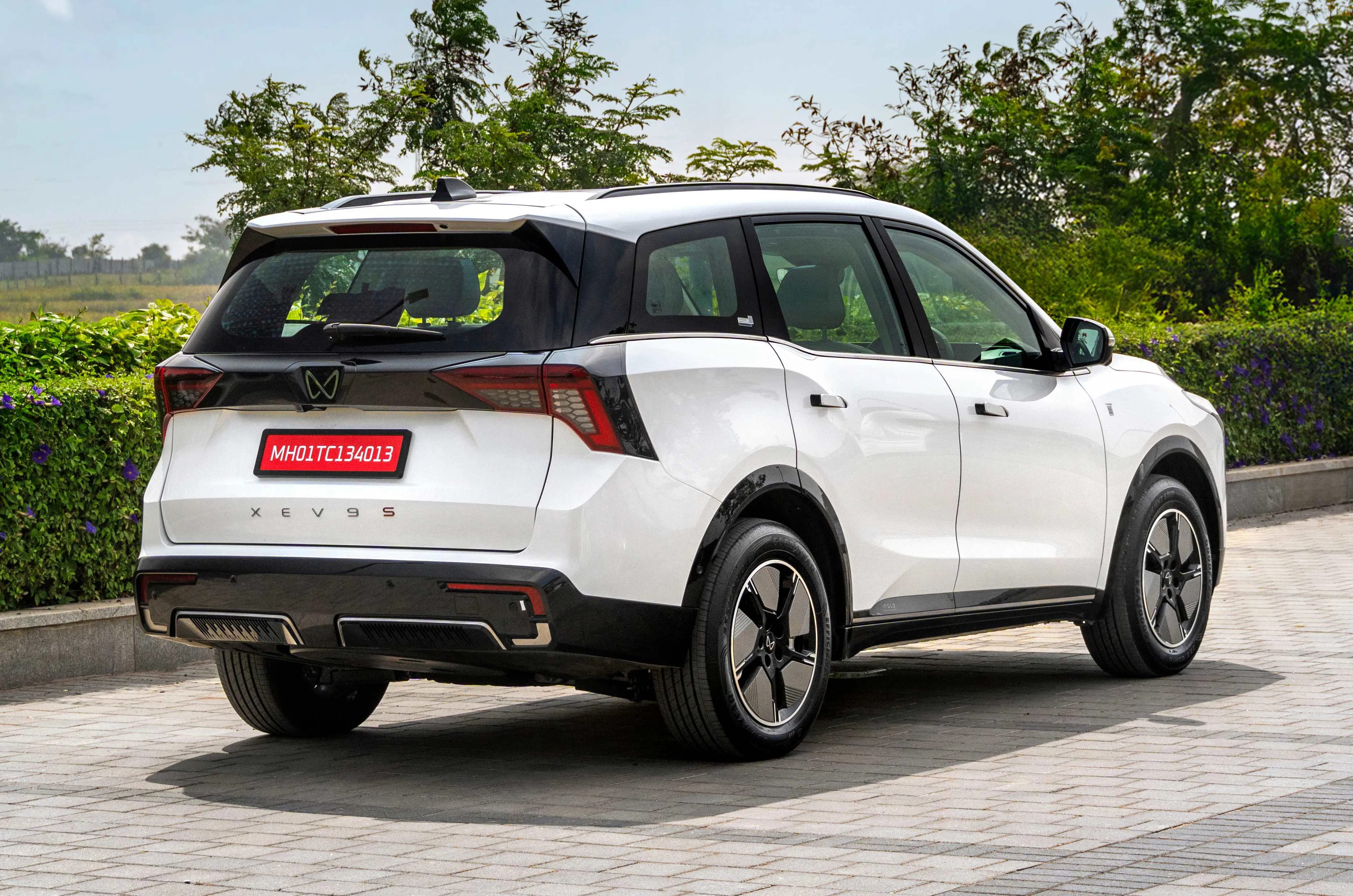
The XEV 9S is Mahindra’s only three-row electric vehicle in its lineup. It’s the only mass market three row SUV in India. The XEV 9S sits on the INGLO platform, and is available with either 59kWh, 70kWh, and 79kWh battery packs. We’ve tested the largest 79kWh version that’s paired to a rear-mounted motor developing 286hp and 380Nm of torque. The 9S managed to take 7.54 seconds in our 0-100kph test. 79kWh variants of the XEV 9S range between Rs 21.95 lakh and Rs 29.55 lakh.
| Mahindra XEV 9S Pack Three performance factfile | |
|---|---|
| Battery | 79kWh |
| Power | 286hp |
| Torque | 380Nm |
| ARAI range | 679km |
| 0-100kph | 7.54s |
| 20-80kph (rolling acceleration) | 4.11s |
| 40-100kph (rolling acceleration) | 4.74s |
Mahindra XEV 9e
79kWh 0-100kph: 7.45 seconds
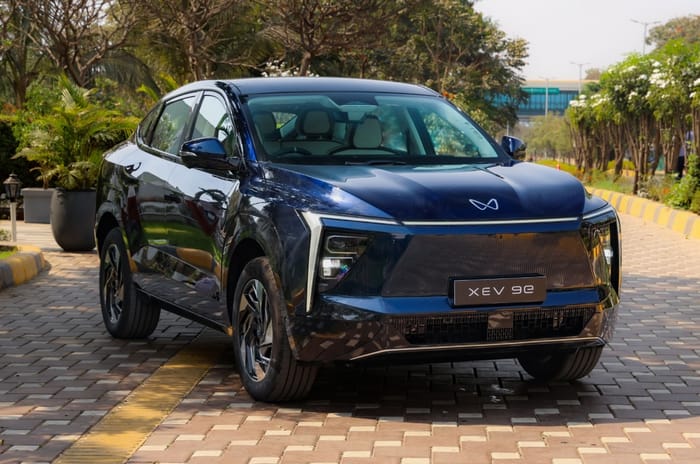
Mahindra’s flagship two-row EV has two battery pack options – 59kWh and 79kWh – and we’ve managed to test the larger battery version. The top-spec XEV 9e Pack Three – only available with the 79kWh battery – has a 286hp, 380Nm rear motor, with Mahindra claiming a 0-100kph time of 6.8 seconds. However, our performance tests showed the Mahindra XEV 9e 79kWh version sprints to 60kph in 4.14 seconds and to 100kph in 7.45 seconds; 0.65 seconds slower than Mahindra’s claim. 79kWh variants of the XEV 9e begin from Rs 26.50 lakh and go up to Rs 30.50 lakh.
| Mahindra XEV 9e Pack Three performance factfile | |
|---|---|
| Battery | 79kWh |
| Power | 286hp |
| Torque | 380Nm |
| ARAI range | 656km |
| 0-60kph | 4.14s |
| 0-100kph | 7.45s |
| 20-80kph (rolling acceleration) | 4.17s |
| 40-100kph (rolling acceleration) | 4.61s |
Mahindra BE 6
79kWh 0-100kph: 7.1 seconds
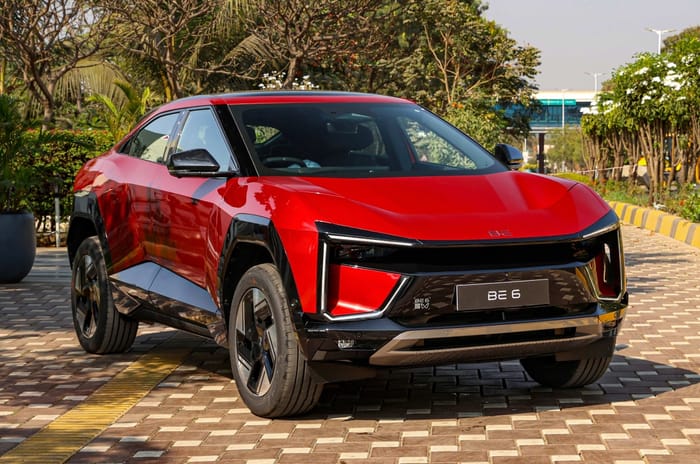
Mahindra’s answer to the Hyundai Creta Electric shares its battery options and motor with the larger XEV 9e. Naturally, the smaller Mahindra BE 6 is quicker than the coupe-SUV, with a claimed 0-100kph time of 6.7 seconds. In our tests, the BE 6 Pack Three recorded a 0-60kph time of 4 seconds and a 0-100kph time of 7.1 seconds (0.4 seconds short of the claimed time). The Mahindra BE 6 Pack Three is priced from Rs 26.90 lakh.
| Mahindra BE 6 Pack Three performance factfile | |
|---|---|
| Battery | 79kWh |
| Power | 286hp |
| Torque | 380Nm |
| ARAI range | 683km |
| 0-60kph | 4s |
| 0-100kph | 7.14s |
| 20-80kph (rolling acceleration) | 4.03s |
| 40-100kph (rolling acceleration) | 4.46s |
Tata Harrier EV
75kWh AWD 0-100kph: 6.74 seconds
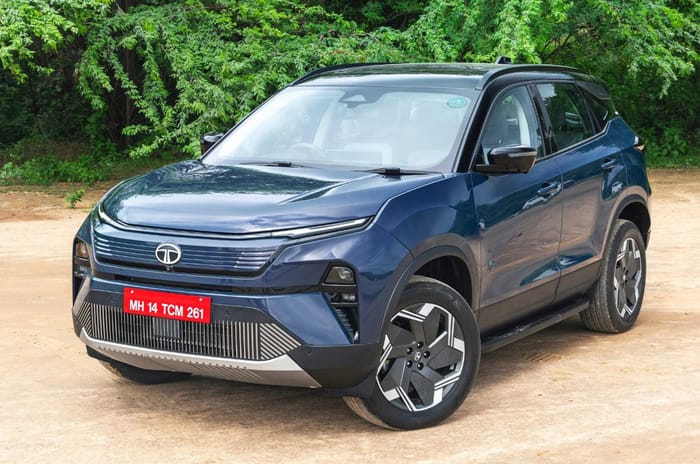
The Tata Harrier EV is the second quickest EV to 100kph that we have tested so far. It gets an all-wheel-drive setup, courtesy of dual electric motors (one on each axle), and even gets a Boost function. We tested the larger 75kWh battery variant, which produces a combined 313hp and 504Nm from the two electric motors. Naturally, the sprint to 100kph was also rapid in just 6.74 seconds in Boost Mode, quite commendable for Harrier EV AWD’s portly 2.3-tonne kerb weight. It’s also not too far from Tata’s claimed time of 6.3 seconds. The top-spec Harrier EV AWD is priced at Rs 28.99 lakh.
| Tata Harrier EV AWD Performance factfile | |
|---|---|
| Battery | 75kWh |
| Power | 313hp |
| Torque | 504Nm |
| ARAI range | 622km |
| 0-60kph | 3.62s |
| 0-100kph | 6.74s |
| 20-40kph (rolling acceleration) | 3.89s |
| 40-100kph (rolling acceleration) | 4.32s |
Vinfast VF7
79.kWh AWD 0-100kph: 6.03 seconds
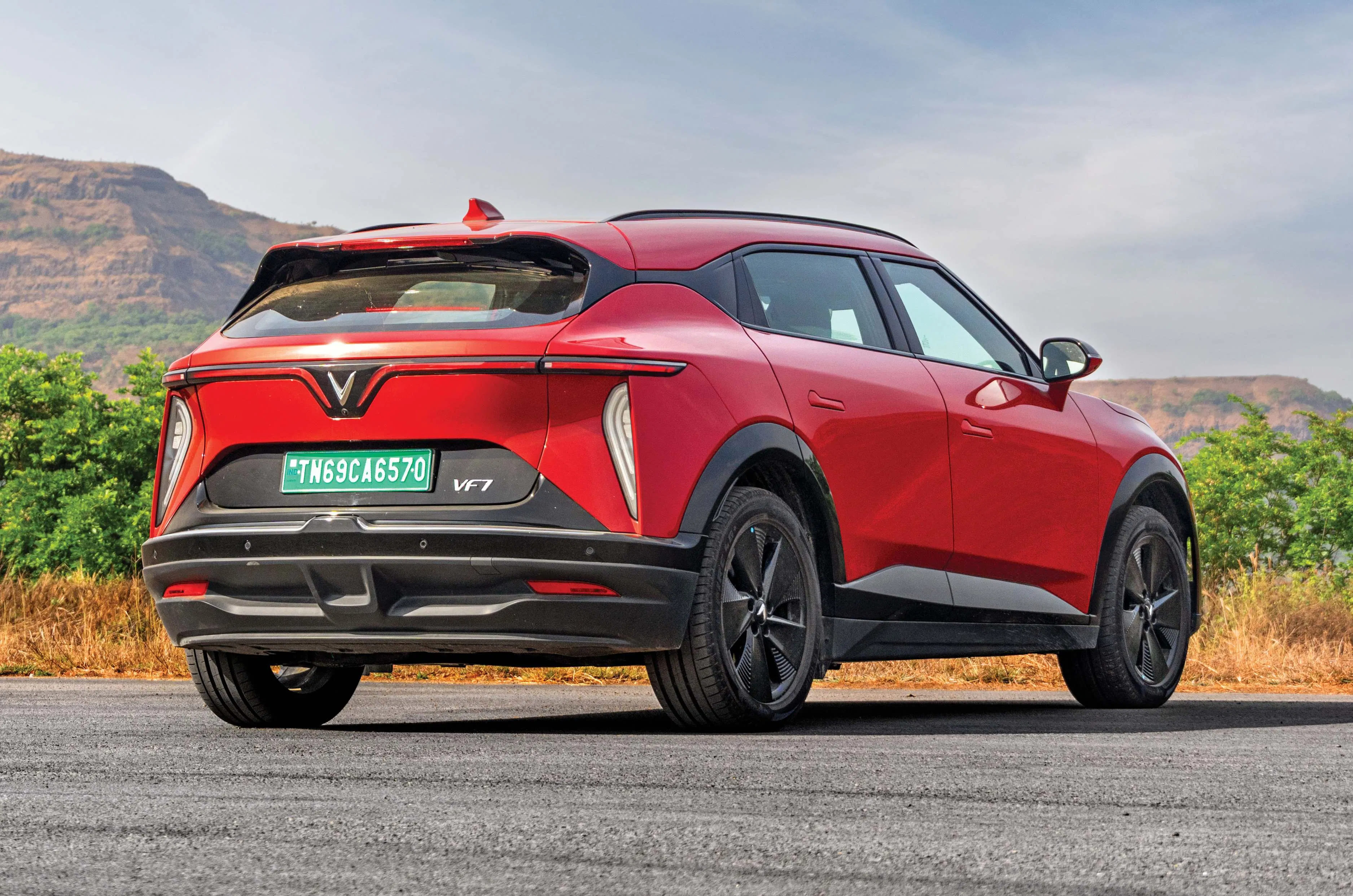
Vinfast’s flagship offering for India, the VF7 is the quickest mass-market EV we’ve tested till date. The SUV is available with either a 59.6kWh battery pack or a 70kWh unit. The latter option is available in two states of tune- a front mounted motor developing 204hp and 310Nm of torque and an dual-motor AWD version churning out 353hp (the most powerful one in this list) and 500Nm. We tested the 353hp version and managed to clock a 0-100kph time of 6.03 seconds, falling short of the company-claimed time by 0.23 seconds. The top-spec VF7 versions range from Rs 26.19 lakh to Rs 26.79 lakh.
| Vinfast VF7 Performance factfile | |
|---|---|
| Battery | 70kWh |
| Power | 353hp |
| Torque | 500Nm |
| ARAI range | 510km |
| 0-60kph | 3.03s |
| 0-100kph | 6.03s |
| 20-40kph (rolling acceleration) | 3.16s |
| 40-100kph (rolling acceleration) | 3.95s |
All prices are ex-showroom, India
Also see:
Tata Harrier EV price, variants, features explained
Every car, SUV tested by Bharat NCAP so far
Every mass market EV real world range tested